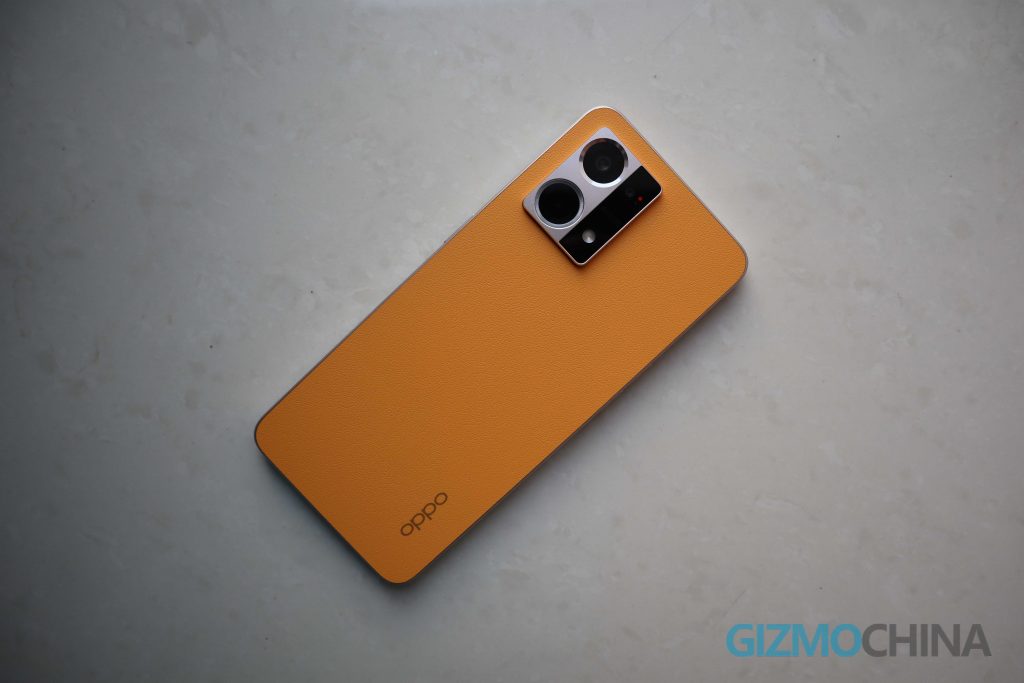
Realme has already teased the display and design details of the upcoming Realme 11 Pro+ smartphone that is set to debut on May 9th in China. In the past, the phone has already bagged multiple certifications including 3C, IMEI, TENAA, BIS etc. Now ahead of the launch, the Realme 11 Pro+ has appeared on the Geekbench database. It reveals the hardware specifications of the device.
Realme 11 Pro+ Geekbench listing
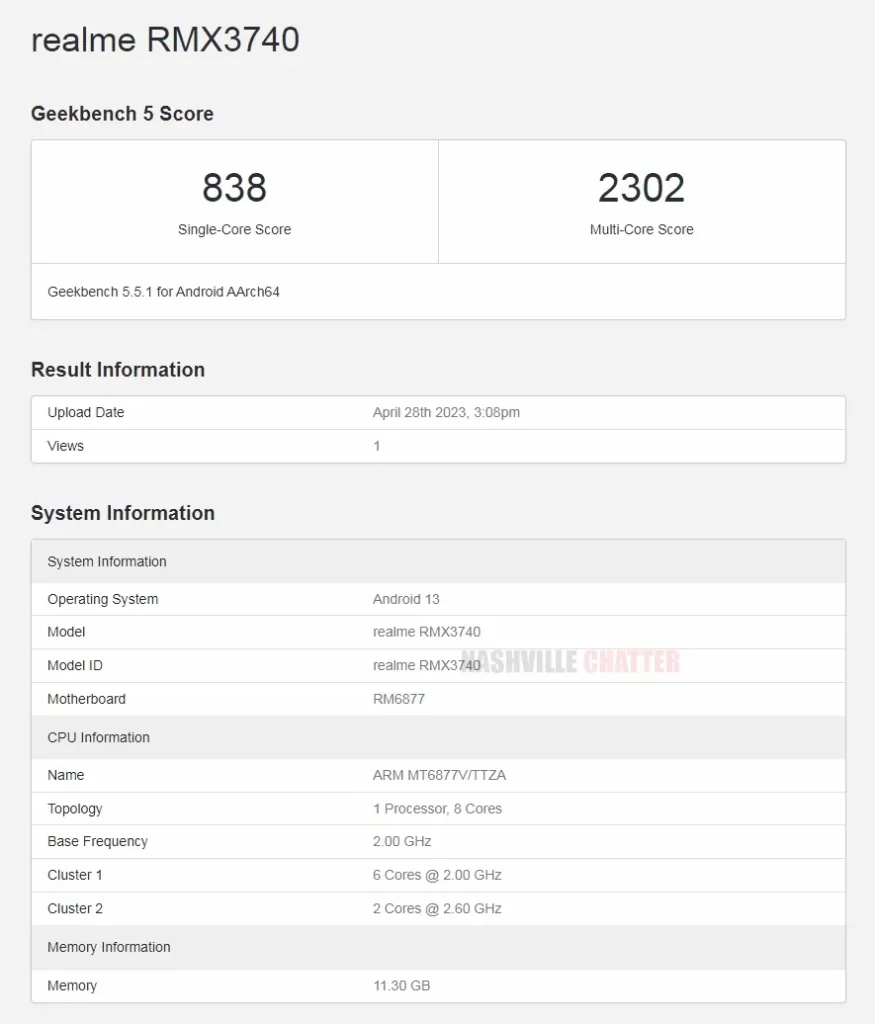
The Realme 11 Pro+ is listed with model number RMX3740 on the Geekbench database. This is the same model number that had appeared on 3C certification and more. As per the benchmark database, the smartphone is equipped with an MT6877V/TTZA processor. It is the MediaTek Dimensity 7050 which is the same as the Dimensity 1080 which MediaTek has now rebranded. The chipset comprises six cores at 2.0GHz and two cores at 2.60GHz. The Geekbench listing reveals 12GB RAM onboard and we can expect more variants at launch. Software-wise, the smartphone will ship with an Android 13 OS out of the box.
The Realme 11 Pro+ scores 838 and 2303 points in Geekbench’s single-core and multi-core test results.
The Realme 11 Pro+ is confirmed to come with a 10-bit AMOLED curved display with a 120Hz refresh rate. It will sport a circular protruding rear camera module which will be the first from the brand. The island will accommodate a 200MP main camera sensor along with two additional lenses. The upcoming offering will be available in Beige faux leather back panel with a centrally running vertical stripe with gold and silver stitching.
Remember the Redmi Max 100-inch TV launched last year? The smart TV was so big that it was impossible to fit it into an elevator for owners who live in high-rise buildings. Xiaomi had to deliver the smart TV with crane to such apartments. Despite this logistic challenge, the smart TV was unusually popular such that it was hard to come by. Welll, Xiaomi has launched a new model with a slightly smaller but still giant display.
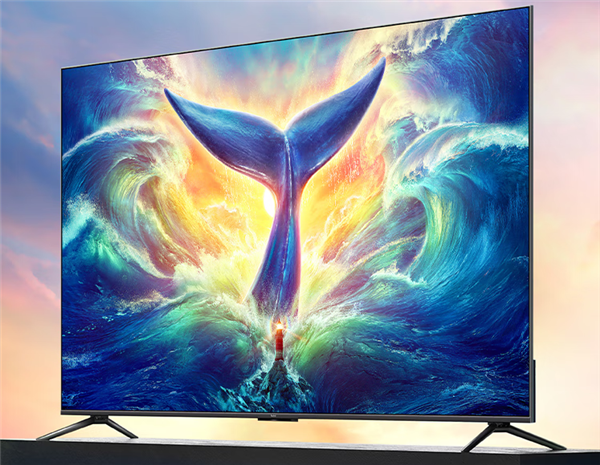
The Redmi Max 90-inch Giant screen TV comes with a 90 inches display. The smart TV adopts a special-shaped packaging design and can be placed diagonally into the elevator, making it easier to be carried into homes in high rise apartment blocks.
Redmi MAX 90-inch Giant Screen TV launched as the successor to the Redmi MAX-100-inch Giant Screen TV
In terms of the specs, the smart TV adopts a native 4K super large screen, supports 100-level partition backlight, and 4096-level precision dimming. The screen is tuned one by one at the factory, supporting 1.07 billion color display. Also, the Redmi MAX 90-inch TV supports e-sports-level 144Hz ultra-high refresh rate and is equipped with HDMI 2.1 next-generation game interface. It supports variable refresh rate (VRR) and automatic low-latency (ALLM), allowing users to play 3A masterpieces without lag.
Furthermore, the new gaint-screen smart TV is equipped with a 30W high-power speaker which can realize Dolby Vision and panoramic sound. Combined with the giant display screen, the smart TV offers the ultimate audio and video experience.
The MAX 90-inch giant-screen TV is equipped with a quad-core A73 processor paired with 3GB RAM while there is 32GB storage onboard. The smart TV also comes with support for Wi-Fi 6 and has fast network speed and low latency. Apart from the HDMI 2.1 port, other interfaces on the TV include HDMI 2.0, USB 3.0, USB 2.0, network cable port, and AV input, among others.
The Redmi Max 90-inch smart TV is presently on presale in China. The product carries a 7999 yuan ($1,156) price tag. It is expected to be launched officially on May 10.
Xiaomi is the only mainstream Android OEM that still continues to run a public beta program for its mobile software — MIUI. However, the company has been slowly limiting the availability of beta builds for the last few years.
Ever since the firm ended the MIUI Global Beta initiative in 2019, it has been restricting the program in China as well. The latest example of this comes from an official announcement from Xiaomi itself on its community forum.
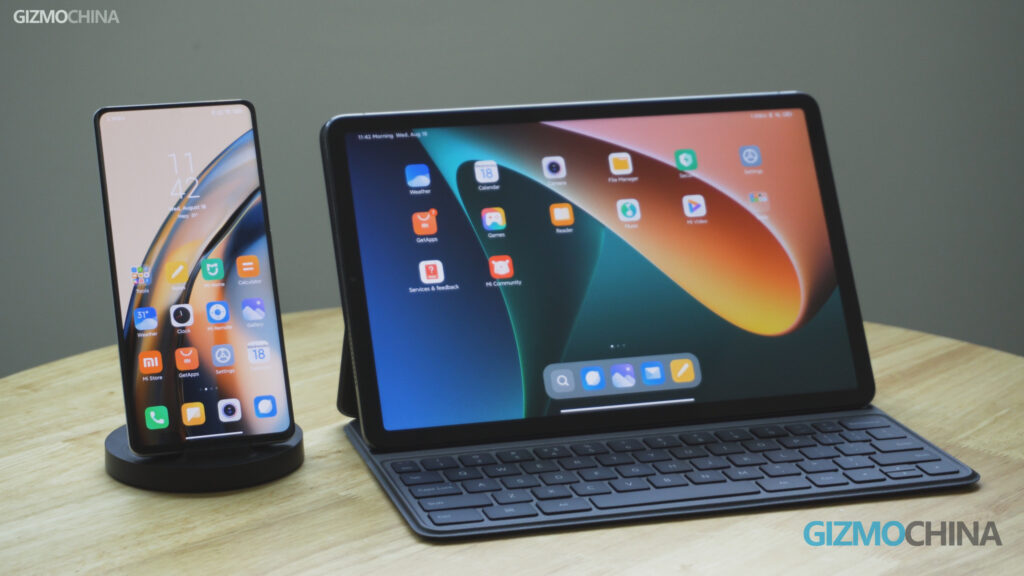
Earlier today, Xiaomi revealed that it will be suspending the MIUI beta program for its last-gen tablets, its first foldable, a value flagship, three lifestyle phones, and a couple of popular budget models.
The aforementioned smartphones and tablets will no longer receive weekly MIUI beta builds from August 4. By then, most of these products will be 2 years old.
Usually, when Xiaomi discontinues beta builds for a device, it signals the nearing of the end of the software support. These products may receive only one major software update in the near future.
This is sad news for Xiaomi Pad 5 series users since people stick with their tablets for more years than their smartphones. Xiaomi is historically known for providing poor software support for tablets. We expected it to change with its revival of tablets but that doesn’t seem to be the case.
The discontinuation of the beta initiative for these devices has no effect on global users. But if you are one of those few users who sideload these beta builds, it’s time for you to switch to the stable channel.
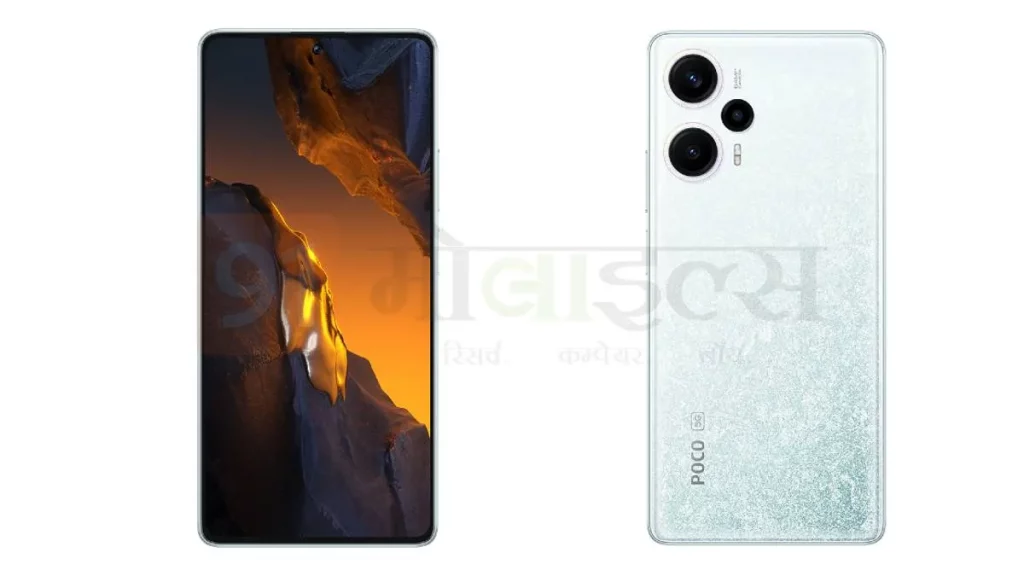
The highly anticipated POCO F5 is set to launch in the Indian market next month. However, prior to its release, a new leak has possibly revealed the starting price tag of the upcoming smartphone. So let’s have a look.
POCO F5 tipped to launch in India with a sub 30K INR price tag
For those unaware, the Chinese smartphone maker is set to unveil the F5 model in the region on 9th May 2023. There is also an F5 Pro variant, but it is believed to be an exclusive model to the European market. But prior to its official release, known tipster Paras Guglani, shared the pricing of the base model on Twitter. Looking at his tweet, @passionategeekz stated that the POCO F5 will go on sale in India for a price tag of 27,999 INR (roughly 342 US Dollars).
Unfortunately, the tipster did not mention the storage variant that carries this price tag, but it will likely be the base variant. Lastly, he also added that the brand will not be discontinuing the previous generation POCO F4 model after the launch of its successor. Although, it will probably be available with additional discounts soon. This was all the details shared by the tipster, but past rumors and reports have hinted at some of its key specs. Notably, this news also arrives shortly after a Paraguay pricing leak of the F5 series.
The POCO F5 will feature the Snapdragon 7+ Gen 2 SoC that is paired with up to 12GB of RAM and 256GB of internal storage. The rear will likely features a 64 megapixel triple camera setup, while the front sports a 6.67 inch AMOLED display with a Full HD+ resolution and 120Hz refresh rate. The front will even include a 16 megapixel selfie camera as well. A large 5,000mAh battery pack is expected to power this device that would support 67W fast charging.
The highly anticipated OnePlus Nord 3 has been making rounds online after being spotted on various leaks and rumors. Now, the latest report has found the upcoming mid range smartphone listed on a certification database, which hints at its imminent launch.
OnePlus Nord 3’s TKDN sighting hints at its near launch
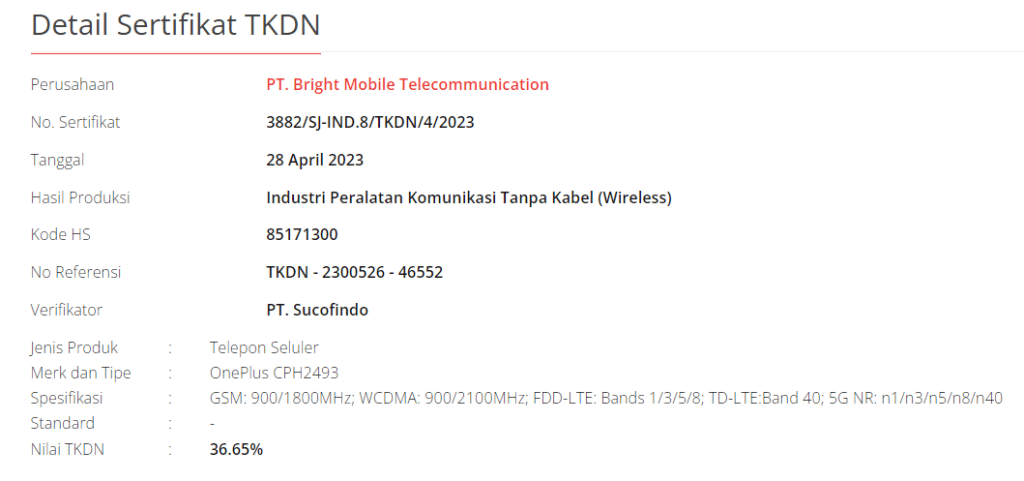
Just earlier this month, the Chinese smartphone maker’s Nord 3 model was spotted on multiple certification platforms like NBTC and TDRA. The latest sighting now arrives from TKDN, which lists the device with the CPH2493 model number. Looking at this listing, the OnePlus Nord 3 will arrive with support for various 5G bands like n1, n3, n5, n48, and n40. Unfortunately, the brand has yet to officially unveil this device, but we do have past rumors do hint at some of its supposed specification.
The Nord 3 is expected to be a rebranded version of the OnePlus Ace 2V, which was announced in China just last month. In other words, the Nord 3 will also sport a tall 6.74 inch AMOLED display that features Full HD+ resolution and 120Hz refresh rate. Under the hood, the Ace 2V is equipped with the MediaTek Dimensity 9000 SoC that is paired with up to 12GB of RAM and 256GB of internal storage. A large 5,000mAh battery pack powers the smartphone, which supports 80W fast charging.
On the rear, the Nord 3 is also expected to feature a 64 megapixel triple camera setup, which consists of an 8 megapixel ultra wide angle lens, and a 2 megapixel macro sensor. Meanwhile, the front will likely house a 16 megapixel selfie shooter. The device will run on Android 13 OS based OxygenOS 13.1.
POCO is gearing up to launch the F5 and F5 Pro smartphones in the global market on May 9th. The pro variant was spotted in leaked renders as well as an unboxing video recently. Now, the brand’s global branch has officially teased the upcoming offering on its Twitter handle.
POCO F5 Pro to come with WQHD+ display
3 years later, POCO's Pro flagship strikes back harder than ever. 🟡🚀
A true flagship experience that's hyper-powered in every way. How so?
The first teaser reveals that the POCO F5 Pro will come with a flat screen having a center-aligned punch-hole cutout and slim bezels. It will feature a WQHD+ display resolution. The power and volume rocker buttons are located on the right side. The USB-C port, SIM card slot, microphone, and speaker grille are located at the bottom of the device.
#POCOF5Pro to capture your heart and ignite your soul! 🟡
Another tweet shows the POCO F5 Pro’s back panel design. It has curved edges for a comfortable grip. Both sides of the back panel have carbon racing stripes. There is a rectangular camera module at the top left corner. It houses three camera sensors along with an LED flash. The teaser also confirms the presence of OIS on the smartphone. The upcoming offering is seen in Black color and we can expect more options at launch.
The latest teaser of the POCO F5 Pro suggests that it is indeed the rebranded Redmi K60 that debuted in China last December. Hence we can expect the device to pack the same core specifications. These include a 6.67-inch 2K 120Hz AMOLED display, a Snapdragon 8+ Gen 1 SoC, and a 5,500mAh battery unit with support for 67W wired and 30W wireless charging.
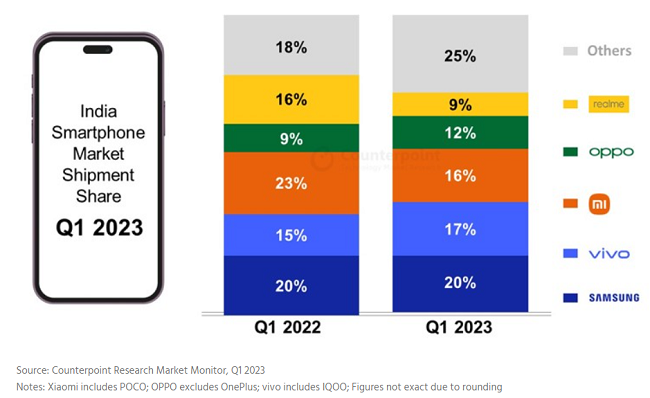
The smartphone market in India recorded its highest-ever decline in Q1 2023 i.e. the period from January to March. As per Counterpoint Research’s Market Monitor, smartphone shipments in the country fell 19 percent year-on-year to 31 million units in Q1, 2023. This is also the third consecutive quarterly decline in smartphone shipments.
Smartphone shipments in India see highest decline in Q1, 2023
The reason for the decline in the Indian smartphone market is said to be due to sluggish demand, growing preference for refurbished phones, and high inventory build-up from 2022. Additionally, there is a shift in consumer behavior with demand now centered around promotional periods. Counterpoint Research forecasts a similar situation in Q2, 2023 with growth returning only in the second half of the year due to faster 5G upgrades, easing macro pressure, and the festive season.
As per the Counterpoint Research’s report, the Rs 30,000 – 45,000 and above Rs 45,000 price segments recorded 60 and 66 percent growth in shipments respectively. Meanwhile, the share of shipments in the Rs 10,000 to Rs 30,000 slipped by as much as 35 percent in Q1. 5G smartphone shipments crossed 40 percent for the first time.
South Korean major Samsung led the smartphone market in India in Q1, 2023 for the second straight quarter with a 20 percent share. It also led the 5G phone shipments with a 24 percent share. Vivo came in second place with a 17 percent share. Xiaomi fell to the third spot with a 16 percent share and a 44 percent year-on-year decline. This is due to weak demand in the sub-Rs 10,000 segment, over-dependence on online channels, and a confusing portfolio. OPPO bagged the fourth position with 12 percent share whereas Realme slipped to the fifth place with a 52 percent YoY decline.
Additionally, apart from the top five lists, OnePlus became the fastest growing brand with 72 percent YoY growth driven by Nord CE 2 Lite and OnePlus 11 series. Apple also clocked 50 percent growth. The Cupertino-based tech giant registered 32 and 62 percent shares in the premium and ultra-premium segment respectively.
Realme is gearing up to launch the Realme 11 series in China on May 10th. The lineup is expected to comprise a standard, pro, and pro+ variant. Ahead of the launch, the brand has started dropping teasers of the Realme 11 Pro+. It will arrive as the successor to the last year’s Realme 10 Pro+.
Realme 11 Pro+ display teased
Previously, Realme teased the design of the Realme 11 Pro+. Now the brand’s latest teaser reveals the display details of the upcoming offering. The device will retain the curved screen with a 61-degree curvature from its predecessor. It is confirmed to feature a 10-bit AMOLED display with a 120Hz refresh rate. The smartphone will have a 2,160Hz PWM dimming. The Realme 11 Pro+ is said to offer a 2.33mm ultra-narrow chin and a center-aligned punch-hole display.
The latest teaser does not reveal any additional details about the Realme 11 Pro+. The smartphone is confirmed to sport a circular protruding rear camera module which will be the first from the brand. It will feature a 200MP main camera sensor along with two additional lenses. The upcoming offering is also confirmed to come in a Beige faux leather back panel option called ‘Sunrise City’. It also has a centrally running vertical stripe with gold and silver stitching. Additionally, the frame of the phone has a gold color.
We can expect Realme to tease more details about the Realme 11 series in the coming days leading up to the launch event. As for the core specifications, the Realme 11 Pro+ is rumored to be powered by a Dimensity 7-series processor coupled with up to 16GB RAM. It is tipped to be backed by a 5,000mAh battery unit with support for 100W fast charging.
Just recently, HTC had launched the Wildfire E2 Plus, which is a budget grade device . But now, it appears that the company is also working on a new mid range smartphone in the market soon. So here are all the details.
Unknown HTC phone recently surfaced on Bluetooth SIG
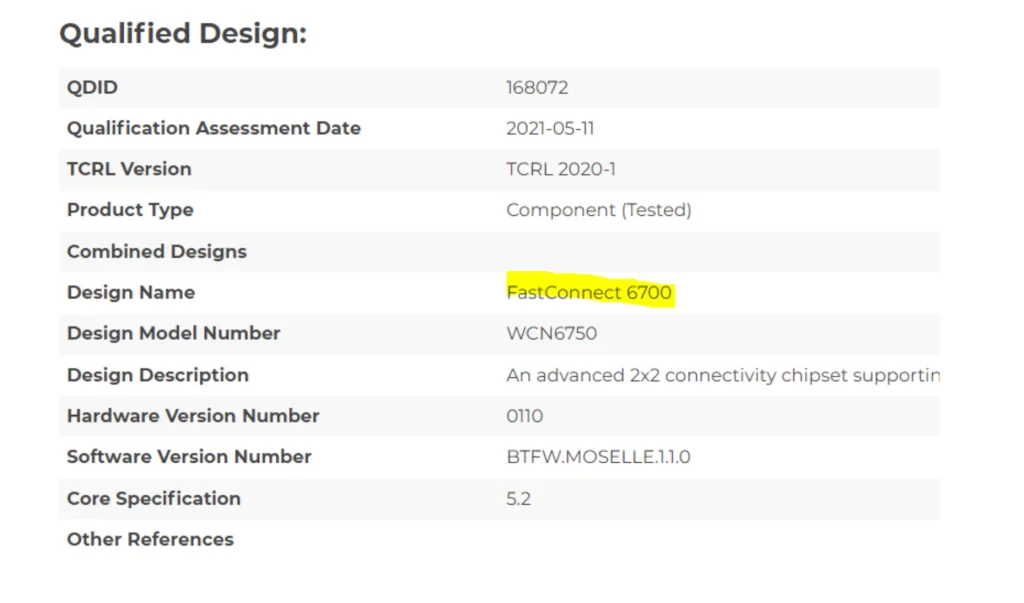
The smartphone maker is apparently working on a new handset which was recently spotted online. Unfortunately, we still have no idea what this device will actually be called, but we the new report has just revealed some of its key specifications. The new HTC smartphone has just been spotted on Bluetooth SIG carrying the model numbers, 2QC9200, 2QC9100, and 2QCB100. In other words, the company’s upcoming smartphone will be launching in at least three markets.
The listing also revealed that it will arrive with support for Bluetooth 5.2 and WiFi 6E. Under the hood, the HTC smartphone will reportedly be equipped with a Qualcomm Snapdragon 700 series chipsets. Although, it is unknown which exact chip model will ship with the new HTC phone. Furthermore, the device will reportedly also feature a FastConnect 6700, which is a 14nm 2×2 Mobile Connectivity system to accelerate WiFi connectivity.
As of right now, there are only three Snapdragon 700 series chips, which include the Snapdragon 778, Snapdragon 778+, and Snapdragon 7 Gen 1 SoC. In other words, we can narrow it down to these chip models. This is all the information we have regarding this matter, so stick around for more as we will be providing more updates when additional information is available regarding this device.
A couple of years ago, Realme launched a lifestyle sub-brand named TechLife to launch AIoT devices. At the beginning of this month, the company announced that TechLife has been rebranded to Narzo. The Narzo N55, which was announced after the rebranding, is the company’s first Narzo N-series phone. The N55 is aimed at people who are looking for a stylish phone with lots of features on a phone that’s priced under Rs 12,000. Continue reading ahead to learn what’s in store for people looking forward to purchasing the Narzo N55.
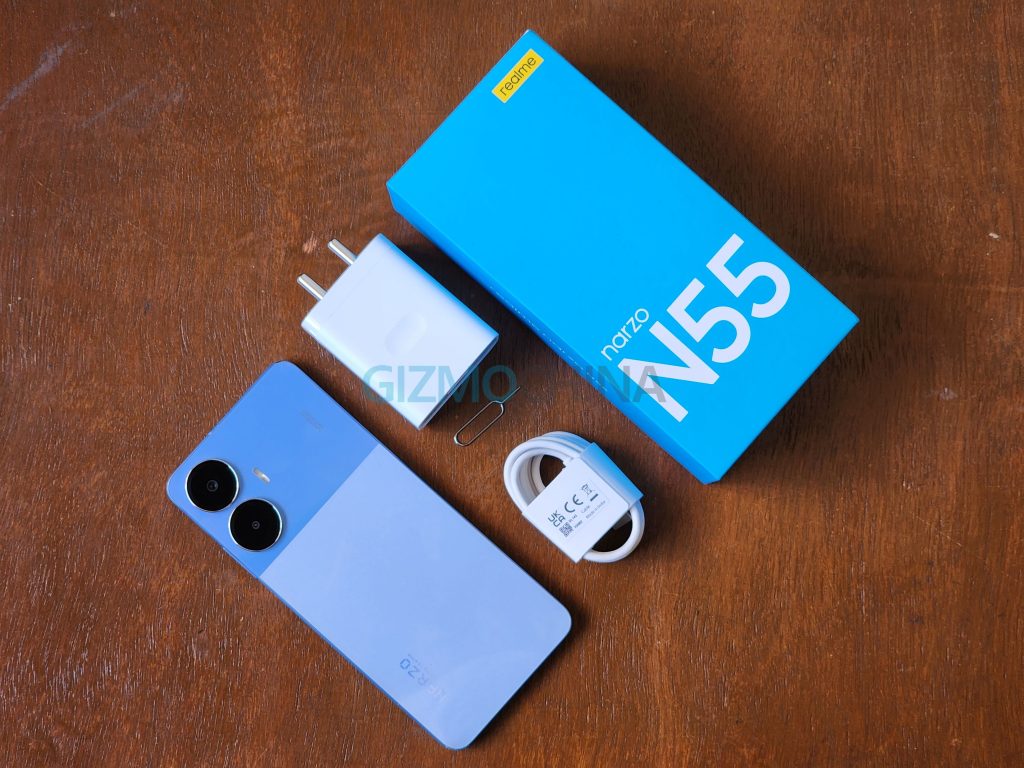
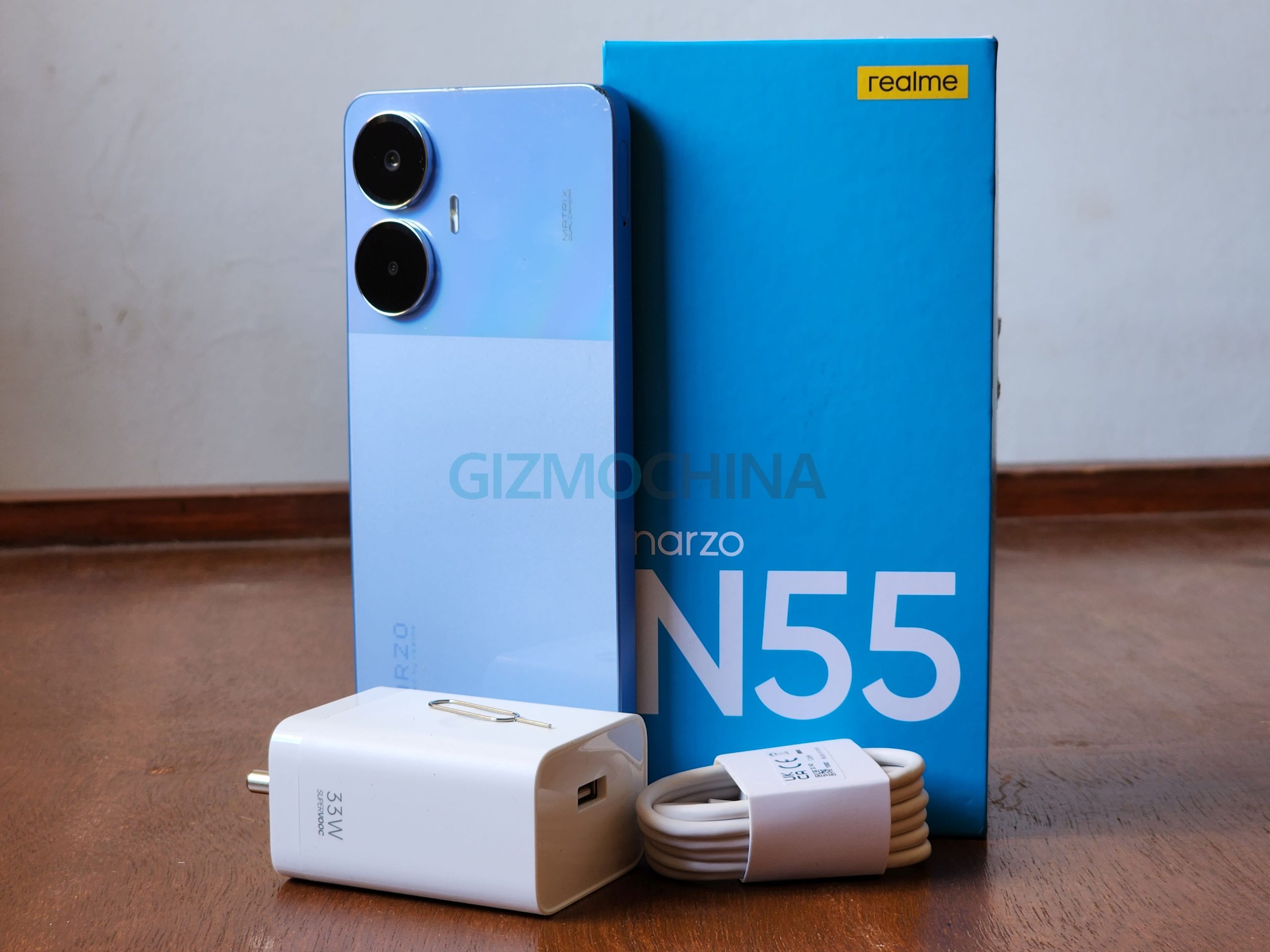
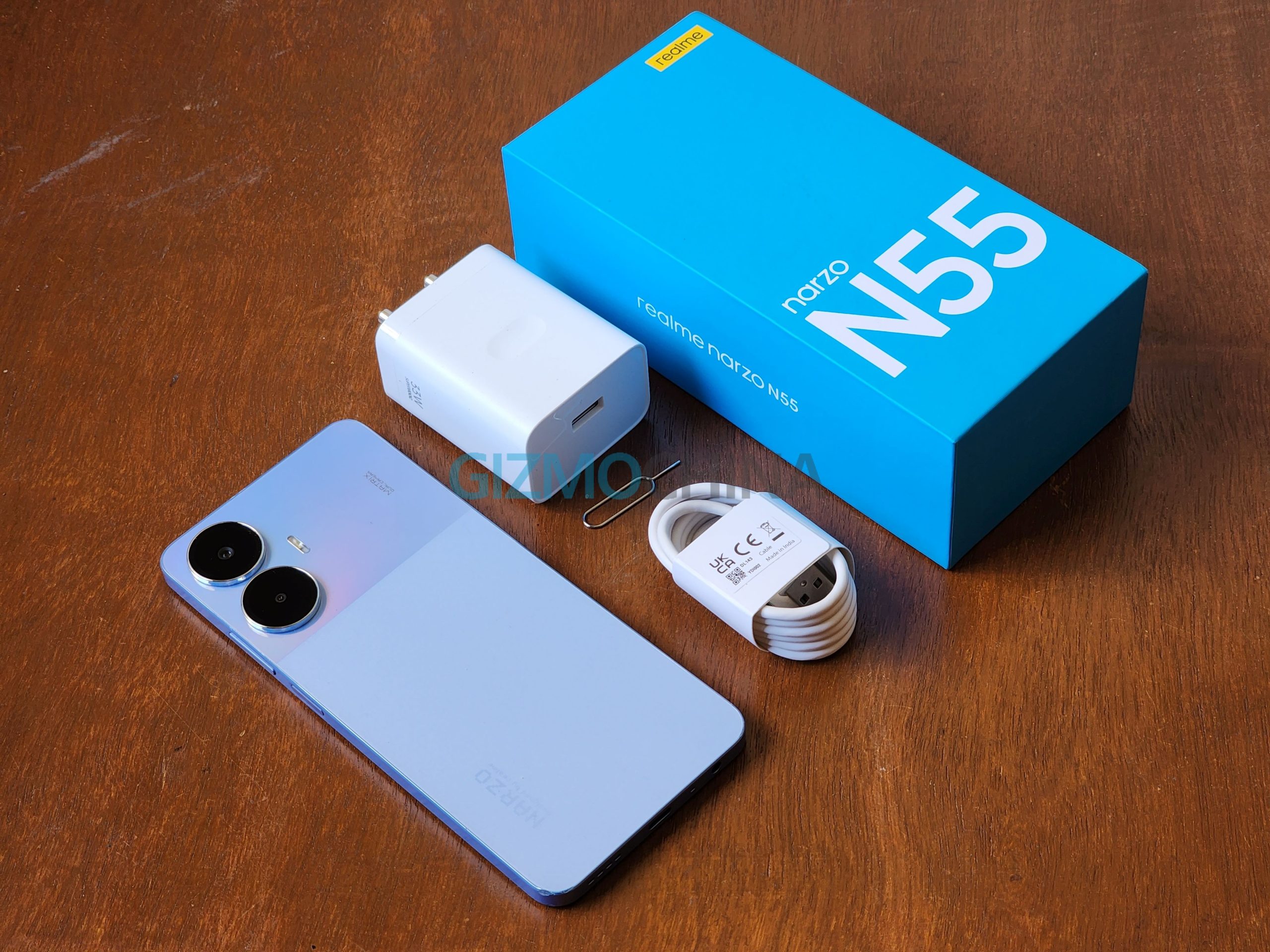
Realme Narzo N55 review: What’s in the box?
Realme Narzo N55
The Realme Narzo N55 retail package includes the following items:
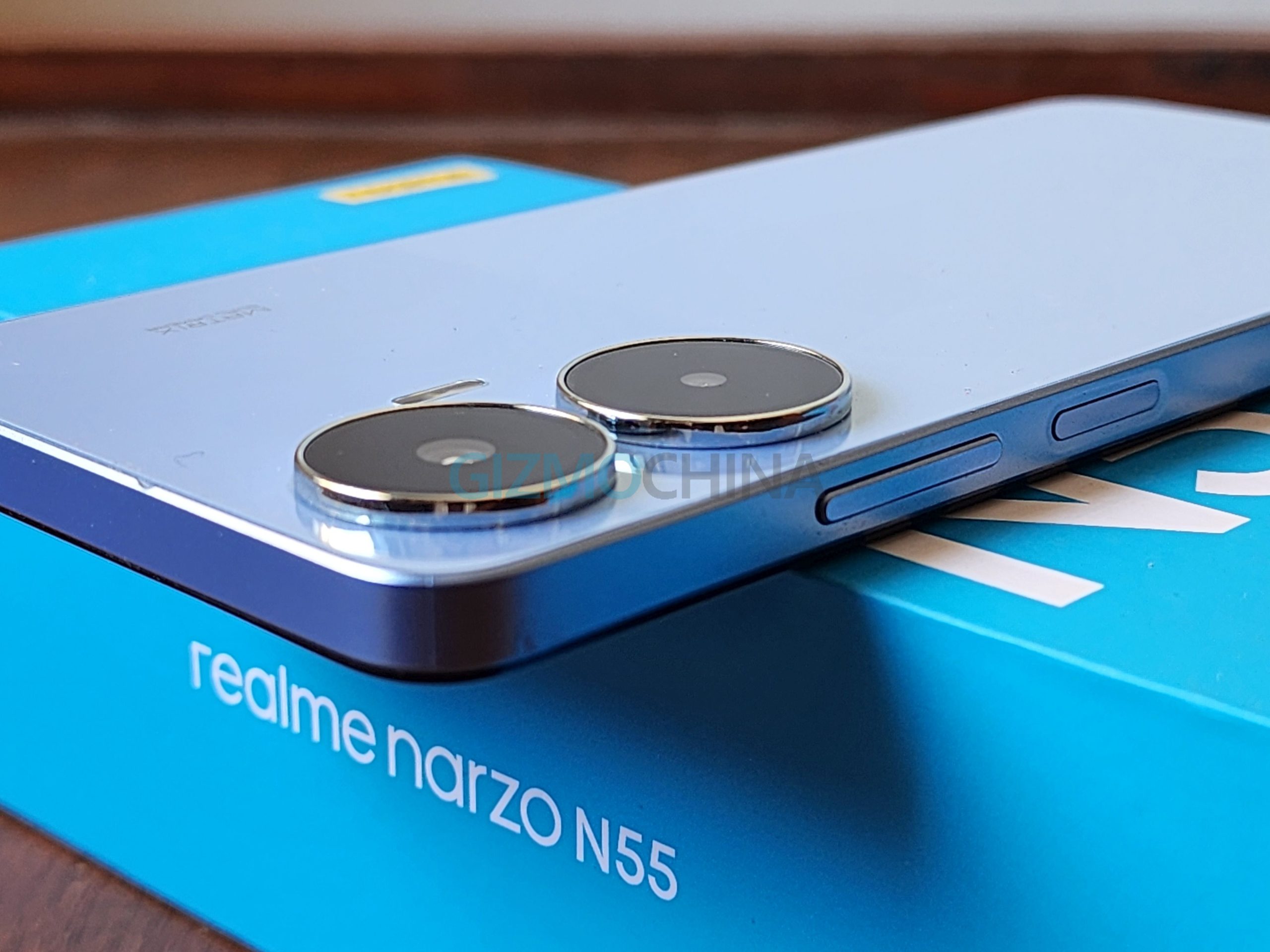
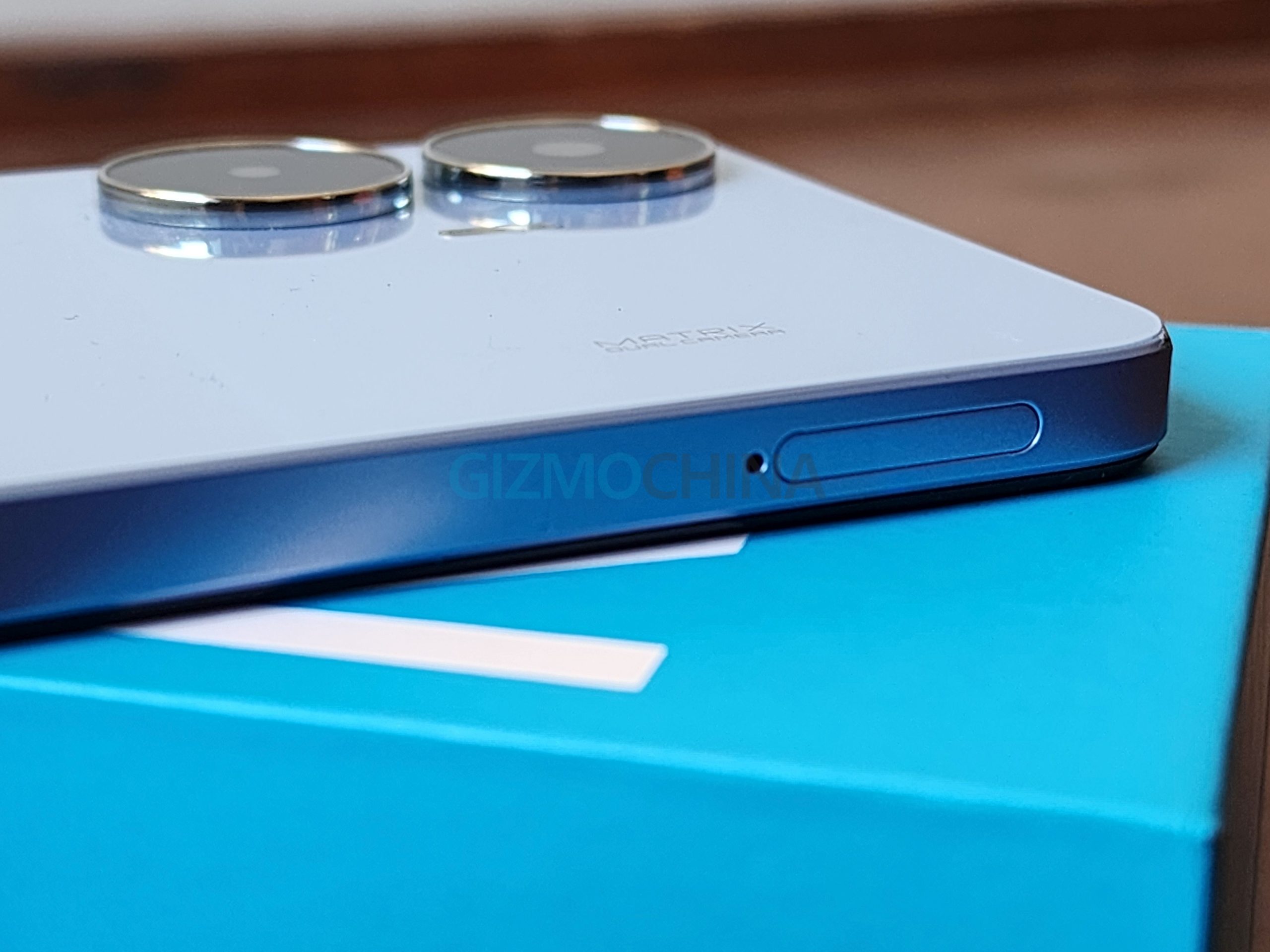
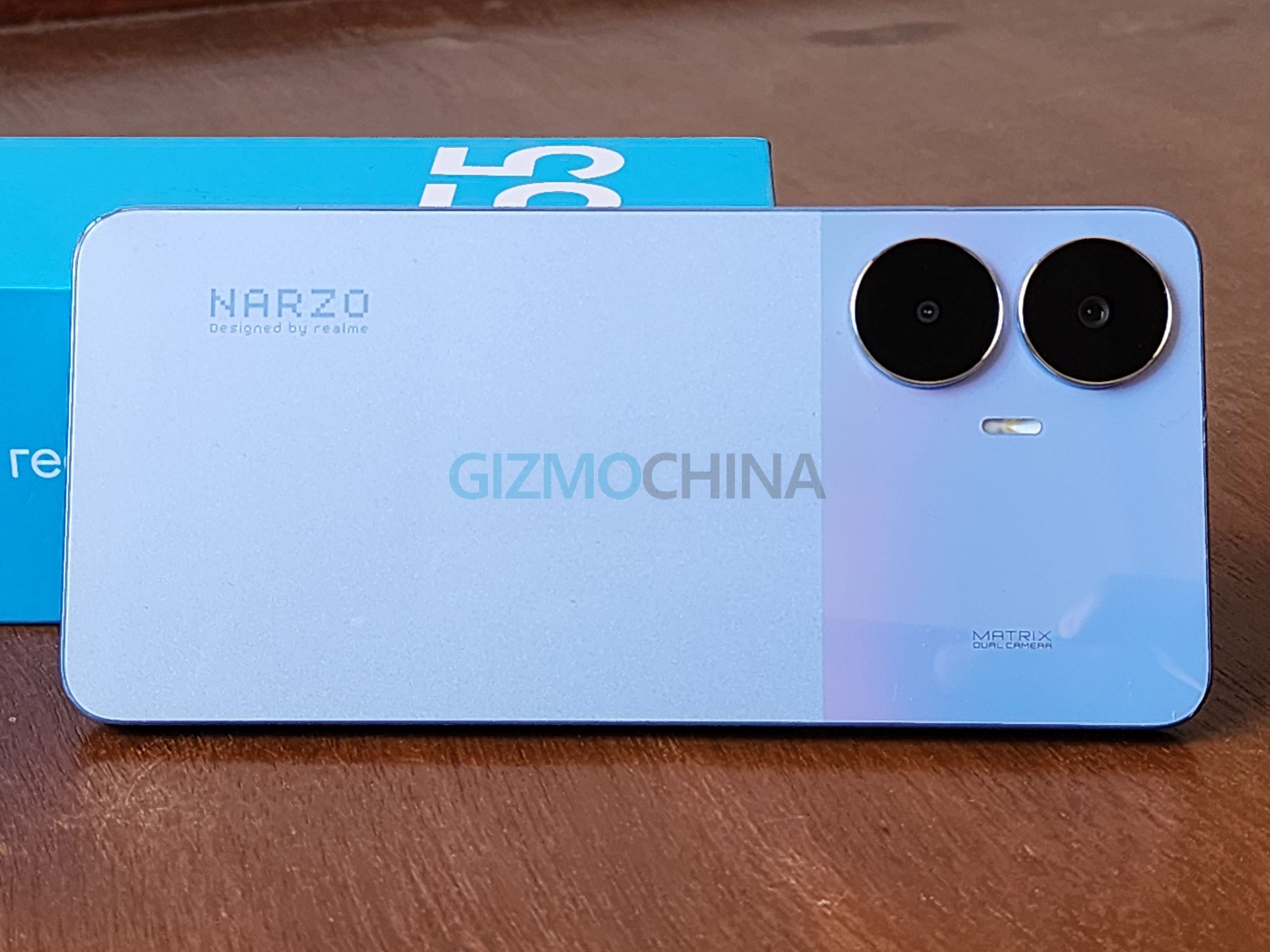
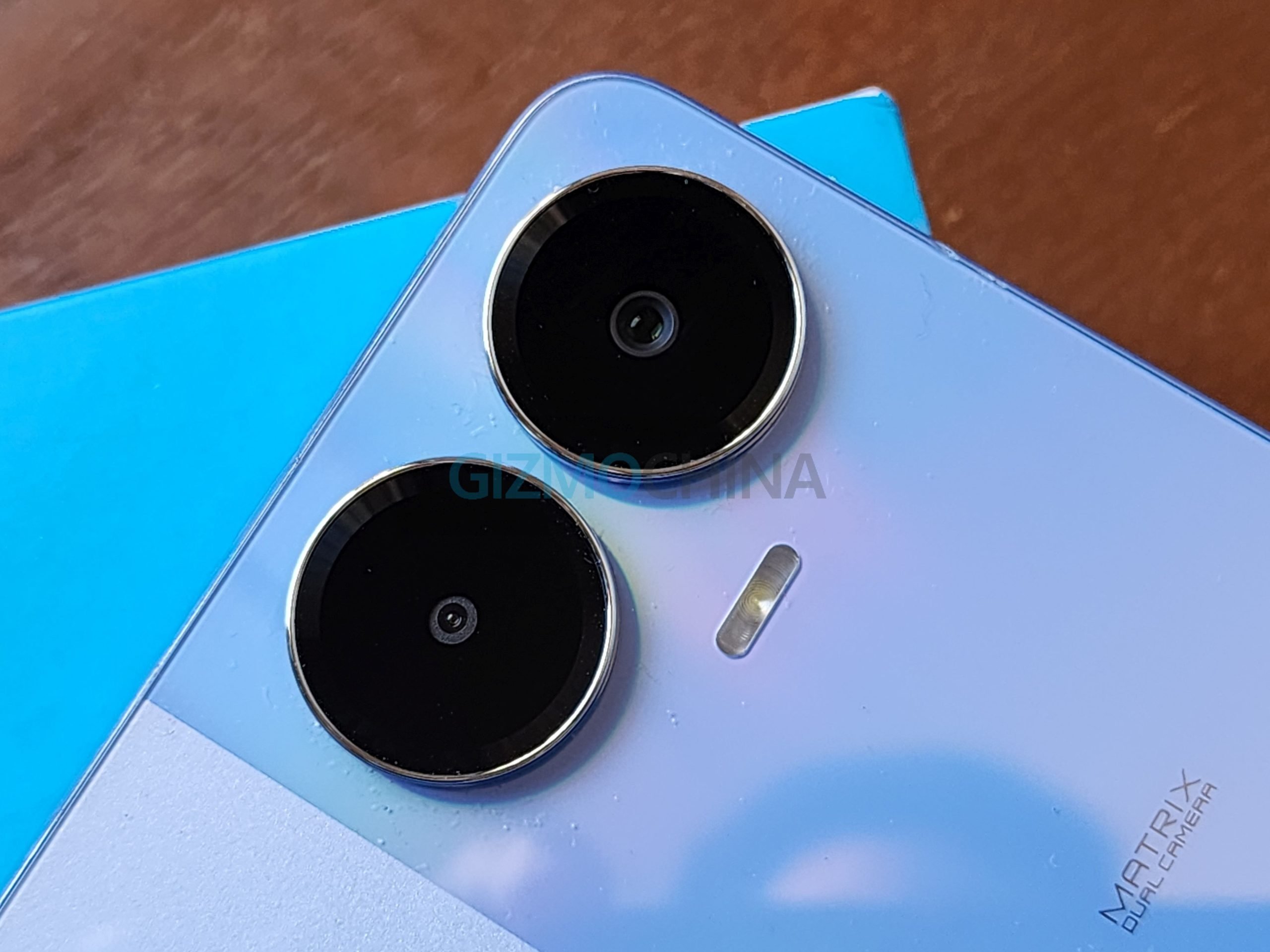
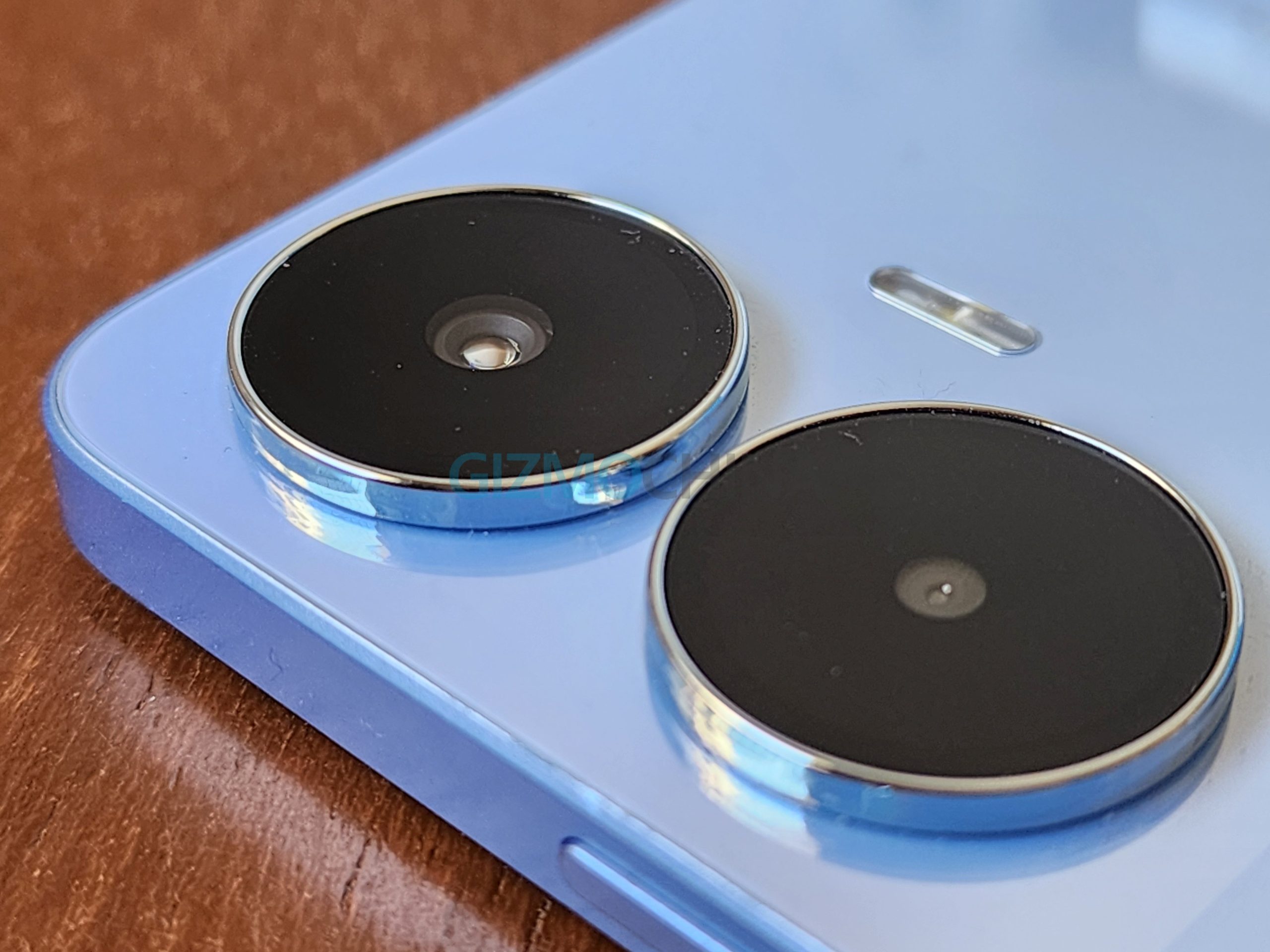
Realme sent us the Realme Narzo N55 in Prime Blue edition, which sports an attractive dual-tone design and flat edges. In Realme’s words, it is dubbed “Dynamic Splicing Design.” The top portion housing the cameras has a slightly darker finish, whereas the remaining portion has a lighter shade with a subtle shimmery pattern. The rear shell and frame of the device are made from polycarbonate material. The thickness of the device is 7.89 mm, and it weighs 189.5 grams. In terms of design, I can say that Realme has done a good job in the design department on the N55.
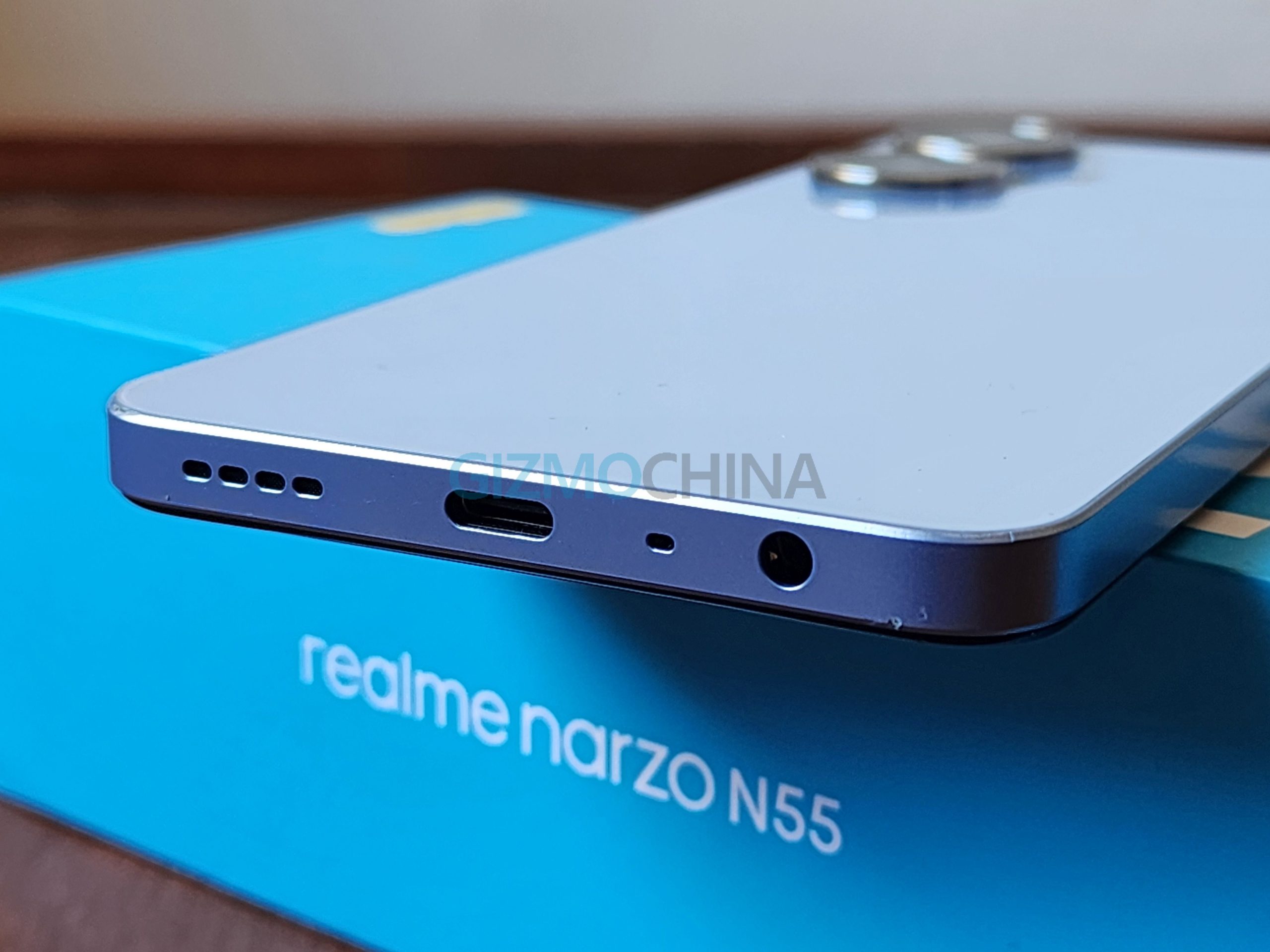
The top edge of the Realme Narzo N55 is barren, whereas its bottom features a speaker grille, a USB-C port, a microphone, and a 3.5mm headphone jack. The left side of the phone features a SIM slot, while its right edge has a volume rocker and a power key, which are integrated with a fingerprint sensor.
The phone’s retail package doesn’t come with a protective case, so I recommend purchasers of this phone consider buying one to prevent it from getting damaged if it falls.
Realme Narzo N55Realme Narzo N55Realme Narzo N55
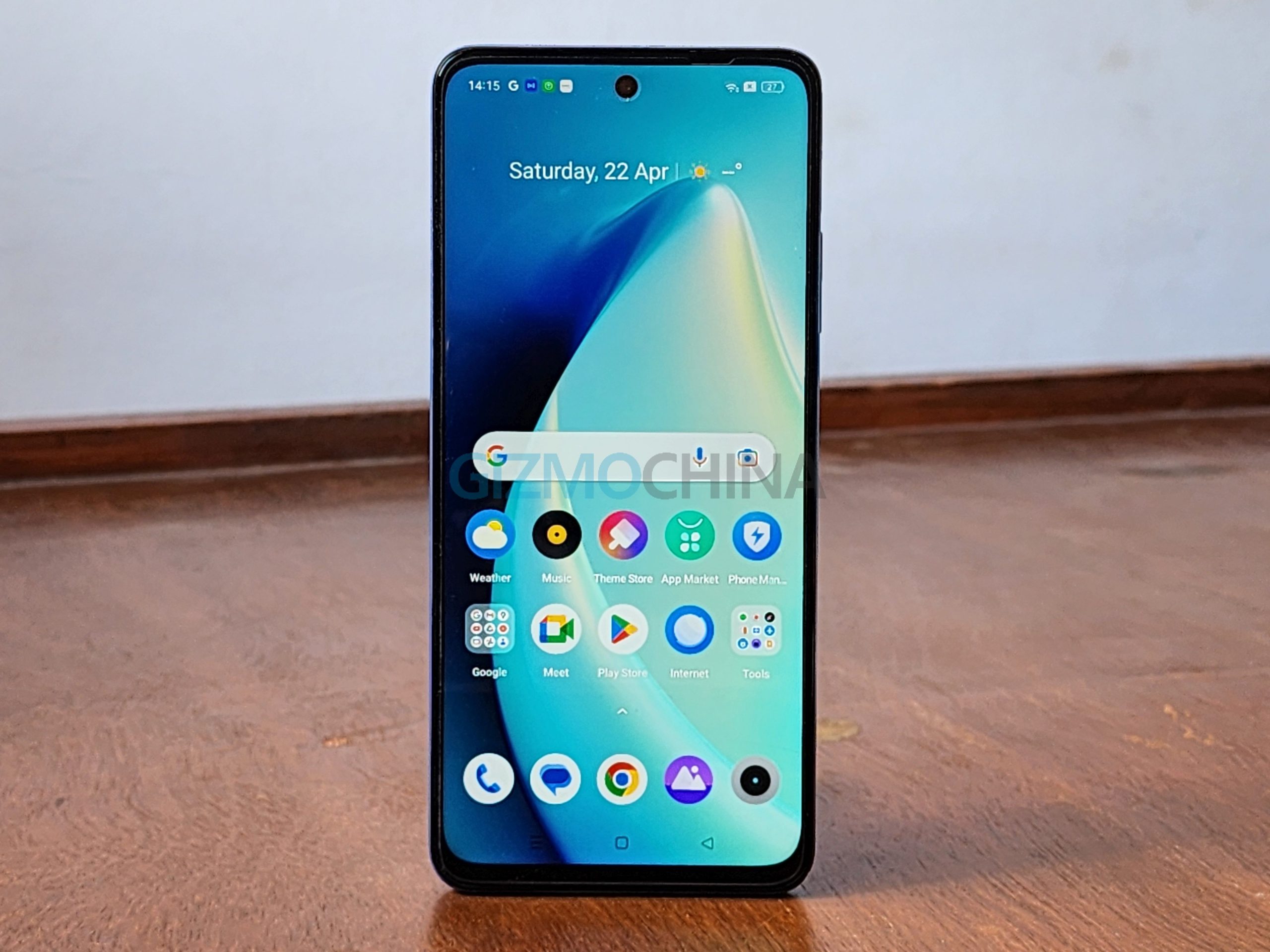
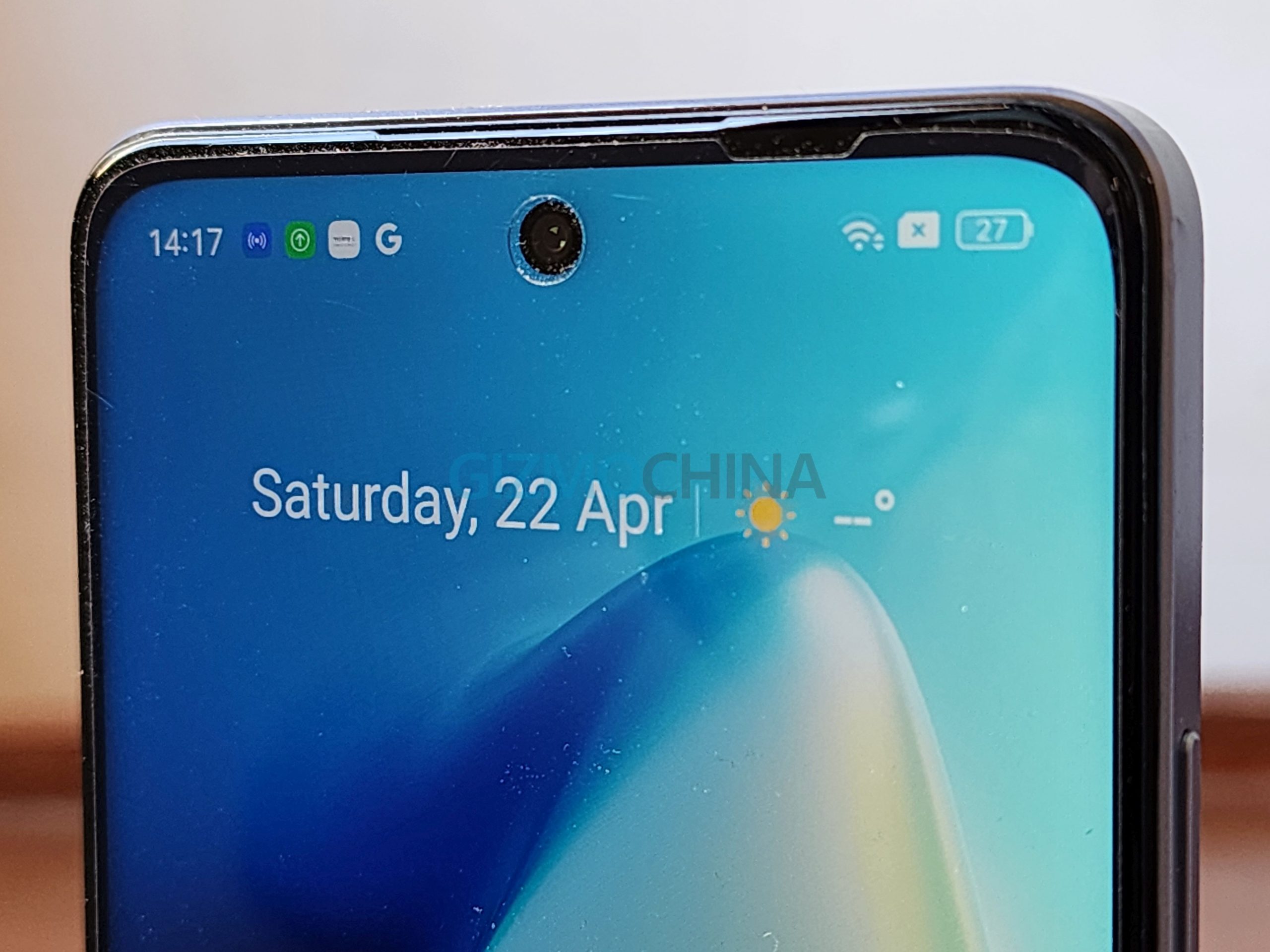
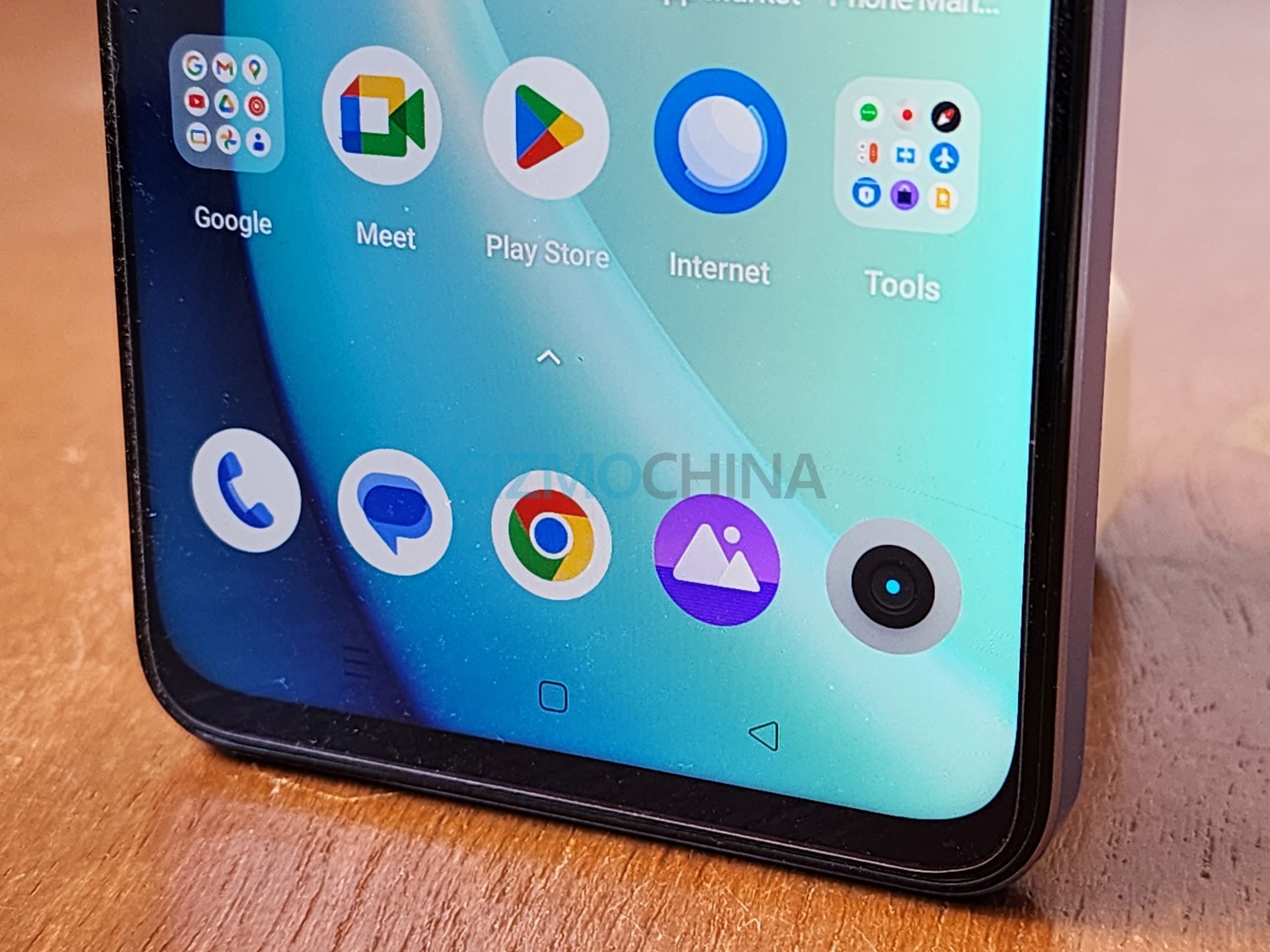
Moving on to the display, the Narzo N55 is fitted with a massive 6.72-inch ISP LCD panel with a punch-hole design and slim bezels, which allows it to offer an impressive screen space. The screen produces an FHD+ resolution and a 90Hz refresh rate. There are three refresh rate options: Auto Select, High (90Hz), and Standard (60Hz).
The screen color mode available in display settings provides Vivid and Natural color profiles. The former produces richer colors, while the latter offers softer colors. Both color schemes offer color temperature options like Cooler, Default, and Warmer. The phone supports Widevine L1 DRM. The Narzo N55, with its large display, is a good device for content consumption. While the screen is quite bright, as it offers up to 680 nits of brightness, users are likely to encounter viewing issues under direct sunlight, which is a common issue on most phones in this price segment.
Performance and Software
MediaTek Helio G88
5,000mAh battery
4GB / 6GB of LPDDR4x RAM
33W charging
64GB / 128GB of eMMC 5.1 storage
Android 13 OS with ColorOS 13
12GB of virtual RAM
Realme Narzo N55Realme Narzo N55
The Realme Narzo N55 is powered by the MediaTek Helio G88, which is a 12nm chip. The review unit, which was provided to me, has 6 GB of RAM and a large storage capacity of 128 GB. There is a dedicated microSD card slot onboard. In addition, it offers up to 12 GB of virtual RAM.
The Narzo N55 comes equipped with a decent 5,000mAh battery. Using the 33W charger that came with the device, it took approximately 73 minutes for the phone to fully charge from 0 to 100 percent.
The Narzo N55 is good enough for playing lighter games. The Realme UI 4.0-based Android 13 feels smooth and feature-rich until you open the app drawer, where you can find bloatware, such as Hot Apps, Hot FreeGames, and Hot Games, to name a few. While these cannot be removed, other preloaded apps like ShareChat, Moj, Josh, and so on can be uninstalled. Otherwise, the overall performance of the device is smooth and offers a clutter-free experience.
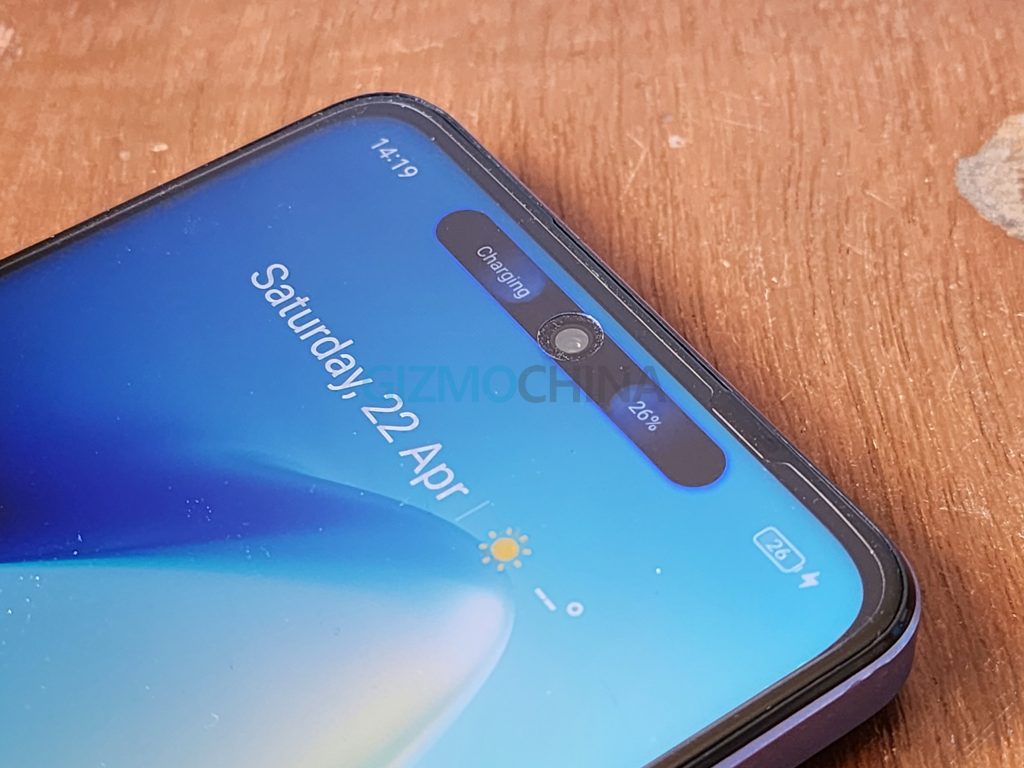
The review will be incomplete without talking about the Mini Capsule feature, which seems to be inspired by Apple’s Dynamic Island available on iPhones. The Mini Capsule feature can show charging status and data usage limits on a capsule-like screen space occupying the left and right sides of the display punch-hole.
Realme Narzo N55’s mini-capsule feature
The Mini-Capsule as well as other features like Dual-Mode Audio and Sleep Capsule are available through the Realme Lab section in Settings. With Dual-Mode Audio, you can connect both wired and wireless headphones to enjoy music through either option. Meanwhile, Sleep Capsule is a night mode that limits access to certain apps. The Realme UI 4.0 also includes a feature named “Auto Pixelate” that, upon a single tap, will promptly identify and pixelate profile names and photos in screenshots.
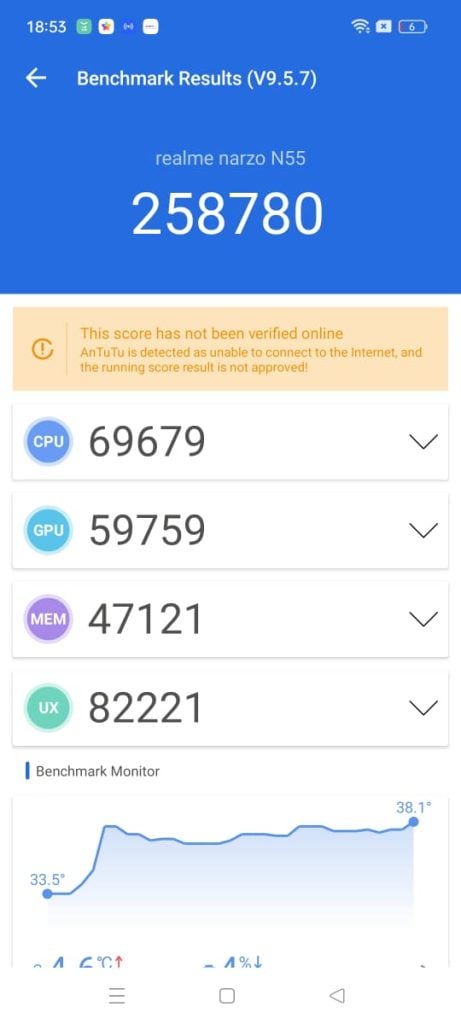
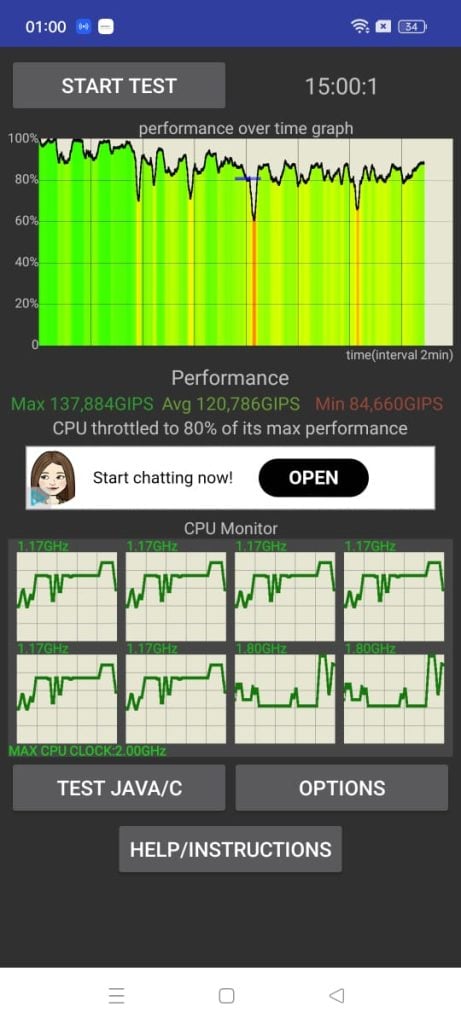
Here is a look at the Narzo N55’s performance on Geekbench, AnTuTu, and CPU Throttle.
The Narzo N55 has an 8-megapixel camera on the front. Its back panel has a flagship-grade 64-megapixel OmniVision OV64GB camera and a 2-megapixel B&W sensor. The N55 comes with the same primary camera as the Realme GT Master Edition, a more expensive phone. However, to fully utilize the capabilities of the camera sensor, it is also crucial to have a powerful chipset like the Snapdragon 778G that’s available on the GT Master Edition. While the Helio G88 is a good chip, it is not as powerful as the Snapdragon 7-series chip, which is usually on phones priced around Rs 25,000. Nevertheless, the N55 does not really disappoint in the camera department.
The camera app on the N55 offers modes like Night, Street, Video, Photo (default), Portrait, 64MP, Pano, SlowMo, Timelapse, and Pro. The man snapper offers four digital zoom shorts, such as 1x, 2x, 5x, and 10x.
Potrait mode (object)With night modeWith night modeSelfie with portrait modeselfie with portrait mode
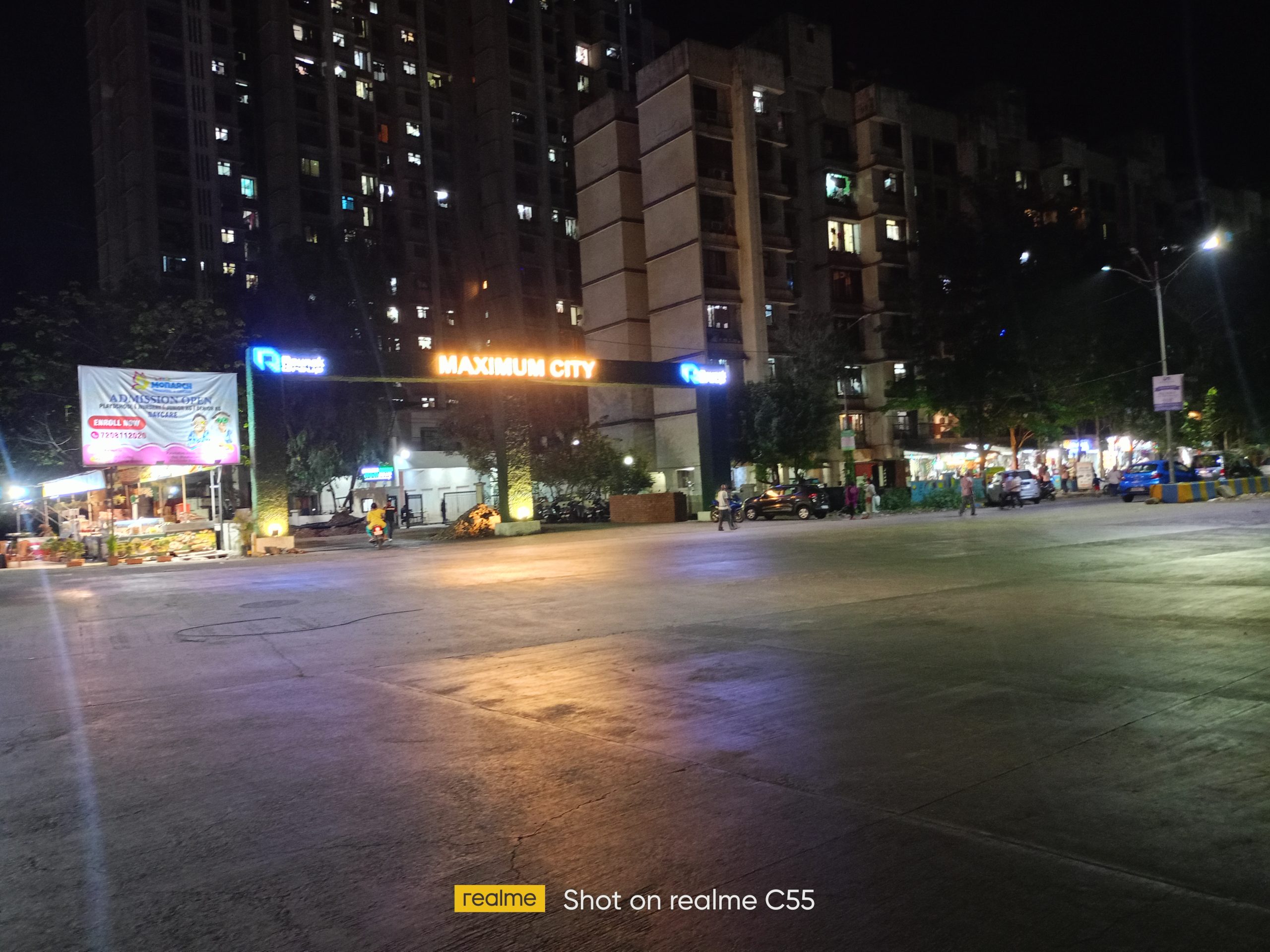
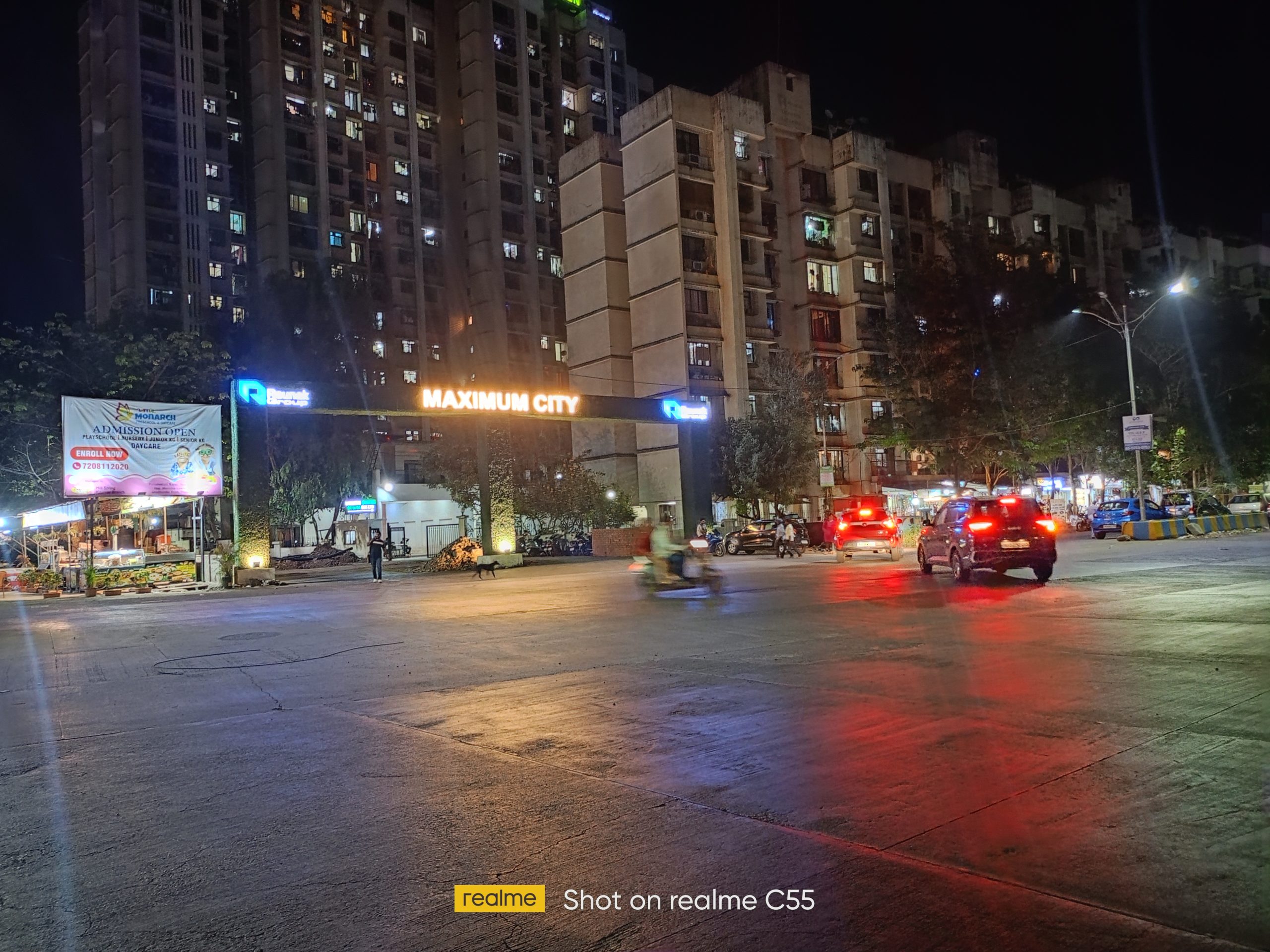
By default, the primary camera captures 16-megapixel photos with good detail and colors that are slightly saturated. The close-up images were sharp and distinct, exhibiting minimal noise and excellent details. If the lighting conditions are poor, the night mode can be useful in reducing noise, but this may also result in a decrease in image sharpness. Additionally, taking a photo in the night mode takes longer, around 4-5 seconds, and requires holding the phone still. The phone supports up to 60fps 1080p video recording. It does not offer any sort of stabilization feature.
When there is ample light, the 8-megapixel selfies captured turn out well, exhibiting natural colors. When using the front-facing camera’s Portrait mode, the edge detection feature was typical for this category. However, selfies taken in low light appeared slightly soft and noisy, and the edge detection feature was not precise.
The Realme Narzo N55 possesses a solitary speaker located at the bottom. It includes a 200% volume boost capability that appears to amplify high-frequency sounds. However, the rise in volume is not particularly substantial.
Verdict
Realme Narzo N55
To sum up, the Realme Narzo N55 is an attractive device that tries to do many things at an affordable price. Some may feel that the device should have included an AMOLED display, but doing so would have increased its price. Its features, like a flagship-level camera, 33W fast charging, a big battery, a decent processor, and a massive display, are enough to recommend it to someone who is looking for a budget-friendly device.
The Narzo N55 competes with the likes of the Tecno Spark 10 Pro, the Redmi 12C, and the Moto G32. There are two 5G phones as well with similar pricing, such as the Vivo T2x and Blaze 5G. While these offer 5G connectivity, their other specs could be inferior to the N55.
Variants, Price and Availability
The Realme Narzo N55 is available for purchase through Amazon and Realme India’s website. It is also available for purchase through offline stores across India. It comes in the following variants and color options:
Disclaimer: All of the opinions in this Realme Narzo N55 review are mine and based on my own experiences. There has been no editorial input from Realme.
Apple continues to make waves in the smartphone market with the iPhone 14 series. This year, the company has particularly drawn attention with the Dynamic Island feature in the Pro models, likely experiencing one of the brightest periods in its history. However, when it comes to technology, being at the top is not enough.
You must always look ahead and work on exciting models that will thrill users. Moving in this direction, the US tech giant has been working on the iPhone 15 series for some time now. Naturally, some information leaks out during this process, and we can get an idea about the new iPhones before they are even introduced. According to latest reports, the iPhone 15 Pro is still expected to feature an ‘Action’ button instead of a mute switch. Here are the details…
iPhone 15 Pro Still Expected to Feature ‘Action’ Button Instead of Mute Switch
When it comes to design, smartphones have not been showing much difference from each other for a while now. Although general designs and rear camera placements vary, the front side is almost entirely made up of the screen. This situation leads to each new model feeling the same as the previous one. Manufacturers, not wanting to lose the sense of innovation, frequently try different designs.
Source: 9to5Mac
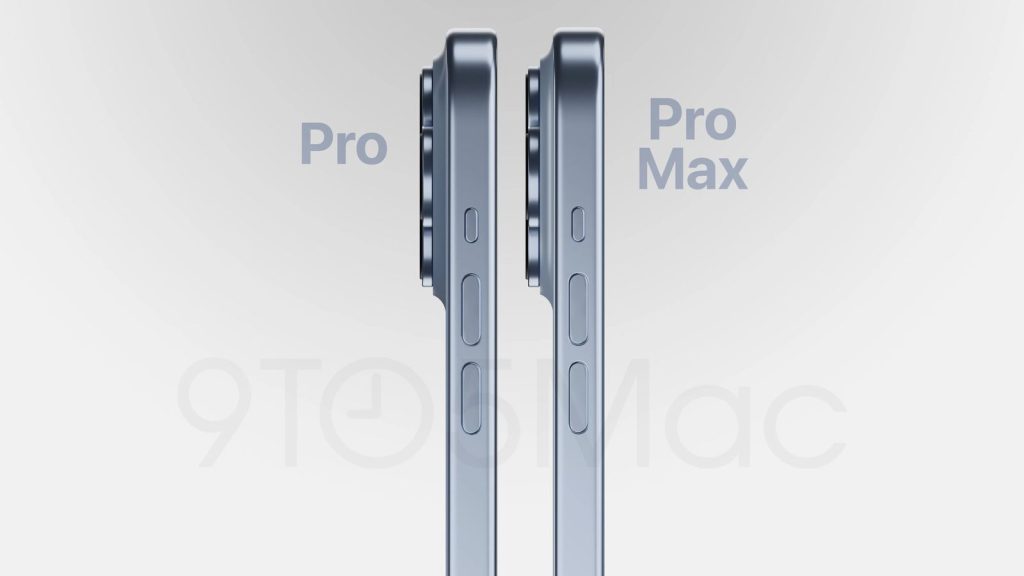
For example, it had been said for some time that Apple would get rid of mechanical buttons and use solid-state buttons with vibration feedback. However, it was learned that the company is not too keen on this change and postponed it to the iPhone 16 series to be released in 2024. Nevertheless, this does not mean that there will not be a significant change. Apparently, Apple is preparing to sacrifice a feature that users love in order to make the necessary innovation.
The upcoming iPhone 15 Pro will come with a previously leaked customizable “Action” button. The new devices will feature two mechanical volume buttons and an additional mechanical button that replaces the Ring/Silent switch. This feature will be similar to the “Action” button already used on the Apple Watch Ultra, and users will be able to assign any desired function to this button.
With this development, it is now confirmed that the difference between the iPhone 15 Pro and standard models will increase even more. For many years, Apple did not make any distinction between the two models, apart from the camera and battery, and launched almost similar models. However, with the iPhone 14, we saw processor and design differences exclusive to the Pro models. It seems that this change will become even more significant in the future.
As we get closer to the announcement of the Samsung Galaxy Z series of foldable smartphones, there have been a number of new rumors and reports (1,2) regarding the Galaxy Z Fold 5 and Galaxy Z Flip 5. Now, the latest leak has possibly revealed the entire specification of the higher end Fold model. So let’s have a look.
Galaxy Z Fold5
• 7.6 inch inner & 6.2 inch outer 120hz Amoled Displays • Brighter than the previous model • Snapdragon 8 Gen 2 for Galaxy • 12gb LPDDR5 ram + 256/512/1TB UFS 4.0 storage • 50/12/10 cameras • Up to 8K 30fps video recording • Improved Speakers … pic.twitter.com/4VIws0k7Je
Here’s the entire specs list of the upcoming Samsung Galaxy Z Fold 5
The news arrives from tipster @TheGalox_ who shared the latest information on Twitter. Looking at the tweet, the leak shared that the Galaxy Z Fold 5 will sport a tall 7.6 inch AMOLED display for its primary display and a 6.2 inch AMOLED external screen as well. Both panels will feature 120Hz refresh rate. These screens will also be brighter than the previous gen model. Notably, the Galaxy Z Fold 5 will even house an under display selfie camera.
Under the hood, the flagship premium grade foldable phone will be equipped with a Qualcomm Snapdragon 8 Gen 2 SoC that will apparently be paired with 12GB of LPDDR5 RAM and either 256GB, 512GB, and 1TB of UFS 4.0 storage. It will feature a triple camera setup as well, consisting of a 50 megapixel, 12 megapixel, and a 10 megapixel sensor. The primary camera will reportedly support up to 8K recording at 30fps.
Galaxy Z Fold 4
Talking about certain design improvements, it will arrive with a new hinge mechanism for a less noticeable crease and a smaller gap when closed, thinner and lighter model, Gorilla Glass Victus 2, and IPX8 water resistance. Other notable features include, improved vibration motors, S Pen support, improved speakers, and Android 13 OS based One UI 5.1.1. Keep in mind that these are still unconfirmed report but also confirms some of our previous leaks regarding this device.
Poco is gearing up for a launch event on May 9 where the brand will be launching the Poco F5 series devices. The lineup will have two models: Poco F5 and Poco F5 Pro. Both of these devices have recently emerged with their renders and specifications. Now, a new leak has surfaced online with the pricing of both of these models.
According to the leak, the Poco F5 (12GB + 256GB) will go for $422 in Paraguay. Whereas the F5 Pro will cost $537 for the 8GB + 256GB model and $574 for the 12GB + 256GB model. It is worth noting that the vanilla Poco F5 will be the only device launching in India on May 9. and it is expected to debut with a cheaper price tag compared to the South American variant.
Poco F5 Pro specs
The upcoming Poco F5 Pro is expected to offer top-of-the-line features. It will come with a large 6.67-inch AMOLED display with a QHD+ resolution and a 120Hz refresh rate, along with Corning Gorilla Glass 5 protection and an under-display fingerprint scanner. The device will be powered by the Snapdragon 8+ Gen 1 chipset, 12GB of LPDDR5 RAM, and a 5,160mAh battery that supports 67W wired charging and 30W wireless charging. It will also feature a triple rear camera setup, dual SIM support, 5G, WiFi 802.11ax, Bluetooth 5.3, NFC, GPS, USB-C, and a range of sensors. With these specifications, the Poco F5 Pro is set to impress smartphone enthusiasts.
Poco F5 specs
The POCO F5 is rumored to be a powerful smartphone with a 6.67-inch FHD+ AMOLED display, a 120Hz refresh rate, and a punch-hole camera. It will be powered by the Qualcomm Snapdragon 7+ Gen2 SoC and Adreno GPU, with up to 12GB of RAM and 256GB of internal storage.
The POCO F5 is said to run on Android 13-based MIUI 14 custom skin and feature a 5,160mAh battery with 67W fast charging support. The phone is expected to have a triple camera setup on the back, including a 64MP primary sensor, an 8MP ultra-wide-angle lens, and a 2MP macro sensor, along with a 16MP front camera.
Connectivity options include 5G, 4G LTE, Wi-Fi, Bluetooth, GPS, and a USB Type-C port. Overall, the POCO F5 is poised to be a high-performance smartphone with a sleek design, impressive camera capabilities, and seamless connectivity.
Back in March, we had covered the launch of a pretty unique pair of Dyson headphones. These hearables didn’t just offer ANC (Active Noise Cancellation) like any premium headphones, they even offered you a way to breath better quality of air as well. And now, these models are launching in the US market as well.
Dyson releases its Air Purifying headphones in the US
For those unaware, the Dyson Zone headphones were first unveiled in the Chinese market. As the name suggests, the company’s latest wearable offers both ANC and air purifying feature. The latter is thanks to its dual purification system that it houses, which helps in filtering out pollutants and other harmful substances and gases that can be found in urban areas like cities. Furthermore, this technology is also complimented by an innovative non contact mask.
This even adds to its futuristic appearance in a manner. The new Dyson headphones also offer continuous clean air delivery that includes the mouth and nose and it even offers a three speed airflow mode. This automatically adjusts based on the user’s movement speed thanks to its in built acceleration sensor. Apart from this, the Zone also houses electrostatic filter, which the brand claims can can used for air purification for up to 12 months before a replacement is required.
Despite its robust air purifying features, it even offers notable audio features like SBC, AAC, and LHDC audio codecs support and up to 40 decibels of noise reduction. It is powered by a 2,600mAh battery pack that promises to offer 50 hours of battery life on a single full charge. In its air purifying mode, it can last for 4 hours on low settings, 2.5 hours on medium, and 1.5 hours on high. The Dyson Zone is available in the US for a hefty price tag of 949 US Dollars.
With the Google Pixel 7a‘s launch drawing near, new leaks are surfacing on the internet. We previously reported on leaked marketing images that confirmed the smartphone would include wireless charging. More recent leaks reveal the Canadian pricing of the device and also show a new color option that has never been seen before.
Pixel 7a new color option
According to popular tipster Evan Blass, the Pixel 7a will launch in a new orange color option which will be marketed as Coral. With this addition, the Pixel 7a will be launching with a total of 4 color options on May 10. Other previously released color options include Grey, Silver, and Light Blue.
Pixel 7a Canadian price leak
In another report, the Canadian pricing of the device has also leaked. According to this report, the smartphone will cost CAD 702 (roughly Rs 42,200) at launch for the 8GB + 128GB storage option. Previous rumors also mentioned that the device will also come with a 256GB storage option this time around, however, there is no official word on it yet.
Pixel 7a specs (rumored)
The upcoming Google Pixel 7a is expected to have a 6.1-inch FHD+ OLED display with a 90Hz refresh rate, according to earlier reports. Google’s in-house Tensor G2 chipset, which also powers the Pixel 7 and Pixel 7 Pro, will power the smartphone. The device is predicted to have 8GB of LPDDR5 RAM and 128GB of onboard storage, along with UFS 3.1.
The Pixel 7a is expected to have a 64MP rear camera with OIS and a 12MP ultra-wide camera for photography. The front-facing camera will be a 10.8MP sensor, ideal for clear selfies. A 4,400mAh battery that can last up to 72 hours will power the device. Additionally, the battery will be compatible with 20W wired charging as well as wireless charging support.
The smartphone will run Android 13 as its operating system right out of the box. The Google Pixel 7a is expected to be a mid-range phone with outstanding features, such as a powerful processor, plenty of RAM and storage, exceptional cameras, and a long-lasting battery.
We already know that Realme is gearing up to launch its Realme 11 series of smartphone on May 10 in its home market of China. Now, a new report has even revealed that the lineup will also be arriving in the Indian market around the same time, and apparently, there is also a new Narzo model that will be unveiled as well. So here are all the details.
The news arrives from PriceBaba who shared that industry sources close to the matter have found the upcoming Realme 11, 11 Pro, and 11 Pro+ models will be arriving in India next month. Apart from this, the Narzo N53 model is also expected to arrive in May as well. The report revealed the storage configurations of the higher end Pro models on the upcoming 11 series phones. The 11 Pro will arrive in three storage options, namely 8GB RAM + 128GB storage, 8GB + 256GB, and a 12GB + 256GB variant.
On the other hand, the Realme 11 Pro+ model will launch in just two options, including an 8GB + 256GB and a 12GB + 256GB option. The report also revealed color options for both of the Pro models as well. The 11 Pro series will reportedly come in three color options, including Astral Black, Oasis Green, and Sunrise Beige. Moving forward, the Chinese smartphone maker is apparently planning on launching the Narzo N53 model in India next month as well. Notably, this arrives soon after the brand announced the Narzo N55 model.
Realme Narzo N55
Similar to the Realme 11 series, the sources also revealed the Narzo N53’s storage configurations and color variants. For those unaware, the Narzo N53 will likely be a 4G enabled model that will come in a 4GB + 64GB and 6GB + 128GB storage configurations. Furthermore, the Narzo N53 model will launch in a Feather Black and Feather Gold option. While finer details regarding this device is still unclear, it is believed to have a price tag under 13,000 INR (roughly 159 US Dollars).
The Infinix Smart 7 HD smartphone has been recently launched in India as an affordable entry-level device priced below Rs 6,000. For those interested in this budget-friendly Infinix smartphone, further details can be found below.
Infinix Smart 7 HD specs
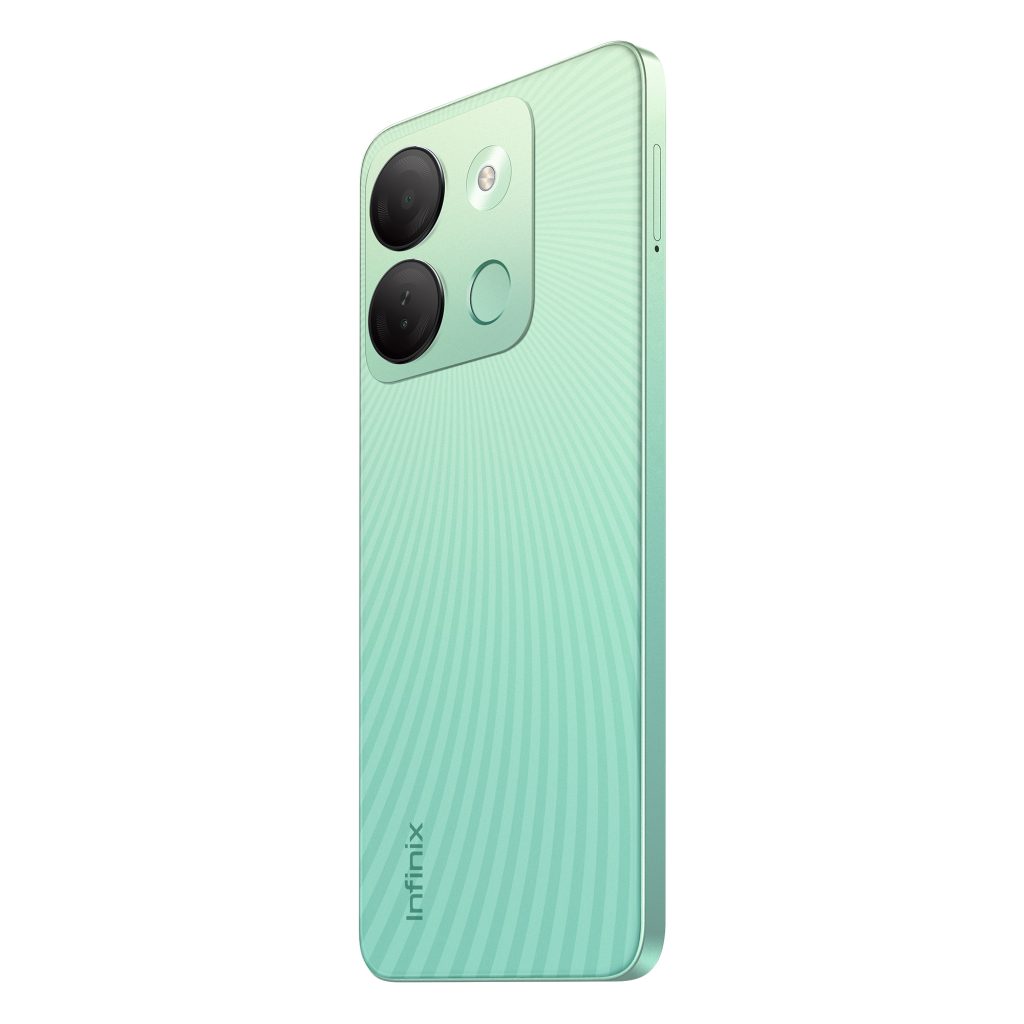
Infinix has recently launched its latest budget-friendly smartphone, the Smart 7 HD, in India. This device comes with a 6.6-inch HD+ IPS display with a resolution of 1612 x 720 pixels and a peak brightness of up to 500 nits. The wave pattern design on the back gives it a distinct look, and it weighs 196g with a thickness of 8.65mm.
Under the hood, the Smart 7 HD is powered by an octa-core Spreadtrum SC9863A1 chip clocked at 1.6 GHz. It comes with 2GB RAM and 64GB internal storage, which can be expanded up to 1TB using a MicroSD card slot, and a user can add up to 2GB of virtual RAM. The phone runs on XOS 12 based on Android 12 (Go edition) and includes features like Game Mode, Eye Care, AI Gallery, Video Assistant, Social Turbo, and more.
The Smart 7 HD packs a 5000mAh battery to power its internals. In terms of optics, it has an 8MP primary camera and a secondary AI lens with dual LED flash on the back. On the front, it has a 5MP camera with features like Portrait, HDR, AI 3D Beauty, and more. The device also features face unlock and a fingerprint sensor on the back for security.
Connectivity options on the Smart 7 HD include a triple card slot, Wi-Fi, Bluetooth 4.2, and more. With its impressive features and affordable price tag, the Infinix Smart 7 HD is a compelling choice for those who want a budget smartphone with decent specifications.
Pricing & availability
After availing of bank discounts, the Infinix Smart 7 HD’s initial price will be Rs 5,399 on Flipkart, while the standard pricing for the 2GB RAM and 64GB storage version starts at Rs 5,999. The device will go on sale for the first time on May 4 at 12 PM. The smartphone is available in four color options, including Ink Black, Jade White, Green Apple, and Silk Blue.
Software updates are important, but let’s face it— most Android manufacturers are not very good at releasing timely updates. This doesn’t apply to Samsung as the company is on an entirely different level with its software game, releasing longer and on-time updates for all of its devices, including the budget models. Recently, the brand set another example for the industry by extending its 4-year update policy to one of its cheapest A series phones— Galaxy A24.
Galaxy A24 will Get Updates till Android 17
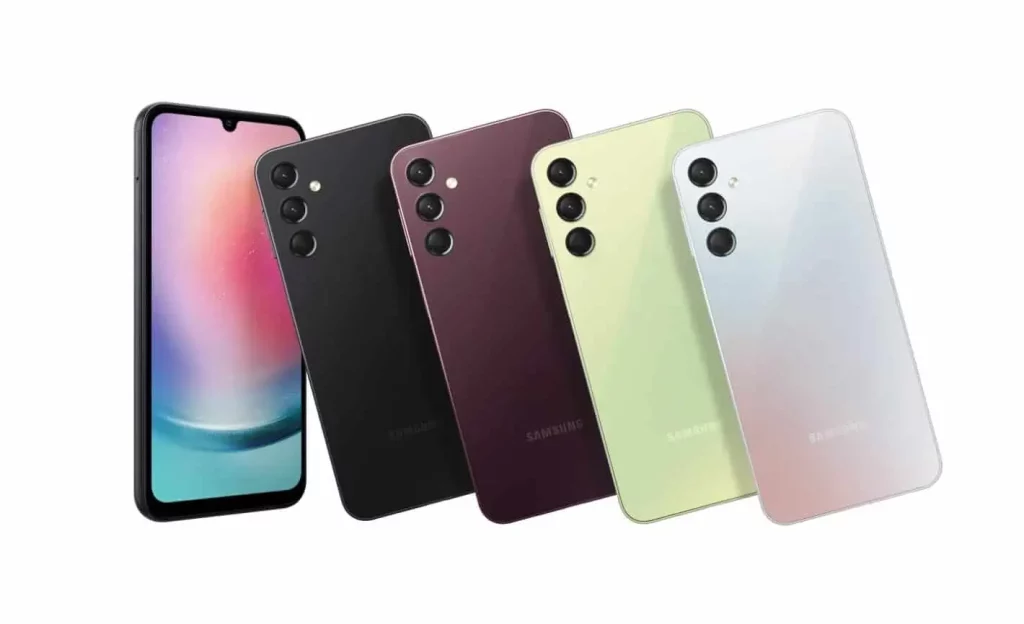
Samsung announced the Galaxy A24 earlier this week as a budget-friendly smartphone. It sits below the Galaxy A34 with a price of less than $300. You might not expect a phone this cheap to even receive timely updates, but Samsung continues to exceed expectations. The brand has confirmed that the Galaxy A24, which comes with Android 13 pre-installed, will receive an impressive four more major Android updates. This should mean the device will be updated all the way up to Android 17.
In early 2022, Samsung announced it would offer four generations of One UI and Android OS upgrades and five years of security patches to its phones, starting with the Galaxy S21 series in 2021. Since then, the brand has expanded this updated policy to include more devices, with the Galaxy A24 being the latest addition.
Mind you, even Google cannot match Samsung’s software update policy. Other manufacturers, particularly those from China such as Oppo and OnePlus, are attempting to bridge the gap by offering four major updates, but this is expected to apply primarily to their flagship models.
Galaxy A24 is yet to make it to larger markets. It is currently available in Vietnam and a few African countries with a 6.5-inch FHD+ AMOLED display and a 90Hz refresh rate. The handset packs a MediaTek Helio G99 chip and a 5,000mAh battery with 25W fast charging. Read more details in our launch coverage here.
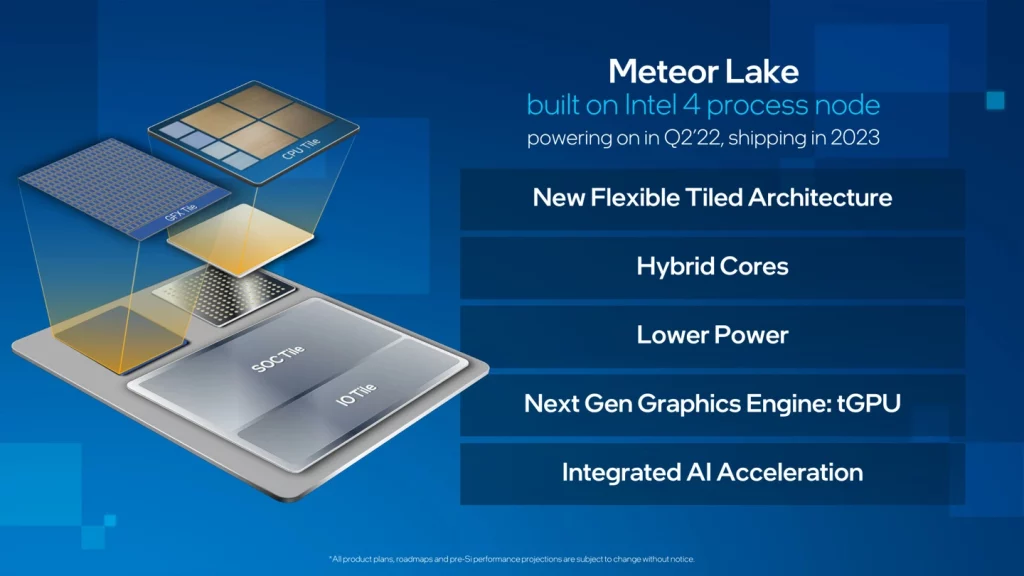
Intel has announced in its first quarter 2023 financial report meeting that it is accelerating the mass production of its 14th generation Meteor Lake Core processor. The processor is scheduled to be launched in the second half of this year and will be produced using the Intel 4 process node. Its transistor density and performance per watt are comparable to TSMC‘s N5 and N4 series nodes.
The Meteor Lake CPU Tile will have a Hybrid Core Design
The Meteor Lake processor is expected to feature a new small chip architecture, mainly composed of three tiles: IO Tile, SOC Tile, and Compute Tile. The Compute Tile includes CPU Tile and GFX Tile. The CPU Tile will use a new hybrid core design to provide higher performance with lower power consumption, and the GPU is also built with a new architecture.
This new architecture will allow the processor to achieve high performance while consuming less power. It is a significant improvement from previous generations, which often struggled with high power consumption and heating issues. The new design will make the Meteor Lake processor more efficient, reliable, and versatile, making it an excellent choice for demanding tasks such as gaming, content creation, and machine learning.
Furthermore, Intel has also announced that it is advancing the Intel 3, Intel 20A, and Intel 18A process nodes, which are expected to offer even more significant improvements in performance and efficiency.
It’s worth noting that the top-of-the-line Meteor Lake processor is expected to adopt a 6P+16E configuration, with only two series of Core i3 and Core i5, and no Core i7 and Core i9. This is a strategic move from Intel to optimize the processor’s performance for specific tasks while keeping the price competitive.
According to recent reports, Oppo, a well-known smartphone brand from China, is set to launch several mid-range devices, including the Oppo A98, which has already made an appearance on Geekbench. Additionally, a new report has surfaced, suggesting that Oppo is planning to release the Oppo F23 Pro 5G in India in the near future.
Oppo F23 Pro 5G price & launch date
The report comes from known tipster Mukul Sharma (via 91Mobiles) revealing the specs, launch date, and price point. of the device. The report states that the Oppo F23 Pro 5G is scheduled to release in India on May 15th at an estimated price of Rs 25,000 or Rs 26,000, positioning it as a mid-range smartphone. Although there is no detailed information on the number of variants that may be available, it is possible that the smartphone could be released in more than one version. Earlier reports suggested that the F23 would be introduced in India in March, but it did not happen.
Oppo F23 Pro 5G specs
The Oppo F23 Pro 5G is set to feature a 6.72-inch display with 580 nits brightness. However, the smartphone will not have an AMOLED screen, and instead, we can expect an LCD display. Powering the device will be the Qualcomm Snapdragon 695 processor.
The Oppo F23 Pro 5G will come equipped with a triple-rear camera setup, including a 64MP primary sensor and two 2MP cameras, one of which will be a 40x microscope lens. For selfies, the smartphone will house a 32MP front camera.
In terms of battery, the Oppo F23 Pro 5G is set to pack a 5,000mAh battery with 67W fast charging support, which is most likely to be the proprietary SuperVOOC technology. This will enable the device to be charged quickly, ensuring that users will have little to no downtime waiting for their phone to charge.
We use cookies on our website to give you the most relevant experience by remembering your preferences and repeat visits. By clicking “Accept”, you consent to the use of ALL the cookies.
This website uses cookies to improve your experience while you navigate through the website. Out of these, the cookies that are categorized as necessary are stored on your browser as they are essential for the working of basic functionalities of the website. We also use third-party cookies that help us analyze and understand how you use this website. These cookies will be stored in your browser only with your consent. You also have the option to opt-out of these cookies. But opting out of some of these cookies may affect your browsing experience.
Necessary cookies are absolutely essential for the website to function properly. This category only includes cookies that ensures basic functionalities and security features of the website. These cookies do not store any personal information.
Any cookies that may not be particularly necessary for the website to function and is used specifically to collect user personal data via analytics, ads, other embedded contents are termed as non-necessary cookies. It is mandatory to procure user consent prior to running these cookies on your website.