Advertisement

Does One UI 5.1 Bloatware Consume 60 GB Storage on Samsung Galaxy S23 Series? Clearing Up the Confusion

The Samsung Galaxy S23 series was introduced at the Unpacked event held on February 1st. Along with the company’s new phones, the highly anticipated interface, One UI 5.1, also made its debut. However, the latest information about this interface has surprised everyone. It is claimed that One UI 5.1 uses 60 GB of storage on the system partitions due to bloatware. Are these claims true? Here are the details…

One UI 5.1 bloatware is not consuming 60 GB storage on new Samsung Galaxy S23, Galaxy S23 Plus or Galaxy S23 Ultra

Recently, there have been reports claiming that the One UI 5.1 software on the new Samsung Galaxy S23, S23 Plus, and S23 Ultra uses 60 GB of storage on the system partitions due to bloatware. However, these claims are false. So, what are system partitions?

Android OEMs typically reserve some storage space for system apps, which cannot be removed by the user. This varies from device to device. In the case of the Galaxy S23 series, the storage reserved for system partitions is not as high as 60 GB. For example, a 128 GB Galaxy S22 Ultra reserves only 26.09 GB for the system, and a 512 GB Galaxy S23 Ultra uses 55.23 GB.

It’s worth noting that the storage capacity reported by Android devices is often converted from GiB to GB, and this conversion can result in some losses. For example, a device advertised with 512 GB of storage might actually have closer to 476 GB of usable space. One UI 5.1 reports these conversion losses under “system”, which has led to some confusion about the amount of storage space consumed by the software.

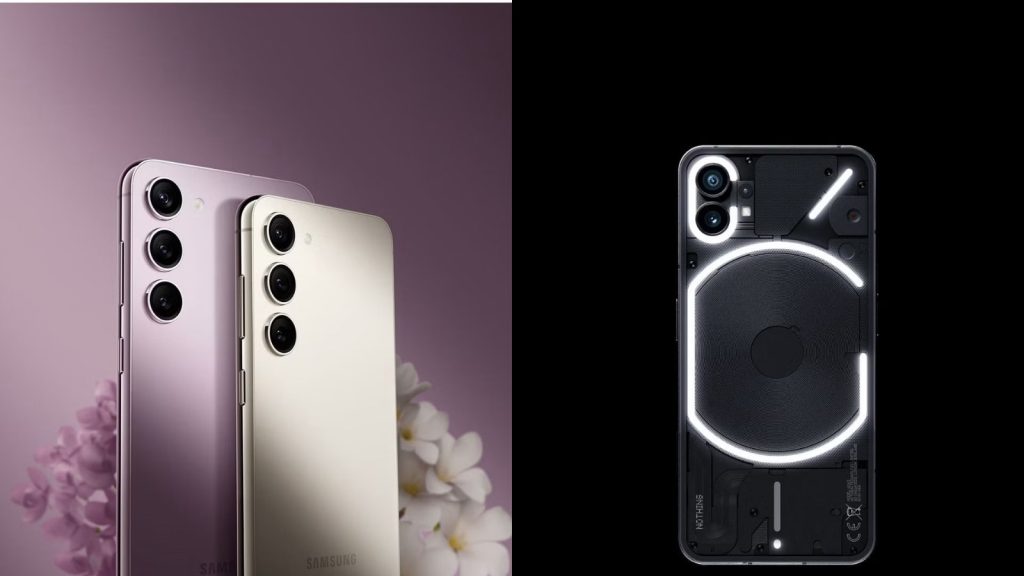
Samsung Galaxy S23 Series

So, the reports of 60 GB of bloatware on the Galaxy S23 series are not accurate. The amount of storage reserved for system partitions is reasonable, and the apparent high storage usage is due to conversion losses and labeling under “system”. Samsung has not misled consumers about the storage available on the devices.

RELATED:

(via)

Philips Fidelio T2 Wireless Headphones With Sony LDAC, ANC Support Launched

Philips has launched new wireless earbuds dubbed Fidelio T2. The Truly wireless headset looks like a great choice for those who are looking for a compact, high-quality audio experience. The in-ear design makes the headphones small and convenient to carry around, while the improved battery life of 36 hours allows for long listening sessions.

Philips Fidelio T2 Wireless Headphones

The support for Sony LDAC technology is a major selling point for these headphones. Sony LDAC allows for the transmission of high-resolution audio content with a maximum bit rate of 990kbps, providing a high-quality audio experience for listeners. The technology also automatically adjusts the bit rate based on network conditions. This ensures stable connections even in harsh environments.

In addition to its audio capabilities, the Fidelio T2 headphones also feature active noise reduction (ANC) technology. The ANC technology uses bone conduction to reduce wind noise, making it easier to enjoy your music or other audio content even in noisy environments.

The headphones are also splash-resistant, thanks to their IPX4 rating. They are also equipped with three microphones per ear. This makes it possible to use the headphones for hands-free phone calls or other voice-activated functions.

It is worth mentioning that the Philips Fidelio T2 headphones are expected to be launched in the third quarter of 2023. However, the company is yet to announce the retail price. No doubt, Philips’ new wireless earbuds are expected to be a popular choice for those looking for high-quality wireless headphones considering their impressive features and compact design.


RELATED:

Redmi Note 12 Turbo Could Launch Soon as It Gets MIIT Certification

Redmi is reportedly gearing up to add a new member to the existing Note 12 Series. Dubbed Redmi Note 12 Turbo, the handset could bring a new Qualcomm Snapdragon 7 Gen 2 chipset and an OLED display. It could even arrive in the global market but as a Poco smartphone. While we wait for its formal debut, the handset has bagged China MIIT certification. Here are the details.

Redmi Note 12 Turbo has received China’s Ministry of Industry and Information Technology (MIIT) certification with model number 23049RAD8C. As usual, the listing does not reveal any specifications of the device but hints at a nearby launch.

A previous report revealed that the Redmi smartphone could arrive internationally as Poco X4 GT with model number 23049PCD8G. It is said to feature Qualcomm Snapdragon 7 Gen 2 chipset, which is yet to be officially announced. The SoC is rumored to be based on TSMC’s 4nm process node and offer impressive performance.

Redmi-Note-12-Pro-5G-Featured
Redmi Note 12 Pro

Further, the smartphone is said to have a 6.67-inch OLED display with an FHD+ resolution and up to a 120Hz refresh rate. The display could feature a fingerprint sensor and a center-punched hole for the selfie camera. Redmi Note 12 Turbo may have a triple camera system comprising a 50MP primary sensor, an 8MP secondary sensor, and a 2MP macro or depth sensor. It could be backed by a 5,500mAh battery with support for 67W fast wired charging.

The Note 12 Turbo could be joined by a Pro model that may feature comparatively better specifications and a higher price tag. Currently, there’s official confirmation from Redmi regarding the upcoming devices. We should be learning more about them in the coming days. Meanwhile, check out our Redmi Note 12 Turbo roundup to know more.

Related:

(Via)

Vivo Y100 is Apparently Available for Purchase in India Through Offline Stores

Since last few weeks, Vivo has been teasing the launch of a new mid-range smartphone in India, dubbed Vivo Y100. The handset has leaked a lot recently, so we already know most of its details, including the pricing. The Chinese company is yet to make the Y100 official but it seems to be already up on sale in India through offline stores. Here are the details.

Mahesh Telecom, a Mumbai-based smartphone retailer, claims that Vivo Y100 is now available for purchase. The retailer apparently has the smartphone in stock with a price of Rs.24999 for the 8+128GB storage version. Separately, a 91Mobiles report claims the Y100 is available for purchase in only those Indian states where the Vivo Y75 4G is out of stock.

Vivo Y100 Specifications (Rumored)

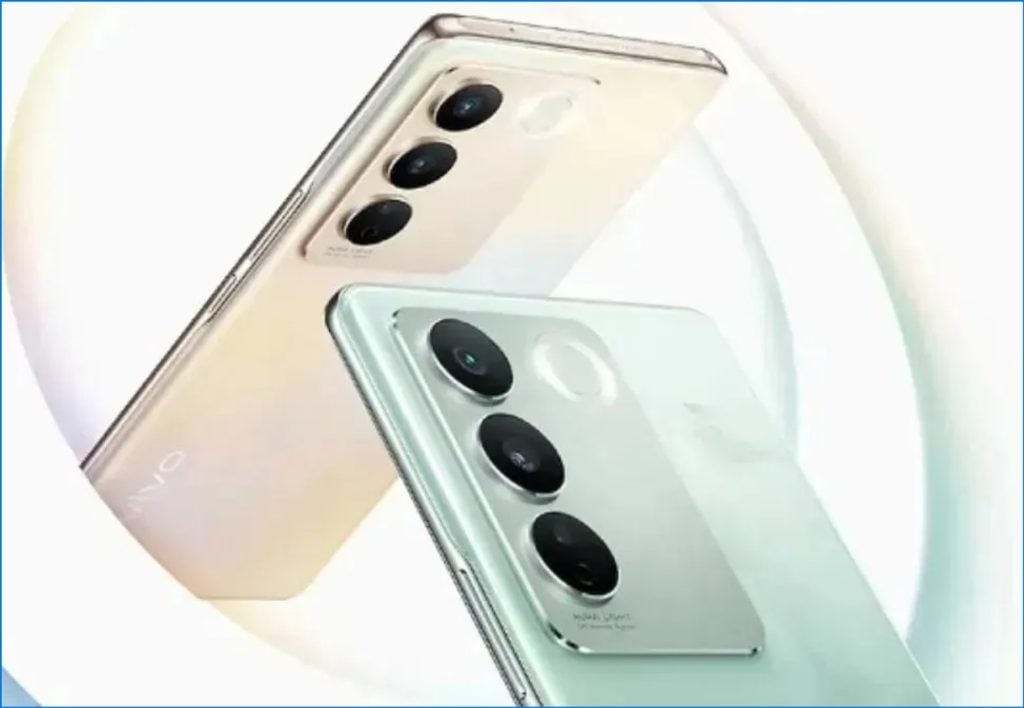
A recent report shared the marketing material of the upcoming Vivo Y100, revealing its complete specifications.  The smartphone will arrive with a 6.38-inch AMOLED display with support for a Full HD+ resolution, a 90Hz refresh rate, DCI-P3 wide color gamut, up to 1,300 nits of brightness, and HDR10+. Powered by the Dimensity 900 chipset, the handset could have 8 GB of LPDDR4x RAM and 128 GB of UFS 2.2 storage. It will likely run Android 13 OS and FunTouch OS 13 out of the box.

For clicking pictures, the smartphone could have a triple camera unit on the rear with an OIS-enables 64MP primary camera, a 2MP depth sensor, and a 2MP macro camera. On the front, it could get a 16MP shooter for selfies and video calls. A major selling point of the device could be its color-changing back. It will be offered in Twilight Gold, Pacific Blue, and Metal Black colors. Vivo Y100 may pack a 4,500mAh battery with support for 44W fast charging.

Related:

(Source)

Researchers Suggest Current Traffic Signals Need A Change – An Additional White Light – Here’s why

Cutting-edge research conducted by the transportation engineers at North Carolina State University concluded that adding a  “white light” to the traffic signal would enable Autonomous Vehicles (AV) to help control the traffic flow and let human drivers know whom to follow. 

The research uses computational simulations to figure out ways in which self-driving vehicles can help to significantly improve travel time through intersections and reduce fuel consumption. Researchers have named this novel concept the ‘white phase intersection’ wherein the computing power of AVs will be used to navigate and predict the traffic flow at intersections. 

Under the white phase concept, all AVs in a particular area like an intersection or traffic signal will communicate wirelessly with each other. They will simultaneously also communicate with the main computer controlling the traffic signal. The main computer will collect and analyze all the data and when enough AVs approach an intersection, it will activate the White Light on the signal. 

Once you see the White Light on the signal, you will know that there are many AVs at your intersection and they are coordinating their movements to facilitate an optimum and efficient traffic flow. This is important information for non-autonomous vehicles driven by humans as when the traffic signal shows White Light, the drivers would just need to follow the vehicle in front of them to get the best traffic flow, which will save both time and fuel. 

Basically, research shows that the AVs will gather data about traffic, location, terrain, and other variables from each other and then map out the best flow of traffic. Human drivers will just need to follow the AVs. Essentially when you see the white light just follow the vehicle in front of you. If it stops, you stop. If it goes, you go. If the vehicle in front of you is passing through the intersection, then you also pass through the intersection. 

When the majority of vehicles at the intersection are driven by humans and only a few AVs are near the area, the traffic signal will revert back to the conventional green-yellow-red pattern. 

To find out the efficacy of the white phase, researchers used specially designed microscopic traffic simulators. These simulators are complex computational models designed to replicate real-world traffic, down to the behavior of individual vehicles. Using these simulators, the researchers were able to compare traffic behavior at intersections with and without the white phase, as well as how the number of AVs involved influences that behavior.

Researchers found that AVs help to improve traffic flow. However, there is a catch. The white phase concept doesn’t make much difference if there are fewer AVs. The study shows that if AVs account for only 10 to 30% of the total vehicles at a white-phase intersection then you see only small improvements in traffic flow. However, as the number of AVs increase, the benefits also multiply. 

The novel concept of White Phase Intersection is still in the nascent stage. It will be years before the AVs can adopt the distributional computational approach for traffic and will require even more time for governments to adopt the new white light at traffic signals. 

However as more and more companies and industries are getting into the autonomous driving sector, the future definitely lies in planning for a scenario where we will have more self-driving cars than human drivers on road. 

Related:

(Source)

Sony WH-XB910N’s Successor Seems Near, Design Renders & Specifications Leak

Last year, Sony launched the WH-XB910N headphones with aggressive bass, decent noise cancellation, and an attractive price tag. They are not quite as premium as the company’s WH-1000XM5 headsets but are great for bass heads. The Japanese firm is also rumored to be working on the successor of the WH-XB910N. And today, a new report has shared the headphones’ design renders, color options, and even specifications. Here are the details.

New Sony Headphones

OnLeaks, in collaboration with 91Mobiles, has shared the design renders of Sony WH-XB910N’s Successor in multiple colors. As can be seen in the images, the headphones look quite a bit like the last year’s models. However, there are a few notable changes. For instance, the touch controls appear to have been replaced by physical buttons. There’s also a grille on the surface of the headphones, likely to enable ANC (Active noise cancellation).

Sony WH-XB910N’s follow-up is pictured in blue, white, and black colors.  The headphones are tipped to get DSEE (Digital Sound Enhancement Engine), a technology developed by Sony to enhance the sound quality of compressed audio files. It will also have Bass Boost via a companion app for a better audio experience. In addition, the report suggests the upcoming hearables will use the V1 Chip to improve the noise cancellation performance. The headphones are said to offer a playback time of 35 hours with ANC enabled.

Further, the audio device could support a quick charge system to provide 1 hour of listening time with just 3 minutes of charge. The Sony headphones are said to support multi-point connectivity that will allow you to connect multiple devices to the same pair simultaneously.

RELATED:

(Source)

Xiaomi Updates First Batch of Phones with MIUI 14, Releases Update Plan for Second Batch

Xiaomi has been seeding stable builds of its latest software to a number of devices in both global and Chinese regions. The OEM unveiled Android 13-based MIUI 14 back in December, trailing behind all the major smartphone manufacturers. Now, it has been announced that all eligible Xiaomi models in the first batch have successfully received the latest version of MIUI in China. The update plan for the second batch has been released as well. Here are the details.

MIUI-14-Featured-A

According to the official announcement, the first batch includes the Xiaomi 12S Ultra, Xiaomi 12S Pro, Xiaomi 12S, Xiaomi 12 Pro, Xiaomi 12 Pro Dimensity Edition, Xiaomi 12, Xiaomi MIX Fold 2, Redmi K50 Pro, Redmi K50, Redmi K50 Extreme Edition, Redmi K50 Gaming Edition. Notably, some of these devices have received the MIUI 14 update outside China as well.

As mentioned, Xiaomi has also announced the MIUI 14 official release plan for the second batch of eligible devices, The rollout will begin around the end of March 2023. The list of smartphones is added below:

  • Xiaomi MIX 4
  • Xiaomi 12X
  • Xiaomi 11 Ultra
  • Xiaomi 11 Pro
  • Xiaomi 11
  • Xiaomi 11 Youth Vitality Edition
  • Xiaomi 11 Youth Edition
  • Xiaomi 10S
  • Xiaomi Civi 1S
  • Xiaomi Civi2
  • Redmi K40 Pro
  • Redmi K40S
  • Redmi K40
  • Redmi Note 12 Pro
  • Redmi Note 12 Pro+
  • Redmi Note 12 5G
  • Redmi Note 12 Explorer Edition
  • Redmi Note 12 Trendy Edition
  • Redmi Note 11T Pro
  • Redmi Note 11T Pro+
  • Redmi Note 11E
  • Redmi K40 Gaming Enhanced Edition
  • Redmi Note 10 Pro
  • Redmi Note11 Pro
  • Redmi Note11 Pro+

Do note that the update plan is for China. The company may parallelly release the Android 13 update to the global models too but we don’t have a confirmation for the same. In any case, we’ll keep you posted. You may check out all the new MIUI 14 features here.

RELATED:

(Via)

Li Auto L7 EV Models Launched in China Starting at $47,000+

The Li Auto L7 EV has been launched in China with a $47,120 starting price. The latest Li Auto product is the fourth EV produced by the company. The L7 is a five-seat mid-size SUV that comes with an extended-range hybrid system. The model comes in three trims – Air, Pro, and Max. The models can deliver up to 1,315km cruising range and 210km electric cruising range.

Philips Fidelio T2 Wireless Headphones

Li Auto provided pricing details for the L7 Pro and Max versions back in September 2022. The entry-level L7 Air and L8 Air models were also recently announced by the EV maker. Both entry-level models do not have the air suspension systems present in the Pro and Max models.

Li Auto says it will partner with Svolt Energy and Sunwoda for the batteries in the L7/ L8 Air models. This is a departure from Li’s previous engagement with CATL for its EV batteries. Li Auto says it hopes to produce its in-house battery pack using the partnership. Both Svolt Energy and Sunwoda have established production lines for the Li Auto batteries. While Svolt will provide batteries for the L7 Air, Sunwoda will deliver the packs for the L8 Air.

The L7 has a similar design to the previous models. It has closed grilles, split headlights, and a sportier rear design than its predecessors. The interior of the L7 has a central control screen and a suspended rear cabin entertainment screen. It also has a HUD screen and a co-pilot screen.

Li L7

Four standard color options are available for the Li Auto L7 lineup namely white, silver, gray, and black. Li Auto says that there are also three special-edition colors additionally. Buyers will choose either the 20-inch or 21-inch rim for the models. The L7 has a decent audio system and the Snapdragon 8155 chip (with two chips in the L7 Max). The Queen Seat and a spacious trunk area are other features of the Li Auto L7 SUV.

Li L7

Li Auto says that the show car and test drive models of the L7 will be distributed across China from February 9. The L7 Pro and L7 Max will be delivered to customers from March 1, while the L7 Air is slated for delivery from April 1. The prices of the models range from 319,800 yuan ($47,120) to 379,800 yuan ($55,960).

RELATED:
Redmi 12C Global Variant Spotted On Geekbench

The Redmi 12C debuted in China in December. It was recently spotted on BIS and NBTC certification websites. Now the device has appeared on Geekbench benchmarking platform. It is listed with model number 22120RN86G. The benchmarking database reveals key specifications of the device. 

The Geekbench database mentions ARM MT6769V/CZ processor model number on the Redmi 12C. It comprises six cores clocked at 1.80GHz and two cores ticking at 2GHz. The chipset corresponds to the MediaTek Helio G85 SoC. The listing reveals that the Redmi 12C will pack 4GB RAM onboard, however, we can expect more variants at launch. The device will ship with Android 12 OS out of the box. 

The Redmi 12C scores 355 and 1,173 points in Geekbench’s single-core and multi-core tests. Apart from this, the listing does not reveal any additional details about the device. As per past reports, the upcoming offering is tipped to launch in India this month ahead of MWC 2023. 

In China, the Redmi 12C features a 6.71-inch display with an HD+ resolution and a waterdrop notch. There is a dual-rear camera setup of a 50MP main sensor and 0.8MP depth lens. The device features a 5MP front-facing selfie snapper and a rear-mounted fingerprint scanner. The smartphone is powered by an Helio G85 SoC coupled with up to 6GB RAM and 128GB onboard storage. The Redmi 12C is backed by a 5,000mAh battery unit with support for 10W charging. 

We can expect Xiaomi to share official details about the Redmi 12C’s global availability in the coming days.

Related:

Google’s AI Chatbot Bard Causes $100 Billion Loss with Wrong James Webb Answer

Artificial intelligence (AI) chatbots are becoming increasingly common day by day. The process, which started with OpenAI’s ChatGPT, has nearly caused the internet to change and reshape. In an attempt to catch up with this fast-moving trend, Google recently announced its own chatbot, Bard. While many people expect ChatGPT to be replaced by Bard to be the most used AI, artificial intelligence causes $100 billion market loss with incorrect James Webb Telescope answer. Here are the details…

Google’s AI Chatbot Bard Causes $100 Billion Market Loss With Incorrect James Webb Telescope Answer

Google introduced Bard with high hopes and even organized an event to showcase its capabilities. During a live-streamed event, Bard was asked to explain new discoveries from the James Webb Space Telescope to a 9-year-old. The AI provided two correct answers that accurately understood the question. However, it made a significant error by claiming that the James Webb Space Telescope was the first to take images of exoplanets, when in reality, the Very Large Telescope of the European Southern Observatory was the first to capture an image of an exoplanet in 2004.

Mobile phone showing a Search query for "is piano or guitar easier to learn and how much practice does each need?" The search result page displays an answer to the question, powered by AI
Google’s AI chatbot Bard

As you can imagine, when the world was watching closely and Google was expected to demonstrate its power, the error caused a significant loss. Alphabet Inc., the parent company of Google, saw a loss of $100 billion in market value as a result. Alphabet shares also declined during regular trading, dropping as much as 9%. After hours, they had stabilized their losses somewhat. So, what was the reason for this significant loss of value?

Technology is one of the most volatile business sectors in the world. This industry, which is based on innovation, has caused many companies that could not keep pace with advancements to lose their popularity and become nearly obsolete in the market. Hardly any company has maintained its position at the top since its establishment.

Google Bards vs OpenAI ChatGPT

Companies such as Nokia and Motorola have declined to the extent that they have been sold within just a few years. Investors are concerned that Google is losing ground in the wake of the sustained popularity of OpenAI’s ChatGPT. The Microsoft-backed AI chatbot has acquired 100 million users just two months after its launch, generating substantial excitement.

When asked the same question about the James Webb Space Telescope’s discoveries (simplified for a 9-year-old), ChatGPT provided a more correct and creative, albeit general, response, emphasizing the telescope’s ability to search for and study exoplanets, observe the birth of stars and galaxies, study dark matter and dark energy, and search for signs of life. It is expected that Google will improve Bard in the future to provide clearer and more accurate answers. However, it is not known whether the company will turn its focus to artificial intelligence-centered answers and throw the search business into the background.

RELATED:

(via)

Noise Buds VS404 With ENC, 8 Hours Battery Launched In India

Noise has expanded its range of TWS earphones in India. The homegrown brand has launched the Noise Buds VS404. They are an affordable offering with a large battery life. The audio device competes against other earbuds from brands like boAt, Realme, Xiaomi, and more in the market. 

The Noise Buds VS404 feature an in-ear design with a stem and silicone ear tips. They are IPX5-certified water-resistant. Tapping on the stem of the earphones lets users to perform various actions. 

On the audio front, the Noise Buds VS102 Pro is equipped with a 10mm driver unit with AAC support for strong bass. It features an environmental noise cancellation mode (ANC) and quad mic for clear quality on calls. For personalised sound, there are three EQ modes – bass, gaming, and normal. The TWS earphones support Siri and Google Assistant. 

The Noise Buds VS404 come with Bluetooth 5.3 connectivity along with HyperSync technology for easy and quick pairing. The earbuds are claimed to offer 8 hours of usage on a single charge and an additional 42 hours of playtime with the storage and charging case. It features a USB-C port and a 10-minute charge is said to offer 200 minutes of usage.

The Noise Buds VS404 costs Rs 1,299 and is offered in Jet Black, Snow White, and Forest Green colours. It can be purchased from the brand’s official website and Flipkart starting today. 

In other news, the NoiseFit Force rugged smartwatch that debuted last month is now available for purchase in India via Amazon and the brand’s official website. It features a 1.32-inch display, rotating crown, heart-rate monitor, SpO2 sensor, sleep tracker, and breathing sessions

Related:

Hogwarts Legacy Already Has Half a Million Players on Steam

Hogwarts Legacy has been a highly anticipated video game title based in the same universe as the massively successful Harry Potter universe. Now, it appears that the popularity of the series of fantasy books and movies have also affected the game, with its Steam player count crossing a major milestone.

Hogwarts Legacy

Hogwarts Legacy has managed to see one of the biggest early access launches in Steam history. For those unaware, Steam is a major name in the gaming industry, known for distributing games and other software. This is also the platform where many studios offer early access to their upcoming titles. The Harry Potter universe based game from Avalanche Software is an RPG title (Role Playing Game) and has already seen a concurrent player peak of over 400,000.

Hogwarts Legacy

To be exact, around 474,144 people had bought the game and were playing it at the same time. This figure has almost reached the 500,000 mark as well. According to Benji Sales on Twitter, this marks the second highest player count for any paid single player game in the history of Steam. Meaning, the game has successfully surpassed Fallout 4, which saw 472,962 concurrent players, and puts it right behind Cyberpunk 2077. Although, 2077 brought in a player count that crossed a whopping 1 million.

The early access period is still live and will end later on February 10 (or later today depending on your local time standard). Keep in mind that the early access was was only offered to players who bought the Deluxe Edition of the open world RPG. Furthermore, Hogwarts Legacy has also become the top single player game ever on Twitch, with over 1 million peak concurrent viewers as well.

RELATED:

(Via)

India’s Satellite Launch Vehicle D2 Completes Mission: Delivers 3 Satellites to Orbit

India successfully launched its Small Satellite Launch Vehicle (SSLV) D2 from India’s Satish Dhawan Space Center in Sriharikota at 10:48 p.m. EST on February 10. The SSLV-D2 carried an Earth Observation satellite (EOS-07) and two other co-satellites called Janus1 and AzadiSat2 which were placed in a 450km circular orbit around our planet. 

EOS-07 is a 156.3 kg satellite designed and developed by ISRO and Janus-1 is a 10.2 kg satellite made by the US company Antaris. AzaadiSAT-2 is an 8.7kg satellite made by 750 girl students under the guidance of Space Kidz India. The whole mission was successfully completed within 15 minutes of the flight. The success of the mission was important to ISRO as the vehicle had failed its maiden flight in August 2022. 

During the August flight, SSLV ran into trouble during the second stage of separation. The rocket started vibrating intensely which then saturated all six accelerometers in the SSLV’s navigation system. This automatically pushed the rocket into salvage mode wherein it deployed the two payloads in the wrong orbit. 

The SSLV was developed by ISRO (Indian Space and Research Organization) to launch satellites to low earth orbits on a Launch-on Demand basis. The vehicle has a max capacity of 500kgs and can carry multiple payloads. 

After today’s successful launch, ISRO has gained firm ground in the commercial small and micro-satellite market. ISRO chief S. Somanathan said that the team is now preparing for the GSLV Mark III launch which will carry 236 OneWeb satellites and is also gearing up for the landing demonstration of their reusable launch vehicle. 

(via)

Samsung Galaxy A51 5G Receives Android 13 Update in the US

Samsung is finally rolling out the Android 13 OS update for its Galaxy A51 5G smartphone model in the US. The company is bringing the major upgrade with its One UI 5.0 custom skin. So here are all the details.

The South Korean tech giant’s is bringing the Android 13 OS update, but only to the unlocked versions of the phone in the US market. This is great news to Galaxy A51 5G users since the company brought the update in just two months. Apart from the unlocked versions, Verizon and Xfinity Mobile customers are the only ones that are getting the update, while other carriers should soon bring the update in the arriving weeks as well.

Samsung

While the update brings the latest version of Android to the smartphone, it doesn’t offer the most recent security patch with this upgrade. At the moment, users of the Galaxy A51 5G on any of the US networks can check if they have received the Android 13 update, which has the firmware version A516U1UEU8FWA4. The new update brings various changes and improvements in the software of the device.

So users can now expect to see changes in design as well as improvements in the user interface. There are also new changes like stacked widgets and a Maintenance Mode. Some of the more recent Samsung phones have already received the One UI 5.1 update, although, it is unclear if older models like the Galaxy A51 will also get this software update. So stick around for more updates.

RELATED:

(Via)

OPPO Find N2 Flip Confirmed To Launch Globally On February 15

OPPO Find N2 Flip global launch date has been officially announced. The brand made the announcement on its official Twitter handle. It is set to debut on February 15th in London at 14:30 GMT. The launch will also be live-streamed on the brand’s official YouTube channel. 

The Find N2 Flip will be OPPO’s first-ever foldable smartphone in the global markets. It was launched in China last December. The upcoming offering is also confirmed to debut in the Indian markets as OPPO has put up a dedicated microsite on its official website. With the upcoming global debut of OPPO’s first foldable phone, the brand will compete against Samsung, Motorola, and Huawei. OPPO says that the Find N2 Flip is a culmination of five years of R&D—brings together the best in foldable technology and design to create an inflexion point in the flip phone industry.

The OPPO Find N2 Flip global variant is expected to pack the same specifications as its Chinese counterpart. The device features a 6.8-inch AMOLED display bearing an FHD+ resolution and a 120Hz refresh rate. There is a 3.26-inch secondary AMOLED screen. The flip phone has a creaseless design for an enhanced user experience.  The upcoming offering has a 50MP main camera and an 8MP ultra-wide-angle lens. There is a 32MP selfie snapper. 

Under the hood, the OPPO Find N2 Flip is powered by a MediaTek Dimensity 9000+ processor coupled with up to 16GB LPDDR5 RAM and 512GB storage. It is backed by a 4,300mAh battery unit with support for 44W fast charging. The device runs on Android 13 with ColorOS out of the box. 

We will learn about the OPPO Find N2 Flip’s global pricing and availability on next Wednesday.

Related:

Nothing Phone (1) & Ear (Stick) Sees Special Valentine’s Day Discount in India

Nothing is offering some special discounts for some of its products over the upcoming Valentine’s Day celebration. The company’s is offering special discount price tags for the Phone (1) and its Ear (Stick), so here are all the details.

For those unaware, the Phone (1) is the company’s sole smartphone model that was launched back in July 2022, while its Ear (Stick) TWS models are its second device in the hearables category that was unveiled in October 2022. Both products featured quite a unique design elements, with the former featuring a glyph interface that makes it stand out from any other model. On the other hand, the latter features a unique twisting charging case.

Nothing

The smartphone is equipped with a transparent design and LED strips on the rear, while the front sports a 6.55 inch OLED display that has a 120Hz refresh rate. It is equipped with a Snapdragon 778G+ SoC and is powered by a 4,500mAh battery that supports 33W fast charging. Meanwhile, the Ear (Stick) has a unique charging case that twists open. It houses large 12.6mm dynamic drivers and also features Clear Voice technology through its three high definition microphones.

So for Valentine’s Day, the Nothing Ear (Stick) that usually costs 8,499 INR while now be available for just 6,999 INR. Meaning, the company is offering a sizeable 1,500 INR discount on the truly wireless earbuds. Similarly, the Phone (1), which is offered in three storage variants, will have its base model go on sale for Valentines. The smartphone’s 8GB + 128GB configuration costs 31,999 INR, but will be available for a price tag of just 26,999 INR. This marks a 5,000 INR discount. Both special discounted price tag will be available till 13th February 2023.

RELATED:

Lava Blaze 5G Announced In 6GB RAM Variant

Lava launched the Lava Blaze 5G (review) in October last year in India. At that time, it was available in a single 4GB RAM and 128GB storage configuration. Now the homegrown brand has announced a new RAM option in the country. Apart from the bumped RAM, the rest of the key specifications of the smartphone remain a mystery. 

The Lava Blaze 5G is now available in 6GB RAM and 128GB onboard storage. With 3GB virtual RAM technology, the total RAM goes to 9GB for a smoother performance. The new variant comes in Glass Blue and Glass Green colours. It carries an introductory price tag of Rs 11,499 when it goes on sale for first time on February 15th. After that it will cost Rs 11,999. 

The Lava Blaze 5G features a 6.5-inch LCD display bearing an HD+ resolution, a 90Hz refresh rate and a waterdrop notch. The power button doubles up as a fingerprint scanner. The back panel has a rectangular camera module that houses a 50MP main sensor, a depth lens, and a macro unit. Up front, the smartphone features an 8MP selfie snapper. 

Internally, the Lava Blaze 5G is equipped with a Dimensity 700 processor with support for eight 5G bands. It is offered in 4GB and 6GB RAM options along with 3GB virtual RAM and 128GB of internal storage with support for a dedicated microSD card slot. The smartphone ships with Android 12 OS out of the box. The Lava Blaze 5G is backed by a 5,000mAh battery unit. 

Connectivity options on the device include dual SIM, Wi-Fi 6, Bluetooth 5.1, GPS, a USB Type-C port, and a 3.5mm audio jack.

Related:

The World’s First AirPods Pro with USB-C Didn’t Come From Apple (video)

Apple is the first company that comes to mind when it comes to an ecosystem. The company has a wide range of products, including smartphones, headphones, and computers. Moreover, these products are constantly in communication with both hardware and software support, leading to the emergence of a seemingly perfect ecosystem. But is it really perfect? Not exactly…

Apple’s biggest problem is the divide between its use of USB-C and Lightning ports. Currently, MacBooks charge through USB-C, while AirPods and iPhones still use Lightning ports. This issue will eventually be resolved in the future, but for now it remains a problem in their current products. Fortunately, an engineer has taken the initiative to address this issue and has taken the first step towards finding a solution. Here are the details…

AirPods Pro get USB-C port in complex new mod

An engineer named Ken Pilonel, who previously made the world’s first USB-C iPhone by modifying an iPhone X, has succeeded again. Pilonel has successfully added a USB-C port to the first-generation AirPods Pro. The engineer recorded the entire process and uploaded it to YouTube. The process involved developing and printing a new circuit board with the USB-C connector and 3D printing a new AirPods case to accommodate the custom PCB.

The project involved plenty instances of trial and error, a whole new circuit board design and 3D printing. The necessary schematics are posted on GitHub so people with the right equipment can transform their AirPods with USB-C. Pilonel also plans to sell his self-developed PCB board for CHF 35 (€35/$38) and modified USB-C AirPods Pro for CHF 300 (€303/$326) from his personal website.

Still, it’s hard to predict how Apple will react to this. The company could take the case to court or simply ignore Pilonel as it already has to switch to USB-C by December 28, 2024.

RELATED:

(via)

Huawei Lost 80 Million of Its Customers to Xiaomi, Apple, & Honor: Lu Weibing

Due to the various sanctions imposed on Huawei, the company saw a massive decline in its primary business of smartphones. Now, a Xiaomi executive has revealed which brands took advantage of this situation.

According to Lu Weibing, President of the Xiaomi Group, has revealed that the Chinese tech giant lost around 80 million of its customers over the sanctions. For those unaware, Huawei was cut off from its primary chip supplier TSMC, which manufactured its proprietary Kirin SoCs, while also losing access to its suppliers that it sourced US based technology from. In other words, the company’s smartphone operations was basically crippled, leading to its downfall.

Huawei

The brand was once the 2nd largest smartphone OEM in the world but saw a quick decline following these sanctions from the US. The Xiaomi senior official revealed that out of the 80 million users that Huawei lost, 50 million of the users went to Xiaomi. On the other hand, the company had lost 20 million of its customer base to the iPhone maker, Apple, and the rest 10 million were acquired by its former subsidiary, Honor.

This again hints at how successful Huawei was in the Chinese market, since its absence left a massive gap that other brands rushed to fill in. Its market share was quickly taken up by rival companies, with most of them seeing a notable growth in recent years. Although, following various issues in supply chain and economic factors, the smartphone market overall is still in decline.

RELATED:

(Via)

Samsung Galaxy A54, Galaxy A34 Pricing Leaks Ahead of Alleged March Launch

After unveiling its flagship Galaxy S23 series smartphones last week, Samsung is now said to launch the Galaxy A-series midrange devices in March. A few weeks ahead of the launch, prices of two of the Galaxy A-series smartphones have surfaced online.

Samsung Galaxy A54 and Galaxy A34
Samsung Galaxy A54 and Galaxy A34 | Source: Evan Blass

A report by Appuals has revealed the pricing of the Galaxy A54 5G and the Galaxy A34 5G. As we already know, there won’t be a Galaxy A74 this year, so the A54 5G is the most premium offering coming to the Samsung mid-range this year.

According to undisclosed sources, the Galaxy A34 5G is rumored to come in two storage variations, with 6GB and 128GB and 8GB and 256GB respectively. The estimated cost for the 128GB model is between EUR 410 to EUR 430, while the 256GB option is expected to be priced between EUR 470 to EUR 490. The Galaxy A54 5G, on the other hand, is expected to be offered in two storage options as well: 8GB and 128GB or 8GB and 256GB. The 128GB model is speculated to be priced between EUR 530 and EUR 550, while the 256GB version is rumored to cost between EUR 590 and EUR 610.

The Galaxy A54 5G will reportedly be offered in four color choices: Lime, Silver, Violet, and Graphite. On the other hand, the Galaxy A34 5G is expected to come in Lime, White, Violet, and Graphite color options.

Samsung Galaxy A54 5G specs

Galaxy A54 renders

The rumored smartphone is expected to feature a 6.4-inch AMOLED display with Full HD+ resolution, a 120Hz refresh rate, and an in-display fingerprint sensor. It is believed to have a triple-camera setup on the back, including a 50MP primary sensor, a 12MP ultra-wide-angle lens, and a 5MP macro camera.

For selfies, the smartphone is said to have a 32MP front-facing camera. It is rumored to be equipped with a 5100mAh battery with fast 25W charging capabilities. The device may not come with a charger in the box, but it is expected to run One UI 5 and have an IP67 water and dust resistance rating.

Samsung Galaxy A34 5G specs

Samsung Galaxy A34 5G render

According to available information, the smartphone is expected to be powered by a MediaTek Dimensity 1080 processor, paired with 6GB of RAM. However, some regions may receive a version with the Exynos 1380 chipset instead.

The device is expected to feature a 6.6-inch notched AMOLED display with Full HD+ resolution and a 90Hz refresh rate. It is rumored to have a triple-camera setup on the back, including a 48MP primary sensor, and a 13MP front-facing camera for selfies and video calls.

A 5000mAh battery is rumored to be included, and the recent FCC certification listing suggests that it will have fast charging capabilities of up to 25W. The smartphone is also believed to have water and dust resistance, with an IP67 rating.

RELATED