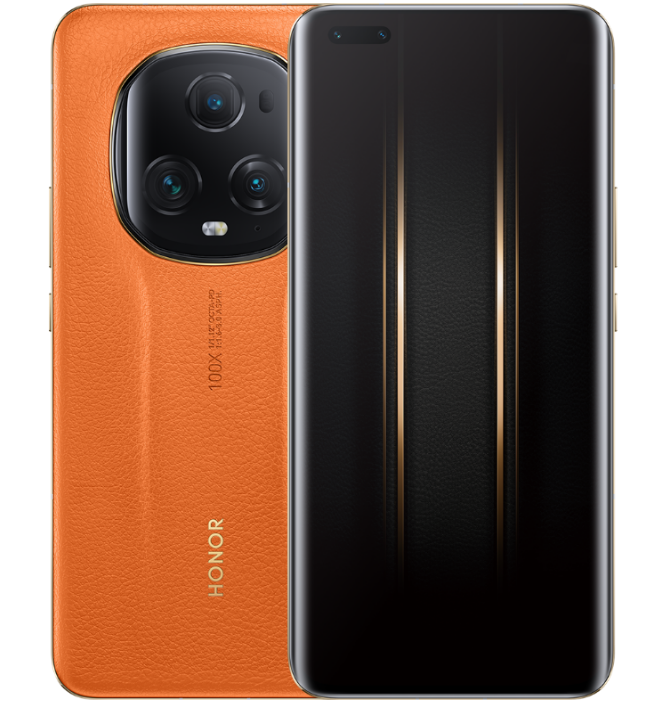
Honor recently launched its Honor Magic 5 lineup of smartphones. The lineup comprises multiple smartphones like Honor Magic 5, Magic 5 Pro and Magic 5 Ultimate. The device offers a pretty fascinating set of specifications. Now, according to the latest update, the series is now up for official sale in China. Users from China can access the sale page of the device(s) starting at 10:08 local time in China.
Regarding pricing, the Honor Magic 5 would be available in three different variants; 8GB+256GB, 12GB+256GB and 16GB+512GB. It has been priced in the country at CNY 3999 (~$574), CNY 4499 (~$645) and CNY 4999 (~$717) respectively. The European pricing of the same device starts from EUR 899 (~$951). The Chinese pricing of smartphones is very reasonable. The highest-end variant of the smartphone is even around $200 less when compared with the pricing of the base variant in Europe.
The Honor Magic 5 Pro has the same 8GB+256GB, 12GB+256GB, and 16GB+512GB memory configurations and costs CNY 5199 (~$746), CNY 5699 (~$818), and CNY 6199 (~$889), respectively. The Honor Magic 5 Pro costs EUR 1,199 (about CNY 9,200) in the same configuration as in China. Once again, European prices are higher. Nonetheless, this should come as no surprise given that smartphone prices in the EU are always on the higher side.
Moving further to the Honor Magic 5 Ultimate Edition, it comes in one and only 16GB + 512GB variant and is priced at CNY 6699 (~$961). The gadget also comes in a limited edition Montblanc set which comes in the same configuration but is priced higher at CNY 7499 (~$1076). The Honor Magic 5 series has excellent specs that can compete with any other flagship device on the market. The Magic 5 features a 6.73-inch OLED display with a resolution of 2688×1224 pixels, a refresh rate of 120Hz, and a maximum HDR brightness of up to 1,600 nits. It includes a 5,000mAh battery and supports 66W wired charging.
The upcoming Suicide Squad: Kill the Justice League game, developed by Rocksteady Studios, has been generating excitement among fans since its announcement in 2020. The game is set in an open-world version of the DC Universe‘s Metropolis and features four playable characters, Harley Quinn, Deadshot, King Shark, and Captain Boomerang. The game’s plot centers around the Suicide Squad’s mission to take down the Justice League, who have been turned into mindless supervillains by Brainiac. With its intriguing storyline, beloved comic characters, and immersive gameplay, Suicide Squad: Kill the Justice League is highly anticipated by DC fans. However, fans will have to wait some more, since the launch of the game has apparently been delayed from May 26 until later this year.
According to sources, the delay was due to fixing bugs and improving certain aspects of the game that were lacking. While the game received some criticism for its online requirement and purchasable cosmetic items, the core gameplay is reportedly unlikely to change. This is good news for fans of the original Batman games franchise since the combat mechanics and storyline execution of those games were way ahead of their time. Fans were somewhat disappointed upon the release of Gotham Knights, another recent game set in the DC Universe. Gotham Knights was developed and published by Warner Bros. The game received a fair amount of criticism upon launch, mostly leaning towards the negative side.
As mentioned previously, Suicide Squad: Kill the Justice League is set in the same universe as the Batman: Arkham series and will feature four playable characters – Harley Quinn, Deadshot, Captain Boomerang, and King Shark – as they attempt to stop the Justice League, who have fallen under the control of Brainiac. The game will also mark one of the final performances of Kevin Conroy, the celebrated voice actor who passed away last year. Conroy will reprise his role as Batman in the game, though he will not be a playable character. The game is set to be released on PS5, Xbox Series X/S, and PC.
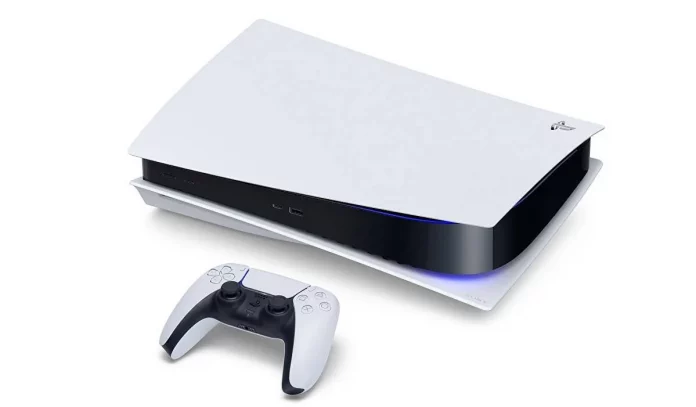
Indian console gamers starved of the latest-gen graphics, your day has finally come. The PlayStation 5 is about to be restocked at 12 AM on multiple platforms, and we are here with all the details.
Considering the high demand for the PS5, it is advisable to log in to the relevant websites a few minutes prior to the restock time. This increases the chances of securing a purchase, as stocks typically sell out within minutes. In the event that you are unable to obtain a PS5 through this method, local electronics retailers are a good alternative. Another option would be to wait for subsequent restocks, which may occur within the next few weeks.
In related news, Sony recently released an update for the PS5 that finally brings Discord Voice Chat along with other features to the platform. This means that console users can now easily play and communicate with their PC friends when playing cross-platform games. To know more about the update and new features, you can head to this link.
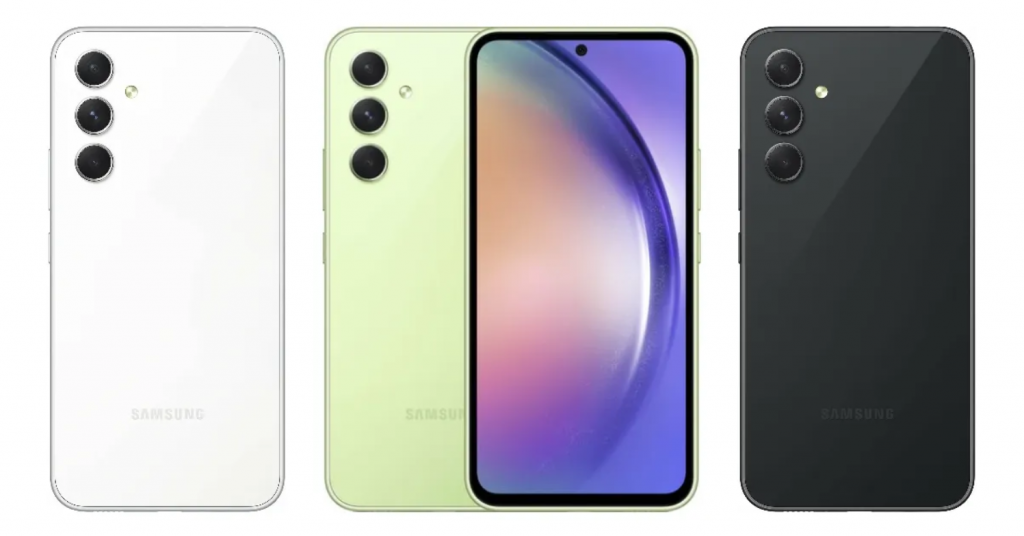
Samsung is said to be working on a new smartphone called the Galaxy A54 5G. Now, the official launch date of the smartphone has been confirmed for the Indian market. Samsung has confirmed that its latest mid-range smartphone, the Galaxy A54 5G, would be released in India on March 16. The business has created a microsite for the device on its official website, disclosing some of its important features and specifications.
The Galaxy A54 5G will include a 6.4-inch AMOLED display with Full HD+ resolution and a refresh rate of 120Hz. The Exynos 1380 processor, which is built on 5nm technology and offers 5G connectivity, will power it. The device will have up to 8GB of RAM and 256GB of internal storage. According to the website, the smartphone would have an IP67 rating. It appears that Samsung will not introduce the Galaxy A34 5G with the A54 5G in India.
The Galaxy A54 5G will include a quad-camera setup on the rear that includes a 50MP primary sensor with OIS, a 12MP ultra-wide-angle lens, a 5MP macro photographer, and a 2MP depth sensor. On the front, a 32MP selfie camera will be housed in a punch-hole cutout. The phone will include a 5000mAh battery with quick charging capabilities. It would boot up on Android 13-based One UI 5.1 software right out of the box.
The Galaxy A54 5G is expected to retail for roughly INR 35,000 ($420) in India and will come in a variety of colours including Black, Green, Purple, White, and Yellow. Let’s wait till the official launch to know more about the device. Are you excited about the official launch of Galaxy A54 5G? Do let us know by dropping a comment in your words down below.
After launching multiple 5G devices in the Redmi Note 12 series, the brand is now rumored to debut a 4G device in the lineup. It is rumored to be called the Redmi Note 12 4G and it has already visited several certification websites. The specs and features of Note 12 4G were also extensively leaked in a recent report.
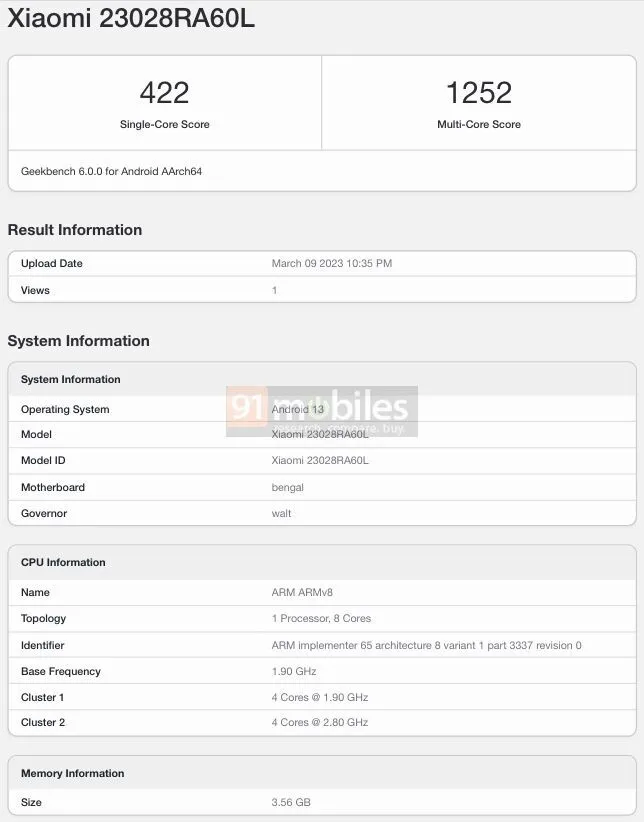
Now, the smartphone has made an appearance on Geekbench showcasing its performance. According to the listing, the Note 12 4G bearing model number Xiaomi 23028RA60L features an octa-core chipset that has a base clock speed of 1.90GHz and a boost clock of 2.80GHz. Additionally, the SoC has the Adreno 610 chipset onboard. This clearly means that the smartphone is running the Snapdragon 680 chipset.
The listing also mentions that the device has 4GB RAM and operates on Android 13. As for the performance, it scores 422 points in the single-core test and 1,252 in the multi-core test on Geekbench 5.
Redmi Note 12 4G specs (rumored)
The upcoming Redmi Note 12 4G smartphone is expected to have dimensions of 165.66 x 75.96 x 7.85mm and weigh around 183.5 grams. Its display will be a 6.67-inch FHD+ 120Hz AMOLED screen with a center punch-hole, while the front camera will have a 13-megapixel resolution and the rear camera system will consist of a 50-megapixel primary camera, an 8-megapixel ultra-wide lens, and a 2-megapixel macro camera.
Under the hood, the Note 12 4G will run on the Snapdragon 680 chipset with LPDDR4x RAM and UFS 2.2 storage. It will come equipped with a 5,000mAh battery that supports 33W fast charging, and it will run on the Android 13 OS with MIUI 14. Other notable features include a side-facing fingerprint scanner, dual-band Wi-Fi, NFC, Bluetooth 5.0, and an IP53-rated body.
Tesla has regained its footing in China thanks to its price reduction strategy. According to a report from the China Passenger Association, Tesla’s domestic retail sales showed an increase of almost 26% in February. Tesla’s Gigafactory Shanghai delivered a total of 74,402 EVs in February and the retail sales for last month stood at 33,923 units.
Experts have predicted that the company will see a steady increase in sales due to its price cut which has been somewhere between 6% to 13% in January alone. The company has slashed prices for all versionsof its China-made Model 3 and Model Y. The starting price for Model 3 was slashed by 13.5% to 229,900 yuan ($33,515), while the starting price for Model Y was reduced by 10% to 259,900 yuan ($37,889).
Tesla has reduced its price twice since October 2022, to regain its market and boost its sales amidst a slowing demand and sluggish economy. The company cannot afford to lose the Chinese market as it is the world’s largest EV consumer and automobile market.
How did the price reduction help, Tesla?
Tesla received orders for 30,000 new EVs within just three days of slashing its price. The tier two and three cities showed a notable increase in demand after the second round of price cuts. In fact, some stores showed a 500% increase in sales after the price cut.
The price reductions were so significant that many existing Tesla owners protested against the company as they felt that they were given overpriced vehicles, the value of which would significantly reduce after the price cuts.
The demand for EVs in China has dwindled since last year owing to a number of reasons including the zero covid policy and a sluggish economy. Moreover, Beijingended a 13-year-long subsidyfor electric vehicle purchases on December 31, which has put additional pressure on EV makers. China’s EV market was once completely dominated by Tesla. But now the company faces stiff competition from domestic players like Nio, BYD, Xpeng, and more.
All these reasons led the company to significantly reduce its EV price. Experts have predicted a potential price war as EV makers fight for a share of the market. However, in the short term, the price reduction seems to pay off as Tesla sees an increase in its sales.
In recent years, smartwatches have become increasingly popular among consumers. These wearable devices offer a range of features and functionalities beyond traditional timekeeping, such as fitness tracking, heart rate monitoring, and even mobile payments. With the rise of smart assistants like Siri and Google Assistant, users can also perform tasks like sending messages, making calls, and setting reminders through their smartwatch without having to take out their smartphones. The convenience and efficiency of smartwatches have made them a popular choice for people on the go who want to stay connected and stay on top of their health and fitness goals. Google’s very own smartwatch, the Pixel Watch, was released back in 2022 after a long speculation period. As per the latest news, sources have stated that the company shipped 880,000 Pixel watches in the final quarter of last year.
It is essential to note that there is a difference between the number of units “shipped” and units “sold.” The number of units shipped refers to the number of devices sent to retailers for sale, not the number of devices sold to consumers. However, it is still quite impressive to note the fact that despite an 18% drop in the wearable market compared to Q4 2021, Google was able to secure the second position in terms of smartwatch shipments. This is attributed to the hype of the newly released Pixel Watch and a significant decline in sales for Samsung’s Galaxy Watches. While Google’s numbers may be small compared to the 12 million Apple Watch units shipped in the same period, it is still commendable for a new device launched in the last quarter.
The Pixel Watch has a domed, circular glass display that is protected by scratch-resistant Corning Gorilla Glass 5 and a stainless-steel housing. The watch is comparatively smaller than most premium smartwatches, making it ideal for folks with small wrists. Its case measures 41mm and is 12.3mm thin. It’s also lightweight, weighing only 32g (without straps). As for processing power, the watch runs on Samsung’s older Exynos 9110 chip, which was last seen on the Samsung Galaxy Watch 3. However, it also packs an additional Cortex M33 co-processor to optimize battery life. It also comes with 2GB of RAM and 32GB of storage. There are high chances that Google is working on a sequel to the Pixel Watch with enhanced specifications, and fans will definitely be looking forward to that one.
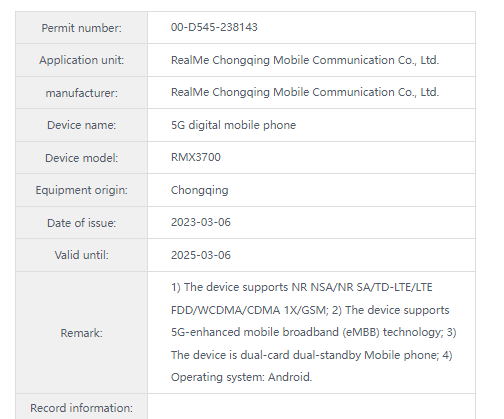
After launching the Realme GT Neo 5 in China, the brand is gearing up to launch another model under the GT Neo banner called the Realme GT Neo SE. Key specifications of this upcoming device have already leaked, and it was also recently spotted on 3C certification. Now, the device has made an appearance on the TENAA certification database hinting at its imminent launch.
Spotted my tipster Mukul Sharma, the Realme GT Neo SE bears the model number RMX3700. The listing does not reveal any information regarding the specifications, so let’s take a look at the previous leaks for more details.
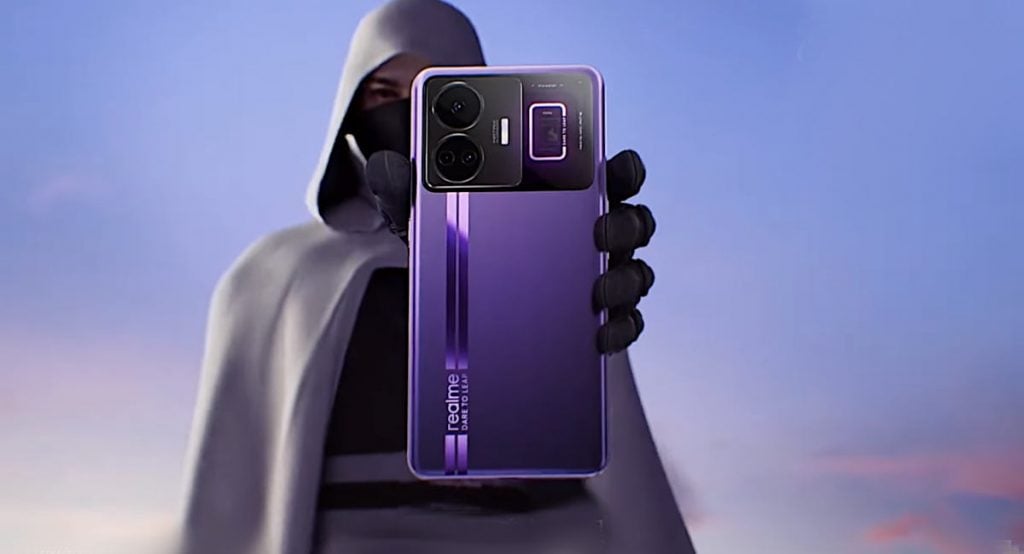
Realme GT Neo 5 SE specs (rumored)
Realme GT Neo 5
The Realme GT Neo 5 SE is anticipated to be a more affordable variant of the Realme GT Neo 5. It will lack the flashy C-shaped RGB lighting unit found on the GT Neo 5’s back panel. However, it is speculated to sport a large 6.74-inch OLED screen with a resolution of 2722 x 1240 pixels and a refresh rate of 144Hz. The phone is expected to be powered by the upcoming Snapdragon 7 Plus Gen 1 chipset, and it may come with a sizable 5,500mAh battery that supports 100W charging.
On the front, the GT Neo 5 SE will likely feature a 16-megapixel front-facing camera, while the rear camera system is said to consist of a 64-megapixel primary lens, an 8-megapixel ultra-wide lens, and a 2-megapixel macro camera. The device may run on ColorOS 13-based Android 13 operating system.
Apple iPhones have been one of the best-selling smartphones in the world, and the company has been trying to add new features to the device with each iteration. However, the company still lags in some technologies and features compared to some flagship Android offerings.
While most of the premium Android smartphones come with under-display biometric authentication to unlock the device, Apple has still been unable to add such technology to its devices, and it appears that it isn’t happening anytime soon.
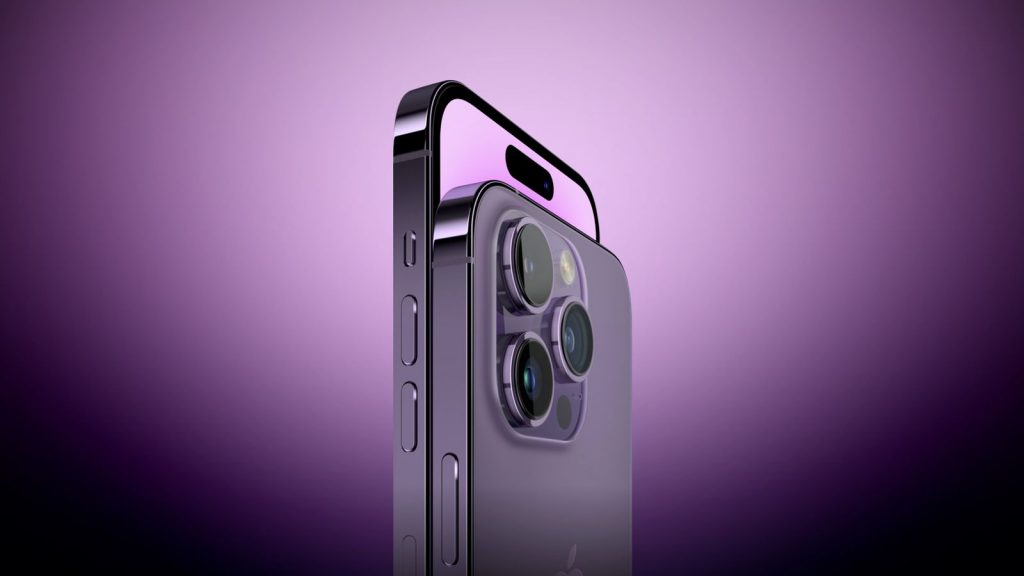
Apple iPhone 14 Pro
According to the latest report coming from Ross Young, Apple is unlikely to implement the under-display Face ID technology on its smartphones until 2025. So, if you have been waiting for iPhones without a display notch, you would have to wait a few more years as the Cupertino-based tech giant isn’t prepared to implement under-display technology anytime soon.
Earlier, it was reported that the Apple iPhone with under-display Face ID could be officially launched in 2024, but the timeframe appears to have been pushed back because of sensor-related issues. Going by the new timeframe suggested, the Apple iPhone 17 lineup could be the first to have Face ID components hidden under the display.
Even when Apple adds under-display Face ID technology to the iPhones, it is said that the phone will still have a hole for the front-facing camera sensors. While we expect major changes to the smartphone, it is too early to speculate what changes will happen to the iPhone’s design as the company implements new technologies.
For the upcoming iPhone 15 series, Apple will add Dynamic Island to all four models, which is currently limited to iPhone 14 Pro models only. We expect a few other major changes with the upcoming iPhone lineup, especially the adoption of a USB-C port instead of the company’s proprietary Lightning port. The company is also rumored to launch an Ultra model in the iPhone lineup, but it’s not yet clear if the device is getting launched this year or next year.
Electric motorbikes, also known as e-bikes, have been growing in popularity in recent years as a more sustainable and efficient mode of transportation. With the limited amount of options available in the market as of now, e-bike enthusiasts are usually forced to compromise on either performance or aesthetics while choosing their vehicle. With zero emissions and lower operating costs, electric bikes have the potential to revolutionize the transportation industry and reduce carbon footprint.
California-based manufacturer Zero is at the forefront of this trend. The company’s latest concept, the SR-X, has been developed in collaboration with Huge-Design to create a motorcycle that not only features a futuristic and sporty look but also boasts exceptional performance. The clean lines and aggressive stance of the Zero SR-X highlight its high performance, making it an exciting prospect for anyone looking for a sleek, powerful electric motorcycle. The first impressions of the model and design of the bike make it look like something out of a Mission Impossible movie.
Based on the chassis of the Zero SRS and powered by the ZF75-10 engine, the Zero SR-X packs a punch with its 110 horsepower and 190 Nm of torque. Since the bike is powered by an electric motor, one can expect the bike to have impressive acceleration. The lithium-ion battery provides a capacity of 17.3 kWh, giving riders a significant amount of range. While it is uncertain whether this concept will ever make it to production, fans of electric motorcycles can still enjoy the impressive video teaser that Zero has released. The Zero SR-X is a glimpse into the future of electric motorcycles, and it’s certainly an exciting prospect.
I want to share with you an innovative companion robot integrated with a lot of new technology. It’s the Enabot EBO X. This little guy is the most innovative and heartwarming robot I have seen so far this year. If you are looking for a gift for your child’s upcoming birthday or want to give extra care to the elderly in your family, trust me, the EBO X can be one of the coolest options.
Design
The cute robot is designed as a movable guardian to provide home security, health warnings, communication, and entertainment for families.
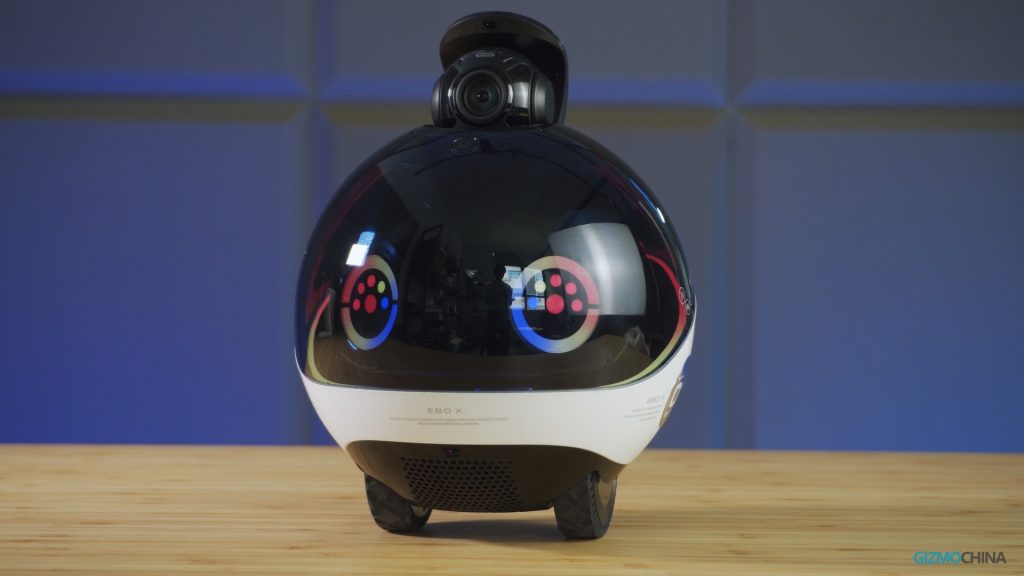
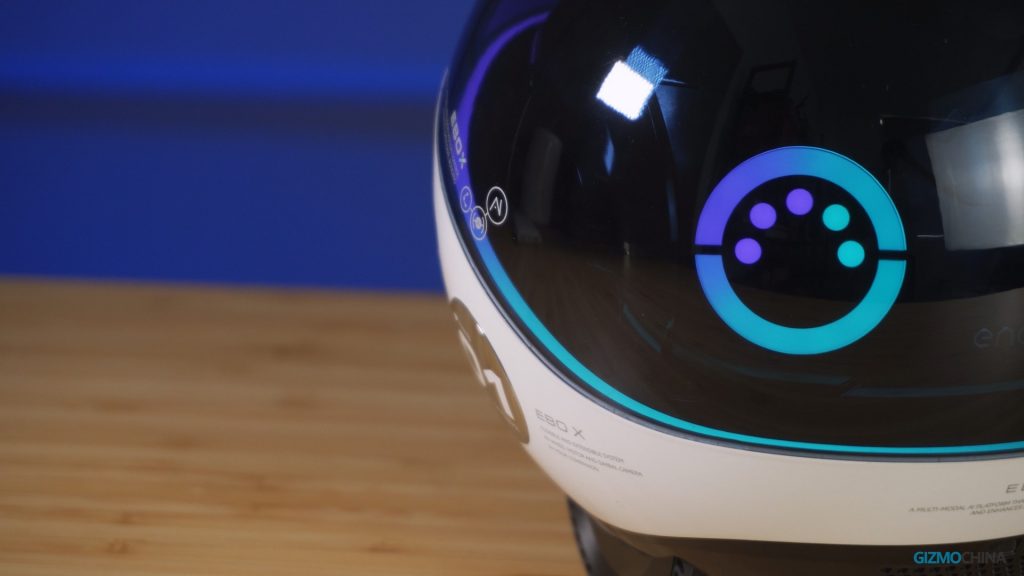
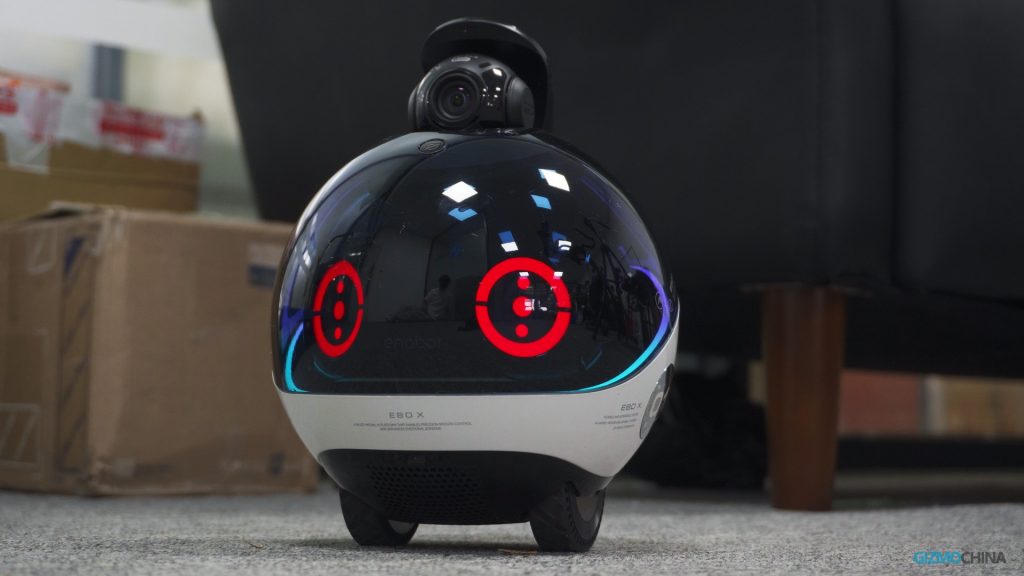
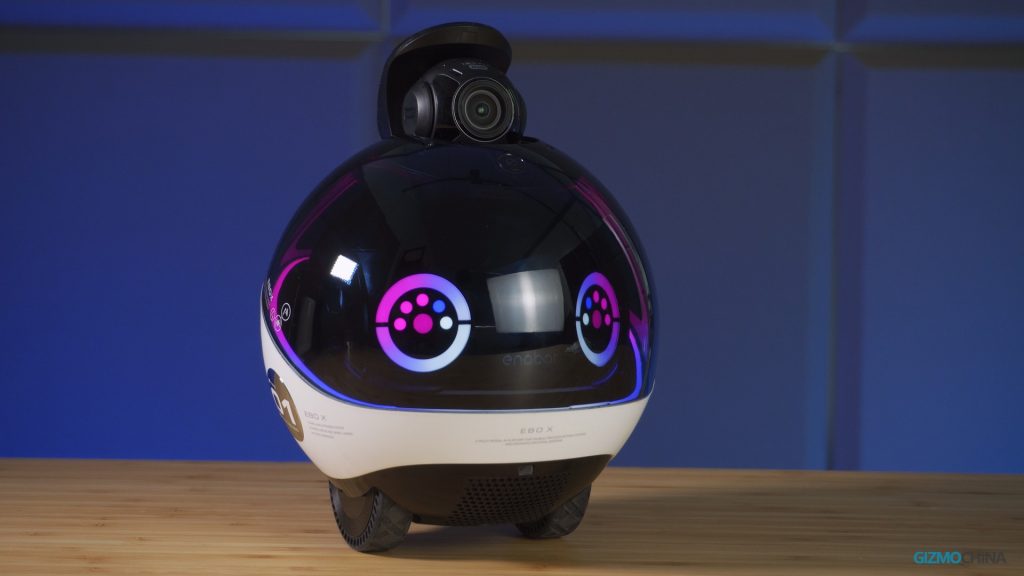
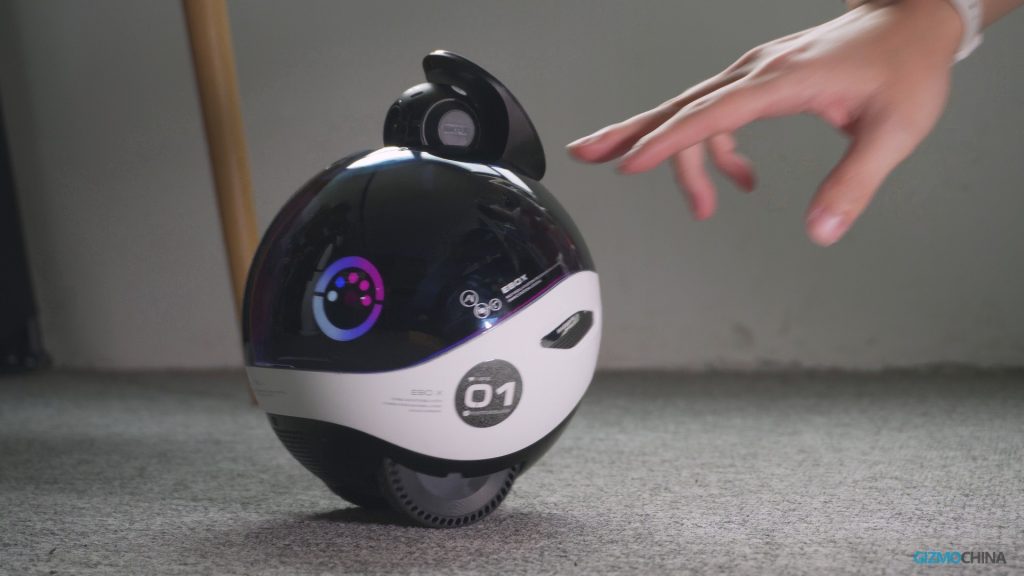
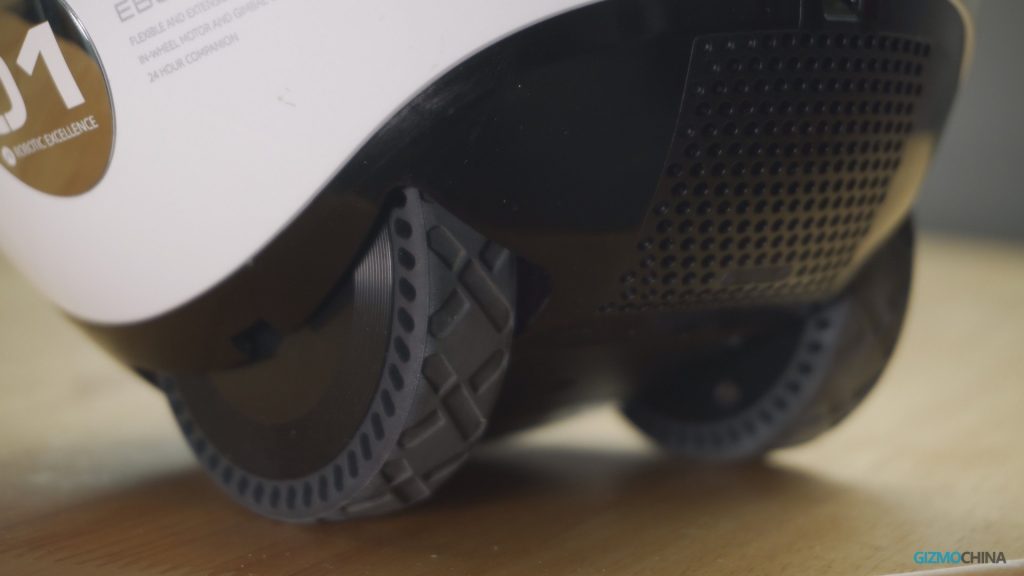
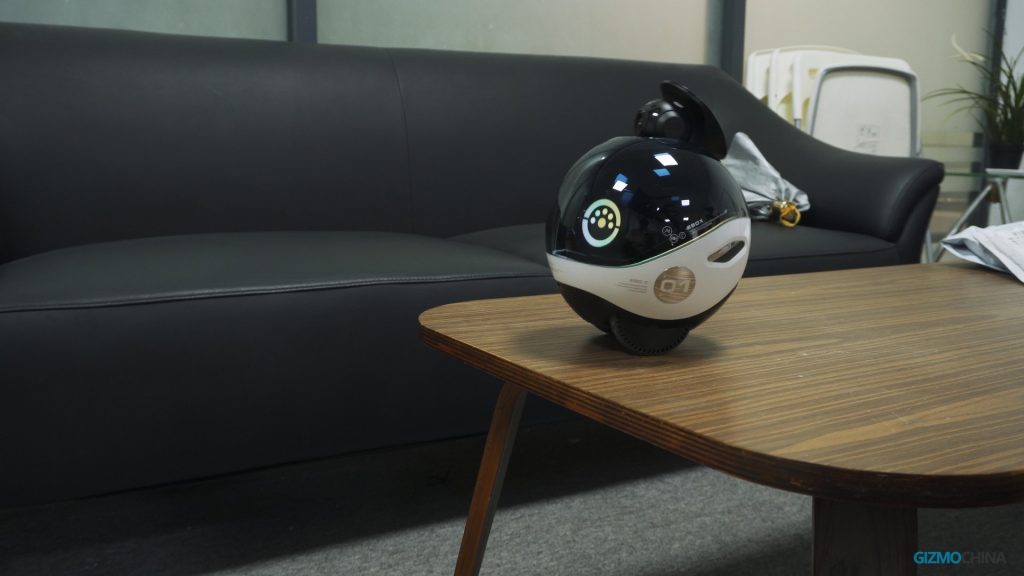
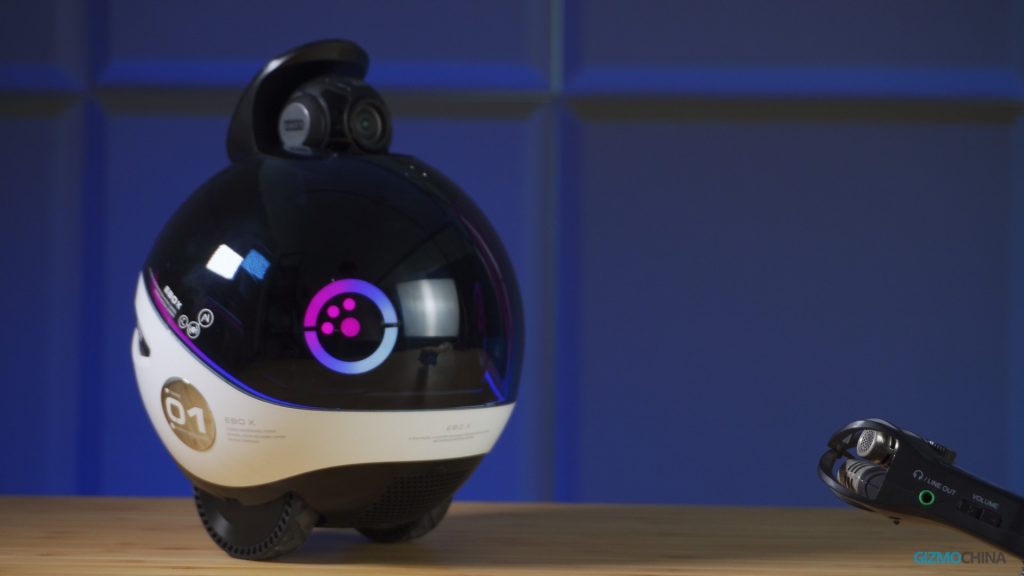
When I first saw EBO X, it reminded me of two of the most famous robot characters in movie history, BB-8 in Star Wars and Eva in WALL-E, It has a very cute spherical body, with a pair of flexible wheels as its feet underneath the body. It’s pretty funny to see the little guys rolling around the home. And the big eyes make it look both futuristic and intimate, like really keeping an eye on things, though it doesn’t actually see the world through the ‘eyes’.
It has a very cool set of speakers on both sides and the bottom of its body, and the clever thing is that they just look like the ears of EBO X. Working with the built-in microphones, it builds up a two-way audio system for real-time communication, working as a movable voice assistant.
When you pick it up you can feel its heavy weight and solid build quality. This black cover makes it look mysterious and you can’t imagine how many sophisticated components and advanced designs are hidden under the cover.
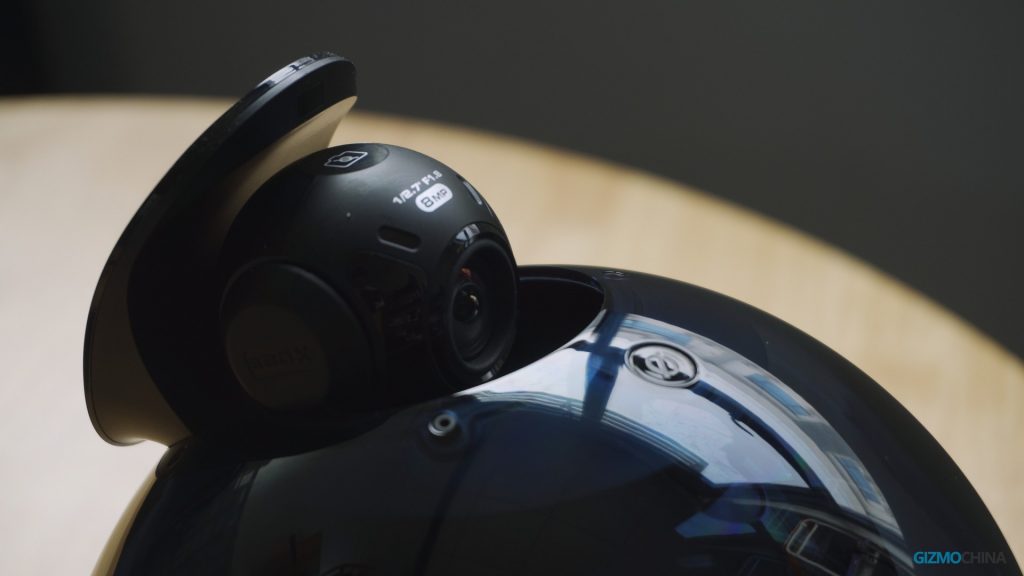
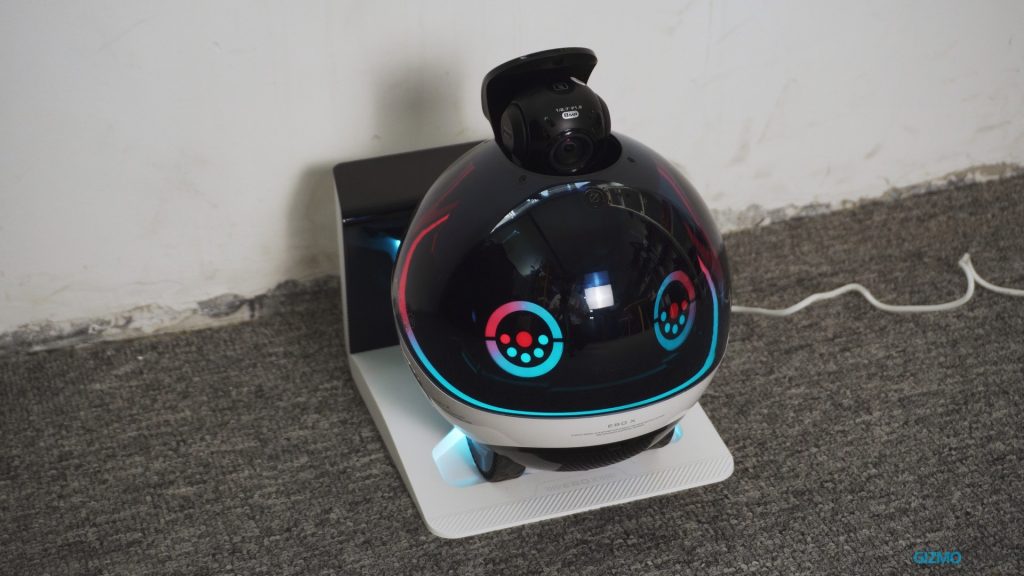
When you press the top of it, a very compact spherical HD camera will pop up, through which EBO X can see the world and recognize the humans around him. On the top of the camera, we can see some buttons that allow you to adjust the volume of the robot or pause the music.
EBO X has only a few buttons on its body. Since it has a high level of intelligent control system, you can command it and control its behavior in many ways, such as phone control and voice commands. In addition to these buttons on top of the gimbal, we can also see a power switch at the bottom of the robot. Now let’s try to wake this little guy up.
Connection & auto charging
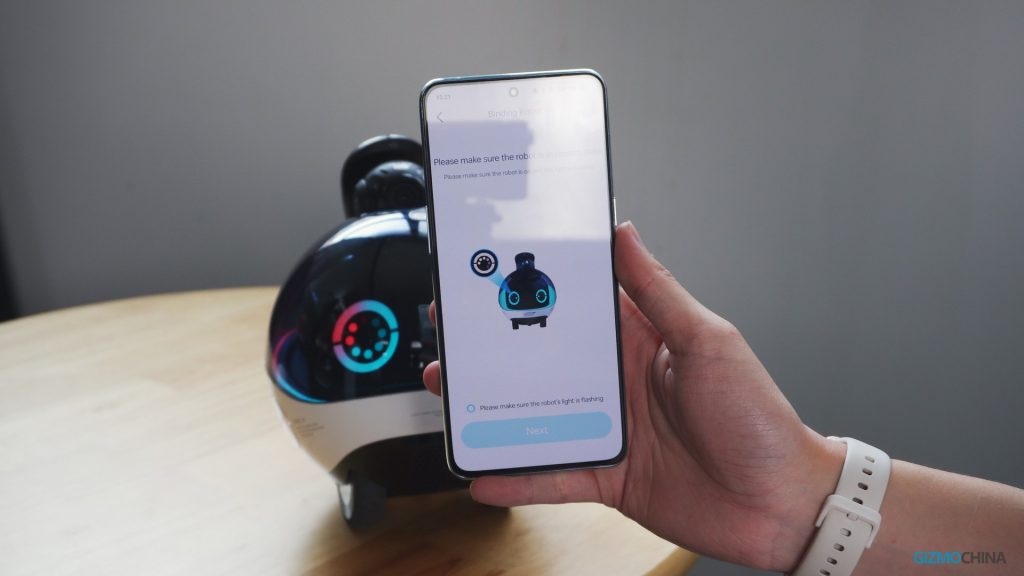
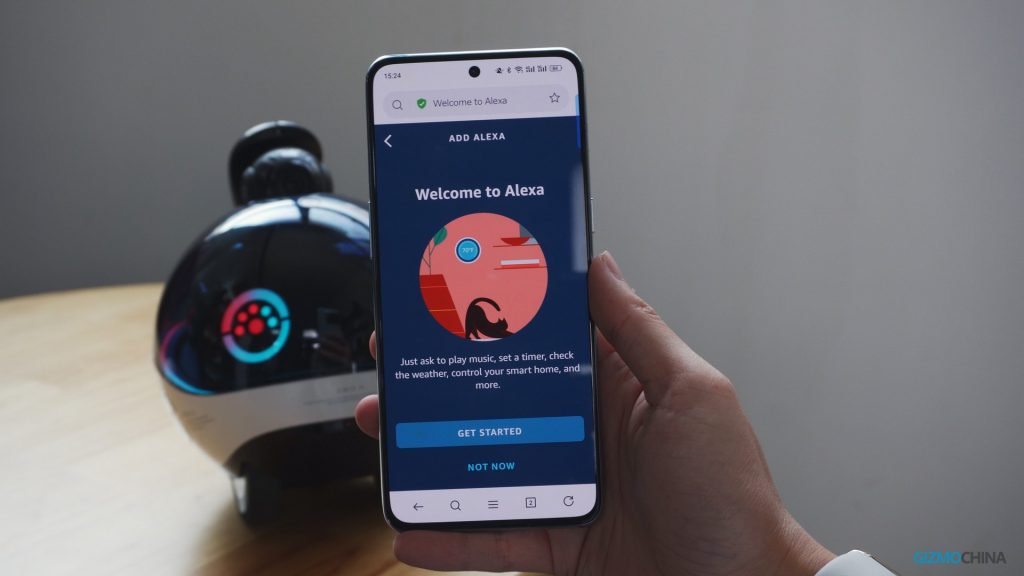
Setting up your EBO X is very simple, it will automatically stand by when it is first activated, all you need to do is open the EBO APP, click Add Device and show it the QR code. Once the robot is bound to your phone, enter your home WIFI password and you can access and control it at any time. You can also sign in to your Amazon account to complete the binding to activate the Alexa voice assistant, so you can talk to EBO X to control the IoT devices at home.
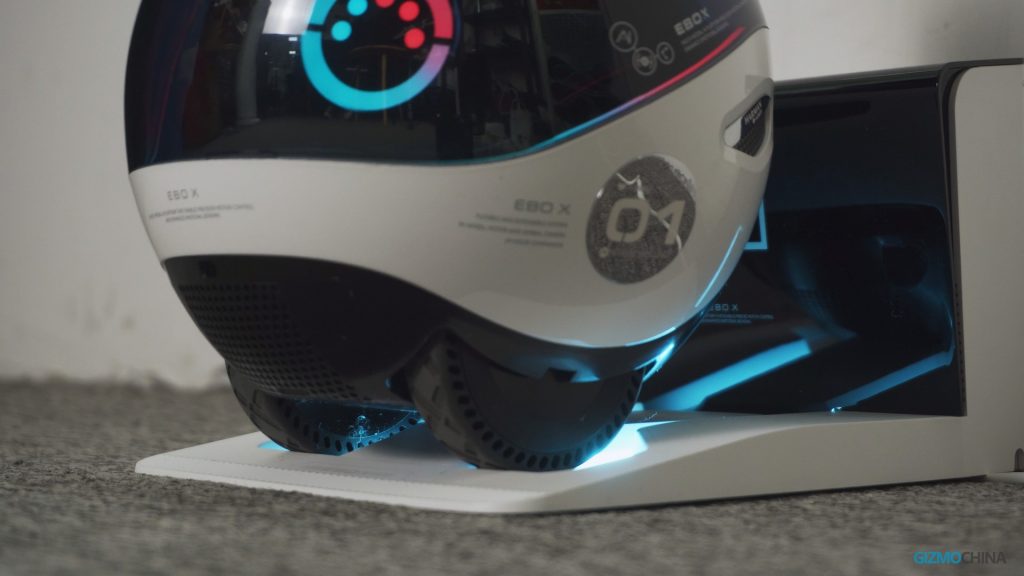
There is also a compact charging station with a refined design in the package. You can place it at the corner, and just make sure there are no obstacles within 1.5 meters in front and on both sides of the charging station.
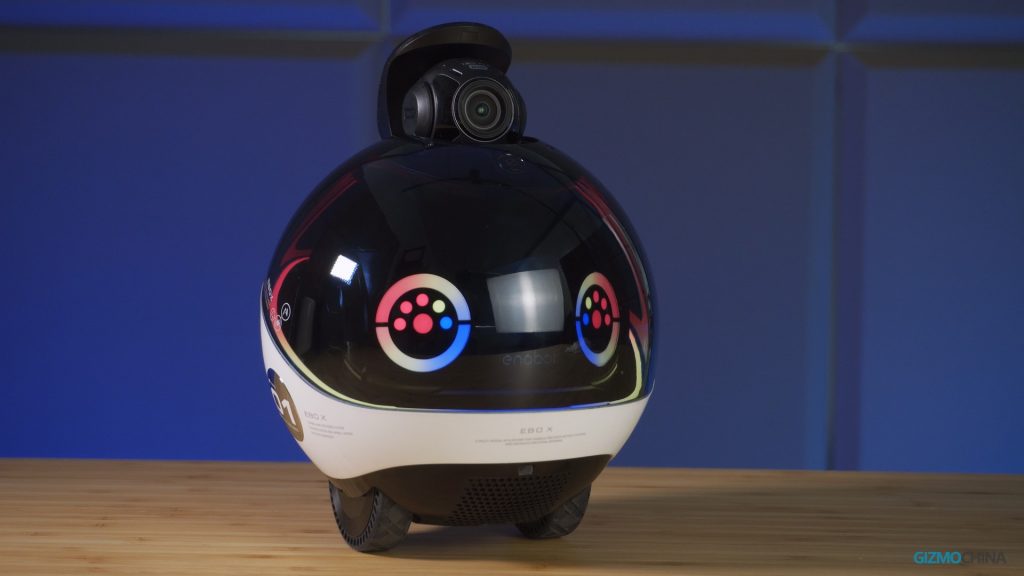
When you have finished all the preparations, you can customize the appearance of the robot in the APP, there are many fantastic lighting themes for options. You can also adjust the brightness of the RGB light and the rhythm of the waist light. These special lights give the robot a visualized expression so it feels like we can actually feel its emotions.
Mobility
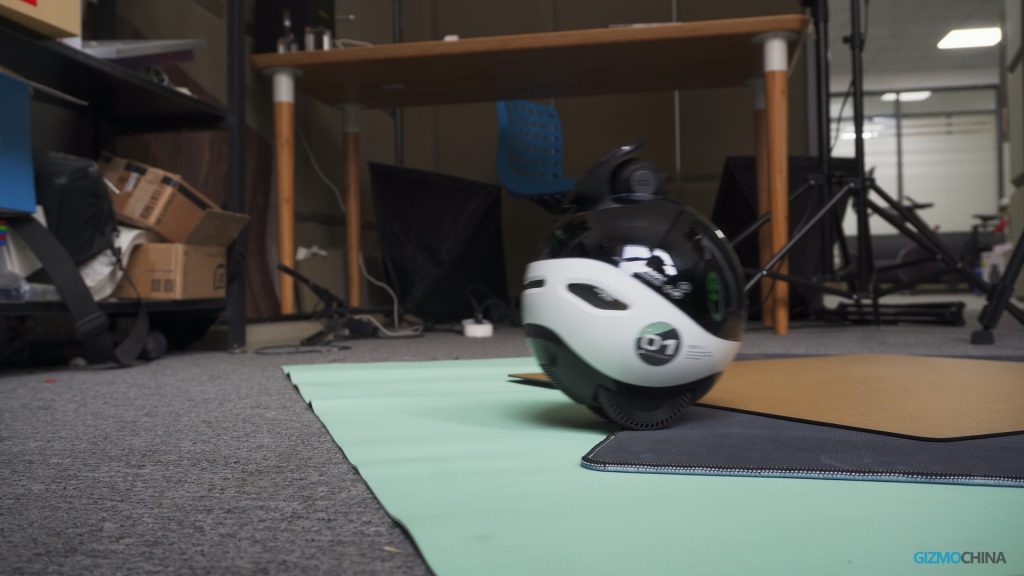
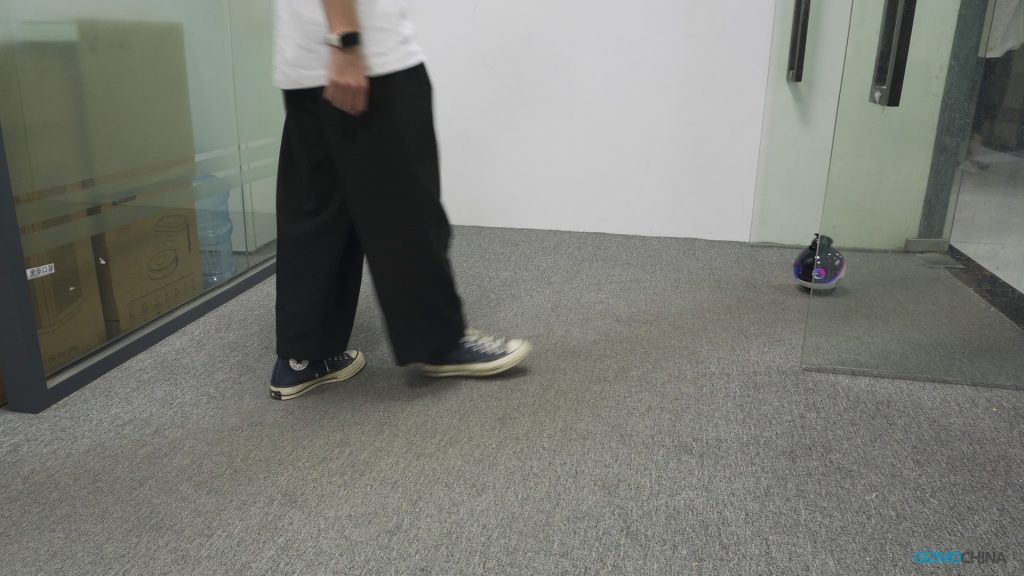
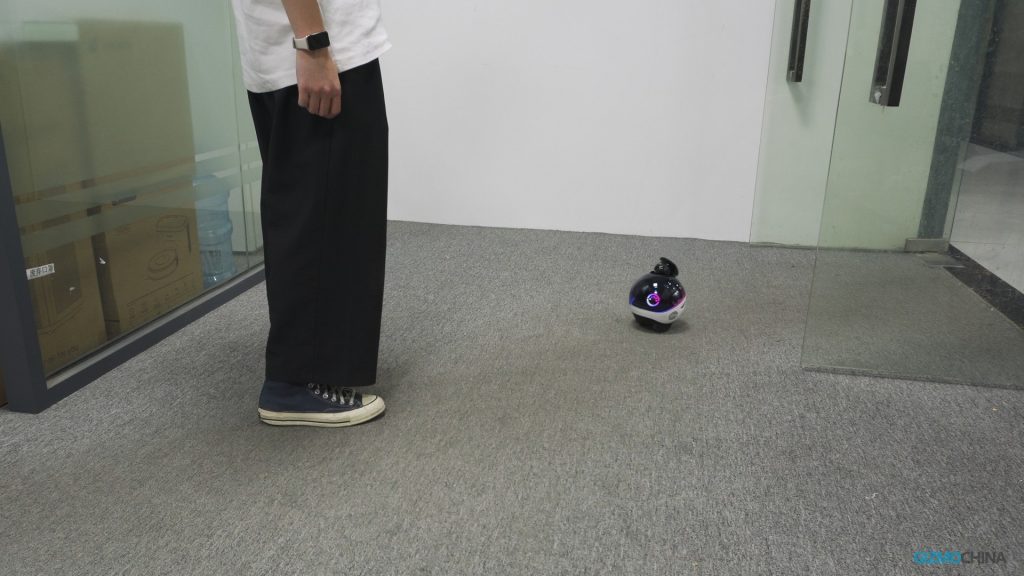
The first thing I’d like to show you is the robot’s incredible motor function. As you can see, the robot is not a self-balancing structure. If you turn off its power, it cannot maintain a stable standing position on its feet. When you start it, the robot is actually self-balancing in real-time by adjusting its own posture through its internal fine sensors and motors.
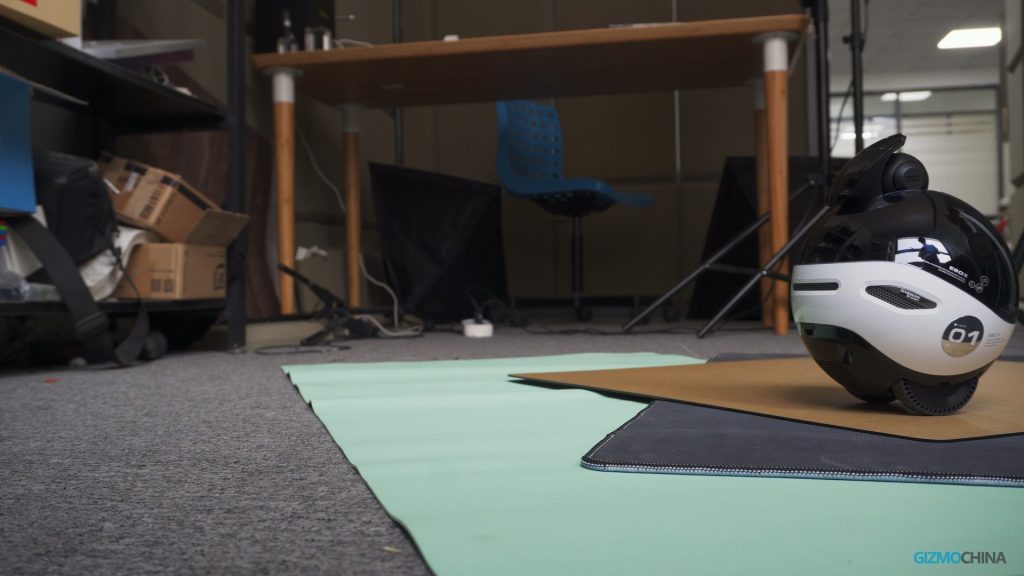
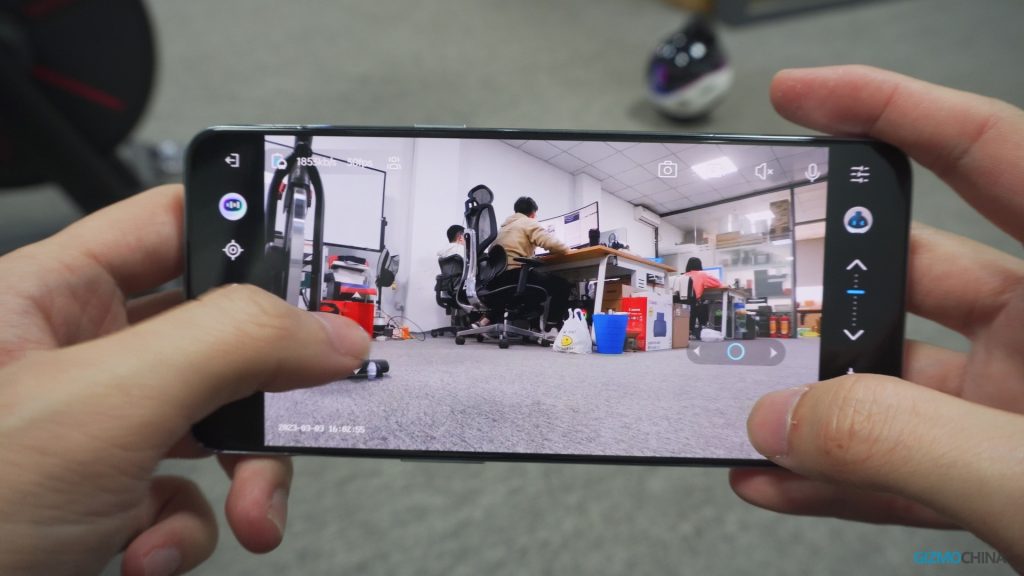
Even if you intentionally push it, the body can still maintain balance after all kinds of impact. To achieve that, it’s actually much harder than we thought. What’s more amazing is the EBO X can achieve high-speed movement, you can control its movement through the real-time viewport in the app. I’m curious if this looks like a racing game if we put two or more EBO X models together.
EBO X can not only move on flat surfaces but also cross some uneven ground. With the help of responsive design and highly sensitive sensors, the robot can always maintain its balance. When trying to pass some relatively high drop, the robot may fall because of the crash, but nothing has to worry about. It will immediately recognize its own posture and then quickly and steadily stand up again.
But most of the time, when recognizing a high drop ahead, it will stop moving forward to prevent itself from falling from a height, so you can safely let EBO X stay in any room of the house even if the room is on the second floor.
detect heightstop moving forward
Patrol guardian, smart detection & Alert
As a companion robot, EBO X has many practical and heart-warming features. Thanks to the powerful motor capabilities and the HD camera on the gimbal, EBO X can serve as the most flexible guardian in your home.
When you are out, you can always use the APP to see what is happening at every single corner through the movable EBO X. Control the virtual joystick to let the robot reach and monitor every corner, and if you have a baby or a pet at home to look after, EBO X provides you with an additional safeguard.
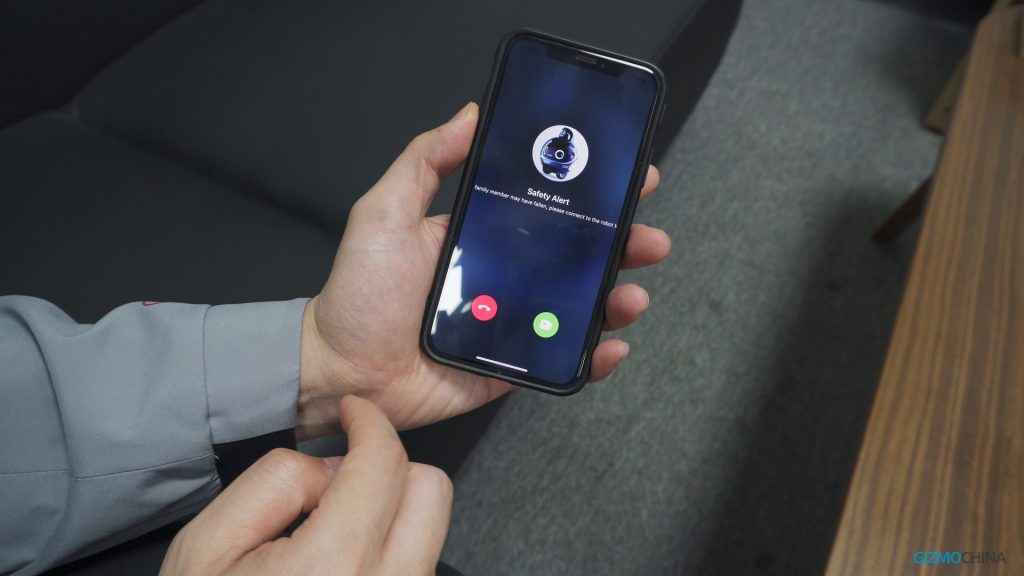
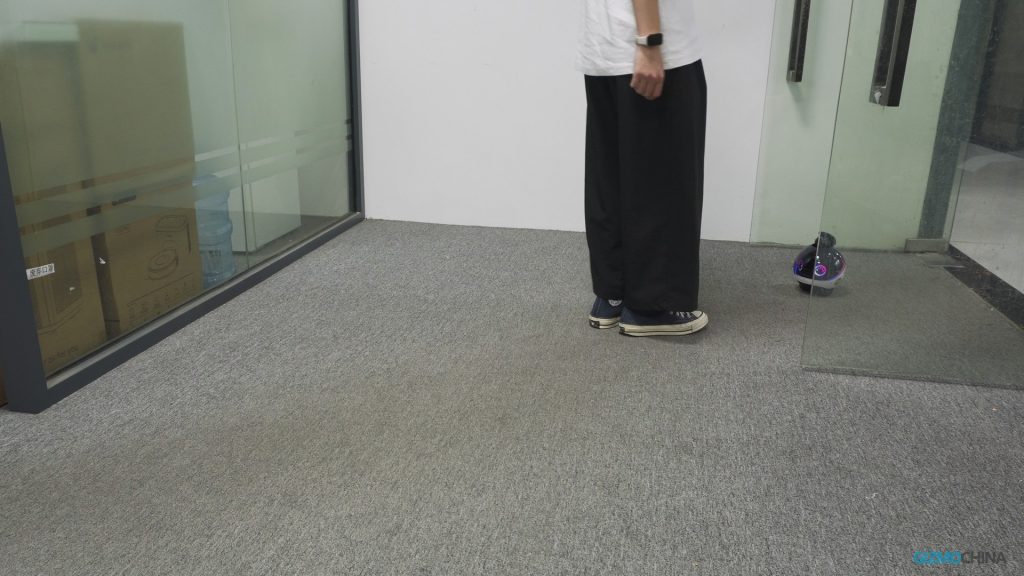
For those elderly people with limited mobility, an accidental fall can be a serious emergency without timely assistance from others. Therefore, engineers developed a posture recognition function for EBO X. Once there is a suspected human fall in its field of view, it will immediately recognize and send you a warning, and you can click on the real-time notification from the app to view the live situation.
detect fall and Alertlive situation
As a companion robot, EBO X also puts some effort into enhancing the connection between each family member. It is a truly smart device that can be shared. You can send an invitation to each family member to become an administrator of EBO X to access and control it. After the family members have joined, you can also make video calls to them through the EBO X. It supports two-way video calls for up to five people, so everyone can experience the cozy sight of family through the eyes and ears of EBO X.
Entertaining
In terms of home entertainment, once you activate the Alexa voice assistant, everyone can have the EBO X play popular music from Amazon via voice commands, By the way, while the EBO X sings for you, you can also have it follow you, so the music will always be around you.
While the robot has a very compact body, its built-in speakers are much more powerful than I expected. I don’t think anyone would say no to a true home mobile sound system like this.
Battery life
The EBO X comes with a 2500mAh battery and supports automatic recharging, or you can send it back to the charging station via app or voice commands, It completes the process more accurately and quickly than many robot vacuums I’ve seen. So basically you don’t have to worry about its battery life.
Verdict
So that’s all about the EBO X, a very advanced and humane companion robot, it is a completely new category of consumer electronics that can bring joy and surprise to anyone. I really appreciate the Enabot team, especially for the intelligent features designed for children and the elderly.
Compared to those traditional smart speakers or security cameras, it has a much more powerful guarding ability and delivers warmth to the whole family, I think this is a product with great potential, and now I am more looking forward to the brand bringing natural conversation ability like ChatGPT to the robot in the near future, making it a more human and loyal companion. The EBO X now is available on Kickstarter, you can click here to check out more information.
Oppo is expected to unveil the Find X6 series of smartphones on March 21. The series is expected to include the Find X6 and Find X6 Pro, which will be powered by the Dimensity 9200 and Snapdragon 8 Gen 2 chipsets, respectively. Last year, the Find X5 and X5 Pro were made available in China and on the global market. However, it appears that this year only the standard variant will release in markets outside of China.
In a new tweet, tipster Ice Universe said that the Xiaomi 13 Ultra will be released globally, but the Find X6 Pro will not. Reports have claimed that the Xiaomi 13 Ultra may go official in April in China and may eventually release in other markets across the world.
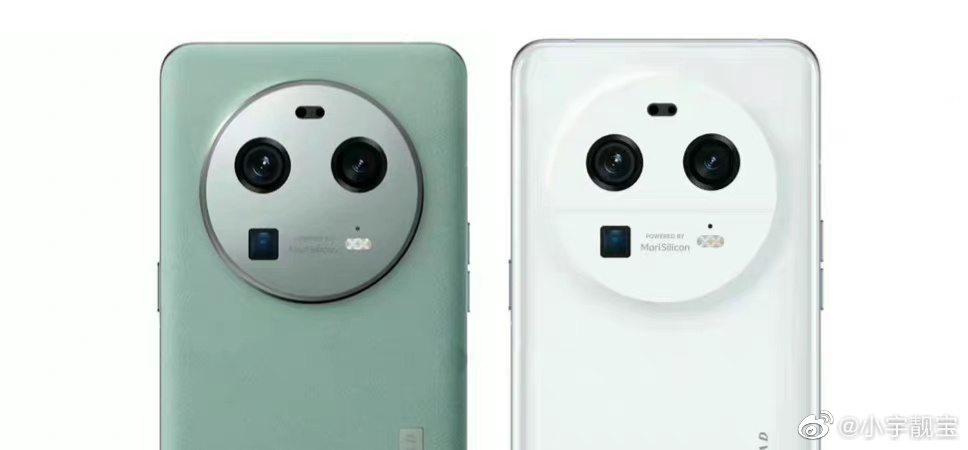
Alleged Oppo Find X6 Pro render
Since the Find X6 Pro is now said to remain exclusive to the Chinese market, it appears that the Find X6 could be available in wider markets. The Vivo X90 Pro+, which has already launched in China, the upcoming Xiaomi 13 Ultra, and the Oppo Find X6 Pro are all equipped with a 1-inch Sony IMX989 50-megapixel primary camera. While Vivo has released the Vivo X90 and X90 Pro in the global market, the X90 Pro+ has not launched outside of China. Since the Find X6 Pro is also expected to meet the same fate as the X90 Pro+, it appears that the Xiaomi 13 Ultra could be the first-ever 1-inch camera sensor phone to release in the global market.
Rumors surrounding the Find X6 Pro have revealed that it will have a 6.8-inch QHD+ 120Hz E6 AMOLED display with a peak brightness of 2,500 nits, SD8G2, LPDDR5x RAM, UFS 4.0 storage, and a 5,000mAh battery with 100W wired charging and 50W wireless charging. It will have a 32-megapixel Sony IMX709 front camera, and a 50-megapixel (Sony IMX989) + 50-megapixel (Sony IMX890, ultra-wide) + 50-megapixel (Sony IMX890, periscope telephoto) triple camera unit.
Last month, Gigabyte unveiled the AORUS 15 and AORUS 17 gaming laptops as the latest addition to its premium lineup. The launches came a month after the company debuted the top-end AORUS 17X and 15X models. Now, the non-X variants are finally hitting store shelves. So let’s take a look at their specs, features, and pricing.
Gigabyte AORUS 15 & 17 specs
The AORUS 17 and AORUS 15 models boast powerful components, including the Intel 13th-gen Core i7-13700H processor and NVIDIA GeForce RTX 4070 laptop GPU with access to a maximum 140W TGP through Dynamic Boost technology.
The laptops also feature an upgraded WINDFORCE Infinity cooling system that can handle up to 160W TDP and offer a 240Hz refresh rate at 1440p resolution, with the 15-inch model additionally offering a 360Hz display option. The 15-inch model is also offered with a QHD panel that has a 100% DCI-P3 color gamut coverage.
The design features an aluminum alloy cover and RGB Light Bar for a sleek gaming appearance, while the WINDFORCE Infinity cooling system allows for more I/O ports on the back, including a Thunderbolt 4 source of 100W, an HDMI 2.1 port, and a mini DisplayPort 1.4. Additionally, both laptops can be equipped with up to 65GB RAM, providing ample power for demanding gaming and creative tasks such as video editing.
Pricing
Amazon now offers four new Gigabyte AORUS gaming laptops featuring the powerful Core i7-13700H processor and RTX 4070 graphics card, but with a slightly lower 165Hz display, priced at US$1,749. Alternatively, the AORUS 17 with a 100% sRGB 240Hz display, which is identical in terms of specs, starts at US$1,849.
Discord is shaking up the chatbot game by partnering with OpenAI to integrate ChatGPT throughout the app. This collaboration will allow for machine learning to be used in unique and practical ways, with a public experiment set to begin augmenting Clyde, the in-built bot that notifies users of errors and responds to their slash commands, with conversational capabilities. Discord expects its users to turn to Clyde for information that they would have previously Googled, like asking for the local time in a different location to decide if it’s appropriate to message someone. Admins have the option to disable the chatbot if they don’t want to use the feature on their server, and user data is not being shared with OpenAI to train its machine learning models, so privacy is still maintained. This will be one of the biggest updates to Discord in a long time.
Discord is also using OpenAI’s technology to improve its automated content moderation tool, AutoMod, which has already blocked over 45 million unwanted messages since its introduction last June. Using large language models, AutoMod can interpret and apply server rules to detect and take action against people who go against a community’s norms and expectations. For example, AutoMod can spot someone attempting to go around a server rule against self-promotion by writing their message in a different language. Early results are quite promising, and the improved AutoMod is rolling out to select servers starting today.
Discord is also introducing a new feature that everyone can benefit from, and that is Conversation Summaries. This feature will provide an overview of chats users may have missed while away from the app by creating bundles that include a title, a summary of what was said, any images shared, and a log of who participated. This feature will prove to be extremely useful to those who use discord sparingly and would appreciate a rundown of the day’s messages and happenings, especially server owners.
While ChatGPT integration is nothing new in the tech space right now, Discord believes its emphasis on bringing friends and communities together gives it a leg up on the competition. More than 30 million people use AI applications through the platform every month, and nearly 3 million servers include at least one AI integration. Machine learning has been part of the Discord experience for a while, and many machine learning projects feature links to Discord servers on GitHub, a testament to Discord being a natural place for those conversations to start. Nonetheless, Discord’s integration with ChatGPT will significantly modify how users will interact with the application in the coming days. It will be quite interesting to see how this happens.
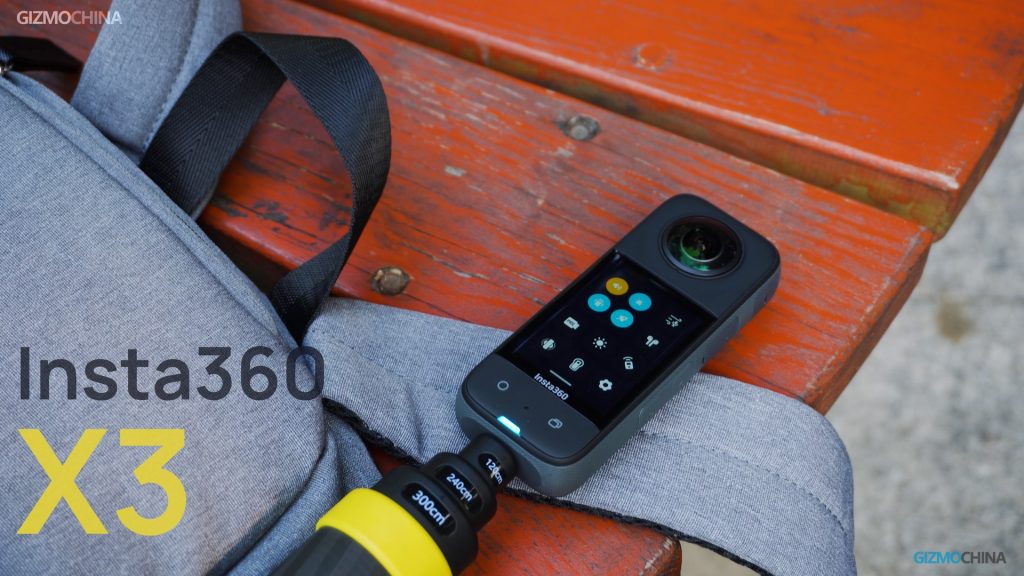
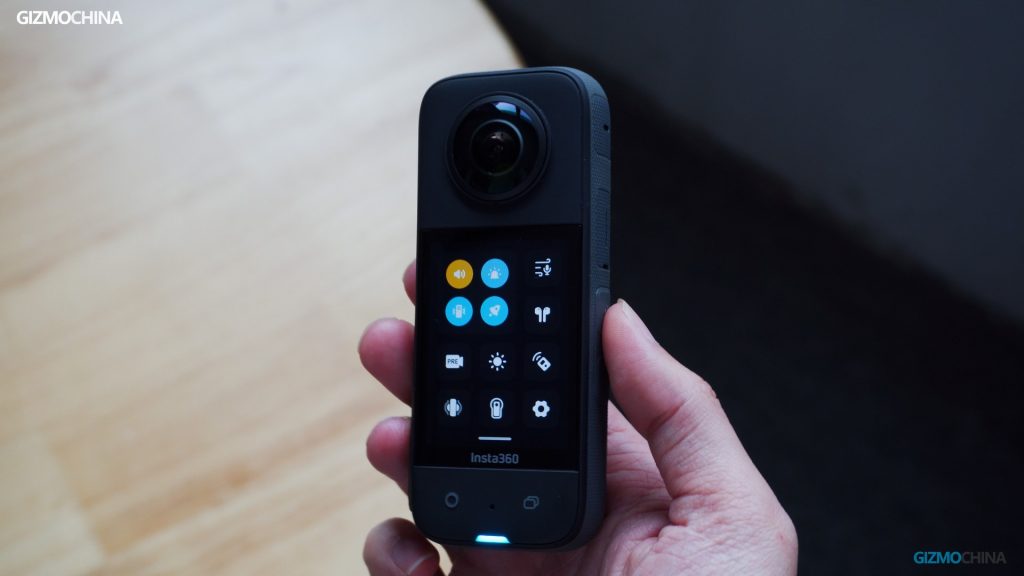
This, is the most versatile camera that I’ve ever used, the Insta360 X3 360° action camera. It doesn’t mean that it’s for everyone, but I believe that when you’ve experienced it, you will definitely find your own fun in it. The greatest trick of this powerful action camera is the dual high-resolution cameras back to back. With these two lenses, users can have great possibilities to shoot all kinds of creative clips that the other cameras can’t do. I even doubt that the brand developed this product in a way that is able to fully predict how users would use it to create content.
Design
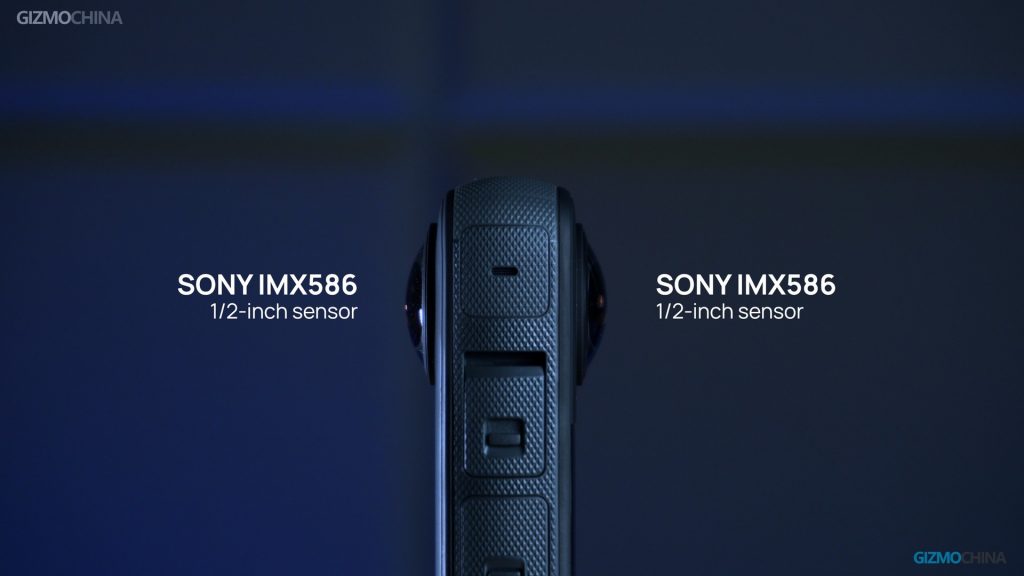
So let’s check out how it works. The two lenses each feature a half-inch SONY IMX586 sensor, which used to be popular on camera phones. Now the dual-lens setup brings a new life to the classic sensor.
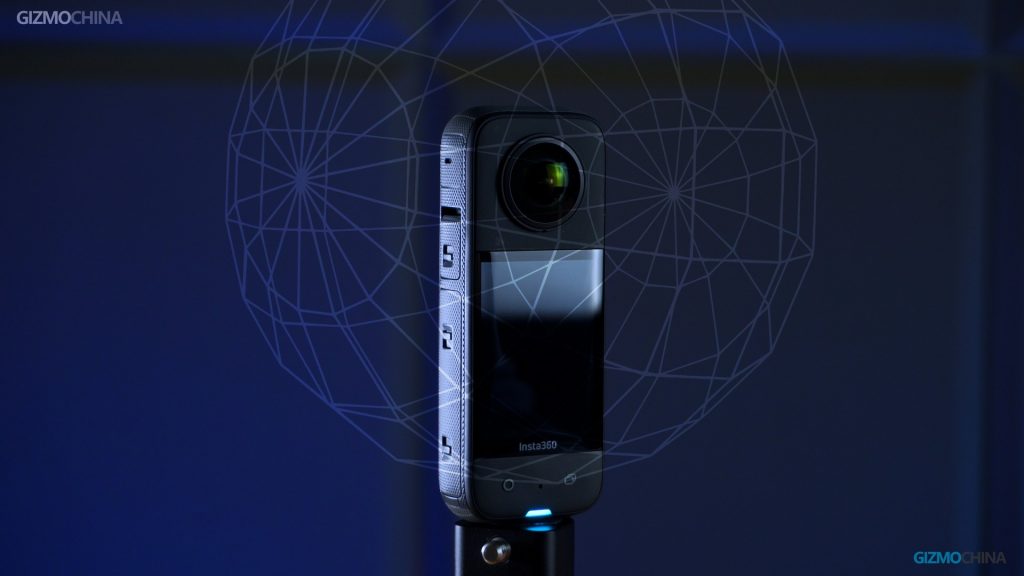
They are each recording an extremely wide-angle video that stretches way back, actually with views of beyond 180 degrees. Then the algorithm combines the two feeds shot on them into an almost perfect shooting of 360 degrees, though there’s a bit of overlap at the seams. What makes it really amazing is that the camera knows where the mounting point is and what their mounting equipment like selfie sticks looks like, so it can remove that out of the video. So even mounted with a selfie stick, the Insta360 X3 feels like a viewpoint hovering in the air. You don’t need to worry about the shooting angle, as it does create a real-time spherical capture. And you will decide the camera angle and movement including panning, tilting, zooming, and rolling in post-editing.
In a very hurried shot, you just need to decide where it should be in the air. It can be placed or mounted in a fixed position, follow any object in motion with a mounting accessory, or even complete the traversal of the lens movement with a 33-foot-long selfie stick like a drone.
Compared to its predecessors, the very important upgrade is the 2.29-inch touchscreen, by far the largest of any insta360 camera allowing the user to easily control the camera settings. On the side of the camera, there’re doors holding the upgraded 1800mAh battery, microSD card slot, and USB port. Since there’s no built-in storage, it doesn’t support in-camera recording. As you can see, one detail that may be inconvenient is that you must first take out the battery before you install or remove the storage card. Or there’s a USB-C storage dock available, with which you can have off-camera recording, but also convenient to take it down and plug it directly into the phone for editing.
Capture
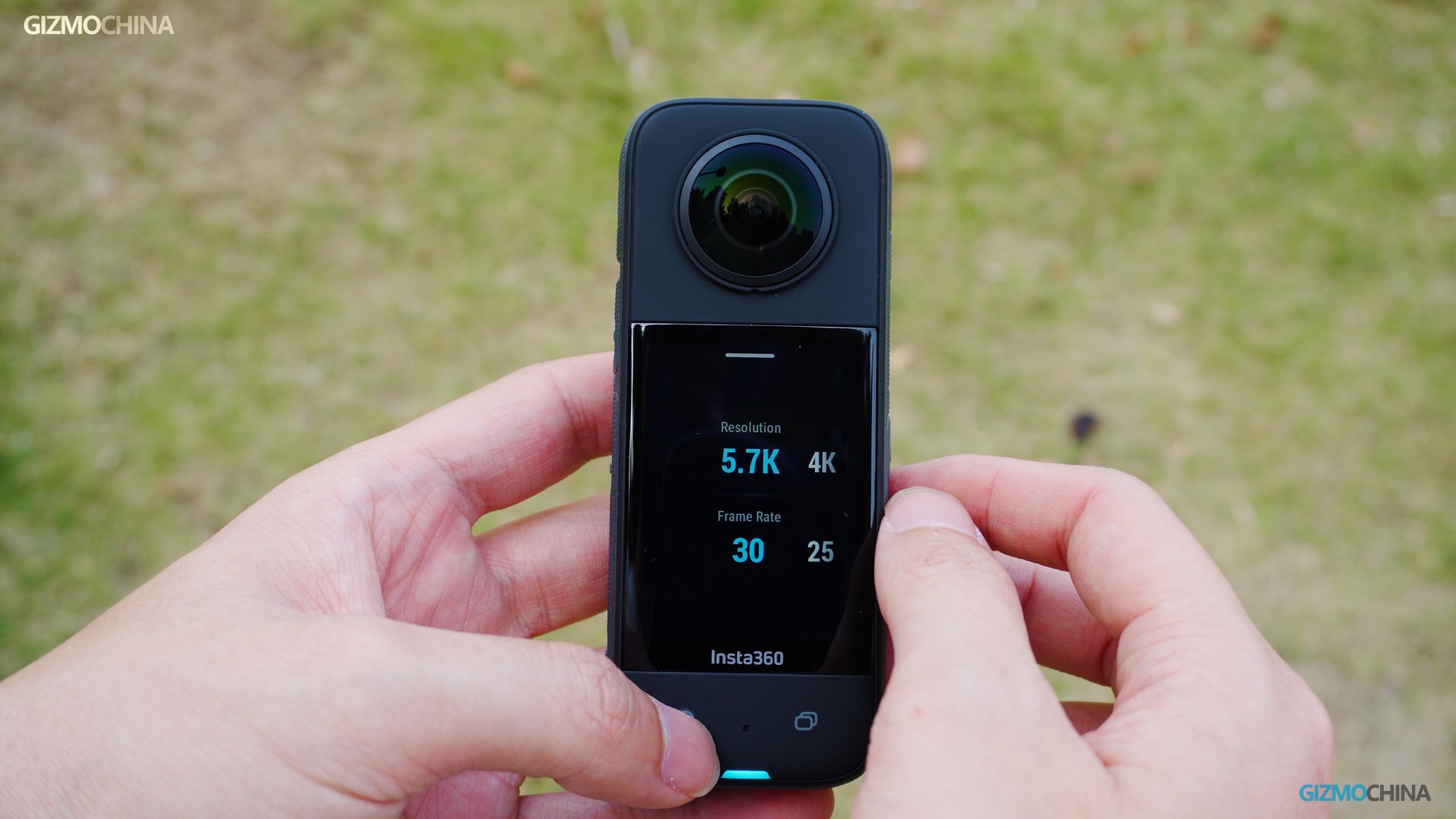
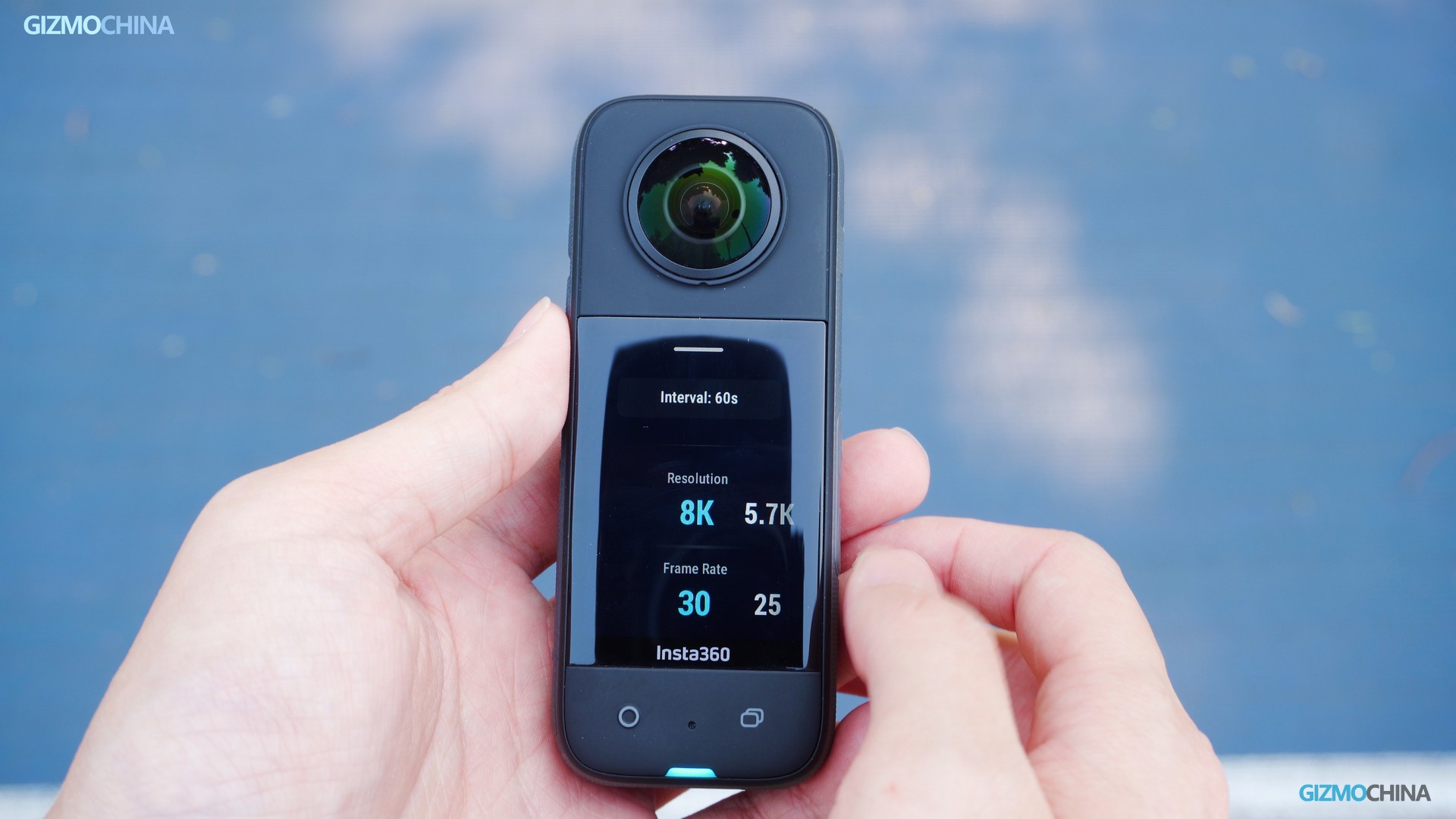
The Insta360 X3 has up to 5.7K resolution for 360° video shooting, allowing users to capture stunningly detailed images with vibrant colors. In addition to the Vivid and standard color modes, it also supports log colors. But here I still recommend using Vivid or standard colors to create content, as it looks really great in daylight and is much easier for post-coloring. A surprise I found from the clips is the decent dynamic range, which does offer a pretty natural brightness transition. By the way, in certain modes like time-lapse, the X3 can shoot at 8K resolution.
360° videotime lapse
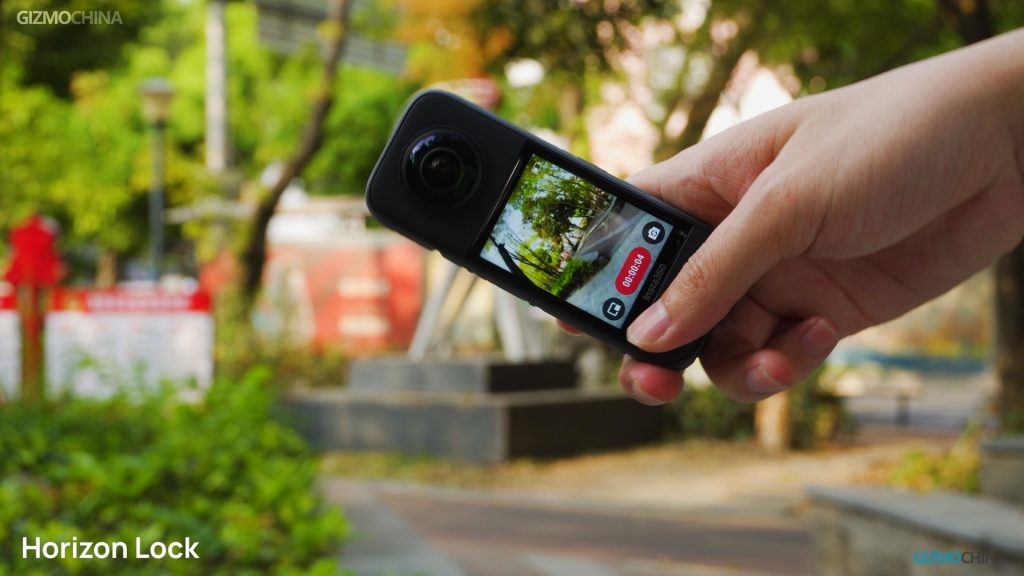
The cameras feature FlowState stabilization technology which helps reduce shake and blur in videos without sacrificing image quality or field of view (FOV). Additionally, both cameras also feature Horizon Lock mode which keeps your horizon level even if you move around during filming.
Actually, it’s pretty easy to shoot the whole spherical footage. Whether you can turn the footage into stunning creations depends on your spatial imagination and skills in using the software of Insta360 studio.
Software on Phones & PCs
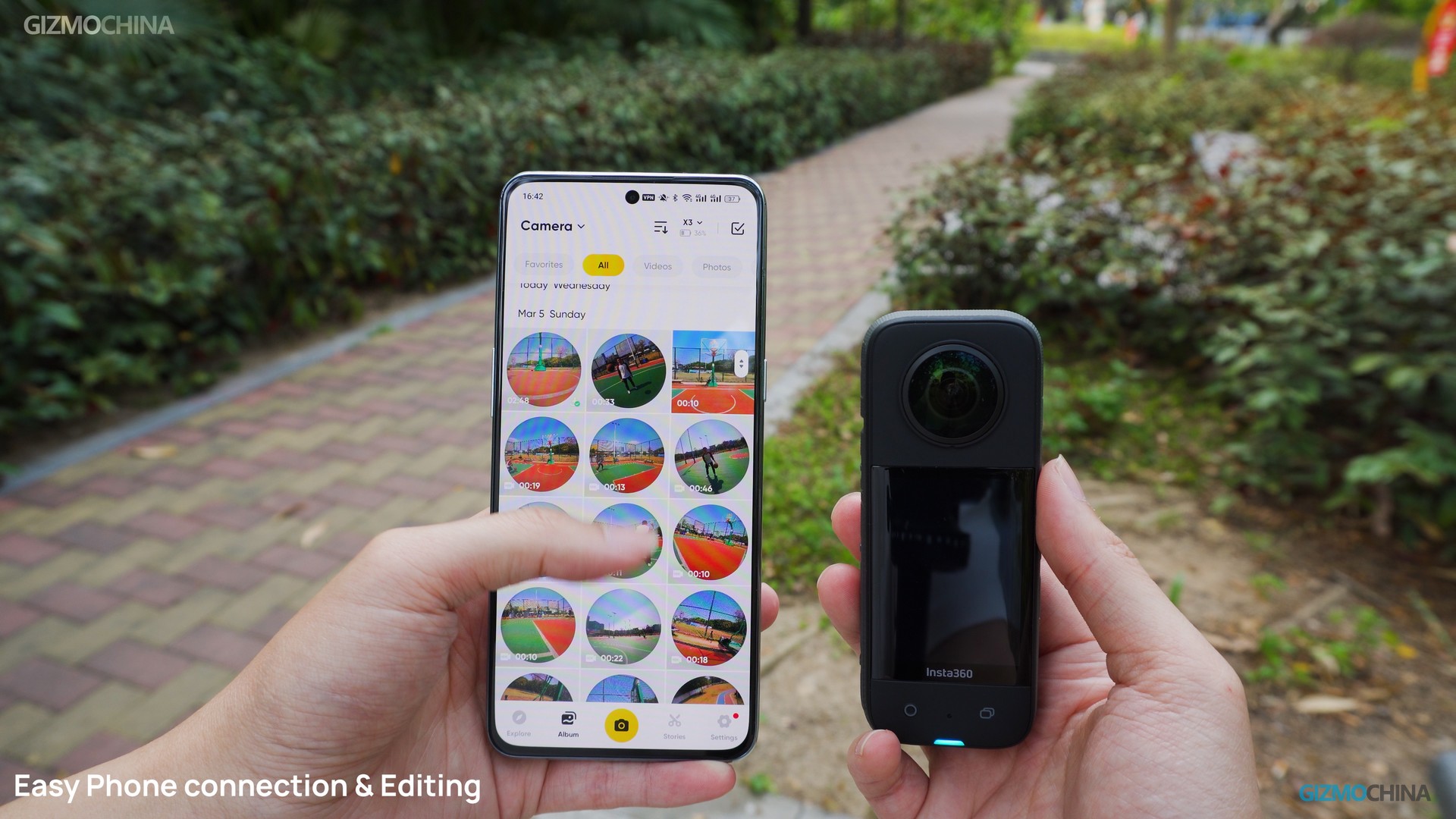
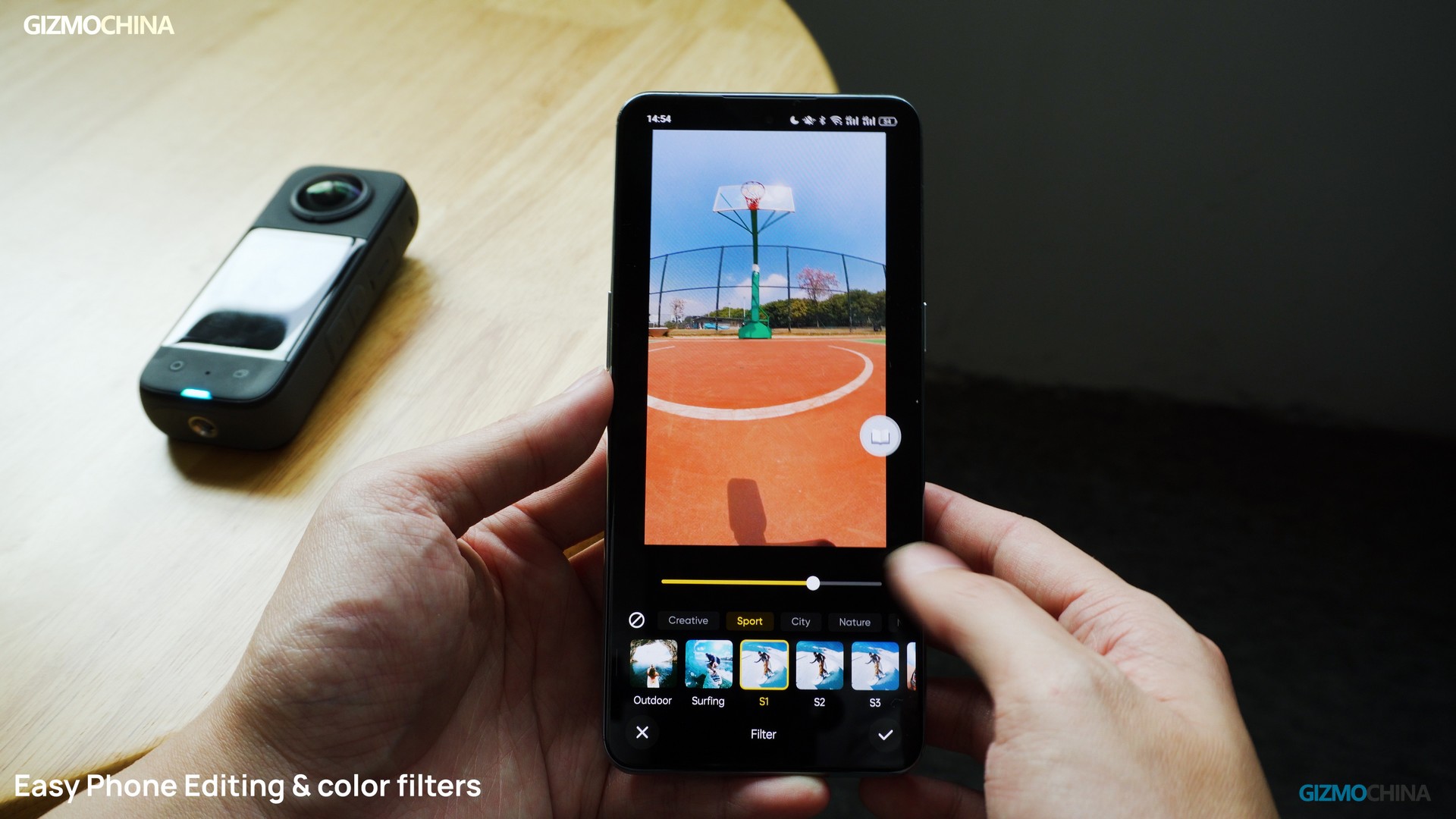
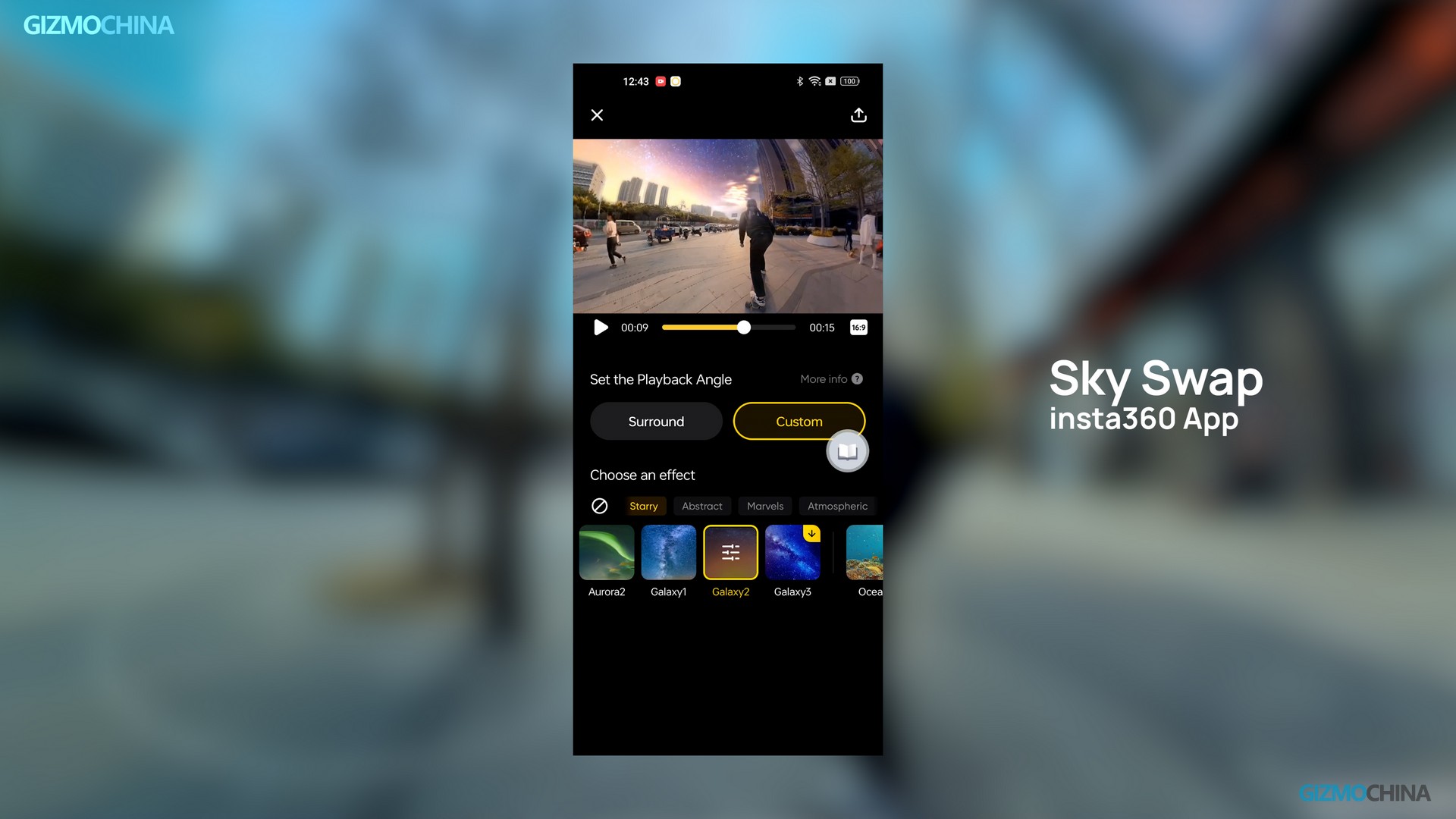
The most convenient way to edit those spherical videos is using the phone app, where you can easily find a bunch of effects and shot patterns to follow, such as different sports or vlog patterns, sky swap, time-lapse, bullet time and so on. To post anything different on social media, it’s perfect and the render time is also surprisingly good, which is even faster than any video-editing tools I’ve ever used.
If you are a professional content creator who wants to edit the clips in detail with the best image quality and the best additional stabilization effects, the Insta360 Studio for PC will be a better and more powerful tool. There’re more options for desktops to upload to social media at higher resolutions than via phones. What’s even more convenient is that you can transfer the shots to Adobe Premiere Pro with the plug-in and edit in the adobe software.
Wide Accessories for Insta360 X3
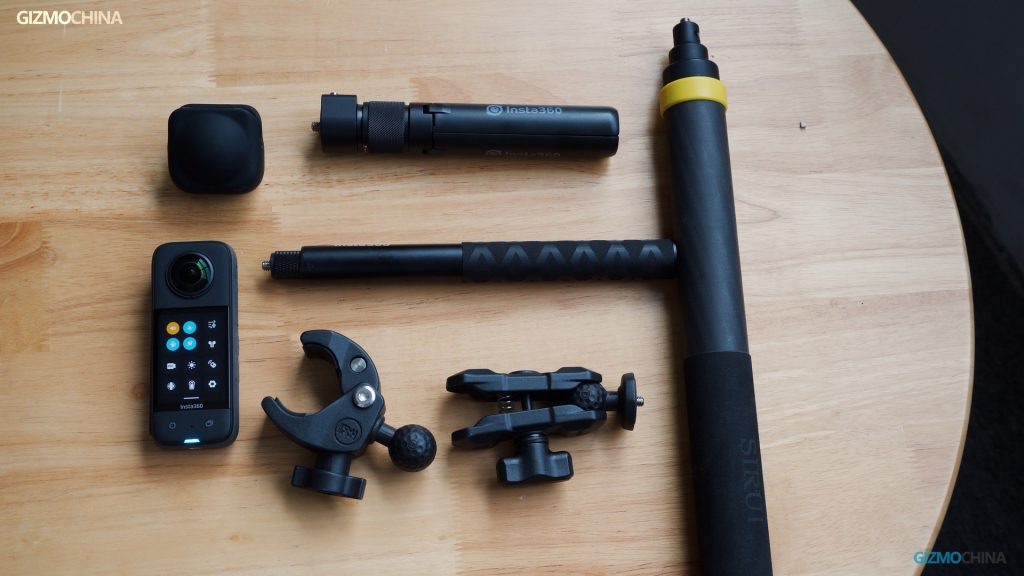
The Insta360 X3 has great accessories that help secure mounting, such as tripods, standard selfie stick, extremely long selfie stick to shoot drone views, and all kinds of mounts. Unlike some action cameras requiring a waterproof case, the X3’s body is already waterproof to 10 meters without attaching a diving case. But if you still want more secure protection underwater, they also have optional waterproof housings for underwater use.
Verdict
In the actual shooting experience, the brand-new versatile camera is revolutionary. Especially when working with insta360’s software, no matter the phone app or the studio PC app, from the simplest to the most complicated work, it really feels sick. It’s so clever to present such a complex job to everyone’s phone. Once you export any video that’s edited under its guidance, you’ll probably be amazed at such a new perspective. It will even become a motivational tool to encourage you to try new sports with shots from different angles, and locations that most humans have never seen before.
sky swapclone trailflash dash
We had never rated a product as an essential tool for shooting vlogs. But the X3 is, and at least for now, there is no 360° camera that works better than the Insta360 X3. So that’s almost all about the revolutionary camera.
In November 2022, Qualcomm announced the Snapdragon 8 Gen 2 mobile platform. The US-based chip company has now confirmed that it will announce a new Snapdragon mobile platform on March 17 in Beijing, China. In all likelihood, the company may unveil the rumored Snapdragon 7 Plus Gen 1 chipset.
Several reports have revealed that Qualcomm is working on two Snapdragon 7-series chipsets. The SoC with part number SM7550 is expected to launch in the second half of this year and is likely to be called the Snapdragon 7 Gen 2. The chip that is scheduled to break cover on March 17 is said to have the SM7475 part number. Speculation is rife that this chip will be called the Snapdragon 7 Plus 1.
Qualcomm to announce new chip on March 17
Rumors are rife that brands like Redmi, Realme, Honor, Oppo, and Vivo will launch Snapdragon 7 Plus Gen 1-powered phones in the near future. It is speculated that the Redmi Note 12T Turbo and Realme GT Neo 5 SE could be the first phones to feature it. The Note 12 Turbo is said to get rebadged as the Poco F5 in the global market. Hence, it may arrive as the first Snapdragon 7 Plus Gen 1 phone for markets outside of China.
Reports have claimed that the Snapdragon 7 Plus Gen 1 will be a 4nm chipset manufactured by TSMC. As far as configurations is concerned, it is said to have a Cortex-X2 prime core working at 2.95GHz, three Cortex-A510 cores clocking at 2.5GHz, and four Cortex-A710 cores working at 1.8GHz. For graphics, the chipset is equipped with a 580 Hz Adreno 725 GPU. The SoC was spotted with a score of 1,029,731 on AnTuTu benchmarks last month. On Geekbench, the chipset scored 1215 and 4064 points in the single-core and multi-core tests, respectively.
The Resident Evil game franchise is one of the most iconic horror video game series of all time. Developed by Capcom, the series began in the year 1996 with the release of the first game on the PlayStation console. Since then, the franchise has had multiple sequels and spin-offs, as well as adaptations to other forms of media such as films, comics, and novels. The series is known for its intense survival gameplay, where players must navigate through dangerous environments filled with zombies, monsters, and other supernatural threats while solving puzzles and collecting resources to survive. With its gripping storytelling, memorable characters, and thrilling gameplay, the Resident Evil franchise has become a staple in the video game industry and a beloved favourite. Fans of the game will be delighted to know that a demo for Resident Evil 4 Remake is available on Xbox, PlayStation and Steam for everyone to try.
The highly anticipated Resident Evil 4 remake is set to launch on March 24th, and Capcom has recently dropped a Chainsaw Demo, available for free on PlayStation 4, PS5, Xbox Series X/S and Steam. This demo takes players through the early stages of the game, as they join Leon, the protagonist, in his mission to investigate the spreading infection in a small Spanish village. Unlike other game demos, there’s no rush to complete it, so players are encouraged to explore every nook and cranny at their own pace.
Capcom has been known for its exceptional remakes of the Resident Evil series. Their previous remakes of Resident Evil 2 and Resident Evil 3, released in 2019 and 2020 respectively, were praised for their stunning graphics and innovative gameplay mechanics. Resident Evil 4, originally released in 2005 on GameCube, marked a pivotal point in the series by moving towards an action-oriented gameplay style instead of the traditional puzzle-solving and atmosphere focus. The game introduced a unique over-the-shoulder perspective that became the standard for action-horror games of that era, and its influence can still be seen in modern games, including the RE2 and RE3 remakes.
Fans of the series can expect the Resident Evil 4 remake to be released on March 24th for PS4, PS5, Xbox Series X/S, and PC, promising to deliver the same excitement and terror that made the original game a classic.
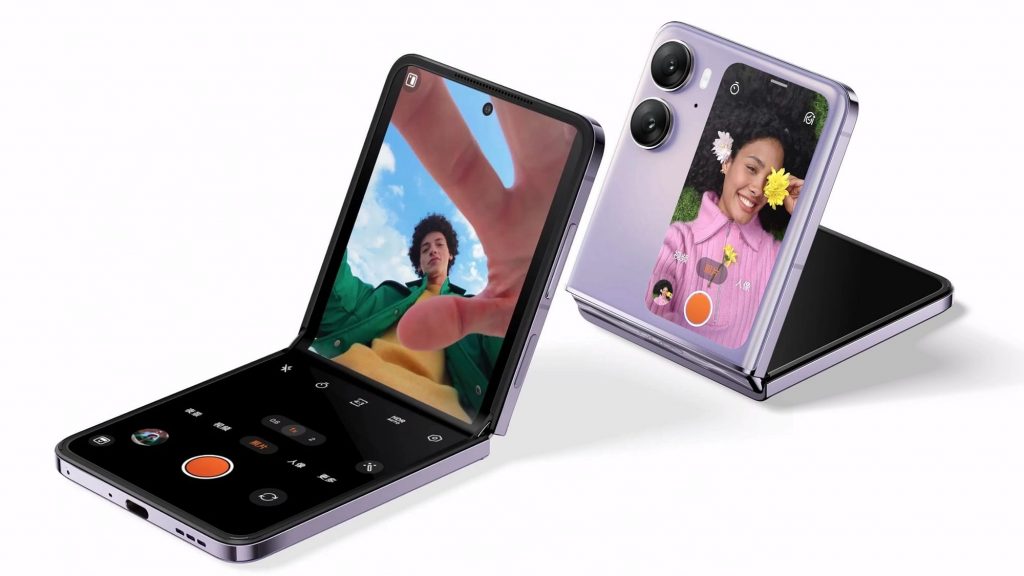
OPPO recently launched its new clamshell flip foldable smartphone, dubbed OPPO Find N2 Flip. Unlike its predecessor, the smartphone will be available for purchase outside of China, and the company is gearing up to launch the phone in the Indian market.
Ahead of the launch of OPPO Find N2 Flip in India, the pricing of which will be revealed on 13th March, it has been revealed that the phone will be exclusively sold through the online marketplace Flipkart. Days before launch, OPPO Find N2 Flip Limited Edition Pass has been listed on the eCommerce platform.
The OPPO Find N2 Flip Limited Edition Pass has been priced at ₹1,000, which gives buyers some additional offers on purchasing the foldable smartphone. It offers an extra ₹5,000 instant discount if the payment for the phone is made through American Express, HDFC Bank, ICICI Bank, SBI, and Kotak Mahindra Bank. Additionally, buyers will also be eligible for up to ₹5,000 exchange bonus.
The benefits of the Limited Edition Pass will be automatically applied at the time when the user purchases the OPPO Find N2 Flip smartphone when it goes on sale. As of now, the company has not revealed the date when the smartphone goes on sale in the Indian market, but we expect to get that information when OPPO reveals the Find N2 Flip’s pricing on 13th March.
OPPO Find N2 Flip
Coming to the specifications, the OPPO Find N2 Flip features a 6.8-inch AMOLED display with a Full HD+ screen resolution, a 120Hz refresh rate, 403ppi pixel density, and 1,600 nits of peak brightness. There’s also a 3.26-inch AMOLED display on the outer side, offering a 720 x 382 pixels screen resolution, 60Hz refresh rate, and 900 nits brightness with Gorilla Glass 5 protection.
Under the hood, the device comes powered by the MediaTek Dimensity 9000+ processor based on the 4nm process, paired with LPDDR5 RAM and UFS 3.1 storage. There’s a 50MP Sony IMX890 sensor and an 8MP ultra-wide-angle lens with a 112° field-of-view, with cameras tuned by Hasselblad. On the front side, the device has a 32MP Sony IMX709 snapper for taking selfies and video calling.
The smartphone has a side-mounted fingerprint scanner, dual speakers with support for Dolby Atmos, Bluetooth 5.3, and Wi-Fi 6. The IPX4-rated device runs the Android 13 operating system out-of-the-box with the company’s own ColorOS 13 on top. It is powered by a 4,300mAh battery, and the phone can be charged up to 25% in just 10 minutes.
OPPO Find N2 Flip price in India will be confirmed on March 13 in India. Ahead of the official announcement, a new leak, courtesy of Sudhanshu Ambhore, has shared key information on the price and first sale date of the device.
According to the tipster, the OPPO Find N2 Flip will arrive in a single configuration that offers 8 GB of RAM and 256 GB of storage. The tipster claimed that the device will be priced above Rs 80,000. He added that the first sale of the device will take place on March 16.
OPPO Find N2 Flip will launch in India🇮🇳 only in 8GB+256GB storage option, that will cost above ₹80,000
Astral Black♠️ Moonlit Purple💜 4yrs Major ColorOS updates⬆️
The device will be available in two colors, such as Astral Black and Moonlit Purple. The device will be treated to four years of major OS updates. As usual, readers are advised to digest the leak with a pinch of salt.
The Find N2 Flip is already available for purchase on the European market. In the UK, the 8GB+256GB edition of the device is priced at £849 (~$1,000; ~Rs 83,015).
OPPO Find N2 Flip specifications
The Find N2 Flip houses a 6.8-inch foldable E6 AMOLED display with a punch-hole. It offers an FHD+ resolution of 1080 x 2520 pixels and a 120Hz refresh rate. The display punch-hole houses a 32-megapixel Sony IMX709 front-facing camera.
On the back, the Find N2 Flip has a 3.26-inch OLED cover display that offers 382 x 720 pixels. It has a 50-megapixel Sony IMX890 primary camera with OIS, an 8-megapixel ultra-wide lens, and an LED flash unit. The device runs on Android 13 OS and ColorOS 13.
The Find N2 Flip is powered by the Dimensity 9000 Plus chipset. It is equipped with LPDDR5 RAM, UFS 3.1 storage, and a 4,300mAh battery with 44W fast charging.
Last month, OnePlus launched the OnePlus TV 65 Q2 Pro in the Indian market and the device was up for pre-orders a few days ago. Now the newly launched Smart TV from the company is available to purchase through open sale in India.
The OnePlus TV 65 Q2 Pro, which is priced at ₹99,999 (~$1,219) in India, comes with several offers to entice potential customers. The company is offering ₹5,000 discount for ICICI Bank customers, and there’s also 18 months of No-Cost EMI option for all major banks. There’s also free panel replacement within one year of purchase and two years of warranty.
OnePlus TV 65 Q2 Pro
As the name of the product indicates, it comes with a 65-inch QLED panel, offering a 4K screen resolution, a 120Hz of refresh rate, and 1,200 nits peak brightness. Along with providing ALLM and MEMC technology support, there’s also DCI-P3 97% wide color gamut and Gamma Engine Ultra.
It supports a full array of 120 local dimming zones to enhance visuals with deep contrasts. The company claims that the seven-speaker setup on the device, which includes a 30W subwoofer, can produce 70W sound output. Also, the sound on the TV is tuned by Dynaudio, and it comes with support for Dolby Atmos.
Underneath, the device is powered by an MT9617 processor, coupled with 3GB of RAM and 32GB of internal storage. In the software department, it runs the Android 11 operating system with Google TV and OxygenPlay 2.0. It also comes with support for features like voice commands, Google Assistant, Chromecast, and Alexa.
We use cookies on our website to give you the most relevant experience by remembering your preferences and repeat visits. By clicking “Accept”, you consent to the use of ALL the cookies.
This website uses cookies to improve your experience while you navigate through the website. Out of these, the cookies that are categorized as necessary are stored on your browser as they are essential for the working of basic functionalities of the website. We also use third-party cookies that help us analyze and understand how you use this website. These cookies will be stored in your browser only with your consent. You also have the option to opt-out of these cookies. But opting out of some of these cookies may affect your browsing experience.
Necessary cookies are absolutely essential for the website to function properly. This category only includes cookies that ensures basic functionalities and security features of the website. These cookies do not store any personal information.
Any cookies that may not be particularly necessary for the website to function and is used specifically to collect user personal data via analytics, ads, other embedded contents are termed as non-necessary cookies. It is mandatory to procure user consent prior to running these cookies on your website.