Infinix recently unveiled the Hot 20 series, which consists of the Infinix Hot 20 5G, Hot 20 5G, Hot 20s, Hot 20i, and Hot 20 Play. Out of these devices, the Hot 20 5G and the Hot 20 Play are expected to soon hit the Indian markets.
The report comes from Fonearena, which claims that the HOT 20 5G could offer up to 12 5G bands in India. The report also alleges the November 30 Indian launch date for these devices. Let’s take a look at the specifications and features of these smartphones.
Infinix Hot 20 5G specs
The Infinix Hot 20 5G boasts a 6.6-inch IPS LCD panel with a Full HD+ resolution, a refresh rate of 120Hz, and a touch sampling rate of 240Hz. The smartphone boots to the Android 12 operating system, with the XOS 10.6 UI on top. It has a fingerprint sensor on the side of the device.
The Dimensity 810, which supports 5G connectivity, powers the Infinix Hot 20 5G. The SoC is complemented by 4 GB of RAM(3 GB virtual RAM expansion available) and 128 GB of internal storage. It has a 5,000mAh battery with 18W charging compatibility and 5W reverse charging to keep the lights on.
A 50-megapixel Samsung JN1 primary camera and a depth sensor are both featured on the Hot 20 5G. It sports an 8-megapixel camera up front. The phone has photography features like eye tracking, portrait mode, short video mode, and super night mode. Other features include a USB-C connector, a 3.5mm audio jack, dual SIM, 5G, Wi-Fi 802.11ac, Bluetooth 5.1, GPS, NFC (for contactless payments), and GPS.
Infinix Hot 20 Play specs
The Infinix Hot 20 Play has a massive 6.82-inch IPS LCD screen with a 90Hz refresh rate and an HD+ resolution of 1640 x 720 pixels. The device’s preinstalled operating system is Android 12 with Infinix’s XOS UI on top.
The Hot 20 Play is powered by the MediaTek Helio G37 CPU and 4 GB of RAM. The smartphone is available with 64 GB and 128 GB of storage. The device contains a microSD card slot for additional storage. It includes an 8-megapixel selfie camera on the front. A 13-megapixel primary camera, an AI lens, and an LED flash are all included on the device’s rear. A fingerprint scanner is also included in the rear casing. Additionally, the device enables face unlock.
The Hot 20 Play contains two speakers and a 3.5mm audio port for audio. It is powered by a 6,000mAh battery with 18W charging capability. With dual SIM, 4G LTE, Wi-Fi 802.11ac, Bluetooth 5.0, GPS, and a USB Type-C connection, it provides the standard connectivity functions. The phone weighs about 209.6 grams and has dimensions of 171 x 78 x 8.5mm.
Soon after the announcement, Vivo officially disclosed that it will release a smartphone housing this chip. Unfortunately, the brand did not reveal the name of the device.
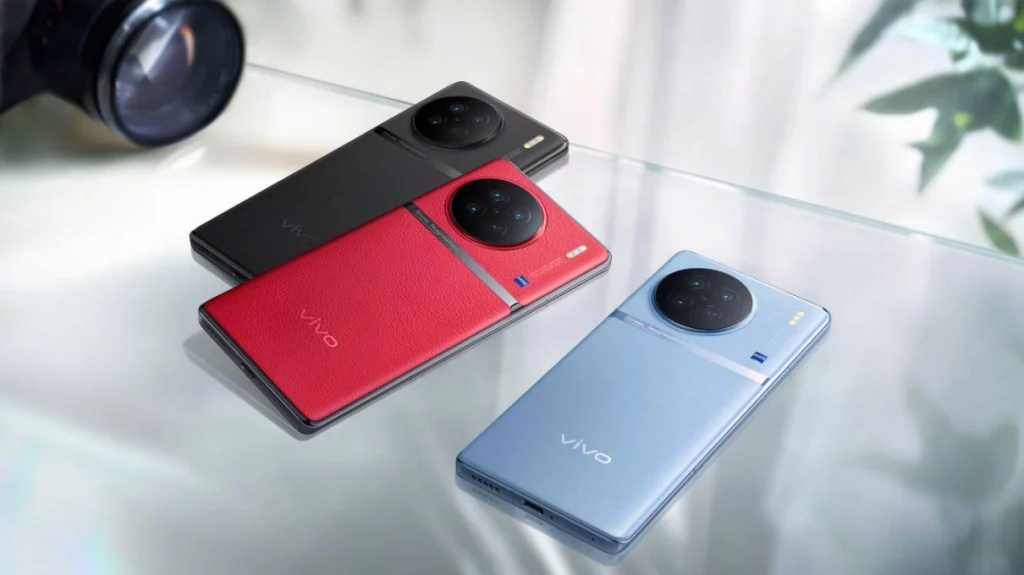
Whylab, a popular Chinese tech media, says that the Dimenisty 9200 chipset could power the forthcoming Vivo X90 and Vivo X90 Pro. In the same Weibo post, it also notes that the Vivo X90 Pro and Vivo X90 Pro Plus may feature a Qualcomm Snapdragon 8 Gen 2 chip.
This means the Vivo X90 Pro could be available in both Dimensity and Snapdragon variants. The information provided by Whylab could be mostly true as the outlet is known for reliable leaks.
Aside from this, a live image leak from yesterday revealed that the Vivo X90 Pro+ will be available in red color with a leather finish. WhyLab has also shared what seems to be an official teaser of the design (the picture attached above) along with the aforementioned chipset details.
We are expecting more leaks on the Vivo X90 series in the coming days. Perhaps, Vivo may also start teasing the features officially.
ZTE Miracle WiFi 6 AX3000 Pro Review As budget phones and tablets have started to support WiFi 6, an often-ignored device once again gets our attention, that is the router. You might have complained that the internet connection does not reach the speed promised by the provider, and then just called the provider directly to ‘fix’ it and forgot about the router.
Actually, you don’t have to feel so helpless and the truth is not so complicated. Instead, you might just need a new router.
Without investing a lot of money, users can now easily find an advanced router. The ZTE Miracle WiFi-6 AX3000 Pro is a great example. It provides great features that we might only have on some high-end devices, such as dual-band Wi-Fi 6 connection, up to 2976Mbps (theoretical) speed, EasyMesh system, and NFC one-touch connection. For less than a hundred euros, it will bring better connectivity and greater network control via the exclusive phone app or you can even use its Web UI.
ZTE Miracle Router Is Compact & Elegant
The low-key minimalist design of the Miracle router looks stylish and exquisite. The thin and light body comes with dimensions of 250 x 180 x 45 mm and a weight of 430 grams. When unfolding the antennas, the height will be around 190 mm. Unlike other powerful but complexly-designed routers, the white variant of the device blends well into most interior styles. This may also be why it won both, the iF Design Award 2022 and Good Design Award 2021.
The ZTE and NFC logos are at the top and an indicator light is well-arranged on the front. And there are two LAN ports and two WAN/LAN ports on the back, which support dual broadband of two operators to double the speed of the total home internet.
It’s common for high-performance routers to become unstable due to thermal issues. But it doesn’t look like it’s going to happen on the ZTE router, since you can see a lot of ventilation holes covering the sides and bottom. The reset hole and the information sticker are at the bottom too, which helps easily reset the device or check details like Wi-Fi SSID and default password. For the first connection and setup, you can find the network name and password on the sticker. And before that, make sure you already plug in the power adapter and Ethernet cable, both of which can be found inside the package.
I strongly recommend that you download and install the ZTELink App (available on Android & iOS devices) or Web UI to set up the router further after first connecting to your home internet. In the app or the Web UI, users can check uplink speed and downlink speed, as well as general information of the connected devices.
Every connected device’s connection can be modified. You can set a parent control to it or even block it from the network.
In addition, to setting up the connection, the toolkit integrated into the app also adds some useful features that help better manage the network, such as Guest Wi-Fi, speed test, and Wi-Fi-sleep schedule. In both app and Web-UI management, more advanced settings are supported, including night mode, dynamic IP settings, firewall, and firmware update.
The router is powered by the Qualcomm IPQ5018 routing chip, which is a dual-core 64-bit CPU plus a built-in advanced 12-thread network processor and 256MB of storage.
ZTE Miracle Router Connection Speeds
For connectivity, the Miracle router supports 2.4GHz and 5GHz dual frequencies, and the concurrent wireless access rate theoretically reaches up to 2976Mbps, which is 250% of the rate of Wi-Fi 5 AC1200. 160MHz large bandwidth is also supported to meet the latest connected devices’ largest available bandwidth.
Although as mentioned, the router’s wireless access rate can theoretically reach up to 2404 Mbps (5G) and 574 Mbps (2.4G), most of us do not have access to such fast speed from our providers. Unfortunately, neither can we. Our studio has contracted connection speeds of 500Mbps (download) / 50Mbps (upload). We tested the connection speed of 2.4G and 5G at 1m and 8m from the router, and around 15m through a wall, respectively.
At the closest point (1m), the 5G Wi-Fi connection’s download speed reached up to 621.6 Mbps and the upload speed was 60.1 Mbps. The 2.4G’s download/upload speeds are 79.3 / 57.1 Mbps.
5G2.4G
At 8m from the router, the 5G’s download speed was a bit down to 607.6 Mbps while the upload speed was not significantly affected and remained at 58.7 Mbps. The 2.4G connection was still stable at 70.7 / 53.8 Mbps.
5G2.4G
At the position through the wall (15m), the 5G connection had a download speed of 463.4 Mbps and an upload speed of 57.8 Mbps, which still maintained impressive performance with good stability. While the 2.4G signal was a bit more affected. Its download speed was 37.1 Mbps and its upload speed was 18.8 Mbps.
5G2.4G
To conclude, we found that the wireless internet speed can maintain a decent level in an area of around 100㎡ and it could drop 5%-40% through walls. According to the tested result, it’s predicted to have good coverage in a house of 120 ㎡ (1291 ft²) if you place it at the right centre position. During the test, there’s no problem when we connected up to 12 devices. As claimed, the number of devices supported is up to 128.
ZTE’s Miracle Router Supports Mesh System
The Miracle router is also an excellent budget option to build a house mesh system. In the Web UI/app, users can find the built-in EasyMesh feature to easily set up the connection among ZTE routers with one click.
The NFC feature is so convenient. As the user can set one of the main SSIDs or the secondary SSID (Guest Wi-Fi) for the NFC one-touch connection, any visitors can touch the router with their phone to build up a connection without a password, while the host doesn’t have to worry about any security issue.
Another great feature is the dual-WAN support. It truly can double the internet speed and make full use of dual broadband. This is only applicable if you’ve installed two broadbands in the house.
While the ZTE Miracle AX3000 Pro WiFi-6 is a budget router, it’s suitable for most households. The AX3000 kit can access the internet at a fast and stable speed with superb bandwidth support. The Mesh support also makes it as expandable as high-end mesh devices, offering wider coverage. If you are interested in improving your house network, you can click here on Amazon to learn more about the on-sale quality router.
DIZO has launched a new smartwatch in India. The Realme TechLife brand has expanded its range of Watch D lineup with the latest offering. The newest device is called the Watch D Plus. It carries an affordable price tag and is touted to offer the largest display in the price segment. Read on to know what the smartwatch offers out of the box.
The DIZO Watch D Plus features a rectangular dial with a large display measuring 1.85-inches. It offers a resolution of 240 x 280 pixels, peak brightness of 550 nits. The smartwatch features more than 150 customisable watch faces and automatic screen brightness adjustment. It has a premium metal frame and it is water-resistant up to 30 meters. There is a button on the right side of the device.
The DIZO Watch D Plus is equipped with a heart rate monitor, SpO2 sensor, and sleep tracker. It is also capable of tracking the menstrual cycle for women, hydration reminders, and breathing exercises. The wearable device packs support for more than 110 indoor and outdoor sports modes.
The DIZO Watch D Plus is powered by a 300mAh battery unit and is claimed to offer 14-day usage. It packs convenient features like a notification display, weather updates, music and camera control, and more.
The DIZO Watch D Plus costs Rs 1,999 and is offered in Classic Black, Silver Grey, and Deep Blue colours. The smartwatch can be purchased from Flipkart starting 12pm on November 15th.
Last month, Samsung announced the One UI 5.0 update roadmap for its domestic South Korean market. Devices like the Galaxy S22 series, Galaxy S21, Galaxy S21+, and Galaxy S21 Ultra have started receiving the stable Android 13 update in European regions. Now, the company has unveiled the One UI 5.0 update timeline for Indian devices.
The stable Android 13 (One UI 5.0) update is slated to arrive for the Galaxy S22, Galaxy S22+, and Galaxy S22 Ultra. The update will be available in December for the Galaxy S20, Galaxy S20+, Galaxy S20 Ultra, Galaxy S20 FE, Galaxy S20 FE 5G, Galaxy S21, Galaxy S21+, Galaxy S21 Ultra, and the Galaxy S21 FE.
The update for the foldable will also arrive in December. It will include the Galaxy Z Flip, Galaxy Z Flip 5G, Galaxy Z Flip 3, Galaxy Z Flip 4, Galaxy Z Fold 2, Galaxy Z Fold 3, and Galaxy Z Fold 4. You can check out the Indian update schedule for other eligible Samsung smartphones below.
All the leading Android OEMs are working on delivering Android 13 update to their devices for the past few months. Oppo is one of them and it was the first non-Google brand to start rolling out stable releases.
The company has now begun to seed the ColorOS 13 stable update based on Android 13 for one of its popular upper mid-range smartphones called Oppo Reno 8 Pro.
Oppo has started rolling out the Android 13 stable update with ColorOS 13 for the Oppo Reno 8 Pro. The phone originally goes by Oppo Reno 8 Pro Plus in China. This version is also receiving the said update.
The handset joined the beta program in late September. This means it took the brand almost one and a half months to deliver the stable release.
Just like any other OTA software update, the ColorOS 13 stable for the Oppo Reno 8 Pro is also being pushed in batches. Therefore, it may take some time to reach every user.
According to officialannouncements, the update is currently live in India, Indonesia, and China. It should be available in other regions in the coming weeks.
Users of the phone in the aforementioned countries can head over to Settings to check whether their unit has received the Android 13 stable update. If you have got the update installed on your smartphone, then do let us know your experience in the comment section below.
Samsung Galaxy A54 5G is likely to debut soon in China. The device has appeared in the database of China’s 3C certification (Via. TechGoing) to confirm a few details. The listing also suggests that it may launch soon in the Chinese market.
The Samsung device with model number SM-A5460 that has surfaced on 3C is the upcoming Galaxy A54 5G. The listing reveals that it is a 5G-enabled device. It also suggests that the device may carry support for 25W fast charging. The Galaxy A53’s retail box does not have a charger. Hence, it is likely that the A54 may ship without an in-box charger.
Samsung Galaxy A54 5G 3C listing
The predecessor Galaxy A5x-series phones were released two months after they first appeared in 3C’s database. To recall, the A52 surfaced in 3C in January 2021 and went official in March of the same year. In 2022, the Galaxy A53 emerged in 3C in January and debuted in March. Now that the Galaxy A54 5G has bagged 3C certification in November, it seems that it may go official as early as January 2023.
Samsung Galaxy A54 5G specifications: What’s known so far
The rumor mill is yet to leak concrete information on the specifications of the Galaxy A54 5G. It is expected to house a 5,100mAh battery, which is 100mAh more than its predecessor.
The Galaxy A54 5G is expected to feature a triple camera unit headlined by a 50-megapixel camera. It is likely to be coupled with a 5-megapixel ultra-wide camera and a 5-megapixel macro snapper. It is unlikely to feature a depth sensor. The A54 5G may receive up to four years of OS upgrades. Since it comes with Android 13 OS out of the box, it could get the Android 17 OS upgrade a few years later.
After weeks of leaks, the Realme 10 4G has gone official as the first Realme 10-series phone. The device offers key features like a 6.4-inch AMOLED panel, the latest Helio G-series chip, 50-megapixel dual cameras, and a big battery with fast charging support. Here is all the information on the specifications, features, and price of the Realme 10 4G.
Realme 10 4G specifications and features
Realme 10 4G
The Realme 10 features a 6.4-inch Super AMOLED screen that has an FHD+ resolution of 2400x 1080 pixels, a 90Hz refresh rate, a 360Hz touch sampling rate, and a 20:9 aspect ratio. The device runs on Realme UI 3.0-based Android 12, which brings support for Always on Display (AOD) among other features.
The phone is equipped with the MediaTek Helio G99 SoC, 4 GB / 8 GB of LPDDR4x RAM, up to 8 GB of virtual RAM, and 128 GB of built-in storage. It is backed by a 5000mAh battery that can be charged using the in-box 33W charger. For security, it is fitted with a fingerprint scanner on the side.
Realme 10 4G
When it comes to the cameras, the Realme 10 4G offers a 50MP primary camera, a 2MP macro camera, and an LED flash on the back. On the front, the phone is equipped with a 16-megapixel camera.
The Realme 10 4G has a 3.5mm headphone jack, a USB Type-C port, a microSD card slot, dual 4G VoLTE, Wi-Fi 802.11ac, Bluetooth 5.1, and NFC. The device measures 159.9 x 73.3 x 7.95 mm and weighs around 178.5 grams.
Realme 10 4G price and availability
The Realme 10 4G has arrived in Indonesia in two configurations: 4 GB RAM + 128 GB storage and 8 GB RAM + 128 GB storage. These variants are priced at IDR 2,799,000 (~$179) and IDR 3,199,000 (~$204), respectively. It can be bought in Clash White and Rush Black colours.
Honor has scheduled a launch event in China for November 23. Rumors are rife that the brand may debut the Honor 80 series and Honor Vs foldable smartphone.
These two lineups of devices are in the news for the past few days due to multiple leaks. Today, camera details of the Honor 80 series have emerged.
Reliable Chinese tipster Digital Chat Station has shared the camera specs of the upcoming Honor 80 series. According to him, the phones will come with a huge camera upgrade.
The leaker says that the series will feature a 160MP primary camera. Currently, there’s not a single handset on the market with a such camera. Also, we couldn’t find any 160-megapixel mobile sensors, so it will likely be a custom sensor based on the available 200MP sensors.
Further, the series will house dual 50MP cameras on the front. The tipster did not reveal the name of these sensors as well. Finally, as per him, the series will be powered by a Qualcomm Snapdragon 8 Plus Gen 1 SoC.
The leaker uses the keyword ‘Honor 80 series’ instead of the actual model name. We believe that these specs could belong to the top-end model, which could be either Honor 80 Pro or Honor 80 Pro Plus.
Having said that, as we are still two weeks away from the official announcement, we may learn more about the Honor 80 series and Honor Vs in the coming days.
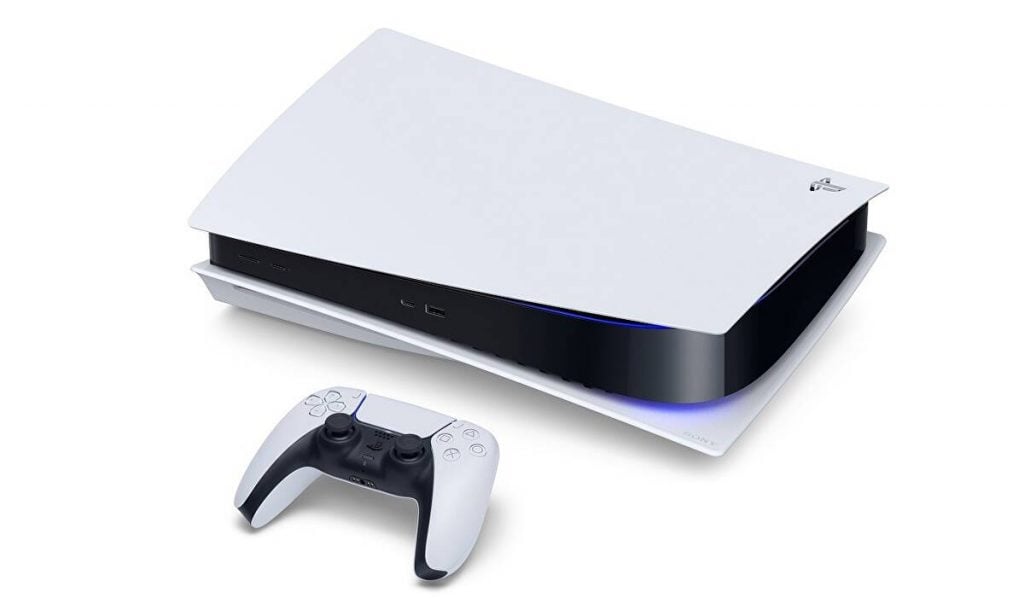
Sony has just announced the next restock for its popular PlayStation 5 game consoles for the Indian market. The company revealed the restock date, which is just a couple of days away and will also come with the new hiked pricing. So let’s have a look.
As per a promotional poster image, the Japanese tech giant is set to restock the new PS5 consoles in the region on the 11th of November 2022. Furthermore, the consoles will also be available with a new price tag, since the brand raised the pricing of this console model in the country. In other words, it is now around 5,000 INR (roughly 61 US Dollars) costlier than before. So the new PlayStation 5 Digital Edition costs 48,490 INR (roughly 596 US Dollars), while the PlayStation Horizon Bundle (Disc Edition) costs 58,990 INR (roughly 725 US Dollars).
Meaning, Sony has hiked the pricing for both the console and its bundles. This change in pricing is expected to be reflected in other bundles like the Gran Turismo 7 and God of War Ragnarok soon as well. The new price updates will go live on the online retailers’ websites soon, which include the likes of Amazon, Flipkart, ShopatSonyCenter, Games The Shop, and others. The PS5 is quite an attractive console in the gaming market, but the price hike has made it even more expensive for many.
This would even affect sales in the country, especially considering the fact that India is a larger market for mobile gaming rather than for PC or consoles. That’s all the information we have at the moment, so those interested can check out the aforementioned retailers for the PlayStation 5 console on November 11.
OnePlus is currently testing the Android 13-based OxygenOS 13 build for the OnePlus 10T. The device is still a few weeks away from getting the stable Android 13 build, as it has recently entered the open beta phase. For those users who are on the stable Android 12 operating system on their OnePlus 10T, the company has released a new update that comes with some bug fixes and optimization changes.
In India, the OnePlus 10T 5G OxygenOS 12 A.12 upgrade with the Android security patch for November 2022 is currently rolling out. The update comes with firmware version CPH2413_11_A.12.
The update includes the November security patch, which enhances the stability and security of the system while maintaining the user experience. Furthermore, this update resolves issues and provides a smooth performance by decreasing system issues such as crashing, freezing, lagging, and more. A significant fix included in this update is the resolution to the problem that fails to set a fingerprint in some scenarios. The multi-finger touch experience is also improved in this update. You can check the complete changelog given below to know about all of the changes coming to the OnePlus 10T.
Changelog:
System
Updates Android security patch to 2022.11.
Updates touch algorithm and improve the multi-finger touch experience.
Fixes the occasional issue that fails to set fingerprint in some scenarios.
Network
Optimizes network stability.
Camera
Optimizes the white balance effect and improves the camera experience.
As always, the update is being seeded out in batches, meaning that users will likely receive the OTA notification within the week. You can also check the availability of the update on your device manually by navigating to Settings > System > Software Update.
One of the founders of Oculus, Palmer Luckey, has just designed a new VR headset that can quite literally take your life if you die in-game. This VR headset design is clearly inspired by the popular anime SAO (Sword Art Online).
For those unaware, Palmer is no longer a part of the brand he founded and the company is now owned by Facebook’s parent company Meta. However, it appears that the Oculus Rift designer is still working on VR headsets. Luckey just recently modified a Meta Quest Pro VR headset, which quite literally has an explosive twist. This model is a prototype, which has an explosive attached to it. This can kill the wearer once he fails or dies in-game.
The device was inspired by an iconic anime and manga, which featured the NerveGear headset. The series in question is Sword Art Online, in which the VR headset was rigged to blow up when the wearer dies in the virtual reality game. Luckey unveiled the invention on his blog to commemorate Sword Art Online Day, which is held on 6th November. This is the day the in the manga and anime universe where 10,000 players were trapped inside the titular Sword Art Online VR MMORPG.
Looking at his post, Luckey showed that the SAO and Oculus shared a symbiotic relationship. Furthermore, he also began the Kickstarted for the Oculus Rift DK1 around the same time as the fourth episode of the anime that was airing in Japan. This show had reignited the public’s interest in VR and the NerveGear technology (depicted realistic simulations) helped people visualize the future of VR technology in reality.
Intel has just announced a new mini PC model in the market. It is the new and refreshed NUC 13 Extreme PCs, which feature the company’s latest 13th generation of processors and more. So let’s have a look.
The chipmaking giant has unveiled the new NUC 13 Extreme Kit, which is also codenamed Raptor Canyon, as well as the NUC 13 Extreme Compute Element. Both of these mini PCs feature Intel Core 13th Gen processors that have a TDP of 125W. Furthermore, these also arrive with triple slot 12 inc graphics card support and an all new thermal design that is built to handle intensive games and high temperatures. For those unaware, Team Blue’s NUC is a series of mini PC models that feature a tiny form factor but are fully functioning systems.
The new NUC 13 Extreme models come with a new chasis that helps improve airflow to improve thermals and reduce performance throttling during intensive activities like gaming or other demanding tasks. While improving airflow, the new chassis also helps reduce the noise as well. The modular PC is also equipped with an impressive Intel Core i9 13th gen CPU, which features 8 performance cores, 16 efficient cores, and 32 threads, with a maximum boost clockspeed of 5.8Ghz.
Notably, Intel is offering a triple slot for 12 inch graphic cards for the first time ever to gaming enthusiasts. It also comes with support from dual channel DDR5 RAM and Intel Killer WiFi 6E connectivity. The new NUC 13 Extreme Kit is offered in multiple configurations, which has a starting price tag of 1,179 US Dollars and can go up to 1,549 US Dollars. The NUC 13 Extreme Compute Element will cost somewhere between 760 US dollars and 1,100 US Dollars. The NUC 13 Extreme units are set to launch in China first, with a global released sometime in the fourth quarter of this year or early next year.
The China-based tech manufacturer EIGIIS has launched a new smartwatch for the global market called the EIGIIS K56 Pro. The K56 Pro is a budget-range device that comes with all the essential features one would expect out of a modern smartwatch.
EIGIIS K56 Pro specs
The K56 Pro features a round dial with dual crown buttons on the side. It has a metal ring protecting the display. Talking about the display, the wearable has a 1.39-in (~0.05 mm) HD screen with a 360 x 360 px resolution.
The watch purportedly has sensors that can detect your blood pressure, heart rate, and blood oxygen level. It is unknown how accurate these devices are. With more than 20 sports modes, you can track your workout, and a companion smartphone app lets you see your health information.
Additionally, you may use Bluetooth 5.0 to link the device to a smartphone running Android 4.4 or iOS 8.0 or later to allow features like Bluetooth calling and app notifications. Weather predictions, sedentary reminders, and a find my phone tool are some of the other capabilities of the gadget.
The device features a 400 mAh battery that, according to the manufacturer, can last up to ten days under normal use, five days under heavy use, or 30 days in standby mode. A complete recharge takes about two hours. The device has an IP67 waterproof rating and is available with a matching silicone strap in black, green, or yellow.
Price & availability
The EIGIIS K56 Pro smartwatch is currently available for US$28.79 from AliExpress. The watch is shipped from the US, and it should arrive within the country in four days to two weeks.
It has been only a few months since Google launched the Pixel 7 series smartphones, which come powered by the company’s own Tensor G2 processor. Now, reports about the next-generation Tensor processor are getting leaked online.
In the latest development, a report claims that the Tensor G3 processor from Google will stick to Samsung for the manufacturing of the upcoming chipset, and the processor has been codenamed Zuma.
Apart from the codename and manufacturer, some more details have also surfaced online. It is being reported that the Tensor G3 will be an offshoot of the Samsung Exynos 2300. As of now, details about the Tensor G3 processor aren’t known.
On the other hand, Samsung has already started working on its Exynos 2300 chip, even though the company will be ditching its own Exynos chips from the upcoming flagship Galaxy S23 lineup in favor of Qualcomm chips.
The report also points out that the chip codenamed Zuma may be fabricated on the more advanced 3nm process by Samsung. For comparison, the current-gen Tensor G2 is built using the 5nm node. It is also being said that Google will stick with the same modem for the upcoming Tensor processor as the one available in the current chipset.
Huawei has announced the Huawei MatePad C7, a new business-focused tablet, in Japan. The device has a big screen, a chip from the Snapdragon 8 series, and support for a stylus. Here is all the information on the specifications, features, and price of the device.
Huawei MatePad C7 specifications and features
Huawei MatePad C7
The Huawei MatePad C7 features a 10.95-inch IPS LCD panel with slim bezels. It offers an aspect ratio of 16:10, a refresh rate of 120Hz, a resolution of 2560 x 1600 pixels, a pixel density of 275 ppi, and a DCI-P3 color gamut. The device runs on HarmonyOS 2 and supports the 2nd-generation Huawei M-Pencil. The device comes with support for seamless file transfer with Huawei smartphones, screen mirroring, extended display, and split screen.
Huawei MatePad C7
The Snapdragon 865 mobile platform powers the MatePad C7. The tablet ships with 6 GB of RAM and 128 GB of built-in storage. There is an external storage slot on the device for more storage. The device is backed by a 7,250mAh battery that supports 22.5W fast charging.
The MatePad C7 has an 8-megapixel front camera and a 13-megapixel rear camera. It offers other features like face unlock, quad speakers, Histen 7.0 audio support, Wi-Fi 802.11ax, Bluetooth 5.1, and a USB-C port. The tablet measures 253.8 x 165.3 x 7.25mm and weighs around 485 grams.
Huawei MatePad C7 price and availability
At present, there is no information available on Huawei MatePad C7’s price. The business-focused tablet is expected to go on sale in Japan soon. It will be available in Matte Gray only.
Retroid has launched a new handheld gaming console called the Retroid Pocket 3+. As the name suggests, the device is the successor of the Retroid Pocket 3 and comes with multiple improvements over its predecessor.
The console is designed to run retro games up to Dreamcast, PSP, Nintendo 64, Playstation 2, and Game Cube. It has replaced the Unisoc T310 chipset with the more powerful Unisoc T616 chipset. Specifically, the new T618 chip has two ARM Cortex-A75 and six Cortex-A55 CPU cores clocked at 2 GHz, plus a Mali-G52 MC2 GPU.
The chipset is paired with 4GB of LPDDR4x (1866MHz) RAM and 128 GB of expandable storage, which are significant improvements over the last-gen console. The manufacturer has also added a 4,500 mAh battery, which is 500mAh larger than before. The screen size of the console remains the same 4.7-inch panel with a 1,334 x 750-pixel resolution, 450nits brightness, and 60Hz refresh rate. The console unfortunately has a pre-installed version of the Android 11 operating system.
The I/O is also the same as the last generation, meaning we will be getting a 3.5 mm jack, a micro HDMI port, a microSD card reader, and a USB Type-C port. The device measures 185 x 82 x 24 mm and weighs a comfortable 245 grams.
Retroid is offering the Pocket 3+ console in eight colorways, all of which will retail at US$149 before shipping. At the time of writing, the Retroid website has the device up for pre-order, with a claimed shipping date of November 18.
Yesterday, an upcoming Redmi handset with the model number 22120RN86C was approved by China’s TENAA authority. The listing, which only revealed the images of the phone, has now been updated with its entire specifications. The design and specifications of the phone suggest that it may debut with the Redmi 11A moniker in the global market.
The images of the Redmi 22120RN86C reveal that it is fitted with a waterdrop notch display. The phone features a square-shaped module on the back that houses a dual camera setup with an LED flash and a fingerprint scanner. Continue reading ahead to find out what’s packed inside the alleged Redmi 11A.
Redmi 11A
Redmi 11A specifications (rumored)
The purported Redmi 11A’s TENAA listing (via. TechGoing) reveals that it has a 6.708-inch IPS LCD screen that produces an HD+ resolution of 1650 x 720 pixels. The device is powered by a 2.0GHz octa-core processor and 2 GB / 4 GB / 6 GB / 8 GB of RAM.
The alleged 11A is likely to arrive in storage options like 32 GB / 64 GB / 128 GB / 256 GB. For additional storage, it will be equipped with a microSD card slot. It houses a 5,000mAh battery. At present, there is no information on the fast-charging capabilities of the device.
It is unclear whether the device will come with Android 12 OS or the newer Android 13 OS. For photography, the device is fitted with a 5-megapixel front camera and 50-megapixel dual rear cameras. It also features an IR blaster.
Redmi is yet to confirm the existence of the Redmi 11A. However, now that the device has gotten TENAA’s approval, it appears that it will not take too long for it to go official.
Popular tipster Digital Chat Station has leaked the specifications of an upcoming flagship phone, which will be powered by the Snapdragon 8 Plus Gen 1 mobile platform. Unfortunately, he did not reveal the name of the device. The leaked specifications suggest that he could be talking either about the OnePlus Ace 2 or the Realme GT Neo 4.
In one of his recent Weibo posts, DCS claimed that Realme is gearing up to launch the Realme GT Neo 4 to rival the Redmi K60. In the comments section of today’s Weibo post, too, the tipster has claimed that he is talking about the Redmi K60’s competitor. Hence, it appears he may have spilled the specifications of the GT Neo 4.
According to DCS, the alleged Realme GT Neo 4 / OnePlus Ace 2 will house a 6.7-inch OLED screen. It will support 1.5K resolution (2772 x 1440 pixels) and 2160Hz PWM dimming. Under the hood, it will feature the Snapdragon 8+ Gen 1 and a 5,000mAh battery. For photography, it will have a 16-megapixel (S5K39P) front camera, and a 50-megapixel (IMX890) + 8-megapixel (OV08D10) + 2-megapixel (OV02B10) triple camera unit. The device is likely to support 100W charging.
The emoji in the Weibo post and people discussing it in the comments section suggest that he could be talking about the OnePlus Ace 2. The probable reason could be that the device is equipped with 16 GB of RAM. The OnePlus 10T, which launched a couple of months ago, debuted as the company’s first 16 GB RAM phone. Hence, it could be talking about the OnePlus Ace 2.
The Realme GT Neo 3 and OnePlus Ace (OnePlus 10R in the global market) was launched with similar specifications. Hence, there is a possibility that he could be talking about the OnePlus Ace 2. The Ace 2 is likely to arrive with the OnePlus 11R moniker in the global market. As always, since the report has a lot of speculation, it is advisable to digest it with a pinch of salt.
Earlier this year, Infinix launched the Infinix Zero 5G in multiple markets. The device carried highlight features like the MediaTek Dimensity 900 chipset, a 6.78-inch FHD+ 120Hz LCD display, and a 48MP triple camera setup. Now, the brand has quietly launched a successor to the device called the Infinix Zero 5G 2023, which comes with an updated chipset along with a few upgrades and some downgrades.
Infinix Zero 5G 2022 specs
The Zero 5G 2022 has the same 6.78-inch IPS LCD with FHD+ resolution and a 120Hz refresh rate as its predecessor. However, the design on the back has changed a little bit. It now has three even-sized camera cutouts with only one LED flash as opposed to two.
Under the hood, the device now has an improved Dimensity 1080 5G chipset, which is manufactured on TSMC’s 6nm node. This chip is also featured in the Redmi 12 Pro series and will soon debut on the Realme 10 series smartphones. The chipset is complemented by 8GB of RAM (expandable virtually by up to 5GB) and 256GB storage. The software side is covered by XOS 12, based on Android 12, while the battery comes in at 5,000 mAh and supports 33W fast charging.
The camera is a mixed bag, as the brand upgraded the 48MP primary sensor to a 50MP one. However, it has gotten rid of the 13MP telephoto camera in favor of a gimmicky 2MP Macro sensor. The third cutout houses the same placeholder 2MP depth sensor. The front camera is also unchanged on the new device, being a 16MP sensor.
The Infinix Zero 5G 2023 is available in white, orange, and black. At this time, Infinix is keeping quiet on pricing and availability information, but we can expect to hear more from them soon.
We use cookies on our website to give you the most relevant experience by remembering your preferences and repeat visits. By clicking “Accept”, you consent to the use of ALL the cookies.
This website uses cookies to improve your experience while you navigate through the website. Out of these, the cookies that are categorized as necessary are stored on your browser as they are essential for the working of basic functionalities of the website. We also use third-party cookies that help us analyze and understand how you use this website. These cookies will be stored in your browser only with your consent. You also have the option to opt-out of these cookies. But opting out of some of these cookies may affect your browsing experience.
Necessary cookies are absolutely essential for the website to function properly. This category only includes cookies that ensures basic functionalities and security features of the website. These cookies do not store any personal information.
Any cookies that may not be particularly necessary for the website to function and is used specifically to collect user personal data via analytics, ads, other embedded contents are termed as non-necessary cookies. It is mandatory to procure user consent prior to running these cookies on your website.