Advertisement

Infinix Zero 5G 2023 unveiled – Dimensity 1080, 50MP primary camera & no telephoto lens

Earlier this year, Infinix launched the Infinix Zero 5G in multiple markets. The device carried highlight features like the MediaTek Dimensity 900 chipset, a 6.78-inch FHD+ 120Hz LCD display, and a 48MP triple camera setup. Now, the brand has quietly launched a successor to the device called the Infinix Zero 5G 2023, which comes with an updated chipset along with a few upgrades and some downgrades.

Infinix Zero 5G 2023

Infinix Zero 5G 2022 specs

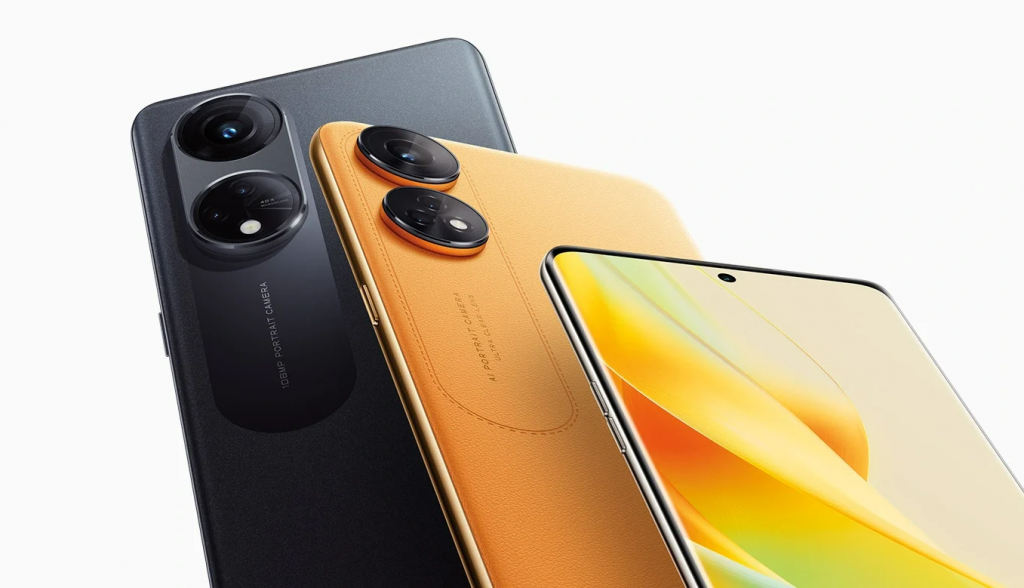
The Zero 5G 2022 has the same 6.78-inch IPS LCD with FHD+ resolution and a 120Hz refresh rate as its predecessor. However, the design on the back has changed a little bit. It now has three even-sized camera cutouts with only one LED flash as opposed to two.

Under the hood, the device now has an improved Dimensity 1080 5G chipset, which is manufactured on TSMC’s 6nm node. This chip is also featured in the Redmi 12 Pro series and will soon debut on the Realme 10 series smartphones. The chipset is complemented by 8GB of RAM (expandable virtually by up to 5GB) and 256GB storage. The software side is covered by XOS 12, based on Android 12, while the battery comes in at 5,000 mAh and supports 33W fast charging.

Infinix Zero 5G 2023 camera

The camera is a mixed bag, as the brand upgraded the 48MP primary sensor to a 50MP one. However, it has gotten rid of the 13MP telephoto camera in favor of a gimmicky 2MP Macro sensor. The third cutout houses the same placeholder 2MP depth sensor. The front camera is also unchanged on the new device, being a 16MP sensor.

The Infinix Zero 5G 2023 is available in white, orange, and black. At this time, Infinix is keeping quiet on pricing and availability information, but we can expect to hear more from them soon.

RELATED:

Xiaomi MIJIA Pulsator Washing Machine 10KG With Water-saving, Self-cleaning Functions Launched

Xiaomi has launched a new model of the MIJIA Pulsator Washing Machine. The new washing machine is a slight modification of last year’s model bearing the same name and capacity. By the way, there is also an 8kg MIJIA Pulsator Washing Machine. The new product comes with a 3-year warranty and carries a price tag of 1099 yuan ($151). However, it is on offer for 899 yuan ($124) for its first sales round.

MIJIA Pulsator Washing Machine 10kg

The MIJIA Pulsator Washing Machine 10kg is said to meet the washing needs of a large family as it can wash 45 shirts or 4 sets of 4-piece bed sets or four 1-meter floor-to-ceiling curtains in one cycle.

The washing machine can intelligently weigh the fabrics and as such, will automatically adjust the amount of water. Thus, it contributes to saving water in an efficient way.

MIJIA Pulsator Washing Machine 10kg

The MIJIA Pulsator Washing Machine 10kg comes with 10 special washing modes which can carefully care for clothes of different materials. It can also adjust the appropriate water level according to the number of clothes.

It also uses a five-blade cyclone pulsator. By improving the stirring power of water flow, 360-degree three-dimensional scouring can strongly disintegrate stubborn stains, easily wash heavily soiled clothes, and reduce residues by deep cleaning.

MIJIA Pulsator Washing Machine 10kg

The new washing machine also features a self-cleaning mode which is a first for the series. In this mode, the inner and outer cylinders are cleaned by high-speed water flow. In the air-drying mode of the tube, the residual moisture on the wall of the air-drying tube can prevent mold and bacteria from growing.

The MIJIA Pulsator Washing Machine is presently available for pre-order in China via JD.com.

RELATED;

Nokia is now offering the eco-friendly X30 5G for rent to advance environmental sustainability drive


The Nokia X30 5G is an eco-friendly smartphone that the Finnish brand is now offering on a rental basis. The Nokia X30 5G is yet another sustainability-oriented phone from Nokia. This environmentally-friendly smartphone is Nokia’s most sustainable product thus far.

The Nokia X30 5G has some of its components like its case and packaging, made from recycled material. It has a 6.43-inch display and its sustainability profile is further enhanced with its subscription-based use. The mid-ranger is sold starting at around $520 but can be rented for $25 a month. The rental service also includes replacement if the device is lost or damaged accidentally. The rental service does not have a fixed term but customers need to observe a three-month cancellation period. In keeping with its sustainability credentials, Nokia says old devices could either be recycled or donated to charitable causes.

The Nokia X30 5G is powered by the Snapdragon 695 5G chipset while its AMOLED screen can achieve up to 700 nits of brightness. The RAM/ storage configuration of the smartphone is 8GB/ 256GB. The X30 5G comes with a smaller display than its predecessor, the Nokia X20, but it is lighter and more powerful. The X30 5G has a 4200mAh battery which is smaller than the 4470mAh of the X20. However, it is expected that the X30 5G can compete squarely with some other brands with up to 5000mAh batteries.

The frame of the Nokia X30 5G is made from recycled aluminum, its case is 65% recycled plastic while the packaging is about 70% recycled paper. Nokia does not include a charger in the package to minimize emissions and e-waste.

RELATED:

Garmin Instinct Crossover Hybrid Smartwatch Debuts With a Rugged Design and Long-lasting Battery

Garmin has launched the new Instinct Crossover hybrid smartwatch with a rugged design and stellar battery life. The watch comes in three variants: Instinct Crossover, Instinct Crossover Solar, and the Instinct Crossover Solar Tactical. It has features like 24/7 health monitoring and activity tracking, a military-grade sturdy build, up to 70 days of battery life, and more. Let’s take a detailed look at its specs and pricing.

Garmin instinct crossover rugged

The Instinct Crossover is a hybrid smartwatch, featuring physical watch hour hands with Super-LumiNova coating and a small display that measures 0.9-inches across and offers a 176 x 176-pixel resolution. The watch is heat- and shock-resistant, MIL-STD-810-compliant, and water-resistant up to 10 ATM. Furthermore, it features GPS tracking, multi-GNSS support, ABC sensors, and TracBack routing to help users travel back to their starting and reference points.

Additionally, the hybrid wearable comes with what the company calls “RevoDrive Technology.” It essentially auto-calibrates the smartwatches to show the exact time in the event of a significant impact.

garmin-Instinct-Crossover

The watch supports Garmin Pay and Garmin’s full suite of health monitoring and exercise functions. The solar versions of the Instinct Crossover are claimed to deliver “infinite battery life” when used in battery-saving mode. In general, the regular Instinct Crossover is rated for 28 days of use in smartwatch mode, while solar models can last up to 70 days. The watch can provide information like VO2 Max and Pulse Oxide levels, Fitness Age, Training Status, Load and Effect, HRV Status, and Recovery Time.

The Garmin Instinct Crossover standard edition is offered in two colors—Tidal Blue and Graphite—and is priced at $499.99, whereas its solar version costs US$ 549.99.

There’s also a tactical version of the smartwatch that comes in sole black color and is priced at $ 499.99, while the solar version costs US$ 549.99. All the models are now available for purchase in the US.

Related:

LG unveils a 12-inch high-resolution stretchable display touted to be the world’s first


The display arm of Korean tech giant LG has unveiled what is dubbed the world’s first 12-inch high-resolution stretchable display. The innovation was announced by LG Display and offers free-form technology. It is the result of a large-scale R&D project by Korea’s Ministry of Trade, Industry, and Energy, driven by LG since 2020. The technology allows the display to be extended, folded, and twisted without any distortion, creases, or damage.

LG stretchable display

The new LG high-res stretchable display is the first display to achieve 20% stretchability, 100ppi resolution, and full-color RGB. It is highly flexible, durable, and reliable. LG expects the product to find its way to the market with great potential for commercialization. The display panel itself is made of high-quality Silicon substrate used in contact lenses. The display has a rubber-like flexibility that can extend its length to 14 inches. The new LG stretchable display uses a micro-LED light source with a high level of durability. It can withstand strong impacts even with its high resolution.

The LG Stretchable display uses the flexible S-form spring wired system. It can withstand up to 10,000 repetitive changes to its form, thus underscoring its significant durability. LG Display collaborated with twenty organizations in the industrial-academic sector in South Korea in developing the product since 2020. The stretchable display can be easily attached to curved surfaces and this offers a huge potential for its scalability to commercial applications.

It is unclear at this time when the stretchable display will enter the market. LG has been in the forefront of innovative services before it exited the smartphone market. The new stretchable display will find extensive applicability across fields.

RELATED:

Audio-Technica announces the world’s first wooden wireless headphones with built-in stereo & hi-fi feature

Japanese brand Audio-Technica is rolling the drums to mark its 60th birthday. The new ATH-WB2022 cans are the world’s first wooden wireless headphones. The product also comes with another first – a balanced built-in stereo for a wireless device. The new Audio-Technica wooden wireless headphones have several other exciting features too.

Audio-Technica has seen a buildup of activities to mark its 60th birthday with a raft of product releases. The iconic Sound Burger turntable was reincarnated together with a premium set of transparent decks a few days back. The ATH-WB2022 is a limited-edition product and the hi-fi feature means that the cans have a separate signal path for each earcup, thus significantly minimizing interference and preventing crosstalk. The earcups are made from solid flame maple, walnut, and mahogany. They absorb acoustic vibrations and minimize distortion due to their innovative design.

The ATH-WB2022 features an ESS DAC ES9038Q2M digital-to-analog converter on the left and right channels of the headphones. The new wooden wireless headphones support LDAC high-resolution codec from Sony in addition to AAC and SBC. You can connect the headphones to multiple input devices via Bluetooth, thanks to its onboard Multipoint capability.

The Audio-Technica wooden wireless headphones come with a hefty price tag. They are priced at $2,700 and will be launched in 2023. Certainly, the ATH-WB2022 delivers the audio clarity and could spur demand for the product despite its price. It will be an audiophile’s best memorabilia, it seems.

RELATED:

Xiaomi Unveils the 12S Ultra Imagery Gift Box but It’s Not for Sale

Xiaomi recently unveiled 12S Ultra Concept Edition, which fuses the camera and smartphone with detachable Leica M-series lenses. And today the brand showcased a special Xiaomi 12S ultra imagery gift box, which comes with some interesting accessories, such as a hood, starburst lens, polarizer, and more. But just like the concept edition, the gift box is also not for sale.

Xiaomi recently announced the Xiaomi 12S Ultra imagery gift box in China. The limited edition gift box is not for sale, but the company is apparently planning to giveaway some units through a lucky draw.

XIaomi 12S ultra gift box

As can be seen in the image, the gift box includes a hood, a lens storage bag, a phone case, a 52mm star mirror, a 52mm polarizer, and other accessories. Xiaomi says these accessories will enhance the photography capabilities of the Xiaomi 12S Ultra.

As mentioned, Xiaomi recently showcased the 12S Ultra Concept Edition, which features a unique rear camera setup that attaches to a Leica lens for enhanced photography. The company says the new lens will help the device double as a flagship-level smartphone experience and a professional photography tool, something many people dream of. Unfortunately, it’s just a concept and will not be available for purchase.

To recall, the 12S Ultra is a China-exclusive smartphone that comes with some serious camera tech. It employs Leica’s color science and comes with a 1-inch-type image sensor and Summicron optics. The device has a main camera that uses a 50.3-megapixel 1-inch-type IMX989 sensor paired with a 23-mm F1.9 lens. It also has 48-MP ultra-wide and telephoto cameras, which make use of Sony’s IMX586 sensor.

RELATED:

Nothing Phone (1) scored as the least repairable phone of 2022 after teardown


The Nothing Phone (1) has been awarded the title of the least repairable phone of 2022. This comes after a teardown of the quasi-transparent smartphone by YouTuber Hugh Jeffreys. This is even with the release of the iPhone 14 series which discourages third-party servicing with the presence of strategic software locks.

Nothing Phone 1

The Nothing Phone (1) is coming in for criticism despite its impressive and innovative design together with Glyph lighting. However, it seems these innovations are at the heart of the very low repairability of the device. It is pretty difficult to repair the Phone (1) compared to the conventional Android smartphone and replacing the display results in a dysfunctional fingerprint reader. It is seemingly impossible to recalibrate the device after replacing its screen.

Hugh Jeffreys’ teardowns also revealed that the iPhone 14 Pro and iPhone 14 Pro Max were among the least user-fixable smartphones in 2022. The highly customized Nothing Phone (1) debuted with pomp and high expectation however takes the prize for the least repairable. On the other end of the spectrum, the Samsung Galaxy S22 and Google Pixel 7 flagships were pretty high up in their repairability.

The assessment by Jefferys, however, needs to be put in perspective. It is based on the teardown of a few smartphones released this year. This is in addition to the fact that there are still some smartphones that will enter the market before the close of 2022, and which are not captured.

RELATED;

Here’s the OriginOS 3.0 X Android 13 Beta Rollout Schedule for Eligible Vivo and iQOO Smartphones

Vivo today announced the latest version of its custom Android skin— OriginOS 3.0— with a new Atomic System design, plenty of personalization options, and new features. The software is limited to China, though we’d love to see it in the Global market. The firm also announced the beta rollout timeline of the Android 13-based software for all eligible Vivo and iQOO smartphones. Let’s look at the details.

OriginOS-3

Vivo took to Weibo to announce the Android 13-based OriginOS 3.0 Beta rollout schedule for eligible Vivo and iQOO smartphones. From November 25, the company will start releasing the beta update to its phones and will finish the rollout by March 2023.

OriginOS 3.0 X Android 13 Beta Rollout Schedule for Eligible Vivo and iQOO Smartphones

From November 25, 2022

Vivo

Vivo X Fold+

Vivo X Fold

Vivo X Note

Vivo X80 Pro

Vivo X80

Vivo S15 Pro

Vivo X80 Pro Dimensity 9000 edition

Vivo S15

iQOO

iQOO 10 Pro

iQOO 10

iQOO 9

iQOO 9 Pro

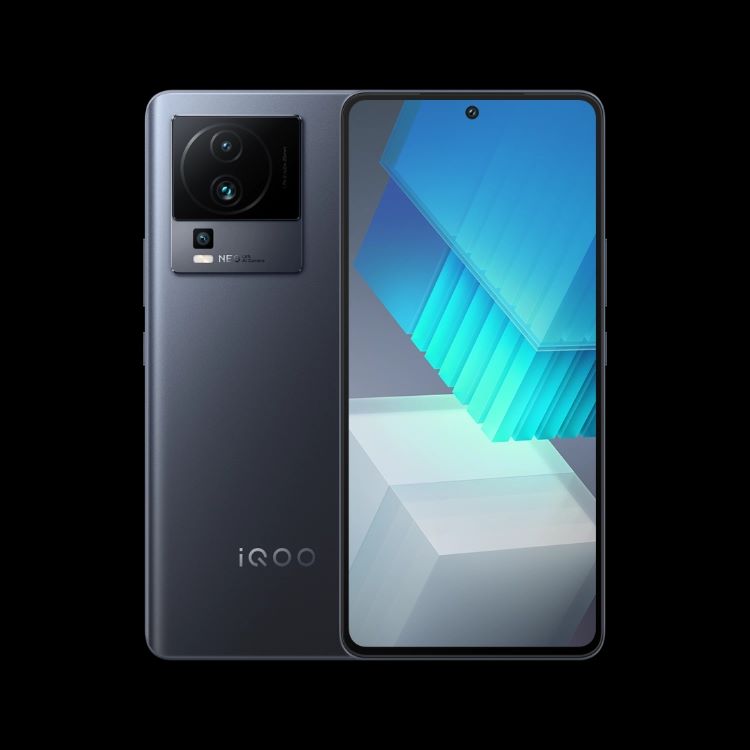
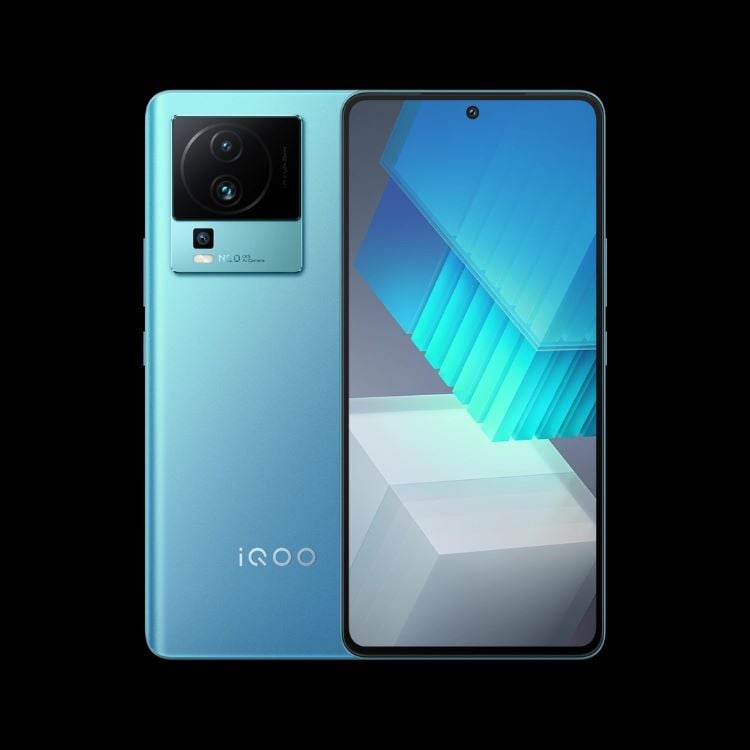
iQOO Neo 7

iQOO Neo6

By the End of December, 2022

Vivo

Vivo X70 Pro+

Vivo X70

Vivo S12 Pro

Vivo S12

iQOO

iQOO 8 Pro

iQOO 8

iQOO 7

iQOO Neo 5

iQOO Neo 5S

iQOO Z6

By End of February, 2023

Vivo

Vivo X70 Pro

Vivo X70t

Vivo X60 Pro+

Vivo X60t Pro+

Vivo X60 Pro

Vivo X60

Vivo X60t

Vivo S10 Pro

Vivo S10

Vivo S9

iQOO

iQOO Neo 6 SE

iQOO Neo 5

iQOO Neo 5 SE

iQOO Z5

iQOO Z3

By the End of March, 2022

Vivo

Vivo S15e

Vivo S10e

Vivo S9e

Vivo T2x

Vivo Y77

Vivo Y77e

iQOO

iQOO 5 Pro

iQOO 5

iQOO 3

Do note that this is the schedule for the beta update of OriginOS 3.0. The stable build timeline will be provided in due time. Stick around for the updates!

RELATED:

AnTuTu global Top 10 Android flagship/mid-range phones for October 2022 released

Popular benchmarking platform AnTuTu has released the list of the top 10 best-performing flagship and mid-range phones for the month of October 2022. As always, the justle for the best processor is between Qualcomm and MediaTek and that is reflected in the models on the list.

AnTuTu

There is not much change in the list compared to the standings in the month of September. A good number of models on the list are powered by the Qualcomm Snapdragon 8+ with just one model powered by a Dimensity SoC on the list. At the top of the list is the ASUS ROG 6 smartphone. It is closely followed by ROG Phone 6 Pro. The Mi 12T Pro is in the third spot with a benchmark score of 1061590 points. The Red Magic 7 and Black Shark 5 Pro occupy the fourth and fifth spots.

The only MediaTek-powered model on the list is the Vivo X80 and it is powered by a Dimensity 9000 processor. Motorola Edge 30 Pro, Galaxy Z Fold4 5G Mi 12 Pro, and Motorola Edge X30 complete the top 10 list, all powered by the Snapdragon 8 Gen 1.

AnTuTu

The mid-range segment is also dominated by Qualcomm-powered models but the top 4 models are powered by the Dimensity 8100 and Dimensity 8100-Ultra. The models include the Realme GT Neo 3, Poco X4 GT, Mi 12T, and Redmi K50i. The rest of the list includes the Realme GT Neo 2, iQOO Neo 6, Realme GT Neo 3T, Poco F3, Mi 10T Pro 5G, and the Poco F4 in that order.

We expect the list to change in November as the Snapdragon 8 Gen 2 and Dimensity 9200-powered models are released.

RELATED:

(source)

Google Pixel 7 and Pixel 7 Pro Grabs November Update With Minor Fixes

Google has guaranteed Pixel users up to 5 years of continuous monthly security patches. Keeping to its word, Google has released the November security patch for the Pixel 7 family. The Pixel 7 and Pixel 7 Pro smartphones have both begun to receive the newest security patch update. It’s a minor update with a few bug fixes sprinkled throughout. The update’s primary goal is to extend the battery life of the devices.

The Pixel 6 series also received the security patch update. The Pixel 7 lineup will receive “optimizations for display power consumption to improve thermal performance in certain scenarios,” while on the other hand, last year’s Pixels will receive a “fix for an issue causing excessive power consumption while certain apps are loaded.”

Here’s the complete changelog for the update:

Google Pixel 7 series update changelog

  • Display & Graphics
  • Fix for issue occasionally causing green display flicker in in certain conditions.
  • Optimizations for display power consumption to improve thermal performance in certain conditions.
  • System
  • Fix for issue occasionally causing Photos app to crash when using certain editing features.

Google Pixel 6 series update changelog

  • Battery & Charging
  • Fix for issue causing increased power consumption while certain apps installed.

The next December update will include Google’s quarterly feature drop, and hence major features and changes to the UI are expected. There may be some new features introduced in the Pixel lineup’s December update.

Also, in case you missed, Google Pixel 7 Pro recently underwent a durability test, and it revealed an interesting flex problem. You can check it out here.

Related

Samsung Galaxy S21, S20, and Note 20 Series Now Receiving Stable One UI 5.0 update

Samsung released the stable Android 13-based One UI 5.0 update for the Galaxy S22 series last month, and now it has started rolling out the stable builds of the software to the older Galaxy S21 series as well as to the S20 and Note 20 series. Currently, the update is being rolled out to the aforementioned devices in Europe, with a wider rollout projected in the coming days.

The Galaxy S21 series, which includes the Galaxy S21, the Galaxy S21+, and Galaxy S21 Ultra, is receiving the stable update One UI 5.0 update (software version G99xBXXU5DVJC) in Europe. As of writing this, there is no update available for the Galaxy S21 Fe. The smartphone will likely receive the latest software separately.

Galaxy S21 Android 13

The One UI update for the Galaxy S20 series, and Note 20 series is rolling out with firmware versions G98xBXXUFGVJE and N98xxXXU5GVJE, respectively. It is currently rolling out in Switzerland and Germany. The update also bumps the Android security patch level to October 2022.

The Changelog of the update is not available right now because Samsung hasn’t announced the rollout officially. It should bring the new features the South Korean company introduced with the One UI 5.0. We can expect loads of visual changes, including new notification UI, icons, and more.

The update reportedly comes with smoother animations, but we don’t expect any earth-shattering changes. Also, One UI 5 will allow users to customize their lock screen and add more wallpapers. In addition, they will be able to set different call backgrounds for each contact. There are also new stacked widgets on the Home Screen.

Related:

(Via 1, 2, 3)

Beta for Steam on ChromeOS Begins; More Devices Now Compatible

ChromeOS is a lightweight operating system developed by Google for PCs. Many devices on the market come pre-installed with ChromeOS and many people use it all over the world, especially those who are looking for a lightweight and power-efficient software. In any case, the operating system has its own set of limitations, such as the fact that it is not intended for performance users or gamers. However, recently Google released a line of Chromebooks oriented towards gamers using the power of the cloud and Valve seems to be actively developing a ChromeOS-compatible version of Steam.

Steam is currently in the testing phase and a stable rollout is expected in the coming months. Anyway, there’s good news for those who are excited to explore Steam on ChromeOS. It was previously on the Dev channel, but now, it has been finally moved to the Beta channel. The latest version of ChromeOS 108.0.5359.24 has officially made the Beta version of Steam accessible to users.

ChromeOS

Beta users can now go and explore Steam. If you’re not a beta user, then don’t worry, switching to beta isn’t a hefty task. You can seamlessly jump to the beta version directly from the System Settings. As Steam has now entered the Beta stage, more Chromebooks can have access to it. It is estimated that around 3X more Chromebooks can now download and use Steam, as compared with the Alpha version.

The Beta version requires a Rocket Lake or Alder Lake (12th Gen) Core i3 processor or an AMD Ryzen 3 (5000 C-series) processor or above to run. The ChromeOS device will also require at least 8 GB of RAM. Anyway, Google still recommends a Core i5 CPU and 16 GB of RAM “for the best experience.” In other words, those with the bare minimum of hardware may have difficulty operating some games. Also, the target for the Beta version is to fix the issues, not the user experience. So, you should be aware that you may face some glitches or troubles operating Steam.

Related

Google May Add Support for New File Format in Android 14

Google has been working on adding more file formats to the Android operating system to extend its compatibility. It was previously reported that Google had added support for exFAT file format in the Android 13 running Pixel smartphones. This was somewhat perplexing given that the other OEMs have licensed support from Microsoft, which owns the format. When exFAT was introduced, it triggered a chain of developments on numerous Linux, Android, and other device kernels.

Another Microsoft-pioneered format, NTFS, has an altogether different story when compared to exFAT. The read/write capabilities were integrated into Kernel version 5.15. Mishaal Rahman of Esper reported in August on an Android 13 kernel based on that version. On the other hand, to enable support for it in the operating system, the volume daemon, which is Android’s storage mounting function needed to be modified accordingly.

android

And only Google can modify it. So, indirectly, only Google can decide whether to enable the support for NTFS format in Android. According to Rahman, Google has just built and integrated a program that repairs common NTFS errors. This could indicate that the company is actively working on a broader NTFS support implementation, which opens the door to the possibility that suitable Android 13 devices, as well as any device running a future Android version, will benefit from this feature.

However, during the initial phase, it may be confined to certain smartphones or only Google Pixel smartphones. We can assume that all Android 14 smartphones will support the NTFS file format. In any case, nothing has been officially confirmed, so take the information with a pinch of salt.

Related

Redmi 11A with model number 22120RN86C bags TENAA certification

A Redmi phone with model number 22120RN86C has been spotted on China’s TENAA certification website. The listing reveals the smartphone’s design. Going by the images, we assume that the device is the Redmi 11A since the design looks similar to the Redmi 10A that debuted earlier in April this year. The upcoming offering is expected to arrive as the successor to the Redmi 10A and Redmi 9A. 

The TENAA image reveals that the Redmi 11A has a waterdrop notch display. The power and volume rocker buttons are located at the right side of the device. The back panel is seen in a Dark Grey colour with diagonal stripes. The panel also houses a square camera module with two vertically stacked sensors and an LED flash. The camera island also has a conventional fingerprint scanner. 

Apart from the design, the listing does not reveal any core specifications of the Redmi 11A. The Redmi 10A and 9A were powered by MediaTek Helio G25 processors. We can expect the next-generation offering to come with a new chipset. We also expect the Redmi 11A to bag more certifications in the coming weeks. 

As for the Redmi 10A, the device has a 6.52-inch HD+ display with a 5MP front camera and a 13MP rear snapper. The device packs 4G RAM and 64GB storage. It is backed by a 5,000mAh battery with 10W charging and ships with Android 11 OS out of the box. 

Related:

Fan Turns His Apple iPhone Into a Foldable Smartphone

Just recently, Samsung had mocked Apple for not having its own foldable iPhone. The latter hasn’t responded to this jab and appears to have no plans of releasing a foldable iPhone anytime soon. But, there’s a fan in China who managed to convert his iPhone into a foldable smartphone. So here’s a look at this interesting fan made model.

Apple

The fan made foldable iPhone device is dubbed as the iPhone V (not to be confused with the iPhone 5). Based on the end result of the DIY foldable iPhone fan project, this model features a clamshell foldable display. The fan made foldable iPhone was shown off in a video on BiliBili, a popular video sharing platform in China. The video showcases different parts of other foldable smartphones that also have a clamshell design, like the Galaxy Z Flip and Moto Razr. Following their design philosophy, the fan divided the internal components of the iPhone into two halves and connected them together.

Apple

The lower half houses the main motherboard with the SoC and memory, while the upper half houses the battery and the camera sensors for the rear and front. This fan’s project was a year long effort, but it is still just a prototype and won’t come close to an actual finished product from a major tech giant. But, the fan still managed to use a 3 printer to make a shell for this foldable iPhone. The end result shows a fully functioning iPhone that has a foldable screen, with the camera and other basic functions also working normally.

Apple

The fan even made a fake promotional video of this device, which shows that it features 5G connectivity and is powered by an A16 Bionic chipset. The front houses a 12 megapixel selfie camera, while the device’s display is a Super Retina XDR panel that can fold. It also offers a Pro series camera setup and features Ceramic Shield technology. Other keywords including improved battery life.

RELATED:

MediaTek Dimensity 9200 SoC launched: key specifications, compatible smartphones, and more

MediaTek has announced its latest flagship processor – the Dimensity 9200 as expected today. The powerhouse chipset comes with several industry-first features. The SoC will power flagship smartphones and it is said to offer extreme performance and intelligent power efficiency. Read on to know all the details about the Dimensity 9200 SoC. 

MediaTek Dimensity 9200 processor specifications 

The MediaTek Dimensity 9200 is based on TSMC’s second-generation 4nm process that offers better heat dissipation. The company says that the CPU peak performance power consumption is reduced by 25 percent compared to its predecessor. The Dimensity 9200 is also the first to integrate an ARM Cortex-X3 prime core clocked at 3.05GHz based on ARMv9 architecture. There are also three ARM Cortex-A715 cores ticking at 2.85GHz and four Cortex-A510 cores at 1.8GHz. The SoC also includes the new ARM Immortalis -G715 GPU with a hardware-based ray tracing engine and variable rate rendering technology. The chipset scores 1.26 million points on AnTuTu benchmarking platform surpassing all Android flagships. 

Apart from the aforementioned technical specifications of the Dimensity 9200, it supports LPDDR5 RAM and UFS 4.0 storage. It also supports up to two 5K resolution displays at 60Hz, WHQD at 144Hz, and FHD at 240Hz. The Miravision 980 display technology is said to bring content to life. The processor includes sixth-generation AI NPU (APU 900) that offers 35 percent improvements over its predecessor. The SoC is claimed to offer 30 percent power savings with AI-NR and 45 percent with AI-SR in all visual applications. The Dimensity 9200 features Imagiq 890 ISP that brings native support for RGBW sensors that are capable of shooting RAW quickly, giving 30 percent more light, sharper and brighter low-light HDR videos and photos.

The Dimensity 9200 is the first WiFi-7-ready smartphone processor. It also integrates a built-in 5G modem with support for both sub-6GHz and mmWave connections. 

MediaTek Dimensity 9200: compatible phones and launch timelines

The first MediaTek Dimensity 9200-powered phones are expected to launch by the end of 2022, which is less than two months from now. At the event, Vivo confirmed that it would launch a flagship phone with the latest MediaTek processor. Although the smartphone’s name remains a mystery, we expect it to be the X90 series. OPPO has also confirmed that the next-generation Find X will be equipped with the Dimensity 9200 SoC. Additionally, other executives from Xiaomi, Honor, and ASUS ROG also confirmed that they are looking forward to launching smartphones with the latest MediaTek’s flagship chipset. 

Related:

boAt Wave Ultima with 10 day battery life, 100 sports modes launched in India

boAt Wave Ultima smartwatch has launched in India today. It is the latest wearable offering from the homegrown brand. The device is a slightly tweaked version of the boAt Wave Ultima Max that was announced last month. Both of them come with the same price tags. Read on to know what the new Wave Ultima smartwatch offers out of the box. 

The boAt Wave Ultima has a big, crack-resistant, Curve Arc display measuring 1.8-inches and bearing an HD resolution. It offers 500 nits peak brightness. The device has a large lightweight aluminium alloy square dial and it is IP68 dust and water-resistant. 

On the fitness front, the boAt Wave Ultima is equipped with a heart rate monitor, SpO2 sensor, sleep monitor, and stress tracker. It is capable of tracking more than 100 sports modes. There is also ambient sound detection. 

The boAt Wave Ultima is equipped with a built-in HD speaker and microphone and a Bluetooth 5.2 chipset for call function, better connectivity, and savings. The smartwatch is powered by a 300mAh battery unit and is claimed to deliver 10 days of battery life in normal usage and 3 days with Bluetooth calling. The wearable device offers convenient features like notifications, weather updates, music and camera controls, find my phone, and more. 

The boAt Wave Ultima is priced at Rs 2,999 and available in Raging Red, Active Black, and Teal Green colours. It can be purchased from Flipkart and the brand’s official website. 

Related:

Qualcomm planning to release an ARM-based 12-core CPU

Recently, Qualcomm entered the market for computer chipsets. The chipsets they have released, nevertheless, aren’t groundbreaking because they are still in the early phases. The majority of their chips reuses the design from their SoCs intended for smartphones. Regardless, we are now hearing that the company is finally getting ready for some robust desktop CPUs. Additionally, the launch will happen in the upcoming years.

A new report hovering around the internet claims that the upcoming desktop chipset coming from Qualcomm will be codenamed “Hamoa”. Further, it has been said that it will be a 12-core CPU in a core architecture of 8+4. The first eight cores will be performance cores, while the remaining four will be power-saving cores. According to the source, the CPU will also support separate graphics cards.

Qualcomm

Qualcomm will use Nuvia’s Phoenix core design in its next chipset. It’s worth noting that it was developed by former Apple engineers who worked on the company’s current ARM-based CPUs. A new core design claims a performance boost of 50 to 100% over the 5-watt per core limit. The claims are based on a report published in 2020. Qualcomm just acquired the Nuvia startup, so it’s not surprising that the company will use its new architecture.

Based on the information available, the future chipset appears to be promising and powerful. Let’s see how Qualcomm’s new ARM-based desktop CPU performs. The CPU is planned to be released in the year 2024. So it is a long wait.

RELATED:

Honor Magic Vs Foldable Smartphone Design Leaks Before Launch

Yesterday, Honor announced that it will hold a launch event in China on November 23. However, the brand did not disclose the products that will be unveiled at this conference.

As per rumors, the company may debut the new version of its mobile software (MagicOS 7.0) and a few smartphones. Today, a leak has emerged revealing the design of one of these phones called Honor Magic Vs.

Honor Magic Vs

As the name suggests, the Honor Magic Vs is a foldable smartphone. It will be released as an upgraded version of the Honor Magic V from earlier this year.

The above-attached image of the alleged Honor Magic Vs comes from a tipster on Weibo who goes by ‘Panda is bald’ (熊猫很禿然). In addition to sharing the picture, he also disclosed a few specs.

According to him, the Honor Magic Vs will draw power from a 5,000mAh battery. It will carry support for 66W fast charging and will weigh 261g. 

Going by the schematic image, the Magic Vs will be almost identical to the original Magic V in terms of design. Perhaps, it could be thinner, just like it is said to be lighter. For comparison, the Magic V weighs 288-293g (based on color variant) and measures 14.33mm in thickness when folded.

As we are still days away from the announcement of this device, we are looking forward to learning more about it via leaks and official teasers in the coming days.

RELATED: