Advertisement

MIJIA Front-loading Washing Machine 12kg with direct drive frequency conversion sterilization function launched

Xiaomi, Friday, announced a raft of smart home products under the super-cool MIJIA brand. The product list includes the MIJIA Vacuum cleaner 2, the MIJIA Cross-door refrigerator, MIJIA Desk Lamp Pro Reading and Writing version, and the MIJIA Graphene Baseboard Heater. The company has also launched the MIJIA Front-loading Washing Machine 12kg.

MIJIA Front-loader Washing Machine

The MIJIA Front-loading Washing Machine 12kg comes with a decent 12kg capacity that can easily meet the cleaning needs of a family of four or five. It can be used to wash up to five sets of four-piece bedsheets, five pairs of down jackets, 60 pairs of shirts or 20 pairs of jeans, among other use cases.

The product packs a direct drive (DD) variable frequency motor with a maximum torque that is 22% higher than that of the 10 kg model. The operating noise is also as low as 48 decibels.

Asides washing the clothes, the washing machine is designed to provide sterilization and mites removal functions from the fabrics. It boasts a 99.99% sterilization rate and 100% mites removal rate, according to Xiaomi. There are a number of wash options to choose from ranging from mixed wash, baby wash, underwear wash, denim wash, to large wash.

The MIJIA Washing Machine adopts a titanium gray color style. It packs an LED display with touch sensivitive screen for controlling the smart gadget. Unlike most washing machine, it is possible to add clothes while the washing operation is in progress without having to waait for long for the door to open.

The MIJIA Front-loader Washing Machine is priced at 1999 yuan ($275) in China but it is presently on pre-sale for 1,699 yuan ($264).

RELATED:

(source)

Samsung Galaxy A54 camera & battery specs leak revealing improvements over last gen

Earlier this week, reports emerged that Samsung is working on a new smartphone dubbed the Samsung Galaxy M54. The key attraction of this upcoming is that it will likely feature the Snapdragon 888 chipset, the flagship Qualcomm chipset from two generations ago.

Samsung Galaxy A53 5G
Samsung Galaxy A53

Now, a new report has emerged, revealing details about the upcoming Samsung Galaxy A54 smartphone. The Galaxy A-series has been Samsung’s bread and butter in the mid-range as it accounts for some of the most sold smartphones by the brand. So, let’s look at what the Galaxy A54 could have in store for us.

According to the leak, some changes will be coming to the battery and cameras of the Galaxy A54 compared to the current-gen. The A54 will feature a 4,905mAh rated battery instead of the 4860 mAh on the A53. The Galaxy A53 is advertised as having a 5,000mAh battery, so we can expect A54’s advertised capacity to be 5,100mAh.

The report also claims that the device will not feature a 64MP primary camera this time around. Instead, the Galaxy A54 will have a 50MP primary sensor onboard. The primary snapper will be complimented by an 8MP ultra-wide unit and a 5MP macro sensor. It is said that Samsung will be getting rid of the depth sensor on the upcoming A series devices.

Details regarding the chipset and display are still under wraps, so let’s take a look at the Galaxy A53’s spec sheet to get an idea of what to expect.

Samsung Galaxy A53 specs & features

The Samsung Galaxy A53 5G has a 6.5-inch FHD+ SuperAMOLED Infinity-O display. It has a 120Hz refresh rate, 800 nits of brightness, and Eye Comfort Shield compatibility. The smartphone is powered by a 5nm Exynos 1280 SoC with up to 8GB of RAM and 256GB of internal storage. The phone also has the RAM Plus feather, which lets users add up to 8GB of virtual RAM. It includes a 5,000mAh battery and enables 25W fast charging.

It sports a quad-camera system on the rear, which includes a 64MP OIS primary lens with f/1.8 aperture, a 12MP ultra-wide lens, a 5MP depth sensor, and a 5MP macro lens. On the front, it has a 32MP selfie camera with an f/2.2 aperture.

RELATED:

iQOO Neo 7 vs iQOO Neo 6 – Specs Comparison

vivo’s independent brand, iQOO has always focused on launching powerful smartphones at an affordable price tag. Its iQOO Neo series in particular takes things up a notch by giving even better value with flagship-like features in mid-range pricing. That’s why the iQOO Neo series has been popular among customers across the world.

A couple of days ago, iQOO announced a new model in the Neo series lineup, the iQOO Neo 7, which succeeds the popular Neo 6 model announced a few months ago. The new iQOO Neo 7 brings a larger display on board with a larger and faster-charging battery, and more storage configuration options. It also adds other performance features like 9 high-precision temperature sensors, Pixelworks independent display chip Pro+, graphite heat dissipation, and a 4D vibration motor.

iQOO Neo 7 vs iQOO Neo 6

 iQOO Neo 7iQOO Neo 6
DIMENSIONS AND WEIGHT164.8 x 76.9 x 8.5 mm, 197 grams163 x 76.2 x 8.5 mm, 190 grams
DISPLAY 6.78 inches,1080 x 2400p, AMOLED display – 120Hz, HDR10+, 1500 nits (peak)6.62 inches,1080 x 2400p, AMOLED display – 120Hz, HDR10+, 1300 nits (peak)
PROCESSORMediaTek Dimensity 9000+ 4nmQualcomm Snapdragon 870 7nm
MEMORY8 GB RAM, 128 GB – 8 GB RAM, 256 GB, 256 GB – 12 GB RAM, 512 GB – 12 GB RAM8 GB RAM, 128 GB – 12 GB RAM, 256 GB
SOFTWAREAndroid 13Android 12
CONNECTIVITYWi-Fi 802.11 b/g/6, Bluetooth 5.3, GPS Wi-Fi 802.11 b/g/ac, Bluetooth 5.2, GPS
CAMERATriple 50 MP  OIS + 8 MP ultra wide + 2 MP macro
16 MP front camera
Triple 64 MP  OIS + 8 MP ultra wide + 2 MP macro
16 MP front camera
BATTERY5000 mAh, 120W4700 mAh, 80W
ADDITIONAL FEATURESDual SIM slot, nanoDual SIM slot, nano

DESIGN

The new iQOO Neo 7 adopts the basic form factor of its predecessor. However, there are some changes in its rear design.

While both the Neo 7 and Neo 6 come with a squarish body frame with rounded corners and a center-placed punch-hole camera at the front, they differ when it comes to the design of the rear camera module. The iQOO 7 adopts a rectangular rear camera module, which further includes a circular housing to include the two cameras on board. The flash and other sensors are shifted outside this circular housing.

On the other hand, the iQOO Neo 6 comes with three camera sensors and a flash housed inside the black camera housing. Honestly, both the designs look good, and it will be a matter of individual preference whether you like the iQOO 7 or the iQOO 6 better.

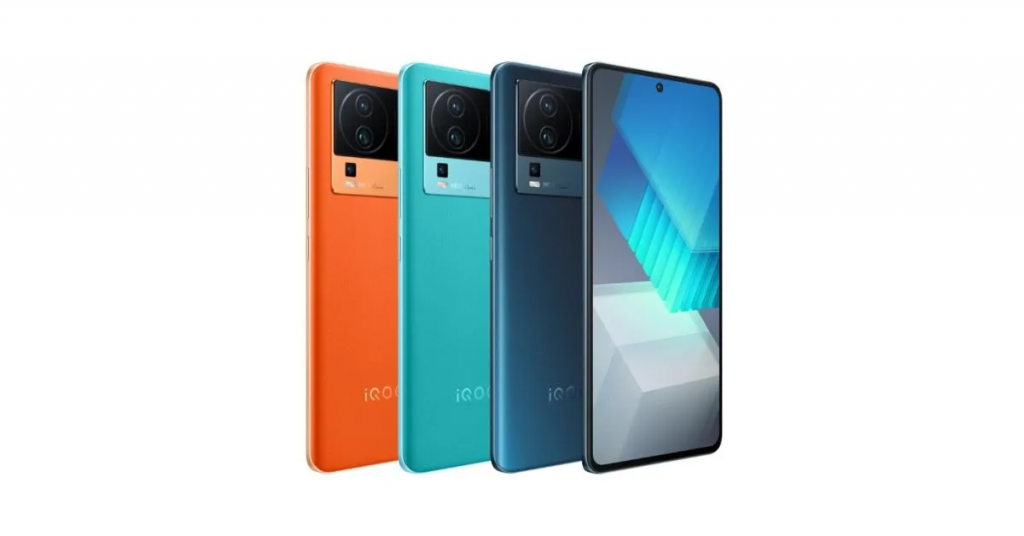
iQOO is also offering more color options for the new device like Orange, Blue, and Black. To recall, the iQOO Neo 6 came in two options, namely Cyber Rage and Dark Nova.

In terms of dimensions, the iQOO Neo 7 is taller than its predecessor. It comes with the dimensions of 164.8 x 76.9 x 8.5 mm which is both taller and wider than the 163 x 76.2 x 8.5 mm dimensions of the iQOO Neo 6. Also, the new model increases its weight by 7 grams to 197 grams.

Both phones have an in-display fingerprint sensor onboard.

DISPLAY

The iQOO Neo 7 brings a larger and brighter display as compared to its predecessor. The Neo 7 comes with a 6.78-inch FHD+ 1080 x 2400 pixel AMOLED display featuring a high 120Hz refresh rate, HDR10+, 360Hz touch sampling rate, 2000Hz instant touch sampling rate, up to 1500nits brightness, and Pixelworks independent display chip Pro+. The upgraded Pixelworks chip will offer better video and motion processing on the new device.

In comparison, the iQOO Neo 6 features a smaller 6.62-inch AMOLED, 120Hz display with HDR10+. The peak brightness is slightly lower at 1300 nits but overall, the display should be similar to the new model. To recall, the iQOO Neo 6 features an older generation of Pixelworks X5 series chip.

SPECS

Under the hood, the new model also brings some changes, including a flagship-grade gaming chipset. The iQOO Neo 7 comes with the latest Dimensity 9000 Plus processor on board, taking its performance to the top. In comparison, the iQOO Neo 6 international model came with the Snapdragon 870 chipset on board, while the Chinese model featured a flagship Snapdragon 8 Gen 1 chip. Combined with the new Pixelworks chip, the iQOO Neo 7 should offer great gaming and performance.

In terms of configurations, iQOO has gone all out with the Neo 7. It is offering the new model with up to 12GB RAM and 512GB of UFS 3.1 storage in China. On the other hand, the iQOO Neo 6 was limited to a maximum of 12GB RAM and 256GB of UFS 3.1 storage.

The new model also brings the latest Android 13 OS on board with OriginOS Ocean on top. On the other hand, the iQOO Neo 6 still runs on Android 12 OS.

CONNECTIVITY

The new Dimensity processor also brings some upgrades in the connectivity department. The Neo 7 adds support for Wi-Fi 6 and Bluetooth 5.3 vs 5.2 found on the Neo 6. You also get NFC and an IR port on board.

CAMERAS

The iQOO Neo 7 features a triple cameras setup bringing a 50MP camera with a 1/1.56″ Sony IMX766V sensor, f/1.88 aperture, and OIS, another 8MP UW sensor with f/2.2 aperture, and finally a 2MP macro camera with f/2.4 aperture.

In the camera department, the only major change is in the primary camera. The old iQOO Neo 6 came with a 64MP sensor, but the remaining sensors are the same as the new model.

There is a 16MP snapper on the front for selfies and video calls, which is shared by the two phones.

BATTERY

In terms of the battery department, the iQOO Neo 7 also brings a few upgrades. In addition to increasing its battery capacity from 4700mAh on the Neo 6 model to 5000mAh, the new model also increases its charging speed to 120W, bringing it up to flagship levels.

Unfortunately, both phones don’t come with wireless charging on board.

PRICING

The iQOO Neo7 starts at RMB 2699 ($373) for the 8GB/128GB model and goes up to RMB 3,599 ($487) for the 12GB/512GB model. This is actually cheaper than the RMB 2799 ($386) launch price of the iQOO Neo 6 in China.

You can get the iQOO Neo 6 on websites like Giztop internationally or via retailers like Amazon in India. The new Neo7 is also available for purchase via Giztop right now.

VERDICT

The iQOO Neo 6 looks like an excellent upgrade over its predecessor. If you already have the Neo 6 model, it may not make sense to upgrade to the new model, but if you are looking for a newer phone out there, the Neo 7 seems like a solid smartphone for its price.

As usual, the Neo 7 sticks to the philosophy of offering solid value for the money you pay for it!

iQOO Neo 7 vs iQOO Neo 6 – Pros and Cons

iQOO Neo 7

Pros

  • Brighter Display
  • Better Visual Chip
  • Faster and Larger Battery

Cons

  • Heavier

iQOO Neo 6

Pros

  • Lighter and Slightly more compact
  • Good Display and chip (SD 8 Gen 1 in China)

Cons

  • Older OS
  • Smaller and slower charging battery

RELATED

Get discounts and coupons at the world premiere of Kumi KU6 Smartwatch on AliExpress on Nov 1st.

Get discounts and regional coupons at the world premiere of the Kumi KU6 Smartwatch on AliExpress on Nov 1st.

KUMI launches the KUMI KU6 smartwatch with Bluetooth calling and a 1.91”  screen.KUMI KU6 Smartwatch is priced at $59.98 (Normal Price) and is available at an inaugural price of $ 24.99 for a limited period(from 11/1 to 11/12 )on AliExpress if you use the code they provide.Random gifts will be presented for the first 300 paid orders of the KUMI KU6 Smartwatch. Don’t miss it.

KUMI KU6
KUMI KU6

KUMI KU6 is KUMI’s latest product in the smartwatch market. This watch is exquisite in design, has a sense of technology, and is powerful in functions, suitable for all scenarios of your daily business and leisure sports.

The structure of the KUMI KU6 smart watch is mechanical, the strap is made of silicone UV-modified material and is replaceable. Using the RTL8763EW chipset, it has a 1.91-inch TFT color display with a resolution of 320 x 385p.

KUMI KU6
KUMI KU6

KUMI KU6 has IP68 certification to protect the smartwatch from dust and water intrusion. You can use a smartwatch for 30 minutes at a depth of 1.5 meters, perfect for casual swimming or bathing.

KUMI KU6 allows you to answer calls via Bluetooth BLE 5.2 when your hands are inconvenient, all you have to do is lift your wrist.

KUMI KU6
KUMI KU6

In addition, KUMI KU6 also allows you to check the weather forecast, read text messages, receive notifications, wake up in the morning, and more. and has a series of reminder functions, including call reminders, SMS notifications, alarm clock reminders, sedentary reminders, drinking water reminders, etc.

The watch also has a range of watch faces that can be easily changed in the smartphone app, as well as support for cloud watch faces and wallpaper watch faces. This allows you to personalize the experience and change the watch face whenever and wherever you need it.

KUMI KU6
KUMI KU6

KUMI KU6 is equipped with a complete health management system, including a heart rate monitor, calories, distance, and pedometer, as well as blood pressure monitoring, blood oxygen level measurement (SpO2), and more. Other interesting features include sleep monitors, wear monitoring, weather reports, music controls, notifications, and more. In addition, the smartwatch features over 110 sports modes in an extended category, such as running, climbing, swimming, yoga, and more. It also supports English, German, French, Italian, Spanish, Japanese, Russian and Portuguese languages.

KUMI KU6
KUMI KU6

KUMI KU6 Smartwatch also has NFC access control and payment function (support Alipay only).

where to buy

Do you like KUMI KU6? You can buy watches at special prices on AliExpress KUMI Global Store from November 1st to 12th.

The original price was $59.98, but you can get this watch for just $24.99 with this coupon code(KUMIKU6).

 Enjoy and use the coupon CODE to guarantee more discounts.

About KUMI

Founded in 2019, KUMI Electronics has developed a strong momentum and has become a well-known brand in the smartwatch market in less than three years, ranking 7th among Chinese smartwatch brands in 2021. Smartwatch shipments are at the top of its class, competing in different markets such as India, the United States, Europe, and many countries in Southeast Asia, and the brand offers a diverse collection of smartwatches. The KUMI KU6 launched this time belongs to the KU series, which provides smartwatches and fitness bracelets focusing on health-related functions. For more details, please follow the KUMI Global Store.

Moto E22s goes for first sale in India – Check prices, deals & specs

Earlier this week, Motorola launched the budget-oriented Moto E22s in the Indian market. Now, the Moto E22s is finally available for purchase in the country. So, let’s take a look at its price, launch offers, and specifications.

Motorola Moto E22s

Moto E22s price & offers

The Moto e22s costs Rs 8,999 and for the sole 4GB + 64GB configuration. It is available for purchase exclusively via Flipkart. Google Nest Hub (2nd Gen) and Google Nest Mini (2nd Gen) are available to Moto e22s buyers for Rs 3,999 and Rs 1,499, respectively.

Moto E22s specs & features

The Moto E22s has a 6.5-inch screen with HD+ quality, a punch-hole cutout in the center, and a substantial bottom chin. It features a refresh rate of 90Hz. The gadget includes an IP52 water-repellent shell and a side-mounted fingerprint scanner integrated into the power button.

The Moto E22s has a MediaTek Helio G37 CPU inside. It has 64GB of internal storage that can be expanded with a microSD card and 4GB of RAM. A 5,000mAh battery within the smartphone provides power and supports 10W fast charging. The device has WiFi, Bluetooth, 4G LTE, a USB-C port, and a 3.5mm headphone jack for connectivity.

For photography, the E22s comes with two camera rings on the back housing a 16MP primary sensor paired with a 2MP depth sensor along with an LED flash. On the front side, it features an 8MP selfie snapper.

RELATED:

Google Pixel 7 vs Galaxy S22 – Specs Comparison

The Google Pixel 7 series is now officially available for purchase throughout the globe. The standard Pixel 7 model is particularly in demand because of its compact dimensions and cheaper price tag. However, there are a lot of good phones in this price segment with even better hardware than the Pixel 7. Given how the Pixel series has traditionally relied on exceptional software for its processing and camera prowess, it could be confusing for a lot of users to decide on which phone to get in the flagship price segment.

One of the biggest upgrades on the Pixel 7 is the new second-gen Google Tensor G2 processor, which brings a number of improvements over last year’s Tensor chip. There are upgrades in the dimensions and the camera departments too as compared to its predecessor.

On the other hand, the Galaxy S22 adopts a more subtle approach for its design, with the cameras featuring an open design, and under the hood, you get a Snapdragon chip like most Android flagships of 2022.

As we mentioned above, the two phones have different philosophies for ensuring a premium experience, so let’s take a close look at the Google Pixel 7 vs Galaxy S22 to see how they differ from each other.

Pixel 7 vs Galaxy S22

Google Pixel 7 vs Samsung Galaxy S22

 Google Pixel 7Samsung Galaxy s22
DIMENSIONS AND WEIGHT155.6 x 73.2 x 8.7 mm, 197 grams146 x 70.6 x 7.6 mm, 167 grams
DISPLAY 6.3 inches,1080 x 2400p, AMOLED display – 90Hz, HDR10+, 1000 nits (HBM), 1400 nits (peak)6.1 inches,1080 x 2340, Dynamic AMOLED display – 120Hz, HDR10+
PROCESSORGoogle Tensor G2 5nm clocked at 2.85GHzGoogle Tensor 5nm clocked at 2.8GHz
MEMORY8 GB RAM, 128 GB – 8 GB RAM, 256 GB8 GB RAM, 128 GB – 8 GB RAM, 256 GB
SOFTWAREAndroid 13, 3 years supportAndroid 12, upgradable to Android 13
CONNECTIVITYWi-Fi 802.11 b/g/6e, Bluetooth 5.2, GPS Wi-Fi 802.11 b/g/6, Bluetooth 5.2, GPS
CAMERADual 50 MP  OIS + 12 MP ultra wide
10.8 MP front camera
Triple 50 MP  OIS + 10 MP telephoto + 12MP UW
10 MP front camera
BATTERY4355 mAh, 30W3700 mAh, 25W
ADDITIONAL FEATURESDual SIM slot, nano + eSIMDual SIM slot, 2 x nano + eSIM

DESIGN

The Google Pixel 7 and the Galaxy S22 adopt very different designs for its back. The Pixel 7 continues with the horizontal camera bar at the back as the Pixel 6 series, while the Galaxy S22 comes with a similar traditional open-camera design as its predecessor. But this makes the two devices look poles apart in terms of their designs.

The horizontal camera bar on the Pixel 7 now comes in polished Aluminium and looks very premium. It’s definitely a design that’s bolder than the camera design on the Galaxy S22 which features individual sensors placed in a vertical alignment.

The Pixel 7 is available in three colors, namely, Snow, Obsidian, and Lemongrass. On the other hand, the Galaxy S22 comes in a number of fancier color options, like Black, White, Green, Pink Gold, and Bora Purple. Note that the two phones are IP68 dust and water-resistant too. 

Coming to the dimensions, the Pixel 7 measures 155.6 x 73.2 x 8.7mm. While this might feel compact, the Galaxy S22 proves to be the true king of compact flagships with its smaller dimensions of 146 x 70.6 x 7.6 mm. Even in the weight department, the S22 5G comes in a very lightweight 167 grams body instead of the 197 grams body of the Pixel 7.

Overall, if you are looking for a compact flagship phone in 2022, the Galaxy S22 should be on top of your pick. That said, even the Pixel 7 looks like a pretty premium flagship and if you are a fan of the horizontal aluminum camera bar on its back, it will also make for a good-looking compact flagship of 2022.

End of the day, the design will always be a subjective department, and it really boils down to whether you like the rear design on the Pixel 7 or the one on the Galaxy S22, when you make your final pick.

DISPLAY

In terms of their displays too, the two phones differ quite significantly. The Galaxy S22 brings a much more compact 6.1-inch display as compared to the 6.4-inch one found on the Pixel 7. Both are 1080 x 2400 AMOLED HDR10+ panels. However, the Galaxy S22 offers a much faster 120Hz refresh rate compared to the 90Hz one on the Pixel 7 model.

As for their peak brightness, the Pixel 7’s 1400 nits is slightly higher than the 1300 nits found on the Galaxy S22.

In the display department, you can really go wrong with either of them but the Galaxy S22 has a slight advantage with its faster refresh rate.

SPECS

In terms of processing power, the Pixel 7 features the latest Tensor G2 chipset inside with Titan M2, bringing better performance over last year’s chip. The new G2 chip features two Cortex-X1 cores with two Cortex-A78 cores and four Cortex-A55 cores. The chip has enough power to handle all the tasks thrown at it, but the real highlight of this new chipset is its ability to handle AI and ML. 

In comparison, the Galaxy S22 comes with a Snapdragon 8 Gen 1/Exynos 2200 chip inside. On paper, the Tensor G2 might not look like a powerful chip, but in reality, both are very powerful processors, and you won’t feel short of processing power when using either of the devices.

As for the RAM configurations, both the devices comes in a single 8GB RAM option. For storage, both models offer either 128GB or 256GB of UFS 3.1 storage onboard. 

As for the software, the Pixel 7 comes with the latest Android 13 stock version. On the other hand, the Galaxy S22 was launched with Android 12 based One UI 4.1.1 but will soon be getting the Android 13 update. Google has promised at least three OS updates and 5 years of security updates on the Pixel 7. Samsung has promised an even better four years of One UI and five years of security updates for its top-end Galaxy S22 series.

CONNECTIVITY

In terms of connectivity, both phones come with Wi-Fi 6 support, Bluetooth 5.2 NFC, and a USB-C 3.2 port at the bottom.

You also get an under-display optical fingerprint sensor along with other sensors like gyro, proximity, compass, and barometer.

CAMERAS

As for its camera module, the Pixel 7 features a dual-camera setup, much similar to its predecessor model. 

The new Pixel 7 features a 50MP primary camera and a 12MP ultra-wide sensor.  On the front, you get a 10.8MP f/2.2 sensor camera module for selfies and video calls.

In comparison, the Galaxy S22 features an even better camera module featuring a 50MP primary shooter, another 10MP 3X telephoto shooter, and a third 12MP 120° ultrawide camera. On the front, the S22 features a 30MP selfie shooter with autofocus.

On paper, the Galaxy S22 seems like the winner. But that’s unlikely the case. Google’s camera algorithms don’t really have a match in the industry, which means the camera performance from the two cameras onboard the Pixel 7 should be at par or better than the Galaxy S22. That said, the difference isn’t likely going to be significant, and both phones will offer above-average camera performance in this price range.

BATTERY

The Pixel 7 features a 4335mAh battery with 30W fast charging and 15W wireless charging. Despite the reduction in battery size, Google has said that the Pixel 7 can last for an entire day and can even add up to 72 hours under Extreme Battery Saver mode. On the other hand, the Galaxy S22 comes with an even smaller 3700mAh battery with 25W charging and 15W wireless charging.

It is worth mentioning that ensuring the fastest charging support of 30W would cost you a few more bucks, as neither Google nor Samsung offers a charger inside the box in most regions.

PRICE

The Pixel 7 starts at $599 in the USA. While in India, the phone is priced at INR 59,999. On the other hand, the Galaxy S22 retails for around $800 or INR 53,000 in the US and India, respectively after discounts.

Google Pixel 7 vs Galaxy S22 – VERDICT

If you want a really compact flagship with powerful gaming performance and a smoother display, go for the Galaxy S22. But if you want Google’s unique features, a bolder rear design, and slightly better battery life, you can get the Pixel 7.

RELATED:

*Please Note: When you buy something using the links in our articles, we may earn a small commission at no cost to you.

Samsung Galaxy S23 Ultra appears on Geekbench with Snapdragon 8 Gen 2 processor

After the Samsung Galaxy S23 appeared on the Geekbench running platform, the suspected new Samsung Galaxy S23 Ultra has also appeared on Geekbench with the model number SM-S918U.

Samsung Galaxy S23 Ultra

The Geekbench listing shows that the Samsung Galaxy S23 Ultra is equipped with an unnamed chipset with the “kalama” motherboard logo and a CPU architecture of “1+2+2+3” with a main core frequency of 3.6GHz, which according to previous leaks, the processor is Qualcomm Snapdragon 8 Gen 2, “1+2+2+3” which is 1× 3.36GHz Cortex-X3 Super Core + 4× 2.8GHz Cortex-A715 / A710 Big Core + 3× 2.02GHz Cortex-A510 Core.

Samsung Galaxy S23 Ultra benchmark score
Samsung Galaxy S23 ultra benchmark

The test device scored an impressive 1,521 single-core and 4,689 multi-core points. For reference, the Samsung Galaxy S22 Ultra with Snapdragon 8 Gen 1 scored a maximum of 1,200/4,200 points respectively. The listings indicate that the test device has 8GB of RAM and it is expected that the phone will be offered in a version with at least 12GB of RAM. In addition, the phone is running Android 13, presumably OneUI 5.

Whether Samsung will also release an Exynos-powered Samsung Galaxy S23 model remains to be seen, as earlier rumors suggested that all 2023 Samsung S-series phones will use Qualcomm SoCs, while newer reports suggest that Exynos chips are still under consideration.

IQOO Neo 7 5G Phone is now available on Giztop for $459

IQOO Neo 7 5G phone is now available on Giztop for a starting price of $459. Please note that this price is applicable to the base variant only. 

IQOO Neo 7 features a 6.78-inch Samsung E5 AMOLED FHD+ display and supports a 120Hz refresh rate. The smartphone is powered by the MediaTek Dimensity 9000 Plus octa-core processor and comes with multiple memory options viz. 8GB / 12GB LPDDR5 RAM and 128GB / 256GB UFS 3.1 internal storage. 

IQOO Neo 7 comes with a triple rear camera setup with a 50MP OIS-supported main camera, an 8MP ultra-wide angle lens, and a 2MP macro sensor. For selfies, you have a 16MP sensor in the front. Fueled with a 5000mAh battery, the smartphone supports 120W flash fast charging and runs on Android 13-based ORIGIN OS. Other interesting features include Bluetooth 5.2, GPS, USB-C, under-display fingerprint sensor, etc.

You can now buy the IQOO Neo 7 phone for a starting price of $459 only on Giztop. The phone comes in Black, Orange, and Blue color variants. 

For more information on such exciting deals and offers check out our deals hub.

OPPO is recruiting ColorOS 13 closed beta testers for Find X2 and X2 Pro

Back in August, OPPO showed off its latest custom Android skin— ColorOS 13. Shortly thereafter, the company rolled out stable builds of the software for this year’s flagship Find X5 and Find X5 Pro. In the latest development, the firm has kicked off ColorOS 13 closed beta program for the older OPPO Find X2 series in China. Let’s look at the details.

According to the announcement post, OPPO is seeking Closed Beta Testers in China who can assist the company in improving the software on the Find X2 and Find X2 Pro by testing ColorOS 13 beta builds (via ITHome). The testers will be required to communicate regularly with the brand to report issues and provide suggestions.

Users of the two special edition smartphones in the series— Find X2 League of Legends S10 Limited Edition and Find X2 Pro Lamborghini Edition— will also be able to apply for closed beta recruitment. OPPO will conduct the review of the applications in batches within 5 working days after the recruitment ends (noon, October 22) and the firmware will be released after the review within 3 working days.

It is worth mentioning that the beta build of the ColorOS 13 is reported to have several known issues that can significantly affect your daily usage. In addition, many common third-party apps are incompatible with the software.

There are a few notable upgrades and new features in ColorOS 13 (review). With an Aquamorphic design, OPPO’s custom Android skin includes all the latest features Google has introduced with the Android 13. Moreover, OPPO has included some exclusive features such as a Shadow-Reflective Clock widget, an IoT device control module, media playback controls for the updated Control Center, a Meeting Assistant, and more.

RELATED:

Redmi Pad vs Samsung Galaxy Tab A8: Specs Comparison

Redmi finally launched its first tablet and it is definitely an amazing device. It debuted in the Asian market under the Redmi Pad moniker and it is bundled with midrange-class specifications. Despite being the first tablet from this brand, it is perfectly able to compete with the best concurrence in its segment. But there are several old tablet manufacturers to beat in order to conquer a good amount of users. One of the most experienced tablet manufacturers is Samsung and it produces several tablets in the affordable segment. One of the latest affordable tablets by the Korean giant is the Samsung Galaxy Tab A8 10.5, available in India and worldwide at very interesting prices. Here is a comparison between the main specifications of the Redmi Pad and the Samsung Galaxy Tab A8.

Xiaomi Redmi Pad vs Samsung Galaxy Tab A8 10.5

Xiaomi Redmi Pad Samsung Galaxy Tab A8 10.5
DIMENSIONS AND WEIGHT 250.5 x 158.1 x 7.1 mm, 465 grams 246.8 x 161.9 x 6.9 mm, 508 g
DISPLAY  10.61 inches, 1200 x 2000p (Full HD+), IPS LCD 10.5 inches, 1200 x 1920p (Full HD+), TFT LCD
PROCESSOR MediaTek Helio G99, octa-core 2.2 GHz Unisoc Tiger T618, octa-core 2 GHz
MEMORY 3 GB RAM, 64 GB – 4 GB RAM, 128 GB – 6 GB RAM, 128 GB – micro SD slot 2 GB RAM, 32 GB – 3 GB RAM, 32 GB –  4 GB RAM, 64 GB – 3 GB RAM, 128 GB – 4 GB RAM, 128 GB – micro SD dedicated  slot
SOFTWARE  Android 12, MIUI Android 11, One UI
CONNECTIVITY Wi-Fi 802.11 a/b/g/n/ac, Bluetooth 5.2, GPS  Wi-Fi 802.11 a/b/g/n/ac, Bluetooth 5.0, GPS
CAMERA Single 8 MP f/2.0
8 MP f/2.3 front camera
Single 8 MP
5 MP front camera
BATTERY 8000 mAh, fast charging 18W 7040 mAh, fast charging 15W
ADDITIONAL FEATURES Ultrawide front camera Optional LTE connectivity

Design

I love the design of the Samsung Galaxy Tab A8 10.5 because it has a very minimal look. On the rear side, there is no camera module, but just a single sensor placed directly on the rear cover. The tablet is very thin, just 6.9 mm, and it has a very high screen to body ratio thanks to narrow bezels around the display. Despite being very thin, this tablet is equipped with four stereo speakers and it is more compact than the Redmi Pad. Speaking of the Redmi Pad, it has an even higher screen to body ratio thanks to narrower bezels around the screen, but it is equipped with a big camera module ruining the rear design a bit. The presence of an aluminum frame is very interesting because it accounts for better build quality and a sturdier design. Even this model is equipped with four stereo speakers like its rival. It is slightly thicker and bigger, but on the other hand, it is more lightweight.

Display

Do you need one of the best displays in the affordable segment? If so, then you should go for the Redmi Pad. It has an IPS LCD panel able to show up to one billion colors with a diagonal of 10.61 inches, a Full HD Plus resolution of 1200 x 2000 pixels, a 90 Hz refresh rate, and a typical brightness of 400 nits. It offers great color reproduction, even though it is far from OLED panels found on midrange phones. And it is also very smooth thanks to its high refresh rate. The Samsung Galaxy Tab A8 has no way to compete with the Redmi Pad because its display is significatively inferior. It is a TFT LCD panel with a diagonal of 10.5 inches and a Full HD Plus resolution of 1200 x 1920 pixels, it does not have a high refresh rate, and it is able to show a lower amount of colors if compared to the Xiaomi tablet. Both have four stereo speakers as already mentioned above, but the Samsung Galaxy Tab A8 is the only one with a 3.5 mm audio jack allowing you to use wired earphones or headphones.

Specs & Software

The most powerful hardware belongs to the Redmi Pad and it is definitely much better than the hardware department of the Samsung Galaxy Tab A8. The Redmi Pad is powered by the Helio G99 mobile platform: one of the latest midrange chipsets by MediaTek. It is a processor built with a 6 nm production process and sporting an octa-core architecture composed of two Cortex A76 CPUs running at a max frequency of 2.2 GHz, six Cortex A55 CPUs running at a max frequency of 2 GHz, and a Mali G57 MC2 GPU. The chipset is paired with up to 6 GB of RAM and up to 128 GB of fast UFS 2.2 native storage. On the Samsung Galaxy Tab A8, you can find an entry-level chipset: the Unisoc Tiger T618 built with a 12 nm production process and sporting an octa-core architecture composed of two Cortex A75 CPUs running at 2 GHz, six Cortex A55 CPUs running at 2 GHz, and a Mali G52 MP2 GPU. Alongside the processor, there are up to 4 GB of RAM and up to 128 GB of native storage, furtherly expandable with a micro SD. Note that Redmi Pad runs Android 12, while the Samsung Galaxy Tab A8 ships with Android 11.

Camera

The rear cameras of these two tablets are more or less at the same level: the real difference is in the front camera, where the Redmi Pad wins thanks to a great 8 MP sensor with an ultrawide field of view.

Battery

Last but not least, the Redmi Pad has a bigger battery and it guarantees longer battery life not only thanks to its bigger capacity but also because of its 6 nm chipset consuming less energy.

Price

You need at least €250/$250 to purchase the Redmi Pad, while the Samsung Galaxy Tab A8 is available for less than €185/$185. The Redmi wins this comparison.

Xiaomi Redmi Pad vs Samsung Galaxy Tab A8: PRO and CONS

Xiaomi Redmi Pad

PRO

  • Bigger battery
  • Wider display
  • Better front camera
  • Better chipset

CONS

  • Limited availability

Samsung Galaxy Tab A8 10.5

PRO

  • Worldwide availability
  • More affordable
  • Optional LTE connectivity
  • More memory configurations
  • 3.5 mm audio jack

CONS

  • Inferior chipset
  • Smaller battery

RELATED

MIJIA Cross-door Refrigerator 520L with up to 18 compartments launched

Chinese tech giant Xiaomi recently launched a raft of products under the MIJIA brand. One of the products is a new smart refrigerator, the MIJIA Cross-door Refrigerator 520L. The new refrigerator is now open for pre-sale, with an initial price of 2499 yuan ($345).

MIJIA Refrigerator Cross-door 520L
MIJIA Cross-door Refrigerator 520L

The new MIJIA Refrigerator Cross door 520L utilize a design whose inspiration is said to have been derived from olivine meteorite. Not only is it delicate to the touch, but it is also more natural and soft in terms of overall gloss.

Just as the name implies, the MIJIA refrigerator has a large storage space of 520L. This consists of a 352L storage compartment and a 168L freezer compartment. The storage compartment is equipped with dual independent fruit and vegetable refrigerator drawers where fruits and vegetables can be placed separately to ensure the freshness of foods.

At the same time, the 168L freezing space is divided into sections for freezing treatment with a freezing force of 6.0kg/12h that can quickly freeze the stored food to maintain their original taste.

In addition, the product adopts air-cooled frost-free technology and intelligent automatic frosting. This eliminates the problem of frost forming and subsequently removing the need to manually defrost the freezer compartment.

The MIJIA Cross-door Refrigerator 520L is also equipped with a silver ion antibacterial and deodorant module, that can effectively absorb odor molecules in the refrigerator.

MIJIA Refrigerator Cross-door 520L

The refrigerator has 3 different operating modes to choose from, namely Smart Mode, Super Cool Mode, and Super Freeze Mode. As a MIJIA smart ecological product, the cross-door 520L refrigerator can be connected to the MIJIA app. From the app, user can select any of the modes and adjust temperature of the refrigerator remotely.

RELATED:

Hi Nova 10 5G series launched, with Snapdragon 778G & 120Hz OLED display

Earlier this week, it was announced that the Hi Nova 10 5G series will be announced in China on October 20. Now, the day is finally here and the company has launched two new smartphones in the lineup. So let’s have a look.

Hi Nova 10 Pro

To make a correction on our previous report, these smartphones are not from Huawei. Rather, the new Nova 10 series are being released by China Post. Thus, the smartphone features 5G connectivity. This means that the smartphones are basically the Huawei Nova 10 series in many ways, but with 5G support and different software. Thus, the Hi Nova 10 Pro sports a 6.78 inch OLED display that has a 120Hz refresh rate. Meanwhile, the rear has an oval ring shaped camera module.

The front also houses a pill shaped cutout for a dual selfie camera configuration. This includes a 60 megapixel ultra wide angle that offers a 100° field of view and is paired with an 8 megapixel wide sensor. On the rear, the device features a triple camera module, with a 50 megapixel primary sensor, 8 megapixel ultra wide angle lens, and a 2 megapixel depth shooter. Under the hood, the new smartphone is equipped with the Qualcomm Snapdragon 778G SoC, which is a 5G enabled chipset. It is powered by a 4,500mAh battery pack that supports 100W fast charging.

Hi Nova 10

The base smartphone model from the series is nearly identical to the Pro variant with specifications and outer appearance. Although, there are subtle differences. It sports a slightly smaller 6.67 inch display, but it still offers an OLED panel with a 120Hz refresh rate. However, unlike the higher end version, it only offers a lone selfie camera on the front, which is a 60 megapixel ultra wide angle lens. However, the rear offers the same 50 megapixel triple camera setup as the Pro model.

Under the hood, the device is also equipped with the same Snapdragon 778G SoC. But unlike its more expensive sibling, this model is powered by a smaller 4,000mAh battery pack that supports just 66W fast charging. Notably, both the base and Pro variant of the Hi Nova 10 5G series also offers dual stereo speakers, under display fingerprint scanner, and reverse charging as well.

Pricing & Availabiity

Both of the new smartphones were launched in two different storage configurations, so here’s a list of their variants and prices:

  • Nova 10 5G (8GB + 256GB) 2,899 Yuan
  • Nova 10 5G (8GB + 256GB) – 3,199 Yuan
  • Nova 10 Pro 5G (8GB + 128GB) – 3,699 Yuan
  • Nova 10 Pro 5G (8GB + 256GB) – 3,999 Yuan

The Hi Nova 10 and 10 Pro wil go on sale in China on 29th October 2022, across all channels. But unfortunately, the availability of these devices outside of the region is still unknown.

RELATED:

Samsung may finally bring Seamless Updates to its phones with One UI 6.0 Update

Samsung held its annual developer’s conference on October 12, where it announced plenty of new features related to One UI 5 and also revealed that the Galaxy S22 series will be receiving the stable version of the Android-13-based software by the end of October. After the event, a Samsung executive reportedly confirmed that the company is working on seamless updates, which may be introduced with One UI 6. The executive also revealed information about the rollout plans for One UI 5. Let’s look at the details.

During an Interview with Android Authority, Hyesoon (Sally) Jeong, VP at Samsung Electronics and the in-charge of One UI development, revealed that the South Korean company is planning to roll out the stable One UI 5.0 update to almost all of its compatible flagships (including the foldables and the Galaxy S21 series) before the end of this year.

Further, Sally confirmed that the One UI team is currently working on offering seamless updates, and it may roll out with One UI 6 next year. As of right now, none of the Galaxy smartphones have Android’s Seamless Updates feature, meaning the phones reboot into maintenance mode for the update installation, making you wait for 10 to 20 minutes before using the device. With the introduction of this feature, Samsung phones will receive and install updates in the background and reboot after the installation has finished.

Additionally, the executive denied rumors that One UI would be coming to Chromebooks and TVs. She said “there are no plans for One UI to come to other products, such as TVs, Chromebooks, etc”.

Samsung has been testing the One UI 5 for months now. As mentioned, the company will roll out the stable firmware update to the Galaxy S22 series by the end of October.

Related:

Amazon hints the Google Pixel 7a ‘family’ may launch very soon

Google unveiled the Pixel 6a earlier this year with the same custom Tensor chipset and exclusive software features as the more expensive Pixels. The phone became quite popular among consumers due to its affordable price tag. Now, Amazon suggests the search giant might be gearing up to unveil the Pixel 7a soon. The e-commerce company is reportedly allowing users to subscribe for the upcoming announcement of the smartphone. Here are the details.
According to GSMArena, Amazon is letting users subscribe for the “Google Pixel 7a family launch announcement.” No details are provided on when the Pixel 7a will be revealed, but since the e-commerce giant is already handing out invitations, it shouldn’t take long.

However, we find it hard to believe that Google will unveil the 7a this early. The current Pixel 6a is only six months old, and if you recall, the company took months to introduce the device. Also, a recent report revealed that Google has ordered 4 million units of the “a” phone for launch early next year.

It’s worth noting that the event is for the “Google Pixel 7a Family,”  meaning there are multiple variants of the smartphone. We don’t expect separate 5G/4G models because the Pixel 5a and 6a already have 5G. Chances are the company may bring the rumored Pixel 7 mini.

Amazon’s listing also mentioned a watch, but Google already launched its first smartwatch, Pixel Watch, earlier this month. This suggests the whole subscription thing could very well be a typo. In any case, we have subscribed to the list and will let you know if Amazon sends an update.

RELATED:

MIJIA Graphene Baseboard Heater with 3 seconds quick heating launched

Xiaomi has quietly launched the MIJIA Graphene Baseboard Electric Heater. The home heater uses double graphene heating elements, which can achieve 3-second rapid heating, thanks to a 2200W power. This makes it possible to quickly heat up the room in a short time.

MIJIA Graphene Baseboard Electric Heater

At the same time, the MIJIA Graphene Baseboard Heater supports atomization and humidification to avoid air drying. The device comes with It also supports the heat flow circulation of the entire house, as well as intelligent constant temperature step-less frequency conversion. The ideal room temperature of 16~28℃ can easily be customized. The most outstanding feature is the IPX4 waterproof protection it comes with, making it suitable for use in the bathroom without fear of electrocution.

MIJIA Graphene Baseboard Electric Heater

Other safety features onboard include overheating protection, dump power elimination, child lock, etc. The product can be connected to the MIJIA app for remote control using the app. It also supports XiaoAI voice control.

As for the pricing, the MIJIA Graphene Baseboard Heater is priced at 859 yuan ($118).

Related:

Xiaomi launches the corded MIJIA Vacuum Cleaner 2 with a 16KPa suction power for 199 yuan ($27)

Xiaomi launched its first corded vacuum cleaner aptly named the MIJIA Vacuum cleaner in November 2020. The product arrived with a decent 199 yuan price tag. Almost two years after, the Chinese tech giant has now launched a replacement model known as MIJIA Vacuum Cleaner 2. The new model retains the 199 yuan ($27) price tag of its predecessor while coming with a number of new features.

MIJIA Vacuum CLeaner 2

Just like the previous model, the new vacuum cleaner comes with a has 16kPa high suction power. The Vacuum Cleaner 2, however, comes with an upgraded gun-like appearance. It is equipped with a visual dust cup, and an upgraded cyclone air duct. Instead of three filters on the previous model, this new model has been upgraded to a five-fold filter.

The MIJIA Vacuum Cleaner 2 also comes with an upgraded cyclone suction duct equipped with a 600W high-performance motor. It adopts a new structure that optimizes the suction duct as well as the dust-removing cyclone tower to achieve a hurricane suction of up to 16kPa.

MIJIA Vacuum Cleaner 2

The new product is also upgraded with 5 layers of depth filtration. The cyclone airflow generates a strong centrifugal force. Thus, dust and air are separated instantly. Then, the dust and harmful substances are filtered through the pinhole steel mesh, filter cotton, and filter element layer by layer, and the air is cleaned and exhausted. This design effectively prevents backflow and secondary pollution.

In addition, the MIJIA Vacuum Cleaner 2 comes upgrades the previous-generation arc horizontal bar handle to a new gun-style, labor-saving new shape, reducing the weight on the hand during use.

MIJIA Vacuum Cleaner 2

The device uses a thin 4cm floor brush that can penetrate dust-stricken areas under furniture, eliminating the need to move furniture. 240mm straight into the large suction port, covering a large area of ​​​​the cleaning area, easily solving the problem of cleaning low spaces.

Related:

Samsung W23 5G, W23 Flip with up to 16GB RAM and 512GB storage launched

Samsung W23 5G and W23 Flip have debuted in China today. Both the latest offerings are luxury custom variants of the Galaxy Z Fold 4 and Galaxy Z Flip 4 respectively. The Galaxy W23 5G also arrives as the successor to the last year’s W22 5G. The South Korean brand says that it has launched a new W-series device every year since 2008. 

Samsung w23 flip
Samsung w23 5G and Samsung w23 flip

The biggest difference between the Samsung W23 duo and the fourth-generation Galaxy Z Foldables is in terms of design. Both the W23 and W23 Flip feature gold-plated edges and hinges. The brand says that the W23 duo’s hinge shell adopts a high-end watch metal precision cutting process and is carved by nano-level polishing. The new hinge structure is also said to be thinner and more flexible. The hinge shell also has an embossed metal pattern that looks dazzling. Both the W23 and W23 Flip come with the logo in the centre that reads ‘Heart to the world’. The colour scheme on the latest offerings is also the same as the W22 5G with a Black colour back panel. 

Apart from design changes, the core specifications of the Samsung W23 5G and W23 Flip remain the same as the fourth-generation Galaxy Z foldables. However, the brand has bumped up the RAM and internal storage. The W23 has an internal screen of 7.6-inches and a triple rear camera setup of a 50MP main sensor, 12MP ultra-wide-angle lens, and 12MP telephoto unit. There is also a 4MP UDC snapper along with a 10MP shooter. The Samsung W23 and W23 Flip both come with a 6.7-inch main AMOLED display with a 120Hz refresh rate. 

The Samsung W23 5G and W23 Flip are equipped with Snapdragon 8+ Gen 1 processors. The former is paired with 16GB RAM whereas the latter maxes out at 12GB. Both pack 512GB of internal storage. The W23 5G and W23 Flip are backed by 4,400mAh and 3,700mAh battery units respectively. 

The Samsung W23 5G is priced at RMB 15,999 (~$ 2,207) for the 16GB + 512GB option. The W23 Flip costs RMB 9,999 (~$ 1,379) for the 12GB + 512GB variant. Both devices are up for pre-orders from Samsung’s official website with shipments commencing from October 28th.

Related:

Samsung Galaxy S23 Ultra with Snapdragon 8 Gen 2 SoC appears on Geekbench

Earlier this week, the Samsung Galaxy S23 US variant was spotted on Geekbench. Now the Ultra variant from the next-generation S23 lineup has appeared on the benchmarking platform. It is listed with model number SM-S918U, where ‘U’ seems to be the US version. The listing has been spotted by publication MySmartPrice and it also reveals key specifications of the device. The Samsung Galaxy S23 series is expected to debut in January or February 2023, however, the devices have started doing the rounds on the web. 

The Galaxy S23 Ultra is the second device from the S23 family to appear on the Geekbench database. The motherboard is codenamed ‘Kalama’ which is the same as the regular variant. It refers to the upcoming Qualcomm’s upcoming Snapdragon 8 Gen 2 SoC. The SoC has one prime core ticking at 3.36GHz, four mid-cores at 2.80GHz, and three energy-efficient cores clocked at 2.02GHz. There is said to be an Adreno 740 GPU onboard. The listing also reveals that the S23 Ultra will pack 8GB RAM  but we can expect more at launch. The device will run Android 13 OS out of the box. 

In benchmark tests, the S23 Ultra scores 1,521 and 4,689 points in single-core and multi-core results. In comparison, the regular S23 scored 1,524 and 4,597 points respectively. Apart from the aforementioned information, the Geekbench listing does not reveal any additional details. 

Last month, the Galaxy S23 Ultra was spotted on China’s 3C certification website with 25W fast charging support which seems to be a downgrade from its predecessor. Apart from an upgraded camera and processor, the S23 Ultra is not tipped to pack any other upgrades. The S23 Ultra is reportedly confirmed to feature a 200MP main camera sensor. Meanwhile, the CAD-based renders also don’t reveal any major design changes on the next-generation Ultra model. 

Related:

Via

Upcoming Smartphones: OnePlus Ace Pro Genshin Impact Limited Edition & More

There weren’t any scheduled smartphone launches this past week. However, there were multiple silent releases.

On the other hand, two brands have confirmed to debut new phones next week. They will be unveiling a single handset each.

Both of these products will be announced in China. Most likely, these devices will remain exclusive to the region.

With that out of the way, let’s take a look at these forthcoming phones one by one.

Upcoming Smartphones Next Week

1. OnePlus Ace Pro Genshin Impact Limited Edition

OnePlus is set to launch the OnePlus Ace Pro Genshin Impact Limited Edition in China on October 24. The conference for the device announcement will begin at 7 PM GMT+8. It will be live-streamed on Weibo and other leading Chinese video streaming platforms.

As the name suggests, the forthcoming smartphone from the brand will be themed after the popular RPG game. Interestingly, the brand hasn’t disclosed the design yet.

As far as specs are concerned, the special edition phone should be identical to the regular Ace Pro. For the unaware, the Ace Pro is nothing but the OnePlus 10T for the Chinese market.

Hence, the key spec highlights of the handset will be Qualcomm Snapdragon 8 Plus Gen 1 SoC, 16GB RAM, and 150W fast-wired charging support.


2. ZTE Yuanhang 40 Pro Plus

The ZTE Yuanhang 40 Pro Plus is planned to go official in China on October 26. The phone will be available for purchase on the same day. It is already up for pre-order in the country.

According to teasers and leaks, the device will be built around a 6.67-inch FHD+ OLED display. It will be run by a MediaTek Dimensity 810 SoC and will draw power from a 4,510mAh battery with support for 66W fast wired charging.

It will house a triple camera system on the rear comprising a 64MP primary shooter, a 5MP macro snapper, and a 2MP depth sensor. Finally, the handset will also sport an RGB LED ring light around one of the cameras.

The smartphone is expected to retail around ¥2,200 (~$300) for 8GB + 256GB memory configuration.

RELATED:

Honor 80, Honor 80 Pro key specifications tipped

Last week, Digital Chat Station had leaked key specifications of the Honor 80 Pro+ variant. Now the same tipster has shared information about the regular and Pro models of the Honor 80. The Honor 80 series smartphones will arrive as the successor to the Honor 70 series that went official in May this year. Going by the latest development, rumours about the Honor 80 series are already doing the rounds on the web. 

As per DCS, the Honor 80 is said to be equipped with MediaTek’s Dimensity 1080 processor. It will come with a 64MP main camera and support 66W fast charging. On the other hand, the Honor 80 Pro will reportedly be powered by a Qualcomm Snapdragon 778G SoC. it will feature a 108MP primary camera. Meanwhile, the Honor 80 Pro+ is expected to be the most premium device in the lineup with flagship specifications. The device was previously tipped to come with Snapdragon 8+ Gen 1 SoC under the hood. It will also pack a 200MP camera sensor and 100W fast charging support. The Pro+ is expected to come with a curved flexible AMOLED display bearing a 1.5K resolution. 

Lastly, Digital Chat Station says that the design will be the key highlight on the Honor 80 series. The upcoming smartphones will likely come with up to 12GB RAM and 256GB storage. The rest of the details like display, battery size, and camera configuration of the Honor 80 series remain a mystery as of now. The smartphones may debut by the end of this year. We expect more information to crop up about the Honor 80 series smartphones in the coming weeks.

Related: