Advertisement

Realme 10 Pro’s AMOLED panel to feature curved edges, super-slim chin

Realme 10 series is expected to debut in the global market by early November. It is speculated to hit the Indian market by the end of November. Recent reports have claimed that the company will initially announce the Realme 10 and Realme 10 Pro+ smartphones on the market. A new tweet from a reliable source, Ice Universe, has shed some light on the Realme 10 Pro’s screen.

As can be seen in the tweet, the tipster can be seen talking about how Samsung has widening bezels on its flagship phones like the S22 Ultra. The tipster shared an image and said that the Realme 10 Pro will have an AMOLED screen with curved edges. The image also reveals that the 10 Pro will have a super-slim chin, which measures only 2.3mm in thickness.

The bottom bezel of the Realme 10 Pro is said to be thinner than that of the Galaxy S22 Ultra, which measures 2.6mm. While there is no confirmation yet, the Realme 10 Pro+ may feature an identical display. At the TENAA certification platform, the 10 Pro+ was recently seen with a curved edge AMOLED panel.

The Realme 10 Pro+ will be powered by the Dimensity 1080 chipset. It is expected to arrive in three variants: 6 GB RAM + 128 GB storage, 8 GB RAM + 128 GB storage, and 8 GB RAM + 256 GB storage. It is likely to feature an OIS-enabled 50-megapixel primary camera and pack a 5,000mAh battery with 67W fast charging support. The handset is expected to be available in three colors, such as Hyperspace, Dark Matter, and Nebula Blue.

Rumors are rife that the Realme 10 lineup will include multiple models, such as the Realme 10 4G, Realme 10i, Realme 10 5G, Realme 10 Pro, and Realme 10 Pro+ 5G. 

RELATED:

Huawei P50 Pocket S launch date confirmed, could be an affordable clamshell phone with foldable screen

In August, an upcoming clamshell phone by Huawei was approved by China’s TENAA telecom authority. The listing only revealed the images of the phone. Following reports claimed that the device may be released in China with the “Huawei P50 Pocket New” moniker. However, the company released an official confirmation that the device will be called the Huawei P50 Pocket S and it will be made official at 7 PM on Nov. 2 in the home market.

The official teaser video released by the brand does not reveal the design of the Huawei P50 Pocket S. However, it confirms that the device will be made available in as many as six colors like black, blue, pink, white, green, and yellow. 

.

The original Huawei P50 Pocket, which went official in December 2021, was powered by the Snapdragon 888 4G mobile platform. There are a lot of rumors that the Snapdragon 778G 4G chipset will power the new Pocket S.

It is speculated that the Huawei P50 Pocket S will not feature a secondary display. The device is speculated to arrive with a 120Hz OLED foldable display, HarmonyOS 3, and the company’s XMAGE image processing technology. The inclusion of the SD778G chip is a good hint that it will be an affordable clamshell phone. The 256 GB edition of the Huawei Pocket S may cost 4,999 Yuan (~$689). On the other hand, its 512 GB edition, may arrive with a 6,999 Yuan (~$965) price tag.

It appears that the Huawei P50 Pocket S will not be the only device to debut on Nov. 2. A recent report claimed that Huawei may unveil the Huawei Watch GT Cyber alongside the P50 Pocket S.

RELATED:

Redmi Note 12 series global variants will lack 210W fast charging, Q1 2023 debut expected

Redmi recently confirmed that its Note 12 series of smartphones will be launching later this month in China. The brand has yet to reveal any information regarding the global launch of the Note 12 series.

Redmi Note 11 Pro+ 5G

Now, tipster Sudhanshu Ambhore has come out with information regarding the global launch. The tipster states that the Note 12 series will not launch globally till Q1 2023. This is in line with the brand’s status quo as the Redmi Note 11 was released in China in October of last year, and customers had to wait an additional three months for a global launch. Going by this assumption, we can expect the Note 12 global debut to take place in January or February.

The tipster also informs that the global Redmi 12 lineup will consist of entirely different phones from the Chinese models. This is quite disappointing since it will only lead to more confusion like the Note 11 series, which ended up having way too many models in the lineup.

The Redmi Note 12 lineup appears to include wholly distinct phones from the Chinese version, just like with the Redmi Note 11 series. That probably entails various SoC options, some design modifications, and possibly different camera hardware. Last but not least, while the Redmi Note 12 lineup in China will reportedly have at least one model with 210 W charging, that functionality is reportedly completely missing from the worldwide models.

As for the Chinese models, previous reports have stated that the Note 12 Pro and Note 12 Pro+ will feature the Dimensity 1080 chipset along with an AMOLED display, a 50-megapixel main camera, and a 5,000mAh battery. More information on the devices will likely be revealed as we get closer to their launch.

RELATED:

(Source: The Pixel)

OSOM Solana Saga web3 smartphone’s specs & images officially revealed – SD8+ Gen 1, FHD+ AMOLED display & more

Earlier this year, OSOM subsidiary Solana Mobiles unveiled the Cryoto-centric Solana Saga smartphone. Today, the company has revealed all of the specification details of the smartphone along with official images.

OSOM Solana Saga

The phone boasts titanium accents, a stainless steel frame, and a ceramic back. Private keys are kept in the hardware’s secure element using Seed Vault. With the rear-mounted fingerprint scanner, you may sign transactions in the Solana dApp Store with just your finger. This enhances user experience across all dApps.

OSOM Solana Saga

Specs-wise, the device has a 6.67-inch AMOLED display with 2400 x 1080 pixels resolution and 120Hz refresh rate. Under the hood, the device has a Qualcomm Snapdragon 8+ Gen 1 chipset with up to 3.2Ghz clock speed. The chipset is paired with 12GB LPDDR5 RAM, 512GB (UFS 3.1) internal memory and an SD card slot that allows for up to 512GB memory expansion.

The device operates on Android 13 and features a 4110 mAh battery with wired and wireless charging support. For optics, it has a 50MP Sony IMX766 primary camera sensor, coupled with a 12MP Sony IMX373 ultra-wide lens. On the front, it has a 16MP camera with an f/2.4 aperture.

Connectivity options include 5G SA/NSA, Dual 4G VoLTE, Wi-Fi 6 802.11 ax 2X2 MIMO, Bluetooth 5.2, GPS + GLONASS, USB Type-C, NFC. Lastly, it comes with an iP68 dust and water resistance rating.

The OSOM Solana Saga can be pre-ordered for $100 as a refundable deposit, which will be deducted from the estimated final price of $1,000. The phone will be available in the United States, Canada, Europe, and the United Kingdom in early 2023.

RELATED:

Redmi Note 12 series launch date officially confirmed for China

Several reports have claimed that Redmi will be launching the Redmi Note 12 series by the end of this month in China. Today, the Chinese manufacturer released an official confirmation that the Note 12 lineup will be unveiled at 7 pm (local time) on Oct. 27 in the home market.

The poster shown below gives a good look at the design of the Redmi Note 12 series’ camera module. It is equipped with a triple camera setup and a horizontal LED flash unit. The design of the camera module is almost identical to what was seen on the Redmi Note 11T Pro series, which was announced in May in China. The only noticeable difference is that the Note 11T Pro featured a vertical LED flash unit.

Redmi Note 12 series launch date

Now that the Redmi Note 12 series launch date has been confirmed, the company is expected to confirm some of its key features before its launch. Redmi has hinted that the Note 12 lineup will offer a stellar photography experience.  

The Redmi Note 12 family is now available for reservations in China. It has been found through JD listings of the Note 12 lineup that it will be comprised of around four devices, such as the Note 12, Note 12 Pro, Note 12 Pro+, and the Note 12 Pro Ultra. The lineup is expected to support up to 210W of fast charging.

The Redmi Note 12 series is expected to feature an AMOLED display with support for a high refresh rate. The Pro models are expected to feature the Dimensity 1080 chipset. The Note 12 series is arriving to capitalize on the Double 11 (Nov. 11) shopping festival in China. Rumours are rife that it will be released by Q1 2023 in the global market.

RELATED:
TECNO POVA 4 Pro Review: The brand is really good at making budget phones

TECNO POVA 4 PRO

POVA is one of the most important lineups for Tecno to win over users who are ignored by most well-known brands. Even in the design, The POVA models are also more attentive than most brands’ budget phones. No exception for the latest POVA 4 Pro. As a budget phone, even though it doesn’t come with a high-performance chipset, it’s still special enough in its price range.

Design

The first thing that impressed me is the phone’s design. Especially the back cover has a geometric aesthetic, far smarter than some combination of rectangular and round arrangements. It makes the camera module less obtrusive and more compatible with the rest of the back cover. What’s even more interesting is that the camera module doesn’t bump up too much.

Tecno Pova 4 PRO design

On the other hand, like most budget models, both the phone’s frame and back cover are made of plastic. But the built quality doesn’t feel cheap at all. Oddly enough, the plastic frame feels much like metal.

The POVA 4 Pro isn’t exactly thin and lightweight. But considering the 6000mAh huge battery, this seems like a fair deal. Yes, you heard it right, the POVA 4 Pro is equipped with a long-last 6000mAh battery. So, if you need a regular phone with long battery life, it’s definitely one of the best choices. After a full day of heavy testing work, the remaining-power figure seemed to mock us: is that all there is?

Display

The 6.6-inch 90Hz Oled 1080P notch display is the most attractive upgrade over the standard POVA 4. If you choose the standard version, all you can have for eyes is a 720P LCD panel. But on the Pro variant, you can have a much better color contrast with a higher resolution. Meanwhile, you can also turn the AOD feature on for standby mode. On this phone, the 90Hz is also an appropriate refresh rate to match the software with smooth animation.

Software

And the system of the POVA 4 Pro also offers a good response without obvious laggy issues. But it still might let me wait one or two seconds to get responses or get slightly stuck if I kept too many apps on standby in the background. In this case, the phone provides a shortcut on the home page. With one click, the phone can clean up the background and free up memory to restore system smoothness. The operating system running on the phone is HiOS, which is based on Android 12. It’s one of the most friendly OS for budget models that we’ve ever experienced. But meanwhile, almost all the features updated in Android 12 are ready on the POVA 4 Pro.

Another convenient feature for the camera is that Google Lens has been integrated into the camera app, which can be easily activated by clicking the shortcut at the corner of the camera UI.

Audio

A surprise is that the POVA 4 Pro comes with dual speaker units for playing stereo sounds. This is indeed out of our expectations. So here just judge for yourself how they sound. 

There’s a 3.5mm headphone jack at the bottom, where you can also plug the headphone in and turn it into an FM radio antenna. Inside the phone box, the accessories also include a pair of wired headphones for users.

And on the left side, the Sim-card tray also gives us some surprises. Pull it out and you will see the waterproof rubber ring, which is good. And it can load dual sim cards and gives another TF slot on the other side for storage expansion, which is indeed the most generous I have ever seen.

Cameras

As for the camera, the POVA 4 Pro is equipped with an 8MP selfie camera and dual rear cameras. For the front one, Tecno also brought the flash that we saw on the Spark series. You can make it a flash for taking selfies or keep it on to fill in the light for video shooting. While for the rear cameras, the main camera features a surprising 50MP sensor but we have no idea what the second cam is used for. This is clearly a risky solution. It removes other secondary lenses but focuses on giving the primary lens the best experience possible. I did enjoy shooting photos on the POVA 4 Pro since the 50MP sensor did produce good images for us. The absence of a wide-angle lens indeed made us a bit uncomfortable at first, especially when taking landscape photos. But the fact is that most wide-angle lenses don’t take high-quality pictures. Not to mention that this is a reasonably priced phone. So it’s still a fair deal.

And thanks to the 50MP high resolution, the phone can shoot pretty good digital zooming photos, especially in the range from 1 to 3x. Also due to the nice algorithm tuning, the photos shot on the phone still have decent colors and good sharpness.

One more thing, the beauty effect of both the front and rear cameras is so amazing. It has a variety of beauty filters, not only for females but also for you guys. Even though I adopted a man filter, it still made me really feel shy after seeing the photos.

As for video shooting, both the front and rear lenses can shoot videos at up to 2k 30fps. This is indeed a bit of a waste of this 50MP sensor.

Performance & Gaming

As we mentioned, the Helio G99 is not exactly a high-performance chipset. But on phones like the POVA 4 Pro, such a configuration is still very reasonable. Meanwhile, the phone also generously comes with 8GB Ram plus 256GB Rom. This makes it capable of running most games smoothly under relatively low graphics.

For connectivity, in addition to Bluetooth and WIFI 5, the phone also supports NFC features.

The POVA 4 Pro’s battery life is really impressive. It’s pretty easy for the 6000mAh capacity to stand by for more than 2 days after we completed our battery life test. And then the 45W fast charger can collect all the power back in just about 1 hour, which is also not bad.

So that’s all we want to share about the Tecno POVA 4 Pro. We didn’t really expect a lot from this phone until we got it. And now we really appreciate the trade-offs that Tecno made with this phone. Tecno is still good at making budget phones. Unlike some brands, we can see from the POVA 4 Pro that the brand are serious.

Apple iPhone 15 Ultra to reportedly feature a premium titanium build

Apple recently launched the iPhone 14 series smartphones, which include the iPhone 14, 14 Plus, 14 Pro, and 14 Pro Max. Soon after the launch, reports about the upcoming iPhone 15 lineup started surfacing online, revealing some major changes.

It has been rumored that the Cupertino-based tech giant is planning to replace the iPhone 15 Pro Max model with the iPhone 15 Ultra. Now, in the latest development, details about the build of the upcoming flagship smartphone from the company has surfaced online.

Apple iPhone 14 Pro Max

According to the report from LeaksApplePro, the upcoming Apple iPhone 15 Ultra smartphone will feature a titanium build, offering a premium look and feel to the device. Previously, there were reports about the iPhone 14 Pro Max having a titanium construction, but it seems that it may turn out to be true for the 15 Ultra.

Titanium is a premium material compared to steel and is also scratch-resistant, lighter in weight, and stronger. There aren’t many titanium-body smartphones in the market, offering a unique point for the company to market it to potential users. The material is also expensive, which could possibly lead to increased pricing for the device.

Apart from the titanium construction, some other details about the iPhone 15 Ultra have also been leaked in recent times. It is said that the phone may come powered by a 3nm chip. It is expected to feature a USB-C port, which is more likely to happen after European Union adopts a new law requiring phone manufacturers to offer USB-C charging support on their devices. It is also reported that the smartphone will come with better front-facing cameras and offer a longer battery life.

RELATED:
OnePlus 10T OxygenOS 12 A.10 update brings Jio 5G support

Within the last three months, the OnePlus 10T has received four firmware updates that have addressed various bugs, improved the camera, and enhanced the network. Now, the device is receiving another update in India, which brings support for Reliance Jio’s 5G service (JioTrue5G) as well as some network and display improvements. Here are the details.

According to the official community post, OnePlus has started pushing the latest OxygenOS 12 A.10 update to OnePlus 10T devices in India. The firmware version for the new build is CPH2413_11_A.10. As mentioned it enables Jio 5G support in the device. It also bumps the security patch level to October, fixing various network, display, and system issues.

OnePlus 10t

The update optimizes the performance scheduling and improves system fluency. It also addresses the occasional crashes and improves Wi-Fi stability and the network experience. Moreover, the update enhances the screen display effect. You can find the complete changelog below.

Changelog:

System

  • Updates Android security patch to 2022.10.
  • Optimizes the performance scheduling and improves system fluency.
  • Fixes the occasional crash.

Network

  • Optimizes Wi-Fi stability and improves network experience.
  • Optimizes communication stability.
  • Adds Jio to support 5G network.

Display

  • Optimizes the screen display effect.

To install the latest firmware on your Oneplus 10T, go to the settings app and tap on “About Device,” and see if there’s an update available. If yes, tap on the Download button. As usual, this OTA will be incremental. It will reach a small percentage of users today, with a broader rollout in the next few days.

To recall, 5G services was launched in the country on October 1 at the 6th edition of Mobile Congress. Airtel and Jio have already launched 5G networks in select cities, while Vodafone Idea has not yet announced its 5G plans.

RELATED:
Xiaomi launches the MIJIA Desk Lamp Pro read-write version with up to 1690lx brightness

As the November 11 shopping festival approaches, Xiaomi continues to ramp up its new product offering. The company has launched a reading and writing version of the MIJIA Desk Lamp Pro. The new lamp is priced at 299 yuan ($41).

MIJIA Desk Lamp Pro read-write version

The MIJIA Desk Lamp Pro read-write version has a lamp head with a length of 380mm and a maximum illumination range of 1.5 square meters. The light covers the entire desk, and the edges of the desk can be seen clearly.

The central illuminance of the table lamp reaches 1690 Lux, nearly two times higher than that of the previous generation. The light uniformity within the range of 300mm reaches 2.33.

The table lamp complies with China’s AA-level illumination standard to ensure that the light irradiated on the desk is uniform, soft and bright. This reduces the irritation of the eyes to the contrast of light and dark.

The MIJIA Desk Lamp Pro read-write version can be controlled from the MIJIA app allowing users to adjust the light’s color temperature between 2700K and 5500K. The brightness can also be adjusted between 1% and 100%. There is also a physical knob at the base of the lamp that can be used to adjust the light’s brightness. The knob can also be used to change the color temperature if it is pressed and rotated at the same time.

RELATED:
Oppo begins ColorOS 13 beta recruitment for Reno 7 4G, Oppo K10 & A76

After kicking off the ColorOS 13 beta program for mid-range devices like the F21 Pro, Oppo has now commenced the Android 13 beta recruitment for more of its devices including the Oppo Reno 7 4G, the Oppo K10, and the Oppo A76.

Indian K10 and A76 users can apply for the closed beta testing of ColorOS 13 on their devices while the Reno 7 4G closed beta is accessible for Indonesian users. The brand has limited the initial badge to 5000 participants.

Interested users will need to make sure that their devices are updated to the versions given below –

  • Oppo Reno 7 – A.18
  • Oppo K10 – C.44
  • Oppo A76 – C.44

To apply, navigate to Settings > About device > Tap the top of the page > Tap icon on the top right> Trial versions > Fill in your information > Apply Now. If your application is successful, you will receive the beta build notification within three work days.

It is worth pointing out that the closed beta version is not a stable version of the operating system, therefore it is likely that you will face some instabilities or bugs during day-to-day use. It is also possible that some apps don’t work correctly or entirely on the ColorOS 13 beta build. So, it is highly advisable to not try this build on your daily driver smartphone.

The brand will stop accepting applications from October 25th. If you are unable to get into the initial beta testing, you can wait for the next round which will commence a few weeks later.

RELATED:
Source 1, 2 , 3

Global Motorola Razr 22 renders, price leaked before launch

In August, Motorola unveiled the Motorola Razr 2022 in China. Since then, the rumor mill has been speculating that the device will be heading to Europe in the coming months. A recent report claimed that the device will be called the Razr 22 in the global market. The moniker has also been mentioned by popular tipster Evan Blass in one of his recent tweets. According to tipster SnoopyTech, Motorola’s clamshell phone will be launching globally on Tuesday (Oct. 25). The tipster has leaked the price of the device.

The tipster has claimed that the Motorola Razr 2022 will cost 1299 euros globally. At the same time, Appuals has claimed that the device will be priced at 1,199 euros for the 8 GB RAM + 256 GB storage variant in most European countries. In China, the device is available in other variants, such as 8 GB RAM + 128 GB storage and 12 GB RAM + 512 GB storage. It is unclear whether these variants will be also available in the global market.

Both sources have shared some renders of the global Razr 2022. The leaked renders show that it will be identical to its Chinese edition.

Motorola Razr 22 specifications

The Motorola Razr 2022 has a 6.7-inch P-OLED display that produces an FHD+ resolution, a 20:9 aspect ratio, and a 144Hz refresh rate. On the back, it has a 2.69-inch G-OLED screen. It is powered by the Snapdragon 8 Plus Gen 1 chipset, LPDDR5 RAM, and UFS 3.1 storage. It has a 3,500mAh battery that supports 33W TurboPower via a USB-C port.

The Razr 2022 comes preloaded with the Android 12 OS. It has a 32-megapixel front-facing camera. The back panel of the device has a 50-megapixel main camera with OIS support and a 13-megapixel ultra-wide lens. The device is equipped with a nano-SIM slot and an e-SIM slot. It is equipped with a side-facing fingerprint scanner.

RELATED:

Infinix Hot 20 Play launched with 6.82-inch display, 6,000mAh battery

Infinix Hot 20 Play is the latest addition to the Hot 20 family, which includes three other phones, the Infinix Hot 20, Hot 20i, and Hot 20s. The device features an HD+ display with a punch-hole design and its rear design is similar to other phones in the series. Some of its key features include a MediaTek chip, 13-megapixel dual cameras, and a  big battery.

Infinix Hot 20 Play specifications and features

The Infinix Hot 20 Play is fitted with a huge 6.82-inch IPS LCD display that produces an HD+ resolution of 1640 x 720 pixels and a 90Hz refresh rate. The device comes preloaded with the Android 12 OS, which is overlaid with Infinix’s XOS UI.

Infinix Hot 20 Play
Infinix Hot 20 Play

The Hot 20 Play is powered by the MediaTek Helio G37 chipset and 4 GB of RAM. The device comes in 64 GB and 128 GB storage variants. For more storage, the device has a microSD card slot.

On the front, it has an 8-megapixel selfie camera. The device’s back has a 13-megapixel main camera, an AI lens, and an LED flash. The rear shell also features a fingerprint scanner. The handset also supports face unlock.

For audiophiles, the Hot 20 Play has dual speakers and a 3.5mm audio jack. It draws power from a 6,000mAh battery that supports 18W charging. It offers the usual connectivity features like dual SIM, 4G LTE, Wi-Fi 802.11ac, Bluetooth 5.0, GPS, and a USB Type-C port. The handset measures 171 x 78 x 8.5mm and weighs around 209.6 grams.

The Infinix Hot 20 Play’s price and availability are yet to be confirmed. Users will be able to purchase it in four colors: Racing Black, Luna Blue, Aurora Green, and Fantasy Purple.

RELATED:
Redmi Pad to launch soon in Philippines, check the price & specs

Redmi’s first-ever tablet—Redmi Pad— launched in India earlier this month with impressive specifications and an amazing price. Now, the tablet is making its way to the Philippines. The firm is yet to announce the exact launch date, but we can expect it to arrive soon. Redmi Pad features a 10.6-inch LCD display, MediaTek’s Helio G99 chipset, a large 8,000mAh, and much more. Here are all the details.

According to Xiaomi Update Philippines (@miupdateph), Redmi is gearing up to launch the Redmi Pad in the Philippines soon (via GSMArena). The tablet will reportedly launch at a starting price of PHP 14,999 for the base 6GB plus 128GB model. However, the company is yet to make any official announcement regarding the launch of the tablet.

To recall, the Redmi Pad’s price in India starts at Rs. 12,999 for the base 3GB + 64GB variant, while the 4GB + 64GB version is available at Rs. 14,999. There’s also a top-of-the-line 6GB+ 128GB model priced at Rs. 16,999. It is offered in three colors— Graphite Grey, Moonlight Silver, and Mint Green.

Redmi Pad Specifications

The Redmi Pad packs a 10.61-inch display offering a 2,000×1,200 pixel resolution, a 90Hz refresh rate, and 400 nits of peak brightness. Under the hood, the tablet is powered by a MediaTek Helio G99 SoC, paired with up to 6GB of RAM.

In terms of optics, the tablet features an 8-megapixel camera on the back and an 8-megapixel front-facing camera for selfies and video chats. It comes with up to 128GB of UFS 2.2 storage, expandable up to 1TB via a microSD card slot. For connectivity, it has Wi-Fi 5, Bluetooth v5.3, and a USB Type-C port. The tablet is fueled by an 8,000mAh battery that supports 18W fast charging. Find out how Redmi Pad is different from other budget Android tablets.

RELATED:
Vivo opens huge flagship experience store in Bengaluru, India

Vivo has launched a new flagship experience store in Indiranagar, Bengaluru, Karnataka. It’s a huge 5000-square-foot store, which features product experience zones on the ground floor as well as a service center on the first floor. The company said that it aims to increase the overall number of its exclusive stores to about 650 by the end of this year.

Vivo’s new flagship store in Bengaluru has a product experience zone, where the entire range of Vivo products is on display. There is an accessory and IoT zone, where the entire range of Vivo accessories can be viewed.

Vivo logo

Users can try the Ultra Game Mode at the gaming experience zone. In this place, users can tweak the game settings for an improved gaming experience. There is a consumer activity and a photo zone for learning different ways to capture photos using a Vivo phone. Users can participate in fan club activities and connect with Vivo’s management.

Here’s the address for those who want to visit Vivo’s new extravagant store: 484, Ground & First Floor, Signature Square, Chinmaya Mission Hospital Road, Circle, near KFC, Bengaluru, Karnataka – 560038.

Those who visit the store until Diwali can benefit from up to Rs 8,000 cashback on select credit / debit cards and EMI transactions on all phones available at the store. In addition, 100+ lucky draw winners will get a chance to win the Vivo V25 Pro, the Vivo V25, and silver coins.

In related news, according to a recent report by Canalys, Vivo has a market share of 16 percent during Q3 2022 in India. The company currently holds third place in the Indian market, which is led by Xiaomi (21 percent market share) and Samsung (18 percent market share).

RELATED:

New OPPO smartphone equipped with IMX890 main camera, MariSilicon X chip in the works

OPPO is reportedly working on the Reno 9 series and it may go official sometime in November. The lineup is expected to include two smartphones— Reno 9, Reno 9 Pro, and Reno 9 Pro+. However, details about the Pro phones are still under wraps. Now, a popular Chinese tipster claims OPPO is working on a new mid-range smartphone that will pack an IMX890 main cam and MariSilicon X chip. Let’s look at the details.

Notable tipster Digital Chat Station revealed through a Weibo post that OPPO is working on an unknown mid-range smartphone that will be equipped with Sony’s IMX890 sensor and the company’s self-developed MariSilicon X chip. For the uninitiated, it is an imaging-based chipset that was independently designed and developed by the company.

New OPPO Mid range phone

The MariSilicon X is built on 6nm process technology and features a powerful NPU, an advanced ISP, and multi-tier memory architecture to deliver unparalleled power efficiency and incredible performance, making it possible to capture 4K AI Night Videos with real-time RAW processing.

Further, Mr. Chat Station revealed that this alleged OPPO mid-ranger will feature a curved screen with a center-punched hole. In addition, the rear camera module of the smartphone will have a similar arrangement as the Reno 9 and it will feature the “Deco design” of the previous generation models.

Based on the information provided, it seems the smartphone will be launched in the premium mid-range segment.  It could debut in the range of $300-$400. The official name of the smartphone is yet to be known. We should learn more details about it soon. So, stick around for the updates.

RELATED:

UMIDIGI G1 MAX and C1 MAX Smartphone Global Launch: Specs, Price, Giveaway

UMIDIGI has announced the global launch of its latest smartphones UMIDIGI G1 Max and C1 Max. The smartphones will be available at a huge discount during the AliExpress Shopping Festival. Moreover, the brand is also holding a giveaway event wherein you stand a chance to win a UMIDIGI smartphone for free. So let’s check the specs and details for the latest entries from UMIDIGI. 

UMIDIGI G1 Max and C1 Max feature a 6.52-inch HD+ display that is perfect for viewing your movies and videos. The display comes with a 1600 x 720p resolution and supports a 60Hz refresh rate. Both phones are encased in a body made of matte composite material and come in multiple colors. Powered by the Unisoc T610 octa-core chipset, both phones come with 6GB LPDDRX4 RAM and 128GB internal storage, expandable up to 256GB via MicroSD card.

Both phones come with a 50MP primary camera and a 2MP depth sensor. For your selfies, you have an 8MP camera in the front. Fueled with a massive 5150mAh battery it supports 10W charging and a Type- C interface. It runs stock Android 12 OS and supports dual 4G SIM and global bands. Other interesting features include a side-mounted fingerprint sensor, AI Face ID, 3.5mm headphone jack, etc.

Price and Availability:

UMIDIGI G1 Max is available in Starry Black and Galaxy Blue color variants while the C1 Max comes in Starry Black and Matte Silver options. The smartphones which will retail for $166.65 will be available at a discounted price of $99.99 only under the world premiere sale at AliExpress. Please note that the sale starts on November 1, 2022, at 00:00 PDT. However, you can add the product to the cart even before the sale starts for faster checkout. 

Giveaway:

UMIDIGI has organized a giveaway event as a part of the global launch of G1 Max and C1 Max smartphones. Under this giveaway, you stand a chance to win a free G1 Max or C1 Max, A13 Pro Max 5G, or BISON 2 smartphone. Please note that the giveaway is running on the official UMIDIGI website only. If interested you can join the giveaway event here

For more information on such exciting deals and offers check out our deals hub.

iQOO Neo7 vs iQOO 9T: Specs Comparison

A new iQOO flagship is on the shelves and its name is iQOO Neo7. We can consider it as the first real affordable flagship powered by the most powerful MediaTek mobile platform of this year and, thanks to this and other features, it is an amazing phone for all the gamers out there. But there is another device released by Vivo’s sub-brand perfect for gamers and with top-tier performance. We are talking about the iQOO 9T: while the Neo 7 is equipped with the most powerful MediaTek chipset, the 9T is fueled by the most advanced chipset released by Qualcomm this year, if we exclude the upcoming Snapdragon 8 Gen 2. Here is a comparison between the main specifications of the iQOO Neo7 and the iQOO 9T which will highlight the differences between these two phones.

Vivo iQOO Neo7 vs Vivo iQOO 9T

Vivo iQOO Neo7 Vivo iQOO 9T
DIMENSIONS AND WEIGHT 164.8 x 76.9 x 8.5 mm,
197 g
165 x 77 x 8 mm, 206 g
DISPLAY 6.78 inches, 1080 x 2400 pixels (Full HD+), AMOLED 6.78 inches, 1080 x 2400 pixels (Full HD+), AMOLED
PROCESSOR MediaTek Dimensity 9000+, octa-core 3.2 GHz Qualcomm Snapdragon 8+ Gen 1, octa-core 3.19 GHz
MEMORY 8 GB RAM, 128 GB – 8 GB RAM, 256 GB – 12 GB RAM, 256 GB – 12 GB RAM, 512 GB 8 GB RAM, 128 GB – 12 GB RAM, 256 GB
SOFTWARE Android 13, Origin OS Ocean Android 12, Funtouch OS
CONNECTIVITY Wi-Fi 802.11 a/b/g/n/ac/6, Bluetooth 5.3, GPS Wi-Fi 802.11 a/b/g/n/ac/6, Bluetooth 5.2, GPS
CAMERA Triple 50 + 8 + 2 MP, f/1.9 + f/2.2 + f/2.4
16 MP f/2.5 front camera
Triple 50 + 12 + 13 MP, f/1.8 + f/2.0 + f/2.2
16 MP f/2.5 front camera
BATTERY 5000 mAh, fast charging 120W 4700 mAh, Fast Charging 120W
ADDITIONAL FEATURES 5G, dual SIM 5G, dual SIM

Design

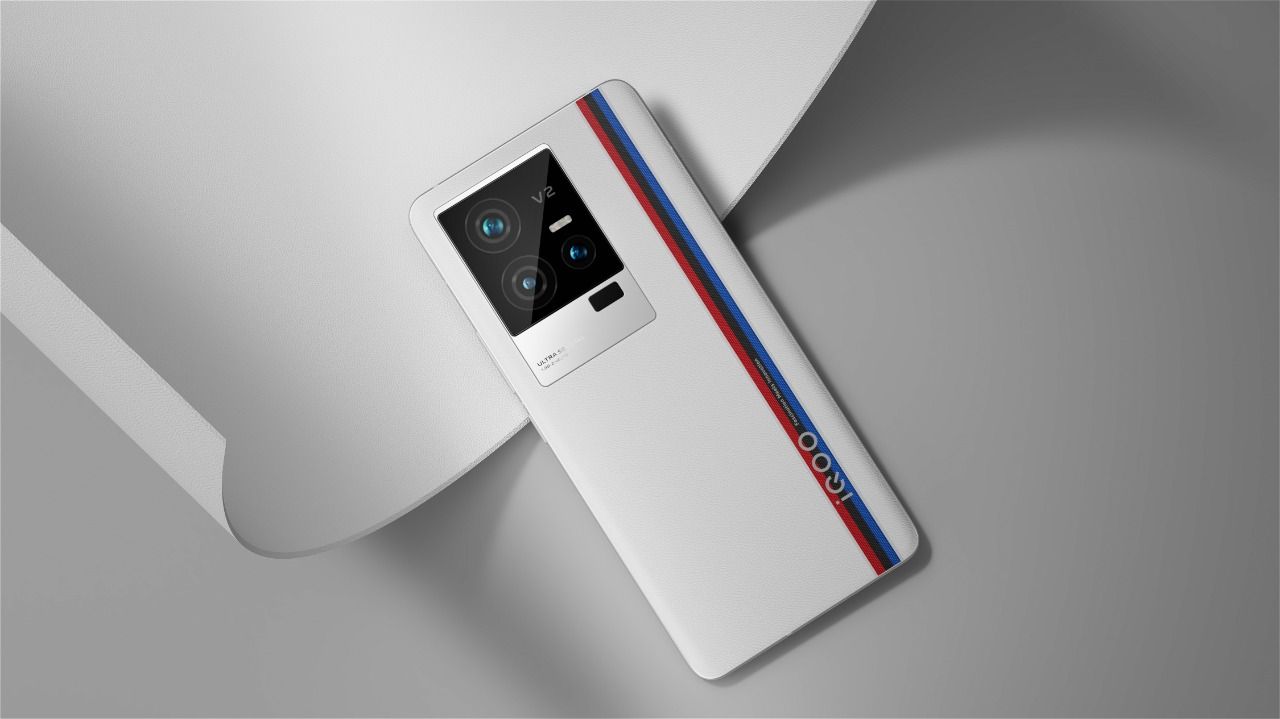
The iQOO Neo 7 and the iQOO 9T have original designs, with big camera modules and special color options. Among them, I personally prefer the iQOO 9T due to its rear cover made of two pieces of different colors, especially in the BMW M Motorsport-themed edition, also known as the Legend color option. It is also built with better materials, including glass for the back (the front glass is protected by Gorilla Glass 5) and aluminum for the frame. Further, the 9T adds something very interesting for gamers, which we will tell you about in the section of this comparison related to the display. Last but not least, this handset has the IP52 certification making it dust resistant and splash resistant, but note that it is not a waterproof phone.

Display

The iQOO Neo7 and the iQOO 9T have exactly the same display panel. It is an AMOLED display with a diagonal of 6.78 inches able to show up to one billion colors with a Full HD Plus resolution of 1080 x 2400 pixels, a 120 Hz refresh rate, and HDR10+ certification. It is protected by Gorilla Glass 5 and it includes an in-display fingerprint reader. Unlike the most advanced Vivo flagships, the in-display fingerprint reader in this case is optical and not ultrasonic. The iQOO 9T comes with an additional feature of the display: the Monster Touch. It is able to detect the pressure level of your finger in order to unlock more commands during gaming sessions. It is a very useful feature for pro gamers. Another important advantage of the 9T is the presence of stereo speakers, as the iQOO Neo 7 has just a mono speaker.

Specs & Software

The hardware department is the strongest point of these two phones. They are powered by the best processors by MediaTek and Qualcomm, respectively. The iQOO Neo7 sports the MediaTek Dimensity 9000+ platform built with a 4 nm production process and sporting an octa-core architecture which includes a Cortex X2 CPU running at 3.2 GHz, two Cortex A710 CPUs running at 2.85 GHz, and four Cortex A510 CPUs running at 1.8 GHz, as well as a Mali G710 MC10 GPU. The RAM goes up to 12 GB, while the internal storage goes up to 512 GB. The highest-end memory configuration of the iQOO 9T has 12 GB of RAM and 256 GB of internal storage, while the processor is the Snapdragon 8+ Gen 1 built at 4 nm and with a max frequency of 3.19 GHz. Note that the Neo 7 runs Android 13 out of the box, while the 9T is based on Android 12.

Camera

The iQOO 9T wins the camera comparison thanks to the presence of better secondary sensors: we got a 50 MP main camera with OIS, a 12 MP telephoto sensor with 2x optical zoom, and a 13 MP ultrawide shooter with a FOV of 120 degrees. The iQOO Neo7 has a triple rear camera including the same 50 MP main sensor, an 8 MP ultrawide camera, and a 2 MP macro shooter.

Battery

With the iQOO Neo7, you can get a bigger 5000 mAh battery providing a longer battery life. The blazing charging speeds are the same, thanks to 120W fast charging.

Price

The iQOO Neo7 starts from about $380 or €380 in China, while you need about $600/€600 to purchase the iQOO 9T in India. If we consider the overall specifications, the 9T wins the comparison thanks to better cameras.

Vivo iQOO Neo7 vs Vivo iQOO 9T: PRO and CONS

Vivo iQOO Neo7

PRO

  • Bigger battery
  • Android 13 out of the box
  • Up to 512 GB of storage
  • Bluetooth 5.3

CONS

  • Mono speaker

Vivo iQOO 9T

PRO

  • Superior cameras
  • IP52 certification
  • Monster Touch
  • Stereo speakers

CONS

  • Smaller battery

RELATED

Check the latest videos from our YouTube channel and subscribe:

* Please Note: When you buy something using the links in our articles, we may earn a small commission at no cost to you.

Nothing Ear (2) design revealed through leaked renders

Last year, the startup brand Nothing unveiled its first TWS earbuds, called Nothing Ear (1), which gained huge popularity among consumers due to their unique transparent design. The company is also gearing up to unveil affordable Ear (Stick) buds on October 26. Now, a new report has shared product images of Nothing’s next pair of earbuds, called Ear (2), hinting the new hearables might launch soon.

91Mobiles, in collaboration with Kuba Wojciechowski, has shared a few renders of the upcoming Nothing Ear (2), showcasing their design. We can see that both the earbuds and the charging case feature a transparent design, which is fairly similar to the previous gen Ear (1). There’s a plastic module in the case, which likely contains all the electronic elements and the battery. The only difference we detected is the “ear (2)” branding on the stem of the buds instead of the Nothing logo.

Nothing-Ear-2-Design-leak

Hardware details for the Nothing Ear (2) are still unknown. We should learn more details about them as the launch nears.

Nothing ear (1) specifications 

The Nothing Ear (1) debuted last year with an out-of-the-box design and decent features. It comes with 11.6mm dynamic drivers and supports AAC and SBC codecs. The TWS earbuds support ANC (active noise cancellation) and also sport a transparency mode that lets users hear their surroundings through their earbuds. They have touch controls on the stem, which can be used to control playback and toggle ANC and transparency modes.

Nothing Ear 1 offers up to 5.7 hours of battery life on a single charge and a total of 34 hours with the charging case. The case can be charged through USB Type C and Qi wireless chargers. The company recently increased the pricing of the Ear (1). It now retails at $149.

Related:

Samsung unveils a new 200-megapixel ISOCELL HPX sensor

Global tech giant Samsung has unveiled the ISOCELL HPX, a brand-new 200MP sensor. The new unveiling is coming on the heels of the announcement of the ISOCELL HP3 200MP sensor back in June. The ISOCELL HPX has a 0.56-micron pixel size that is capable of reducing the area of the camera module by 20%, resulting in a thinner and smaller smartphone body.

The ISOCELL HPX utilizes Samsung’s Advanced DTI (Deep Trench Isolation) technology, which not only isolates each pixel separately but also boosts sensitivity to take clear vivid pictures. The ISOCELL also has ultra-quick and ultra-precise autofocus thanks to the Super QPD autofocus solution.

Furthermore, the new sensor utilizes Tetra pixel (16 pixels in one) technology. This is capable of providing a positive shooting experience in low light. Under such conditions, the HPX can automatically switch between three different lighting modes based on the available light. Samsung says the pixel size is maintained at 0.56 microns (m) in a well-lit environment, yielding 200 million pixels. On the other hand, the pixel is converted to 1.12 microns (m) in a low-light environment, yielding 50 million pixels. Finally, in a low-light environment, 16 pixels are combined to yield a 2.24 micron (m) 12.5-million-pixel sensor.

According to Samsung, this dynamic performance will enable the ISOCELL HPX to produce sharp images as possible, even when the light source is limited.

In addition, the Samsung ISOCELL HPX sensor is capable of recording 8K video at 30 frames per second. It equally supports seamless dual HDR shooting in 4K and FHD modes. Staggered HDR, according to Samsung, captures shadows and bright lights in a scene at three different exposures: low, medium, and high depending on the shooting environment. After that, it will combine all three exposure photos to create the best possible HDR pictures and videos.

It also allows the sensor to render the image at over 4 trillion colors (14-bit color depth), which is 64 times more than Samsung’s predecessor’s 68 billion colors (12-bit color depth).

Samsung didn’t announce the availability details of the new imaging sensor. We expect to find out about that in the coming weeks.

Related:

(source)

MIJIA Front-loading Washing Machine 12kg with direct drive frequency conversion sterilization function launched

Xiaomi, Friday, announced a raft of smart home products under the super-cool MIJIA brand. The product list includes the MIJIA Vacuum cleaner 2, the MIJIA Cross-door refrigerator, MIJIA Desk Lamp Pro Reading and Writing version, and the MIJIA Graphene Baseboard Heater. The company has also launched the MIJIA Front-loading Washing Machine 12kg.

MIJIA Front-loader Washing Machine

The MIJIA Front-loading Washing Machine 12kg comes with a decent 12kg capacity that can easily meet the cleaning needs of a family of four or five. It can be used to wash up to five sets of four-piece bedsheets, five pairs of down jackets, 60 pairs of shirts or 20 pairs of jeans, among other use cases.

The product packs a direct drive (DD) variable frequency motor with a maximum torque that is 22% higher than that of the 10 kg model. The operating noise is also as low as 48 decibels.

Asides washing the clothes, the washing machine is designed to provide sterilization and mites removal functions from the fabrics. It boasts a 99.99% sterilization rate and 100% mites removal rate, according to Xiaomi. There are a number of wash options to choose from ranging from mixed wash, baby wash, underwear wash, denim wash, to large wash.

The MIJIA Washing Machine adopts a titanium gray color style. It packs an LED display with touch sensivitive screen for controlling the smart gadget. Unlike most washing machine, it is possible to add clothes while the washing operation is in progress without having to waait for long for the door to open.

The MIJIA Front-loader Washing Machine is priced at 1999 yuan ($275) in China but it is presently on pre-sale for 1,699 yuan ($264).

RELATED:

(source)