The gaming console market doesn’t have as many competitors as the smartphone market, with Nintendo, Microsoft, and Sony mostly dominating the segment. And now, a new report suggests that the Switch is by far one of the most popular consoles in the Japanese market.
According to a HKETreport, the Japanese game company and console maker sold a sizeable 495,000 units of its Switch models in Japan during the month of September 2022. This marked a significant 131 percent rise year on year. Furthermore, this is also marks the third consecutive month that Nintendo sold more than 300,000 units of its Switch console and marks the 55th consecutive months of dominating the Japanese game console.
To put things into perspective, the Sony PlayStation 5 series models saw a 17 percent fall in sales during the same period. The company only managed to see sales worth 64,000 units, and it appears, that the PS5 sales might have been affected by the recent price hikes. In Japan, Sony has raised the price of its PS5, with the optical drive version now costing 60,478 Yen while the digital version has a 49,478 Yen price tag.
On the other hand, both Nintendo and Microspft has stated that they have no plans on raising the prices of their own respective consoles. Interestingly, Switch sales in the third quarter of this year has risen by 36 percent year on year. Meanwhile, the Xbox Series X and Series X has also seen a massive 167 percent rise in sales year on year and even the PS5 saw an 18 percent overall rise year on year in the third quarter.
Inbase Urban FIT M has been announced in India. It is the latest smartwatch from the brand after the Urban Pro X and Urban Pro 2, which were unveiled in August. Some of the key features of the device include a bright display, an IP68-rated chassis, and a 15-day battery life.
Inbase Urban FIT M specifications and features
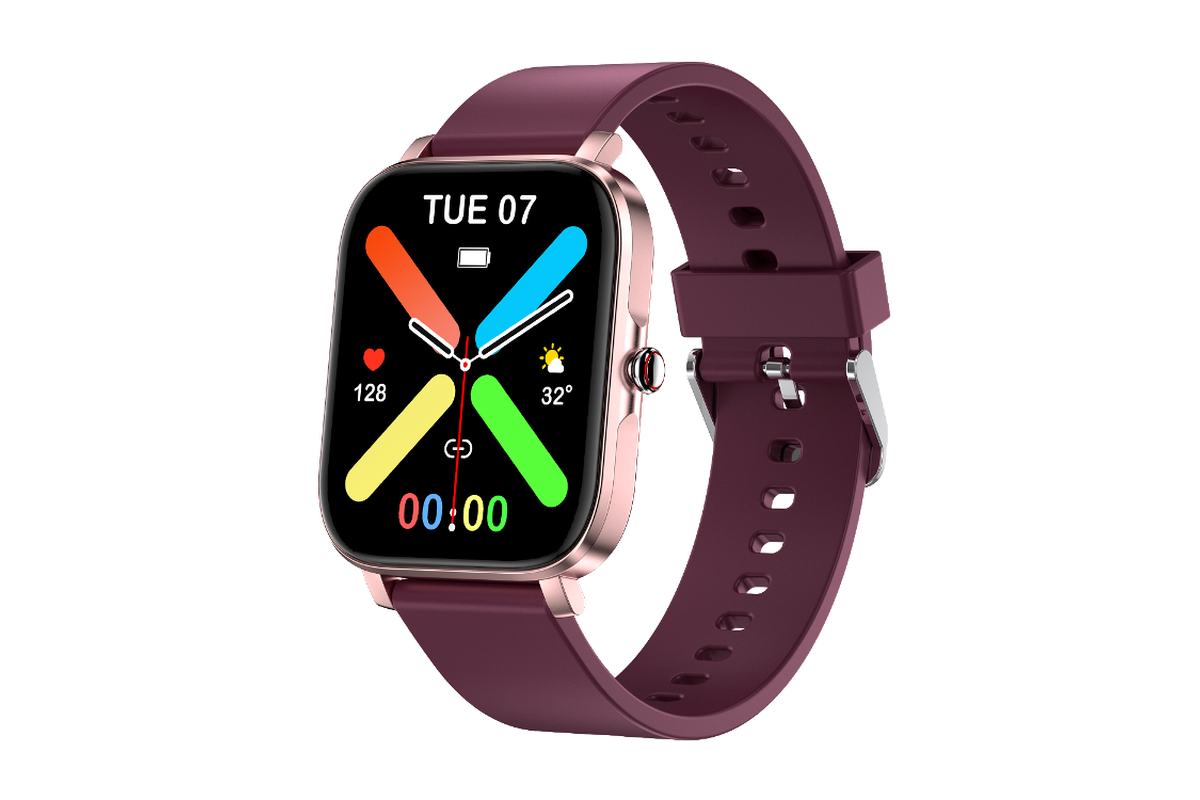
The Inbase Urban FIT M has an aluminium-PC build and a skin-friendly silicone strap. It is an IP68-rated device, meaning it is a waterproof and dust-resistant device. The smartwatch features a 1.7-inch display that offers an HD resolution of 240 x 280 pixels and 500+ nits of brightness.
Inbase Urban FIT M
The smartwatch offers two kinds of menu styles and multiple watch faces to choose from. It has two built-in games, such as 2048 and Young Bird. The company claims that the smartwatch is equipped with an advanced chipset that offers a smoother experience.
The Urban FIT M supports 60+ sports modes. It includes the Urban Health Suite, which monitors health and fitness 24 hours a day, seven days a week. The watch comes with support for Bluetooth 5.0 connectivity. It houses a 250mAh battery that can last for up to 15 days on a single charge. It promises a standby time of up to 30 days. Other features that are available on the Fit M include weather forecasts, camera controls, calculator, and more.
Inbase Urban FIT M price and availability
The Urban Fit M is listed on Inbase’s online store for Rs 1,799 (~$22). It can be also purchased through Flipkart, Amazon, and other leading online and offline stores across the country. It comes with a 1-year warranty. Buyers can choose from color options like black, blue, golden, grey, and rose gold.
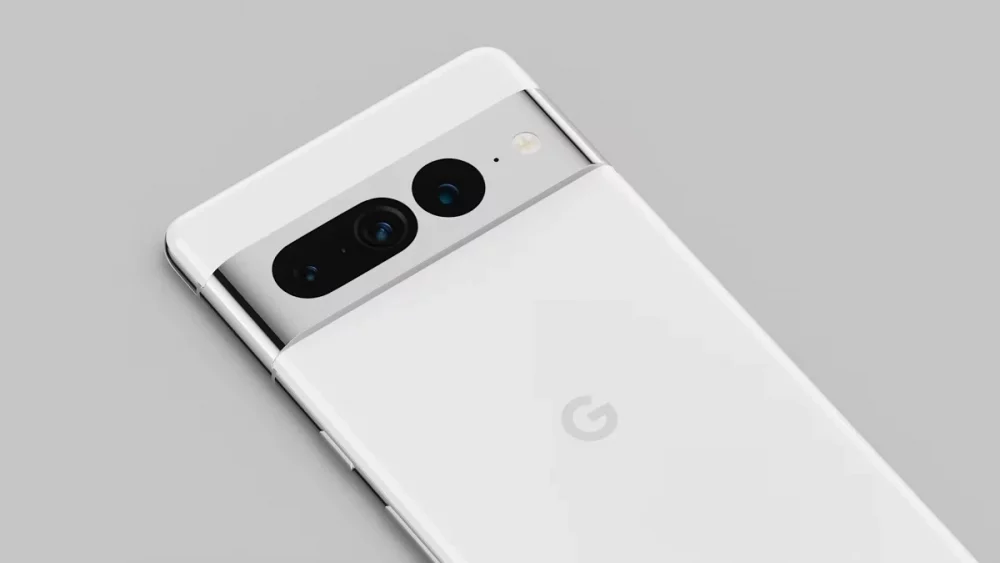
Google is gearing up to launch the Pixel 7 series of smartphones in a few hours. The company will debut two devices today – the Pixel 7 and the Pixel 7 Pro. Ahead of the launch, the pricing of both the Pixel 7 and Pixel 7 Pro base variants has already leaked for the US and European regions.
Hours ahead of the launch, tipster SnoopyTech has revealed the Pixel 7 Pro 256GB model’s European pricing. According to the tipster, the device will come with a price of €999. The report also mentions that the 128GB model of the Pixel 7 Pro will come for €899 and the Pixel 7 base model will retail for €649.
Additionally, SnoopyTech also reveals that the Pixel Watch will retail for €379 and the Pixel Watch LTE version will retail for €429.
Google Pixel 7 series specs
The Pixel 7 Pro will have a 6.7-inch QHD+ LTPO display with a refresh rate of 120Hz. The standard model, on the other hand, will have a 6.3-inch Full HD+ screen with a refresh rate of 90Hz.
On the back of the standard model will be a dual-camera system. The Pixel 7 series will include a 50MP primary camera and a 12MP ultrawide camera. The 7 Pro will get a 48MP telephoto camera with up to 5x optical zoom. The Pro model will include features such as movie motion blur, true tone, and up to 30x zoom compatibility. The basic model will not support macro focus, and its high-resolution zoom will be limited to an 8x magnification. A 10.8MP front camera with 4K video recording will be available for selfies.
The phones will be powered by a Tensor G2 SoC. There will also be a Titan M2 security chip and an in-display fingerprint scanner. Both phones will have storage capacities of 128GB or 256GB. The Pixel 7 will have 8GB of RAM as standard, while the Pixel 7 Pro will have 12GB of RAM as standard.
According to leaks, the Pixel 7 will have a 4700mAh battery, while the 7 Pro will have a 5000mAh battery. Both phones will support 30W wired fast charging and wireless charging. Google is unlikely to include a charger in the box. Finally, both devices will be IP68 certified.
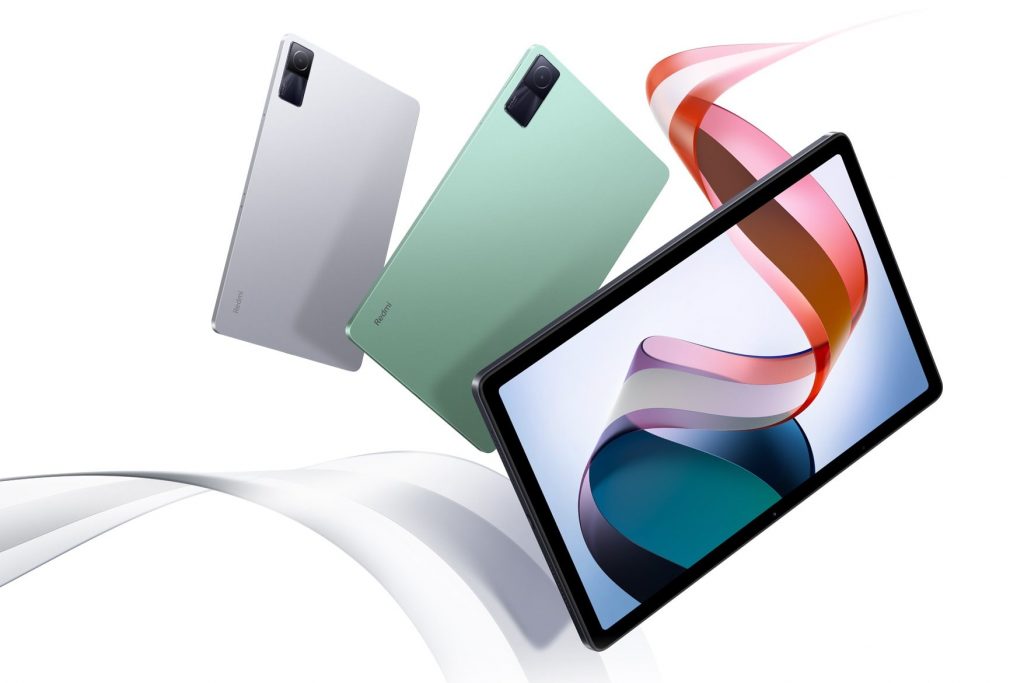
High refresh rate screens are usually limited to premium tablets. But Xiaomi is offering this feature on its affordable Redmi Pad.
The device is built around a 10.61-inch display with a resolution of 2000 x 1200 pixels (WUXGA+) and up to a 90Hz refresh rate. The 10-bit panel has 220 PPI and supports up to 400 nits peak brightness level.
The tablet is certified by TÜV Rheinland-certified for low blue light emission. It is also the world’s first table to arrive with SGS low visual fatigue certification.
2. Customized Software
Most Android tablets on the market run close to stock Android with minimal features. Whereas, the Redmi Pad ships with MIUI for Pad, the same software that is found on the Xiaomi Pad 5.
As the name suggests, the MIUI for Pad is a customized version of Xiaomi’s Android skin designed for tablets. It packs useful features like split-screen, floating windows, multi windows, and a dock.
Almost all the first-party applications are optimized for tablets. Hence, they simply don’t run as a large version of a smartphone app.
The cherry on top is that Xiaomi is promising 2 Android and MIUI updates each, as well as 3 years of security updates.
3. Capable Chipset
Budget tablets generally house entry-level chipsets. However, the Redmi Pad is powered by MediaTek Helio G99 SoC, a chip that is found inside smartphones in this price segment. Hence, the device is as powerful as a regular smartphone in this range.
The device also comes with up to 6GB LPDDR4x RAM and 128GB UFS 2.2 storage. It also has support for MicroSD card expansion (up to 1TB).
4. Bonus: The Pricing!!
What makes the Redmi Pad an obvious choice for most people is its sweet pricing. The tablet starts at around €279 in Europe.
In India, the tablet is even cheaper as it starts at only ₹14,999. Additionally, for a limited time, the company has discounted the product by up to ₹3,000. It is even offering extra bank discounts.
As of now, the Redmi Pad is yet to go official in China. When it does, we expect it to be even more affordable there.
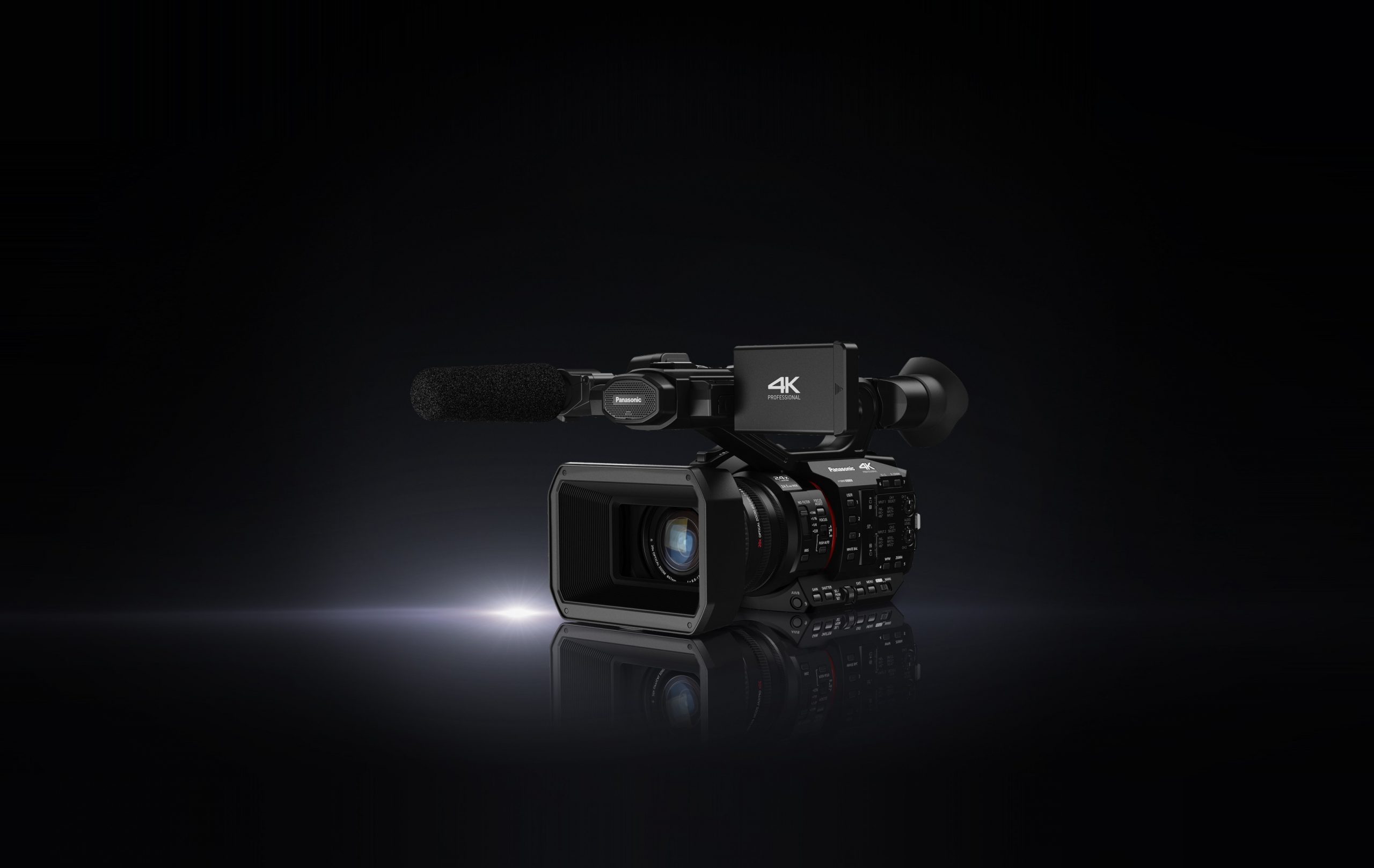
Panasonic has just launched two new professional camcorders in the Indian market earlier today (6th October 2022). The new camcorders include the new HC-X2 and the HC-X20, which is built for the growing community of professional videographers in India.
The two new professional camcorders with 20x optical zoom, 24.5mm wide angle for both UHD and FHD, along with 4K high precision AF with new face detection, and even higher precision with a 1.0 Type (1 inch) sensor. Furthermore, the company has also offered enhanced video performance and expandability as well. Notably, the new camcorders also support Super Slow motion with 100fps to 120fps and even Variable Frame Rate from 2fps to 60fps.
The HC-X2 and HC-X20 professional camcorders have been built with an LCD monitor and EVF, Triple Manual Rings, 2 Channel XLR audio input terminals, ND filter, dual SD card slots, unlimited time shooting, built in WiFi, and more. These models have also been built with wireless connectivity support. Between the two, the HC-X2 is the higher end model that offers HLG (Hybrid Log Gamma) and 13 stop V log recording for creating 4K HDR content.
This model is priced at 2,69,990 INR for the Indian market, while the HC-X20 is the more affordable variant with 2,29,990 INR. The device is currently available across all Panasonic brand shops in the region. According to Hardeep Sarna, Business Chief, Imaging Business Group, Panasonic Life Solutions India, “These easy to use and balance camcorders are ideal for film making, wedding and event coverage, news organizations, for live streaming purposes as it is loaded with rich features and superior performance that is demanded by professionals today.”
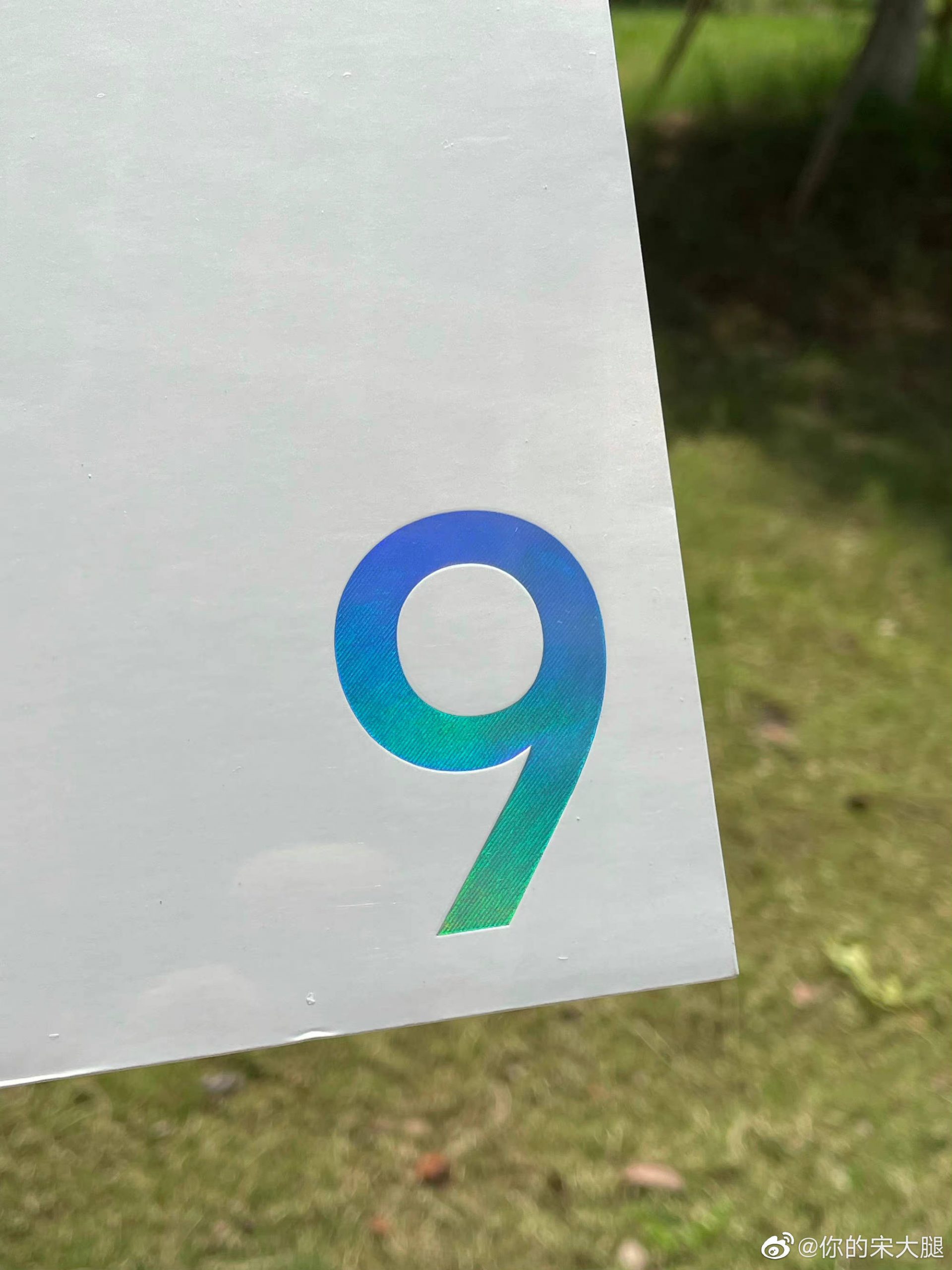
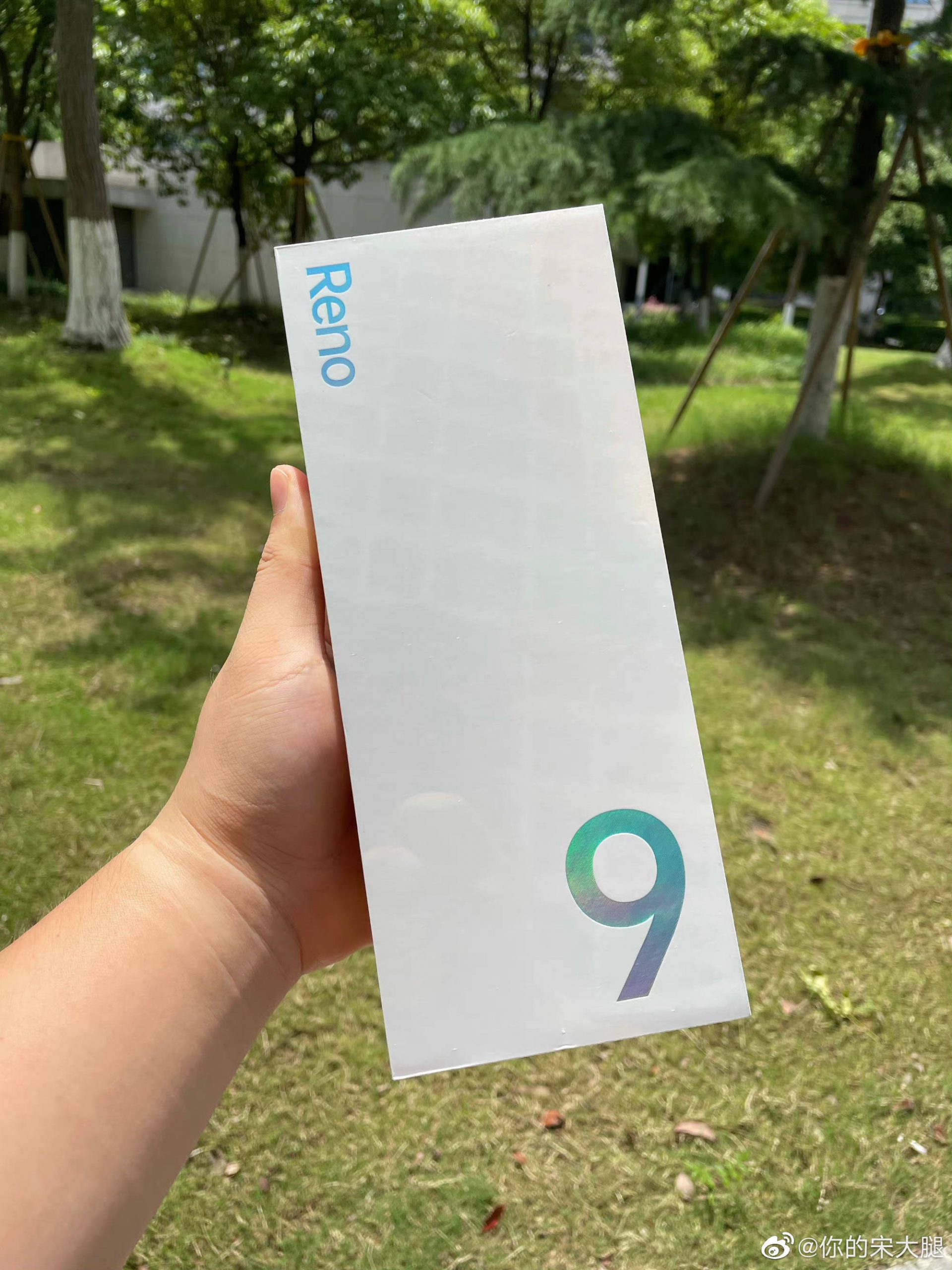
The OPPO Reno 9 series is in the works. Reliable tipster Digital Chat Station recently revealed the chipset of what appears to be the Reno 9 Pro. Now, he is back with new information on the cameras of the Reno 9 family. In addition, another source has shared the images of the Reno 9’s retail box.
DCS has not revealed the number of devices that will be present in the Reno 9 family. However, it appears that it will consist of three models: the Reno 9, the Reno 9 Pro, and the Reno 9 Pro Plus.
The Reno 9 Pro seems to be equipped with the Snapdragon 778G. Its predecessor, the Reno 8 Pro, featured the latest Snapdragon 7 Gen 1 chipset. It appears that the company has reportedly decided to go with the older SD778G chip for the Reno 9 Pro. Today, the tipster revealed that the device will be equipped with a 64-megapixel main camera.
1 of 2
OPPO Reno 9 box
OPPO Reno 9 box
He further revealed that the top variant in the Reno 9 series will be powered by the MediaTek MT6895 chip, which is the Dimensity 8100 chipset. He added that the device will feature a 50-megapixel Sony IMX766 primary camera. This model is likely to arrive in the Chinese market with the Reno 9 Pro+ moniker.
Speculations are rife that the Reno 9 series will pack a 4,500mAh battery. The Reno 9 family is expected to come in a new red variant. The other details of the series are yet to surface. There are some rumors that the Reno 9 lineup will go official as early as November. OPPO is rumored to launch its Find N2 foldable phone and a clamshell phone in December. Hence, it is likely to Reno 9 series may break cover around a month before it.
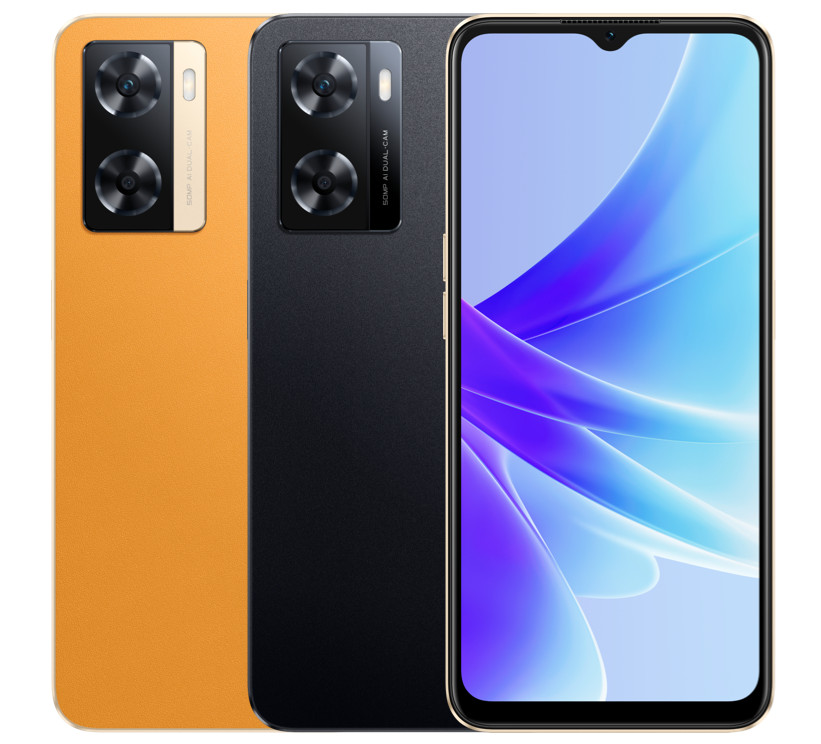
OPPO A77s has launched in India today. It is an upgraded variant of the OPPO A77 that debuted in the country last month. The latest offering retains the same design as the regular model but packs significant hardware upgrades. The OPPO A77s falls under the Rs 18,000 price bracket. Read on to know what the smartphone offers out of the box.
The OPPO A77s features a 6.56-inch IPS LCD display bearing an HD+ resolution, a 90Hz refresh rate, and 600 nits peak brightness. There is a waterdrop notch and a side-mounted fingerprint scanner. The smartphone flaunts a fibreglass leather back panel that houses a rectangular camera module.
On the imaging front, the OPPO A77s comes with a dual rear camera setup of a 50MP main sensor paired with a 2MP mono lens. There is an 8MP front-facing camera for selfies.
Under the hood, the OPPO A77s is equipped with a Snapdragon 680 processor. It packs 8GB RAM and 128GB onboard storage expandable via a microSD card slot. There is also 5GB of virtual RAM support. The smartphone draws its power from a 5,000mAh battery unit with support for 33W fast charging. Software-wise, the device runs on ColorOS 12.1-based Android 12 OS.
Connectivity options on the OPPO A77s include dual SIM support, VoLTE, Wi-Fi, Bluetooth 5.1, GPS, a USB Type-C port, dual stereo speakers with Dirac’s audio optimisation, and a 3.5mm headphone jack.
The OPPO A77s carries a price tag Rs 17,999 for the sole 8GB + 128GB variant. It is offered in Sunset Orange and Starry Black colours and can be purchased starting October 7th. Buyers can get the A77s with up to 10 percent cashback from leading banks through online and offline channels.
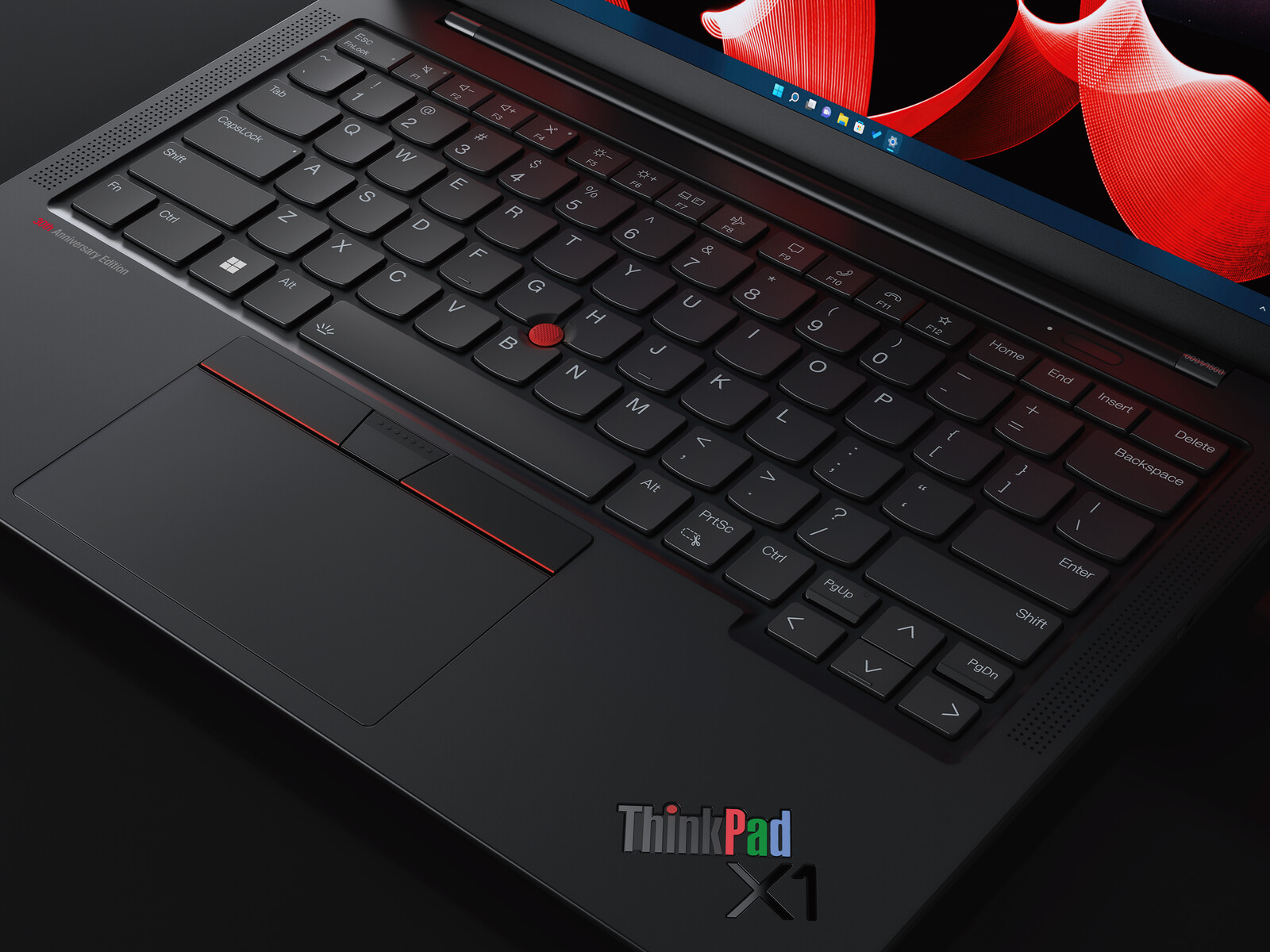
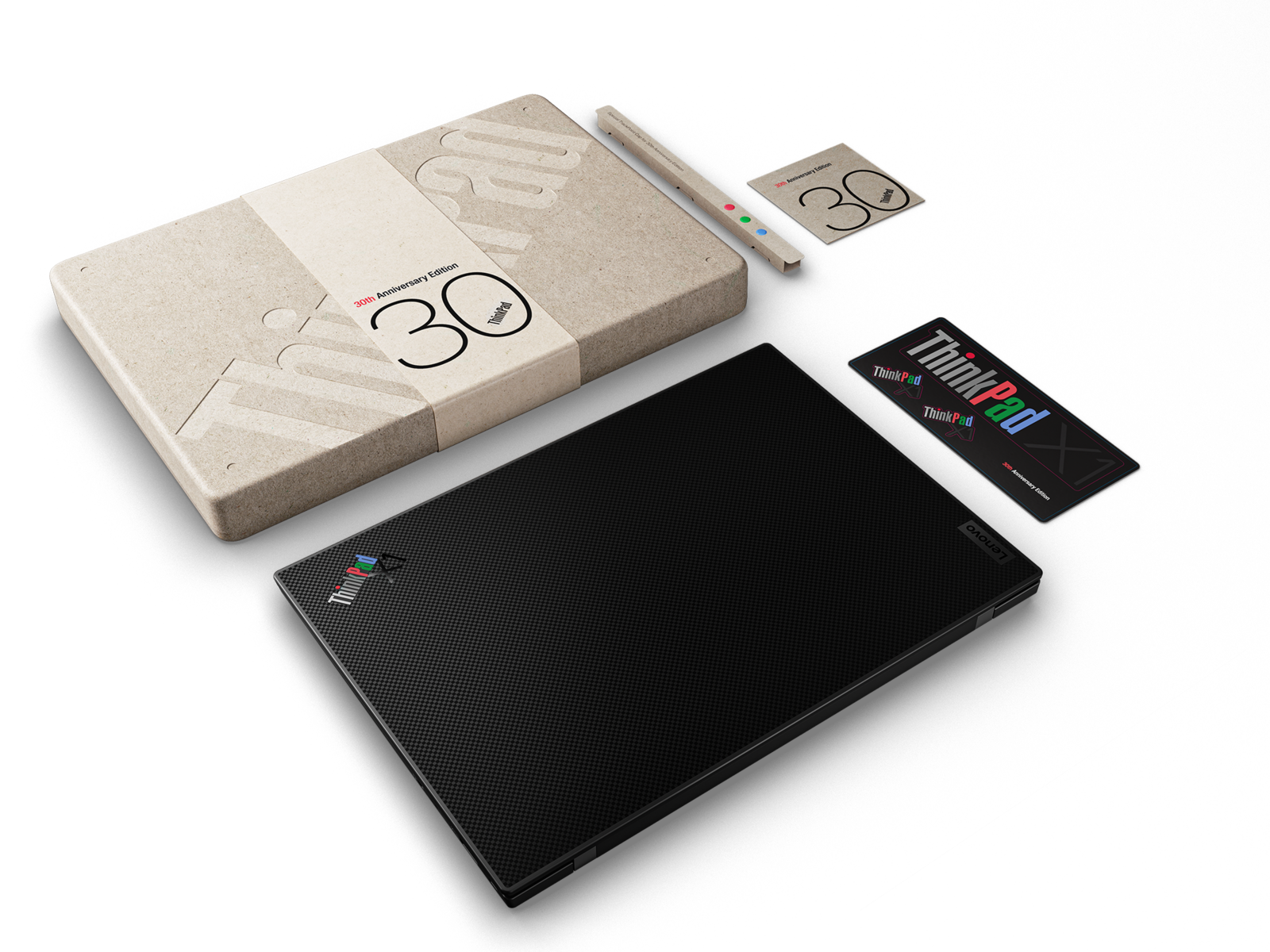
Around 30 years ago, IBM had introduced the new PC brand called ThinkPad during the COMDEX event. And now, Lenovo is celebrating the 30th anniversary with the ThinkPad X1 Carbon 30th Anniversary Edition, which arrives in special packaging.
For those unaware, the ThinkPad brand has been owned by Lenovo since 2005 and is now one of the most recognizable laptop brand in the market. The series is iconic owing to its classic black design and red TrackPoint. The company has also introduced a new special anniversary model since the 10th, and this year, we have the ThinkPad X1 Carbon Gen 10. Although, the brand is only selling a limited number of units for this model across the globe.
Out of this figure, 1000 units are reserved for the Japanese market, while the rest 5000 are available for the rest of the world. Prospective buyers in the US can find this laptop in two variants, namely the model using Intel Core i7-1260P and the top end Core i7-1270P. Users will also be offered up to 32GB of RAM and up to 1TB of SSD storage.
The new Lenovo ThinkPad X1 Carbon Gen 10 30th Anniversary Edition is already available on the company’s official website, with a rough starting price tag of around 3,440 US Dollars. The more powerful configuration can cost up to 4,170 US Dollars. Although, these prices may vary based on the discount option that is offered on the website.
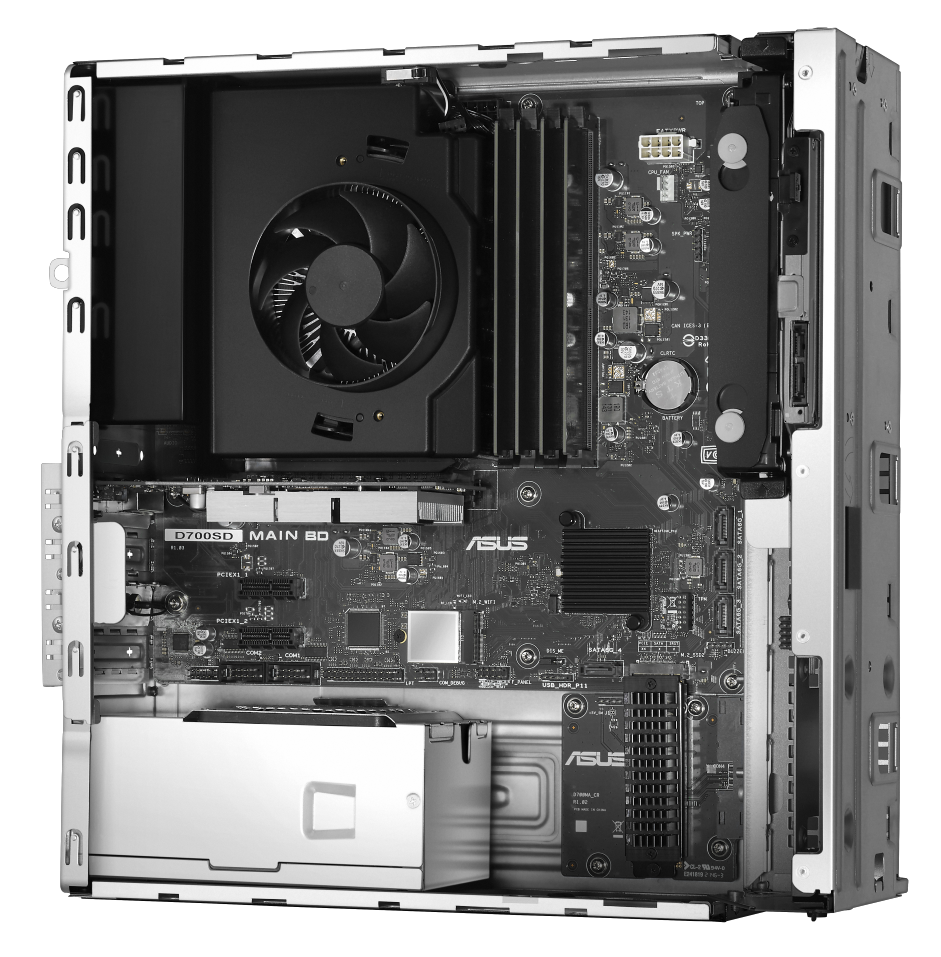
A new small form factor (SFF) PC from Asus has been introduced, targeted at companies in the industrial, retail, and financial sectors. The chassis of this SFF, known as the ExpertCenter D7 (D700SD), was created using the MIL-STD-810H compliant Steel Electrodeposition Cold Common (SECC) method.
The ExpertCenter D7, according to Asus, is constructed with longevity in mind using specially engineered Asus B660 motherboards that utilize 100% solid-state capacitors. The PC has a tool-free design for simple upkeep and upgrades.
Customers can choose from a range of Intel Alder Lake processor options for the Asus ExpertCenter D7, starting with the Celeron G900 and going all the way up to the Core i7-12700. Up to 128 GB of dual-channel DDR4-3200 RAM is available as memory.
While Alder Lake CPUs come with an integrated UHD Graphics 770, the SFF PC may also be outfitted with a variety of dedicated GPU choices. The Nvidia GeForce GT 730, GeForce GT 1030, or the Nvidia T600 can all be used with the Asus ExpertCenter D7. On the T600, up to four displays can be connected via mini DisplayPorts.
To support diverse industrial applications, a total of 11 USB ports are provided, along with a smart card reader, an optional SD card reader, an optional parallel port, and an optional serial port. Additionally, the PC has an optical drive. To meet EPEAT Silver rating requirements, an 80 PLUS Platinum or 80 PLUS Bronze PSU is offered.
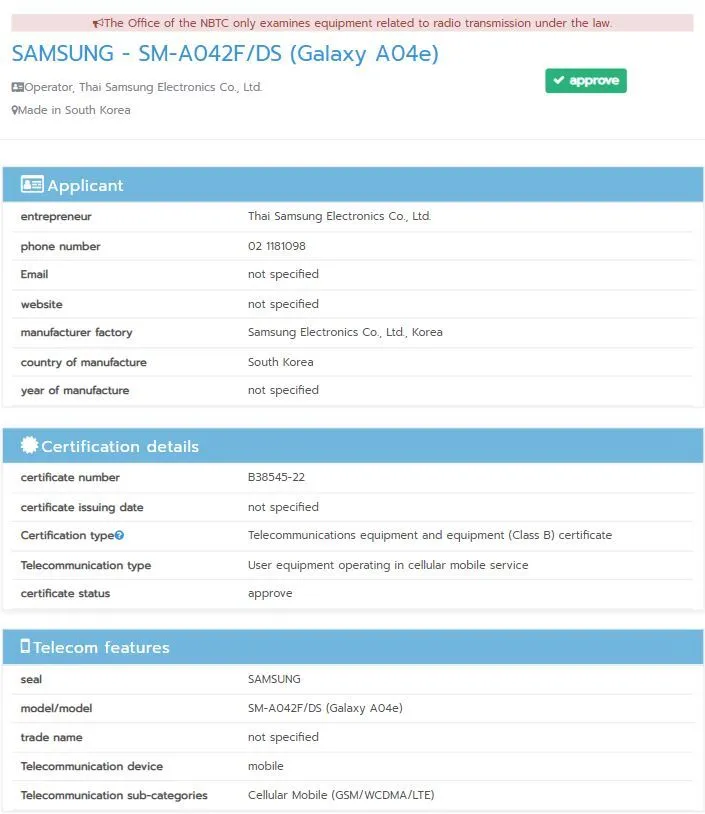
Now, another device in the lineup called the Galaxy A04e has been listed on NBTC and Indonesia Telecom certification databases, revealing some details about the smartphone.
Samsung Galaxy A04e certifications
1 of 2
Samsung Galaxy A04e NBTC
Samsung Galaxy A04e certifications
Samsung Galaxy A04e Indonesia telecom
The Galaxy A04 is listed as SM-A042FS/DS on the NBTC website. The phone’s name is also confirmed as Galaxy A04e in the listing. The DS in the model number represents Dual SIM capabilities, which will vary by region, as seen with previous Galaxy smartphones. According to the NBTC website, the device will support GSM, WCDMA, and LTE. There will be no 5G support because this is a low-cost device.
Furthermore, the Samsung Galaxy A04e with the model number SM-A042F has been listed on the Indonesia Telecom website. It has a slight difference in the model number. However, the Indonesia Telecom website confirms that this is indeed the Galaxy A04e. Aside from this information, no other specifications of the smartphone have been revealed.
Earlier, the Samsung Galaxy A04e was spotted on Geekbench with the SM-A042F model number. However, it was presumed to be the Galaxy A04 Core. Now that it’s clear this is not the case, we can expect the Galaxy A04e will come with a MediaTek Helio G35 SoC accompanied by a PowerVR Rogue GE8320 GPU. It will have at least 3GB of RAM and will boot Android 12 out of the box.
Spotify, one of the leading music streaming platforms, has been trying to establish itself as a leading platform for podcasts as well, and for that, the company has spent hundreds of millions of dollars so far.
In the latest development, Spotify has announced that the company is acquiring Kinzen, a Dublin-based start-up that offers content moderation service, for an undisclosed amount. The entire team of Kinzen, including its leadership, will now join Spotify.
Spotify has been working in partnership with Kinzen since 2020, and now the start-up has been acquired by the music streaming platform. The technology will be used to better moderate podcasts and other audio using machine learning as well as human expertise.
Kinzen was founded in 2017 by Áine Kerr, Mark Little, and Paul Watson with a mission to focus on protecting public conversations from dangerous misinformation and harmful content. It offers tools that help platforms plan ahead by getting early warnings about evolving narratives and trends that could become misinformation risks.
The analysis includes a broad range of areas, like medical misinformation, antisemitism, hateful content, climate misinformation, violent extremism, and other dangerous misinformation across multiple markets and languages.
Spotify also adds that Kinzen is especially valuable because of its capability to analyze content in hundreds of languages and dialects, which will help the company detect emerging threats across markets.
It appears that the acquisition is a part of the company’s efforts to deal with harmful content on its service after it faced backlash earlier this year over “The Joe Rogan Experience,” where he was accused of spreading misinformation about COVID-19.
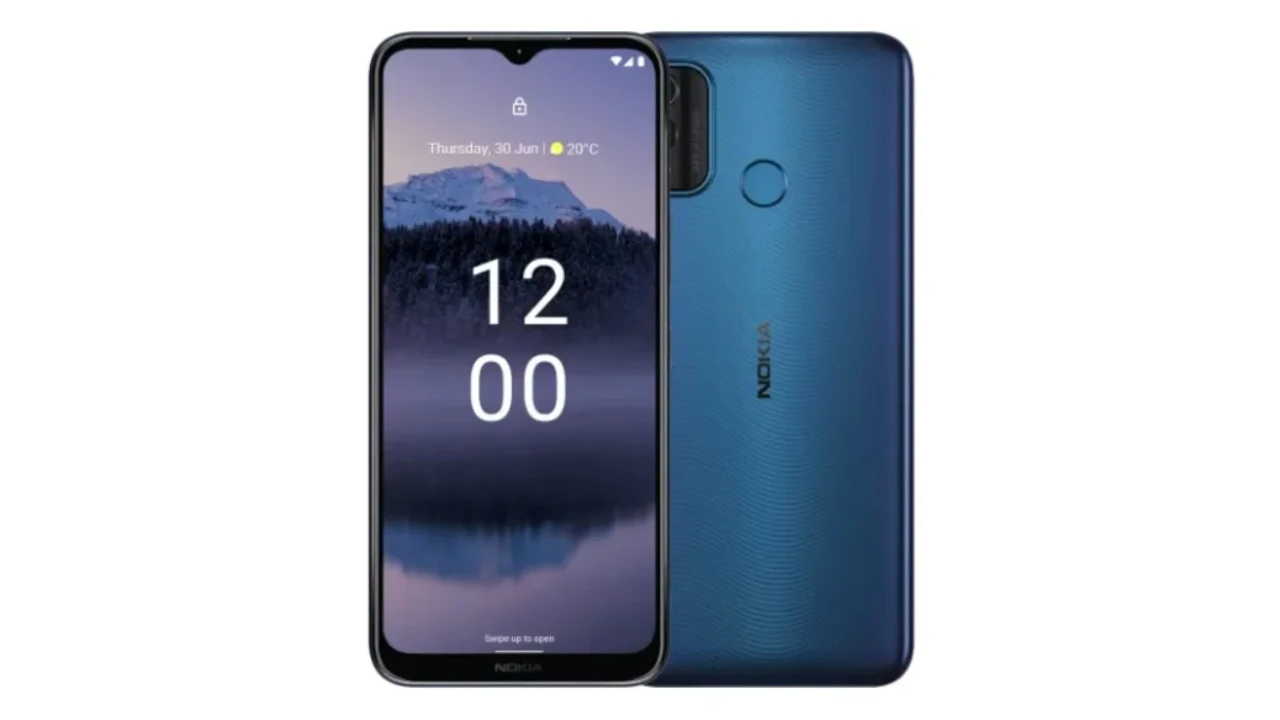
A few months ago, HMD Global launched the budget-oriented Nokia G11 Plus in multiple global markets. Now, the brand has teased the device for the Indian market without specifying a launch date.
The company posted the teaser on its official Instagram account with the tagline “Say no to pop-ups”. The brand further elaborated in the caption, indicating that their device won’t come with any bloatware, ads, etc., which are usually seen on budget-range smartphones. This could be a plus point for the brand if it manages to deliver a clean software experience at this price range. Let’s take a look at the hardware of the smartphone.
Nokia G11 Plus specs
As the device is already available in other markets, we know about all of its specifications. It features a 90Hz refresh rate LCD display that measures 6.5 inches and has an HD+ resolution. The display panel has a waterdrop notch and a touch sampling rate of 180Hz.
The Nokia G11 Plus is powered by an octa-core UniSoC T606 processor with a Mali G57 GPU. It has 4GB of LPDDR4X RAM and 64GB of onboard storage. The device runs stock Android 12 and will receive two Android updates in the future, Android 13 and Android 14.
The Nokia G11 Plus features a dual-rear camera setup with a 50MP primary shooter and a 2MP secondary shooter. It has an 8MP selfie camera on the front. The smartphone is powered by a 5000mAh battery and charges via a Type-C port. It has an 18W fast charging capability. Other features include a side-mounted fingerprint scanner, a 3.5mm audio jack, and OZO audio support.
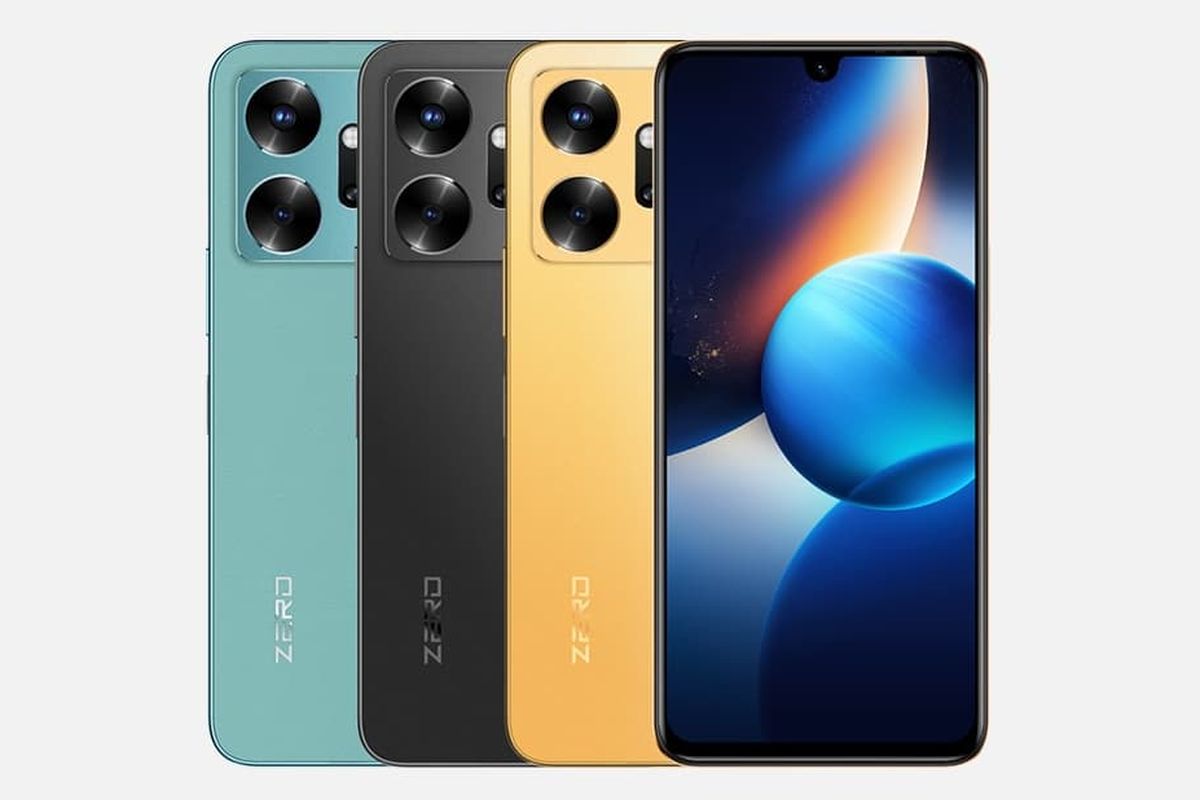
Infinix has just launched the Infinix Zero Ultra 5G as its most advanced phone with features like a 120Hz curved AMOLED display, Dimensity 920 chipset, 180W charging, and an OIS-enabled 200-megapixel camera. It carries a price tag of $520. At the same time, the company has also confirmed the price of the Infinix Zero 20.
Infinix Zero 20 price
The Infinix Zero 20, which comes in 8 GB RAM + 256 GB storage configuration only, is priced between $260 and $300 in the Saharan African market. It comes in Gold and Grey colors.
Infinix Zero 20 specifications and features
Infinix Zero 20
The Infinix Zero 20 features a 60-megapixel selfie camera, which supports OIS and autofocus. It can record 30fps 1440p videos. The selfie snapper is housed inside a punch-hoe of the Zero 20’s 6.7-inch AMOLED display. The screen, which has curved edges, supports an FHD+ resolution and a 90Hz refresh rate. The handset runs on Android 12 OS with XOS 12 on top.
The Zero 20 is a 4G LTE phone powered by the Helio G99 chipset. The device is equipped with 8 GB of RAM and 128 GB / 256 GB of storage. It has a 4,500mAh battery that supports 45W fast charging.
The back panel of the device has a 108-megapixel main camera, a 13-megapixel ultra-wide lens, and a 2-megapixel depth sensor. It offers features like dual SIM support, 4G VoLTE, dual-band Wi-Fi, GPS, a USB-C port, a 3.5mm audio jack, and a fingerprint scanner.
The Infinix Zero 20 is being rolled out in broader markets. India is one of the markets that will be receiving the device.
The Google Pixel 7 series is scheduled to be unveiled in a few hours at the “Made by Google” event (here’s how to watch it live). The event will also see the launch of two smartphones in the Pixel lineup, namely the Pixel 7 and Pixel 7 Pro.
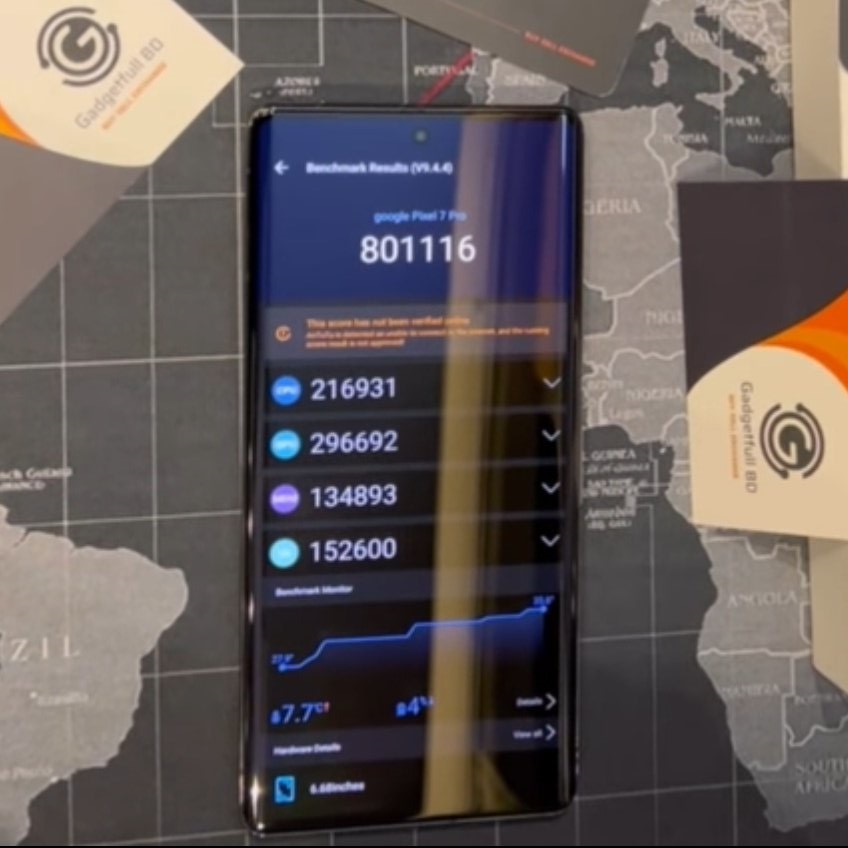
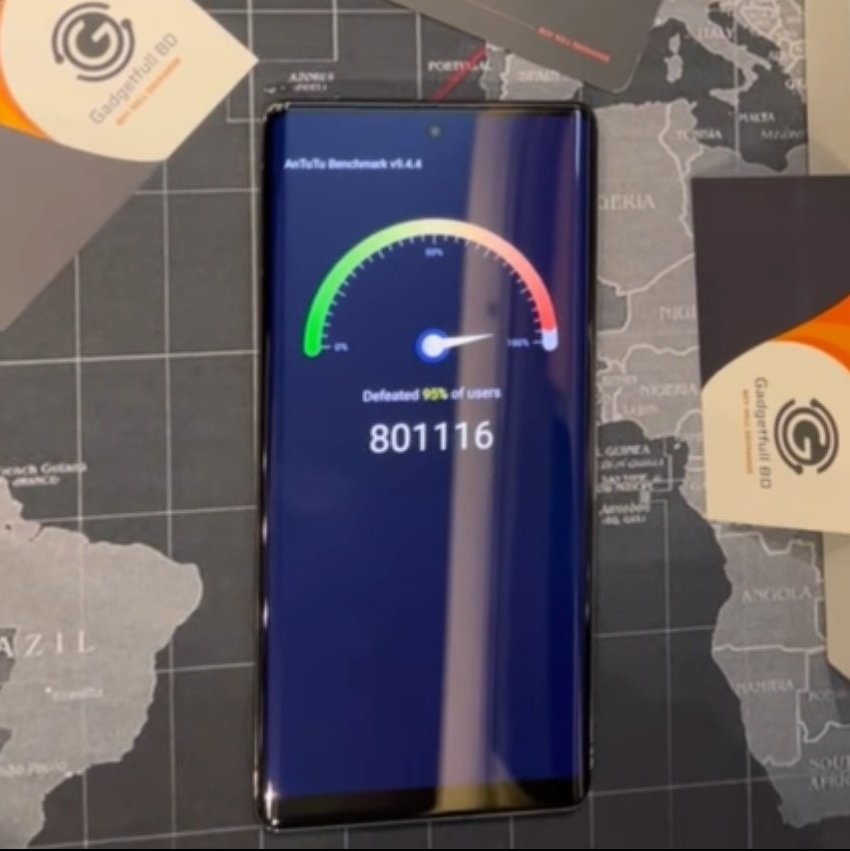
Both of these devices have already appeared on Geekbench, giving us an idea of their performance. Now, a new leak has surfaced that shows the Pixel 7 Pro device running the AnTuTu benchmark.
Google Pixel 7 Pro AnTuTu
1 of 2
The Pixel 7 Pro, powered by the new Tensor G2 chipset, managed to score 801116 points in the Antutu benchmark. This is quite a lackluster performance and doesn’t come anywhere near the performance of recent flagships with the latest chipsets like the Snapdragon 8+ Gen 1 and the Dimensity 9000. The score is more on par with the Snapdragon 888/888+ chipsets.
Compared to the Pixel 6 Pro, the upcoming flagship scores around 85,000 points higher, which could be seen as a decent generational leap. We already expected the device to not break any records in benchmarks. As we have reported earlier, the main improvements coming to the new chipset will be in the form of improvements to ISP (image signal processing) and the performance of the SoC’s machine-learning and AI abilities. The GPU is also expected to have a significant jump in performance. However, independent testing would be required to get an idea of the real-world performance.
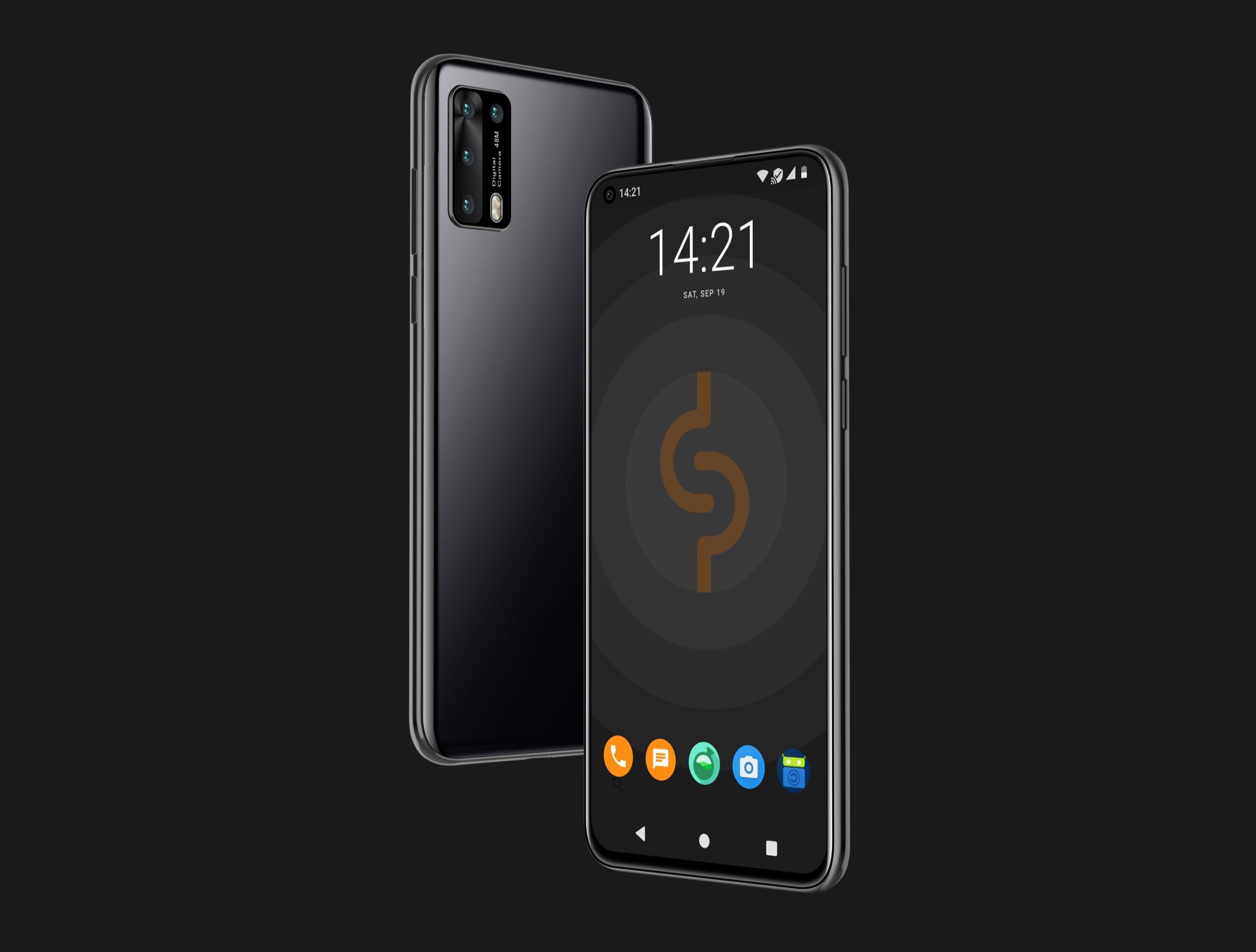
A fairly ordinary-looking smartphone called the Simple Phone has been unveiled by Simple Mobile Tools. The Simple Phone features basic hardware similar to many mid-range smartphones on the market. In particular, the gadget has a MediaTek Helio P60 chipset, which is currently four years old.
Along with a 1080p IPS display, Simple Mobile Tools has also included 4 GB of RAM, 128 GB of storage, a 4,500 mAh battery, and other features on the Simple Phone. Surprisingly, the company has chosen to use three rear-facing cameras with 48 MP, 8 MP, and 5 MP sensors, in addition to a 25 MP front-facing camera. The 8 MP and 5 MP sensors’ purposes have not been officially confirmed by the company, which is unfortunate. They could be ultra-wide-angle and macro cameras.
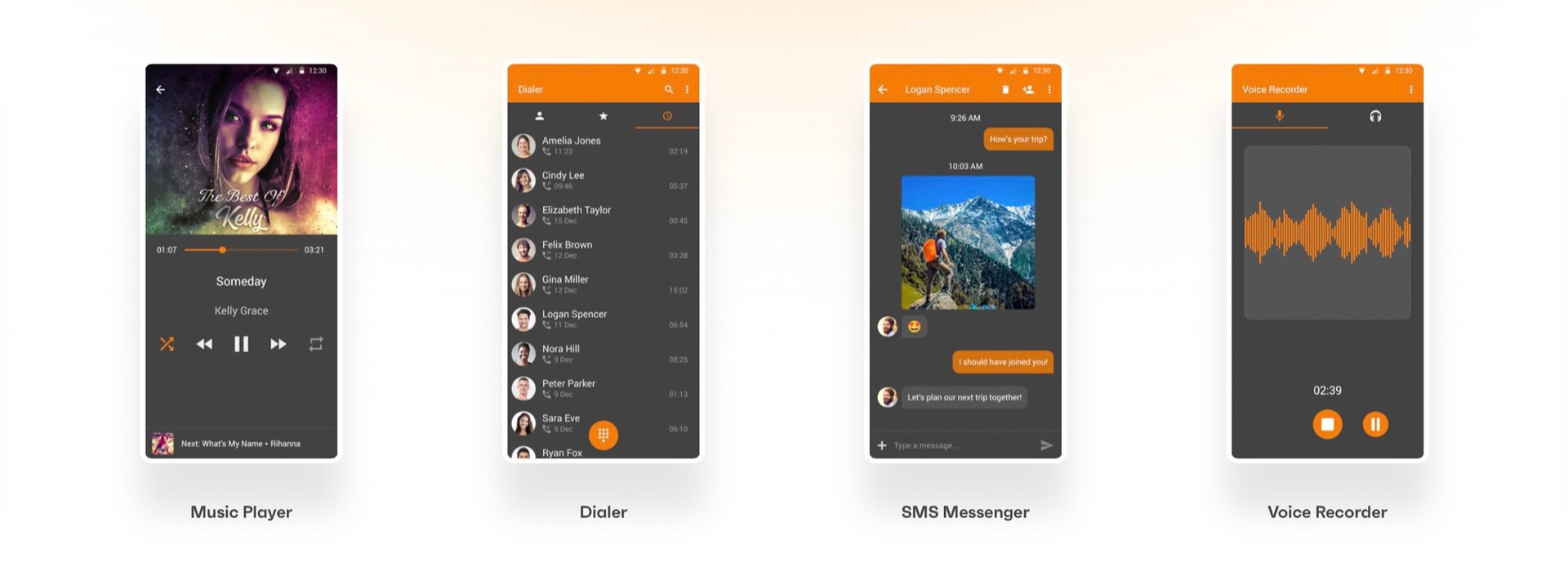
The most interesting aspect of the smartphone is that it operates on SimpleOS. This operating system is based on Android 11 via the Lunar Open Mobile Platform and lacks any Google services, whether that be Google Mobile Services (GMS) or the Google Play Store. Instead, Simple Mobile comes bundled with an F-Droid device. For those unaware, F-Droid is an app store and software repository for Android, serving a similar function to the Google Play store. The main repository, hosted by the project, contains only free and open-source apps.
The Simple Phone is currently available for purchase on the company website for €399. According to reports, Simple Mobile Tools will include three years of software updates and a two-year warranty with all orders. On November 1, 2022, the Simple Phone will start to be delivered.
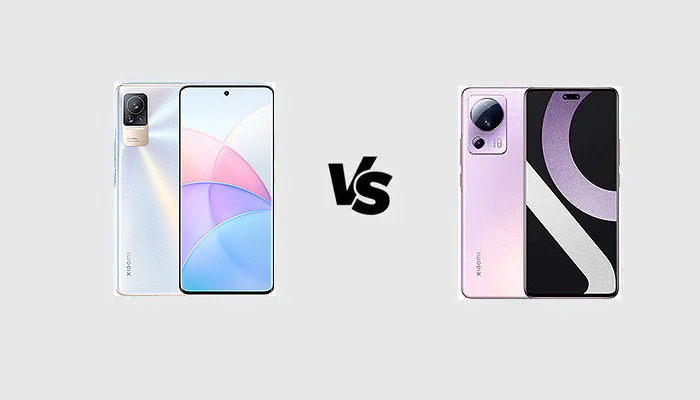
Last year, Xiaomi replaced the CC series with the new Civi series: a lineup of devices focused on design and selfie cameras. This year we saw two new handsets from this series, with the latest released just a few days ago, at the end of last month: we are talking about the Xiaomi Civi 2. Before this device, earlier this year, the Chinese giant came up with the Xiaomi Civi 1S, an upgrade of the first phone from the series released in 2021. The latest two devices from the series share several things in common and a lot of people are wondering whether it is better to purchase the older one in order to save some money or spend more on the latest device. We will try to let you find out through this comparison between the specifications of the Xiaomi Civi 1S and the Xiaomi Civi 2.
Xiaomi Civi 1S vs Xiaomi Civi 2
Xiaomi Civi 1S
Xiaomi Civi 2
DIMENSIONS AND WEIGHT
158.3 x 71.5 x 7 mm,
166 g
159.2 x 72.7 x 7.2 mm,
172 g
DISPLAY
6.55 inches, 1080 x 2400 pixels (Full HD+), OLED
6.55 inches, 1080 x 2400 pixels (Full HD+), AMOLED
Triple 64 + 8 + 2 MP, f/1.8 + f/2.2 + f/2.4
32 MP front camera
Triple 50 + 20 + 2 MP, f/1.8 + f/2.2 + f/2.4
Dual 32 + 32 MP f/2.0 front camera
BATTERY
4500 mAh, fast charging 55W
4500 mAh, Fast Charging 67W
ADDITIONAL FEATURES
5G, dual SIM
5G, dual SIM
Design
Both Xiaomi Civi 1S and Xiaomi Civi 2 come with a stunning design: they are among the most beautiful phones ever released. Despite it being an older phone, I personally prefer the Xiaomi Civi 1S for a few reasons. First of all, it is a thinner and lighter phone, so it can fit better in your hands, especially if they are small. Both phones are built with an aluminum frame and a glass back protected by Gorilla Glass 5, but the 1S has a higher screen to body ratio. While the new model has a pill shaped punch hole, the older one has a single punch hole for a more minimalistic look. Further, it also comes with a smaller and less invasive camera module. These are the reasons why I prefer the Xiaomi Civi 1S: do you agree or you would go for the more recent model due to its similarities to the latest iPhones?
Display
From the Xiaomi Civi 1S to the Xiaomi Civi 2, almost nothing changed in terms of display. They are equipped with OLED panels showing vivid colors and deep blacks, and they are able to show up to one billion colors. The diagonal of these panels is 6.55 inches and they sport a Full HD+ resolution of 1080 x 2400 pixels, Dolby Vision support, the HDR10+ certification, and an in-display fingerprint reader. There are only two important differences between these displays: the first is the shape of the punch hole, as we already mentioned above, but this does not affect the image quality. The second is the presence of higher peak brightness on the Xiaomi Civi 2, with up to 1,000 nits. A more important difference regards the audio departments since the Xiaomi Civi 1S has stereo speakers, while its internal rival has just a mono speaker.
Specs & Software
The Xiaomi Civi 2 offers higher performance thanks to the presence of an upgraded chipset. We are talking about the Snapdragon 7 Gen 1 mobile platform by Qualcomm built with a 4 nm production process and sporting an octa-core architecture with a max clock frequency of 2.4 GHz. Alongside this chipset, you can find either 8 or 12 GB of RAM and either 128 or 256 GB of UFS 2.2 native storage. The Xiaomi Civi 1S is not far from its internal rival, but its processor is inferior: we are referring to the Snapdragon 778G+ chipset by Qualcomm built with a 6 nm production process. It has an octa-core architecture composed of a Cortex A78 CPU running at a max frequency of 2.5 GHz, three Cortex A78 CPUs running at 2.4 GHz, four Cortex A55 CPUs running at 1.9 GHz, and an Adreno 642L GPU. Both these Xiaomi devices run Android 12 out of the box, customized by MIUI 13.
Camera
The camera setup of the Xiaomi Civi 2 is definitely more convincing. It is equipped with a triple rear camera including a main 50 MP sensor with an f/1.8 focal aperture, a great 20 MP ultrawide lens with an f/2.2 focal aperture, and a 2 MP macro camera. Further, it has a dual front camera including a 32 MP main sensor and a 32 MP ultrawide shooter, as well as a front-facing LED flash. It is one of the most advanced selfie phones out there. The Xiaomi Civi 1S has a triple rear camera with a 64 MP main sensor, an 8 MP ultrawide lens, and a 2 MP macro camera, while on the front, it comes with a single 32 MP selfie snapper.
The battery capacities of these two phones are exactly the same: 4500 mAh. But the Xiaomi Civi 2 is able to guarantee a longer battery life because its processor is built with a better 4 nm production process, so it has lower energy consumption. Further, it features a faster charging technology with a power of 67W.
Price
The starting price of the Xiaomi Civi 2 in the Chinese market roughly translates into €350 or $350 at the actual change, while you need at least €330 or $330 to grab a unit of the Xiaomi Civi 1S, but currently, it has better street prices. Which one would you pick?
Samsung introduced the QN100B Neo QLED TV last month during IFA 2022. It features an impressive peak brightness of 5,000 nits, as well as a 14-channel Dolby Atmos sound system. The QN100B has now been released in Samsung’s home market of Korea with a hefty price tag.
The Samsung QN100B is the successor to the QN95B TV and comes with several improvements from its predecessor. Its peak brightness of 5,000 nits is about double that of conventional TVs and significantly higher than that of the QN95B. The new TV is a few inches shy of 100 inches as it sports a 98-inch 4-bit mini LED panel. The QN100B has a 4K resolution and a 120Hz refresh rate.
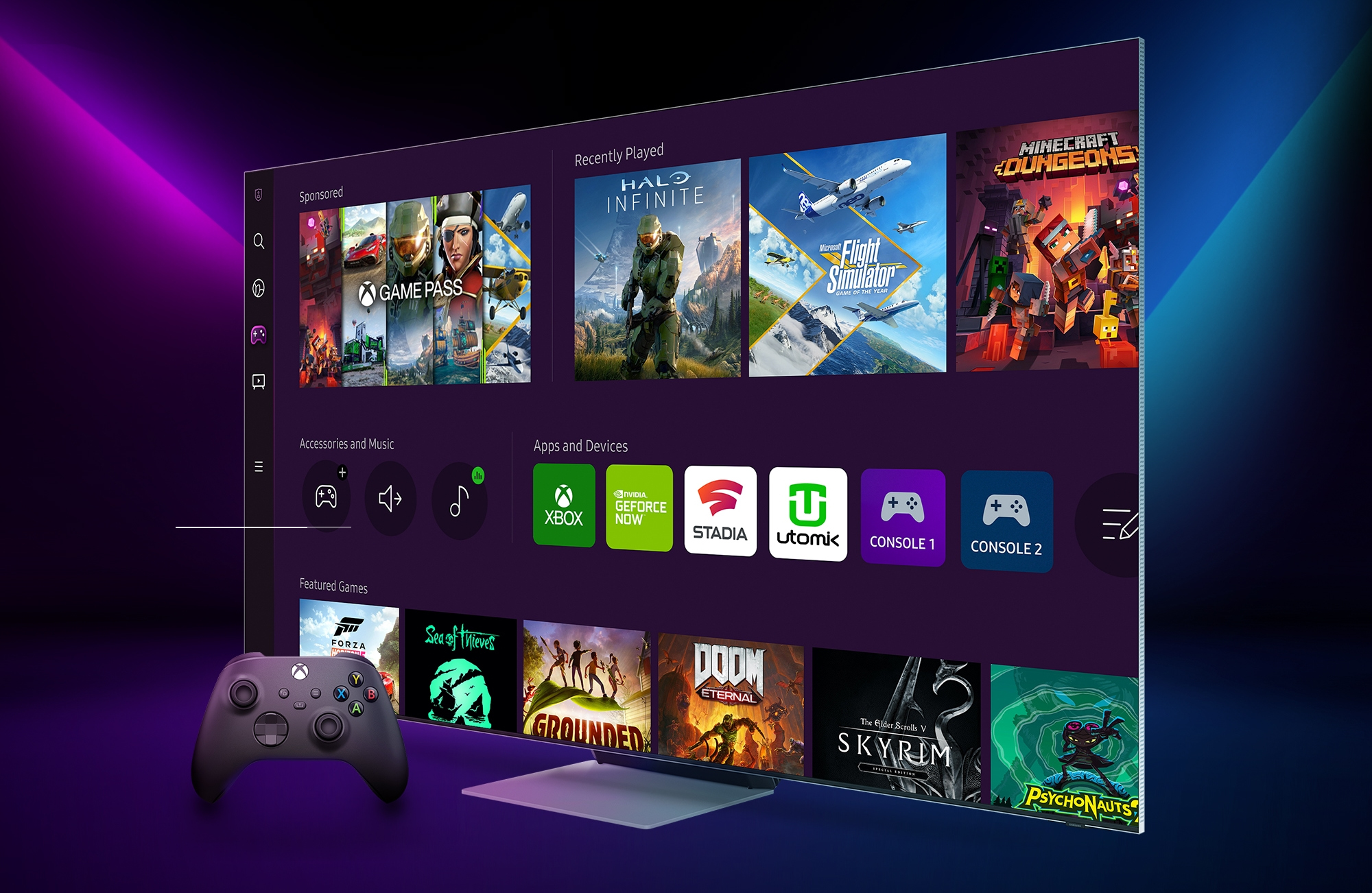
Samsung claims the QN100B is its thinnest QLED TV with a thickness of 20mm. It features 160,000 brightness steps, a 14-bit color panel, and the Neo Quantum Processor Plus chipset. The TV supports HDR10, HLG, Q-Symphony, and Object Sound Tracking Plus. The 14-channel sound system of the QN100B Neo QLED TV outputs 120W and the TV features Samsung’s Gaming Hub including Google Stadia.
The Samsung QN100B is more than 30 inches larger than the QN95B and is already available for KRW 45,000,000 ($31,725) in South Korea. Samsung has not released any global availability details yet but the model has been listed on the Samsung US website. The US listing however lacks any pricing details or a release date.
The new Pixel 7 and 7 Pro smartphones are scheduled to debut in the global market on October 6. And Googleconfirmed that this year, the Pixel series will also be launched in the Indian market. The company did not reveal the exact Indian launch date yet. However, it has been confirmed the devices will be available for pre-order in the country from October 6. Now, ahead of the formal debut, the search giant has announced pre-order offers for interested Indian buyers.
According to Google’s announcement on Flipkart, customers who pre-order the handsets can purchase the Pixel Buds-A Series earphones at a discounted price of Rs. 5,999 (regular price Rs. 9,999). In addition, the Fitbit Inspire 2 wearable fitness tracker will also be available for purchase at Rs. 4,999 (regular price Rs. 7,999). The Pixel 7 and Pixel 7 Pro can be pre-booked in India from October 6 at 9:30 pm via Flipkart.
Pixel 7, 7 Pro Specifications (Expected)
The Pixel 7 will have a 6.3-inch FHD+ OLED 90Hz display, whereas the Pixel 7 Pro will flaunt a 6.7-inch QHD+ OLED 120Hz screen. Both devices will have an in-display fingerprint scanner for security. They will be powered by Google’s home-brewed Tensor G2 chip and come preloaded with the Android 13 OS.
For photography, the Pixel 7 Pro will have a 50-megapixel main camera, a 12-megapixel ultra-wide lens, and a 48-megapixel telephoto snapper on the back. The Pixel 7 will also feature the same main camera and the ultra-wide unit on its back but will lack the telephoto sensor.
The Pixel 7 series will come with up to 12 GB of RAM and up to 256 GB of storage. The vanilla model will be backed up by a 4,700mAh battery, while the higher-end Pro model will pack a 5,000mAh battery. Both handsets will support 33W fast charging and wireless charging.
Motorola just finished launching a bunch of smartphones, and details about new devices have already started to surface online. A recent leak revealed the key features as well as the design of an upcoming Motorola handset codenamed Davon. Now, a new report is here with details about yet another unknown device from the Lenovo-owned company.
91mobiles, citing industry sources, has revealed the major specifications and design of a Motorola smartphone with the codename Maui. The marketing name of the handset is yet to be known.
According to the design renders shared by the publication, the Motorola Maui will come with the company’s classic candy-shaped design. It has a flat display featuring a center-punched hole for the selfie camera. The bezels are thin on the sides and comparatively thicker on the top and bottom.
On the back, it features a rectangular camera island nesting triple cameras and an LED flash. The handset can also be seen to have a Motorola logo on the back, which should function as a fingerprint sensor as well. It has a volume rocker with a power button on the right side, while the left side remains empty.
Now, if we talk about the specs, the report reveals the Motorola Maui will come with an HD+ display that offers a 1600×720 pixel resolution and has a 20:9 aspect ratio. Under the hood, it is said to be powered by a Mediatek Helio G37 chip paired with 3GB RAM.
For photography, it houses a triple rear camera setup consisting of a 16MP main sensor with an f/2.2. It also has a 2MP secondary camera and another 2MP lens. For selfies and video calls, it has a 5MP shooter.
Motorola is yet to confirm any details about the device. We hope to learn more details about the smartphone in the coming days.
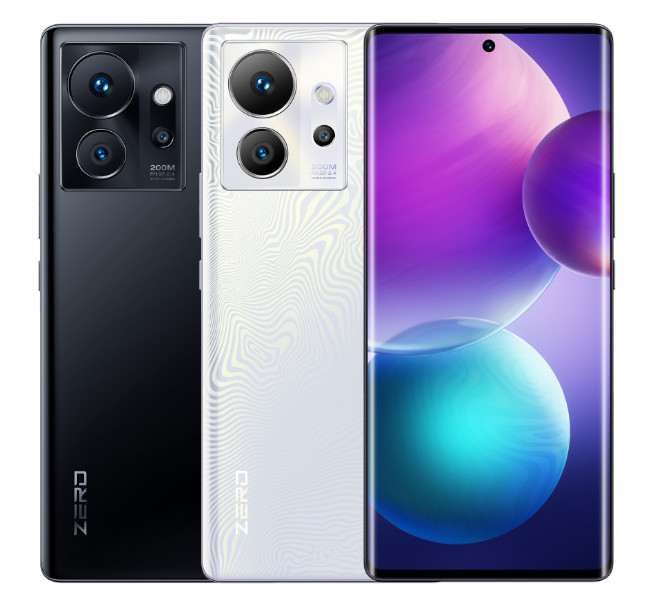
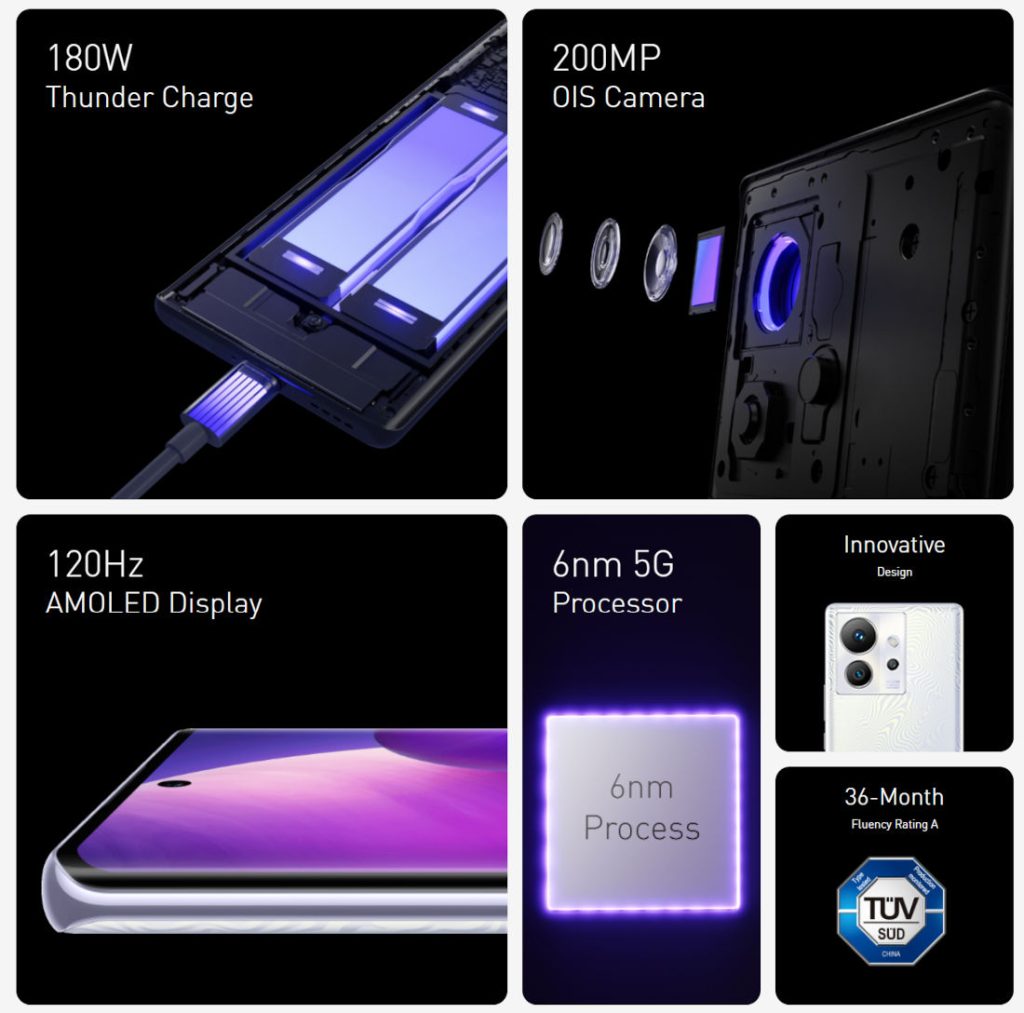
Infinix finally announced its new flagship smartphone, dubbed the Infinix ZERO ULTRA. It comes with some over-the-top features and is priced competitively. The handset sports a 6.8-inch 3D-curved FHD+ AMOLED display that refreshes at 120Hz. It is powered by the MediaTek Dimensity 920 SoC and supports particularly extreme 180W fast charging. It also boasts a 200-megapixel main camera. Let’s have a closer look at the price and specifications of the newly launched Infinix smartphone.
Infinix ZERO ULTRA Specifications and Features
Infinix ZERO ULTRA comes with a premium design. The handset has a curved display and it comes in a unique Coslight silver color option with 3D textured glass on the back. The handset is also available in black.
Talking about the specs, the smartphone flaunts a massive 6.8-inch Full HD+ 3D curved AMOLED display offering a 2400 × 1080 pixel resolution and a 120hz refresh rate. It comes with slim bezels with a peak brightness of 900 nits.
Under the hood, it is powered by the MediaTek Dimensity 920 SoC, which is based on a 6nm process and has 2 x 2.5GHz Cortex-A78 + 6 x 2GHz Cortex-A55 CPUs. Infinix could have used a better processor since the device costs well above $500. At this price, OEMs are offering top-notch Snapdragon 8+ Gen 1 SoCs based on a 4nm process node.
Furthermore, the device comes with a Mali-G68 MC4 GPU and packs 8GB of RAM and 256GB of onboard storage. On the software front, it runs Android 12 OS with the company’s XOS 12 on top.
Now, let’s get to the main highlights of the smartphone—the camera and charging. The Infinix ZERO ULTRA features a triple rear camera setup on the back, consisting of a 200MP main camera with OIS. It also has a 13MP ultrawide and a 2MP sensor. On the front, it has a 32MP selfie shooter with dual LED flash.
The handset is fueled by a dual-cell 4500mAh battery. It supports 180W Thunder Charge, which can charge the phone’s battery to up to 100% in just 12 minutes.
Infinix ZERO ULTRA Price and availability
Infinix ZERO ULTRA has been launched in the global market. The handset has been priced at $520 for the sole 8GB + 256GB storage variant. The availability of the smartphone will vary depending on your location. You can check the availability here.
We use cookies on our website to give you the most relevant experience by remembering your preferences and repeat visits. By clicking “Accept”, you consent to the use of ALL the cookies.
This website uses cookies to improve your experience while you navigate through the website. Out of these, the cookies that are categorized as necessary are stored on your browser as they are essential for the working of basic functionalities of the website. We also use third-party cookies that help us analyze and understand how you use this website. These cookies will be stored in your browser only with your consent. You also have the option to opt-out of these cookies. But opting out of some of these cookies may affect your browsing experience.
Necessary cookies are absolutely essential for the website to function properly. This category only includes cookies that ensures basic functionalities and security features of the website. These cookies do not store any personal information.
Any cookies that may not be particularly necessary for the website to function and is used specifically to collect user personal data via analytics, ads, other embedded contents are termed as non-necessary cookies. It is mandatory to procure user consent prior to running these cookies on your website.





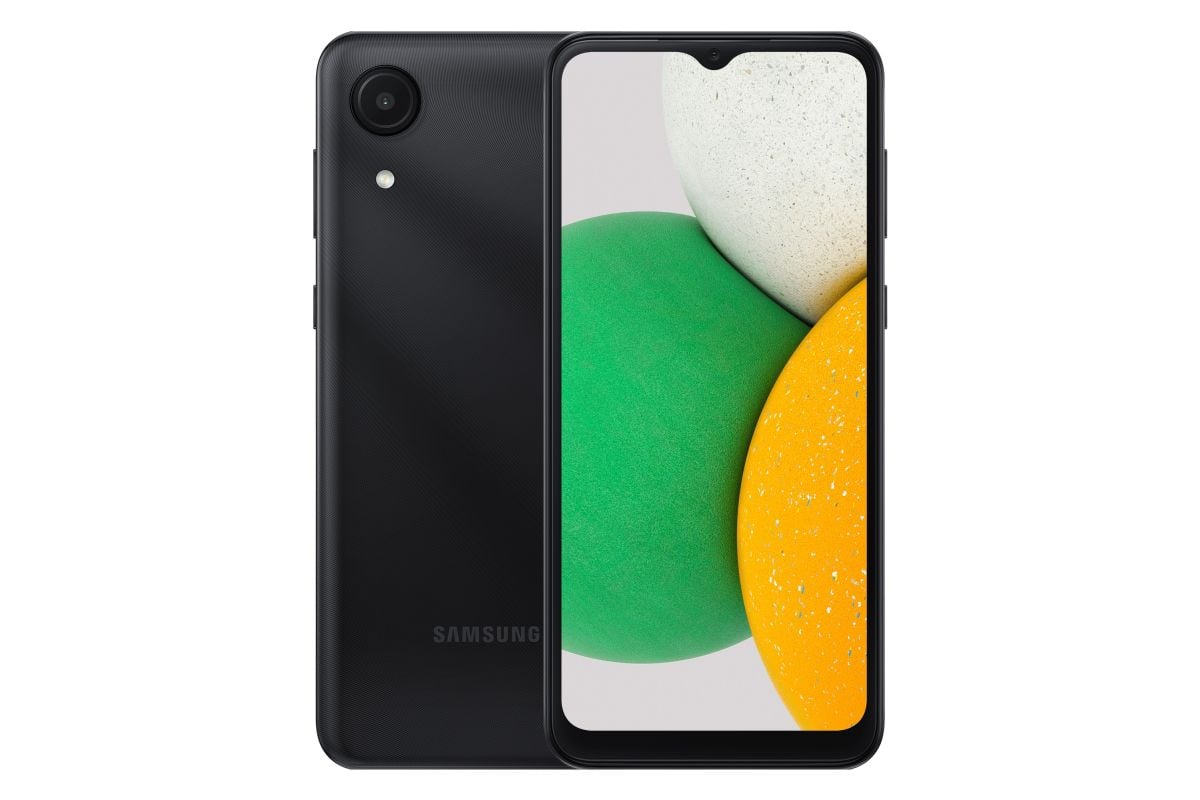 Now, another device in the lineup called the Galaxy A04e has been listed on NBTC and Indonesia Telecom certification databases, revealing some details about the smartphone.