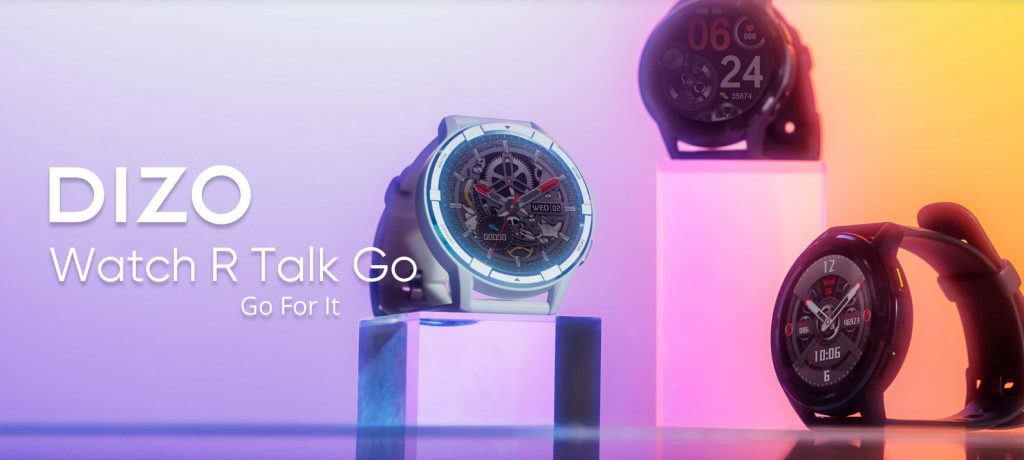
Previous leaks have revealed the design and features of the upcoming OnePlus Nord Watch. And now, the smartwatch has been spotted on the Bluetooth Special Interest Group (SIG) certification website.
According to the listing, the device has the model number OPBBE221. It will rely on Bluetooth 5.2 to connect with the user’s smartphone. We already know that the Nord Watch will get a new companion app called the OnePlus N Health app. The appearance of the smartwatch on Bluetooth SIG indicates that it will launch soon in the market.
OnePlus Nord Watch specs & features
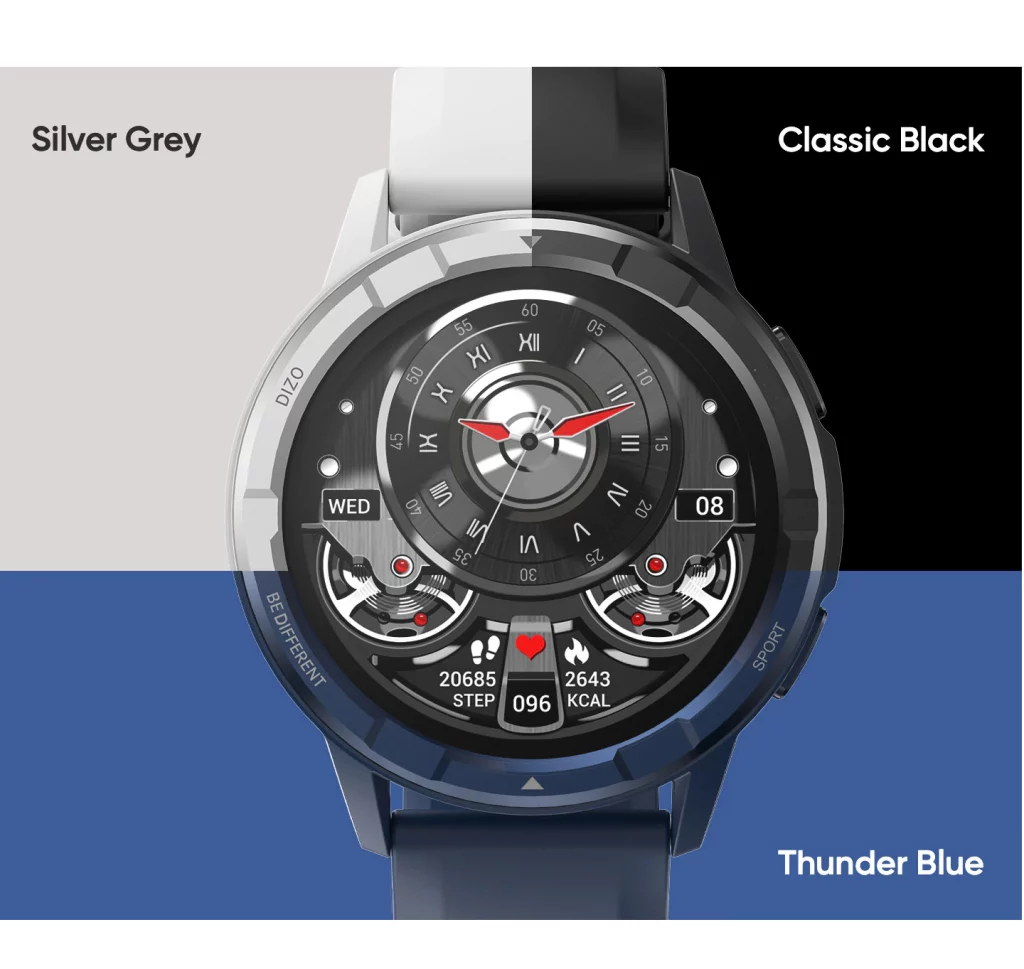
Leaked renders have revealed that the OnePlus Nord Watch will come in a total of five different variants with two distinct design profiles. Three of the models will have a circular dial while the other two will feature rectangular dials.
OnePlus Nord Watch models with rectangular dials will have 240×280 and 368×448 pixel resolution. Whereas the circular variant will offer 240×240 and 390×390 pixel resolutions.
The Nord Watch is rumored to have all the monitoring features like a SpO2 sensor, heart rate monitoring, and sleep tracking. It is said to come in two color options – Black and White. Last but not the least, the smartwatch is rumored to be priced between Rs. 5,000 to Rs. 8,000.
The Nothing Phone (1) was a highly anticipated smartphone leading up to its launch. Since its official release, the smartphone has seen robust sales in various regions, including India. Now, the device is back in stock in India, so let’s have a look at its pricing and offers.
For those unaware, the company had just recently hiked the pricing for the Phone (1) across different configurations. So now, the handset costed around 1,000 INR more than its original price tag. In other words, the base 8GB + 128GB model now costs 33,999 INR, the 8GB + 256GB variant costs 36,999 INR, while the top end 12GB + 256GB version has a price tag of 39,999 INR.
As of right now, the Nothing Phone (1) is currently available for purchase from Flipkart, a popular e-retailer in India. It arrives in two color variants, namely black and white options. Although, the white model is only available for the higher end 8GB + 256GB and 12GB + 256GB variant since the brand only sells the base 8GB + 128GB configuration with the Black model.
But HDFC bank card holders can avail a discount of 1,000 INR on non EMI transactions and around 1,500 INR off for EMI transactions as well. Similarly, Flipkart Axis Bank Card can get a 5 percent cashback on purchasing the Nothing Phone (1). You can even get a Google Nest Hub for just 4,999 INR and a Google Nest mini for just 1,999 INR when you buy this smartphone.
A fortnight ago, Xiaomi quietly launched a crowdfunding campaign for their first smart glasses product, the Mijia Glasses Camera. As you can see, it’s neither called the Xiaomi Glasses Camera nor the Xiaomi Smart glasses. So it’s clear that the Mijia Glasses Camera is more like a product developed by Xiaomi eco-chain manufacturers, which doesn’t focus on smartness or features like other smart glasses.
The title has already told us that it focuses on one thing — camera shooting. We were pretty curious whether it’s as useless as the other smart glasses on the market today, so we ordered one on the Mijia platform in the first instance, and experienced it for a few days.
Unboxing
Before we get started, I’d like to show you what’s inside the big package of the Mijia Camera Glasses. Flip the cover and the glasses appear. Well, it’s not small in size with a pretty decent build. The legs cannot be folded down and the whole frame looks very much like a stiff headband. But actually, the frame is still flexible enough to be worn by users with different head sizes. There’s the user manual and a glasses-cleaning cloth, which feels good.
And here’s a box for storing the glasses, which is quite a big one. Open it up and the other accessories are found inside, including a charging cable, a USB-A to C port adaptor, and a hanging frame with regular lenses for the nearsighted. You will need to fit your own lenses, if necessary. Since the camera glasses without the lens frame is not so light, I still recommend contacts instead of heavy lenses for those people.
Glasses Design
Coming back to the glasses. The most attractive part of this Google-glasses style device is the camera module on the side, including a 50MP wide-angle camera and another 5x optical periscope lens, which supports up to 15x hybrid zoom for long shots. So with these glasses, you are going to have a hybrid zoom range from 1x to 15x, which is a very unique feature for a glasses product.
On the other side, there’s a Sony Micro OLED display with up to 3000nits of peak brightness. Basically, it works as a viewfinder when the wearer is taking photos or recording videos. Apart from it, there’re not much it can do at the moment. The promotional posters claim it has more AR smart features, but in fact, at this moment there’s only a real-time translator supported here but no other AR features.
Experience: Wearing & Use
It’s ridiculous that Xiaomi brought AR user guidance to the glasses. It’s the most useless feature on the device. This feature was clearly not designed from a user’s point of view, but only to show that it can be AR-enabled, and unfortunately, the guidance feels terrible. After all, no one will learn how to wear and use the glasses through the tiny display.
And to be honest, I can’t wear it for more than 30 minutes, since you can obviously feel the weight and the wearing experience is not really comfortable. And once you put them on, unavoidably, your view is noticeably blocked partially by this prismatic display component, which can be frustrating for those who want to wear it for a long time. It’s also something you have to compromise on if you’re going to use the camera. But the good thing is that it exists as a viewfinder rather than being completely useless, and this discomfort becomes acceptable while shooting.
Camera Performance
Now let’s check out the performance of the cameras. You can slide back and forth on the leg to zoom from 1x to 15x, but when you start shooting, the activated lens cannot be switched, which means you can only zoom from 1 to 5x or above 5x.
No matter the photos or the videos shot on the glasses, they look much better than what I expected. It looks better with good detail and colors than the previous smart glasses products. But that doesn’t mean it has matched the image quality of some action cameras. The image shot on the glass looks no different from what we see on a regular phone camera. And it can only shoot 1080p-resolution video.
1 of 7
wide angle
wide angle
wide angle
wide angle
wide angle
wide angle
wide angle
Meanwhile, it’s not a good experience to shoot on glasses. The shutter is actuated by a single touch on the leg surface, which easily leads to a mis-touch when you accidentally touch the leg. And sometimes we found the videos shot on the glasses might not be so smooth, with a slight lag.
There’s also the issue of its shutter delay. Its focus speed is a bit disappointing, which leads to the fact that sometimes when you press the shutter, it takes time to adjust the focus to finish the shot. And then it would produce an incorrect photo when you think it has finished shooting and move your head away.
1 of 7
5x
5x
5x
5x
5x
5x
5x
The 5X lens works well with OIS, which has pretty decent detail. But it’s still not easy to have precise control of the camera direction using your head.
Software & experience
The software of the glasses is much simpler than I expected and by far it only supports the Chinese language. So does the companion app. And I couldn’t really understand why the simplest app’s installation apk file needs to be so large. Apart from pairing the phone, and setting up the WiFi connection, there are a few other simple settings like activating EIS for the wide-angle camera and boosting noise reduction with the built-in dual microphone for video filming.
But a good experience here is that you can easily transfer the photos and videos shot on the glasses to the phone storage, which is what most camera manufacturers fail to do. And you don’t have to worry about the camera storage. The built-in 32GB storage is quite enough for daily use.
For the glasses, there’s no home screen to display notifications or other information like a smartphone. Instead, for function selection, you only got 4 icons for options, including a Camera, a flashback feature, an AR user guide, and an AI translator.
I like the idea of the flashback feature, where you can collect back the videos from the ten seconds before you start shooting. It’s perfect for when you suddenly find an interesting fleeting moment but don’t have time to press the shutter to film it. You still have ten seconds to save the moment.
There’s no built-in speaker and no music playback supported. Apart from the tiny display, the only way to be alerted to information is by vibration.
Battery life & heating
Another problem is that it has an extremely limited battery life, which actually is shorter than what Xiaomi claims. The full battery only can support around 70-minutes of shooting time and stand by for around 2 hours. Also, as the chip and motherboard are inside the non-operating legs, it’s pretty easy to get heated up. But if you don’t deliberately touch it, actually you wouldn’t feel the heat.
Conclusion & suggestion
So if you don’t have specific camera needs but just want to try out the glasses, please do not buy them as we did. Because you would lose interest in it after a single afternoon and be afraid of using it for the next few days. If you need a POV camera for professional filming, it’s not for your either, as you cannot adjust any of the camera parameters except that you can choose between 4:3 and 16:9 picture ratios.
And if you want a camera that can record life through your eyes all the time and also free up your hands, I just want to remind you of a few things about the camera glasses. First, its actual battery life for shooting is only about 1 hour; then wearing and using it for over 30mins might make you feel tired; and, last but not the least, it officially sells for 370 US dollars.
Back in February 2022, Samsung launched its flagship Galaxy S22 series of smartphones. The next generation of flagship smartphones is not expected to launch before 2023, however, the rumor mill has already started churning out information regarding the Galaxy S23 series.
Samsung Galaxy S22+
Tipster Ice Universe has revealed what we can expect from the vanilla Galaxy S23 and the Galaxy S23. According to the tipster, the device won’t feature any significant changes other than the upgraded chipset which will be the upcoming Snapdragon 8 Gen 2 from Qualcomm. He adds that the design, frame, display, cameras, and fingerprint sensor will remain the same as the Galaxy S22 and the S22+. So, let’s take a look at the Galaxy S22 and S22+ specifications to get an idea of what to expect from the next generation.
As for the S23 and S23+, they have the same design as the S22, even the middle frame has not changed. The same screen, the same sensor, the same camera, and the battery is estimated to be similar. Processor upgrade to 8Gen2
The Galaxy S22 sports a 6.1-inch Dynamic AMOLED 2X display with a Full-HD+ resolution. The S22+, on the other hand, has a larger 6.6-inch FHD+ Dynamic AMOLED 2X panel. Both have Corning Gorilla Glass Victus+ protection and a 120Hz refresh rate. The phones have an Armor Aluminum frame in terms of build. The S22+ supports 1750 nits of brightness compared to the S22’s 1300 nits.
Under the hood, both devices feature the Snapdragon 8 Gen 1 and Exynos 2200 SoC(depending on the region) paired with LPDDR5 RAM and UFS 3.1 storage. The S22 has a 3,700mAh battery with 25W fast charging support, whereas, the Galaxy S22+ gets a 4,500mAh battery and has 45W fast charging support.
Coming to the camera system, both smartphones come with a 50MP Samsung GN5 primary sensor paired with a 12MP ultra-wide lens and a 10MP telephoto sensor with 30x Space Zoom and 3x optical Zoom. Upfront, both have a 10MP selfie snapper.
Vivo launched the V25 series of smartphones earlier this month in India. So far, the series consists of the vanilla V25 and the V25 Pro, however, through numerous leaks, we already know that the Vivo V25e is also on the way.
Vivo V25e render
Now, a new report by Appuals has revealed the specifications and features of the V25e ahead of the launch.
Vivo V25e specs & features
According to the report, A 6.44-inch Full HD+ AMOLED display with 90Hz refresh rate will be available on the V25e. It will have a water-drop notch at the top center for the front camera. The V25e will have an in-display fingerprint sensor for security.
Under the hood, the smartphone will feature the MediaTek Helio G99 chipset. This chipset has 8-cores with two of them clocked at 2.2GHz and the other six clocked at 2.0GHz. It also has a Mali G57 MC2 GPU onboard.
For optics, the phone features a triple camera setup on the back consisting of a 64MP f/1.79 Primary camera with OIS, a 2MP f/2.4 Bokeh lens, and a 2MP f/2.4 Macro unit. On the front, the device will feature a 32MP selfie camera with an f/2.0 aperture.
A 4,500mAh battery paired with 44W fast charging capability will be present on the smartphone. As for the operating system, it will be Funtouch OS 12 based on Android 12. For connectivity, the phone will offer a Dual Nano SIM slot, a hybrid microSD card slot, 5GHz Wi-Fi, Bluetooth 5.2, and a USB Type-C port.
The Vivo V25e will come in Black and Gold color options. Out of the two, the Gold color option will have a color-changing back panel that turns orange when exposed to sunlight.
Vivo has just launched a new 4G smartphone in its domestic market called the Vivo Y16 4G. The smartphone is also rumored to launch in the global market in the coming days.
Vivo Y16 4G specs & features
Although the device has been officially unveiled in China, the pricing and availability details are still under wraps. The specifications and design on the other hand have been completely unveiled.
Vivo Y16
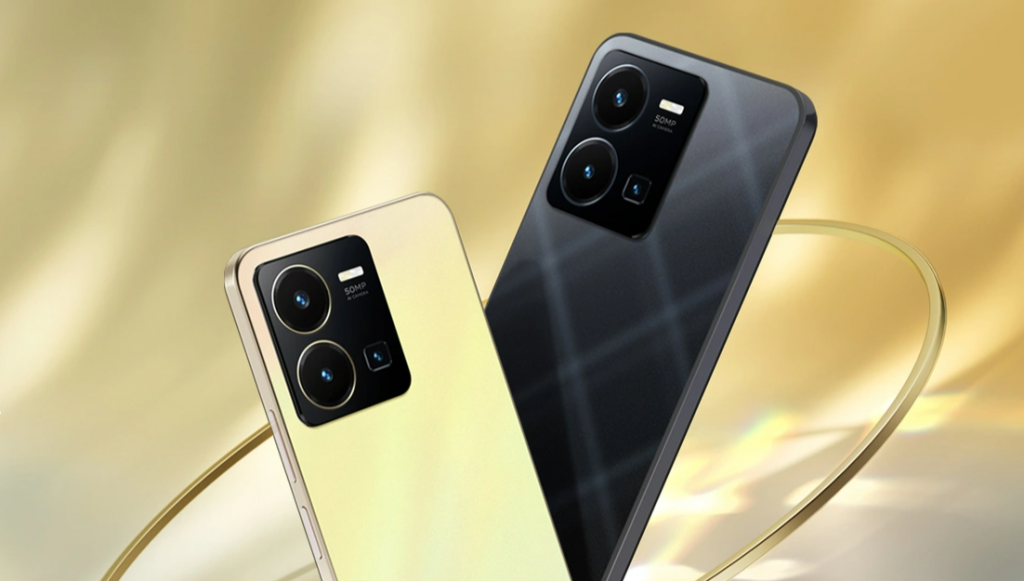
Starting with the design, the Y16 4G looks similar to the Vivo Y35 4G launched earlier this month. It features a flat frame with rounded corners and a rectangular camera module on the back. The dual-camera setup is housed in two large cutouts on the back of the phone.
Up front, the device has a 6.51-inch HD+ display with a water-drop notch, noticeable bezels, and a thick chin. It comes in two colors – Stellar Black and Drizzling Gold. The device measures 163.95×75.55×8.19mm and weighs 183 grams.
Under the hood, the phone houses a MediaTek Helio P35 SoC which is complimented by 4GB of RAM and 128GB of internal storage. The RAM can be expanded by 1GB with the virtual RAM feature and the smartphone also comes with a microSD card slot for storage expansion.
For optics, the smartphone has a 13MP main camera paired with a 2MP secondary camera. On the front, the device houses a 5MP selfie snapper. Other features of the device include Android 12-based Funtouch OS 12, a 5000 mAh battery pack with 10W fast charging, a USB Type-C port, dual-band WiFi, and Bluetooth 5.0.
Last month, ASUS launched its latest Zenfone series smartphone in the form of the ASUS Zenfone 9. The phone runs the Android 12 operating system out-of-the-box, but the company is working on updating the software.
Now, the company has officially announced the Android 13 beta program for the ASUS Zenfone 9 smartphone, and the new software is already being rolled out to those who are enrolled in the beta program.
Those who want to enroll in the Android 13 beta program for the Zenfone 9 can open the Settings app on their phone and navigate to System > System update menu and tap on the gear icon at the top-right corner and select “Enroll in the Beta Test Program” from there.
It’s not an open process yet, so once you submit the application to enroll in the beta testing programs, the company will take a decision. If you are selected for the beta testing program, then you will get the new Android 13 beta update on your phone. It’s noteworthy that the software may have bugs and issues and could impact the user experience as well as the phone’s performance.
The ASUS Zenfone 9 features a 5.9-inch SAMOLED display with a Full HD+ screen resolution and up to 120Hz refresh rate with 445PPI pixel density, HDR10+ support, and a 112-percent DCI-P3 color gamut.
Under the hood, the device is powered by the Qualcomm Snapdragon 8+ Gen 1 processor, coupled with up to 16GB of LPDDR5 RAM and 256GB of UFS 3.1 internal storage.
In the camera department, there’s a dual-camera setup on the back consisting of a 50-megapixel Sony IMX766 primary sensor coupled with a 2-megapixel Sony IMX363 ultra-wide sensor with 113 degrees field of view. On the front side, there’s a 12-megapixel Sony IMX663 snapper for taking selfies and video calling.
The IP68-rated water and dust-resistant smartphone is powered by a 4,300mAh battery and has 30W fast charging support. The company claims that the battery can be charged from zero to 50 percent in under 30 minutes.
Sony has already scheduled a launch event on 1st September where the company is expected to launch its flagship Xperia 5 IV. A teaser video from the company suggested that it might be a compact smartphone.
Now, the Japanese company has shared another teaser video for the upcoming smartphone titled “A New Xperia is coming…” and it adds, “Exciting news is coming from Sony.”
Sony Xperia 1 IV
In the video, Sony is talking about the new photography system and claims that the phone allows users to “shoot breathtaking portraits” and “share your song with the world” along with “live stream your winning moments” while playing video games.
It also says “Be Creative. Go Compact.” towards the end of the video, which confirms that the upcoming smartphone from Sony is a compact flagship. This is interesting given that there are almost no compact Android flagship smartphones available in the market.
While a compact smartphone is confirmed, it is not yet known if it’s the Xperia 5 IV or some other model. We’ll get to know for sure when the device gets launched later this week, which will also be live streamed by the company.
As per the rumors, the upcoming Sony Xperia 5 IV is expected to feature a 6.04-inch display and will be powered by the latest Qualcomm Snapdragon 8 Gen 1 processor, which is powering almost all the flagship phones getting launched. It is also expected to retain the 3.5mm headphone jack and will have support for wireless charging.
Apple recently announced its second-generation Apple Silicon chips for the Mac devices, dubbed Apple M2, and has also launched a couple of devices powered by the new chip. Now, the company is gearing up to launch upgraded versions of the M2 chip.
Shedding more light on this, a new report from Mark Gurman of Bloomberg claims that the Cupertino-based tech giant is currently developing and testing new MacBook Pro laptops powered by the M2 Pro and M2 Max chips.
The MacBook Pro models that are being developed come in two different screen sizes. One of them has a 14-inch display while the other one features a 16-inch display. The report further adds that there’s a possibility that the devices could go official later this year.
Apple is reportedly planning to launch the new 14-inch and 16-inch MacBook Pro as early as the fall of this year, but because of supply chain issues, the production could face a delay in mass production and the launch may be a bit later than what the company plans.
There were rumors about the upcoming M2 Pro and M2 Max chips being manufactured using the 3nm process, but recent reports have indicated that the company will stick to the 5nm process for the new chips. But, the company is expected to move from the N5 process of the M1 Pro and M1 Max chips to the newer N5P process by TSMC.
As of now, there’s not much information available about the upcoming Pro models of the MacBook, but it’s likely that there won’t be any major changes in terms of design, and we’ll mostly see internal upgrades for better performance.
A few days ago, Lenovo launched the Motorola Razr 2022: the new amazing flagship foldable phone which will compete directly with the Samsung Galaxy Z Flip4. But this foldable came up alongside two other high-end phones which were eclipsed but they are even more interesting for a lot of users: the Motorola X30 Pro and the Motorola S30 Pro. These devices are amazing devices with flagship-class hardware and specifications, but they also come with very interesting prices. Given that they belong to the same lineup, you can already recognize which one is the best if you know Motorola phones. That is the reason why this article is not born to establish which of these phones is the best. We will focus on the differences between these two phones in order to let you understand which has the highest value for money. So if you want to know this, go ahead with this comparison between the specifications of the Motorola X30 Pro and the Motorola S30 Pro.
Motorola X30 Pro vs Motorola S30 Pro
Motorola X30 Pro
Motorola S30 Pro
DIMENSIONS AND WEIGHT
161.7 x 73.5 x 8.4 mm,
198.5 g
158.5 x 71.2 x 7.5 mm,
172 g
DISPLAY
6.7 inches, 1080 x 2400 pixels (Full HD+), OLED
6.55 inches, 1080 x 2400 pixels (Full HD+), P-OLED
Triple 200 + 50 + 12 MP, f/2.0 + f/2.2 + f/1.6
60 MP f/2.2 front camera
Triple 50 + 13 + 2 MP, f/1.8 + f/2.2 + f/2.4
32 MP f/2.2 front camera
BATTERY
4610 mAh, fast charging 125W
4400 mAh, Fast Charging 68W
ADDITIONAL FEATURES
5G, dual SIM, splash and dust resistant
Design
The designs of the Motorola X30 Pro and the Motorola S30 Pro are not so different. They both come with a glass back protected by Gorilla Glass 5 and a curved display at the edges: very elegant phones, and they are also splash and dust resistnat. The only noticeable differences between these handsets are the camera modules and the color options. With these two devices, you get a punch hole placed centrally, all the physical keys on the right side, and the whole rear side clean with the exception of the camera module. The design is definitely one of their strongest points and these are among the most beautiful Motorola smartphones ever.
Display
The displays of these two phones are not so different in terms of specifications. With the Motorola X30 Pro, you get a wider 6.7-inch panel, so better if you are a productivity user or a gamer, while the diagonal of the display of the Motorola S30 Pro is 6.55 inches. For the rest, they are pretty much the same. These are two OLED panels able to show up to one billion colors with a Full HD+ resolution of 1080 x 2400 pixels, a 144 Hz refresh rate, and the HDR10+ certification, as well as an in-display fingerprint reader. The Motorola X30 Pro is the only one equipped with stereo speakers, while you get a mono speaker on the S30 Pro. Both the displays are curved at the sides and come with a centrally-placed punch hole, as we already mentioned above.
Specs & Software
The most advanced hardware department belongs to the Motorola X30 Pro, which is also one of the most powerful devices in the whole market. It is powered by the Snapdragon 8+ Gen 1 chipset by Qualcomm built with a 4 nm production process and coming with an octa-core architecture composed of a Cortex X2 CPU running at a max frequency of 3.19 GHz, three Cortex A710 CPUs running at 2.75 GHz, and four Cortex A510 CPUs running at 1.8 GHz, as well as an Adreno 730 GPU. The chip is paired with up to 12 GB of RAM and up to 512 GB of UFS 3.1 internal storage, but there is also a variant with 8 GB of RAM and 128 GB of storage. The Motorola S30 Pro gets a Snapdragon 888+ mobile platform built at 5 nm and with an octa-core architecture composed of a Cortex X1 CPU running at a max frequency of 2.99 GHz, three Cortex A78 CPUs running at 2.42 GHz, four Cortex A55 CPUs running at 1.8 GHz, and an Adreno 660 GPU. These devices run Android 12 out of the box, customized by MYUI 4.0.
Camera
The Motorola X30 Pro wins the camera comparison and it is the world’s first phone equipped with a 200 MP main camera. The main sensor includes the OIS and is paired with a 50 MP ultrawide lens and a 12 MP telephoto camera with 2x optical zoom. On the front, there is a stunning 60 MP selfie shooter. The Motorola S30 Pro has a triple camera composed of a 50 MP main sensor with OIS, a 13 MP ultrawide shooter, and a 2 MP depth sensor. The front camera is a classic 32 MP snapper.
If you need a longer battery life, opt for the Motorola X30 Pro because it is equipped with a bigger 4600 mAh battery. It provides blazing charging speeds thanks to 125W fast charging and it even supports 50W wireless charging.
Price
The Motorola X30 Pro carries a starting price tag of €550/$550 at the actual change, while the S30 Pro starts from €330/$330 at the actual change. Currently, these devices are only available in the Chinese market, but they are supposed to head soon in the global market too. Which one would you pick?
Motorola X30 Pro vs Motorola S30 Pro: PRO and CONS
The just released Samsung Galaxy Z Fold 4 could be in for a great run. A tech geek has posted a YouTube video that detailed how he transformed the latest Samsung foldable flagship into a Windows Phone. Mark Spurrel used a combination of two Android launchers and Bixby Routines to achieve his objective. The process holds some promise for the versatility of the Galaxy Z Fold 4.
The Galaxy Z Fold 4 and Z Flip 4 have just become available with improved components from the first-generation Z-series foldable phones. The YouTube video covered how the tech geek transformed his new foldable to look like a Windows PC on the inner display. The process showed a folding phone having the Windows Phone tiles when closed. These tiles are customizable and match what you would expect on a typical Windows Phone. In addition, Spurrel was able to create quick access to other functions like the camera.
The transformed inner display of the Galaxy Z Fold 4 has the Windows 10 desktop environment, with shortcuts and the start menu. The widgets for the clock, calendar, and other settings are located in the bottom left corner. There is also a full panel for settings and notifications. The innovator, however, pointed out that the transformation isn’t perfect, as the phone constantly switches between launchers. It is surely a great starting point however and he can significantly improve the process for greater efficiency.
The Galaxy Z Fold 4 currently starts at $1,799.99. It is both an excellent tablet and a great smartphone combined in a single device. It has a lightning-fast Snapdragon chipset and an overall durable and performance-driven setup. There are a variety of trade-ins and network plans from several carriers like AT&T and Verizon, as well as retailers like Amazon and Best Buy.
Samsung is currently the leader of the foldable phones market, but several other manufacturers are challenging it with their amazing flagship phones. Xiaomi released the Mix Fold 2 to take on the Galaxy Z Fold4, while Lenovo came up with the Motorola Razr 2022 in order to compete with the Samsung Galaxy Z Flip4. Both these devices are clamshell foldable phones sporting flagship-class specifications and small external displays, but which one is the best? In order to answer this question, given that these handsets share the same form factor and even the same price range, we decided to publish a comparison between the main specifications of the Motorola Razr 2022 and the Samsung Galaxy Z Flip4.
Motorola Razr 2022 vs Samsung Galaxy Z Flip4
Motorola Razr 2022
Samsung Galaxy Z Flip4
THICKNESS
15.2 mm when folded, 7.6 mm when unfolded
15.9 mm when folded, 6.9 mm when unfolded
DISPLAY
Main display: 6.7 inches, 1080 x 2400p (Full HD+), Foldable P-OLED
External display: 2.7 inches (573 x 800p), G-OLED
6.07 inches, 1080 x 2460p (Full HD+), Foldable Dynamic AMOLED 2X
External display: 1.9 inches, AMOLED, 260 x 512 pixels
As already mentioned, both these handsets are clamshell foldable phones: while unfolded, they look like traditional smartphones, but if you fold them, you can halve their dimensions and let them be extremely compact. This is the distinctive advantage of these devices. I personally prefer the design of the Motorola Razr 2022 because it reminds me of the older and iconic Razr feature phone and it has a wider external display. But you should note that the Samsung Galaxy Z Flip4 is thinner and it is waterproof thanks to the IPX8 certification. The Samsung foldable phone has a better build quality, it has a glass back protected by Gorilla Glass Victus+, and it supports eSIM in all of its variants.
Display
The displays are definitely the most important thing about these phones and after judging the specifications, I would personally prefer the Motorola Razr 2022. The foldable display looks more interesting: it is a P-OLED panel able to show up to one billion colors with a diagonal of 6.7 inches, a Full HD+ resolution of 1080 x 2400 pixels, a 144 Hz refresh rate, and the HDR10+ certification. It is a very nice screen not only because it is foldable, but also for its image quality. And it includes an in-display fingerprint reader. The Samsung Galaxy Z Flip4 has a 6.7-inch panel with a Full HD+ resolution, a 120 Hz refresh rate, and the HDR10+ certification, as well as an in-display fingerprint scanner. The Motorola Razr 2022 looks more convincing even when it comes to the external display: a wider G-OLED panel with a diagonal of 2.7 inches and a resolution of 573 x 800 pixels. The Samsung Galaxy Z Flip4 has a smaller 1.9-inch external display with AMOLED technology and a resolution of 260 x 512 pixels, protected by Gorilla Glass Victus+. Anyway, you can use both these displays to shoot selfies and use several features of the phones.
Specs & Software
The Motorola Razr 2022 has the best hardware. Both the handsets are powered by the Snapdragon 8+ Gen 1 mobile platform by Qualcomm built with a 4 nm production process. It is a chipset with an octa-core architecture composed of a Cortex X2 CPU running at a max frequency of 3.19 GHz, three Cortex A710 CPUs running at 2.75 GHz, four Cortex A510 CPUs running at 1.8 GHz, and an Adreno 730 GPU. The Motorola Razr 2022 features a higher amount of RAM: 12 GB, while the Samsung stops at 8 GB. The maximum amount of internal storage is exactly the same: up to 512 GB. The foldable phones run Android 12 out of the box but are customized with different user interfaces based on Android 12. Currently, the One UI by Samsung looks more complete.
Camera
On paper, the camera department of the Motorola Razr 2022 is superior to the one found on the Samsung Galaxy Z Flip4. It has a dual rear camera including a 50 MP main sensor with OIS and a 13 MP ultrawide camera with a FOV of 121 degrees. The Samsung has two 12 MP sensors: the main camera with OIS and an ultrawide lens. The Samsung has a better front camera: a 10 MP sensor that can record videos with a 4K resolution.
Samsung managed to include a bigger battery on its phones, even though it has a slimmer design. With a capacity of 3700 mAh, the Galaxy Z Flip4 should provide longer battery life and, unlike the Motorola, it features wireless charging. On the other hand, the Razr 2022 charges quicker thanks to 33W fast charging. Do you prefer wireless charging or a faster charging technology on a phone?
Price
The Samsung Galaxy Z Flip4 is available in the global market with a starting price of $750/€750 (prices vary depending on the market), while the Motorola Razr 2022 is only available in China with a starting price tag of €860/$860. Now you know all the differences: which one do you prefer?
Accessories manufacturer Anker has launched its 5,000mAh Anker 621 Magnetic Battery that can be used as a MagSafe device for iPhones. The new power bank is designed for the latest iPhone models and can output up to 7.5W of power. It is also a compact and lightweight device that uses MiniCell technology. It has strong magnets to hold your iPhone in place while being charged.
The Anker 621 Magnetic Battery (MagGo) 5000mAh works very well with iPhone 13 and iPhone 12 models. There are no details on the charge time of devices using this Anker MagSafe charger, with the iPhone 13 expected to be slower in charging. Anker says the device is one of the most compact MagSafe power banks. It weighs about 142g and can easily be placed in your pocket while charging your iPhone.
The magnets in the Anker 621 MagGo are as strong as they can get. The 10N 2.2lb magnets secure the phone from being detached while charging. The power bank comes with a 60cm USB-C to USB-C cable for recharging the device. However, it is unclear how long it takes to fully charge the Anker 621 Magnetic Battery 5000mAh.
The new Anker MagSafe charger can be ordered via Amazon in the United States for $49.99. The product will subsequently be available in other markets, as it has been spotted in e-commerce website listings in these regions. Deliveries are expected to commence in early September for US buyers.
A tipster has provided new details of the upcoming Bose QuietComfort Earbuds II. Authoritative leaker Roland Quandt highlighted the updated design and key details of the yet-to-be-released product. The leaker provided the details via WinFuture and pointed to a refreshed version of the premium Bose earbuds.
The leaked official renders of the QuietComfort Earbuds II indicate the model will come in two colorways – black and white. The Earbuds II is more compact than its predecessor and has minor design changes for an improved aesthetic appeal. The earbuds could operate for up to six hours on a single charge. Active voice cancellation (ANC) serves as a potent drain on battery life, but there is no clarity on whether the stated battery life is based on ANC being operational. The QuietComfort Earbuds II predecessor offered six hours of battery life with ANC off. The extended time provided by the charging case has not been specified as of yet.
The QuietComfort Earbuds II will come with capacitive touch controls while the charging case has a USB-C port. The possible leak of the official renders of the QuietComfort Earbuds II could point to an imminent launch of the gadget. The tipster puts a price of $299 for the product, which is slightly higher than that of its predecessor. The coming days or weeks could clear the uncertainty when Bose makes an official statement on QuietComfort Earbuds II.
Noise ColorFit Caliber Go has launched in India today. It is a stripped down version of the ColorFit Caliber that debuted in December last year. The latest offering is a budget smartwatch under the sub-Rs 2,000 price bracket. It competes against the likes of other wearable devices offered by brands like boAt, Xiaomi, Realme, and more in the market.
The Noise ColorFit Caliber Go has a square dial with a physical button on the right side. It features a 1.69-inch TFT LCD display bearing a resolution of 240 x 280 pixels and 500 nits peak brightness. The smartwatch comes with more than 150 watch faces and it is also water-resistant.
On the fitness front, the Noise ColorFit Caliber Go is equipped with a heart-rate monitor, a SpO2 sensor, sleep and stress tracker. The wearable device packs support for 40 workout modes. It is also capable of tracking calories, steps, distance taken, and more.
The Nosie ColorFit Caliber Go is powered by a 300mAh battery unit that is claimed to deliver up to 10 days of usage on a full charge. It can be topped up via magnetic charging. The smartwatch offers convenient features like social notifications, alarms, calendars, weather updates, and more.
The Noise ColorFit Caliber Go is offered in Jet Black, Rose Pink, Midnight Blue, Olive Green, and Mist Grey colours. It carries a price tag of Rs 1,499 and can be purchased from September 3rd, 12 noon.
I believe these are exciting times for Genshin players. Because the game is finally updated with a new country, new storyline, and new characters. Some people are happily exploring Sumeru with their New wifu, some are being Spider-Man in Sumeru, and I was looking all over the jungle for this mushroom. Some people went crazy as soon as they downloaded version 3.0 because their phones were hot and laggy. And they didn’t have enough storage space. Maybe this 3.0 update made a lot of people seriously consider whether it’s time for a new phone.
Many of the features added to Genshin 3.0 are very much a test of the phone’s performance, and a good example of this is the Dendro Core, which is created when Hydro and Dendro react. It adds a lot more explosive effects to the battlefield, which is one of the sources of lag. Another example is the intricate structure of Sumeru City and Rainforest, which also has a high demand on your phone’s read and write speeds. Including the lovely Collie, whose skills are a nightmare for cell phones.
Plus Genshin 3.0 game size is up to 17GB so how long will that old phone in your hand really last? As a Genshin player who has reviewed many phones, I can give you some recommendations.
Best Phone to Play Games like Genshin Impact
I’d like to make our testing conditions clear first: all phones were set up with Highest Graphics on, 60fps, and motion blur off. The first test was to stroll around Sumeru City, then go to the Domain for 3 battles to simulate the player’s daily habits as much as possible. Only the frame rate in the Domain is used to calculate the average. Where the frame rate drops in the middle is in loading, not overheating.
Best Phones Under $400
If you are just spending the least amount of money to get a phone that can run Genshin 3.0 smoothly, then I recommend any phone with a Dimensity 8100 processor. The Redmi K50 and realme GT Neo 3 that we tested before are representative phones of this chip and still pass our daily game simulation tests very smoothly. The temperature is low and if you just play Genshin, these are the two phones I recommend most.
Best of all, they are very cheap right now, even the 12+256 version is around $450 and the battery is big enough to make it the perfect Genshin phone. If the budget is still not enough, then the POCO F4 at less than $400 is also worth buying. It’s just that Snapdragon 870’s performance is starting to fail for this game, requiring you to lower your Graphics a bit to reduce lag.
Best Phones Under $500
If you have a little more budget, then I recommend a few of the new Snapdragon 8+ Gen 1 phones that have come out recently. After all, a new electronic device is always better than an old one. I recommend the Redmi K50 Ultra, after today’s update it became the best-performing phone in this video. The OnePlus 10T would also be a good choice. Although not as good as the K50 Ultra, where lag can be felt in Sumeru City, the performance in Domain is still very good.
The Chinese version of the OnePlus 10T, which is also called OnePlus Ace Pro, even has a 16GB + 512GB storage version to choose from, so no matter how big the Genshin gets in the future, you won’t have to worry about running out of space. In October, OnePlus will also launch a special edition phone in collaboration with Genshin, and we will make an Unboxing video for you guys after launch.
For an extra hundred dollars, the realme GT2 Master Explorer Edition has a game insertion feature that allows you to get a higher frame rate while playing more stably. As we said in its review, this feature is particularly helpful for Genshin, and it also has a shoulder button, so it’s worth an additional hundred dollars.
I don’t recommend you buy any brand of flagship phone that costs over $1000 just for playing Genshin, because most of your money is spent on their camera systems. If you just focus on the gaming performance of these expensive devices, they are no different than a $400 phone, or even worse. So with the $500 saved, you can get 200 Pulls, which is equivalent to C1 Tighnari or C6 Collei, which might be a better choice for Genshin players. And why I did not recommend any gaming phone, is because I think a phone is a communication tool. After all, not everyone is okay with a gaming phone’s looks. An ordinary phone with good performance is the best.
I believe that everyone who has experienced Genshin version 3.0 can feel that miHoYo is constantly improving. At the same time, the requirements of the game for cell phones are also increasing, so this video can help you choose the right phone for you would be great. By the way, the Quests are very long this time. So I’m off to continue my Sumeru trip. Ad astra abyssosque! I’ll see you next time.
If you are a globe trotter and adventure enthusiast if you like traveling and staying in the outdoors for a long time, if you are a camper and nomad then you must know the importance of a portable charging battery. Your battery is not only your power station but also at times your lifesaver in the outdoors. Hence it is important to invest in good quality and safe batteries. Moreover, with the rising power outages and natural disasters, it makes sense to invest in a portable power station that can keep your house running for days without direct electricity. To solve these issues battery, diesel, and gas-powered generators are the most accessible options in the global portable power supply market.
Oukitel created the P2001 Portable Power Station to cover almost all your power needs in the safest, greenest, and most efficient way. With an objective to be a sustainable and cost-effective power solution, the brand made this powerful yet eco-friendly power station that has great power storage and discharge system. Introduced in January 2022, Oukitel P2001 was designed to use during home power outages, camping, RV, and disaster prevention.
Oukitel P2001 features a 2000Wh (LiFePO4) battery which is one of the largest batteries in the lineup of its products. The device comes with a rated output of 2000W (Surge 4000W) and can power 99% of your electric devices, such as TV, microwave, rice cooker, fridge, coffee maker, etc. Even heavy-duty machines like electric drills, circular saws, bench grinders, etc. can be powered using the P2001.
Even if you have a great battery it becomes useless if you don’t have sufficient options to recharge and power it up. However, with Oukitel P2001 Power Station you get 4 different recharging modes viz. standard wall outlet, solar panel, electric car, and other power generators. Thus even in the wild, you can recharge the power station using solar panels or vehicle batteries. It takes less than 4 hours to charge the batteries by using solar panels (MAX 500W) and if you are in a hurry and want to save time then this large battery can be refueled fully in 1.5 hours by using dual recharging options. (1100W AC Input together with 500W solar panels or 500W adapter simultaneously)
Oukitel P2001 portable power generator is built with LiFePO4 batteries that support 3500 life cycles and can reach up to 70% of the original capacity. P2001 Uninterruptible Power Supply (UPS) protects your electrical devices from damages caused by sudden power failure. The safety of the P2001 battery is guaranteed by the Battery Management System (BMS). Being monitored by this intelligent system, all errors, such as overheating, overload discharging, over-voltage discharging, etc. are fixed automatically.
Deal:
Oukitel is now offering up to $1000 discount on its power generators under the Summer Camping Sale. Under this offer, you can get a $300 discount on the Oukitel P2001 Power Station. Please note that this sale ends on 31 August 2022. So place your orders before the deal expires.
For more information on such exciting deals and offers check out our deals hub.
HP recently announced a bunch of new products on the HP Amplify Executive forum including the Dragonfly Folio G3 and the 34-inch All-in-One PC with a 5K display. Additionally, the company also launched a separate display called the HP Z32K G3.
As evident by the name, the Z32K G3 is a 32-inch 4K monitor with an IPS panel. The Z32k G3 is the first monitor to use an IPS Black Panel, which is expected to produce darker blacks and more vivid colors than standard IPS panels. IPS Black Panel technology, in particular, should offer 35% deeper blacks than other IPS panels. It has a 2,000:1 contrast ratio, 400nits peak brightness and covers 98% of the DCI-P3 color gamut.
Additionally, the Z32K G3 has a Thunderbolt 4 port that can deliver data and video in addition to charging a laptop at up to 100 W. Similar to that, a second 4K monitor can be connected to the HP Z32k G3 without the need for a specific Thunderbolt dock.
The monitor also offers a KVM switch, and an Ethernet connection and is backward compatible with traditional USB Type-C ports. A DisplayPort and two HDMI ports are also included. The pricing and release date of the monitor is still under wraps, but HP claims that it will be available sometime in November.
Dell has just launched a new Alienware gaming monitor called the Alienware AW2523HF. It comes with an anti-glare finish across the display and utilizes an LED edge light system for its backlight technology. So let’s take a look at all of its specs & features.
Alienware AW2523HF specs & features
The Alienware AW2523HF comes with a 24.5-inch ‘Fast IPS’ display. To reduce reflections when gaming, Dell has put an anti-glare treatment throughout the display. Furthermore, the Alienware AW2523HF’s backlight is powered by an LED edge light system.
According to Dell, the Alienware AW2523HF has a refresh rate of up to 360 Hz. This is only true when the display is connected to a device through DisplayPort 1.4. Otherwise, the monitor’s maximum refresh rate via HDMI 2.0 is 255 Hz. It’s worth mentioning that the Alienware AW2523HF lacks HDMI 2.1 connectors, despite the fact that the display only supports 1080p (1,920 x 1,080). The monitor also has a 1,000:1 contrast ratio, 400 nits of peak brightness, 0.5 ms GtG response rates, and AMD FreeSync Premium or VESA Adaptive Sync.
Furthermore, the Alienware AW2523HF provides 99% sRGB color space coverage, an adjustable stand, and many pre-programmed OSD settings, including FPS and SPORTS.
Pricing & availability
The Dell Alienware AW2523HF will be available for US$449.99 on September 7th. Although Dell plans to start selling the display in other regions this fall, the pricing & availability details are still under wraps.
We use cookies on our website to give you the most relevant experience by remembering your preferences and repeat visits. By clicking “Accept”, you consent to the use of ALL the cookies.
This website uses cookies to improve your experience while you navigate through the website. Out of these, the cookies that are categorized as necessary are stored on your browser as they are essential for the working of basic functionalities of the website. We also use third-party cookies that help us analyze and understand how you use this website. These cookies will be stored in your browser only with your consent. You also have the option to opt-out of these cookies. But opting out of some of these cookies may affect your browsing experience.
Necessary cookies are absolutely essential for the website to function properly. This category only includes cookies that ensures basic functionalities and security features of the website. These cookies do not store any personal information.
Any cookies that may not be particularly necessary for the website to function and is used specifically to collect user personal data via analytics, ads, other embedded contents are termed as non-necessary cookies. It is mandatory to procure user consent prior to running these cookies on your website.