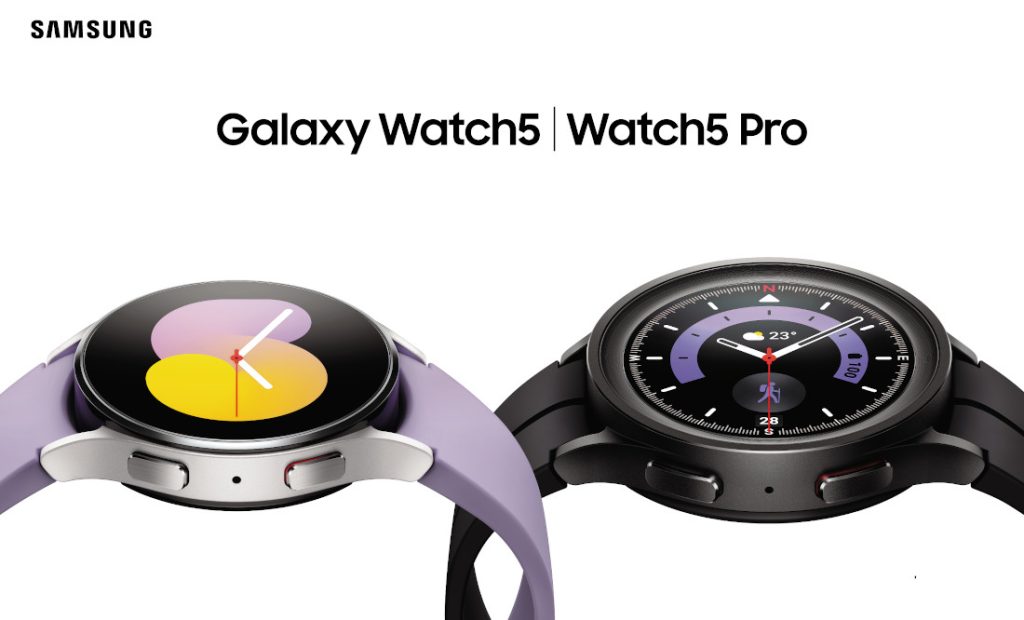
Recently, at the Galaxy Unpacked event, Samsung took the wraps off of its Galaxy Z Fold 4, Galaxy Z Flip 4, Galaxy Watch 5 series, and the Galaxy Buds 2 Pro. The South Korean brand had announced the prices of all the devices for international markets. Now the Galaxy Watch 5 series pricing and availability for the Indian market have been revealed. The latest generation smartwatches are slightly expensive in the country compared to their international counterparts.
Samsung Galaxy Watch 5 series price in India
The Samsung Galaxy Watch 5 is offered in Graphite, Pink Gold, Sapphire, and Silver colours. Its 40 and 44mm Bluetooth version is priced at Rs 27,999 and Rs 30,999 whereas the LTE version of the same dial sizes is priced at Rs 32,999 and Rs 35,999.
The Galaxy Watch 5 Pro model is available in Black Titanium and Gray Titanium colours. Its 45mm Bluetooth and LTE model carry a price tag of Rs 35,999 and Rs 49,999. The Samsung Galaxy Watch 5 series will be up for pre-orders from online and offline channels starting August 16th and sales commencing from August 26th.
Samsung Galaxy Watch 5 series specifications and features
The Samsung Galaxy Watch 5 and Watch 5 Pro feature 1.2 and 1.4-inch sAMOLED displays respectively with sapphire glass for protection against scratches and damages. The smartwatches come with an always-on display and customisable watch faces.
In terms of design, the Galaxy Watch 5 is equipped with an armoured aluminium casing whereas the Pro model has titanium chassis that offers more durability. Both smartwatches are IP68-certified dust and water-resistant up to 5 meters. They are also MIL-STD-810H compatible.
On the health-centric front, the Galaxy Watch 5 series is equipped with an optical heart rate sensor, ECG, SpO2, advanced sleep tracker, and temperature sensor. The Bioelectrical Impedance sensor lets users monitor parameters like body fat percentage, skeletal muscle weight and more. The Watch 5 series offers support for tracking over 90 workout modes. The smartwatches also come with built-in GPS for tracking outdoor activities.
Under the hood, the Samsung Galaxy Watch 5 duo are powered by an Exynos W920 processor. The smartwatches pack 1.5GB RAM and 16GB onboard storage. They run on the latest OneUI Watch 4.5. The Watch 5’s 40 and 44mm variants are backed by 284 and 410mAh battery units whereas the Pro variant is powered by a larger 590mAh cell. Both smartwatches support magnetic fast charging that is claimed to provide 45 percent battery in 30 minutes.
The Samsung Galaxy Watch 5 series packs convenient features like Google Assistant, controlling smart home devices, Soundcloud, Deezer, Spotify support, and more accessibility features. Connectivity options on wearable devices include dual-band WiFi, Bluetooth 5.0, LTE, and NFC.
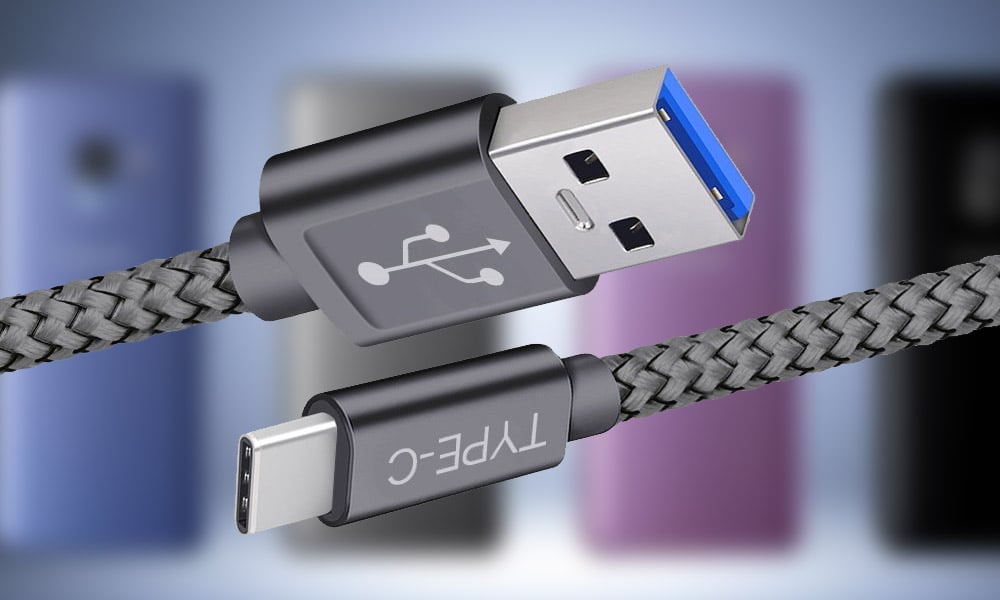
India might soon be adopting a policy similar to the European Union in terms of having a single common charging standard for mobile devices like smartphones, tablets, and certain other consumer electronic products.
According to a News18report, the government has apparently called a meeting for all industry stakeholders, which will be held on August 17. As per the PTI report, the government aims on holding a discussion to remove the use of different chargers. The primary intention behind this is to both reduce the burden on consumers and also prevent unnecessary electronic waste. This move by the Indian government would be in line with the standards being adopted by the European Union.
For those unaware, the EU has been pushing tech based brands to adopt a universal charging port standard with the USB Type C. This rule will be enforced by the year 2024 in the region and it appears that India plans on have adopting a similar mandate. As per the government official speaking to PTI, “If companies can serve in Europe and the US, why cannot they do it in India? Portable electronic devices like smartphones and tablets should have a common charger.”
At the moment, major smartphone brands like Xiaomi, Realme, Samsung, Motorola, OnePlus, and more have already adopted USB Type C port a while ago. However, Apple is the only top smartphones brand that has yet to adopt this standard as it still ships its products with its proprietary Lightning Port for the iPhone.
We had recently covered on a report regarding the Indian government possibly banning smartphones made by Chinese brands that are priced under 12,000 INR (roughly 150 US Dollars) in the Indian smartphone market. But now, a new report has hinted that this might not be the case anymore.
Lava Blaze
For those unaware, the earlier report talked about government officials stating that the move to ban cheaper smartphones from China is to better promote local brands and help them gain a stronger standing in the Indian market. At the moment, handsets made by Chinese OEMs are the most popular models in the region. But it appears that the might not be put into effect. According to a CNBC TV18 report, the government has no immediate plans for such ban as of right now.
The report further adds that even if such a ban is conceptualized by the government, actually enforcing it is a different task entirely. It won’t be so easy and an industry expert claims that three out of every 10 smartphone sold in India is priced under 12,000 INR. And in this price segment, 78 percent of all smartphones sold are made by China based brands. This basically means that these Chinese brands have a dominance in this category of handsets.
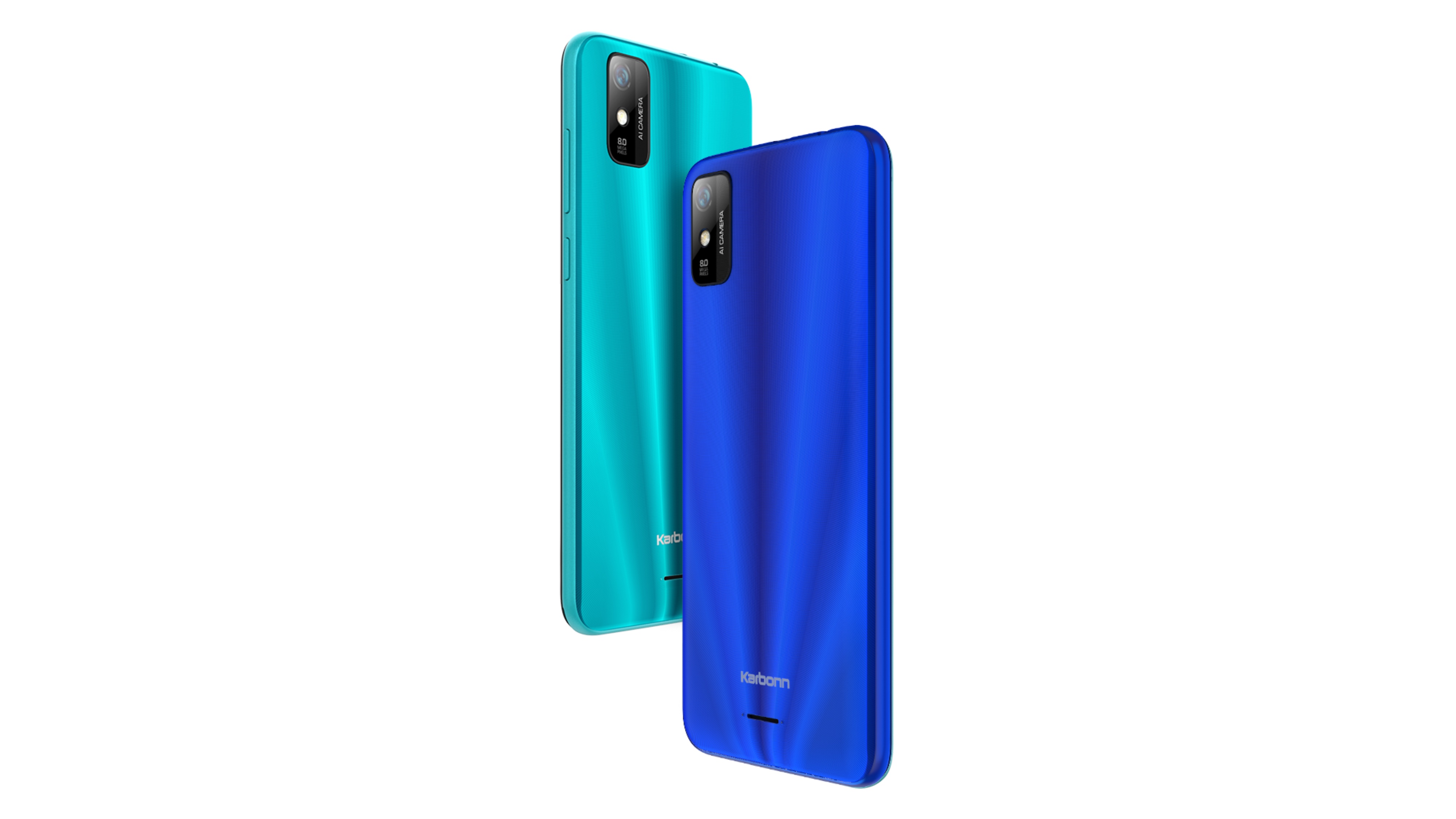
Karbonn X21
On the other hand, brands from the US like Apple, and South Korean tech giant Samsung account for just 20 percent of the Indian market. So, a bit more than just 1 percent of all smartphones sold in India are from Indian companies, like Micromax, Lava, and Karbonn. Thus, it won’t be surprising if the Indian government actually has plans for the future to better even out the playing field for different brands.
A new report has revealed that at least one former employee of Twitter has been accused of helping a Saudi Arabia spy. Apparently, this person is also facing possible prison time as well in the US.
According to a Bloombergreport, an ex Twitter worker has allegedly been helping Saudi Arabi spy on critics. Furthermore, a jury in San Francisco has convicted US resident Ahmad Abouammo of serving as an agent for Saudi Arabia. The jury also accused the person of falsifying records, money laundering, and conspiracy to commit wire fraud. As per the prosecutors, Abouammo took bribes from a key aide to Saudi Crown Prince Mohammed bin Salman, Bader Al Asaker back in 2015.
These bribes were taken in exchange for sensitive account info that could be used to track and silence dissidents. In other words, he leaked information to help bury protestors. In his defense, the former media partnership manager said that he was only doing his job. Although, the prosecution uncovered evidence of Abouammo received Hublot watches from the aide worth a whopping 300,000 US Dollars and 20,000 US Dollars.
As of right now, Abouammo is facing a sentence of around 10 to 20 years in prison. Meanwhile, he and his legal team have declined to comment on the matter. Notably, this case highlights concerns regarding the potential for staff that are working at social media giant platforms. These workers potentially have the power to abuse account information, despite companies like Twitter claiming that employees have limited data access.
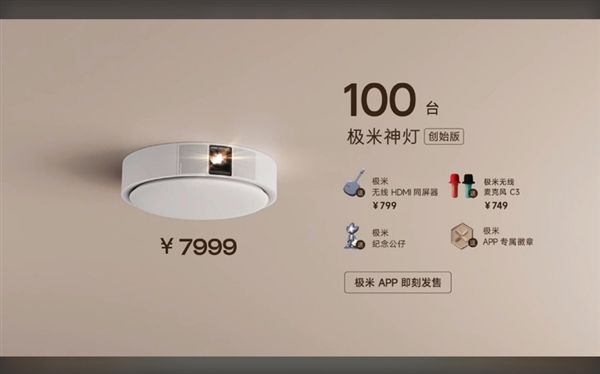
XGIMI still remains a not too popular brand in the global market but the company has been churning out innovative products, especially projectors worthy of recognition. The company has now launched the XGIMI Magic Lamp, a unique-looking projector that also functions as a ceiling lamp and a smart speaker.
The XGIMI Magic Lamp is presently available in China and comes with some great features. The new ceiling projector is capable of a 0.71 transmittance ratio and can project images up to 100 inches from 1.5 meters. The projector has a 1080p resolution and brightness of 900ANSI lumens.
You can install several apps on the ceiling projector to watch streaming media content or use a LAN to play content. XGIMI is also offering a wireless HDMI screen projector for connecting game consoles, computers, and other equipment. The projector can also function as a ceiling lamp. It uses 176 LED lamp beads with intelligent dimming for daily use. The built-in Harman Kardon sound system in the Magic Lamp outputs crisp audio via two 8W speakers. The sound system supports Dolby Audio and DTS dual decoding technology. The device can be used as a smart speaker.
The XGIMI Magic Lamp was launched as a limited-edition model. There were only 100 units of the projector that are up for sale. The XGIMI Magic Lamp is available from the company’s website and is priced at 7,999 yuan (~$1,186).
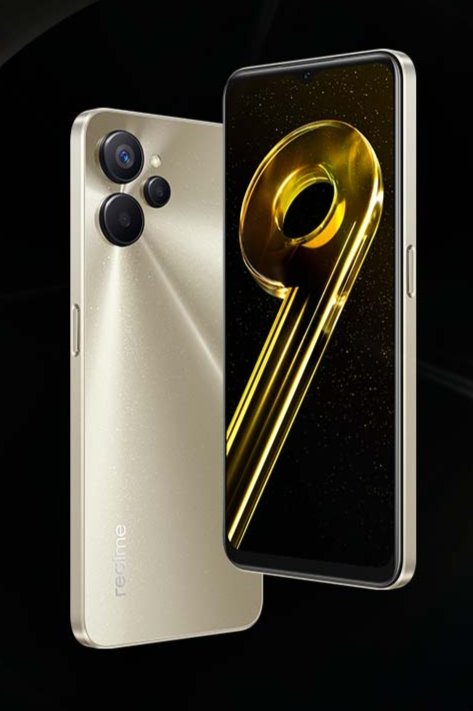
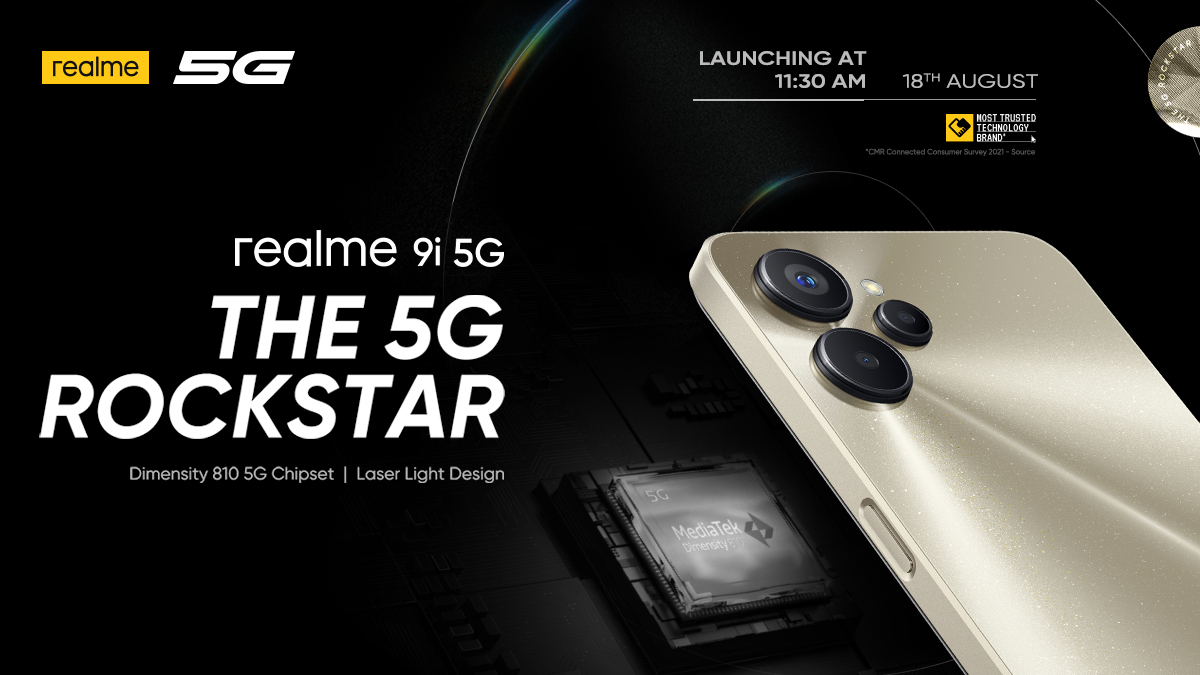
Realme has announced that it will launch the Realme 9i 5G smartphone in India on August 18th. The brand has already teased the design of the device along with some of its specifications.
Now, tipster Sudhanshu Ambhore has revealed the complete renders and color options of the Realme 9i 5G. So, let’s take a look.
Realme 9i 5G renders
1 of 2
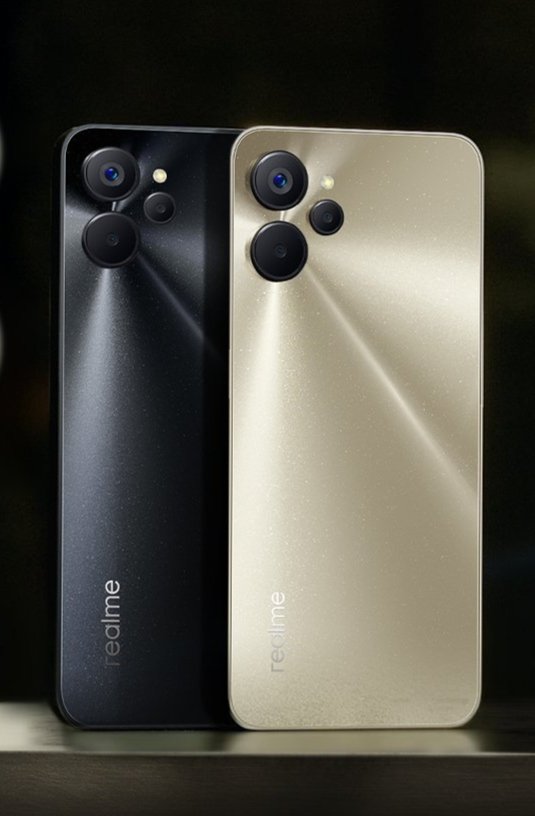
Looking at the design, the device has a flat back panel with a triple camera setup at the back and a laser light design. The device also has flat edges. On the right side, it has a power button that appears to have an integrated fingerprint scanner and the volume rocker is likely on the left side. The tipster reveals two color options namely Black & Gold.
Up front, the smartphone has slim bezels going around the display and it features quite a sizable chin. Another revelation is the front camera module which is housed in a dew-drop notch. So far, the only thing confirmed about the smartphone is that it will feature a Dimensity 810 chipset.
Coming to rumors, the device is reported to come in 4GB or 6GB RAM variants and 64GB or 128GB. It is also rumored to launch with a large 5,000mAh battery pack as well.
The Realme 9i 5G will be priced between Rs. 10,000 ($126) and Rs. 15,000 ($190). Realme’s Madhav Sheth had previously provided this indication, though he was silent on the specific phone. In India, the Realme 9i costs a maximum of Rs. 15,999 ($202).
There are going to be three smartphone launch events next week. All of them will be hosted by different brands. Two of them will take place in India, while the remaining one is meant for multiple international markets.
The companies that are involved in releasing phones in the next few days are Poco, Vivo, and Realme. All of them will be debuting a single handset each.
With that out of the day, let’s take a look at all the smartphones launching next week.
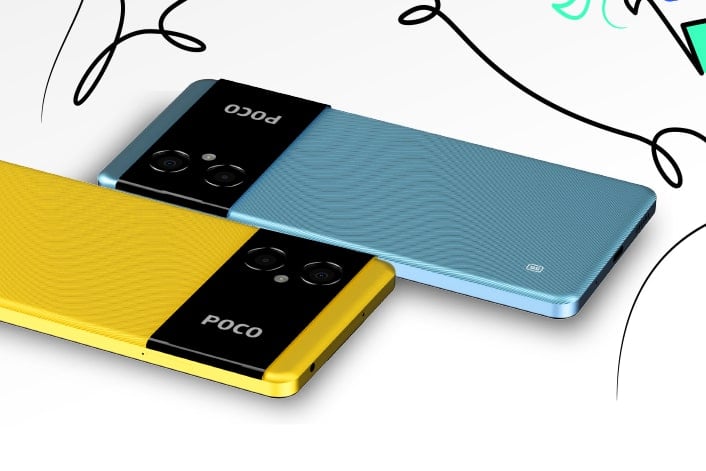
The Poco M4 5G is making its international debut on August 15. The device will be announced in a live stream scheduled for 6 PM GMT+8 on YouTube.
Since the handset is already official in India, we know everything about it. It comes with a 6.58-inch FHD+ 90Hz display (LCD), MediaTek Dimensity 700 SoC, 50MP (wide) + 2MP (depth) dual-camera system, 8MP selfie camera, 5,000mAh battery, 18W charging support, and more.
The smartphone is essentially a rebranded Redmi Note 11E with a different rear design and a better selfie camera.
2. Vivo V25 Pro
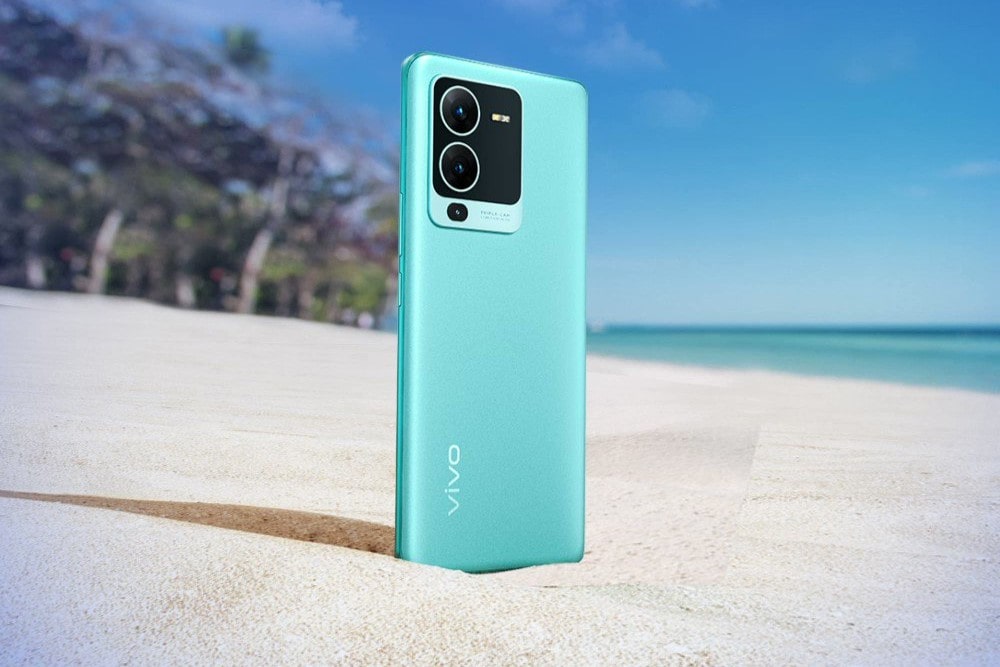
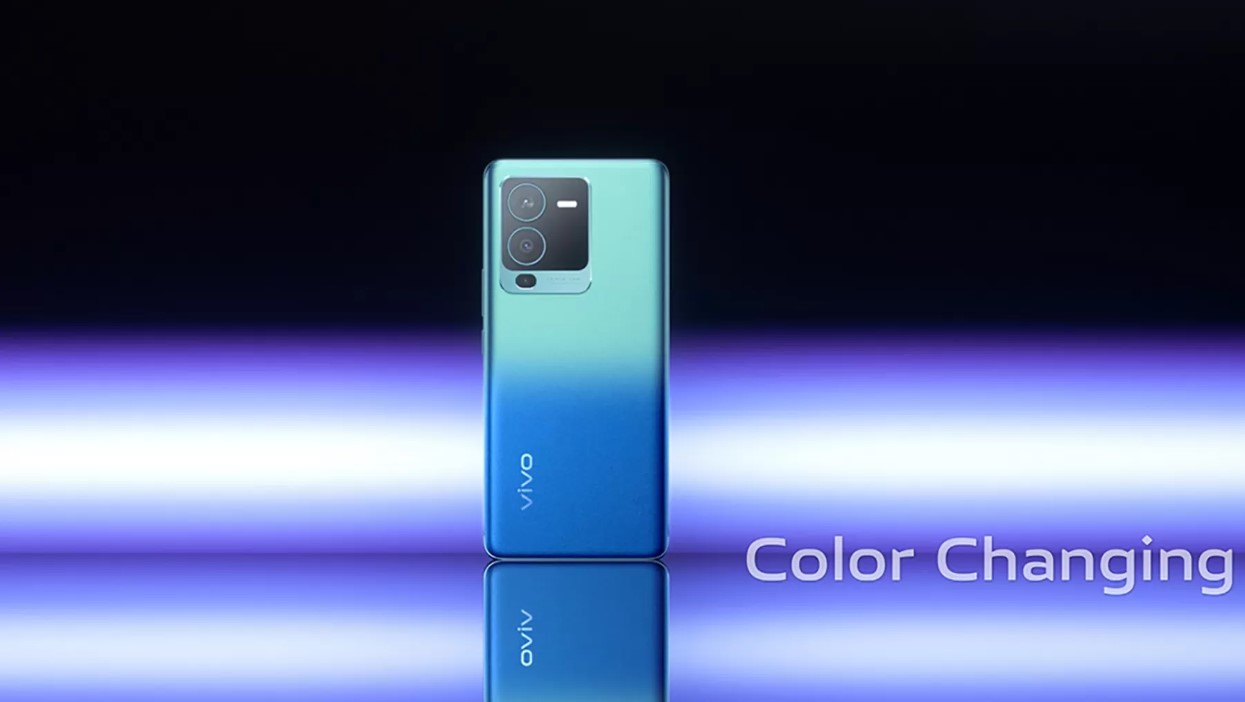
The Vivo V25 Pro will launch in India on August 17. It will be presented in a YouTube live stream planned for 12 PM IST.
According to teasers and leaks, the handset will arrive with a color-changing fluorite AG glass back panel, just like its predecessor Vivo V23 Pro. It will offer features like a 120Hz curved OLED display, MediaTek Dimensity 1300 SoC, OIS-assisted 64MP main camera, 4,830mAh battery, 66W fast charging support, and more.
The device could be accompanied by Vivo V25 with Mediatek Dimensity 900 chip, flat display, and more.
3. Realme 9i 5G
The Realme 9i 5G is scheduled to launch in India on August 18. The budget 5G smartphone will be unveiled in a YouTube live stream that will begin at 11:30 AM IST.
As per leaks and teasers, the device will feature a MediaTek Dimenssity 810 chipset and a flat frame design. It will be available in black and gold color options.
Last but not least, it is said to cost below ₹15,000.
Over the last few days, there have been a number of launches in the smartphone market. The Samsung Galaxy Z Fold 4 and Galaxy Z Flip 4 was one such major announcement. But it appears that Google is not too far behind either.
We hear there are some math wizards on #TeamPixel 👀✨
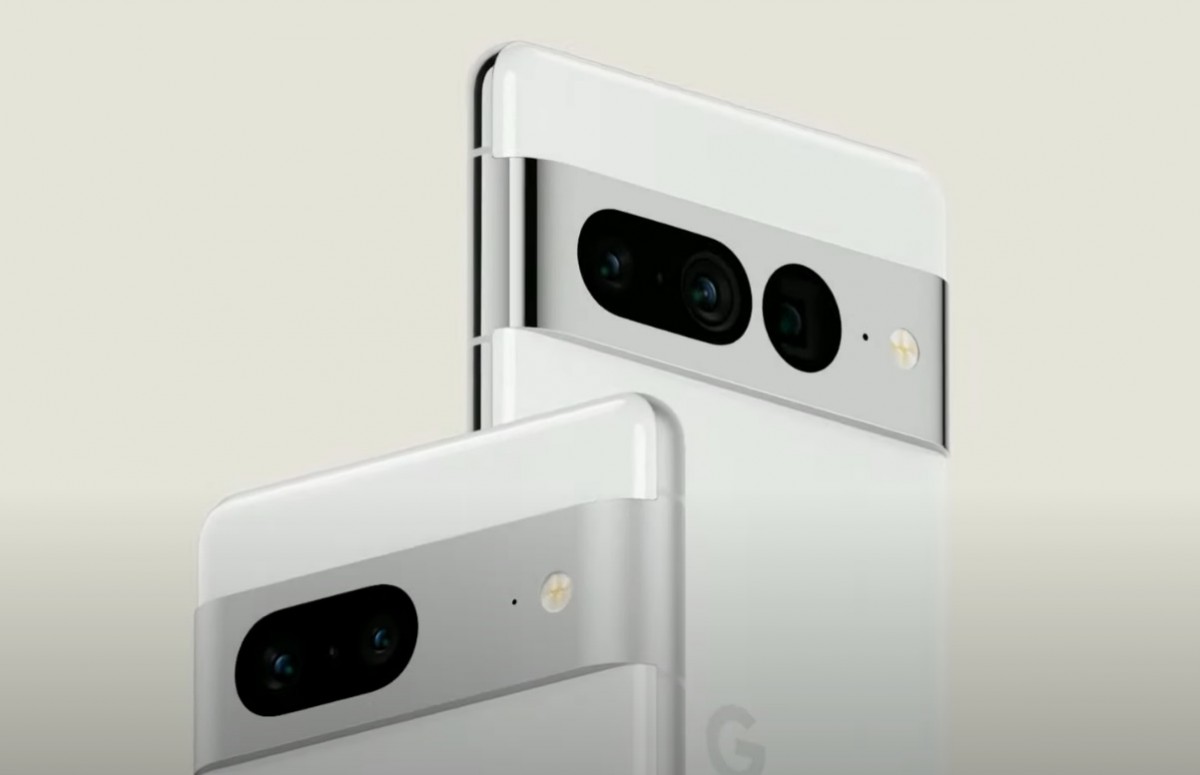
Months ago, the Search Engine giant had offered us a glimpse of the Pixel 7 series of flagship smartphones. However, it did not reveal any finer details or information regarding its launch date. But recently, it seems that the company might have offered us hints at its possible launch month timeline in a recent post on Twitter. Looking at the tweet, the brand had shared an image in which we can see a couple of different Pixel series smartphones in a math equation.
The image includes (in order) the Pixel 3, Pixel 6, Pixel 3, and the first ever Pixel phone. So taking away the Pixel branding and solely focusing on the number, we get the equation of 3 x 6 – 3 ÷ ⅓ x 1. Solving this simple arithmetic problem, we get the answer of number 9. While the company did not specify what the solution would stand for, it seems highly likely that it is related to the Pixel 7 series. Furthermore, the number 9 could also specify the launch month of the smartphone, with the ninth month of the year being October.
Previously, we had covered another rumor which claimed that the Pixel 7 series will be launching October 9, while its availability will begin around October 13. So, it appears that the official teaser is in line with our older report. Keep in mind that this is still an unconfirmed speculation as of right now, so take this report with a pinch of salt and stick around for more updates.
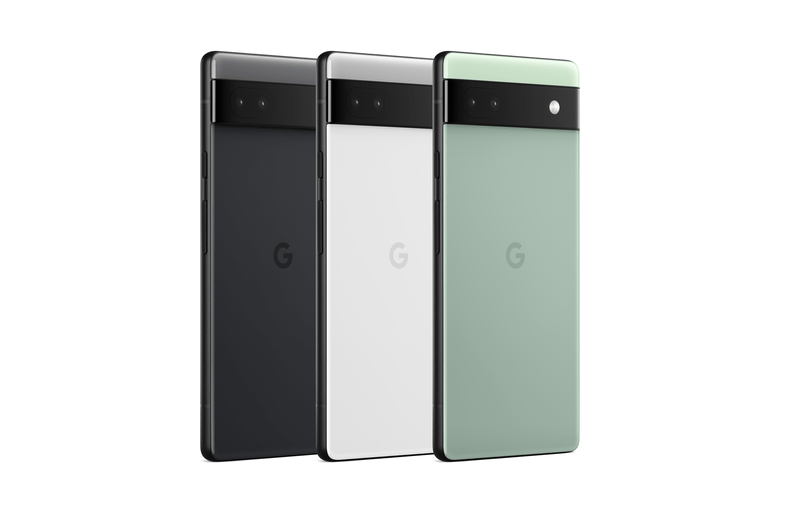
The Google Pixel 6a launched as the more affordable entry in the Pixel 6 series of smartphones. While it did arrive with some watered down specs, it appears that one of its features was software locked due to its lower price tag.
One of the major downgrades that people complained about was the lack of a high refresh rate display. The Pixel 6a sports a 6.1 inch OLED display that has a standard 60Hz refresh rate as per official notes. In comparison, the Pixel 6 sports a 6.4 inch OLED panel that has a 90Hz refresh rate. So, the display was one of the ways the company cut corners to lower the price tag, with other downgrades being in the camera department as well.
However, it appears the 60Hz display on the Pixel 6a is not due to its hardware limitation, but one that the Search Engine giant put in place. Developer Nathan shared on Twitter (@TheLunarixus) that he has found that Samsung’s OLED panel on the Pixel 6a’s with a 120Hz refresh rate, and it can operate at a maximum refresh rate of 90Hz. In other words, the feature was capped by Google on purpose.
The reason for this is quite simply actually. The Pixel 6 starts from 599 US Dollars, while the Pixel 6a starts from 449 US Dollars. The downgrade was to incentivize the 150 US Dollar higher price tag since both models feature the same proprietary Tensor chipset, the same design, and even mostly similar camera specs. Furthermore, the Pixel 6a has a smaller battery capacity that last year’s Pixel 5a and even the Pixel 6a, so the lower refresh rate helps save battery and even pushes people to go for the more expensive entry in the series.
Apple AirPods lineup is one of the most popular true wireless earphones series globally, and the company is dominating the market in this segment. The company regularly launches a new version of the AirPods to remain the market leader.
The company is expected to launch the second-generation of Apple AirPods Pro later this year but ahead of that, some key details about the Apple AirPods lineup’s charging case have surfaced online.
As per the latest report from analyst Ming Chi-Kuo, all the Apple AirPods models will come with a charging case having a USB Type-C for charging. So far, the company is offering its own proprietary Lightning port on the AirPods case.
It is not yet known if the upcoming Apple AirPods Pro, which is expected to go official in the coming months, will feature a USB-C port or not. There are rumors indicating that Apple may launch a case with USB-C next year for the AirPods Pro.
For those who are unaware, Apple is also expected to offer USB-C charging port on all the Apple iPhone models coming in 2023, along with all the iPad models. This is because of the ruling by European Union making USB-C the standard charging port for all devices.
Xiaomi’s flagship device for 2022, the Xiaomi 12S Ultra, brought ultra-premium features for an ultra-premium price of 5,999 yuan (~$890). However, not everyone is looking to spend $900 on a smartphone. And for people wanting a budget flagship, Xiaomi’s independent brand, Redmi has a new model on offer – the Redmi K50 Ultra. Like its predecessors, the phone brings flagship-grade specs at a mid-range starting price of just 2999 yuan ($445).
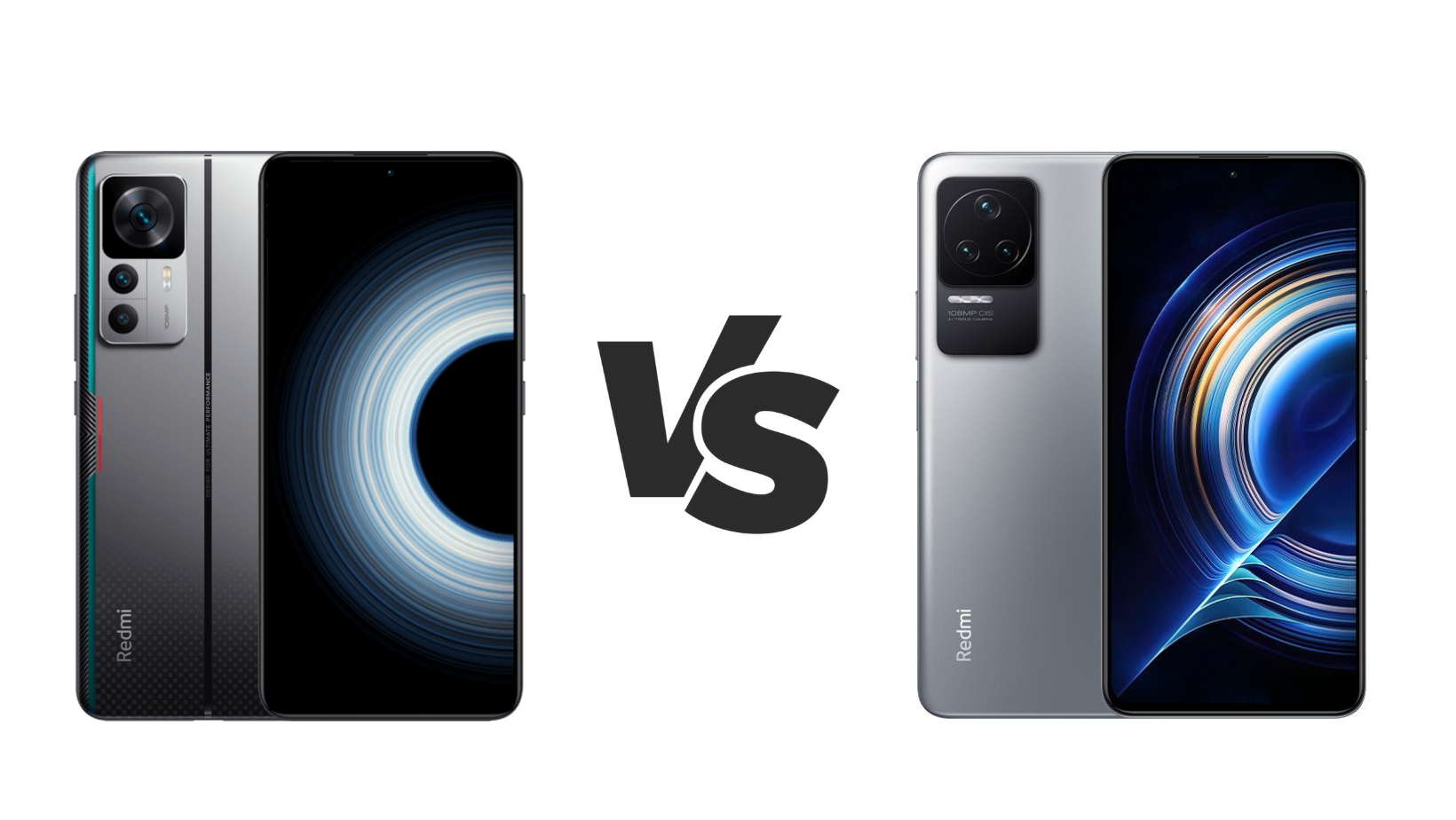
Given that there’s a new model in the K50 series, let’s take a quick look at how the new Redmi K50 Ultra differs from the Redmi K50 Pro model that was announced a few months back.
Triple 108 + 8 + 2 MP, f/1.8 + f/2.2 + f/2.4
20 MP front camera
Triple 108 + 8 + 2 MP, f/1.8 + f/2.2 + f/2.4
20 MP front camera
BATTERY
5000 mAh, fast charging 120W
5000 mAh, Fast Charging 120W
ADDITIONAL FEATURES
5G, dual SIM
5G, dual SIM
Redmi K50 Ultra vs K50 Pro
Design
Although the Redmi K50 Ultra was announced a few months after the K50 Pro, the basic form factor of the two devices remain the same. They measure around 8.55mm in thickness and weigh around 201 grams. Both the phones feature rounded corners with a subtle curve at the back for better grip. The texture is also similar, which is smooth and matte-like. Even the fingerprint sensor is side mounted on the two models.
However, they differ in terms of the color options available, along with subtle changes.
The Ultra model comes in black, grey, light blue colours. There’s also a special AMG edition in dark grey with green accents. On the other hand, the K50 Pro comes in green, grey, blue colours, along with a special black edition.
There are also other subtle differences between the two devices. For example, the new K50 Ultra has a narrower camera module, with the camera sensors aligned vertically. The Pro model uses a circular camera module to house all of its three sensors.
Although the two phones have similar designs, the subtle changes make the Redmi K50 Ultra feel more modern and premium, giving it a slight edge in this department. If you are a fan of Mercedes AMG Racing, then the AMG edition would be an obvious choice to buy, despite its marked up price tag.
Display
The two models have near identical displays featuring a 6.67-inch panel with 120Hz refresh rate, 480Hz touch sampling rate, Dolby Vision, and HDR10+ support. However, if you noticed, we didn’t mention the resolution in the common features. That’s because the Redmi K50 Ultra comes with a 1.5K resolution 2712 x 1220 display instead of the 2K 1440 x 3200 (WQHD+) resolution on the K50 Pro.
The drop in resolution on the higher-end Ultra model is definitely surprising but the difference shouldn’t be significant in real life. So, you can’t go wrong with either of these devices when it comes to the display department.
Specs & Software
The K50 Ultra features the fastest processor from Qualcomm’s stable in 2022, the Snapdragon 8+ Gen1 SoC. In comparison to the MediaTek Dimensity 9000 found inside the K50 Pro, the Ultra definitely gets the advantage when it comes to sheer power. We have tested out the Snapdragon 8+ Gen1 in multiple phones and we were left impressed its overall performance, including sustained gaming.
As for the memory options, both the models max out at 12GB of RAM and up to 256GB of storage. Clearly, performance shouldn’t be a major issue on both these models, especially the K50 Ultra, even for high-end gaming.
Given that these are two models from the same K series lineup, they both run on Android 12 based MIUI OS.
For the best performance, the K50 Ultra is an easy choice in this comparison.
Camera
The camera setup remains the same on both the Redmi K50 Pro and the K50 Ultra models. They both feature a 108MP high-resolution primary camera with OIS, another 8MP ultra-wide angle shooter with 119˚ field of view, and a basic 2MP f/2.4 macro camera.
If you want to know how these three cameras perform in real life, check out our review of the Redmi K50 Pro here.
While the two phones have identical camera hardware, the chipsets inside will influence the final output of the pictures and videos. We have traditionally seen Snapdragon chips churn out better camera samples than its MediaTek counterparts and we expect the same to be the case with the K50 Ultra. So, the Ultra model could capture better images than the Pro model. However, only a real life camera comparison would reveal the true performance of their cameras.
Battery
Both phones come with 120W fast charging technology with 5000mAh battery capacity. Given their fast charging speeds and relatively large batteries, you don’t have to worry about battery life. Both support QC3+ / PD2.0 / PD3.0 fast charging protocols.
Unfortunately, given their affordable status, both the Redmi devices don’t support Wireless Charging.
Price
The newly announced Redmi K50 Ultra starts at 2999 yuan ($445) in China but is already available via retailers like Giztop. On the other hand, the Redmi K50 Pro can be bought globally via sites like Giztop and Aliexpress for around $500.
The Redmi K50 Ultra is placed a level higher than the Pro model, so if you want the best performance and features, it makes sense to go for the new Ultra model. On the other hand, the Redmi K50 Pro is still a pretty good purchase if you can get it for under $500 globally. It comes with an efficient yet powerful Dimensity 9000 chipset with 2K resolution display and a similar camera setup.
But if you are getting the Ultra for a few dollars more, it makes complete sense to get the newer model with Qualcomm’s most powerful chipset.
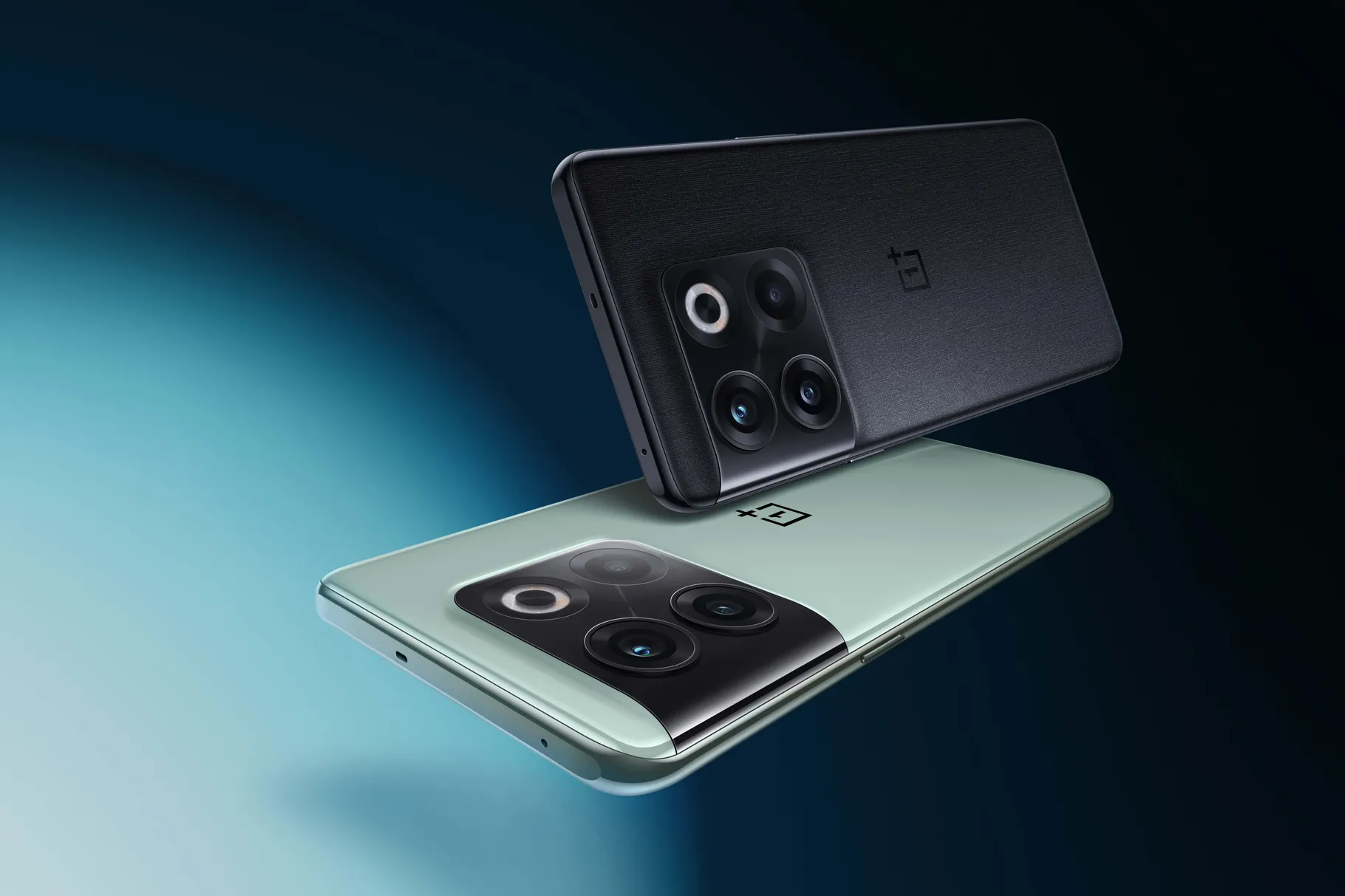
The OnePlus 10T was launched just a couple of days ago. And now, in a matter of a week, the company has began rolling out the first ever software update for the smartphone to bring improvements as well as bug fixes.
For those unaware, the OnePlus 10T is the brand’s second flagship model for this year and it arrives with top notch specifications. It has just began receiving the firmware version CPH2413_11_A.05 that is currently available in the India region. The Chinese smartphone maker also took to its OnePlus Community forums to make an official announcement while also sharing the list of all the improvements in the software update and even optimizations.
Now, the handset will have a more optimized start up speed and improved network stability. Furthermore, the company has also optimized the shooting effect for the camera app to help improve the user experience. Notably, there have also been bug fixes like the occasional issue of the camera displaying abnormally in specific scenarios. As per official notes, this is just an incremental update so it might not be available for everyone OnePlus 10T user at the moment. Although, we can expect the update to see a broader roll out in the next few days.
Talking about the smartphone itself, it sports a 6.7 inch FHD+ AMOLED display that has a 120Hz refresh rate. Under the hood, the device is equipped with a Snapdragon 8+ Gen 1 SoC that is paired with up to 16GB of LPDDR5 RAM and up to 256GB of UFS 3.1 internal storage. The rear packs a 50 megapixel triple camera setup and the handset is powered by a large 4,800mAh battery pack that supports an impressive 150W fast charging support.
Late last month, India banned Krafton’s Battlegrounds Mobile (BGMI) game in accordance with Section 69A of the country’s IT law. Meanwhile, Krafton, the developer of Battlegrounds Mobile India (BGMI), announced on Thursday that it is working closely with Indian authorities in response to the ban on the country’s most popular Battle Royale game, which has over 100 million users.
Kraft CFO Bae Dong-geun stated during the company’s quarterly results call that the company appreciates and understands the Indian government’s concern. After the government ordered Google and Apple to prohibit BGMI from their respective App stores, a few gaming companies wrote to Prime Minister Narendra Modi asking for “fair treatment” to support the development of the nation’s gaming ecosystem.
“In the second quarter, we increased paid content offerings, extended offline cooperation in the local market, and widened the user base to deliver a battle royale experience exclusive to BGMI,” Dong-geun added.
The ban from last week has forced the postponement of the second season of the Esports Premier League (ESPL). There have been rumors that the ban was imposed because of a “China connection.” Addressing this situation, Bae Dong-geun said “We have been directly running the service based on stringent data security standards and monitoring. We will closely cooperate with the authorities to find ways for the users in India to keep enjoying BGMI”.
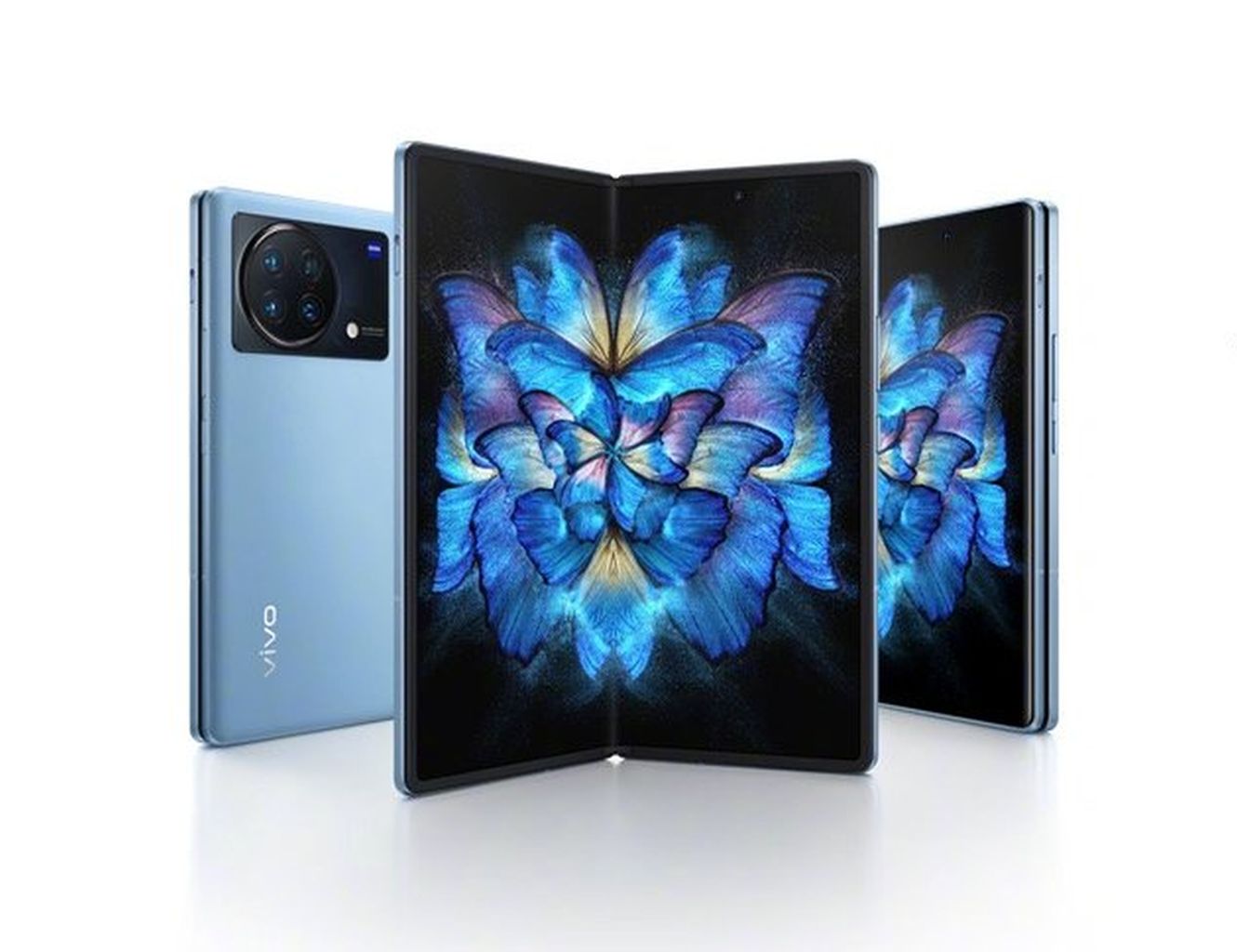
In April, Vivo unveiled the Vivo X Fold as the company’s first-ever foldable phone. Rumors are rife that it is working on an updated version of the device, which will probably be released in the Chinese market with the Vivo X Fold S moniker. A Weibo user has shared a few key specifications of the device.
To recall, the X Fold that went official earlier this year featured the Snapdragon 8 Gen 1 SoC, 66W wired charging, and 50W wireless charging. There is a possibility that the X Fold S could be an incremental upgrade over the X Fold. Hence, it may borrow other specifications from the original model.
The Vivo X Fold has an 8.03-inch foldable LTPO AMOLED display that offers 1916 x 2160 pixels and a 120Hz refresh rate. It has a 6.53-inch AMOLED display on the front that offers 1080 x 2520 pixels and a 120Hz refresh rate. It has a 16-megapixel front camera and a 50-megapixel (main, with OIS) + 48-megapixel (ultra-wide) + 12-megapixel (telephoto)+ 8-megapixel (periscope telephoto) quad-camera unit. It draws power from a 4,600mAh battery.
A recent report revealed that iQOO is working on the iQOO Neo 7 for China. The device is expected to feature the Dimensity 9000+ chipset. According to tipster Bald is Panda, the device will feature the Sony IMX766V 50-megapixel main camera. The rest of its specifications will be identical to the IQOO 10 5G.
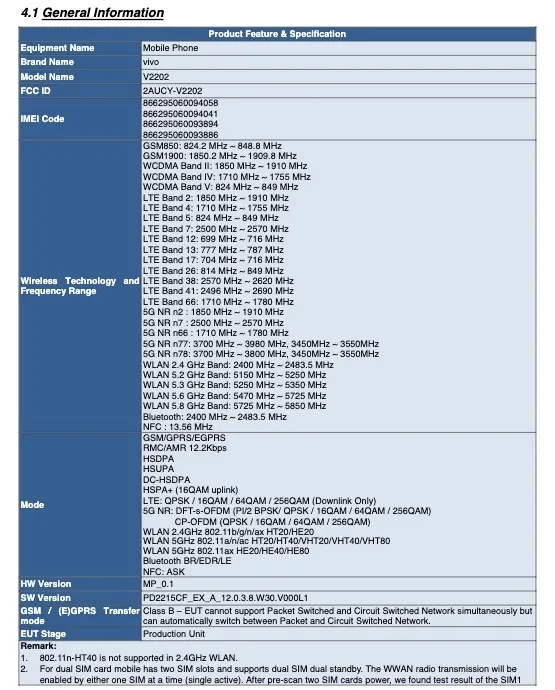
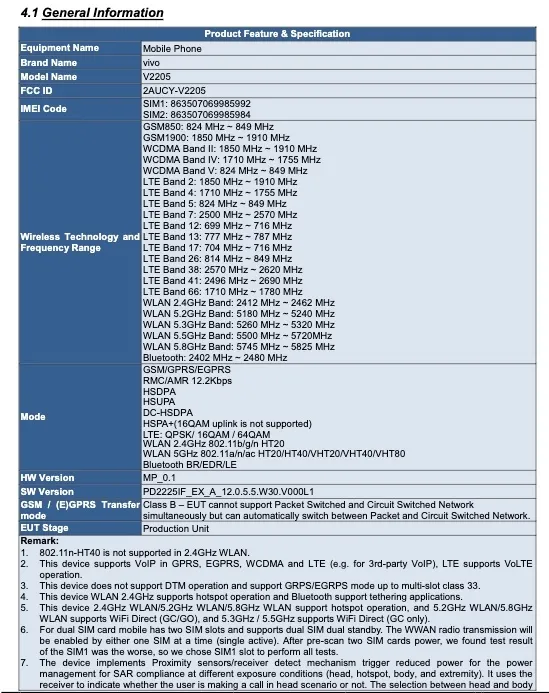
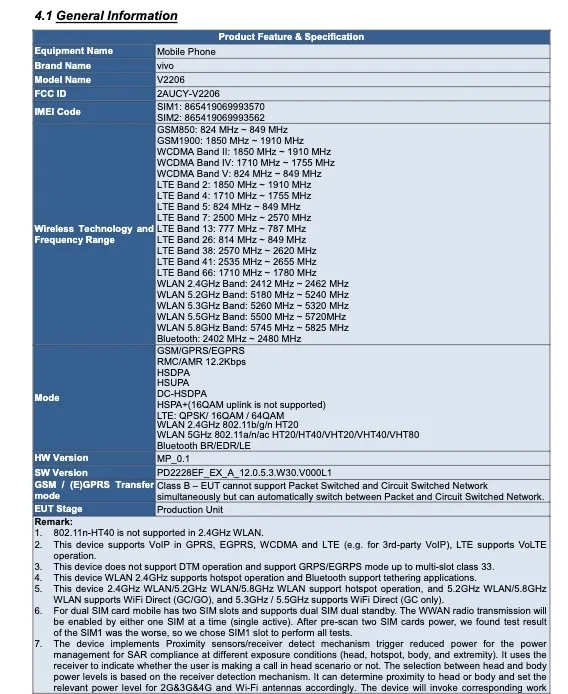
Vivo is gearing up to launch the Vivo V25 series smartphones in India starting with the Vivo V25 Pro on August 17th. Other than the V25 Pro, the company also has multiple other smartphones in the pipeline like the Vivo V25, Vivo Y22s, and Vivo Y35.
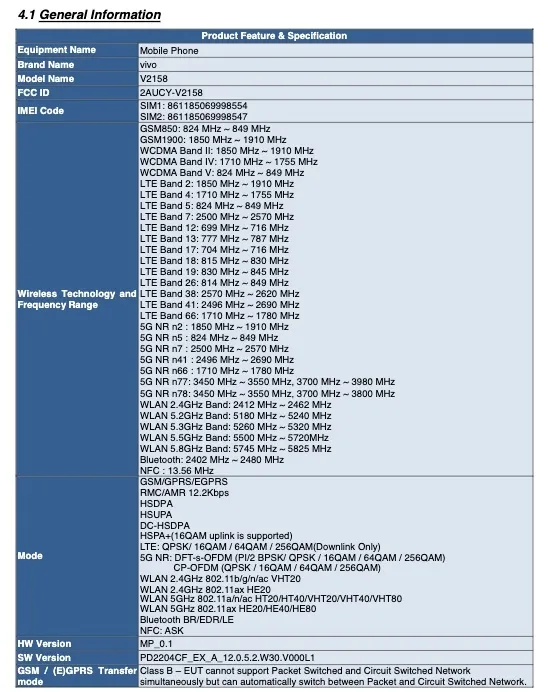
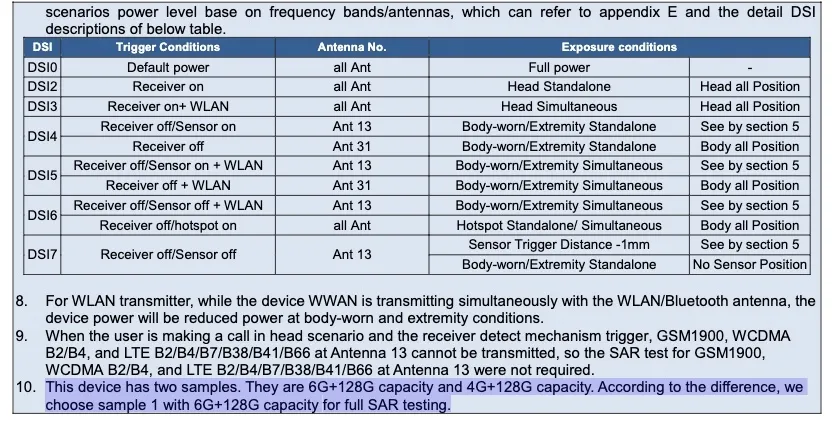
All of these above-mentioned devices along with the Vivo V25 Pro have been spotted on the FCC certification database hinting at an upcoming global launch. Let’s check out the details.
The FCC certification database has the Vivo V25 logged with the “V2202” model number. The Vivo V25 Pro has the “V2158” model number while the Y22s and Y35 smartphones have been spotted with “V2206” and “V2205” model numbers respectively. All four phones will have dual-band Wi-Fi and Bluetooth capabilities.
1 of 5
Other than that, the listing reveals that the Vivo V25 and the V25 Pro will have 5G support while the Y22s and Y35 will only offer 4G support. This is the extent of information disclosed by the listing, however, we already know about some of the specifications of these devices, which you can check out below.
Vivo V25 Pro and Vivo Y35 Specs
The Vivo V25 Pro, which will be available in India next week, will feature a MediaTek Dimensity 1300 processor and a triple rear camera setup. It will include a 64MP main camera with optical image stabilization (OIS) and a 4830mAh battery with 66W Flash charge fast charging support. The V25 Pro will have a 120Hz screen refresh rate and up to 8GB of Extended RAM, according to reports.
The Vivo Y35, on the other hand, was recently leaked and is said to have a Qualcomm Snapdragon 680 processor, a 6.58-inch FHD+ 60Hz display, and a 5,000mAh battery unit, and support for 44W FlashCharge fast charging. The Y35 is expected to have a 50MP primary camera and a 16MP selfie camera.
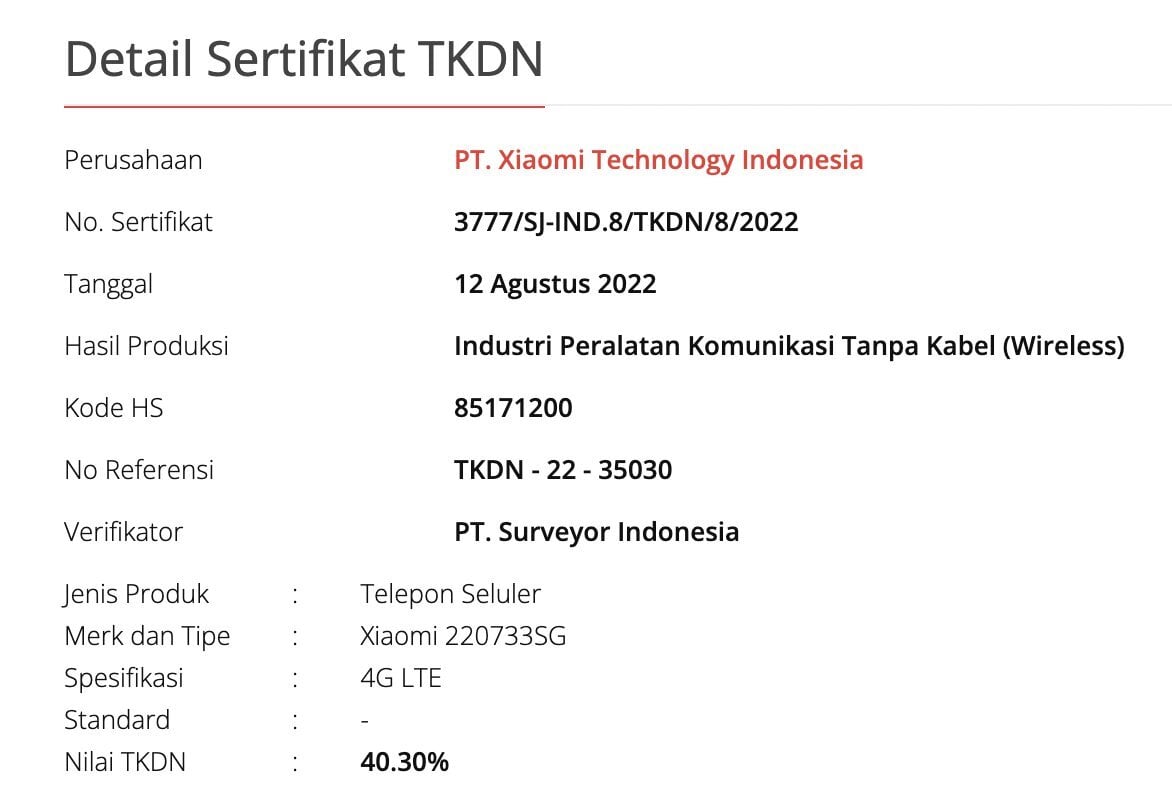
Redmi is reportedly gearing up to launch the new Redmi A1 in the global as well as Indian markets soon. In a new update, Redmi A1 has been spotted on Indonesia’s TKDN website with the model number 220733SG. Previously, the device made an appearance on multiple certification sites including BIS India, FCC, and Geekbench. It is expected to launch as an entry-level smartphone featuring a MediaTek Helio A22 processor.
According to a recent Tweet by noted tipster Mukul Sharma, a smartphone belonging to Redmi A series has been spotted on the TKDN certification website with model number 220733SG. The model number is said to belong to the Redmi A1 smartphone, which is said to make its debut soon in the global markets, including India. The listing did not reveal any details about the Redmi A1 except that it will be a 4G smartphone.
As mentioned, the device has also been spotted on BIS India, FCC, and Geekbench websites revealing some of its key specifications. It will likely be powered by the MediaTek Helio A22 chipset paired with 3GB of RAM. The Redmi A1 will run an Android-12-based OS out of the box.
Further, it is said to measure about 164.67mm in length and about 76.56mm in width. It could support 2.4GHz Wi-Fi and Bluetooth connectivity.
Moreover, the BIS India listing suggests that the Redmi A1 smartphone may sell in India as rebranded Poco device. The launch date and other details of the device are yet to be known. However, judging from the specs, it will be an entry-level smartphone priced under $150.
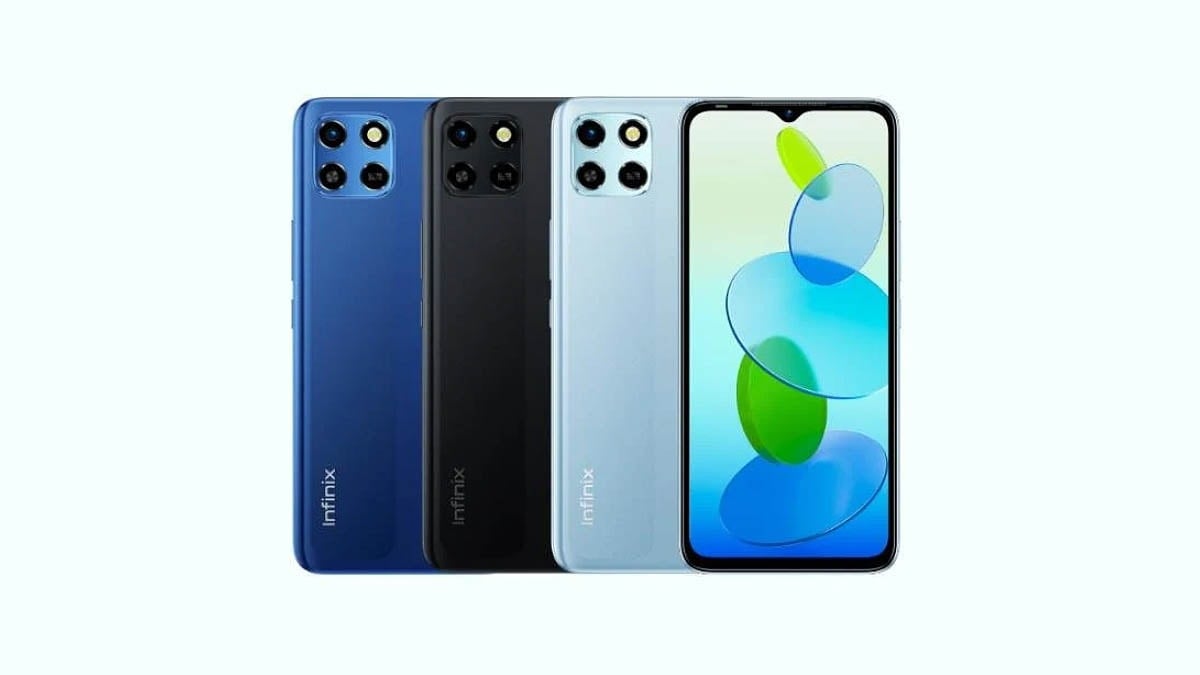
Earlier this week, the Infinix Smart 6 HD smartphone with MediaTek Helio A22 processor was launched in India. The smartphone will go on sale for the first time today in the country. So, let’s explore the Infinix Smart 6 HD’s launch offers, pricing, specs & more.
Infinix Smart 6 HD pricing, launch offers, availability
The Infinix Smart 6 HD will be available for purchase exclusively on Flipkart starting at 12:00 PM today. It has a price tag of Rs. 6,799 ($85) for the 2GB + 32GB configuration and will come in qua Sky, Force Black, and Origin Blue color options.
As for launch offers, customers purchasing the device using an Axis bank card will get 5% cashback.
Infinix Smart 6 HD specs
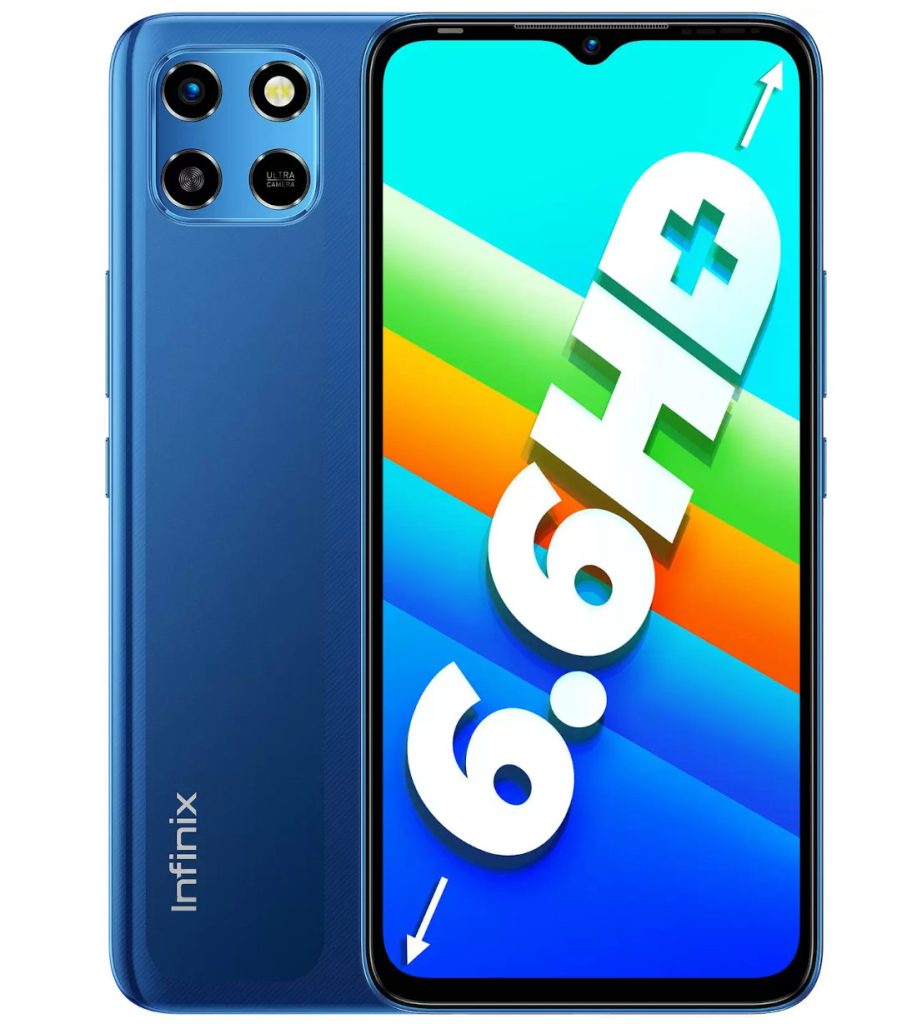
The Infinix Smart 6 HD has a 6.6-inch screen with an HD+ resolution and a waterdrop notch. It has a screen-to-body ratio of 89 percent and a brightness of 500 nits. There is no fingerprint scanner on the device. The phone has an 8MP rear camera with an LED flash and a 5MP front-facing selfie camera.
The Infinix Smart 6 HD is powered by a MediaTek Helio A22 processor. It has 2GB of RAM onboard as well as a 2GB expandable RAM feature. The internal storage is 32GB, but it can be expanded to 512GB via a microSD card slot. The smartphone comes pre-installed with the Android 11 Go edition. The Infinix Smart 6 HD is powered by a 5,000mAh battery that supports 10W charging.
Connectivity options on the Infinix Smart 6 HD include dual-SIM, dual 4G VoLTE, WiFi, Bluetooth, and a micro USB port.
Samsung unveiled the Galaxy Z Fold 4, the Galaxy Z Flip 4, the Galaxy Watch 5 Pro, and the Galaxy Buds 2 Pro earlier this week. At the beginning of this month, Samsung started receiving pre-reservations for the Z foldables in India. It has now started a new pre-reservation campaign in the country.
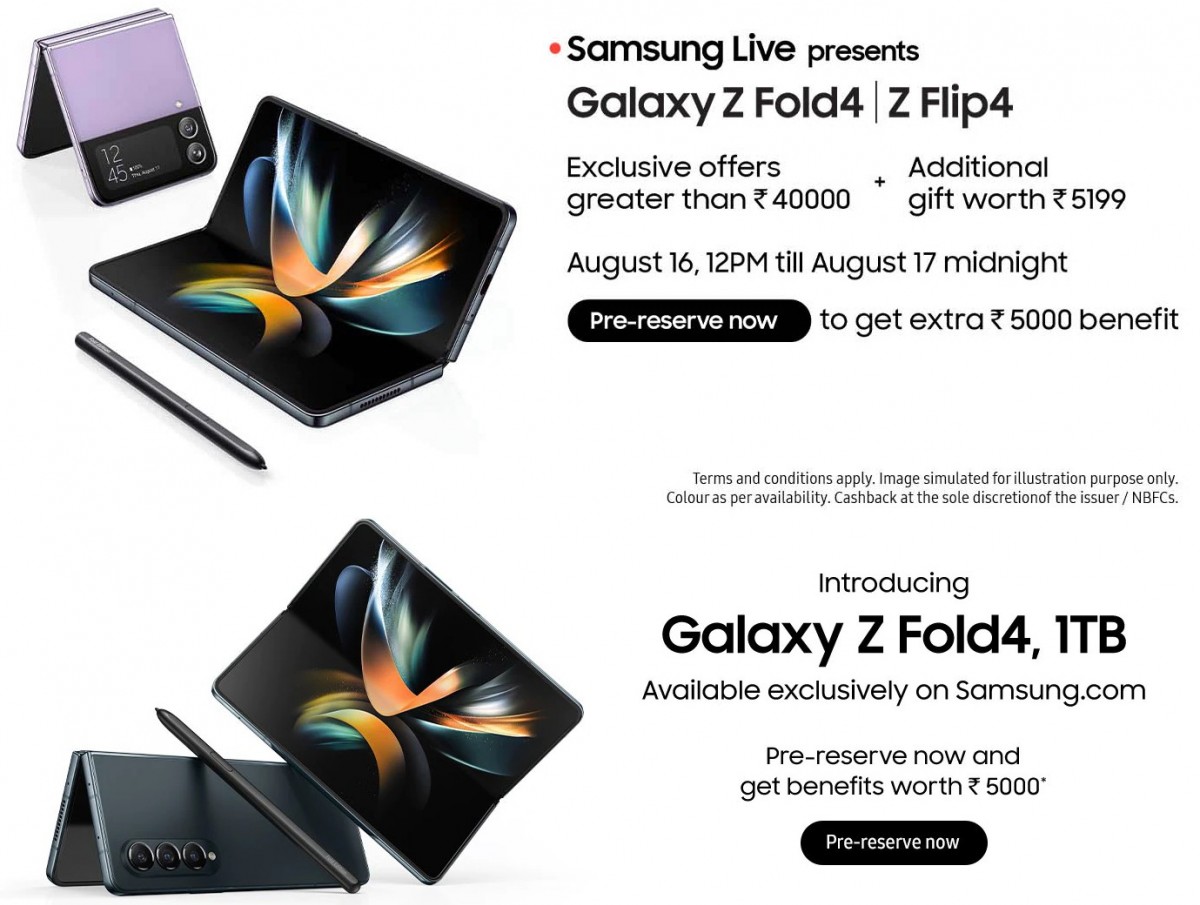
Those who pre-reserve the Galaxy Z Fold 4 or the Z Flip 4 will get exclusive benefits greater than Rs 40,000 (~$502). However, the pre-reservations page lacks detailed information on the offer. As can be seen in the image, the South Korean tech giant is also offering an additional gift worth Rs 5,199 (~$65). Those who pre-reserve now will get Rs5,000 (~$63) benefits in the form of a cover, a fast charger, and some accessories.
To take advantage of all the offers, buyers need to purchase the Galaxy VIP-Pass, which is priced at Rs 2,000. This sum will be deducted from the price of the Z Fold 4/Flip 4. Both devices will be available for purchase from Aug. 16 – 17.
The Galaxy Z Fold 4 and Z Flip 4 will be available for purchase through Samsung India’s online shop, e-commerce sites, and offline stores. Buyers should note that the 1 TB Galaxy Z Fold 4 and the Galaxy Z Flip 4 Bespoke Edition will be exclusively available on Samsung’s website.
The South Korean company is yet to confirm the price of the Galaxy Z Fold 4 and the Z Flip 4. It is expected to confirm the pricing before Aug. 16. The Galaxy Watch 5 series and the Galaxy Buds 2 Pro will also be sold in India. However, the prices of these devices haven’t been confirmed yet.
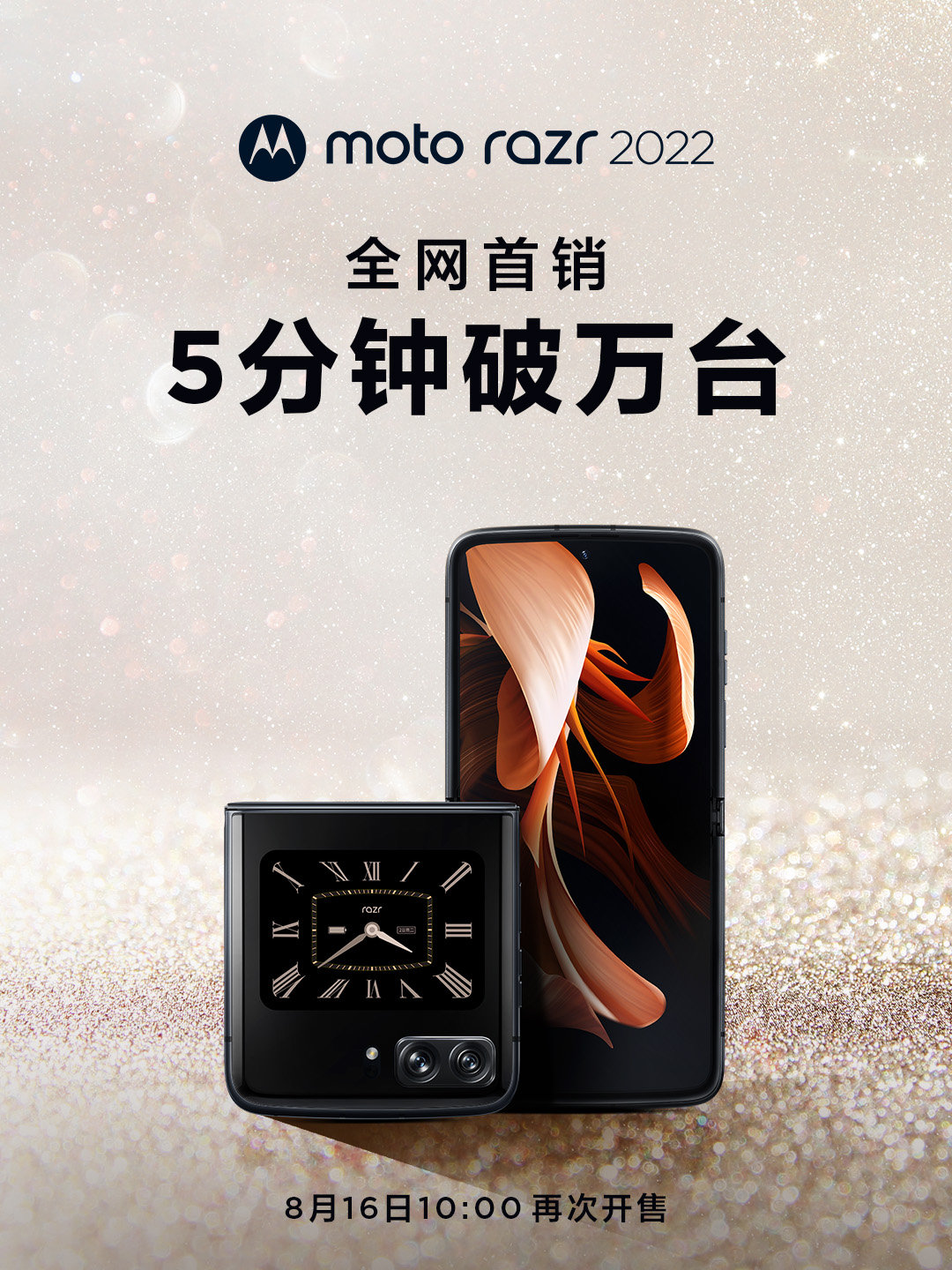
Yesterday, Motorola unveiled the Moto Razr 2022 clamshell flagship alongside the Moto X30 Pro and the Moto S30 Pro in China. The Razr 2022 was made available for purchase for the first time in the home market a few hours after the launch event. The Lenovo-owned brand has confirmed the first sales results of the Razr 2022.
As mentioned in the below poster, Motorola sold 10,000 units of the Razr 2022 in just 5 minutes in its first sale. For the unversed, the device has arrived with an impressive starting price of 5,999 Yuan (~890). Its closest rival is the Samsung Galaxy Z Flip 4, which carries a starting price of 8,499 Yuan (~$1,261).
The Razr 2022 is also expected to be released in the global market, but there is no official word on it yet. In China, it comes in three options, such as 8 GB RAM + 128 GB storage for 5,999 Yuan (~$890); 8 GB RAM + 256 Gb storage for 6,499 Yuan (~$965); 12 GB RAM + 256 GB storage for 7,299 Yuan (~$1,083). The device comes in black color only. The next sale of the Razr 2022 will be carried out on Aug. 16 in China.
Moto Razr 2022 specifications
The Razr 2022 has a 6.7-inch foldable P-OLED display that offers an FHD+ resolution, a 20:9 aspect ratio, and a 144Hz refresh rate. On the back, it features a 2.7-inch G-OLED display. It has a 32-megapixel front-facing camera, and a 50-megapixel (main, with OIS) + 13-megapixel (ultra-wide) triple camera unit.
The Snapdragon 8 Plus Gen 1 powers the device with LPDDR5 RAM and UFS 3.1 storage. It packs a 3,500mAh battery with 33W fast charging support. The device runs on the Android 12 OS with MyUI 4.0. For security, it has a side-mounted fingerprint scanner.
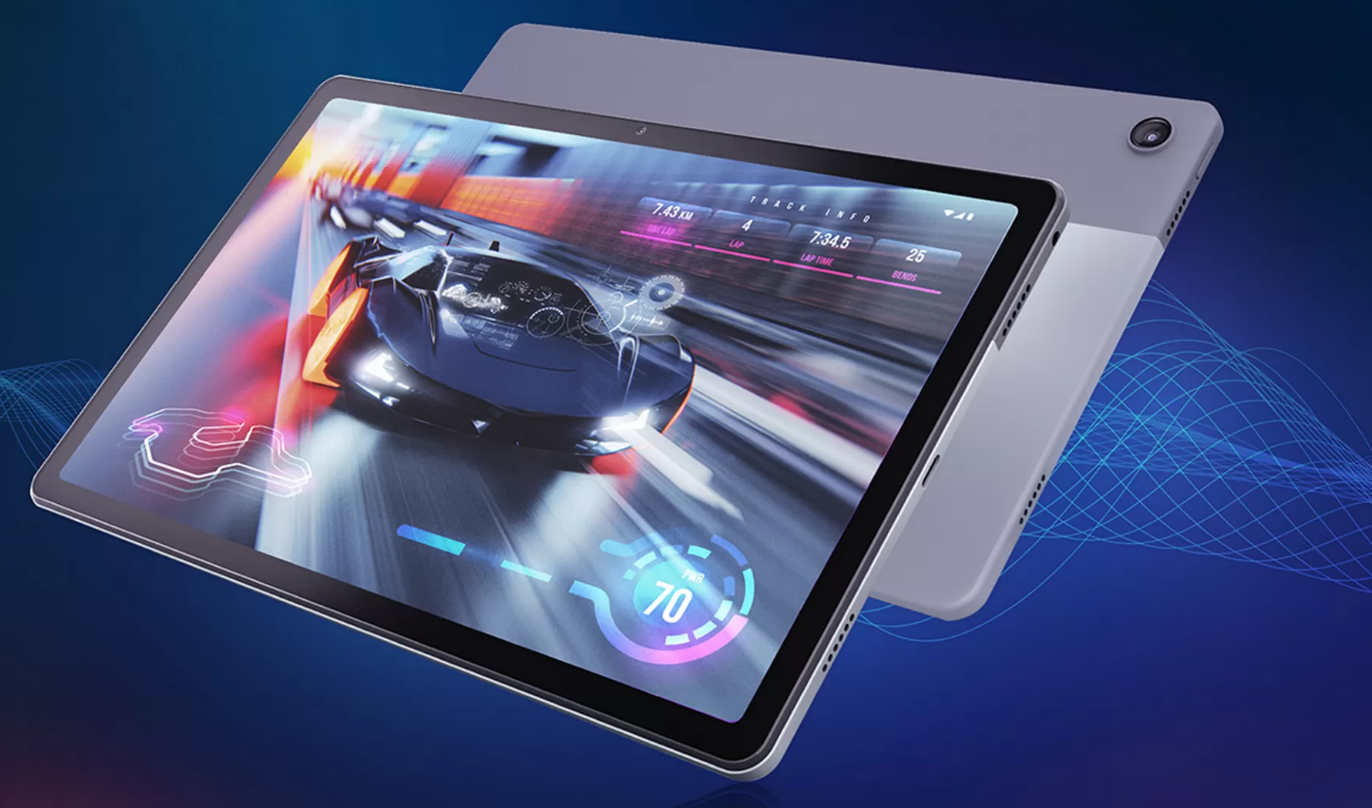
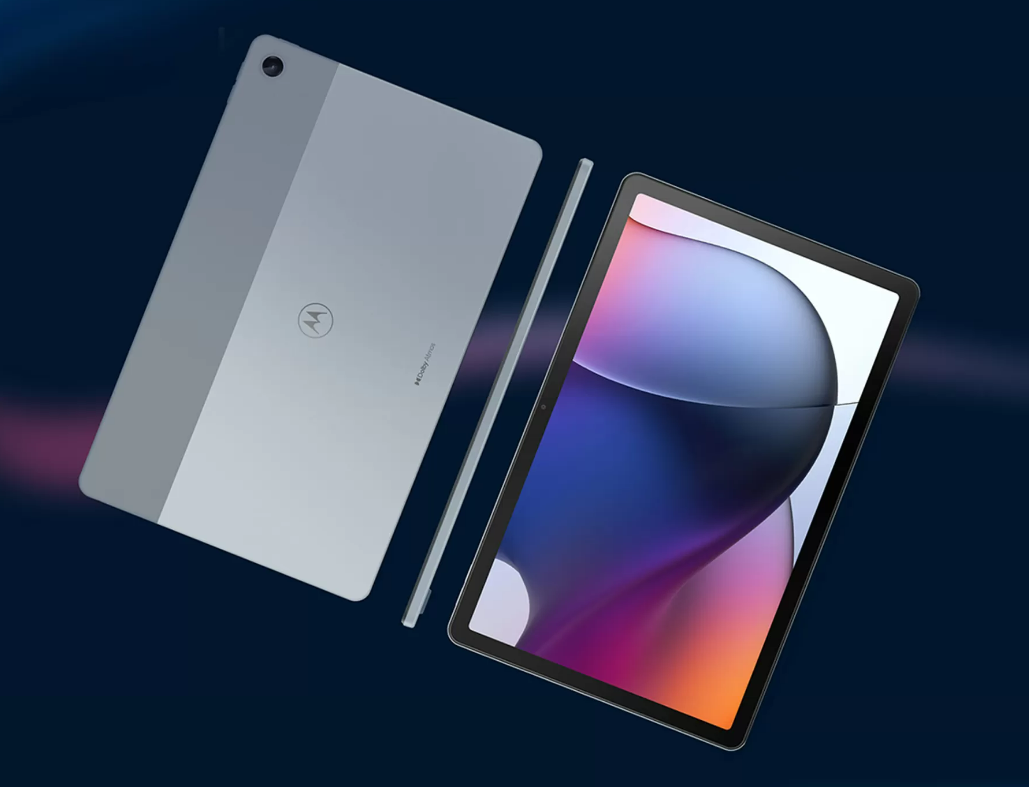
Motorola is gearing up to introduce a new tablet in the Indian market soon. The device dubbed the Moto Tab G62 has been confirmed to debut on August 17. Ahead of the launch, the company has revealed the looks of the slate along with its features via a Flipkart listing.
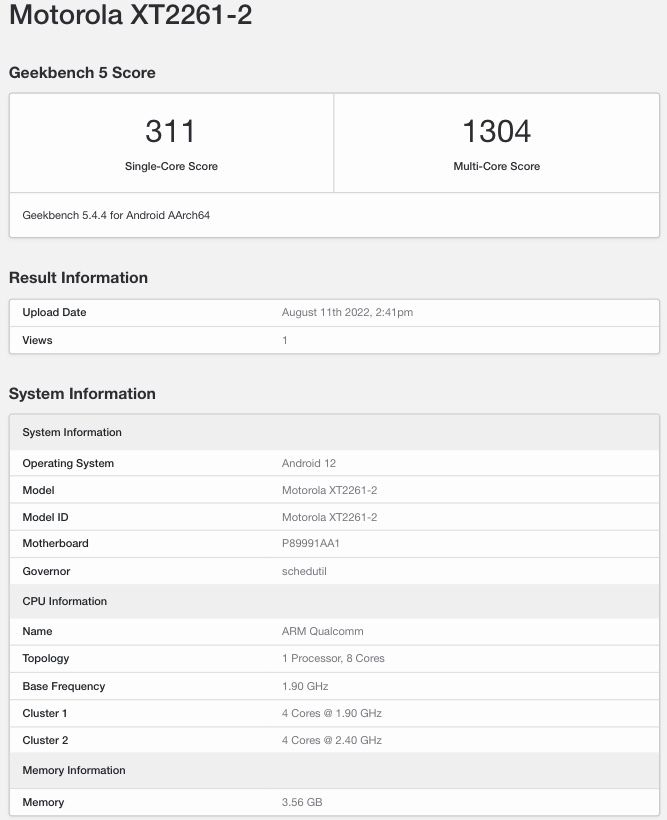
Now, the tablet has appeared on the Geekbench database, giving us an idea of its performance. So, let’s take a look.
The XT2261-2 model number for the soon-to-be-released Motorola Moto Tab G62 is listed on the Geekbench database. It has an octa-core processor with four cores operating at 2.4GHz and the remaining four cores clocked at 19GHz. This is the Qualcomm Snapdragon 680 SoC which has an Adreno 610 GPU on board.
The device has been listed as having 4GB of RAM on Geekbench. The Tab G62 will come pre-installed with Android 12 as far as software is concerned. Coming to performance, the tablet scores 311 points in the single-core test and 1304 points in the multi-core test of Geekbench 5.
Moto Tab G62: Specifications
A 10.6-inch 2K IPS LCD screen will be included with the Moto Tab G62. The Snapdragon 680 4G SoC will power the Android tablet, which will be offered in Wi-Fi-only and 4G LTE versions. The tablet will include a quad-speaker system that supports Dolby Atmos. It will have a respectable 7,700mAh battery unit paired with 20W fast charging.
It will have a premium metal build and offer features like a special reading mode, Google Kids Space, an Entertainment Space, support for multiple accounts, and stylus support.
We use cookies on our website to give you the most relevant experience by remembering your preferences and repeat visits. By clicking “Accept”, you consent to the use of ALL the cookies.
This website uses cookies to improve your experience while you navigate through the website. Out of these, the cookies that are categorized as necessary are stored on your browser as they are essential for the working of basic functionalities of the website. We also use third-party cookies that help us analyze and understand how you use this website. These cookies will be stored in your browser only with your consent. You also have the option to opt-out of these cookies. But opting out of some of these cookies may affect your browsing experience.
Necessary cookies are absolutely essential for the website to function properly. This category only includes cookies that ensures basic functionalities and security features of the website. These cookies do not store any personal information.
Any cookies that may not be particularly necessary for the website to function and is used specifically to collect user personal data via analytics, ads, other embedded contents are termed as non-necessary cookies. It is mandatory to procure user consent prior to running these cookies on your website.