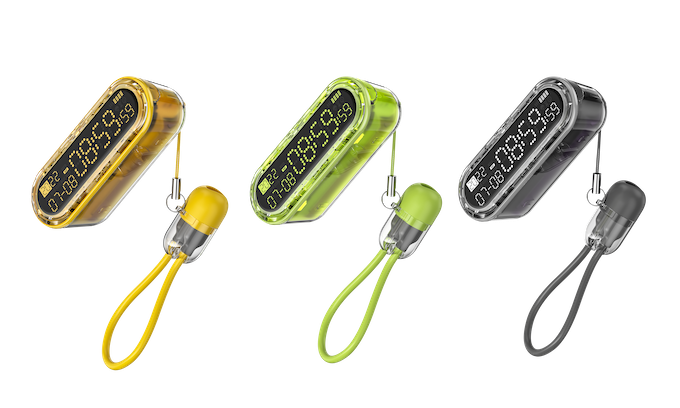
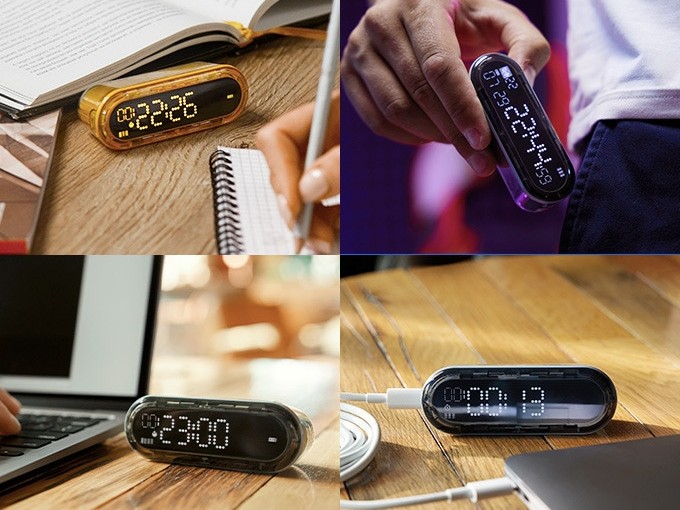
The Shargeek Capsule Gravity power bank has been launched on Kickstarter. The power bank is capable of 20W charging output and has a 5,000mAh battery. The device also has a timer and a clock that could be useful in other applications. The device will be available in yellow, green, and grey colors.
The Capsule Gravity is a 3-in-1 device that operates as a power bank, a timer, and a clock. It can be useful as a Pomodoro timer or a stopwatch. You can flip the device over to restart the clock. The power bank can charge both iOS and Android devices at 20W speeds. It can charge an iPhone 13 to 60% in half an hour. It can also charge a MacBook (up to 20%) and other compatible devices. These include Nintendo Switch, Samsung Galaxy S22, Nintendo Switch, and Amazon Kindle.
The Shargeek Capsule Gravity can be fully recharged via its USB-C port in 90 minutes. It weighs 130g and has a 3.2-inch screen.
The device also adopts a cyberpunk see-through design and will retail for about $36 via Kickstarter. The Shargeek Capsule Gravity power bank will revert to its original price of about $49 after the crowdfunding campaign. Interestingly, the Kickstarter crowdfunding campaign is open to international customers and the first shipments are expected later this month. Check out the brand’s official website.
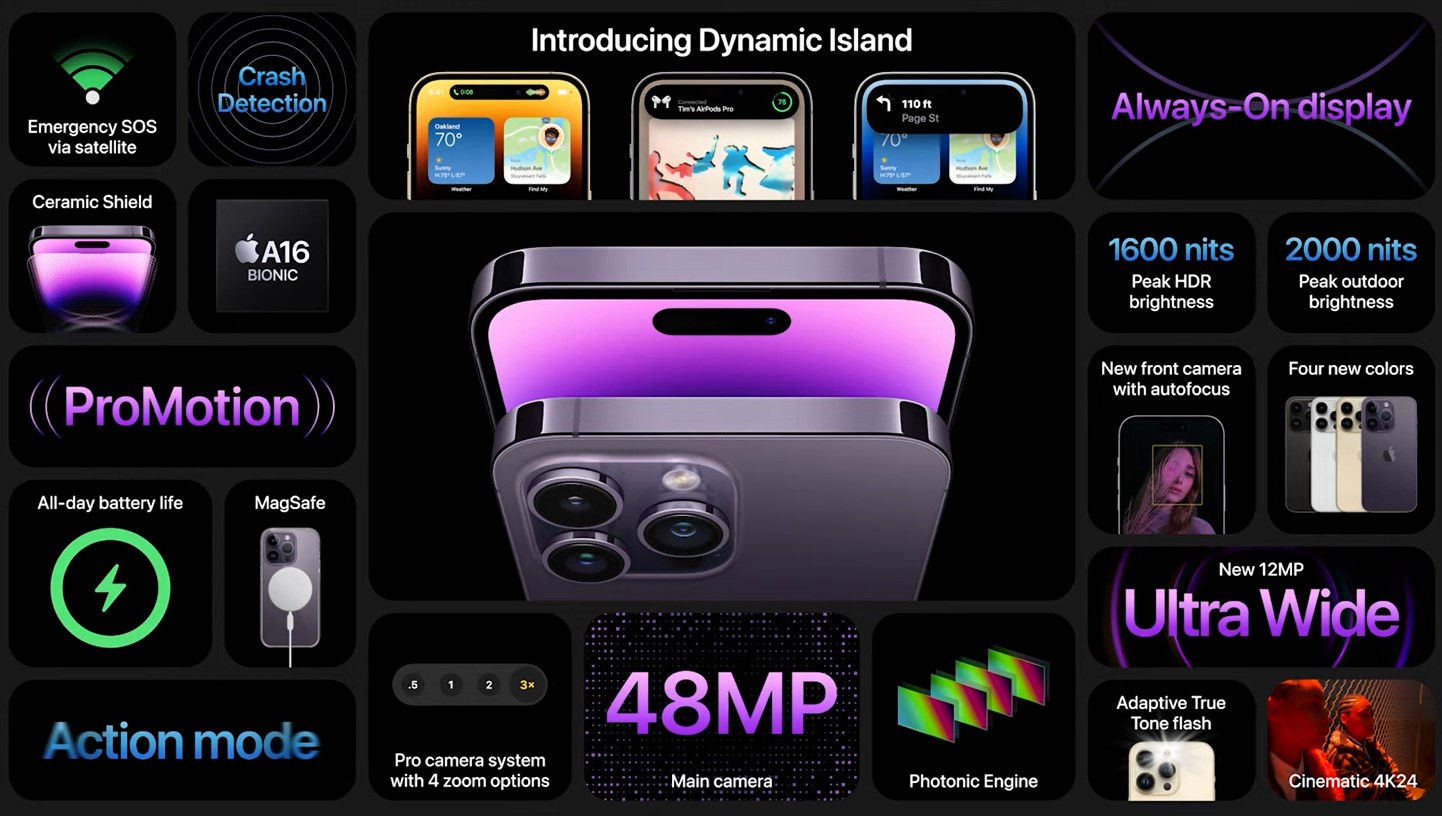
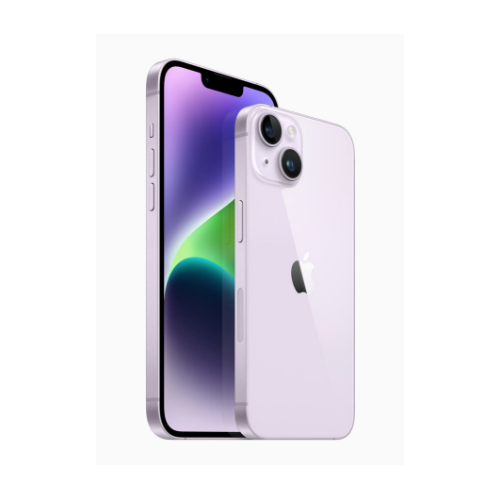
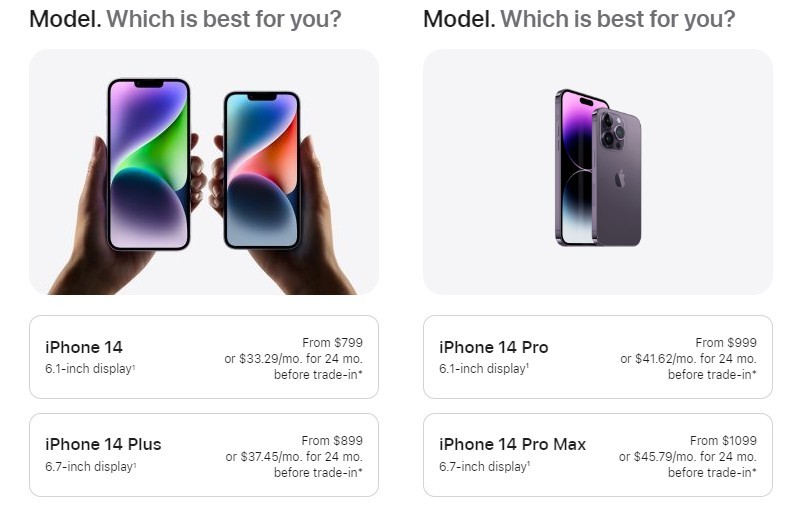
The “Far Out” event by Apple witnessed the launch of the new iPhone 14 series, which includes the iPhone 14, iPhone 14 Plus, iPhone 14 Pro, and iPhone 14 Pro Max. All the models come with some updated features, but the Pro and Pro Max devices get more love. They come with a new design and an A16 Bionic processor. And recently, AnTuTu shared the benchmarking score of Apple’s latest chipset. Let’s look at the details.
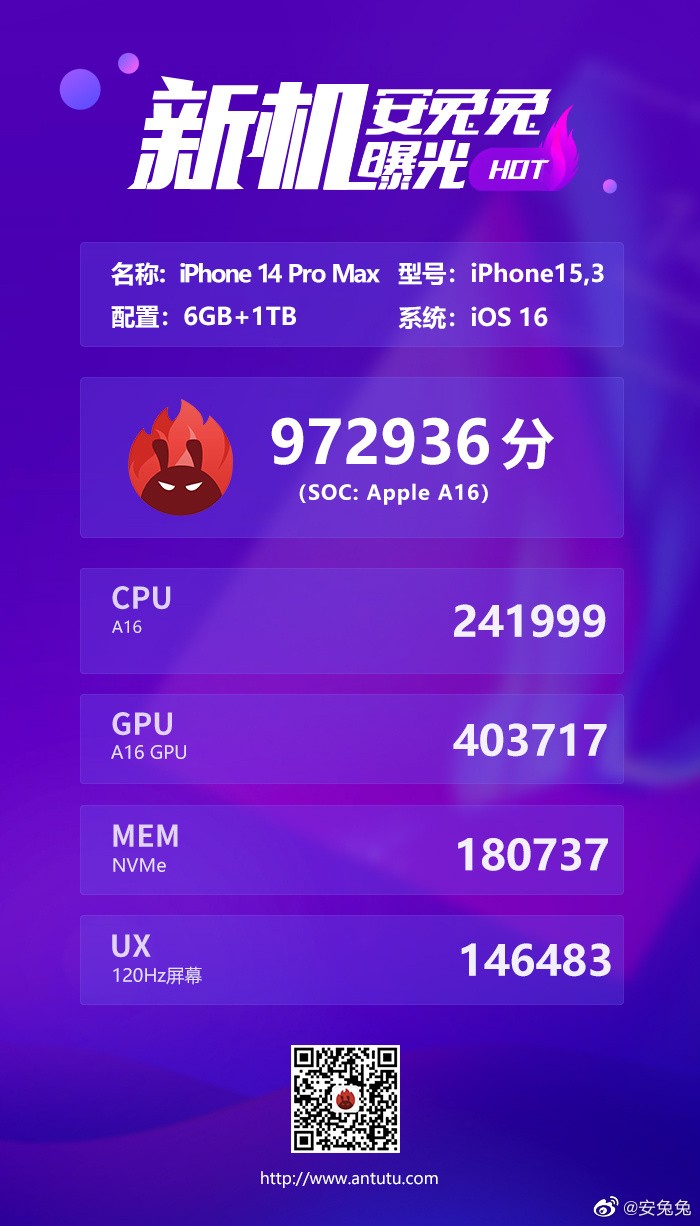
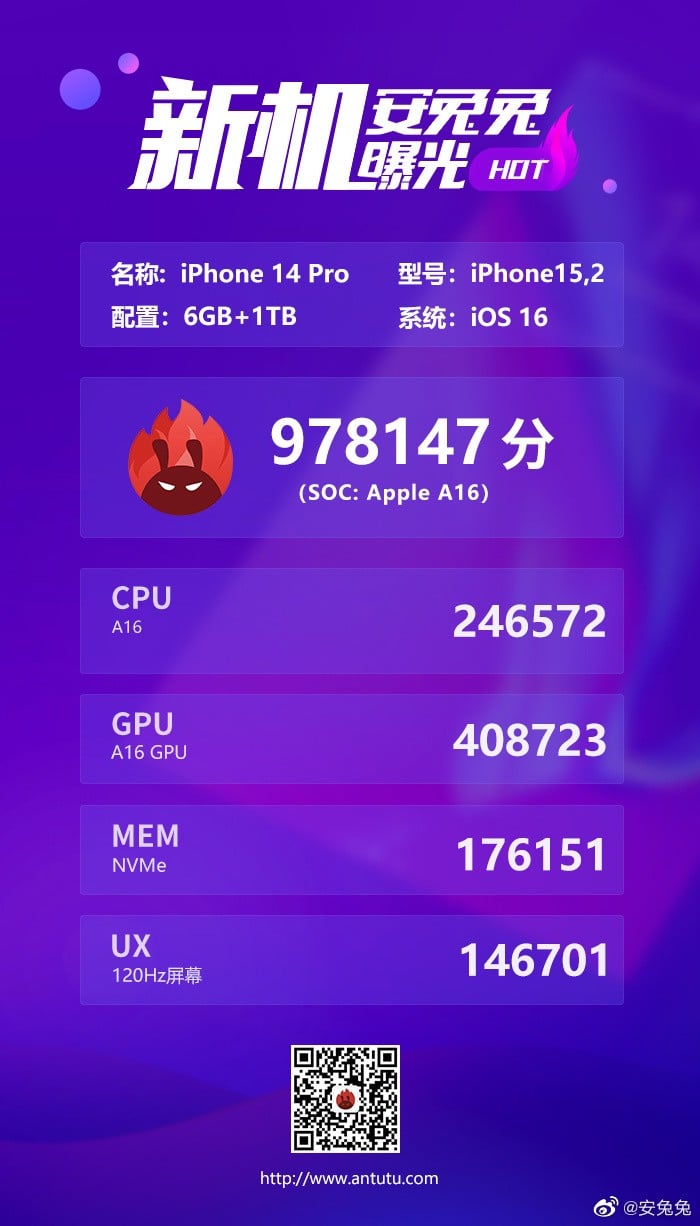
AnTuTu has shared the official GPU score of Apple’s A16 Bionic chipset, which powers the iPhone 14 Pro and iPhone 14 Pro Max. The Pro secured a total score of 978,147, whereas the Pro Max managed to score 972,936. This translates into an improvement of around 19% compared to the last year’s iPhone 13 series and also the iPhone 14 and 14 Plus since they feature the same chipset.
The CPU performance has witnessed a decent increase of 17%, and the memory score grew by 10%. The main highlight is the GPU score, which increased by over 28% compared to the previous generation. As per AnTuTu, no smartphone has seen this kind of improvement in GPU performance in recent years.
To recall, the CPU score of the iPhone 13 Pro models increased by 17% and the GPU score increased by 19% compared to their predecessors. Last year, it was the memory score that surprised us with a 44% increase.
Apple’s A16 chip is fabbed on the new 4nm node and comes with six cores, two of which are performance cores and four efficiency cores. It is paired with a 5‑core GPU to handle gaming and graphics performance.
While on the Android side, Qualcomm’s latest and greatest Snapdragon 8+ Gen 1 scores are in the 1,000,000 range. Asus’ latest gaming phone—ROG Phone 6—scored 1,110,172 overall, 261,708 on the CPU test, and 469,592 on the GPU test.
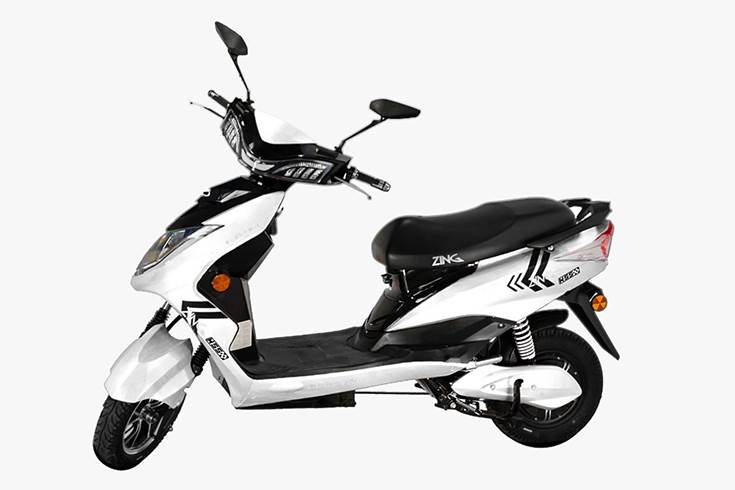
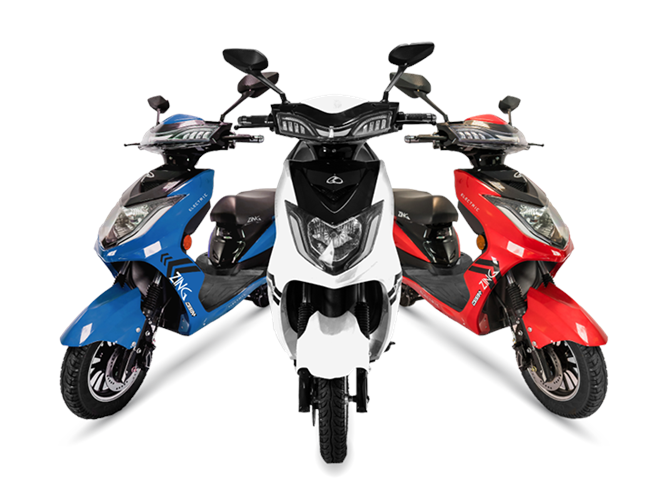
The Zing high-speed scooter (HSS) with a range of 125km has been unveiled in India. The new electric scooter is coming from the stable of Kinetic Green Energy and Power Solutions. The company, known for its electric three-wheeler products, is gradually making inroads into the two-wheeler segment. The new Zing high-speed e-scooter features a multi-speed mode, a part failure indicator, and a top speed of 60km/h.
The Zing HSS has a 3.4kWh Lithium-ion battery that delivers its 125km range. It also has a three-step adjustable suspension, regenerative braking system, and a design that will tickle the fancy of young riders. The e-scooter has gone through all the regulatory and testing phases and Kinetic Green says it is ready for the market. According to Kinetic Green’s CEO, Sulaijja Motwani, the company has an aggressive plan to expand its lineup with a raft of high-speed scooters on the line. The revolutionary e-Luna is scheduled for release next year and Kinetic Green hopes to deliver excitement in the segment.
Since 2021 when Kinetic Green unveiled its first two-wheeler products, it has grown rapidly. It has already sold about 30,000 units of e-scooters since then and hopes to further expand its market share with the release of the Zing HSS. The Zing e-scooter will be available in 300 exclusive dealerships across India. The price of the new e-scooter is Rs 85,000 (~$1,074), ex-showroom including the FAME subsidy.
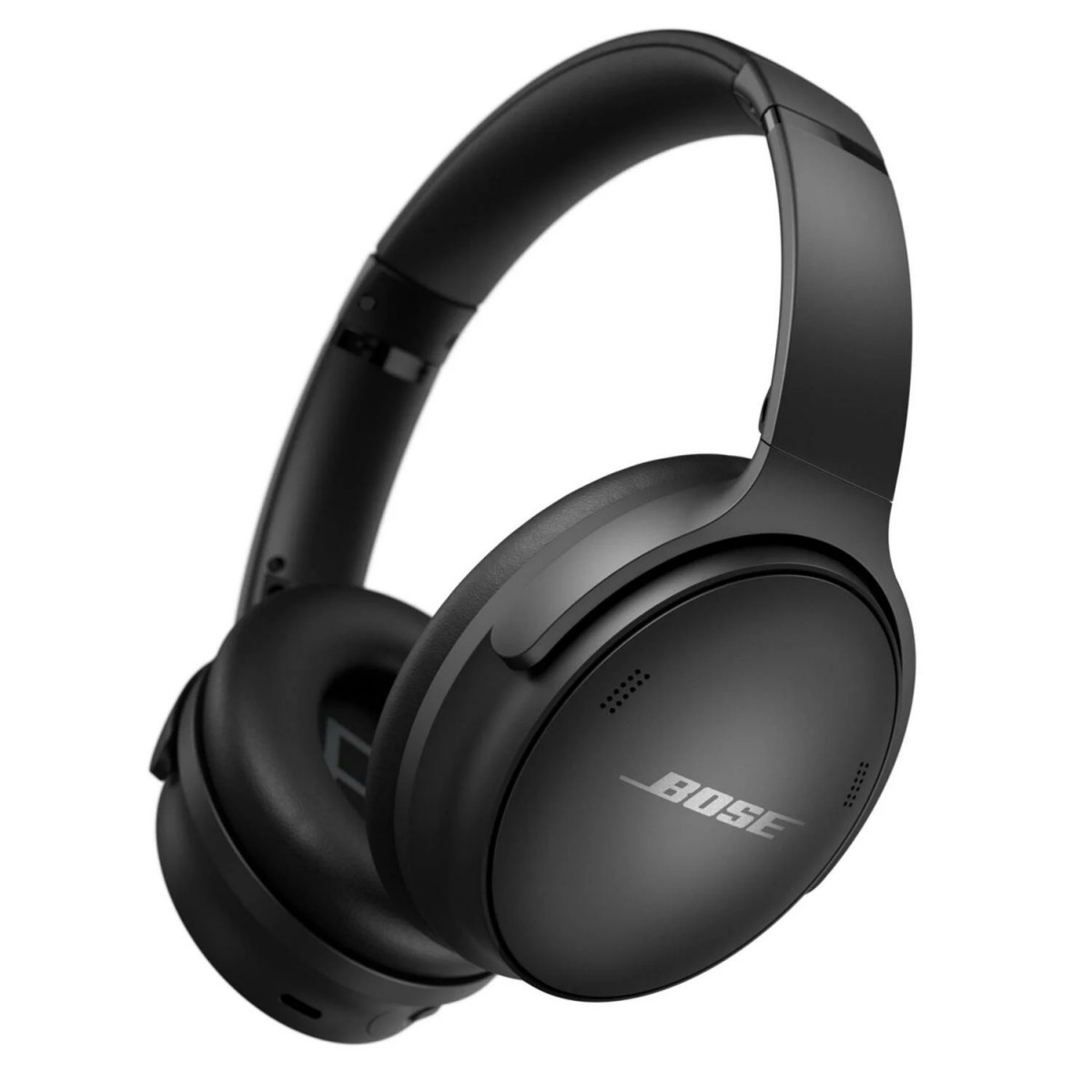
Bose recently launched the new QuietComfort SE over-ear headphones. The new device comes with specs similar to the QuietComfort 45, which was unveiled last year. The Bose QC SE features impressive noise cancellation, a lightweight design, better voice isolation, as well as a playtime of 24 hours. Let’s have a closer look at the details.
Bose QuietComfort SE specifications
The new Bose headphones have an over-ear design and look fairly similar to the Bose QuietComfort 45. Chances are that the QuietComfort SE is just a rebranded version of the QC 45. The headphones have four buttons on the right earcup that can be used to control music and pair with other devices.
In terms of specifications, the Bose QuietComfort SE can offer a playtime of up to 24 hours. The battery of the headphones is claimed to fully charge in just 2.5 hours. In addition, a 15-minute charge is said to offer three hours of playback.
Just like the previous model, the Bose QC SE features excellent Active Noise Cancellation (ANC), which can greatly reduce ambient noise. They also have a special feature called “Aware mode,” which when enabled, offers full transparency and allows the wearer to hear environmental noise.
For connectivity, the headphones use Bluetooth v1. The Bose QuietComfort SE also comes with Bose’s own app with an adjustable equalizer. The headphones can also be used with a cable via the 2.5mm jack connection.
Bose QuietComfort SE Price
The Bose QuietComfort SE are listed in several online stores in the US. However, the company may make the formal announcement in a few days. The headphones are priced at $330, which is the same as the debut price of the QuietComfort 45 (Amazon). The company may also launch these headphones in Europe and other regions, but we are still waiting for an official word.
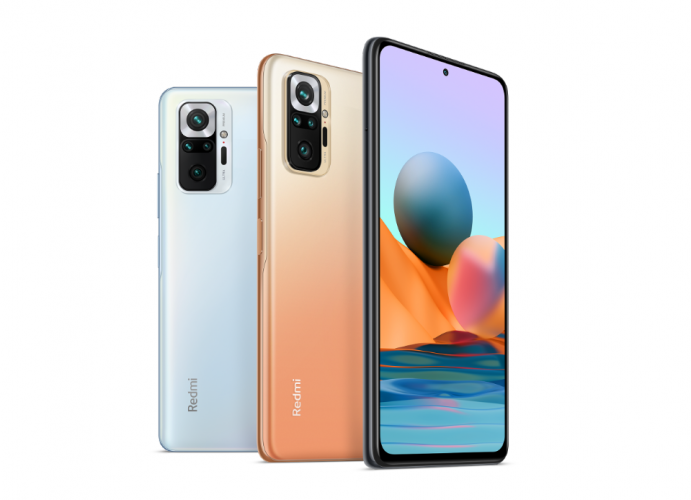
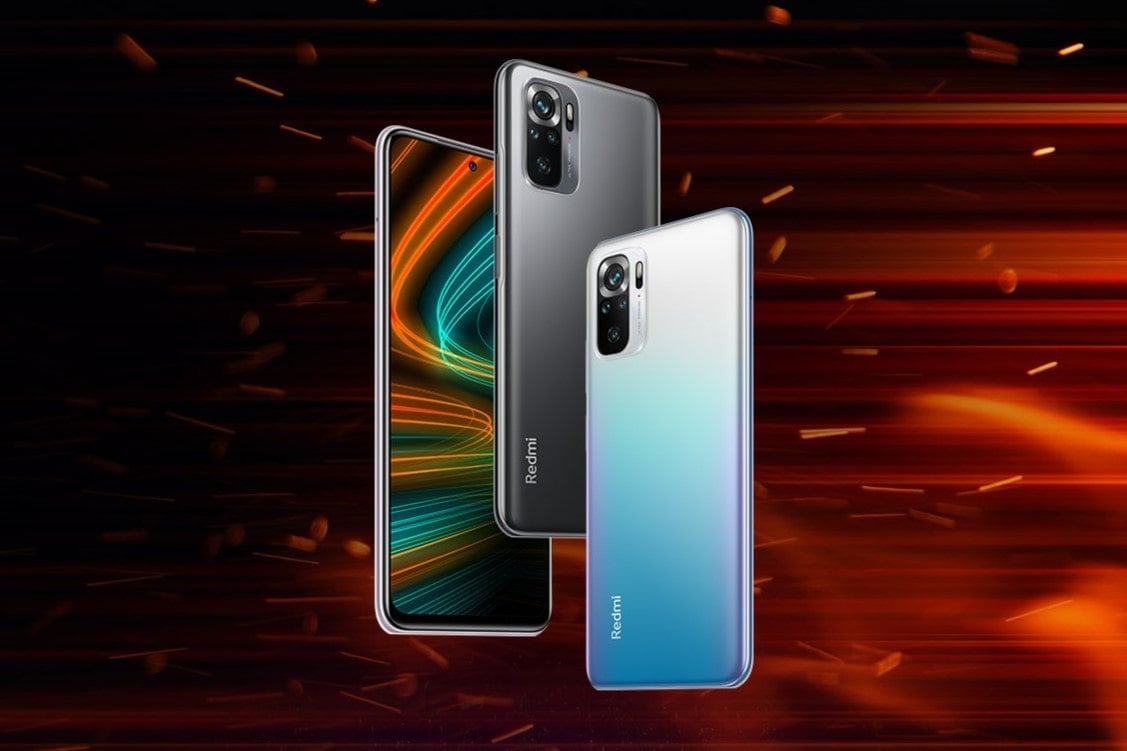
Xiaomi India has acknowledged that the latest MIUI update of the Redmi Note 10 and Redmi Note 10 Pro Max may have led to the frequent camera crashes that have been reported by users. Several users of the two smartphones had reported their cameras crashing whenever it was opened. Other users had also reported camera crashes when third-party apps like Instagram and Snapchat were opened.
The MIUI 13 updates for the Redmi Note 10 Pro and Note 10 Pro Max rolled out a few days ago. Redmi India has acknowledged the issue and announced an offer of comprehensive technical support and repairs for all affected devices. The service is available in over 2000 Xiaomi Authorized Service Centers across the subcontinent at no extra cost. Xiaomi India also apologized for the glitch, stressing that it is committed to delivering a user-centric experience beyond customer expectations.
Our service teams will provide comprehensive technical support and repairs at no additional cost.
We regret any inconvenience caused to our users. We are committed to delivering a user-centric experience that exceed our user's expectations. (2/2)
The camera issue for Redmi Note 10 devices is not the first such incident in recent times. Display issues were reported by Redmi Note 10 owners last December, while motherboard issues were reported for the POCO X3 Pro earlier this year. Xiaomi stated that the display issue was reported in only a small percentage (0.001%) of users. The motherboard issue was also acknowledged, with a free service and an extended 6-month warranty also offered.
The Redmi Note 11 series debuted earlier this year. The series gave us some affordable and value-for-money smartphones. The Redmi Note 11 SE is the most recent addition to the series. it launched on September 6. Now, as we move towards the end of 2022, rumors regarding the next-gen Redmi Note 12 series have started to speed up. A recent one sheds some light on the upcoming series’ specifications. Let’s have a look.
Chinese tipster Digital Chat Stations claims that the Redmi Note 12 series will feature a 50-megapixel ultrawide camera sensor (Via MyDrivers). In addition, the handset will offer support for 120W fast charging. The device could come with a sweet 120W charger inside the box.
Redmi Note 11 SE
The rumored charging support is very impressive. Xiaomi packed the same tech in its flagship devices like Xiaomi 12 Pro. With the support of 120W fast charging, the Xiaomi 12 Pro can be charged to 100% in just 19 minutes.
Further, the tipster claims the upcoming series will feature a rectangular design with straight edges, identical to what we’ve seen on the Note 11 Series smartphones. Moreover, the screen could also remain flat with “sharp edges” and a hole-punch cutout to house the selfie camera.
The specs mentioned are said to be of the Redmi Note 12 Series. However, we don’t know which particular smartphone will feature these. Judging, Redmi could pack these specs into a “Pro” labeled device.
According to a previous report, the Redmi Note 12 series will include the Redmi Note 12, Redmi Note 12 Pro, and Redmi Note 12 Pro+. However, Redmi is yet to confirm any details about the upcoming series. We suggest you take the above information with a pinch of salt.
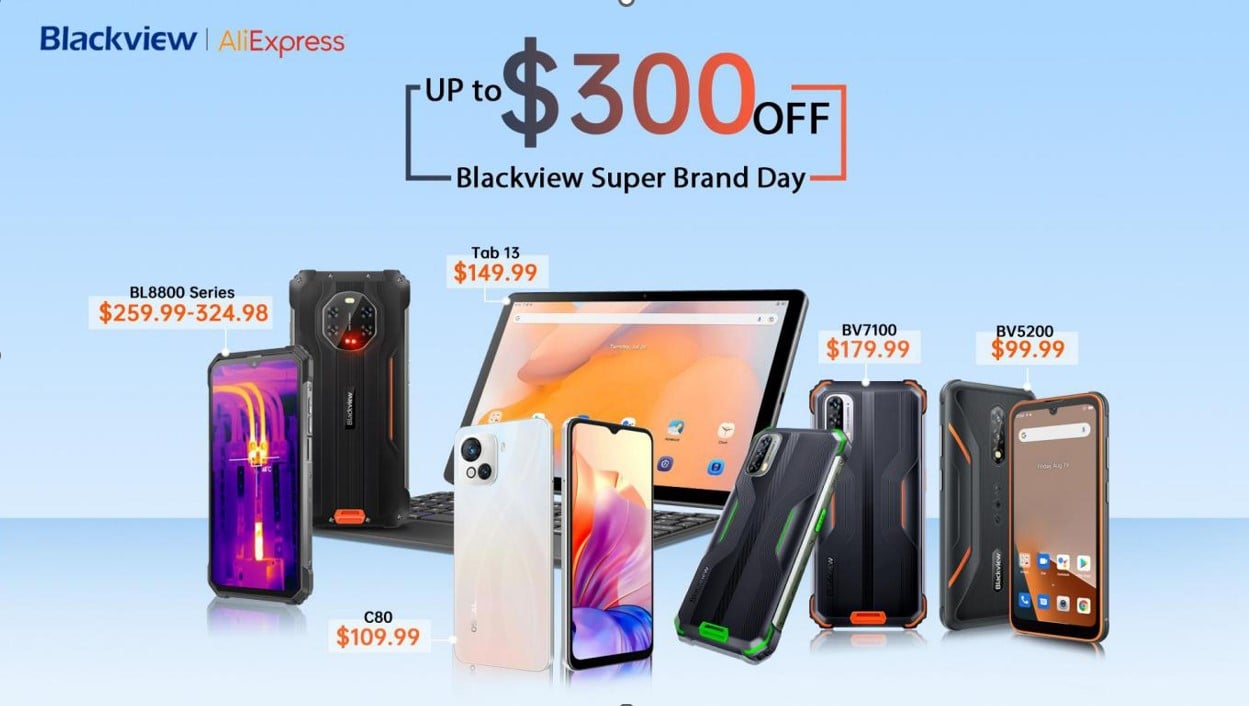
Blackview the famous rugged phone brand is giving huge discounts on its smartphones and tablets under the Blackview AliExpress Super Brand Day Sale. Under this sale, Blackview is giving discounts of up to $300 on various products. The sale starts on September 14 and ends on September 15, 2022.
Also under the Super Brand Day promotion three new smartphones viz. Blackview BV7100 with a 13,000mAh battery, Blackview BV5200 powered by leading ArcSoft® camera algorithms, and the OSCAL C80 supported with 90Hz refresh rate, officially hit the market. So let’s take a look at these brand new smartphones and their offers.
Blackview BV7100
Blackview BV7100 was designed to cater to the needs of adventure enthusiasts, globe trotters, and outdoor workers. The rugged smartphone comes with a 13000mAh battery, one of the largest batteries available in a budget smartphone.
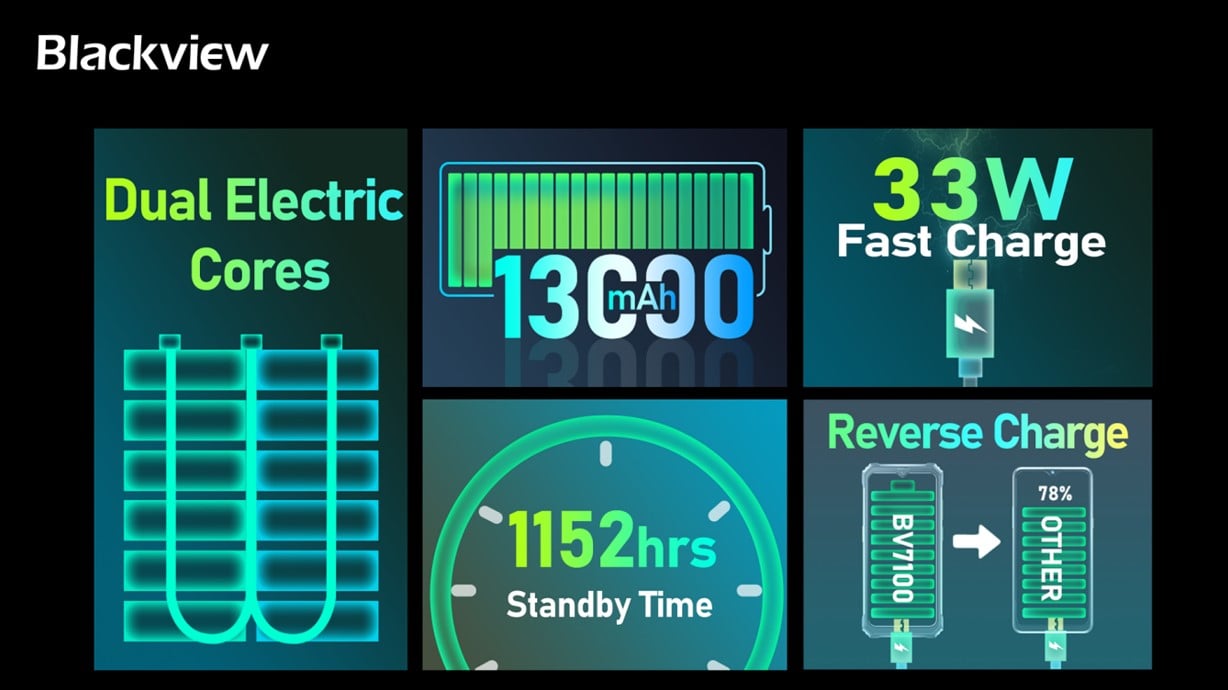
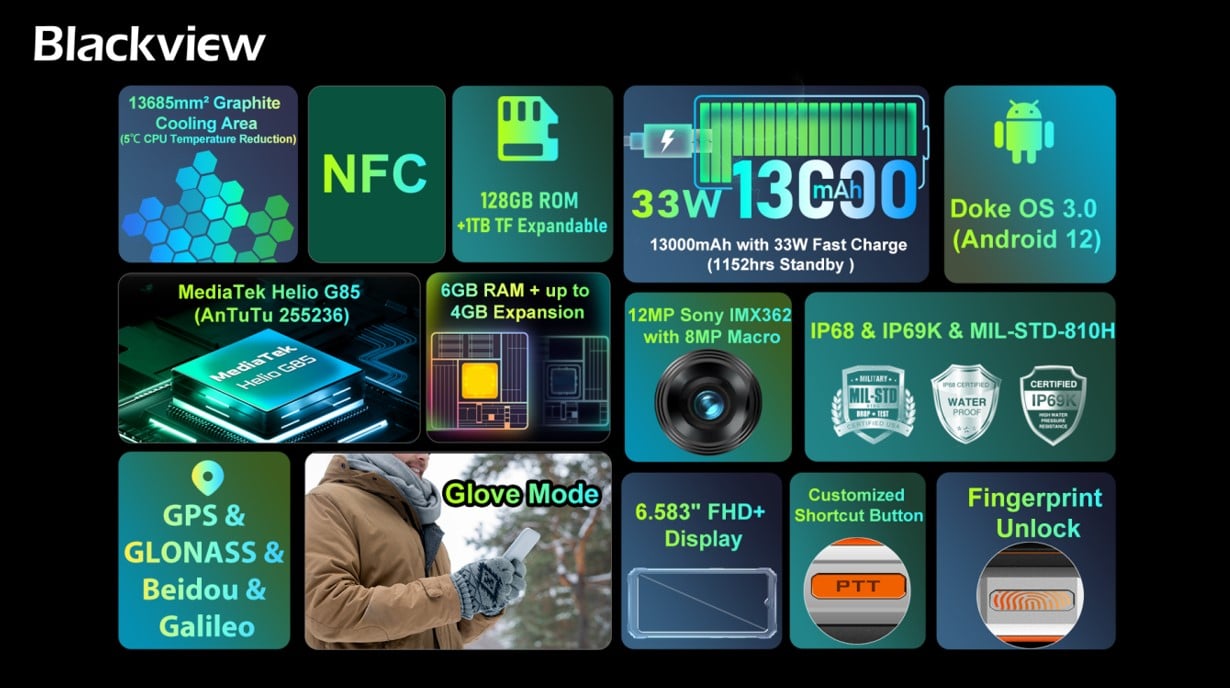
Fueled with this massive battery you can use the phone for 15 hours of gaming, 15 hours of continuous video and movies, 23 hours of web browsing, 50 hours of calling, and almost 70 hours of nonstop music. With BV7100 you get a whopping 1152 hours of standby. With Blackview BV7100 you can travel and work without worrying about battery life and charging ports. The phone is made with dual electric core technology which is safer, long-lasting, and much more stable as compared to traditional single core batteries. Moreover, with 33W fast charging technology, you can charge the massive battery within 200 minutes. Also with the reverse charging function, you can convert the phone into a mini power bank.
Blackview BV7100 features a 6.58” FHD+ display and comes with 6GB LPDDRX4 RAM expandable up to 10GB and 128GB internal storage, expandable up to 1TB. The phone is powered by a MediaTek Helio G85 4G processor that can easily handle a heavy load of programs and multi-tasking between different games and apps. For your images and videos, you have a triple rear camera setup with a 12MP main sensor and an 8MP selfie camera in the front.
Other interesting features include DOKE OS 3.0 base don the latest Android 12, NFC, Quad navigation systems, customized shortcut button, glove mode, fingerprint unlock, etc. Blackview BV7100 is a rugged smartphone designed to work in extreme and harsh conditions and hence comes with IP68/69K and MIL-STD-810H military standard certifications that make it waterproof, dust, and shockproof.
Blackview BV7100which generally retails for $299 is now available for a heavily discounted price of $159.99 only on AliExpress.
Blackview BV5200
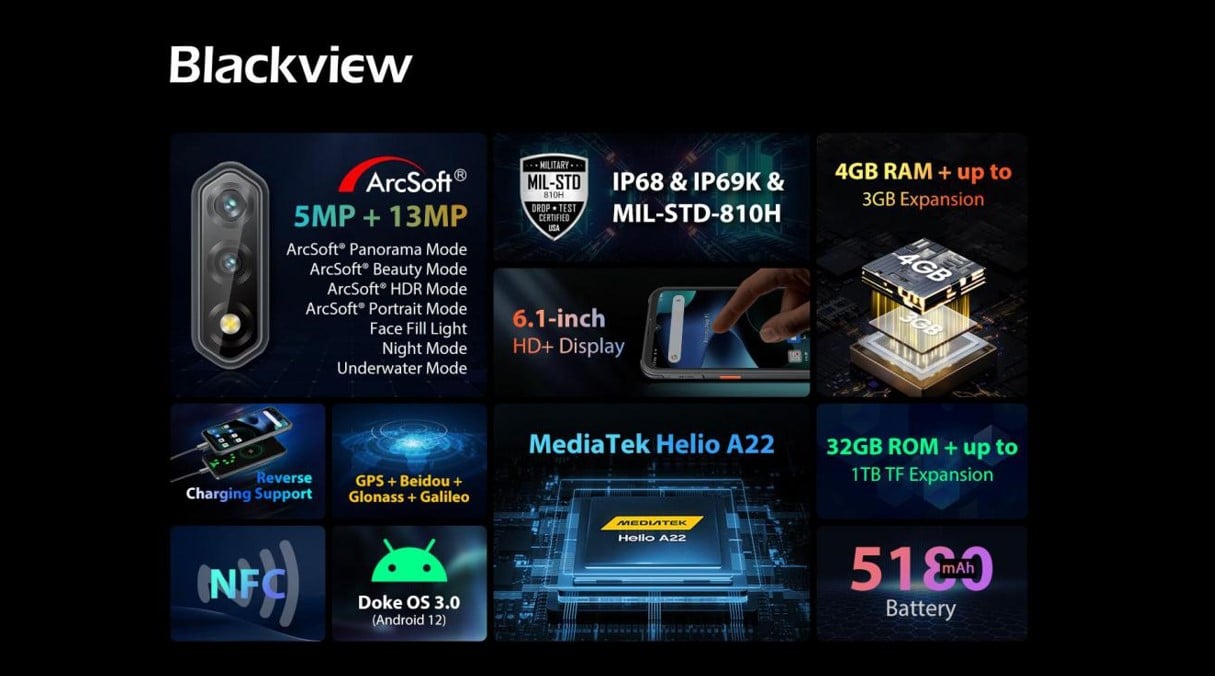
Blackview BV5200 is the first Blackview rugged phone that adopts the ArcSoft® algorithms. Before the launch of BV5200, Blackview offered costly and advanced camera specs and algorithms only to its mid-to-high-end lineup. However, to create an edge in the budget phone market, Blackview partnered with ArcSoft® and offered the advanced photography and videography functions in this budget smartphone. ArcSoft® is an industry-leading algorithm and software solution provider that has offered its services to the global top 20 mobile giants such as Huawei, Samsung, Xiaomi, etc. And with Blackview BV5200 you get a brand new HDR Mode, Panorama Mode, Beauty Mode, Portrait Mode, Night mode, and Underwater mode that provides a professional shooting experience.
Blackview BV5200 features a 6.1-inch HD+ display and comes with 4GB RAM expandable up to 7GB and 32GB ROM expandable up to 1TB. The phone is powered by a MediaTek Helio A22 processor and runs the latest DOKE OS 3.0 based on Android 12. The phone comes with a 5180mAh battery and supports reverse charging.
Blackview BV5200which generally retails for $199 is now available for a heavily discounted price of $99.99 only on AliExpress.
OSCAL C80
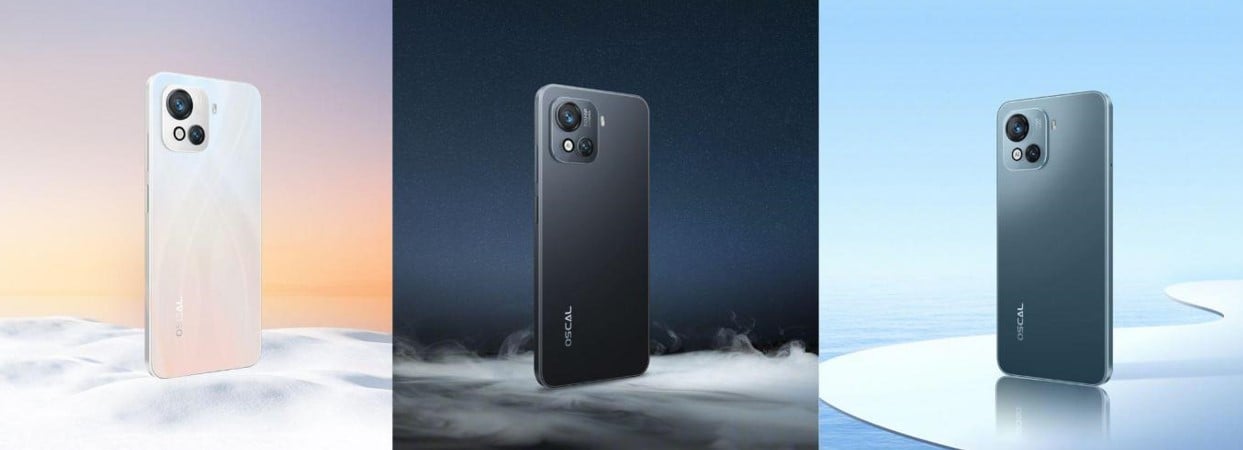
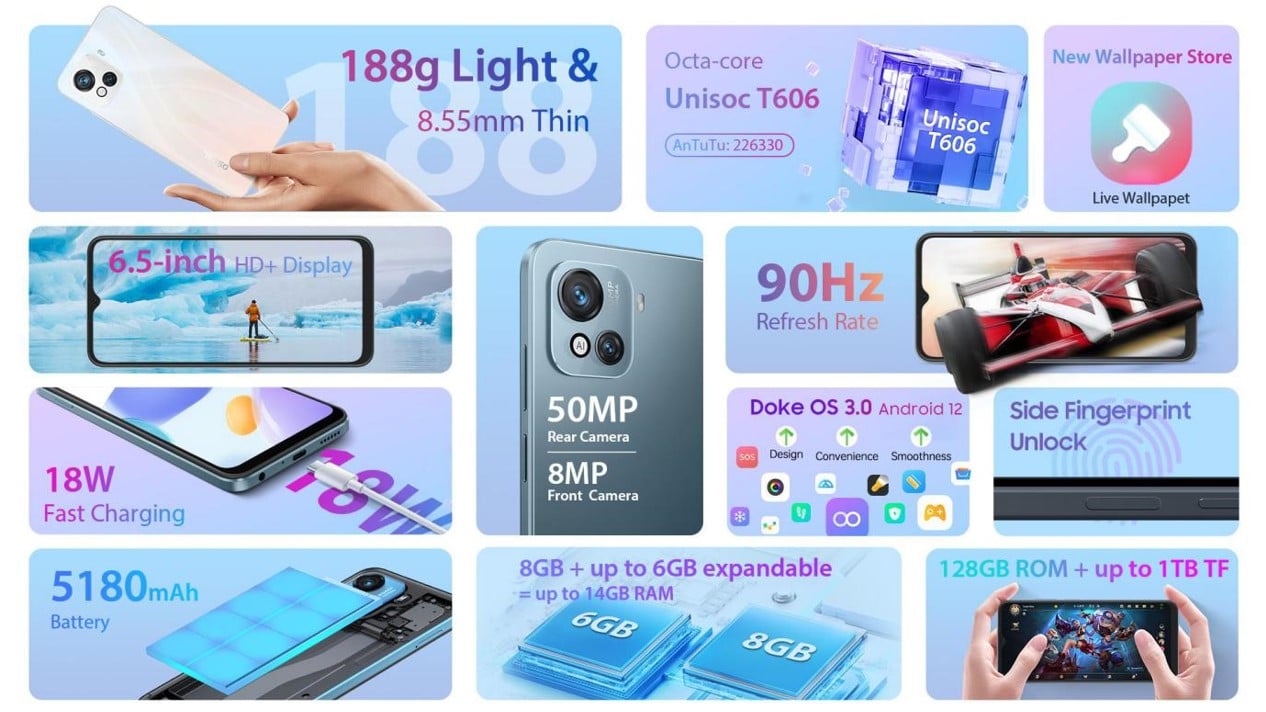
OSCAL is Balckview’s brother brand. OSCAL C80 is the first-ever OSCAL mainstream smartphone featuring a 90Hz refresh rate display and the highest-pixel 50MP Samsung camera. The 8.55mm ultra-thin smartphone weighs just 188g and features a 6.5-inch HD+ display. It is fueled by a 5180mAh battery and supports 18W fast charging. The phone boasts a 50MP main rear camera and an 8MP front camera. Other exciting features include a side fingerprint sensor, 8GB RAM, and 128GB ROM expandable up to 1TB.
OSCAL C80 which generally retails for $219 is now available for a heavily discounted price of $109.99 only on AliExpress.
Please note that the above price is region-specific and the final price may vary according to your shipping region, warehouse, and regional taxes.
For more information on such exciting deals and offers check out our deals hub.
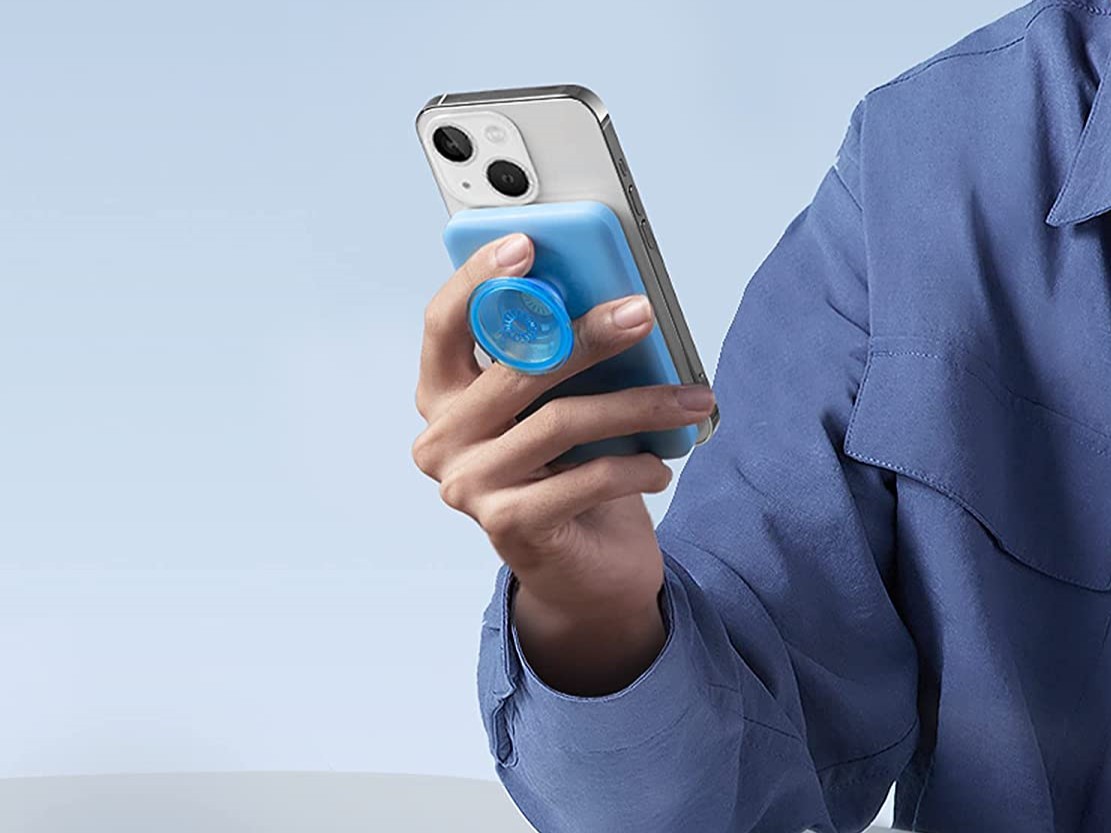
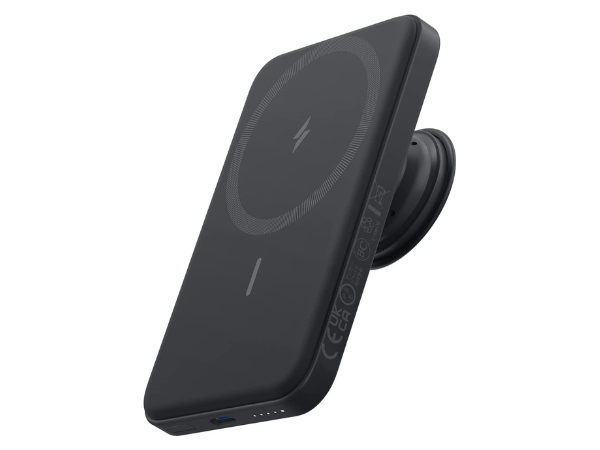
Anker has launched a new magnetic battery for the US and Europe markets. The Anker 622 Magnetic Battery is basically a MagGo with PopSocket for attaching it to surfaces. It could be recalled that the company recently launched the MagGo (Anker 621 magnetic battery) in August. The new device can output 7.5W charging for iPhone 12 and iPhone 13 models. The Anker 622 Magnetic Battery is portable, weighing just 127g, and is the culmination of Anker’s partnership with PopSockets.
The new Anker-PopSockets wireless charger has a collapsible grip that can be used as a stand to watch videos or make video calls. The power bank can be recharged via its USB-C port and it has a 5,000mAh Lithium polymer battery. The battery offers up to 17 hours of charging for compatible iPhone 12 and 13 devices. The MultiProtect technology protects your device from overheating while being charged.
A 2ft USB-C cable is an accessory that accompanies the Anker 622 Magnetic Battery. Anker is silent on how long it takes to fully charge the power bank. Three color options are available for the device namely black, white, and blue. The Anker 622 Magnetic Battery features Anker’s MiniCell technology, making it very compact.
The Anker 622 Magnetic Battery is available in the US from Amazon at a retail price of $69.99. In the UK, the wireless power bank could be purchased through Amazon for £59.99. Finally, the product retails in the rest of Europe for €69.99 from Amazon. There are no details at this time on the global availability outside Europe and the US.
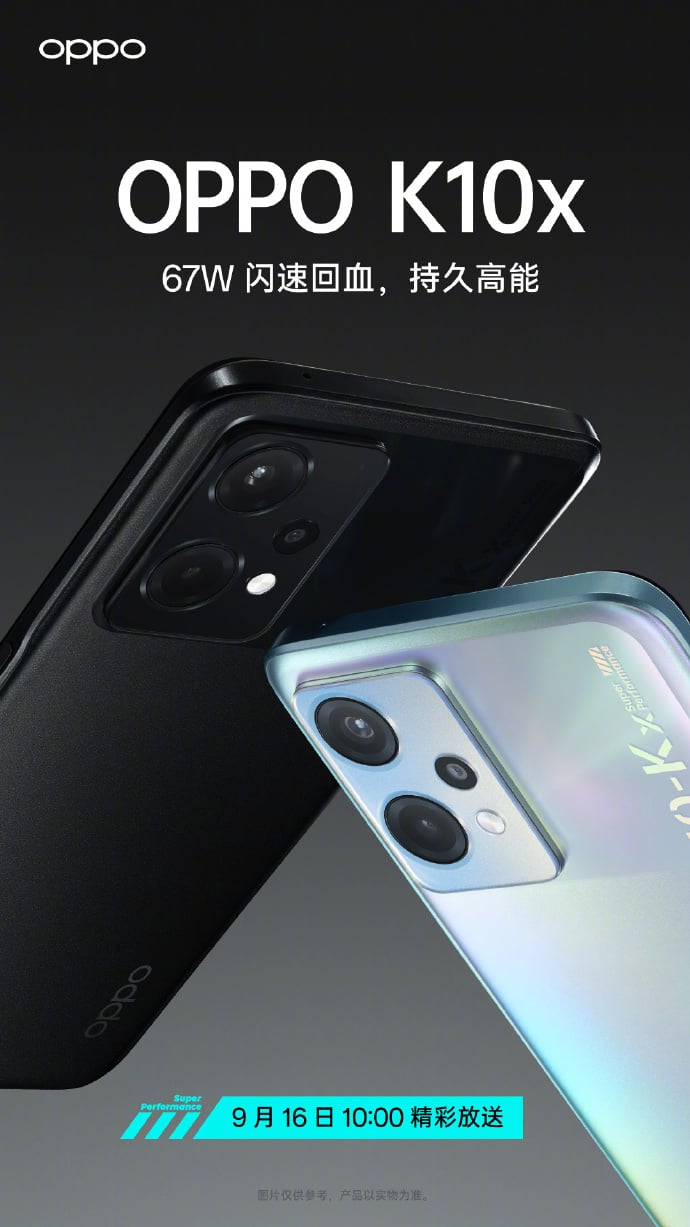
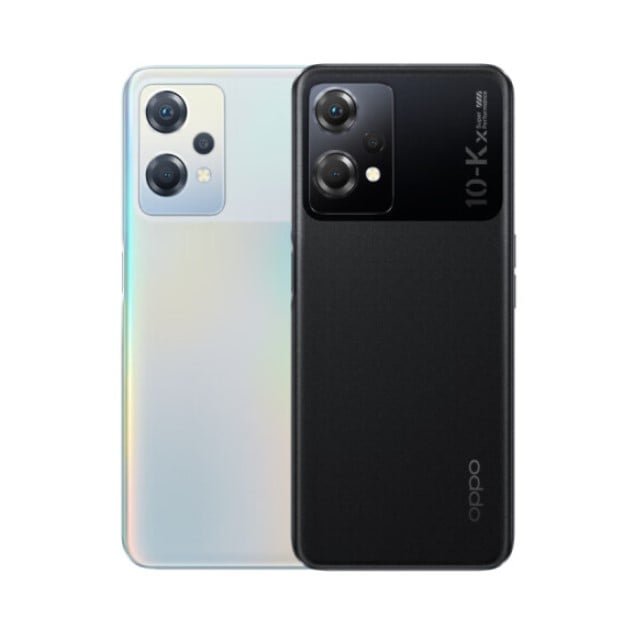
OPPO is gearing up to launch the OPPO K10x smartphone in China on September 16th. The brand has already revealed the design of the device and some key specifications in the teaser. Now, the device has also appeared on Geekbencch. So, let’s take a look at the listing.
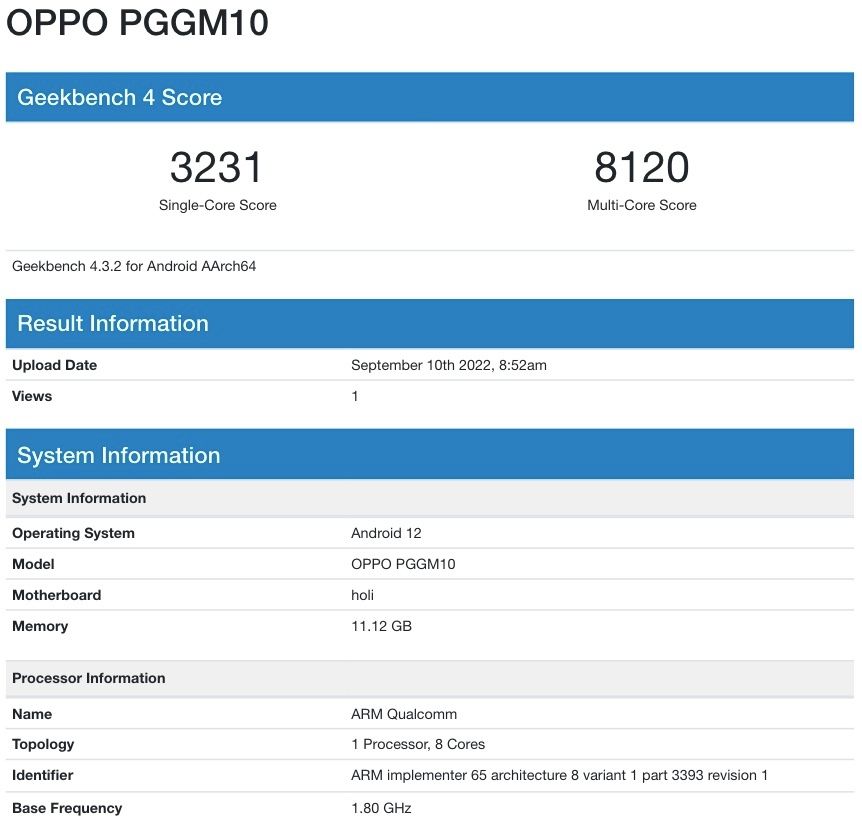
Starting off, the listing shows that the device has a PGGM10 model number and comes with an octa-core processor with a base clock of 1.8GHz and a maximum clock of 2.2GHz. The chipset also has an Adreno 619 GPU, making it quite clear that this is the Snapdragon 695 chipset.
The device has 12GB of RAM listed on Geekbench, but there are likely to be other RAM and storage options available. The device scored 3231 on the single-core test and 8120 on the multi-core test of Geekbench 4. The Android 12 OS will finally power the device. The listing does not reveal any further details, so let’s take a look at what we know so far.
OPPO K10x specifications
The OPPO K10x has an LCD panel with a punch-hole positioned at its top-left corner. The screen carries support for a 120Hz refresh rate. According to the TENAA listing, the device will have a 6.59-inch Full HD+ display.
The Snapdragon 695 chipset will be complemented by up to 8 GB of RAM and 256 GB of storage. It will have a 5,000 mAh battery that supports 67W fast charging. On the software front, the device will likely run the Android 12-based ColorOS skin.
Lastly, the device will feature a triple camera setup on the back with a 64-megapixel + 2-megapixel + 2-megapixel setup. The front will feature a 16-megapixel selfie camera.
One of the features of the recently released Apple iPhone 14 is the Dynamic Island theme. The new theme has now found its way into a Xiaomi smartphone, thanks to some outstanding developers. This is the first time we’re seeing something like this although Xiaomi is yet to approve the change.
The Dynamic Island theme on the iPhone 14 essentially camouflages the pill-shaped camera housing. It provides information on notifications, calls, timers, Bluetooth pairing, and others. The Mi Theme developer successfully implemented the Android version of Dynamic Island. A short video detailing the operation of Dynamic Island on the Android smartphone was also released. The Android version of the Apple Theme is called Grumpy UI and is available only in the Chinese version yet. It also contains a “Now playing” section in the MIUI software. The video shows that the theme was able to hide the pinhole selfie camera in the corner when the island is expanded.
Dynamic Island Style Notifications / Now Playing on Xiaomi MIUI. Mi Theme Developers never disappoint 😎 pic.twitter.com/ImHmbkRZnb
Although Xiaomi is silent so far on the new feature, the theme developers say the update is still under review. The Grumpy UI, if approved will be on the MIUI Themes store. Although the utility of a pill-shaped camera theme covering is not very common with Android devices, it will be interesting to see whether Xiaomi will approve the feature. Few Android smartphones come with pill-shaped notches, but the Dynamic Island-styled Android Theme could be available someday. We’ll see whether Xiaomi will tap into the feature.
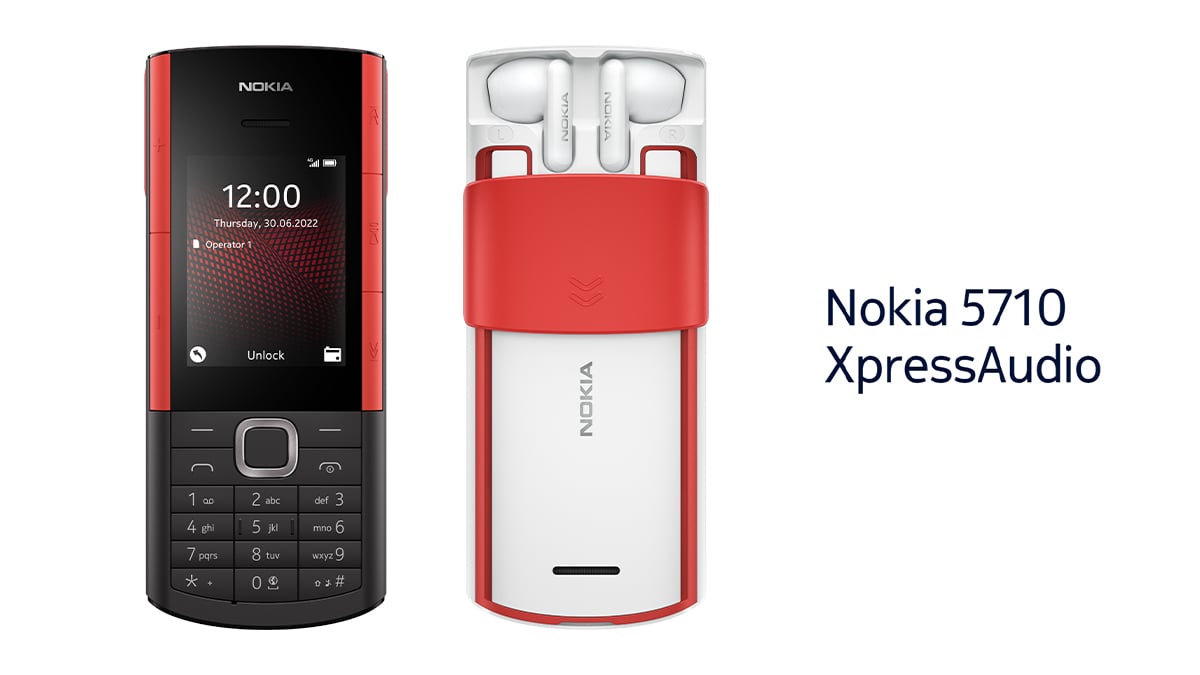
Nokia phone licensee HMD Global may not have had a smooth sail in the smartphone market but the company is a leading brand in feature phones. In a bid to expand its market share, the tech giant has launched a new feature phone – the Nokia 5710 XpressAudio in India.
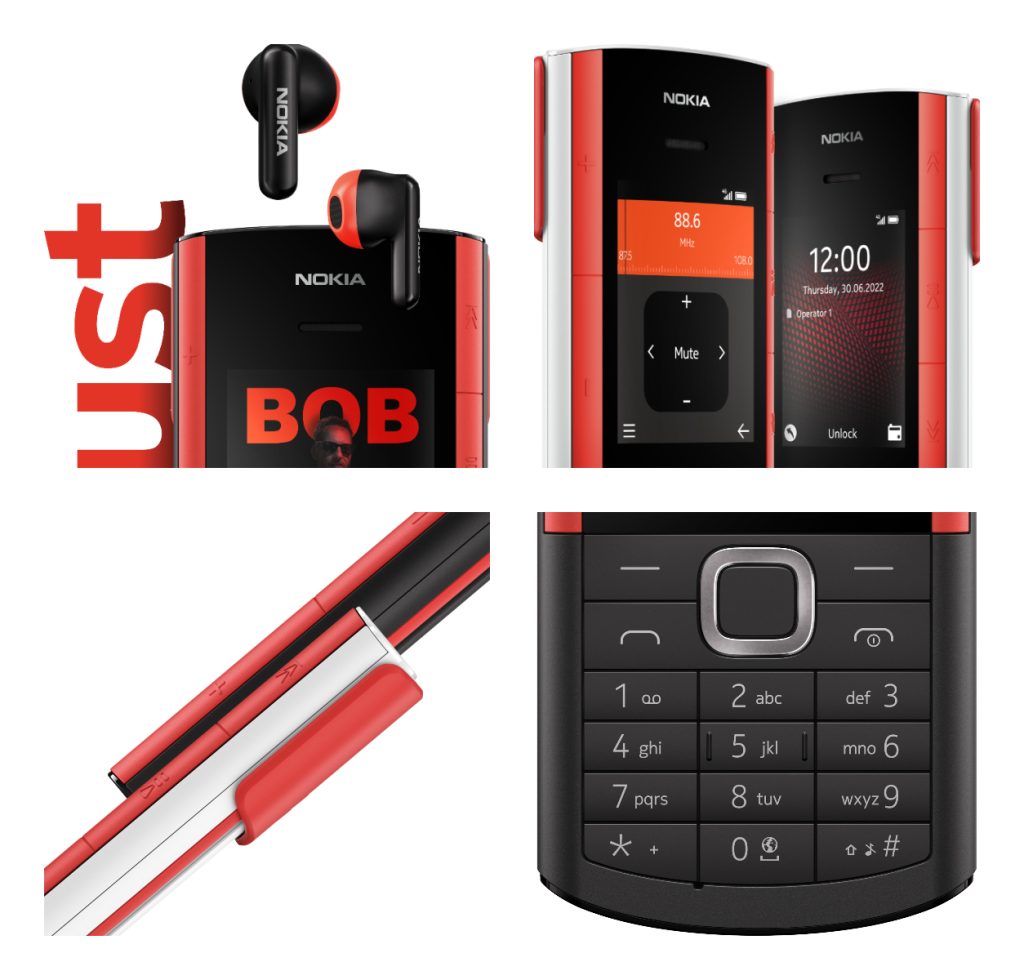
The new Nokia 5710 XpressAudio was earlier launched in China and arrives as a 4G-enable feature phone with several features designed to keep you entertained. The new phone adopts a retro design that brings the vibes of the XpressMusic lineup. HMD Global took things a notch higher by including wireless earbuds that are housed in a purpose-built compartment with a slider cover.
In terms of specifications, the new phone packs a 2.4-inch QVGA display and is powered by a Unisoc T107 chipset. The phone has buttons for music control on the left and right sides of the screen. It also has a classic T9 keyboard below the display and at the rear, there is a 0.3 MP with LED flash.
The cool phone also comes with decent loudspeakers and a large 1450mAh removable battery that can last for weeks on standby. The phone also comes with a durable build. The presence of wireless earbuds means the device has support for Bluetooth 5.0. It also comes with an MP3 player and FM radio.
The Nokia 5710 XpressAudio will retail in India for Rs. 4,999 (~$63). The feature phone will be available on Nokia’s website as well as in leading retail outlets and partner online stores starting from September 19, 2022.
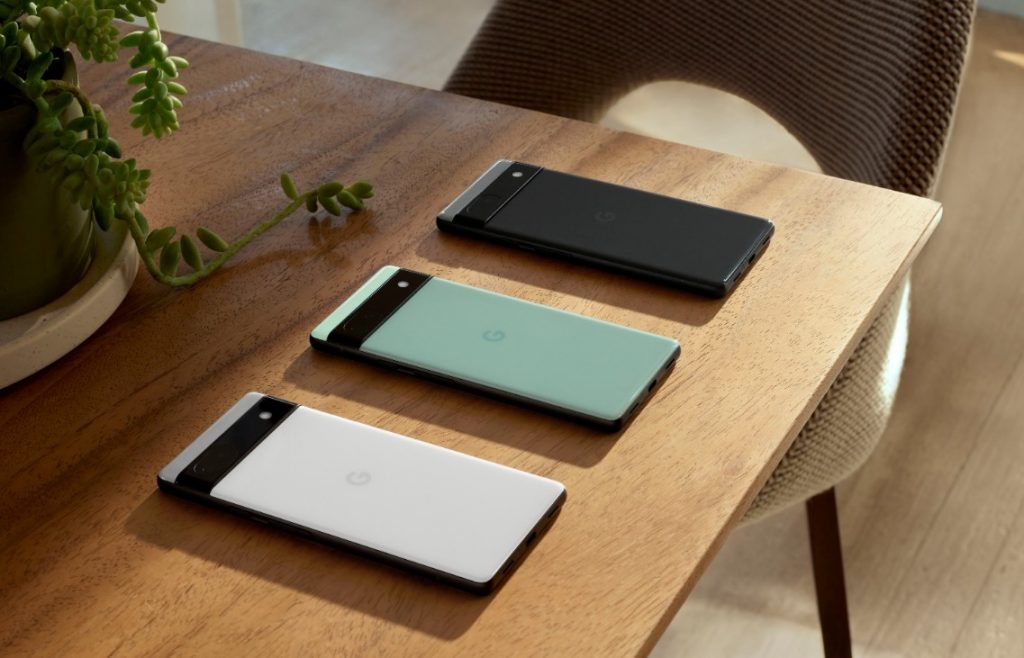
Google is reportedly planning to shift the production of its flagship Pixel smartphone to India. The development comes from publication The Information citing a company source. The search giant manufactures Pixel smartphones entirely in China.
Google Pixel 6a
The report states that Google has asked manufacturers in India to submit bids for the assembly of 500,000 to 1 million units of Pixel smartphones. This accounts for 10 to 20 percent of Pixel’s estimated total annual production. Google’s CEO Sundar Pichai had hinted at a plan to manufacture Pixel smartphones in India earlier this year but no final decision is taken yet according to the report. If the company gets approval of manufacturing Pixel devices in India, China will still have to play a role in exporting some components.
Another report also suggests that Alphabet Inc is looking at Vietnam as an alternative destination for manufacturing.
Google’s move to manufacturing Pixel phones outside China is due to the COVID-19-induced lockdowns causing disruptions in global supply networks. Additionally, there is also an ongoing trade war between Washington and Beijing with the former even banning the export of premium chips to China.
Google’s rival Apple has been manufacturing four iPhone models in India through its contract partners for several years now. The recently launched iPhone 14 is highly anticipated to be locally produced in the country from the fourth quarter of this year.
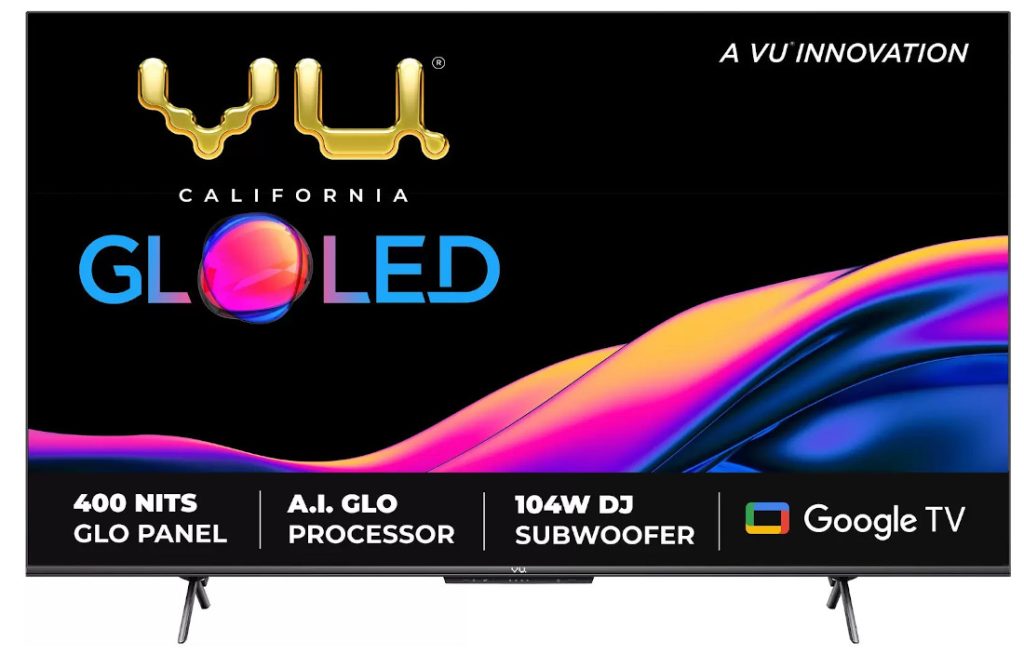
Vu had launched its Masterpiece Glo QLED TV series earlier in March this year. Now the brand has announced three new televisions under the Glo LED TV series. The latest offerings come with slightly toned down features compared to their QLED counterparts. Read on to know what the smart TVs offer out of the box.
The Vu Glo LED TVs come in 50, 55, and 65-inch screen sizes bearing a 4K resolution. They offer a 94 percent colour gamut, 400 nits brightness, HDR10, Dolby Vision, MEMC, and ambient light sensor. In terms of audio, the Vu Glo LED TVs are equipped with a DJ-class built-in subwoofer. They also feature four down-firing speakers with Dolby Audio and Dolby Atmos that are capable of producing 104W sound output.
Internally, the Vu Glo LED TVs are equipped with a quad-core processor with a dual-core GPU and Vu Glo AI processor. The televisions pack 2GB RAM and 16GB storage onboard. They run on Google TV and ship with pre-installed OTT apps like Netflix, Prime Video, and more.
The Vu Glo LED TVs also feature far-field microphones that enable the user to control the TV by directly giving voice commands without the need of a remote. The televisions also pack VRR and ALLM features for gaming.
The Vu Glo LED TV starts at Rs 35,999 for the base 50-inch variant. The 55 and 65-inch models are priced at Rs 40,999 and Rs 60,999. The televisions will be available for purchase from Flipkart.
With various studios bringing popular video game titles to the mobile platform, Ubisoft also decided to make the shift with one of its most popular online multiplayer game, Rainbow Six Siege. Now, the Rainbow Six Mobile port is entering closed beta. So let’s have a look.
Calling all Operators 🎉 🔥
Ready your weapons and gadgets! #R6M's Closed Beta is coming this fall 🍂 🔥 Pre-register 👇
For those unaware, Rainbox Six Mobile follows a similar format and gameplay to its PC and console counterparts. Its a 5v5 tactical shooter that pits two teams against one another. But unlike the PC and console version, the game is planned to be a free to play title and its beta test went live back on September 12. As of right now, the new mobile game is available in only seven countries, namely USA, Brazil, Canada, Mexico, Singapore, Philippines, and India.
Furthermore, the developers have also stated that they plan on sharing more invites and bring new changes to the beta program as well. Ubisoft announced through its official Twitter handle that it is rolling out invitations for some pre-registered users through Google Play in selected Closed Beta eligible regions. In other words, even registered users will not immediately get access to the game, but the company plans on slowly increasing the number of beta players and frequency of invitations over the next couple of weeks.
Unfortunately, the close beta test for Rainbox Six Mobile is only exclusive to Android users at the moment. So for those interested, you can expect to find the classic 5v5 Attack vs Defense game mode in the beta test, same as the PC and console version of the game. There are multiple operators in the game that each bring a unique gadget that play into the ‘tactical’ shooter aspect of this game. There are two game modes in the beta right now, including Bomb and Secure Area, with the maps selection also being limited to Bank and Border.
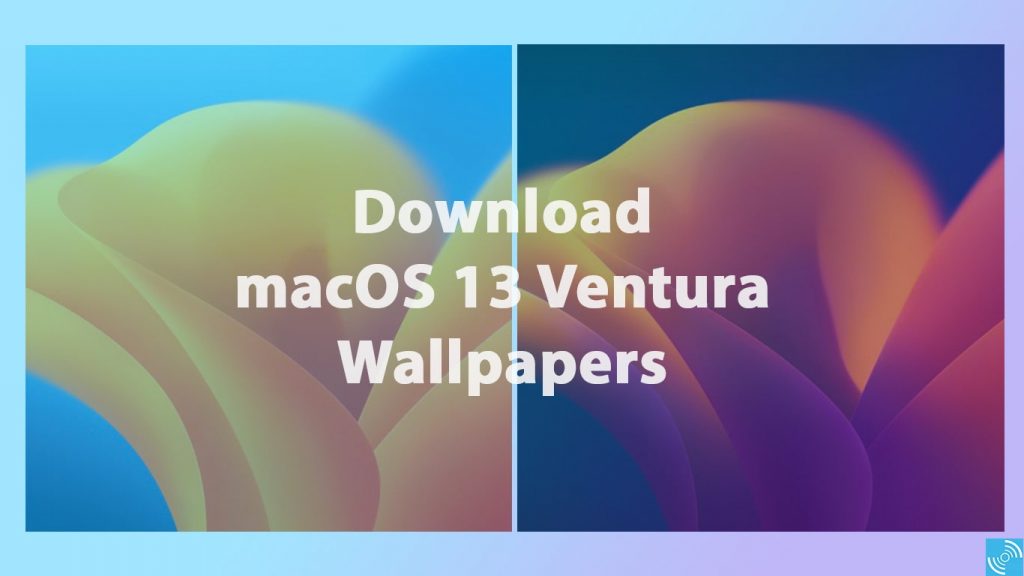
Along with the iOS 16 announcement, the Cupertino giant also introduced the macOS 13 Ventura. Several new changes and enhancements are part of the new package with a major emphasis on bridging the gap between iOS and macOS. Similar to iOS 13’s beautiful wallpapers, macOS 13 brings a single new wallpaper in both the light and dark modes. You can download macOS 13 Ventura wallpaper from the link below.
Apple added Abstract art-based wallpaper in the new iteration of the macOS with significant colors including orange and blue. You can download these in both the light and dark versions for better wallpaper visibility during the day and night time.
Note: Below Wallpaper is only for preview purposes. Download original quality wallpaper from the link below.
The new wallpaper is part of macOS Ventura Beta as the stable launch is due this fall. The official wallpapers are available in 6K resolution and can be used on any laptop or smartphone. However, it is quite useful to download macOS 13 Ventura wallpapers for the users of old MacBooks who won’t be at the receiving end for the new macOS iteration. At least, they can feel and enjoy the official wallpaper of macOS Ventura.
macOS Ventura Features
In a step to further eliminate the distance between different Apple devices, macOS 13 Ventura fills the gap with some useful features such as Continuity Camera, Handoff on FaceTime, and the Freeform app.
In the Continuity Camera, the system will automatically search for iPhones nearby and will connect wirelessly to utilize its advanced cameras for video conferencing. It further inculcates Center Stage and Portrait mode, plus a new Studio Light option to enhance the quality of video conferencing.
To assist collaborative work, the OS features Shared Tab Groups, Stage Manager, iCloud Share Photo Library and plenty of other useful features.
Download macOS 13 Ventura Wallpapers
The 6K resolution wallpaper in square form can be applied on almost any smart device. You can use it on iPad, old MacBooks/Laptops, QHD Display Monitors, etc.
We hope you enjoying the new macOS 13 Wallpaper on your device. If you get any problems or the link is not working then do let us know via the comments below.
The Zero Ultra 5G could be the next major phone from Infinix. It is expected to come with irresistible features like a 200-megapixel camera and 180W fast charging support. While it is expected to launch soon in Africa, a fresh finding suggests that the device could also launch in India.
Tipster Paras Guglani latest tweet reveals that an Infinix charger with a 180W charger has been certified by the Bureau of Indian Standards. The model number of the charger is U1800XIA.
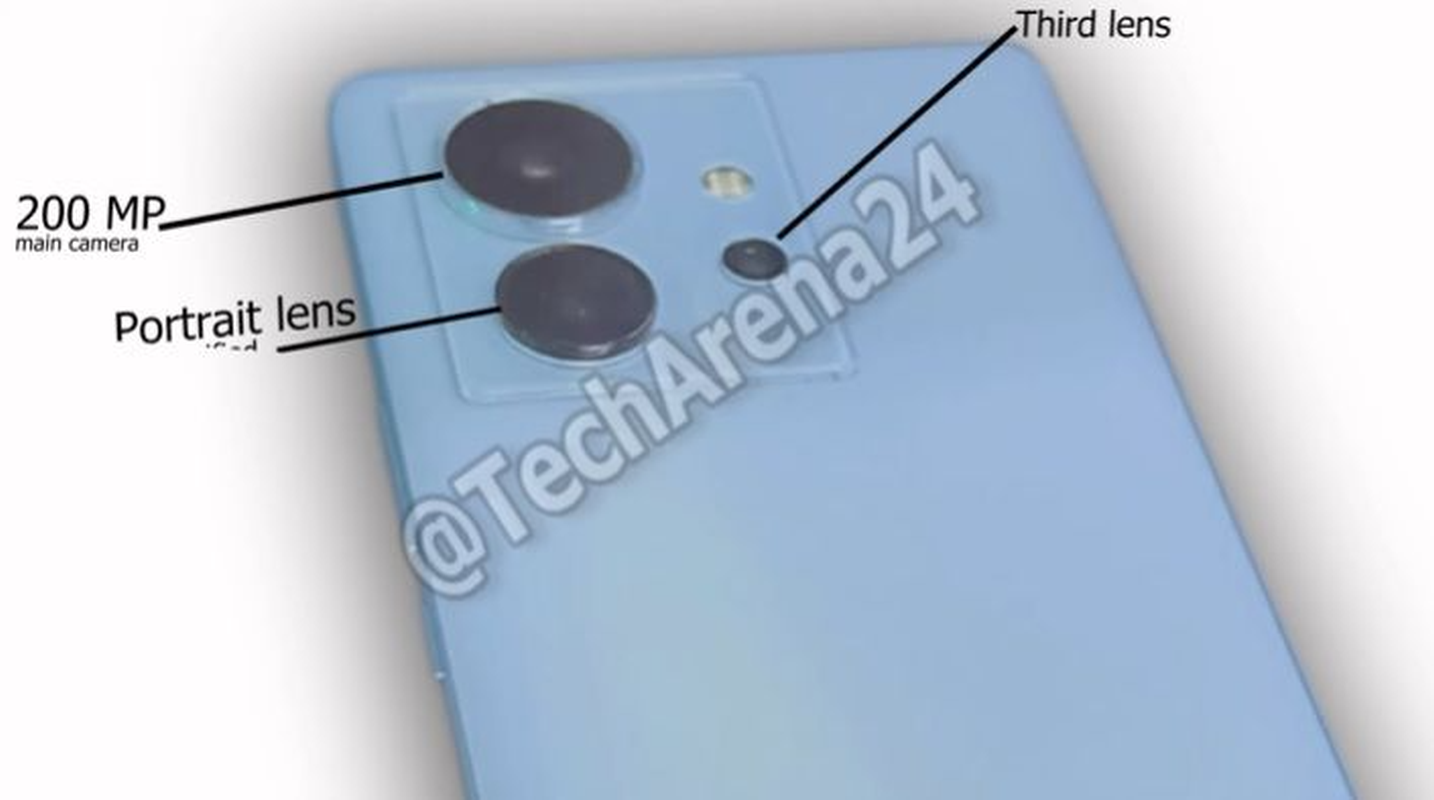
Alleged Infinix Zero Ultra 5G image by TechArena24
To recall, Infinix unveiled the 180W Thunder Charge technology in July this year. The 180W charger, according to the company, can charge a 4,500mAh battery from 0 to 50% in just 4 minutes. The charger will be available to users later this year, according to the company. Rumors are rife that the Zero Ultra 5G will be the first Infinix phone to come equipped with a 180W charger.
Now that Infinix’s 180W charger has been approved by the BIS authority in India, it appears that the Zero Ultra 5G will also be released in the country. But the Hong Kong-based company hasn’t confirmed that the Zero Ultra 5G exists.
Rumors surrounding the Infinix Zero Ultra 5G have claimed that it will feature a 6.7-inch AMOLED panel with curved edges and an in-screen fingerprint scanner, Dimensity 920 chipset, up to 12 GB of RAM, 256 GB of storage, and a 4,700mAh battery with 180W charging. For selfies, it may feature a 32-megapixel front camera, and its rear shell could be fitted with a 200-megapixel main camera, a portrait lens, and an unknown third camera. It may lack a 3.5mm audio jack. In India, it could be priced between Rs 25,000 (~$316) and Rs 30,000 (~$379).
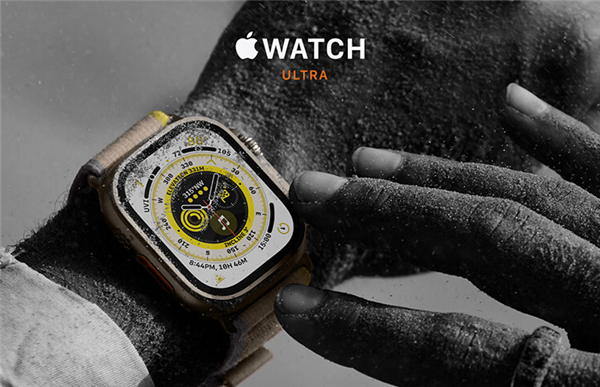
Apple had just recently launched the new Watch Series 8 alongside two new Watch models, including the Watch Ultra and the new Watch SE as well. Now, a new certification has revealed the battery capacities of the company’s latest smartwatches.
Via MySmartPrice
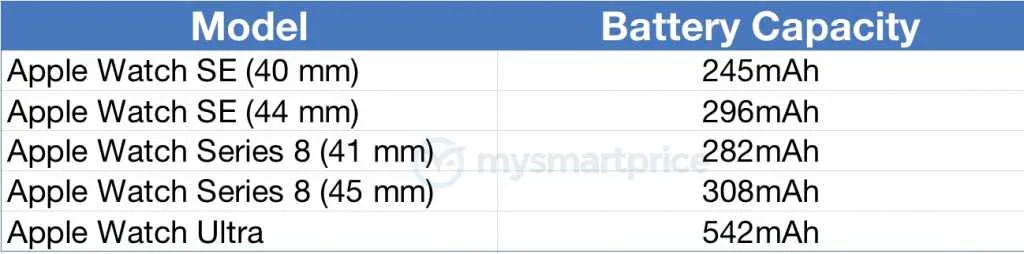
The new smart wearables from the Cupertino based giant were spotted on the 3C certification website. Talking about the new Apple Watches, the Watch Ultra features a titanium casing that offers up to 60 hours of battery life. Meanwhile, the Watch Series 8 and Watch SE also arrives with a some upgrades over the previous generation. The new Watch Ultra is the top end model from the brand. Based on the 3C listing, the Watch Ultra is powered by a large 542mAh battery pack.
Furthermore, the Watch Series 8 arrives in two sizes, including 41mm and 45mm sizes. The smaller variant features a 282mAh battery pack, while the larger version packs a larger 308mAh battery pack. Lastly, the brand has also announced the Watch SE, which is the most affordable Watch model out of the three, in two sizes as well. The 40mm variant has a 245mAh battery pack, while the 44mm version has a 296mAh battery pack. Notably, the Watch Ultra comes in a single 49mm variant and can last for up to 36 hours. Although, the new low power mode lets its last for an extended 60 hours.
Earlier this week, Redmi announced a new smartphone in its brand new entry-level Redmi A-series lineup, the Redmi A1. The phone brings entry-level hardware in a stock Android UI at an affordable price tag. What’s interesting is that the phone does not come with MIUI skin but runs on Android 12 Go Edition, so it should offer a better experience than other MIUI-powered Xiaomi models in its price segment.
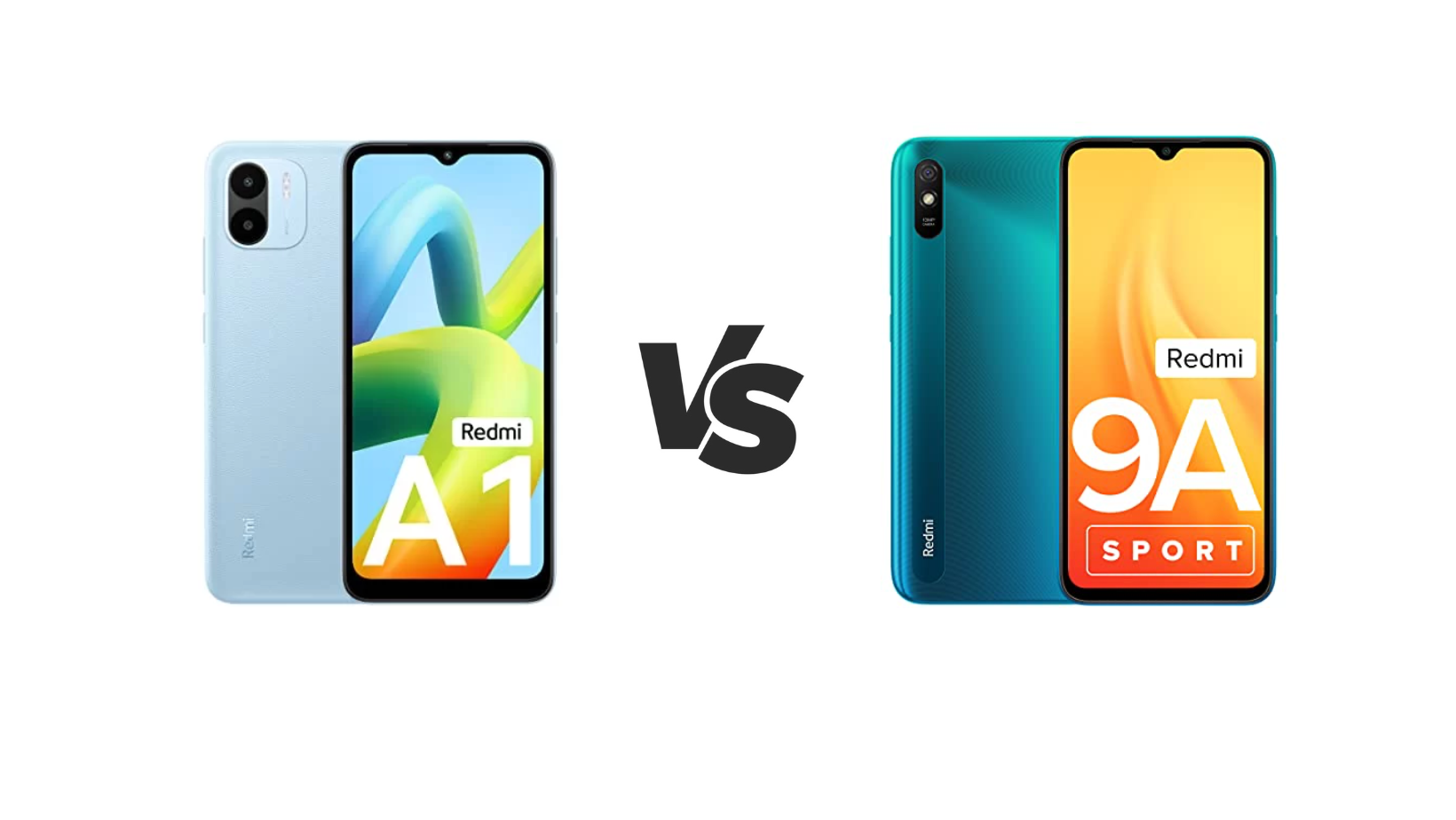
Today, we decided to compare two entry-level Redmi smartphones in the Indian market – the Redmi A1 model vs the Redmi 9A Sport. If you recall, the Redmi 9A sport was announced nearly a year ago, but still offers excellent value for money, thanks to the Helio G35 on board.
So, let’s check out how these two smartphones fare against each other.
Redmi A1 vs Redmi 9A Sport
Redmi A1 vs Redmi 9A Sport
Redmi A1
Redmi 9A Sport
DIMENSIONS AND WEIGHT
164.9 x 76.5 x 9.1 mm ,
192 g
164.9 x 77.1 x 9 mm,
194 g
DISPLAY
6.52 inches, 700 x 1600 pixels IPS LCD
6.52 inches, 700 x 1600 pixels IPS LCD
PROCESSOR
Mediatek Helio A22 quad-core @ 2.0GHz
Mediatek Helio G35 octa-core @ 2.0GHz
MEMORY
2GB RAM – 32GB ROM
2GB RAM – 32GB ROM, 3GB RAM – 32GB ROM
SOFTWARE
Android 12 GO Edition
Android 10, MIUI 11
CONNECTIVITY
Wi-Fi 802.11 a/b/g/n/ac/n, Bluetooth 5 LE, GPS
Wi-Fi 802.11 a/b/g/n/ac/n, Bluetooth 5, GPS
CAMERA
8MP + 0.3MP
5 MP f/2.5 front camera
13MP primary camera
5 MP front camera
BATTERY
5000 mAh, charging at 10W
5000 mAh, charging at 10W
ADDITIONAL FEATURES
4G, dual SIM
4G, dual SIM, water repellent
DESIGN
We have always said that design is a subjective department. Both smartphones come with pretty decent build quality and style. Gone are the days when cheaper smartphones looked cheap. Recently, the $100 phones have started to adopt newer styling and fresh colors that wouldn’t reveal its cheaper identity.
Redmi A1
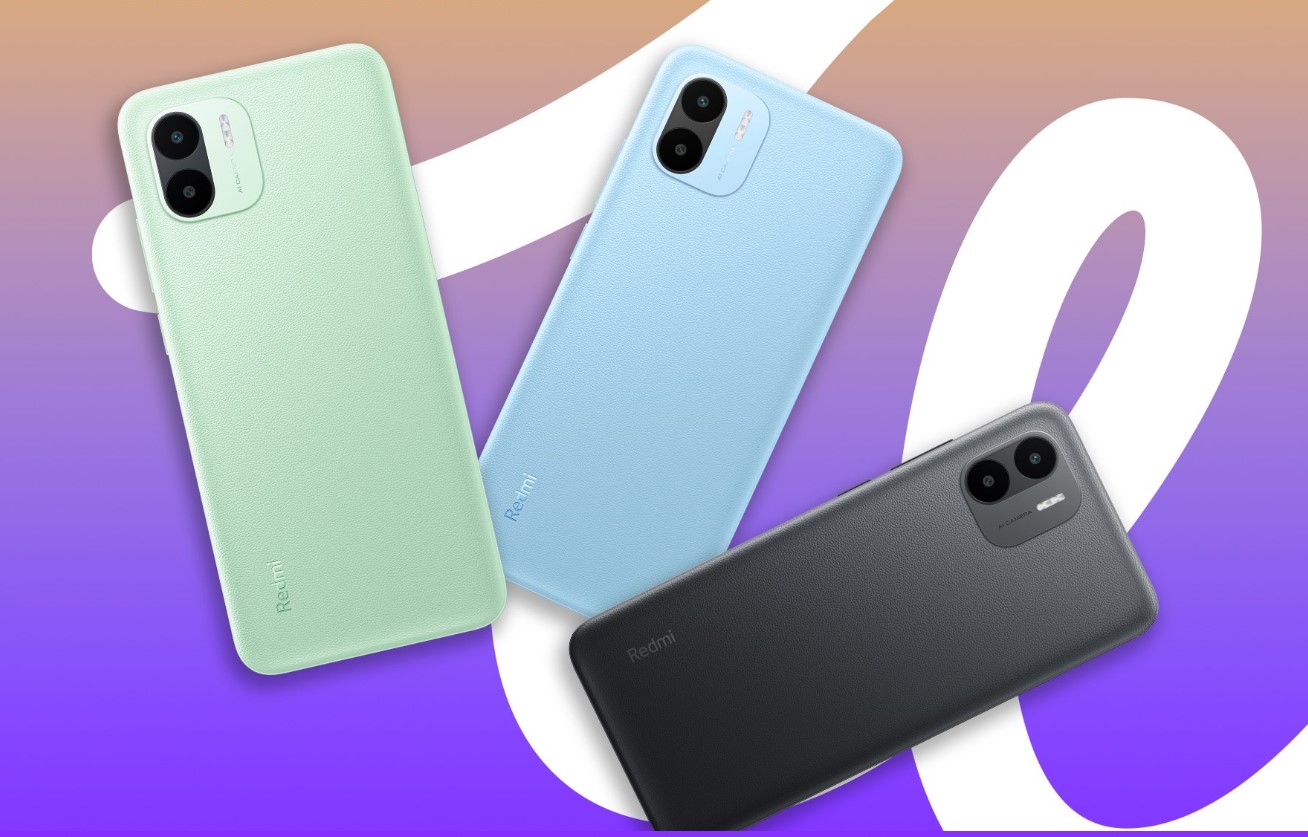
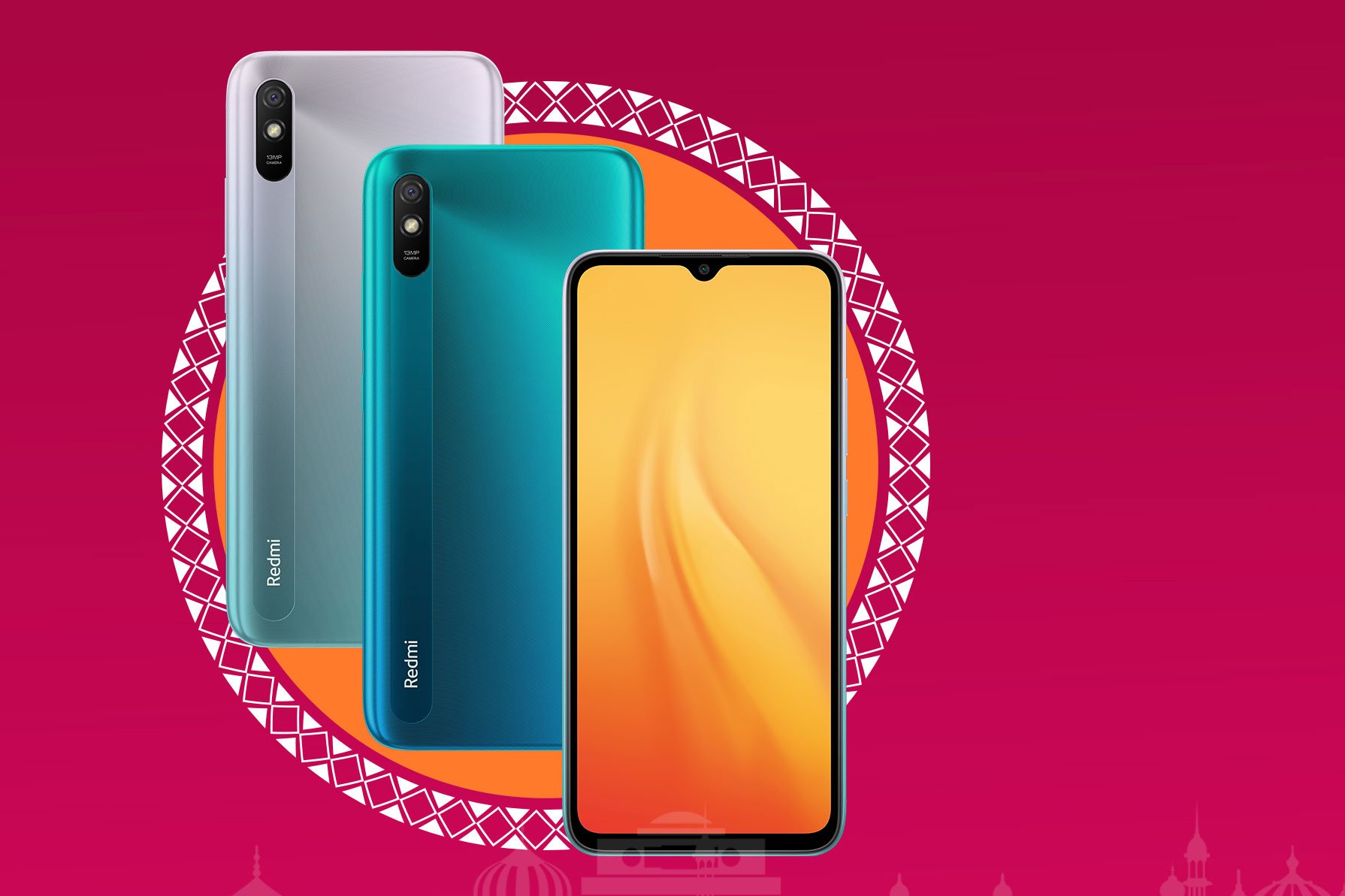
For example, the new Redmi A1 comes in fresh color options of Light Blue, Classic Black, or Light Green. The light colors along with the rounded design give it a pretty good feel. On the other hand, the Redmi 9A Sport comes in Carbon Black, Coral Green, and Metallic Blue. Again, apart from the black color option for the 9A Sport, the remaining two color options give it a premium feel.
The dimensions are more or less similar among both devices. The Redmi A1 comes in a 164.9 x 76.5 x 9.1 mm body while the 9A Sport features a 164.9 x 77.1 x 9 mm body. Even their weights are similar, 192 grams on the A1 vs 194 grams on the 9A Sport.
However, the rear camera designs differ a bit. The Redmi A1 comes with a dual camera module, which is more like a rectangular design, in line with other phones of 2022. On the other hand, the Redmi Sport 9A comes with an older looking pill shaped design with a single camera module.
Redmi 9A Sport
Overall, we prefer the design of the newer Redmi A1 model as it looks both modern and fresh. On the other hand, the Redmi 9A sport features a decent design but the camera module design might look a bit old for many users.
DISPLAY
Given that these are entry-level devices, they both feature the exact same entry-level panels too. Both the devices come with a 6.53-inch 720 x 1600 pixels resolution IPS LCD panel with a 20:9 aspect ratio and 400 nits brightness. As mentioned above, these are basic entry-level screens that are found on most phones in this price range. So there is nothing really differentiating between these two devices in the display department.
SPECS
This is one area where the two phones differ significantly. The newer Redmi A1 model comes with a Helio A22 chipset, which is a quad-core entry-level chipset. On the other hand, the Redmi 9A Sport brings a lot more power, thanks to the Helio G35 chip on board featuring an octa-core architecture clocked at 2.0GHz.
While the Redmi A1 maxes out at 2GB RAM and 32GB of storage, the 9A Sport brings even more powerful 3GB RAM and 32GB storage options.
Notably, both phones feature a dedicated MicroSD Card slot.
While entry-level phones are not meant for gaming or highly intensive tasks, but its clear that the Redmi 9A Sport has an advantage in the processing department with a much more powerful chipset.
However, the Redmi A1 might still offer a smooth user experience because it’s powered by Google’s Android 12 Go edition. On the other hand, the Redmi 9A Sport still runs on Android 10-based MIUI 12.
CAMERAS
Like other smartphones in this price segment, cameras will never be the biggest selling point of these devices. The Redmi A1 brings a dual camera setup with an 8MP primary camera. But the second camera is just for show. That’s because the secondary camera on board is a 0.3MP shooter.
On the other hand, the Redmi 9A Sport comes with a 13MP single primary shooter at the back.
As for selfies, both phones come with a 5MP front-facing camera.
It’s hard to say which one would be better off in the camera department, but the Redmi 9A Sport could have an edge in this department, despite featuring a single camera at the back.
BATTERY
Both phones come with a 5000mAh battery on board and come with a 10W charger in the box.
Overall, if you look at the specs alone, the Redmi 9A Sport still looks like a better buy despite being a year-old device. It comes with a much more powerful Helio G35 chipset which offers faster processing power. On the other hand, the Redmi A1 with its Android Go edition onboard also makes a compelling case without all the bloatware that you usually find on MIUI OS.
With the Apple iPhone 14 series being announced, pre-orders for the latest iPhone series has gone live. However, it appears that the newest version, which is the iPhone 14 Plus, is by far the least popular model in the new lineup.
iPhone 14 Plus
The news arrives from aMing-Chi Kuo of TF Securities, who is a known analyst in the industry. He recently published an early report that was related to the pre-orders for the 2022 iPhone generation. Looking at this report, we can see that the demand for the top end iPhone 14 Pro Max had crossed the iPhone 13 Pro Max that was launched last year. On the other hand, the iPhone 14 Pro saw around the same demand as last year’s iPhone 13 Pro.
However, the rating for the other two iPhone 14 series was “bad.” In other words, it appears that the demand for the iPhone 14 series as a whole is more towards the more expensive model rather than the affordable ones. Kuo claimed that the demand for the iPhone 14 Plus is weaker than even the iPhone 13 mini last year. For those unaware, Apple had discontinued the iPhone mini model after lackluster demand for the smallest flagship model.
In its place, the brand release the Plus model, assuming that a larger model with a lower price tag than the Pro models might be more popular. But it seems like that was not the case. The iPhone 14 Plus demand is so low that it is even weaker than the iPhone SE 2022 model as well and accounts for just 5 percent of the total pre-orders. Meanwhile, the two Pro models make up 85 percent of the pre-orders, with the rest of the 10 percent being for the base iPhone 14.
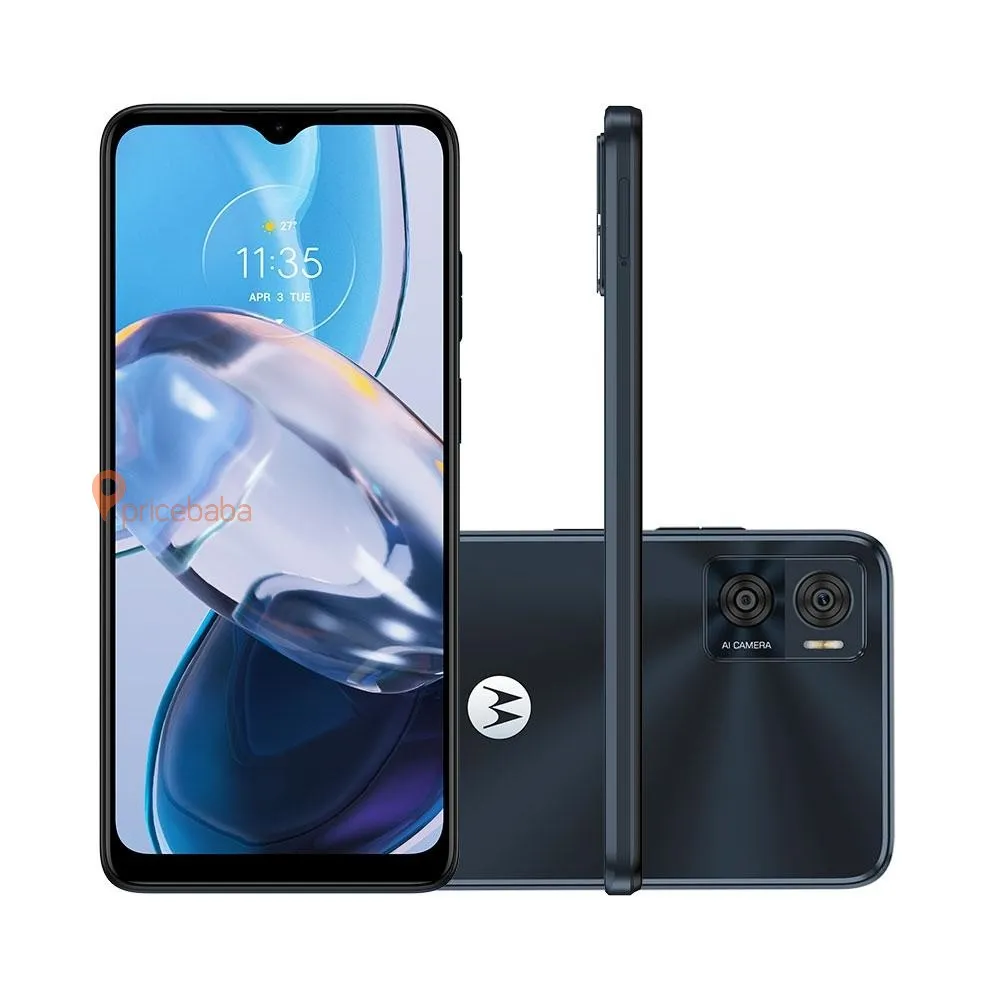
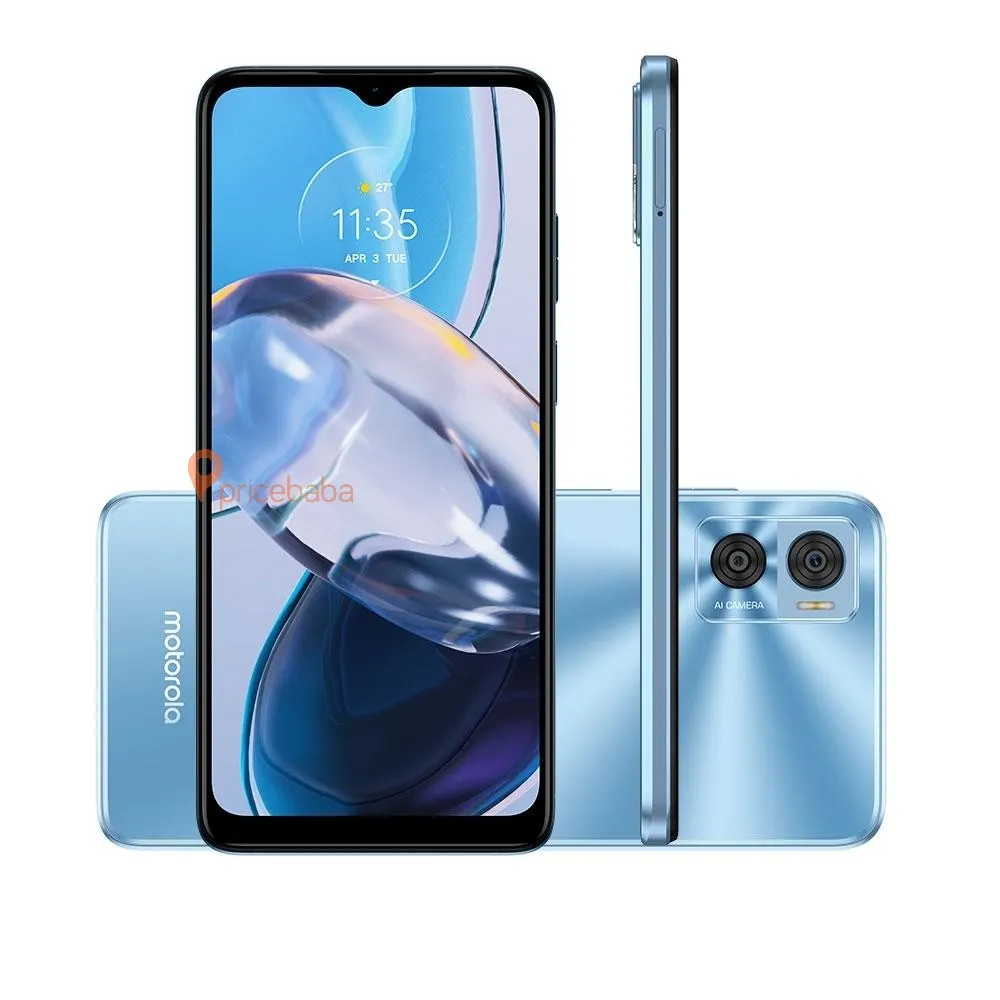
Earlier today, Motorola launched the Edge 30 Ultra and Edge 30 Fusion smartphones in the Indian market, which will target the premium and premium-midrange segments. The company is also gearing up to launch a new budget-range smartphone in the country called the Moto E22.
Earlier this week, we got our first look at the device, via a leaked render. Now, PriceBaba has leaked more renders of the device along with color options and an alleged launch date. So let’s take a look.
Moto E22 renders
1 of 4
Moto E22 renders
Moto E22 renders
Moto E22 renders
Moto E22 renders
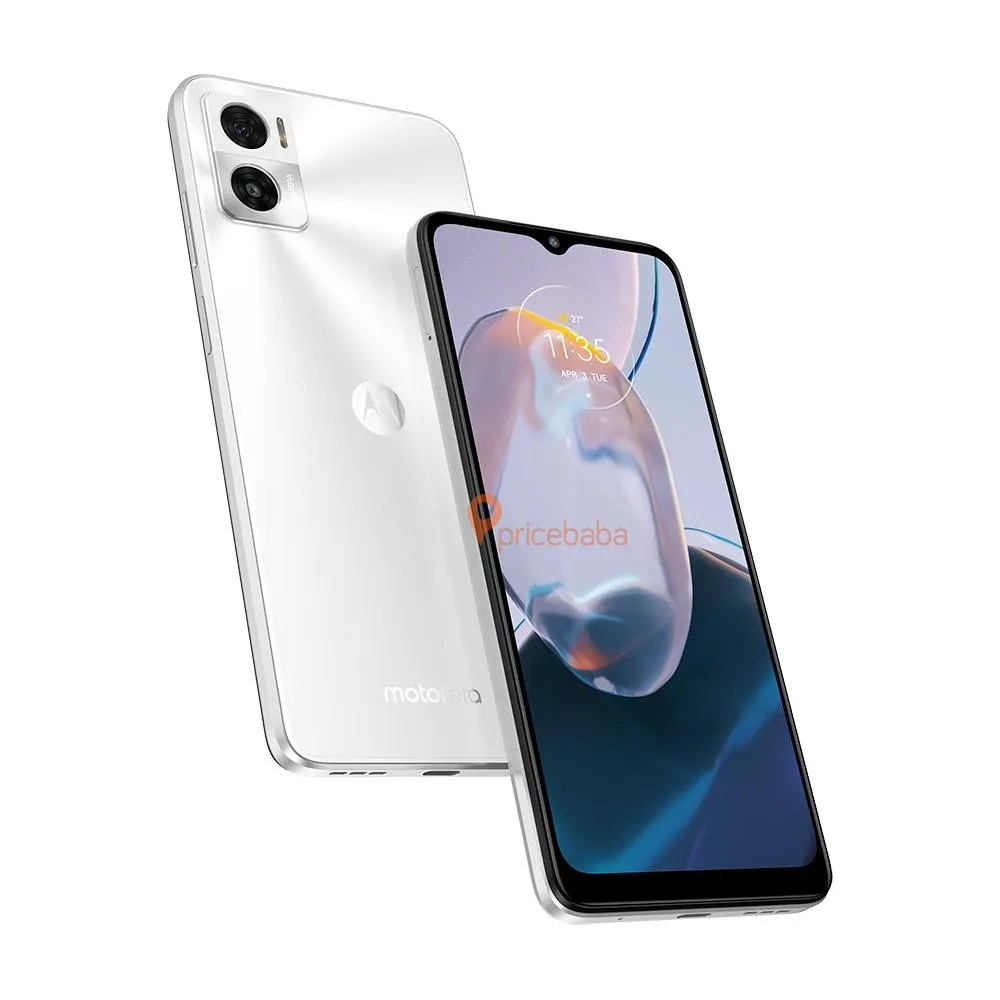
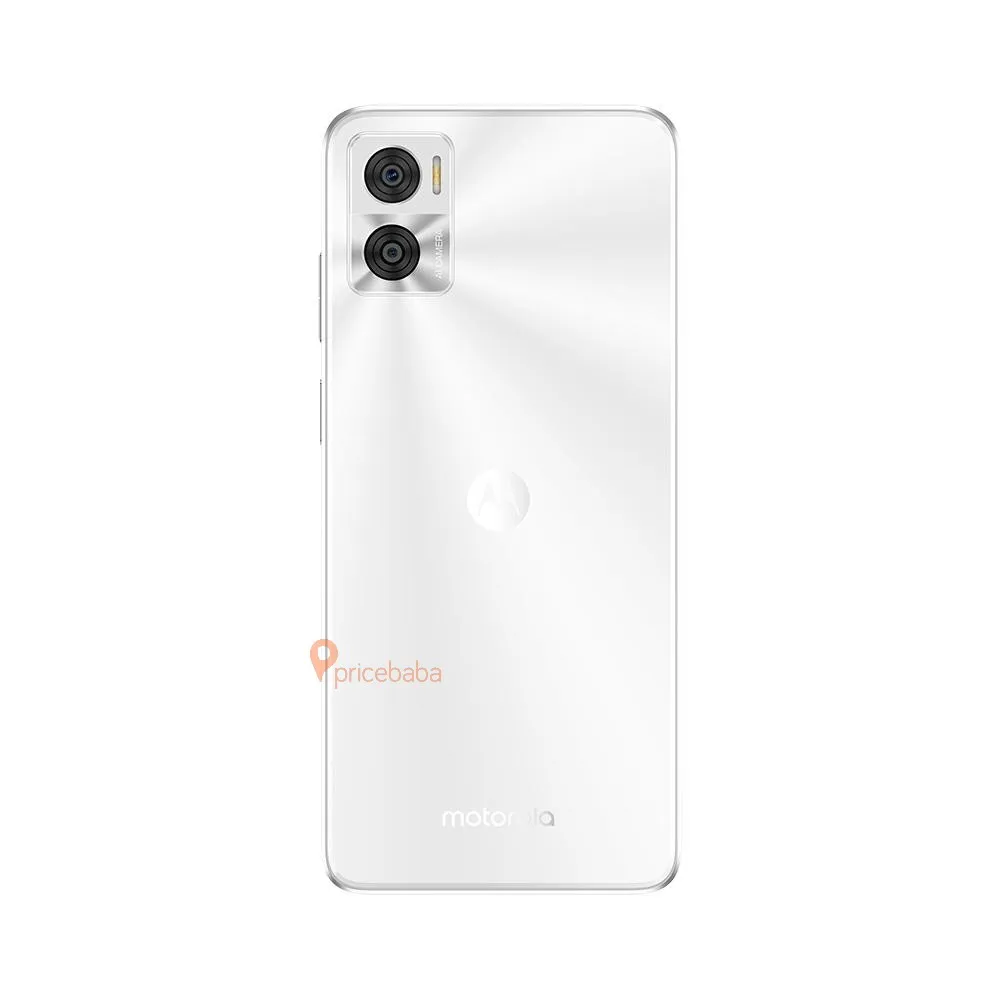
Looking at these pictures, the device has a dual camera setup on the rear, while the front sports a waterdrop notch display. The renders reveal three color options-White, Sky Blue, and Dark Blue. The previously leaked render revealed a black color option. Further, the report also reveals that the smartphone will be priced under Rs 10,000 and will debut on September 16th.
Moto E22 expected specifications
The next Moto E22 will sport a waterdrop notch display with reasonably sized bezels and a dual-camera setup at the back, as we can see in the leaked photographs. The E22 doesn’t have a fingerprint scanner positioned on the back, according to the design renderings. It might be incorporated into the power button.
The smartphone is expected to feature a 6.5-inch 90Hz IPS LCD display, a 16MP dual-camera system, and a Helio G37 CPU. As for the battery, a 5,000mAh capacity is expected. Other than that, the device has a 3.5mm headphone jack, which can be found at the top, near the Dolby Atmos logo. On the software front, the smartphone will feature Android 12.
We use cookies on our website to give you the most relevant experience by remembering your preferences and repeat visits. By clicking “Accept”, you consent to the use of ALL the cookies.
This website uses cookies to improve your experience while you navigate through the website. Out of these, the cookies that are categorized as necessary are stored on your browser as they are essential for the working of basic functionalities of the website. We also use third-party cookies that help us analyze and understand how you use this website. These cookies will be stored in your browser only with your consent. You also have the option to opt-out of these cookies. But opting out of some of these cookies may affect your browsing experience.
Necessary cookies are absolutely essential for the website to function properly. This category only includes cookies that ensures basic functionalities and security features of the website. These cookies do not store any personal information.
Any cookies that may not be particularly necessary for the website to function and is used specifically to collect user personal data via analytics, ads, other embedded contents are termed as non-necessary cookies. It is mandatory to procure user consent prior to running these cookies on your website.