Advertisement

Lenovo launches Legion R7000P & R9000P 2022 gaming laptops, with Ryzen 6000 CPU & 165Hz display

Lenovo has just launched two new gaming laptops in its home market of China. The new notebooks include the new Legion R7000P 2022 and Legion R9000P 2022 that feature AMD’s Ryzen 6000 series processors.

Legion R7000P 2022

Talking about the Legion R7000P 2022 model first, the new gaming laptop has launched in China and starts with the AMD Ryzen 5 6600H CPU and the NVIDIA GeForce RTX 3050 graphics card. This variant is priced at 7,599 Yuan (roughly $1,130). Users can opt for a model with a beefier GeForce RTX 3050 Ti, which is priced at 7,899 Yuan (roughly $1,173). The gaming laptop is also offered with a AMD Ryzen 7 6800H processor that is paired with either an RTX 3050, which is priced at 7,999 Yuan (roughly $1,189), or the RTX 3050 Ti that costs 8,299 Yuan (roughly $1,233).

Lenovo

This laptop sports a 15.6 inch 2.5K display that has a 165Hz refresh rate and 100 percent sRGB color gamut. The display also comes with Dolby Vision and DC Dimming support. Under the hood, it also packs up to 16GB of 4800MHz RAM and a 512GB of SSD storage. The Chinese PC maker has also placed an emphasis on cooling with the new gaming laptops, which feature the proprietary Frost Blade Cooling System 4.0 for thermal management. Other features include 80Whr battery, WiFi 6E, Bluetooth, three USB Type C, three USB 3.2 Gen 1, a 3.5mm audio connector, an HDMI 2.1, and an Ethernet port.

Legion R9000P 2022

The Legion R9000P 2022 is the higher end gaming laptop that was recently launched in China. It starts from 9,499 Yuan (roughly $1,411) and arrives with the AMD Ryzen 7 6800H processor and the NVIDIA GeForce RTX 3060 graphics card. The top end variant has a price tag of 11,699 Yuan (roughly $1,739) and offers the same Ryzen 7 6800H CPU and a powerful RTX 3070 Ti GPU.

Both the Legion R9000P and Legion R7000P run on Windows 11. Although, the former sports a larger 16 inch display that has a 2K resolution, 500 nits of peak brightness, and a 165Hz refresh rate. It also supports DC Dimming, HDR, AMD FreeSync, Nvidia G-Sync, and Dolby Vision support as well. This gaming laptop also offers 16GB of 4800MHz DDR5 RAM and 512GB of SSD storage. Similar to the R7000P 2022 model, it also has a Frost Blade Cooling System 4.0 for thermal management. This model also packs an 80Whr battery pack that supports charging from a USB Type C port.

Lenovo

As of right now, both the Lenovo Legion R7000P 2022 and Legion R9000P 2022 are currently available for pre-orders in China and are set to go on sale on 17th June 2022. Notably, the brand is also offering an introductory offer of 1,000 Yuan discount (roughly $150) that is eligible for both gaming notebooks.

RELATED:


Acer Announces that the 2022 Laptop Market Supply Has Officially Exceeded Demand

After two years of the explosive growth in demand for PCs during the pandemic, it seems that the bullish growth trend is showing signs of slowing down, as more people returning back to the office instead of staying at home post-pandemic. And it seems that globally renowned laptop manufacturers from the likes of Asus and Acer seem to think so as well.


Acer Swift 5
Acer Swift 5

The Taiwanese media outlet, Commercial Times, reports that in Acer’s quarterly shareholder conference, the brand’s CEO, Jason Chen had announced that the company is shifting its sales outlook for the year 2022, as the company had analysed that based on the current data, the global PC market supply has officially exceeded demand.

Amidst the chip shortage issue being gradually resolved since the end of the last year, the company’s sales for Q1 2022 have been greatly improved compared to Q1 2021. And as for international freight shipping, despite the frequent port congestions and long waiting times for sea and air cargo shipping globally, the shipping rates have surely gotten cheaper for multinational companies in 2022. This change allows laptop manufacturers like Acer to lock in sales faster as they can produce more, and then more of the brand’s products will be able to reach storefronts for customers to buy.

Acer Laptop Logo

But there is one caveat to this in 2022. CEO of Acer Inc, Jason Chen states that in 2022, the United States had raised the federal reverse interest rates higher to increase global inflation rates and coupled with rising food shortages caused by the war between Russia and Ukraine, demand for PCs is just generally low for buyers right now. Chen explains that buyers will now shift their purchasing focus from their wants (ie the more expensive electronic goods) to the basic necessities like bread, rice, butter and cooking oil, as inflation continues to be rising across the globe. 

In turn, Chen believes that electronic goods like laptops and smartphones in the next few years will experience much lower demand and have a longer upgrade cycle, not only because people saving and spending money on food, but also because the newer laptops and smartphones of today work just fine to last you 3 to 6 years, and they see no need to replace them.

Acer Aspire 3
Acer Aspire 3

Chen believes that Acer conquering the PC market requires sufficient analysis with efficient strategies. Acer’s business operations span across laptops, desktops, displays and non-PC business subsidiaries as well. In the report, Acer notes that almost 22% of the revenue generated in April 2022 this year was held by its non-PC and non-display businesses, and the company’s business revenue grew 7% YoY compared to 2021.

And as a closing note, Chen reiterates that Acer as a company to ready to face the uncertainties of the PC market, and that it will always do its preparations against the unexpected to stay strong in its current position as an industry leader in the market.

RELATED:

(Via)

Nothing Phone (1)’s flat-edge design teased, manufacturing begins in India

Nothing is building hype around its first smartphone, the Nothing Phone (1), which is scheduled to launch on July 12 in global markets and India. The manufacturing of the Nothing Phone (1) has reportedly started in the country, which indicates that the company will continue to tease more features of the smartphone before its launch. A new teaser for the Nothing Phone (1) carries some more hints about its design.

Nothing Phone (1)’s latest teaser confirms that it has a flat-edged design. The silver-colored frame of the device has rounded corners. The portion of the rear shell that is visible suggests that it has a metallic build. A vertical camera setup seems to be present in the upper-left corner. It could be equipped with a dual-camera system.

Nothing Phone (1) design teaser

The company has already confirmed that the Nothing Phone (1) will have a recycled aluminum mid-frame with a transparent back. The device will be powered by a Snapdragon processor and will have support for wireless charging. It has also been confirmed that the Phone (1) has no chin, which indicates that it will offer an impressive screen-to-body ratio.

The Nothing Phone (1) is rumored to house a 120Hz AMOLED display with an in-screen fingerprint scanner and up to 8 GB of RAM. While there is no word on its battery capacity, a recent certification listing revealed that it will carry support for 45W wired charging.

According to another leak, the Nothing Phone (1) will cost around 550 euros ($579; Rs 45,120) in Europe. The July 12 launch event may also see the arrival of some other Nothing products such as Ear (2) TWS earbuds and a magnetic charging case.

RELATED:

Vivo V25 series key specs leaked ahead of July 2022 launch

Vivo is gearing up to launch another V series of smartphones soon. The newest addition to the family is the V25 series, which follows the V23 series that was launched earlier this year. Now, we have some details regarding its specifications and its possible launch timeline.

vivo v23 5g
V23 5G

According to a TechYorker report, the Chinese smartphone maker is planning on releasing the V25 and V25 Pro in India in just a few weeks. The lineup will be unveiled sometime in the middle of July 2022. The new Vivo smartphones will be the company’s latest premium smartphones and are expected to be priced somewhere between 30,000 INR (roughly 385 US Dollars) and 40,000 INR (roughly 512 US Dollars). Keep in mind that this is still unconfirmed so take it with a pinch of salt for now.

The new report further revealed the storage configurations for the V25 Pro, which will apparently launch in three variants. This includes the 8GB + 128GB, 8GB + 256GB, and 12GB + 256GB models. Furthermore, the device is rumored to sport a 6.56 inch AMOLED display that has a Full HD+ resolution and a 120Hz refresh rate as well. On the rear, it will feature a triple camera setup that includes a 50 megapixel Sony IMX766V primary sensor, a 12 megapixel ultra wide angle lens, and a 2 megapixel portrait camera.

vivo V23 Pro
V23 Pro 5G

Meanwhile, the front houses a 32 megapixel selfie shooter. Notably, the Pro variant may also house the MediaTek Dimensity 8100 SoC and a 4,500mAh battery pack that supports 80W fast charging. On the other hand, the base V25 will reportedly feature a Qualcomm Snapdragon 778G processor or a Dimensity 1200 SoC. It might pack a 4,500mAh battery as well, but with support for a slower 44W or 66W fast charging. The device is rumored to have a 16 megapixel selfie shooter, and a rear camera module that is identical to the Pro variant.

RELATED:


OnePlus 10T 5G camera specs leaked, with 50MP 1/1.5 inch primary sensor

OnePlus is planning on launching a new flagship smartphone soon. We recently reported on the design of this upcoming model being leaked, and now, we have more information regarding its camera details as well.

OnePlus 10 (or 10T) renders by Onsitego / Yogesh Brar

As per recent rumors, the new device is codenamed Project Ovaltine. Now, known tipster Digital Chat Station (Via MySmartPrice) has revealed some key specifications of the OnePlus 10T 5G. Apparently, the handset will be equipped with a Snapdragon 8+ Gen 1 SoC. Apart from its chipset, the tipster also revealed some interesting details regarding the smartphone’s rear cameras. Reportedly, the 10T 5G model will feature a 50 megapixel primary sensor on the back, which has a 1/1.5-inch.

In other words, it will be the largest ever image sensor used on an OnePlus phone. This, on paper, should help improve the lowlight performance of the upcoming smartphone since it would e able to capture better details. Apart from this camera, the rear will even pack an 8 megapixel ultra wide angle lens and a 2 megapixel macro sensor. Another known tipster, Yogesh Brar, has also revealed some other specifications of this model.

OnePlus 10 (or 10T) renders by Onsitego / Yogesh Brar

It is expected to feature a 6.7 inch AMOLED display that has a Full HD+ resolution, 120Hz refresh rate, and a punch hole cutout for the rumored 32 megapixel selfie camera. Based on its leaked design, the OnePlus 10T 5G also has a large camera island on the back similar to the 10 Pro. Although now, it even extends to the top of the smartphone as well. The handset is expected to house a 4,800mAh battery pack that supports a whopping 150W fast charging as well. This all the information we have at the moment, so stick around for more updates.

RELATED:


Huawei Enjoy 50’s New Kirin Soc has a Higher Running Score than the Kirin 710A

On June 6, Huawei launched a new Enjoy series smartphone dubbed, Huawei Enjoy 50. The smartphone came with a particularly large 6000mAh battery, 22.5W fast charging, and a 6.75-inch large screen. But for some reason, Huawei did not reveal any specific information regarding the processor of the phone. It is speculated that Huawei Enjoy 50 features the Kirin 710A Soc, However, a recent Weibo post by a tipster discredits these speculations.

A popular tipster who goes by the username @Factory Director Shiguang has shared a post on Weibo which reveals the AnTuTu running score of the Huawei Enjoy 50. The running score of the smartphone is 226225 points, which is higher than the regular Kirin 710A. This proves that the smartphone does not have Kirin 710A under the hood.

Huawei Enjoy 50 benchmark

According to the tipster’s description, the processor powering the Huawei Enjoy 50 is more like 710A+ and there have been some changes in its design, so the performance has also been improved. Considering that it is a low-end chip, the benchmarking score is not bad at all.

The use of a new chip indicates that Huawei may have found a breakthrough point for the underlying Chip shortage problem.

Huawei Enjoy 50 comes with a 6.75-inch 1600×720 LCD water drop display with a 20:9 aspect ratio and a 260ppi pixel density. It supports ten-point super touch technology and features a front 8MP lens. The smartphone has a 13MP+2MP dual real camera. It has a built-in 6000mAh battery and supports a 22.5 W fast charge.

Huawei Enjoy 50

The smartphone is also equipped with HUAWEI Histen 6.1 and HUAWEI SuperSound audio solutions, which can provide 9.1-channel simulated surround sound and a maximum volume of 86dB.

The Huawei Enjoy 50 is available in multiple variants, such as 6 GB RAM + 128 GB storage, 8 GB RAM + 128 GB storage, and 8 GB RAM + 256 GB storage.

Related:

Samsung Galaxy Tab A7 2022 Edition to feature Unisoc T618 chipset: Report

Samsung launched the Galaxy Tab A7 in the second half of 2020. The Galaxy Tab A8 succeeded it at the end of 2021. Almost two years after its debut, the company is now gearing up to re-release the tablet with a change. Let’s take a look at this upcoming variant.

Samsung Galaxy Tab A7 Silver Rear Featured
Samsung Galaxy Tab A7

In early May, SamMobile reported that Samsung is planning to launch many tablets. One of them was the Galaxy Tab S6 Lite 2022 Edition, which went official a few days later.

The publication had mentioned a tablet with model number SM-T503 among others. According to the retail sources of GizPie, this model number belongs to the Galaxy Tab A7 2022 Edition.

Apart from the branding, the sources have also revealed the chipset. Unlike the original which had a Qualcomm Snapdragon 662 SoC, the 2022 Edition will be powered by a Unisoc T618 chip.

Just like the Galaxy Tab S6 Lite refresh, there seems to be only one memory configuration for the Galaxy Tab A7 revival. The table is expected to arrive with 3GB RAM and 32GB storage.

Talking about other features, the forthcoming Samsung tablet is said to retain the same specs as the original model. Hence, it will likely arrive with a 10.4-inch display (TFT LCD) sporting a resolution of 2000 x 1200 pixels, quad speakers, 3.5mm headphone jack, MicroSD card slot, 8MP rear camera, 5MP front-facing camera, 7,040mAh battery, and 15W fast charging support.


RELATED:


Xiaomi’s Redmi K50 series gets new Snow White color option with a frosted glass back panel

Xiaomi has today announced a new color option for its Redmi K50 series smartphones in its home market in China. The new summer color option is called Qingxue or Snow White and features a matte white cover with a frosted glass back panel.

While the new color option for the Redmi K50 lineup has been announced, it will be officially available for purchase in the Chinese market from 18th June for the starting price of 2,399 yuan, which roughly converts to $356.

Redmi K50 Snow White Color Option

Zhang Yu, Marketing Manager of Redmi posted some images of the upcoming color option for the Redmi K50 on the social media platform Weibo and added that the frosted glass back panel does not sustain fingerprints.

As per the reports, the new Snow White color option will be available for three models of the Redmi K50 — 8GB + 256GB, 12GB + 256GB, and 12GB + 512GB. For the K50 Pro, it will be offered for the 8GB + 256GB and 12GB + 256GB models.

Apart from the color, everything else on the smartphones remains the same. The Redmi K50 series features a 6.67-inch AMOLED QHD+ display and runs the Android 12 operating system with the company’s own custom user interface on top.

The Redmi K50 is powered by the MediaTek Dimensity 8100 processor, while the top-end model, the Redmi K50 Pro, is powered by MediaTek’s Dimensity 9000 SoC. The phones come packed with up to 12GB of LPDDR5 RAM and 512GB of UFS 3.1 internal storage.

RELATED: 

POCO F4 5G specs & India pricing leaked ahead of launch

POCO is gearing up to soon launch the new F4 5G model for the global market. However, prior to its official announcement, a new leak has revealed its pricing for the Indian region and even shared some more specifications details.

POCO F4 5G


The new leak arrives from an authorized Xiaomi retailer (Via Rootmygalaxy). In a leaked teaser poster, we can see that the POCO F4 5G will come in a single variant in the global market and will have a price tag of 459 US Dollars. On the other hand, the same model is tipped to launch for a price of just 26,999 INR (roughly 345 US Dollars). So with additional bank offers, this handset might even be available for a price as low as 23,999 INR (roughly 308 US Dollars).

In other words, this implies that F4 5G model might be the cheapest device that is equipped with the flagship Qualcomm Snapdragon 870 SoC. Talking about some of its other specifications, the POCO F4 is expected to sport a 6.67 inch AMOLED display that has a Full HD+ resolution that supports 120Hz refresh rate. At the moment, it is confirmed that the handset will feature a Snapdragon 870 that will be paired with up to 12GB of LPDDR5 RAM and 256GB of UFS 3.1 internal storage.

POCO F4 5G grey

Under the hood, a large 4,500mAh battery pack is expected to power the device, which would likely support 67W fast charging as well. It may even be equipped with a side mounted fingerprint scanner, an infrared sensor, Dolby Atmos, dual speakers, and USB Type C port for charging. The rear packs a 64 megapixel triple camera setup, while the front may house a 20 megapixel selfie shooter.

RELATED:


Samsung Galaxy Buds Pro 2 TWS earbuds rumored to get launched next month

Samsung has a lineup of true wireless earbuds under its Galaxy Buds series and while they have been popular, the South Korean giant is yet to launch a new model this year.

While there have been reports about the new Galaxy Buds lineup of TWS earphones launching soon, a new report claims that the upcoming Samsung Galaxy Buds Pro could go official sooner than expected.

Samsung Galaxy Buds Pro Review 07
Samsung Galaxy Buds Pro

As per the report, the Samsung Galaxy Buds Pro 2 is expected to get launched in the month of July, i.e. next month. However, it is not yet confirmed that the company will be launching the Galaxy Buds Pro 2 or the Galaxy Buds 3.

Samsung is gearing up to launch the Galaxy Z Fold 4 and Galaxy Z Flip 4 foldable smartphones in the month of August but the earbuds are now expected to go official about a month before the phones.

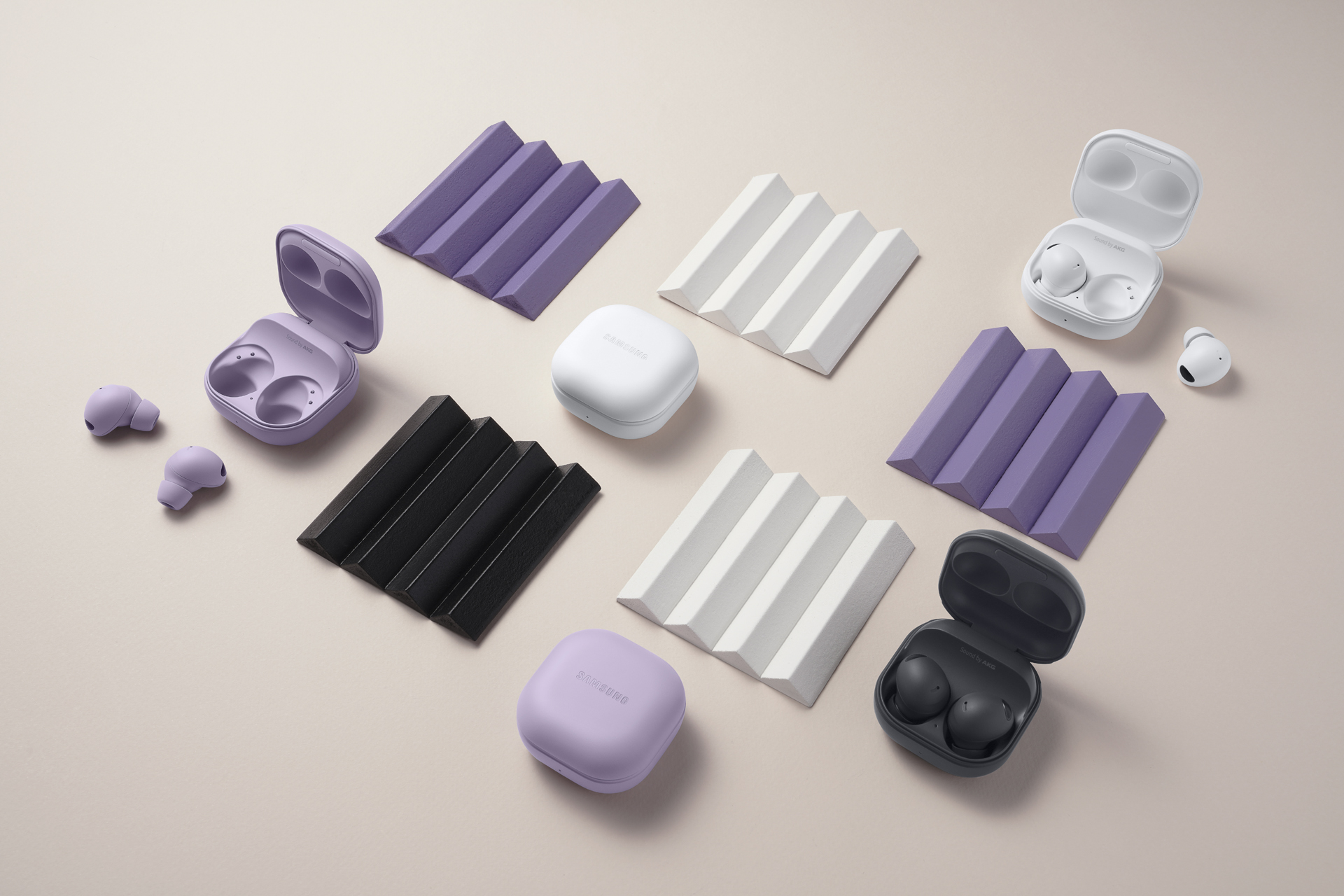
While the exact launch date yet is not yet known, the color options for the upcoming earbuds have been leaked online. They are expected to come in Zenith White, Zenith Bora Purple, and Zenith Graphite colors.

There’s a possibility that the South Korean giant could introduce additional color options later on. As the earbuds could get launched next month, we expect more details about them to surface online in the coming days and weeks.

RELATED: 

Motorola’s Snapdragon 8+ Gen 1 flagship & mysterious phone bag CMIIT certification

Two upcoming Motorola phones have been approved by the CMIIT authority of China. The model numbers of the two devices are XT2251-1 and XT2243-2. The former appears to be the Motorola Frontier flagship, which is expected to launch soon in China.

The Chinese tipster who spotted the CMIIT listing claims that the XT2251-1 could be the Snapdragon 8+ Gen 1 flagship, which may be released in July. The XT2243-2 appears to be an Edge series. Unfortunately, the CMIIT listings have no information on the specs of these smartphones.

Recent reports have revealed that Motorola’s Frontier flagship will debut as the world’s first Snapdragon 8 Plus Gen 1 powered device. While it is expected to launch in global markets as the Motorola Edge 30 Ultra, there is no word on its moniker for China.

motorola frontier featured from evleaks
motorola frontier render by Evan Blass

The device is rumored to house a 6.8-inch FHD+ 144Hz refresh rate display, a 60-megapixel front camera, and a 50-megapixel (main, with OIS) + 50-megapixel (ultrawide) + 2-megapixel (depth) triple camera unit. The SD+8G1 powered phone may ship with up to 12 GB of LPDDR5 RAM, up to 256 GB of UFS 3.1 storage, and a 5,000mAh battery that supports 68W fast charging.

Moto-Edge-2022
Motorola Edge 2022 renders by OnLeaks / 91mobiles

A recent leak revealed that the Motorola Edge 2022 is also in the works. It is expected to arrive with key specs such as a 6.5-inch pOLED FHD+ 144Hz display, a Dimensity 1050 chipset, up to 8 GB of RAM, up to 256 GB of storage, a 32-megapixel front camera, a 50-megapixel (main, with OIS) + 13-megapixel (ultrawide) + 2-megapixel (depth), and a 6,000mAh battery with fast charging support. It is unclear whether the XT2243-2 model number belongs to this device.
RELATED:

Coolpad Cool 20s launched with 90Hz display, Dimensity 700, and 50MP camera

Coolpad Cool 20s has been announced in China. In May last year, the Chinese manufacturer announced the Cool 20 handset, which was a 4G device. Next came the Cool 20 Pro in November 2021, it was a 5G smartphone powered by the Dimensity 900. The 5G-ready Cool 20s that has gone official today sits between the Cool 20 and Cool 20 Pro smartphones. Here is all the information on the specifications, features, and price of the Cool 20s.

Coolpad Cool 20s specifications and features

The Cool 20s has a 6.58-inch LCD panel with a teardrop notch design. It offers a Full HD+ resolution and a 90Hz refresh rate. Placed on the front of the device is an 8-megapixel selfie camera. Its back panel has a 50-megapixel primary camera with an f/1.8 aperture and a 2-megapixel macro camera.

Coolpad Cool 20s
Coolpad Cool 20s

The Dimensity 700 is at the helm of the Cool 20s. The phone comes with 4 GB / 6 GB / 8 GB of RAM and 128 GB of built-in storage. The device packs a 4,500mAh battery that carries support for 18W fast charging.

Coolpad Cool 20s
Coolpad Cool 20s

The Cool 20s is preloaded with the Android 11 OS, which is overlaid with Cool OS 2.0. The other features available on the device include a dual SIM slot, 5G, Wi-Fi, Bluetooth 5.0, GPS, USB-C, dual stereo speakers, a 3.5mm audio jack, and a side-facing fingerprint scanner.

Coolpad Cool 20s price and availability

The Cool 20s carries a starting price of 999 Yuan (~$148). It can be purchased in Firefly Black, Moon Shadow White, and Azure Blue colors. It is now up for pre-orders in China and its first sale is scheduled to take place on June 17.

RELATED:

US Smartphone Market is Expected to Grow only 2% YoY in 2022 due to Inflation: Report

The US smartphone market is expected to settle into a flat growth path with a modest 2% increase in smartphone demands, as per a report. The latest forecast has been adjusted downward from the prior estimate of 6% YoY growth in 2022 because inflationary pressures will likely decrease demand in the upcoming quarters

According to a report by Counterpoint Research, the US smartphone market is expected to witness a 2% growth this year. Counterpoint says that it has significantly reduced its forecast for 2022 from the previous projection of 6% percent growth as the demand will be suppressed in the remaining quarters due to inflationary pressures. However, there are several scheduled industry events for 2022 that will boost low-end smartphone sales. As 3G networks become obsolete, carriers will be forced to migrate subscribers to new LTE and 5G devices.

US Smartphone market 2022

“We began the year with strong sell-in momentum, with Q1 2022 seeing 6% YoY growth due to solid postpaid demand. However, we are adjusting our shipment forecast numbers downwards as we are increasingly seeing the impact of inflation in the US market,” said Research Director Jeff Fieldhack. “Last year, we saw supply as a much bigger issue as chipset shortages impacted smartphone manufacturing”, Fieldhack added.

The flat growth is attributed to demand issues. Americans’ purchasing habits have shifted away from technology products to experiences such as vacations and outings. Furthermore, as fuel prices rise owing to inflation, people are making fewer excursions to retailers and altering their spending behavior even more, says the report.

“Prepaid sales will be most affected by weak demand as this is the most price-sensitive segment in the US,” said Senior Research Analyst Maurice Klaehne. “This is also where any price increases for devices will be most heavily felt by consumers. We see national retailers feeling the impact of inflation, but it is more of a mixed bag. Walmart, a one-stop shop for groceries, tech products and much more, may be less impacted compared to Best-Buy, which is a very specialized tech retail store,” Klaehne further added.

Related:

Pixel 6a hands-on video appears to showcase design, compared with Pixel 6 Pro

The Google Pixel 6a, which was announced last month, is scheduled for release on July 28. Soon after the announcement, an unboxing video of the Pixel 6a appeared on TikTok. Now, a Malaysian YouTuber named Fazli Halim has released a hands-on video of the device to give a good look at its design from all angles.

The Pixel 6a unboxing video by Fazli shows that it looks similar to the Google Pixel 6 Pro / Pixel 6. It has a horizontal camera bar, which houses a dual-camera system. The camera bar is not less protruding as compared to the Pixel 6 Pro. The rear shell of the device seems to be made from glossy plastic.

Pixel-6a-vs-6-Pro
PIxel 6a vs Pixel 6 Pro

The Pixel 6a has an AMOLED panel with an under-display fingerprint scanner, which appears quite responsive in the hands-on video. The device lacks a 3.5mm audio jack. Apart from the Charcoal edition shown in the hands-on video, the Pixel 6a will also arrive in Chalk and Sage colors.

Pixel 6a under-display fingerprint scanner

Google Pixel 6a specifications and features

The Pixel 6a has a 6.1-inch OLED panel that offers a Full HD+ resolution, a 60Hz refresh rate, and Gorilla Glass 3 protection. The Tensor chip is present under the hood of the Pixel 6a. The device comes with 6 GB of RAM and 128 GB of UFS 3.1 storage. It boots to the Android 12 OS.

The Pixel 6a has an 8-megapixel camera for snapping selfies and video calls. Its rear shell has an OIS-assisted 12-megapixel main camera and a 12-megapixel ultrawide lens. The device packs a 4,410mAh battery that supports 18W charging. It carries a price tag of $449.

RELATED:

OPPO Reno 7A render leaked, likely to launch soon

OPPO has recently launched the OPPO Reno 8 series of smartphones in China. This month, the Reno 8 lineup may arrive in regions outside the home market. However, it seems it is not done yet with the Reno 7 series. A device named Reno 7A is in the works. 91mobiles has published the leaked renders of the Reno 7A to showcase its design and color variants.

The Reno 7A can be seen sporting a punch-hole display on the front. The device has volume up and down buttons on the left edge. Its right side features a power key. The rear camera setup of the phone has a triple camera unit and an LED flash.

OPPO Reno 7A
OPPO Reno 7A leaked render by 91mobiles

The device seems to be equipped with an in-display fingerprint scanner. It appears that it will be available in white and black colors. Unfortunately, there is no information available on the specifications of the OPPO Reno 7A. However, the report claims that it may debut by the end of this month.

In related news, OPPO is gearing up to launch a Reno 8 series phone called the Reno 8Z in some markets. The device is expected to arrive with a 4,500mAh battery that supports 33W fast charging. It will be available in multiple variants, such as 6 GB RAM + 128 GB storage, 8 GB RAM + 128 GB storage, and 8 GB RAM + 256 GB storage. It will come in colors like black and blue.

The other specifications of the Reno 8Z are yet to be confirmed. In all likelihood, it may debut as early as this month in some of the Asian markets.

RELATED:

China Has Built 87,000 New EV Charging Stations in May 2022

Over the years, the electric vehicle industry has been rapidly growing and as more and more road users are using electric vehicles (EVs), the number of EV charging stations should also increase not only to meet demand but also for the convenience of topping up the EV wherever whenever.

As the world’s largest market for EVs, China knows that for EVs to be accessible to the general public, not only do they have to be affordable but also widely available and convenient to use. Thus, the country has publicly owned (not privately owned) EV charging stations that can charge most non-proprietary EVs on the road. 

The China Electric Vehicle Charging Infrastructure Promotion Alliance, abbreviated as EVCIPA, has published a report this week that announces that the country has successfully built 87,000 new public EV charging stations across the country in just only the month of May 2022, compared YoY to 2021, the number of EV charging stations has increased by 60.5%.

Total Public EV Charging Stations Nationwide in China for each month
Total Public EV Charging Stations Nationwide in China for each month. Source: EVCIPA

As of May 2022, the EVCIPA reported that there are a total of 1.419 million public EV charging stations across the entire country of China, which include 613 thousand DC charging stations, 806 thousand AC charging stations, and 485 AC-DC integrated charging stations.

In the report, EVCIPA notes the top 10 provinces that have the most public EV charging stations in the country (as of May 2022) and its ranking is as shown:

  1. Guangdong – 281,000 units
  2. Shanghai – 109,000 units
  3. Jiangsu – 107,000 units
  4. Zhejiang – 103,000 units
  5. Beijing – 102,000 units
  6. Hubei – 81,000 units
  7. Shandong – 71,000 units
  8. Anhui – 67,000 units
  9. Henan – 55,000 units
  10. Fujian – 51,000 units

The report notes that just these 10 provinces account for 72.3% of all public EV charging stations available across the country. The electricity generated is mainly utilised on electric buses and privately owned electric vehicles, with honourable mentions such as China’s electric logistics vehicles and electric taxis, that account for a smaller proportion of the transportation electricity grid.

EV Charging Stations in China 1
Source: South China Morning Post

In May 2022, the total EV charging electricity power consumption nationwide was about 1.56 billion kWh in a month, an increase of 140 million kWh from the previous month, an increase of 83.1% year-on-year, and a month-on-month increase of 10.0%.

China’s public EV charging infrastructure however is not monopolised by only one company, instead, EVCIPA notes that there are 15 top companies in the country operating the EV charging stations for the public. The full list of the Top 15 companies is as follows with their units of charging stations in China counted:

  1. Xingxing Charge – 278,000 units
  2. Special Call – 277,000 units 
  3. State Grid – 196,000 units
  4. Cloud Quick Charge – 178,000 units
  5. Xiaoju Charger –  71,000 units
  6. Weijingyun – 51,000 units
  7. Shenzhen Automotive Power Grid – 46,000 units 
  8. China Southern Power Grid –  41,000 units
  9. Yiwei Energy –  37,000 units
  10. Huijingyun –  33,000 units
  11. SAIC Anyue –  24,000 units
  12. Wanma Aichong – 23,000 units 
  13. Wancheng Wancharge – 22,000 units
  14. China Potevio – 21,000 units
  15. Weilan Quick Charger – 13,000 units

All these 15 charging station operators accounted for 92.4% of the total public EV charging stations across the country, and the remaining operators accounted for 7.6% of the total figure.

EV Charging Stations in China fif
Source: China Daily


On a closing note, the report findings state that despite more EVs on the road, EV users need not worry about fighting for a spot at the charging station because EV charging stations are popping up in the country more rapidly than ever. In fact, the current ratio of stations to EVs in China is 1:2.1, which means that the construction of new EV charging stations can still keep up with the demand from EV users on the road.


RELATED:

(Via)

Huawei Officially Patents a Quantum Computer

This week, Huawei has officially published a new patent in China for the general public, and it is not your conventional smartwatch, earbuds or smartphone electronics patent. Instead, the patent that Huawei Technologies Co. Ltd had published is one on quantum computing, the next revolutionary step of how our technology will run in the next 10 years.

huawei logo gold

The patent is listed as patent number CN114613758A, and from the patent listing, Huawei has developed a type of “quantum chipset and quantum computing device”. 

Huawei’s new type of quantum computing device aims to solve the current issues of producing quantum chipsets which include the complexity of manufacturing a quantum chipset and the low yields of the quantum chipsets when compared to the existing mainstream computing chipsets of today. In turn, with this new type of quantum chip, not only will it be easier to assemble in the future but also more units can be successfully produced with higher yields, meaning adopting more market share in the industry.

huawei quantum computing chipset
Huawei’s Quantum Chipset

In the patent listing, it states the fundamentals of the architecture of Huawei’s newly developed quantum chipset:

  • A substrate, M sub-chips, a coupling structure and a cavity mode suppression structure
  • Each sub-chip includes N qubits, and M sub-chips are arranged on the surface of the substrate at intervals
  • The coupling structure is used to realize the interconnection between the M sub-chips
  • The cavity mode suppression structure is arranged at the edge of each sub-chip and/or in the gap between the M sub-chips and is used for increasing the cavity mode frequency of the quantum chip.

Here, the term M and N refers to a positive integer. ‘M’ is greater than 1, meanwhile, ‘N’ is greater or equal to 1. 

The M sub-chips in the quantum chip will reduce the strain of manufacturing and will improve the production yield. For example, when a sub-chip happens to suffer from a defect, only the sub-chip will be discarded, and the overall chipset can be fixed or reused to prevent it from further being more electronic waste.

Quantum computing, heralded as the next generation of computing aims to cut down on the Internet and computing speeds up to 10 times that of today. For example, let’s say a modern-day supercomputer took 108 days (3 months) to compute 62.8 trillion digits of pi, if we were to theoretically use a future quantum computer, it could hypothetically calculate 62.8 trillion digits of pi in only 10 days (1.5 weeks), which is much faster than 3 months.

data analysis stock photo

Although we are still in the infancy stages of developing the future of quantum computers, the promise of quantum computing seems attractively limitless with faster internet searching, lightning-quick financial data analysis, shorter commutes, more effective cancer drugs, better weather prediction and more.


RELATED:

(Via 1, Via 2)

Micron 1-Beta DRAM Mass Production starts in Q4 2022, Here are the Details

Micron Technology is a US-based multinational semiconductor company that has operations in Japan and Taiwan for its chipmaking business. And as both Nikkei Asia and ITHome report, the tech giant will start mass-producing advanced DRAM memory chips at its Japanese Hiroshima plant in Q4 this year.

Micron LPDDR4X

ITHome reports that on a press media visit to Micron’s A3 chip manufacturing factory, Micron‘s Taiwanese division director, Lu Donghui announced that the A3 factory will be introducing extreme ultraviolet (EUV) lithography equipment in the second half of the year, to prepare early for the mass production of 1-gamma DRAM that is due to launch in 2024.

And as for 1-Beta DRAM Mass Production, it is reported that 1-Beta DRAM will be initially manufactured in Japan, and then the production will switch over to the Taiwanese plant later. For context, the current 1-Alpha DRAM is manufactured in the Taiwanese plant.

And the report by ITHome seems to be valid, as another news outlet, Nikkei Asia has reached out to Chief Business Officer at Micron, Sumit Sadana, regarding the news of 1-Beta DRAM production.

huawei micron

Nikkei Asia quotes Sadana that the company will start mass-producing advanced DRAM memory chips at its Hiroshima plant by the end of the year, which falls in Q4 2022. 

The company is coordinating with the Japanese government and business partners, such as equipment makers, to start producing them in Japan as well, Sadana said in an interview. He did not reveal the size of the investment in the Hiroshima plant but said manufacturing such chips generally requires new equipment and clean rooms.

Micron is expected to determine the scale of its investment based on government subsidies and other factors.

DRAM is used for temporary data storage in a wide variety of electronics, including smartphones and servers. And for Micron’s naming scheme, the company had already mass-produced its 1X, 1Y, 1Z and 1-alpha DRAM. The 1Xnm process is equivalent to 16-19nm, 1Ynm is equivalent to 14-16nm, and the 1Znm process is equivalent to 12-14nm. According to industry sources, the latest 1-alpha, 1-beta and 1-gamma may be equivalent to 14-12nm, 12-10nm and 10nm respectively

Micron has announced in 2021 plans to invest $150 billion in memory manufacturing and research and development worldwide over the next decade. With the company laying out plans for 1-beta production, industry watchers are looking to see where it will manufacture the next-generation 1-gamma DRAM, which is targeted for mass production in 2024.


RELATED:

(Via 1, Via 2)

Lenovo Legion R7000P & R9000P Gaming Laptops Launched; Ryzen 6000H CPU + RTX 30 GPU

Earlier in March this year, Lenovo announced its 2022 Lenovo Legion Y7000P and Y9000P series of gaming laptops that are powered by Intel’s 12th Gen Alder Lake Mobile CPUs for the Chinese market. 

And today in June, the brand has yet again released another series of gaming laptops – the Legion R7000P and R9000P, which from the exterior looks identical to the earlier announced Y7000P and Y9000P, but this time around, the R7000P and R9000P are equipped with AMD’s latest Ryzen 6000H series of CPUs and NVIDIA’s top of the line RTX 3000 GPUs.

AMD Ryzen 6000 Series Logo

Lenovo Legion R7000P 2022

Let’s start with the comparatively lower-priced Legion R7000P. The gaming laptop sports a 15.6-inch 2.5K 165Hz IPS LCD display that has a resolution of 2560 * 1440 pixels and covers 100% of the sRGB colour gamut. 

Legion R7000P 2022
Lenovo Legion R7000P 2022

It comes with two CPU configurations for the buyers to choose from: the AMD Ryzen 5 6600H and Ryzen 7 6800H. Both of these CPUs are built on AMD’s latest Zen 3+ architecture and promise much better performance and power efficiency compared to its x86 competitors. 

Graphics-wise, buyers can configure the laptop to come with an in-built Nvidia RTX 3050 GPU or RTX 3050 Ti GPU onboard, and both GPU options max out at 95W. The launch pricing for all the spec configurations is as follows.

  • Ryzen 5 6600H + RTX 3050 + 16 GB RAM + 512 GB SSD – 6599 RMB (984 USD)
  • Ryzen 7 6800H + RTX 3050 + 16 GB RAM + 512 GB SSD – 6999 RMB (1044 USD)
  • Ryzen 5 6600H + RTX 3050 Ti + 16 GB RAM + 512 GB SSD – 6899 RMB (1029 USD)
  • Ryzen 7 6800H + RTX 3050 Ti + 16 GB RAM + 512 GB SSD – 7299 RMB (1088 USD)

The Lenovo Legion R7000P is equipped with industry-leading 16GB of DDR5 4800 MHz RAM, and 512GB of fast PCIe Gen 4 SSD storage. As for the battery, it has an 80Wh cell and supports 135W of wired fast charging via USB-C PD. It comes with Windows 11 Home pre-installed and is officially available for pre-order from today onwards and goes on sale on June 17th.


Lenovo Legion R9000P 2022

The more expensive sibling in the lineup, the Lenovo Legion R9000P, sports a larger 16-inch 2.5K 165Hz IPS LCD display, that has a resolution of 2560 * 1440 pixels and can reach 500 nits of peak brightness, along with some more premium features such as support for HDR content and DC Dimming.

Legion R9000P 2022
Lenovo Legion R9000P 2022

The laptop only comes with the top-end Zen 3+ based AMD Ryzen 7 6800H as the CPU, and for the dedicated graphics, you can opt for either the RTX 3060 GPU that maxes out at 140W or the higher-performing RTX 3070 Ti GPU that maxes out at 150W. The pricing for the Lenovo Legion R9000P is as follows:

  • Ryzen 7 6800H + RTX 3060 + 16 GB RAM + 512 GB SSD – 8499 RMB (1267 USD)
  • Ryzen 7 6800H + RTX 3070 Ti + 16 GB RAM + 512 GB SSD – 10499 RMB (1565 USD)

The laptop is equipped with industry-leading 16GB of DDR5 4800 MHz RAM, and 512GB of fast PCIe Gen 4 SSD storage as well.

It comes with a large 80Wh battery onboard and charges 300W with the included barrel plug charger in the box with support for 135W USB-C charging. It comes with Windows 11 Home pre-installed out of the box.

The Legion R9000P 2022 is officially available for pre-order from today onwards and goes on sale on June 17th.


RELATED:

(Via)

Xiaomi Electric Scooter 4 Pro may launch in Europe soon, receives certification

There is an indication that we may be close to an international launch of the Xiaomi Electric Scooter 4 Pro e-scooter manufactured by Segway-Ninebot. The Electric Scooter 4 Pro has gotten the European Declaration of Conformity certification. Xiaomi published the Declaration of Conformity document which was in six languages. The languages included English, Spanish, Italian, German, Polish, and French.

The conformity document specifies that the Electric Scooter 4 Pro is produced by Ninebot Tech, which we know, was acquired by Segway. The document also indicates that there are three variants of the Electric Scooter 4 Pro. Although the differences are not clear at this time, the models are DDHBC20NEB, DDHBC21NEB, and DDHBC23NEB. While no details are available on the expected release date, we know it is imminent.Xiaomi Electric Scooter 4 Pro

The Segway-Ninebot team is behind the production of the Xiaomi Electric Scooter 3 Lite. The new Electric Scooter 5 Pro lineup is expected to come with significant improvements. Pricing and global availability details are also not known yet. The Xiaomi Electric Scooter 4 Pro will likely be available across Europe. The standing e-scooter sports a simple design but its detailed specs are speculative for now.

RELATED:


(via)