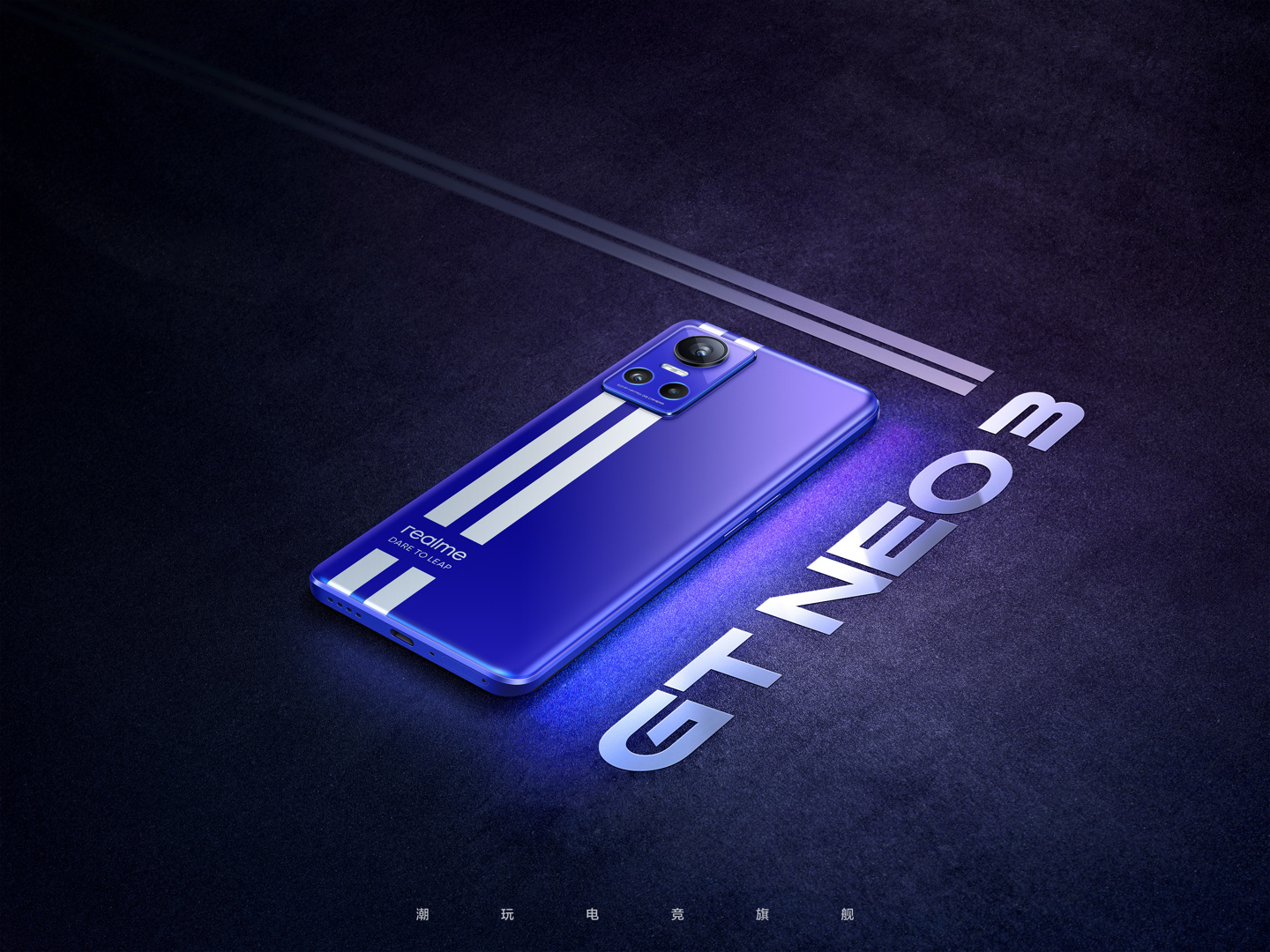
Realme is set to launch the Realme GT Neo 3 officially in China on March 22nd, 2 days away from today. And like all major launches in 2022, the company is also following the “drip and feed” trend of releasing the features of the device each day before launch to build up for the anticipated “probably industry-changing” device of the year.
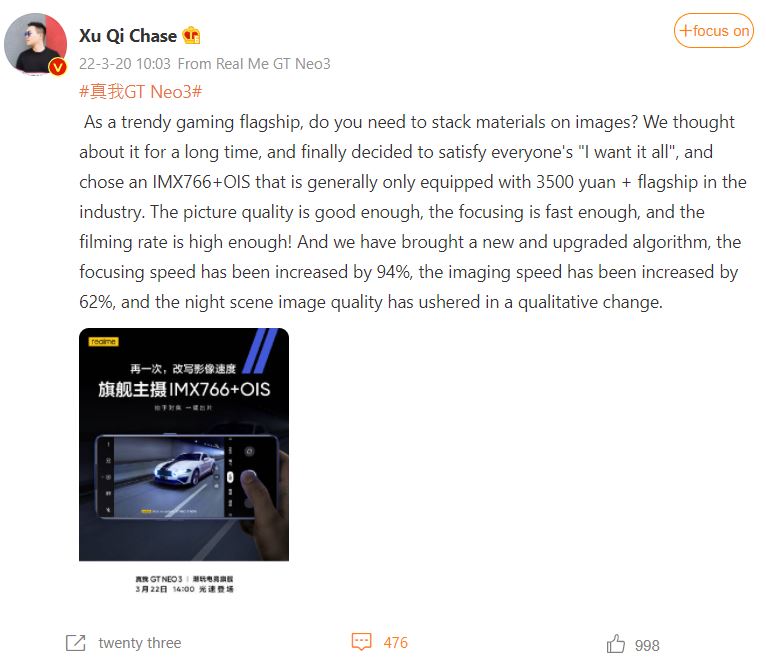
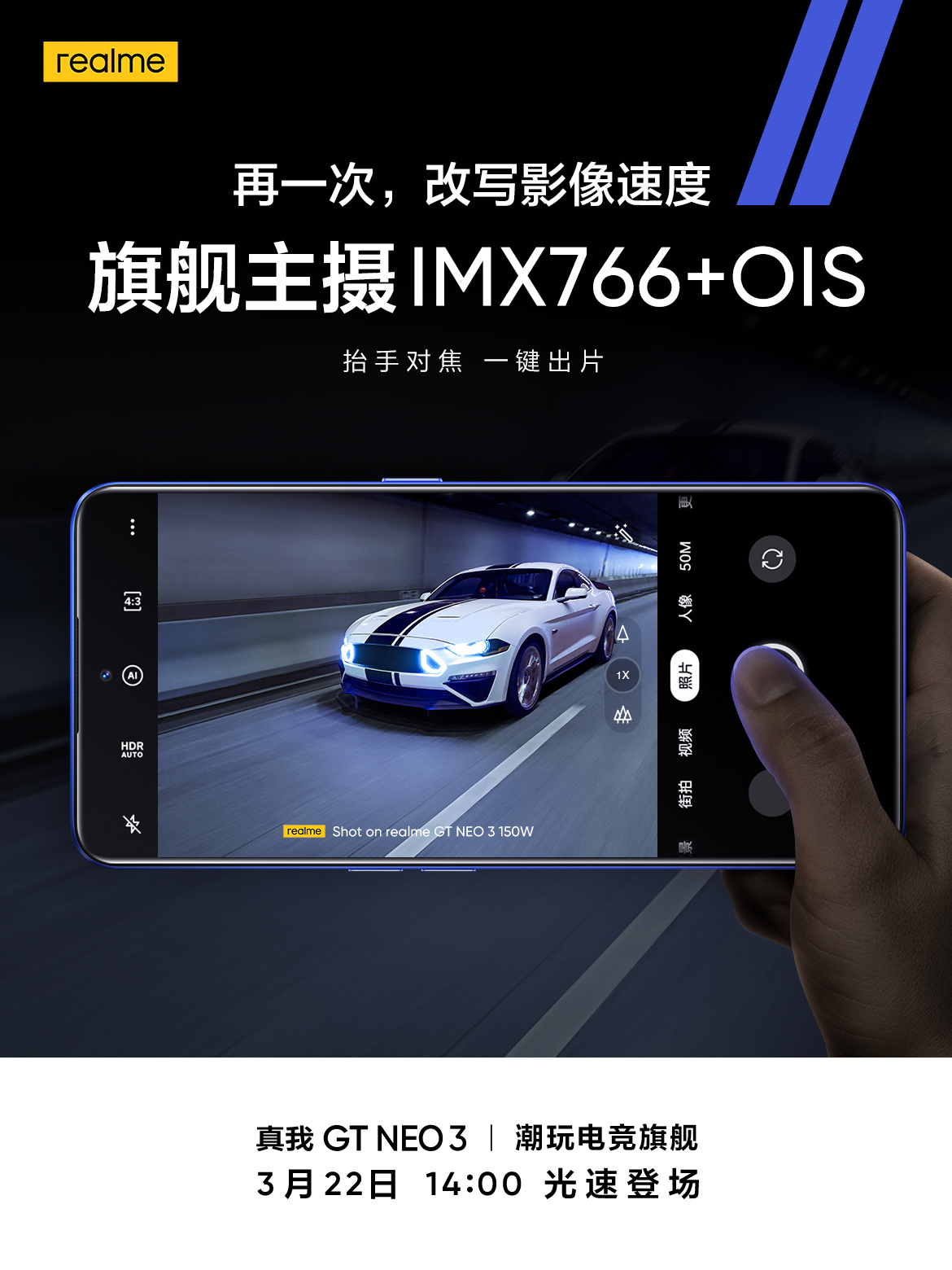
In its latest teaser announcement on Weibo, Chase Xu, Senior Executive at Realme, reveals the jaw-dropping camera highlight of the Realme GT Neo 3. The Realme GT Neo 3 will sport a flagship Sony IMX766 50MP sensor with OIS!
However, equipping only flagship hardware won’t magically give the phone extraordinary photographing abilities. That’s why Chase also mentioned that Realme has developed a brand new advanced imaging algorithm for the Realme GT Neo 3 that focuses 94% faster than its predecessor, the Realme GT Neo2 and allows for shutter speeds that are also 62% faster. The executive also exclaims that the device will sport better a night mode, to make it an all-scene photographing device no matter day or night.
Realme GT Neo3 equipped with flagship photography
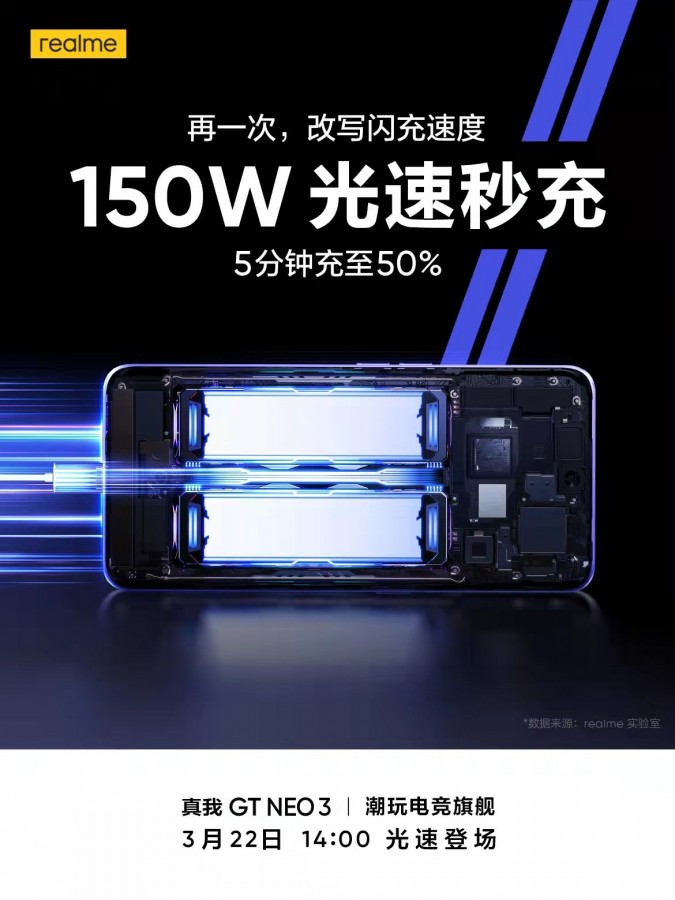
Despite being an upper mid-range offering from Realme, the Realme GT Neo 3 pulls no punches compared to its flagship siblings. Besides its camera, the Realme GT Neo 3 was also revealed to be the first-ever smartphone in the industry to be equipped with 150W wired charging for consumers. Realme claims that the new charging technology allows for the device to charge from 0% to 50% within 5 minutes!
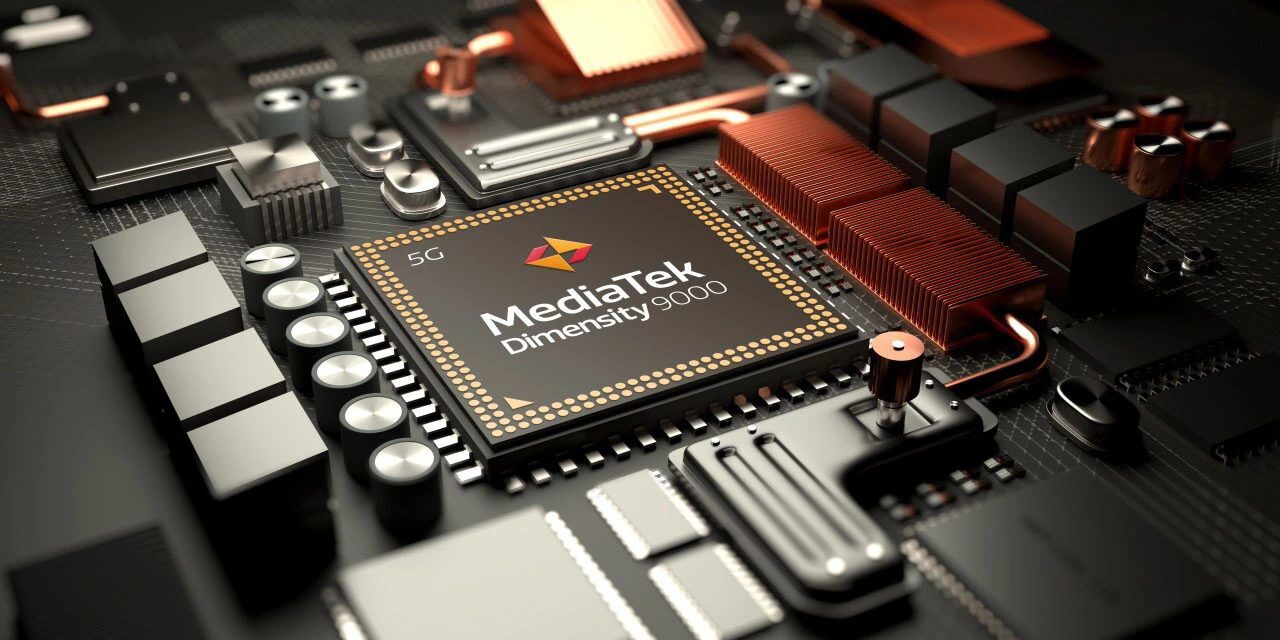
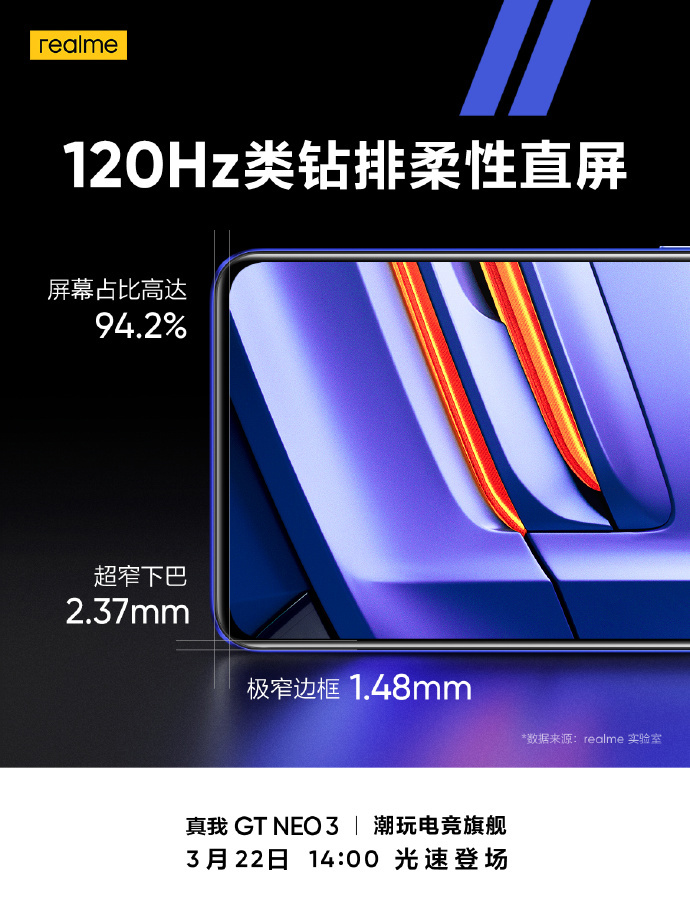
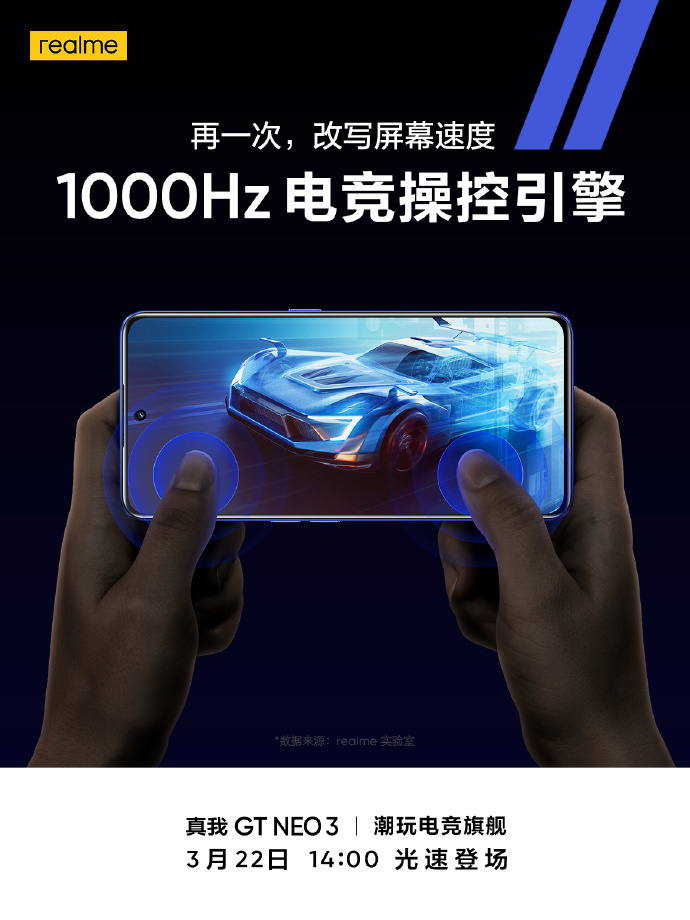
Another highlight of the Realme GT Neo 3 includes its MediaTek Dimensity 8100 processor in which early benchmarks reveal that the chip’s performance also surpasses that of Qualcomm’s highest-end chip, the Snapdragon 8 Gen 1. And of course, screen quality is also a highlight for the device as it boasts a 120Hz flat AMOLED display with a staggering 94.2% screen to body ratio, and a 1000Hz touch sampling rate for smooth performance on the go.
Earlier it was announced that MediaTek had already led the Android smartphone SoC market in 2021 with a 46% share, exceeding its rival Qualcomm, which had a 35% share in the market in 2021. One might think this spell the end of Qualcomm’s dominance in the Android smartphone space.
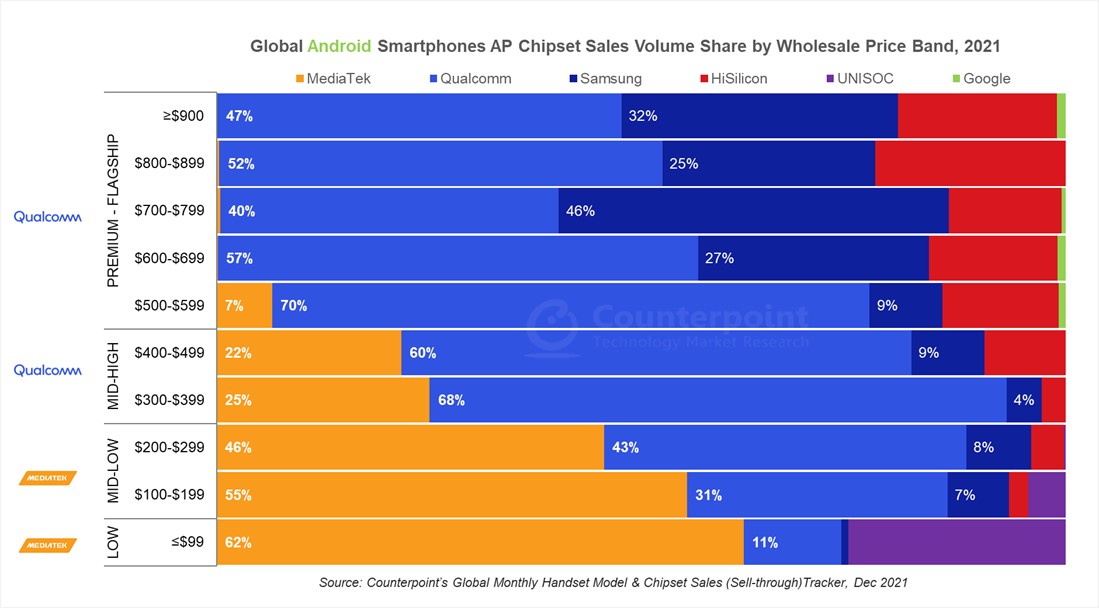
However, a follow-up report to the research has been published by Counterpoint Research. The report details the price brackets where Qualcomm, MediaTek, Exynos, HiSilicon and UNISOC are leading in the race for the Android chip supplier with the largest market share.
Android Chipset 2021 Market Share by Price Bracket
A closer examination of the report reveals that most of the market share growth for MediaTek in 2021 came from the low-mid tier wholesale price segment (sub-$299), driven by strong demand for the Dimensity 700, 800 and Helio series chipsets. Qualcomm on the other hand dominated the mid-range and premium flagship market with around 50% market share across all price brackets above $300, except for the $700-$799 price bracket, in which Samsung had a lead with 46% market share in the bracket.
But the question remains, why has Qualcomm shifted away from the low-end markets and how did MediaTek manage to win the low-end market after Qualcomm’s gradual exit?
The report mentions that the reason behind these changes of trends in the market is because of the global chip shortage. With Qualcomm unable to secure its chip supply from both TSMC and Samsung, the company instead prioritized focus on ramping up supply for its 700 and 800 series Snapdragon chipsets, driving higher revenue and profitability.
However, with Qualcomm not providing much value-to-money in its 400 and 600 series Snapdragon chipsets in 2021, phone manufacturers decided to switch over to its competitor, MediaTek instead for their lower-end budget devices. MediaTek managed to put out capable and affordable 5G chipsets to the market in 2021 with their Dimensity 700 to 1200 series, which could provide performance on par and sometimes exceed competing processors in the same price bracket. And with the reveal of its Dimensity 8000 and 9000 series chipsets in 2022, it is expected that MediaTek could take the stake of the higher-end premium Android market as well in this coming year.
The report also shares some details about Samsung’s Exynos, Huawei’s HiSilicon Kirin and UNISOC chipsets in the industry in 2021. Besides the Samsung Galaxy S21 series equipped with Exynos, most of Samsung’s A, M and F series of smartphones were not equipped with Exynos. In the low-mid segment ($100-$299), its share decreased from 17% to 7%, and in the mid-high segment, its share decreased from 13% in 2020 to 6% in 2021.
UNISOC showed exciting growth in 2021 in smartphones priced less than $200. In 2020, UNISOC chipsets only catered to phones priced under $100. However, in 2021, realme, Motorola and Samsung have launched phones with the Tiger series SoC, citing better performance in the chipsets compared to its similarly priced competitors in the market.
Last but not least, HiSilicon’s SoCs had a 16% share in phones costing $500 and above in 2021, which was a decline from the 30% share in the previous year, due to the US trade ban. It is running on the inventory it added before the ban. By the end of 2022, HiSilicon’s market share is expected to continue to drop as its inventory gets depleted. Huawei has already started using Qualcomm SoCs in its new launches, but they are limited to 4G.
Chinese drone maker DJI has announced a March 21 event that could see the launch of its latest drones. The official confirmation for the event comes from the drone maker and it will launch several consumer products during next week’s event. The DJI Mini 3 series which DJI has earlier hinted on, will likely be unveiled next week.
For Everyday Heroes
Join us for the DJI Enterprise New Product Launch Event.
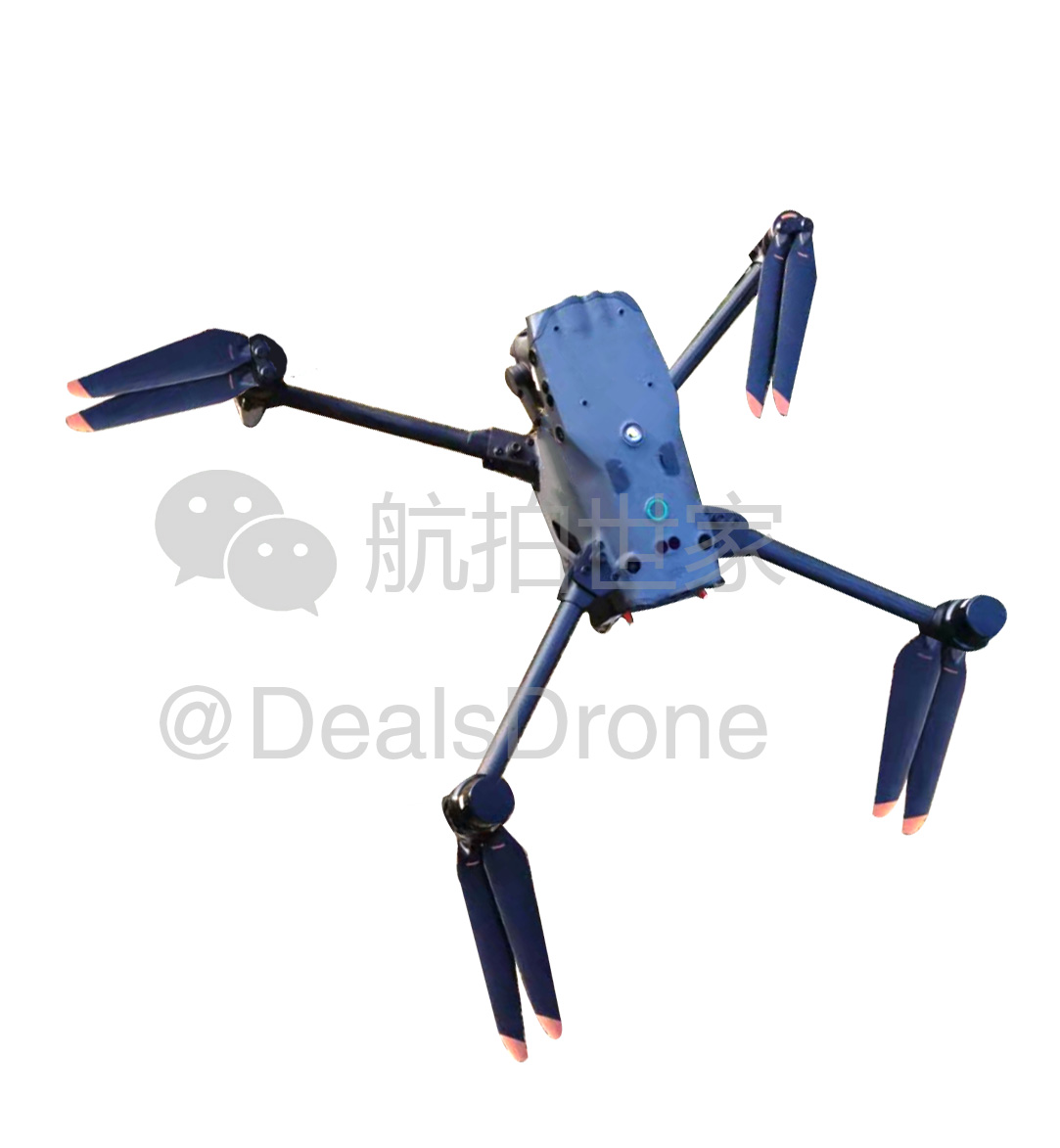
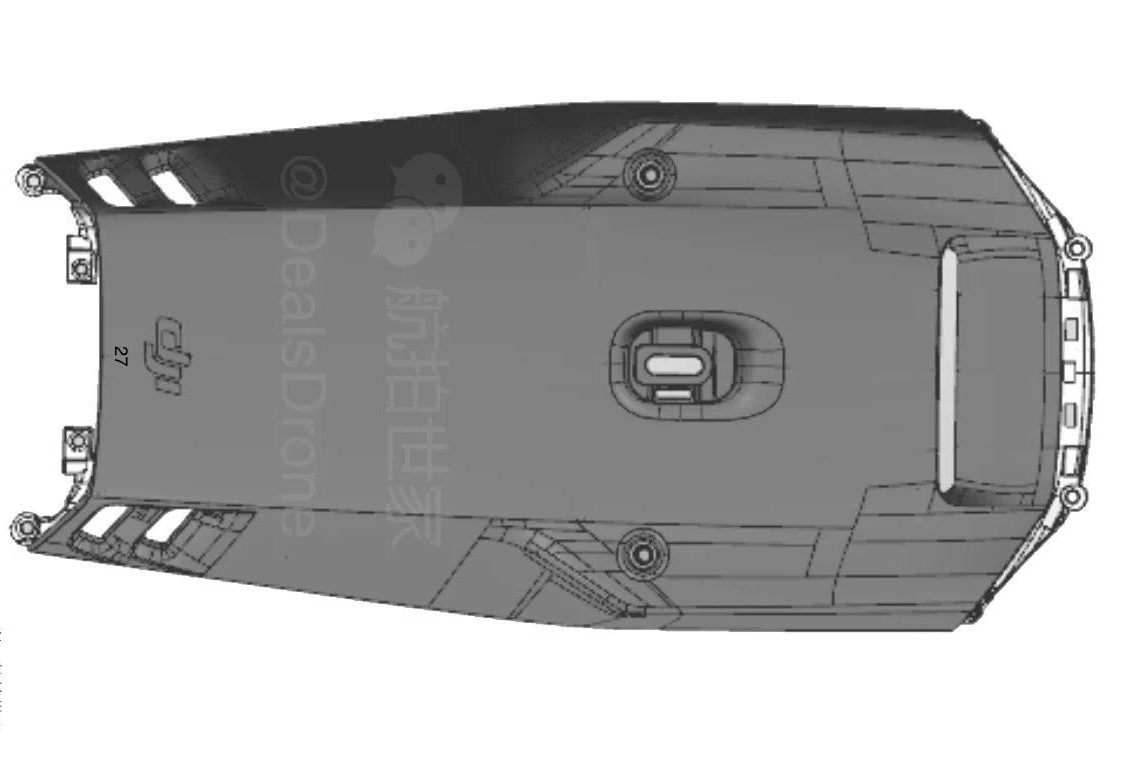
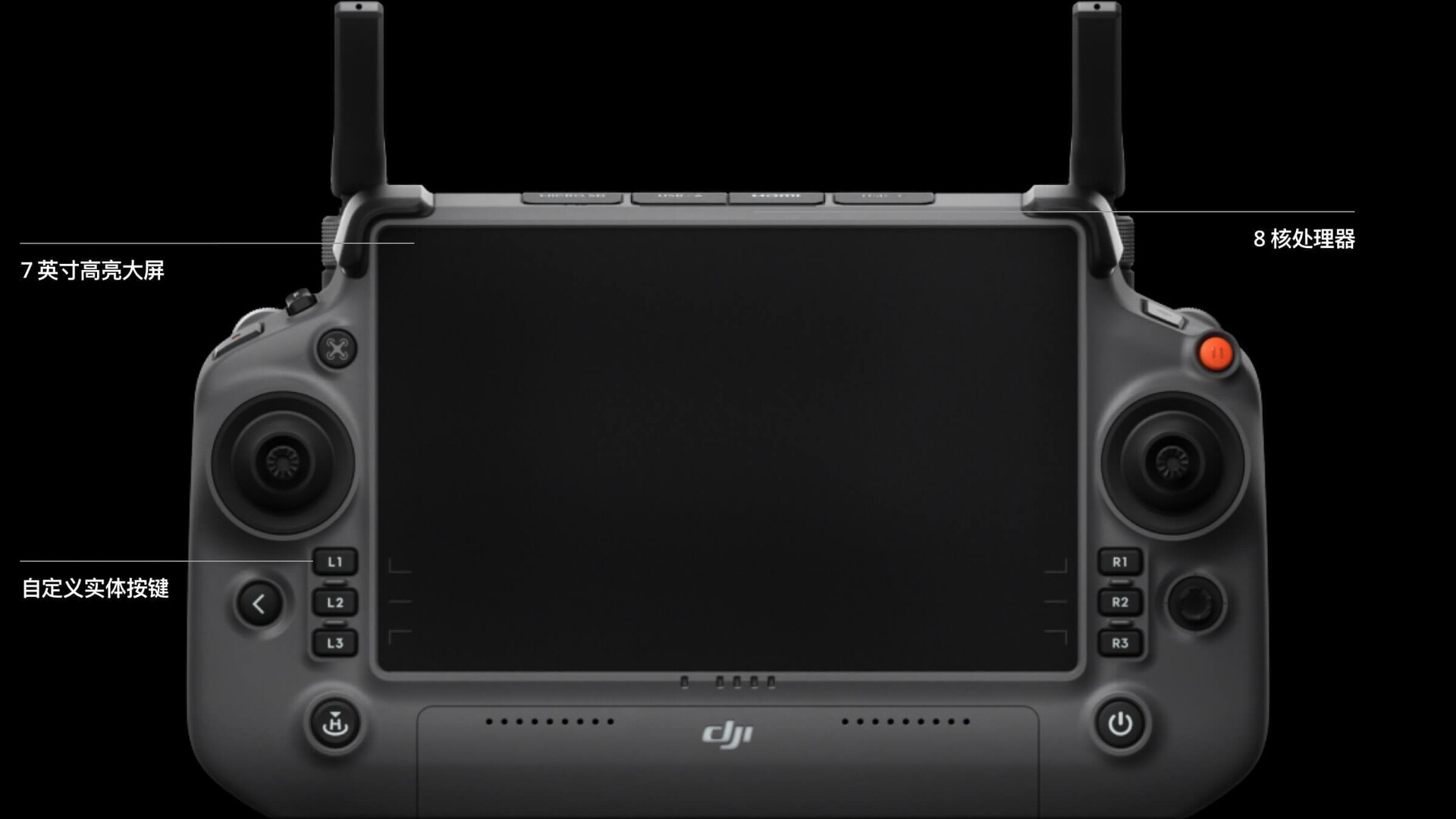
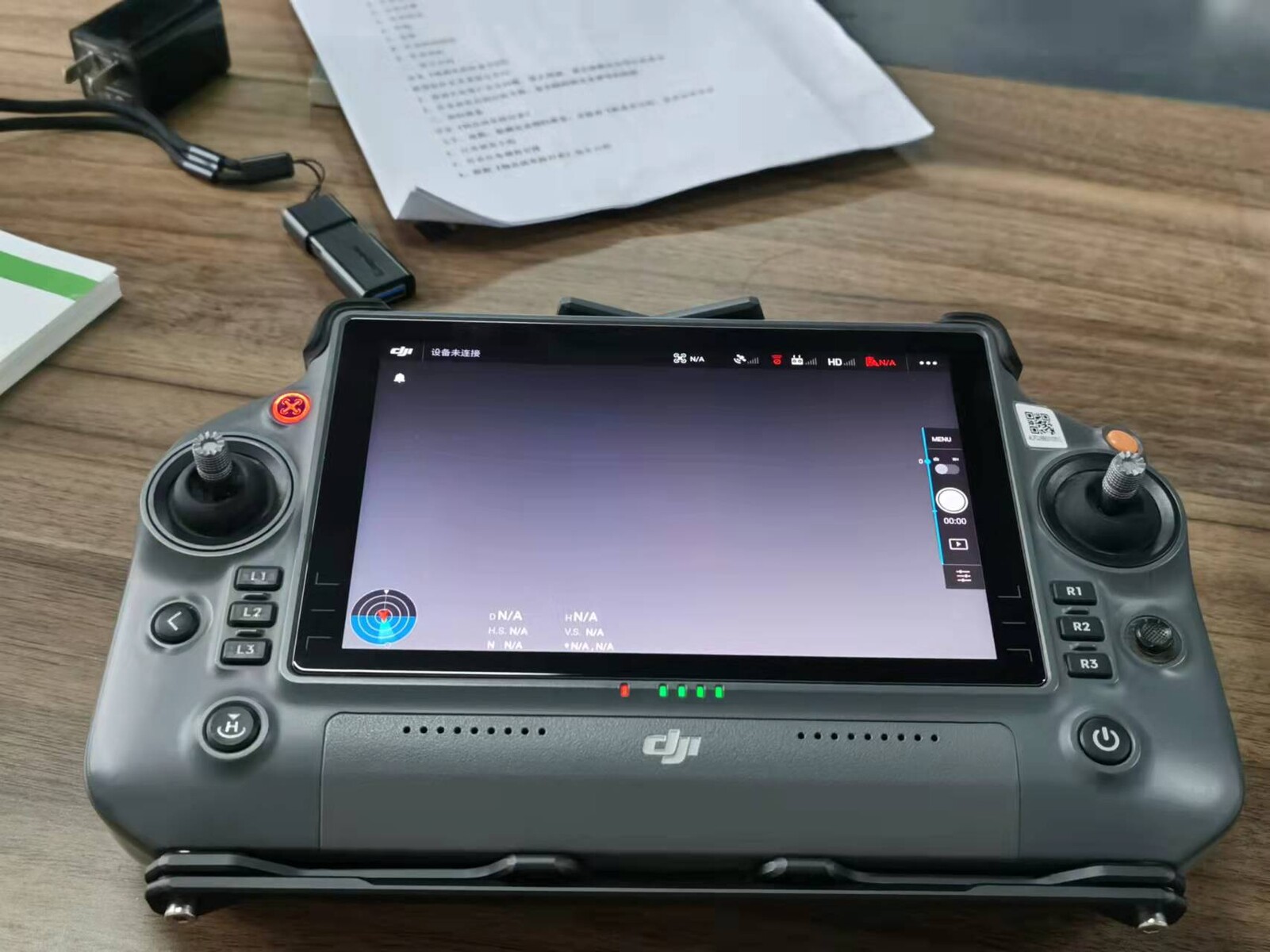
But a tipster @DealsDrone hints that the DJI Mavic 3 enterprise version could be released during the launch event next week. Back in November, DJI announced the Mavic 3 Cine with a raft of added features for the Mavic 3 Cine. Both models offered improvements from their predecessors, but it is unclear what features the Mavic 3 Enterprise will have that trumps the previous models. Of course, the external outlook of the DJI Mavic 3 Enterprise differs from the Mavic 3, as seen from some leaked images that surfaced online. The DJI M30 drone could also be launched during the event next week. The M30 will be compatible with the RC Plus controller which provides an integrated display and other features.
1 of 5
DJI has been in the spotlight in the international space due to the ongoing Russia-Ukraine war. Both sides have been deploying DJI drones in pursuing their war efforts, with Ukraine calling for action by DJI to shut out drones not registered inside Ukraine from flying within the country. As the hype builds up to next week’s launch event, we expect more details on the launch lineup to become available within the next 24 hours.
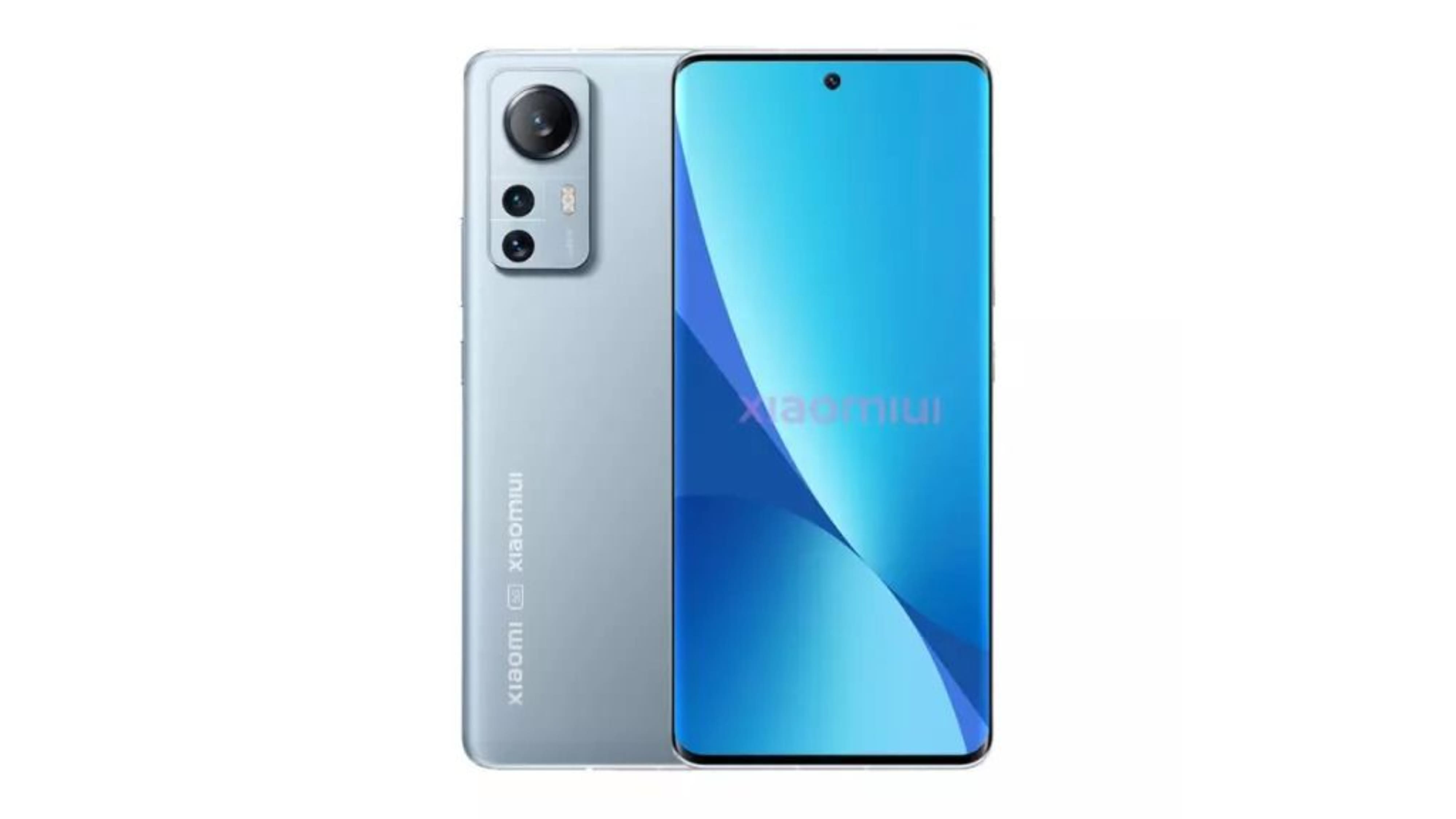
Xiaomi has recently launched the Xiaomi 12, Xiaomi 12X, and Xiaomi 12 Pro 5G-ready flagship phones in the global markets. The lineup is likely to soon receive a new mid-ranger called the Xiaomi 12 Lite 5G. According to a new report by Xiaomiui, the Xiaomi 12 Lite may launch soon in markets like Europe and Asia.
The report claims that the internal testing of the Xiaomi 12 Lite 5G has begun in European and Asian markets. The software versions such as V13.0.7.SLIMIXM and V13.0.0.24.SLIEUXM are associated with the said device. It was previously reported that the Xiaomi phone with 2203129G, which was spotted at the IMEI database, will be launching as the Xiaomi 12 Lite 5G. Its shortened model number is L9, and it carries ‘taoyao’ codename.
Xiaomi 12 Lite concept render by Xiaomiui
Xiaomi 12 Lite 5G specifications (rumored)
The Xiaomi 12 Lite is expected to borrow specs from the China-exclusive Xiaomi CIVI handset and the Xiaomi 12. It is expected to arrive with a 6.55-inch AMOLED curved edge display that offers a Ful HD+ resolution and a 120Hz refresh rate. The screen will also offer other features like an in-screen fingerprint scanner and Always-On Display (AOD).
The Snapdragon 778G Plus chipset is likely to power the Xiaomi 12 Lite 5G. The rear side of the phone will feature a 64-megapixel Samsung ISOCELL GW3 primary camera, an ultrawide lens, and a macro snapper.
The Xiaomi 12 Lite 5G will come preinstalled with Android 12 OS with MIUI 13 on top. The other specs of the device are under wraps. The device will be arriving as a successor for last year’s Xiaomi 11 Lite 5G.
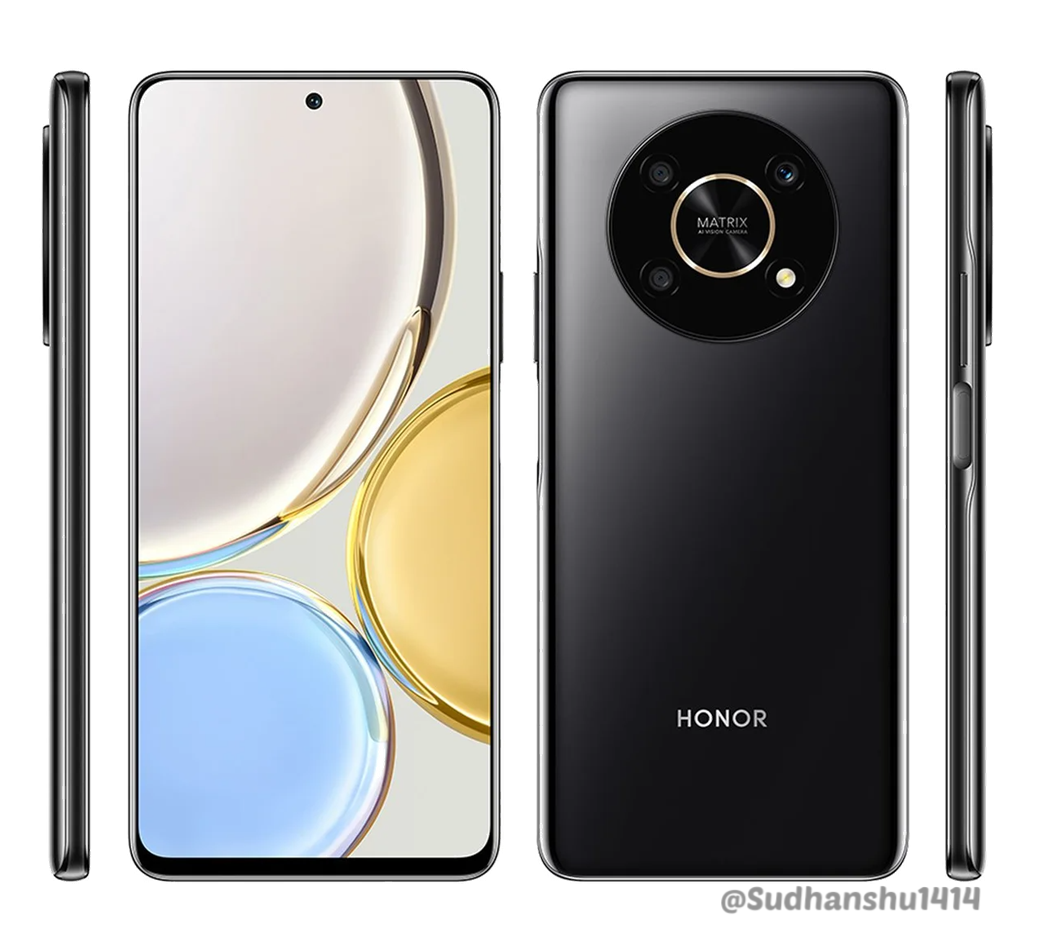
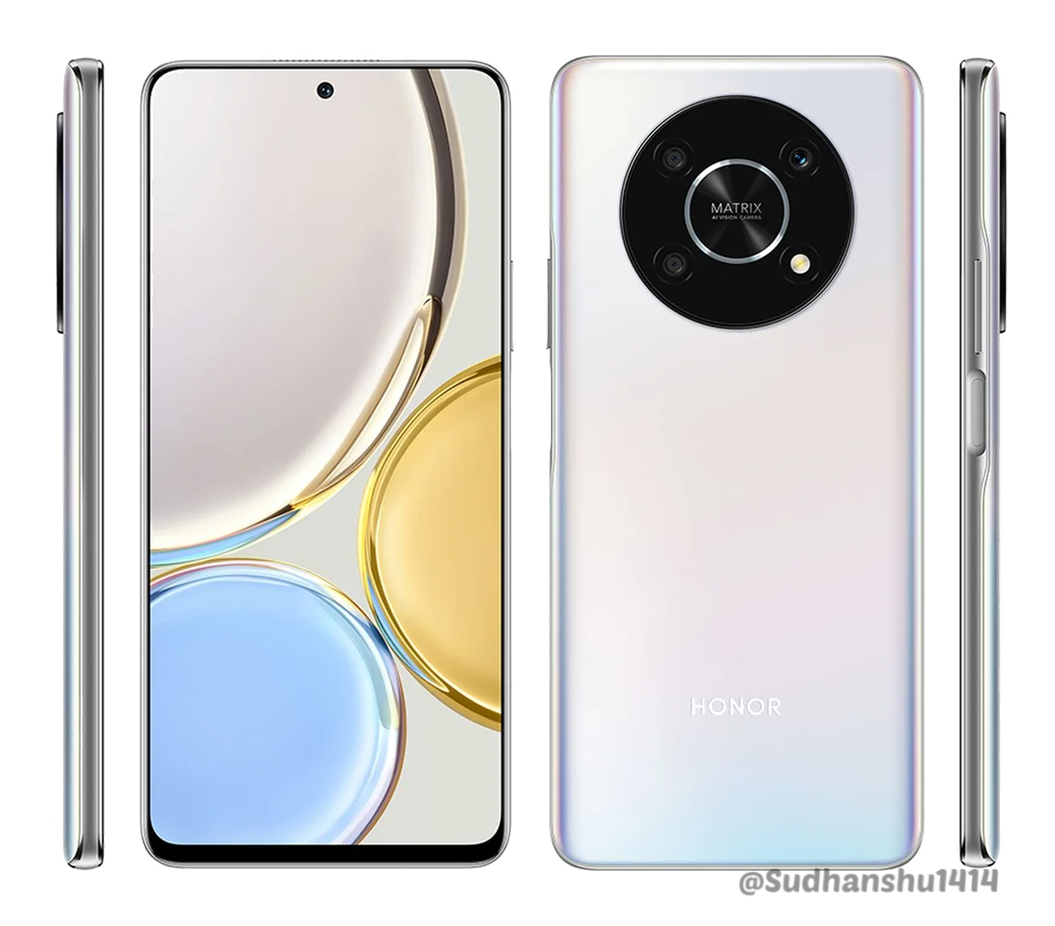
Honor unveiled the Magic4 series of flagship phones at the recently held Mobile World Congress (MWC) 2022 tech trade show. Fresh information reveals that apart from the Magic4, Magic4 Pro, and Magic4 Ultimate Edition, the lineup also includes a mid-range phone called the Honor Magic4 Lite. A new report by Appualshas revealed the renders, specifications, and pricing of the Magic4 Lite.
Honor Magic4 Lite specifications (rumored)
The Honor Magic4 Lite 5G is expected to house a.6.81-inch TFT LCD panel that offers a Full HD+ resolution of 1080 x 2388 pixels, a 120Hz refresh rate, and a 483ppi pixel density. For selfies, it may feature a 16-megapixel camera, which will be capable of shooting up to 60fps videos. As can be seen in the leaked renders, the Magic4 Lite has a punch-hole screen with a noticeable chin.
1 of 3
Honor Magic 4 Lite renders 1
Honor Magic 4 Lite renders 1
Honor Magic 4 Lite renders 1
The glossy rear shell of the Magic4 Lite is likely to house a 48-megapixel primary camera, a 2-megapixel macro camera, a 2-megapixel depth lens, and an LED flash housed inside a round-shaped camera module. The device will come preinstalled with the Android 11 OS, which is overlaid with Magic UI 6.
The Magic4 Lite packs a 4,800mAh battery that supports 40W fast charging over USB-C. It will not have support for wireless charging. For security, it has a side-mounted fingerprint scanner.
The Snapdragon 695 mobile platform will be powering the Magic4 Lite. The handset will be equipped with 6 GB of RAM and 128 GB of storage. The device is expected to arrive with other features such as IPX2 rating for protection against minor splashes, a single speaker, 5G, dual SIM, Wi-Fi 802.11ac, NFC, and GPS. It will lack a microSD card slot.
Honor Magic4 Lite pricing (rumored)
The Honor Magic4 Lite is likely to be priced at 299 euros. As shown in the above renders, it may come in black, blue, and silver colors. It is unclear whether the device will be announced at Honor’s upcoming event on March 29.
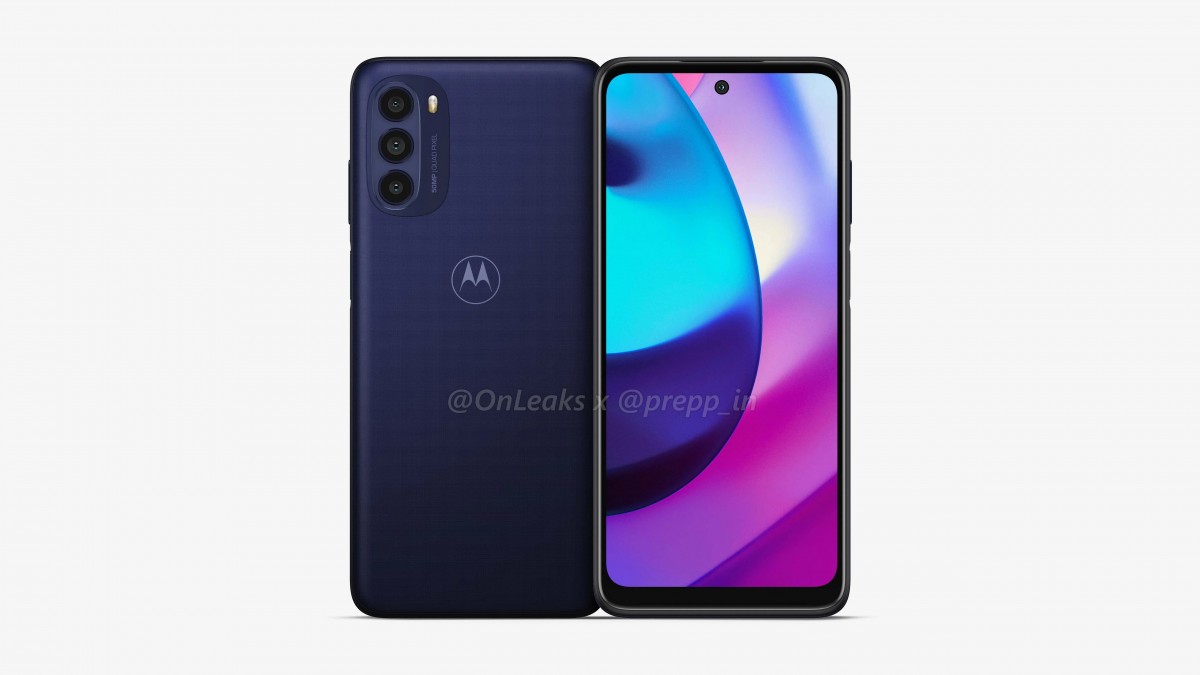
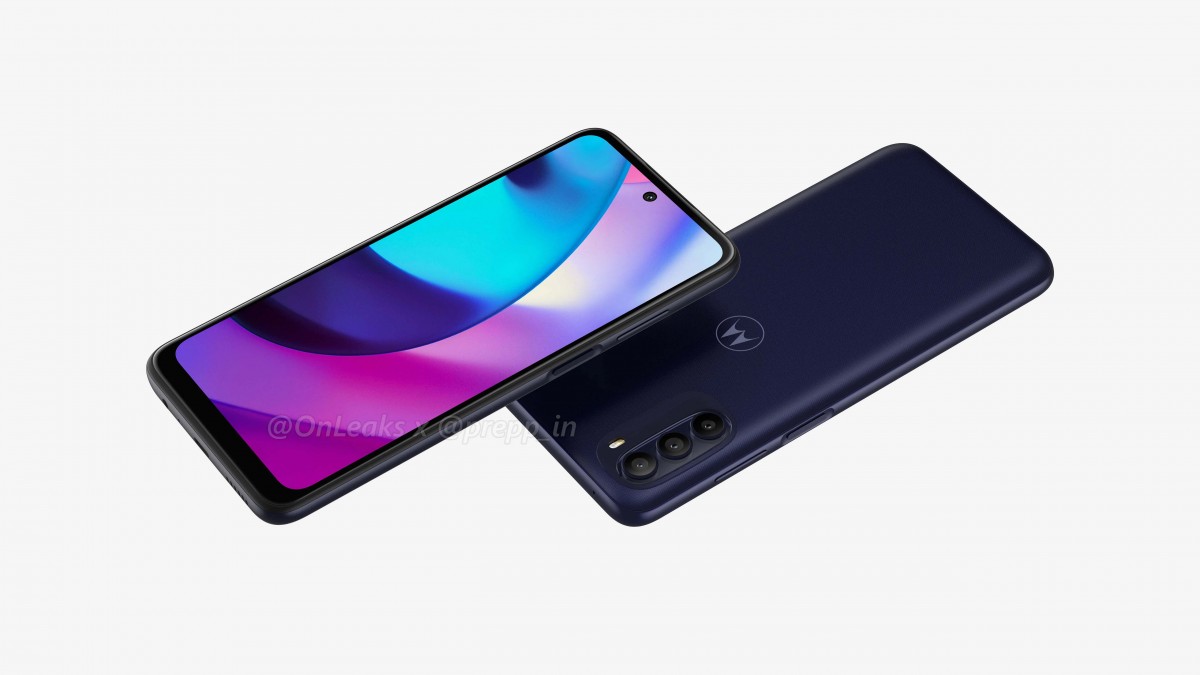
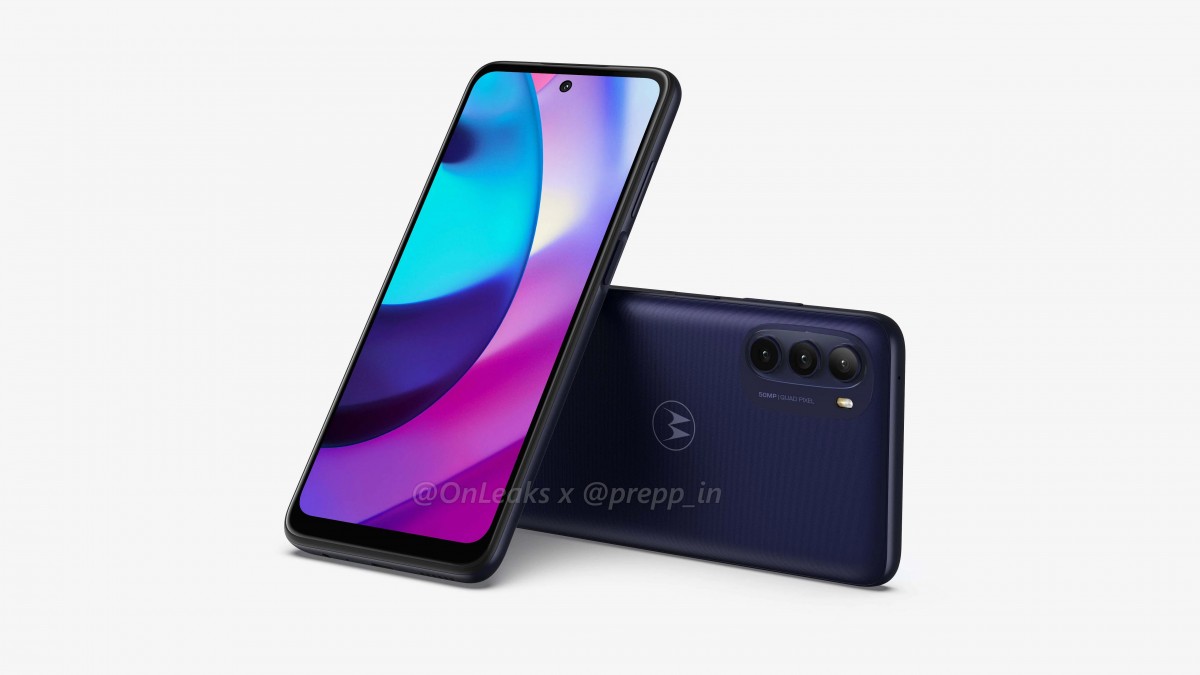
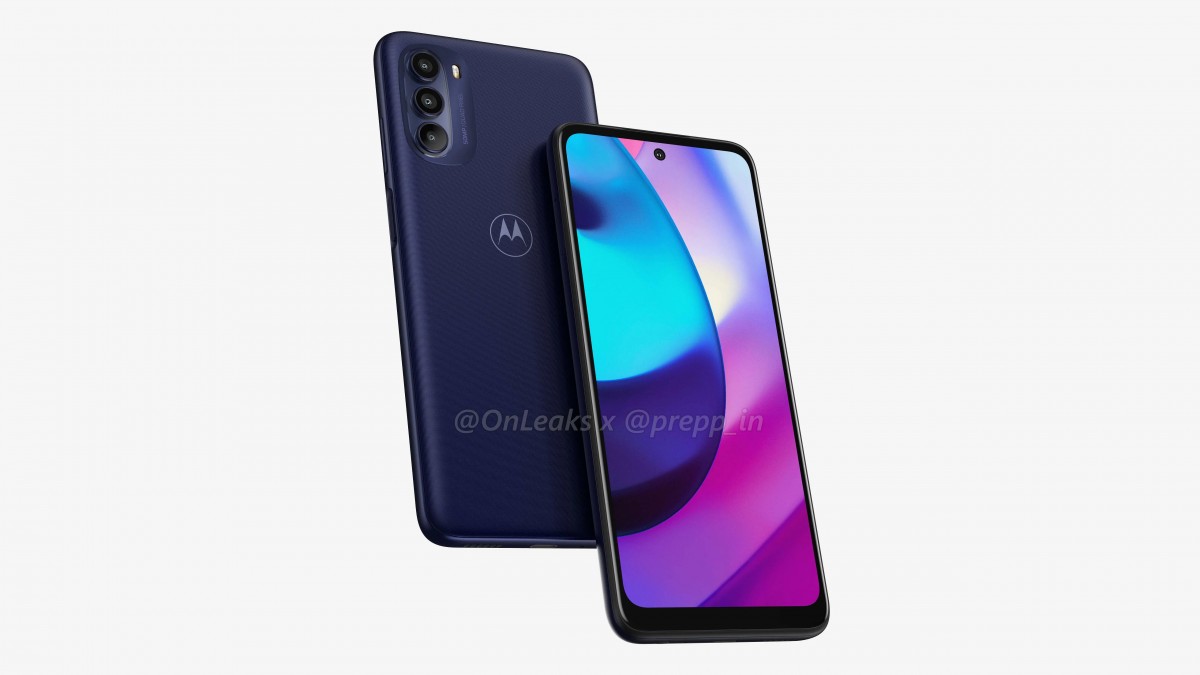
CAD renders of the upcoming Motorola Moto G 5G (2022) have been released by reliable tipster Steve Hemmerstoffer in collaboration with Prepp.in. Recent reports have revealed that Motorola is working on a new mid-range phone codenamed “Austin.” The new leak reveals that the Austin phone will be debuting on the market as the Moto G 5G (2022). As the moniker suggests, it will be replacing the Snapdragon 750G powered Moto G 5G from last year.
The leak reveals that the XT2213 model number belongs to the upcoming Moto G 5G (2022). It mentions that the device measures 165.4 x 75.8 x 9.3mm and features a 6.6-inch display.
1 of 4
Moto G 5G (2022) CAD renders
Moto G 5G (2022) CAD renders
Moto G 5G (2022) CAD renders by Steve Hemmerstoffer / Prepp.in
Moto G 5G (2022) CAD renders
Moto G 5G (2022) CAD renders
Coming to the renders, the Moto G 5G (2022) can be seen sporting a punch-hole display with a thick chin. The rear side of the phone features a 50-megapixel triple camera unit and the company’s logo. A microphone is available on the top edge, whereas its right side features a volume rocker and a power key, which is integrated with a fingerprint scanner. The Moto G 5G (2022)’s bottom edge has a 3.5mm headphone jack, a microphone, a USB-C port, and a speaker grille. A SIM slot is available on the left side of the phone.
Moto G 5G (2022) specifications (rumored)
Nils Ahrensmeier has seemingly revealed a few specifications of the Moto G 5G (2022). The 6.6-inch display of the device will support an HD+ resolution. It will be powered by a MediaTek chip and come with 4 GB of RAM.
The rear side of the phone may feature a 50-megapixel (S5KN1SQ03) primary camera, a 2-megapixel macro snapper, and a 2-megapixel depth helper (GC02M1). For selfies, it may come equipped with a 13-megapixel (Hi-1336) front-facing camera. The other details of the phone are under wraps.
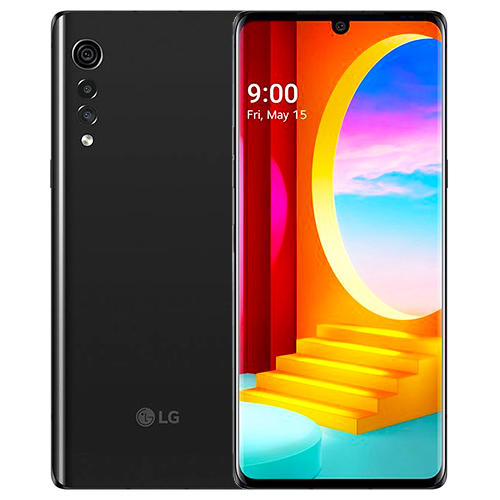
LG doomed its smartphone business last year and is currently focusing on other tech segments in the market. However, the company seems to still offer OS upgrades to some of its old smartphones. The LG Velvet that was released back in 2020 is now getting the latest Android 12 OS update.
It is worth noting that the LG Velvet was originally launched with the Android 10 OS out of the box. Now that it is getting the latest Android 12 OS, it seems to bring a lot of new features to the device. Reportedly, the models in Korea are getting the new update, and the update appears to be for the Velvet 5G.
LG Velvet Black
If you are an LG Velvet owner, you should have received the update notification. If not, you can update it by heading to Settings > Software update.
The Velvet smartphone was one of LG’s premium phones in the market. The smartphone received the Android 11 update last year in February, and the Android 12 update has timely appeared on the device. It appears that LG, despite quitting the phone line, has maintained its software update promise, at least for the premium phones like Velvets in the home market.
However, this could be the last update for the LG Velvet, since it’s rare to see any LG phone getting a third OS update, especially now.
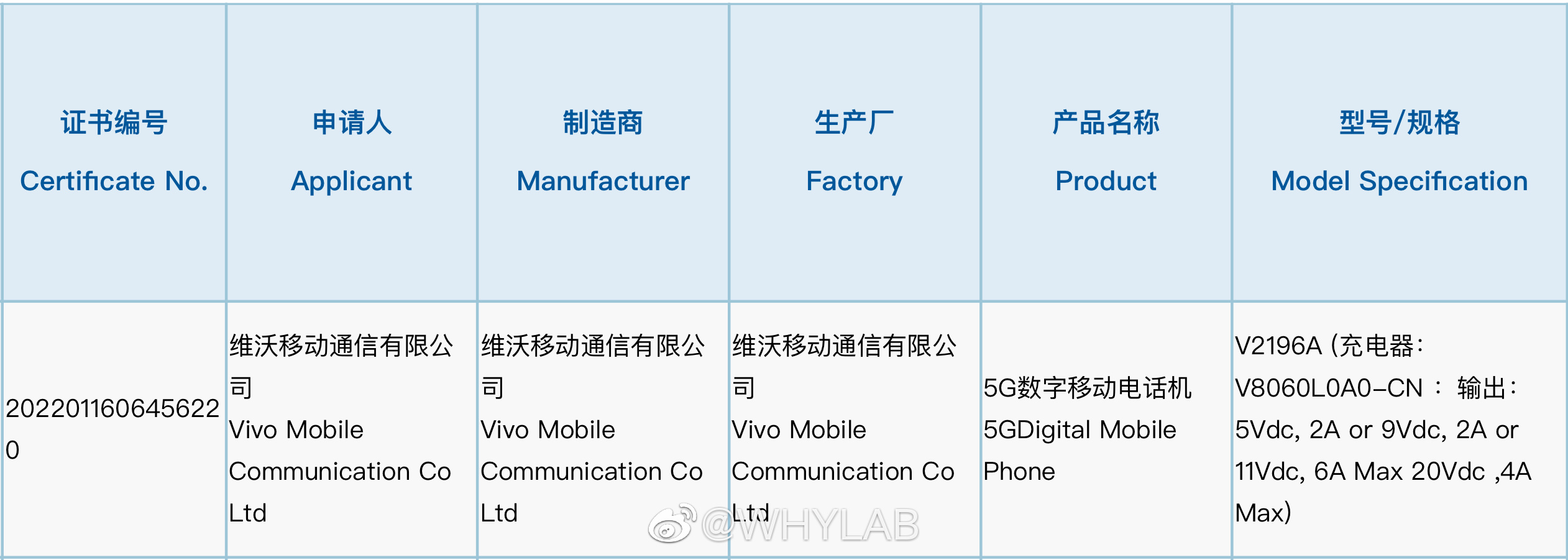
Amid Vivo X80 rumors, we have a new Vivo phone in the news. A device with model number V2196A has passed the 3C certification in China. The certification reveals the charging details of this upcoming device.
The 3C listing was first reported by the tipster WHYLAB, it shows that a mysterious Vivo phone is due for launch. The device has a 20V and 4A charging speed, which translates to 80W charging support. It is a 5G phone and is expected to release soon.
As per the tipster, the previous standard – 66W fast charging appears to go to the lower-end Vivo models as the 80 fast-charging technology becomes more standard for the higher-end models.
In the upcoming months, we have phone launches for the Vivo X80, Vivo X Fold, Vivo X Note, and the sub-brands iQOO Neo6. All of these models will support the 80W fast charging technology.
In related news, the much-awaited Vivo X80 Pro was recently tipped to come with the Sony IMX8-series sensor. The device is reported to have the V1 ISP and Dimensity 9000 SoC, under the hood. The smartphone is said to come with a 6.78-inch 120Hz E5 AMOLED panel with FHD+ resolution. It is expected to come with LPDDR5 RAM and UFS 3.1 storage. It will pack a 4,700mAh battery, and apart from the 80W charging support, it will also have the 50W wireless fast charging technology.
POCO has officially announced its POCO Days sale for the Indian market. The sale offers all the available budget smartphones from the brand at a discounted price. Additionally, there are also some bank offers available during the sale period. Let’s take a look.
The POCO Sale is already live and it will end on March 24. In the sale period, there will be four POCO smartphones – POCO C31, M3 Pro 5G, M4 Pro 5G, M4 Pro – available at special prices. The phones can be purchased from the Flipkart India website.
POCO Days sale
Starting with the entry-level POCO C31, the phone’s price is now discounted and is as low as Rs. 6,999 for the 3GB RAM + 32GB storage variant. The phone’s effective price is Rs. 7,999 for the 4GB RAM + 64GB storage variant. These prices include the normal discount as well as the bank offers. Notably, the phone usually sells for Rs. 8,499 on Flipkart.
Next up, is the POCO M3 Pro 5G, which was launched for Rs. 13,999 for the base 4GB RAM + 64GB storage variant is now priced for as low as Rs. 10,999. The higher variant’s price has also been lowered. Again, this is inclusive of SBI bank offers.
The Poco M4 Pro and M4 Pro 5G are now available for as low as Rs. 13,999 and Rs. 14,999, respectively. The discounted price is inclusive of normal discounts and HDFC bank card offers.
Honor has officially announced that it will be holding a major global launch event on March 29 for its fresh new X series lineup of devices, which are respectively the Honor X7, X8 and X9 5G. The company had already officially announced the Honor X8 a week prior, but not the Honor X7 and X9 5G.
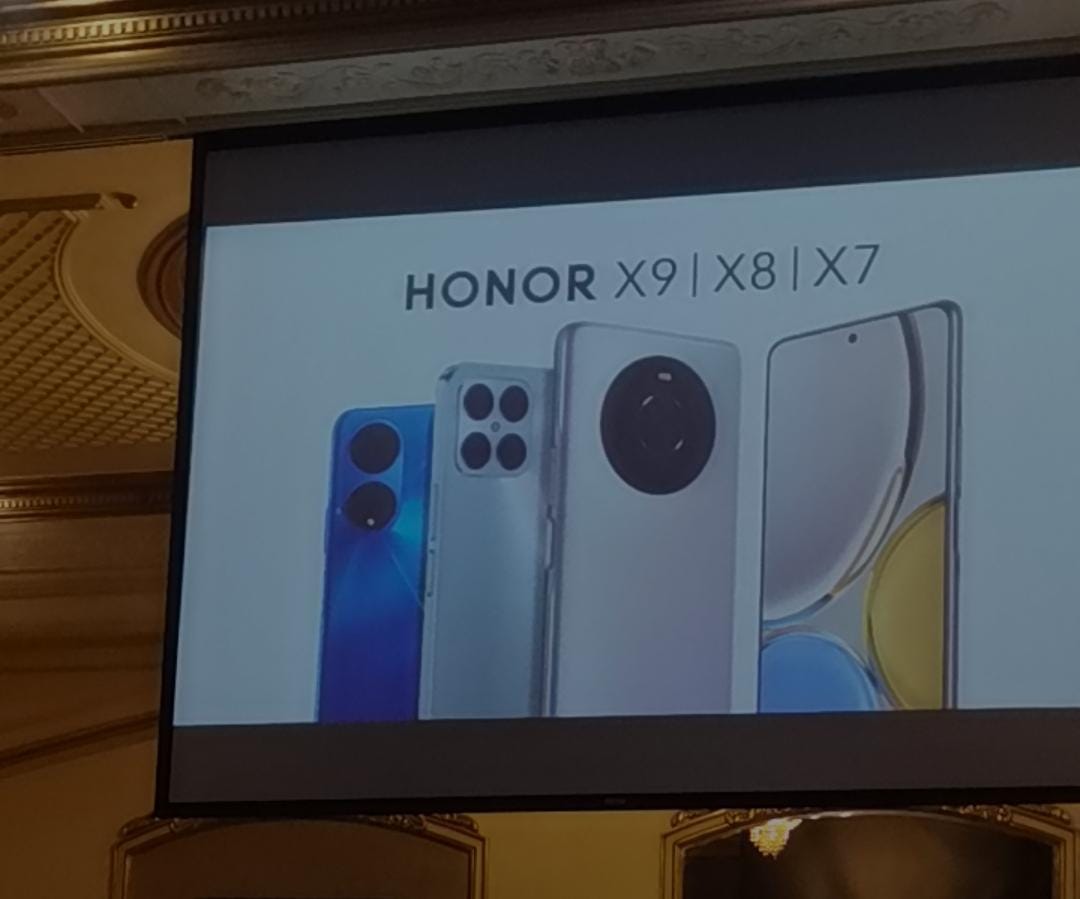
However, it seems that we need not wait any longer for the specs and designs of the upcoming Honor X series. As Honor recently held a private media launch event in the UAE announcing the Honor X series, showing off the striking designs while detailing the specs of the Honor X7, Honor X8 and Honor X9 5G.
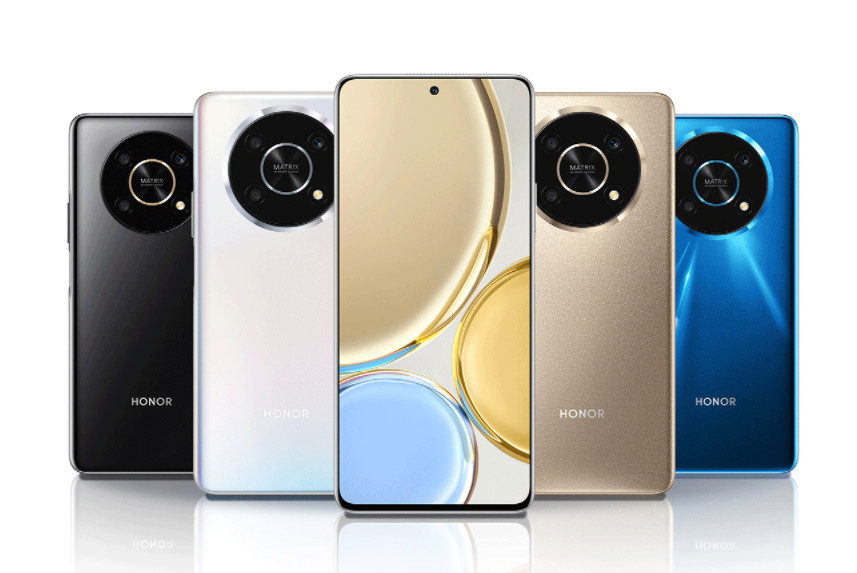
Honor X series Private Launch in UAE.Designs of Honor X9, X8 and X7 revealed via event poster.
Although all 3 models are bearing the new ‘X’ name in the Honor family, all 3 models are actually rebadged devices that were launched within the last 3 months in China, but the X series is equipped with Google services and catered as a “global variant”.
Since the Honor X8 with the Snapdragon 680 specs were already detailed last week, we’ll be only detailing the specs and designs of the Honor X7 and the Honor X9 5G.
Honor X7
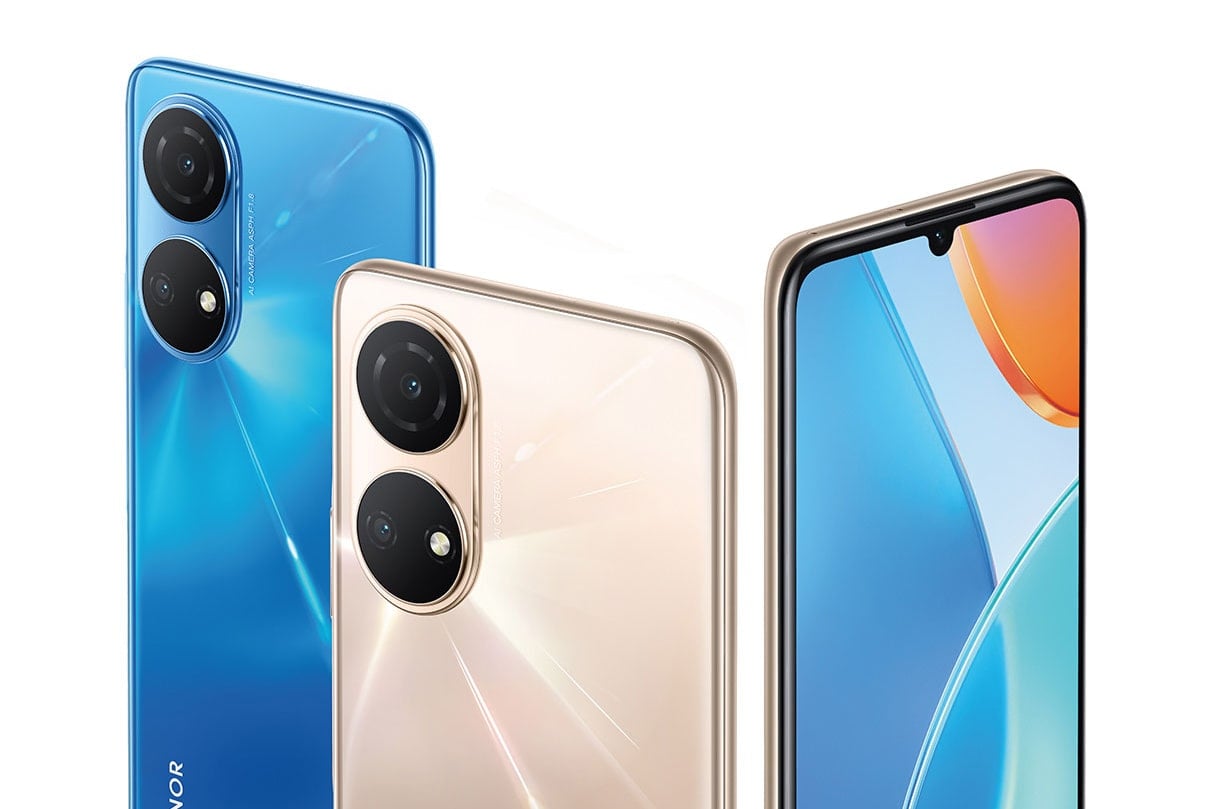
The Honor X7 is the global variant of the Honor Play 30 Plus launched in China back in December 2021.
Honor Play 30 Plus
The device sports a 6.74-inch TFT LCD panel with a resolution of 1600 x 720 pixels (HD+), 16.7 million colours, and a 90Hz refresh rate. The TÜV Rheinland-certified (for low blue-light emission) display also has a dewdrop notch with a 90.07% screen-to-body ratio.
It is powered by a MediaTek Dimensity 700 SoC coupled with 4GB/6GB/8GB RAM and 128GB storage. As for software, it boots Magic UI 5.0 based on Android 11.
The phone houses a dual-camera setup on the back comprising of a 13MP primary sensor and a 2MP depth sensor. On the front, it uses a 5MP shooter for selfies and video calls.
On the connectivity front, the smartphone supports dual SIM, 5G, dual-band WiFi, Bluetooth 5.1, and GNSS (GPS, A-GPS, BeiDou). It also features a 3.5mm headphone jack, a USB Type-C port, and a MicroSD card slot.
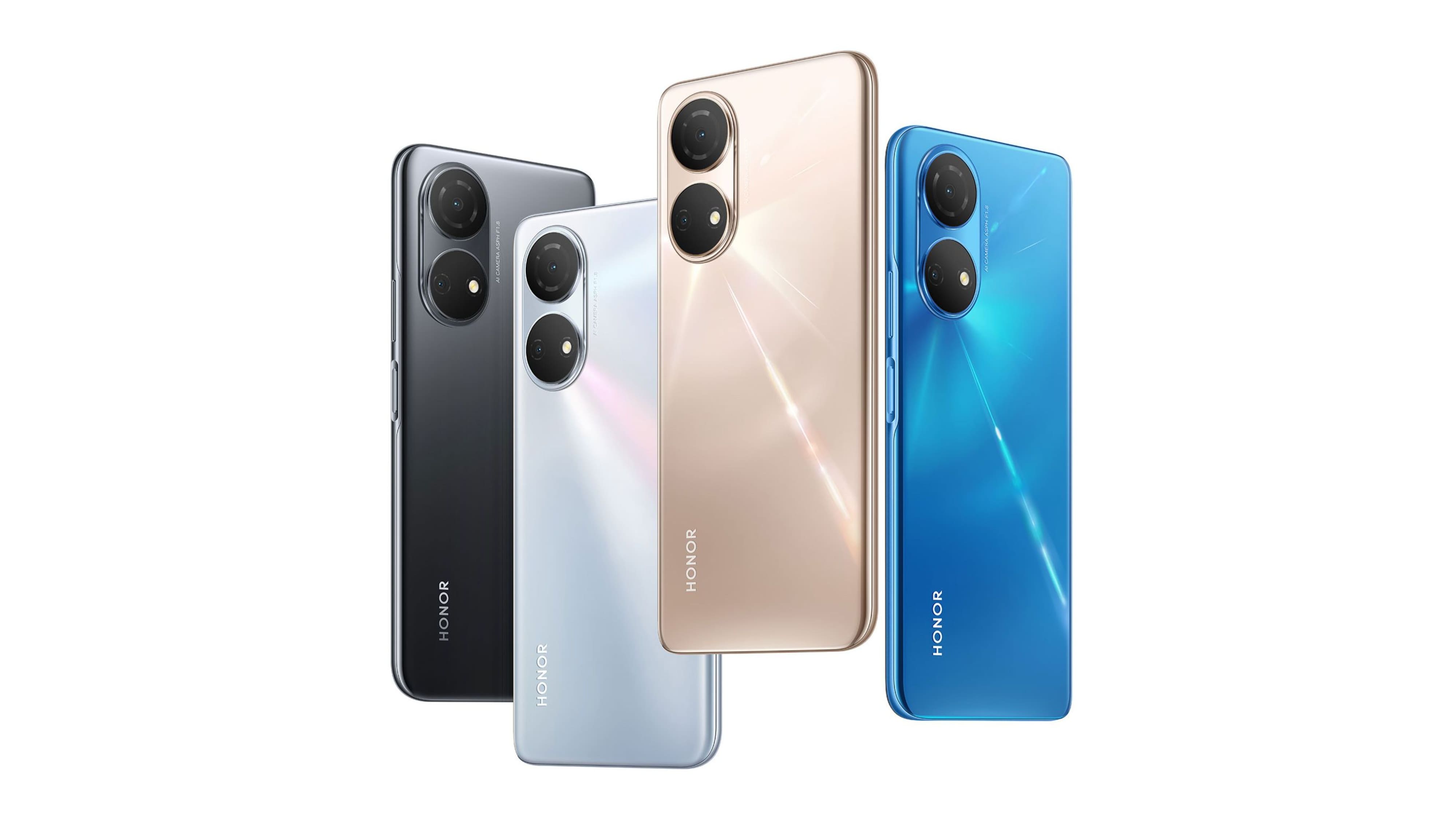
The device comes with all the essential sensors like an accelerometer, ambient light sensor, compass, proximity light sensor, and a side-mounted fingerprint sensor. It measures 167.59 × 77.19 × 8.62mm in dimensions, weighs 198g, and arrives in four stunning colours (black, silver, blue, gold).
Honor Play 30 Plus
Honor X9 5G
The Honor X9 5G is the global variant of the Honor X30 launched in China back in December 2021.
Honor X30
The device is powered by Qualcomm SM6375 Snapdragon 695 5G processor built on TSMC’s 6nm process. The smartphone is paired with 6 GB and 8 GB RAM with 128 GB and 256 GB internal storage options.
The device is fueled by a large non-removable Li-Po 4800 mAh battery with 66W Fast charging, which Huawei claims to charge from 0% to 80% in 30 minutes. The sensors include Fingerprint (side-mounted), accelerometer, gyro, proximity, and compass.
The display is a 6.81 inches IPS LCD panel on a 1080 x 2388 resolution. The camera on the rear side consists of a triple camera that includes 48 MP (wide) + 2 MP (macro) + 2 MP (depth) and on the front, there is 16 MP.
The device dimension is 166.1 x 75.8 x 8.1 mm and it weighs 189 grams. The phone runs on Android 11 baked into Magic UI 5.0.
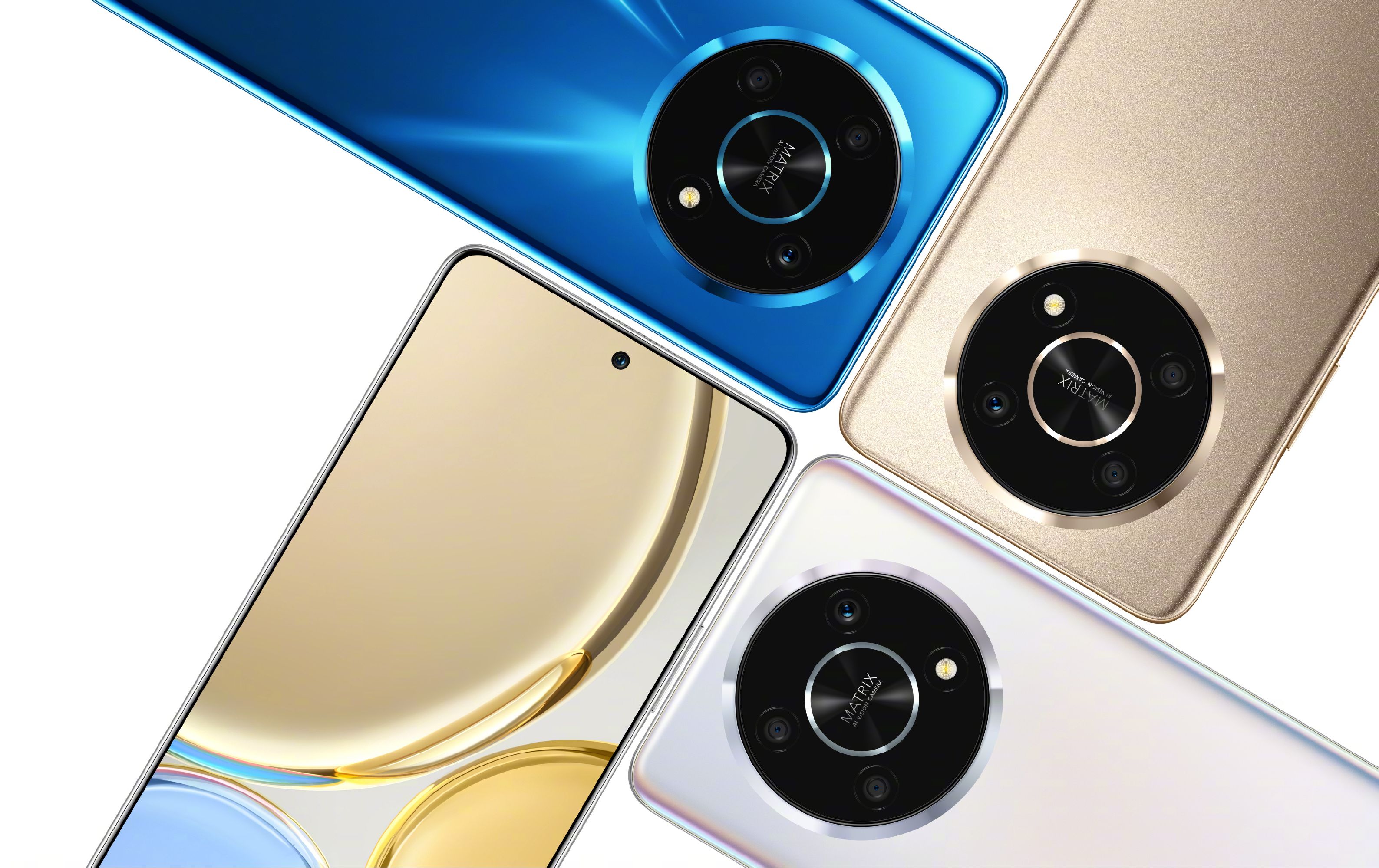
The rear design of the HONOR X9 reminds us that it shares a lot of design cues of premium flagships such as the Huawei Magic 4 and Huawei Mate 40 Pro.
The Honor X9 will come in premium-like colours like Black, Blue, Silver, and Gold.
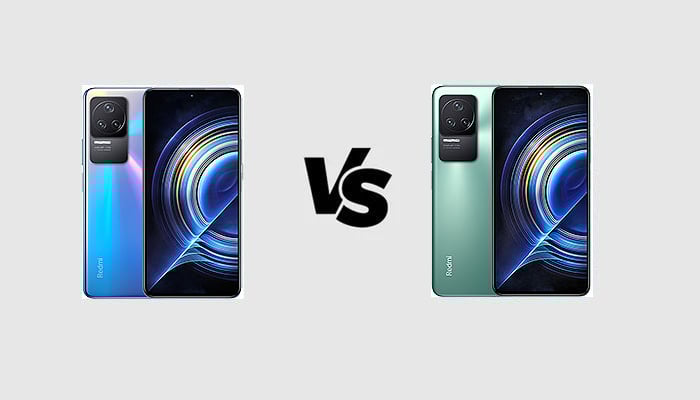
The world’s first phones with the new MediaTek flagship mobile platforms are on the shelves. We are talking about the Redmi K50 and the Redmi K50 Pro: two amazing flagships sold at incredible prices. If you need a flagship killer with the lowest amount of money possible, these devices are definitely the ones worth considering. But what differs between the two models and which one should you opt for? You can understand it by discovering the differences between their specs sheets and this comparison between their specifications will help you a lot.
Triple 48 + 8 + 2 MP, f/1.8 + f/2.2 + f/3.0
20 MP front camera
Triple 108 + 8 + 2 MP, f/1.8 + f/2.2 + f/2.4
20 MP front camera
BATTERY
5500 mAh, fast charging 67W
5000 mAh, Fast Charging 120W
ADDITIONAL FEATURES
5G, dual SIM
5G, dual SIM
Design
The Redmi K50 and the Redmi K50 Pro have exactly the same design. Even though their batteries have different capacities, even the dimensions and the weight of these two phones is identical. We even get the same color options: black, gray, blue, and green. The handsets feature a glass back and a front glass protected by Gorilla Glass Victus. They have the IP53 certification making them dust resistant and splash resistant, as well as a side-mounted fingerprint reader. On the upper part, they sport an infrared port thanks to which you can use them as TV remotes, but they do not feature any audio jack.
Display
Even the displays of these two flagships are the same. The Redmi K50 and the Redmi K50 Pro come with an OLED panel sporting a diagonal of 6.67 inches, a Quad HD+ resolution of 1440 x 3200 pixels, a 120 Hz refresh rate, the HDR10+ certification, Dolby Vision, and a peak brightness of up to 1200 nits. It is a great high-end panel and one of the few Quad HD+ displays you can find in their price range. The display is flat and protected by Gorilla Glass Victus. As already said, there is no in-display fingerprint reader. But the phones come with powerful stereo speakers for a great multimedia experience.
Specs & Software
The Redmi K50 and the Redmi K50 Pro differ in their processors. The former is equipped with an octa-core MediaTek Dimensity 9000 chipset built at 5 nm and running at a max frequency of 2.85 GHz, while the latter is fueled by the octa-core Mediatek Dimensity 9000 SoC built at 4 nm with a max frequency of 3.05 GHz. Both are high-end mobile platforms, but the Dimensity 9000 provides higher CPU and GPU performance because it is the best Mediatek SoC. Further, the Redmi K50 Pro comes in an additional memory configuration sporting 12 GB of RAM and 512 GB of UFS 3.1 native storage. The phones run Android 12 customized by MIUI 13 out of the box.
Camera
While the secondary sensors are again the same, the main camera of the two flagship killers is different. The vanilla Redmi K50 has a 48 MP sensor with OIS, while the Pro variant has a more advanced 108 MP camera with OIS. The latter is able to shoot more detailed photos in every condition. The secondary sensors are an 8 MP ultrawide lens and a 2 MP macro camera. The front camera is a 20 MP snapper with 1080p video recording at 120 fps.
The only better specification of the Redmi K50 if compared to its Pro variant is the battery capacity. Despite being more affordable, it packs a bigger 5500 mAh battery providing a longer battery life. But the Pro variant has a faster charging technology with a power of 120W (against only 67W).
Price
The Redmi K50 carries a starting price of €340 or $376 in the Chinese market, while the Pro variant starts from €430 / $476 at the actual change. At the end of the day, there are only four differences between these two phones. The first is the processor: Dimensity 8100 and Dimensity 9000, respectively. Then we got the main camera: a 48 MP main sensor against a 108 MP lens. Further, the battery capacities are 5500 mAh and 5000 mAh. Last but not least, the charging speeds.
Xiaomi Redmi K50 vs Xiaomi Redmi K50 Pro: PRO and CONS
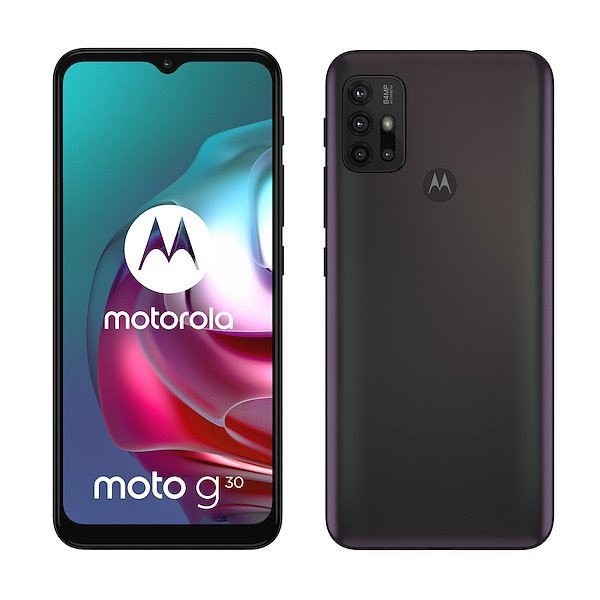
The Moto G30 that was launched last year is now receiving the latest Android 12 update. The smartphone was originally launched running on Android 11 out of the box. The new update is currently being rolled out to some regions and is for the models mentioned below.
The Moto G30 in Brazil is getting the Android 12 OS update. The smartphone with model number XT2129-1-DS, which is the Brazilian model with dual-SIM support is getting the update. The update includes the February 2022 security patch and has all the Android 12 features.
The update is sized at 1.09GB and has the version number – S0RCS32.41-10-9-2. Users owning the smartphone should have received the update notification. If not, simply head to the setting page, followed by the software update tab, and install it.
Motorola Moto G30 Specifications
The Moto G30 is a budget smartphone with a 6.5-inch IPS LCD display. It has a 1600 x 720 pixels resolution and a 90Hz standard refresh rate. The phone has a rear-mounted fingerprint scanner and was initially launched with Android 11 out of the box.
The smartphone is powered by the Qualcomm Snapdragon 662 SoC and has up to 6GB of RAM, 128GB of internal storage. The device has a 64MP quad-camera system and a 13MP selfie snapper. It packs a 5,000mAh battery paired with 20W of Turbopower fast charging technology.
Realme has scheduled to launch the GT Neo3 smartphone on March 22 in the Chinese market. Ahead of its launch, the company has been teasing some of the phone’s key details. Just like that, Realme has now shared the display details of the Realme GT Neo3.
According to Realme, the GT Neo3’s display costs much more than the predecessor GT Neo2’s screen. The GT Neo3’s display brings major improvements like an ultra-narrow bezel display and improved colors. The smartphone’s display has a 2.37mm ultra-narrow chin and 1.48mm super-thin bezels.
The screen is claimed to have a screen-to-body ratio of 94.2%, which is a huge improvement over the 85.7% screen-to-body ratio of the predecessor’s screen. Furthermore, it has a flexible straight screen with a 120Hz refresh rate and a 1000Hz “Gaming Control Engine”.
The display has 1.07 billion colors and supports HDR10+ certification. Moreover, the screen supports DC dimming and also has chip-by-chip calibration. It also has an in-display fingerprint scanner.
It appears the Realme GT Neo3 brings a lot to its specs sheet. Previous teasers have confirmed that the smartphone will feature a 6.7-inch AMOLED display with Full-HD+ resolution. It will be a punch-hole panel.
The device will be powered by the MediaTek Dimensity 8100 SoC and have an independent display chip. Both combined are expected to offer great performance. The smartphone will also bring LPDDR5 RAM and UFS 3.1 internal storage.
As for the cameras, the device is expected to come with a triple camera system with a 50MP Sony IMX766 main sensor, an 8MP ultra-wide lens, and a 2MP macro sensor. Upfront, it will feature a 16MP selfie snapper.
It is expected to have a 4,500mAh battery with support for 150W fast charging technology. Realme has confirmed that the phone will go from 0% to 50% in just 5 minutes of charging. The phone will boot on Android 12 OS out of the box and have Realme UI on top.
Justice Alexandre De Moraes of Brazil’s Supreme Court on Friday ordered the shutdown of messaging app Telegram nationwide, arguing it has not cooperated with Brazilian authorities.
The shutdown comes in light of ignorance of previous orders regarding an arrest warrant issued in name of a blogger Allan dos Santos who is an ally of the current president Jaire Bolsonaro and has been spreading fake news on telegram. The activist, a fugitive now based in the United States, has remained active on Telegram
Telegram also ignored requests from Brazilian authorities, including a police request to block profiles and provide information linked to the blogger. The justice added that Telegram has also failed to name a legal representative in Brazil, unlike its competitors.
Many of Bolsonaro’s supporters have turned to Telegram since the messaging app’s competitor WhatsApp changed its policies on message sharing. Bolsonaro and his allies have encouraged followers to join Telegram since January 2021.
In January, Bolsonaro was asked by supporters what he thought about investigations into Telegram. He said, “It is cowardice what they are trying to do to Brazil.” The president has also, often accused de Moraes and Brazil’s top court of rulings that go against freedom of speech.
One of the telegram’s founders, Pavel Durov, said in a statement that Telegram “had an issue with emails going between our telegram.org corporate addresses and the Brazilian Supreme Court. As a result of this miscommunication, the Court ruled to ban Telegram for being unresponsive.”
“I apologize to the Brazilian Supreme Court for our negligence. We definitely could have done a better job,” Durov said. “We complied with an earlier court decision in late February and responded with a suggestion to send future takedown requests to a dedicated email address. Unfortunately, our response must have been lost, because the Court used the old general-purpose email address in further attempts to reach us.”
Durov also asked the court to “consider delaying its ruling for a few days at its discretion to allow us to remedy the situation by appointing a representative in Brazil and setting up a framework to react to future pressing issues like this in an expedited manner.”
Telegram’s services remained active till Friday evening and fact-checking website Aos-Fatos which has been monitoring pro-Bolsonaro pages on telegram reported that several supporters of the Brazilian president have been sharing tutorials on how to install virtual private networks (VPNs) so they could continue using Telegram.
Bolsonaro has also promised to keep sharing messages on an alternative messaging app Gettr, which was founded by former Trump adviser Jason Miller.
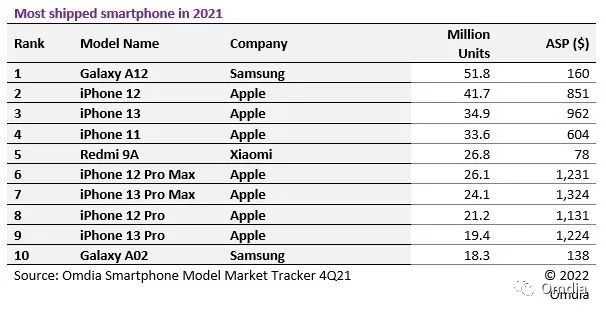
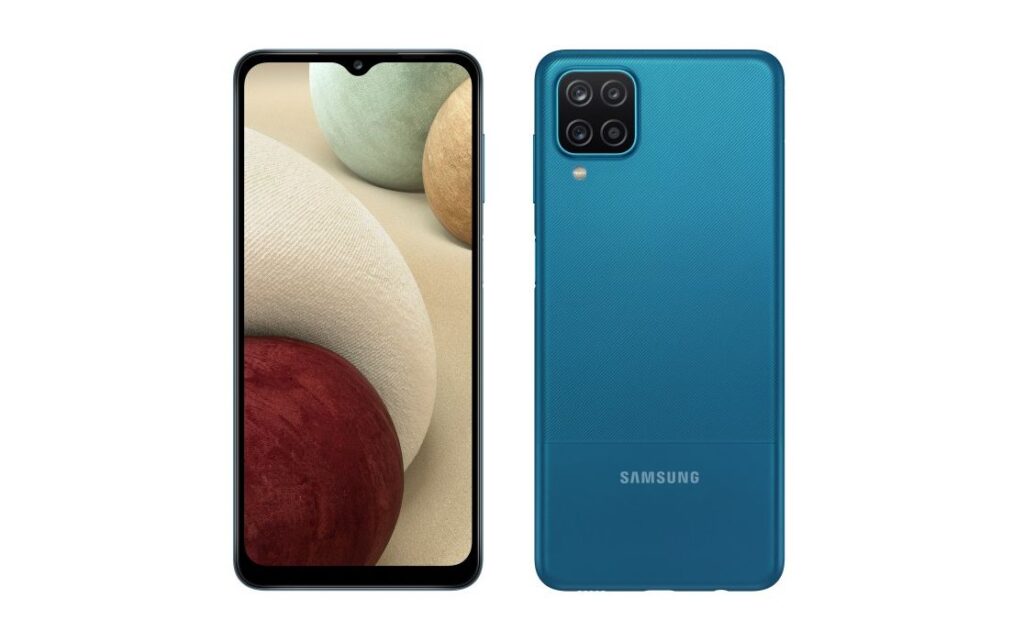
This Samsung budget smartphone has reportedly taken over the likes of Apple’s iPhones and has become the most shipped smartphone in 2021. The smartphone in question, surprisingly, is the Samsung Galaxy A12. The device that debuted in late 2020 has topped the most shipped phone list by a figure of whopping 50 million+ units.
As per Omdia’s report for 2021, the Samsung Galaxy A12 is the most shipped phone. Samsung has reportedly shipped 51.8 million units of the device and has taken over the second most shipped device, the Apple iPhone 12. Interestingly, the iPhone 12’s selling price is five times higher than the Galaxy A12. The average selling price of the Galaxy A12 is $160 over iPhone 12’s $851.
Speaking of the iPhone 12, the phone’s 41.7 million units were sold in 2021. Next up is its successor, the iPhone 13 with 34.9 million units sold. The iPhone 11 comes fourth with 33.6 million units sold.
After three flagships, the phone that grabbed the fifth spot was the entry-level, Redmi 9A. It is the cheapest most shipped phone on this list with an average selling price of $78. The iPhone 12 Pro Max, iPhone 13 Pro Max, iPhone 12 Pro, and iPhone 13 Pro come after that. Lastly, the 10th phone in Omdia’s list is the Samsung Galaxy A02, again an entry-level device.
Notably, the most expensive phone shipped as per the list is the iPhone 13 Pro Max. As said earlier, the Redmi 9A is the cheapest.
Samsung Galaxy A12
Samsung’s top spot in this list shows that the budget A-series phones are quite popular. From 2019, the company focused on the A-series over the J-series and the A-series’ market share seems to have grown steadily ever since. That said, we expect to see more A-series phones to get in such reports as Samsung continues to focus on its mid and budget-range segment globally.
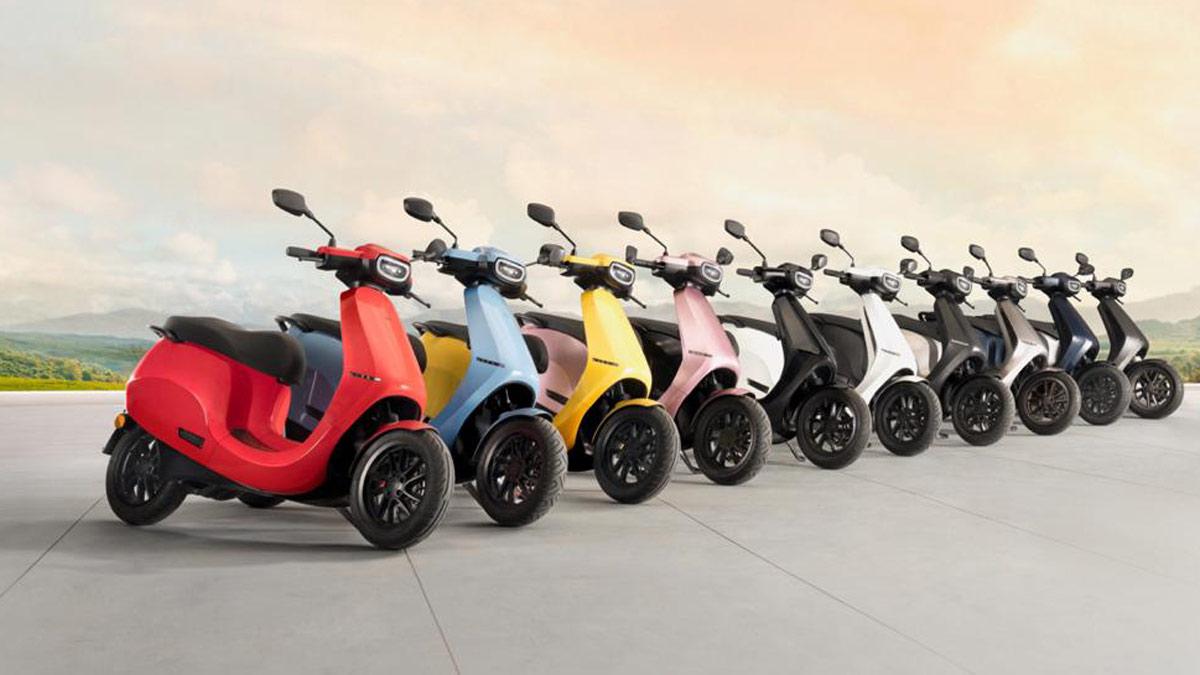
A few days ago, Ola Electric announced that they will temporarily be opening the booking window for the Ola S1 Pro on March 17th and 18th to celebrate the festival of Holi. The CEO of Ola Bhavish Aggarwal also tweeted out that this will be the last chance to get the Ola S1 Pro for Rs 1,29,999 (ex-showroom).
Thanks to all who’ve purchased S1 Pro already and special thanks to those who've bought their 2nd or 3rd S1 Pro!
Last chance to get it for 129,999. We'll be raising prices in the next window. This window ends 18th midnight!😊 Buy now, only on the Ola app! pic.twitter.com/I7FF0GlXQD
The announcement comes after Ola competitor Ather announced a price hike for its A450X and the 450 Plus electric scooters. The brand has not yet revealed the new pricing of the S1 Pro electric scooter, but experts have speculated a 3-5% price hike.
Other than that, Ola will also be pushing out the MoveOS 2.0 via an OTA update around the end of April. The MoveOS 2.0 is said to enhance the overall ride experience and bring features like turn-by-turn navigation, location sharing with the scooter, and locating a charging station nearby. The update will also bring a companion app, new Bluetooth-based functions, cruise control, and general bug fixes and performance improvements.
Ola S1 Pro features
Ola S1 Pro electric scooter comes with an 8.5kW motor capable of producing 58Nm of torque. The 3.97kWh battery of the Ola S1 Pro promises a 181km range on a single full charge. However, in real-life experience, the actual range comes out around 135km. The scooter takes around 6 hours to charge from 0-100 percent via a home wall socket. Ola claims a top speed of 115km/hr on the S1 Pro and a 3-second time to acceleration speed of 0-40km/hr.
Other features on the EV include a 7-inch touchscreen display and 3GB onboard RAM. The e-scooter has 4G connectivity, Wi-Fi, Bluetooth, and voice control connectivity options.
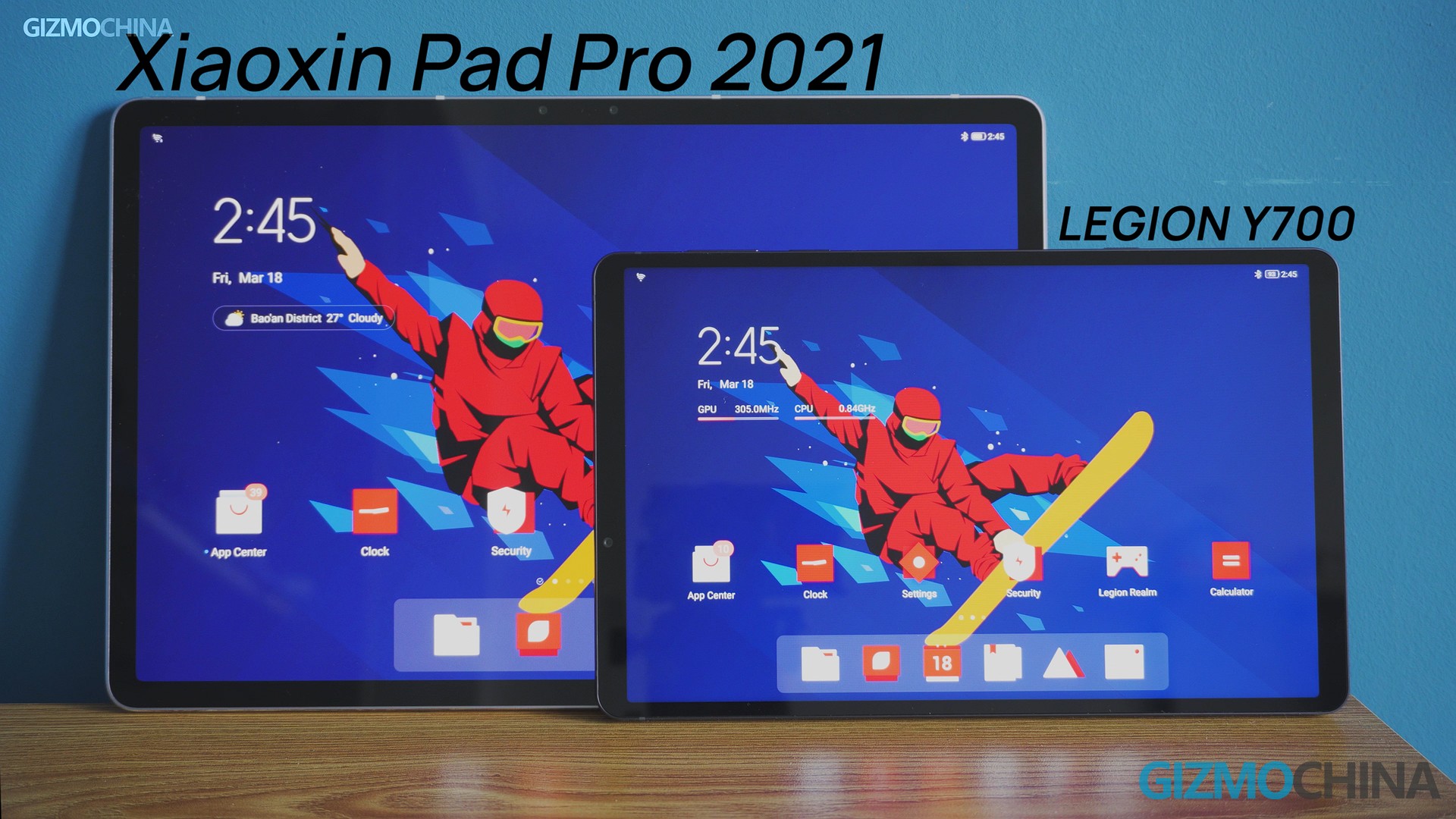
It’s been a while since we reviewed a high-performance Android tablet. Actually, we were pretty surprised by last year’s flagship tablets, all thanks to their refreshed software, upgraded performance powered by snapdragon 870 chip, and a decent display. The one that impressed me most was the Lenovo Tab P11 Pro, also called the Xiaoxin Pad Pro 2021, with a competitive price but still featuring a 90Hz OLED display.
It’s actually happy to see that the brand didn’t stop there and recently released the Legion Y700 gaming tablet. Before I start with this review, let me just say this — It’s the best device with complete tablet features for mobile gaming.
Display
The gaming-oriented Legion lineup is popular in the gaming market. The Y700 is the series’ first tablet that focuses on the gaming experience. At first glance, the Y700 is as compact as an Android tablet. And it’s probably the first Android tablet coming with an 8.8-inch display, which is very close to the latest iPad Mini. However, even with the more compact body, the Y700 doesn’t really downgrade the display configurations.
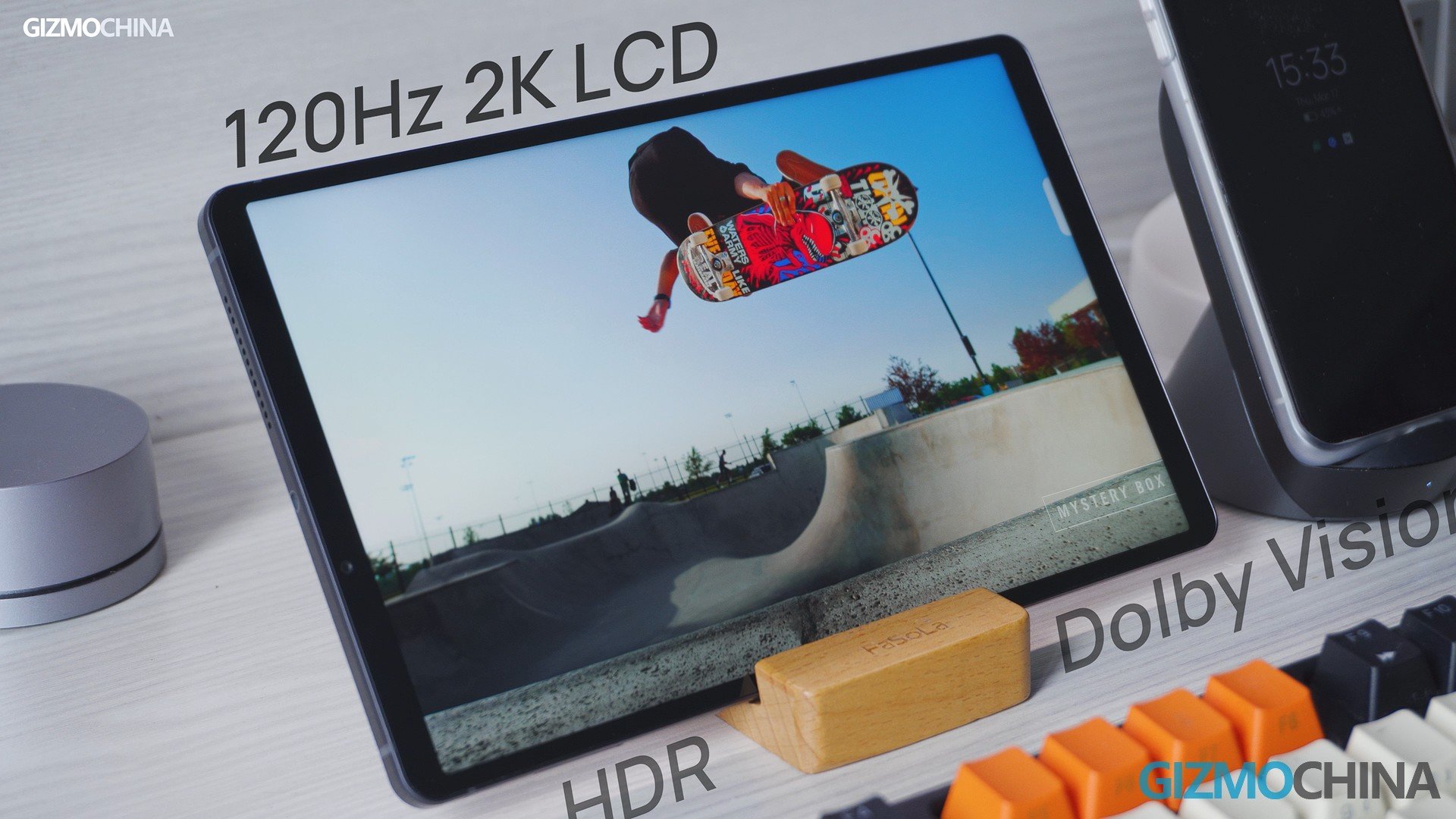
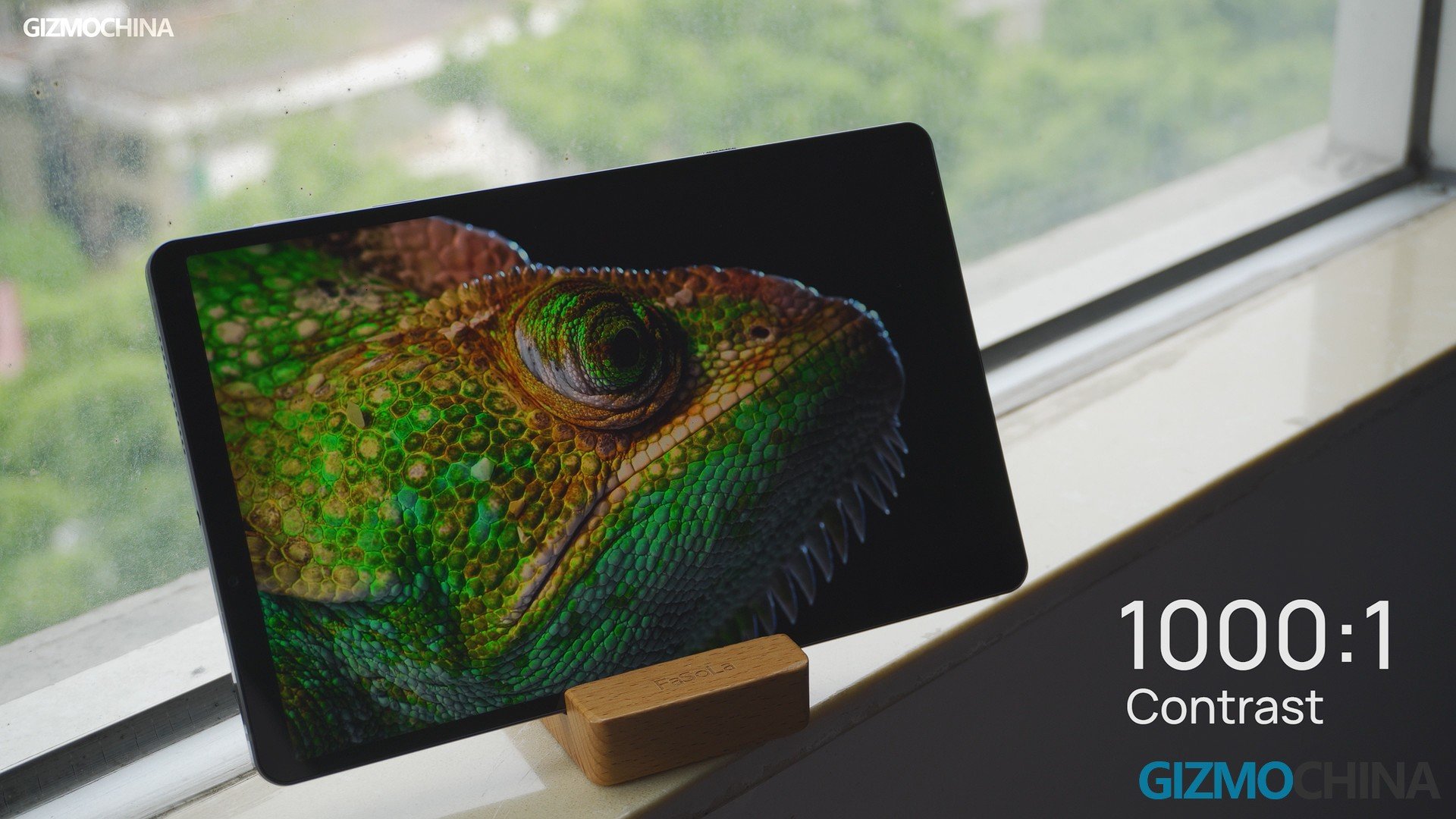
It’s a 2K-level LCD panel featuring a 120Hz refresh rate and supports Dolby Vision and HDR contents with a maximum brightness of 500nits. Thanks to the 8.8-inch body size, the Y700’s display accuracy is much closer to a mobile phone. In actual use, it offers a decent visual experience, especially in reading or web viewing.
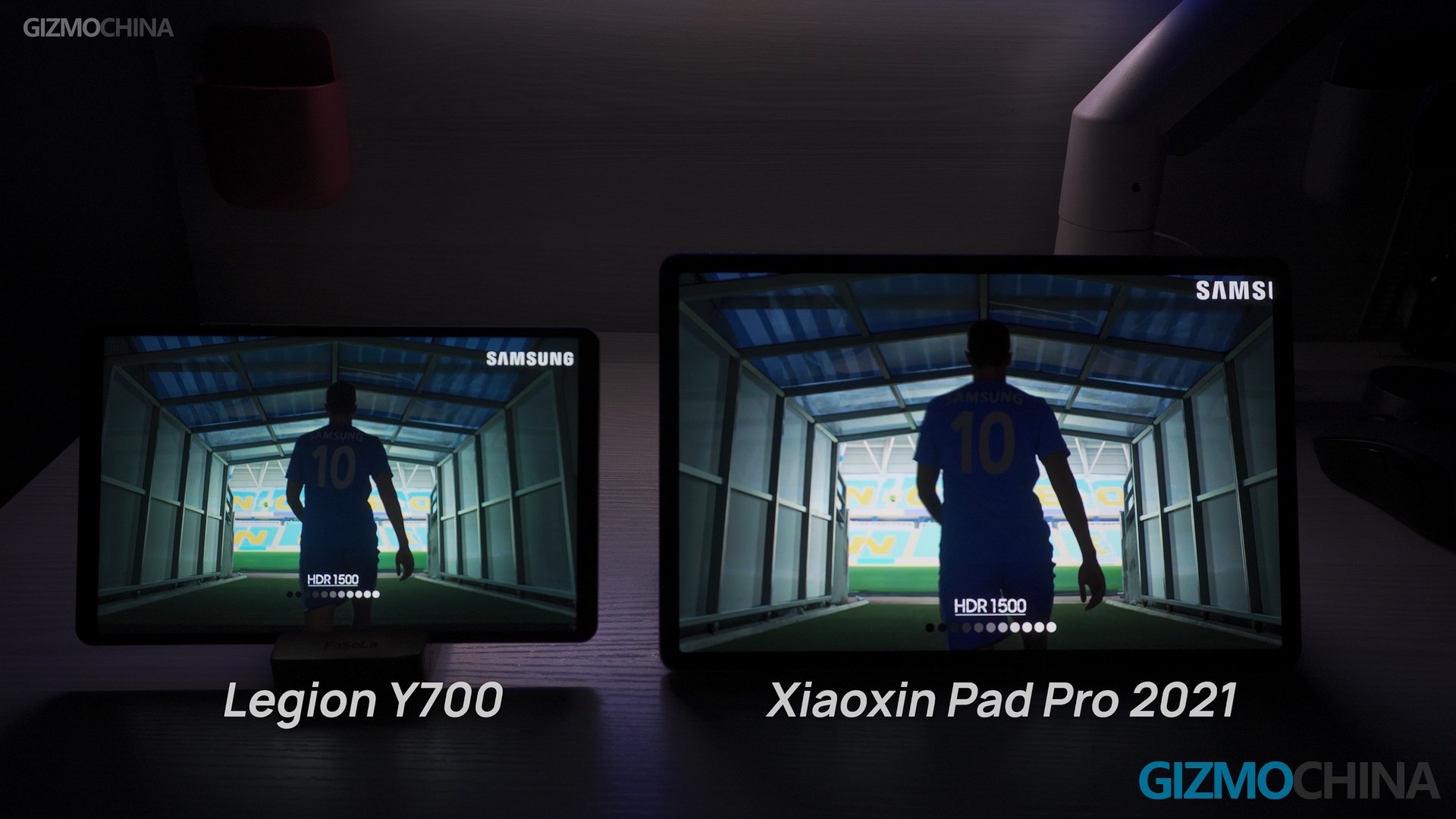
For the color mode, either you can apply the vibrant mode to cover wide P3 Gamut, or just choose the Standard mode for sRGB gamut with better color accuracy. Although the display supports Dolby Vision and HDR content, as an LCD panel, unfortunately, it only features a 1000:1 color contrast. So if you are thinking about having a tablet for watching a lot of videos, I still recommend you to go for the Xiaoxin Pad Pro 2021. The OLED display is still better at presenting deeper and more natural contrast.
Design
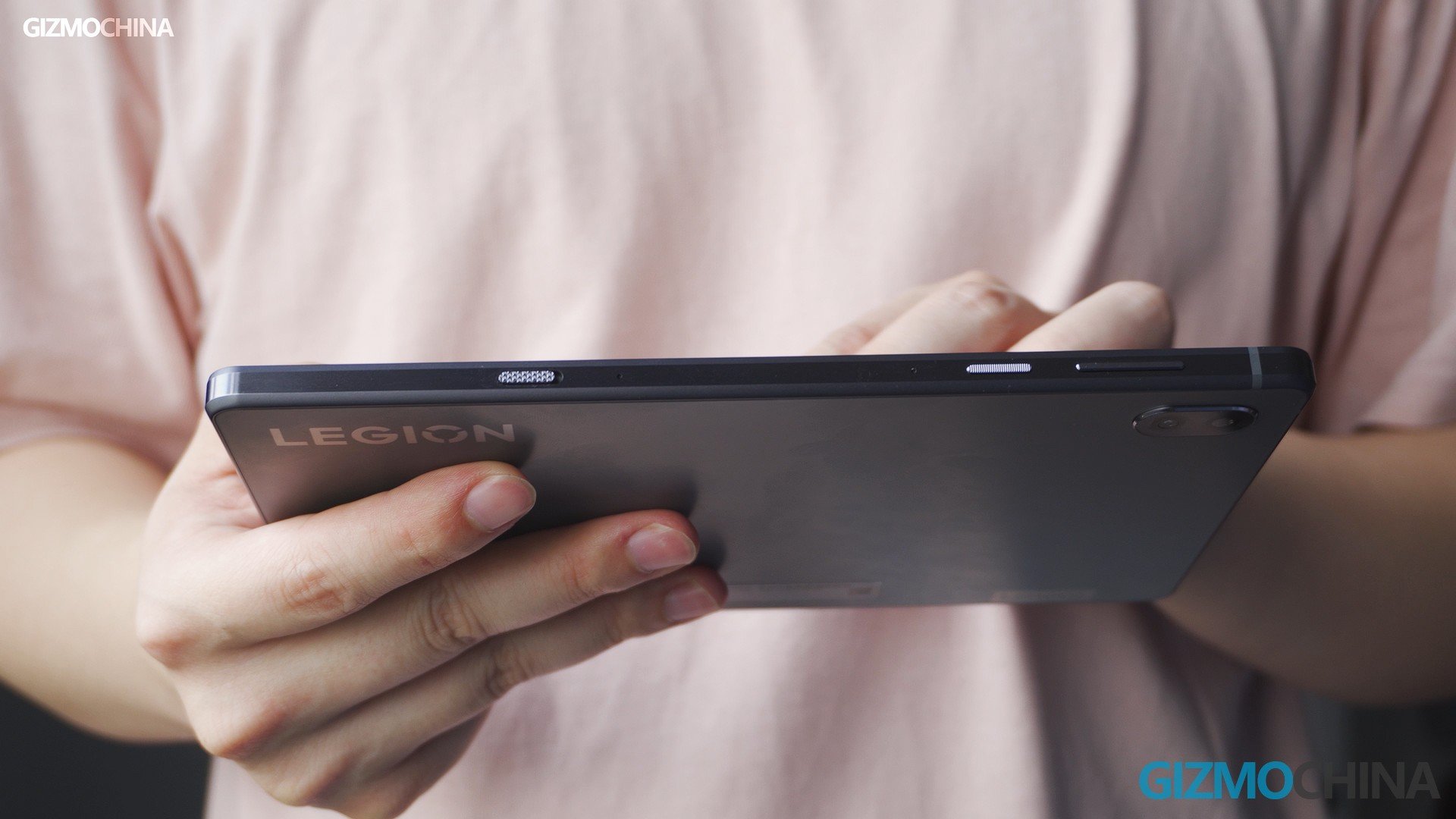
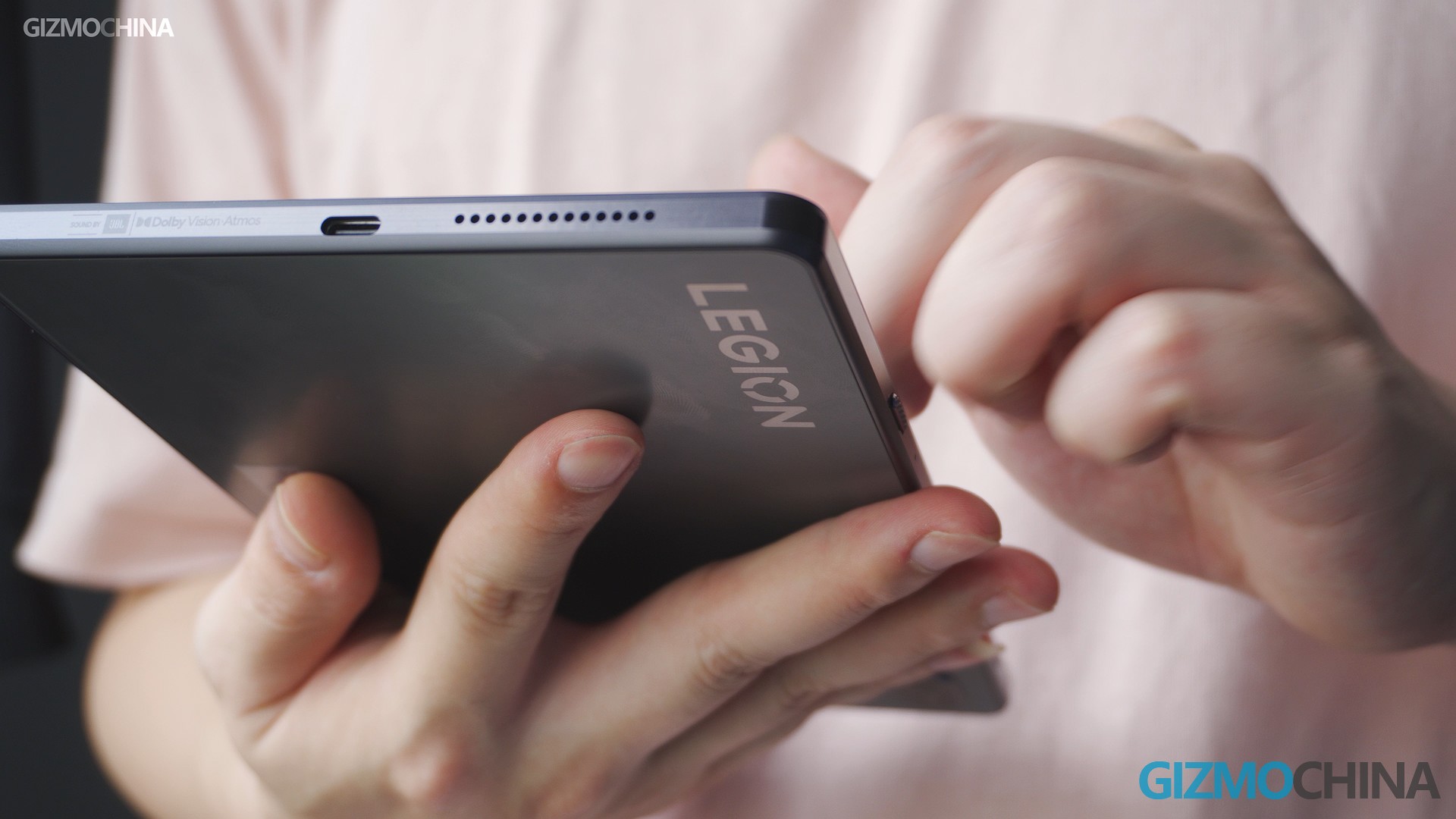
But don’t make the decision yet, because we haven’t even talked about what the Y700 tablet is really good at. As you can see, the 8.8-inch size makes the tablet look like a big smartphone. So you can hold it firmly with a single hand, which offers a big difference in user experience from those bigger tablets.
1 of 4
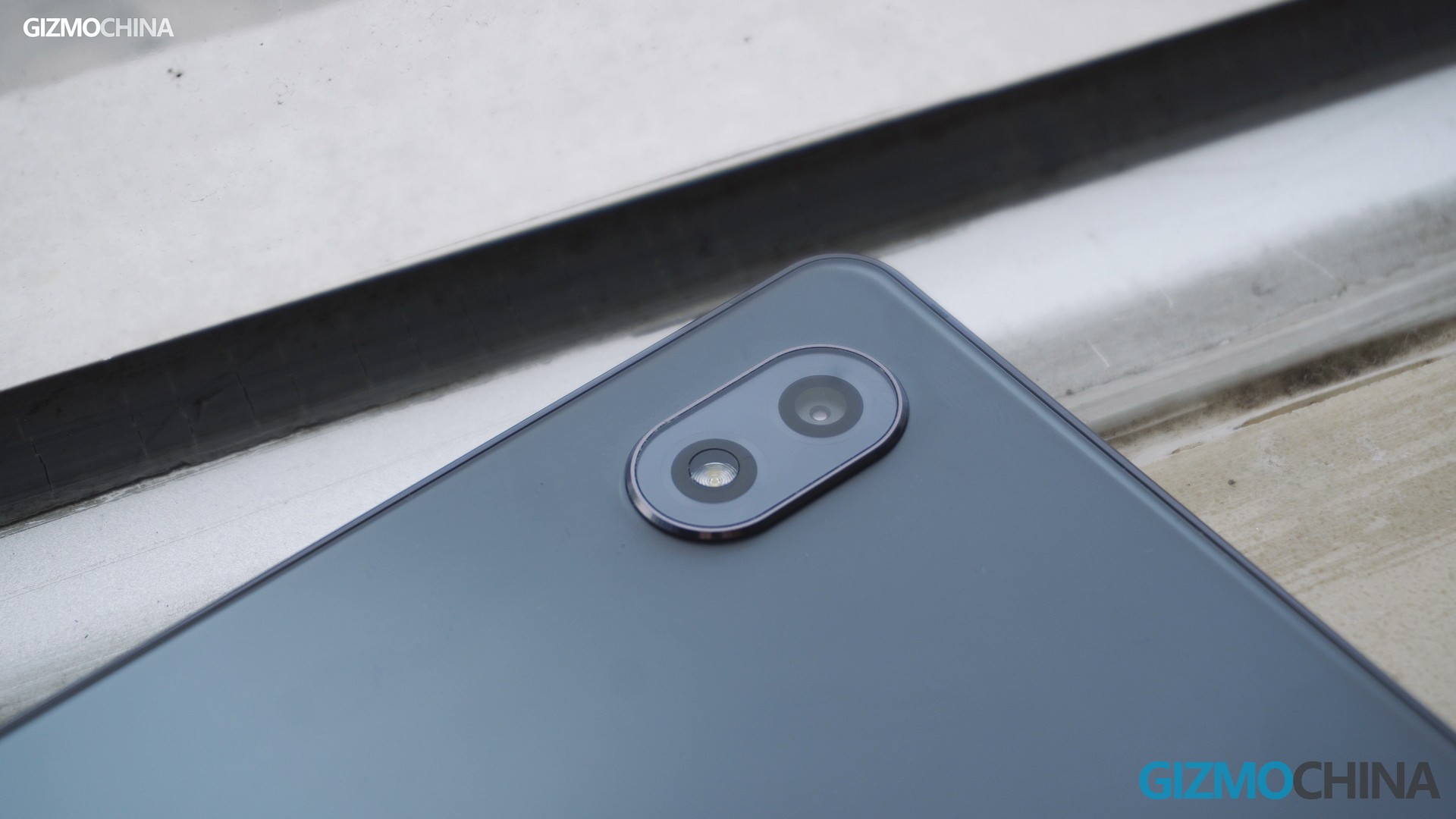
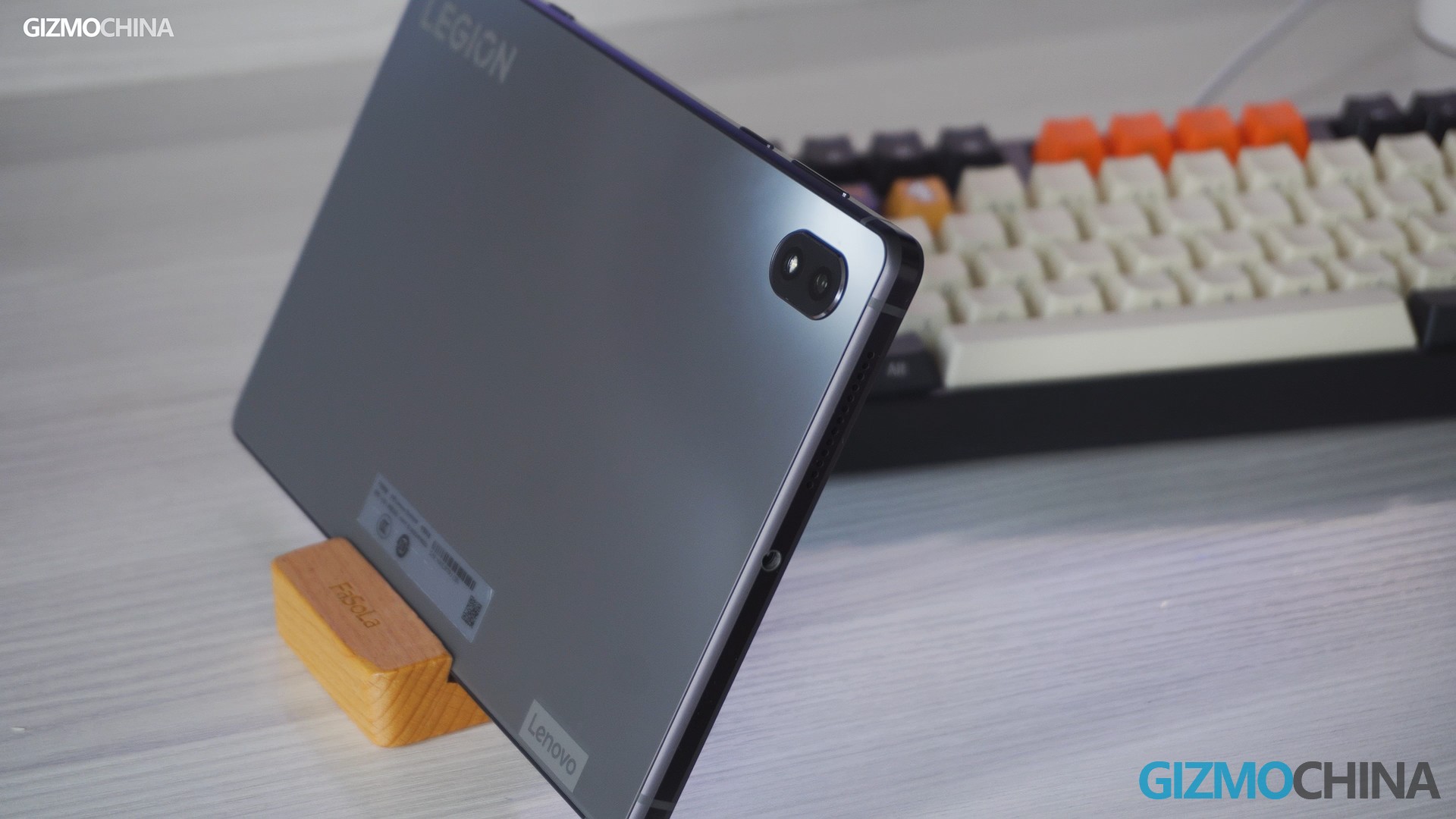
And compared to those 10 or 11-inch models, it’s so portable that you won’t always think about carrying a large backpack for it. And more importantly, the Y700 weighs only 375g, which allows you to grip it for a long time without feeling tired.
Well, the Y700 doesn’t use a one-piece-metal design for its body. Instead, the Y700’s back cover is replaced with a matte-finish glass panel. It still looks good, but also brings a concern: how are the tablet’s cooling efficiency and performance strategies? We will show you the answer in the gaming test part.
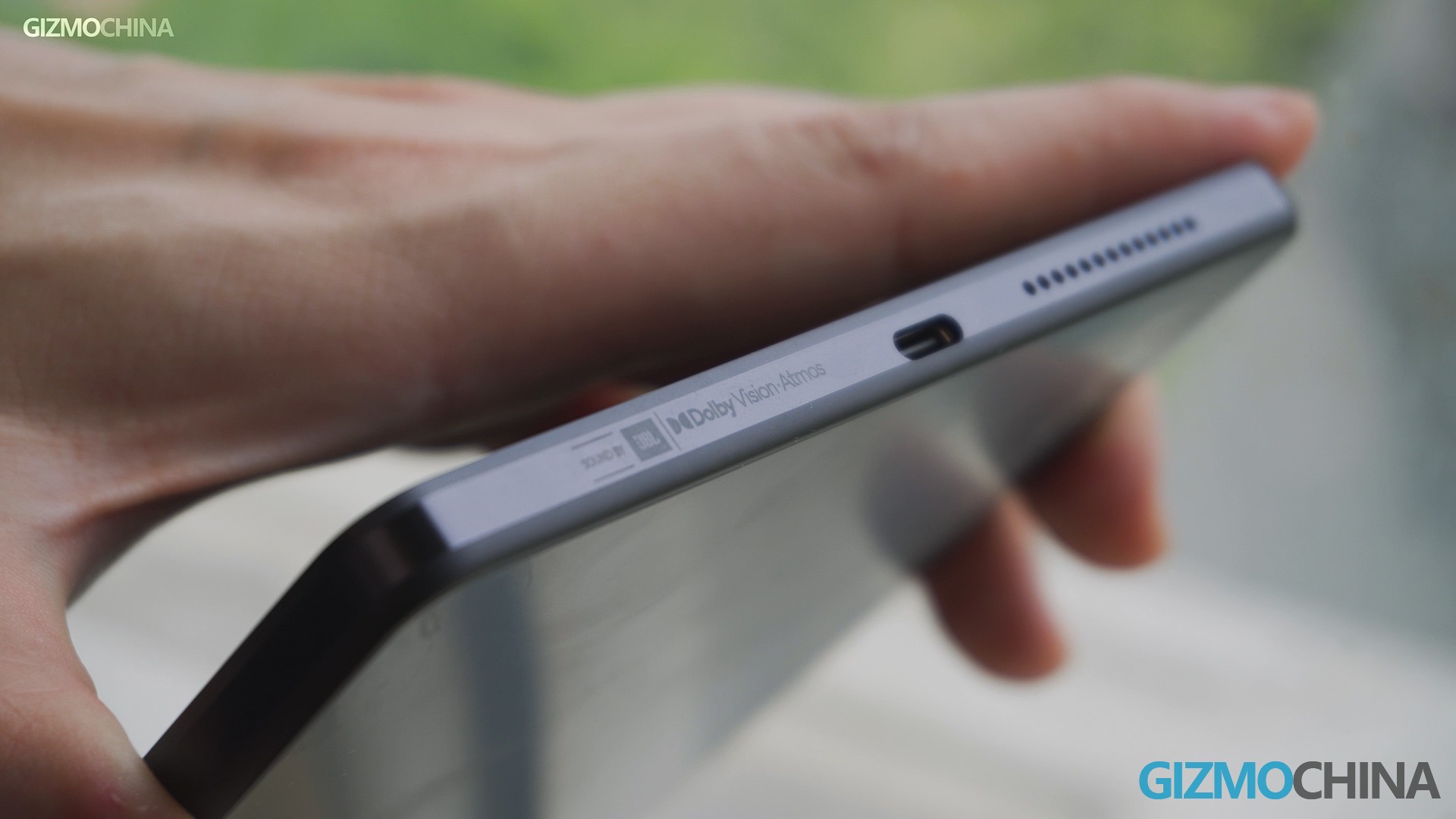
Apart from the decent display, the Y700 tablet also comes with dual JBL speakers and brings a pretty impressive stereo sound, especially when playing Dolby Atmos audio. In FPS games like PUBG Mobile requiring strong stereo sounds, it’s even good enough to play the game without using earphones.
Software & Hardware for gaming
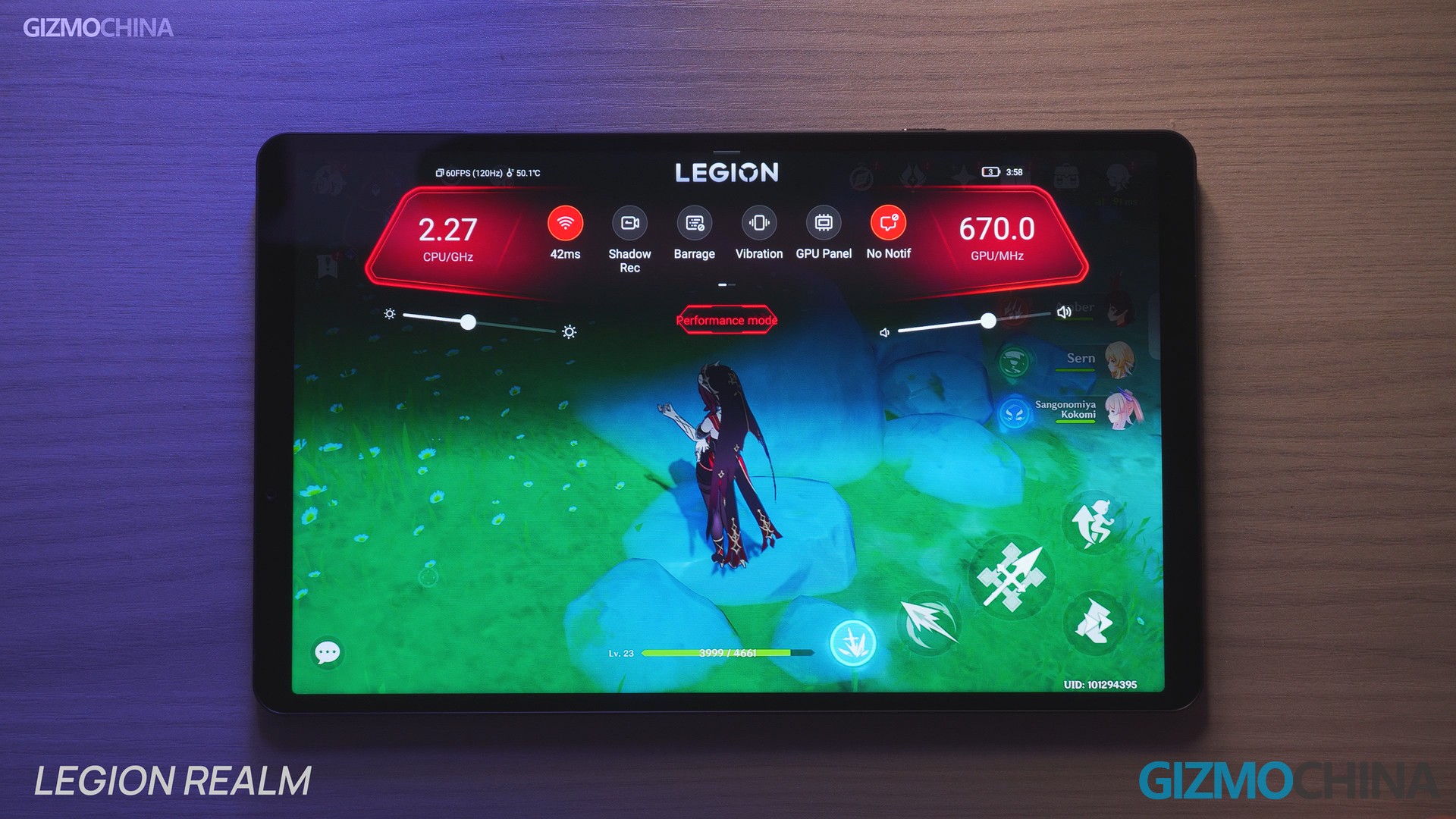
To improve the gaming experience on the Y700, Legion borrows the gaming-related software from their gaming phones, and obviously, the software has got optimized well for the tablet. For example, now we can have the Legion Realm app to access all the gaming settings. And during gaming, you can pull down the game assistant from the top of the display and check the phone’s running state and the customized shortcuts.
And you can switch the performance mode from balanced mode to power-saving or performance mode depending on your needs.
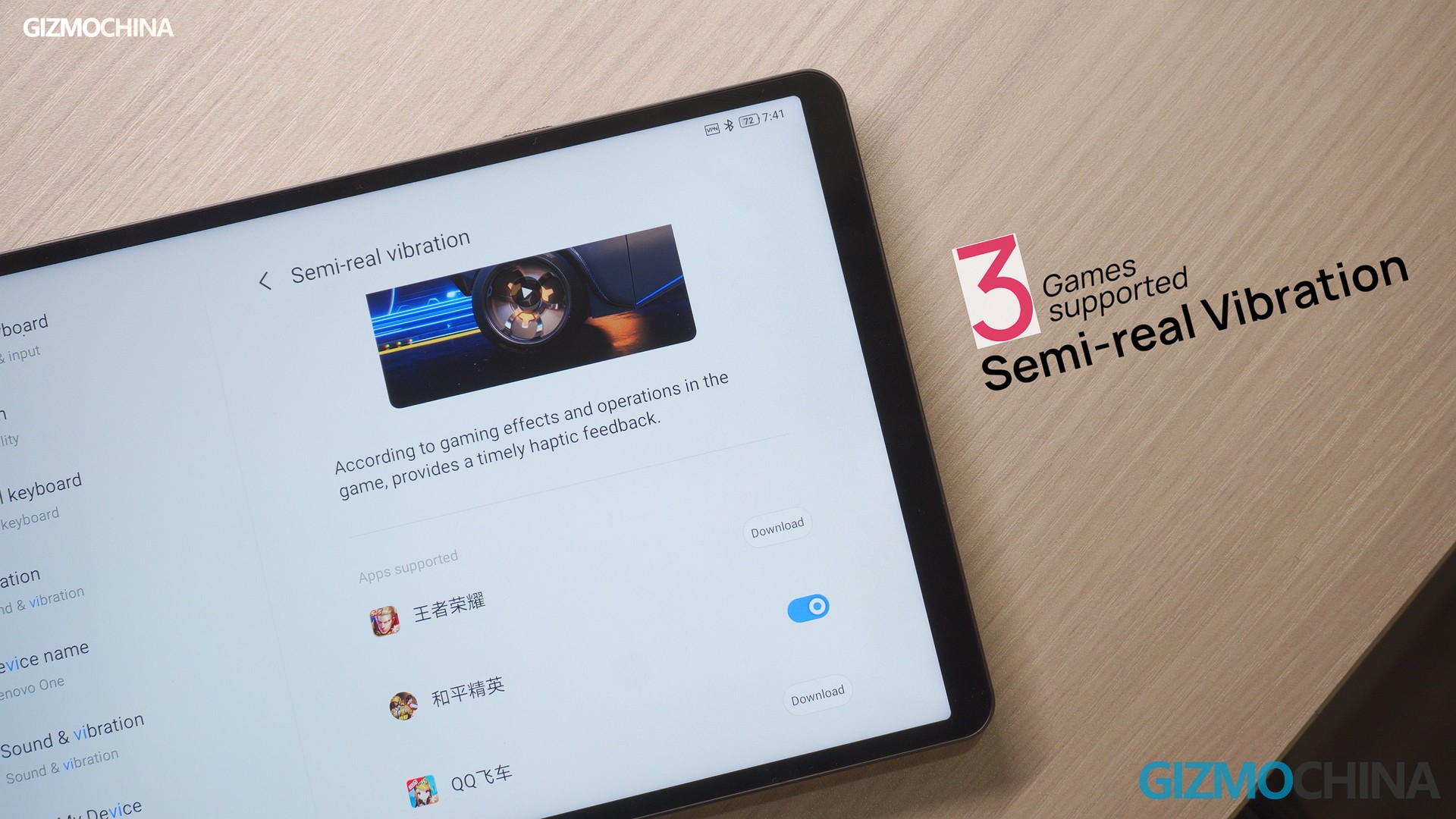
But over the hardware, the Y700 doesn’t carry most of the Legion phones’ features, neither the shoulder buttons nor the built-in cooling fans. But the Y700 still gets the upgraded cooling solution and dual X-axis linear vibration motors. The strong haptic feedback does feel good when typing, but unfortunately, there are limited applications for the powerful motors so far. Although the Legion developed a feature called Semi-real vibration for an immersive gaming experience, we only saw three games in the supported list.
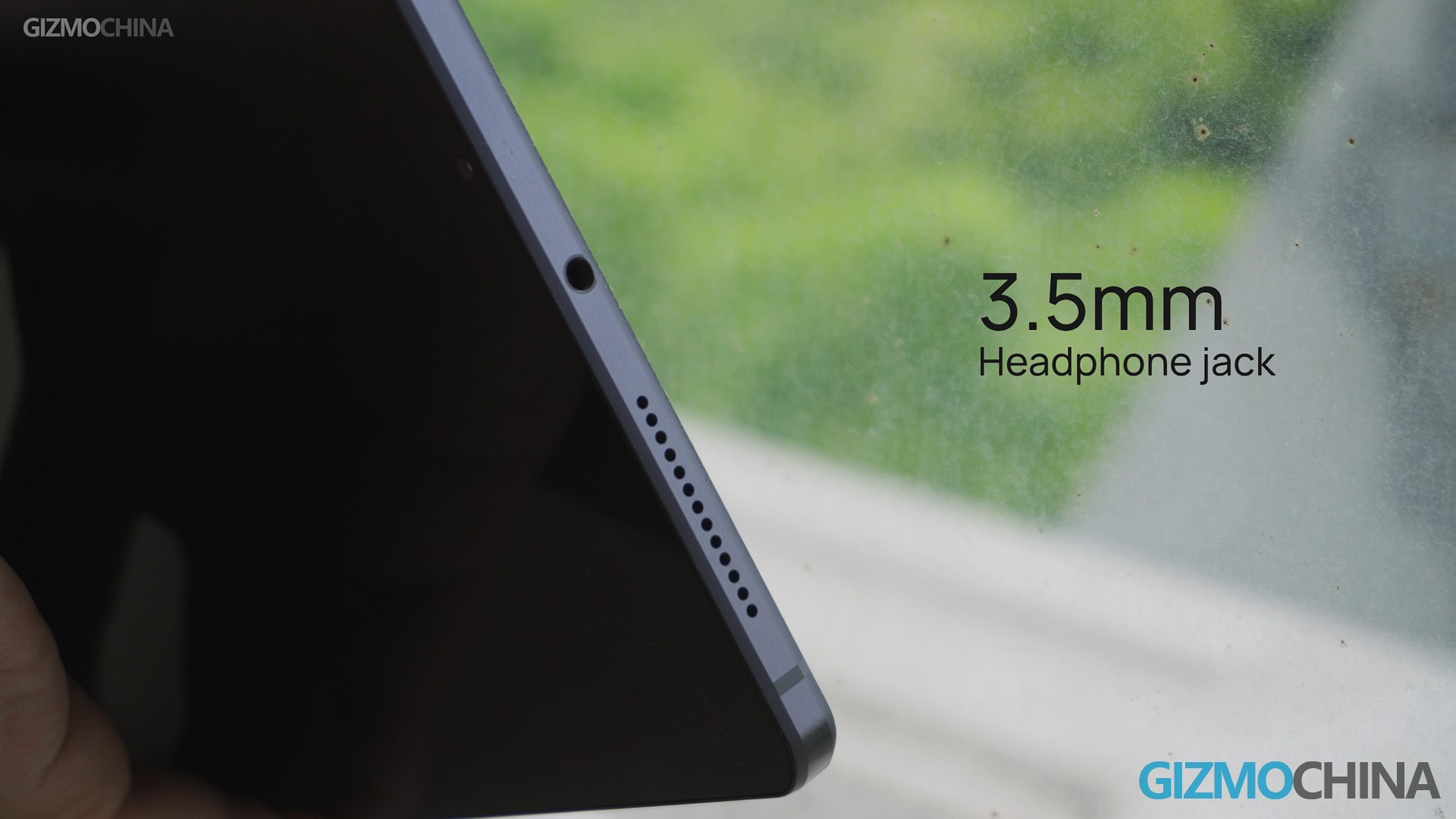
And there’s still good news left for the Y700 — it comes with a 3.5mm headphone jack and MicroSD card expansion. It surprisingly supports up to 1TB expanded storage. The full-featured USB Type-C port not only supports up to 45W fast charge but also supports seamless projection as a video-out port.
The Legion Y700 tablet is powered by the widely acclaimed Snapdragon 870 chipset. In addition to the 8+128GB model in my hand, there’s another higher configuration variant of 12+256GB storage.
1 of 2
Performance: durability & stability
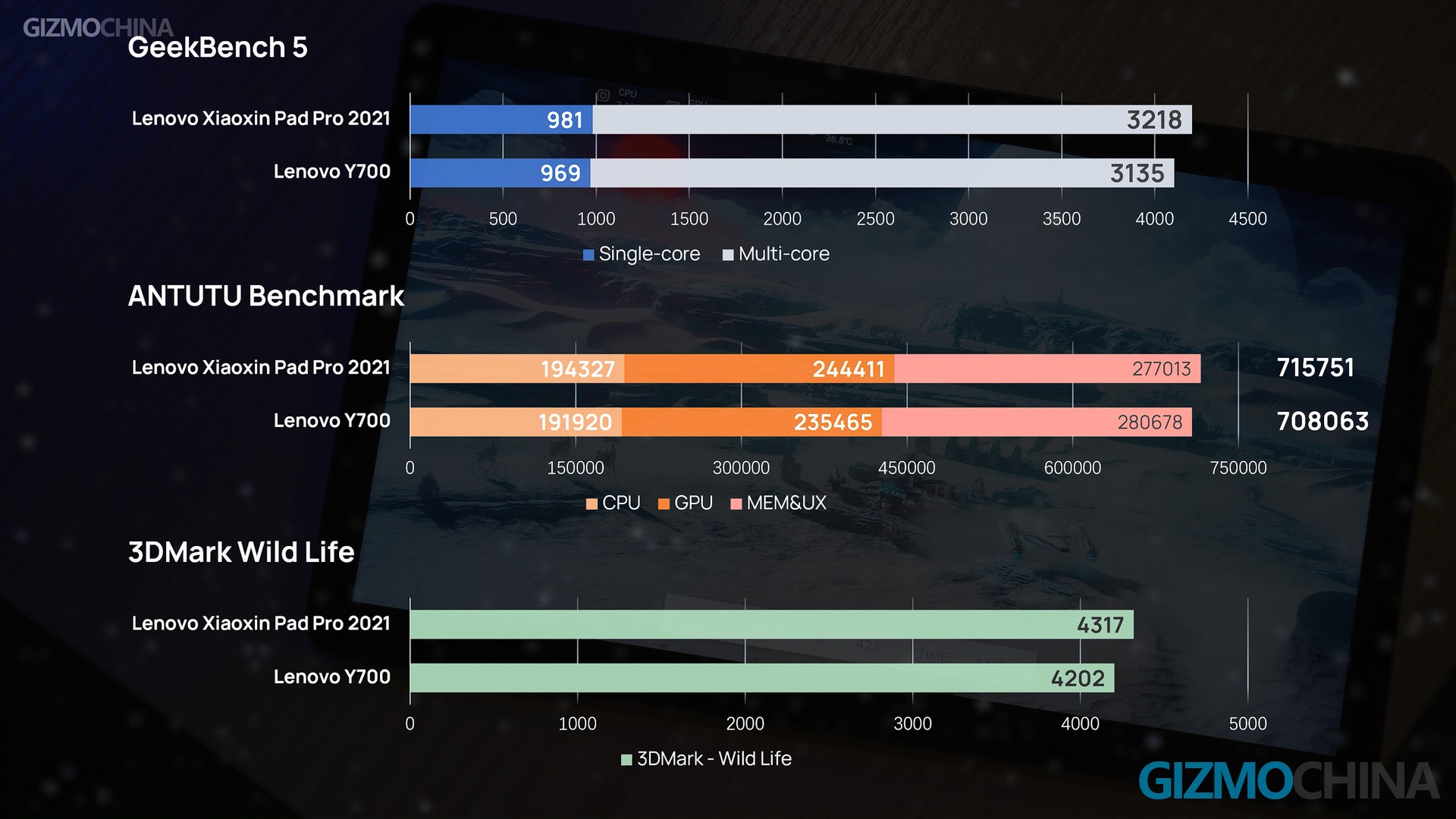
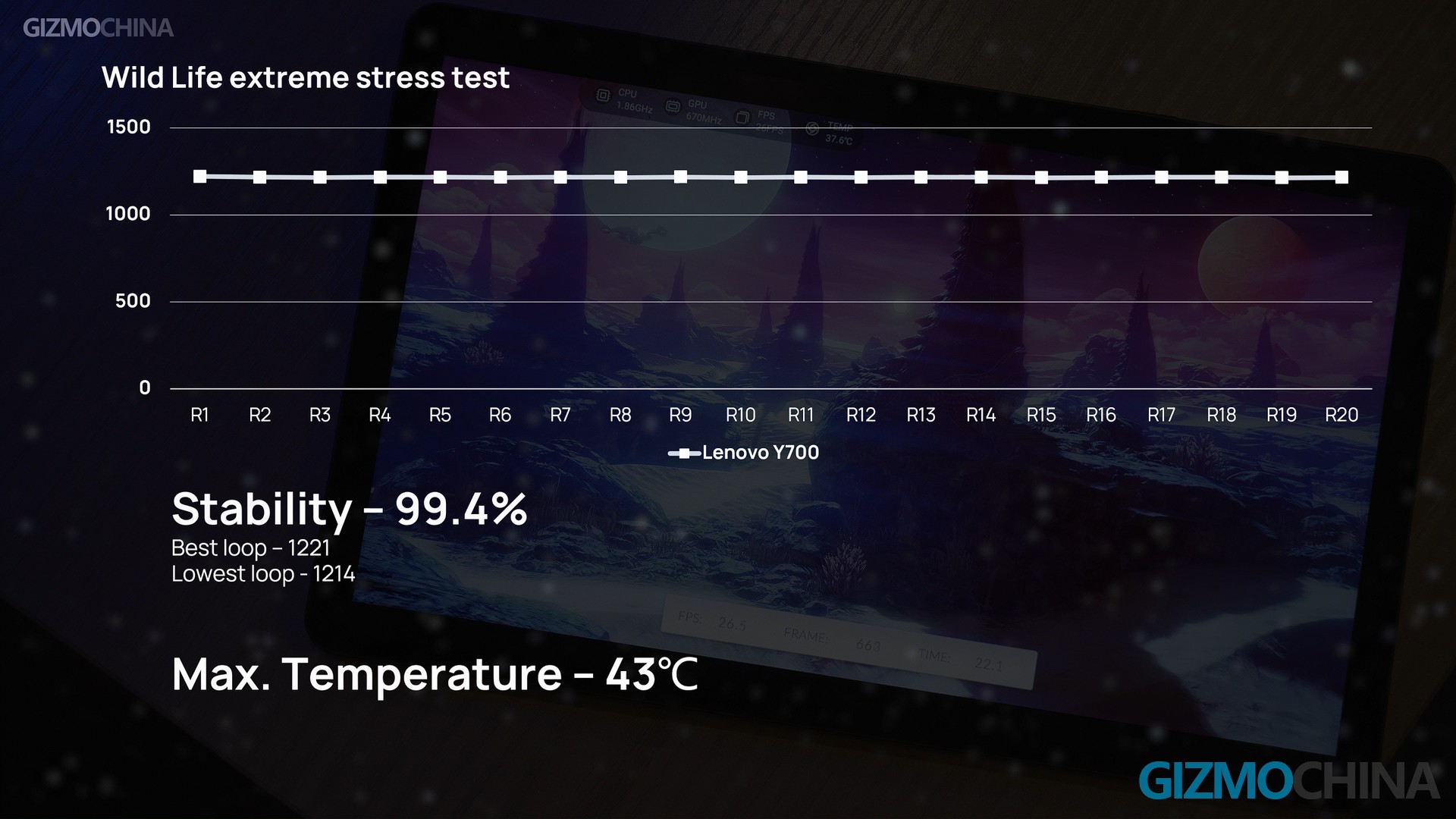
About its performance, we are mainly concerned about its durability and stability of high-performance outputs. As you can see, in the three benchmarks, the peak performance we accessed is pretty close to what we have on other Snapdragon 870 models. Then we brought it to the Wildlife extreme stress test in 3DMark. The Y700 achieved 99.4% stability during the 20-round test. And the surface temperature remained under 43℃, which makes us look forward to its gaming stability even more.
1 of 3
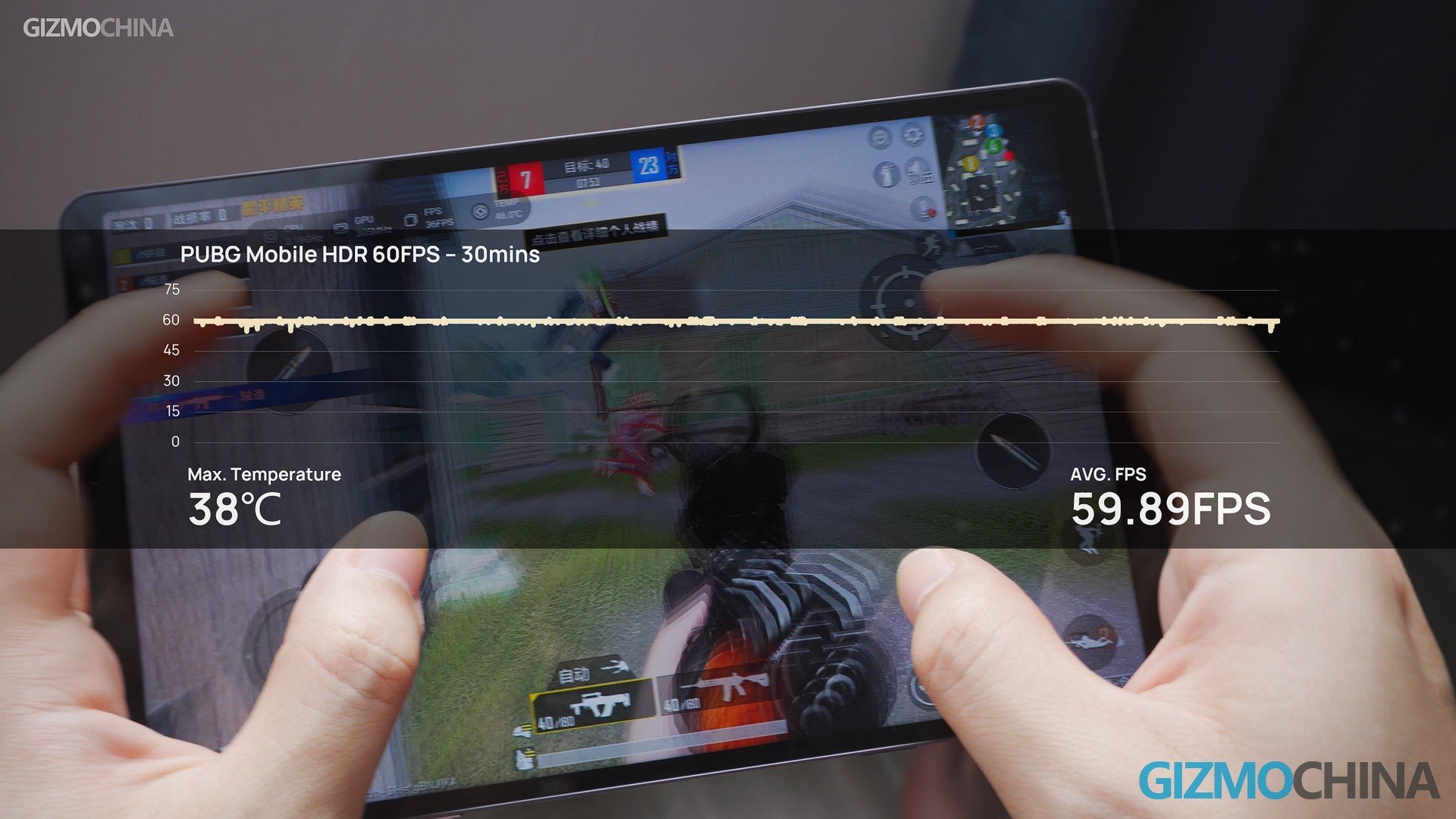
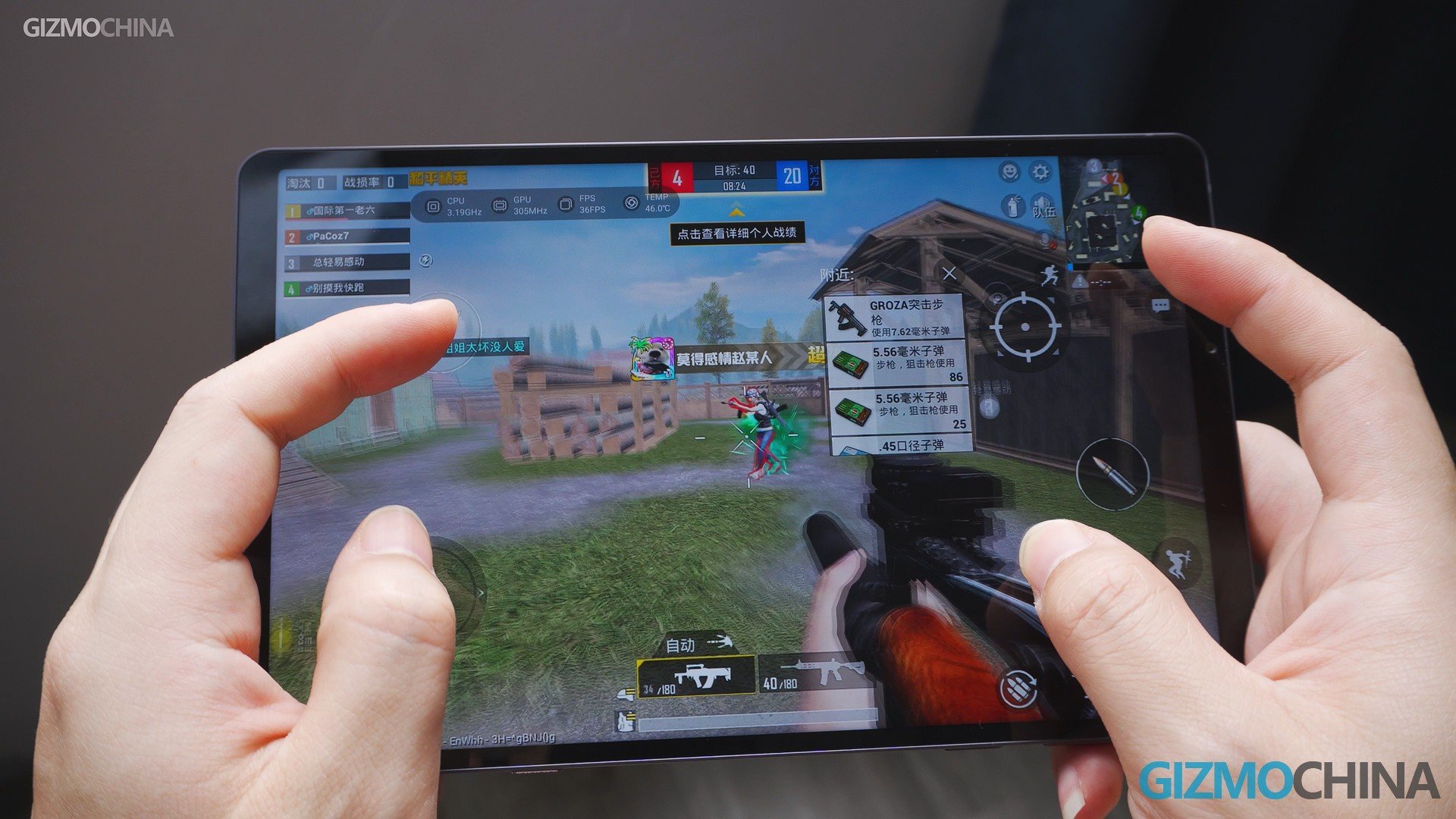
In PUBG Mobile, it’s extremely smooth. The performance result is also at the best level that you can have in the game. After playing for a couple of hours, I can say that the Y700 tablet is the best device for gaming. It achieved a balance between the bigger display and the acceptable holding for me. I would be happy to have the Xiaoxin Pad Pro 2021 to watch movies or videos, but to hold it for long-time gaming, it’s just difficult to tolerate the discomfort caused by the weight and size.
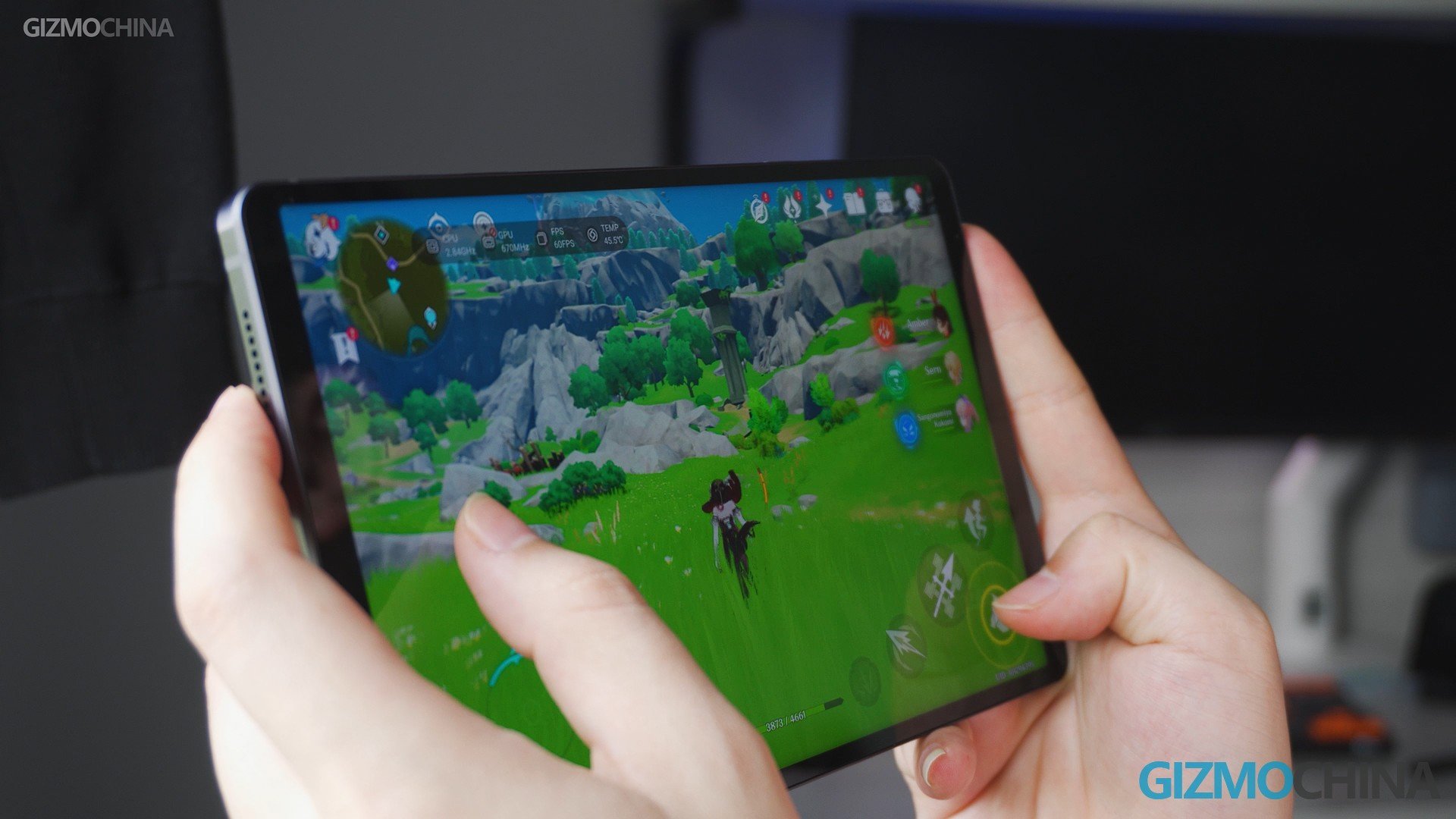
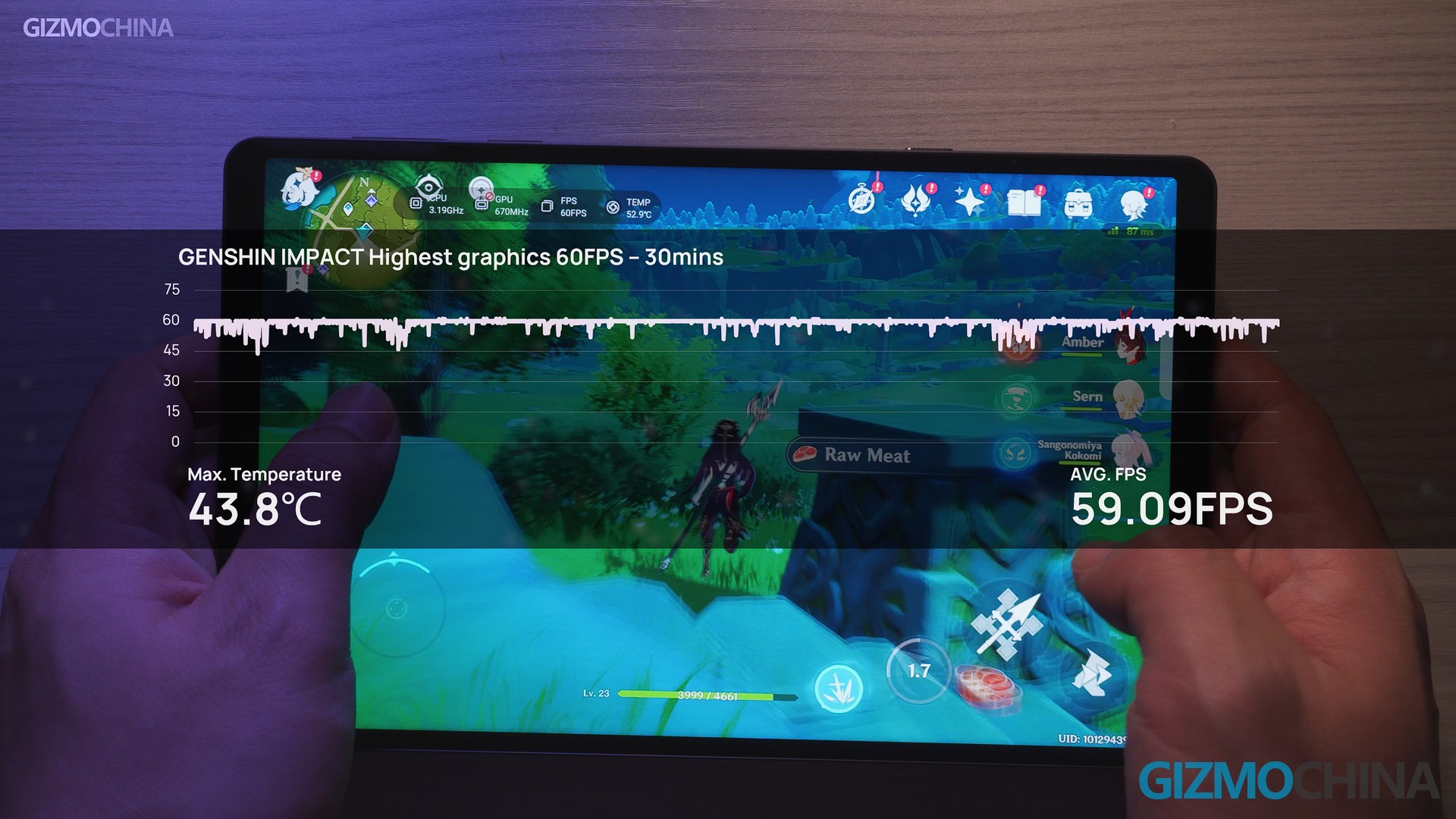
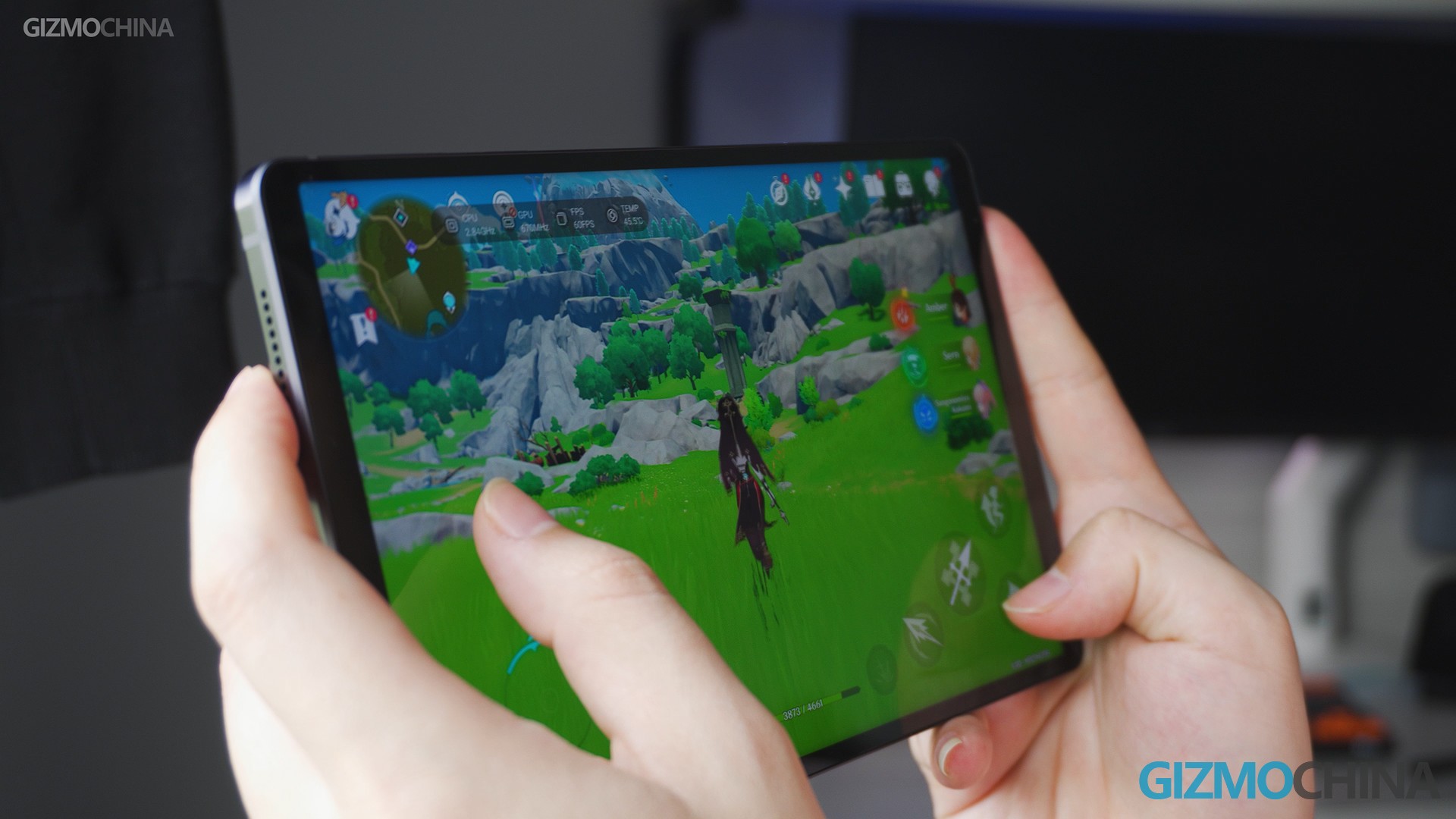
In another game Genshin Impact, the Y700 tablet also achieved one of the best results among all the Android models. It’s able to run stably at around 58 to 60fps with minor fluctuation, and the frame rate remained at 59.1 fps. During the 30-min test, no performance throttle occurred on the Y700 tablet and the surface temperature was still kept under 43.8℃. And note that Genshin Impact is one of the heaviest games on the Android platform, which means that the Y700 is very likely to handle most games well at this point, and can continuously run at high performance without serious heating issues.
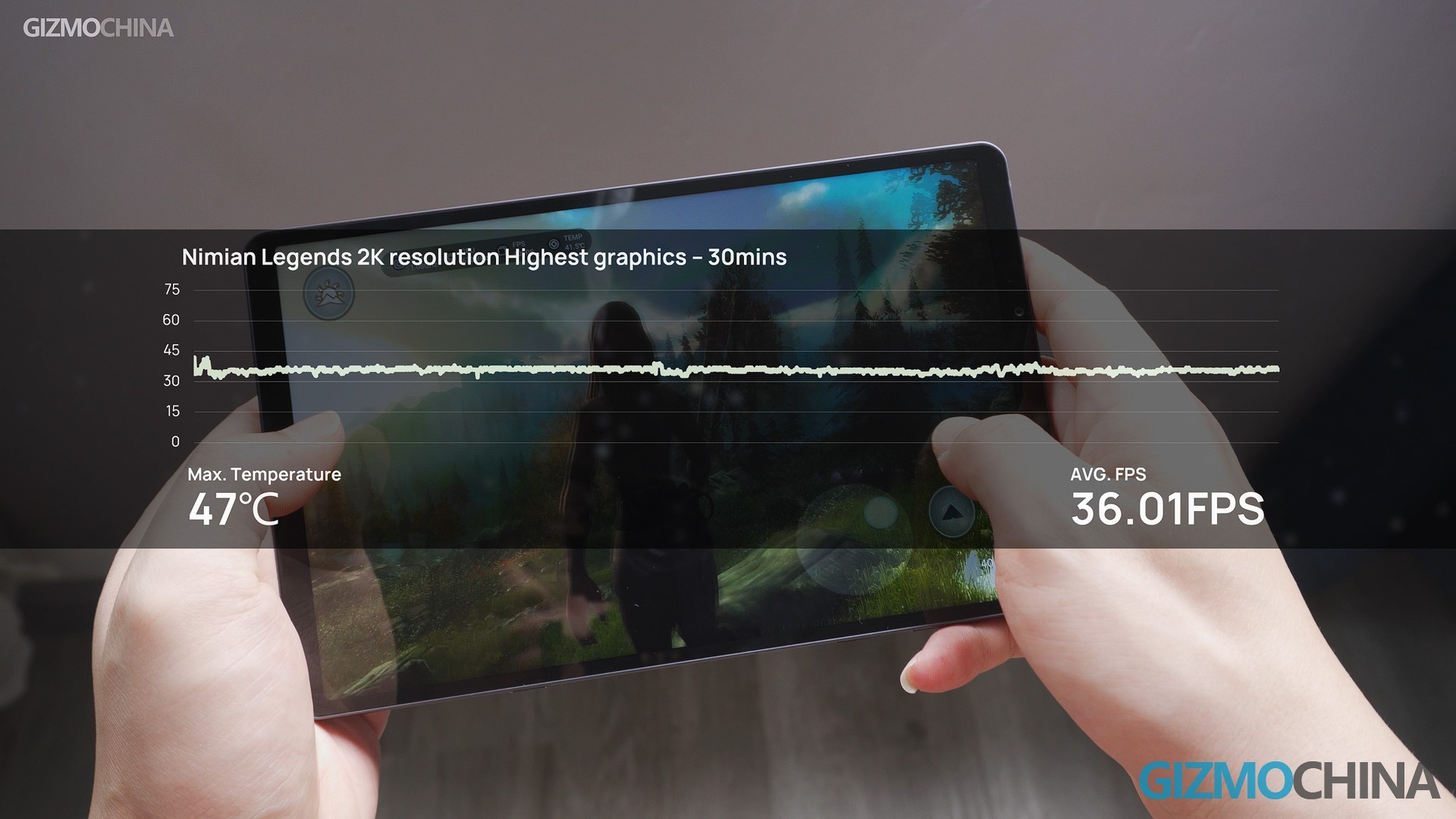
Even so, we’re still not satisfied. We haven’t yet been exposed to its performance ceiling. So we started another test which is to run the game Nimian Legends under 2K resolution. In this test, the Snapdragon 870 has done the best it could, and eventually, the framerate remained at around 36fps. What surprised us is that its performance wasn’t affected by the temperature control throughout the test. There’s no obvious performance throttling either, although the surface temperature went up to 47℃ at one point.
Battery & charging
In terms of battery and charging, the Y700 is equipped with a 6550mAh battery that supports up to 45W fast charging, and it’s compatible with PD3.0 as well as QC4.0. And I have to show you the included 50W charger. It offers dual charging ports. The Type-C port could offer up to 50W charging efficiency, while the second one offers up to 20W, which makes it compatible with different devices. We all know that manufacturers are rarely this generous.
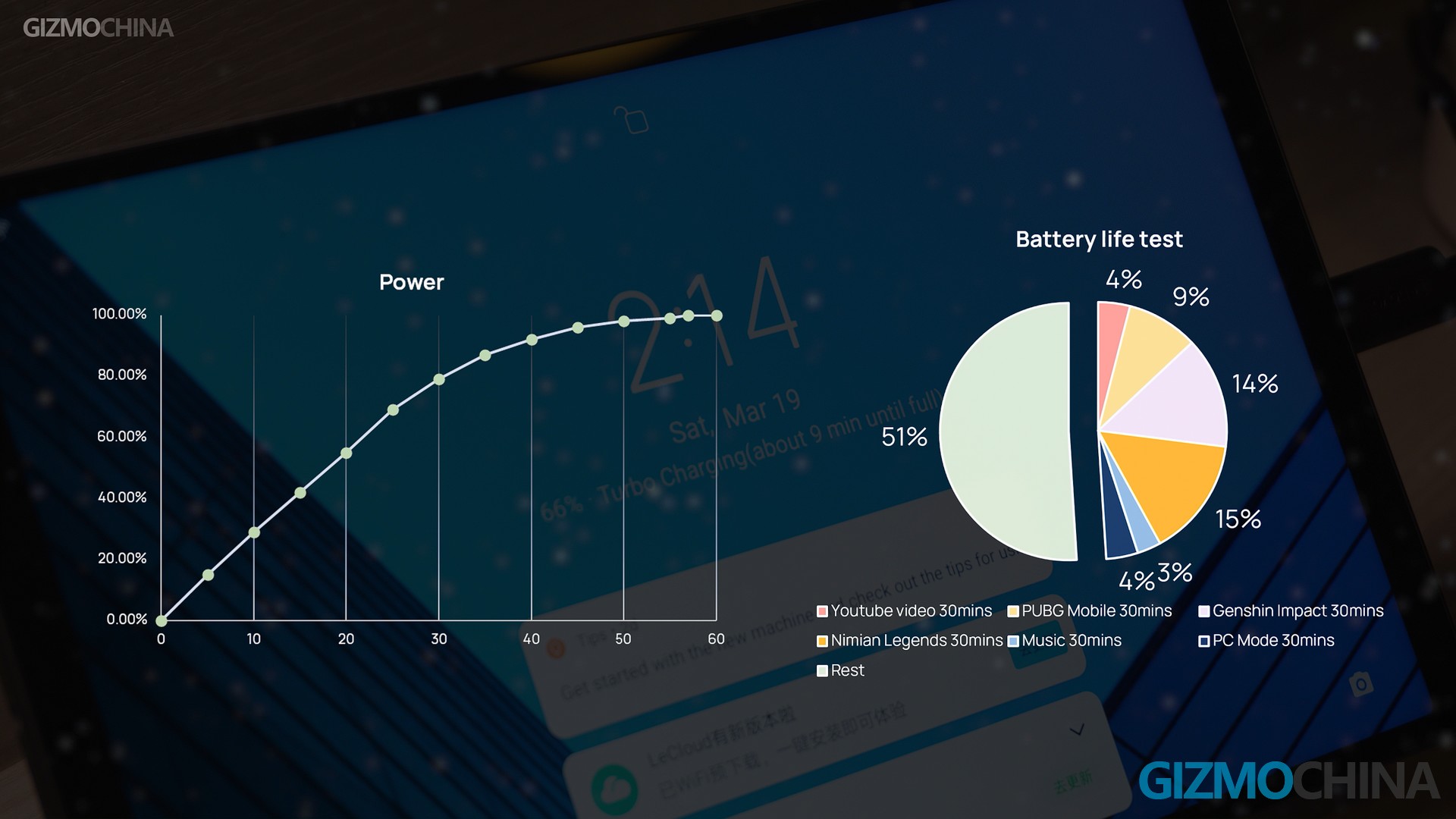
Coming back to the charging test. The tablet was charged to 40% in 15 minutes and 80% in 30 minutes, taking around 57 minutes to be fully charged. It’s still pretty fast for a tablet.
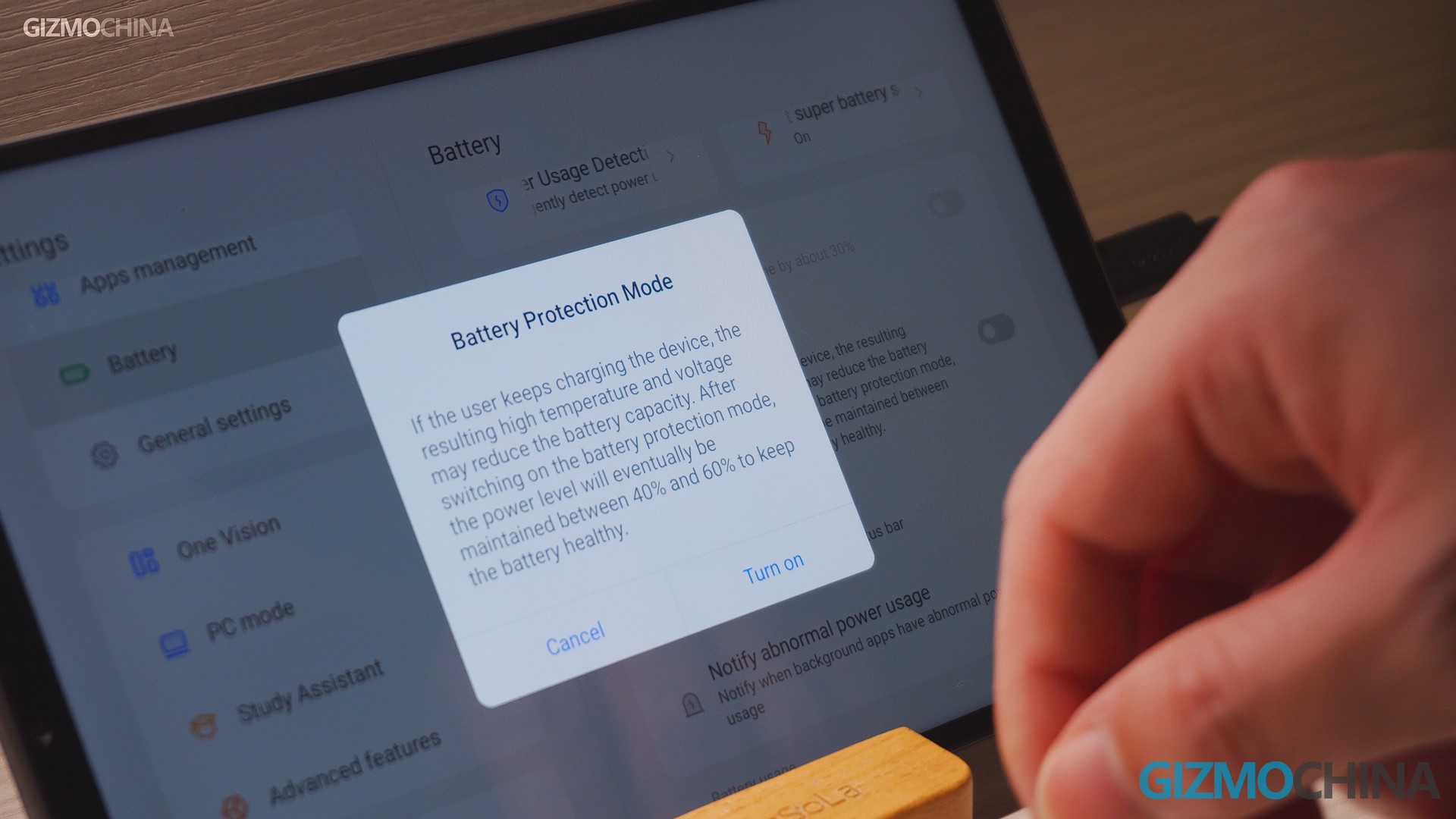
In addition, the Y700 also supports battery protection mode, where it would supply power directly to the tablet and no longer to the battery, which has the advantage of protecting the battery and reducing the overall heat of the tablet as well.
Verdict
Overall, the Legion Y700 is an excellent gaming tablet that offers a bigger display than a smartphone while having a much better-sustained performance output with a great cooling effect. More importantly, it offers a perfect size for mobile gaming.
In addition, the tablet also brings most software features that we’ve seen on other Lenovo tablets, such as split-screen mode, floating window, and even the PC mode. About these tablet features, you can check out our review video about the Xiaoxin Pad series.
So that’s all I want to say about the Y700 tablet. And the conclusion is still the same. It’s the best device for mobile gaming at this point.
If you play a lot of games on your phone but were never really satisfied, the Y700 could be the best alternative. With such competitive pricing, it won’t let you down.
Up until this point, Honor’s major launches globally are the flagship Honor 50, and Honor Magic 4 series which are now able to sport Google Play services, unlike its ex-sister brand, Huawei. However, upper mid-range and flagship territory aren’t the best devices to capture market share in the industry. Conventionally, the entry-level market is where companies gain their market share the most. (e.g. The Samsung Galaxy A12 was the device that shipped the most units in 2021 in both the Samsung brand and in the industry)
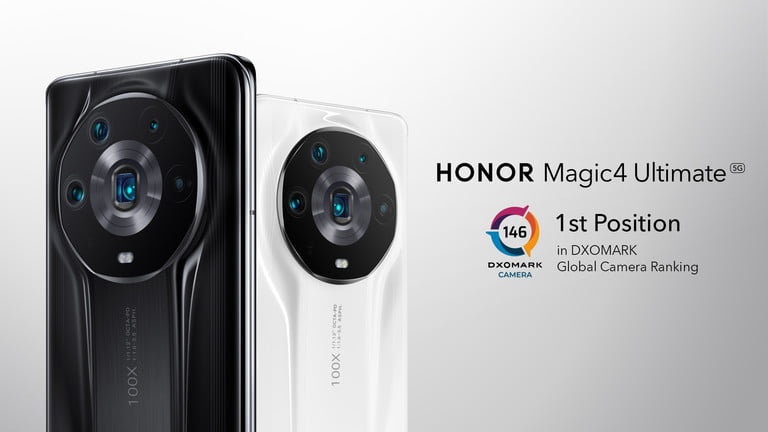
Honor Magic4 Ultimate awarded highest score of all time on DxOMark
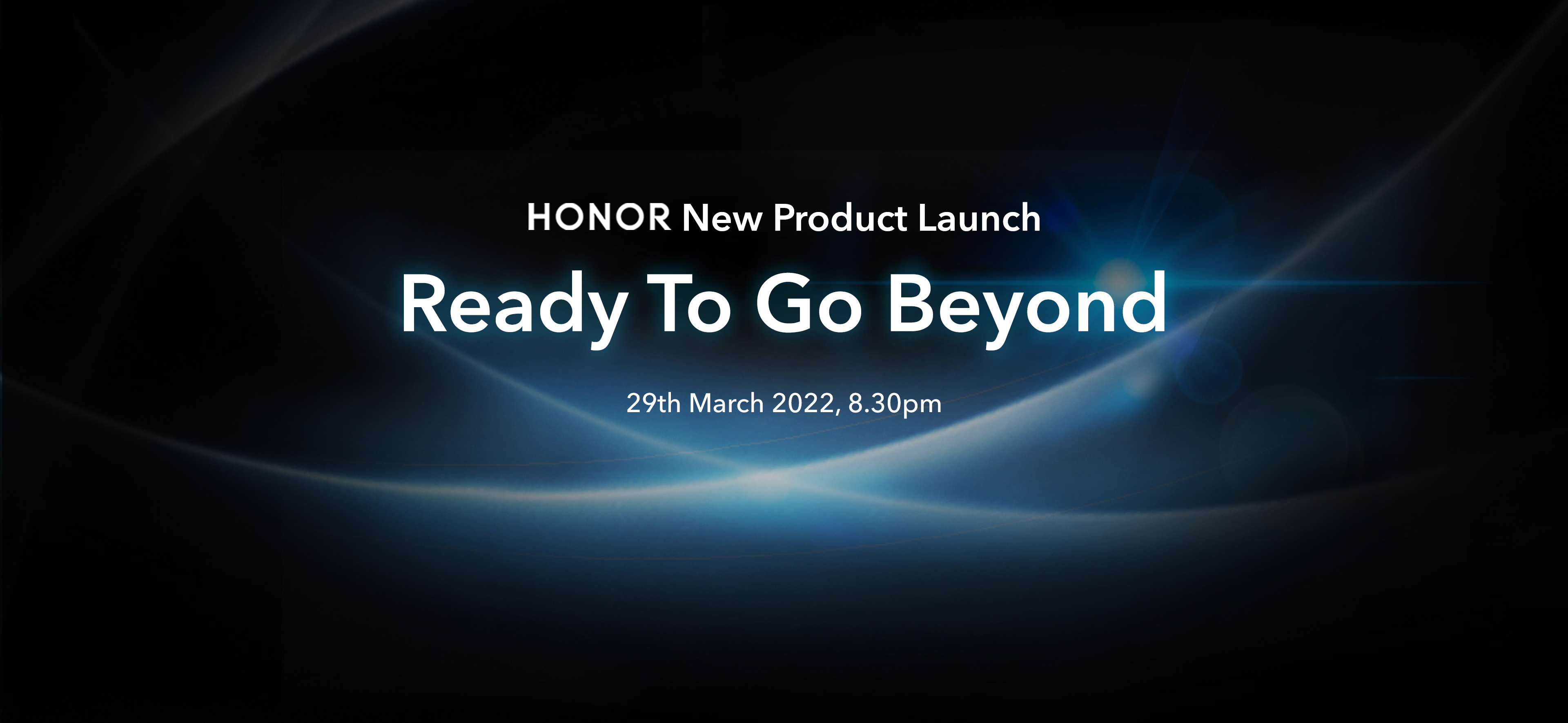
Honor is finally looking to expand into the entry-level market in 2022 with its upcoming X series range of devices launching globally on March 29, 2022, at 8:30 pm MYT(6:00 pm IST).
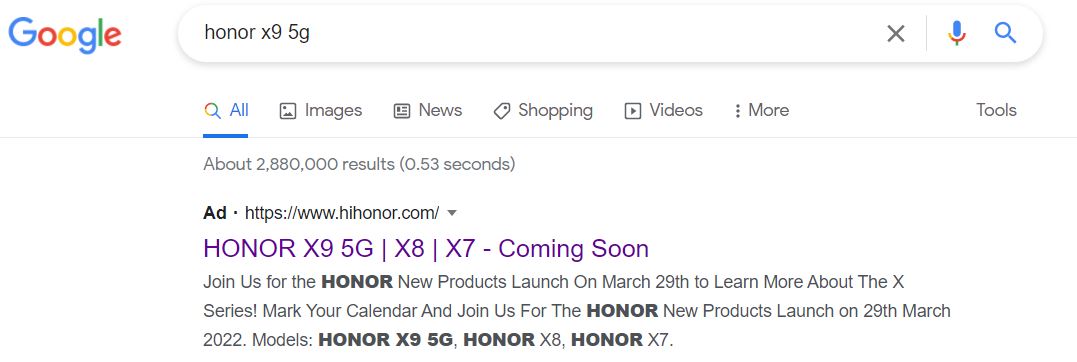
The news from Honor’s official website where the company states that the brand is “ready to go beyond” in the global market. The website doesn’t reveal what products will be launched, but Honor is already advertising the Honor March 29 event as the Honor X series Launch Event via advertisements online such as Banner Ads, Search Result Ads, and Instagram Ads.
Honor X9 5G, X8, X7 devices names revealed via ads
The ads reveal the devices launching are respectively the Honor X9 5G, Honor X8, and the Honor X7. No specs or designs are revealed in the announcement banner nor ads, but Honor is expected to share more details in the coming weeks to build up hype for the series.
Prior to the Huawei and Honor breakup, the Huawei brand was the focus of the company’s flagship P and Mate series of devices, while the Honor brand was to serve the upper mid-range market with the Honor V and Honor Number series(Honor 10, 20). However, Huawei was also seen as the brand which made devices for the lower mid-range and entry-level market as well with their Huawei Y series, which are affordable entries for customers to enter the Huawei ecosystem.
However, with Huawei losing access to Google Play services, other competitors like Xiaomi and Realme have been filling the entry-level market with their products, but some users do miss the functionality and versatility that Huawei and Honor provided with their EMUI and Magic UI. Therefore, this launch event will be a treat for those who are looking to upgrade from their 2 to 3-year-old Huawei Y series devices to a newer Honor device equipped with Google services.
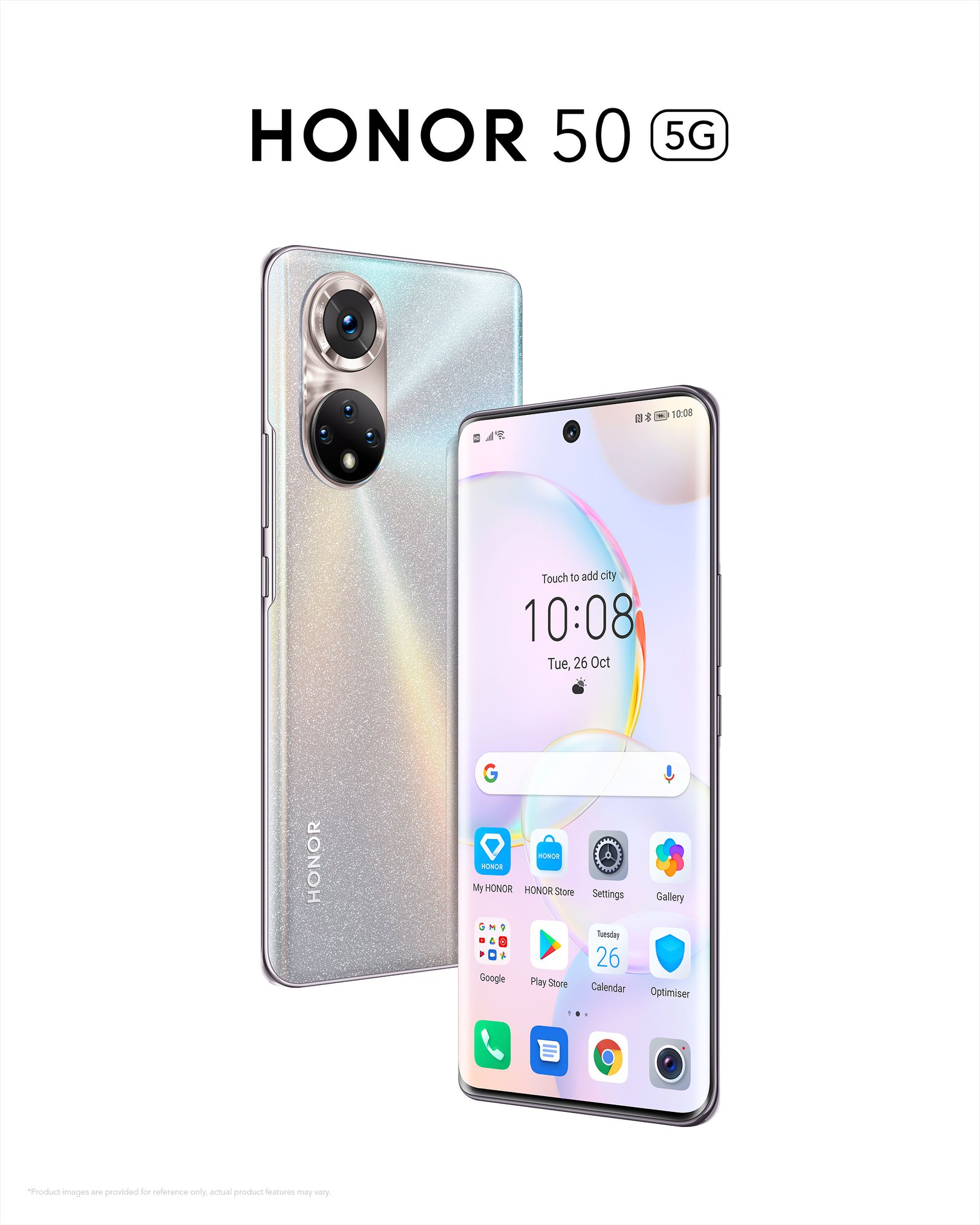
Honor 50 with Google Play Services
To follow more coverage on the event, stay tuned to Gizmochina for your daily source of Chinese technology news.
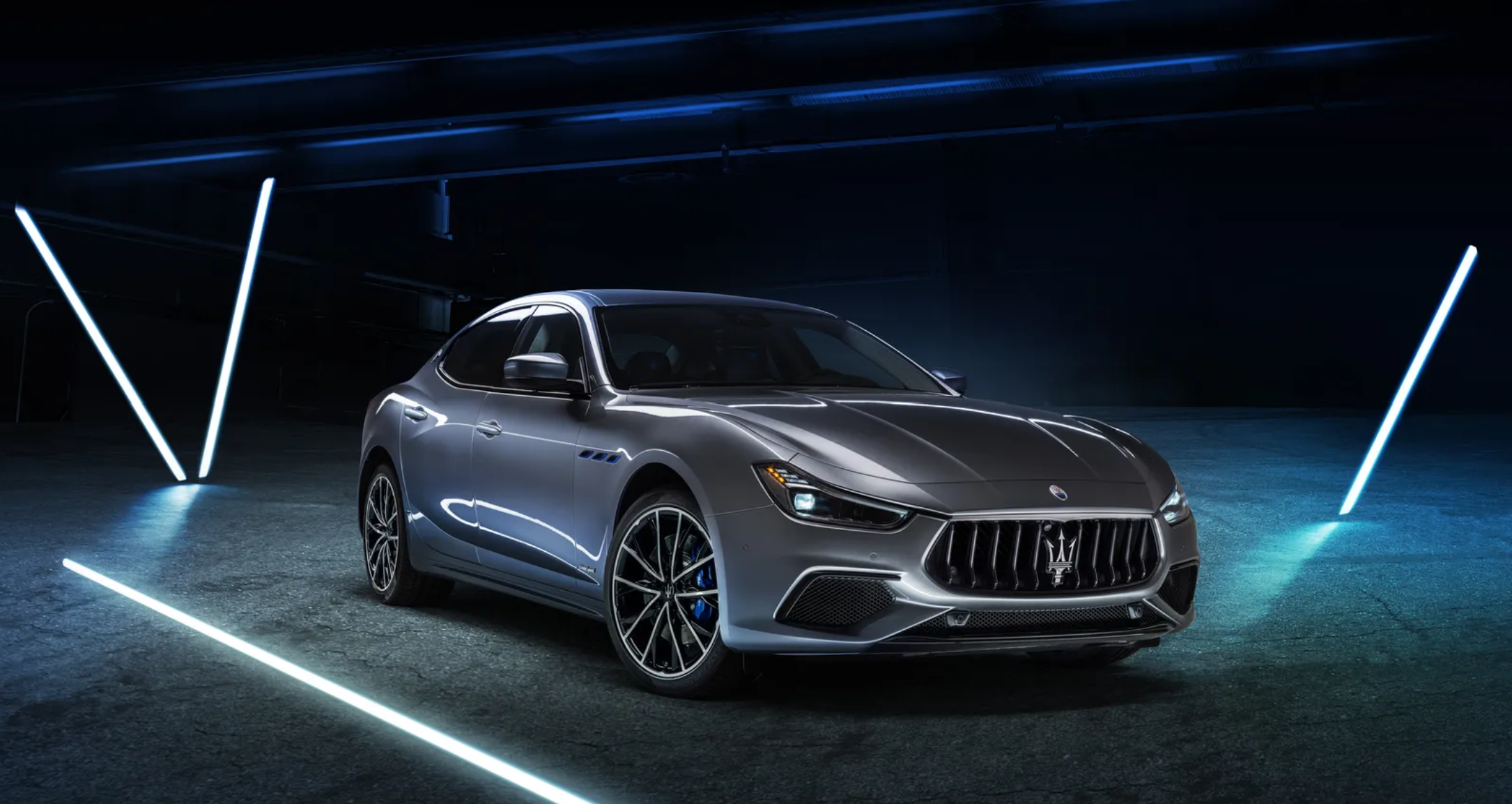
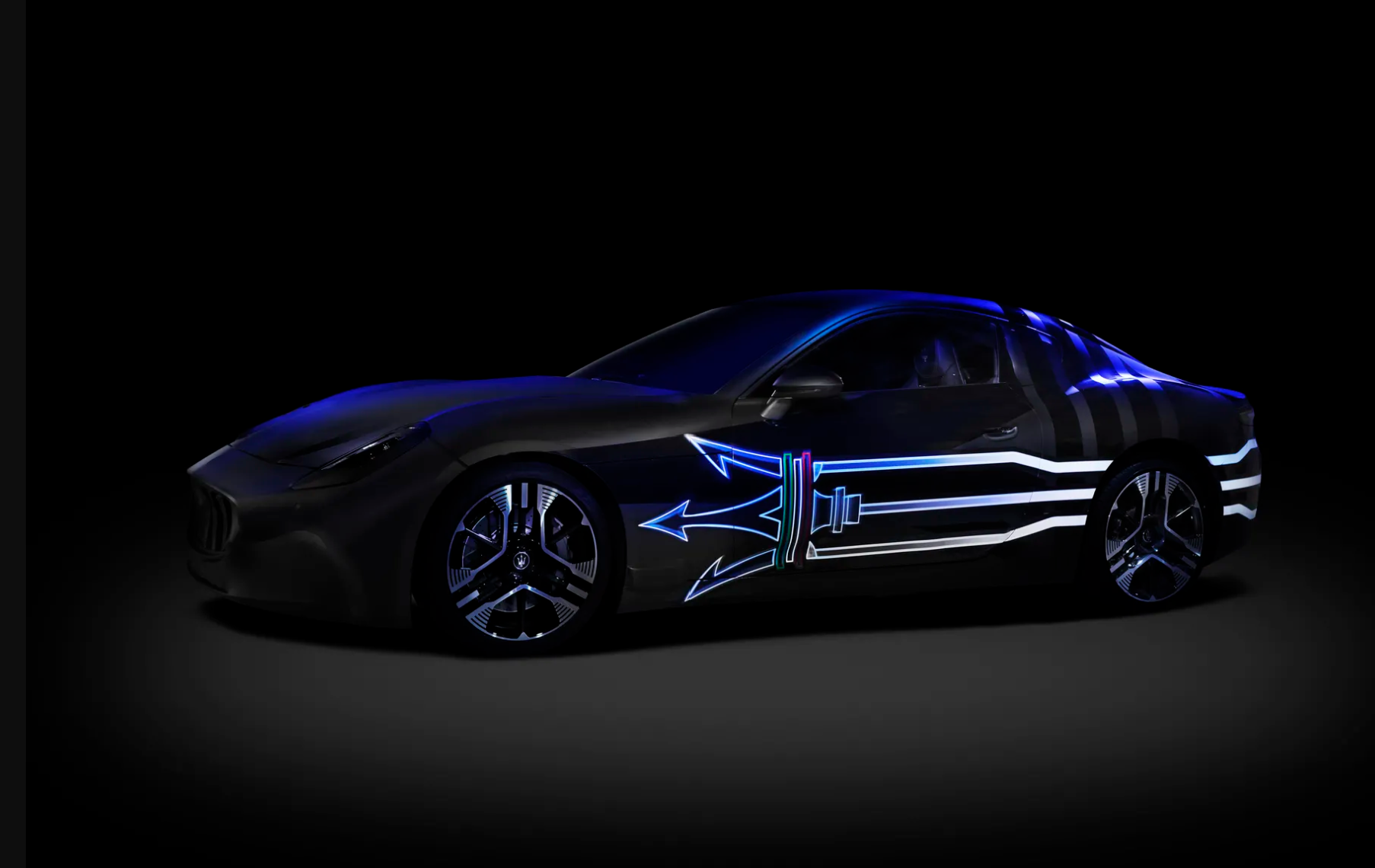
Italian luxury automaker Maserati has unfurled its plans to go all-electric by the turn of the decade. Maserati has also unveiled its electric luxury EV lineup called the Maserati Folgore. The Maserati Gran Turismo sports coupe will be the company’s first EV and the early teasers are indeed mouthwatering.
The Gran Turismo EV will be an interesting luxury EV that could draw comparisons with the highly successful Levante and some of Maserati’s best-selling models. The company has outlined its plans to transit to all-EV manufacturing by 2030, but by 2025 it hopes to have produced EV versions of its current vehicles.
Although in the words of Maserati CEO, Davide Grasso, the company hopes to phase out sales of internal combustion vehicles by 2030, this would depend on individual markets and customer demands. Grasso feels the impact of the company’s shift to all-electric production will be felt differently in the different markets. He says the move will affect different parts of the world with a different type of speed, depending on how quickly sustainability presented by electric technology is embraced.
Maserati is positing that it will be the first luxury brand to have transited all its products to EV by 2025, which is barely three years away. It remains to be seen how the company intends to accomplish this goal, given the uncertainty that still surrounds some aspects of the EV manufacturing process. The global chip shortage had a great effect in distorting the outlook of several brands. Among some of the popular luxury brands, the shift to EV manufacture has been quite cautious but Maserati seems on track to achieve its goals.
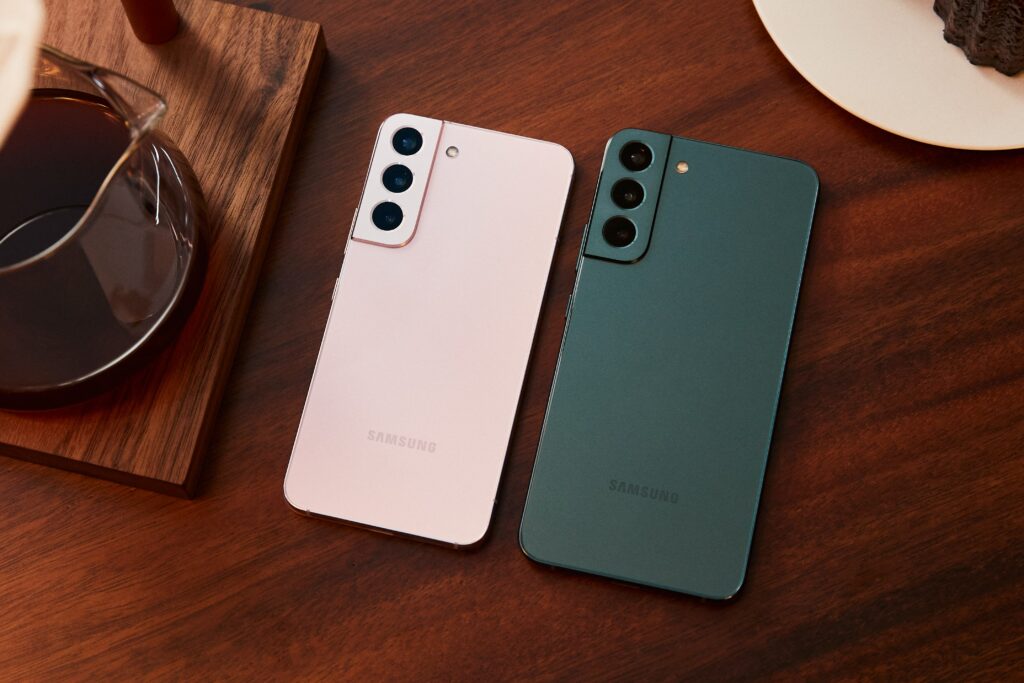
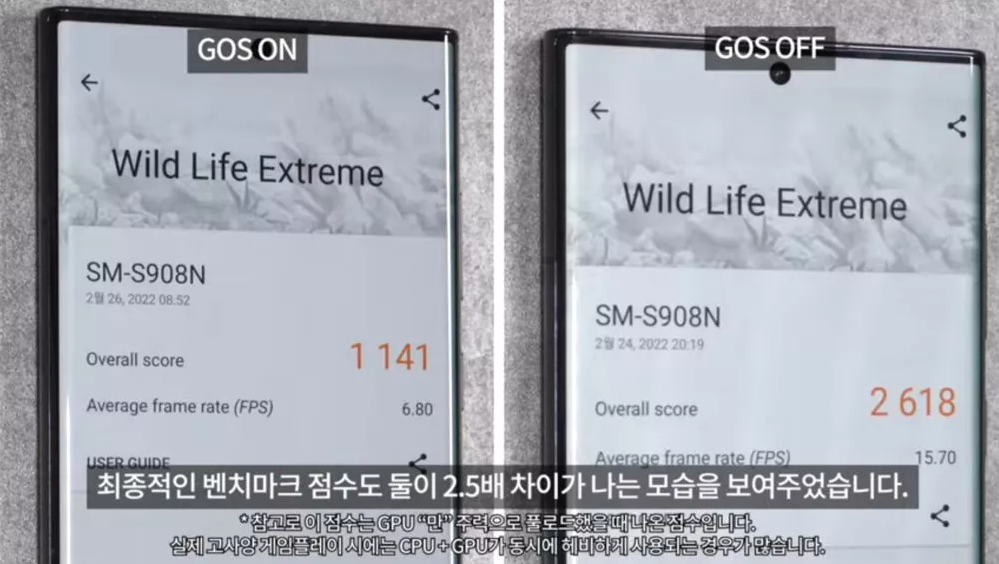
Earlier this month, Samsung got into hot waters over the GOS performance throttling fiasco. The company was basically found to be artificially limiting the performance of over 10,000 apps through GOS (Game Optimizing Service) including system apps, Google apps, and numerous third-party apps by over 56%. The GOS comes pre-installed in many Samsung smartphones including their latest flagship line, the Galaxy S22 series.
The kicker was that these limitations excluded benchmarking apps, which meant that the devices were showing performance that was actually not representative of real-world performance. As a result, Samsung’s last four flagship smartphones were kicked off the popular benchmarking site, Geekbench.
After being caught, Samsung quickly acknowledged the issue stating that the GOS is meant to optimize CPU and GPU performance to prevent excessive heating and increase the battery life of smartphones. Following this, the company started rolling out software patches to smartphones affected by the GOS limitations essentially undoing the limitations imposed before.
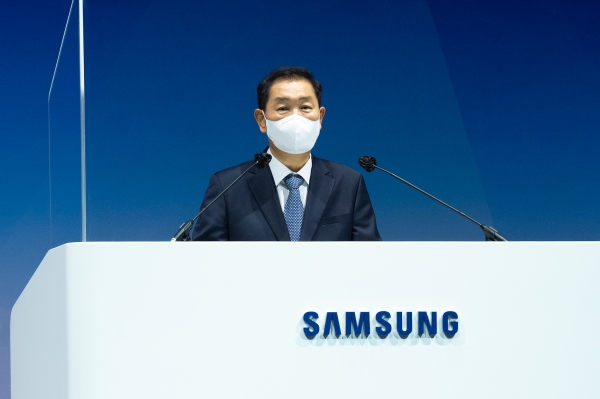
Now, at the recent annual Samsung shareholders meeting, the company’s VC and CEO Jong-Hee Han has issued an official apology to Samsung users over the GOS controversy. The chief executive admitted Samsung did not appreciate customer concerns and said Samsung will “listen to customers more closely to prevent such an issue from happening again”.
The update has still not reached all regions but when it does, it’ll be interesting to see how the Samsung Galaxy S22 series, especially the Galaxy S22 Ultra‘s battery performance is impacted, which has previously been praised for offering extraordinary battery life.
We use cookies on our website to give you the most relevant experience by remembering your preferences and repeat visits. By clicking “Accept”, you consent to the use of ALL the cookies.
This website uses cookies to improve your experience while you navigate through the website. Out of these, the cookies that are categorized as necessary are stored on your browser as they are essential for the working of basic functionalities of the website. We also use third-party cookies that help us analyze and understand how you use this website. These cookies will be stored in your browser only with your consent. You also have the option to opt-out of these cookies. But opting out of some of these cookies may affect your browsing experience.
Necessary cookies are absolutely essential for the website to function properly. This category only includes cookies that ensures basic functionalities and security features of the website. These cookies do not store any personal information.
Any cookies that may not be particularly necessary for the website to function and is used specifically to collect user personal data via analytics, ads, other embedded contents are termed as non-necessary cookies. It is mandatory to procure user consent prior to running these cookies on your website.