If you are looking for a desk lamp or screen lamp, then check out this deal on the Baseus i-work USB asymmetric light source screen hanging light. The dimmable screen lamp which retails for $40 is available for $26.88 only at AliExpress. This super deal ends tomorrow.
Work from home has become a norm now thanks to the coronavirus outbreak. It is very common to see children and adults, spending hours before the computer screen either studying or working or playing games and connecting with friends and family. Spending so much time before the screen can lead to headaches and eye pains.
The Baseus i-work USB asymmetric light source screen hanging light is specially designed to reduce the glare from your screen and protect your eyes from harmful blue light. The asymmetrical light design illuminates the desk and the keyboard rather than the screen, thereby reducing the glare otherwise caused by the usual desk lamp.
80 build-in high-quality lamp beads reduce the blue light effect and increase your work efficiency by allowing you to sit comfortably on your screen for longer periods. The touch sensors on top of the lamp help you to adjust the brightness as per your needs and the three-color temperature modes viz: Warm light, White light, and Mixed-light allow you to change your lighting as per the environment. The lightweight lamp is powered by a Type C charging port which can be connected to a computer, charging head, or power bank. It is easy to install and even carry around to different places.
Generally retailing for $40, you can now buy Baseus i-work USB asymmetric light source screen hanging light at a discounted price of $26.88 onlyat AliExpress. Please note that this price is applicable to the lamp with the cable but without the adapter. This super deal ends tomorrow. So place your order asap.
For more information on such exciting deals and offers check out ourdeals hub.
* Please Note: When you buy something using the links in our articles, we may earn a small commission at no cost to you.
The tablet market has heated up in 2021. Due to the increasing demand for online classes, portable tablets are back in the spotlight.
Before the pandemic, most of us didn’t care about alternatives to the expensive Apple’s iPad series. But in 2021, we see that players like Xiaomi and Huawei are refocusing on their tablet product lines, and new entrants like Realme are also expected to bring us surprises. Even Lenovo, a veteran player in the industry, returned to the battleground with their affordable Yoga tablets and Xiaoxin Pads, which we reviewed a few weeks ago.
But today we’re excited to show you another amazing model, the Huawei MatePad 11. In my limited experience time, I have to admit that it’s even more surprising than the Xiaoxin Pad Pro 2021. And more importantly, it’s almost at the same price point as the Xiaoxin Pad Pro! So what exactly does it offer at its sub-500 Euro price tag?
Let’s find out!
Huawei MatePad 11: Design & Display
Huawei’s MatePad 11 comes with a 10.95-inch screen, which is more portable than the Xiaoxin Pad Pro 2021. The device is as thin as 7.25 mm and weighs about 485g. It has the compact size of a magazine and can easily fit into a backpack. Even if you are carrying it for your long travels, it won’t cause any obvious discomfort.
The 11-inch LCD display has a 2K resolution and supports up to 120Hz refresh rate, which is rare at such price point. By far we’ve only seen the Apple iPad Pro, the Samsung Galaxy S7 Pro, and the MatePad 11 featuring such a high refresh rate of 120Hz. But if you’ve checked the other twos’ pricing, you will finally realize how special the MatePad 11 is. Although it’s an LCD panel, the display quality looks excellent. In our internal tests, we found that it covers 98.6% of sRGB colors and 91.7% of DCI-P3 gamut. Compared to the Xiaoxin Pad Pro 2021, the MatePad 11 is more portable, which brings a more detailed graphics under the same resolution.
The audio is definitely a surprise on the MatePad 11. It features 4 speakers to produce stereo sound, which are tuned by Harman Kardon. It sounds much better than a smartphone, and surely better than other tablets that you can buy at this price point.
And look at its appearance. The tablet’s frame is made of metal while the rear cover uses plastic. However, we can still feel the excellent build quality of the tablet.
Huawei MatePad 11: Hardware & Performance
As for the performance, the MatePad 11 is powered by the Snapdragon 865 chipset, which is the best Android chipset from 2020. Even now, although it’s a bit weaker than the Snapdragon 870 used on the Xiaoxin Pad Pro, it is still one of the most powerful chipsets with excellent thermal design and good power consumption. From the results on the benchmarks we ran, we can see that the MatePad 11 has almost the same performance as the flagship smartphones in 2020. So we were really looking forward to how it performs in heavier games.
Well, in our gaming test, PUBG Mobile didn’t create any trouble for the tablet. It stably ran at the best level that we could access in the game.
However, in heavier games like Genshin Impact and Nimian Legend, the tablet didn’t look like it was at its full strength yet. But thanks to the relatively conservative GPU strategy, the tablet had an excellent thermal performance, which was much better than most smartphones. Meanwhile, lower power consumption also suggested it might have good battery performance. Later we will show you more details.
MatePad 11 Review pubg
MatePad 11 Review Nimian Legend
MatePad 11 Review Genshin Impact
In shooting games like ACE Force which can run up to 120fps, the MatePad 11 no doubt is one of the best devices to enjoy an excellent gaming experience.
Huawei MatePad 11: HarmonyOS Software
And thanks to Harmony OS, the MatePad 11 offers more versatility than a traditional tablet. A tablet used to be a transitional product between a Smartphone and a notebook. However, since most tablets ran a similar software to smartphones, it just made them look like a smartphone with a bigger display. Most brands are simply thinking about how to make their tablets look and feel like a Notebook. But on the MatePad 11, Huawei no doubt was more creative with its software.
Let’s look deeper at the Harmony OS powering the MatePad 11. The optimized interface is really delightful, especially when we view all the contents through the 120Hz display. App-opening speed is also fast with super fluent animations. Some of you might worry the compatibility of the Harmony OS. Well, of course, Google apps are not available on the MatePad 11 for reasons that are well known. However, in addition to Huawei’s App Gallery, you are allowed to install other Android Apps through APK installation files.
Harmony OS is currently the best mobile OS for multi-device collaboration. So it’s no surprise that the MatePad running Harmony OS is multi-device friendly. If you want to connect with a smartphone, users can get a real-time projection of the smartphone with one click. And amazingly, the latency is almost unperceivable. Almost all the smartphone operations are enabled on the MatePad, and you can even drag files between the two devices. This has highly improved the efficiency of data transfer and has turned the MatePad into a data processing center.
For example, you can use the connected smartphone to collect data, such as capturing or searching for high-quality images, or even record voices of important people speaking. And then you can organize them all on the Matepad. You can immediately drag the photo from the phone into the tablet’s Notepad, and even use its voice input feature to convert the recording to text. This way, you can easily generate a simple report or a work note. But please note that this convenient collaboration feature is only available with HUAWEI phones.
If you want the tablet to work with a PC, Harmony OS creatively offers three working modes for seamless cross-platform operation. First, under expansion mode, you can set the tablet as a wireless expanded screen for the PC. Or just transform the tablet into a sketchpad by copying the PC screen. Paired with the HUAWEI M-Pencil, you can draw, mark, and easily share the PC contents onto your tablet. The third mode is the Share Mode, in which the PC and the tablet run independently but share a single set of keyboard and mouse.
This mode truly breaks the boundaries between a PC and a tablet. You can use a single set of keyboard and mouse to control both your devices, and achieve cross-system data transfer by freely dragging and dropping files between them. Any work that has been done on one device can be easily dragged to the other, and users can synchronize work processes on the tablet, no matter from PC to tablet or from tablet to PC.
To improve multitasking efficiency, Huawei has developed a smart Multi-window feature for the MatePad series. With the Multi-window feature, users can open up to 4 apps at once using 2 floating windows and split-screen view.
In addition, to take full advantage of the landscape display, there’s another interesting feature called app multiplier. It allows you to open dual tasks within the app, but either of them can be operated independently.
Once you get used to the features of multi-window and app multiplier, the whole experience is much more delightful than before. Especially when you’ve got tired of switching between apps on a tablet, you must understand the pleasure of smooth operation with multi-task mode on a mobile device.
Huawei MatePad 11: Stylus
Now let’s talk about the official stylus, the latest HUAWEI M-Pencil. The Pencil feels like a true pencil that we use on paper, not just because it’s lightweight, but also because of the comfortable grip.
Huawei claims that their latest Penkit solution can reduce writing latency down to 2ms. Well, it’s hard to tell whether this is true or not, but we were satisfied with its low latency. Huawei has also opened up the HUAWEI Penkit to app developers. So make sure to check whether your everyday drawing application supports the HUAWEI Penkit optimization. That said, the M-pencil is almost the best low-latency stylus that I’ve used on a non-Apple tablet.
Huawei MatePad 11: Battery Life
About the tablet’s battery performance, it’s much better than what we expected. Especially when compared to the Xiaoxin Pad Pro 2021, the MatePad 11 still has around 20% of power left after running our standard battery-life test.
Huawei MatePad 11: Verdict
In the review of XiaoxinPad Pro 2021, we predicted that there will be more competitive tablets coming out in the second half of 2021. But we didn’t really expect a surprise from HUAWEI. As most tablet manufacturers are focusing on hardware of the tablets, HUAWEI stands out as it tries to improve user experience by making the MatePad more like a true tablet, and an efficient one at the software level. So on the MatePad 11, although it is running the initial version of the Harmony OS, we can already see its potential, especially when it comes to multi-device collaboration.
So that’s all about the HUAWEI MatePad 11, which is probably the best tablet that you can find at this price point.
What are your thoughts about the MatePad 11? Do you want us to review other models of the MatePad series?
Oukitel WP13 rugged smartphone is finally official and now the device is up for grabs via AliExpress and Banggood. The device is up for sale via Aliexpress at an introductory price of $199 along with free TWS headphones for up to the first 300 buyers.
Oukitel WP13 features some exciting specifications including the presence of a Digital IR thermometer, Dual SIM 5G connectivity, and IP68/IP69K water and dust resistance. Here’s a glimpse of its primary features:
Digital IR Thermometer – In the pandemic era, it is a boon to own a smartphone featuring a Digital IR thermometer. Oukitel WP13 houses the thermometer, which can easily measure the body temperature, room temperature, object temperature, etc. Being handy and portable, the usability of the Digital IR Thermometer can be extended across different spheres.
It is a highly accurate sensor that can be compared with the analog thermometers with a fluctuation of 0.2 degrees Celcius.
Dual SIM 5G support
The smartphone comes with a dual-SIM 5G support, which is scarcely present across rugged smartphones. Users can now enjoy 10 times faster speeds with larger connection capacity. The dual SIM tray can be coupled in a 5G + 4G pattern also.
Massive Battery
Oukitel WP13 houses a massive battery of 5280 mAh with 18W fast charging technology. As per the stats, it can remain on standby for 490 hours. It takes a couple of hours to fully charge the battery,
Underwater Accessibility
The smartphone features an IP68 Water resistance rating which confirms the resistance from water at depth of 1.5m for 20 minutes. Such feature makes it quite useful for the people in the field of swimming and farming. Oukitel WP13 will be at bay from the splashes and the usual fall in the water.
However, it can also be used to capture the beauty of nature which resides underwater using the smartphone’s 48MP primary camera.
Top Rugged Phone
Oukitel WP13 supports IP68, IP69K, and MIL-STD-810Gratings which confirms the phone’s resistance against dust, water, and drop.
Technical Specifications
Oukitel WP13 comes with a 6.52-inch HD+ Display sporting 720 x 1600 pixels resolution. The smartphone is available in a single variant of 8GB RAM + 128GB internal storage. It is powered with MediaTek MT6833_5G-C SoC.
There’s a triple rear camera module consisting of a 48MP primary camera, and a 2MP + 0.3MP secondary sensor. It consists of a 5280 mAh battery with support for over 18W fast charging.
It is up for grabs via AliExpress for $199, and the first 300 buyers will be given free TWS earphones.
Samsung is set to launch the Galaxy Z Fold 3 and Galaxy Z Flip 3 in the Galaxy Unpacked 2021 event later today (11th August 2021). But a new patent has revealed that the Unpacked 2022 event might have the company unveil a ‘Galaxy Z Slide,’ which features an extending rollable display.
According to a LetsGoDigitalreport, the South Korean tech giant has applied for a new patent in Germany. Recently, we had also reported on Huawei patenting a Mate X Rollable that featured an extending display that wraps around the device. Now, it seems that Samsung is also working on a similar smartphone of its own. This model also features a rollable screen that wraps around the handset and its display can also be extended from one side.
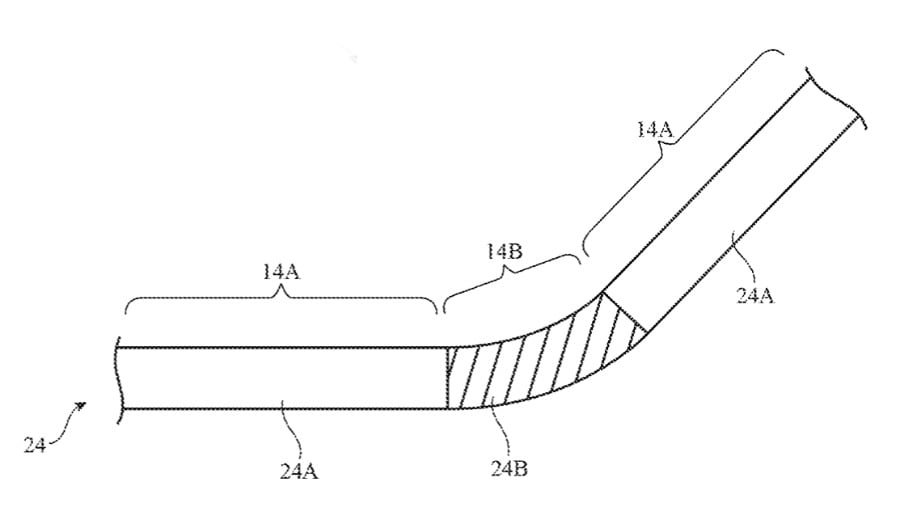
Looking at the patented images, the device appears to be a regular smartphone from the front, while the rear sports a vertically stacked triple camera module on one side and the wrap around curved display covers nearly one half of the other side. Notably the non-curved side is where the display extends from, which can raise the total size of the primary screen by about 40 to 50 percent. The UI will apparently adapt based on the how the device is being used.
One notable difference between the Huawei Mate X Rollable patent and the Galaxy Z Slide is the extending display’s supporting structure. While the former uses various magnets to keep the display from bending, the latter uses a multiple flexible / elastic ‘carrier films’ to keep the display taut once it leaves the smartphone’s main housing and frame. At the moment, we have no have of confirming if the company is actually working on such a product or is just covering all bases. So stay tuned for more updates.
MediaTek has announced two new processors today in Taiwan. The Dimensity 920 and Dimensity 810 chipsets are both 6nm octa-core processors with better performance and efficiency than their predecessors.
Dr. JC Hsu, the Corporate VP and GM of MediaTek’s Wireless Communications Business Unit, said that the new chipsets are designed to “provide device makers and smartphone users with the latest innovations at more accessible price points for the mainstream market.” The chipsets bring a boost in performance, display intelligence, and image brilliance.
Dimensity 920
The Dimensity 920 is a 6nm chip with four Cortex-A78 cores clocked at 2.5GHz and four Cortex-A55 Cores clocked at 2.0GHz. The GPU is the Mali-G68 which MediaTek claims has all of the technologies of the bigger G78 but is optimized for power-efficiency, thus extending battery life even further for gamers. According to the press release, the Dimensity 920 offers up to 9% faster gaming performance over the Dimensity 900.
The chipset can be paired with LPDDR5 and LPDDR4X memory and UFS 3.1 and UFS 2.2 storage. The Dimenity 900 also has Smart Adaptive Display support which allows it automatically adjust the refresh rate according to the game or UI action detected. The spec sheet also mentions it has a 4K video capture hardware engine and it can support up to four concurrent cameras and up to 108MP sensors.
For connectivity, the Dimensity 920 has Wi-Fi 6, Bluetooth 5.2, and 5G Call and Data Concurrency 3.0 that allows for 5G gaming on SIM 1 while receiving a call on SIM 2.
Dimensity 810
The 6nm Dimensity 810 sits below the 7nm Dimensity 820. It also has 8 cores made up of four Cortex-A76 cores clocked at 2.4GHz and four Cortex-A55 cores clocked at 2.0GHz. MediaTek claims that it brings a 20% increase in performance compared to the previous generation. The GPU is the Mali-G57 MC2.
The chipset supports 120Hz FHD+ displays, LPDDR4x RAM, UFS 2.2 (2-lane) storage, and up to 64MP cameras. The chipset also has high-end AI-camera features such as AI-Bokeh and AI-Color in collaboration with Arcsoft.
There is only Wi-Fi 5 and Bluetooth is version 5.1 and the peak download speed is 2.77Gbps for the modem,
Realme has been growing at an exponential rate and it seems that the company has no plans of slowing down anytime soon. The company, which debuted in 2018 as a sub-brand of OPPO in the Indian market to take on the likes of Redmi, is now present in several regions.
Realme isn’t limited to smartphones anymore and the company is now becoming a lifestyle brand with its product portfolio ranging across several categories. The smartphone maker is now gearing up to enter two new categories – Laptops and Tablets. In this regard, it has already teased its upcoming Realme Book and Realme Pad.
Recently, details about the Realme Book Slim got leaked, which could mean that Realme Book is the lineup for laptops and the first model is named “Slim.” Here is everything we know so far about the upcoming Realme Book Slim.
Design
The Realme Book is expected to feature a design similar to the Apple MacBook Air. A few images of the upcoming notebook have leaked online, which seems to confirm the similarity with Apple’s laptop. The device is also likely to have a metal build, giving it a premium look and feel.
The official teaser from the company showcased the laptop in the Real Gray color variant, but a leak has revealed that the product will be available in several color options, including Real Red, Real Blue, and Real Apricot – all of them having a matte finish.

It will come with a backlit keyboard and a big trackpad. It features a USB Type-C port and a charging indicator on the left, and a USB port and headphone jack on the right.
Specifications
The first laptop from Realme will reportedly come with a 14-inch display, offering a screen resolution of 2160 x 1440 pixels and 300 nits peak brightness. To reduce eye strain, the company is getting blue light certification for the device. The company has also confirmed that the Realme Book will come with a 3:2 aspect ratio and offer a 100% sRGB color gamut.
It has already been confirmed that the device will be powered by the Intel Core i5-1135G7 processor along with Intel Xe graphics. The Tiger Lake U-series chipset is manufactured using a 10nm SuperFin processor. It is said to come packed with up to 16GB of RAM and 512GB of SSD storage. There will also be a fingerprint sensor for added security.
Software
Through a teaser video shared on Twitter, Realme has already confirmed that the upcoming laptop from the brand will support Windows 11 operating system. However, since Microsoft is yet to release the stable build of the new OS, it’s likely that the device will come pre-installed with the Windows 10 operating system.
The teaser from the company confirms that it will definitely be compatible with the new Windows 11 and will get the new update when it gets released. Support for Windows 11 also means that the device will be able to natively run Android apps, which can be downloaded through Amazon’s App Store.
The Realme Book will be announced during the Realme 828 fan festival in China on 18th August at 3:00 PM local time. It is not yet known how many models of the laptop will be launched at the event in China.
If the reports are to be believed, then the Realme Book Slim is expected to go official in India on the same day. It is rumored to be priced around ₹55,000 in the Indian market, which is roughly $740.
On the same day, the company will be launching the Realme GT series smartphones in India. We expect the laptop to be available for purchase soon after getting launched.
Apex Legends Mobile is now available for Pre Registrations for Android smartphones. The mobile port of one of the most popular battle royale title is finally arriving to smartphones and is now on Google Play Store.
As of right now, Respawn, the studio behind the popular Titanfall and Apex Legends franchise, is testing an early version of the game with a limited number of players. In other words, this build of the battle royale shooter is not the final version and will likely go through several changes and updates before its actual release. So, players that are able to play this early version can expect overhauls or major changes post release, along with the usual bugs and instabilities.
Apex Legends Mobile has already garnered a lot of positive reactions from players that were able to enter the regional bets testing in select countries like Philippines and India. At the moment, the largest difference between the PC version and the mobile port is the game’s shift to a third person perspective by default. Notably, this third person mode was available on PC and consoles for a limited time, but it seems to be the default for smartphones.
Keep in mind that the port is currently only available for Android smartphones and we have no news of when the game is being brought to Apple iOS. So stay tuned for more, as we will be providing updates when additional information is available regarding this matter.
Cubot is on the verge to announce a new smartphone later this month. It is going to debut Cubot Max 3 with a massive 6.95-inch display on 23 August. It will be the company’s biggest smartphone carrying some other decent specifications. Cubot is running a giveaway where the participants can win a Cubot Max 3 for free.
In the specifications, the Cubot Max 3 features a triple-rear camera module featuring a 48MP primary sensor which can capture detailed photos. It hosues a 16MP front camera for quality selfies and assisting Face Unlock feature. On the top it bundles a 4GB RAM and 64GB internal storage for flawless multitasking and offline storage of documents and other files.
The massive 6.95-inch punch-hole display with the narrow bezels is present to bring better veiwing experience. The display offers 20.5:9 aspect ratio which enables cinematic-grade visual enjoyment.
Cubot added a 5000 mAh battery to offer better standby times. The phone also supports wireless payments via Googel Pay using NFC. It runs on Android 11 and carries all the prominent features of the Android’s most stale version.
The smartphone market in the Philippines saw a robust market growth on 30 percent year on year in the second quarter of this year, with Realme managing to become the region’s number 1 smartphone brand.
According to a Counterpoint Researchreport, the region’s smartphone market saw a strong growth in Q2 2021 owing to strong promotions amid a growth in consumer demand as the economy recovers. Furthermore, the boom in middle class has also pushed the younger demographic’s demand for smartphones. So, despite the rising coronavirus cases in the country, the demand still remained strong, with the local lockdowns further reinforcing the demand as well.
Realme lead the smartphone market in Q2 2021, with a 21 percent market share. It achieved the lead with Oppo arriving a close second with a 20 percent market share. Meanwhile, Samsung (19 percent) and Vivo (18 percent) came in third and fourth respectively, while Xiaomi rounded up the top 5 list with a 9 percent market share. The Chinese smartphone maker managed to lead the market thanks to the strong performance of its Realme 8 series but primarily due to the popularity of its C series of smartphones.
Research Associate Debasish Jana added that “The Philippines smartphone market continues to grow as consumers are rapidly shifting to the smartphone. Besides OEMs promoting the smartphone ecosystem, the telecom operators are also encouraging consumers to adopt 4G and 5G, leading to more people buying smartphones to avail better connectivity. Online channels are increasingly playing a crucial role in the smartphone market growth. They became more significant during the COVID-19 restrictions when offline retail could not operate at normal capacity.”
Apple is apparently planning on launching the new redesigned MacBook Air with Mini LED displays sometime in the middle of next year. The news arrives from known analyst Ming-Chi Kuo who believes that the new lineup will launch in multiple color options in mid 2022.
Kuo stated that these refreshed MacBook Air models will feature an “all new design” with a form factor similar to the upcoming MacBook Pro models, which are also rumored to feature Mini LED displays with flatter top and bottom edges. Notably, previous reports had also stated that the new MacBook Air laptops will sports the newer Apple M2 chipset and a MagSafe branded magnetic power cable as well.
Furthermore, Kuo added that the Cupertino based giant will also discontinue the existing M1 MacBook Air after the new Mini LED model enters mass production. In other words, this could also affect the pricing of these notebooks. Kuo believes that after the discontinuation of the M1 MacBook Air, the redesigned model will likely start from the same price of 999 US Dollars.
So, if the older M1 model would see a price cut if it is still available alongside the the redesigned MacBook Air. Notably, Chinese manufacturer BOE will supply the Mini LED display panels for the new MacBook Air. On the other hand, LG, Sharp, and Foxconn subsidiary GIS will supply the Mini LED displays for the higher end MacBook Pro models as per Kuo (Via MacRumors).
While Xiaomi has just launched the Mi MIX 4, a new video has already surfaced online that shows the smartphone being disassembled, with the teardown revealing the internal components of the new handset.
The teardown was done by popular tech blogger Robin, who shared the video of the disassembly on Weibo(a Chinese microblogging website). Looking at the video we can observe that the smartphone’s body comprises of ceramic and sports a thin metal frame that is housed between the display and the body. This region also makes space for radio signal transmission. The teardown found that the device’s internals are divided into three main regions.
This includes an upper section that houses the SoC, memory modules, camera sensors, 5G antennas, and more. On the other hand, the region in the middle is where the battery is kept, along with the NFC antennas, wireless charging coils, and the dual cell battery. The lower region is made up of the speakers, USB Type C port, and the vibration motor. Notably, we can even see the under display camera of the smartphone in the teardown video.
The hole for this sensor is visible when strong light is passed through it, while another hole can also be observed a bit lower. On the top center of the display is the cutout for the under display camera, while the square shaped cutout is for the proximity and ambient light sensors. With these essential systems being under the display, Xiaomi is able to offer users a complete front screen body. Other notable aspects that can be seen during the tear down is the several heat dissipation sheets, copper foil, and the thermal paste on the SoC.
The Samsung Galaxy Unpacked 2021 event is set to begin later today (11th August 2021). During this launch conference, the company will be launching its highly anticipated Galaxy Z Flip 3 and Galaxy Z Fold 3 foldable smartphones alongside other products. While the virtual event has yet to start, we already have some expected specs, features, and prices of these upcoming devices, so lets take a look.
Galaxy Z Fold 3
The Samsung Galaxy Z Fold 3 will be the brand’s latest flagship foldable handset. Just earlier today, we had reported on a leaked spec sheet that revealed key specifications of the new smartphone. As per this leak, the Galaxy Z Fold 3 is expected to feature a 6.2 inch external display that supports 2262 x 832 pixels resolution while its primary display is expected to be a 7.6 inch foldable AMOLED panel that supports a resolution of 2208 x 1768 pixels. Notably, both displays also offer 120Hz high refresh rate as well.

The front of the device will apparently sport a 10 megapixel camera, while the display will reportedly house a 4 megapixel under display camera. On the rear, the Galaxy Z Fold 3 is expected to house a triple camera setup, with a 12 megapixel primary lens. Under the hood, the Qualcomm Snapdragon 888 SoC will run the device, paired with 12 GB of RAM and 256 GB of UFS 3.1 storage. The foldable smartphone is expected to be powered by a large 4,400mAh battery that supports 25W fast charging. A recent price leak has suggested that the Galaxy Z Fold 3 will be priced at 1,899 EUR (roughly 2,258 US Dollars).
Galaxy Z Flip 3
The Galaxy Z Flip 3 is the second foldable smartphone that Samsung will be launching in the Galaxy Unpacked 2021 event. It sports a 6.7 inch foldable AMOLED display that supports 2640 x 1080px resolution and a 120Hz refresh rate. Meanwhile, the external display has a size of 1.9 inch with a resolution of 512 x 260px. On the front, the Flip 3 is expected to sport a 10 megapixel shooter, while the rear will feature a 12 megapixel + 12 megapixel dual camera setup.
Similar to the Galaxy Z Fold 3, the Flip will also be powered by a Snapdragon 888 chipset and is expected to house 8 GB of RAM and up to 256 GB of storage. A 3,300mAh battery will power the device and will support 15W charging. The device is confirmed to feature IPX9 water resistance and its price is rumored to start from 1,099 EUR (roughly 1,306 US Dollars). The device will be available in multiple color variants as well, namely Phantom Black, Lavender, and Cream.
Galaxy Watch 4
Apart from the two foldable smartphones, the South Korean tech giant is also expected to launch new wearables and hearables as well. The Galaxy Watch 4 series will be the company’s latest smartwatches and includes the Galaxy Watch 4 and Galaxy Watch 4 Classic. The wearables will run the Samsung’s and Google’s newly merged OneUI Watch OS, with the new Exynos W920 SoC powering the smartwatch.
The Watch 4 will arrive in two sizes, including 40mm and 44mm, while its its pricing is rumored to be around 279 EUR (roughly 327 US Dollars). For memory, the Watch 4 series is expected to house 1.5GB of RAM, with the Watch 4 sporting 16GB of storage as well. The Watch 4 is expected to feature a 1.19 inch AMOLED display, while the Classic 46mm variant will have a 1.36 inch display with a 450 x 450 resolution and 330 PPI. The smartwatches will offer the usual activity tracking, heart rate monitoring, and other features as well.
Galaxy Buds 2
Arriving at the hearables, Samsung is also gearing up for the launch of the Galaxy Buds 2. These are a pair of TWS (true wireless earbuds) and will feature an updated design over its predecessor. Talking about the design first, the earbuds feature a uniform glossy texture with an in ear design and silicone ear tips. A leak had revealed key specs of the new wireless earphones, which will support Bluetooth 5.2, Ambient Sound/ANC with 3 mics.
Furthermore, the charging case is compatible with Qi wireless charging and also offers IPX7 rating for water resistance. Each bud is powered by a 61mAh battery capacity while the case houses a 472mAh battery pack. The leak also stated that charging the buds for just 5 minutes will enable it to offer 55 minutes of playback. These hearables are expected to be priced at around 149 EUR (roughly 175 US Dollars).
This rounds up what we know about the four main launches that are set to be unveiled later today. You can check out the livestream once it goes live on YouTube. So stay tuned, as we will be covering the launch event.
The Realme Book (Slim) will be launching on Aug. 18 in China and India as the company’s first laptop. Past reports have revealed that the company is also working on Realme Pad, which is expected to debut as its first tablet. While there is no official confirmation yet on Realme Pad’s launch event, its arrival does not seem to be far away. Recently, it was spotted at Singapore’s IMDA certification site, and now it is has received approval from the Eurasian Economic Commission (EEC).

Realme Pad’s EEC certification
The alleged Realme Pad has appeared with the RMP2103 model number at the EEC certification site (via). The EEC listing has no information on the specs of the device. To recollect, a variant of the same device with model number RMP2102 was spotted at IMDA in July.
Realme Pad specifications and features (Rumored)
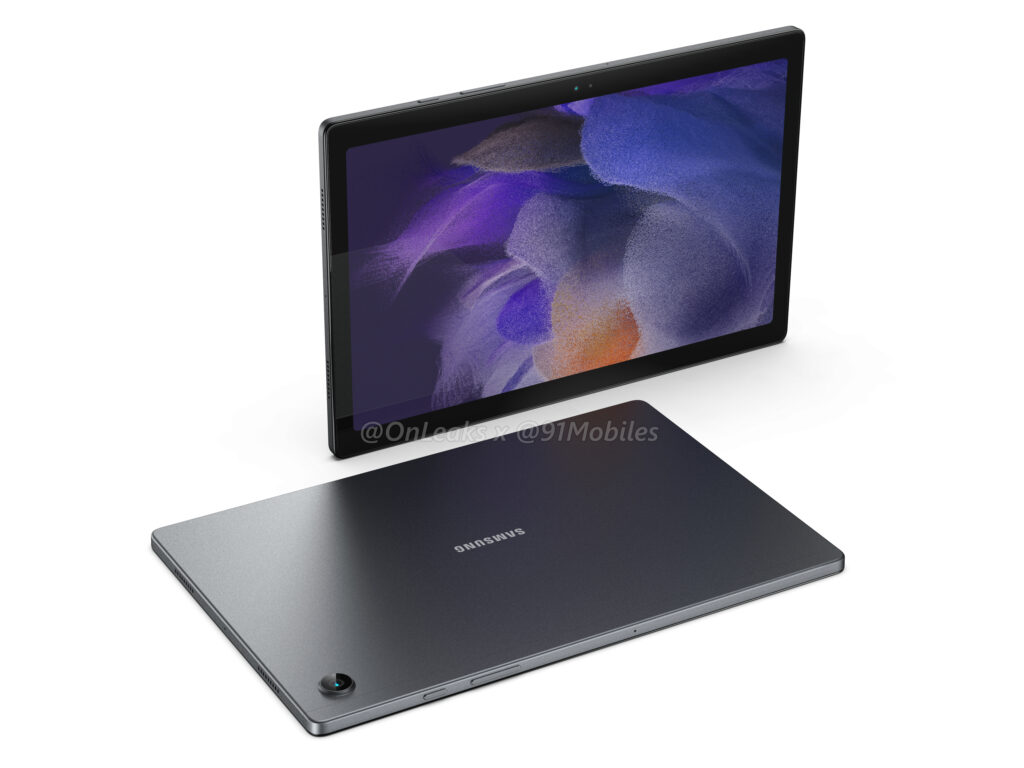
Past reports have revealed that the Realme Pad measures 246.1 x 155.8 x 6.8mm and it houses a 10.4-inch screen. While the tablet is said to be powered by a 7,100mAh battery, there is no word on its processor.
Realme Pad
The base model of the tablet may offer users 6 GB of RAM and 64 GB of native storage. Rumors have it that the tablet may arrive in Wi-Fi only and Wi-Fi + LTE editions. For photography, it may feature autofocus enabled 8-megapixel rear camera, whereas its front may house an 8-megapixel fixed focus camera.
The Realme Pad is expected to arrive with an aluminum chassis. Its leaked renders have revealed that it could be available in colors like gold and grey. The images have also revealed that it may feature a storage slot for a stylus, a microSD card slot, and a USB-C port.

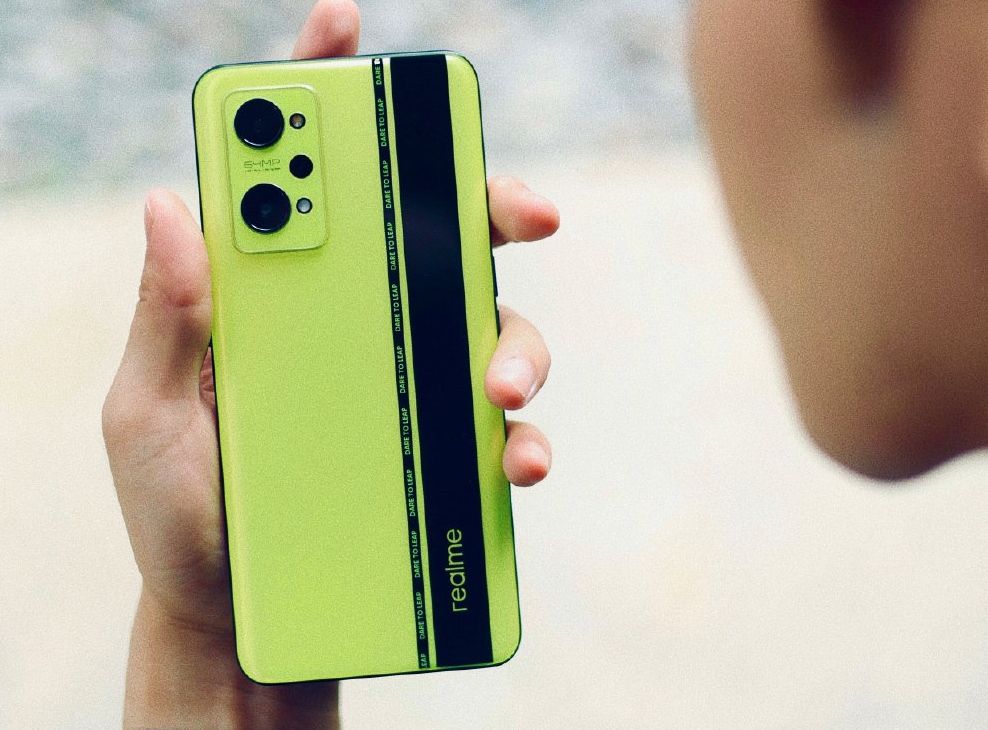
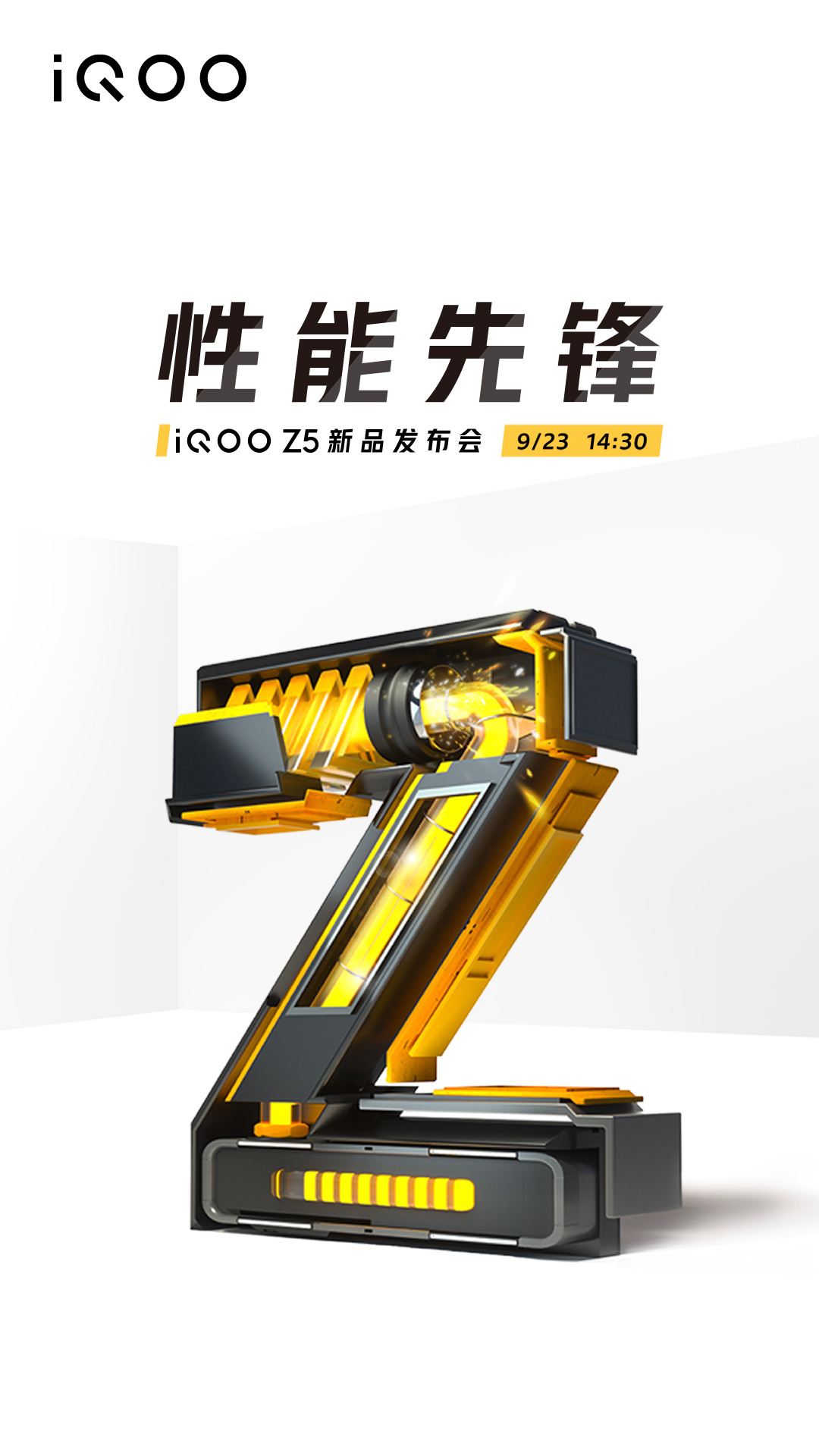
iQOO is all set to announce the iQOO 8 and iQOO 8 Pro flagship phones on Aug. 17 in China. Ahead of the launch, the company has been gradually teasing the key features of the iQOO 8 series. A fresh leak by a Chinese tipster has revealed the key specifications of the iQOO 8 and iQOO 8 Pro handsets.

iQOO 8 Pro specifications (Rumored)
The tipster revealed that the iQOO 8 Pro features a 6.78-inch Samsung’s AMOLED E5 panel with a centrally aligned punch-hole and curved edges. It will carry support for 2K resolution. The device is powered by a 4,500mAh battery with 120W fast charge support that can fully charge it in around 19 minutes. The leak also suggests that is supports 50W wireless charging.
The rear-mounted triple camera unit of the iQOO 8 Pro comprises a 50-megapixel (Sony IMX766) main camera with gimbal stabilization. It is coupled with a 48-megapixel (Sony IMX598) ultrawide camera and a 16-megapixel telephoto snapper with OIS support. The other features that will be available on the iQOO 8 Pro include an ultrasonic in-display fingerprint scanner, X-axis linear motor, and Hi-Fi audio chip. It can be said based on past reports that the iQOO 8 Pro will come equipped with a Snapdragon 888 Plus chipset, up to 12 GB of RAM, 4 GB of extended RAM, up to 256 GB of internal storage, and OriginOS based Android 11.
iQOO 8 Pro
iQOO 8 specifications (Rumored)
The iQOO 8 will be sporting a flat display that supports a Full HD+ resolution. It is backed by a 4,350mAh battery that supports 120W rapid charging. The leak claims that it can fully charge in just 18 minutes.
For photography, it will be equipped with a 48-megapixel (Sony IMX598) + 13-megapixel (ultrawide) + 13-megapixel (telephoto) triple camera unit. It includes other features like an optical in-screen fingerprint scanner and dual X-axis linear motor. It is unclear whether the iQOO 8 has Snapdragon 888 Plus or Snapdragon 888 chip.
Apple has been working on transitioning its Mac devices to its own Apple Silicon — the process which the technology giant started last year with its M1 chipset. The company has been using its own chips for smartphones.
Currently, the devices powered by Apple’s own chipset are manufactured using the 5nm process by Taiwan Semiconductor Manufacturing Company, widely known as TSMC. But it seems that the technology is about to get upgraded in the coming year.
As per the latest report by DigiTimes (via MacRumors), Apple’s iPhones and Mac devices getting launched next year could come powered by a chipset that is built using the 3nm process. TSMC is set to start mass production of 3nm chips in the second half of 2022 and thus Apple’s devices powered by the new chips could launch the same year.
While we have heard about TSMC starting production of 3nm chips in 2022 and brands like Apple and Intel among the first beneficiaries, this is the first time we are hearing about the upcoming 3nm processor powering the iPhones and Macs launching in 2022.
Earlier, it was reported that Apple has already booked TSMC’s entire production capacity for the 4nm chips for MacBooks powered by the Apple Silicon. However, there’s no information available about its timeline.
Compared to the current 5nm process, the new 3nm process should reduce power consumption by 30 percent and increase performance by 15 percent. TSMC, the world’s largest contract manufacturer of chips, will begin production of 3nm chips with a capacity to process 30,000 wafers. The company will expand production capacity to 55,000 units in 2022 and within a year after that, it plans to expand to 105,000 units a month.
Apple’s A14 Bionic chipset is manufactured using a 5nm process and the next-generation A15 SoC will be manufactured using the 5nm+ or NP5 process. It is basically a performance-enhanced process of 5nm node which also brings power efficiency. It is reported that TSMC has allocated most of its resources for Apple’s orders.
A couple of months ago, in June, OnePlus had launched a Limited Edition model of its current-generation flagship smartphone, dubbed OnePlus 9 Pro Flash Silver Edition. The device went on sale the same month it was announced. Now, the Chinese company has scheduled yet another sale for this limited edition model.
OnePlus’ Chief Operating Officer Liu Fengshuo has confirmed that the OnePlus 9 Pro Flash Silver Edition will be available for purchase on 15th August at 10:00 AM local time. It is priced at 5,499 yuan which roughly converts to $848.
The smartphone, which packs 12GB of RAM and 256GB of internal storage, is jointly designed by OnePlus and Japanese artist Sora Yamaji. Along with the phone, the package also includes a limited-edition T-shirt and a phone case having the same design language.
Coming to the specifications, it remains the same as the standard OnePlus 9 Pro, featuring a 6.7-inch QHD+ LTPO AMOLED display with a 3216 X 1440 pixel screen resolution and 525PPI pixel density. The phone’s screen offers a 120Hz refresh rate panel and is covered under Corning Gorilla Glass protection.
Underneath, it is powered by the Qualcomm Snapdragon 888 chipset which is built on the 5nm process and packs Adreno 660 GPU. As for the camera configuration, there’s a quad-rear camera setup with Hasselblad branding.
The primary sensor on the handset is a 48-megapixel Sony IMX789 sensor, coupled with a 50-megapixel Sony IMX766 sensor. While the other two lenses include an 8-megapixel telephoto sensor and a 2-megapixel monochrome sensor. On the front, there’s a 16-megapixel Sony IMX471 sensor for taking selfies and video calling.
Other features on the device include a dual stereo speaker setup, a Type-C charging port, and an optical in-display fingerprint sensor. The phone runs Android 11-based OxygenOS 11 and comes powered by a 4,500mAh battery that supports 65W Warp Charge technology as well as 50W wireless charging.
Samsung for a long time held the number 1 position in the DxOMark’s display tests. This has changed, thanks to the new contender, Huawei P50 Pro. Not just cameras, the newly P50 Pro has also shined in display tests of DxOMark by scoring 93 points.
The newly launched Huawei P50 Pro comes with a great display on paper. It seems that it also fares well in thorough testing of the french analytics firm, DxOMark. Earlier, the display test’s number 1 champion was the Samsung Galaxy S21 Ultra with a score of 91 followed by the Galaxy Note 20 Ultra with its 90 points.
Now, the Huawei P50 Pro has overthrown the Galaxy S21 Ultra with its 93 points. It is worth noting that the P50 Pro costs way lesser than the Galaxy flagship phone.
If we talk about the P50 Pro’s display, the device has a 6.6-inch punch-hole display with curved edges. It is an OLED panel with a 120Hz refresh rate and 300Hz touch sampling rate. It has a resolution of 2700 x 1228 pixels and a screen-to-body ratio of 91.3 percent.
According to the test summary, the display has good readability of 70 points and has a flicker-free screen. It also scored well in touch and motion by scoring 82 points. The major area where the phone really shined was artifacts. It scored 86 points in artifacts, which is the highest in any smartphone period.
Apart from this, the smartphone also recently won the camera test by scoring 144 points. It seemed that the huge camera island comprising four major sensors helped its ranking. It scored 106 points in the selfie camera test.
Realme Book is all set to go official on Aug. 18 in China. As it is known, it will be arriving as the company’s first notebook. Today, the company released an official poster to give a good look at its design. It also confirmed key features of Realme Book’s display.
The official poster showcases the sleek design of the aluminum-bodied Realme Book. The right edge of the device features a USB port and a 3.5mm audio jack. Previous reports have revealed that there are two USB-C ports on the left edge of the Realme Book. It can be seen sporting a large-sized trackpad.
The laptop can be seen sporting slim bezels. A webcam is available on the upper bezel, whereas the Realme branding can be seen in the bottom bezel. The company has confirmed that it carries support for 2160 x 1440 pixels, a 3:2 aspect ratio, and a 100 percent sRGB color gamut. The company has previously confirmed that it will be powered by the 11th generation Core i5 processor.
A recent leak revealed the existence of a model called Realme Book Slim. This indicates that the company may announce two or three Realme Book laptops in the coming week.
The Intel 11th gen. Core i5-1135G7 processor is likely to power the Realme Book Slim. It is rumored to offer users a 14-inch 2K display, 16GB of DDR4 RAM, 512GB of PCIe storage, Intel Xe graphics, and a 54Wh battery that supports 65W fast charging.
The notebook is expected to offer other features like Windows 10 Home, a pair of Harman Kardon speakers, a triple microphone array, two USB-C 3.1 slots, a USB 3.2 Gen 1 port, and a 3.5mm audio jack. It will be a lightweight model that weighs only 1.3 kgs. It is likely to be priced at around Rs 55,000 (~$739) in India.
Along with launching the Mi MIX 4 and the Mi Pad 5 in its home market in China, Xiaomi has also launched its Mi TV 6 OLED. This second-generation OLED TV from the company comes with several improvements and a reduced starting price.
Xiaomi has reduced the body thickness of this new TV to just 4.6mm and is also offering narrow bezels. The device is said to be optimized for heat dissipation and the company has brought down the price to under 5,000 yuan (~$771) in China.
It features a 4K OLED screen that offers a massive 97 percent screen-to-body ratio. It has 10-bit professional color depth, 900 nits peak brightness, ΔE2 color accuracy, 98.5 percent P3 color gamut, 1ms grayscale response time, MEMC support as well as hardware-level anti-blue light filter for eye protection.
Further, the display also supports HDR content with support for Dolby Vision, HDR10, HDR10+, and HLG. As for the audio output, there’s a dual-channel 12.5W four-unit speaker with each channel having its separate own low-frequency and high-frequency speakers. It has also passed IMAX Enhanced Audio and Video certification.
Under the hood, the Mi TV 6 OLED comes powered by the MediaTek 9638 quad-core processor that packs Cortex A55 cores clocked at 1.6GHz and a Mali-G52 MC1 GPU coupled with 3GB of RAM and 32GB of internal storage.
The device is offered in two different screen sizes — 55-inch and 65-inch. The 55-inch variant is priced at 5,699 yuan (~$879) and will first go on sale on 16th August for an introductory price of 4,999 yuan (~$771). On the other hand, the 65-inch variant costs 7,699 yuan (~$1,188) but will be available for a discounted price of 6,999 yuan (~$1,080), which ends on 18th August.
Apple is expected to launch its upcoming iPhone 13 series either in September or October this year. Just like every year, the upcoming iteration of the iPhone will bring small, yet refined changes, and this time, for cameras, fast charging, and storage. Now, Mark Gurman from Bloomberg reveals that Apple will bring Portrait mode for videos.
Apple officially released the Portrait mode(for photos) feature back in 2016 with the iPhone 7 series. Now, it is touted that the iPhone 13 series will bring this feature to videos. The Portrait mode for videos will work similarly to photos where the depth sensor will produce a blur effect for the background while only focusing on the subject.
Additionally, Apple is also said to offer ProRes feature for videos in the upcoming Apple iPhone 13. The feature will let users record videos in higher quality with a format easier for editing in post. This feature will be similar to the ProRaw feature seen in Pro models of the current iPhone 12. That said, the ProRes will also be exclusive to the Pro models of the upcoming iPhone 13.
Apart from video captures, Apple is also planning to update its existing photo filters with some new filters. Also, instead of applying a filter to the entire image, the upcoming iPhones will allow users to apply filters on specific objects.
Other than this, the Apple iPhone 13 series is expected to come with a LiDAR scanner. The series is expected to come with a slightly smaller notch and will have a 120Hz refresh rate. Notably, the higher refresh rate is expected only in the Pro variants. Under the hood, the series will board Apple’s A15 chip paired with up to whopping 1TB storage.
According to a leak, the upcoming iPhones are expected to feature improved fast charging support. Instead of 20W fast charging, the upcoming iPhone series is rumored to support 25W fast charging technology.
Moreover, the iPhone 13 series is said to bring back the Rose Gold color along with a new Sunset Gold hue.
We use cookies on our website to give you the most relevant experience by remembering your preferences and repeat visits. By clicking “Accept”, you consent to the use of ALL the cookies.
This website uses cookies to improve your experience while you navigate through the website. Out of these, the cookies that are categorized as necessary are stored on your browser as they are essential for the working of basic functionalities of the website. We also use third-party cookies that help us analyze and understand how you use this website. These cookies will be stored in your browser only with your consent. You also have the option to opt-out of these cookies. But opting out of some of these cookies may affect your browsing experience.
Necessary cookies are absolutely essential for the website to function properly. This category only includes cookies that ensures basic functionalities and security features of the website. These cookies do not store any personal information.
Any cookies that may not be particularly necessary for the website to function and is used specifically to collect user personal data via analytics, ads, other embedded contents are termed as non-necessary cookies. It is mandatory to procure user consent prior to running these cookies on your website.