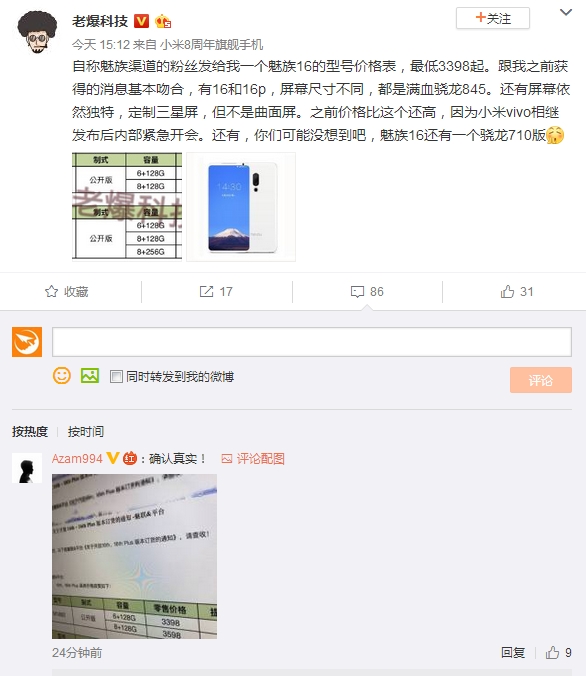
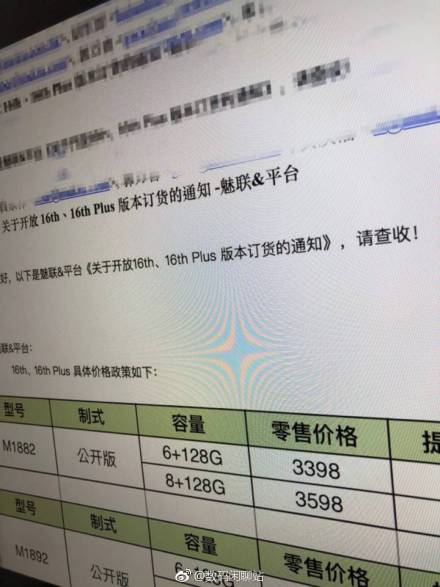
Meizu 16 and Meizu 16 Plus/PRO are the upcoming flagship phones from the company. Yesterday, Meizu’s founder Jack Wong had confirmed that the Meizu 16 series will be launching in August with Snapdragon 845 SoC onboard. The rumor mill has already leaked the entire specs of the Meizu 16 and 16 Plus. According to Wong, the actual Meizu 16 looks even better than the renders that are circulating online. The pricing of the Meizu 16 duo were also leaked in the recent leak along with the press renders. Earlier today, a tipster shared a price chart image of the Meizu 16 on Weibo. He claimed that he had received it from a fan from the Meizu channel. Subsequently, another tipster replied to him with an image of the same price chart that was reportedly snapped at a Meizu event.
Fresh information reveals that the Meizu 16 and 16 Plus will be arriving in different screen sizes and they will be fueled by Snapdragon 845 chipset. It is speculated that there is Snapdragon 710 variant too. Probably, it be the lowest configuration version of Meizu 16. These phones will be sporting a unique and custom-made screen from Samsung. However, they won’t be featuring curved displays.
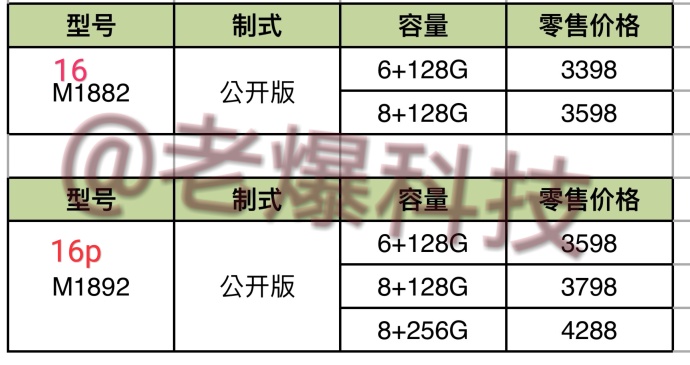
As far as pricing is concerned, the Meizu 16 (M1882) will be coming in two variants such as 128 GB storage + 6 GB RAM and 128 GB storage + 8 GB RAM. Both the models will be available with respective pricing of 3,398 Yuan (~$529) and 3,598 Yuan (~$560).
The Meizu 16 Plus (M1892) will be coming in three variant such as 128 GB storage + 6 GB RAM and 128 GB storage + 8 GB RAM and 256 GB storage + 8 GB RAM. These models are expected to carry respective price tags of 3,598 Yuan (~$560), 3,798 Yuan (~$591) and 4,288 Yuan (~$669).
The original pricing of Meizu 16 series were higher than what’s mentioned above. However, after the arrival of smartphones from brands like OPPO, Vivo and Xiaomi launched, Meizu reportedly carried out an emergency meeting to adjust the pricing of the Meizu 16 and 16 Plus.
Since the launch of the Meizu 16 and 16 Plus is still two months away, it is recommended to digest this report with a grain of salt as the final pricing of the Meizu 16 duo could be different.
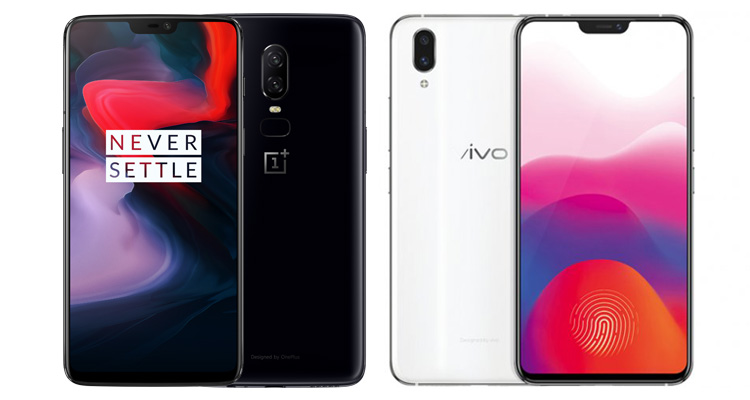
OnePlus and Vivo are two companies owned by BBK Electronics, and they are among the most important Chinese smartphone brands right now. Their strongest point is the quality price ratio of their handsets as they are not priced like the pricey Huawei flagships but they are still the best choice for many users thanks to their performance and cameras. We compare the OnePlus 6 vs Vivo X21 to see how they differ in terms of specs and features.
Dual 16 + 20 MP, f/1.7 + f/1.7, OIS
16 MP f/2.0 front camera
Dual 12 + 5 MP, f/1.8 + f/2.4
12 MP, f/2.0 front camera
BATTERY
3300 mAh, fast charging 5V / 4A (Dash Charge)
3200 mAh, fast charging
ADDITIONAL FEATURES
Dual SIM slot
Hybrid Dual SIM slot, Under Display fingerprint reader
Design
Let’s say that OnePlus 6 has a better build quality and Vivo X21 has better looks. OnePlus 6 has a wonderful glass back for the first time for its flagship and it is splashproof even though the company failed to give an official IP rating. But the company said that it can survive to rain and drops in puddles, so this is enough for your everyday usage. On the other hand, Vivo X21 has a higher screen-to-body ratio and its bezels are almost absent. It is even higher than iPhone X which has a full borderless design. Note that X21 is the only one which comes in a variant with a fingerprint reader embedded in the display.
Display
Even though their prices are moderate, these phones have wonderful displays. Both are AMOLED panels with incredibly brilliant color and deep blacks. And they have exactly the same size and the same resolution: 6.28 inches with a Full HD+ resolution of 1080 x 2280 pixels. There is a notch, but it helps to reduce the bezels. OnePlus 6’s display supports DCI-P3 and sRGB color gamut, and we believe it is a slightly better screen.
Hardware/Software
Among these phones, the real flagship is the OnePlus 6 due to its stunning hardware side. It has an octa-core Snapdragon 845 chipset by Qualcomm, 6 or 8 GB of RAM and up to 256 GB of internal storage depending on the configuration. It is one of the fastest and smoothest Android phones in the market, and Vivo X21 can not compete with it in terms of performance. But it is still a good high-end phone thanks to its Snapdragon 660 SoC and 6 GB of RAM.
Camera
Both are camera phones without any doubt. They have wonderful dual cameras on their backs as well as great selfie snappers. OnePlus 6 comes with a 16 + 20 MP dual setup which has bright f/1.7 aperture and even OIS. It can even record 4K videos at 60 fps. Vivo X21 has a f/1.8 dual camera with dual pixel PDAF which can capture an incredible quantity of detail, but it is not at the same level. OnePlus 6 is a way better camera phone with more detailed shots and less noise in every light condition.
Battery
OnePlus declared that it is not interested in making phones with huge batteries. The company chooses a battery which can last one day in order to release devices with the lowest thickness possible. And that is what it did with the OnePlus 6, a device with a satisfying but not very long battery life. The same is with Vivo X21 and its 3200 mAh lithium unit. Both phones feature a fast charging technology. So, there isn’t a winner when it comes to batteries as they have a similar battery life and a similar charging speed.
Price
OnePlus 6 has been launched in the global market with a starting price tag of €519/$529 for the base variant with 6 GB of RAM and 64 GB of internal storage. Vivo X21 is currently a Chinese and Indian market exclusive. Recently, it was launched in India with a price tag of $530: exactly the same.
OnePlus 6 is the winner of the comparison and, with these prices, it is also the best value for money device. But in the coming months, we believe that X21’s price will decrease much more than the one of OP6, making it a worthy opponent in terms of value.
Yesterday, two new Oppo phones with model numbers PABM00 and PBAT00 had surfaced on TENAA. These models are speculated to be the two variants of an upcoming mid-range OPPO phone. Their listings had revealed only few details such as dimensions, display and battery size. The TENAA listings for these models have been updated with their full specifications. This suggests that Oppo PABM00/PABT00 will be one of the first phones to debut after the Find X smartphone that is slated to get official on June 19.
The PABM00 and PABT00 models have identical specs. Their TENAA listings revealed that the smartphone would be arriving with a 6.2-inch display that will support HD+ resolution of 720 x 1520 pixels along with an aspect ratio of 19:9.
The handset will be fueled by an octa-core processor that clocks at 1.8 GHz that will be accompanied by 4 GB of RAM. There is a possibility that the phone could be driven by Snapdragon 450 chipset.t is packed with a 4,100mAh battery. It includes an inbuilt storage of 64 GB and for additional storage, it features a microSD card slot.
The device is loaded with Android 8.1 Oreo. The dual camera setup placed on the back of the phone includes a 13-megpaixel primary sensor and a 12-megapixel secondary. For selfies, it is fitted with an 8-megapixel front-facing camera.
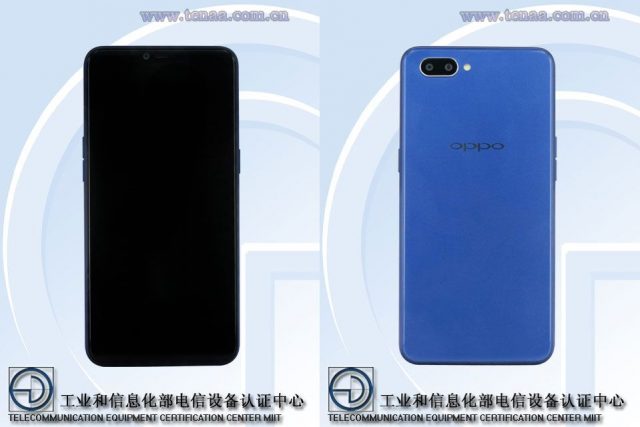
As far as the design of the phone is concerned, the OPPO PABM00/PABT00 measures 156.2 x 75.6 x 8.2mm and weighs 168 grams. The handset is expected to arrive in multiple colors like Rose Gold, Light Blue, Dark Blue and Purple. The Dark Blue variant has also appeared in TENAA images. The image reveals the presence of a notched screen. The rear panel of the phone is devoid of a fingerprint reader but features a horizontal dual camera setup.
The aforementioned specifications and appearance suggest that the OPPO PABM00/PABT00 could be lighter version of OPPO R15 and R15 Pro. However, the company may debut them as an A-series smartphone.
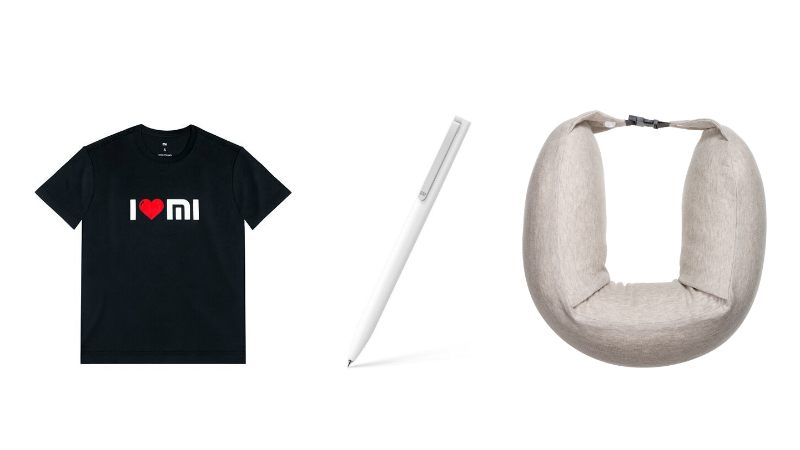
Expanding the Mi ecosystem products in India, Xiaomi has launched a few new products in the Indian market, which includes Mi Rollerball Pen, I Love Mi T-Shirt, Mi Travel U-Shaped Pillow, and Mi Band 2 Charge Cable.
All the newly launched products will be available for purchase through Xiaomi’s online store in India — Mi.com starting from 12 AM (midnight) on Friday, June 15. The price range for the products is between Rs. 129 (~$2) and Rs. 999 (~$15).
The Mi Rollerball Pen, which is priced at Rs. 179 (approximately $), comes in an aluminum body. The pen has a premium feel to it and also makes for an excellent gift. The Mi Travel U-shaped Pillow is made with a combination of cotton and natural latex is the perfect travel buddy.
The newly launched Mi I Love Mi T-Shirt is created for Mi Fans. The company says that it is made out of soft, blended fabric which offers comfort all day long. Last addition to the list is the Mi Band 2 Charge Cable which can be used for charging Mi Band 2 and Mi Band HRX Edition.
As said, the Mi Rollerball Pen costs Rs. 179, while the Mi Travel U-Shaped Pillow is priced at Rs. 999 (approximately $15) and will be available in two color options — Grey and Beige. The T-shirt will be available in three basic colors — Grey, Black, and White for Rs. 399 (approximately $6) and the Mi band 2 charger cable will be available for Rs. 129 (approx. $2).
Prior to this, the company recently launched its latest selfie-centric smartphone in the Indian market — Redmi Y2, which is the successor of the Redmi Y1 launched last year and a rebranded model of Redmi S2 that was launched in China last month. The Xiaomi Redmi Y2 is available for purchase via Amazon.in and the pricing starts at Rs. 9,999, which roughly converts to $147.
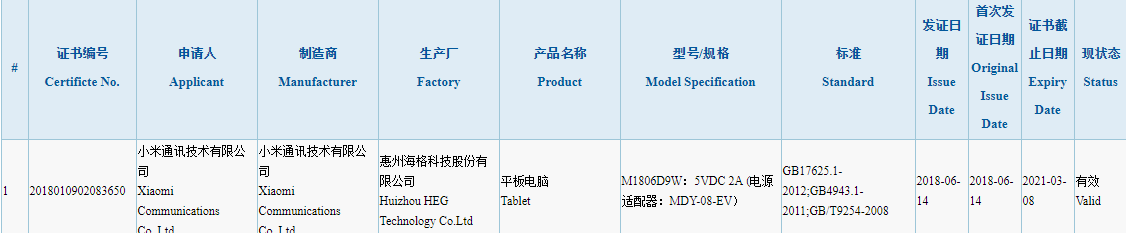
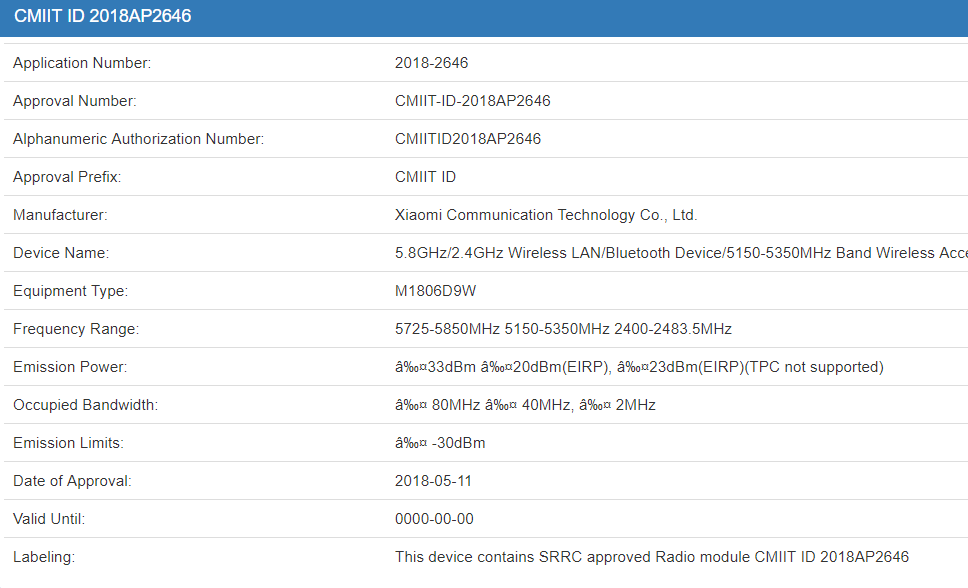
The Xiaomi Mi Pad 4 has appeared in the internal code of the official website of the company. The Chinese manufacturer will be holding a launch event for the Mi Max 3 in July. It is speculated that the company may use the same stage to announce the Redmi 6 Pro as well as Mi Pad 4. A new tablet with model number M1806D9W has been certified by China Compulsory Certification (3C) body in China. Moreover, it has also received approval China’s Ministry of Industry and Information Technology (CMIIT).
The 3C listing of the device clearly mentions that it is a tablet and it carries support for 5V/2A charging. Since the company is rumored to be working on a successor model for Mi Pad 3 from 2017, it is very likely that the M1806D9W device is the upcoming Mi Pad 4. Leaked firmware files of the device that had surfaced few months ago had revealed that it features a 6,000mAh battery which is a bit smaller than the 6,600mAh battery that powers the predecessor model.
The device is also carry support for 5.8GHz/2.4GHz dual-band Wi-Fi. It is likely that like the predecessor model, the Mi Pad 4 will be only arriving in Wi-Fi model.
The Mi Pad 4 is expected to feature a 13-megapixel rear-mounted camera and a frontal shooter of 5-megapixel. It may be driven by Snapdragon 660 SoC. It is speculated that the octa-core processor will be working at an underclocked speed of 2.0 GHz. There is no information available on the RAM and storage editions of the device.
Like the Mi Pad 3, the successor device will be arriving with an LCD screen. Leaked firmware files had carried references for 18:9 aspect ratio display for Mi Pad 4. A tablet sporting such a tall aspect ratio sounds weird. Hence, it is advisable to wait for further leaks to confirm on its display configuration.
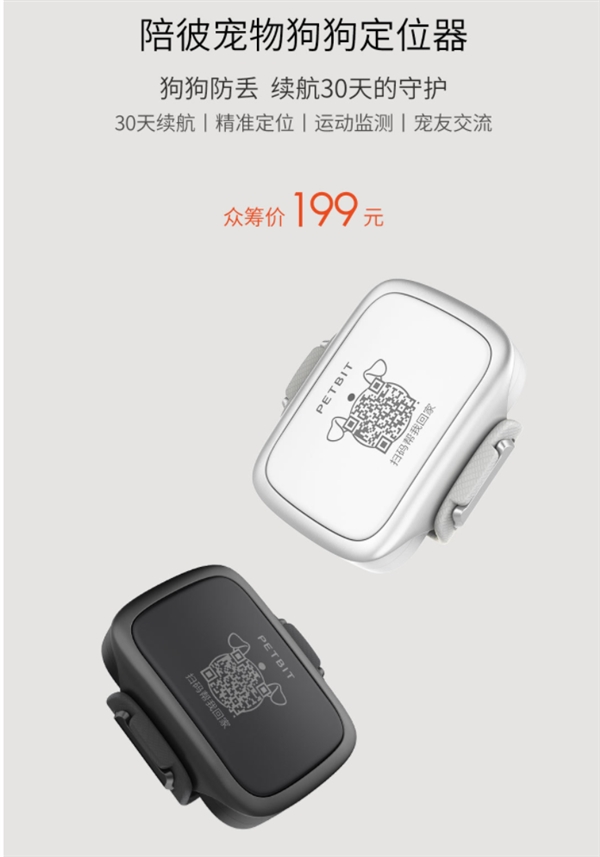
Xiaomi has launched a new product, its 204th product under the Youpin (MIJIA) crowdfunding platform. The product is a pet dog locator which comes with a 199 yuan (~$31) price tag. This isn’t the first dog tracker Xiaomi is releasing. There is the Xiaomi Smart Dog Button but this model comes with expanded functions, durability and more battery power.
The new product comes with the brand name Petbit and has four major features. One of the features is a 30-day battery life which would ensure that the owner has ample time to locate his lost pet. The device also uses three different location services. One of them is the Global Positioning System (GPS) and also the Beidou Navigation System which works in China and even globally. The pet locator also uses the Baidu Wi-Fi hotspot for tracking services. With these three location services, it will likely be easier to locate the pet or dog faster.
In other aspects, the Petbit pet dog locator is waterproof and will remain functional if the pet gets into the water. The device is also a fitness tracker for your pet as it counts the number of steps the dog has taken. Dogs need regular exercises and what better way to keep track if your pet is getting enough. The device can be connected to a smartphone app which displays the tracking data. The app can be used to generate lost dog notification, perhaps with reward offer, in order for anyone who finds the pet to return it easily. The information can be accessed by scanning the barcode on the Petbit locator’s surface and by so doing, the finder can contact the owner. The barcode flashes blue light which is supposed to attract the finder.
The Petbit pet dog locator is presently on crowdfunding and the response has been overwhelming. The product will ship on July 24 in China.
Xiaomi Mi Water Filter Jug
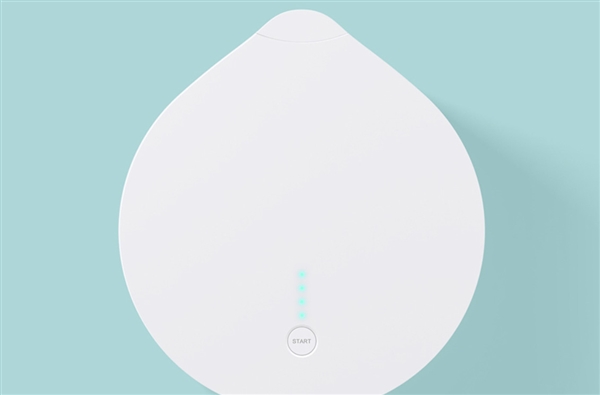
Xiaomi also released the Mi Filter Jub for water purification and it is an ultra-affordable gadget priced at just 99 yuan (~$15). The Mi Water filter jug is said to have the capability to effectively remove residual chlorine and reduce heavy metals from water.
The water filter is manufactured using food-grade AS material and can effectively complete the filtration process of a jug of water in just 5 minutes. The device comes with an LED display light which shows the lifespan of the filter cartridge so users will know when it is due for a change. It comes with a dimension of 149 x 210 x 250mm while the jug’s volume capacity is 2L. The filter element adopts a three-layer filter design. A high-performance activated carbon and ion exchange resin is selected to utilize the principle of gravity penetration to effectively remove residual chlorine and reduce harmful substances such as scale and heavy metals. Among them, volatile phenols can be filtered 99%, chloroform 91%, carbon tetrachloride filtration 81%, residual chlorine filter 90%.
In addition, Xiaomi Mi Water Filter Jug adopts a 360° influent flow channel design, allowing the filter media to be fully utilized, avoiding partial influx resulting in inadequate filter media usage.
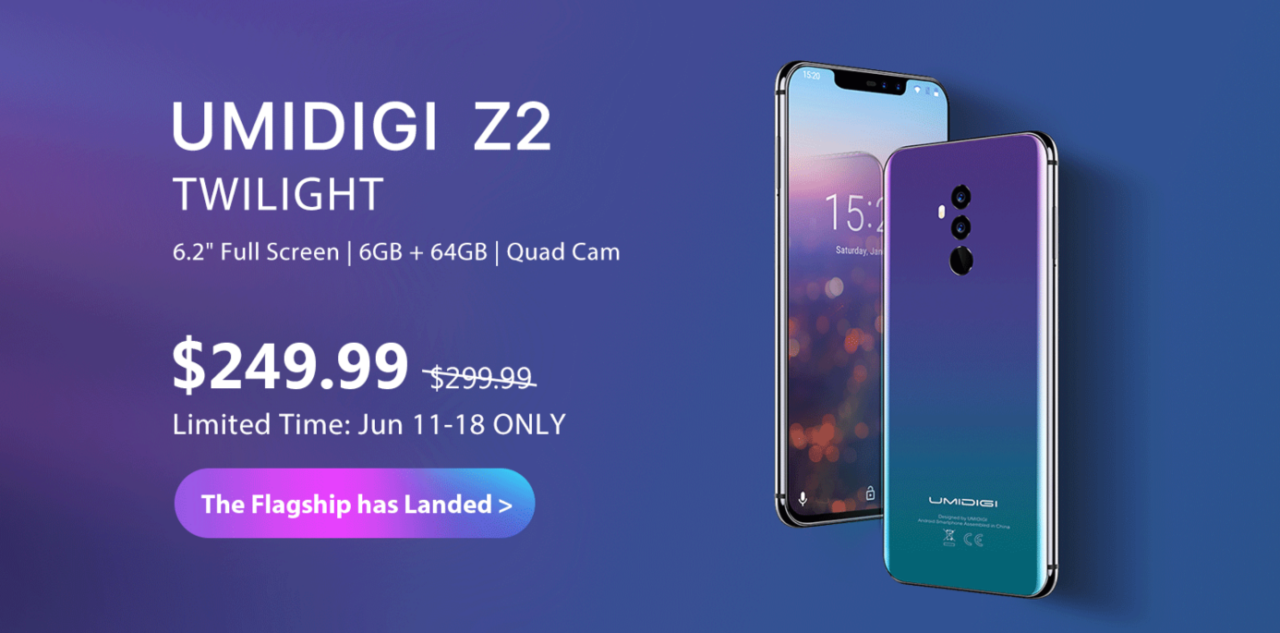
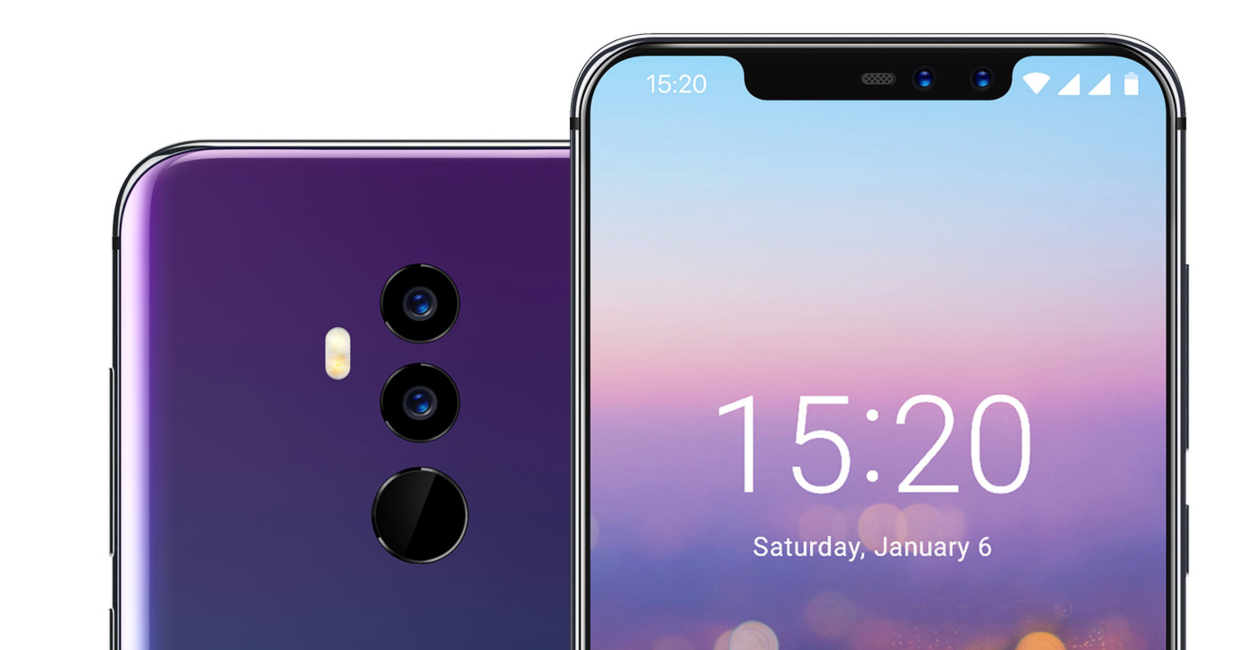
Umidigi is known for making phones that are inspired by the big brands. The Umidigi Z2 has a gradient color finish and it looks very similar to the Huawei P20 Pro. However, the phone has a much lower price tag than the flagships but it has killer specs.
The phone has the notch design, just like most the Android flagships in 2018. In addition, it is available in different colors but the Twilight is definitely the best-looking one. We have a glass on the back and front and a metal trim that goes all around the device.
In addition, the phone has killer specs for the price and here is the complete spec sheet and comparison to the Xiaomi Mi 8:
The Nokia 7 Plus is one of the few devices that Google released a beta version of Android P for. However, a recent update rolling out to those on the beta version is forcing them back to Android 8.1 Oreo.
Nokia 7 Plus
The 1.3GB update is said to bring June 2018’s security patch but also has a full version of Android Oreo bundled with it. It also causes devices to crash or freeze, and apps to force close. Affected users say the rollback option on the Android P page doesn’t work since it is older than the current build. Some users can’t even boot past the Nokia screen.
The fix, therefore, is to do a complete factory reset via the recovery menu which then pushes them back to Android Oreo and causes them to lose their files. Nokia seems to be aware of the issue already but a fix has not been provided yet.
Xiaomi Redmi 6 Pro/Plus that is rumored to feature a notched display was expected to debut alongside the Redmi 6 and Redmi 6A earlier this week, but Xiaomi did not announce it. The Redmi 6 Pro not only exists, but so does the other products like Mi Pad 4 and Mi Max 3 as their names have been found in the internal code of the official Chinese website of Xiaomi. Lei Jun, the CEO of Xiaomi has already confirmed that the Mi Max 3 phablet will be debuting in July. It is likely that the Redmi 6 Pro and Mi Pad 4 may also get unveiled at the same event.
According to the TENAA listing of Xiaomi M150D1SE that is speculated to debut as Redmi 6 Pro, it features a 19:9 aspect ratio supporting display of 5.84 inches which produces FHD+ resolution. It is driven by 2.0 GHz octa-core processor. Its variants include 16 GB storage + 2 GB RAM, 32 GB storage + 3 GB RAM and 64 GB storage + 4 GB RAM. It is packed with a 4,000mAh battery with 18W fast charging.
A Xiaomi phone with model number of M1807E8S that was recently approved by 3C body in China is rumored to break cover as Mi Max 3. Rumors have it that it has 6.99-inch FHD+ display with 18:9 aspect ratio, Snapdragon 710 chipset, 4 GB and 6 GB RAM variants, massive 5,500mAh battery and dual camera setup with 20-megapixel Sony IMX363 as primary sensor.
Leaked firmware files of the alleged Mi Pad 4 that had surfaced around two months ago had revealed that it will be driven by under clocked Snapdragon 660 chipset, 13-megapixel rear camera, 5-megapixel front camera and 6,000mAh battery.
Xiaomi has recently started the beta testing of the MIUI 10. The beta edition is coming to wide range of devices Xiaomi devices in this month. Last year, Xiaomi had introduced the Xiaomi Mi 5X and MIUI 9 through a launch event in July.
The Mi Max 3 is already confirmed to debut in July. The company may use the same platform to not only unleash Redmi 6 Pro and Mi Pad 4, but also to confirm the arrival of the global stable ROM of MIUI 10.
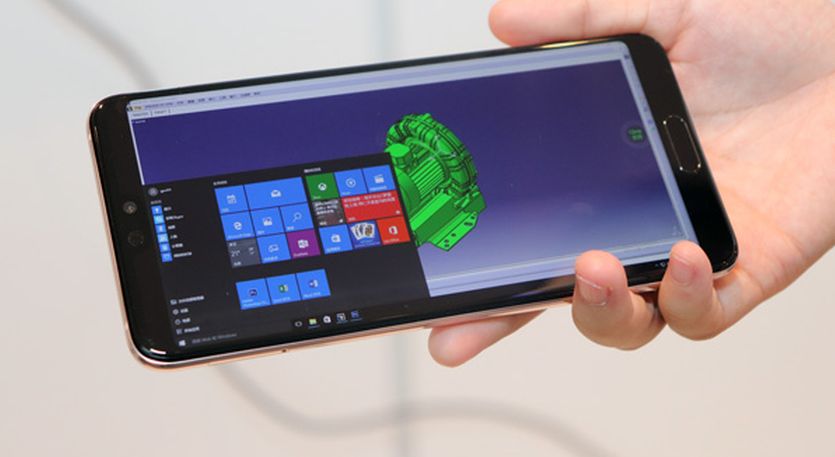
Huawei is reportedly going to offer some of its smartphone users in China to use Microsoft‘s Windows 10 through a cloud-based service. At the CES Asia 2018, the China-based tech giant introduced a new cloud service that streams Windows 10 to specific Android smartphones.
The service, which is called Huawei Cloud PC, requires a special Cloud PC app that enables users to view the Windows 10 desktop on the smartphone’s screen, or on a connected external display. The service is reportedly based on Huawei’s FusionCloud Desktop platform which was originally developed for the enterprise.
As said, the Windows 10 operating system on Huawei’s smartphones won’t work as a replacement for the Android operating system but will be a cloud-based service in which Android will still be the primary OS. But users will have access to the full functionality of Windows 10 while on the go without needing a separate product.
A hands-on demonstration of this service showed how Mate 10 smartphone user could take a photo and then edit the image in Photoshop installed on Windows 10 in the cloud as the service allows users to install programs and apps on the virtual machine.
The company has said that it will be offered on five different devices, including the Huawei P20 and P20 Pro, Mate 10, Mate RS, and MediaPad M5 tablet. Currently, there’s no confirmation that the company won’t be offering it on other devices at some point in the future.
As the Windows 10 will be running in the cloud, the streaming requires a stable network and/or internet connection, thus the responsiveness of the virtual machine depends on your connection. There’s no information available regarding the pricing or a launch date for Huawei Cloud PC, but it will only be available in China for now.
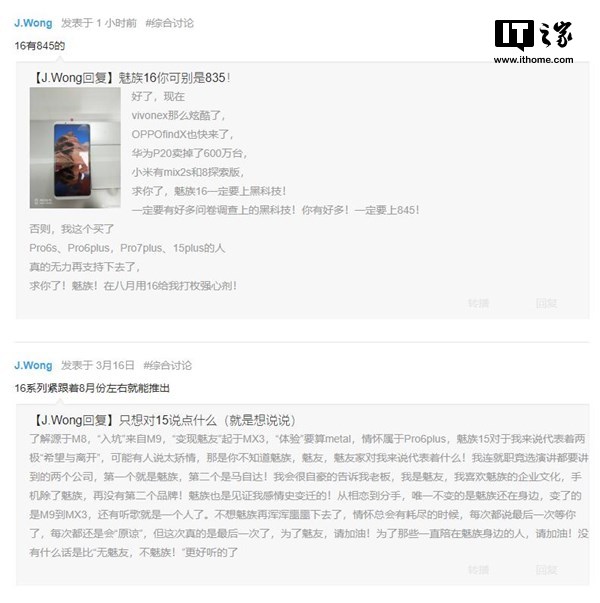
Meizu founder Jack Wong (Huang Chang) had previously claimed that the Meizu 15 series is just a test product and the upcoming Meizu 16 series will be more powerful and futuristic. Wong has also revealed in the recent past that the Meizu 16 will be made official in August. Through a recent conversation with Meizu fans, he has again confirmed that the Meizu 16 series will be launching in August.
Apart from talking on the launch of the phone, Wong also affirmed that the Meizu 16 series will be fueled by Snapdragon 845. Rumors have it that the Meizu 16 series includes Meizu 16 and Meizu 16 PRO/Plus phones. So, both of them are fueled by Snapdragon 845.
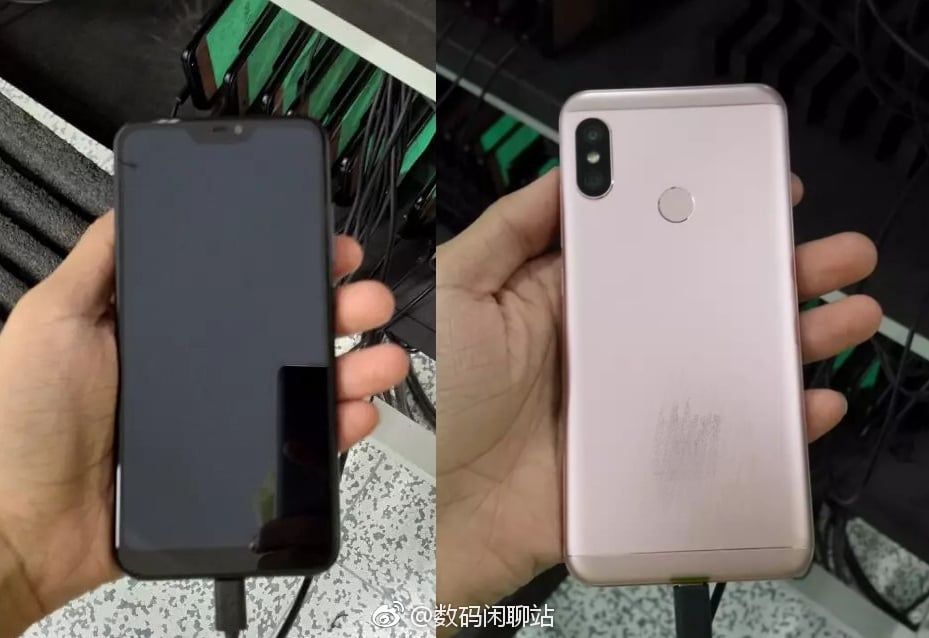
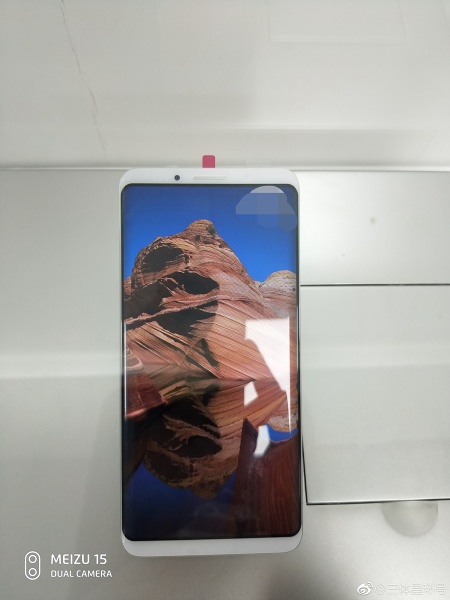
Plenty of details on the Meizu 16 series have been leaked. Following is a leaked photo of the Meizu 16 smartphone has also surfaced on Weibo. It is speculated that the Meizu 16 and 16 PRO will respectively feature notch-less OLED screens of 5.6 and 6.1 inches with 3D Press and mEngine. The Meizu 16 series is expected to arrive with a premium glass body with ceramic finish.
The Meizu 16 is likely to house a 3,080mAh battery with 24W charging (8V/3A). On the other side, the Meizu 16 PRO is expected to not only house a bigger battery of 3,600mAh capacity along with faster 32W charging (8V/4A), but also it is expected arrive with 10W wireless charging. Both phones will come preloaded with Flyme 7.5 and OneMind 2.5, but the exact version of Android is not known.
Based on the leaked information from multiple leaksters, ITHome had yesterday reported that both phones will be equipped with 12-megapixel + 20-megapixel dual camera setup. However, a contradictory leak reveals that this dual camera setup will be available only on the Meizu 16. As far as Meizu 16 PRO is concerned, it may come equipped with 12-megapixel + 12-megapixel + 20-megapixel triple camera system. Both the phones are rumored to be arrive with 20-megapixel front-facing camera.
The Meizu 16 variants such as 64 GB storage + 6 GB RAM and 128 GB storage + 6 GB RAM are rumored to hit the market with respective pricing of 2,999 Yuan (~467) and 3,299 Yuan (~$514). The Meizu 16 PRO models like 128 GB storage + 6 GB RAM and 256 GB storage + 8 GB RAM are pegged to carry respective price tags of 3,699 Yuan (~$576) and 3,999 Yuan (~$623).
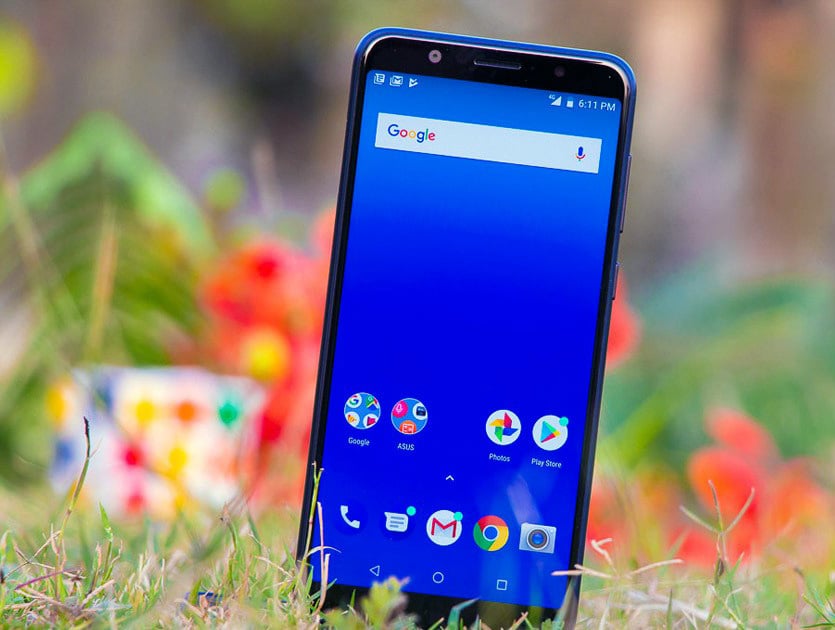
Asus has released a new update for its popular mid-range smartphone Asus Zenfone Max Pro M1. The new firmware-over-the-air (FOTA) update for the smartphone is the second such update rolled out by the company since the launch of the phone.
Previously, the company had released a firmware update for the smartphone right after its launch, which introduced the Face Unlock feature, as promised by the company during the phone’s launch.
The latest update brings in new features, including VoLTE support for Vodafone, Idea Cellular and Bharti Airtel. It also brings May security patch for Android along with few bug fixes. The update also improves the response time of the fingerprint sensor as well as the performance of the front-facing camera but the company has not revealed what specifically has been improved.
If you haven’t received the update notification yet, you can manually check if the update is available for your smartphone by going into Settings > System > System update.
The Asus Zenfone Max Pro M1 is the competitor to Xiaomi’s Redmi Note 5 Pro and is also the first device from the company to launch as part of a new strategic partnership with online retailer Flipkart.
The smartphone is available at a starting price of Rs. 10,999 for 3GB RAM with 32GB storage and goes up to Rs 12,999 for 4GB RAM with 64GB storage. Another variant with 6GB RAM has been announced for Rs. 14,999 but it is yet to go on sale in India. The device is available in two color options – Meteor Silver and Deepsea Black.
It features a 5.99-inch Full HD+ IPS display with screen resolution of 2160 x 1080 pixels and 18:9 aspect ratio, with 83 percent screen-to-body ratio and 403 PPI pixel density. Under the hood, the smartphone is powered by Qualcomm‘s Snapdragon 636 processor.
It houses a 13MP + 8MP dual rear cameras 4K video recording support. On the front side, there’s an 8MP selfie camera with front flash. Running on Android Oreo operating system out of the box, the smartphone is powered by a 5,000mAh battery.
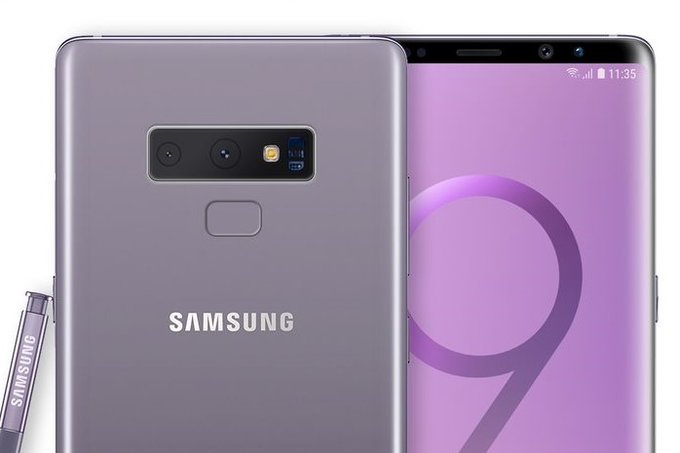
Recent image leaks had revealed that Samsung Galaxy Note 9 may feature a physical button which will be placed on the lower part of the right side, at a noticeable distance from the power key and the volume rocker. The position is similar to the one of the physical camera button present on devices from the Sony Xperia line-up. Now, the first details about this physical button have started to surface. It looks like that the button will have multiple functions and it will not only be used to shoot photos like the classic button found on Xperia devices.
According to a new report from a known tech-related website, Samsung Galaxy Note 9’s physical button will be a shutter key to capture screenshot as well as a camera key. It can be used to open the camera app with a double tap, refocus on objects while the camera app is opened, shoot photos, record video and take a screenshot while the camera app is closed. However, take this with a pinch of salt as there is no official confirmation about this physical key.
But its existence on the upcoming flagship makes sense as Samsung is putting many efforts into improving the camera of its devices. Just to remind you, Samsung Galaxy S9 and S9 Plus are the first smartphones to feature a camera with a variable aperture, which can adapt in a better way to all light conditions. A physical key will be another comfortable thing for users which will allow shooting photos in an easier way. In case you do not know, Samsung Galaxy Note 9 is expected to come with the same SoC as the Galaxy S9: Snapdragon 845 for the U.S. variant and Exynos 9810 for the EU version. According to leaks, the fingerprint reader will be now placed in a more comfortable position (under the camera).
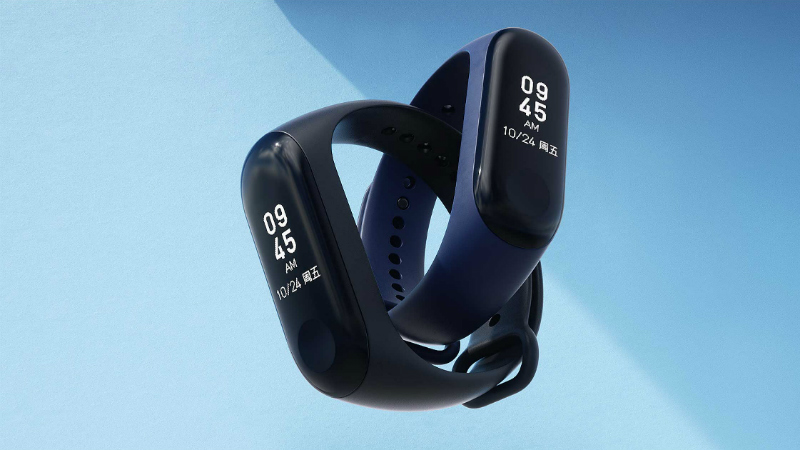
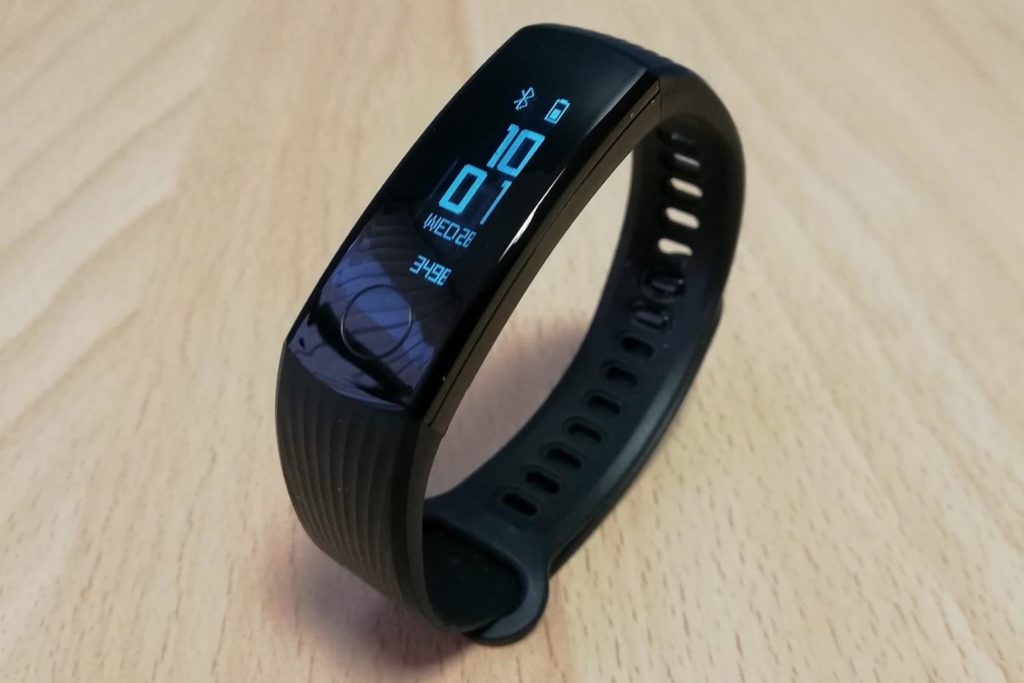
Xiaomi has a reputation for making feature-laden yet pocket-friendly wearables. Still riding high on the success of the Mi Band 2, the Chinese electronics behemoth recently launched its hotly-anticipated successor the Mi Band 3 in a bid to take the wearable realm by storm.
Bearing the popularity of the Xiaomi Mi Band 3 in mind, several online shopping stores have been doling out big discounts on the well-received smart bracelet. In this write-up, we’ll not only check out some of the biggest discounts that are currently up for grabs, but we’ll also show how you can save extra money apart from getting the discount.
Xiaomi Mi Band 3 – GearBest
GearBest is offering a noteworthy 37% off on the black color version of the Mi Band 3. This brings your grand total down to just $39.99.
But if you’re on a tight budget and are looking to save more money, you can simply apply coupon code ‘GBXMB3’ and reduce your already lowered grand total to only $33.79. You can follow this link to grab the deal and use the discount coupon before it lapses.
Xiaomi Mi Band 3 – LightInTheBox
The Xiaomi-branded fitness tracker that sports a bigger, higher resolution OLED screen than its predecessor can now be yours if you’re willing to shell out only $42.99 on LightInTheBox. Note that the device would normally set you back $86.78 on the site.
The Beijing based international online retail company is offering a considerable 51% off on the device’s original asking price. But if that doesn’t impress you much, you can use coupon code ‘MIWATCH8’ and reduce your grand total to just $32.99.
You can head straight to this link to take advantage of the discount. It is imperative for you to bear in mind that the aforesaid discount coupon is likely to expire soon.
Xiaomi Mi Band 3 – Banggood
Banggood is giving cost-conscious buyers an opportunity to get their hands on the Mi Band 3 without emptying their pockets. The popular Chinese online store that guarantees the best bang for your buck is giving a significant 33% off on the device’s original selling price.
While you’d normally have to shell out $59.99 to buy the Xiaomi Mi Band 3 on Banggood, the device’s price has currently been dropped to just $39.99. This discount will be valid for the black color version of
the Mi Band 3 for a short span of time.
On top of that, you can apply discount coupon ‘3bmiidn’ while checking out to save an extra $5.2. You end up spending just $34.79 on the coveted heart rate monitor bracelet that boasts an array of awe-inspiring specs and feature. You can visit this link to get the discount before it ends.
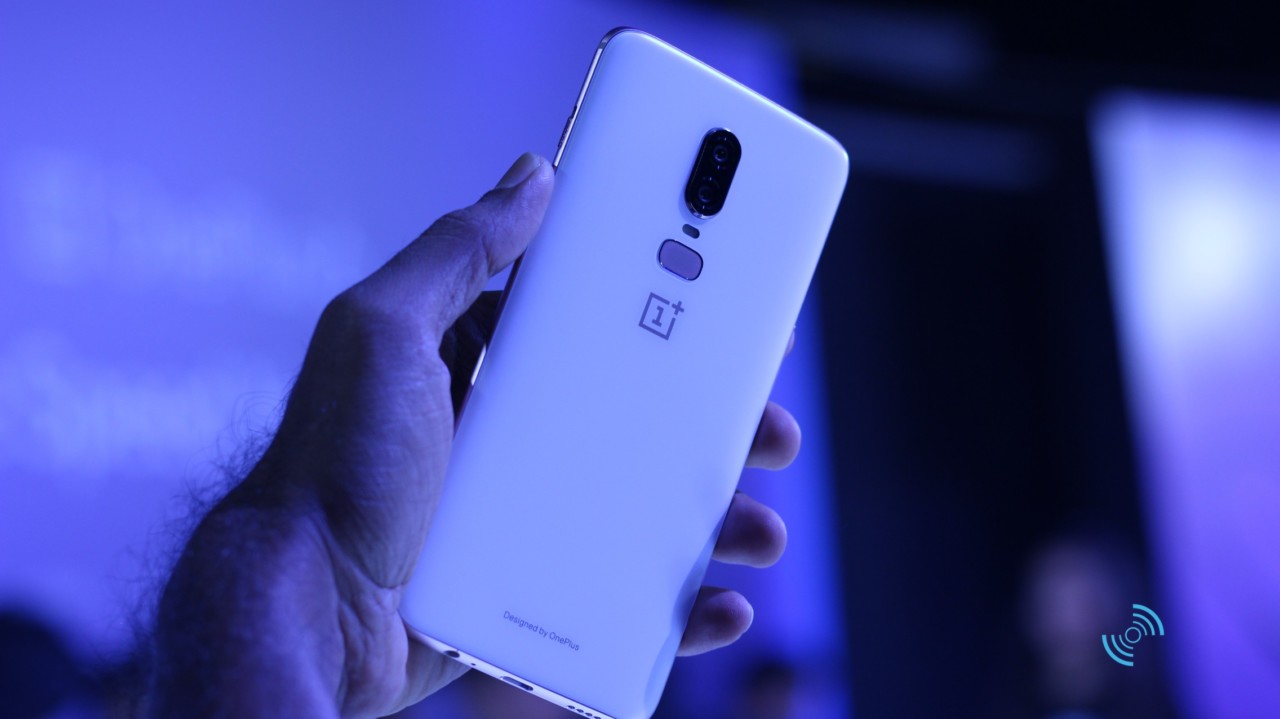
OnePlus smartphones have all continued to maintain their title of flagship killers. The latest OnePlus 6 didn’t disappoint in that aspect considering the specs it packs and the price it adopts. Since its release last month, the OP has gone on sale both in China, India and Europe. The sales have been a massive success as the Silk White Limited edition got sold out in the U.S and across Europe in less than 24 hours after launch.
Details of the OnePlus 6 sales in China has now been confirmed by the company’s CEO Pete Lau who disclosed that over 1 million units of the flagship have been sold in less than one month. For emphasis, it took OnePlus just 22 days to hit the 1 million mark in terms of the number of OP6 units sold in China. This is pretty fast when compared to the stats from the OnePlus 5 and 5T sales. Last year’s OnePlus 5 and OnePlus 5T both took at least three months to reach the 1 million mark.
While speaking to Business Insider, OnePlus’ CEO Pete Lau stated that the company is happy with the sales result and the positive feedback received from customers. This is despite the backlash that greeted the news that the device would come with a notch display design. That doesn’t seem to have affected the sales in any way. With its price starting from $529, the device has the hardware capacity to compete with most of the latest flagships around. This is as a result of its premium glass body with a 6.3-inch display at the front. Onboard, the device packs a Snapdragon 845 chipset that is paired with either 6GB or 8GB of RAM, and the choice of 64GB, 128GB, or 256GB of internal storage. The device also packs a dual camera setup at the rear and runs on the latest Android 8.1 Oreo.
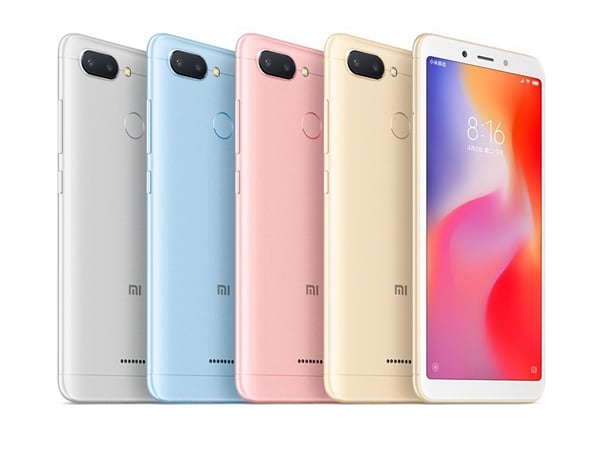
According to a new report, Xiaomi and the famous online store Jingdong Mall made a new agreement regarding the latest affordable Xiaomi device: the new Xiaomi Redmi 6. The handset will be available for the first sale on June 15 in China, and it will be a JD exclusive. It is such an unusual strategy to sell an important device like the Redmi 6 on one third-party online store exclusively. According to the company, the Chinese price of the device in its base configuration with 3 GB of RAM and 32 GB of internal storage is 700 Yuan which roughly into $125 dollars. There will also be a variant with 4 GB RAM and 64 GB ROM with a price of 999 Yuan (roughly $157).
But the exclusive variant of the handset which will be available on JD on June 15 will be the 3 + 32 GB configuration. It will launch at 10:00 AM local time, and if you are from China be fast if you want to get it as it may go quickly sold out. Xiaomi Redmi 6 sports a full metal unibody design and a 5.45-inch display showing images at an HD+ resolution of 1440 x 720 pixel, with an 18:9 aspect ratio and an 80.5% screen-to-body ratio. This year, the Chinese company chose to equip its affordable line-up with MediaTek chipsets.
Xiaomi Redmi 6 boasts an octa-core MediaTek Helio P22 chipset which should provide a similar performance to the Snapdragon 625 by Qualcomm. Some will be left disappointed, but note that this chipset seems a lot better than the Snapdragon 435 present on the Redmi 5. It is composed of 8x Cortex A53 cores: 4 of them run at a max frequency of 2 GHz, while the other 4 run at 1.5 GHz. MediaTek Helio P22 is able to provide 27% better performance than Snapdragon 430 and 48% lower consumption compared with 28 nm processors. The device is also equipped with a 12 + 5 MP dual camera setup and a 5 MP front snapper with AI support.
Even though Find X has got all the attention of Oppo’s fans, it seems that the company is preparing to release another brand new smartphone from its upper-midrange series: Oppo R15S. An alleged unit of this phone has just been spotted on a TENAA listing. The device appears with exactly the same aesthetics, including a full aluminum body in Blue color. The handset sports a power key on its right sight and a volume balancer on the left side. The back cover houses a dual camera setup in a horizontal configuration and a flash LED, but there is no fingerprint reader on the back side and neither on the front side. So, it should be embedded in the display such as Vivo X21.
The alleged Oppo R15S has been certified by TENAA in two variants identified by the codenames PABT00 and PABM00. Given that both models feature a 6.2-inch display, we do not believe that they are the standard and the Pro version of the handset. Their body measures 156.2 x 75.6 x 8.2 mm. The battery has a huge capacity of 4100 mAh, bigger than the standard R15: this is the main difference between this handset and its predecessor. Unfortunately, TENAA did not disclose any other information about the specs of the device.
Given that it is probably the Oppo R15S and it features the same design, we believe it will come with one of the best Qualcomm’s midrange processors. So, it should have either the octa-core Snapdragon 660 or the new Snapdragon 710. The SoC should be paired with 4 or 6 GB of RAM while the internal storage should go up to 128 or 256 GB. We also expect the rear dual camera of the Oppo R15S to provide a great performance as well as the support of artificial intelligence for portrait mode and other smart features.
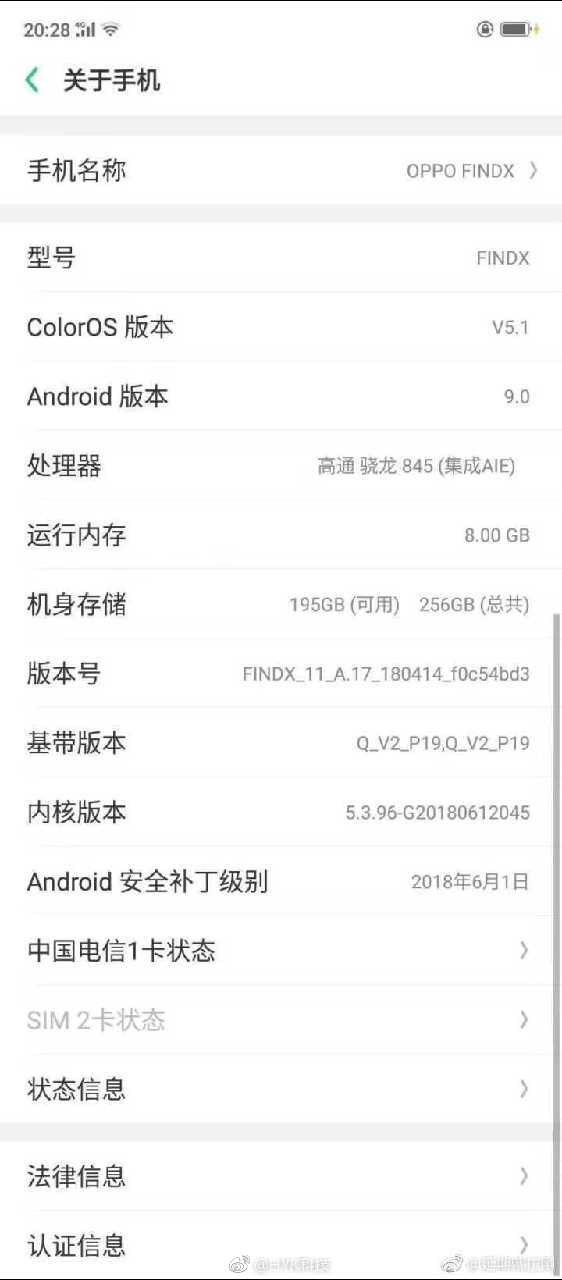
While we are waiting for the official announcement of the Oppo Find X, a leaked screenshot has just revealed interesting detail about the upcoming flagship. Unfortunately, we can not guarantee the authenticity of this screenshot and it does not come from the company, so take every info with a pinch of salt. According to the screenshot, the flagship will run Color OS 5.1 based on Android P 9.0, the latest version of the operating system which is still in beta testing right now. The security patch is updated to 1st June 2018, so it is the latest one released by Google.
The screenshot also confirms the hardware side, even though it has already been confirmed through an official teaser published by the Chinese company. Oppo Find X will sport an octa-core Qualcomm Snapdragon 845 chipset with a max clock frequency of 2.8 GHz. It will also have whopping 8 GB RAM and 256 GB of internal storage. The screenshot confirms the presence of a structured light for 3D facial recognition, a very safe authentication system similar to Face ID. June 19 will be a great day for Oppo as the new Oppo Find X is the first flagship of the company after four years.
Since 2014, the company has been releasing midrange phones only, and despite this fact, it has kept dominating the smartphones market in China. Among the other rumored specs of the Oppo Find X, there is an AMOLED display with a size of 6.4 inches and a Full HD+ resolution of 2340 x 1080 pixels, with a 19,5:9 aspect ratio and a very high screen-to-body ratio. The main camera is expected to be composed of a 16 MP and a 20 MP sensor with a f/2.0 aperture, while the front camera is rumored to have a 25 MP resolution with exactly the same aperture. At last, we expect to see a big battery with a capacity superior to 3700 mAh.
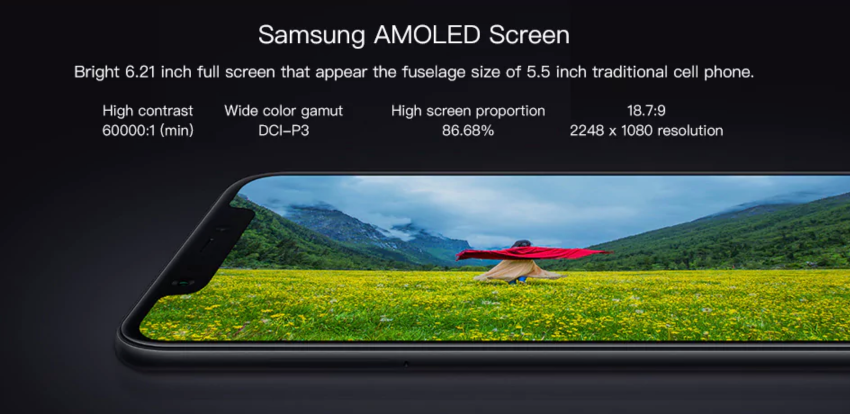
Xiaomi Mi 8 is is the latest and definitely the greatest flagship made by the company. The Xiaomi Mi 8 is the first phone from the company to feature a notched display that offers an aspect ratio of 18.7:9. The backside of the phone is made out of glass that has a unique “water drop arc” design. The Xiaomi Mi 8 is certainly one of the best phones you can buy right now.
Xiaomi Mi 8 sports bleeding edge specs that include the latest Qualcomm’s processor. The Snapdragon 845 chipset powered Xiaomi Mi 8 is the first smartphone to break average benchmarking score of 300,000 on AnTuTu. The handset recorded a stunning score of 301,472 on AnTuTu. The 64 GB, 128 GB and 256 GB storage editions of the phone respectively feature 6 GB of RAM. The handset receives power from 3,400mAh battery enabled with Quick Charge 4+ fast charging. The handset is preinstalled with Android 8.1 Oreo that is skinned with the latest MIUI 10.
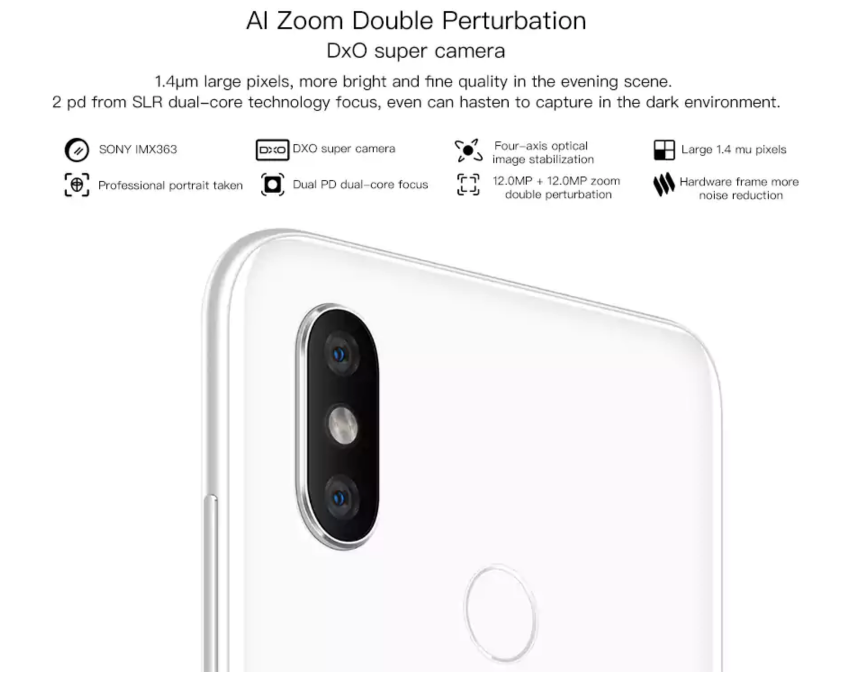
In terms of photography, the Xiaomi Mi 8 features a wide-angle Sony IMX363 12-megapixel primary sensor with f/1.8 aperture and 1.4micron pixel size and a secondary 12-megapixel S5K3M3 sensor with f/2.4 aperture and 1micron pixel size. The dual cameras offer features like 4-axis optical image stabilization, optical zoom and dual pixel autofocus.
It is packed with some exciting AI features for photography. The Studio lighting portrait photography which enhances the appeal of the subject to appear like a celebrity. The dual rear cameras also offer AI scene detection and video editing. In DxOMark mobile photography platform, the Mi 8 has salvaged highest score of 105 for photo shooting and its overall DxOMark score is 99.
A recent survey conducted by Protolabs has shown that there is an increasing demand for customizable products among customers and that this trend isn’t going to slow down soon. This is coming at a time OEMs seem to virtually copy the design of the competitor such that is getting increasingly difficult to differentiate the various OEMs’ products.
The customization being referred to in this study seems not to be restricted to the design alone but on the software aspect as well. According to the survey findings, consumers are willing to pay more money to customize their devices. About 86% of the respondents think customization has some appeal while 62% say they won’t mind shelling a couple more quid to customize their device.
Further, the survey reveals that more than half of millennials wish they could upgrade their devices more frequently. But the people surveyed disclosed they would prefer the products arriving within three days which suggest they may not be patient enough to wait for the painstaking effort customization would require. At present, we see some customized designs such as the Moto Mods for Motorola Moto Z models. Huawei also created some customization on the latest P20 models with its unique colour options. That is as much as we can get on the hardware aspect. Software customizations are also happening but mostly through third-party apps created to meet specific needs of users. Since what each user look forward to having on their smartphones in terms of the designs and software differs, it may be absolutely impossible for OEMs to chase after customized models according to each individual’s need. The profit is in the mass production and sales of these phones.
We use cookies on our website to give you the most relevant experience by remembering your preferences and repeat visits. By clicking “Accept”, you consent to the use of ALL the cookies.
This website uses cookies to improve your experience while you navigate through the website. Out of these, the cookies that are categorized as necessary are stored on your browser as they are essential for the working of basic functionalities of the website. We also use third-party cookies that help us analyze and understand how you use this website. These cookies will be stored in your browser only with your consent. You also have the option to opt-out of these cookies. But opting out of some of these cookies may affect your browsing experience.
Necessary cookies are absolutely essential for the website to function properly. This category only includes cookies that ensures basic functionalities and security features of the website. These cookies do not store any personal information.
Any cookies that may not be particularly necessary for the website to function and is used specifically to collect user personal data via analytics, ads, other embedded contents are termed as non-necessary cookies. It is mandatory to procure user consent prior to running these cookies on your website.