The OnePlus 6 went on sale in China last month but availability has been limited to just the 6GB RAM + 64GB ROM Mirror Black model. Starting tomorrow, buyers will be able to purchase any model and color variant including the limited Avengers edition.
All the variants will be available on JD.com and the official OnePlus China website. The Avengers edition OnePlus 6 which has 8GB of RAM and 256GB of storage will sell for ¥4199 (~$652) while the 8GB RAM + 128GB ROM variant which is available in Silk White, Mirror Black, and Midnight Black will sell for ¥3599 (~$559).
The 8GB + 256GB Midnight Black model will sell for ¥3999 (~$621). OnePlus will also have its new Bullet wireless earphones available for ¥399 (~$62). You should be able to grab the phones for a lesser price on JD.com since tomorrow is 618 shopping festival.
The OnePlus 6 has a 6.28-inch AMOLED display with a 19:9 aspect ratio and a Full HD+ resolution. It is powered by the Snapdragon 845 processor and packs a 3300mAh battery. A 20MP+16MP dual camera combo sits on its back. There is also another 16MP camera positioned inside the notch.
One of the trends we expect to see in the phone industry in the coming years is the foldable smartphone. There are a number of top manufacturers like Samsung and Apple that have been developing one for years. However, ZTE, another top manufacturer beat them to it with its Axon M dual-screen foldable phone released last year.
For Samsung, there have been lots of patents and leaks giving us a glimpse of what they are working on, but for the first time, we get to see a live photo, albeit a canceled version of one Samsung’s early prototypes.
[envira-gallery id=”196568″]
While in development, the device was referred to as Project V and its model number was SM-G929F. What is striking about Project V is its design. It is the same type ZTE used for its Axon M. I think we can cut ZTE some slack now.
The device has two screens joined together by a hinge in the middle. The screen on the right is home to the old front-mounted fingerprint scanner pre-Galaxy S8. It also has capacitive navigational and multi-tasking buttons flanking it. At the top is the earpiece, a LED flash, and a camera. This is the only camera on the device.
A picture of the phone from another angle shows us the ports are attached to the screen on the right and it is also home to the device’s battery judging from its thickness. There is a speaker grille, a MicroUSB port, and a 3.5mm audio jack at the bottom. The SIM tray (and probably microSD slot) sits at the top.
There is no info on the specs of the device but some sources have said the phone was in development between 2015 and 2016, so its internals should be similar to Samsung flagships released in those years.
A leaked commercial that surfaced recently revealed that the Find X will be arriving with a notch-less display. It contradicted other rumors that claimed that the smartphone features a notched screen. Moreover, OPPO also teased that the Find X has a screen-to-body ratio of more than 90 percent. Today, well-known tipster Ice Universe has revealed an image on Twitter to reveal that the Find X will deliver a huge screen of 93.8 percent.
As it can be seen in the below image, the Find X is rumored to arrive with a tri-bezeless notch-less design. The render looks outstanding as it shows a presence of a very thin-sized chin and the other bezels appear almost non-existent. The screen-to-body ratio of 93.8 percent reveals that it would be offering a higher screen space than Vivo NEX that has a screen-to-body ratio of 91.24 percent.
Vivo and OPPO along with OnePlus are smartphone brands that belong to China’s BBK Electronics. Earlier this year, OPPO and Vivo both introduced notched display design on their smartphones. Even OnePlus joined the league by launching OnePlus 6 with same design. Now that Vivo has launched Vivo NEX with a marvelous notch-less screen with a very high screen space, there is a probability that OPPO will also offer a similar experience on the upcoming Find X flagship. This suggests that even the forthcoming OnePlus 6T or OnePlus 7 may also deliver a very high screen space to their users.
The TENAA listing of the Find X had revealed that it features a 6.4-inch display that supports 2K resolution of 2340 x 1080 along with an aspect ratio of 19.5:9. The handset measures 156.7 x 74.3mm which is just a bit taller than OPPO R15 that measures 155.1 x 75.2mm and features a 6.28-inch display.
The other rumored features of the Find X are Snapdragon 845, 8 GB of RAM, 128 GB / 256 GB internal storage, Android 8.1 Oreo, 3,645mAh or 3,730mAh battery. The leaked commercial of the smartphone has revealed that it has a glass rear with a curvy M-shaped black band that houses dual cameras separated by an LED flash. The handset is likely to arrive in colors like burgundy and blue. It is also expected to be packed with some advanced features like 5x loseless zoom, Super VOOC fast charging, in-display fingerprint scanner and 3D facial recognition.
The Find X is slated to go official on June 19 through an unveil event in Paris, France.
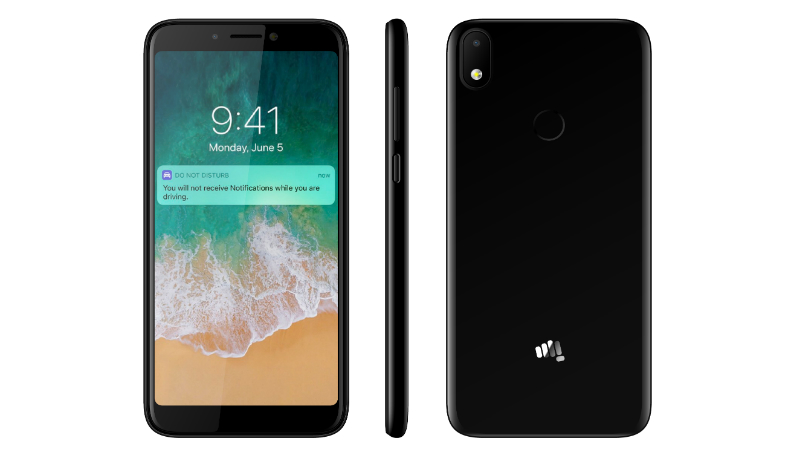
Micromax, the Indian mobile phone manufacturer, has launched its new smartphone in the Indian market — Micromax Canvas 2 Plus. The smartphone, priced at Rs. 8,999 (approximately $131), seems like an upgraded model of the Canvas 2 (2018) that was announced earlier this year.
The phone features a 5.7-inch HD+ 2.5D curved glass display with screen resolution of 1440 x 720 pixels, 18:9 aspect ratio, and 450 nits brightness. Under the hood, the device is powered by a 1.3GHz quad-core processor but the company has not yet revealed the specific chipset used in the device.
The smartphone packs 3GB RAM and 32GB internal storage, along with a microSD card slot which enables users to further expand the phone’s storage capacity. Coming to the camera specs, the device 13MP rear camera with LED Flash, 1.12um pixel size, 80-degree FOV, LED flash and an 8MP front-facing snapper for taking selfies and video calling.
Connectivity options include 4G VoLTE, WiFi 802.11 b/g/n, Bluetooth 4.0, and GPS. There’s a fingerprint sensor on the back of the phone as well as support for Face Unlock feature for added security. Running on Android 7.0 Nougat operating system out of the box, the smartphone is powered by a 4,000mAh battery.
The Micromax Canvas 2 Plus is available in two color options — Matte Black and Jet Black colors. The smartphone is priced at Rs. 8,999, which roughly converts to $131 and is now available for purchase through offline retailers across the country.
Further, the company has also listed Canvas 2 (2018) on the official website with similar specifications, but with 2GB RAM and 16GB storage which is also expected to be available soon.
OPPO’s Find X launches in just a few days and while there is a lot we already know about the specs, its overall design is still a mystery. A new teaser poster and TV ad have appeared online, giving us a glimpse of what to expect.
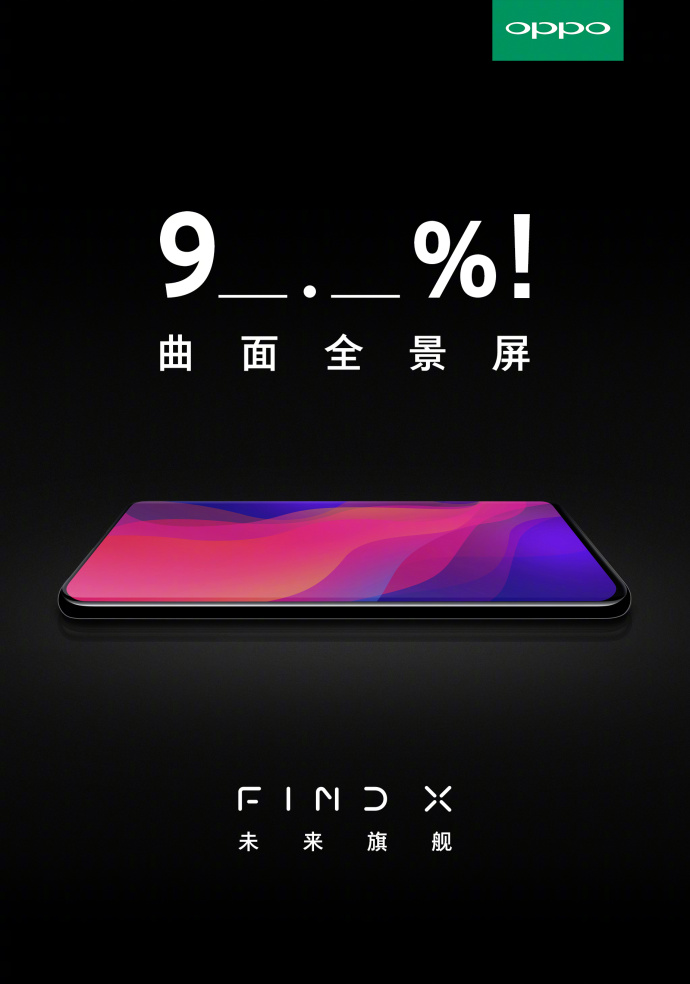
First, let’s examine the teaser poster. The image was shared on Weibo by the official OPPO account. It shows the Find X with a display that covers nearly all the front, save for a small bezel at the bottom. There is also no notch at the top.
Other than a picture of the phone, the poster also teases the phone’s screen-to-body ratio which should be over ninety percent seeing as the first figure is nine. To sum it up, the OPPO Find X should have a similar design to the Vivo NEX.
Next is the TV ad which was shown on one of China’s own state TV CCTV-1. The device has the same front design as the phone in the teaser poster above – a notch-less screen with a small bezel at the bottom. The interesting part of the ad is when we get to see the rear of the phone.
The back is covered in glass but has a black band in the shape of an M at the top. Within that black band sits dual rear cameras separated by a LED flash. The design is unlike what we have seen in recent phones and will surely make the Find X stand out from the crowd. The video also reveals the phone will come in two color variants – burgundy and blue.
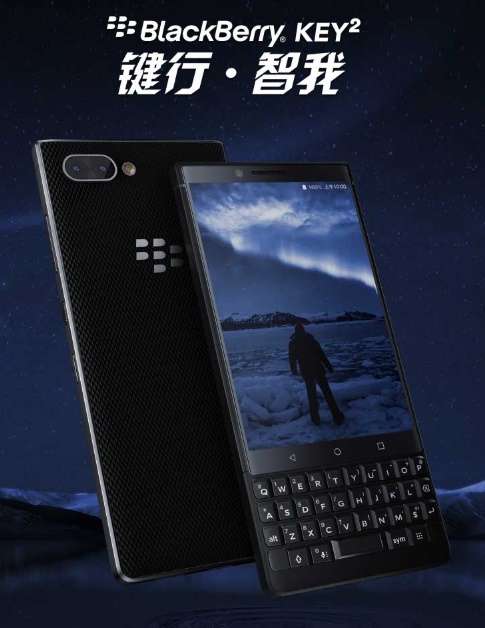
The BlackBerry KEY² was announced in China on June 8. However, only the 6GB RAM + 64GB model has been available for purchase. If you have been waiting for the 128GB model, you can now pre-order it on Jingdong (JD.com) before it goes on sale on Monday, 18th of June.
The 128GB BlackBerry KEY² will sell for ¥4499 (~$699), about $78 more than the 64GB model which is priced at ¥3999 (~$621). Nevertheless, these prices are lesser than those of other markets.
The BlackBerry KEY² has a 4.5” screen, a Snapdragon 660 processor, and dual 12MP rear cameras. It also has an 8MP front-facing camera, a 3500mAh battery, and runs Android 8.1 Oreo.
BlackBerry has redesigned the keyboard by making the keys bigger and also including a new key called the Speed Key. The Speed Key is sort of like a function key which launches preset apps when you press it along with another key. BlackBerry says it should make multi-tasking faster.
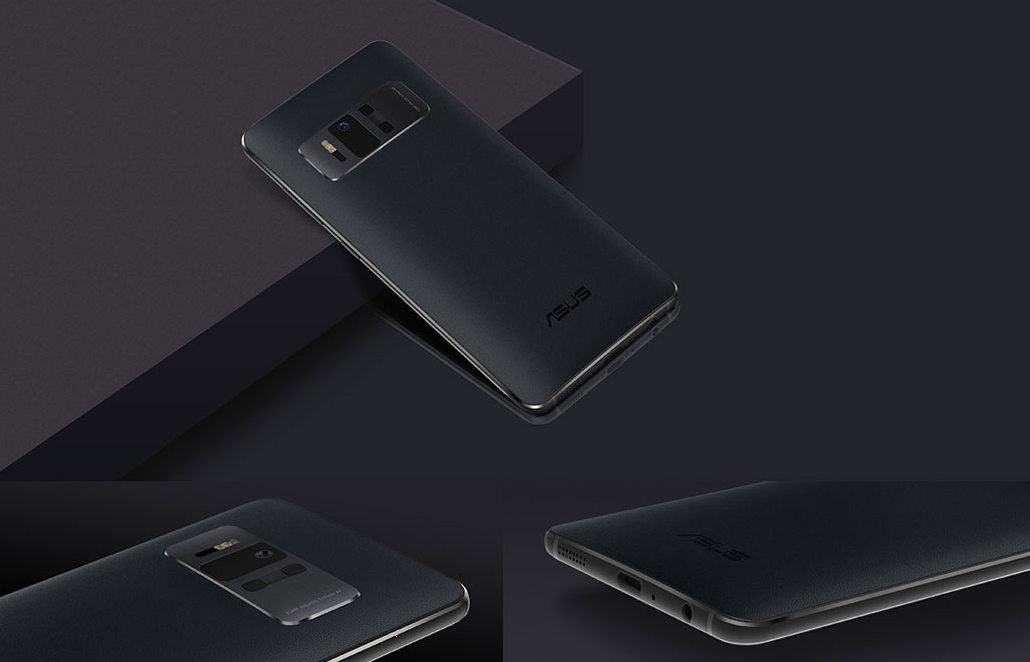
What do you do if you are trying to clear stock of an old and expensive phone? Rename it, slash the price, and pray that people don’t notice the difference or maybe they do and shouldn’t care since the new phone is selling for less. The above is what ASUS has done with the Zenfone AR which has been relaunched as the Zenfone Ares.
The Zenfone Ares is the Zenfone AR which is why ASUS didn’t bother to waste money having a launch event. The Zenfone AR, for those who don’t remember, was announced last year at CES as the first smartphone with 8GB of RAM and the first phone to support Google’s now abandoned Project Tango as well as Daydream VR.
The Zenfone Ares has a 5.7-inch Super AMOLED 2K display with a 1440 x 2560 resolution and Corning Gorilla 4. It is powered by the Snapdragon 821 which is paired with 8GB of RAM and 128GB of expandable storage.
The rear camera is a 23MP f/2.0 sensor (Sony IMX318) with 4-axis OIS and EIS, laser AF, and tons of shooting modes. It also has depth and motion tracking. Sitting above the display is an 8MP f/2.0 sensor.
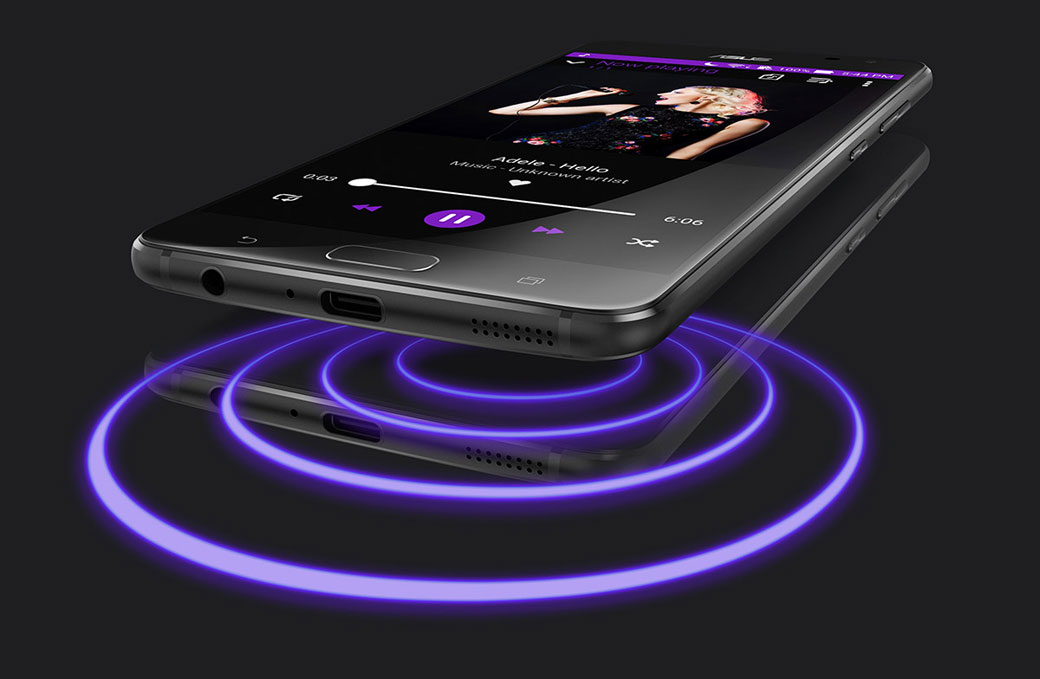
The Zenfone Ares has dts-HD support, a built-in NXP smart amplifier, and ASUS’ SonicMaster 3.0 for hi-res audio. It also has a 3.5mm audio jack. Its battery is 3300mAh with support for Quick Charge 3.0. There is a USB-C port with Display Port support, dual-band Wi-Fi, and Bluetooth 4.2 for connectivity. It also has a fingerprint scanner that doubles as the home button. Sadly, it still runs Android Nougat. It would have made more sense if it ran Android Oreo out of the box.
It looks like everything is on sale on GearBest. The popular online shopping store is all set to kick off its 618 Carnival tomorrow. This promotion will run until June 20th, which marks the first day of the Mid-Year Sale Launch promotion on GearBest.
As soon as the Mid-Year Sale Launch promo ends on June 25th, the site will commence its Price Meltdown promo, which is scheduled to end on July 2nd. GearBest will take wraps off its new promo dubbed ‘Treat Yourself’ on July 2nd and wrap it up on July 9th.
618 Lightning Flash Sale
The imminent promo will be brimming with all sorts of electronics items such as smartphones, tablets, TV box, and even 3D printers that you can buy at a slashed price. For the sake of an example, the promo offers a considerable 17% off on the Xiaomi Redmi S2 phablet.
While the device would normally set you back $222.91 on GearBest, you can now buy it at a lowered price of just $169.99. The discount will be valid for the gray and gold color versions of the phablet and there will be only 200 pieces up for grabs at a reduced price.
Unmissable Deals
This category features deals that you don’t want to miss. For instance, you can buy the Alfawise U20 DIY 3D printer at a reduced price of just $299.99. The device normally comes bearing a price sticker of $315.22 on GearBest.
618 Lucky Bags
Aside from featuring a slew of Lucky Bags with items like Digital Thermometer, Music-making Keychain + LED Light, and Screw Extractor in them, this section also includes the ThundeRobot GTR gaming laptop. You’d usually have to spend $1809.77 to buy the power packed laptop, but GearBest is giving cost-conscious consumers an opportunity to buy it at a lowered price of just $1167.33.
$10 For Any Item
This category has further been divided into 2 subcategories including Most Popular and Hot Deals. The Most Popular section comprises items that you can buy at a heavily discounted price. Likewise, the Hot Deals section includes various items that are up for grabs at a considerably reduced price.
618 Cool Add-Ons
If your order exceeds $60, you’d be eligible to get 1 add-on for just $2.99. Similarly, for any order over $100, you can get 1 add-on for just $6.99. Note that there’s a limitation of 1 unit per item.
Epic Flagship Brands
Much to the delight of brand-conscious consumers, GearBest is offering big discounts on a slew of top brands including Xiaomi, Alfawise, Elephone, Amazfit, Teclast, Creality3D, Beelink, JJRC, Yeelight, and Dibea. The discount will be valid for a broad range of well-received smartphones, 3D printers, smart watches and lots more.
For example, you can get an 11% discount on the Teclast F7 Notebook’s retail price. The coveted notebook normally sells for $336.52 on GearBest, but you can now get your hands on it if you’re willing to spend just $299.99. The discount will be valid for the silver color version of the Teclast F7. On the downside, there were only 96 pieces left for the Flash Sale price at the time of writing and the promo is slated to end in 1 day.
There’s more to explore. You can follow this link to check out rest of the products and take advantage of the promo before it comes to an end.
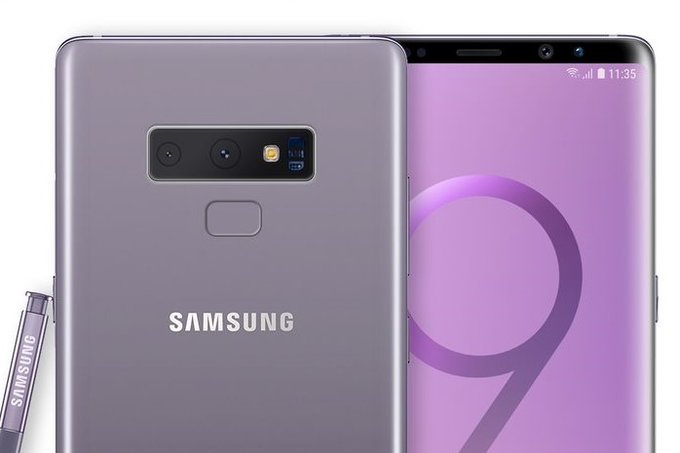
A few days ago we told you about some photos surfaced on the web which showed, for the first time, a Samsung Galaxy Note 9 protective case. The pictures revealed the presence of an additional physical key on the lower part of the right side, under the volume and power keys. According to earlier rumors, this button was said to be a shutter key which will be possible to use to shoot photos and take screenshots with the upcoming flagship phablet.
Now, a reliable leakster has revealed that there will be no additional key besides the volume buttons, the power key and the Bixby key. According to the tipster identified on Twitter by the nickname Ice Universe, the cut-out you could see on the Samsung Galaxy Note 9 case is just two holes to be used with a lanyard.
So, we can stop expecting an additional Xperia-like key making the camera experience more comfortable. According to the latest rumors, Samsung Galaxy Note 9 will come with a big 4000 mAh battery. Further, it will sport the Samsung Exynos 9810 chipset just as the Galaxy S9 duo. It is tipped to be officially announced alongside the Gear S4 and a Bixby speaker on August 9.
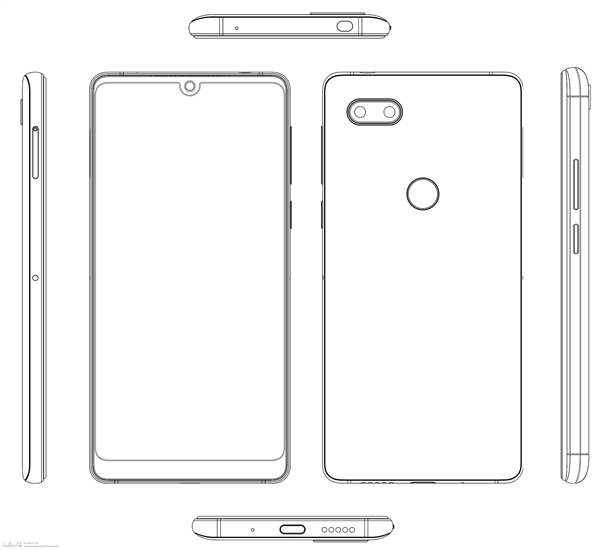
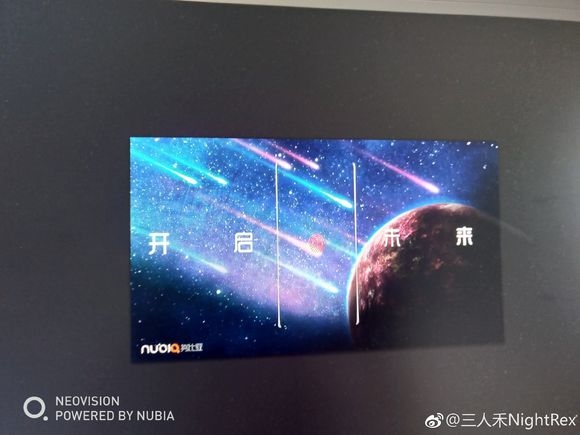
It is almost time for a new Nubia phone with flagship-level specs at a reasonable price for performance lovers who do not have a high budget. A new poster and schematics related to Nubia Z18 have just surfaced online and revealed that its launch is near as well as important details about its design. According to the poster, the device will offer a new Full Screen 3.0 experience with very narrow bezels. Note that the screen-to-body ratio of its predecessor Z17s exceeds 90 percent, so expect a device with incredibly narrow bezels. Indeed, according to the schematics, on the upper part, there is an Essential-like notch and an almost non-existent bezel.
There are no side bezels, but there is a chin. Judging its look, it seems that Nubia Z18 will come again with a glass back and an aluminum frame like its predecessor. On the backplate, there will be a circular fingerprint reader and a dual camera setup in a horizontal configuration. The volume rocker is placed on the right side together with the power key. On the lower side of the phone, there is a USB Type-C port, a mono speaker grille, and a microphone. No info has surfaced about its specs, so we still have to rely on previous rumors and leaks.
According to reports, Nubia Z18 will be one of the most performing smartphones out there. It will boast an octa-core Snapdragon 845 SoC by Qualcomm with a clock of 2.8 GHz paired with 8 GB of RAM, at least in its most expensive configuration. CMIIT (China’s Ministry of Industry and Information Technology) has revealed that it will feature a 5.99-inch display with a width of just 72.54 mm to make the one-handed use easier. It is also expected to come with whopping 128 GB of internal storage and a battery with a capacity of 3350 mAh.
Last month, Xiaomi announced the latest version of its custom Android-based mobile operating system — MIUI 10 at an event in China. After announcing the list of eligible devices for the new MIUI 10 update, the company has now started rolling out MIUI 10 Global Beta ROM to compatible smartphones.
This development comes just days after the Chinese company launched the global version of its latest MIUI at an event in New Delhi, India. The list of compatible devices for the new MIUI Global ROM includes the Mi Mix 2, Mi Mix 2S, Redmi S2, and Redmi Note 5 Pro / Redmi Note 5. The company had started recruiting beta testers for the MIUI 10 Global ROM last week to start testing process.
While the new MIUI 10 Global Beta ROM is currently rolling out to only select smartphones at this stage, Xiaomi has plans to bring the new version of its proprietary ROM to most of its smartphones. The stable version of the latest MIUI skin is expected to start rolling out in September this year.
The new ROM, which carries version 8.6.14, includes several new features and developments, including an updated Mi Browser with an optimized start page, PWA (Progressive Web App) support, and better search functionality and App Vault with a World Cup card. Further, the update also fixes issues related to the Greek language localization.
If you are running MIUI 9 Global Beta ROM and have already registered for the Global Beta ROM, you can check for the update by going into Settings > About phone > System Updates > Check for updates. The company has not yet provided ROM download link, so for those who are looking to update directly from stable to beta, will need to wait for Xiaomi to provide links.
The MIUI 10 comes with several new features such as improved recent apps menu which is designed to better utilize the full-screen design on newer Xiaomi devices. Instead of arranging recent apps like a stack of cards, the app cards appear side by side on the screen, enabling you to see as much as six recent apps on the screen at one time.
It also makes use of artificial intelligence technology for “up to zero” loading times by studying your app usage behavior and anticipating actions, as well as it brings single camera bokeh mode to old Xiaomi smartphones. The MIUI 10 also brings a new driving mode which relies on voice commands to avoid distractions.
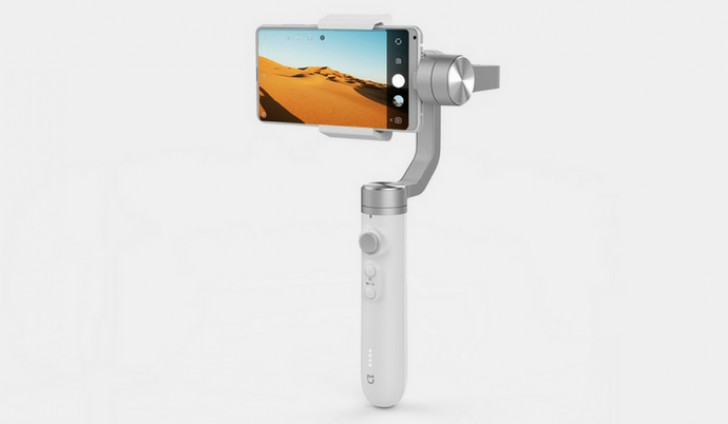
Earlier this week Xiaomi’s Mijia brand announced a new gimbal. This is its third gimbal. It already has two – one for smartphones and another for its PTZ camera.
The new gimbal packs a massive 5000mAh battery that should last up to 16 hours on a single charge. That will be less if you use the gimbal to power your phone.
The Mijia Gimbal has 3-axis stabilization with auto-tracking. You can also use it to shoot time lapse videos by connecting it to a tripod via the 1/4-inch screw at the base. It supports phones with a maximum weight of 200g and a maximum width of 86mm. The gimbal itself weighs 476g and has a white and gray dual tone color.
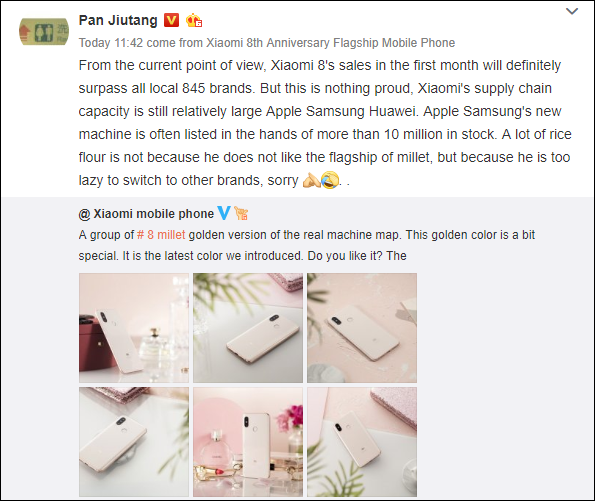
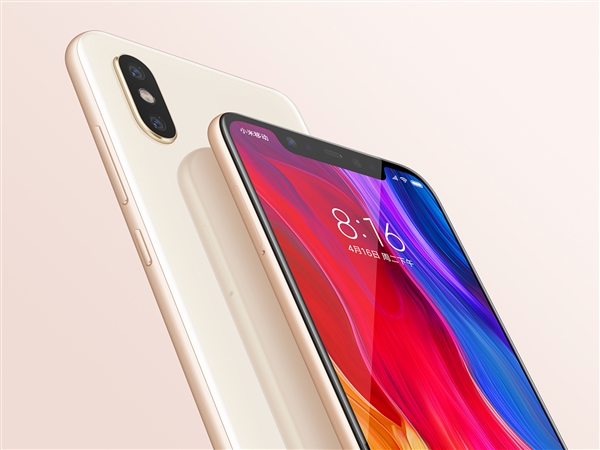
Xiaomi‘s latest Mi 8 flagship has presently gone on sale twice since it was launched on May 31 in China. The first sale only lasted one minutes and 3o seconds before all units were sold out. The second flash sale didn’t fare any better either. Despite Lei Jun’s recent disclosure that the models will get 1 million stocks this June, the Mi 8 still remain elusive to buy.
According to industry analyst Pan Jiutang, this shortage in stock of Xiaomi’s models often affects the sales performance. Despite that the Mi 8 is the top performer in sales among all Snapdragon 845 brands in China, the Xiaomi supply chain still falls behind those of Apple, Samsung and even Huawei, he noted. The stock of the two global smartphone market leaders is usually in the region of 10 million whenever a new model is released. This ensures fans are able to get the device as soon as possible. The analyst also noted that the unavailability of Xiaomi’s latest models most times make some buyers opt for other available brands in the same category.
This isn’t a new information per se, as this is a problem Xiaomi is aware of and has addressed on several occasions. The company has even made conscious effort to shore up its stock but it still just not enough. The unavailability of XIaomi models in Europe and other regions often result in buyers paying way more for the models when buying from third-party retailers, notably Banggood, GearBest, Geekbuying et al. It is believed that with the IPO that is about opening on the Hong Kong stock exchange, Xiaomi will get sufficient fund to further expand its supply chain, thus boosting revenue.
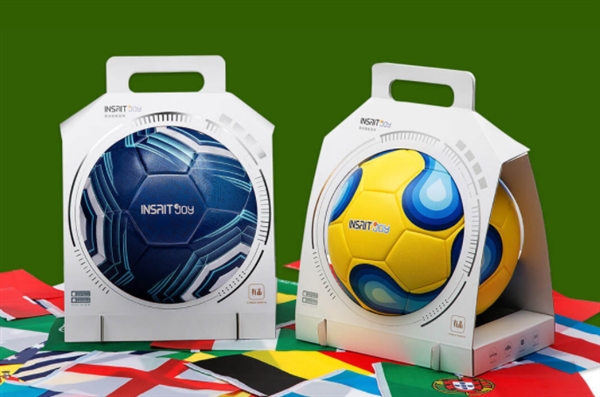
The FIFA 2018 World Cup holding in Russia is presently dominating the headlines in the sporting circle and what better time to release a football other than now. At a time world cup gears would be experiencing a surge in sales, Xiaomi has launched a new Smart football under crowdfunding.
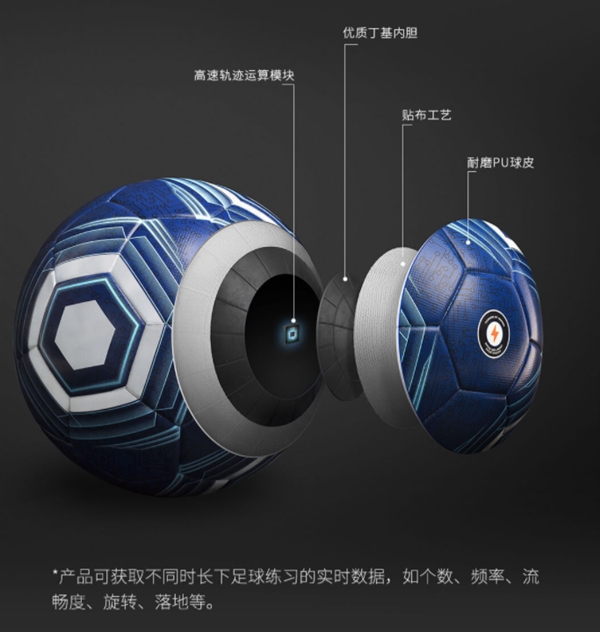
The INSAIT JOY Smart Football comes with an integrated chip which measures data such as the trajectory and velocity of the ball during training. It is available in a 4th and 5th models. The 5th model has a circumference of 680-700mm and weighs between 420g and 450g. While the smaller 4th ball has a circumference of 635-660mm, weighing 350-390g. This model is suitable for use by the young ones under 12 years of age.
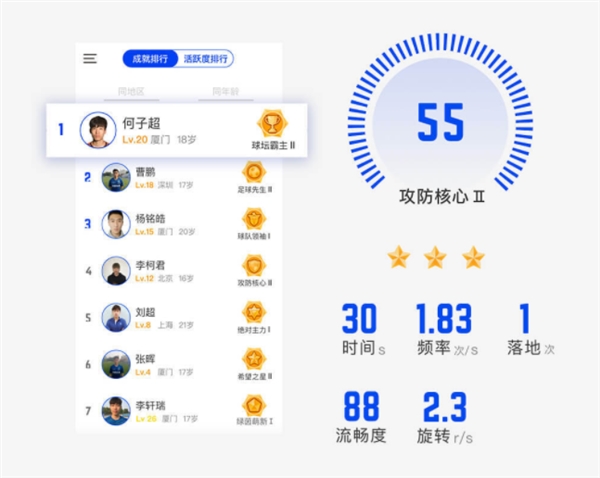
Design wise, the INSAIT JOY Smart football is crafted using thermal bonding technology instead of the traditional sewing process. It has good air tightness and eliminates the possibility of deformation due to wear or water immersion. The football is made of wear-resistant PU skin and butyl liner and it meets FIFA’s ball standard. Since it is a smart football, there is a built-in high-speed trajectory calculation module, a micro-computing chip and a high-performance sensor. The professional motion trajectory algorithm runs in real time in order to accurately analyze the trajectory and motion of the football. The data can be viewed in real time on a supporting smartphone app. The app also supports short video recording, comes with motion data dynamics, cloud storage and sharing to social platforms.
In addition, the user can set up to three levels and fourteen advanced exercise programs, and at the end of the training session, the app can score the achievement level of each exercise. There are personal achievement rankings, with expert online PK. The smart football supports wireless charging. A 30-minute charge can be used for 3 hours training session while a full battery charge will afford up to 7 hours of training. If the gadget is on standby mode, the battery can deliver up to 40 days of standby time.
The INSAIT JOY Smart football is expected to ship on July 10 in China, just a couple of days before the world cup ends. But then, this will be a great sports product for academies and football clubs going forward. The product is presently available on crowdfunding for 299 yuan ($46).
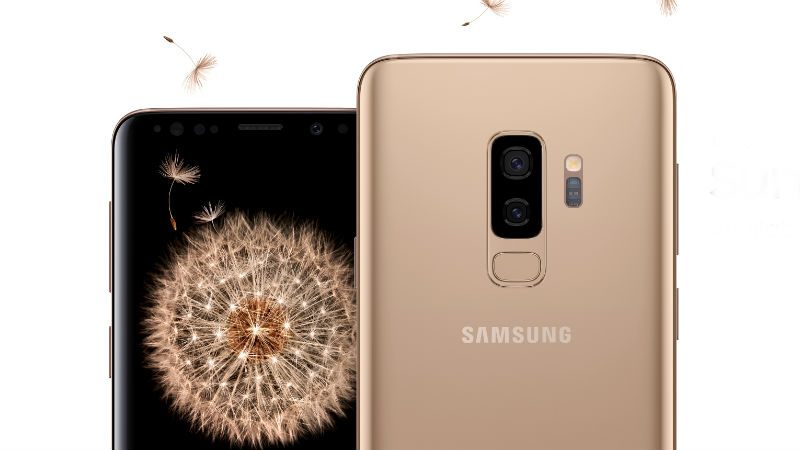
Earlier this year, Samsung launched its flagship smartphones — Galaxy S9 and Galaxy S9 Plus in India. Now, the South Korea-based company has launched a new variant of the Galaxy S9 Plus in the Indian market — Samsung Galaxy S9 Plus Sunrise Gold Limited Edition. The Sunrise Gold and Burgundy Red color variants for both S9 and S9 Plus were announced last month.
The smartphone joins the list of already available color variants, which includes Midnight Black, Coral Blue, and Lilac Purple. Along with this, the company has also announced a TV Control widget, which offers a one-of-its-kind unified convergence solution between mobiles and televisions.
When enabled through Smart Things app and when the user is in the vicinity of a television, the TV Control widget will automatically show up on the phone and allow two-way screen mirroring and sound mirroring.
The widget also has a ‘Play Sound’ mode which allows consumers to stream and share music from mobile with others around by using the television as a Bluetooth speaker using the “Device to TV” option. Consumers can also enjoy mobile games on a big screen by mirroring their mobile screen on to their television.
The Samsung Galaxy S9 Plus Sunrise Gold Limited Edition is priced at Rs. 68,900, which roughly converts to $1013. Samsung is offering a special one-time screen replacement offer and Rs.9,000 (approx. $132) cashback when customers pay using Paytm Mall or ICICI Bank credit cards.
The smartphone will be available across selected retail stores from 20th June 2018, and pre-booking on Samsung Shop and Flipkart from today.
The smartphone comes with a 6.2-inch Super AMOLED display which supports QHD+ resolution of 2960 x 1440 pixels and comes with a new kind of coating on the screen that delivers deeper blacks. It is powered by Samsung’s Exynos 9810 octa-core processor with Mali G72MP18 GPU.
Coming to the camera specs, the Galaxy S9+ comes with a 12-megapixel primary rear camera and 12-megapixel secondary camera along with f/2.4-f/1.5 variable aperture, LED Flash, and 960fps super slo-mo support. On the front, it features an 8-megapixel auto-focus camera with wide-angle lens and f/1.7 aperture.
Connectivity options on the device include 4G VoLTE, Wi-Fi 802.11ac (2.4GHz/5GHz), VHT80 MU-MIMO, Bluetooth v5 (LE up to 2Mbps), GPS with GLONASS, USB 3.1, NFC and MST. The Galaxy S9 Plus is fuelled by a 3,500mAh battery and comes with wireless charging.
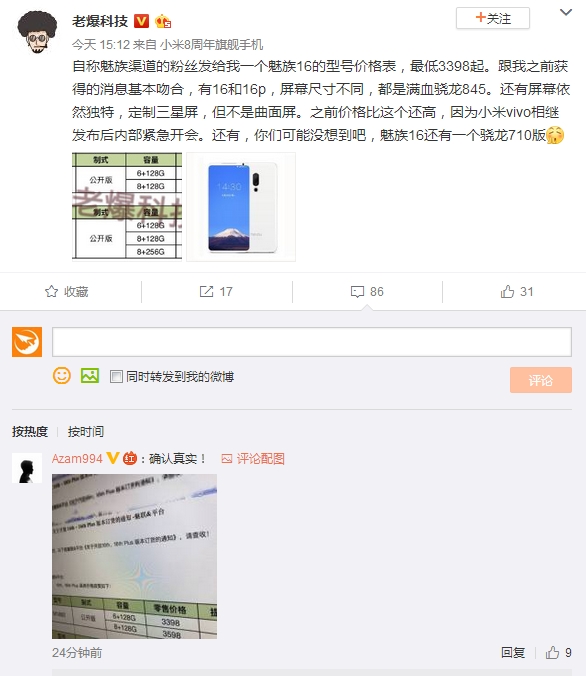
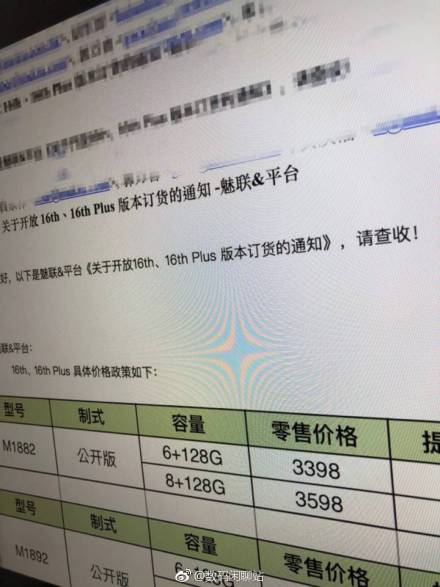
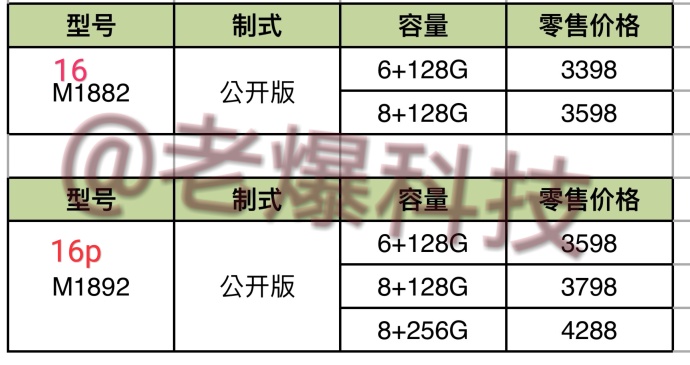
Meizu 16 and Meizu 16 Plus/PRO are the upcoming flagship phones from the company. Yesterday, Meizu’s founder Jack Wong had confirmed that the Meizu 16 series will be launching in August with Snapdragon 845 SoC onboard. The rumor mill has already leaked the entire specs of the Meizu 16 and 16 Plus. According to Wong, the actual Meizu 16 looks even better than the renders that are circulating online. The pricing of the Meizu 16 duo were also leaked in the recent leak along with the press renders. Earlier today, a tipster shared a price chart image of the Meizu 16 on Weibo. He claimed that he had received it from a fan from the Meizu channel. Subsequently, another tipster replied to him with an image of the same price chart that was reportedly snapped at a Meizu event.
Fresh information reveals that the Meizu 16 and 16 Plus will be arriving in different screen sizes and they will be fueled by Snapdragon 845 chipset. It is speculated that there is Snapdragon 710 variant too. Probably, it be the lowest configuration version of Meizu 16. These phones will be sporting a unique and custom-made screen from Samsung. However, they won’t be featuring curved displays.
As far as pricing is concerned, the Meizu 16 (M1882) will be coming in two variants such as 128 GB storage + 6 GB RAM and 128 GB storage + 8 GB RAM. Both the models will be available with respective pricing of 3,398 Yuan (~$529) and 3,598 Yuan (~$560).
The Meizu 16 Plus (M1892) will be coming in three variant such as 128 GB storage + 6 GB RAM and 128 GB storage + 8 GB RAM and 256 GB storage + 8 GB RAM. These models are expected to carry respective price tags of 3,598 Yuan (~$560), 3,798 Yuan (~$591) and 4,288 Yuan (~$669).
The original pricing of Meizu 16 series were higher than what’s mentioned above. However, after the arrival of smartphones from brands like OPPO, Vivo and Xiaomi launched, Meizu reportedly carried out an emergency meeting to adjust the pricing of the Meizu 16 and 16 Plus.
Since the launch of the Meizu 16 and 16 Plus is still two months away, it is recommended to digest this report with a grain of salt as the final pricing of the Meizu 16 duo could be different.
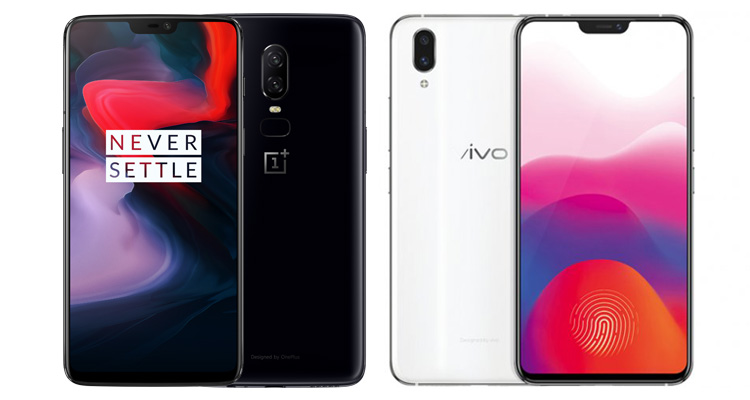
OnePlus and Vivo are two companies owned by BBK Electronics, and they are among the most important Chinese smartphone brands right now. Their strongest point is the quality price ratio of their handsets as they are not priced like the pricey Huawei flagships but they are still the best choice for many users thanks to their performance and cameras. We compare the OnePlus 6 vs Vivo X21 to see how they differ in terms of specs and features.
Dual 16 + 20 MP, f/1.7 + f/1.7, OIS
16 MP f/2.0 front camera
Dual 12 + 5 MP, f/1.8 + f/2.4
12 MP, f/2.0 front camera
BATTERY
3300 mAh, fast charging 5V / 4A (Dash Charge)
3200 mAh, fast charging
ADDITIONAL FEATURES
Dual SIM slot
Hybrid Dual SIM slot, Under Display fingerprint reader
Design
Let’s say that OnePlus 6 has a better build quality and Vivo X21 has better looks. OnePlus 6 has a wonderful glass back for the first time for its flagship and it is splashproof even though the company failed to give an official IP rating. But the company said that it can survive to rain and drops in puddles, so this is enough for your everyday usage. On the other hand, Vivo X21 has a higher screen-to-body ratio and its bezels are almost absent. It is even higher than iPhone X which has a full borderless design. Note that X21 is the only one which comes in a variant with a fingerprint reader embedded in the display.
Display
Even though their prices are moderate, these phones have wonderful displays. Both are AMOLED panels with incredibly brilliant color and deep blacks. And they have exactly the same size and the same resolution: 6.28 inches with a Full HD+ resolution of 1080 x 2280 pixels. There is a notch, but it helps to reduce the bezels. OnePlus 6’s display supports DCI-P3 and sRGB color gamut, and we believe it is a slightly better screen.
Hardware/Software
Among these phones, the real flagship is the OnePlus 6 due to its stunning hardware side. It has an octa-core Snapdragon 845 chipset by Qualcomm, 6 or 8 GB of RAM and up to 256 GB of internal storage depending on the configuration. It is one of the fastest and smoothest Android phones in the market, and Vivo X21 can not compete with it in terms of performance. But it is still a good high-end phone thanks to its Snapdragon 660 SoC and 6 GB of RAM.
Camera
Both are camera phones without any doubt. They have wonderful dual cameras on their backs as well as great selfie snappers. OnePlus 6 comes with a 16 + 20 MP dual setup which has bright f/1.7 aperture and even OIS. It can even record 4K videos at 60 fps. Vivo X21 has a f/1.8 dual camera with dual pixel PDAF which can capture an incredible quantity of detail, but it is not at the same level. OnePlus 6 is a way better camera phone with more detailed shots and less noise in every light condition.
Battery
OnePlus declared that it is not interested in making phones with huge batteries. The company chooses a battery which can last one day in order to release devices with the lowest thickness possible. And that is what it did with the OnePlus 6, a device with a satisfying but not very long battery life. The same is with Vivo X21 and its 3200 mAh lithium unit. Both phones feature a fast charging technology. So, there isn’t a winner when it comes to batteries as they have a similar battery life and a similar charging speed.
Price
OnePlus 6 has been launched in the global market with a starting price tag of €519/$529 for the base variant with 6 GB of RAM and 64 GB of internal storage. Vivo X21 is currently a Chinese and Indian market exclusive. Recently, it was launched in India with a price tag of $530: exactly the same.
OnePlus 6 is the winner of the comparison and, with these prices, it is also the best value for money device. But in the coming months, we believe that X21’s price will decrease much more than the one of OP6, making it a worthy opponent in terms of value.
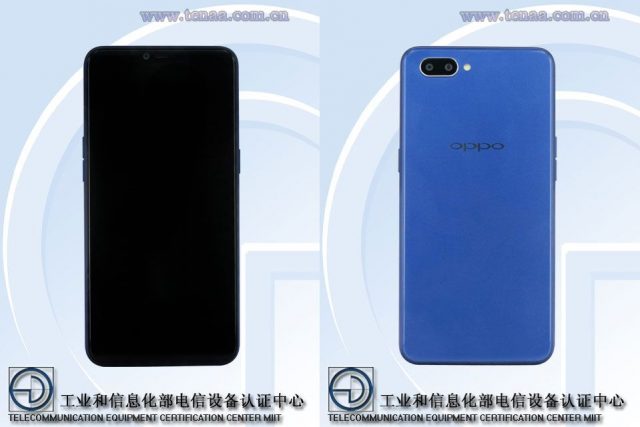
Yesterday, two new Oppo phones with model numbers PABM00 and PBAT00 had surfaced on TENAA. These models are speculated to be the two variants of an upcoming mid-range OPPO phone. Their listings had revealed only few details such as dimensions, display and battery size. The TENAA listings for these models have been updated with their full specifications. This suggests that Oppo PABM00/PABT00 will be one of the first phones to debut after the Find X smartphone that is slated to get official on June 19.
The PABM00 and PABT00 models have identical specs. Their TENAA listings revealed that the smartphone would be arriving with a 6.2-inch display that will support HD+ resolution of 720 x 1520 pixels along with an aspect ratio of 19:9.
The handset will be fueled by an octa-core processor that clocks at 1.8 GHz that will be accompanied by 4 GB of RAM. There is a possibility that the phone could be driven by Snapdragon 450 chipset.t is packed with a 4,100mAh battery. It includes an inbuilt storage of 64 GB and for additional storage, it features a microSD card slot.
The device is loaded with Android 8.1 Oreo. The dual camera setup placed on the back of the phone includes a 13-megpaixel primary sensor and a 12-megapixel secondary. For selfies, it is fitted with an 8-megapixel front-facing camera.
As far as the design of the phone is concerned, the OPPO PABM00/PABT00 measures 156.2 x 75.6 x 8.2mm and weighs 168 grams. The handset is expected to arrive in multiple colors like Rose Gold, Light Blue, Dark Blue and Purple. The Dark Blue variant has also appeared in TENAA images. The image reveals the presence of a notched screen. The rear panel of the phone is devoid of a fingerprint reader but features a horizontal dual camera setup.
The aforementioned specifications and appearance suggest that the OPPO PABM00/PABT00 could be lighter version of OPPO R15 and R15 Pro. However, the company may debut them as an A-series smartphone.
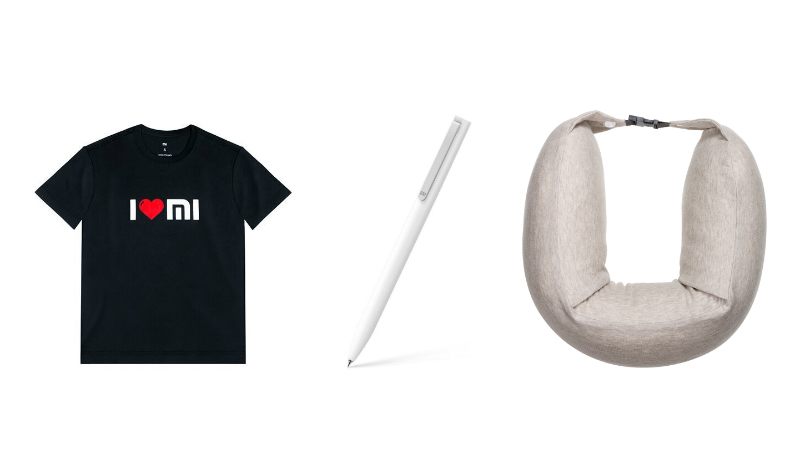
Expanding the Mi ecosystem products in India, Xiaomi has launched a few new products in the Indian market, which includes Mi Rollerball Pen, I Love Mi T-Shirt, Mi Travel U-Shaped Pillow, and Mi Band 2 Charge Cable.
All the newly launched products will be available for purchase through Xiaomi’s online store in India — Mi.com starting from 12 AM (midnight) on Friday, June 15. The price range for the products is between Rs. 129 (~$2) and Rs. 999 (~$15).
The Mi Rollerball Pen, which is priced at Rs. 179 (approximately $), comes in an aluminum body. The pen has a premium feel to it and also makes for an excellent gift. The Mi Travel U-shaped Pillow is made with a combination of cotton and natural latex is the perfect travel buddy.
The newly launched Mi I Love Mi T-Shirt is created for Mi Fans. The company says that it is made out of soft, blended fabric which offers comfort all day long. Last addition to the list is the Mi Band 2 Charge Cable which can be used for charging Mi Band 2 and Mi Band HRX Edition.
As said, the Mi Rollerball Pen costs Rs. 179, while the Mi Travel U-Shaped Pillow is priced at Rs. 999 (approximately $15) and will be available in two color options — Grey and Beige. The T-shirt will be available in three basic colors — Grey, Black, and White for Rs. 399 (approximately $6) and the Mi band 2 charger cable will be available for Rs. 129 (approx. $2).
Prior to this, the company recently launched its latest selfie-centric smartphone in the Indian market — Redmi Y2, which is the successor of the Redmi Y1 launched last year and a rebranded model of Redmi S2 that was launched in China last month. The Xiaomi Redmi Y2 is available for purchase via Amazon.in and the pricing starts at Rs. 9,999, which roughly converts to $147.
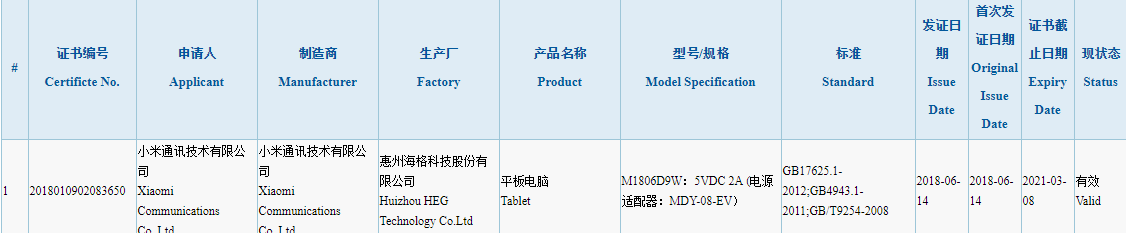
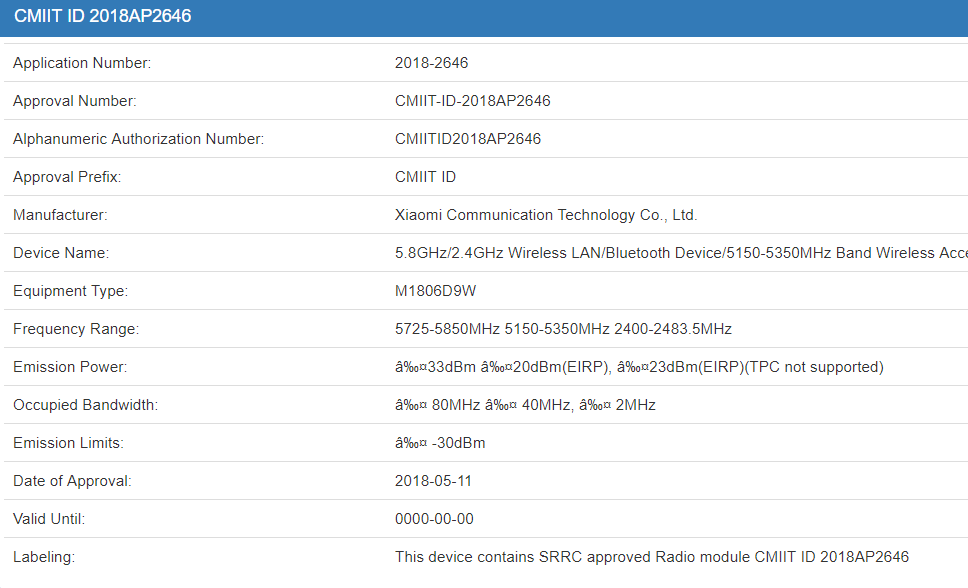
The Xiaomi Mi Pad 4 has appeared in the internal code of the official website of the company. The Chinese manufacturer will be holding a launch event for the Mi Max 3 in July. It is speculated that the company may use the same stage to announce the Redmi 6 Pro as well as Mi Pad 4. A new tablet with model number M1806D9W has been certified by China Compulsory Certification (3C) body in China. Moreover, it has also received approval China’s Ministry of Industry and Information Technology (CMIIT).
The 3C listing of the device clearly mentions that it is a tablet and it carries support for 5V/2A charging. Since the company is rumored to be working on a successor model for Mi Pad 3 from 2017, it is very likely that the M1806D9W device is the upcoming Mi Pad 4. Leaked firmware files of the device that had surfaced few months ago had revealed that it features a 6,000mAh battery which is a bit smaller than the 6,600mAh battery that powers the predecessor model.
The device is also carry support for 5.8GHz/2.4GHz dual-band Wi-Fi. It is likely that like the predecessor model, the Mi Pad 4 will be only arriving in Wi-Fi model.
The Mi Pad 4 is expected to feature a 13-megapixel rear-mounted camera and a frontal shooter of 5-megapixel. It may be driven by Snapdragon 660 SoC. It is speculated that the octa-core processor will be working at an underclocked speed of 2.0 GHz. There is no information available on the RAM and storage editions of the device.
Like the Mi Pad 3, the successor device will be arriving with an LCD screen. Leaked firmware files had carried references for 18:9 aspect ratio display for Mi Pad 4. A tablet sporting such a tall aspect ratio sounds weird. Hence, it is advisable to wait for further leaks to confirm on its display configuration.
We use cookies on our website to give you the most relevant experience by remembering your preferences and repeat visits. By clicking “Accept”, you consent to the use of ALL the cookies.
This website uses cookies to improve your experience while you navigate through the website. Out of these, the cookies that are categorized as necessary are stored on your browser as they are essential for the working of basic functionalities of the website. We also use third-party cookies that help us analyze and understand how you use this website. These cookies will be stored in your browser only with your consent. You also have the option to opt-out of these cookies. But opting out of some of these cookies may affect your browsing experience.
Necessary cookies are absolutely essential for the website to function properly. This category only includes cookies that ensures basic functionalities and security features of the website. These cookies do not store any personal information.
Any cookies that may not be particularly necessary for the website to function and is used specifically to collect user personal data via analytics, ads, other embedded contents are termed as non-necessary cookies. It is mandatory to procure user consent prior to running these cookies on your website.





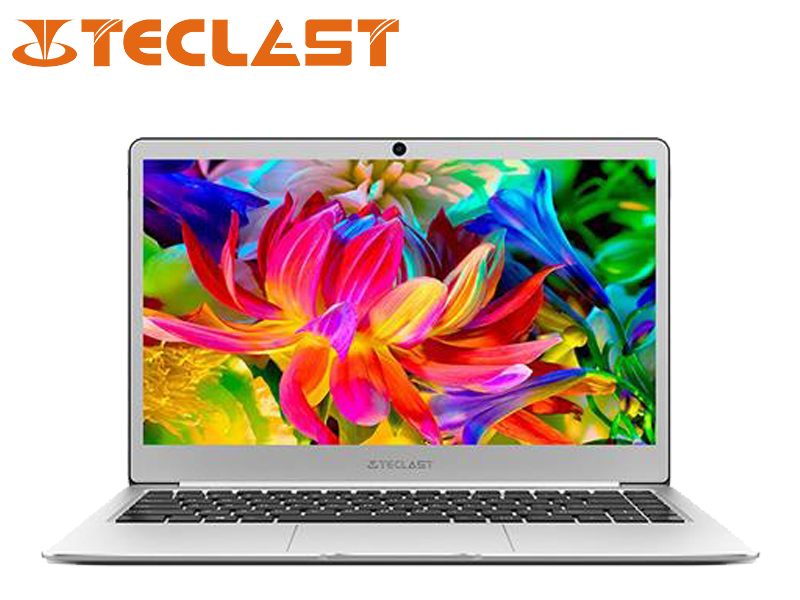 The discount will be valid for the silver color version of the Teclast F7. On the downside, there were only 96 pieces left for the Flash Sale price at the time of writing and the promo is slated to end in 1 day.