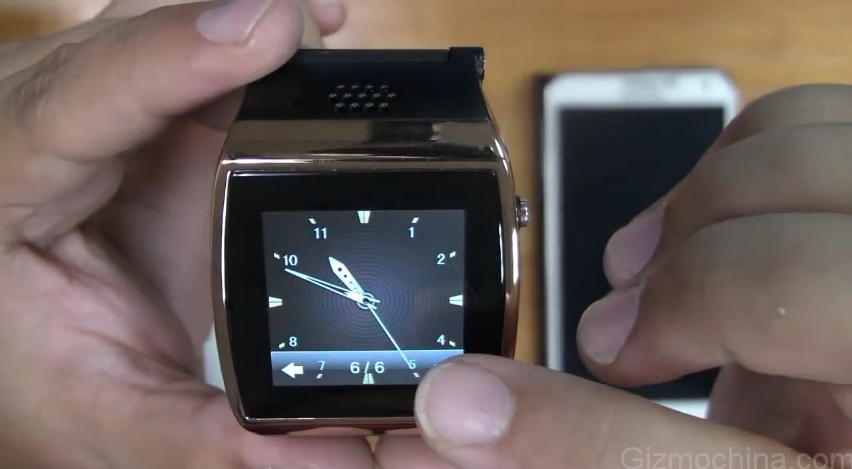
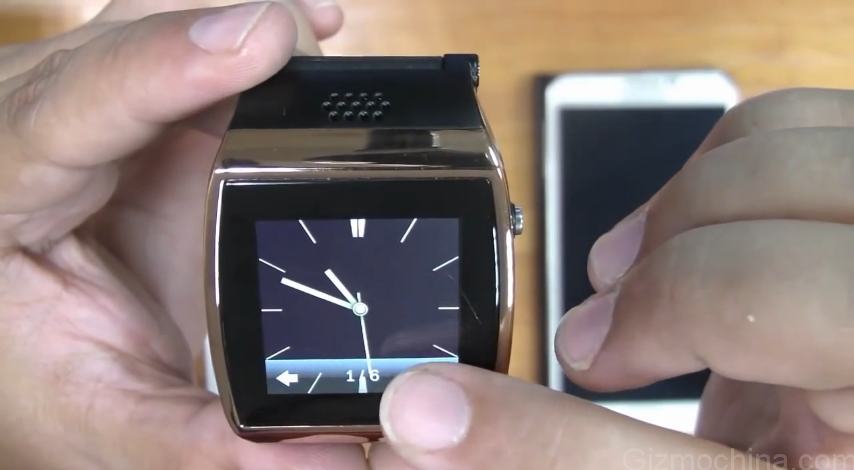
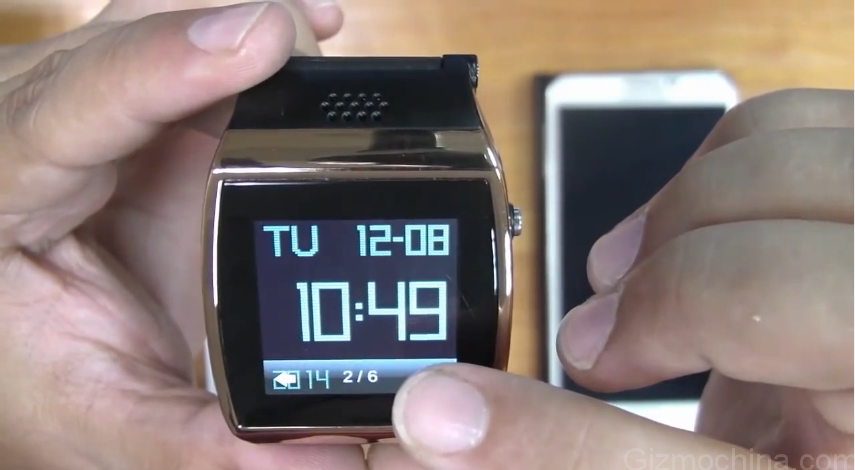
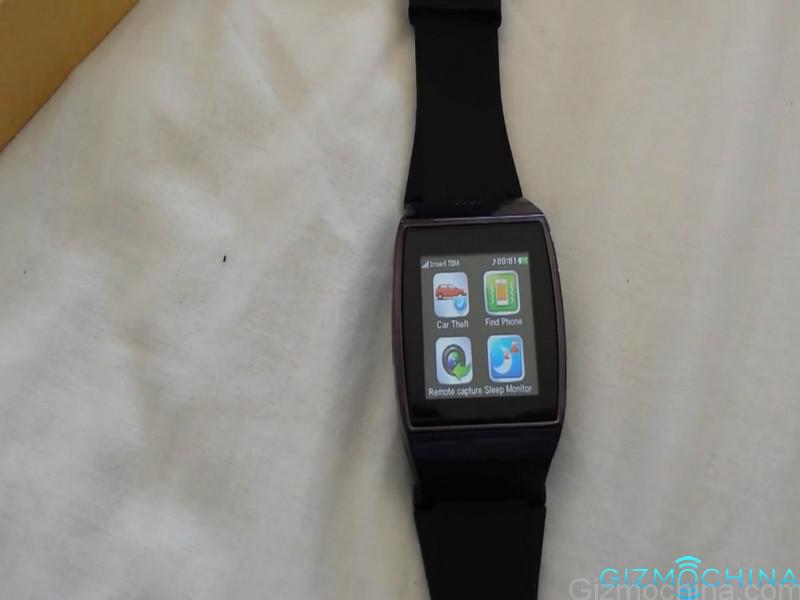
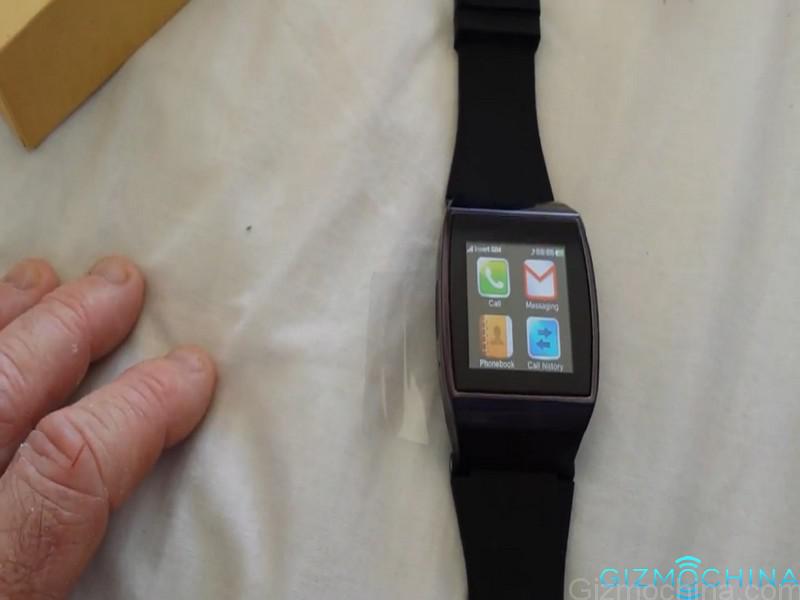
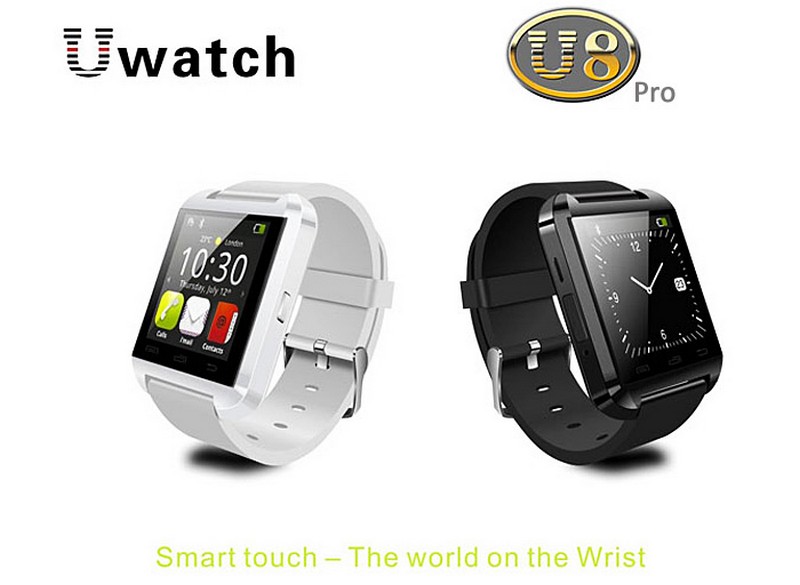
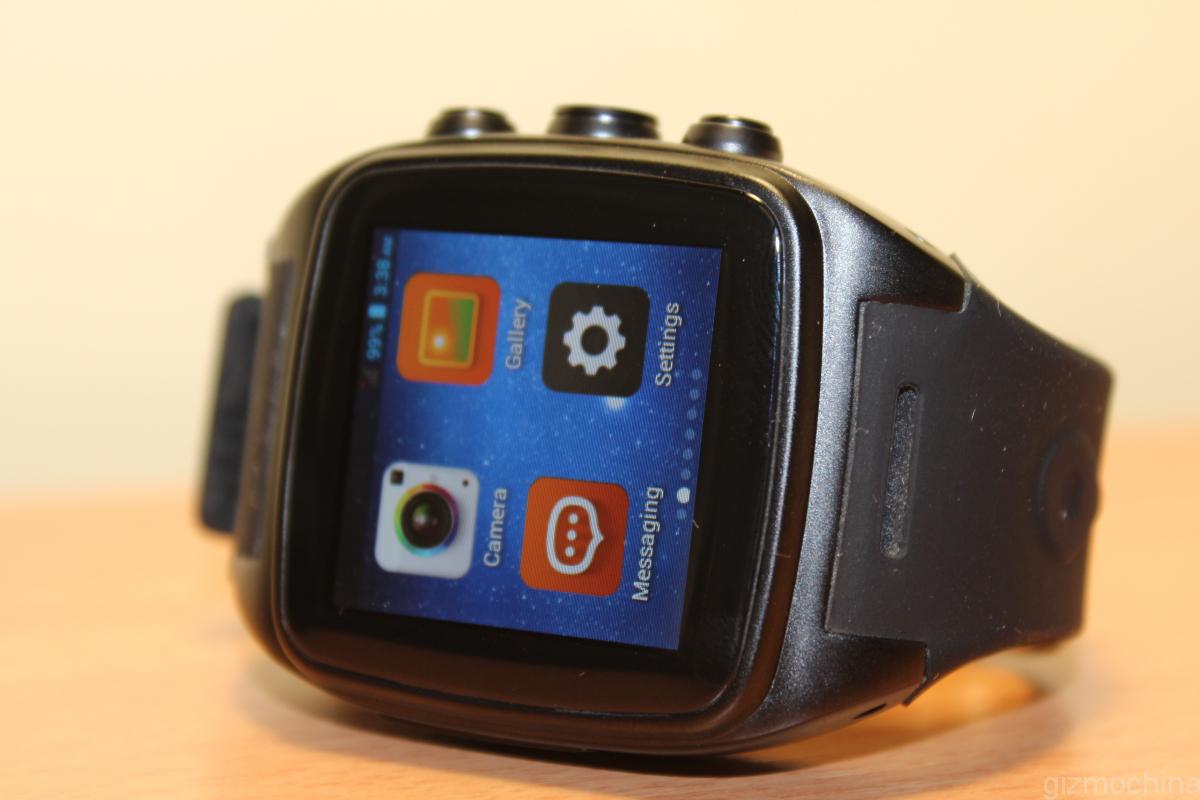
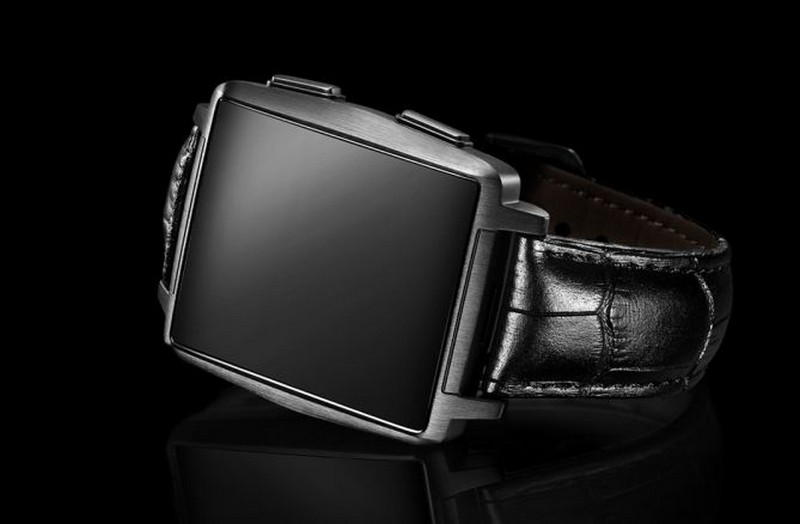
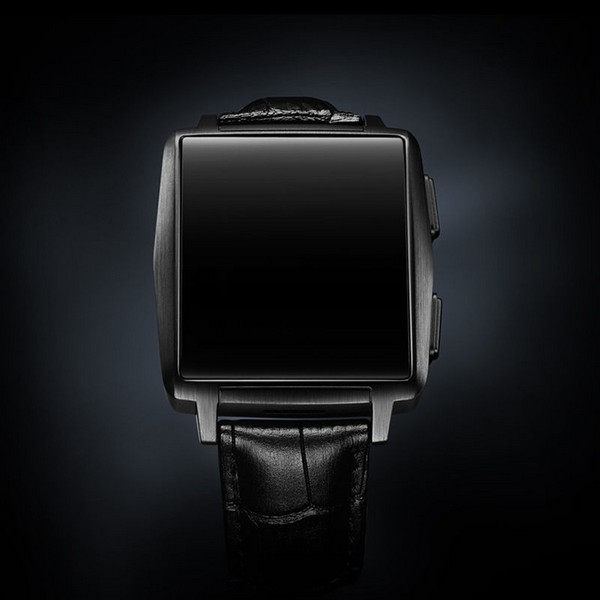
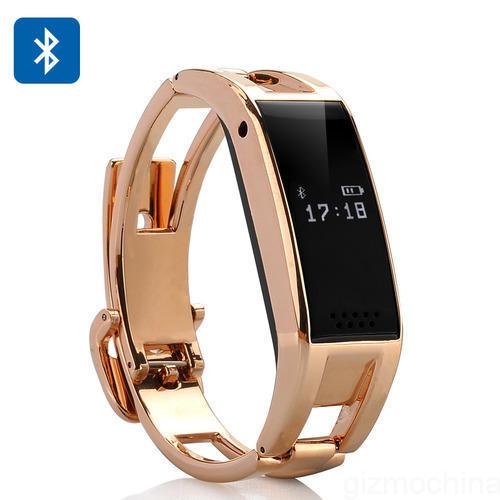
We recently wrote an article about the top Chinese smartwatches to buy this holiday season. Today, we are looking at the second smartwatch from that list, the UWatch U8 Pro. While there’s no doubt that the U8 Pro is one of the cheapest smartwatches currently available in the market, its always good to check out whether the device performs as promised. This is exactly what we did and here’s the full UWatch U8 Pro Review.
UNBOXING
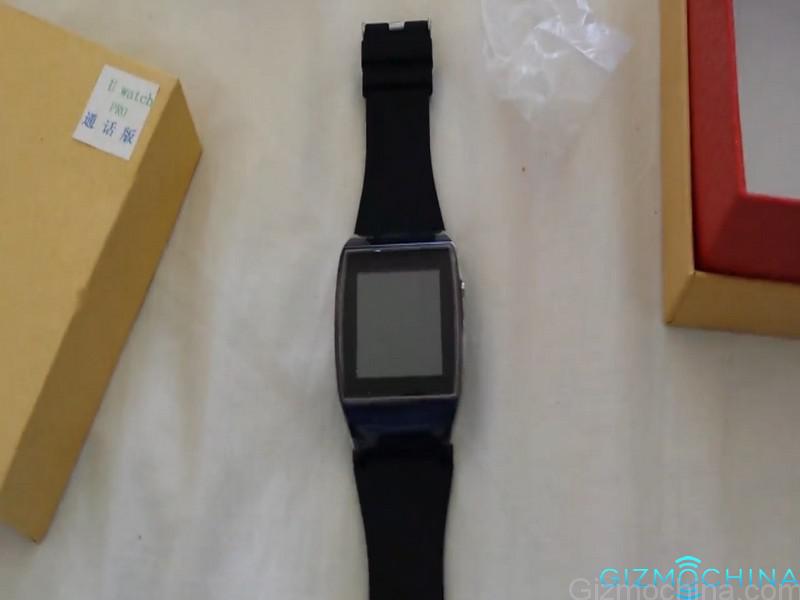
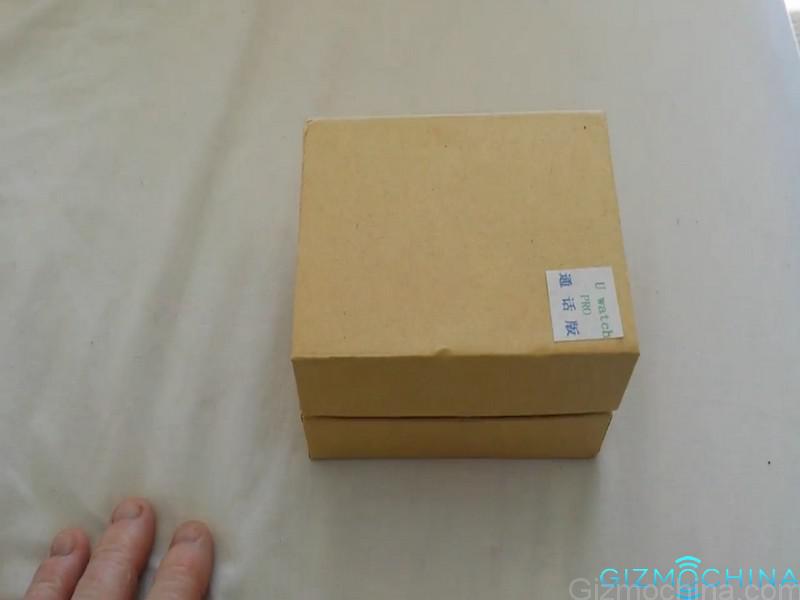
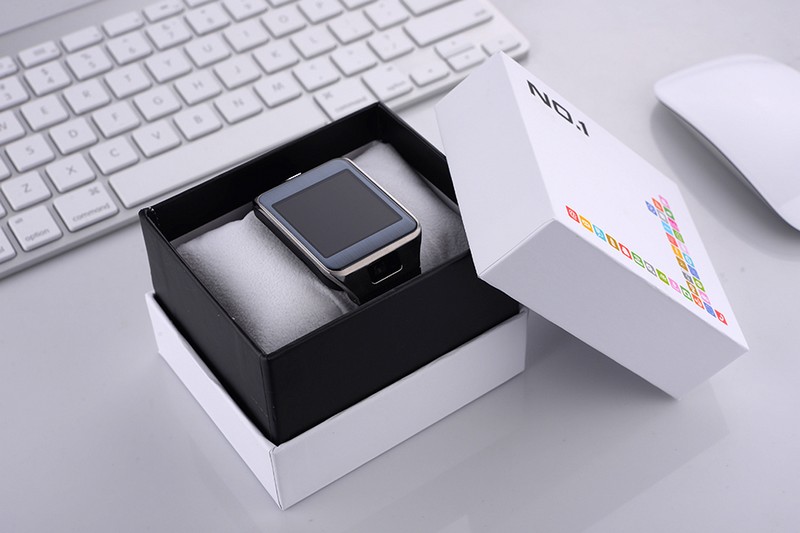
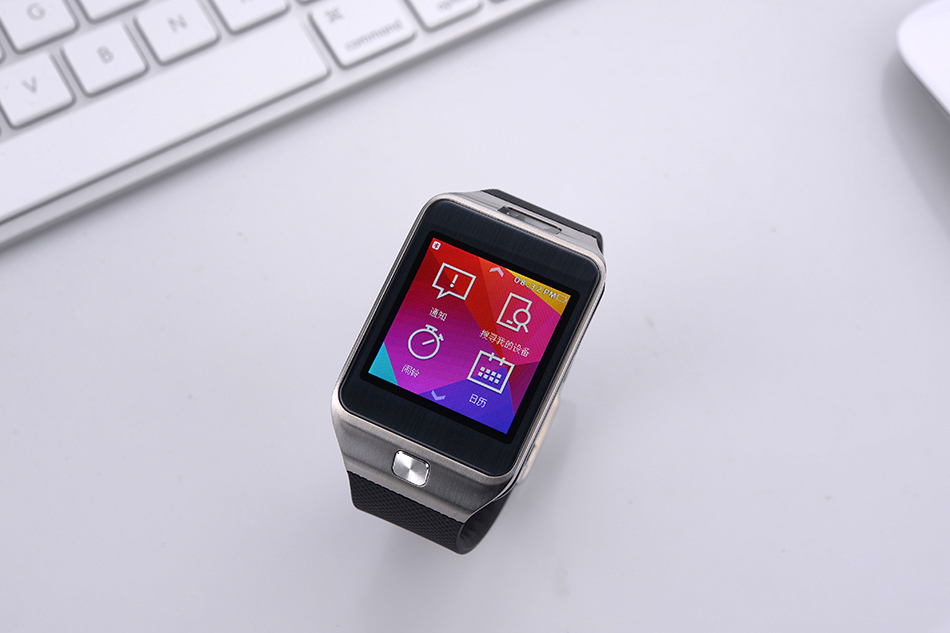
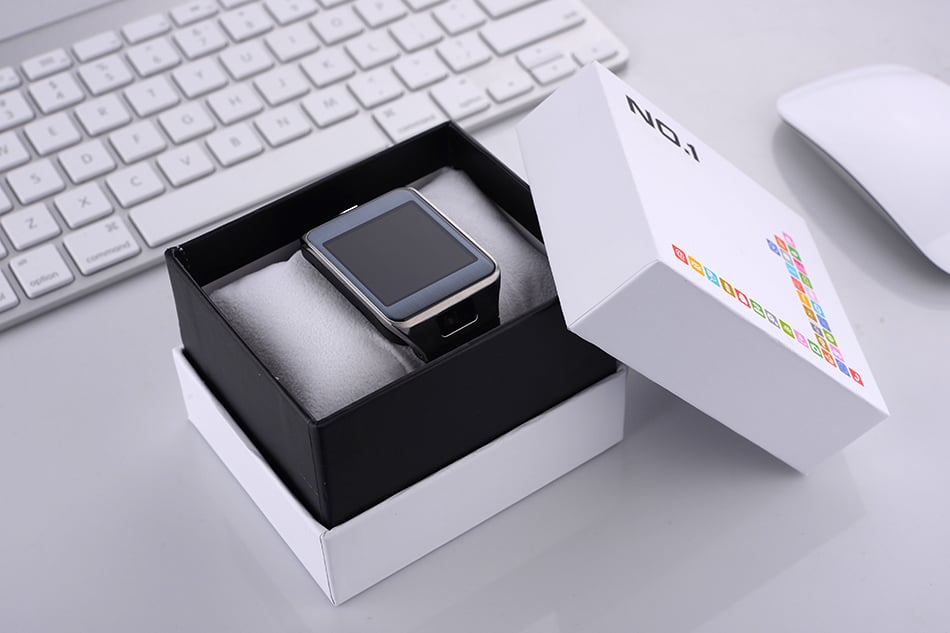
Lets start off with the unboxing first. The device came in a simple box, nothing too fancy, but sturdy enough to keep everything inside protected. When you open the box, you’ll first see the beautiful watch up front. We know there are many good looking smartwatches in the market at present, but we didn’t expect this cheap smartwatch to come with such a good built. So, we were impressed for sure in the first glance.
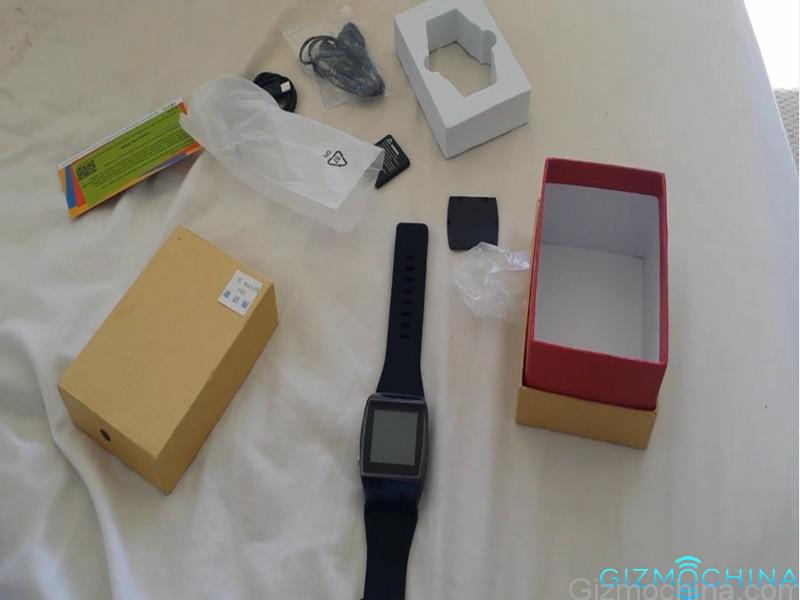
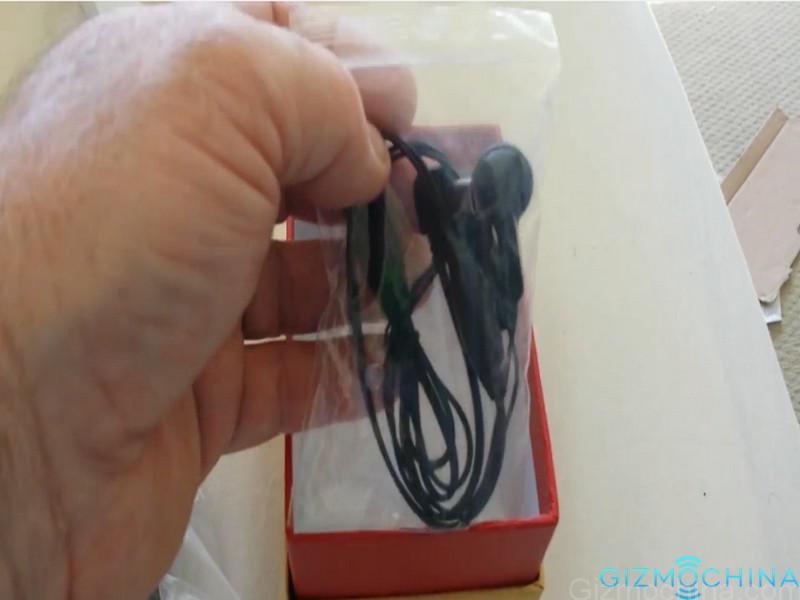
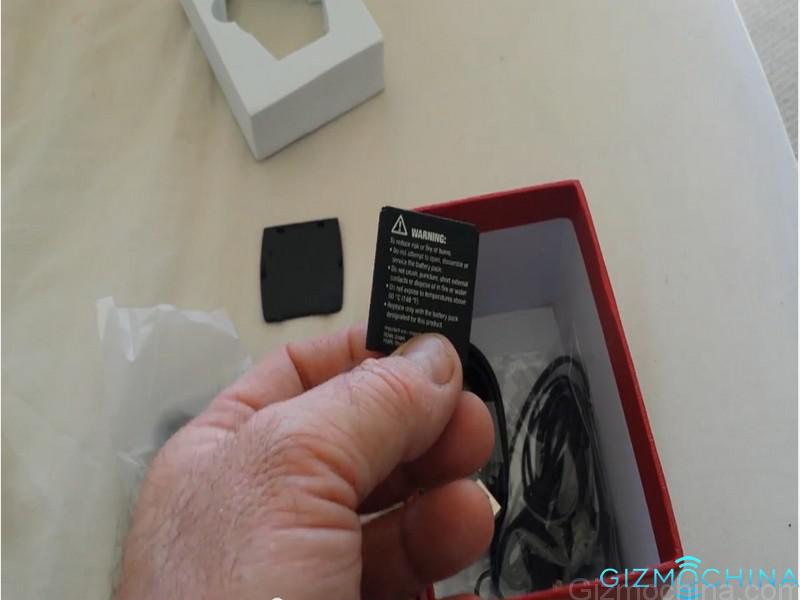
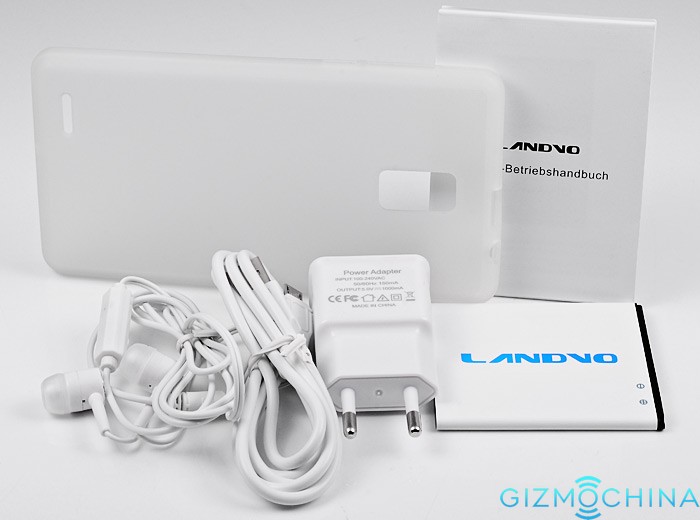
Apart from the watch, you get a battery, a rear panel for the watch, user manual, USB cable as well as a headphone. Let me remind you that this headphone does not come with a 3.5mm pin, instead has a micro USB pin – the same port used for charging the device. Also, the given user manual is available in both English and Chinese.
U8 UWatch Pro DESIGN
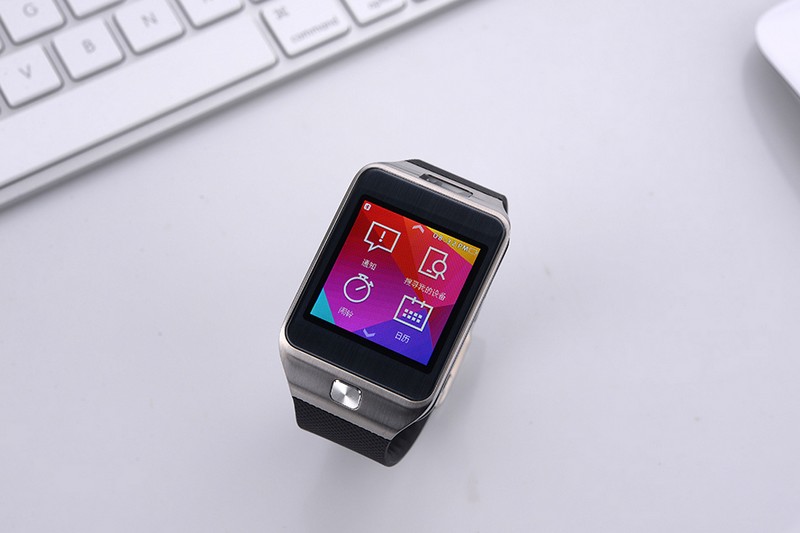
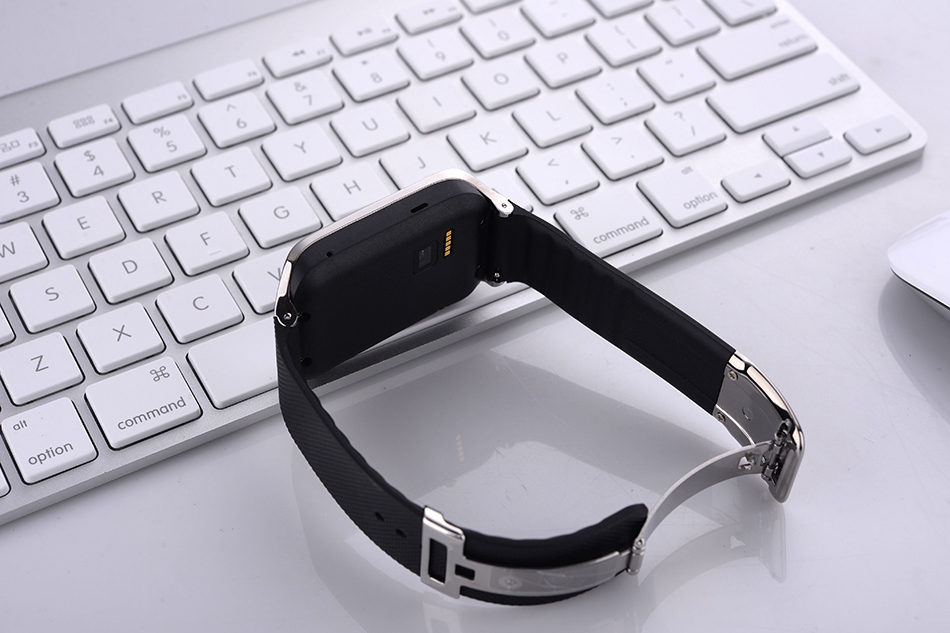
As mentioned above, the UWatch Pro is sturdy and well built. There’s a 1.48 inch LCD display up front which sits well on the wrist. In fact, we feel that the display is rightly sized as the overall device doesn’t look too big or too small on our hands.
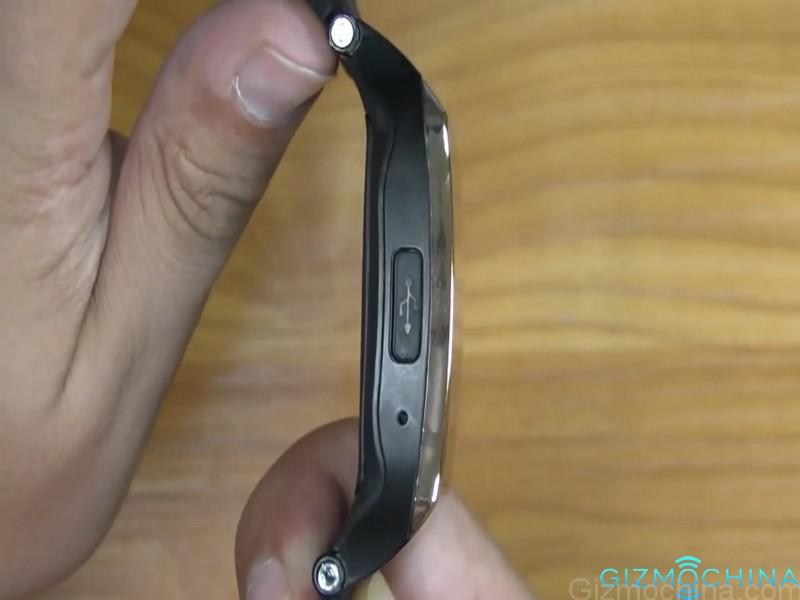
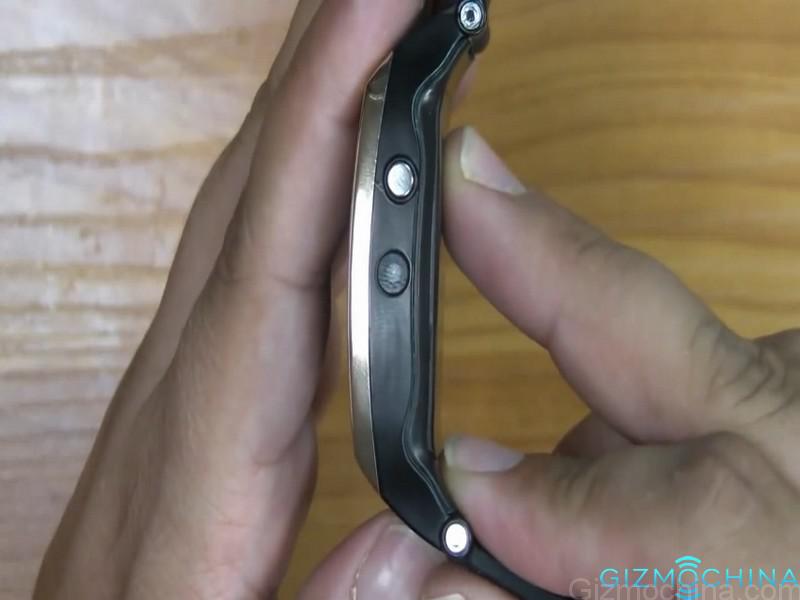
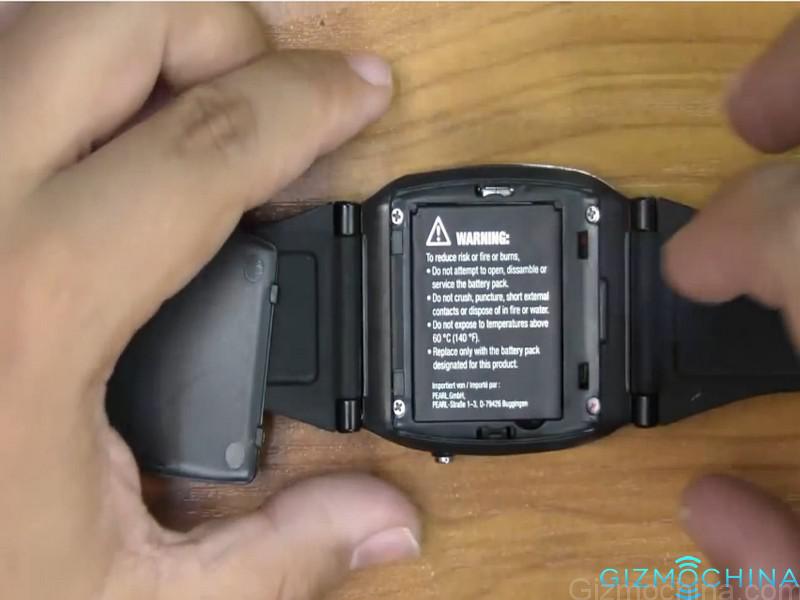
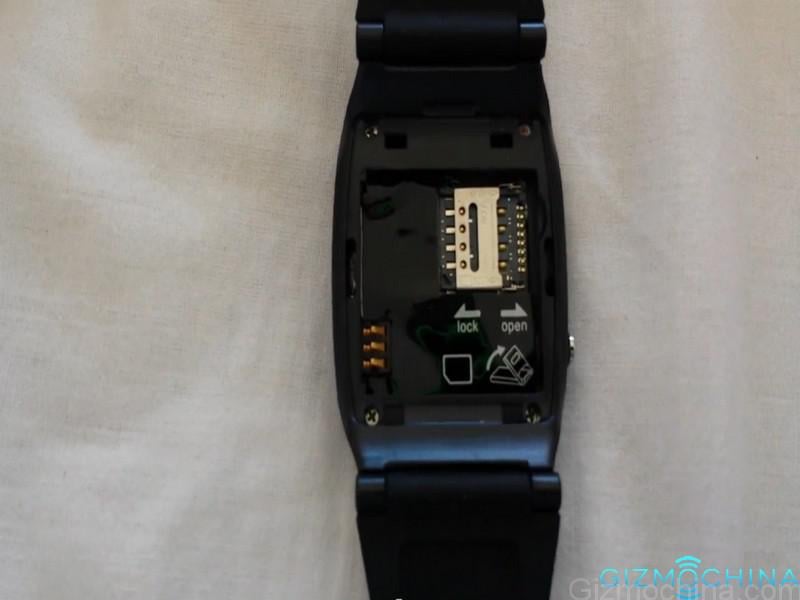
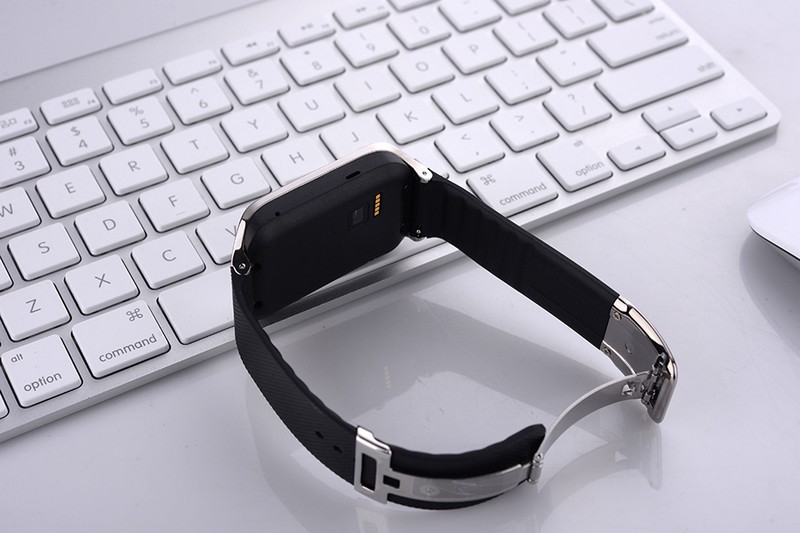
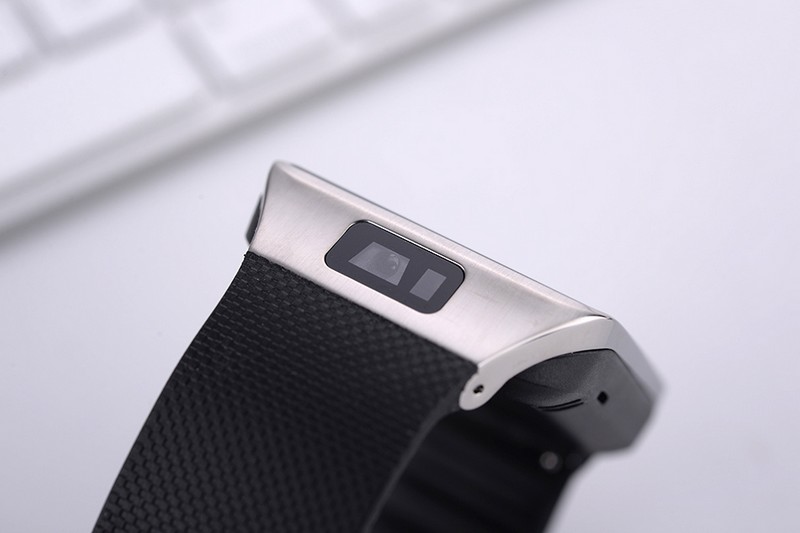
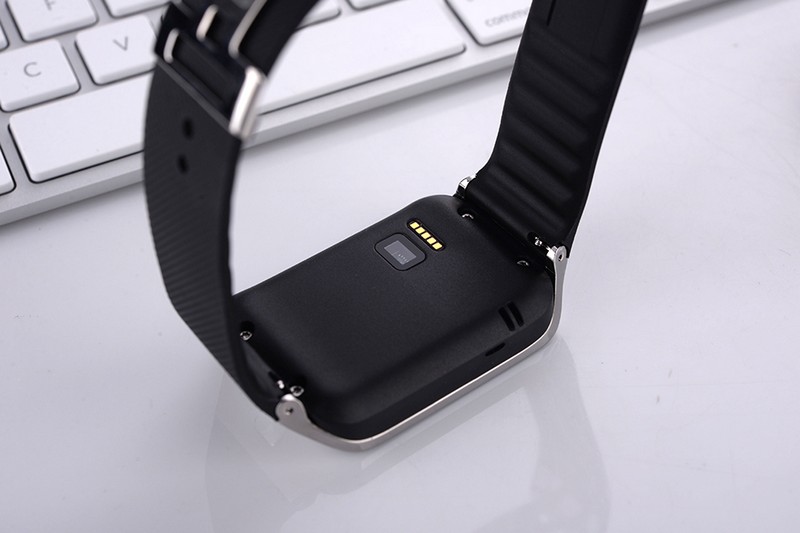
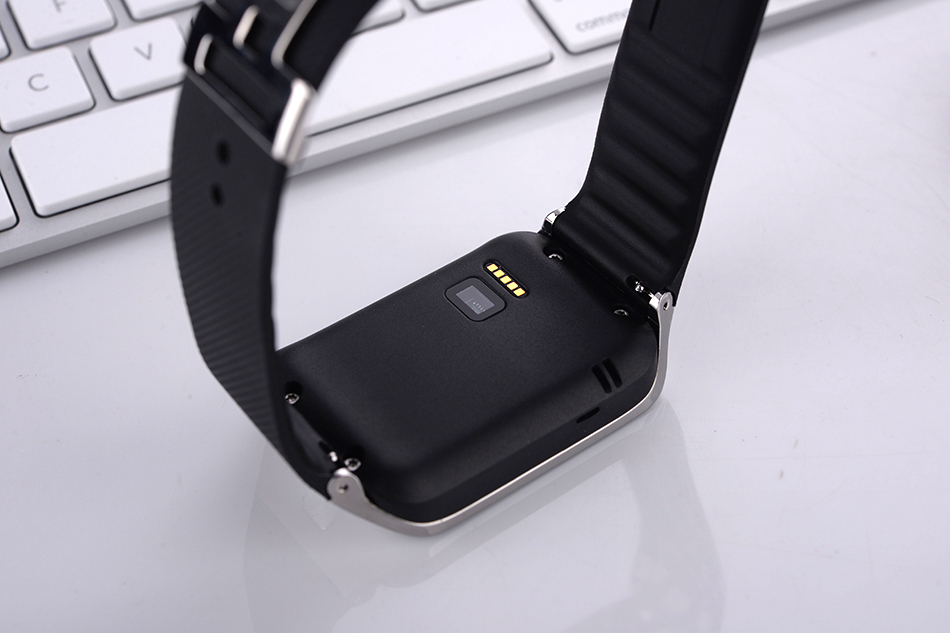
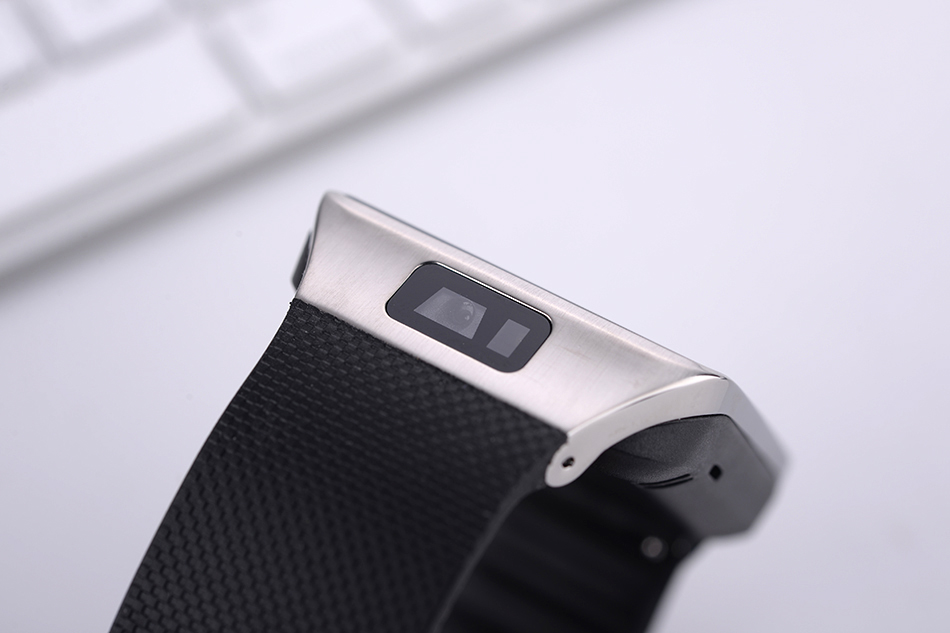
On the right side is the power button as well as the camera, while on the left lies the MicroUSB port for headphones and charging. You’ll also see a small microphone hole besides the USB port. Below the battery compartment is the SIM card holder besides which there are the instructions for installing the SIM in the device. On top of the display are the inbuilt speakers. The rubber straps that comes with the device looks cheap, but blends well with the overall design. To be honest, we are quite satisfied with the watch’s design.
U8 UWatch Pro Specs
Before we move on to the actual performance and features of the device, lets take a look at its hardware specifications.
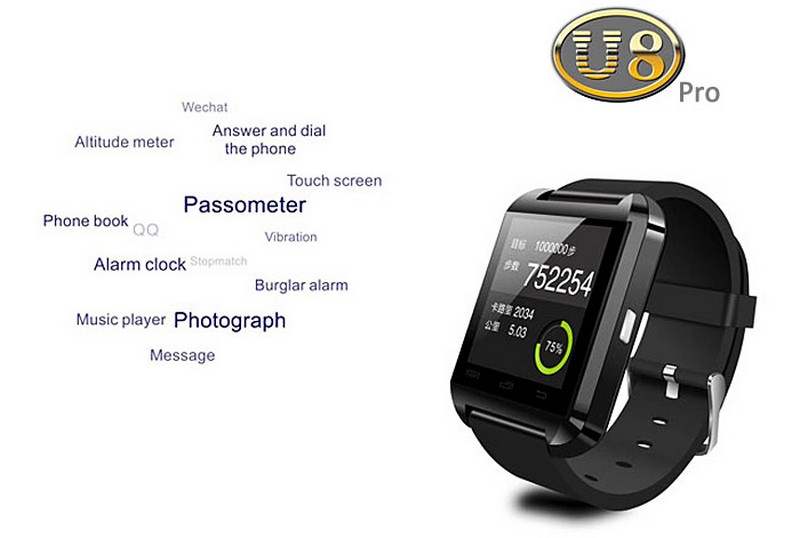
UWatch U8 Pro comes with a 1.48 inch color TFT LCD display with Bluetooth, multi-language support and a 230 mAh battery. In order to function fully, the device can be connected to an iOS or an Android smartphone. There are a number of other features in the device like stopwatch, anti-theft alarm, music sync, camera, passometer, barometer, altitude meter etc.
Specs
Display: 1.48 inches TFT LCD
Battery: 230 mAh
Talk Time: Approx. 3 hours
Charging Time: Approx. 1 hour
Music Play Time: Approx. 6 hours
Standby Time: Approx. 160 hours
Available Color: Black, White
Product weight: 45 g
Product size (L x W x H) : 27.7 x 4.0 x 1.0 cm /11 x 1.6 x 0.4 inches
In short, it comes with more than enough functions to keep you excited about your first smartwatch.
U8 UWatch Pro hands on
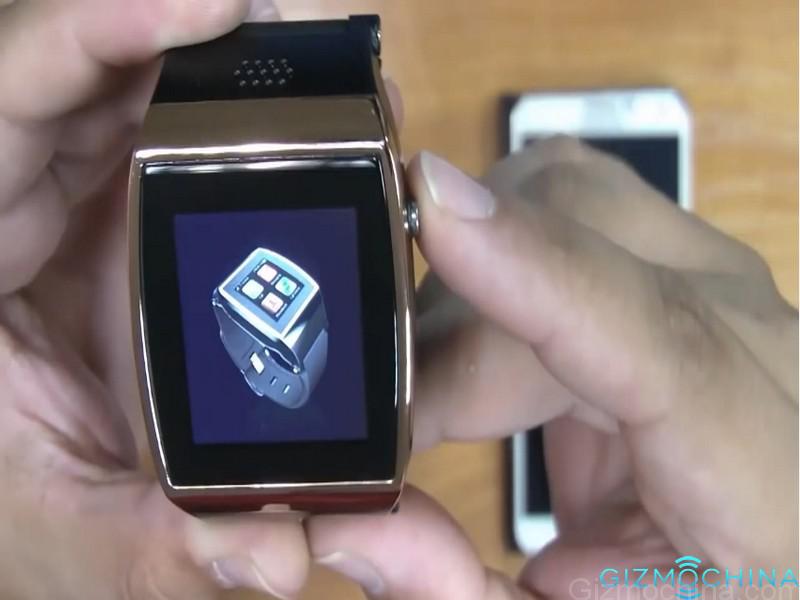
To power on the device, just press and hold the power/ reset button for a few seconds. If your battery is charged, U8 Pro will start up immediately and you will be greeted with a ‘Welcome’ screen.
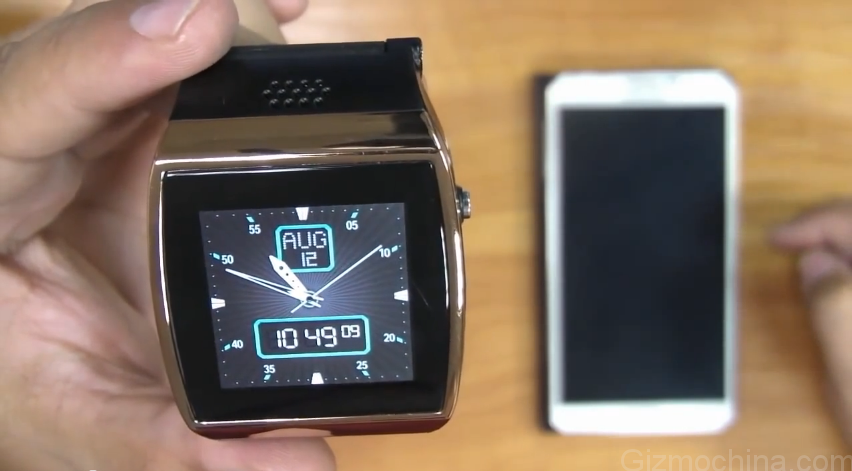
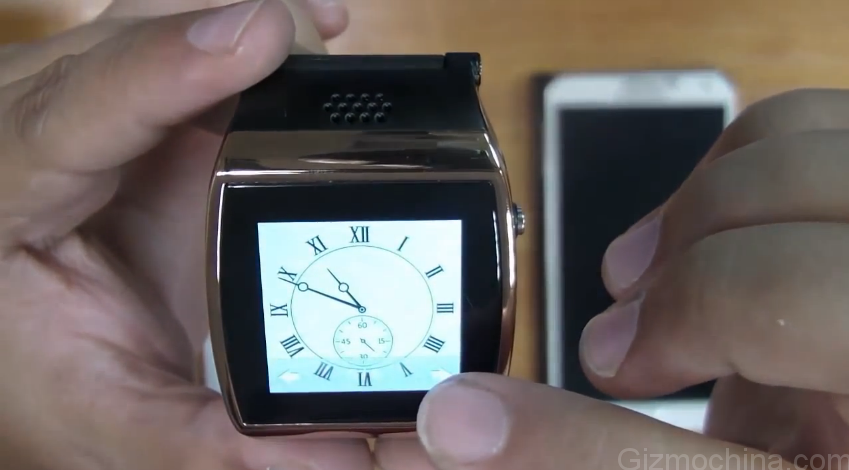
You have around 6 watch faces to choose from and each one of those looks quite good. We got the analog + digital watch face as default, which we think is best among the six given options. There are three more analog options as well as a full digital watch face. Check out some of these watch faces given below.
To get inside the app list, just long press on the watch face. Remember that every time you press the reset/ power button, the watch will default to the watch face. Given that the watch goes into standby pretty fast, probably to save battery, you may end up long pressing the watch face a number of times just to browse through the options that you have on the device.
The performance of the U8 Pro was quit decent. You do experience a little lag while browsing through the app pages, but its only a bit and not very noticeable. After a while, you get used to it. In order to move from one app page to another, just swipe from the right to the left. Its just like browsing through the pages of a book.
Unlike most other Bluetooth accessories, the U8 Pro connected to our smartphone quite easily. You just have to turn on the Bluetooth on both the devices, pair them and finally connect your smartphone from your smartwatch.
The process is very simple and straightforward. You go to the Bluetooth app on the watch. Turn it on (if its not already switched on) and go to my devices. In that option, your paired smartphone will show up. You just have to click connect and both the devices will be connected instantly. To get back to the menu, just swipe to the right.
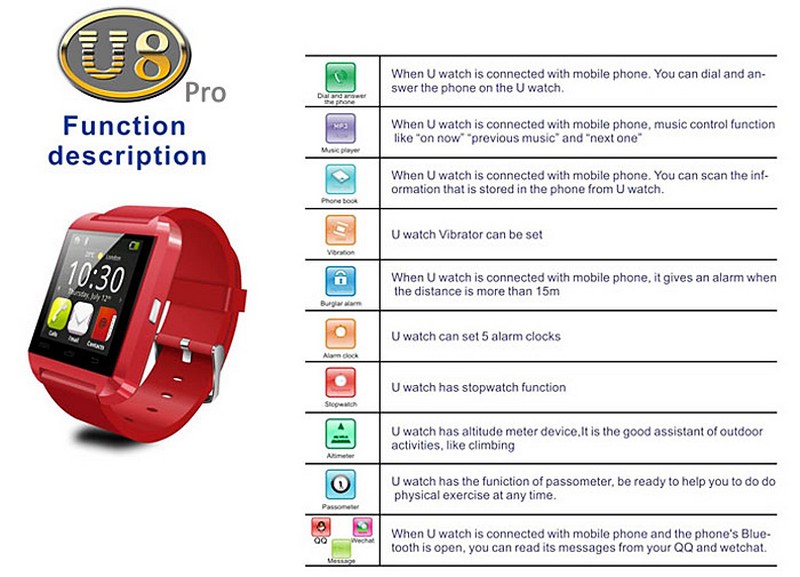
In the apps menu, you have lots of apps like stopwatch, alarms, settings, anti-theft, Bluetooth connection, pedometer etc. For saving time, we will only be focusing on the important applications.
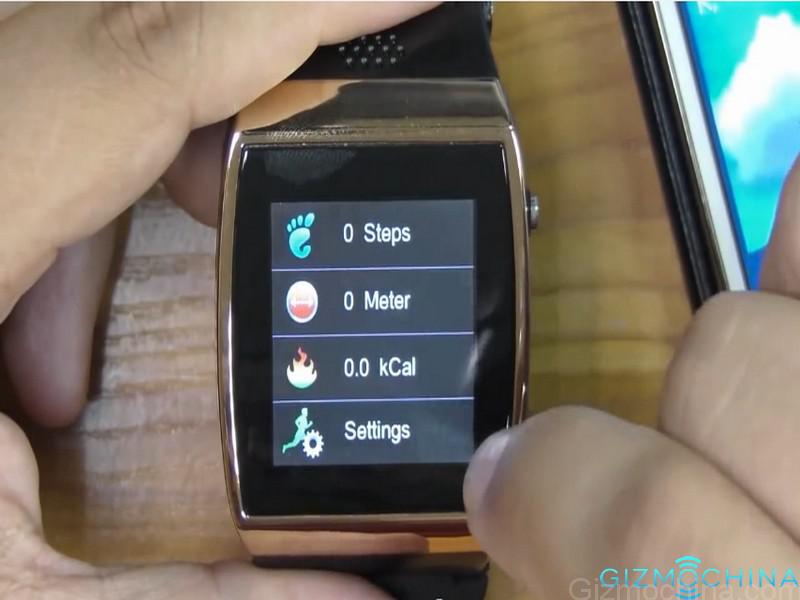
First you’ll see the alarm app where can set up to 5 alarms. Besides it lies the stopwatch, which comes with just the basic options like start/ stop and reset. In the pedometer app, you have 3 categories. Using the inbuilt sensors, the watch can detect the number of steps taken, meters walked and the calories burned. From our personal use, these statistics were not very accurate, which isn’t surprising given that the watch costs less than $35.
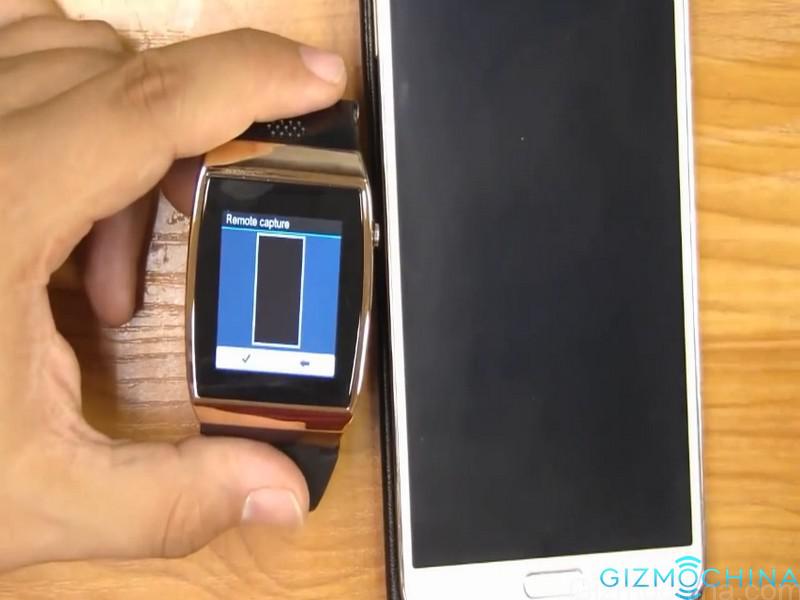
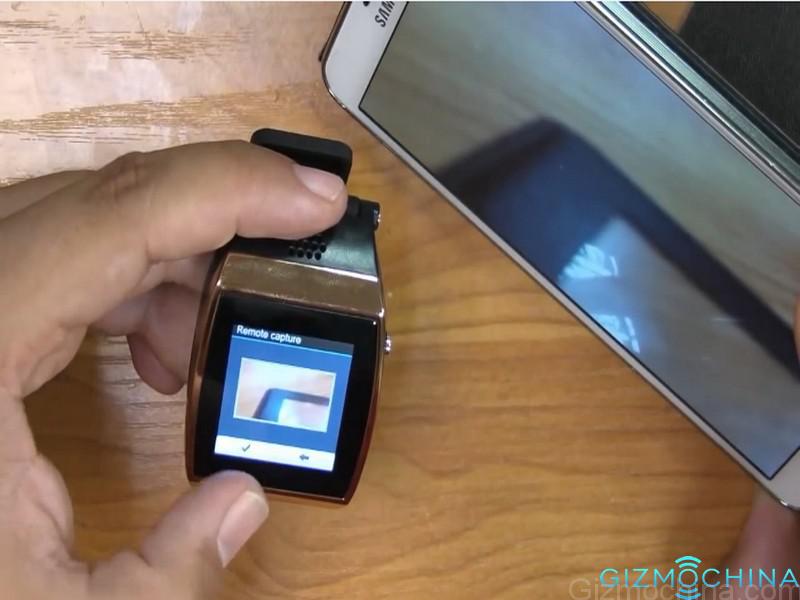
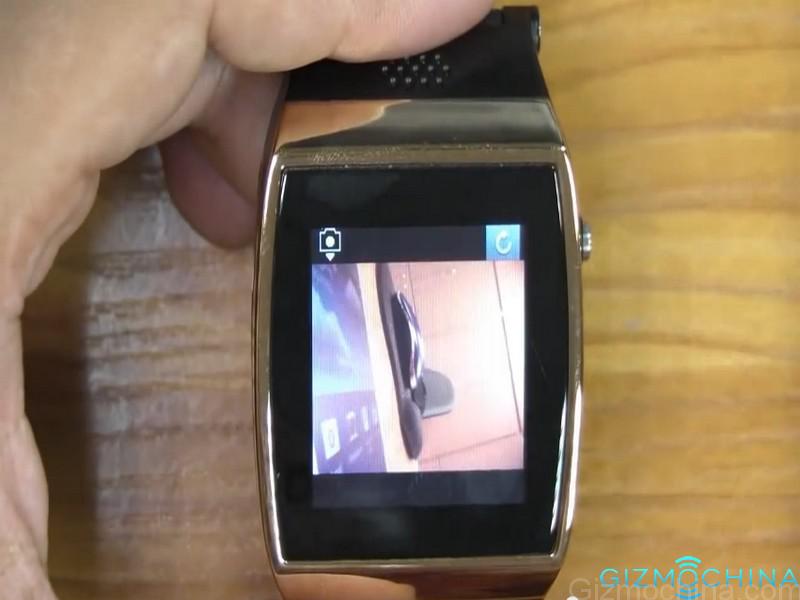
Next up was the camera app, which worked pretty well. However, like we expected, the image quality was bad. But for those who are really interested in taking good pictures, you can connect the smartwatch with your smartphone and use remote capture app to click images. In the app, you can see the phone camera’s viewfinder right on your watch, making it easier toclick large group pics or selfies. You also have a music player which lets you control whats playing on your smartphone. It did have some issues like you have to be in the player on your phone for it to work perfectly. But once you get the hang of it, the controls come in handy.
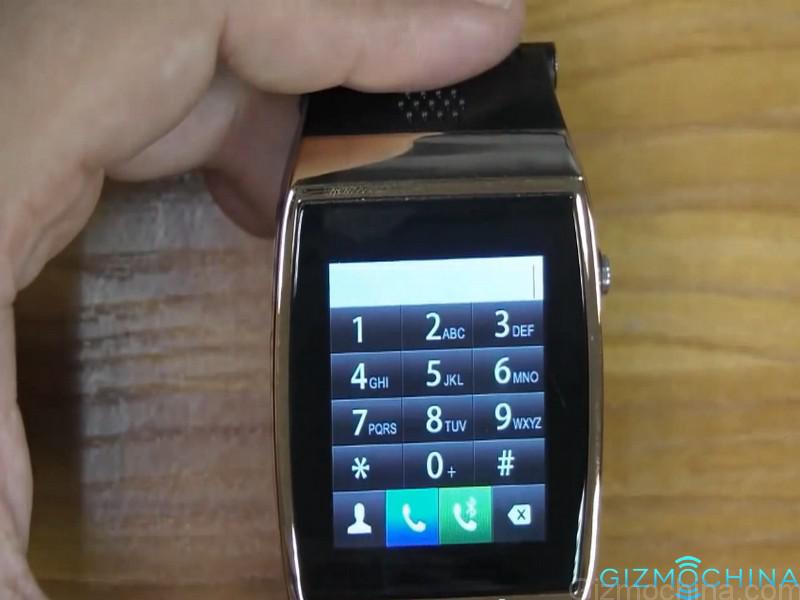
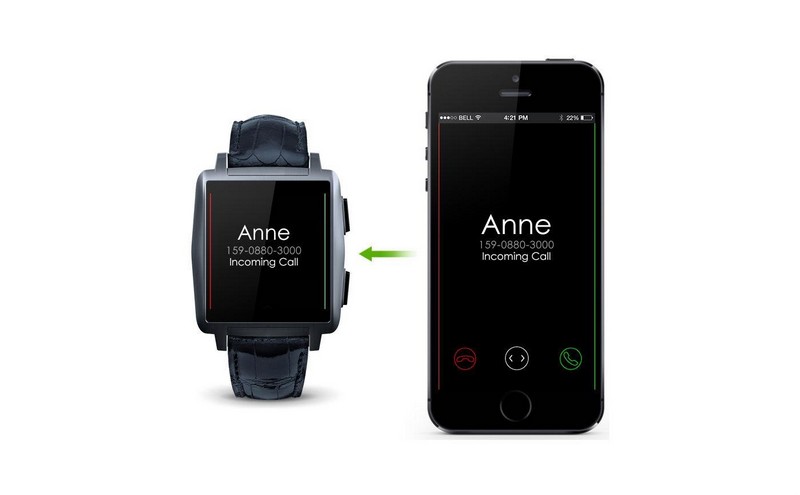
Then there are the basic phone functions on the device. For example, you can get the call dialer, messaging app, phonebook and even call logs on your U8 Pro once you sync it with your phone. So you can make, receive calls, check messages and notifications directly from your smartwatch. Finally, you have the settings menu which helps you set profiles on the watch as well as change the various security and phone settings.
When your phone receives a notification or a call, the watch vibrates and makes a sound to let you know of the same. Also, in the connected mode, if your phone is too far away from your watch (around 15 meters), it will start making a sound to alert you.
As you can see, the phone does have all the features that you want from a smartwatch. Many of them work well, some of them not so well, but overall, its a great device for such a cheap price tag.
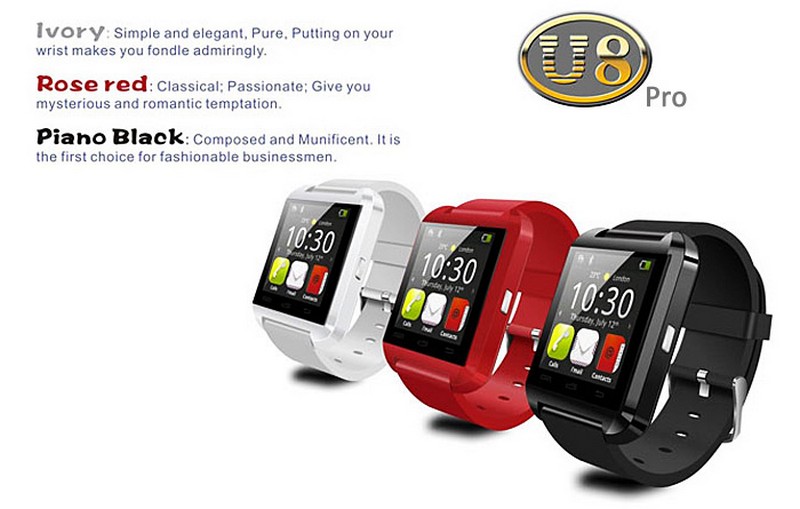
UWatch U8 Pro is available for purchase in White and Black colors.
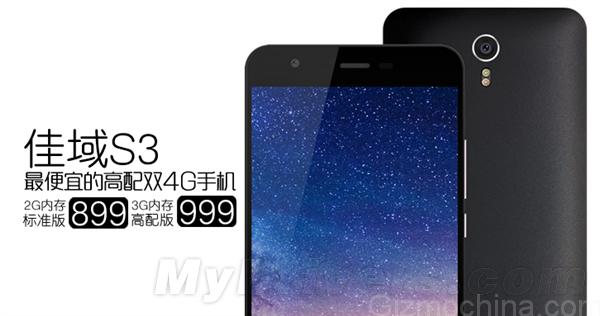
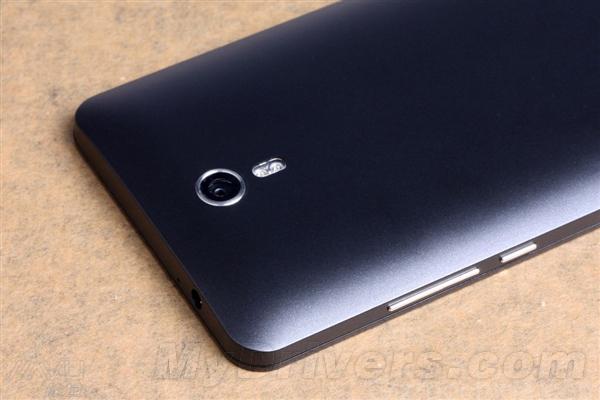
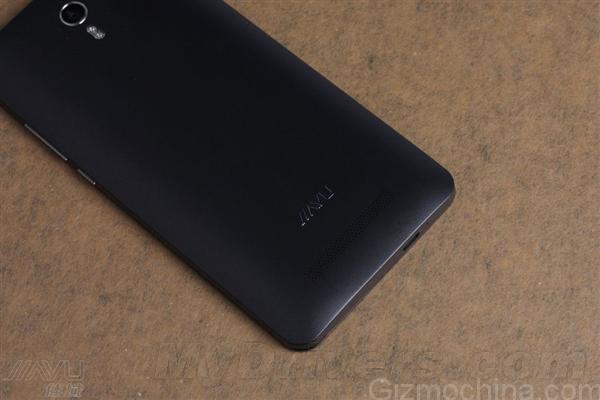
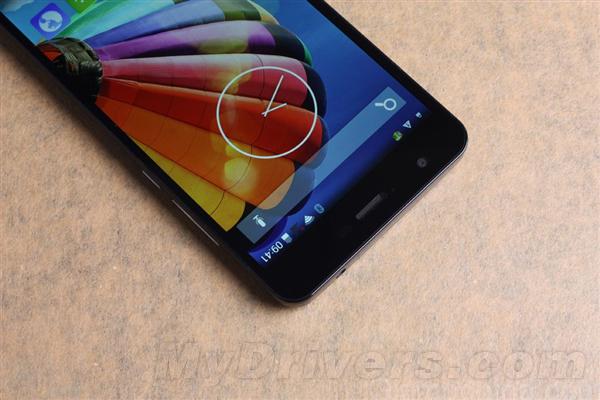
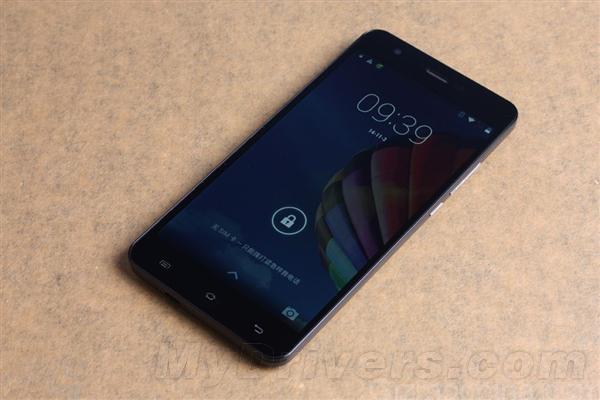
There has been a war going on in China. It is not a war that is being fought with guns or armies—-but with cell phone prices. That’s right. For the last several months Chinese cell phone companies have been competing with each other by lowering the price of their phones through promos, discounts, sales, etc. They are also releasing new phones at relatively lower prices. Many are aiming to release phones at a price below 1000 RMB (162.47 USD). One example is the 999 RMB (162.33 USD) Jiayu S3 high-end edition.
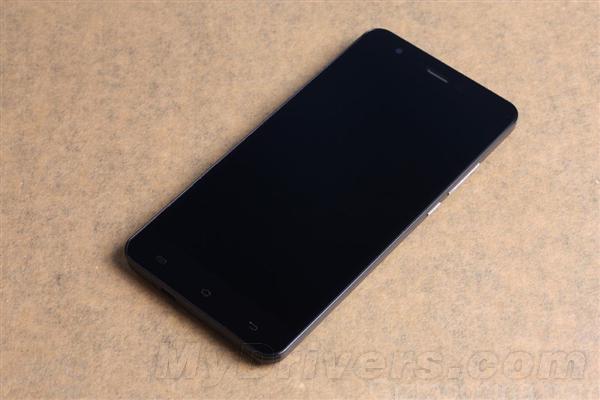
The Jiayu S3 high-end edition’s specifications are passable. One of its most important features is that it has 3GB RAM. Its CPU chip comes from MediaTek. Specifically, it is the octa-core MTK MT6752. This phone is dual-4G-supported. The Jiayu S3 high-end edition also sports a 5.5-inch 1080p display screen. As for its camera specs, its rear-facing camera is a 13mp camera with a Sony IMX214 sensor, while its front-facing camera is a 5mp camera. Its operating system is the Android 4.4 OS. Later, this can be upgraded to the new Android 5.0. It also has a built-in 3000mAh removable battery.
It also has many other features such as OTG, a gyroscope, etc. It comes in black and white, and its dimensions are 152 x 75.5 x 8.9mm.
Whereas the high-end edition costs 999 RMB, the more standard, low-end version costs 899 RMB (146.08 USD). The main difference in the specifications between the two is the RAM. Whereas the high-end edition has 3GB RAM, the standard edition has 2GB RAM. Both have 16GB ROM.
The Jiayu S3 standard edition is set to come out in China January next year, while no release date has been announced for the high-end edition.
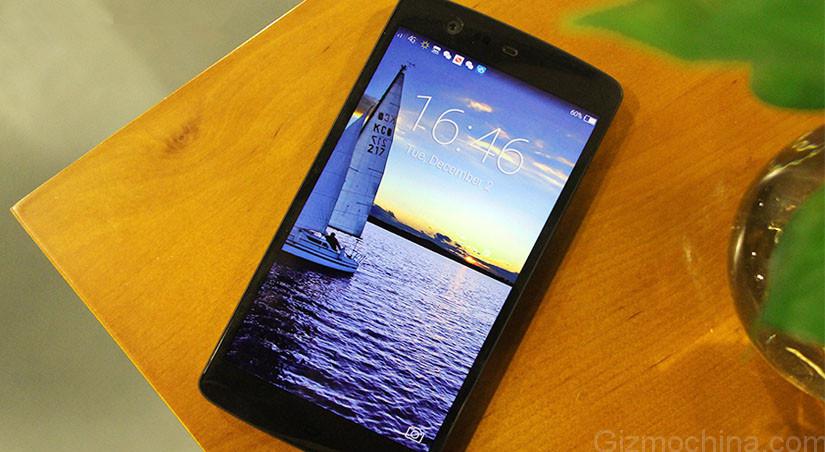
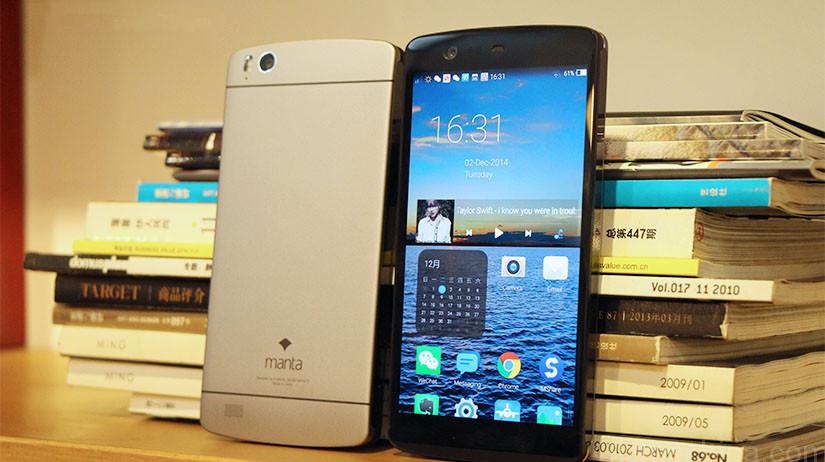
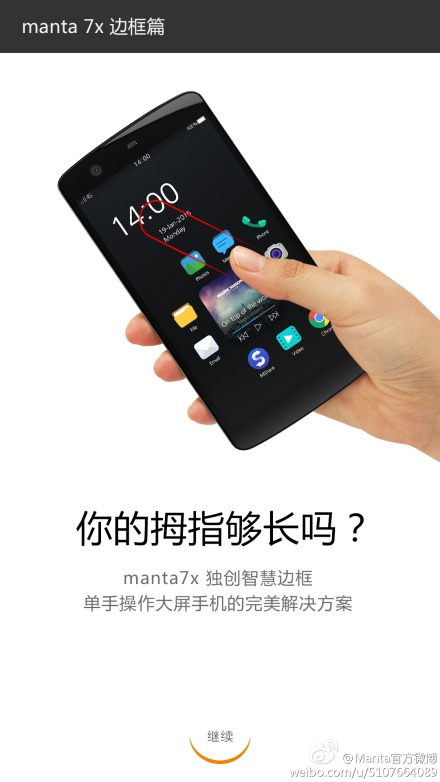
We have to admit that the bigger the display screens of smartphones are getting, the harder it gets for people to use them with one hand. The Manta 7X is not the only device that is said to have the best “one-handed” user experience, but it does not have physical buttons, so there must be something special about its user interface.
Regarding the hardware, the Manta 7X uses the Qualcomm Snapdragon 801 quad-core chipset and has 2GB RAM and 32GB ROM. It also sports a 5.5-inch Sharp “Hi colour” 1080p display screen as well as a front-facing 13mp dual-camera with a Sony 214 CMOS and dual-flash. It is powered by a 4200mAh battery and has support for 4G internet.
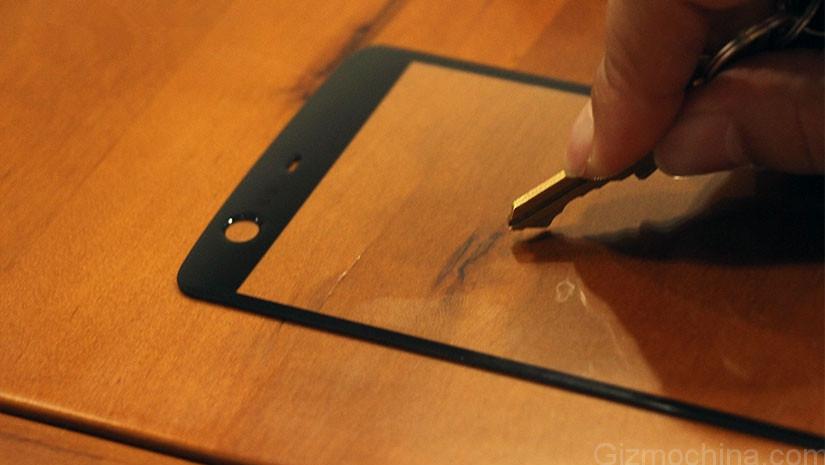
As said before, the Manta 7X sports a 5.5-inch Sony “Hi Colour” 1080p display screen with a 9H hardness. Not only does it have good color performance, it is also very strong and scratch-resistant.
I scratched a key on the glass to test its durability, and so far, it there has not been any mark.
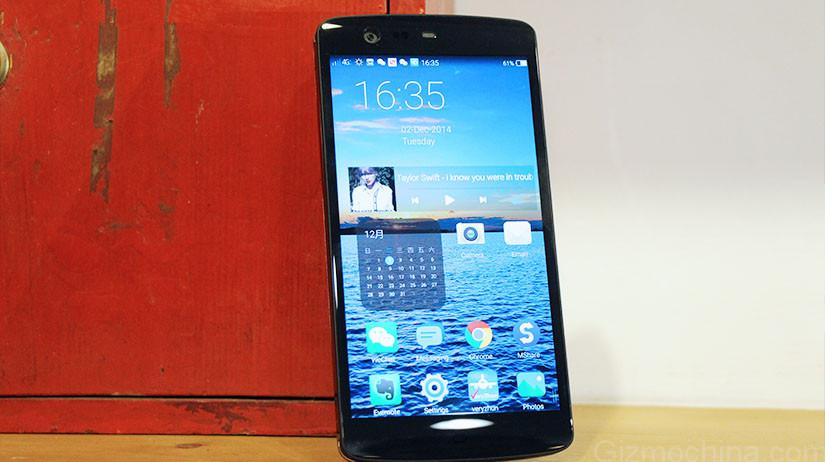
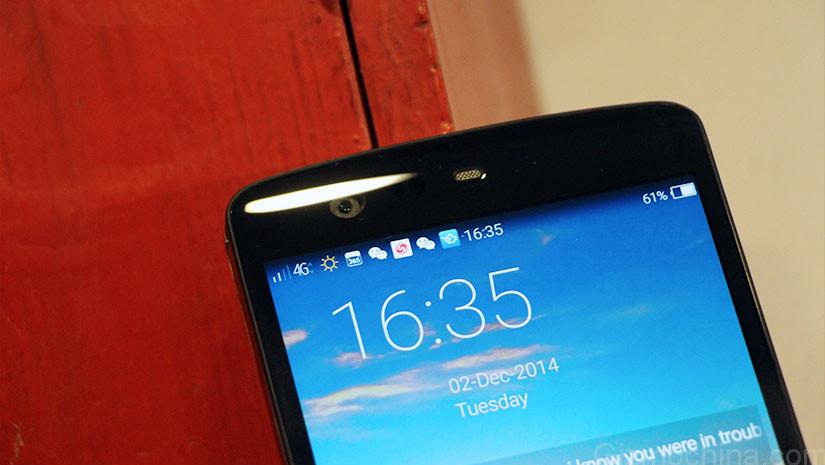
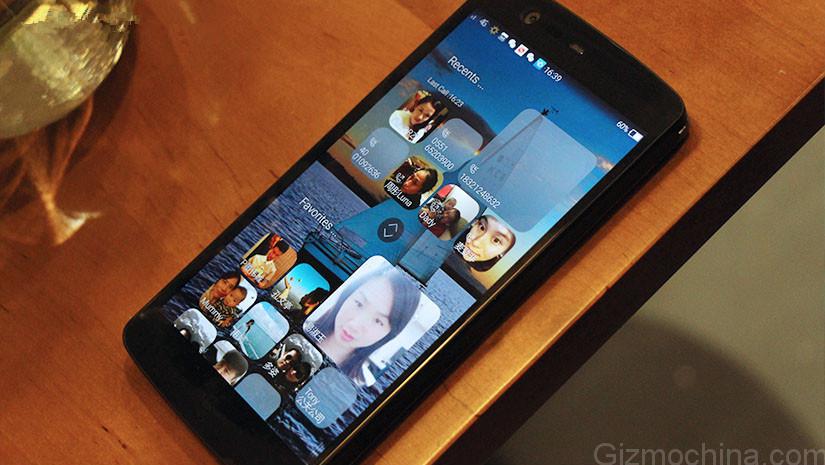
Here is another view of the front side of the Manta 7X. The 13mp front-facing camera comes with the Sony IMX214 sensor. Overall, the resolution for this camera is pretty good.
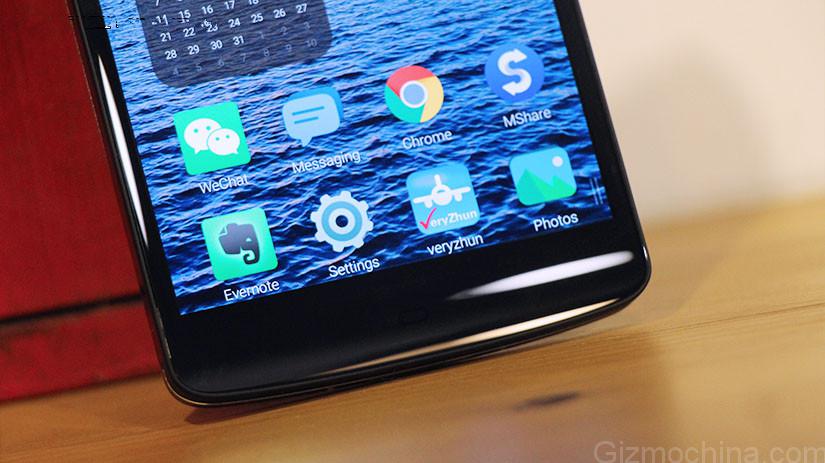
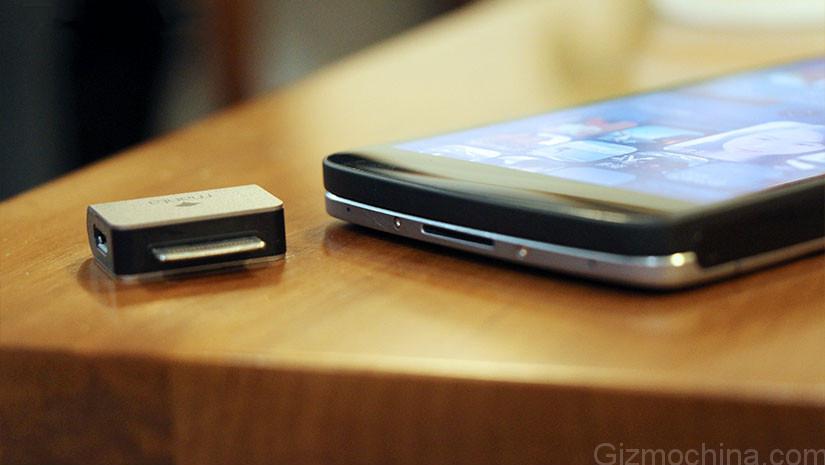
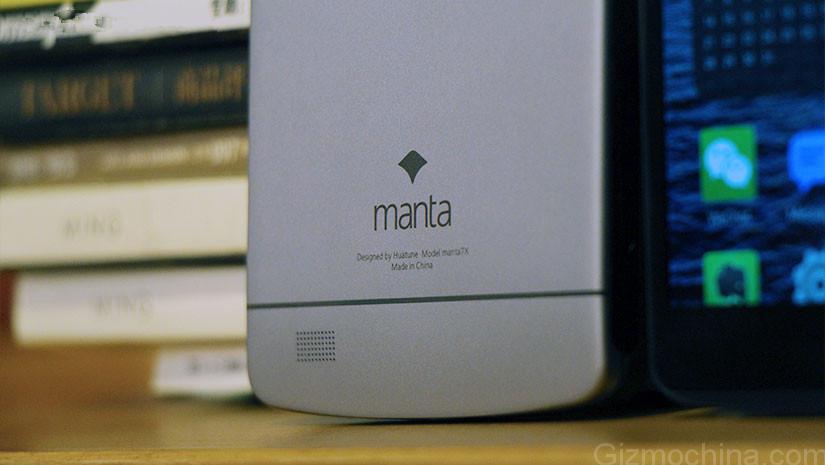
Here is a close-up of the base. The curved screen and design of the entire body is reminiscent of the Nexus 4. If you swipe your finger left to right here, you can unlock or wake up the display screen. If you swipe it upwards, you will go back to the Home interface.
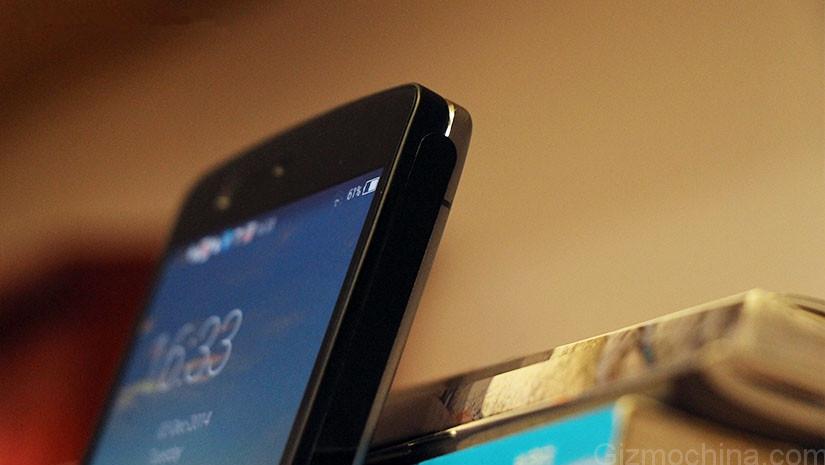
This phone is 9.8mm thick.
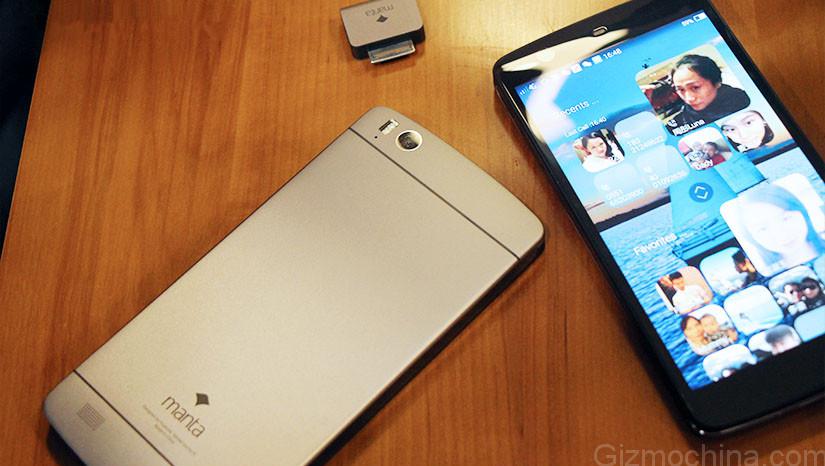
This phone uses a one-body design with its back made of metal. It is also powered by a 4200mAh battery. Not only does it have the highest battery capacity to date, but can also last for more than two years.
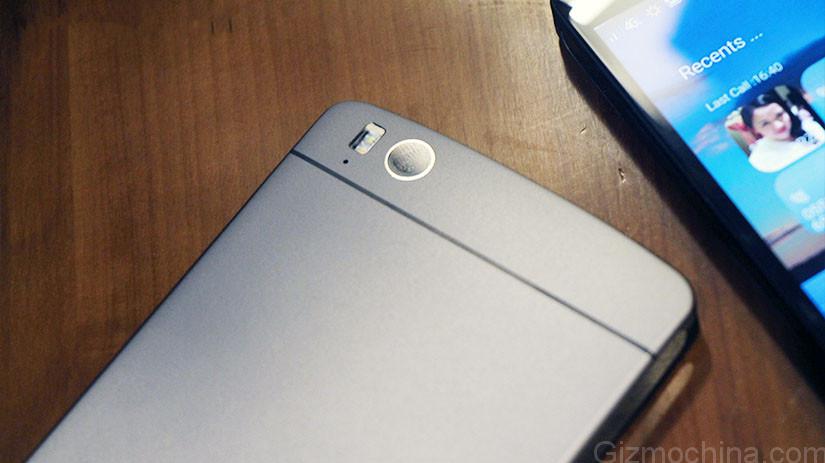
Here’s a close-up of the Manta 7X’s rear-facing camera. You can also see that it comes with dual-LED flash, which can help you take good photos when it is barely dark.
The Manta 7X uses the Android 4.4-based MO7 operating system. One of the things it could do is study how the user operates this OS.
No price and release date has been announced, but based on reports, this phone is heading for the high-end market, so do not expect it to be cheap.
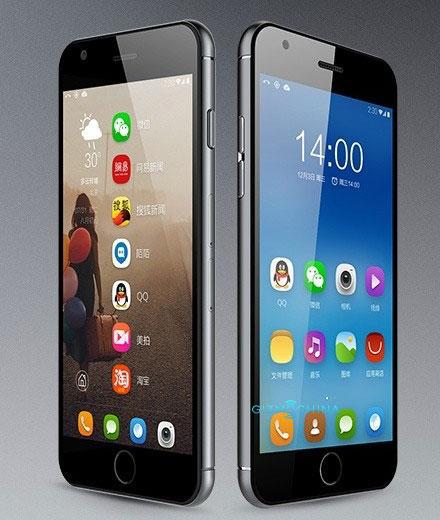
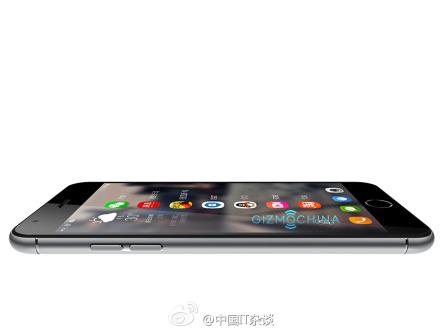
Despite the fact that the iPhone 6 has received a lot of criticism over its design (it is probably the most criticized first generation phone in the last several years), this has not stopped some Chinese cellphones from copying it. Beside the Dakele 3 which was revealed yesterday, another “Chinese iPhone 6” has arrived.
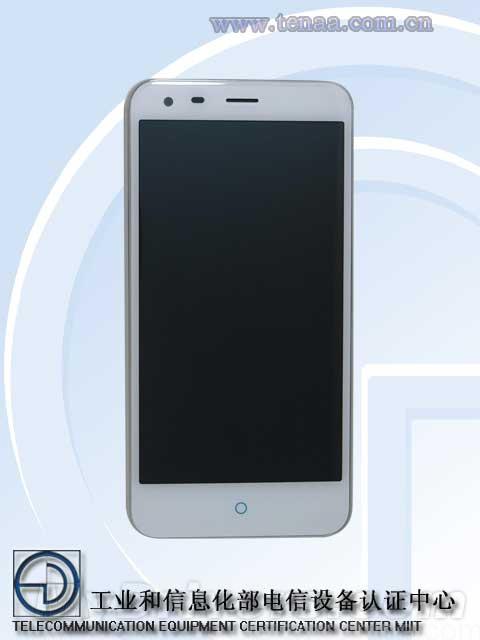
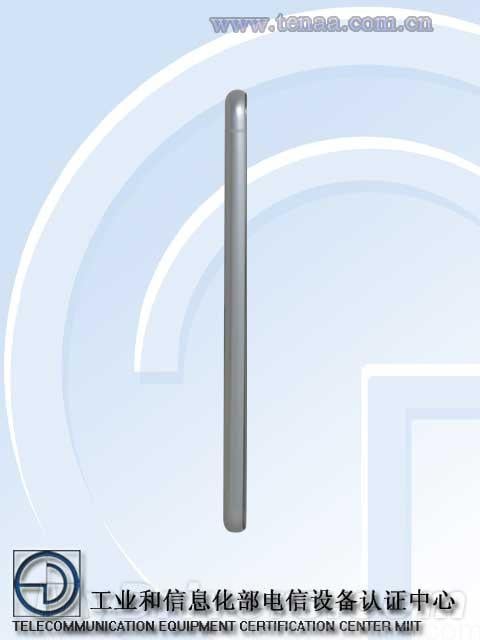
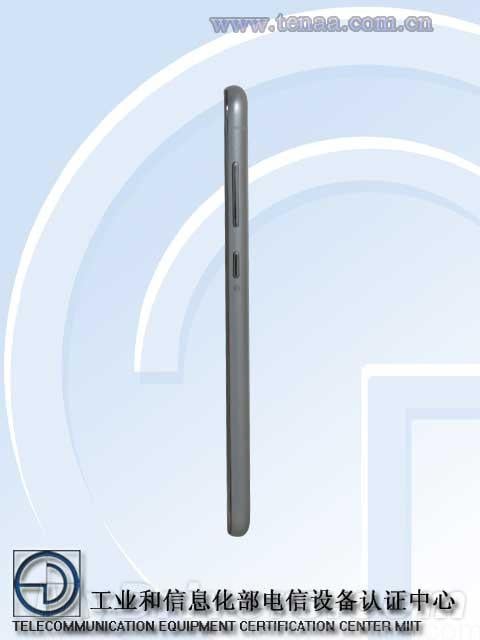
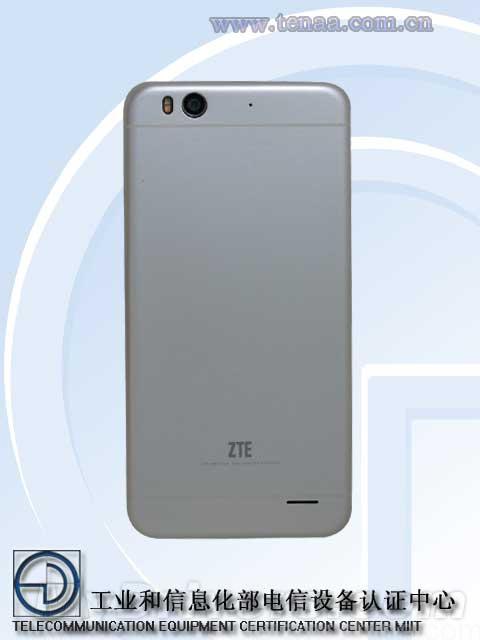
Today, a new phone from ZTE was discovered at TENAA. Its model number is ZTE Q7 and it received its network license on November 28. This phone (2G/3G/4G) has support for TD-LTE, LTE-FDD, WCDMA, TD-SCDMA, and GSM, as well as dual-SIM. Like for its Nubia series, ZTE also added a small round circle for this phone. Its overall design looks strikingly similar to the iPhone 6. Fortunately, it does not have a protruding camera.
As for its specifications, this phone sports a 5.5-inch 720p display screen. It uses a 1.5GHz octa-core chipset (Snapdragon 615), has 2GB RAM, 16GB ROM, a 3mp front-facing camera, and an 8mp rear-facing camera. It also runs the Android 4.4.4 operating system.
CPU
1.5GHz
RAM
2GB
OS
Android 4.4.4
WAP
supported, Wap 2.0
GPRS
supported
Camera
supported, 3mp, 8mp
# of cameras
2
Java
not supported
ROM
16GB
Local connectivity
Bluetooth, USB
handwriting recognition
supported
radio
supported
USSD
supported
POC (PTT)
not supported
WLAN
supported
streaming media
not supported
IMPS
not supported
SyncML
supported
Video
3GP, MPEG-4, AVI
Audio
WAV, AMR, MP3, MID
Image
JPG, GIF, PNG, BMP
EDGE
supported
electronic dictionary
not supported
PDA
not supported
GPS
supported
Optical zoom
not supported
Expanded memory
supported, T-flash
Expanded card maximum
32GB
3G
not supported
customization
non-customized
TV
not supported
TV OUT
not supported
FM transmitter (car)
not supported
Video phone
not-supported
Video recording
supported, 1080p
Sensor
CMOS
CPU cores
8
Email
supported, POP3
HDMI
not supported
Special features
G-sensor, proximity sensor, light sensor
Internet frequency
900MHz, 1800MHz, 2GHz, Band 38, Band 39, Band 40, Band 41, 2500-2690 MHZ, Band 3, 1.9GHz, I
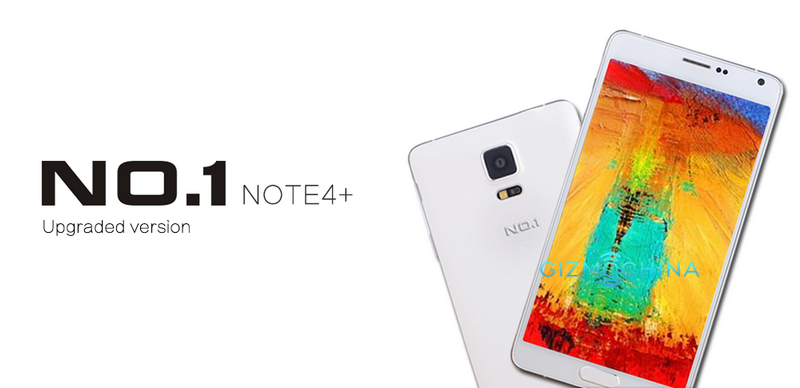
No.1 has come up with number of clones in the past few months. Just recently we looked at the No.1 Mi4 smartphone and the No.1 G2 smartwatch. Now, the company is all set to launch its next product, the No.1 Note 4+. This device is the upgraded version of the Note 4 clone announced a few months back. So, it would cater to a much wider audience than its previous model.
No.1 4+ comes with just the essential upgrades that you need. For example, this new device now supports 4G LTE networks, thanks to the Meditek MTK6290 modem that comes inside it. This is the first Mediatek 4G LTE modem and supports TD-LTE, FDD-LTE, TD-SCDMA, WCDMA, GSM and Edge networks. Moreover, it is built on a 28nm process with Cortex-7 architecture which integrates into the four physical cores. So, it retains the power efficient characteristic of its earlier model.
Other than this, there are not many known changes. For example, it features the same 5.7 inch display with HD resolution like the Note 4 clone along with a 2800 mAh battery. No.1 has not yet given out any details about its camera or RAM capacity, but we expect more details pretty soon.
No.1 is known for its ultra-affordable phones, so the Note 4+ could turn out to be one of the cheapest LTE handsets in the market. We expect it to be priced a little higher than Note 4’s current pricetag of $135. So, the Note 4+ could sell around $150.
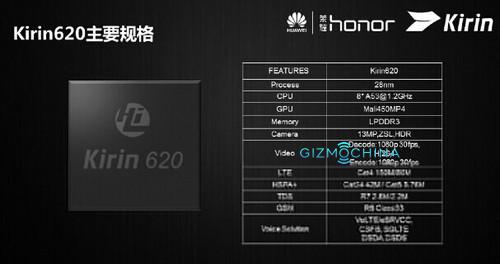
Huawei’s Kirin920 had received a lot of praise in 2014. The benchmark score of Kirin 920 shocked people all over the world. And today they released a brand new Kirin 620 SOC that suppots TD-LTE and LTE-FDD for next years’ low cost 4G LTE device. It’s Huawei’s first octa-core 64 bit SOC. You can chck the specification form below to see how will the SOC performs.
As more and more cellphones will have fingerprint scanner feature in the future Kirin 620 also integrated with Fingerprint data protection rigion. Kirin 620 is more like to be a competitor for Snapdragon 615, but with 1.2 GHz per core and Mali-450MP4, how can this SOC compete with Snapdragon and MT6752? Maybe the price will be extremely low? Or maybe the benchmark scores?
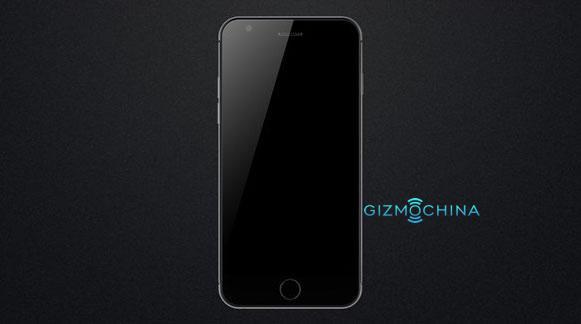
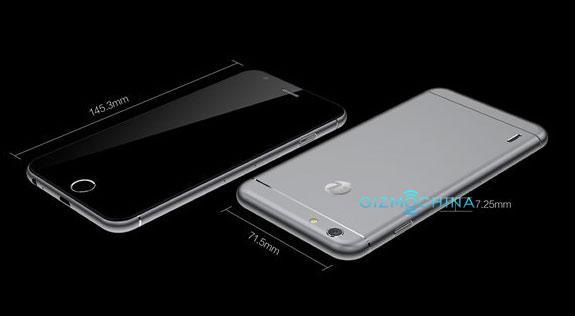
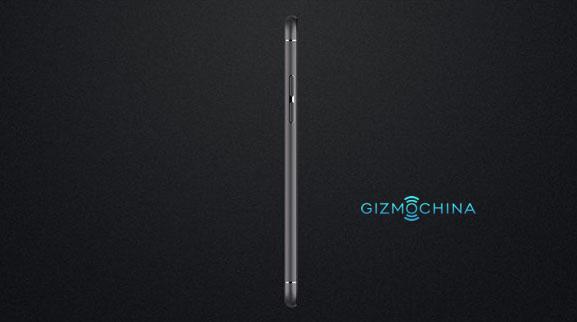
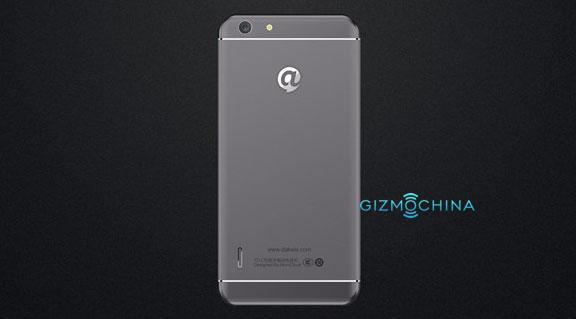
Still remember Dakele debuts Dakele3 with Sapphire Glass in China? Even Dakele bragged about the metal body, the home button, the slim body(7.25mmm thin, 148g) But we can’t help to think it turns out the model is really like apple’s iPhone6. But Dakele made something unique indeed, the camera lens is not raised like iPhone6. It is said it’s not easy to bend as the iPhone6.
Apart from the minor hardware difference, Dakele 3 also got a sapphire 1080p display,3GB RAM, 16GB ROM, 8MP front/13MP rear camera. 2500mAh battery with 1.7GHZ MT6572 octa-core processor. The dual SIM card slot also be used as Micro SD card slot.
Dakele 3 developed it’s own Kele UI2.0 based on Android 4.4. And it can be rooted easily and install MIUI, Color OS, Lewa. It has a launcher like Nokia’s Zlaucher can display the apps according to the users’ daily usage at different moment.
Dakele priced Dakele 3 at RMB 1499($244) will be sold from 9th Dec at JD.com and Dakele.com. With price and hardware like this, we all know it will be sold out in a few minutes and bought by the resellers. People who really want to buy this device would need to pay more.
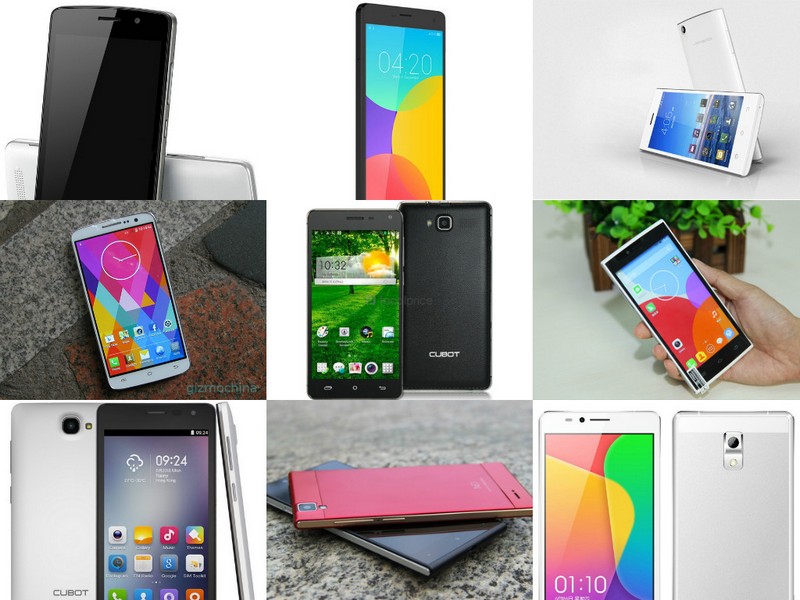
We recently covered an article on the Best Chinese smartphones that you can buy in 2014. These phones were perfectly balanced with powerful specifications and a decent pricetag. But what if you are not willing to spend a lot on a new smartphone?
We have got a lot of requests from readers asking to write an article on cheap Chinese phones to buy in 2014. And today, we decided to make the list. It took some time, but we are sure, it will help you decide which phone is perfect for you this holiday season.
Although these phones come under $100, they have enough hardware to challenge phones from international companies which usually sell for more than $200. We have also added deals and coupons wherever available to get you the phone for a lot less than its regular pricetag.
So, lets not waste any more time and check out the Best Chinese Smartphones under $100.
1. NEO M1
Looking for the best deal of the season? Well, you have got to take a look at the Neo M1 mid range smartphone. The device comes with a beautiful aluminium design which makes it look much more costlier than it is actually.
The phone features a 1.3GHz MediaTek MT6582 quad-core chipset with 1GB RAM and 8GB ROM. The storage is further expandable via a MicroSD card slot up to 32GB. On the front, you have a 5inch 720p display which translates into pixel density of 326PPI. The device is extremely thin at 5.99mm and weighs just about 148 grams.
On the back, you have a 13MP Sony BSI sensor, which according to our tests take decent pictures while the front camera measures 5MP. You have a 2,000 mAh battery to power all these features, which we feel is just enough for a day’s usage.
As you can see, the Neo M1 has all the features that you want from a mid range smartphone, in fact much more than a regular $100 smartphone would offer. The device is normally available for sale for $180, but thanks to the holiday season sale, you can get it for just $99 from Giztop. That’s an impressive $80 discount.
Now you guys get it why the Neo M1 makes to the top of the list?
We have also included our review of the device below to help you make the decision.
Full Tech Specifications:
Display
5 inch 720p (326PPI) + Gorilla Glass 3
Processor
1.3GHz MediaTek MT6582 quad-core chipset
Memory
1GB RAM + 8GB Internal storage (MicroSD: YES)
Cameras
REAR: 13MP Sony BSIFRONT: 5MP
Battery
3,350 mAh (non-removable)
Size and Weight
143.2 x 70.4 x 5.99mm, 148 grams
OS
Android 4.2 Jellybean
Price
$100
Free Gift
None
2. Zeaplus M4
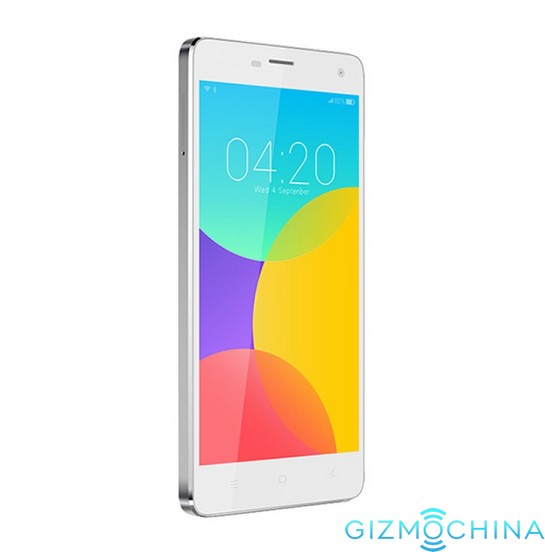
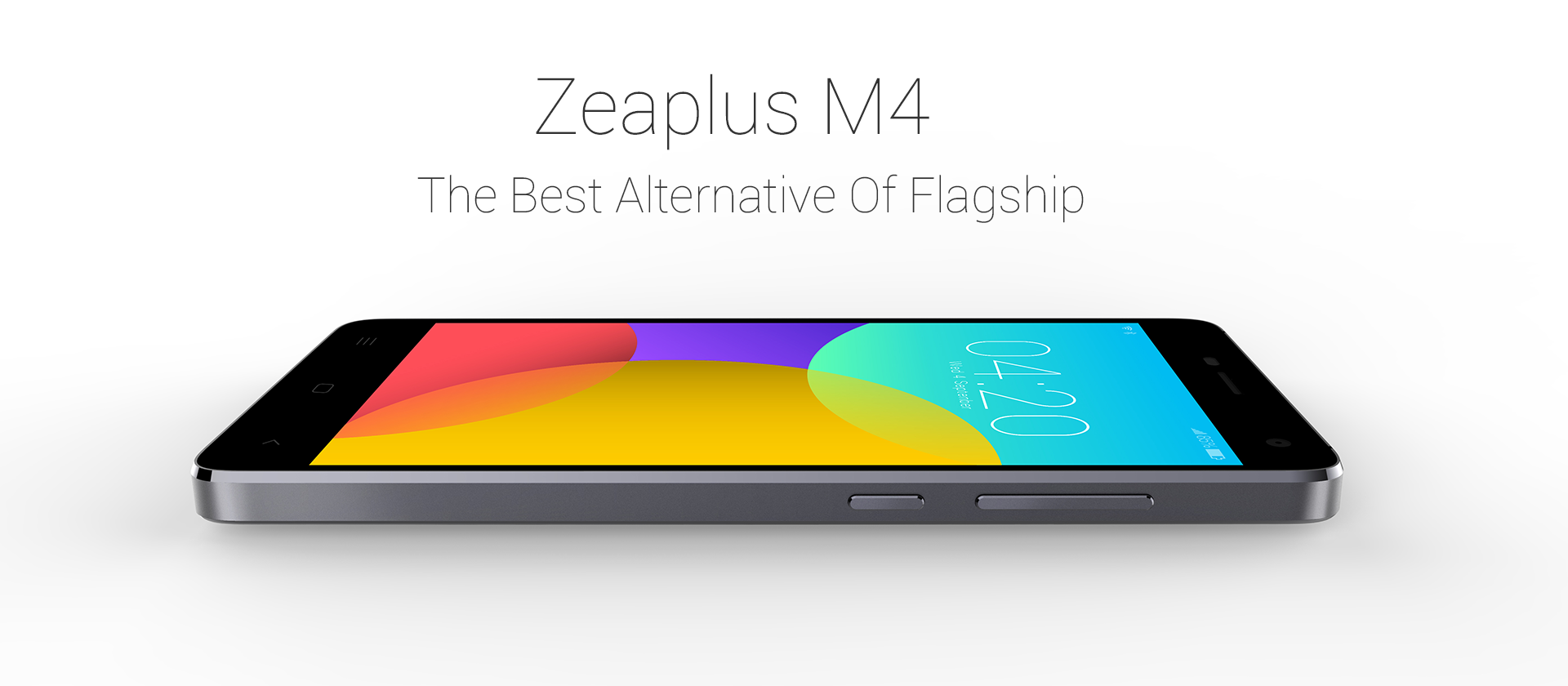
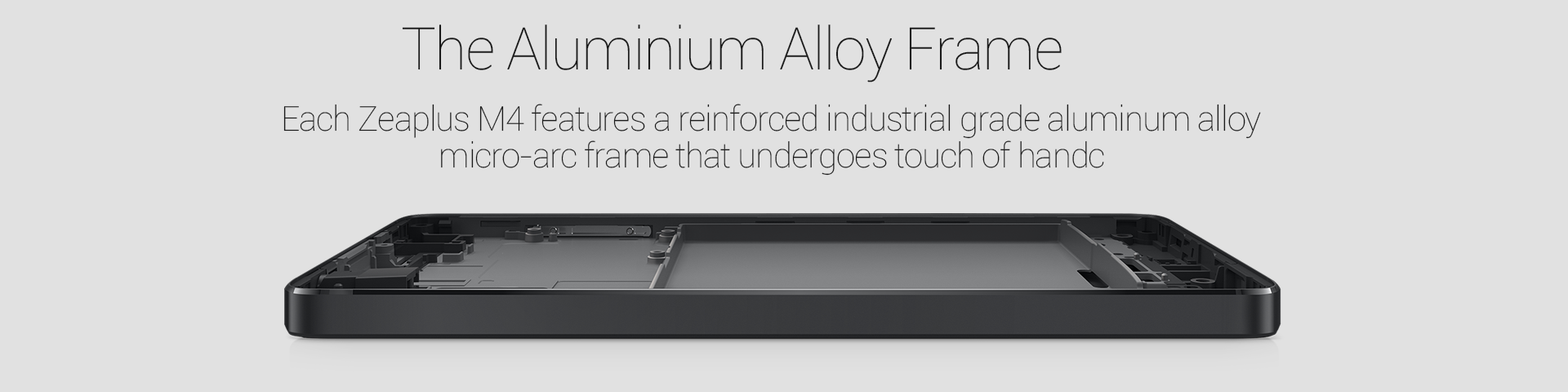
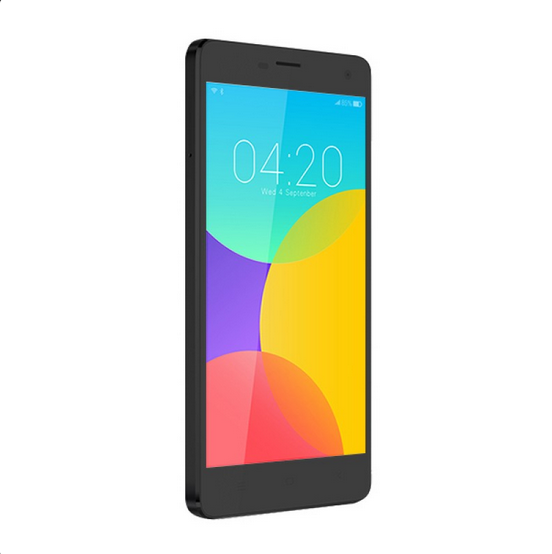
Next up in the list is the recently announced Zeaplus M4. This is another beautiful looking phone as it is the clone of the popular Xiaomi Mi4 flagship. So, if you like the Mi4, the Zeaplus M4 should definitely be on your list.
Apart from the beautiful design, the affordable M4 does have some decent hardware up its sleeve. For example, you get the same MediaTek MT6582, 1.3GHz, Quad-core processor on this device as the Neo M1 along with 1GB RAM. Again like the Neo model, the M4 comes with an 8GB ROM which can be expandable with MicroSD card.
There’s a 5.0 inch 720p display up front with Gorilla Glass 3 protection. On the back, you have an 8MP f/2.2 camera with LED flash and 2K video support, while on the front, there’s a 2MP shooter. The sensor is smaller than the M1, but expect similar image quality from both the devices.
Although the Zeaplus M4 is lighter than the Neo M1, its much thicker at 9mm. But to compensate the extra width, you get a 2,500mAh battery inside.
Check out our review for more detailed information about the Zeaplus M4.
Full Tech Specifications
Display
5 inch 1280 x 720p + Corning Gorilla Glass 3 Protection
Processor
MediaTek MT6582, 1.3GHz, Quad-core
Memory
1GB RAM + 8GB ROM (MicroD card slot: YES)
Cameras
REAR: 8MP f/2.2 + LED flash FRONT: 2MP
Battery
2,500 mAh (non-removable)
Size and Weight
139.6mm x 68.5mm x 9mm, 130 grams
OS
Android 4.4
Price
$99
Free Gift
Flip Case and Screen Protector
3. CUBOT S200
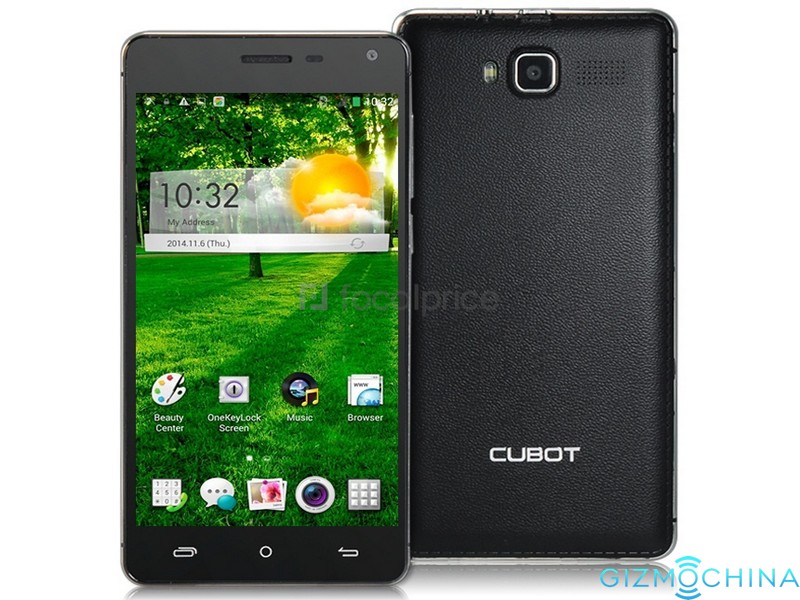
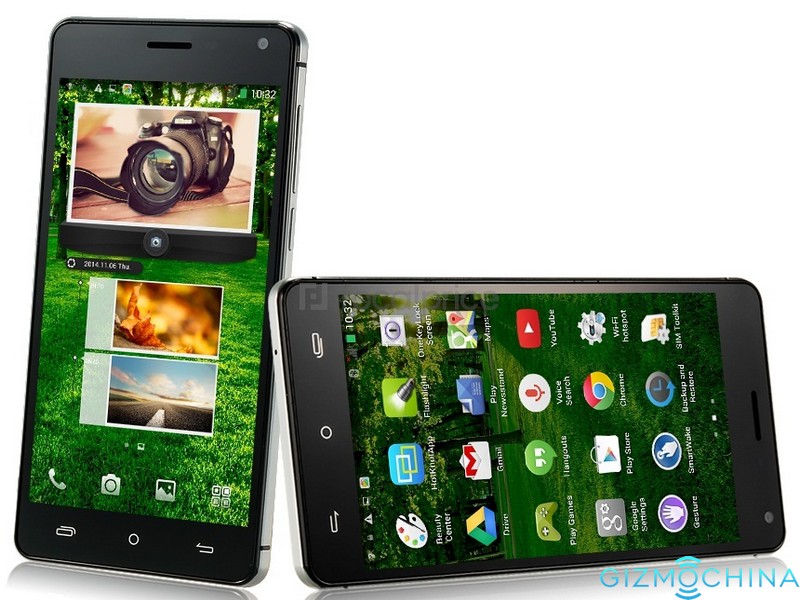
Those who hate smooth back texture on their phones, can take a look at the Cubot S200 smartphone. Unlike the M4 and the Neo M1, the S200 comes with a rough back panel, which makes it easier to hold the device. It may not be as pretty as the above two, but we know there are some buyers who will like its design.
Internals are more or less the same as other phones in its class. So, you get the 1.3Ghz MT6582 Quad Core SoC, 1GB RAM and 8GB ROM with expandable storage. There’s an 8MP rear camera like the M4 along with a 5MP front shooter. The 5 inch screen up front features a 1280 x 720 pixel resolution.
Now you must be thinking, this is the same as the above two, right? But NO! Cubot comes with one thing that most other smartphones in this price range lacks, a big battery. You get a 3,300 mAh battery inside, which is actually bigger than what most flagships feature these days. As a result, you will get an exceptional battery life on the device, much better than the above two devices.
So, if you are looking for a device under $100 which will last you more than a day long, then Cubot S200 is your best bet.
The phone is available for purchase at Comebuy for just $100. Pretty good deal right?
If you are looking for something more powerful, then you can go for the new THL T6 Pro. It comes with a Mediatek MT6592m Cortex A7 processor clocked at 1.4 Ghz. This should give you more than enough power to run any apps or games on the device without any lag. For RAM, you get 1GB and for storage, you have 8GB internal with MicroSD card expansion support.
On the back there’s an 8MP camera which clicks decent pictures while on the front, there is a 2MP sensor. The screen is of 5 inches like the earlier listed models and comes with 720p resolution. Battery is a bit of a disappointment, as it comes with only 1,900 mAh capacity Li-Polymer battery. But even with 8 cores, the device should survive a day, owing to the less powerful power efficient Cortex A7 processor.
Design wise, the device has nothing new to offer, but the it feels well built and the power of 8 cores should definitely attract a lot of new users to the company.
At present, you can purchase the device from comebuy for just $108.5. You can also opt for the German warehouse but it would be a bit more costly.
Cubot S200 isn’t the only smartphone in town with a large battery. In fact, if you are looking for a device that will really last for more than a day, even with heavy use, then the THL 4000 is perfect for you. The THL model makes up for what its elder brother THL T6 lacked, with a large 4,000 mAh battery (hence the Name THL 4000!). This is really the most you can get on a smartphone under $100.
So, you must be wondering why didn’t we list it ahead of the S200. Well, the reason is simple. Apart from the large battery, the THL 4000 is a very average phone Although the basic package remains the same – MTK6582 1.3Ghz Quad Core processor + 1GB RAM + 8GB ROM, the camera sensor and the display are much smaller than what you get from the earlier listed devices. For example, you just have a 4.7 inch screen with 960 x 540 qHD resolution. Rear camera is of 5MP and the front camera is of 2MP.
However, for a smaller camera sensor and display, you have to shell out a lot less than other phones in its class. Usually, you will have to pay around $99 for the THL 4000, but you can get it for $91 from Comebuy for a limited period. There’s also an option to ship it from German Warehouse.
Low resolution 4.7 inch screen (Just qHD instead of 720p HD)
No Gorilla Glass
Very Thick (11.2mm)
Full Tech Specification
Display
4.7 inch 960 x540 qHD
Processor
MediaTek MT6582, 1.3GHz, Quad-core
Memory
1GB RAM + 8GB ROM (MicroD card slot: YES)
Cameras
REAR: 5MP + LED flashFRONT: 2MP
Battery
4,000 mAh
Size and Weight
140 x 68 x 11.2 mm, 145 grams
OS
Android 4.4
Price
$91
Coupon
NONE
6. Cubot S168
Don’t have $100 to spend on your next smartphone or looking for an extremely cheap back up smartphone? We have a device which satisfies this need too. We present the cheapest smartphone in the list, the Cubot 168. Its less than $80 but only sacrifices in some areas to get to this price tag.
For example, the display remains at 5 inches like most other phones in the list, but the resolution is reduced to qHD i.e. 960 x 540 pixels. Also, the battery is small and at 1,900 mAh capacity, it should barely last you an entire day. However, other than this, the features are the same as the S200. So you have a MT6582 Quad Core processor, 1GB RAM and 8GB internal storage with a MicroSD card slot. Camera too remains the same at 8MP rear sensor and 5MP front sensor.
So, the choice is simple. If you are short on cash and are looking for a cheap smartphone, Cubot S168 should serve you well.
Let me remind you that you have a powerful Quad Core processor as well as a decent display in this phone, so things are not as bad as you may think. Its just that you have better options out there, all for less than a $100 which makes this device look a bit weak. But for $80, we think you get much more than your money’s worth.
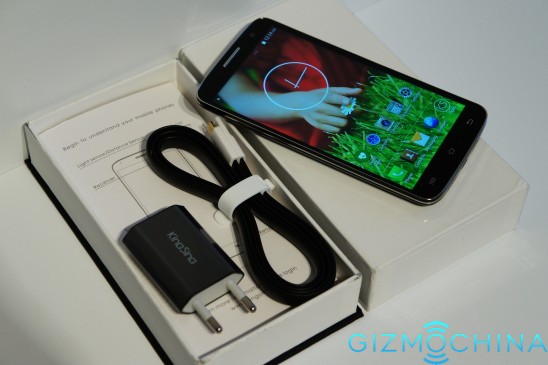
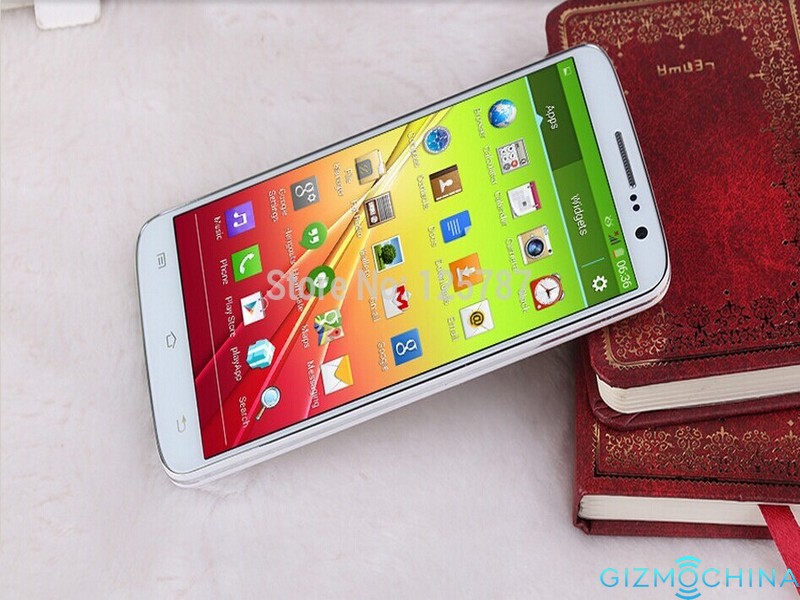
If you didn’t like the design on the earlier listed phones, there’s a very good chance that the KingSing S2 won’t disappoint you. This is because, S2 is a clone of one of the most beautiful smartphones currently available in the market. the LG G3. It even features the same rear volume and power buttons like the G3.
The build is quite solid with a glossy back cover (unlike the metal finish on the G3) and looks wise, you will be impressed for sure (for a device of this price). Surprisingly, there’s even a heart rate sensor on the device, which although isn’t very accurate, it could be something that you can boast about your $100 smartphone.
Inside, the specifications are pretty average. You get a Quad Core 1.3GHz MTK6582 processor with 1GB RAM and 8GB storage with memory card slot. Like most other models, you have a 5 inch display up front, but unfortunately, the resolution is just qHD i.e. 960 x 540 pixels. For camera you have 8MP sensor at the back and a 2MP sensor up front. The battery is also decent, a 2,000 mAh capacity(though we would have loved atleast 2,300mAh), which with the power efficient processor and the lower resolution screen should be just enough to last an entire day.
So, the only reason you would choose this device from other rivals in the market is because of its design. But, there’s one more incentive. The KingSing S2 is available at Giztop for just $89, cheaper than most other phones in the list.
Check out our hands on review below to get more idea about this device.
Full Tech Specification
Display
5 inch 960 x 540 qHD
Processor
MediaTek MT6582, 1.3GHz, Quad-core
Memory
1GB RAM + 8GB ROM (MicroD card slot: YES)
Cameras
REAR: 8MP + LED flash FRONT: 2MP
Battery
2,000 mAh
Size and Weight
135.2 x 69 x 7.9 mm, 141 grams
OS
Android 4.4
Price
$89.99
Coupon
None
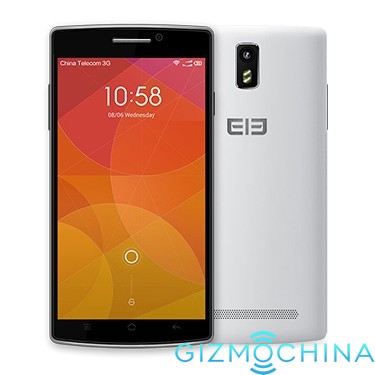
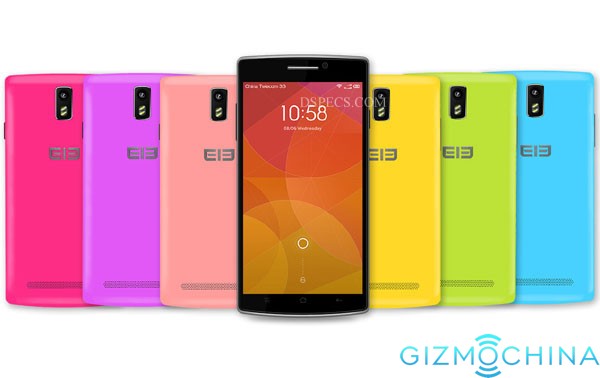
8. Elephone G5
All the phones we have covered till now feature 5 inch screen or less. But those who are looking for something bigger, can go for the new Elephone G5 smartphone. It comes with a 5.5 inch display with a resolution of 1280 x 720 pixels. While this will reduce the pixel density of the screen as compared to other phones in the list, the display still should be clear enough for your everyday use.
G5’s design is inspired by the famous OnePlus One flagship, so you get the same premium soft back finish on the phone that everyone loves. The overall dimensions of both the devices are almost the same, the G5 measures 155 x 78.5 x 7.5 mm while the OPO measures 152.9 x 75.9 x 8.9 mm.
Like all other phones in the list, you have a Cotex A7 1.3Ghz MTK6582 processor inside with 1GB RAM and 8GB ROM. On the back, you get a 13MP camera along with a 5MP front shooter. As you can see, the rear camera sensor is slightly better than the 8MP usually found on phones in this price range. The battery is also decent and at 2,550 mAh, you can easily play around with the device for a day.
Elephone G5 usually sells for $130 on various online stores, but as a part of the holiday season sale, the device is available for just $99 from Giztop.
[NOTE: Many website claims that the Elephone G5 comes with a 3,020 mAh capacity battery, but in reality it only has a 2,550 mAh one inside.]
PROS:
Carries the loved OnePlus One Design
Larger Display (5.5inch)
Gorilla Glass
CONS:
Lower Pixel Density
Here’s our short review on the G5. Also, check out the hands on video to get more idea about the phone.
Full Tech Specification
Display
5.5 inch 1280 x 720 HD
Processor
MediaTek MT6582, 1.3GHz, Quad-core
Memory
1GB RAM + 8GB ROM (MicroD card slot: YES)
Cameras
REAR: 13MP + LED flash FRONT:5MP
Battery
2,550 mAh
Size and Weight
155 x 78.5 x 7.5 mm, 157 grams
OS
Android 4.4
Price
$99.99
Coupon
None
9. Leagoo Lead 3S
Back when we reviewed the Leagoo Lead 2, we were quite impressed with the hardware that it brought to the table. Now, there’s the new Leagoo Lead 3S model, which is ideal for someone who’s looking for a compact phone.
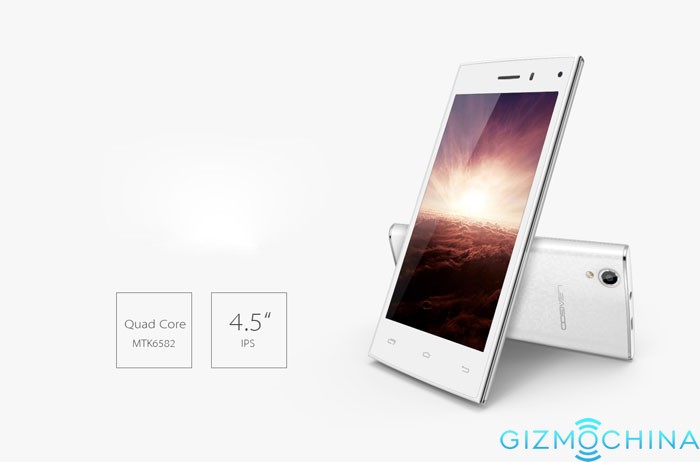
We have made sure that this list contains all types of phones that will suit the needs of different users, and this ‘Lead 3S’ is especially made for people who want a small screen. We know not everyone likes a large 5 inch or 5.5 inch device which is hard to fit in the pocket, so this compact device with a 4.5 inch screen will definitely serve these guys well.
Like we said above, it comes with a 4.5 inch display with a qHD resolution i.e. 960 x 540 which is good for a small device. The processor, RAM and the internal storage are MT6582 1.3Ghz Quad Core, 1GB and 8GB respectively, just like the other models in the list. Similarly, you have an 8MP rear camera and a 2MP front camera on the device. With the smaller screen, you get a smaller battery too, but at 1,600 mAh, the talk time should be at par or slightly lesser than most other devices.
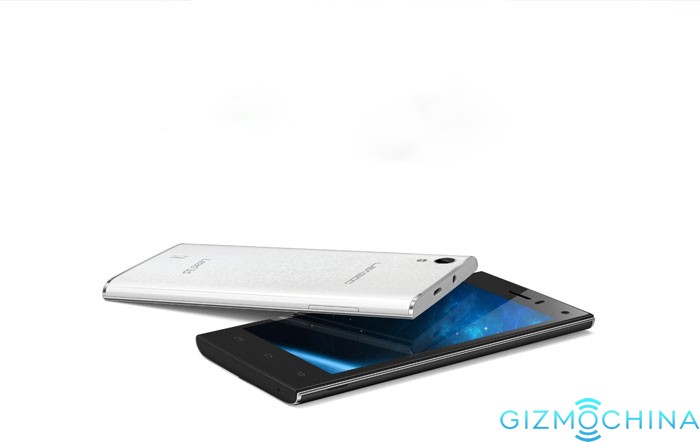
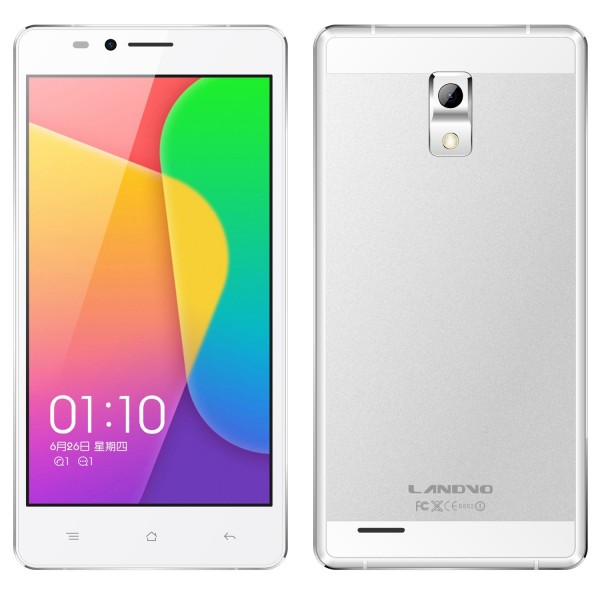
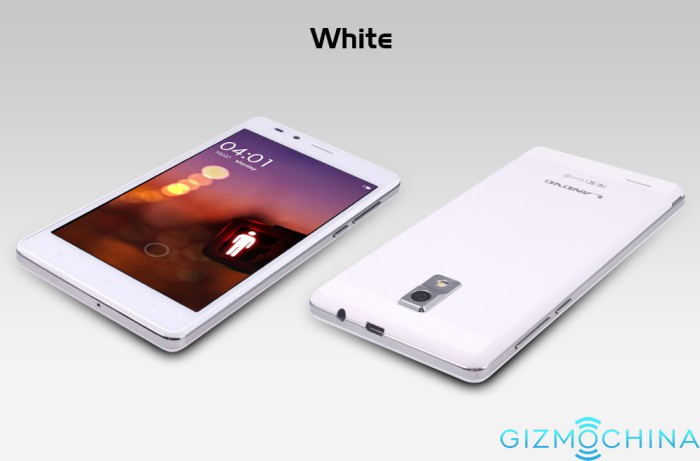
Looking for a cheaper Octa Core running smartphone under $100? Then take a look at the LANDVO L550 model. It comes with the same Octa Core MTK6592 1.4Ghz processor as the THL T6 Pro model. You get 1GB RAM, 8GB ROM along with a memory card expansion slot.
However, for a cheaper price tag, you have to sacrifice in some areas. For example, the 5.0 inch screen up front is of 960 x 540 pixel qHD resolution as opposed to the HD resolution display on the THL T6 Pro. Moreover, you get a slightly smaller 1,800 mAh battery on the device as opposed to 1,900 mAh one found on the latter.
Other specifications are almost the same as T6 Pro, so we are not elaborating further.
I know this was a very long article, but here, we wanted to include all the best phones available to buy this year under $100. Each one has its own USP, which will make your purchase decision much easier.
In fact, to conclude, we are listing ‘THE ONE REASON’ why you should buy each of these devices. We know there would be many other reasons for choosing one among these 10, but here’s what we think.
1. CUBOT S200 : BEAUTIFUL METAL DESIGN
2.ZEAPLUS M4: AMAZING BUILT & DESIGN (Xiaomi Mi4 Clone)
3.CUBOT S200: LARGE BATTERY
4. THL T6 PRO: OCTA CORE PROCESSOR
5. THL T4000: A VERY LARGE 4000 mAH BATTERY
6. CUBOT S168: VALUE FOR MONEY DEVICE (Cheapest on the List- Just $79.99)
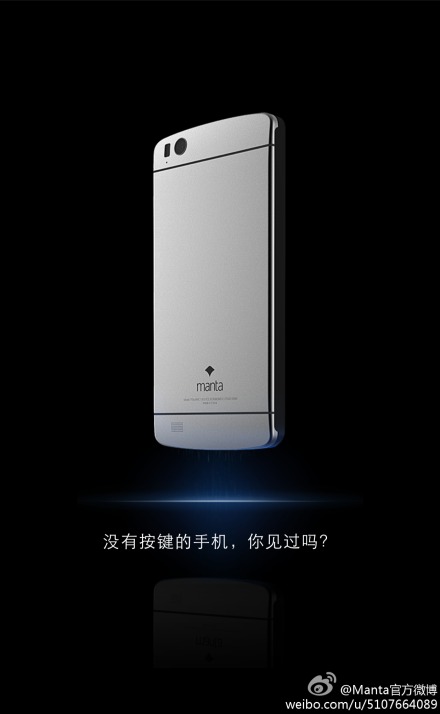
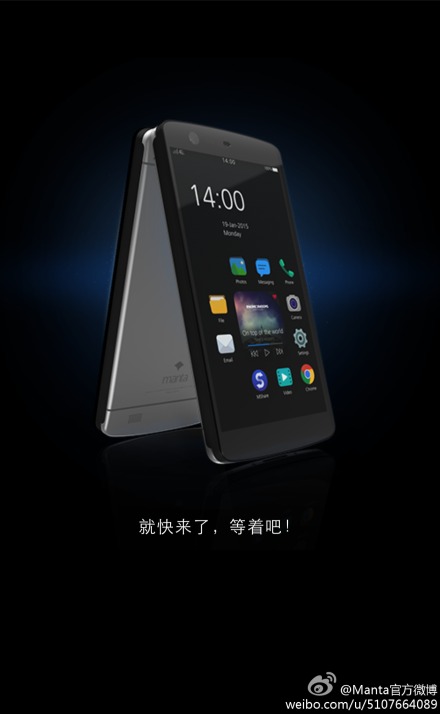
Cell phone-related industry has been developing rapidly, and many manufacturers lose innovation in the price war. But some Dream brands avoid this fight to create innovative products, as in the case of approaching this Manta X 7. It is a smart phone that is not limited to a specific feature, but a phone that comes with no buttons at all.
It is clear that Manta is a newly-established brand and no one may have heard of Manta’s name before. The brand is based from the Shanghai China dolphin Technology Co. , Ltd. and its first product is called Manta X 7. Official X 7 description – it is a “from tomorrow, the smartphone. From the pictures, it can be seen that the sides seems to be clean as there is no common Power, volume, etc. The phone is made from metal and the results can be seen back with good metal texture, and in addition the clean body, both the top and bottom feature popular micro-arc curve design.
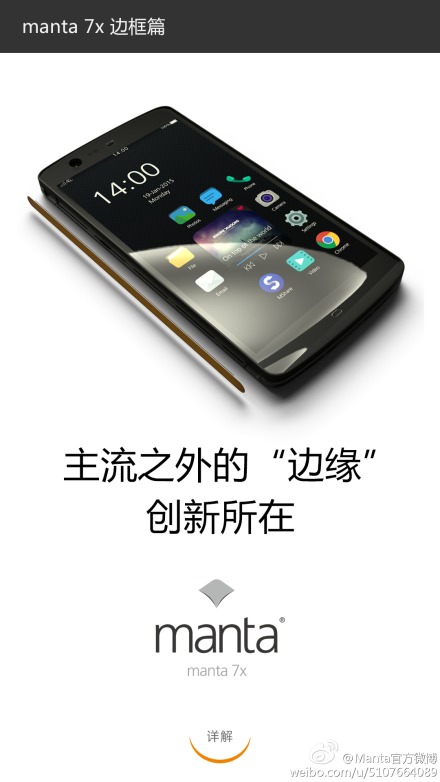
Without the physical buttons, how will the phone operate? Well, the phone uses “smart borders”, and commonly used function keys by touch in the box “smart borders” to complete.
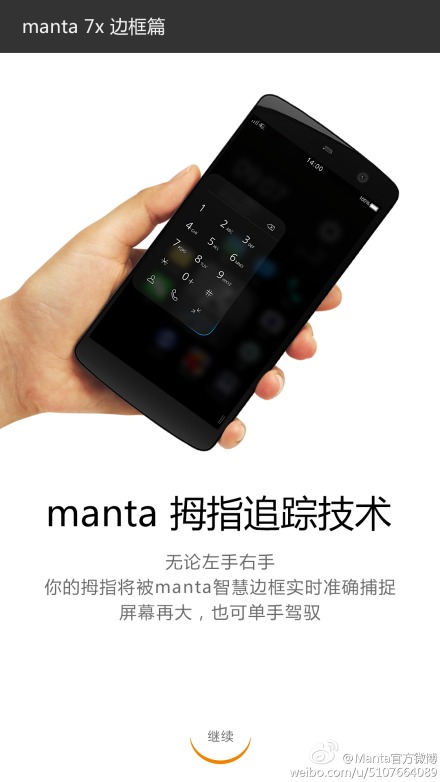
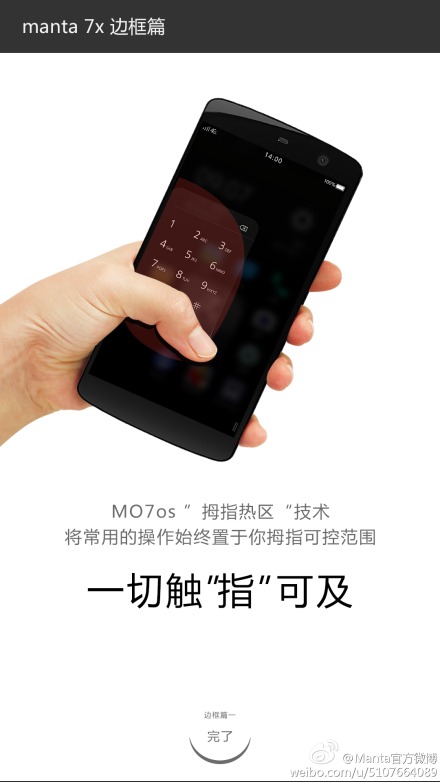
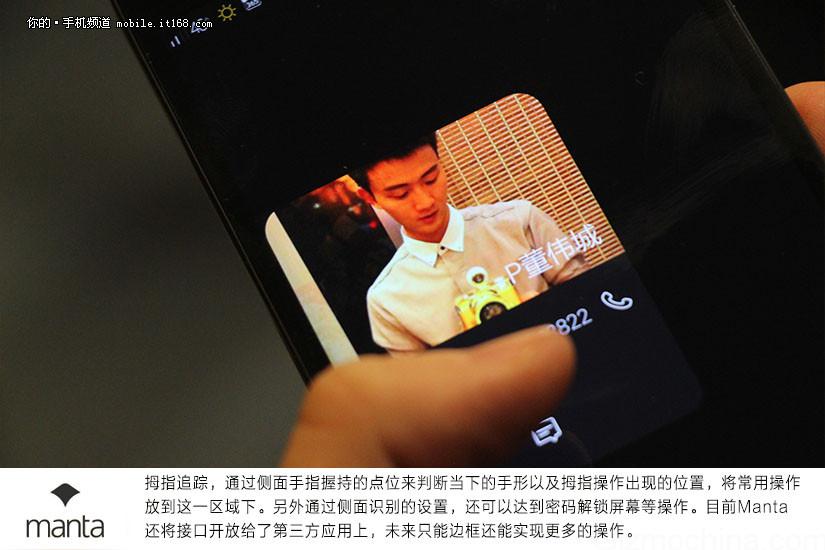
In addition official statistics, Manta X 7 also has adopted an innovative thumb tracking technology, the Wisdom border sensing your thumb position on the screen and “thumb hot zones, to have the dial-up, such as the applications are always displayed on your thumb to the scope of the action, to achieve true single hand operation, even if the screen is big, the user can also perform normal single-handed operation.
Current understanding of the phone is not enough, but the “no press” and “wisdom” borders, and other content is sufficient eye-catching. The details like the price of the product, configuration, etc. are not known at the moment.
In the past few months, we have seen numerous clones of Xiaomi Mi4. Just yesterday, we covered the new Zeaplus M4 which was yet another clone of the Mi4 and today, we have one another device called as the No.1 Mi4 which replicates the same design as the Xiaomi flagship.
Mi4 has really set a standard in the market when it comes to clones. At present, there are a number clones from different manufacturers like Elephone, Doogee and Zeaplus. This is actually not that surprising, as Xiaomi’s flagship is one of the best Chinese smartphone currently available in the market. It has a beautiful aluminium design that looks much better than other plastic phones. Moreover, the design is simple yet looks premium which makes it easier to replicate. This is the main reason why we have been seeing so many Mi4 clones in the past few months.
So, lets take a look at the No.1 Mi4 Review.
UNBOXING
No.1 has a reputation of making beautiful replicas of famous flagship devices. We have already seen clones of OnePlus One, Samsung Galaxy S5, iPhone 6 and even Samsung Galaxy Note from the company. These devices are well built and comes at a very affordable price tag, which has helped the company grow in the market.
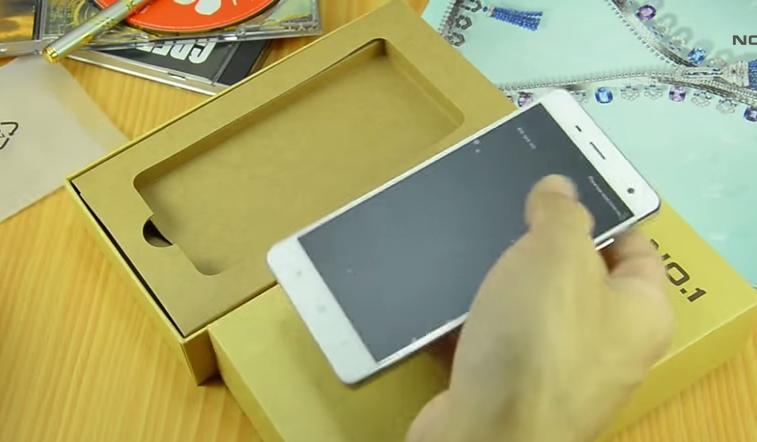
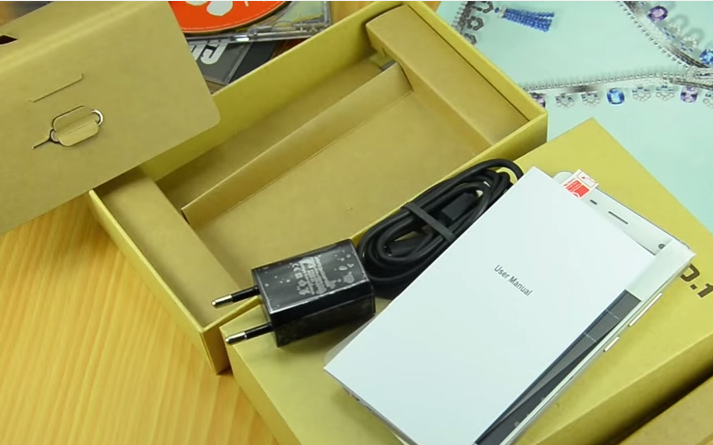
The No.1 Mi4 came in a golden colored plain cardboard box with the No.1 logo on top. Opening the box was pretty easy and so was the process of disassembling everything. In the box, you get the phone, a charging adapter, a MicroUSB cable for charging and transferring data to and from your phone to the PC, a screen protector and finally, the user manual.
You don’t get headphones with the device, but all other necessary items come inside the box.
DESIGN
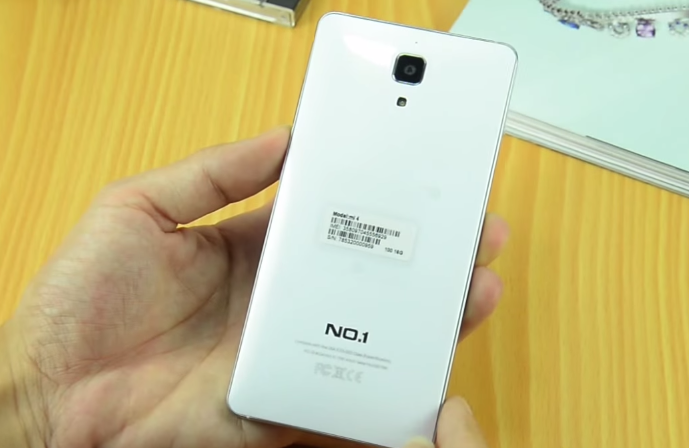
The No.1 Mi4, like the name suggests borrows its design from Xiaomi’s Mi4 flagship. In fact, without the Mi logo on the front and the No.1 logo on the back, you won’t be able to distinguish between the two.
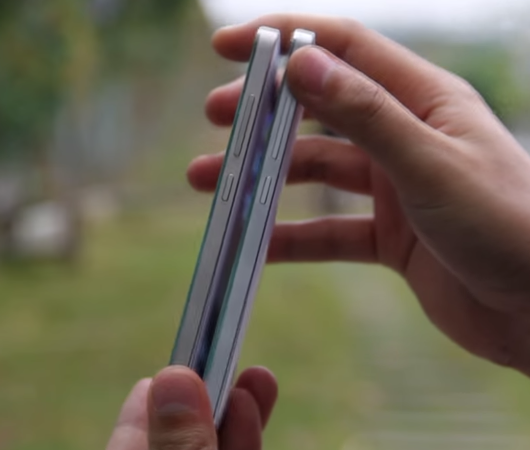
We compared both the devices and the results were exactly what we expected. Each and every detail from the Mi4 is replicated by this new clone.
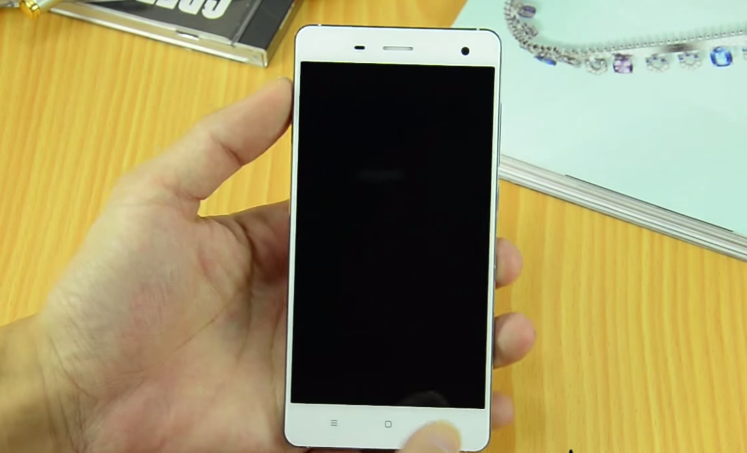
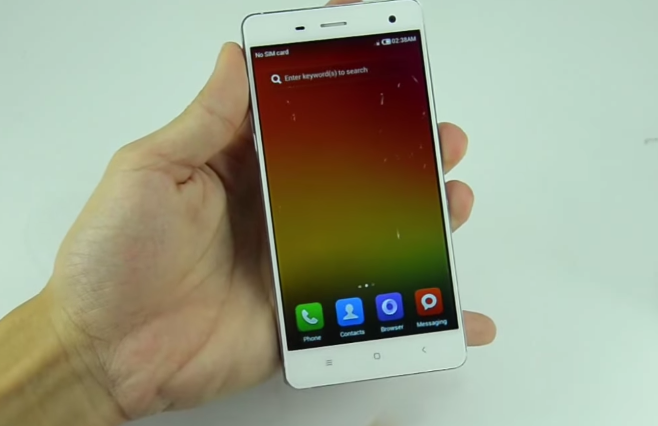
On the front, you have a 5 inch screen with the ear piece, front camera and the sensor above the display. Below it, you have three capacitive buttons namely the back, home and the more options. The only way to distinguish between the two from the front is by checking whether there’s a Mi logo on the top left corner of the device. The one with the logo is the Mi4 while the other is the new No.1 Mi4.
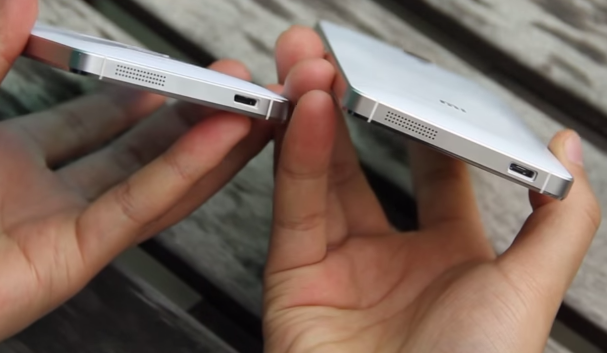
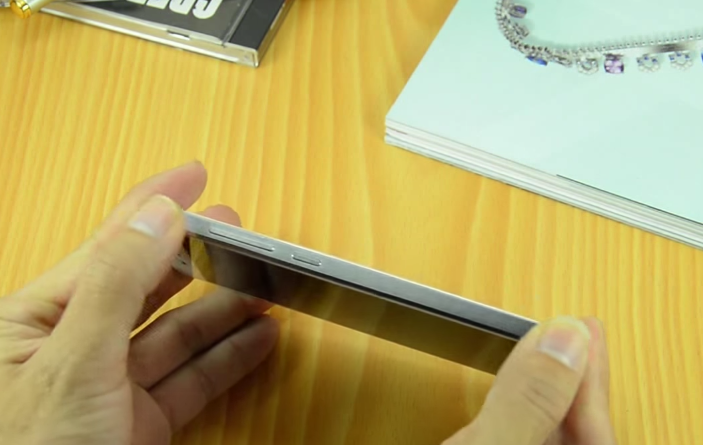
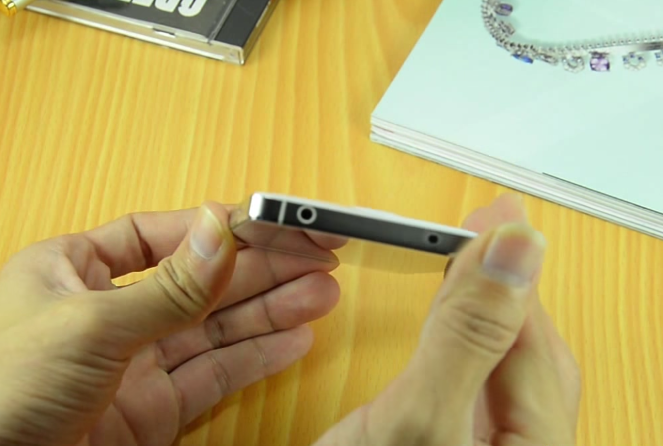
On the right side, you have the volume rocker keys along with the power button below it while on the left you have the sim card slot. The placement of these buttons are exactly the same as the Mi4 flagship. On top you have the 3.5 mm headphone jack, and at the bottom you get a MicroUSB port for charging as well as a speaker grill.
The Mi4 clone features the same glossy back cover as the original device. On top you have a 13MP camera with an LED flash below it, while at the bottom, you have the No.1 logo instead of Xiaomi.
In short, if you have ever seen the new Xiaomi flagship, you know exactly how the No.1 Mi4 looks like.
The build quality is at par with the Xiaomi flagship. But naturally, its not exactly the same as the Mi4 as you may see feel some difference between the two. However, given that the Mi4 cost more than $350, we are sure you won’t mind the slight difference in build quality between both the devices.
DISPLAY
Being a Mi4 clone, the No.1 Mi4 features a 5 inch display on the front with a resolution of 1280 x 720 pixels. We have seen that the 720p resolution on a 5 inch display managed to display images and videos quite clearly. So even though it lacks 1080p resolution like the original model, even a slightly lower resolution produces satisfactory results.
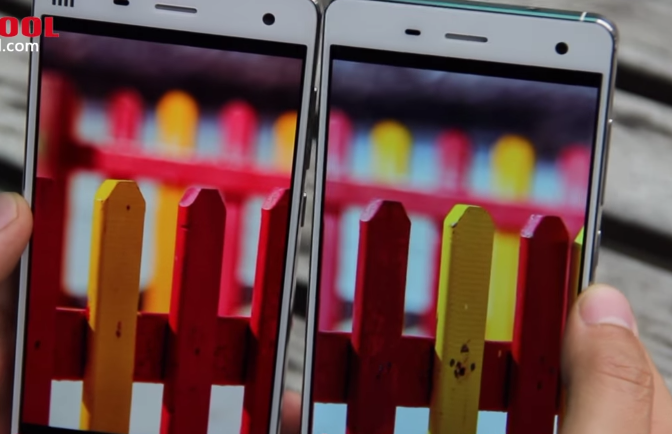
The images and videos on the device were quite vibrant and clear. Colors were rich, but slightly dull. Also, one important thing to note was that the colors were a bit different from what we saw on the original Mi4. For example, the No.1 Mi4 on the right shows more whiter colors as opposed to the Mi4 on the left. Also, with the lower resolution, if you look very closely, you may seen some pixels which you won’t on the Xiaomi Mi4, thanks to its Full HD display.
Still as you can see, the different isn’t significant and we were happy with the overall quality of the display on the Mi4 clone.
As you can see, the images look slightly washed out on No.1’s display but it is still comparable to the images seen on the Xiaomi model. With its 720p display, the pixel density comes to 320 pixels per inch.
HARDWARE & PERFORMANCE
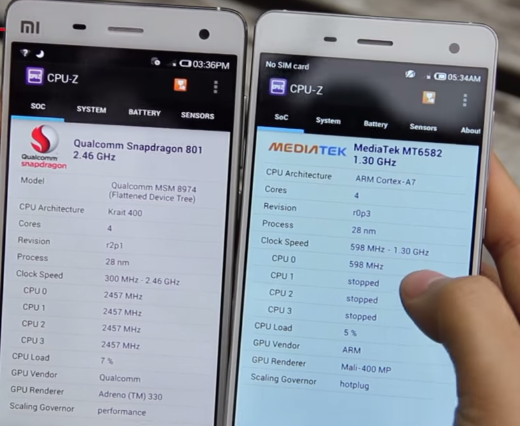
Almost every Mi4 clone in the market features the Mediatek MT6582 Quad Core processor. The same goes with this model too as it comes with the a 1.3 Ghz Quad Core processor with the above Mediatek chipset. You get 1GB onboard RAM along with Mali-400MP GPU and 16GB internal ROM.
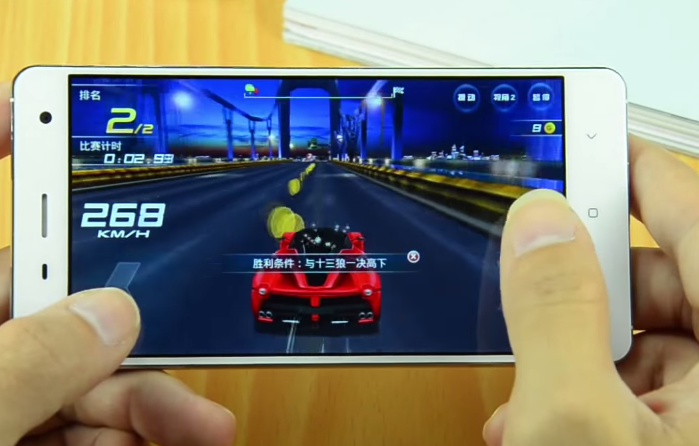
The 1GB RAM along with the Quad Core processor is more than enough for basic multitasking. Gaming turned out to be smooth and responsive, as we experienced very little lag while playing games like asphalt 8. The phone responded quickly when opening apps too, however struggled a bit when it had to run a very heavy app. But for its price, you can’t really expect stellar performance, so for your everyday usage, the phone will definitely impress you.
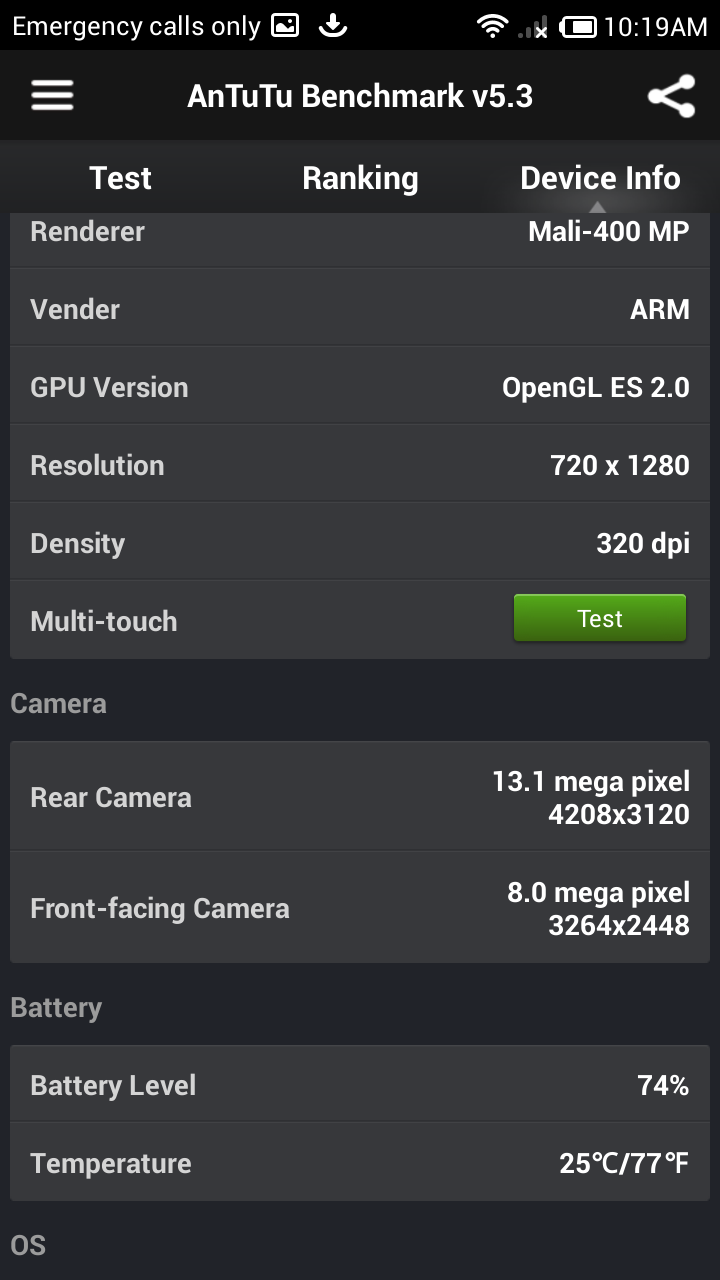
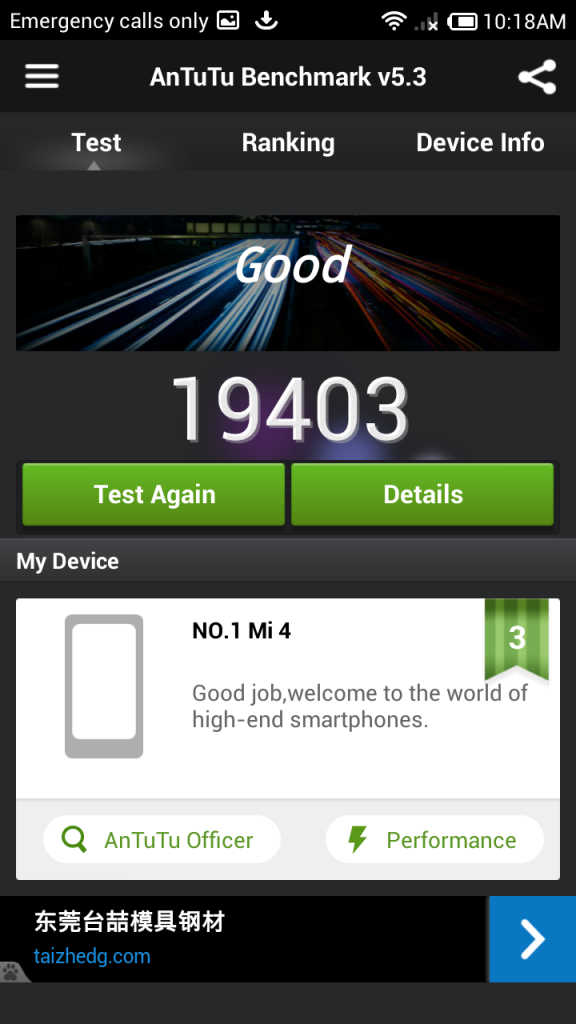
When we ran the AnTuTu benchmark test on the device, it showed a score of 19,403 which is a decent score for a phone that’s sells for less than $150. While opening and running apps too, the device managed to respond to the requests quite fast.
Usually, phones in this price range get scores up to 18,000 points, so the 19,403 score that we got is definitely good.
So, in short, we were pretty happy with the overall performance of the device. If you make sure that there are not a lot of background apps running on the device, then it should perform quite well.
As for the battery, you have 1,800 mAh capacity inside, which to be honest is a bit small. But still with the power efficient chipset, you should get around a day’s usage, which is quite acceptable.
CAMERA
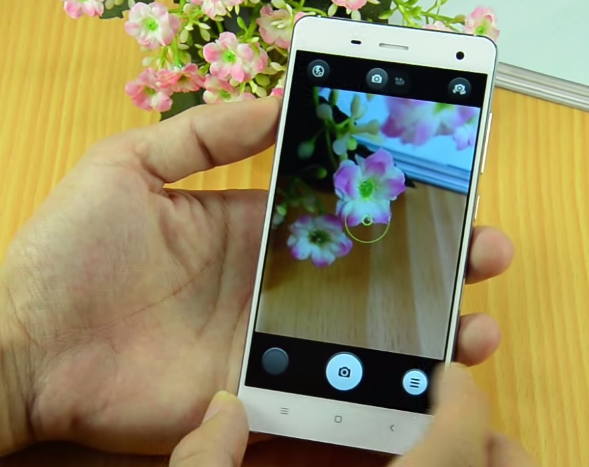
The No.1 Mi4 comes with a 13Mp rear camera along with a 5MP front shooter. The rear camera managed to capture decent pictures with some detail. However, color reproduction was not very natural. Colors were a bit off, and in such well lit conditions, we expected better results.
However, there were times when the No.1 Mi4’s camera surprised us. For example, when there was ample sunlight or any other source of light, the pictures came out good. In fact, many of the times, the colors were also accurate. But like all other phones in this range, the low light performance was average. When using the camera indoors, the noise increased and the clarity reduced.
So, if you were planning to take some pictures with the device, make sure you do it outdoors when there’s enough sunshine as you won’t be disappointed.
The image came out quite clear but the colors were much brighter than in real life.
This was a surprising click. Like we mentioned above, sometimes the colors came out quite accurate and this was one of those moments.
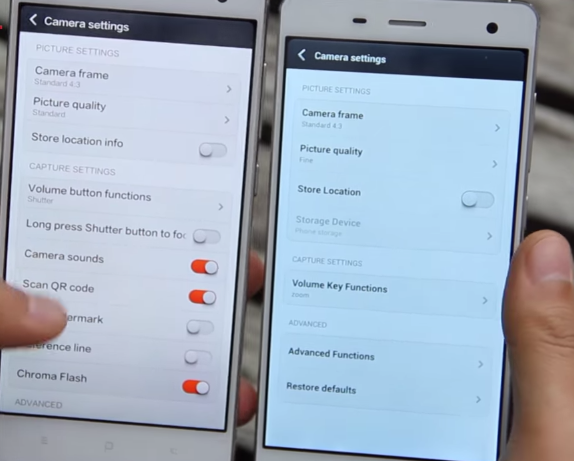
The camera menu is slightly different than the Mi4, but the options are more or less the same.
SOFTWARE & PERFORMANCE
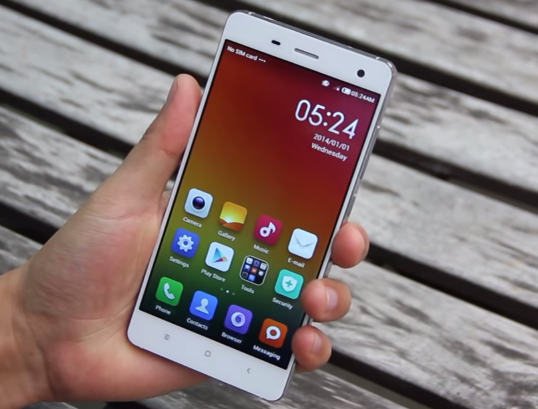
The device runs on Android 4.4 Kitkat OS out of the box with MIUI launcher on top. So, if you are used to MIUI, you should have no trouble operating this device as most of the options like notifications panel, settings panel are identical to Mi4’s OS.
No.1 Mi4 does have some extra features like Wireless Display feature which directly connects the phone to your HDTV. All you have to do is turn on its Wireless Display function and pair it with your TV and you can use the large screen to display whats showing on your device.
This is a very useful feature especially when you want to play your favorite Android games or even watch HD videos directly on your large screen HDTV.
Another feature, which have become quite common among Chinese phones is the infrared remote. Using this remote, you can control pretty much anything at your home including your air condition, washing machine and so on. So no need to look for the remote of every appliance as a single phone can control everything that’s inside your house.
VERDICT
To sum up, No.1 Mi4 is a great clone. You get the same looks as Mi4, a beautiful MIUI like interface along with a host of other special features at a very affordable price. The device currently sold from No.1.
So, what do you guys think? Like it?
Meanwhile, check out another clone from the same company, the No.1 Note 4.
When Malata started targetting the Chinese market again, they announced their intention to make their product line more diverse and competitive. With so many cellphones on the market, making a unique cellphone is no easy task. Recently, however, Malata released the world’s first cellphone to have a speaker screen—the Malata X6. In this short review, we take a look at this interesting little device.
The Malata X6 uses a pioneering speaker screen technology that only Malata possesses. In principle, this technology involves inserting a piezoelectric actuator under the display screen. This technology lets the screen vibrate and release sound. By integrating the function of a phone receiver with an IPS display screen, there is no longer any need of the traditional phone receiver with holes. When you make a phone call, you can hear high-quality sound by putting your ear near any corner of the screen. This is very convenient as you no longer have to look for the speakers when you want to listen better.
Because there are no holes above the screen, no water or dust can come from the front. There are times when you are going get water, tea, or any other liquid spilled over your phone. The Malata X6’s design lessens the probability of any liquid or dust going inside.
The Malata X6 uses the Android 4.4 OS and sports a 5.0-inch IPS display screen.
The volume switch and lock screen button are located on the right side. There is 3.5 earphone jack on the top. At the bottom, there is a Micro USB port and microphone.
It looks like Malata is succeeding in their mission to create a unique device. From its functions to its appearance, it seems to show this. It would not be a bad choice for a holiday gift. That’s for sure.
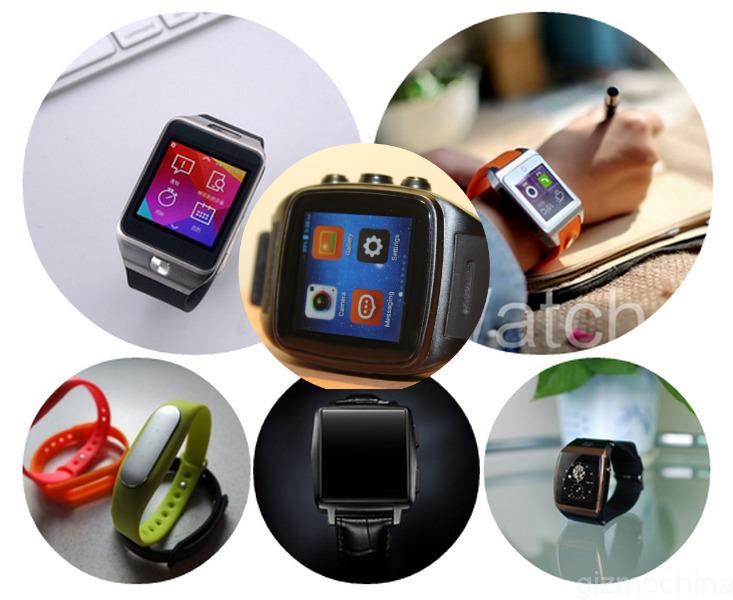
This year we have seen a number of new smartwatches from notable international manufacturers like Samsung, LG and Motorola. But, they weren’t the only ones to release their own wearable devices. Many new and existing Chinese manufacturers took the opportunity to announce new smartwatches in 2014 and today, we take the time to check out the best wearable devices of the year.
Let me remind you, there are many top wearable devices list on the internet, however, we are focusing this article on the top 5 wearables from Chinese manufacturers. We have seen some promising new devices from these companies, so we decided to take a look at the best smartwatches among them.
1. Xiaomi Mi Band
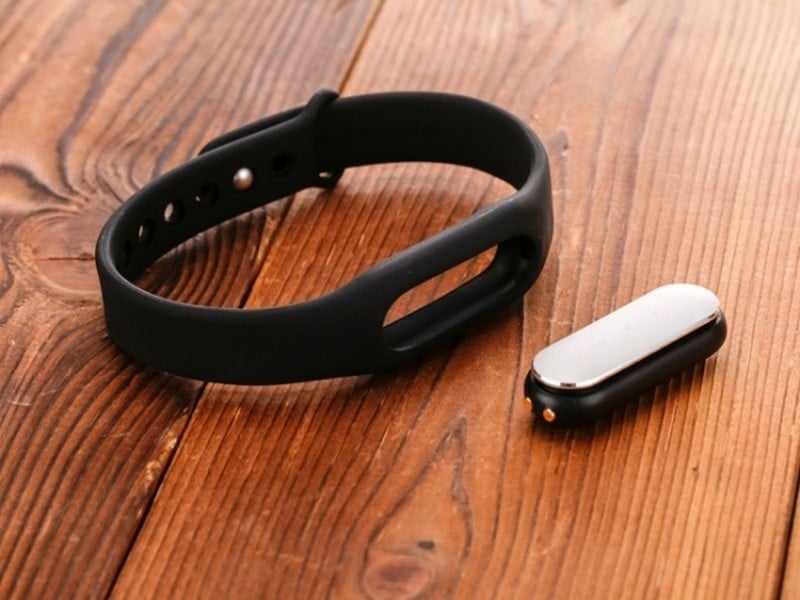
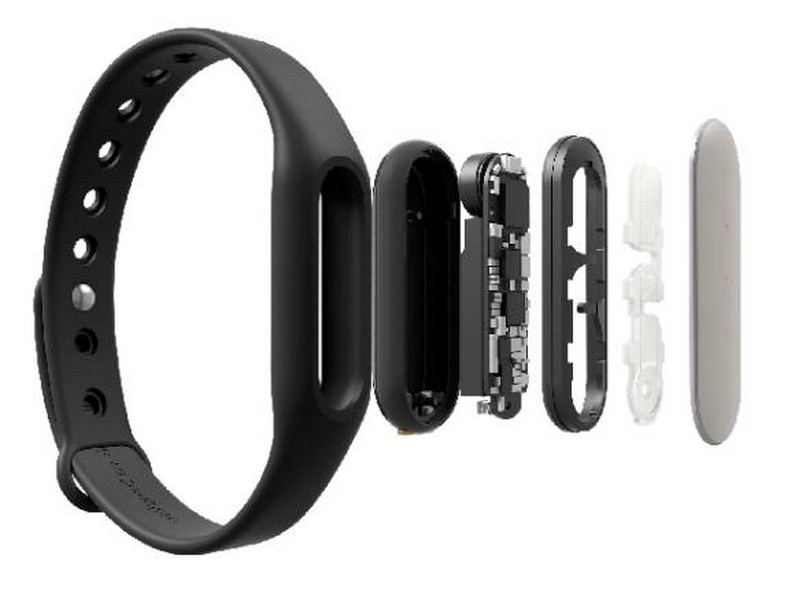
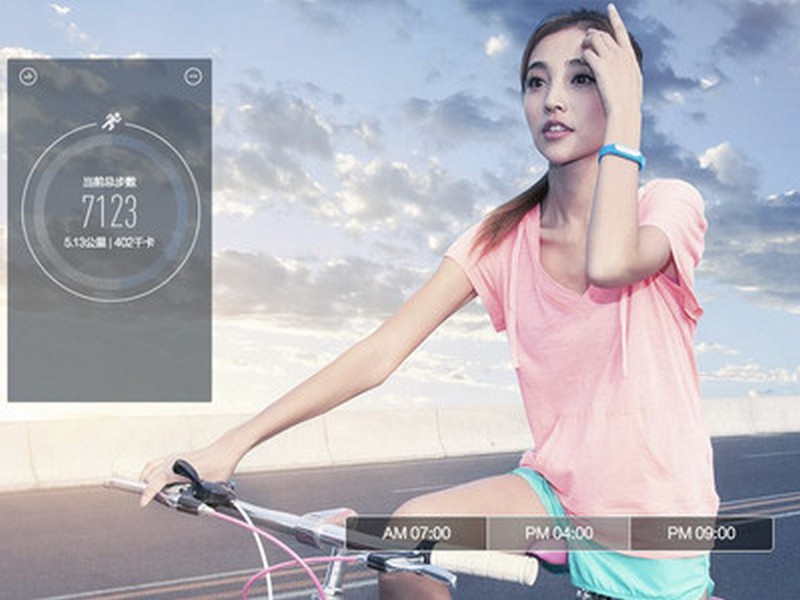
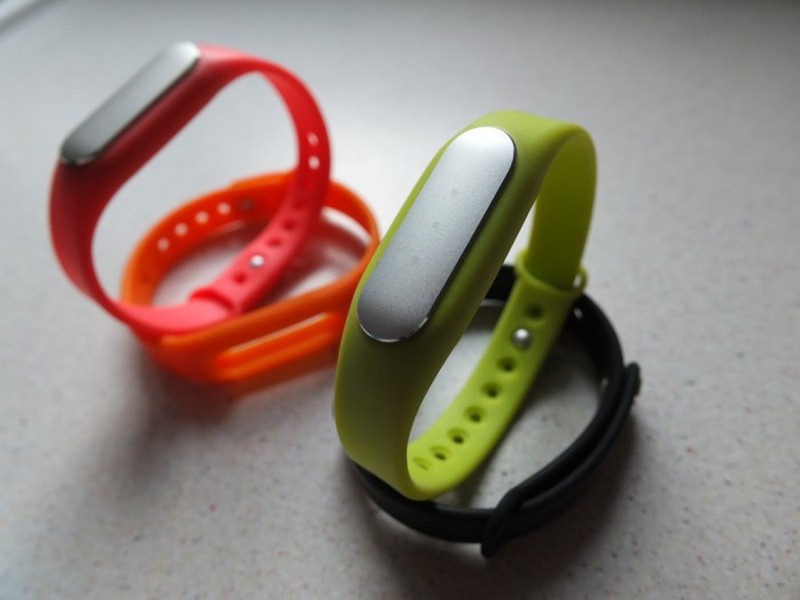
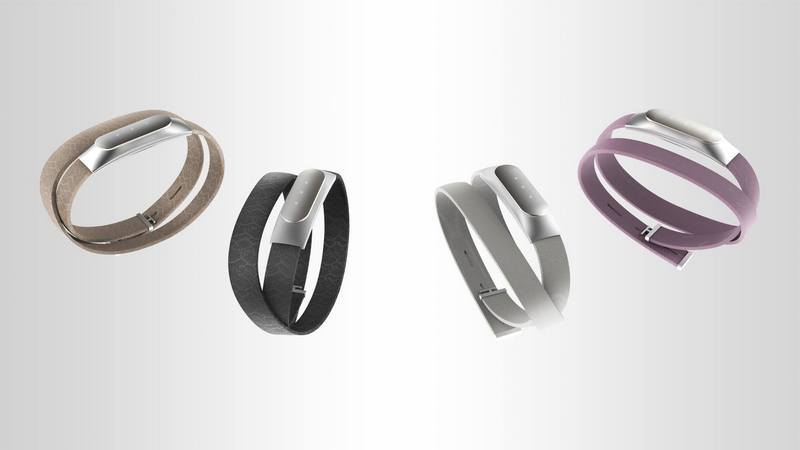
Not technically a smartwatch, but we start off with one of the most affordable wearable in the market, the Xiaomi Mi Band. Even though it is cheap, the device comes with almost every function that you expect from a smart tracker. So, we have ignored the fact that it doesn’t show time as most of the remaining features are at par with other high end smartwatches currently available in the market.
You can monitor your fitness as well as sleep cycle. It can record the number of steps taken in a day and the calories burnt during an activity. When you are sleeping, it can monitor your sleep patterns – how long you slept and how many hours of deep sleep you got. You also receive notifications from calls missed on your phone, but that’s all this smart band can do when it comes to smartphone notifications. Xiaomi has included a battery which can power the device for up to 30 days (impressive!) and its water resistant feature allows you to wear the device even when its raining.
So, the Mi Band is unarguably, one of the best value for money wearables in the market, and if you are not willing to spend too much on a wearable or you are a first time buyer, the Xiaomi Mi band will suit you well.
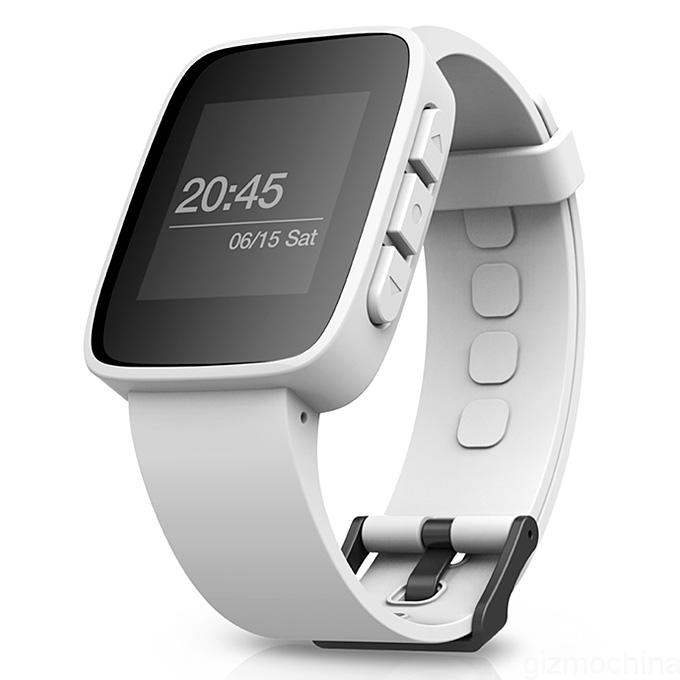
Xiaomi Mi Band was good for those who wanted something dirt cheap yet practical, but for others who are looking for a full smartwatch experience, the U8 UWatch Pro is the ideal candidate. Its previous generation, the U8 UWatch was quite famous among first time smartwatch customers. Now, with this next generation, the company is looking to attract a wider audience.
The U8 Pro smartwatch is a full package. It looks like a regular watch, but comes with functions that are generally found only in costly wearables. For example, you can connect it to your smartphone, whether it is iOS or Android using Bluetooth. And if you want to use it as a standalone device, you can do that too, thanks to the provided SIM card slot inside.
Feature wise too, you get a lot more than what you pay. So, you can make and answer calls, control music player on your phone in the connected mode, set it to vibrate when you move more than 10 meters away from the phone, monitor your fitness and even check your current altitude. Whats more, you can set up to 5 alarms, use its stopwatch and even read messages from QQ and WeChat directly on the device if you are connected with the phone.
Although the UI may take some time to get used to, for $30, we can easily say its one of the cheapest full functioning smartwatches available in the market.
iMacwear is an outstanding all-around standalone waterproof (IP67) 3G smartwatch, which probably is most feature packed in this list. As we say it is a standalone smart watch, we mean that it can literally replace your smartphone as you can take and receive calls, text, surf the web, check Facebook, emails and basically do any other stuff you would do on your smartphone. The only difference is that you will be doing that directly from your wrist, which is pretty awesome. What is more, the device features a 5mp shooter on the side, which lets you take some secret pictures or shoot videos. Another highlights include GPS receiver, Bluetooth and Wifi connectivity options. What surprised us most, however, how smooth it performs.
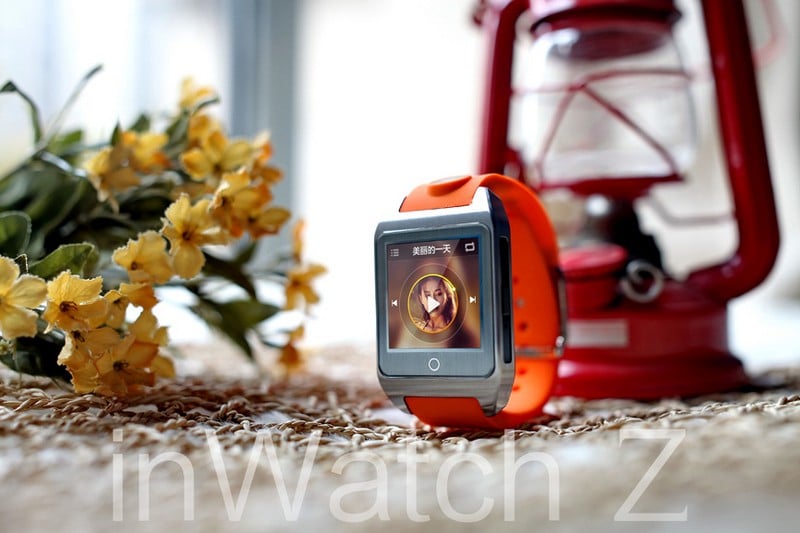
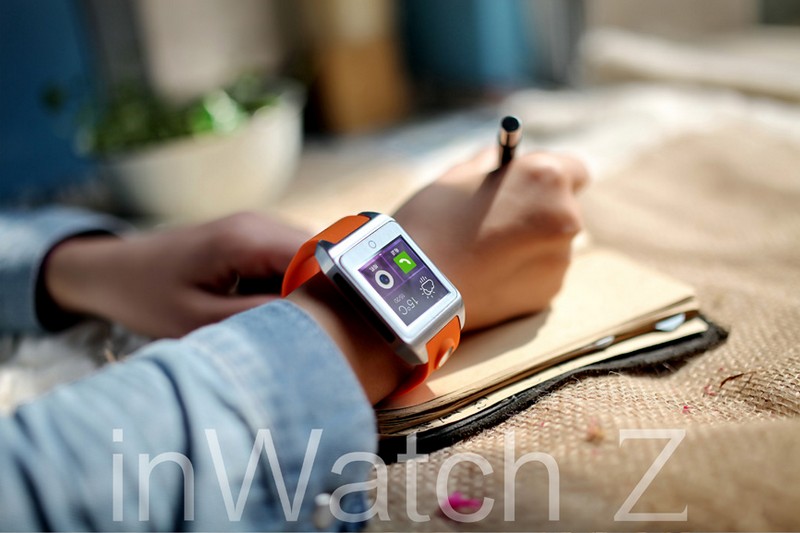
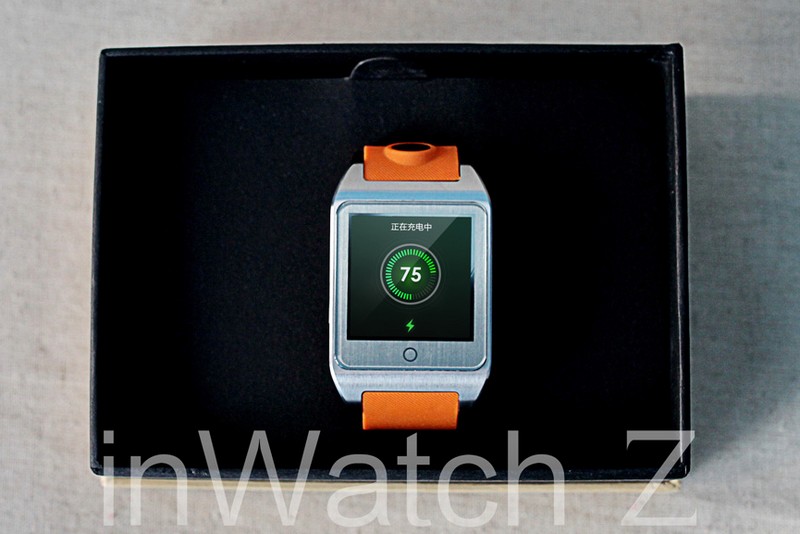
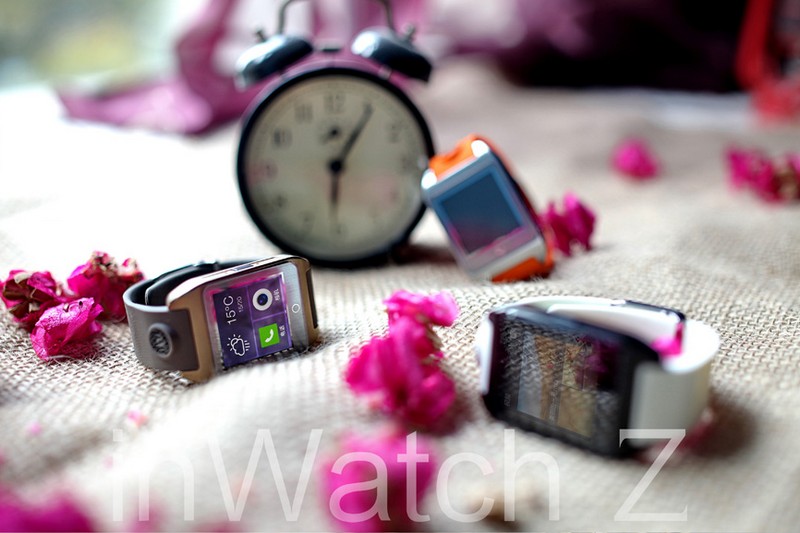
If you are looking for something more premium and well built, you should take a look at the InWatch Z. While it features almost the same features as the U8 UWatch Pro, you can clearly see the difference between the build quality as well as the interface on this premium watch. In fact, the company is calling it, the smallest Android smartphone in the market, thanks to its decent processor and RAM as well as the ability to work like a full fledged smartphone.
There’s a 240 x 240 1.63 inch screen up front protected by Sapphire glass. Inside you get a powerful (for a smartwatch of this size) dual core MTK6572 1.2 GHz processor with 1GB RAM. Yes, even though this is just a smartwatch, you get a gig of RAM inside, which clearly sets the InWatch Z apart from other cheap smartwatches in the market.
You can use Voice controls for voice dialing, and monitor fitness activities as well as calories burnt. It is IP57 compliant, meaning you can use it in water too for a short period. The MicroSim card slot inside brings the ability to make and recieve calls, messages and any other function that can be done using a regular Android smartwatch. You even have a 5 MP camera onboard which can click decent shots.
All in all, InWatch Z can truly replace your smartphone, and if you have the money to spend, this watch would be a great investment.
If you don’t like U8 UWatch Pro’s design or are not willing to pay over $270 for a smartwatch, there’s something in between these two that could be perfect for you. It’s none other than the recently announced No.1 G2. The smartwatch takes its design cues from Samsung’s Gear watch, so if you liked Samsung’s design, then you’ll definitely like the new G2.
It comes with the standard features that you get in a smartwatch, like a pedometer, fitness tracker, sleep cycle monitor, alarm clock, anti-theft, digital recorder as well as music player controls for your smartphone. Moreover, it is water resistant and even has a heart rate monitor to keep a check on your overall health.
With the help of its Bluetooth 4.0 connection, you can make and receive calls directly from the smartwatch. According to the company, it connects to almost 99% of the smartphones currently available in the market which includes Android and iOS devices. Another highlight of the device is it’s Gorilla Glass protection which makes the device dust proof as well as water proof.
No.1 G2 looks like a great device for those hunting for a decent smartwatch.
If you hate the Samsung’s design on the No.1 G2, check out the Omate X. It comes with a beautiful design, looks well built and runs on the Android platform. This means, you can download and install apps from the play store. However, even though it runs Android, the smartwatch is compatible with both iOS and Android smartphones.
This is not a standalone watch, so you don’t have a sim card slot. But you get the usual connected smartwatch features on the device, like access to push notifications and messages, controls for the music player on your smartphone, find my phone feature etc. The device is also pretty fluid, thanks to the new Mediatek MT2502A Aster processor and 128MB RAM.
Although the device does not feature a sim card slot like its elder brother, OMATE Truesmart, in return you have a better battery life. The company claims, the device can run for almost a week on a single charge.
The functionality of the device is limited, however, it is one of the best built smartwatches that you can buy for less than $150. So, if you are looking for a cheap watch which looks good on your wrist, Omate X is for you.
So what do you think about these smartwatches? Do you think we should add something to the list? Feel free to share via the comments section below.
UPDATE:
7. Elephone W1 smart Bracelet Watch
Elephone is a well known smartphone maker but the company has some other products too. The Elephone W1 smart bracelet is a shiny and beautiful smartwatch that’s ideal for women. Its basically a smartwatch in the body of a bracelet.
It comes with a small 0.49-inch LED display. While this is quite small even for a smartwatch, Elephone has equipped it with every important feature that’s necessary.
So, there vibration alarm, anti-lost function, remote camera, sleep monitor, pedometer and you can even make and receive calls. As you can see, despite its small display size, the device is a handy companion to your smartphone.
You can purchase the Elephone W1 bracelet smartwatch for your girlfriend, wife or even your sister as a gift for just $42.99. Pandawill has a new scheme where you won’t have to worry about customs and tariffs if you are ready to pay 5% extra. So you can get the device in your hands with free shipping for just $45.
If you are looking for something more battery friendly, then take a look at the WeLoop Tommy. The device has everything that a smartwatch user needs, so you can connect to iOS and Android, check notifications, use remote camera and music player functions, use sports functions and can even customize clock interface.
Overall, the device turns out to be a cool smartwatch, especially if you are looking for your first wearable.
Currently, the device is available for $75.5 and if you want the seller to cover the import duties too, you can get it for a final price of $78. Pretty good deal right?
If you were planning to buy a smartphone anytime soon, this would be the perfect time. Black Friday sales are ON, which means you get savings for every purchase.
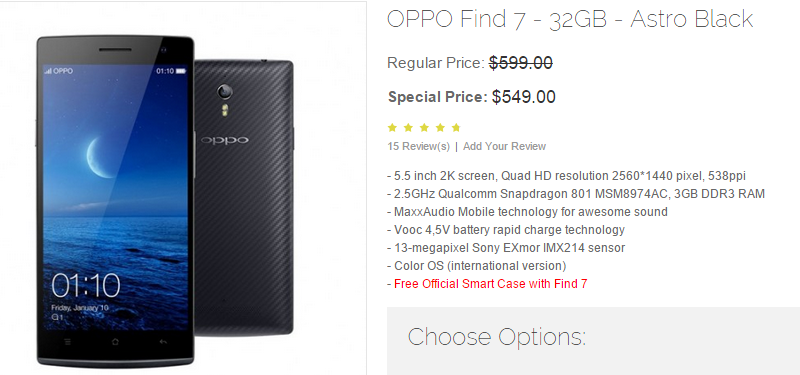
Oppomart has just dropped the prices of many of the flagship phones, including the OPPO Find 7 smartphone. At present, Find 7 is listed on their website for just €441 ($549), which is much cheaper than what others are offering in the market. Usually, the phone retails for around $599, which means you get around $50 discount.
In fact, its even cheaper than OppoStyle’s deal, the official Oppo Reseller in Europe who is offering the same phone for €469.
The Find 7 listed on Oppomart is the 32GB Astro Black version. The retailer is even offering a free Official Smart Case with the device. So, if you were waiting for the right moment to purchase the new Find 7 flagship, this could be it.
After some research, we have found some other phones too with discounted prices as a part of the Black Friday sale.
For your convenience, we have listed the phones with discounts and free gifts down below.
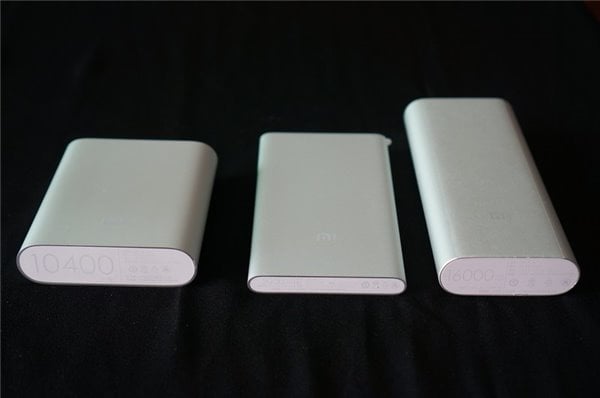
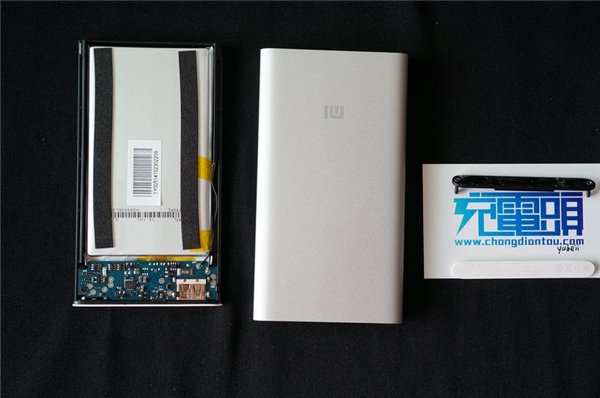
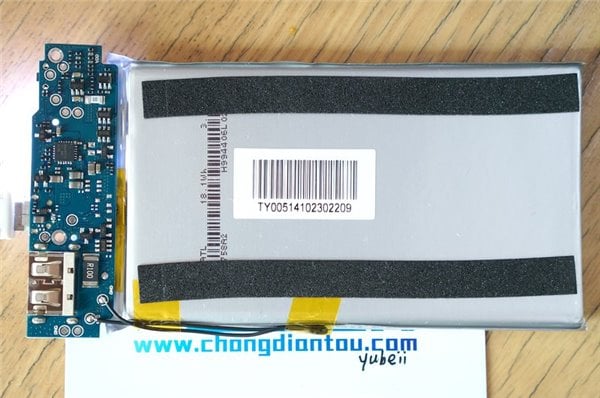
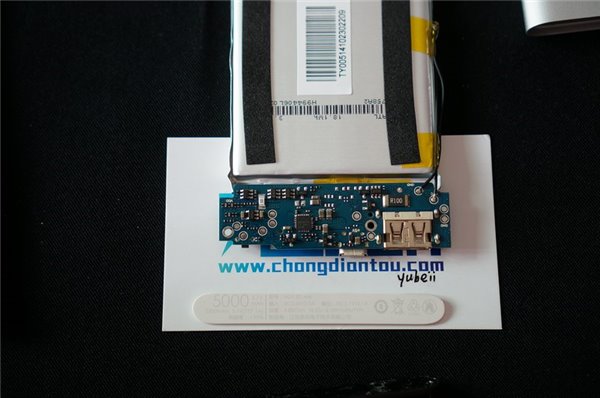
According to Xiaomi, the most obvious change in the 5000mAh Xiaomi Mi Power Bank is its weight and thickness. It is lighter and slimmer. This power bank uses a battery cell provided by ATL which is also one of Apple’s suppliers. It also uses a solution made by the famous Texas Instruments.
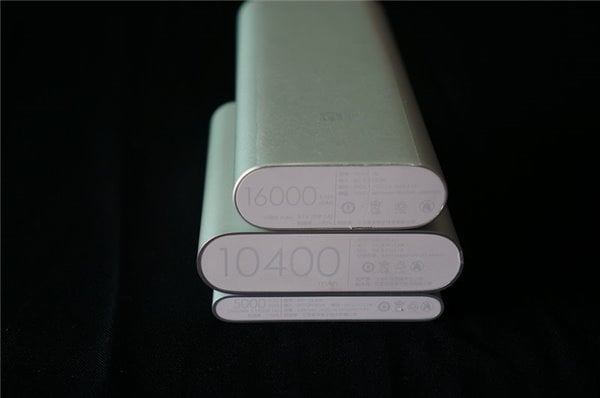
The 16000mAh and 10400mAh power banks are 350g and 250g, respectively. Both of them use the 18650 battery cell. The 5000mAh power bank uses a polymer battery cell, is only 9.9mm thick, and only weighs 156g. You can easily carry it around in your shirt pocket.
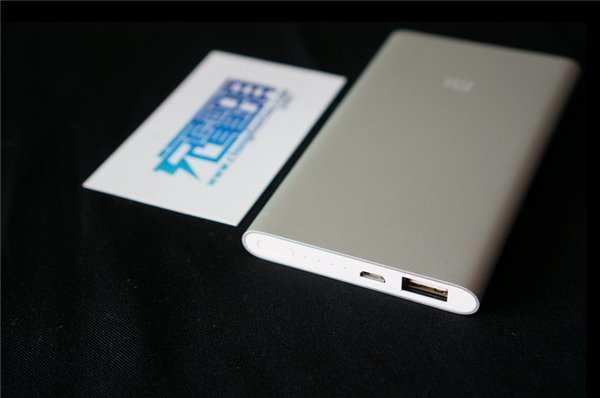
The Xiaomi Power Bank 5000mAh version’s model number is NDY-02-AM. As for voltage, it has 3.7V. According to Xiaomi, its input is 2.0A, while its output is 2.1A. In other words, it should only take 3.5 hours to fully charge this device with a 5V/2A charger and cable.
Its design is similar to Xiaomi’s other power banks. The power switch is located on one end of the device’s curved body, along with the 4XLED light and USB charging port. The outer cover is made of an aluminum alloy.
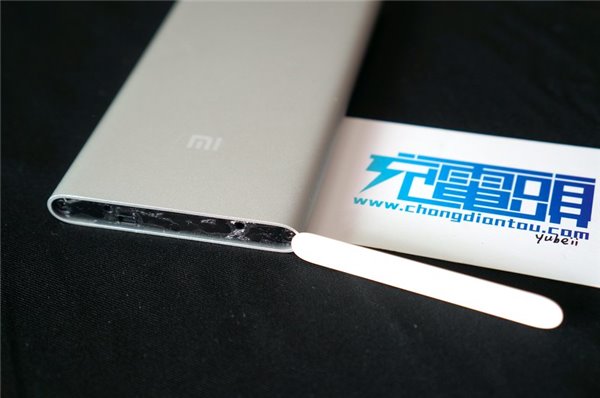
You can separate the front and back covers by unscrewing the right bolts there. Now, we can look at the motherboard and battery cell.
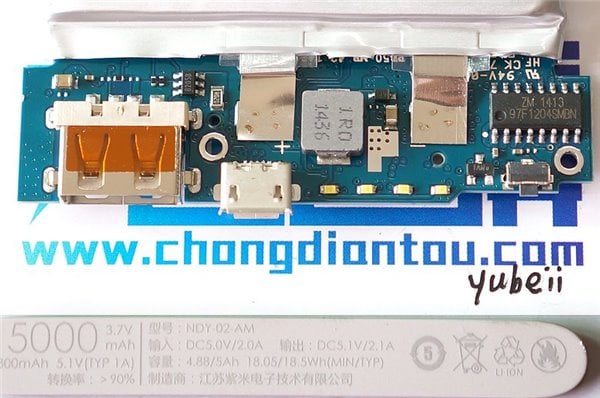
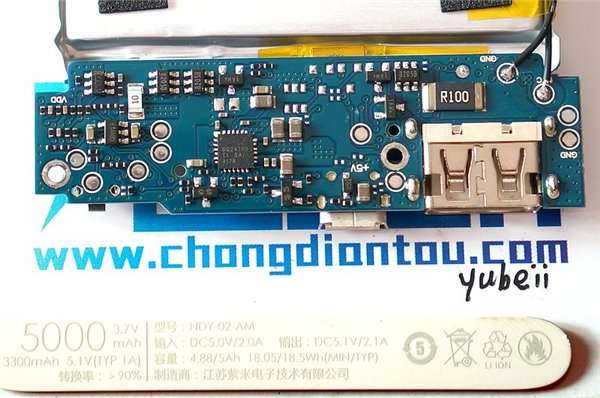
What everyone is most concerned about is what solution Xiaomi used for this device. We found some information on the battery cell and its PCBA.
The 5000mAh Xiaomi Mi Power Bank still uses the ABOV 97F1204SMBN.
It also uses the TI BQ24195 which enables the power bank to charge at 2A.
The battery cell used comes from ATL and has 18.1Wh. Its model number is H994406L.
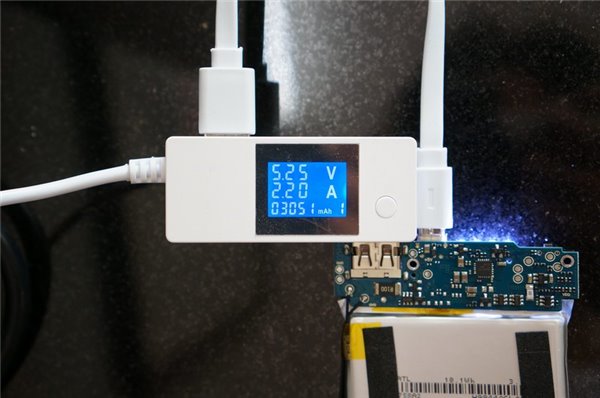
I charged the Power Bank using a 5V 2A charger. The input was 5.25V (2.2A), and the charging speed is pretty good.
NEO M1 is one of most beautiful and slim smartphone from China this year. The super slim 5.99mm aluminum body, powerful and energy-saving quad-core processor run smooth on Android, 13-megapixel Sony camera is easy to take good quality photos anytime.
The NEO official shop provide a $60 big discount for customers before Christmas, you can get this phone at $119 now.
More details about this phone, please visit: http://www.neomobile.me/neo-m1-feature
GizmoChina is partnering up with No.1 for a special giveaway. Yes, we are giving away, a brand new No.1 G2 smartwatch.
In case you haven’t read or heard about this innovative watch, it looks and functions like the Galaxy Gear smartwatch.
The No.1 G2 comes with all the functions that you want in a modern smartwatch. So, you can make calls, send as well as receive text messages, record audio and videos, take pictures with its 2MP camera, play music etc. The device can act as a fitness tracker too, thanks to the inbuilt heart rate monitor, pedometer and other such sensors.
The watch is highly customizable, thanks to the different colored straps that are available and can connect with both Android and iOS devices. Yes, unlike the Galaxy Gear smartwatch which works with only Samsung devices, this clone can work with any device, provided it runs Android or iOS.
Although you just have to pay around $97 to get this smartwatch in the market, here, you have a chance to win it for free!
So do you want a new No.1 smartwatch? If your answer is YES, check down below for the rules to participate.
GIVEAWAY RULES
To make things fair, the GiveAway will run via Rafflecopter. Just complete the tasks mentioned in the rafflecopter widget and you’ll have a chance to win the new No.1 smartwatch.
Even though the rules are mentioned in the rafflecopter widget, we are explaining it once again here. Please read them carefully.
You have to COMPLETE FOUR TASKS to enter this giveaway.
Once you complete them, sit back and relax. We will inform you guys the winner once the contest ends.
GOOD LUCK!
Meanwhile, check out the full specifications of No.1 G2 smartwatch down below.
Features
Make calls, see text messages, synchronization time weather, photo camera, built-in infrared remote-control television set-top boxes. Call logs, contacts. Independent music player, heart rate sensor, pedometer Exercise can also connect a Bluetooth headset to listen to independent music inside the watch, etc.
Display screens that use active-matrix organic light-emitting diode technology, or AMOLED, have been making a buzz as more companies are producing products that use such screens. There are already different types of AMOLED display screens such as Super AMOLED, and Super AMOLED Advanced.
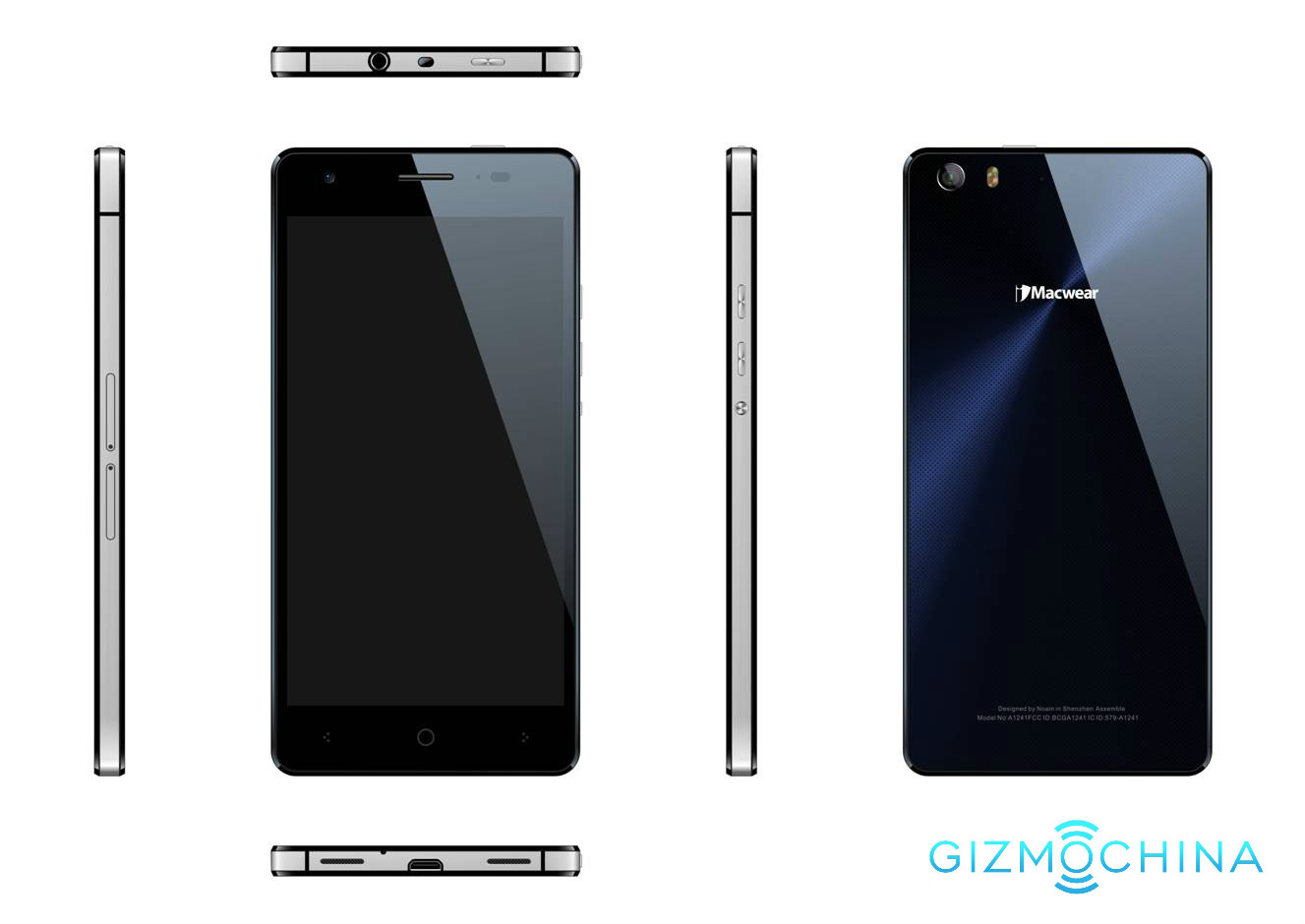
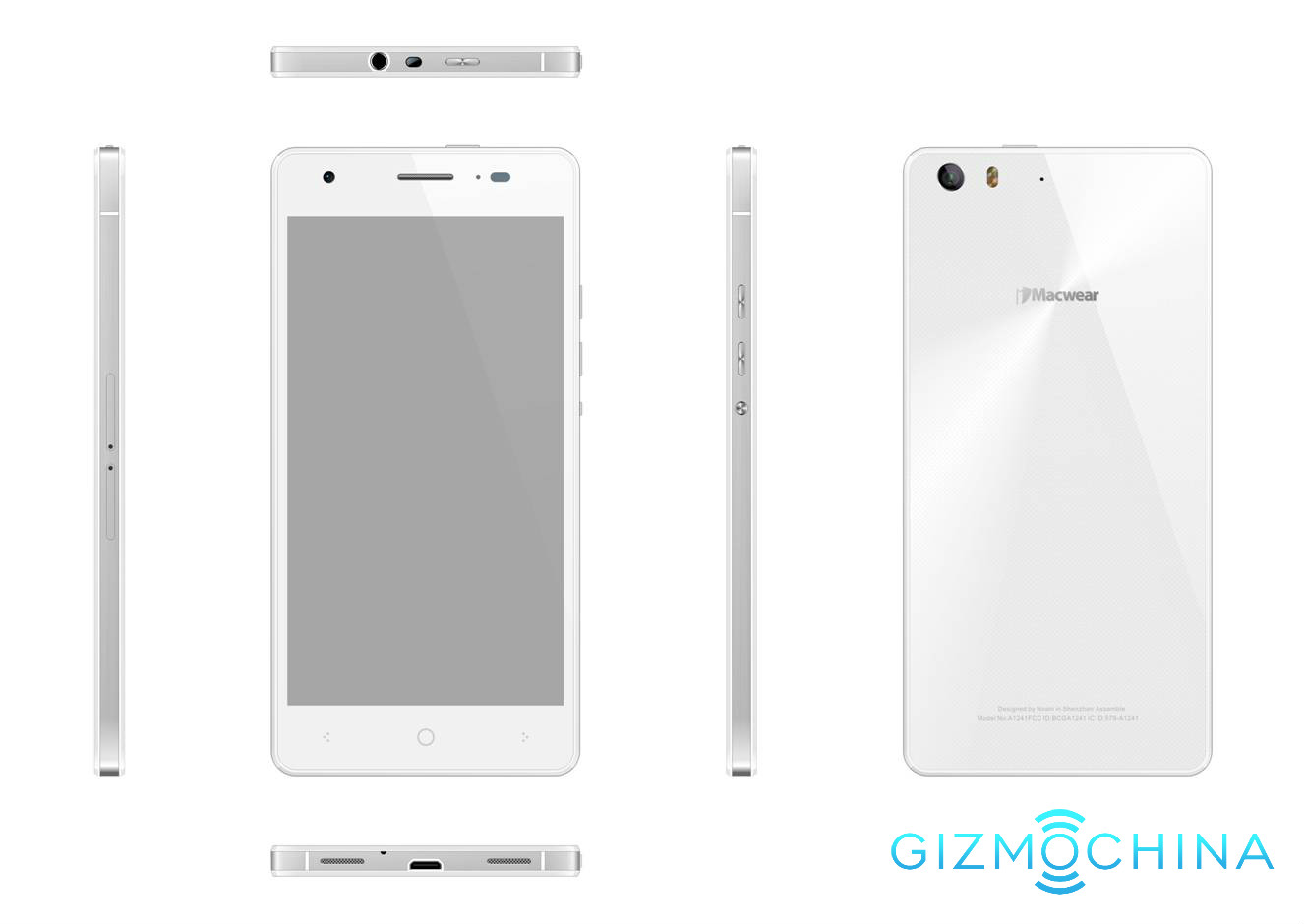
Now, here comes the world’s first 4G smartphone to use this screen. It is called the IMACWEAR MX1.
This phone sports a 5.0-inch AMOLED HD display screen. Its dimensions are 143 x 70.3 x 7.05mm. The IMACWEAR MX1 also supports 2G internet (GSM/GPRS/EDGE), 3G internet (TD-SCDMA/TD-HSPA), and 4G internet (LTE TDD/FDD LTE). Its CPU is the MT6752 octa-core (2GHZ) chipset, and its OS is the Android Jelly Bean 4.4. It sports an 8mp front-facing camera and a 13mp rear-facing camera. It also has 16GB ROM and 2GB RAM. It also supports memory expansion by Micro SD (up to 32GB). The IMACWEAR MX1 is also powered by an 2000mAh battery. It also supports other features such as an FM radio, proximity sensor, and LED flash. It comes in black and white.
AMOLED display screens have been said to be excellent display screens with a great resolution, and a high contrast ratio and color saturation. More importantly, it has been proven to provide good eye protection which should be very useful when using a cellphone. Among things it lowers the risk of exhausting your eyes when looking at the screen and prevents any harm done on your eyes by exposure to blue light. You can use phones with an AMOLED display to read, surf the web, and do other activities at night without harming your eyes thanks to this. They are also said to have fast reaction time and can consume a lot less power than other kinds of display screens.
Elephone recently unveiled a number of affordable smartphones in the market. Today, we look at one of these phones, the new Elephone 3000S which supports the latest FDD 4G LTE network. It comes with a great design, powerful specs and some unique features such as a fingerprint sensor and software gestures usually not found on phones in its price range.
If you have been following the releases from this HongKong based company, you would immediately realize that this is the elder brother of the Elephone P3000 that was released a few months back. The new P3000s retains most of the features from the older generation, yet brings some necessary addition in terms of power to make it one of the best value for money devices currently in the market.
So, lets take a look at what this phone has to offer.
DESIGN
5.0 inch display with thin bezels
Elephone P3000S retains the same design as the P3000 which is not a bad thing given that the older variant was well designed and solidly built. Although the phone comes with thin bezels, there’s a lot of room, both above and below the screen increasing its length unnecessarily.
3 Capacitive buttons – Home, Menu & Back
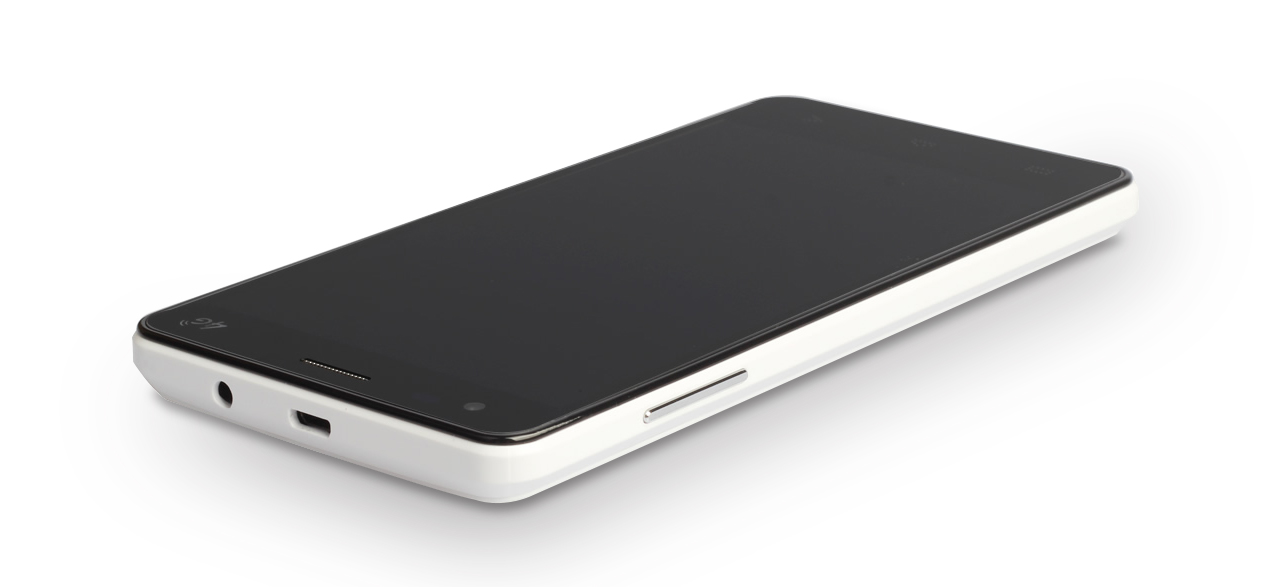
On top of the 5 inch display, there is an earpiece along with a front camera. On the top right corner of the phone lies the 4G connectivity logo. Below the screen there are three capacitive keys – Home, Menu and Back. But these keys are not back lit, which makes it harder to use them, especially in the dark.
The phone is relatively thick (we have seen many slim phones from Elephone but this is not one of them), measuring nearly 9mm. The volume keys and power button are on the opposite sides, with the power button on the right and the volume keys on the left. Interestingly, the USB port is on top of the phone alongside the 3.5mm headphone jack. As a result, you don’t have anything at the bottom side, except for the microphone opening.
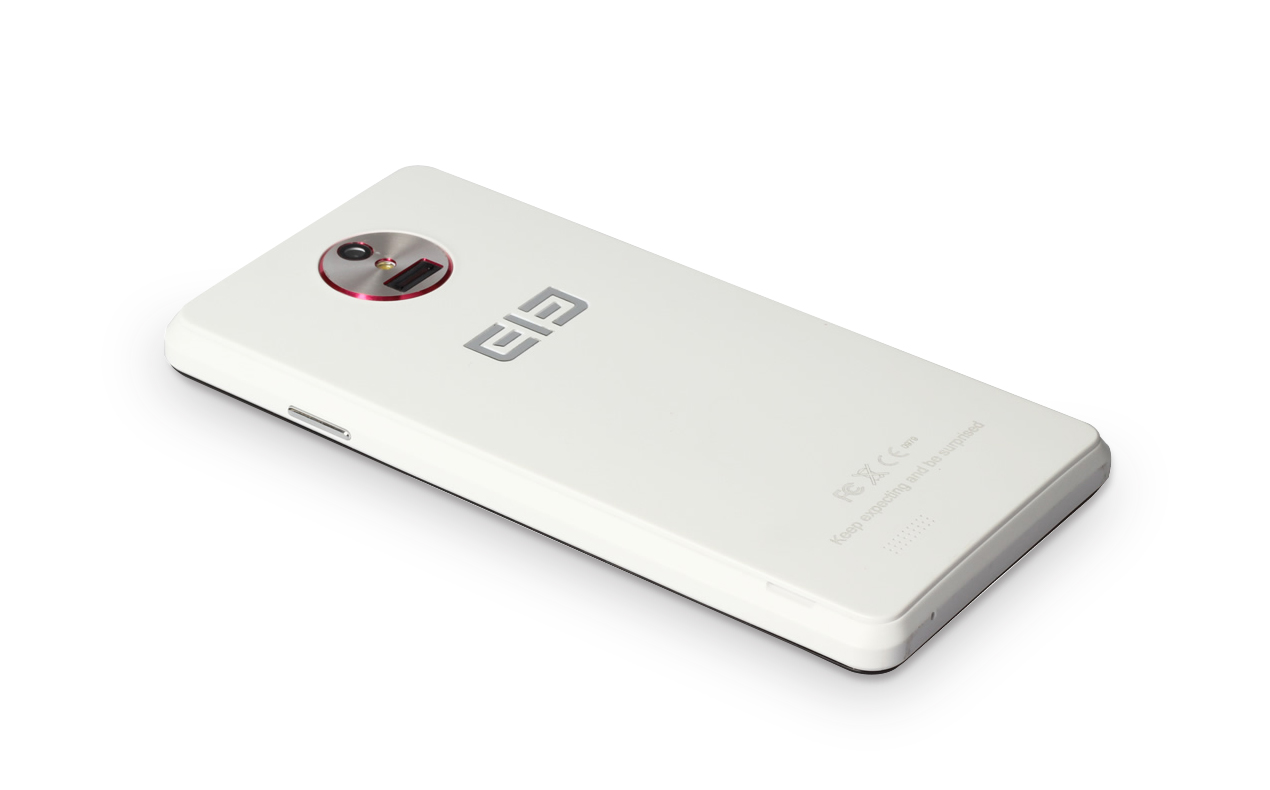
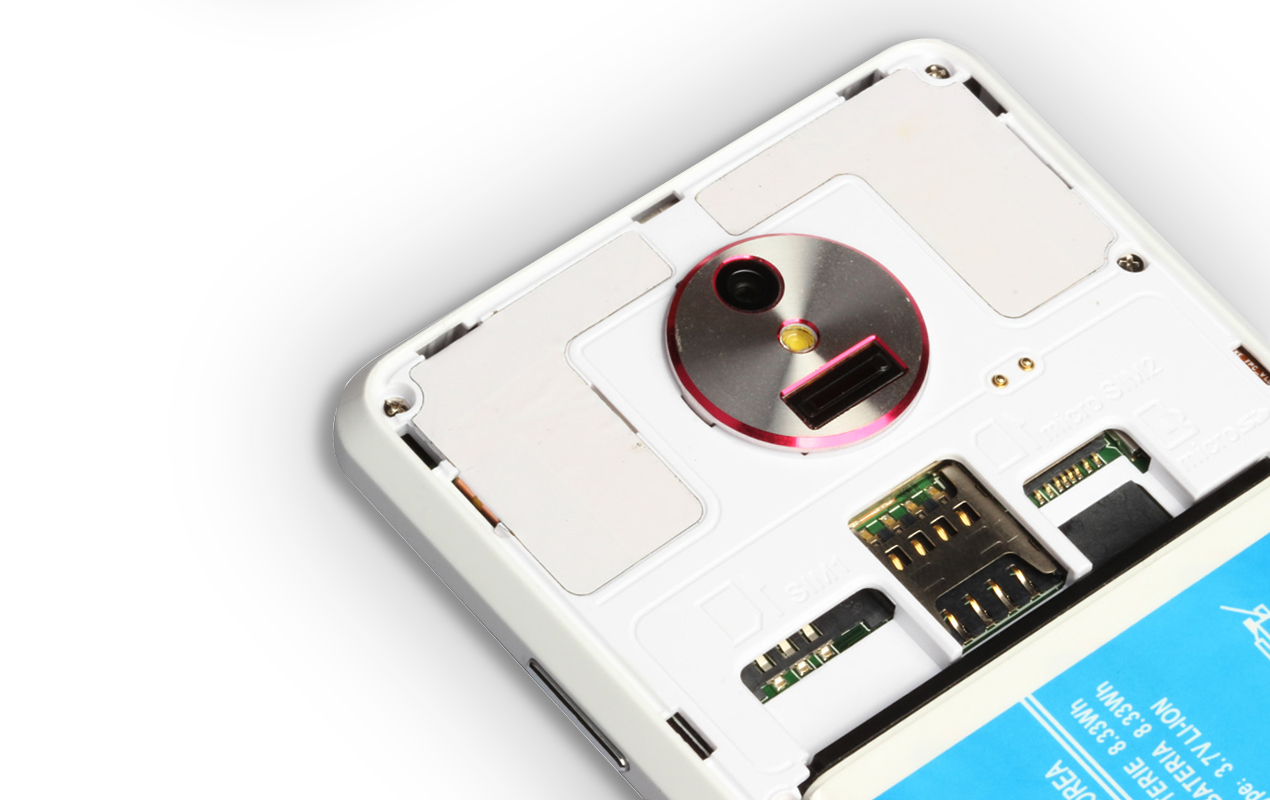
Coming to the back, the camera sensor, LED flash as well as the fingerprint sensor lies inside a premium looking circular housing. The said circular part comes with metallic finish, which gives it a premium look. Moreover, the housing makes the viewers feel that the device was built with utmost care, assigning a place for each and every sensor. Apart from the circular part, everything is made of plastic, but it still doesn’t look cheap. Below the housing lies the Elephone brand logo, and near the bottom lies the company’s motto, “Keep expecting and be surprised”.
The overall dimensions of the phone come to 145*72*8.9mm which although not very compact for a 5incher, its still acceptable. We call it big for its size because other phones with a 5 inch display like the Xiaomi Mi4 or even the Elephone G6 is much more smaller than the P3000S.
But it doesn’t make much of a difference while handling the device and hence, its not something we should be worrying about. As for the weight, its exactly the same as Xiaomi Mi4 i.e. 149 grams, which is again acceptable.
Elephone P3000S Back
Elephone P3000S Camera
DISPLAY
5.0 inch 720p Display
If you have used Elephone smartphones in the past with an HD display, then you would know exactly how it’s screen looks. The P3000S comes with a 5 inch HD IPS panel with a resolution of 1280 x 720 pixels. The screen is protected by Corning’s Gorilla Glass 3, which is both dust proof and scratch proof. As a result, you don’t have to worry about spoiling it with scratches.
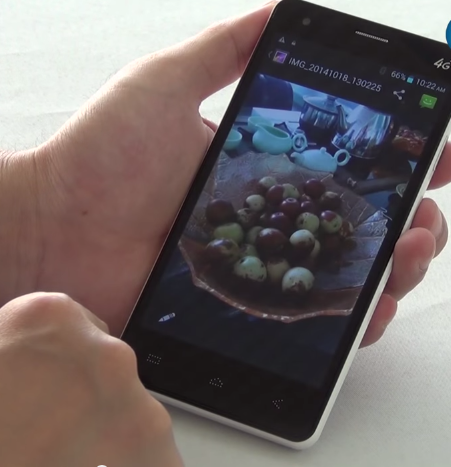
The display looked quite clear, viewing angles were decent and colors came out good. While we would have loved a 1080p screen, this HD display looks good too. So, we are sure, you would be happy with the display for your everyday use.
HARDWARE & PERFORMANCE
While the P3000S came with exactly the same design and display as the P3000, hardware is one area where the newer model shines. It comes with a Mediatek MT6592 + 6290 CPU based on a 28nm Octa Core Cortex A7 architecture with the frequency 1.7GHz. The powerful processor along with the 2GB RAM onboard and Mali-450 MP4 GPU will make sure that the device will run anything that we put it through.
This was a much needed upgrade as the older model had some trouble while playing graphic intensive games and opening up heavy apps. It came with just a Quad Core processor, which should have been enough if it had a bigger RAM module. However, the 1GB onboard RAM struggled to keep up when users tried to multi-task, which was really disappointing. Also, the GPU was weaker since it came with only Mali-400 MP4
But with the new Octa Core processor, things are much smoother and faster than before. Games run fine with no visible lag, apps launch instantly and the overall device feels quick and responsive. As a result, unlike the P3000 which scored around 17,000 in the AnTuTu benchmark results, the newer model got well above 25,000 in the test every time.
Gaming performance is good
There is 16GB memory on board the P3000S which is further expandable via a MicroSD card slot up to 128GB. So, you should have no problems storing images and videos on the device.
Coming to battery, the phone comes with a large 3,150 mAh capacity battery which should be more than enough for a whole day’s usage. We were impressed with the phone particularly because of its large battery. One area where usually affordable phones slack is battery life. This is because manufacturers are more concerned about the on paper tech specs as well as the slimness of the device when it comes to such cheap feature phones.
As a result, phones in this class come with a small battery capacity, sometimes as small as ‘2,150 mAh’ which drastically affects the usability of the device. What’s the use of a powerful phone if it doesn’t last a day? So, when we saw that Elephone retained the 3,150 mAh battery, we were happy.
This large battery gives up to 8 hours of video, 6 hours of browsing and 4 hours of talktime, which should be enough for your every day use.
3,150 mAh battery
CAMERA
Elephone P3000S Camera
Unless you are looking at a flagship device, or atleast a very top end phone, don’t expect extra ordinary results with a Chinese smartphone camera. Most affordable smartphones come with the same Sony sensor, which means performance should be more or less similar. Even the software features just minimal changes from one manufacturer to another. So, if you have ever used a 13MP Chinese smartphone camera, chances are, the results from that camera and this 13MP Sony sensor on the P3000S will be almost similar.
You get the same 13MP Sony sensor on the P3000S as the older model along with LED flash. However, the company has upgraded the front camera from 5MP to 8MP. So, selfie addicts have something to cheer about.
Camera UI
The images captured were quite good in broad daylight. The colors were decent, noise was acceptable and the device managed to focus on the object pretty fast. There was very less shutter delay which means you could capture back to back shots in a few seconds. We got used to the camera UI in a very short time, as its quite similar to the Elephone models that we have used earlier.
As you can see in the image above, the colors are a bit dull. The real world colors were much brighter than what was portrayed in the picture. This was the case most of the time. However, when there was enough sunlight, images came out to be surprisingly good. For example, look at the red/orange flower. That image turned out to be quite good.
But as soon as the light reduced, we could clear difference in the quality. Noise increased, clarity reduced and colors too looked washed out.
So, in short, if you are planning to take pictures with the new P3000S, you better look for a well lit area, because low light performance sucks.
CONNECTIVITY OPTIONS
FDD 4G LTE support
You get all the standard connectivity features that you would expect from a phone of this price with the new P3000S. So, you have dual sim card (SIM + Micro Sim) dual standby, Wi-Fi 802.11n standard, Bluetooth 4.0, Micro USB 2.0, GPS, AGPS, OTG, FM Radio etc. In addition to these features, the phone supports the ultra-fast FDD 4G LTE network which makes it one of the most affordable 4G supported phones in the market today. The full supported network bands are – GSM: 850/ 900/ 1800/ 1900, WCDMA: 850/ 900/ 1900/ 2100 (HSDPA), FDD-LTE: 800/ 1800/ 2100/ 2600.
Interestingly, Elephone had added NFC connectivity option on the device. However, at present, even with the number of supported apps, the practical application of this feature is limited, especially when only a few Chinese handsets support NFC. You also get a number of sensors on board like Gravity, Proximity, Light, Accelerometer, Compass and Gyroscope.
SOFTWARE & SPECIAL FEATURES
Android 4.4.2 Kitkat + MIUI
Elephone P3000S comes with Android 4.4 Kitkat OS right out of the box. While this isn’t the latest nor the most advanced Android OS till date (thanks to the new and revolutionary Android 5.0 Lollipop), it is still a very smooth and refined operating system. On top of Android, you have the optional MIUI, which frankly is one of the best ROMs available for Android today. With MIUI, you get a lot of new apps as well as the promise of regular updates which add new functionality or fixes existing bugs.
You also get a number of special features, some exclusive to this model, while some found on most Elephone models these days.
To start with, you have a fingerprint sensor. Yes, Elephone P3000S is one of the cheapest models to feature a fingerprint sensor which actually works. The sensor is located at the rear, just below the camera inside the metallic housing that we showed earlier.
The fingerprint sensor can not only unlock your device in the most safest way but it can also secure apps inside your phone. The phone has a special menu where you can safeguard important apps with your fingerprint so that no one else can access it even when they have the phone. What’s more, even you gallery can be secured, making sure that all of your pictures and videos are always safe.
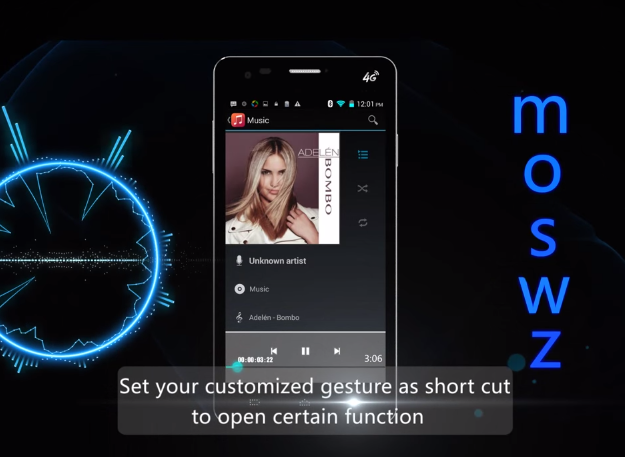
You also have the standard Elephone gesture features. For example, you can just double tap to unlock your device, so no need to press the power button. You can even draw characters on the screen when it is off to directly launch an app which is assigned for the character. So, if you have assigned the letter ‘M’ for the music player, just draw it on the screen and your music player will open. Similarly, letter ‘O’ will open up the camera directly from the lock screen.
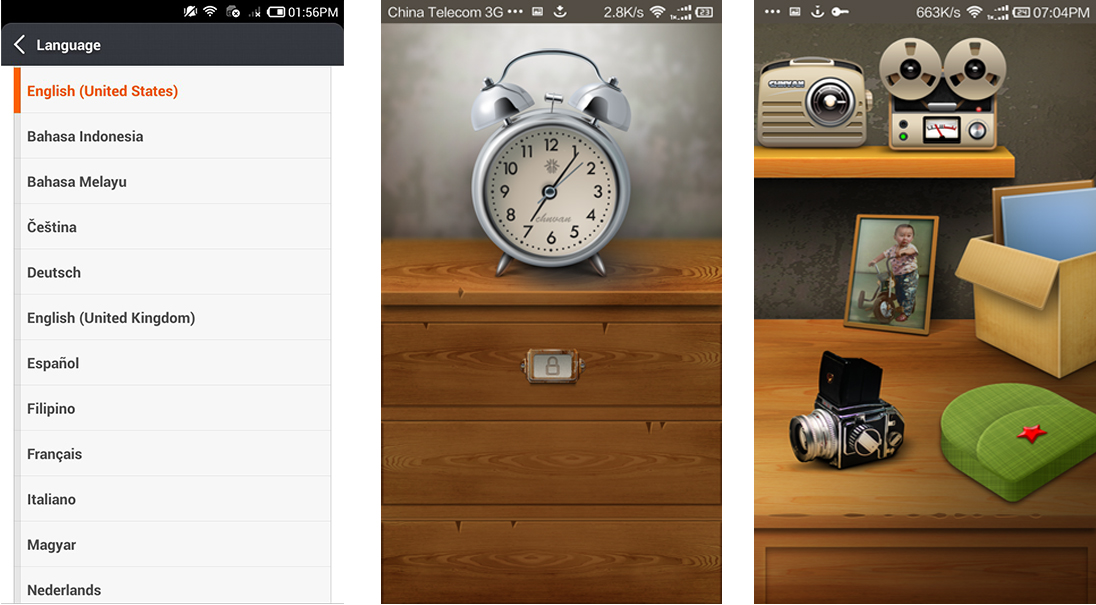
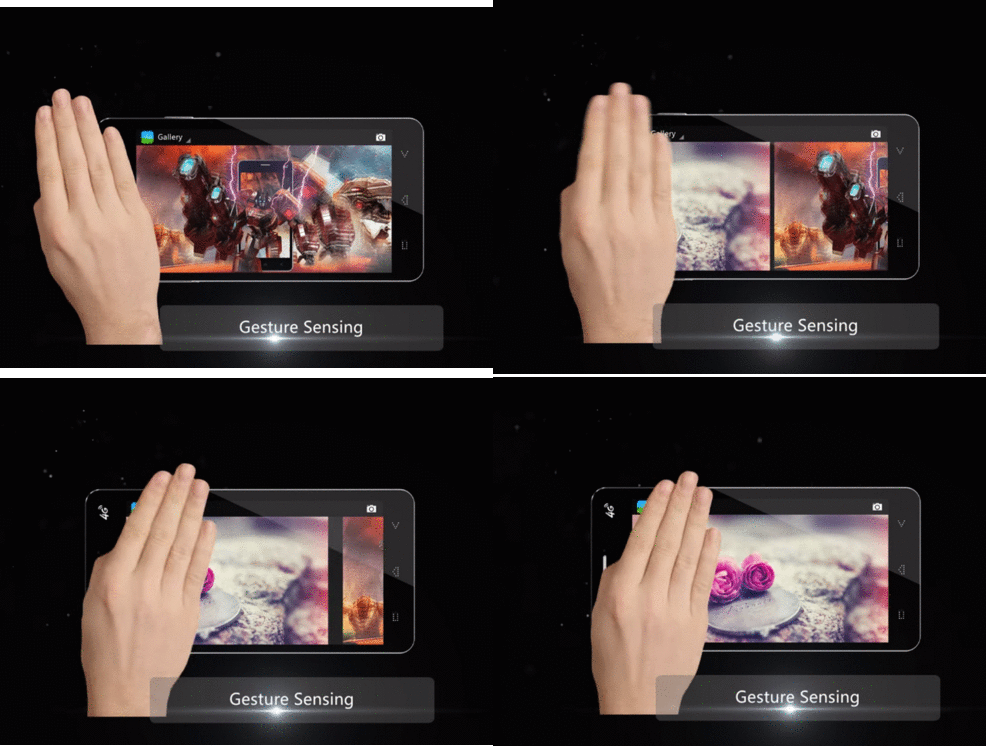
You also have a special gesture sensing feature which allows you to change pictures while browsing the gallery without using your fingers. All you have to do is hover your hand above the front camera when you are seeing a picture in the gallery and the phone will automatically change it to the next picture in the list. Pretty cool right?
Elephone P3000S supports over 50 Asian and European languages, so you don’t have to worry about using the device if you are not very familiar with English. Some of the supported languages include French, Italian, Spanish, Filipino, Deutsch, Bahasa Indonesia, Russian etc.
OUR VERDICT
If you are looking for an affordable 4G LTE smartphone, the new Elephone P3000S is a very good option. We like the design, which is quite different than usual smartphones in the price range, especially the big round metal housing on the back. We also like the fact that Elephone has smartly incorporated a 3,150 mAh capacity battery in the device, which is a must especially considering the powerful Octa Core MTK6592 processor and the 4G LTE modem that it comes with. Most smartphones slack in the battery department, which we feel is not fair to the customers. So, this large battery is a major plus.
What we don’t like is the 13MP camera, but that’s not surprising since Elephone models are never really known for their camera performance.
Coming to the best part, the Elephone P3000S is currently available for sale for just $190, which is a great price considering the features that you get. But you can get the phone for even less! Just for $175 on everbuying.net using a coupon from discountion.
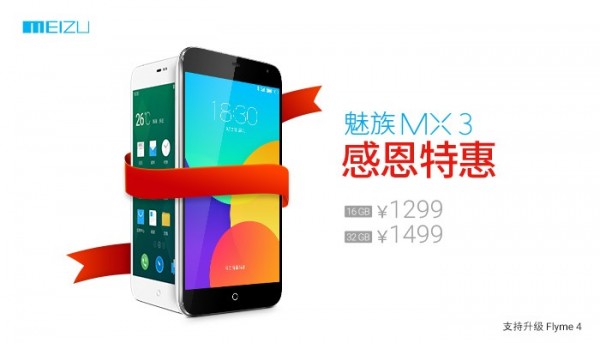
Today, Meizu announced that they will do a price cut to the popular Meizu MX3 smartphone in China. The 16GB, 32GB, and 64GB versions of the MX3 will soon cost 1299 RMB, 1399 RMB (227.84 USD), and 2099 RMB (341.83 USD), respectively.
The Meizu MX3 sports a Sony 8mp camera with an F2.0 aperture. The technology used for its camera allows the Meizu MX3 to high-quality photos in the dark. It is also worth mentioning that the 32GB and 64GB version are both NFC-supported, transforming your cellphone into a cellphone wallet or mass transportation card by using it to make payments.
Those who want this phone can buy in China’s 1000 Meizu stores, Meizu’s online store, etc.
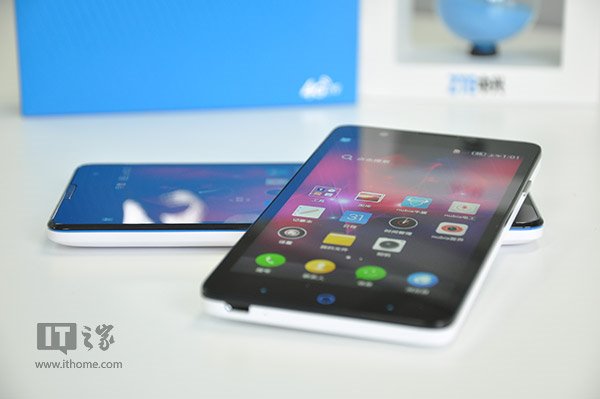
A few days ago, ZTE formally launched two new versions of the ZTE V5: the ZTE V5S and V5 Max. The former, which has a 5-inch display screen, costs 899 RMB (146.49 USD), while the latter, which sports a 5.5-inch display screen costs 999 RMB (162.78 USD). With a 100 RMB (16.29 USD) difference, how different could both devices be from each other? Let’s find out. First, here’s a table listing the main differences between the two.
ZTE V5S
ZTE V5 Max
Display
5 inches
5.5 inches
RAM
1GB
2GB
ROM
8GB
16GB
Battery
2400mAh
3000mAh
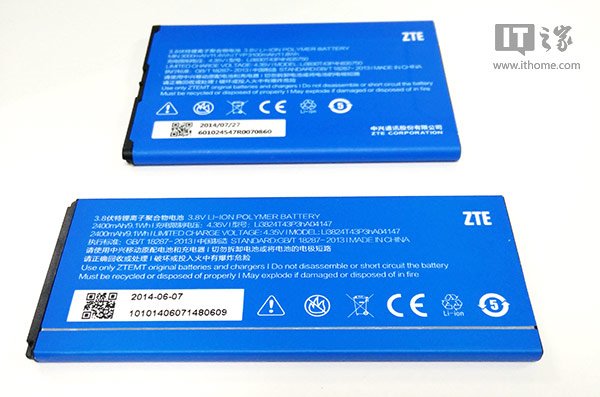
These are the ZTE V5 Max and V5S’ batteries, which, respectively, have 3100mAh, and 2400mAh. Please take note that the phones being reviewed and compared here are blue prototype phones. The ones that will be released on the market may end up a bit different.
Appearance
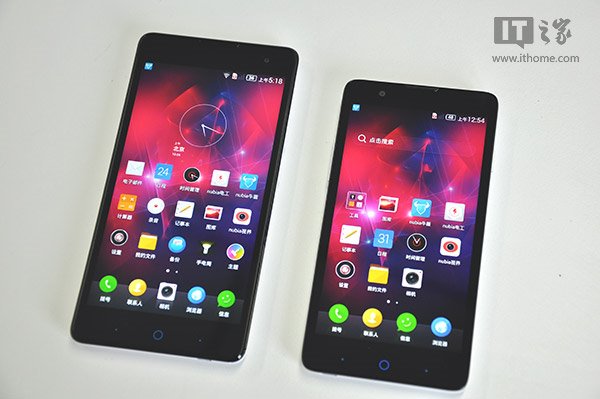
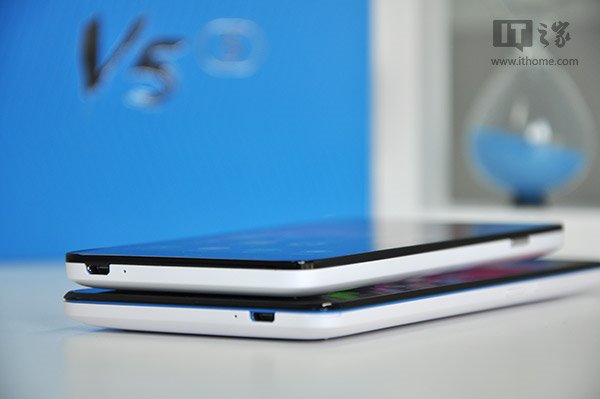
There is very little difference between the two phones when it comes to the front. You can even say that the V5 Max is just a slightly bigger version of the V5S. The only difference lies in the positioning of the front-facing cameras and sensors. In the ZTE V5S, they are on the left, while in the V5 Max, they are on the right.
The ZTE V5S and V5 Max do not have physical buttons, but only three virtual buttons. From left to right they are the Menu button, Home button, and Return button. The Home button is a small blue circle which lights up when you get a notification.
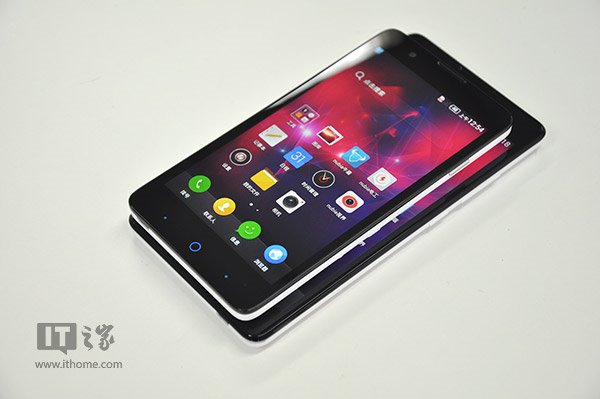
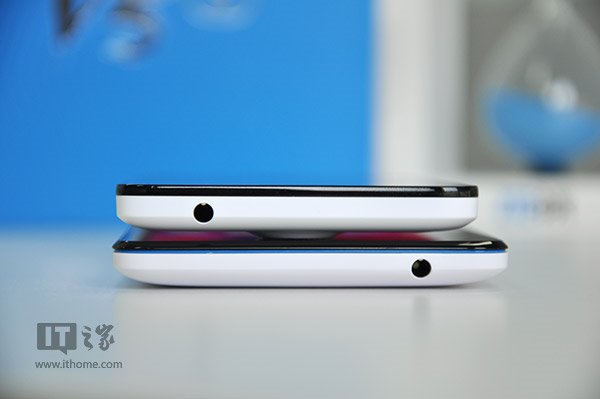
When it comes to the design, the biggest difference between the two phones besides the rear cover is the sides. The V5 Max has rounder, slimmer edges which were designed as such to make it easier add a 5.5-inch screen. The V5S has straighter edges. Both phones are basically equally thick.
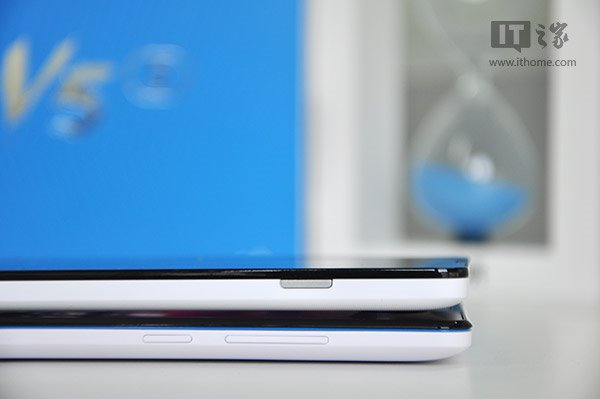
Next, there’s the side buttons. The buttons on the V5S are silver. On one side, you have the power button, and on the other side, you have the volume switch. The buttons in the V5 Max, which are white, were designed in a way that it is easier to use it with one hand. They are located on the right side of the phone.
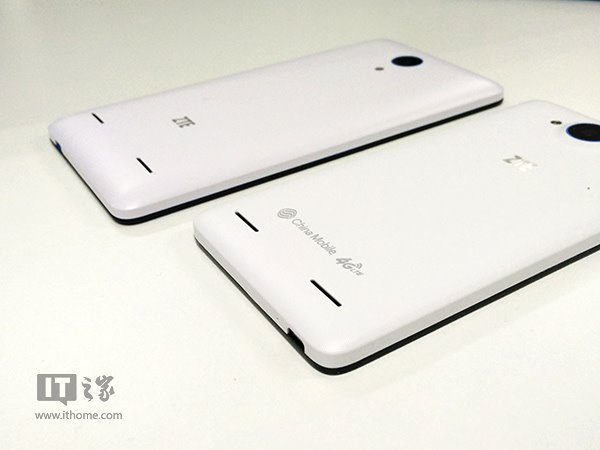
Lastly, both have removable covers and batteries. It’s just the way the front cover and back cover are held together that is different. As you can see from the photo above, there is a blue bar in the middle of the covers of the V5 Max.
Hardware and Performance
Both versions of the ZTE V5 use the 64-bit Qualcomm Snapdragon 410 quad-core CPU and have a 1280 x 720 screen. It’s only their memory that is different. The ZTE V5 Max has 2GB RAM, while the V5S only has 1GB RAM. How do they compare in benchmark scores and actual use? Let’s see.
The CPU of both devices were tested using Nbench and Geekbench 3.0, while the GPU was tested using GFXbench and 3D Mark ICE Storm Extreme. Here are the results.
The tests on the CPU showed that the memory has an impact on the processor, although it is not that great. The benchmark scores of both are close to each other, with the V5 Max’s being somewhat greater. At most, the Snapdragon 410 has a frequency of 1210MHz in both phones.
The Qualcomm Snapdragon 410 uses the Adreno 306 GPU which, at most, has a frequency of 400MHz. Because the V5S only used 1GB RAM, it could not pass the GFXbench’s 1080p off-screen test. In GFXbench’s Manhattan test, both phones got somewhere between 200 and 300. In the 3D Mark Ice Storm Extreme benchmark test, the V5 Max got 2578 while the V5S got 2566.
Real-life use
Now that we have discussed what kind of CPU and GPU these phones use, let’s talk about how they compare to each other in terms of practical application.
We did a lot of the things that people usually do with their cellphone such as making phone calls and texting. We also watched videos online, took photos, etc. The V5S, which has 1GB RAM, was able to work well. About 200MB RAM was left. Overall, we were able to use both without any problems.
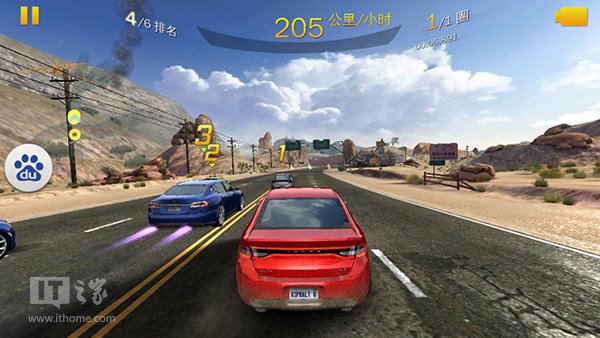
As for playing 3D games, we played Asphalt 8. First, we played it using the V5 Max which has 2GB RAM. At a medium resolution, it was pretty fast. At a high resolution, there were a few pauses and such. For the V5S, we had to close all the background apps for it to work well at a medium resolution. There were still pauses at times and it was slower than the V5 Max.
Screen test
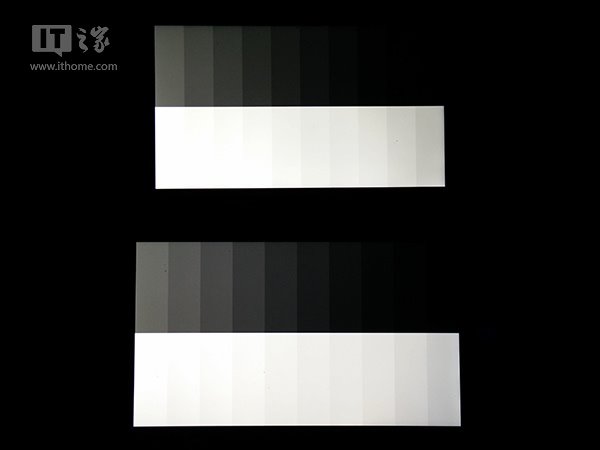
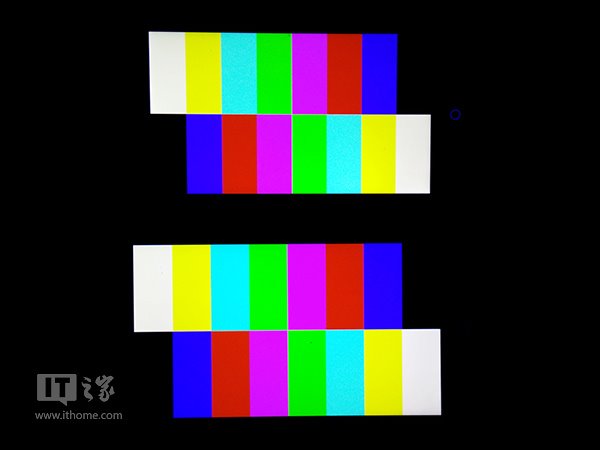
The ZTE V5S and V5 Max both use OGS display screens and have a 1280 x 720 resolution. Both have pixel densities of 267ppi and 294ppi respectively. We noticed as we used the V5 Max, that the feature that allows users to adjust the color saturation was not working. It might be due to production-related problems as this was a prototype. Furthermore, the V5S’ screen was a bit warm, while the V5 Max’s was a bit cool.
Let’s check out the color tests.
Top: ZTE V5S, Bottom: ZTE V5 Max
Top: ZTE V5S, Bottom: ZTE V5 Max
User Interface
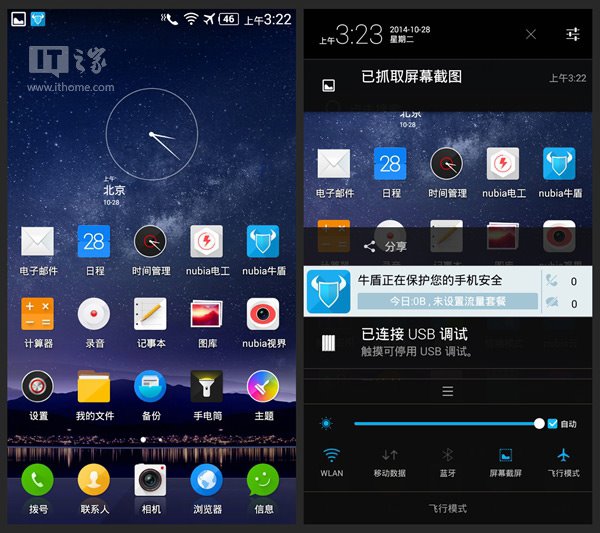
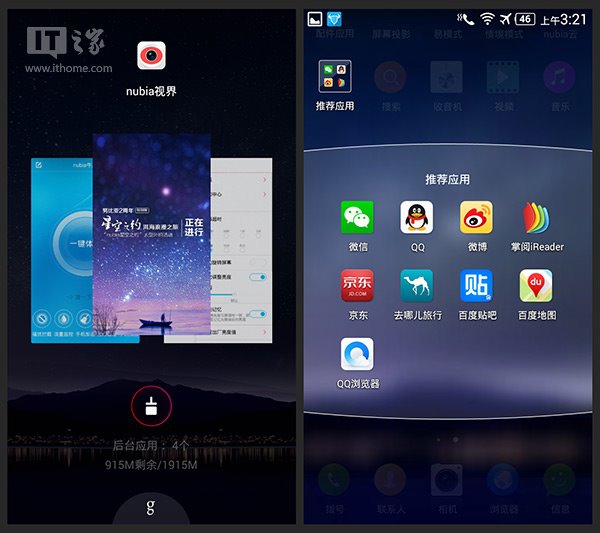
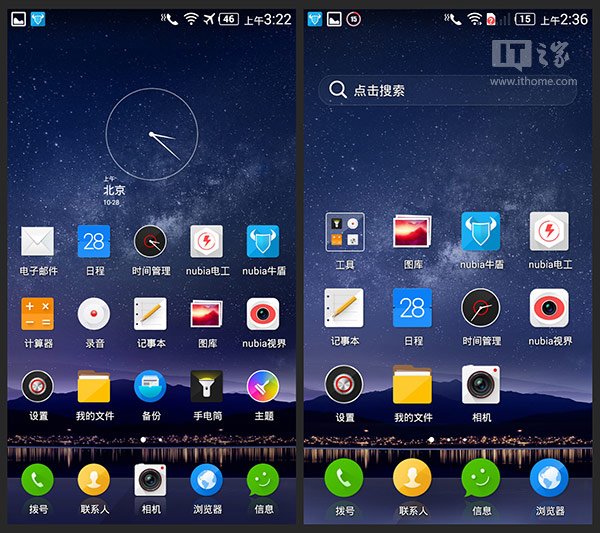
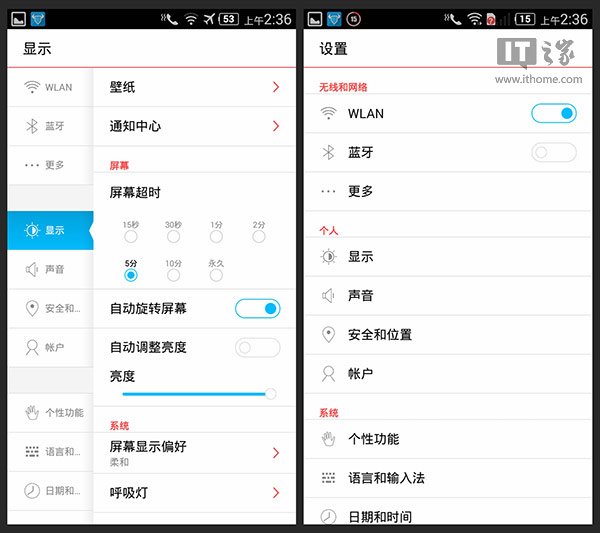
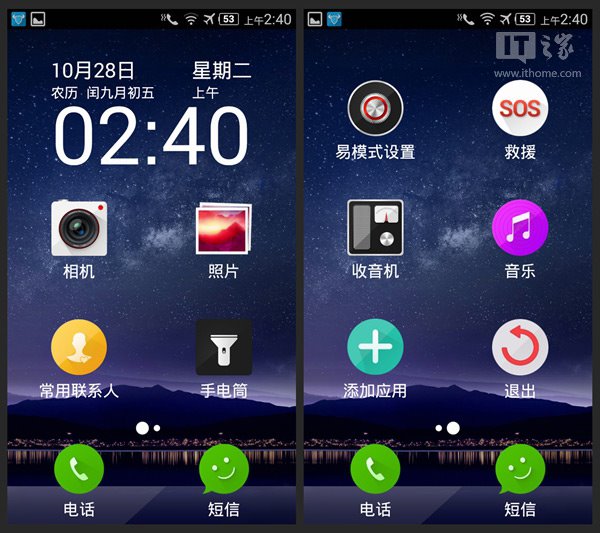
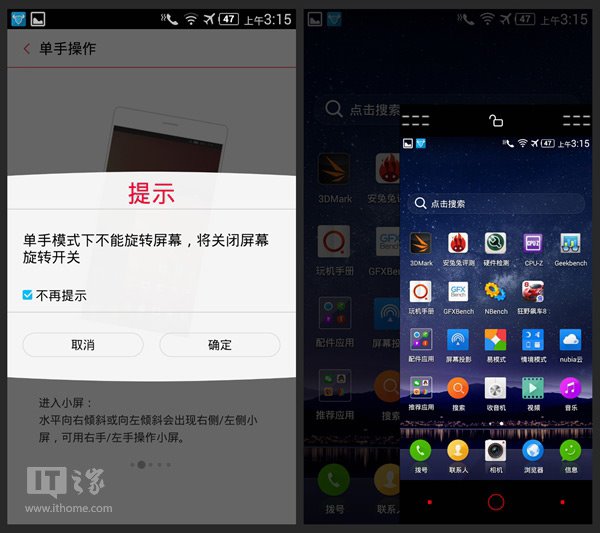
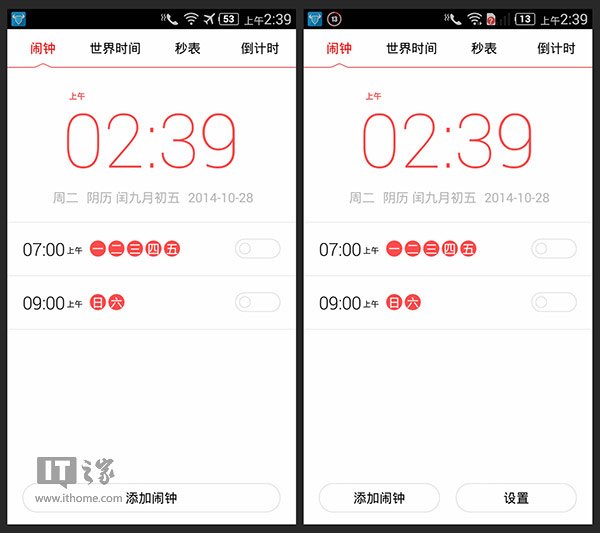
The ZTE V5S and V5 Max use the new Nubia UI 2.5, which looks pretty similar to its predecessor, the Nubia UI 2.0. For example, there is use of round icons at the bottom of the screen.
Here is the ZTE V5 Max’s home interface and scroll-down notification bar. To make the best use of the V5 Max’s big screen, the icons were made a bit smaller. They look a bit packed. Don’t you think?
Here is a side by side comparison of the Nubia UI in both the ZTE V5 Max (left) and V5S (right). The icons on the V5S look a bit more packed and crowded which does not really look good. That is just my opnion. What do you think?
We use cookies on our website to give you the most relevant experience by remembering your preferences and repeat visits. By clicking “Accept”, you consent to the use of ALL the cookies.
This website uses cookies to improve your experience while you navigate through the website. Out of these, the cookies that are categorized as necessary are stored on your browser as they are essential for the working of basic functionalities of the website. We also use third-party cookies that help us analyze and understand how you use this website. These cookies will be stored in your browser only with your consent. You also have the option to opt-out of these cookies. But opting out of some of these cookies may affect your browsing experience.
Necessary cookies are absolutely essential for the website to function properly. This category only includes cookies that ensures basic functionalities and security features of the website. These cookies do not store any personal information.
Any cookies that may not be particularly necessary for the website to function and is used specifically to collect user personal data via analytics, ads, other embedded contents are termed as non-necessary cookies. It is mandatory to procure user consent prior to running these cookies on your website.