Yesterday, on Xiaomi’s new domain mi.com, Leijun announced that the fees of purchasing the domain were USD$3.6 million, equivalent to CNY$22 million. Xiaomi hopes to use this domain as the heart of its internationalization plan.
Since last year, Xiaomi has tested the waters of Taiwan, Hong Kong and Singapore. Leijun announced that this year, the company will enter 10 additional markets, including:
Asia: Malaysia, Philippines, India, Indonesia, Thailand, Vietnam
Europe: Russia, Turkey
The Americas: Brazil, Mexico.
Leijun has stated that he and vice-chairperson Li Wanqiang will focus on serving the local market, while Li Bin and Hubo Barra will manage the international markets.
Leijun has said that from over one year of testing waters, it has proven that their business plan is viable. He says that the team has also drafted out a plan for global expansion.
At the recent new products conference, Xiaomi announced three new products – the Xiaomi router, the Xiaomi router mini, and the Xiaomi Box enhanced version. The three products will be sold at CNY$699 (USD$112), CNY$129 (USD$20) and CNY$399 (USD$64) respectively.
The recently concluded press conference has officially revealed the OnePlus One phone. The device carries a Qualcomm quad-core 2.5GHz Snapdragon 801 processor, as well as a Andreno 330 GPU and 3GB RAM. Display-wise, it uses a JDI-produced 5.5-inch 1080p IPS LCD daiply, with a 13 megapixel F/2.0 main camera and a 5 megapixel wide-angle front camera. This powerful configuration sells for CNY$1,999.99 (US$320) for the 16GB version and CNY$2299.99 (US$369) for the 64GB version. Now let us look at some hands-on images.
As currently high-end smartphones are extremely popular, many operations quickly released a new generation of high-end smartphones at the start of 2014, but most of the releases do not support the 4G network. Last month, Coolpad announced a model, the Coolpad K1, which is not just a 4G-compatible phone, but a 4G dual-SIM phone. When it was opened for pre-order on the 15th of this month, preorder numbers broke 10,000 in a very short period of time. Today, the Coolpad K1 will be available to purchase online and at retail.
The Coolpad K1 comes with one 5.5-incch large touchscreen display, with a 540 x 960 resolution. The processor is a 1.2GHz Quadcomm Snapdragon 400, with 1GB or RAM and internal storage, 4GB card storage, which supports up to 32GB micro SD cards. The main camera shoots at 8 megapixel, with a 2 megapixel front camera. It runs on Android 4.3 with Coolife interface, and supports 4G LTE networking and dual-SIM cards.
The Coolpad K1 is officially announced in Shenzhen on the 19th of last month. China Unicom and Coolpad collaborated and focused on creating this high-end dual-SIM 4G mobile phone this year, and is even the first high-end 4G smartphone. Looking at the current situation, even if the other operators were to release a high-end 4G phone, they will only make it out three months later than the Coolpad K1 at the earliest, so for users with two numbers, this device is not a bad choice.
As China’s local smartphones grow more powerful and the smartphone market continuously expands, more and more of the country’s local smartphone manufacturers are expanding overseas. Last Friday, OPPO held a release event of the Find 7, which was released in China on 19 March previously, signaling their entry into the Indonesian market.
It has been reported that that release event of the Find 7 in Indonesia invited over 550 guests, which attract over 70 media crew to report the event. Furthermore, well-known Indonesian magician Debby was invited to grace the event for a magic performance, as well as share her experiences with magic.
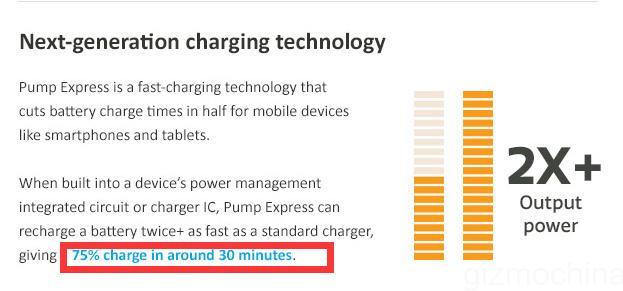
In addition to having powerful specifications, the OPPO Find 7 also utilizes the unique VOOC flash charging function, which can charge up to three-quarters of the battery in half an hour, and a five-minute charge will guarantee two-hour’s worth of calling time. Additionally, the Find 7 is also the first phone to use Sony’s second-generation stackable 13 megapixel camera, which combined with the phone’s graphic processing program, can produce pictures as high as 50 megapixel.
It is reported that the Find 7 being released in Indonesia will also be sold in two versions, a standard version and a lite version. The prices of both versions are RP 6,999,000 and 5,999,000 respectively, equivalent to CNY$3,816 and CNY$3,270.
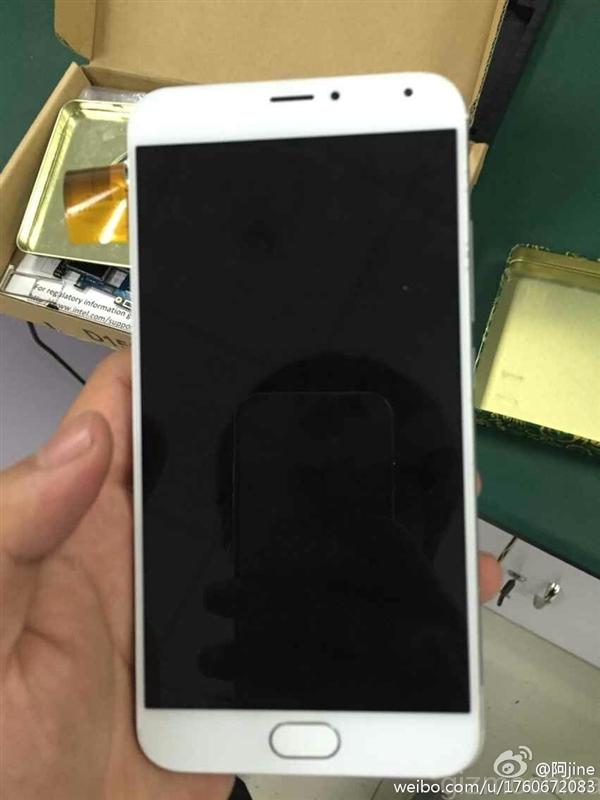
Meizu, known by their affordable smartphone price have become one of the people’s favorite in China. Recently, rumors had being told that their latest product, MX4, believed to be one of their finest products. Plus, as Meizu had discussed in the past that they will be widening their range market by competing the US smartphone industry market in 2014.
New rumors had been spread that the MX3 will have an upgrade with one of the highest spec but still would be reasonable which are about 2,000 CNY ($320). Furthermore, there are also some leak that the MX4 will come in two version which is 5-inch display support with Full HD resolution of 1920 x 1080 while the other version will come up with 5.5-inch display and Quad HD resolution of 2560 x 1536. The prices are still a mystery but will be discover soon as it was only thing people are curious about.
Some other sources told about the MX4 are it is built with Qualcomm Snapdragon 805 processor, 3GB of RAM, 16-megapixel rear camera, 5 megapixel front-facing camera. Plus, an Android app, but still it is not sure whether it will be apply on both model is Android-based Flyme 4.0. The rumors is still just a rumors, but if and only if, it is released on early August. Are you just wanted to let it passed by or grab the opportunity to be one of the earliest brand new, MX4, Meizu’s finest smartphone user?
Reports from China white-box suppliers told that China is using Intel and MediaTek 3G and LTE-enabled models to be adopted into their application processor (AP) .Plus, subsidies from Intel for tablet products and also MediaTek reasonable pricing has made them one of the top in tablet industry.
Years ago, Allwinner Technology and Rockchip were one of the favorites among the manufacturers for their low-cost solutions chipmaker. As days passed by, 3G and LTE tablets demand rising in the market. Manufacturers begin to pick another way for producing lower cost tablets based on the sources.
Meanwhile, Intel is announcing their latest product, dual-core Atom Z2520, for a model with 7-inch sizes and Atom 3735G for bigger 8-inch models as said in the sources.
For the starting price, 7-inch Intel tablet is said to be around US$20 while for 7.85-inch would be cost around US$27. Plus, the addition of LTE module, 7-inch models Intel tablet based white box currently came up with ex-factory price around US$50. After raise by US$20 with the addition of LTE module highlighted by the sources.
Surprisingly, tablet 3G white-box using the same MediaTek’s solution came also with ex-factory price about US$39.90.
Turning up the heat, Rockchip, Amlogic and Allwinner are also announcing their latest product. Days before, Rockchip had announce their new quad-core RK3288 that support LTE devices and wearable. In the meantime, Amlogic were primarily set its M8 series as their goal as their new release, M802, that could support display with Ultra HD. Last but not least, Allwinner are competing by producing their eight-core A80 chip exclusively made pre-order for their customer.
Vivo’s new flashship series vivo Xshot comes with new Quadcomm Snapdragon 8974AC processor, with 3GB RAM and 32 GB ROM, and supports the 4G LTE network. It is equipped with a 24-megapixel camera with a F1.8 wide aperture and Opitcal Image Stabilizer-support, with dual-LED flashlight, with a dedicated camera button.
In addition, the Vivo Xshot will use full LED lights for front camera, with the light intensity close to that of regular daylight. In dark environments, the Vivo Xshot can adjust its light intensity according to the environment using its smart sensor, resulting in a more natural lighting, allowing for a perfect selfie.
Currently there are netizens that leaked a group of images resembling the Vivo Xshot build. From the leaked images, the Vivo Xshot as a while has a much simpler design, but this series of images have not been confirmed to be official from legitimate sources.
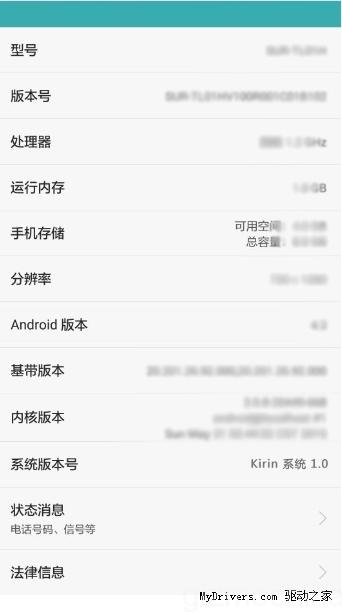
As Huawei are making preparations for the upcoming Huawei Ascend P7, the announcement have somehow be made by the internet dwelling and somehow nothing is surprising anymore.
Not only the new Huawei Ascend P7 is leaked, it is already got into the benchmarked (right before it being released). As said to be leaked, people would find many pictures, spy shots, certification docs of Chinese’s TENAA, renders and somehow, an official-like live picture about the Ascend P7.
Some rumors told that the Ascend P7 has been through AnTuTu’s test that result on it becoming publics center of attention. As seen in Huawei’s latest model, Kirim 910 built with 2GB RAM, have about 5” 1080p droid also equipped with packs a quad-core 1.6GHz Cortex-A9 processor and Mali-T450 graphics. Quite surprising for Huawei to successfully build an amazing specs to its product .
There seems to be a continuous amount of news leaking out regarding the LG G3 this month. The device’s design and specifications can be said to be fully revealed. Today, the website: MyLGPhone once again leaked news from operator Sprint’s UA profile. They discovered that LG is about to released several new devices, one of the models named “LG-LS990”, and could be Sprint’s version of the LG G3. According to leaks, the device has 32GB card storage, 2GB internal storage, a 2.4 megapixel front camera and a 16 megapixel main camera. Other than the leaked specifications, the alternative media has also leaked about the new interface, confirmed to be the “Concierge” service.
The Concierge service will collect various messages and your phone use habits, and recommend relevant contact to the phone user by following a complicated algorithm . For example, in the image above, you can see the AccuWeather weather and time widget – the Concierge service will automatically follow the weather for that afternoon and notify the user to bring an umbrella out.
From the newest UA Profile, it was discovered that the device features a WQHD 2560 x 1440 resolution screen, and will run on Android 4.42/M8974AAAAANLYD2145A.1. The above serial code displays the serial code for the Qualcomm M8974, but this does no mean that the build will carry a Qualcomm Snapdragon 800 processor – the alternative media suggests that the LG Company may be using this LG G3 model carrying the Qualcomm Snapdragon 800 processor for testing, and may use a processor as powerful as the Galaxy S5 or the HTC One (M8) for their release version.
23 April is an exciting day. In addition to Xiaomi and OnePlus, Nubia has also been very active.
Previously, Nubia wrote on their official website that, “April 23, whatever must come, will come.”, so only announcing the X6 on the market might not be enough. If there were no shenanigans, how will consumers be attracted?
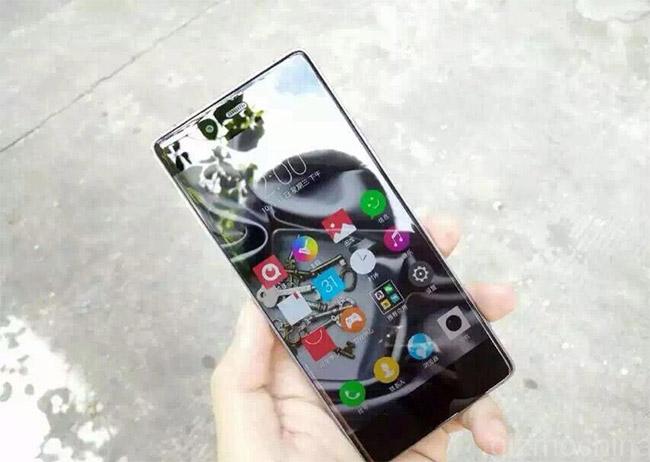
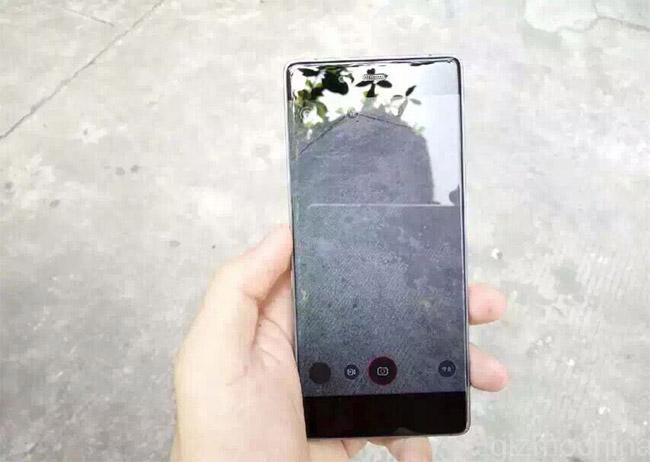
A netizen posted a concept art of nubia’s new device, which looks similar to the X6 in terms of design. On further comparison, the new device’s receiver and camera were adjusted slightly.
Is this for real? According to sources that leaked the news to this writer, nubia plans to release a mini version of the X6, which sounds reasonable and viable, as the 6.4 inch X6 may not be comfortable with everyone, so having a mini version is not out of the question. Beside, all the companies are doing it.
In addition, the source has also revealed that the display for this phone may be around 5.5 inches, with 1080p capabilities, which fits the specifications of the X6. If that is really the case, that means this phone will also have two specifications, with Snapdragon 800 and 2GB of RAM, or Snapdragon 801 and 3GB of RAM, with 13 megapixel front and back cameras, and running on the newest Nubia UI 2.0, and supporting TD/FDD and 4G.
The aim, the source revealed, for this model is to trump the upcoming Xiaomi 3S. Whether Nubia will release this new model tomorrow, we will have to wait and see.
Rockville, MD – April 22, 2014 – Hillcrest Labs announced today that Lenovo’s new line of Smart TVs is using Hillcrest’s patented Freespace® in-air pointing and motion control software. Freespace enables point-and-click, gesture and motion control of Smart TVs through simple in-air movements of a remote control. Lenovo’s Freespace-enabled Lenovo Smart TVs include the new S9 Smart TV that was unveiled last week, for sale across China.
There has been a lot of news regarding the Xiaomi tablet recently. Currently most people believe the Xiaomi table with have an 8-inch touchscreen display (2048 x 1536 resolution), and run on a NVIDIA Tegra K1 processor with a Foxconn OEM. However, today, sources discovered from Foxconn that the Xiaomi tablet actually has a variety of options to choose from.
According to a micro-blog user’s private intelligence leaks, currently the Xiaomi model used for testing by Foxconn uses a 7.85 inch 2048 x 1536 touchscreen display, with the processor actually being an Intel BayTrail-T CR Quad-Core. Xiaomi considered using Intel because Intel provided a higher subsidy for tablet processors, and provided impressive performance. With the assurance of quality as well as reduced manufacturing costs, Foxconn has already produced around 100 units of a prototype for testing.
Along with Foxconn, Xiaomi also has hired Taiwan’s Inventec to commence testing, and the device specifications of the model being tested by Inventec features an NVIDIA Tegra K1. It is uncertain whether Xiaomi will actually release both variations onto the market, or decide on one.
Comparatively peaking, the possibility of Xiaomi releasing the Intel model is higher, as Intel’s branding is more prominent, and is more powerful in terms of supply and product subsidies. Adding Xiaomi’s huge marketing power, Intel may put Xiaomi in a more favourable position.
Lastly, comparing the similarities, currently Xiaomi has not let Foxconn go ahead with preparations, therefore it is still very early in the production phase. Looking at the schedule, it looks like the Xiaomi tablet will only meet us during the third quarter earliest.
Yesterday, a netizen leaked Vivo’s brand new photographic flagship product Xshot’s performance stats, and today, Vivo once again leaked one shocking new feature of their product.
Revealed on Vivo’s official Weibo, in order to accomplish the goal of taking a perfect selfie, the Xshot actually comes equipped with an LED bulb in front for flash filling. Apparently, the frontal LED light’s power is close to the sun’s natural lighting, and can even adjust its strength according to the darkness of its environment through a smart sensor, resulting in a more natural lighting.
In addition to its powerful front lighting, the Xshot also provides 7.68 megapixel front camera, and a 2.4 megapixel main camera (with double-lighting, double-temperature LED bulbs).
This adds on to a previous leak which revealed that the Xshot will have a 2.5Ghz Snapdragon 801 CPU, 3GB RAM and 32GB phone memory. It will run on Android 4.3.
Since their first showing at the beginning of the year, the iOcean X8 has given netizens a lasting first impression, and as the details are slowly revealed, the X8 has shown to not just be a pretty device, and is just as beautiful on the “inside”. As for the pricing and release date, which people are most excited about, there are already accurate news coming out. The first batch of iOcean X8 devices will start this week, and will be obtainable through purchases.
The secret weapon TCL invested thousands into to overturn the market has been named Momoda, and will allegedly be released in up to four different versions. The version already available at Suning shopping malls and various China mobile phone storesand in its fourth sales run is the lowest-end version, able to support mobile 3G network. The official TCL mobile website announced a few days ago that a variation named the TCL S720, the Momoda Unicom version, will also come soon and is undoubtedly good news for all Unicom 3G users.
It is known from already revealed information that the TCL S720 Momoda Unicom version will be similar to the mobile version, and is a operator’s custom machine, with no difference in basic configuration. With a 5.5 inch full 720p resolution display, with a 1.4GHz frequency MT6592M eight-core processor, 1GB RAM and 8GB ROM storage, a 5 megapixel front camera and a 8 megapixel back camera, running on Lewa OS5.
Battery life is the selling point of the Momoda series phones. The phone’s body is less than 8mm thick, but is packed with a 3300mAh battery, and utilizes MediaTek’s hotknot technology – by tapping two Momoda phones, they can instantly share files at fast speeds. The phone is also equipped with a gyroscope, and magnetic sensors to support dual SIM cards.
TCL Momoda Unicom version will be released onto the market on April 23. In addition to online sales, the device will also hit retail, at CNY$999 with contract, but can be purchased for free.
Today, Beijing Xiaomi technology officially opened mi.com, and will automatically transfer all assets from its old domain, www.xiaomi.com to the new domain www.mi.com.
Afterwards, Xiaomi Technology CEO Leijun stated on Weibo that Xiaomi’s new domain fee is “daylight robbery”, and might be the most expensive domain in all of China’s domain dealing history. So, just how much did this domain cost?
Sources say that Xiaomi’s current domain name deal cost over USD$4 millon, which is the equivalent of CNY$25 million, certainly not a small number.
Is Xiaomi becoming a little tyrannical?
Update:
Co-founder of Xiaomi, Liwan Wiang, has just confirmed on Weibo that the deal is worth USD$3.6 million, which is about CNY$2.2 million.
Police Investigation Leaked on Net, Result: “There are no Problems with the Company”
Today at 12 noon, Netease Technologies leaked on Weibo about how police entered the company grounds of Kuaibo and controlled all its staff, sealing up the company computers.
The Weibo message claims, “The news says that today at 11am, a huge number of police officers entered Kuaibo Company, controlled all their staff, and prohibited touch of all phones and computers, and sealed up all of the company computers. It is currently still ongoing.”
Afterwards, a leaked internal e-mail from CEO Wangxin states, “The company is okay, we are contacting our lawyers.” At the same time, she says that company management is handling the case.
Netease Technologies tried to contact CEO Wangxin to understand the sitaion, but was transferred to a lady who states, “Wangxin is out on business.” She is unaware of what had happened.
Internal employees within Kuaibo have also expressed to the media, that Kuaibo’s company restructuring from some time ago had a big impact on the internet, and that the police only came to understand the situation and had left the premises, and that the staff were all on their afternoon break. They claim the report to be an exaggeration.
Last week, Kuaibo announced that the company would be restructuring from a technology company to a content creation company, and will be cleaning out pirated and vulgar content, closing their QVOD service platform, and stopping their video-on-demand services and downloads.
Kuaibo states that copyright protection-wise, they will be investing CNY 1 billion to build original content, as well as CNY 30 million to support local movie innovations.
Yesterday, Sohu’ s CEO Zhang Chaoyang talked about Kuaibo, Baidu and other third-party video-streaming platform’s conflicts with the copyright. He felt that if Kuaibo were to close, it would be the result of Sohu’s strategy. He says, “Regarding Baido video and Kuaibo’s shutdown, it is the result of our second battle with copyright.”
One phone makes a $30, how is that high tech, high quality? Ren Zhenfei’s armour-piercing question may serve as a wake up call for the country’s huge manufacturing industry.
For an Apple iPhone or iPad, China’s entrepreneurs participated in a majority of the production chain, but the hard efforts of the countless workers makes them an insignificant part in the value chain, and makes it harder to shake Apple off as the technology provider and supplier to obtain a slice of the lucrative pie.
Talking from this perspective, Ren Zhenfei viewpoint – that Hermes didn’t collapses, but various small manufacturers did – reflects about how becoming a manufacturing superpower is not just about being a big manufacturing country. Even though Ren Zhenfei says not to blindly follow Apple, he still realized the core essence of the company.
Ren Zhenfei (Huawei CEO)
In a time of big opportunities, we must not have opportunism; we must have strategy and perseverance.
The Consumer Business Group must stick to their strategies and uphold their values, adhere to the paths and ideas which word, and advance forward. In the past two years, the Consumer Business Group has grown from an unstable state to a viable state. Without the efforts of the tens and thousands of employees, the consumer’s Consumer Business Group would not be where it is today, and this is worth celebrating.
I am talking to everyone today for the purpose of dissuading you from following the rules, setting Apple, Samsung and Xiaomi and lose our identities in the process. Of course, we have to learn from Apple, Samsung and Xiaomi with what they did right, but we must not blindly aim to be like them.
Firstly, “Who Am I?” I am me, and will adhere to my own path.
Apple’s annual profits reach US$500 billion, and Samsung’s annual profits are US$400 billion, if you can produce a US$300 billion profit, I will recognize you as the world’s third best.
Secondly, “Where am I going?” We need to keep on moving, prioritizing profits, and have strict control over our inventory risk.
Thirdly, “We have to find out what kind of path we want to travel down.” We cannot be Apple and we cannot be Samsung, so do not follow someone just because they found success.
I am not here to criticize you and shoot you down. I just hope the Consumer Business Group can clearly find our own method of expanding.
On April 20 at 3pm, the tickets to the Smartisan smartphone conference to be held on May 20 are officially up on sale. The tickets are sold at five different prices, at CNY200, CNY300, CNY400, CNY500 and CNY600. At the time of this writing, tickets from all five prices were already sold out, in about 15 minutes.
Last Friday, when the details of how one could purchase tickets to the Smartisan smartphone conference emerged, Luo Yonghao also answered netizen’s queries about the Smartisan smartphone on his own official Weibo page. We found out more details about the Smartisan smartphone from Mr Luo’s answers.
According to Mr Luo, the Smartisan smartphone will have a fully-aluminium body, with a thickness not more than 9mm. The main camera will not be using a convex design, but will not be released commercially as of now.
We use cookies on our website to give you the most relevant experience by remembering your preferences and repeat visits. By clicking “Accept”, you consent to the use of ALL the cookies.
This website uses cookies to improve your experience while you navigate through the website. Out of these, the cookies that are categorized as necessary are stored on your browser as they are essential for the working of basic functionalities of the website. We also use third-party cookies that help us analyze and understand how you use this website. These cookies will be stored in your browser only with your consent. You also have the option to opt-out of these cookies. But opting out of some of these cookies may affect your browsing experience.
Necessary cookies are absolutely essential for the website to function properly. This category only includes cookies that ensures basic functionalities and security features of the website. These cookies do not store any personal information.
Any cookies that may not be particularly necessary for the website to function and is used specifically to collect user personal data via analytics, ads, other embedded contents are termed as non-necessary cookies. It is mandatory to procure user consent prior to running these cookies on your website.