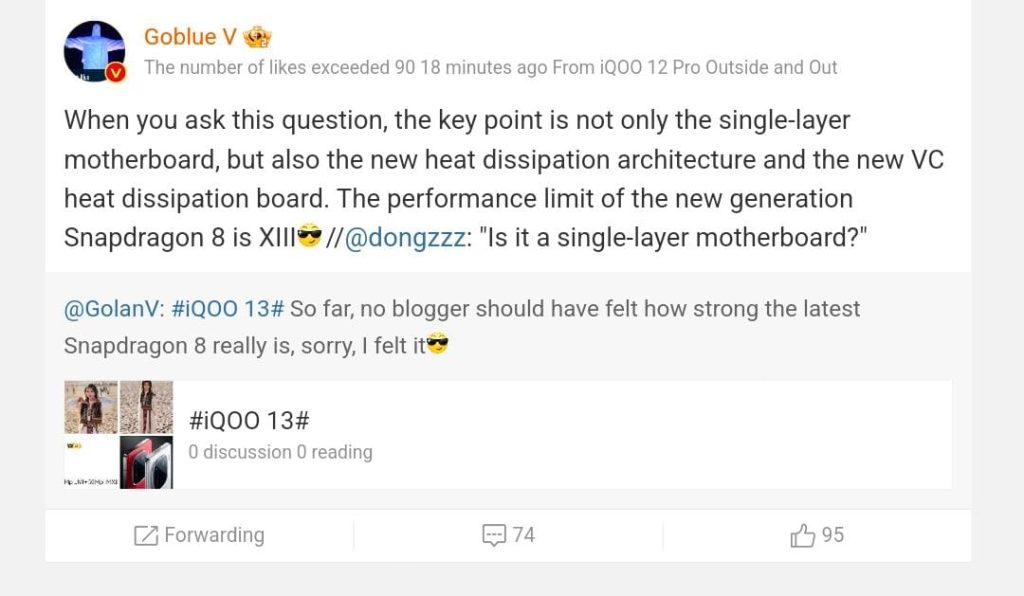
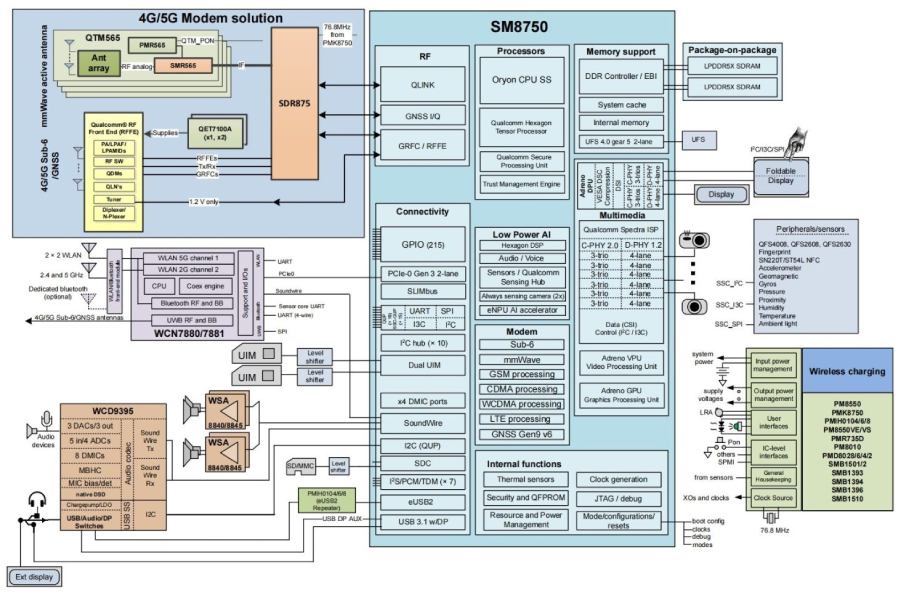
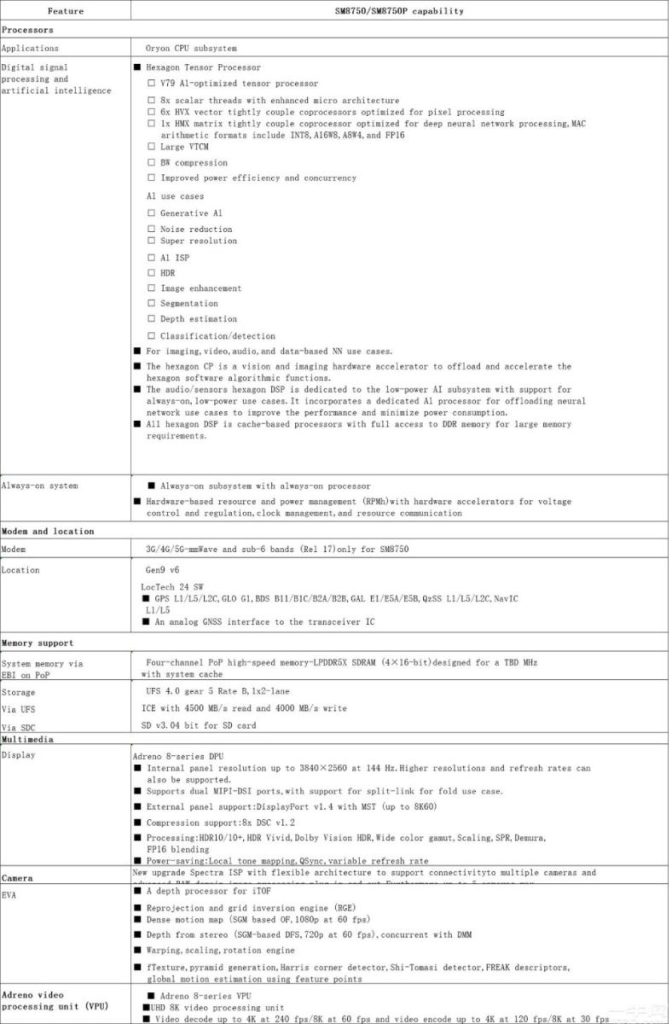
Qualcomm is gearing up to release its next flagship mobile processor, the Snapdragon 8 Gen 4. This iteration is expected to deliver significant performance and efficiency gains, thanks to custom-designed Oryon cores and TSMC’s second-generation 3nm process node.
However, a fresh leak suggests a mixed bag of results — the Adreno 750 GPU in the 8 Gen 4 will offer impressive performance-per-watt gains, while the CPU performance appears to be more incremental.
According to an X (formerly Twitter) user @negativeonehero, the internal testing of the 8 Gen 4’s GPU achieves peak performance similar to that of the MediaTek Dimensity 9300’s GPU, but at half the power consumption. This could translate to longer battery life and cooler running phones for demanding tasks like gaming.
Looking at the internal testing data of 8G4, the CPU efficiency improvement is in the single digit percentage, but the GPU improvement is huge, D9300 peak at half the power is possible. If you care about CPU performance, please skip this generation and wait for 8G5. pic.twitter.com/6Le8FlN0M9
On the CPU side, the outlook is less optimistic. The leak claims that Snapdragon 8 Gen 4, with its custom Oryon cores, delivers a multi-core score of around 7,300 at just 8W.
This performance is roughly on par with the Snapdragon 8 Gen 3 which falls behind Apple’s A17 Pro in iPhone 15 Pro in the performance chart. More concerningly, the tipster suggests it will only be a single-digit percentage improvement in 8 Gen 4’s CPU power efficiency compared to the current generation.
As a result, the tipster suggests that Android flagship phone buyers who prioritize CPU performance should wait for the next generation of the Snapdragon 8 Gen 5.
However, it’s worth noting that Qualcomm’s custom cores in the Snapdragon X Elite for Windows laptops delivered impressive results, matching Apple’s M3 in benchmarks despite initial skepticism. So we are expecting similar results from the upcoming Snapdragon 8 Gen 4.
Nonetheless, balancing thermals, power consumption, and raw performance within the constraints of a smartphone is a challenge in itself. Ultimately, the true capabilities of the Snapdragon 8 Gen 4 will become clear with independent testing and real-world usage.
Samsung‘s recently unveiled Galaxy Ring smart ring has been making waves in the tech world, and recent reports suggest it might be even more versatile than initially thought.
While Samsung initially claimed the ring would only be compatible with its own Galaxy smartphones, it seems that any Android phone running Android 11 or higher with at least 1.5GB of memory can now join in on the fun.
This exciting development was confirmed by YouTuber M. Brandon Lee, who successfully paired the Galaxy Ring with a Nothing phone. The process is relatively simple, requiring users to download the Galaxy Wearable app from the Google Play Store and follow the setup instructions.
The app will then prompt users to install Samsung Health and SmartThings, ensuring a seamless integration with the Galaxy Ring.
While this newfound compatibility is great news for Android users, it’s important to note that some features, such as Find My Ring, Energy Score, Wellness Tips, and Galaxy AI, remain exclusive to Samsung Galaxy devices.
Nonetheless, the core functionality of the Galaxy Ring, including its health-tracking capabilities and notifications, should work flawlessly on non-Samsung Android phones.
Samsung has since updated its official website to reflect this broader compatibility, indicating that the company is open to expanding the reach of its innovative wearable. However, iOS users will have to wait a bit longer, as the Galaxy Ring currently does not support iPhones.
The smart ring market is experiencing a surge in competition with the entry of Samsung’s Galaxy Ring, challenging Oura’s dominance in the segment. Oura is responding with its upcoming Oura Ring 4, recently spotted in certification documents. The documents reveal a new design featuring a raised middle section and possible design variations. While details on additional sensors are scarce, the ring is expected to be available in sizes from 7 to 15, and its launch seems imminent with certifications in progress.
Meta unveiled its latest open-source language model, Llama 3.1, on July 23rd. This new iteration boasts several improvements, including enhanced inference capabilities, broader multilingual support, and a significant increase in context length to 128K tokens.
The new LLM is comparable to GPT-4, GPT-4o, and Claude 3.5 Sonnet
The star of the show is the flagship 405B parameter Llama 3.1-405B. This powerhouse model, according to Meta, rivals the performance of leading closed-source models in tasks like common-sense reasoning, guidance, mathematics, tool use, and multilingual translation. Meta compares its capabilities to GPT-4, GPT-4o, and Claude 3.5 Sonnet.
But the improvements extend beyond the top tier. The 8B and 70B parameter versions of Llama 3.1 are also said to be highly competitive with other open-source and closed-source models of similar sizes.
For those eager to experiment, Llama 3.1 is now downloadable from Meta’s official website and Hugging Face. Additionally, over 25 major partners including cloud giants like AWS, Azure, and Google Cloud, alongside hardware manufacturers like Nvidia and Dell, have been confirmed as ready to support the new model.
ESR’s Geo Wallet, the world’s first wallet with built-in “Find My” functionality, has launched a crowdfunding campaign. Unlike traditional methods requiring separate trackers, Geo Wallet integrates Apple’s tracking technology for real-time location through the Find My app.
The wallet also utilizes RFID anti-theft protection for extra security
This bi-fold wallet boasts a sleek design in seven colors and offers essential wallet features like card slots and a cash compartment. It also utilizes RFID anti-theft protection for added security.
Geo Wallet boasts a long-lasting, built-in battery with a five-month lifespan and a two-hour charging time. The Kickstarter campaign offers various pricing tiers, with the early bird discount of $38 already sold out. Production is expected to begin in August, with shipments starting in January 2025.
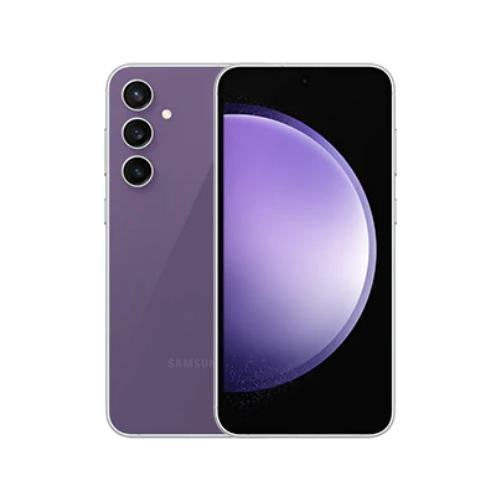
While the both devices that we’ll have a look at in this article are all flagship devices, we are out to pinpoint the better pick. For some, the Samsung Galaxy S23 FE is a better pick, as it’s part of the flagship S-series. Being part of the budget A-series devices, the Samsung Galaxy A55 might be overlooked by some potential buyers.

However, is the Samsung Galaxy A55 a worthy opponent to the Galaxy S23 FE? While being similarly priced, these devices bring specific features that you might not find on the other. So if you’re looking out to purchase a new device, this article will help you find the better buy among these two devices.
Please Note: When you buy something using the links in our articles, we may earn a small commission at no cost to you.
Galaxy A55 vs Galaxy S23 FE: Design and colours
Galaxy A55:
This device is one of the most recent entries into the Galaxy A series, and it backs a ton of impressively design attributes. Unlike other devices in its price segment, the Galaxy A55 doesn’t come with a rear camera cutout, as each lens sits on its own. This entry comes with larger cameras than its predecessor as well as an island on the right side of the flat frame that holds the power and the volume rocker buttons.
The bottom bezels on this device are also slimmer than its predecessor giving this device a flagship feel. At the top of this device sits the SIM tray, at the bottom sits the USB-C port and a speaker. Available colour options on this device are Iceblue, Lilac, Navy, Lemon.
Galaxy S23 FE:
For a fact, this device is smaller than its rival in this article. Being part of the S-series, this device brings a ton of design elements from the series but drops out the smooth frame for a matte finish that we see on the more expensive devices. The positioning of the elements, ports, buttons on this device is the same as we see on the A55. However, this device comes with rounded edges, unlike its rival the A55, which features flat bezels and a power and volume button island. For the cameras, their positioning is also the same on this device, but the bezels on this device are quite chunky but not far from what is available on the A55. Available colour options on this device are
Major differences:
Flat edges on the Galaxy A55.
Rounded edges on the Galaxy S23 FE.
The Galaxy A55 is larger than the S23 FE.
Galaxy A55 vs Galaxy S23 FE: Display
Galaxy A55:
This device uses a 6.6-inch Super AMOLED panel supporting 120Hz refresh rate for power usage. This display supports HDR10+ technology helping it attain a peak brightness of 1000 nits peak brightness. The sleek bezels on this device give it a flagship feel. For protection this display comes with Corning Gorilla Glass Victus+ technology.
Galaxy S23 FE:
Being the smaller device in this comparison the Galaxy S23 FE comes with a 6.4-inch Dynamic AMOLED 2X screen display. The display supports HDR10+ technology and a peak brightness of 1450 nits making it a brighter screen. While its bezels are slightly thicker than we see on the Galaxy A55 this device is a solid entry. For protection this device comes with Corning Gorilla Glass 5 technology.
Major differences:
Larger screen on the Galaxy A55.
Brighter screen on the Galaxy S23 FE.
Galaxy A55 vs Galaxy S23 FE: Cameras
Galaxy A55:
This newer device houses three rear cameras and a front facing camera. On the rear is a 50MP main camera, a 12MP ultrawide camera, and a 5MP macro camera. Up front is a 32MP selfie camera that supports 4K video recording making it great for videography. It comes with both OIS and gryo-EIS support for better stability on the rear cameras.
Galaxy S23 FE:
Being closer to the flagship series the Galaxy S23 FE comes with a camera lens that you don’t find on the Galaxy A55 device. For this device’s rear cameras we see a 50MP main camera, an 8MP telephoto which is not seen on the Galaxy A55, and 12MP ultrawide sensor. Up front is a 10MP selfie camera similar to other S24 devices that launched last year. Just like the Galaxy A55 device this entry packs 4K video recording as well as a ton of stability options for videography and photography.
Major differences:
Telephoto lens on the Galaxy S24 FE.
10MP selfie camera on the Galaxy S23 FE.
32MP selfie camera on the Galaxy A55.
Galaxy A55 vs Galaxy S23 FE: Performance
Galaxy A55:
Nothing powers this device with the Exynos 1480 processor. Joining this is up to 8GB RAM and 256GB worth of storage capacity. Now this is great as it fits into the needs of most users that go to purchase this device.
Galaxy S23 FE:
Under the hood of this device is the Exynos 2200 processor with 8GB worth of RAM capacity as standard. For storage, buyers of this device get to choose between either 128GB and 256GB worth of storage capacity.
Major upgrades & differences:
A better processor on the Galaxy S23 FE.
Galaxy A55 vs Galaxy S23 FE: Software
Galaxy A55 and Galaxy A54:
Both devices currently run on Android 14 and the OneUI 6.1 software. However, the Galaxy S23 FE launched with Android 13 out of the box and just like its successor it supports up to four years OS update and five years security update.
Major differences:
Nil.
Galaxy A55 vs Galaxy S23 FE: Battery life and charging
Galaxy A55 and Galaxy A54:
Both devices launch with 25W fast charging support. However, the S23 FE comes with a smaller 4500mAh battery capacity in comparison with the 5000mAh capacity available on the Galaxy A55.
Major differences:
Larger battery capacity on the Galaxy A55.
Galaxy A55 vs Galaxy S23 FE: Final Verdict
While the Samsung Galaxy S23 FE is closer to the flagship devices than the Galaxy A55, both devices are still quite similar in various ways. They both feature similar design languages, but they differ greatly from one another on the inside. The older Galaxy S23 FE comes with a faster processor, and a telephoto lens.
Considering the pricing for this more powerful entry, some might opt for the less powerful Galaxy A55. But if you’re going for performance and power, the Samsung Galaxy S23 FE is the way to go when compared with the Galaxy A55. So if it’s performance for you, then the Samsung Galaxy S23 FE is the right choice for you, but if you’re after performance then the Samsung Galaxy A55 is the right choice.
Xiaomi‘s budget-friendly Redmi Pad SE 8.7 tablet has been revealed to launch in India on July 29th. Previous leaks by Sudhanshu Ambhore offered a glimpse of the tablet’s design and specs. Now, even more specifications of the tablet have been leaked. Read on to find out.
A MediaTek Helio G99 processor is expected to power the device
Expect a boxy design with thick bezels, dual speakers, and a 3.5mm headphone jack. An 8.7-inch LCD display with HD resolution (1340 x 800 pixels) is rumored. Furthermore, the new leak reveals a 90Hz refresh rate, 18W charging, and the tablet dimensions, which are 211.58 X 125.48 X 8.8 mm. The Redmi Pad SE 8.7 weighs 373g. As per the reports, the 4GB+128GB Wi-Fi will be listed for EUR 169 upon launch.
Under the hood, a MediaTek Helio G99 processor paired with 4GB of RAM and 64GB or 128GB of expandable storage (microSD card slot up to 2TB) is expected. Cameras include an 8MP main sensor and a 5MP front-facing one. The speakers boast Dolby Atmos support, and the tablet runs Android 14.
A 6650mAh battery keeps things powered, charged via USB-C. While 4G LTE connectivity is confirmed for a Redmi Pad SE model, it’s unclear if the 8.7-inch version specifically supports it. Xiaomi is likely to clarify this detail soon.
The Honor 200 Pro has recently entered the Indian market, after its initial launch in Europe and China. This smartphone, featuring the Snapdragon 8s Gen 3 processor, competes directly with the Motorola Edge 50 Ultra in India. Here’s a comparison to help you decide which device is the better choice for you.
Design-wise, the Honor 200 Pro (review) looks quite similar to its predecessor, the Honor 100 Pro, featuring a curved back design with an oval-shaped camera island. On the front, it has a curved display that features a pill-shaped cutout to house the selfie cameras. The device is rated for IP65 water resistance.
The Motorola Edge 50 Ultra on the other hand has a unibody finish with a large square-shaped camera island. It also has curved sides and a curved display with a punch hole for the front camera. It has an IP68 rating, meaning that it can withstand submersion in water.
When it comes to display specifications, both devices boast 1.5K resolution OLED panels. The Edge 50 Ultra features a 6.7-inch display, while the Honor 200 Pro is slightly larger at 6.78 inches. The 200 Pro has a higher peak brightness of 4000 nits (achievable only with HDR content), compared to the 2500 nits of the Motorola device. However, the Edge 50 Ultra offers a higher refresh rate of 144Hz, surpassing the 120Hz refresh rate of the Honor 200 Pro.
Please Note: When you buy something using the links in our articles, we may earn a small commission at no cost to you.
2. Cameras
Both the HONOR 200 Pro 5G and the Motorola Edge 50 Ultra boast impressive camera setups. The HONOR 200 Pro 5G features a triple camera array with a 50MP Super Dynamic H900 primary camera with an f/1.79 aperture and OIS, a 12MP ultrawide camera with autofocus and a 112° field of view, and a 50MP Sony IMX856 telephoto camera with an f/2.4 aperture, 2.5x optical zoom, and 50x digital zoom. Additionally, it sports a pill cutout that houses a 50MP selfie snapper with an f/2.1 aperture and a 2MP 3D depth camera.
On the other hand, the Motorola Edge 50 Ultra is equipped with a triple camera setup, including a 50MP Omnivision OV50H primary camera with a 1/1.31-sensor size, an f/1.6 aperture, and OIS, a 50MP ultrawide camera with autofocus, macro capabilities, an f/2.2 aperture, and a 122° field of view, and a 64MP Omnivision OV64B periscope telephoto camera with 3x optical zoom and 100x digital zoom. Motorola also adds a time-of-flight (laser autofocus) 3-in-1 sensor to the device. For selfies, the Motorola Edge 50 Ultra includes a 50MP camera with an f/1.9 aperture and autofocus.
The primary camera of both smartphones uses flagship-grade sensors, however, the Motorola device has an advantage in taking ultra-wide angle shots due to its larger sensor.
3. Performance
As mentioned in the beginning, both of these devices feature a Qualcomm Snapdragon 8s Gen 3 processor which has one Cortex X4, four Cortex A720, three Cortex A520 cores, and an Adreno 735 GPU. Both smartphones use LPDDR5X RAM, however, the Motorola device comes with faster UFS 4.0 storage, compared to the UFS 3.1 on the Honor device.
Thanks to the faster storage, the Edge 50 Ultra offers better performance in benchmarks like AnTuTu and Geekbench. That said, users will hardly notice any difference in day-to-day performance until they decide to transfer data to or from the smartphone since the Edge 50 Ultra has a USB Type-C 3.1 Gen 2 port, compared to the Type-C 2.0 port on the 200 Pro.
4. Battery and Software
In terms of battery life, the Honor 200 Pro 5G boasts a larger 5,200mAh battery, which might be ideal for extended use on a single charge. It also supports 100W fast charging, allowing you to quickly reach 50% battery life in just 15 minutes.
On the other hand, the Motorola Edge 50 Ultra has a slightly smaller 4,500mAh battery. However, it compensates with even faster 125W wired charging that can fully charge the phone in under 30 minutes. Both phones offer wireless charging at 66W (Honor 200 Pro 5G) and 50W (Edge 50 Ultra).
5. Pricing & conclusion
The Motorola smartphone is priced slightly higher at Rs 59,999for the 12GB RAM and 512GB storage model, whereas the Honor 200 Pro 5G is available for Rs 57,999 with the same 12GB RAM and 512GB storage.
Both of these devices have more in common than you would expect, however, there are some key differences, like the faster storage (UFS 4.0) and faster data transfer rate (USB Type-C 3.1 Gen 2) on the Edge 50 Ultra. In addition to that, the Moto device also has vastly superior waterproofing, which is a desirable feature in this price range.
Antgamer has launched a new tri-mode magnetic axis mechanical keyboard called the AGK75 in the Chinese market. The keyboard is priced at 599 Yuan ($82) and it is now available on JD.com. Let’s check out its key specs.
Antgamer AGK75 Keyboard Specifications:
The keyboard comes with a 75% layout, comprising 81 keys. It utilizes Kailh magnetic switches, which are made entirely of POM material. These switches are designed to produce a HiFi mahjong sound effect and support trigger simulation, offering a unique typing experience.
The initial actuation force for these switches is rated at 30±7 grams, with a total travel distance of 4.0±0.4mm. The RT adjustment range is between 0.2 to 2.5mm, allowing for precision adjustments down to 0.1mm increments.
It is built with an all-aluminum shell, contributing to its durability and premium feel. It includes an IP68-rated dustproof and waterproof PCB, although it is worth noting that while the PCB is waterproof, the charging ports and battery are not. The keyboard is equipped with original double-shot PBT keycaps and features RGB full-color backlighting.
The AGK75 includes a five-layer silencing filler. Users can choose between GASKET and TOP structures to adjust the keyboard’s typing feel. The keyboard also supports hot-swapping of switches, increasing its versatility and user-friendliness.
The keyboard also comes with an FR4 gold-plated mounting plate and a substantial battery capacity of 8000mAh, split into two 4000mAh units. This large battery capacity supports extended use across multiple devices, as the keyboard can connect to up to five devices simultaneously.
The AGK75 features tri-mode connectivity, offering options for wired, 2.4GHz wireless, and Bluetooth connections. In wired mode, the keyboard supports an impressive 8000Hz polling rate, which ensures a fast response time of 0.125 milliseconds.
Antgamer offers a comprehensive after-sales guarantee, including a 1-year warranty, 7 days no-reason return/exchange policy, and a 15 days price guarantee. The packaging includes a data cable, keycap puller, and dust cover. The AGK75 is compatible with Windows, MacOS, iOS, and Android systems.
Nubia launched the Z60 Ultra Leading Version in China today. Alongside, the brand also introduced the Z60S Pro as the successor to last year’s Z50S Pro. The latest offering retains the same design and specifications as its predecessor apart from some incremental changes. Read on to know what the device offers out of the box.
Nubia Z60S Pro specifications
The Nubia Z60S Pro retains the boxy design with a flat frame and a protruding circular camera module on the back panel. There is a dedicated button for capturing pictures. On the front, the device features a 6.8-inch OLED display surrounded by ultra-thin bezels. It offers an 1.5K resolution, a 1,200 nits peak brightness, and a 120Hz refresh rate. The screen is layered with Longxi durable glass for protection against damage. There is also an integrated fingerprint scanner.
In the imaging department, the Nubia Z60S Pro sports a quad camera setup that comprises of a 50MP Sony IMX906 1/1/56 main sensor with OIS, a 50MP ultra-wide-angle lens, 8MP OIS-enabled telephoto unit, and a 2.5cm super macro shooter. There is a 16MP front-facing selfie snapper. The smartphone packs NeoVision AI Photography system 2.0 with a host of AI features like magic eraser, a star sky algorithm. AI blur, ultra-wide cinema format, and more.
Under the hood, the Nubia Z60S Pro is equipped with a Snapdragon 8 Gen 2 SoC. It packs up to 16GB RAM and 1TB storage. The device draws its power from a 5,100mAh battery unit with support for 80W charging. It also comes with AI Zero power consumption to extend battery life. The smartphone runs on Android 14 OS out of the box.
The Nubia Z60S Pro also features robust connectivity with two-way satellite connectivity, Bluetooth 5.3, WiFi-6E, and USB-C port.
The Nubia Z60S Pro starts at CNY 2,999 (~$412) for the base 8+256GB variant whereas the 12+256GB costs CNY 3,299 (~$453). The 16GB + 512GB and 16GB + 1TB carry a price tag of CNY 3,699 (~$508) and CNY 4,299 (~$590) respectively.
Vivo is preparing to introduce the new smartphone T3 Ultra. After announcing the T3 5G, the brand now aims to scare its competitors with the top-end model of the series, the vivo T3 Ultra. We don’t know what improvements Vivo will offer with the T3 Ultra, but the existence of the device has been officially confirmed. Gizmochina spotted the vivo T3 Ultra in the GSMA database.
Vivo T3 Ultra coming soon
Vivo had officially announced the vivo T3 5G. We also stated that they were previously working on the T3 Pro 5G. Now the brand is taking an important step with the new vivo T3 Ultra. We now confirm that Vivo is developing the vivo T3 Ultra. Gizmochina has officially spotted the vivo T3 Ultra, revealing the existence of the device.
Vivo T3 Ultra V2426
The Vivo T3 Ultra has been spotted in the GSMA database with model number V2426. The appearance of the Ultra model immediately after the T3 Pro 5G shows that there will be an important change in the vivo T series. Because vivo plans to introduce a model under the name “Ultra” in the first vivo T series. This may happen depending on market need, sales rates, or other reasons. There is no precise information about this. The only known is that the Vivo T3 Ultra will be officially launched.
The brand’s work continues in Vivo T3 Pro 5G. In previous times, we have spotted the smartphone with the model number V2404. Recently, this model’s color options were leaked. Vivo T3 Pro 5G will be introduced with Orange and Green color options.
Xiaomi, the global tech giant, has unveiled its latest addition to the Mijia smart home ecosystem: the Mijia Soy Milk Maker. The product is currently available for crowdfunding on the company’s Youpin platform, with an early bird price of 179 Yuan (approximately $25).
Xiaomi Mijia Soy Milk Maker Specifications:
Designed for convenience and efficiency, the Mijia Soy Milk Maker boasts a 1-liter capacity and a standout feature: the ability to grind dry beans directly without the need for pre-soaking. This innovative approach saves users time and effort while ensuring a fresh and flavorful end product.
For hygiene and ease of use, the soy milk maker comes with built-in cleaning and sterilization modes. Users can activate the quick cleaning mode with a brief press of the “Clean” button or opt for high-temperature sterilization by holding the button for three seconds. The sterilization mode boasts a 99.99% sterilization rate, ensuring a high level of cleanliness.
The appliance is equipped with a powerful blending system that includes a 6-blade cutter, which allows for segmented cooking, resulting in smooth and fragrant soy milk. The appliance is versatile, featuring six menu options that cater to both hot and cold beverages, all clearly displayed on a large LED screen.
It supports a 12-hour reservation and insulation feature, which is particularly useful for those who want their drinks ready at a specific time without needing supervision. The interior components are made of food-grade materials, including a PP lid, 304 stainless steel cup body, precision steel blades, and a stainless steel heating plate, ensuring both safety and durability.
Additionally, the device includes a detachable power cord for convenient storage and a dual heat-insulated body for effective thermal protection. The soy milk maker is designed with multiple safety features, such as lid overflow protection, magnetic sensing to prevent accidental activation, quick air release to avoid overflow, motor overheat protection, and dry burn protection. These features collectively ensure the safe and reliable operation of the appliance.
While the Mijia Soy Milk Maker is a promising addition to Xiaomi’s growing kitchen appliance lineup, it is worth noting that the device does not currently support integration with the Mi Home app, a feature commonly found in other Xiaomi smart home products.
Tecno is working on a new model in the Camon 30 series. The lineup already includes the 4G and 5G versions of the standard model, premier, and pro variants. The upcoming device is expected to be the Camon 30S Pro. It has been spotted on the Google Play Console website that confirms that moniker. The device has also bagged TUV Rheinland certification. Read on to learn what the listings reveal about smartphone.
Tecno Camon 30S Pro Google Play Console and TUV certification
The Tecno Camon 30S Pro is listed on Google Play Console and TUV Rheinland certifications with the model number CLA6. The Play Console database mentions the processor codenamed MediaTek MT6789 comprising of two A76 cores at 2.2GHz and six A55 cores ticking at 2GHz. There is Mali G57 GPU onboard. This suggests that the device will be powered by a Helio G99 chipset under the hood.
The certification also reveals that the Camon 30S Pro will pack 12GB RAM onboard. It will ship with Android 14 OS out of the box. The device will have a display resolution of 1,080 x 2,436 pixels and a screen density of 480 dpi.
Coming to the TUV Rheinland certification, the Tecno Camon 30S Pro will be backed by a 4,900mAh battery unit. However, the charging speed remains unclear at the moment. This is everything we know about the upcoming smartphone. We can expect more details to surface in the coming weeks.
To recall, the Tecno Camon 30 series feature an AMOLED display with the standard models having a 120Hz refresh rate and the Premier and Pro variants maxing out at 144Hz. All four phones are backed by a 5,000mAh battery cell with support for 70W charging. The key differences between the Camon 30 smartphones lie in the processor and camera department.
Lenovo has unveiled the new Legion R9000P laptop, which will go on sale starting July 27. This new model packs some beefy specs, featuring Ryzen 7945HX processor.
Lenovo Legion R9000P 2024
Legion R9000P pairs Ryzen 7945HX with RTX 4060 graphics card, which has a maximum 140W power draw. It also comes equipped with 16 GB of RAM and a 1 TB PCIe 4.0 SSD. The display offers a 2.5K resolution with a 240 Hz refresh rate and covers 100% of the DCI-P3 color gamut, with a brightness of 500 nits.
Lenovo Legion R9000P 2024
For charging, Legion R9000P supports 140W via USB Type-C. With Lenovo’s proprietary port, it can handle up to 300W power. According to ITHome, the CPU and GPU can consume up to 100W and 140W respectively, so 300W charging is necessary for heavy workloads.
The new Legion R9000P features an 80 Wh battery and a touchpad measuring 120x75mm. It includes a range of ports: USB-C, USB-A, HDMI 2.1, RJ-45 Ethernet, and a 3.5mm headphone jack. Lenovo’s starting price for this model is 9299 CNY, which is roughly $1275 USD.
Samsung is done with the launch of Galaxy Z Fold 6 and Flip 6 earlier this month, and the next big thing coming from the brand is One UI 7. As per recent leaks, this could be one of the biggest updates in the history of One UI, with a major visual upgrade and new icons inspired by iOS 18.
Samsung is yet to reveal anything about the One UI 7. However, a new leak sheds some light on the One UI 7 beta release timeline.
The latest information comes from a reliable Samsung leaker, Ice Universe. He says Samsung will start the One UI 7 beta program at the end of July or early August.
The South Korean giant will stick to this timeline unless it runs into any kind of trouble with the software, as happened with One UI 6, causing a delay in the beta program by a couple of weeks.
As always, Samsung will make an official announcement before the One UI 7 beta program goes live, highlighting all its new features and changes. Soon after that, the beta firmware will become available for Samsung’s 2024 flagships — the Galaxy S24 series — in the US and South Korea. It should expand to more regions with the second beta release.
Samsung is likely to stick to its general schedule for the beta releases. Assuming no last-minute changes, the stable One UI 7 update should start rolling out the flagship phones towards the end of September or early October.
Samsung is adding new features and making significant changes to One UI 7, at least that’s what the recent leaks have to say. According to reports, it will have the notification pane split into two sections: notification and quick settings.
Recent leaks suggest smoother animations and a vertical app drawer on the One UI 7. Samsung could also bring camera UI refresh, new app icons, more rounded lock screen widgets, and more.
Samsung is also reportedly working to introduce satellite connectivity in the One UI 7. But who would be the first Galaxy phone to get this feature? According to rumors, it’s likely to be the Galaxy S25, which is expected to launch early next year.
Lenovo unveiled the Legion Tab just last week. This device was announced as the first ever gaming laptop in the Indian market, with the brand clearly marketing this fact. But is the Legion Tab worth it? Can gaming tablets be popular in the region?
Lenovo packed the Legion Tab with various specs and features to ensure a smooth and immersive gaming experience. This includes a tall 8.8-inch 2.5K display with 500 nits of peak brightness and a 144Hz refresh rate. A higher frame rate enhances the gameplay overall. The gaming tablet is equipped with the Snapdragon 8+ Gen 1 SoC. While this processor isn’t the latest flagship chip from Qualcomm, it is still high end processor that still offers a great gaming experience.
This makes it capable of handling not only games but any other intensive tasks. As mobile games get bigger, they also take up more space, so the 256GB storage with a 1TB microSD card slot is also very handy. Any mobile gamer would know how their devices get hot when playing intense titles like COD Mobile, Genshin Impact, and other similar games. To address this issue, Lenovo offers the Legion ColdFront cooling system that offers three modes, Beast Mode, Balanced Mode, and Energy Saving Mode. So you can switch between tablet cooling and power during gaming.
2. How does it compare to other tablets?
The company announced the Legion gaming tablet for 34,999 INR in India. At this price range, there is also the newly launched OnePlus Pad 2, which has a slightly more expensive 39,999 INR price tag. For this price, you get 128GB of storage instead of 256GB and 8GB of RAM instead of 12GB on the Legion Tab.
But you get a more powerful and newer Snapdragon 8 Gen 3. This makes the OnePlus Pad 2 a more powerful machine for gaming, at least on paper. However, its 12.9-inch panel is rather unwieldy compared to the Legion Tab. So it is clear that Lenovo gave more thought than just specs for making this a “gaming tablet”
3. But is it really worth it?
To be completely honest, it is still too early to tell if this is a step in the right direction or a redundant product. Lenovo clearly has a vision with the Legion Tab and believes that it can expand its gaming portfolio with such gaming tablets. Considering it is the first iteration, it is a decent package overall. You’re not sacrificing specs or features and are guaranteed a capable performance.
Although, I believe that future models/successors or even rival brands might have competitive offerings in the plans. So if you really need a tablet for gaming and you have money to spare, the Legion Tab is literally the only option in India. Otherwise, put off buying a gaming tablet for a little while and see how this category of products develops in the near future.
Samsung‘s One UI consistently ranks among the top contenders in the Android skin arena. As with each iteration, expectations are now building for the upcoming One UI 7. Thankfully, the wait for a taste of this new software might be nearing its end.
Reliable leaker Ice Universe recently revealed the One UI 7 beta program could start in late July or early August unless there are unexpected delays. This information contradicts speculation from fellow tipster Tarun Vats who predicted a rollout in the US, Korea, and Germany in September. Given Ice Universe’s established track record, the former seems more likely.
One UI 7 Beta will start from the end of July or early August, if there are no accidents.
The details revealed so far about the One UI 7 suggest it might draw some inspiration from Apple’s iOS. These changes include a notification panel and quick settings section, as well as the addition of quick actions on the lock screen.
Further fueling the rumor mill, an image surfaced online, supposedly showcasing a revamped Gallery app icon in One UI 7. Shared by @chunvn8888, the icon ditches the traditional monochrome design for a more colorful approach.
Instead of the familiar red background with white petal shapes, we see a white base with each petal sporting a unique color – a look that is somewhat reminiscent of Google’s app icons.
This leak hints that Samsung might be revamping other app icons as well. We could see similar updates to current monochrome icons for apps like Email, Notes, and Camera. There are also rumors about a native app-locking feature being included, similar to features found in other Android skins.
Samsung’s annual SDC event, usually held in October, might be the stage for the stable release of One UI 7. That’s considering last year’s timeline as Samsung unveiled One UI 6 at SDC and followed with a full rollout in the same month.
POCO seems to be working on a limited-edition smartphone. The Xiaomi sub-brand will reportedly partner with Marvel Studios. The upcoming offering will mark the theatrical release of the much-awaited Deadpool & Wolverine movie on July 26. Recently, Microsoft announced a Deadpool-themed controller. Although the launch date of the POCO device remains under wraps, a tipster has shared an image on X that gives us a glimpse at the mysterious smartphone. Read on to know the details.
POCO working on a Deadpool-themed smartphone
The image shared by the tipster reveals the POCO limited edition smartphone in a Red color option with a leather-textured back panel. This is similar to Deadpool’s signature Crimson Red color. The LED flash unit has a superhero’s insignia. The right side of the panel has ‘special limited edition’ text under the POCO branding in Yellow hue. We could also spot the character’s katana blade below the camera sensors.
Being a special limited edition smartphone, the upcoming POCO device is expected to come in a customized box and bundled goodies like stickers, keychain, and more. The smartphone could also come with a customized UI. It could be released on July 26 with sales commencing in early August.
Judging by the camera arrangement on the POCO limited edition smartphone, it appears to be the POCO F6. It was spotted on the HyperOS database way back in April. The POCO F6 (review) comes with a 6.67-inch OLED display with a 1.5K resolution and 120Hz refresh rate. It has 50MP and 8MP dual rear cameras. The device is powered by a Snapdragon 8s Gen 3 SoC with up to 12GB RAM and 256GB storage. The smartphone is backed by a 5,000mAh battery with support for 90W charging.
Edifier has unveiled its new “Edifier Comfo Clip” Bluetooth earphone. The new earphone is priced at around $43 (319 CNY) in China, the earphone will be available for sale starting July 29th.
Edifier Comfo Clip
Edifier Comfo Clip comes in Pearl White and Luminous Black. Each earbud weighs 5.8 grams and has an IP56 rating for water and dust resistance.
The earphone supports dual device connection and feature Bluetooth 5.4 standard. It delivers a satisfying audio experience with 12mm drivers. Additionally, a single full charge provides up to 28 hours of battery life, and a quick 15-minute charge offers 2.5 hours of listening time. The model number for the new earphone is EDF200161.
The battle for the finger-worn health tracker crown appears to be heating up. Just as Samsung’s Galaxy Ring hits shelves, whispers of its main competitor’s next move have emerged. Android Authority spotted the “OA11” during a certification process, all but confirming it’s the Oura Ring 4.
The certification documents leave little room for speculation. It explicitly mentions the wearable name as “Oura Ring 4” and there’s another variant with model number “OA12,” which may be a design variant of the ring.
The certification also includes images of the ring which reveal a shift in design from the Oura Gen 3 and its Horizon counterpart.
The Oura Ring 4 has a slightly raised middle section with a distinct gradation towards the edges. This replaces the seamless transition into the frame as seen on the previous model. While the outer shell appears metallic, you still have the familiar transparent sensor cover, likely made of synthetic resin.
The sensor layout shows some changes, but details are limited. It’s unclear if the Oura Ring 4 includes new sensors beyond the Oura Gen 3’s skin temperature, SpO2, and heart rate sensors.
Fortunately, there seem to be plenty of size options, as the ring is said to be tested in sizes 7, 9, 13, and 15. As a result, it’s fair to guess that the Oura Ring 4 will be available in sizes ranging from at least 7 to 15. The images included in the listing reportedly show a size 10 ring.
Oura has not officially confirmed the launch details for the Ring 4. However, with the certification process underway, the launch shouldn’t be far off.
Hopefully, the next round of information will clarify whether the Oura Ring 4 can maintain its lead in the smart ring market or if the new design is just a cosmetic update.
Acer announced a brand-new laptop for all the 3D creators in India. It is dubbed the Aspire 3D 15 SpatialLabs Edition, which brings capable specs and a special display for a glass free 3D experience. So here are its specs, features, pricing, and more.
Acer Aspire 3D 15 SpatialLabs Edition Specs
One of the highlight aspects of the new creator laptop is undoubtedly the SpatialLabs technology. This allows users to seamlessly shift from 2D to stereoscopic 3D modes, which is what makes it useful for 3D content creators. To offer 3D experience, the display uses a camera to adjust image projection. It tracks the users’ eyes to display content in 3D via real time rendering. This feature employs AI enhancements as well. The Acer Aspire 3D 15 SpatialLabs Edition sports a 15.6-inch display that offers a 4K resolution, 3D mode, and a 100 percent Adobe RGB color gamut.
The front also has a USB HD camera that offers 720p video recording and an HD webcam. Under the hood, it is equipped with a 13th Gen Intel Core i5 and i7 processor paired with up to an NVIDIA RTX 4050 GPU. The laptop packs up to 32GB of DDR5 RAM and up to 1TB of NVMe SSD storage. Connectivity options include an HDMI 2.1, Type-C port, and WiFi 6. A 57Wh battery pack that charges via a 135W 3-pin adapter. For cooling, the Aspire 3D 15 SpatialLabs Edition arrives with dual fans and three copper heat pipes for effective thermal management.
Pricing and Availability
Acer has released the Aspire 3D 15 SpatialLabs Edition was announced in two variants. The Intel Core i5 version with an RTX 2050, 16GB of RAM, and 512GB storage costs 149,999 INR (roughly 1,792 US Dollars), while the Intel i7 option with an RTX 4050, 16GB of RAM, and 1TB storage has a 174,999 INR price tag (roughly 2,091 US Dollars).
We use cookies on our website to give you the most relevant experience by remembering your preferences and repeat visits. By clicking “Accept”, you consent to the use of ALL the cookies.
This website uses cookies to improve your experience while you navigate through the website. Out of these, the cookies that are categorized as necessary are stored on your browser as they are essential for the working of basic functionalities of the website. We also use third-party cookies that help us analyze and understand how you use this website. These cookies will be stored in your browser only with your consent. You also have the option to opt-out of these cookies. But opting out of some of these cookies may affect your browsing experience.
Necessary cookies are absolutely essential for the website to function properly. This category only includes cookies that ensures basic functionalities and security features of the website. These cookies do not store any personal information.
Any cookies that may not be particularly necessary for the website to function and is used specifically to collect user personal data via analytics, ads, other embedded contents are termed as non-necessary cookies. It is mandatory to procure user consent prior to running these cookies on your website.