Huawei, the Chinese tech giant, is making a bold move towards achieving independence in chip development. According to a report by Nikkei Asia, the company is building a massive semiconductor research and development (R&D) facility in Shanghai with a staggering investment of $1.66 billion (12 billion yuan).
This R&D plant is a cornerstone of Huawei’s grand plan to eliminate its reliance on foreign chipmakers. The company is aggressively recruiting top talent to expedite the process.
Reports suggest they are offering lucrative compensation packages, reportedly double what local chipmakers provide.
Additionally, Huawei is said to have successfully hired engineers with extensive experience from industry leaders like ASML, Applied Materials, Lam Research, TSMC, Intel, and Micron.
However, achieving self-sufficiency in chip development comes at a cost of employee well-being. According to an anonymous chip engineer, the work environment at Huawei is “brutal.”
It reportedly extends far beyond the already demanding “996” work culture (working from 9 am to 9 pm, six days a week). Instead, employees might have to face “007” hours – working around the clock, seven days a week, with no breaks.
While high salaries and incentives might entice some, such an intense work culture will burn out employees. To the extent that the engineer says, “The contract will be for three years, [but] the majority of people can’t survive till renewal.”
Currently, Huawei is relying on SMIC for its upcoming 5nm Kirin chip, with commercialization expected later this year. SMIC is also independently developing its own 3nm chip production capabilities for Huawei.
Given these ongoing collaborations, SMIC is likely to remain a crucial partner for Huawei in the foreseeable future, at least until their R&D plant achieves full production capacity.
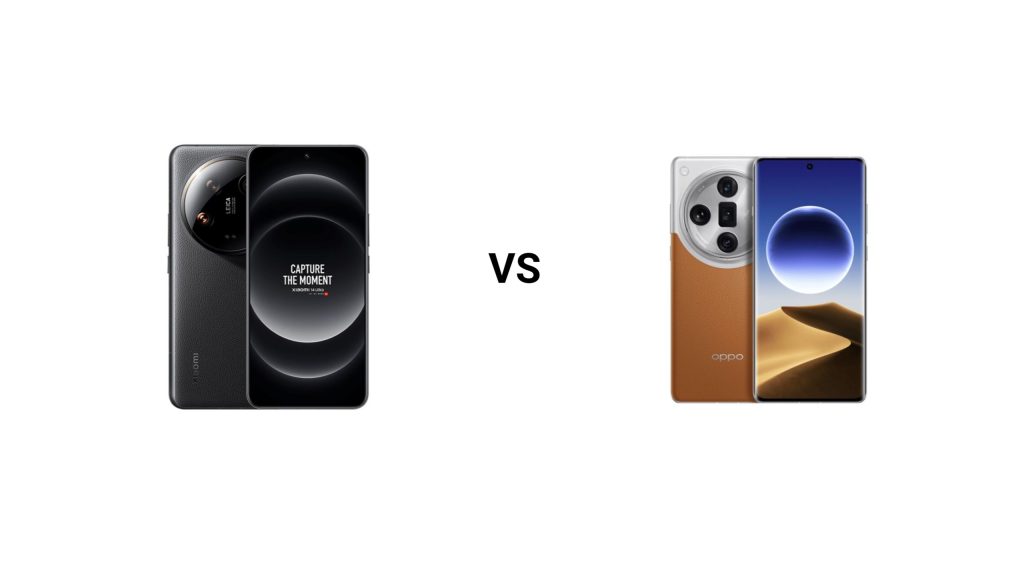
This is yet another battle of the Ultra devices as Xiaomi’s high-end flagship device goes head-to-head against the competition from OPPO. Both the Xiaomi 14 Ultra and the OPPO Find X7 Ultra come with some impressive flagship specifications and features. However, both devices stand out from one another in various ways, both in their design and their overall performance.
In this article, we’ll put these two devices against each other as we seek to find out which option is a better pick. Buyers of either of these devices are mainly in China and its neighbouring regions, as it might be a challenge to purchase these flagship devices outside their home base. Well, if you’re able to lay your hands on either of them, this article will help you pick which is the best option for you.
Please Note: When you buy something using the links in our articles, we may earn a small commission at no cost to you.
Xiaomi 14 Ultra vs Oppo Find X7 Ultra: Design and colours
Xiaomi 14 Ultra:
In terms of its design, this is a good-looking device that boasts some impressive design elements. Some of these elements include the circular camera bump, the leather textured finish, and smooth edges. The rear camera cutout houses four cameras, which we’ll come to in a bit, but up front you’ll find a centre-mounted selfie cutout.
The power and volume rocker keys sit on the right-hand side of this device’s frame. At its base sits the USB-C charging port and speakers, there is not much change in terms of design between this device and its predecessor. The available colour options this device offers are Black, Blue, White, Titanium Gray.
Oppo Find X7 Ultra:
The OPPO Find X7 Ultra comes with a bold design as well as very impressive colour options for users to pick from. Just like the Xiaomi 14 Ultra, this device from OPPO features a circular rear camera island that houses all photography peripherals except the flash. This device uses a curved screen, which is great for a more immersive display experience for the average user.
The right-hand side of this device houses the power button and volume rocker keys, while the left side houses the mute toggle button. At the base is the device’s USB-C port, as well as speakers and a microphone. All colour options on this device, some with a leather textured finish, and you can get it in Black, Dark Blue, and Light Brown.
Major differences:
A mute toggle button is present on the OPPO Find X7 Ultra.
Curved screen on the OPPO Find X7 Ultra.
More photo-centric design on the OPPO Find X7 Ultra.
Xiaomi 14 Ultra vs Oppo Find X7 Ultra: Display
Xiaomi 14 Ultra:
Users of this device get a 6.73-inch LTPO AMOLED screen panel that supports 120Hz refresh rates. This screen boasts 3000 nits peak brightness and is protected by the Xiaomi Shield Glass protection technology. The display on this device supports Dolby Vision and HDR10+ for a more immersive viewing experience. Lastly, the bezels on this device are slim, giving the user an 89.6% screen to body ratio.
Oppo Find X7 Ultra:
The curved LTPO AMOLED panel on this device is up to par with the competition, including that from the Xiaomi 14 Ultra. It supports 120Hz refresh rate, Dolby Vision, and HDR10+ display technology. For its protection, its display uses the Corning Gorilla Glass Victus 2 which will protect it from scratches and even drops. With a 90.3% screen-to-body ration, most buyers will find the display on this device more immersive than that on the Xiaomi 14 Ultra.
Major differences:
Overall better display on the OPPO Find X7 Ultra.
Curved screen display on the OPPO Find X7 Ultra.
Xiaomi 14 Ultra vs Oppo Find X7 Ultra: Cameras
Xiaomi 14 Ultra:
The Xiaomi 14 Ultra was built for a specific reason in mind, to help users to “capture the moment.” This reveals that this device is a camera centric entry with a quad 50MP rear camera sensor. Up front is a 32MP selfie camera sensor which takes impressive photos. Thanks to the Leica photography partnership, this device is one of the best you can get for taking pictures. In fact, Xiaomi retails a ton of photography accessories with this device.
Oppo Find X7 Ultra:
The OPPO Find X7 Ultra is yet another photograph-centric device that offers impressive software and hardware photography features. It comes with a quad 50MP rear camera setup and Hasselblad Color Calibration for taking impressively colour accurate pictures. Up front is a 32MP wide selfie camera that helps users to take impressive pictures in various lighting conditions. From the rear design of this device, you’ll be able to tell that it packs a punch in the photography segment.
Major differences:
8K video recording on the Xiaomi 14 Ultra rear cameras.
Xiaomi 14 Ultra vs Oppo Find X7 Ultra: Performance
Xiaomi 14 Ultra and Oppo Find X7 Ultra:
Both devices launched with the Snapdragon 8 Gen 3 processor and offer up to 16GB worth of RAM as the highest option. The Xiaomi 14 Ultra offers up to 1TB worth of storage.
Major upgrades & differences:
1TB storage on the Xiaomi 14 Ultra.
Xiaomi 14 Ultra vs Oppo Find X7 Ultra: Software
Xiaomi 14 Ultra:
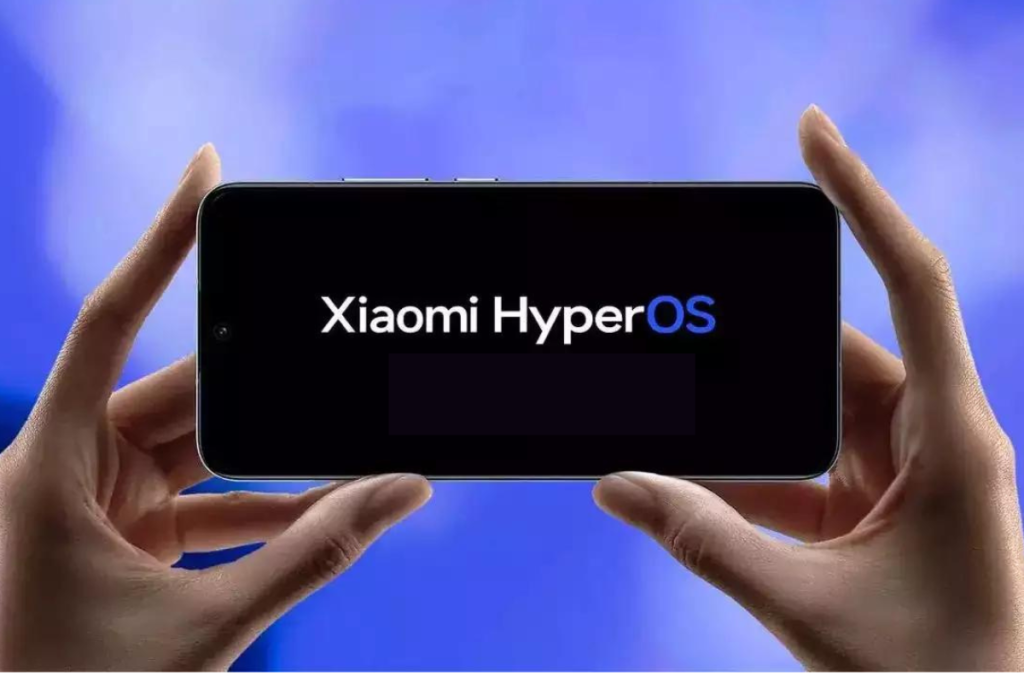
This device runs on Android 14 and Xiaomi’s HyperOS out of the box. Users are getting 4 years of Android OS upgrades and 5 years of security updates.
Oppo Find X7 Ultra:
OPPO Find X7 Ultra launches with Android 14 out of the box and the ColorOS 14 software for customizations. Users will benefit from the brand’s offering for 4 years of OS upgrade and 5 years of security upgrade on this device.
Major differences:
HyperOS on the Xiaomi 14 Ultra.
ColorOS 14 on the OPPO Find X7 Ultra.
Xiaomi 14 Ultra vs Oppo Find X7 Ultra: Battery life and charging
Xiaomi 14 Ultra:
Those buying this device outside China will get a 5000mAh battery capacity. This is followed by 90W fast wired charging, which can charge the device from 0-100% in 33 minutes. For wireless charging, users get 80W fast wireless charging on this device. Lastly, is the 10W reversed wireless charging that this device comes with.
Oppo Find X7 Ultra:
This device comes with a 5000mAh battery capacity as standard. For its charging abilities, users benefit from a 100W fast charge support for wired charging. Wireless charging is 50W and reverse wireless charging is 10W, which is on par with what the competition in this article offers.
Major differences:
Faster wireless charging on the Xiaomi 14 Ultra.
Faster wired charging on the OPPO Find X7 Ultra.
Xiaomi 14 Ultra vs Oppo Find X7 Ultra: Final Verdict
Picking the best device among these two is a hard one as they are quite similar in some areas. When it comes to the cameras of these devices they are quite similar, they also feature similar battery capacities. Buyers seeking more storage can opt for the Xiaomi 14 Ultra, as it offers up to 1TB worth of storage. Asides from their similarities, the OPPO Find X7 Ultra comes tops in terms of its display and software as some might argue. If you are looking out for design, the OPPO Find X7 Ultra is also the way to go as it features a more impressive design.
MIUI is one of the most popular Android custom skins, and it has undergone several years of work to transform into HyperOS. It’s not just another fancy name for MIUI. In fact, the Chinese brand has done a lot of work to make it smoother and better than before while adding several amazing new features.
While HyperOS is an exciting upgrade, its rollout has not been that great so far. Xiaomi is slow through this process and testing the patience of its users. That could be disappointing, but what if I tell you a way to upgrade your Xiaomi, Redmi, or Poco device before the update officially arrives over the air? Yes, it is possible.
In this step-by-step guide, I’ll walk you through a few methods to install the much-awaited HyperOS update on your device.
Your smartphone or tablet often won’t notify you as soon as an update is available. I have noticed it a few times and hence, I regularly check if an update is available for download and install.
I’d advise you to do the same before heading to other solutions, as they require more work.
Here are the steps to follow:
Step 1: Open the Settings app on your phone.
Step 2: Scroll through the options to find About Phone and tap on it.
Step 3: Tap on the MIUI version and check if an update is available.
If a HyperOS update isn’t available, don’t worry. Try the steps as mentioned in the next solution.
HyperOS or any other software updates are gradually rolled out across countries. Even if an update is available in a region, it can take a few days to weeks to reach all users.
If a HyperOS update is released for the same device anywhere in the world, you can manually download and install the package to experience the new OS from Xiaomi.
[Disclaimer: It’s important to be cautious while installing updates manually, as it can result in issues like bricking and other software problems if not done correctly. Please follow the instructions carefully to minimise such risks. Also, keep your device charged at least 40% before installing a ROM. We won’t be responsible if anything goes wrong with your device. Please make sure to back up your device before initiating a software update to avoid risking data loss.]
Step 2: Select your device to see the available ROMs.
Step 3: Download the latest HyperOS recovery ROM.
Step 4: Open the Settings app and go to About Phone.
Step 5: Tap the three-dot icon in the top-right corner and select Choose Update Package.
If you can’t find the Choose Update Package option, tap the MIUI version logo 7-10 times repeatedly.
Step 6: After selecting the Choose Update Package option, select the downloaded ROM and install it.
Step 7: Wait for the ROM to install.
Start exploring HyperOS on your device.
Method 3: Using a Computer
If you have a fastboot ROM, you’ll need a computer to install it. If you don’t have it already, you can download it from third-party websites such as hyperosupdates.com or xiaomifirmwareupdater.com.
Visit the website, choose your device, and download the latest HyperOS fastboot ROM.
Now that you’ve got the Fastboot ROM, follow these steps to install it:
Step 1: Power off your device.
Step 2: Press and hold the volume down key and power key for 6-8 seconds to boot your device into the Fastboot Mode.
Step 3: Once your device enters the Fastboot Mode, connect it to a computer using a USB cable.
Step 4: Download the Xiaomi Flash Tool on your Windows computer and extract it.
Step 5: Create a folder where you’ve extracted the Xiaomi Flash Tool and move the fastboot ROM to this folder. Remember to put any space in the folder name.
Step 5: Double-tap the Xiaomi Flash Tool executable file to launch it.
Step 6: Click refresh.
Step 7: Choose the save user data option at the bottom of Xiaomi Flash Tool and click flash to begin flashing the fastboot ROM. You can see the progress and results on the same screen.
You’ll see a device in the table with a random string of numbers and alphabets. If you don’t see it, click Other and tap Install to ensure that the required drivers are not missing.
Step 8: After the flashing is successful, close the Xiaomi Flash Tool and disconnect your device from the computer.
It’s time to set up your Xiaomi device and enjoy the HyperOS experience.
If Xiaomi Flash Tool does not work on your computer for any reason, try XiaoMiTool V2.
Even if your device hasn’t received the HyperOS update, there are ways to experience it without further delay, provided that Xiaomi has released the update anywhere in the world. Be sure to back up your device and follow the steps correctly to enjoy a smooth HyperOS experience without data loss.
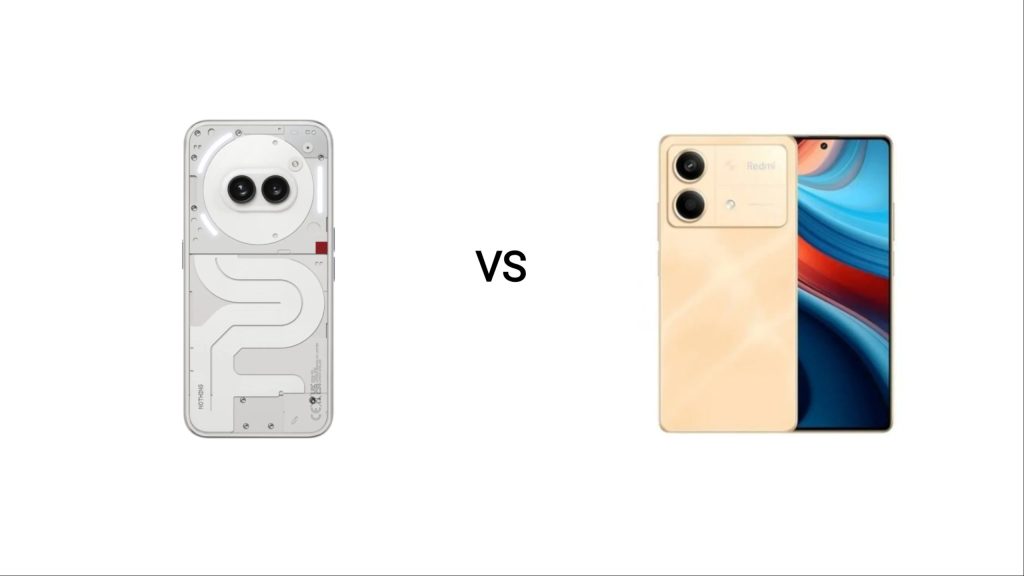
Is the Nothing Phone 2a any better than the Poco X6 Neo? In terms of specifications, the Nothing Phone 2a stands out as the better option in a lot of areas. But if you’re shopping on a budget, for a new device, is the Nothing Phone 2a really the better choice for your needs?
In this article, we’ll have a close look at these devices and help you determine which is the best pick for you. Sometimes better specifications don’t mean the better buy, especially when you’re shopping on a slim budget. Is this also the case when comparing the Nothing Phone 2a with the Poco X6 Neo? Let’s find out!
Please Note: When you buy something using the links in our articles, we may earn a small commission at no cost to you.
Nothing Phone 2a vs Poco X6 Neo: Design and colours
Nothing Phone 2a:
Ever since the brand’s inception, Nothing has taken a different turn with the designs of their smartphone. This device, the Nothing Phone 2a, follows this design path featuring the Glyph interface, a glass see-through design revealing some screws and patterns in the device. On its rear sits a horizontal rear camera setup with a flash that suits towards the top right-hand side of this cutout. The volume rocker keys on this device sit on the left-hand side, while the power button sits on the right-hand side of the device. At the base of the device sits the USB-C port, microphone, speaker, and the SIM tray.
Poco X6 Neo:
Despite its extremely affordable pricing, the Poco X6 Neo is an impressive device to look at and hold. Just like its bigger siblings, the X6 and X6 Pro, the Neo model comes with a horizontal stretching camera island. This island is split into three parts, one holding the two rear cameras, the other holding the flash, and the last holding the Poco logo.
All around this device features flat edges and a clean back glass-ish finish, it features very slim bezels and a slim build frame. Up top is a 3.5mm headphone jack, at the base is the USB-C port, microphone, and speaker, to the right side is the power and volume rocker buttons, and to the left is the SIM slot. Available colours on this device are Astral Black, Horizon Blue, and Martian Orange.
Major differences:
Impressive and sleek finish on the Poco X6 Neo.
3.5mm headphones jack on the Poco X6 Neo.
Glyph interface lighting on the Nothing Phone 2a.
Nothing Phone 2a vs Poco X6 Neo: Display
Nothing Phone 2a:
This device uses a 6.7-inch AMOLED panel that supports a 120Hz refresh rate to ensure snappy response. This display supports HDR10+ technology, helping it attain a peak brightness of 1300 nits peak brightness. All round this display are sleek bezels, making this device give off a flagship feel. For protection, this display comes with Corning Gorilla Glass 5 technology.
Poco X6 Neo:
The 6.67-inch AMOLED display that this device comes with supports 120Hz refresh rate for snappy responses. There are also very slim bezels around this device to help give an immersive viewing experience for users. When it comes to display protection from falls and cracks, this device comes with the Corning Gorilla Glass 5 protection technology. For its display brightness, this device gives 1000 nits worth of peak brightness, which is great for a device in this price range.
Major differences:
Brighter display on the Nothing Phone 2a.
Slimmer bezels on the Poco X6 Neo.
Nothing Phone 2a vs Poco X6 Neo: Cameras
Nothing Phone 2a:
For midrange devices, photography isn’t a strong point, but that’s not the case with the Nothing Phone 2a. This device comes with a dual rear camera setup housing two 50MP sensors. Up front sits a 32MP selfie camera which is up to the task of taking crisp clear photos in different lighting conditions.
Poco X6 Neo:
This budget device only comes with two rear cameras and a front facing camera. On the rear sits a 108MP main camera sensor and a 2MP depth sensor. There’s a 16MP selfie camera that sits in the centre punch hole cutout of this device. With this device, Poco prides itself in its 3x lossless in-sensor zoom capability.
Major differences:
Dual 50MP cameras on the Nothing Phone 2a.
108MP main camera on the Poco X6 Neo.
3x lossless zoom on the Poco X6 Neo.
32MP selfie camera on the Nothing Phone 2a.
Nothing Phone 2a vs Poco X6 Neo: Performance
Nothing Phone 2a:
Nothing powers this device with the MediaTek Dimensity 7200 Pro processor. Joining this is up to 12GB RAM and 256GB worth of storage capacity. This makes this device an impressive mid-range Android device that retails at an affordable price tag.
Poco X6 Neo:
Being a much more affordable device, the Poco X6 Neo features a less powerful MediaTek processor. This processor is the MediaTek Dimensity 6080 and is supported with up to 12GB worth of RAM, which is virtually expandable to 2GB worth of RAM. The maximum storage option on this device is 256GB, and this is going to be enough for the average user.
Major upgrades & differences:
Expandable 12GB RAM on the Poco X6 Neo.
More powerful processor on the Nothing Phone 2a.
Nothing Phone 2a vs Poco X6 Neo: Software
Nothing Phone 2a:
This device runs on Android 14 and Nothing OS 2.5.4 out of the box. Users are getting 3 years of Android OS upgrades.
Poco X6 Neo:
The Poco X6 Neo runs on Android 13 out of the box, and extra customization from the MIUI 14 system that this device runs on as well.
Major differences:
Nothing OS on the Nothing Phone 2a.
MIUI 14 software on the Poco X6 Neo.
Nothing Phone 2a vs Poco X6 Neo: Battery life and charging
Nothing Phone 2a:
For its battery capacity, this device comes with 5000mAh which is more than enough for a day usage. Charging speed on this device is 45W as standard.
Poco X6 Neo:
This device features a 5000mAh battery capacity, keeping it on par with the Nothing Phone 2a. For its charging, it features a slightly slower 33W fast charging, but this will still get users enough battery for the go in no time.
Major differences:
Faster charging on the Nothing Phone 2a.
Nothing Phone 2a vs Poco X6 Neo: Final Verdict
Of course, the Nothing Phone 2a packs more features that make it a better purchase. But the Poco X6 Neo also packs enough features to make it a great purchase for less than double the price of the Nothing Phone 2a. So why break the bank to get a good device when you can get yourself the Poco X6 Neo and enjoy all the great features that it offers?
Despite its less powerful processor, the Poco X6 Neo still matches the Nothing Phone 2a in storage and memory capacity. It also features a simpler yet eye-catching design, unlike the busy design as seen on the Nothing Phone 2a. While both devices are great options, the Poco X6 Neo stands out as the better buy on a slim budget.
Motorola recently launched the Edge 50 Pro smartphone, and rumors suggest the company is gearing up to unveil its pricier sibling, the Edge 50 Ultra, on April 16th.
While we’ve had various leaks revealing the design and key specifications of the smartphone, now tipster Digital Chat Station has seemingly revealed the complete specifications of the device.
Motorola Edge 50 Ultra Specifications (Rumored)
The Edge 50 Ultra is expected to boast a high-resolution (likely 1440p) OLED display with a 144Hz refresh rate. It will reportedly be a curved screen that will feature a centered punch-hole cutout for the selfie camera. Design-wise, the phone is said to sport a metal middle frame paired with a glass back.
In the camera department, rumors suggest the phone will have a triple-lens rear camera system. The main sensor is rumored to be a 50-megapixel unit with a large 1/1.3-inch sensor.
It will be accompanied by a 75mm periscope telephoto lens, offering 3.2x optical zoom for detailed shots of distant objects. The specifications of the third sensor are yet to be revealed, but it could be an ultrawide lens for capturing expansive landscapes.
Turning to performance, the Edge 50 Ultra is said to be powered by the latest Snapdragon 8s Gen 3 chipset, Qualcomm’s recent sub-flagship mobile processor.
The phone has also appeared on Geekbench with the same chip scoring 1947 points in single-core and 5149 points in multi-core tests. The leaks also suggest up to 12GB of RAM in the smartphone.
On the charging front, it’s rumored to support wired charging at 125W for quick top-ups, along with whispers of 50W wireless charging. However, despite the speedy charging, Motorola is expected to ship the device with a relatively modest 4500mAh battery.
QCY has launched a new pair of true wireless earbuds (TWS) called the AilyBuds Pro in the Chinese market. The earbuds are now up for pre-order and will be available for purchase on JD.com starting April 18th at an introductory price of 169 yuan (around $23).
QCY AilyBuds Pro Specifications:
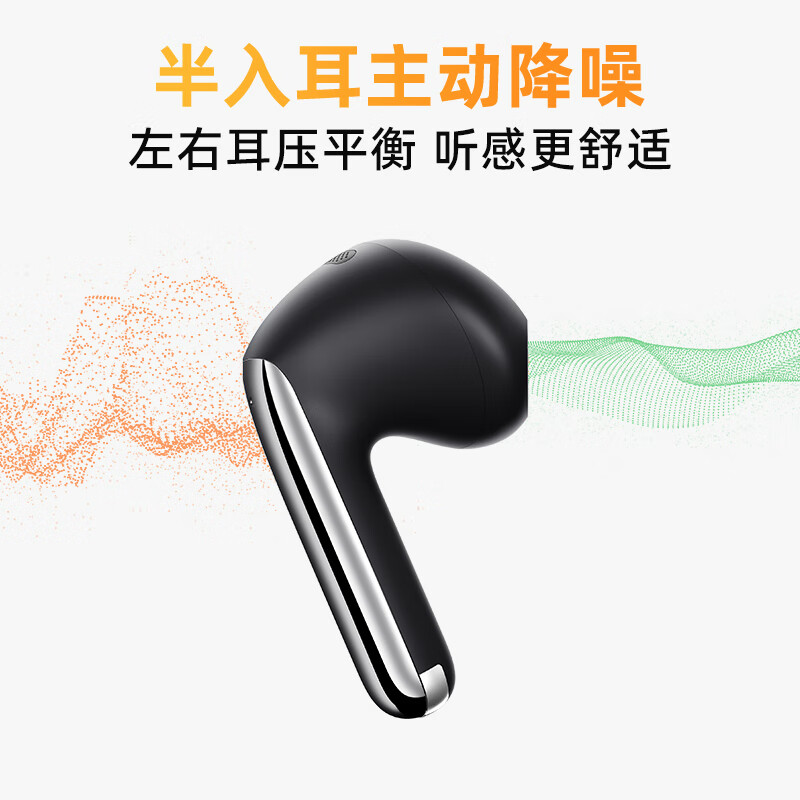
The AilyBuds Pro comes with a semi-in-ear design and optimized weight distribution for comfortable wear. The earbuds weigh about 4 grams each and feature a 50-degree design that distributes pressure evenly on the ear canal.
The earbuds feature “AI Adaptive Audio” that uses a HiFi 5 DSP (Digital Signal Processor) to analyze the ear canal structure and wearing status to compensate for low frequencies and precisely achieve a balanced EQ. This results in richer and more detailed music playback.
It can also generate real-time noise reduction parameters based on the wearing status. Additionally, the earbuds feature adaptive wind noise reduction to minimize wind noise during outdoor activities.
The TWS earbuds also feature a customized high-frequency focusing diaphragm that reduces cavity volume to increase resonance frequency. This results in wider high-frequency bandwidth and brighter, clearer highs.
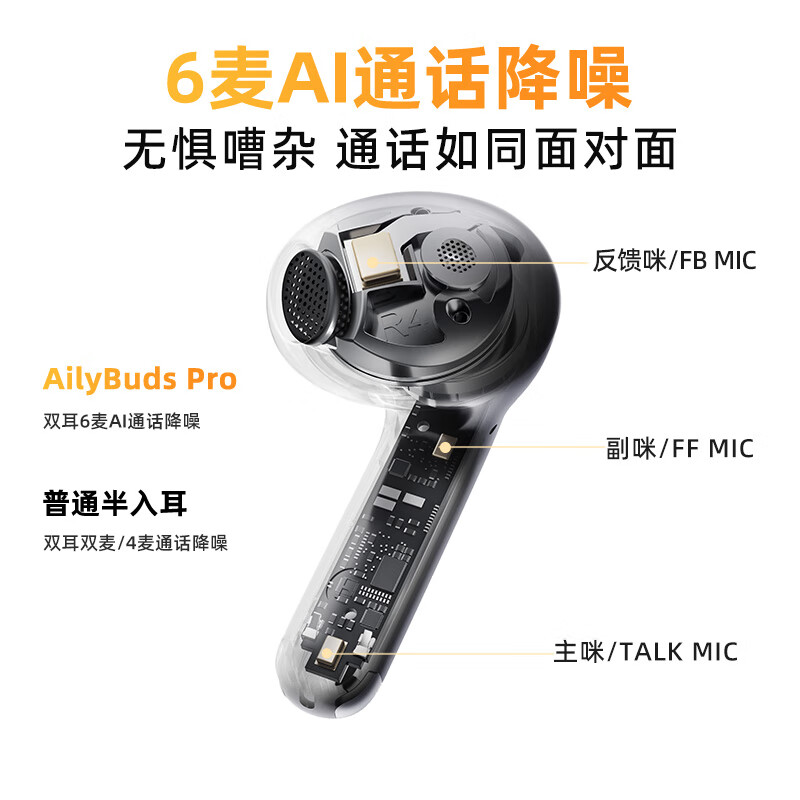
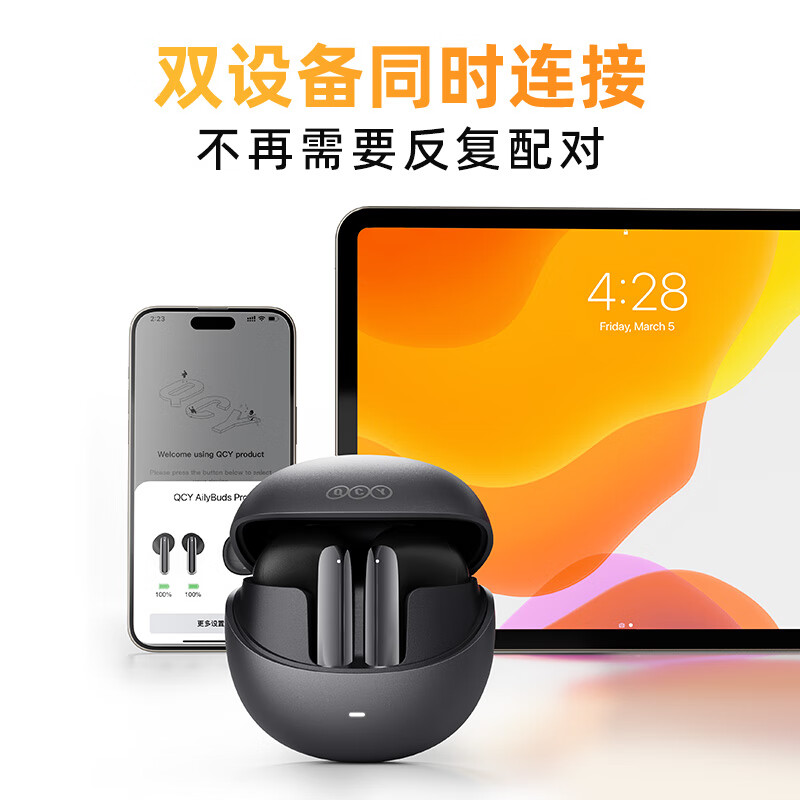
AilyBuds Pro uses Bluetooth 5.3 for seamless connection. For calls, the earbuds use a dual-ear 6-microphone array with ANC to ensure clear calls even in noisy environments. Additionally, they support simultaneous connection to two devices.
The earbuds also support a low-latency mode of 80ms, which is ideal for gaming. They can be controlled via touch controls, and the QCY app allows for further customization of functions and EQ adjustments.
The earbuds can be controlled through touch gestures as well. Users can play/pause music, answer/hang up calls, skip tracks, activate the voice assistant, and adjust the noise reduction mode.
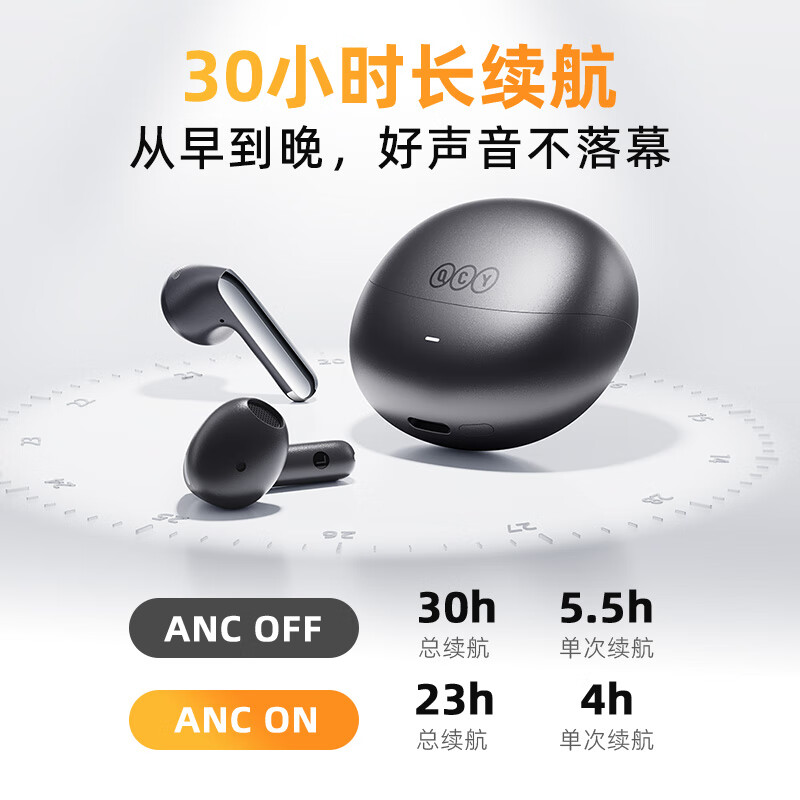
The QCY AilyBuds Pro offers a long battery life of up to 30 hours with the charging case. The earbuds themselves can last up to 5.5 hours on a single charge with ANC off, and 4 hours with ANC on. The earbuds support fast charging and are IPX5 water-resistant.
Xiaomi recently introduced the Redmi Turbo 3 in China, featuring the Snapdragon 8s Gen 3 chipset. While the phone is currently only available in China, there are hints of an upcoming international release, possibly under the Poco brand.
Hints so far suggest that the Redmi Turbo 3 might hit global markets as the Poco F6. This speculation seems increasingly likely with new evidence surfacing.
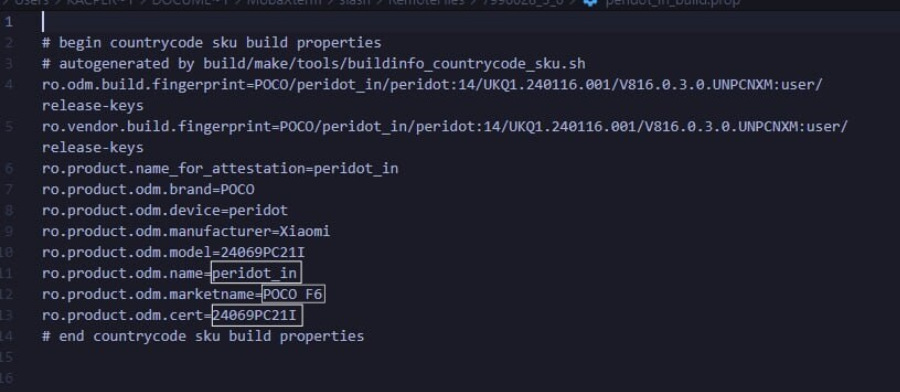
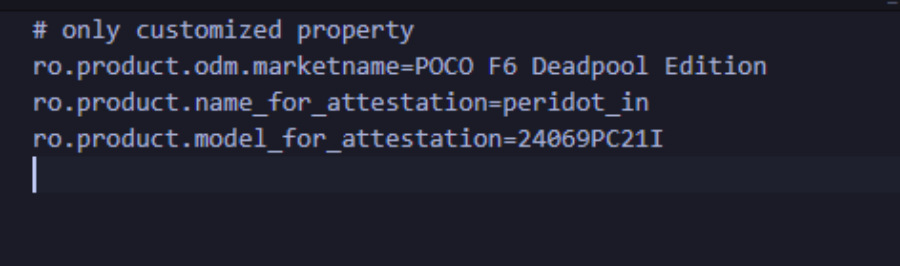
Initially, the Poco F6 appeared in the IMEI database with model numbers 24069PC21I and 24069PC21G, representing Indian and global variants, respectively.
Now, sources have discovered references to the Indian model number within Redmi Turbo 3 ROM, along with the Poco F6 moniker.
But wait, there’s more. There seems to be a “POCO F6 Deadpool Edition” in the works, as it has also appeared on the HyperOS codebase.
While details on the Poco F6 Deadpool Edition remain scarce, it’s expected to offer comparable features to the standard Poco F6. According to earlier rumors, the Poco F6 might make its debut in July, with India possibly being the first market to receive it.
Redmi Turbo 3 Specifications
For a quick recap, the Redmi Turbo 3 features a 6.67-inch OLED display with a 1.5K resolution and 120Hz refresh rate. It has a dual rear camera system (50MP main, 8MP ultrawide) and a 20MP camera on the front for selfies.
Powered by the Snapdragon 8s Gen 3 processor with up to 16GB of RAM and 1TB of storage. It also features an advanced cooling system to prevent overheating during demanding tasks. Keeping the lights on is a 5,000mAh battery that supports 90W fast charging for quick power-ups.
The Redmi Turbo 3 runs Android 14 with Xiaomi’s HyperOS on top. The phone also has Air Gestures features for touchless control and various AI features.
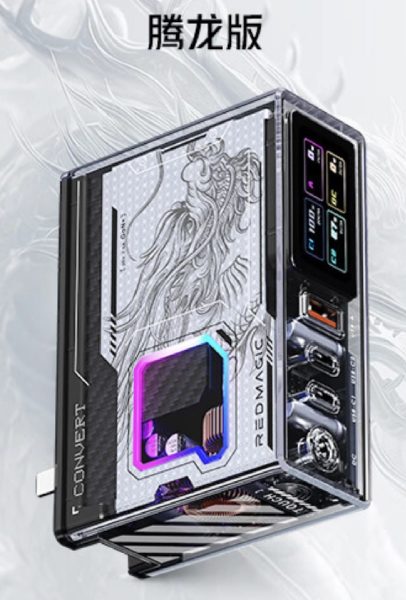
Nubia has launched a new charging solution – the 150W Red Magic Deuterium-Front Gallium Nitride charging head Tamron version set. This set includes the charging head itself and a USB-C and DC cable. The initial price listed on the product page is 999 yuan (approximately $150 USD).
Features and Specifications
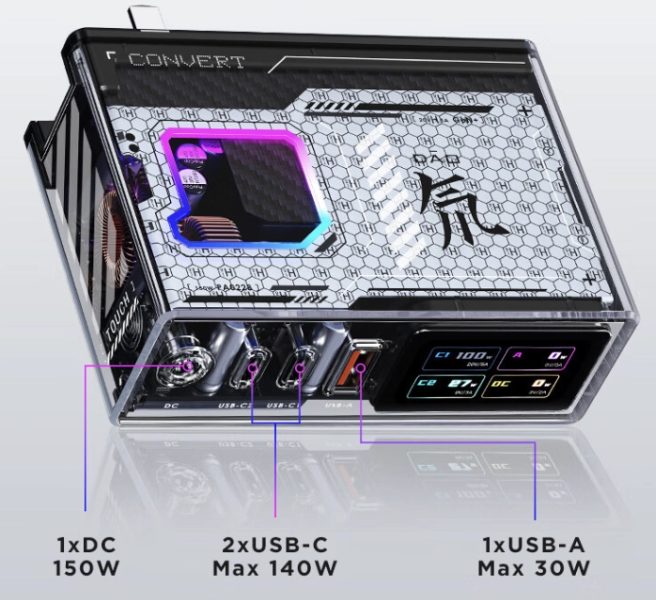
The charging head utilizes the PD 3.1 protocol and boasts a versatile design with four ports: one DC port, one USB-A port, and two Type-C ports. The configuration caters to the charging needs of a wide range of devices.
One of the standout features is the built-in color touchscreen. This display provides real-time power information and offers additional visual appeal with RGB lighting effects and the ability to set dynamic wallpapers.
An optional desk module can be connected to the charging head, facilitating “desktop charging” for a more organized workspace. This setup allows for the simultaneous charging of two laptops, with each Type-C port delivering up to 140W of power using the PD 3.1 protocol.
The four ports (1 DC, 1 USB-A, and 2 Type-C) provide comprehensive charging capabilities for most current devices.
The 150W DC fast charging allows for rapid charging of laptops, outdoor power supplies, power tools, and other compatible high-power devices using the DC port. It is recommended for use with equipment within the 20V, 8A range.
The standard package includes a DC power cord with a diameter of 2.5mm (inner) and 5.5mm (outer). This cord can directly charge some DC port devices.
In case of incompatibility, Nubia will also deliver a free cable compatible with Lenovo, Dell, Asus, or HP notebooks upon placing an order. It’s important to specify the brand of your notebook when requesting a free DC adapter.
Price
The Nubia 150W Red Magic Deuterium-Front Gallium Nitride charging head Tamron version set is available for purchase on JD.com for 999 yuan (approximately $150 USD). International users can grab it from Aliexpress or Nubia RedMagic Online Store.
In a surprising turn of events, Samsung has now confirmed that select Galaxy smartphones from 2021 and 2022 will receive the One UI 6.1 update alongside some Galaxy AI features. The news comes after earlier rumors suggested these devices might miss out on the AI functionalities.
There is a caveat, however. The 2021 flagships, including the Galaxy S21 series, Galaxy Z Fold 3, and Galaxy Z Flip 3, will gain access to a limited set of AI features.
These features are Google Circle Search and functionality likely referring to Chat Assist, codenamed “Magic Rewrite” in the announcement. Chat Assist allows users to adjust the tone and style of messages through the Samsung Keyboard.
The 2022 flagships, which include the Galaxy S22 series, Galaxy Z Fold 4, Galaxy Z Flip 4, and Galaxy Tab S8 series, will however receive a wider range of Galaxy AI features.
Yet, they will miss out on the Instant Slow-mo feature which enables users to slow down videos by long-pressing the screen.
According to a Samsung Korea community moderator, the hardware limitations of the Exynos and Snapdragon chips used in these pre-2023 devices prevent them from supporting Instant Slow-mo.
Here’s a breakdown of the devices receiving One UI 6.1 with Galaxy AI features:
2021 Flagships:
Galaxy S21 series
Galaxy Z Fold 3
Galaxy Z Flip 3 (Limited Features)
2022 Flagships:
Galaxy S22 series
Galaxy Z Fold 4
Galaxy Z Flip 4
Galaxy Tab S8 series
The update rollout is scheduled for early May, although this timeframe might be specific to the Korean market. Samsung has yet to reveal a detailed global rollout schedule, so users in other regions might see the update arrive later in May or even beyond.
Truke has announced the introduction of the Buds Q1 Lite to its affordable Buds Q Series. This new addition follows in the footsteps of the previously launched Truke Buds F1 Ultra.
The Buds Q1 Lite in-ear earbuds are equipped with 12.4 mm Titanium drivers and incorporate Quad Mic Environmental Noise Cancellation Technology (ENC) for improved call clarity.
For gamers, the earbuds include a 40ms ultra-low latency mode, enhancing the gaming experience with synchronized audio and video. The Buds Q1 Lite also supports Bluetooth 5.4, touch controls for ease of use, and fast charging, where a 10-minute charge gives up to 100 minutes of playtime. They offer an extensive battery life, providing up to 48 hours of playback time.
Pricing & availability
Available in three colors – Metal Black, Champagne Gold, and Rose Red – the Buds Q1 Lite are priced at Rs. 999. A special introductory offer on launch day brings the price down to Rs. 899. Moreover, an exclusive deal for the first 100 buyers on Amazon allows them to purchase the earbuds for just Rs. 299. It is also available on Flipkart at the same price.
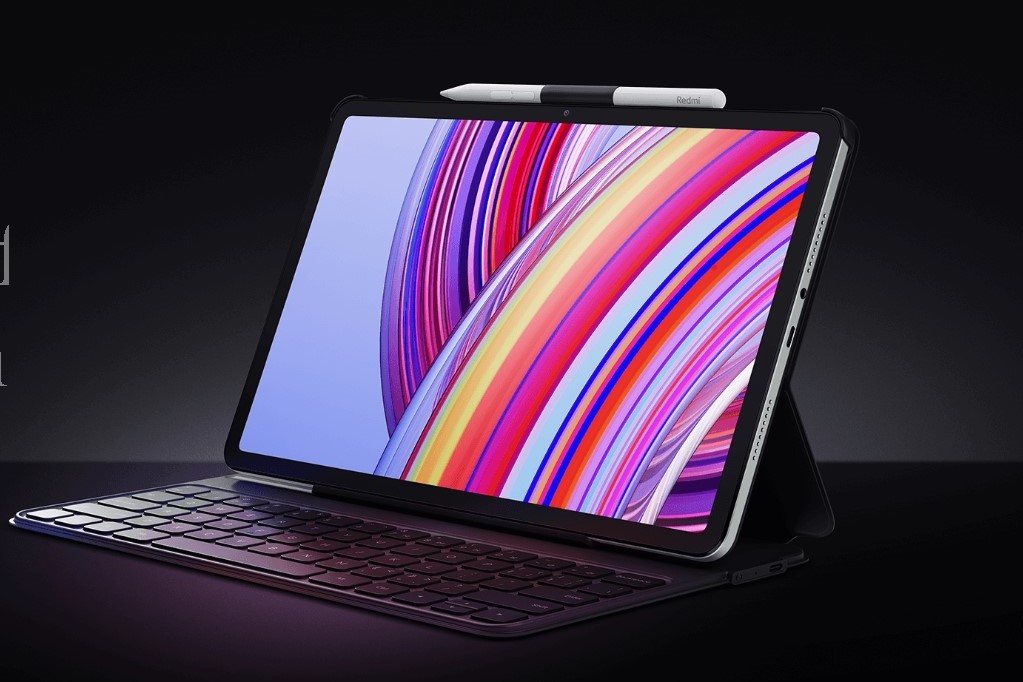
Xiaomi recently held a launch event in China where it debuted the Redmi Turbo 3 smartphone as well as the Redmi Pad Pro. This new tablet comes with a lot of impressive features like a high-resolution large display, a large battery, and the Snapdragon 7s Gen 2 chipset.
Despite the chipset featuring 5G capabilities, Xiaomi has not provided cellular connectivity in the Redmi Pad Pro. However, Android Headlines has now reported that the brand plans to launch 5G models of the Redmi Pad Pro soon.
As per the report, the Redmi Pad Pro 5G features the codename “ruan“ and it is essentially the same tablet as the non-5G variant other than its cellular network support. The report mentions that the Redmi Pad Pro 5G will debut in three models: 24074RPD2G, 24074RPD2I, and 24074RPD2C. These models are expected to launch in China first, alongside devices like the Xiaomi MIX FOLD 4, and Redmi K70 Ultra.
The report also mentions that the 5G tablet will also come to the global market, including India under the POCO branding. Previous reports have mentioned that the Redmi Pad Pro will be called POCO Pad in the global market. The last bit of information revealed mentions that the Redmi Pad Pro 5G will also have E-SIM support, which means that users won’t have to insert the physical SIM card inside the device to make calls or use data. Keep reading to learn more about the specifications of the Redmi Pad Pro.
Redmi Pad Pro specs:
The Redmi Pad Pro features a 12.1-inch LCD display with 2.5K resolution, a 120Hz variable refresh rate, 600 nits peak brightness, and TUV Rheinland certification. It supports Dolby Vision content and is compatible with a stylus pen that attaches magnetically. The tablet includes an 8MP rear camera with LED flash and an 8MP front-facing camera.
The tablet boasts quad speakers with Dolby Atmos support and dual microphones. Internally, it is powered by a Snapdragon 7s Gen 2 processor paired with up to 8GB RAM and 256GB storage. It houses a 10,000mAh battery with 33W fast charging. Running HyperOS-based Android 14, it offers connectivity options such as WiFi-6, Bluetooth 5.2, and a 3.5mm headphone jack.
Google is expected to unveil the Pixel 8a, their latest mid-range smartphone, at their upcoming Google I/O event in May. This phone will likely be available shortly after the announcement. Just a few days ago, a couple of pictures of the Pixel 8a surfaced via a leak. Ahead of the device launch, the four colors of the smartphone have been leaked in all their glory.
The four colors are obsidian, mint, porcelain and bay.
As reported by Android Headlines, the colors are Obsidian, Mint, Porcelain, and Bay. The mint is reminiscent of a bright flavor of green, while obsidian and porcelain resemble black and white/off-white colors respectively. The Bay color resembles a blue shade, and its the same one that was spotted in a Google Fi advertisement posted by the company. Two colors definitely have a pastel-like feel to them, and they are a good option for those who want to step out of the ‘black and white’ smartphone shell.
Design-wise, the Pixel 8a appears very similar to its predecessor, the Pixel 8, featuring a matte-textured back and a 6.1-inch FHD+ 90Hz display. Google will likely stick with the Tensor G3 processor found in the Pixel 8 and a 4,500mAh battery for the 8a. The camera setup is also expected to remain unchanged, featuring a 64-megapixel main sensor and a 13-megapixel ultrawide sensor. After all, it’s a budget-segment smartphone (hopefully).
Land Rover has unveiled a limited-edition, high-performance version of the Range Rover Sport in China – the SV Edition One. Only 15 units will be available, carrying a hefty price tag of 2.438 million yuan (approximately $336,879 USD).
The car features a 4.4 liter V8 engine with a top speed of 289kmph
The Range Rover Sport SV Edition One boasts impressive power thanks to a new, twin-turbocharged 4.4-liter V8 engine with mild hybrid technology. This powerhouse delivers a staggering 635 horsepower and 750 Nm of torque, translating to a 0-60 mph (96.56 km/h) time of just 3.6 seconds and a top speed of 289 kilometers per hour.
Land Rover has equipped the SV Edition One with a world-first technology – the 6D Intelligent Dynamic Chassis. This complex suspension system utilizes interconnected dampers, adjustable air springs, and pitch control for superior handling. A semi-active anti-roll system further enhances stability while reducing weight for a smoother ride. Additionally, CVSA2 adaptive dampers provide exceptional road control and comfort through electronically managed rebound and compression adjustments.
For an exhilarating driving experience, the SV mode tailors steering, transmission, throttle response, exhaust sound, and the 6D chassis, pushing the boundaries of dynamic performance. This mode also activates the track-oriented Trac DSC system, empowering drivers to explore the car’s full potential.
The luxurious interior features a fully digital instrument cluster, a massive 13.1-inch touchscreen infotainment system, a three-spoke multifunction steering wheel, and an electronic gear shifter. Uniquely, the SV Edition One is the world’s first production car to integrate SUBPAC’s haptic audio system. This system utilizes AI and sensors to create high-fidelity vibrations in the front seats, offering a multi-dimensional listening experience.
The Range Rover Sport SV Edition One’s head-turning design features a carbon fiber appearance kit, a redesigned matrix grille, sleek headlights, and strategically placed air vents for enhanced aerodynamics. Hidden door handles, a redesigned rear surround with quad exhaust tips adorned with carbon fiber covers, and an exclusive SV badge complete the exterior transformation. With its limited availability, the Range Rover Sport SV Edition One caters to a select group of car enthusiasts seeking a premium driving experience.
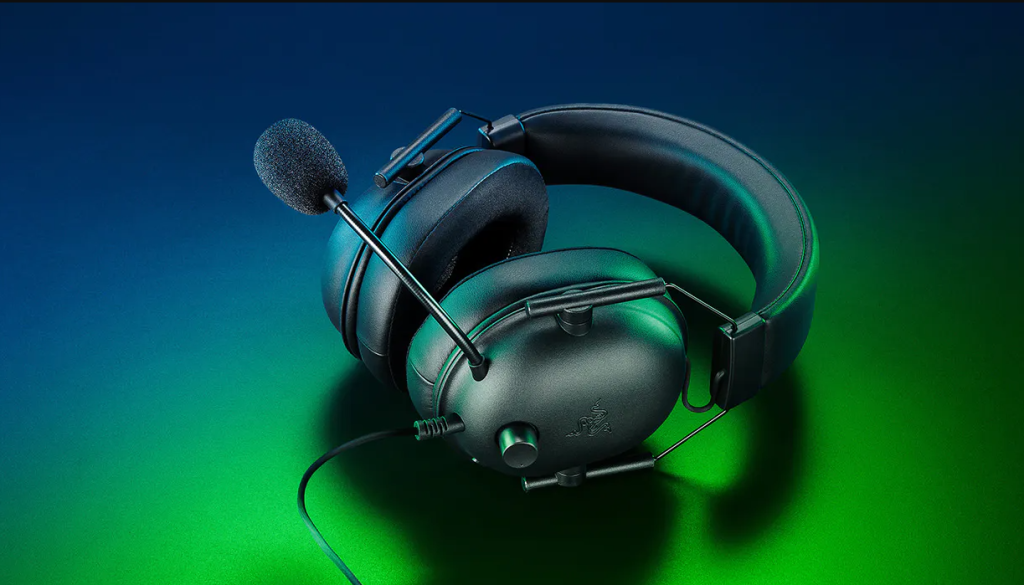
Razer has expanded its lineup with new versions of the BlackShark V2 Pro wireless headset, now designed specifically for PlayStation and Xbox users. These headphones aim to upgrade the gaming and esports experience with improved sound and communication capabilities.
For PlayStation users, the new headset variant features PS5’s Tempest 3D AudioTech for a deeper sound immersion. Xbox players receive a version compatible with Spatial Audio with Windows Sonic, suitable for Xbox One, Series X/S, and PCs on Windows 10 to 11. Both models feature Razer’s TriForce Titanium 50mm Drivers for a broader sound range and include a detachable HyperClear Super Wideband Mic for clearer voice chats.
Connectivity options include Bluetooth 5.2 and a HyperSpeed wireless dongle with a USB-C port. The headsets are available in black and white and are listed at $199.99 or €219.99 on Razer’s website.
For those looking for something more affordable, Razer has also refreshed its BlackShark V2 X model. Priced at $49.99 / £49.99, this affordable option lacks wireless connectivity. Still, it maintains several premium features like large 50mm drivers and noise cancelation.
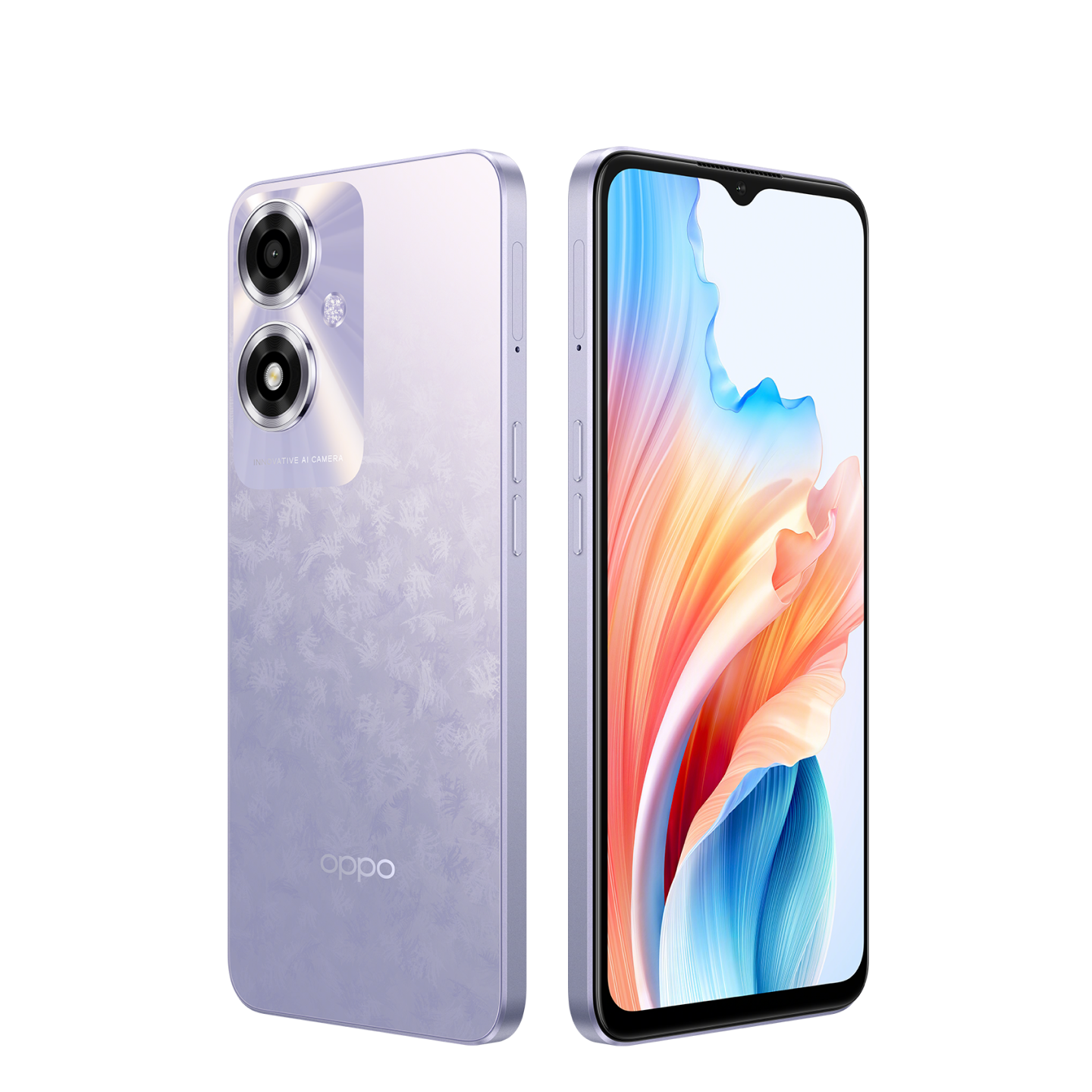
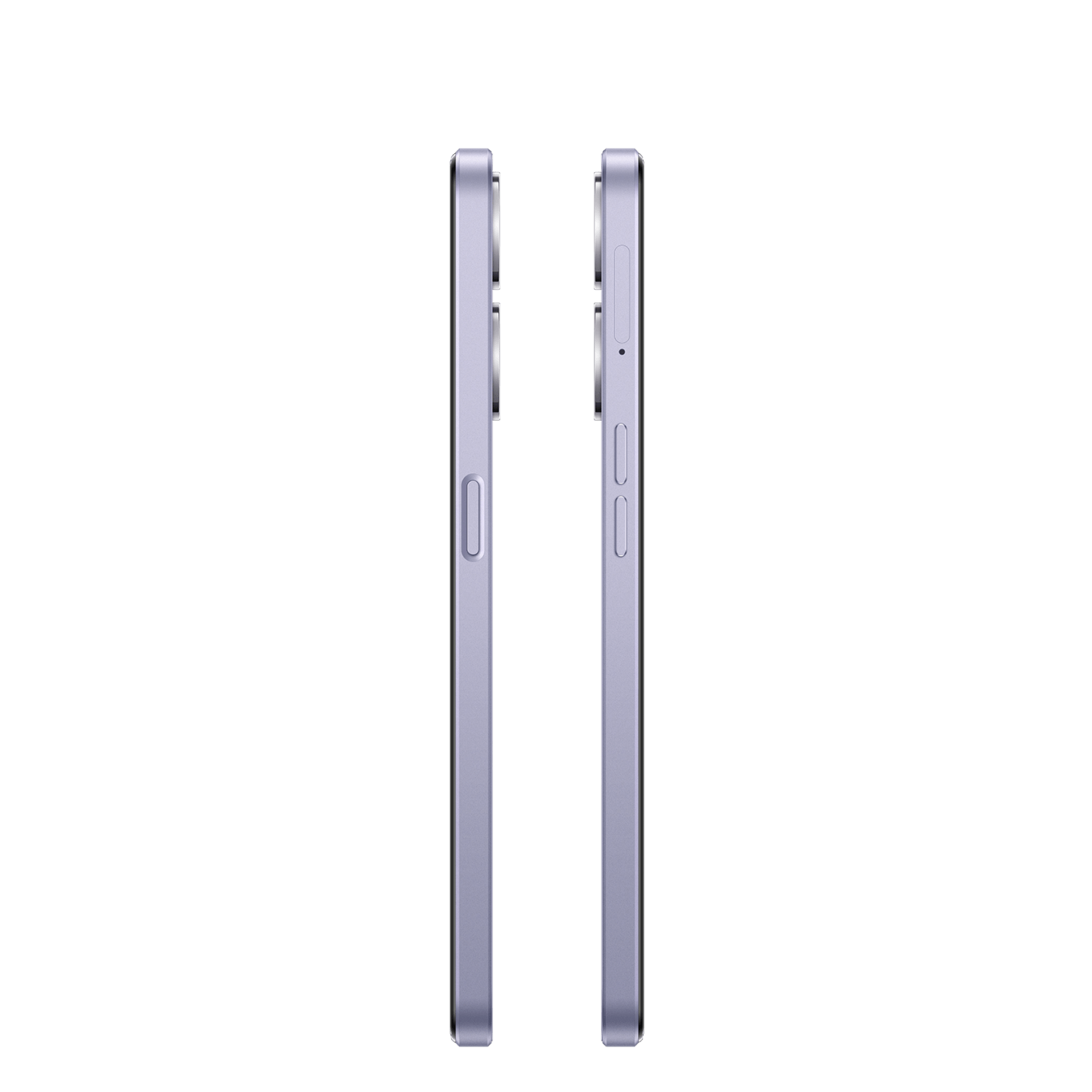
OPPO‘s upcoming entry-level smartphone has been spotted on Chinese OPPO shop website. While not all details are available, some specs have been revealed, and pre-orders will begin on April 19th in China.
OPPO A1i comes with 5000 mAh battery with compact body
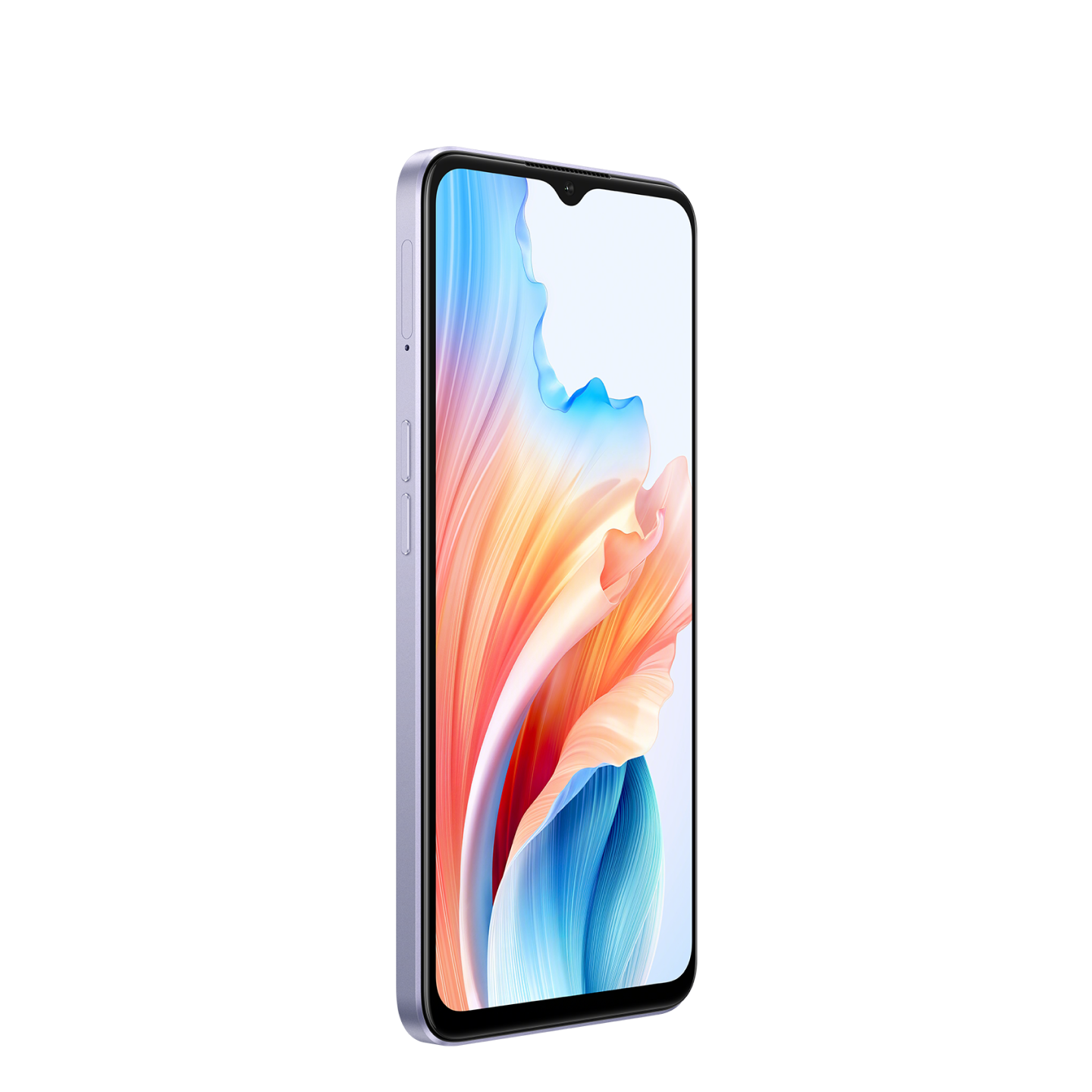
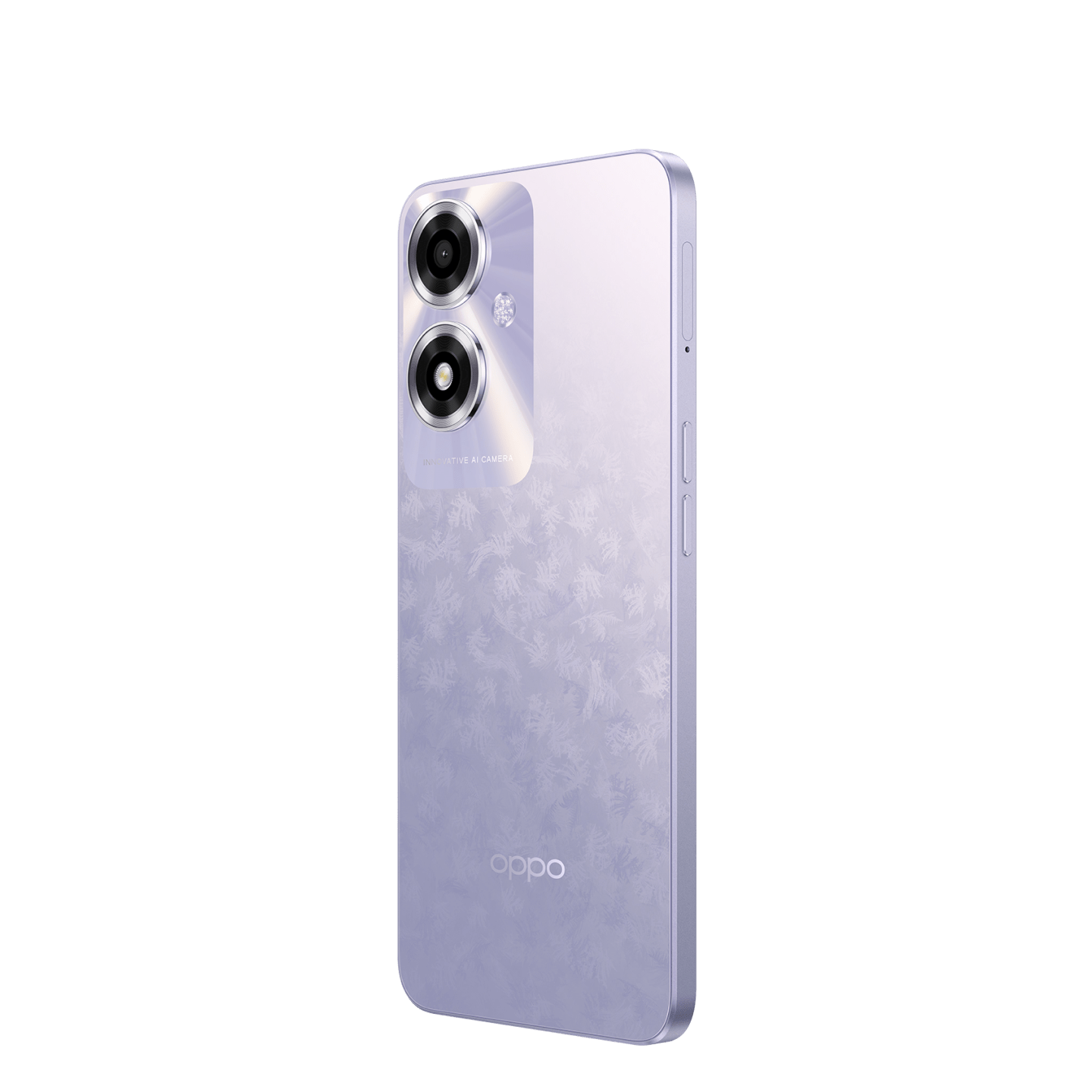
OPPO A1i comes in two different color options: purple and black. OPPO did not reveal the full specs yet but we can easily say that OPPO A1i is a budget phone since it boasts single camera setup and has a large chin on the front. You can see the design of the phone below.
It appears that the upcoming affordable phone will come in two different storage and RAM configurations. The phone will have two variants: 8GB+256GB and 12GB+256GB. The colors of the phone are named ‘Phantom Purple’ and ‘Night Black’.
OPPO A1i Purple and Black
At the moment, these are the only details available on OPPO’s official website. Further specifications should surface closer to the pre-order date of April 19th in China, providing the buyers additional insights.
TikTok is experimenting with AI-powered virtual influencers designed to help merchants promote products. This technology would create a digital celebrity persona for merchants, acting in ads based on scripts and store recommendations. However, the project raises concerns about competition with human creators and potential user backlash.
Internal testing revealed that the AI isn’t ready for replacing human influencers just yet.
According to The Information, internal testing by TikTok revealed the AI is not ready for primetime, generating fewer sales than real influencers. They believe AI will ultimately complement, not replace, human marketing efforts.
Advertisers familiar with the project say it’s in early development with an uncertain launch date. ByteDance, TikTok’s parent company, may further refine or even scrap the feature entirely.
This news comes amidst a similar trend on Douyin, the Chinese version of TikTok, where many creators rely on partnerships with established brands for income. This model gained traction after TikTok cancelled its $1 billion USD creator fund subsidy program, leaving some creators feeling financially squeezed.
Looking toward the future rollout of this AI feature, foreign media highlight the need for TikTok to navigate user sentiment carefully. The platform previously rallied users to lobby Congress against a potential ban in the US. Given this delicate situation, TikTok must ensure these AI influencers don’t alienate their human base.
BYD subsidiary Fangbao is gearing up to unveil its newest electric off-road vehicle, the “Leopard 3”, at their Spring Conference on April 16th. They released a poster that hides the major details of the new car, but still gives us an idea of what to expect from their upcoming EV launch.
The Leopard 3 will have a smaller body size compared to the Leopard 5
The Leopard 3 is positioned as a pure electric “hardcore” SUV, built on BYD’s DMO super hybrid off-road platform. This platform is known for its capabilities, but the Leopard 3 will have a smaller body size compared to its sibling, the Leopard 5. This positions the Leopard 3 as the third member of Fang Leopard’s “583 hardcore family”, hinting at a potential lineup of rugged electric SUVs in various sizes.
Based on leaked spy photos, the Leopard 3 appears to be a scaled-down version of the Leopard 5. It retains the family design language, featuring sleek through-type daytime running lights. A black grille and a bold front surround complete the look, giving the Leopard 3 a characteristic off-road presence.
With the official reveal just around the corner, stay tuned to Gizmochina for more details on the Fang Leopard 3’s specifications, features, and capabilities.
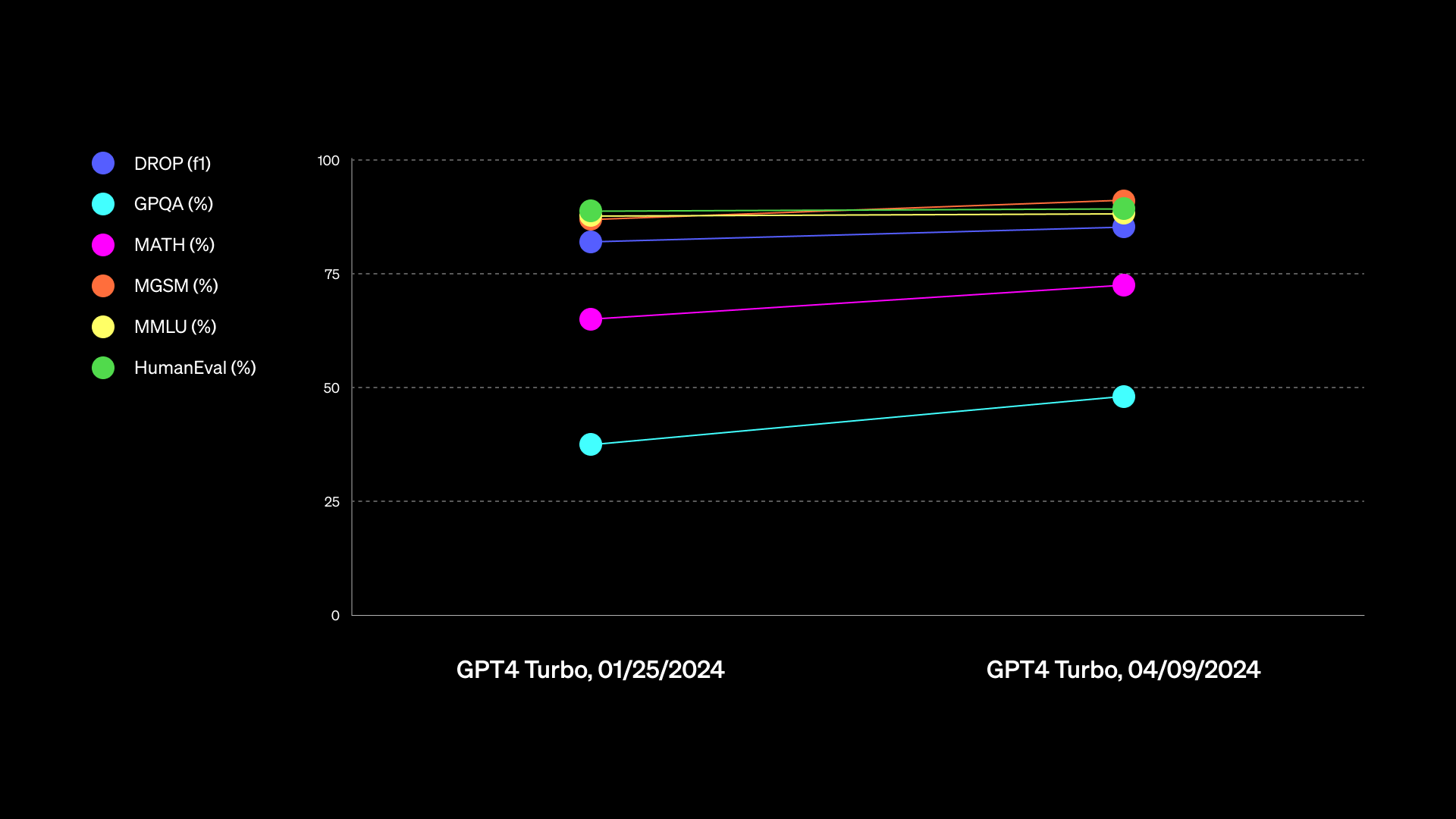
OpenAI has officially rolled out the GPT-4 Turbo upgrade to paid ChatGPT users, bringing a boost to its writing, coding, and reasoning abilities. Announced on X (formerly Twitter), the upgrade promises more direct, concise, and conversational responses when using ChatGPT. This aligns with a response to OpenAI’s post, suggesting a shift away from verbose and potentially repetitive outputs.
GPT-4 Turbo can handle 300 pages of data, compared to the previous limit of 50
This isn’t the first time GPT-4 Turbo has made headlines. Back in November, OpenAI announced its integration with Microsoft’s CoPilot AI chatbot and DALL-E 3 image generator, hinting at its wider applications.
The upgrade itself brings significant improvements. GPT-4 Turbo can now access and process six times more text data – 300 pages compared to the previous limit of 50. This expanded knowledge base allows for more intricate user prompts and potentially more nuanced responses. Additionally, GPT-4 Turbo can now generate captions and descriptions for images, and even handle text-to-speech requests.
But the learning doesn’t stop there. Since its initial announcement, GPT-4 Turbo has further enhanced its knowledge base. Originally capped at April 2023 (a significant leap from GPT-4’s September 2021 data cutoff), GPT-4 Turbo can now access and process information up to December 2023. This ensures users get the most up-to-date results and insights. The GPT-4 Turbo upgrade signifies a significant leap forward for ChatGPT.
Choosing the right smartphone chipset isn’t always easy. The raw specs like CPU and GPU can be overwhelming for some, and understanding how they affect your daily phone use isn’t straightforward.
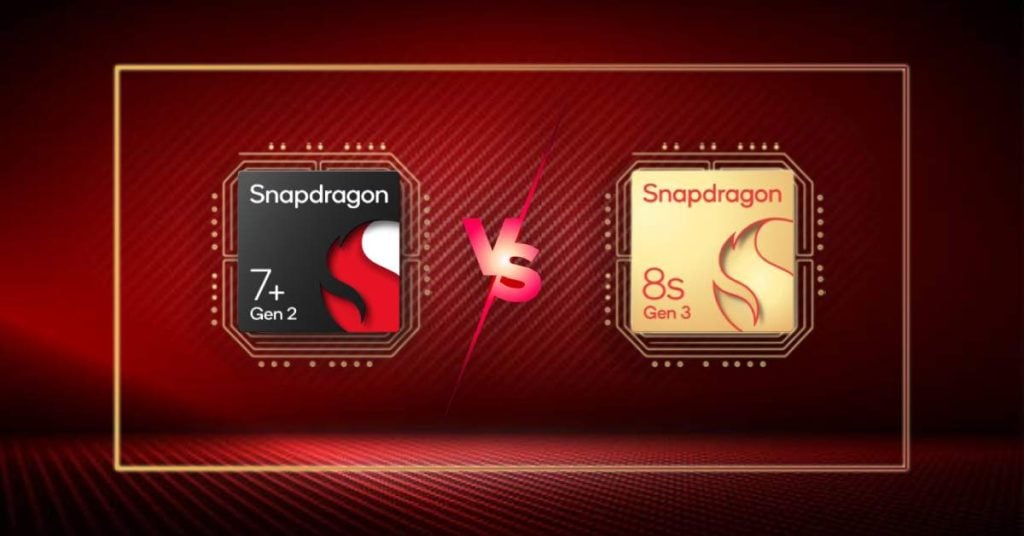
Today, we’re taking a look at two Qualcomm processors: the Snapdragon 8s Gen 3and the Snapdragon 7 Plus Gen 2. Here we’ll compare both SoCs to help you determine which one might be the best fit for your needs.
As we won’t dive into every spec difference to avoid overwhelming you, so here’s a quick comparison of the key specifications of the Snapdragon 8s Gen 3 and Snapdragon 7+ Gen 2:
As we delve into benchmarks and real-world scenarios for these chipsets, it’s essential to highlight some key differences that directly impact everyday performance:
CPU: The 8s Gen 3 has a faster prime core (3 GHz Cortex-X4) and more powerful mid-range cores (4x 2.8 GHz Cortex-A720) for demanding tasks.
GPU: The 8s Gen 3’s faster Adreno 735 GPU clocked at 1100 MHz allows for smoother visuals and better gaming performance compared to the Adreno 725 GPU at 580 MHz in the 7 Plus Gen 2.
Memory: The 8s Gen 3 supports faster LPDDR5X memory at 4200 MHz, improving overall responsiveness compared to the LPDDR5 memory at 3200 MHz in the 7 Plus Gen 2.
2. Benchmarks
Synthetic benchmarks like AnTuTu provide a general idea of a chipset’s overall processing power. The Snapdragon 8s Gen 3, for instance, averages an impressive 1,554,839 points, while the 7 Plus Gen 2 still holds its own with a respectable 1,120,902 points. But numbers-wise, the Snapdragon 8s Gen 3 is a clear winner here.
We can see this advantage reflected in GeekBench 6 scores as well. The 8s Gen 3 scores 19% higher in single-core tasks (2019 vs 1697) and 26% higher in multi-core tasks (5570 vs 4404). As a result, users can expect quicker app launches and smoother multitasking with smartphones powered by Snapdragon 8s Gen 3.
We’ve included the benchmark scores in the table below for easy comparison.
Benchmark
Snapdragon 8s Gen 3
Snapdragon 7+ Gen 2
AnTuTu
1,554,839
1,120,902
GeekBench 6 (Single-Core)
2019
1697
GeekBench 6 (Multi-Core)
5570
4404
*Data from Nanoreview.net
3. Real-World Performance
While benchmarks reveal the raw performance of the SoCs, pushing their capabilities to the limit, real-world performance is what truly matters for most users. Here’s how these chipsets might perform in everyday situations:
Gaming: Since the Snapdragon 8s Gen 3 has a faster CPU and GPU, it should translate to smoother gameplay; especially in demanding titles with high frame rates and complex graphics. The 7 Plus Gen 2 will still handle most games well but might struggle on the highest settings.
Everyday Tasks: Both chipsets will handle daily tasks like browsing the web, social media, and messaging with ease. However, the 8s Gen 3 might offer a slight edge in terms of app loading times and multitasking smoothness.
Photography & Videography: Both chipsets support high-resolution cameras, but the 8s Gen 3 can record 8K videos at 30 FPS and 4K video at 120 FPS. The 7+ Gen 2, on the other hand, is limited to 4K recording at 60 FPS.
While the 8s Gen 3 does have more flexibility and better recording options, it’s up to smartphone manufacturers to enable or disable those recording options. Thus, not every phone with the 8s Gen 3 chipset may support recording up to 8K resolution.
4. The Bottom Line: Finding the Right Fit
The Snapdragon 8s Gen 3 is a clear winner in terms of raw performance, making it ideal for power users who prioritize gaming, multitasking, and content creation. However, the flagship level of performance comes at a premium price.
On the other hand, the Snapdragon 7 Plus Gen 2 offers excellent performance for everyday tasks at a more affordable price point. It’s a great option for users who value affordability and don’t necessarily require top-tier specs.
Ultimately, the best chipset for you depends on your needs and budget. If you’re a casual user, the 7 Plus Gen 2 might suit you perfectly fine. However, if you’re a power user who demands the best performance, the 8s Gen 3 is definitely worth considering despite the higher cost.
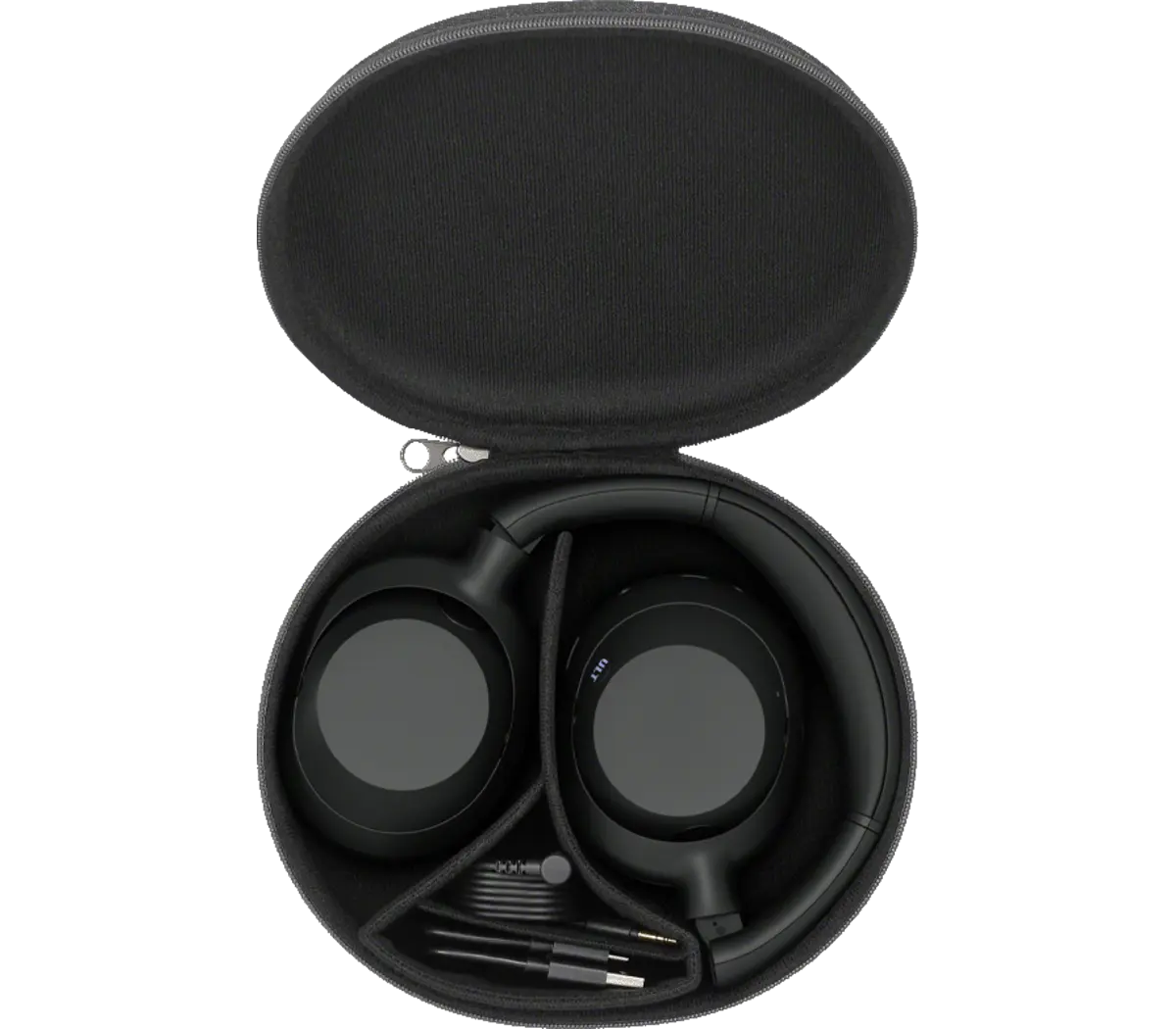
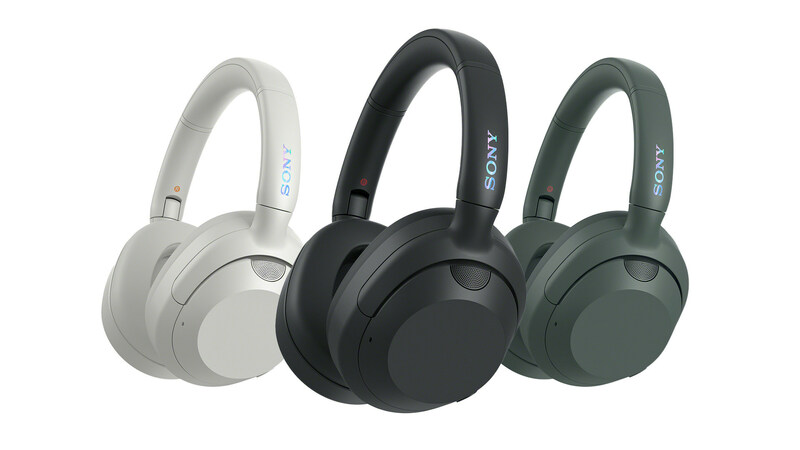
Sony has recently debuted the ULT Power Sound series of audio hardware, consisting of new speakers as well as a new pair of headphones called the Sony ULT Wear. These headphones are the recently leaked WH-ULT900N, however, Sony is branding them simply as Ult Wear.
These headphones are now available in Black, Forest Green, and Off-White. They feature 40 mm neodymium drivers, offering a frequency response range from 5 Hz to 20 kHz, ensuring rich and detailed sound across all genres. Connectivity is a strong suit, with Bluetooth 5.2 and Bluetooth Multipoint for easy device switching.
The headphones feature a bunch of attractive features, including a transparency mode, LDAC support for superior audio quality, and a sensor that detects when the user takes the headphones off. Sony’s Integrated Processor V1, known for its noise-cancellation capabilities, is included alongside Precise Voice Pickup Technology and voice control support for Google Assistant and Alexa.
The ULT WEAR headphones offer an immersive listening experience through premium Active Noise Cancellation (ANC), 360 Reality Audio, personalized EQs, gesture controls, and compatibility with the Sony Headphones Connect app for personalized settings. These headphones also come with a ULT button that enables powerful, punchy bass. Sony has also prioritized environmental sustainability by incorporating recycled plastic into their design of the ULT WEAR headphones.
Pricing & availability
The ULT WEAR is available for purchase starting Spring 2024 at Sony.com, Amazon, Best Buy, and other Sony authorized dealers. Sony has set the price at $199.99 in the US and €199 in the Eurozone.
We use cookies on our website to give you the most relevant experience by remembering your preferences and repeat visits. By clicking “Accept”, you consent to the use of ALL the cookies.
This website uses cookies to improve your experience while you navigate through the website. Out of these, the cookies that are categorized as necessary are stored on your browser as they are essential for the working of basic functionalities of the website. We also use third-party cookies that help us analyze and understand how you use this website. These cookies will be stored in your browser only with your consent. You also have the option to opt-out of these cookies. But opting out of some of these cookies may affect your browsing experience.
Necessary cookies are absolutely essential for the website to function properly. This category only includes cookies that ensures basic functionalities and security features of the website. These cookies do not store any personal information.
Any cookies that may not be particularly necessary for the website to function and is used specifically to collect user personal data via analytics, ads, other embedded contents are termed as non-necessary cookies. It is mandatory to procure user consent prior to running these cookies on your website.