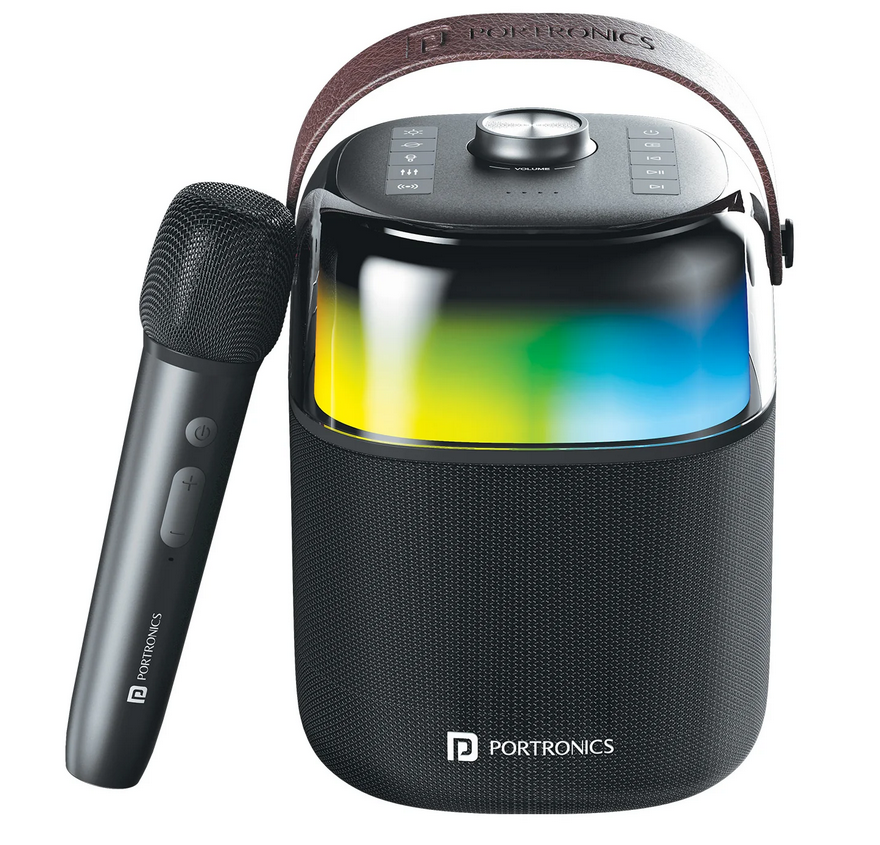
Advertisement

Nubia Red Magic 9 Pro launched globally with 6.8″ OLED display, Snapdragon 8 Gen 3

Nubia launched Red Magic 9 Pro (Check out our detailed review on Red Magic 9 Pro) in China last month, and today the brand has introduced the device to international markets.
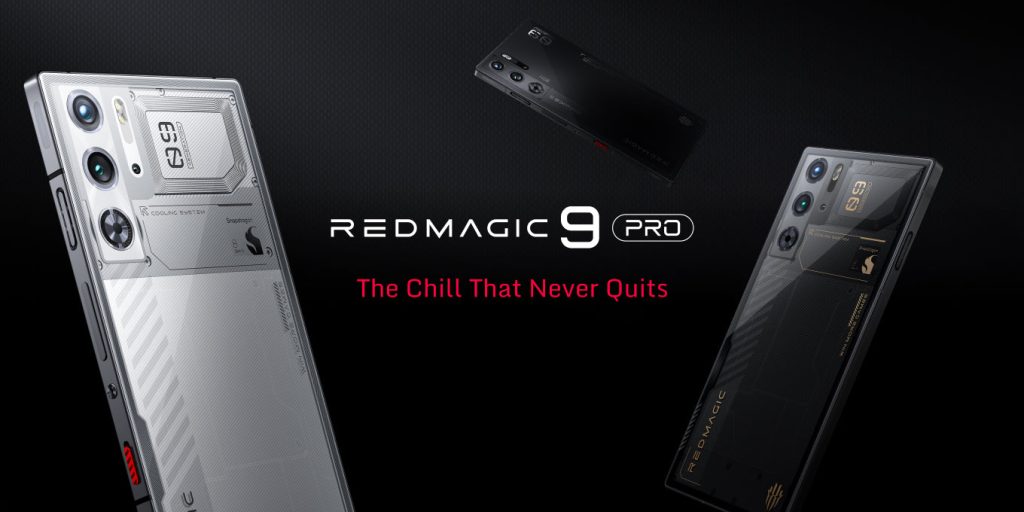
Red Magic 9 Pro

Pricing & Availability

The device will be up for pre-order on the global website starting on December 27, 2023, and the device will be available for open sales beginning on January 3, 2024.

Nubia Red Magic 9 Pro is available in three colors: Sleet (Black), Snowfall (Silver), and Cyclone (Transparent).

Coming to the pricing, the Sleet version with 12GB RAM+256GB storage is priced at $649/€649, while the Snowfall and Cyclone options come with 16GB RAM+512GB storage, both priced at $799/€799.
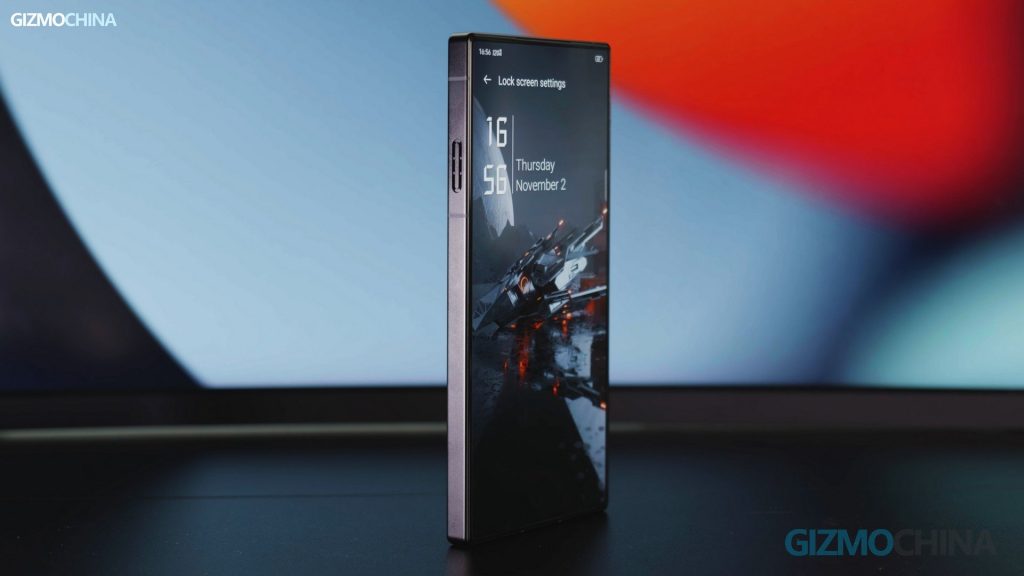
Red Magic 9 Pro

Red Magic 9 Pro Specifications:

Coming to the specs, Red Magic 9 Pro offers a 6.8-inch Full HD+ OLED display with a high 120Hz refresh rate and exceptional touch response at up to 960Hz. It boasts vibrant visuals with 10-bit color depth, covers 100% DCI-P3 color gamut, and reaches up to 1600 nits of brightness. The display also has an in-display fingerprint sensor. The phone is powered by an Octa-Core Snapdragon 8 Gen 3 processor and Adreno 750 GPU.

It comes with various RAM options and storage choices using UFS 4.0 technology. Running on Android 14 with Redmagic OS 9.0, it supports dual SIM cards and features a 50MP main camera with a Samsung GN5 sensor, a 50MP ultra-wide lens with Samsung JN1 sensor, and a 16MP under-display front-facing camera.
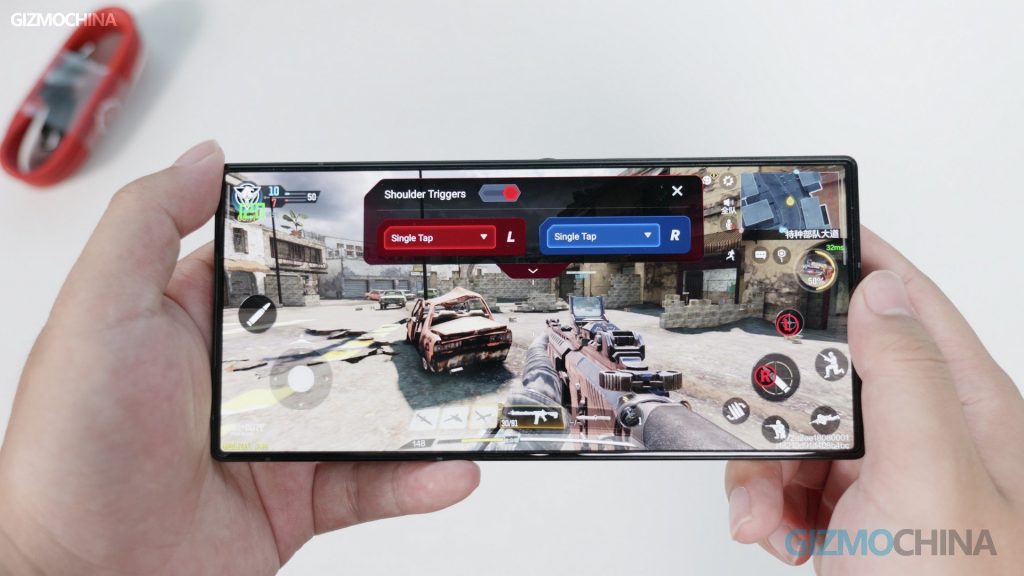
Red Magic 9 Pro

Audio features include a 3.5mm audio jack, Dual 1115K speakers, and DTS:X Ultra support, along with three microphones. The device measures 163.98×76.35×8.9mm and weighs 229g.

Connectivity options encompass 5G support, Wi-Fi 6E, Bluetooth 5.4, USB Type-C, and NFC. It packs a substantial 6500mAh battery with rapid 80W charging capabilities.

RELATED:

Honor 90 GT Roundup: Everything about the brand’s first 24GB RAM smartphone

Honor is gearing up to debut its next-gen GT smartphone in China. The device is officially called Honor 90 GT.

We have been hearing about this product (previously Honor 100 GT) for months now. However, the brand started teasing it only recently, followed by the launch date announcement.

But still, not much is known about this upcoming handset. In a nutshell, it is a performance-oriented phone like its predecessor Honor 80 GT but with a revamped design and upgraded specs.

Anyway, we have compiled everything that’s publicly known about the forthcoming Honor 90GT in this article. Let’s delve into the details.

Honor 90 GT

1. Honor 90 GT Launch Date

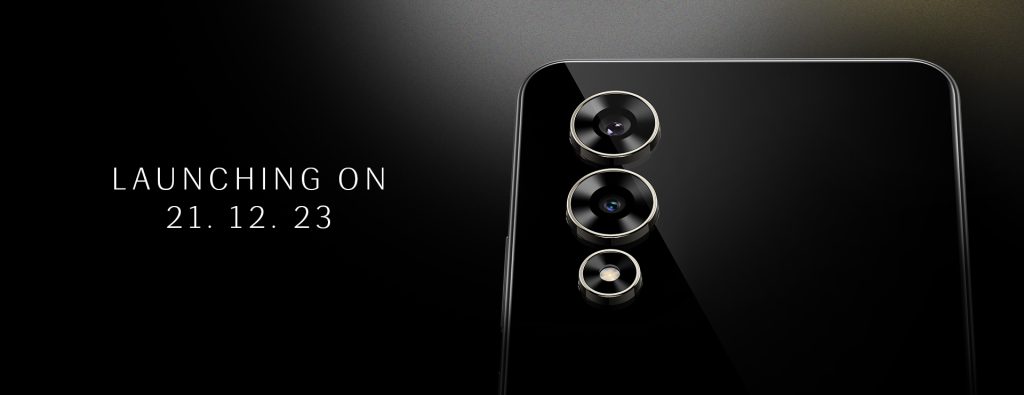
The Honor 90 GT is scheduled to launch in China on December 21 (Thursday). It will be presented at a press conference which will begin at 7 PM local time (GMT+8).

The smartphone will be accompanied by a tablet called Honor Pad 9.

2. Honor 90 GT Design

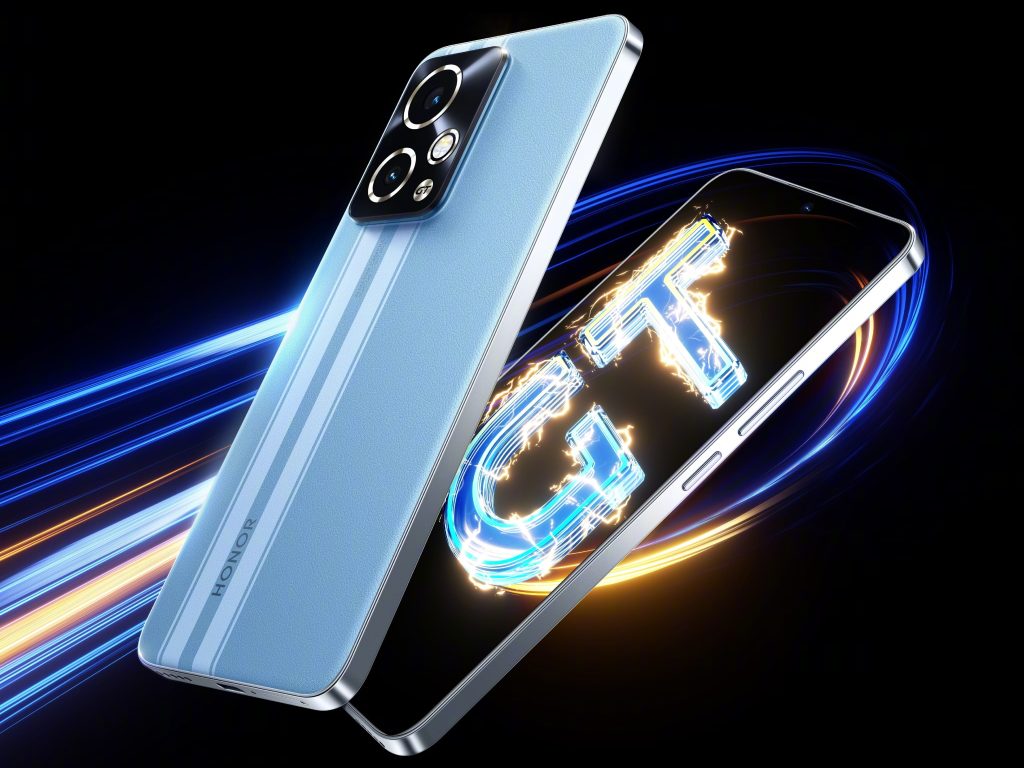
The Honor 90 GT will arrive with a flat frame design, unlike the Honor 80 GT. The frame will be shiny but the material used will be plastic.

The camera island will continue to be rectangular but it will be slightly wider. At the same time, it will only feature two sensors instead of three surrounded by large circles.

The front of the phone will be entirely dominated by a flat display with minimal bezels all around. The bezels are said to be even thinner than those found on iPhone 15 Pro.

Lastly, the handset will be available in three colors and two finishes. The cream and black variants will have a glass back, while the blue color will sport a vegan leather back with racing stripes.

3. Honor 90 GT Specifications

The Honor 90 GT will flaunt a centered punch-hole flat OLED display with a 1.5K resolution. Just like most recently released Honor products, the screen on the device will be eye-friendly. The panel is said to offer up to 3840Hz PWM dimming.

Under the hood, the smartphone will house a Qualcomm Snapdragon 8 Gen 2 SoC. The said chip will be paired with up to 24GB of RAM and 1TB of storage. It will be the first phone from Honor to offer 24GB RAM.

The Honor 90 GT will be available in four memory configurations, such as 12GB + 256GB, 16GB + 256GB, 16GB + 512GB, and 24GB + 1TB.

Last but not least, it will feature an OIS-assisted 50MP main camera and support 100W wired charging.

4. Honor 90 GT Expected Price

The Honor 90 GT will likely cost about the same as the Honor 80 GT, which started at ¥3,299 for the base 12GB + 256GB memory variant at launch. It could be slightly more expensive, given the upgrades it will come with.

RELATED:

Chinese semiconductor firms turn to Malaysia for high-end Chip Assembly amid US sanctions

To navigate potential US sanctions on China’s chip industry, Chinese semiconductor design companies are forging collaborations with Malaysian chip packaging firms for the assembly of high-end graphics processing units (GPUs). This shift in focus towards assembly aims to circumvent the mounting restrictions imposed by Washington on China’s access to advanced GPUs, impacting crucial sectors such as artificial intelligence, supercomputing, and military applications.

Smaller Chinese semiconductor design firms have encountered challenges in securing advanced packaging services domestically, prompting them to seek alternatives. Malaysia, a significant player in the global semiconductor supply chain, has emerged as an appealing destination for Chinese chip firms. Unisem, majority-owned by China’s Huatian Technology, and other Malaysian chip packaging companies have reported increased business and inquiries from their Chinese counterparts.

The factors driving Chinese interest in Malaysia include the positive perception of Malaysia’s relationship with China, affordability, a skilled workforce, and access to sophisticated equipment. Unisem Chairman John Chia emphasized that the business dealings are legitimate and compliant, despite concerns over potential reactions from the US. Notably, Unisem’s customer base in Malaysia is predominantly from the United States.

Malaysia currently contributes 13% to the global market for semiconductor packaging, assembly, and testing, with ambitions to increase this share to 15% by 2030. Chinese chip firms, including Xfusion and StarFive, are actively planning expansions in Malaysia, joining the ranks of global giants like Infineon and Intel, which have already made multibillion-dollar chip investments in the country.

Amid the global semiconductor landscape’s evolving dynamics, other countries such as Vietnam and India are also positioning themselves as alternatives for chip manufacturing services. This trend reflects a broader industry shift where Chinese companies seek to assemble their chips outside China, mitigating geopolitical risks and gaining easier access to non-Chinese markets.

As Malaysia continues to attract substantial investments in the chip industry, the collaboration between Chinese semiconductor design companies and Malaysian chip packaging firms underscores the industry’s adaptability and the pursuit of strategic partnerships in response to geopolitical uncertainties.

Related:

Lava Storm 5G render, specs and price point leaked ahead of December 21 launch

After the recent launch of the Lava Yuva 3 Pro India, the brand is preparing to launch another device before the end of 2023. The Lava Storm 5G is scheduled to debut on December 21. Ahead of the launch, tipster Mukul Sharma has shared some details about the device and also shared a picture.

Lava Storm 5G

Lava Storm 5G leaked details

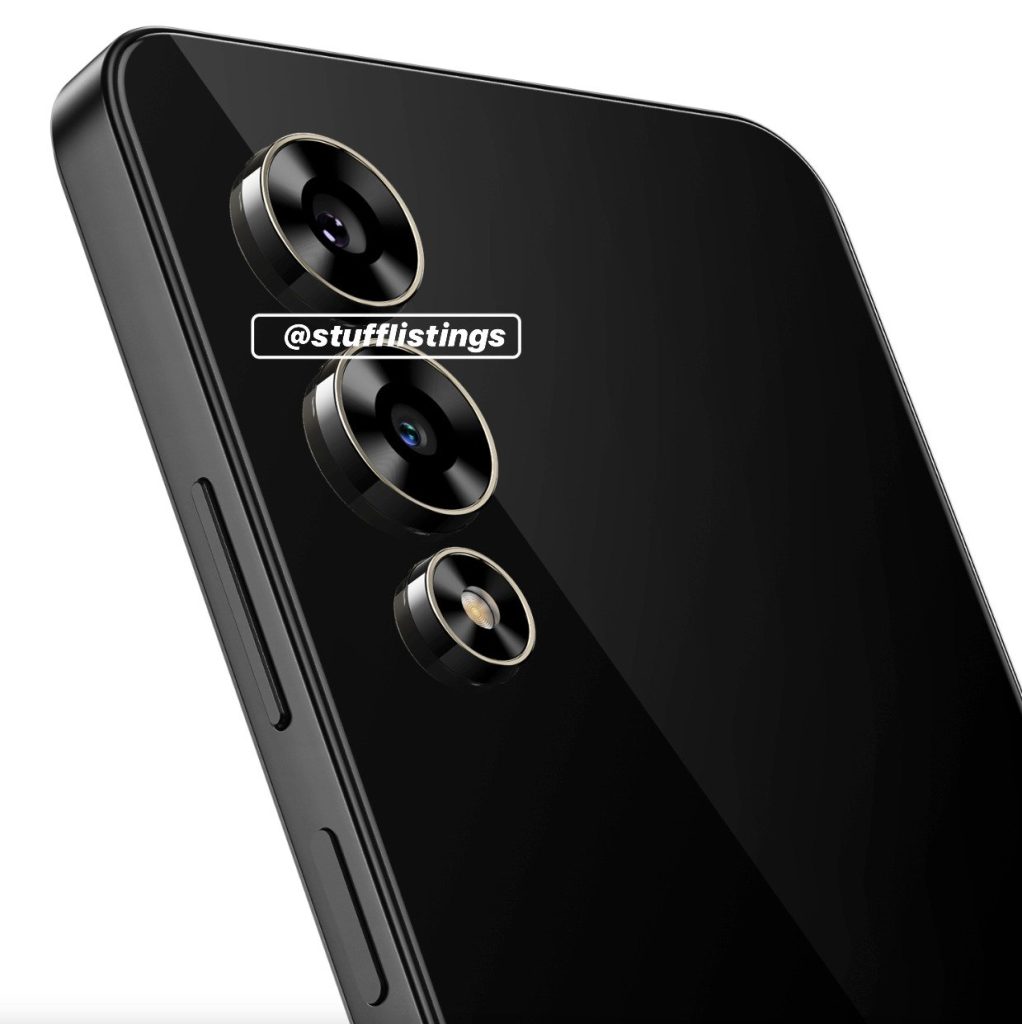
Mukul Sharma has shared an image of the Lava Storm 5G in black, revealing a flat frame, along with flat sides and a protruding camera module that resembels the recent Galaxy smartphones from Samsung. The back has two camera lenses, and the thrid protrusion holds the LED flash. The right side features the power button and volume rocker.

Lava Storm 5G

In addition to that, Mukul has revealed some key specs as well as the price point of the device. As per the tweet, the Storm 5G will feature a MediaTek Dimensity 6080 processor, which is essentially a renamed Dimensity 810 processor. Devices like the Redmi Note 13, Note 13R Pro, Tecno Pova 5 Pro and the Infinix Note 30 5G are some of the deivces that feature this chipset.

The tipster also reveals that the device will have 8GB RAM with support for an additional 8GB virtual RAM. It will also feature an 8MP ultra-wide camera, along with its undiscolsed primary sensor. As for the pricing, the tipster reports that the device will be priced below ₹15,000. More details are expected to be made available as we get closer to the December 21 launch.

In the meantime, you can check out our coverage of the recently launched Lava Yuva 3 Pro that launched last week in India.

RELATED:

Confirmed! The OnePlus 12R Is Coming To More Markets

A few days ago, OnePlus announced the global launch date of the OnePlus 12 (review). It is set to debut on January 23. Additionally, the brand’s mid-range OnePlus 12R will also tag along with the number series flagship. The OnePlus R-series has however been limited to select markets. This is now set to change as OnePlus has confirmed that it is expanding the availability of the upcoming OnePlus 12R. 

OnePlus 12R to be available in more regions

OnePlus 12R CAD render

OnePlus hosted a fireside chat (via) on its official YouTube handle. The brand revealed that the OnePlus 12R will be available in the North America and European regions. On the availability expansion of the smartphone, OnePlus President Kinder Liu stated that “In addition to India, this time we will launch the OnePlus 12R in North America, Europe, and other parts of the world as well”

It indeed confirms that OnePlus is expanding its R-series phones to the global markets with the upcoming OnePlus 12R. Last year’s OnePlus 10R and this year’s OnePlus 11R were limited only to India. The OnePlus R-series phones pack premium specifications at an affordable mid-range price segment. The devices are rebadged versions of the China-limited OnePlus Ace series. 

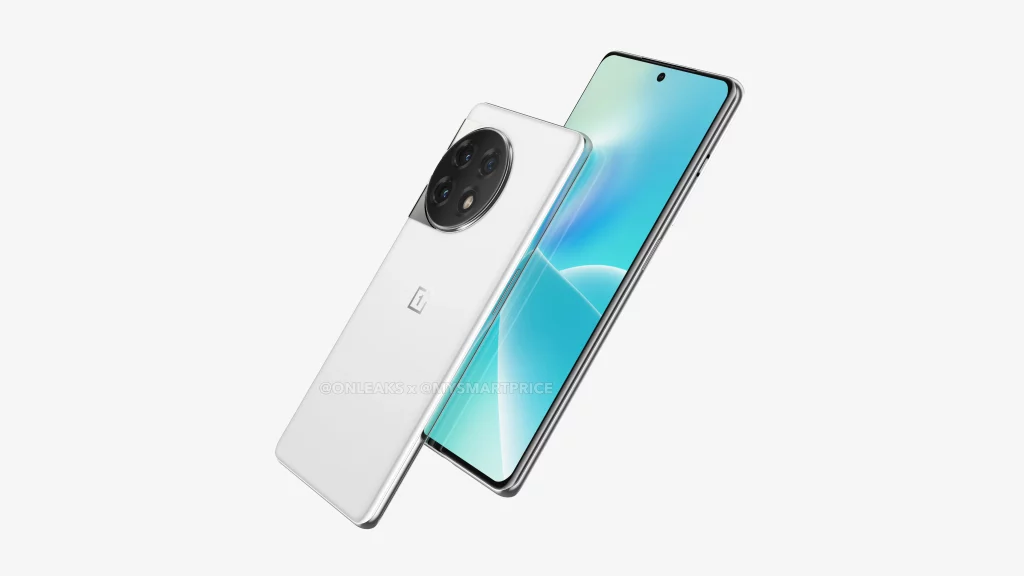
The OnePlus 12R leaked renders have revealed a slightly curved display with a centre-aligned punch-hole cutout and cosmetically the same design as its predecessor. The device will reportedly feature a 6.78-inch 1.5K BOE X1 display panel. The upcoming offering is rumored to be equipped with a Snapdragon 8 Gen 2 SoC and be backed by a 5,500mAh battery unit with support for 100W fast charging. 

Related:

SenseTime Group’s Stock Plummets after the Untimely Demise of CEO

The AI world was shook by the untimely demise of Tang Xiao’ou, a renowned figure in China‘s tech industry and a pivotal co-founder of SenseTime Group. Tang’s passing has not only left a personal void but also raised questions about the future of SenseTime, a company once celebrated as a symbol of China’s AI capabilities.

Tang Xiao’ou was also the main shareholder of the company

SenseTime, recognized for its groundbreaking facial recognition technology, finds itself at a crossroads. The loss of Tang, who was not just a co-founder but also the main shareholder, has significantly impacted its stock values, plummeting to their lowest since the company went public at the end of 2021. This downturn is a stark reminder of the vulnerabilities tech giants face in the absence of their visionary leaders.

SenseTime

Tang’s death brings to light the challenges of maintaining a company’s direction and vision after the loss of a key figure. SenseTime has announced its commitment to continue Tang’s legacy, focusing on their foundational goals and aspirations. This resolve is crucial as the company navigates through a period marked by declining profits and challenging market conditions, further exacerbated by allegations of questionable accounting practices.

Moreover, SenseTime’s journey is reflective of the broader narrative in the tech world where companies must continually adapt and innovate to stay relevant. The company is diversifying its portfolio, delving into generative AI as a new frontier. This move is not just a response to Tang’s passing but also a strategic pivot to keep pace with the evolving tech landscape.

In the wake of Tang’s passing, SenseTime stands at a very sensitive point in the company’s timeline. Sensetime’s ability to uphold Tang’s vision while steering through these turbulent times will be a true test of its resilience and adaptability. As the organization endeavors to uphold its reputation and continue its technological advancements, the tech community watches closely, understanding that in the dynamic world of AI, adaptability and vision are key to long-term success.

RELATED:

(Via)

Xiaomi’s Electric Dream is Challenging Tesla in the EV Race, states Company Founder

Xiaomi, the renowned Chinese smartphone maker, is boldly stepping into the electric vehicle (EV) arena, challenging industry giants like Tesla. The company’s founder, Lei Jun, known for his innovative spirit akin to Apple’s Steve Jobs, is steering Xiaomi towards this new venture. With an investment of over $1.4 billion and a dedicated team of 3,400 engineers, Xiaomi is not just dipping its toes but diving headfirst into the EV market.

Lei Jun also mentioned Steve Jobs as a major inspiration

Lei’s vision for Xiaomi’s EVs is ambitious. The development cost is tenfold the industry average, signifying a high-stakes bet in a fiercely competitive market. However, Lei is not a stranger to challenging established norms. Since its inception in 2010, Xiaomi has disrupted the smartphone industry, emerging as a top player against veterans like Apple. Their recent release, the Xiaomi 14, showcases their capability to innovate and capture market share rapidly.

But the road to EV success is not without hurdles. Lei acknowledges potential challenges in meeting demand if Xiaomi’s EVs receive a warm market reception. The worry is not about attracting buyers but about the capacity to fulfill orders promptly. This concern reflects the high expectations and the scale at which Xiaomi operates.

Xiaomi’s entrance into the EV market is more than a business expansion; it’s a strategic move in an industry experiencing significant growth, especially in China. The country’s EV production has seen a substantial increase, with over 8 million vehicles produced in just 11 months. This growth trajectory places China as a global leader in EV production.

Xiaomi’s EV venture is Lei’s “last entrepreneurship,” symbolizing a culmination of his innovative journey. While it’s too early to predict the outcome, Xiaomi’s track record in the tech industry provides a promising glimpse into its potential success in the EV market. As Xiaomi gears up to launch its EV models, the SU7 and SU7 Max, the world watches with anticipation to see if Lei can replicate his smartphone success in this new domain. Whether the company will be able to shake up the EV market as they did with smartphones remains to be seen, but one thing is certain: Xiaomi is not a player to underestimate.

RELATED:

(Via)

Kawasaki’s First Hydrogen Engine Motorcycle Prototype is Quite Impressive

Kawasaki, renowned for its high-performance motorcycles, has taken a huge leap into the future of green transportation. The company recently showcased its first hydrogen engine motorcycle prototype, a move that echoes the growing trend in the automotive world towards sustainable and environmentally friendly vehicles.

Carbon neutrality is becoming a big goal in tackling climate change challenges

This initiative is part of Kawasaki’s collaboration with other major players in the industry, including Honda, Suzuki, Toyota, and Yamaha, under the HySE consortium. Their joint efforts are a response to the pressing need for carbon neutrality, a goal that is becoming increasingly crucial in the face of global climate challenges.

Kawasaki

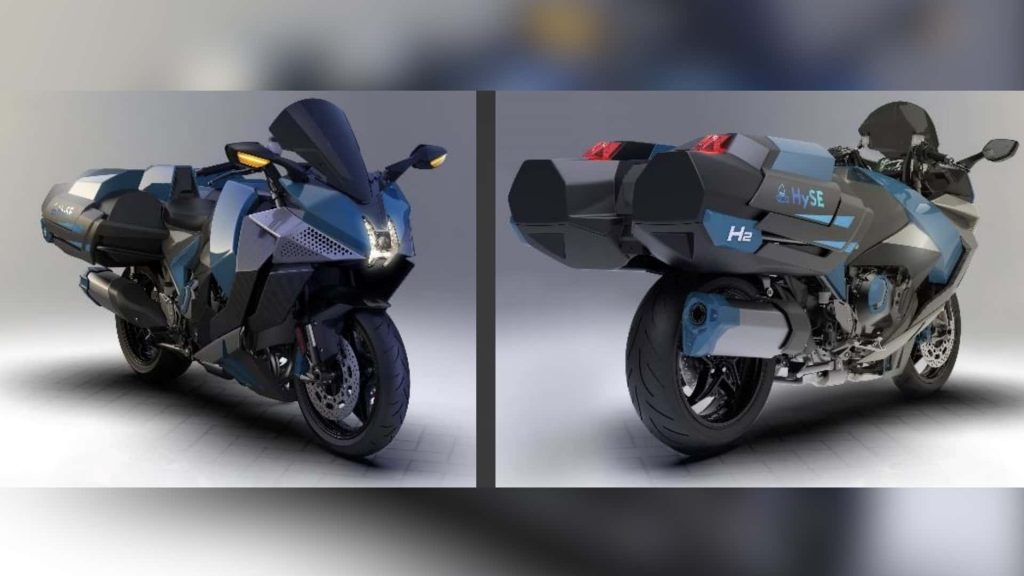
The prototype, based on the Kawasaki Ninja H2 SX, boasts a design that departs from the traditional Kawasaki color scheme, featuring calming shades of blue that align with the HySE logo. This aesthetic choice is more than just a style statement; it symbolizes a serene and cleaner future that hydrogen-powered vehicles promise.

Interestingly, Kawasaki’s foray into hydrogen power is not just a lone endeavor but part of a broader trend among major motorcycle manufacturers. These companies are progressively shifting their focus towards alternative energy sources, recognizing the potential of hydrogen as a clean and efficient fuel.

Hydrogen-powered vehicles offer several advantages over traditional gasoline engines. They produce zero emissions at the point of use, with water being the only byproduct. This characteristic makes them an attractive option for reducing pollution and mitigating the effects of climate change. Moreover, hydrogen refueling can be much faster than battery charging, offering a practical advantage for users.

However, the journey towards a hydrogen-powered future is not without its challenges. The infrastructure for hydrogen fueling is still in its infancy, and significant investment is needed to make it widely accessible. Moreover, the production of hydrogen must also become more sustainable for it to be a truly green solution.

RELATED:

(Via)

Honor X9b Bags BIS Certification Hinting At An Imminent Launch In India

Honor made a comeback in the Indian smartphone market with the Honor 90 (review) smartphone in September this year. However, the brand has been silent since then. Now it seems that the company is gearing up to launch a new device in the country. A new Honor smartphone has been spotted on the Bureau of Indian Standards certification website.

Honor X9b bags BIS certification

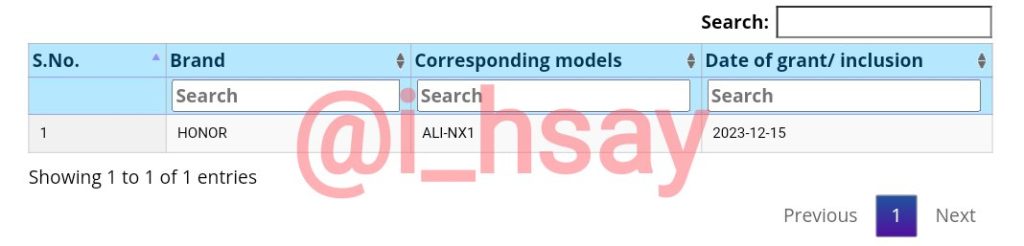
A user on X platform (formerly Twitter) has spotted a new Honor device with the model number ALI-NX1 on the BIS certification website. It is listed under the smartphone category. The model number corresponds to the Honor X9b phone. It is expected to debut in the first quarter of 2024. It’s worth noting that Honor has not officially revealed about its upcoming offering or the X9b’s existence in India. 

The Honor X9b debuted in China in October this year. It has a 6.78-inch curved AMOLED display with a 1.5K resolution, 10-bit colors, and a 120Hz refresh rate. The device has a circular rear camera module housing a 108MP main sensor, a 5MP ultra-wide-angle lens, and a 2MP macro unit. It features a 16MP selfie snapper. Under the hood, the Honor X9b is powered by a Snapdragon 6 Gen 1 processor coupled with 8GB and 12GB RAM options and 256GB native storage. The smartphone is backed by a 5,800mAh battery unit with support for 35W fast charging. 

We can expect the Honor X9b’s specifications in India to be the same as the Chinese variant. The brand could also announce a TWS earphone alongside the smartphone’s launch in the country. 

Related:

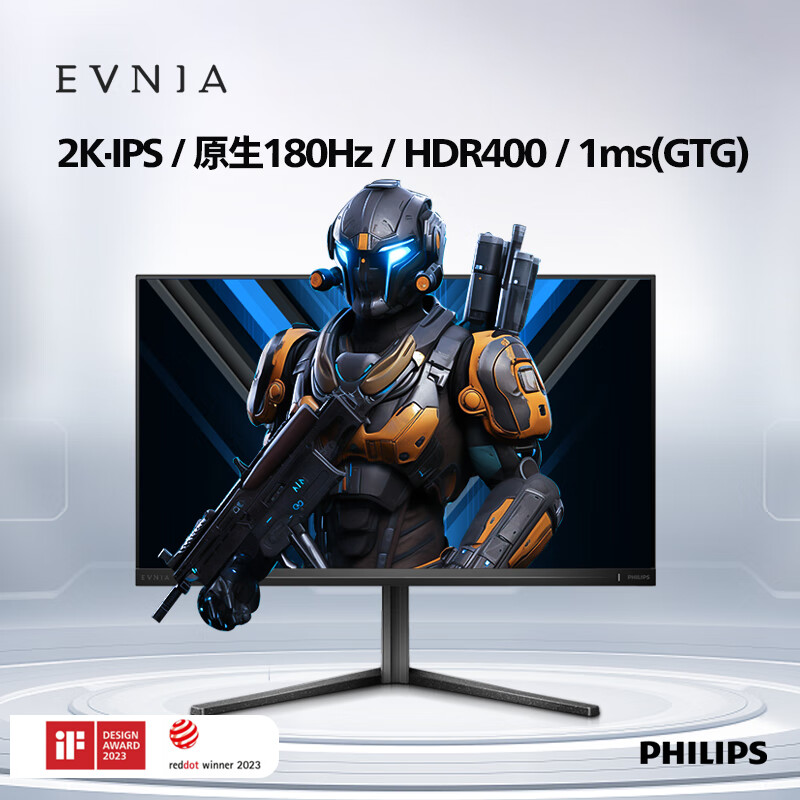
Philips Evnia 27M1N5500P monitor with 27″ 2K 240Hz Fast-IPS panel launched for 1999 Yuan ($280)

Philips has introduced the Evnia 27M1N5500P, a cutting-edge gaming monitor, now available for pre-sale on an e-commerce platform with an initial launch price of 1999 Yuan ($280). Let’s delve into the key specs of this monitor.

Philips Evnia 27M1N5500P monitor

Philips Evnia 27M1N5500P Specifications:

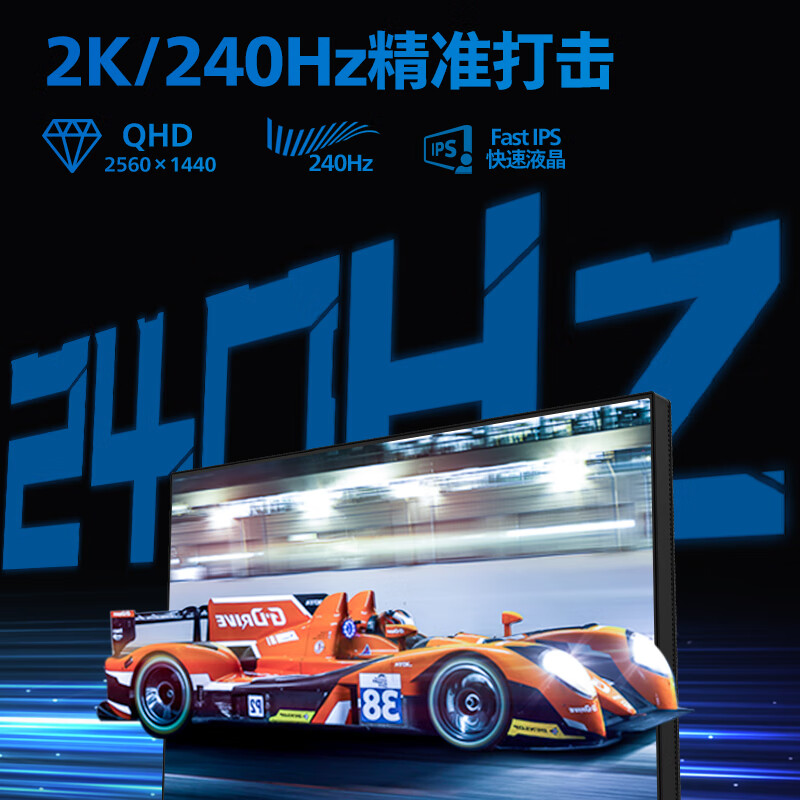
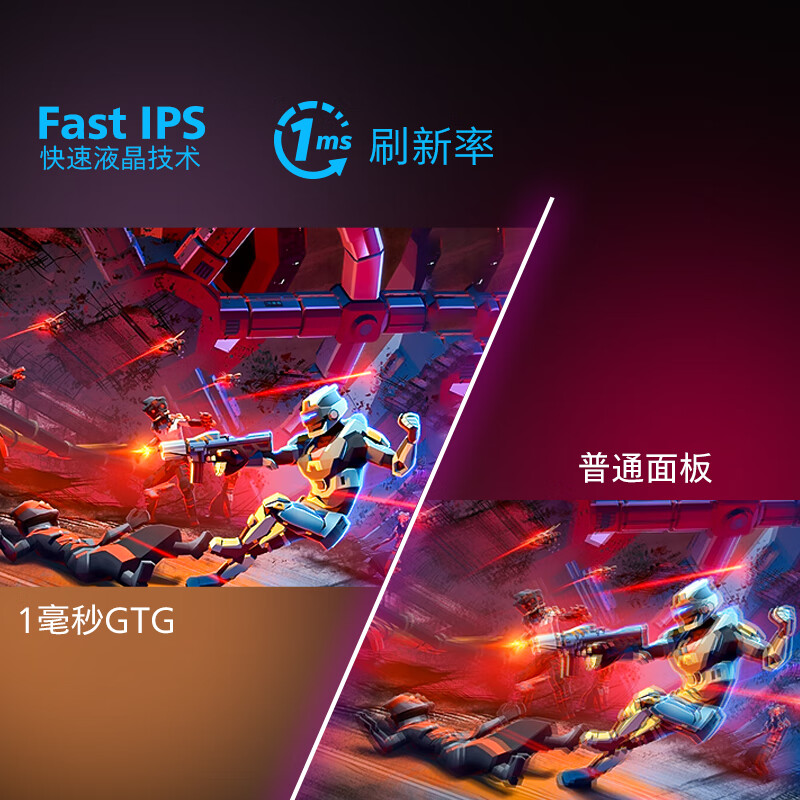
Evnia 27M1N5500P boasts a 27-inch Fast-IPS liquid crystal display with a 2K resolution of 2560×1440 pixels, providing sharp and detailed visuals. It stands out with its impressive 240Hz refresh rate, ensuring ultra-smooth gameplay and minimizing motion blur. The monitor’s 1ms gray response time is ideal for fast-paced games, significantly reducing ghosting and enhancing the overall gaming experience.

This monitor features HDR400, enhancing display dynamic range for improved visual quality and immersive gaming. It also excels in color accuracy, covering 99.8% of CIE1931 and 92.5% of CIE1976 color gamuts, making it suitable for professional-level color work with vibrant and accurate colors.

For connectivity, the monitor includes two HDMI 2.0 ports, one DP1.4 port, and an audio output port. It also offers various ergonomic adjustments, including height, tilt, swivel options, and VESA mount compatibility for flexible setup options.

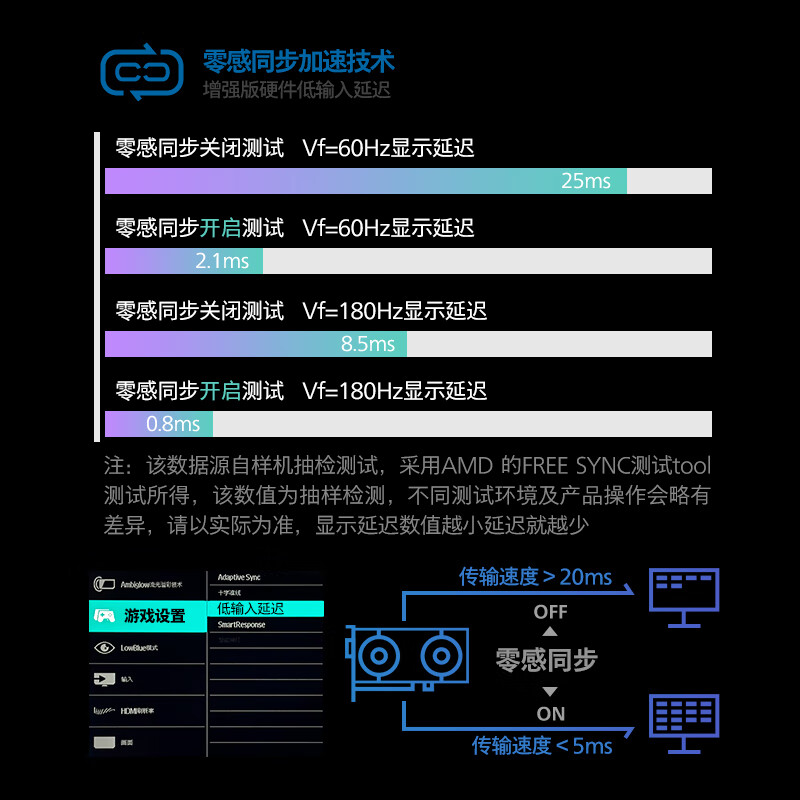
The monitor also integrates zero-latency sync acceleration technology, which enhances the bandwidth between the graphics card and monitor, reducing signal transmission times and enabling instant feedback. This feature is crucial for gamers, as it minimizes input lag and allows for seamless synchronization between their actions and the display.

Additionally, the monitor is designed with eye care in mind, featuring low blue light and flicker-free technology to reduce eye strain during extended use.

Earlier this year, Philips also launched a very similar monitor called Evnia 27M2N5510J with a 27-inch 2K 180Hz FastIPS display in China for 1299 yuan ($177).

RELATED:

Apple Watch Ultra With MicroLED Display May Arrive In 2026

Apple launched the second-generation Watch Ultra in September this year. It arrived with incremental upgrades over its predecessor. Previously as per a notable Apple analyst, the Cupertinp-based tech giant will not announce the third-generation of the Watch Ultra next year. In a new development that we have also come across previously, Apple is reportedly planning to upgrade the display on the next edition of the Watch Ultra.  

Apple Watch Ultra display upgrades and launch timeline tipped

Apple Watch Ultra 2
Apple Watch Ultra 2

As per a Taiwanese Research firm TrendForce, Apple plans to introduce a MicroLED display on the next version of the Watch Ultra. This will replace the OLED panel on the current models. The screen size on the third-generation Watch Ultra will also be upgraded to 2.12 inches from 1.91 inches on the Watch Ultra 2. 

MicroLED display panels are thinner, lighter, and power efficient while also offering more brightness compared to their OLED counterparts. Apple faces the challenge of a lower yield rate for the production of MicroLED display. Hence TrendForce estimates the cost of the panel to increase by 2.5-3 times compared to OLED. The Cupertino-based tech giant is reportedly working with OSRAM and LG Display for the MicroLED screen on the Watch Ultra. 

The Apple Watch Ultra with MicroLED display will reportedly arrive in 2026 which is a long wait from today. In the past, several industry analysts revealed that Apple may integrate a MicroLED display on its smartwatches next year or in 2025. As usual, there are plenty of things that could change, hence readers are advised to take this report with a healthy grain of salt. 

Related:

Source

Lichee Pocket 4A announced, a RISC-V chip powered handheld gaming console

Sipeed has just unveiled a brand new handheld gaming console. Handhelds have been all the rage in the console market recently, but the Lichee Pocket 4A stands out as it is powered by a RISC-V chipset and features some interesting specs. So let’s have a look.

Lichee Pocket 4A Specs

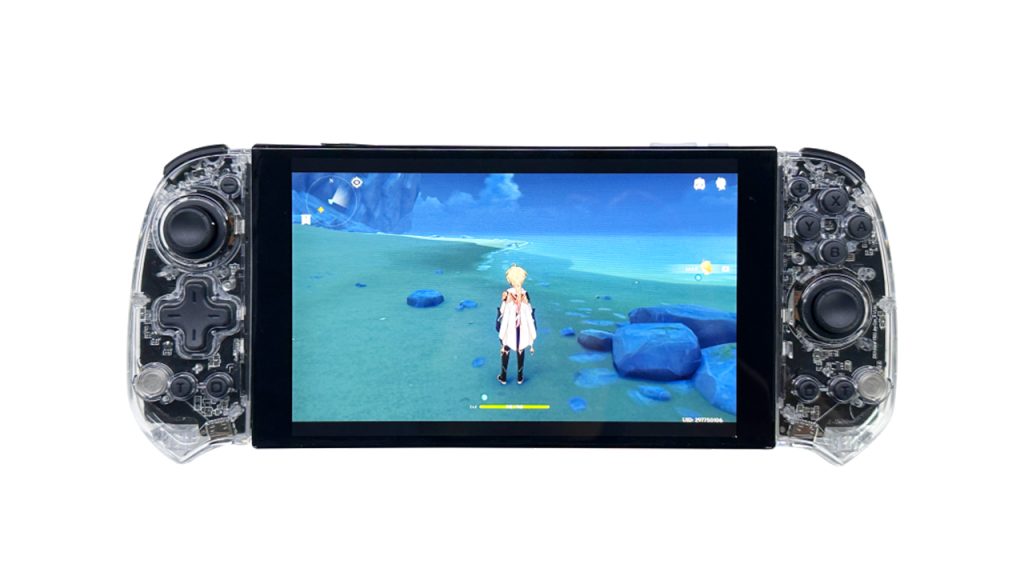
The new Lichee Pocket 4A sports a 7-inch touchscreen enabled LCD panel. Under the hood, the Pocket 4A uis equipped with the Sipeed LM4A module along with T-Head TH1520 CPU that flaunts four XuanTie C910 cores. This chip is based on the Open-Source RISC-V architecture. This processor is paired with up to 16GB of LPDDR4X RAM and 128GB of eMMC storage. Notably, the chipset also has the Imagination Technologies BXM-4-64 GPU and an NPU that can deliver up to 4 TOPS of AI performance as well.

Lichee Pocket 4A

Another interesting feature is the inclusion of joy-con-like detachable controllers on the sides of the display. The Lichee Pocket 4A does not offer immense gaming prowess but it is a step towards games being emulated for RISC-V architecture based systems. In other words, more games could be developed for RISC-V platforms in the near future. Other notable features include WiFi 6, Gigabit Ethernet, and Bluetooth 5.4.

For Connectivity, the Lichee Pocket 4A offers one USB 2.0 Type-C port, two USB 3.0 Type-A ports, and a microSD card slot. The front even houses a 5-megapixel camera, which is paired with a microphone and stereo speaker setup. The gaming handheld runs support both Debian Linux as well as Android operating systems. As of right now, the device is available for pre-orders, which you can check out by heading to their official website. You can even check out our coverage on other gaming handhelds by clicking here.

RELATED:

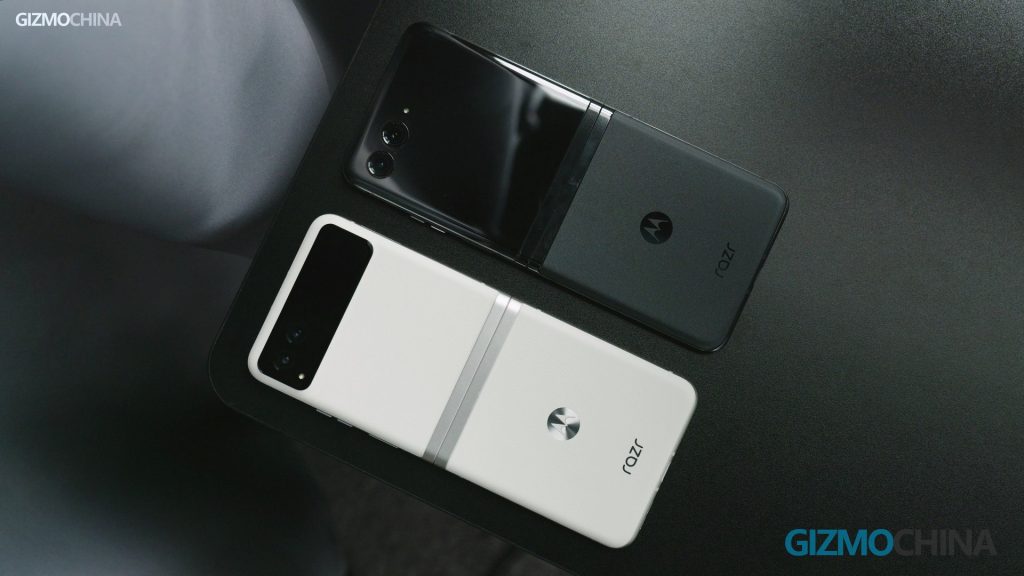
Motorola Razr 40 series gets ₹10,000 permanent price cut along with limited-time additional discounts

Motorola debuted its current-gen foldables in India in July. The lineup consists of two models, namely Razr 40 and Razr 40 Ultra.

At launch, the vanilla variant was the most affordable foldable smartphone in the country. However, it lost its title to Tecno Phantom V Flip in October.

Now, months later, Razr 40 has reclaimed its title of the cheapest foldable in India with a price cut. The Razr 40 Ultra, which continues to be the most affordable flip-style foldable with a large cover screen, also receives a price drop.

Motorola Razr 40 and Razr 40 Ultra

Motorola has permanently reduced the prices of the Razr 40 series by a whopping ₹10,000 in India. Therefore, the devices now carry the following price tags in the country.

Motorola Razr 40
  • Launch Price: ₹59,999
  • Price Cut: ₹10,000
  • New Price: ₹49,999
Motorola Razr 40 Ultra
  • Launch Price: ₹89,999
  • Price Cut: ₹10,000
  • New Price: ₹79,999

On top of the price drop, Motorola has kickstarted the ‘Moto Days’ sale on Amazon India. During this period (December 18-24), the brand is offering additional ₹7,000 and ₹5,000 discounts on standard and ultra versions, respectively.

Thus, from today until Christmas Eve, the Razr 40 can be purchased at just ₹44,999, while the Razr 40 Ultra can be availed at ₹72,999.

If you were planning to try clamshell foldables in India, now is probably the best time. You can check out our review to decide which one to get.

Motorola Razr 40 Review

Motorola Razr 40 Ultra Review

RELATED:

Honor and Porsche Design Have Become Partners for a 911-Unit Limited Collector’s Dream Phone!

Smartphone manufacturers often make headlines by teaming up with other brands. These collaborations, usually aimed at combining the strengths of each brand and expanding their user base. It has also resulted in the creation of many memorable products over the years. For example, the Redmi Note 12 Turbo Harry Potter edition, which we at Gizmochina have also reviewed, serves as a prime example. Now, a similar partnership has occurred between Honor and Porsche.

The two companies have officially partnered for “Porsche Design” phones. Naturally, people from around the world quickly became excited and eagerly awaited. the new phone. However, it appears that the Honor Porsche Design Phone is limited to just 911 units and many will return home empty-handed. Here are the details…

Honor and Porsche Design’s Limited Edition Foldable Phone is on the Horizon

New informations are coming to light regarding the partnership between Honor and Porsche Design. Contrary to previous reports, the highly anticipated first device will not be the Magic 6 but rather a foldable phone. The key question is whether this upcoming phone, named the Honor Porsche 911, will be a revamped existing model or an entirely new product.

As of today, the Chinese manufacturer has only one foldable phone called the Magic V. However, this device powered by Snapdragon 8 Gen 1 is considered somewhat outdated by today’s standards. Therefore, it is likely that a new phone will be introduced instead of just a rebranded version.

If this development has excited you about the upcoming smartphone, stay calm. Because the phone, developed under the codename “Honor 911,” will have a limited production unit number. As the name suggests, there will be only 911 units of the phone, and most likely, a significant portion of them will be sent to technology publications like ours for review. As you may know, 911 is the iconic model name of Porsche.

Therefore, it’s possible to see influences from that model in the phone, such as similar design lines, shared materials, and colors. For now, these are all the details we know about the eagerly anticipated phone. However, you can be sure that we will keep you instantly informed of any developments.

RELATED:

(source)

Realme UI 5.0 Early Access Program is here for Realme Narzo N55

All the major OEMs are diligently working to bring the latest iterations of their respective Android-based skins to compatible smartphones. As with Samsung, OnePlus, and Xiaomi, Realme is not so far behind in bringing the latest upgrades to its smartphones. After bringing the Realme UI 5.0 Android 14 Early Access program to the Relame Narzo 60 5G a day ago, the program is now live for the Realme Narzzo N55.

Realme Narzo N55
Realme Narzo N55

Interested users can participate in the Realme UI 5.0 Early Access Program, which will bring a ton of new features along with Android 14 luxuries. Along with the new features, there are certain issues too, which may result in a bad experience for the users. So, the users who know the pros and cons of the Early builds, should proceed.

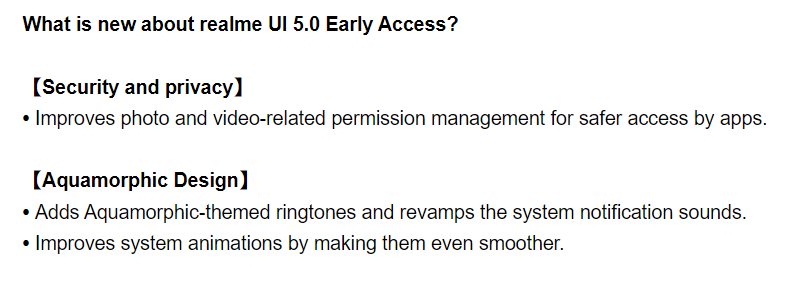
Realme UI 5.0 brings several enhancements and improvements to safeguard user data. It improves photo and video-related permission management for safer access by apps. On the design front, Realme UI 5.0 introduces Aquamorphic Design, which adds similarly themed ringtones and system notification sounds. The system’s animations are also smoother. Below is the official changelog:

However, the floating windows may not work perfectly, as you will be able to slide the desktop. To fix it, the user needs to pull down the status bar. Further, the Glance Lock Screen is currently unavailable at the moment.

Steps to Apply for Realme UI 5.0

This is a time-limited and seat-limited program, so always keep in mind to participate as soon as possible. Further, the program is not recommended for users who have the Relame Naroz N55 as their sole device.

Precautions:

  1. Make sure your device has at least 60% battery left and 15GB of free storage space.
  2. Your phone should not be rooted and always update third-party applications.
  3. The initial early Access builds may cause unpredictable issues or bugs, so always brace before upgrading.
  4. backup important data from the smartphone, as the build will be unstable.

Steps:

  1. Open Realme Narzo N55’s Setting Menu and Update Device to Firmware: RMX3710_11.A.63
  2. Then head over to Settings > About device > Click on the “realme UI 4.0” banner at the top > Click on the three dots in the top right corner > Beta program > Early Access > Apply Now > Submit your details and finish the application.
  3. Now, wait for a few days, and if your application is accepted, you will receive RMX3710_14.0.0.80(SP02EX01) update.

The users should only proceed if they have read all the precautions above. For more information, it is advised to head over to the official announcement thread before proceeding.

Related:

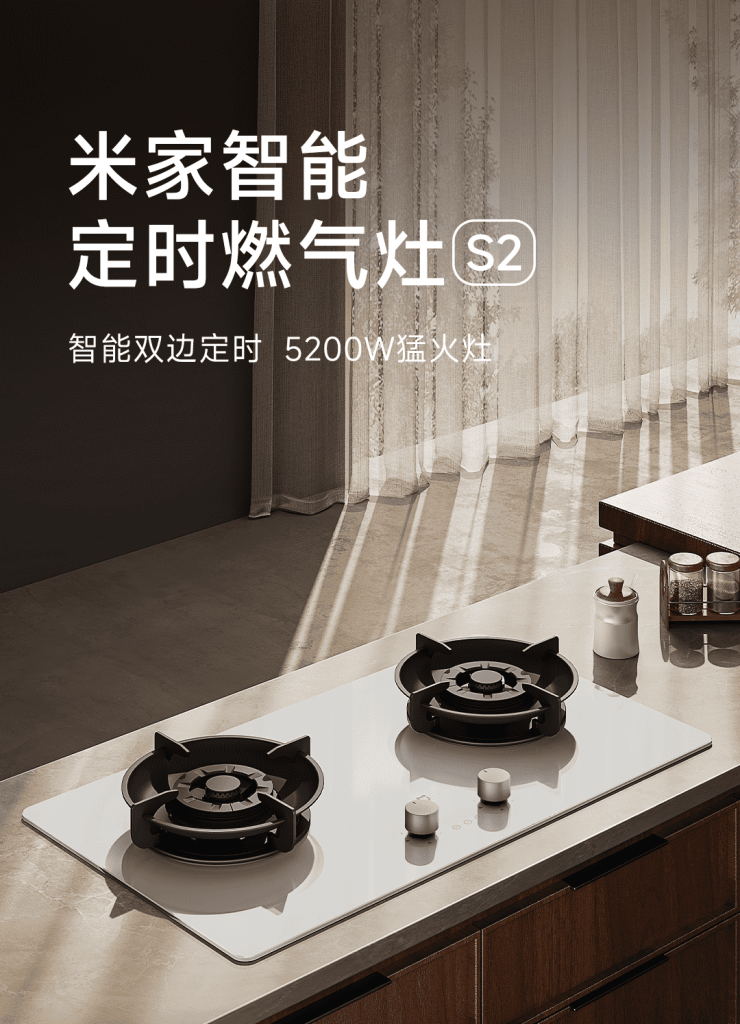
Xiaomi launches Mijia Smart Gas Stove S2, features auto shut-off and gas cut-off function

Xiaomi has introduced a new kitchen appliance product Mijia Smart Gas Stove S2, now listed on JD.com at a price of 1199 Yuan ($168). The product will be up for sale from December 24th.

Mijia Smart Gas Stove S2 is also offered as part of a bundle with the Mijia Smart Range Hood S2 at a discounted package price of 3599 Yuan ($504), providing savings for customers who opt for both appliances.

Xiaomi Mijia Smart Gas Stove S2

Mijia Smart Gas Stove S2 Key Features:

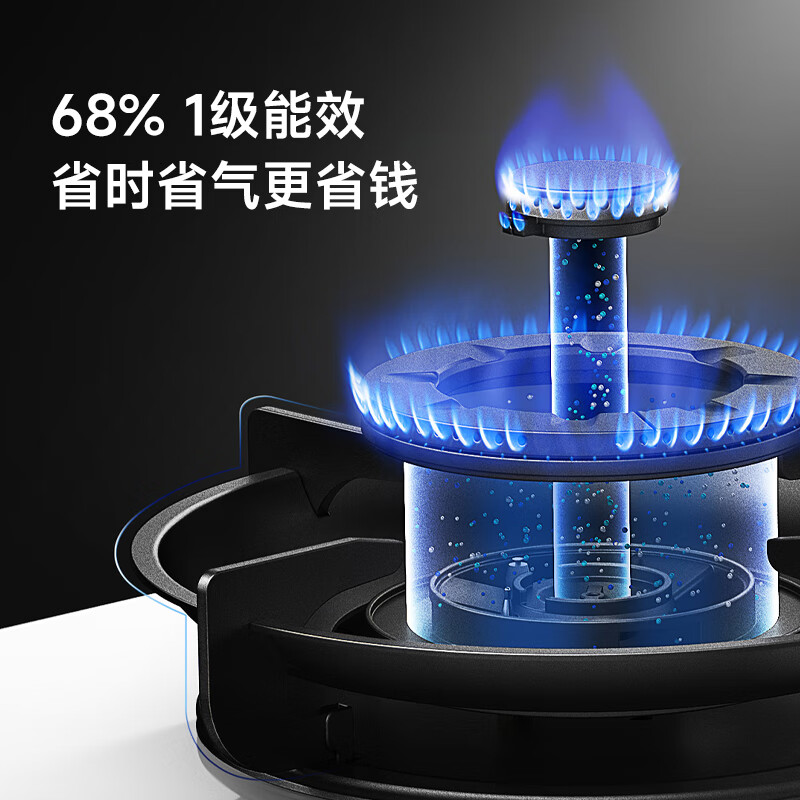
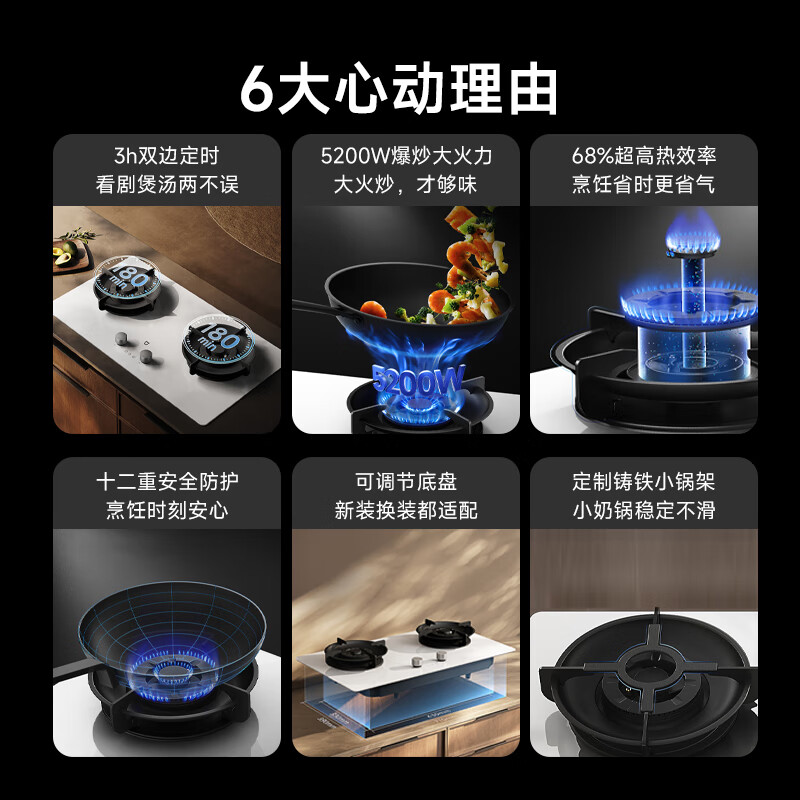
Coming to the specs, the smart gas stove combines modern aesthetics with high functionality, featuring a custom-made textured pure white glass panel and a brass burner cover known for its high thermal conductivity. It includes a new generation energy-concentrating windproof disc, achieving a notable 68% thermal efficiency.

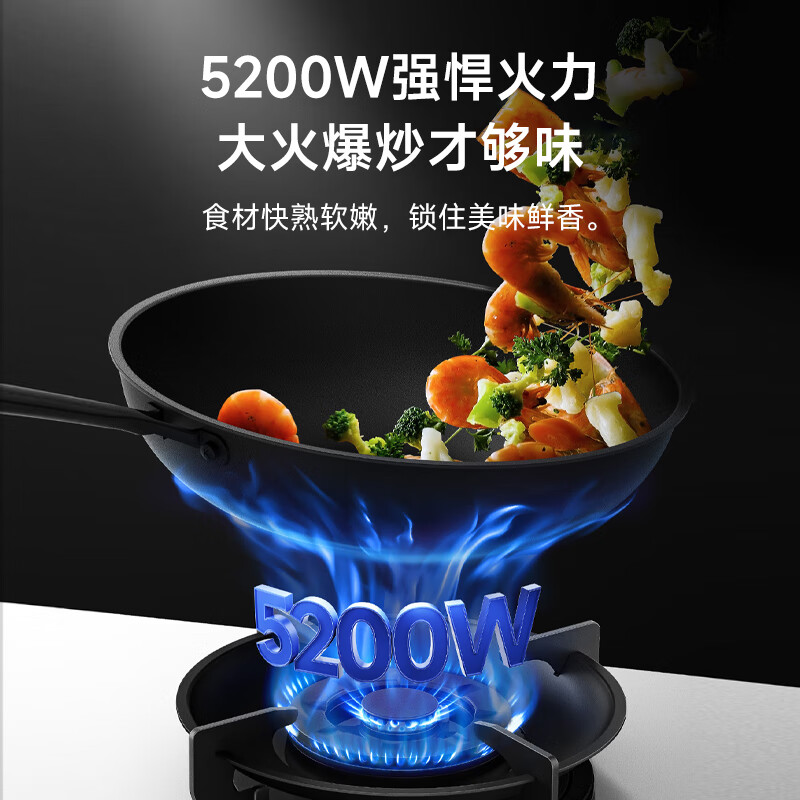
The stove’s dual-ring burner design allows for efficient and even heating, with a stepless adjustment up to 230 degrees. It is engineered for high performance, offering a powerful 5200W fire, making it particularly suitable for the demands of Chinese cooking. The product also boasts a dual-timer function, ranging from 1 to 180 minutes, automatically shutting off and cutting off the gas supply once the time elapses, ensuring safety and convenience.

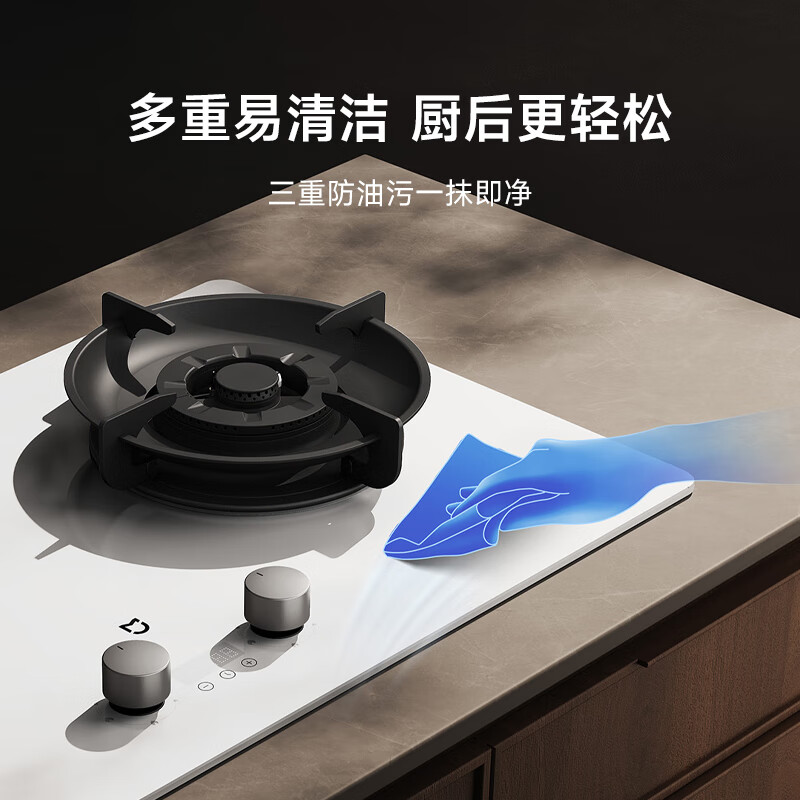
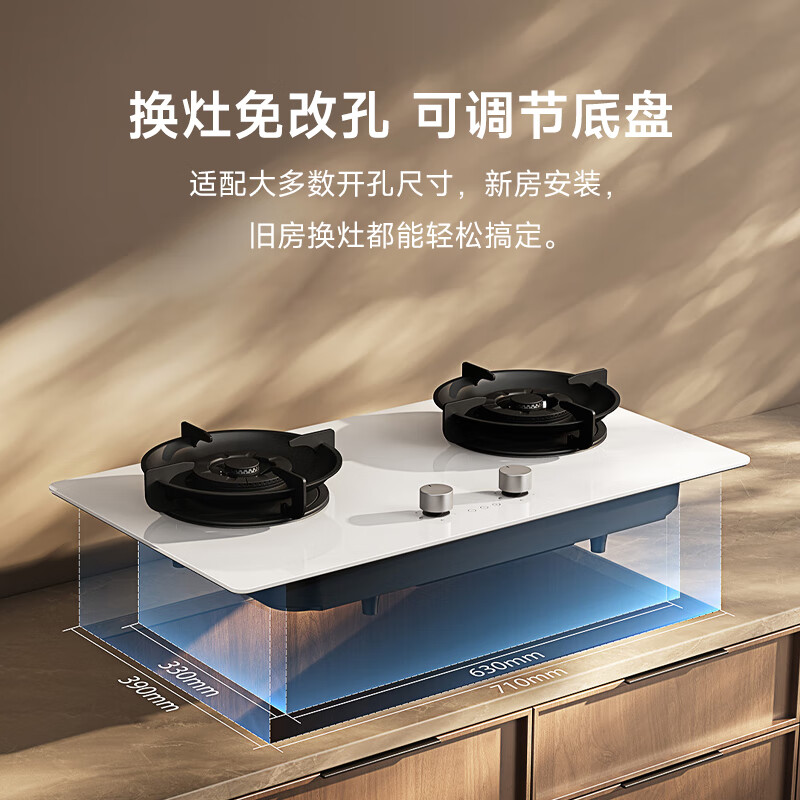
The stove is designed with multiple layers of safety protection, including flameout protection and anti-skid pot stands, ensuring a safe cooking experience. It also features an adjustable base, making it suitable for both new installations and replacements. Cleaning is made easy with features like a triple oil stain protection, a detachable drip pan, and a split burner design that prevents dirt accumulation.

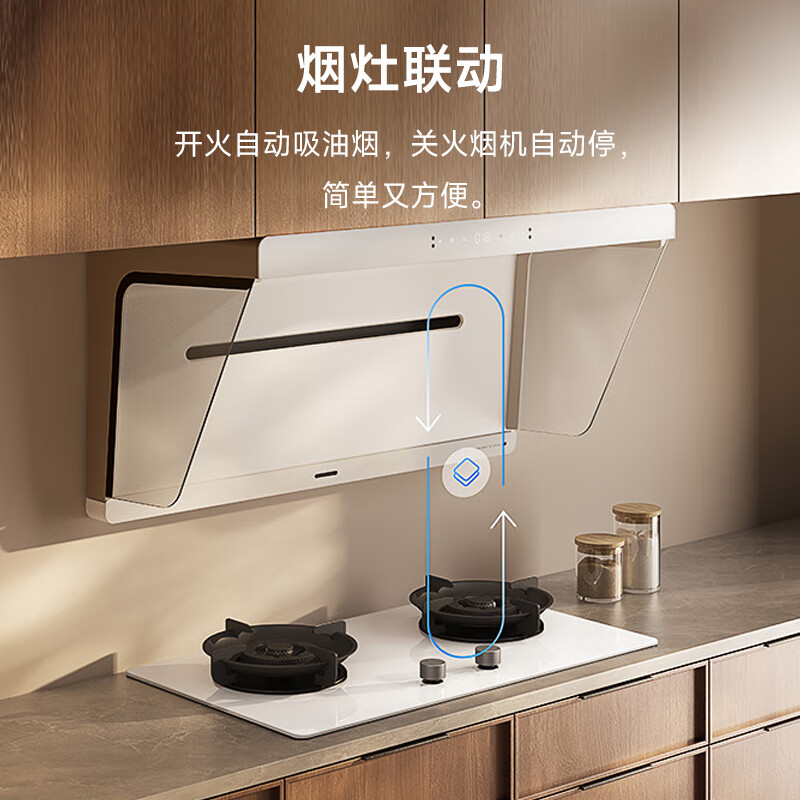
The stove’s compatibility with the Mi Home ecosystem enables smart features, including remote reminders to turn off the stove and automatic oil fume exhaust when used with the Mi Home Smart Range Hood.

Earlier this month, Xiaomi also introduced the Mijia LCD Blackboard with a 39″ display, featuring split-screen support and dust-free writing, priced at $33. Additionally, Xiaomi unveiled its Mijia label printer, offering a creative solution for everyday labeling requirements.

RELATED:

Samsung Galaxy F54 5G gets the Android 14 based One UI 6 update in India

Samsung is rolling out the latest version of Android for another one of its F series smartphone models. The company released the Android 14 OS based One UI 6 update for the Galaxy F34 earlier this month, and now, the Galaxy F54 5G has also received the major update.

Samsung Galaxy F54 Android 14 Update

The South Korean tech giant is releasing the major software upgrade in the Indian market. It carries the One UI 6 firmware version E546BXXU3BWL1/E546BODM3BWL1/E546BXXU3BWL1 and is over 2GB in download size. Apart from the Android 14 operating system, the smartphone is also receiving the November 2023 security patch as well.

Samsung Galaxy F54 5G

The changelog also adds various other elements to the UI, which includes revamped Quick Settings, improved Home screen widgets, brand-new emojis, a new media player widget, and a new default font among other things. Talking about the smartphone itself, the Galaxy F54 5G sports a tall 6.7-inch display that offers a 120Hz refresh rate and Full HD+ resolution. The device is equipped with the Exynos 1380 SoC that is paired with 8GB of RAM and 256GB of internal storage. Storage can be further expanded by another 1TB via a microSD card slot.

For those unaware, the Galaxy F54 model was announced in India back in June 2023 with Android 13 OS out of the box. On the rear, the Samsung smartphone carries a 108-megapixel triple camera setup on the rear. Meanwhile, the front houses a 32-megapixel selfie shooter. A massive 6,000mAh battery pack powers this device, which also supports 25W wired fast charging. Keep in mind to keep your device over 30 percent battery charge before updating.

RELATED:

Xiaomi HyperOS global rollout to begin in Q1 2024: Check the list of eligible devices

Xiaomi introduced its new in-house operating system, HyperOS, during the Xiaomi 14 series launch event in late October. Following the announcement, the company began rolling out the latest OS update to its smartphones in China. 

Now, the company has finally shared the global rollout plan. It took nearly two months for Xiaomi to reveal the details of the global release of the HyperOS custom skin.

HyperOS Global rollout plan

Xiaomi officially confirmed the global availability of HyperOS through its MIUI account, now renamed Xiaomi HyperOS, on X/Twitter. The announcement states that HyperOS will be rolled out to select Xiaomi and Redmi devices in the first quarter of 2024. The devices included in the rollout plan are as follows:

While the list includes Xiaomi and Redmi smartphones, you may have noticed it notably excludes any mention of Poco smartphones. 

Worry not! The POCO Global account on X/Twitter has reassured Poco users that the Poco F5 will be the first Poco device to receive the HyperOS update. And, its release appears imminent. Although the exact launch date remains under wraps, Poco promised to share information for other devices later.

Xiaomi’s initial global rollout plan for HyperOS includes only a handful of relatively new smartphones. Thus, owners of older Xiaomi, Redmi, and Poco phones will have to wait for their turn for the HyperOS update. While they won’t be experiencing HyperOS right away, the fact that Xiaomi is now finally preparing for the global rollout of HyperOS is undoubtedly good news.

For those eager to check their smartphone’s HyperOS availability, this link provides a helpful resource. We regularly update news about specific models entering HyperOS testing on Xiaomi’s internal servers.

Related:

Honor Pad 9 display specs officially revealed

Honor has scheduled a launch event in China for December 21. The star of the conference will be the Honor 90 GT, however, it will also be accompanied by other products.

One of them will be Honor Pad 9. Recently, we learned the key features of this tablet. Today, the brand has officially revealed the display specs of the device.

Let’s check out everything known about Honor’s upcoming tablet so far.

Honor Pad 9

Honor Pad 9 has a better display than Huawei MatePad 11.5

According to Honor, its new tablet arrives with eye protection, just like most of its recent products. In its latest teasers, the brand compares its product with Huawei’s offering.

Honor says that the Honor Pad 9 not only sports a larger display but the panel also provides better specs than the Huawei MatePad 11.5.

The Pad 9 is built around a 12.1-inch display paper-like display with a matte finish. This LCD screen offers a resolution of 2560 x 1600 pixels and 249 PPI. The panel’s maximum brightness is rated at 500 nits and it has an 88% screen-to-body ratio, thanks to its 6.9mm narrow bezels.

Further, Honor claims that the eye protection used in this tablet reduces visual fatigue by 14%, increases melatonin secretion by 20%, and reduces 36% of harmful blue light. The teaser renders also confirm that the device will have support for a stylus as well as a keyboard.

As per leaks, the Honor Pad 9 will be powered by a Qualcomm Snapdragon 6 Gen 1 chipset. The said SoC will be paired with up to 12GB of RAM and 512GB of storage.

The device will feature a 13MP rear camera and will be equipped with 8 speakers. It will be backed by an 8,300mAh battery with support for 33W charging.

Last but not least, it will be available in three colors: black, green, and white gradient.

RELATED:

Portronics Dash 4 wireless party speaker announced with RGB lighting & karaoke mic

Portronics has just unveiled a new audio product to elevate your party experience. The Dash 4 is a wireless party speaker that arrives with various features for a more entertaining party experience. So here is everything we know about this device.

Portronics Dash 4 Specs

The company’s latest speaker basically doubles as a new portable karaoke speaker. It features a sleek design that is paired with a mesh texture exterior. Notably, it also features a 360 degree dynamic RGB lighting system, which adds to its party aesthetics. The control panel is situated on top of the speakers and allows for volume adjustment, music controls, and allowing for six lighting modes to fit different moods. The Dash 4 is the direct successor to the Dash 3 and Dash 2, which launched earlier this year.

Portronics Dash 4

Portronics latest addition in the series houses a 50W speaker that promises to deliver high quality sound and comes with a customizable EQ modes. This lets users tweak the audio profile to range from balanced, bass heavy, more pronounced trebles, and more. Apart from just serving as a wireless speaker, the new product can also switch between karaoke and vocal mode using the paired microphone for optimal sound output. A large 8,000mAh battery pack powers this device, which can last for up to 6 hours on a single full charge. Other notable features include IPX5 protection rating, built-in FM, Bluetooth 5.3, USB Flash drive support, 3.5mm audio jack, and USB Type-C port.

Portronics Dash 4 Pricing and Availability

The Portronics Dash 4 is available in a single Black color variant and it weighs just 1 kilogram. It is available for an introductory price tag of 6,699 INR (MRP 9,999 INR) or roughly 80 US Dollars. It comes with a 1 year warranty and can be purchased from Amazon, Flipkart, Myntra, and other online and offline stores.

RELATED: