After a series of leaks and rumors, Oppo has officially announced that the A2 smartphone will launch on November 11 in China. The phone is likely a rebranded version of the recently launched Oppo A79 for the Chinese market.
To reiterate, the Oppo A79 features a thin and light design, measuring just 7.99mm thick and weighing 193 grams. It has a polycarbonate frame with a metallic texture and a flat rear panel with a dual camera setup in a shiny Ring housing.
The phone has a 6.72-inch display with FHD+ resolution, 90Hz refresh rate, and Oppo’s All Day AI eye protection for a safe viewing experience. It is also Widevine L1 certified, which means that users can watch HD video content from Amazon Prime and Netflix.
The Oppo A79 is powered by the MediaTek Dimensity 6020 SoC, paired with 8GB of RAM and 128GB of internal storage. It has a 50MP Samsung ISOCELL JN1 primary sensor and a 2MP Omnivision OV02B1B portrait shooter on the rear, and an 8MP camera on the front.
The phone has a large 5,000mAh battery that supports 33W fast charging. Other features include Android 13 OS-based ColorOS 13 out of the box, virtual RAM expansion up to 8GB, dual speaker setup with stereo support, and dual SIM.
The Vivo X100 series is rumored to sometime launch next month. While we have covered various reports and leaks regarding the upcoming flagship smartphones. The latest rumor has hinted at its color options and their respective designs.
Vivo X100 and X100 Pro to come with leather and glass options
For those unaware, the Vivo X100 series is rumored to be unveiled on 17th November 2023 in China, although the company has yet to confirm its launch date. In our earlier report, we had covered supposed official launch image posters. These poster images had also revealed the color options of the Vivo X100 series. Now, known tipster Digital Chat Station has revealed three of these color options of the X100 and X100 Pro models.
According to his Weibo post (a Chinese microblogging website), the brand is apparently planning on launching the Vivo X100 and X100 Pro in three color variants. This includes a orange, white, and blue models. The tipster adds that the white and blue versions feature a glass back panel. On the other hand, the orange variant will have faux leather on the rear. In the leaked image posters, there was even a black variant, which also features a leather back panel.
This option might be exclusive to the top end X100 Pro+ model. The Vivo X100 series will be the world’s first to feature LPDDR5T RAM and willdebut with the new Vario-APO-Sonnar lens for periscope zoom photography. DCS adds that the Vivo X100 Pro+ will come with up to 16GB of LPDDR5T RAM and 1TB of UFS 4.0 storage. So stick around for more, as we will be providing updates when additional information is available regarding this matter.
After successively bringing new smartphones – Moto G54 5G, Moto G84 5G to the Moto G series, the smartphone company is preparing to launch another member – Moto G24 5G really soon. The device appeared on Geekbench Benchmark carrying some details about its specifications and hardware prowess.
The smartphone coupling octa-core MediaTek Helio SoC scored 407 points in the single-core test and 1399 points in the multi-core test. It houses an octa-core CPU with the configuration of 6x Cores @1.8GHz and 2x Cores @2.00 GHz. Expectedly a mid-range smartphone, it features 8GB RAM and houses a Mali G52 GPU.
There would be other storage variants too, as on Geekbench only the 8GB RAM variant has appeared. Further, the smartphone is running Android 14 onboard.
Its predecessor – Moto G23 comes with MediaTek Helio G85 SoC, 4/8 GB RAM, and 64/128GB Storage. It houses a triple rear camera module featuring a 50MP primary sensor, a 5MP ultrawide sensor, and a 2MP macro lens. We expect a slight upgrade in terms of specs and design from its successor.
Other details like launch date and availability information about the device remain uncovered. We expect more information about the device in the coming few days before the official launch.
The Android 14 update is almost out for compatible Pixel smartphones. Even other OEMs like OnePlus, Samsung, Xiaomi, etc are working to bring it on their respective smartphones and tablets. Following some new features and enhancements, the latest Android 14 update has been the cause of concern for some Pixel users facing Issues while accessing storage.
The issue is prominent on the Pixel 6 and the later models which have multiple profiles on the phone while running the latest Android 14. The phones that have “users, guests, restricted profiles, and child users” profiles without their respective Google accounts signed in within the primary user or work profiles are plagued with the issue. In response to the widespread issue, Google made a detailed response on how they are working to mitigate the issues.
The issues can trigger multiple issues, “Depending on the device, this issue can result in the primary user being unable to access media storage. Alternatively, the issue can reboot the device with a “Factory data reset” message. If this message is accepted, data that is not backed up can be lost, and if it is declined, the device repeatedly reboots with the “Pixel is starting” message.”
Google already pushed a Google Play System update to control the issue. The users can head to Settings > Security & Privacy > System & update > Google Play system to grab the latest update.
The company is aiming to rectify the issue without requiring a factory reset. Well, the fingers are crossed until a full resolution for the affected devices takes place.
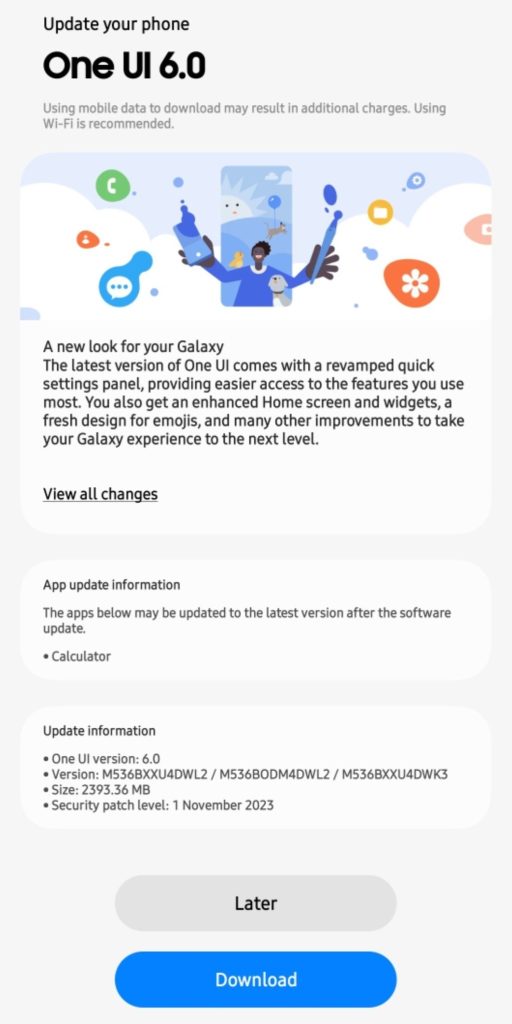
We hope such issues don’t get triggered on other smartphones like Galaxy S23 which are receiving the Android 14-based One UI 6 update today in some countries.
Realme is gearing up to launch the new Realme 12 series of mid range smartphones soon. But prior to any official announcement, a new leak has revealed certain camera details regarding the Realme 12 Pro and Realme 12 Pro+.
Realme 12 Pro series telephoto camera specs revealed
The news arrives from known tipster Digital Chat Station, who claims that the Realme 12 Pro models will feature a periscope telephoto camera. In his Weibo post (a Chinese microblogging website), the company has revealed the optical zoom capabilities of the two upcoming devices. The latest leak hints that the Realme 12 Pro will feature a 32-megapixel Sony IMX709 telephoto sensor that offers 2x optical zoom. Meanwhile, the Realme 12 Pro+ model will feature a 64-megapixel OmniVision OV64B periscope telephoto camera that could offer 3x optical magnification.
Realme 12 Pro+ leak render
Previously, the tipster had stated that the mid range smartphone series will launch for a sub 2,000 Yuan price range (roughly 273 US Dollars). Based on what we know so far, a concept render of Realme 12 Pro+ model has hinted at its design as well. The smartphone appears to have a large camera island module on the back, which houses two cameras along with a rectangular cutout for the periscope telephoto lens. In other words, its design is similar to the previous generation Realme 11 series. Unfortunately, this is all the information we have at the moment, so stick around for more updates. Keep in mind that the leak is also unconfirmed so take this report with a pinch of salt for now.
Tecno is continuing to expand its product lineup vigorously. The company is known for producing high-value Android models and implementing regional marketing strategies, which has already allowed it to capture a significant market share and generate excitement for its upcoming products. Not long ago, we discussed some leaked features of the upcoming Tecno Spark 20 Pro. Now, Tecno has unveiled the Universal Tone feature, which combines artificial intelligence with consumer electronics. This technology is designed to accurately and beautifully capture the color and texture of every skin tone in smartphone photography. Here are the details…
TECNO Unveils New AI-Powered Skin Tone Imaging Technology
If you haven’t noticed by now, smartphones use artificial intelligence to make subtle adjustments to colors by detecting human skin tones. However, while many manufacturers do a decent job in their respective regions, they often struggle to accurately represent this in other areas and different cultural contexts, occasionally resulting in less than pleasant images. Fortunately, Tecno has provided a solution to this issue.
TECNO Universal Tone was created with the goal of capturing accurate and proper representations of the color and texture of every skin tone in smartphone photography. The technology truly represents the unique beauty of every skin color and texture, while also delivering fully enhanced portraits that cater to consumers’ individual preferences.
“TECNO has always viewed technological development as a way to give consumers a more positive mindset towards society and the future,” said Jack Guo, General Manager of TECNO. “TECNO Universal Tone embodies this mission. It utilizes a rigorous scientific, data-based approach to promote more accurately representative imaging and ensure a truer reflection of the diverse beauty of our users all around the world. Doing so we are making sure every face is seen in one picture. ”
TECNO Universtal Tone technology combines three engines into one unified powerhouse: a Multi-Skin Tone Restoration Engine, a Local-Tuning Engine, and an AI-Powered Computational Portrait Engine.
The Multi-Skin Tone Restoration Engine represents the pinnacle of inclusivity in skin tone imaging technology with a more scientific approach than seen in previous AI-based skin tone technologies. It utilizes the newly collected largest diversified spectral database especially covering frequently overlooked skin colors in the industry with cutting-edge academic research methodologies, encompassing a vast range of skin tones in order to eliminate bias within the technology. This technology allows for the creation of an inclusive skin tone scale and fine-tuning of algorithms for precise skin tone representation.
The Local-Tuning Engine is dedicated to tuning images for diverse real-world scenarios. It carefully considers local environments, lighting conditions, geomorphological landscapes, and color temperatures to achieve a harmonious and perfect output of people and their surroundings. Each tuning solution is tailor-made for different regions and countries to capture the essence of every locale.
The AI-Powered Computational Portrait Engine employs TECNO’s self-developed algorithms and portrait system platform to create a personalized and localized portrait imaging experience. By taking into consideration localized aesthetic and cultural preferences, facial features, and skin tones unique to each region, this computational portrait platform delivers tailored portrait enhancement solutions. These include enhanced skin tone accuracy, skin texture, skin tone imaging optimization, and personalized beauty enhancements, ensuring that portraits reflect the individual’s beauty from a psychological perspective.
The Universal Tone technology debuted in the stunning ‘Portrait For Everyone’ short film produced by BBC StoryWorks on October.
Working in synergy, these three engines bring out the best in TECNO Universal Tone. First, the Multi-Skin Tone Restoration Engine calibrates and enhances different skin tone colors. Subsequently, the Local-Tuning Engine supports restructuring of facial tones and analyzes the surrounding environment to reconstruct shading, achieving optimal results for each region and scenario. Finally, the AI-Powered Computational Portrait Engine applies a personalized and customized algorithm that aligns with regional aesthetic preferences and insights. This includes preserving unique features such as beauty marks and birthmarks while enhancing facial lines, creating natural, three-dimensional, and textured portraits.
Dr Kaida Xiao, Associate Professor in Colour and Imaging Science at the University of Leeds, who advise TECNO during the development of Universal Tone: “TECNO and I take a data-based approach in order to develop accurate color cards for each skin tone within the Universal Tone technology, which means users will no longer have to accept overexposed or desaturated skin tones caused by biased data. The research that we conduct enabled us to train the Universal Tone algorithms in an unbiased and accurate way, so users will be able to capture images that celebrate true diversity.”
Ultimately, TECNO Universal Tone ensures that when multiple people with different skin tones appear in the same frame, each individual skin tone can be accurately identified and beautifully optimized. In contrast to many other smartphone imaging technologies, Universal Tone’s “personalized” portrait imaging not only respects the original characteristics of diverse skin tones, it also emphasizes the important psychological aspect of capturing portraits that allow users to feel truly represented. Overall, Universal Tone sets a new industry standard through the ability to capture the beauty of diversity, celebrate individuality, and deliver true-to-life portraits that authentically reflect our shared humanity.
As a user-centric brand with a glocalized strategy, TECNO is guided by its “Stop At Nothing” philosophy to constantly pursue new technologies that deliver the greatest possible experience. The development of TECNO Universal Tone marks another significant milestone in the brand’s journey to creating a more inclusive smartphone industry and underlines its ongoing commitment to innovation that uplifts and enhances the lifestyles of users all over the world.
The flagship Vivo X100 series of smartphones are set to launch soon. But prior to the official announcement, the company’s upcoming X100 Pro model was spotted on a popular benchmarking platform. So let’s have a look.
Vivo X100 Pro surfaces on GeekBench
The Vivo X100 Pro was found listed on GeekBench, carrying the model number V2324A. While previous rumors had hinted at the vanilla X100 and X100 Pro featuring MediaTek Dimensity 9300 SoC, the latest sighting suggests otherwise. On the benchmarking platform, the high end device was equipped with the Snapdragon 8 Gen 1 chipset. This is quite odd considering the processor from Qualcomm is quite dated for a new flagship smartphone.
This model scored 984 points in the single core test and 3,293 points in the multi core test. In a recent leak, known tipster Digital Chat Station shared the camera specifications of the Vivo X100 Pro. Reportedly, the smartphone will feature a Samsung JN1 ultra wide angle lens and a OmniVision OV64B telephoto camera that offers 4.3x optical zoom. Meanwhile, the primary camera is likely a Sony IMX920 sensor.
After the successful launch of the Xiaomi 14 Series and HyperOS in China, the company seems preparing for the global launch of Redmi 13C. The rumors and leaks are already rife, along with its appearance on the Multiple Certification websites. In addition, the Redmi 13C smartphone with model code 23124RN87I appeared on the India BIS certification website. The smartphone is listed along with another Xiaomi device which bears model code 23128PC33I.
However, the listings do not confirm anything related to the smartphones, but they do confirm the pending global launch of Redmi 13C and another unknown smartphone.
Redmi 13C Specifications (Expected)
Redmi 13C is set to launch globally in both the 4G and 5G variants coupling competitive specifications. According to the leaks and rumors, the Redmi 13C could come with a 6.74-inch 90Hz display, a 50MP rear camera, and a 5000 mAh battery with 18W charging support. It could come with an octa-core chipset and will house a USB Type-C port and a 3.5mm audio port.
The recent renders prove its design similarity with its predecessor – Redmi 12C. It is highly likely to launch with three color options light green, black, and blue.
There is scarce information available about the other Xiaomi smartphone with model code 23128PC33I that appeared alongside the Redmi 13C. We expect more information to unleash in the coming few days.
Qualcomm has officially introduced its latest top-tier processor, the Snapdragon 8 Gen 3. Leading smartphone manufacturers such as OnePlus are preparing to debut their upcoming flagship devices, like the OnePlus 12, powered by this advanced chipset. As per a new report, the brand is also preparing to debut a sub-flagship smartphone using last year’s Snapdragon 8 Gen 2 chip.
Twitter tipster @ShishirShelke1, has shed light on some potential upgrades that could set the OnePlus 12R apart from its predecessor, the OnePlus 11R.
The most noteworthy change is the inclusion of the Snapdragon 8 Gen 2 chip, replacing the Snapdragon 8+ Gen 1 SoC. With the Snapdragon 8 Gen 2, the OnePlus 12R will have improved CPU and gaming performance while increasing battery life due to being more efficient.
The camera system will also be getting an upgrade with the inclusion of a 32MP telephoto lens with 2x zoom capability, a significant upgrade from the 2MP macro camera on the OnePlus 11R.
The display will see a major improvement in brightness, now reaching up to 3000nits. The display on the OnePlus 11R has a peak brightness of 1400 nits. The frame of the device is said to be made out of metal rather than plastic.
Last but not least, the battery will also be getting a slight boost with a 5,500mAh capacity. The increased battery size, when factored in with the Snapdragon 8 Gen 2 chip is sure to provide a longer battery life compared to the OnePlus 11R.
Interestingly, these leaked specs match the previously tipped details of the OnePlus Ace 3. Although the leak does not reveal a launch date, we can expect the OnePlus 12R to arrive shortly after the launch of the OnePlus 12. So we are likely looking at a Q1 2024 launch timeline.
In related news, the global OnePlus 12 model has been spotted on Geekbench revealing its performance numbers. You can read about it by clicking the link.
Vivo has just announced a brand-new Y series smartphone in China. The company recently launched the Vivo Y200 and Y55t models in its home market. Now, it has released the new Vivo Y100 5G in the region. So here are all the details.
Vivo Y100 5G Design and Display
The Chinese smartphone maker’s Y100 5G sports a tall 6.78-inch curved OLED display that offers a 120Hz refresh rate, Full HD+ resolution, low blue light protection, and a 1,200Hz touch sampling rate. Meanwhile, the rear features a dual camera setup on a curved back panel. The device measures just 7.49mm in thickness and weighs around either 172 grams (Starry Black) or 184 grams (Glass Blue) in weight grams in weight. Despite being an affordable handset, Vivo placed a focus on making this device feel premium with the textured glass designs on the rear.
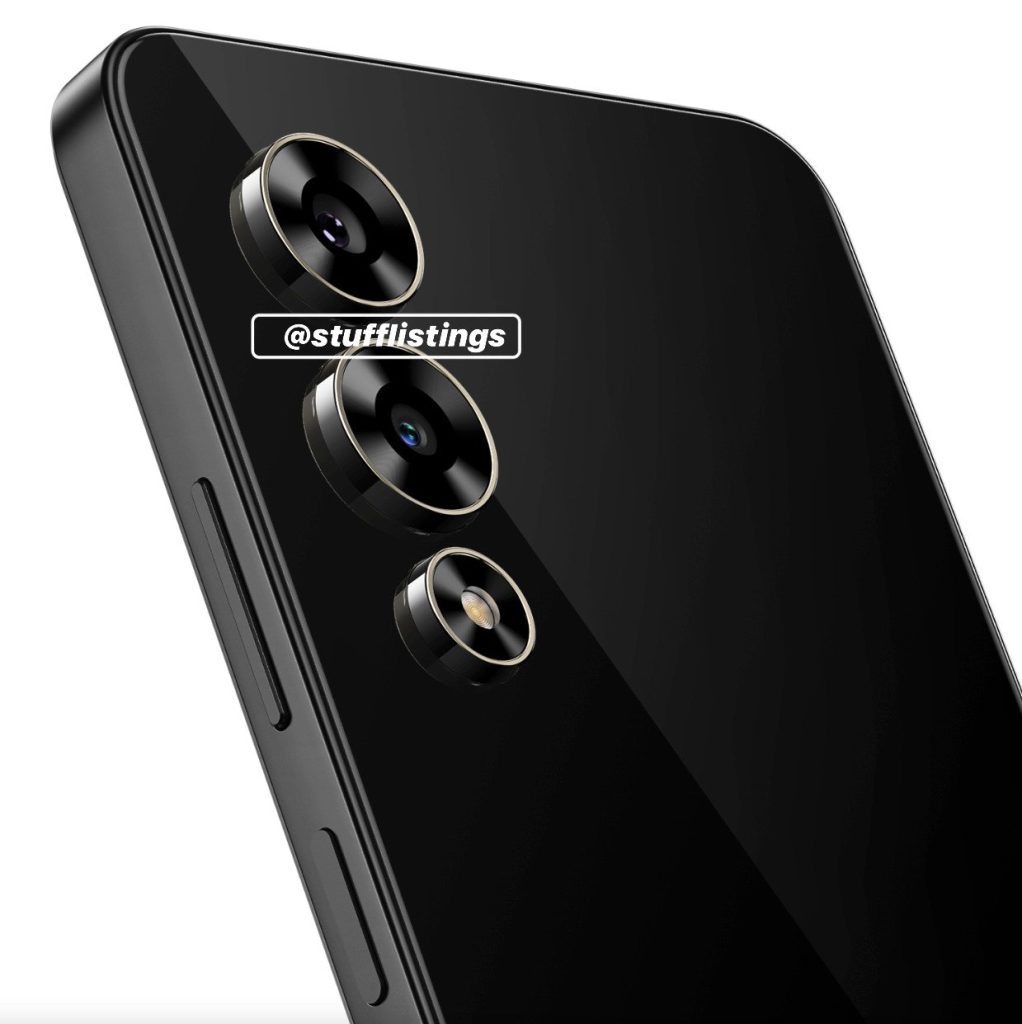
Vivo Y100 5G Specs
Under the hood, the Vivo Y100 5G is equipped with the Qualcomm Snapdragon 695 SoC that is paired with up to 12GB of LPDDR4X RAM and up to 512GB of internal storage. Users can further expand the storage by another 12GB thanks to virtual RAM expansion. The rear features a dual camera setup that consists of a 64-megapixel primary sensor that features OIS (Optical Image Stabilization) with a 2-megapixel secondary shooter.
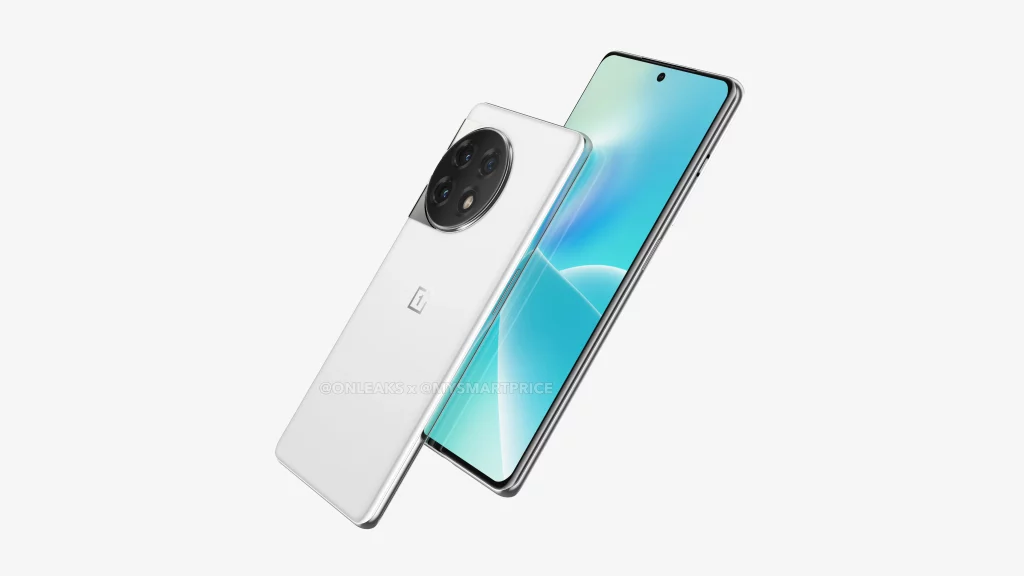
Vivo Y100 poster
Meanwhile, the front houses an 8-megapixel camera for selfies and videos. A large 5,000mAh battery pack powers this device which supports 44W fast charging. Other notable features include IP54 water and dust resistance, an in-display fingerprint scanner, Android 13 OS based OriginOS 3 custom skin, and face recognition.
Vivo Y100 5G Pricing and Availability
The Vivo Y100 5G is available in multiple color options, namely Starry Black, Glass Blue, and a special textured Green model. This smartphone starts from 1,399 Yuan (roughly $191) for its base 8GB + 128GB version. On the other hand, the 8GB + 256GB and 12GB + 256GB variant costs 1,599 yuan (roughly $218) and 1,799 Yuan (roughly $245) respectively. The top end 12GB + 512GB model of the Vivo Y100 5G has a 1,999 Yuan (roughly $273) price tag. It is currently listed for pre orders, with sales kicking off on November 4.
Apple is reportedly planning to release a new version of its AirPods Max over-ear headphones in late 2024, with the main changes being new color options and a switch to USB-C port.
According to Bloomberg’s Mark Gurman, the new AirPods Max will not feature the H2 chip or its attendant features like Adaptive Audio and Personalized Volume. In fact, Gurman says the next version of the AirPods Max may not even change the generation number, similar to the USB-C AirPods Pro.
The only major change is to USB-C interface, which is likely to comply with European regulations, which will require all smartphones and other portable devices to have a common charging port by 2024. It will also make the AirPods Max more consistent with other Apple products, which have already transitioned to USB-C.
Gurman adds that Apple’s plans could change between now and when the AirPods Max are released, but a late 2024 release date with USB-C charging and new color options is currently the most likely scenario.
Last week, Gurman also reported that all three AirPods models and Mac accessories like the Magic Keyboard and Magic Trackpad are likely to transition to USB-C by 2024.
This is a positive development, as USB-C is a more versatile and widely adopted charging standard. It will also make it easier for Apple users to charge all of their devices with a single cable.
Samsung is reportedly preparing to launch a new budget-friendly Chromebook, according to reports from Chrome Unboxed and Gerrit Commits. The device, codenamed “Pirrha,” is expected to feature an Intel Core i3-N305 processor, 8GB RAM, 128GB storage, and a 1080p webcam.
One of the key differentiating features of the “Pirrha” Chromebook is its stylus support. The device will come with its own pen and will also be compatible with the Universal Stylus Initiative (USI), allowing users to use any stylus instead of relying on Samsung’s proprietary S Pen technology.
Samsung has a long history with the Chromebook platform, but its devices have typically been more expensive than those from other brands. With the “Pirrha” Chromebook, Samsung may be looking to change that by offering a more affordable option.
To succeed in the budget Chromebook market, Samsung will need to focus on features and a competitive price. The company can also leverage its ecosystem to attract existing Samsung phone users by offering some exclusive features.
However, it is important to note that despite these leaks, it is still unclear whether Samsung will actually launch the “Pirrha” Chromebook.
China-based smartphone manufacturer itel has just announced a new device in the global market called the itel A70 4G. This 4G device comes with entry-level hardware and is expected to be quite pocket-friendly.
itel A70 4G specs
The itel A70 4G measures a mere 8.6mm in thickness. The design of its camera array closely resembles the iPhone 15 Pro. Its display boasts a 6.6-inch HD+ screen with a resolution of 720 x 1612 pixels, featuring a 120Hz touch sampling rate and a maximum brightness of 500nits. The screen also incorporates a Dynamic Bar, which is quite similar to Apple’s Dynamic Island. There is also a side-mounted fingerprint sensor for secure unlocking.
Under the hood, the device is powered by the Unisoc T603 Octa-core processor. On the camera front, it comes equipped with dual 13MP rear cameras, along with an 8MP selfie camera.
For storage and memory, users have the choice of 128GB or 256GB options, along with up to 4GB of RAM. The smartphone also offers a virtual RAM extension of up to 8GB. Additionally, microSD support is available, allowing for expansion up to a massive 2TB of storage.
To keep the device powered throughout the day, the brand has incorporated a 5000mAh battery with Type-C charging. It supports 4G, 3G, and 2G network connectivity. The device operates on itel OS 13, which is based on the Android 13 Go edition.
Pricing & availability
The pricing of the itel A70 is still under wraps. That being said the device is confirmed to come in four color options: Brilliant Gold, Stylish Black, Field Green, and Azure Blue.
Samsung today announced the release of the Galaxy Z Flip5 Retro, a limited-edition phone that commemorates the company’s 20-year legacy of innovation in foldable phones. The Z Flip5 Retro is inspired by the SGH-E700, Samsung’s first flip phone with a built-in antenna, which was released in 2003.
The Flip5 Retro features a retro design with Indigo blue and silver colors, reminiscent of the E7000. It also comes with some nostalgic pixel graphics UI tweaks and a cityscape animation on its Flex Window cover screen.
Samsung has also gone the extra mile with the packaging for the Flip5 Retro. The phone will ship in a box with logos of both the Z Flip5 and the E700, as well as Flipsuit cards with stickers featuring the various Samsung logos from past eras. The package will also include a Samsung E700 collector card engraved with a unique serial number.
Despite its retro design, the Z Flip5 Retro has the same high-end specs as the regular Z Flip5. It is powered by a Qualcomm Snapdragon 8 Gen 2 processor and has a 6.7-inch AMOLED display with a 120Hz refresh rate. It also has a triple-lens rear camera system with a 50MP main sensor, a 12MP ultrawide sensor, and a 10MP telephoto sensor.
The Galaxy Z Flip5 Retro will be available in limited quantities in South Korea from November 1, and in the UK, France, Germany, Spain, and Australia from November 2. Pricing details are not provided yet.
As expected, and after nine consecutive One UI 6 Beta updates on the Galaxy S23, here comes the Stable build for the smartphone. Samsung is finally rolling out One UI 6.0 Stable for users in Germany. The new stable update is seeding to the Beta users via the firmware version S916BXXU3BWJM. It weighs 350MB in size and is likely to be available for other users all across the country in the coming few days.
The new Stable One UI 6.0 update will soon commence on the other Galaxy Smartphones. However, the users can grab the stable UI by heading to Settings > Software Update > Download and Install Option. Those who have not received the update may need to wait or can manually flash the new firmware.
One UI 6 Changes and Improvements
Carrying plenty of fresh changes, the new update brings a lot of new features and refinements to the Operating System. The new improvements are aimed at scaling the user experience. Feature-rich One UI 6 adds new fonts, widgets, improved lock screen customization, enhanced Quick Panel and Notification panel, etc. Further, it improves the App drawer and allows the user to sort notifications by time. Other fresh changes on Samsung Apps are surely exceptional in terms of new features and design.
Steps to Update to One UI 6
Before updating, make sure your Galaxy S23 is running at least 50% of the battery and has more than 3GB of storage on board.
Then, switch to a Wi-Fi network, to save on carrier data.
Now, Head to phone Settings > Software Update > Download and Install to check fo the update.
The new update is set to roll out on all eligible Galaxy Smartphones and Tablets in the coming few weeks or months. The rollout process has started with the Galaxy S23 in Germany and will reach to broader audience in a couple of months.
Vivo is gearing up to unveil the Vivo X100 and X100 Pro in China this November. While official teasers are still awaited, a Vivo executive has offered an early glimpse into the Vivo X100 series. Here is a look at the first details about the X100 lineup.
Vivo X100 series to feature Vario-APO-Sonnar lens
Vivo X100 series mock render
According to Vivo China’s Product Manager, Han Boxiao, a new Zeiss APO lens is set to make its debut, marking another significant milestone in the brand’s extensive history. It goes without saying that he is talking about the Vivo X100 series, which is expected to launch in the third week of November in China.
Based on what Boxiao revealed, it appears that the entire Vivo X100 series will be equipped with the new Vario-APO-Sonnar lens, which is designed for periscope telephoto photography. It will be accompanied by the company’s third-year advanced imaging algorithm.
For those who don’t know, a Zeiss-certified APO (apochromatic) lens is a type of lens designed to correct chromatic aberration. Chromatic aberration occurs when different colors of light do not converge on the same focal plane, leading to color fringing or blurring in images.
APO lenses are engineered to bring all colors of light to a single point of focus, ensuring sharp and accurate color reproduction in photographs. This technology is especially valuable in lenses used for high-quality and professional photography, where color accuracy and image clarity are of utmost importance.
Reports have revealed that Vivo X100 series will feature a 1.5K BOE OLED display with curved edges, the upcoming Dimensity 9300 chipset, up to 16 GB of LPDDR5T RAM, and 120W charging. The X100 Pro+, which will feature the Snapdragon 8 Gen 3, is expected to launch in the first quarter of 2024.
Tecno is gearing up to launch a new Pop-branded smartphone named the Tecno Pop 8 in India. Ahead of the expected launch, the entry-level has already been listed on the official website. In addition, leaker Paras Guglani has leaked the price of the device for the Indian market. Continue reading ahead to learn everything about Pop 8.
Tecno Pop 8 specifications
Tecnno Pop 8 Mystery WhiteTecno Pop 8 Alpenglow Gold
As per the official listing, the Tecno Pop 8 features a 6.6-inch LCD display with an HD+ resolution of 720 x 1612 pixels and a 90Hz refresh rate. Under the hood, it is powered by the Unisoc T606 chip and up to 4 GB of RAM.
The Pop 8 packs a 5,000mAh battery that supports 10W charging via a USB-C port. The phone runs on the Android 13 Go edition, which has a layer of HiOS on top. It will also feature the company’s self-developed Dynamic Port feature, which shows notifications akin to the Dynamic Island feature available on iPhones.
Tecno Pop 8 Magic Skin with leather backTecno Pop 8 Gravity Black
The Tecno Pop 8 is equipped with an 8-megapixel front camera with dual flash. On the back, the device will have a 13-megapixel primary camera, an AI camera, and a dual flash. The device will arrive with up to 128 GB of internal storage and feature a microSD card slot for more storage. While the weight of the device is not known yet, the Pop 8 measures 163.69 x 75.6 x 8.55mm in dimensions.
Tecno Pop 8 variants, price (rumored)
Tecno has already confirmed that the Pop 8 will arrive in three variants, such as:
64GB storage + 3GB RAM + 3GB virtual RAM
64GB storage + 4GB RAM + 4GB virtual RAM
128GB storage + 4GB RAM + 4GB virtual RAM
The Pop 8 will be available in four colors, such as Mystery White, Alpenglow Gold, Magic Skin (leather back), and Gravity Black. As per a leak by tipster Paras Guglani, the device will have a starting price of Rs 6,999 (~$84).
Oppo introduced the Oppo Find N3 foldable smartphone on Oct. 19, making it available in some markets, including China. In other regions, such as the US and India, the same device is sold under the name OnePlus Open. Today, the brand has provided confirmed sales figures for the Chinese market, which have proven to be noteworthy.
Oppo Find N3 intial sales result
Oppo Find N3
According to Oppo, the Find N3 has witnessed a 2.2-fold increase in sales volume compared to its predecessor, the Find N2. Moreover, the first-sale sales volume grew to 2.7 times that of the previous generation product.
The Find N2 significantly contributed to the popularization of foldable screens, thanks to its compact size and lightweight design. Building upon the success of its predecessor, the Find N3 has achieved remarkable sales growth.
The Find N3 positions itself as a flagship device, characterized by its sleek and lightweight build, and it comes equipped with a dedicated security chip tailored for business users. The Snapdragon 8 Gen 2-powered device features a 7.82-inch foldable OLED inner screen with a 2K resolution, complemented by a 6.31-inch FHD+ OLED display. In its unfolded state, it measures 153.4 x 73.3 x 11.7mm and has a weight of 239 grams.
The N3 features ColorOS 13.2-based Android 13 and packs a 4,805mAh battery that supports 67W fast charging. It features a 32-megapixel front camera, a 20-megapixel internal, and a 48-megapixel (main, with OIS) + 48-megapixel (ultra-wide) + 64-megapixel (periscope) triple camera unit on the back.
Data from the International Data Corporation (IDC) for the Q3 2023 survey reveals that Oppo secured the second position in the foldable phone market in China with a market share of 17.9 percent. Domestically, OPPO led the vertical foldable phone category with a 31.4 percent market share, alongside Huawei, establishing a significant presence in the high-end folding flagship segment.
In this week’s tech roundup, Nothing’s CEO, Carl Pei, revealed the Power (1) charger, a multi-device concept that never reached production, bearing design similarities to the Nothing Ear (2). In the meantime, Xiaomi displayed its Xiaomi 14 series, a line of high-end phones with a Snapdragon 8 Gen 3 chip, along with their new, more effective HyperOS.
Speaking of Snapdragon, Qualcomm debuted its latest Snapdragon 8 Gen 3 chip, promising significant enhancements in AI processing and energy usage. Vivo’s X100 series is rumored to be the world’s first with LPDDR5T RAM. And finally, OnePlus 12 has been confirmed to harness the power of the Snapdragon 8 Gen 3.
Nothing CEO Carl Pei has released a video that highlights the shortcomings of the Nothing Power (1) model which did not transit into a production model. The Nothing Power (1) was a charger and power bank that was supposed to simultaneously charge multiple devices. The Nothing Power (1) bears a close semblance in transparent design to the Nothing Ear (2).
Last week, Xiaomi unveiled the Xiaomi 14 and 14 Pro flagship phones in China. These are premium flagship phones from the brand with a starting price of 3,999 Yuan (~$546). Xiaomi’s sub-brand Redmi has also confirmed that it will soon be launching the Redmi K70 series in China. New developments show that it may debut in November.
Xiaomi held an event in China last week where it announced smartphones, a smartwatch, a smart TV, and more devices. The brand took the wraps off of its next-generation Xiaomi 14 series consisting of a standard and pro model. The latest flagship offerings arrive as the successor to last year’s Xiaomi 13 devices. They pack notable upgrades over their predecessors.
Vivo is set to launch its next generation of flagship smartphones in its home market of China soon. The Vivo X100 series will feature top notch specs and features. But ahead of its announcement, a leak has claimed that the lineup will be the first in the world to feature LPDDR5T RAM.
Qualcomm has revealed its latest Snapdragon 8 Gen 3 chip at the Snapdragon Summit in Hawaii. This new chip is built on a 4nm node and is designed to enhance the speed and efficiency of high-end smartphones, boasting a 30% increase in processing power and 25% better energy utilization compared to its predecessor. The standout feature is the Neural Processing Unit (NPU), which is now almost 98% faster and offers a 40% boost in performance-per-watt for continuous AI tasks.
Qualcomm officially announced its latest generation of flagship mobile processor, the Snapdragon 8 Gen 3. Soon after the unveiling, various smartphone brands announced that their premium phones would feature this top notch chipset. One of these brands includes OnePlus, with their OnePlus 12 confirmed to feature the Snapdragon 8 Gen 3 platform.
Xiaomi has now announced a new operating system called HyperOS, which is essentially the death knell for MIUI. HyperOS is said to have the smallest firmware size in the industry, as well as security, performance, and multitasking improvements.
In major news, OnePlus and Realme, the two BBK-owned brands are reportedly exiting the television market in India as per Times of India citing an anonymous source. Those two companies forayed into the country’s TV segment back in 2019 and 2020 respectively. Both OnePlus and Realme enjoyed success and growth due to competitive pricing and premium features that helped them challenge established brands like LG, Samsung, Sony, etc. Hence their exit (although unofficial) comes as a sudden surprise.
Microsoft’s Windows 11 introduced Android app functionality, expanding gaming support. Google’s Play Games PC store now offers over 3,000 Android games for Windows PCs, including popular titles like Asphalt 9: Legends. Major game publishers like Activision Blizzard, EA, and Konami are partnering with the service.
Nintendo has filed a patent for a new dual-screen folding device reminiscent of the 3DS handheld console. This device can open and close like the 3DS and can split into two separate units for multiplayer gaming with wireless communication. This patent has sparked discussions among gaming enthusiasts and industry observers about Nintendo’s potential future plans.
Samsung‘s Galaxy S24 series, which includes the standard Galaxy S24, the S24+, and the S24 Ultra, is rumored to be entering production, with a potential launch date speculated for January 2024.
iQOO is preparing to launch its iQOO 12 series of high-performance flagship smartphones in China on Nov 7. Jia Jingdong, Vivo Brand VP & GM of Brand and Product Strategy, took to Weibo to officially confirm some information about the iQOO 12 series, including its primary camera. Alongside this, the brand also shared a teaser video revealing the design of the iQOO 12 and 12 Pro. Simultaneously, tipster Digital Chat Station disclosed the specifications of the iQOO 12. Here is a look at all the new details of the iQOO 12 series revealed today.
iQOO 12 series’ details officially confirmed
According to Jingdong, the iQOO 12 series will be equipped with the Q1 e-sports chip, a dedicated display processor designed to enhance the gaming experience. Furthermore, he mentioned that the iQOO 12 series will introduce a 1/1.3-inch primary camera with OIS support. There will also be significant improvements in the ultra-wide lens and telephoto periscope lens. Rumors surrounding it have claimed that the iQOO 12 series will have a 50-megapixel OmniVision OV50H primary camera.
The iQOO 12 and iQOO 12 Pro, which are already confirmed to feature the Snapdragon 8 Gen 3, will run on OriginOS 4 and come with the company’s self-developed AI model. Additionally, the iQOO 12 series is set to have a “Legendary Edition” variant in collaboration with BMW M Motorsport, which appears to be a white variant featuring BMW’s iconic tricolor stripes. In the official teaser shown above, the company has revealed the iQOO 12 Pro’s white variant and the iQOO 12’s red model.
The iQOO 12 is equipped with flat edges and a flat display, whereas the iQOO 12 Pro sports a curved-edge display. Both phones have a squircle camera module on the back, which is said to include a 50-megapixel OV05H main camera, a 50-megapixel Samsung JN1 ultra-wide lens, and a 64-megapixel OV64B periscope camera.
iQOO 12 series configurations (rumored)
iQOO 12 series red variant
According to DCS, the iQOO 12 series will be available in multiple variants, such as 12 GB RAM + 256 GB storage, 16 GB RAM + 256 GB storage, 16 GB RAM + 512 GB storage, and 16 GB RAM + 1 TB storage. The white and black variants of both are expected to have a glass back, while the red edition has a leather back.
We use cookies on our website to give you the most relevant experience by remembering your preferences and repeat visits. By clicking “Accept”, you consent to the use of ALL the cookies.
This website uses cookies to improve your experience while you navigate through the website. Out of these, the cookies that are categorized as necessary are stored on your browser as they are essential for the working of basic functionalities of the website. We also use third-party cookies that help us analyze and understand how you use this website. These cookies will be stored in your browser only with your consent. You also have the option to opt-out of these cookies. But opting out of some of these cookies may affect your browsing experience.
Necessary cookies are absolutely essential for the website to function properly. This category only includes cookies that ensures basic functionalities and security features of the website. These cookies do not store any personal information.
Any cookies that may not be particularly necessary for the website to function and is used specifically to collect user personal data via analytics, ads, other embedded contents are termed as non-necessary cookies. It is mandatory to procure user consent prior to running these cookies on your website.