Xiaomi is reportedly planning to launch its first EV in both electric and extended-range versions. This news comes from the Beijing-based outlet Pandaily, which suggests that Xiaomi’s upcoming car will have both battery-electric and extended-range powertrains.
This report follows on the heels of news that Xiaomi is recruiting engineers in China to develop extended-range electric vehicle (EREV) range extenders. According to the report, the entry-level model will use a 400V voltage platform and BYD Blade Battery, while the high-end model will use an 800V voltage platform and CATL Qilin Battery with a battery pack capacity of 101kWh.
On the other hand, the extended-range version is expected to be equipped with a 1.5L or 1.5T range extender and a large battery. For those who don’t know, an EV range extender is a gasoline engine that extends the range of a battery electric vehicle by driving an electric generator that charges the vehicle’s battery. So, this could be a wise choice for Xiaomi, as it will give the car a longer range and appeal to a wider range of buyers.
Xiaomi’s first car is expected to have a coupe design that is popular among the younger generation. It will be a low and sleek profile, with a longer front end and a fastback rear end, giving it an overall sporty look.
The car was recently spotted on Bluetooth SIG certification, revealing that it will have a Qualcomm Snapdragon 8295 chipset, Bluetooth 5.2, USB Media functionalities, and Apple CarPlay support.
Xiaomi has made significant progress in its car manufacturing business since officially announcing its entry into the industry. Mass production is expected to begin in 2024, and the car has reportedly entered the trial production stage, with approximately 50 prototype cars being produced each week.
In terms of design, the Oppo Enco Air 2 New Sound Edition features a transparent jelly case design and a semi-in-ear form factor. The total weight of the device is 40.2 grams, with each earbud weighing around 3.7 grams.
These earbuds feature a 13.4mm composite titanium-plated dynamic driver for improved audio quality, including “live-level spatial sound.” They also offer AI-powered call noise reduction and are certified for Viper Atmos, providing unique popup themes, sound effects, and spatial sound adaptation. However, these earbuds do not feature Active Noise Cancellation (ANC).
When it comes to battery life, these earbuds offer a single-charge duration of 5.5 hours and an impressive maximum battery life of up to 35 hours with the charging case. They’re also rated IPX4 water-resistant, making them suitable for workouts and outdoor activities.
These TWS earbuds come equipped with a Bluetooth 5.3 chip, enabling instant pairing upon case opening. They offer customization through various popup themes and provide the convenience of activating the voice assistant with a triple tap.
There’s a dedicated “Huanlu” app for pairing and customization. Additionally, double-tapping the earphones can be used as a remote control for taking photos. The Oppo Enco Air 2 New Sound Edition comes in two elegant color options, Light Sea Blue and Clouds are White.
Our recent review covers the Tranya Nova TWS earbuds, a compelling option for those with a budget under $100. If you’re looking for quality earbuds within this price range, the Tranya Nova is worth considering.
Rumors about a Samsung Galaxy Ring continue to swirl. The smart ring was recently spotted in the code strings of the Galaxy Wearable app, along with a January 2024 launch date. However, a recent report from South Korean outlet The Elec suggests that the Galaxy Ring may not launch until late 2024 or early 2025.
According to the report, Samsung is planning to launch the Galaxy Ring alongside the Samsung Galaxy Z Fold 6, which is expected to arrive in August, September, or October 2024. However, The Elec also says that an early 2025 launch is also a possibility.
This is somewhat later than we were expecting, as previous rumors had pegged the launch date to January 2024. However, it is worth noting that there is still some uncertainty about the exact launch date, as Samsung is reportedly considering seeking medical approval for the device. This would require regulatory approval for readings taken by various sensors (like a heart rate sensor) and could push the launch date back further.
As the blog points out, product development typically takes seven to eight months, and getting medical approval would add an additional 10 to 12 months. Considering all these processes, a launch in 2025 is more likely.
The Elec report also suggests that Samsung is only developing one model of the Galaxy Ring, which will come in four sizes. It is still early days for the ring, but it is likely that Samsung will announce it, even if it takes some time to be released. We will keep you updated on the latest news and developments about the Samsung Galaxy Ring.
It’s been a month since Samsung published the first One UI 6.0 beta for the Galaxy S23. Following the development, it received multiple Beta builds over time, and now it is in line for the sixth One UI 6.0 beta build. The new update is now available for the users in India who have participated in the Program.
Bearing the version ZWJ6, the new build weighs 900MB in size. Its official changelog doesn’t unleash much about the changes but mentions some improvements for touch sensitivity, and overall software stability. There are several other changes that are labeled under the “many other improvements” text.
Considering the changelog, and the development process over the past month, the One UI 6.0 stable build for Galaxy S23 seems nearing. We won’t be surprised if the stable build appears by next week or so. Following seniority, the Galaxy S23 will be the first among the whole Samsung Galaxy lineup to get the stable One UI 6.0 update.
What Changes are coming to One UI 6.0?
Samsung officially took wraps off the One UI 6.0 a couple of days ago at SDC23. The new skin is bringing some exciting changes to improve the overall UX. There will be a full Quick Panel overhaul along with a more accessible position for the brightness control bar. Certainly, there will be performance and stability improvements alongside the new features. Bundling Android 14’s new security and privacy metrics, Samsung enhances it further with its own Knox security.
Artificial intelligence technologies have become an indispensable part of our lives. Today, we can feel the influence of AI in almost every application we use. Recently, Adobe has also joined this trend. The company has been testing various AI technologies in its Beta version for a while. Now, Adobe teases a new AI photo editing tool that promises to “revolutionize” Photoshop. Here are the details…
Adobe Project Stardust, a New Era of Photo Editing
Adobe is set to announce a new AI-powered photo editing tool (Project Stardust) at the Adobe Max event next week that makes it much easier to alter images without prior editing experience. No longer do you need to be a professional photographer or graphic designer to create high quality images. With Project Stardust, anyone can create professional-looking photos with just a few clicks.
Of Course, Project Stardust, still under development. However, the company recently showcased its features in a video. In the footage, the tool impressively removes objects like suitcases or background people from photos. The AI smoothly fills and blends the resulting gaps. Additionally, it can replace objects with AI-created alternatives, like changing outfits using text commands.
Here are a few examples of how Project Stardust can be used:
Remove unwanted objects from photos: Easily remove people, objects, or even blemishes from photos without any manual editing required. For example, you could remove a photobomber from a vacation photo or a blemish from a portrait.
Change the background of a photo: Replace the background of a photo with a new one, or remove the background altogether to create a transparent PNG image. For example, you could replace the background of a headshot with a professional studio background or create a transparent image of a product to add to a website.
Change the color or style of objects in a photo: Change the color of a car, the style of a piece of clothing, or even the hairstyle of a person in a photo. For example, you could change the color of your car to match your new outfit or give your pet a new hairstyle.
Add new objects to photos: Add realistic-looking objects to photos, such as people, animals, plants, or even buildings. For example, you could add yourself to a photo of a famous landmark or add a pet to a family photo.
Create composite images: Combine multiple photos to create a single image, such as a photo of a person standing in front of a famous landmark or a photo of a product with a different background. For example, you could create a photo of yourself standing in front of the Eiffel Tower or a photo of a product with a white background.
Project Stardust is still in development, but it has the potential to revolutionize the way people edit photos. It is expected to be released to the public in the near future.
Looking to upgrade your smartphone? Now is the perfect time to make the leap, as Amazon India is brining you a range of unbeatable offers on some of the most popular smartphones in the market.
From the latest iPhone 13 to feature-packed OnePlus devices and budget-friendly choices from Redmi and realme, these deals are too good to miss.
*the final deal price includes bank discounts and coupons
Let’s take a closer look at the amazing discounts available:
iPhone 13
The iPhone 13 is known for its power-packed performance and exceptional camera capabilities. With a list price of ₹59,999, Amazon has slashed the price down to an incredible ₹39,999. This excellent deal allows you to grab an Apple iPhone at an unbeatable price.
OnePlus Nord CE 3 Lite 5G
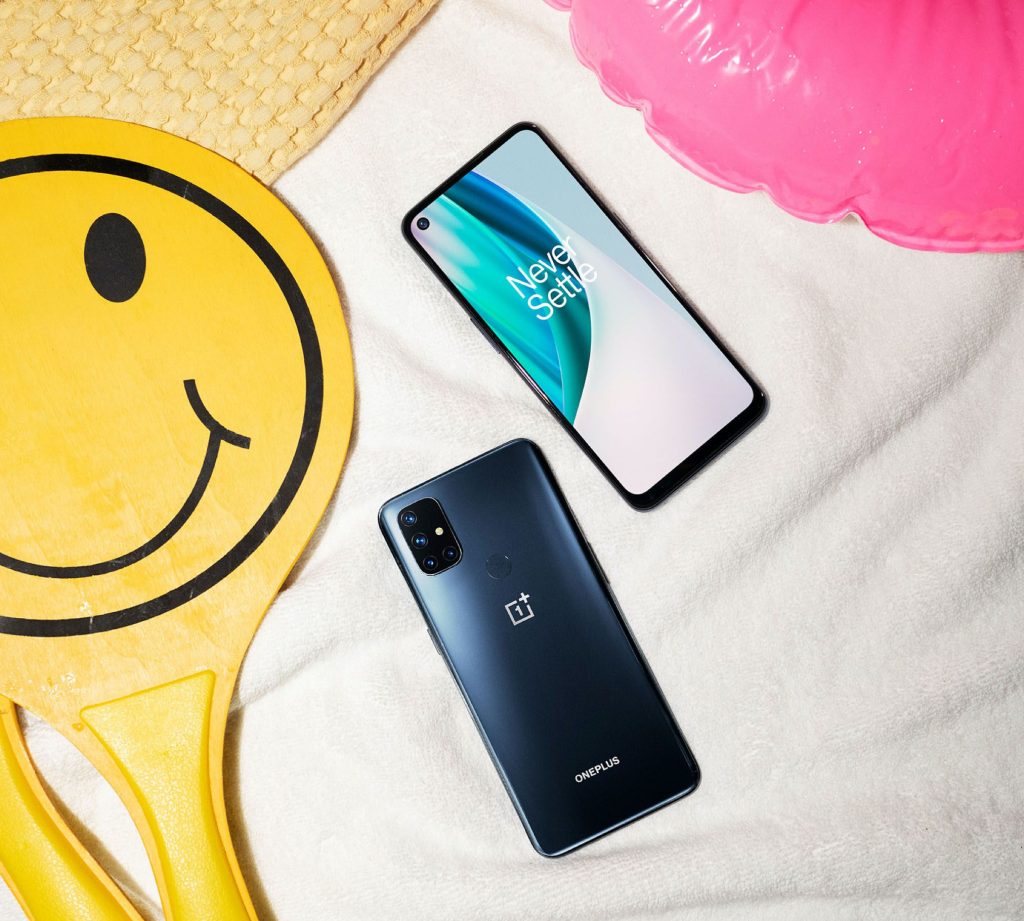
The OnePlus Nord CE 3 Lite 5G is a true value-for-money device. With a list price of ₹19,999, Amazon is offering an outstanding discount, lowering the price to just ₹17,499. Enjoy powerful 5G capabilities, an impressive display, and a long-lasting battery without burning a hole in your pocket.
OnePlus 11R 5G
Available at a list price of ₹45,999, the OnePlus 11R 5G is a steal at its deal price of ₹34,999 on Amazon. With its powerful processor, top-notch camera, and stunning display, this smartphone ensures a flagship experience without breaking the bank.
Redmi 12 5G
Redmi has gained popularity for its affordable yet high-performing smartphones, and the Redmi 12 5G is no exception. Originally priced at ₹15,999, Amazon is offering an attractive discount of ₹11,499 on this device. Featuring 5G compatibility, a powerful chipset, and excellent battery life, the Redmi 12 5G is a fantastic option for budget-conscious consumers.
Samsung Galaxy M34 5G
The Samsung Galaxy M34 5G combines premium features with affordability. Listed at ₹24,999, Amazon is offering a remarkable discount, bringing the price down to ₹14,999. Enjoy a stunning display, a powerful processor, and 5G connectivity while staying well within your budget.
OnePlus Nord CE 3 5G
The OnePlus Nord CE 3 5G is a mid-range powerhouse that won’t disappoint. Originally priced at ₹26,999, Amazon is offering it for just ₹22,999. With 5G support, a smooth display, and a reliable camera system, this OnePlus device proves to be a great option for those seeking both power and performance.
realme narzo 60X 5G
The realme narzo 60X 5G offers an unbeatable combination of performance and affordability. With a list price of ₹14,999, Amazon is giving customers a chance to grab it for just ₹11,999. This device is packed with features, including 5G support, a powerful processor, and a long-lasting battery.
Whether you’re an Apple enthusiast, a OnePlus lover, or seeking budget-friendly options from Redmi and realme, these discounts are hard to ignore. Don’t miss out on this opportunity to upgrade your smartphone and enjoy the latest features at unbelievable prices. Hurry! These deals won’t last long.
Following the Pixel Watch 2 launch, and the availability of Wear OS 4 on the Pixel Watch, here comes a much-needed update for the Pixel Watch Companion App. The new version of the app extends support for the new Pixel Watch 2 and Wear OS 4. It also bundles some exciting design changes aimed at improving the users’ accessibility.
The new Companion App is inclusive of a reorganized settings menu which now looks more compact and modern. It even packs side-by-side “Watch faces” and “Tiles” for enhanced navigation. Overall, the app now looks more into Material Design 3.
The app update also brings support for the Google One backup which is now part of the Wear OS 4. It allows the users to restore the Watch from the available backups. It is even helpful in transferring a watch to a new phone or while performing a factory reset.
If you’re a Pixel Phone user, then there’s an additional synchronization feature for the Do Not Disturb and Bedtime Mode. If users enable it on Pixel Phone, then the same will apply to their Pixel Watch.
Here’s the official Pixel Watch App 2.0 Changelog
Support for Pixel Watch 2
Support for Wear 4 features and updates, which include:
Back-up with Google One
Restore during watch setup from the available back-ups
Ability to transfer Watch to a new Phone without factory reset
Factory reset protection during watch setup
Redesigned experience for the Pixel Watch app
New settings and education under “Safety & emergency” section *✝
DND (Do Not Disturb) and BTM (Bedtime Mode) mode mirroring for Pixel Watch 2 users under the “Notifications” setting for Pixel phone users *
Bug fixes to improve the quality of the app
Precisely, the Pixel Watch 2.0 App with build 2.0.0.567628986 is now out for users, and it will arrive on the Play Store shortly after some time. However, interested users can sideload the app to enjoy the new features rather than wait for the Play Store update.
In Q1 2023, China experienced a nearly 15% decline in semiconductor production and a 13.8% drop in smartphone production, primarily affecting local brands like Oppo, Vivo, and Xiaomi. This decline in electronics production contrasted with a 4.5% GDP growth and 3.9% industrial output increase in March. The US export control regime on semiconductor equipment and increased competition from factories in Vietnam and India are contributing factors to China’s challenges.
Now according to recently released data by the Ministry of Industry and Information Technology (MIIT) indicates a notable recovery in the electronic manufacturing sector in China from January to August. Key findings from the report reveal:
Chinese Electronic Manufacturing Sector Is Recovering Slowly
Steady Improvement in Production: Electronic manufacturing enterprises contributed to a 0.9% year-on-year increase in value added, showing improvement compared to the first seven months.
August’s Strong Performance: August witnessed a remarkable 5.8% year-on-year increase in value added by the electronic information manufacturing industry.
Mobile Phone Production: Despite a slight decline of 0.9%, mobile phone production reached an impressive 935 million units, with smartphones contributing 679 million units but experiencing a 7.5% decline.
Decline in Microcomputer Devices and Integrated Circuits: The production of microcomputer devices fell by 21.7%, and integrated circuits saw a 1.4% decline.
Mixed Export Picture: The electronic information manufacturing sector faced an 8% decline in export delivery value, though it improved slightly compared to the earlier part of the year. Exports of laptops, mobile phones, and integrated circuits declined by 21.7%, 10.9%, and 6.2%, respectively.
Financial Performance: The industry generated an operating revenue of 9.21 trillion yuan ($1.2 trillion), with a 3.5% year-on-year drop, which showed signs of improvement. Costs decreased by 3%, totaling 8.06 trillion yuan ($1.12 trillion), and profits stood at 354.7 billion yuan ($49.6 billion), reflecting a substantial decrease of 20.6% but improving over the previous months.
China’s electronic manufacturing sector has displayed resilience and a positive trajectory despite facing challenges during the first eight months of the year. While there have been declines in certain areas, such as smartphone production and exports, the overall industry has shown signs of recovery and growth, with August particularly standing out as a strong month. The sector’s ability to adapt and improve, along with a potential boost in the coming months, indicates a promising future for China’s electronic manufacturing industry.
However, as pre-order customers in Malaysia started receiving their Xiaomi 13T orders yesterday, a lot of the buyers unboxed and noticed that the freebies of RM568 (120 USD) were not included in their Xiaomi 13T pre-order as advertised. This prompted an outrage controversy in the reviews complaining about the missing freebies for pre-order customers, and an uptick of return orders for Xiaomi Malaysia as Xiaomi 13T buyers were not given their freebies due to the misleading advertisement.
Pre-order Advertisement of Xiaomi 13T series with Redmi Buds 4 Pro and Smart Band 8 as free gift for pre-order customers.
Initially, Xiaomi Malaysia used the excuse that the stock of Redmi Buds 4 Pro and Xiaomi Smart Band 8 had run out, thus the lack of free gifts in the pre-order packages, but after the commotion raised by Xiaomi 13T pre-order customers yesterday and today. Xiaomi Malaysia had decided to officially reimburse Xiaomi 13T customers who didn’t receive their Redmi Buds 4 Pro and Xiaomi Smart Band 8 with coupons that allowed them to buy the gifts for free directly from their store.
After realising the error on their part, Xiaomi Malaysia managed to resolve the Xiaomi 13T series pre-order controversy within 24 hours. Malaysian buyers who have not received their free gifts can directly chat with their online customer service on Xiaomi Malaysia Local Store on Lazada or Shopee to redeem their free gifts coupon to purchase back the free gifts for free.
The Xiaomi 13T series officially goes on sale starting 7th October in Malaysia, and features a flagship triple camera setup that is in collaboration with camera giant Leica, alongside Xiaomi’s first 144Hz refresh rate OLED display in its smartphone lineup. The Xiaomi 13T series is also Xiaomi’s first flagships to be promised with 4 years of Android OS updates and 5 years of security updates.
After bringing One UI Beta 6 support for all the major Galaxy S Series smartphones, and eventually the Galaxy A series, here it comes for the Foldables. Samsung is rolling out One UI 6.0 beta for the Galaxy Z Fold 5 and Galaxy Z Flip 5. The program is now live for smartphones in the US, South Korea, India, and the United Kingdom.
Based on Android 14, the One UI 6.0 brings several new features and enhancements that surely improve the system’s stability and enhance the users’ accessibility. The users can participate in the One UI 6.0 Beta program by browsing the beta card in Samsung’s Community app on your Galaxy Z Fold 5 or Flip 5 smartphones.
Samsung Galaxy Z Foold 5 is receiving firmware F946BXXU1ZWJ2 and version F73U1EU1ZWJ2 on the Galaxy Z Flip 5, both featuring the October 2023 Security Patch. The update package weighs around 2.7GB in size on both smartphones.
Interestingly, if you have not received the update banner in your community app, then you should try to reinstall the Members app.
One UI 6.0 Beta Program Development
One UI 6.0 is now official and it bundles several new changes including a whole new Quick Panel, quick Brightness Control, Dynamic Lock Screen, and much more. It even brings better notification management.
It’s been a couple of months since Samsung introduced the One UI 6.0 Beta Program for the Galaxy S23. Over time, the Galaxy S23 Beta program progressed and it recently received the One UI 6.0 Beta 6 build featuring some final changes (Hopefully!).
Samsung is also working on beta programs for the Galaxy S22, Galaxy S21, Galaxy A54 5G, and Galaxy A34 5G.
Samsung has officially announced the Exynos 2400 SoC, and it is likely that this chip will be used in the upcoming Galaxy S24 series. However, since the Exynos name has a mixed reputation, some users may be hesitant to see it return to the Galaxy S24 series, especially after Samsung’s decision to use Snapdragon chips globally in the Galaxy S23 series. A new report sheds light on the use of Exynos and Snapdragon chips in the S24 series.
According to a report by Korean outlet The Elec, the Samsung Galaxy S24 Ultra will use a Snapdragon 8 Gen 3 chipset exclusively—no matter the region or market it’s sold in.
On the other hand, the Galaxy S24 and Galaxy S24+ will use either the Exynos 2400 or the Snapdragon 8 Gen 3, depending on the region. It is likely that the Exynos 2400 versions of the Galaxy S24 and S24+ will be launched in Africa, Asia (including South Korea), Europe, and Latin America, while the Snapdragon-equipped versions will be launched in North America (Canada and the US).
This is similar to the approach Samsung took with the Galaxy S22 series. Samsung is reportedly in the final stages of deciding how to distribute the different variants of the Galaxy S24 series phones. So it is unlikely that the company will change its strategy now.
Exynos 2400
The new Exynos chip features a 70% faster CPU and 14.7x faster AI processing than the previous generation Exynos. It also features the Xclipse 940 GPU, which is based on AMD’s latest RDNA3 architecture. Samsung has not unveiled its stats for GPU performance, but it claims that the chip offers substantially improved ray tracing performance in games.
However, based on past trends, the Exynos 2400’s GPU performance is unlikely to be as good as the Snapdragon 8 Gen 3’s. The Exynos 2400 chip is reportedly fabricated on Samsung Foundry’s 4nm LPP+ node and has a 10-core CPU.
Meanwhile, the upcoming Snapdragon 8 Gen 3 chip is expected to use TSMC’s latest node, but some reports claim that there may be versions on both the 3nm and 4nm process. We will learn more about the process when Qualcomm unveils it at its Snapdragon Summit this month.
Mini-PCs are these small, simple desktop computers that don’t take up much space, yet offer enough power for your home office tasks. Azulle, a leading manufacturer of mini PCs, has recently announced its new model, Byte 4 with a modular design, and a range of add-on modules that bring extra features to your desk. Here are all the details.
The Byte 4 is designed to be a versatile and customizable device that can meet the needs of a wide range of users, from home users to businesses. As a result, its modular design allows users to choose the modules they need and add them on as needed, without having to purchase a new device. Specifically, Azulle offers three add-on modules for the Byte 4 — Active Cooling, 4G LTE, and Power over Ethernet (POE).
Azulle’s Active Cooling module is designed to keep the Byte 4 cool under even the most demanding conditions. It’s perfect for users who need to run the device in hot or dusty environments, or for extended periods of time. In fact, Azulle claims that the Active Cooling module can withstand up to 130°F (54.4°C).
Likewise, the 4G LTE module enables cellular connectivity in the Byte 4. Users can rely on it when their primary network fails, in remote locations with no wired internet access, or in emergency vehicles.
In addition to cellular connectivity, Byte 4 also supports Power over Ethernet (PoE). This means that it can be powered and connected to the internet using a single Ethernet cable. This should be a convenient and cost-effective solution for businesses and organizations that need to deploy multiple Byte 4 devices.
As for the core specifications, the Byte 4 is available with two CPU options: the Gemini Lake N4020 and the Jasper Lake N5105. It comes with 4GB of RAM and 64GB of storage, regardless of the CPU you choose. You can pre-install Windows 11 Pro or Linux on the Byte4, but the final cost of the device varies depending on your OS selection.
The Byte 4 starts at $225.99, excluding add-on modules. You can purchase it from the company’s official website or contact Azulle for help.
In a few weeks, Daihatsu is set to make a buzz in the electric vehicle (EV) market at the upcoming Japan Mobility Show. While the brand may not ring bells in America, it’s still a powerhouse in Japan, specializing in compact cars and commercial vehicles. What’s more interesting? Daihatsu is a Toyota subsidiary, and it’s ready to prove that small doesn’t mean less innovative.
A total of four electric concept vehicles will be displayed at the Japan Mobility Show
Daihatsu is showcasing not one, but four electric concepts at the event, each bringing something unique to the table. Let’s start with the Osanpo. This electric roadster is designed for those who like the wind in their hair. Measuring at a compact 133.7 inches, it’s perfect for quick city jaunts. The name Osanpo means “to walk” in Japanese, underlining the brand’s philosophy of creating a car that offers the open-air freedom of a casual stroll.
Not to be outdone, the Me:Mo EV concept features an eye-catching rectangular design and large windows to let the sunshine in. At 116.3 inches, it’s smaller than Osanpo but has a chic urban vibe. Then there are the Uniform Cargo and Uniform Truck. These utility EVs share the same size as the Osanpo and aim to revolutionize compact commercial vehicles with removable interior and exterior parts for customization.
But Daihatsu isn’t just stopping at EVs. They’re also bringing a refreshed concept of their Copen roadster to the event. This newer, wider model packs a 1.3-liter engine, making it a beefier version of the brand’s current 658-cc, 63-hp offering.
Why should you care? Because Daihatsu’s approach is vital in understanding how automakers are evolving to meet the growing demands of the EV market. While Toyota, Suzuki, and Daihatsu are joining forces to develop next-gen electric mini-commercial vans, Daihatsu is doing its part to show that electric vehicles can be diverse in both form and function.
Google unveiled its latest-generation flagship Pixel 8 series globally earlier this week. The smartphones come with 7 years of Android OS updates putting the search giant ahead in terms of software support. Now, in a new development, Google has announced that it will provide spare parts for the Pixel 8 series for the same 7-year duration to align with the software policy commitment. This also ensures that the latest-generation Pixel 8 series lasts its entire lifespan for customers.
Pixel 8 series gets 7 years of spare parts support
In an interview with Android Authority, Google’s Director of Product Management confirmed that the company will offer spare parts for the Pixel 8 and Pixel 8 Pro for seven years. Smartphones usually have a lifespan between 3 to 5 years and during this period, their hardware undergoes degradation. Problems like the device’s display and issues with the battery crop up several years down the line.
Fortunately, Google has thought about this in its commitment to offer 7 years of software support. The Pixel 8 and Pixel 8 Pro will be eligible for spare parts throughout the period. This means that users will easily be able to purchase spare part to keep their phone running till it reaches the end of lifecycle.
Google did not explicitly reveal the specifics as to when and how the spare parts will be available for the Pixel 8 series. iFixit is the company’s partner in the US, hence, it’s likely that the spare parts will be available from the repair website. Notably, iFixit offers genuine parts for previous Pixel phones along with guides for DIY repairs.
Google’s hardware and software commitment for the Pixel 8 series is good news for customers who want to keep their phone running over a long period. We can expect Google to share more details about the spare parts like its market availability and more in the coming weeks.
As the holiday season approaches, we’re offering incredible discounts on essential home appliances. Whether you’re looking to upgrade your old equipment or invest in a brand new piece, this is the perfect opportunity. Amazon is offering up to INR 1000 off coupons on best-selling home appliances like refrigerators, washing machines, and air conditioners.
You can check them out below.
RefrigeratorsDeals:
Get your hands on the bestselling refrigerators and enjoy a flat discount of INR 1000. Simply use the code AZFFGIF23 at checkout.
Acer, a leading name in the world of technology and innovation, has officially unveiled the VG272K V3 gaming monitor in China. The new monitor promises to redefine the gaming and entertainment experience for users.
Acer’s latest gaming monitor features a 27-inch monitor with a 4K Ultra HD display and a dazzling resolution of 3840 x 2160 pixels. The resolution delivers stunning visuals that will captivate users in the world of gaming, content creation, and beyond. The monitor also supports a 160Hz native refresh rate, making it an ideal choice for gamers who demand silky-smooth graphics and lightning-fast response times.
In addition, the monitor comes with a remarkable 1ms (GTG) response time, effectively eliminating motion blur and ensuring gamers remain in control during even the most intense gaming sessions. It equally supports an impressive 95% DCI-P3. This results in breathtaking color accuracy and vibrancy, enhancing the experience for both gamers and content creators.
But the VG272K V3 doesn’t stop there. It seamlessly integrates AMD FreeSync Premium technology, ensuring that the monitor’s refresh rate synchronizes flawlessly with the GPU, preventing unsightly screen tearing and stuttering. Gamers can now immerse themselves fully in their virtual worlds without distractions.
Furthermore, the VG272K V3 has received TUV Rheinland hardware-level anti-blue light certification, safeguarding users’ eyes during prolonged use. The monitor also supports HDR technology and has achieved DisplayHDR 400 certification, with a peak brightness of 400 nits.
In terms of design, the VG272K V3 features a sleek and modern look. It packs a narrow bezel design that allows for multi-screen setups, providing users with the flexibility to expand their digital workspace. The monitor’s adjustable base ensures ergonomic comfort during extended periods of use. It also comes with two built-in 2W speakers offering convenience for basic audio needs.
Connectivity options are plentiful with 2 HDMI 2.1 interfaces, 1 DP1.4 interface, and an audio output interface, giving users the freedom to connect to various devices and peripherals.
The Acer VG272K V3 monitor is set to officially hit the shelves in China on October 7 via Jingdong (JD.com).
Earlier this week, Samsung launched the Galaxy Tab S9 FE and the Tab S9 FE+ tablets around the world and in India. Starting today, both of these tablets are available to Indian customers via Amazon and other channels.
Samsung Galaxy Tab S9 FE and Galaxy Tab S9 FE+ Specs and Features
The main difference between these two tablets is the display and battery size. The Galaxy Tab S9 FE boasts a 10.9-inch WQXGA LCD display with a resolution of 2560 x 1600, while the Galaxy Tab S9 FE+ steps up with a larger 12.4-inch WQXGA LCD display. Both tablets feature a smooth 90Hz refresh rate and come with IP68 dust and water resistance for added durability.
Under the hood, the tablets are powered by the Exynos 1380 processor, ensuring smooth and responsive performance. Memory and storage options vary, with the Galaxy Tab S9 FE offering 6/8GB of RAM and 128/256GB of storage, and the Galaxy Tab S9 FE+ providing 8/12GB of RAM and 128/256GB of storage. Both tablets support expandable storage of up to 1TB via a microSD card.
In the camera department, the Galaxy Tab S9 FE features an 8MP rear camera and a 12MP front camera, while the Galaxy Tab S9 FE+ takes it up a notch with an 8MP + 8MP ultrawide rear camera setup and a 12MP front camera.
Connectivity options include WiFi 6, Bluetooth 5.3, GPS, and a USB Type-C port for seamless data transfer and connectivity. These tablets run on the Android 13-based OneUI 5.1 operating system, custom-made for tablets.
Additional highlights of these tablets include dual speakers tuned by AKG, Dolby Atmos support for immersive audio, and Samsung Knox for enhanced security. The Galaxy Tab S9 FE is equipped with an 8000mAh battery, while the Galaxy Tab S9 FE+ boasts a larger 10090mAh battery. Both tablets support 45W fast charging.
Pricing & availability
The Samsung Galaxy Tab S9 FE and the Tab S9 FE+ carry a starting price tag of ₹36,999 and ₹46,999, respectively. However, as an introductory offer, you can get the 6GB + 128GB model of the Tab S9 FE for as low as ₹32,999 with Bank discounts on Amazon. Similarly, the 8GB + 128GB version of the Galaxy Tab S9 FE+ can be brought for as low as ₹41,999.
Samsung has also announced the Galaxy S23 FE for India. Pre-bookings for the device are currently live on Amazon with attractive introductory offers that could save you up to ₹10,000 on the purchase. You can read more about it here.
A Glasgow, Scotland motorist has had to call the police to help him bring his runaway EV to a halt by ramming the car off the road. The incident happened to Brian Morrison, a 53-year-old man whose electric vehicle was unable to be brought to a stop. Morrison was then forced to dodge red lights and roundabouts to avoid a collision. He subsequently called on local police to ram the car off the road.
The new posh EV of Mr. Morrison started driving itself and the brakes couldn’t work. The car in question is allegedly an MG ZS EV, a subcompact crossover SUV produced by the Chinese automotive manufacturer SAIC Motor under the British MG marque. The victim was reportedly cruising at 30mph when the car suffered a catastrophic malfunction.
Thankfully, the police were able to bring the car to a halt by allowing it to crash into a police van. Even after the collision that brought the car to a halt, Morrison says the car tried to keep moving when the police van was being moved away. The incident which happened at about 10 pm on Sunday, October 1 was quite terrifying.
Morrison said he noticed the problem when he was approaching a roundabout at 30mph and was unable to slow down. He managed to get around the roundabout but the car continued on its cruising speed even without the driver accelerating. He said he later heard a loud, grinding noise that sounded like brake pads. Morrison who had mobility issues said he was trapped in the car. The driver initially called his partner to ask her to warn the cars ahead of him that he could not stop his car. He later called emergency services.
The unique incident was quite puzzling as the call handlers were asking whether the car was a self-driving vehicle. Morrison said that this was the first time they had experienced such an issue and they had no idea what to do. Three police vehicles were part of the rescue operation and having it ram into a police car was after several failed attempts at turning off the engine. Police had to sit with the car for several hours before the RAC arrived at the scene.
The incident is already under investigation by Morrison’s insurance company but the driver is apprehensive of driving an electric vehicle again. The EV maker MG Cars is yet to issue an official statement on the incident.
Although we’ve reviewed many DOOGEE rugged phones, this is the first time we’ve reviewed a tablet from DOOGEE. As we all know, DOOGEE always likes to do something different, so this T20 mini, as you can see, is smaller than my face. This means that if you want to buy a mini-size tablet, there is a new option for you.
Unboxing
Since this is an entry-level tablet, the accessories won’t come as much of a surprise. Inside the box, you’ll find the manual, card pin, charger, and cable. There was a pre-applied screen film here, but I accidentally tore it off and it affected the quality of the screen, lol, please don’t do it like me.
Smallis the new big
The first impression of the T20 mini is that it’s small, really small. The screen size is only 8.4 inches, which is about the same as the iPad mini 6. The reason why the iPad mini 6 is so popular among some people is because it is easy to control the whole screen with both hands. Even with one hand, you won’t find it difficult to handle. If the phone didn’t need to be considered to fit in your pocket, then this is what it should look like in its Ultimate form.
For example, if I need a big screen device to take out with me often, a tablet around 8 inches is the perfect choice. Watching videos, reading e-books, or scrolling on TikTok, you only need one hand to hold it and you won’t get tired, it must be a better experience than a cell phone with a much smaller screen.
And it’s a SIM card installable as well as a Micro SD card. Your eBooks or videos can be viewed both offline and online, and do not require your phone to share a WIFI hotspot with it.
Gaming Experience
If you play games on an 11-inch tablet regularly, you will definitely feel that this screen is not suitable for gaming. If it’s an 8-inch screen, your thumbs will be able to cover most of the area where the game needs to be operated. So with a tablet like the T20 mini, I’m sure there are some gamers out there who would love to have one!
Some people feel that a foldable phone is the best portable device with a big screen. I can understand that because I have used a lot of foldable phones as well. It all has two drawbacks though, the first is that their screen ratio is closer to 1:1. so you’ll be wasting a huge amount of screen space watching 16:9 or 21:9 videos. Tablets like the T20 mini don’t have this problem. The most important thing is that foldable phones are really too expensive. One foldable phone costs as much as 10 T20 minis. This should be beyond most people’s budgets.
Indeed, it is also a first-class for playing some light load games. The T20 mini’s processor is a Spreadtrum T606, which is an entry-level processor. Its limit is probably PUBG Mobile at 30fps at smooth graphic mode, so I’ll generally be playing lighter games on the T20 mini.
Battery & Display
DOOGEE has put 5060mAh on this little tablet. I didn’t keep track of its battery life, but I have watched TikTok and online videos for two to three hours a day and sometimes I played games, and it lasted till the fourth day as well. Yeah, pretty long battery life.
As an entry-level tablet, the screen quality of the T20 mini is good enough for daily use. What shocked me is that it also supports Widevine L1, which is a little surprise for movie lovers from DOOGEE. The T20 mini does have dual speakers, but both speakers are on the same side. So the 3.5mm headphone jack really helps a lot.
Summarize
To summarize, the T20 mini is a tablet with distinctive features. The best feature is written in its name: Mini, and as I just said, a tablet in this size is the best big-screen device to be out with you. If you don’t need a lot of performance and you want to try out a small tablet like this, then the T20 mini can do the job. I’d like to end this video by quoting the slogan that Apple used to use on the iPad mini: Small is the new big. The biggest thing is now small. Black Friday is coming soon too. Why not check out this mini tablet?
Honestly, when I was writing this script for the Redmi Note 13 Pro+, I often thought of a phone we’ve reviewed before: the realme 11 Pro+. There are so many similarities between them, such as they both have vegan leather back covers, 200 MP main cameras, and they both only sell for around $300. That realme 11 Pro+ is no longer in our hands, but the tested data is still there. So can the Note 13 Pro+ beat this phone released four months ago? let’s check it out.
Performance & Gaming
If a Redmi Note model doesn’t have a T in its name, then the performance is usually poor. But this time the Note 13 Pro+ performance is a bit better than expected. It’s not as strong as the Note 12 Turbo, but it’s better than last year’s 12 Pro+ and realme 11 Pro+. The long-term output of Note 13 Pro+ doesn’t seem to be a problem either, its gaming experience should theoretically be better, and it is. But the frame rate advantage doesn’t look as big as the score shows. In fact, I don’t feel that the frame rate advantage is significant, the gaming experience is on the same level.
So the Dimensity 7200-Ultra on the 13 Pro+ didn’t help at all? Not really. After all, if you’re going to record video in 4K resolution, then the support of EIS makes footage smoother. And the realme 11 Pro+ can’t do that.
Camera
Like the realme 11 Pro+, the Note 13 Pro+ replaces the telephoto camera with a super high-megapixel primary camera, which is a great way to go for a mid-range phone. The HP3 is a great sensor, even if it doesn’t take 200MP photos, it’s still one of the best.
But here are a couple of caveats you need to know: first, if you need to take a photo of an object from a certain distance, try to zoom in before you take the photo, rather than using a 200MP photo to crop it yourself. In these two images, you will see that manual zoom is much sharper.
Second, the lower the light, the weaker the zoom ability. If you feel that it is dark, then try to avoid zooming in more than 2 times to take pictures, otherwise the picture quality will crash very badly.
Third, the night mode will improve the dynamic range, but not the sharpness. To get sharper photos after zooming, use Auto mode instead of night mode.
Fourthly, the purple-fringing issue of the main camera is very noticeable, and it has a bug. I am pretty sure what I photographed is not a Christmas tree, but the way it flickered around really made me laugh. Every tree can be a Christmas tree if you take a picture of it like I did. This is probably the biggest problem with the current software version of the Note 13 Pro+.
Display
Since TCL’s display panels have gotten better and better, the display we use on the budget phone has gotten better too. Although you’ve probably heard it many times before, I’d still say it’s the best screen I’ve seen in its price range. It’s top-notch in terms of both peak brightness and color calibration. Various eye protection features are also present, and it’s even got various certifications from TÜV Rheinland.
But for me personally, it would be nice if it was a straight screen because curved screens can never skip the problem of greenish edges.
Design
We didn’t get to see the vegan leather version of the Note 13 Pro+ in the Unboxing and Hands-on videos. But now you have it. I don’t know what you guys think, but I think this Note 13 Pro+ is the most beautiful Redmi phone I’ve ever seen.
But it seems that the vegan leather is softer or has more cavities inside, and the back cover resonance can be noticeable when the volume is high. I don’t really think it’s a big issue, maybe Redmi just intentionally made the back cover part of the speaker as well. Speaking of speakers, this time the Note 13 Pro+ comes with AAC’s 2-in-1 speaker motor part – Combo. this speaker not only saves space for the vibration motor inside but also gets more bass and more volume. I have a feeling that more and more phones will use such speakers in the future.
Battery & Charging
Although the Note 13 Pro+ has 120W of charging power, it can also be fully charged in 23 minutes. Compared to realme 11 Pro+, only in the first fifteen minutes when Note 13 Pro+ have a slight advantage. The price we need to pay for better performance is worse battery life, or perhaps the system is not yet optimized, Anyway, so far the battery life of the 13 Pro+ is not considered excellent.
Conclusion
Unsurprisingly, the Note 13 Pro is a great phone to buy. There’s not much to complain about except that the performance and battery life is a bit worse than some certain phones. After all, budget phones always have trade-offs. It has better performance than realme 11 Pro+, better speakers and motors, and IP68. so out of the two phones, I would recommend the Note 13 Pro+.
Geekwills is an online shop that caters to the latest mobiles, laptops, smart home gadgets, and all electronics in this genre. They deliver to customers in 190 countries. The Lenovo TWS earbuds have the best price for Gizmochina’s readers. Here is an exclusive coupon code: GCGK, 5% off for all products.
We use cookies on our website to give you the most relevant experience by remembering your preferences and repeat visits. By clicking “Accept”, you consent to the use of ALL the cookies.
This website uses cookies to improve your experience while you navigate through the website. Out of these, the cookies that are categorized as necessary are stored on your browser as they are essential for the working of basic functionalities of the website. We also use third-party cookies that help us analyze and understand how you use this website. These cookies will be stored in your browser only with your consent. You also have the option to opt-out of these cookies. But opting out of some of these cookies may affect your browsing experience.
Necessary cookies are absolutely essential for the website to function properly. This category only includes cookies that ensures basic functionalities and security features of the website. These cookies do not store any personal information.
Any cookies that may not be particularly necessary for the website to function and is used specifically to collect user personal data via analytics, ads, other embedded contents are termed as non-necessary cookies. It is mandatory to procure user consent prior to running these cookies on your website.