Advertisement

Volkswagen Unveils ID.7 Saloon with 435-Mile Range and 286hp Motor

Electric vehicles boast numerous advantages over traditional internal cars, but their range is not one of them. For example, a typical gasoline-powered car with a 50-60 liter fuel tank can travel around 500-600 kilometers, and this distance increases with a larger fuel tank. Unfortunately, electric cars have a much shorter range. However, manufacturers are actively working to improve this aspect. Although gasoline cars currently have the edge in range, advancements are being made. One such development is the upcoming Volkswagen ID.7 Saloon, which is part of the expanding ID lineup and aims for a 435-mile range. Here are the details…

Volkswagen Expands ID Lineup with Upcoming ID.7 Saloon

Volkswagen has been active in the electric vehicle market for some time and continues to expand its product lineup. The company’s latest move in this direction is the ID.7 saloon, which is designed to compete with popular models like the Tesla Model 3 and Hyundai Ioniq 6. The vehicle particularly stands out for its impressive range. It comes in two main packages: the ID.7 Pro, equipped with a 77kWh battery for a range of up to 382 miles, and the more advanced Pro S variant, which boasts an 82kWh battery and a top range of 435 miles.

Both models come with a rear-mounted 286hp single motor, which has the highest torque of any electric Volkswagen model to date. Moreover, rumors suggest that the company will not stop there and will introduce a new version with a dual-motor setup. The car will feature a 15-inch infotainment screen and an augmented reality head-up display, along with backlit touch sliders for easy access to volume and temperature controls at night, addressing concerns with previous models.

Additionally, the ID.7 will include smart climate control, massage seats with cooling, heating, and drying functions, and a voice-controlled electronically dimmable panoramic sunroof. A 700-watt Harman Kardon sound system with a 14-speaker setup is available as an optional extra. Furthermore, the ID.7 will come equipped with advanced automated driver assistance technology, such as VW’s latest Travel Assist with swarm data, which supports assisted lane changes on motorways at speeds above 56mph.

The ID.7 is scheduled to launch in Europe and China in autumn 2023, followed by a North American release in 2024. A

RELATED:

(via)

Samsung’s Q1 2023 profits fall by 95% due to weak chip demand

Samsung, the South Korean technology giant, has reported a massive 95% decline in its operating profit in the first quarter of 2023. This has been largely attributed to the weakening demand for its semiconductor products, which is its largest source of revenue. The company’s chip division incurred a loss of 4.58 trillion won ($3.41 billion) for the quarter, mainly due to the falling memory chip prices and the declining demand for chip products.

Samsung

Samsung’s Q1 2023 earnings report highlights a significant profit decline

Samsung has reported a revenue of 63.75 trillion Korean won ($47.6 billion) for the quarter, which is down 18% compared to the same period last year. This is the smallest profit for any quarter in 14 years for the company. However, Samsung is optimistic about the future and expects a slight recovery in the current quarter, with the possibility of companies accumulating chips ahead of the third quarter.

Despite the significant decline in the company’s chip division, Samsung’s mobile division has performed well, with a 22% increase in revenue compared to the previous quarter. This has been attributed to the success of the Galaxy S23 series, which has brought in strong sales. Samsung plans to continue supporting the sales of its premium models while also boosting sales of its new mass-market devices like the Galaxy A54 and A34.

Samsung has experienced losses in its memory chip division due to a variety of factors, including the stockpiling of chips by smartphone and PC makers during the pandemic. With consumer demand dropping off amidst high inflation and global economic uncertainties, these stockpiles have left excess inventory that has yet to be depleted.

Overall, Samsung’s Q1 2023 earnings reflect the ongoing challenges in the global semiconductor market. However, the company’s strong performance in the mobile division and its optimism about the future provide a glimmer of hope for investors and technology enthusiasts alike. Samsung is also planning to reintroduce Exynos chipsets in the upcoming Galaxy S flagships.

RELATED:

(Source)
Upcoming Nikon Z8 Poised to Be a Compact Version of the World’s Best Pro Camera

Technology continues to advance and make our lives easier. For example, cameras that were once quite large can now be found in flagship phones such as the iPhone 14 Pro or the Galaxy S23 Ultra. Although the quality of these smartphone cameras improves slightly with each new model, they still do not satisfy professionals. This is where manufacturers like Nikon come in. The company has long been known for producing camera models that cater to more demanding customers. According to recent information, Nikon is working on the New Z8 model, which will be a smaller version of the world’s best professional camera. Here are the details…

Upcoming Nikon Z8 Rumored to be a Compact, High-Performance Alternative to the Z9

Nikon has been making waves in the camera market with its recently released Z9 model. The device has received rave reviews from critics and is renowned as one of the best cameras by photographers. The company is now working on a new model, with leaked information revealing details about the eagerly anticipated Nikon Z8. The Z8 is expected to deliver high-performance features in a smaller, more compact package than the Nikon Z9.

Additionally, the Nikon Z8 is set to feature the same 45.7MP stacked sensor as the Z9, providing high-resolution images. The camera is expected to offer burst shooting at 20 FPS for RAW photos and up to 120 FPS for JPEGs. Both cameras reportedly share a 1/32,000-second shutter speed, as well as a native ISO range of 64-25,600 and the ability to record 8K video at 60 FPS.

One of the main differences between the two models is the Z8’s smaller size and lighter weight. It is anticipated to weigh under a kilogram and measure 144 x 118 x 83 mm (5.6 x 4.6 x 3.2 inches). The Z8 is also expected to offer improved dust and moisture resistance compared to the Z9, similar to the protection provided by the Nikon D850. The camera is rumored to feature a 3.2-inch LCD screen on its rear.

Another notable aspect of the Nikon Z8 is its built-in 5-axis image stabilization with six stops. The release date for the Nikon Z8 is still uncertain, but Nikon Rumors speculates that it may launch either in early May or sometime in August.

RELATED:

(via)

Onyx Boox Tab Ultra C E Ink tablet with a 16MP rear camera released

The Onyx Boox Tab Ultra C E Ink tablet has been unveiled. It comes with a color E Ink display and a 16MP rear camera. The new tablet bears some semblance with the Boox Tab Ultra. It is however equipped with a Kaleido 3 E Ink display that delivers more vivid colors than the earlier model. The Tab Ultra C is powered by a Qualcomm octa-core CPU and features four refresh modes.

Onyx Boox Tab Ultra C E Ink tablet

The Onyx Boox Tab Ultra C has a 10.3-inch display and is the first model in the Onyx tablet lineup to feature the Kaleido 3 E Ink screen. The Kaleido 3 is the latest technology in E Ink displays and offers more vivid and livelier color output than earlier models. It is still limited to 4,096 colors but at a higher color resolution.

Onyx’s Boox Tab Ultra C E Ink tablet delivers a colorful experience with its colored e-ink display

The E Ink color screen has a 300ppi resolution in black and white mode and 150ppi when viewing colored content. Colors look more subtle and pastel-like on the tablet but more vivid than the preceding model. The colors of the Onyx Boox Tab Ultra C display are not as vibrant as they can get but pretty decent.

The E Ink tablet comes with blue light reduction technology for more comfortable reading and it features a front light. The screen is more responsive and will seamlessly play videos without lags, according to the company. The monochromatic Boox Tab Ultra was released last year and both models have OCR functionality for their cameras. The 16MP rear camera of the Onyx Boox Tab Ultra C can easily scan documents. The gadget targets professionals and such functionality is quite useful on the go.

Onyx Boox Tab Ultra C E Ink tablet

The Onyx Boox Tab Ultra C has a 6300mAh battery and RAM/ storage configuration of 4GB/ 128GB. Up to 10GB of free cloud storage is also available for the Ultra C tablet. The tablet is priced at $599.99 and it comes with the Pen2 Pro stylus and a magnetic case. The Boox Ultra C will ship on May 10 and a discounted keyboard case could also be purchased for $50.

RELATED:

(via)

Huawei’s ChatGPT rival could be called NetGPT

OpenAI’s ChatGPT is the AI of the hour, and unless you’ve been living under a rock, you must have heard about it or used it. The chatbot has been making headlines with its clever answers, and companies like Google rushed to create their own versions but haven’t made much progress (yet). Now, it seems that the Chinese behemoth Huawei is also entering the race, aiming to challenge OpenAI with its own version of the chatbot, potentially named NetGPT. The company recently submitted a trademark application for the name to China’s trademark patent office.

NetGPT could be Huawei’s own AI Chatbot

As spotted by Huawei Central, Huawei has apparently applied for the registration of the “Huawei NetGPT” trademark at China’s trademark patent office. The trademark falls under Class 9, which includes scientific instruments, and it’s currently listed as pending. Apart from this, there’s no information available about NetGPT.

huawei-netgpt

The specific details regarding NetGPT are not mentioned in the trademark filing. However, given the name “NetGPT,” it does seem self-explanatory that Huawei intends to develop an AI chatbot system similar to ChatGPT. The company has previously stated that it will not integrate ChatGPT into its products but will instead focus on developing more advanced AI technologies.

While there’s no confirmation from the brand yet, we are hopeful that NetGPT will be Huawei’s answer to OpenAI’s chatbot. With Huawei stepping into the field, it means more options and potentially even cooler AI chatbots for consumers in the near future. Plus, with multiple companies diving into the world of artificial intelligence, there’s bound to be a whole lot of innovation happening. We should be learning more details about this potential chatbot in the near future.

RELATED:

Qualcomm’s new upscaling tech will potentially boost Android games to 4K 60fps

Qualcomm will soon launch a new upscaling technology that could potentially boost Android games to 4K 60fps. The company is rolling out the Snapdragon Game Super Resolution which can transform 1080p games to 4K resolutions. It also delivers significant improvement in the frame per second (fps) rate from 30fps to 60fps or more. Mobile games and XR products with the Snapdragon Game Super Resolution will launch later this year.

Qualcomm

Even with improvements from the late`st Snapdragon 8 Gen 2 series of SoC, Qualcomm seeks to provide a more exciting experience for Android gamers. The new upscaling technology provides boosts in resolution and performance while also minimizing power usage.

The Snapdragon Game Super Resolution (GSR) will maximize mobile game performance and battery life. It will also be functional in non-Snapgragon 8 Gen 2 smartphones, which is interesting. The upscaling technology is beneficial to the gaming process by allowing a game to run at lower resolutions without sacrificing quality. The approach in the GSR uses a new technique to increase resolution, frame rate, and battery life. The prevalent upscaling tech had been the bilinear interpolation.

Qualcomm will soon allow you to play your favorite Android game in 4K 60fps

The new method uses a single pass spatial upscaling technique optimized for Adreno GPUs, which reduces memory usage, bandwidth latency, and battery usage. Qualcomm has already partnered with some game developers to incorporate GSR into their game titles.

Some of the popular games that will incorporate GSR are Call of Duty, Farming Simulator 23 Mobile, and Jade Dynasty: New Fantasy. There are no indications yet on the smartphones that will be compatible with the GSR based on their chipsets.

RELATED:

(via)

TCL showcases World’s first 57.1-Inch Dual 4K Curved Gaming Display with a 240Hz refresh rate

TCL CSOT is a leading manufacturer of displays, known for producing LCD, OLED, and Mini-LED panels for televisions, smartphones, tablets, and other electronic devices. Today, the brand made an interesting announcement as it unveiled the world’s first 57.1-inch DUHD 240Hz R1000 curved gaming display at the AWE 2023 exhibition in Shanghai, China.

TCL took gaming displays to a new level

Curved displays have become increasingly common as manufacturers like Samsung continue to unveil new models. The Odyssey G7 C27G7 from the Korean company is just one example of these crazy curved displays. Now, TCL has upped the ante further with its 57.1-inch curved panel that got top-notch tech underneath. The massive screen gets a curved panel that stands on an aluminum frame.

TCL curved gaming display

TCL CSOT proudly announces that their display is a result of their self-developed HVA technology, in collaboration with VD’s high-end algorithm IP. This collaboration has led to the creation of the world’s first 57-inch R1000 8K high-end gaming curved screen. It offers a maximum resolution of 7840×2160, or DUHD (Dual 4K). Additionally, the display boasts a maximum refresh rate of 240 Hz. While the company is marketing the display with an 8K branding, the resolution confirms that it is not exactly 8K.

The display offers a fast 1ms response time, ensuring smooth gaming experiences. It is compatible with both FreeSync and G-Sync and incorporates SAGLR 42% high haze and low reflection technology, providing comprehensive eye protection for better vision health. With a large 57-inch size and minimal bezels on three sides, the display achieves a sleek look with a minimum thickness of only 13.4mm.


RELATED:

(Via)

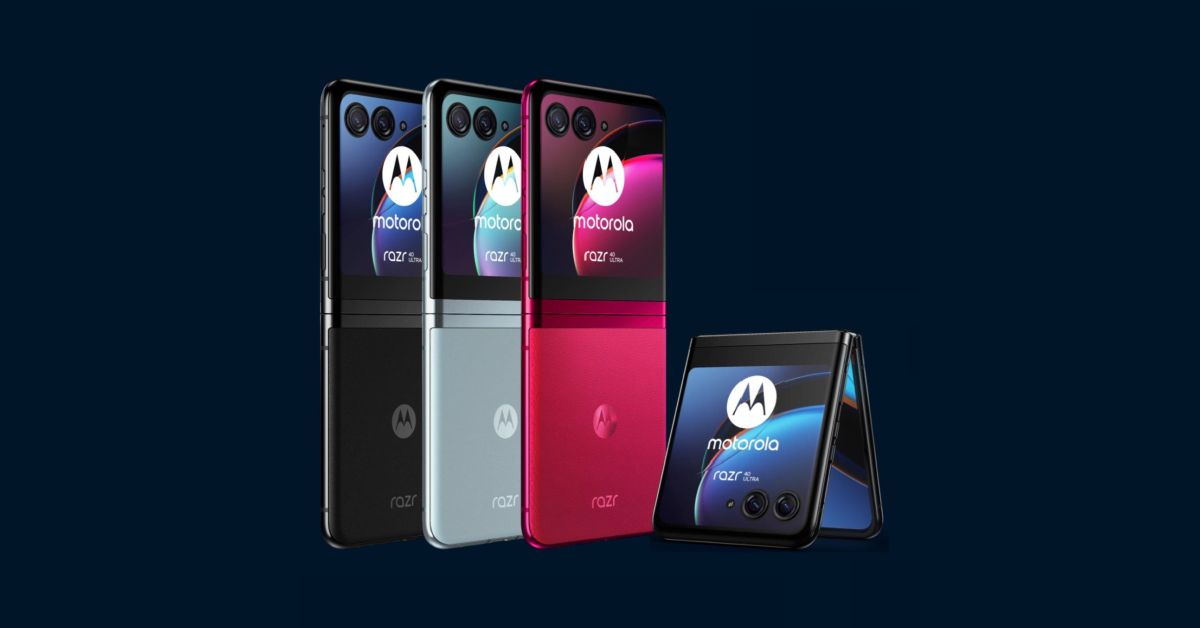
Motorola Razr 40 Ultra Price leaks, Color & Storage options revealed

Motorola is one of the leading players in the foldable smartphone market and the company is soon going to launch its next folding phone. The upcoming smartphone will be called the Moto Razr 40 Ultra but you might also know it from Moto Razr 2023. It is expected to launch globally on June 1 with the largest cover screen on a flip phone. Ahead of the launch, a report has revealed the Razr 40 Ultra’s price as well as color and storage options. Here are the details.

Moto Razr 40 Ultra

Razr 40 Ultra will cost more than Galaxy Z Flip 4

Saminsider has managed to spot the Moto Razr 40 Ultra on a European retailer’s website. According to the listing, the smartphone’s 8GB+256GB variant will cost consumers around EUR 1200 ($1332). Notably, this price is slightly higher than its rival, the Galaxy Z Flip 4, which costs EUR 1159 in Europe for the same configuration. The retailer only lists a single storage configuration, but there might be more options at the time of the launch. It will be offered in Viva Magenta, Glacier Blue, and Phantom Black colors.

razr-price.jpg

Renowned leaker Evan Blass recently shared several renders of the upcoming flip phone, showcasing its expansive cover screen. This screen is anticipated to offer a plethora of customization options, enabling users to personalize various aspects such as the layout, fonts, font size, colors, icon shape, sounds, display size, and theme of the cover screen.

The Razr 40 Ultra is said to be powered by Snapdragon 8 Plus Gen 1 SoC with a 3,640mAh battery that may come with 33W fast charging support. It could get a 6.7-inch foldable OLED FHD+ panel with a 144Hz refresh rate.

RELATED:

(Source)

Bigme S6 e-note with 7.8-inch 300PPI E-Ink display and built-in ChatGPT launched

The Bigme S6 e-note has been launched and it comes bundled with the ChatGPT app. The new Bigme e-note is a smart office notebook and is a refreshed version of the original model bearing the same name. The new e-note comes with in-built support for ChatGPT and is the first ever e-note to have such functionality.

Bigme S6 e-note

Bigme reportedly offers integrated access to ChatGPT on all its devices but the S6 is the first to be enabled. The refreshed S6 e-note features a 7.8-inch 300PPI E Ink display which is an improvement from the original model. The original Bigme S6 had an E Ink Kaleido Plus display but the new model sports a monochrome display. The dimension of both models remains the same at 7.8 inches. The new Bigme S6 can achieve lots of varied tasks like creating a summary of the meeting highlights, writing articles, video scripts, or other tasks.

The new Bigme S6 can also accomplish the real-time translation of texts, reading or editing notes, and much more activities. The generative AI present on the device opens a wide window of possibilities for the S6. The mechanism is smart enough to add to its repertoire of skills over time. Bigme says the presence of ChatGPT assures a more streamlined and structured operation of the daily work task.

The user interface of the new e-note is also significantly improved than its predecessor. The icons are now larger and more widely placed while newer functions have been added. The new interface is also designed to allow for quick access to files and file operations like sorting. There are more than 600,000 e-books on offer with the e-note. There are also improvements to the xReader reading engine that allows access to books in up to 20 different document formats.

Bigme S6 e-note integrated access to ChatGPT on its 7.8-inch E Ink Kaleido Plus display

There are optimizations that allow for a comfortable reading experience with the Bigme S6 e-note. There are also five reading refresh modes and four double-opening document methods.

The Bigme S6 has 6GB RAM and 128GB of storage, expandable to 1TB. The device incorporates the Bigme fast brush technology that ensures a faster and smoother refresh rate. A 5MP front and 8MP rear camera are featured in the e-note, as well as Wi-Fi/ Bluetooth connectivity. The device has a 3,000mAh battery and runs on Android 11 out of the box. You can purchase the ChatGPT-enabled Bigme S6 e-note from the Good e-Reader Store for $499.99.

RELATED:

(via)
Global Oppo A98 runs Geekbench with Snapdragon 695 SoC

Oppo has been reported to be working on a new mid-range smartphone, called Oppo A98. The handset has been making rounds on the internet for quite some time now, and its specifications and renders have also leaked online. The device is expected to be announced very soon and while we wait, its global version has appeared on the Geekbench website with the Snapdragon 695 SoC. Here’s how it performed on the benchmarking platform.

OPPO-A98-5G-leaked-render

Oppo A98 will be a mid-range smartphone

Oppo A98 5G has appeared on the  Geekbench website with the model number CPH2529. It has been listed with the Qualcomm Snapdragon 695 SoC, which is a mid-range SoC with a top clock speed of 2.21GHz. It features 8 Kryo 660 called cores divided into two clusters. There’s also a lower mid-range Adreno 619 GPU.

OPPO-A98-5G-Geekbench

Geekbench lists the smartphone with 8GB of RAM and Android 13 out of the box. The Oppo A98 5G managed to score 885 and 2034 in single-core and multi-core tests. The scores are on par with other Snapdragon 695 phones like OnePlus Nord CE 3 Lite.

Previous reports suggest the smartphone will get a 6.7-inch display with an FHD+ resolution of 1080 x 2400 pixels, a 20:9 aspect ratio, a 391ppi pixel density, and a 120Hz refresh rate. It could get 256 GB of internal storage and pack a 5,000mAh battery with support for 67W fast charging. For selfies, the handset will likely get a 32MP shooter nested in a punch-hole cutout.

In the rear camera department, you get a 64MP primary camera with an f/1.8 aperture, a 2MP depth sensor, and a 2MP macro camera. The handset is reported to be a rebranded version of the OPPO A1 5G available in the Chinese market.

RELATED:
(Via)

Microsoft acquisition of Activision Blizzard gets blocked by UK

Microsoft is apparently facing issues with its acquisition of Activision Blizzard in the UK. The government’s Competition and Markets Authority (CMA) has blocked this merger proposition, citing possible monopolistic effects of this deal in the gaming industry.

Microsoft faces a roadblock in Activision Blizzard acquisition in the UK

In a statement, the CMA stated that it is preventing “Microsoft’s proposed purchase of Activision over growing concerns the deal would alter the future of the fast growing cloud gaming market, leading to reduced innovation and less choice for UK gamers over the years to come.” To put things simply, the agency is worried that the acquisition would allow the American tech giant to hold a monopoly in the recently growing cloud gaming market. Since Microsoft announced that it will be buying out Activision Blizzard, it has faced scrutiny from various government bodies across the globe as well as its market competitors.

Microsoft

An example being Sony, which claimed that the company could leverage this acquisition to offer inferior versions of its products (games) from Activision Blizzard on its popular PlayStation platform. Apart from this, it is also facing a pending lawsuit in the US by the FTC (Federal Trade Commission) against Microsoft on the grounds that the brand might breach anti trust laws as well and could even establish a monopoly.

The CMA further added that “We have concluded that the merger would result in the most powerful operator in the fast-developing market for cloud gaming, with a current market share of 60-70%, acquiring a portfolio of world-leading games with the incentive to withhold those games from competitors and substantially weaken competition in this important growing market.”

RELATED:

POCO F5 Pro Appears In Leaked Unboxing Video Ahead Of Official Launch

POCO is set to debut the F5 and F5 Pro smartphones in the global market on May 9th. The pro model was spotted in leaked renders recently. Now the device has appeared in a leaked unboxing video shared by tipster Sudhanshu Ambhore on Twitter. It gives us a real look at the upcoming offering. 

The POCO F5 Pro will arrive in a Black box with Yellow colored fonts for text and the brand name. Apart from the smartphone, the box contains a 67W charger, a USB-C cable, a transparent phone cover, and user manual. Past reports suggest that the POCO F5 Pro will be a rebranded version of the Redmi K60 that debuted in China last December. The latest unboxing video indeed corroborates the same. 

The POCO F5 Pro has a slim design with a curved back panel. The volume rocker and power buttons are located on the right side. Both sides of the rear panel seem to feature a carbon-fiber-like pattern whereas the rest has a glossy finish. There is a rectangular camera module at the top left corner. It houses three sensors and an LED flash. A USB-C port, SIM tray, and speaker grille are located at the bottom of the device. The video reveals the front of the phone with a centre-aligned punch-hole cutout. 

Since the POCO F5 Pro is expected to arrive as a rebadged Redmi K60, we can expect the device to feature a 6.67-inch 2K 120Hz AMOLED display. It is tipped to be powered by a Snapdragon 8+ Gen 1 SoC and be backed by a 5,500mAh battery unit with support for 67W wired and 30W wireless charging. 

Related: 

Apple discloses monthly active users for App Store in Europe, forced to comply with EU’s rule

Apple has been forced to disclose the monthly active user count of its App Store in Europe in order to comply with the EU’s Digital Services Act. The disclosure revealed that the iOS App Store has 101 million users in Europe, while iPadOS has 23 million, indicating the immense popularity of Apple’s mobile devices in the region.

iOS App Store boasts 101 million active users in Europe

Apple App Store

While the Mac App Store has 6 million users, the tvOS App Store has 1 million, and the watchOS App Store has less than 1 million users, Apple’s disclosure highlights the dominance of its mobile devices in the European market. In addition, less than 1 million people in Europe use Apple Books and Podcasts for paid subscriptions each month, according to Apple’s report.

The EU’s Digital Services Act aims to regulate “very large online platforms”, which are defined as platforms with over 45 million monthly active users. While Apple considers each operating system’s App Store as a separate platform, only the iPhone iOS App Store is classified as a “very large” online platform, with over 101 million monthly active users in Europe alone.

In response to the Digital Services Act, Apple has pledged to “adjust” all its App Stores in Europe to comply with the regulations, even though the law only requires compliance for the iOS App Store. The regulations set by the DSA include protecting children from advertising, limiting the spread of misinformation, and more, aligning with Apple’s goal of protecting consumers from illegal content.

However, the Digital Markets Act, another EU regulation, may force Apple to support alternative app stores and app sideloading on the iPhone, at least for its European customers. This could potentially have a significant impact on Apple’s app store revenue, as the company currently takes a 15%-30% commission on all app sales and in-app purchases made through its platform.

With further regulations on the horizon, it remains to be seen how Apple will adapt to the changing landscape of the digital marketplace.

RELATED:

(Via)

Apple iMessages are finally making their way to Windows 11

While the Apple ecosystem is quite convenient for many and offers intuitive functionality, they don’t offer a seamless experience outside of this set ecosystem. However, it appears that the company’s massively popular iMessage platform is finally making its way to the Windows 11 platform.

Apple iMessages will finally work on Windows 11

Microsoft has just announced that it will be rolling out support for the iMessages through the Phone Link app. This update will be available to Windows 11 users and will let users send messages from their iPhones without actually using the smartphone. The Phone Link uses Bluetooth to sync help up your iOS devices. While this feature is already available for Android devices, it will only be available for iPhones in a limited manner.

Apple

So iPhone owners can only send and receive messages to others and manage the notifications as well as make phone calls. This is lesser than the many features offered by Phone Link’s functionality on Android devices. Some examples of this is Samsung’s Galaxy S series devices that allow for app streaming to mirror Android apps on your PCs. As per official notes, the company will still take till mid May before iOS syncing is allowed on Windows 11 users.

So for those interested, you can download Phone Link application from the Apple Store if you have an iPhone. Microsoft have been working on this compatibility feature for sometime now. The iMessage arriving on the Windows platform has apparently been in works for around five years now, beginning back in 2018. So this feature will easily be welcomed by many.

RELATED:

Sony Xperia 1 V To Launch In Japan On May 11

Sony is rarely active in the smartphone market. The Japanese brand releases a few Xperia phones every year. Now Sony has announced that it is launching a new Xperia phone in its home market on May 11th at 1 pm local time. Although the name of the upcoming offering has not been explicitly revealed, it is expected to be the Sony Xperia 1 V.  The device will arrive as the successor to the last year’s Xperia 1 IV.

Sony Xperia 1 V launch date

The Sony Xperia 1 V launch event will be live-streamed on the brand’s official YouTube channel. The company says that the upcoming Xperia phone will feature next-generation sensor and next-generation imaging. Apart from this, Sony has not revealed any additional details about the smartphone. 

The Sony Xperia 1 V surfaced in leaked renders as well as a live image in February earlier this year. The smartphone will come with a similar design as its predecessor. It will have a tall aspect ratio with minimal screen bezels and a sleek look. The right edge of the phone houses volume rocker buttons, a power button with an integrated fingerprint scanner, and a camera shutter button. The back panel has a protruding vertically stacked camera module. It accommodates two sensors, a periscope lens, and an LED flash. 

As for the core specifications, the Sony Xperia 1 V is expected to be powered by a Snapdragon 8 Gen 2 processor coupled with up to 16GB RAM. The camera setup is rumored to comprise a 12MP main, 12MP periscope, and 48MP ultra-wide-angle lenses. The upcoming smartphone could retain the same 6.5-inch 4K HDR OLED display with a 120Hz refresh rate.

Related

Samsung confirms Exynos chipsets may return in Galaxy flagship smartphones

Samsung Electronics has confirmed its plans to reintroduce its in-house Exynos chipset to its flagship lineup of smartphones, specifically the Galaxy S series. The announcement was made during the company’s Q1 2023 earnings call by Hyeokman Kwon, Vice President of the DS Division at Samsung LSI, who stated that they are “pushing for the return of Exynos to the flagship of the Galaxy series.”

Exynos SoCs likely to power next Galaxy S flagship lineup

Samsung-Exynos

While Kwon did not explicitly mention the Galaxy S24 lineup, it is widely known that Samsung introduces new chipsets to its flagship Galaxy S lineup rather than the Galaxy Z series.

Kwon also did not specify which Exynos chipset Samsung is planning to use, it is believed that the Exynos 2400 chipset is the most likely candidate since it is the only high-end chipset under development by the company. However, there are rumors that Samsung may use Snapdragon 8 Gen 3 chipset in the Galaxy S24+ and Galaxy S24 Ultra variants while using the Exynos 2400 only in the standard Galaxy S24 model.

While this may come as a disappointment for Samsung fans in Europe and Asia, who have experienced issues with the Exynos SoC in the past. However, if the Exynos 2400 fails to live up to expectations, users in these regions can always opt for the Snapdragon 8 Gen 3 chipset in the higher-end models of the Galaxy S24 lineup.

Samsung’s move to use the Exynos SoC in its flagship lineup again could be seen as a strategic move to lessen the brand’s reliance on Qualcomm, which currently dominates the high-end smartphone chipset market. This also allows Samsung to showcase the performance of its in-house chipsets and potentially gain more market share in the long run.

It remains to be seen whether the Exynos 2400 SoC can meet the expectations of consumers, but it is undoubtedly a step forward for Samsung’s chip-making division.

RELATED:

(Source, Via)

Ayaneo 2S could be the next Steam Deck rival after ASUS ROG Ally

Ayaneo has just announced that it is working on a brand new handheld gaming console that will be called the Ayaneo 2S. This new portable console might just be the next competitor to the popular Steam Deck and the highly anticipated ASUS ROG Ally.

Ayaneo 2S to take on ASUS ROG Ally & Steam Deck Handheld Console

The company announced that it will be launching the 2S model soon on YouTube at its ‘New Product Sharing Session’. Here, it was revealed that the upcoming handheld console from the brand will be powered by an AMD Ryzen 7000 series chipset, which is likely the Ryzen 7 7840U processor. To put things into perspective, this chip is said to offer around the same performance as the AMD Ryzen Z1 Extreme processor that was announced earlier this week.

Ayaneo

Notably, the Z1 Extreme is also the chipset that powers one of the ASUS ROG Ally variants. Unfortunately, the company has only teased the new compact console, but it appears to be similar in design as the Ayaneo 2. In other words, 2S model likely features only slight changes in design but with internal upgrades and other refreshes to make it more up to date for the current market.

The video also showcased that the Ayaneo 2S will house a three pipe cooler for improved thermal management as well. Apart from the newer chipset offering better performance overall, the new Radeon 780M graphics should also run on a low TDP range between 8 to 15. Meaning, we can expect to see better energy efficiency.

RELATED:

Infinix Hot 30 Play With 6,000mAh Battery, 90Hz Display Launched In Nigeria

Infinix has launched a new Hot 30 series phone in Nigeria. It is dubbed the Infinix Hot 30 Play. The latest offering joins the Hot 30 and Hot 30i that are available in the Thailand and Malaysian markets respectively. Read on to know what the Hot 30 Play offers out of the box. 

Infinix Hot 30 Play specifications and features

The Infinx Hot 30 Play features a boxy form factor and a side-mounted fingerprint scanner. It has two camera rings on the back panel housing a 16MP primary sensor and an AI lens. The back panel flaunts a diagonal stripped pattern design. 

The Infinix Hot 30 Play comes with a large 6.82-inch display bearing an HD+ resolution and a center-aligned punch-hole cutout. It offers a 90Hz refresh rate and 500 nits peak brightness. There is an 8MP selfie snapper. 

Under the hood, the Infinix Hot 30 Play is equipped with an octa-core MediaTek Helio G37 processor. It packs 4GB RAM along with RAM expansion up to 8GB. The device is offered in 64GB and 128GB storage options with microSD card slot support. The smartphone also has a double-layered graphite cooling system for heat dissipation. The Infinix Hot 30 Play draws its power from a 6,000mAh battery unit with support for 18W fast charging via USB-C port. It runs on XOS 12.6 based on Android 13. 

The Infinix Hot 30 Play is offered in Bora Purple, Mirage White, and Blade Black colors. The smartphone carries a starting price tag of NGN 80,000 (~$173).

Related: 

LG Gram SuperSlim Launches As The Brand’s Thinnest Laptop With OLED Display

LG has launched a new laptop in the US market. It is called the LG Gram SuperSlim (formerly called UltraSlim at CES 2023). As the name suggests, it is the brand’s thinnest laptop with an OLED screen. Read on to know what the machine offers out of the box. 

LG Gram SuperSlim specifications

The LG Gram SuperSlim measures just 0.43 inches thick and weighs 2.2 pounds. This makes it a portable offering. The laptop features a 15.6-inch OLED display with an FHD resolution, 100 percent DCI-P3 color gamut and VESA DisplayHDR certification. The machine has also passed seven tests ensuring military-grade durability. 

The LG Gram SuperSlim has a full-sized backlit keyboard and an FHD IR webcam with support for face recognition. On the audio front, the laptop is equipped with dual stereo speakers with 5W output and Dolby Atmos. 

Under the hood, the LG Gram SuperSlim houses the 13th generation Intel Core i7 processor paired with Iris Xe graphics. The machine packs up to 32GB LPDDR5 RAM and 2TB SSD storage. It runs on Windows 11 out of the box. The laptop draws its power from a 60WHr battery cell that is claimed to deliver up to 13-hour video playback. 

The LG Gram SuperSlim packs connectivity options like WiFi, Bluetooth 5.1, three USB-C ports (one supporting Thunderbolt 4), and a headphone jack. 

The LG Gram SuperSlim carries a price tag of $1,699 for the 16GB + 512GB RAM and storage configuration whereas the 32GB + 512GB variant costs $1,999. LG is also offering a Gram+ View portable monitor worth $350 to customers purchasing the Gram SupreSlim by May 14th. 

Related: 

Google releases Android 14 Beta 1.1 with critical bug fixes

Google has released an update for its Android 14 Beta, labeled as Beta 1.1, which primarily aims to fix numerous bugs that have been found in the previous version. The company has identified that some of the bugs in the Beta 1 were too annoying to wait for the next Beta 2 update, which is scheduled for next month. Hence, Google has launched this interim Beta 1.1 version to address the issues and make the users’ experience smoother.

Android 14

While Android 14 is not expected to be released until later this year, Google is already making progress towards a stable version by releasing these beta updates for developers and early adopters to test and provide feedback.

The new build, UPB1.230309.017.A1 for Pixel 6, Pixel 6 Pro, and Pixel 6a units on Verizon, and UPB1.230309.017 for all others will be rolled out over-the-air to Pixel 4a 5G and later models that have enrolled in the Android Beta Program. However, the company has warned that the rollout might take a few days or more to reach all eligible devices.

Users who have already enrolled in the Android 14 Beta program will receive the patch as an OTA update shortly. Alternatively, they can also download the OTA files manually from Google’s website to flash them onto their devices.

Google has listed down some of the bugs that have been fixed in this Beta 1.1 version, such as issues with system UI crashes while accessing the Wallpaper & Style screen, problems with fingerprint unlock, and non-display of the mobile network on the status bar. Additionally, the update has fixed issues related to SIM card or eSIM detection, activation, and Smart Lock display on the lock screen.

Bugs that have been fixed in the Android 14 Beta 1.1 update

  • Fixed an issue where the system UI crashed when trying to access the Wallpaper & Style screen either through the Settings app or by long-pressing from the home screen.
  • Fixed some issues that prevented fingerprint unlock from being used.
  • Fixed an issue where the status bar did not display the mobile network.
  • Fixed an issue that prevented a SIM card or eSIM from being detected or activated in some cases.
  • Fixed an issue where the lock screen displayed a message with an unresolved string placeholder when Smart Lock was enabled.

Overall, the release of Android 14 Beta 1.1 should be welcomed by those experiencing the aforementioned bugs. With the fixes in place, users can continue to test out the new features of the upcoming operating system without the frustration of these issues.

RELATED: