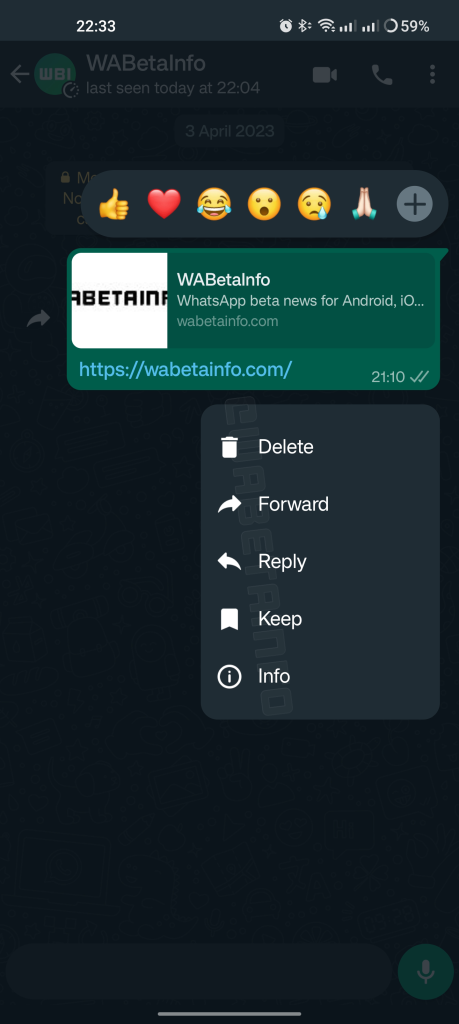
WhatsApp is currently working on a new design for its context menu, as reported by WABetaInfo. The redesigned context menu is currently in beta testing and offers a fresh look to WhatsApp’s approach. In the current stable version of WhatsApp, when you tap and hold a message to select it, only a few emoji options for reactions are displayed, while other options like delete and forward are placed on the top toolbar.
WhatsApp’s New Context Menu Design Similar to iOS
However, with the latest WhatsApp version 2.23.11.4, a new context menu for messages has been spotted. The new design resembles the context menu found in the iOS app. It includes options such as Delete, Forward, Reply, and Info in a drop-down list, while emoji reactions still appear on top of the message.
It’s important to note that the new context menu is still under development and is only available to WhatsApp beta testers. This change suggests that WhatsApp aims to achieve design consistency across different operating systems and brings a modern touch to the app’s interface.
In addition to the context menu redesign, WhatsApp is introducing various new features. These include the Chat Lock feature for securing conversations, improved polling, flexible captioning in the latest updates, and multi-device support that allows users to use the same account on up to four phones. Overall, WhatsApp is actively working on enhancing its features and design to provide users with an improved messaging experience.
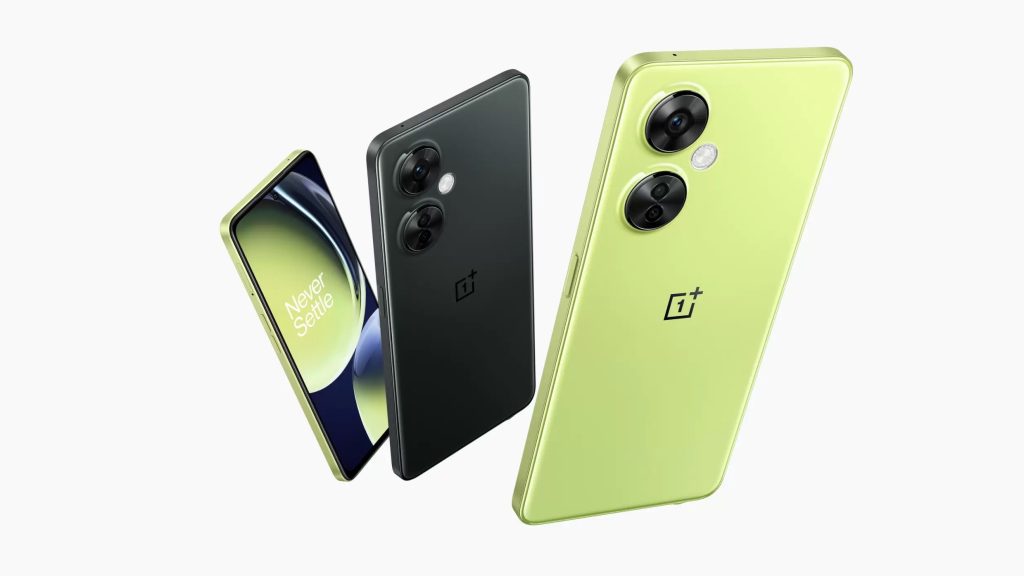
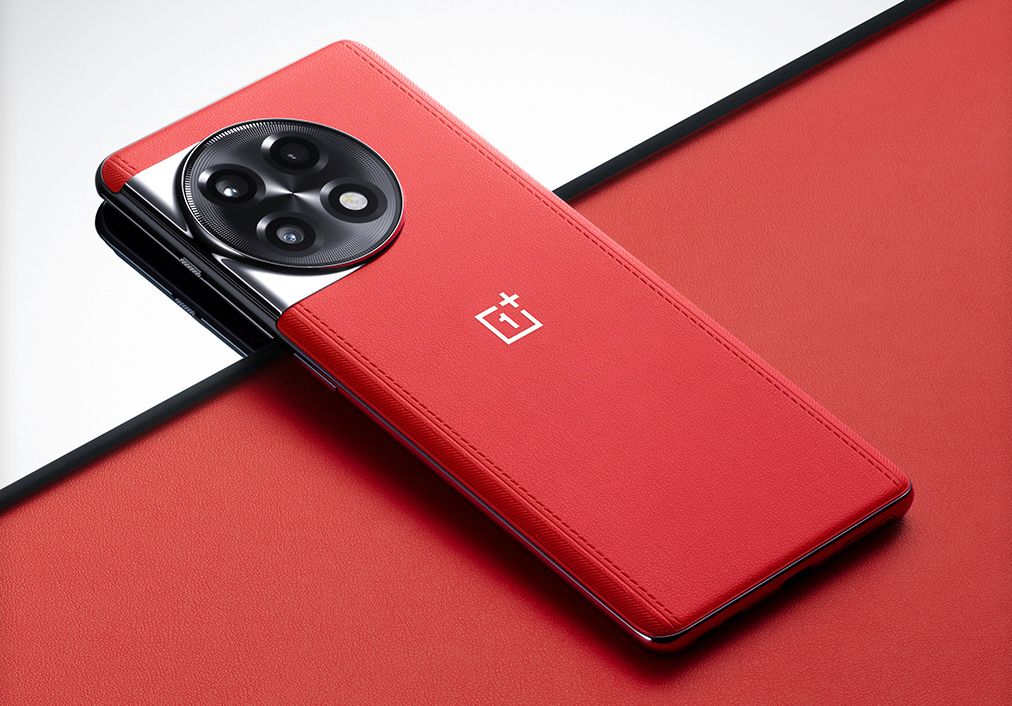
OnePlus is gearing up to launch a new Nord series smartphone in the North American market, including regions like the US and Canada. The new device in question is the new Nord N30, which is a rebranded Nord CE 3 Lite. But prior to any official announcement, it was spotted on a certification website. So let’s have a look.
OnePlus Nord N30 is a rebranded Nord CE 3 Lite
The Chinese smartphone maker’s upcoming Nord 30 has just recently surfaced on the Bluetooth SIG certification website. This listing doesn’t reveal any particular finer detail regarding this device, but does show us its model number CPH2515. Previously, we had also covered reports after the Nord N30 was spotted in other certification platforms like the FCC. So now, the latest listing hints that its launch should be right around the corner in the US and Canadian market.
The Bluetooth SIG database confirms that the new mid range handset will support Bluetooth 5.1. Based on what we know so far, the Nord N30 will run on Android 13 OS based OxygenOS 13.1 out of the box. Furthermore, since its s rebranded Nord CE 3 Lite model, we can expect it to be powered by the Qualcomm Snapdragon 695 SoC that is paired with up to 8GB of RAM. The device will also pack a large 5,000mAh battery pack that will likely support 67W fast charging as well.
Apart from this, the device also had its design leaked thanks to leaked renders and was even spotted on the Google Play Console, which confirmed that it is a rebranded Nord CE 3 Lite. So stick around for more as we will be offering updates when additional information is available regarding this device.
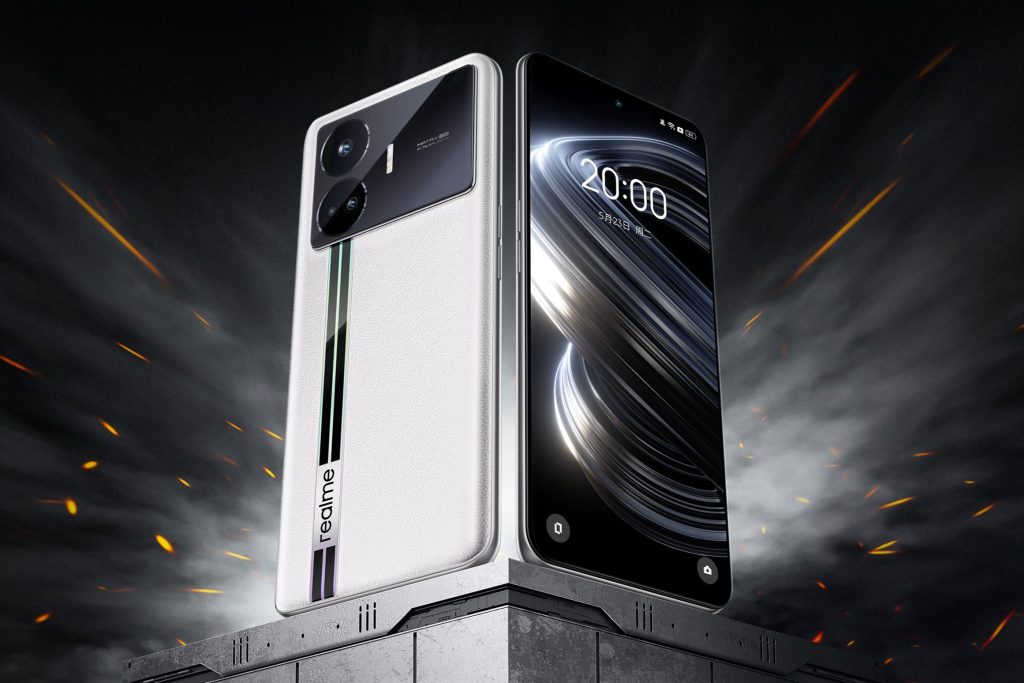
Yesterday, Realme teased that it will unveil a new color option for Realme GT Neo 5 SE in collaboration with the upcoming movie Transformers: Rise of the Beasts. This color variant is now official but unfortunately, there’s nothing special about it.
The new shade for the smartphone is officially called Holy White Phantom. This hue does not have anything to do with Transformers.
The brand promotes this color with a short video cut from the movie’s trailer. The promo video showcases Autobot spy Mirage as a 1993 Porsche 911 Carrera RS 3.8 – 964 in silver color with blue accents.
The color of the car and the phone do not match at all. The partnership appears to be a last-moment decision, so there’s no proper customization.
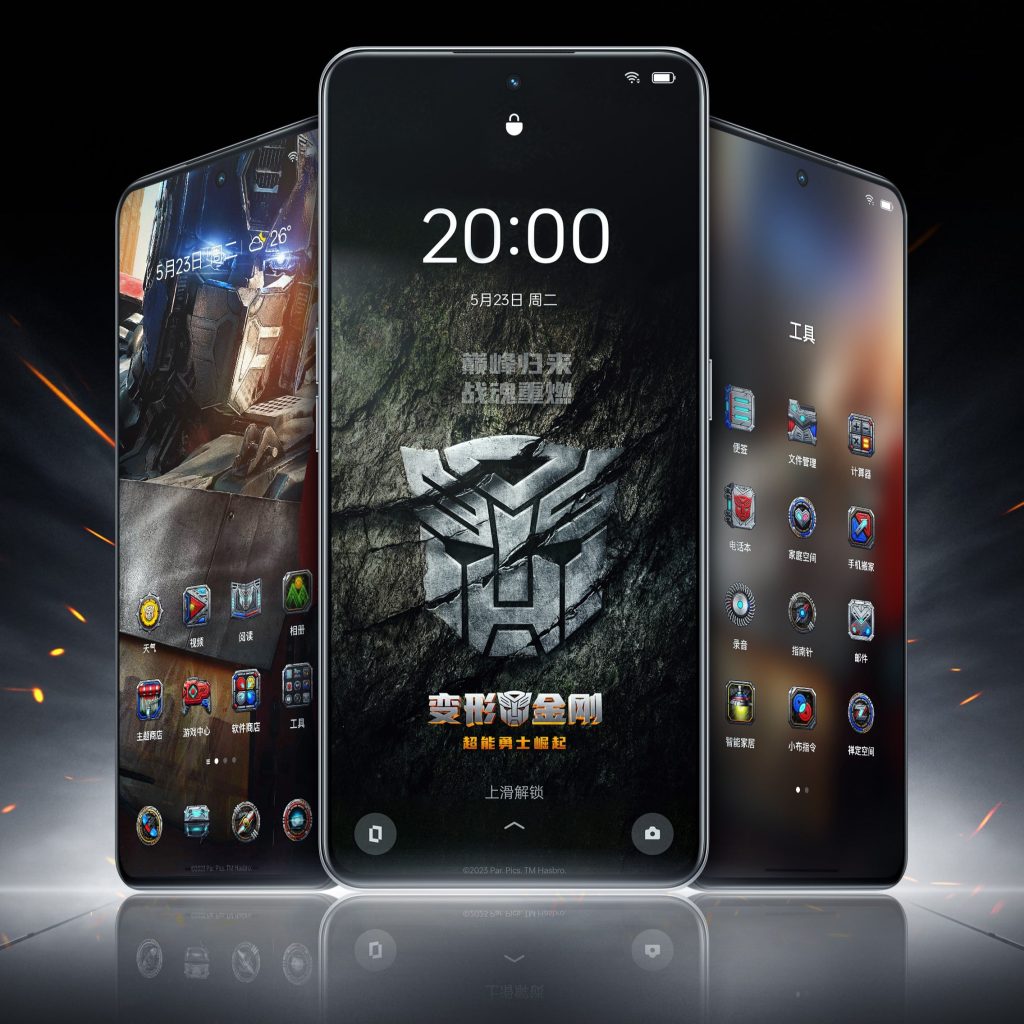
In addition to the new shade for Realme GT Neo 5 SE, the company has also announced a theme for all models designed after Transformers. This theme will be available for download on May 23 when the handset will be available for pre-order.
Regarding the price, the device in Holy White Phantom costs the same as the original two hues — Final Fantasy and Polar Black. But it is not known whether it will be available in all four memory configurations or less.
Finally, some of the highlights of this smartphone include a Qualcomm Snapdragon 7 Plus Gen 2 chipset, a 10-bit 1.5K 144Hz OLED display, a 64MP primary camera, a 5,500mAh battery, and 100W fast wired charging support. It competes with the Redmi Note 12 Turbo (Poco F5) in China and is yet to release in global markets.
A new leak has just revealed some key details regarding the highly anticipated Motorola Razr 40 Ultra foldable smartphone. This latest leak shares renders of the upcoming device as well as reveal its pricing and specifications. So let’s have a look.
Motorola Razr 40 Ultra may launch for around $1,000
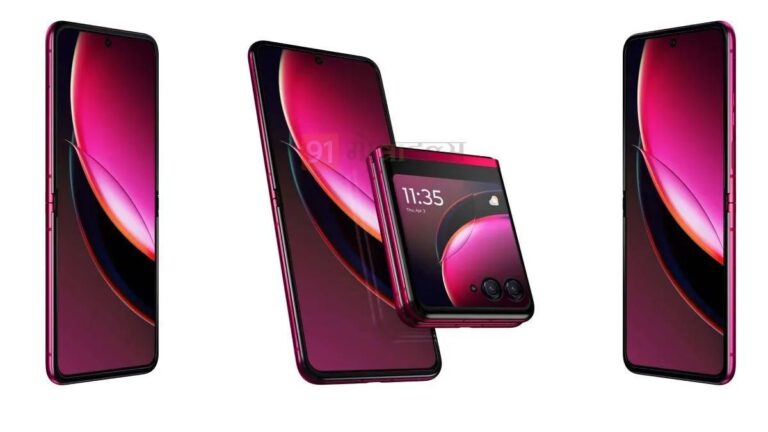
Talking about the design first, we have already covered leaked official images and even renders in the past. However, the latest leak now arrives from 91Mobiles and it confirms what we have already seen in the past. The Moto Razr 40 Ultra features a clamshell folding design similar to its other Razr series predecessors but with a larger cover display on the back. This external panel almost completely covers one half of the rear panel, with the two rear cameras also being housed alongside it.
Meanwhile, the primary display houses a punch hole selfie camera at the top. Thanks to a larger cover screen, users will be able to better take selfies when using just the rear cameras. Furthermore, the renders also show that the smartphone will be available in three color options namely Black, Blue, and Red. The leak further adds that the Razr 40 Ultra will reportedly cost around 1,000 US Dollars. Keep in mind that this is still just an unconfirmed report so take this news with a pinch of salt.
Apart from this, the new report also shares key specs like a 6.7 inch FHD+ pOLED display, and a 3.4 inch OLED external display. Under the hood, it is expected to pack the Snapdragon 8+ Gen1 SoC that is paired with up to 8GB of RAM and 256GB of internal storage. The rear features a 32 megapixel primary and an 8 megapixel ultra wide angle lens, while the front houses a 32 megapixel selfie camera. Lastly, the device will be powered by a 3,500mAh battery pack that supports 33W fast charging and runs on MyUX 5 out of the box.
Artificial intelligence continues to evolve and become more widespread. Almost every day, we report on another company integrating AI technology into their services on Gizmochina. The latest of these is Grammarly, which is considered the best writing assistant on the market and is even used by native English speakers. The companyis expanding its reach into the business world with the launch of Grammarly Business. The new product uses artificial intelligence to help businesses improve their communication and productivity. Here are the details…
Grammarly Transforms Business Communication
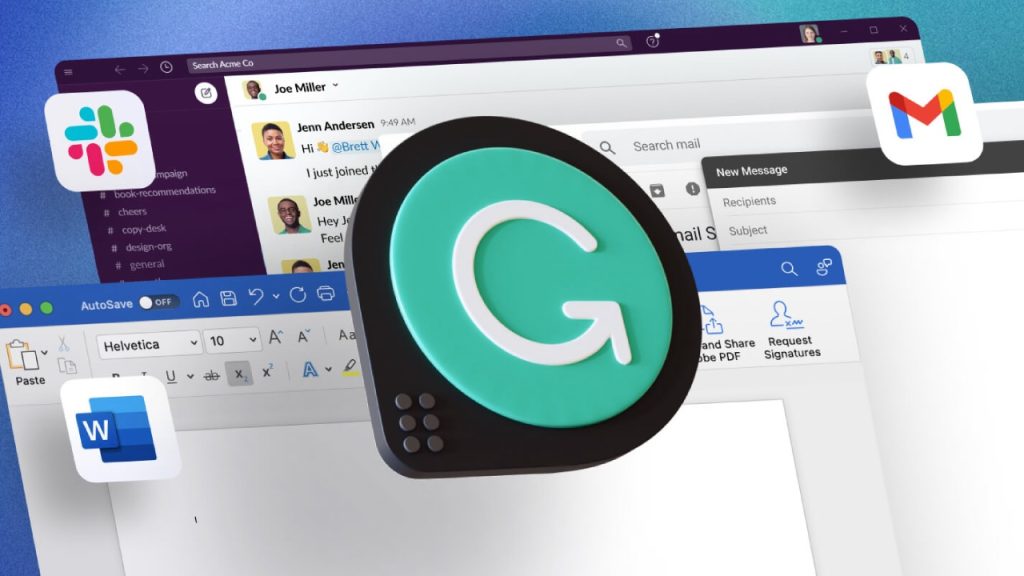
So far, Grammarly has been a writing assistant for many people. However, the company is changing this with Grammarly Business. This new service offers a variety of features that can help businesses streamline their writing processes. For instance, isn’t efficiency one of the most crucial aspects for any company? Now, the software can summarize key points in a lengthy email chain, identify whether the information is already shared within the organization, and compose a reply.
Moreover, Grammarly Business can connect to other common office applications such as Slack and Gmail. It can identify priority tasks for employees and compose responses to colleagues across different messaging apps. As usual, it can automatically detect and correct grammar and spelling errors. It also suggests more concise and effective writing.
Grammarly Business is available for a monthly or annual subscription fee. The software is currently in beta testing, and is expected to be released to the public in early 2023. Grammarly’s expansion into the business market is a sign of the growing importance of AI in the workplace. As AI technology continues to develop, it is likely that we will see even more businesses adopt AI-powered tools to help business.
Back in December, the OnePlus 10T received the stable OxygenOS 13 update based on Android 13. Since then, the device has received regular patches and updates making the performance smooth and optimal. The brand has now released another update for the device that brings multiple new features to the OnePlus 10T.
The OxygenOS 13.1.0.520 update is an incremental over-the-air (OTA) update. In India, the firmware version for this update is CPH2413_13.1.0.520(EX01), while in the global market, it will be identified as CPH2415_13.1.0.520(EX01).
The update will bring several notable additions and enhancements to the device. One of the key features is the Talkback feature, which will have the capability to identify and provide information about images within specific apps. Additionally, users can expect the introduction of the Zen Space app, offering both Deep Zen and Light Zen modes to create a more peaceful and focused environment.
Furthermore, the gaming experience will see improvements with the update. The Game Assistant will now include a new Championship mode, designed to optimize device performance and provide an uninterrupted gaming session by disabling notifications, calls, and other messages. Additionally, a music playback control will be integrated into the Game Assistant, allowing users to enjoy their favorite tunes while immersing themselves in gaming sessions. You can check the official changelog below.
OnePlus 10T OxygenOS 13.1.0.520 Changelog
Health
• Adds a new TalkBack feature that recognizes and announces images in apps and Photos. • Adds the new Zen Space app, with two modes, Deep Zen and Light Zen, to help you focus on the present.
Gaming experience
• Adds the Championship mode to Game Assistant. This mode improves performance while also disabling notifications, calls, and other messages to give you a more immersive gaming experience. • Adds a music playback control to Game Assistant, so you can listen to and control music easily while gaming.
The update has commenced its rollout and has already reached a select group of OnePlus 10T users in India. Over the next few days, a wider rollout is expected to take place, ensuring that a larger number of users can benefit from the new update.
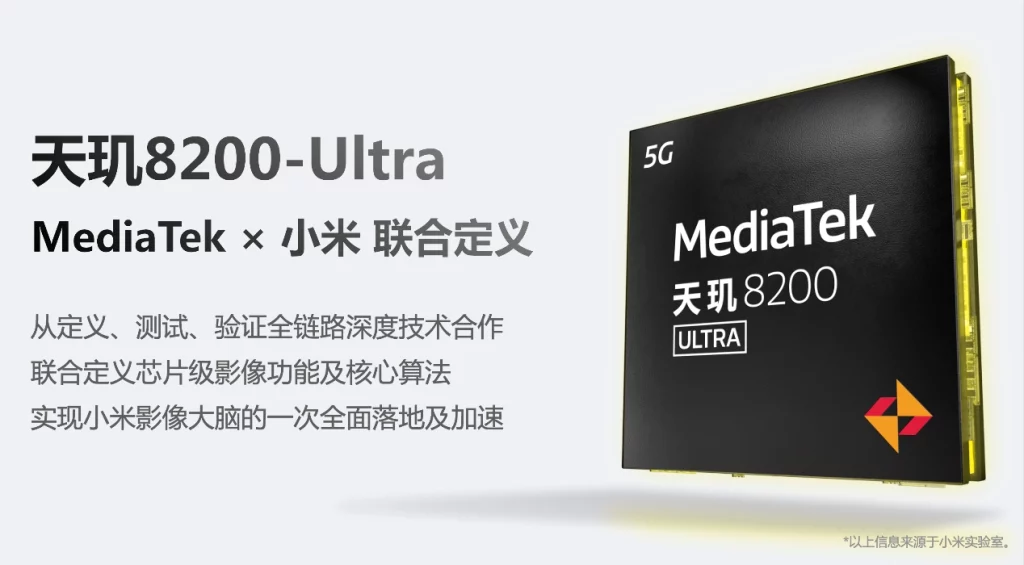
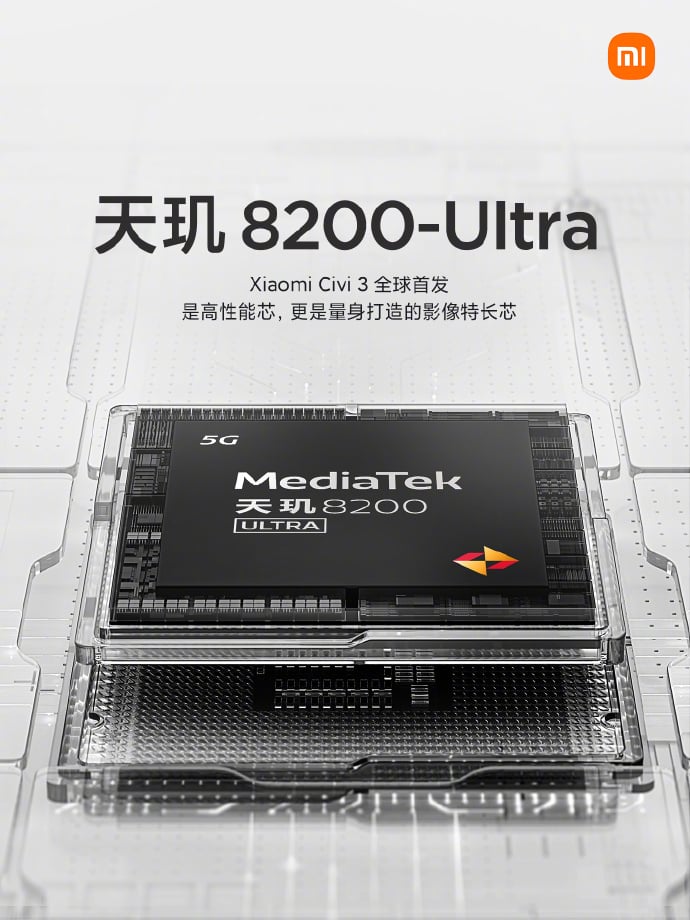
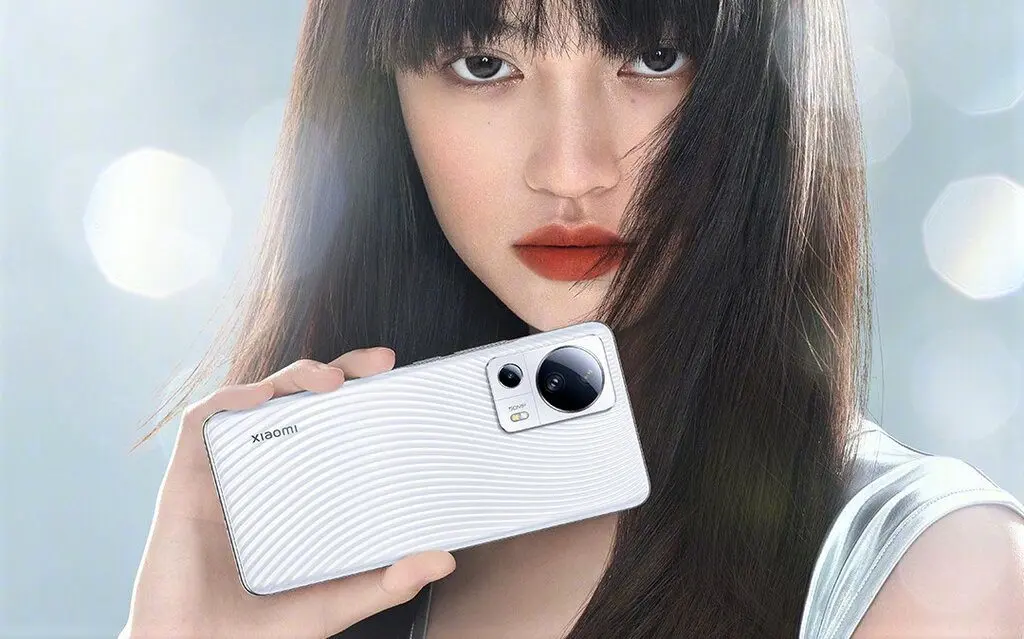
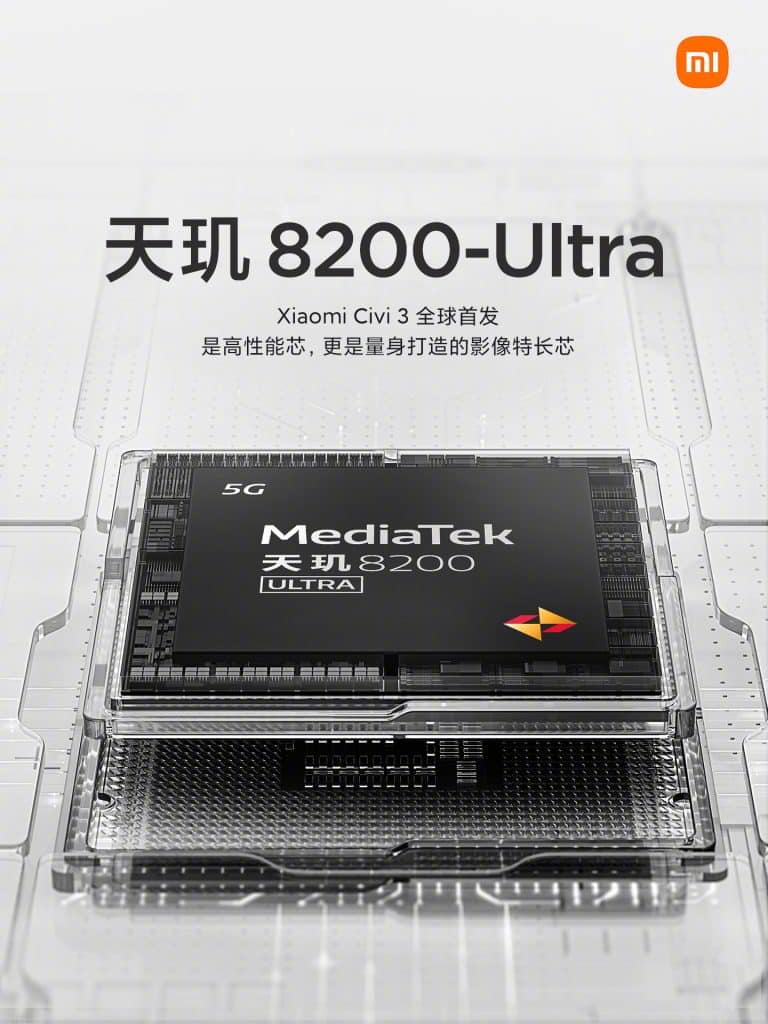
MediaTek, a leading semiconductor company, has partnered with Xiaomi to introduce the Dimensity 8200-Ultra mobile platform. This collaboration aims to deliver a high-performance chip that excels in imaging capabilities. Xiaomi’s official Weibo account has confirmed that the first smartphone to feature the Dimensity 8200-Ultra will be the Xiaomi Civi 3.
The Dimensity 8200-Ultra, fabricated on TSMC’s cutting-edge 4nm process, boasts 4 Cortex A78 cores and 4 Cortex A55 cores, resulting in a powerful chipset that achieves an impressive Antutu benchmark score surpassing 900,000 points.
Xiaomi Civi 3’s custom Dimensity 8200-Ultra will focus more on better image processing
The collaboration between MediaTek and Xiaomi leverages the strengths of both companies to optimize the Dimensity 8200-Ultra’s imaging capabilities. Xiaomi is renowned for its expertise in algorithms and imaging technology, as demonstrated by its achievements in various technical aspects of photography. MediaTek, on the other hand, brings its extensive experience and technological expertise to the mobile imaging field.
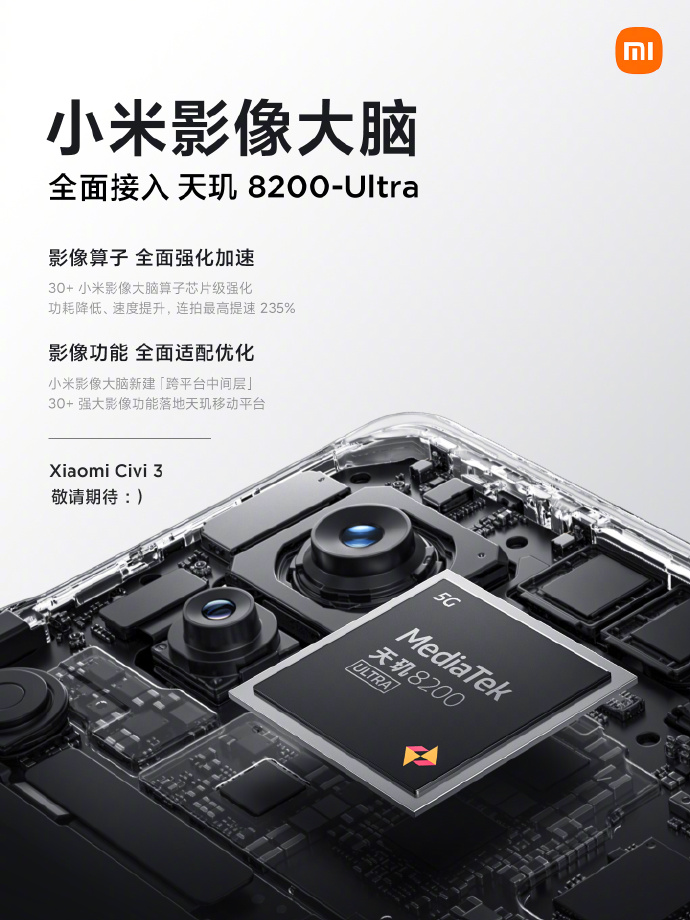
The Dimensity open architecture facilitates seamless integration between MediaTek’s platform and Xiaomi’s imaging capabilities. Xiaomi’s Imaging Brain, powered by advanced algorithms, has achieved industry recognition and success in areas such as portrait photography, snapshot capturing, and night scenes. To ensure compatibility and efficiency, Xiaomi has created a cross-platform intermediate layer that enables easy adaptation of the Imaging Brain to the Dimensity mobile platform, streamlining the adaptation process for future updates.
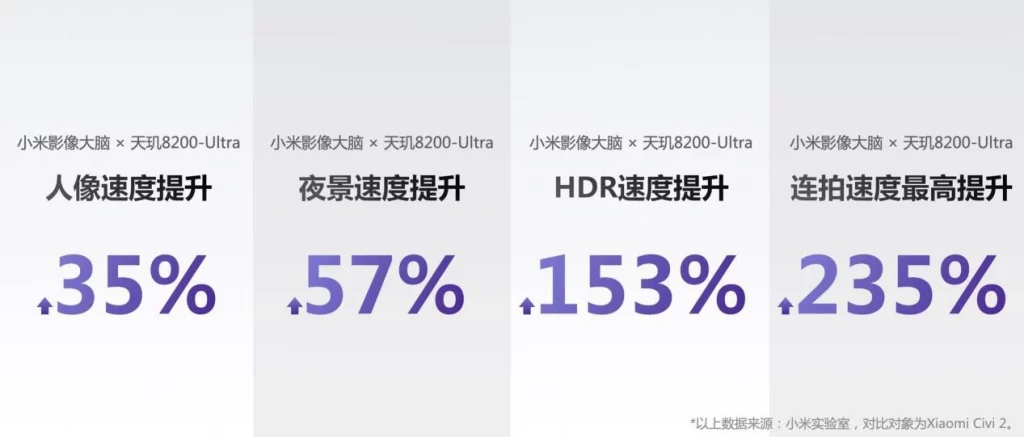
The collaboration also focuses on operator implementation acceleration, which involves enhancing and accelerating more than 30 operators of Xiaomi’s Imaging Brain on the Dimensity 8200-Ultra. This optimization allows Xiaomi’s Imaging Brain to leverage the full potential of the chip, resulting in excellent image processing effects, improved performance, and enhanced power efficiency. The integration of Xiaomi’s Imaging Brain framework brings 38 imaging functions to the Dimensity mobile platform for the first time, delivering optimized speed and power consumption compared to previous devices, with a notable 235% increase in burst speed.
Chen Junhong, Vice General Manager of MediaTek’s Wireless Communication Business Unit, expressed his excitement about the upcoming smartphone, stating that it will amaze consumers with its sleek design, impressive performance, and exceptional imaging capabilities.
By collaborating closely with global smartphone brands like Xiaomi, MediaTek aims to unlock the full potential of its Dimensity platform and deliver extraordinary user experiences tailored to specific market segments.
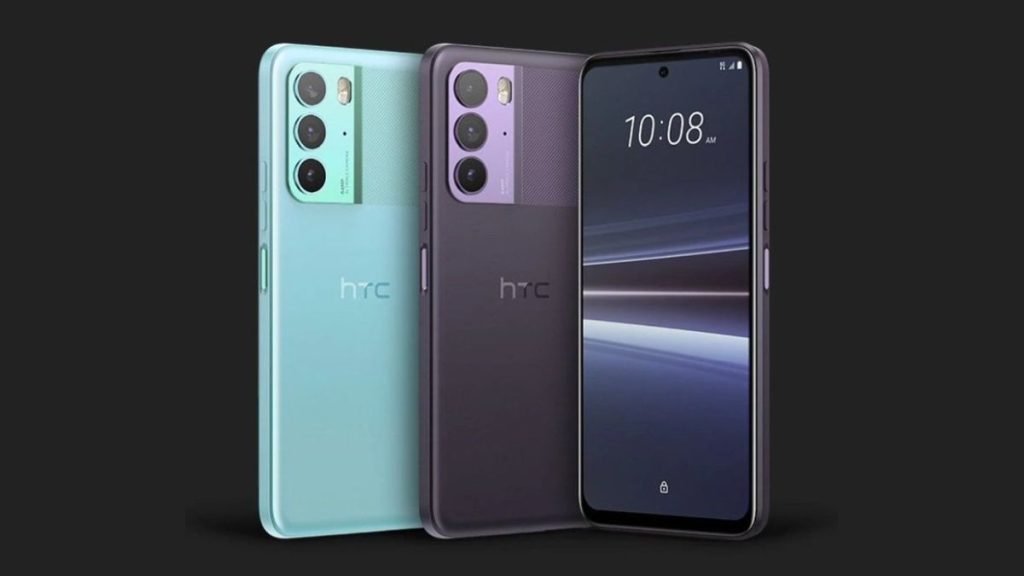
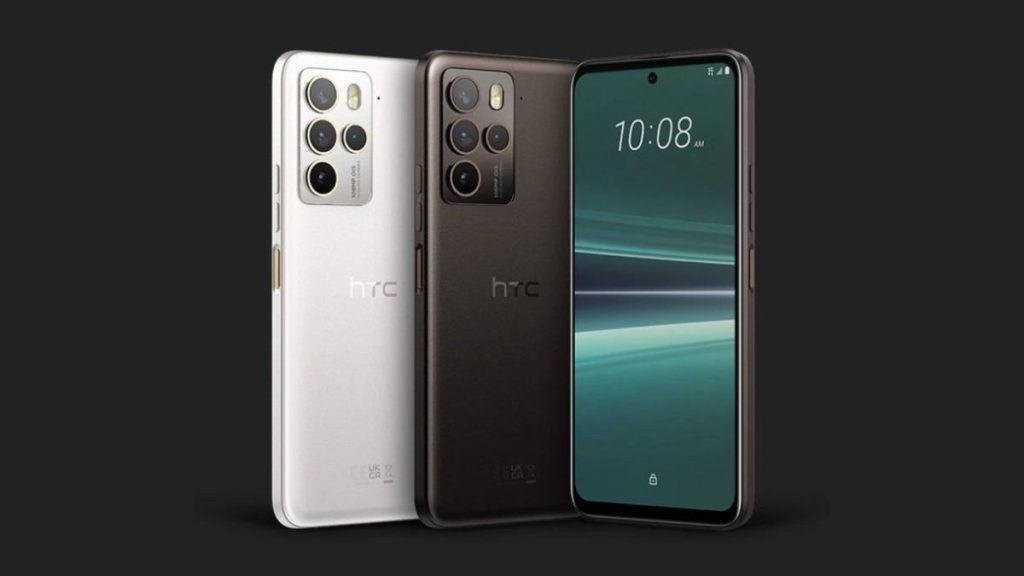
HTC U23 and U23 Pro have been launched in Taiwan. These smartphones, which feature the Snapdragon 7 Gen 1 chipset, are currently the most powerful HTC phones available on the market. Here is a look at the specifications, features, and prices of the U23 and U23 Pro.
HTC U23, HTC U23 Pro specifications and features
HTC U23
The HTC U23 and U23 Pro have a 6.7-inch OLED panel with a punch-hole design. The screen offers an FHD+ resolution, a 120Hz refresh rate, and Gorilla Glass Victus protection. For security, both devices are equipped with a side-facing fingerprint scanner.
The Snapdragon 7 Gen 1 chipset powers the U23 and U23 Pro. Both devices have been optimized for HTC’s metaverse, called the Viverse. The U23 duo comes preinstalled with the Android 13 OS. The U23 series comes equipped with up to 12 GB of RAM and up to 256 GB of storage. For more storage, both handsets have a microSD card slot.
HTC U23 Pro
Both smartphones are equipped with a 32-megapixel front-facing camera. On the back, the HTC U23 features a 64-megapixel primary camera, an 8-megapixel ultra-wide lens, and a 2-megapixel depth sensor. The U23 Pro’s back panel has an OIS-enabled 108-megapixel main camera, an 8-megapixel ultra-wide lens, a 5-megapixel macro camera, and a 2-megapixel depth sensor.
The HTC U23 and the HTC U23 Pro pack a 4,600mAh battery. Both handsets support 30W wired charging and 15W wireless charging. The other features of the HTC U23 and U23 Pro include 5G, dual SIM, Wi-Fi 6, Bluetooth 5.2, GPS, NFC, a USB-C port, and an IP67-rated chassis.
HTC U23, U23 Pro price and availability
At present, the HTC U23 and U23 Pro are only available in Taiwan. At present, there is no word on the price of the device. It comes in blue and violet. The U23 Pro has arrived in Taiwan in two configurations: 8 GB RAM + 128 GB storage for TWD 16,990 (~$552) and 12 GB RAM + 256 GB storage for TWD 17,990 (~$585). The Pro model comes in black and white. There is no word on whether the HTC U23 and U23 Pro will be released in markets outside of Taiwan.
iQOO has just confirmed some key specifications of its upcoming Neo 8 series of high end smartphones. The company has officially teased the Neo 8 series battery capacity and charging rates. So here are all the details.
iQOO Neo 8 series to launch in China on May 23
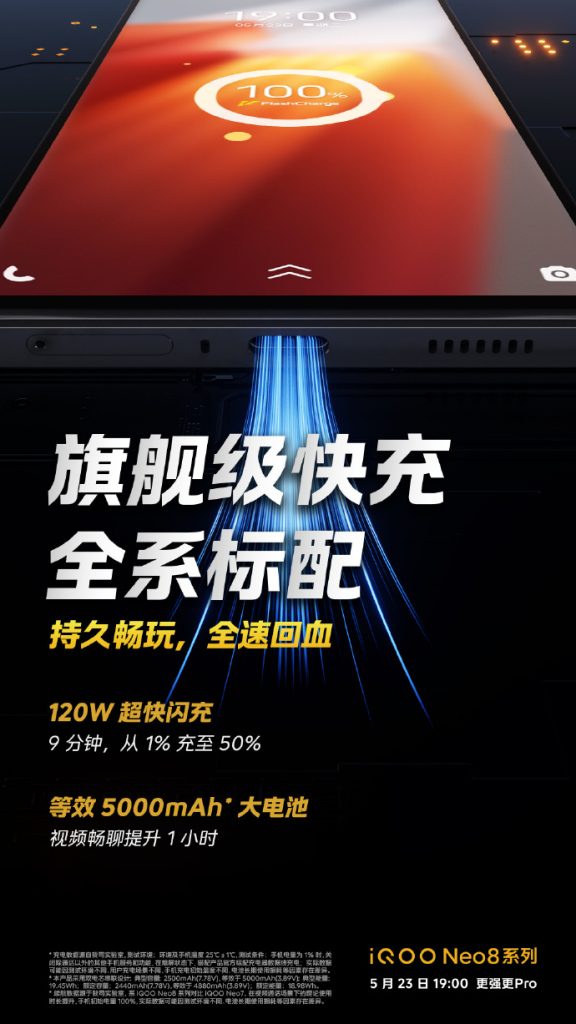
Earlier today (18th May 2023), the Chinese smartphone maker has officially teased the upcoming Neo 8 series of smartphones. The company shared the teaser on its official Weibo account (a Chinese microblogging website). Looking at the teaser image, we can see that the Neo 8 and Neo 8 Pro are confirmed to be powered by a large 5,000mAh battery pack that will support an impressive 120W fast charging rates.
The social media posts further adds that this high fast charging rate will be capable of charging your Neo 8 and Neo 8 Pro from 1 percent to 50 percent in just 9 minutes. Notably, this teaser also arrives after the company shared the AnTuTu score of the Neo 8 Pro. Similarly, iQOO also confirmed that the Neo 8 series will feature a dedicated imaging chipset and a 144Hz refresh rate display along with a 50 megapixel primary camera on the rear.
For those unaware, the brand is set to unveil the new high end smartphones in the Chinese market on 23rd May 2023 launch. Based on what we know so far, the iQOO Neo 8 will be equipped with the Qualcomm Snapdragon 8+ Gen 1 SoC, while the higher end Neo 8 Pro will feature a MediaTek Dimensity 9200+ chipset. So stick around for more, as we will be covering the launch event later this month.
Virtuix has teased its latest in-home VR treadmill the Omni One. The Omni One VR treadmill is slated for unveiling soon and the latest teaser provides some great optics for the VR gadget.
Virtual reality (VR) applications in gaming have been on the increase recently. VR is capable of taking a gamer to new dimensions but the risk of crashing back to reality still persists. Virtuix is providing a practical solution to this issue with the release of the Omni One VR treadmill.
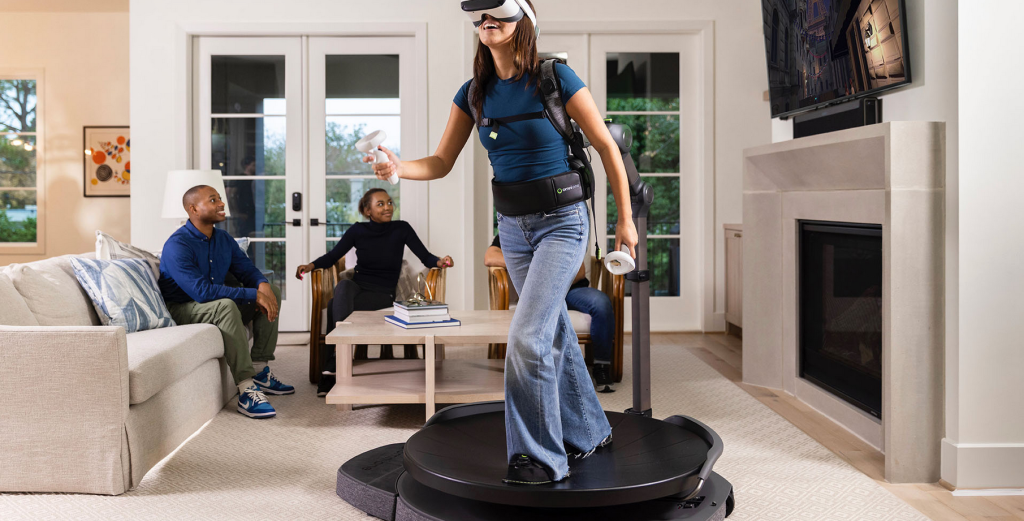
The VR treadmill is designed for the home and allows a user to freely move into and out of the virtual gaming world without crashing into barriers and other obstacles. It creates a space where the user can move freely and safely with less danger from the environment.
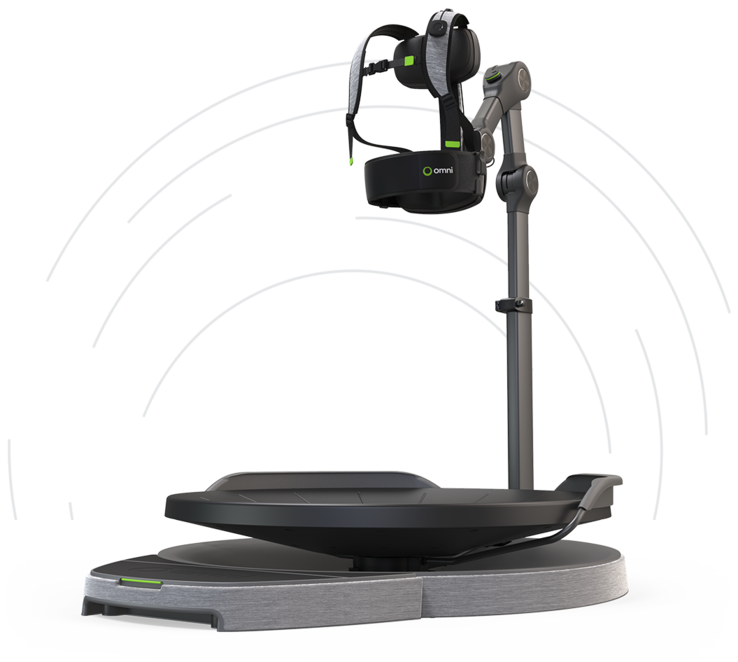
VR gaming offers immersion but comes with the flipside of losing track of the real-world surroundings and crashing into a barrier or obstacle. The Virtuix products consist of omnidirectional treadmills with in-built harnesses that create an unfettered VR space for gamers. It allows the player to execute more movements in-game in safety from the real-world surroundings and barriers. A player can run, crouch, or jump to a certain level when using the Omni One VR treadmill.
The Virtuix VR treadmill solution has been seen in commercial VR environments previously. However, the Omni One is the first in-home application of the technology. It is designed to take up minimal floor space and it has its own headset. The gadget will support up to 30 premium games when it is unveiled eventually.
Omni One VR treadmill delivers a treadmill that isn’t bulky and you can easily move around
The Omni One currently exists as an investor-only model although a production model could be out soon. There are no timelines however on when the Virtuix Omni One VR treadmill will berth in homes.
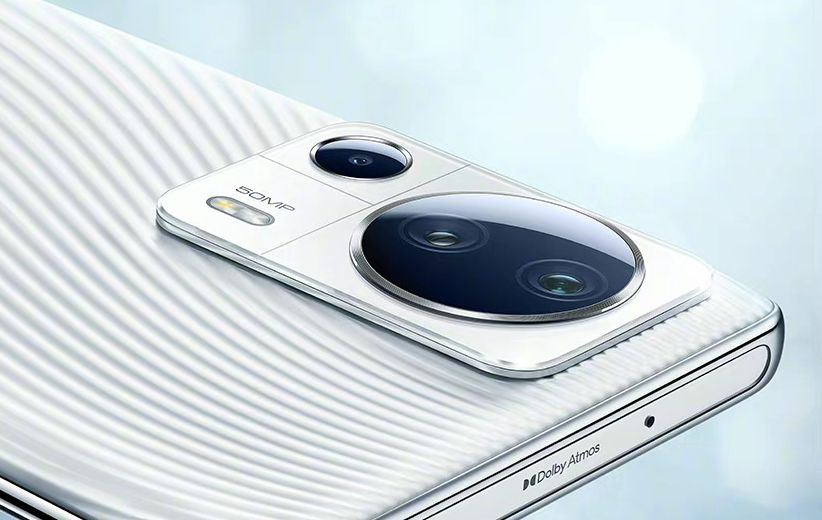
Back in January, rumors emerged that the upcoming Xiaomi Civi 3 will feature the Dimensity 8200 chipset. The Dimsnity 8200 is a 5G SoC manufactured on TSMC’s 4nm process and powers smartphones like the Redmi K60e, Vivo V27 Pro, and Vivo S16 Pro. Now, Xiaomi has confirmed that the Civi 3 will come equipped with the Dimensity 8200 Ultra chipset, a custom variant of the Dimensity 8200.
Xiaomi Civi 2
The brand is yet to reveal the details about this custom chip. For context, the Dimensity 8200 features a total of eight cores, with one Cortex-A78 core clocked at up to 3.1 GHz, three Cortex-A78 cores clocked at up to 2.85 GHz, and four Cortex-A55 cores clocked at up to 2.0 GHz. It also has a Mali-G610 MC6 graphics processor. The Dimensity 8200 supports 5G connectivity with speeds up to 17 Gbps. It also supports Wi-Fi 6E and Bluetooth 5.3.
Previous reports have mentioned that the upcoming Civi 3 smartphone is anticipated to retain the 6.55-inch OLED display with curved edges, reminiscent of its predecessor, the Civi 2. On the front, users can expect a dual setup of 32-megapixel selfie cameras. The rear of the device will feature a primary camera from the Sony IMX800-series, known for its exceptional imaging capabilities.
Xiaomi Civi 2
Powered by the Dimensity 8200-Ultra chipset, the Civi 3 is likely to offer impressive performance and efficiency. It is expected to come with ample memory options, including up to 12 GB of RAM and a generous 512 GB of internal storage. Fast-charging enthusiasts will be pleased to know that the handset is rumored to support 67W fast charging, ensuring quick and convenient battery replenishment.
In an exciting development, a recent Weibo post unveiled that the Civi 3 will have a special edition version in collaboration with Disney, adding a touch of uniqueness and charm to the smartphone lineup.
Realme is reportedly working on a new C-series phone called the Realme C53. This device has been spotted with model number RMX3760 at certification platforms in different countries, such as India, Indonesia, Malaysia, and Thailand. Hence, it appears that it will not take too long for the C53 to go official. In a new report, Appuals has published the renders and specifications of the C53. Here is a look at what to expect from the smartphone.
Realme C53 specifications (rumored)
Realme C53
The Realme C53 is tipped to feature a 6.74-inch IPS LCD panel, boasting an impressive HD+ resolution and a buttery-smooth 90Hz refresh rate. The Unisoc T612 chipset, 6 GB of LPDDR4x RAM, 6 GB of virtual RAM, a 5,000mAh battery, and 33W fast charging support are reportedly its power sources.
The C53 will arrive with 128 GB of UFS 2.2 storage and a microSD card slot for more storage. For selfies, it will have an 8-megapixel front camera, and its rear-facing dual-camera system on the back will have a 50-megapixel main lens and a 0.3-megapixel secondary lens.
The report further mentions that it will have dual 4G VoLTE, a side-mounted fingerprint scanner, a USB Type-C port, and a 3.5mm audio jack. The device will have flat edges and measure 7.59mm in thickness. As of this writing, there is no word on the price of the device.
The Realme Narzo N55, which debuted last month, is exclusively available through Amazon in India. A rebranded version of the phone with the Realme C55 moniker is available through Flipkart in the country. In the same way, the Narzo N53, which just went official, will be sold through Amazon in India, and it will be repackaged and sold via Flipkart as the Realme C53.
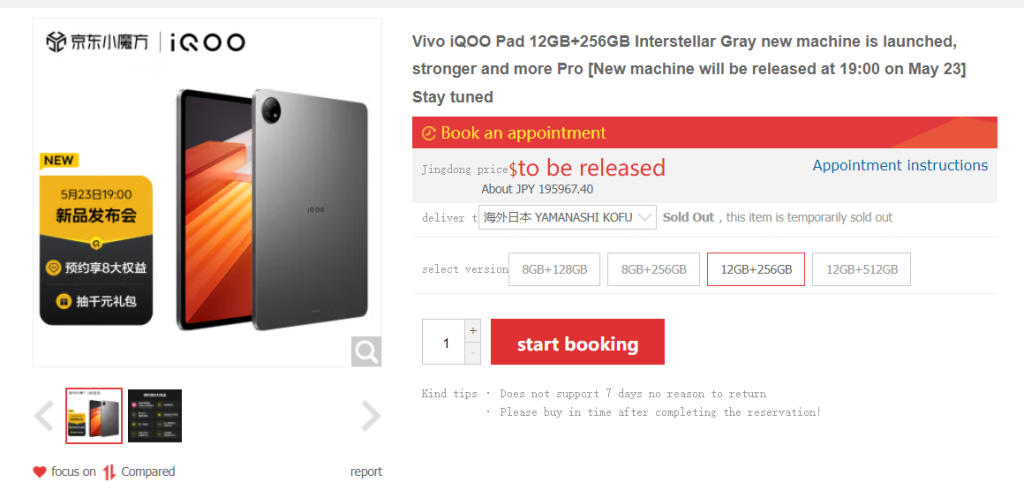
iQOO’s next launch event will be held on May 23 in China. The event will see the arrival of the iQOO Neo 8, Neo 8 Pro, and TWS Air Pro TWS earbuds. In addition, the brand is also confirmed to launch its first-ever tablet, the iQOO Pad. Ahead of the launch, the iQOO Pad is now listed for reservations on JD.com. The listing has revealed the variants of the device.
As can be seen in the screengrab, the iQOO Pad will arrive in as many as four configurations, such as 8 GB RAM + 128 GB storage, 8 GB RAM + 256 GB storage, 12 GB RAM + 256 GB storage, and 12 GB RAM + 512 GB storage. The listing has no other information on the specifications of the device. At present, there is no information available on the price of the device.
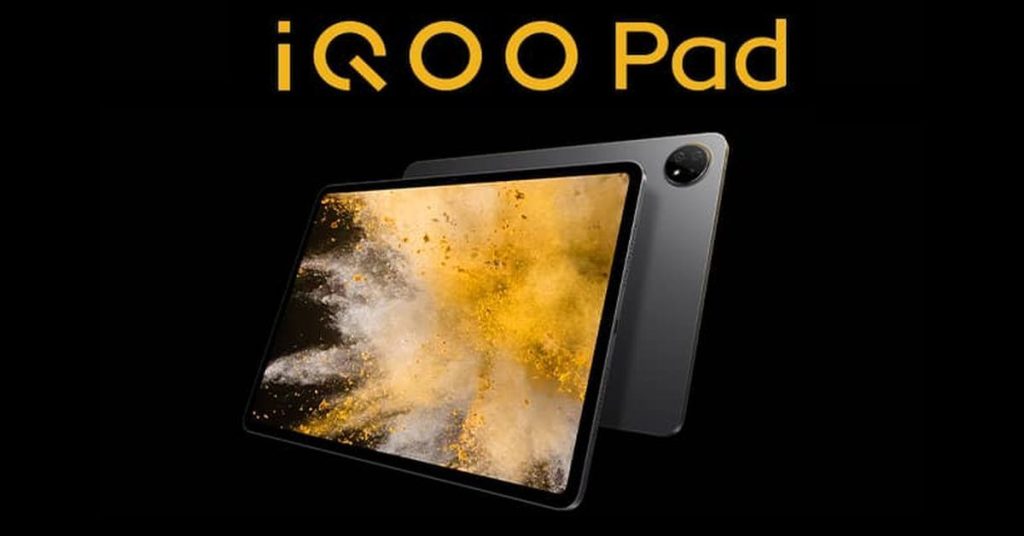
The design of the iQOO Pad is almost identical to that of the Vivo Pad 2, which debuted in April in China. Speculations are rife that it could just be a rebranded version of the Vivo Pad 2.
iQOO Pad
The Vivo Pad 2 has a 12.1-inch IPS LCD that offers a resolution of 1968 x 2800 pixels and a 144Hz refresh rate. The Dimensity 9000 chipset powers the device with up to 12 GB of LPDDR5 RAM and up to 512 GB of UFS 3.1 storage. It has a 10,000mAh battery with 44W wired charging.
The Vivo Pad 2 has an 8-megapixel front-facing camera. The back panel of the device has a 13-megapixel primary camera and a 2-megapixel macro lens. The device runs on Android 13 OS and OriginOS 3 optimized tablet. It lacks cellular connectivity but offers connectivity options like Bluetooth 5.3 and Wi-Fi 6.
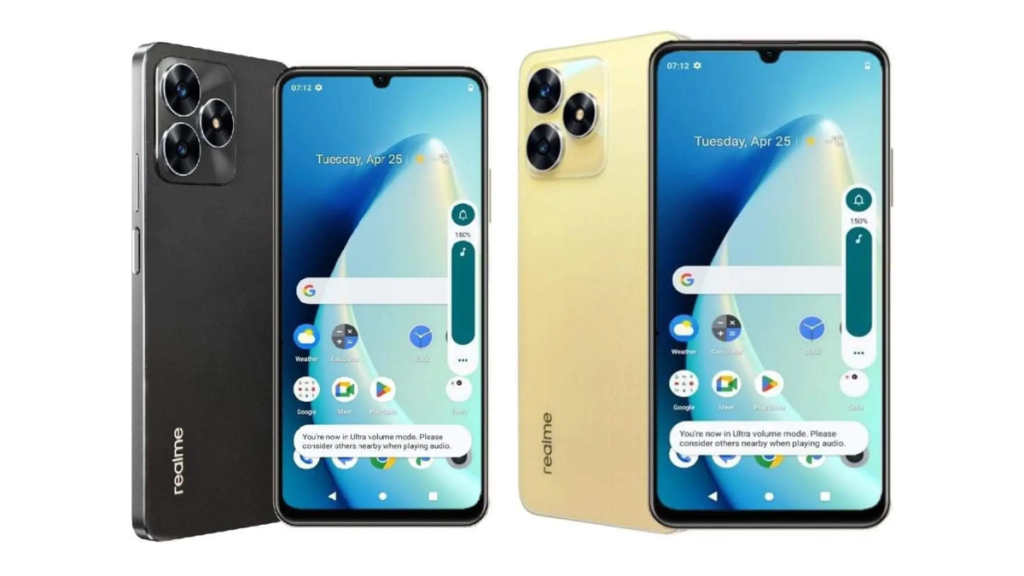
Realme has just launched a brand new smartphone from its popular Narzo series. The latest entry is the Narzo N53, which arrives a mere month after the company announced the Narzo N55 model. So let’s have a look.
Realme Narzo N53 launched in India with gold filament coating
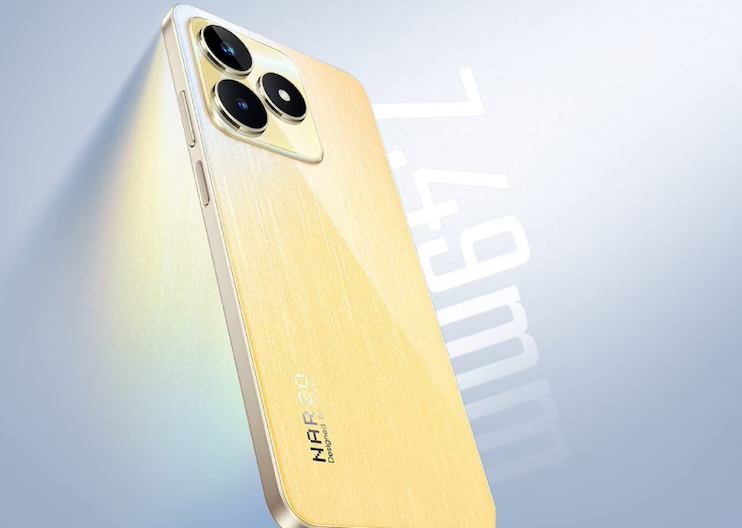
The Chinese smartphones maker’s newest Narzo phone features a unique design. The rear of the device features a gold filament coating and what the company calls California Sunshine design. This makes the back panel shine when light hits its surface. Furthermore, it even has a relatively thin body, which measures in at just 7.49mm in thickness. Interestingly enough, the smartphone resembles the iPhone 14 Pro Max from the rear. Meanwhile, the front sports a tall 6.74 inch IPS LCD panel that has a Full HD+ resolution and 90Hz refresh rate.
Under the hood, the smartphone is equipped with the UNISOC T612 SoC that is paired with up to 6GB of LPDDR4X RAM and 128GB of internal storage. It is powered by a large 5,000mAh battery pack that supports 33W fast charging, which can charge your device to 50 percent in just 34 minutes. On the rear, the Realme Narzo N53 features a 50 megapixel dual camera setup. On the other hand, the front houses an 8 megapixel selfie shooter. Other notable features include, a 3.5mm headphone jack, a microSD card slot for memory expansion, and a side mounted fingerprint scanner.
The brand has just announced the Realme Narzo N53 for the Indian market, which starts for just 8,999 INR for its 4GB + 64GB configuration. The higher end 6GB + 128GB model costs 10,000 INR, which makes this device a budget grade handset. The device is available in two variants, namely Feather Black and Feather Gold, and will go on sale on May 24 via Amazon and Realme’s official website.
Microsoft‘s annual work trends report has highlighted three key insights that business leaders need to understand. The report focuses on the impact of AI on productivity and the views of migrant workers worldwide. It reveals that a significant number of workers are concerned about the effects of AI on their jobs, with 49% expressing worry. However, the report also emphasizes the transformative power of AI and its potential to alleviate the burden of digital debt.
64% of employees can’t find the time or energy to perform their jobs
Digital debt refers to the overwhelming influx of data, emails, meetings, and notifications that have surpassed the human capacity to handle effectively. This digital overload not only affects individual productivity but also hinders innovation and strategic thinking. According to the survey, 64% of respondents struggle to find the time and energy to perform their jobs, leading to a decrease in creativity and overall business productivity.
The workday has become increasingly burdensome, with 68% of people stating that they lack focused time for uninterrupted work. The constant need for communication, information search, and attending meetings has resulted in missed opportunities and reduced productivity. On average, employees spend 57% of their time in meetings, emails, and chats, leaving only 43% for actual creative work.
AI can be the solution to these productivity challenges by enabling time-saving and energy-efficient workflows. By automating repetitive tasks and streamlining information management, AI can free up valuable time for employees to focus on innovation and strategic thinking. Moreover, AI-powered tools (such as redesigned Microsoft Teams) can improve meeting efficiency and provide valuable insights and data for better decision-making.
Interestingly, the survey reveals that employees are more eager for AI to reduce their workload than they are afraid of losing their jobs. Instead of perceiving AI as a threat, they see it as a tool that can enhance their productivity and alleviate burnout. Migrant workers, in particular, are willing to embrace AI for various aspects of their work, including administrative, analytical, and even creative tasks.
Business leaders understand the potential of AI to empower their workforce rather than replace it. They prioritize using AI to increase productivity, improve employee benefits, eliminate low-value activities, and accelerate their workforce. AI is seen as a valuable tool that can augment human capabilities, freeing employees from mundane tasks and enabling them to focus on more meaningful and creative aspects of their jobs.
As the world moves further into the AI era, it is crucial for business leaders to adopt AI quickly and responsibly. By leveraging AI’s capabilities, organizations can unleash creativity, drive productivity growth, and create new value. The Microsoft report serves as a guide for leaders to navigate the AI landscape and harness its potential to shape the future of work positively.
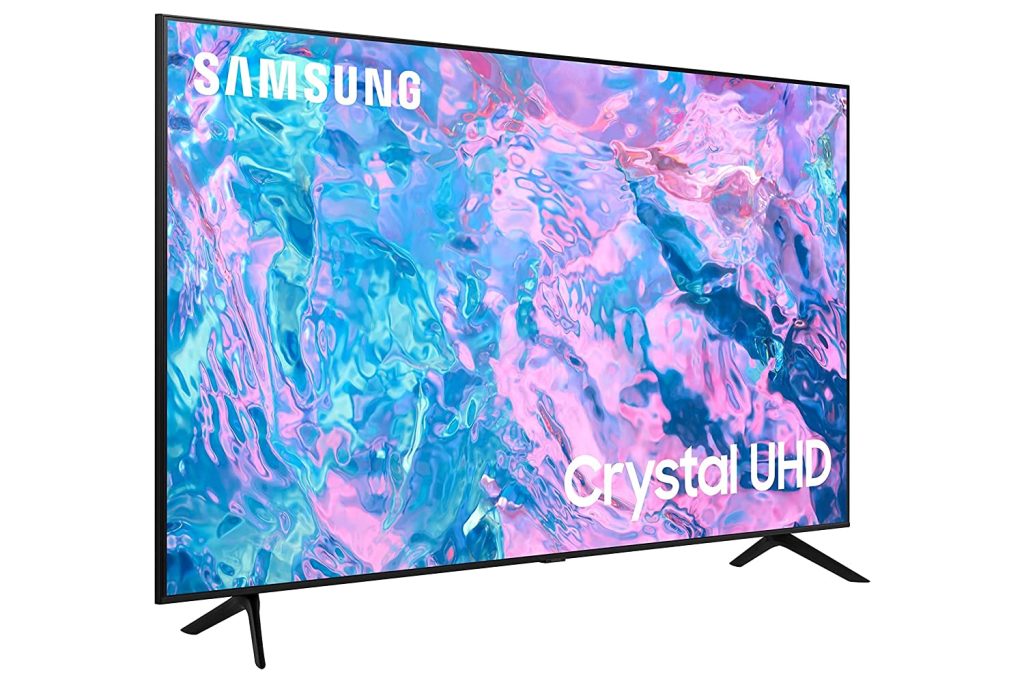
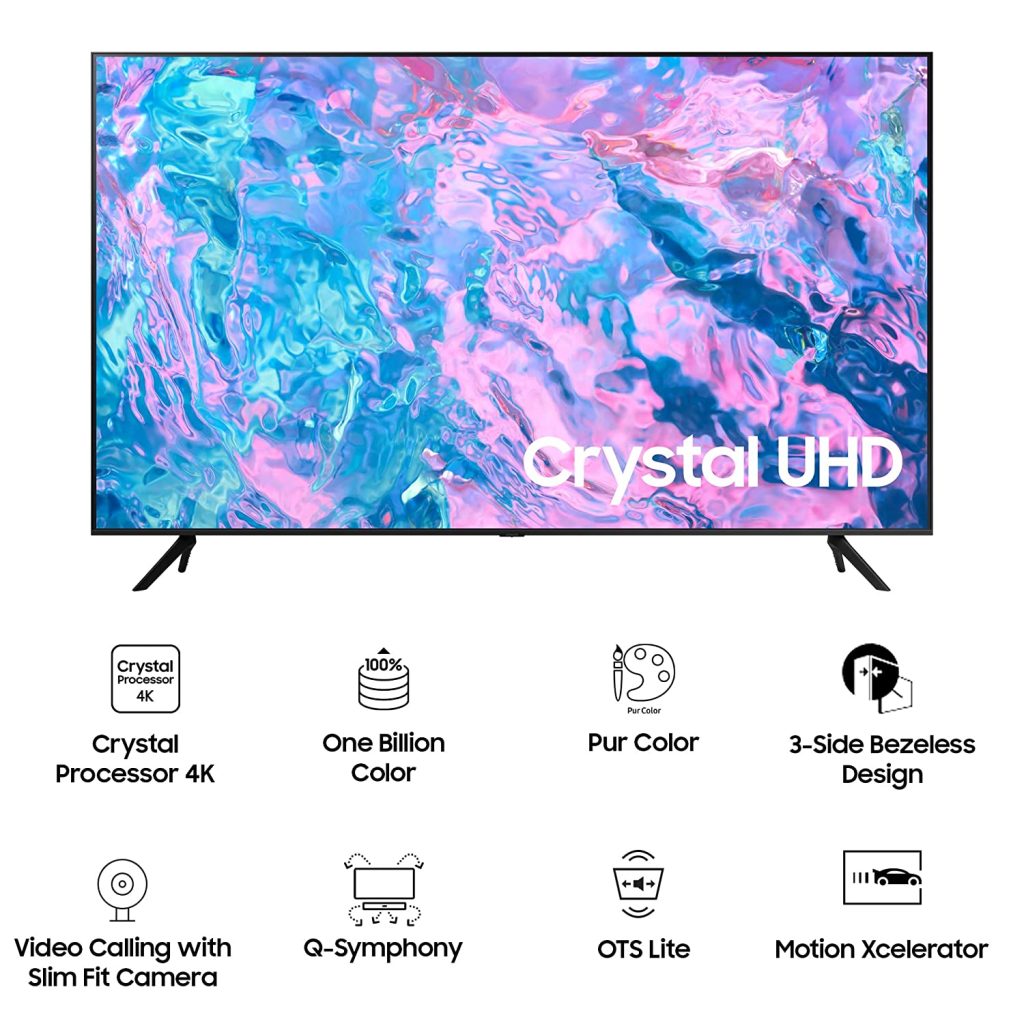
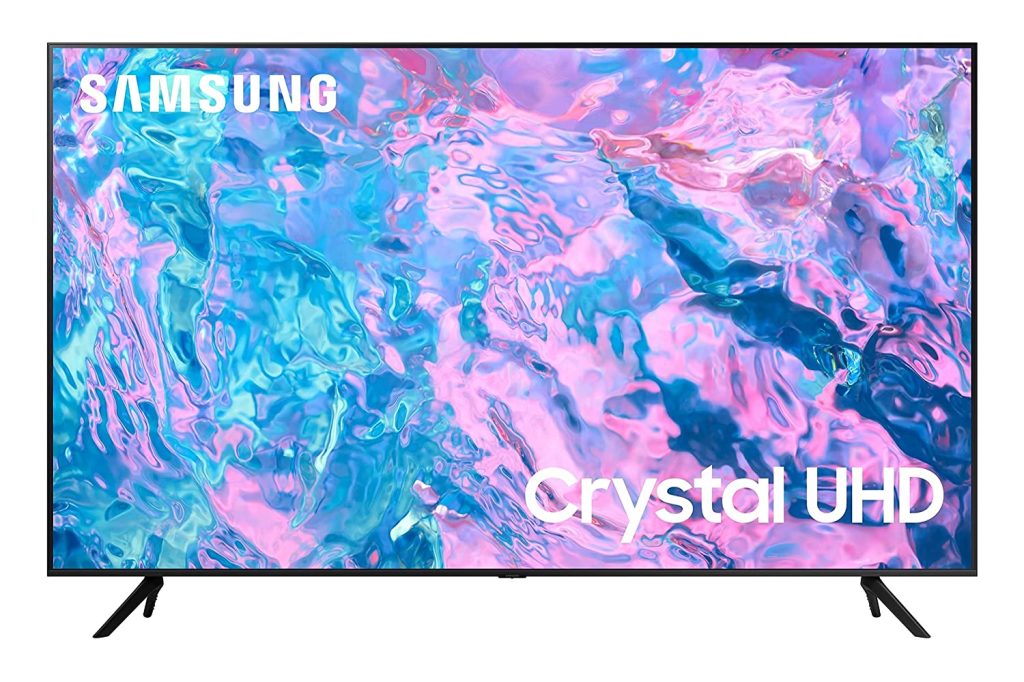
Samsung has recently introduced its latest lineup of Crystal 4K iSmart UHD TVs in India, bringing together cutting-edge technology and affordability in a perfect blend. These televisions offer an array of top-of-the-line features, including an integrated IoT hub with Calm Onboarding and an IoT sensor for automatic brightness adjustment, among others. The launch of these TVs follows Samsung’s recent unveiling of the Neo QLED TV 2023 4K and 8K models in India. The brand also debuted the Crystal 4K Neo TV earlier this year.
Samsung Crystal 4K iSmart 2023 TV specs
The 2023 range of Samsung Crystal 4K iSmart UHD TVs is powered by Crystal technology and is available in various screen sizes, ranging from 43 inches to 65 inches. These TVs boast impressive features such as One Billion True Colors, HDR10+ for enhanced visuals, and a 3-Side Bezel-Less design.
Gamers will find the Auto Game Mode and Motion Xcelerator features particularly appealing, as they ensure fast frame transitions and low latency, resulting in an immersive gaming experience. Additionally, the TVs offer different modes such as Smart Work, Gaming, and Smart Watching, enhancing the connected living experience. The Smart Hub, a centralized hub for entertainment, gaming, and ambient options, further elevates the overall TV experience.
When it comes to audio, these televisions deliver exceptional sound quality with features like Q-Symphony, OTS Lite, and Adaptive Sound Technology, providing dynamic and immersive audio output. They also support various smart features, offer multiple connectivity options, and are compatible with popular streaming services, making them an ideal centerpiece for any modern smart home.
Samsung Crystal 4K iSmart UHD TVs also provide access to Samsung TV Plus, a free ad-supported TV and video-on-demand service with 100 channels available in India. Moreover, features like Video Calling with the SlimFit Cam and the Smart Hub for content curation and discovery add to the overall TV experience. Calm Onboarding simplifies device connectivity, while IoT Sensors automatically adjust the brightness based on the ambient light levels.
In terms of specifications, the Samsung Crystal 4K iSmart UHD TVs feature a slim look with a bezel-less design and slim feet stand. They come in four different sizes: 43 inches, 50 inches, 55 inches, and 65 inches. The display offers 4K resolution with a resolution of 3,840 x 2,160 pixels, along with HDR, HDR10+, HLG, Pur Color, Brightness Detection, and Motion Xcelerator. The Crystal Processor 4K powers these televisions, providing smooth and vibrant visuals. The audio setup consists of 2CH speakers with a total power output of 20W, complemented by Adaptive Sound, Q-Symphony, and OTS Lite technologies.
Operating on the Tizen Smart TV platform, the Crystal 4K iSmart UHD TVs offer various smart services, including Smart Hub, TV Plus, Universal Guide, SmartThings, and compatibility with voice assistants like Alexa and Google Assistant. They also provide a seamless multi-device experience, allowing users to connect their mobile devices to the TV and vice versa, enabling features such as TV sound on mobile and wireless TV control.
In terms of connectivity, the TVs come with three HDMI ports (including eARC/ARC support), one Digital Audio Out (Optical) port, USB ports, RF In, Bluetooth v5.2, and Wi-Fi for easy connectivity with external devices. They also feature an Eco Sensor and Auto Power Saving functionality, contributing to energy efficiency.
Pricing & availability
The Samsung Crystal 4K iSmart UHD TVs are available in a sleek black color option. As for the pricing and availability, the 43-inch model is priced at Rs. 33,990 ($412), the 50-inch model at Rs. 45,999 ($558), the 55-inch model costs Rs. 47,990 and the 65-inch model has a price tag of Rs. 71,990 ($873).
The latest Samsung Crystal 4K iSmart UHD TVs are now up for grabs on leading online marketplaces like Amazon.in, Flipkart, and Samsung Shop. Additionally, customers can avail a limited-time offer of a free Slim Fit Cam worth Rs. 8900 on the purchase of any of these new TVs.
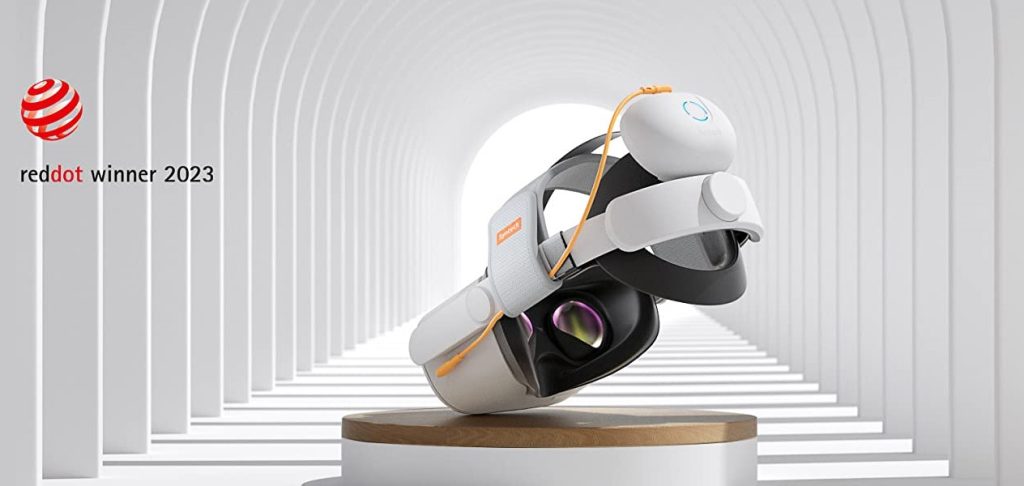
Syntech has introduced the VR Elite headset for the Meta Quest 2. The Syntech VR Elite offers enhanced comfort and stability while wearing the headset. The new Syntech accessory acts as an extra strap while wearing the headset and it also integrates an external battery pack. The external battery has a capacity of 10,000mAh and it could add up to six hours of gaming for the headset.
The Syntech VR Elite is an award-winning 2023 Red Dot Design accessory meant to augment the Meta Quest 2. It mitigates the pressure of prolonged headset-wearing sessions with its comfortable materials. Its components consist of hydrous thermoplastic synthetic resin and ultra-comfort PU foam. It has less-invasive pads and an optional cotton strap for added stability.
The Syntech VR Elite comes well-recommended for the Meta Quest 2, thanks to its comfortable design and generous extra battery pack. The accessory has slots that correspond to the main part of the head strap. It offers up to six hours of additional game time to the Meta Quest 2.
Syntech VR Elite extends the Meta Quest 2 usage time in a comfortable way
The Syntech VR Elite has a right-angled USB-C to –C cable as part of the package for connection to the headset. The gadget is expected to be released directly on Amazon with a $59.99 price tag. There is no definitive release information for the VR Elite at this time although it is imminent. There is no global availability clarity also at this time.
In a groundbreaking discovery, astronomers have set their gaze upon a distant exoplanet known as LP 791-18 d, unveiling a fiery world of active volcanoes and tantalizing prospects for the existence of water. Published in the esteemed journal Nature, a team of international scientists shared their findings, shedding light on this Earth-sized celestial body situated approximately 90 light-years away in the Crater constellation.
The atmosphere of the planet may enable water to condense on the dark side
Tidally locked to a red dwarf star, LP 791-18 d lacks the familiar diurnal rhythm of Earth. Instead, one side of the planet endures never ending scorching sunlight, while darkness engulfs the other side. Björn Benneke, one of the participating astronomers, elaborated that while the day side would be too blisteringly hot for liquid water, the widespread volcanic activity detected on LP 791-18 d suggests the potential for an atmosphere that might enable water to condense on the night side.
Within the LP 791-18 system, which houses at least two other known planets—LP 791-18 b and c—LP 791-18 d orbits in a peculiar dance influenced by its sizable neighbour. LP 791-18 c, over two-and-a-half times the size of Earth and more than seven times its mass, exerts a gravitational pull that imparts an elliptical trajectory upon LP 791-18 d. This elliptical path causes the planet to undergo cyclic deformations during each orbit, leading to substantial internal friction and volcanic activity on its surface, as detailed by NASA.
The significance of these volcanic processes goes beyond mere geological curiosity; they hold profound implications for the field of astrobiology, which seeks to unravel the origins of life both on Earth and beyond. Jessie Christiansen, a co-author of the study, emphasized the crucial role played by tectonic and volcanic activity in fostering the conditions necessary for life. Apart from potentially facilitating the development of an atmosphere, these volcanic mechanisms can upheave materials that might otherwise sink and become trapped in the planet’s crust, including vital elements such as carbon.
As our knowledge of the universe expands, the discovery of LP 791-18 d serves as a testament to the endless wonders waiting to be unveiled in the cosmos. It ignites our curiosity, beckoning us to ponder the possibilities of life beyond our home planet and the intricate balance between geological processes and the emergence of life.
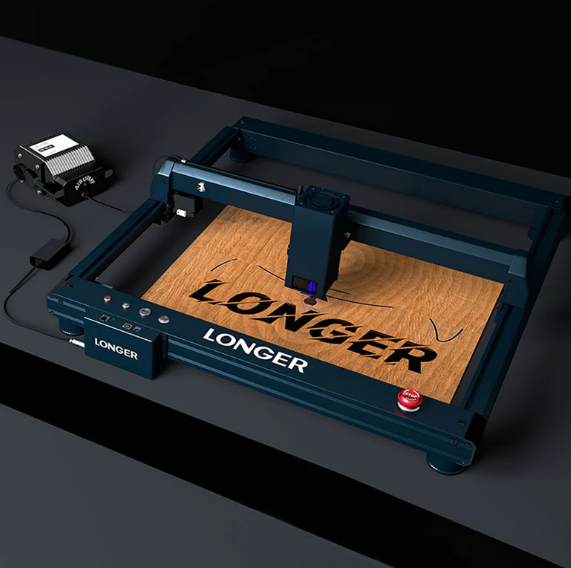
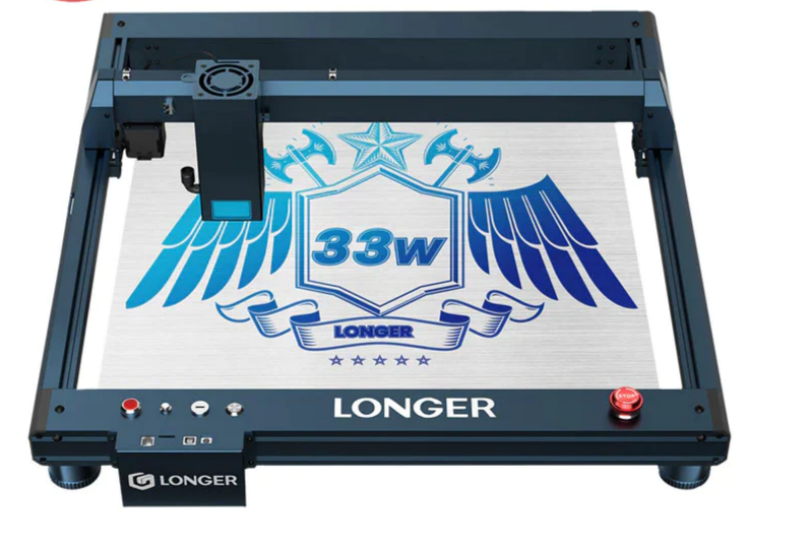
Longer Laser B1 30W is a device that can effortlessly cut or engrave a wide range of materials, exceeding 1000+ options. From wood and stainless steel to leather, silver, acrylic, cloth, and many more, Laser B1 offers versatility in handling various materials for your creative projects.
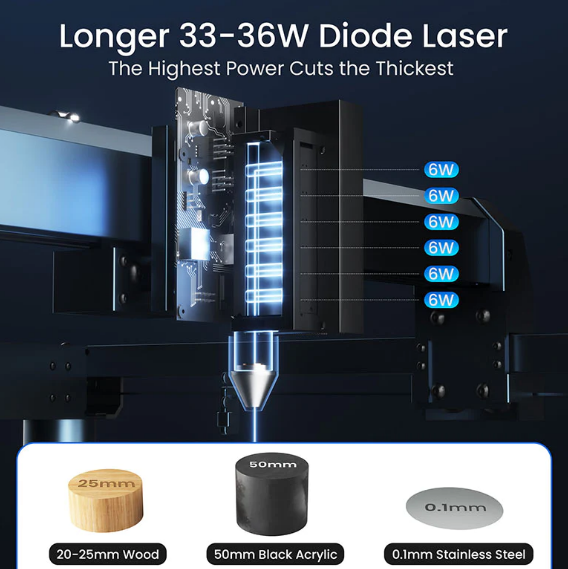
The device comes with a 6-core laser head that gives an ultra-high power output of 33W, resulting in a highly concentrated laser beam that enhances the cutting capability by over 20%. With Laser B1, you can unlock endless possibilities of cutting and engraving and bring your ideas to life.
Key Features:
6 -core Laser Head:
Laser B1, is equipped with state-of-the-art six-core laser technology. With its formidable 33-36W optical output power, it boasts one of the strongest diode-lasers available today, resulting in unparalleled cutting ability. Laser B1 effortlessly slices through materials such as 20mm paulownia wood, 10mm black acrylic, and even 0.1mm stainless steel with a single pass. For thicker materials, Laser B1’s multi-pass capability allows it to conquer 25mm basswood and 50mm black acrylic with ease.
Large Work Area:
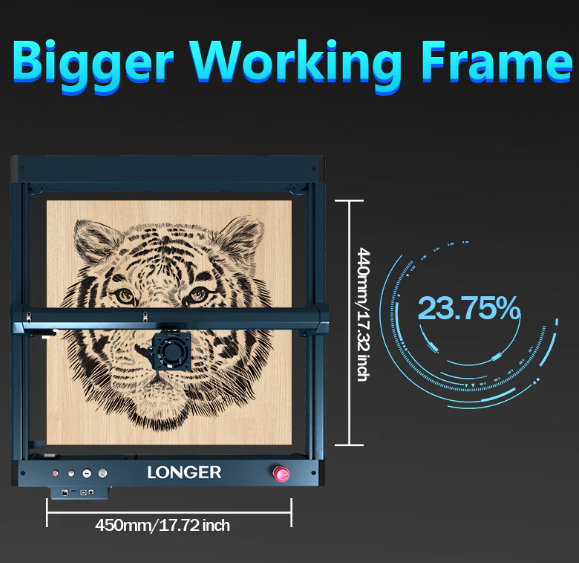
Laser B1 offers a spacious working area of 17.72×17.32 inches (450x440mm), providing a significant 23.75% increase in size compared to other options. This larger workspace meets the demands of various scenarios, making it particularly ideal for handling A3 panels. With its expanded dimensions, Laser B1 offers enhanced flexibility and versatility, allowing for greater creativity and productivity in a wide range of applications.
High Speed:
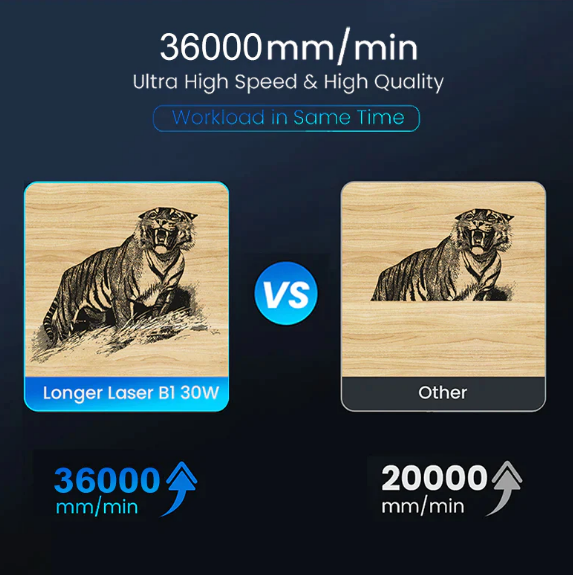
Laser B1, features an innovative 32-bit motherboard that enables engraving speeds of up to 36,000mm/min. This remarkable speed is four times faster than ordinary laser engraving machines, ensuring swift and efficient operation. To enhance the overall user experience, Laser B1 incorporates TMC2209 silent drivers, effectively minimizing operational noise and delivering a smoother, quieter performance.
Air Assist Pump:
The air-assist pump of Laser B1 offers automatic on/off functionality. It is seamlessly controlled by the Lightburn software, responding to the parameters set within the program. This dynamic control enhances the cutting ability of the machine while significantly improving precision and overall cutting quality. By ensuring optimal air assistance during the cutting process, Laser B1 delivers superior results with enhanced accuracy and refined craftsmanship.
Eight Safety Features:
Laser B1 incorporates a comprehensive range of eight safety protection features for a secure operating experience. These include Move, Flame, Offline, Motionless, Security Lock, Eye Protection, Emergency Stop Button, and Zero Reset. The machine is equipped with intelligent sensors that automatically shut down the laser in the event of falling, flame detection, data disconnection, or laser head freezing for over 15 seconds. Furthermore, to prevent burnout, the laser head is automatically reset to zero when a fire is detected.
Ensuring utmost safety, Laser B1 is designed with a panoramic filter glass that effectively filters out 99.8% of the laser. This feature provides an additional layer of protection, making the machine safer to use. With these advanced safety measures in place, you can have peace of mind while operating Laser B1, knowing that it prioritizes your safety and prevents potential hazards.
Laser Lens Protection:
The laser module of Laser B1 features a replaceable protective lens that serves a crucial purpose. By effectively preventing smoke from polluting the laser lens, it ensures the longevity and optimal performance of the laser module. With this innovative design, Laser B1 minimizes the risk of contamination and extends the service life of the laser module, allowing for consistent and reliable operation over time. This protective lens feature enhances the durability and efficiency of Laser B1, providing you with a long-lasting and high-performing laser system for your cutting and engraving needs.
Multiple Data Transfer:
Laser B1 offers multiple convenient methods for data transfer, including Wi-Fi, USB cable, APP, and TF cards. This versatile connectivity enables seamless offline operations, allowing you to use Laser B1 anywhere without the constraints of a physical connection to a computer. Whether you prefer wireless transfer via Wi-Fi, direct connection through a USB cable, utilizing the user-friendly APP, or accessing files stored on TF cards, Laser B1 provides flexible options to suit your workflow and maximize convenience.
Deal:
For a limited period, Longer is giving a huge discount on the Laser B1. The engraver which generally retails for $1399.99 is now available at a heavily discounted price of $999.99. This means you save $400 on this deal.
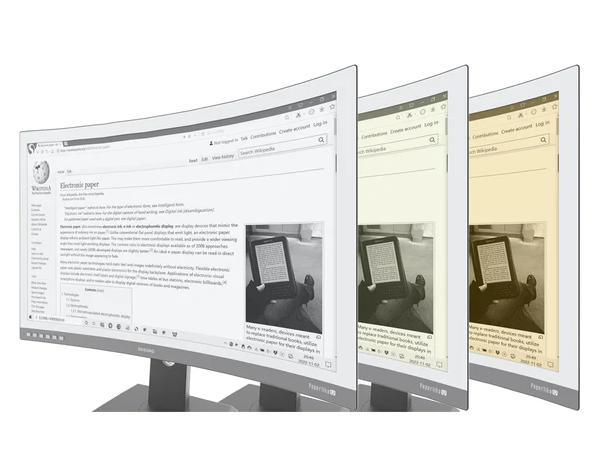
Aside from the odd appearance in various gadgets, E Ink displays have long been relegated to electronic readers and signage. A new product from Dasung pushes display technology into a new market segment: computer monitors.
Dasung Paperlike 253 U E-Ink Monitor specs & features
The Dasung Paperlike 253 U E-Ink Monitor is a new type of monitor that uses E-Ink technology. E Ink is the same technology that is used in e-readers, and it has a number of advantages over traditional LCD and OLED monitors. One of the biggest advantages of E Ink is that it is much easier on the eyes. E Ink displays do not emit any light, so they do not cause eye strain or headaches. This makes them ideal for people who spend long periods of time working on a computer.
Another advantage of E Ink is that it is very energy efficient. E Ink displays do not require a backlight, so they can run for weeks on a single charge. This makes them a great option for people who want to save energy.
The Dasung Paperlike 253 U E-Ink Monitor has a number of other features that make it a great choice for people who want a more comfortable and efficient computing experience. It has a high resolution of 3200×1800, and it supports multiple connectivity options, including HDMI, DisplayPort, and USB-C. It also has built-in speakers and a front light.
The Dasung Paperlike 253 U E-Ink Monitor is a unique and innovative product, but it is also quite expensive. The base model starts at US$1,798.00, and there are a number of add-on options that can increase the price even further. For example, a front light that illuminates the screen costs an additional US$100, and a wireless version that supports Miracast and AirPlay costs an additional US$150.
We use cookies on our website to give you the most relevant experience by remembering your preferences and repeat visits. By clicking “Accept”, you consent to the use of ALL the cookies.
This website uses cookies to improve your experience while you navigate through the website. Out of these, the cookies that are categorized as necessary are stored on your browser as they are essential for the working of basic functionalities of the website. We also use third-party cookies that help us analyze and understand how you use this website. These cookies will be stored in your browser only with your consent. You also have the option to opt-out of these cookies. But opting out of some of these cookies may affect your browsing experience.
Necessary cookies are absolutely essential for the website to function properly. This category only includes cookies that ensures basic functionalities and security features of the website. These cookies do not store any personal information.
Any cookies that may not be particularly necessary for the website to function and is used specifically to collect user personal data via analytics, ads, other embedded contents are termed as non-necessary cookies. It is mandatory to procure user consent prior to running these cookies on your website.