Advertisement

LineageOS 20 Arrives on the Google Pixel 6, Pixel 7, & More

The LineageOS team has been working hard to bring the latest LineageOS 20 software based on Android 13 to more smartphones. After releasing the first set of official builds for more than 50 devices, including the older Pixel phones, the team has now added support for all of Google’s Tensor-powered phones, including the Pixel 6 and Pixel 7 series. Here are the details.
LineageOS-20

The latest devices being added to the official roster are the Pixel 7, Pixel 7 Pro, Pixel 6, Pixel 6a, and Pixel 6 Pro. This will be the first time Google’s Tensor-powered phones will be able to run the popular custom ROM. Last month, the development team released a new version, bringing full Android 13 support to a sizeable number of devices, including Google phones up to the Pixel 4.

Below you can find the detailed instructions and download links for the newly added phones:

  • Pixel 6 (oriole)- Wiki
  • Pixel 6 Pro (raven)- Wiki
  • Pixel 6a (bluejay)- Wiki
  • Pixel 7 (panther)-Wiki
  • Pixel 7 Pro (cheetah)-Wiki

The new LineageOS 20 brings all the new Android 13 features as well as a revamped camera app, Aperture. The custom ROM is known for its near-stock UI and superior security and privacy features. However, these features may not impress Pixel users as their phones already come with a clean and bloatware-free UI.

You may install the LineageOS 20 on your Pixel 6 or 7 series device if you want to mod it without any restrictions. However, you should know that custom ROMs may void your device’s warranty, and they can even brick your phone if not installed properly. Additionally, some apps may not work properly with custom ROMs.

Related:

(Via)

Lenovo Kaitian N8 Series Notebook With a Domestic Zhaoxin Kaixian KX-6000 Processor Launched in China

Chinese tech giant Lenovo has launched a new laptop series known as Kaitian N8 series in its home market of China. The new notebook series is equipped with the domestic Zhaoxin Kaixian KX-6000 processor which throws up the potential that this series will be a China-only series.

Lenovo Kaitian N8 Series

Perhaps, the most interesting feature of the new notebook is the processor as it is manufactured by Zhaoxin, a China-based semiconductor company. The Kaixian KX-6000 processor is an octa-core processor manufactured on the 16nm process and with a maximum clock frequency of 2.7GHz. The processor pairs with 16GB dual-channel DDR4 memory and 512GB NVMe SSD. It is also equipped with an integrated graphics card supporting 4K resolution and 4K video hard decoding.

Lenovo Kaitian N8 Series

In terms of design, the Kaitian N8 Series notebook adopts a 14.6mm all-metal space gray body manufactured using a CNC finishing process body. The notebook weighs as low as 1.29kg. It packs a 14-inch IPS HD display with a resolution of 2240 x 1400 pixels and a 91% screen ratio. The display supports anti-glare eye protection, no strobe, and 100% sRGB color gamut. The laptop can also be opened up to 180 degrees, making it possible to be used in tablet mode.

Lenovo Kaitian N8 Series

In addition, Lenovo Kaitian N8 supports WiFi 6+ and Bluetooth 5.0. It is also equipped with a smart backlit keyboard with the same color anti-fouling coating used on the body. The laptop also houses a super-large silky glass touchpad, fingerprint recognition, hard disk encryption, USB smart protection + one-key recovery. It is powered by a 61Wh battery.

The pricing and availability details of the Lenovo Kaitian N8 Series are yet to be released.

RELATED:

Realme C55 Gets SIRIM Certified, Could Launch Soon

Realme is planning to launch a new budget-range smartphone in the global market called the Realme C55. This device will be the successor of the Realme C35. It has already appeared on NBTC, BIS, FCC, and EEC certification websites, and now, it has also cleared SIRIM certification.

Realme C35

Although the certification doesn’t mention anything about the specs, it does confirm that the device bearing model number RMX3710 is indeed the Realme C55. According to the previous FCC listing, the smartphone will have a 4880mAh battery. It will also have a 33W fast charging. Currently, we do not know about any other specifications of the Realme C55. However, we can take a look at its predecessor to get an idea of what to expect.

Realme C35 specs

The Realme C35 flaunts a 6.6-inch LCD display with a high FHD+ resolution of 2408 x 1080 pixels, featuring 401 PPI and a responsive touch sampling rate of up to 180 Hz. It sports a minimal dewdrop notch housing the selfie camera and delivers peak brightness levels of up to 600 nits.

Realme C35

Under the hood, the smartphone packs a UNISOC T616 SoC coupled with LPDDR4x RAM and UFS 2.2 storage. It houses a large 5,000mAh battery with 18W fast charging support and comes pre-installed with realme UI 2.0 based on Android 12.

The Realme C35 comprises a triple camera module on the rear, housing a 50MP primary sensor, a 2MP macro lens, and a 2MP monochrome sensor. On the front, it has an 8MP camera, apt for selfies and video calls.

The device features a side-mounted fingerprint scanner, dual-SIM support, 4G, dual-band Wi-Fi, Bluetooth 5.0, GNSS, USB Type-C, and a microSD card slot for expandable storage.

RELATED:

Heybike Tyson e-Bike With a Range of 55 Miles, 4G, Bluetooth and GPS Launched

The Heybike Tyson e-bike has been unveiled. The latest Heybike offering comes with a 750W electric motor and support for a raft of modern features. The Tyson has a foldable form factor and hydraulic front-fork suspension. The bike’s disc brakes offer excellent stopping power and its one-piece foldable design pits it squarely against its competitors.

Heybike Tyson e-bike
Heybike is proud to announce the launch of Tyson E-bike

Apart from its foldable construction, the Heybike Tyson has a rear rack and optimal battery positioning. It squares up nicely with the ENGWE but Heybike says the Tyson offers greater peace of mind with a raft of modern features. It supports 4G network connectivity, Bluetooth, and GPS with push notifications. The GPS notification alerts the owner when the e-bike is being moved from its parking position.

The Tyson has a companion smartphone app that gives the user information on the trip (battery status, mileage, navigation, and general status reports). The Tyson’s 48V/ 15Ah battery delivers a pedal assist range of 55 miles and 40 miles without pedal assist. The Tyson has a 7-inch TFT display for modulating the power and speed while riding. The bike has a top speed of 28mph (45km/h) and is a Class 2 vehicle. It has a 7-speed Shimano gear and will be available in three colors – blue, green, and black.

Heybike Tyson e-bike

Heybike says the Tyseon e-bike will be open for pre-order from March 1, 2023, on the company’s website. It is being offered at an exclusive pre-sale price of $1,699 for persons on the waitlist.

RELATED

(source)

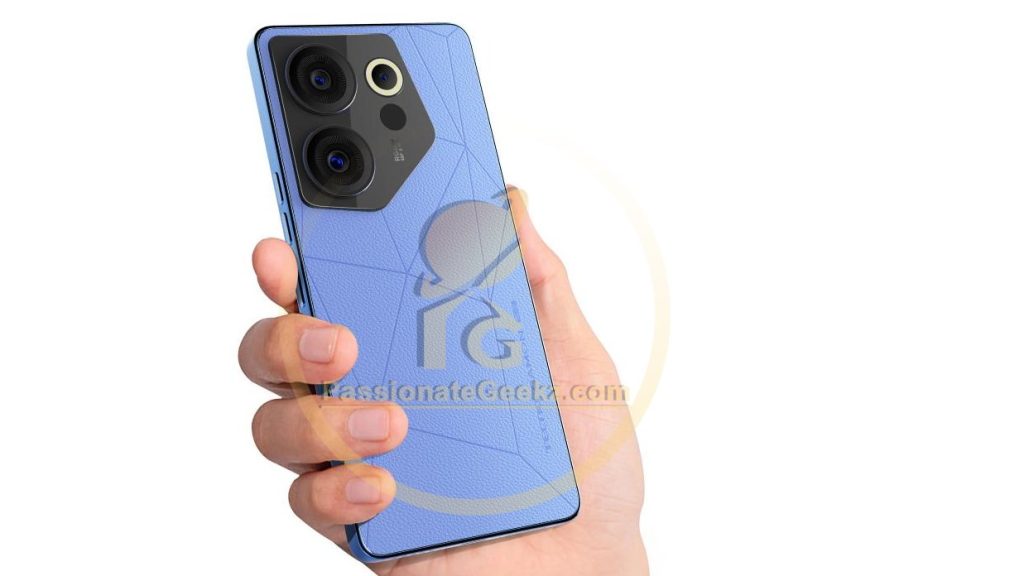
Oppo Could Be Testing a New Phone in India With Reno 8T-like Design

Oppo recently launched the Reno 8T in the Indian as well as the global market with an interesting design and decent specifications. However, the company is apparently not over with the 8T’s design and may reuse it in an upcoming smartphone. A report claims Oppo is testing a new budget smartphone in India, which will look identical to the recently launched Reno 8T.

A 91Mobiles report, citing tipster Sudhanshu Ambhore, claims that Oppo is testing a new affordable smartphone in India with model number CPH2527. While the handset’s marketing name and specifications are still a mystery, the publication says it will look similar to the Oppo Reno 8T. However, the unknown device won’t have a side-mounted fingerprint sensor or curved display.

Oppo Reno 8T

Details about this upcoming device are pretty scarce. We can expect it to arrive as a mid-range or budget model with decent specifications, like a large display, capable cameras, and a long-lasting battery. We should be learning more about the smartphone in the coming days. Meanwhile, let’s go through the specifications of the Oppo Reno 8T.

OPPO Reno8 T 5G specifications

OPPO Reno8T arrives with a 6.7-inch Full-HD+ 10-bit AMOLED display. The panel boasts a micro-curved design with OPPO glow, 120Hz refresh rate, and 1080 x 2412-pixel resolution. It is powered by the Qualcomm Snapdragon 695 SoC paired with 8GB RAM and 128GB storage. On the software front, there’s Android 13-based ColorOS 13.

The handset gets a 4,800mAh battery with 67W fast charging support. There’s a triple camera setup on the back, with a 108MP primary sensor, a 2MP depth sensor, and a 40x MicroLens camera. For selfies, the device gets a 32MP snapper on the front.

RELATED:

(Source)

OnePlus Ace 2 Dimensity Edition to Launch Next Month with Downgraded Primary Camera

OnePlus recently launched the OnePlus Ace 2 smartphone in China. The same device was also launched in the global market under the OnePlus 11R moniker. The device is powered by Snapdragon 8+ Gen 1 chipset. A leak earlier this month revealed that there will soon be a Dimensity Edition of the OnePlus Ace 2 with the Dimenity 9000 chipset onboard.

OnePlus Ace 2

Now, a new report has revealed that the OnePlus Ace 2 Dimensity Edition will be launching next month. The leak comes from popular Weibo tipster DCS (via) who also reveals some more details about the upcoming phone.

According to DCS, the Ace 2 Dimensity Edition will have a 6.74-inch AMOLED display with a 1.5K resolution, offering 2772 × 1240 pixels, 1450 nits of peak brightness, 100 percent DCI P3 color gamut, 1440Hz high-frequency PWM dimming, and an adaptive refresh rate that can go up to 120Hz. The report also mentions that the Ace 2 Dimensity Edition will have a different camera setup which will consist of a 64MP OV64M main camera, an 8MP Sony IMX355 camera, and a 2MP macro camera.

Compared to the 50MP Sony IMX890 primary camera, the 64MP Omnivision sensor is quite a downgrade. Other specifications appear to remain the same. This means that the device will likely have a 5,000mAh battery paired with 100W SuperVOOC fast charging and an Android 13-based ColorOS 13 operating system. The price of this is expected to be lower that the OnePlus Ace 2.

RELATED:

Global Xiaomi 13 Pro Stops by Geekbench Ahead of Launch

Xiaomi 13 series was unveiled in China last year in November and the lineup has been on the shelves for quite some time now. Now, the company is ready to bring its latest number series, which includes the Xiaomi 13, Xiaomi 13 Pro, and Xiaomi 13 Lite, to the global market on February 26. While we wait, the top-end model of the series has visited the Geekbench website, revealing some interesting details in the process.

Xiaomi 13 Pro has visited the Geekbench benchmarking site with model number 2210132G. The handset has been listed with an octa-core processor, codenamed “Kalama”. We already know it is Qualcomm’s latest and greatest Snapdragon 8 Gen 2 SoC. The listing reveals the global version of Xiaomi 13 Pro will have 12GB of RAM and run Android 13 out of the box.

Xiaomi-13-Pro-Geekbench

The handset has received a single-core score of 1481 and a multi-core score of 4676. While these scores may seem impressive, the Chinese variant of the device did better. For reference, Xiaomi 13 Pro released in China managed to get a score of 1504 in single-core and 5342 in multi-core tests. However, these may be early tests and the retail units could perform better.

To recall, the handset debuted in China with a 6.73-inch 2K OLED display that offers up to 120Hz refresh rate, HDR10+ support, and 1900 nits of peak brightness. Under the hood, it is powered by the Qualcomm Snapdragon 8 Gen 2 SoC, paired with Adreno GPU.

For photography, the handset gets a Leica-tuned triple camera setup on the back. The primary sensor is 50MP. There’s also a 50MP ultra-wide-angle lens and a 50MP telephoto sensor. The front houses a 32MP shooter for selfies and video calls. It packs a 4,820mAh battery with 120W wired and 50W wireless charging support.

RELATED:

(Via)

Google Pixel 7 Series Lacks Support for the Latest 5G Standard, Says Report

Google Pixel 7 series debuted back in 2022 with top-notch hardware, including a new Tensor G2 chip, improved cameras, better display, and a lot more. However, it is being reported that devices fall short in 5G connectivity. According to a report, the Pixel 7 and 7 Pro models only support 5G Release 15, the initial 3GPP standard, instead of the latest 5G standard. Let’s look at the details.

The 3GPP, an engineering organization that develops protocols for mobile telecommunications, is responsible for deriving standards for 5G connectivity. These standards are made available as “releases”. Back in 2018, the organization launched Release 15 as the first 5G standard, which was followed by Release 16 in 2020. Now, as per a 9to5Google report, the latest Pixel 7 models are still on the older 3GPP Release 15.

Google-pixel-7-Pro

Other major flagships, such as the latest Galaxy S23 series, can support the newer Release 16. The Release 16 supports the Snapdragon X65 and last year’s X70 modem. According to Qualcomm, Release 16 brings a number of enhancements to the foundational aspects of the 5G system, in terms of coverage, capacity, latency, power, mobility, reliability, ease of deployment, and more.

According to Samsung, the Exynos 5300 modem included in Pixel 7 and Pixel 7 Pro phones is capable of supporting Release 16. Therefore, it is reasonable to expect that these smartphones will receive support for the latest 5G standard with the upcoming Android 14 release later this year.

It’s important to keep in mind that 5G Release 17 has already been launched, announced in July 2022. Furthermore, the upcoming Release 18 is expected to arrive sometime in 2024. Qualcomm has recently announced the Snapdragon X75, which includes support for both 5G Release 17 and 18, just earlier this month.

Related:

(Source)

Hongqi E202 EV Concept Features LiDAR-equipped Roof & 800v Fast Charging

Hongqi, the Chinese luxury car brand, has released the official images for its latest fully electric concept car called the E202. The EV which will be launched under the Hongqi New Energy Brand is a medium to large SUV and will come with the luminous Hongqi New Energy LOGO. 

The concept images of the EV, show a closed layout and a brand-new logo on the front. The vehicle features concave and convex facades, with a smooth and shiny finish that gives it a futuristic look. The side windows extend directly from the A-pillar to the rear of the car, giving it a simple and crisp finish. The waistline extends from the taillight to the front door and outlines downwards, gradually changing from the sculpted lines to the smooth concave surface. 

Hongqi E202 will come with advanced features like an intelligent four-wheel drive system, air suspension, automatic driving system, HAC intelligent driving advanced safety chassis, and more.  It will feature CATL’s Qilin batteries, an 800V platform, and battery swap technology. 

Other interesting features include electronic exterior mirrors, a two-color body, a dot-matrix decorated D-pillar, and a LiDAR-equipped roof to support the autonomous driving system.

The company claims that E202 can be charged within 5 minutes for a 300km drive thanks to its 800V fast charging system. The car will be unveiled in December this year and will launch in the market in 2024.

Hongqi’s Electric Vehicle Brand

Established in 1959, Hongqi is one of the oldest Chinese passenger car brands. Originally made for high-ranking Chinese officials and leaders, the brand moved to the open market and become commercial in the 1970s. In 2018, the Hongqi brand released a new strategy and design concept, which led to a surge in market sales and the gradual realization of global exports.

Recently, the company launched its Hongqi New Energy sub-brand for Electric Vehicles. The new brand will focus not only on the Chinese market but also on global options, especially in Europe. The company is planning to launch 15 new EVs under the New Energy Brand. 

(via)

Samsung Galaxy A33 and Galaxy A53 5G Grabs One UI 5.1 Update

Samsung recently launched its One UI 5.1 user interface, based on Android 13, alongside the Galaxy S23 series. The brand recently released the first OTA update for the Galaxy S23 series. The Korean tech giant is now rolling out the One UI 5.1 update to the Samsung Galaxy A33 and Galaxy A53 5G devices. However, there’s a catch. The update is currently limited to the South Korean market and other global variants will grab the update soon.

The firmware version of the One UI 5.1 update for the Galaxy A33 5G is A336NKSU3CWB3, while the firmware version for the Galaxy A53 5G is A536NKSU4CWB3. The February 2023 security patch is also included in these updates for the devices. Samsung may, as previously said, issue the One UI 5.1 upgrade for the Galaxy A53 5G and Galaxy A33 5G in other nations in the upcoming weeks. There’s no official confirmation on the rollout schedule yet.

Samsung Galaxy A33 5G

You may now check for the most recent update if you possess one of these devices and reside in South Korea by going to Settings » Software update and selecting Download and install. We suggest waiting a few more days if you haven’t yet gotten the update before manually downloading it on your smartphone. The update is being carried out gradually, so it can take some time before it reaches all devices.

With the new update, the user interface and performance are also expected to be improved. The phone will operate more quickly and respond to user input more quickly as a result, making it easier to use. It is also expected that the update would include security enhancements that will shield the user data and the device from malicious attacks and other security threats. So there was the end of the topic. I appreciate you taking the time to read this entire post.

RELATED

HarmonyOS 3.1 Hands-on Video Reveals Impressive Animation Improvements

Huawei has recently begun testing the HarmonyOS 3.1 operating system in its P50 series, and early reports indicate that the new OS comes with some impressive changes to system animations. According to a HarmonyOS 3.1 developer beta tester, the new animations have been improved for various parts of the user interface, including the notification center and service widget combos.

One of the most significant changes is the relocation of the clock to the top left side of the status bar, which animates and blends seamlessly with the large clock of the animation bar. The animation shows this transformation in real-time, making it a more interactive experience. Huawei could further optimize the status bar clock for devices with different types of notches.

In addition to these changes, the widget combo shape selection also features a new animation that is more realistic and interactive compared to the previous HarmonyOS 3.0.

These are some of the tweaks that have surfaced now. The beta build will have many more changes and tweaks with the upcoming testing phase. You can check out the video here.

HarmonyOS 3.1 Developer Preview Details

The developer preview of HarmonyOS 3.1 adds a new ArkTS language and other performance improvements. The beta developer preview includes stage model life cycle management, scheduling, callback, context acquisition, authentication, and more. It also includes new operation and management capabilities.

The ArkUI development framework enhances declarative Canvas/XComponent component capabilities, component layout capabilities, and state management capabilities. It also optimizes the usability of some components.

While some of these changes may seem more developer-focused, it is likely that users will soon see more user-friendly improvements in future HarmonyOS 3.1 releases. Huawei is expected to release more devices in the developer beta phase, and we will keep you updated on any new developments.

Huawei is reportedly preparing to launch its P60 series smartphones in March, which may feature HarmonyOS 3.1, although an exact release date has not been confirmed.

RELATED:

(Via)

Philips 45-inch Ultra-wide Monitor With KVM Switches and USB Type-C Ports Announced

The Philips 45B1U6900C and 45B1U6900CH ultra-wide monitors have been announced. The two new Philips monitors share several similarities including 44.5-inch panels with 1500R curvature and 1440p resolutions. They are also equipped with KVM switches and USB-C connectivity. The VA panels in both models have a resolution of 5,120 x 1,440 pixels with a 32:9 aspect ratio.

Philips 45-inch Ultra-wide Monitor

The ultra-wide display in both models has a 1500R curvature, 75Hz refresh rate, and a maximum brightness of 450 nits. Philips says the panels offer 107% DCI-P3 color space coverage, 8-bit color depth, and 4ms response times. Furthermore, the pair have adjustable stands and a telescopic hook on which to hang headphones.

Philips 45-inch Ultra-wide Monitors

The 45B1U6900C and 45B1U6900CH come with dual HDMI 2.0 ports and DisplayPort 1.4 connectivity. The USB Type-C ports support 100W Power Delivery and DisplayPort Alt Mode. Both models also have Gigabit LAN ports and four USB 3.2 Type-A ports.

The 45B1U6900CH model however comes with a Windows Hello-certified webcam and a noise-canceling microphone. It is thus well-suited for professional use. The 45B1U6900C has a USB Type-B upstream port. The camera outputs at 5 MP and it can also provide biometric authentication for a connected PC.

Philips 45-inch Ultra-wide Monitor

Pricing information and full release details are lacking for both monitors at this time. More details about the new Philips lineup of ultra-wide monitors can be found on the company’s website. For now, Philips is however keeping the release details and pricing under wraps.

RELATED:

Tesla Under Investigation in China After Fatal Crash

On Friday, a Tesla Model 3 EV crashed in East China’s Zhejiang Province causing one death and a critical injury. Though the exact reason for the crash is unknown, there are allegations that the accident happened due to a braking system failure in the EV.

The incident occurred on February 17, when a Tesla Model 3 which was speeding on an urban road, crashed into a bus. Before crashing into the bus, the vehicle also hit an electric bicycle and several cars on the road. Surveillance footage shows that during the crash, the brake lights were not engaged on the EV. The crash was so severe that it instantly killed the passenger, critically injured the driver, and damaged three other cars in the vicinity. 

Tesla Model 3

Tesla has agreed to fully cooperate with the local authorities during the investigation. Tesla China also released a statement saying, “We are very sad about this accident. We fully understand everyone’s concern about this accident. Currently, the local traffic police are investigating the cause of the crash, and we will do our best to cooperate with the authorities. We also ask everyone not to believe or spread unconfirmed information”.

Tesla is having a hard time in China as the company is facing tough competition from homegrown EV makers like BYD. The fatal crash on Friday has added to the company’s woes as consumers are now questioning the safety of EVs. After the crash, the company has seen a drop in its sales as rumors and allegations state that there is something wrong with Tesla EV’s braking system. Recently more than 300000 Tesla EVs were recalled in the US after authorities found that they posed a crash risk. Though the company has rolled out an OTA update to mitigate the crash risk, Tesla’s reputation has taken a hit after the US investigation reports.

Tesla has faced similar allegations in the past, where customers have complained of braking issues and brake failure. However, investigations have always come out in favor of the company, as in all previous cases authorities found that it was the driver’s mistake that caused the accident.

Tesla, which was the number one EV seller in the world, was recently dethroned by the Chinese EV company BYD. China is the biggest EV market in the world, with a projected revenue of $190.40 billion in 2023. The country reported a 113% growth in its EV sale, a staggering figure as compared to North America and Europe. China’s BYD overtook Tesla last year to be the number one Electric Vehicle seller in the world. Hence, it is obvious that Tesla will keep an eye on China and its growing EV market. 

During the Q4 2022 earnings call, Tesla CEO Elon Musk said that Chinese workers worked the smartest and hardest of all and Chinese EV makers are the biggest rival to Tesla. Hence the company is working harder to recapture its market in China by introducing price cuts and other benefits exclusive to Chinese customers. 

(via)

Samsung Rolls Out its First Software Update for Galaxy S23 Ultra

It hasn’t been long since the official release of the Samsung Galaxy S23 Ultra smartphone. We recently discovered a strange OIS-related problem on the smartphone. Regardless, the manufacturer has begun releasing the S23 Ultra device’s first firmware update. The most recent update adds a security patch for February 2023 to the device, as well as other minor tweaks. For the issues reported by the reviewers, the update may contain a fix.

The Samsung Galaxy S23, Galaxy S23+, and Galaxy S23 Ultra are receiving the February 2023 security patch. The most recent update has the build number S91xBXXU1AWBD. The latest update is currently being rolled out to European variants of the smartphone. Other regional versions should receive the update soon. The update is usually released to all global regions within a few days. Unlocked smartphones will receive updates ahead of carrier-locked models, particularly in the United States. The most recent update is 567MB in size.

Samsung Galaxy S23 Ultra

If you have a Galaxy S23 series phone and live in Europe, you can now check for the most recent update by navigating to Settings » Software update and choosing Download and install. If you haven’t yet received the update, we advise you to give it a few more days before downloading it to your smartphone manually. It can take some time for all devices to get the update because it is being rolled out in stages.

The user interface and performance are also expected to be enhanced with the new update. This will speed up the phone’s performance and make it more responsive to user input, making it simpler to use. Additionally, the update is anticipated to feature security upgrades that will protect the device and user data from malicious assaults and other security risks. So that was all there was to the subject. Many thanks for reading this post all the way through.

RELATED

OnePlus Foldable Will Not Be a Rebranded Version of the Oppo Find N2

OnePlus will enter the foldable smartphone market with the launch of its own foldable device later this year. The company revealed its plans during its Cloud 11 event, where it also announced the launch of its highly anticipated OnePlus 11 flagship smartphone.

OnePlus-Fold-teaser

Digital Chat Station, a popular leaker on Weibo, has shared more details about the upcoming device, revealing that it will have a large display with a 2K display resolution, similar to Samsung’s Galaxy Z Fold series.

OnePlus foldable leak

This suggests that the new OnePlus foldable will not be a rebranded Oppo Find N2, which has a folding screen resolution of 1,792 x 1,920, closer to FHD+ than 2K. However, it is possible that the OnePlus foldable and Oppo’s foldable Find N2 may share similar features.

While fans eagerly await the new device’s arrival, they will have to be patient, as the official launch is expected no earlier than July. Until then, we will have to wait for more information about the specs, design, and features of OnePlus’ highly anticipated foldable phone.

OnePlus will be following in the footsteps of its sister companies OPPO and Vivo, both of which have already released their own foldable devices in China. As all three brands are owned by BBK Electronics, it is not surprising that OnePlus is now entering the foldable smartphone segment.

OPPO, which entered the foldable market in 2021, recently unveiled the Find N2 and Find N2 Flip in China. By launching its own foldable device, OnePlus is poised to compete with other major OEMs such as Samsung, Huawei, and Xiaomi. The company’s reputation for delivering high-quality, affordable smartphones is likely to make its foldable device an attractive option for consumers looking to try out the latest technology.

With the foldable smartphone market still in its early stages, it remains to be seen how well OnePlus’s upcoming device will fare. However, with the backing of BBK Electronics and the success of its sister companies’ foldable devices, OnePlus is well-positioned to make a splash in this exciting new segment of the smartphone market.

RELATED:

(Source, Via)

Xiaomi Pad 5 Bags MIUI 14 Update Based on Android 13

Xiaomi unveiled MIUI 14 at the Xiaomi 13 series launch event in China in December. Since then, the company has been rolling out the latest software for its devices worldwide.

However, the rollout has been limited to smartphones for now. Thankfully, that’s changing now as the company has started pushing the tablet version of the software (MIUI 14 Pad).

Xiaomi Pad 5

Xiaomi had earlier revealed that the stable version of MIUI 14 Pad will reach all eligible tablets in April 2023. Therefore, the company has begun to roll out the update now itself.

Currently, the fresh software is only available for the vanilla Xiaomi Pad 5 in China. The update arrives with build number V14.0.4.0.TKXCNXM and it is based on Android 13.

In other words, the device is now receiving its second MIUI as well as second Android update. Since the company hasn’t disclosed anything about the product’s software policy, we are not sure if it will receive any major software updates hereafter.

Anyway, as of now, the update is limited to ‘Pilot Testers’. The general public will initially get access to the update as part of the ‘Stable Beta’ rollout, followed by the final ‘Stable’ release later.

Xiaomiui says that the software is also ready for ‘Global’ and ‘EEA’ variants of the Xiaomi Pad 5. These builds are expected to release by March end.

There’s a chance that Xiaomi may start pushing MIUI 14 Pad for the remaining eligible tablets in China in the coming days. We will be updating our readers regarding the same whenever that happens.

RELATED:

WhatsApp Adds Support of Picture-in-Picture Video Calls on iOS

WhatsApp is one of the most widely used messaging platforms. They had recently rolled out an update for Android devices which adds numerous features to the devices like Avatars and extended media sharing limit. Now, it has recently announced that they are adding picture-in-picture support for iOS video calls. This feature will allow users to make and receive calls while still being able to do other tasks on their phones at the same time.

Picture-in-picture (PiP) mode enables users to watch a video in a smaller window while continuing to use their device in other ways. For example, if you are viewing an online tutorial or conversing with someone over WhatsApp Video Call, you may continue working on your emails or browsing social media without interfering with your call session. The PiP window can also be moved and resized as needed by the user so that it does not interfere with whatever else they are doing at the time.

Whatsapp

iOS users can update their application to the latest V23.3.77 to enjoy these features. This new WhatsApp update makes multitasking during video calls much easier than before; users will no longer have to choose between staying in touch with friends and family via voice/video chat and getting work done! It’s also wonderful news for people who frequently find themselves juggling many conversations at once – owing to this new PiP function, they’ll be able to bounce back and forth between them more simply!

Not only that, but the most recent version now supports adding captions to documents as well as longer subjects and descriptions to better express what your chat groups are all about. Overall, we believe that this is a fantastic addition to Whatsapp that will dramatically improve the user experience while doing Video Calls. So that was all we had to say about WhatsApp’s most recent update. Thank you for sticking with me until the end.

RELATED

Sony PlayStation 5 Sales Sees Impressive 200% Boost in Europe

The Sony PlayStation 5 has apparently seen a massive bump in sales in Europe last month. The company’s latest generation of gaming console saw sales more than double over the same month last year. So here are all the details.

According to a new report, the Japanese tech giant sold over 493,000 units of its consoles across the European region (not including UK and Germany) in January 2023. The company saw an impressive rise of around 202 percent in Ps5 sales across the European market. One of the reasons for this impressive rise in sales is due to improving supply chains. Back in January 2022, the PS5 sales were lackluster owing to supply constraints.

Sony

But with the PS5 sales last month, it appears that the situation has improved significantly. The PS5 was also the No. 1 console of the month, beating the Nintendo Switch, which saw a drop in sales of around 11 percent from January 2022. Lastly, the Microsoft Xbox Series S and X also saw drop in sales by around 32 percent year on year. During this same period, the brand sold 1.76 million add on products across Europe. However, this also marked a 2.1 percent drop in sales over the month before.

The PS5 DualSense controllers were by far the best selling accessory. Apart from this, Sony also sold 1.37 million points and subscription cards were sold across Europe last month, which also marked another 4 percent drop over January 2022.

RELATED:

Stuffcool Palm 10,000mAh Power Bank Launched In India

Stuffcool has expanded its range of power banks. The homegrown brand has announced Stuffcool Palm. As the name suggests, it is a palm-sized power bank. The device is also Made in India. Read on to know what it offers out of the box. 

The Stuffcool Palm is an ultra-compact power bank. It is basically the size of a credit card and measures just 6 x 8 cm. The device fits into the user’s palm and pockets making it easy to carry everywhere. The charging accessory features a sleek and glossy finish. There is an LED indicator and a circular button. 

The Stuffcool Palm is BIS-certified and features an extra intelligent safety layer. It houses a 10,000mAh battery unit. There is a USB-C port with 20W PD power that is claimed to top up any iPhone 50 percent in 30 minutes. The power bank can charge itself via the same port with an 18W PD power input. The charging accessory also features a USB-A port that is capable of outputting 22.5W QC3.0 for Android phones and other devices. 

The Stuffcool Palm 10,000mAh power bank carries a price tag of Rs 2,999. It is available in Yellow and White colours and can be purchased from the brand’s official website, Amazon, and leading retail stores across the country. 

Earlier this month, Stuffcool also launched the Stack 3-in-1 magnetic charger. It can be folded when not in use and can also charge three devices including a smartphone, TWS earphones, and a smartwatch simultaneously. The device carries a price tag of Rs 4,990. 

Related:

Vivo V27 Series Confirmed To Launch In India On March 1

Vivo has been teasing its upcoming V-series since the last few days. The V27 series is set to launch globally in eight days. Now the brand’s India branch has confirmed that the upcoming V-series smartphones will debut in the country on March 1st at 12 pm local time. It’s unclear how many devices will launch but since the company says ‘V-series’, we can expect a standard and Pro variant. The Vivo V27e may arrive at a later date in the country. Additionally, Flipkart has put up a microsite of the V27 series confirming the smartphone’s availability on the e-commerce platform. 

As per the teasers, the Vivo V27 series is confirmed to come with a 120Hz display and a centre-aligned punch-hole cutout. It will feature a 3D curved screen with a 60-degree screen curvature offering an ergonomic grip. The Vivo V27 series will sport a large rectangular camera module housing three sensors, an LED flash, and an LED ring light. The upcoming offering is confirmed to feature a 1/1.56” Sony IMX766V sensor with support for OIS. The smartphone will retain the colour-changing back panel from its predecessor i.e. the Vivo V25 series. 

The Vivo V27 series is teased to be available in Magic Blue and Noble Black colours. The upcoming offering is expected to be rebranded versions of the Vivo V16 series that debuted in China in December. 

The rest of the specifications of the Vivo V27 series remain unknown at the moment. We can expect the brand to tease more details leading up to the launch event. 

Related: