Advertisement

Xiaomi 13 Pro live images leak ahead of imminent launch

Xiaomi is gearing up to unveil the Xiaomi 13 series tomorrow (December 1) in China. A recent report gave us the first look at the Xiaomi 13 Pro via a leaked render. And now, some hands-on images have appeared online of the same device.

Xiaomi

Spotted by known tipster Abhishek Yadav, the image confirms the design of the Xiaomi 13 Pro revealed by the earlier leak. It also reveals the three color options for the 13 Pro – Green, Blue, and White. The tipster shared another badge of images completely revealing the back and front side of the device. The back appears to be curved, with the square camera module occupying the top left side of the device. The back appears to be covered in glass.

The front panel image reveals a curved display with thin bezels at the top and bottom. The punch-hole for the selfie camera is placed in the top center. The front panel image also confirms that the Xiaomi 13 Pro has the Snapdragon 8 Gen 2 chip clocked at 3.19Ghz, along with 8GB RAM + 5GB virtual RAM, and Android 13-based MIUI 14 onboard. A side-angle image of the device highlights that the Xiaomi 13 Pro has a prominent camera bump. Let’s take a look at the known specs of the device.

Xiaomi 13 Pro specs

According to leaks, the Xiaomi 13 Pro will feature a 6.73-inch E6 AMOLED curved display that offers a 2K resolution, a 120Hz refresh rate, and 1920Hz PWM dimming. It will offer 1,900 nits of peak brightness.

Under the hood, the device will pack a Snapdragon 8 Gen 2 chipset that will draw power from a 4,820mAh battery with 120W wired charging, 50W wireless charging, and 10W reverse wireless charging support.

For optics, the Xiaomi 13 Pro will have a 50-megapixel Sony IMX989 primary camera, paired with a 50-megapixel Samsung JN1 ultra-wide unit, and a 50-megapixel Samsung JN1 telephoto lens.

The Xiaomi 13 Pro will offer other features like an IR blaster, X-axis linear motor, NFC, and IP68-rated chassis. The device will weigh 229 grams (leather back – 210 grams) and measure 8.38mm in thickness (8.7mm leather back).

RELATED:

Global Smartwatch Market Goes Up by 30%, India Holds The Top Spot

A new estimate on global smartwatch shipments for Q3 2022 has been released by Counterpoint, a renowned publication for its research on the marketing side of technology. There are some unexpected surprises in the report. Since the year 2022’s beginning, the global smartwatch market has increased by more than 30% annually, according to the report. With over 171% annual growth, India has now taken the top spot and is the largest smartwatch market worldwide. That’s unexpected, isn’t it?

Taking into consideration the report. It has separated smartwatches into two groups: basic smartwatches and HLOS smartwatches. The term “HLOS smartwatches” here refers to high-end watches that are capable of running third-party applications and have a high-end operating system. Basic smartwatches, on the other hand, are smartwatches with a light operating system that are aimed at consumers on a budget.

smartwatch

Research Analyst Woojin Son said, “Among the types of smartwatches*, the basic smartwatch, with relatively lighter versions of operating systems (OSs) and more affordable prices, has been the key driver in sharply boosting the global market recently. While HLOS smartwatch shipments grew 23% YoY in Q3 2022, basic smartwatch shipments more than doubled YoY, accounting for 35% of the total market. This remarkable increase in basic smartwatch shipments shows us that the market base is rapidly expanding toward more accessible segments amid aggressive drives by the supply side. But still, in terms of revenue, the HLOS smartwatch overwhelms the basic smartwatch with a market size of almost 10 times due to its high average selling price (ASP).”

With a market share of over 50% and a 48% year-over-year increase, Apple is the industry leader in the HLOS category of watches. Samsung, Amazfit, Huawei, Garmin, and other brands are the remaining ones on the list. Samsung increased by 62% QoQ, largely as a result of its Galaxy Watch 5 series. However, Samsung’s shipments only increased by 6% YoY as it lost market share in India, dropping below 3%.

Regarding the market share leaders in the basic smartwatch segment, Noise has a market share of roughly 25%, followed by Fire-boltt with 24%, boAt with 16%, Xiaomi with 4.2%, and Huawei with 3.2%. Noise, an Indian-born business, has risen to third place in the world’s smartwatch rankings, behind only Apple and Samsung. It has increased by an astounding 218% year over year.

Related

Huawei Watch Buds Confirmed To Officially Launch In China On December 2

Huawei has been launching mobile accessories with some unique designs and continues to launch new products in the market at regular intervals. Now, the company has a new product coming to the market — Huawei Watch Buds.

The Chinese tech giant has officially confirmed that Huawei Watch Buds, its upcoming wearable product, will be launched in the Chinese market on 2nd December.

Richard Yu, Executive Director of Huawei and CEO of the company’s Terminal BG, describes the upcoming Huawei Watch Buds as a “revolutionary breakthrough in the shape and structural design of wearable products, allowing everyone to enjoy an unprecedented convenient experience.”

The teaser video related to the device shows that the Huawei Watch Buds will be similar to other smartwatches, but the dial area of the device can be opened. It is speculated that the area that opens up will house a pair of true wireless earbuds. It will be interesting to see how the company has managed to keep the thickness of the device in check.

As of now, not much is known about this upcoming product, but the design of the device teased in the video has got up excited about this unique concept. We will get to know more about it when the device goes official on 2nd December at 07:00 PM local time in China. The company will also be launching Huawei Nova 10 SE and Huawei Enjoy 50z at the event.

RELATED:

Google Pixel 7a renders leak revealing familiar design

It is no secret that Google is working on the Google Pixel 7a. The device is rumored to be packed with many improvements over the Pixel 6a, and could also carry a high refresh rate panel, the absence of which was a big gripe about the Pixel 6a.

Now, a new report, courtesy of Smartprix has appeared online revealing the renders of the Google Pixel 7a. Taking a look at the renders, we can see that it has the same camera visor with a dual camera cutout as the Pixel 7. Even the LED flash is in the same place as the Pixel 7’s. OnLeaks reveals that the dimensions of the device will be 152.4 x 72.9 x 9.0mm(10.1mm with the camera bump).

The device will have small bezels all around and a somewhat larger chin when it comes to the front screen. At the top-middle of the display, the device will have a punch-hole cutout for the front camera. On the right spine of the phone, you’ll find the power and volume rockers, and on the left spine, you’ll see the SIM tray.

The smartphone’s speaker grille and USB type-C port are both found on the bottom side. According to earlier rumors, the smartphone would have a 3.5mm jack. However, it does not appear on the renders, indicating that the rumors may not be entirely true. All things considered, it appears that the Pixel 7a will closely resemble the Pixel 7. Let’s take a look at what’s known about the device so far regarding its specifications.

Google Pixel 7a specs (rumored)

Google Pixel

According to rumors, the Samsung-developed FHD+ display for the Google Pixel 7a would have a refresh rate of 90Hz. The device’s back camera system might use IMX787 and IMX712 sensors. The smartphone will most likely enable wireless charging at 5W. Under the hood, the device might feature a Google Tensor chip, and there might also be an in-display fingerprint scanner for security.

The device is expected to get Bluetooth LE support, which will provide superior connectivity while being easy on the battery life. The device is currently expected to come in White and Dark Grey colors, and the official launch can be expected to happen in early 2023.

RELATED:

iQOO Neo 7 SE Battery, Rapid Charging Support Confirmed

iQOO Neo 7 SE is all set to go official on Dec. 2 in China, along with the iQOO 11 and iQOO 11 Pro. iQOO has released a new poster to reveal the Neo 7 SE is backed by a 5,000mAh battery. As can be seen below, the company has also revealed the rapid charging capabilities of the Neo 7 SE.

The Neo 7 SE’s big battery will carry support for 120W fast charging. The dual-cell unit can charge from 1 percent to 60 percent in just 10 minutes. The image also reveals that it has a speaker grille, a USB-C port, a microphone, and a SIM slot on the bottom side.

The previously seen TENAA listing of the device revealed that it has an IR blaster. It is likely that the top edge of the device could be equipped with an IR blaster and another microphone. For security, the device will feature an under-display fingerprint scanner.

Yesterday, the device was found listed in China Telecom’s product library. According to the listing, it will be available in a variety of LPDDR5 RAM + UFS 3.1 storage configurations, including 8 GB + 128 GB, 8 GB + 256 GB, 12 GB + 256 GB, 12 GB + 512 GB, and 16 GB + 512 GB. These models are likely to be priced between 2,399 Yuan (~$336) and 3,099 Yuan (~$434).

iQOO neo 7 se

The iQOO Neo 7 SE is expected to house a 6.78-inch AMOLED display that offers an FHD+ resolution and a 120Hz refresh rate. For photography, it will have a 16-megapixel front camera and a triple camera unit with a 64-megapixel main camera with OIS, a 2-megapixel macro, and a 2-megapixel depth assist lens. It will debut as the world’s first phone with a Dimensity 8200 chip onboard. It will run on the OriginOS 3-based Android 13 OS.

RELATED:

Xiaomi 13, 13 Pro Full Specifications Leaked, Here’s What to Expect

Xiaomi is currently teasing the features of the Xiaomi 13 series, which is scheduled to debut on Dec. 1 in China. At the same time, the rumor mill is also leaking new details about the Xiaomi 13 and 13 Pro. A new leak that has surfaced on Weibo has revealed the entire specifications of both models.

Yesterday, Xiaomi confirmed that the Xiaomi 13 series will feature the Snapdragon 8 Gen 2 mobile platform, LPDDR5X RAM, and UFS 4.0 storage. The new leak states that the Xiaomi 13 will have a 6.36-inch E6 AMOLED FHD+ 120Hz display, whereas the Xiaomi 13 Pro will house a larger 6.73-inch E6 AMOLED display that offers a 2K resolution, a 120Hz refresh rate, and 1920Hz PWM dimming.

The displays of the Xiaomi 13 duo will offer up to 1,900 nits of peak brightness. The official teasers have already revealed that the vanilla model will have a flat display, while the Pro’s screen will have curved edges.

Xiaomi 13 Pro leaked render

The Xiaomi 13’s rear camera setup will have a 50-megapixel Sony IMX800 primary camera, a 12-megapixel ultra-wide lens, and a 10-megapixel telephoto camera. The Xiaomi 13 Pro, on the other hand, will come equipped with a 50-megapixel Sony IMX989 primary camera, a 50-megapixel Samsung JN1 ultra-wide lens, and a 50-megapixel Samsung JN1 telephoto camera.

The Xiaomi 13 will pack a 4,500mAh battery, which will carry support for 67W wired charging. The Xiaomi 13 Pro will have a 4,820mAh battery with 120W wired charging support. Both phones will have a Surge G1 charging protection chip and carry support for 50W wireless charging and 10W reverse wireless charging.

The Xiaomi 13 and 13 Pro will offer other features like an IR blaster, X-axis linear motor, NFC, and IP68-rated chassis. The Xiaomi 13 will weigh 189 grams and measure 7.98mm in thickness. Its leather back model will weigh 185 grams and have a thickness of 8.1mm. The Xiaomi 13 Pro will weigh 229 grams (leather back – 210 grams) and measure 8.38mm in thickness (8.7mm leather back). Color variants of blue phones include Distant Mountain Blue (leather), Wilderness Green, Ceramic Black, and Ceramic White.

While the new leak has revealed almost everything about the Xiaomi 13 and 13 Pro, it is advisable to digest the report with a pinch of salt.

RELATED:

Vivo Y35 5G Could be Launching Soon, Gets Spotted with Full Specifications

Recently, an upcoming mid-range phone by Vivo with the V2230A model number was approved by the TENAA authority of China. While the listing revealed all the key specifications of the phone, there was no word on its final marketing name. However, a new leak has revealed the expected name of the device.

Vivo unveiled the Vivo Y35 smartphone in August this year. The 4G LTE capable phone came equipped with the Snapdragon 680 chipset. According to a Chinese tipster, the V2230A will be dubbed as the Vivo Y35 5G in the Chinese market.

Vivo Y35
Vivo Y35

The Vivo Y35 5G will feature a 6.51-inch LCD panel that produces an HD+ resolution of 720 x 1600 pixels. It is powered by a 5G-enabled chipset that clocks at 2.2GHz. Unfortunately, there is no information on the name of the chip. The device is likely to arrive with the Android 12 OS onboard.

On the front, the Vivo Y35 5G will feature a 5-megapixel camera. The back panel of the device will have a 13-megapixel + 2-megapixel dual-camera setup. For security, it will arrive with a side-facing fingerprint scanner.

The TENAA listing revealed that it will arrive in RAM variants, such as 4 GB, 6 GB, 8 GB, and 12 GB. When it comes to storage, it will offer options like 64 GB, 128 GB, 256 GB, and 512 GB. It will be backed by a 5,000mAh battery. As per the 3C listing of the device, it may support only 18W charging. It will measure 164.05 x 75.6 x 8.15mm and weigh around 186 grams.

At present, there is no information available on the launch date of the Vivo Y35 5G. With Chinese certifications under its belt, it appears that the Y35 will break cover in the next few days in the home market.

RELATED:

Rolls-Royce Develops World’s First Hydrogen-Fueled Aircraft Engine

Electric vehicles are getting more popular day by day. However, the limits of this technology have not been overcome yet. For example, only land vehicles are using electricity today. However, the search for environmentalist solutions in the sector continues. Rolls-Royce and easyJet today confirmed they have set a new aviation milestone with the world’s first run of a modern aero engine on hydrogen.

Rolls-Royce tests hydrogen-fueled aircraft engine in aviation world first

The ground test was conducted on an early concept demonstrator using green hydrogen created by wind and tidal power. It marks a major step towards proving that hydrogen could be a zero-carbon aviation fuel of the future and is a key proof point in the decarbonisation strategies of both Rolls-Royce and easyJet.

Both companies have set out to prove that hydrogen can safely and efficiently deliver power for civil aero engines and are already planning a second set of tests, with a longer-term ambition to carry out flight tests. The test took place at an outdoor test facility at MoD Boscombe Down, UK, using a converted Rolls-Royce AE 2100-A regional aircraft engine. Green hydrogen for the tests was supplied by EMEC (European Marine Energy Centre), generated using renewable energy at their hydrogen production and tidal test facility on Eday in the Orkney Islands, UK.

Secretary of State for Business, Energy and Industrial Strategy, Grant Shapps, said: “The UK is leading the global shift to guilt-free flying, and today’s test by Rolls-Royce and easyJet is an exciting demonstration of how business innovation can transform the way we live our lives.  “This is a true British success story, with the hydrogen being used to power the jet engine today produced using tidal and wind energy from the Orkney Islands of Scotland – and is a prime example of how we can work together to make aviation cleaner while driving jobs across the country.”

Grazia Vittadini, Chief Technology Officer, Rolls-Royce, said: “The success of this hydrogen test is an exciting milestone. We only announced our partnership with easyJet in July and we are already off to an incredible start with this landmark achievement. We are pushing the boundaries to discover the zero carbon possibilities of hydrogen, which could help reshape the future of flight.”

Johan Lundgren, CEO of easyJet, said: “This is a real success for our partnership team. We are committed to continuing to support this ground-breaking research because hydrogen offers great possibilities for a range of aircraft, including easyJet-sized aircraft. That will be a huge step forward in meeting the challenge of net zero by 2050.”

Following analysis of this early concept ground test, the partnership plans a series of further rig tests leading up to a full-scale ground test of a Rolls-Royce Pearl 15 jet engine. The partnership is inspired by the global, UN-backed Race to Zero campaign that both companies have signed up to, committing to achieve net zero carbon emissions by 2050.

(Source)

OPPO Reno9 vs Reno9 Pro vs Reno9 Pro+: Specs Comparison

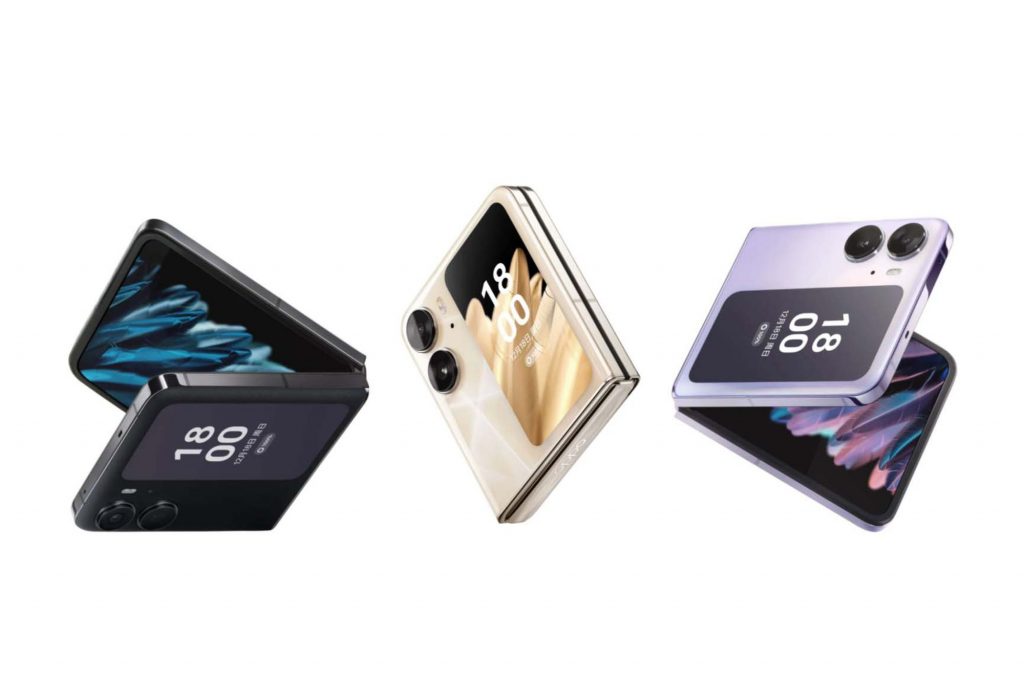
The OPPO Reno9 Series went official in the Chinese market and it includes three variants: OPPO Reno9, Reno9 Pro, and Reno9 Pro+. The phones range from the midrange segment to the flagship one. For now, they are official only in China, but they will come soon to the global markets too. They are not expected to launch in Europe, where at least one of the variants should come under the Find X6 lineup. While waiting for their global launch, it is time to learn the differences between each variant. That is the reason why we decided to publish a comparison between the specifications of the OPPO Reno9, the Reno9 Pro, and the Reno9 Pro Plus.

OPPO Reno9 vs Reno9 Pro vs Reno9 Pro Plus

OPPO Reno9 OPPO Reno9 Pro OPPO Reno9 Pro+
DIMENSIONS AND WEIGHT 162.3 x 74.2 x 7.2 mm,
174 g
162.3 x 74.2 x 7.2 mm,
174 g
161.5 x 73.6 x 8 mm,
192 g
DISPLAY 6.7 inches, 1080 x 2412 pixels (Full HD+), AMOLED 6.7 inches, 1080 x 2412 pixels (Full HD+), AMOLED 6.7 inches, 1080 x 2412 pixels (Full HD+), AMOLED
PROCESSOR Qualcomm Snapdragon 778G, octa-core 2.4 GHz Mediatek Dimensity 8100 Max, octa-core 2.85 GHz Qualcomm Snapdragon 8+ Gen 1, octa-core 3 GHz
MEMORY 8 GB RAM, 256 GB – 12 GB RAM, 256 GB – 12 GB RAM, 512 GB 15 GB RAM, 256 GB – 16 GB RAM, 512 GB 16 GB RAM, 256 GB – 16 GB RAM, 512 GB
SOFTWARE Android 13, ColorOS Android 13, ColorOS Android 13, ColorOS
CONNECTIVITY Wi-Fi 802.11 a/b/g/n/ac/6, Bluetooth 5.2, GPS Wi-Fi 802.11 a/b/g/n/ac/6, Bluetooth 5.3, GPS Wi-Fi 802.11 a/b/g/n/ac/6, Bluetooth 5.2, GPS
CAMERA Dual 64 + 2 MP, f/1.8 + f/2.4
32 MP f/2.4 front camera
Dual 50 + 8 MP, f/1.8 + f/2.2
32 MP f/2.4 front camera
Triple 50 + 8 + 2 MP, f/1.8 + f/2.2 + f/2.4
32 MP f/2.4 front camera
BATTERY 4500 mAh, fast charging 67W 4500 mAh, fast charging 67W 4700 mAh, Fast Charging 80W
ADDITIONAL FEATURES 5G, dual SIM 5G, dual SIM 5G, dual SIM

Design

Even though it is not the most expensive variant of the lineup, I love the design of the vanilla OPPO Reno9, especially in the special Red color option. It is very thin and lightweight, much more than the Pro Plus version, even though the latter has a higher build quality. And it is also the only variant to come in that Red color option with gold accents around the camera module. The Pro variant has exactly the same design, the same dimensions, and the same weight, but it does not have the red color option and this is the only difference. Unfortunately, the OPPO Reno9 Pro Plus is thicker and heavier, which is why I prefer the vanilla version, even though the Pro Plus has an aluminum frame.

Display

All of these phones are equipped with exactly the same display, there are no differences. It is an AMOLED panel able to show up to one billion colors with a diagonal of 6.7 inches, a Full HD+ resolution of 1080 x 2412 pixels, a 120 Hz refresh rate, HDR10+ certification, a peak brightness of 950 nits, the Asahi Glass AGC DT Star 2 protection, and an in-display fingerprint reader. It is not the best display you can find on an OPPO device, but it is still a high-end panel. An important difference of the Pro Plus variant is the presence of stereo speakers for an improved audio experience.

Specs & Software

One of the most important advantages of the OPPO Reno9 Pro+ is the hardware department, as it is currently the most powerful OPPO phone out there. It is powered by the Snapdragon 8+ Gen 1 chipset paired with 16 GB of RAM and up to 512 GB of native storage. The OPPO Reno9 Pro is less powerful, but still equipped with a high-end chipset: the Dimensity 8100 Max by Mediatek, paired with 16 GB of RAM and up to 512 GB of native storage. The vanilla version is just a mid-ranger, with a Snapdragon 778G mobile platform, up to 12 GB of RAM, and up to 512 GB of storage. All the handsets run Android 13 out of the box, customized by ColorOS 13.

Camera

OPPO Reno9 Pro Plus is the only phone of the series that we define as a flagship camera phone. It has a triple camera setup including a 50 MP Sony IMX890 main camera with OIS, an 8 MP ultrawide sensor, and a 2 MP macro camera. The Reno9 Pro takes the silver medal with its 50 MP Sony IMX890 main camera (without OIS) and an 8 MP ultrawide shooter. The Reno9 is just a mid-ranger with its 64 MP main camera, a 2 MP macro lens, and no ultrawide sensor.

Battery

You can get a longer battery life with the OPPO Reno9 Pro Plus thanks to a bigger 4700 mAh battery, as well as a faster charging technology with a power of 80W.

Price

OPPO Reno9 starts from €340/$340, the Pro variant begins at €470/$470, and the Pro Plus starts from €540/$540 (the prices refer to the Chinese market). Which one would you pick?

OPPO Reno9 vs OPPO Reno9 Pro vs OPPO Reno9 Pro Plus: PRO and CONS

OPPO Reno9

PRO

  • More affordable
  • Very thin
  • Same display as the Pro variants

CONS

  • Inferior chipset
  • No ultrawide camera

OPPO Reno9 Pro

PRO

  • Good quality price ratio
  • Reverse charging
  • Ultrawide camera
  • Sony IMX766 sensor
  • High-end chipset

CONS

  • Nothing particular

OPPO Reno9 Pro Plus

PRO

  • Best camera
  • Best chipset
  • 80W fast charging
  • Stereo speakers

CONS

  • Price

RELATED

Check the latest videos from our YouTube channel and subscribe:

Xiaomi Mini Host Will Launch as the Brand’s First Desktop PC Alongside the Xiaomi 13

Xiaomi‘s upcoming launch event scheduled for December 1 promises to be an interesting event. The company plans to unveil a slew of innovative products and interestingly, the list keeps growing. A Weibo post on the Xiaomi Notebook official page has revealed that the company is also planning to release a new desktop PC known as Xiaomi Mini Host.

Xiaomi Mini Hos

Now, Xiaomi has a long line of laptop computers under its belt but this product is touted to be the brand’s first desktop PC. Although the Weibo post did not reveal the configuration of the product, it projects the device as a “high-performance hardcore productivity tool” having a cool design. Both the teaser image and the name suggest the device will be a mini PC having a compact box-shaped design just like most of the mini PCs around.

One core advantage of mini PCs is their compact size which makes it possible to carry them around and occupy less space on the desktop. While most of the mini PCs around are usually not suitable for high-tasking operations, there are several with high-end configurations suitable for demanding tasks like intense gaming, running heavy software, and high memory-demanding tasks.

We expect Xiaomi’s first Mini PC to pack an Intel processor but the exact configuration is unknown at this time. We expect to get more details when the product is announced on December 1.

Apart from the Xiaomi 13, the Chinese tech giant is expected to announce the Xiaomi Buds 4, Watch S2, a flagship router, the Mi Mini Host, and the MIUI 14 custom ROM.

RELATED:

Sony Mocopi Motion Capture Device Released in Japan for 49,500 Yen ($358)

Sony has released a new character motion capture device, the Sony Mocopi in Japan. The Mocopi requires users to wear six sensors and connect them to a smartphone to combine avatars and create animated short films.

Sony Mocopi Motion Capture Device

The six sensors used by the Mocopi enable the recording of movements of the user’s head, left and right wrists, waist, and left and right ankles. It then connects these movements to the skeleton of the 3D avatar via a smartphone. With such connections, the Mocopi can perform motion capture without any additional equipment. It can create fast virtual characters and transfer character movement information to external 3D animation software. The Sony Mocopi Receiver Plugins are compatible with external software such as VMC virtual motion, Unity, and MotionBuilder.

Sony Mocopi Motion Capture Device

The Mocopi application can record voices and create facial expressions for the virtual character. The Mocopi mobile applications currently are available in Sony’s Xperia 1 and Xperia 5 series as well as Apple iPhones. More models are expected to be added to the list in the future. Each of the Mocopi sensors can be used for up to 10 hours and weight 8g.

Sony Mocopi Motion Capture Device

In terms of water- and dust-proof protection the Sony Mocopi is rated IPX5/ IPX8 and IP6X. It can withstand activity even when it’s raining.

Sony Mocopi Motion Capture Device

The Sony Mocopi is scheduled to go on sale in Japan in January 2023 for 49,500 Yen (~$358). Global availability and pricing information are lacking at this time.

RELATED:

Android Auto Mobile App Finally Gets a Material You Makeover

Google recently added a new user interface to Android Auto, and you might have already noticed that on your car’s dashboard. However, the company did not update the Android Auto phone app, which has had the same basic design since 2020. But that’s about to change, as the app is now receiving Material redesign with the latest beta release.

As per the Google News Telegram Channel, those who have enrolled in the Android Auto beta program and running Android Auto beta version 8.6 can now experience the redesigned app UI, which includes Google’s latest Material Design iteration and also a dark mode. However, the release is currently limited to the Android Auto beta channel, so those who have not yet registered will have to wait for a wider rollout.

As mentioned, the updated Android Auto app incorporates Material Design 3 to the Connection, Startup, and Display menus with round button overlays and matching color accents to the rest of the UI. The old header image has been removed, and the settings menu has been reorganized.

This new design offers users a more modern experience, similar to that offered by other Google apps. To make navigation much easier, all options are organized and grouped together. Additionally, the app offers a dark mode in accordance with your system preferences.

First reported in Android Auto beta 8.5, the new redesign is now fully functional in version 8.6. It could be included in the next stable update, but there has been no confirmation. Android Auto has had the same interface for years, so it’s good to see Google making changes to it.

Related:

Huawei Sets Up 27,500 Communication Sites in Nigeria

Losing most of its market share in the US and Europe due to the embargo, Huawei continues its growth in the rest of the world. The company is increasing its investments, especially in Africa and Nigeria. Lastly, Huawei has deployed 27500 communication sites in Nigeria to relieve users with a better communication experience.

Huawei has installed 27500 communication sites in Nigeria

Most of us know Huawei for its smartphones and similar products. However, the company is one of the leading telecommunications brands in the world. Communication technology infrastructures in Asia, Africa and parts of Europe are in the hands of Huawei. Up to this point, Huawei has launched many programs and solutions to help Nigeria in the digital, network, and communication aspects.

huawei communication solutions

Huawei has uprooted around 27500 communication sites and up to 10,000 km of fiber in the region. Ultimately, this initiative has helped more than 60% population to connect with high-end network facilities. The company shared the following on its official Twitter account: “Since its arrival in Nigeria, Huawei has deployed over 27,500 communication sites, over 10,000 km fibre, helping connect 60% population and greatly reduce the communication cost.”

Alongside tech sources, Huawei is also providing knowledge to the Nigerian youth. Recently, the manufacturer has launched an effective digital skills development program (LEAP) and provided 3000+ ICT courses. This program will improve the ICT infrastructure within three years. Thus, Huawei’s digital efforts will give a new face to Nigeria in the time ahead.

Huawei South Africa President – ​​Leo Chen shared his views on how digitalization and ICT development can add more figures to Nigeria’s growth rate. “Digitization is deeply rooted in people. Because we digitize for people and by people. When roots are deep, there is no need to fear the wind. Through the LEAP program, we strive to cultivate more youth leaders in ICT who can explore more possibilities for themselves, their families, community, and ultimately their nations.”

(via)

Bullitt and MediaTek to launch world’s first satellite-to-mobile messaging smartphone in Q1 next year

Smartphone brands are showing a lot of interest in satellite messaging these days. Apple and Huawei have already added satellite connectivity features to their latest flagships, and Samsung is also rumored to be working on the same. Now to take things to the next level, Bullitt Group, a smartphone manufacturer based in the UK, has announced it will launch the world’s first smartphone with two-way satellite messaging technology in the first quarter of 2023.

Bullitt has partnered with leading chip manufacturer MediaTek to develop the upcoming smartphone. In order to enable direct-to-satellite communications in its next generation of 5G smartphones, the firm has been working with the semiconductor company for the past 18 months.

Bullitt-MediaTek

The company says it will be the first to use MediaTek’s 3GPP NTN (Non-Terrestrial Network) chipset, which was demonstrated earlier this year. In parallel, proprietary software and service components have been developed to support the OTT satellite messaging service.

It will take about ten seconds for the Bullitt-built phones to connect and send messages over satellite. When cellular and Wi-Fi reception is lost, the device will automatically switch to satellite connectivity. Details are still pretty limited, but the company says it will offer a seamless experience.

“We have known for a long time that the answer was in satellite, but an “invisible” and seamless integration into a smartphone creates enormous technical challenges. MediaTek and Bullitt share a pioneering spirit and a history of innovation so now, nearly two years into our relationship, we jointly stand at the forefront of a new era in telecommunications and the quickest, simplest way for our carrier channel partners to offer total peace of mind to their customers,” said Richard Wharton, co-founder at Bullitt Group.

As per the company, the first smartphones with two-way satellite service will be available in Q1 of 2023. They will offer a free year of emergency messaging. The pricing details of the upcoming Bullitt handsets are yet to be known.

Related

(Source)

Xiaomi Watch S2 Internal Testing Begins in Asia, Could Launch Soon in India

Xiaomi is scheduled to launch the new Watch S2 in China on 1st December alongside the flagship Xiaomi 13 series, Buds 4, and a couple more products. The wearable will arrive on the global market as well, but the company hasn’t specified the launch date yet. It appears, though, that we won’t have to wait very long since the watch is already undergoing internal testing in Asia and Europe. Here are the details.

Tipster Mukul Sharma claims the internal testing of the Xiaomi Watch S2 has begun in various European and Asian regions. This indicates the watch will launch very soon in India and other markets. Sharma also suggests that the wearable will be available in two sizes: 42mm and 46mm.

Xiaomi Watch S2 Teaser

Leaks suggest the Xiaomi Watch S2 42mm version will be offered in Gold and Black color options. Whereas the larger 46mm version model will arrive in Black and Silver colors. The device is rumored to be priced at 999 yuan, which roughly converts to $139.

Details about the upcoming Xiaomi watch are still pretty short. We can expect it to have an AMOLED display, plenty of sports modes, advanced health-related features, and more. We should learn all the details about it on December 1.

To recall, the Watch S1 comes with a 1.43-inch AMOLED touchscreen display with 326PPI surrounded by a stainless steel frame. It has 117 fitness modes and 5ATM water resistance. In addition, the Watch S1 comes with up to 117 sports modes, supports sleep tracking, heart rate, and blood oxygen monitoring.

It also supports NFC for contactless payment. There’s Bluetooth calling, and dual-frequency GNSS positioning as well. The wearable packs a 470mAh battery with a battery life of up to 12 days on a single charge.

RELATED:

Xiaomi’s First 10 Gigabit Router Set for Release on December 1

The final lineup of Xiaomi products for the year will be launched in a couple of days. The December 1 scheduled launch event will see the release of an array of impressive products by the Chinese tech giant. The Xiaomi Product Launch Conference will herald the release of Xiaomi’s first-ever 10G router. Sources at Xiaomi indicate that the Xiaomi 10G router is an epoch-making flagship device with impressive capabilities.

Xiaomi 10 Gigabit Router

Xiaomi says the new router will herald the era of the 10G network at full speed with the capability of overshooting its peak. The router is essentially similar to Xiaomi’s premium AX9000 router but comes with greater capacity. The body is designed in a polygonal shape and it could have up to 5 antennas with one of them having the Xiaomi Router 10000 logo. There is no detailed official description of the router configurations at this time. It is however expected to come with the necessary features and could become a financial management product like its predecessor.

Xiaomi 10 Gigabit Router

The Xiaomi 10G router will support the latest Wi-Fi 7 protocol implying improved transmission speeds and lots of new features. Wider channels and a more efficient QAM modulation, as well as multi-and adaptive connection. We expect the 10G router to have a more powerful processor than the Qualcomm IPQ8072A of the AX9000. The router offered 1GB of memory and a maximum rate of 3.5Gbps and supports triple band concurrency. It was the first Xiaomi router to come with USB 3.0 and Wi-Fi 6 connectivity.

RELATED:

(via)

Xiaomi MIJIA Thermos Cup Pocket Edition with Extended Heat/Cold Retention Launched For 49 Yuan ($7)

Xiaomi has unveiled the MIJIA Thermos Cup Pocket Edition in China. The new MIJIA insulation cup can keep water or any liquid hot for up to 6 hours. The new Thermos Cup has a colorful design with a double-threaded quick-open lid and a spiral-thin 316L stainless steel liner. It has a tailless vacuum and can also preserve cold liquid.

MIJIA Vacuum Cup Pocket Edition

The MIJIA Vacuum Cup Pocket Edition has a capacity of 350ml and weighs 170g. It is compact enough to be held in one hand and it can easily be slipped into a pocket. There are several color options available for the new MIJIA vacuum cup. These include smoked apricot powder, water moon green, minimalist white, and elegant black.

MIJIA Vacuum Cup Pocket Edition

The stainless steel inner core of the vacuum cup and its tailless vacuum design support double-thread quick opening. A built-in 360º silicone sealing ring helps the device to achieve up to 6 hours of energy (heat or cold) preservation. This means that your hot or cold water placed on the vacuum cup will still retain its hotness (or coldness) after six hours.

MIJIA Vacuum Cup Pocket Edition

The cup also comes with a filter tea strainer, making it easy to separate tea and water. The tea strainer can also be easily taken out for cleaning. The Xiaomi MIJIA Vacuum Cup Pocket Edition has gone on sale in China at an introductory price of 49 yuan (~$7). The thermos cup will subsequently revert to its original price of 59 yuan (~$8). It can be purchased directly from Tmall.

RELATED:

JBL Tune 520 BT Headphones design revealed via NCC, Launch imminent

JBL is apparently gearing up to launch a new wireless pair of headsets called the TUNE 520 BT headphones. The company’s upcoming hearable product might be launching soon as the device was recently spotted being certified online.

JBL

The Tune 520 BT model was spotted on the NCC certification database, which also revealed its model number HPT603028. This listing also revealed the complete design of the new headphones and some other details. Looking at the images on NCC, we can see that it will come in at least one model that is black in color. Furthermore, it will house physical buttons on the right for volume rockers and the power button. We can even see that it feature a USB Type C port for charging.

The certification also revealed that the Tune 520 BT headphones will be powered by a 450mAh battery pack. The headphones’ charger was also certified, which carries the model number HW-050100U01 and supports 5W charging. While this certification does hint at its imminent launch, the finer details regarding its announcement is still unclear and its key specifications are also at large.

JBL

JBL had previously launched the Tune Tune 510 BT headphone models in India for a price tag of 3,699 INR. Meaning, we can expect the brand to release its successor for a price tag around the 4,000 INR or identical to the 510. So stick around for more, as we will be providing updates when additional information is available regarding the upcoming wireless headphones.

RELATED:

Xiaomi Buds 4 & Watch S2 Official Images Released Ahead of Dec. 1 Launch

Xiaomi is scheduled to hold a launch event on December 1 with the Xiaomi 13 launch being the major highlight. However, the Chinese tech giant has shared a couple of teasers confirming that apart from the flagship phone, a couple of other products will be announced. The Xiaomi Buds 4 Noise-cancelling TWS earbuds and Xiaomi Watch S2 have recently been confirmed to launch on December 1, as well.

Xiaomi Buds 4

Ahead, of the launch, Xiaomi released a couple of teaser images of both devices. The teasers give us a clear look at both devices with the Buds 4 shown to feature a rare semi-in-ear design with active noise cancellation. The Buds 4 is likely a trimmed-down version of the Buds 4 Pro but the design is slightly different in that there are no silicone earbuds as a result of the semi-in-ear design.

Xiaomi Buds 4

However, it features a round pebble-like charging case that retains the USB-C charging port just like the Buds 4 Pro. The upper part of the case has a metal glossy finish while the lower half is made of plastic. The official images show the device will come in three color options – Green, White, and Black. For reference, the Buds 4 is only available in gold and black colors.

Xiaomi Buds 4

On its part, the Xiaomi Watch S2 is a follow-up of the Watch S1 Pro released back in August. It adopts a new dual-size design, with a variety of fashionable straps, professional sports modes, and innovative health management features. The watch will be available in two sizes – 42mm and 46mm, similar to what is obtainable on the Galaxy Watch series.

Xiaomi Watch S2

The official images show the device adopts a flat display with a stainless-steel body. There are two physical buttons on the right side of the watch body, and a raised part below for heart rate detection.

Xiaomi Watch S2

At present, the specifications are not known. For reference, the Xiaomi Watch S1 Pro uses a 1.47-inch OLED screen with a screen-to-body ratio of up to 72.7% and a resolution of 480 x 480 pixels.

Xiaomi Watch S2

In addition, the Xiaomi Watch S1 Pro is equipped with a health sensor from Goodix Technology bringing high-precision, all-weather heart rate, and blood oxygen saturation detection, among others.

We” find out more about the Watch S2 and Buds 2 in a few days’ time when they go official.

Related:

This App Turns an Apple Watch Ultra Into A Diving Computer

The Apple Watch Ultra was unveiled last September alongside the iPhone 14 series, a smartwatch that appeals to professional athletes. One of the first scenes shown during the live stream announcement was the Apple Watch Ultra as it was descending into the water. The display showed ambient water temperature and depth level. Lastly, Apple is announcing the Oceanic+ app for its premium smartwatches, making it a diving computer.

Oceanic+ turns Apple Watch Ultra into dive computer

Apple Watch continues to attract the attention of extreme sports lovers. Of course, there are also divers among them. Oceanic+ was designed by Huish Outdoors in collaboration with Apple. In collaboration with Apple, Oceanic+ was designed by Huish Outdoors and gives divers access to a wealth of relevant information.

Oceanic+ app on Apple Watch Ultra

The Oceanic+ app turns Apple Watch Ultra into a powerful, easy-to-use dive computer.  Apple, Oceanic+ enables recreational scuba divers to take the watch they wear every day to previously unreachable depths up to 40 meters, or 130 feet, to be exact, with the all-new depth gauge and water temperature sensors on the watch.

The Oceanic+ app on Apple Watch Ultra and the companion app for iPhone provide all of the key features of an advanced dive computer, robust dive planning, and a comprehensive post-dive experience. The app will show divers a warning if they are descending or ascending too quickly and it will show an estimated time it’d take to get back to the surface. This is especially aimed at enabling divers to manage their time more efficiently and reducing the things they need to worry about.

The app will also let divers set compass heading during a dive. There is also a planner that considers tide, temperature, visibility, and currents before going on a dive. Watch face complications can show the wearer no-fly time, surface time, among others. Oceanic+ will use the Taptic Engine and the Apple Watch Ultra’s big bright display to notify the diver of any crucial info during a diving session.

  • Oceanic+ is a free download to try out many of the app’s features
  • If you’d like all the all features, there are daily, monthly, and yearly plans:
    • $4.99/per day
    • $9.99/per month
    • $79.99/per year
    • Family plan for up to 5 – $129.99/year

How to download Oceanic+ Apple Watch Ultra

  • Here is the official Oceanic+ App Store listing
    • The app is exclusively built for Apple Watch Ultra and requires watchOS 9.1 paired with an iPhone 8/SE gen 2 or later running iOS 16.1
  • If you just search “Oceanic” in the App Store without the “+” you may see a different app as the top hit
  • If you search on the App Store on Apple Watch Ultra, make sure to download “Oceanic+ Dive Computer App”

(via)