Nowadays, we are seeing new monitors getting launched in the market with a different aspect ratio than the traditional 16:9. For instance, there are 32:9 monitors in the market while Apple’s MacBook Pro now features a 14:9 display.
LG is now going a step further and has launched the LG DualUp Monitor with model number 28Q780, making it the world’s first display to come with a 16:18 aspect ratio.
The LG DualUp monitor isn’t really square in shape but has maintained a width of 2560 pixels. While 32:8 monitors are for replacing the two side-by-side monitor setup, this new 16:18 monitor for LG aims to replace two 2560 x 1440 pixel LCDs placed one above another which is used by creators and coders.
Given that the company is not targeting gamers or media enthusiasts, there’s nothing above average in terms of the display. It comes with a 2560 x 2880 pixels screen resolution, 300-nits brightness, and 1000:1 contrast ratio.
Further, the monitor comes with the standard 60Hz refresh rate and offers a 5ms GtG response time. It only supports 98% DCI-P3 color gamut and the LCD panel also comes with HDR10 support.
It comes with one DisplayPort, two HDMI, and one USB-C input with up to 96W power delivery port. It also supports a vertical split view function that lets users use it with two PCs. There’s also a dual-port USB hub and two 7W speakers co-designed with MaxxAudio.
The LG DualUp monitor is mounted on an ultra-adjustable LG Ergo stand that is securely clamped to a desk and can adjust the height, tilt, swivel, and even pivot. The company has also revealed that it will be available in 2022.
The much-awaited Samsung Galaxy S22 series launch inches closer with each passing day and new details about it keep popping up. Most of the specifications of the lineup are already known by now and there have not only been unofficial renders but also leaked live images of some of the devices. However, official marketing material has been missing – something that has now changed.
LetsGoDigital has managed to get their hands on an official promo image from the company revealing the rear of both the Galaxy S22 Ultra and S22+ phones, even as their launch is still over a month away. The leak’s source chooses to remain anonymous so its origin has not been revealed.
Regardless, the promo image has officially confirmed the rear of the Samsung Galaxy S22 Ultra, showing off its highly versatile quad rear camera setup for the very first time. All of the camera lenses get islands of their own and aren’t fitted into any camera module, resulting in a unique yet minimal look.
The official render also shows off the S Pen for the first time in black. In the image, its tip has been painted rose gold-ish, which is the exact color of the S22 Ultra as well, making it most likely that the tip of the S Pen will complement the color of the phone it will be shipped with for a more consistent look.
All in all, the promo image sits perfectly in line with previous leaks. Also revealed was that the Galaxy S22 Ultra will indeed be called so as the image doesn’t mention any alternate names like Galaxy S22 Note that had been circulating of late.
Galaxy S22 Ultra unofficial render by LetsGoDigital
As for the front of the flagship phone, well, it still remains to be teased officially. LetsGoDigital did earlier reveal that the selfie camera will be housed within a waterdrop notch though, so that’s something new. Its predecessor S21 Ultra, in contrast, had opted for a center-aligned punch-hole cutout.
Last but not the least, the leaked image also shows off the Samsung Galaxy S22+ for the first time, in white, revealing that its camera lenses protrude far less than they did on the S21 and S21+.
The entirety of the Samsung Galaxy S22 series is expected to officially make its debut in mid-February 2022, so stay tuned.
Xiaomi 12, the compact flagship phone, is scheduled to launch with Xiaomi 12X and Xiaomi 12 Pro handsets on Dec. 28 in China. While the Chinese manufacturer is confirming the key specs of the Xiaomi 12 series, a new leak that has surfaced courtesy of tipster Panda is Bald, has revealed the entire specifications and pricing of the vanilla model.
Xiaomi 12 Specifications (Rumored)
The Xiaomi 12 poster reveals that it has a 6.28-inch AMOLED display that offers a Full HD+ resolution of 1080 x 2400 pixels, a 120Hz refresh rate, 10-bit colors, HDR10+, Dolby Vision, and 16000-level brightness. The device measures 69.9mm diagonally and weighs 180 grams.
While it is not mentioned in the poster, the Snapdragon 8 Gen 1 SoC will power the Xiaomi 12. It will be accompanied by LPDDR5 RAM and UFS 3.1 storage. It has a 4,500mA lithium cobalt oxide battery that supports 67W fast charging and 30W wireless charging. It offers connectivity features like NFC, IR blaster, Bluetooth 5.2, Wi-Fi 6 enhanced version, and 5G. It is also equipped with X-axis linear motor.
The leak has no information on the front camera of the Xiaomi 12. Its rear-facing triple camera unit has an OIS-enabled 50-megapixel 1/1.28-inch main camera with an f/1.9 aperture, a 13-megapixel ultrawide camera with a 123-degree FOV, and a third camera that supports OIS, 3x optical zoom, 10x hybrid zoom, and 30x digital zoom. The device runs on MIUI 13.
Xiaomi 12 Pricing (Rumored)
The Xiaomi 12 is listed in three variants in the new leak. The 8 GB RAM + 128 GB storage is priced at 3,699 Yuan (~$581), the 8 GBR AM + 256 GB storage model costs 3,999 Yuan (~$628), and the 12 GB RAM + 256 GB storage variant is listed for 4,399 Yuan (~$690).
The image shown in the poster is the Xiaomi 12 renders by OnLeaks. While some details mentioned in the image appears to be correct, the entire poster looks fake. Hence, readers are advised to digest the leak with a pinch of salt. It is likely that the Xiaomi 12 will be lower than the pricing mentioned in the poster.
The Samsung Galaxy S21 FE is anticipated to go official at CES 2022. The device may hit the shelves on January 11 in the US. Ahead of that, the phone now emerges in a hands-on video.
Instagram user @habla.concamilo has shared (via SamMobile) a short hands-on video of the yet-to-release Galaxy S21 FE video. The video showcases the handset in the violet color option. For the unaware, the phone will be available in three more colors – green, gray, and white.
The video confirms that the smartphone will have a matte finish on the rear, unlike Galaxy S20 FE, which has a glossy texture. It appears to be the same plastic material found on the mid-range Galaxy A series. Hopefully, the material is as good as the one found on the vanilla Galaxy S21 as the A series has a thinner and flimsy back panel.
As far as specs are concerned, the Samsung Galaxy S21 FE is expected to arrive with a 6.4-inch FHD+ 120Hz AMOLED display, Qualcomm Snapdragon 888 or Exynos 2100 (depending on regions), 6GB/8GB RAM, 128GB/256GB storage, 12MP (wide) + 12MP (ultra-wide) + 8MP (3x telephoto) triple rear camera setup, and 32MP selfie camera.
The remaining features of the headset will include an in-screen fingerprint sensor, IP68 rating for dust and water resistance, Android 12, 4,500mAh battery, 25W fast wired charging, 15W fast wireless charging, and reverse wireless charging.
Vivo V23 series is expected to launch soon in India. Rumors have it that it may launch on Jan. 5 in India. A teaser video (shown below) appeared during the Pro Kabaddi League match on Star Sports. The commercial revealed the design of the Vivo V23 series of smartphones.
Vivo has already launched the Vivo V23e 4G and V23e 5G smartphone in markets outside India. As far as India is concerned, the V23 lineup is expected to include at least two phones, V23, and V23 Pro. The commercial that has surfaced shows that the V23 series will be available in Sunshine Gold color.
It will sport an ultra-slim design and a curved edge display. In addition, its display will feature a wider notch with dual selfie cameras. The back panel of the device has a 64-megapixel triple camera unit. The design of the V23 series appears to be inspired by the Vivo S12 and S12 Pro handsets that were announced earlier this week in China.
Reports have revealed that the Vivo V23 5G with model number V2130 have been approved by certification platforms such as India’s BIS and Malaysia’s SIRIM. Reports suggest that the V23 5G will be similar to the Vivo V23e 5G, but it will pack better cameras and a chipset.
Vivo V23 series poster
The Vivo V23 Pro appears to be a tweaked version of the Vivo S12 Pro, which came with specs like a 6.44-inch AMOLED 90Hz display, Dimensity 1200 chipset, up to 12 GB of LPDDR4x RAM, up to 256 GB of UFS 3.1 storage, 50-megapixel (primary) + 8-megapixel (ultrawide) dual selfie cameras, 108-megapixel (main) + 8-megapixel (ultrawide) + 2-megapixel (macro) triple rear cameras, a 4,300mAh battery with 44W fast charging, and an in-screen fingerprint scanner. It appears that the V23 Pro will have a 64-megapixel primary camera instead of the 108-megapixel snapper. Also, it will be equipped with a color changing back.
The Samsung Galaxy S22 series is expected to make its debut in early February. However, a new rumor from South Korea now says that the handsets will probably release later than the stipulated timeline. Let’s take a look at the reason behind the delay.
Samsung Galaxy S22+ | Source: @OnLeaks via 91Mobiles
A post on Naver (via SamMobile) states that Samsung has postponed the launch of the Galaxy S22 series. The successor of the Galaxy S21 series will not go official on the date revealed by a carrier source at the end of November. The reason behind the delay is said to be supply chain constraints.
For the unaware, the pre-orders for the Galaxy S22 series were anticipated to go live on February 8 in South Korea. Whereas, the sales were scheduled to kick off around February 18. If the latest rumor happens to be true, then the sales will be likely delayed until late February or early March, suggests Twitter user @GaryeonHan.
The entire smartphone industry is facing issues related to the supply chain. So it’s not surprising to learn that Samsung is also affected by this. In fact, due to this very same reason, the South Korean tech giant has delayed the launch of the Galaxy S21 FE multiple times. This device is now expected to release in January ahead of the Galaxy S22 family.
OPPO K9x has gone official as yet another K9 series of smartphones. Earlier this year, OPPO announced a K-series of phones such as the OPPO K9, OPPO K9 Pro, and OPPO K9s, and now it has unveiled the OPPO K9x. Here is all the information on the specifications, features, and pricing of the OPPO K9x.
OPPO K9x specifications and features
The OPPO K9x has a 6.5-inch LCD punch-hole display that offers a Full HD+ resolution of 1080 x 2400 pixels and a 90Hz refresh rate. It has a front-facing camera of 16-megapixel, and its rear shell is headlined by a 64-megapixel camera. The main lens is accompanied a 2-megapixel macro camera and a 2-megapixel depth sensor.
OPPO K9x
The Dimensity 810 chipset is present under the hood of the OPPO K9x. The device is equipped with up 8 GB of LPDDR4x RAM and up to 256 GB of UFS 2.1 storage. There is a dedicated microSD card slot on the device for more storage. It boots to Android 11 OS and ColorOS 12.
Coming to the battery of the device, it has a 5,000mAh power source, which is couple with a 33W fast charger. It comes with other features like a 3.5mm audio jack and a fingerprint scanner. It has a thickness of 8.8mm and weighs 191 grams. To sum up, it’s a rebranded version of India’s Realme 8s 5G smartphone with a tweaked rear design.
OPPO K9x pricing and availability
The OPPO K9x comes in three variants such as 6 GB RAM + 128 GB storage, 8 GB RAM + 128 GB storage, and 8 GB RAM + 256 GB storage. While it is scheduled to go on sale from Dec. 27, its pricing is yet to be confirmed. The K9x will be available in colors like Obsidian Black and Silver Purple.
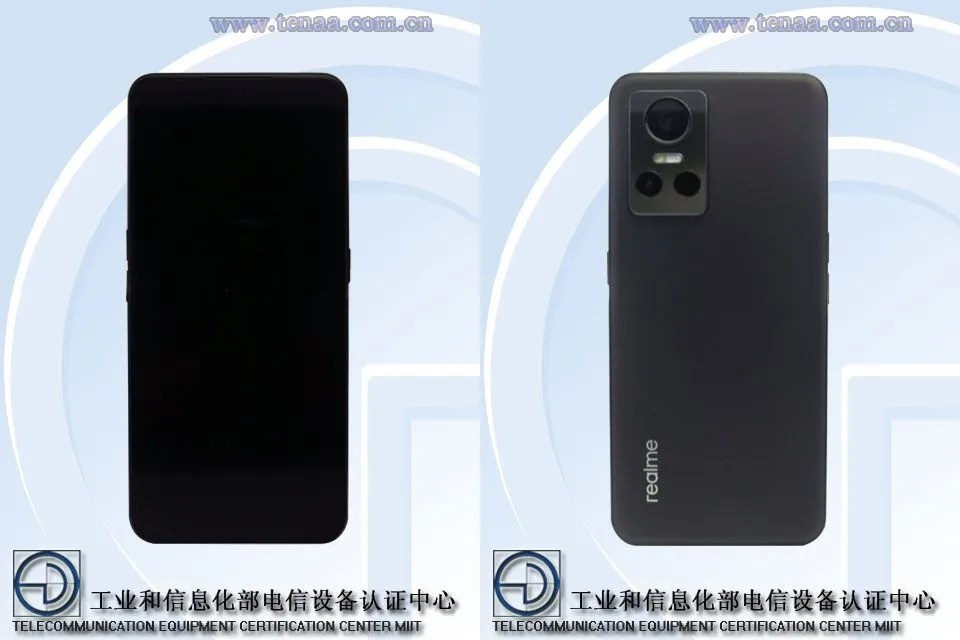
Reports have revealed that the TENAA certified Realme RMX3310 phone model could be the Snapdragon 888 powered Realme GT 2 handset. Now, the Chinese certification site has approved another Realme phone with an RMX3300 model number. This model appears to be the Snapdragon 8 Gen 1 powered Realme GT 2 Pro.
It is not the first time that the RMX3300 has been spotted. Earlier this month, it had emerged with a 65W fast charger in the database of China’s 3C certification site. A live shot of the same phone, which revealed that it has 1 TB of storage, had also appeared earlier this month. Last month, the same device was spotted with specs like a 120Hz refresh rate display, Snapdragon 8 Gen 1, 12 GB RAM, 256 GB storage, and Android 12 at AnTuTu. The device had scored 1,025,215 points on the benchmarking site.
Realme GT 2 Pro
Realme GT 2 Pro specifications
The RMX3300’s TENAA listing has revealed that it has a 6.7-inch AMOLED display. The screen delivers a 1440 x 3216 pixels Quad HD+ resolution and an in-display fingerprint scanner. Shown above is the new poster of the GT 2 Pro that has been shared by Realme. Unfortunately, the TENAA images of the RMX3300 are not available yet.
The TENAA listing further shows that the Snapdragon 8 Gen 1 fueled phone has 8 GB / 12 GB of RAM and 128 GB / 256 GB / 512 GB of built-in storage. The device runs on Android 12 OS, which is likely to be overlaid with the Realme UI 3.0. it has a dual-cell battery. The rated capacity of one of its batteries is 2,440mAh, which suggests that the total value of its battery could be around 5,000mAh.
The 50-megapixel + 50-megapixel + 2-megapixel triple camera unit is available on the rear shell of the RMX3300. The primary lens seemingly supports OIS, and the secondary sensor may offer a 150-degree FOV. For selfies, it features a 32-megapixel front camera. The handset will come in multiple colours such as Paper White, Cast Iron Black, Ice Crystal Blue, and Light Green.
OPPO has begun to recruit ColorOS 12 beta testers for a new batch of devices in international markets. The latest handsets to join the beta program include OPPO Reno6, OPPO Reno5, OPPO Reno5 Marvel Edition Edition, and OPPO A74 5G.
OPPO Reno5 Marvel Edition
After releasing Android 12-based ColorOS 12 beta builds for expensive and newer phones, OPPO has now turned its focus to older and less-expensive devices for the same purpose.
According to officialannouncementposts on OPPO Community, the beta registrations are currently live for the following smartphones.
In order to enroll in the program, users will have to go to Settings > Software Update > Gear Icon > Apply for Beta Version > Update Beta Version and follow the on-screen instructions. The company is only recruiting only 5,000 testers for a single phone in each region for the first batch.
Selected applicants will receive the ColorOS 12 beta update via OTA within 3 days from the selection. Those who don’t get recruited will get a chance in the next batch.
Unfortunately, OPPO is not known for revealing the stable release timeline for its software. However, going by the current pace of ColorOS 12 stable rollout, these handsets could get access to stable builds as early as late January 2022.
Yesterday, Realme collaborated with Vogue Italia to share images of a Realme GT 2 Pro handset. The images revealed that its appearance is different from the leaked renders of the GT 2 Pro that was shared by reliable tipster Steve Hemmerstoffer. When people started tweeting that the real handset looks different from the leaked renders, Hemmerstoffer claimed that the images released by Realme belong to the Master Edition variant. He also added that the GT 2 Pro will come in three variants.
Realme GT 2 Pro
According to the tipster, the Realme GT 2 Pro will come in three options such as regular, Master Edition, and the camera performances variant. These devices along with the vanilla Realme GT 2 are expected to go official on Jan. 4.
The Chinese manufacturer has teamed up with industrial designer Naoto Fukasawa to design the Realme GT 2 Pro. The Master Edition model can be seen with a clear paper-like white back. The rear shell of the device has a triple camera unit, which includes a 50-megapixel primary camera with OIS. Towards its right is the Realme logo with the designer’s signature.
me
lThe previously seen Realme GT 2 Pro render with a horizontal camera module could be its camera-focused edition. It is unclear whether this device features an under-display camera.
Realme GT2 Pro (camera-focused edition) renders by Steve Hemmerstoffer
Rumors surrounding the Realme GT 2 Pro have claimed that it will be equipped with a 6.7-inch QHD+ 120Hz AMOLED display, a 32-megapixel front-facing camera, an OIS-assisted 50-megapixel triple camera unit, Snapdragon 8 Gen 1, up to 12 GB of LPDDR5 RAM, up to 1 TB of UFS 3.1 storage, and 65W fast charging.
The OPPO Find X2 series got access to the Android 12-based ColorOS 12 beta update in India and Indonesia in mid-November. A little over a month later, these handsets have now started receiving the stable update in the aforementioned regions.
OPPO Find X2 Pro
According to an official announcement post on OPPO Community, the company has begun to seed ColorOS 12 stable update for the OPPO Find X2 series in Indonesia and Indonesia.
In order to install the fresh system update, users will have to navigate to Settings > Software Updates > Gear Icon > Trial Version and follow the on-screen instructions.
Since ColorOS 12 brings Android 12 for the above-mentioned devices, there could be some issues with certain third-party applications. Also, the firm recommends backing up the data before upgrading to the newer version of the software.
The ColorOS 12 stable update for the OPPO Find X2 series should be available in more regions in the coming days. Last but not least, according to OPPO’s updated software policy, these smartphones will be receiving one more Android update in the future.
Xiaomi 12 series flagship smartphones are all set to go official in the Chinese market next week on 28th December. Ahead of the launch, the company has been sharing some key details about the phones through official teasers.
In the latest development, Lei Jun, Founder and Chief Executive Officer of Xiaomi has revealed details about the display panel used in the top-end device of the upcoming smartphone lineup, the Xiaomi 12 Pro.
It has been revealed that the Xiaomi 12 Pro is the first smartphone to feature a second-generation low-power 2K screen. Further, it is also touted to be the best screen on a Xiaomi smartphone so far. Recently, it was revealed that the smartphone has received A+ ratings from DisplayMate and has set 15 new records.
The display is said to have four power-saving hardcore technologies, including new E5 light-emitting materials, second-generation LTPO materials, Mirco-Lens microprism technology, and intelligent dynamic refresh rate technology.
If the recent report is to be believed, then the display panel for the Xiaomi 12 Pro is supplied by Samsung while the Xiaomi 12 and 12X phones will feature a 6.28-inch Full HD+ screen sourced from TCL CSOT.
The Xiaomi 12 and 12 Pro smartphones getting launched next week in China are confirmed to come powered by the new Qualcomm Snapdragon 8 Gen 1 chipset. We expect to know more details about the phones in the coming days through official teasers.
Motorola smartphones come running the brand’s own My UX skin which offers a near-stock version of the Android operating system. Now, the company is set to update its smartphones with the new version of the software — Android 12.
The Lenovo-owned company has revealed the list of smartphones that will be upgraded to the Android 12 operating system. Further, the company has also revealed details about what we should expect from the new version.
Motorola has confirmed that the company will start rolling out the latest Android 12 version update for its smartphones from February 2022. Here is the list of devices that will be getting the new version update.
The company has revealed that the new update with Android 12 will bring the Material You system for personalizing the user interface. There will be conversation widgets that put the contacts you frequently converse with at the center of the home screen.
It will also bring privacy controls with indicators for when an app is using a mic or camera and more granular location controls. There will be new visibility features like the ability to zoom in on a part of the display without losing sight of the rest, extra dimness for night-time scrolling, among others.
Realme only launched its realme TechLife sub-brand DIZO in India back in July 2021, but the DIZO sub-brand already has a wide range of devices under its belt ranging from wireless earbuds, smartwatches, hairdryers, and even beard trimmers for sale.
Mukul Sharma shares that DIZO Watch R is coming soon. Source: @stufflistings Twitter
Well, Realme is planning to continue the momentum of its hot new sub-brand with a new affordable smartwatch, the Realme DIZO Watch R. Twitter user and popular Indian leakster, Mukul Sharma, shared on his social media as of late that the Realme DIZO Watch R will be coming soon to the market, and that the device will be launching first in India.
Realme DIZO Watch R Box Source: @stufflistings Twitter
In the post, he also attached the images of the box that comes with the Realme DIZO Watch R. The box shows off the design of the Realme DIZO Watch R, and the watch seems to be a circular dial watch in the color option of what seems to be either rose gold or mystic bronze. The box also mentions that the Realme DIZO Watch R is part of the realme TechLife family of IoT products.
Mukul Sharma mentioning the DIZO Watch R has a 1.3-inch display Source: @stufflistings Twitter
In the replies, Mukul Sharma also mentions that the Realme DIZO Watch R is equipped with a 1.3-inch screen. No other details such as specs, battery capacity, or the release date of the watch were revealed, but from what we have gathered from previous leaks, the Realme DIZO Watch R will be launching in January 2022, with the DIZO Watch 2 Special Sports Edition launching together with it on the same launch event as well. The Realme DIZO Watch R is claimed to be the affordable sibling compared to its more expensive brothers, the Realme DIZO Watch 2 and DIZO Watch 2 Pro.
In comparison, the DIZO Watch 2 comes with a 1.69-inch TFT LCD display, while the Watch 2 Pro sports a 1.75-inch TFT LCD screen. The duo comes with features like a SpO2 sensor, heart-rate monitoring, sleep tracking, camera & music controls, and call & SMS alerts. The Watch 2 has 15 sports modes and a battery life of 10 days, whereas, the Watch 2 Pro has a whopping 90 sports modes and 14 days of battery life. The DIZO Watch R is expected to cut the unnecessary gimmicks of its expensive siblings to reach a more affordable price tag.
Xiaomi has confirmed that the brand’s next-generation flagship smartphones will be officially launched in the Chinese market on 28th December. Ahead of the launch, details about the phones keep surfacing online via leaks and official teasers.
Now, a new report coming from China has shared more details about the display parameters of the upcoming Xiaomi 12, 12 Pro, and 12X smartphones.
The latest leak revealed that the Xiaomi 12 will come with a 6.28-inch 1080p 10bit Huaxing (TCL CSOT) flexible screen. The company is said to use the same panel for the budget Xiaomi 12X smartphone as well. Further, it is said that for the Xiaomi 12 Pro, the company has opted for a 2K flexible display panel from Samsung.
A Product Manager at Xiaomi for the upcoming flagship smartphones revealed that the firm opted for a Full HD+ panel instead of 2K for the standard model for better battery life. The screen still comes with support for 10bit color depth, high contrast ratio of 16,000:1, and features GGV protective glass.
Recently, Lei Jun, CEO of Xiaomi confirmed that the Xiaomi 12 smartphone has received A+ ratings from DisplayMate and also added that the device has broken 15 records but has not shared more details about it.
The Xiaomi 12 series smartphones will be officially launched in China on 28th December, marking the debut of the company’s first devices powered by the latest Qualcomm Snapdragon 8 Gen 1 SoC. To know for sure what these phones pack, as well as their pricing and availability, we will have to wait for the official launch event.
AMD has confirmed that the company will be unveiling its next-generation Zen 4 CPUs at the upcoming Consumer Electronics Show (CES) 2022. The company’s CTO Mark Papermaster has said that some details will be mentioned at CES but more details will be shared at a later date.
This means that AMD won’t be launching the next-generation Zen 4 CPUs at the CES 2022 but will be revealing some of the key features. The Zen 4 was originally announced by the company in October last year at the Ryzen 5000 event.
In an interview with Forbes, Mark Papermaster said: “We’re excited to be revealing some additional details on our new product launches that will deliver phenomenal experiences, and as we’ve said, later in the year as it progresses we’ll share more detail on Zen 4, with some mentioned at CES and more announcements on it over the course of 2022.”
The company has scheduled its CES presentation on 4th January 2022 at 10:00 AM EST where Lisa Su, AMD’s CEO, is expected to talk about Ryzen 6000-series processors, Radeon graphics, and Ryzen 3D V-Cache technologies.
AMD has already confirmed that the next-generation Zen 4 chips will be manufactured using the 5nm process. The company is most likely relying on its existing partner TSMC for the manufacturing of chips.
If the reports are to be believed, then the chips will come with about a 40 percent improvement in performance. It is expected to support an AM5 socket that uses a Land Grid Array (LGA) design, breaking with AMD’s long history of Pin Grid Array (PGA) sockets.
After sharing some key details at CES 2022 in a couple of weeks, AMD is expected to actually launch the new chips sometime after July.
A lot of people are actually impressed by the Motorola Edge X30 which came up as the world’s first smartphone powered by the Snapdragon 8 Gen 1. But there is another flagship killer even more affordable which is catalyzing the attention of the experts: the new Motorola Edge S30. A lot of people are wondering whether or not the Motorola Edge S30 is the best flagship killer in terms of value for money. In order to understand it, we think that the best way is comparing it to the other flagship killers providing the same level of performance. After the comparison with the Motorola Edge X30, here is a comparison between Motorola Edge S30 and Realme GT.
Triple 64 + 8 + 2 MP, f/1.8 + f/2.3 + f/2.4
16 MP f/2.5 front camera
Triple 108 + 13 + 2 MP, f/1.9 + f/2.2 + f/2.4
16 MP f/2.2 front camera
BATTERY
4500 mAh, fast charging 65W
5000 mAh, Fast Charging 33W
ADDITIONAL FEATURES
5G, dual SIM
5G, dual SIM, water-repellent
Design
The Racing Yellow color option of the Realme GT 5G wins the design comparison as it is one of the most beautiful and original phones of this year. It has a rear cover made of leather and an aluminum frame, as well as more compact dimensions if compared to its rival. The non-leather version of the handset is built with a glass back and an aluminum frame. The Motorola Edge S30 is a bit disappointing in terms of design because it is entirely made of plastic and has big dimensions. The Realme GT 5G is more attractive and built with more premium materials, but at least the Edge S30 is a water-repellent phone.
Display
If you are looking for the most advanced display, then you should go for the Realme GT 5G without thinking twice. Unlike its opponent, it has an AMOLED display showing richer colors. It is a smaller display, but the image quality is higher. The display has a Full HD+ resolution and a 120 Hz refresh rate. The Motorola Edge S30 features a higher 144 Hz refresh rate and HDR10, as well as a wider 6.8-inch diagonal, but it is an average LCD panel and you do not get the same image quality. Last but not least, the Realme GT 5G has an in-display fingerprint scanner and stereo speakers, while the Motorola Edge S30 has a mono speaker and a side-mounted fingerprint reader.
Specs & Software
The Motorola Edge S30 wins the hardware comparison because it features a stronger chipset: the Snapdragon 888+ running at a max frequency of 2.99 GHz and supported by up to 12 GB of RAM and up to 256 GB of UFS 3.1 internal storage. The memory configuration of the Realme GT 5G is the same, but it is paired with a weaker Snapdragon 888 mobile platform. However, the difference in terms of performance is just marginal. Both the phones run Android 11, but the Realme GT 5G has a more advanced customized interface with a higher number of exclusive features.
Camera
The best camera phone of this comparison is the Motorola Edge S30. It provides a better main camera with a 108 MP resolution, as well as a better 13 MP ultrawide sensor. Further, it has a selfie camera with a brighter focal aperture. The Motorola Edge S30 is able to record 4K videos and 10-bit videos with HDR10+, and this is another added value.
The Motorola Edge S30 packs a battery with a capacity of 5000 mAh, which is actually bigger than the battery of the Realme GT 5G. So it should provide a longer battery life in a lot of scenarios and this is very important because the battery life is the weakest point of the Realme GT 5G. On the other hand, Realme GT 5G supports 65W fast charging and it charges a lot quicker than Motorola Edge S30.
Price
The Motorola Edge S30 hitten the Chinese market with a starting price of €280/$317, while you can find the Realme GT 5G in the global market with a €399/$452 starting price. At the moment, Edge S30 is only available in China. At the end of the day, I personally prefer the Realme GT 5G due to its better display and design, but the Motorola Edge S30 has a slightly superior chipset, bigger battery, and a slightly better camera. Which one would you pick?
The quest for cutting-edge communications with high-octane network speeds is an area of research that continues to expand. The Research and Development units of major smartphone manufacturers continue to feel a certain Eldorado. Huawei and s few other companies have shown snippets of what could be achieved with 6G technology and the great opportunities waiting to be tapped.
Korea tech giant, LG has now added to the narrative by proposing to demonstrate the 6G technology during its participation in the 2021 Korea Science and Technology Exhibition from 22 to 24 December 2021. The company will showcase its strides in 6G wireless transmission and reception during the Exhibition held at Kintex, Ilsan. LG will unveil a power amplifier for 6G for the first time, in conjunction with the Fraunhofer Research Institute, Germany. LG has already tested the 6G power amplifier in Berlin back in August 2021. The company was able to successfully transmit and receive wireless data within a 100-meter direct distance outdoors using the 6G frequency band.
The power amplifier is meant to provide sufficient amplification of the transmission frequency for ultra-wideband wireless communication. The 6G terahertz frequency band will enable super high-speed data transmission rates not possible with current networks. The 6G network speed could reach 1 terabit per second. The company also demonstrated its adaptive beamforming technology for enhanced data quality, in partnership with Keysight Technologies.
The race for the commercial deployment of 6G technology is on and LG is targeting 2029 for the commercialization of its 6G technology. We’ll see whether LG will be pipped to the diadem by other companies.
In a seeming response to Ericsson’s earlier lawsuit in October that accused Apple of bad faith negotiations, Apple has now filed a lawsuit against Ericsson, accusing it of unfair and strong-arm tactics in cellular patent licensing negotiations. The two lawsuits point to the growing friction that had characterized the licensing negotiations so far. Apple’s lawsuit was filed in the US District Court for the Eastern District of Texas.
The Apple lawsuit alleges that Ericsson had breached its obligation to license patents that are critical to the telecommunications industry standards at fair rates. The suit is requesting the court to dismiss Ericsson’s earlier lawsuit and also to seal the complaint because it contains sensitive information relating to business operations, according to the patent platform, FOSS Patents. The Apple-Ericsson tango on patent licensing has been a long-drawn battle since 2015. The Ericsson lawsuit came on the back of negotiations to renew a 5G patent licensing agreement that is critical for sustaining the current industry standards.
The current scenario bears a close semblance to the 2015 issues when both companies also filed separate lawsuits. Ericsson, at that time, sought a ban on the iPhone in the United States, but a seeming amicable agreement was reached between the two companies in December 2015. The 2015 licensing agreement is silent on 5G technology, hence the need for another agreement. A long-drawn battle between both firms will be bad for the market, hence it is expected that, as was done in 2015, an amicable agreement will be reached between both tech giants.
OnePlus CEO Pete Lau has been known to be very generous with releasing details of the brand’s upcoming flagships before they hit store shelves. The upcoming OnePlus 10 Pro is no exception. The CEO recently disclosed that the flagship smartphone will be launched in January 2022. Lau has now revealed another juicy detail of the OP 10 Pro.
In a Weibo post, the OnePlus CEO revealed that the smartphone will come with an LTPO 2.0 display which he touts to deliver a seamless display experience as a result of the new technology in use.
In case you don’t know, LTPO stands for Low-temperature polycrystalline oxide and it is a special type of OLED display backplane. This display technology allows displays to refresh at a flexible rate ranging between 1Hz and 120Hz. It also operates with a lower power need compared to the conventional LTPS OLED screens.
The OnePlus 10 Pro is expected to pack a 6.7-inch QHD+ AMOLED screen which should be supplied by Samsung. The device will be powered by Qualcomm’s latest Snapdragon 8 Gen 1 chipset. A triple camera setup is expected to be at the rear headlined by a 48MP main shooter and a 50MP ultrawide angle camera as well as an 8MP telephoto lens with up to 3x optical zoom. The device will cram a big 5,000 mAh battery under the hood with up to 80W fast charging support.
We use cookies on our website to give you the most relevant experience by remembering your preferences and repeat visits. By clicking “Accept”, you consent to the use of ALL the cookies.
This website uses cookies to improve your experience while you navigate through the website. Out of these, the cookies that are categorized as necessary are stored on your browser as they are essential for the working of basic functionalities of the website. We also use third-party cookies that help us analyze and understand how you use this website. These cookies will be stored in your browser only with your consent. You also have the option to opt-out of these cookies. But opting out of some of these cookies may affect your browsing experience.
Necessary cookies are absolutely essential for the website to function properly. This category only includes cookies that ensures basic functionalities and security features of the website. These cookies do not store any personal information.
Any cookies that may not be particularly necessary for the website to function and is used specifically to collect user personal data via analytics, ads, other embedded contents are termed as non-necessary cookies. It is mandatory to procure user consent prior to running these cookies on your website.