Advertisement

Nokia 8.1 launched globally in the UAE with Snapdragon 710, Two days Battery life & more

HMD Global’s much-anticipated event was held today in the Dubai, United Arab Emirates (UAE). The Finnish company was expected to launch the Nokia 3.1 Plus, 5.1 Plus and Nokia 8.1 for the global market. Surprisingly, the event was devoted exclusively to Nokia 8.1 as no mention of the duo of Nokia 3.1 Plus and 5.1 Plus was made during the event. The Nokia 8.1 has been officially unveiled and just as expected, it is the global version of the Nokia X7Nokia 8.1 which was announced in China not too long ago.
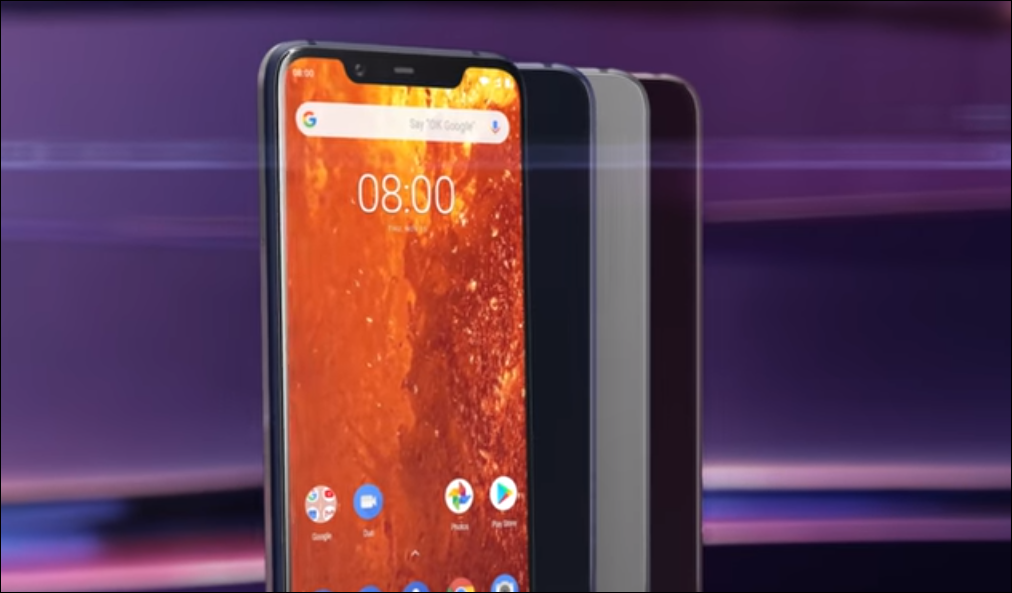
The Nokia 8.1 strives to fit in as a successor of the Nokia 7 Plus. The device comes with a premium design and a very decent hardware, including the latest Android 9.0 Pie software. It features a metallic body forged from a series-6000 magnesium alloy frame wrapped with glass panels on both the front and rear end w-th a copper rim. This gives the device a premium look. The Nokia 8.1 utilises the latest display technology which HMD calls Pureview display technology. It is actually a 6.18-inch IPS LCD screen with a notch at the top and an 18.7:9 aspect ratio. The display features an FHD+ resolution of 2246 x 1080 pixels and an impressive 86.5-percent screen ratio. The Nokia 8.1’s display also comes with a 96-percent NTSC color gamut, DCI-P3 color gamut, HDR video playback, 1500:1 contrast ratio and 500nits of brightness. Nokia 8.1
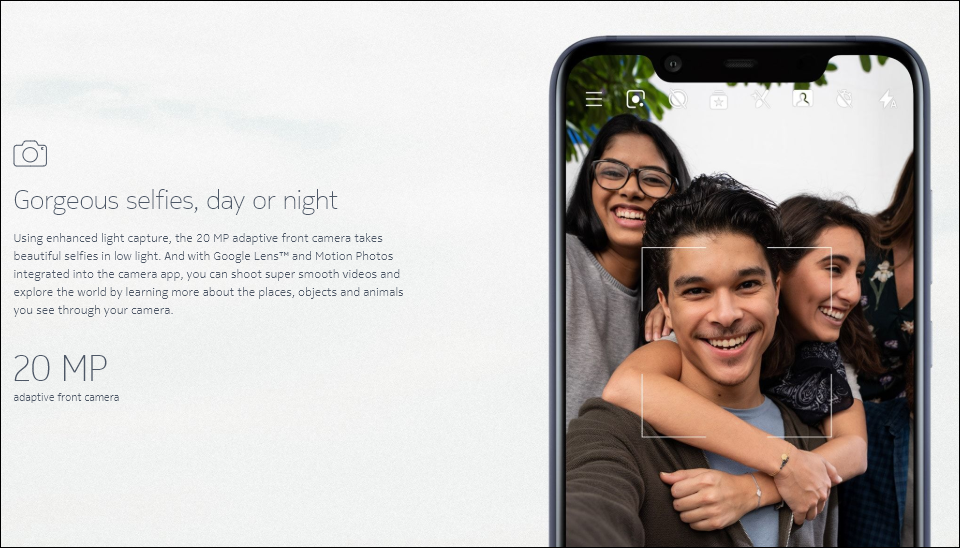
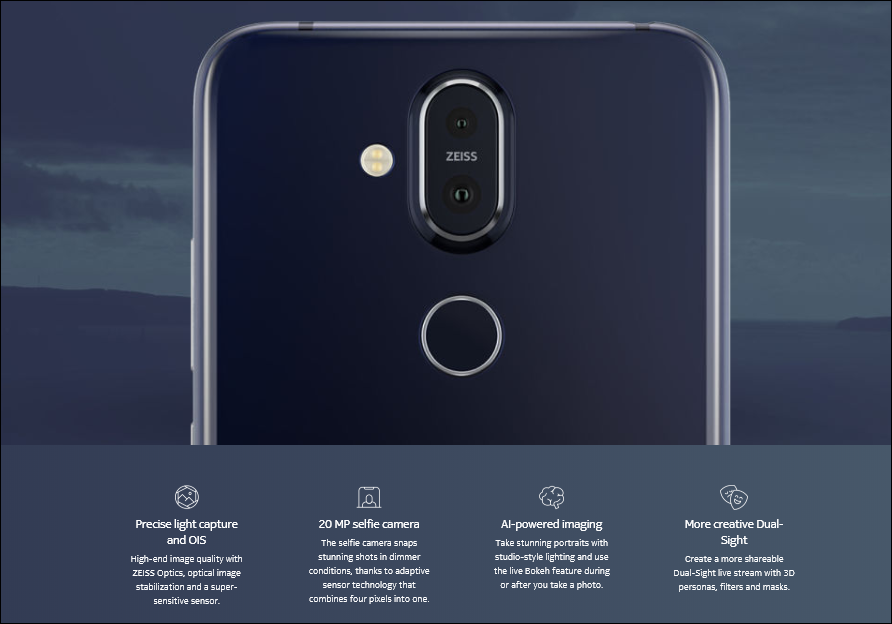
The device is powered by the latest 10nm based Snapdragon 710 chipset paired with 4GB of RAM and 64GB of expandable storage. The memory options could be expanded to include the 6GB RAM variant in other markets. The device is dropping under the Android One program and runs Android 9.0 Pie out of the box. Perhaps, the most outstanding feature on the device is the photography capabilities. The device packs a dual camera setup at the rear. The main sensor is a  12MP Sony IMX363 sensor paired with aa 13MP depth sensor. The rear camera comes with features such as Optical Image Stabilization, Electronic Image Stabilization, dual PDAF, AI scene detection and optimization for low-light photography. Up at the front, housed on the notch alongside an earpiece and other sensors, is a large 20MP selfie shooter.
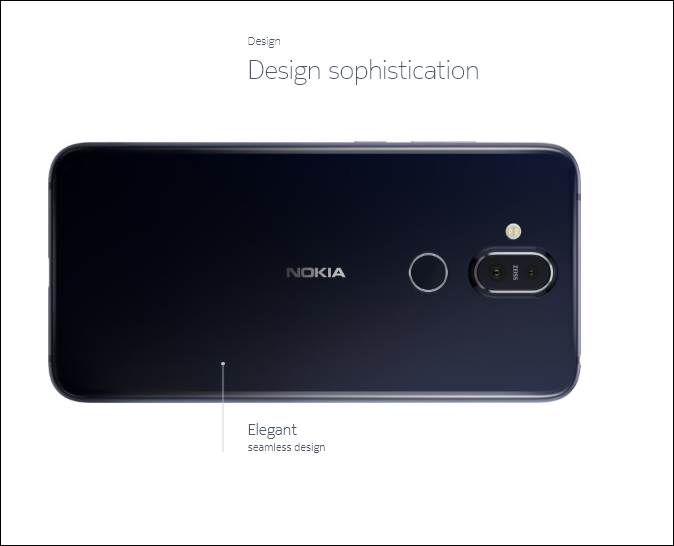
The Nokia 8.1 packs a 3500mAh battery which Nokia claims can deliver up to two days of battery power. You also get a rear-mounted fingerprint sensor, Quik Charge 3.0, dual-SIM support, 4G VoLTE, Wi-Fi 802.11ac, Bluetooth 5.0, GPS, USB-C and 3.5mm audio jack.Nokia 8.1
Pricing and Availability

The new Nokia 8.1 will be available in three colours; Blue Silver, Steel Copper and Iron Steel. The device is announced with a retail price of 399 Euros and will go on sale in the UAE on December 15 and other parts of the Middle East on December 20. However, it is now open for pre-order for the Middle East market. The device is also billed to enter other markets like India in no distant time.
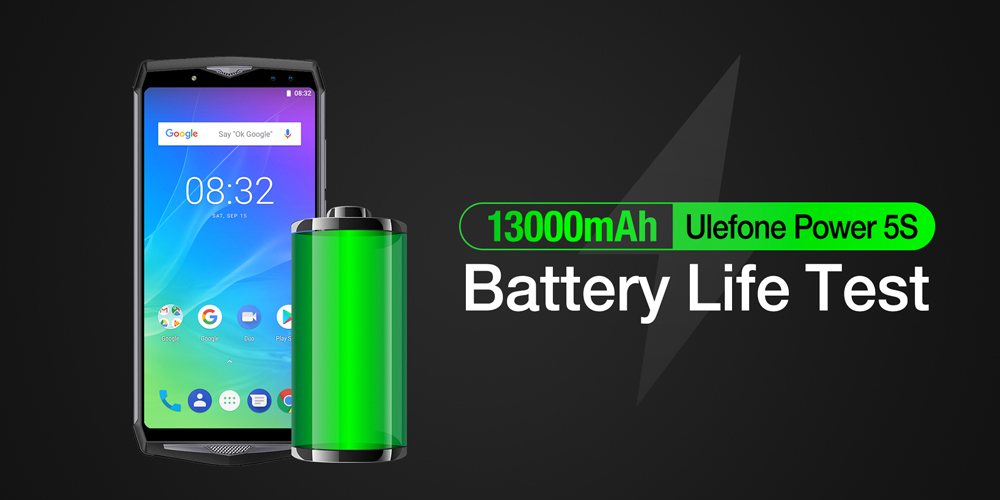
Ulefone Power 5S 13000 mAh battery proves itself in a life test

Ulefone recently launched a smartphone with massive 13000 mAh battery for full throttle usage throughout 2-3 days. In a recently posted video of its battery life test, Ulefone has managed to score pretty well in terms of usage and its impact on battery life. In the video below, you can have a look at the different tests that the company performed to showcase its 13000 mAh battery life usage.

At the beginning of the video, you can see a full half an hour session for 4G online music streaming via its external speakers. Later, a 30 minutes video playing is done, in a combined effort. Overall, the smartphone dropped only 8% maintaining 92% battery life after using it for 90 minutes.  As touted by the company, Ulefone A5 can sustain a week-long battery life with moderate usage.

Additionally, Ulefone Power 5s powered by an octa-core processor and is coupled with 4GB RAM and 64 GB internal storage. It features a 6.0-inch display with an aspect ratio of 18:9. In the camera department, Ulefone Power 5S packs a dual camera module of 21 megapixels + 5-megapixel shooters on the rear side while another dual shooter of 13 megapixels and 5 megapixels has made its appearance on the front side for selfies and better video calls.

ulefone power 5s

In connectivity, it carries WiFi, Bluetooth, WiFi, face unlock and fingerprint ID. It runs on the Android 8.1 Oreo and includes a Light sensor, Proximity sensor, Accelerometer, Compass, Gyroscope. Its battery can charge other devices also as it supports reverse charging. In order to fasten up the charging process of this huge 13000 mAh battery, Ulefone has added 5V/5A fast charging technique. It helps the user to save a lot of time in charging up 13000 mAh battery.

You can own it from Aliexpress for the price of $204-$229. In reality, do you need this much huge battery in our device?

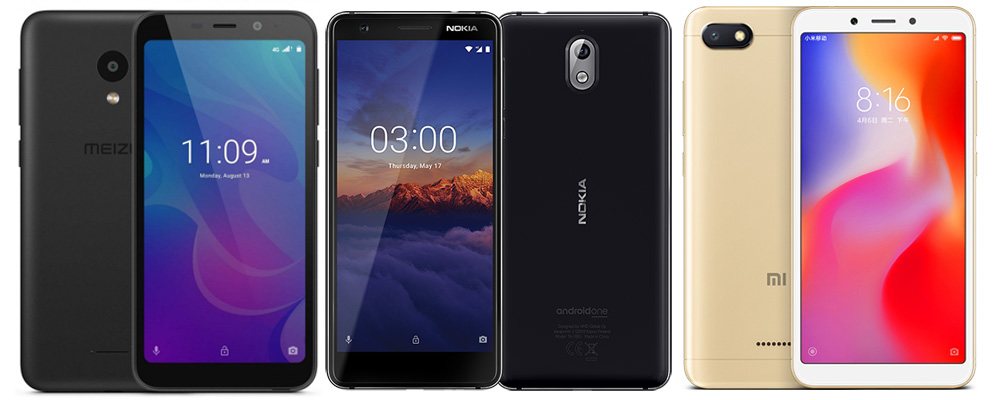
Meizu C9 vs Nokia 3.1 vs Xiaomi Redmi 6A: Specs Comparison

Meizu just unveiled a brand new entry-level smartphone in India. Its name is Meizu C9 and for the first week, you can get it for just $50. It belongs to the lowest price range, so it is a perfect rival of the other cheapest devices out there. Here, we compared it with two devices we believe to be the best low-end handsets currently available: Nokia 3.1 and Xiaomi Redmi 6A, in order to see if it is worth getting a unit of the C9 or not.

Meizu C9 vs Nokia 3.1 vs Xiaomi Redmi 6A

Meizu C9 Nokia 3.1 Xiaomi Redmi 6A
DIMENSIONS AND WEIGHT 146.2 x 71.2 x 9.7 mm, 150 grams 146.3 x 68.7 x 8.7 mm, 138 grams  147.5 x 71.5 x 8.3 mm, 145 grams
DISPLAY 5.45 inches, 720 x 1440p (HD+), 295 ppi, 18:9 ratio, IGZO IPS LCD 5.2 inches, 720 x 1440p (HD+), 310 ppi, 18:9 ratio, IPS LCD  5.45 inches, 720 x 1440 pixels, 295 ppi, 18:9 ratio, IPS LCD
PROCESSOR Unisoc SC9832E, quad-core 1.3 GHz  MediaTek MT6750, octa-core 1.5 GHz MediaTek Helio A22, quad-core 2 GHz
MEMORY 2 GB RAM, 16 GB –  micro SD slot 2 GB RAM, 16 GB – 3 GB RAM, 32 GB –  micro SD slot  2 GB RAM, 16 GB – 3 GB RAM, 32 GB, micro SD dedicated slot
SOFTWARE Android 8.0 Oreo, Flyme OS Android 8.0 Oreo, Android One  Android 8.1 Oreo, MIUI
CONNECTIVITY Wi-Fi 802.11 b/g/n, Bluetooth 4.1, GPS Wi-Fi 802.11 a/b/g/n, Bluetooth 4.2, GPS  Wi-Fi 802.11 b/g/n, Bluetooth 4.2, GPS
CAMERA 13 MP f/2.2
8 MP f/2.2 front camera
13 MP f/2.0
8 MP f/2.0 front camera
13 MP f/2.2
5 MP f/2.2 front camera
BATTERY 3000 mAh 2900 mAh  3000 mAh
ADDITIONAL FEATURES Hybrid Dual SIM slot Hybrid Dual SIM slot  Dual SIM slot

Design

Meizu C9 has the cleanest and most interesting design, with narrower bezels around the display, but Nokia 3.1 is the most compact phone. All of these handsets are made of polycarbonate and do not feature a premium design, so you should make a choice based on your tastes. Xiaomi Redmi 6A is similar to full metal unibody phones and some may like it, but it is just plastic. On the other hand, it has the thinnest body with just 8.3 mm.


Display

Thanks to the IGZO technology, Meizu C9 can provide a better display quality which results in a high brightness, a fast response and less energy consumption. Nokia 3.1 has a smaller display which makes the phone more compact and easy to use with just one hand, and it is also the only one to feature the Gorilla Glass protection by Corning making it more resistant. Xiaomi Redmi 6A’s display has really nothing special, it is just a sufficient IPS entry-level panel.


Specs & Software

When it comes to hardware, the champion is definitely Xiaomi Redmi 6A because it is equipped with a more powerful SoC. We are talking about the Helio A22 by MediaTek running at a max frequency of 2 GHz and realized with a 12 nm production process. Further, Xiaomi Redmi 6A has a dedicated micro SD slot. Nokia 3.1 comes with a sufficient MediaTek SoC, while Meizu C9 has the new Unisoc SC9832E which does not seem so convincing with its 1.3 GHz. Note that while Xiaomi Redmi 6A and Meizu C9 have custom user interfaces (MIUI and Flyme OS), Nokia 3.1 comes with the stock Android One updated in a faster and more constant way directly by Google.


Camera

The most impressive camera department is the one on board of the Nokia 3.1. It features a rear 13 MP sensor with a f/2.0 and an 8 MP front camera with exactly the same aperture as well as the HDR technology. It is able to shoot better photos and selfies, but it still remains an entry-level camera phone. At the second place, we put Meizu C9 because of its pretty nice front camera for a device sold at just €60. The worst one seems to be the Xiaomi Redmi 6A because of its average selfie camera.


Battery

All of these devices provide more or less the same battery capacity and they can reach one day with a moderate use thanks to their well-optimized energy consumptions. We still did not test the Meizu C9, but the results obtained by Nokia 3.1 convinced us slightly less because it does not last very long in some scenarios. Usually, Xiaomi optimizes its phones better in terms of consumption, but we still have to see how Meizu C9 performs.


Price

After the first week, Meizu C9 will cost about €90, while Nokia 3.1 are available at prices of €90 and €150. The phone with the best value for money is currently the Xiaomi Redmi 6A, I would pick it for its good performance, its micro SD dedicated slot, and its long-lasting battery. But if you want a stock and bloatware-free operating system which gets faster updates, Nokia 3.1 is better. Even if it does not have the best hardware, the stock Android experience on a small and entry-level might make the difference for some users.


Meizu C9 vs Nokia 3.1 vs Xiaomi Redmi 6A: PROs and CONS

Meizu C9

PROs

  • Better display
  • Very affordable price
  • Good battery
  • Nice design

CONS

  • Limited availability


Nokia 3.1

PROs

  • Compact design
  • Android One
  • Better connectivity
  • Better camera

CONS

  • Higher price


Xiaomi Redmi 6A

PROs

  • Affordable
  • Micro SD dedicated slot
  • More supported software
  • Great performance

CONS

  • Potentially worse cameras

Xiaomi leads wearable market in Q3 as growth hits double digits, all thanks to new products

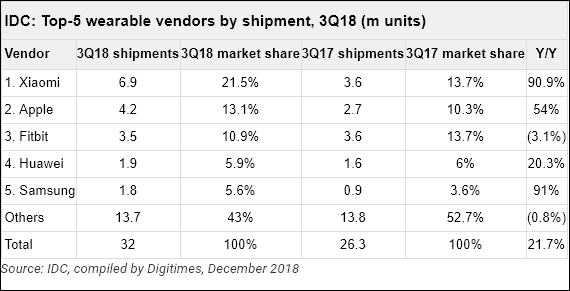
Latest data released by IDC indicates that the global shipments of wearable devices reached 32 million units in the third quarter of 2018, up 21.7% from the previous year. The data shows that the astronomical rise in shipments YoY is due to a sporadic increase in the number of new wearable devices OEMs introduced during the quarter. Specifically, new products from the likes of Fitbit, Garmin, and Huawei were shown to have helped the basic wearables category return to growth during the quarter.Wearable market share

The data also showed that growing demand in markets like Asia-Pacific (excluding Japan) was another driving factor and this accounted for more than half of all shipments. The growth in these markets was up to 21.4% higher than the previous year, according to IDC. The US market transitioning from one driven by new users to one that relies on replacement devices and upgrades and so, the market declines 0.4% Year on Year.

In the third quarter under review, Xiaomi grabbed the top position, thanks to the success of the Mi Band 3 and its significant expansion beyond its home country of China. Though typically China accounts for well over 80% of Xiaomi’s shipment volume, this quarter that share fell to 61% as the company managed to grow its presence in other markets such as India, Europe, and Middle East and Africa.

Closely following, is Apple which managed to launch its Series 4 Watch, its first watch approved for medical use, towards the end of the quarter. The new design and sizes along with the latest version of Watch OS were welcome changes although the latest series only accounted for less than 20% of all Apple Watch shipments. The reduced price on the still affable Series 3 accounted for the majority of Apple’s shipments during the quarter.

On the third spot is Fitbit whose latest devices, including the Versa, Charge 3, and the Ace, helped the company slow its decline compared to previous quarters. The success of the Versa catapulted the company back into reckoning as the second largest smartwatch vendor. IDC expects this to continue in the near term. Furthermore, Huawei edged Samsung to maintain its number four position worldwide but the majority of the firm’s wearable devices were sold in China. On the other hand, the Honor sub-brand introduced a new set of earphones that tracks heart rate during workouts.

Read Also: Supply chain analysis reveals how Samsung managed to make a foldable smartphone

The fifth spot is occupied by Samsung which stretched its lead past other contenders. Samsung’s product arsenal isn’t too broad and it relies on the Gear S3 and Fear Fit wristbands to drive sales volumes. The company also launched its next-generation smartwatch, the Galaxy Watch, marking the first time that a wearable device moved away from its traditional “Gear” moniker to the “Galaxy” sub-brand, alongside its smartphones and tablets.

(source)

Korea’s 3D Avatar Creator App Zepeto is Currently Trending in China

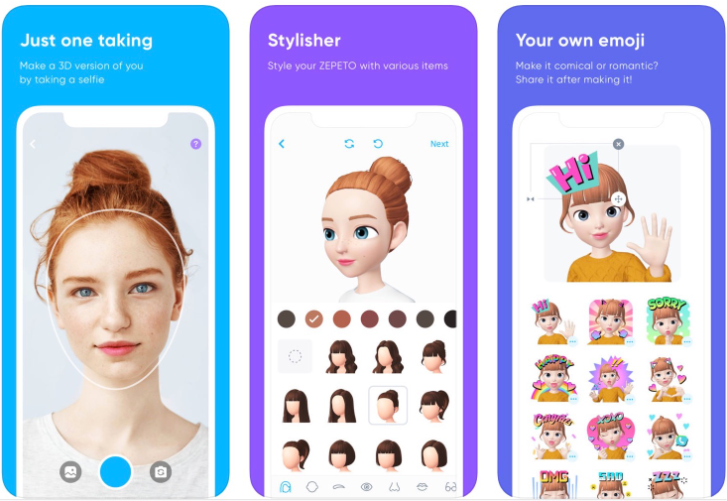
A relatively lesser known 3D avatar app from Korea, Zepeto, recently became a hot trend in some regions of Asia and even in the US. Following that, the app is also now getting a lot of attention in China. According to Tech Node, the hashtag #玩zepeto停不下来# (“can’t stop playing Zepeto”) is being hit hundreds of millions of times on Weibo. Moreover, Baidu searches for the term “Zepeto” have grown exponentially in the last few days. The app has no Chinese version and the recent surge in popularity is also causing trouble for the platform servers, said Zepeto’s official Weibo account.

zepeto

Zepeto was previously in the news after suspicions and rumors that it was tracking user location. The 3D avatar creator developed by Snow Corporation lets users make 3D avatars of themselves allowing them to meet randomly or through chat rooms and even take virtual selfies. Avatars can be given many different facial features and can be dressed in all sorts of attire. The app itself is free, but like many others, serves ads to keep itself sustainable.

The Korean version isn’t quite Chinese-friendly but it is still in trend right now. After the new surge in popularity, Snow Corporation has agreed to launch a China-specific app called Zaizai by the end of this year. After that happens, Chinese users with the global version will be given the option to migrate to the new app. Zepeto’s creator, Snow Corporation is also behind popular messaging app Line that is used widely in certain Asian countries.

(via)

Honor to launch new phone with hole-in display on January 22; might be Honor View 20

Huawei is set to announce the Nova 4, its first phone with a hole in its display on December 17. Its sub-brand, Honor, has now announced it will launch its own about a month later in Paris, France.

According to AndroidHeadlines, Honor has confirmed that it will hold a global product launch on January 22 in France. It also revealed the phone will be powered by the Kirin 980 processor, the same chipset inside the Magic 2.

Honor View 20 launch

The poster for the event shows the silhouette of the upper part of a phone with a camera hole in the top left corner. The poster also has the tagline “See The Unseen”.

Honor already confirmed that it is working on successors to the Honor V10 (View 10) and Honor 10, so there is a high chance it is one of these devices. The Honor View 20 should launch this month but Honor confirmed it is being delayed. We believe that delay has led to it being pushed to January.

READ MORE: Gizmochina’s Honor Magic 2 Review is now live on YouTube

OnePlus 6T McLaren Editon Pre-Registrations Now Live in India

Soon after OnePlus introduced the Thunder Purple variant of the OnePlus 6T, the Chinese smartphone maker announced that it would be releasing a special OnePlus 6T McLaren Edition. The handset is the result of a collaboration between OnePlus and popular automotive maker McLaren. The OnePlus announcement follows OPPO’s recent move to release a special Lamborghini Editon Find X as well as Huawei’s Porsche Editon Mate devices being released for a few years. Now, pre-registration for the handset has kicked off in India and potential buyers can visit Amazon India to get notified about future updates regarding the upcoming device.

oneplus-mclaren-amazon

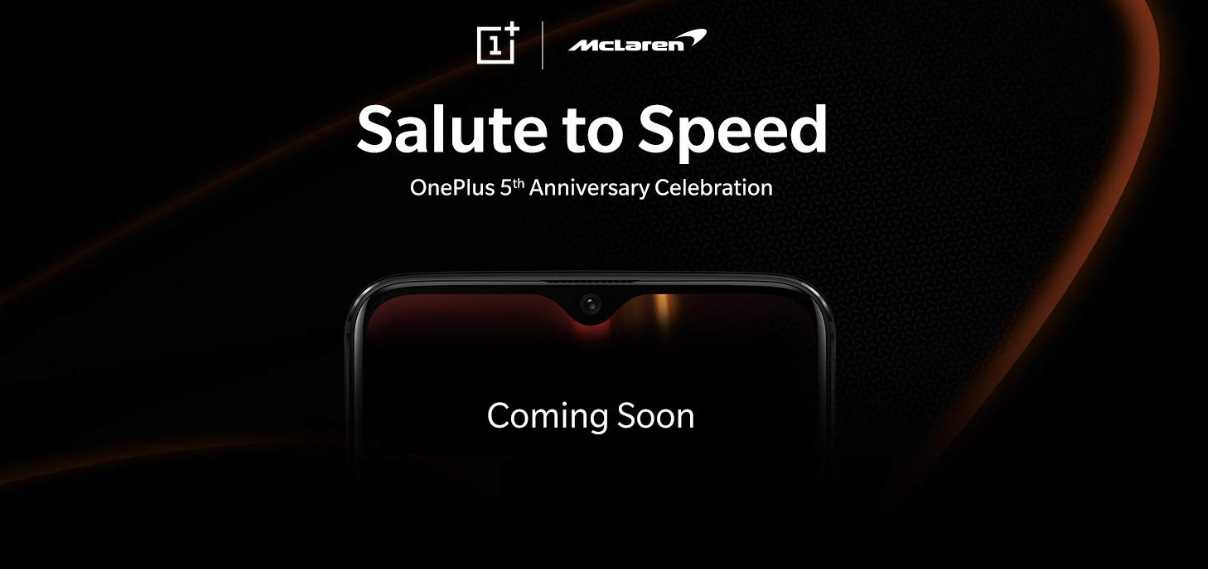
The OnePlus 6T McLaren Edition is arriving in India on December 12 when the company also celebrates its fifth-anniversary ‘Salute to Speed’ event will be held at Richardson and Cruddas Limited and passes for the venue can be purchased from OnePlus at a cost or Rs 799 via Oneplus.in starting December 6 at 10 am IST. The special edition OnePlus 6T will go on sale the very same day in the country and those present at launch will be able to get hands-on at the experience zones set up at the venue.

The brand will also be making the special edition debut in China on December 14. As for what extra the special edition will offer, it should come with a new paint job like previous OnePlus special edition phones. It is also expected to house 10GB of RAM and 256GB of onboard storage. This also warrants an expensive price tag and there could likely be McLaren branded accessories as well with the device. Head over to the source link below to register for the device.

(source, via)


Kirin 980 devices head the list of AnTuTu’s top 10 devices for November

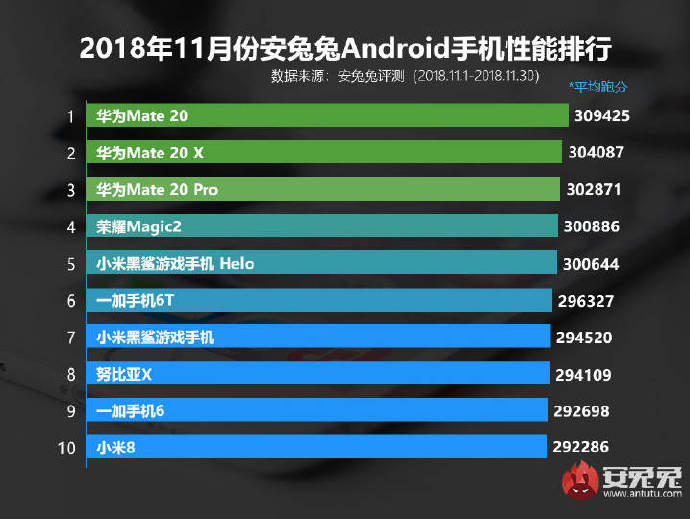
November ended a few days ago and as it has become a norm, AnTuTu has released the list of its top 10 most powerful devices (Android) for the month. And just like the list for October, the Kirin 980-powered phones are at the top of the list.

AnTuTu  Top 10 Android Phones November list

The Mate 20 is at the top of the list with 309,425 points though it is lower than its score in October. Second on the list is the Mate 20 X with 304,087 points. In October’s list, the Mate 20 Pro was second but it has now been overtaken by the Mate 20 X. The Honor Magic 2 grabs the fourth spot with 300,886 making it the fourth Kirin 980-powered device on the list.

READ MORE: Exynos 9820 powered Samsung Galaxy S10 Plus benchmarked on AnTuTu

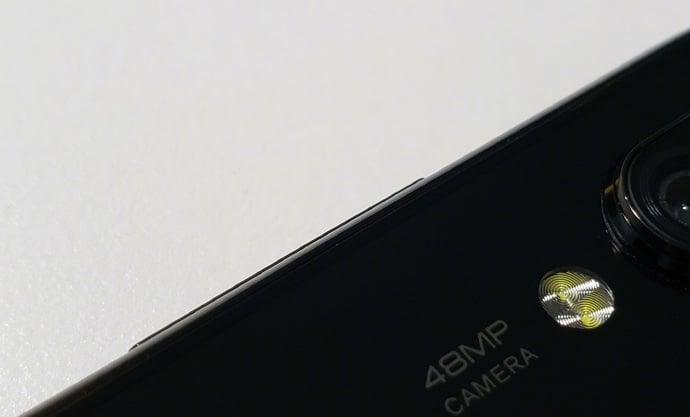
Xiaomi President hints 48MP camera smartphone launch in January; Could it be the Xiaomi Mi 9?

The Xiaomi Mi MIX 3 smartphone was announced in October. However, well ahead of its launch, Xiaomi President Lin Bin had shared a full-frontal image of the phone to reveal the full screen display and slider design of the phone. Over an hour ago, Bin shared a teaser image of a new smartphone that will be released in January. What’s astonishing about the mysterious phone is that it is equipped with a 48-megapixel camera.

It is too early to guess on the identity of the mysterious smartphone that has been shown in the image below. The back panel of the phone appears made out of glass. The “48MP Camera” text seems to be present below a vertical camera setup.

It is unclear whether the phone features triple or dual cameras. There is a dual-tone LED flash for the 48-megapixel camera. The volume buttons placed on the left edge of the phone are also visible in the image.

The mysterious Xiaomi phone could be featuring either the Sony IMX586 48-megapixel sensor that was announced in July this year or the Samsung ISOCELL Bright GM1 48-megapixel sensor that was announced in October. Sony has reportedly begun shipping the samples of IMX586 in September whereas the South Korean company has commenced the mass production of ISOCELL GM1. Compared to its rival, Xiaomi has been a bit inferior in the camera department. It seems that the Chinese manufacturer is all set to raise competition bar high in the camera department by releasing a 48-megapixel camera smartphone.

The next major phone that Xiaomi is expected to unleash in the coming year is the 5G version of Mi MIX 3. The Chinese manufacturer has already confirmed that it will be arriving in Q1 2019. The 48-megapixel camera phone shown in the above image does not seem to be the Mi MIX 3 5G since it won’t be a major upgrade over the Mi MIX 3.

Could it be the Xiaomi Mi 9 or an entirely new smartphone from the company? There is a possibility that this phone could be featuring the newly announced Snapdragon 855 chipset and 10 GB of RAM. It is advisable to wait for further reports to confirm on the identity of the smartphone.

(source)

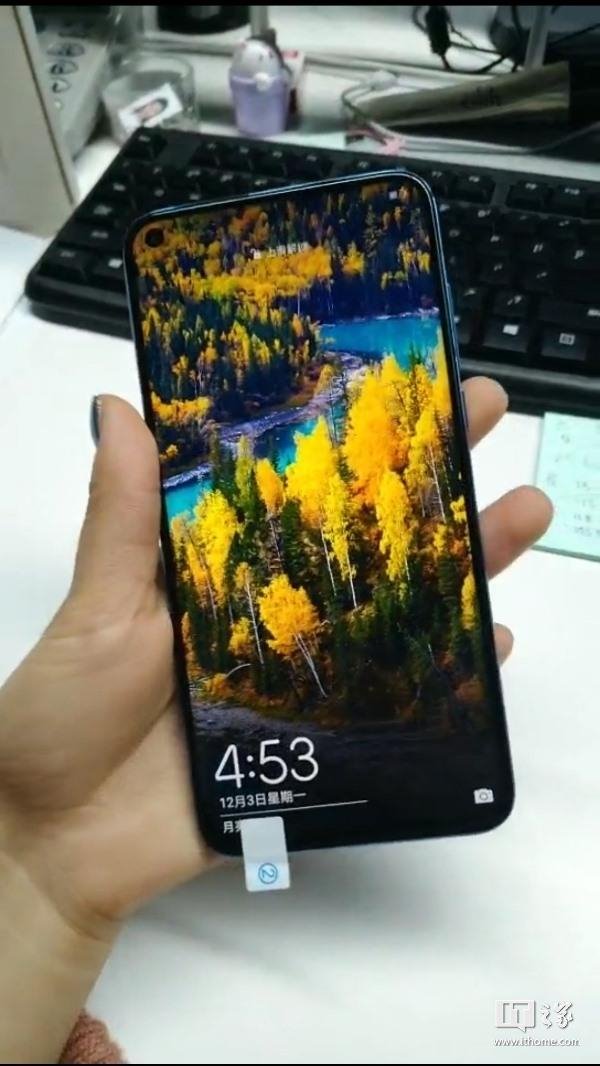
New live photos show the Huawei Nova 4’s triple rear cameras

The Huawei Nova 4 will launch in roughly two weeks as one of the first phones to adopt the hole-in-display technology. The phone has appeared in public but we only got to see its front. New photos have now appeared online that not only show us the phone’s rear but also a closer look at its display.

Nova 4 live photo

From the photos, one can tell the Nova 4 is pretty big even with the shaved off bezels. It is also a bit wider than the average phone. The display practically stretches to the top part of the phone’s frame but on the bottom, there is still a bit of bezel. Sadly, none of the photos show the phone during media playback so we can see if the area where the camera is gets blacked out.

The photos reveal the Huawei Nova 4 will come in a gradient finish similar to the Iris Purple color variant of the Nova 3 though there is more of blue than purple in this case. We also get to see the phone’s triple camera setup which is the same design as that of the Huawei P20 Pro.

[envira-gallery id=”226201″]

The display is said to be LCD so it is no surprise that the fingerprint scanner is on the rear of the phone. There is no photo of the ports but there is definitely a USB-C port and very likely an audio jack on the device.

READ MORE: Huawei Enjoy 9 makes its way to TENAA with a 6.26” screen and a 3900mAh battery

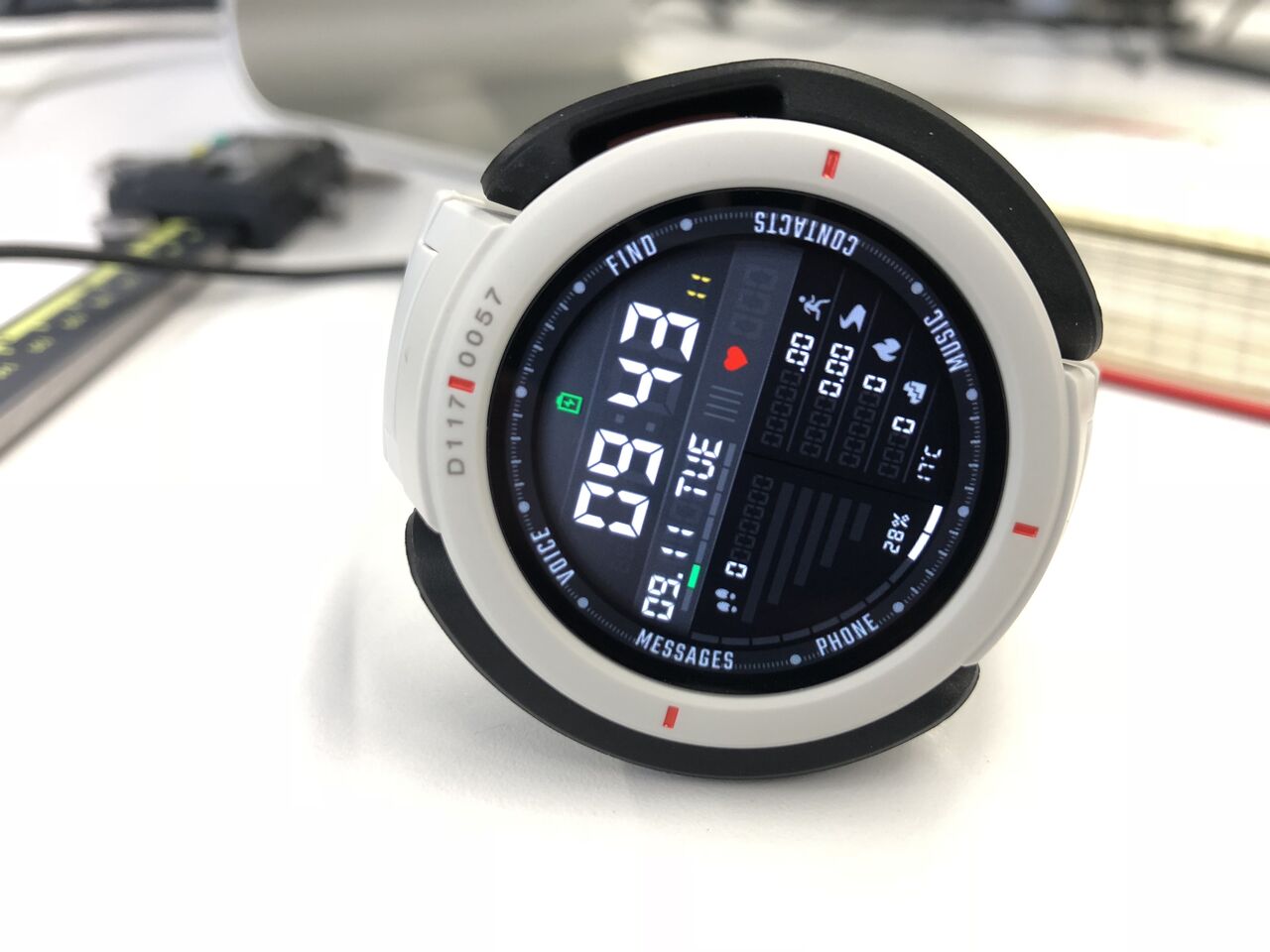
Huami’s Amazfit Verge smartwatch debuts in the US, brings Voice Assistance and more

When the Amazfit Verge was announced in China a couple of months back with features such as voice assistance, we had wondered how Huami intends to adapt the smartwatch features for the global market considering most of the features were tailored to suit Chinese users. Apparently, the Xiaomi-backed company has been busy working on localization of the device. Indeed, the Amazfit Verge has been launched in the US and is now available to pre-order on the company’s official US online store with a $159.99 price tag. This a tard higher than the 799 yuan (~$116) price tag it was launched packing in China. The device will ship for the first time on December 18.Amazfit Verge smartwatch

The Amazfit Verge packs a 1.3-inch circular display with a diameter of 43mm. This is similar in size with the higher variant of Samsung’s latest Galaxy Watch. Well, except that the Amazfit Verge is made from reinforced plastic, giving it a sporty outlook rather than the looks of a traditional watch which Samsung’s models adapt. The Verge is equipped with an AMOLED display with a resolution of 360x360pixels as well as Gorilla Glass 3 on top. Huami says there is a coating on top of the screen which prevents fingerprint smudges from accumulating on the screen during use. The smartwatch is equipped with a silicone strap that can be removed in the same manner as those of the Amazfit Pace and Stratos. More importantly, it is lightweight, weighing just 46 grams. The build is IP68 certified but you still can’t take the watch swimming or when going under the shower.

The device comes with support for 11 different sports mode including Golfing, Riding, Running, hiking, Gym training, Soccer and Boat riding. It also has GPS+GLONASS support. In addition, the smartwatch is equipped with Wi-Fi and Bluetooth 4.0+BLE. Sadly, there is no LTE connectivity but we believe that could come on subsequent versions. The watch is powered by a dual-core 1.2GHz processor with 512MB RAM and 4 GB ROM. Along with the usual sensors, there are additional geomagnetic, and air pressure sensors on board. Also onboard, is a 390mAh battery which Huami claims can last up to 5 days, depending on the usage.

Read Also: Amazfit Verge Hands-on pictures: A complete premium smartwatch is born!

The icing on the cake is definitely the voice assistance technology with smart home integration. the Verge is focused on the Internet of Things (IoT), smart home controls, voice assistant and with NFC for contactless payment. The smartwatch will also come with Amazon Alexa support at the end of the year.

Poco F1 new update to bring super low-light mode, 960fps slow-motion video shooting

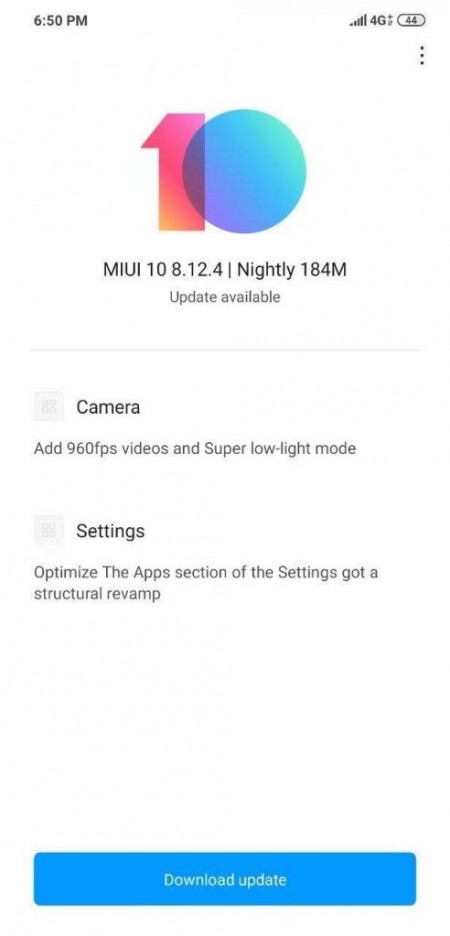
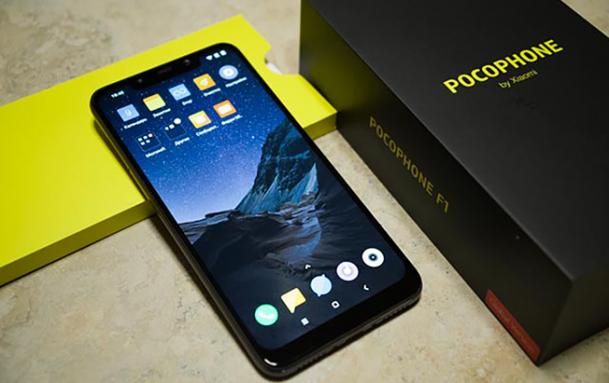
Xiaomi’s sub-brand Pocophone has released the MIUI 10.8.12.4 beta update for the users of Poco F1. It includes two major camera features such as super slow-motion video shooting mode support and super low-light photography.

The Xiaomi Poco F1 already supports slow-motion video shooting at 120fps and 240fps. The MIUI 10.8.12.4 beta update brings super slow-motion video shooting at 960 fps.

Also, for improved low-light photography experience, the beta update includes Super low-light mode. This feature is all about taking at capturing 8 photos with different exposures and combining them into a single brightly-lit image. The other improvement that is included in the new beta update is structural revamp for the Apps category in Settings.

Xiaomi Poco F1 beta update

Only those Poco F1 users who have enrolled in the beta testing program will be able to install and try the new features that are available through the latest software update. The size of the update is 184 MB. Now that the new camera features have been released for Poco F1 beta testers, it is very likely that Xiaomi may make it available for general users in the near future after ironing out any bugs.

Xiaomi is yet to release some promised features of such as support for 4K video shooting at 60fps and Widevine F1 support for viewing streaming content from Amazon Prime Videos and Netflix. Hopefully, the company will release it for the Poco F1 users before the end of 2018.

The Poco F1 is the cheapest Snapdragon 845 SoC powered smartphone. The handset features a notched IPS LCD display of 6.18 inches which carries support for Full HD+ resolution. It come with up to 8 GB of RAM and an inbuilt storage of up to 256 GB. The MUI 10 update has been already rolled out for the smartphone.

The Poco F1 features 12-megapixe + 5-megapixel dual camera setup on its rear. The notch of the phone houses a 20-megapixel selfie camera and IR sensor for face recognition in dim-light conditions. The other features of the Poco F1 include microSD through hybrid SIM slot and rear-mounted fingerprint scanner.  In India, it is selling with an amazingly low starting price of Rs. 20,999 (~$298) for the base model.

(via)

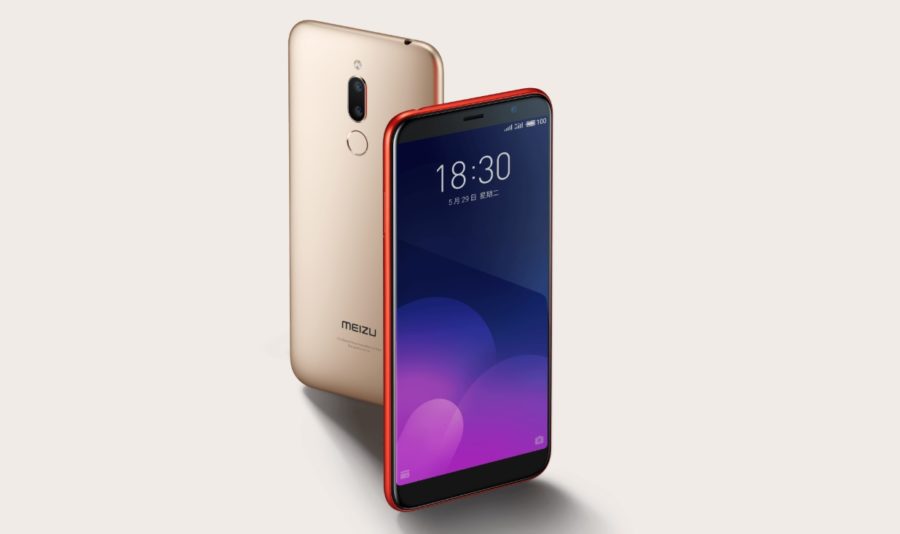
Meizu M6T with 5.7-inch HD+ display and dual rear cameras launched in India for Rs. 7,999 ($113)

Along with the Meizu 16th and Meizu C9 entry-level smartphone, the company has also launched another budget smartphone in the Indian market — Meizu M6T. It comes in two color options — Black and Red for a price tag of Rs. 7,999 which roughly converts to $113. The phone comes with Reliance Jio cashback offer worth Rs. 2,200 and 50GB additional 4G data.

Meizu M6T

The smartphone features a 5.7-inch HD+ display with 1440 x 720 pixels screen resolution, 2.5D curved glass screen, and 18:9 aspect ratio. Under the hood, the device is powered by a 1.5GHz Octa-Core 64-bit MediaTek MT6750 processor, coupled with Mali T860 GPU.

It packs 3GB RAM and comes with 32GB internal storage. There’s also a microSD card slot, allowing users to further expand the phone’s storage capacity up to 128GB. The phone has a rear-mounted fingerprint sensor for added security.

As for the camera, it comes with a 13-megapixel rear camera with Sony IMX278 RGBW sensor, LED flash, along with a 2-megapixel secondary rear camera to capture depth information for portrait shots. On the front side, it is equipped with an 8-megapixel front-facing snapper for taking selfies and video calling.


Read More: Meizu 16th with 6-inch FHD+ display, Snapdragon 845 SoC, and dual rear cameras launched in India for Rs. 39,999 ($567)


Connectivity options on the Meizu M6T include Dual SIM, 4G VoLTE, Wi-Fi 802.11 a/b/g/n (2.4GHz + 5GHz), Bluetooth 4.1 LE, and GPS + GLONASS. The smartphone runs Android 8.1 Oreo operating system out-of-the-box with Flyme OS and is powered by a 3,000mAh battery.

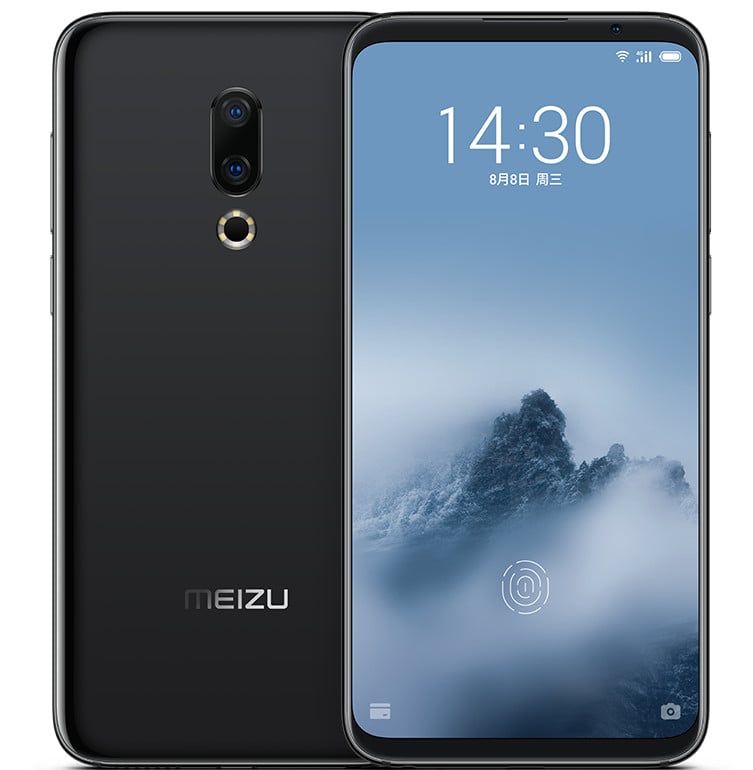
Meizu 16th with 6-inch FHD+ display and SD845 SoC launched in India for Rs. 39,999 ($567)

As expected, Meizu has today made a re-entry in the Indian market with the launch its Meizu 16th, Meizu M6T, and Meizu C9 smartphones. The Meizu 16th carries a price tag of Rs. 39,999 which roughly converts to $567. It will be available for purchase in India exclusive through Amazon from today in two color options — Midnight Black and Moonlight White.

Meizu 16th India

The Meizu 16th was originally launched in China back in August. The phone features a 6-inch Full HD+ display offering 1080 × 2160 pixels screen resolution, 18:9 aspect ratio and 91.18 percent screen-to-body ratio. Under the hood, the device is powered by Qualcomm‘s Snapdragon 845 processor along with 8GB of RAM.

It also comes with a custom copper cooling tube. The phone features an in-display fingerprint sensor, which the company claims has a 99.12 percent high recognition rate that can unlock the phone in 0.25 seconds. The phone comes with 128GB of internal storage, without support for storage expansion.

Coming to the camera department, the smartphone comes with a 12-megapixel primary camera with Sony IMX380 sensor, 1.55μm pixel size, f/1.8 aperture along with a 20-megapixel secondary telephoto lens with Sony IMX350 sensor for portrait shots and lossless zoom. There’s even a 6-LED ring flash and four-axis Optical Image Stabilization. On the front side, there’s a 20-megapixel front facing camera with AI beauty recognition and Face unlock feature.


Read More: Meizu C9 entry-level smartphone launched with 18:9 HD+ display, 13MP Camera and Rs. 5,999 (~85) pricing


The Meizu 16th runs Android 8.1 Oreo operating system out-of-the-box with the company’s own Flyme OS on top. Connectivity options on the device include 4G VoLTE, Wi-Fi 802.11 b/g/n/ac (2.4GHz + 5GHz) 2 x 2 MIMO, Bluetooth v5, GPS + GLONASS, and USB Type-C port. The phone is powered by a 3,010mAh battery with 24W mCharge flash charge that is claimed to charge the phone from 0 to 67 percent in 30 minutes.

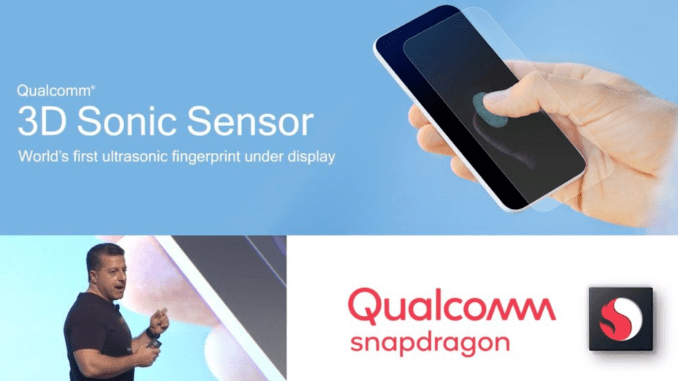
Qualcomm debuts world’s first 3D Ultrasonic in-display fingerprint sensor

Today, at the launch event of Qualcomm Snapdragon 855, the chipset maker also introduced the world’s first 3D Ultrasonic in-display fingerprint scanner. The new chipset is now officially unveiled and it will take place in the flagship device coming in 2019. In order to tackle the increasing competition from the Chinese manufacturers, Qualcomm has introduced its own 3D Ultrasonic in-display fingerprint scanner for major manufacturers.

Qualcomm-3D

Made in partnership with Katouzian, Qualcomm has priced it little heftily due to its ability to work in different environments. It can perform perfectly with various conditions like oily or wet fingers. It will work accurately unlike the present optical sensors which are unable to read the fingerprint if you have wet or oily hands.

The new 3D Ultrasonic fingerprint reader will work with the help of sound waves. The fingerprint mapping will take place with the sound waves. The sound waves will measure valleys and peaks on the finger and will match it with the preset. The new ultrasonic sensor has made a way for the wider functional area for an on-screen fingerprint. In the optical sensor, a user has to touch a specific part on the display, but in the latest technology, a user will have a bigger surface area.

Explaining the working, Qualcomm said in a blog post that “This is the only mobile solution that can accurately detect fingerprints through numerous contaminants. Furthermore, this technology enables sleek, cutting-edge form factors while distinguishing itself from alternatives with higher levels of security and accuracy.”

It is an astonishing invention in the fingerprint scanner market. It can be used in smartphones, tablets, other gadgets as the primary mode of authentication. Its full working is currently not out, but we will let you know how it works in the future.

Currently, it is not clear on which devices 3D Ultrasonic fingerprint sensor will debut. Some more details will surface soon until then stay connected with us.

(Via)

Meizu C9 launched with 18:9 HD+ display, 13MP Camera and Rs. 5,999 (~85) pricing

Apart from launching the Meizu 16th and Meizu M6T smartphones in India, Meizu had announced the Meizu C9 entry-level phone in the country. The Meizu C9 features the trendy 18:9 aspect ratio display and a decent rear camera. The handset has landed in India with an affordable price tag of Rs. 7,999 (~$114)

Meizu C9 Specifications and Features

The Meizu C9 smartphone features a polycarbonate rear shell. The dimensions of the C9 are 146.2x 71.2 x 9.7mm and weighs 150 grams. The handset houses a 5.45-inch IGZO LCD display that produces HD+ resolution of 1440 x 720 pixels. The display of the C9 offers an aspect ratio of 18:9, a contrast ratio of 1000:1 and a pixel density of 282 ppi.

The Spreadtrum SC9832E octa-core processor that works at 1.3 GHz is present under the hood of the Meizu C9.  The modest smartphone features 2 GB of RAM and an inbuilt storage of 16 GB. It is equipped with a dedicated microSD card for expanding its storage. The Android Oreo OS customized with Flyme 7 UI.

Meizu C9

The Meizu C9 houses an autofocus enabled 13-megapixel rear camera with f/2.0 aperture. For selfies, it is fitted with an 8-megapixel front camera. A 3,000mAh battery carries support for 5V/1A charging. The phone carries support for usual features such as dual-SIM support, 4G VoLTE, Wi-Fi, Bluetooth, microUSB 2.0 and 3.5mm headphone jack. The back panel of the phone features a fingerprint reader.

Meizu C9 Pricing and Release Date

The Meizu C9 smartphone carries a price tag of Rs. 5,999 (~$85). The Amazon India exclusive smartphone will be available from today in color variants like Black and Rose Gold. For a limited period, the handset will be available for a lower pricing of Rs. 4,999 (~$70).

What’s your opinion on the specifications and features of the Meizu C9? Share us your views by posting your comments below.

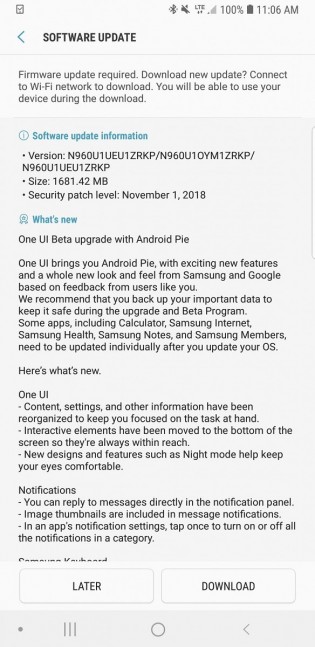
Samsung Galaxy Note 9 starts receiving Android Pie/One UI Beta in the US, Germany and India

The Korean giant has started testing Android 9.0 Pie/One UI in the global market. Recently, Samsung has started the Android Pie beta registration in the US, Germany and India. The new update carries refreshed One UI with many new refinements and optimizations.

Galaxy Note 9 Update

Today, Samsung has started pushing the beta firmware OTA for Galaxy Note 9 in India and Germany. A similar update is rolling out to users in the US. The update weighs around 1,532 MB for Germany and similar size update is available for the US-based Note 9 users.

There are many changes and enhancements that have been added to the new firmware. Particularly, Samsung has introduced the update of One UI with exciting features and a whole new look and feel. Samsung has added features based on the feedback from users. Its functionality has also improved, as it carries new versions of apps like Calculator, Samsung Internet, Samsung Health, Samsung Notes and Members. The Korean giant has focused on content rather than any other information in the UI. In order to safeguard your eyes, Samsung has also added a night mode option.

Now you can directly reply to messages from the notification panel. It also carries the support for Unicode 11.0 emojis with new clock styles and general tweaks. Further, there are general bug fixes, to improve the overall performance of the device. Along with all these features, the update is also packed with November security patch.

The update comes with the firmware version N960FXXU2ZRKQ and it’s currently rolling out in the US, Germany and India. You can manually check for the update if have signed up for the beta upgrade. Before installing the update, your device should be charged at least 60% to avoid any inconvenience. Also, make sure your device is connected to a stable WiFi network to avoid data charges.

Well, how many of you have received the update?

Via

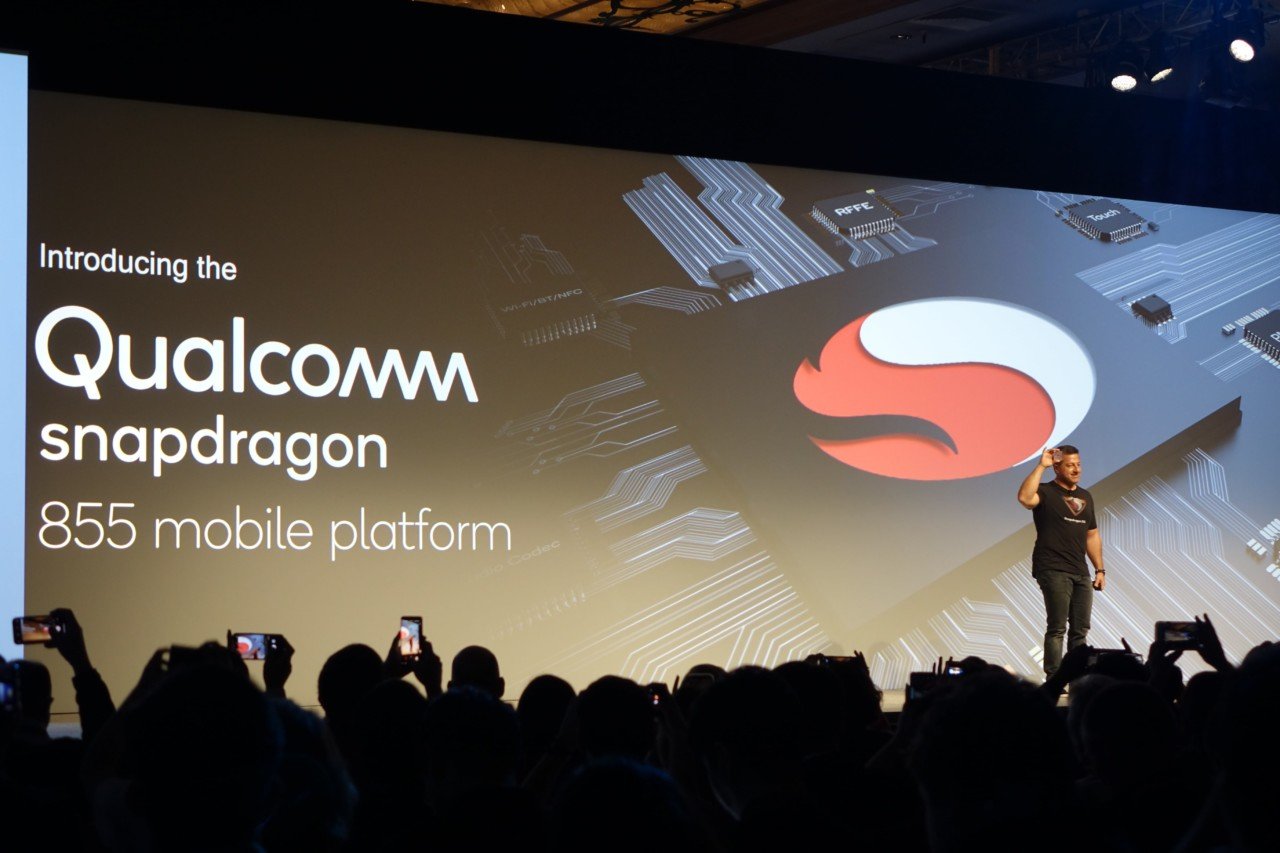
Qualcomm Snapdragon 855 7nm SoC unveiled with support for 5G connectivity

As expected, during the Snapdragon Tech Summit 2018, US-based chipset manufacturer has announced its latest flagship mobile chipset — Qualcomm Snapdragon 855. The Snapdragon 855, which is the successor of the current-generation Snapdragon 845, comes with support for 5G connectivity and a few other features, aimed at improving the user experience.

The smartphone industry is moving towards the 5G-era and Qualcomm being the dominant mobile chipset manufacturer, is leaving no stones unturned when it comes to 5G connectivity. The newly announced Qualcomm Snapdragon 855 is the world’s first commercial 5G mobile platform.

Qualcomm Snapdragon 855

The chipset is offering 5G connectivity using the company’s own Snapdragon X50 5G modem. The 5G modem is combined with Qualcomm QTM052 mmWave antenna modules with integrated RF trans-receiver, RF front-end antenna, and antenna elements.

The octa-core processor features four power-saving cores clocked at 1.78GHz, three performance cores clocked at 2.42GHz and another special “gold” core for performance boost which is clocked at 2.84GHz. It is coupled with Adreno 640 graphics processor, which is expected to bring performance improvement.

Just like the Apple A12 Bionic chipset and Huawei’s Kirin 980 processor, the Qualcomm Snapdragon 855 is also manufactured using the 7nm process by TSMC. The Snapdragon 855 also comes with the company’s fourth-generation, multi-core AI Engine that is claimed to offer up to 3 times the AI performance compared to the Snapdragon 845.

Qualcomm Snapdragon 855

The newly unveiled chipset also features the world’s first Computer Vision Image Signal Processor (CV-ISP) to deliver new photo and video capture features. For the gaming, the company unveiled Snapdragon Elite Gaming, a set of features in the mobile platform to enhance mobile gaming experiences.

The company has also announced the Qualcomm 3D Sonic Sensor—an under-display fingerprint sensor solution that uses ultrasonic waves, unlike optical under-display fingerprint sensors which use light. According to the company, 3D Sonic Sensor is more secure and accurate than the alternative.

Most of the high-end smartphone coming in 2019 will be powered by Qualcomm Snapdragon 855 octa-core chipset. We’ll be seeing devices from manufacturers such as Samsung, Xiaomi, LG, HTC, Motorola, Google, Sony, OnePlus, Oppo, and Vivo from early next year.


Read More: Qualcomm reveals Xiaomi, HMD, OnePlus, OPPO, Vivo are among its ‘committed’ 5G partners for 2019


Qualcomm will reveal more details about the Snapdragon 855 mobile platform as the Snapdragon Tech Summit 2018 continues in Hawaii, USA. Stay tuned for more updates throughout the Summit.

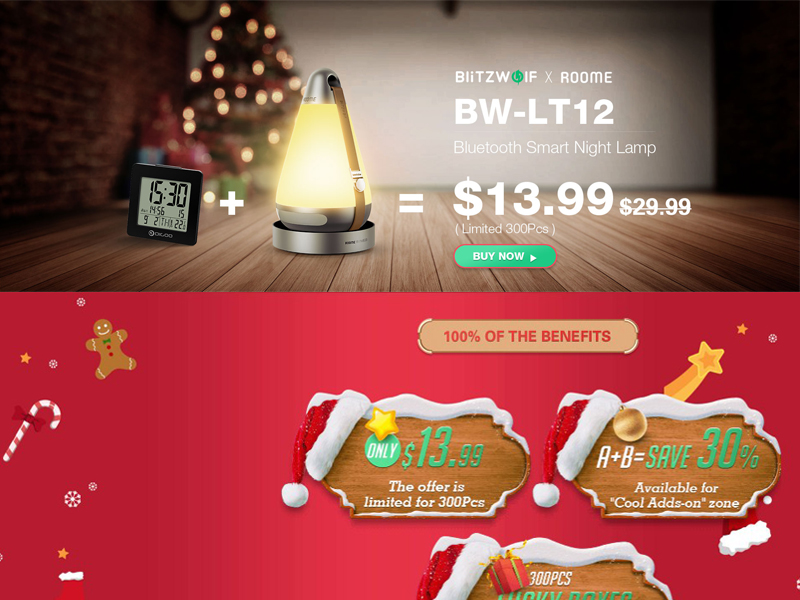
Pre-Order The First 600 Pieces Of BlitzWolf BW-LT12 Smart Night Light For Only $13.99 On Banggood

It is no secret that lighting is an important aspect of interior design as it can create a perfect ambiance to suit your fancy.


While there’s no dearth of lighting fixtures that can work wonders by striking a perfect balance between color and luminosity, these devices don’t come cheap. Taking this into consideration, BlitzWolf has teamed up with Banggood to offer a smart night light and other useful lighting accessories at an unbeatable price.

BlitzWolf BW-LT12 Portable Bluetooth 4.1 Smart Night Light

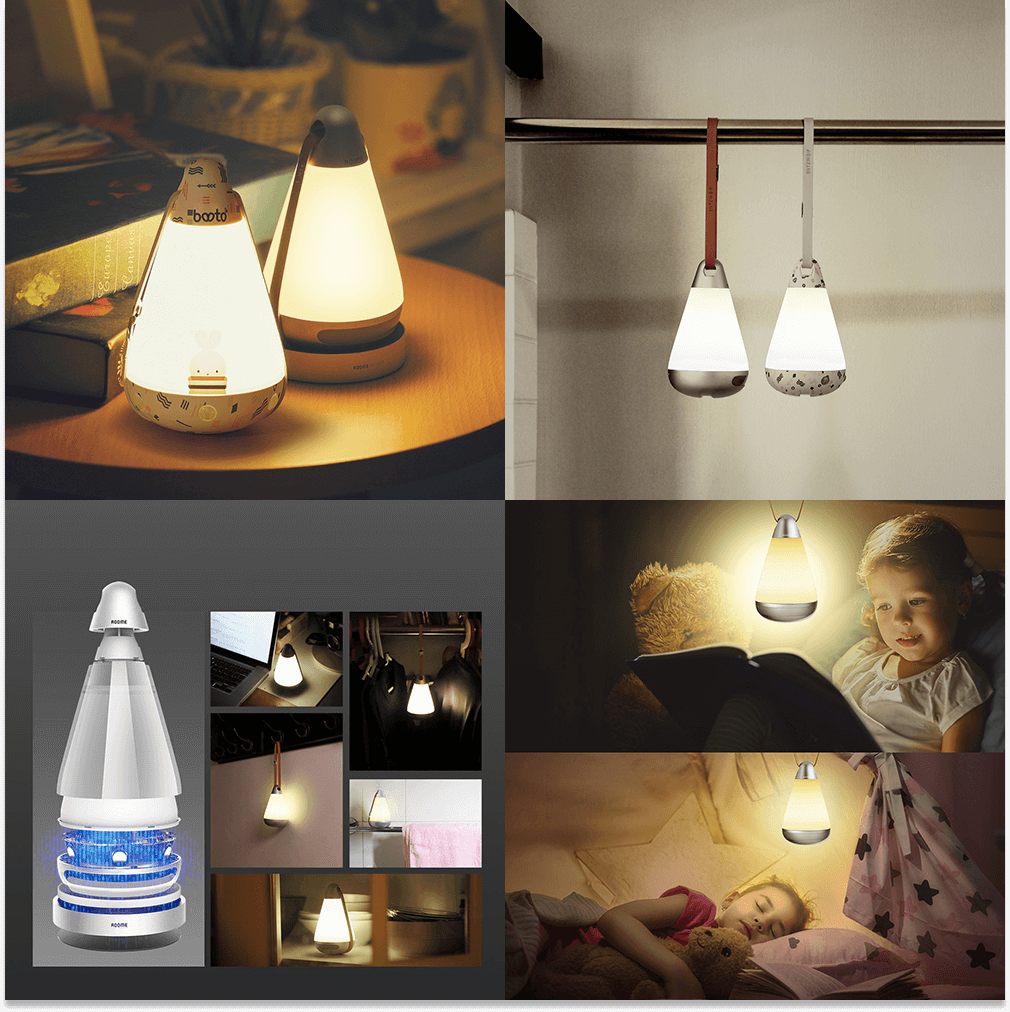
Designed to create a perfect blend of modern and elegant visual experience, BlitzWolf customized Roome smart night light sport a classic, yet cute style. The BW-LT12 adopts ROOME’s patent HEP technology to let you create scenes that match your mood.

Furthermore, the BW-LT12 employs neutral colors so that it can match various interiors and it comes with soft curves that add warmth to the surrounding. While a top-branded smart night light would normally set you back a pretty penny, you can now pre-order the BW-LT12 at a considerably lowered price of $13.99 on Banggood.

This is a noteworthy 22% reduction in the device’s original asking price of $17.99. On the downside, this discount will only be valid for the first 600 pieces, while the next 700 pieces will carry a slightly steeper $15.59 price tag. The remaining 1000 pieces will carry a $16.69 price tag.

The promo has further been divided into multiple categories. The ‘Cool Add-On’ section features various products that you can buy as a bundle and save up to 30% on your grand total. For instance, you can buy the BW-PL2 38W QC3.0 3 Ports USB Charger for a heavily discounted price of $12.99 along with BW-LT9 Touch Switch Color Night Light, which is now available for a lowered price of only $8.99.

In order to get the package price, all you need to do is to click the ‘Add to Cart’ button. You can click here to visit the promotion page and take full advantage of this unmissable event that will be valid only for a limited period of time.

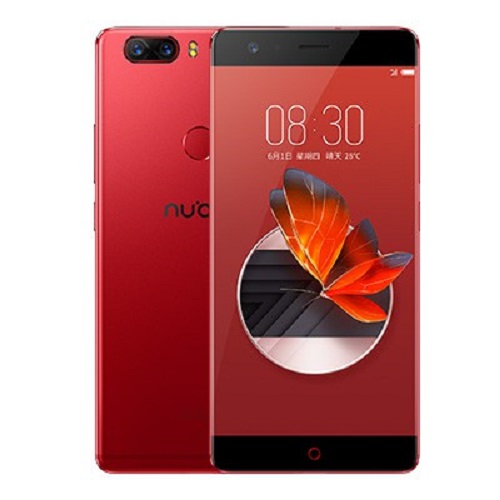
Nubia Z17 confirmed to get Android 9.0 Pie

We had reported earlier that the Android Pie update for Nubia Z17 won’t roll out, we reckon most of you ought to be dejected. Nonetheless, as a relief for the Nubia Z17 owners, the company has now confirmed its plan to give Android Pie 9.0 for the 2017 flagship. Isn’t it a good news? Of course, yes.

ZTE Nubia Z17

Finally, it’s an end of the misconception that arouses as a result of small communication gap that made all of us think the company would make the Nubia Z flagship to end its life cycle with just Android Oreo. In fact, the confirmation came out late on the night of December 4, when a Nubian officially posted a post in the Nubian Forum clarifying the whole situation; “Small surprises” and “small misunderstandings” about Z17. In this post, Nubia said that Z17 will upgrade to Android 9.0 system. Well, sometimes bad things have to happen before good things.

As an icing on the cake, the Nubian official stated that the Nubian engineers have even prepared a surprise for the Z17 users in the form of Android 9.0 (P) update. That too based on Android 9.0 Nubia UI official version. It’ll mark as the second major update coming after the Nubia 6.0 update which bought Android Oreo early this year. So, Nubia Z17 users don’t be done with your device as one more major update is coming soon to rejuvenate your device.

Although Nubia has cleared the air about Nubia Z17 update, the fate of Nubia Z17s isn’t. There was no official word regarding the Nubia’s second flagship for the year 2017. However, our gut feeling says the device too will get Android Pie update in the near future.  Let’s wait and see what the Nubia development team has up its sleeve for the Nubia Z17s.

That said, what you guys have to say about the update regime of Nubia. If they’re willing to seed two major updates for their flagship devices it’s something which is not bad, isn’t it? Let’s know your views in the comment section below.

(Via)