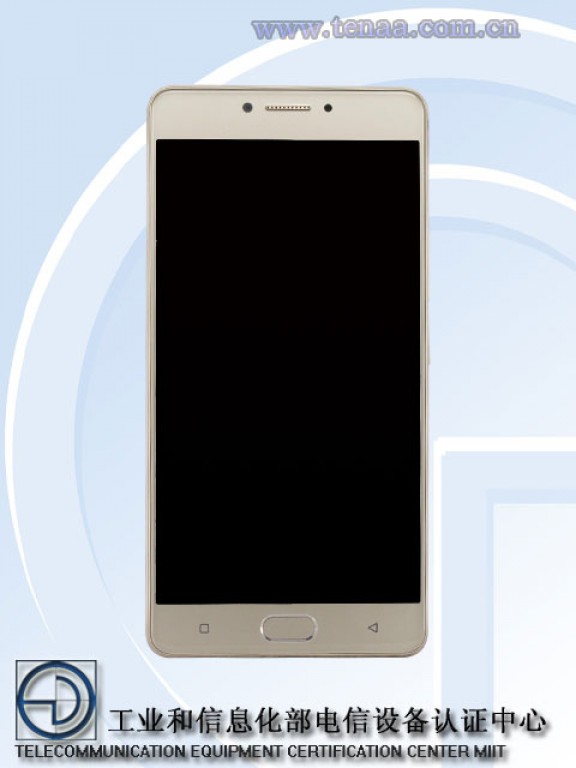
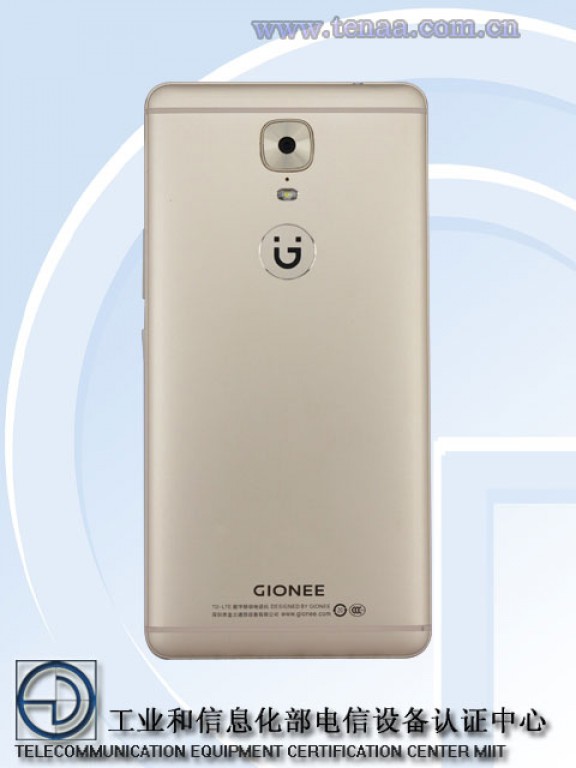
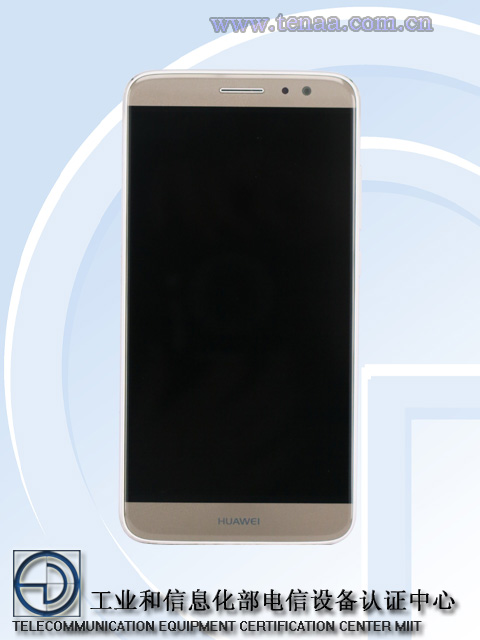
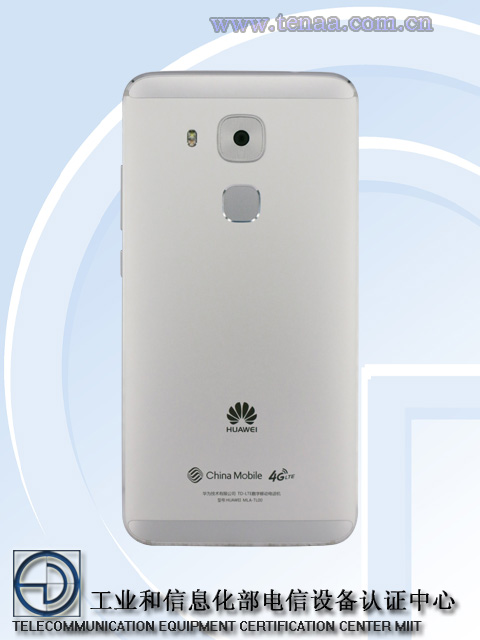
Gionee M6 just passed TENAA certification today and now is all set to be launched soon. In fact, Gionee has already planned an event in China on 26th July. So in all probability, M6 may be announced during that event.
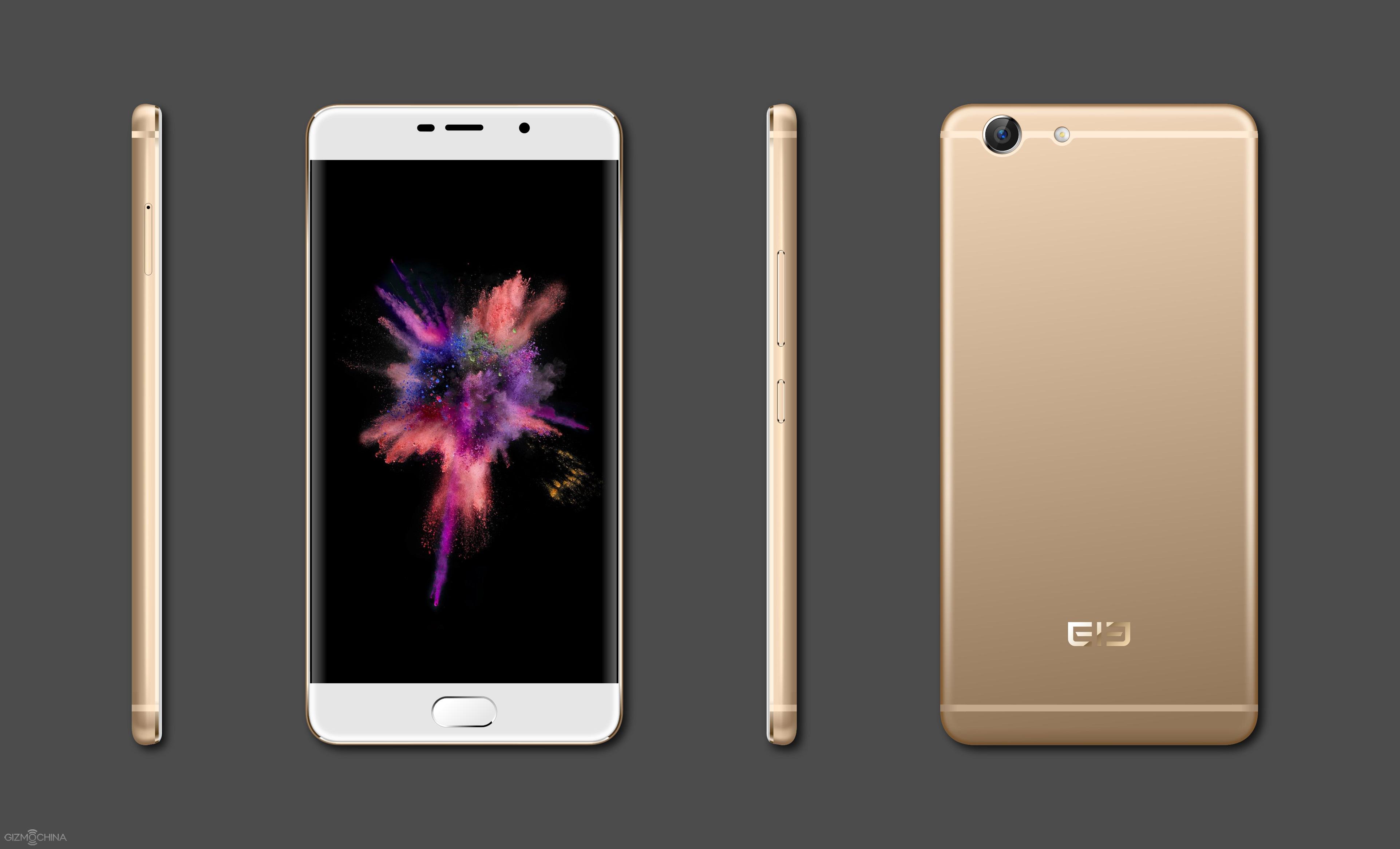
The Gionee M6 comes with a 5.5″ AMOLED screen with a fullHD resolution and a Snapdragon 652 processor powers the device. It will come with 4GB of RAM and 32GB of internal storage.
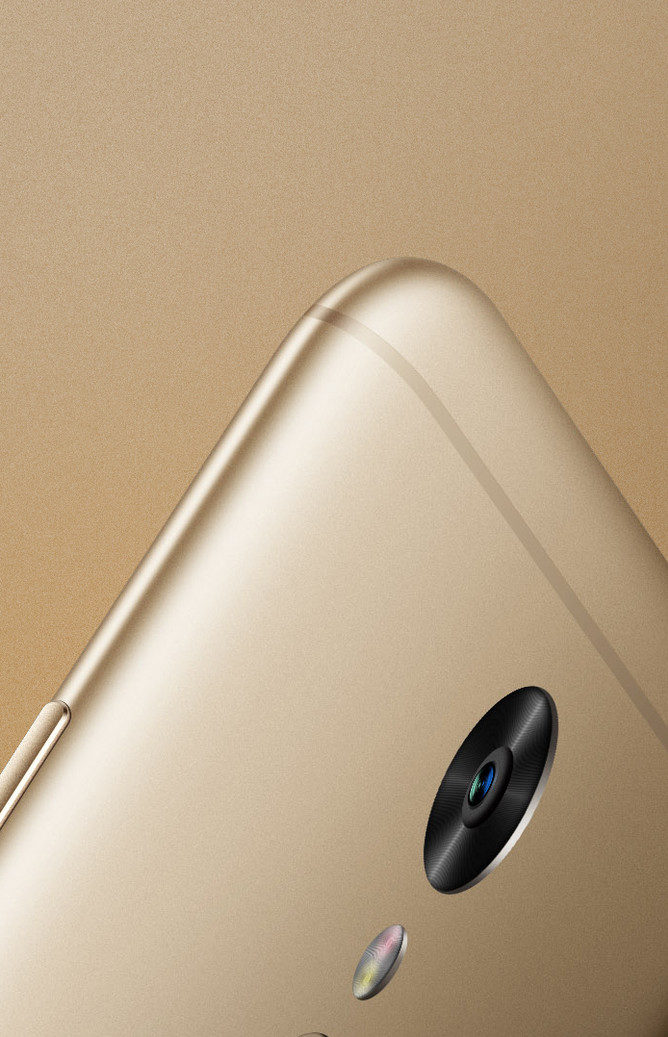
Gionee M6 is will be a dual sim device running on Android 6.0 out of the box and will come with a fingerprint sensor located at the back. It will be a housed in a full metal body and will house a 13MP camera rear camera along coupled with an 8MP front facing camera.
The highlight of Gionee M series is the marathon battery associated with it and M6 is no exception. It comes with 5000 mAh battery to power the device. There are rumors about another device, the Gionee M6 Plus, however not much is known about that and we will have to wait till the official announcement.
A fresh leak about the specs details of the expected Bluboo Maya Max has surfaced online and its put to rest speculations about the specs the device will pop clutching. The leak which packs lots of juicy details about the device, is coming barely a month after an image render of the device appeared on the internet.
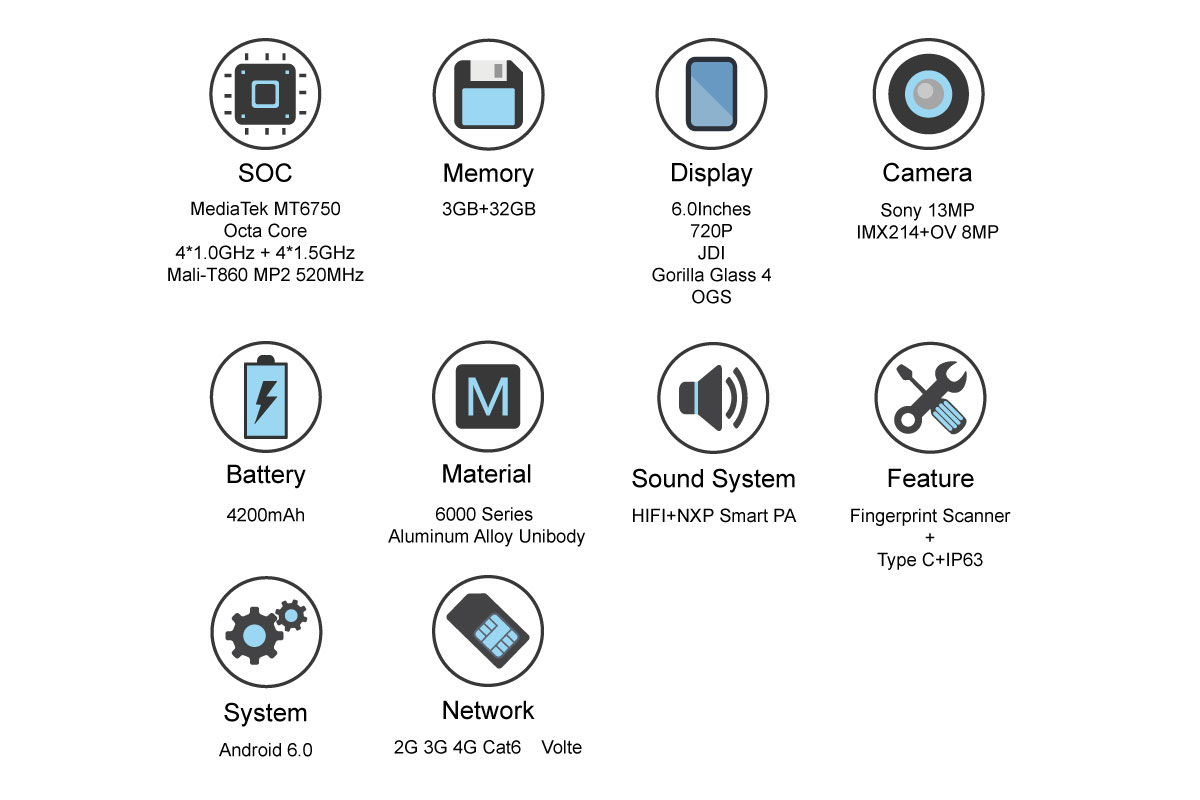
The leak details the Bluboo Maya Max as featuring a large 6-inch JDI display with 720pixel resolution. You don’t have to worry about the large display cracking up when the device falls as there is a Gorilla Glass 4 protective shield over the display. The device is also said to be made of an aluminum alloy unibody and has IP63 certification which means that it is dustproof and has protection against spraying water. Can you beat that?
The device will be powered by a 2.5GHz Octa-core MediaTek MT6750 processor with Mali-T860 GPU. The processor is backed up by a 3GB RAM and the device provides a nice 32GB inbuilt storage bank.
If you’re a camera freak, the Bluboo Maya isn’t going to disappoint you with a cool 13MP rear facing camera that sports a Sony IMX 214 sensor. The device also features an 8MP camera up front for selfie snapshots.
Looks like Bluboo isn’t a bit ready to compromise on Maya Max’s sound quality because the Maya Max is tipped to carry an upgraded version of its audio management chip. The chip will be used by the device for independent audio processing decoding to support HiFi audio. The exquisite Maya Max also packs NXP’s Smart PA module, which is said to be audio amplifiers for portable devices. NXP is a well-established player in the audio market, so we should expect an outstanding quality speaker on the Maya Max.
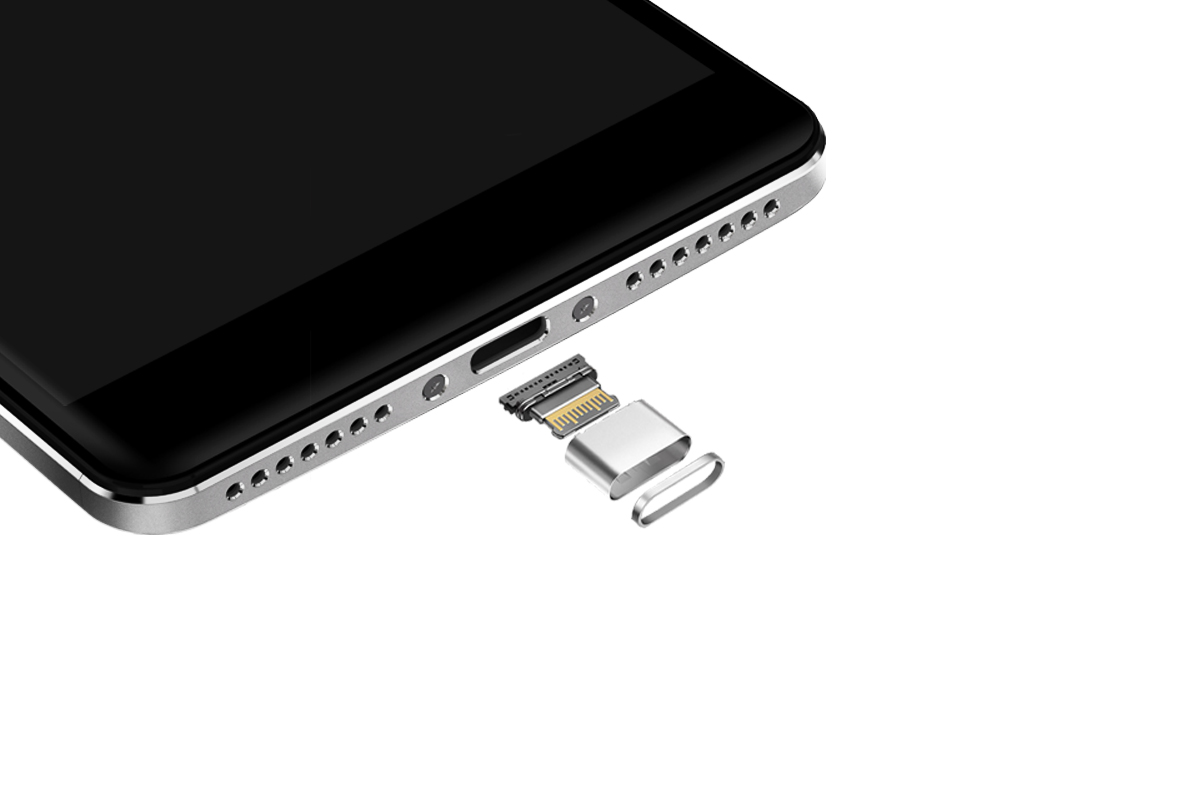
Connectivity options available on the device include 2G, 3G, 4G VoLTe and CAT 6. I can’t forget to mention that the Bluboo Max has a Fingerprint sensor as well as USB Type-C standard data cable port which wasn’t featured on the Bluboo Maya released recently.
It is expected that the Bluboo Maya Max will be unveiled this month or in August but that cannot be confirmed now. We hope to get more details about when the device will launch soon until then, keep wondering about what price the Maya Max will carry.
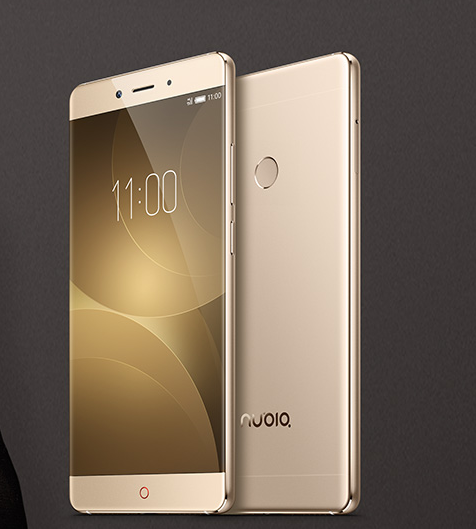
Nubia’s 2016 flagship device, the Nubia z11 was released in June and officially went on sale online on July 6. Surprisingly, just a few hours after online sales commenced, the device was sold out completely. This has left many potential buyers who are eager to get the device wondering when it will be made available again.
That question has been answered by no less a person that Nubia’s co-founder Ni Fei who also doubles as the GM of Nubia smartphone division. Ni Fei sensationally informed fans on Weibo that Nubia is very busy stocking up more units of the flagship Nubia Z11 smartphone and that the device will go on sale again on July 13. He assured fans that they will soon get their hands on the Nubia Z11 soon.
The second generation Nubia Z11 comes with a borderless design, which means the literal bezels at the edge of the phone’s display is absent. The phone’s design also uses cutting edge technology with a metal frame forged from aluminum alloy which Nubia says is of aviation standard.
The Nubia Z11 uses aRC 2.0 refractive glass technology which breaks through barriers to provide boundlessly clear vision on the 2.5D glass. The flagship Z11 is also equipped with a NeoVison 6.0 camera system, AK4376 audio Hi-Fi chips, as well as Dolby Atmos panoramic sound technology for better sound quality, a Snapdragon 820 chipset, fingerprint scanner and lots more. The device comes in a standard version with 4GB of RAM and 64GB of inbuilt storage and an exclusive version with 6GB of RAM and 128GB of onboard storage.
READ MORE: ZTE Nubia Z11 Up For Pre-order On OPPOMART
As for the price, the Nubia Z11 standard edition goes for 2499 yuan in China ($374 US Dollars) and the exclusive version carries a price tag of 3499 Yuan ($524 US Dollars). The Nubia Z11 clutches a fair price tag when compared to last year’s Nubia Z9 which was sold for 3499 for the standard edition. Nubia did explain that there is a significant reduction in the price to give more users the opportunity of having a feel of the borderless Nubia Z11 flagship.
Lenovo today announced the developer open beta ROM for its ZUK range of devices based on Android Marshmallow 6.0.1. The system update will have new ZUI for the ZUK phones and long screen shots apart from other important features. Additionally, ZUK Z2 will also receive exclusive one-button overclocking function which was promised at the launch of ZUK Z2.
Overheating is another pain point in smartphones. With ZUI 2.0, as announced at the time of launch, Lenovo has added a feature that will identify apps that cause overheating accurately and control the app, resulting in no overheating of the device.
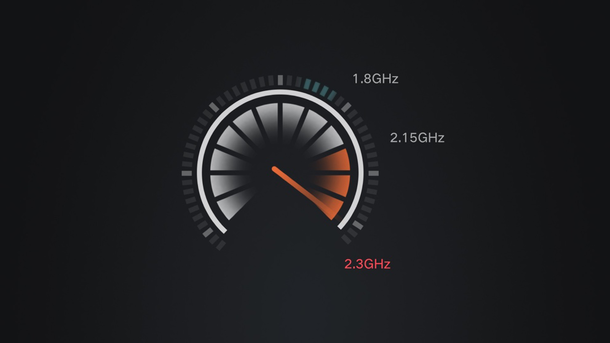
The highlight of this update is the much awaited and talked about feature, one click overclocking . This will allow users to overclock the Qualcomm Snapdragon 820 processor clocked at 2.15 Ghz to be overclocked till 2.30 GHz giving the already powerful processor an instant performance boost when needed.
Lenovo additionally has also started a ZUK ZUI 2.0 beta program where beta users will receive a push notification of system updates. ZUK Z2 Pro, ZUK Z2 and ZUK Z1 will begin to receive the final version update ZUI 2.0 upgrade notification by this month itself.
Vivo today announced that the super brand sale yesterday was super hit. A whopping 250,000+ Vivo X7 units were sold in a day both online and offline, on the opening day of the sale.
As per the update by Vivo, Vivo X7 was sold in 667 cities simultaneously along with the 3 top e-commerce stores in a synchronized super brand sale. Activities organized on the opening day of the sale ensured the surge in the overall sales of the X7 resulting more than 250,000 units sale.
The Latest X series phones were made available at more than 500 experience centers and more than a thousand of pop-up stores at popular multi-brand stores at the same time. Each of these stores experienced a huge crowd where people could lay their hands on to the latest Vivo X7 and other Vivo devices.
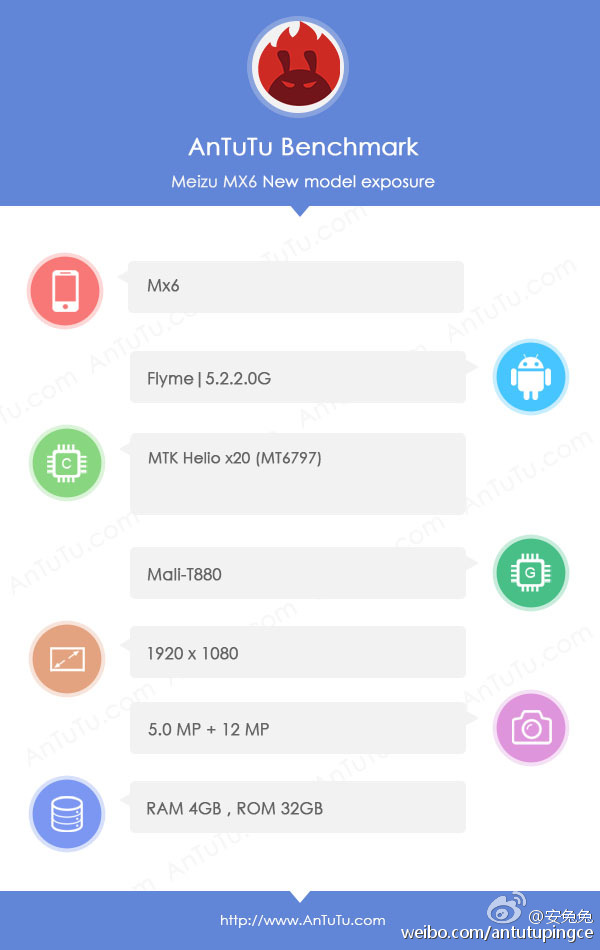
Meizu is all set to announce the Meizu MX6 flagship on July 19. While the phone has been in the news for a number of reasons previously, we now know the specs of the device thanks to its AnTuTu listing. The benchmarking app reveals most of the features of the device, so we know what to expect when we meet the handset after a few days.
Like expected, the Meizu MX6 will come with the Helio X20 deca-core chipset and Mali-T880 under the hood with 4GB RAM and 32GB of internal storage. While the display size is unknown (should be 5.5-inches), it will feature FHD 1080p resolution. At the back, the phone will come with a 12MP camera sensor while up front, you get a 5MP shooter. As for software, the Meizu MX6 will come with Flyme 5.2.2 with Android 6.0 Marshmallow on top.
READ MORE: Meizu MX6 May Not Be As Cheap As We Previously Thought
Usually, AnTuTu also reveals the score of the handset that hits the app, but this time, we don’t have that information. However, considering Helio X20 is powering the device, the AnTuTu score of the MX6 should easily be above 90k points.
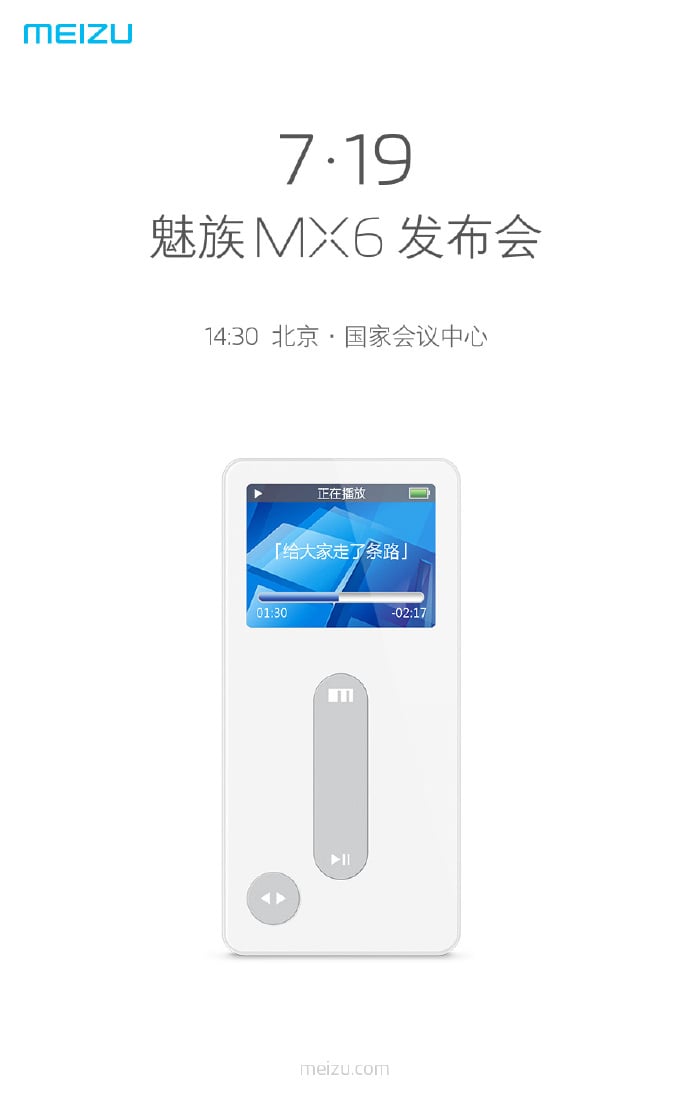
Meizu teased the MX6 today, confirming the July 19 release date of the flagship. It looks like the company plans to release a number of accessories as well, alongside the device at the event. Read more details from our previous article here.
Xiaomi’s CEO Lei Jun Wednesday revealed on China’s microblogging website Weibo that the smartphone company is increasing efforts to improve the production of new mobile phones for release in the second half of the year.
The CEO also revealed that Xiaomi released five new mobile phones in the first half of this year and the company is planning to improve on that in the second half of the year as well as increase production to be able to meet demand for its generously priced top specced devices. According to the CEO, the second half of the year will see users getting top-end new gadgets.
Earlier statements from the tech startup had stipulated that the Xiaomi Mi 5s and Mi Note 2 would be released in the second half of this year with new innovative features like pressure touch and dual main cameras.
Rumours had claimed in the past that Xiaomi is working on a range of new devices, including a new version called Mi 5s which could feature Apple iPhone-styled 3D Touch and the Mi Note 2 which is planned as a flagship device.
Finally, Lei Jun also disclosed another cheering news that the devices which are billed for release during the second half of the year will continue with Xiaomi’s trademark affordable pricing.
RELATED: Xiaomi Goes Premium: To Make More Expensive and Better Smartphones
Xiaomi has a reputation within and outside China of producing top-end smartphones that carry extremely low price tags and this statement by Lei Jun has reassured us that we’re going to see more of that for the rest of the year.
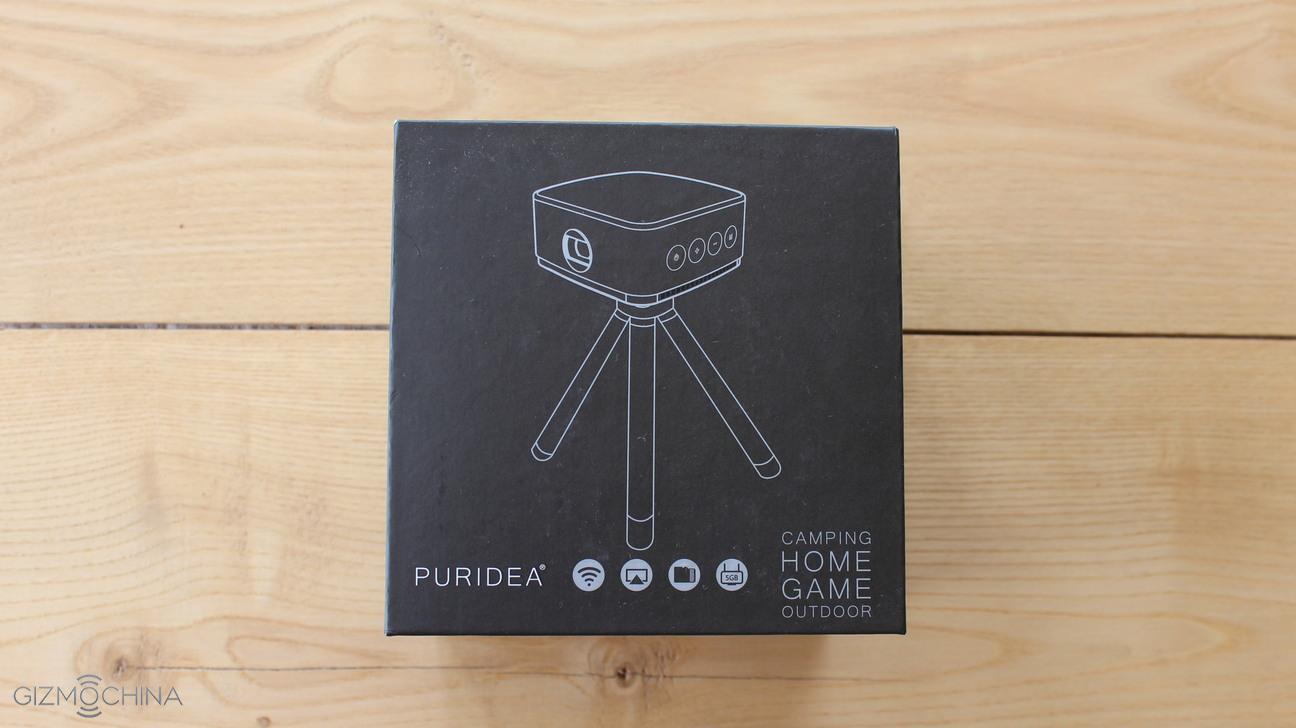
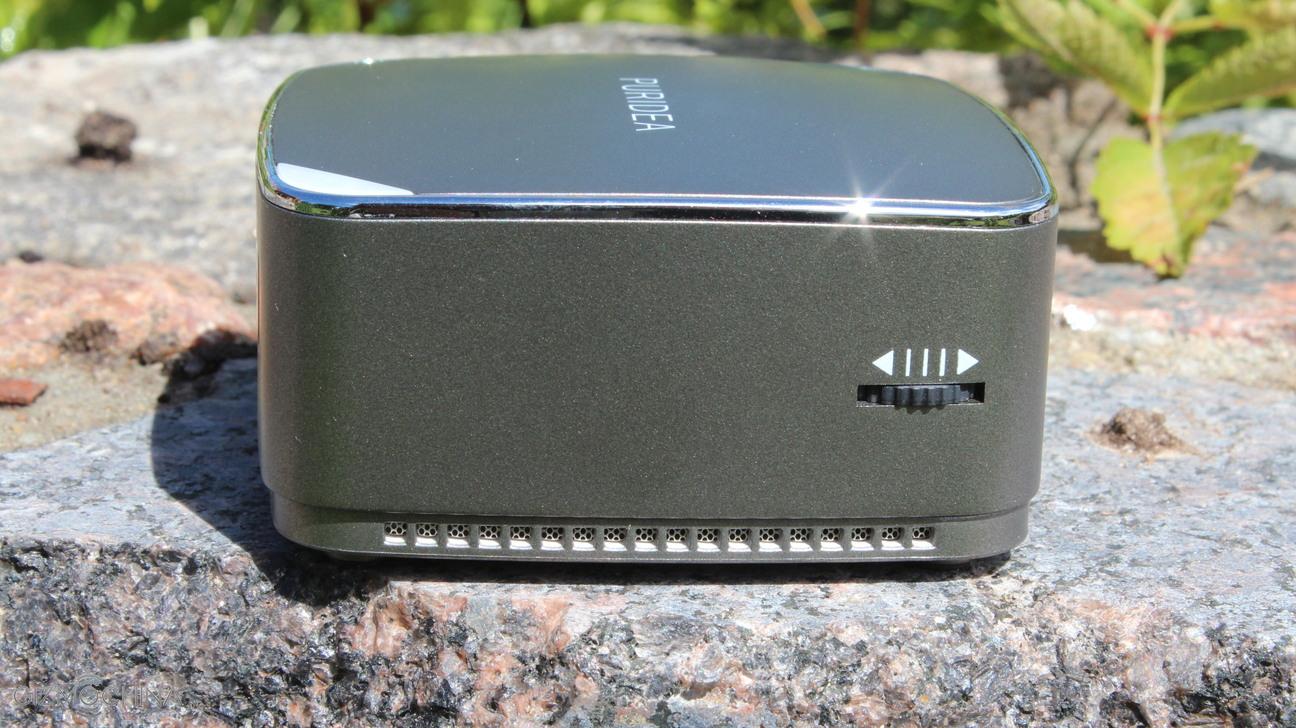
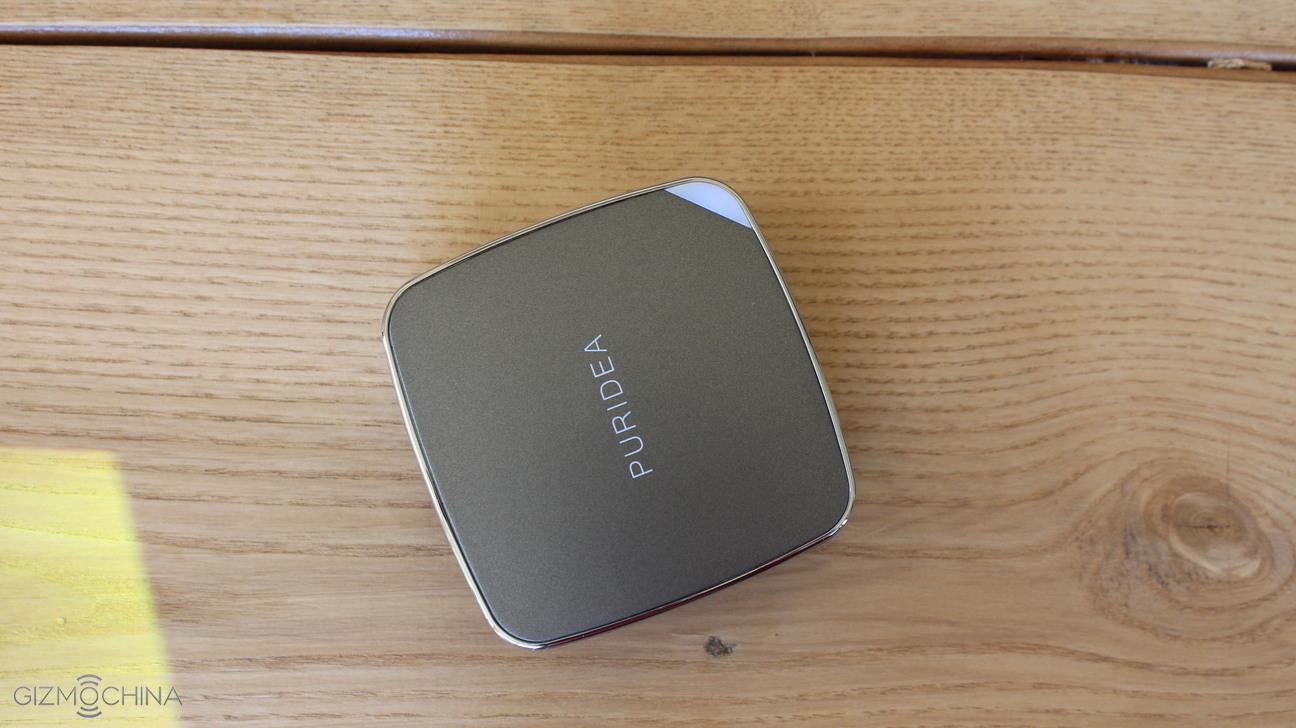
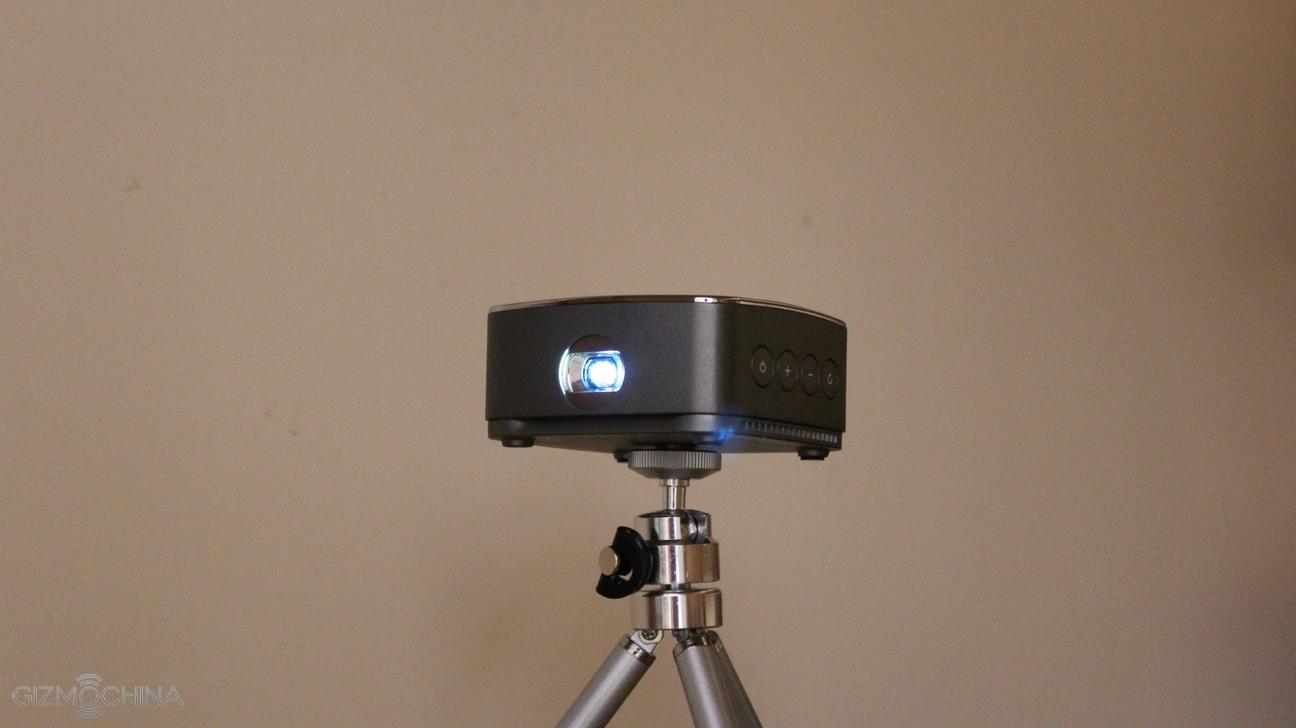
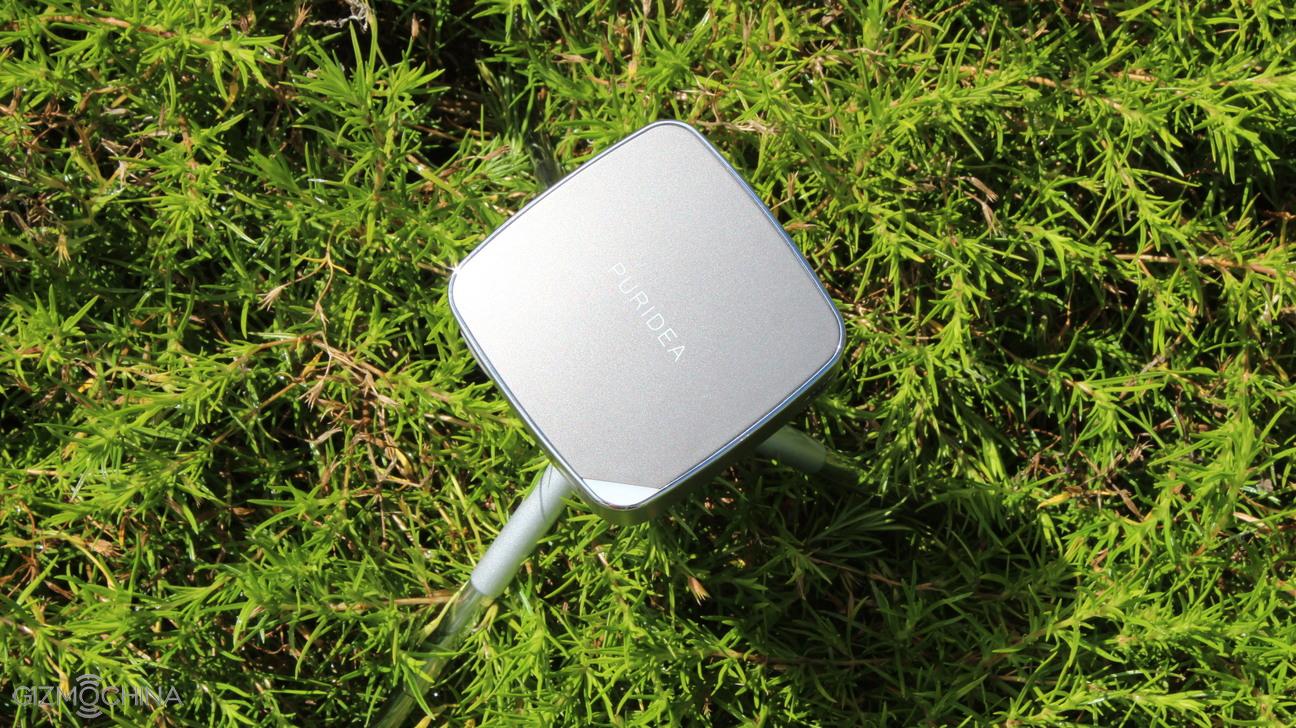
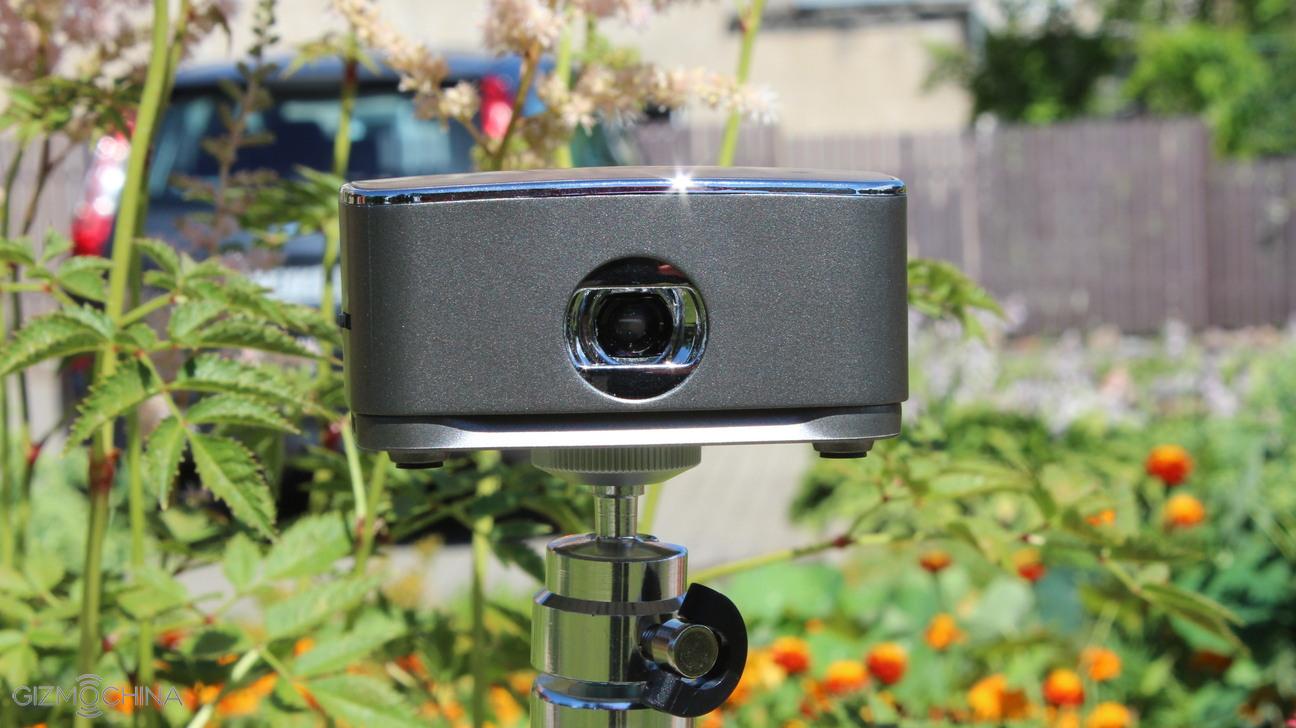
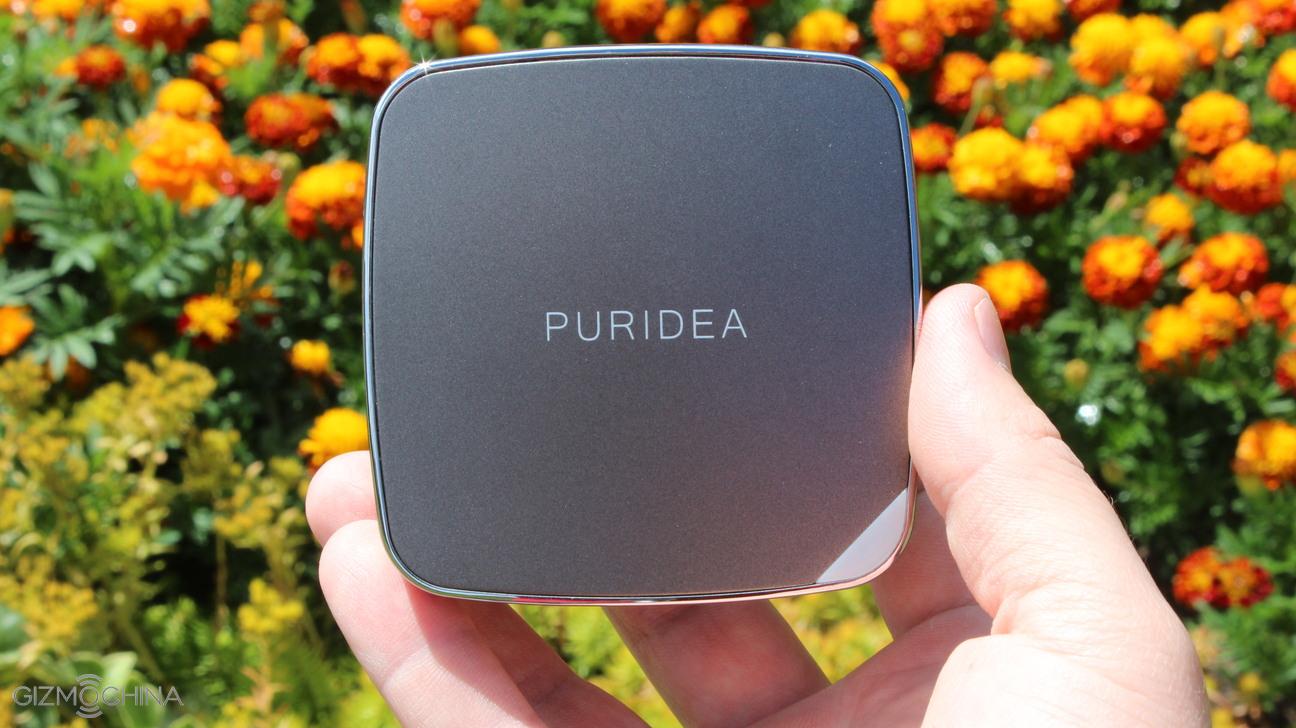
A standard projector is a neat device that we are all of aware of. However, wireless projectors are way more convenient and the one made by Puridea is the smallest mobile projector I’ve ever seen. Learn more in our full review.
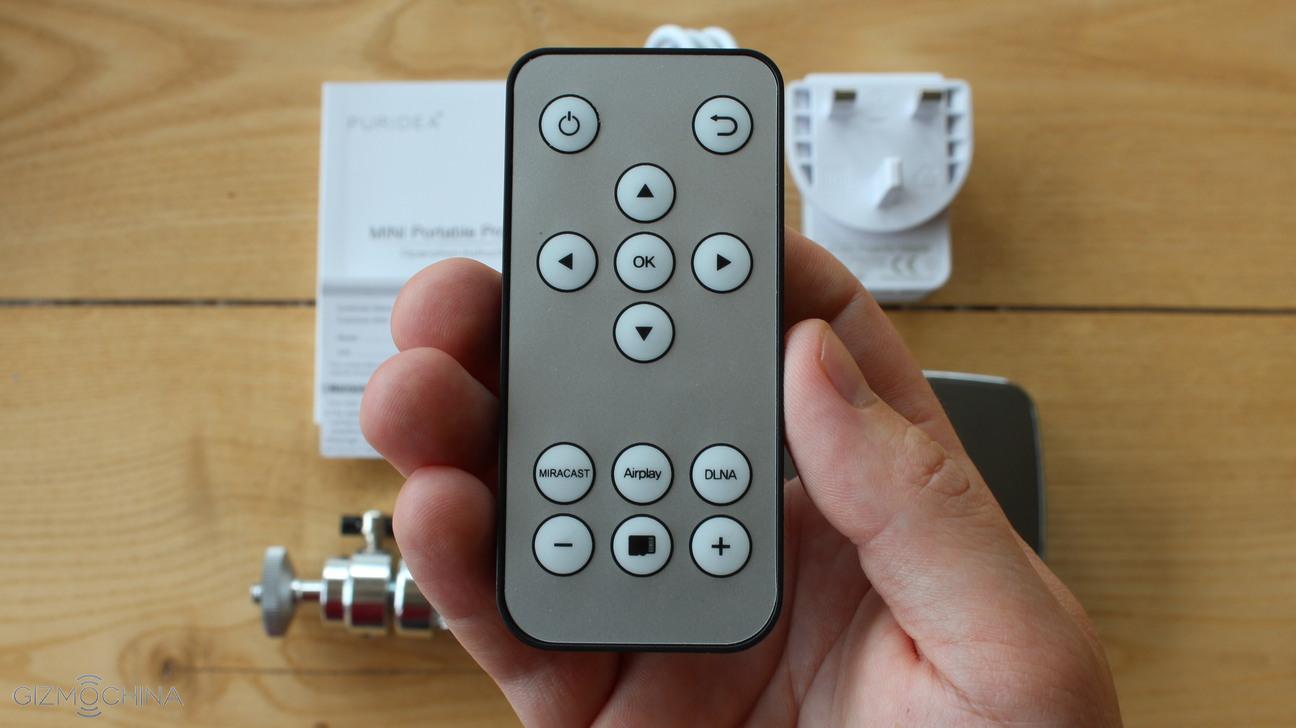
The projector comes with a tiny and lightweight IR remote control, a little metal-made tripod that can be easily attached to the projector, a power plug, USB cable and some paperwork.
Puridea Wireless Projector Review: DESIGN and FEATURES
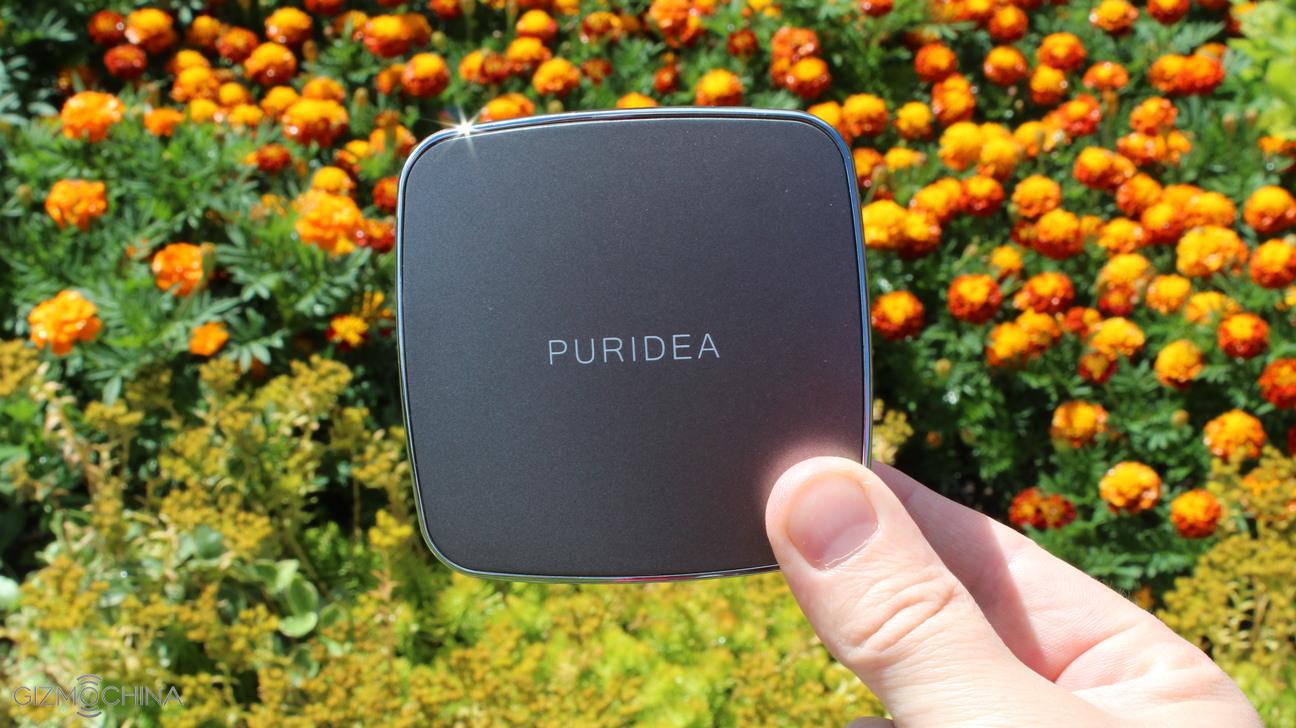
The main selling point of this projector is its size. As I said, this is the tinniest projector I’ve ever seen. You can easily put it in your pocket and it is super lightweight.
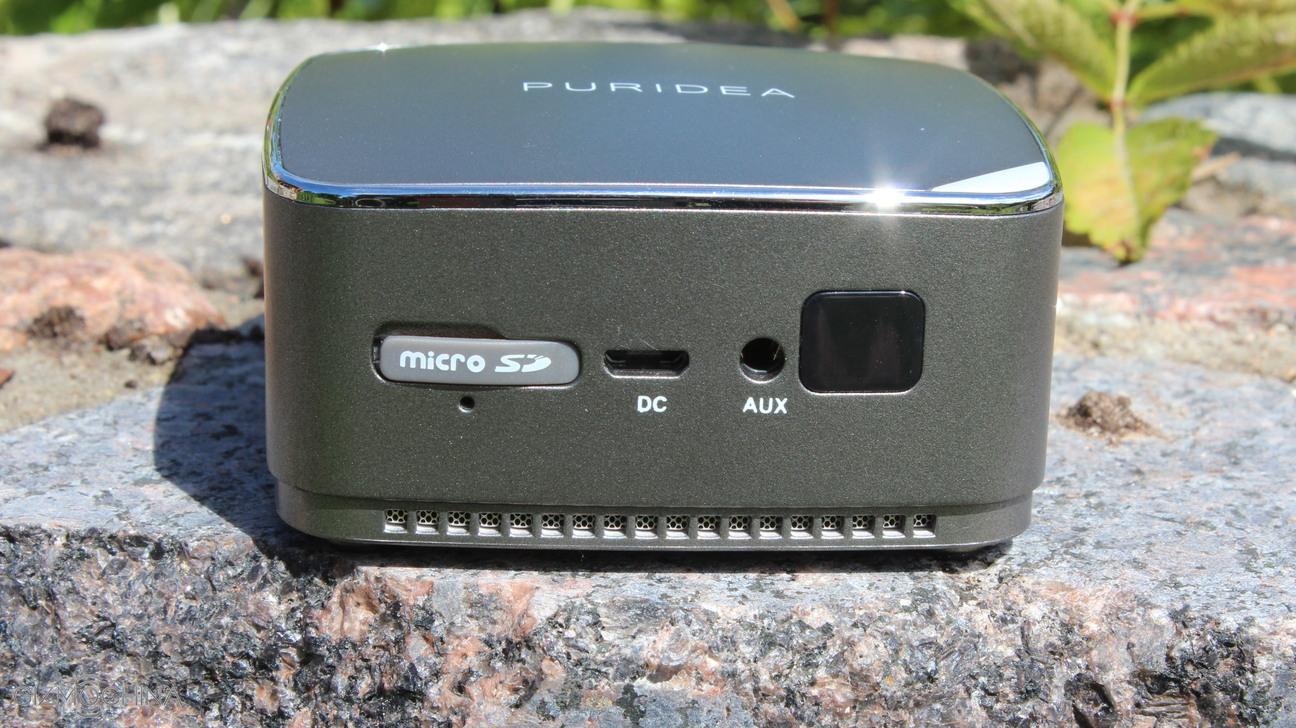
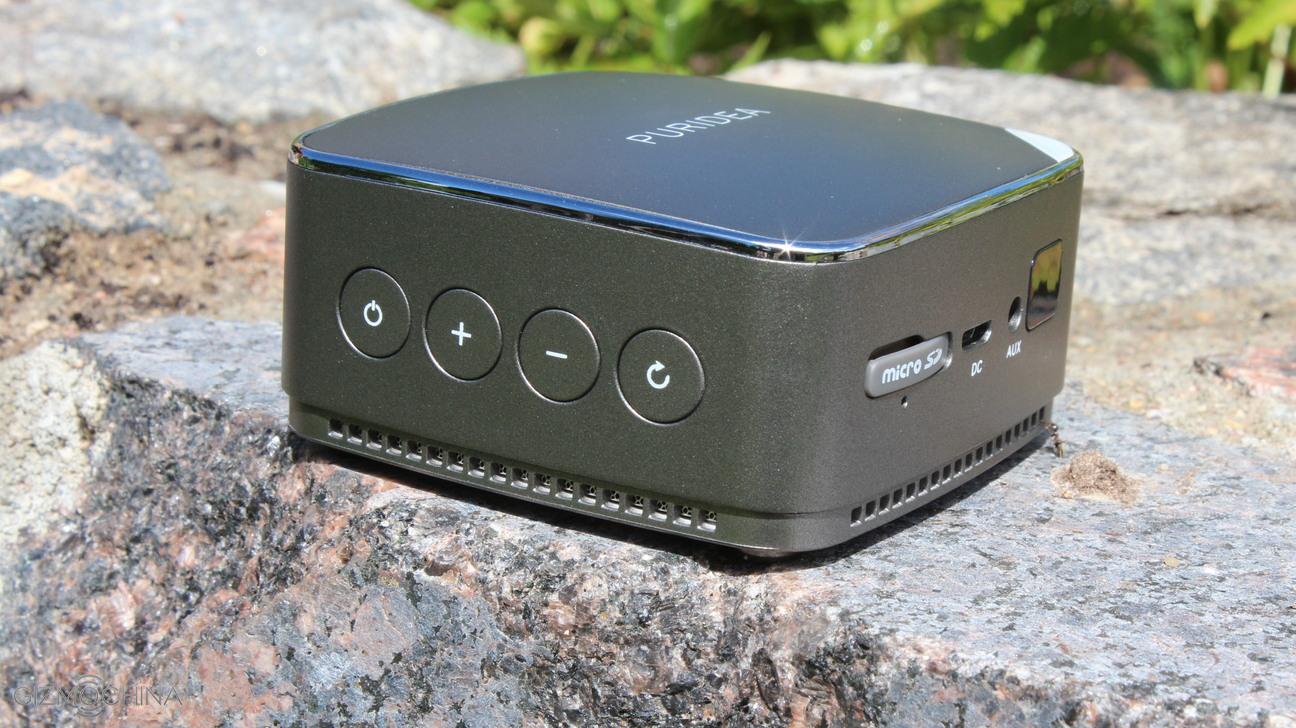
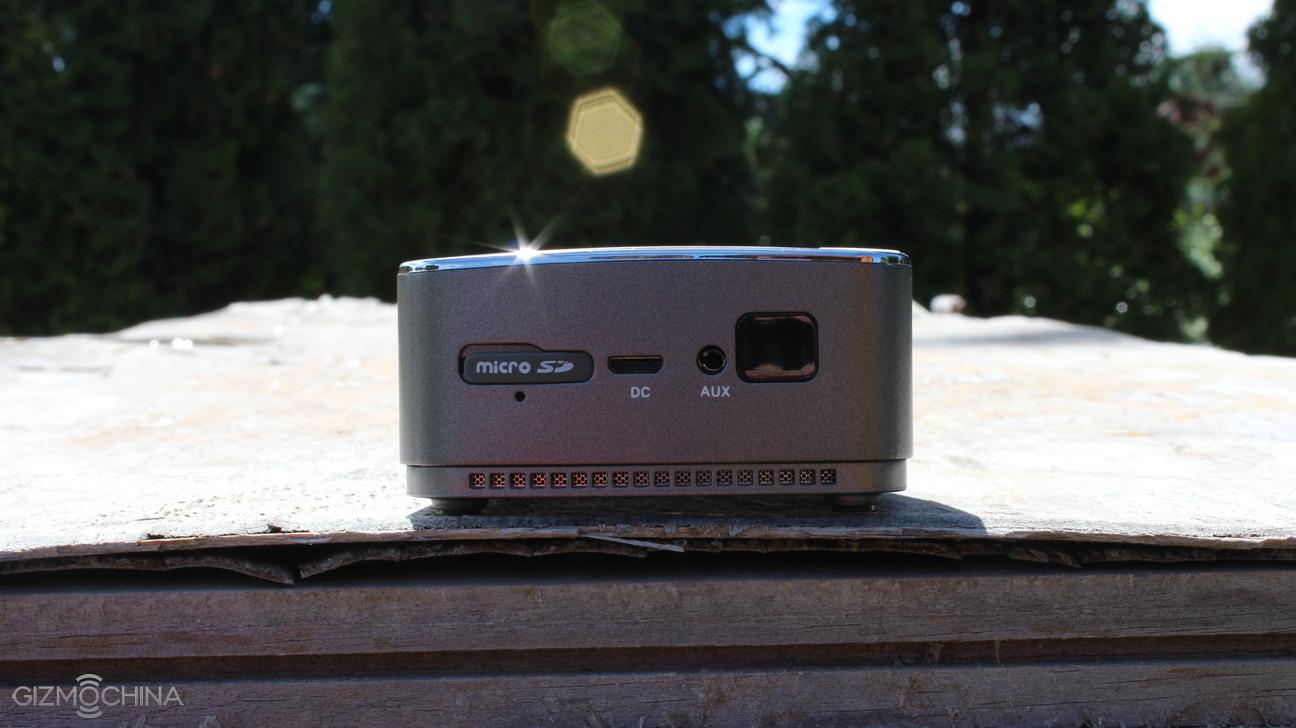
The device has a microSD card slot, so you can play movies directly from the card. Also, you can charge the projector via the regular micro USB port, so you can use it with a power bank too, in case the projector runs out of juice.There is a headset jack for connecting external speaker and you may use it, because the internal one is silent and the quality of sound is far from the best. Lastly, there is the IR trasmitter.
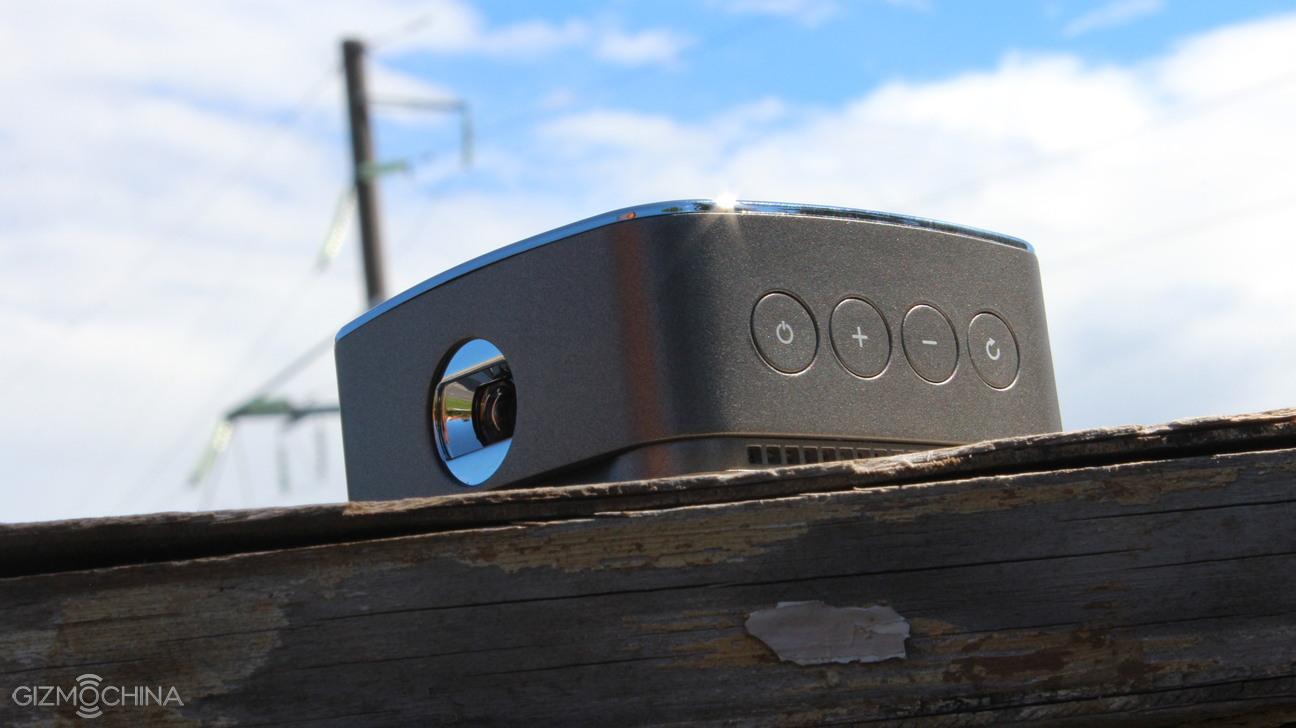
On one side we have a focusing knob and on the other, there are quite a few control buttons, which are pretty much self-explanatory.
Overall, the projector is well-built and it does not seem to break anytime soon.
Puridea Wireless Projector Review: FUNCTIONALITY
Once you turn on the device, the LED light indicates how much juice is left in the battery.
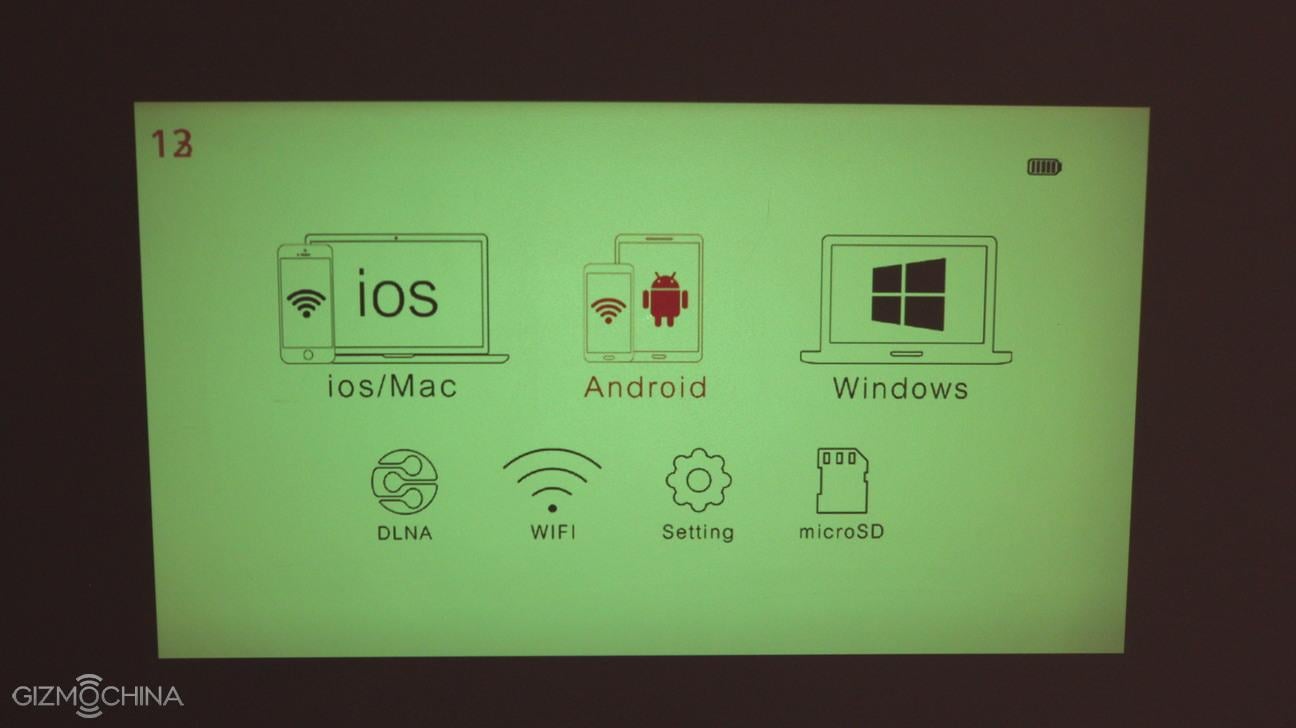
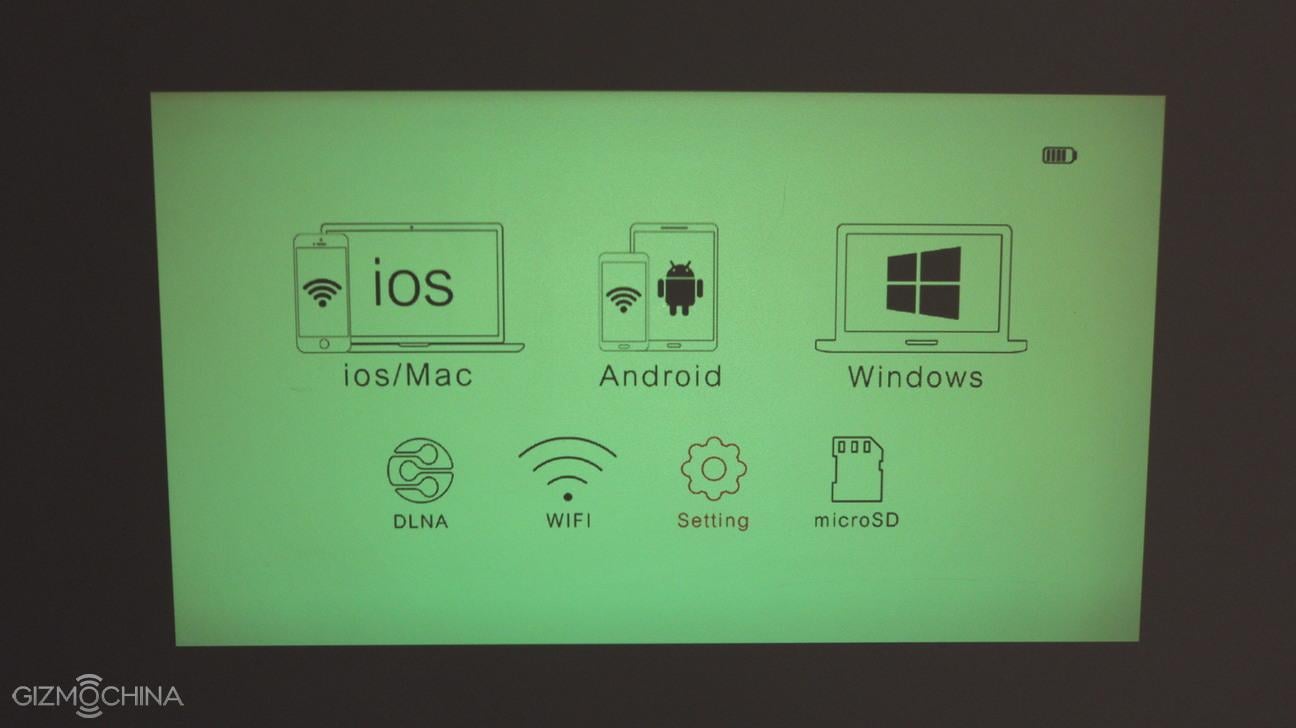
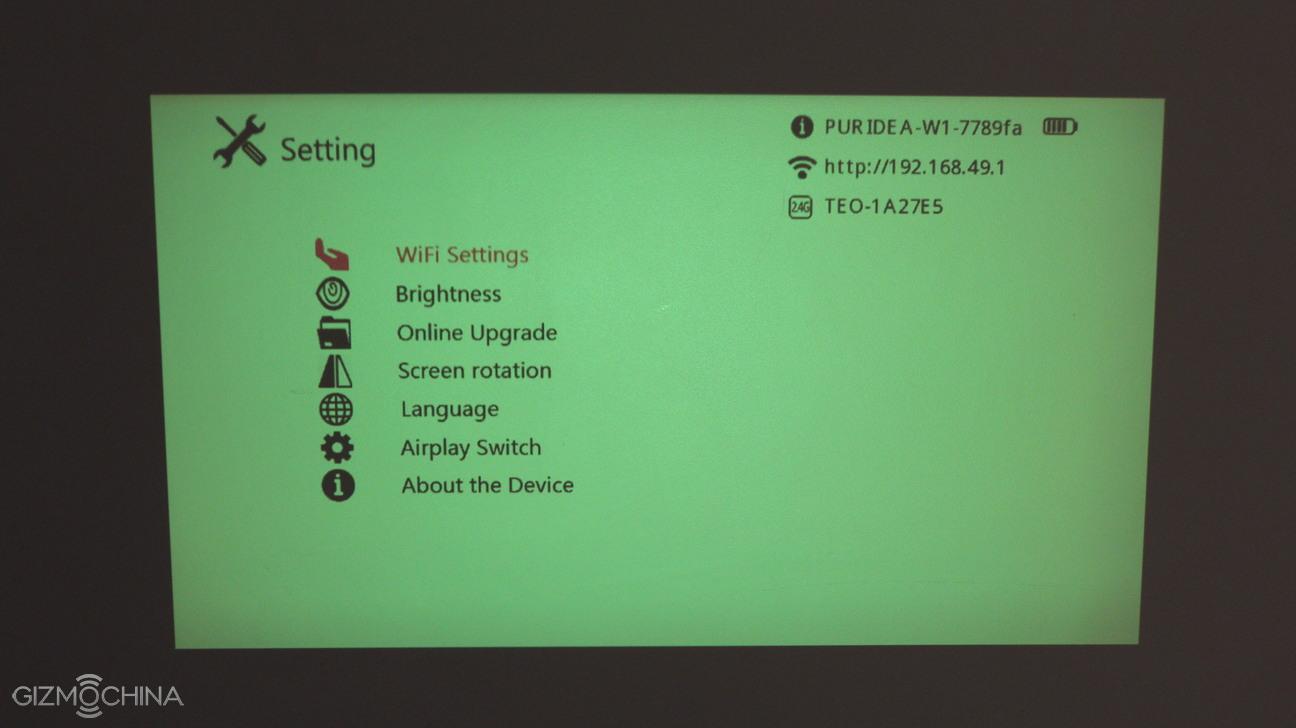
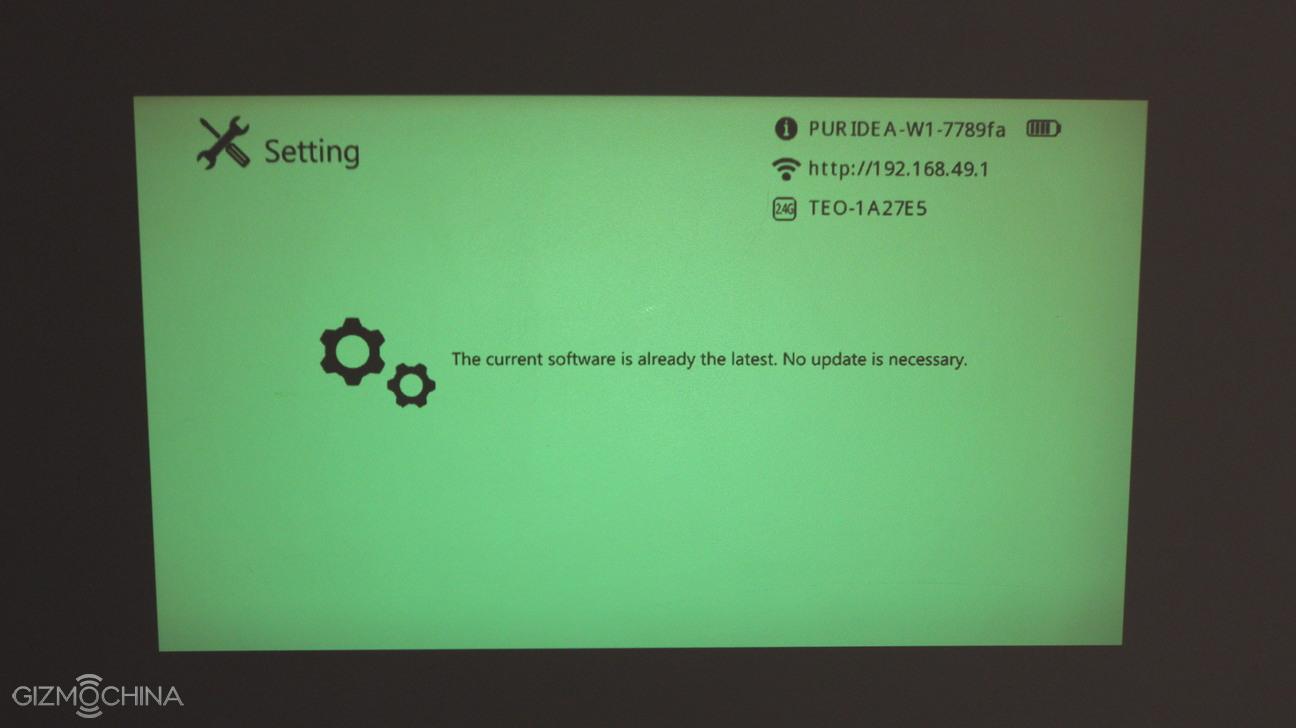
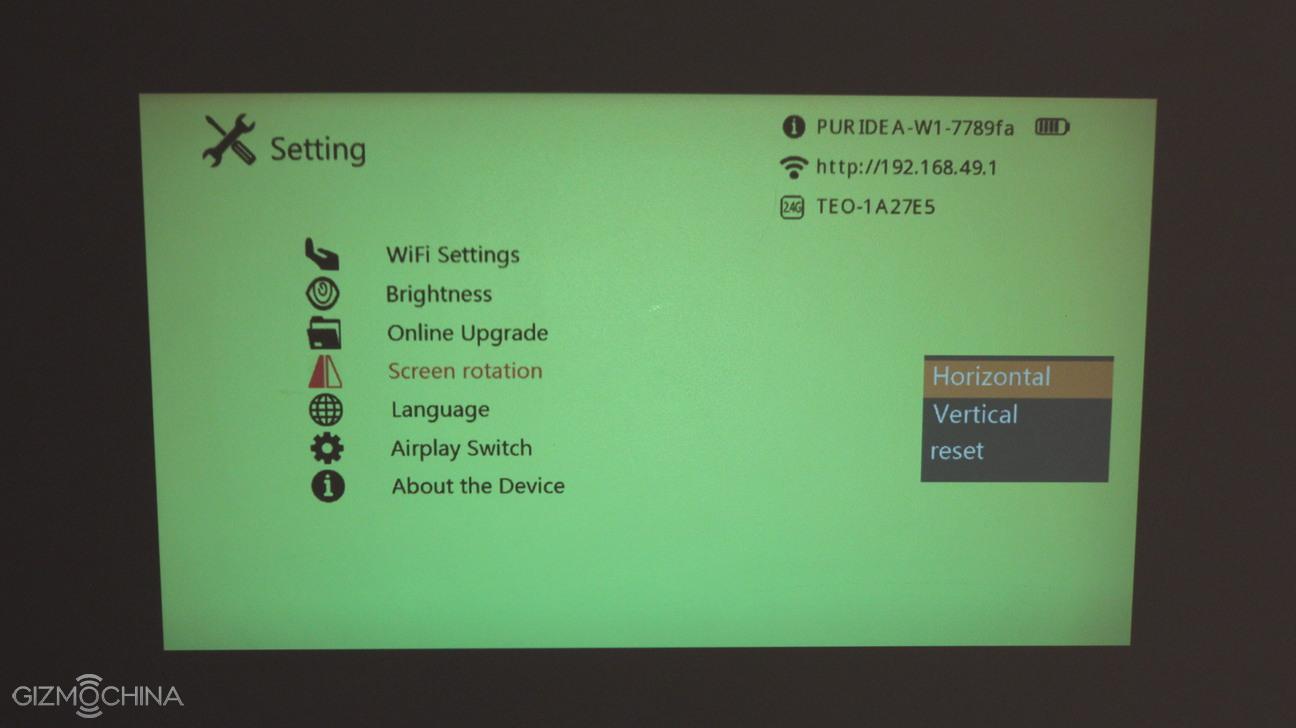
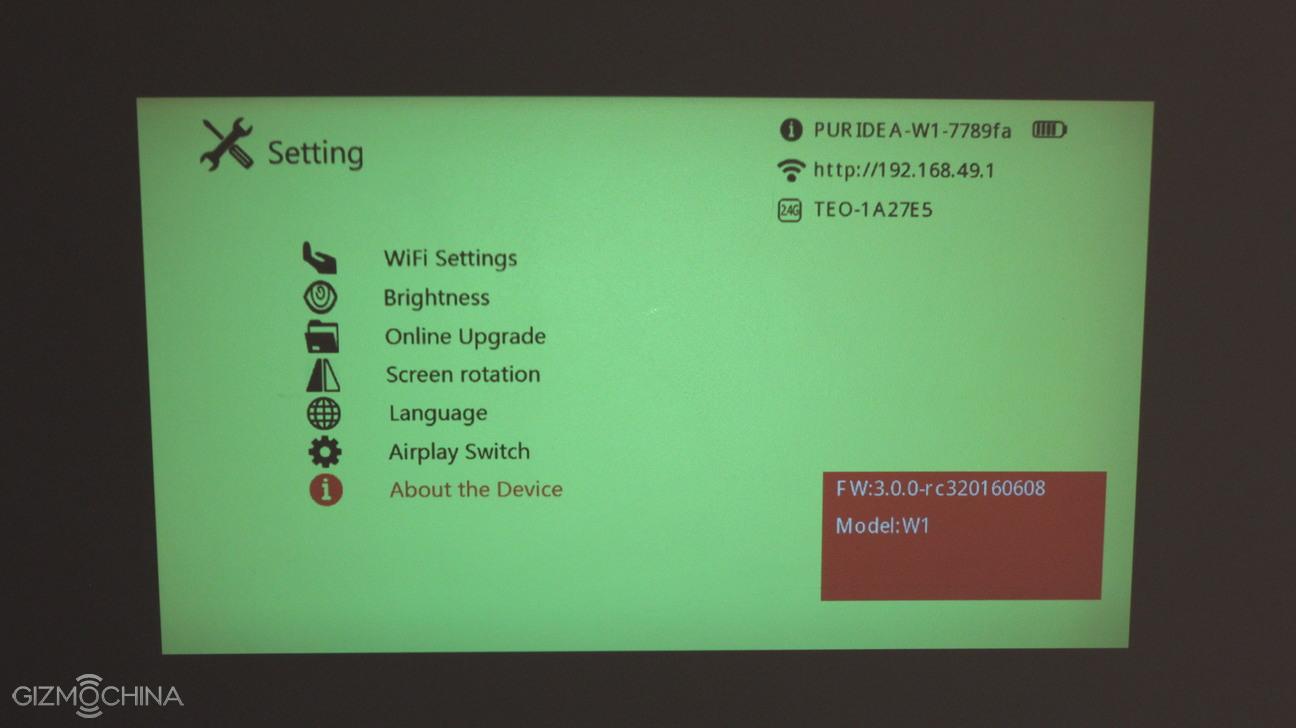
The user interface is very simple and easy to use. Firstly, I recommend you to check if there is a firmware update in the settings menu, where you can also adjust some other basic settings.
You can select from a variety of streaming modes. I’ve tested the projector with my OnePlus 3, MacBook Pro, Windows laptop and iPad and it works just fine.
Basically, you can project everything you want on the projector. I mostly used it for streaming videos stored locally on my phone or from Youtube and it worked fine. You can also play some games but keep in mind that there may be a slight delay on the projected screen if you play graphically demanding games.
As far as the image quality goes, the projected image has the size of around 38” and the resolution of 854×480. Also, the brightness of the bulb reaches only 50 lumens but you have to keep in mind the size of the device.
Even though the specs are not so impressive but the video quality is pretty good. Sure, it would have been nice to have a brighter image but again, this is one of the smallest projectors out there and it is bright enough when used in dim environments.
The projector has a built-in ventilator, which is pretty silent and you can barely hear it.
Puridea Wireless Projector Review: BATTERY LIFE
The Puridea projector lives up the official claim and I could get around 2 hours of usage out of it. Again, you can charge it and use it at the same time with a power bank.
Puridea Wireless Projector Review: CONCLUSIONS
The Puridea wireless projector is a great mobile projector and all the features have been working fine so far.
Sure, it would have been nice to have a higher resolution and brighter image but hey, this is a super mobile and tiny device and the image quality and overall feature set are great.
The price of $250 may sound a little steep but the projector works fine and it does not have any flaws that could be a deal breaker.
Huawei seems to have signed Brooklyn Beckham recently for a reported sum of £100,000. According to reports, Beckham’s son has been signed to appear in advertisements for Huawei internationally. While this is a large sum for a 17 year old, the company had signed Lionel Messi a few months back for a whopping $6 million. So, it looks like Huawei is making a lot of heavy investments to improve its brand image internationally.
Its global brand ambassador, Messi is currently in trouble for tax evasions in Argentina. So, we are not quite sure of what happens to the contract with Huawei after this issue cropped up. But signing Beckham’s son would be a good idea to improve and promote the brand’s image in Europe, especially considering his strong social media following.
‘Huawei went for Brooklyn because he’s young, well-presented and seen as a good role model for kids his age,’ a source told The Sun. ‘He’s got millions of social media followers and this is a good way to engage a load of youngsters.’
So, what do you think about Huawei’s strategy to sign popular names to promote its brand internationally?
Elephone seems to be working on a brand new handset for release in the second half of the year called as the Elephone R9. Yes, it’s called the R9 and one of the big reasons to choose this name could be because of OPPO R9’s success in China. Well, ignoring the origin of the name, let’s focus on the specs of this upcoming device.
The Elephone R9 is said to come with a bezel-less display. So, it looks like the R9 will use a similar bezel-less 5.5-inch FHD panel as the Elephone S3. Another information we have got is that the R series from the company is going to feature bezel-less phones this year and this will be its latest addition.
RELATED: Try an Elephone S3 for 1 month as a VIP
As for the other specs of the Elephone R9, the phone will come with 3GB of RAM and 32GB of internal storage. Under the hood, you will get the Helio X20 deca-core processor. For software, it will run on Android 6 Marshmallow. Also, at the back, you will get a 16MP camera while up front, there will be an 8MP shooter. Finally, it is said that the R9 features a front facing fingerprint sensor.
Like the recent Elephone smartphones, the R9 too will feature a full metal body. Release and pricing details of the handset are not available right now, but we will update with more details in the coming weeks.
Chinese smartphone maker LeEco, formerly known as LeTV will start selling phones, televisions and other gadgets in the US market sometime soon, an internal memo from Jia Yueting LeEco’s CEO indicates.
This is coming on the heels of news that the Beijing-based online video company, who runs a business model which is similar to American company NetFlix’s, has completed the acquisition of a 50-acre development site in the Silicon Valley from internet giant Yahoo. It hopes to build its North America headquarters on the property to accommodate thousands of staffs.
According to the internal memo, billionaire-owner Jia Yueting informed staffs that LeEco is preparing for an official launch of its product in the US market within the next three months. The company, which made its start in online video streaming, is looking to sell their own music content, smartphones, Smart TVs and video streaming services in the United States.
LeEco is virtually unknown in the U.S, even though it’s been a significant player in China for some time. Originally launched in 2004 as an online video service, it quickly became one of the largest video platforms in the country, where it now streams a catalog of some 5,000 movies and 100,000 TV show episodes.
The company also started selling Smart TVs and streaming boxes, and last year, LeEco which still carry the LeTV brand in its products, also began selling smartphones in China.
The company is poised to take on giants Apple and Tesla in the video streaming market with entertainment content made by its movie-production unit Le Vision Pictures and local partners.
Already, LeEco has a film under production titled The Great Wall, a story centered on the construction of the Great Wall of China and strategically, the film stars Hollywood A-list actor Matt Damon.
Another crucial part of LeEco’s foray into the US market is Faraday Future, an electric-car start up that it entered into partnership with. LeEco funds the start-up and the company plans to set up a research lab in the Silicon Valley headquarters where it hopes to explore technologies in artificial intelligence, autonomous driving and virtual reality, according to the memo.
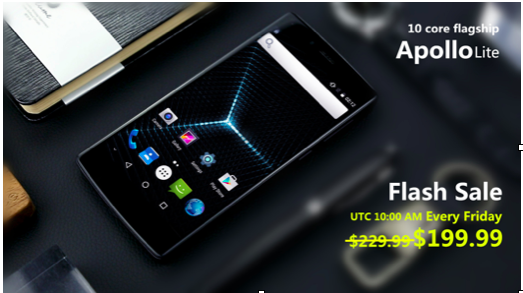
Vernee Apollo Lite is one of the popular mid-range flagships in the market right now, mainly because of its deca-core Helio X20 chip and the low $229 price tag. If you have been an avid visitor of gizmochina, you would know that this month, Vernee has a big promotional campaign for its two existing phones, the Vernee Thor and the Vernee Apollo Lite. Thor’s flash sale was yesterday and we hope interested readers managed to get hold of the handset.
Now, Vernee Apollo lite’s flash sale is coming up this Friday. During the sale period, the phone will be available for purchase at just $199.99. However, Vernee is also offering two accessories bundled with the new device, if you are willing to pay a few dollars extra. So, for $209.99, you can get one Vernee Apollo Lite, a case as well as a screen protector. The sale is held every Friday throughout this month at 10:00AM UTC. The first batch of the phone will start shipping from July 10.
Meanwhile, as mentioned in our previous articles, you can get $30 coupon for the Vernee Apollo directly from the company during this promo period. Remember that this coupon is not valid during the flash sale. You even have te opportunity to win a brand new Apollo Lite during this campaign period.
Even though we haven’t stopped talking about the Redmi Note 3, new info has appeared for the Redmi Note 4. A weibo account which goes by the name Said Yang Feng Technology posted that the Redmi Note 4 should be arriving soon. He also mentioned that it is oversized which points towards a larger than 5.5” screen.
Translated Post
If the info above is true,we should be looking at a possible end of summer release for the Redmi Note 4.
Previously, someone also mentioned that the Redmi Note 4 will be powered by a Snapdragon 652 processor, with 3GB of RAM, 16GB of ROM, support for Qualcomm’s QC 3.0 fast charge technology, and support all networks. Even if this is true, we are very sure there’ll be other versions sporting a different processor, and RAM + ROM combo.
RELATED: Two New Xiaomi Models Spotted, New Redmis Coming ?
Analyst Kevin Wang of IHS Technology also posted that Xiaomi has powerful products lined up for the second half of the year and they plan to achieve a record sale of 20 million devices for the third quarter. To achieve this number, Xiaomi will definitely need to have more than 2 phones (Mi 5s and Mi Note 2) in their production pipeline.
The Redmi Note 3 is still a good device if you are looking for something in the $200 range. It will be getting Xiaomi’s MIUI 8 update, although we don’t know if it will be also an update to Android 6.0 Marshmallow.
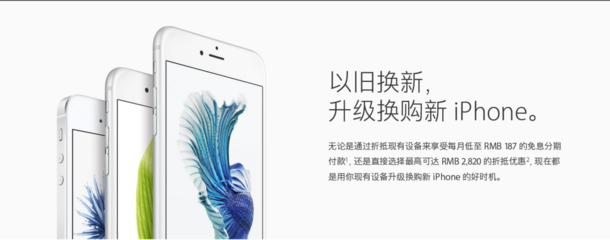
Residents of the People’s Republic of China can now trade in their Xiaomi, Samsung, and Huawei phones for recycling and get an iPhone or cash online. The trade in also includes older iPhones.
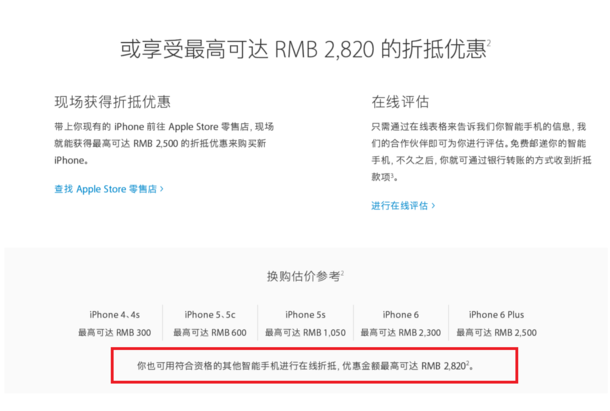
An image for the trade-in states that users can get as much as 2500 Yuan ($347) when they trade in their device which can be used to purchase a new iPhone (shipped for free) or you can have the money transferred into your bank account. Some of the trade-in values are listed below:
iPhone 4 and 4s for 300 yuan ($44)
iPhone 5 and 5c for 600 Yuan ($89)
iPhone 5s for 1050 Yuan ($157)
iPhone 6 for 2,300 Yuan ($344)
iPhone 6 Plus for 2500 Yuan (374)
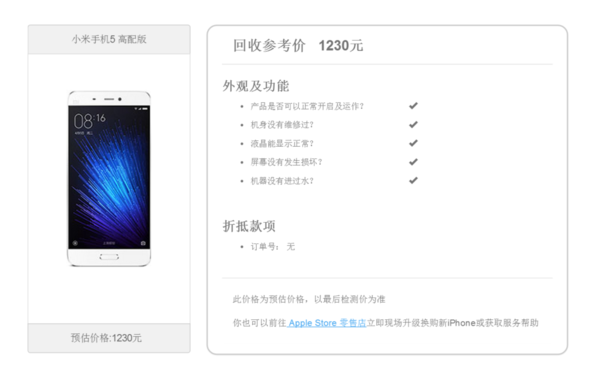
All the above depends on the condition of the phone such as if it still works, if the display isn’t broken, and if it hasn’t been dunked into water.
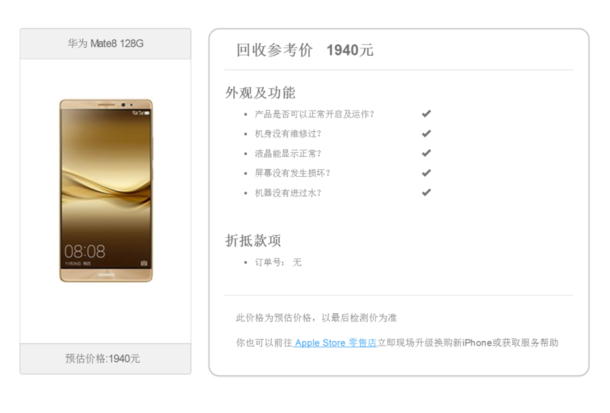
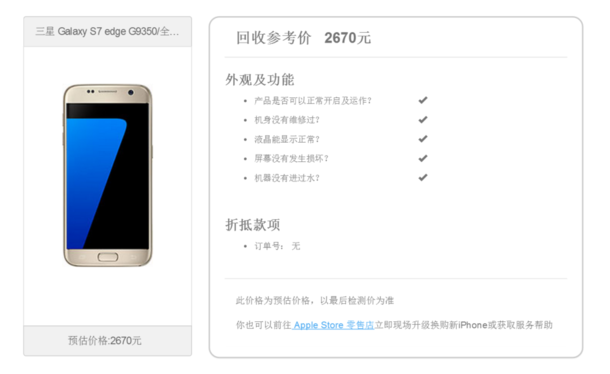
The site also lists the redemption amount of certain popular phones such as the S7 Edge which will fetch you 2670 Yuan ($400); the Huawei Mate 8 (128GB Supreme Edition) which will get you 1940 Yuan ($290); and the Xiaomi Mi 5 which can be traded in for 1230 Yuan ($184). These offers leave a lot to be desired as they are less than half of the original prices of these devices even though they are in good and working order.
Will you be trying out this new service? Let us know in the comment box.
The market is full of fitness-related products but the Xiaomi Mi Band series is one of the most popular in the world. The latest iteration of the product brings some significant upgrades like the Oled display but keeps an affordable price. Learn more in our full review.
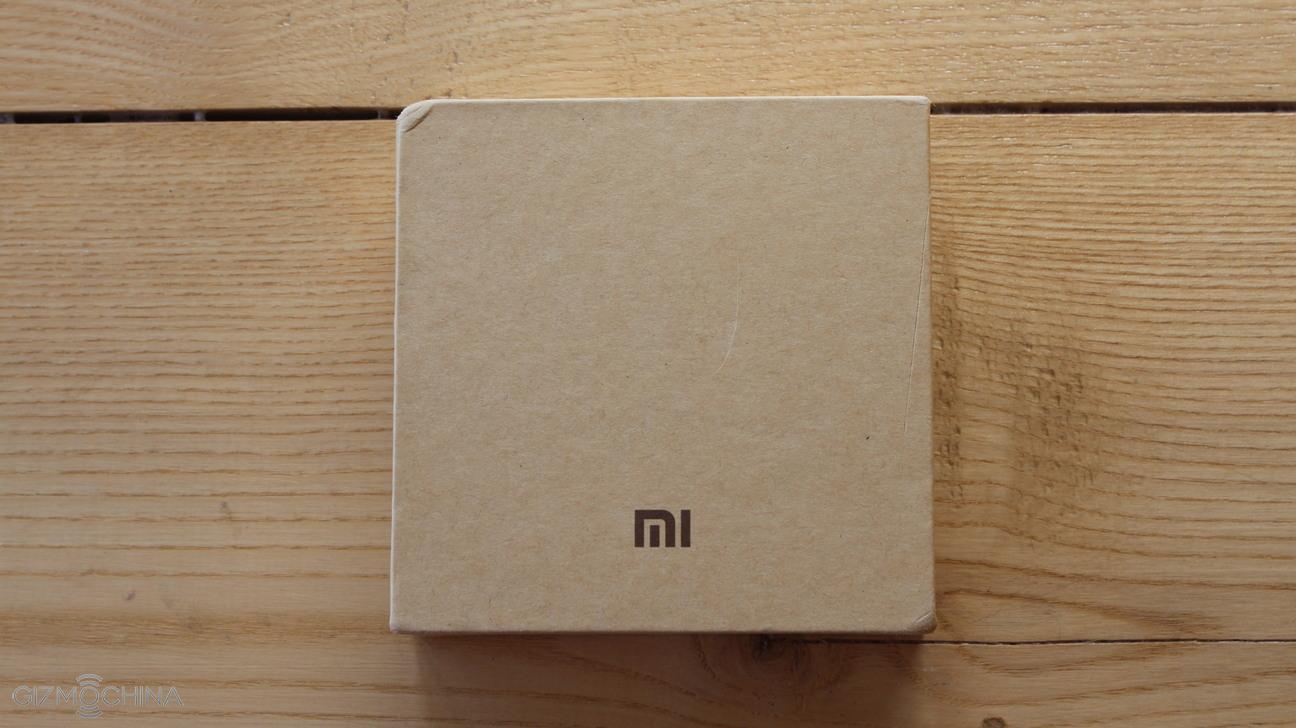
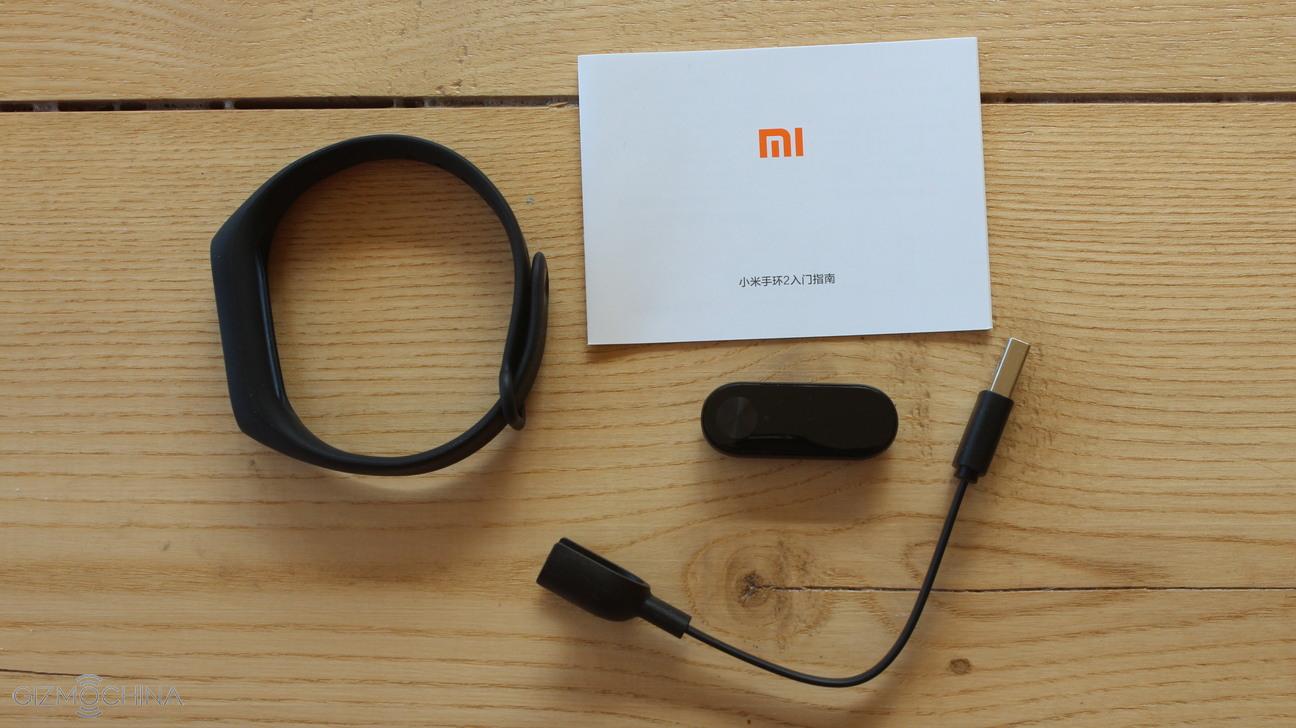
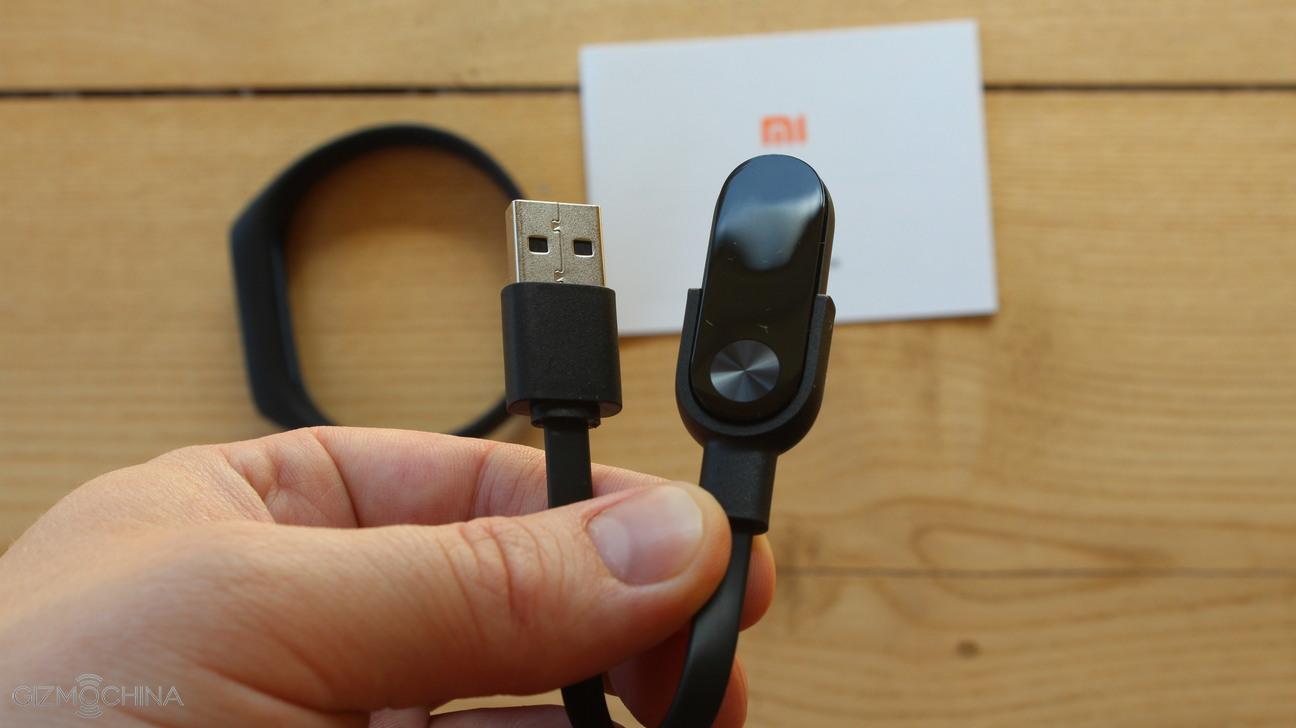
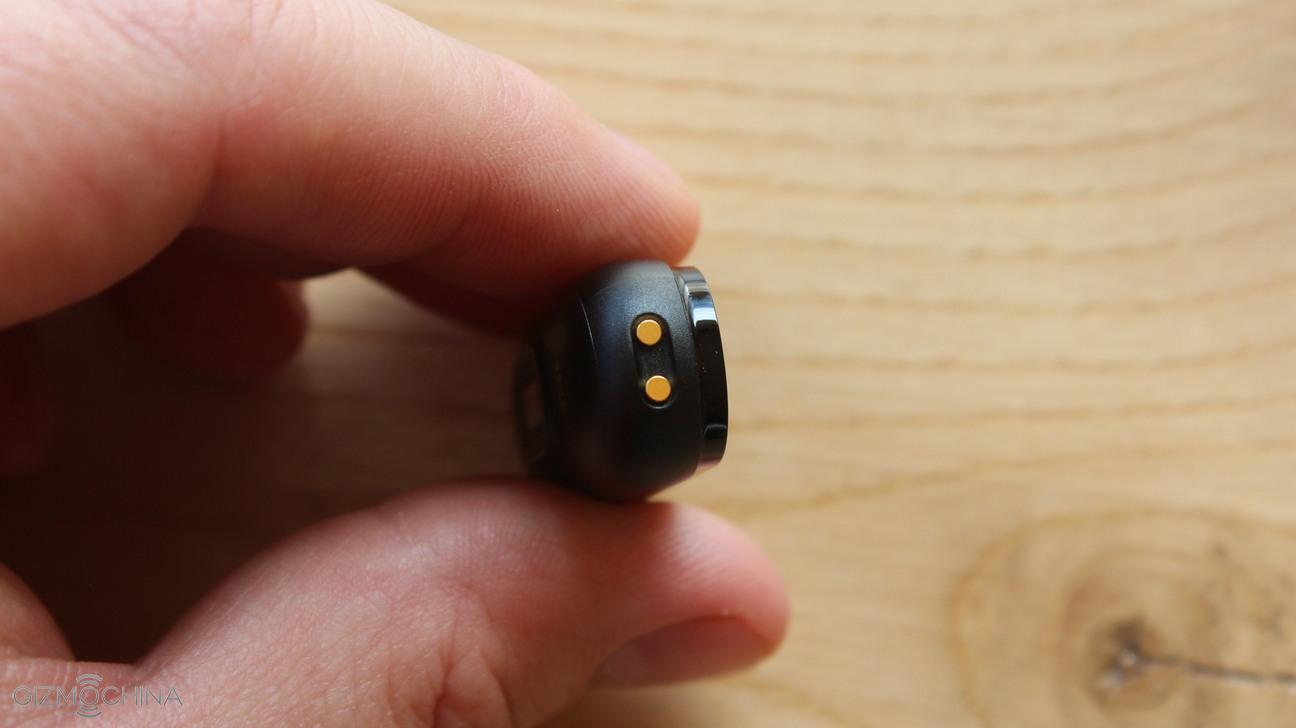
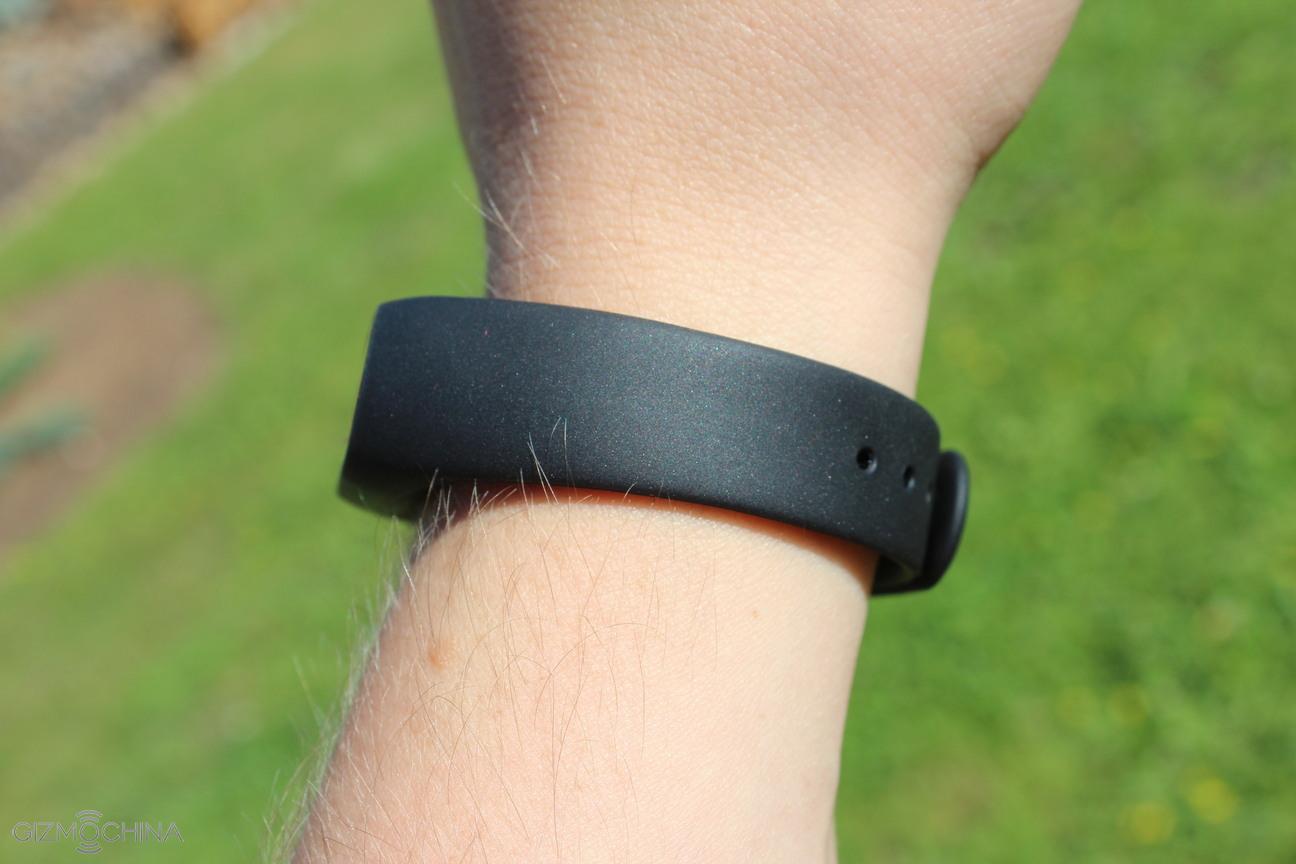
The Mi Band 2 comes in a typical Xiaomi-style cardboard box. The contents include the fitness tracker, a bracelet, a very convenient charging cradle and some Chinese paperwork.
Xiaomi Mi Band 2 Review: DESIGN
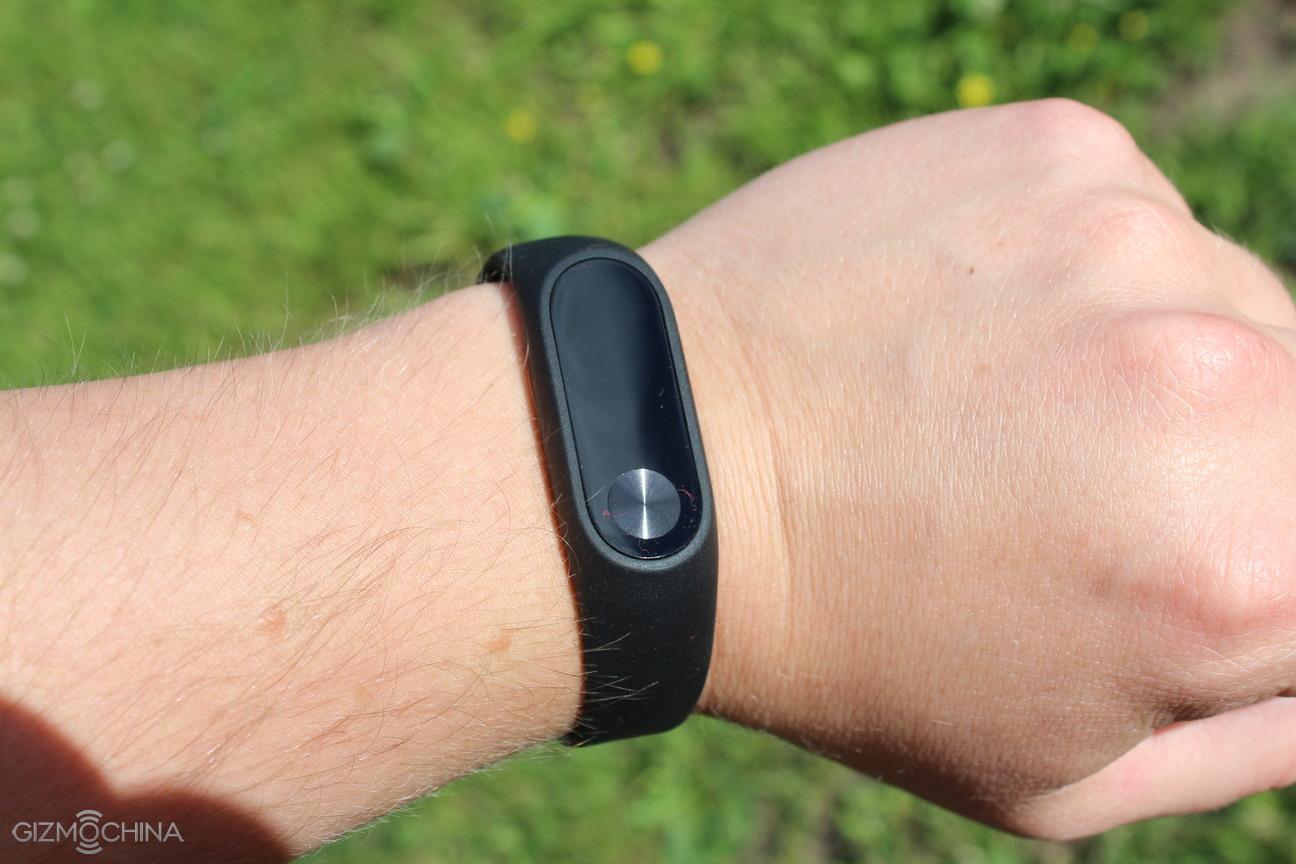
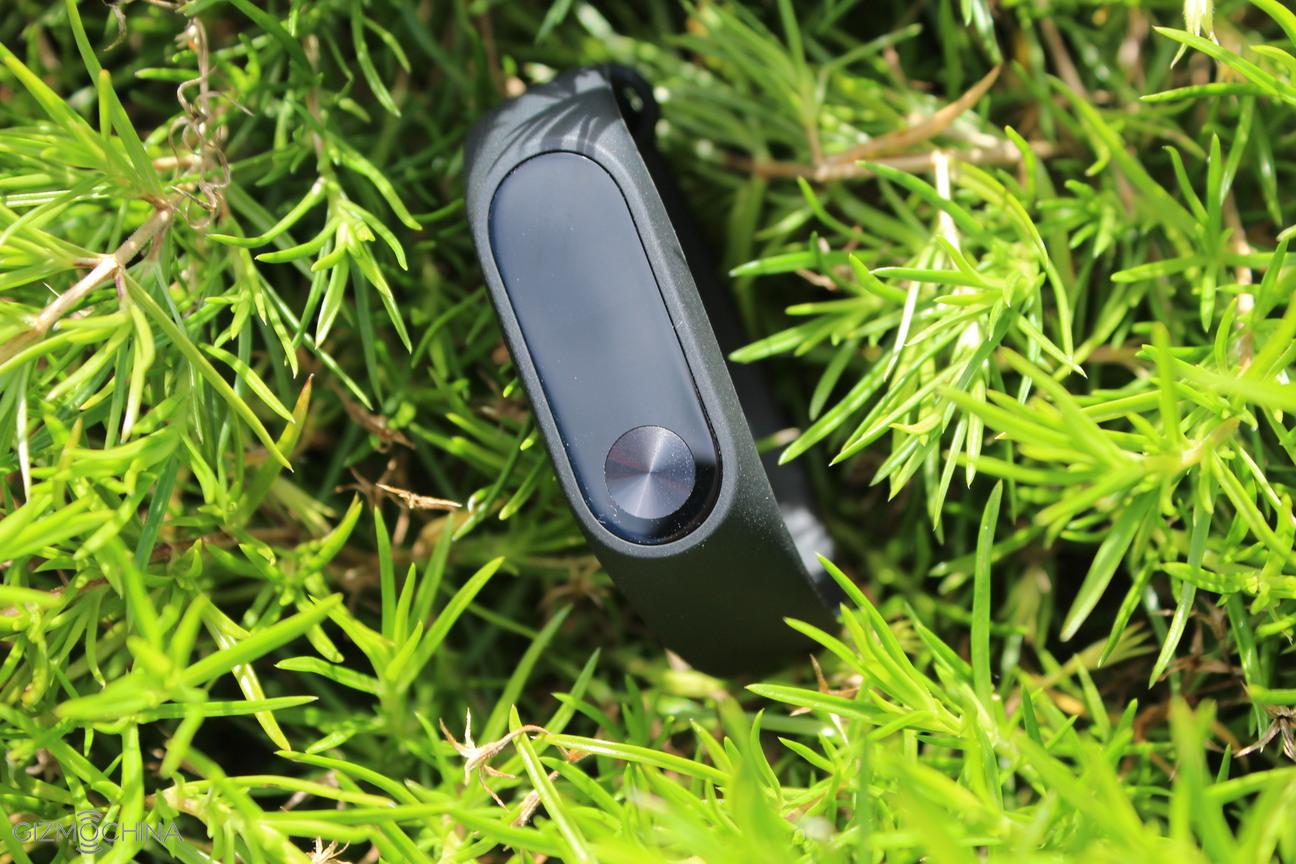
At the first glance, the Mi Band 2 follows a familiar design language but there are some significant upgrades.
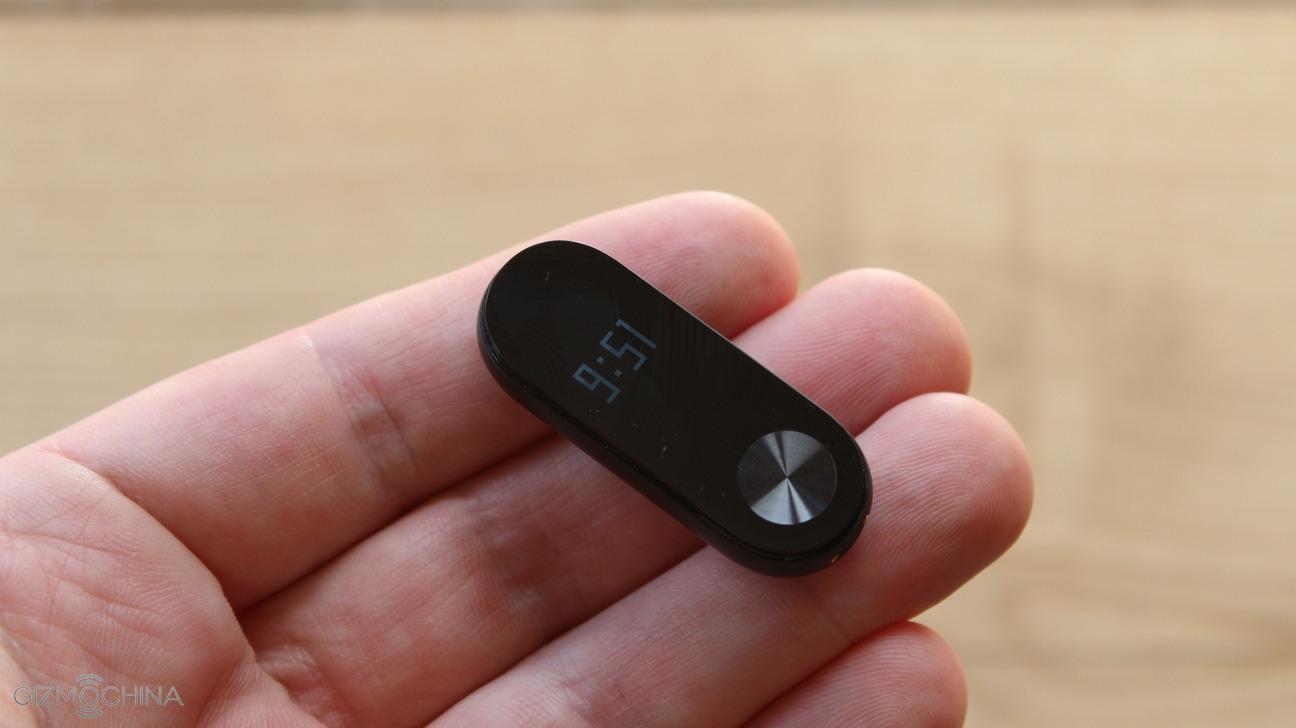
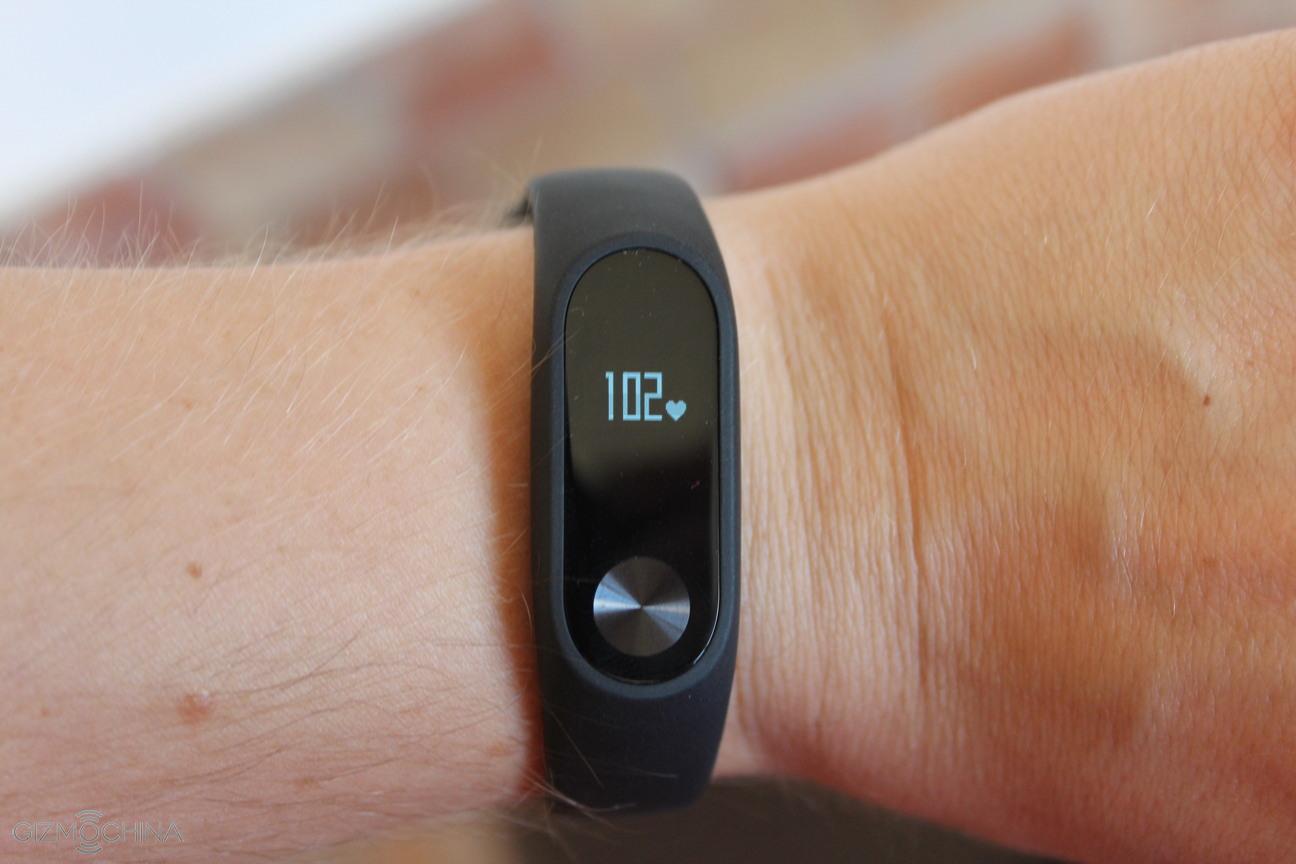
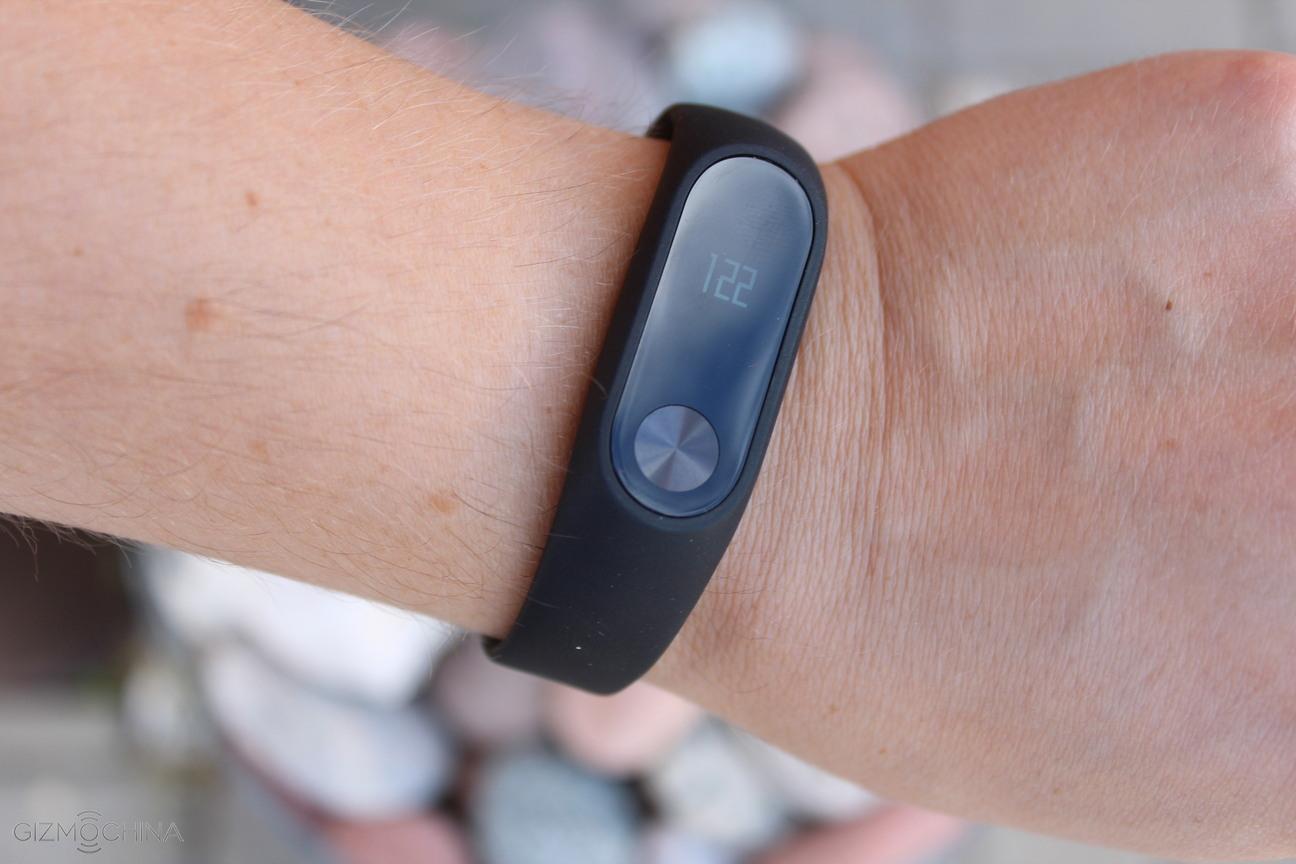
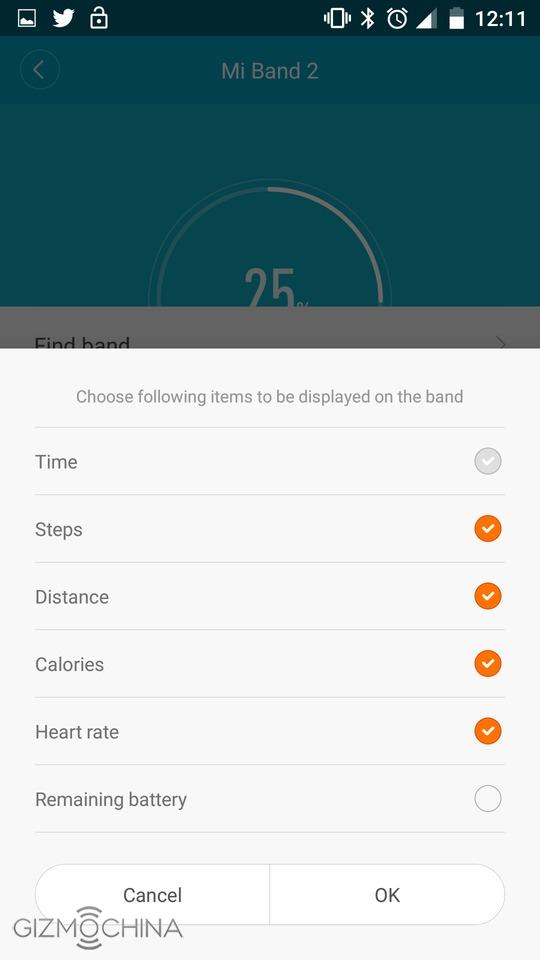
First of all, we have an OLED display, which is power-efficient and it displays info like clock, steps taken, calories burned, heart rate, distance walked and various notifications from your smartphone. You can navigate through the information displayed with just one capacitive button and I found it to be very simple yet convenient.
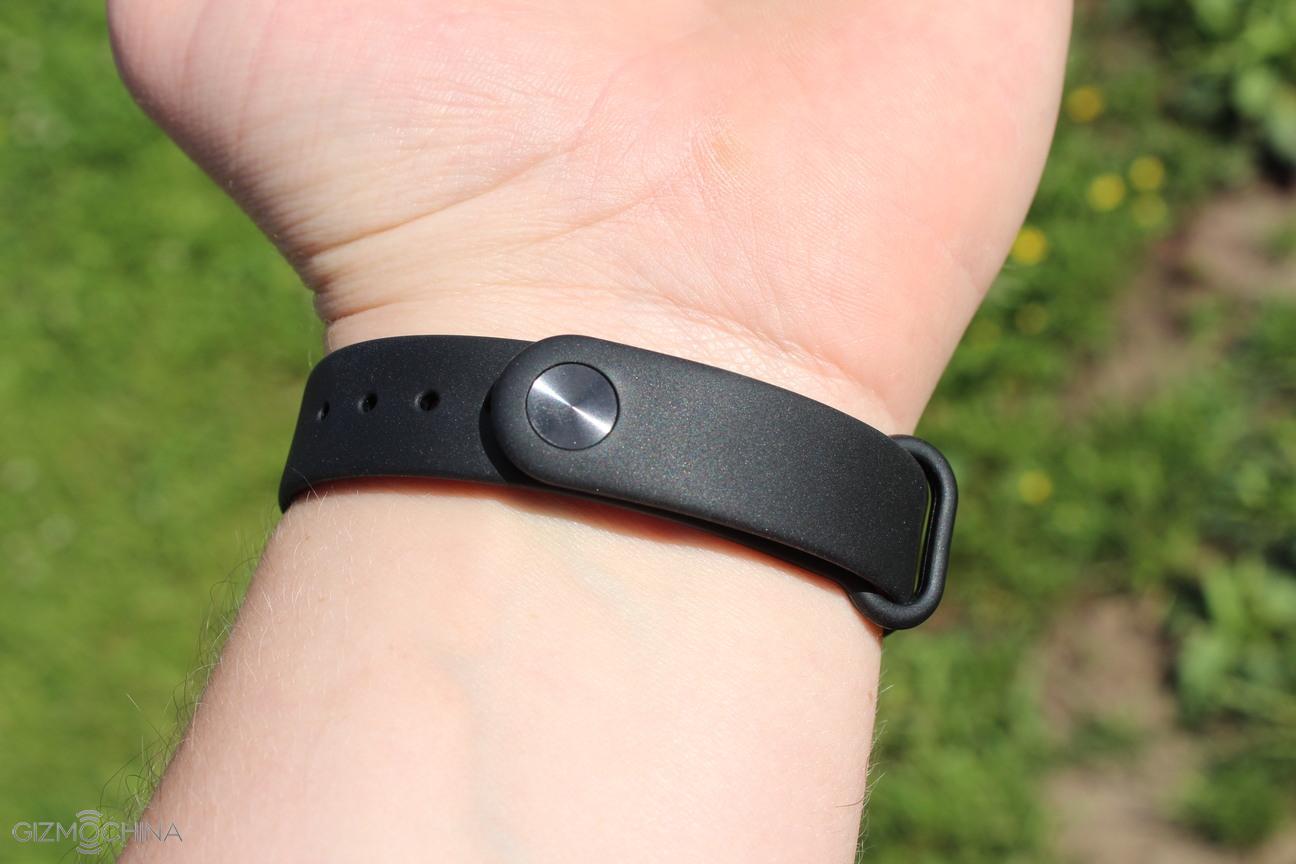
As for the band itself, I found it to be very convenient to wear all day long. Also, it is durable and it does not seem to wear off anytime soon.
Xiaomi Mi Band 2 Review: FEATURES and FUNCTIONALITY
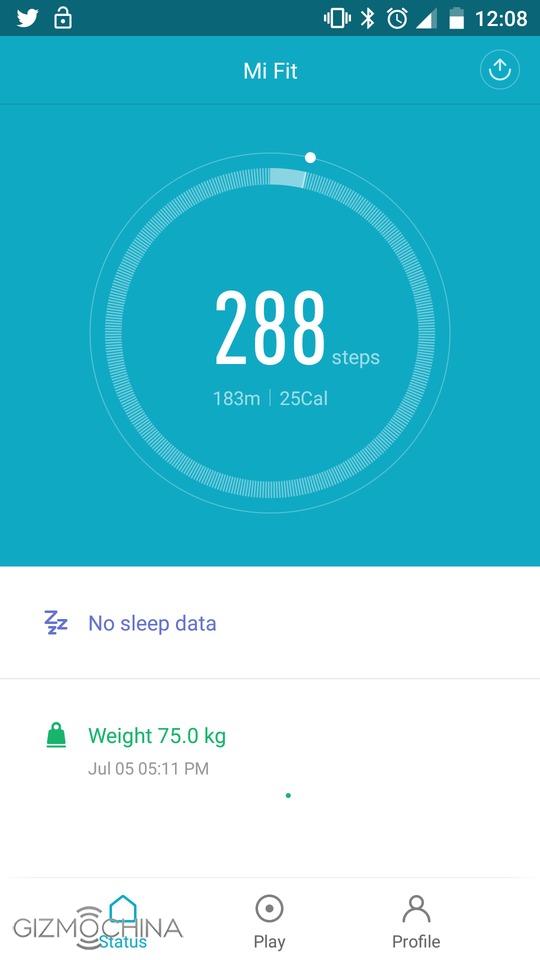
I found the step counter to be precise as it counted my steps accurately.
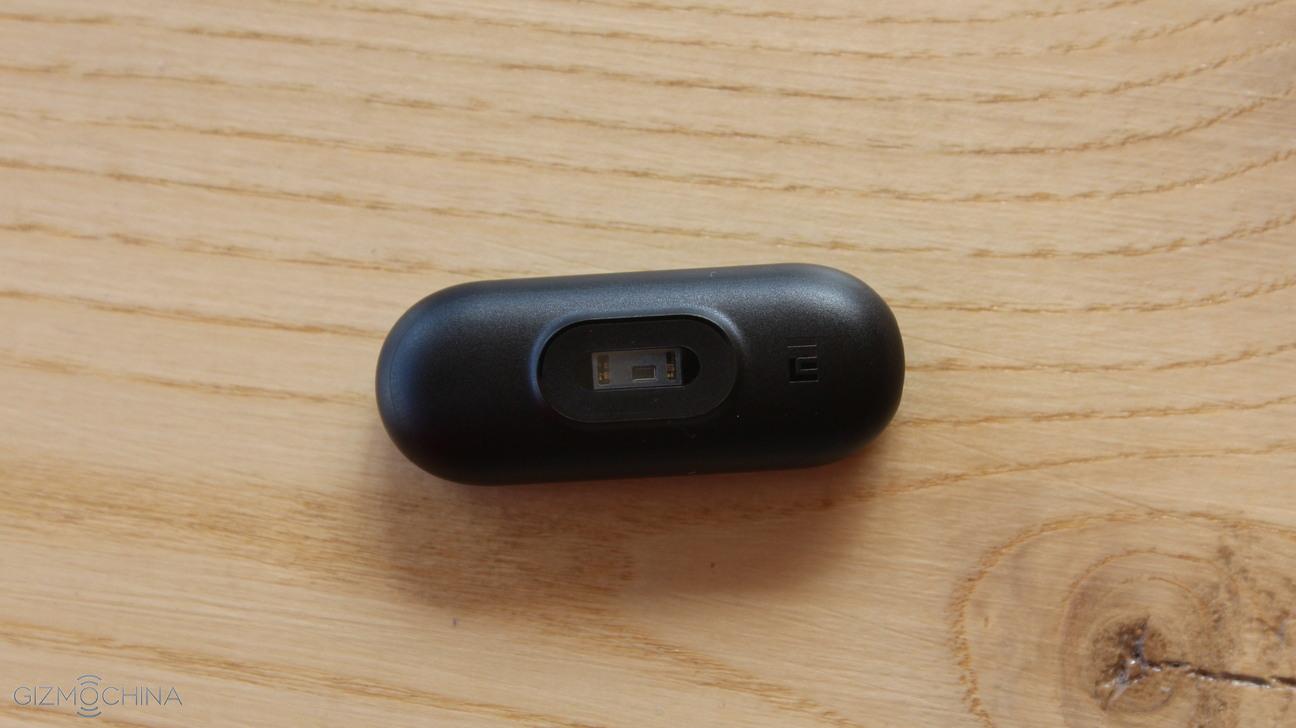
As for heart rate monitor, it takes less around 10 seconds to measure it. I compared the results with my Galaxy S7 edge, which also has a heart rate monitor, and the results are very similar.
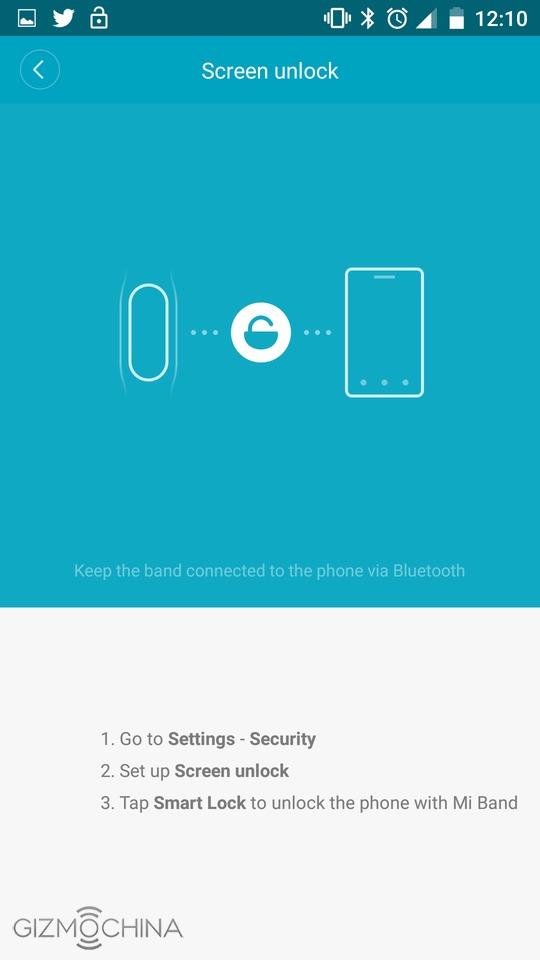
A really cool feature that I could to be working just fine is the ability just to lift your wrist to light up the display. Also, you can set the band to automatically unlock your smartphone.
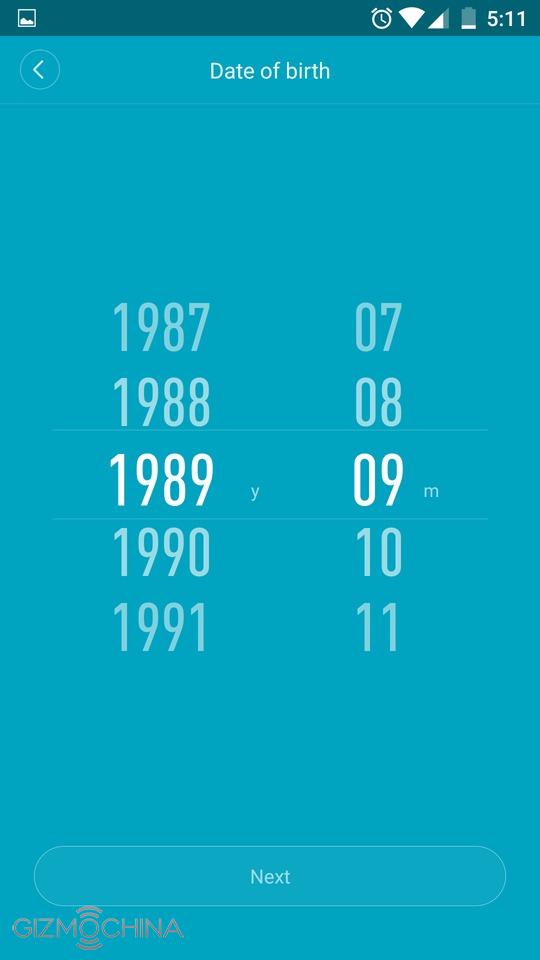
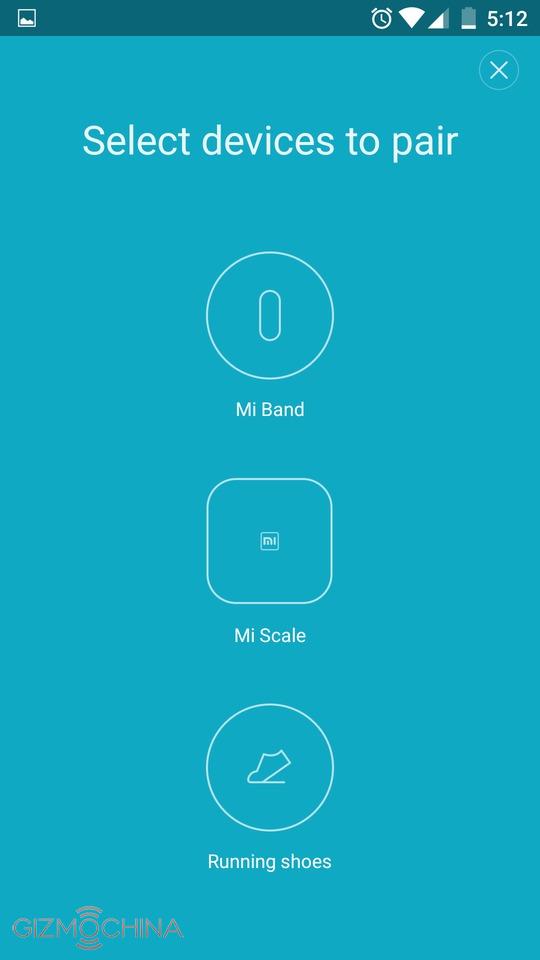
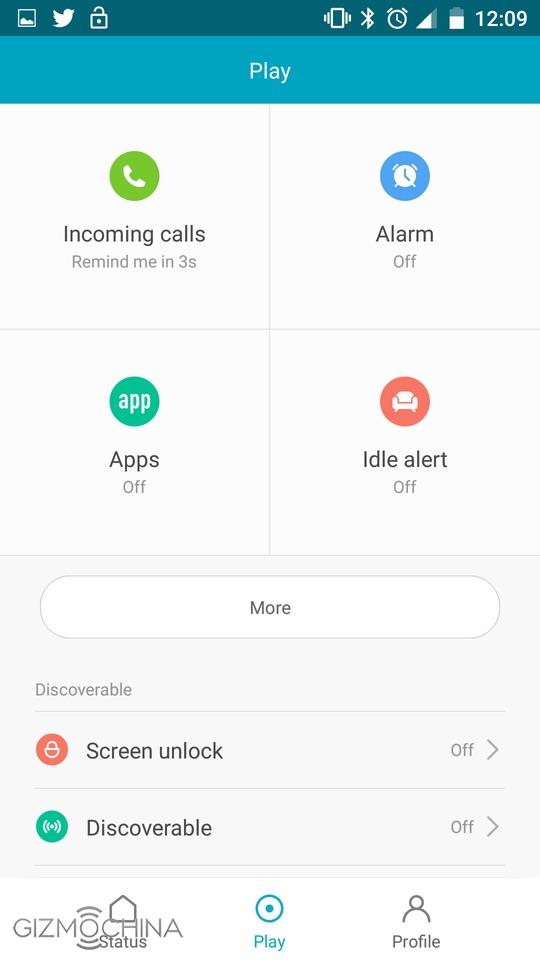
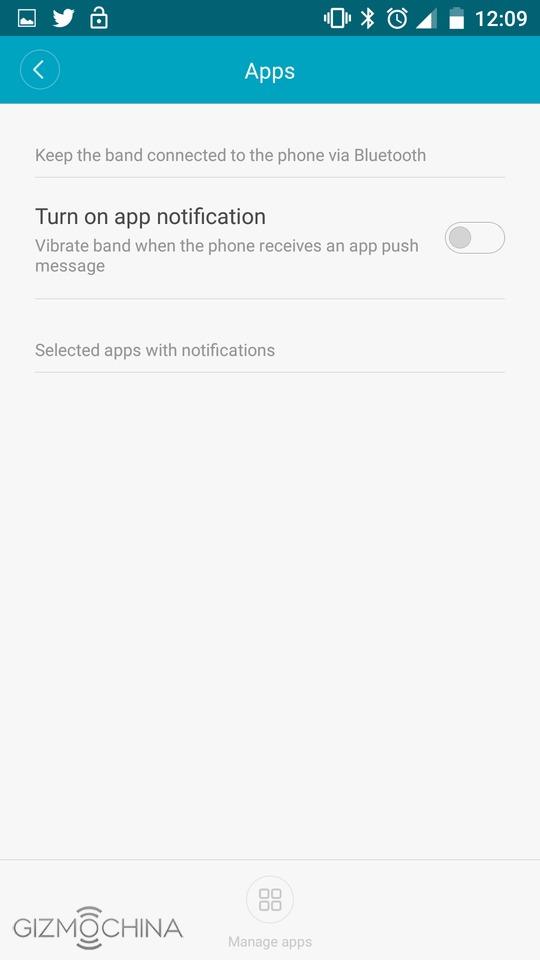
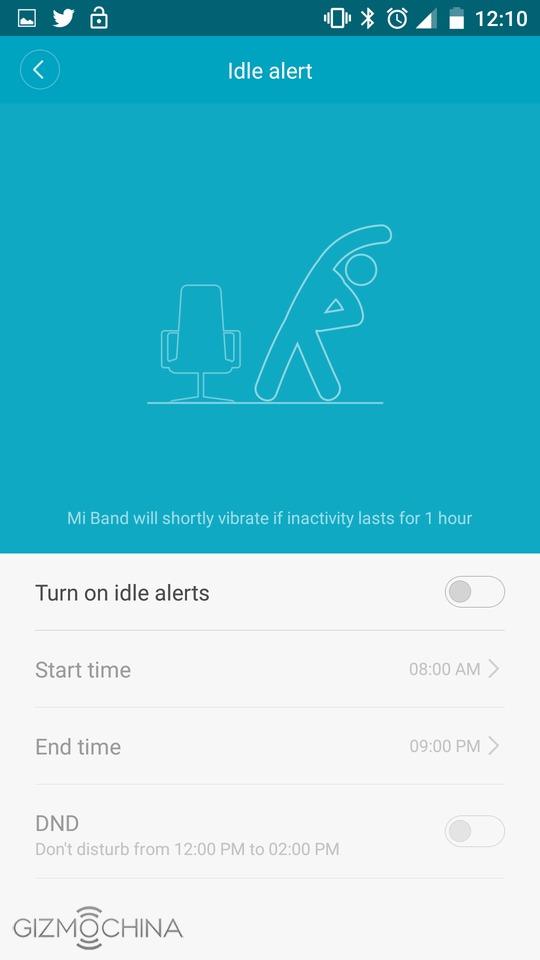
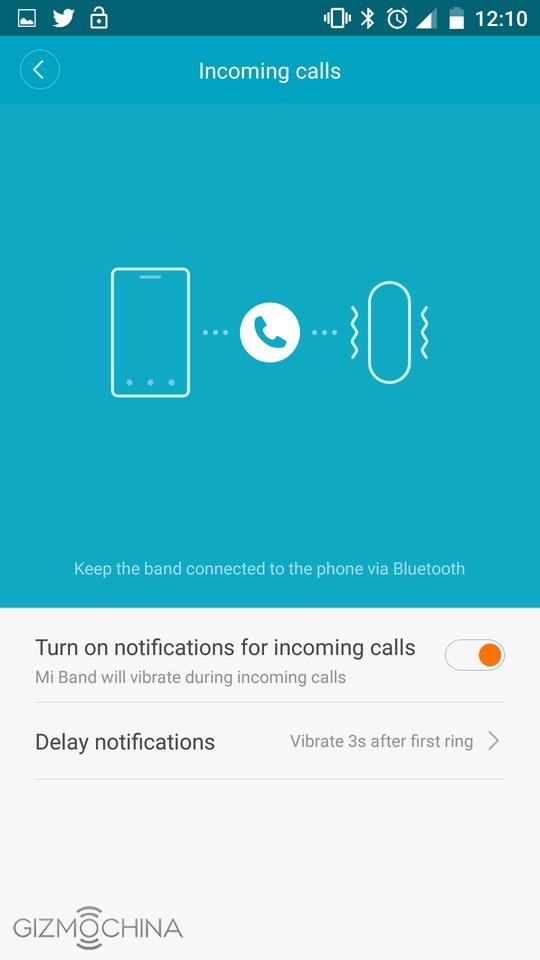
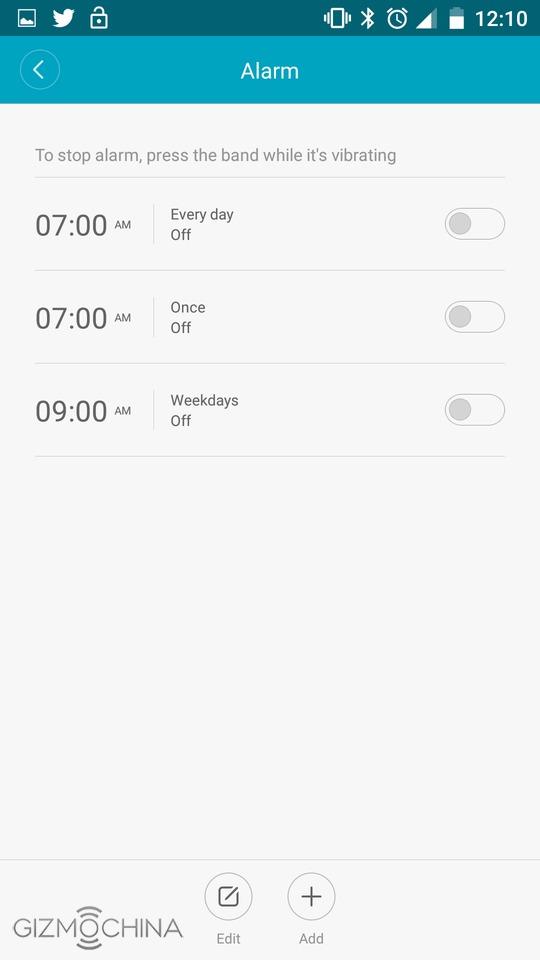
Other features worth mentioning are that the band has a sedentary reminder, notifications of missed calls, messages or various apps. Also, the band can track your sleep patterns, vibrate as an alarm clock and so on. All of those features sync with your phone using the Mi Fit app that is simple and easy to use and I didn’t have any connectivity/syncing issues with my phone (tested with the OnePlus 3).
Last but not least, the Mi Band 2 is IP67-certified, meaning that it is splash-proof and dust-proof.
Xiaomi Mi Band 2 Review: BATTERY LIFE
The Mi Band 2 is said to give you around 20 days of battery life.
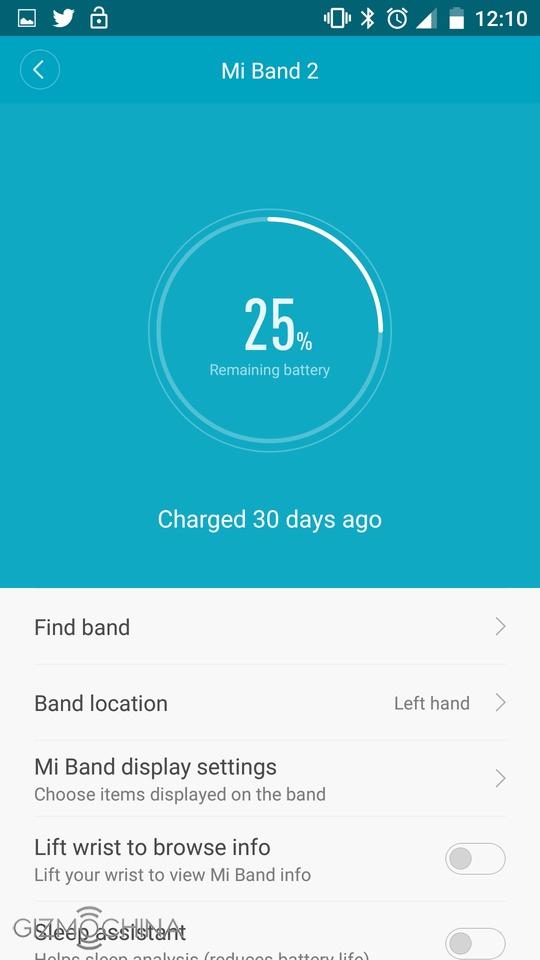
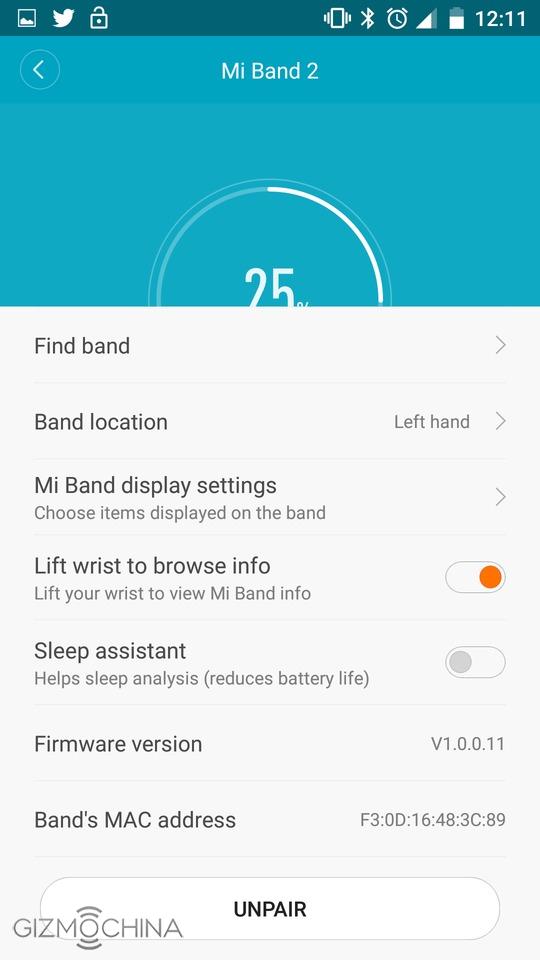
It delivers in reality for sure. In fact, I have a feeling that the battery could last for a longer time. I’ve used the band for 10 days and it used just 25% of battery life!
Xiaomi Mi Band 2 Review: CONCLUSIONS
Xiaomi Mi Band 2 is an upgrade we have been all waiting for.
It brings all the great features the previous models had and it takes one step further with the integrated low-power OLED display.
The Mi Band 2 has never let us down during our review. We found it to be accurate measuring the fitness activity, the band’s user interface is simple yet fast, the Mi Fit app is simple and easy to use and the battery life of the device is great.
All in all, the Mi Band 2 is the best Xiaomi’s fitness tracker yet. Also, it is probably the best cheap fitness tracker at the moment and it can be highly recommended.
Xiaomi’s latest flagship, the Mi 5, which was announced in the first quarter of this year, is a Snapdragon 820 beast with an affordable price tag. Lately, the focus has been shifted from the Mi 5 to the Xiaomi Mi 5s which is expected to be released in August.
Rumours about the Mi 5s include a pressure sensitive display, an ultrasonic fingerprint sensor, curved screen, and glass bodies. However, the latest gossip says the Mi 5s might be sporting dual cameras. Remember we wrote about Xiaomi getting dual cameras from Samsung this month, it lends a sort of credibility to the matter. So, with this said, the Mi 5s might be the first device out of Xiaomi’s factory sporting the lenses.
With this new development, the Mi 5s is shaping up to be a great device if we indeed get all these features including a higher clocked Snapdragon 820 processor. However, the price tag of the Xiaomi Mi 5s will greatly influence buyers’ decision to settle for it or any of the Xiaomi Mi 5 versions which are still pretty awesome. But don’t forget that this is still a fact we aren’t a 100% certain about.
The much anticipated Huawei Maimang 5 has successfully gone through TENAA and has been certified. The device which looks like a smaller version of the Huawei Mate 8 had earlier been tipped to launch on July 14.
In appearance, the Maimang 5 sports a striking similarity in design with the Mate 8 albeit an inferior one at that. The device has a borderless design and also features a 5.5-inch Full-HD Touchscreen display.
At the back, the device packs a 16MP camera with LED flash just beside the camera and just under the camera, there is a fingerprint sensor. The Maimang 5 also features an 8MP front facing camera.
The TENAA listing showed the Huawei Maimang 5 is equipped with a 2.0GHz octa-core processor which is thought to be a Snapdragon 652 SoC, although it is likely that it turns out to be the Kirin 650 spec. The device offers both 3GB and 4GB RAM versions as well as 16GB, 32GB and 64GB of on-board storage variants all of which are expandable up to 128GB via microSD card. However, only the high-end 64GB internal storage version will come packing a 4GB RAM.
The listing also reveals the Huawei Maimang 5 will boot Android 6.0 Marshmallow out-of-the-box and crams a liberal 3270mAh battery under its hood.
The Maimang 5 will come in three different color variants; silver, pink and gold and will likely carry a price tag of around 2,000 Chinese Yuan (about US $300). We’re not sure about that though, but the entire information about the price will be made known when the device is officially unveiled come July 14.
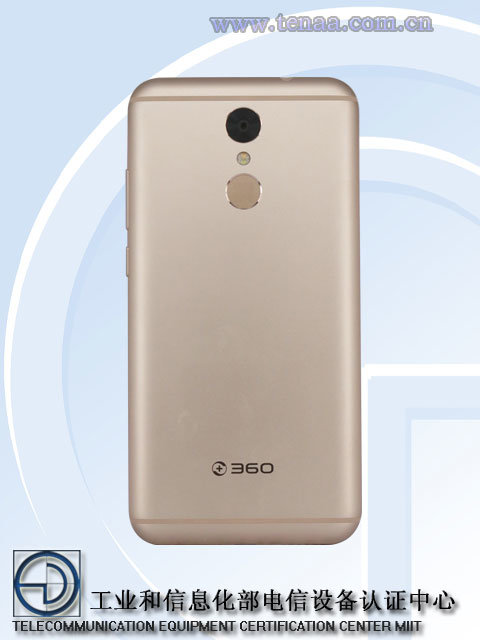
360 Mobiles is all set to release their new smartphone, the 360 N4S as well as the new 360 OS 2.0 on July 15. And thanks to a previous TENAA listing, we already know that the N4S will be an upgraded model coming with an all metal body instead of the plastic one found on the N4. Now, a new render also seems to have confirmed the metal design of the upcoming device.
So what can we take from this new render? First of all, it looks like the 360 N4S will be pretty slim. Further, we can confirm the metal body judging the texture as well as the antenna lines on top. The phone has smooth curves and except for the metal body, the overall design is in line with its sibling, the 360 N4. Further, we can see that there will be a gold color option for the device, which isn’t a surprise considering most metal phones in 2016 comes with gold and rose gold options.
Pricing is also said to be aggressive with the Helio X20 model starting at 1499 Yuan ($224) and the SD652 variant retailing at 1699 Yuan ($254). But it remains to be seen if the price is going to be this cheap since the Snapdragon 652 model is also said to come with 6GB RAM.
Hopefully, we will soon get more clarity about the two models and their specs in the coming days.
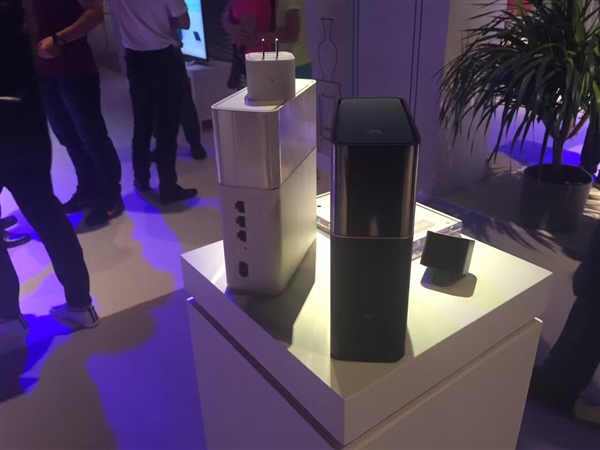
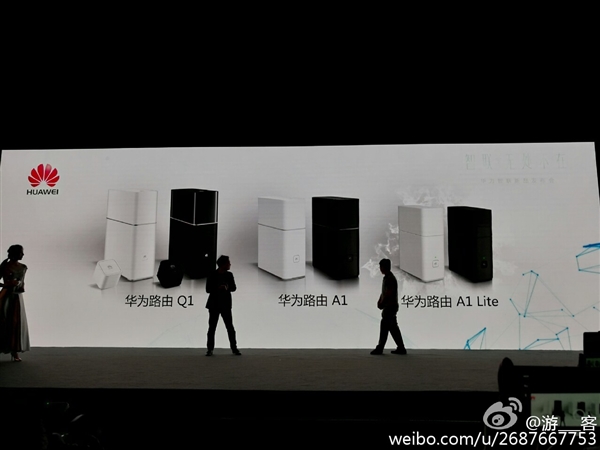
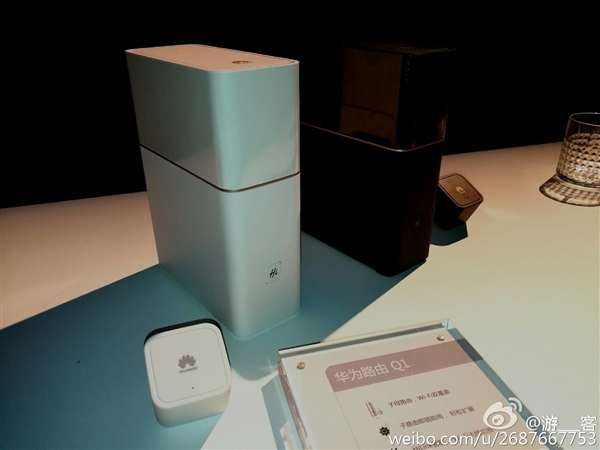
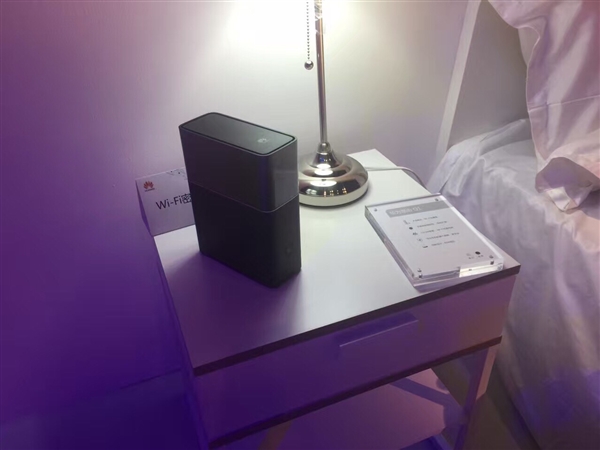
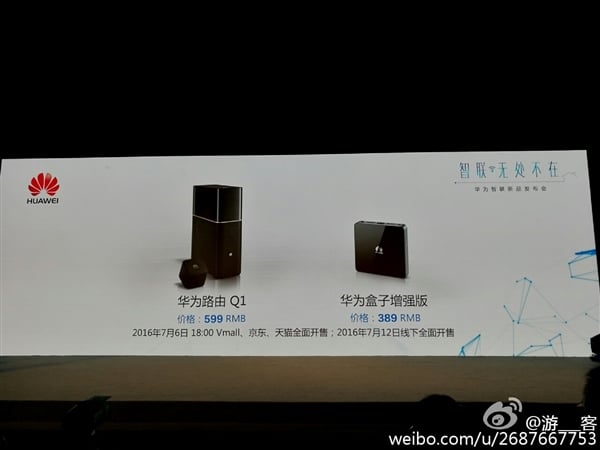
Huawei Technologies wednesday held its Smart Gadgets products conference where three smart routers were launched. The Huawei Q1, A1, A1 Lite and the Huawei TV Box Pro which is an enhanced version of the Huawei TV Box were announced by the company.
Huawei Q1 Wi-Fi Router
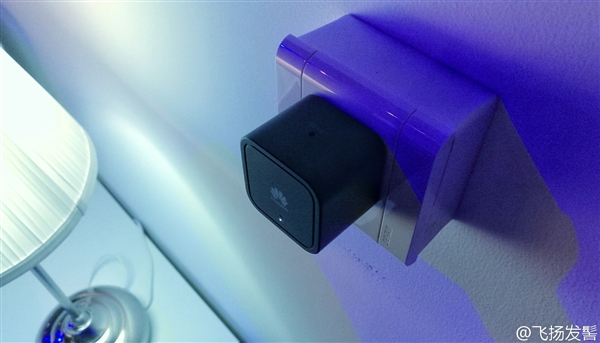
The center of attraction and the main focus of the event was the high-end Huawei Q1, whose biggest feature is the concept of picture routing. In addition to the main router, the Q1 also features a mini expansion device which can be directly plugged into a wall socket to expand the signal coverage. This feature is somewhat similar in principle and mode of operation to the polar orbiting satellite and Huawei boasts the router’s coverage is capable of extending around an entire building.
The Huawei Q1 also supports precise service identification which means the device can automatically boost the signal strength for high priority or critical situations like downloading, video streaming, online video gaming and others.
The Q1 device also provides other functions such as equipment management, remote management, Wi-Fi enhancement, guests WiFi, timer switch,secure operation and other common router functions.
The Huawei A1 and A1 Lite can be said to be a streamlined or toned-down version of the Q1. Even at that, the Huawei A1 Lite packs a smaller size than the A1.
The Huawe A1 router has been made available for buyer and the device carries a 599 Yuan ($89.59) price tag. The Q1 is available through Huawei Mall, Jingdong and Lynx stores in China.
The enhanced Huawei TV Box Pro will go on offline sales on July 12 and will sell at a price of 389 Yuan ($59).
Meizu is expected to unveil the Meizu MX6 flagship sometime in the next few weeks. But even before the launch of the product, this upcoming phone has been getting some good coverage from the media. This was mainly because of the company CEO’s dissatisfaction of the design on the MX6, as revealed by a few leaked images showing the company’s internal emails exchanged. Well, in his defense, the CEO did say that if not for the design, the MX6 is the best MX series phone yet, just a few hours after these emails were leaked. But if the MX6 is going to be the best smartphone in its lineup, what price can we expect to pay for the device?
Meizu’s co-founder Bai Yongxiang just gave us some information regarding the MX6 via a new Weibo post a couple of hours ago. He said that Meizu MX6 will be using a lot of technology from the Pro 6 flagship. And as the cost increase, the price will increase as well. But he adds that the upcoming Meizu device will be one of the best designed phones in the 2000 Yuan ($300) market. Further, he says that the supply chain is making sure that there are enough MX6 units in stock.
So, what can we take from this? Meizu MX6 will most likely cost around 2000 Yuan ($300) making it costlier than the previous generation MX5 model which started at 1799 Yuan ($268). Plus, there should be enough stock of the flagship at launch.
We are still not sure about the specs of the upcoming phone, but rumors state that the phone should feature Helio X20 deca-core chip inside with 4GB RAM and 64GB of internal storage. The release is rumored to be on July 19, but we still haven’t heard of any launch event scheduled by the company.
We use cookies on our website to give you the most relevant experience by remembering your preferences and repeat visits. By clicking “Accept”, you consent to the use of ALL the cookies.
This website uses cookies to improve your experience while you navigate through the website. Out of these, the cookies that are categorized as necessary are stored on your browser as they are essential for the working of basic functionalities of the website. We also use third-party cookies that help us analyze and understand how you use this website. These cookies will be stored in your browser only with your consent. You also have the option to opt-out of these cookies. But opting out of some of these cookies may affect your browsing experience.
Necessary cookies are absolutely essential for the website to function properly. This category only includes cookies that ensures basic functionalities and security features of the website. These cookies do not store any personal information.
Any cookies that may not be particularly necessary for the website to function and is used specifically to collect user personal data via analytics, ads, other embedded contents are termed as non-necessary cookies. It is mandatory to procure user consent prior to running these cookies on your website.