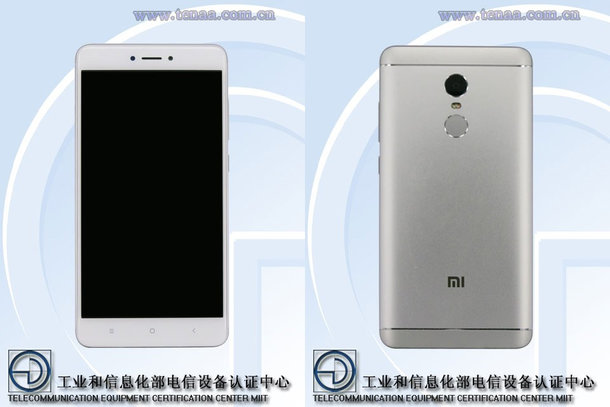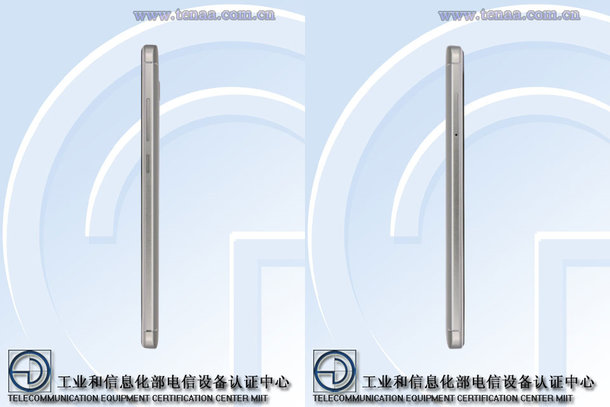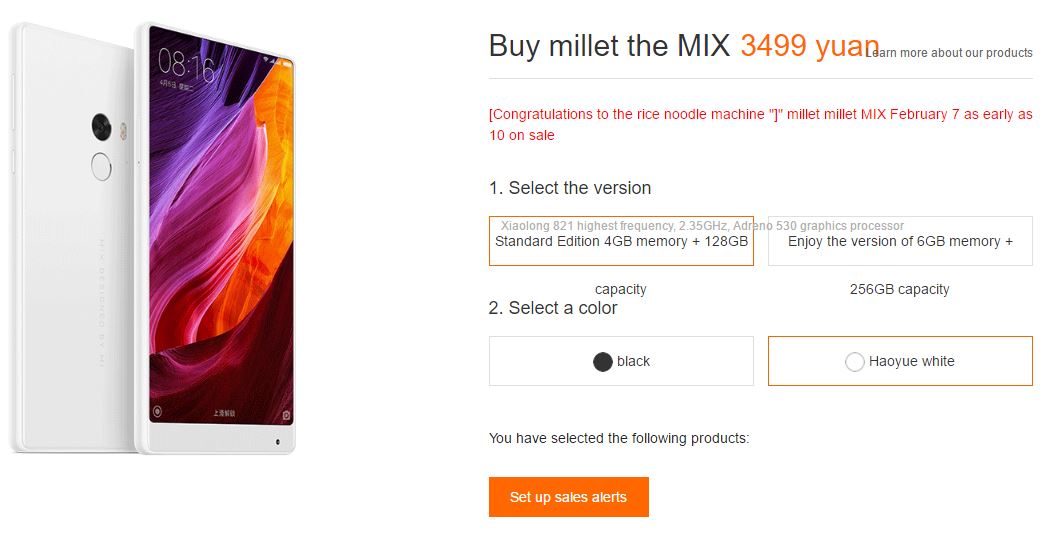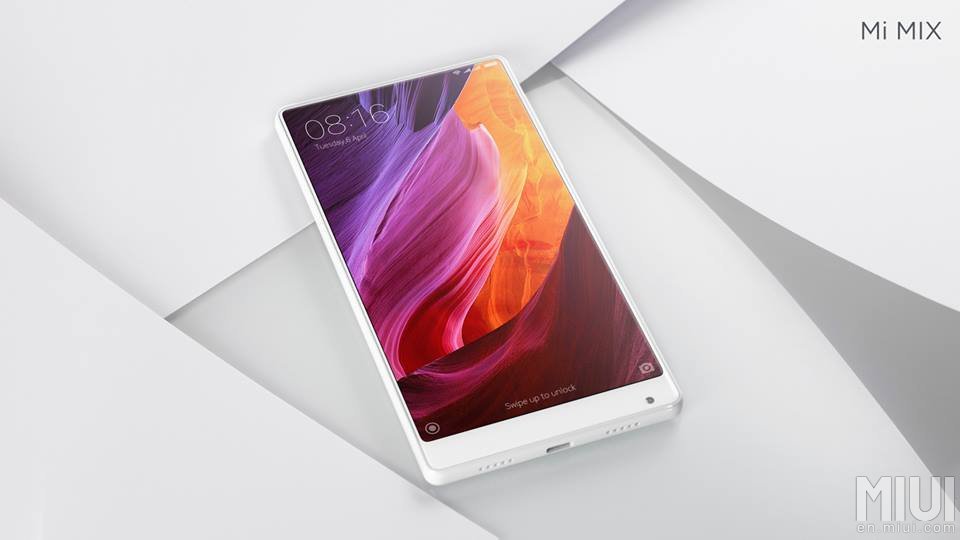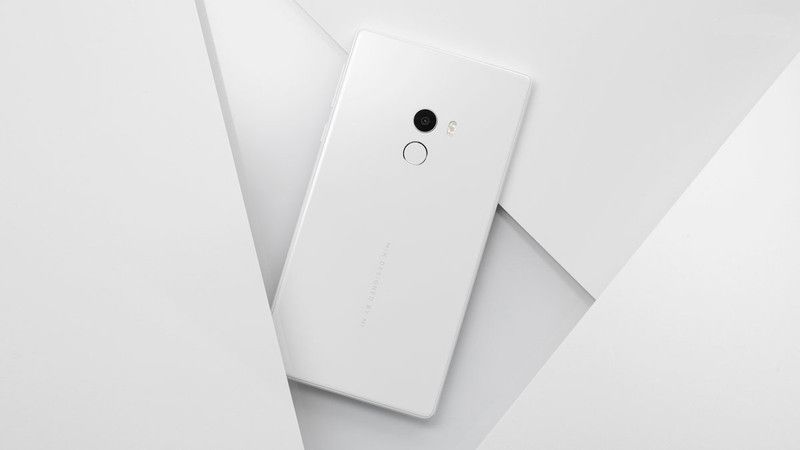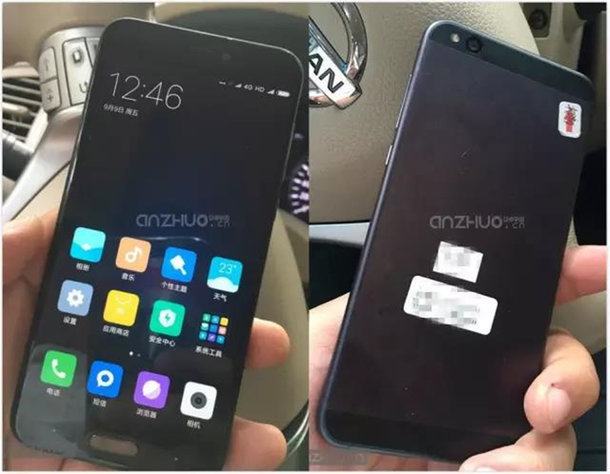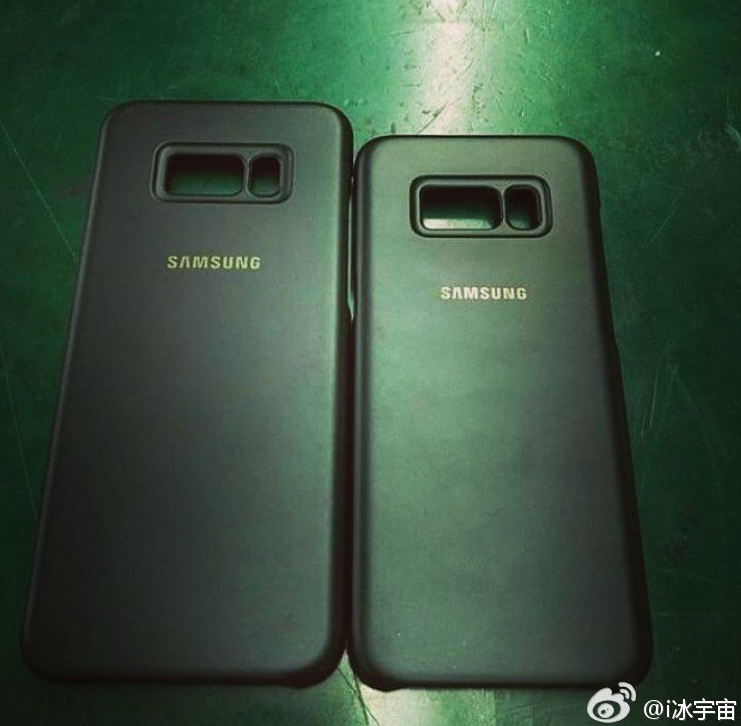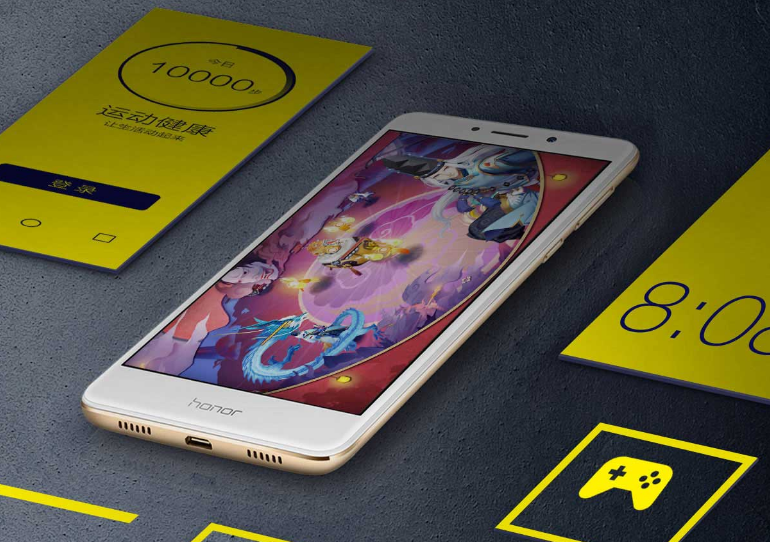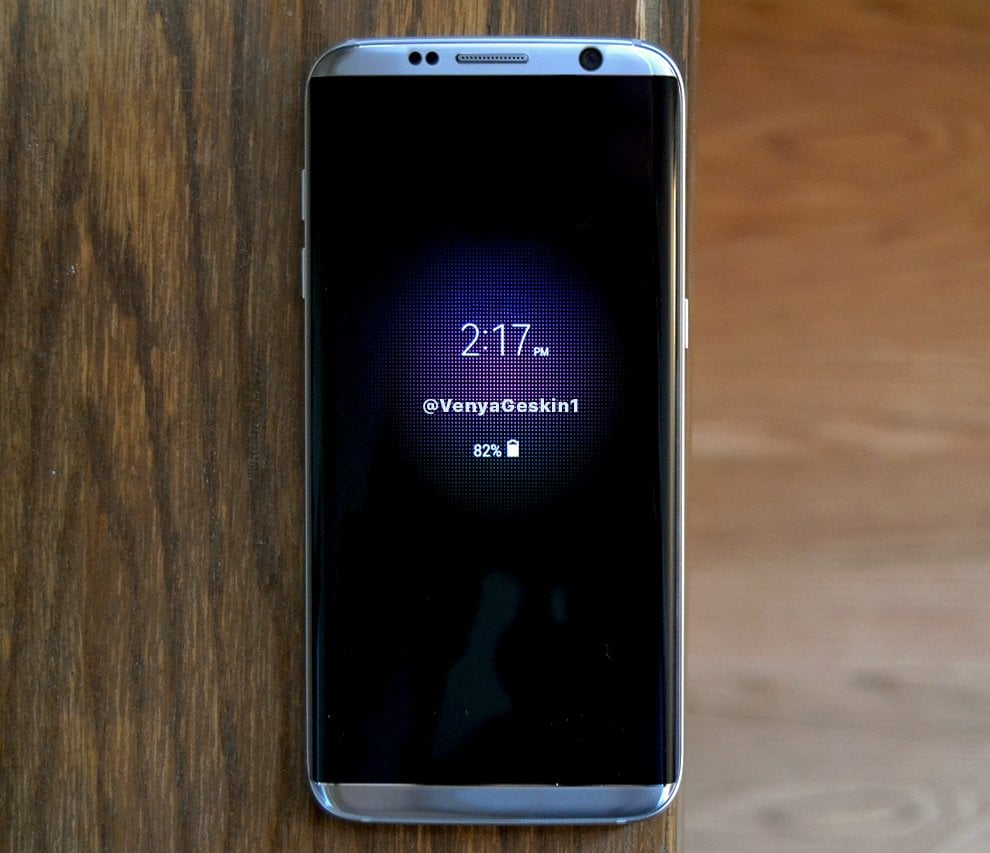
OPPO revealed that it will be unveiling the OPPO F1 camera-centric smartphone sometime this month. Now, it looks like Vietnam will be the first market to get the device as the phone will go on sale in the country on January 21. However, don’t worry if you are not in Vietnam, as the smartphone will soon be available in other international markets.
The OPPO F1 comes with Snapdragon 616 octa-core processor under its hood clocked at 1.7GHz. There’s 3GB of RAM on board which should be more than enough for your everyday multi-tasking. Also, you get 16GB of internal storage along with a MicroSD card slot, in case you want to expand it further. As for the display, there’s a decent 5-inch IPS panel up front with Gorilla Glass 4 protection.
At the back, you will find a 13MP camera with f/2.2 aperture and single LED flash. While we don’t know the real-life performance of this sensor, you can expect to take pretty good pictures since the focus of the F series is going to be its camera. Up front, you have an 8MP camera with f/2.0 aperture lens ideal for selfies. You get some software additions as well, like Beautify 3.0, 8 live color filters etc.
Battery is a bit of a disappointment since the phone comes with just a 2500mAh capacity one. But then, you have a pretty thin body measuring just 7.25mm in thickness. There’s 4G LTE connectivity and dual SIM dual standby support. As for software, you get Color OS 2.1 based on Android 5.1 Lollipop version.
Pricing has never been the selling point of OPPO devices, and with the OPPO F1 too, there has been no exception. The phone will go on sale in Vietnam for approximately $289. For this price, we would have wanted at least a larger battery. Also, given that there are options like the Redmi 3 that features the Snapdragon 616 chipset, it would really be interesting to see how OPPO F1 performs in different markets in the coming weeks.
ZTE’s subsidiary smartphone brand, Nubia has an official event on the 18th of this month. The company will most likely release a flagship smartphone at the event, either the rumored Nubia Z11 or the Nubia X8. While we are still unclear which one will meet us at the event, earlier today, new renders of the ZTE Nubia Z11 have emerged revealing some interesting information about the upcoming handset.
We had already seen the leaked front panel of the device a few days back. Looks like the phone in the new render sticks with the same design as the previous leak. However, at the back, we have some interesting features. First of all, you will notice that there are two cameras on top of the device. So, it looks like the Nubia Z11 will bring back the dual camera design trend to the industry.
Although there was initially a couple of flagships with such a setup, recently, most manufacturers have used a single rear camera setup on their smartphones. Since Nubia smartphone are specially known for their cameras, the company could be trying out something different in this department with the Z11.
Another feature that’s unlike previous generations is the fingerprint sensor on board. However, that’s hardly any surprise given that most flagships that have launched since the second half of 2015 have come with this feature.
Nubia dual camera setup patent
This is not the first time we are hearing about a dual camera setup from Nubia. A couple of days back, a few Weibo posts, found by mydrivers, detailed the patents filed by the company regarding a dual camera setup on a smartphone. So, this feature could really end up on the Z11.
However, at this moment, it’s hard to confirm these features, just on the basis of a couple of weak renders. We would need some more concrete information like real life images to confirm whether these renders are the real deal.
Nubia Z11 Front Panel
As for the specs, the phone is expected to come with a 5.2-inch display with 2K resolution, 4GB RAM, 128GB internal storage, Snapdragon 820 quad-core chipset, 20.7MP rear camera, 13MP front camera and Android 6.0 Marshmallow OS. The body should be metal with bezelless display and FiT technology.
If Nubia announces the Nubia Z11 on January 18, it could turn out to be the second official handset with Snapdragon 820. Stay tuned for more details.
Sata hard drive docking station is one of those gadgets that may come handy if you have your old internal HDD disk or you want to use the new internal SSD (or HDD) disk as the external one. Orico has a solution that may help you do that. Find out more in a the full review.
UNBOXING
The docking station comes in a simple yet neat looking box and the contents include the docking station itself, a power cord, USB cable and instruction manuals.
DESIGN
Orico docking station can take either 2.5″ or 3.5″ HDD or SSD disks. You can either insert a 2.5″ or 3.5″ disks, which is very convenient if you have lots of old disks lying around. What you have to do is simply slide the HDD drive into the mount and you are good to go. It is very easy to do it and even easier to remove the disk.
On the back we a USB 3.0 interface and DC power input.
The top is made of glossy plastic and we are not huge fans of it since it attracts dust, fingerprints and smudges very easily. Here you can find a power button and the LED light.
It lights up purple once the docking station is powered on and turns blue once you insert your HDD disk.
On the bottom of the docking station there are soft pads to prevent the device from sliding on the table.
FEATURES and FUNCTIONALITY
To start using the Orico docking station you have to connect it via USB 3.0 to your computer and power it up.
To be honest, this is a very old (made in 2009) HDD disk that I used in this review. It was lying around for quite a while and it was used in my old laptop, and I thought it was almost dead. The reason for this kind of thinking is that I replaced it with the SSD disk on my old laptop since it was working very slowly. Seriously, painfully slowly.
Once I connected the disk (320GB, SATA 3.0GB/s) to my MacBook I was pleasantly surprised that it was recognised within seconds. No drivers needed.
Another surprise was that the old HDD disk was a lot faster than using it inside the old laptop. As a matter of fact, it has become more than usable and I may start using it for backup files. All the folders and files are opening and closing fast, and the performance is great overall. Of course, it is not on par with any SSD disks but since I used this old HDD disk for 5 years on my old laptop, this is one the fastest performances of it I have seen.
CONCLUSIONS
Orico USB 3.0 SATA docking station is not something we haven’t seen before as there are plenty of other offerings out there but it offers a great quality and value.
For the price of $21.99, you are getting a well designed device that is sturdy, looks pretty nice but most importantly it performs as advertised.
All in all, it is very easy to recommend the Orico SuperSpeed USB 3.0 to SATA hard drive docking station and it is well worth the price.
Back at CES last week, Huawei showed off its thin, large-screen tablet, the Huawei Mediapad M2. The tab came with a 10-inch screen, large enough for your entertainment needs and featured a thin metal body measuring just 7.3mm in thickness. Now, Huawei has officially announced the device in China, in four different versions.
The Huawei Mediapad M2 tablet comes in two color options, namely Silver and Gold. The base version, i.e. Silver 16GB starts at 2288 Yuan ($347) for the Wi-Fi and 2688 Yuan ($408) for the LTE version. If you want a larger storage version i.e. Gold 64GB, you will have to shell out 2888 Yuan ($440) for the Wi-Fi only and 3288 Yuan ($500) for the LTE version. Not the cheapest of the tablets that we have seen lately, but it features some decent specs to justify the price.
The tablet comes with the Kirin 930 octa-core chipset with Mali-T628 MP4 GPU. There will be 2GB + 16GB and 3GB + 64GB memory variants available. At the back, you will find a 13MP primary camera, while, up front, you have a 5MP sensor for things like video calling. The battery isn’t the largest we have seen in the segment, with a capacity of 6600mAh, still, it should be good enough for a day.
Apart from the usual specs, the highlight of the tablet is the fingerprint sensor on board. You don’t usually find fingerprint ID on a tablet, so this is definitely one of its selling points. Another important feature of the device is the on board stylus. This active capacitive pen will further enhance the user experience on the device. Also, you have four 1W speakers with a separate amplifier chip to ensure the M2 satisfies your entertainment needs as well.
The tablet will go on sale in China on January 15.
Sata hard drive docking station is one of those gadgets that may come handy if you have your old internal HDD disk or you want to use the new internal SSD (or HDD) disk as the external one. Orico has a solution that may help you do that. Find out more in a the full review.
UNBOXING
The docking station comes in a simple yet neat looking box and the contents include the docking station itself, a power cord, USB cable and instruction manuals.
DESIGN
ORICO docking station is made of high quality matt plastic material, which does not fell cheap by any means.
The top is where you need to insert your SATA HDD or SSD disk. You can either insert a 2.5″ or 3.5″ disks, which is very convenient if you have lots of old disks lying around. What you have to do is simply slide the HDD drive into the mount and you are good to go. It is very easy to do it and even easier to remove the disk.
On the back we have USB 3.0 interface, DC power input and a power on/off switch.
Once you power up the docking station, the notification LED turns purple.
Once you insert the disk, the LED light turns blue meaning that the disk has been inserted correctly and it has been recognised.
On the bottom of the docking station there are soft pads to prevent the device from sliding on the table.
FEATURES and FUNCTIONALITY
To start using the Orico docking station you have to connect it via USB 3.0 to your computer and power it up.
To be honest, this is a very old (made in 2009) HDD disk that I used in this review. It was lying around for quite a while and it was used in my old laptop, and I thought it was almost dead. The reason for this kind of thinking is that I replaced it with the SSD disk on my old laptop since it was working very slowly. Seriously, painfully slowly.
Once I connected the disk (320GB, SATA 3.0GB/s) to my MacBook I was pleasantly surprised that it was recognised within seconds. No drivers needed.
Another surprise was that the old HDD disk was a lot faster than using it inside the old laptop. As a matter of fact, it has become more than usable and I may start using it for backup files. All the folders and files are opening and closing fast, and the performance is great overall. Of course, it is not on par with any SSD disks but since I used this old HDD disk for 5 years on my old laptop, this is one the fastest performances of it I have seen.
CONCLUSIONS
Orico USB 3.0 SATA docking station is not something we haven’t seen before as there are plenty of other offerings out there but it offers a great quality and value.
For the price of $22.99, you are getting a well designed device that is sturdy, looks pretty nice but most importantly it performs as advertised.
It woke my old HDD disk to the second life and using it is absolutely seamless.
All in all, it is very easy to recommend the Orico SuperSpeed USB 3.0 to SATA hard drive docking station and it is well worth the price.
Mediatek has been slowly gaining market share, thanks to its low cost chip solutions. This year, the company has a couple of important chips that will end up in a number of mid-range and high-end smartphones like MT6755 Helio P10 and MT6797 Helio X20. Now, according to a new report, the mid-range Helio P10 chip might end up in more than 100 different smartphones.
The report comes via Fudzilla, who got a chance to meet Mediatek’s management and talk to them about the upcoming products in 2016. CJ (Ching-Jiang) Hsieh Vice Chairman & President of MediaTek, seems to have confirmed to the site that there will be more than 100 Helio P10 powered smartphones. So, it looks like the company’s chips have been well received by the industry.
The first batch of Helio P10 smartphones should hit the market sometime this quarter. The SoC already entered mass production in Q4 2015, so phones with the chip should start shipping very soon. There are a number of low-cost Chinese manufacturers that are expected to use the chip like Blackview, and Elephone. Even larger ones like Xiaomi and Meizu will most likely release P10 powered phones this year.
As for the much awaited, Helio X20, the executives failed to give out specific details. But according to rumors, we will see the chip first on Meizu smartphones sometime in the coming months.
Mediatek MT6755 Helio P10 chip will use TSMC’s HPC+ 28nm process. It packs a 2GHz, True Octa-core 64-bit Cortex-A53 CPU and a 700MHz, Dual-core 64-bit Mali-T860 GPU.
Blackview has just informed us that the company has decided to recall about 700 affected units of the Blackview Omega Pro flagship that were sold from November to December. The company said that an issue with the SIM card slot in the Omega Pros sold during the said period has forced them to take this decision.
The company informs us that the exact reason of recall was due to the faulty SIM card slot. The card slot on the Omega Pro smartphone was unable to read SIM cards as the sprayed paint on the slot prevented electrical conduction. As a result, the company will be recalling the units sold in the last two months, namely November and December.
In case, you are one of the affected Blackview customers, don’t worry. If you have purchased the Omega Pro from one of the authorized online stores, you can return the product for a free replacement with free shipping. Or else, you can ask the seller to ship you a free SIM card slot with free shipping.
I know many of you must be disappointed to hear the news, but it’s good to see that the company has accepted that there’s a defect and is ready for amends. If you are one of the affected users, do lets us know how the replacement process goes in the coming days.
Also, the company informs me that the Blackview Omega Pro units sold this month don’t have this problem. So, anyone who purchased the model in January need not worry.
Blackview Omega Pro is actually a great smartphone that costs under $140. The phone features 3GB RAM, 16GB storage, MT6753 octa-core chip, 13MP camera and a beautiful design with Gorilla Glass 3 protection, making it a pretty good deal.
We have an Omega Pro giveaway running right now, and you can participate in it from the link here. And don’t worry, you will get a defect free unit if you turn out to be the lucky winner!
Since the super-battery device Ulefone Power will only be shipped from January 16 and media does not have the device for review right now, Ulefone has made an official draining test in an effort to convince potential buyers.
In a video on the official Ulefone Youtube, a fully-charged Ulefone Power was engaged in the draining test where 30-minute playback of a 720P online video consumed 5% of the battery, 30-minute playing of Asphalt 8 cost another 5%, and with the double-LED torch and display on for another 30 minutes, the battery drained to 86%. Draining from 30%, the battery gave similar performance. And the final 6% of power was even able to support 33 minutes of online video. The test is enough to indicate one day of immoderate heavy use. And for light use, Ulefone claims 4 days.
The video was made not without stop since Ulefone’s DSLR needs cooling, but every single step was constant, according to Ulefone, who have released both speed-up and normal speed videos.
o explain why Ulefone Power has stable battery performance, Ulefone showed us how the non-replaceable Sony li-polymer battery look like. Connected to the battery, there is a tiny circuit board which houses a devoted controller chipset to make battery have stable power input and output besides offering over-current protection. With it, Ulefone Power will be free of fast draining problem that is often caused by incorrect indication from software.
Ulefone Power is now priced at USD179.99 in presales and will recover to USD199.99 on January 18.
We have reviewed a bunch of shower/outdoors Bluetooth speakers and the Omaker M4 is definitively one of the better ones. Find out more in our full review.
Omaker M4 Bluetooth Shower Speaker Review: UNBOXING
The contents include the a micro USB cable for charging, AUX cable for non-Bluetooth devices, instruction manuals and a nice detachable handle.
Omaker M4 Bluetooth Shower Speaker Review: DESIGN and FEATURES
The selling point of the Omaker M4 speaker is its IP54 splash-proof and dust-proof rating meaning that you can use it in the shower or in the rain, or outdoors but you can’t submerge it under water. Also, the speaker is shock-proof, so it should survive some gentle drops too.
The device is really well made and it uses a high quality rubberised plastic in its construction. Also, it is sturdy, feels great in the hand but what surprised me most was the fact that is very light.
On the top we have volume up/down, which also double as skip tracks buttons, answer call and power keys.
Since the speaker is splash-proof, micro USB port for charging and aux input are covered by a flap, which is very easy to open and close.
Omaker M4 Bluetooth Shower Speaker Review: PAIRING
What’s cool about the Omaker M4 is that you can pair it very easily either using the Bluetooth or you can do it even easier using the NFC. All you have to do is to tap your NFC compatible phone to the speaker and you are good to go.
Omaker M4 Bluetooth Shower Speaker Review: SOUND QUALITY
3W of volume output doesn’t make this speaker the loudest I’ve heard but it is still very loud for its size. What is more important here is the sound quality.
Honestly, I was immediately blown away by the balanced sound, depth and the fact that there were no sound distortions even at the highest volume setting. I have to tell you that Omaker M4 is definitely one of the best speakers of this size I’ve tested.
Omaker M4 Bluetooth Shower Speaker Review: TEST NOTES
I didn’t have any Bluetooth range or connectivity issues. Also, the battery life is impressive. I could get over 10 hours of playback time while using the speaker at almost highest volume settings.
As far as the hands-free calling feature, it works pretty good too. I was able to make a clear and audible conversation and people on the other end didn’t complain at all.
Omaker M4 Bluetooth Shower Speaker Review: CONCLUSIONS
So, there you have it, Omaker M4 Bluetooth speaker. The best way to describe it: high quality sound; tiny, yet powerful.
The speaker is well made, it is very compact and super lightweight, and it has a very good battery life. Also, I’ve put it through hell while testing and I can assure you it will survive water sprays for all directions.
Finally, Omaker M4 may not be the cheapest speaker in this category at the price of $33 but it is well worth the price considering the overall package you are getting.
We do not usually make cables reviews but if you are in the market for them, you may get confused which one to choose. Many companies produce them and Omaker, which has produced a lot of great products that have become Amazon’s bestsellers, has a very high quality 3.5mm cable worth checking out. Find out more in our full review.
Omaker sells 3-packs of these cables on Amazon. What you are getting in the packaging include 3 cables, which have different length (1×6.6ft+2×3.3ft).
The cable itself is very high quality and it has gold-plated audio jacks to deliver clear and reliable sound.
In addition to this, the cable is made of quality tangle-free rubber material, which also feels nice to the touch.
We’ve tested the Omaker audio cable with several devices and it worked flawlessly. It provided outstanding audio quality and we had not complaints at all during our testing period.
Finally, Omaker audio cable is a great choice for those who are looking for high quality product if you are in the market for a 3.5mm audio cable.
Last but not least, the 3-pack of cables sounds like a good deal considering the overall package you are getting.
I really enjoy the freedom that Bluetooth allows with headphones. And I love Bluetooth.
Getting up in the morning, and listening to TV around the house, playing music from iPods. It can also change your listening habits since you don’t need to sit in your allocated area with the amp attached by a wire to your head all the time. It has the effect of making me a lot more ‘experimental’ with what I listen to since it’s so accessible without the constraints of wired.
So much fun to enjoy the Bluetooth, I am going to illustrate what’s in my mind and share with you all of them.
With wireless systems, sound will not be the same as wired headphones, but sometimes, you just want something convenient to listen to. A bonus is if the headphone sounds good as far as Bluetooth allows.
The Ausdom M05 arrived in a very unassuming box, Smaller than I thought since I’ve seen the pictures. It uses Bluetooth v4.0 which saves on power, the relatively high technology for Bluetooth Headphone.
It has four Bluetooth profiles as well as apt-x. Yes, it’s apt-x. It’s a step in the right direction but transmitting devices have to catch up. It basically sends data in a less compressed format which has two benefits. First of all, it minimizes latency, which is very important for TVs since there is less converting going on. Secondly, it can improve the quality of sound because again, there’s less converting going on both of these things depend on one thing. The device sending the signal MUST be apt-x as well. Many don’t realize this and think that apt-x doesn’t do anything as a result. Well, it doesn’t if it’s not switched on at both ends!!
Here we see the inside of the BOX. Amazing!!!
Wireless range is the usual 10 meters direct line of site and the M05 basically lines up with other Bluetooth sets in this respect. But I am quite surprised at the real distance which is nearly 20 meters, when I am walking around the garden. Standby time is a staggering 250 hours with 20 hours music playback time. That’s the benefit of Bluetooth 4.0.
It connects via a supplied wire connection and the good thing is that it doesn’t need to be switched on this way. It works passively. The connection is at the back of the left earcup.
Connection is dead easy and logical. Next time you switch on, it connects with the last connected device without pairing. It even talks to you in the earcup!!
It’s a good looker. Quite unassuming in appearance. The surfaces are rubberized and it has good Pleather headband padding and earpads. It has a ‘faux’ graphite type of look and the backs of the cups are slightly padded. Actually, this protects it perhaps from weather and also knocks.
The sound of this headphone is very good. With Bluetooth, I’ve come to expect lower standards than this and I was quite surprised at how balanced the M05 sounds. It is mellow, with no shriek in the treble, but is also actually quite extended up there. So you get good cymbal splashes and crisp consonants on speech. There is a slight roll off up there but really not severe.
Mids are really good. They sound pretty even to me and I’d say some of the best sounding mids I’ve heard on a Bluetooth headphone. This makes it sound more ‘natural’ than most. This is where most music ‘sits’ and gives the headphone presence. It is a warmish comfortable sound and my guess is that the mids are excellent on the M05, producing an effortless sound.
Bass is mellow and hits nicely. It’s mostly upper bass and I feel that lower bass rolls away as many Bluetooth headphones do. There is no big mid bass hump in my opinion. So from upper bass to lower treble, this headphone seems very balanced to me.
ABOUT AUSDOM
Ausdom is owned by Shenzhen Ausdom Cloud Technology (a Chinese based company specialising in IP Surveillance equipment and systems). Their main product lines at this time are in two main lines – IP cameras (both fixed and automobile based), and also audio solutions (predominantly Bluetooth / wireless headphones, but also Bluetooth speakers).
With more than 10 years in the Wireless IP business, Ausdom have a lot of experience with the management and development of high quality video products, and fortunately for audio enthusiasts that also extends to wireless technology. Ausdom have 6 R&D teams at their disposal, and this includes more than 60 professional innovative designers and engineers – and it really does shine through in the M05.
From the Ausdom website:
For each product, our designers and engineers will carefully study the user’s habits, and use their creativity and experience to provide the consumers with convenient, efficient and valuable products. Every AUSDOM product is made with care, every detail counts to impress our customers. Giving our customers the perfect experience has always been AUSDOM’s goal. The recognition of our customers and their suggestions are our driving force.
AUSDOM is a team dedicated to design. They are not afraid to follow their dream.
And I really like their by-line / company slogan – because it does seem to capture their ethos (from the limited time I’ve had with Ausdom so far):
Enjoy Smart Life
I am highly recommending Ausdom M05 for who love Music or Headphone enthusiast. With Less than $50, it’s the best headphone we can choose. Also thanks for Ian and Paul who showed me Ausdom M05, and finally found it’s such a great piece.
Let’s Enjoy Smart Life and hope Ausdom can offer us more great Headphones.
Almost every month, we have a few giveaways on our website. In 2016, at the start of the year, we are giving away yet another great smartphone. This time, it’s the Blackview Omega Pro flagship that is a true value for money device. The phone will be gifted to one of our lucky readers who win the contest, courtesy of Blackview Official.
In case you haven’t heard of the device, the Omega Pro flagship comes with the MT6753 octa-core processor clocked at 1.3GHz. There will be 3GB of RAM on board for flawless multi-tasking along with 16GB of expandable storage. As for the display, the phone comes with a compact 5-inch screen IPS OGS screen with 1280 x 720p resolution. You have Corning’s Gorilla Glass protection on the display as well as the back, so you don’t have to worry about scratches and other damages.
At the back, you get a 13MP rear camera, with LED flash and a 5MP front-facing shooter ideal for selfies. You get a special beauty mode as well to enhance the images taken from the front camera. All these features are packed inside a beautiful body with a thickness of just 7.8mm. As for the battery, you have a decent 2400mAh capacity one at the back, that should be enough for a day’s usage.
It’s a good looking smartphone sporting upper mid-range specs. The CNC machining and metal frame make the device stand out from the crowd.
Now that you have seen the features of the device, its time to take a look at how to participate in the giveaway contest. If you have taken part in our previous contests, the idea here is also simple. Follow the instructions given in the Gleam widget and complete the steps. Each step gives you an entry. You also have the option to share the contest to your friends and you get an additional entry for anyone who participates in the contest using the link that you have shared.
Xiaomi just officially announced the Xiaomi Redmi 3 budget smartphone earlier today and it’s more than what we could expect from a 699 Yuan ($106) smartphone. The phone comes with mid-range specs, which are quite impressive for its segment along with a killer metal body (well, some may disagree) that puts other budget phones to shame.
So, now that the cat’s out of the bag, we can expect third-party retailers to stock up the device as the demand is definitely going to be strong. Like tradition, even Giztop has listed the Redmi 3 handset for pre-order and it’s available for a price tag of $149 at the moment. It’s a bit on the high side but then the retailer promises free shipping, and No Custom / VAT charges for most countries. Not a bad deal, considering the value that you get for this price.
In case you missed our previous article on the Xiaomi Redmi 3, here are the official specs of the device. The phone comes with the mid-range Snapdragon 616 processor with an updated X5 LTE modem. There will 2GB of RAM on board which will ensure smooth multi-tasking along with 16GB of internal storage, further expandable up to 128GB via MicroSD. The screen will be of 5-inches with 720p HD resolution.
At the back, you will find a 13MP rear camera with PDAF focusing in just 0.1 seconds. Up front, you get a 5MP front facing shooter. One of the major highlights of the device is the battery onboard. Inside the thin 8.5mm body, the Xiaomi Redmi 3 features a large 4100mAh high-density battery, which is really impressive. The company CEO says that you should easily get around 2 days of usage with this battery.
Overall body is made out of metal, which will be sturdy as well as looks good. Also, if you are a fan of the plaid design, you would be happy to know that the phone features such a pattern at the back. And for those who hate the back design (and I see that there are many), you can always go for a back cover for the device. The phone is available in three colors, silver, gray and gold.
After Meizu Metal, we haven’t heard much about the company’s upcoming smartphones. Now, it looks like a new Meizu device has been spotted on the AnTuTu benchmarking website, revealing some of it’s specifications. While the model is yet to be confirmed, it is said that this could be the upcoming Meizu MX6 flagship.
Meizu MX6 is said to feature the MT6797 Helio X20 10-core chipset. The phone will probably be the first one to come with this new age Mediatek chip. The CPU will be clocked at 1.846GHz according to the listing. Along with this powerful processor, the phone will reportedly feature 3GB of RAM, 32GB of internal storage Mali-T880 MP4 (four core) GPU and a 1080p display of unknown size. Also, given that we can expect the device to debut sometime later in 2016, it’s not surprising that the phone will come with Android 6.0 on board.
To recap, Mediatek’s MT6797 deca-core CPU is going to be the first smartphone chipset to feature a tri-cluster design. The company is of the opinion that such a three cluster design will help reduce power consumption of the CPU. The chip features two Cortex A72 cores clocked at 2.5GHz, four Cortex A53 cores clocked at 2.0 GHz and another four Cortex A53 cores clocked at 1.4GHz. It will be manufactured using 20nm process.
Given the unique design of the MT6797, we will have to wait and see to check out the performance and efficiency of the chip. There’s still a few months for the first MT6797 phone to hit the market (which should be the Meizu MX6), so we have some time before things get official.
Like tradition, Xiaomi is teasing many features of the upcoming Xiaomi Redmi 3 budget smartphone before it’s launch tomorrow. However, this time around, the company and its executives have given away almost everything about the smartphone. Today, Lin Bin, Xiaomi’s co-founder confirmed that the Redmi 3 will be priced at 699 Yuan ($106).
Given the placement of the Xiaomi Redmi 3 and the pricing strategy followed by the company for its previous budget smartphones, we were estimating the phone to be priced at around $100. But with co-founder confirming the price tag of 699 Yuan, there’s hardly any surprises left about the device.
Apart from the price tag, Xiaomi has also confirmed that the phone will feature a large 4100mAh battery. This makes the device a killer deal in its price segment, as there are hardly any 5-inch phones out there that can boast of such a large battery. Moreover, you don’t have to worry about the phone being too thick as it will reportedly be just 8.5mm thin.
As for the battery life, Xiaomi CEO Lei Jun had said that according to his personal use, the phone last for two days easily and sometimes even for 3 days. Also, the phone is said to come with a pretty good standby time, as a recent screenshot from the CEO showed that the phone was still at 94% after 18 hours. Not bad for a budget phone that costs $105.
Other specifications confirmed by the company include Snapdragon 616 processor clocked at 1.5GHz, 2GB RAM, 16GB ROM with MicroSD card slot that supports cards up to 128GB, 13MP rear camera with PDAF that focuses in just 0.1 seconds, 5MP front camera, MIUI 7, dual SIM dual standby and an all metal body with a unique plaid design.
The Redmi 3 will reportedly come in, at least, two color options, silver, and gold. Both the colors have been revealed by the company in the recent teasers.
https://www.youtube.com/watch?v=r70ijsD_3Ic
The phone will be available for purchase starting tomorrow in China. Xiaomi is yet to reveal the availability details of the device in international markets like India.
For the past few weeks, we have seen multiple leaks of the upcoming Xiaomi Mi 5 flagship. This isn’t surprising as the phone has entered mass production, as confirmed by the company co-founder last week. Now, new images of the Mi 5 has surfaced on Weibo and this time, it’s in black (which were deleted by the uploader after a while).
As you can see in the images above, the design is similar to the ones that we have seen earlier. So, you have the same oblong home button right below the display, which almost confirms the presence of a fingerprint sensor on the device (why else would the company incorporate a home button?). The bezels are also pretty thin, which makes the phone look quite compact, despite its large size. While it’s still not confirmed, it is said that the phone will come with a 5.2-inch display.
From the image, the phone looks pretty thin, confirming the earlier leaked renders. You will find a metal frame that goes around the body and 2.5D glass up front. With Snapdragon 820 chipset under the hood (once again confirmed by company co-founder last week), the phone is expected to compete in the high-end segment.
As for the release date, the phone is confirmed to launch sometime after the Spring Festival in February. The device has entered mass production and the company will keep enough stock to satisfy the demand of the phone once it’s released. Another thing to note here is that the Mi 5 could be one of the first smartphones to hit the market with Snapdragon 820. Although LeTV Le Max Pro has taken the title of the first smartphone to debut with this chip, the company is yet to announce a release date for the device. Rumors say that the Ultrasonic fingerprint scanner on the device is still not quite ready, so we may have to wait for a while to get our hands on the device.
Anyways, since the Xiaomi Mi 5 is launching soon, we can expect a lot more information in the coming days. So stay tuned. You can read more about the Mi 5 flagship from our previous coverage.
Meanwhile, let us know whether you like the new design of the device.
OPPO recently revealed that its camera-centric smartphone series, the OPPO F1 will be launching this month. However, at that time, the company did not announce the specs of the device. Now, before the launch, the company seems to be giving out a few specifications of the device.
Since the OPPO F1 is going to be a camera-centric device, the phone will feature a 13MP rear camera with PDAF. This is nothing out of the ordinary as most smartphones, even budget ones from Xiaomi and Meizu can boast of PDAF. But to back this up, the F1 will be coming with the company’s Pure Image 2.0 software. Up front, you can expect to find an 8MP camera with f/2.0 aperture for better selfies.
As for the other specs, nothing is confirmed for sure other than the 3GB of RAM on board. For the chipset, the company did say that the phone would feature a Snapdragon processor, but which one we are not quite sure. We won’t be surprised if we find Snapdragon 615 or 616 under the hood, since that’s the chip that powers the company’s mid-range smartphones like the OPPO R7.
The release is sometime this month, so we better keep an eye on the company’s social media for a launch event in the coming days.
We have a huge variety of companies that release lots of smartphones every year (or ever month?). We love seeing the phones improve in every possible way but one thing is often left out – the battery life. There are a few ways of improving the battery life of a smartphone and Oukitel has made the biggest capacity smartphone yet. Find out more in the video review below.
16GB (expandable via microSD card slot up to 64GB)
Oukitel K10000: UNBOXING
I’ve reviewed a bunch of Oukitel phones in the past and I have to tell you that this is the most premium packaging the company has shipped their phone in so far.
Everything’s packed neatly and what you are getting in the packaging include the micro USB cable, USB OTG cable if you want to connect some external devices to the phone, a fast charging brick, SIM ejector pin, a screen protector, some documentation and last but not least a plastic phone case, which is always a nice addition to have.
Oukitel K10000 in pictures:
The Best Smartphone Battery Life Ever? (2016): CONCLUSIONS
Oukitel K10000 is indeed a special smartphone. It has a very good build quality and exceptional design. Honestly, it looks like you could crush any other smartphone with it and Oukitel K10000 would not break. It is just humungous. Batterylicious.
However, to make the phone this cheap, the company could not implement the bleeding edge internals as the specifications are kind of a let down. Firstly, the 720p is becoming the thing of a past but the choice of it could be forgiven for the sake of breaking smartphone battery life record (Oukitel K10000 scored over 36 hours of screen-on time with auto-brightness setting on and dim screen feature off).
However, the choice of MTK6735 chip is kind of underwhelming. On the other hand, this phone was not designed with the spec-heads in mind and we believe it will definitely find the market.
Please let us know what you think in the comments section below.
Last year, we saw a couple of smartphones hit Geekbench with Snapdragon 820 on board. One of those phones have already been unveiled, the LeTV Le Max Pro. The second one was a phone with the name Xiaomi Gemini which is most likely the Xiaomi Mi 5, since it’s confirmed to come with the new chip.
Now, another device has just been spotted on the benchmarking website Geekbench, featuring Snapdragon 820 under the hood. The device comes with a weird name, RAIN RAIN A3000 telling us nothing about its manufacturer. However, what’s really interesting is that it features the latest version of Snapdragon 820 chip under the hood. This is the revised (second revision) version of the chip, instead of the revision 1 variant found on the above two devices. The device featured 4GB of RAM. It also came with the latest version of Android, Marshmallow 6.0.1.
As for the scores, they are similar to the LeTV and Xiaomi Gemini models. In the single-core test, the phone scored 2287 points while, in the multi-score test, the device scored 5115 points. In comparison, Xiaomi Gemini which was spotted on Geekbench last month scored 2238 points in single-core test and 5174 points in multi-core test.
So which smartphone could be this RAIN RAIN A3000? Could it be the upcoming Galaxy S7 flagship? Although yet to be confirmed, the Samsung flagship is expected to feature this new chip, at least in one of the variants.
Unfortunately, at this moment, we can’t be sure of the manufacturer. But let’s wait for more details on the device in the coming days.
When it comes to smartphone batteries, not much has evolved in terms of the technology in the past few years. However, owing to the increasing demand for juice, manufacturers have started using bigger batteries on its phones. These days, you have the option to go for a large battery phone coming with around 6000mAh capacity, which is pretty large, and good enough for a couple of days easily. However, if you are one of the select few people who think 6000mAh is not enough, now you have a larger option as well.
Buy OUKITEL K10000 at $12 OFF. USE COUPON: ANTK10000 |BUY LINK |
OUKITEL recently unveiled its OUKITEL K10000 smartphone and many retailers have started accepting pre-orders for the device. The highlight of the phone is its humongous 10,000mAh battery that’s even larger than most tablet batteries we have seen recently. It’s actually enough to power the device for 5-6 days easily, which is probably more than anything you could ask for from a smartphone battery. It’s clearly targeted at those users who want their phone running for days without charging.
Naturally, with such a large battery, the company has added support for 9V/ 2A fast charging. Also, you can reverse charge other devices using your smartphone battery. So, it’s basically a powerbank that’s acting as your primary smartphone battery. Another question in your mind would be its size. Well, it’s quite large, measuring 13.9mm, but the gigantic battery compensates for its size.
Apart from the super large battery, the phone features pretty decent specs. It’s not the most powerful handset that we have seen at this price, but then it was never competing for its power. The OUKITEL K10000 comes with the MT6735P 64-bit quad-core processor clocked at 1GHz. The phone sports a 5.5-inch IPS display with 720p resolution. The screen to body ratio is reportedly 85%, which is pretty impressive. As for the RAM, you get 2GB on board and 16GB for internal storage. At the back, there is a 13MP camera sensor, while, up front, you get a 5MP shooter. The K10000 comes with Android 5.1 Lollipop OS right out of the box. Finally, the phone supports dual SIM dual standby with 4G LTE.
As I mentioned above, there are many handsets that feature better specs (except for battery) in this price range. However, for those who are looking for a phone with a gigantic battery, this is probably the only good option available in the market right now.
You can check out more details from the link given below. It’s currently up for pre-order at $199.99. But with the COUPON: ANTK10000 you can get it for $12 OFF i.e. $187.99.
We use cookies on our website to give you the most relevant experience by remembering your preferences and repeat visits. By clicking “Accept”, you consent to the use of ALL the cookies.
This website uses cookies to improve your experience while you navigate through the website. Out of these, the cookies that are categorized as necessary are stored on your browser as they are essential for the working of basic functionalities of the website. We also use third-party cookies that help us analyze and understand how you use this website. These cookies will be stored in your browser only with your consent. You also have the option to opt-out of these cookies. But opting out of some of these cookies may affect your browsing experience.
Necessary cookies are absolutely essential for the website to function properly. This category only includes cookies that ensures basic functionalities and security features of the website. These cookies do not store any personal information.
Any cookies that may not be particularly necessary for the website to function and is used specifically to collect user personal data via analytics, ads, other embedded contents are termed as non-necessary cookies. It is mandatory to procure user consent prior to running these cookies on your website.