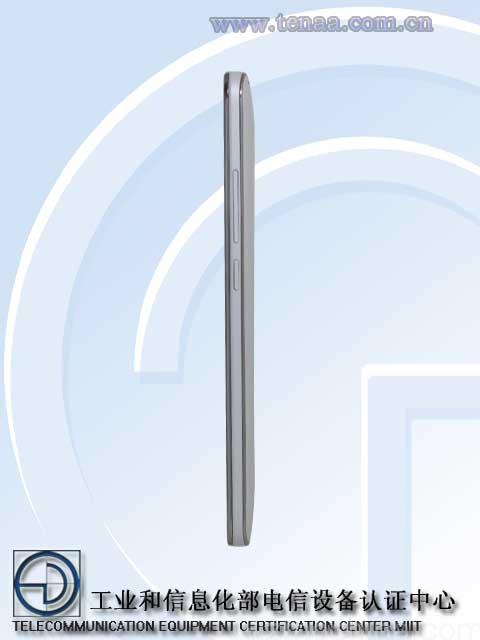
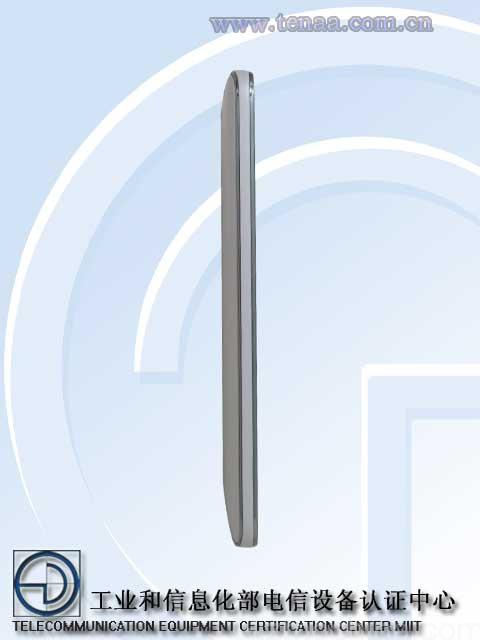
When it comes to smartphones there are a lot of things we consider. First, we start by the design, then we dive in to the specs. Most of us want the super-specced devices to be able to handle things like gaming, record high resolution videos and do other stuff. However, the smartphone, the same as any electronic device produces heat. The heat can be especially felt when we throw some high intensity tasks, which need more power from the device.
Right now we would like to see how one of the best Chinese smartphones can handle the heat.
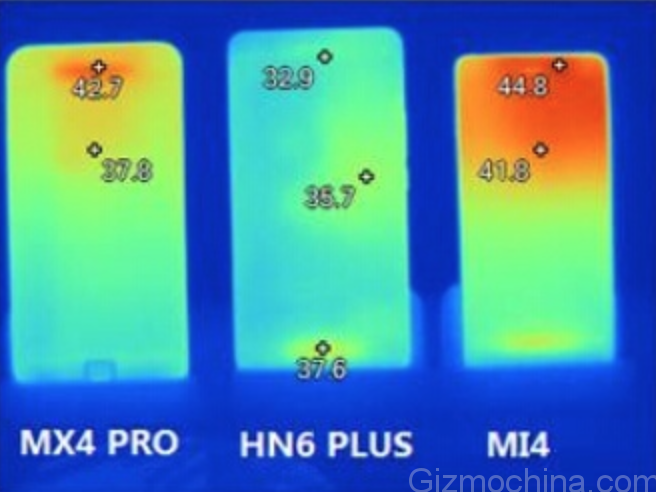
In the first picture we can see the heat test of the touch screen part while playing a quite high intensity game – Riptide GP2. As you can see, the temperature is depicted in colours and numbers in each device.
In this test the best results were shown by the Honor 6 Plus, which uses the Kirin 925 processor. Its temperature reaches the maximum of 37.6 at the bottom of the device. We believe that this is quite comfortable temperature to hold as the usual temperature of human body is 36.6 degrees in Celsium.
The second came up the Meizu MX4 Pro, which managed to heat up a bit more and reach the temperature of 42.7 degrees at the top of the device. It may start getting a bit uncomfortable.
The worst results were shown by the Xiaomi Mi4. As you can see in the first picture above, the device tends to heat up at the top of the device and reaches an uncomfortable temperature of 44.8 degrees.
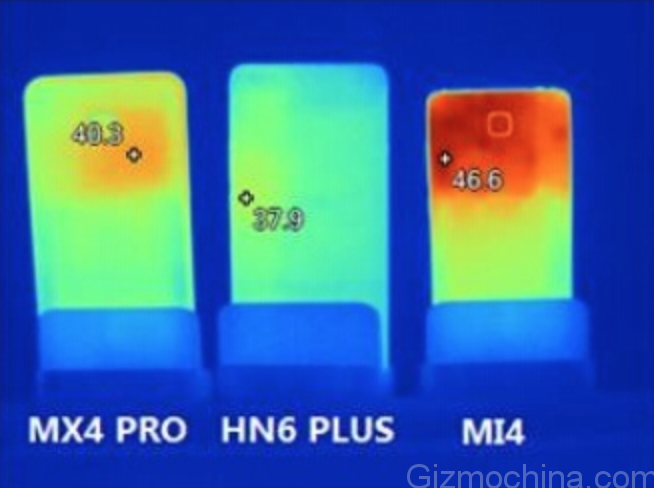
In this picture we can see the same test run on each device, but the temperature is being measured at the back cover side of the device.
Again, the winner here is the Honor 6 Plus, which heats up at a reasonable 37.9 temperature. We believe it is a comfortable level of heat to handle in our hands.
The second device in this test is the MX4 Pro, which reaches 40.3 degrees.
The worst is, again, the Mi4, which heat up at what it becomes clear the weak point of the device, the top part. It reaches the temperature of 46.6 degrees, which will definitely make your hands sweat.
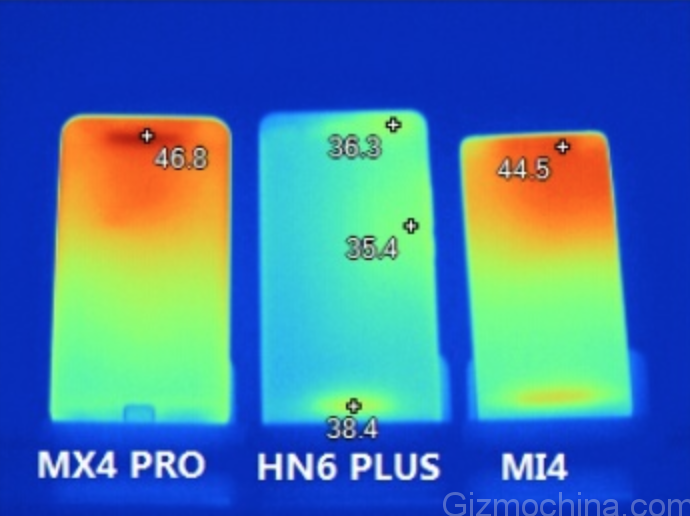
The third test shows the heat produced at the touch screen area after video recording for half an hour.
The best result is shown by the Honor 6 Plus, which reached the maximum of 38.4 degrees at the bottom of the device.
The second came up the Mi4, but the temperature is significantly higher at 44.5 degrees.
The worst result was shown by the MX4 Pro by Meizu with the temperature level of 46.8 degrees. We believe that this level of heat may get quite uncomfortable to hold the device for a longer period like 30 mins.
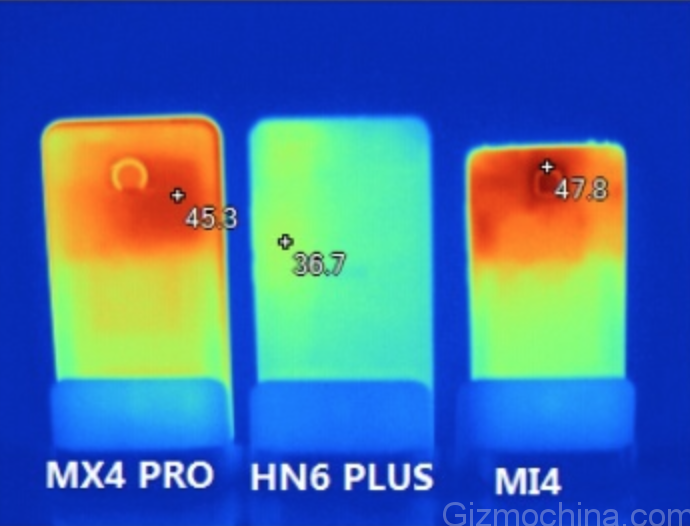
The last test is practically the same as the third one, but this time the heat was measured at the back of the device, where we usually hold the smartphone.
Again, the best result was shown by the Huawei Honor 6 Plus, which reaches a very reasonable temperature of 36.7 degrees.
The second is the MX4 Pro, but the temperature is almost 10 degrees higher at 45.3 degrees.
The worst is the Xiaomi Mi4 as it heats up at the very uncomfortable 47.8 degrees.
All in all, the tests have shown that the Huawei’s newest flagship device does not produce that much heat as its competitors, which is a great achievement for the company. The second place should be given to the Meizu MX4 Pro. However, this device along with the Xiaomi Mi4, which comes at the worst third place, produces significantly higher amounts of heat. It may become uncomfortable to hold the device after extensive periods of usage. Those, who really do a lot of intensive tasks like gaming or video recording should take this into consideration.
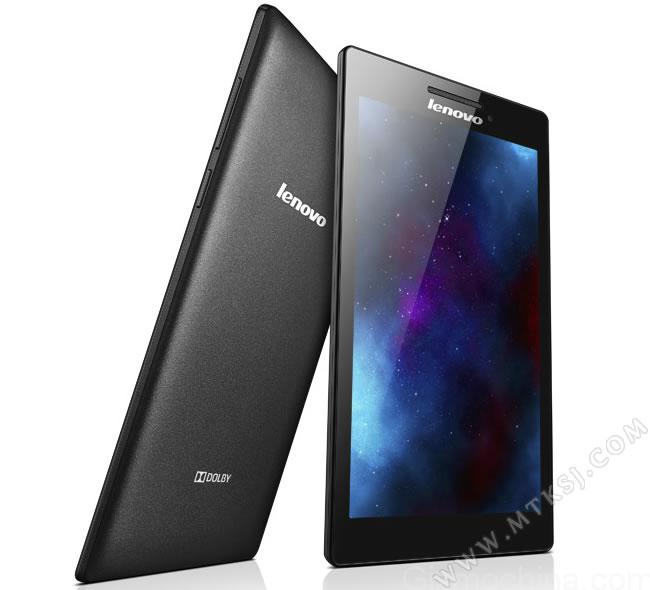
Lenovo A7-30 low cost tablet has been quite popular among buyers, especially those who are looking for a device which can make calls too. Now, the second generation model of the device, namely the Lenovo Tab2 A7-30 voice tablet went on sale in China for an official price of 999 yuan.
Lenovo has somehow reduced the size of this new tablet as compared to the old A7-30. So, the new measurements are 191 x105x 8.9mm instead of 198 x 119.8 x 10.5 mm. As you can see, the tablet is now much smaller and compact than the older model but retains the same 7-inch display which makes it better portable and easier to hold with one hand.
As for the tech specs, the new model features a 7-inch IPS display with the same resolution of 1024 x 600 pixels. Inside, there is a MTK8382 quad-core processor clocked at 1.3GHz. This is the same processor used in the previous generation. There is 1GB RAM and 16GB internal storage. The rear camera measures 5MP while the front measures 3MP, both upgraded from the 2MP/ 0.3MP sensors found in the last model. Inside, a 3450 mAh powers all these specs.
Even though this is just an entry level tablet, it comes with over 10 gesture control features. You can even wake up the device with double tap on display. It runs on Android 4.4 KitKat OS.
As mentioned above, the Lenovo Tab2 A7-30 went on sale in China for 999 Yuan which comes to around $160. Since, first generation model was available in a number of countries worldwide, expect more details about an international release soon.
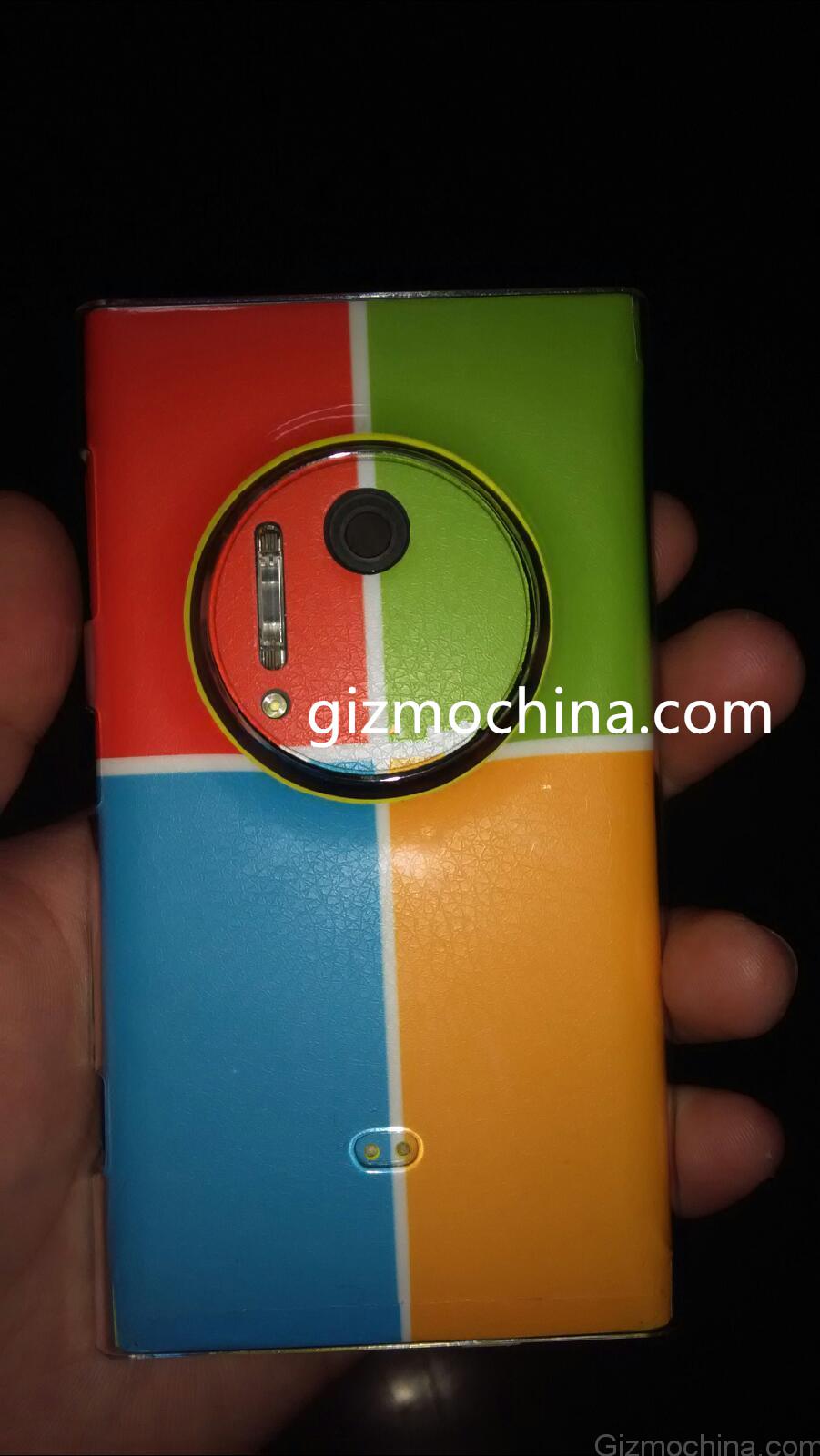
Nokia Lumia 1020 was an interesting device. It came with a very large sensor at the back, a 41MP camera which could click pictures better than most other smartphones in the market. Like all other Lumia devices, it ran Microsoft’s Windows Mobile OS.
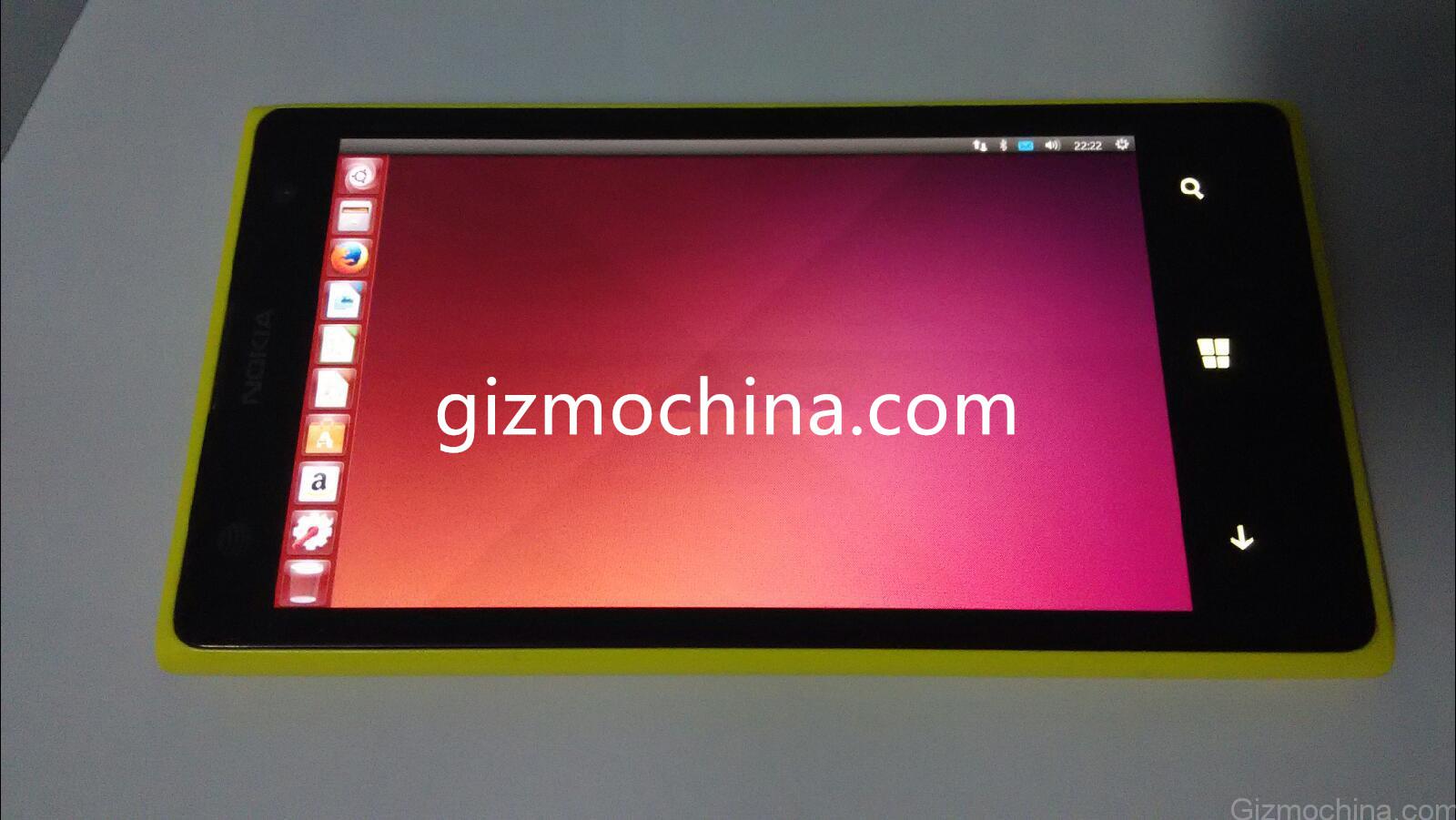
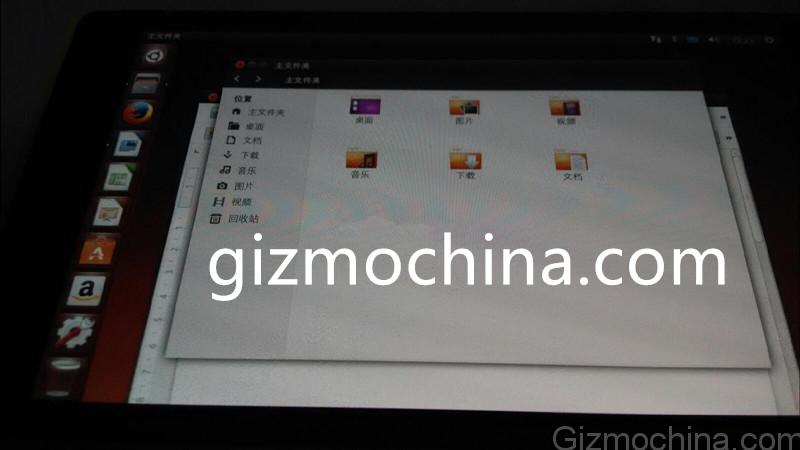
However, looks like Lumia 1020 can run Ubuntu OS as well, atleast one of the Weibo users proved that it was possible. Team Ubuntu which is usually behind a number of leaks online, released some pictures earlier today claiming that they made their Lumia 1020 run Ubuntu.
As you can see in the pictures added in the post, the Lumia 1020 is running on Ubuntu OS which is very similar to the desktop version that we have seen in the past few years. The menu bar is on the left, which is the same as the taskbar on Windows desktop while the settings bar is on top which has the volume level indicator, Wi-Fi as well as the settings option. If you have ever used any of the recent Ubuntu desktop releases, you would see that the OS is very similar to the one shown in the pictures.
We still don’t know whether everything works on this Lumia 1020. It would be interesting to see how the OS handles the large 41MP sensor at the back and whether the pictures captured are of similar quality as that of the Windows running device. We hope to see more details soon.
Ubuntu for mobile isn’t a new concept. Canonical, the company behind the OS has been trying to release Ubuntu powered smartphones for the past one year, however the launch has been delayed so far. According to the latest news, the first true Ubuntu powered smartphone will release in Europe in the second week of February. This budget phone will be sold directly to customers via the Spanish carrier Bq.
For those interested in this new OS for mobile platforms, currently, there is a way to try out Ubuntu. You can install the OS on a number of Google’s Nexus devices. Some of the supported phones include the old Nexus 4, Nexus 7 2013 tablet and the Nexus 10.
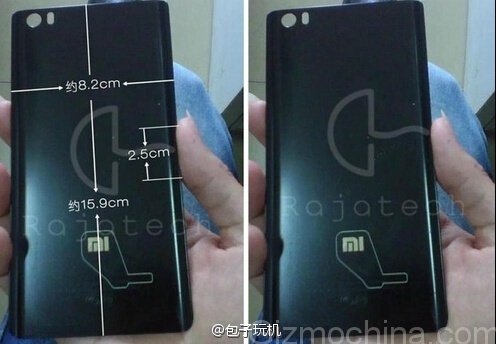
Xiaomi Redmi Note is highly popular among budget phablet lovers and apparently the second generation model, the Xiaomi Redmi Note 2 has been leaked online. While the picture does not reveal the full body of the device, but it does show the back cover, which is a bit different than current Redmi Note model.
The camera sensor and the LED flash are located on the top left corner of the new device instead at the top center region. Moreover, the slightly large opening on top could indicate a dual LED flash instead of the single LED flash found on the current Redmi Note. the ‘Mi’ branding remains at the bottom region of the rear panel. Interestingly, we don’t see a speaker grill on the leaked panel.
As you can see, there are some measurements given on the picture too, however, it doesn’t look like they are right. The length and width are okay at 159mm and 82mm respectively, but the thickness as given on the picture — 25mm is too big. The current generation model has a width of around 9.5mm, so it’s better we ignore the dimensions given by the source for now.
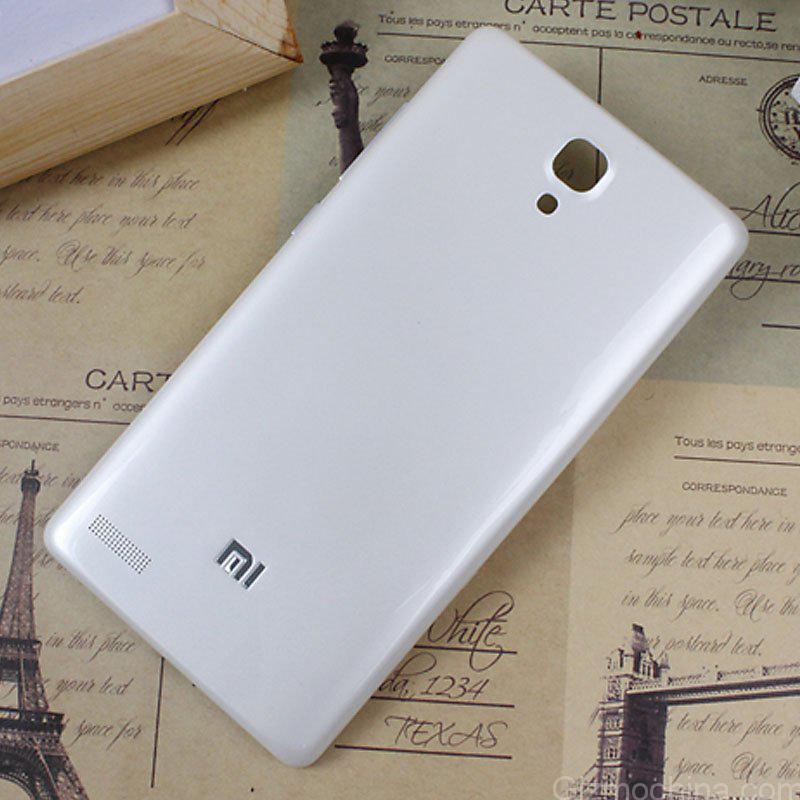
Current Redmi Note back panel
The same source also revealed the possible specs of the device. So, the new Redmi Note 2 is expected to come with the same 5.5-inch display as the original model but with a bumped up resolution of 1920 x 1080 pixels. An eight-core 64-bit processor will power the device (probably Snapdragon 615 or Mediatek 6752) along with 2GB RAM and 16GB internal storage. At the back, there will be a 13MP camera sensor while on the front, it will have a 5MP shooter. The battery is said to be above 3,000 mAh. The Redmi Note 2 will run on Android 4.4 KitKat with MIUI 6 on top.
The source reveals that the phone will be released between January 21 to January 28 2015.
While these specs are slightly better than the current Redmi Note, they might just be enough to upgrade the device yet maintain the same price tag. The current generation model came with a 5.5-inch 720p display, an eight-core processor but not 64-bit and just 8GB internal storage. These are the specs that have been bumped up in the new generation Redmi Note 2. The camera and the battery capacity which were already good on the Note have been kept the same. So, if the leaked specs does turn out to be true, we may have a winner here.
With these leaked specs, the Redmi Note 2 could prove a worthy competitor to the Meizu M1 Note (Blue Charm). Both the devices are aimed at the budget customers looking for the best experience and both have enough hardware to keep their customers excited. So, it would be interesting to see how both perform in the market at a similar price tag.
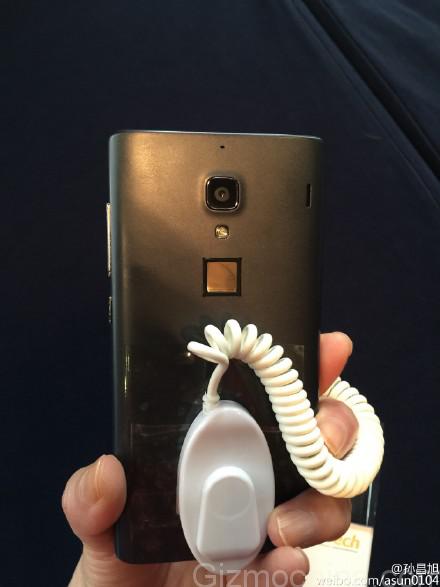
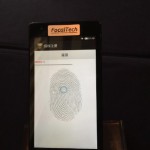
It’s unexpected to see a Redmi spotted with fingerprint scanner in this Christmas. We can help to think if Xiaomi is going to bring the one-touch fingerprint scanner into the budget smartphone market? But the pictures are leaked from Weibo, and the leaker said it’s Focaltech showing off their latest one-touch fingerprint scanner solution, and the Redmi with one-touch fingerprint scanner is refitted.
The expert, Ms. Sun Changxu said that it is fairly easy to achieve the modification method by transferring from USB Interface to SPI. According to the users experience, it sounds like the fingerprint scanning speed is very fast. From seeing the published images, the solution that the producer launched is called One-touch Fingerprint Scanner. It is integrated underneath the back camera of Redmi, which is similar to the solution used on Huawei Ascend Mate 7.
Fingerprint scanner technology is becoming more and more widely use in Chinese smartphone market now, but most of them are flagships, barely any mid-range smartphones had a fingerprint scanner in it. But with more and more fingerprint scanner companies providing more and more solutions, there must be a way to apply them on the budget smartphone market.
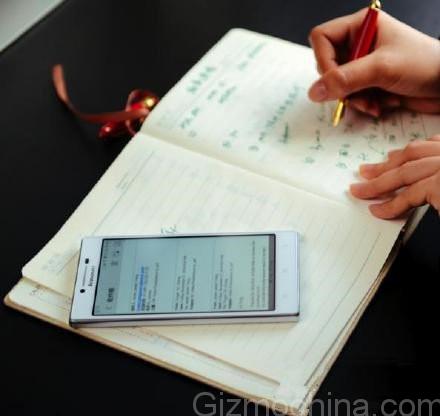
Just a few days back we reported that Leneovo will soon announce the Lenovo P70t with a huge 4000 mAh battery. At that time, we only had limited pictures which didn’t really show off the device completely. But today, almost a week after the report, we have four new live pictures of the device which reveal the P70t in its full glory.
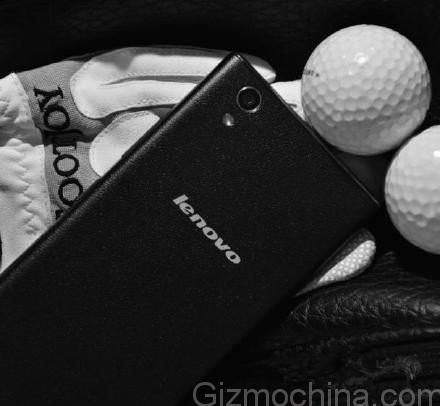
The black and white models of the device was seen online. The overall chassis is round around edges and device has a smooth finish. The rear panel is given an artificial leather finish. On the right, you have the power and the volume rocker buttons, while the left side is completely clean. On the top left corner of the back cover, you have the round camera sensor along with an LED flash and at the middle you have the Lenovo branding. There is a metal frame around the body of the device.
As for the specifications, the phone features a 5-inch 720p OGS display. Inside, there is a 64-bit MT6732 quad-core processor with 1GB RAM and 8GB ROM. The rear camera sensor measures 13MP while the front sensor measures 5MP. The phone supports dual SIM cards on 3G, 4G LTE and GSM networks.
But the highlight of the device, like we mentioned above is its battery. The Lenovo P70t comes with a large 4000 mAh battery which the company claims can provide standby times of over 46 days. While the phone will last for more than 2 days easily with user it’s replaceable 4000 mAh battery, its battery life is further increased by some of the tech inside the device. For example, when the user locks the phone, it automatically shuts down all the background apps. Also, when the phone is fully charged and still charging, it smartly utilizes the charge from the socket and not the battery to avoid wasting the phone’s fully charged battery.
Clearly, the Lenovo P70t is built for businessmen and other users who would never want to run out of charge. While the pricing has not been disclosed yet, we expect an announcement soon.
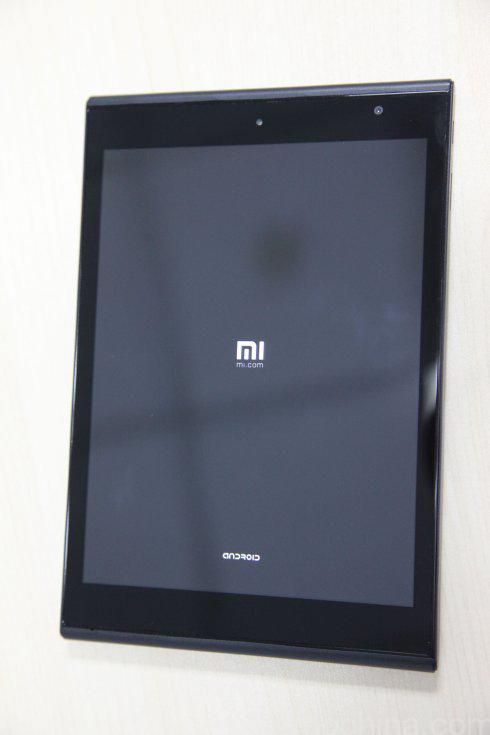
Xiaomi has quickly jumped up to become the fourth largest smartphone manufacturer recently. While the company’s smartphones have always been a hot topic of conversation, this time around, it is the next generation of the less known Xiaomi MiPad that was spotted in pictures.
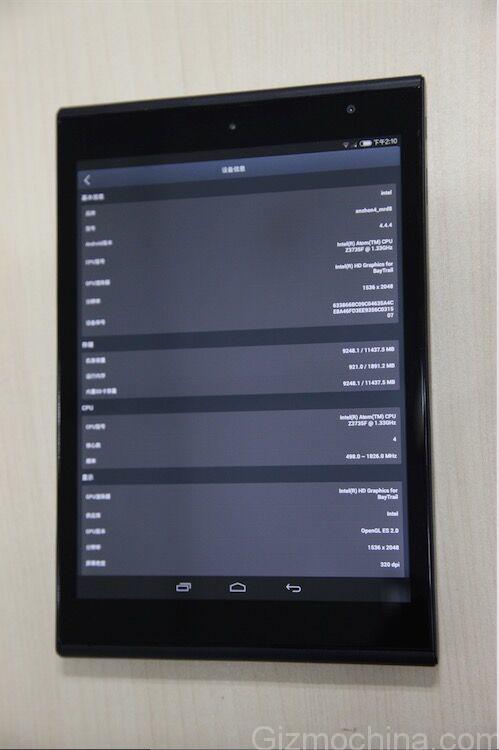
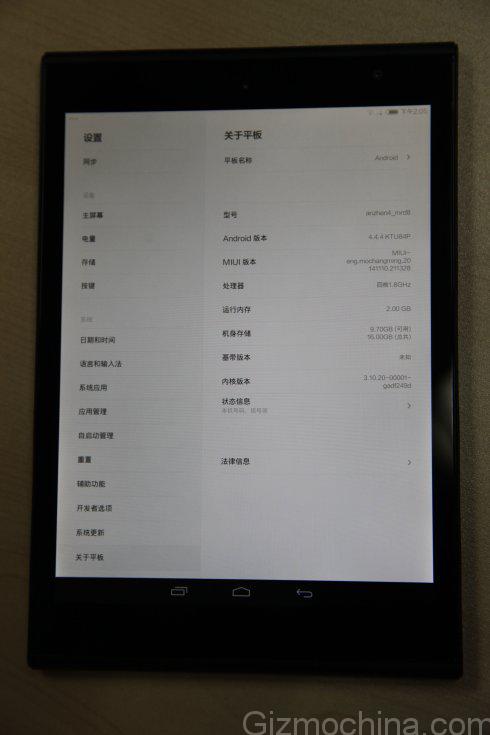
Some images claiming to be the next Xiaomi MiPad 2 was recently spotted on Weibo and reveals some interesting specs about the upcoming Xiaomi device.
First of all, the device looks a bit different than the existing Xiaomi MiPad. But the source claims that it has a same 7.9-inch retina display as the current generation. Moreover, the RAM stays at 2GB and there is 16GB internal storage. From the pictures, it looks like the device is running on MIUI built upon the Android 4.4.4 KitKat platform.
Coming to the interesting part, it is said that the device will have an Intel chipset clocked at an impressive 1.8GHz instead on NVIDIA’s Tegra K1. This wouldn’t be surprising given that Xiaomi was in talks with Intel for supplying SoCs for its current generation tablet. But later the company decided to go with NVIDIA. Another reason for this change could be Intel’s recent efforts to get deep into the portable devices market. The company has shown great interest in supplying chips for phones and wearables, so Xiaomi’s recent popularity might have convinced them to strike a deal.
Unfortunately, the pictures could be fake too. There is no Mi branding on top of the leaked tablet and the overall design too is different than the current generation MiPad. Apart from MIUI, there’s no concrete evidence to prove that this is the upcoming Xiaomi MiPad 2 tablet. So, make sure you take this news with a pinch of salt.
If the device is indeed coming soon, we expect more leaks in the next few weeks, which hopefully will be more convincing. So, make sure you stay tuned to the websites for the latest updates.
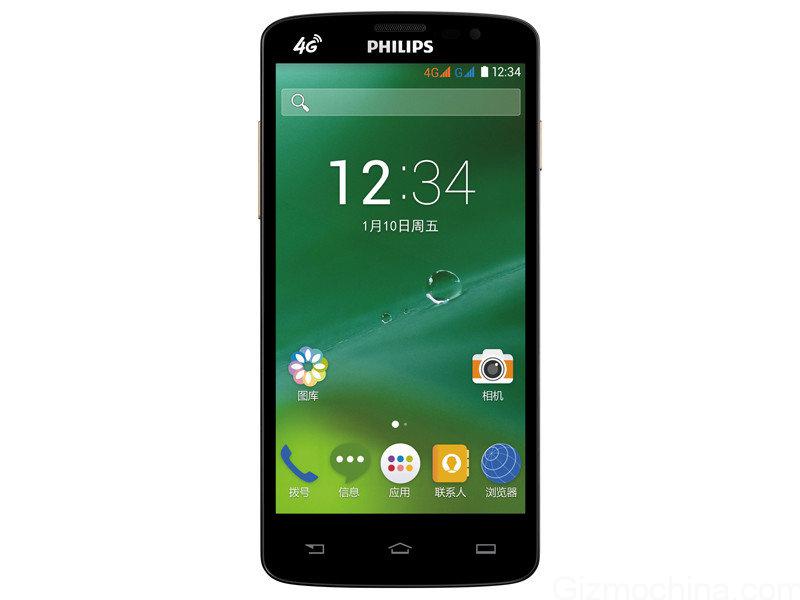
Philips is not a household name when it comes smarpthones, but like all other electronic companies, this Dutch brand too is trying out its luck in the every growing smartphone market. A few days back, we saw a clamshell phone from the company called as the Philips V989. Today, we have some new information about two upcoming mid-range smartphones namely the Philips S356 an S316. Like the name suggests, both the models will be a part of the company’s S series of smartphones.
The S356 has better specs and comes with a 5-inch 720p resolution display, 1.5GHz quad-core 64-bit Mediatek MT6732 processor along with 1GB RAM and 8GB ROM. We still don’t know whether it will feature a MicroSD card slot, but since it has just 8GB internal memory, there is a very good chance that Philips will include one in the device. You have a 13MP rear camera and a 2MP front shooter. The phone supports 3G, 4G and GSM networks and comes with dual SIM card slots. Inside, it has a decent 2,100 mAh battery. As for the software, the S356 runs on a customized version of Android 4.4 KitKat. It is said that the phone will have dual microphones which will reduce background noise.
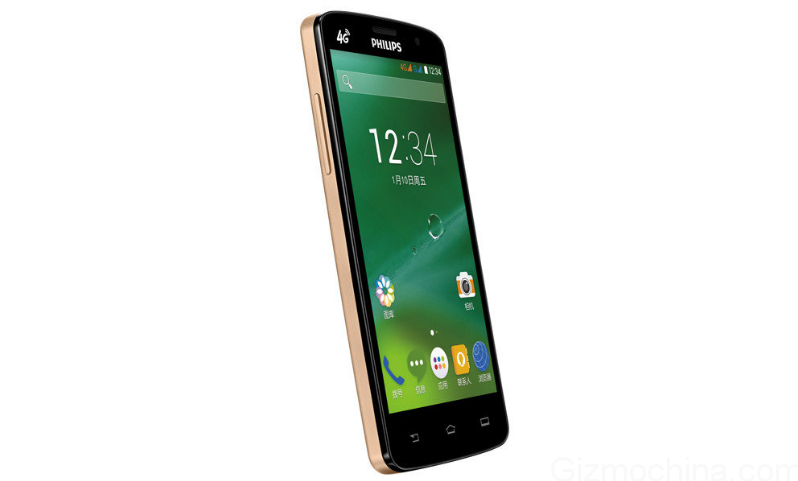
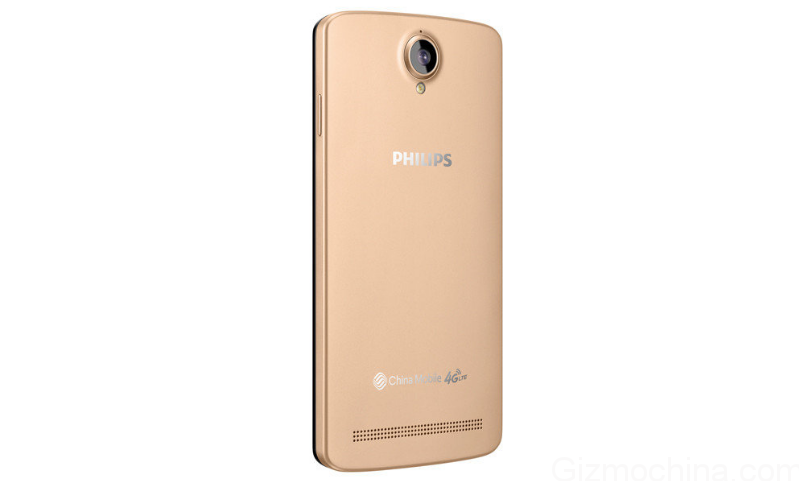
From the pictures that we got, the phone looks well built with dual color tones featuring gold and black. The measurements of the phone are 143.8*71.5*8.8mm which is also decent considering its mid-range placement.
Coming to the second model, the Philips S316 comes with the same quad-core Mediatek MT6732 64-bit processor and 1GB RAM but most other specs are lower than the S356, which means the phone will be placed below this model. It comes with 8GB internal storage (most likely expandable), 5-inch FWVGA resolution display, 5MP rear camera and 3MP front shooter, Android 4.4 KitKat, Dual SIM Dual Standby support, 4G LTE support and a 2000 mAh battery. Unfortunately, we don’t have pictures of this model, but expect an official announcement soon.
The Philips S356 and Philips S316 will retail for 1299 Yuan ($208) and 799 Yuan ($128) respectively. So, the top model i.e. the S356 will directly compete with the recently announced Meizu (Blue Charm ) M1 Note while the S316 will compete with the ASUS Pegasus which was also unveiled yesterday for 799 Yuan.
Both the models looks average and there is nothing special about them. Even the specifications are not at par with other competitors in this price range. So,in this highly competitive market, we feel Philips needs to either reduce the price or bump up the specs to survive as a smartphone company.
No.1 is a company known for its clones and we have seen as well as reviewed several of those clones in the past few months. Today, we take a look at the new No.1 Note 4. As the name suggests, its the clone of the recently announced Samsung Galaxy Note 4 and features the same design as the Samsung flagship. However, like all other clones in the market, apart from the design, most of the hardware and software features from the original model do not make it to the clone. But then these phones are available to purchase online for dirt cheap, which makes them attractive to customers looking for a cheap knock off. No.1 Note 4 features the same 5.7-inch display as the Galaxy Note 4 and comes with a stylus too, unlike other devices in its price range.
Check out our No.1 Note 4 review for a detailed look at the device.
UNBOXING
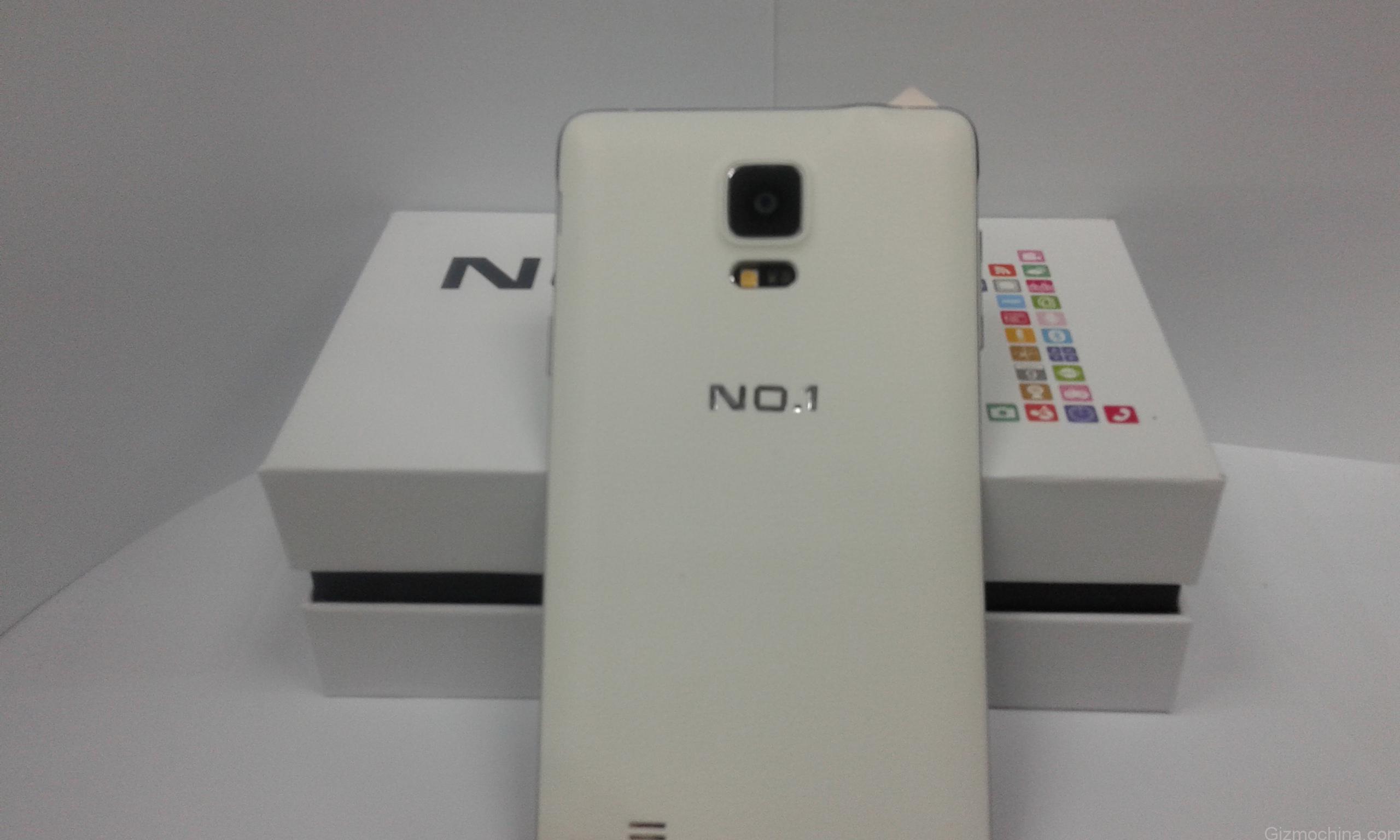
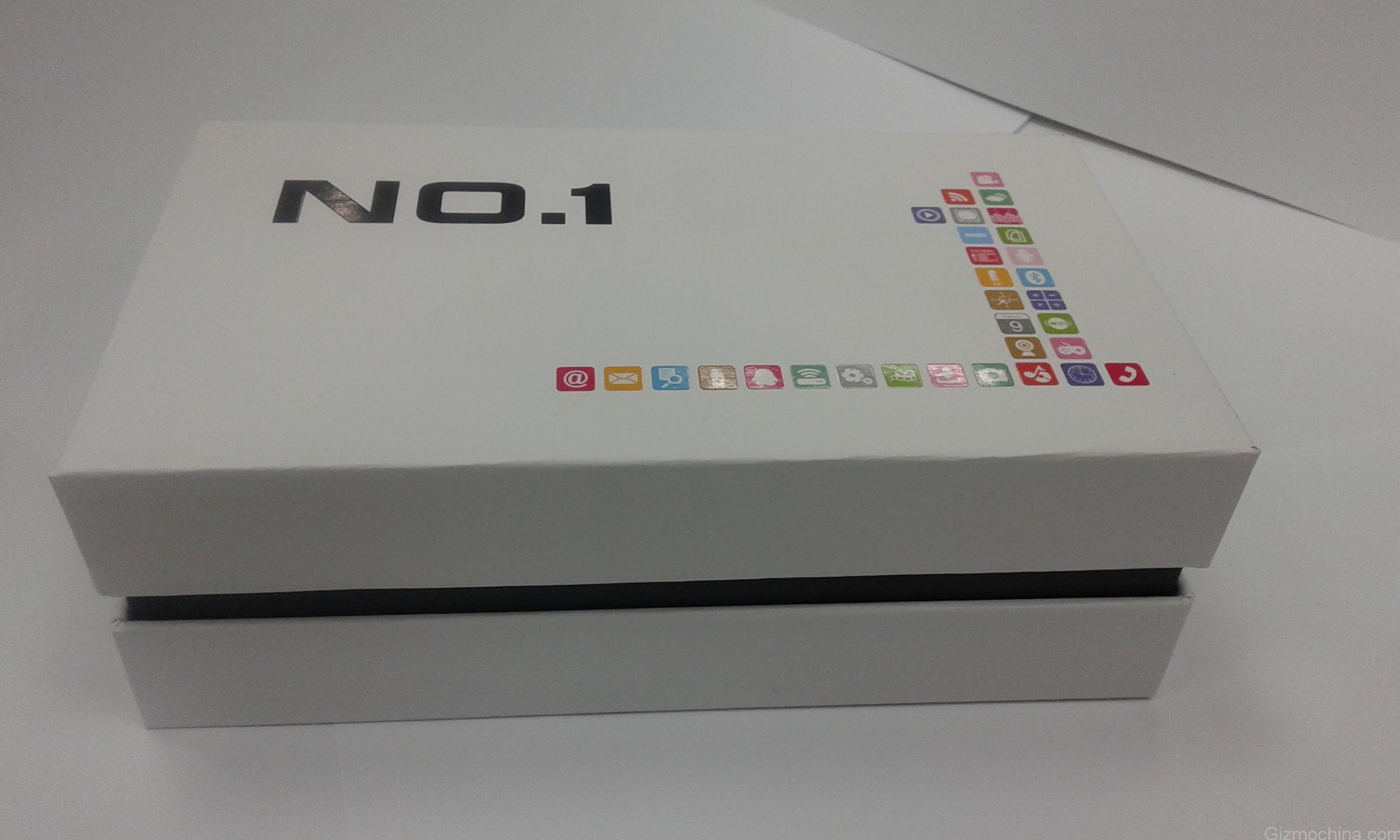
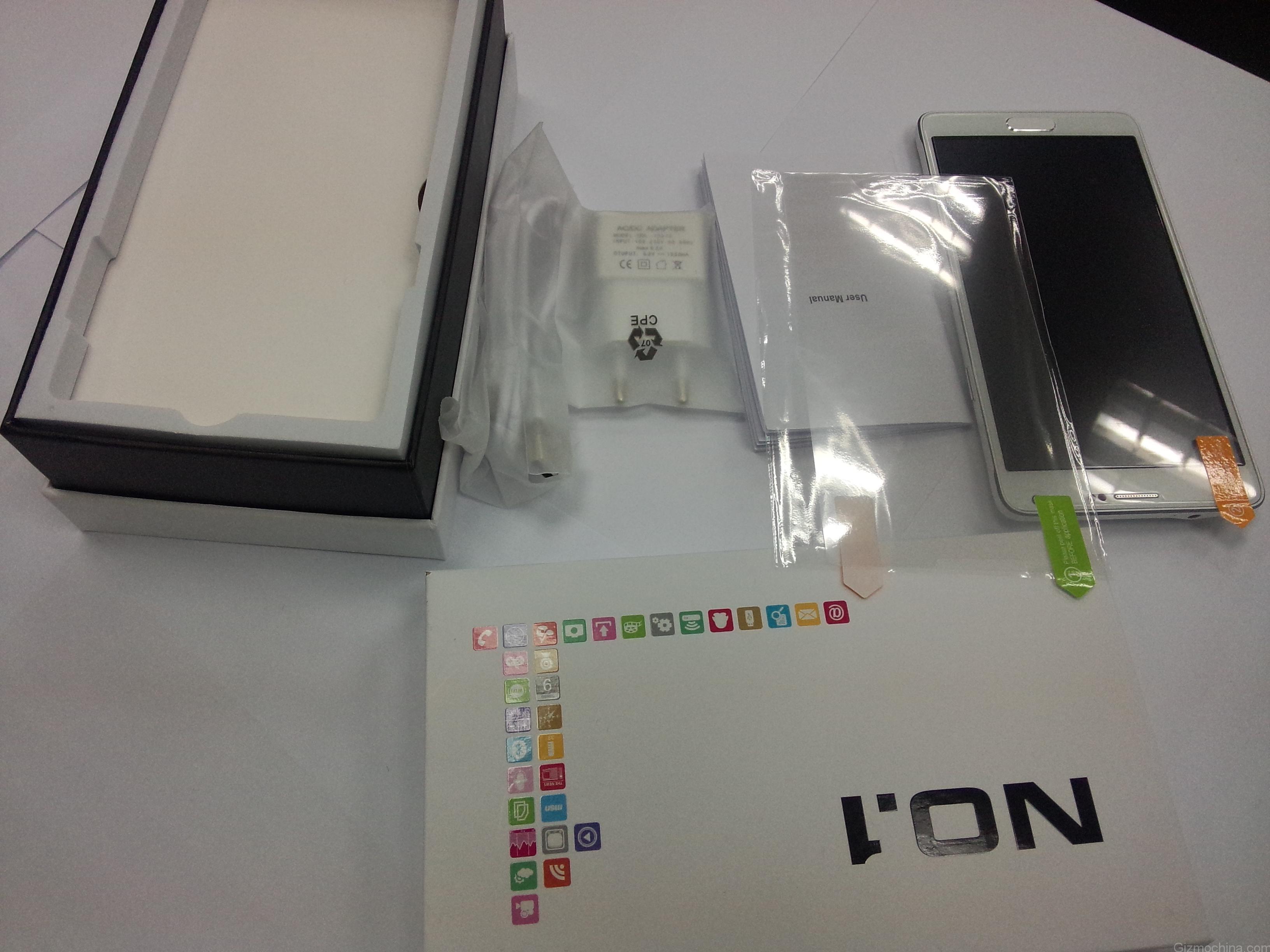
The No.1 Note 4 comes in the same white colored box as every other No.1 device that we have seen recently. Once you open the box, you’ll find essential items like the charging adapter, USB cable, user manual in English and the phone itself. There are no headphones or rear case for the phone inside the box.
DESIGN
Like the name suggests, the No.1 Note 4 takes inspiration from the Galaxy Note 4. So, the device is huge in size and measures 153.5×78.6×8.5mm, thanks to the monster 5.7-inch screen up front. This is exactly the same size as the original Note 4 which has the same measurements. To be honest is an impressive feat considering this is just a knock off and retails for a very cheap price tag.
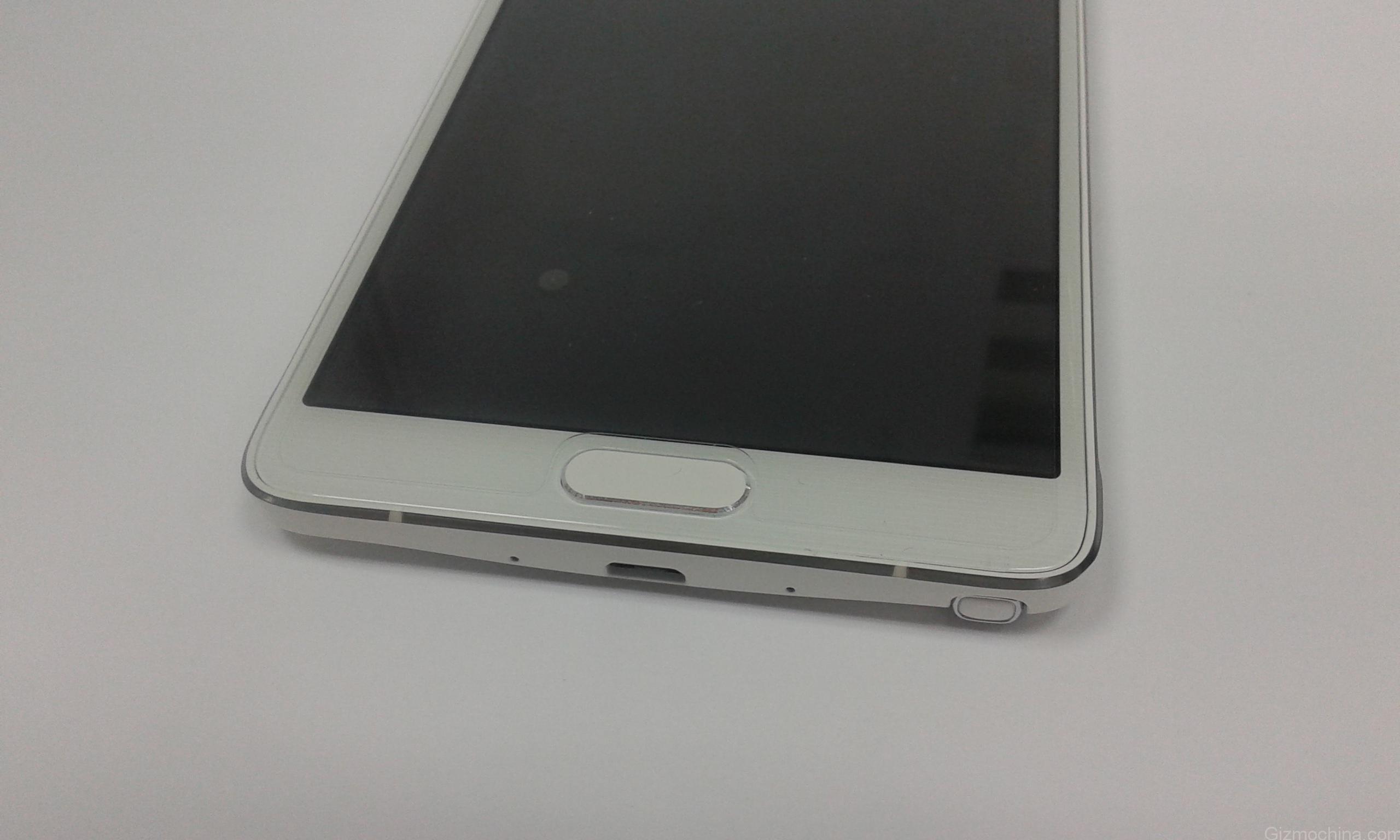
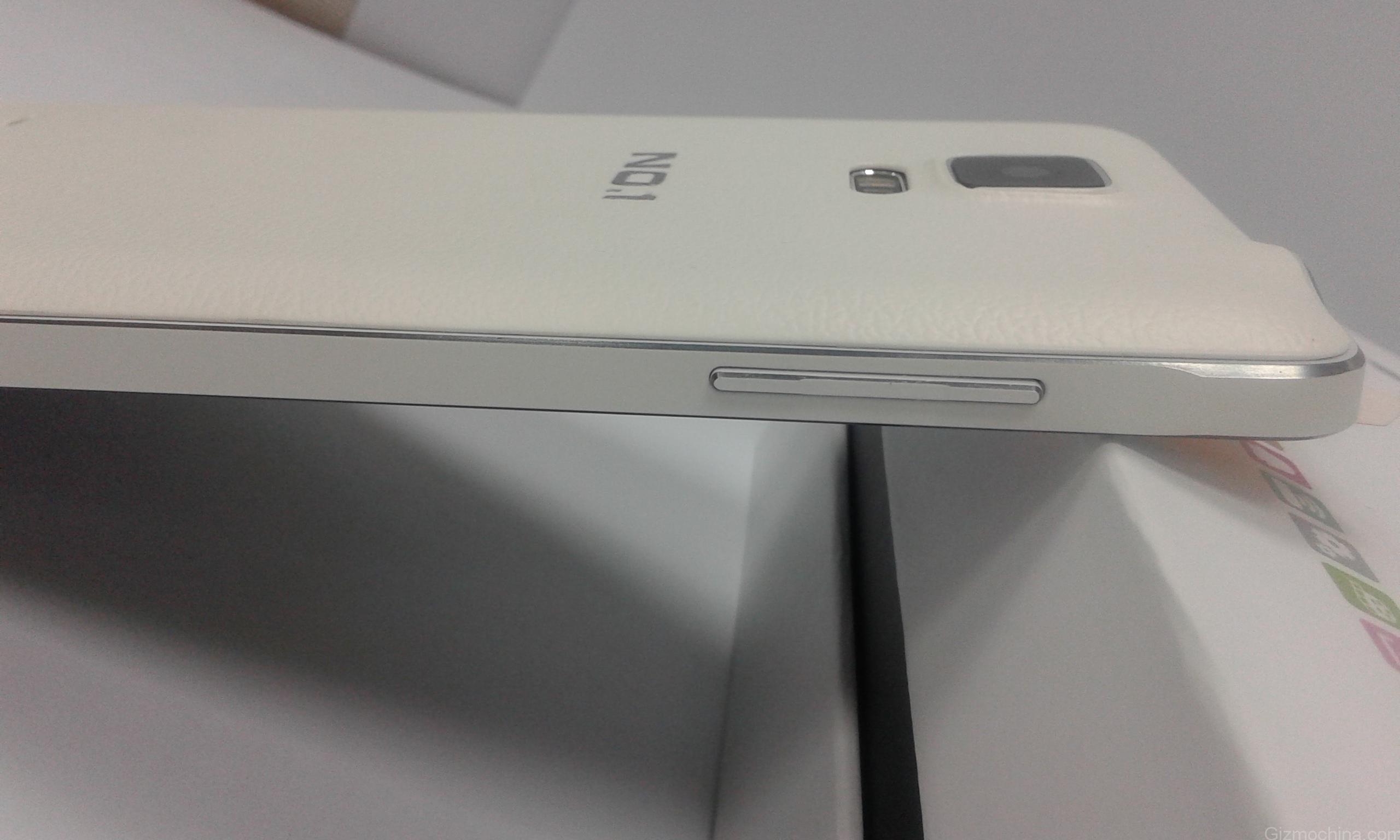
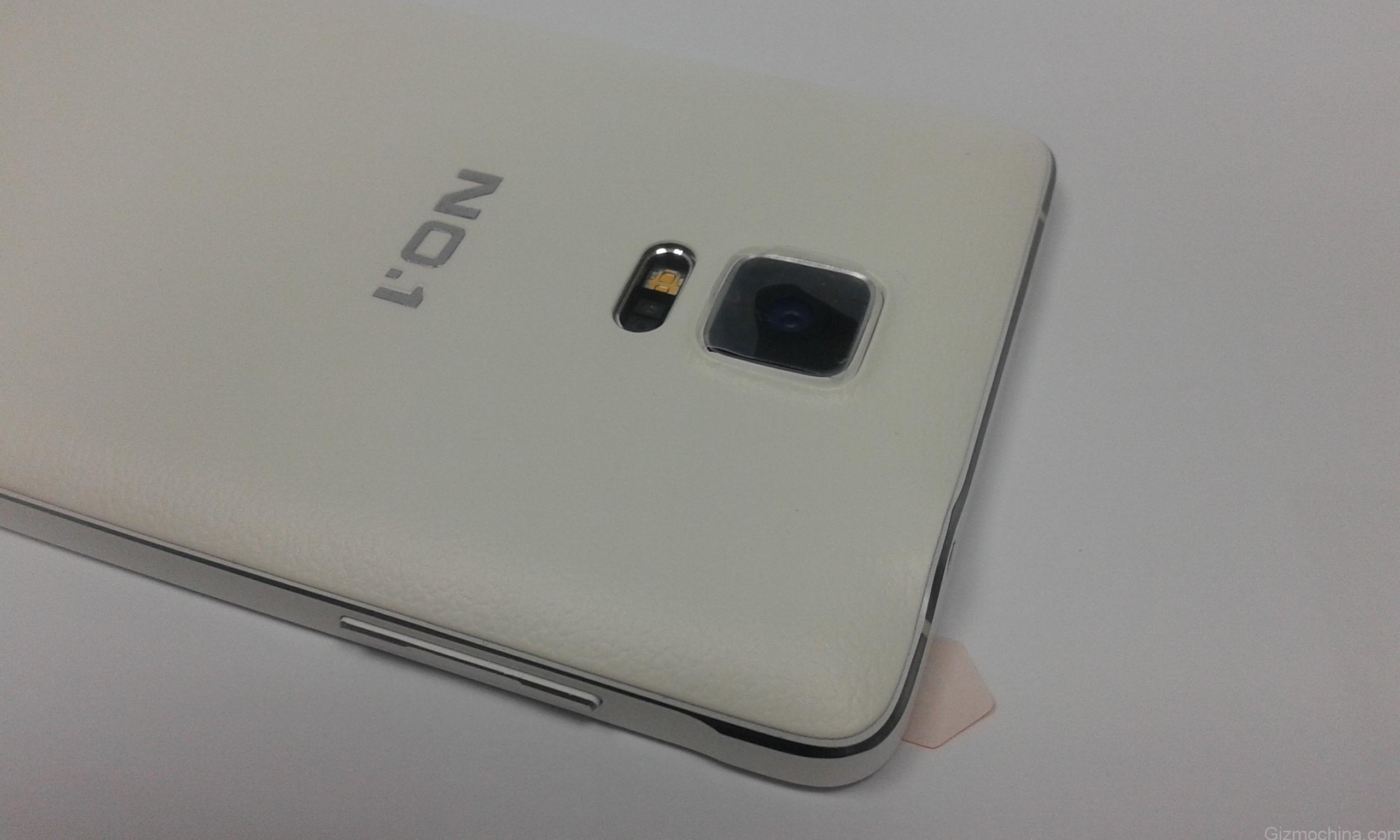
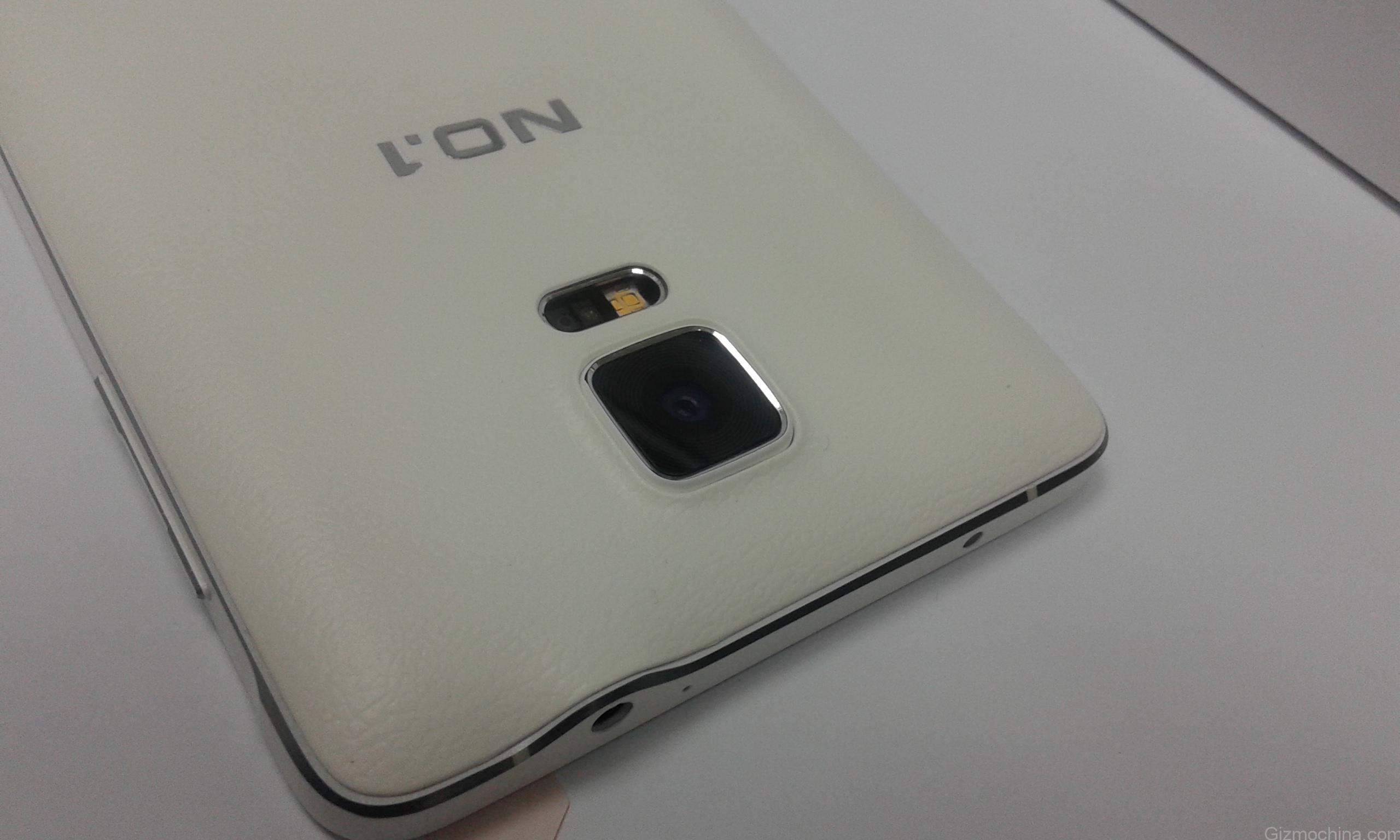
Moving on, the front display measures 5.7-inches. There is a camera as well as a few sensors on top of the display, while at the bottom you have the traditional Samsung home button along with other capacitive buttons. The back features a leather like finish. There is a 13MP rear camera on top with LED flash just below it. Around the middle of the rear panel is the No.1 logo and around the bottom, you have two small openings for the speaker grill.
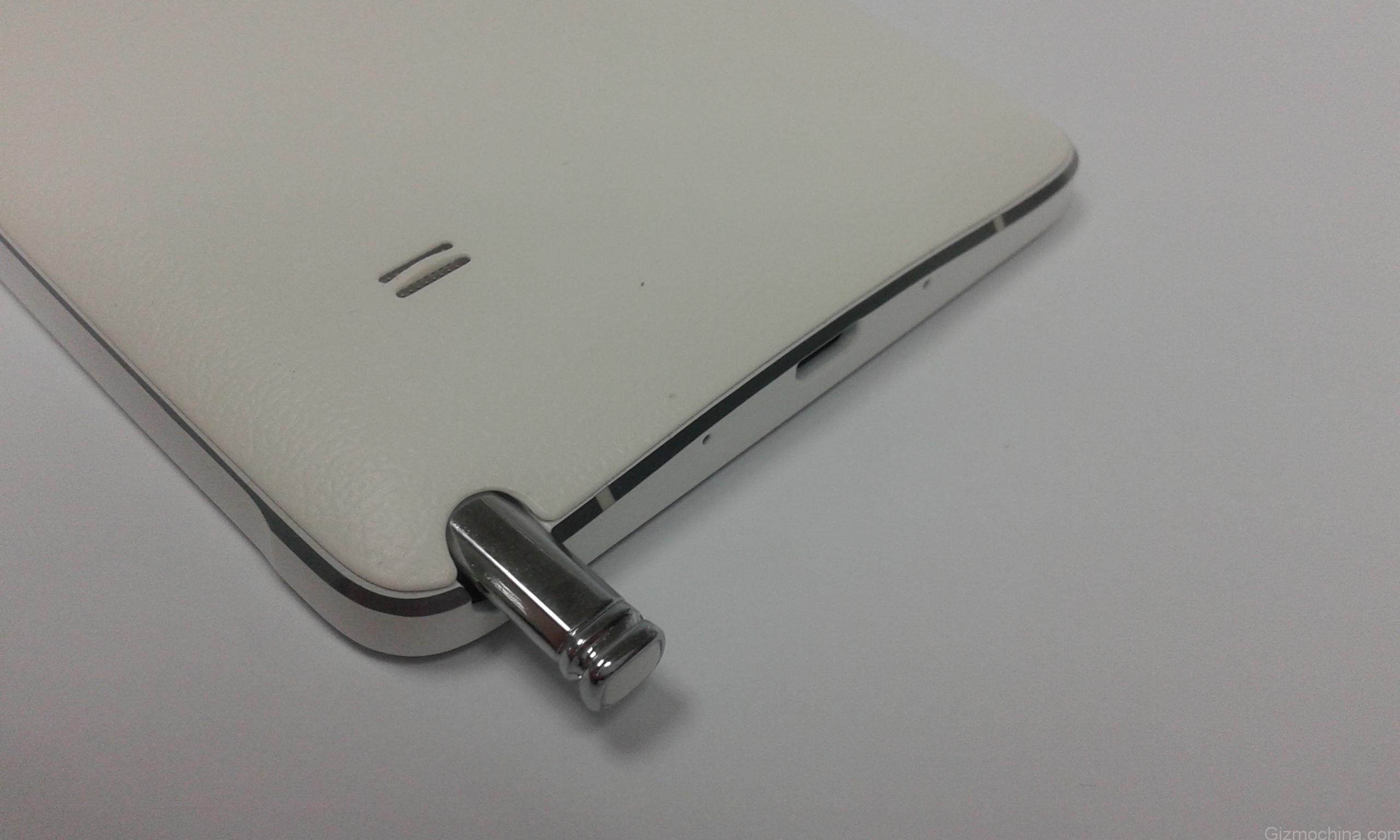
On the top left side lies the volume rocker buttons and on the right is the power button. There is a 3.5mm headphone jack on top + infrared port and a MicroUSB slot with dual microphones at the bottom. Like in the original Note 4, this clone also features the famous S pen which is neatly tucked into its opening at the bottom. The S Pen gets out and gets in pretty smoothly, so it looks like the opening is perfectly built to place it inside the phone.
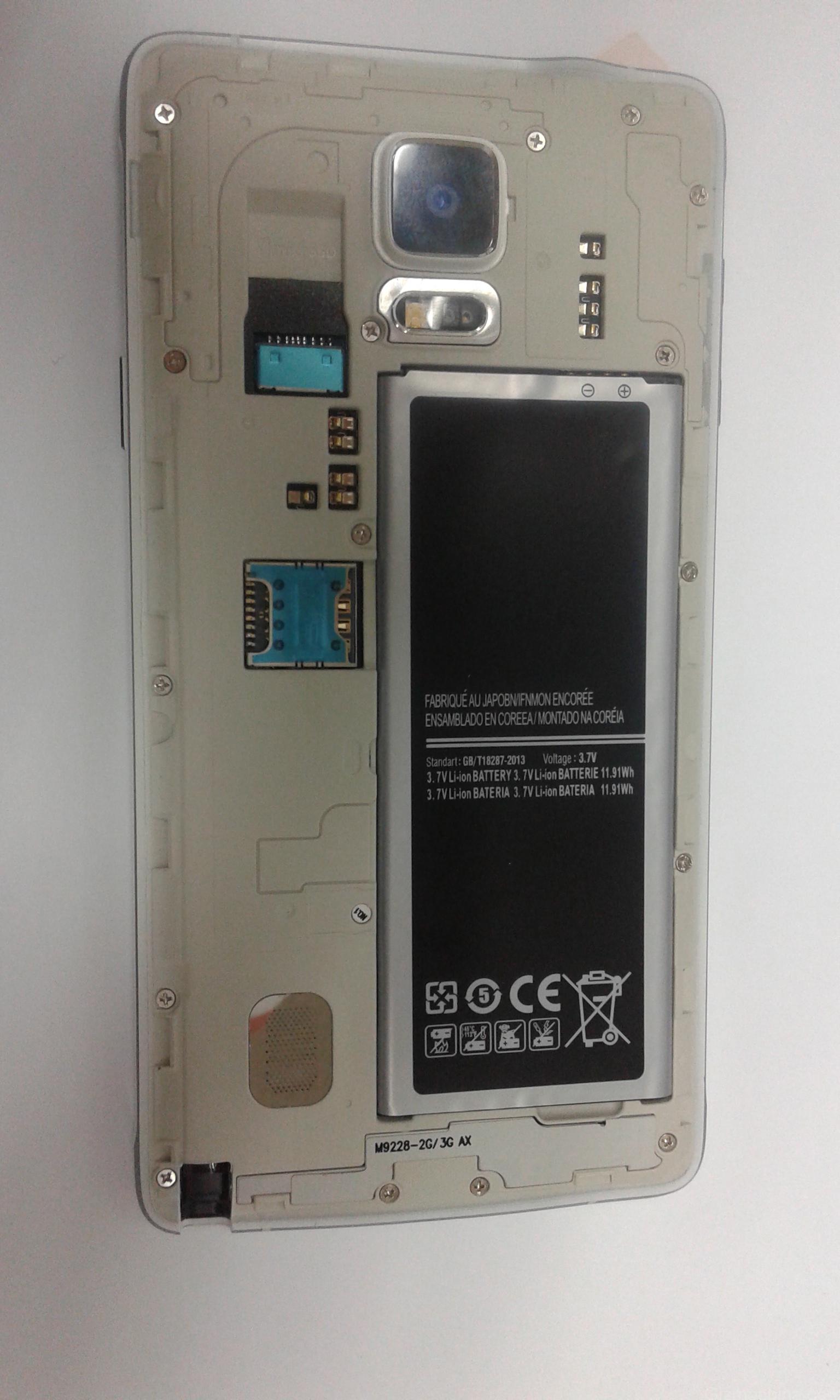
The phone does have a removable back cover. Once you open it up, you’ll see a thin but long battery along with ports for a SIM card slot and a MicroSD card slot. Let me remind you, this phone supports just one SIM card unlike most other Chinese smartphones which support dual SIM cards. This is not a big issue for me since I just use one SIM card always, but for you this may be a deal breaker.
DISPLAY
The No.1 Note 4 comes with a 5.7-inch display with a resolution of just 1280 x 720 pixels. On the other hand the Samsung device came with 2K resolution on the same size. However, for everyday use, the display doesn’t look too bad. The overall looks of the UI is similar to the Samsung TouchWiz on Note 4 which gives us a feel of the original flagship, even though this is just a cheap knock off.
The first time you’ll boot up the device, you’ll see a lot of bright blue colors everywhere, which looks quite good on the large 5.7-inch display. Like we said earlier, the Touch Wiz like UI makes you feel that you are using a Samsung device. The display produces colors quite well and was bright enough to be used outdoors. So, even though it comes with a low resolution for such a large screen, you shouldn’t worry too much. You can easily fulfill your entertainment needs on the device like watching movies or playing games on its large screen display.
HARDWARE & PERFORMANCE
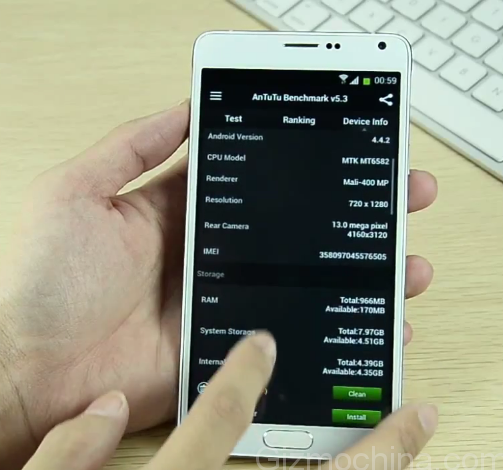
Despite its size and design, the No.1 4 is not a fast performing device. But it’s good enough for your basic every day usage. The phone comes with a Mediatek MT6582 quad-core processor with Mali-400MP GPU, 1GB RAM and 8GB internal storage. This isn’t the fastest processor out there in the market and you’ll know that once you see the AnTuTu benchmark results.
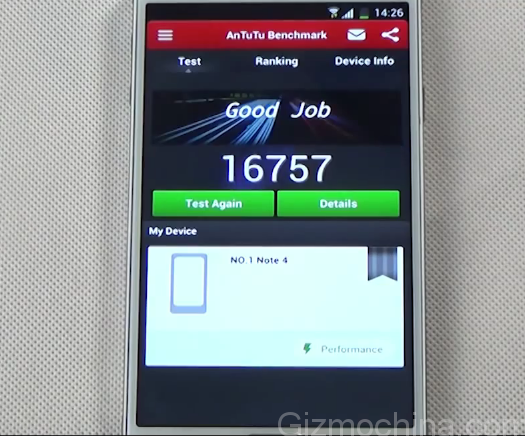
In the benchmark test, the device got a score of 18,999. However, there were some times that the scores dipped to around 18,000. So, on an average, you can expect the scores to range from 16,500 to 18,000. As you can see, this isn’t a very impressive score as we have seen devices, which score above 20,000 in the AnTuTu test.
But in the real world usage, the phone did not lag much and the overall UI loaded pretty quickly. Opening up apps was easy and unless it was a very heavy graphic intensive app or a game, it worked perfectly with very little visible lags. Multi-tasking can be an issue sometimes and the limited 1GB onboard doesn’t really help the cause as well. However, if you limit the open apps on the phone, the phone responds and works quite well.
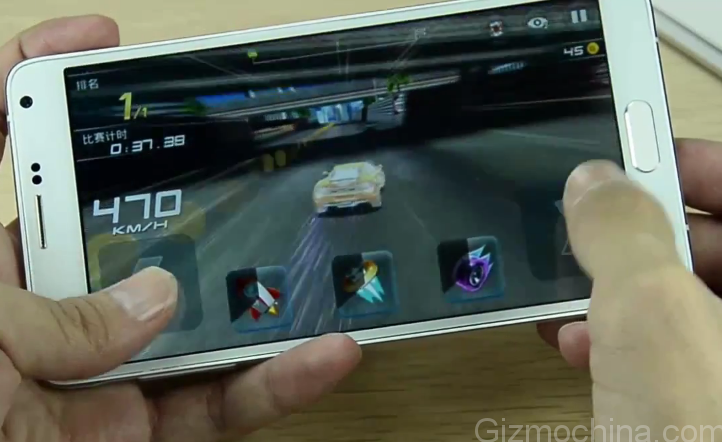
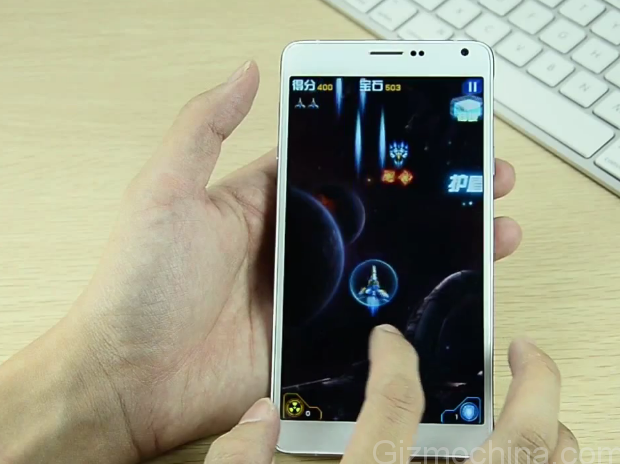
We never experienced any lag while browsing through the gallery or while watching videos on the device. Even scrolling through the video was responsive. As for gaming, most games worked perfectly fine on the device. The quad-core MT6582 processor does well in this regard and the games had no visible lag. Everything played smoothly and for most games, you won’t have any trouble running it on the No.1 Note 4.
Coming to the provided S Pen, surprisingly, it works very well. As soon as you remove the pen from its holder inside the phone, the Air Command panel pops up giving you a lot of options to play around on the device. The S Pen could select apps on the screen without any trouble. We tried out the draw app on the phone and it was working perfectly. To be honest, we were impressed! With the S Pen in our hands, it really felt like we were using a premium device.
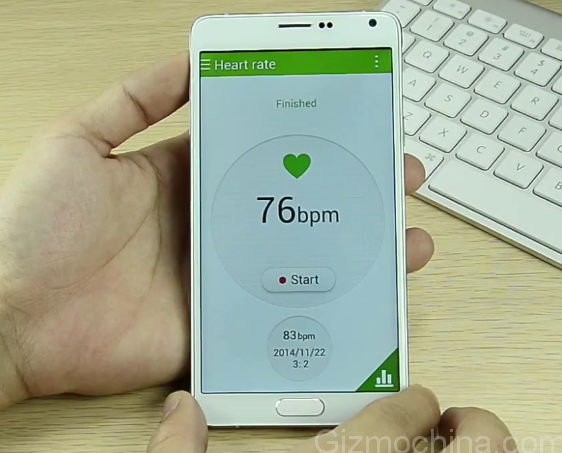
Another highlight of the device is its heart rate sensor. We still don’t know how exactly it manages to measure our heart beat, but still the feature somehow works fine. Of course, it’s not very accurate, but then we didn’t expect it to be, since most Chinese phones with a heart rate sensor didn’t work very well. But still, from our testing, the sensor worked just fine and is a useful addition to the phone.
The in-built speaker is loud but not very clear. Moreover, if you keep the phone with the display on the front, you’ll hear muffled noises since the speaker grill is located at the back.
So, overall the No.1 Note 4 turned out to be a pretty good device. And if you are looking for a decent performing device, add this to your list.
CAMERA
Camera isn’t the greatest of strengths of the No.1 Note 4 smartphone. However, for every usage, its 13MP rear camera snaps pictures pretty well. The company has provided a lot of modes inside the camera UI like the Beauty Face, Rich Tone, Auto, Panaroma, Surround shot, Auto Scene etc. You can change settings like exposure, GPS, Color balance etc directly from the UI. However, other than these, the UI is pretty standard.
Coming to the camera performance, the images clicked turned out to be good when there was lot of light. Focusing does take a second or two but works well. The images captured surprisingly have a lot of detail and the colors are also accurate. The video captured from the rear camera too was good.
However, low light performance wasn’t really good, which isn’t surprising given that most Chinese mid-range smartphones struggle to capture pictures in low light conditions. The night photos lack details and there is a lot of noise which spoils the captured image. So, like always we would suggest taking pictures in broad day light or at least in places where there is lot of light for the best performance from its 13MP rear shooter.
Check out the samples below to get an idea about its camera.
BATTERY
Battery life shouldn’t be a big concern on the phone since it features a 2800 mAh capacity battery onboard. The battery life is just average, but its enough to last throughout the day with moderate usage. We have seen 5.5-inch phones from Chinese manufacturers with batteries as small as 2,000 mAh, hence the battery on this phone feels quite decent.
CONNECTIVITY & SOFTWARE
Along with the standard connectivity features like Wi-Fi, Bluetooth, MicroUSB, FM Radio and GPS/ AGPS, you also get additional sensors like heart rate monitor and infrared sensor. Both of them worked fine as far as we tested. As mentioned above, the the No.1 N4 is a single SIM phone and supports GSM/ 850/900/1800/1900 ; WCDMA 850/2100 network bands.
As for the software, the No.1 Note 4 runs on Android 4.4 KitKat OS out of the box with a UI like the Samsung Touch Wiz. We have already pointed out that the overall UI experience is almost the same as Samsung, thanks to the color profile, tweaks in settings menu, notifications panel as well as the home screen which makes it a look a lot like Touch Wiz. There are a lot of software gestures available on the device, but now that’s common among recent Chinese smartphones, so its not really a new feature. Still, its good to have features such as air gestures which help you to operate the device.
VERDICT
As you can see, the No.1 Note 4 is a pretty good device. You get a lot of additional features such as the S Pen, heart rate monitor as well as a infrared remote which sets is apart from other Chinese offerings currently available in the market.
The fact that it is build upon the design of one of most loved phablets of the year makes it special. Of course, performance is no way near the original Note 4 but for the price that you pay, this clone definitely deserves some appreciation.
Xiaomi has been on the news lately with the purported leaks of the Xiaomi Mi4s/5. We have reported today that a possible Xiaomi Mi 4s is characterised to have 5.7-inch screen (other sources claim that it may spot a more compact – 5.5 inches screen), which will be covered by the sapphire glass and spot a 2k resolution (packed in a 2.5D screen), Snapdragon 805 chip (other sources claim 810 version, which is less possible knowing the fact that the 810 version of the chip would not be ready for the mass production on the possible release of Xiaomi’s new flagship), will have a higher megapixel camera, will be running MIUI based on Android5.0 and it may have a support for fingerprint recognition.
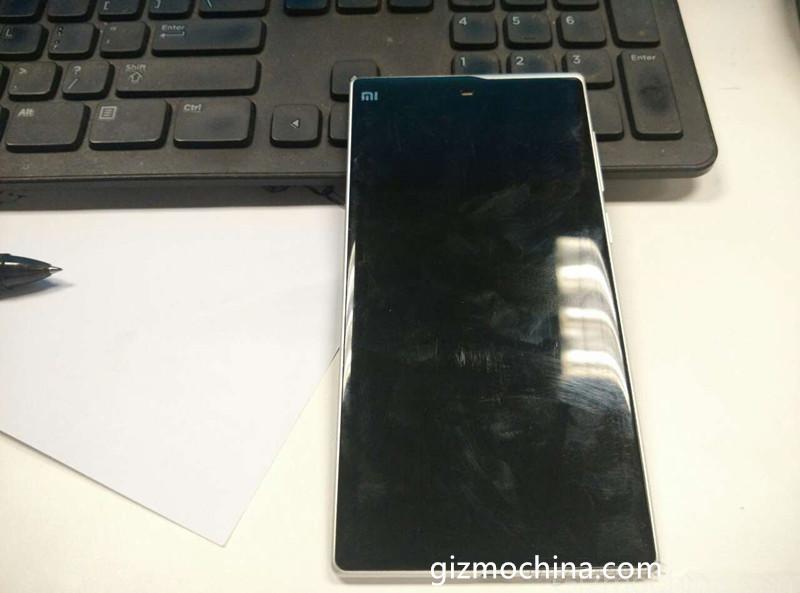
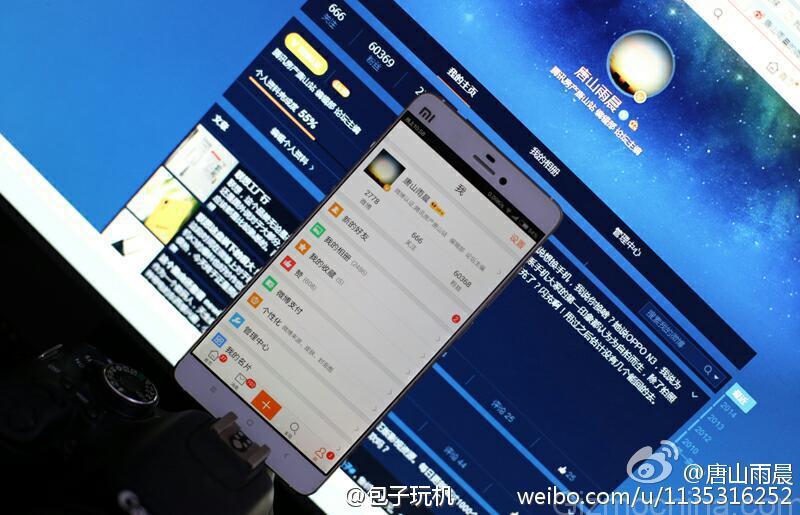
Right now we have some fresh live pictures, where we can possibly see the new device by Xiaomi in flesh and blood!
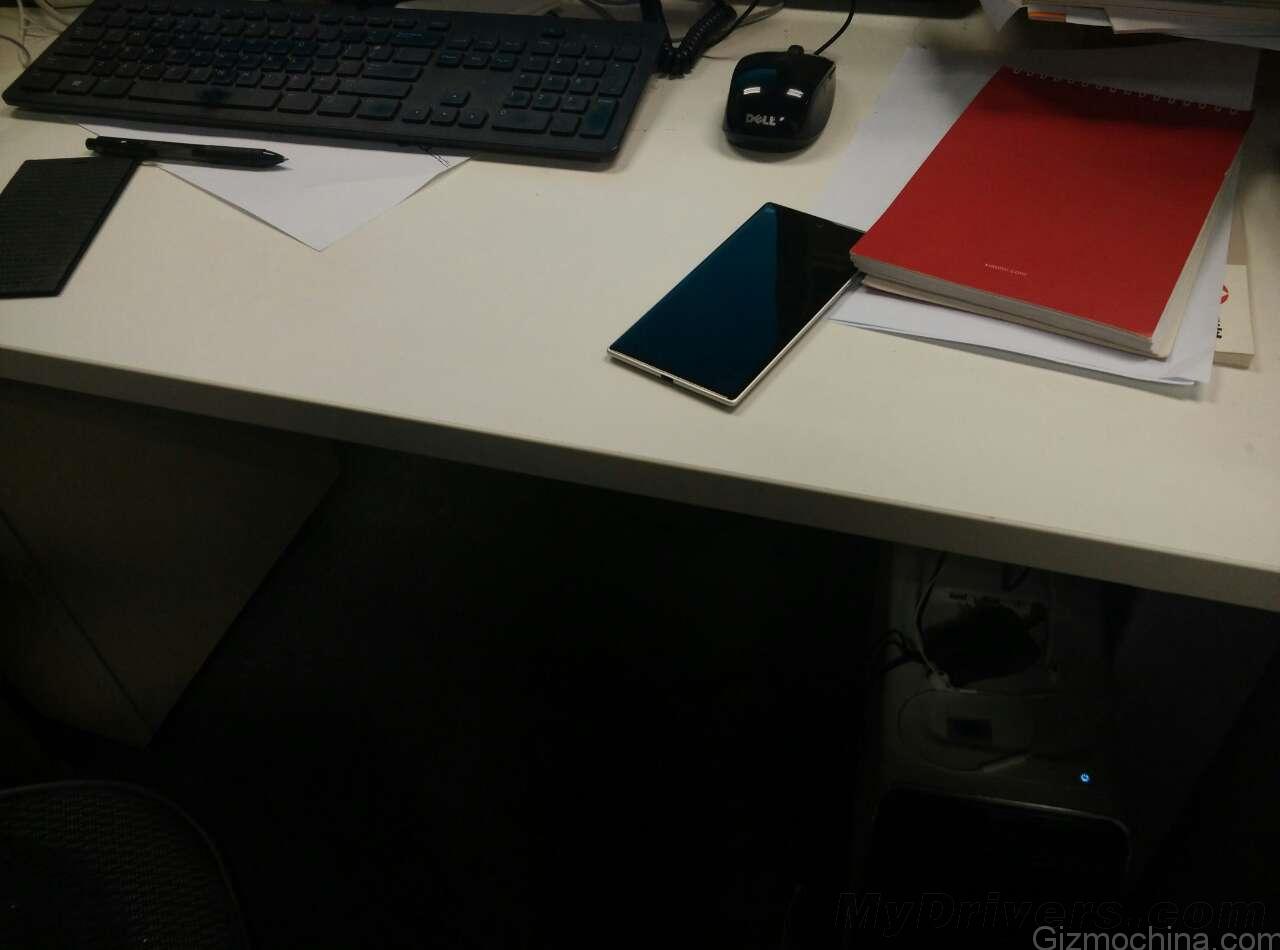
Let us admit that these pictures are quite high quality and in the first picture you can clearly see a MI logo, which may be a Xiami’s new flagship device! What is more, the device in the pictures looks a bit different to the previous leaks we have posted today. Here we cannot see that super slim bezel and there are no visible capacitive buttons on the bottom of the device. It may imply the fact that the Xiaomi has decided to ditch the capacitive buttons and go with the on-screen ones.
In addition, it looks like this device is surrounded by an aluminium frame, which is not a big news for the company since it has already been used on the MI4 model. Also, we can see volume up/down buttons along with the power button on the right, which seems to be a right placement. Furthermore, we think that the device in pictures is very similar to the older MI3 model.
The rumours claim that it could be either a Mi4s/Mi5 or a completely new flagship device, which would not be as cheap as previous MI series devices as it may cost 2999 Yuan (in comparison, the Mi4 costs 1999 Yuan). That could mean that the company has decided to throw anything what is possible on the smartphone in the new portfolio of the devices.
Having said all that, it is not clear which phone in the pictures is the real deal and which one is fake. We are curious what do you think about the device in the pictures. Let us know in the social poll or the comment section below.
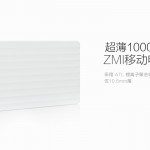
Power bank is an accessory, which is getting more and more popularity since it has proved its usefulness in the times, when the majority of manufacturers have non-user replaceable batteries. There is a variety of them and it may be quite hard to choose. As usual, Chinese companies have something to offer at a crazy low price.
After Xiaomi announced their own power banks, which included 5200,10400,16000mAh respectively, they were sold at some crazy low prices in China. However, it turns out that it is possible to make an external battery, which costs only 99 Yuan, which is made to compete against another cheap power bank, which was recently announced by the OnePlus company.
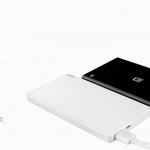
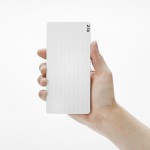
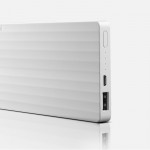
This power bank carries a model number PB810, it has quite a thin body, which is 10.5 mm and it is said to be a thinnest product in this category. Also, it comes in white colour and has a wave pattern on its exterior, which is supposed to help for the good grip. Also, it has a capacity of 10000mAh (voltage 3.6V) , uses ATL lithium-ion polymer batteries, it has a USB and micro USB ports, it supports 5.1V / 2.1A output and 5V / 2A input.
The product is said to charge the Xiaomi Mi4 twice, Xiaomi Red Rice 1S 3 times and the iPhone 6 3.5 times. Also, there are four LED power indicators, showing the juice left in the power bank.
In addition, it uses a Texas Instruments chip and seventh master protection circuit , board ends highest conversion rate of 93%, and more than ordinary mobile power output of about 1000mAh.
All in all, it seems to be a great power bank to buy, which has a huge capacity, great build quality and internals used at a very low price. It seems that it could be quite a threat for power bank makers like OnePlus or Xiaomi.
When it comes to the smartphones, there are a few things we put into consideration before buying. Besides the facts like design, build quality, user interface, the price is very important. The lower it is, the more attractive it is to the buyer. However, sometimes the consumer may have a question in mind, if there are any hiccups or some issues with the device if it is sold at the very low price.
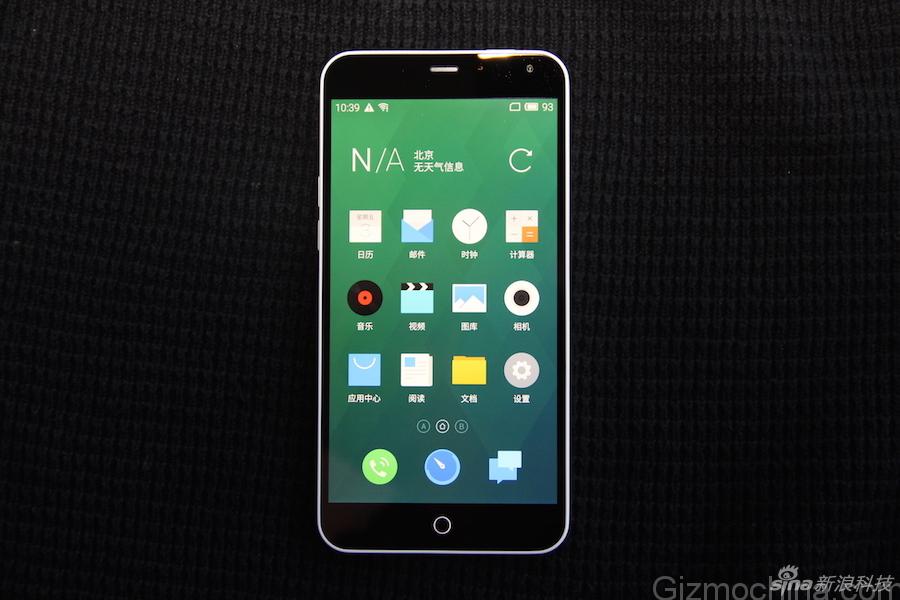
As we have just covered the announcement of the new Blue Charm Meizu M1 Note, which is a new budget devices line by the Meizu. It has some serious bunch of specs, which include 5.5 inches screen, octa-core processor, 13mp and 5mp cameras, 2 GB of Ram, 3,140 mAh battery, 4G LTE and some other great stuff and it is sold for an extremely low price, which is $160.
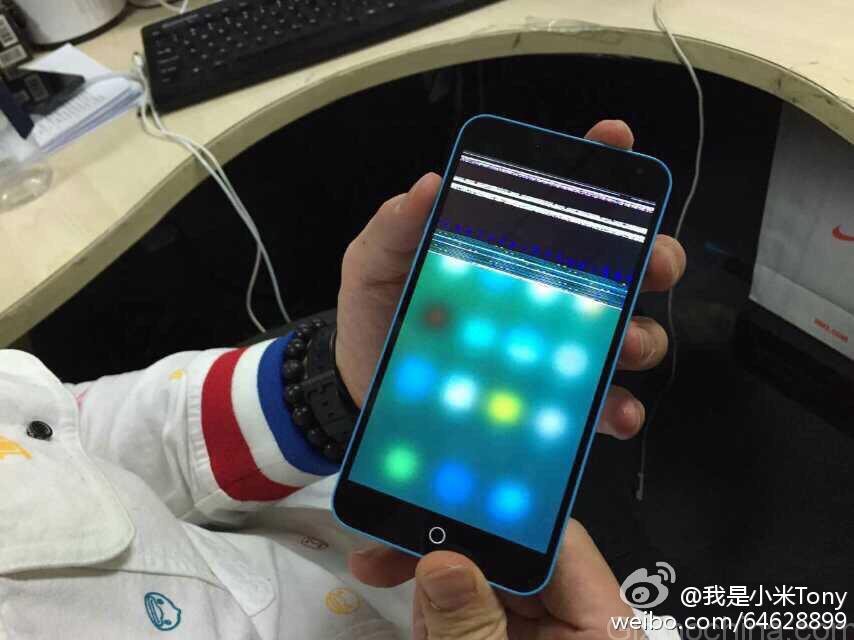
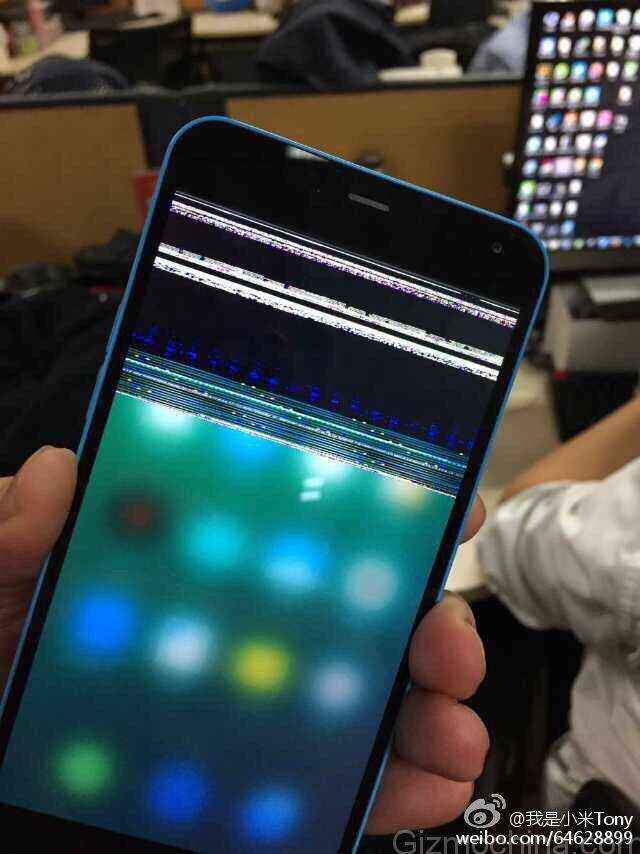
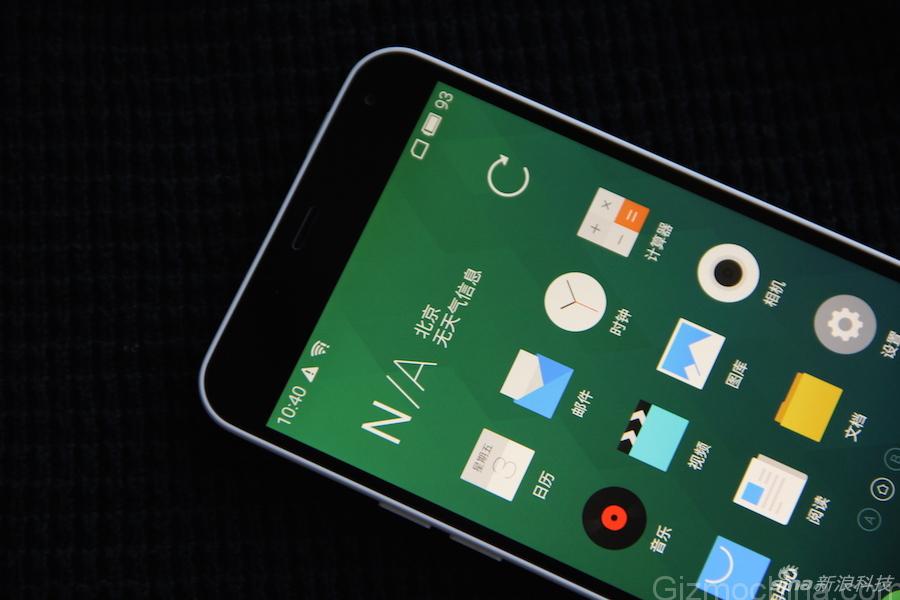
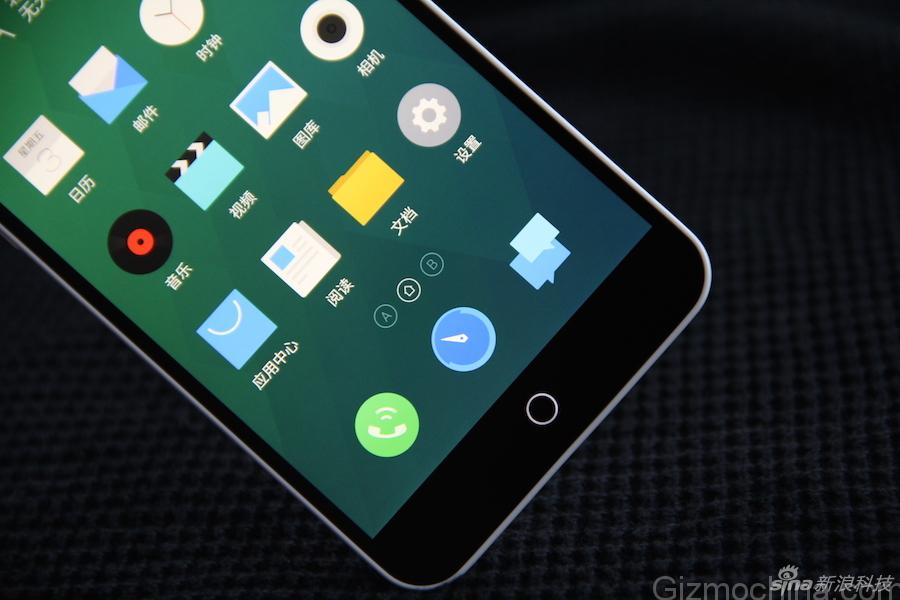
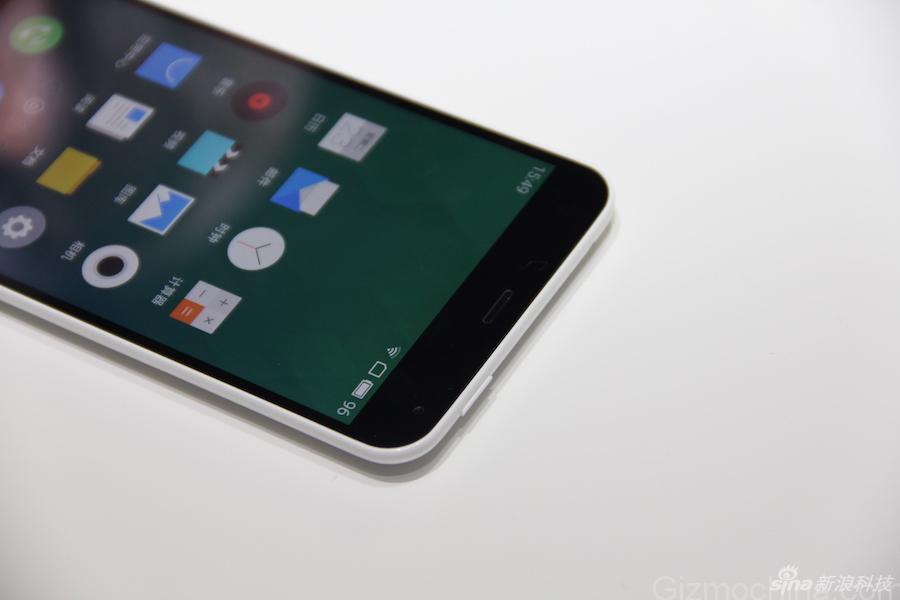
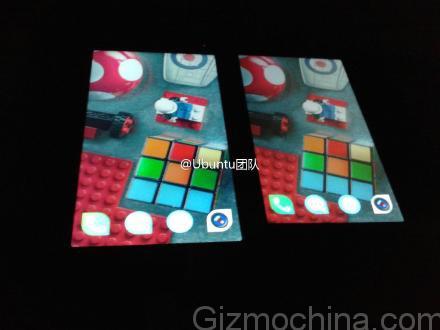
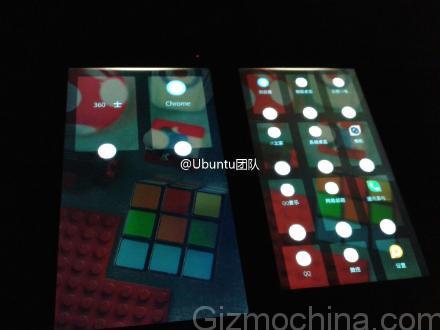
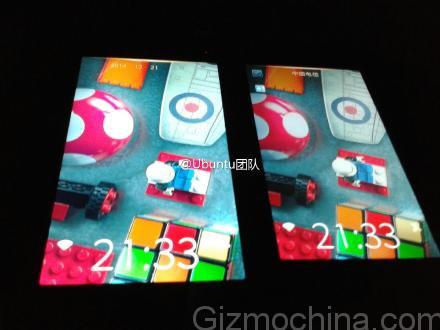
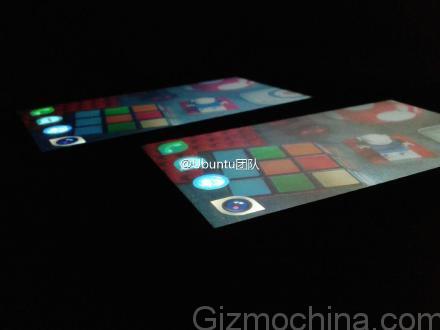
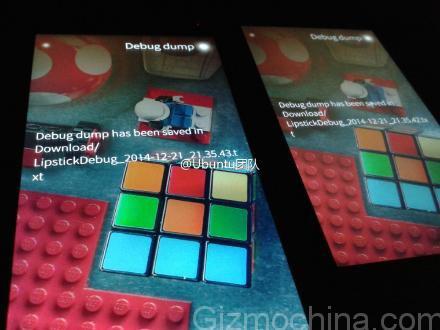
However, no matter how excited you are, it may have some screen issues as the photos below suggest:
It turns out that this particular unit has some screen issues, which definitely affect the whole user experience. We are not sure neither about the number of the devices affected by this issue nor the reason behind it.
Does it show that Meizu decided to use some cheap screen panels for this model? Or maybe it decided to use cheap panels or even other parts for the whole Blue Charm portfolio to make the price as competitive as possible? Let us know what do you think in the social poll or comment section below.
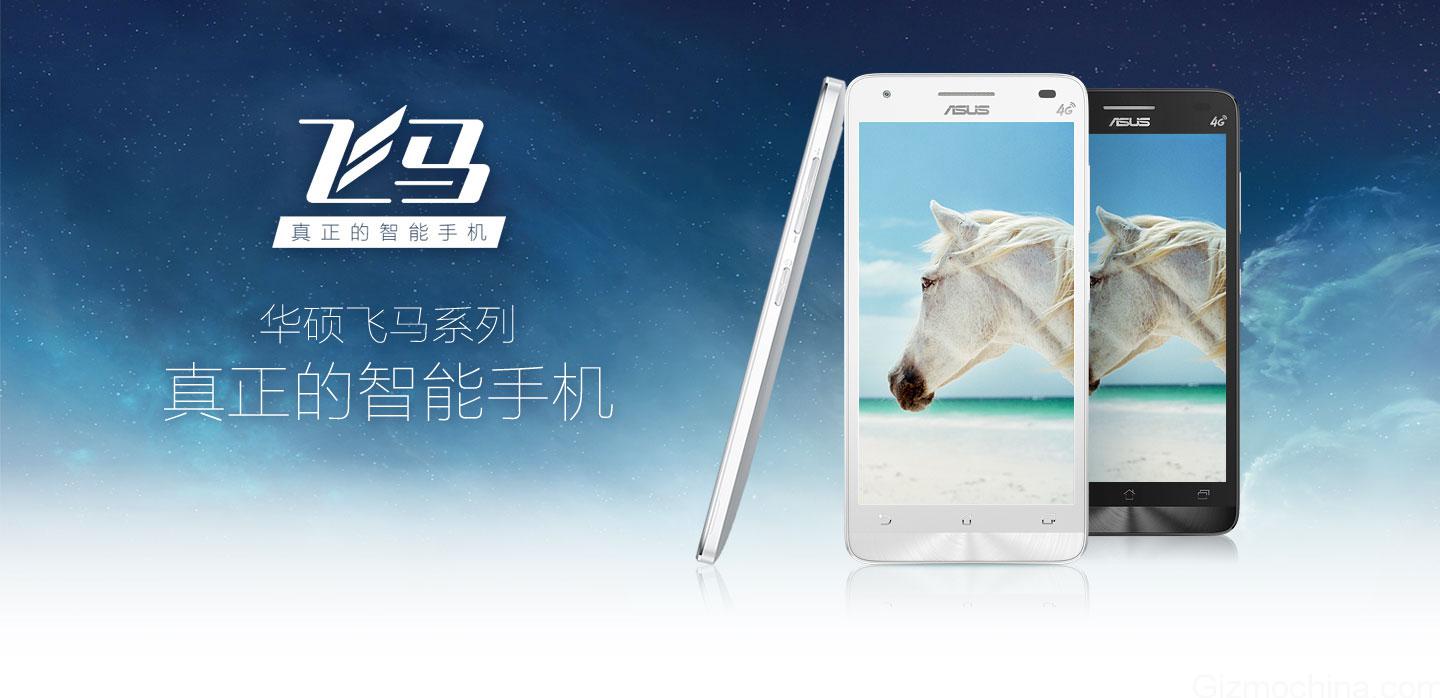
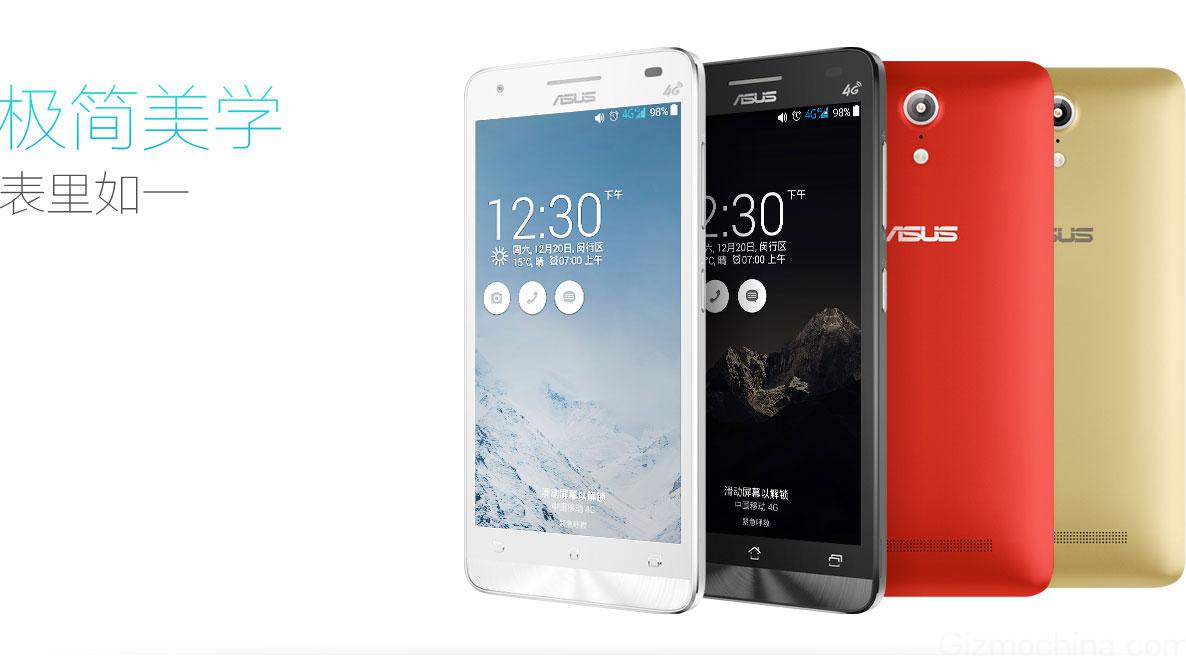
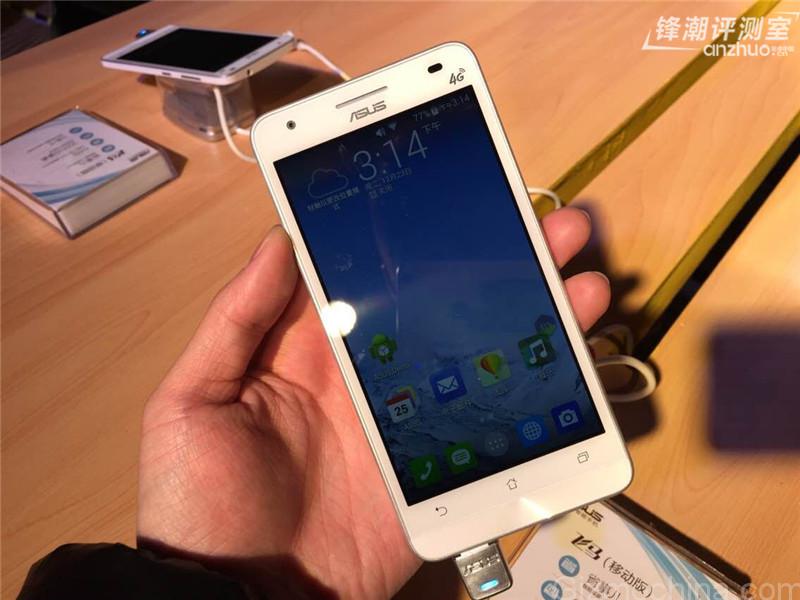
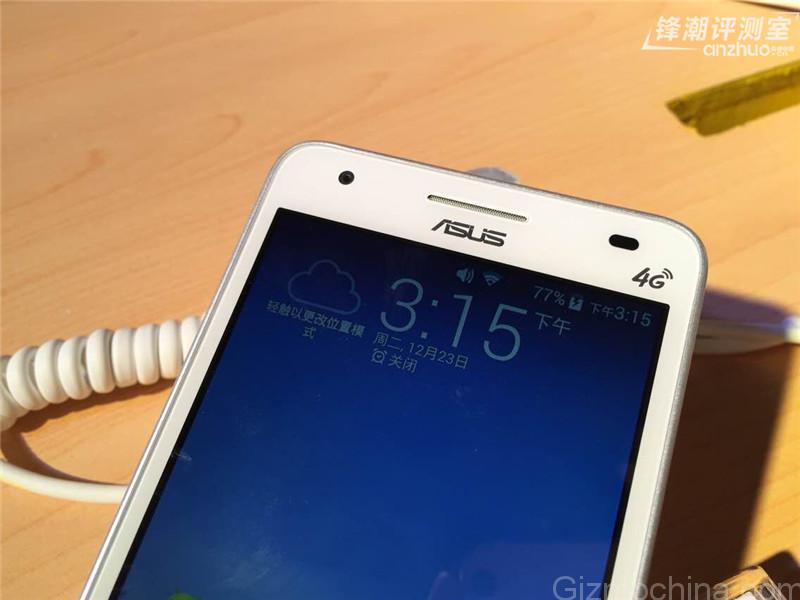
Looks like ASUS is trying to steal the spot light from Meizu today. The Taiwanese giant has just announced a new product in the market called as the ASUS Pegasus X002. Unlike the name which sounds mighty and powerful, the device itself would be a mid-ranger but will be priced aggressively to compete with existing budget offerings like Xiaomi Redmi 1S and the Meizu Blue Charm K52.
Before we move on to the specs, lets take a look at its name. There is something peculiar about the name Pegasus especially for ASUS. Not many would know that the company name, ASUS is inspired by Pegasus, the winged horse from Greek Mythology that depicts wisdom and knowledge. So, even though this is a mid-ranger, the company could be looking to take over the market with this cheap yet powerful offering.
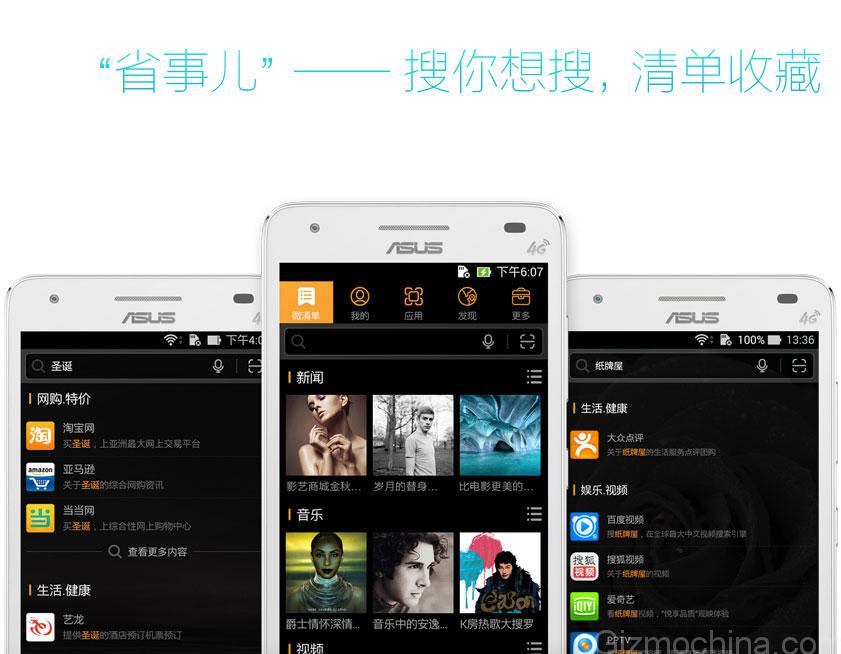
As for the tech specs, the ASUS Pegasus comes with a 5-inch 1280 x 720p display. There’s a 64-bit 1.5GHz MT6732 processor powering the device along with 2GB RAM and 16GB internal storage which can be further expanded via MicroSD. At the back, there is an 8MP camera sensor while up front, there is a 5MP shooter. The rear shooter comes with ultra-picture quality mode and can synthesize a number of pictures together to form an ultra-high resolution 30MP image. The phone supports a 2500 mAh battery on board. The Pegasus runs on Android 4.4 KitKat OS with Zen UI on top. The Zen UI is smart enough to place your most used apps at the right spot which will save you some time. It supports 4G TD-LTE / TD- CDMA and GSM networks and supports dual SIM dual standby.
ASUS has priced the Pegasus aggressively and the phone will be available for sale for just 799 Yuan which comes to around $129. Pre-orders start today!
This is a great price for a phone with such features and will compete directly with smartphones like Xiaomi Redmi 1S. However, the company has not announced any plans for Pegasus release outside of China but we expect more details soon.
If Pegasus does make it to international markets, do you think the phone can take on Xiaomi’s Redmi 1S which has been very popular among budget customers? Another important point to consider will be its availability, whether the phone will be available without any registration or will it follow Xiaomi’s model. There are lots more questions that needs to be answered, but lets wait and watch.
[socialpoll id=”2240299″]
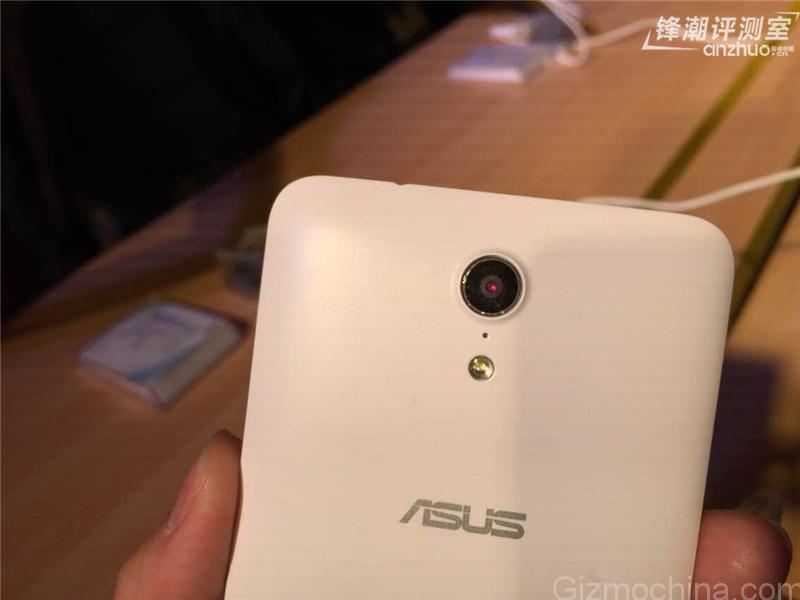
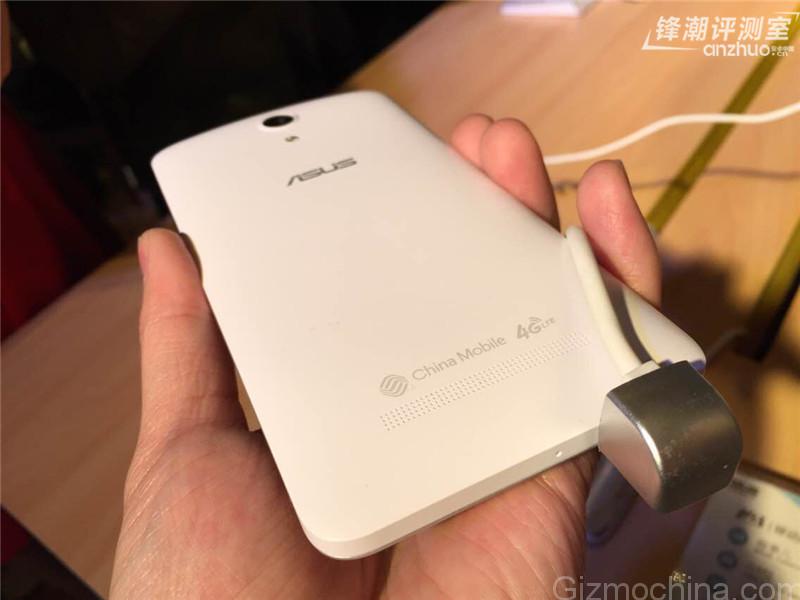
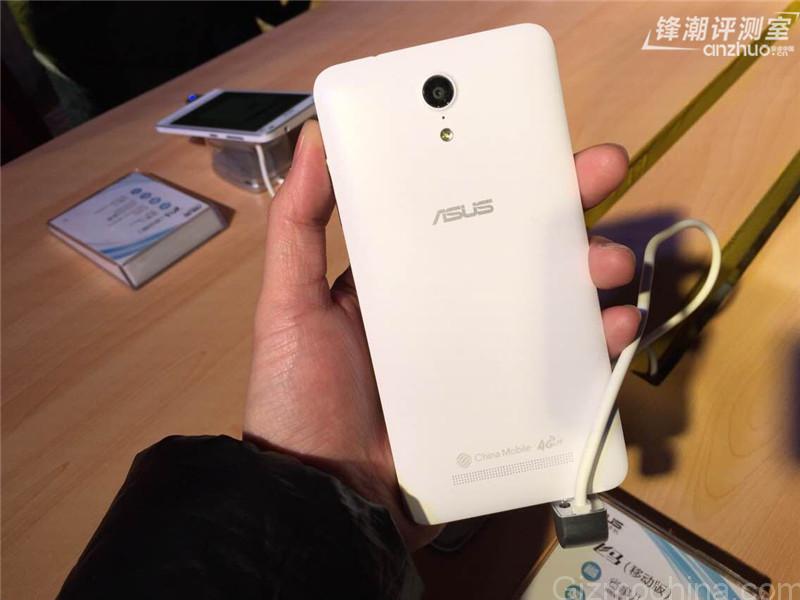
Meanwhile take a look at the hands on pictures of the ASUS Pegasus below.
While so many manufacturers are releasing new devices, the competition in China gets more and more intense. In the past few months manufacturers like Meizu, Huawei, Oppo released their respective flagship devices and they managed to change some market trends. Also, the competitors try to occupy the budget devices department as well as some companies like Meizu is expected to release a new Blue Charm budget phones line during the conference today. The Xiaomi, the biggest manufacturer in China may have felt the growing competition level and it may be preparing some new devices.
Therefore, the company is expected to have their own event on January 15th and launch even more than one product.
First, Xiaomi is said to release previously the second generation Red Rice device, which was already spotted in TENNA (Chinese communications office, equivalent to the FCC in the U.S.). The device’s description provided that it will have 4.7 inches 720p screen, it will be equipped with Snapdragon 410 MSM8916 64bit quad-core 1.2GHz processor, 1GB of memory, 8GB of storage, 8mp camera on the back and 2mp shooter on the front, 2200mAh battery.
Right now we have some more interesting news. The previously leaked possible Xiaomi Mi5 right now is referred to the new name – Xiaomi Mi4s.
As you can see from the above picture, the device spots near bezel less design, which seems to be a trend, brought by the Meizu. What is more, this exposure of the possible Xiaomi Mi 4s is characterised to have 5.7-inch screen (other sources claim that it may spot a more compact – 5.5 inches screen), which will be covered by the sapphire glass and spot a 2k resolution (packed in a 2.5D screen), Snapdragon 805 chip (other sources claim 810 version), will have a higher megapixel camera, will be running MIUI based on Android5.0 and it may have a support for fingerprint recognition.
All in all, as usual to the Xiaomi, it will be a heck of a device and it will be ready to shake up the market very seriously. We think that device will be a success again as it will have the latest and greatest hardware possible at the bargain price.
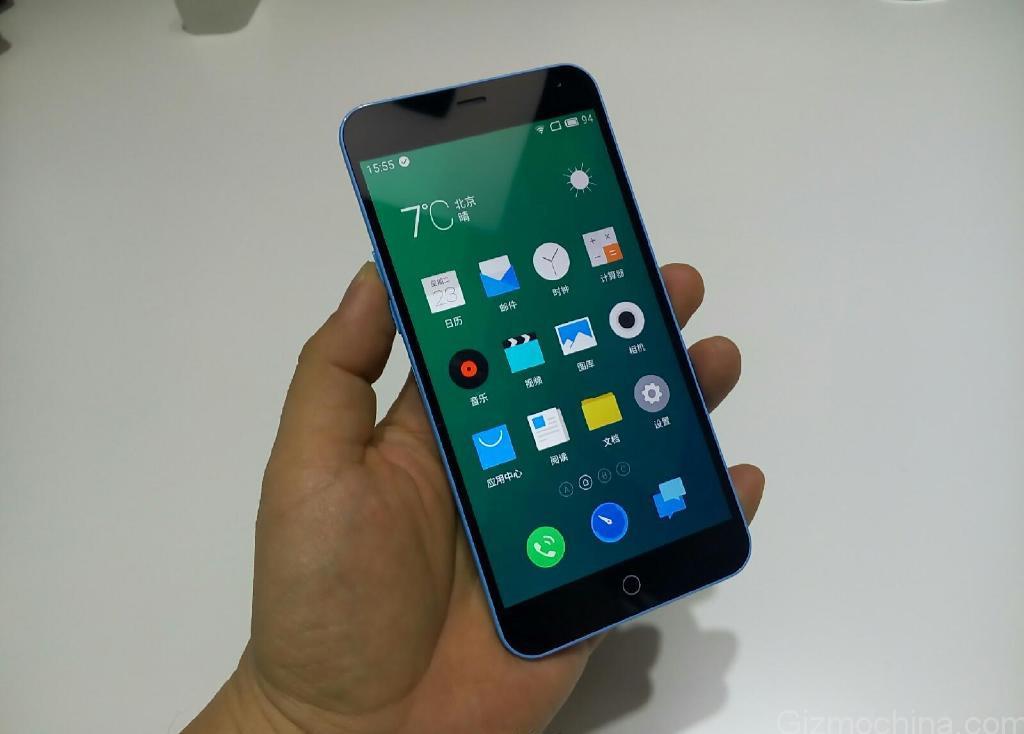
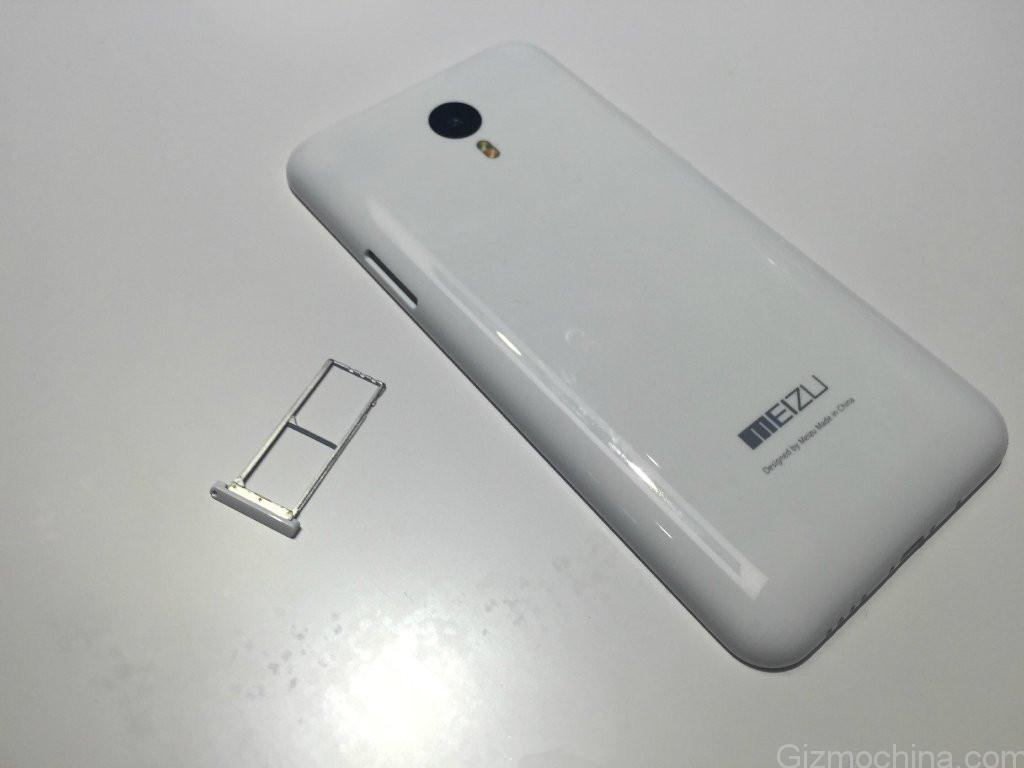
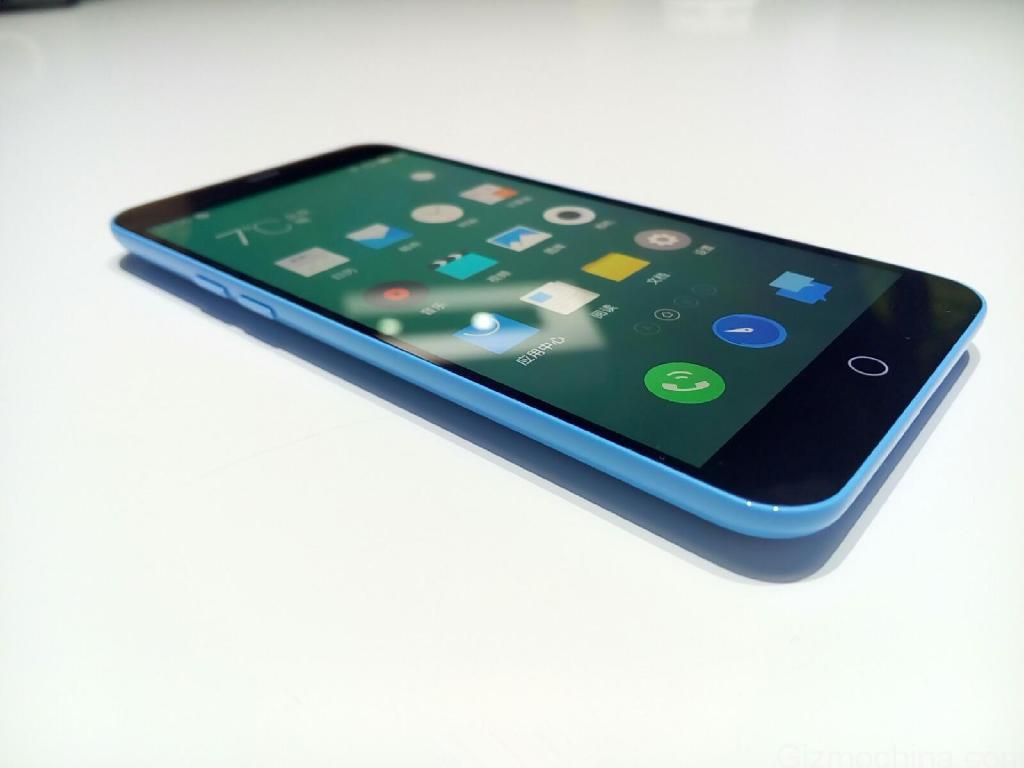
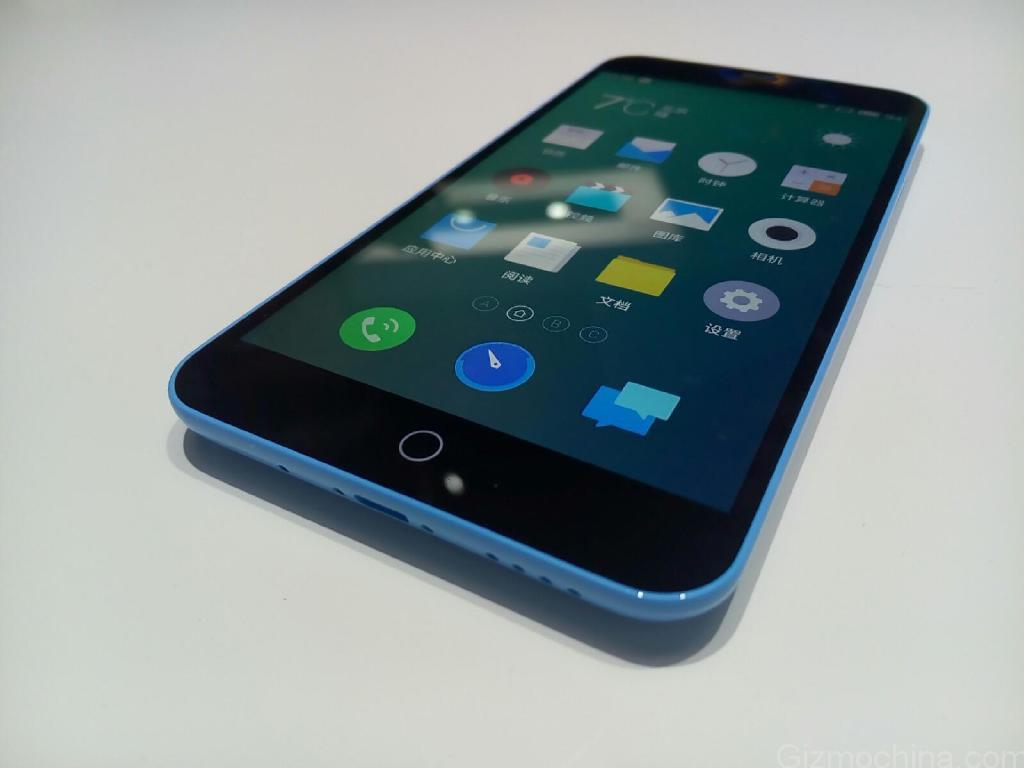
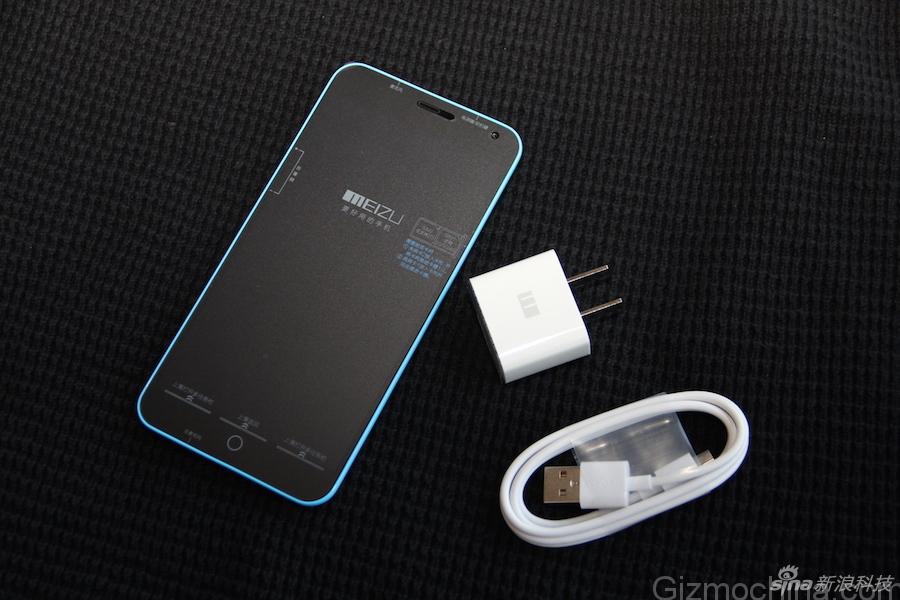
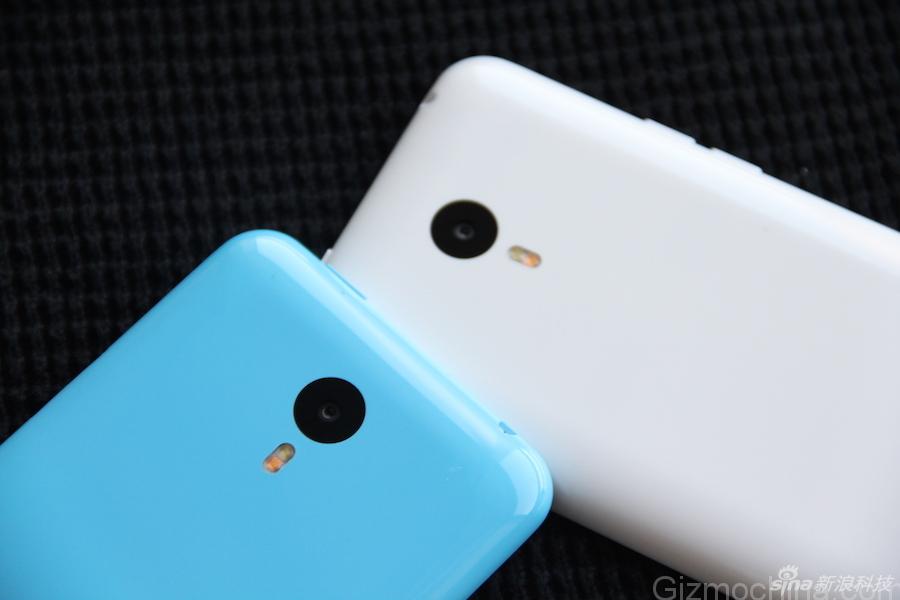
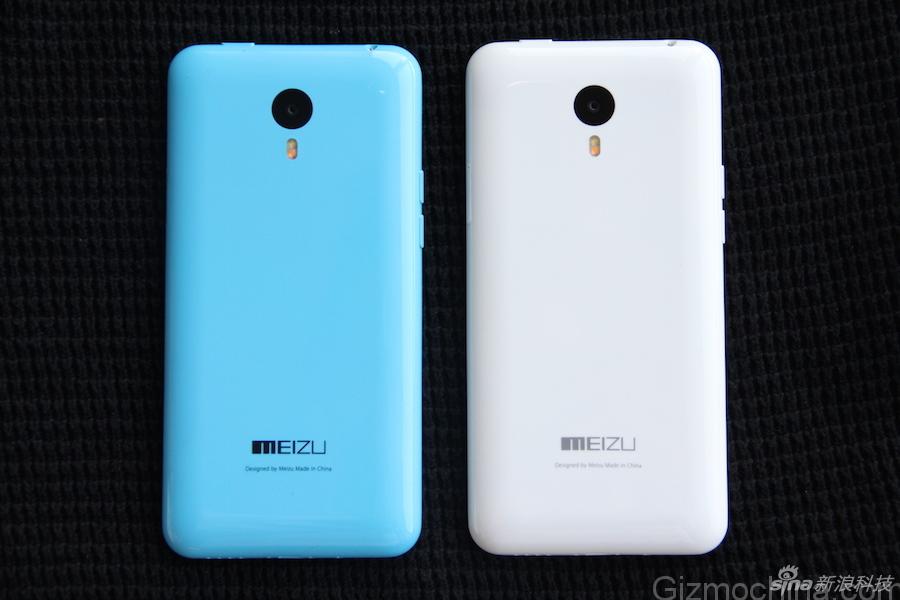
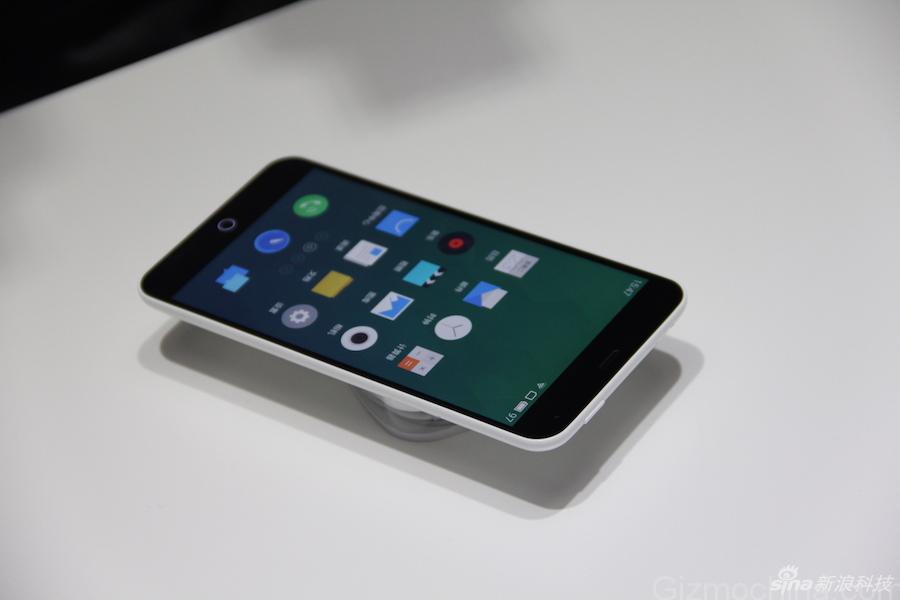
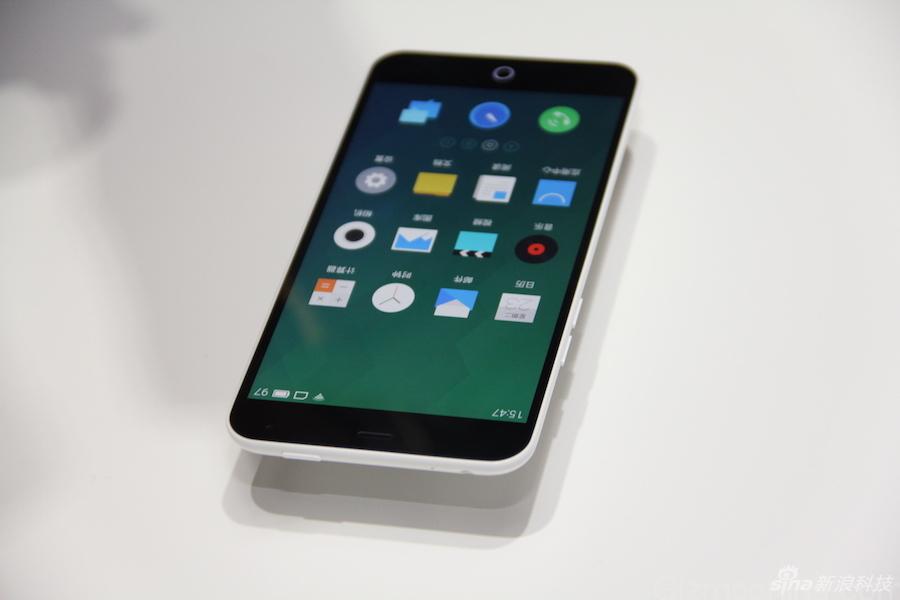
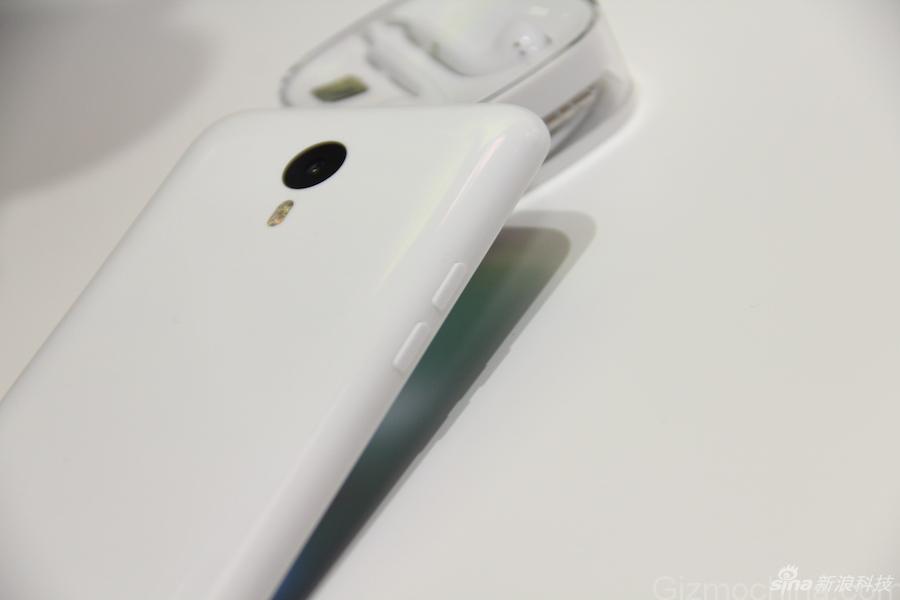
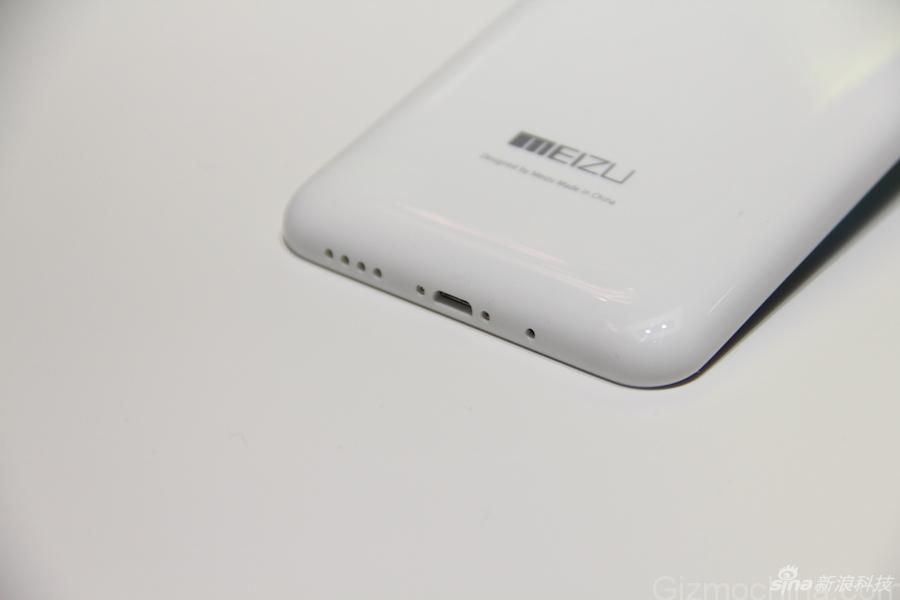
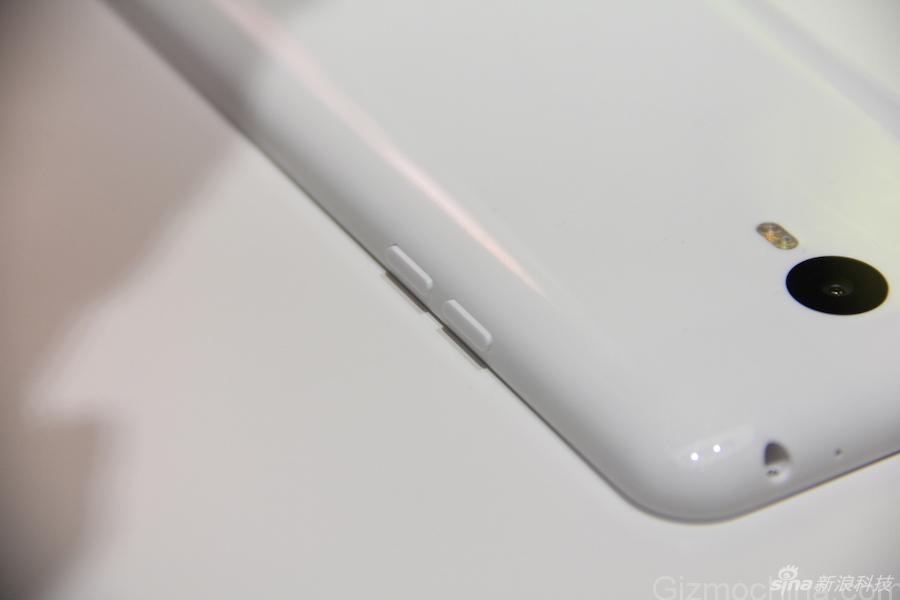
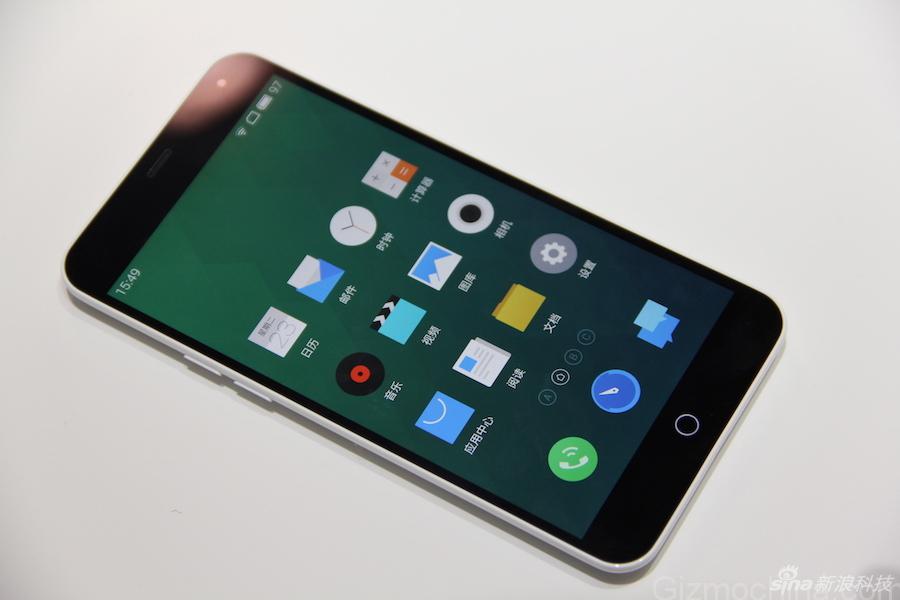
Meizu Blue Charm brand is official. We have literally waited for weeks for this launch! It started with two leaked Meizu devices early December and later on, after some investigation we realized that the Blue Charm brand is much bigger than we realized. Today, the company has finally unveiled the brand and its time to look at the pick of the announcements, the Meizu Blue Charm Note.
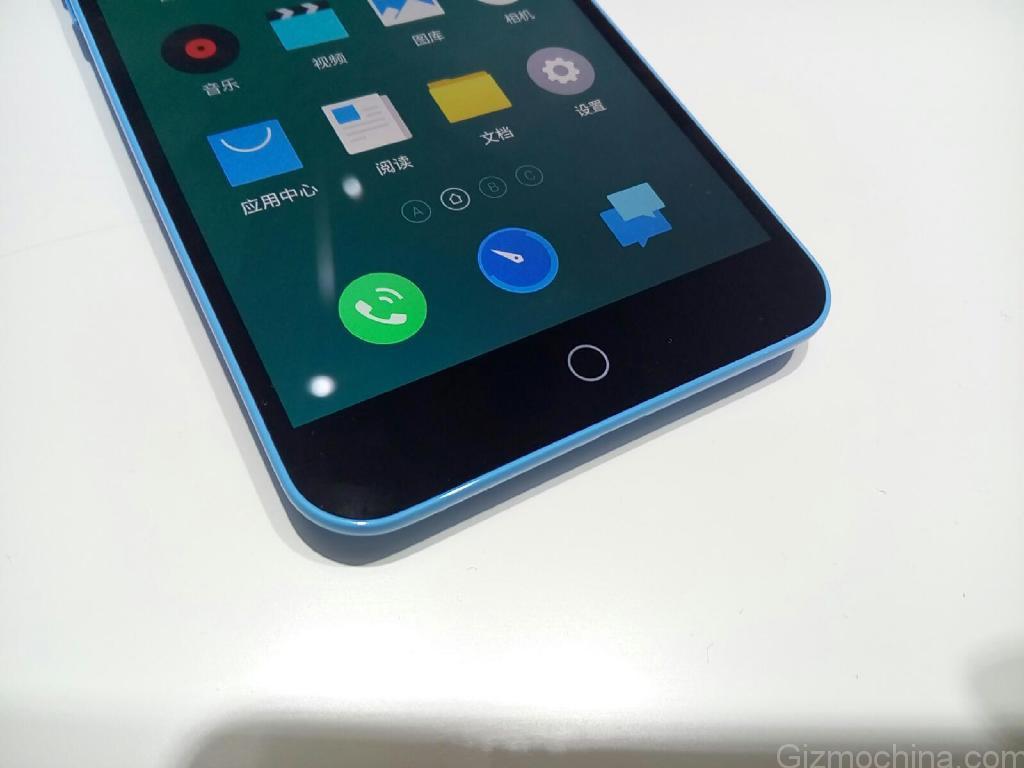
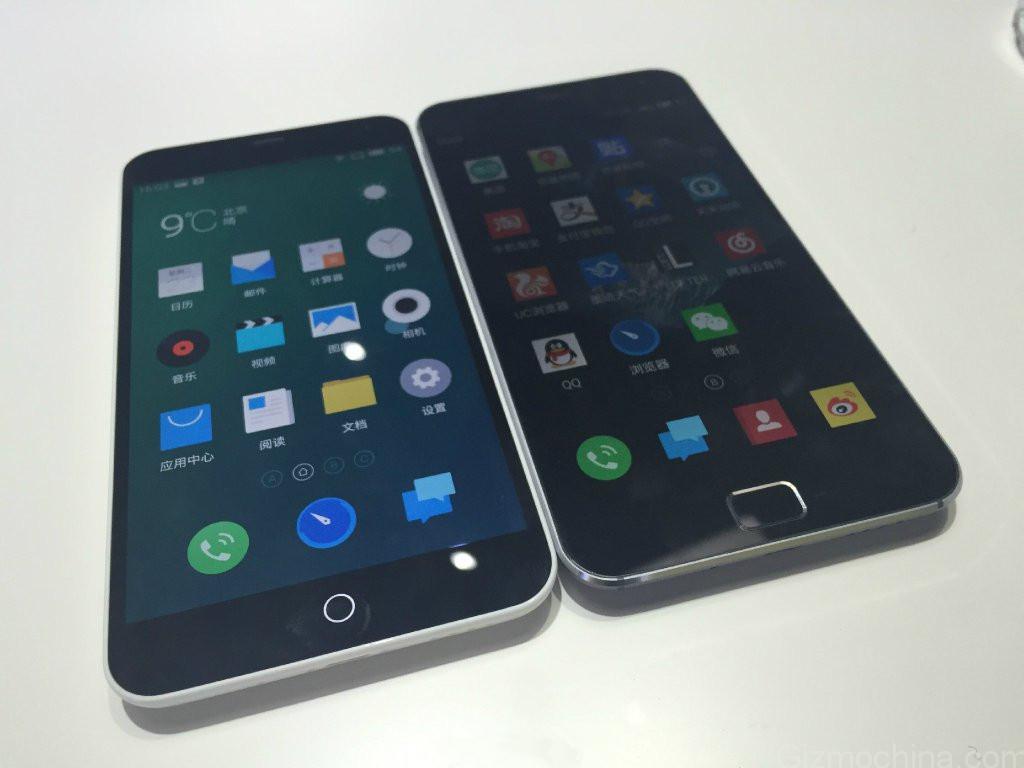
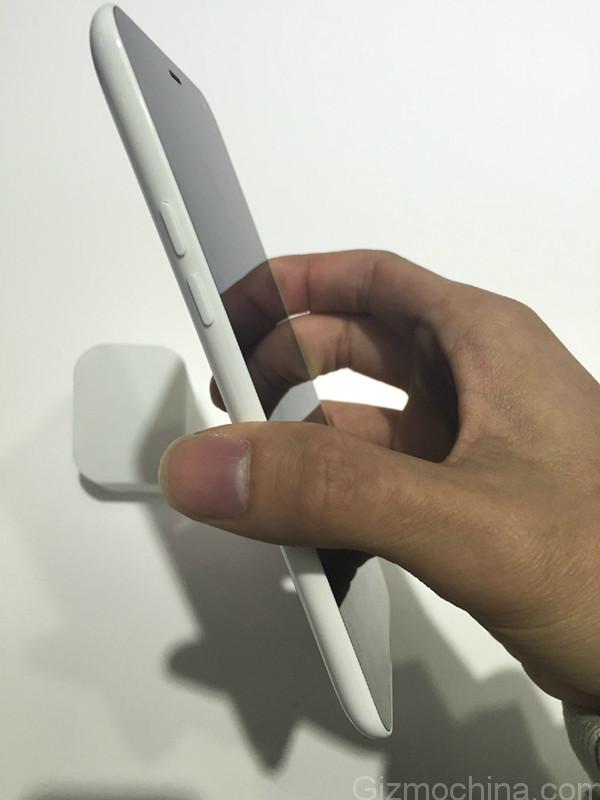
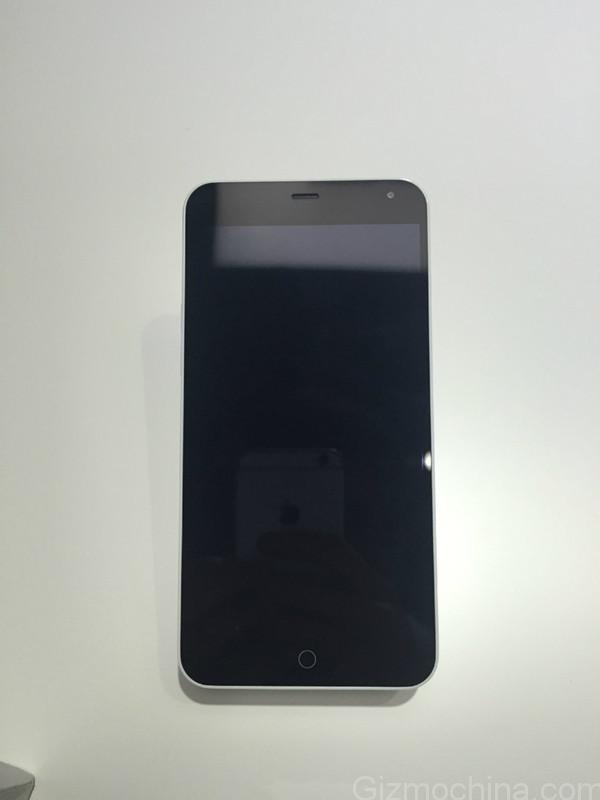
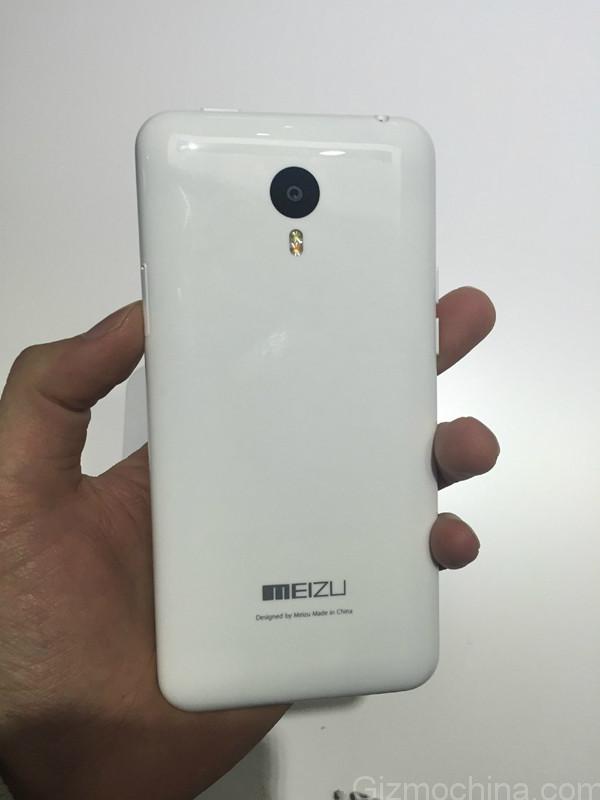
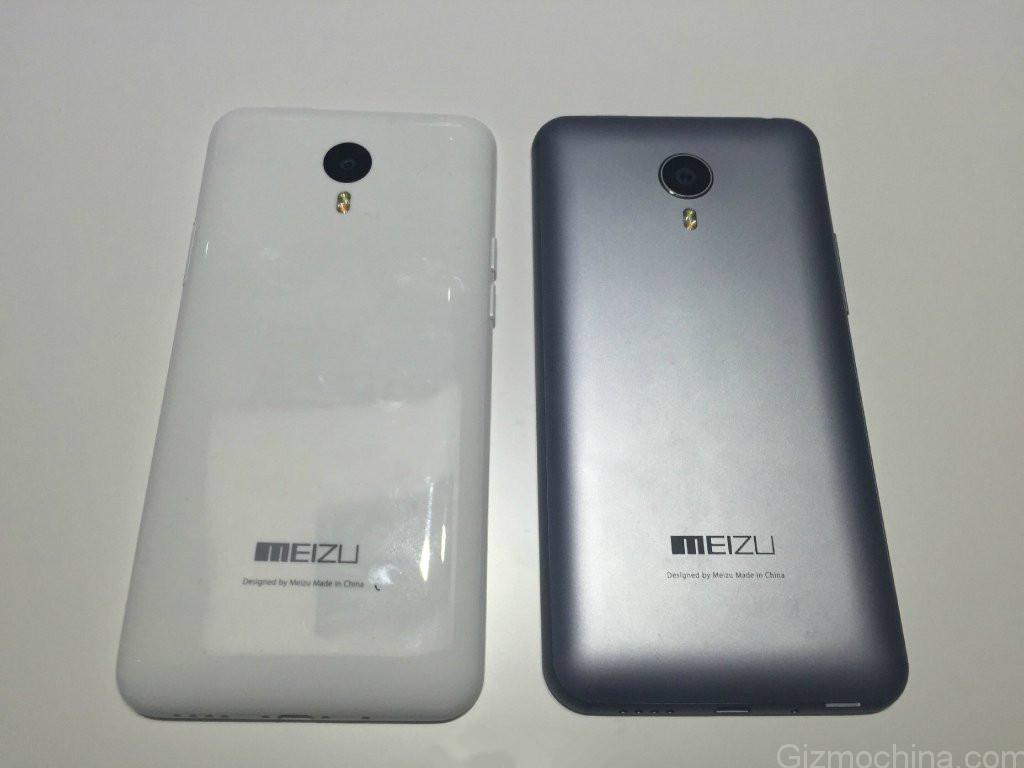
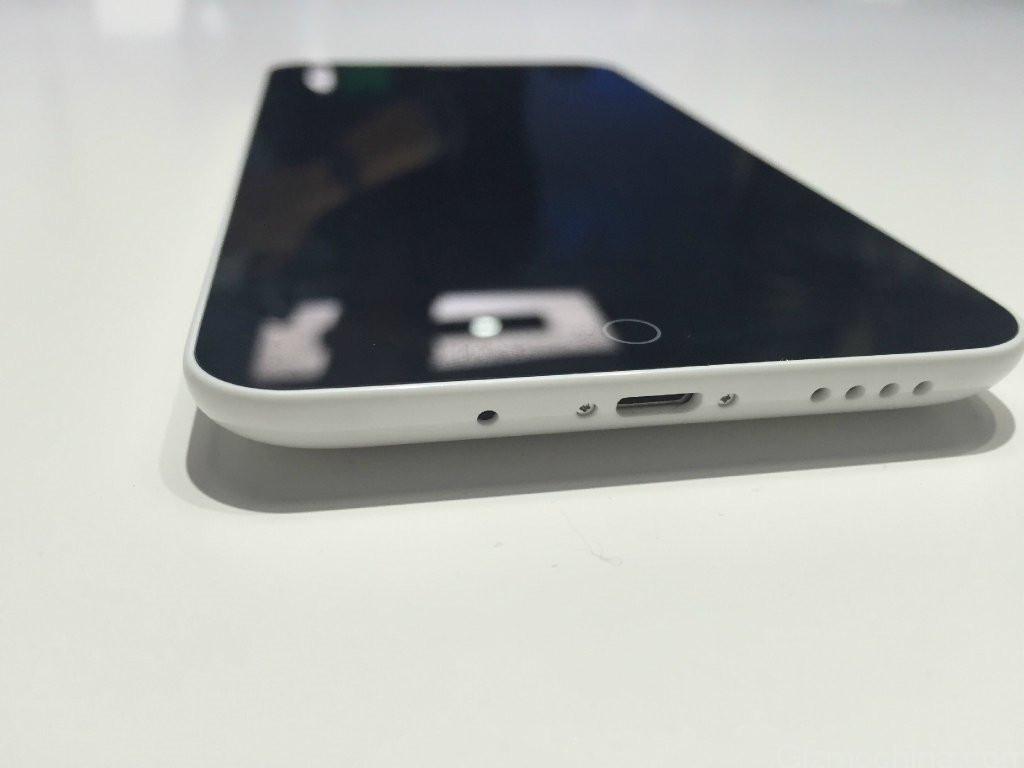
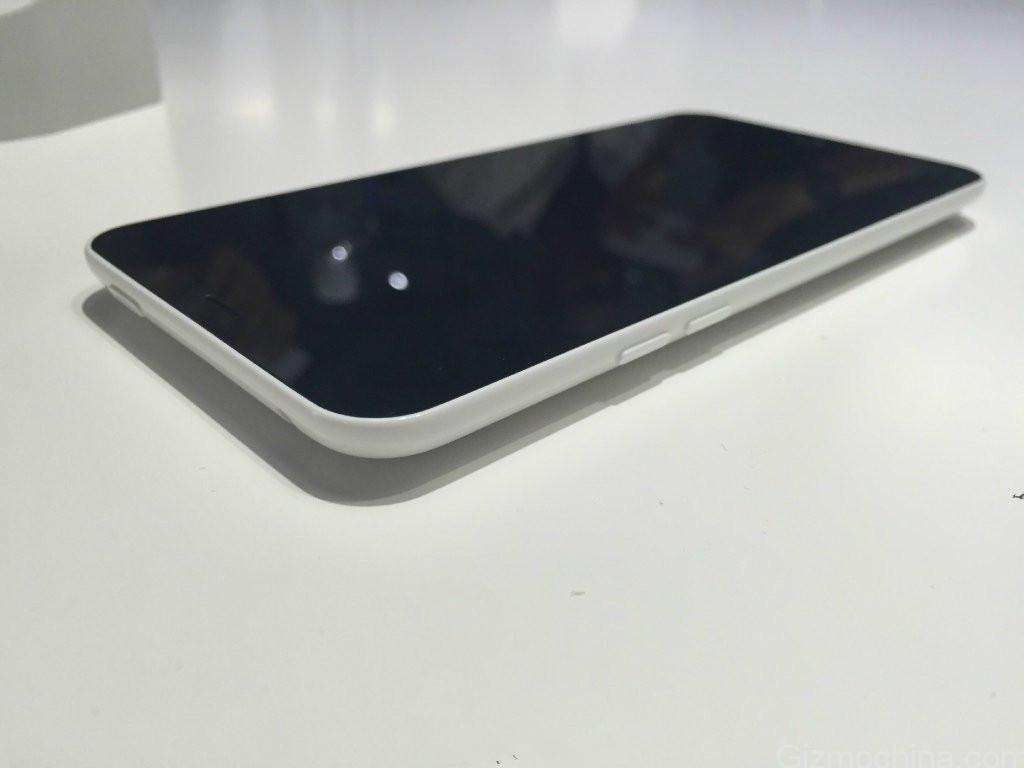
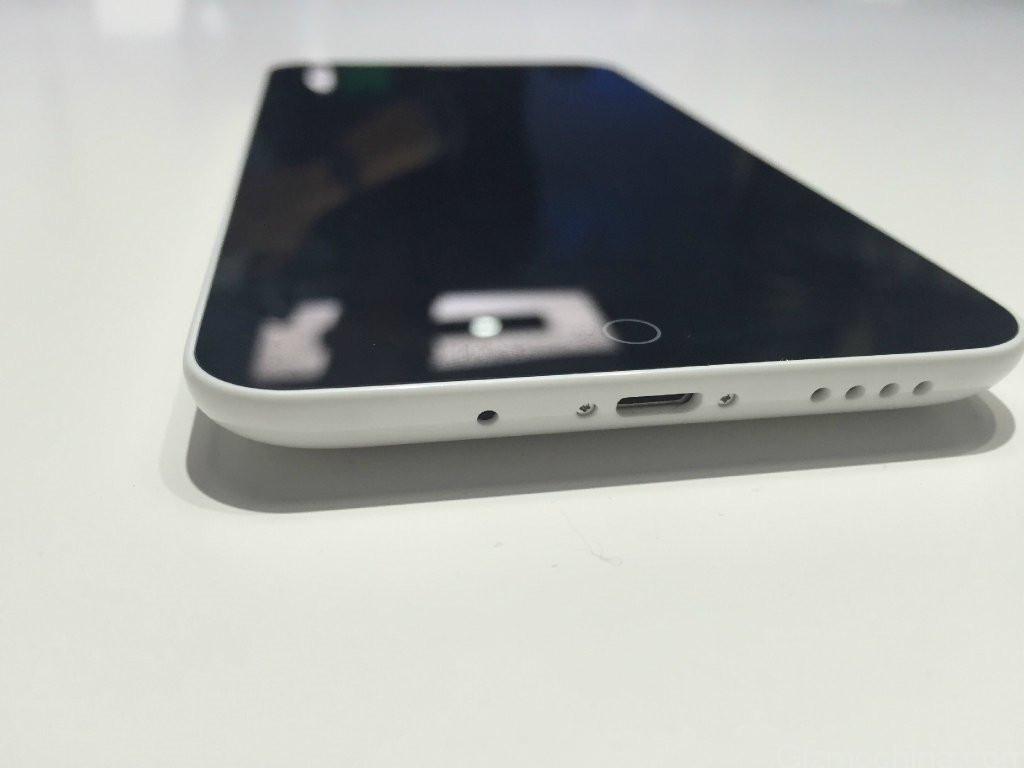
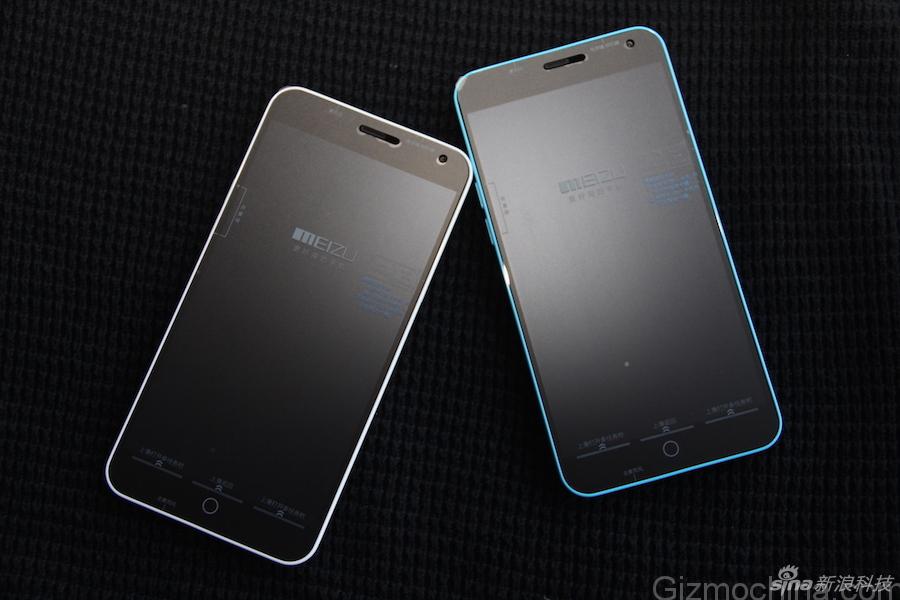
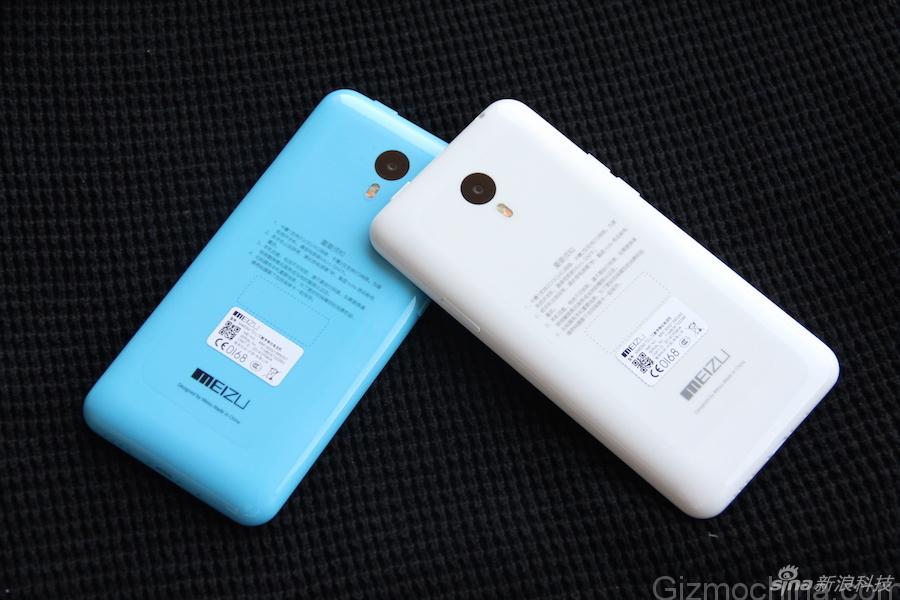
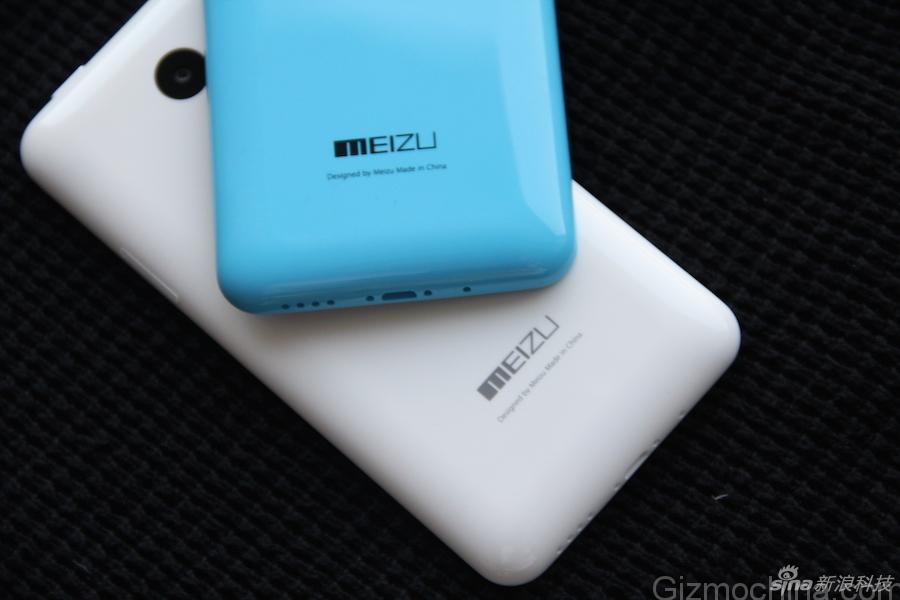
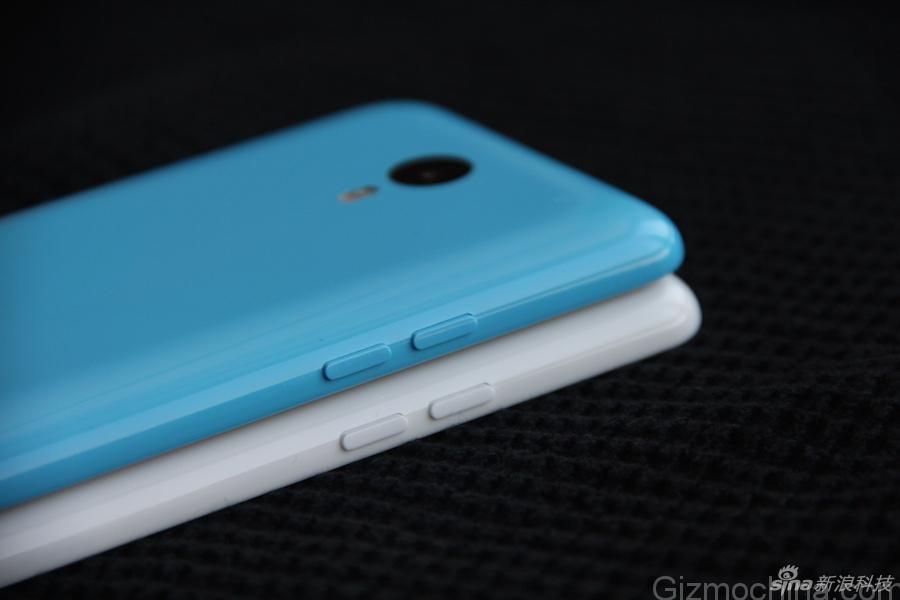
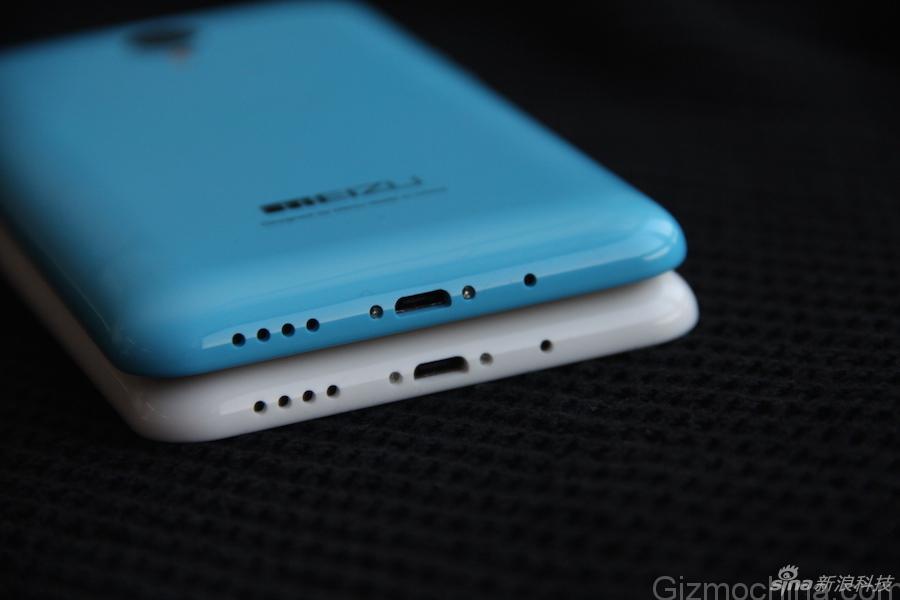
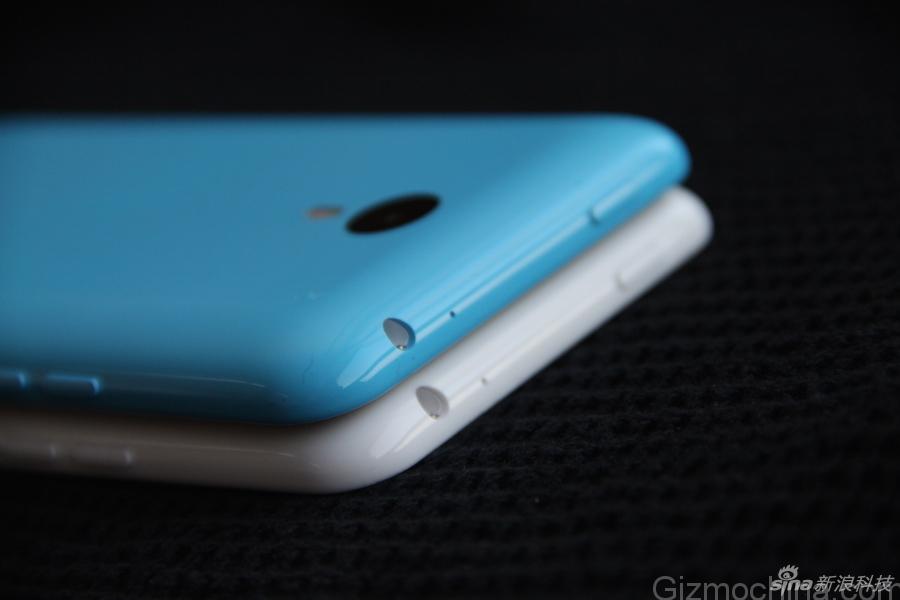
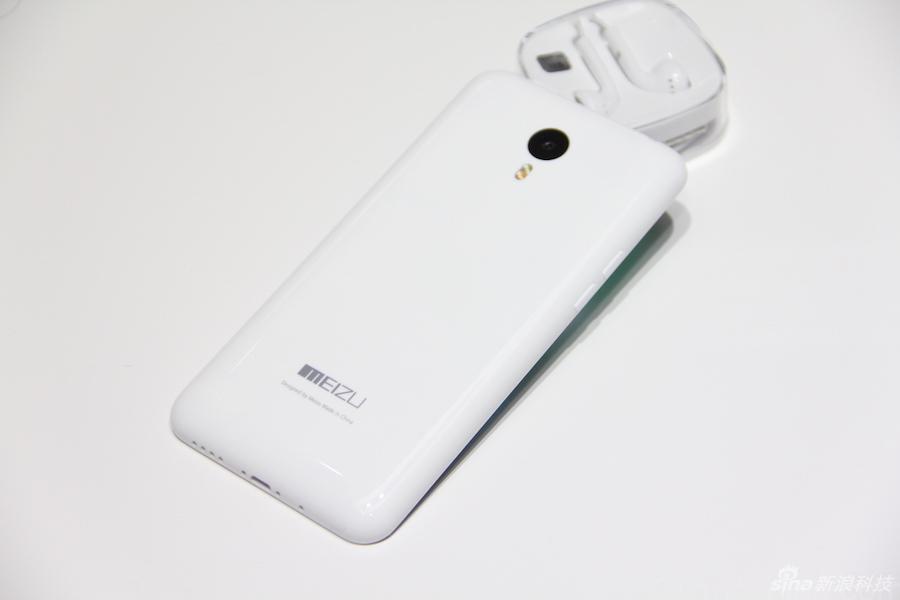
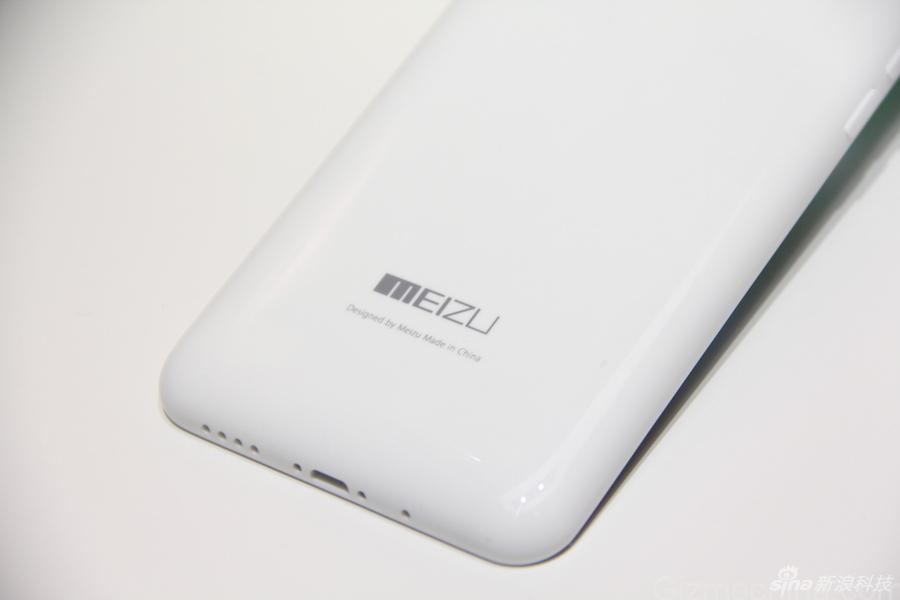
The phone features a unibody design with practically no connection gap. Its 8.9 mm thin and weighs just about 148 grams. The body is made of the same material as the iPhone 5C. Meizu claims that the overall structure of the phone with its gentle curve at the back helps it better fit in the user’s palms.
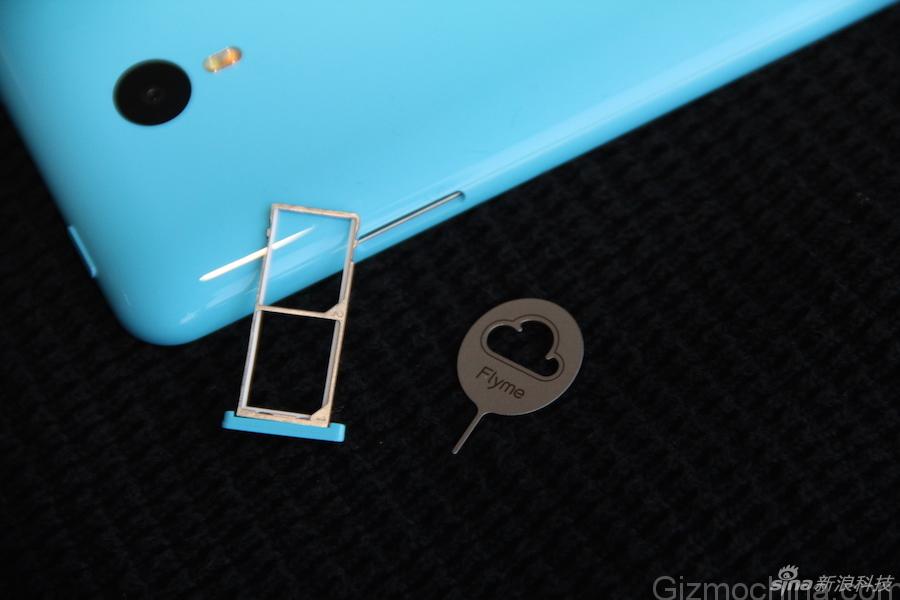
Most of the specifications of the device is the same as we predicted. So, the Meizu M1 Blue Charm Note comes with a 5.5-inch 1920 x 1080p resolution display. Inside, there is a 64-bit 1.7GHz octa-core Mediatek MT6752 processor with 2GB RAM and 16/ 32GB internal storage options (no MicroSD expansion slot) . At the back, there is a 13MP camera capable of recording 1080p videos as well as slo-mo videos at 120fps. Up front there is a 5MP shooter. Connectivity options include dual band Wi-Fi, Bluetooth, GPS + Glonass navigation and 4G LTE support. Inside, there is a 3,140 mAh battery which should be enough to power the device for an entire day.
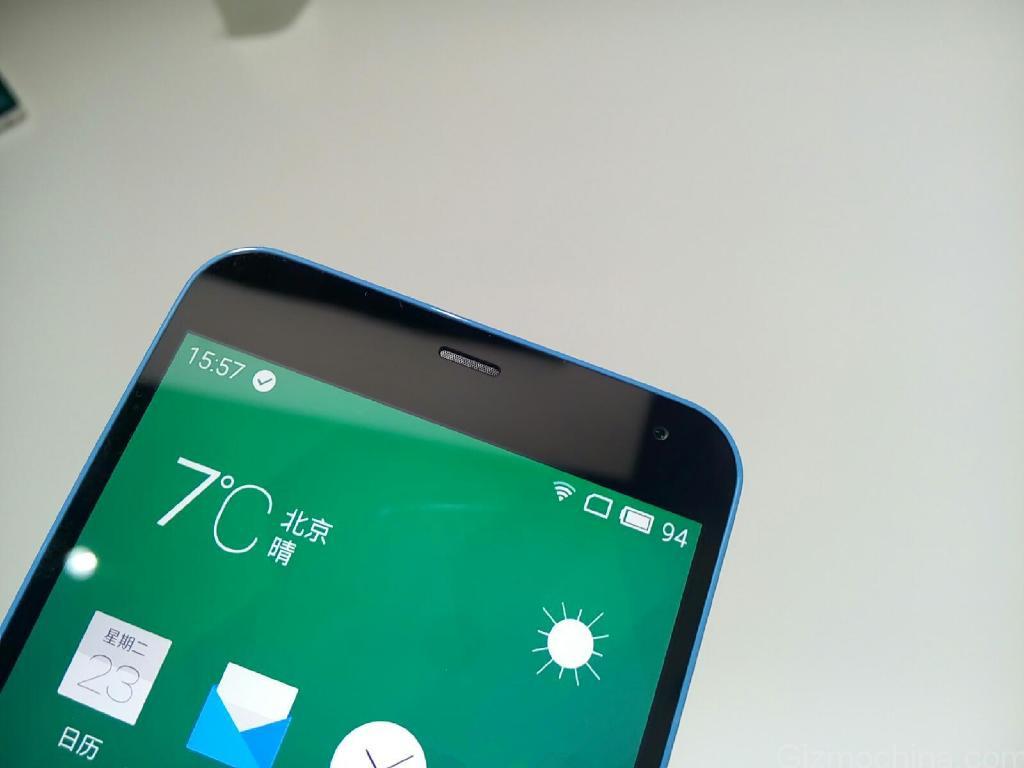
Unlike a rumor which said that the phone may ditch Flyme UI in favor of a new Jolla Sailfish like launcher, the company today confirmed that the Blue Charm Note will come with Meizu’s traditional Fyme 4.1 UI running on top of Android 4.4 KitKat.
The 16GB model is priced at 999 Yuan which comes to around $160, while the 32GB model is priced at 1299 Yuan which comes to around $208. Like we expected, the Meizu Blue Charm Note turned out to be good. While the pricing is slightly on the higher side as compared to competitors like Xiaomi Redmi Note, the overall specifications is much better then the Xiaomi device, which definitely gives this phone an edge over others. The 16GB model is especially a steal!
The 64-bit processor with 2GB RAM, LTE support and the large 5.5-inch display with 1080p resolution makes this phone a beast in its price range. Moreover, Meizu has built up a reputation of being a quality focused manufacturer and is considered among the likes of Xiaomi. So, the Meizu Blue Charm Note will definitely pose a threat to other mid-range phones currently available in the market.
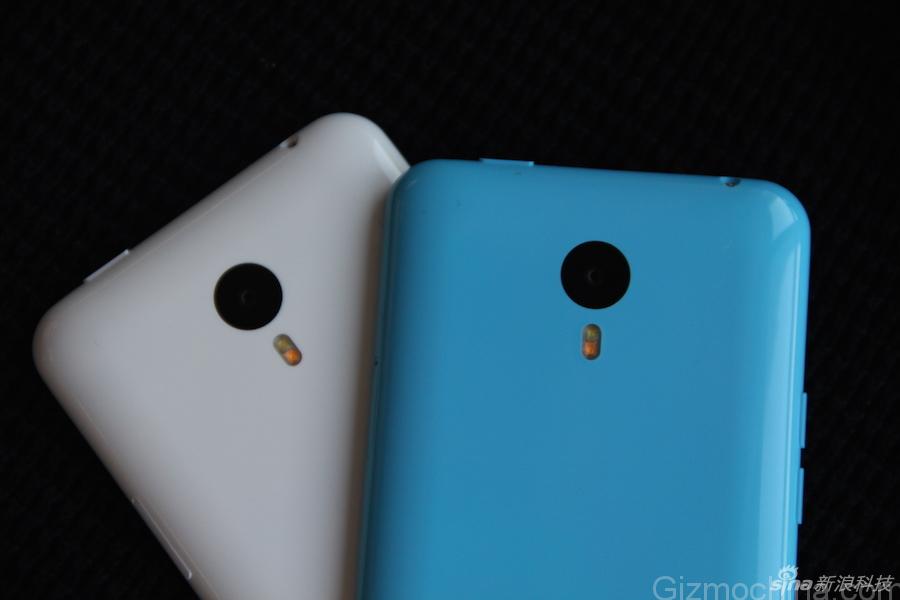
The device will be available in 5 bright colors — green, blue, white, yellow and pink. Meizu’s online store as well as JD.com will start accepting pre-orders from 5 PM today and will start selling the device from December 30.
Here’s the official intro video of the Meizu Blue Charm Note!
https://www.youtube.com/watch?v=3SzxK_Ug1Go
[socialpoll id=”2240280″]
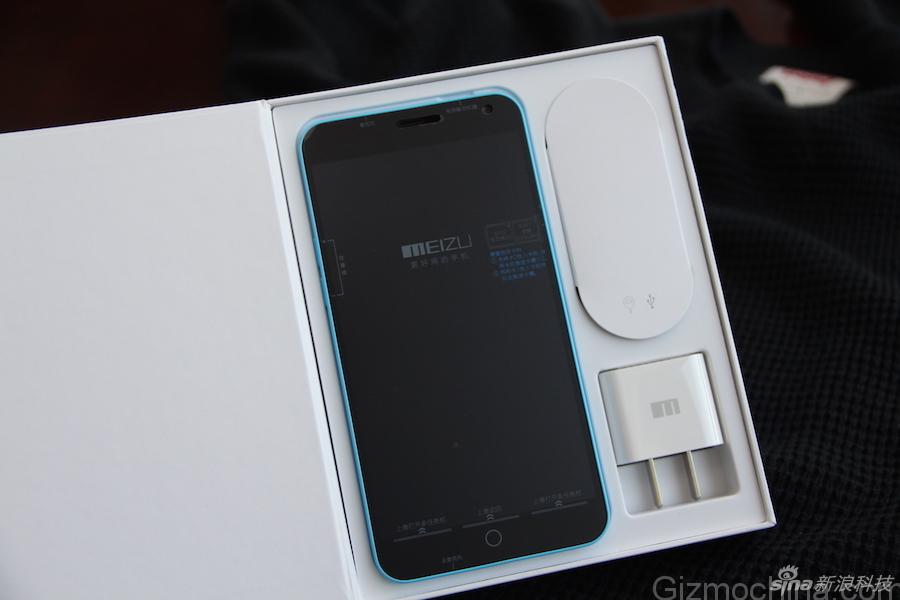
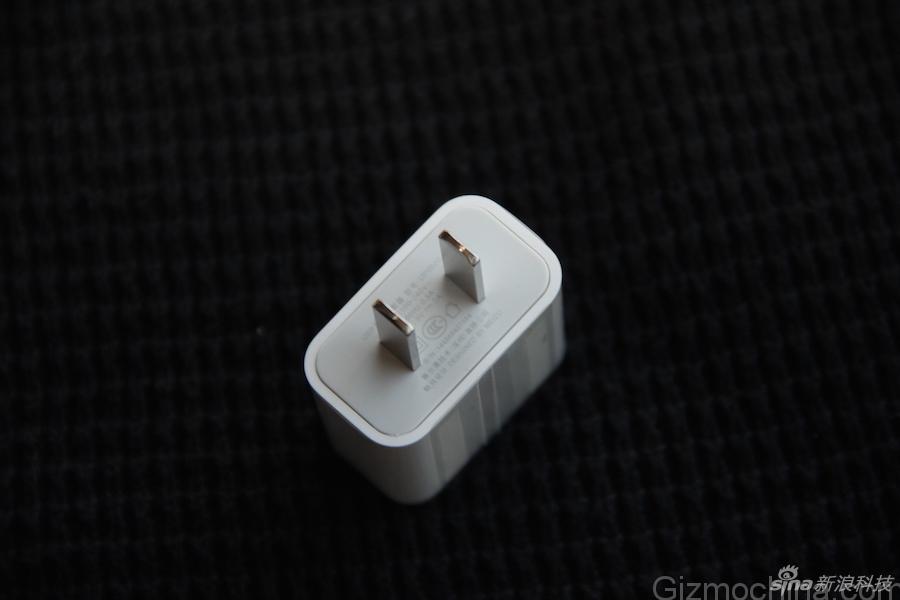
Meanwhile, we have added a number of pictures of the new Blue Charm Note below. Enjoy!
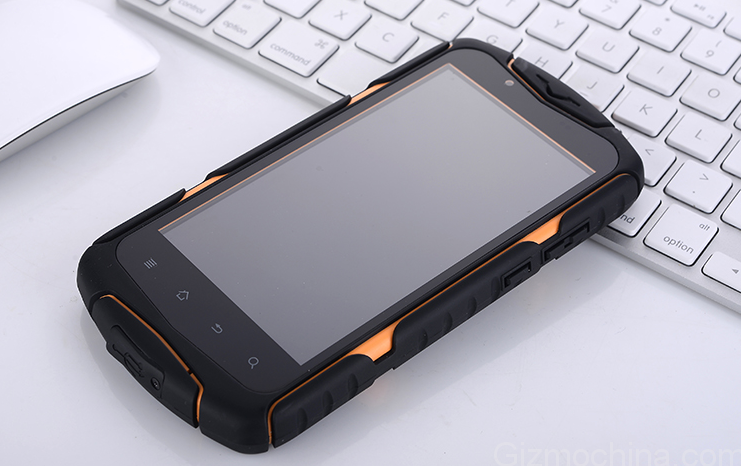
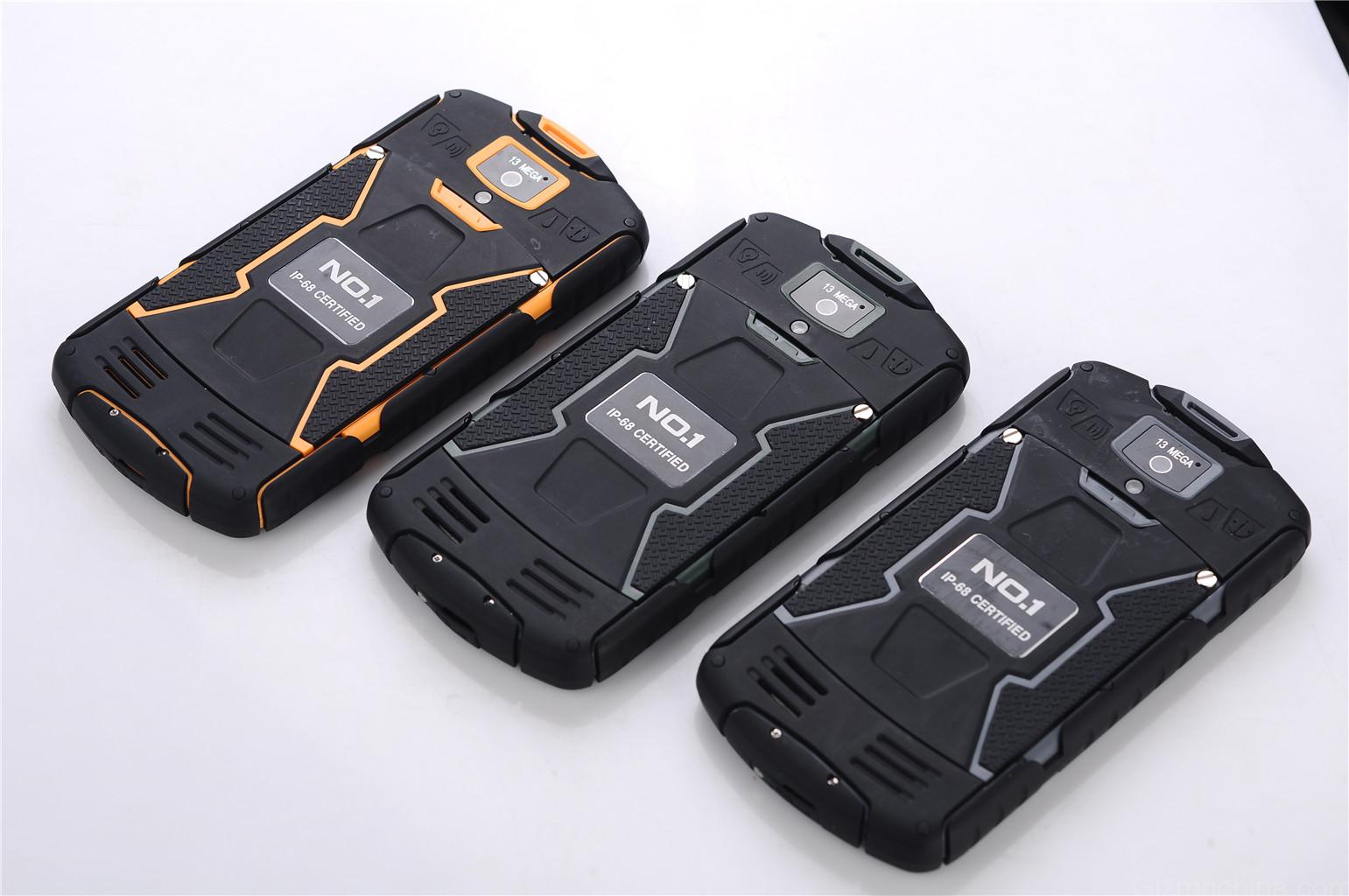
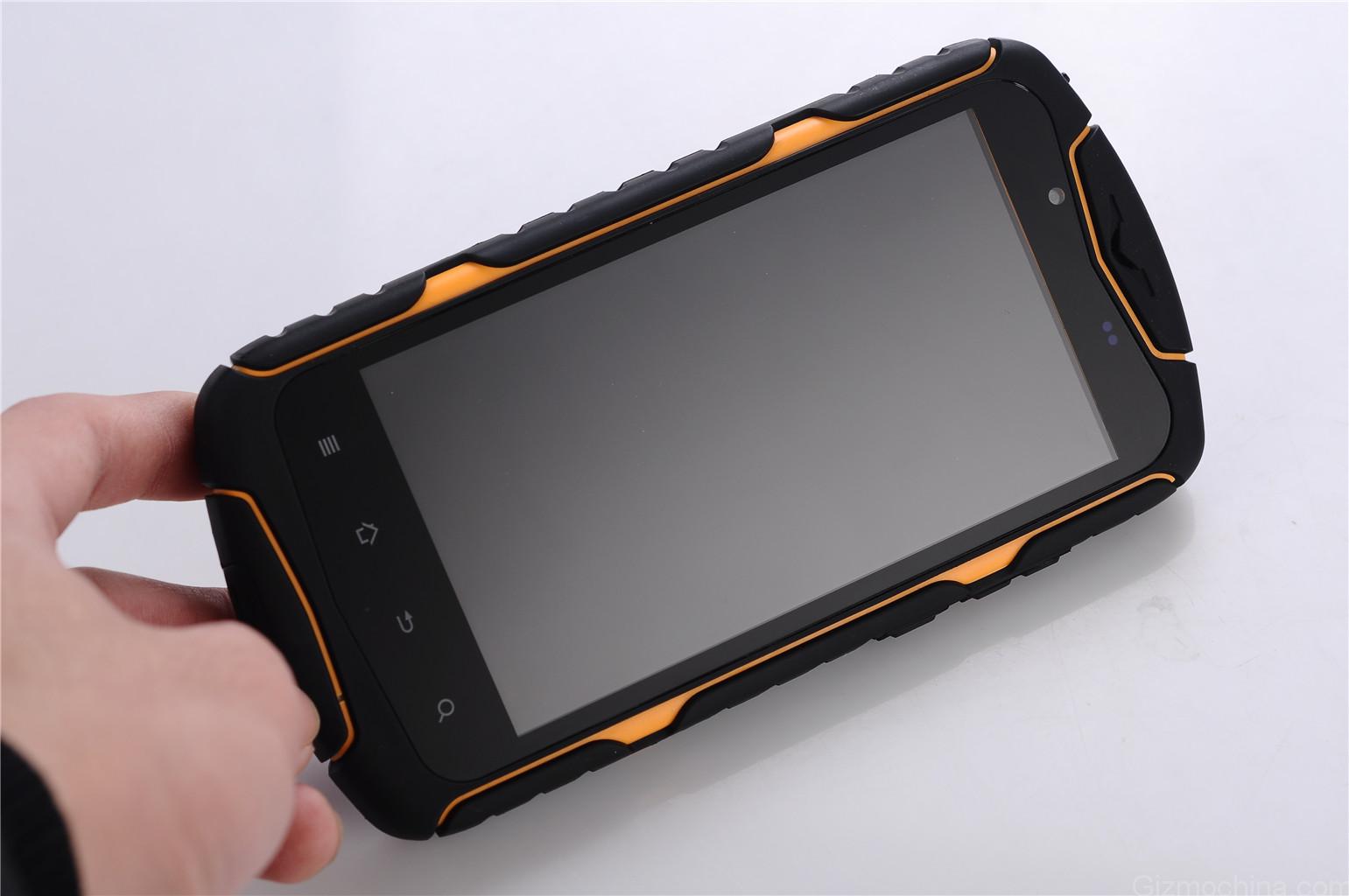
Just last week No.1 released a set of images of the new No.1 X-men X1 ultra-rugged smartphone. However, at that time, apart from pictures, there was very little information about the specifications of the device. But today, the company has revealed some more details on the X1 and judging from the specs, the overall package definitely looks impressive.
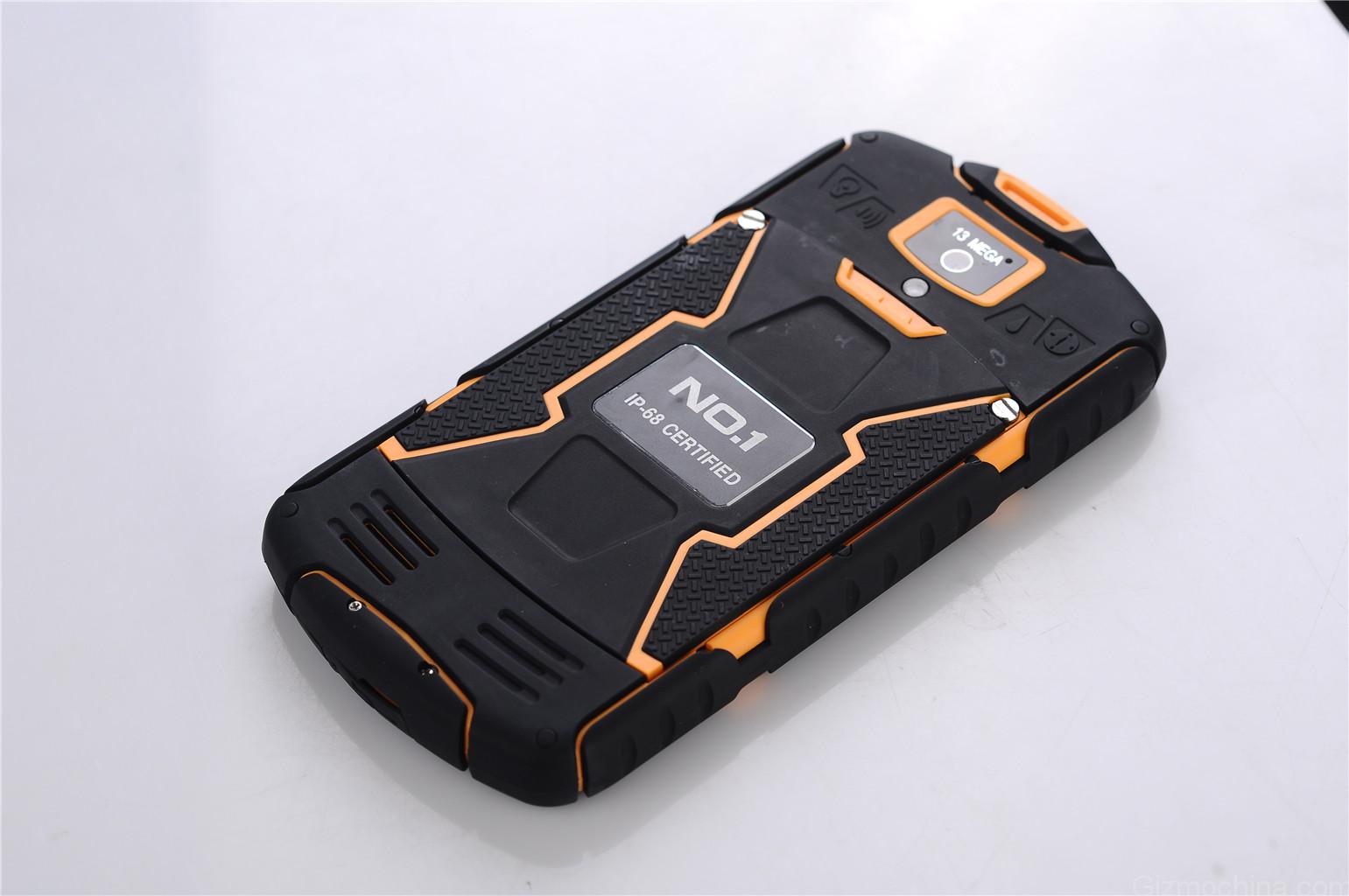
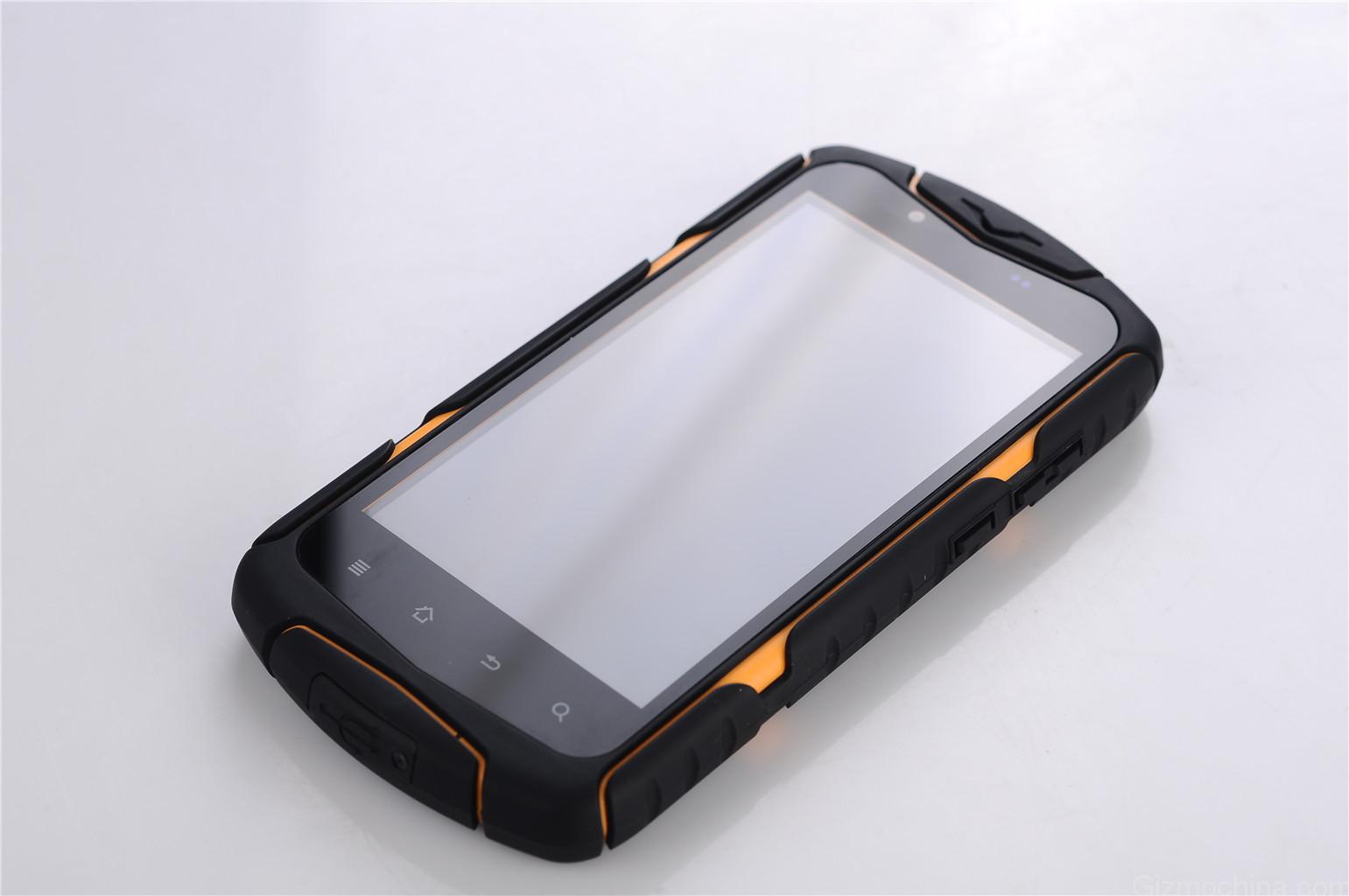
On the front, there is a 5-inch 1280 x 720p HD display, which is big considering other rugged phones in the market. The large screen provides enough real estate to play games or even watch movies on the device. Inside, there is a MT6582 quad-core processor, which is now a standard among Chinese phones. On the back, you have a 13MP rear camera with LED flash while on the front, there is a 5MP shooter. The LED flash will especially come in handy when you are out at night and want to click some pictures. It can also be used as a flashlight, thanks to the various apps that you’ll find on the Android app store. To power all these specs, there is a large 5,800 mAh battery on board. Like we pointed out earlier, this battery should be enough for many days and you won’t have to worry about a charger when you are going out somewhere with this device.
The No.1 X-Men X1 is IP68 compliant, so you know that its ruggedness is certified. What’s more, the company claims that the phone is 7-proof! What they mean is that the X1 is resistant against seven different types of damages. So, the phone is waterproof, dustproof , pressure proof, freezeproof, Shockproof, high-temperature proof and Scratch Proof. The strong outer frame makes sure that your phone is protected from any of the above mentioned dangers.
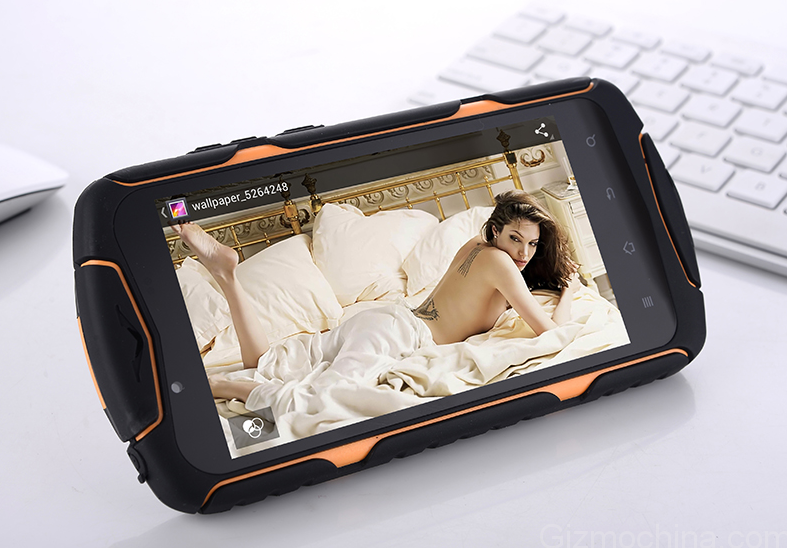
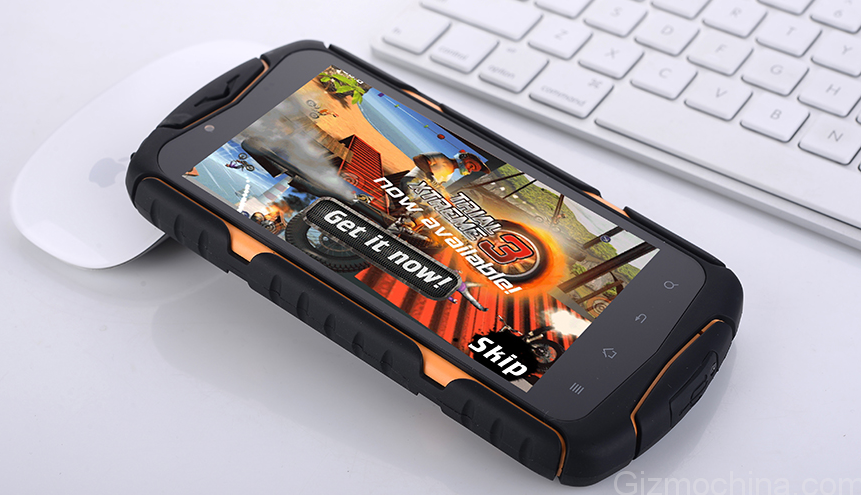
Unlike some rugged smartphones, the No. X-Men X1 doesn’t look ugly too. You have strong design lines with a bright orange shade throughout the device which set its apart from the crowd. Its may be a bit bulky to look at, however, we feel the extra large 5,800 mAh battery easily compensates for the thickness.
Clearly, the X1 is equipped with all the features you need for outdoor use. We’ll update more details like pricing and availability soon.
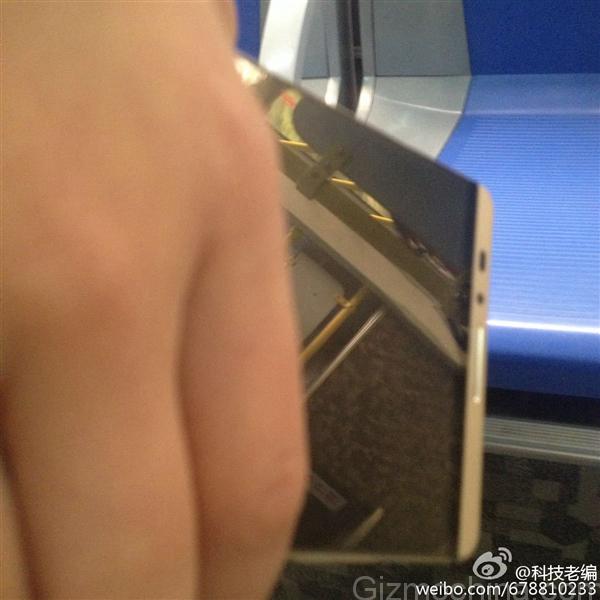
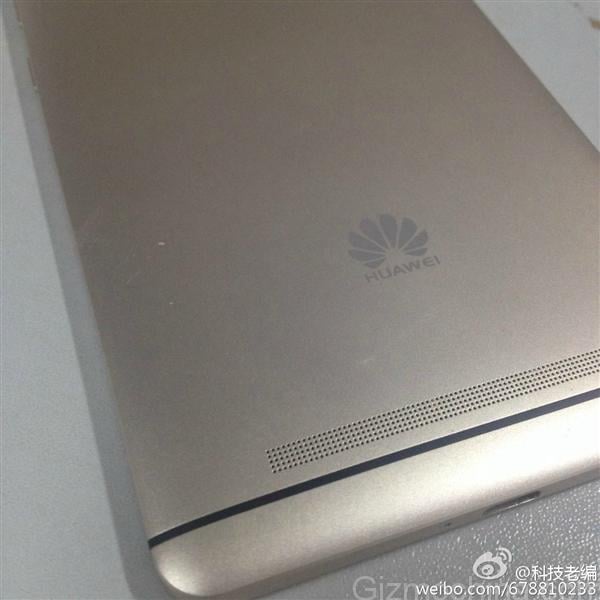
Huawei is once again making the headlines. A new leak on Weibo shows us a new Huawei device. The one who leaked the two images shown below claims it to be the Huawei Ascend Mate 7 Plus / Mate 8, the successor of the popular Mate 7.
Mate 7 plus?
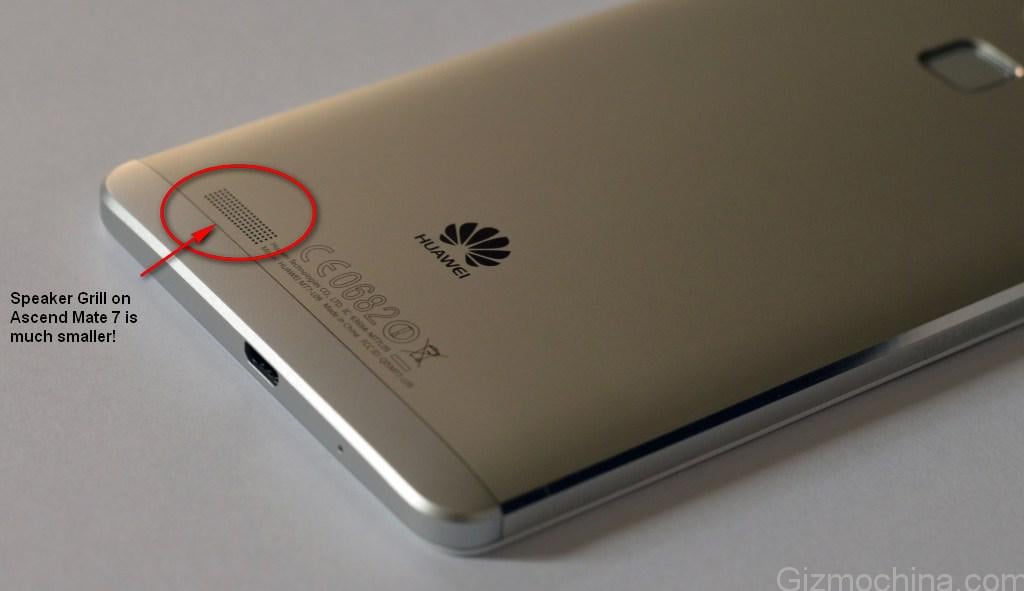
As you can see, the images don’t reveal much about the design of the leaked phone. But judging from the pictures, it looks a lot like the current Huawei Ascend Mate 7. The bezels are almost non-existent and we can even say that the phone is bezel less. Mate 7 had a similar design profile with very thin bezels around its display but here, at least in the images, we don’t see those black borders. Another difference is the speaker grill at the bottom of the rear panel that spans across the width of the phone instead of just a small opening on the corner.
Ascend Mate 7 back panel
Other features are similar to the Mate 7, like the Huawei branding on the rear panel and the placement of the front camera, sensors and the ear piece. So, this definitely looks like an upgrade to the Huawei Ascend Mate 7, but we are not yet sure whether this would succeed it.
At the moment, we don’t have any details about its specifications or features.But if this is indeed the Huawei Mate 8 or the Huawei Mate 7 Plus (if the company is going with naming scheme as the Honor 6 Plus), then the device has some big shoes to fill. The Mate 7 is probably the best Huawei device till date and has received positive response from reviewers worldwide. The monster 6-inch display and the metal design gives it a premium look and the hardware packed inside makes it one of the best phablets in the market. The phone includes a fingerprint scanner, which reportedly works better than any other scanners on a smartphone till date. Other specifications include a Hisilicon Kirin 925 octa-core processor, 2GB/ 3GB RAM and 16GB/ 32GB memory options, 6-inch 1080p display, 13MP rear camera and a 5MP front shooter, a large 4100 mAh battery etc.
An upgrade would have to best many of these features, which even at today’s stage is quite impressive. Since the phone has finally surfaced online, we expect to see more details via such leaks in the coming weeks. Stay tuned for more updates.
We are just one day away from the official event scheduled by Meizu but we are regularly getting new leaks about the upcoming Meizu Blue Charm devices. While the company hasn’t confirmed the existence of such a brand as of yet, we expect tomorrow’s announcement to confirm and make it official.
Today, we have some interesting news about both the upcoming Blue Charm devices. In a set of pictures leaked earlier, there are two Meizu devices running an entirely different looking OS/ UI instead of the company’s Flame 4.0. One is larger than the other, which could be the Meizu Blue Charm Note and the other being the Meizu K52, the 4.6-inch model.
From the pictures, it looks like both the models are running a modified version of Jolla Sailfish OS. The icons at the bottom are similar to the ones seen on the Sailfish OS. Moreover, the overall interface too looks similar to Sailfish, which could mean that the new Meizu device may feature this instead of Android.
However, that is very unlikely and even if Meizu Blue Charm devices did have this UI, it would most probably be just a launcher and not an entirely new OS. Sailfish has been growing pretty steadily, but the app store and the overall operating system still has a long way to go to replace an OS like Android. Another possibility is that this can also be a different variant of the two devices, for those interested in having Jolla Sailfish, but even that does not sound practical. So, for now, we think that this is just a Sailfish launcher on top of Android 4.4 KitKat OS!
Lets recap the Meizu Blue Charm Note which hit TENAA around two days back. It features a 5.5-inch 1080p resolution display, 64-bit MT6752 octa-core processor clocked at 1.7GHz; 2GB RAM, 16GB storage capacity; 13MP rear + front 5MP front cameras, 3050 mAh battery and TD-LTE, TD-SCDMA, and GSM network support. For more information on Meizu Blue Charm Note, check out our earlier post.
This is an interesting new piece of information but take it with a grain of salt. Meizu has been developing Flyme UI for quite some time now and there is no need for Meizu to abandon that in favor of an entirely new UI.
Luckily, we don’t have to wait too long to find out more about the upcoming Meizu Blue Charm devices as the company is expected to announce them both along with a number of other Blue Charm gadgets at the 23 December 2014 event.
More and more Chinese companies are trying to make a splash in the smartphone industry today. They try to be different in certain aspects like design, specs, software implementations, some extra-ordinary features or some innovation, which can make a device stand out from the crowd. However, having in mind that Chinese smartphone market is as hectic as ever, all the manufacturers have something in common – flagship grade specs at the very attractive price.
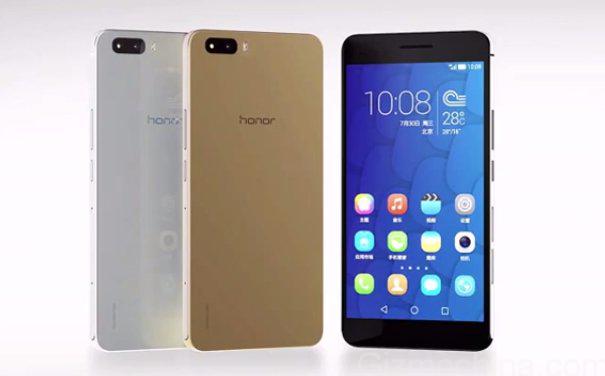
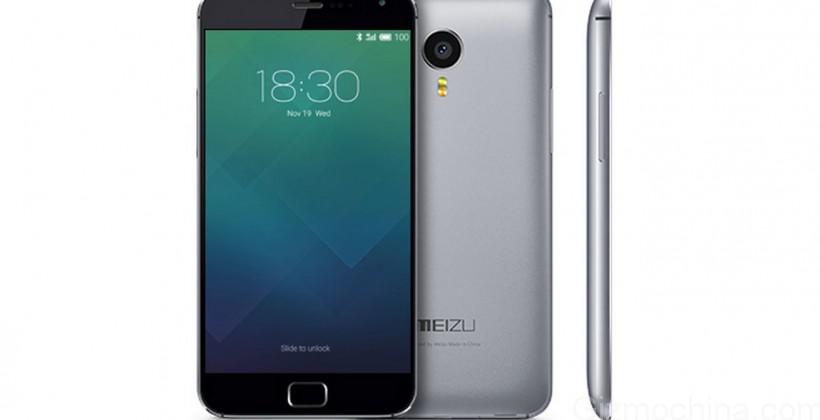
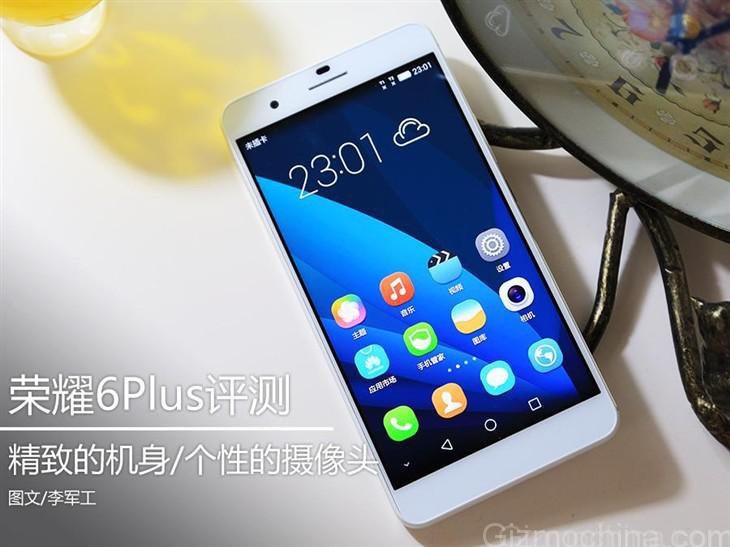
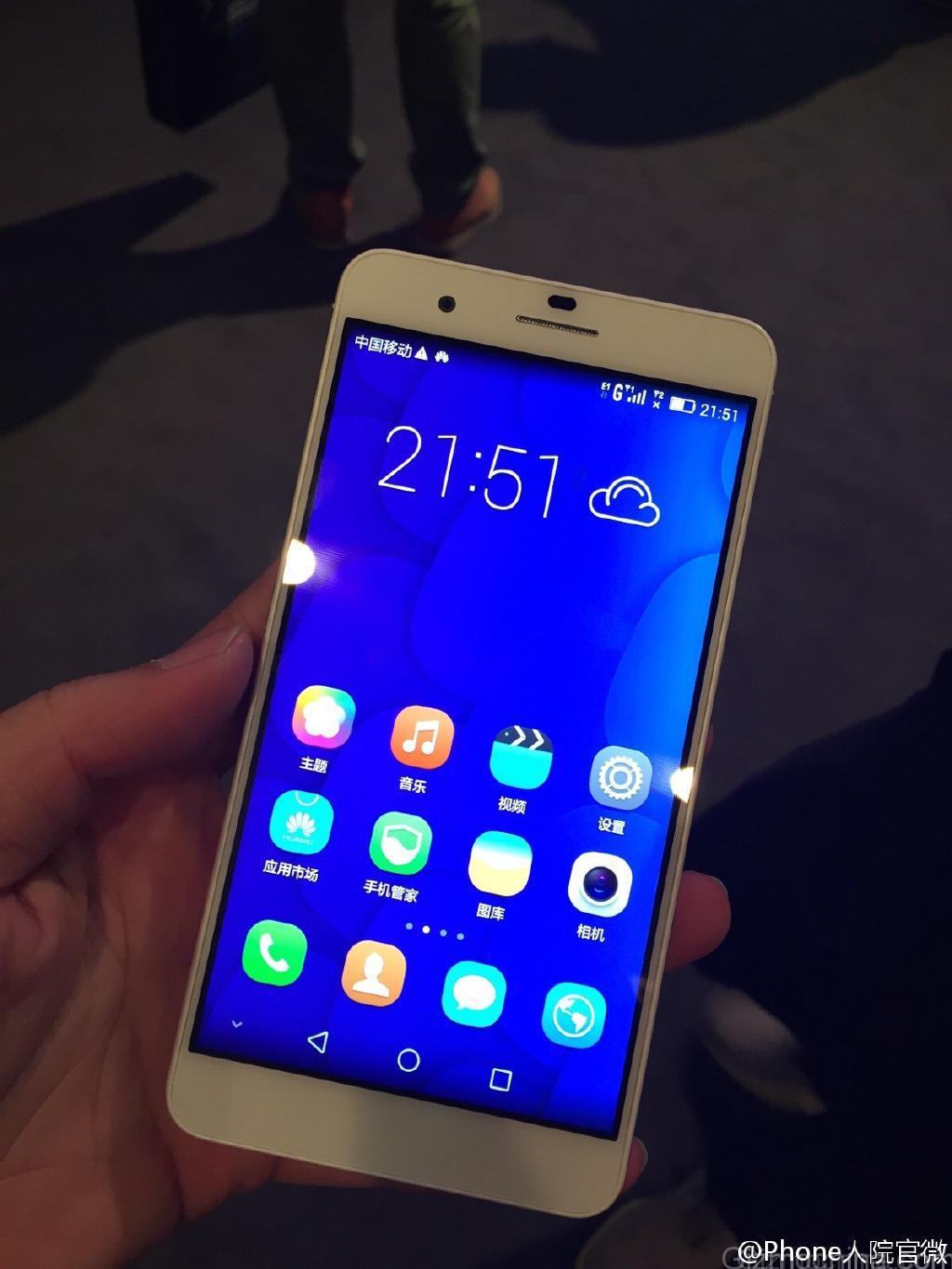
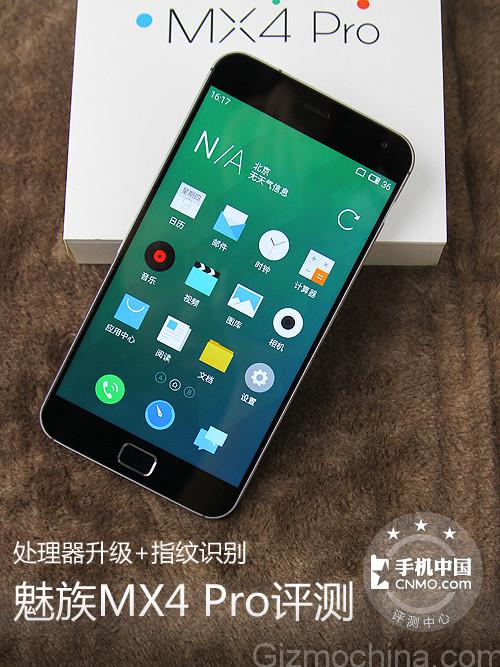
Two of these devices include two very recently announced ones – the Meizu MX4 Pro and the Huawei Honor 6 Plus. They are both made having a demanding consumer in mind as they are able to offer top of the range specs and great design. Also, they both have a great built quality. We will try to decide which device is worth more of your attention.
Specs
The new Huawei’s flagship features include 5.5″ Full-HD display with the pixel density of 401 ppi, dimensions of 150.46 x 75.68 x 7.5mm (5.93 x 2.98 x 0.30 inches), weighs 165 g, home-made octal-core Kirin 925 processor, clocked at 1.8 GHz (1.80 GHz Quad-core Cortex-A15 & 1.31 GHz Quad-core Cortex-A7), Mali-T628 GPU, i3 Sensor Hub technology, 3 GB of RAM, 32 GB of storage, which can be further expanded via Micro SD card slot up to 128 GB, 3600 mAh battery and it can even work as a power bank to charge other devices,dual-camera setup on the back with dual 8mpx sensors, which are able to produce 13 mpx pictures, 5 mpx front facing snapper. Moreover, it has a dual SIM card slot (the second SIM slot accepts nano-SIM cards and it doubles as a micro SD card slot), Bluetooth 4.0, OTG function, infrared port, NFC support and LTE support.
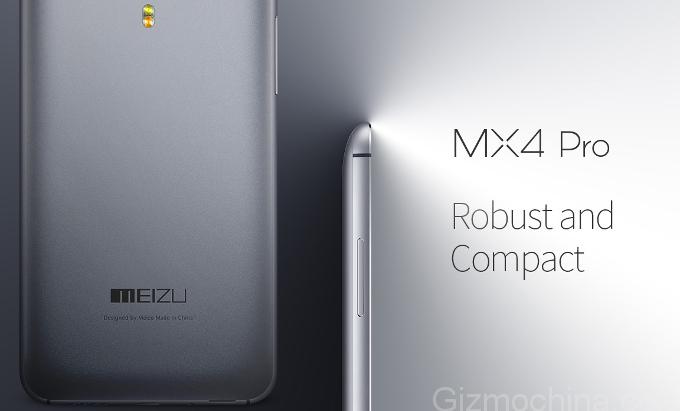
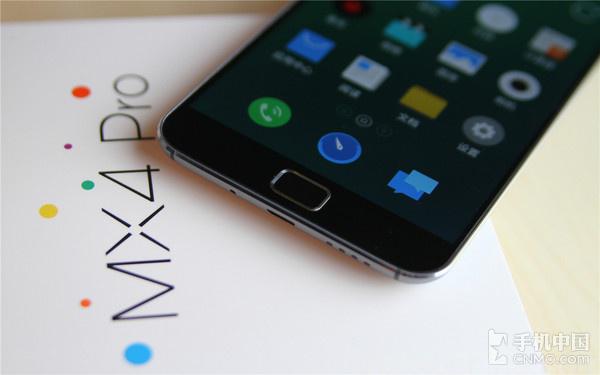
This device has dimensions of 150.1 x 77 x 9 mm (5.91 x 3.03 x 0.35 inches) and weighs 158 g. Meizu MX4 Pro is a beast of the specs, which include an amazingly high resolution 5.5-inch 2K (2560 x 1536) screen, which is even a bit higher than regular 2k screens, and it is also covered by the Gorilla Glass 3. Also, the device is being run by a powerful 20nm Samsung Exynos 5430 octa-core processor (Quad-core 2 GHz Cortex-A15 & quad-core 1.5 GHz Cortex-A7), Mali-T628 GPU, has a 3350 mAh battery and has 3GB of RAM. In addition, it comes in 16, 32 or 64 GB storage flavours, which, however, cannot be further expanded via the Micro SD card slot. Also, it has a fingerprint sensor, which is installed in the square home button, 20.7mp rear-facing camera with a 1/2.3-inch CMOS sensor (the same sensor that is being used in Sony Xperia series devices), 5mp front facing snapper, Bluetooth 4.0, NFC, Hifi audio chips.
The verdict: both devices are very heavy specced. However, we should give a credit to the Meizu MX4 Pro, which offers a higher resolution display (although some people may argue if we really need that 2k display on the smartphone), more powerful chipset, fingerprint sensor, HI-FI audio chip, which ensures better audio listening experience, higher resolution camera. However, these are just mere specs, so we will give our final opinion in the end of this review.
Design
Both devices spot a great design, which includes a great build quality and good choice of materials. However, the Huawei Honor 6 Plus is a bit more compact device than the Meizu’s offering, as it is a tad narrower, 1.5 mm thinner, but a bit heavier. However, these differences are not significant.
You can see some more pictures in the gallery:
Both devices offer an alloy frame, which always adds that premium look and feel. On the other hand, the Huawei offers a glass back panel, which for some people may look more appealing than Meizu’s plastic back.
You can check out some pictures in the gallery:
The verdict: in the end, it is always a personal choice and you would make no mistake by choosing either of these devices as they look and feel really good in the hand.
Display
Display always matters as it is the first place, where we look once we take a smartphone. At least on paper, the Meizu MX4 Pro offers a better display with higher, Quad HD resolution in comparison to Huawei’s “only” Full-HD. Well, theory is one thing, but how do they compare in real life?
As we have said before, the display on the Honor 6 Plus does not have the highest resolution on the market, but it still comes in Full-HD and has 401 PPI. The colours look vivid, the details are very sharp and the viewing angles are very good. Also, the contrast levels are very good. What is more, we liked the colour accuracy as they look natural on this beautiful LCD screen. Finally, the brightness level is very good as well as we had no issues reading the content on the screen even in the direct sunlight.
Let’s take a look at the Meizu MX 4 Pro and its super high resolution screen.
The MX4 Pro has a wonderful screen, which is bright, vivid and colourful. It is also very sharp, it has great viewing angles and colour look great. Honestly, we did not see a noticeable difference between Full-HD and Quad-HD screens. Anyway, the Quad-HD is for the spec heads and more future proof than Huawei’s more classic approach with a 1080p screen.
Verdict: both devices have great screens,which are vivid, sharp and bright. However, they have different resolutions, where the MX4 Pro prevails. Of course, the difference is negligible, but the Quad-HD resolution shows the latest and greatest what technology can offer. Thus, it is more future proof and puts the MX4 Pro on top of the Honor 6 Plus.
Benchmarks
Both devices are equipped with powerful, yet different processors. Both handsets have octa-core processors, which work under big.LITTLE architecture. The Huawei decided to use its home-made Kirin chip, clocked at 1.8 GHz (1.80 GHz Quad-core Cortex-A15 & 1.31 GHz Quad-core Cortex-A7) and the Meizu decided to keep the relationship with its partner Samsung and used a powerful Exynos chipset, clocked 5430 octa-core processor (Quad-core 2 GHz Cortex-A15 & quad-core 1.5 GHz Cortex-A7). Let’s see how they perform in real life.
But before that let’s take a look at he raw power – some benchmark results.
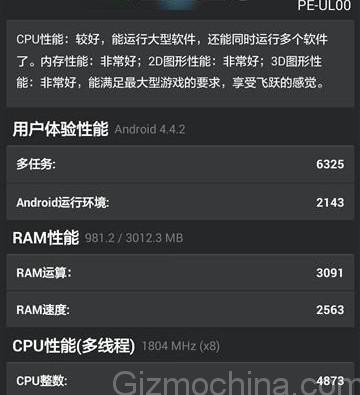
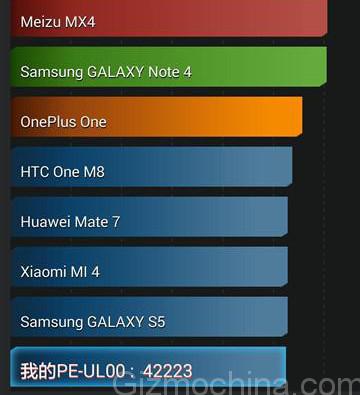
As you can see, the Honor 6 Plus scored 42223 points on Antutu. This is not the best result we have seen so far, but it is still very respectable. Therefore, day to day usage should have no issues whatsoever. For the time being, could only have Antutu testing. We will update the article with other benchmarks in the future.
Right now let’s take a look how the MX4 Pro has to offer in the benchmarks below.
AnTuTu: 45818
Quadrant: 9009
Vellamo (HTML5): 2262
Vellamo (Metal): 1377
Linpack (measured by FLOPS or floating-point operations per second): 130.785
As we can see, the scores are not the highest either, but they are very good. Thus, the Mx4 will perform without any issues in real life.
Real Life Performance
Huawei Honor 6 Plus
As it is usual that the device has no issues handling daily tasks, but gaming is much more demanding. We tested a few games, including Subway Surfer. We can say that the Kirin 925 handles the gaming very good, without any lags or stutters. The device heats up a little, but not too much.
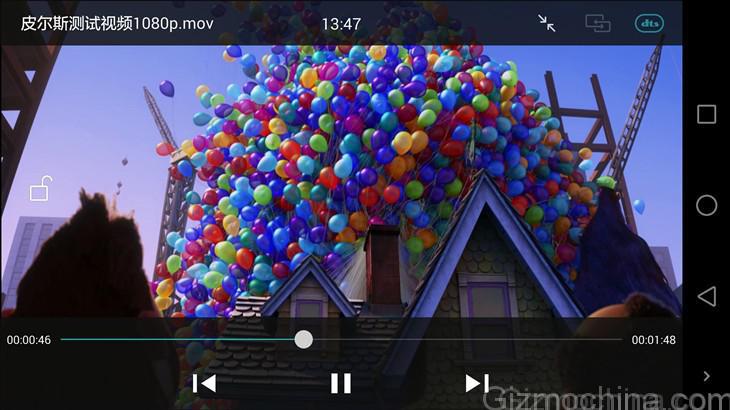
It is natural, that handling Full-HD content does not impose any issues for the Huawei’s device. The video playback is smooth without any issues.
Meizu MX4 Pro
The Meizu’s device has no issues with the above tests made neither. It managed to perform without any issues in basic tasks. Also, the gaming performance is smooth and lag-free. Naturally, the video playback is smooth as well.
Verdict: both devices are equipped with great processing power under the hood. We should agree that the Meizu’s offering looks better on paper and performs a bit better on the benchmarks, but in during real life scenarios, it is hard to tell the difference, which one is better. All in all, both devices are good at anything you throw at.
User Interface
When it comes to the user interface (UI), both devices offer a proprietary approach and offer a highly customised Android experience with their respective skins.
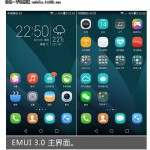
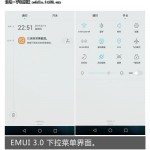
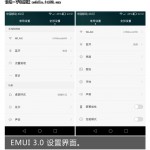
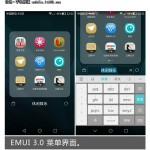
First of all, the Huawei Honor 6 Plus have made their iteration of Android by using the Emotion UI 3.0. It is heavily customised variation of Android OS, which seems to be odd if we consider that many manufacturers are implementing lighter versions with simple options.
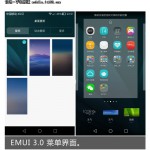
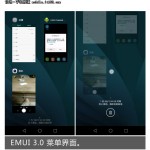
To begin with, we can see a touch-screen back, home and multi-tasking buttons, which are quite usual these days when manufacturers are trying to make the devices, which are as thin as possible and reduce that bezels size. Secondly, there is a usual Huawei’s stuff with a lot of home screens without any app drawer. Thus, you need to get used to making folders with apps or games. Thankfully, besides the classic “drag and drop” functionality, you can also select a “+” symbol to add the apps you want to sit in the folder.
What is more, we may see some similarities with the Windows phone since there is a la tiles style of some basic apps and functions. This is not a bad idea per se, but it is a personal choice of everyone. In addition, there is another thing, which is quite usual for many Chinese manufacturers – many customisation options. You can choose a different theme, icons, screen lock styles, wallpapers etc. Also, you may download new ones from the online server.
It looks like that the Huawei did a bit of a mashup of Android, iOS and Windows phone. Of course, it is a matter of personal taste, but there is a lot of room towards simplicity in the user interface. On the other hand, with such a pack of customisation options, the company managed to make a stutter-free and smooth user interface.
You can check some of the UI pictures in the gallery below:
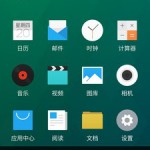
The Meizu MX 4 Pro also has their own iteration of Android. The device runs on Flyme 4.1 operating system, which is based on the Android 4.4.4. It is quite simplistic user interface, which reminds us a bit of the iOS. You can check how the user interface looks like in the gallery below.
As you can see, the Meizu has taken a simplistic approach. As usual, there is no app drawer, so you would need to make folders as on the Huawei’s interface. What is more, the Meizu MX4 Pro only has a physical home button and there are other buttons are on screen. Also, the device supports swiping from the button of the screen for functions like multitasking. We found that very convenient considering the size of the device.
Moreover, there is a notification centre, which has some transparent looks (similar to iOS). What is more, the UI supports various gestures, which is always a welcome feature.
Finally, the Meizu’s simple take on Android gives a super fast user experience with no lag, which we really like.
Verdict: both devices have quite good user interfaces, but Huawei Honor 6 is a bit different than the MX4 Pro since it does not look that simplistic and minimal. On the other hand, both user interfaces offer a great user experience, which is lag free and super responsive. We can recommend both UI’s, so it is your personal choice.
Camera
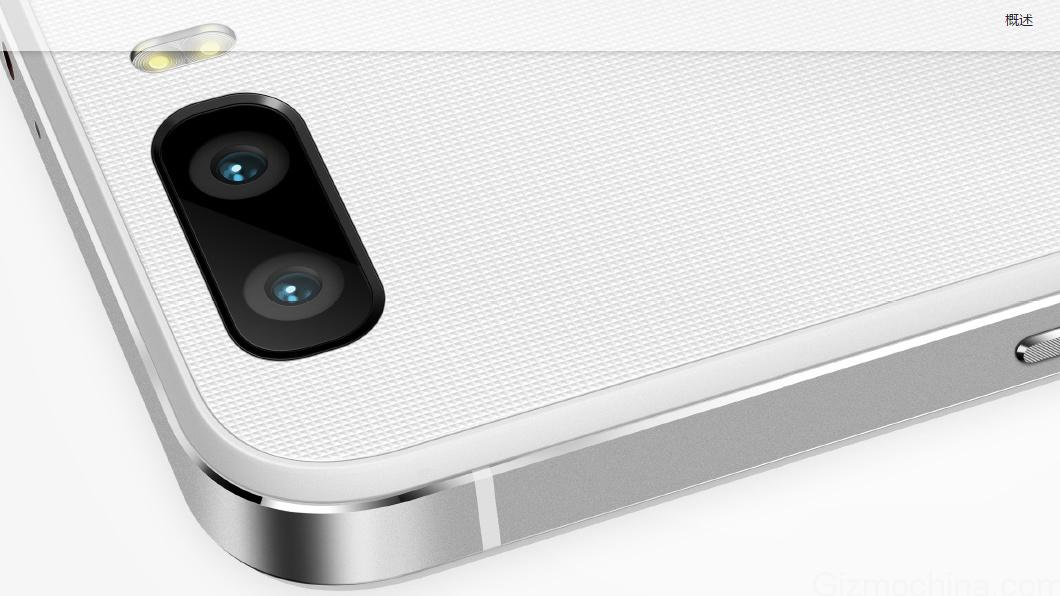
This is one of the most exciting parts of each device. Let us start by Honor 6 Plus, which has one of the main hardware features and key selling points on its back – a dual camera setup. This setup consists of two 8 megapixels sensors, but due to the software implementations, it is capable of taking 13Mp photos.
The dual-camera setup can be used for a variety of ways. First, it can be used for bokeh or depth of field effects, when the object, which is far away can be blurred out or vice versa. Second, these two sensors work in tact to capture more detail and more light. Huawei touts it as “human eyes experience”.
Here is a video, which provides a more insightful look at Honor 6 Plus’ camera:
https://www.youtube.com/watch?v=gfuCWlrX0K4
What is more, the tandem of two sensors helps achieving an amazing speed of focus, which is 0.1 seconds. Also, the 3IE algorithm helps bringing more light to the sensor and reduces the amount of dark areas.
In addition, the dual-camera setup is very useful for the low-light shots. It lets you capture more details with much less noise and produce natural looking colours.
Here you can see some camera samples, taken by the Huawei Honor 6 Plus:
Overall, we were really impressed by the picture quality of this device. It can produce sharp and detailed photos in many conditions including low light scenes. What is more, the colour accuracy is very good. The pictures are not overexposed and the white balance is very good.
The Meizu MX4 Pro
The Meizu takes a bit more traditional approach, when it comes to camera. Traditional mean that it does not use a dual camera setup, but still uses one of the most powerful camera sensors available – Sony IMX220 (the same sensor that it used on the Sony Xperia Z3). The sensor has a size of 1/2.3”, which equals to some compact cameras.
Without further review, please check the camera samples in the gallery below:
As we can see the MX4 Pro’s camera can deliver some amazing results. It can capture great level of detail, the photos look sharp and vivid. However, we think that the Huawei Honor 6 Plus can produce better low light shots as it manages to capture more detail and produces less noise.
Verdict: both cameras perform well in good lighting conditions. Besides that, the Honor 6 Plus can offer great depth of field effect. Also, it can produce some better looking low light shots. Also, the focusing speed is faster than MX4 Pro. However, the Meizu’s device can shoot 4k videos, but Honor 6 cannot. However, we still do not have many devices that support 4k. In the end, we think that the Honor 6 Plus offers a better overall experience, especially if you care about low light shots.
Battery Life
Both devices are equipped with decent battery packs, which should ensure that you would not run out of juice in the middle of the day. First, the Huawei implemented a juicy 3600 mAh battery. Considering its size and the fact that it does not need to feed a 2k display, it is great news for users. During our testing, we could easily run through the whole day without any issues. Our test included a regular calling, texting, surfing the web, watching the videos, taking pictures and videos, a bit of gaming etc. We can say that the battery is sufficient even for a power user and will last you a full day.
The Meizu MX4 Pro is no slouch in this department either. The company installed a beefy 3350 mAh battery. We did some similar testing and we found out that it can last you a full day without an issue.
Verdict: both devices are equipped with huge batteries, which are able to provide enough power to last a full day of heavy usage. We think that it is very impressive and neither device would disappoint you.
Conclusions
Both offerings by the Huawei and Meizu are very good devices. They have beautiful designs, which include a great choose of materials, a sturdy build quality and perfect craftsmanship. Also, both of devices have outstanding screens. Meizu MX4 Pro, however, has a higher Quad HD resolution, but we did not find anything bad with Honor 6 Plus’ 1080 panel as it is super sharp and crisp.
What is more, each of the manufacturer has some different approaches, when it comes to the user interface. While Honor 6 Plus and its Emotion UI looks appealing, but we liked MX4 Pro’s user interface more pleasing to the eye due to its simplicity and minimal design.
Furthermore, both devices are equipped with great processing power under the hood. Although, the Meizu MX4 Pro can perform a bit better on the benchmark tests, we did not feel any difference and daily life performance, which included various basic tasks, gaming high intensity games, watching or capturing video etc.
In addition, both devices have excellent cameras, when it comes to day-time shots. However, the Huawei Honor 6 Plus has taken a step further and installed a dual camera-setup. Indeed, it helped achieving better low light shots with less noise and more details. Also, the super fast shutter speeds of 0.1 seconds are really amazing. Last but not least, the duo camera lets you create some great depth of field effects, digitally adjust the aperture size of the cameras and do some other neat things.
When it comes to battery life, both devices perform very well. We are quite sure that they would last you a full day of heavy usage, which is always a great achievement.
In the end of the day, both devices are great choice as the pack a bunch of specs in a greatly designed shell and come at much lower prices than flagships from the Western companies.
If you are looking for some more detailed information about each of the device please check our separate reviews of the Huawei Honor 6 Plus and Meizu MX4 Pro.
Just a few hours back we saw the upcoming Huawei Ascend GX1 in pictures. But apart from the leaked images, we had little information about the specifications of the device.
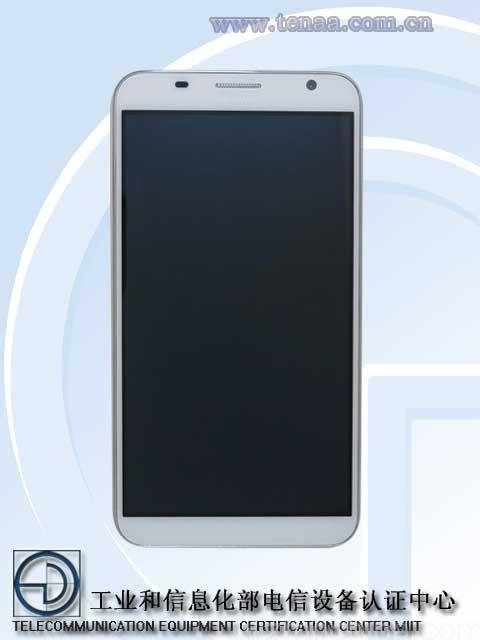
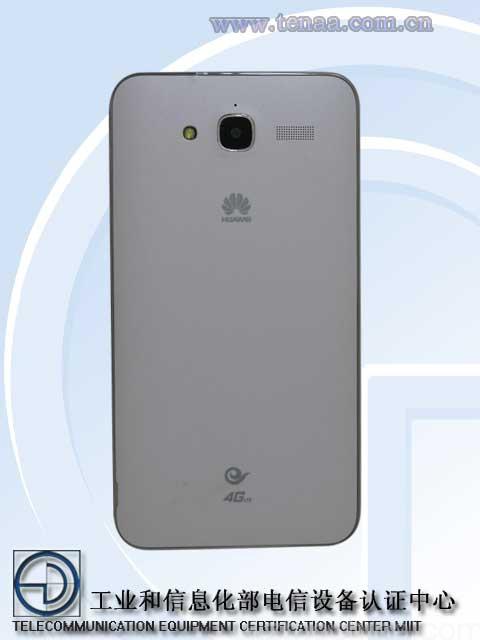
Now, the same phone (model no. SC-CL00) has hit TENAA, which means we have lots more details about the tech specs as well as images of the device. Like we predicted, the phone does feature a large 6-inch display. However, the resolution is just HD, which is certainly a disappointment considering its monster size. Once again like we said earlier, the device is larger than the Mate 7 despite having the same display. It measures 161 × 84.5 × 9.55mm which is much bigger as well as thicker than the Mate 7 which measures 157 x 81 x 7.9 mm. As for the hardware, the Ascend GX1 comes with a quad-core 1.4GHz processor with 1GB RAM and 8GB internal storage which supports external MicroSD card slots. There’s an 8MP camera at the back along with a 2MP front shooter. It runs on Android 4.4.2 KitKat operating system. As far as we know, the phone supports GSM/CDMA 1X/CDMA2000/LTE FDD/TD-LTE networks.
Judging from the specs, you would have known by now that the phone is a mid-ranger. It’s priced at 1590 Yuan which comes to around $255. This is a great price since you don’t have many 6-inch phones in this range.
The phone is currently listed at gome.com.cn but the complete details have not yet been filled. Check out the listing here.
Since the Huawei Ascend GX1 has now hit TENAA, and also listed online, we expect a launch pretty soon. Stay tuned for more updates.
We use cookies on our website to give you the most relevant experience by remembering your preferences and repeat visits. By clicking “Accept”, you consent to the use of ALL the cookies.
This website uses cookies to improve your experience while you navigate through the website. Out of these, the cookies that are categorized as necessary are stored on your browser as they are essential for the working of basic functionalities of the website. We also use third-party cookies that help us analyze and understand how you use this website. These cookies will be stored in your browser only with your consent. You also have the option to opt-out of these cookies. But opting out of some of these cookies may affect your browsing experience.
Necessary cookies are absolutely essential for the website to function properly. This category only includes cookies that ensures basic functionalities and security features of the website. These cookies do not store any personal information.
Any cookies that may not be particularly necessary for the website to function and is used specifically to collect user personal data via analytics, ads, other embedded contents are termed as non-necessary cookies. It is mandatory to procure user consent prior to running these cookies on your website.