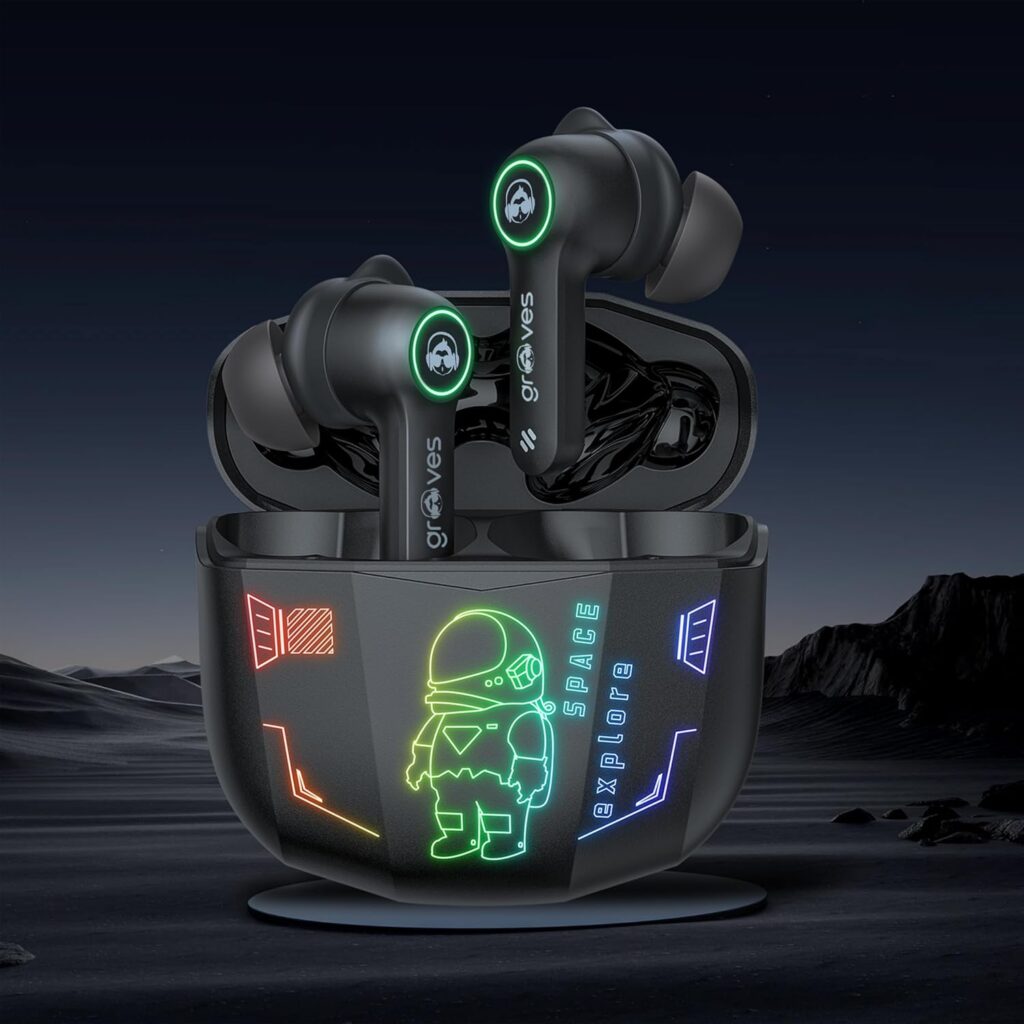
Philips has introduced a new range of audio products for the Indian market, offering consumers a variety of options to suit different preferences and budgets. The new lineup includes four True Wireless Stereo (TWS) earphones and one on-ear headphone, each designed to improve sound quality, comfort, and convenience.
Philips TAT1108 – Affordable and Compact
At INR 3,599, the TAT1108 model offers a balanced performance with 6mm dynamic drivers that deliver rich sound and solid bass. These earbuds are designed for users who want a compact, no-frills option with clear call quality, thanks to the AI-powered microphone. With IPX4 water resistance, they can withstand a splash or light rain, making them a good choice for active users. The earbuds offer 15 hours of total playtime (5 hours on a single charge, 10 hours from the case) and are available in black, white, and blue.
Philips TAT1179 – Long-Lasting with Noise Cancellation
Priced at INR 3,099, the TAT1179 stands out for its exceptional battery life of over 45 hours of total playtime. It features larger 10mm drivers for superior sound quality, along with Environmental Noise Cancellation (ENC) technology powered by four microphones to improve call clarity. IPX4 water resistance ensures they hold up to light water exposure, while touch controls and fast charging add extra convenience. The TAT1179 comes in four colors: Deep Black, Bright White, Red Mahogany, and Beluga Summer.
Philips TAT1209 – Bass-Focused Sound
For those who enjoy deep bass, the TAT1209 (INR 2,999) offers enhanced bass performance with its 10mm drivers and dynamic bass boost feature. These earbuds are designed for a more bass-heavy listening experience and offer 18 hours of total playtime. They also come with interchangeable silicone ear tips for a customizable fit, touch controls, and voice assistant compatibility with both Siri and Google Assistant. The TAT1209 is available in pink, white, and black.
Philips TAT1169 – Exceptional Battery Life
The TAT1169 model (INR 2,399) offers an impressive 55 hours of total playtime, making it the leader in the battery life department. With 12mm drivers for rich sound, AI-powered ENC for clear voice calls, and IPX4 water resistance, these earbuds are built for all-day use. The TAT1169 also supports fast charging and a low latency of 60ms, making it suitable for gaming or watching videos. Available in Deep Black, Sun Iron, and Real Teal Champagne, this model is perfect for users who prioritize long battery life.
On-Ear Headphones: Comfort Meets Sound Quality
For users who prefer over-ear options, Philips has launched the TAH4209 wireless headphones. Priced at INR 4,999, these headphones are designed for maximum comfort with memory foam ear cushions and an adjustable headband. The 32mm neodymium drivers provide a dynamic sound with a bass boost function, while the 55-hour playtime ensures long-lasting listening. A key feature of the TAH4209 is its ability to pair with multiple devices simultaneously (multipoint pairing), allowing users to switch between devices without having to disconnect and reconnect. It also supports fast charging, with just 15 minutes of charging providing up to 2 hours of playback. The TAH4209 comes in matte pink, black, blue, and white.
Availability
All of these new audio products from Philips are now available for purchase through popular online retailers such as Amazon and Flipkart, as well as in authorized retail stores across India.
iQOO is reportedly working on the iQOO Neo 10 series of affordable flagship phones for the Chinese market. The lineup is expected to feature two models, such as the Neo 10 and Neo 10 Pro. Recently, tipster Digital Chat Station shared the key specifications of the Neo 10, which is expected to come equipped with the Snapdragon 8 Gen 3. Today, the tipster released a new Weibo post to share the key specifications of the Pro variant.
iQOO Neo 10 Pro specifications (rumored)
According to the leak, the iQOO Neo 10 Pro will have a flat display measuring 6.78 inches. The 8T OLED panel will support a 1.5K resolution and a 144Hz refresh rate.
The Neo 10 Pro will feature the Dimensity 9400 chipset under the hood. The topmost variant will have 16 GB of RAM and 512 GB of internal storage.
The leak does not provide information about the Neo 10 Pro’s front camera. However, it will likely feature a 16-megapixel selfie camera. On the back, it will have a dual-camera system featuring a 50-megapixel 1/.56-inch primary camera and a secondary 50-megapixel lens.
A 6,000mAh or higher battery will power the Neo 10 Pro, and it will support 120W fast charging. The Neo 10 Pro will feature a Goodix-supplied ultrasonic in-screen fingerprint sensor for security. Being a sub-flagship, the device will not have a metal middle frame, but it will feature a plastic frame.
In comparison, the iQOO Neo 10 is expected to differ in some departments. It is expected to feature an optical-type in-screen fingerprint sensor, a 50-megapixel + 8-megapixel dual-camera system, and the Snapdragon 8 Gen 3 SoC. As far as launch is concerned, the iQOO Neo 10 series is expected to debut later this month in China.
Recently, a Vivo smartphone with model number V2429A was approved by China’s TENAA certification platform. Speculations are rife that it could be the upcoming Vivo S20 handset. Now, the same device has received approval from the 3C certification platform in China, giving a hint about its fast-charging capabilities.
Alleged Vivo S20 3C certified
Purported Vivo S20 3C certified
According to the 3C certification listing, the Vivo V2429A smartphone may ship with a charger that supports up to 90W fast charging. To recall, the Vivo S20 might see a slight upgrade in the charging department, as the Vivo S19, which was launched in China in May this year, supports 80W fast charging. The rumor mill speculates that the Vivo S20 will be the final moniker for the V2429A handset when it hits the market, but no concrete evidence supports this speculation.
Vivo S20 specifications (rumored)
The TENAA certification of the alleged Vivo S20 has revealed that it may arrive with a 6.67-inch AMOELD screen that offers a 1.5K resolution. Under the hood, the device may feature the Snapdragon 7 Gen 3 chipset and up to 16 GB of RAM. The phone may arrive in China with up to 1 TB of storage.
The Vivo S20 is likely to pack a 6,500mAh battery with 90W fast charging support. It might have a 50-megapixel selfie camera on the front and a 50-megapixel + 8-megapixel dual-camera system on the back panel.
The Vivo S20 is likely to run on OriginOS 5-based Android 15. It is expected to come with other features, such as an IR blaster and an in-screen fingerprint scanner. It will measure 7.19mm in thickness and weigh around 186 grams.
The smartphone market has witnessed the arrival of two flagship models from prominent brands: the Realme GT 7 Pro and the OnePlus 13. Both devices are packed with high-end features and competitive pricing, which leaves consumers wondering: is the Realme GT 7 Pro worth choosing over the OnePlus 13? This article compares the specifications, performance, camera systems, battery, and pricing of both devices to help you decide.
The Realme GT 7 Pro and the OnePlus 13 both boast impressive displays. The GT 7 Pro features a 6.78-inch 1.5K LTPO Eco² OLED Plus micro-curved screen from Samsung Display. It comes with a peak brightness of 6,000 nits, HDR 10+ support, and Dolby Vision which offers a truly immersive viewing experience with industry-leading brightness and vibrant colors. It also has a 120% DCI-P3 color gamut and a high 2600Hz instant touch sampling rate for responsive touch feedback, ideal for gaming and smooth scrolling.
Meanwhile, the OnePlus 13 features a 6.82-inch BOE X2 2K+ LTPO AMOLED display with a slightly higher resolution, boasting a peak brightness of 4,500 nits and earning DisplayMate’s A++ ratings for exceptional quality. It supports HDR and Dolby Vision, like the GT 7 Pro, but also adds the durability of Crystal Shield ceramic glass protection. Ultimately, the Realme GT 7 Pro edges ahead in peak brightness, making it preferable for users needing high visibility in direct sunlight.
2. Performance
Both phones are powered by the Snapdragon 8 Elite SoC, Qualcomm’s latest and most powerful mobile processor. The GT 7 Pro is available with up to 16GB of LPDDR5X RAM and up to 1TB of UFS 4.0 storage, ensuring fast processing and smooth multitasking. It also includes a dual-sided antenna and Sky Communication System 2.0 for better network reliability and reduced gaming lag, along with an 11,480mm² dual VC cooling system to maintain performance during extended use.
The OnePlus 13 also offers up to 24GB of LPDDR5X RAM and up to 1TB of UFS 4.0 storage, making it one of the most powerful multitasking devices in the market. Its 9925mm² VC heat dissipation system is slightly smaller but remains highly effective in controlling temperature. The OnePlus 13 also features the Bionic Vibration Motor Turbo with 4D game-specific vibration, giving it an edge for gaming enthusiasts who prioritize immersive feedback.
The OnePlus 13 has a slight edge if you’re looking for the highest configuration upgrade, as it offers 24GB RAM, ensuring lag-free gaming and daily tasks while also being future-proof for the long term.
3. Cameras
Realme GT 7 Pro features a versatile camera setup, including a 50MP Sony IMX906 main sensor, an 8MP ultra-wide lens, and a 50MP Sony IMX882 3x periscope telephoto lens, supporting 6x lossless zoom and up to 120x digital zoom. Its AI Zoom Ultra Clarity feature enhances image quality at higher zoom levels, making it an excellent choice for photography enthusiasts seeking sharper telephoto shots. However, the front camera is limited to 16MP, which is sufficient but could have benefited from a higher resolution.
OnePlus 13 counters with its own robust camera system. It includes a 50MP Sony LYT-808 main sensor, a 50MP ultra-wide camera with a 120° field of view, and a 50MP LYT-600 periscope telephoto lens which also offers 6x lossless zoom and up to 120x digital zoom. This setup includes a “multi-prism reflection structure” periscope, designed to enhance clarity and focusing speed.
For video, both phones support up to 8K recording; however, the OnePlus 13 records at up to 30fps, compared to the GT 7 Pro’s 24fps. Additionally, the OnePlus 13 features a higher-resolution 32MP front camera, providing improved quality for selfies and video calls.
So yes! On paper, the OnePlus 13 offers a more versatile camera setup.
4. Battery & Charging
The Realme GT 7 Pro features a substantial 6500mAh battery with impressive 120W fast charging, reaching 50% in just 14 minutes. Its battery design includes a silicon-carbon negative electrode with a high 10% silicon content, enhancing durability and lifespan. Realme’s longevity algorithm further ensures battery health for up to four years, a valuable feature for users who don’t upgrade often.
In comparison, the OnePlus 13 has a slightly smaller 6000mAh battery but supports 100W SuperVOOC fast charging, 50W wireless charging, and magnetic charging. With OnePlus’s dual-cell battery technology, it can fully charge in just 36 minutes. The added convenience of fast wireless charging makes the OnePlus 13 a great option for those who prefer a cable-free experience.
5. Additional Features
Both models come with water and dust resistance, rated IP68 and IP69, making them ideal for rugged use.
On the software front, the GT 7 Pro runs on Android 15 with Realme UI 6.0, and Realme commits to three major Android updates and four years of security patches.
OnePlus, offering Android 15 with ColorOS 15 in China and OxygenOS 15 globally, provides four major Android updates and five years of security updates.
6. Pricing & Value
The Realme GT 7 Pro starts at approximately 3,699 yuan ($521) for the 12GB+256GB variant, with higher configurations up to 4799 yuan ($676) for the 16GB+1TB variant. It is available in Mars Orange, Star Trail Titanium, and White color options.
The OnePlus 13 is slightly more expensive, starting at 4,499 yuan ($633) for the base model with 12GB+256GB. The top-end 24GB+1TB model goes up to 5,999 yuan ($845). It’s offered in Obsidian, Blue, and White with unique textures and materials.
7. Verdict: Which One to Choose?
Both the Realme GT 7 Pro and OnePlus 13 excel in different areas. The Realme GT 7 Pro is an excellent choice for users who prioritize display brightness, extensive battery life, and high-speed charging. Its cooling technology and Sky Communication system also make it ideal for gamers.
However, the OnePlus 13 justifies its slightly higher price with advanced features like wireless charging, an immersive vibration motor, and a more refined camera system for both photography and videography. Its additional RAM option (24GB) further enhances multitasking potential, catering to power users.
In conclusion, if your priority is to get the best performance and value for gaming and multimedia, the Realme GT 7 Pro offers a fantastic package at a lower price point. However, if you prefer a more comprehensive feature set with additional conveniences like wireless charging, advanced materials, and a top-tier camera system, the OnePlus 13 may be worth the extra investment.
Meanwhile, you can also read our article comparing the Realme GT 7 Pro and iQOO 13, two of the most affordable Snapdragon 8 Elite flagship phones.
Casio has unveiled its latest G-SHOCK collection, the Flame Inside series, which embodies the spirit of resilience and passion. This new series features four models, each with a distinct design inspired by the imagery of fire.
The Flame Inside collection includes two main models: the GA-100FL and the GA-2100FL. Both models are available in two colorways: Flame Orange and Flame Blue. The Flame Orange models feature a vibrant orange gradient dial and a smoky black and gray band, symbolizing the intensity of passion and the rise of determination. The Flame Blue models, on the other hand, showcase a cool blue gradient, representing the heat of a high-temperature flame and the unwavering belief in overcoming challenges.
The GA-100FL and GA-2100FL models offer a range of features, including shock resistance, water resistance, world time, stopwatch, timer, alarms, and LED illumination. The GA-2100FL models also boast a longer battery life of approximately three years and a Super Illuminator backlight. Additionally, Casio has incorporated sustainability into the design of the GA-2100FL models by utilizing biomass plastic for the bezel and band.
Pricing & availability
The G-SHOCK Flame Inside collection is currently available for pre-order in Japan. The GA-100FL models are priced at ¥22,000 ($145), while the GA-2100FL models are priced at ¥20,900 ($138). The exact release date for other regions, including the US, has not been confirmed.
In other news, Casio has released the limited-edition Casiotron TRN-50ZE-1A to celebrate the 50th anniversary of the original Casiotron, the world’s first digital watch with an automatic calendar, launched in 1974. This commemorative model features a sleek black and gold design, with a stainless steel case and band highlighted by gold accents.
Bose is launching its Ultra open-back earbuds in fresh new color options in the Chinese market. Available for pre-order on JD.com, the earbuds come in two new colors: Dune Gray and Glitter Graphite Blue, priced at 2,299 yuan (about $323 USD). Customers must complete their orders by November 10th at 8:00 PM PST to secure their purchase.
Bose Ultra open-back earbuds
These headphones feature Bose’s OpenAudio technology, which allows users to hear their environment while listening to music. Unlike traditional headphones that isolate sound, the Ultra headphones use directed audio technology to provide a more balanced listening experience.
A key highlight of the Bose Ultra headphones is their adaptive volume feature. This automatically adjusts the sound levels based on the listener’s surroundings, ensuring comfort whether in a quiet area or a busy environment. The headphones also include spatial audio technology, enhanced by the Qualcomm S5 audio platform and support for Snapdragon Unlimited Audio, promising a more engaging sound experience.
For ease of use, the Bose Ultra headphones offer simple controls for music playback, answering calls, and switching between stereo and immersive audio modes. They provide up to 7 hours of listening time on a single charge, with an additional 19.5 hours available through the included charging case, making them suitable for long periods of use.
In other news, Amazfit has recently launched the Amazfit Up open-ear earbuds, designed for fitness users and everyday convenience. Their clip-on design keeps the ear canal open for comfort and situational awareness. Key features include an AI noise reduction algorithm for clearer calls, real-time workout updates and navigation when paired with an Amazfit smartwatch, and a lightweight design at just 5 grams per earbud.
In a surprising turn of events, Huawei’s HarmonyOS has made substantial inroads into China’s smartphone market, posing a serious challenge to Android’s long-standing dominance. According to the latest report from TechInsights, HarmonyOS’s market share surged from 13% to 15% in Q3 2024, while Android’s share dipped from 72% to 70%.
This isn’t the first time, though; in Q1 2024, Huawei surpassed iOS in market share for the first time. Back then, however, it was still part of the Android ecosystem.
HarmonyOS Gains Momentum
This growth can be attributed to several factors. Firstly, Huawei‘s aggressive push towards self-reliance, particularly after US sanctions, has led to significant investments in developing HarmonyOS. Secondly, the recent launch of HarmonyOS Next, a fully independent OS that no longer relies on Android apps, has further solidified its position. Thirdly, the growing ecosystem of native HarmonyOS apps and services, including a highly anticipated Harmony-native version of WeChat, has made the OS more attractive to users.
While Apple‘s iOS maintained a steady 15% share, it’s clear that the Chinese smartphone market is witnessing a three-way battle between iOS, Android, and HarmonyOS. This shift has significant implications for the global tech industry, as it demonstrates the potential for alternative operating systems to challenge the established duopoly.
In terms of smartphone shipments, China remains the world’s largest single market, with a 3% year-over-year increase in Q3 2024. Vivo continued to lead the market with a 19% share, followed closely by Xiaomi and Oppo/OnePlus, each with a 15.5% share. Honor, Huawei, and Apple rounded out the top six, each with a market share of around 15%.
As competition among China’s top six smartphone manufacturers intensifies, market concentration is on the rise, creating challenges for smaller brands. However, the recovery of China’s smartphone market signals strong demand and a more stable replacement cycle.
With its rapid adoption and expansion, HarmonyOS is positioned to reshape China’s smartphone ecosystem, especially as Huawei continues to roll out Harmony-native apps and services tailored to the Chinese market. It remains to be seen whether HarmonyOS can sustain its momentum and further erode Android’s market share in the coming quarters.
Xiaomi is gearing up to expand its wearable offerings with the launch of the Xiaomi Smart Band 9 Active. Recent certifications from the SIRIM database in Malaysia and the EEC database have confirmed the device’s global rollout.
The Smart Band 9 Active is positioned as a more budget-friendly alternative to the recently unveiled Smart Band 9. While specific details about its features are yet to be officially revealed, leaked renders and certifications have provided some insights.
The upcoming fitness tracker is expected to feature a redesigned body with a pill-shaped lock button and a full frame around the display, departing from the protruding design of its predecessor, the Smart Band 8 Active. The 1.47-inch display is likely to remain but with improved battery life. Reports claim the Xiaomi Smart Band 9 Active can last up to 18 days on a single charge, an increase from the 14 days offered by its predecessor.
The device is rumored to be available in three color options: Black, White, and Pink. However, additional color variants may be introduced at the time of launch. We can take a look at the Xiaomi Smart Band 9’s specifications to get an idea of what else we can expect from the Smart Band 9 Active.
Xiaomi Smart Band 9 specs
The Xiaomi Smart Band 9 has a 1.62-inch AMOLED display with 1200 nits peak brightness, a 192 x 490 resolution, and 326 ppi, offering sharp visuals and over 200 customizable watch faces. Designed for health tracking, it includes sensors for heart rate, movement, and ambient light, with improved heart rate accuracy and support for 150+ workout modes. The band’s 233mAh battery lasts up to 21 days (without Always-On Display), recharges in about an hour, and is water-resistant up to 50 meters. Additional features include music control, message notifications, and weather updates.
In a shocking and unfortunate event, a woman in Shanxi, China, suffered severe burns when her iPhone 14 Pro Max exploded while she was sleeping. According to the Hui Bang Mang program by Shanxi Radio and Television, the incident occurred around 6:30 AM, as the woman lay asleep with her phone charging nearby. When she turned over, her hand accidentally touched the flames, causing painful burns and waking her up to a scene of smoke and fire.
The aftermath, captured on video, revealed significant damage: her bedding was scorched, the walls of her apartment were blackened by smoke, and the iPhone itself had been charred. Initial investigations pointed to a battery malfunction as the likely cause. This alarming incident underscores the dangers of leaving devices charging unattended, especially when placed near flammable items like bedding.
The woman purchased her iPhone 14 Pro Max in 2022, meaning it was no longer covered by warranty. Nonetheless, she is eager to find answers regarding the cause of the explosion and holds out hope for compensation, given the injuries she sustained and the damage caused to her rented apartment.
Apple’s Response to the Incident
Upon being informed of the incident, Apple’s customer service team expressed concern. They stated that regardless of the device’s warranty status, Apple would need to retrieve the phone for analysis to understand the cause of the malfunction.
Acknowledging the gravity of the situation, Apple emphasized their commitment to investigating any potential safety hazards related to their products. However, at this time, it is still unclear whether the battery in the phone was an original Apple battery or if the phone had undergone any prior repairs that might have compromised its integrity.
While the specific cause of the incident is still under investigation, it serves as a reminder of the potential dangers associated with charging electronic devices, particularly smartphones. Experts advise against charging phones overnight or near flammable materials like bedding. Additionally, using only certified chargers and avoiding third-party accessories can help mitigate risks.
This isn’t the first instance of a smartphone battery exploding, but it highlights the need for rigorous safety standards and quality control in the manufacturing process. As technology continues to advance, it’s crucial for manufacturers to prioritize user safety and implement measures to prevent such incidents.
As the investigation unfolds, updates on the cause of the explosion and any potential safety recalls or product updates are expected. In the meantime, users are encouraged to exercise caution when charging their devices and to be aware of any signs of battery damage or unusual behavior.
As the daily demands of the regular user grow every day, laptops are required to run increasingly more intense software. One of the key elements that maintain smooth performance is RAM (Random Access Memory). While we still find plenty of notebooks with 8GB of RAM or even less, 16GB is becoming more of a standard today. So here’s why 16GB RAM should be the bare minimum in most modern day laptops.
RAM is basically the workspace of your laptop, where all active processes, programs, and tasks reside temporarily. Keeping this in mind, the more RAM you have, the more tasks or processes your laptop can handle without slowing down. 8GB of RAM is still enough to run a laptop, but software and web applications are becoming more resource intensive. 8GB was once a standard, but it no longer feels sufficient.
A great example of this is browsers like Google Chrome. At times, each individual tab can take up hundreds of MBs worth of RAM with my personal experience sometimes reaching as high as 1GB as well. At the same time, the macOS or Windows operating systems also require more RAM for regular functioning. So less than 16GB can sometimes be felt even in day-to-day use.
2. Improved Multitasking and Productivity
Since we’ve established that more RAM helps your laptop run more tasks, you can already tell how it might come in handy in various situations. Whether you’re a student who needs multiple apps for basic web browsing or playing music or whether you’re into content creation that involves hefty apps, 16GB of RAM can help run multiple tasks without a hitch.
The higher RAM capacity helps creative professionals to run design software, such as Adobe Photoshop, and others. Meanwhile, regular users can open more tabs in a browser, have more apps open, and just have a smoother experience overall.
3. Better for Gamers and Content Creators
Gaming and content creators are two audiences that particularly require higher RAM. Games are becoming increasingly complex, with rich graphics and larger world maps which require more memory. With 16GB RAM, laptops can manage these demands, leading to smoother gameplay and less frame-dropping.
Once again, content creators need more than 8GB of RAM. High resolution video editing and graphic design work are also demanding, with lower memory potentially causing freezing or crashes. Extra memory ensures space for the program to run seamlessly in the background, while the creator performs other tasks.
4. Conclusion
It is worth noting that 8GB isn’t entirely outdated. For users that run basic tasks such as browsing, document editing, or streaming, 8GB can still offer decent performance. This is especially true for budget-friendly laptops priced around $300 or lesser. These affordable models make sense for casual users or students who don’t require heavy multitasking or advanced software.
However, if you’re looking to maximize productivity, play games, or work with creative applications, opting for 16GB will provide a smoother and more reliable experience. More memory also ensures future proofing and enhanced longevity of your laptop. This means that it can keep up with modern demands and not become outdated with newer software.
After the Snapdragon 8 Elite announcement, smartphone brands have started announcing their new flagship devices. Most of these models are premium phones that have a hefty price tag, there are two smartphones that are quite accessible. The Realme GT 7 Pro is the most affordable Snapdragon 8 Elite powered phone, while the iQOO 13 is the second cheapest handset with this same chipset. So now, here’s a quick comparison between these two.
Realme GT 7 Pro was announced with a 6.78-inch LTPO Samsung Eco² OLED Plus display, which is the first to offer a global max brightness of 2000 nits (6000 nits of peak brightness). It also offers a 120Hz refresh rate, 2600Hz touch sampling rate, 1.5K resolution, and 2600 PWM dimming. So it’s one of the brightest screens that you can tinker with manually.
On the other hand, the iQOO 13 launched with a taller 6.82-inch 8T LTPO OLED display with a higher 2K resolution, a 144Hz refresh rate, 1800 nits of global max brightness and 4,500 nits of peak brightness. There is also 2592Hz PWM dimming as well. The former is brighter, but a higher resolution and refresh rate do offer a better viewing experience.
2. Battery
iQOO 13 is powered by a sizeable 6,150mAh battery pack, which is a notable improvement from iQOO 12‘s 5,000mAh cell. This battery supports 100W wired fast charging and 50W wireless fast charging. Realme’s GT 7 Pro has a larger 6,500mAh battery that might offer better battery life thanks to lower display resolution as well. While its wired fast charging rate is faster at 120W, it does not support wireless fast charging at all. This might not matter to many, but you may want to consider this if you use this feature regularly.
3. Camera
Both the Realme GT 7 Pro and iQOO 13 offer a triple camera setup on the rear. The GT 7 Pro houses a 50MP Sony IMX906 primary sensor along with an 8MP ultra wide angle lens, and a 50MP periscope Sony IMX882 telephoto shooter with a 3x optical zoom. The front houses a 16MP selfie camera.
On the iQOO 13, you get three 50MP image sensors. This includes a Sony IMX921 main camera, Sony IMX816 ultra wide angle lens, and an ultra wide angle lens. For selfies and video calls, you get a 32MP shooter on the front. So it might seem like the resolution and image sensors might be better on the iQOO 13. Although, only real world tests and optimizations would tell if it is actually better for performance.
4. Pricing
The Realme GT 7 Pro was announced with a starting price tag of 3,599 Yuan for the 12GB + 256GB storage configuration. This makes it the most affordable Snapdragon 8 Elite powered smartphone. On the other hand, the 12GB + 256GB starting version of the iQOO 13 has a 3,999 Yuan price tag. This roughly amounts to 561 US Dollars. For this 60 US Dollars difference, the iQOO 13 might seem like a better package overall. But the Realme GT 7 Pro wins if your budget is hard set for 500 US Dollars.
Huawei is set to unveil a new lineup of flagship smartphones in mid-November 2024. The series is expected to include the Mate 70, Mate 70 Pro, and Mate 70 Pro+. After a recent report claiming the launch date to be November 19, more interesting details about the flagship model of the Mate 70 lineup have appeared.
Tipster Digital Chat Station has claimed that the Mate 70 lineup will be replacing the Mate 60 RS with the Mate 70 “UD” or Mate 70 Ultimate Design. While specifics remain unclear, it’s speculated that this model will adopt a similar back design to the Mate XT.
Recent leaks suggest that the upcoming Huawei Mate 70 series will feature ultrasonic fingerprint scanners and a redesigned camera layout. Rumors also indicate that the Mate 70 could launch with dual OS options: Huawei’s new HarmonyOS Next as the primary OS, with secondary support for Android.
Under the hood, the Mate 70 series is likely to be powered by next-generation Kirin 9000-series chipsets, albeit with potential performance limitations. More details about the Mate 70 series devices are expected to emerge in the coming days so stay tuned.
In other news, Nubia’s Red Magic 10 Pro series is launching on November 13th. It will feature a full-screen display with an under-display camera, promising a truly immersive viewing experience. The Pro+ model is expected to offer a 7-inch+ OLED panel with a 2688 x 1216 resolution and a 144Hz refresh rate. It will be powered by the Snapdragon 8 Elite chipset, alongside a dedicated gaming chip and a powerful cooling system.
Smartphone photography has come a long way, but capturing the true skin tones of individuals remains a challenge. To address this, Google introduced Real Tone in 2021, a feature designed to better capture darker skin tones accurately.
Now, another smartphone maker, Tecno, is joining the efforts with its #ToneProud campaign to raise awareness of skin tone diversity and promote accurate representation in smartphone photography.
What is the #ToneProud campaign?
The #ToneProud campaign encourages users to embrace and take pride in their natural skin tones.
Tecno’s key innovation here is their “Universal Tone” technology, built upon a unique 268-skin tone database. The database, claimed to be developed in collaboration with color science experts, categorizes skin tones with scientific precision.
Tecno is even inviting users worldwide to join their movement. You can find your own skin tone code at 268toneproud.com, where Tecno’s database quickly identifies your unique shade with just a single click—I tried it, and it’s fast and simple.
You can mark your presence in the campaign by sharing portraits with your skin tone code on Instagram, using the hashtags #ToneProud, #UniversalTone, and #TECNO.
The company has teamed up with a diverse lineup of global celebrities for the #ToneProud campaign. Indonesian singer Anggun, Saudi filmmaker Fatima Al-Banawi, Nigerian singer Johnny Drille, and Polish actress Ewa Kępys have shared their experiences with photo misrepresentation and their belief in technology that accurately captures all skin tones.
Tecno positions its Universal Tone technology as a meaningful step toward a more inclusive society. “What Tecno is doing with its Universal Tone feature is crucial because this technology will lay the foundation for an inclusive society,” said Fatima Al-Banawi in the campaign video.
By addressing bias and promoting accurate skin tone representation, Tecno’s campaign aims to empower users to capture the full spectrum of humanity in their photos.
Huawei is all set to launch its new series of flagship smartphones in China soon. But ahead of its official announcement, the Mate 70 series surfaced in a fresh leak, which confirmed its launch date. So here’s everything you need to know.
When Does the Huawei Mate 70 Launch?
To recall, the Chinese tech giant is expected to launch the Mate 70, Mate 70 Pro, Mate 70 Pro+, and Mate 70 RS Ultimate in its home market in the coming days. Now, the latest information has arrived from known tipster Digital Chat Station who shared the launch date on Weibo. Recently, a senior executive of Huawei confirmed the November 2024 launch timeline for its new Mate 70 lineup.
Now, DCS claimed in the online post that the Mate 70 lineup will be arriving in China on 19th November 2024. That’s not all, the company is expected to launch the Mate X6 foldable smartphone alongside the Mate 70 series. The tipster also shared the launch dates of some other models that were already confirmed. This includes the Red Magic 10 Pro series, Oppo Reno 13 series, and Vivo S20 series. While we already have the release date for the first two lineup, the Vivo S20 series may launch on November 28.
Based on what we know so far, the Huawei Mate 70 series was recently leaked to launch with the ultrasonic fingerprint scanners. The camera layout of these premium phones was also revealed in a new leak. Other recent rumors also claim that the Mate 70 may be unveiled with dual OS options. The primary operating system is the new HarmonyOS Next along with secondary Android support. Huawei’s HarmonyOS Next is set to be a major upgrade as the brand’s devices are finally moving away from Android. This is all the information we have at the moment, so stay tuned for more updates.
The OnePlus 13 is shaping up to be one of the most well-rounded flagship Android devices of the year, boasting a sleek design, robust camera features, and cutting-edge performance. Here’s a look at what to expect from the OnePlus 13 based on our unboxing and quick review.
The packaging for the latest OnePlus flagship retains the brand’s signature “Never Settle” slogan. Inside, we found the device, a frosted silicone case, and the usual warranty card. The case, with its semi-transparent, frosted texture, resists fingerprints and feels great in hand, a nice change from typical silicone cases.
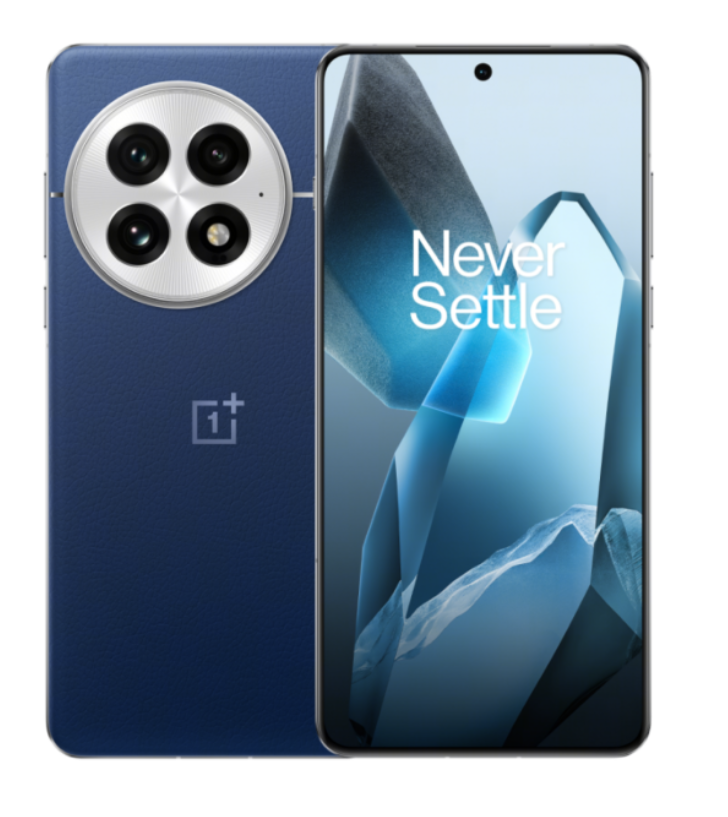
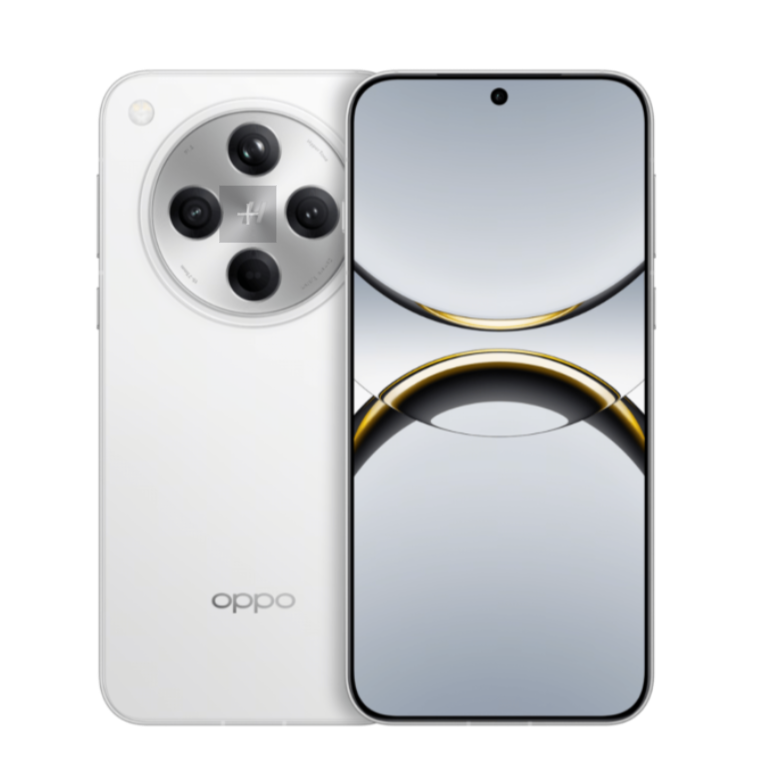
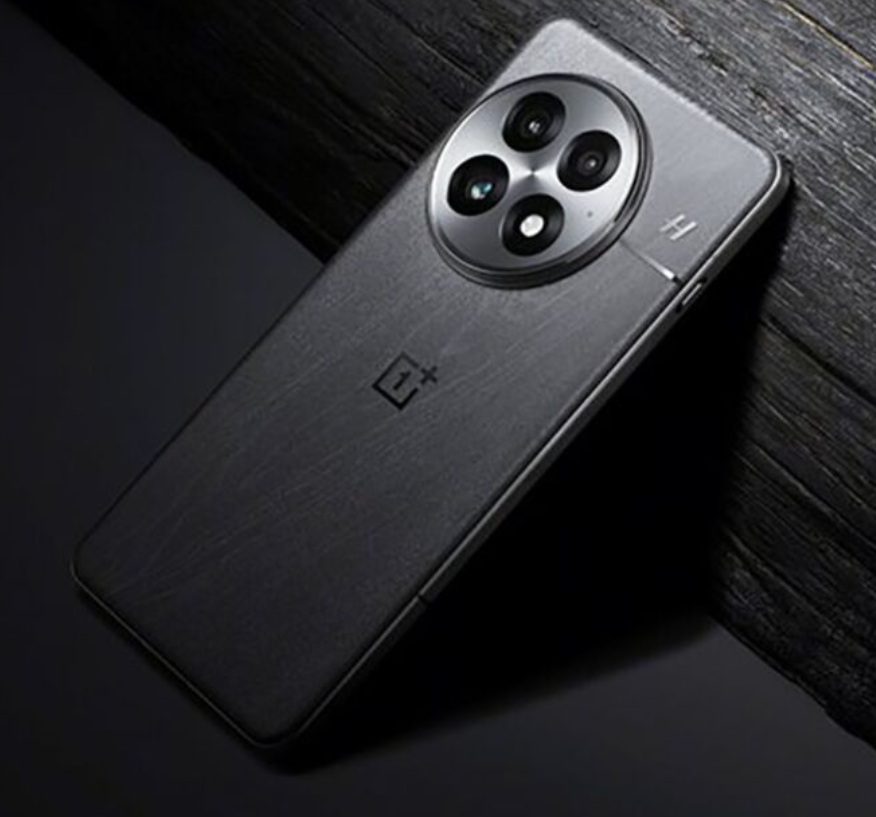
The OnePlus 13 itself is impressive from the get-go. The white frosted glass back offers a rougher texture for a secure grip, while the blue model sports a leather-like finish called “Blue Power.” The black version has a wood-grain effect, adding unique styling options.
2. Design and build quality:
The OnePlus 13 keeps the classic alert slider, a fan-favorite feature, allowing users to toggle sound modes effortlessly. The device now has an upgraded IP69 water-resistance rating, a step up from last year’s IP65, making it more durable and reliable for day-to-day use. The frame is polished silver for the white and blue models, while the black version features a brushed texture for a distinct look.
3. Camera features and display quality:
The camera system includes a 23mm Sony LYT-808 primary sensor. The 50MP main camera is complemented by an upgraded ultrawide and telephoto lens with AI enhancements like glass glare elimination and live photo effects. Display-wise, the OnePlus 13 sports a 6.82-inch QHD+ panel with a 120Hz adaptive refresh rate, 510 PPI, and 10-bit color support, ensuring vibrant visuals and excellent eye protection settings.
4. Performance and battery life:
Powered by the new Snapdragon 8 Elite processor, the OnePlus 13 delivers notable improvements in both performance and power efficiency. With 24GB of RAM and UFS 4.0 storage, the device handles intensive apps and games smoothly. Battery life also shines: the 6,000mAh battery supports 100W wired and 50W wireless charging, so even heavy usage won’t drain the battery too quickly. In our testing with graphics-intensive games like Honkai Star Rail, the phone maintained a steady 60 FPS with minimal heat, thanks to its low average power consumption of only 4.44 watts.
5. Pricing and final thoughts:
Starting at 4,499 RMB (~$631 USD), the OnePlus 13 offers a compelling balance of performance, display quality, and innovative features. For context, the standard Xiaomi 15 starts at the same price. While the device is currently exclusive to China, interested users can still import it through platforms like Giztop, where it’s currently in stock and is available for $799.
Overall, the OnePlus 13 stands out as a premium Android flagship with a focus on performance and display that rivals even the best on the market.
Realme has officially introduced its 2024 flagship, the Realme GT7 Pro. This new release features several standout improvements, including a customized Samsung Eco² OLED Plus display with extreme brightness and enhanced power efficiency, paired with Qualcomm’s Snapdragon 8 Elite processor and a substantial 6500mAh “Titan Battery.” Here’s a closer look at what Realme’s latest offering brings to the table.
1. Customized Eco² Samsung display with depolarizing technology
The Realme GT7 Pro debuts Samsung‘s Eco² OLED Plus screen, claiming an impressive global peak brightness of 2000 nits—among the brightest displays in the market.
It also boasts a wide DCI-P3 color gamut of 120% for vibrant colors and supports HDR and Dolby Vision for high dynamic range visuals. The display is also energy-efficient, with Eco² OLED Plus depolarizing technology that reduces power consumption by up to 52%, making it suitable for extended use without sacrificing quality.
Powering the GT7 Pro is the Snapdragon 8 Elite processor, delivering a 45% boost in CPU performance and a 40% improvement in GPU efficiency compared to the previous generation. The setup includes two 4.32GHz super cores and six 3.53GHz large cores, ensuring a smooth user experience, even under demanding conditions.
The phone also includes Realme’s 11480mm² dual VC cooling system, promising what the company calls the “strongest heat dissipation experience” in real-world usage.
3. 6500mAh “Titan battery” paired with rapid charging
The Realme GT7 Pro features an impressive 6500mAh “Titan Battery”, developed in collaboration with CATL. This battery has the industry’s highest 10% silicon content, which suggests the highest energy density. This is how Realme has managed to reduce the thickness of the phone from 9.23mm down to 8.55mm despite packing a much higher capacity.
It supports 120W fast charging, which is capable of charging the phone to 50% capacity in just 14 minutes, making it ideal for users who need a fast, reliable charge on the go.
4. Photography: advanced periscope telephoto and Underwater Mode
The GT7 Pro raises the bar with its 50MP ultra-light 3x periscope telephoto lens, featuring AI super-resolution and up to 120x zoom, along with a 50MP main camera and an 8MP ultra-wide lens. New underwater mode allows users to capture images and unlock the device in submerged settings.
5. Software experience
Running on the new Realme UI 6.0, the GT7 Pro comes with a guarantee of four years of system updates and three major Android version upgrades. The UI includes dynamic animations and new multitasking features like WeChat file dragging and parallel animation enhancements for a smoother user experience.
6. Pricing and availability
The Realme GT7 Pro launched in China in three color options: Star Trail Titanium, Light Domain White, and Mars Exploration Edition. Here’s the pricing structure:
12GB + 256GB: ¥3,599 (~$506)
16GB + 256GB: ¥3,899 (~$549)
12GB + 512GB: ¥3,999 (~$563)
16GB + 512GB: ¥4,299 (~$605)
16GB + 1TB: ¥4,799 (~$675)
The phone is also confirmed to launch in India on November 26th with the same chipset.
With the 8 Elite chip, advanced display, and extended battery life, the Realme GT7 Pro is a compelling choice for those seeking a premium flagship experience at a competitive price.
Vivo might be gearing up for the global launch of its new flagship smartphone soon. The company’s Vivo X200 model was recently spotted in a certification listing just days after its official announcement in China. So here’s what we know so far.
Vivo X200 visits Bluetooth SIG
The Chinese brand’s new high end smartphone just surfaced on the Bluetooth SIG certification carrying the V2415 model number (Via TheTechOutlook). Unfortunately, this does not confirm any major details like its features, specs, or availability details. But it does reveal that the premium grade handset will support Bluetooth 5.4 connectivity. The database also hints that the wider global release might be right around the corner.
Talking about the smartphone itself, the Vivo X200 is equipped with the MediaTek Dimensity 9400 SoC, which is paired with up to 16GB of RAM and 1TB of internal storage. On the front, it sports a 6.67-inch quad curved LTPS OLED display with a 120Hz refresh rate, HDR10+ support, 4500 nits of peak brightness, and 1.5K resolution. The rear has a 50MP (Main) + 50MP (Ultra Wide) + 50MP (Telephoto). For selfies and video calls, the front houses a 32MP camera. A large 5,800mAh battery pack powers this device, which supports 120W wired fast charging and 90W wireless fast charging.
Despite its smaller form factor, the Vivo X200 still offers a premium design with an alloy frame and glass back. It comes with an IP68/IP69 rating for water and dust resistance. Other notable features include Android 15 OS based OriginOS 5 custom skin out of the box, stereo speakers, optical in-display fingerprint scanner, and Zeiss optics.
OxygenOS 15, based on Android 15, is the best software upgrade for OnePlus phones in recent years. The animations are now a lot smoother, thanks to parallel processing, and there are many new features, such as Share with iPhone, Circle to Search, flux themes, live alerts, and more.
The stable rollout is expected to kick off by the end of the year. However, those looking to get an early taste of the new software can download and install the OxygenOS 15 beta.
OnePlus is already rolling out the beta version of OxygenOS 15 to select devices, with more to follow in the coming days. See the official beta rollout timeline below to know when it’s coming to your phone. And if you’re interested in joining the beta party, follow the steps mentioned in this post.
OxygenOS 15 open beta rollout timeline
From Oct 30: OnePlus 12, OnePlus 12R, OnePlus 12R (Genshin Impact Edition)
From Nov: OnePlus Open, OnePlus Pad 2
From Dec: OnePlus 11 5G, OnePlus 11R 5G, OnePlus Nord 4, OnePlus Nord CE 4, OnePlus Nord CE 4 Lite 5G, OnePlus Pad
From Jan: OnePlus 10 Pro 5G, OnePlus 10T 5G, OnePlus Nord 3 5G
From Feb: OnePlus 10R 5G, OnePlus Nord CE 3 5G
As of writing this post, the OxygenOS 15 open beta is live for OnePlus 12, OnePlus 12R, and OnePlus 12R Genshin Impact Edition. The OnePlus Open and OnePlus Pad 2 should join the party in the coming days, followed by the remaining models in the coming months.
Open beta, also known as public beta, is the final testing phase of software before it rolls out as a stable update to a broader audience. The goal is to analyze users’ feedback and ensure the software is ready for public use. This phase generally lasts for a few weeks. However, it can take months if critical bugs are discovered.
How to install OxygenOS 15 beta?
Before you follow these steps, make sure that the OxygenOS 15 open beta program is live for your OnePlus device. You must also visit the open beta announcement page on the OnePlus Community to see the application time and other important details.
Step 1: Ensure your device is up-to-date, as older versions might not detect the open beta version.
Step 2: Go to Settings and tap Software update.
Step 3: Tap three dots on the upper-right side and choose Beta Program.
Step 4: On the Release candidate screen, you’ll see the open beta builds available for your OnePlus phone.
Step 5: Download and install a beta update, if available. Otherwise, check back again later.
OnePlus takes open beta applications in batches. If you see a “no updates available” message after following the steps, it means the day’s quota is fully booked. Then, you should try the next day.
If the open beta quota is already booked, you can download the update package using the Oxygen Updater (a third-party app). To install it, you must enable the developer mode (by tapping 7 times on the build number) and use the Local install option.
For any reason, if you want to go back to OxygenOS 15, download the rollback package from the OnePlus Community and use the Local install option.
What’s new in OxygenOS 15?
OxygenOS 15 brings parallel processing for smoother app switching. No other smartphone brands, including Apple and Samsung, are currently offering this feature. There’s also Circle to Search for quick Google searches without leaving the app.
With the newly added Share with iPhone feature, transferring files between OnePlus and iPhones is a little easier, though it still requires many steps. Additionally, new AI-powered image enhancement tools have been introduced, such as AI Detail Boost, AI Unblur, and AI Reflection Eraser.
OxygenOS 15 also brings Google’s Gemini AI model for intelligent search. AI-smartness also comes to Notes for quick summary, formatting, generating new content, and tone adjustment. There are also flux themes, which are preset themes that give your device a fresh look in one click.
Xiaomi 15 is a powerhouse smartphone designed to deliver an advanced mobile experience with impressive features. From its stunning display to its lightning-fast processor and remarkable camera system, Xiaomi 15 aims to redefine what a smartphone can offer.
Display and Design
The Xiaomi 15 features a vibrant 6.36-inch 1.5K OLED display with a 144Hz refresh rate, creating a smooth and immersive visual experience. The AMOLED panel supports HDR10+, 12-bit color depth, Dolby Vision, and reaches an impressive peak brightness of 1900 nits, making it perfect for both everyday use and multimedia enjoyment. With a 480Hz touch sampling rate, the screen is highly responsive, ideal for gaming and fast interactions.
Powerhouse Processor
Under the hood, Xiaomi 15 is powered by the Qualcomm Snapdragon 8 Elite processor. Built on a 4nm process, the octa-core processor clocks up to 4.32 GHz, ensuring swift performance whether you’re browsing, gaming, or multitasking. With up to 12GB of LPDDR5 RAM, the phone handles heavy tasks and app-switching seamlessly, and is available with storage options of 256GB, 512GB, or 1TB, catering to varied user needs for space and storage.
Leica Quad-Camera System
Xiaomi has equipped the Xiaomi 15 with a powerful Leica Optics quad-camera system that offers a variety of lens options and shooting modes. The setup includes a 50MP primary camera with a Light Hunter 900 sensor, a 50MP floating telephoto lens with optical image stabilization (OIS), and a 50MP ultra-wide-angle camera. With an array of Leica-inspired features like Movie Mode, Street Mode, and Portrait Mode, the camera is capable of delivering crisp and vibrant images. It supports 8K video recording at 24/30fps and has slow-motion capabilities up to 1920fps at 720p, ideal for cinematic and creative shots. For selfies, a 32MP front-facing camera offers great clarity, and supports video recording in 4K up to 60fps.
Xiaomi Hyper OS
The Xiaomi 15 runs on Xiaomi’s new Hyper OS, which provides a streamlined user interface, advanced animations, and smooth gestures. Hyper OS is designed to optimize the device’s performance and provide a user-friendly experience with multi-language support, including English and Chinese. This OS ensures a fast and responsive experience for both new and seasoned Xiaomi users.
Battery and Charging
A large 5400mAh battery keeps the Xiaomi 15 running all day. For those on the go, the phone supports 90W fast wired charging and 50W wireless charging, so you can quickly power up your device without downtime. This high-speed charging technology is designed to get your phone ready for use in no time.
Connectivity and Security
Xiaomi 15 supports the latest 5G bands, offering high-speed connectivity for streaming, downloading, and browsing. With WiFi 7 capability, the phone provides data transfer rates up to 6.9 Gbps, enhancing online experiences. For added convenience, the Xiaomi 15 includes NFC, dual-frequency GPS, and an IR blaster, making it a versatile device that can work with various devices and connections. The in-display fingerprint sensor ensures secure and fast access to the device.
Camera: Leica 50MP triple rear cameras, 32MP front camera
Video Recording: 8K (24/30fps), 4K (30/60fps), slow-motion up to 1920fps
Battery: 5400mAh with 90W wired and 50W wireless charging
OS: Xiaomi Hyper OS
Network: 5G, WiFi 7, NFC, IR blaster
Security: In-display fingerprint scanner
Price and Availability:
Xiaomi 15 is available at Giztop starting at just $749.00, offering exceptional value for its high-end features, including a stunning OLED display, Snapdragon 8 Elite processor, and advanced Leica camera system. This competitive price makes the Xiaomi 15 an attractive option for flagship-level performance.
Video ads are growing, grabbing people’s attention on smartphones these days. Just what we need to push forward in this crazy fast digital environment and capture e-commerce sales. Given just how popular mobile shopping is becoming, brands have to be prepared to create some really cool, high-quality commercials that appeal to mobile shoppers like grabbing their phones madly. Luckily, there’s VidAU and AI with which a product URL can become an awesome video ad. The link to video feature was very revolutionary and innovative, contributing pretty much to the effort that brands were making in relating to their target audiences and making them more available with minimal efforts from them. This advancement had the process made easier and quicker than ever, and it turned a smartphone into an efficient tool for generating sales.
Engaging the Mobile-First Consumer
You can’t ignore how blown up mobile shopping has been: in fact, more than half of all e-commerce traffic now originates from mobile. Now, people are depending on their mobile for everything: checking out various products isn’t the only thing they do, but also buying stuff right from their phones. Brands have to innovate and produce mobile-friendly advertisements so that, apart from attaining attention from consumers, they can manage to nudge them into an immediate call-to-action in a timely way as well. Hey, so this is when it comes to reaching people on their phones, video has, for some reason, turned out to be one of the most powerful tools available. It can share way more information in a way shorter time than if you were just using static images or even written text.
VidAU really catches the importance of this in our ever-changing digital world, so they have come up with a super-effective solution focused on mobile-first marketing strategies. With their cool link to video feature, brands can create ideal, impactful, and polished video ads and all set for mobile. It can be a product demo, some kind of how-to guide, or even a funny ad; that’s why the smart tools at VidAU work super hard in order to stuff every video full with the best details in order to captivate viewers in just a few seconds. So, coming in the stride of VidAU, it is bound to boost the conversion chances and provide brands with a solid way to connect with a really valuable audience.
AI-Generated Ads: Professional Results, Minimal Effort
One of the primary reasons VidAU is so cool is that it whipped up ultra-high quality, pro-level video ads with hardly any effort on your part. All one needs to do is toss into a product URL from the popular sites like Amazon, Shopify, or Etsy and the advanced AI in VidAU checks out everything relating to that URL, making you a cool video just about the product you picked. This efficient and slick process not only saves brands a significant amount of time but also gives them a chance to save some precious resources because they won’t have to shell out money for expensive video production teams or waste hours on boring video editing.
The platform allows using editable templates and is launched with AI-generated voice overs. Thus, it is super easy for businesses to personalize their ads while keeping them slick and professional. Moreover, VidAU has really good multilingual support, so brands can create engaging content that will connect with audiences all around the world without any hassle. So, all of this has made VidAU become the best tool for business people who really want to increase their market and build a bigger presence.
Boosting Conversions with Data-Driven Creativity
After all, what really sets VidAU apart from the many other video ad creators, though? It’s its pleasant mixture of data-driven acumen and creativity. Unlike all the other ones, it does not simply rest on its AI tech that would make good-looking videos but assembles super well-thought-out ads meant to convert viewers into customers. Thus, after actually looking into how people shop online these days, VidAU makes sure that the advertisements that they create are totally designed to click with their target audience. This is super important for folks who are scrolling on their phones, therefore, making the ads hit harder and feel more relevant.
And so, for example, VidAU employs several attention-grabbing visual elements that are meant to effectively bring audience members’ attention to the attention-grabbing messages. There are fast transitions in keeping the visuals moving dynamically, bold text overlays meant to highlight important messages, and clear calls to action which actually get users engaged – all super optimized for mobile viewing. These are some of the most basic factors to be affected since this is the capture of attention in the first few seconds of an interaction-which is particularly essential in today’s world in which the attention span is shorter than ever before and then content needs to resonate with the viewers as rapidly as possible.
Streamlined Workflow for E-Commerce Brands
Conversion-driven video ads are quite a handful for most companies, especially small brands without so much cash or creative juice to throw around. But VideAU totally changed that game with their really easy and friendly site, whipping up any video from start to finish is much easier and smoother. This new tool lets brands whip up a really cool video ad from virtually any product URL in just a few clicks. It totally helps brands get their marketing campaigns out there way faster and more efficiently.
Besides the type of ad format, VidAU allows brands to create all kinds of content tailored to the needs of each social media platform and e-commerce site. So it could be a quick 15-second story on Instagram or a fancier ad on Facebook that holds up a user’s attention for a longer time. So, VidAU actually looks to collect content specifically matching the needs of each platform. In doing so, the ads will consequently perform better, most significantly for mobile users who continue to rely heavily on this kind of content.
The Future of Mobile-First Video Ads
As mobile shopping keeps growing and changing, the number of engaging video advertisements that translate into conversion will continue to grow exponentially, VidAU has really made its name, offering a complete solution to address all that modern brands need in order to gain a solid foot in the digital world. VidAU has this great link to video feature, which allows you to customize things with AI and really focuses on easy-to-use mobile applications. Therefore, businesses can make advertisements so eye-catching that they actually result in tangible results regarding engagement and sales.
If you want to enter the mobile market wisely and increase e-commerce sales, a VidAU is a super convenient and pretty effective move. It encompasses everything from offering the vital tools for creating product URLs to video ads hand-crafted pretty well that will provide businesses with all the resources needed to contact their target audience in the best possible way. This will allow them to turn mobile phone users into super loyal customers who are probably going to return for more stuff later on.
Integration of advanced AI technology into your marketing strategy can bring about an amazing and immense impact on the success of your brand as a whole. The VidAU platform makes the whole process of moving from using mobiles to making sales the most frictionless yet.
We use cookies on our website to give you the most relevant experience by remembering your preferences and repeat visits. By clicking “Accept”, you consent to the use of ALL the cookies.
This website uses cookies to improve your experience while you navigate through the website. Out of these, the cookies that are categorized as necessary are stored on your browser as they are essential for the working of basic functionalities of the website. We also use third-party cookies that help us analyze and understand how you use this website. These cookies will be stored in your browser only with your consent. You also have the option to opt-out of these cookies. But opting out of some of these cookies may affect your browsing experience.
Necessary cookies are absolutely essential for the website to function properly. This category only includes cookies that ensures basic functionalities and security features of the website. These cookies do not store any personal information.
Any cookies that may not be particularly necessary for the website to function and is used specifically to collect user personal data via analytics, ads, other embedded contents are termed as non-necessary cookies. It is mandatory to procure user consent prior to running these cookies on your website.