The Orange Pi KunPeng Pro computer has now made its entry into the global market after its China launch. The KunPeng Pro is one of Orange Pi’s single-board computers that was previously exclusively available in China. It is powered by the Huawei HiSilicon Hi1910 CPU with LPDDR4X RAM and eMMC flash storage is also featured.
The global availability of the KunPeng Pro is coming just about a month after it was released in China. Third-party resellers are believed to have brought the SBC to the global market. It is available in the US, Europe, and the United States. The Huawei-derived HiSilicon SoC has quad 64-bit CPU cores and an AI accelerator that can achieve up to 8 TOPS of performance. The architecture also includes an unknown GPU. Both Orange Pi and Huawei have not provided the full details about the HiSilicon Hi1910 chipset.
Apart from its memory and eMMC flash storage, the KunPeng Pro has an M.22280 slot. It also has a Gigabit Ethernet connection, two HDMI 2.0 interfaces, and a USB-C port that provides up to 65W of power.
The Orange Pi KunPeng Pro is available from AliExpress at a starting price of $223.42 (8GB of RAM and 64GB of eMMC). The model with 16GB of RAM and 64GB of storage is priced at $251.02. It remains to be seen the type of reception the model will have in the global marketplace. It is however noted that Orange Pi has some models already internationally available.
Swiss-based electric scooter brand VMAX has launched two new models targeting the US market. The two new models are the VMAX VX2 Extreme and the VX5 Pro e-scooters. VMAX has established itself in the European market since it arrived on the scene in 2015. Last year it expanded into the US market and the two new offerings signpostsl its progress within the period. Although the scooters are not manufactured in Switzerland, they reflect the Swiss reputation for quality and reliability.
The models come with an impressive and industry-leading two-year warranty. Other highlights of the VMAX VX2 Extreme and the VX5 Pro include a focus on UL certification testing, IPX6 waterproof certification, and a fully-stocked replacement parts warehouse in the US.
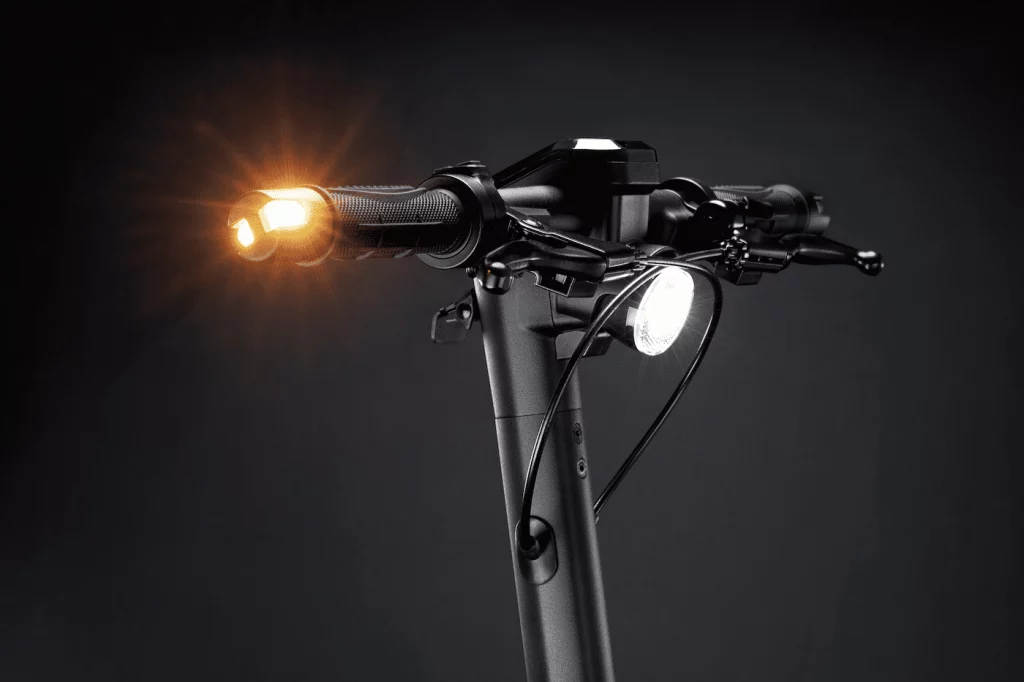
The two new VMAX e-scooters target both the high-performance and entry-level segments of the market. The VX2 Extreme is designed for high-performance riding, while the VMAX VX5 Pro is built with standard features leading to its less-expensive price tag. Both models come with several key features, such as large tubeless pneumatic tires (10″ and 9″ on the VX2 Extreme and VX5 Pro, respectively), LED lighting with included blinkers, and UL 2722 certification from SGS. They also feature IPX6 water resistance that protects the scooters when it’s raining and a combination of electronic regenerative braking and sealed drum brakes.
The VMAX VX2 Extreme is a refresh to the VX2 Pro, which is still available as one of the brand’s popular models. The VX2 Extreme comes with a higher power motor with a 1,600W peak power output, a steeper maximum climbing grade of 33%, and a longer range of up to 43 miles (69 km). The VX2 Extreme has a wider deck than its predecessor, an upgraded 4-inch TFT LCD, and a new companion mobile app. It has a higher weight limit of 150 kg while its top speed is 25 mph (40 km/h).
The base model VMAX VX2 Extreme has a 500Wh battery with 28 miles (45 km) of range. Customers can also opt for larger batteries of 624 Wh or 792 Wh with respective ranges of 34 miles and 43 miles (54km and 69km).
The VMAX VX5 Pro comes with several improvements over the VMAX VX5 budget e-scooter. It has a top speed of 18 mph (30 km/h) and features new LED blinkers for indicating turns. The scooter has larger 9-inch pneumatic tubeless tires.
Pricing & Availability
The base model of the VX5 Pro is priced at $449 and features a battery with a range of 11 miles (18 km). Two longer-range options with larger batteries respectively offer 17 miles or 22 miles (27 km or 35 km). The VX2 Extreme is priced from $999 for the base model and an extra $100 or $200 for the larger battery options. The model thus combines high performance with affordability.
Three brands have scheduled smartphone launches for the next few days. Two of these companies will unveil different products across multiple regions.
OnePlus will hold an event in China to announce a flagship killer phone, which will be accompanied by a premium tablet and a smartwatch. At the same time, the brand will also take wraps off a budget smartphone in India.
Whereas, Motorola will debut its next-gen foldables and a mid-ranger in China and select global markets. Finally, Vivo will launch a budget model in India.
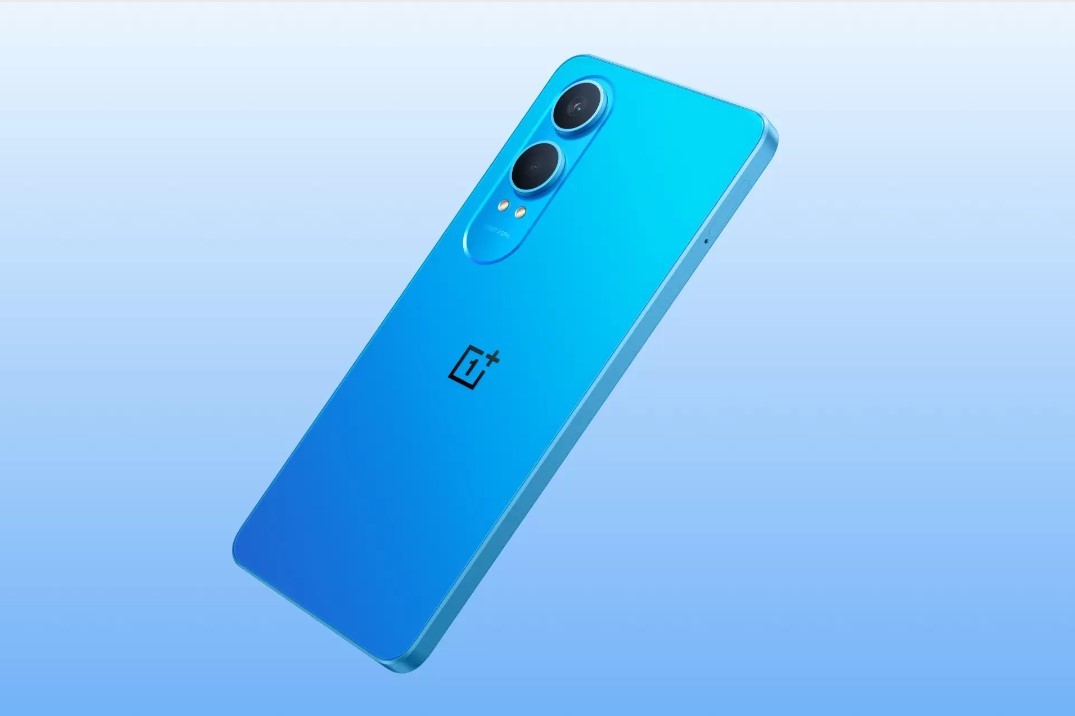
The OnePlus Nord CE 4 Lite is scheduled to launch in India on June 24 (Monday). Going by the official teasers and leaks, the device will be a rebranded Oppo K12x.
Therefore, it will come with a Snapdragon 695 chip, a 6.67-inch 120Hz OLED display, a 50MP primary camera, a 5,500mAh battery, and 80W charging support.
In other words, the phone will retain the SoC from its predecessors, however, it will finally sport an OLED screen instead of an LCD panel.
2. Motorola Razr 50 Series and Moto S50 Neo
Motorola will host a conference in China and select global markets on June 25 (Tuesday) The company will unveil Razr 50, Razr 50 Ultra, and Moto S50 Neo.
The Razr 50 Ultra will arrive with a Snapdragon 8s Gen 3 chipset, dual 50MP cameras, a 6.9-inch main display, and a 4-inch cover screen. On the other hand, the vanilla Razr 50 will come with a similar 6.9-inch primary display but a smaller 3.6-inch cover screen and a less powerful MediaTek Dimesnity 7300X SoC
Further, the Moto S50 Neo will offer a 6.6-inch OLED display, a Snapdragon chip, a 50MP main camera, a 5,000mAh battery, and 33W charging support.
3. OnePlus Ace 3 Pro
The OnePlus Ace 3 Pro will be announced on June 27 (Thursday) in China. The handset will be accompanied by OnePlus Pad Pro, OnePlus Watch 3, and OnePlus Buds 3.
The phone will be powered by a Qualcomm Snapdragon 8 Gen 3 SoC. It will come with a 6.78-inch 1.5K 120Hz OLED display, a 50MP Sony LYT-800 main camera, a 6,100mAh battery, and 100W charging support.
The device will be offered with up to 24GB RAM and 1TB storage.
4. Vivo T3 Lite
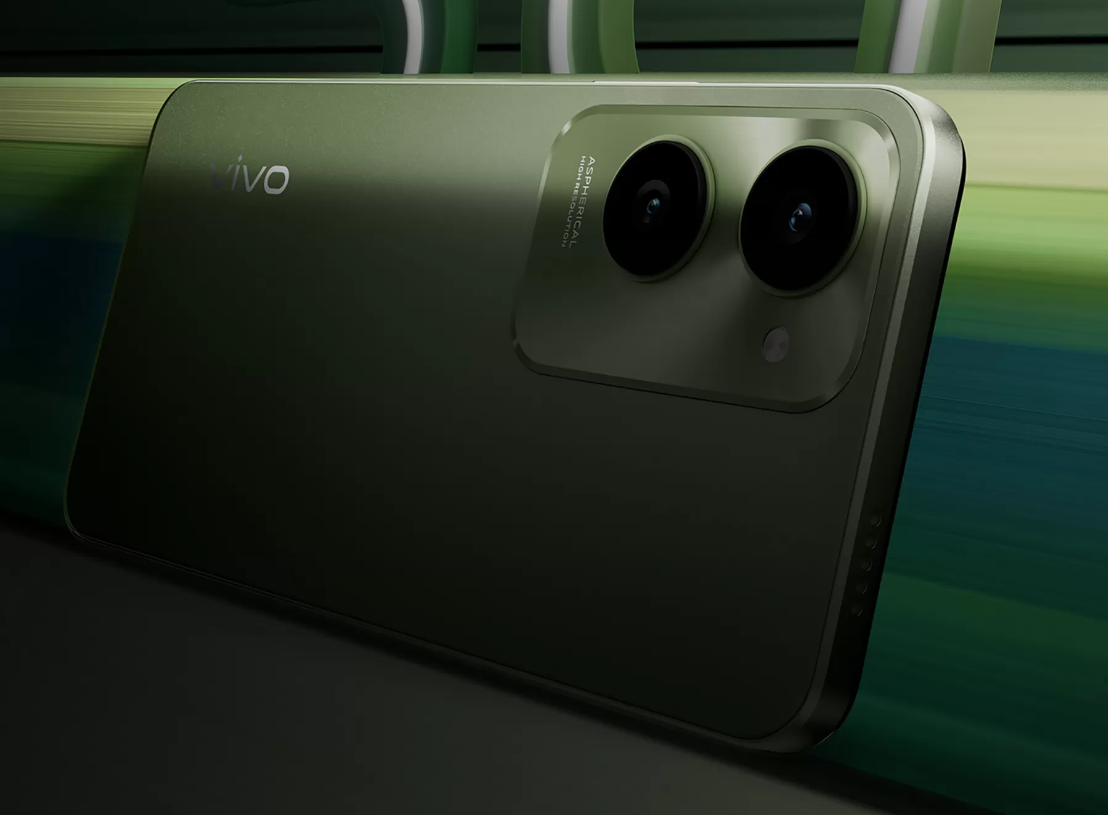
The Vivo T3 Lite 5G will be made official in India on June 27 (Thursday). It will be the third product in the lineup after Vivo T3 and Vivo T3x.
As per rumors, the handset will be powered by a MediaTek Dimensity 6300 chipset. Further, it will arrive with a 50MP main camera and a 120Hz display.
It will reportedly go official as the most affordable 5G smartphone from Vivo in India.
The Aima Q7 electric motorcycle has been unveiled in China. The compact electric motorcycle comes with adjustable shock absorbers with five levels of adjustment. It also features a 360mm pedal space and an overall retro design. The vehicle has a high-carbon steel double-tube frame that reflects its modern retro design. The bike’s seat cushion supports five levels of adjustment (80kg, 120kg, 150kg, 170kg, and 180kg) for its shock absorbers.
The Aima Q7 is powered by a 1000W electric motor and offers a cruising range of up to 100km. It has a wheelbase of 1,250mm and dimensions of 1,775 x 650 x 1,130 mm. The Aima Q7 has a 600mm high-elastic saddle lock function that is rated as ‘motorcycle grade’ by the manufacturer. The bike adopts a front and rear disc brake design while its seat bucket has a capacity of 27L. The bike is suitable for urban movement and also features a push/ reverse assist function as well as uphill parking and automatic downhill deceleration.
The Aima Q7 has a companion mobile application that can be used to remotely control the vehicle, as well as view ride data. The bike has an intelligent lighting system with a maximum brightness of 30,000CD and an illumination distance of about 56 meters, while the illumination width is approximately 12 meters. The Q7 has an intelligent color screen instrument platform that displays the time, battery status, ride data, and related information. Three optional polyphonic ringtones can be used as notification alerts and charging reminders. The bike also supports energy recovery and driving on slippery roads with its TCS tracking anti-skid system.
Pricing & Availability
The Aima Q7 has several unlocking options including using a switch, app, Bluetooth unlocking, and remote key unlocking. There are four riding modes on the electric motorcycle namely president, queen, elegant, and energetic. The e-bike is available in five color variants namely Coast Blue, Mica Silver, Brilliant Whale Gray, Satin Beige, and Mignonette Green. The Aima Q7 is available for purchase from retail platforms in China including JD.com at a launch price of 4,599 yuan ($634).
Apple users in the EU are in for a disappointment as several key features announced at WWDC will be missing from the upcoming iOS 18 and macOS Sequoia releases this fall. Apple has blamed regulatory hurdles related to the Digital Markets Act (DMA) for withholding features like Apple Intelligence, iPhone Mirroring to Mac, and SharePlay screen sharing.
This could be detrimental towards both people in the EU and Apple itself
This is a significant blow for EU users considering these features were among the most anticipated upgrades unveiled at the developer conference. Apple Intelligence, for instance, is the company’s flagship AI initiative, promising a more integrated user experience across Apple devices. iPhone Mirroring would have allowed seamless remote access to iPhones from Macs, while SharePlay screen sharing enhancements aimed to improve collaboration functionalities.
The specific reasons behind the DMA causing these issues remain unclear. The company claims it could jeopardize “privacy and security,” but the details are yet to be revealed.
This situation could be a significant development for both Apple and its customers in the EU. For Apple, it highlights the potential challenges posed by stricter regulations in key markets. The company may need to adapt its development strategies to comply with regional rules while maintaining a consistent user experience globally. For EU customers, it raises concerns about feature parity and access to the latest innovations. The lack of these features could leave them at a disadvantage compared to users in other regions.
Whether Apple finds a solution to appease regulators and offer these features in the EU remains to be seen. This situation will likely be closely monitored by both Apple and its customers in the coming months.
Amazon is set to overhaul Alexa, but access to its most advanced features might come at a cost. Reports suggest a $5 to $10 monthly subscription fee on top of a Prime membership to unlock the AI-powered Alexa. This revamped assistant is expected for launch in August 2024 and boasts several improvements.
This new, advanced Alexa will also likely offer custom advice for say, shopping, or art.
Saying “Alexa” repeatedly might become a thing of the past. The new version is rumored to understand and complete multiple requests in one go, like writing an email and ordering takeout simultaneously. It could even learn user habits and personalize routines, like turning on the coffee pot when the alarm goes off. This advanced Alexa is also expected to offer sophisticated shopping advice.
However, Amazon isn’t abandoning the free tier entirely. A basic version of Alexa with new generative AI features will still be available. This move seems to be a response to the increasingly competitive AI assistant market, with Google, Microsoft, OpenAI, and even Apple‘s improved Siri vying for user attention. The future of Alexa appears to be a two-pronged approach: a free basic service and a premium tier with advanced capabilities.
AOC has launched the AOC GAMING C27G2Z3/BK curved gaming monitor overseas. This 27-inch Fast VA panel features a 1500R curvature for an immersive viewing experience.
The monitor also supports adaptive sync variable refresh rate to combat screen tearing
Despite the curved design, the C27G2Z3/BK prioritizes speed with a Full HD (1920×1080) resolution, a 280Hz refresh rate, and lightning-fast 1ms GtG and 0.5ms MPRT response times. To combat tearing during fast-paced games, it also supports Adaptive Sync variable refresh rate technology.
The Fast VA panel offers a good balance of contrast and color. It boasts a high 4000:1 static contrast ratio, 80M:1 dynamic contrast ratio, and a peak brightness of 300 nits. The monitor covers 124.2% of the sRGB color gamut and 92.4% of DCI-P3, making it suitable for casual gaming and content creation.
For eye care, AOC has integrated low blue light and flicker-free technologies. The ergonomic stand allows for adjustments in height (up to 130mm), swivel (up to -30° to +30°), and tilt (up to -4° to +21.5°), ensuring a comfortable viewing position during extended gaming sessions.
Connectivity options include 2 HDMI 2.0 ports, 1 DP 1.4 port, and a 3.5mm headphone jack. The AOC GAMING C27G2Z3/BK carries a 3-year warranty and is priced at £199.99 (approximately 1,844 Yuan), making it a slight premium over the similar-spec straight-screen AOC 27G2ZN3/BK model.
Honor is launching the Play 60 Plus smartphone on June 24th, according to a leaked poster. The phone has just been added to a telecom terminal product library, revealing some key specifications. The Honor Play 60 Plus comes in three colors: Phantom Black, Fairy Green, and Moonlight White. It weighs 197 grams and features a 6.77-inch LCD display with a 1610 x 720 resolution.
The phone will likely boast a 6000 mAh battery for long usage times
Under the hood, the Play 60 Plus is powered by a Snapdragon 4 Gen 2 processor (SM4450) and offers two storage options: 12GB RAM with either 256GB or 512GB of storage. It boasts a long-lasting 6000 mAh battery and a rear dual-camera system with a 50MP main sensor. A 5MP front-facing camera, side-mounted fingerprint sensor, 3.5mm headphone jack, and IP64 water resistance round out the feature set.
Pricing for the Honor Play 60 Plus is yet to be revealed, but the previous generation Play 50 Plus with a Dimensity 6020 chip started at 1,399 yuan (around $212 USD) for the 12GB + 256GB model.
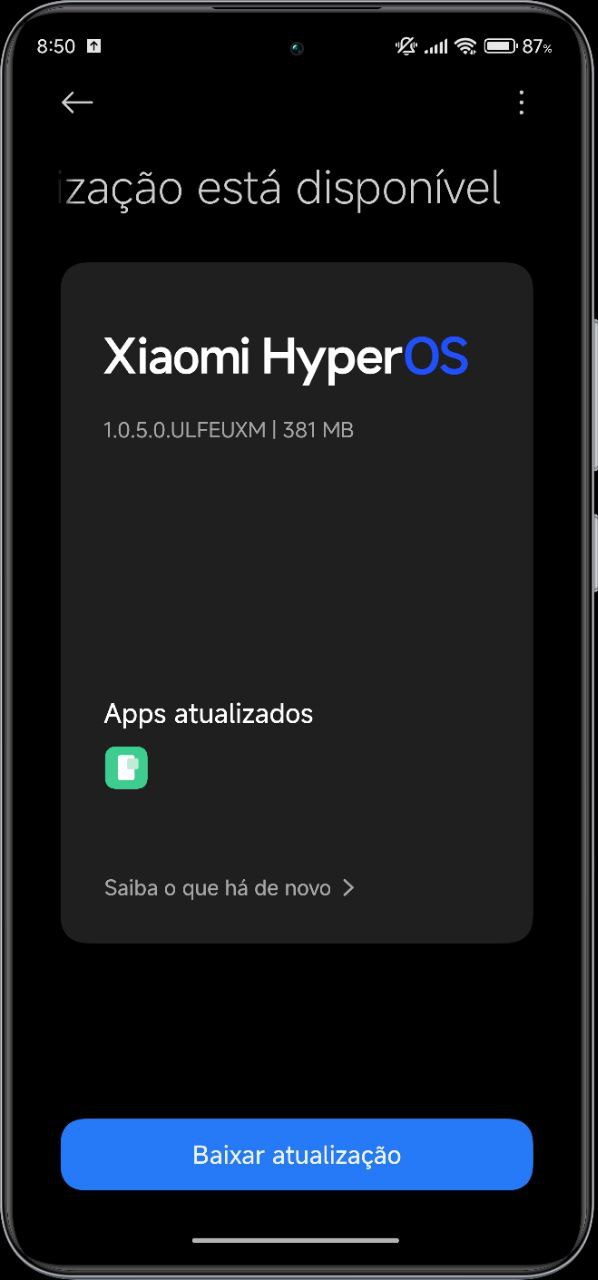
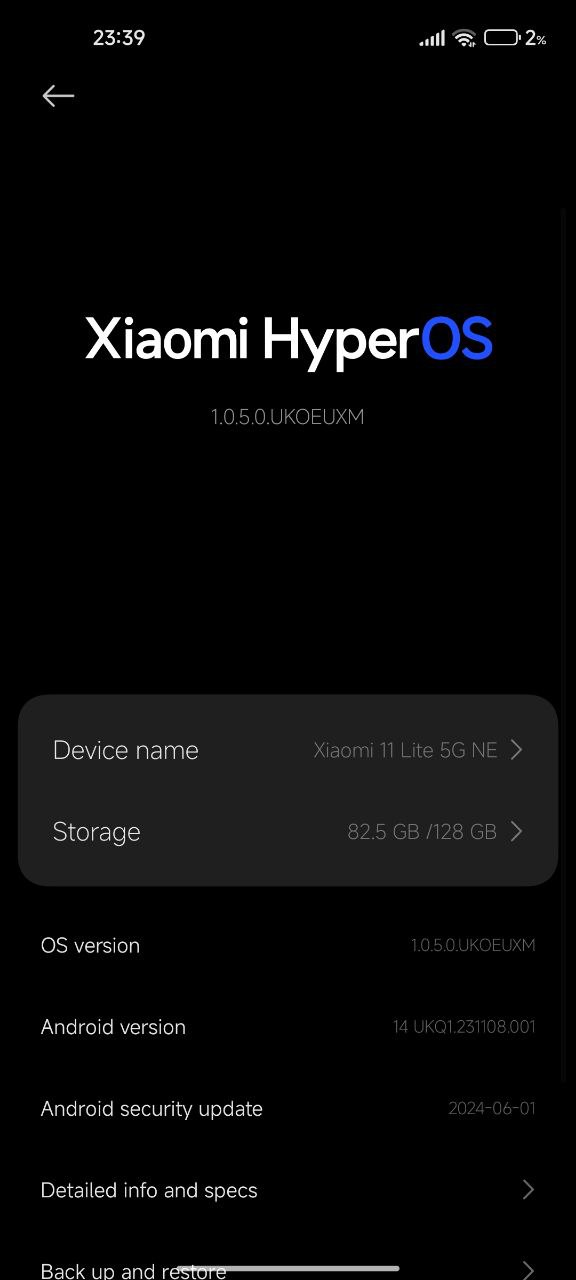
Xiaomi has started rolling out the June 2024 security update to many devices gradually and has taken important steps in security and performance improvements with this move. This update specifically targets smartphone users under the Xiaomi, Redmi, and POCO brands. The aim of the update is to make devices more protected against existing vulnerabilities and optimize overall system performance. Within this context, the focus on the Xiaomi 12T Pro and Xiaomi 11 Lite 5G NE models will delight users in Europe who use these devices.
This HyperOS update for the Xiaomi 12T Pro and Xiaomi 11 Lite 5G NE significantly improves system security. The updates have build numbers OS1.0.5.0.ULFEUXM and OS1.0.5.0.UKOEUXM respectively. The update is currently only available to HyperOS Pilot Tester users and will gradually roll out to all users.
Xiaomi 12T Pro stands out with its 200MP Samsung HP1 sensor. This high-resolution camera allows users to take incredibly detailed and clear photos. This innovation in camera technology provides a great advantage for photography enthusiasts and sets the Xiaomi 12T Pro apart from other smartphones on the market. In addition, its high-performance processor and long-lasting battery increase the efficiency of the device in daily use.
Xiaomi 11 Lite 5G NE attracts attention with its slim and stylish design. This device, which has an aesthetically pleasing appearance, is also appreciated for its powerful hardware features. While its light and thin structure increases the portability of the device, its powerful processor and high-quality display enrich the user experience. 11 Lite 5G NE stands out as an ideal option especially for stylish users.
The June 2024 security update not only improves the security of devices, but also offers performance improvements and new features. Users will have a smoother experience after the update and can rest easy knowing that their devices are more secure.
Following months of speculation, Huawei has officially confirmed the launch of the Mate 70 series for the fourth quarter of 2024. This places the release window somewhere between October to December.
The confirmation comes from Huawei Consumer Business Chairman Yu Chengdong, who revealed that the Mate 70 series will be the first to come pre-installed with the stable version of HarmonyOS NEXT.
Huawei launched the HarmonyOS NEXT at the HDC Developer Conference event today. It completely breaks away from the Android Open Source Project (AOSP) codebase which means Huawei devices with this version of HarmonyOS will not support Android apps altogether.
The upcoming Mate 70 will be the first to get a stable version of the new OS Following its release, Huawei is expected to roll out the major software update to other devices. The company has already begun Beta testing the OS on the Mate 60 series and a bunch of other devices starting today.
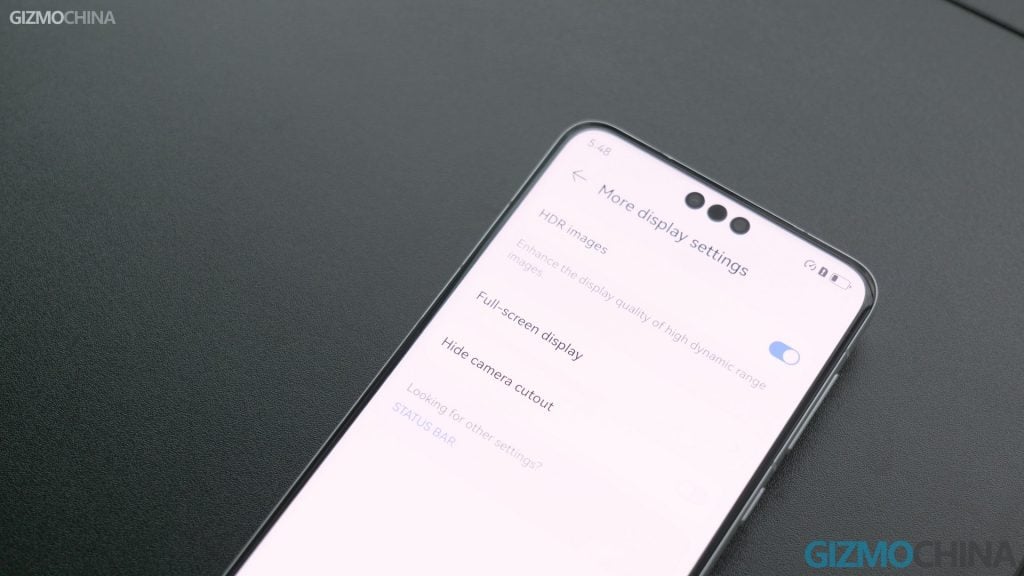
While details about the Mate 70 series hardware are scarce, leaks suggest that the Pro model will maintain the triple punch-hole display design seen in its predecessors, though it’s unclear if this extends to the entire lineup.
To recall, the Mate 60 Pro features a 13-megapixel ultrawide selfie camera, a 3D ToF sensor, and additional sensors and lasers for 3D face mapping. The Mate 70 Pro is likely to continue using the same set of front sensors.
The rear camera system is another area of focus for leaks. The Mate 70 series might utilize upcoming Omnivision sensors for improved image and video capture. Additionally, the top model in the line could feature a retractable lens similar to the one in the Huawei Pura 70 Ultra.
The Mate 70 series is also rumored to feature a new Kirin chip, though details about it are scarce at the moment.
In celebration of their 25th anniversary, hardware brand ASL (founded in 1999) released a special edition RTX 4080 SUPER graphics card. This marks ASL’s first foray into the RTX 4080 SUPER category.
The card has a white design with gold accents for the special edition
The card boasts a sleek white design with gold accents highlighting ASL’s branding and the anniversary theme. A full-size metal backplate reinforces the card and continues the celebratory motif.
Despite the commemorative design, the core frequency and power consumption adhere to NVIDIA’s official specifications. Measuring 347mm long and occupying three PCI-Express slots (61.8mm thick), the card offers the expected performance of an RTX 4080 SUPER. For connectivity, ASL includes 3 DisplayPort interfaces and a single HDMI port. To ensure sufficient power delivery, ASL recommends using a 750W power supply with this graphics card.
Vivo is developing its new X-series smartphone, the X200 Pro. Already leaked specifications of the device provide important information about what features the vivo X200 Pro will offer. The Gizmochina team adds to this leaked information and the vivo X200 Pro appears in the IMEI database.
Vivo X200 Pro coming
Vivo X200 Pro is a smartphone that is highly anticipated by fans. In the premium segment, Vivo’s X series stands out with its camera features. Vivo X200 Pro appears in the database as model number V2413. Unfortunately, we do not know the technical specifications of the device. However, we can talk about certain leaks about the device.
vivo X200 Pro V2413
According to the leaks, the screen of the Vivo X200 Pro will be 6.7 or 6.8 inches in size. The screen offers 1.5K resolution and is expected to be slightly curved. It will be powered by the MediaTek Dimensity 9400 chipset. The first device to use this chipset is expected to be the Vivo X200 Pro. The Dimensity 9400 will be manufactured with TSMC’s 3nm manufacturing process. It will be introduced in October. It is expected to be a serious competitor to Snapdragon 8 Gen 4.
Vivo X200 Pro will have advanced camera features. Leaks suggest that the X200 Pro will have triple 50MP camera system. One of these cameras is predicted to be a periscope lens. The X200 Pro will also have a 6000mAh silicon-carbon battery. Finally, the device will have an ultrasonic fingerprint reader.
We have limited information about the Vivo X200 Pro for now. However, leaked information shows that the device will offer quite ambitious features. Expectations are high that Vivo will offer innovations that will meet the expectations of technology lovers with this new flagship. We hope to learn more about all the details and release date of the device with the official announcement to be made soon.
As the new academic year begins, Apple’s Back to School 2024 offer is now live in India. It will continue for three long months till September 30. The sale is only happening on the company’s official online store and through Apple BKC and Saket stores. The Cupertino-based tech giant is offering Macs, iPads, and accessories at discounted prices. Additionally, to make the purchase sweeter, Apple is also bundling two accessories for free. Read on to know all the details below.
Apple Back to School 2024 sale: discounts and offers
Apple is offering the MacBook Air M2 and Air M3 (both 13 and 15-inch variants) with a whopping discount compared to regular pricing on all RAM and storage configurations. The Air M2 base with 8GB + 256GB is available for Rs 89,990 compared to Rs 99,990. Meanwhile, the 13-inch M3 starts at Rs 1,04,900 instead of Rs 1,14,900. The 15-inch Air M3 can be purchased starting at Rs 1,24,990 compared to Rs 1,34,900.
The MacBook Pro 14-inch and 16-inch can be availed starting at Rs 1,58,900 and Rs 2,29,900 compared to their regular price tags of Rs 1,69,900 and Rs 2,49,900. On the other hand, the iMac is available from Rs 1,29,990 instead of Rs 1,34,990 whereas the Mac Mini costs Rs 49,900 down from the regular pricing of Rs 59,900.
Now, coming to the iPads, the latest 11-inch Air model gets a discount of Rs 5,000 on all storage configurations. The 128GB, 256GB, 512GB, and 1TB options can be brought at Rs 54,990, Rs 64,990, Rs 84,990, and Rs 99,900 respectively. The same variants of the 13-inch model carry a price tag of Rs 74,990, Rs 84,990, Rs 99,990, and Rs 1,19,900.
With education discounts, the 11 and 13-inch iPad Pros with 256GB storage retail at Rs 89,900 and Rs 1,19,900. Apple has also made iPad accessories including the Magic Keyboard and Apple Pencil slightly cheaper during the sale.
During the Back to School 2024 sale, the cherry on the cake is that Apple is bundling free AirPods (3rd generation) with lightning charging case or MagSafe Charging with the MacBook Air, MacBook Pro, iMac, and Mac Mini. Customers can avail for AirPods Pro with USB-C case by paying an additional Rs 5,000. Those purchasing the iPad Air or iPad Pro will be eligible for free Apple Pencil Pro and Apple Pencil USB-C. There is also 20 percent off on AppleCare+ program.
It’s worth noting that to be eligible for the Back to School 2024 offer, you need to be a current or newly accepted university student. It is also valid for teachers and staff members at any university level. Customers can verify eligibility via UNiDAYS or Apple’s verification process. You can also present a student ID, acceptance letter, or other proof of eligibility in official store.
Xiaomi is actively developing the Redmi Note 14 series and the XiaomiTime team is revealing some interesting details about the new smartphones. Here, we will share the known information about these upcoming devices. The Redmi Note 14 series has been in development for a long time and is very important for Xiaomi.
The Arrival of the Redmi Note 14 Series
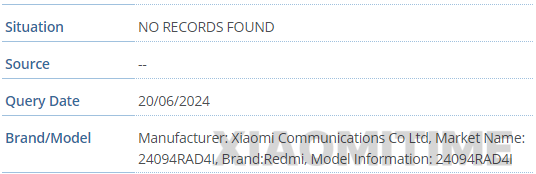
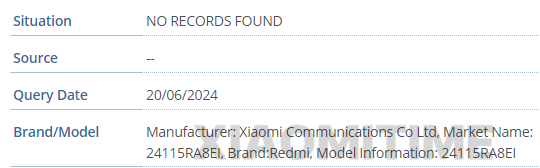
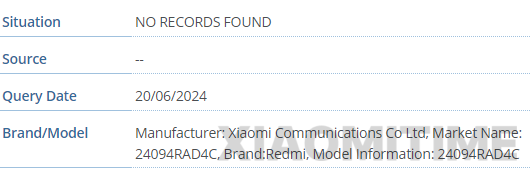
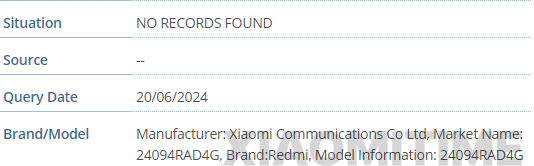
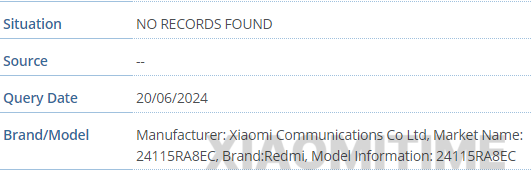
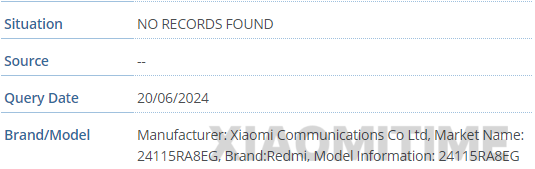
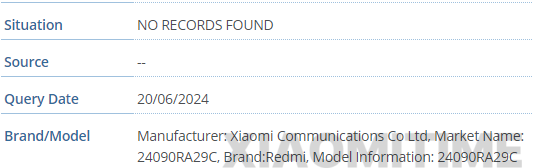
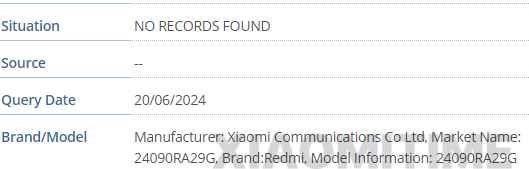
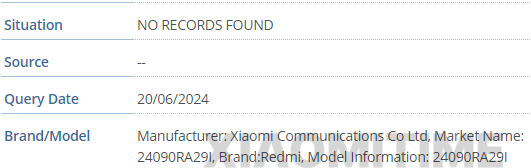
The Redmi Note 14 series is planned to be officially launched in September. With only 2.5 months to go until the launch, the anticipation is growing. The model numbers of the smartphones have appeared in the IMEI database, confirming the regions where the Note 14 series will be available.
24090RA29G, 24090RA29I, 24090RA29C
24115RA8EG, 24115RA8EI, 24115RA8EC
24094RAD4G, 24094RAD4I, 24094RAD4C
These model numbers represent the Redmi Note 14 5G, Redmi Note 14 Pro 5G, and Redmi Note 14 Pro+ 5G. The prefix “2409” in the model numbers refers to the launch date, confirming that the series will be introduced in September. Starting in China, the smartphones will then be launched in other markets around the world.
Also, the Redmi Note 14 series has appeared in HyperOS source code. The top-end model, the Redmi Note 14 Pro+ 5G, has the internal model number “O16U” and the codename “amethyst“. This is in line with the tradition of naming the Redmi Note series with gemstones; amethyst is a transparent variety of quartz typically found in purple hues. The codenames of the Redmi Note 14 5G and Note 14 Pro 5G have not yet been detected.
As expected, these devices will come out of the box with HyperOS 1.0 based on Android 14. Following the Note 14 series, the Xiaomi 15 series will be introduced in October. With only 3-4 months to go until its launch, those considering buying a Note 13 series smartphone may find the upcoming Note 14 models worth the wait.
An upcoming smartwatch from Vivo has just surfaced online. The Vivo Watch 3 was launched in China back in November 2023. But now, it appears that its global release is also right around the corner. The wearable was spotted getting certified in Singapore, so here are all the details.
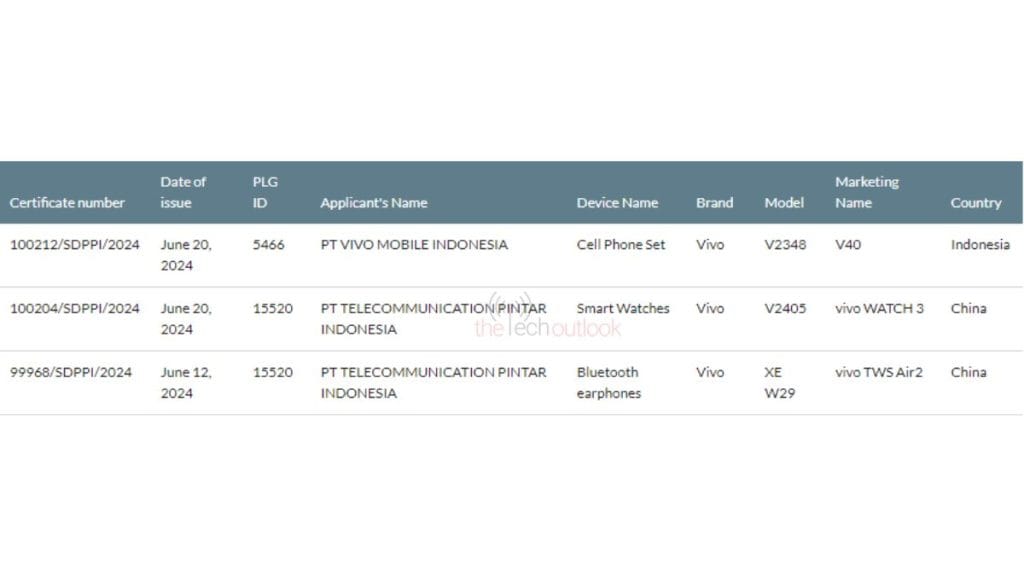
Vivo Watch 3 surfaced on SDPPI
The Chinese brand’s smartwatch was certified on the SDPPI database. It was spotted carrying the V2405 model number. Unfortunately, the certification does not confirm any finer details like its specs, design, or pricing. But we can expect the global variant to be identical to the Chinese version. Just recently, the Vivo Watch 3 ECG version debuted in China with a premium look, which may also arrive in the global market.
Talking about the specs, the Vivo Watch 3 sports a 1.43-inch circular AMOLED display that offers an Always-on Display, 3D curved glass, and 466 x 466 resolution. This model runs on the company’s proprietary BlueOS and offers 4GB of internal storage paired with 64MB of RAM. A 505mAh battery pack powers this smartwatch. Vivo had initially claimed that this smartwatch could offer up to 16 days of battery life on a single full charge. However, the brand later admitted to error in its claims. So you can expect around 7 days of battery life with regular use.
The Vivo Watch 3 features a slimmer form factor compared to its predecessor. It comes with a stainless steel along with a rotating crown as well as a physical button. It also comes with 5ATM water resistance, which promises protection up to 5 meters of submersion. The wearable features a heart-rate monitor and a SpO2 blood oxygen sensor. Female users also get access to menstrual cycle tracking. Vivo has packed support for more than 100 workout modes as well.
Huawei has officially announced the upgrade plan for its latest HarmonyOS NEXT operating system. While developer beta testing kicks off today for a select few, the broader user base will have to wait until later this year for a taste of the new OS.
Also, the developer beta testing program is currently limited to a select group. Huawei is recruiting developers and 3,000 pioneer users to test HarmonyOS NEXT at first.
The initial rollout prioritizes flagship devices, with the Huawei Mate 60 and Mate X5 series, alongside the MatePad Pro 13.2 tablet, leading the charge. These top-tier models will receive developer beta access starting today, June 21st.
Following the developer beta, a wider beta program will begin in August 2024. This phase will include the aforementioned flagship models alongside the Pura 70 series phones, the Pocket 2 foldable phone, FreeBuds Pro 3 earbuds, and the 2024 refresh of the MatePad Pro 11 tablet.
However, the stable version of HarmonyOS NEXT won’t hit these flagship devices until Q4 of 2024. At that time, the aforementioned devices are expected to receive the final, polished version of the operating system.
For users of mid-range devices like the Nova series and budget tablets like the MatePad 11, the wait stretches even further. These models are slated for the beta program only in Q4, with the possibility of a stable rollout sometime in 2025.
Details on the upgrade path for even older devices remain unclear, with Huawei simply stating “Stay tuned” for further announcements. Below is the list of Huawei devices that will receive the HarmonyOS NEXT update:
Developers and pioneer users have the opportunity to sign up for the current beta program between June 21st and 28th. After reviewing applications, Huawei will select participants based on their needs and the type of build they require. Developers with existing apps on the AppGallery will be given priority, according to Huawei.
Those chosen for the beta program are advised to back up their data before installing the software to prevent any potential loss. Additionally, those who find the beta experience overwhelming will be able to revert to their current OS through the settings menu.
Snapdragon X Elite is one of the best things that has happened to Windows laptops in recent years. It’s the most powerful chip for Windows and, most importantly, a close competitor of Apple Silicons.
Apple M-series chips have been dominating over Intel and AMD for a long time, but Qualcomm may have an answer to that. The company has promised a huge performance upgrade and battery efficiency on the Snapdragon X Elite chip.
Now that the Snapdragon X Elite-powered laptops are out, we have some benchmarks and real-world test data to see how they compare with Apple’s M3-powered Macs, which are known for stellar performance and battery backup.
Snapdragon X Elite
Apple M3
Model Number
X1E-80-100
–
Process Node
4nm TSMC
3nm TSMC
Instruction Set
ARMv9
ARMv8
CPU
12 cores (12 x performance cores) Up to 3.4 GHz Dual-core boost up to 4.0 GHz 42MB cache (shared)
12 cores (4 x performance cores + 4 efficiency cores) Up to 4.05 GHz 16MB cache (shared)
GPU
Qualcomm Adreno GPU Up to 3.8 TFLOPs
Apple M3 GPU Up to 4.1 TFLOPs 10 or 12 cores
NPU
Qualcomm Hexagon NPU Up to 45 TOPS
10 cores Up to 18 TOPS
RAM
LPDDR5x Up to 64 GB 8448 MT/s transfer rate 135 GB/s bandwidth
LPDDR5 Up to 24 GB 6400 MT/s transfer rate 100 GB/s bandwidth
Connectivity
Wi-Fi 7 Bluetooth 5.4
Wi-Fi 6E Bluetooth 5.3
[Note: This article compares the Snapdragon X Elite (X1E-80-100) with the Apple M3. There also exist more powerful Snapdragon X Elite chips with model numbers X1E-84-100 and X1E-00-IDE. But for this comparison, we’ll be using the Snapdragon X Elite (X1E-80-100).]
Geekbench is a popular benchmark to test the CPU performance of chipsets. When both the chips were put to the test, the Snapdragon X Elite was able to score 2,753 points in the single-core test, whereas the M3 chip surpassed it by scoring 3,021 points.
However, the multi-core result is in favor of Snapdragon, and that too by a good margin. The Apple M3 managed to pull off 11,566 points, while the Snapdragon X Elite scored 14,151 points in the multi-core test on Geekbench 6.
The Apple M3 gets an edge over the Snapdragon X Elite in the single-core test. But the Snapdragon X Elite stuns the M3 chip in the multi-core test by leading with a big margin.
Snapdragon X Elite vs Apple M3: CineBench
CineBench is another popular benchmarking platform to access a computer’s CPU and GPU capabilities using real-world 3D rendering tasks.
The Snapdragon pulls off 1,738 and 13,487 points in the single-core and multi-core tests, respectively. Apple M3, on the other hand, has scored 1,892 points (single-core) and 10,394 points (multi-core).
The CineBench results are similar to that of Geekbench’s. Again, the Snapdragon X Elite leaves behind the Apple M3 by a big margin in multi-core tests while achieving a nearly same single-core score.
A higher multi-core core suggests that the Snapdragon X Elite might do a better job than the Apple M3 when doing tasks that require more than one core, such as video editing, 3D rendering, etc.
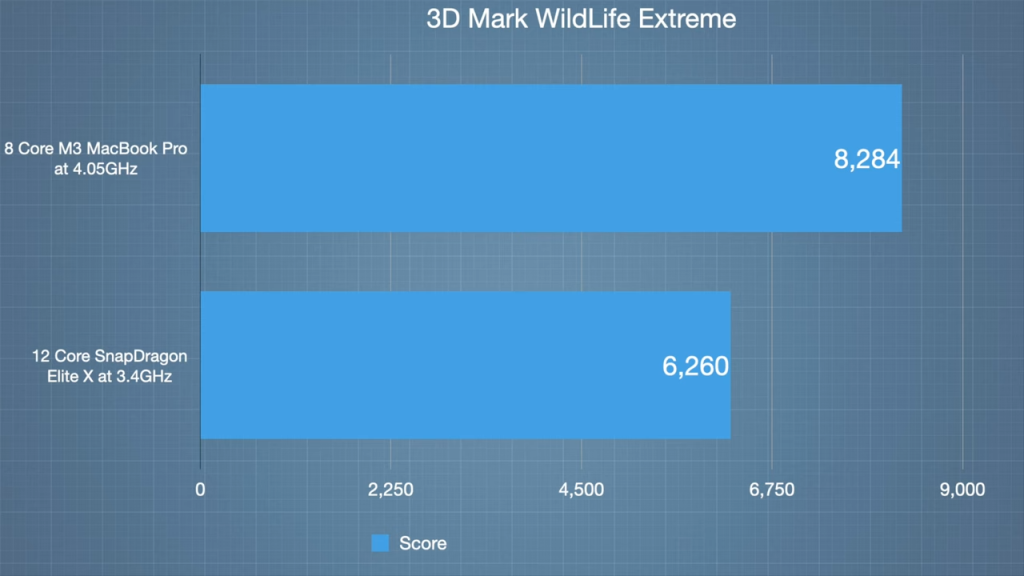
Snapdragon X Elite vs Apple M3: 3D Mark WildLife Extreme
3D Mark WildLife Extreme measures the GPU performance of a device. It’s a demanding test that uses features like high-rendering graphics, more complex geometry, and advanced graphics techniques.
On the 3D Mark WildLife Extreme benchmark, the Snapdragon X Elite has scored 6,260 points, whereas the Apple M3 gets 8,284 points.
The test suggests Apple M3-powered computers have better GPU performance than Snapdragon X Elite-powered computers. Keep in mind that 3D Mark WildLife Extreme focuses on short-term performance.
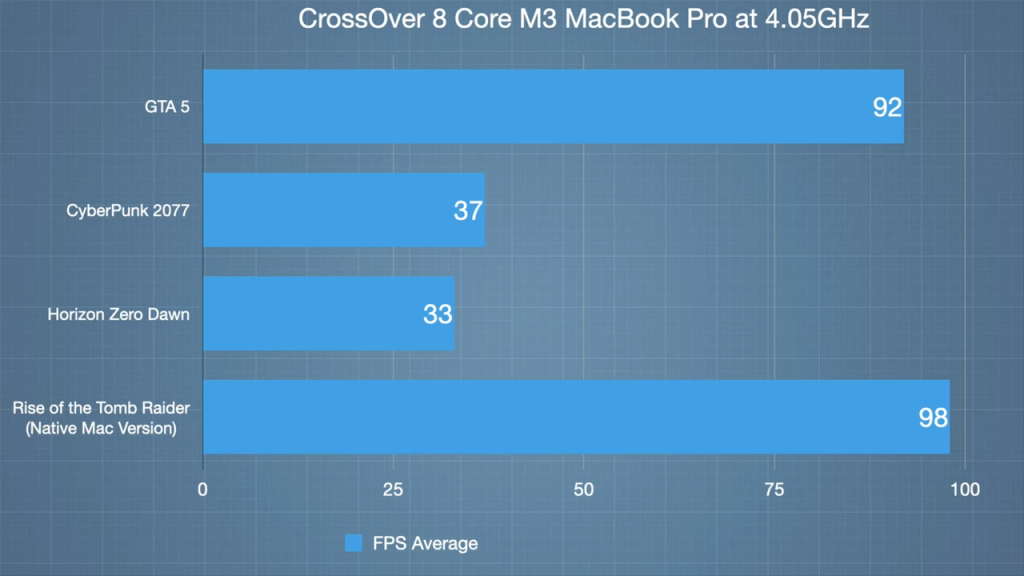
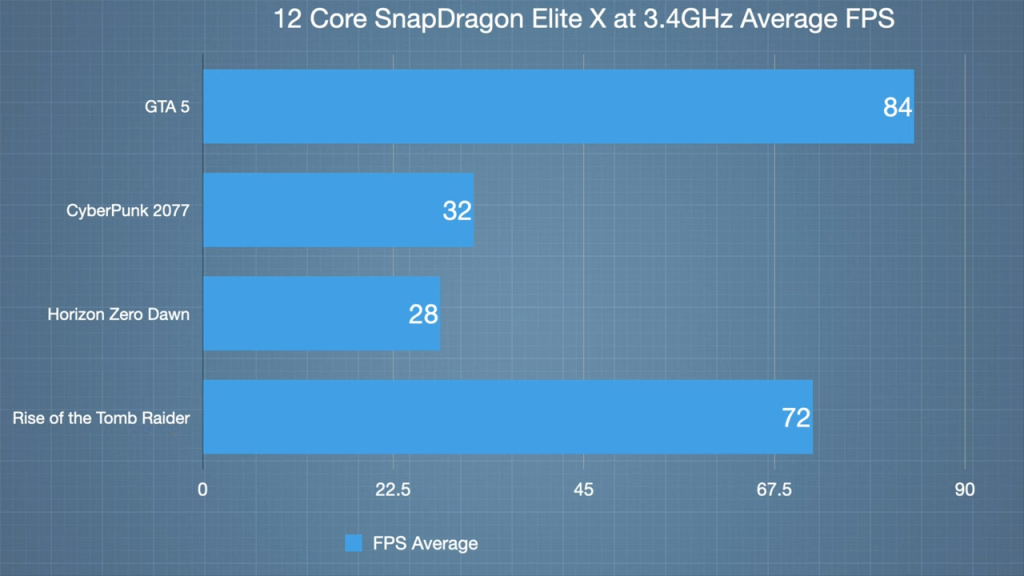
Apple M3 achieves higher average frames per second (FPS) in all tested games. It clearly outperforms the Snapdragon X Elite. This means you’ll have a better gaming experience with Apple M3-powered Macs than with Windows computers powered by Snapdragon X Elite.
Snapdragon X Elite vs Apple M3: Battery Efficiency
Qualcomm claims 2X battery life on a laptop powered by the Snapdragon X Elite than one powered by the Intel Core Ultra 7 155H. It’s probably the best power-efficient chip for Windows, but how does it compare with Apple M3?
In the battery test performed by a popular YouTuber, Dave2D, the Asus Vivobook S15 (with 70 Wh battery pack) lasted for 10 hours and 26 minutes under light load, close to the MacBook Air M3 (11 hours and 18 minutes).
Tom’s Guide reports a drop from 100% to 47% after 12 hours of mixed usage (Photoshop, 20+ Chrome tabs, music, and hours of Netflix). This is a rare battery life seen on Windows laptops. It was only offered by Apple Silicons.
Final Thoughts
Qualcomm’s X Elite early reviews are very promising. It offers great performance, NPU capabilities, and battery life.
Apple Silicons finally have a strong competitor. This is the beginning of a new era for Windows, and it’s very exciting. It will also be exciting to watch what Intel and AMD have in store to remain top choices among Windows buyers.
Huawei‘s annual developer conference, HDC 2024, was the stage for the company’s biggest announcement yet: the official launch of HarmonyOS NEXT, the next iteration of its homegrown operating system.
The announcement comes after years of development for HarmonyOS, natively called Hongmeng on the mainland. The China-developed OS ditches the Linux kernel and Android Open Source Project (AOSP) codebase entirely in favor of a fully independent architecture built around Huawei’s Hongmeng kernel and system.
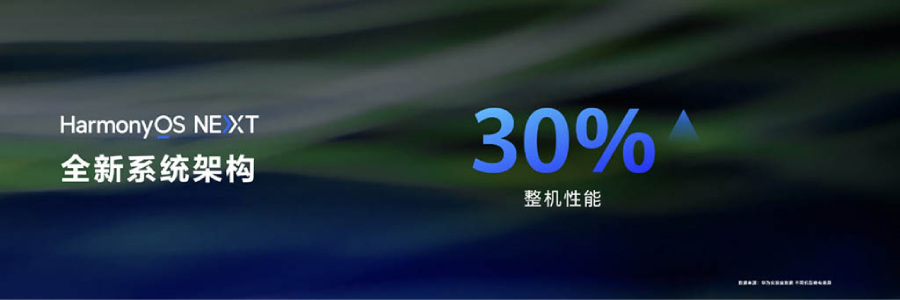
As the OS is made from the ground up, Huawei claims the new system architecture delivers a 30% improvement in overall machine performance and a 20% reduction in power consumption.
Currently in beta testing, HarmonyOS NEXT is looking for developers and a limited number of pioneer users (3,000) to participate. Those interested should be aware that the beta version may not be stable and could lead to data incompatibility issues.
One System for All Devices
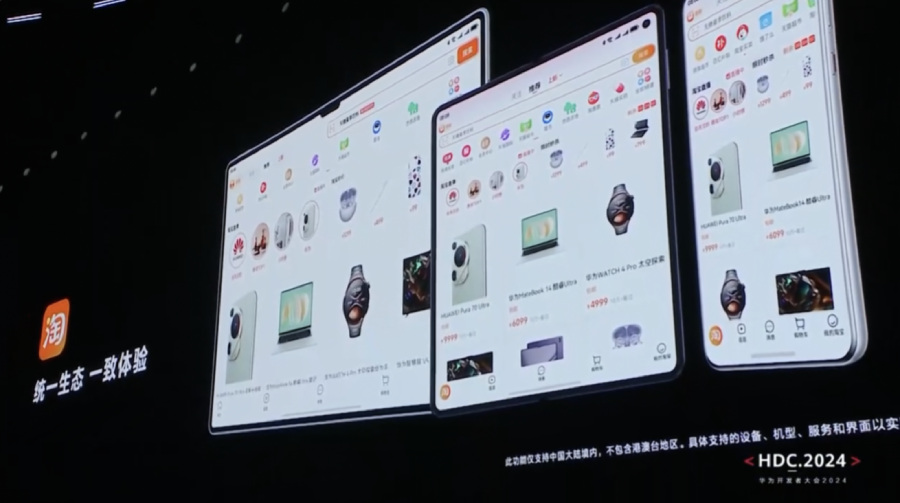
A core feature of HarmonyOS NEXT is its ability to bridge the gap between different devices. According to Huawei, developers only need to create one version of an app to ensure a consistent user experience across various screen sizes within the Huawei ecosystem. This was demonstrated at the conference with popular apps like Taobao, Yiche, and Bilibili running seamlessly on different devices.
Furthermore, HarmonyOS NEXT boasts a unique “App Continuation” function. Imagine starting a video call on your tablet and seamlessly transferring it to your phone with a single click. The system also allows for effortless data sharing between devices. For example, you can easily cut and paste an image from your phone to your tablet while working on a document.
Harmony Intelligence: AI Built-in
HarmonyOS NEXT goes beyond just device connectivity. It integrates artificial intelligence (AI) capabilities directly into the system, coined as “Harmony Intelligence.”
The integration unlocks a range of features, including:
AIGC image generation: Create unique images from line drawings, coloring existing photos, or even enlarging them.
Industry-first AI sound repair: This feature aims to assist people with speech disorders by enhancing communication.
“Xiaoyi Sees the World” for visually impaired users: This feature uses AI to “read pictures” by describing their content aloud, potentially helping users identify objects in their surroundings.
AI-powered controls: HarmonyOS NEXT allows third-party apps to leverage the system’s AI for features like real-time text reading, smart form filling, and image/text translation.
Xiaoyi Gets Smarter
Huawei’s virtual assistant, Xiaoyi, has received an upgrade with HarmonyOS NEXT. Now known as “Xiaoyi Intelligent Agent,” it leverages the power of Pangu Big Model 5.0. Xiaoyi no longer requires a wake word and can be “summoned” by simply dragging and dropping content onto the navigation bar. This allows for a more intuitive interaction where Xiaoyi can analyze the content and offer relevant actions, like generating a chart from an image or summarizing a document.
Security First with Star Shield
Security remains a top priority for Huawei. HarmonyOS NEXT introduces the new Star Shield security architecture, designed to keep user data safe. This architecture implements several measures:
Strict app vetting: Codes and apps that don’t meet security standards are blocked from being installed.
Multi-device data encryption: Data is encrypted end-to-end across various devices for enhanced protection.
Hardware-level encryption: Individual files are encrypted with unique keys stored on the device’s hardware.
Permission control: Unnecessary app permissions are restricted to minimize privacy risks.
The Road Ahead
HarmonyOS NEXT is still under development, with the commercial launch expected in Q4 2024. The beta testing phase has begun, and Huawei is actively seeking developers and early adopters to provide feedback and help refine the system.
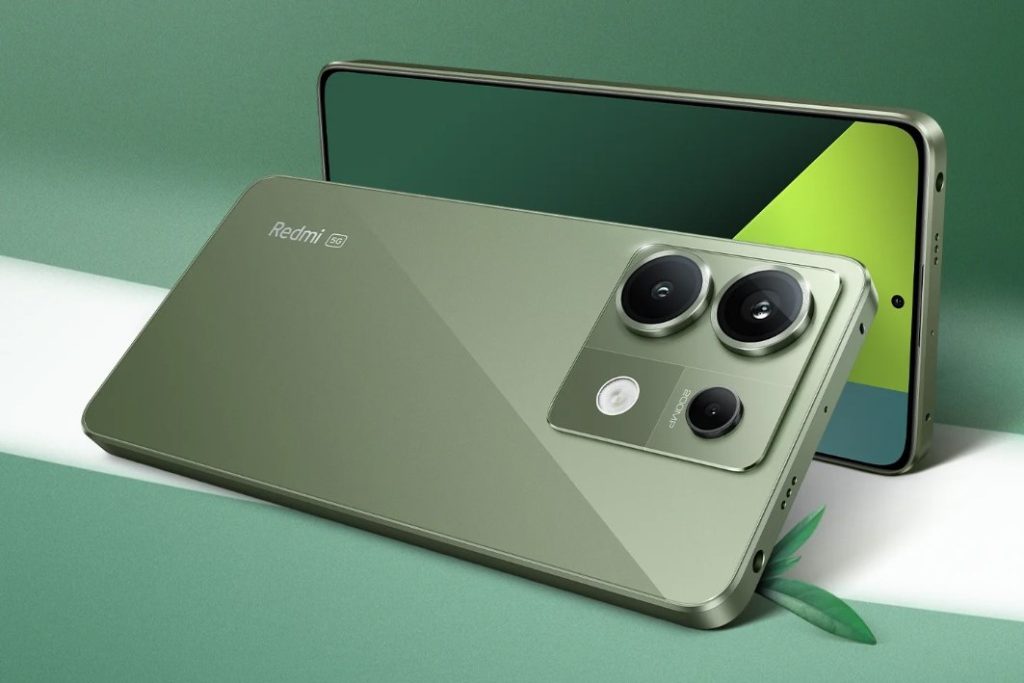
The Redmi Note 13 Pro 5G debuted earlier in January this year. It’s been available in Ocean Teal, Midnight Black, and Coral Purple color options. Now, the Xiaomi sub-brand has announced the device in a new shade in select countries. This gives interested buyers more options in choosing the color of the phone based on their preferences. Notably, the newly announced color variant gives a slightly different look compared to others.
Redmi Note 13 Pro 5G gets a new color variant
The Redmi Note 13 Pro 5G has been introduced in an Olive Green color variant. It has a dual-tone look. This is because half portion of the back panel has a darker Green hue whereas the other half has a lighter shade. This makes the smartphone’s Olive Green color option stand out from other variants.
Apart from a new paint job, the Redmi Note 13 Pro 5G does not have anything different. The core specifications remain the same as the other variants. The Olive Green variant of the Note 13 Pro 5G is released in select markets starting at $399 through the company’s official channels.
To jog your memory, the Redmi Note 13 Pro 5G features a 6.67-inch AMOLED display integrated with a fingerprint scanner. It has a 1.5K resolution, 120Hz refresh rate, and a 1,800 nits peak brightness. The phone has a square camera island on the rear housing a 200MP main sensor, an 8MP ultra-wide-angle lens, and a 2MP macro unit. Under the hood, the Note 13 Pro 5 is equipped with a Snapdragon 7s Gen 2 SoC coupled with up to 12GB RAM and 512GB storage.
The Redmi Note 13 Pro 5G runs on HyperOS-based Android 14 OS. It draws its power from a 5,100mAh battery cell with support for charging at 67W.
The Oppo A3 Pro has just been launched in India. Oppo’s latest device brings an impressively robust body thanks to a military certified design. Apart from this, the new mid-range smartphone offers some capable specs and features. So let’s check it out.
Oppo A3 Pro Specs
The Chinese brand’s A3 Pro model sports a tall 6.7-inch AMOLED display that offers a 120Hz refresh rate, Full HD+ resolution, 20:9 aspect ratio, and 950 nits of peak brightness. This panel supports splash touch, so that you can use it with wet hands. The highlight aspect of this device is undoubtedly the armor body for drop and impact resistance. It is even certified SGS Drop-Resistance and SGS Military Standard certifications. But that’s not all, you get an anti-drop shield case in the retail box as well. It is worth noting that this isn’t the same phone as the A3 Pro that recently launched in China.
Under the hood, the Oppo A3 Pro is equipped with the MediaTek Dimensity 6300 SoC, which is paired with 8GB of RAM and up to 256GB of internal storage. The device supports virtual RAM expansion of up to 8GB. A large 5,100mAh battery pack powers this device, which supports 45W wired fast charging. For optics, you get a 50-megapixel primary and a 2-megapixel depth sensor. Meanwhile, the front packs an 8-megapixel selfie shooter. Other notable features include IP54 water and dust resistance, an AI Eraser, Android 14 OS based ColorOS 14 custom skin, and a slim 7.68mm body.
Pricing and Availability
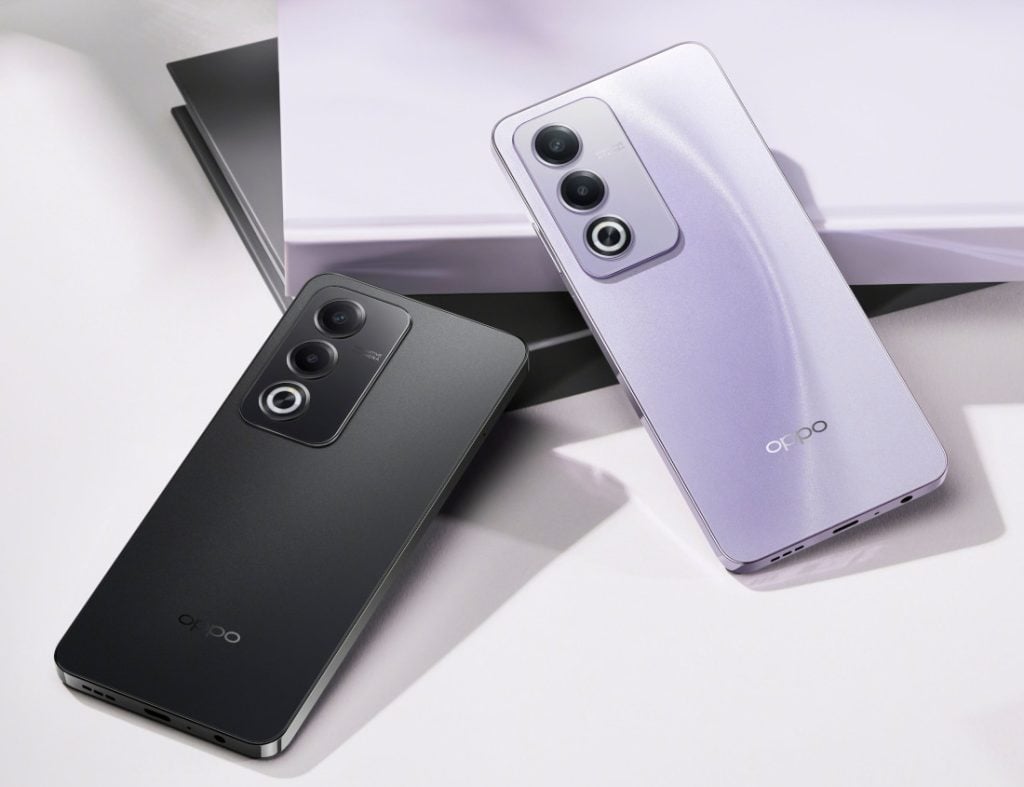
The Oppo A3 Pro arrives in two color options, namely Starry Black and Moonlight Purple. It has a starting price tag of 17,999 INR for the 8GB + 128GB model, while the 8GB + 256GB variant costs 19,999 INR. This device will be available for purchase via the brand’s official store, Amazon, Flipkart, and authorized retail outlets. Oppo is offering an instant 10 percent instant cashback to HDFC, SBI, ICICI, IDFC First Bank, and Yes Bank debit and credit card holders.
We use cookies on our website to give you the most relevant experience by remembering your preferences and repeat visits. By clicking “Accept”, you consent to the use of ALL the cookies.
This website uses cookies to improve your experience while you navigate through the website. Out of these, the cookies that are categorized as necessary are stored on your browser as they are essential for the working of basic functionalities of the website. We also use third-party cookies that help us analyze and understand how you use this website. These cookies will be stored in your browser only with your consent. You also have the option to opt-out of these cookies. But opting out of some of these cookies may affect your browsing experience.
Necessary cookies are absolutely essential for the website to function properly. This category only includes cookies that ensures basic functionalities and security features of the website. These cookies do not store any personal information.
Any cookies that may not be particularly necessary for the website to function and is used specifically to collect user personal data via analytics, ads, other embedded contents are termed as non-necessary cookies. It is mandatory to procure user consent prior to running these cookies on your website.