Nokia‘s CEO Pekka Lundmark made a phone call using a new technology called “immersive audio and video.” According to the company, their new calling technology improves the quality of a call, adding a three-dimensional effect for a more realistic listening experience. The demonstration call was held with Stefan Lindström, Finland’s Ambassador of Digitalisation and New Technologies.
NOKIA/REUTERS
Nokia expects their 3D calling technology to become the new standard
Nokia expects their new 3D calling method to become a standard soon. So they encouraged network providers, chipset manufacturers, and handset manufacturers to work on the latest technology and implement the ‘immersive’ calling capability into their products.
The goal of this new development is similar to Google’s Project Starline. However, Nokia’s immersive calling technology has fewer requirements than Google’s.
The CEO effectively demonstrated the future of voice calling. Reportedly, he was also present during the demonstration of the 2G calling.
Both the underlying technology in calling and the end result have stayed largely the same for quite some time. Calling used heavy compression to reduce the file size, which was necessary for the transmission when the technology was first developed. Although high-quality audio with multiple channels can be transmitted with the current infrastructure, we still use the monophonic system. That’s why Nokia’s 3D audio-based immersive calling is a notable addition to the calling technology.
Nokia’s latest contribution will not only let you hear the speaker on the other end. but also let you visualize the environment on the other end. “It is the biggest leap forward in the live voice calling experience since the introduction of monophonic telephony audio used in smartphones and PCs today,” said Jenni Lukander, Nokia’s president.
One of the advantages of this new calling method is that it does not require special audio devices to experience the 3D effect. Creating the immersive effect reportedly only requires a stereo microphone setup, which nearly all recent smartphones already have.
If you’re still thinking about the transmission, the call was demonstrated with a regular 5G enabled smartphone. In the image above you will see CEO Pekka Lundmark holding a Pixel device. Reportedly, besides a person-to-person call, the new immersive experience can also be implemented for conference calls.
Nokia expects to license the new technology and make it available to the public within a few years.
OnePlus is hosting the OnePlus Community Sale on Amazon India with massive discounts on OnePlus smartphones and other accessories. Interested folks can save most on the OnePlus Nord Buds 2 Series, OnePlus Bullet Wireless Series, OnePlus Buds 3, and OnePlus Buds Pro 2 earbuds. Users can also upgrade to the latest OnePlus smartphones at a good price.
OnePlus One Community Sale in India: Details
Along with inclusive discounts, there’s an additional instant discount of up to Rs 5,000 applicable to smartphones and audio products if you purchase with ICICI Bank, HDFC Bank, OneCard, and BOBCard.
There’s an additional discount on each smartphone and audio product, and it is inclusive of the price the product is retailing.
OnePlus Bullet Wireless Series
Good discounts are going on for the OnePlus Bullet Wireless series of earphones. Specifically, the OnePlus Bullets Z2 Wireless Earphones are now available for Rs. 1249, the price is inclusive of the Bank cashback and other discounts. However, the list price on the website is Rs 1394 for OnePllus Bullets Z2 Bluetooth. OnePlus 11R 5G
The popular OnePlus Nord Buds 2r is also available for a discounted price of Rs 1549. However, it currently retails for Rs 17,99, exclusive of bank discounts and cashback.
The famous earbuds from OnePlus are now retailing for the price of Rs 4499, given Rs 500 bank discount on the present retail price. It offers Adaptive Noise Cancellation support, the ability for simultaneous connections, and a battery life of up to 44 hours.
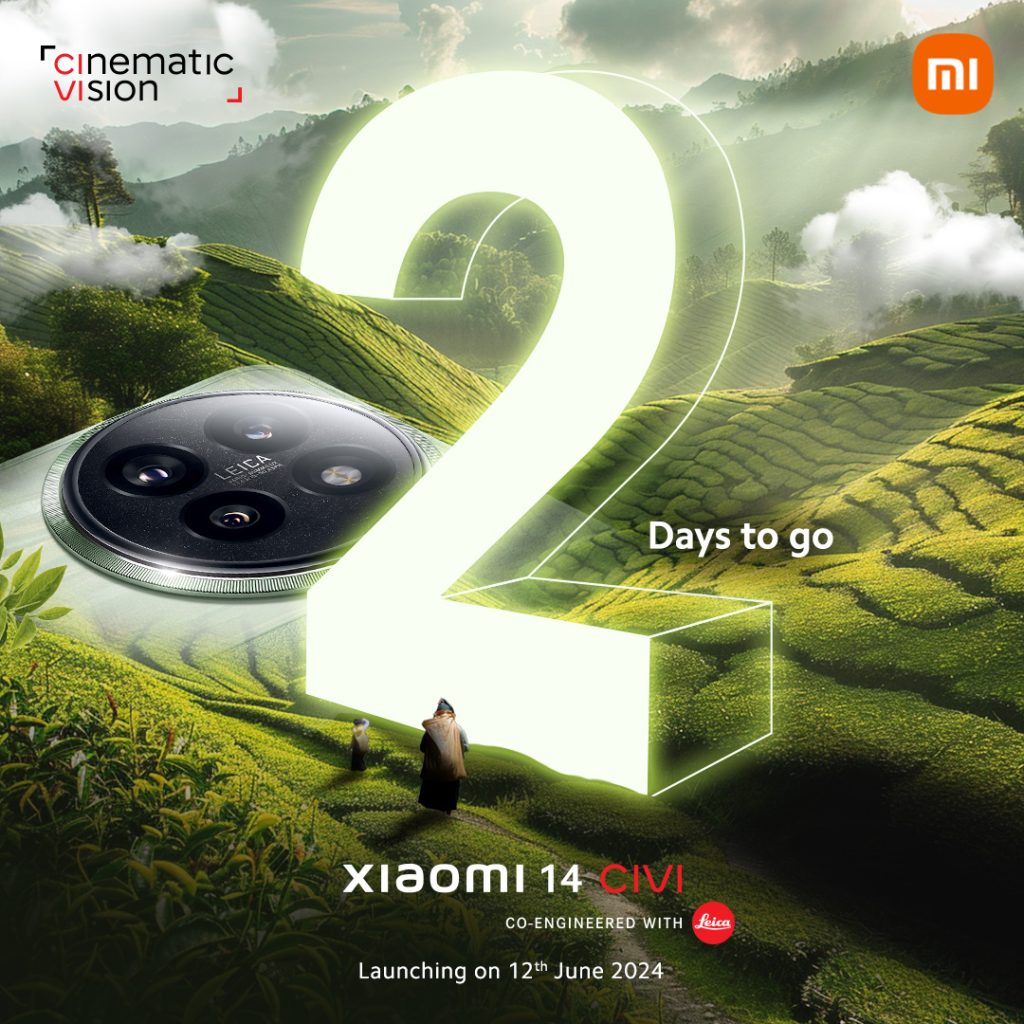
On June 12, Xiaomi will launch the Xiaomi 14 Civi smartphone in India, a highly anticipated rebrand of the Xiaomi Civi 4 Pro that debuted in China back in March. If you’re interested in watching the event live, here’s how you can do so.
As stated earlier, the launch is scheduled for June 12 at precisely 12 Noon. The event will be live-streamed on YouTube, and you can find the link herelink here.
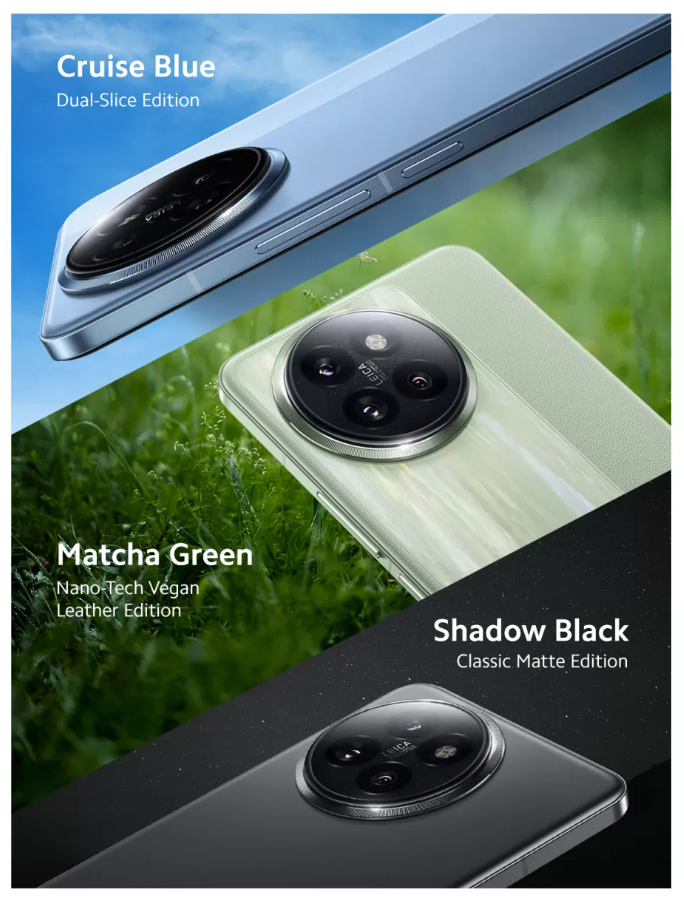
Earlier, the Xiaomi 14 Civi’s features were also revealed on Flipkart, confirming that it exactly the same as the Xiaomi Civi 4 Pro (full review). The device is features a slim 7.4mm metal body with a premium vegan leather finish on the back, and a ‘floating quad-curve’ display with 1.5K resolution on the front. The device also has a 120Hz refresh rate, support for over 68 billion colors, Dolby Vision, and HDR10+. The display is protected by Corning Gorilla Glass Victus 2. As for audio, it features stereo speakers with Dolby Atmos tuning.
Under the hood, it is confirmed to house a Snapdragon 8s Gen 3 chip, with Android 14-based HyperOS running the software side. The device will draw power from a 4,700mAh battery, paired with 67W fast charging.
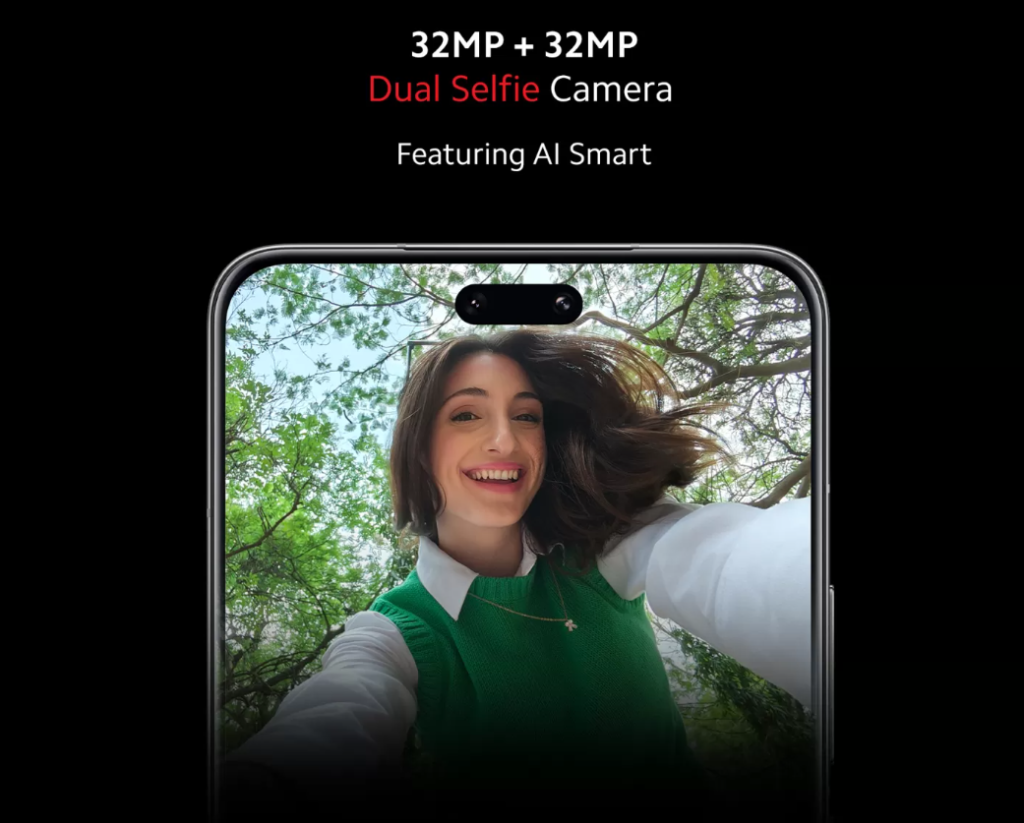
For optics, the device is confirmed to feature dual front cameras with a 32 MP primary sensor and a 32-megapixel ultra-wide lens. As for the rear, we expect the device to debut with a 50 MP OmniVision OV50E primary camera with OIS, accompanied by a 12 MP ultra-wide lens and a 50 MP telephoto lens with 2x optical zoom.
Unfortunately, the pricing of the device is not yet available. That said, many tipsters have claimed that it will debut in the 45K-50K INR. At this price range, the device will be going up against the likes of the OnePlus 12R.
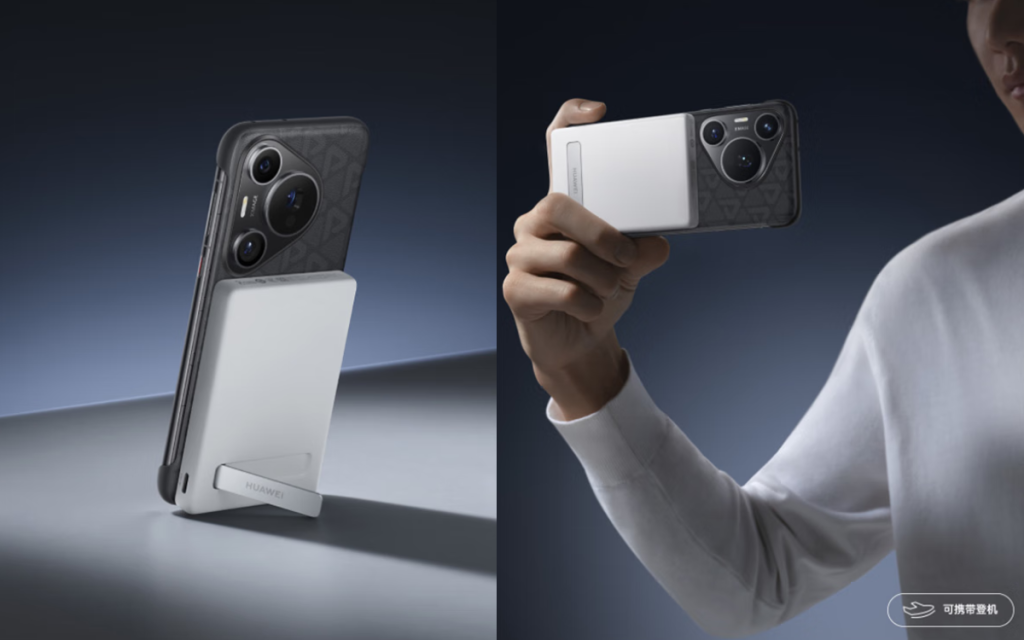
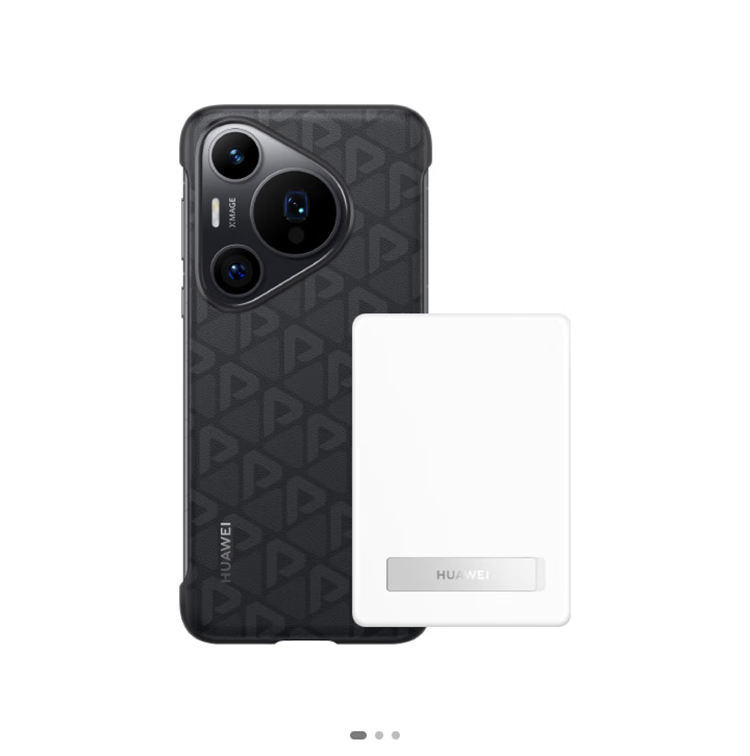
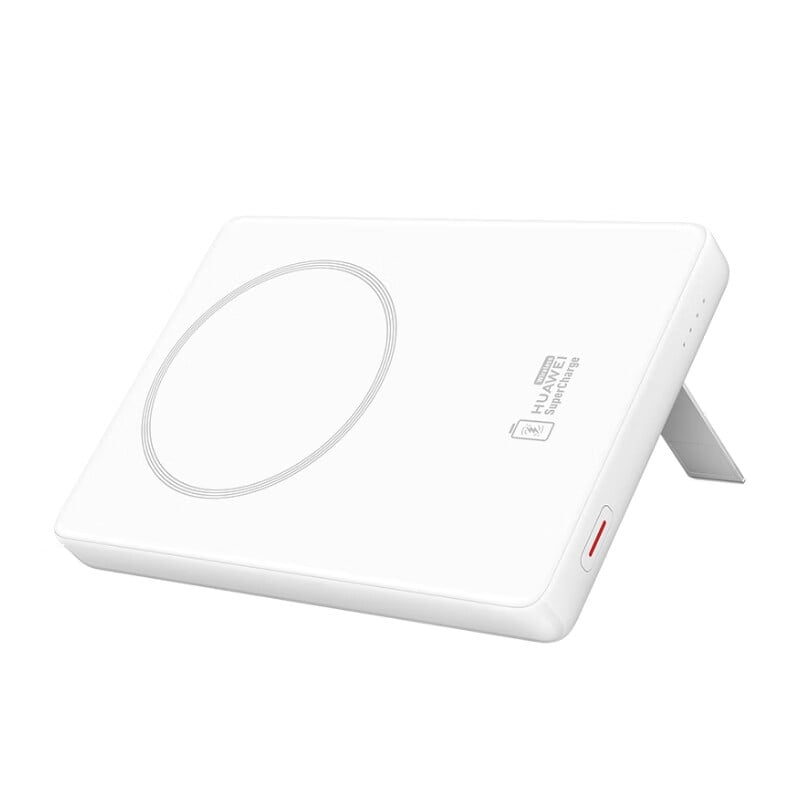
Huawei recently unveiled a new magnetic power bank called the “Huawei SuperCharge All-in-One Magnetic Power Bank” in the Chinese market. The power bank is now officially up for sale on JD.com. It is priced at 369 yuan (approximately $52).
Huawei SuperCharge All-in-One Magnetic Power Bank Specifications:
The powerbank boasts a slim and portable design, measuring just over 11 millimeters thick and weighing a mere 141 grams. Despite its compact size, it packs a 5000mAh battery capacity, offering enough power to top up your phone.
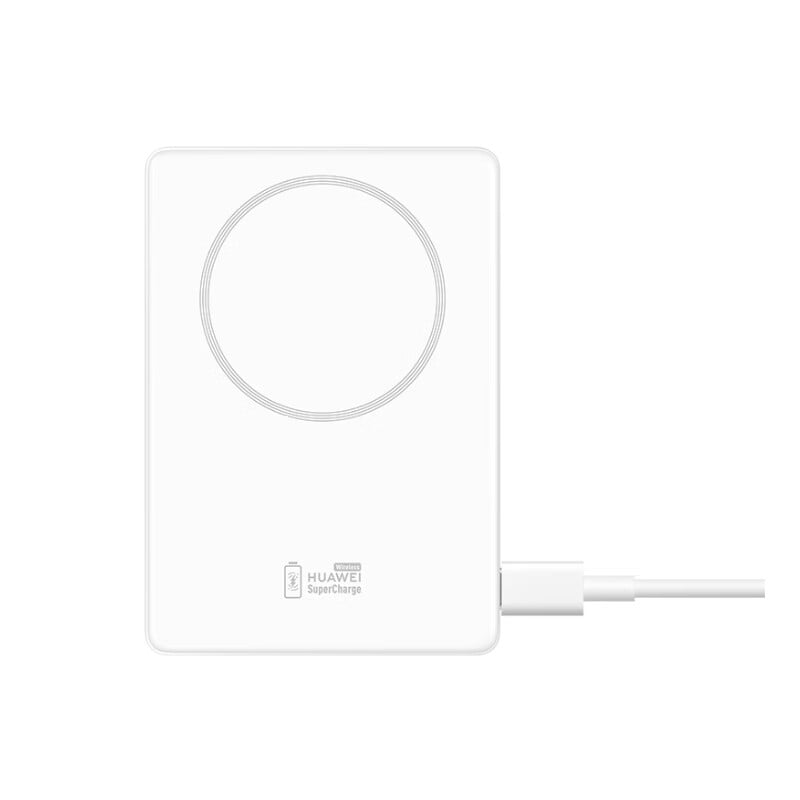
The power bank caters to both wired and wireless charging needs. It supports bi-directional 25W wired charging, allowing you to quickly charge the power bank itself or power the other devices.
For wireless charging, it delivers 15W when powered by the internal battery. However, if you connect the power bank to an adapter, the wireless charging capability jumps to a more impressive 30W.
The magnetic power bank boasts compatibility with various fast charging protocols like SCP, UFCS, and PD, ensuring seamless charging with a wide range of devices, not just Huawei phones. However, the magnetic aspect adds a layer of convenience specifically for Huawei users.
Here’s where things get interesting. The magnetic feature comes into play when paired with Huawei phones that support wireless charging and utilize an official magnetic adsorption case (sold separately).
This allows for a cable-free charging experience by simply attaching the phone to the power bank. The magnetic functionality is currently compatible with select Huawei phone models, including the Pura 70 series (Pura 70, Pura 70 Pro, Pura 70 Pro+, Pura 70 Ultra) and the Mate 60 series (Mate 60, Mate 60 Pro, Mate 60 Pro+).
The power bank comes with a built-in foldable stand, allowing you to prop up your phone for hands-free video watching or working while it charges. Huawei claims that in base charging mode, the power bank can fully charge both itself and a phone overnight. The package includes a 25cm USB-C to USB-C cable for wired charging convenience.
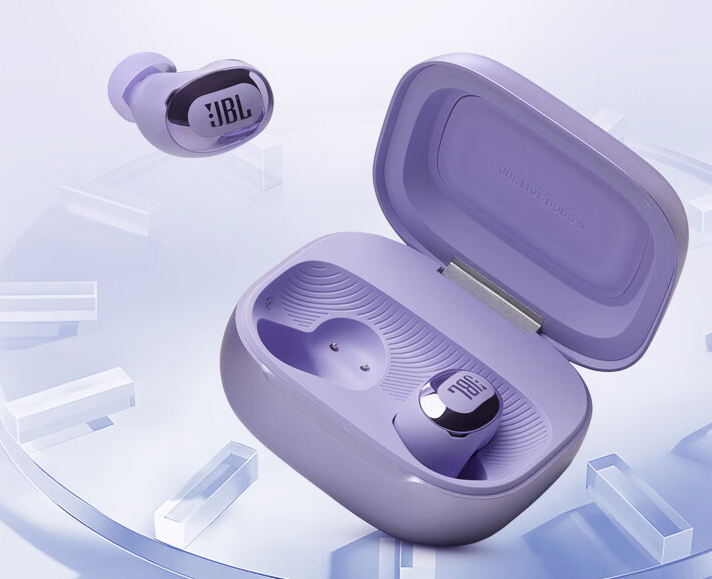
JBL launched the LIVE FLEX 3 TWS last week in China for 1,399 yuan ($212) with 12mm dynamic drivers and a built-in touch screen. The company has now launched another TWS earphone with a similar touch screen called the LIVE BUDS 3. You can learn more about the LIVE FLEX 3 here. Let’s check out the latter one here.
The LIVE BUDS 3 will go on sale at 0:00 tomorrow in China with an initial price tag of 1,299 Yuan (~$179).
JBL LIVE BUDS 3 specs and features:
Audio and ANC
This pair of TWS earphones offer 10mm composite diaphragm driver units with neodymium magnets that present a concert-like sense of presence with crisp and clear audio. This product also offers 3D spatial audio.
The earbuds equip an in-ear detection feature that can take certain steps on its own such as pausing the audio as you remove the earbuds or automatically receiving a phone call when you are wearing them. It adds convenience and can also save some battery power. You can also customize the sound output using the equalizer to adjust the base to your preference. It is designed to offer a balanced sound output.
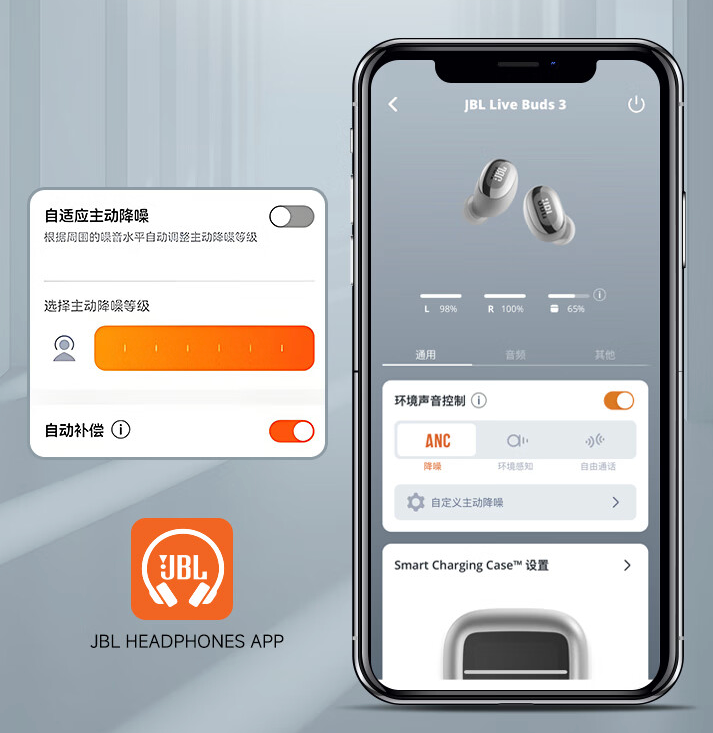
This earphone has an Active Noise Cancellation (ANC) feature and it can switch between 7 levels of noise cancellation based on the environment. You can also control it yourself via the JBL Headphones app.
The microphone matrix inside and outside the headset is also equipped with a digital noise reduction software engine, which helps the earbuds generate reverse sound waves with high precision to achieve noise reduction and noise cancellation. The earplugs are also reportedly soundproof, which means they are designed to prevent environmental noise from getting inside your ear canal.
Battery life and charging
The LIVE BUDS 3 offers 10 hours of battery life on a single session and 30 hours of battery life with the charging case. It also supports fast charging and offers 4 hours of playback with 10 minutes of charging. Notably the battery life the company has mentioned is likely tested with ANC turned off and turning it on will consume additional power and result in a relatively lower battery backup.
Something special
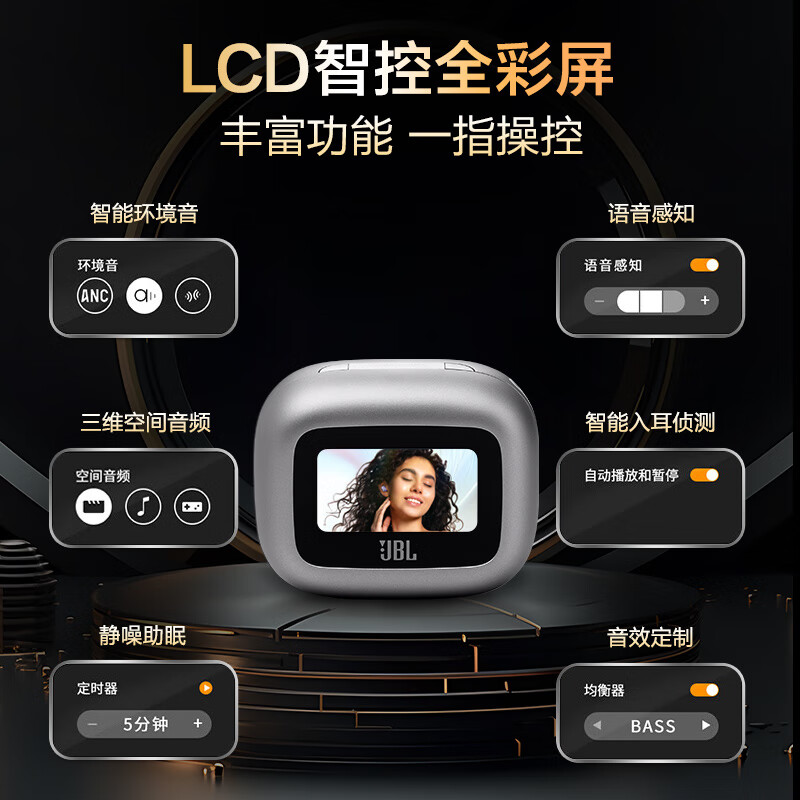
As you can see from the image, there is a 1.5″ LCD color screen that supports one-finger touch control. You can also change the wallpaper on the screen.
Sometimes it can be more convenient to utilize the case rather than the touch controls on the earbuds. This is where the screen on the case comes handy. It lets the user switch between noise reduction, spatial audio, sound effect modes, and sleep aid mode from the charging case.
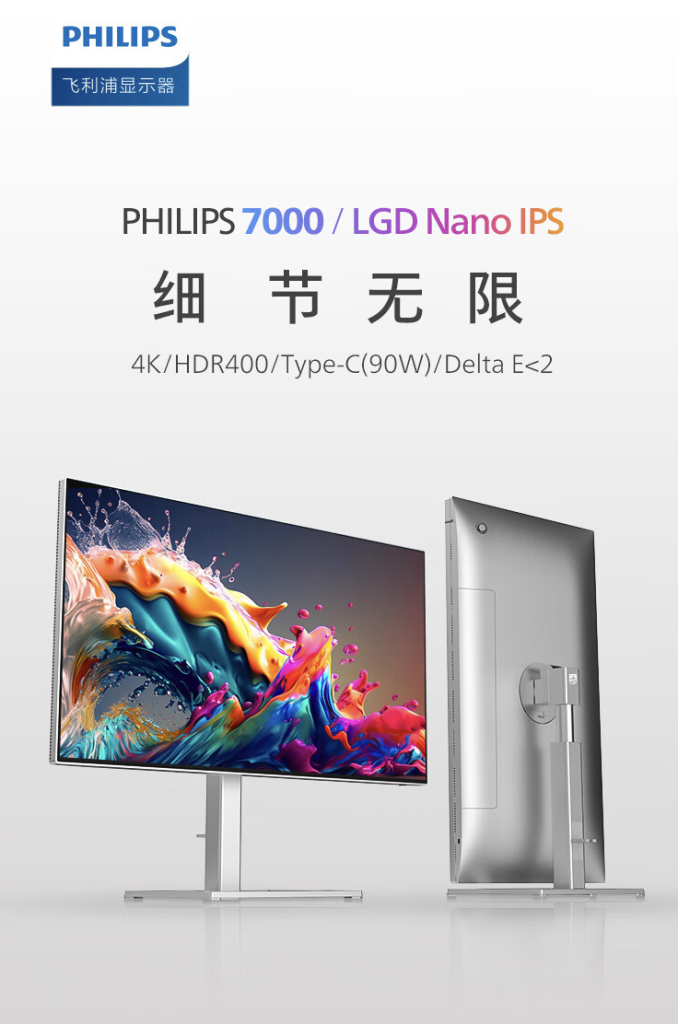
Philips has introduced a new 27-inch designer monitor, the 27E2F7900, targeting creative professionals with a feature-rich set of specifications. The monitor boasts a 3840 x 2160 resolution LGD Nano IPS panel with a 60Hz refresh rate, delivering sharp visuals and smooth performance for design and editing workflows.
The monitor places a priority on image quality, covering 110% of the Adobe RGB Color Gamut
The 27E2F7900 prioritizes image quality with a peak brightness of 400 nits, a 1300:1 static contrast ratio, and a fast 4ms response time. It also boasts impressive color reproduction, covering 110% of the Adobe RGB color gamut, 100% of the sRGB color gamut, and 98% of the DCI-P3 color gamut, ensuring accurate color representation for creative tasks.
The monitor stand offers a high degree of ergonomic flexibility with options for lifting, tilting, rotating, and adjusting the monitor to a horizontal or vertical orientation for comfortable use in different scenarios. VESA mount compatibility (100 x 100mm) provides additional placement options.
For connectivity, the 27E2F7900 comes equipped with 2 HDMI 2.0 ports, 1 DP 1.4 port, and a versatile USB-C port that supports 90W Power Delivery (PD) for charging compatible laptops or devices while transferring data. Additionally, it includes a USB-B port and four USB-A 3.2 Gen 1 interface for connecting peripherals. The Philips 27E2F7900 is currently available for purchase on JD.com in China for 2,499 yuan (approximately $378 USD).
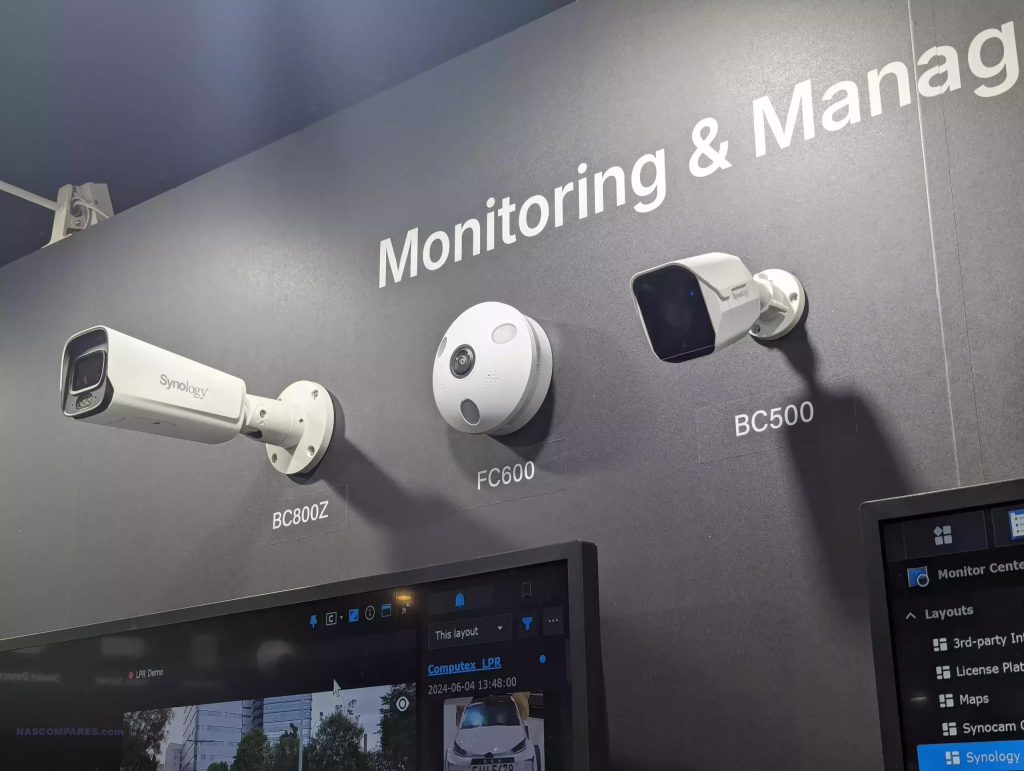
Synology has unveiled two new home surveillance cameras, the FC600 and BC800Z, offering users additional options for securing their properties. Both cameras are designed to work seamlessly with Synology’s NAS (Network Attached Storage) devices, allowing users to store surveillance footage locally for added security and privacy.
While the FC600 has a fisheye lens, the BC800Z has a zoom function and 8MP sensor
The FC600 camera boasts a fisheye lens and a 6MP sensor, capturing a comprehensive 360-degree panoramic view of your surroundings. This makes it ideal for monitoring large indoor areas, like living rooms or hallways. The camera also features infrared low-light shooting for clear visuals even in dimly lit conditions. An interesting addition is the built-in call function, but specific details on its functionality haven’t been revealed yet.
The BC800Z takes a different approach, equipped with a zoom function and an 8MP sensor for capturing high-resolution, 4K video footage. This camera is well-suited for outdoor surveillance, offering sharp visuals for identifying details. It also boasts impressive weather resistance with IP67 and IP66 ratings, making it waterproof, dustproof, and capable of withstanding harsh environments ranging from -30°C to 60°C. Additionally, it meets the IK10 certification for impact resistance, ensuring durability against physical impact.
While both cameras offer promising features for home security, specific details regarding their launch date and pricing remain unknown. For those interested in a local storage solution with NAS compatibility, these Synology cameras are worth keeping an eye on for future announcements.
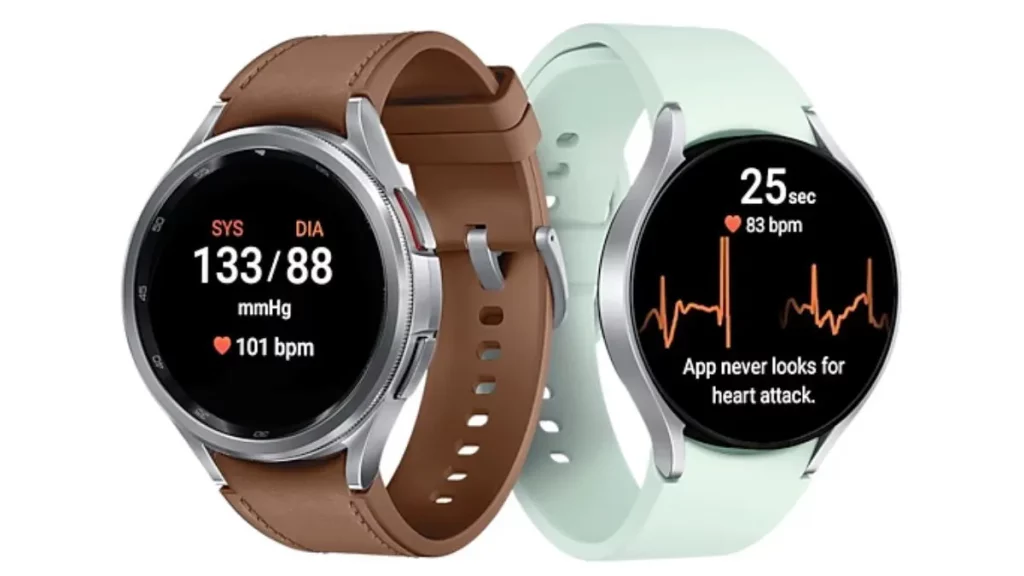
The rumor mill continues to churn in the favor of Samsung‘s upcoming Galaxy Unpacked event in July, with the Galaxy Watch 7 series receiving Bluetooth SIG and now BIS certification in India according to 91mobiles. Thanks to this certification process, there are chances of an imminent debut for the new smartwatches.
The Galaxy Watch 7 will come in 40mm and 44mm sizes
The filing reveals four models for the Galaxy Watch 7 series: SM-L300, SM-L305F, SM-L310, and SM-L315F. Additionally, the Galaxy Watch Ultra is listed with the model number SM-L705F, while the Watch FE appears under SM-R861. This wider range of models indicates Samsung’s strategy to cater to different price segments: entry-level, mid-range, and high-end, with the Watch FE likely targeting budget-conscious consumers and the Ultra competing against the Apple Watch Ultra.
Leaks have shed light on some key specifications for the Galaxy Watch 7 and Watch Ultra. The Galaxy Watch 7 will come in 40mm and 44mm sizes, with green and cream color options. It will boast a sapphire crystal display with a peak brightness of 2000 nits and maintain a durable build with IP68 and 5ATM water and dust resistance. Battery capacities are also revealed, with the 40mm model sporting a 300mAh battery and the 44mm model packing a 425mAh battery. An exciting upgrade comes in the form of a new 3nm process chip, offering a smaller size, improved performance, and better power efficiency. Storage space is also set to double to 32GB.
The Galaxy Watch Ultra takes things a step further with a more rugged design. It will sport a 47mm titanium case available in three colors: titanium grey, titanium silver, and titanium beige. Upping the durability factor, the Ultra boasts a 10ATM water resistance rating alongside the usual IP68 dustproofing. It will also pack a larger 590mAh battery and benefit from the same 3nm chip and 32GB of storage as the Watch 7. However, it appears the Ultra will only be available in a cellular version.
With BIS certification now secured, the wait for Samsung’s official unveiling of the Galaxy Watch 7 series and the Galaxy Watch Ultra shouldn’t be much longer.
Qualcomm announced the 4nm Snapdragon 8 Gen 1 smartphone chipset in November 2021. A month later MediaTek released the Dimensity 9000, featuring the same cores and core cluster.
With these chipsets, the chip giants aim to capture the premium smartphone segment. Although the two chips use the same cores and core cluster, they have many differences. In this post, we’ll compare the Dimensity 9000 chip against the Snapdragon 8 Gen 1 to see how they compare.
Dimensity 9000
Snapdragon 8 Gen 1
Launch year
2021
2021
Model number
MT6983
SM8450
Process node
4nm TSMC
4nm Samsnung
CPU
1 x Cortex-X2 @ 3.05 GHz 3 x Cortex-A710 @ 2.85 GHz 4 x Cortex-A510 @ 1.80 GHz
1 x Cortex-X2 @ 3.0 GHz 3 x Cortex-A710 @ 2.5 GHz 4 x Cortex-A510 @ 1.8 GHz
GPU
Mali-G710 MC10
Adreno 730
NPU
MediaTek APU 590
Hexagon NPU
Memory
LPDDR5X 3750 MHz
LPDDR5 3200 MHz
Storage
UFS 3.1
UFS 3.1
Camera
Imagiq 790 18-bit HDR ISP Up to 320MP camera support
Spectra 18-bit ISP Up to 200MP camera sensor support
Video recording
4K videos @ 30 fps
8K videos @ 30 fps 4K slow-mo @ 120 fps
Display
FHD+ @ 180Hz, WQHD+ @ 144Hz
4K Ultra HD @ 60Hz, QHD+ @ 144Hz
Connectivity
Wi-Fi 6E Bluetooth 5.3
Snapdragon X60 5G modem Wi-Fi 6E Bluetooth 5.3
Benchmarks
[Geekbench 6]
Dimensity 9000
Single core: 1,440
Multi core: 3,775
Snapdragon 8 Gen 1
Single core: 1,595
Multi core: 3,868
[AnTuTu V10]
Dimensity 9000
CPU: 282060
GPU: 263553
Memory: 163826
UX: 215730
Total: 925169
Snapdragon 8 Gen 1
CPU: 299031
GPU: 419757
Memory: 198841
UX: 239181
Total: 1156810
CPU Performance
The Dimensity 9000 and Snapdragon 8 Gen 1 have the same (1+3+4) core cluster. The cores are unchanged, but they have slightly different clock speeds.
The Cortex-X2 prime core in the Dimensity 9000 runs at a slightly higher clocked speed of 3.05 GHz (vs. 3.0 GHz in the Snapdragon 8 Gen 1). Also, the Cortex-A710 performance cores are slightly overclocked in the Dimensity chip.
The Dimensity 9000 is ahead of the Snapdragon 8 Gen 1 in the CPU spec sheet, but benchmarking platforms tell a different story. For example, the Geekbench 6 tests show that the Snapdragon chip has higher single and multi-core scores than the Dimensity chip, although the difference is not much.
Geekbench results for the two chips are nearly similar, but the AnTuTu benchmark shows a significant difference. The Xiaomi 12 Pro (powered by Snapdragon 8 Gen 1) scores 25% more points than the OnePlus Nord 3 5G (powered by Dimensity 9000) on the AnuTuTu (V10) benchmark.
So, the bottom line is that the Dimensity 9000 CPU specs look good on paper, but benchmarks favour the Snapdragon 8 Gen 1.
GPU Performance
The Dimensity 9000 chip’s graphics power comes from ARM Mali-G710 MC10, a 10-core MediaTek GPU, while the Snapdragon 8 Gen 1 chip has Adreno 730 for handling graphics tasks.
Both GPUs can handle high-end games while offering great smoothness. They achieve similar performance and benchmarking scores.
The Adreno 730 in Snapdragon 8 Gen 1 retains a higher frame rate for a slightly longer duration than the Mali-G710 MC10 and offers a slightly higher frame rate in several games. However, that’s not true for all games. In games such as PUBG Mobile, the Mali-G710 MC10 performs better than the Adreno 730.
Memory Support
The Dimensity 9000 and Snapdragon 8 Gen 1 chips use UFS 3.1 fast storage. However, they are different in terms of RAM technology. The former uses LPDDR5X RAM, which is nearly 20% more power-efficient than LPDDR5 RAM in the Snapdragon chip.
Camera Support
The Dimensity 9000 chip uses the Imagiq 790 18-bit HDR ISP, while the Snapdragon 8 Gen 1 features the Spectra 18-bit ISP. Both chips support recording videos from three cameras simultaneously.
Dimensity 9000 is the world’s first smartphone chip with simultaneous triple camera 18-bit HDR video recording (three cameras recording with three exposures per frame). It’s also the first smartphone chip to support a 320MP camera sensor, which is limited up to 200MP in the Snapdragon chip.
Despite its high camera resolution, the Dimensity 9000 lacks 8K video recording, which is supported by the Snapdragon 8 Gen 1. The Snapdragon chip can take up to 4K slow-mo videos at 120 fps.
Display Support
The Snapdragon is clearly ahead of the Dimensity chip in terms of display resolution. The former supports up to 4K Ultra HD display at 60Hz, while the latter only supports up to WQHD+ resolution at 144Hz.
Connectivity Features
The Dimensity 9000 and Snapdragon 8 Gen 1 chips support necessary connectivity features such as 5G, Wi-Fi 6E, Bluetooth 4.3, NFC, and location features — GPS, QZSS, Beidou, Galileo, GLONASS, and NavIC. However, they do offer different peak download and upload speeds.
The Snapdragon 8 Gen 1 chip has a Snapdragon X65 5G modem, offering up to 10Gbps peak download speed, while the R16 5G modem in Dimensity 9000 has a peak download speed of 7Gbps. The peak upload speed is also higher in the Snapdragon chip, which is 3.6Gbbs (vs. 2.5Gbps in Dimensity 9000).
Dimensity 9000 vs Snapdragon 8 Gen 1: Which is Better?
Both Dimensity 9000 and Snapdragon 8 Gen 1 are powerful smartphone chipsets. The CPU performance of the two chipsets is similar, but the Snapdragon chip performs a little better on the benchmarks. They also have similar GPU performance and can handle high-end games while offering stable frame rates.
One of the major differences between the two chips is their ability to record videos. While the Snapdragon 8 Gen 1 can take 8K videos, the Dimensity can only support up to 4K video recording. Also, the Snapdragon chip supports higher display resolution. But, the Dimensity chip leaves the Snapdragon chip way behind by offering up to 320MP camera support (vs. 200MP in Snapdragon 8 Gen 1).
Last but not least, the Snapdragon 8 Gen 1 is more power efficient than the Dimensity 9000 chip. Now, make a list of your priorities and choose the one that fits your needs.
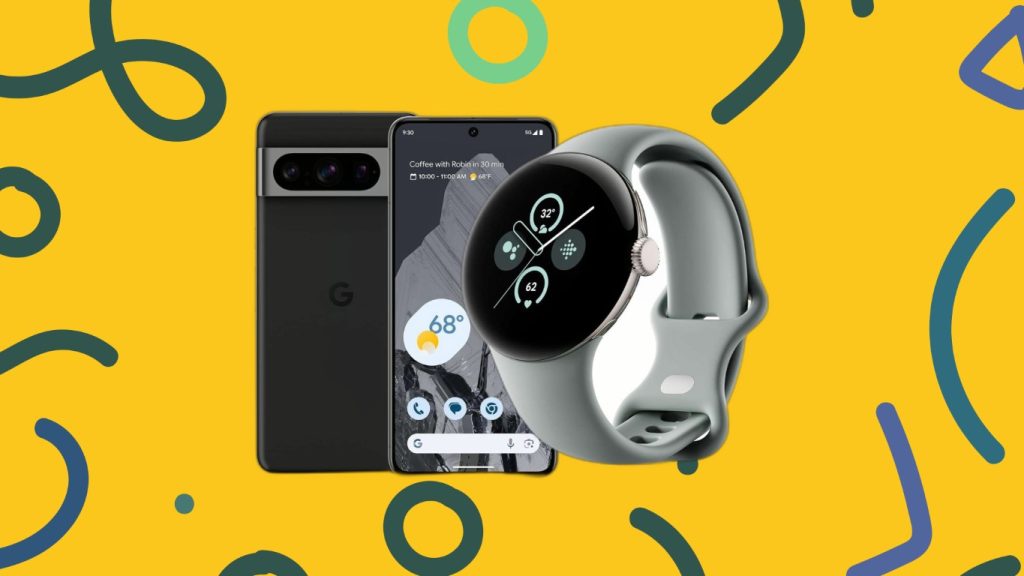
Google has been offering discounts on its line of Pixel products, including the Google Pixel Watch 2 LTE and Pixel 8 Pro 128GB smartphones. There have been limited discounts via Amazon on both the Pixel gadgets.
Discounts on Pixel Watch 2 LTE and Pixel 8 Pro
Google Pixel Watch 2 LTE is retailing with a 20% discount, lowering the price to $319. Interested users can grab the unlocked Pixel 8 Pro at an all-time low of $749. There’s an additional Amazon Music offer that is available with the purchase of the Pixel 8 Pro or the Pixel Watch 2 smartwatch.
Google Pixel Watch 2 and Pixel Watch 8 Pro Specifications and Features
Google Pixel Watch 2 was unveiled last fall alongside the Pixel 8 Series smartphone lineup. The smartwatch adorns a circular 1.6-inch curved AMOLED display that has 384 x 384 pixels. The always-on-display clad watch is coupled with a digital rotating crown featuring a physical button and stainless steel design. It supports atrial fibrillation, a heart sensor, and some other notable upgrades. Built-in card detection and fall detection make it easy for emergency services to reach on the spot and provide first aid.
Google Pixel 8 Pro launched along with the Pixel Watch 2 boasts tensor G3, 12GB RAM, up to 1TB storage, and a 5050 mAh battery with 30W wired and 23W wireless charging support. It features the latest communication radios, like WiFi 7, Bluetooth 5.3, NFC, and others. It is equipped with a Titan M2 chip for enhanced security. In the camera section, there’s a 50MP primary sensor, a 48MP ultrawide lens, and a 48MP telephoto lens with 5x optical zoom. Further, there’s a 10.5MP sensor on the front for selfies
Both devices are now on sale at the best price for a limited time.
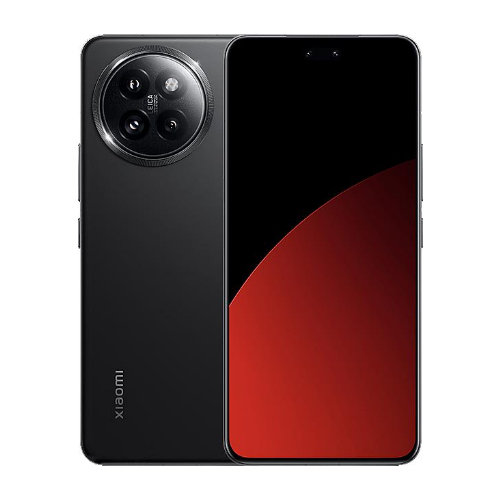
Xiaomi 14 Civi is set to launch in India on June 12th as a new addition to the existing Xiaomi 14 lineup. The phone will be a rebrand of the Chinese Xiaomi Civi 4 Pro and has features such as Leica-branded cameras, a Snapdragon 8s Gen 3 processor, and a 10-bit AMOLED display.
Xiaomi has officially revealed these specs of the phone, but the price remained a mystery until recently. Tipster Abhishek Yadav, citing sources, has now shared the pricing for the 14 Civi in India.
According to Yadav, the phone will start at Rs 43,000 for the 8GB RAM and 128GB storage variant. The phone is also said to be available in a higher-end 12/512GB model, but Yadav cautions his source is “not sure this time” about the exact pricing.
The leaked pricing strategically positions the Xiaomi 14 Civi below the flagship Xiaomi 14, which starts at Rs 69,999
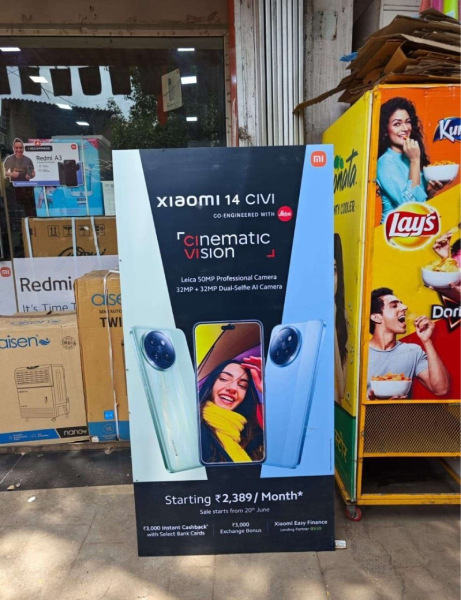
A promotional poster for the 14 Civi has also appeared online that reveals a sale date of June 20 in India, along with additional offers like a Rs 3,000 instant bank discount, a Rs 3,000 exchange bonus, Xiaomi Easy financing, and monthly EMI options starting at Rs 2,389.
Xiaomi 14 Civi Specifications (Expected)
Display: Quad-curved 1.5K AMOLED display with 120Hz refresh rate, 68 billion+ colors, HDR10+, Dolby Vision, and Gorilla Glass Victus 2 protection
Processor: Qualcomm Snapdragon 8s Gen 3 SoC
RAM & Storage: Up to 12GB RAM and 512GB storage
Cameras:
Rear: 50MP Leica Summilux lens with 25mm cinematic HDR support, 50MP Leica 50mm Portrait Telephoto lens with 2x zoom, 12MP Leica ultrawide snapper with a 15mm 120-degree field of view
Front: Dual 32MP cameras for selfies and video chats
Battery: 4,700mAh battery with 67W fast charging support
Other Features: Dolby Atmos, Stereo speakers, IP68 dust and water resistance rating
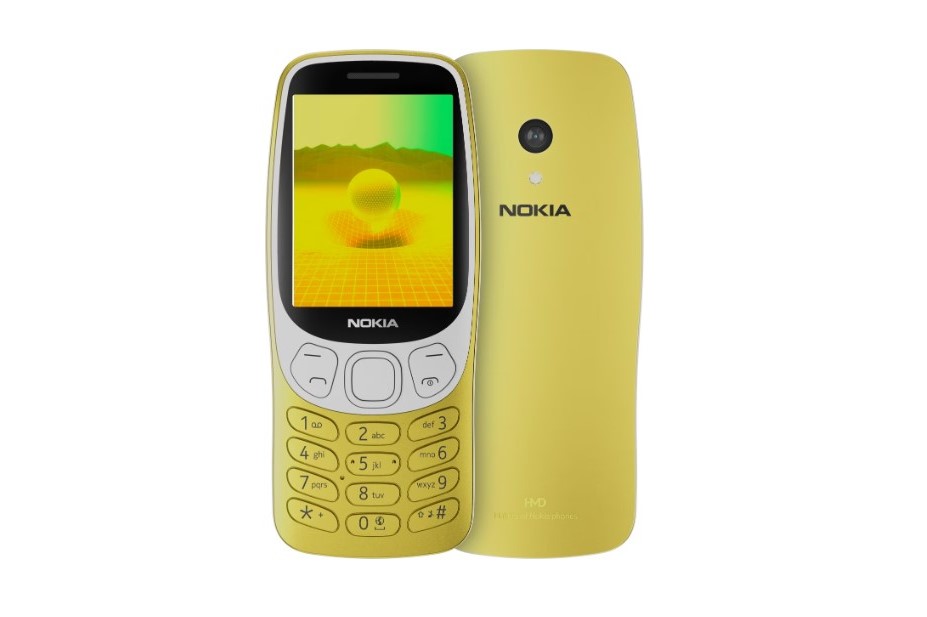
Last month, HMD launched the Nokia 3210 (2024) 4G feature phone in China and it got sold out quickly. Now, the Finnish brand has brought the iconic device to the Indian market. It is a reboot of the original model which was introduced way back in 1999. The latest offering comes with a host of modern specifications and features. It will take you a trip down memory lane. Read on to know everything below.
Nokia 3210 4G launches in India
The Nokia 3210 4G features the same iconic design as the original model. It comes in three color options i.e. Y2K Gold, Scuba Blue, and Grunge Black. The device packs a 2.4-inch display bearing a QVGA resolution. There is a 2MP rear camera along with an LED flash unit.
Under the hood, the Nokia 3210 4G is equipped with a Unisoc T107 processor. It packs 64MB RAM and 128MB native storage. There is a dedicated microSD card slot for additional storage needs up to 32GB. The feature phone runs on Nokia’s proprietary S30+ operating system. The Nokia 3210 4G draws its power from a 1,450mAh user-removable battery that is claimed to offer up to 9.8 hours of talk time.
The Nokia 3210 4G comes with cloud apps including YouTube, YouTube Shorts, news, weather updates, and more. The device is also loaded with the classic Snake game in coloured version. It also has a built-in UPI feature that lets you scan and make payments. Connectivity options on the feature phone include a USB-C port, dual-SIM, 4G, Bluetooth 5.0, and a 3.5mm headphone jack.
The Nokia 3210 4G is priced at Rs 3,999. The feature can be purchased from HMD’s official website and Amazon.
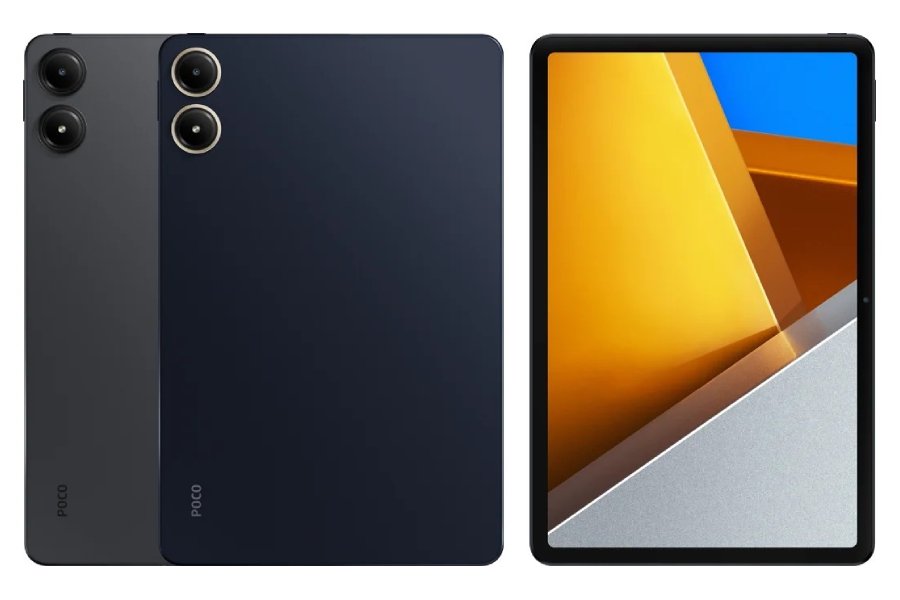
POCO has a new tablet launch in the plans. It recently unveiled the POCO Pad model to tap into the tablet market. Now, it appears that a 5G enabled version of the POCO Pad is also in the works. This device was spotted in rumors, certifications, and more. So here is everything you can expect from the upcoming POCO Pad 5G model.
1. POCO Pad 5G: It is already out under a different name
An earlier report had hinted that the POCO Pad 5G is basically a rebranded version of the Redmi Pad Pro 5G. To recall, the original POCO Pad is a renamed variant of the Redmi Pad Pro. So it isn’t surprising that the newer model offers identical specs and features. But the major factor that differentiates the 5G models from the regular version is the addition of the SIM card slot, which brings 5G connectivity.
2. Design & Display
Since the POCO Pad 5G is a rebranded Redmi Pad Pro 5G, we can expect it to feature the same all-metal design. So the body could be built using aluminum for the rear panel and frame. The rear will likely offer the dual circular module for the camera sensors and LED flash. Just like the Redmi Pad Pro 5G, the POCO Pad 5G should retain the 7.52mm and weighs 571 grams in weight.
Meanwhile, the front may sport a tall 12.1-inch LCD panel that supports Dolby Vision, 120Hz refresh rate, 16:10 aspect ratio, 1600 x 2560 resolution (2.5K), 180Hz touch sampling rate, and 600 nits of peak brightness. The POCO Pad 5G could also come with a Corning Gorilla Glass 3 on the front.
3. Under the hood
POCO’s upcoming tablet is practically the same in terms of internal hardware. It is equipped with the same Qualcomm Snapdragon 7s Gen 2 SoC, which will likely be paired with up to 8GB of RAM and 256GB of internal storage. This model might offer storage expansion by up to 1.5TB via a microSD card slot. A massive 10,000mAh battery that supports 33W wired fast charging.
POCO Pad 5G is an upcoming HyperOS tablet that would run on the Android 14 OS out of the box. For optics, you get an 8-megapixel rear camera and an 8-megapixel shooter for video calls and selfies on the front. Other notable features include quad speakers with Dolby Atmos support, Wi-Fi 6 (802.11 ac) on 2.4GHz and 5GHz bands, Bluetooth 5.2, and USB Type-C 2.0.
4. Availability
POCO Pad was announced for the global market with a 330 US Dollar price tag. This was for the sold 8GB + 256GB option. The Redmi Pad Pro 5G was recently announced for 2,399 Yuan (roughly 337 US Dollars), so we can expect a similar price range for the POCO Pad 5G as well. This tablet was even spotted on the Bureau of Indian Standards (BIS) last week, so it is confirmed to launch in the Indian market as well.
CMF, a sub-brand of Nothing, recently announced its debut phone, the CMF Phone 1. While not much has been revealed about the device, CMF’s focus on delivering products at an affordable price suggests it will be an inexpensive addition to Nothing’s smartphone lineup.
Now a new report by 91Mobiles, citing tipster Yogesh Brar, sheds light price of the CMF Phone 1. According to the report, the phone carries a box price of Rs 19,999 for the 6GB/128GB variant.
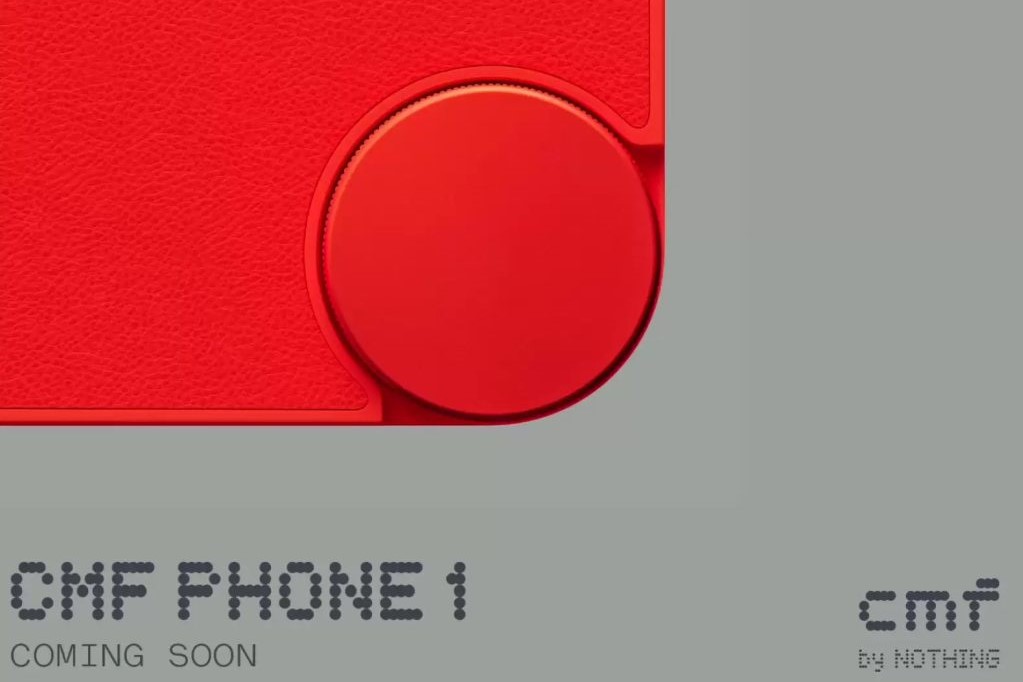
This is what CMF Phone 1 might look like
However, the report clarifies that phones in India typically sell for a lower price than the MRP (Maximum Retail Price) printed on the box. So according to Brar, the actual cost of CMF Phone 1 is said to be around Rs 18,000, with discounts bringing the price down to Rs 17,000.
Interestingly, there is speculation that the CMF Phone 1 might be a reworked version of the Nothing Phone (2a) with a less powerful processor and lack of the signature Glyph LED interface. For comparison, the Nothing Phone (2a) starts at Rs 23,999, making the CMF Phone 1 a more affordable option.
Nothing has not yet officially revealed the launch date of CMF’s debut smartphone, and details regarding its specifications are scarce as well. The company’s official launch announcement included a teaser revealing what seems to be the back of the phone with a leather finish.
Interestingly, there’s also a knob or a dial on the bottom right, though whether it’s merely a design element or holds its own set of functionalities remains unconfirmed. What is confirmed is that the CMF Phone 1 will be exclusively available in India via Flipkart, following the pattern of Nothing’s other devices.
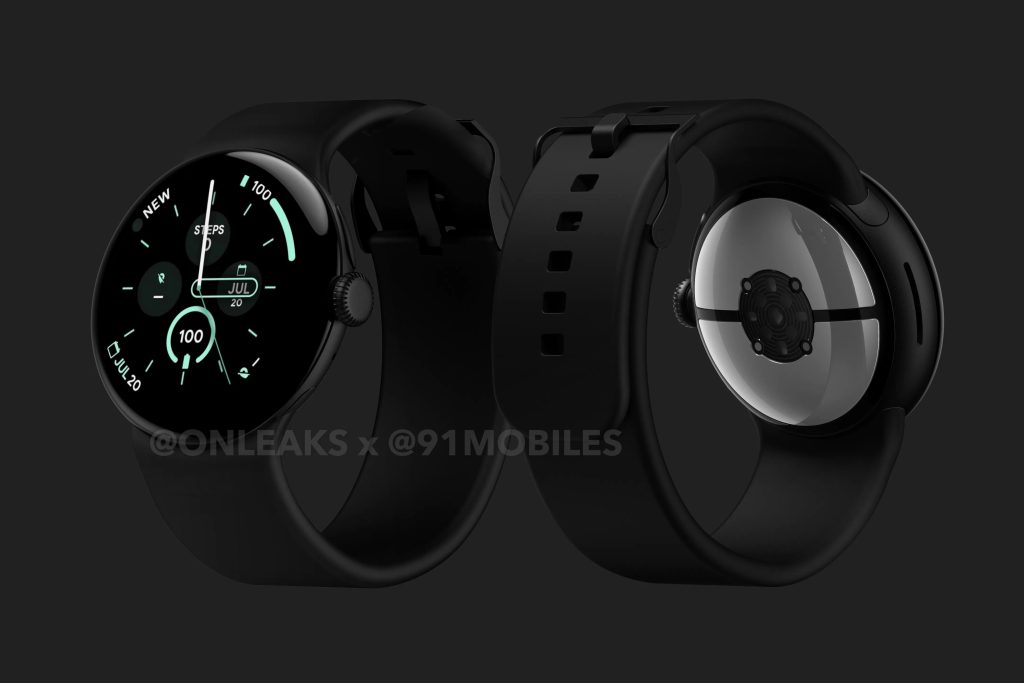
The consumer tech industry is waiting for Samsung’s Galaxy Watch 7 series rumoured to debut next month. The South Korean brand’s competitor Google unveils its flagship smartwatch in October. The search giant’s next-generation Pixel Watch 3 has now surfaced in leaked renders courtesy of reliable tipster Onleaks. The images and a 360-degree video gives us a first glimpse at the wearable device. Some tidbits of the Pixel Watch 3 have already surfaced in recent times.
Google Pixel Watch 3 leaked renders
As per the CAD-based leaked renders, the Google Pixel Watch 3 will retain the overall design from its predecessor. There is a circular bezel-less display and a Black coloured strap with a buckle mechanism. We could notice some slight differences including the increased size of the rotating crown. The body appears slightly thicker than the Pixel Watch 2. This is also reiterated by Onleaks. Dimension-wise, the tipster mentions that the upcoming offering will measure 40.79 x 40.73 x 14mm compared to 41 x 41 x 12.3mm on the predecessor.
The increase in Pixel Watch 3’s thickness could be because of the larger battery capacity of 307mAh unit (the Pixel 2 has 304mAh) as spotted on the Dekra and Safety Korea certification sites.
The Pixel Watch 3 is tipped to come with a 1.2-inch display. It is seen running on Wear OS. There is a physical button on the right side of the smartwatch. There is also a larger cutout on the other side that could indicate a speaker grille.
Rumors suggest that the Google Pixel Watch 3 could come in a larger dial size alongside the 41mm variant. It is also expected to feature ultrawide-band connectivity for improved watch unlock functionality and more.
Poco has unveiled two contenders in the M series: the Poco M6, which launched globally on June 10, 2024, and the Poco M6 5G, which debuted in India on December 22, 2023.
While the names might suggest close cousins, these devices cater to distinct user needs. This in-depth comparison dives into the key differences between the Poco M6 and the Poco M6 5G, empowering you to make an informed decision based on your priorities and budget. Without any further ado, let’s start.
The most significant distinction lies in their network capabilities. The Poco M6 is a 4G LTE phone, suitable for areas with reliable 4G coverage. On the other hand, the Poco M6 5G boasts next-generation 5G connectivity, offering blazing-fast data speeds in areas with 5G infrastructure. If you prioritize future-proofing and live in a 5G-enabled region, the M6 5G is the clear winner.
2. Processor
The POCO M6 packs a MediaTek Helio G91-Ultra processor, a reliable chip for everyday tasks and casual gaming. However, the Poco M6 5G features the MediaTek Dimensity 6100+, a 6nm processor built for better efficiency and potentially smoother performance, especially for multitasking and more demanding games.
3. Camera
The Poco M6 takes the lead in the camera department. It boasts a powerful 108MP rear camera with a large Samsung ISOCELL HM6 1/1.67″ sensor and 9-in-1 pixel binning technology for capturing sharper, brighter images in low-light conditions.
The Poco M6 5G settles for a more modest 50MP primary sensor. Both phones offer a front-facing camera, with the M6 featuring a higher resolution 13MP sensor compared to the M6 5G’s 5MP sensor.
4. Display
While both phones offer a similar 6.7-inch display size with a 90Hz refresh rate, the Poco M6 boasts a sharper Full HD+ (1080 x 2400) resolution compared to the M6 5G’s HD+ (1600 x 720) resolution. This translates to a crisper viewing experience on the M6, especially for watching videos and browsing text.
5. Battery Life and Charging
Poco M6 features a 5030mAh battery while the M6 5G features a similar 5000mAh battery. However, the Poco M6 edges out with faster 33W fast charging, allowing you to quickly top up the battery when needed. The M6 5G offers a slower 18W fast charging solution.
6. Design and Build
The Poco M6 flaunts a sleek 8.3mm glass back design, available in Black, Purple, and Silver. The Poco M6 5G opts for a plastic back with a “Premium Sky Dance” design that shifts colors, offered in Galactic Black and Orion Blue. Ultimately, the design choice boils down to personal preference for a premium glass feel (M6) or a more playful, color-shifting aesthetic (M6 5G).
7. Storage and RAM
Both phones offer similar storage options, ranging from 128GB to 256GB. However, the Poco M6 provides RAM (LPDDR4X) options of 6GB and 8GB, while the M6 5G offers 4GB, 6GB, and 8GB variants. If multitasking is crucial for you, the additional RAM options on the M6 might be a deciding factor. Although the M6 5G storage utilizes UFS 2.2, which is significantly faster compared to the eMMC 5.1 used in the standard M6.
8. Software
The M6 4G variant runs on Android 14 with Xiaomi’s latest HyperOS on top, while the M6 5G runs on Android 13-based MIUI 14 out of the box. The M6 5G is expected to get the HyperOS update in the future.
9. Price
Both phones start at the same price point of $129, but the M6 comes with 6GB RAM and 128GB storage, compared to the M6 5G which has 4GB RAM and 128GB storage. However, the $129 pricing for the standard M6 is part of an early bird offer. We will have to wait until tomorrow for the full pricing details.
The standard M6’s 8GB + 256GB model is priced at $149, while the M6 5G’s other variants are priced at Rs. 11,499 ($138) for the 6GB + 128GB version and Rs. 13,499 ($162) for the 8GB + 256GB version.
10. Conclusion
Choosing between the Poco M6 and Poco M6 5G boils down to prioritizing your needs. The POCO M6 reigns supreme for camera quality, display resolution, and faster charging.
However, if you crave the future-proofing benefits of 5G and are content with a slightly less powerful processor and camera, the Poco M6 5G offers a compelling option at a potentially more attractive price point depending on the storage and RAM configuration you choose.
A new OnePlus smartwatch, likely the OnePlus Watch 3, has been spotted in India’s BIS and TUV Rheinland certification databases.
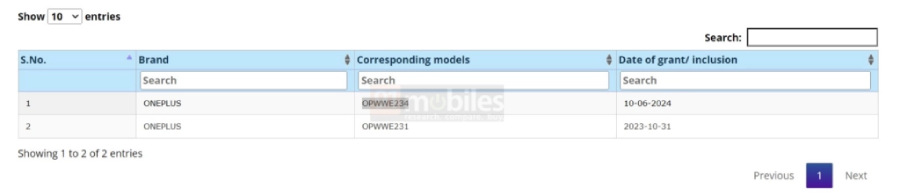
The wearable, spotted by 91mobiles, carries the model number OPWWE234 which is consistent with the naming convention of its predecessor, the OnePlus Watch 2 (model number OPWWE231).
While this doesn’t confirm the name definitively, it strongly suggests this is the upcoming OnePlus Watch 3. The BIS certification suggests it will likely be launched in India.
OnePlus Watch 3 BIS certification
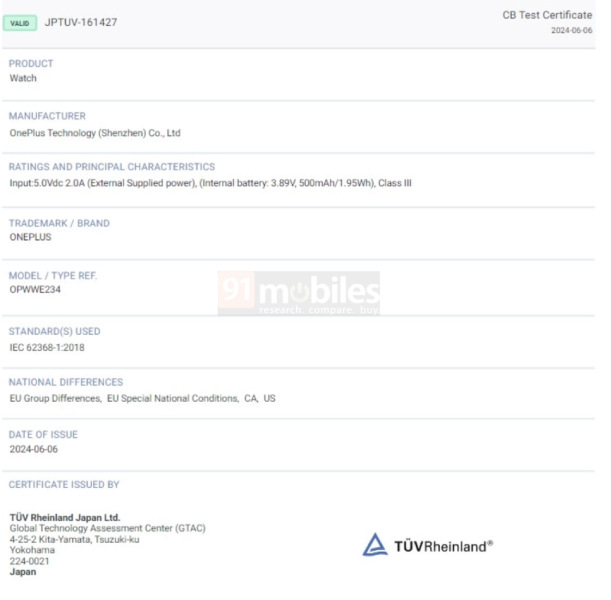
Moreover, the TUV Rheinland certification reveals that the OnePlus Watch 3 will feature a 550mAh battery. That’s the same capacity as the Watch 2 which is claimed to have up to 100 hours of battery life.
OnePlus Watch 3 TUV Rheinland Certification
In May, a OnePlus smartwatch with a similar model number, OPWW234, also appeared in the 3C and CMIIT certifications. It’s likely a variant of the OnePlus Watch 3.
The 3C database shows that the smartwatch will be sold without a power adapter and will support 10W fast charging. The CMIIT certification suggests it will support connectivity options such as WCDMA, TD-LTE, LTE FDD, WLAN, and Bluetooth.
These certifications provide limited details about the smartwatch’s specifications, but other rumors suggest it might be powered by a Qualcomm Snapdragon Wear W5 SoC or possibly the unreleased Snapdragon W5 Gen 2.
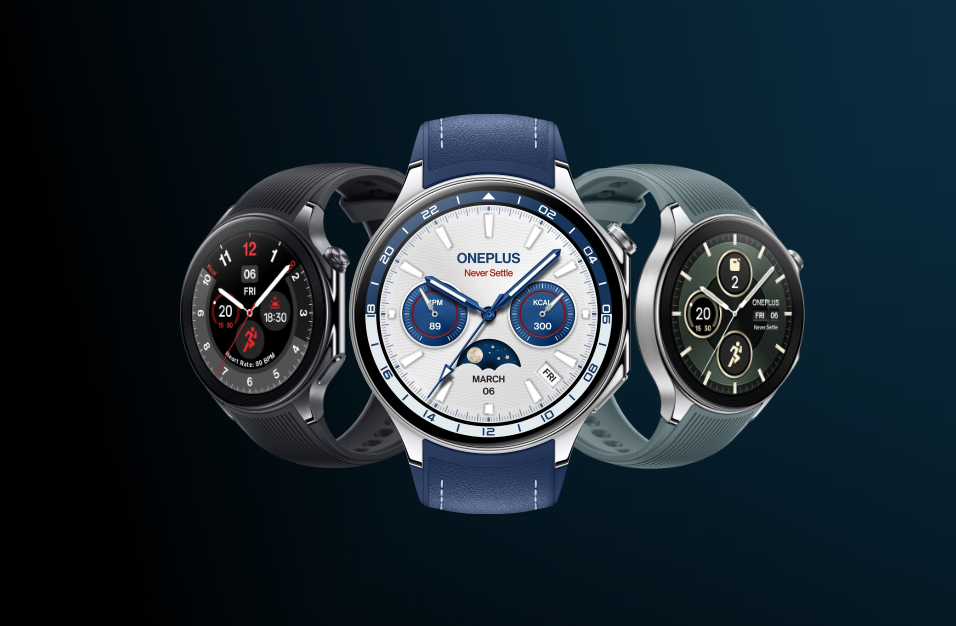
OnePlus Watch 2
Regarding the launch, a report from last month hinted that the OnePlus Watch 3 would debut alongside the OnePlus Pad 2 and other OPPO devices like the Pad 3 and Enco X3 TWS earbuds in May. However, their launch has reportedly been delayed.
With the launch seemingly postponed, we continue to wait for official information on the OnePlus Watch 3. Although the BIS certification hints at an India release, it’s anyone’s guess when that might happen. We will keep you in the loop if we get any new details about the upcoming smartwatch.
Vivo launched the Y200 GT smartphone with the Snapdragon 7 Gen 3 last month. Now the company celebrating Father’s Day by offering the phone in a special gift box that contains a smart thermos cup.
The phone is available in two colors – Storm and Thunder. It comes with a flat display, a flat middle frame, and a rounded square camera island on the back. The flash module is located outside the camera island. The surface of the back panel has a fluorite AG effect and is made using a high-pressure molding process, which adds a different look to the phone. It is also IP64 dust and water-resistant, which means the phone can handle splashes of water (not submersion) and is completely sealed against dust.
Speaking of the in-hand experience, the phone is rather a big one with a 6.78″ display. This is a 1.5K (1260 x 2800) panel that supports 4500 nits peak brightness and a refresh rate of 144Hz. But it’s not too heavy weighing 194g. The body is 7.98mm thick yet it packs a massive 6000mAh battery inside. In fact one of the key highlights of the phone is its battery life. It also supports 80W fast wired charging which is rated to reach 50% in 26 minutes under normal conditions.
In terms of performance, the phone packs the Snapdragon 7 Gen 3 chipset, which is paired with 4 storage and memory configurations – 128GB + 8GB, 256GB + 8GB, 256GB + 12GB, and 512GB + 12GB.
This is UFS 2.2 storage. The chipset is built on TSMC’s 4nm process and adopts 1 x Cortex-A715 performance core clocked at 2.63GHz, 3 x Cortex-A715 clocked at 2.4GHz, and 4 x power efficient Cortex-A510 cores clocked at 1.78GHz. The performance core and GPU offer a 15% and 50% performance improvement respectively over its predecessor.
There is a basic dual camera setup on the back – a 50MP main camera with the Sony LYT600 sensor along with a 2MP depth of field sensor. There is a 16MP centered punch hole-style selfie camera in the front.
Pricing:
The pricing for the 128GB + 8GB, 256GB + 8GB, 256GB + 12GB, and 512GB + 12GB variants are 1449 Yuan (~$200), 1549 Yuan (~$214), 1599 Yuan(~220), and 2049 Yuan (~282) respectively.
Motorola has announced the launch date of the Edge 50 Ultra in India. The upcoming offering will be the third Edge 50 series device after the Edge 50 Fusion and Edge 50 that were announced last month in the country. Additionally, Flipkart has put up a microsite of the Edge 50 Ultra revealing its key specifications. It also confirms the phone’s availability from the e-commerce platform. The Edge 50 Ultra has already been released in the global markets.
Motorola Edge 50 Ultra India launch date revealed
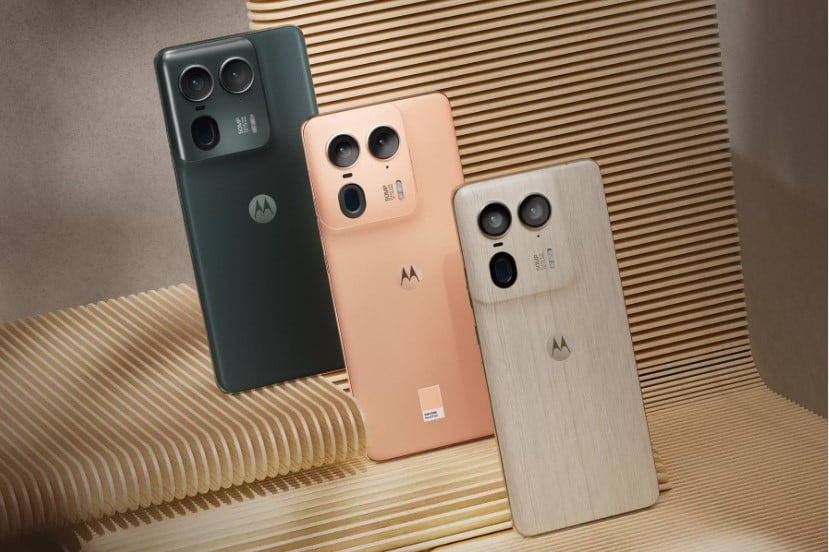
The Motorola Edge 50 Ultra will launch in India on June 18, Tuesday at 12 pm local time. The Indian variant is confirmed to have the same specifications as its global counterpart. It has an elevating square camera island from the back panel housing a 50MP OIS main sensor, a secondary lens, and a periscope unit. The device will have IP68 certification and it will be available in wood finish and leather back panel options.
The Motorola Edge 50 Ultra will come with a Pantone-validated 3D curved display bearing a 1.5K resolution, 144Hz refresh rate, and 2,500 nits peak brightness. The screen will be shielded by Gorilla Glass Victus. Internally, the upcoming offering is confirmed to be powered by a Snapdragon 8s Gen 3 processor coupled with 12GB RAM and 512GB storage. It will support 125W wired, 50W wireless, and 10W reverse wireless charging. The smartphone is said to receive 3 years of OS updates.
The microsite also confirms that the Motorola Edge 50 Ultra will come with a host of AI features. These include AO magic canvas, AI adaptive stabilisation, and more. The phone is also teased to be the first in the world to feature Smart Connect which will allow you to seamlessly control and sync multiple devices. Users can swipe on the device to stream apps on PC, use phone camera as webcam, copy text and images between devices etc.
We should learn about the pricing and availability of the Motorola Edge 50 Ultra next week.
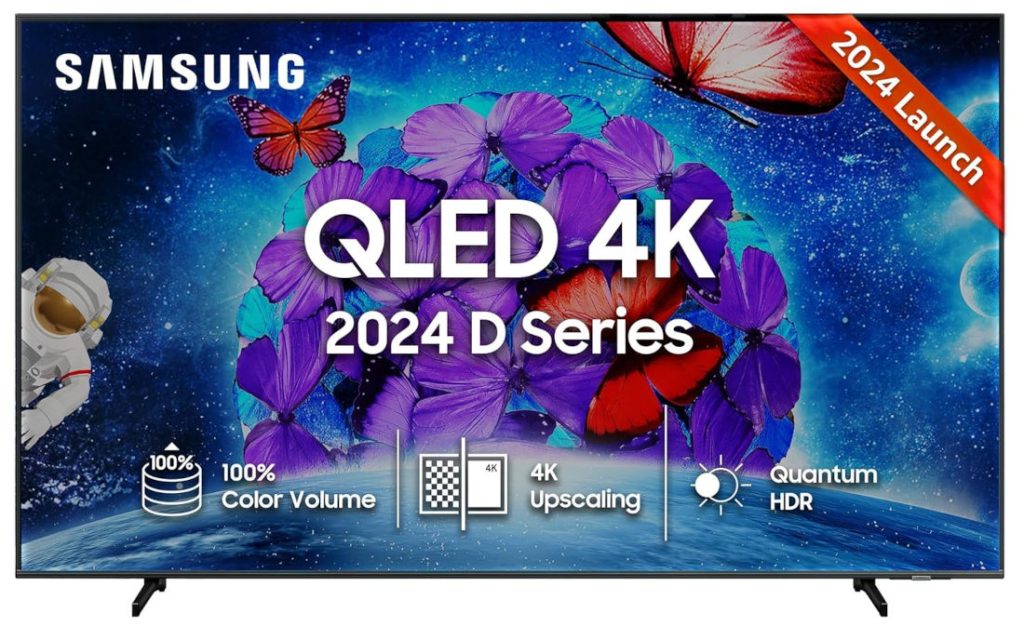
Samsung Electronics has released its 2024 QLED 4K TV series in India. Available in 55″, 65″, and 75″ sizes, these TVs are equipped with Quantum Processor Lite 4K, improving the viewing experience with high-resolution 4K content.
The TVs offer 100% color volume with Quantum Dot technology and Quantum HDR, improving the visual display quality. They also feature 4K upscaling, enabling clearer and sharper images. For audio, the Q-Symphony sound technology aligns the TV’s speakers with Samsung Q-Series soundbars for improved sound.
For gaming, Samsung has included a bunch of features. ALLM automatically detects consoles and reduces input lag for lightning-fast response, Super Ultra Wide Game View expands compatible games to fill the screen for an immersive experience, Game Motion Plus smooths out fast-paced action with interpolated frames, and HGiG ensures compatible HDR games display accurate colors and brightness for stunning visuals.
The design of the TV series is slim, with the AirSlim design allowing for near flush wall mounting. In terms of sustainability, the series introduces a SolarCell Remote that operates without batteries and an AI Energy Mode for reduced energy consumption.
Voice assistant support is integrated, offering Alexa, Google Assistant, and Bixby specifically for the Indian market. Connectivity is comprehensive with Bluetooth v5.2, Wi-Fi 5, and multiple HDMI ports.
Pricing & availability
The 55″ model is priced at Rs. 65,990, and the 65″ model at Rs. 1,15,990. Information about the 75″ model will be released soon. These TVs are available now on Samsung.com and other online retailers.
In related news, Samsung is reportedly planning to launch the Galaxy Watch FE on June 24. This smartwatch will reportedly come with a 1.2-inch Super AMOLED display, Exynos W920 dual-core processor and an ECG sensor. Leaks also suggest that the smartwatch will launch in three colors: black, silver, and pink gold, all priced at 199 Euros.
We use cookies on our website to give you the most relevant experience by remembering your preferences and repeat visits. By clicking “Accept”, you consent to the use of ALL the cookies.
This website uses cookies to improve your experience while you navigate through the website. Out of these, the cookies that are categorized as necessary are stored on your browser as they are essential for the working of basic functionalities of the website. We also use third-party cookies that help us analyze and understand how you use this website. These cookies will be stored in your browser only with your consent. You also have the option to opt-out of these cookies. But opting out of some of these cookies may affect your browsing experience.
Necessary cookies are absolutely essential for the website to function properly. This category only includes cookies that ensures basic functionalities and security features of the website. These cookies do not store any personal information.
Any cookies that may not be particularly necessary for the website to function and is used specifically to collect user personal data via analytics, ads, other embedded contents are termed as non-necessary cookies. It is mandatory to procure user consent prior to running these cookies on your website.