Samsung is set to unveil its next generation of flagship foldable smartphones soon. These include the Galaxy Z Fold 6 and Galaxy Z Flip 6. The former recently had its pricing leaked, and now, the US pricing for the clamshell folding device has also been revealed. But unfortunately, there’s a notable price hike incoming.
Samsung Galaxy Z Flip 6 Price Leak
The leak arrives from known tipster OnLeaks, who shared the information with SmartPrix. The Galaxy Z Flip 6 is set to launch with improved hardware. However, these upgrades could result in higher pricing. This leak hints states that the upcoming flip phone will come in two storage configurations, namely 256GB and 512GB. Samsung is rumored to launch the Galaxy Z Flip 6 for a starting price tag of 1,099 US Dollars, while the 512GB variant may cost 1,219 US Dollars.
If this is true, we are getting a 100 US Dollar price hike over the previous gen Galaxy Z Flip 5. A previous leak had revealed the color options of the Galaxy Z Flip 6, which include Mint, Silver Shadow, Yellow, and Blue. The new foldable phone could weigh 187 grams in weight. Based on what we know so far, it is expected to be equipped with the Snapdragon 8 Gen 3 SoC, a 50-megapixel primary main camera on the rear, and a 4,000mAh battery pack (slightly larger than the Galaxy Z Flip 5).
The main display is a 6.7-inch OLED display with FHD+ resolution and an adaptive 120Hz refresh rate. Meanwhile, the cover panel is a smaller 3.4-inch screen. It will likely run on the Android 14 OS based OneUI 6.1.1 custom skin (up to seven major Android OS updates) out of the box. We can also expect an IPX8 rating for water resistance along with wireless charging and stereo speakers.
Samsung‘s upcoming Galaxy S24 FE smartphone wasn’t the only Samsung device to be spotted on Geekbench today. The upcoming Galaxy Tab S10 Plus has also been listed on the benchmarking platform.
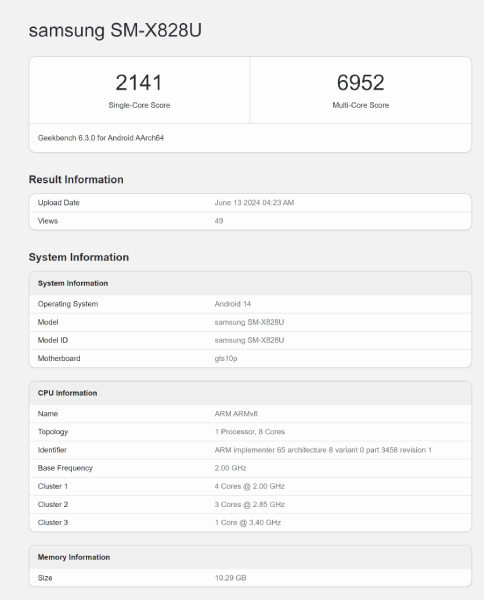
Listed with the model number SM-X828U, the tablet matches the entry in the IMEI database confirming it’s the Tab S10 Plus. The “U” at the end indicates it’s a US variant, while there are other variants of the tablet carrying the model number SM-X826B and SM-X826N which correspond to Global, and South Korean versions, respectively.
Interestingly, the tablet was listed with the MediaTek Dimensity 9300+ processor on Geekbench. Samsung has long-favored Qualcomm’s high-end chipsets for its Tab S series, but this time the company seems to be switching to MediaTek for the Galaxy Tab S10 series.
Galaxy Tab S10 Plus Geekbench
The Dimensity 9300+ is an octa-core chipset with a powerful configuration consisting of one Cortex-X4 core clocked at 3.25GHz, three Cortex-X4 cores running at 2.85GHz, and four Cortex-A720 cores with a speed of 2.0GHz. Graphics are likely handled by a Mali-G720 Immortalis MP12 GPU.
This setup earned the tablet 2,141 points in single-core tests and 6,952 points in multi-core tests. It also has 12GB of RAM and runs on Android 14 out of the box.
While the switch to MediaTek is notable, a report last month did suggest Samsung might adopt a dual-chip strategy for its tablets, similar to the Galaxy S series phones. But it was supposed to be Qualcomm and Exynos and not MediaTek.
Since the tablet has now appeared with Dimensity 9300+ it could mean that either the previous report was incorrect or MediaTek might be replacing one of the other chip brands.
There’s not much we know about the Galaxy Tab S10 Plus at the moment, except that it will be joined by the Tab S10 Ultra and likely a standard Galaxy Tab S10.
Samsung has officially announced the Galaxy F15 5G Airtel Edition. This isn’t a new smartphone, rather, it’s a new edition of the existing F15 5G that was first launched back in March. But while the features are identical, it comes with a more affordable price tag. So here’s everything you need to know.
Samsung Galaxy F15 Airtel Edition: What makes it unique?
The South Korean tech giant launched the Galaxy F15 Airtel Edition arrives in collaboration with telecom giant Airtel in India. As the name suggests, the Galaxy F15 Airtel Edition is a device that is locked with Airtel in India. This means that you can only use it with an Airtel SIM, at least for 18 months that is. Apart from this, it also comes with the Knox Guard application. The Galaxy F15 Airtel Edition sports a 6.5-inch Super AMOLED display that offers a Full HD+ resolution, 90Hz refresh rate, and 800 nits of peak brightness.
Under the hood, the smartphone is equipped with the MediaTek Dimensity 6100+ SoC, which is paired with up to 8GB of RAM and 128GB of internal storage. A massive 6,000mAh battery pack that supports 25W wired fast charging. The rear packs a 50-megapixel triple camera setup, while the front houses a 13-megapixel selfie shooter. Other notable features include a 3.5mm headphone jack, Bluetooth 5.3, Dual SIM, Android 14 OS based OneUI 6 custom skin out of the box, and side mounted fingerprint scanner.
Pricing and Availability
To recall, Samsung launched the original Galaxy F15 5G with a starting price tag of 15,999 INR for the 4GB + 128GB option. However, the Galaxy F15 Airtel Edition starts from just 12,999 INR for the same storage option. Meanwhile, the 6GB + 128GB and 8GB + 128GB variants cost 14,499 INR and 15,999 INR respectively. There is also an additional 7 percent discount on this device and Airtel is offering a 50GB data coupon with this device.
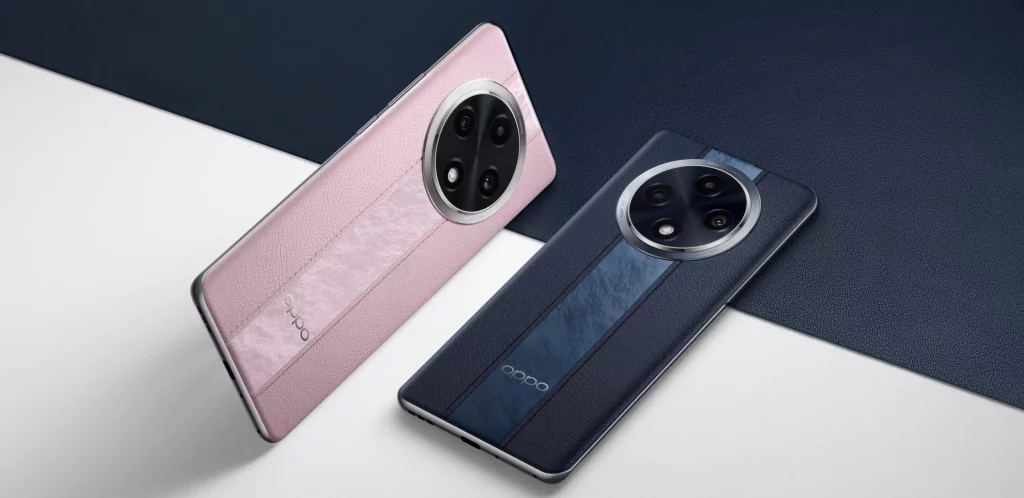
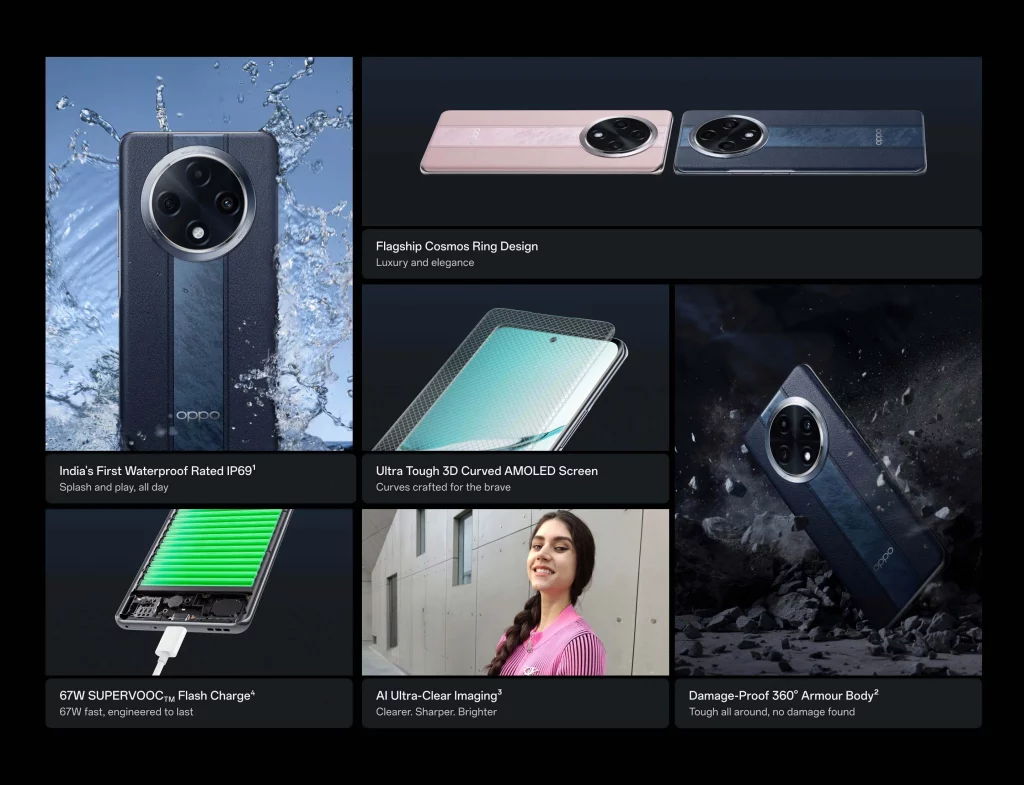
As expected, Oppo has launched the F27 Pro+ 5G in India with a focus on durability. As per the company, it is the first smartphone in India to carry all three IP66, IP68, and IP69 ratings. Let’s check out the key specifications of this smartphone.
Oppo F27 Pro+ 5G Specifications:
The F27 Pro+ 5G features a 6.7-inch 3D curved AMOLED display (93% screen-to-body ratio) with an FHD+ resolution (2412 x 1080 pixels), a smooth 120Hz refresh rate, and a high 240Hz touch sampling rate. The display also comes with a peak brightness of 950 nits and it is protected by Corning Gorilla Glass Victus 2.
Under the hood, the F27 Pro+ 5G is powered by the MediaTek Dimensity 7050 processor, a capable mid-range chipset designed to handle everyday tasks and multitasking efficiently. For graphics, it features Mali-G68 MC4 GPU.
The phone comes with 8GB of LPDDR4X RAM and offers inbuilt storage options of 128GB or 256GB UFS 3.1. The device also supports up to 8GB of virtual RAM. Out of the box, the phone runs on ColorOS 14 based on Android 14, offering a customized and feature-rich user experience.
Coming to the optics, the F27 Pro+ 5G features a dual rear camera system with a 64MP primary sensor and a 2MP secondary sensor for depth information. While the lack of an ultrawide sensor is a bit of a letdown, the 64MP main sensor promises to capture decent photos in most lighting conditions. The front-facing camera for selfies and video calls comes in at 8MP with f/2.2 aperture.
Oppo has equipped the F27 Pro+ 5G with a large 5000mAh battery. The phone also supports 67W SUPERVOOC fast charging. The phone includes an in-display fingerprint sensor and facial recognition for secure unlocking.
Where the F27 Pro+ 5G truly shines is in its durability. The phone boasts an IP69 waterproof rating, the highest available, meaning it can withstand high-pressure, high-temperature sprays, and even complete submersion in water. Alongside the phone also comes with IP68 and IP66 certifications. Additionally, the phone has received military-grade shock resistance certification (MIL-STD-810H) and is built with a 360° Armour Body for enhanced drop protection.
Pricing and Availability
Oppo F27 Pro+ 5G comes in two storage options: 8GB RAM + 128GB storage priced at ₹27,999 and 8GB RAM + 256GB storage priced at ₹29,999 (approximately $335 and $359 respectively).
The phone is available in two color options: Midnight Navy and Dusk Pink (leather back). Pre-orders are now open on Amazon.in, Flipkart, Oppo India online store, and offline stores starting today, with shipments starting on June 20th.
Yesterday, Honor unveiled the Honor 200 series globally in Paris, which includes the 200 Pro, 200, and 200 Lite. The Pro model was the star of the show, thanks to the partnership with Harcourt Studio for portrait photography.
I was at the event checking out the phones, and we have also posted our full review of the Honor 200, which you can check down below.
As for the other top stories from the past 24 hours, they are below.
The Infinix Zero Flip is set to come with 8GB RAM, 512GB storage, and a speedy 70W fast charger. The design reveals a square cover display and dual-camera setup, similar to Tecno’s Phantom V2 Flip.
Could this be the ultimate flip phone release of the year?
The Oppo Reno 12 series is set to launch globally on June 18, with the Malaysian release confirmed for June 27. The smartphones will feature impressive specs like 6.7-inch AMOLED display, a Dimensity 7300-Energy chipset, 5000mAh battery with 80W charging, and powerful camera setups including 50MP main cameras and 32MP/50MP front cameras.
Arm and Qualcomm are clashing over licensing issues, jeopardizing Windows on Arm’s big moment with the launch of Qualcomm’s Snapdragon X-series laptops. Despite the legal battle, major manufacturers are set to release products, but the future of Qualcomm’s custom Arm designs remains uncertain.
Curious about the OnePlus Nord 4? Leaked specs suggest a sleek design, 120Hz AMOLED display, Snapdragon 7+ Gen 3 processor, powerful camera setup, and a whopping 5500mAh battery with 100W fast charging.
Samsung’s upcoming products – Galaxy Watch 7, Galaxy Watch FE, Galaxy Buds 3 Pro, Galaxy Buds 3, and Galaxy Ring – were sneakily revealed early on the Samsung Members app. These new gadgets promise enhanced health tracking, premium features like Active Noise Cancellation, and stylish designs.
Samsung‘s factory must have been busy lately since there’s a lot in the pipeline including upcoming foldables, new wearables like the Ring and Ultra smartwatch, and the Galaxy Buds 3 series.
Additionally, we have also been hearing rumors about the Galaxy S24 FE. Today, the smartphone has appeared on a Geekbench listing, revealing details about its processor.
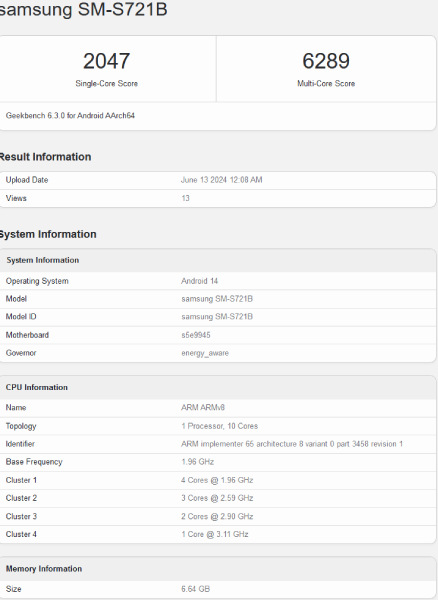
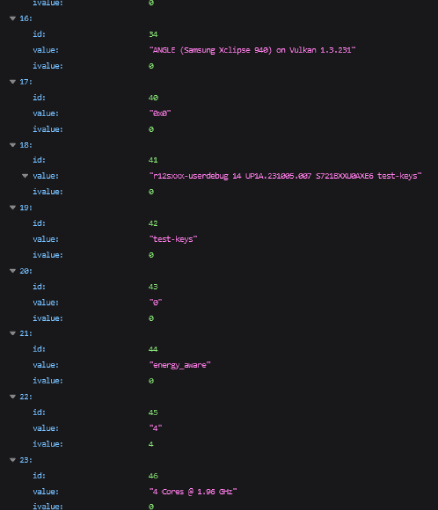
The Galaxy S24 FE, model number SM-S721B, scored 2,047 in single-core and 6,289 in multi-core tests. The listing shows it has a 10-core CPU setup and a motherboard ID of s5e9945, confirming it’s powered by the Exynos 2400 SoC.
However, this seems to be a detuned version of the Exynos 2400 compared to the one in the vanilla Galaxy S24 phones. The prime Cortex-X4 core on the Galaxy S24 FE is clocked at 3.11 GHz which is slightly lower than the standard Exynos 2400’s 3.21 GHz. Other specifications, like the Xclipse 940 GPU, remain the same.
This suggests that Samsung might be using a lower-binned Exynos 2400 SoC in the Galaxy S24 FE, which could explain the reduced clock speed. The chip is expected to be paired with up to 12GB of LPDDR5X RAM, compared to 8GB on the top-end model in the Galaxy S23 FE. Additionally, the 256GB storage of the S24 FE is said to use UFS 4.0 technology, while the 128GB models might be limited to UFS 3.1.
Other rumored specifications for the S24 FE include a 6.7-inch display and a camera system similar to those in the Galaxy S24 and Galaxy S23 FE. The phone will likely have a design similar to its predecessor and a 4,500mAh battery, along with 25W fast charging and 15W wireless charging.
While details are still limited, more information is expected to surface in the coming weeks.
Just start with a brief summary. The new Honor 200 Pro Global Edition reinforced Honor’s strengths like extreme eye-comfort display, elegant look, easy-to-use software. and, imrpessively, upgraded the camera with the best portrait shooting that we’ve ever seen on a smartphone. The phone has the strongest camera hardware at its price (mid range), and offers a co-branding portrait mode with the famous Studio Harcourt Paris, which even challenges some more expensive camera phones.
Unbox
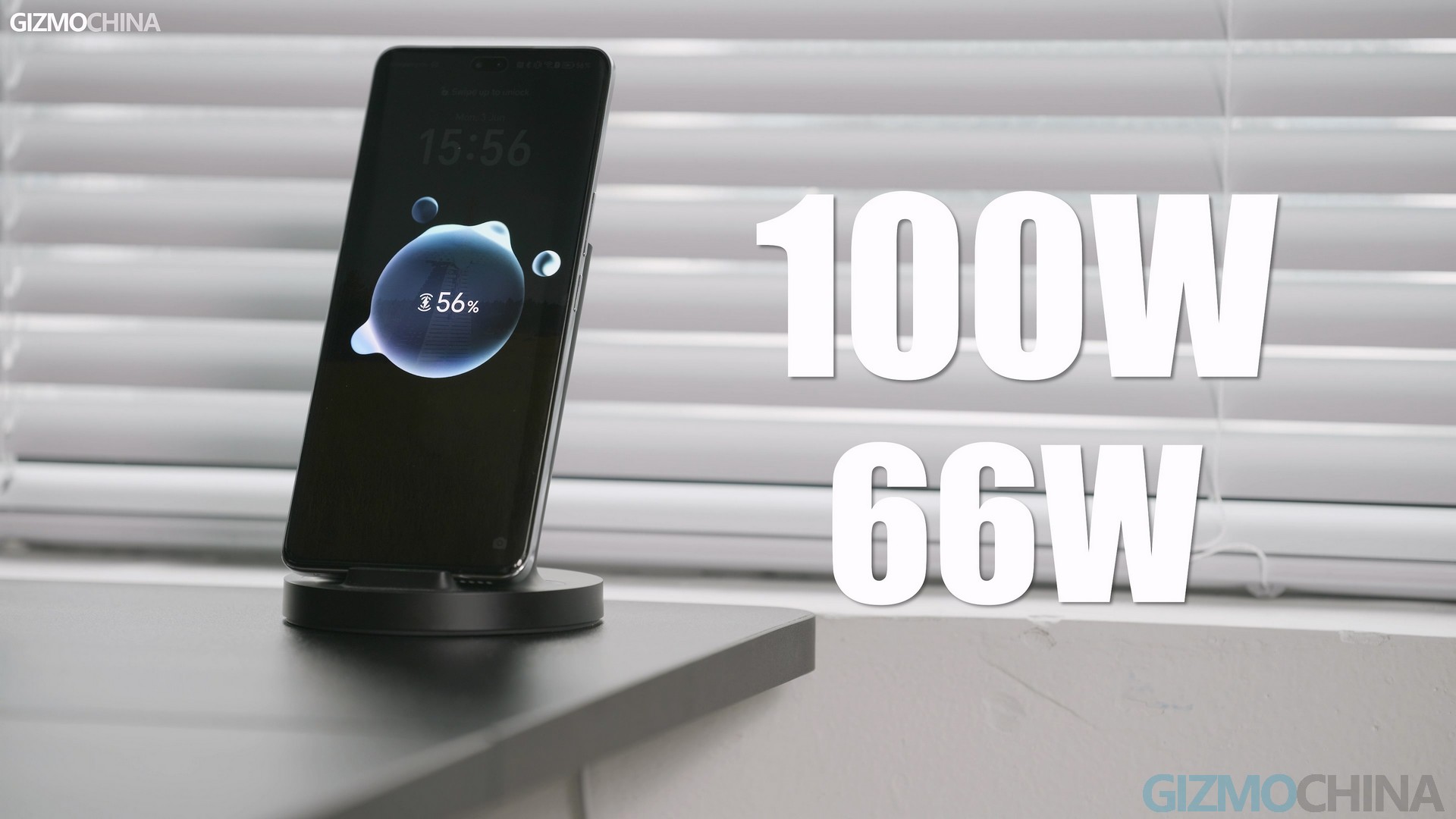
The Honor 200 Pro comes in a white packaging, inside including a 100W charger and an A to C cable along with the phone. It is worth mentioning that the phone not only supports the 100W Honor super-charge protocol, but also well-support high-power PPS charge. For charging, Honor has always been ahead of most brands, retaining the brand’s optimal charging efficiency while competible with most of the fast-charging accessories on the market. More detailed test results will be shown in the battery and charging section.
Design
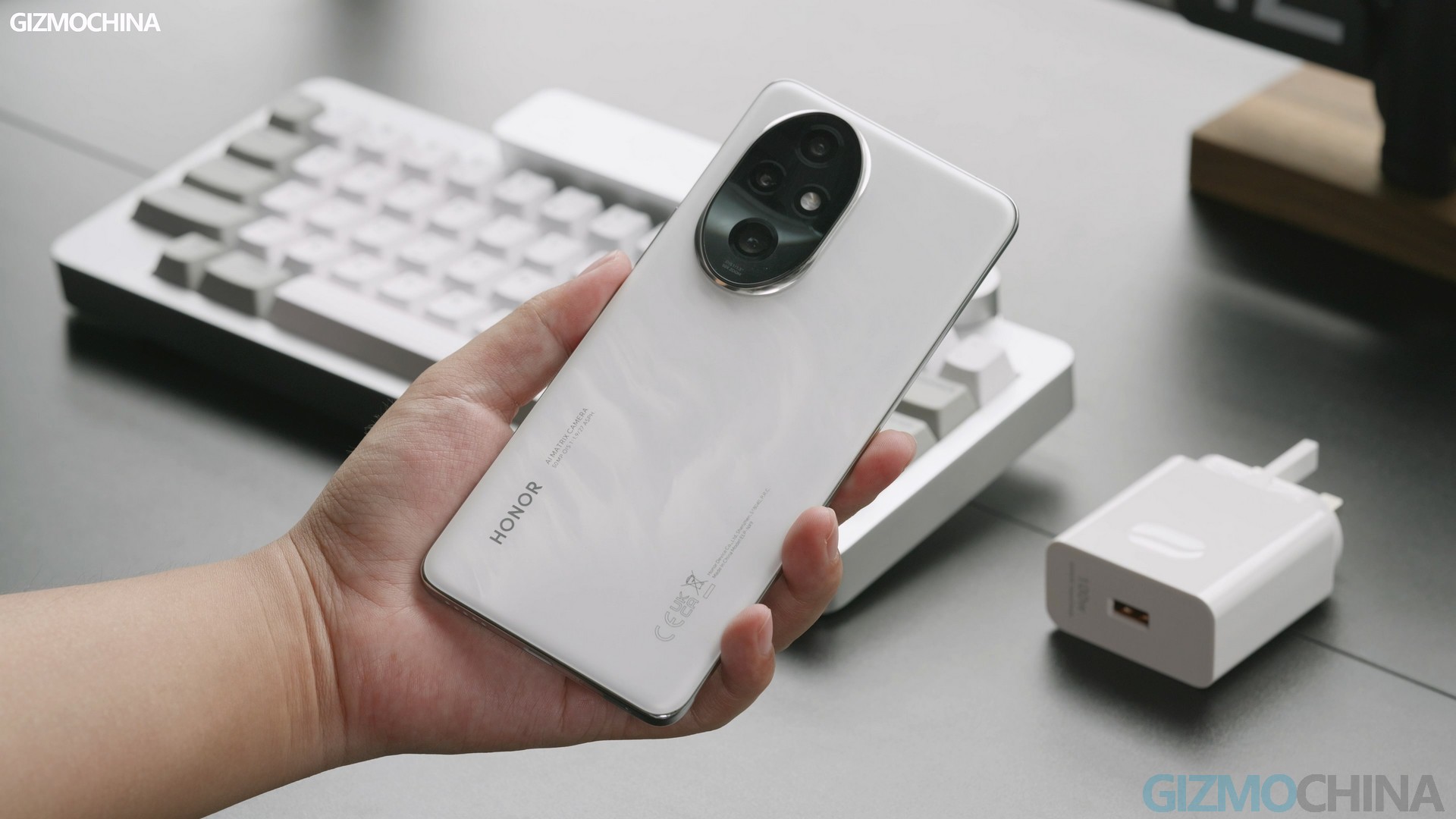
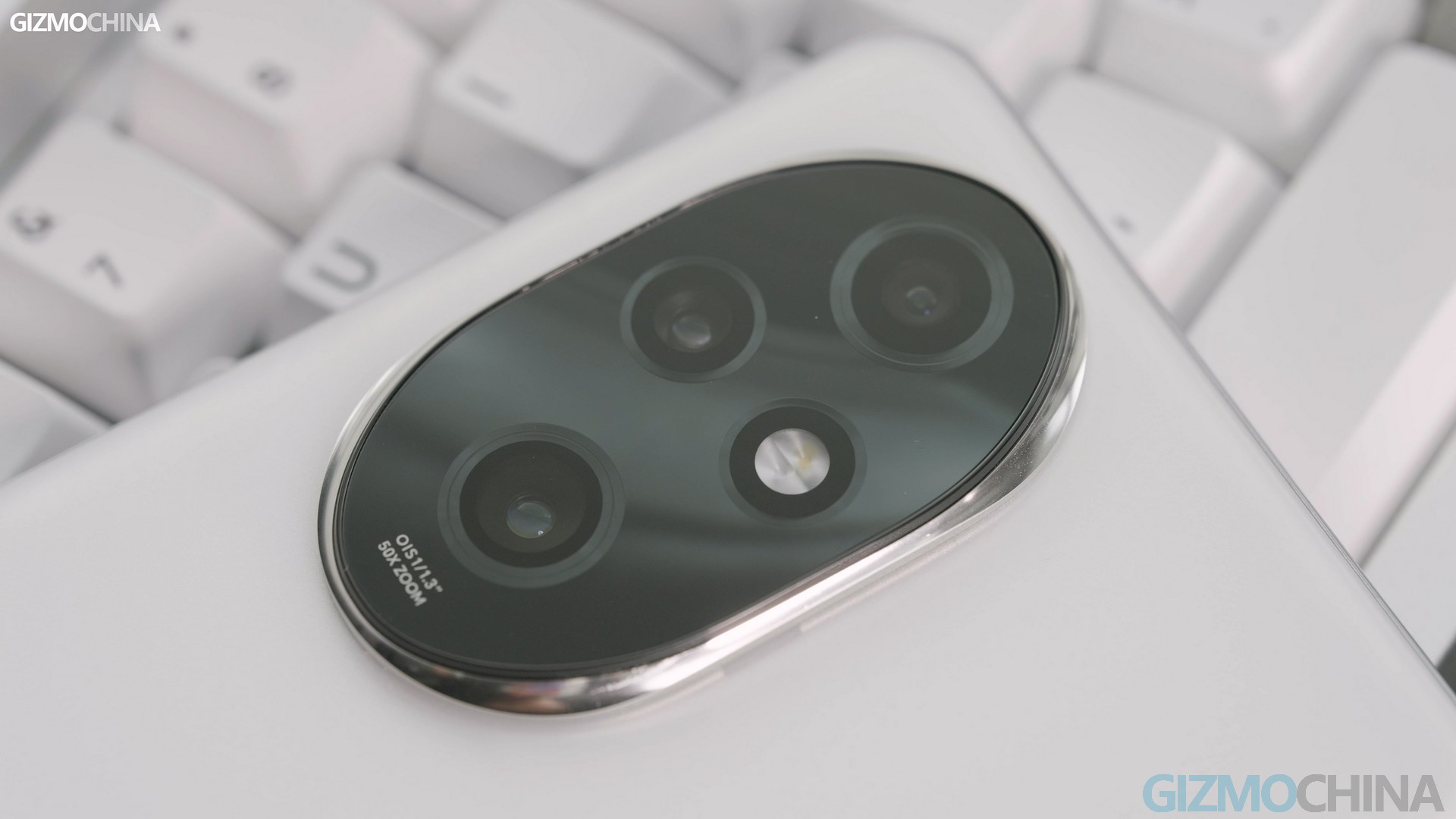
The Honor 200 Pro continues the family design from its predecessor, the Honor 100 Pro. A similar capsule shaped camera module, which is advertised with term ‘Realm of Art’. Personally, I would take it as a better design that balances aesthetics and practicality. In 2024, the ‘cookie-cutter’ round camera island is more of a no-win solution for huge camera modules, which ruins the comfort of holding the phone in hands.
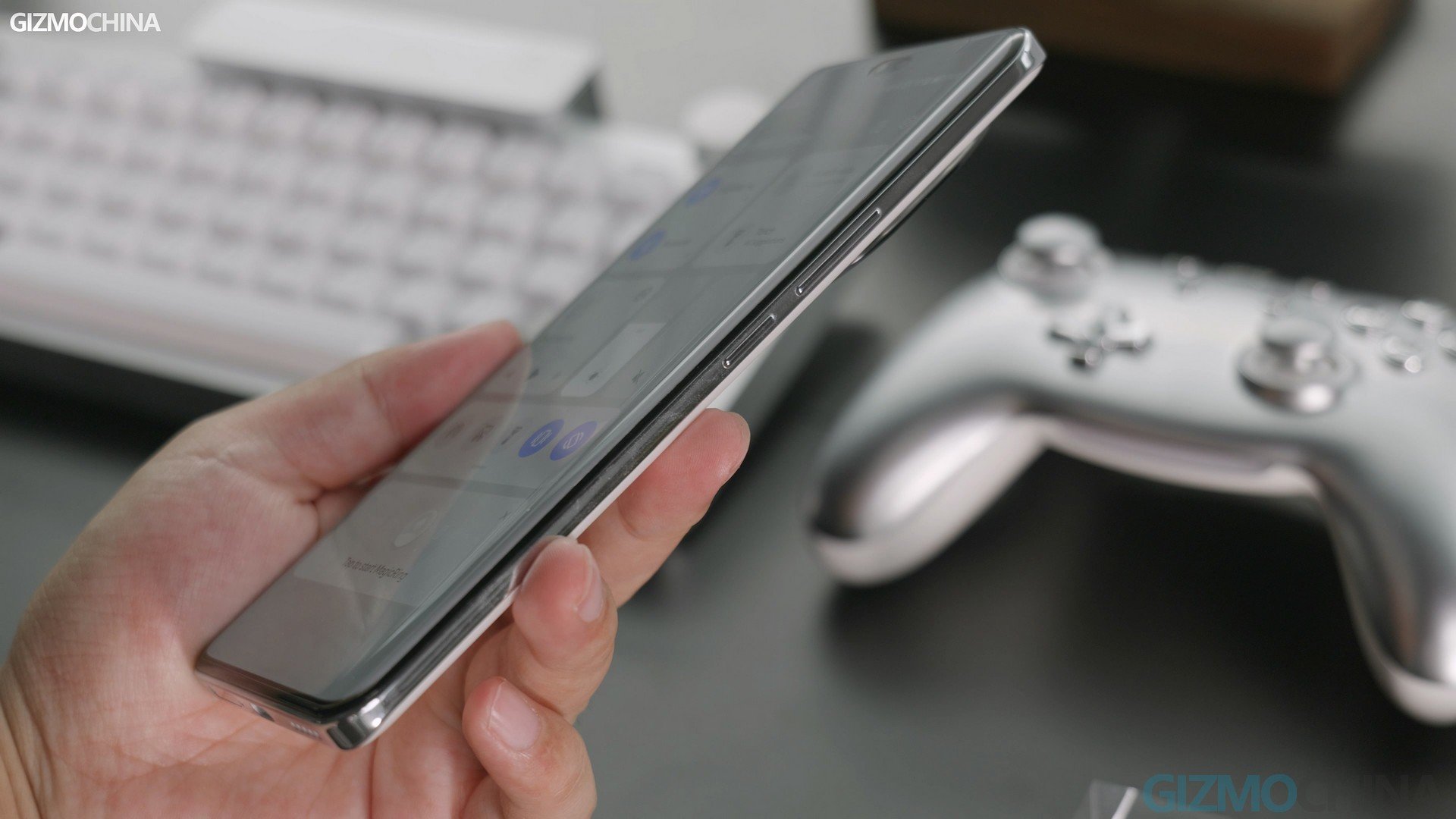
The Honor 200 Pro in hand is a white variant. If you look closely, the white back cover has water-flow-like texture underneath. The unique texture is far away from being boring, and rejects to be over-fancy as well. The finish of the back cover is also very commendable. The matte & anti-glare glass adds a bonus to the texture. And when I hold it in the hand, it provided a unique touch that is similar to velvet. Maybe that’s a bit of an exaggeration, but the truth is that it does deliver a wonderful tactile feel, so much so that I often unconsciously fondle it.
The 200 Pro uses a 6.78-inch Quad-edge-curved Display screen, with very little curvature on the top and bottom, and being slightly more curved on the left and right sides. When compared to most phones with similar edge-curved display, the Honor phone’s screen is visually better with less impact on edges’ true color presentation.
It weighs less than 200g, yet amazingly it comes with a 5200mAh battery. Here we have another phone that weighs close – Xiaomi Civi 4 Pro. However, it only has a 4610mAh battery. It’s even more interesting that a wireless charging coil is set in the thin & lightweight phone, and with up to 66W of power. So how do they stuff such a big battery into this thin and light body? must be another engineering marvel then.
Although the Honor 200 Pro does look very polished, my only complaint is that it has a plastic outter frame. If it is a phone that isn’t about the looks, I wouldn’t care if it’s metal, plastic or other eco-friendly recycled materials. But the Honor 200 Pro is a different story, and the plastic bezel feels slightly dissonant to me personally.
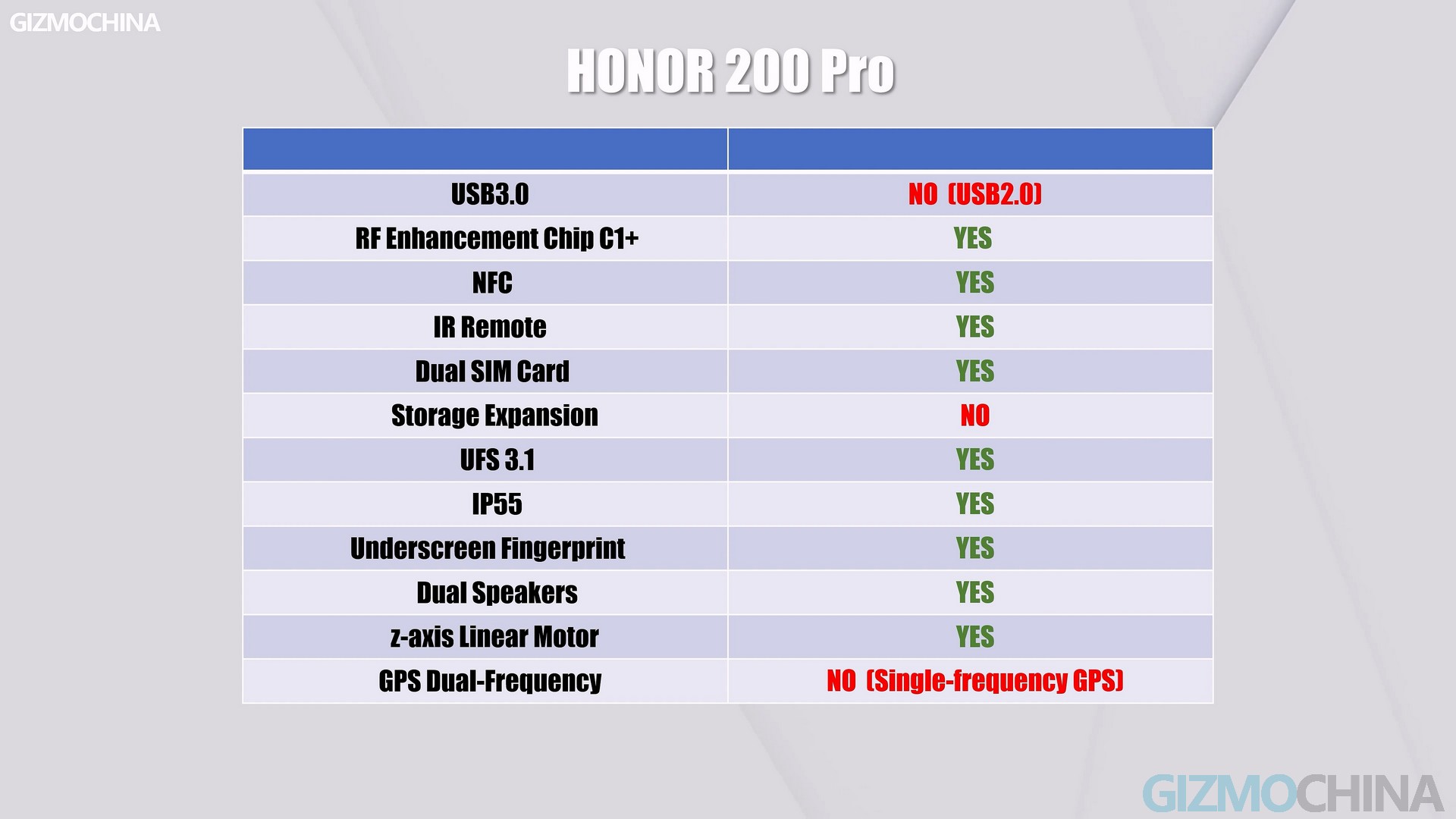
I’ve also compiled a list of features that we all care about here, so you can take a closer look HERE.
Performance
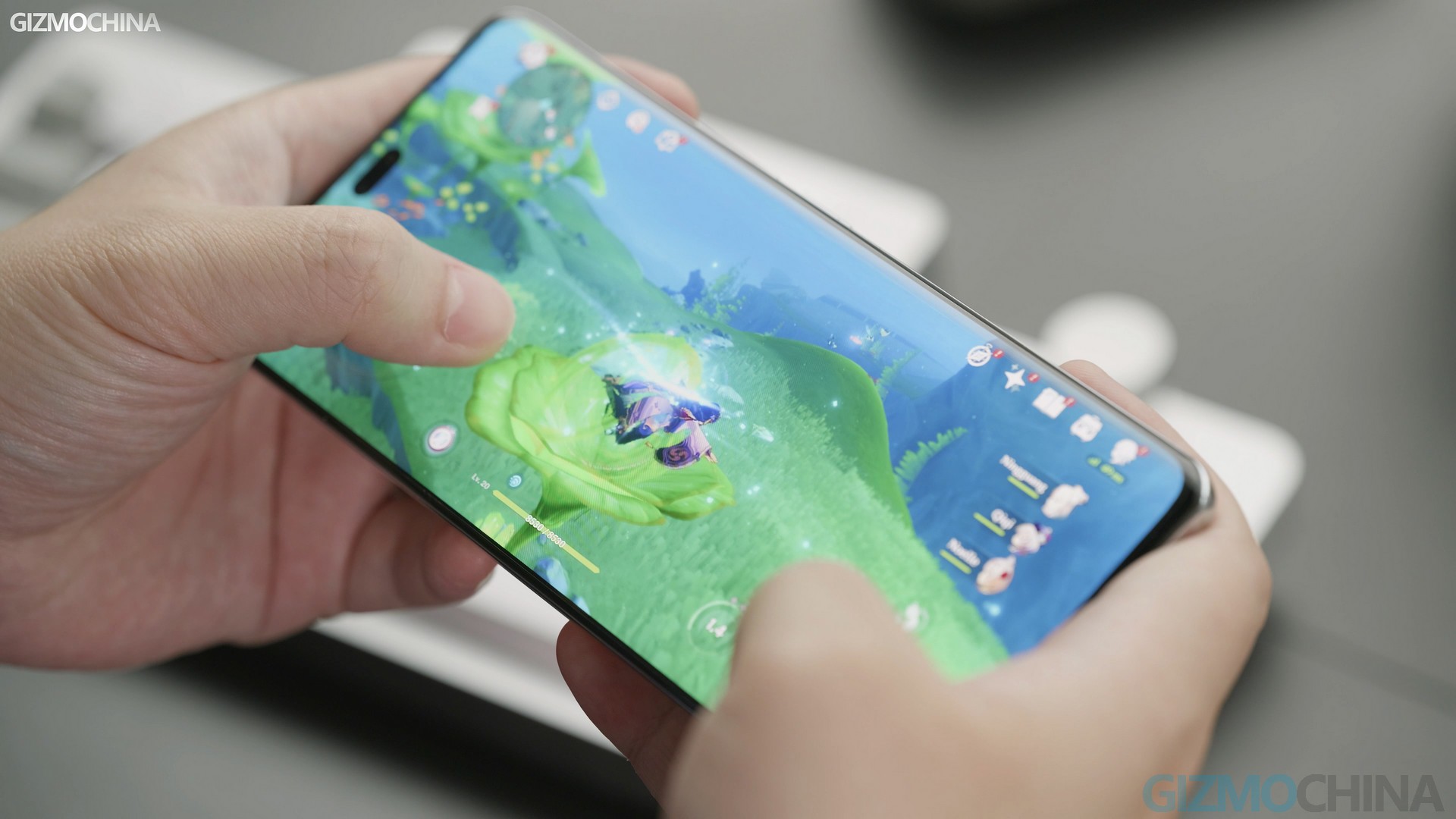
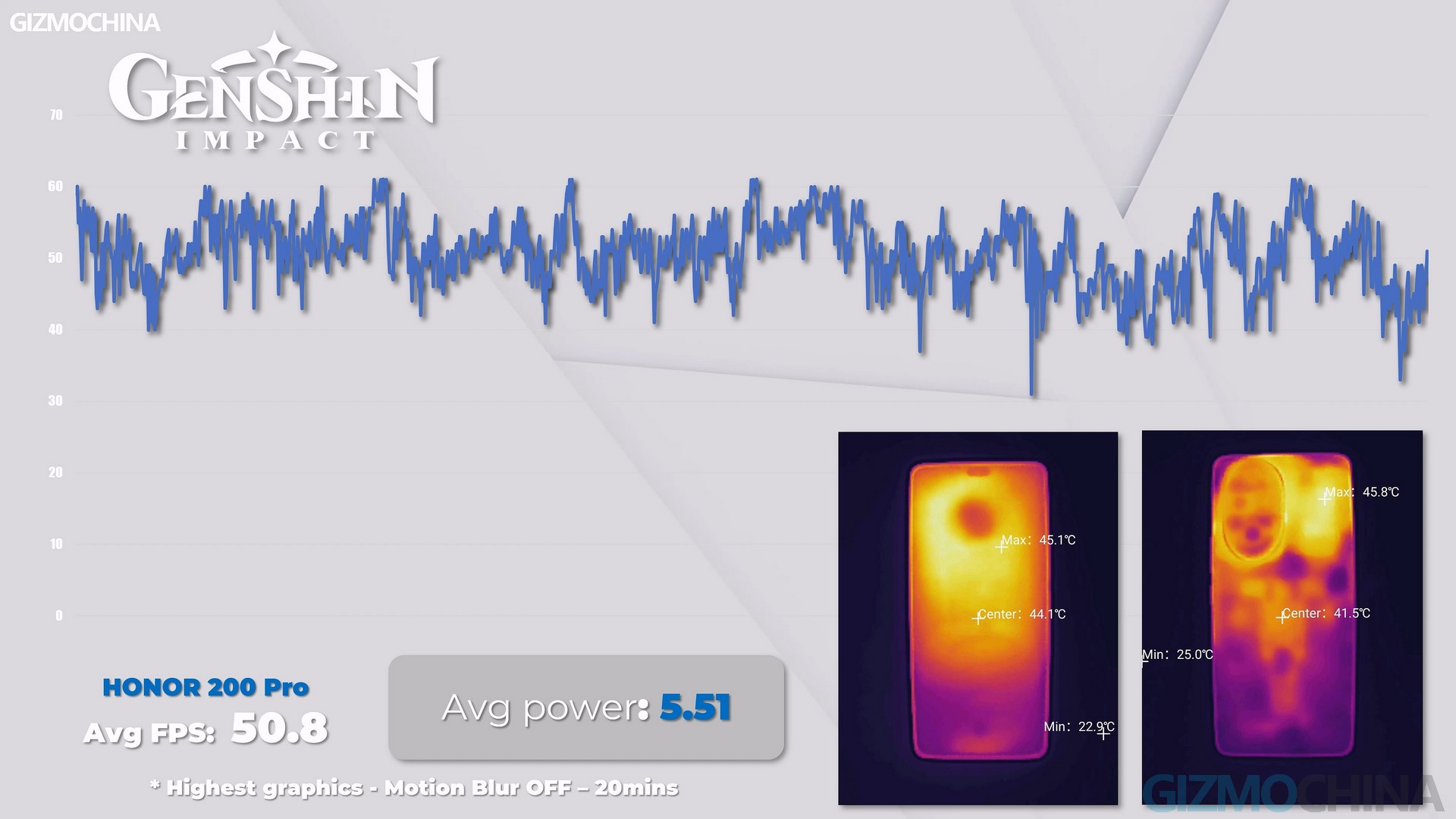
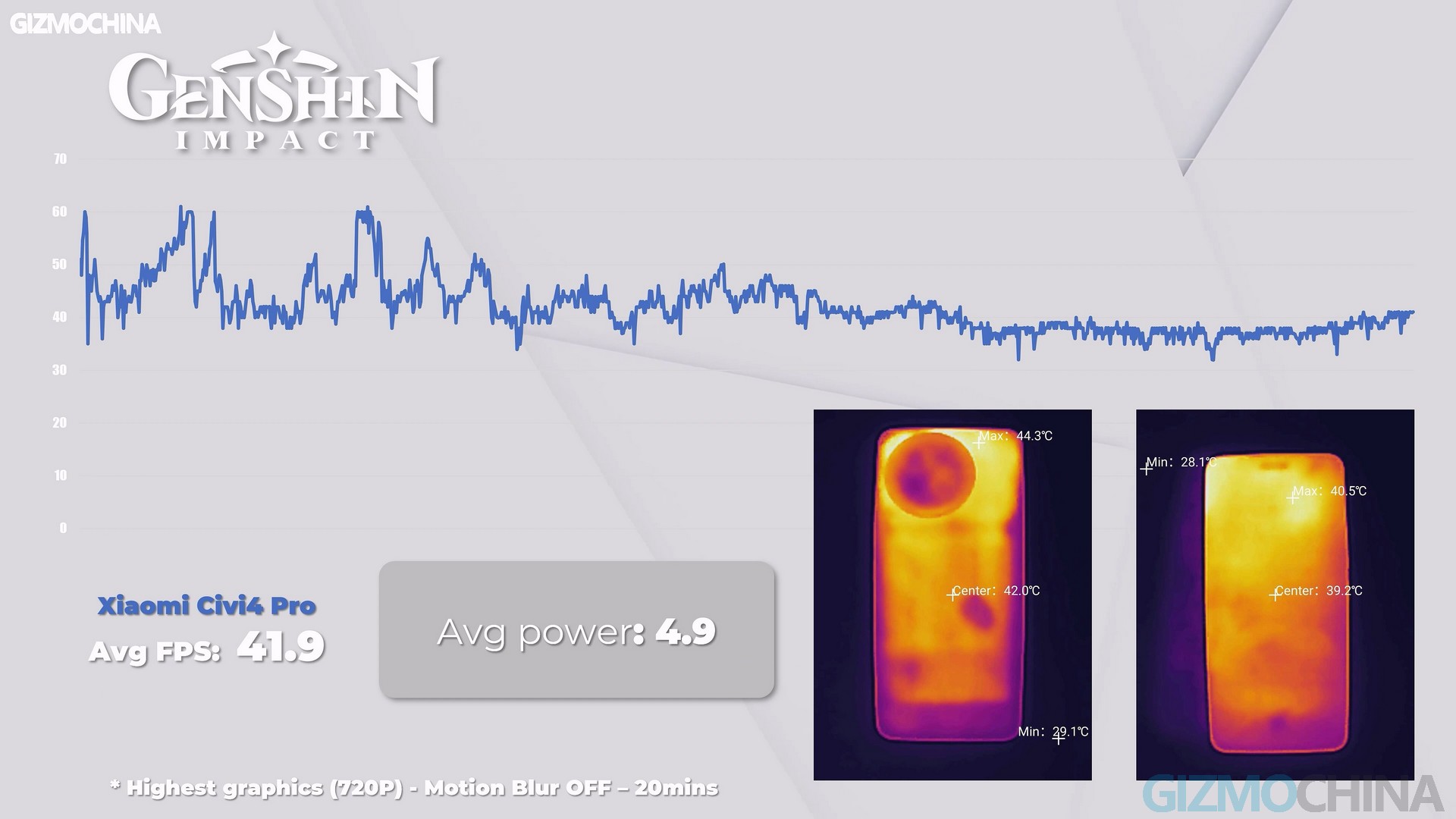
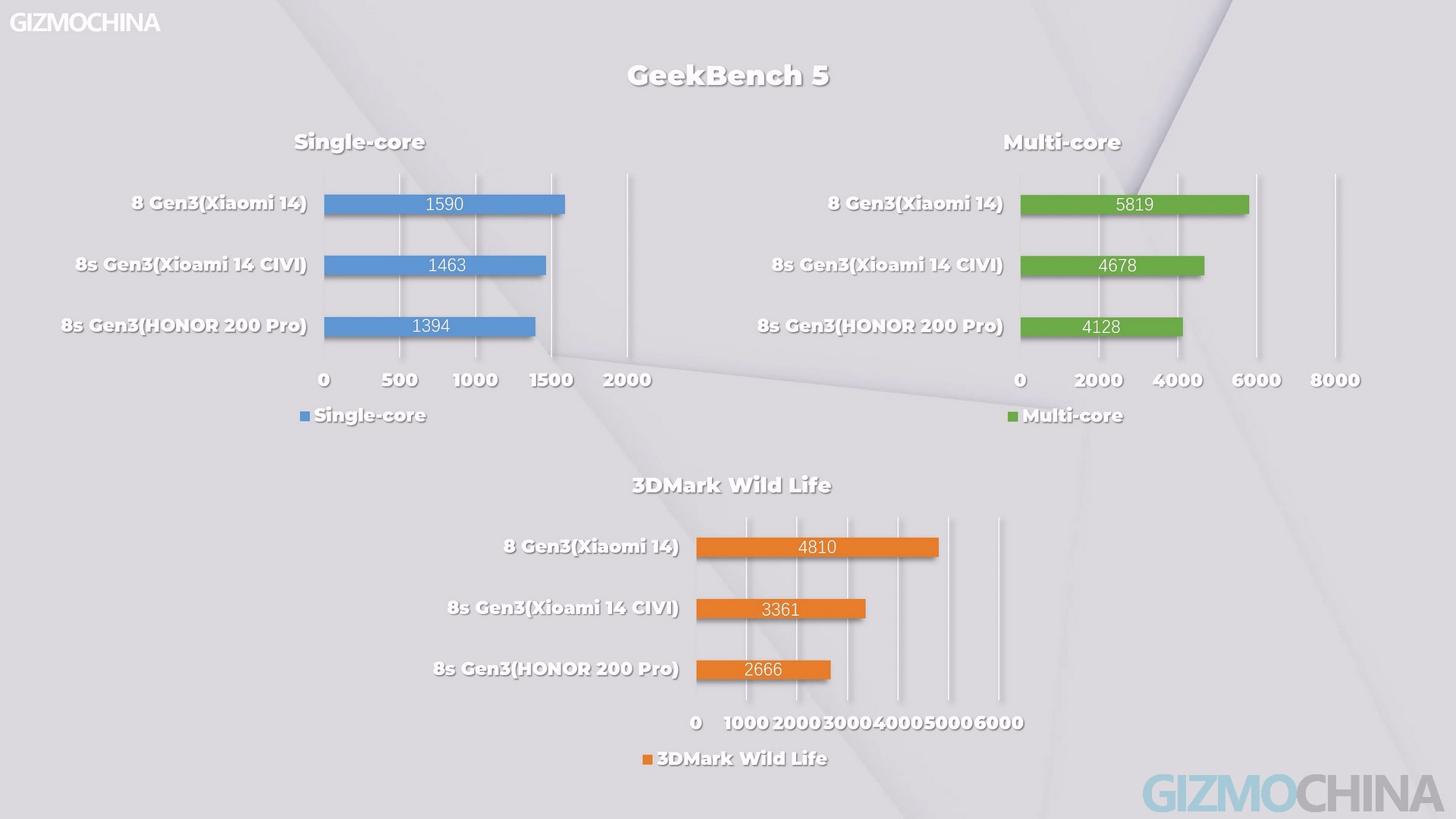
This time the Honor 200 Pro is powered by an Snapdragon 8s Gen3 chipset. In Genshin Impact, when set to the highest graphics to test the phone in Fontaine, the average power consumption was only 5.5W. so it’s clear that the phone is running a more conservative strategy. This performance is close to that of the Xiaomi Civi 4 Pro. But the Honor 200 Pro lags a bit behind in some benchmarks’ scores. Maybe some phones are perticularly optimized for those benchmarks?
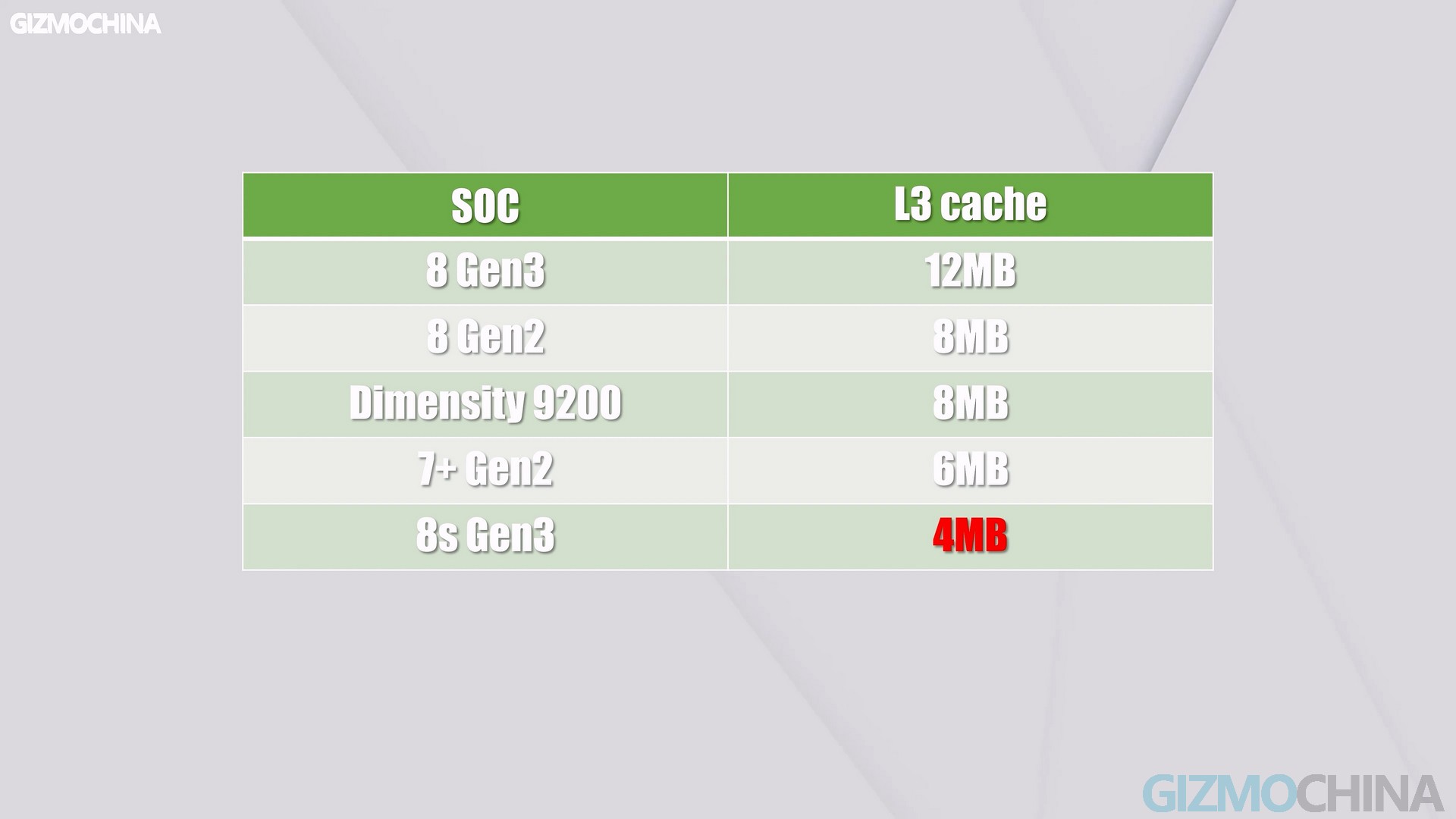
The conservative strategy is not a negative optimization. One, because the 8s Gen3 isn’t really efficient at high loading due to cache degradation. And two, because the cooling capacity on such a thin & lightweight phone would obviously struggle. Therefore, I’m not going to complain about this, since it is a common trade-off on almost every thin and light phone on the market.
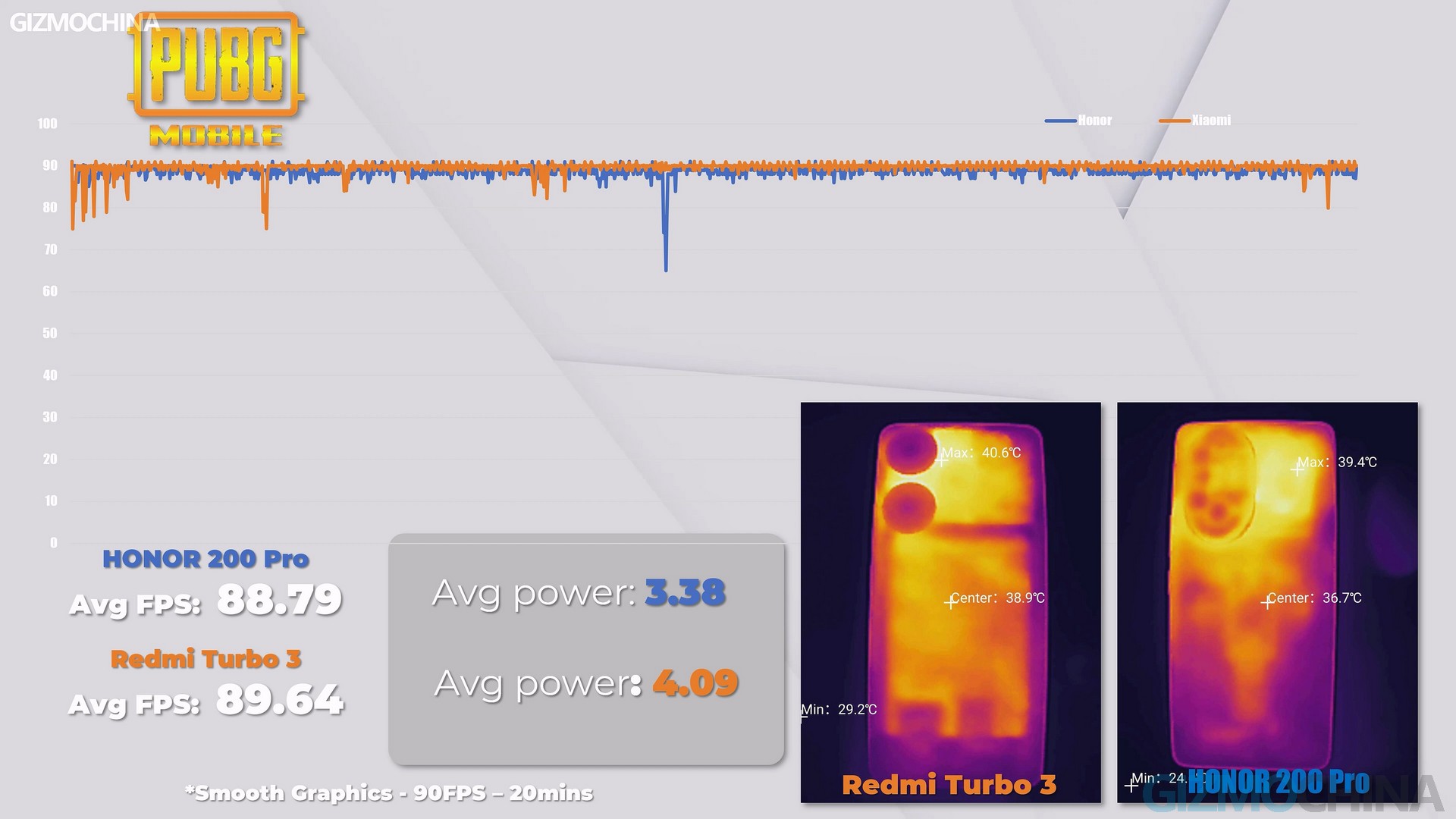
After all, for everyday use and most games, the Honor 200 Pro performs well with the 8s Gen 3 – smooth and fast responded, and there’s almost no difference from most thicker phones running the same chipset.
Screen
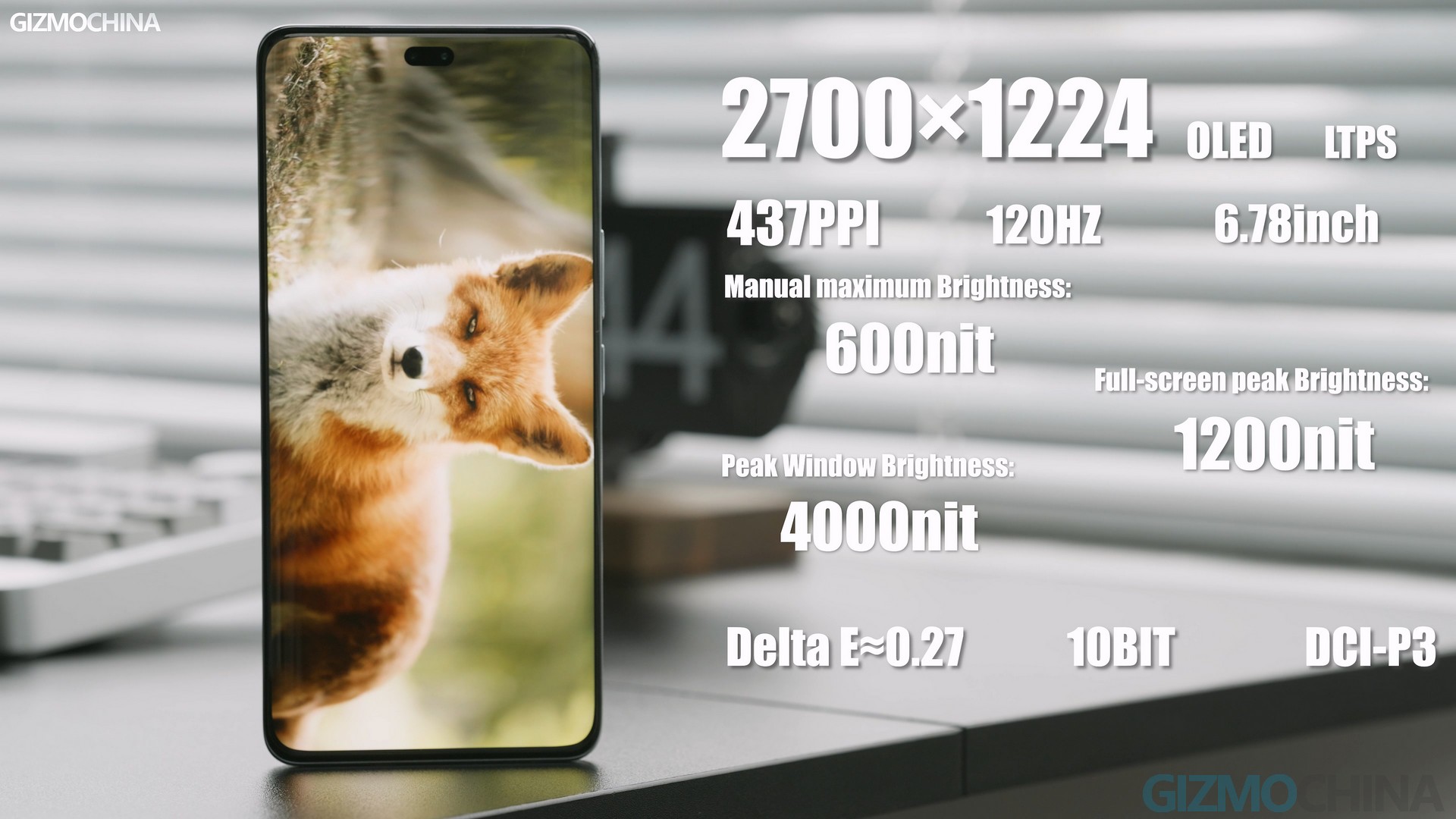
I’m sure quite a lot of people who chose phones from Honor for its Eye Comfort Display. This time around the 200 Pro still excels. Starting with its basic specs: it’s a 6.78-inch OLED screen with a manual maximum brightness of 600nits, a full-screen peak brightness of 1,200nits, and an peak window brightness of 4,000nits.
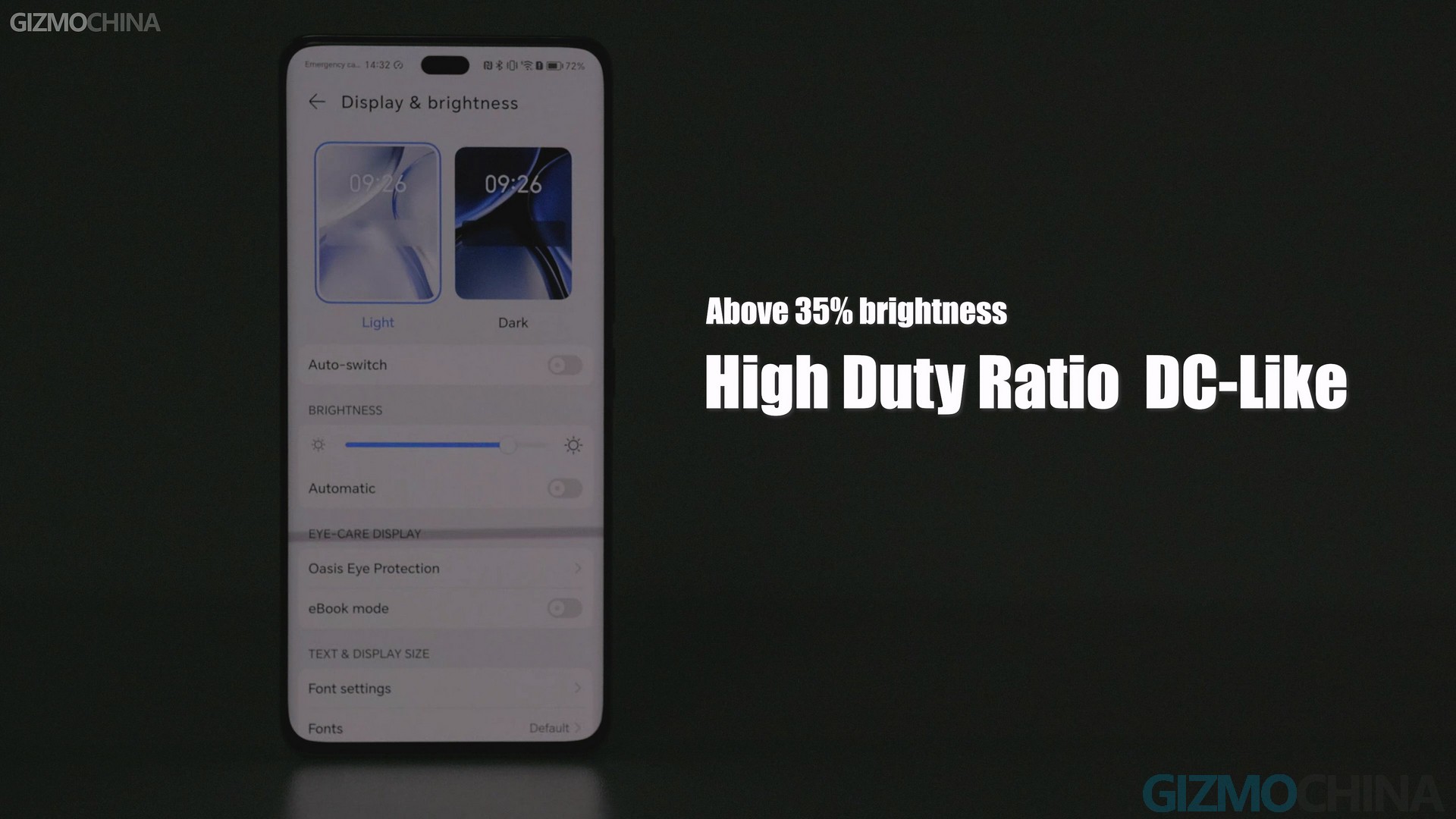
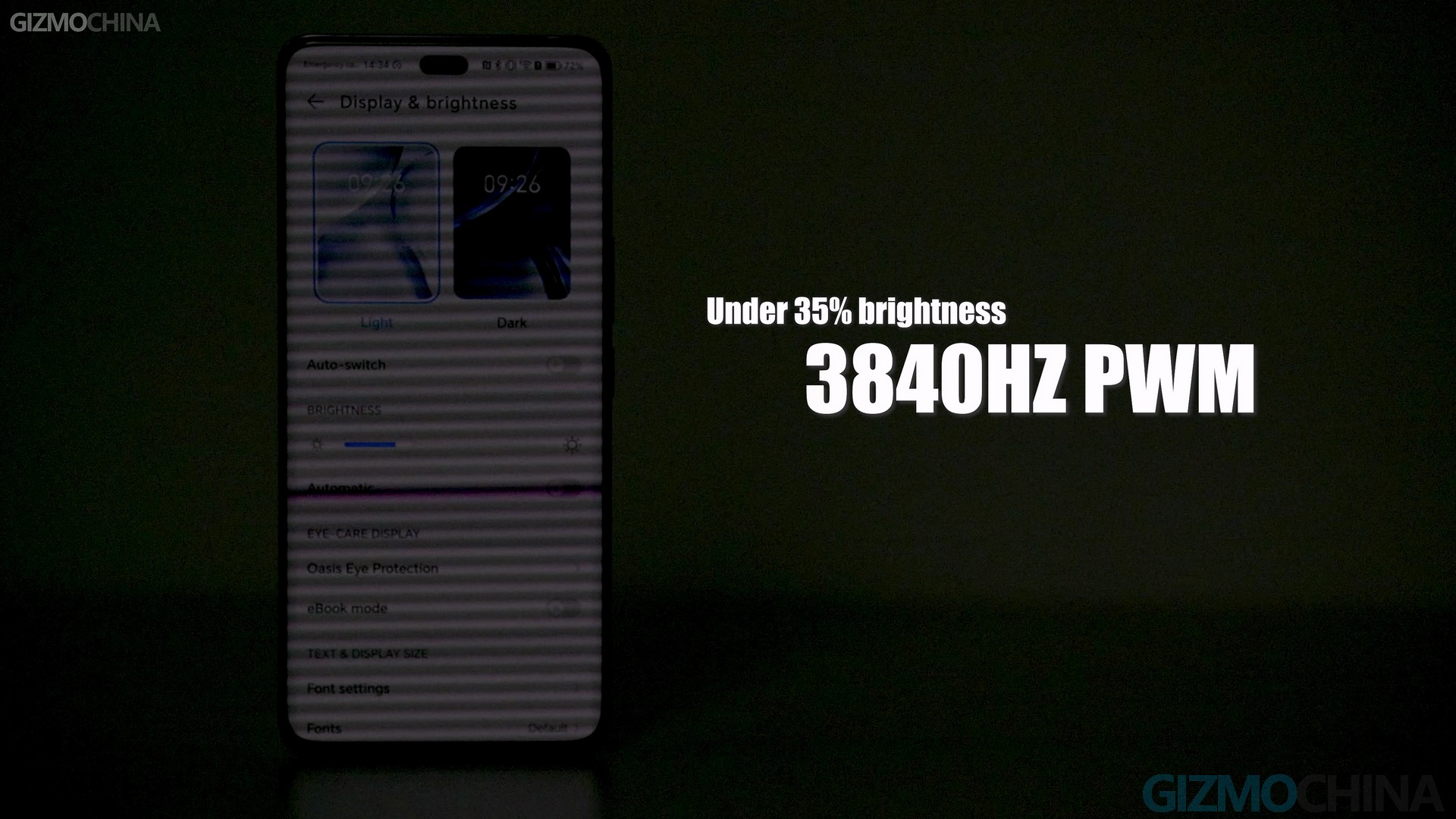
In terms of dimming strategy, when it’s raising up to 35% brightness, the phone applies the ultra-high Duty Ratio DC dimming, while below 35% it would switch to the 3840hz PWM dimming. And because this screen supports LTPS, so compared to LTPO, it has better flicker control. So for the display part, nothing really needs to concern. You would get one of the best phone screens on the market.
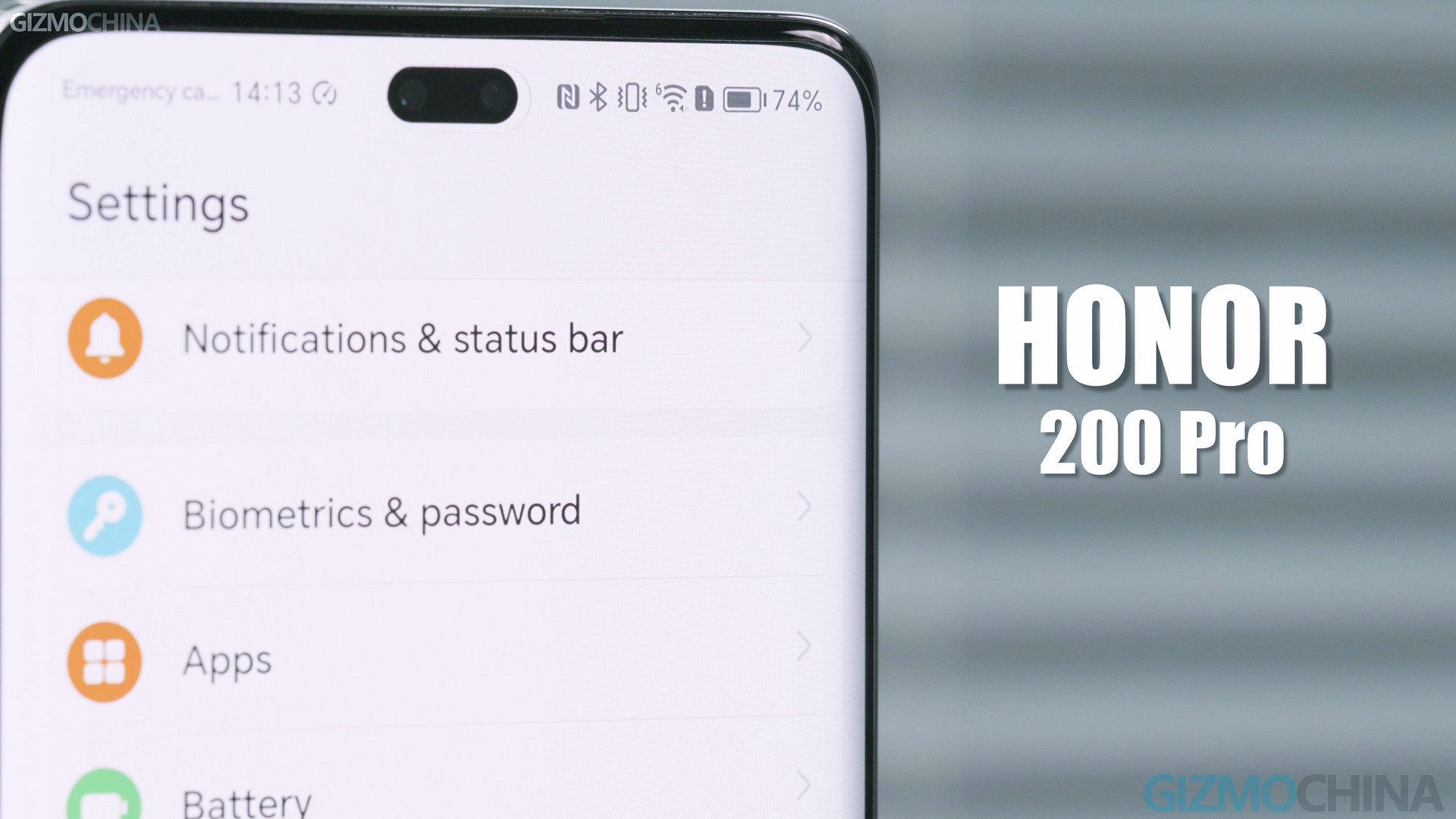
In addition to hardware-level low blue light, this display also supports HONOR Oasis Eye Protection. In short, it will colour temperature of the screen, based on the time, the use scenarios, and the ambient light. It is worth noting that, the front and rear camera would test the ambient light at the same time to make the best settings. So if you are sensitive to eye-comfort issues like flickers, the Honor 200 Pro is indeed a safe option.
Camera
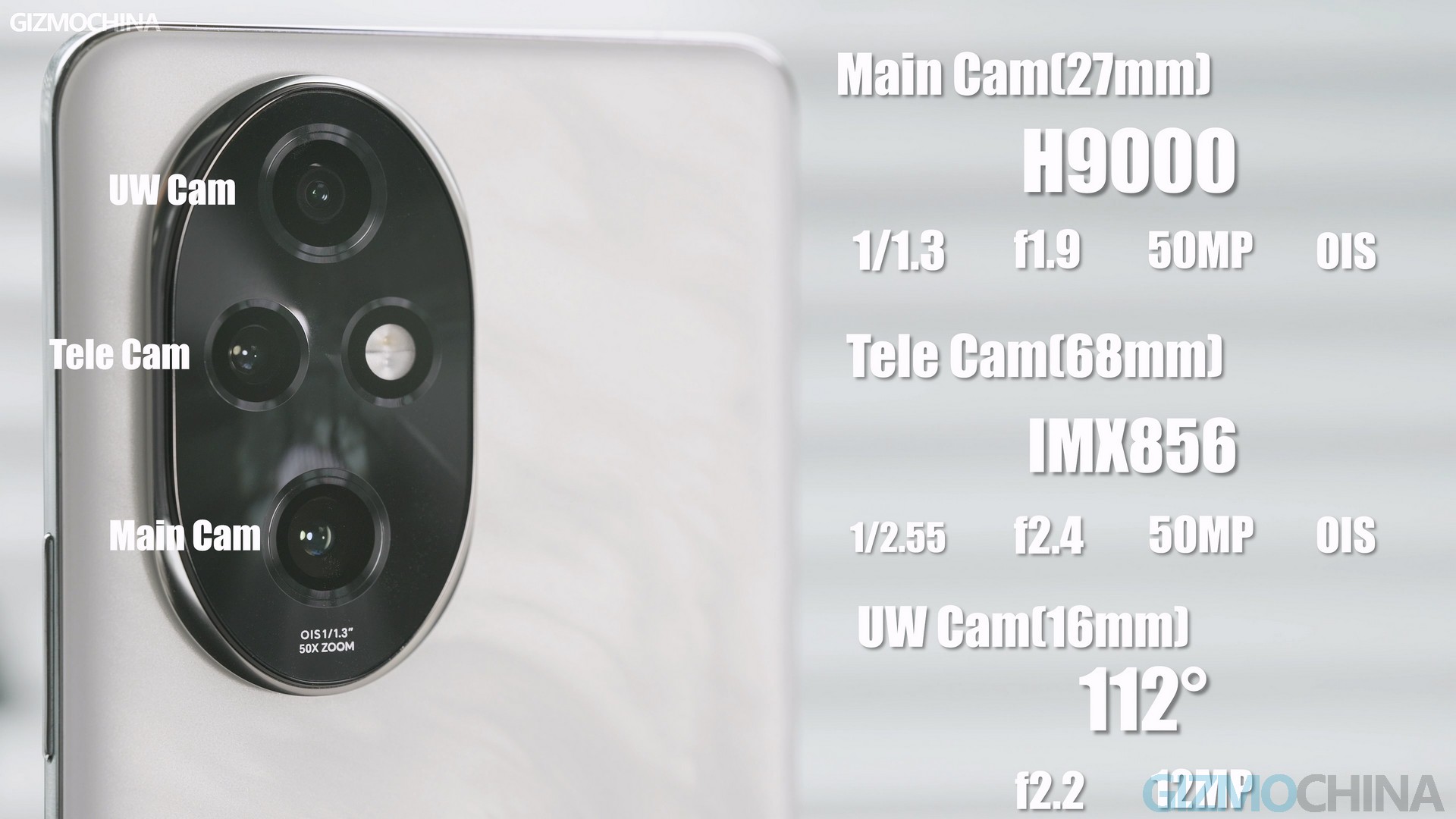
The Honor 200 Pro’s camera gets a big upgrade. With the Main Camera using the H9000 flagship sensor (1/1.3″ size, F/1.95, 50MP, OIS), the 200 Pro got a close shooting experience to their flagship model, Magic 6 Pro; And the 68mm telephoto camera is debuting the new Sony IMX856, which features an aperture of F2.4 and 50MP resolution with OIS supports. In terms of hardware, I’d call it one of the most powerful cameras among mid-range phones.
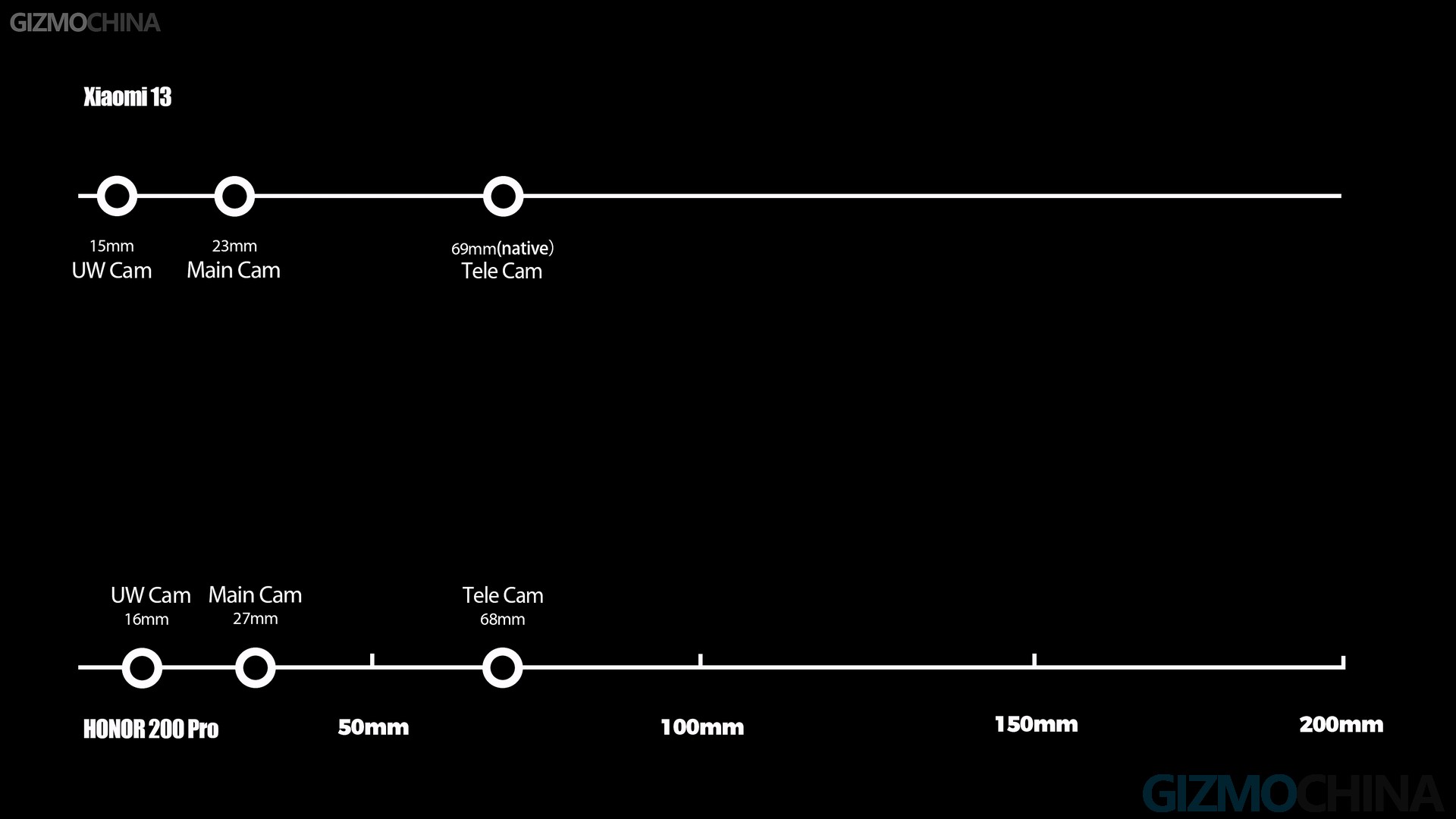
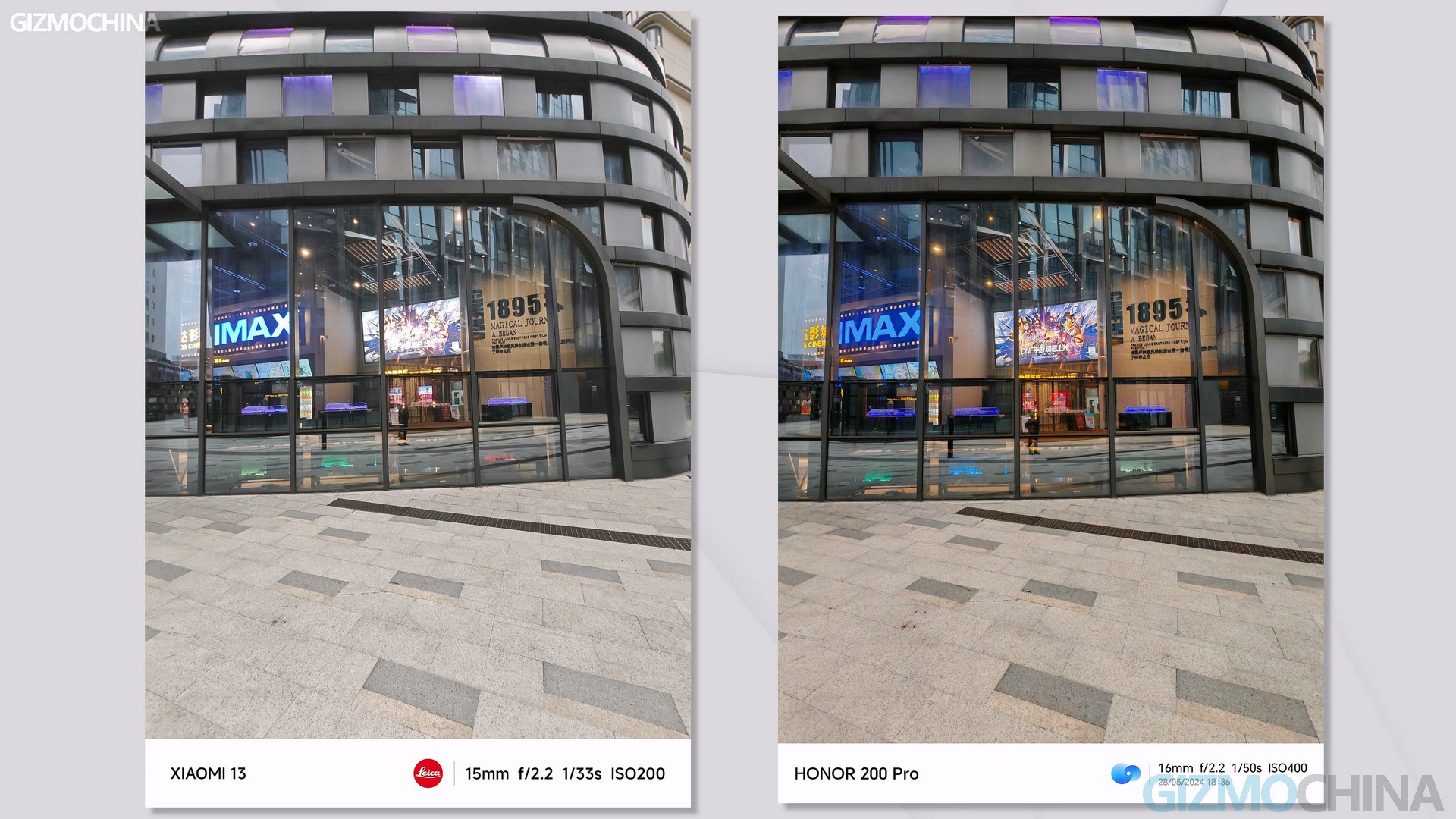
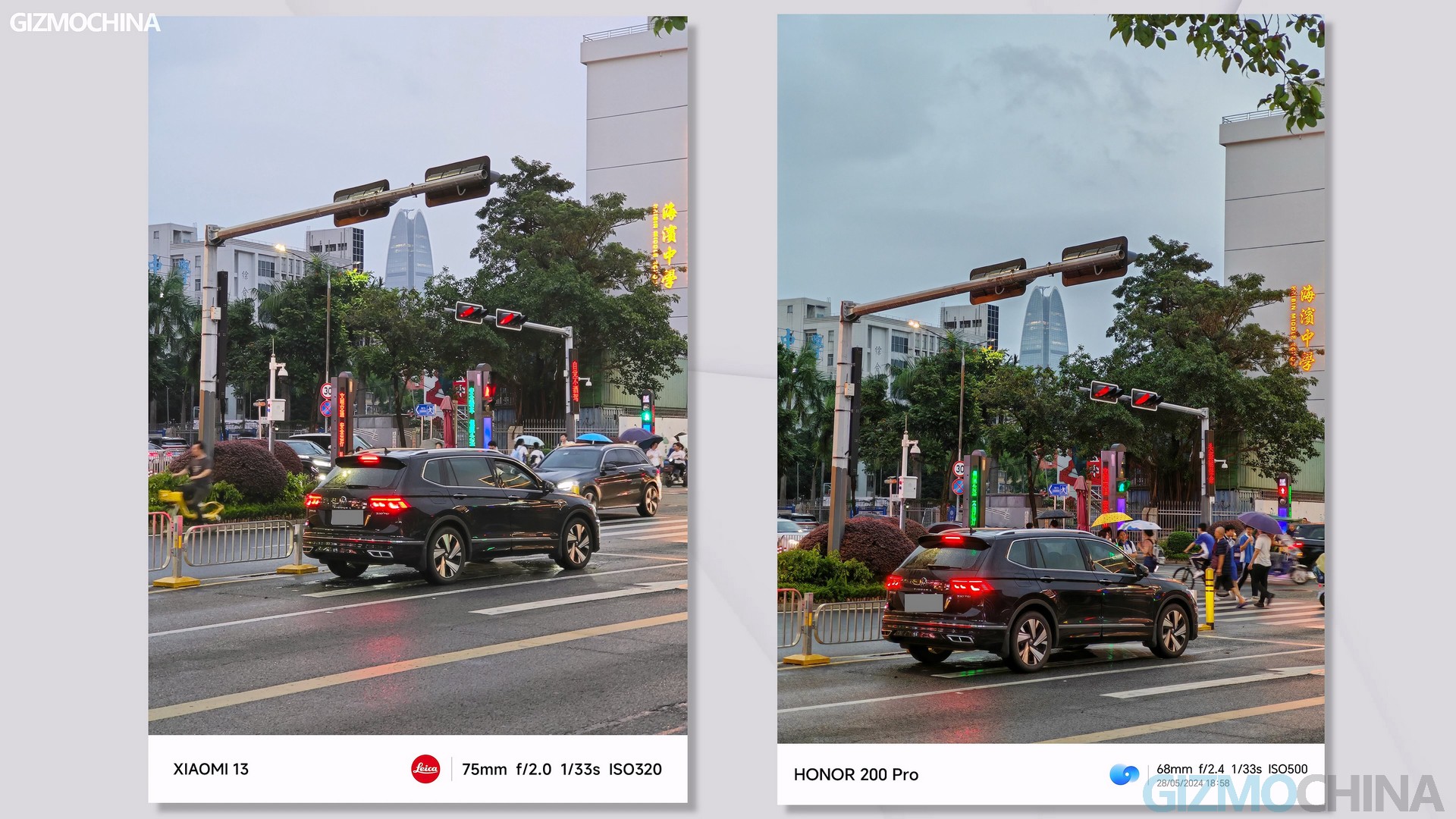
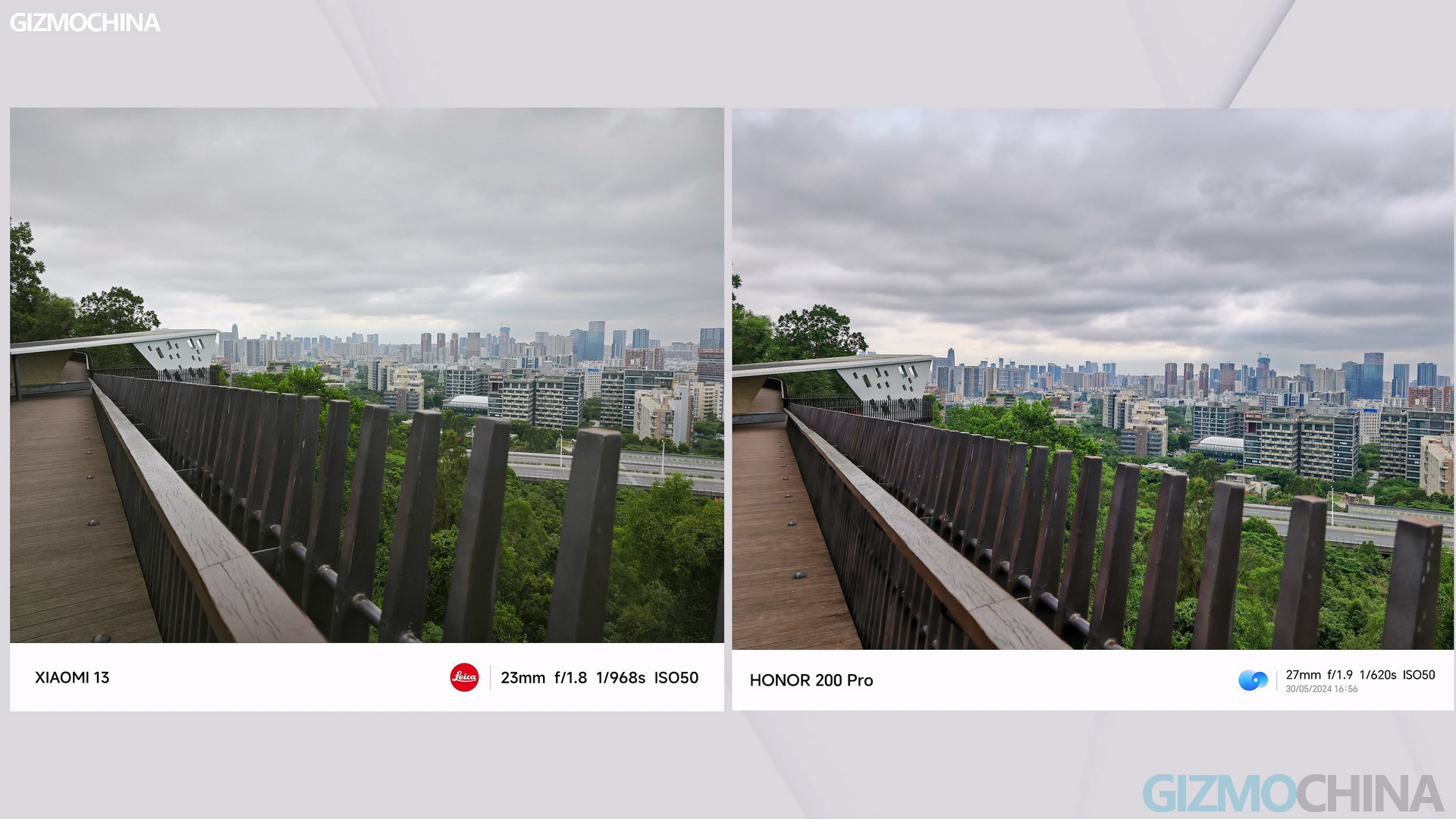
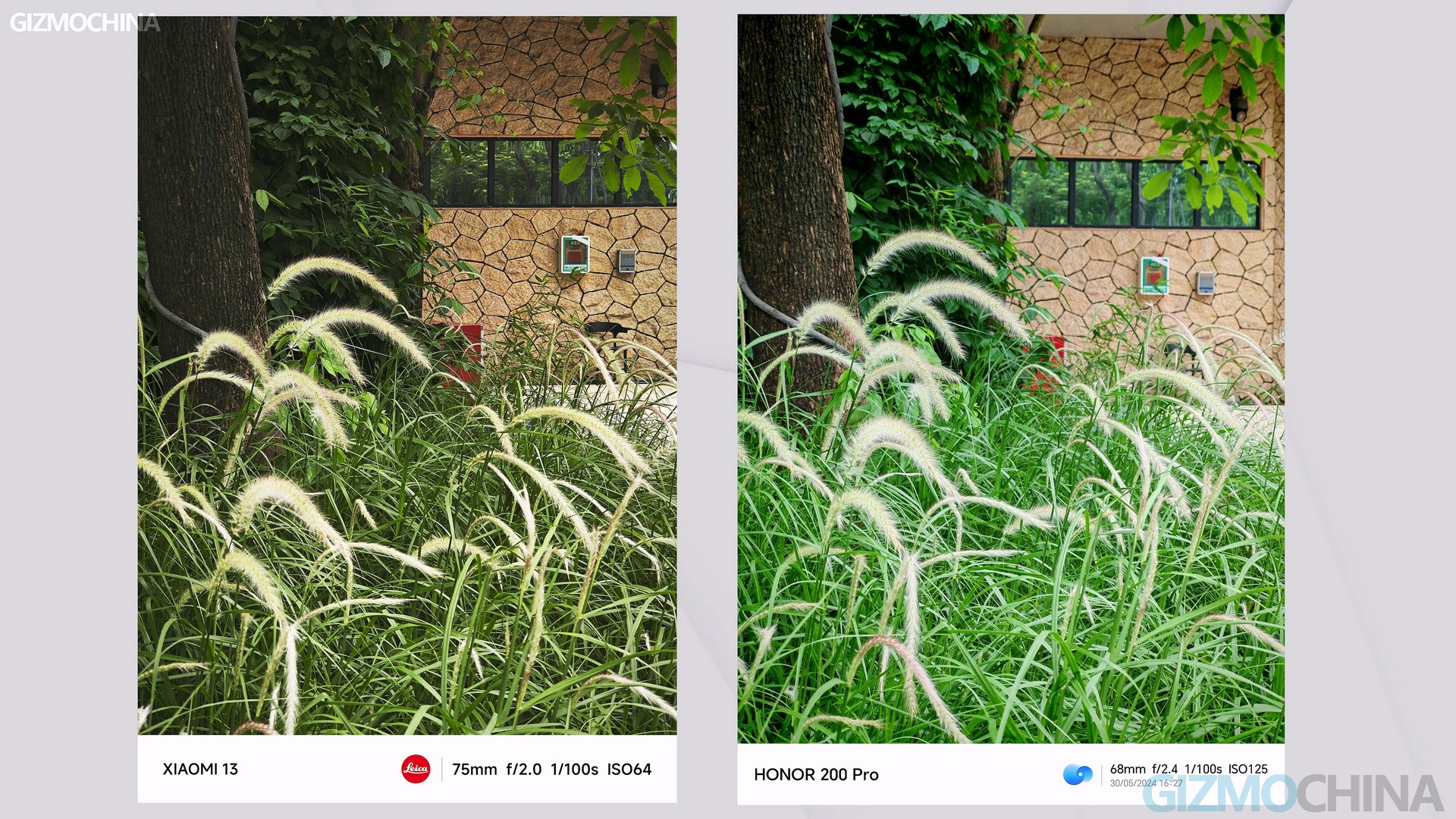
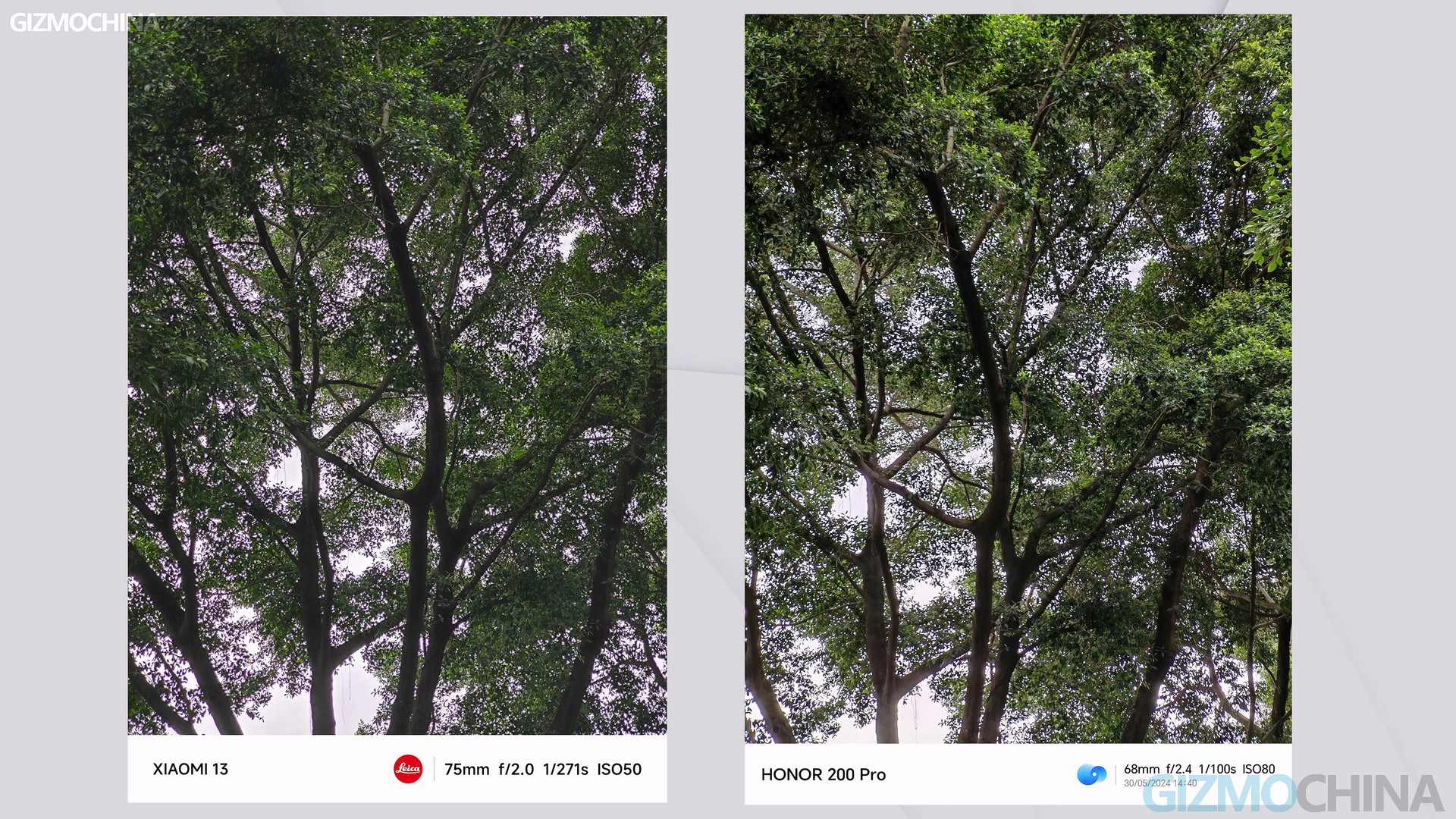
For comparison, I chose the Xiaomi 13, with the same main camera+ultrawide+telephoto combo, very close in focal length. At first I thought it was going to be a close race, but when the samples were put together for comparison, the gap is quite huge.
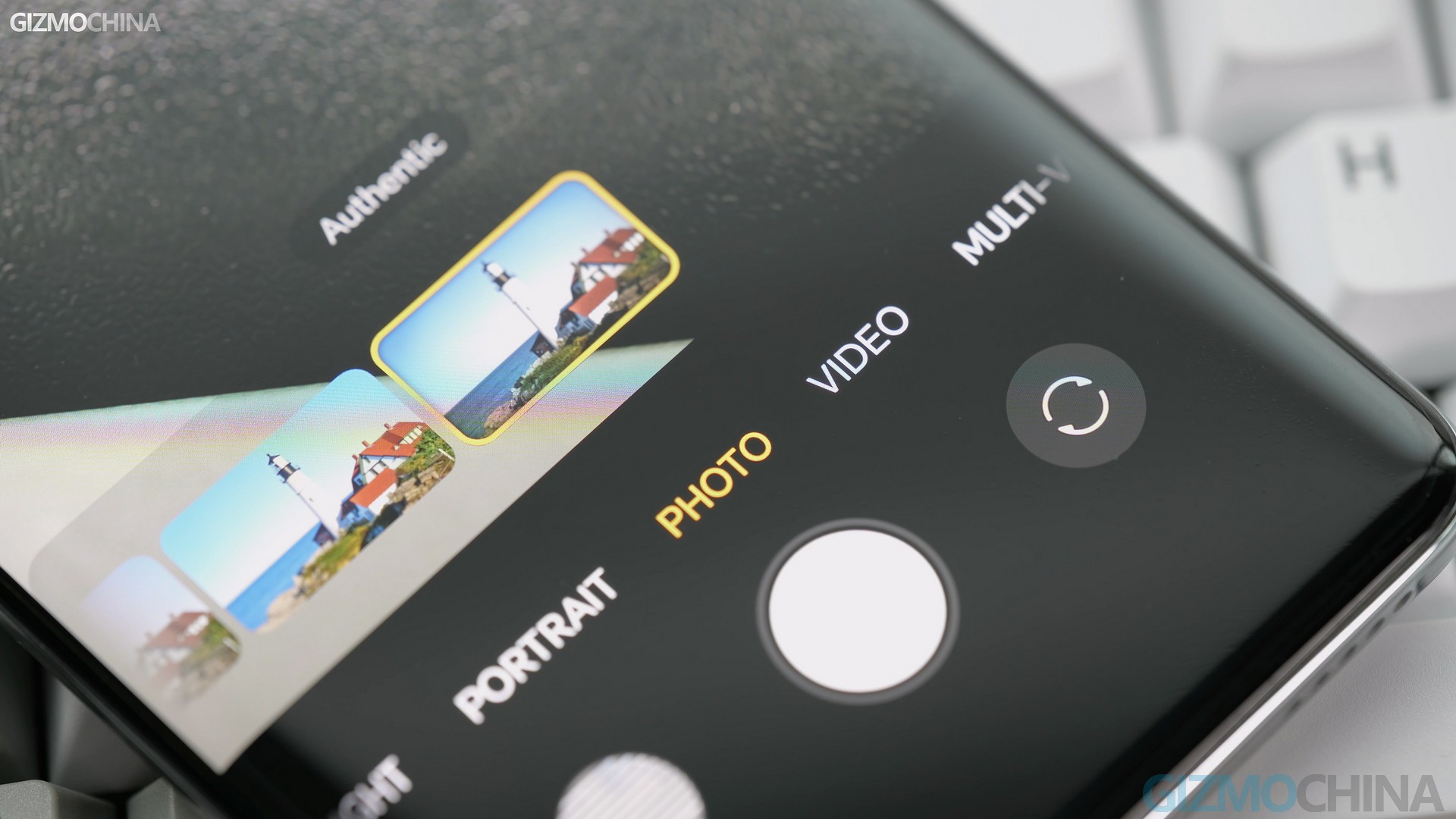
First of all I really like the Honor’s AUTHENTIC colour mode. As the samples shown, this colour mode helps me to get more textured colors easily. The HDR performance of these twos is completely different. in samples taken by ultrawide camera you can see that Honor has just the right control over the bright poster. The Honor 200 Pro’s sample just correctly presented the poster details, while the Xiaomi phone lost almost all.
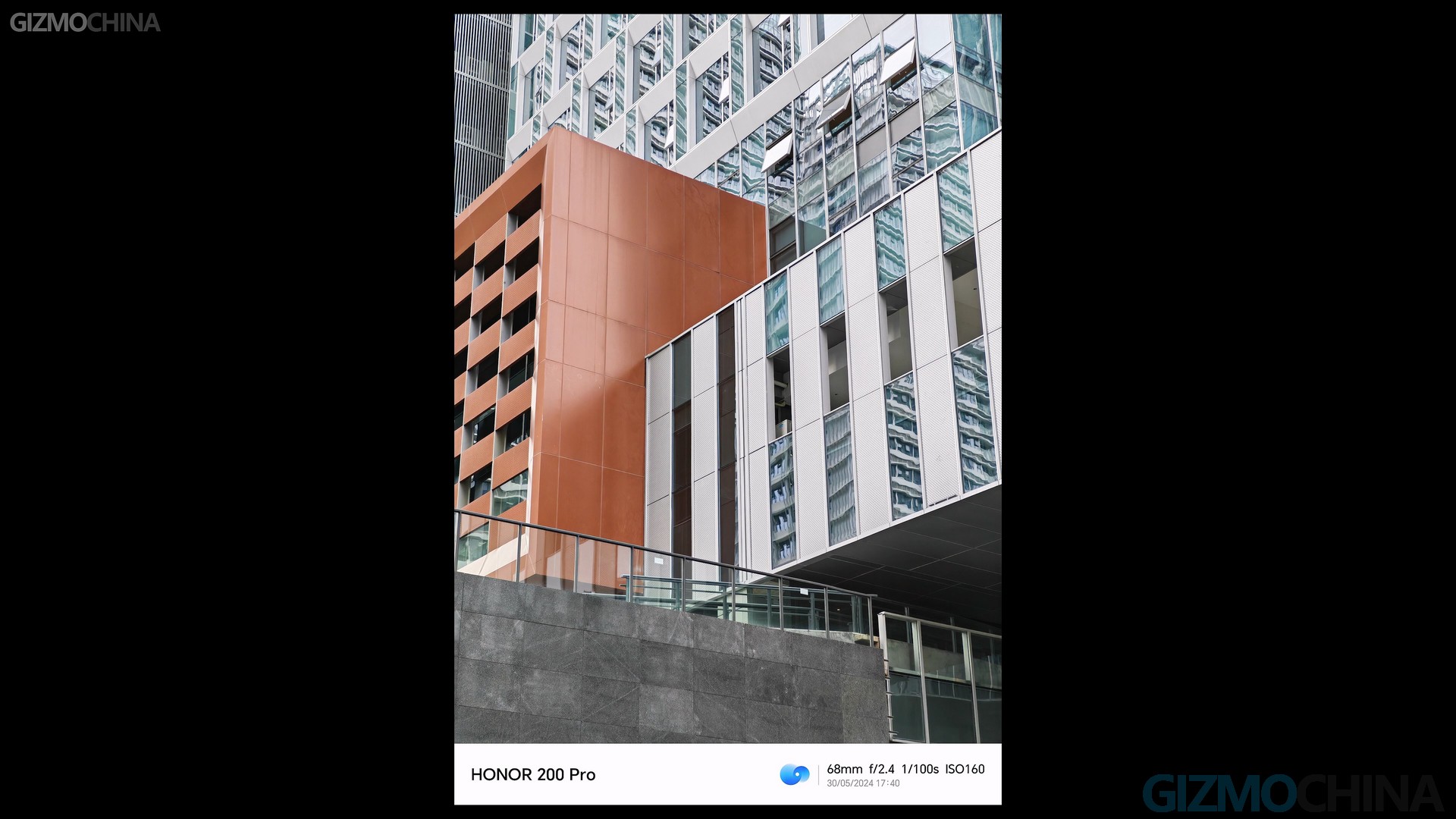
The same thing occurs in the telephoto camera. In addition to this artificial light, the better HDR effect also helps the Honor’s sample. The clouds in the 200 Pro’s photo clearly have better texture with being more layered and dynanic.
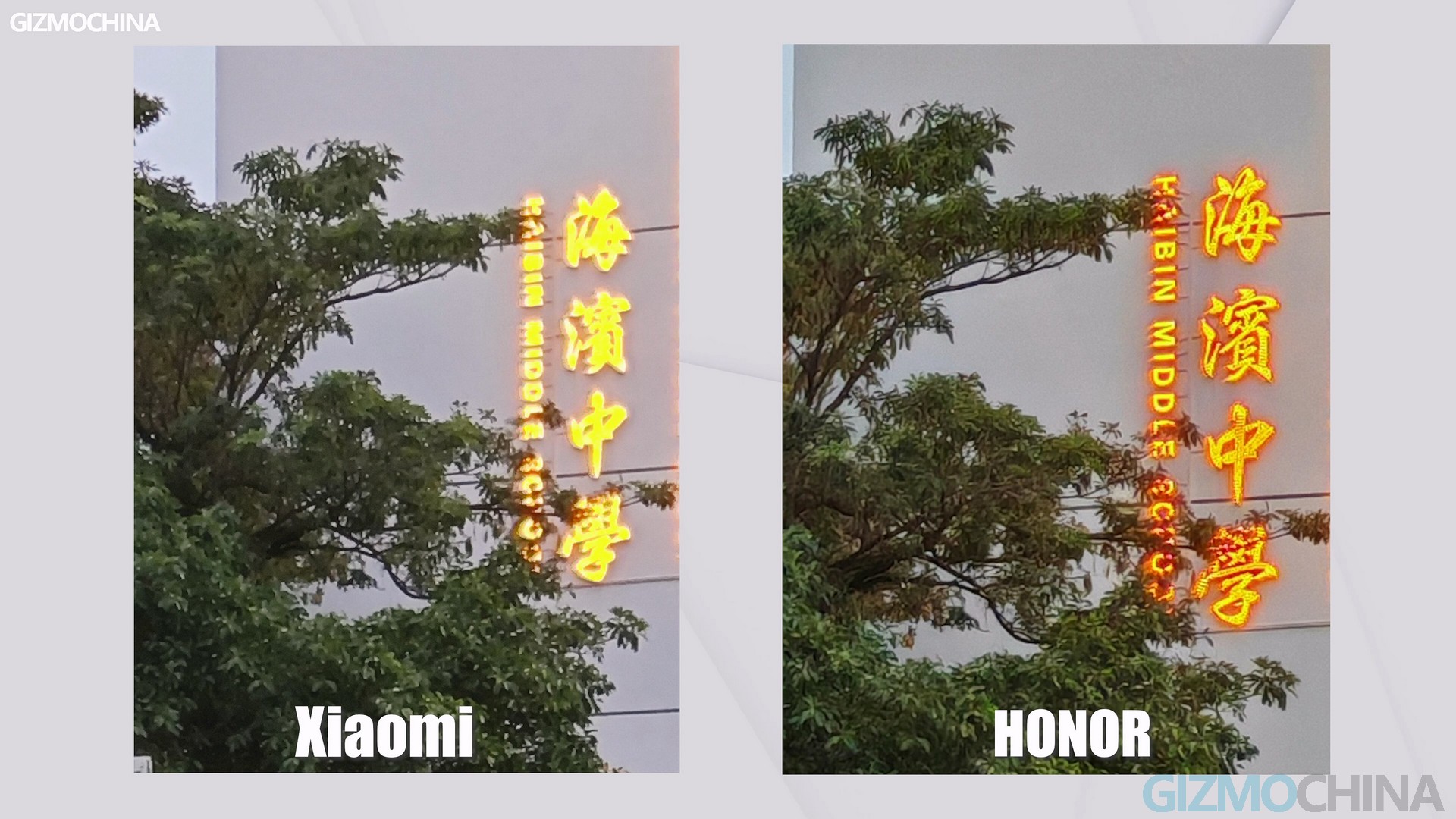
In terms of sharpness, the bigger and newer sensor also gives the 200 Pro a huge advantage. More samples were shown in the review video. Please take a closer look there if you are interested.
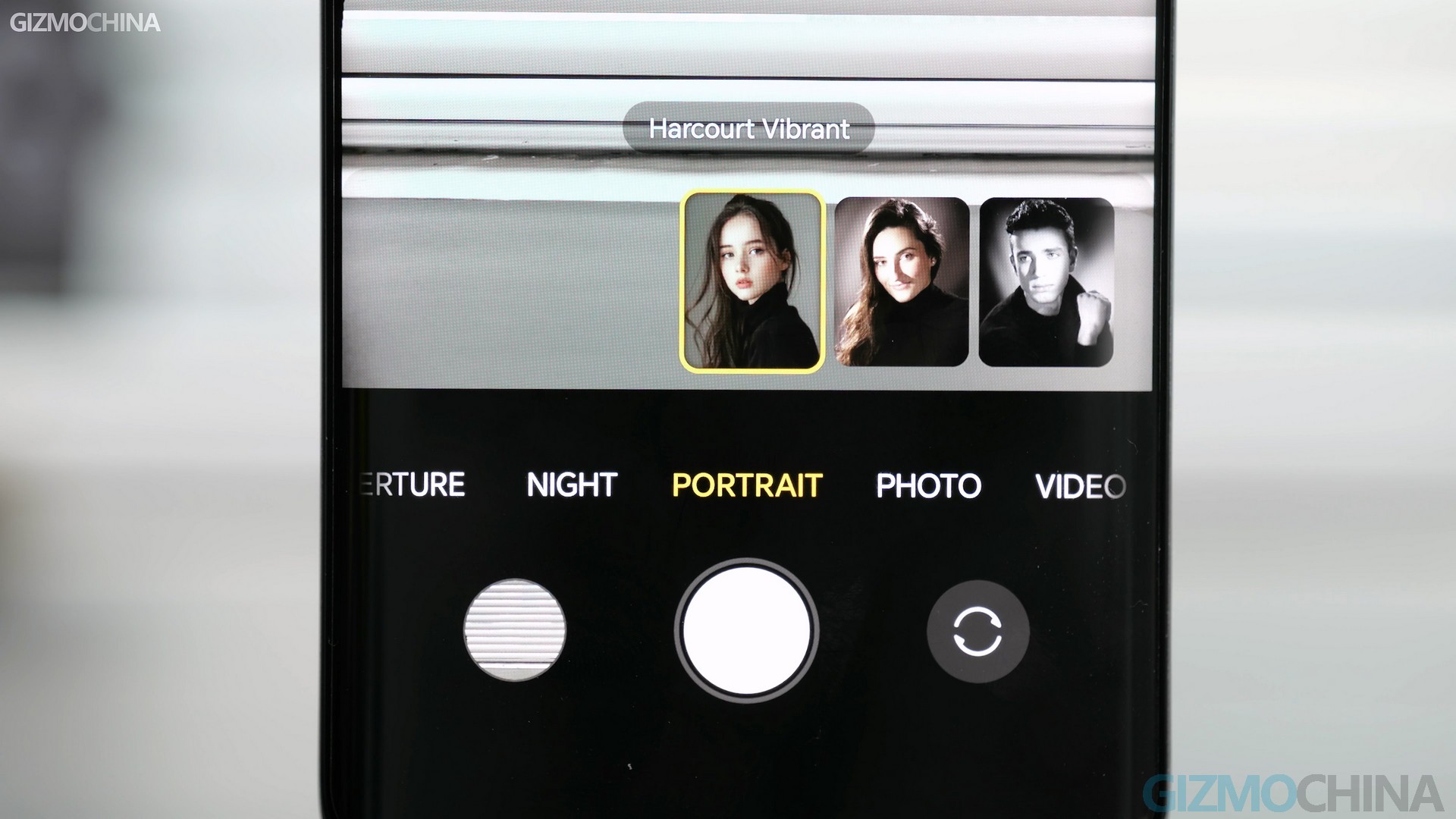
For portraits, the Honor 200 Pro has 3 different portrait modes, all from the collabs with the famous Studio Harcourt Paris, an art studio that specializes in portrait photography.
I personally prefer the Harcourt Classic, which offers a black&white color similar to the High Contrast of the Wet plate processing, allowing me to ignore the colors and focus on the lighting and the model. It’s really a fun way to shoot portraits. And now, it’s for everyone, just choosing one of the three modes and clicking the shutter. You also can make your portrait photography “professoinal” without any post-editing.
Battery & Charging
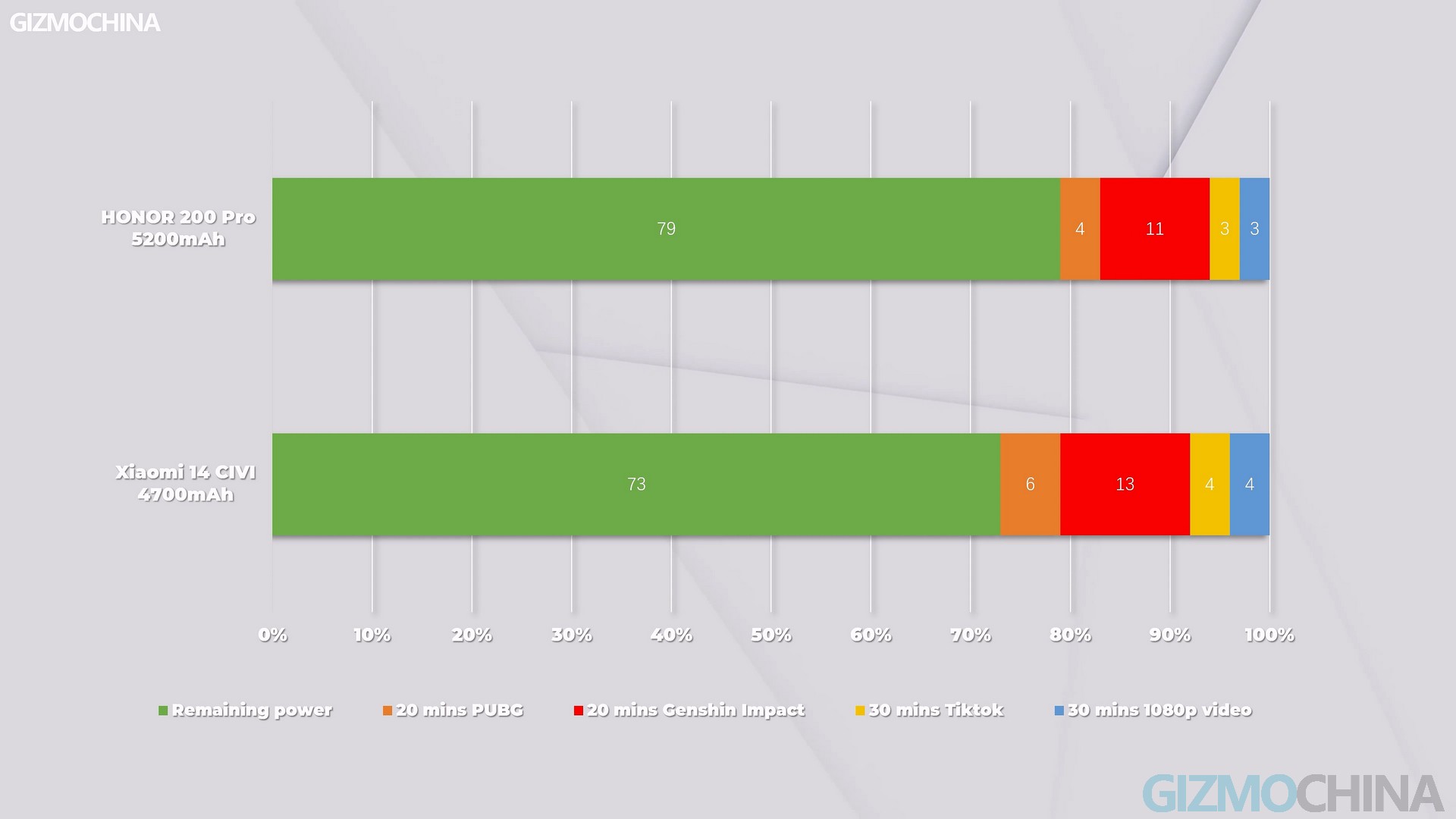
As mentioned, the Honor 200 Pro has a 5200mAh Silicon-Carbon battery, for everyday use it is a huge improvement over other lightweight phones. The 200 Pro supports up to 100W wired charging and 66W wireless charging. In our 0-100% charging test, it takes about 48 minutes to complete the charging task.
In addition to Honor’s charging Protocol, it also supports the High-Power PPS protocol, which has a maximum input power of around 50W as we tested, meaning that a random high power charger will be able to achieve decent charging speeds for this phone. But the charging port is not without drawbacks. As a transfer port, it only supports USB2.0, which makes it not yet perfect.
Verdict
The Honor 200 Pro is a very unique phone. It does not compromiose much with the thin&lightweight solution. Instead, it brings together a few features that are missing from mid-range phones, such as an excellent telephoto lens, high-powered wireless charging, a large battery and a balanced decent design. The Honor 200 Pro is so well-balanced that it would be hard to find a competitor at its price that matches it on all fronts. We are happy to see it being launched to international market. Predictably, the phone could be a milestone for Honor to make a breakthrough in the global market.
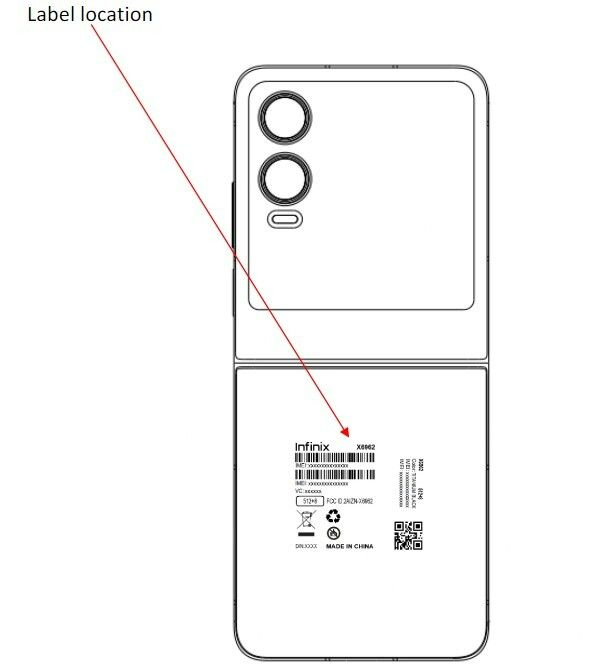
Back in April of this year, it was reported that Infinix was working on a flip phone called the Infinix Zero Flip. At that time, the IMEI database identified the device with the model number X6962. It appears that the device is going to launch soon, as it has received approval from the FCC authority. The certification has revealed the device’s key specifications and design.
Infinix Zero Flip FCC certified
Infinix Zero Flip’s FC certification reveals design
The above image, which appeared in the FCC’s database, showcases the design of the Zero Flip. It reveals that it will have a large square-shaped cover display and a vertically aligned dual-camera setup, followed by a pill-like LED flash. The overall design of the Zero Flip looks quite similar to the rumored Phantom V2 Flip from the sibling brand, Tecno. While the two devices have an almost identical design, it is unclear whether they will pack similar internals.
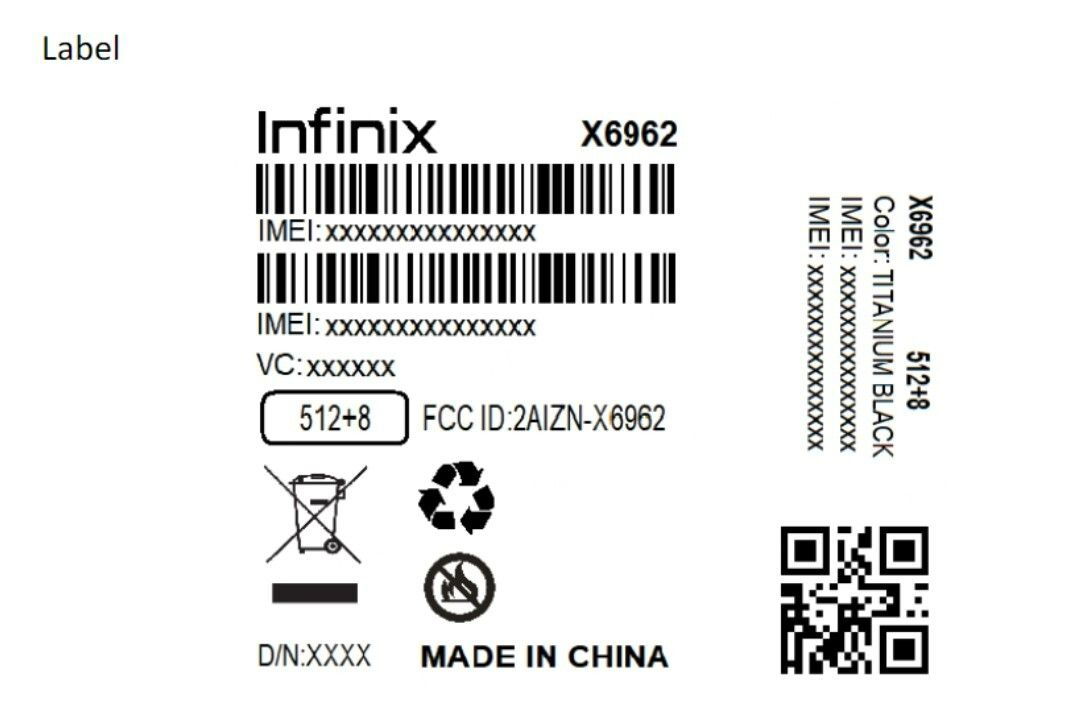
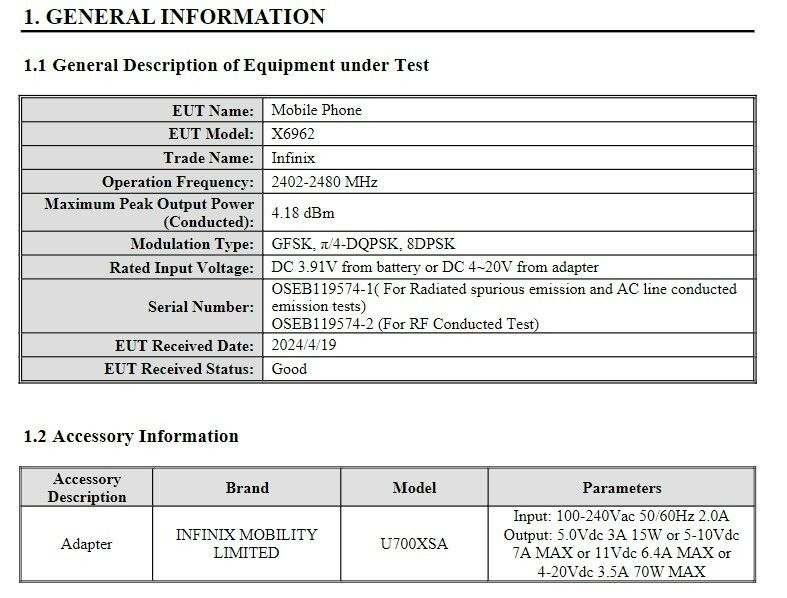
The FCC certification has revealed that the Zero Flip will ship with 8 GB of RAM and 512 GB of storage. While there is no information about its battery, it appears that the device will ship with a 70W fast charger.
The Zero Flip will support multiple 4G and 5G bands, as shown in one of the images above. It also reveals that the device will be available in a Titanium Black shade. Apart from the FCC, Europe’s EEC platform has also approved the device.
With key certifications under its belt, it appears that the Zero Flip may go official by the end of this month or in July. At present, there is no official confirmation from Infinix of the existence of this device.
Update: Motorola has confirmed that it will be launching the Razr 50 series and the S50 Neo smartphones on June 25 in China. The below-mentioned XT2427-4 variant heading to China will have the Motorola S50 Neo moniker. In other markets, it will be called the Moto G85.
Original story continues…
The upcoming Moto G85 has recently received several certifications. Notably, the Hi-Res Audio certification disclosed four model numbers: XT2427-1, XT2427-2, XT2427-3, and XT2427-4, which correspond to regional variants of the G85. Now, the TENAA (China) and BIS (India) certification platforms have approved the Chinese (XT2427-4) and Indian (XT2427-3) variants of the Moto G85, indicating that it will not take too long for it go official. While the BIS listing did not reveal significant details, the TENAA listing has uncovered key specifications for the device.
Moto G85 specifications (rumored)
Motorola S50 Neo
As per the TENAA listing, the Moto G85 will have a 6.6-inch OLED screen that offers an FHD+ resolution. The leaked renders of the device have revealed that it will have a curved-edge screen. The images have also revealed that it will be available in at least three shades, such as black, green, and blue.
TENAA states that a 2.3GHz octa-core processor powers the device. However, the previously seen Geekbench listing revealed that it may ship with the upcoming Snapdragon 4 Gen 3 chipset. In China, it will be offered in multiple RAM options, including 8 GB, 12 GB, 16 GB, and 18 GB, alongside storage variants of 128 GB, 256 GB, 512 GB, and 1 TB. However, all these variants may not be available at the launch.
The TENAA certification suggests that the Moto G85 could be equipped with a 5,000mAh battery. However, there is no information about its rapid charging capabilities. The camera setup includes a 32-megapixel front camera and a dual rear camera system with a 50-megapixel primary sensor and an 8-megapixel secondary sensor. It will also feature an under-display fingerprint sensor.
The Moto G85’s dimensions are 161.9 x 73 x 7.5mm, and it will weigh 171 grams. However, images of the phone are not yet available in the TENAA listing.
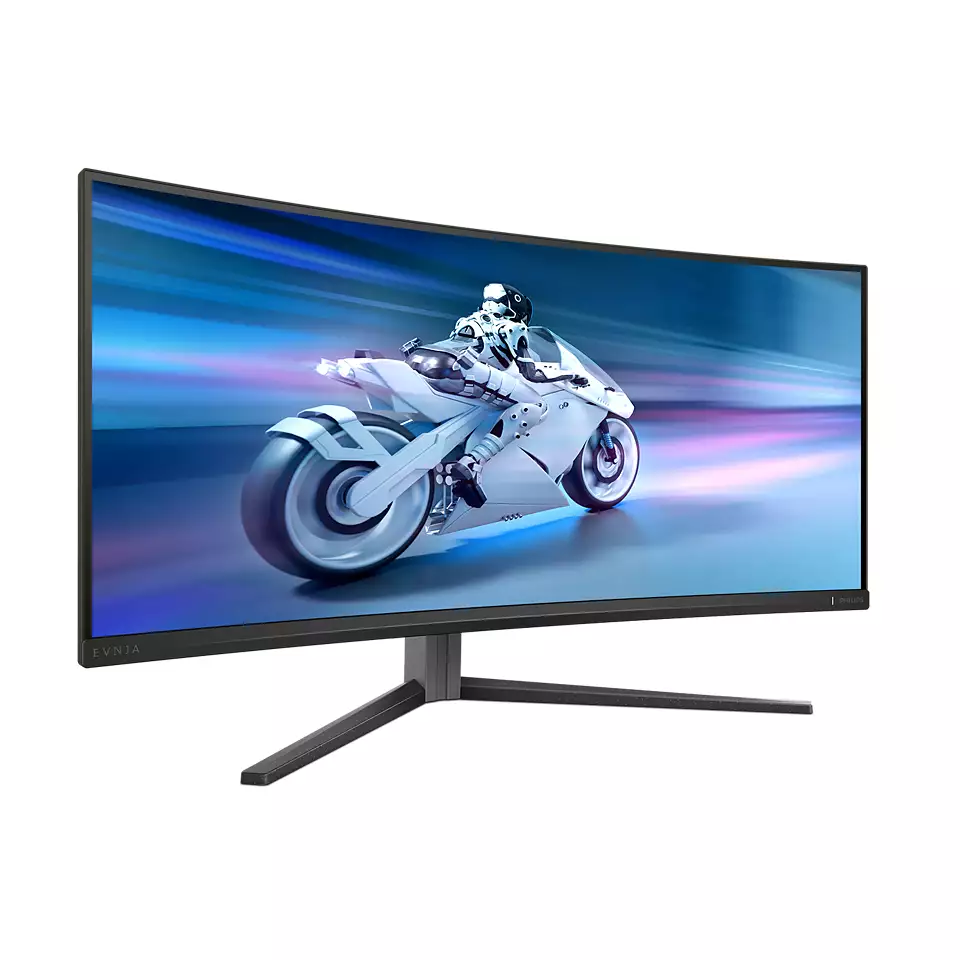
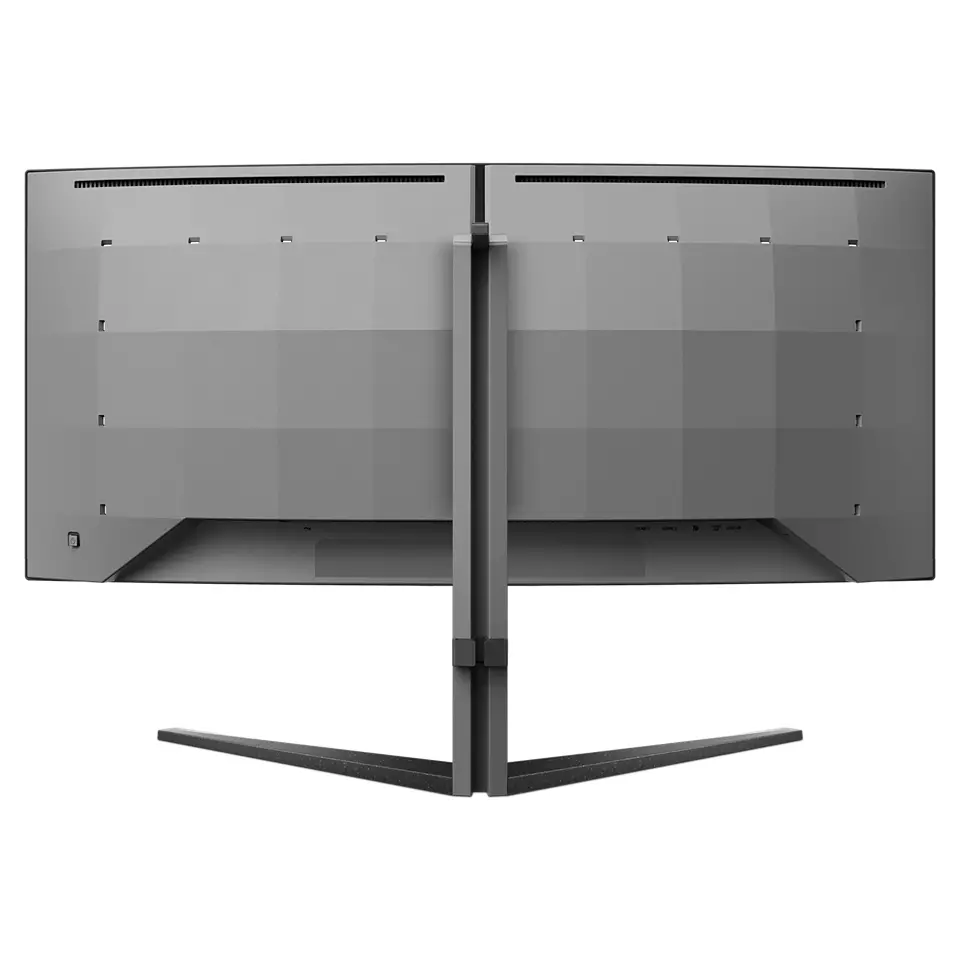
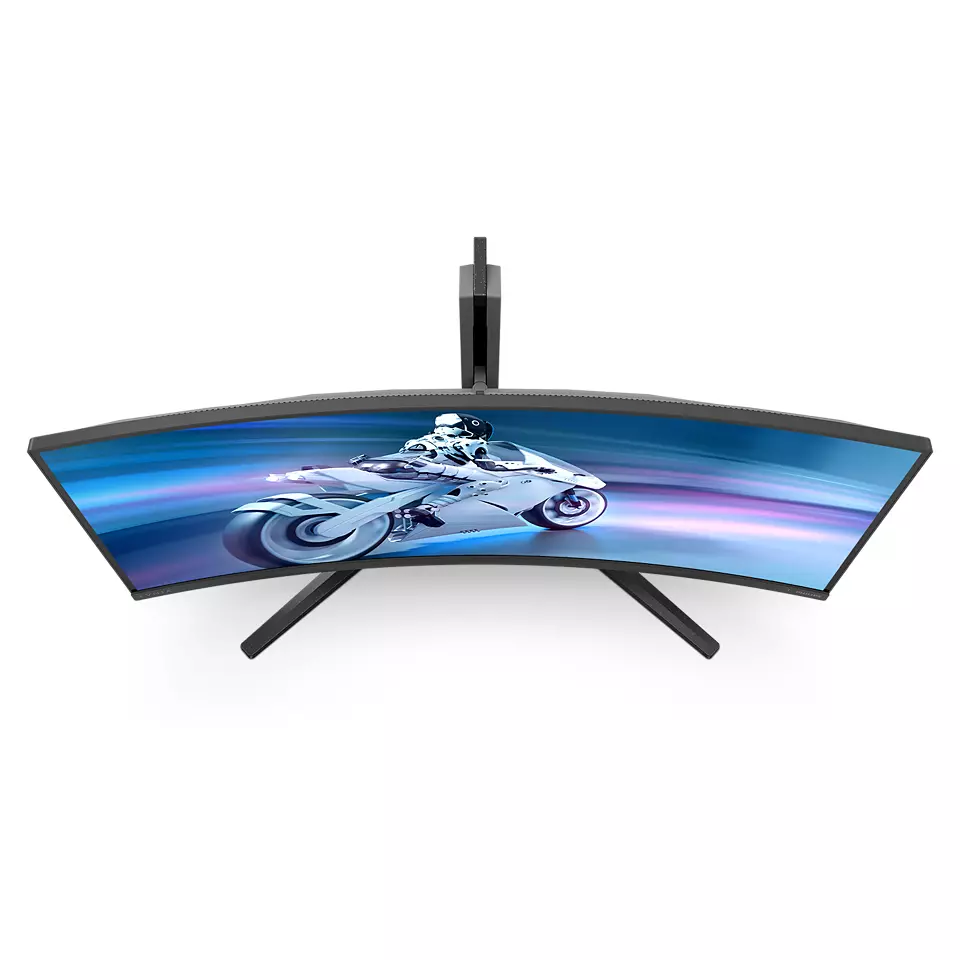
Philips has launched the Evnia 34M2C6500 gaming monitor on June 12, 2024. This new model features a 34-inch curved screen with WQHD resolution (3440 x 1440) and utilizes a QD OLED panel for sharp, vivid visuals.
The screen’s 1800R curvature aims to pull gamers deeper into their gaming sessions by providing a more immersive viewing experience. The Smart Crosshair feature is a key highlight, adjusting the crosshair color automatically to stand out against various game backgrounds, helping players aim more accurately.
This monitor comes with DisplayHDR TrueBlack 400, offering high contrast and brightness for clearer and more detailed images. It also supports a 175 Hz refresh rate, allowing for smooth and responsive gameplay.
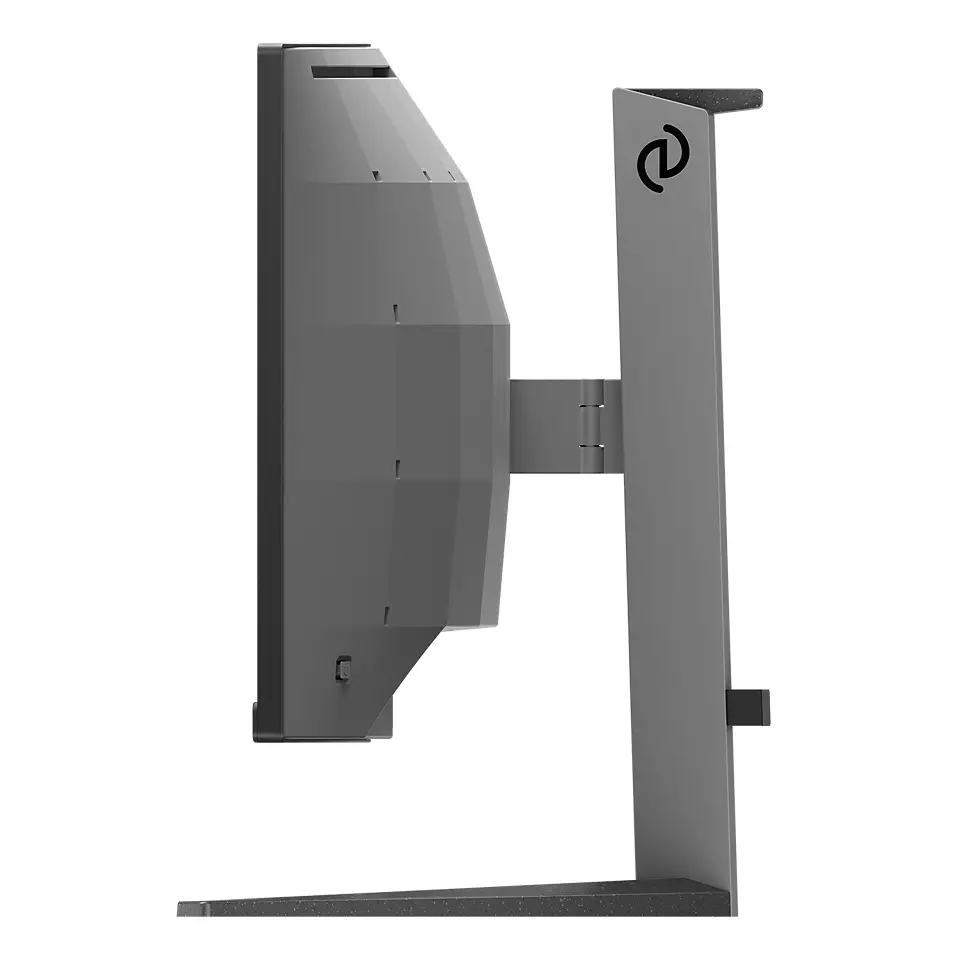
Philips has included its Ambiglow lighting technology, which enhances the ambiance by syncing the backlight with the on-screen action. For comfort, the monitor features an adjustable stand, making it easy for users to set the ideal viewing angle. The monitor has a variety of connectivity options including HDMI, DisplayPort, and USB ports.
Pricing and availability
Philips has set the price of the Evnia 34M2C6500 at £699.99 in the UK and €869 in the Eurozone, making it an attractive option for gamers seeking high-end features without breaking the bank.
In related news, Philips has recently debuted another monitor in the Chinese market called the Philips 24E1N1520. It has a 24″ IPS LCD panel with a 2560 x 1440 resolution and 8-bit color depth. That said, the monitor is geared more toward productivity rather than gaming as it only has a 100Hz refresh rate, making it quite inexpensive with a 699 yuan ($96) price tag.
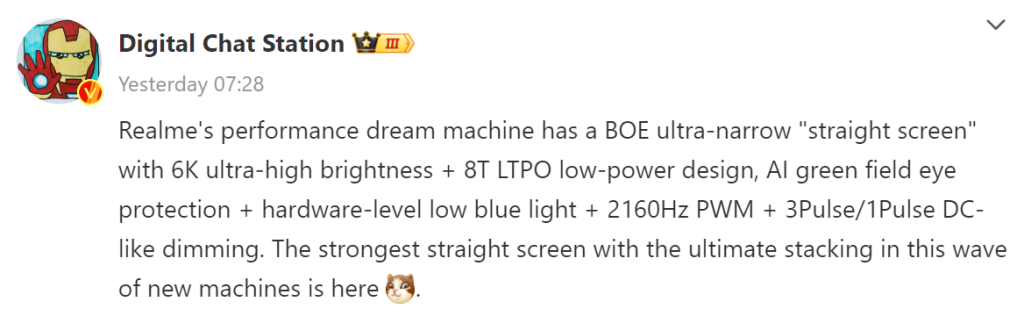
Realme is expected to unveil the Realme 13 Pro series and the Realme GT 6 soon. Reliable leaker Digital Chat Station has released a few Weibo posts to reveal key details about both phones. Here is a look at the leaks that reveal key details about the GT 6 and Realme 13 Pro+.
Realme 13 Pro+
The above Weibo post by DCS suggests that the Realme 13 Pro series will feature a new Sony IMX882 periscope telephoto camera with 3x optical zoom, replacing the OV64B lens, which was available on the Realme 12 Pro+. This indicates that the Realme 13 Pro+ will arrive with the IMX882 periscope zoom camera. This marks the debut of this camera in a mid-range phone, a feature previously exclusive to flagships.
Other reports have revealed that the Realme 13 Pro and 13 Pro+ will offer configurations of 8 GB RAM + 128 GB storage, 8 GB RAM + 256 GB storage, 12 GB RAM + 256 GB storage, and 12 GB RAM + 512 GB storage. The 13 Pro will be available in Monet Gold, Monet Purple, and Sky Green, while the Pro+ will come in Monet Gold and Emerald Green. Additional details of the series are still under wraps.
Realme GT 6 (Chinese variant)
According to the tipster, the upcoming Realme GT 6 will feature an exclusive display from BOE with extremely narrow bezels. This display will boast a remarkable 6K ultra-high brightness and an 8T LTPO low-power design. It will also include AI-based eye protection, hardware-level low blue light, 2160Hz PWM, and 3Pulse/1Pulse-like DC dimming.
He added that the Realme GT 6’s display will be the most premium in terms of display features among the upcoming new smartphones, which seemingly includes the OnePlus Ace 3 Pro, iQOO Neo 9S Pro+, and Redmi K70 Ultra.
Some reports suggest that the latter could go by the name Realme GT 7. However, recent Weibo posts from Realme China executives, including Vice President Xu Qi Chase and Marketing Director Chuchu Jessie, have confirmed that the device will go by the name Realme GT 6. As far as other specs are concerned, the GT 6 is expected to feature the Snapdragon 8 Gen 3, a 6,000mAh battery with 100W charging, 24 GB of RAM, 1 TB of storage, a 50-megapixel triple camera unit, and a metal middle frame.
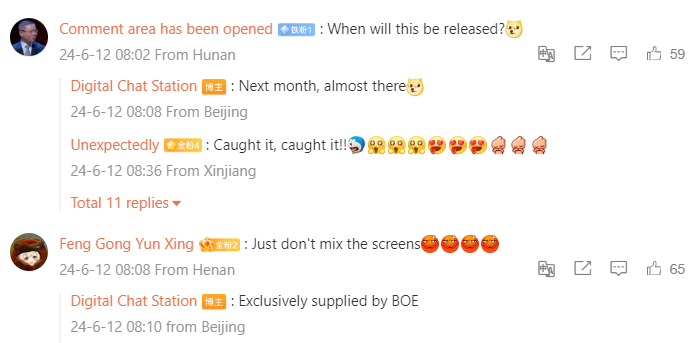
When a Weibo user inquired about the GT 6’s release date, DCS asserted that it would arrive in China next month (July), promising a swift launch. This GT 6 meant for the Chinese market differs from the Snapdragon 8s Gen 3-powered GT 6, debuting on June 20 for the global market. The Realme 13 Pro series may also debut in the same month in China.
Several smartphone brands in China are gearing up to launch new flagship phones in the final months of this year. When it comes to iQOO, the brand is expected to unveil the iQOO 13 in November. Unlike previous years, the company may not launch a Pro model, the iQOO 13 Pro, alongside the standard model. The key specifications of the iQOO 13 that have emerged on Weibo reveal that it will be a significant upgrade over the iQOO 12.
To recall, the iQOO 12 featured a 6.78-inch AMOLED panel that offered a 1.5K resolution, a 144Hz refresh rate, and an optical in-display fingerprint sensor. The device came with the Snapdragon 8 Gen 3 chipset, 16 GB of RAM, 1 TB of storage, a 5,000mAh battery with 120W fast charging, and an IP64-rated chassis.
iQOO 13 specifications (rumored)
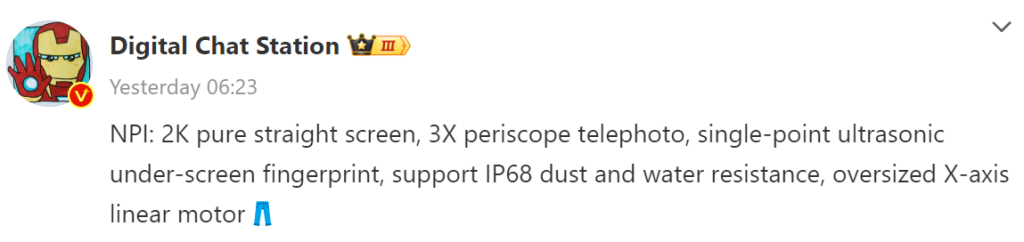
According to a new Weibo post by tipster Digital Chat Station, the iQOO 13 will have a flat OLED panel that offers a 2K resolution. It will come equipped with a single-point ultrasonic in-screen fingerprint sensor.
The iQOO 13 will have an “oversized” x-axis linear motor for an enhanced gaming experience. Although the leaker did not mention it, it is very likely to feature the Snapdragon 8 Gen 4 chipset. It will have an improved IP68-rated chassis.
The iQOO 12 featured a 50-megapixel (main) + 50-megapixel (ultrawide) + 64-megapixel (3x periscope) triple camera unit. DCS reveals that the iQOO 13 will also have a 3x periscope zoom camera. However, it is uncertain whether it will inherit the same periscope telephoto camera. Also, there is no information about the other cameras on the device.
The rumor mill is yet to leak details about the iQOO 13’s battery and charging speed. However, it is known that the device’s topmost model will have 16 GB of RAM and 1 TB of storage.
Last month, Oppo unveiled the Reno 12 and Reno 12 in China. Recent reports have revealed that the brand is gearing up to announce the Reno 12 series for the global market very soon. Now, the company has officially revealed that the Reno 12 and 12 Pro will debut globally on June 18.
Oppo Reno 12, Reno 12 Pro launch date
The Malaysian branch of Oppo has confirmed the announcement of the Reno 12 series for June 27 in Malaysia. Hence, it appears that the upcoming June 18 launch event is mainly for the European market. The official landing page of the Reno 12 series focuses on features such as design, portrait photography, AI LinkBoost, Beacon Link, and a long battery life of 5,000mAh.
Oppo Reno 12, Reno 12 Pro specifications (rumored)
Recent reports have already leaked a lot of details about the Reno 12 and 12 Pro. Both phones will have a 6.7-inch AMOLED FHD+ 120Hz display with support for up to 1200 nits of brightness. The Pro variant will feature a quad-curved screen, while the standard model will feature a dual-edge screen. Both phones will run on ColorOS 14.1-based Android 14 and feature an in-screen fingerprint scanner.
The Dimensity 7300-Energy chipset will power the global versions of the Reno 12 and 12 Pro, unlike the Chinese models with Dimensity 8250 and Dimensity 9200+. Both phones will come with LPDDR4x RAM, UFS 3.1 storage, 12 GB of virtual RAM, and a 5,000mAh battery with 80W charging. We expect the Pro model to be available in a 12GB+512GB configuration, while the Reno 12 will come in a 12GB+256GB configuration.
The Reno 12 and 12 Pro will have a 32-megapixel and a 50-megapixel front camera, respectively. Both phones will have a 50-megapixel Sony LYT-600 main camera with OIS support on the back. The Pro variant will feature an 8-megapixel ultrawide lens and a 50-megapixel telephoto camera with 2x optical zoom, while the Reno 12 will have 8-megapixel and 2-megapixel auxiliary cameras. Both phones will also have other features, such as AI-driven photography features, 5G, Wi-Fi 6, Bluetooth 5.4, and an IR blaster.
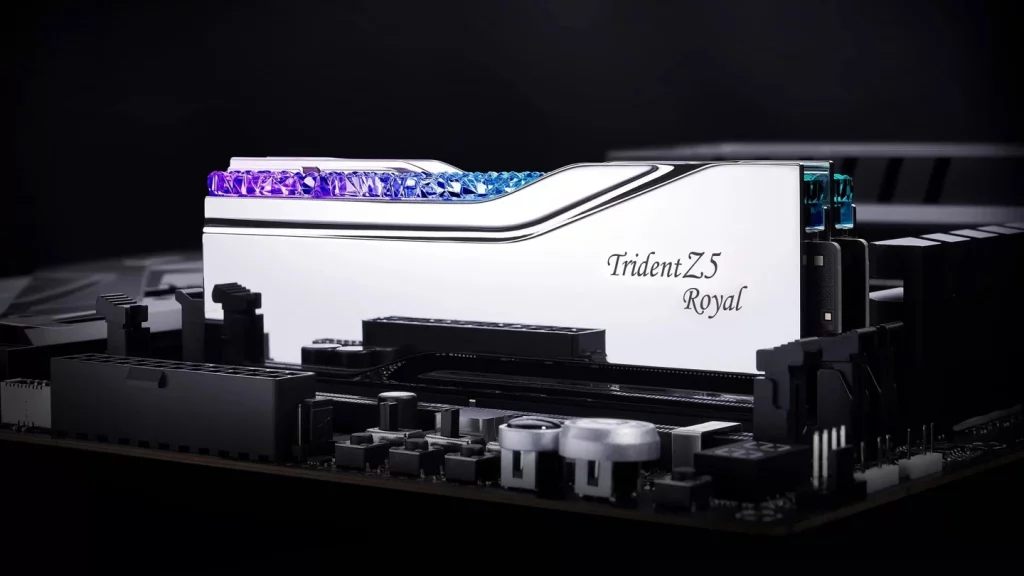
G.SKILL has officially launched its flagship DDR5 memory series, the Trident Z5 Royal, boasting a unique combination of aesthetics and high-performance. The Trident Z5 Royal merges the sleek lines of the Trident Z5 series with the “Royal Diamond” light guide strip design. This combination is available in both gold and silver color options, allowing users to personalize their builds with a touch of elegance.
The heat sink on the RAM has undergone an electroplating process which gives it a unique look
G.SKILL has equipped the Trident Z5 Royal memory with a robust aluminum alloy heat sink. This heat sink undergoes an electroplating process to enhance not only its functionality but also its visual appeal, resulting in a memory module that is both effective and aesthetically pleasing.
The Trident Z5 Royal memory boasts strong performance capabilities thanks to its support for Intel’s XMP 3.0 memory overclocking technology. By utilizing a motherboard and CPU certified on the QVL (Qualified Vendor List), users can effortlessly enable XMP in the BIOS to unlock the memory’s rated overclocking speed, pushing performance boundaries.
At the time of writing, G.SKILL has only launched a single memory kit on JD.com. This kit features 64GB capacity (2 x 32GB modules) and boasts a starting specification of 6400MT/s with 32-39-39-102 timings. The introductory price for this kit is 2149 yuan.
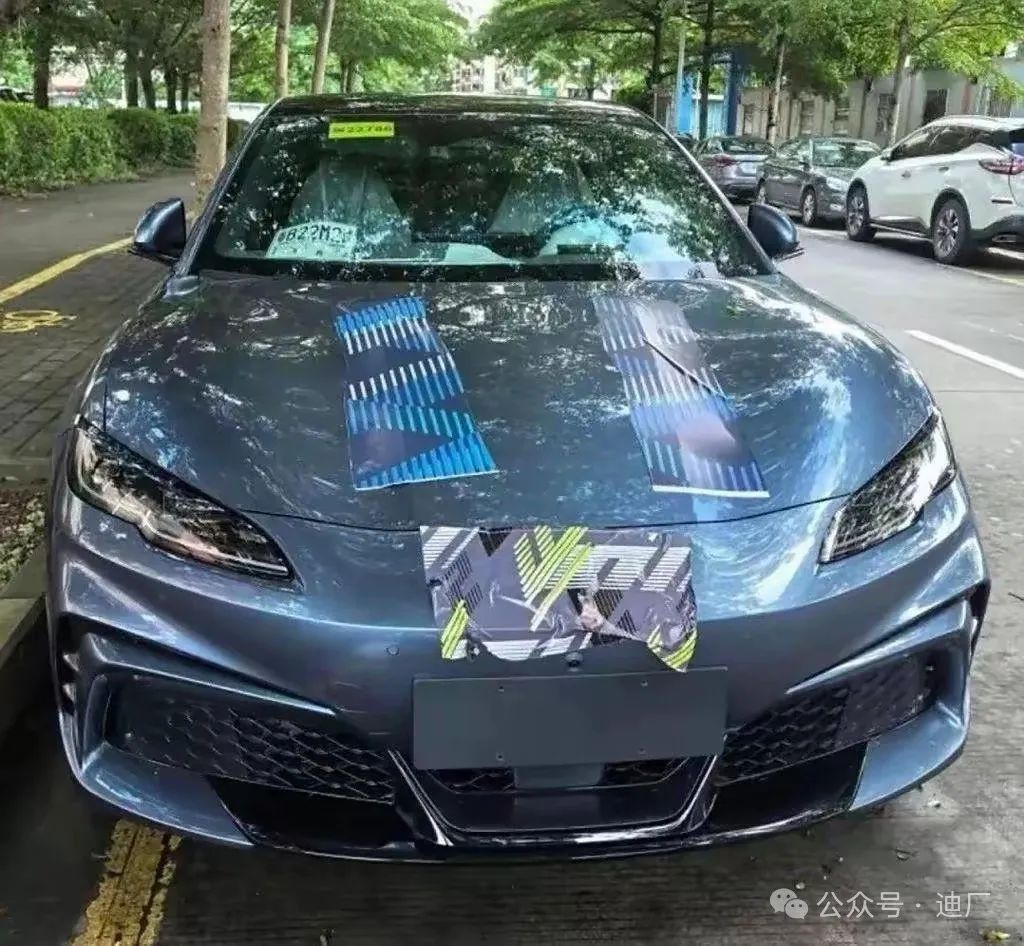
BYD has offered a glimpse of their upcoming electric hatchback car, the BYD Seal 06 GT, through a set of camouflaged photos leaked online. This new pure electric hatchback has been spotted previously in the Ministry of Industry and Information Technology’s catalog under various names including “Seal X”, “Seal MINI”, and “Seal 05EV”. While the final name might be “Seal 06 GT”, an official launch is expected sometime in the third quarter of this year.
The BYD Seal 06 GT is a mid-size hatchback with a spacious and comfy interior
The camouflaged images reveal a stylish hatchback design with a closed front grille, a wraparound front fascia, and L-shaped accents. The overall silhouette leans towards a sporty look, accentuated by hidden door handles and a floating roof design. The taillights appear to follow the popular trend of connected taillights.
Based on the leaked dimensions, the BYD Seal 06 GT will be a mid-size hatchback with a length of 4630mm, a width of 1880mm, and a height of 1490mm. The wheelbase stretches to 2820mm, suggesting a spacious and comfortable interior.
Buyers will have a variety of 18-inch and 19-inch wheel options to personalize their BYD Seal 06 GT. Additionally, the car will come with a choice of front and rear side skirts in different styles.
In terms of performance, BYD offers a choice between single-motor and dual-motor four-wheel drive configurations. The single-motor option provides two power levels: 160 kW and 165 kW. The dual-motor setup combines a 110 kW front AC asynchronous motor with a 200 kW rear permanent magnet synchronous motor. BYD is advertising three different driving range options (based on the CLTC standard): 505km, 550km, and 605km.
The launch of Qualcomm‘s Snapdragon X-series laptops is a significant moment for Windows on Arm, potentially bringing it closer to parity with Apple‘s Arm-based Macs. However, a looming legal battle between Qualcomm and Arm is casting a huge shadow over this milestone.
ARM is claiming that Qualcomm doesn’t have a proper license for custom ARM chips
At the heart of the issue lies a disagreement over chip design. Arm claims Qualcomm doesn’t have the proper license for its custom Arm chips developed through Nuvia, a company Qualcomm acquired. Arm argues this violates Qualcomm’s contractual obligation and seeks to prevent the use of these Nuvia designs.
Qualcomm has been instrumental in building the Windows on Arm ecosystem. They’ve facilitated the development of native apps like Chrome and Slack, crucial for the platform’s success. Some speculate that Arm’s lawsuit aims to eliminate Qualcomm and replace them with their own Cortex designs, potentially benefiting from higher licensing fees with companies like MediaTek. This aligns with Arm’s past preference for companies using their pre-designed Cortex cores.
Despite the legal battle, the Snapdragon X-series launch is expected to proceed on June 18th with products from major manufacturers like Microsoft, HP, Dell, and Lenovo. While a settlement involving financial compensation is more likely than a complete product shutdown, the future of Qualcomm’s custom Arm designs remains uncertain.
Rumors suggest Nvidia, MediaTek, and AMD might enter the Windows on Arm space as soon as CES 2025. This could lead to increased competition and potentially a wider range of Arm-based laptop options for consumers.
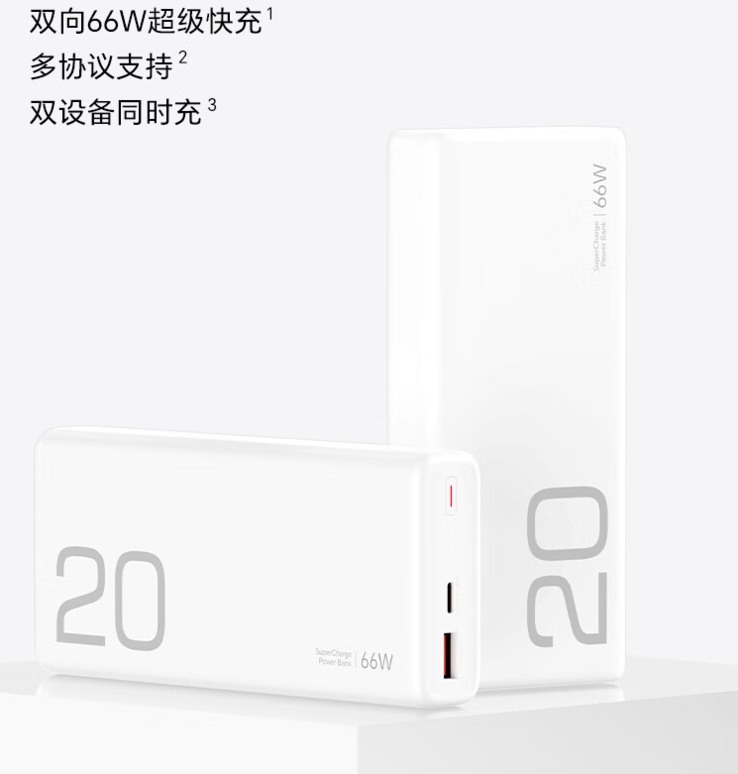
Honor has unveiled the JOWAY 66W SuperCharge Power Bank in China. The new Honor power bank is offered in two variants namely a 12,000mAh model and a 20,000mAh option. The power bank delivers fast USB-C charging and comes in a compact design. It is capable of charging two devices simultaneously. The new Honor JOWAY 66W SuperCharge Power Bank is available in black and white colorways for both sizes.
The Honor JOWAY 66W SuperCharge Power Bank delivers 66W bidirectional charging via its USB interface. The power bank can fully recharge the Honor Magic6 in 45 minutes and this underpins its performance. The power bank also has support for various charging protocols including PD 3.0, SCP, and QC 3.0. Honor says the smaller version of the JOWAY 66W SuperCharge Power Bank can be fully charged in 103 minutes while the 20,000mAh version takes 188 minutes for a full charge.
The 12,000mAh version of the power bank has dimensions of 137.0 x 68.8 x 19.5 mm and weighs 251g. The larger model has dimensions of 152.0 x 68.8 x 25.6 mm and weighs 368g.
Pricing & Availability
Customers can pre-order the JOWAY 66W SuperCharge Power Bank (12,000mAh or 20,000mAh) for 179 yuan ($25) and 229 yuan ($32) respectively. Availability of the power bank in China is tied to a few outlets including JD.com. There are no global availability details yet for the devices but the power bank could reach some selected markets at the least.
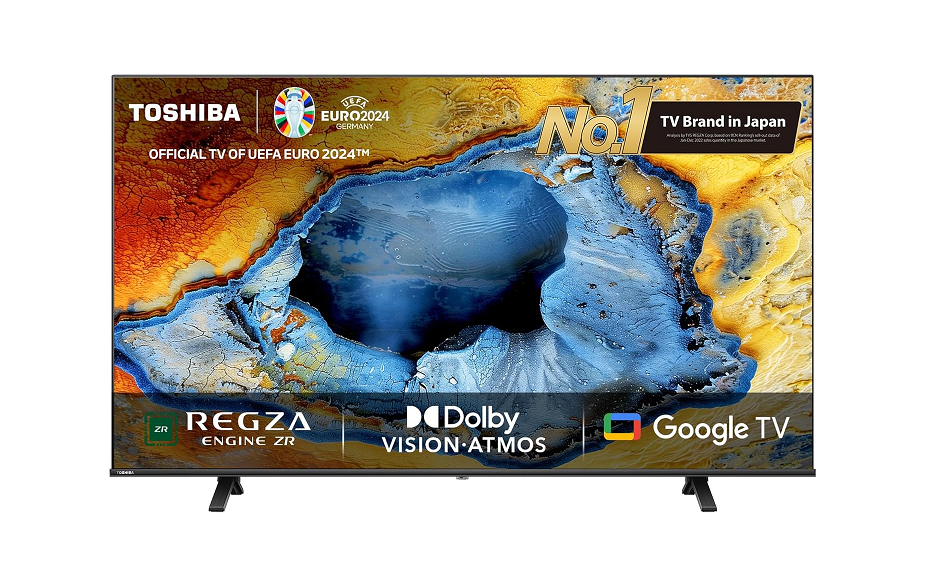
Toshiba has introduced the C350NP series of 4K Smart TVs in India. The new series is available in sizes including 43-inch, 50-inch, 55-inch, and 75-inch, targeting a wide consumer base seeking modern home entertainment technology at reasonable prices.
Toshiba C350NP TV specs and features:
Featuring an ultra-thin bezel design, the C350NP series offers a nearly edgeless viewing experience. The TVs are powered by Toshiba’s REGZA Engine ZR, which enhances picture quality to deliver sharp, lifelike 4K resolution images. Dynamic Tone Mapping further improves this by enhancing color accuracy and detail.
The series is specifically designed to appeal to sports fans and gamers, with dedicated Sports and Game Modes that optimize performance for a better viewing and gameplay experience. Technologies such as ALLM (Auto Low Latency Mode), VRR (Variable Refresh Rate), and e-ARC (Enhanced Audio Return Channel) are included to boost responsiveness and improve audio quality.
In terms of audio, the C350NP series incorporates REGZA Power Audio, Dolby Audio, Dolby Atmos, and DTSX technologies, powering the 24W built-in speakers. The 75-inch model comes with larger 36W speakers.
The TVs are equipped with Google TV for easy access to a variety of content and come with versatile connectivity options including Bluetooth 5.3, dual-band Wi-Fi, and multiple HDMI and USB ports.
Pricing and availability
The Toshiba C350NP 4K TVs will be available from June 12th on Amazon.in and Flipkart.com. Prices start at Rs. 26,999 for the 43-inch model and go up to Rs. 84,999 for the 75-inch model.
In related news, Hisense has recently debuted the E7NQ Pro 4K QLED TV. This TV has an impressive Dolby Vision IQ and HDR10+ display which is not only great for viewing shows and movies but playing games as well. It features a maximum refresh rate of 144 Hz and technologies like AMD FreeSync Premium, and a game mode that cuts down the response time of the TV to 14-10 ms.
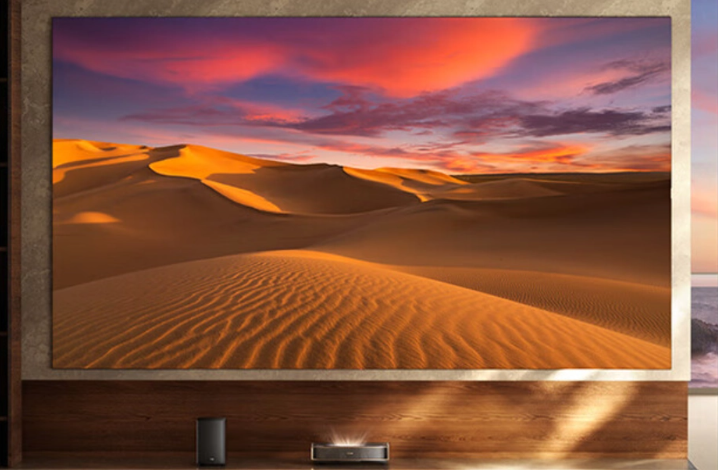
The Hisense Starlight S1 Pro Laser projector has been unveiled in China. The new Hisense product is offered in four sizes ranging from 75 to 100 inches. It has a peak brightness of up to 450 nits and upgrades to the three-color laser system. The models feature dual AI cameras that can adaptively adjust the picture parameters.
Features
The Hisense Starlight S1 Pro 75-inch model has a maximum brightness of 450 nits and features a 2.1 speaker setup. The 80-inch variant has a 2.1.2 speaker system with a maximum brightness of 450 nits, while the 88-inch variant peaks at 400 nits and comes with 2.1.2 speakers. The top model in the lineup is the 100-inch variant with 410 nits of peak brightness and 2.1.2 speakers.
The Hisense Starlight S1 Pro Laser Projector comes with a self-developed LPU digital laser engine that is based on the RGB three-color laser. It covers 151% of the DCI-P3 color gamut, supports 10-bit color depth, and has a DeltaE < 0.9. The laser TV is equipped with several AI image quality features and is IMAX Enhanced certified. The TV also supports Filmmaker Mode, as well as features a Fresnel passive anti-glare screen. The top model in the range (100 inches) has a foldable screen 2.0 design. This allows for easy movement and installation of the TV.
The new Hisense laser TV supports Dolby Atmos, and DTS:X, and is equipped with a Harman Kardon customized acoustic system. The 75-inch model is equipped with two 15W speakers and two 8W sky speakers. The 80, 88, and 100-inch models are equipped with dual 15W speakers, dual 8W sky speakers, and a 60W subwoofer. The Hisense S1 Pro is equipped with the MediaTek MT9649 processor with 4GB of memory and 128GB of storage. It runs on Android 11 and also features a voice remote control.
Pricing & Availability
The prices of the Hisenses Starlight S1 Pro are between 9,999 yuan ($1,381) and 26,999 yuan ($3,730). The current prices of the 75-inch and 80-inch models are 11,999 yuan ($1,658) and 12,999 yuan ($1,796) respectively.
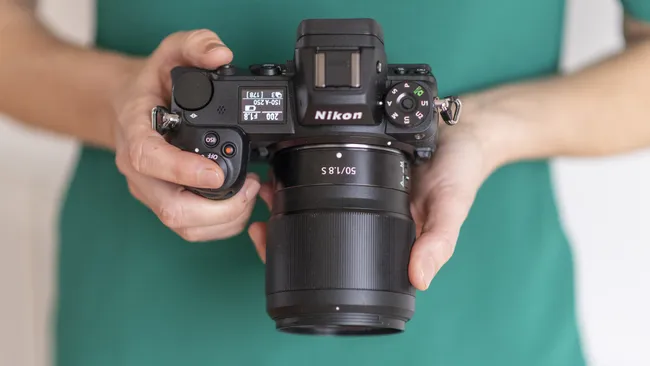
The buildup to the release of the Nikon Z6 III camera has been further enhanced with the release of an official teaser of the camera. The teaser video is promoting the upcoming June 17 launch of the Z6 III.
The Nikon Z6 III has been the subject of several rumors of late. It boasts an impressive specs sheet, particularly on the video side of things. It had been previously speculated that the gadget would launch on June 11.
The Z6 III will come with a few improvements over its predecessor, the Nikon Z6 II. It is a full-frame camera with support for 4K ProRes RAW video and also 6K, while the maximum frame rate is 120 fps. It is speculated that the new autofocus setup of the model is equivalent to that of the flagship Z9.
The previous-gen Nikon Z6 II is an exciting and functional camera for professionals and other users. It was released in 2020 and is a mid-range full-frame mirrorless camera.
There have been speculations on potential upgrades the new camera will feature. The upgrades will further enhance the appeal of the camera for both photo and video engagements. The Z6 III reportedly retains the same 24.5MP BSI CMOS sensor as its predecessor but it comes with dual Expeed 7 processors. This configuration allows for higher-resolution videos and frame rates.
The Z6 III is capable of capturing 6K videos in 12-bit NRAW format but the frame rate under this scenario is not known. In contrast, the Z6 II is limited to 4K @ 60fps. Full HD video capability remains the same in the new model, at 240fps in 8-bit with a crop.
The autofocus system in the Z6 III is also very impressive, comparable with some of the Nikon flagship models, the Z8 and Z9. The Z6 III is equipped with a better cooling system and greater ergonomics than its predecessor. Pricing confirmation of the Nikon Z6 III and other optics will be determined at launch.
We use cookies on our website to give you the most relevant experience by remembering your preferences and repeat visits. By clicking “Accept”, you consent to the use of ALL the cookies.
This website uses cookies to improve your experience while you navigate through the website. Out of these, the cookies that are categorized as necessary are stored on your browser as they are essential for the working of basic functionalities of the website. We also use third-party cookies that help us analyze and understand how you use this website. These cookies will be stored in your browser only with your consent. You also have the option to opt-out of these cookies. But opting out of some of these cookies may affect your browsing experience.
Necessary cookies are absolutely essential for the website to function properly. This category only includes cookies that ensures basic functionalities and security features of the website. These cookies do not store any personal information.
Any cookies that may not be particularly necessary for the website to function and is used specifically to collect user personal data via analytics, ads, other embedded contents are termed as non-necessary cookies. It is mandatory to procure user consent prior to running these cookies on your website.