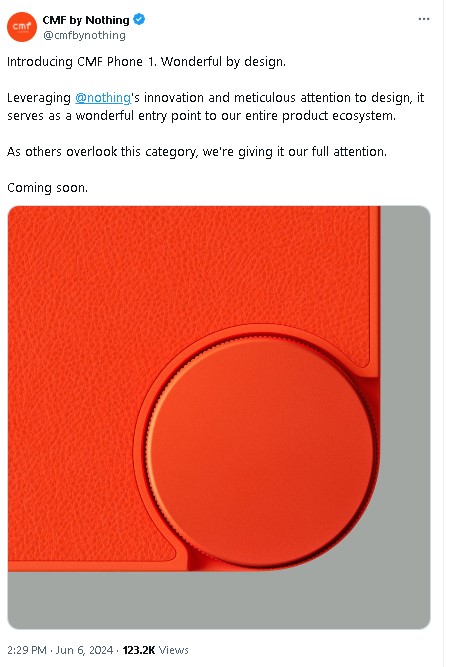
Earlier today, Nothing CEO Carl Pei dropped a hint at the Phone (3)’s launch being pushed to 2025. Now, the company’s sub-brand CMF has confirmed the launch of its first smartphone. It is called the CMF Phone 1. The teaser image gives us a slight glimpse at what to expect from the upcoming device. For those unaware, CMF by Nothing is catered towards the affordable segment. The key specifications of the sub-brand’s first smartphone were leaked previously.
CMF Phone 1 is indeed launching soon
In a tweet, CMF says that its first smartphone is wonderful by design. It will leverage Nothing’s innovation and meticulous attention to design. The Nothing sub-brand is focusing on this in a segment that is overlooked by other OEMs. The CMF Phone 1 will serve as an entry point to the company’s entire product ecosystem. This suggests that it will be an affordable smartphone.
However, one should not expect a similar design on the CMF Phone 1 as Nothing’s smartphones. The teaser image confirms that it won’t feature a transparent back panel and the Glyph interface either. Instead, the upcoming offering is seen with a leather-textured back panel in an Orange shade that is found on the sub-brand’s devices. There is also a dial on the bottom right side of the device. It is similar to the one found on the Neckband Pro. Its functionality on the smartphone remains unclear as of now.
The CMF Phone 1 is confirmed to be available from Flipkart in India similar to other devices.
Leaked specifications of the CMF Phone 1 revealed a 6.7-inch 120Hz OLED display, a 50MP rear camera, and a 16MP selfie snapper. The upcoming offering is rumoured to be powered by a Dimensity 7200 SoC paired with up to 8GB RAM and 256GB storage. The device is expected to be priced between $249 to $279 and could launch next month.
The latest leak about Samsung‘s upcoming Galaxy Watch lineup sheds light on the key specifications of both the standard Galaxy Watch 7 and the Galaxy Watch Ultra.
The leak coming from usually reliable Android Headlinesreveals that the Galaxy Watch 7 will stick with the 40mm and 44mm sizes as its predecessor, the Galaxy Watch 6. It will be available in green and cream colors.
The build quality seems to be getting an upgrade, with the Galaxy Watch 7 featuring Armor Aluminum 2 for the case and a Sapphire Crystal display which will offer 2000 nits of peak brightness, plenty for outdoor use.
Durability specifications remain unchanged though, with the same 5ATM and IP68 ratings for water and dust resistance as the Watch 6. And there won’t be any change in terms of battery capacities.
The smaller 40mm model of the Galaxy Watch 7 will get a 300mAh cell while the 44mm variant will be fitted with a 425mAh battery.
The most notable upgrade for the wearable could come in the form of a new 3nm processor. Storage capacity is also rumored to be doubled to 32GB, offering more space for music and apps.
As for the Ultra model, Samsung is improving its durability with a titanium case, a 10ATM water resistance rating, and compliance with the MIL-STD-810H military standard for toughness.
The Watch Ultra will be available in a single 47mm option with a rumored battery capacity of 590mAh. Color options will include gray, silver, and beige.
The Ultra model will also get the same processor and storage treatment as the vanilla Watch 7, but Samsung will bump the screen’s brightness to 3000 nits. It will also have an extra button (Quick button) compared to the standard Watch 7 which will keep the Home and Back buttons.
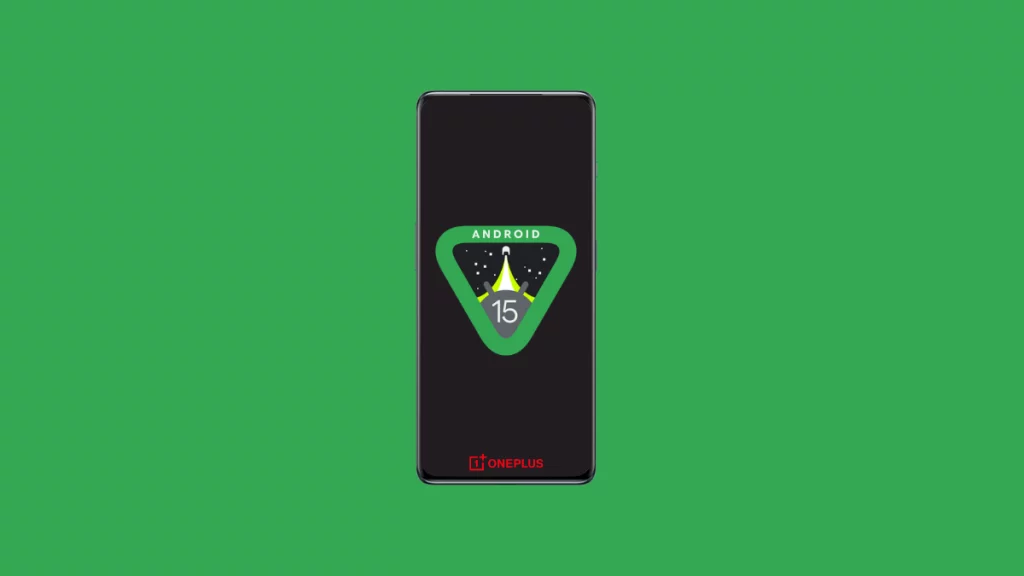
Android 15 is through its final stages of development as it’s nearing the platform stability phase for the final touches before it is released publicly. It will bring plenty of exciting features such as satellite connectivity, private space, app archiving, and more.
Like every year, many Android devices will reach their end of support for the major Android updates this year as well. Here, we have jotted down a list of OnePlus phones and tablets that will receive Android 15-based OxygenOS 15 as their final major upgrade.
Go through the list below to determine if you’ll need to upgrade to a newer model next year to continue receiving the latest features and enhancements.
OnePlus Devices That Won’t Get Any Major Updates After Android 15
OnePlus 10 Pro
OnePlus 10T
OnePlus 10R
OnePlus 10R 150W
OnePlus Nord N30 SE
OnePlus Nord CE 3
OnePlus Nord CE 3 Lite
OnePlus Pad Go
These devices will get the Android 15 update but it’ll be the last of such kind. They are likely to miss out on future OS upgrades post Android 15.
We have prepared this list by taking into account the software update policy for the OnePlus phones and tablets. Yes, this isn’t an official list, but it’s unlikely to change unless OnePlus makes any changes to its software update policy.
OnePlus offers generous software support for its phones and tablets. Their high-end phones get four years of OS updates and five years of security updates. The newer Nord models, including the OnePlus Nord 3, promise 3 OS updates, while the older models get two.
The OnePlus Nord N and Nord CE series models typically get two generations of Android updates.
OnePlus had a decent software policy for its phones. However, the extended support for newer models has made it one of the best smartphone brands in terms of software update policy.
Last year, Google announced the Pixel 8 series with 7 years of Android update support, setting a new benchmark. Samsung quickly followed this up by offering the same software support for its flagship Galaxy S24 series.
OnePlus has a completely different take on providing extended software support to its devices. In an interview with Tom’s Guide, OnePlus President Kinder Liu explains, “Simply offering longer software update policies completely misses the point. It’s not just software update policies that are important to the user, it’s the fluency of your phone’s user experience too.”
So, don’t expect extended software support from OnePlus, at least not in the near future. However, four OS updates aren’t bad either, which many brands struggle to offer.
Before I wrap up this post, let’s quickly take a look at the big changes coming in Android 15.
Android 15: What’s So Exciting About It?
The new OS is confirmed to support Satellite Connectivity, allowing users to send texts even if there are no cell towers nearby. It supports SMS, MSS, as well as preloaded RCS apps. This means, it’ll not be limited to emergency uses only.
Android 15 will let users choose a default note-taking app from Settings. It can use Android’s Content Capture API to capture all or part of the screen for insertion into a note. You’ll also be able to save your favourite split-screen combination for quicker access. A shortcut will be created on the home screen to instantly open both apps in the split-screen mode.
Taking inspiration from Samsung, Android 15 adds Private Space to protect your sensitive files and apps with an additional layer of security. This is similar to the Secure Folder on Samsung phones. This new feature creates a separate space hidden from the regular space. You’ll be able to use a different Google account and a different lock screen for better security.
Google has already bought the app archiving feature via the Google Play Store. It lets your unarchive apps to save storage while keeping the user data around. It works similarly to offloading apps on iPhones. So far, this feature has been limited to apps installed from the Play Store, but Android 15 integrates this feature at the OS level, allowing archiving/restoring any apps, even those installed outside of the Play Store.
One of the essential Android 15 features is partial screen sharing. It lets you share or record a single app rather than the entire screen. There’s also a new Notification Cooldown feature that lowers the volume of successive notifications from the same app. The new OS also brings a high-quality webcam mode to improve the video quality by disabling the power optimizations. You’ll be able to enable this mode by tapping the “HQ” symbol in the webcam preview mode.
Do you consider the software update policy when getting a new smartphone? Share your thoughts on the update policy for your device in the comments below.
ASML (Advanced Semiconductor Materials Lithography) is a Dutch corporation that designs and manufactures lithography machines for the semiconductor industry. The lithography machines are one of the most important equipment in chip building.
Access to ASML’s cutting-edge lithography technology is one of the reasons behind TSMC‘s massive success as a contract chip manufacturer that works with most of the big giants in the industry such as NVIDIA and Qualcomm.
The high-NA lithography technology is expected to reduce the transistor size by 66%
Now the latest news is that ASML is going to ship its most advanced lithography machine worth US$ 380 million (~2.753 billion yuan) to TSMC this year. ASML Chief Financial Officer Roger Dassen revealed in a recent conference call that the company’s two largest customers, TSMC and Intel, will obtain its high numerical aperture (high-NA) extreme ultraviolet (EUV) lithography technology within 2024.
Reportedly, ASML has already delivered the world’s first commercial high-NA EUV lithography machine to Intel, starting with the first unit delivered to a factory in Oregon in late December. The exact time when TSMC will get the latest and most advanced tool from ASML is unclear at this point.
The high-NA lithography technology is expected to reduce the transistor size by 66%. So, it could enable chip manufacturers to fit more of them in a same-sized piece of silicon. Obviously, there is much more than just the transistor count (such as power efficiency) when it comes to sustained performance. But the power efficiency also improves with the reduction of the size.
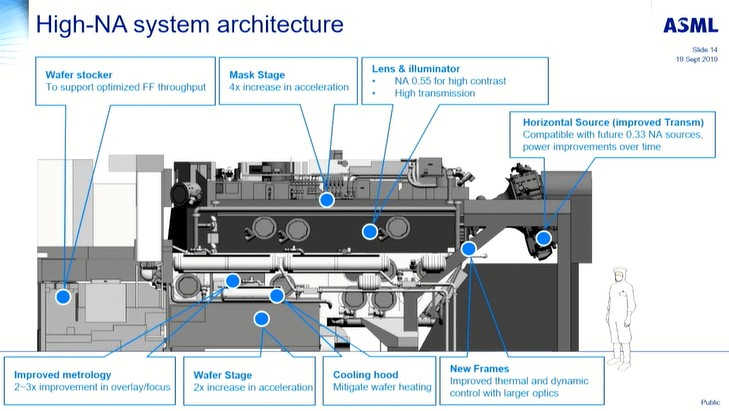
Reportedly, the high-NA EUV system achieves a numerical aperture of 0.55. Compared with the previous EUV systems equipped with a 0.33 numerical aperture lens, the accuracy will be improved and will enable more sophisticated patterning on the silicon.
The machine is also 30% larger than the predecessors which are already so large that they require three Boeing 747s to carry them.
Speaking of TSMC, the development of the 2nm nodes is reportedly progressing smoothly. The company has plans to start the development of N3X and N2 process in Q2 2025. Mass production of N2P and A16 will begin in Q2 2026. Its 2nm process will use Gate-all-around FETs (GAAFET).
TSMC expects its 2nm process could bring 10% to 15% performance improvement along with 25% to 30% lower power consumption.
A report earlier this week revealed that Xiaomi and Honor are both working on their new book-style foldable phones. Xiaomi’s offering, the Mix Fold 4, and Honor’s, the Magic V3, are expected to be powered by the same Snapdragon 8 Gen 3 chip.
The report also tipped Mix Fold 4’s battery to be 5000mAh, while details regarding the Magic V3’s battery capacity were left undisclosed. But there was a subtle hint suggesting an even bigger battery for the V3.
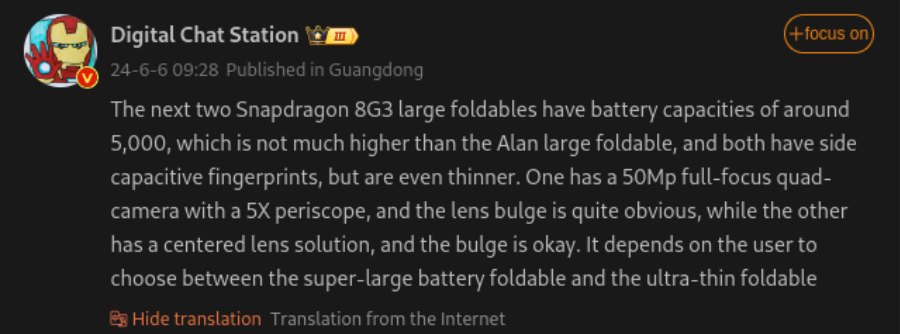
However, in a recent Weibo post tipster Digital Chat Station revealed that Honor’s foldable will also feature a 5000mAh battery, matching the Mix Fold 4.
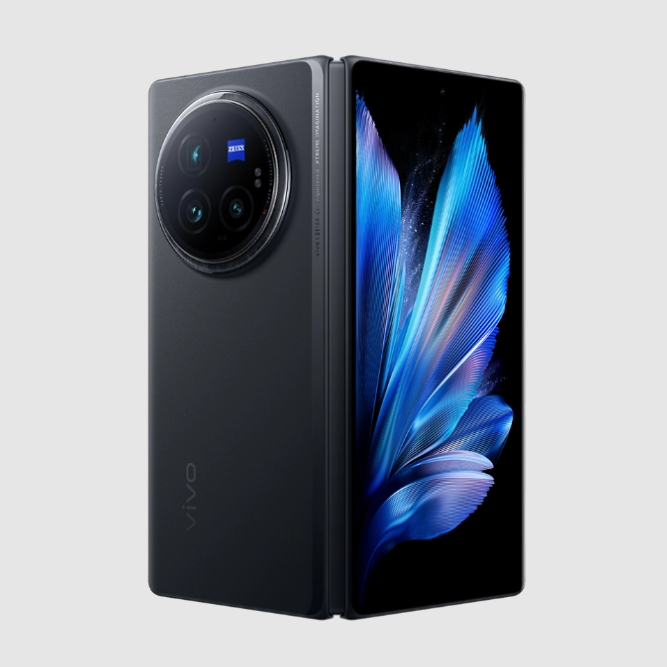
Currently, the Vivo X Fold 3 Pro holds the title for the foldable with the largest battery, boasting a massive 5700mAh cell despite its slim design. It looks like it will hold onto that crown for a while longer.
Additionally, the tipster revealed that both foldables will retain side-mounted fingerprint sensors from their predecessors but will be thinner. The Mix Fold 4 is expected to be the slimmest foldable upon release, supported by the latest leak.
Furthermore, the tipster affirmed previously disclosed camera details for the Fold 4, featuring a 50MP quad-camera setup with a 5x periscope lens. However, DCS notes that the camera bulge on Xiaomi’s foldable is quite noticeable, while the Honor Magic V3 is expected to have a centrally aligned camera setup with minimal bulge.
In addition to book-style foldables, both brands are working on flip foldables. Honor has already announced the launch of its first clamshell device, the Magic V Flip, scheduled for June 20, while Xiaomi is yet to share details on its flip phone.
Both Xiaomi Mix Fold 4 and Honor Magic V3 are expected to be released in July. Xiaomi might tag along its flip phone with the Fold 4.
Oppo F27 Pro+ is an upcoming mid-range smartphone that is set to launch in India soon. But ahead of its official release, the device has been spotted in a massive leak that revealed its key specs along with a video of its unboxing and hands-on. So let’s have a look.
Oppo F27 Pro+ leaked video
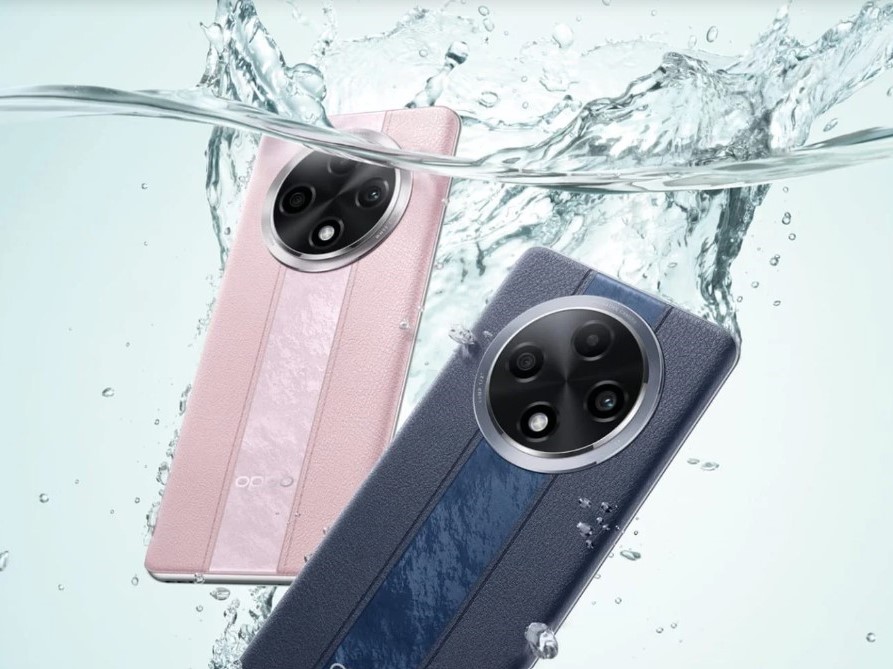
This leak was shared on X (formerly Twitter) by known tipster Sudhanshu Ambhore. Looking at the video, we get a view of the Oppo F27 Pro+’s retail box. The device was unboxed with the new phone coming with an 80W charging brick and wire. The smartphone can be seen with vegan leather at the back as well as a large circular camera module. Meanwhile, the front arrives with a curved display. The tipster also revealed key specifications of this device. It sports a tall 6.7-inch curved AMOLED display with an FHD+ resolution and a 120Hz refresh rate.
Under the hood, the Oppo F27 Pro+ is expected to be equipped with the MediaTek Dimensity 7050 SoC, which is paired with LPDDR4X memory and UFS 3.1 internal storage. For optics, the rear packs a 64-megapixel primary sensor and a 2-megapixel secondary shooter. Meanwhile, the front houses an 8-megapixel camera for selfies and video calls. A large 5,000mAh battery pack powers this device that supports 67W wired fast charging.
This model runs on the Android 14 OS based ColorOS custom skin. A notable aspect of this device is that it could be the first smartphone to launch in India with an IP69 water and dust resistance. Earlier this week, this device was also spotted on GeekBench and the Camera FV-5 listings. So we know that there is at least one variant with 8GB of RAM. The camera resolution for the front and rear sensors were also revealed along with EIS support.
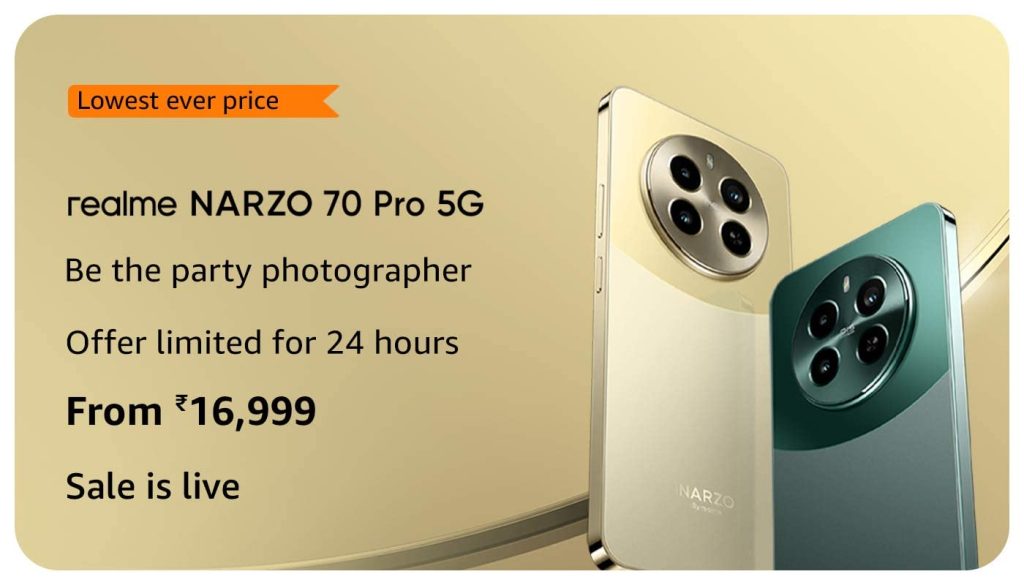
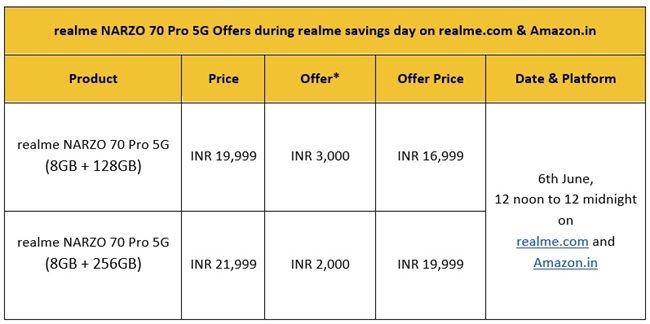
Buyers can enjoy a Rs. 3,000 discount on the 8 GB + 128 GB version, reducing the price to Rs. 16,999, and a Rs. 2,000 discount on the 8 GB + 256 GB variant, bringing the price down to Rs. 19,999.
The sale is set for today, June 6th, starting at 12 PM on realme.com and Amazon.in. This 12-hour limited sale offers customers the opportunity to grab these deals on the realme NARZO 70 Pro 5G.
Additionally, purchasing the NARZO 70 Pro 5G allows you to buy the realme Techlife Buds T100 for Rs. 1,299 or the realme Buds Wireless 2 Neo for Rs. 899.
Realme Narzo 70 Pro 5G specs:
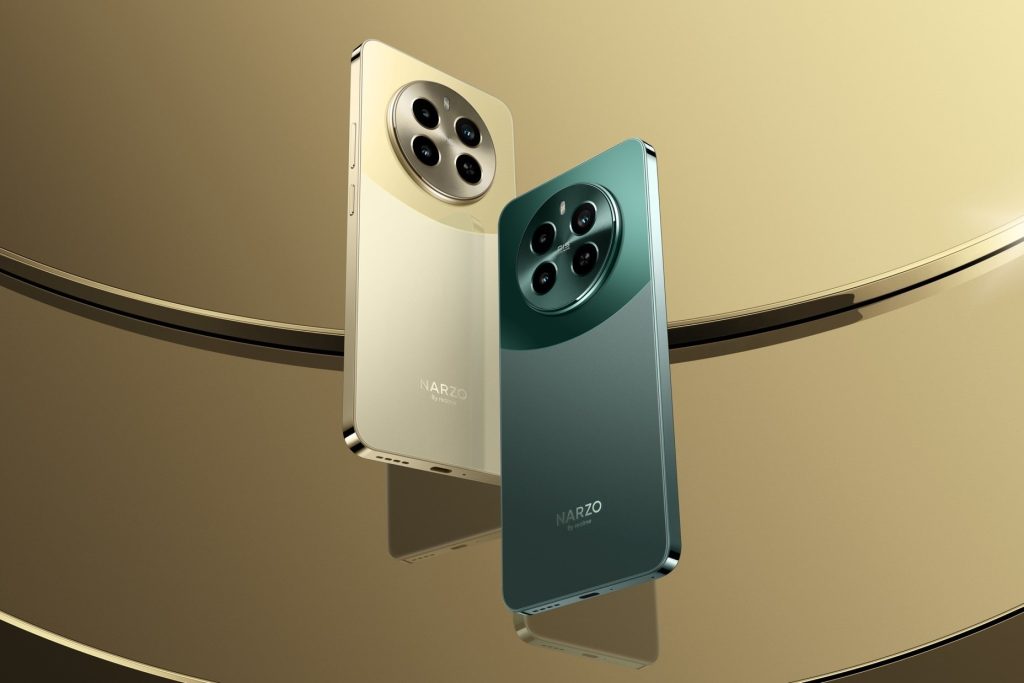
To recap, the Narzo 70 Pro features a 6.67-inch AMOLED display with FHD+ resolution and a 120 Hz refresh rate. It is powered by the MediaTek Dimensity 7050 SoC and incorporates a VC liquid cooling system. The device runs on Realme UI 5.0 based on Android 14 and is backed by a large 5,000mAh battery with 67W wired fast charging support.
The rear camera setup includes a 50-megapixel triple camera system, while the front is equipped with a 16-megapixel selfie camera. Other notable features include Bluetooth 5.2, WiFi 6, air gesture support, 2000 nits peak brightness, and HDR+ content support.
In related news, Realme has recently unveiled a new affordable smartphone in India called the Realme Narzo N63. The device has a starting price of just Rs. 7999. Despite that, the phone is available with a vegan leather back, an overall slim design, and 45W SuperVOOC fast charging. The phone also offers a 90HZ LCD display measuring 6.74 inches and a UNISOC T612 Octa-Core processor.
The Vivo X Fold 3 Pro was first unveiled in the brand’s home market of China. Now, the new ultra-premium flagship phone has finally dropped in the Indian market. This model brings top-notch specs and features packed in a thin and light design. So here’s everything you need to know about this smartphone.
The company’s latest foldable phone arrives as the slimmest foldable phone in India. In its folded state, it measures just 11.2mm in thickness and 5.2mm when unfolded. The Vivo X Fold 3 Pro is also quite light, weighing 236 grams. This device offers an IPX8 rating as well for water resistance. Vivo has also brought improvements to its hinge mechanism, which they claim can withstand 100 folds every day for 12 years.
The primary screen is a tall 8.03-inch E7 AMOLED display that supports LTPO technology, 2K+ resolution, 1-120Hz variable refresh rate, HDR10+, Dolby Vision, Dolby Vision, UTG glass, and up to 4,500nits of peak brightness. Meanwhile, the cover display has a 6.53-inch LTPO AMOLED display with an FHD+ resolution, 1-120Hz variable refresh rate, Armor Glass, Dolby Vision, and up to 4,500nits of peak brightness.
2. Specs
Vivo X Fold 3 Pro arrives as the latest flagship device in India and features top-end specs like the Qualcomm Snapdragon 8 Gen 3 SoC. This chip is paired with 16GB of LPDDR5X RAM with 512GB UFS 4.0 storage. Under the hood, a massive 5,700mAh battery pack powers this device, which supports 100W wired fast charging, 50W wireless fast charging, and reverse wireless fast charging as well.
For optics, this model features a 50-megapixel primary camera (OV50H sensor) on the rear that supports OIS (Optical Image Stabilization) and Zeiss T* coating. This main sensor is also powered by the V3 imaging chip. This is coupled with a 50-megapixel ultra-wide angle lens (Samsung JN1) and a 64-megapixel (OV64B) telephoto shooter. For selfies and video calls, the primary and secondary screen houses a 32-megapixel shooter.
The Vivo X Fold 3 Pro runs on the Android 14 OS based Funtouch OS 14 custom skin. Other notable features include an in-display fingerprint scanner, stereo speakers, Bluetooth 5.4 LE, dual-band Wi-Fi, dual SIM support with 5G SA/NSA support.
3. Pricing and Availability
Vivo has announced the X Fold 3 Pro in the Indian market for a hefty price tag of 159,999 INR (roughly 1,917 US Dollars) for the lone 16GB + 512GB variant. This puts it in the ultra-premium flagship category like the Samsung Galaxy Z Fold 5. It has released in a single color option, which is Celestial Black. The new foldable phone will be available for purchase via the brand’s official webstore, Amazon, Flipkart, and offline channels.
First sales are set to kick off on 13th June 2024, while the pre-bookings of the device are already live as of today (6th June 2024). Vivo is also selling the 50W wireless fast charger for 5,599 INR, which will go on sale on 17th June 2024 through the Vivo India eStore and offline retailers.
The Vivo V family is about to get some new members globally. The Vivo V40 and V40 Pro are expected to arrive soon, and the former has now appeared in official-looking renders, accompanied by key specs.
If you remember the design of the V30, you’ll notice that the V40 looks nothing like its predecessor. The rear panel now houses a large, oval-shaped camera module with smaller circular housing for dual camera sensors, prominently branded with Zeiss.
Below the main camera setup is another oval cutout containing Vivo’s signature Aura light and an additional sensor whose purpose remains unclear. The renders show the phone in two colors: purple and grey/silver.
The front of the phone retains the curved-edge display, minimal bezels, and centered punch-hole cutout seen on the V30.
As for the specifications, the Vivo V40 is rumored to feature a 6.78-inch FHD+ AMOLED display with a resolution of 2400 x 1080 pixels. The phone will likely be powered by the Qualcomm Snapdragon 7 Gen 3 chipset, similar to the V30, paired with 8GB of RAM and 256GB of storage.
The camera setup is expected to be similar to the V30 as well. The Vivo V40 may include a 50MP primary sensor, a 50MP ultra-wide lens, and a 50MP front-facing camera for selfies.
A notable upgrade might be in the battery life. The Vivo V40 is rumored to have a 5,500mAh battery with support for 80W fast charging, an improvement over the V30’s 5,000mAh battery. Standard connectivity options include dual-SIM support, Wi-Fi, Bluetooth, NFC, GPS, and a USB Type-C port.
On the software side, the Vivo V40 is expected to run on the latest Android 14 operating system out of the box. It is also expected to have an IP68 rating for dust and water resistance.
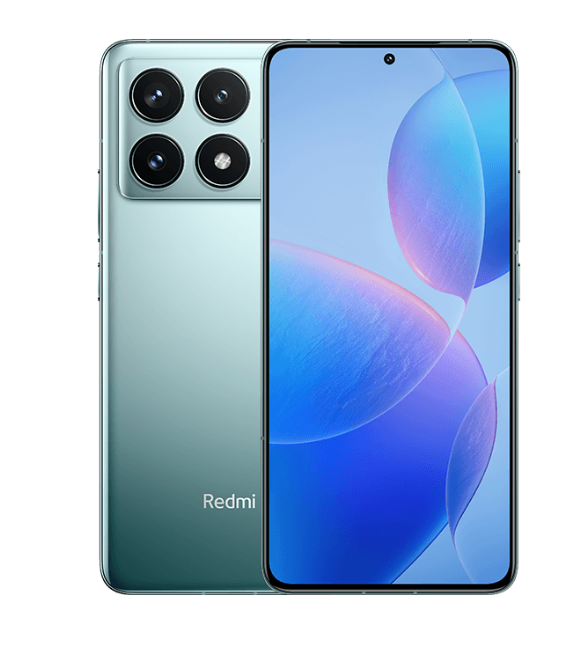
Redmi launched the K70 series smartphone in November last year, so we can expect the K80 series to launch around the same time this year. We’ve been hearing about possible upgrades for these new phones for a while.
A report earlier this week revealed that the Redmi K80 Pro will introduce some impressive upgrades, including the latest Snapdragon 8 Gen 4 processor, a 2K display, and a 50MP telephoto lens.
Today’s leak from Digital Chat Station supports these rumors, adding that the K80 Pro will also support 120W fast charging that will complement the previously tipped 5500mAh battery.
The leak further hints that the phone will feature a metal frame and a glass back with a new coating for a more premium look and feel.
The standard Redmi K80 is not expected to lag in performance either. Previous reports suggest it will be equipped with the Snapdragon 8 Gen 3 chipset, keeping it competitive in the high-end segment.
Both the Pro and standard models are rumored to sport a flat OLED display with a 2K resolution and a 120Hz refresh rate. The main difference might be in the camera department, with the K80 Pro possibly featuring a dedicated telephoto lens, which the standard K80 might lack.
While launch details remain unconfirmed, it appears the Xiaomi 15 series will be the first to market with the Snapdragon 8 Gen 4 SoC, rumored for an October launch.
The Redmi K80 series is expected to follow sometime in November. It will be an alternative for those seeking a flagship experience without the likely higher price tag of the Xiaomi 15 series.
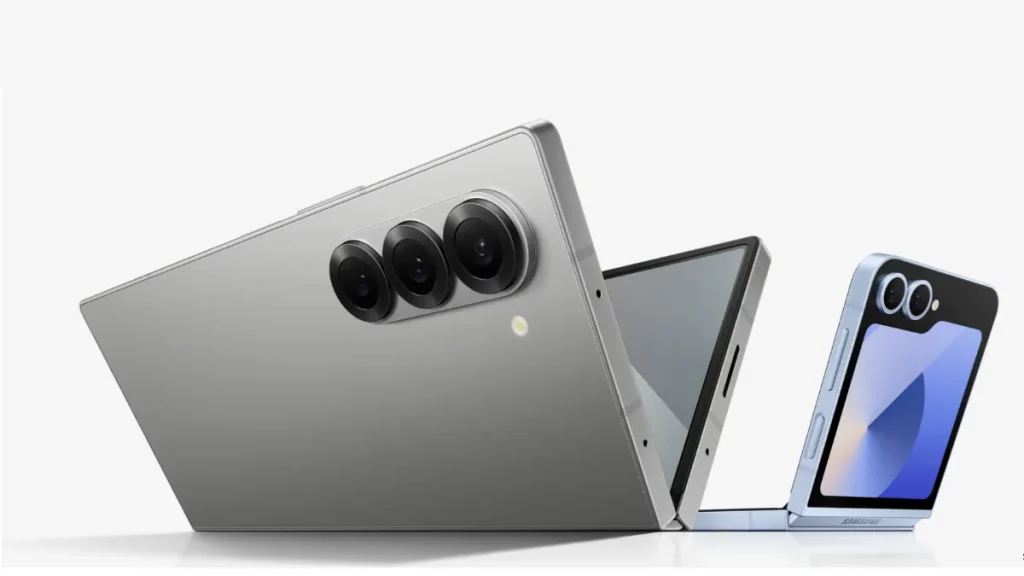
Samsung‘s Galaxy Z Flip series has been a leader in the foldable phone market, offering a unique clamshell design and cutting-edge technology. With the upcoming Galaxy Z Flip 6 expected to be revealed in July 2024, many users are wondering what upgrades and features to expect. This article will delve into the rumors and leaks surrounding the Z Flip 6, helping you decide whether to wait for the new model or snag a current Galaxy Z Flip 5.
The design language of the Z Flip 6 is expected to remain similar to its predecessor, the Z Flip 5, sporting a sleek clamshell form factor. However, some hints point towards a possible shift towards a boxier aesthetic, similar to the Galaxy S24 Ultra. This could translate to sharper corners and a more squared-off look compared to the Z Flip 5’s softer curves.
Rumors suggest Samsung might be implementing a slimmer hinge mechanism while maintaining the IPX8 water resistance rating. Moreover, there will be less visible crease on the display.
The display is expected to retain the latest Corning Gorilla Glass Victus 2 for protection. Samsung could expand its color offerings, giving users more options to customize their look. The phone might come in seven colors: Crafted Black, Light Blue, Mint, Peach, Silver Shadow, White, and Yellow.
2. Display
The flip phone is expected to retain the same 3.4-inch folder icon-shaped cover display. The Flip 5 had a 60Hz cover display, but this time the device might feature a 120Hz refresh rate, making interactions smoother and more responsive. The main display is rumored to remain at 6.7 inches with FHD+ resolution and adaptive 1-120Hz refresh rate.
3. Performance and Battery
Under the hood, the Galaxy Z Flip 6 is rumored to pack the powerful Snapdragon 8 Gen 3 processor, ensuring snappy performance and efficient multitasking. It might also come with a RAM upgrade, potentially offering a 12GB option alongside the standard 8GB for even smoother operation.
One area where the Z Flip 6 could see a significant improvement is battery life. Leaks suggest a 4,000mAh battery, a notable upgrade from the Z Flip 5’s 3,700mAh battery. This would address one of the main criticisms of previous models, providing users with longer usage times on a single charge.
4. Camera
The camera system of the Z Flip 6 is also expected to get a boost. Rumors suggest a new 50MP main sensor, a substantial upgrade from the 12MP sensor found in the Z Flip 5. This would likely result in improved image quality, especially in low-light conditions.
The secondary ultrawide camera and the selfie camera are expected to remain the same. However, we can anticipate Samsung’s software enhancements to optimize image processing and offer new camera features. While the camera layout remains horizontal, rumors suggest the phone will accentuate the camera bump with the device’s chosen color.
5. Software and Other Features
The Galaxy Z Flip 6 will likely ship with Android 14 and Samsung’s One UI 6.1.1 software, providing a user-friendly and feature-rich experience. It might also receive the same seven years of software updates that Samsung promised for its flagship Galaxy S series.
Additionally, the Z Flip 6 is expected to retain the stereo speakers and a side-mounted fingerprint sensor. While features like Wi-Fi 7 might be missing, Samsung will likely focus on refining existing features and delivering a polished foldable experience.
6. Should You Wait for the Galaxy Z Flip 6?
Whether you should wait for the Galaxy Z Flip 6 depends on your current needs and preferences. If you’re already a Z Flip 5 user and satisfied with its performance, the upgrade might not be a must-have. However, if you’re looking for a foldable phone with better battery life, and enhanced camera capabilities, the Z Flip 6 could be a compelling option.
The improved battery life would address a common concern with foldable phones, providing more freedom for extended use without worrying about running out of power.
The upgraded 50MP main camera could be a significant draw for photography enthusiasts. While the Z Flip 5’s camera is decent, the increased megapixels would offer greater flexibility for cropping and zooming, potentially rivaling traditional flagship phones in image quality.
Ultimately, the decision to wait or not comes down to individual priorities. If the rumored improvements align with your needs and preferences, waiting for the Galaxy Z Flip 6 might be worthwhile. However, if you’re looking for a foldable phone right now, the Z Flip 5 is still an excellent device with a unique form factor and innovative features.
As always, it’s recommended to wait for official announcements and reviews before making a final decision. Samsung is expected to unveil the Galaxy Z Flip 6 in July 2024, so stay tuned for more information and hands-on experiences to determine if it’s the right foldable phone for you.
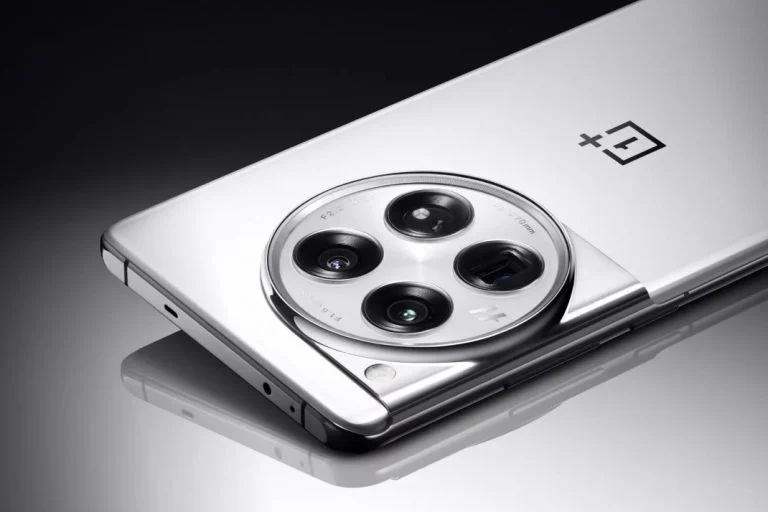
OnePlus recently unveiled a new Glacial White color option for the OnePlus 12 smartphone. Starting today, this new color option will be available to purchase in the Indian market.
OnePlus 12 Glacial White Pricing & offers
The OnePlus 12 Glacial White, featuring a 12GB+256GB configuration, is priced at Rs 64,999. It will be available for purchase through Amazon, the OnePlus eStore, OnePlus Experience stores, and other retail outlets.
OnePlus has announced a flat Rs 3,000 instant discount for customers using ICICI Bank or HDFC Bank credit cards for the purchase. Additionally, customers who buy the device before June 20 can also receive a Rs 2,000 coupon on both Amazon and the OnePlus eStore.
OnePlus 12 Specs
Specs-wise, the Glacial White unit is identical to the regular OnePlus 12. It has a 6.82-inch QHD+ ProXDR OLED display with 120Hz refresh rate, 1600 nits brightness with a peak of 4500 nits while watching HDR content. It comes with HDR10+ and Dolby Vision support, as well as Corning Corning Gorilla Glass Victus 2 protection.
Under the hood, the device has a Snapdragon 8 Gen 3 SoC, paired with LPDDR5X RAM and UFS 4.0 storage. It has a 5,400mAh battery with support for 100W SuperVOOC wired charging, and 50W AirVOOC wireless charging. The device comes with OxygenOS 14 out of the box, a Dolby Atmos-tuned Stereo speaker setup, an in-display fingerprint sensor for security, and an alert slider.
For optics, it has a 32 MP Sony IMX615 front camera, along with a 50MP Sony LYT808 primary sensor on the back with optical image stabilization. The back also hosts a 64MP OmniVision OV64B periscope telephoto camera with 3x optical zoom and optical image stabilization and a 48MP Sony IMX581 ultra-wide lens.
In related news, OnePlus will be hosting its Community Sale starting today. The sale will include huge discounts on OnePlus smartphones, tablets, and audio products.
In today’s news roundup, we dive into the latest leaks of the OnePlus Ace 3 Pro’s design changes and get insights into the postponed launch of the Nothing Phone (3).
Discover what industry firsts the OnePlus Pad 2 is set to bring and Qualcomm’s potential dual-sourcing strategy for the Snapdragon 8 Gen 5. Plus, learn how a recent ChatGPT outage spiked interest in Google’s Gemini AI. These stories and more await you!
Here are all the top stories from the past 24 hours.
A leaked schematic of the alleged OnePlus Ace 3 Pro reveals potential design updates. This teaser offers a glimpse into possible changes coming to the device, piquing curiosity about potential new features and enhancements.
Nothing unveiled the Nothing Phone (2) in July 2023, leading to speculation that the Phone (3) will debut in the same month this year. In a video message, Nothing founder and CEO Carl Pei discussed the company’s plans for introducing AI features on its devices and hinted at the Phone (3)’s arrival.
Li Jie, President of OnePlus China, recently talked about the upcoming OnePlus Pad 2 in his Weibo (a Chinese microblogging site) post. According to him, the Pad 2 will bring a number of industry firsts.
Qualcomm is reportedly thinking of a “dual-sourcing production strategy” for the Snapdragon 8 Gen 5 chipset. The two companies will be Samsung Electronics and TSMC. According to Businesskorea, during a media briefing held at the W Hotel in Taipei, Taiwan, on June 4th, Qualcomm CEO Cristiano Amon shared the information in response to a question.
A recent outage of OpenAI‘s ChatGPT chatbot triggered a surge in interest for Google’s conversational AI competitor, Gemini. Data from QR Code Generator reveals a near 60% jump in global searches for “Gemini” on June 4th, coinciding precisely with the reported downtime of ChatGPT. On average, daily searches for “Gemini” hover around 204,991, but during the ChatGPT outage, that number skyrocketed to 327,058.
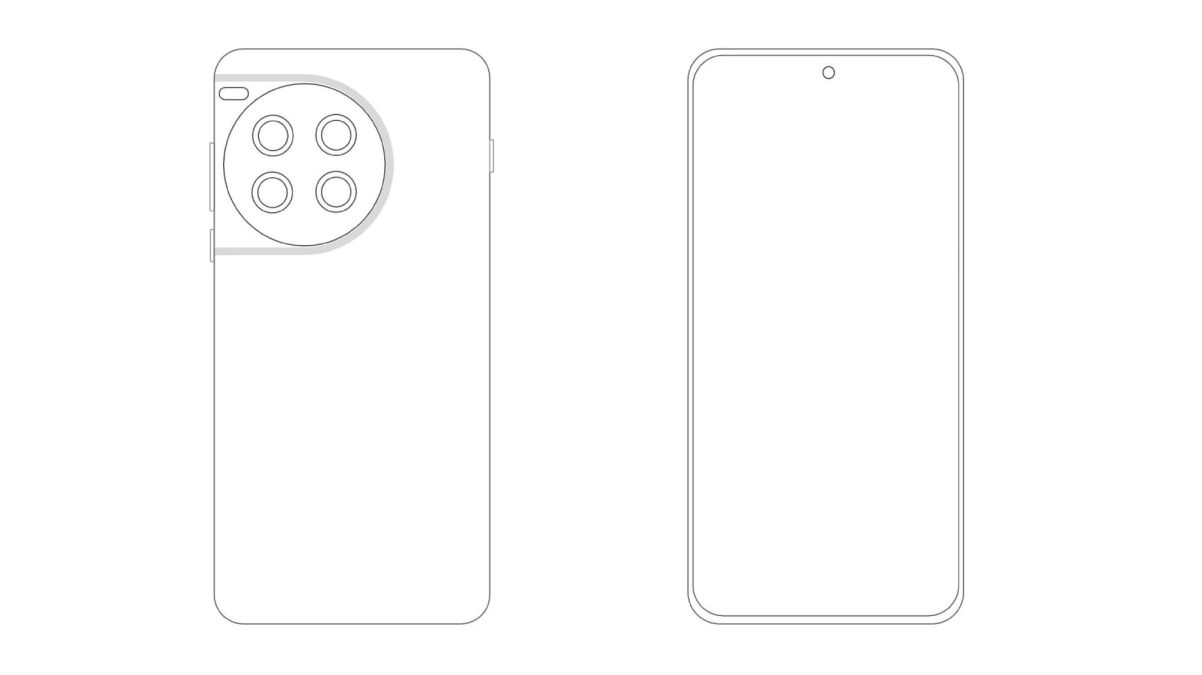
OnePlus is expected to unveil the OnePlus Ace 3 Pro in China soon. It may not launch before the June 18 shopping festival in the country, which suggests that it may either debut by the end of this month or in early July. There have been multiple reports that the Ace 3 Pro would have arrived with a revised rear design. Today, tipster Digital Chat Station released a schematic of an engineering prototype of an upcoming smartphone. While he did not mention the device’s name, it is quite evident that he may have revealed the OnePlus Ace 3 Pro’s design.
OnePlus Ace 3 Pro design
OnePlus Ace 3 Pro schematic by DCS
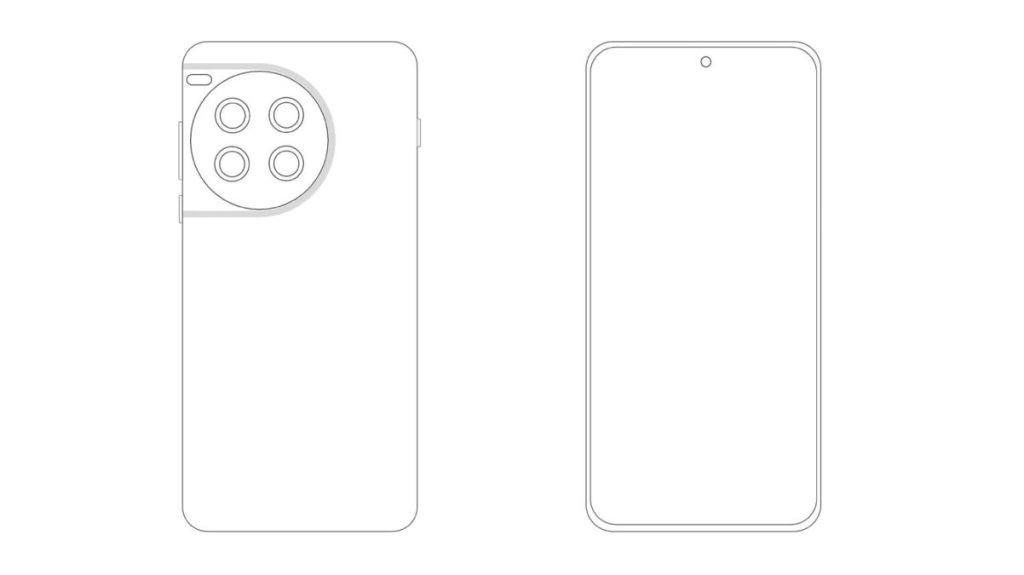
The alleged OnePlus Ace 3 Pro shown in the above schematic has a similar design to the OnePlus Ace 3. The device will have a curved edge screen on the front, while the back panel will have a round camera module. A pill-shaped LED flash will be available at the left corner of the camera module. The left edge of the device will have an alert slider, while the right will have a volume rocker and a power button.
The company has seemingly introduced some changes to the Ace 3 Pro’s camera module. Unlike the previous flagship models from OnePlus, the camera module of the Ace 3 Pro does not seem to fuse with the edge of the device. According to reports, the Ace 3 Pro will feature a metal middle frame and a ceramic, leather, or glass back panel. It is also said to offer IP64-rated dust and water resistance.
OnePlus Ace 3 Pro specifications (rumored)
According to reports, the OnePlus Ace 3 Pro will have a 6.78-inch OLED panel that offers a 1.5K resolution, a 120Hz refresh rate, up to 4,500nits of maximum brightness, and an in-screen fingerprint scanner. Under the hood, it will have the Snapdragon 8 Gen 3 chipset, up to 24 GB of LPDDR5x RAM, 1 TB of UFS 4.0 storage, and a 6,100mAh battery with 100W fast charging support.
On the front, it will have a 16-megapixel selfie camera, and its back panel will feature a 50-megapixel (main, with OIS) + 8-megapixel (ultrawide) + 2-megapixel (macro) triple camera unit. The device will run on Android 14, based on ColorOS 14.1. It may arrive with a starting price of 3,000 Yuan (~$415).
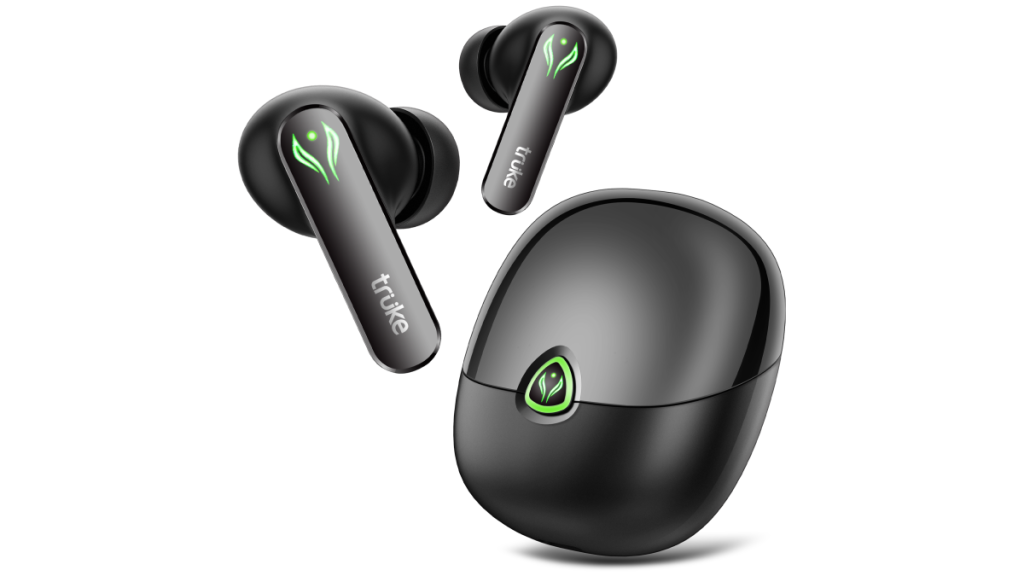
Truke has introduced its latest gaming-focused TWS earbuds, the BTG Ultra, in India. It offers key features, such as 13mm audio drivers, ultra-low latency, up to 60 hours of battery life, and Bluetooth 5.4 connectivity. Here is detailed information about the specifications, features, and price of the BTG Ultra.
Truke BTG Ultra specifications and features
Truke BTG Ultra – Mint Mist
The BTG Ultra features Truke’s Battle Mode, which optimizes the gaming experience with ultra-low latency of 40ms, ensuring quick response times and improved audio effects, which can be crucial for gaming. One of the key features is the RapidPower Charging Technology, which provides up to 10 hours of gameplay with just 10 minutes of charging. Its case contains a 500mAh battery, and it promises a total battery life of up to 60 hours.
In terms of audio quality, the BTG Ultra uses Truke’s 360 Spatial Audio technology, supporting SBC and AAC codecs, along with 13mm titanium drivers to ensure clear sound transmission. For communication, the earbuds feature Quad Mic PureVoice ENC Technology, which utilizes four microphones and advanced noise cancellation to improve call clarity.
Truke BTG Ultra – Metal Black
Additional features of the BTG Ultra include an IPX5 rating for water and sweat resistance, 1Step instant pairing technology with Bluetooth 5.4 for quick and stable connectivity, and support for voice assistants like Siri and Google Assistant, allowing users to manage gaming sessions, check notifications, and control devices hands-free.
Truke BTG Ultra price in India, availability
The Truke BTG Ultra is now available on Amazon, Flipkart, and Truke’s official website. Starting June 5, buyers can purchase it at a special launch price of Rs 899. After this period, the BTG Ultra will be sold at its regular price of Rs 1,099 after June 7. It is available in two colors—Metal Black and Mint Mist. Lastly, it comes with a 12-month warranty.
Nothing unveiled the Nothing Phone (2) in July 2023, leading to speculation that the Phone (3) will debut in the same month this year. In a video message, Nothing founder and CEO Carl Pei discussed the company’s plans for introducing AI features on its devices and hinted at the Phone (3)’s arrival.
Carl Pei reveals AI integration on Nothing Phone (3)
Carl Pei shared his thoughts on the current state of artificial intelligence and its integration with consumer technology. He acknowledged the significant attention AI has garnered, noting that while some of the developments are impressive, others can be confusing.
Pei emphasized that smartphones would continue to be the primary platform for consumer AI, citing the vast user base of over 4 billion and the annual shipment of more than 1 billion smartphones as evidence of their enduring relevance. He pointed out that the way we use smartphones needs a major overhaul, as the current user experience has remained largely unchanged for over a decade.
He envisions a future where smartphones offer a highly personalized, dynamic, and cross-device interface that fosters a more human connection with technology, making interactions feel more natural and intuitive.
Pei said that for the past two months, the Nothing team has been working on designing and prototyping AI interactions. He shared some initial concepts to illustrate their vision, with plans to introduce these innovations gradually, starting with the Phone (3) next year. So, this seems to be a good hint that the Phone (3) won’t be launching this year.
Since its launch, Nothing has focused on building comprehensive capabilities and has successfully established itself as a notable player in the smartphone industry, being the only company to do so in the past decade. Pei highlighted the company’s commitment to a creative culture that prioritizes exceptional user experiences and thoughtful integration of software and hardware. With stability and solid growth plans in place, Nothing is ready to advance further and make significant contributions to the consumer AI landscape.
Oppo held a press event in London on Wednesday (June 5) to reveal that it will be bringing generative AI features to 50 million users across the world by the end of this year. According to GSMArena, the company shed information on the global launch of the Reno 12 series and the next-generation Find X-series of smartphones.
Reno 12 series global launch in June
Reno 12 series teaser for the global market
The report states that the Reno 12 series of smartphones will debut later this month (June) in the global market. Last month (May), the Reno 12 and 12 Pro debuted in China with the Dimensity 8250 and Dimensity 9200+ chipsets. It is unclear whether the same phones will be released in global markets.
The company showcased the teaser image above during the event. While the company did not reveal anything else about the Reno 12 series, the image suggests that the global market may receive a standard variant and a Pro model.
Oppo Find X series to return to global market
Oppo unveiled the Find X5 series of smartphones in February 2022. Oppo continued to launch the X6 and X7 series in China but skipped these devices for markets outside of China.
According to reports, the Find X8 with the forthcoming Dimensity 9400 chipset will debut in October of this year in China. Expected to feature the Snapdragon 8 Gen 4, the Find X8 Ultra could potentially launch in Q1 2025. Now that the brand has confirmed that the Find X series will return to the global market, it remains to be seen whether both the X8 and X8 Ultra will be available internationally.
Lenovo has a fresh batch of laptops on the horizon, revealed by Eurasian Economic Union (EEC) certification listings. These listings offer some insights into upcoming Intel processors and Lenovo’s naming conventions.
Lunar Lake and Arrow Lake are two Intel codenames that specifically stand out
Two new Intel codenames emerge: Lunar Lake and Arrow Lake. The Yoga Slim 7 15ILL9, a 15.3-inch consumer laptop expected this year, will be the first to sport the Lunar Lake processor. Look out for the Yoga Pro 7 14IAH10, a 14-inch consumer laptop launching in 2025 (successor to the YOGA Pro14s), powered by the Arrow Lake processor.
The IdeaPad Slim lineup gets an update with various models in 14″, 15.3″, and 16″ screen sizes. The Gen 9 version with a 15.3″ display is expected this year, likely packing the current Intel Raptor Lake (13th Gen) processor or its refresh. The 14″ and 16″ versions belong to the upcoming Gen 10 lineup expected in 2025.
Another wave of IdeaPad Slim laptops arrives under the IdeaPad Slim 3 moniker. Similar to the Slim 5, these will come in 14″, 15.3″, and 16″ displays but are slated for a 2025 launch, featuring the Raptor Lake or its refresh processor.
Forget building your own night-time off-road UTV, Kawasaki‘s got you covered with the all-new Teryx KRX Blackout edition. This beast is designed specifically for nighttime adventures, featuring a menacing blacked-out exterior and interior to blend into the darkness. But it’s not just about looks – the Blackout comes loaded with upgrades for conquering those trails after dark.
The UTV has a huge LED light bar on the roof with various lighting modes
The package includes a massive 38-inch LED light bar on the roof with various lighting modes, including a special Kawasaki green glow. Three additional 8-inch K-Glow light bars are scattered across the vehicle for extra illumination.
Kawasaki didn’t forget the fun factor either. The Blackout boasts a roof and a thumping sound system with speakers and a subwoofer for your off-road jams. For added protection and utility, the Blackout gets steel bumpers front and rear, along with a powerful 4,500-pound Warn winch to help you pull through tough situations.
Under the hood, the Blackout packs the same powerful 999cc engine and long-travel suspension as the standard Teryx KRX, ensuring a thrilling ride over any terrain.
At $24,799, the Kawasaki Teryx KRX Blackout seems like a well-equipped package for those who crave nighttime off-road adventures without the hassle of building their own customized rig.
YouTube has quietly updated its firearms policy to restrict certain gun-related content. Here’s the gist: Starting June 18th, videos featuring homemade or automatic firearms, along with certain firearm accessories, will be age-restricted to viewers 18 and older. Tutorials on removing safety devices from firearms are completely banned, regardless of age.
The prohibitions apply only to real-world firearms, not games or movies
According to YouTube, these changes aim to adapt their policies to the evolving online landscape. The increased availability of 3D printing, for example, prompted them to expand restrictions on homemade firearm content.
It’s important to note that these prohibitions only apply to real-world firearms, not video games, movies, or other artistic content. Exceptions may also be made for educational content deemed to be in the public interest, such as military training footage, news reports, or warzone videos.
This update comes after a watchdog group, the Tech Transparency Project (TTP), raised concerns last year about YouTube’s algorithm recommending violent gun-related content, including weapon modification tutorials, to underage users. Their investigation involved creating child accounts and monitoring their recommendations after watching popular video game videos.
The TTP applauds the update but emphasizes the importance of robust enforcement. While they view it as a step in the right direction, they question the delay and highlight the need for strong content moderation to ensure these new policies effectively protect younger viewers from potentially harmful gun-related content.
We use cookies on our website to give you the most relevant experience by remembering your preferences and repeat visits. By clicking “Accept”, you consent to the use of ALL the cookies.
This website uses cookies to improve your experience while you navigate through the website. Out of these, the cookies that are categorized as necessary are stored on your browser as they are essential for the working of basic functionalities of the website. We also use third-party cookies that help us analyze and understand how you use this website. These cookies will be stored in your browser only with your consent. You also have the option to opt-out of these cookies. But opting out of some of these cookies may affect your browsing experience.
Necessary cookies are absolutely essential for the website to function properly. This category only includes cookies that ensures basic functionalities and security features of the website. These cookies do not store any personal information.
Any cookies that may not be particularly necessary for the website to function and is used specifically to collect user personal data via analytics, ads, other embedded contents are termed as non-necessary cookies. It is mandatory to procure user consent prior to running these cookies on your website.