Lenovo‘s YOGA 7 2024 AIO PC now enters pre-sale in China. It equips the Ryzen7 8845HS processor and also offers an optional RTX 4050 graphics. Let’s walk through all the specifications, features, and prices of this product.
This all-in-one computer offers a 27-inch 2560 x 1440 resolution panel hardware level solution for low blue light emission. In addition to that, it boasts 100% sRGB and 95% DCI-P3 color gamut rating. It also equips TUV Rheinland with eye protection certification. You can use this device as an external display for your laptop, game console, smartphone, tablet, etc.
The highlight is the versatile display
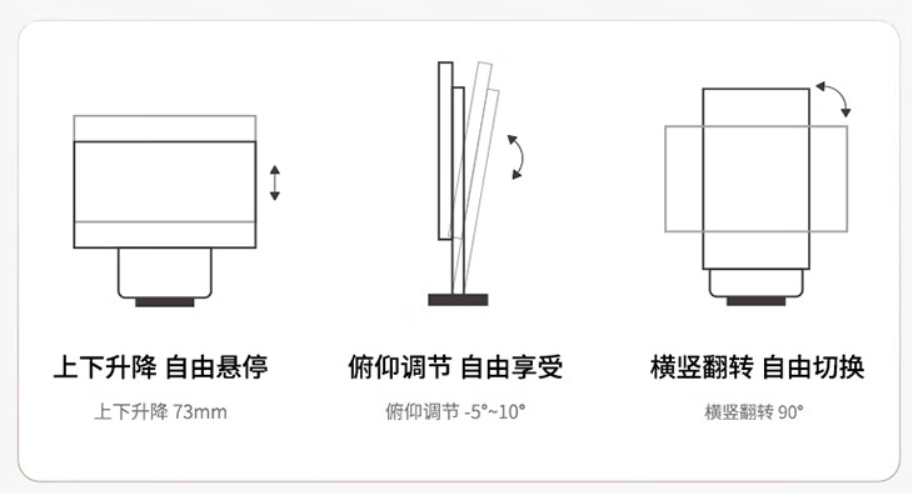
You can lift the screen up and down 73mm and can also adjust the pitch angle from -5°~10°. You can also flip the display by 90° and make it horizontal and vertical based on your requirements.
Moving on to the performance, this reasonably compact PC reportedly boasts the same cooling system designed for game consoles. It includes “high-efficiency composite heat pipes” and large cooling fans that meet the cooling requirements during heavy tasks. It enables a performance release or TDP of 80W.
You can also switch between the three performance modes, namely quiet, balance, and beast mode easily with the Fn+Q shortcut. Reportedly the cooling fans in this machine operated below 33dBA in beast mode.
Ports:
On the back
USB-A 3.2 Gen2
2x USB-A 2.0
USB-C 3.2 Gen 2
RJ45 Gigabit network port
DP 1.4
power interface
Left
Full-featured USB-C input
USB-A 3.2 Gen 2
3.5mm headphone jack
The Yoga Pro 27 2024 can be used to charge your other devices such as a laptop with up to 95W of power delivery. It eliminates the need for extra cables on your desk and offers a seamless user experience with compatible devices.
Oppo A3 Pro is all set to go official on April 12 in China. Ahead of the launch, the device has been available for reservations through multiple retailer platforms in the country, both in online and offline stores. Oppo says that the online reservation volume across the entire network is 217 percent of the previous generation, the Oppo A2 Pro from last year.
Oppo A3 Pro variants
Oppo A3 Pro pre-sale
Oppo has already confirmed that the A3 Pro comes in three options: 8GB RAM + 256GB storage, 12GB RAM + 256GB, and 12GB + 512GB storage. A premature listing in China Telecom’s product library revealed that these devices may be priced at 1,999 Yuan (~$275), 2,199 Yuan (~$300), and 2,499 Yuan (~$345), respectively. The device will be available in three options, such as Azure, Pink, and Mountain Blue. ‘
Oppo A3 Pro specifications (rumored)
Oppo is yet to reveal the specifications of the Oppo A3 Pro. It has a 6.7-inch AMOLED display that offers FHD+ and a 120Hz refresh rate. The Dimensity 7050 chipset with up to 12 GB of RAM will power the device. It will offer up to 512 GB of storage and a 5,000mAh battery with 67W fast charging support.
The A3 Pro will come preloaded with ColorOS 14-based Android 14. It will have an 8-megapixel camera on the front, and a 64-megapixel + 2-megapixel dual-camera system on the back. It will feature an in-screen fingerprint sensor for security. It measures 7.89mm in thickness and weighs 7.89 grams.
One of the major highlights of the A3 Pro is its durability factor. It will be Oppo’s first smartphone to feature Oppo’s Crystal Shield glass protection. In addition, it will have an IP69 rating for top-notch protection against dust and water damage.
The past 24 hours has been pretty exciting for tech enthusiasts, with Redmi unwrapping two exciting products, the Redmi Pad Pro and the Redmi Turbo 3. Both devices offer premium specs at an affordable price tag. The Turbo 3 also has cool features like Air Gestures and an AI-based object eraser feature that is similar to Pixel’s Magic Eraser.
Redmi also revealed Harry Potter special editions of both these models (yes, including the tablet!) and they look absolutely amazing.
Google Photos is getting a major upgrade! Following earlier reports hinting at potentially offering the Magic Editor for free to all users, Google has now announced it’s making several AI-powered editing tools, previously exclusive to Pixel phones and Google One subscribers, free for all users starting May 15th.
Magic Eraser, a favorite for removing unwanted objects from photos, is now free for all Google Photos users. But only Pixel users get unlimited free use, others get only 10 free edits per month.
In other interesting news, Xiaomi’s upcoming foldable smartphone models, the MIX Flip 4 and Fold 4, will soon be unveiled. Thankfully, we don’t have to speculate too much about these models, as leaks have shed light on their features.
The Xiaomi MIX Fold 4 features a quad-camera system with upgraded sensors compared to its predecessor. The highlight is the 50MP Sony IMX800 main sensor (also known as the Light Hunter 800), found in devices like the Redmi K70 Pro. This sensor offers a large 1/1.55-inch size for enhanced image quality.
Some claims suggest the Xiaomi Fold 4 might be limited to the Chinese market. A lot more details are revealed in our article here.
We recently learned that the Xiaomi SU7 has a special Super Power-Saving Mode that caps the speed at 90 kmph, turns down the AC, and deactivates other premium features to extend its range. When the estimated range dips below 50km, the car prompts you to activate this mode, maximizing battery life. Manual activation and deactivation are also available.
BOSE has announced its Ultra Open earbuds in India, featuring a unique design. It features an open ear design, meaning it doesn’t obstruct the ear canal by having to be plugged inside the ear. This makes them ideal for those who want to avoid the discomfort of wearing earphones and headphones. The audio device has a G-shaped design with a joint that attaches around the user’s earlobe and a round barrel that sits behind it.
Unfortunately, despite its premium features, it does not feature ANC.
Xiaomi has been releasing gaming products under the Redmi sub-brand for quite some time now, and we can now say that they have introduced a great gaming television, Redmi MAX. What makes this television a ‘gaming TV‘ is its screen refresh rate of 144 Hz. This television is not just for watching movies; you can play your console games smoothly on a massive 100-inch screen with a 144Hz refresh rate.
Here are some more interesting News stories from the past 24 hours!
Motorola has just shared a new teaser for an upcoming G series mid-range smartphone. The device in question is the Moto G64 5G, which is set to launch in the Indian market next week. But ahead of its official release, key specs and features of the device were revealed in the latest teaser.
Qualcomm seems to be working on three new mid-range chips: SM4635, SM6650, and SM7635. The SM4635, code named, “pitti“ is supposed to be Snapdragon 4 Gen 3. The SM6650 will reportedly be the successor to the Snapdragon 6 Gen 1 and the SM7635, code named, “volcano“ is said to be placed below Snapdragon 7+ Gen 3.
Xiaomi is working on a new HyperOS-powered phone called the Redmi 13. The device was recently spotted on various certification platforms. Now, it has surfaced on two more major platforms, which hints at its imminent launch.
Xiaomi has unveiled its latest Mijia 60L Electric Water Heater N1 (geyser) in the Chinese market, boasting features designed for rapid heating, long-lasting performance, and smart connectivity. The electric water heater is available for pre-order at a price of 1099 yuan (approximately $151), with the initial price set at 999 yuan (approximately $138).
Pixel Experience project was initially launched in 2017, aiming to bring some exclusive Pixel features to non-Pixel Android devices. This allowed users to enjoy certain Pixel-exclusive features and the aesthetically pleasing stock Android UI provided by Google on their non-Pixel devices.
But recently, Henrique Silva, the owner of the Pixel Experience project, made an announcement on his website, stating, “Everything has to come to an end, sometime…” The Pixel Experience project is officially coming to a close.
Xiaomi is expanding its audio product portfolio with the launch of its first open-back headphones. Aptly named Xiaomi Open Earphones, the earbuds were launched alongside the Redmi Turbo 3 smartphone and Redmi Pad Pro tablet at a recent launch event. Let’s walk through its details here.
Xiaomi Open Earphones Specifications
Xiaomi Open Earphones have an ergonomic open ear hook design that contours to the shape of the ear for a secure and natural fit.
Inside the earbuds are flexible nickel-titanium alloy wires that can be bent and adjusted without compromising fit. It won’t budge during daily activities or exercise.
Weighing 9.6 grams, these surely aren’t the lightest pair of earbuds. But they are designed to rest comfortably on your earloop and Xiaomi has also used soft, skin-friendly silicone for the ear tips to ensure a comfortable listening experience.
Audio
Unlike traditional in-ear headphones, Xiaomi’s open-back design allows for real-time perception of surrounding sounds. This makes them ideal for various scenarios, from daily commutes to office environments, all while ensuring you can stay attuned to your surroundings.
Xiaomi has equipped its first open-back earphones with custom 17 x 12mm drivers and DLC diaphragms. There’s also a specially customized linear sound unit that caters to a wide range of musical preferences.
Furthermore, the headphones support the LHDC high-end codec, enabling high-definition audio up to 96kHz. They are also Hi-Res Audio Wireless Gold Label certified and boast dual certification by QQ Music Zhenpin Mastering and Zhenpin Space Audio for a variety of high-fidelity options.
Since they are open-back earphones, sound leakage can be a problem for users. Fortunately, Xiaomi has been thoughtful of that and has included a new independent anti-leakage system.
The system, certified by the China Institute of Metrology, combines a traditional acoustic anti-leakage structure with a new Φ 10mm anti-leakage sound unit.
The unit actively emits reverse-phase sound waves to significantly reduce sound leakage during calls, improving call privacy by 100%.
The headphones also have a dual-microphone array and beamforming algorithm that improves voice pickup and reduces environmental noise to deliver clearer call quality.
Connectivity-wise, the Xiaomi Open Earphones can seamlessly connect with smartphones, tablets, and other devices running the HyperOS operating system.
Last but not least, the headphones offer up to 7.5 hours of playback on a single charge. When combined with the charging case, the total playtime extends to a significant 38.5 hours.
Price and Availability
The Xiaomi Open Earphones retail for 699 yuan (approximately $103 USD), with an introductory price of 649 yuan (approximately $96 USD).
They will be available for purchase starting April 10th at 8:30 PM CST through Xiaomi Mall, Tmall, JD.com, Xiaomi Youpin, Xiaomi Home, and other authorized channels.
Realme has launched its latest true wireless earbuds, the Realme Buds T110, alongside the Realme GT Neo 6 SE at today’s launch conference. The Buds T110 targets budget-conscious users seeking a balance between affordability and functionality. Let’s walk through its specifications, features, and pricing details here.
Realme Buds T110 Specifications
The Buds T110 comes in four color options – black, white, Green, and Blue, the latter of which is said to be available at a later date. Each earbud weighs a mere 4.09 grams, ensuring a comfortable and secure fit for extended listening sessions.
For audio, the buds are equipped with a 10mm dynamic driver and a PEEK+TPU dome-top titanium-coated composite diaphragm.
There’s AI call noise reduction technology that minimizes background noise during calls to ensure clear communication. Additionally, the Buds T110 has an 88ms low latency mode, ideal for lag-free gaming.
The earbuds also offer a long-lasting battery life of up to 7 hours on a single charge. With the charging case, the total playback time extends to 38 hours.
They support fast charging for quick-topups. According to Realme, you can get 20 minutes of playtime with just a 10-minutes of charge.
The Buds T110 makes use of Bluetooth 5.4 for a stable and efficient connection. The earbuds also support binaural simultaneous transmission technology which allegedly allows for independent audio transmission to each earbud for improved audio synchronization.
Last but not least, the earbuds feature IPX5 water resistance so you can use them during workouts or even in light rain.
Price and Availability
The Realme Buds T110 are priced at an affordable 129 yuan (approximately $18 or Rs 1,500). That price makes T110 a compelling option for budget-minded consumers seeking a feature-rich true wireless earbud experience. It is available for purchase in China from JD.com.
iQOO unveiled the iQOO Neo 9 and Neo 9 Pro sub-flagship offerings in December 2023. There have been reports that the brand is working on another Neo 9 series phone, but its official moniker is not known yet. Therefore, it is tentatively called the iQOO Neo 9s Pro or Neo 9 Racing Edition. Now, a new Vivo device has appeared in the database of 3C certification. It seems that it could be the upcoming Neo 9s Pro smartphone.
Purported iQOO Neo 9s Pro 3C certified
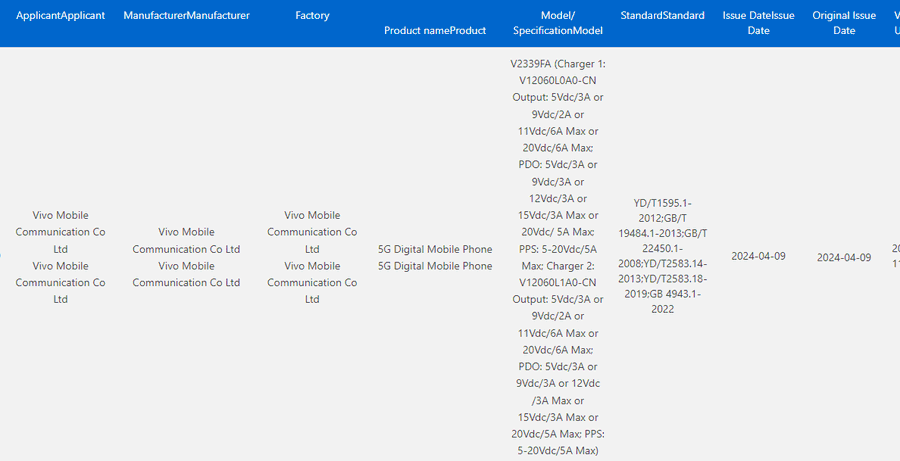
The iQOO Neo 9 and Neo 9 Pro available in China have the model numbers V2338A and V2339A. As can be seen in the above image, a new Vivo device bearing the V2339FA model number has been approved by China’s 3C authority.
The similarity in the model number suggests that the V2339FA device could be a new variant of the iQOO Neo 9 Pro. Hence, it is likely that it could be the rumored iQOO Neo 9s Pro. It is advisable to wait for further reports to know the exact moniker of the device.
According to the V2339FA device’s 3C certification, it may ship with a 120W fast charger. Unfortunately, nothing else is known about the device.neo
According to reports, Vivo will power the Vivo X100s and Vivo X100s Pro smartphones with the upcoming Dimensity 9300 Plus chipset when they launch in China in May. It remains to be seen whether the alleged Neo 9s Pro may come equipped with the Dimensity 9300 Plus chip.
In related news, iQOO will unveil the iQOO Z9 series on April 24 in China. The lineup will have three phones, such as the Z9, Z9x, and Z9 Turbo. So far, the brand has confirmed that the Turbo model will have the Snapdragon 8s Gen 3 chip and a 6,000mAh battery.
Realme has officially launched its latest smartphone, the Realme GT Neo 6 SE, in China today. The successor to the 2023 GT Neo 5 SE, the new phone brings several impressive features, including a 6000-nit display and a powerful Snapdragon 7+ Gen 3 processor. Here is all the information on the specifications, features, and price of the device.
Realme GT Neo 6 SE Specifications
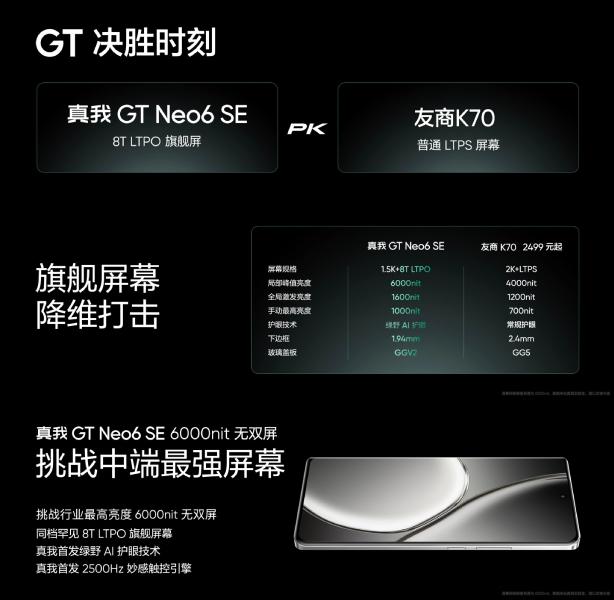
The centerpiece of the Realme GT Neo 6 SE is undoubtedly its display. The phone has a 6.78-inch flexible OLED panel that utilizes BOE’s S1 luminescent material, achieving an industry-leading peak brightness of 6000 nits.
However, it’s important to note that this 6000-nit peak brightness is likely reserved for HDR content or specific scenarios. The phone has a typical global maximum brightness of 1600 nits and a manual maximum brightness of 1000 nits for everyday use.
Further, the screen has a 2780 x 1264 resolution and supports a smooth 120Hz refresh rate with 8T LTPO technology. It also supports a 2500Hz instantaneous touch sampling rate for precise touch response, especially beneficial for gamers.
Then there’s 2160Hz high-frequency PWM dimming and 3+1 Pulse DC-like low-stroboscopic technology for a comfortable viewing experience. The display is protected by Corning Gorilla Victus 2 and has narrow bezels measuring just 1.36mm.
Realme has also incorporated its new Greenfield AI eye protection technology and AI gaming eye protection technology in the GT Neo 6 SE. The company claims it is the industry’s first active eye protection solution.
The smartphone comes in two color options: Silver and Green, the former of which uses nano mirror coating and AG technology to achieve a unique titanium-like texture.
Performance
Under the hood, the Realme GT Neo 6 SE packs the new Snapdragon 7+ Gen 3 SoC (system-on-chip). It’s built on the same fabrication and architecture as the flagship Snapdragon 8 Gen 3.
As the processor’s raw horsepower is similar to Qualcomm’s top-tier chip, Realme has incorporated a large 10014mm² heat dissipation system with a mid-frame ice-sealed structure for efficient thermal management.
Additionally, the GT Neo 6 SE features gaming-centric features like GT mode 5.0 for optimized gaming performance, Geek Performance Panel 2.0 for monitoring system performance, and allegedly a “burning mode” for sustained high performance. Gamers will also appreciate features like game-specific memory optimization and a full-frequency band Esports antenna matrix for a more stable gaming connection.
Keeping the lights on is a 5500mAh battery and and it’s backed by a SUPERVOOC S power management chip for extended battery life. Even with such a large battery, Realme managed to keep the phone lightweight at just 191g, thanks to the ultra-thin high-energy battery design and full-link GaN technology.
The phone supports 100W fast charging which refuels 50% battery in just 12 minutes. Realme claims the battery can maintain its health for over 4 years.
The Neo 6 SE also comes with a new Xiaobu Assistant which offers AI-powered features like online translation, AI content generation, article summarization, call summaries, and more.
Cameras and others
The Realme GT Neo 6 SE has a triple-camera system on the back. The main sensor is a 50MP Sony IMX882 sensor with optical image stabilization (OIS). It’s accompanied by an 8MP ultra-wide-angle sensor (Sony IMX355). And there’s a 32MP Sony IMX615 camera on the front for selfies.
The smartphone comes with additional features like IR blaster, an X-axis linear motor for haptic feedback, all-round NFC for payments and connectivity, dual-frequency GPS, IP65 dust and water resistance, an in-display fingerprint sensor, and the latest Realme UI 5.0 operating system.
Price and Availability
The Realme GT Neo 6 SE will be available for purchase in China starting April 17th through all channels. The phone will be offered in a limited-time trial purchase window today from 11:30 AM to 12:00 AM CST. Here’s a breakdown of the pricing:
It was recently reported last week that Vivo is working on three new phones, such as the Vivo Y38 5G, Vivo Y03s, and Vivo Y03t. The report revealed that these devices have V2343, V2333, and V2344 model numbers, respectively. Now, the Y38 has received approval from the Bluetooth SIG and CQC certification platforms. Now, the Y38 5G has surfaced in the database of platforms like Bluetooth SIG, CQC, and Geekbench.
Vivo Y38 5G Bluetooth SIG, CQC listings
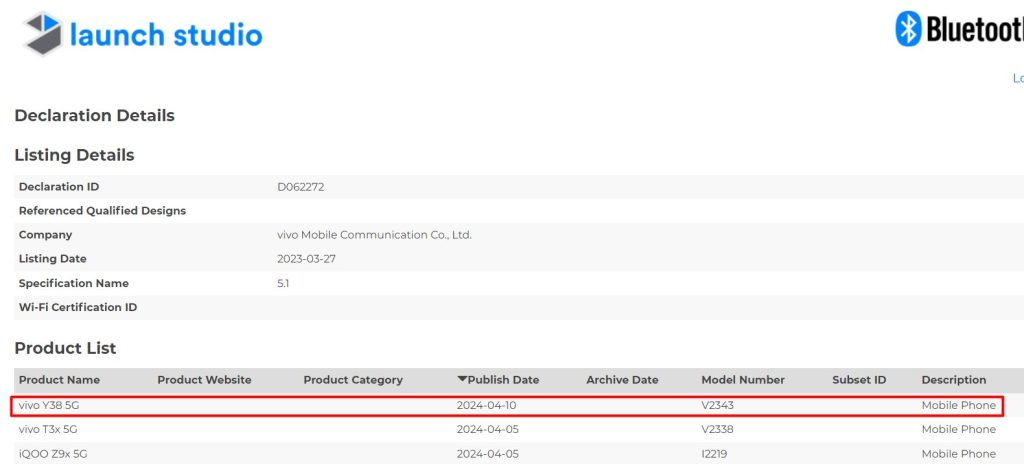
The Bluetooth SIG listing of the Vivo Y38 5G confirms its model number as V2343 and reveals support for Bluetooth 5.1 connectivity. Furthermore, the device has appeared on CQC certification, indicating that it will support 44W fast charging.
Vivo Y38 5G CQC listing
Vivo Y38 5G Geekbench listing
Additionally, the Vivo Y38 5G appeared in the database of the Geekbench benchmarking site back in January. However, it was spotted only after it emerged in Bluetooth SIG’s database. The Geekbench listing reveals that the device will come equipped with a Qualcomm chip, which has the “parrot” codename. The details mentioned in the source code of the listing reveal that the Y38 5G will feature the Snapdragon 4 Gen 2 chipset.
Vivo Y38 5G Gekebench listing
The Geekbench listing also reveals that the device will have 8 GB of RAM and run on Android 14. In the single-core test, the device scored 3092 points and in the multi-core test, it recorded a score of 7035.
Devices that appear in Bluetooth SIG are known to go official within a timeframe of around a month. Hence, it appears that the Y38 5G may go official in May. Unfortunately, the other details of the smartphone are still under wraps.
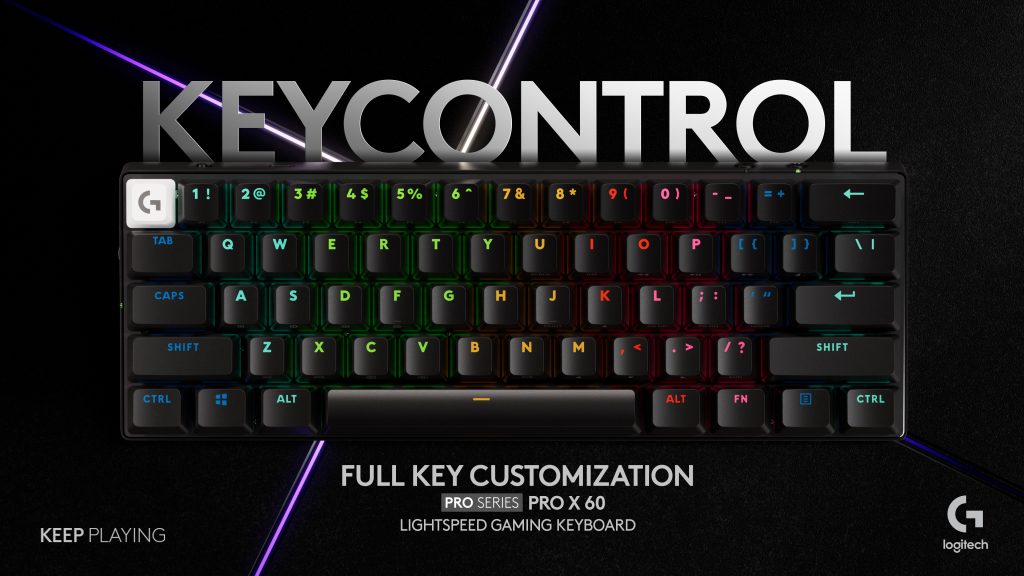
Logitech has introduced the G PRO X 60 LIGHTSPEED Gaming Keyboard, focusing on the needs of professional gamers. This new keyboard is smaller, making it easier to fit on crowded desks and to take to competitions.
Logitech G Pro X 60 keyboard specs & features:
The PRO X 60 uses a 60 percent layout, which is becoming a favorite among esports players for its space-saving benefits. This layout helps with mouse movement in fast-paced games and makes the keyboard portable for travel.
An important feature of the PRO X 60 is the KEYCONTROL technology, which allows players to program up to 15 functions per key. This feature is designed to make sure gamers have all the commands they need at their fingertips, despite the keyboard’s reduced size.
The keyboard also includes Logitech G’s LIGHTSPEED wireless technology, ensuring a reliable and fast connection. This technology is tested to work well even in places with lots of wireless signals, which is often the case at gaming tournaments.
For quick reactions in games, the PRO X 60 comes with GX Optical switches. These switches are faster than traditional ones because they use light for activation.
Other features include durable dual-shot PBT keycaps, customizable LIGHTSYNC RGB lighting, a game mode switch, volume control, media controls, Bluetooth support, and it comes with a semi-hard carrying case.
Pricing & availability
The PRO X 60 LIGHTSPEED is available for pre-order in three colors: Black, White, and Pink, at a price of $179 in the US and €229 in Europe. It’s set to be available by late April.
Back at CES 2024, Sennheiser unveiled its Momentum Sport earbuds. What makes these earbuds special is the integrated heart rate and body temperature sensors. The Momentum Sport earbuds are now on sale in major markets like the US, UK, and EU.
In the US, you can order the Sennheiser Momentum Sport Earbuds via Amazon for $329.95. Customers in the UK and EU can get their hands on a pair through the brand’s official website for £260/€330, respectively.
The Sennheiser Momentum Sport Earbuds offer a practical mix of features, including a semi-open design for staying aware of surroundings, adaptive noise cancellation, and anti-wind mode. They feature a shock-proof chassis and an IP55 rating for water and dust resistance, ideal for outdoor use.
As mentioned above, these earbuds come with heart rate and body temperature sensors, powered by Polar, that help users track their workout intensity and body condition. These earbuds are compatible with popular fitness apps like Apple Watch/Health, Garmin Connect, Strava, and Peloton.
The earbuds offer six hours on a single charge and an additional 18 hours from the charging case. Available colors include polar black, burned olive, and metallic graphite.
Xiaomi Auto hosted another session of their “Q&A program” to answer user inquiries about the Xiaomi SU7 electric car. The company revealed that the SU7 prioritizes long journeys with its Super Power-Saving Mode. When the estimated range dips below 50km, the car prompts you to activate this mode, maximizing battery life. Manual activation and deactivation are also available.
The Power Saving mode also turns off heated seats and steering wheel
Super Power-Saving Mode reduces power consumption by limiting functionalities. This includes a capped speed of 90km/h, smoother acceleration, and reduced air conditioning performance. Comfort features like heated seats and steering wheel, ambient lighting, and heated mirrors are also deactivated.
To further conserve energy, the mode disables intelligent driving assistance, parking functions, entertainment systems, and even the car refrigerator. Don’t worry, Super Power-Saving Mode deactivates automatically when the estimated range climbs above 300km. Drivers can also temporarily override the speed limit for short bursts when needed.
Also, the SU7 features a camera positioned between the steering wheel and instrument screen to monitor driver alertness. This camera detects signs of fatigue or distraction like closed eyes, head turns, or phone use.
If fatigue or distraction is detected, the system issues voice warnings and displays on-screen reminders to refocus on driving. Xiaomi assures users that the system only analyzes driver behavior locally within the vehicle, with no image data recorded or transmitted externally. Users who don’t require the driver fatigue/distraction reminder can disable the function or the camera itself through the car’s central control screen settings.
Meta Platforms has unveiled details about their next-generation artificial intelligence chip, codenamed “Artemis.” This chip is designed to address the ever-increasing need for processing power required to run AI features across their social media platforms like Facebook, Instagram, and WhatsApp.
This launch means that Meta will rely less on external suppliers like Nvidia
The development of Artemis addresses two key goals for Meta. Firstly, it reduces their dependence on external suppliers like Nvidia for AI chips. This shift will not only give Meta more control over their hardware but also help them reduce energy costs. Secondly, according to a Meta blog post, the chip’s architecture is specifically designed to optimize the balance between computing power, memory bandwidth, and memory capacity. This makes Artemis ideal for powering ranking and recommendation systems, a critical function for social media platforms.
However, the development of Artemis doesn’t signal the end of Meta’s relationship with Nvidia. CEO Mark Zuckerberg has confirmed plans to continue acquiring a substantial number of Nvidia’s H100 flagship chips this year. Together with acqusitions from other suppliers, Meta expects to have a combined total of 600,000 AI chips in 2024.
Made by Taiwan Semiconductor Manufacturing Co (TSMC) using a 5nm process, Artemis boasts three times the performance of Meta’s first-generation AI processor. The chip is already deployed in Meta’s data centers, actively supporting various AI applications. Additionally, Meta has plans to further expand the chip’s capabilities to handle generative AI workloads in the future.
If you own a Samsung Galaxy S20, S20+, or S20 Ultra, this news might make your day a little bit better. While these phones have passed Samsung’s initial software support timeframe, they won’t be completely left behind in terms of security, Samsung claims. Instead of the usual monthly updates, Samsung is transitioning these models to a new schedule of quarterly security patches. This means you’ll receive security updates every three months for an unspecified duration.
However its unclear if Samsung will extend support for the S20 FE as well
The news is slightly better for the Galaxy S20 FE. This model will continue to receive monthly security updates for a while longer. It’s unclear yet whether Samsung will extend support for the S20 FE with quarterly updates after its four-year software support cycle ends.
Released in February 2020, the Samsung Galaxy S20 boasts a large 6.2-inch Dynamic AMOLED 2X display with 120Hz refresh rate and Corning Gorilla Glass 6 protection. It comes in various colors and is water-resistant. The phone is powered by either Exynos 990 or Snapdragon 865 processor depending on region, and has a triple-lens rear camera system with a 64MP main sensor and a 10MP front-facing camera. It also offers a 4000mAh battery with various fast-charging options and wireless charging capabilities.
Alongside the Nitro 14 gaming laptop, Acer has also introduced a 14″ laptop in its Predator Helios series called the Acer Predator Helios Neo 14. This new laptop features Intel’s latest Core Ultra processors paired with low to mid-tier Nvidia GPUs.
Acer Predator Helios Neo 14 specs:
The Helio Neo 14 laptop comes with three display options: a 14.5” IPS WQXGA with resolutions of 3072×1920 at 165Hz, 2560×1600 at 120Hz, or 1920×1200 at 120Hz, all offering 100% sRGB coverage, complemented by NVIDIA Advanced Optimus technology.
Under the hood, the laptop will have three processor options: Intel Core Ultra 9, 7, or 5 processors. Graphics capabilities include Nvidia GeForce RTX 4070, 4060, or 4050 with varying VRAM capacities. The laptop comes with up to 32GB LPDDR5X SDRAM and storage options of up to 1TB PCIe Gen 4 NVMe. It is powered by a 76 Whr battery and includes a 230W AC adapter for convenient charging.
For connectivity, the laptop offers Intel Killer Wireless Wi-Fi 6E 1675i, ensuring high-speed internet access. Notable features include Acer PurifiedVoice 2.0 Triple-microphone array with AI Noise Reduction Technology for crystal-clear communication. Additionally, the laptop features a high-definition camera with up to 1080p resolution for video calls.
Pricing & availability
The Predator Helios Neo 14 (PHN14-51) is set to hit North American shelves in May, with prices starting at $1799.99. European availability is expected in June, with starting prices at EUR 1999.
Google Photos is getting a major upgrade! Following earlier reports hinting at potentially offering the Magic Editor for free to all users, Google now has announced it’s making several AI-powered editing tools, previously exclusive to Pixel phones and Google One subscribers, free for all users starting May 15th.
Free AI Editing Tools for Everyone: Google Photos Gets a Big Upgrade
Magic Eraser, a favorite for removing unwanted objects from photos, is now free for all Google Photos users. The tool can remove anything that disrupts your perfect shot, including people in the background, power lines, or anything else.
But that’s not all. Google is also making Photo Unblur free, which sharpens blurry photos using machine learning. Plus, you’ll get features like HDR effect for photos and videos, Portrait Light for adjusting light in portraits, and Color Pop to make specific colors stand out.
Alongside these tools, Google is also making the popular Magic Editor free. This tool uses advanced AI to allow you to make complex edits. You can reposition subjects, change the sky, fill in gaps, and more. Previously only on Pixel 8 phones, Magic Editor will now be available on all Pixel devices.
For everyone else (Android and iOS users with compatible devices), Google offers 10 free Magic Editor edits per month. You’ll need a Google One Premium plan (with at least 2TB of storage) if you need more.
These new features will be available on various devices, including Android phones running 8.0 or later, iPhones with iOS 15 or later (with at least 3GB of RAM), and even Pixel tablets. The rollout starts May 15th, so you might not see them immediately, but they’ll be arriving over the next few weeks.
Google’s decision to make these powerful AI tools free reflects the growing popularity of photo editing. With this move, Google Photos becomes an even more attractive option for anyone who wants to enhance their photos without the hassle of complex software.
In a recent press release, Acer has unveiled its new Nitro series gaming laptop, equipped with the latest Ryzen 8000 series processor.
The Acer Nitro 14 features a 14.5″ IPS display offering a WQXGA resolution (2,560 x 1,600) with a 120 Hz refresh rate, 16:10 aspect ratio, and 100 percent sRGB color coverage.
Under the hood, the laptop is equipped with up to AMD Ryzen 8040 series processors, with the top-end model featuring a Ryzen 7 8845HS processor that has a boost clock speed of 5.1 GHz. As for graphics, it features an NVIDIA RTX 4060 GPU with 8GB GDDR6 memory.
Cooling technology in the Nitro 14 includes a dual-fan system and liquid metal thermal paste on the CPU, designed to maintain performance under load by efficiently dissipating heat.
For connectivity, the Nitro 14 offers USB-C and USB-A ports, HDMI 2.1, and a microSD card reader, alongside multimedia features like stereo speakers, a trio of microphones, and customizable RGB keyboard lighting. Additionally, each Nitro 14 comes with a free month of Xbox Game Pass Ultimate, offering access to a wide range of PC games.
Pricing & availability
The Nitro 14 (AN14-41) is expected to hit store shelves in June 2024 with a recommended retail price of 1,399 euros.
Xiaomi continues to expand its innovative product family. The company’s next big move in this direction is the highly anticipated, new generation foldable smartphone, the MIX Fold 4. Though not officially unveiled, exciting details about this foldable have begun to emerge. We recently shared information about the phone’s satellite communication feature, and now even more of the Xiaomi MIX Fold 4’s impressive specifications have been revealed. Here are the details…
Xiaomi MIX Fold 4 Features Leaked
Xiaomi’s upcoming foldable smartphone models, the MIX Flip 4 and Fold 4, will soon be unveiled. Thankfully, we don’t have to speculate too much about these models, as leaks have shed light on their features. However, note that not every leaked detail is cause for celebration. For instance, some claims suggest the Xiaomi Fold 4 might be limited to the Chinese market.
Examining the technical specifications of the Xiaomi MIX Fold 4, we see that the device will utilize the powerful Snapdragon 8 Gen 3 processor. This aligns with expectations for a premium smartphone series. It’s encouraging to see Xiaomi’s continued commitment to the potential of foldable phones. Additionally, the impressive camera features of the Xiaomi MIX Fold 4 have also been unveiled
The Xiaomi MIX Fold 4 features a quad-camera system with upgraded sensors compared to its predecessor. The highlight is the 50MP Sony IMX800 main sensor (also known as the Light Hunter 800), found in devices like the Redmi K70 Pro. This sensor offers a large 1/1.55-inch size for enhanced image quality. Additionally, the MIX Fold 4 includes a 60MP telephoto camera with 2x optical zoom, a 13MP ultra-wide camera, and a 10MP sensor for 5x optical zoom.
Both the inner and outer displays feature 16MP selfie cameras. The screen resolution also appears to be slightly decreased compared to the Fold 3. While these leaks are compelling, they remain unconfirmed. We’ll need to wait for the official launch date (which is still unknown) for definitive information.
Google Pixel devices are now more powerful and enriched with Artificial Intelligence. With increased user interest, the Search giant introduced new Pixel devices like Pixel Foldable, Pixel Tablet, and Pixel Watch in recent years. These devices already possess some interesting features and powerful hardware, all at competitive prices. A recent discount on the Pixel Watch makes it a pure value-for-money wearable. Amazon is retailing the smartwatch at a discounted price of $180.
Google Pixel Watch Deal Unfolded
Pixel Watch usually retails for $250, but a $70 discount is making the Pixel Watch deal more sweeter. Interested buyers can grab it for $180. For the second time this year, the price of the smartwatch has been reduced under the price of $200. It is the lowest price the Pixel Watch is retailing.
Coming to features, the smartwatch bundles a heart rate monitor that senses your heart rhythm for ECG analysis. It features the ability to monitor activity throughout the day and also offers the ease of contactless payments. The notifications, Sleep tracking, Daily Workout details, and other basic features are also intact.
On top of that, the users can enjoy precise activity tracking including metrics like calories burned, and more using Fitbit activity tracking. The new buyers get a free six-month subscription to Fitbit Premium. Moreover, it received the Pixel Watch 2 features in a recent firmware update.
Along with features and functions, the Watch is well-protected to sustain again usual scratches as it bundles Corning Gorilla Glass. Moreover, the Pixel Watch can withstand up to 5 ATM water resistance.
Pixel Watch WiFi variant is currently on sale, and it is available in four different colors – Champagne Gold, matte Black, and Polished Silver /Charcoal Active band + Chalk Active band. The price reduction seems temporary, and could soon be revised to the original price soon. So, it is better to grab the Pixel Watch before the price gets hiked.
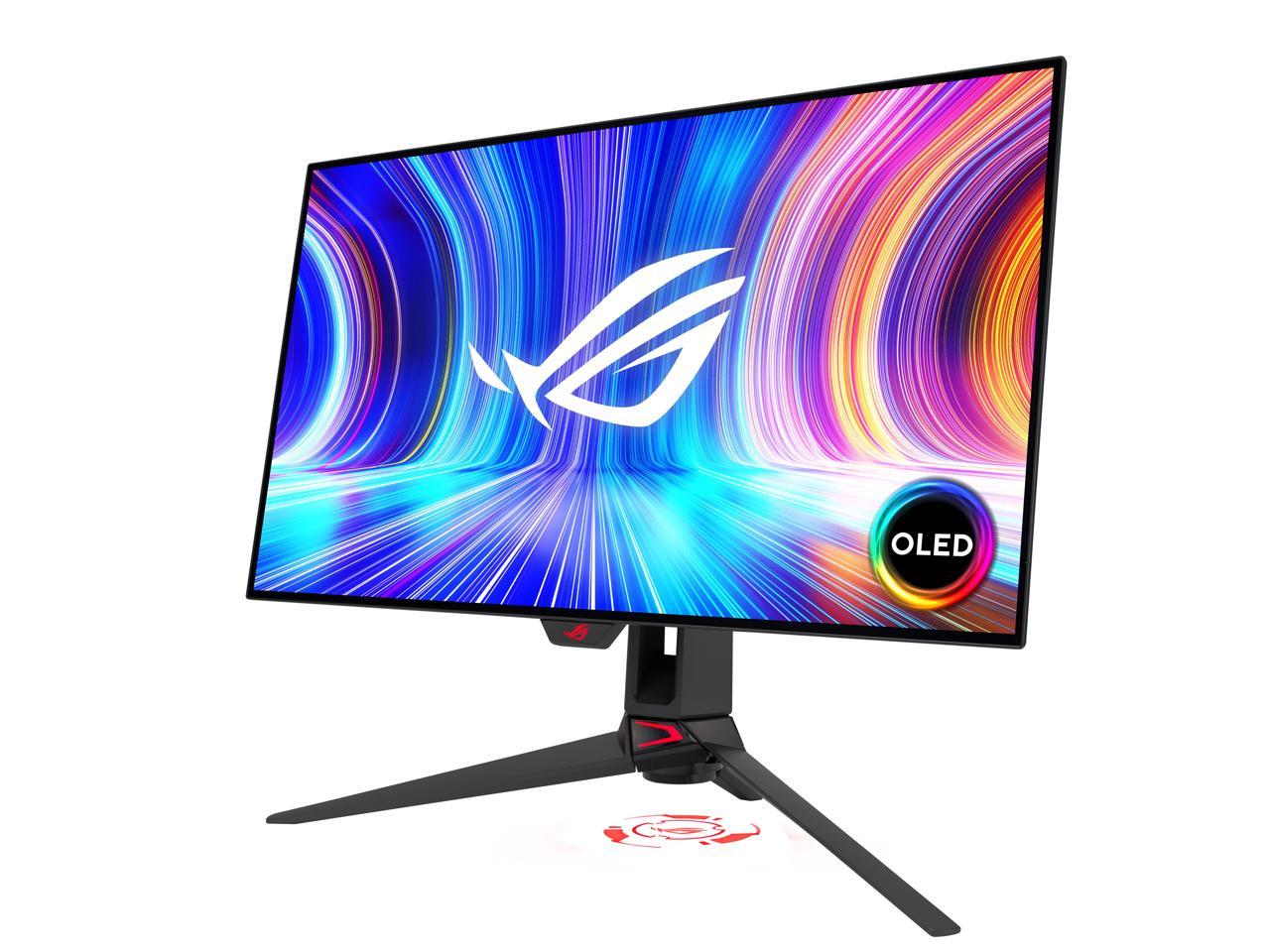
ASUS Republic of Gamers (ROG) has launched a new gaming monitor, the ROG Swift OLED PG27AQDM, in India. This monitor was initially introduced at CES 2023 and later became available to markets such as the US and China.
ASUS ROG Swift OLED PG27AQDM monitor specs & features:
This monitor features a 26.5-inch QHD OLED screen with 240Hz refresh rate and a quick 0.03ms response time. For tear-free gaming, it offers support for both NVIDIA G-SYNC and AMD FreeSync Premium.
The monitor stands out for its high-dynamic-range (HDR) performance, with a peak brightness of 1000 nits, 99% DCI-P3 color gamut coverage, and a contrast ratio of 1,500,000:1.
To improve durability and performance, ASUS has equipped the monitor with a custom heatsink and intelligent voltage optimization, which increases brightness by 17% and reduces temperature by 5% compared to similar models.
It also features an anti-glare coating and a ROG-exclusive Uniform Brightness setting to minimize eye strain during long gaming sessions. For customization and convenience, the monitor includes ASUS-exclusive GamePlus, GameVisual technology, TÜV Rheinland-certified Flicker-Free technology, and Low Blue Light technology.
The monitor’s design includes a unique stand for easy adjustment and a tripod socket for additional device mounting. It supports multiple connectivity options, including DisplayPort 1.4, HDMI 2.0, and USB hub.
Pricing & availability
The ASUS ROG Swift OLED PG27AQDM gaming monitor is on sale for Rs. 1,24,999 and can be bought from official ASUS stores and authorized partners.
If you’re looking for new wireless earbuds, you might feel a bit lost. There are so many different products from many different brands on the market. Plus, a lot of these products offer great features for their price, making the decision even harder. If you’re feeling this way, we have some good news for you. Amazon has released the all-new Echo Buds model, which offers amazing deals. With Bluetooth 5.2, Alexa, audio personalization, and 20 hours of battery life, it’s a product you shouldn’t miss. Here are the details…
Echo Buds 2023 Offer Premium Features at a Steal – Plus, They’re in Amazon’s One Sale
Amazon is now selling the new Echo Buds 2023 TWS earbuds for only $34. But what makes these TWS earbuds special? The answer might surprise you. Echo Buds don’t try to be fancy. Instead, they do a lot of basic things really well, and at a price that’s easy on your wallet. For example, if you spend a lot of time outdoors and want to block out the world with active noise cancellation (ANC), these are a great choice! Echo Buds deliver on that promise.
Love walking in the rain? No worries – Echo Buds are splash-proof, so they can handle a little weather. On top of that, they use Bluetooth 5.2 for a fast, smooth connection, and the charging case gives you over 20 hours of listening time. The product also boasts 5 hours of music listening time and 2 hours of talk time on a single charge.
Plus, the integrated Alexa voice assistant offers constant support. However, users can also choose Google Assistant or Siri. If these features sound exciting, learn more about the Echo Buds on Amazon’s website.
We use cookies on our website to give you the most relevant experience by remembering your preferences and repeat visits. By clicking “Accept”, you consent to the use of ALL the cookies.
This website uses cookies to improve your experience while you navigate through the website. Out of these, the cookies that are categorized as necessary are stored on your browser as they are essential for the working of basic functionalities of the website. We also use third-party cookies that help us analyze and understand how you use this website. These cookies will be stored in your browser only with your consent. You also have the option to opt-out of these cookies. But opting out of some of these cookies may affect your browsing experience.
Necessary cookies are absolutely essential for the website to function properly. This category only includes cookies that ensures basic functionalities and security features of the website. These cookies do not store any personal information.
Any cookies that may not be particularly necessary for the website to function and is used specifically to collect user personal data via analytics, ads, other embedded contents are termed as non-necessary cookies. It is mandatory to procure user consent prior to running these cookies on your website.