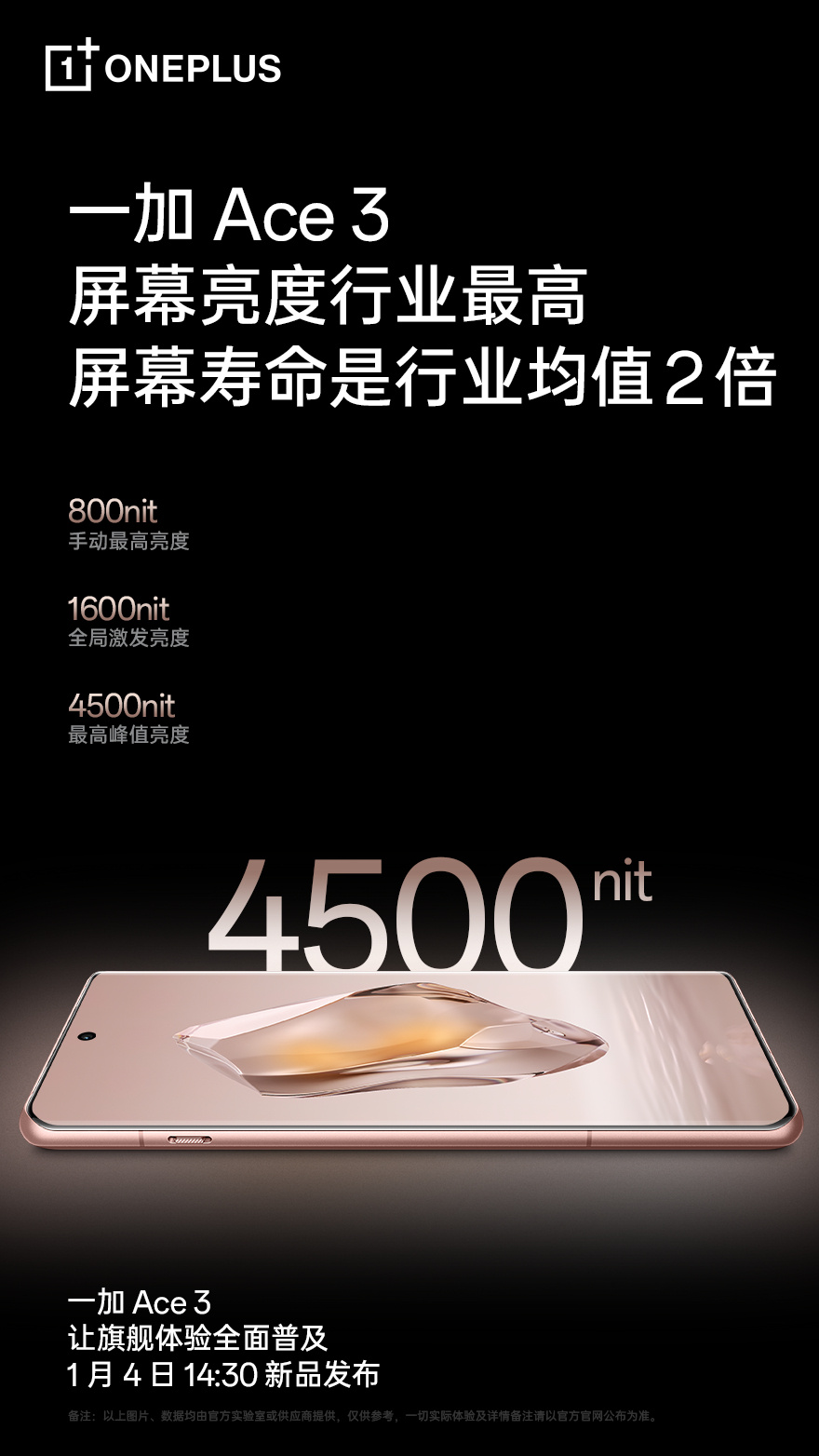
OnePlus will unveil the OnePlus Ace 3 on Jan. 4 in China. Yesterday, the company released a couple of teasers to reveal the design and color variants of the device. Today, the brand rolled out some more posters to confirm the display specifications of the Ace 3.
OnePlus Ace 3 display details confirmed
The OnePlus Ace 3 is set to come equipped with a 6.78-inch OLED panel supplied by BOE. While it slightly deviates from the OnePlus 12’s 2K resolution display with a marginally lower 1.5K resolution, the remaining features of the screen are identical to those found on the OnePlus 12.
The X1-series 8T LTPO panel will be equipped with features like a P1 display chip, 800 nits of manual peak brightness, 1,600 nits of global peak brightness, and up to 4,500 nits of maximum brightness. In addition, the screen is said to support a 120Hz refresh rate. As can be seen in the images, the punch-hole display will have curved edges similar to the OP12’s display.
The OnePlus Ace 3 is expected to feature the Snapdragon 8 Gen 2 chip and a 5,000mAh battery with 100W charging. It is expected to arrive with up to 16 GB of RAM and up to 1 TB of storage. On the photography front, the Ace 3 is expected to feature a 16-megapixel front camera and a 50-megapixel (IMX890 with OIS) + 8-megapixel (ultra-wide) + 2-megapixel (macro) triple camera unit. It is expected to run on the ColorOS 14-based Android 14. The Ace 3 is expected to rival the likes of the Redmi K70, the Honor 90 GT, and the iQOO Neo 9 in the Chinese market.
In India and other markets, such as North America and Europe, the Ace 3 will be rebranded as the OnePlus 12R. While the 12R will come in Iron Gray and Cool Blue shades, China will receive the Ace 3 in shades such as Sand Gold, Star Black, and Moon Sea Blue.
Sony has just revealed the first set of free PlayStation Plus games for January 2024. The games will be available for download from January 2, and as usual, they will be accessible to all PS Plus members, no matter if they have an Essential, Extra, or Premium subscription tier.
In particular, Sony is giving away three games to PS Plus subscribers in January 2024. The games you can add to your library are A Plague Tale: Requiem, Evil West, and Nobody Saves the World.
Plus, there’s no rush to play them right away. These monthly free PS Plus games don’t have an expiration date, so you can enjoy them whenever you want, as long as you keep your subscription active.
Free PS Plus games for January 2024
A Plague Tale: Requiem
Evil West
Nobody Saves the World
A Plague Tale: Requiem (PS5 only): The critically acclaimed sequel to the atmospheric 2019 adventure, Requiem takes players deeper into the story of Amicia and Hugo as they navigate a plague-ravaged France. You can expect improved gameplay mechanics and a story that builds upon the foundation laid by its predecessor. However, PS4 owners will need to wait for a potential future port, as Requiem is currently a PS5 exclusive.
Evil West (PS4 & PS5): This third-person shooter transports players to a Wild West overrun by monstrous creatures and supernatural threats. Players take on the role of Edgar Gravestone, a vampire hunter battling monstrous creatures and supernatural threats. While reviews were mixed upon release, many appreciate Evil West’s unique blend of gunslinging action and supernatural horror.
Nobody Saves the World (PS4 & PS5): For those seeking a more lighthearted adventure, Nobody Saves the World offers a quirky co-op dungeon crawler experience. Players take on the role of a customizable nobody who discovers the ability to transform into various creatures.
Beyond the free games, PlayStation Plus subscribers will also receive a bonus in January: the Syrinx Collection for the popular free-to-play shooter Warframe. This collection includes weapons, armor, and other in-game items to enhance your experience with the Tenno and their ongoing fight against the Grineer.
Overall, January’s free PS Plus lineup delivers a diverse mix of genres and experiences. So make sure to grab these titles in time.
In October, Qualcomm introduced the Snapdragon 8 Gen 3 chipset and released an official list of brands set to launch flagship phones featuring the new chip. Notably absent from the list was Motorola, and the brand has yet to confirm its plans regarding the release of a Snapdragon 8 Gen 3 phone. In 2022, Motorola released multiple phones for China and other markets, but in 2023, the company released fewer products. Besides the Razr 40, Razr 40 Ultra, and the recently unveiled Moto G34 5G in China, the brand has been less active compared to previous years. Today, Chen Jin, General Manager of Lenovo China Mobile Phone Business, took to Weibo to disclose the company’s plans for Motorola’s product lineup in 2024 for China.
Motorola in 2024: What to expect?
Motorola Razr 40
According to Chen Jin, Moto Razr experienced significant success in China and the global market in 2023. However, acknowledging that expectations for the Motorola brand surpass the Razr lineup, details about what to anticipate in the upcoming year were disclosed.
Chen added that, acknowledging the anticipation for new Moto products and understanding that everyone is eager for continuous improvement and more exciting innovations.
Over the year, we have been restructuring our product planning and pace in response to the significant opportunities and challenges posed by folding screens and AI large models in the mobile phone industry.
On the product front, the new Razr is set to showcase a more impressive design and enhanced AI interaction. The X-series imaging flagship will integrate new capabilities in large AI language models, while the S-series and G-series will undergo comprehensive enhancements. 2024 is slated to be the year when Motorola reveals its complete product range. We believe that the X-series and S-series flagship phones may get rebranded as Edge-branded models in the global market.
Throughout 2023, the company silently focused on accumulating and adjusting its position. In 2024, the brand intends to embark on a new journey, delivering valuable products to all users.
Valve‘s “Best Of” list for 2023 offers a revealing glimpse into the gaming world, showcasing the most successful games on Steam in various categories. This list doesn’t just tell us which games were popular; it offers insights into the changing landscape of gaming and player preferences.
Games like Destiny 2 are still sporting a large player base
The top sellers, including titles like “Apex Legends” and “Baldur’s Gate 3,” demonstrate a blend of long-standing favorites and new hits. It’s interesting to see how games like “Destiny 2” continue to attract a large player base, proving that a game’s age doesn’t always dictate its popularity.
In the category of new releases, games like “Armored Core VI: Fires of Rubicon” and “Hogwarts Legacy” made a strong impression, showing that gamers are eager for fresh experiences and new worlds to explore.
The most-played games, led by titles such as “Apex Legends” and “Counter-Strike 2,” highlight a community’s commitment to certain games, with player counts reaching impressive peaks. This commitment is a testament to the games’ ability to engage and retain players over time.
In early access, games like “Against the Storm” and “Baldur’s Gate 3” showed that gamers are willing to invest in games still in development, appreciating the chance to influence the final product.
The Steam Deck category, with games like “Cyberpunk 2077” and “Elden Ring,” reveals the increasing importance of portable gaming, showing that players value the flexibility to play high-quality games on the go. Controller-based play, featuring “Apex Legends” and “Elden Ring,” indicates a preference for the tactile, immersive experience that gamepads provide.
Finally, in VR, hits like “Beat Saber” and “Half-Life: Alyx” demonstrate the growing interest in immersive, virtual reality experiences, pushing the boundaries of traditional gaming.
The e-bike landscape is constantly evolving, and Dutch company Ostrichoo is at the forefront of this innovation. In a move away from traditional lithium batteries, Ostrichoo is harnessing the power of supercapacitors to energize its range of electric bikes. This shift isn’t just a technical tweak – it’s a game-changer in how we think about e-bike efficiency and sustainability.
The bikes use supercapacitors with way more advantages than typical Lithium batteries
Supercapacitors, while not a new invention, offer distinct advantages over the typical lithium batteries used in most electric vehicles, including e-bikes. They stand out for their ability to charge and discharge energy rapidly. This feature translates into practical benefits for e-bike riders, such as quick bursts of power – ideal for tackling steep inclines – and exceptionally fast recharge times. Imagine regaining most of your bike’s charge in the time it takes to enjoy a coffee break!
Another significant advantage of supercapacitors is their environmental edge. Constructed from materials like aluminum and coal, they require fewer rare earth metals, making them a more eco-friendly choice. In addition, Ostrichoo’s e-bikes boast an impressive 2,200 charge cycle lifespan, nearly double that of standard lithium battery-powered models.
Of course, every innovation has its trade-offs. Supercapacitor-powered bikes like those from Ostrichoo offer a shorter range – about 70 kilometers per charge. However, this is offset by their rapid charging capability, with Ostrichoo claiming up to 80 percent charge in just eight minutes using specific chargers.
Ostrichoo’s product line demonstrates its commitment to versatility and accessibility in e-mobility. From the rugged Nero e-MTB, priced at an accessible 1,199 euros, to the premium, urban-focused Caesar with a 120-kilometer range, there’s a model for every type of rider. These bikes aren’t just vehicles; they’re clear proof of the evolving relationship between technology, sustainability, and our urban landscapes.
BYD, the Chinese automotive giant, has recently announced plans to establish its inaugural electric car manufacturing facility in Europe, specifically in Szeged, Hungary. This move marks a significant expansion of BYD’s global footprint and is an exciting development in the European electric vehicle (EV) market.
Hungary has already been a host to BYD’s production for the EU
Hungary, already a host to BYD’s electric bus production, is becoming a hub for EV-related investments within the European Union. This strategic decision by BYD underscores Hungary’s growing importance in the EV industry.
Presently, BYD offers five electric car models in Europe: Han, Tang, Atto 3, Seal, and Dolphin, and operates 230 retail stores across 19 countries. The company plans to expand its European lineup with three more models by 2024. This expansion is a clear indication of BYD’s commitment to the European market and its confidence in the growing demand for electric vehicles.
The proposed factory in Hungary is more than just a manufacturing hub; it represents a significant economic boost for the region. Expected to generate thousands of jobs, the facility will also enhance local economies and support regional supply chains. This move is particularly notable as it aligns with Europe’s shift away from internal combustion engines towards more sustainable transportation options.
BYD’s approach is unique in its commitment to a highly integrated supply chain. The company plans to leverage this to create a local ‘green ecosystem’, promoting technological exchange and innovation between China and Hungary. This strategy not only positions BYD as a leader in the EV sector but also demonstrates its dedication to sustainable practices.
Honor has confirmed that it will announce the Honor X50 GT smartphone at 7:30 pm on Jan. 4 in China. The company also released two posters to confirm the design of the device. As the moniker suggests, it will arrive as the Snapdragon 888-powered Honor X40 GT, which was announced in October 2022 in China.
Honor X50 GT design revealed
The Honor X50 GT features a curved-edge OLED display on its front. The second image reveals that the phone will come in black and white color options. The black variant has a simple back design, whereas the white variant includes a golden strip indicating its 108-megapixel primary camera. Notably, the phone is equipped with a dual-camera setup on the rear. Honor hasn’t given out any information on the specifications of the X50 GT.
Reports suggest that the Honor X50 GT could be similar to the upcoming Honor X50 Pro. It is said that the X50 Pro could be aimed at the offline market, whereas the X50 GT will be targeted at the online audience.
Honor X50 Pro specifications (rumored)
The Honor X50 Pro is expected to feature an OLED panel that produces a 1.5K resolution. It will feature the Snapdragon 8+ Gen 1 chipset, up to 16 GB of RAM, and up to 1 TB of storage.
It will house a 5,800mAh battery with 35W fast charging support. The device will run on Magic OS 7.2-based Android 14. For security, it will have an in-screen fingerprint sensor. There is a possibility that it could be priced at around 2,000 Yaun (~$280).
In related news, Honor is set to unveil the Honor Magic 6 series of flagship phones and the Magic OS 8.0 on Jan. 10 and Jan. 11 in China. The lineup is expected to include Snapdragon 8 Gen 3-powered models, such as the Magic 6, the Magic 6 Pro, and the Magic 6 Porsche Design.
ChatGPT, Bard, Copilot, and much more… As you can see, the number of artificial intelligence in our lives is rapidly increasing. Nowadays, companies are working on developing their own AI chatbots or integrating their capabilities into their services. Of course, this process is much more difficult than you can imagine.
This is because developing an artificial intelligence model requires not only hardware and software knowledge but also training it with billions of pieces of information obtained from millions of different sources. However, accessing such information isn’t always straightforward within legal boundaries, as highlighted by The New York Times’ lawsuit against OpenAI and Microsoft for copyright infringement. Here are the details…
The New York Times vs. OpenAI & Microsoft over Copyright Infringement
New York Times claims that millions of their articles were used without permission in training language models such as ChatGPT and Microsoft Copilot. They’re concerned about the impact on journalism because AI can create content much faster than humans. If AI leverages data from platforms like The New York Times, it could cause substantial financial harm to these publications.
The company stated that they had contacted both OpenAI and Microsoft, but couldn’t reach an agreement. Despite the unstoppable progress in AI tech, New York Times is right about certain aspects. Firstly, using copyrighted content for commercial purposes is definitely illegal. Moreover, low-quality content created by AI poses a real threat to journalism.
While search engines like Google prioritize original content, it can be difficult to distinguish between AI and human made content. Artificial intelligence poses a threat to various professions, with journalism appearing as one of the most vulnerable. Of course, what the future holds remains uncertain for now. To find out more, it seems we have to wait for the outcome of New York Times’ lawsuit against OpenAI and Microsoft.
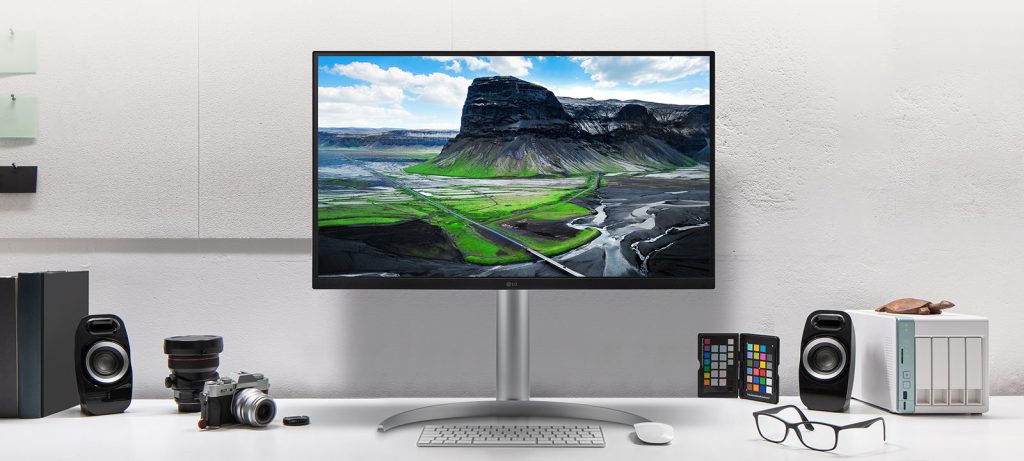
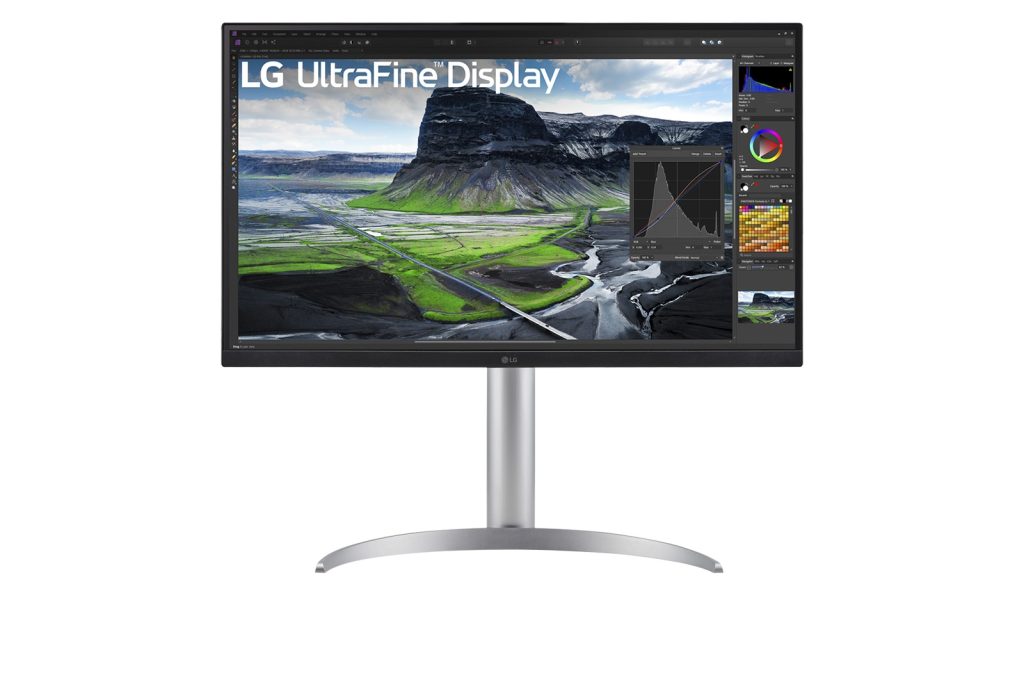
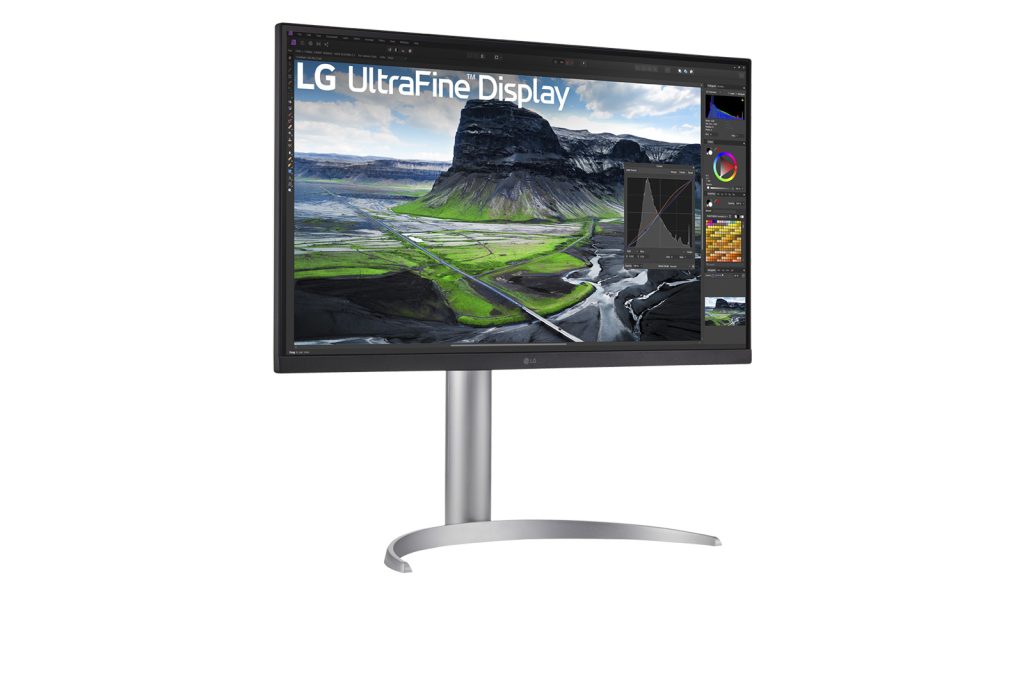
LG has introduced the 27UQ850V monitor, part of its UltraFine series, which maintains the specifications of its predecessor, the 27UQ850, while slightly increasing in weight. This 27-inch monitor offers a 4K resolution (3840 x 2160) and uses an IPS Black panel, featuring a notable 2000:1 contrast ratio for enhanced color vibrancy and deeper blacks. The display offers a 60Hz refresh rate, 5ms GtG response time, and 178° wide viewing angle.
LG 27UQ850V Specifications:
The monitor is particularly tailored for professionals in video and image editing, offering exceptional color accuracy with 98% DCI-P3 color gamut coverage. This is further enhanced by its VESA DisplayHDR 400 certification, ensuring vivid and realistic colors for an immersive viewing experience. The 27UQ850V also comes with LG Calibration Studio software, enabling users to achieve precise color calibration tailored to their specific professional needs.
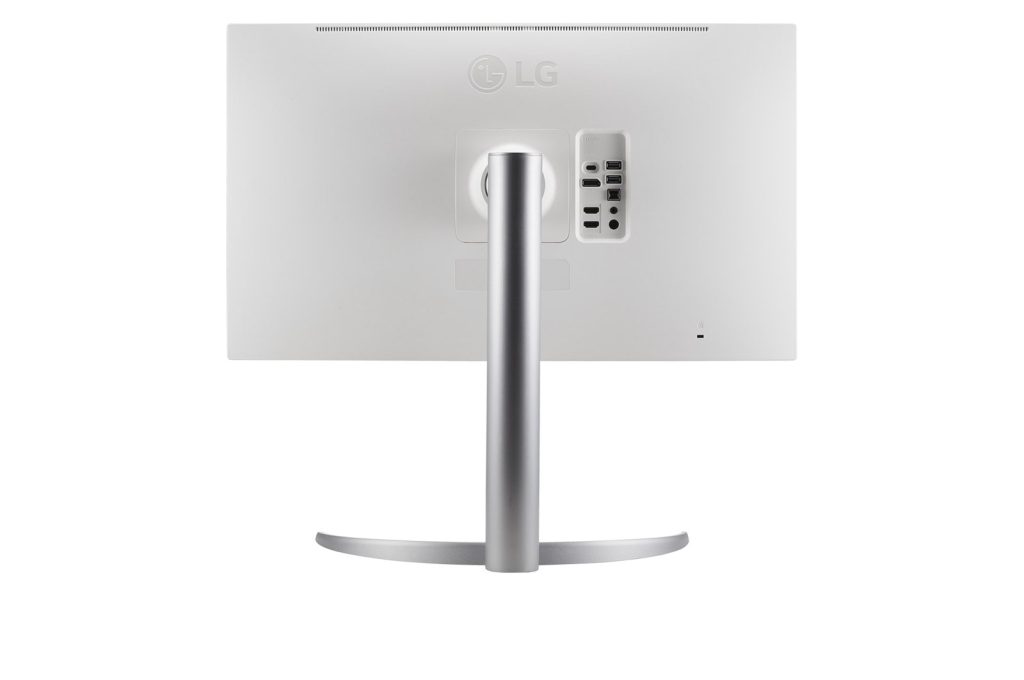
In terms of connectivity, the monitor is well-equipped. It includes USB Type-C with 90W Power Delivery for a single-cable connection that can charge devices while transmitting data. Additionally, it has DisplayPort, two HDMI ports, and two USB ports. This range of connectivity options makes it versatile for various setups and devices.
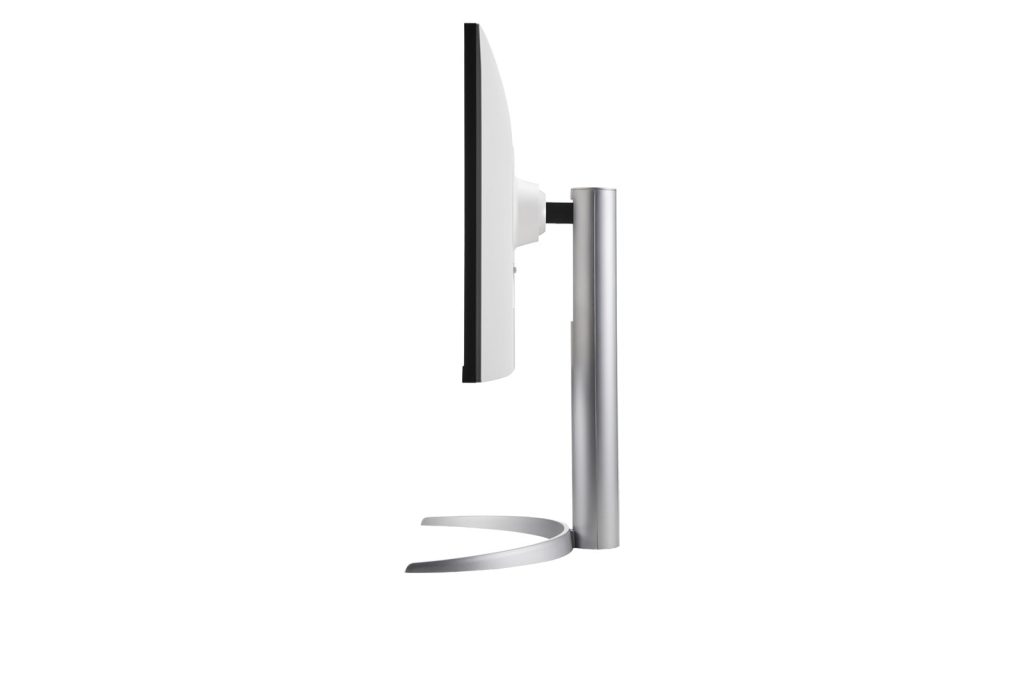
The monitor has a sleek design with dimensions of 24.2 x 22.4 x 9.4 inches (width x height x depth) and weighs 12.5 lbs with the stand. It offers practical features including height adjustment, pivot, and tilt options to cater to ergonomic needs. The stand also includes LG’s One Click feature for easy setup. OnScreen Control software provides a user-friendly interface, allowing users to customize their viewing experience easily.
The monitor features built-in 5W x 2 stereo speakers enhanced by MAXX Audio technology for audio. It also includes Super Resolution+ for improved visuals, AMD FreeSync for smoother gaming, Black Stabilizer for better visibility in dark scenes, and Dynamic Action Sync for reduced input lag. The monitor is VESA wall-mountable and weighs 5.85kg. The pricing details are currently unknown.
LG Electronics has announced its latest smart AI agent in pursuit of its zero-labor home ideal. The new LG two-legged smart AI bot is capable of understanding context and intentions via multimodal AI technology. It is also equipped with the Qualcomm Robotics RB5 Platform for face and voice recognition. The smart home agent is also capable of processing natural language to underscore its role as an all-around home manager.
The LG smart home AI agent is part of LG’s lineup for CES 2024, as the company intends to launch the bot as an essential part of its vision of zero labor home. LG hopes that gadgets of this nature will help to reinvent the future of home automation. The design of the bot makes it capable of functioning as a home companion. It is a two-legged, two-wheeled device with a visor that could function as a screen. It has a built-in camera, speaker, and sensors that gather data around the home. The LG smart AI bot is marketed as a moving smart home hub but the specifics on the smart home standard adopted are lacking at this time. It is expected that the LG bot should support Matter just like a regular smart hub.
The LG smart home AI agent offers exciting possibilities but there are opinions in some quarters that it may just be an expensive gimmick rather than an essential gadget. CES 2024 opens its doors on January 9, 2024, and we expect to be serenaded by the performance of the LG smart home AI agent during the event. The venue of CES 2024 is the Las Vegas Convention Center, Las Vegas, United States. There is no pricing information for the LG smart home AI agent yet.
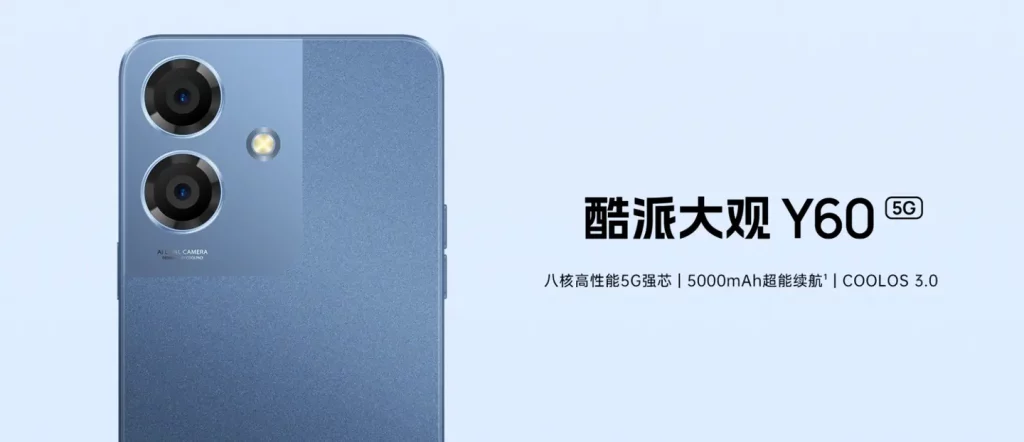
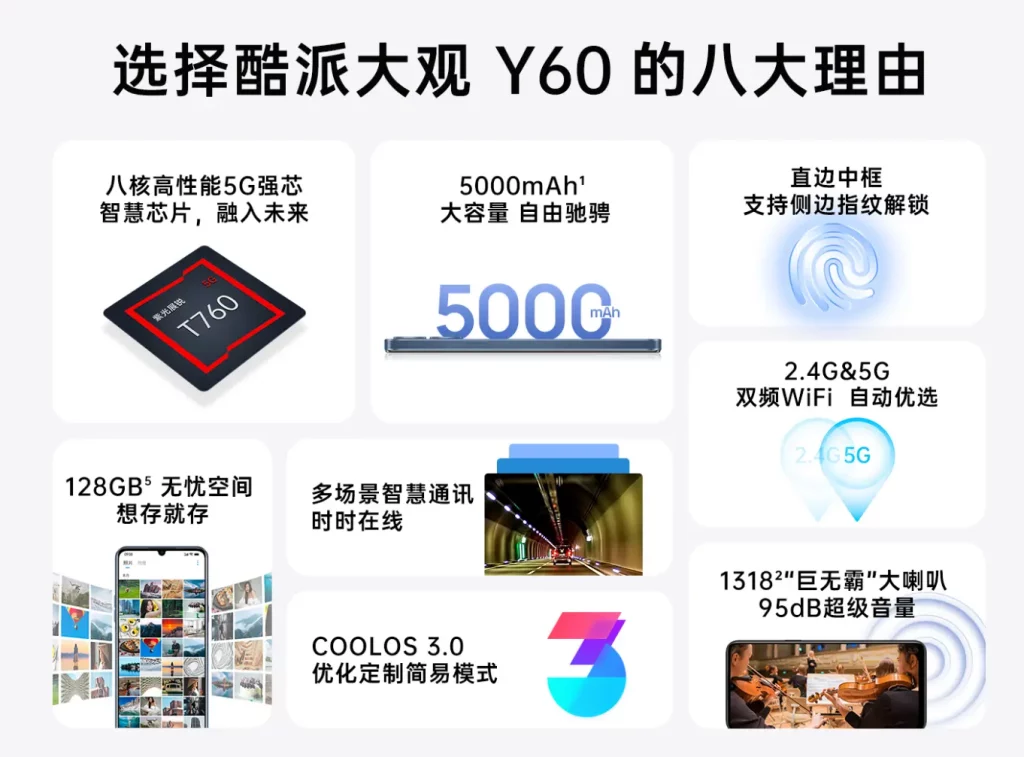
The Coolpad Grand View Y60 smartphone is now available on shelves in China. The Coolpad Grand View Y60 is powered by a Unisoc T760 processor and comes with a 5,000 mAh battery. The standard model of the Coolpad Grand View Y60 features 4GB of RAM and 128GB of internal storage.
Features
The Coolpad Grand View Y60 weighs 193g and is 8.5mm thick. It has a 6.745-inch water drop screen with a resolution of 1600 x 720 pixels. The HD+ screen has a display refresh rate of 60Hz and achieves a maximum brightness of 400 nits. The Grand View Y60 smartphone supports 18W fast charging. The phone’s camera setup consists of a 13MP rear sensor (with f/2.2 aperture), a 0.08MP lens (occlusion prompt), and a front-facing 5MP camera. It supports EIS anti-shake mode and 21-scene AI recognition for perfect shots and videos.
The new Coolpad smartphone runs on COOLOS 3.0. It supports 5G network connectivity and has a maximum sound output of 95 dB. It also supports Wi-Fi and Bluetooth connectivity. It is unclear what amount of usage can be gotten from the 5,000mAh battery of the Coolpad Grand View Y60.
The Coolpad Grand View Y60 smartphone comes in three RAM configurations namely 4GB RAM +128GB storage, 6GB RAM + 128GB storage, and 8GB RAM + 128GB storage. The smartphone is available in Aurora Blue and Carbon Black color options.
Pricing & Availability
The Coolpad Grand View Y60 4GB+128GB model is priced at 999 yuan ($140) while the 6GB model retails at 1,099 yuan ($154). The top model comes with 8GB of RAM and is priced at 1,299 yuan ($182). There is no global availability and pricing information for the Coolpad Grand View Y60 at this time.
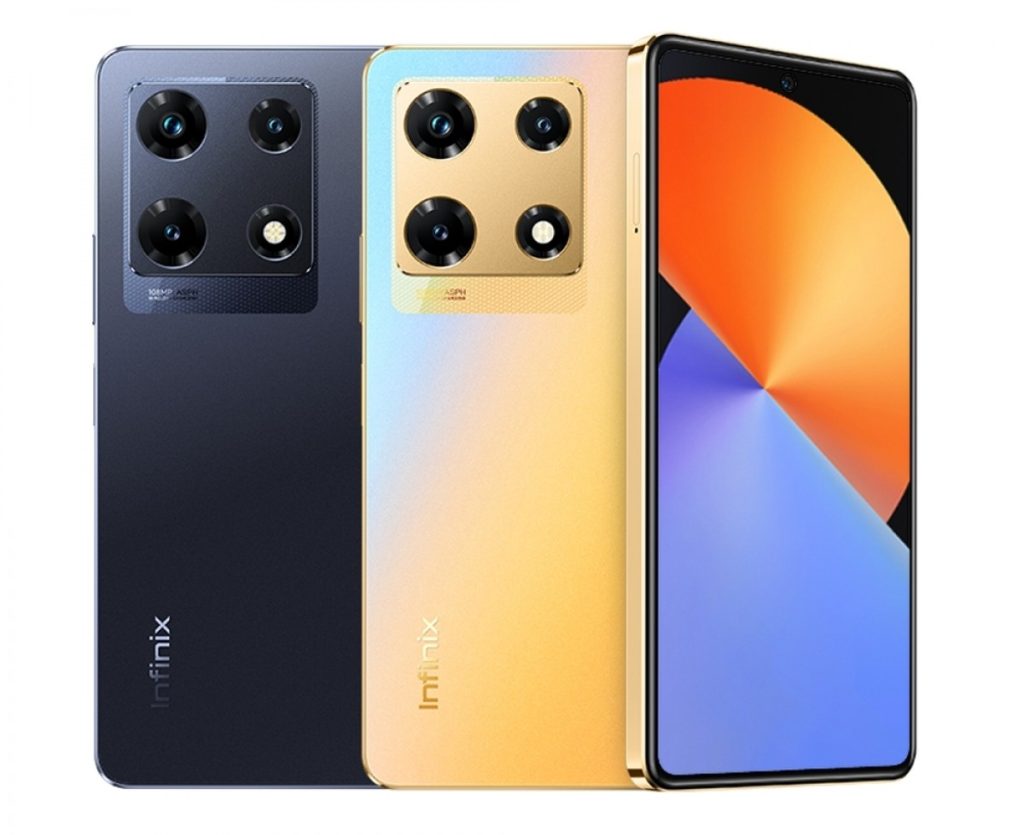
Infinix recently launched the Hot 40 Pro Free Fire Edition smartphone, as well as the Smart 8 HD smartphone. It is cooking up another device that it plans to launch soon called the Infinix Note 40 Pro. The smartphone has already cleared the Bluetooth SIG certification, and now, it has also appeared on NBTC certification.
The Note 40 Pro, identified by the model number X6850, has cleared the NBTC certification. While the listing does not spill the beans on the device’s specifications, it greenlights the device for an imminent launch in Thailand. We can take a look at the specs of the Infinix Note 30 Pro to get an idea of what to expect from its successor.
Taking a glimpse at the Note 30 Pro’s key specs, it featured a 6.67-inch AMOLED display with FHD+ resolution and a 120Hz refresh rate. Powered by the Helio G99, the device boasted 8GB of LPDDR4x RAM, 256GB of UFS 2.2 storage, and a robust 5,000mAh battery with 68W wired charging and 15W wireless charging capabilities.
Its camera setup included a 32-megapixel front camera and a triple rear unit with a 108-megapixel main sensor, a 2-megapixel macro lens, and a 2-megapixel depth sensor. The device ran on XOS 13-based Android 13 and featured an in-screen fingerprint scanner.
In related news, Infinix is set to introduce its innovative AirCharge wireless charging technology at CES 2024. The company touts AirCharge as a game-changer in wireless charging, enabling users to charge their devices without the need for cables or direct contact with the charging pad. Further details about this groundbreaking technology are expected to be unveiled during CES, commencing on January 8th.
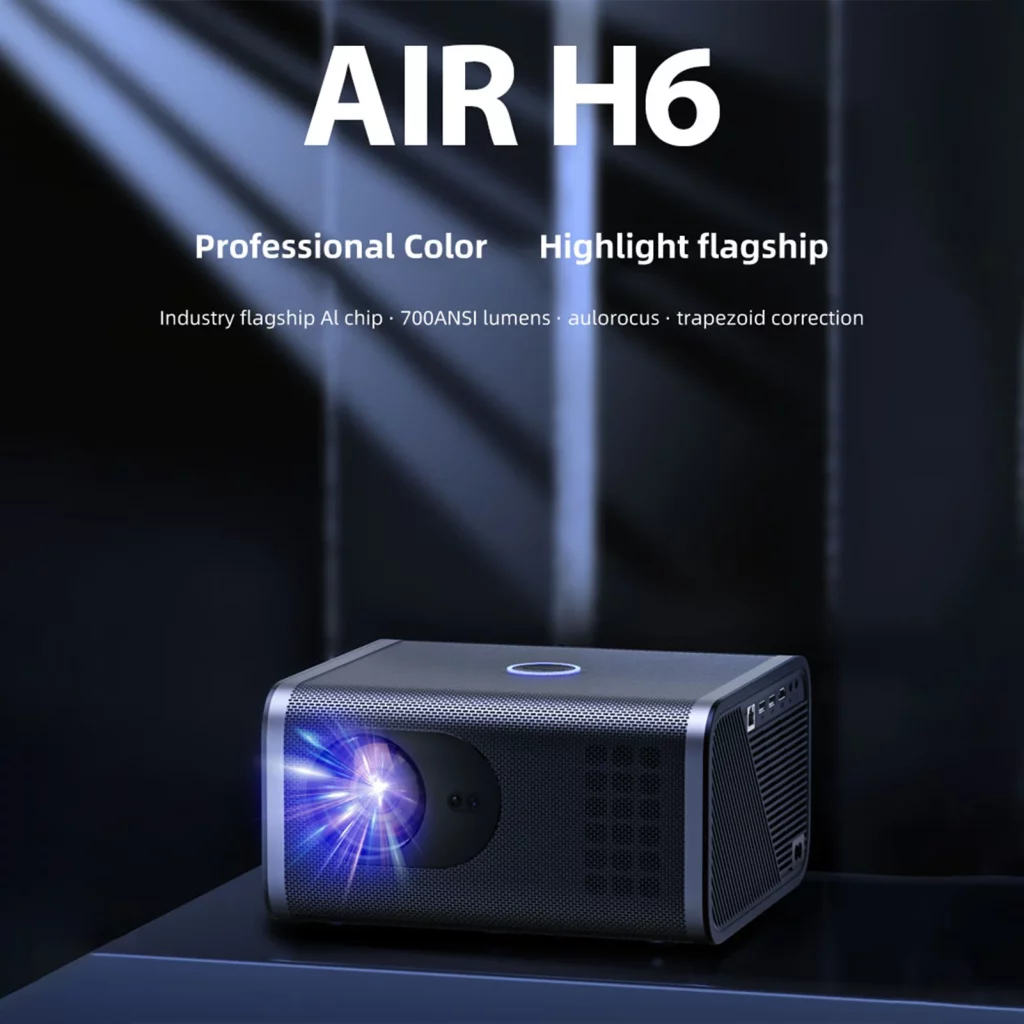
Lenovo is the world’s largest PC manufacturer but it is making inroads in the business projector segment. The Lenovo Thinkplus AIR H6 has just been quietly introduced into the market and it comes with some exciting features. The Thinkplus AIR H6 is a business projector that runs on Android and is as affordable as it can get for a full HD projector.
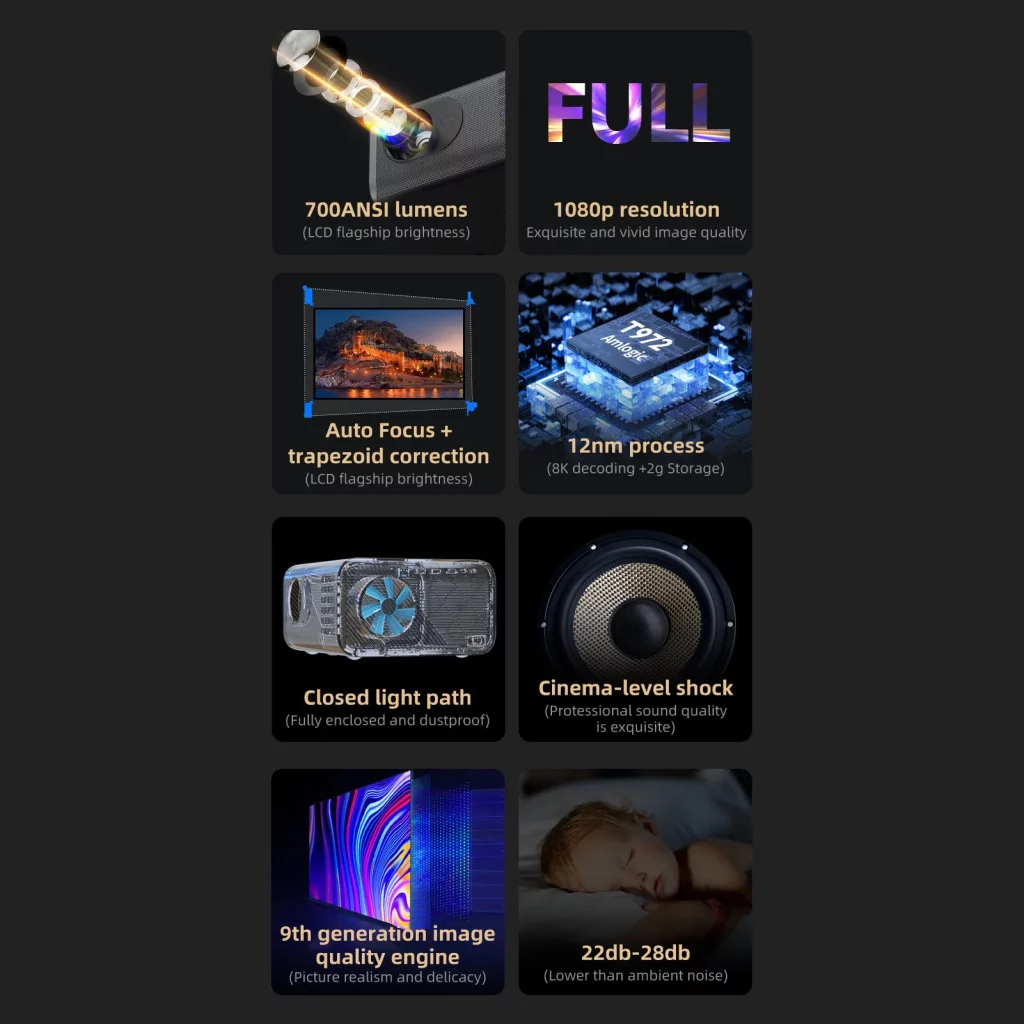
The Lenovo Thinkplus AIR H6 is a compact and powerful projector with a native 1080p Full HD resolution. It has a maximum brightness of 700 ANSI lumens and a 1000:1 contrast ratio for bright and clear images. The Thinkplus AIR H6 runs on the Android 9 operating system which is quite old, it would seem. It is equipped with auto-focus and four-point keystone correction for balanced output from most angles.
The Thinkplus AIR H6 projector is powered by the Amlogic T972 processor and an ARM MALI-G31 MP2 GPU with support for HDR10 and HLG video. It is equipped with 2GB of RAM and 16GB of internal storage. The projector has two USB ports, a 3.5mm audio jack, an AV jack, and an HDMI video input interface. It also has a 10/100 Ethernet port and supports Bluetooth 5.2 connectivity and Airdrop for Apple gadgets. The projector also features an AI-powered intelligent voice assistant.
The Lenovo Thinkplus AIR H6 projector is designed to operate quietly and efficiently. It has a silent ventilation system at the rear ensures that cooling fan noise does not distract you from being fully immersed in the entertainment. The projector also features a low blue light mode for playing kids content.
Pricing & Avialability
The Lenovo Thinkplus AIR H6 is presently available to buy for $349.99 via AliExpress. The current price is discounted by 30% and the model will subsequently revert to its original price of $498.57.
The Jiyue 07 has been officially unveiled in China. The new electric liftback is from Geely and Baidu and is the winner of the Red Dot Award 2023. The new electric sedan will be available in China in 2024.
Features
The Jiyue 07 (previously assumed to be named Jiyue 02) is based on Geely’s SEA architecture and is equipped with self-driving capabilities from Baidu. Jiyue is a joint venture company of Baidu and Geely, with Baidu having a 55% stake in the brand at the onset. It was originally formed as Jidu in 2021 but failed to get mass production permission, leading to some restructuring. Its name was changed thereafter to Jiyue and Geely’s holding increased to 65%. Geely handles the manufacturing aspect while Baidu accounts for the software, ADAS, and connectivity.
The Jiyue 07 is the second Jiyue model after the release of the Jiyue 01 SUV. The Jiyue 07 is based on the Jidu Robo-02 concept and is a mid-size liftback car with sleek styling, a low beltline, and wide wheel arches. The Jiyue 07 omits door handles but has buttons on B and C-pillars. It has powered doors while its front end has Y-shaped headlights as with its predecessor. A large panoramic roof is featured on the Jiyue 07 while an active spoiler and a single taillight unit are also present from the side.
The Jiyue 07 electric liftback has five-spoke rims with aerodynamic covers. The model received two design awards namely the 2023 Red Dot Design Award and the iF Design Award 2023. The Red Dot Design Award for 2023 was given to 16 cars including Peugeot 408, Genesis G90, and Deepal SL03, as well as Jiyue 07. The entry-level version of the EV has a single e-motor with a 200kW output and a 71.4kWh LFP battery. The 4WD version has a 400kW motor and 100kWh NMC battery pack.
The self-driving system of the Jiyue 07 relies on cameras and radars but lacks hip LiDAR sensors. The Jiyue 07 pricing and full release details are lacking at this time. The EV is however expected to arrive in the Chinese market by mid-2024.
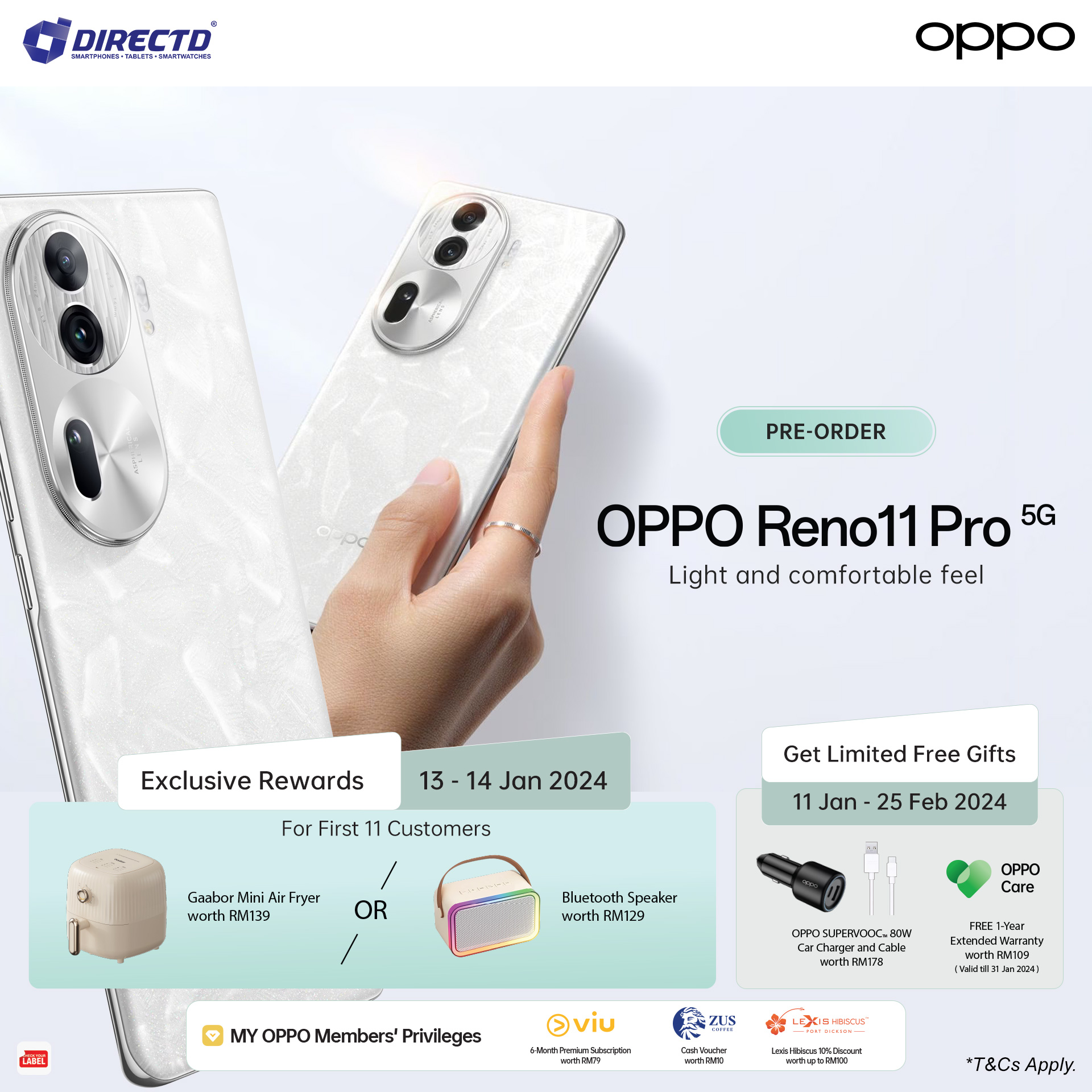
Last month, Oppo debuted its Reno 11 series smartphones in China featuring new camera sensors and powerful chipsets like the Dimensity 8200 and Snapdragon 8+ Gen 1. Since its launch in China, the smartphones have created many regional certifications suggesting that the global launch is approaching soon. Now, Oppo Malaysia has begun the global launch countdown by kicking off the Oppo Reno 11 series pre-bookings.
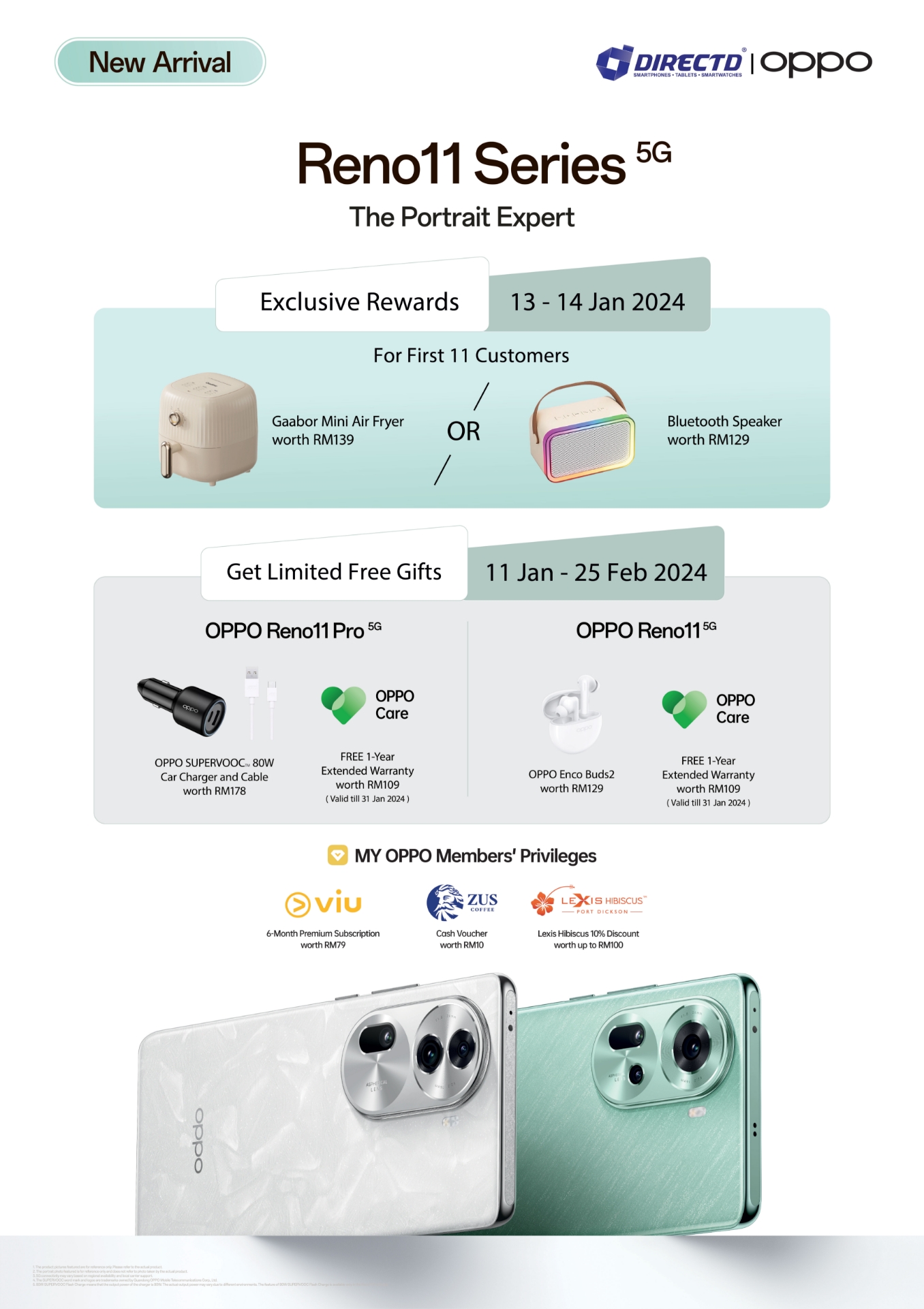
As per the listing, the first 11 customers purchasing the device from January 13th to January 14th will receive exclusive rewards: a Gaabor Mini Air Fryer or a Bluetooth speaker. Customers buying the device between January 11th and February 25th, 2024, will be eligible for additional gifts, including an Oppo SuperVOOC 80W car charger and a free 1-year extended warranty for the Oppo Reno 11 Pro 5G.
Opting for the Oppo Reno 11 5G during this period comes with freebies like Oppo Enco Buds 2 and a free 1-year extended warranty. Going by these details, it looks like the first sale of the Reno 11 series will kick off on January 11. So we can expect the launch event to be held in the first week of January. With December coming to an end, we won’t have to wait long for the official confirmation.
Oppo Reno 11 Pro specs:
The Oppo Reno 11 Pro features a 6.74-inch curved OLED display, offering a resolution of 2772 x 1240 pixels (1.5K), 450 PPI, 10-bit color depth, and an impressive 120Hz refresh rate. The centrally positioned punch hole screen supports HDR10+, 2160Hz PWM dimming, a 240Hz touch sampling rate, and boasts a peak brightness level of 1600 nits.
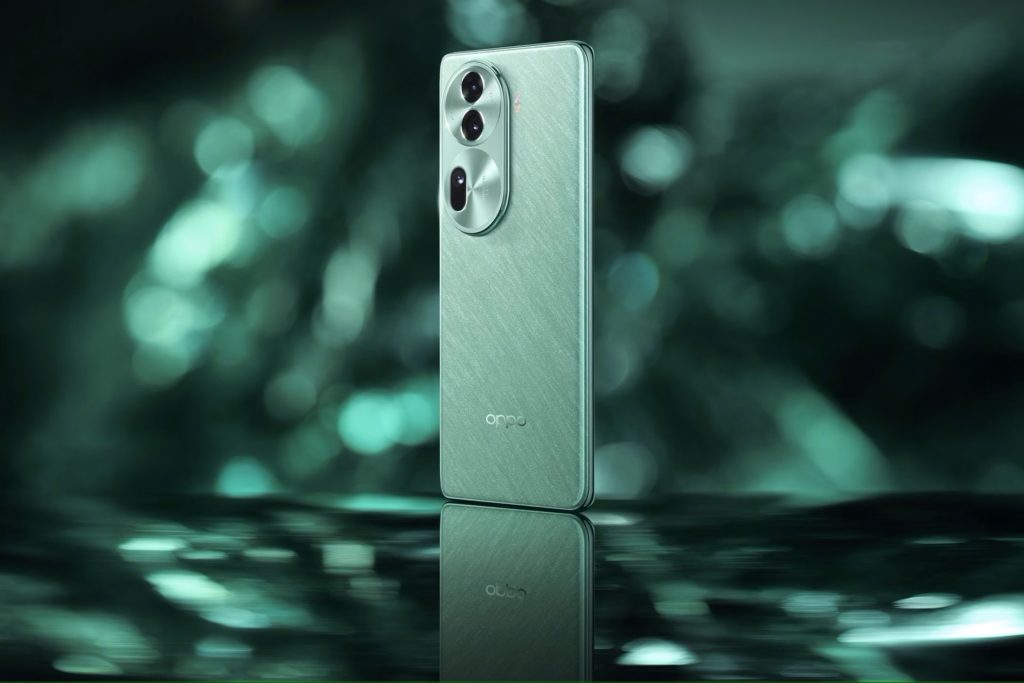
OPPO Reno 11 Pro – Moonlight WhiteOPPO Reno 11 Pro – Turquoise
Under the hood, the smartphone is equipped with a Qualcomm Snapdragon 8 Plus Gen 1 chip, coupled with LPDDR5x RAM and UFS 3.1 storage. Setting itself apart, it is the first device, apart from the Reno 11, to run on the latest ColorOS 14 based on Android 14.
In terms of imaging, the Oppo Reno 11 Pro houses a triple-camera system on the back, featuring an OIS-assisted 50MP Sony IMX890 primary sensor, an 8MP ultrawide unit, and a 32MP Sony IMX709 2x telephoto snapper. The front-facing 32MP selfie camera utilizes the same sensor as the zoom camera. Lastly, it features a 4,700mAh battery and supports 80W SuperVOOC charging.
Oppo Reno 11 specs:
The Oppo Reno 11 comes equipped with a 6.7-inch curved OLED display featuring a resolution of 2412 x 1080 pixels (FHD+), providing a pixel density of 394 PPI. The display further supports a smooth user experience with a 120Hz refresh rate and a centered punch-hole design. Boasting a 10-bit HDR10+ panel, the screen offers vibrant visuals, with up to 2160Hz PWM dimming and a peak brightness of 950 nits. The touch responsiveness is enhanced with a 240Hz touch sampling rate. Under the hood, the device runs on the MediaTek Dimensity 8200 chipset and features LPDDR5x RAM, along with UFS 3.1 storage. Operating on ColorOS 14 based on Android 14.
In the camera department, the Oppo Reno 11 sports a triple rear camera setup, including an OIS-assisted 50MP Sony LYT-600 primary sensor, an 8MP ultra-wide unit, and a 32MP IMX709 2x telephoto shooter. On the front, a 32MP Sony IMX709 sensor handles selfies. The device offers multiple connectivity options, supporting Dual SIM, 5G, WiFi 6, Bluetooth 5.4, GNSS, NFC, and USB Type-C. Additionally, it features an in-screen fingerprint sensor for biometric authentication. Powering the device is a 4,800mAh battery, supported by 67W SuperVOOC wired charging for efficient and fast charging capabilities.
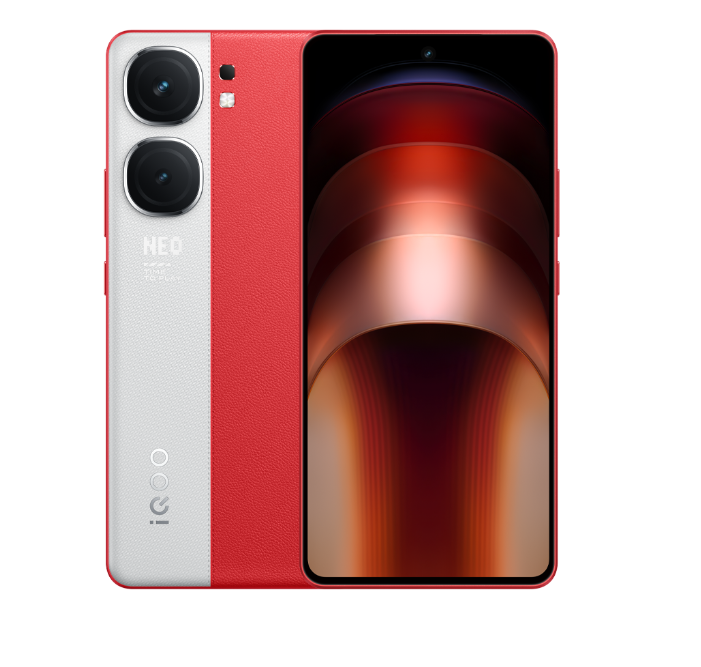
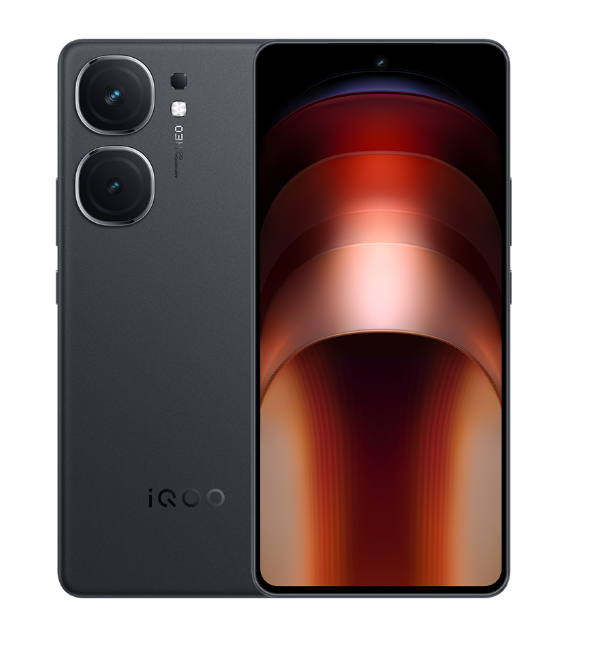
iQOO Neo 9 Pro the latest smartphone from iQOO is now available on Giztop. You can now buy the smartphone for a starting price of $499 only. The phone comes in Red, Black, and Blue color variants.
The iQOO Neo 9 Pro features a stunning 6.78-inch Samsung E5 AMOLED display with a 144Hz refresh rate, ensuring silky-smooth visuals for an unparalleled viewing experience. With a peak brightness of 1500 nits, DC dimming, and a resolution of 2800 x 1260 pixels, the display is not only vibrant but also offers clarity even in challenging lighting conditions. The integrated fingerprint scanner seamlessly combines security and convenience.
Under the hood, the iQOO Neo 9 Pro is powered by the MediaTek Dimensity 9300 Octa-core processor, coupled with 12GB or 16GB of LPDDR5X RAM. This powerhouse combination delivers exceptional performance, effortlessly handling multitasking, app launches, and more. With storage options ranging from 256GB to a whopping 1TB of UFS 4.0 internal storage, the iQOO Neo 9 Pro ensures you have ample space for all your apps, media, and files. The device runs on OriginOS, a customized Android 14 OS, offering a fast and user-friendly platform that enhances productivity and connectivity.
iQOO Neo 9 Pro comes with a 50MP Sony IMX 866 main camera, equipped with OIS, which captures stunning details, while the 8MP ultrawide module expands your creative horizons. The 16MP front camera ensures you can snap remarkable selfies. Whether capturing everyday moments or exploring your artistic side, the camera system is versatile and reliable.
The 5000mAh battery inside the iQOO Neo 9 Pro provides ample power to keep you connected throughout the day. What’s more impressive is the 120W fast charging support, ensuring you spend less time tethered to a charging cable and more time enjoying your device.
iQOO Neo 9 Pro is a communication tool and a mobile entertainment hub. With dual speakers, a dedicated Game box mode, 4D vibration for haptics, and Hi-Res Audio certification, the device delivers an immersive audio-visual experience. Additionally, it supports Wi-Fi 7 for high-speed internet connectivity, dual-mode 5G, NFC, and other features that keep you connected at the forefront of technological advancements.
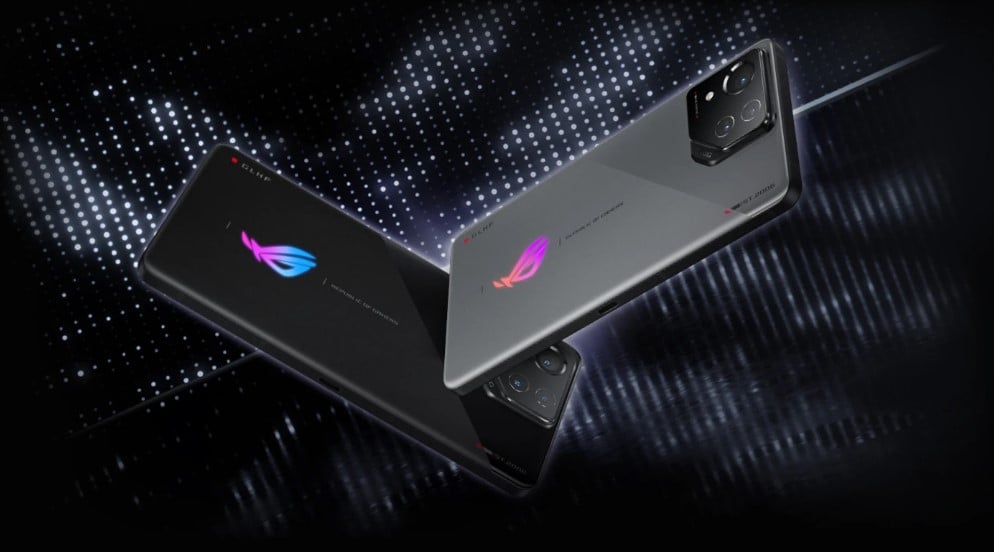
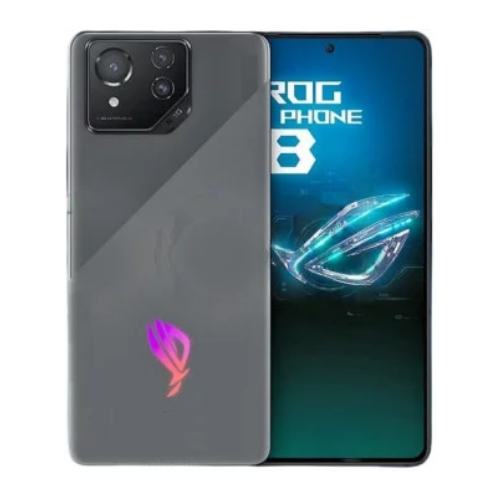
On January 8 during CES 2024, Asus will unveil its latest flagship gaming smartphone series called the ROG Phone 8 series. Later on, the series will launch in China on January 16. Ahead of the launch, the ROG Phone 8 Pro has appeared on the NBTC certification website.
The NBTC certification reveals that the ROG Phone 8 Pro, identified by the model number AI2401_D, will be compatible with 2G, 3G, 4G, and 5G networks. While the certification lacks additional details, it indicates an imminent arrival of the ROG Phone 8 Pro in Thailand.
Rumored specifications for the Asus ROG Phone 8 Pro include a 6.78-inch AMOLED display with Full HD+ resolution and a 120Hz refresh rate, promising an immersive gaming experience. The device is expected to be powered by the Snapdragon 8 Gen 3 SoC, a detail confirmed by a previous Geekbench listing. Configurations may offer varying RAM options of 16GB or 24GB, coupled with storage choices ranging from 512GB to 1TB.
The smartphone is rumored to feature a triple-camera setup, comprising a 50MP main camera with a Sony IMX890 sensor, a 13MP ultra-wide lens, and a 32MP telephoto lens. For selfies, a front-facing 32MP camera is anticipated. The device is rumored to boast an IP68 rating for water and dust resistance.
Alongside the ROG Phone 8 Pro, the series will also be featuring the vanilla ROG Phone 8 model, as well as the ROG Phone 8 Ultimate model. With the launch just around the corner, we expect the smartphone to clear many other regional certifications. Stay tuned for more details on the ROG Phone 8 series.
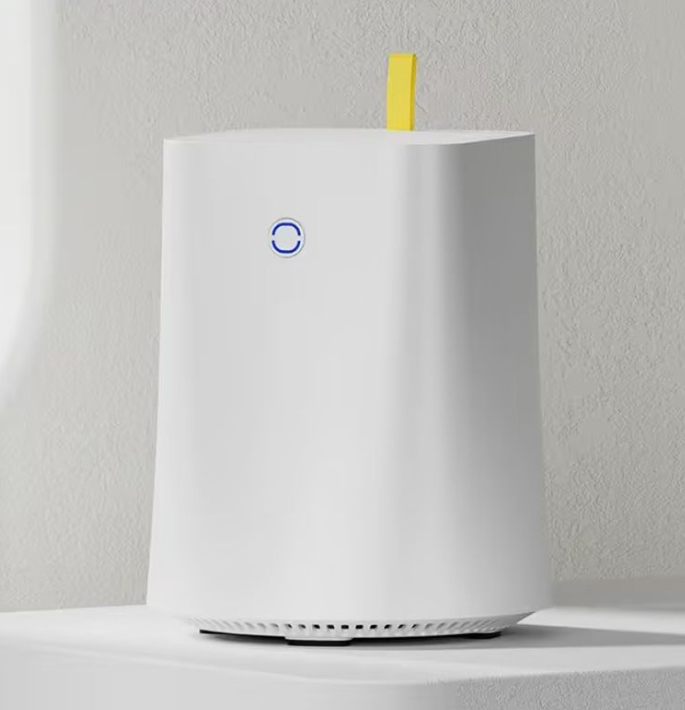
AOOSTAR WTR R1 N100 Mini PC is a compact powerhouse designed to enhance your computing experience without unnecessary frills. You can now get a $30 discount on this device at GeekWills by using the discount code: N10030 at checkout before Jan 31, 2024.
WHERE TO BUY
AOOSTAR WTR R1 N100 NAS Mini PC at $159 @GeekWills
Powered by the Intel N100 processor, this 12th generation successor to the Pentium/Celeron line offers reliable performance with a clock speed of up to 3.40 GHz and is complemented by Intel UHD graphics for smooth visuals.
In terms of memory, the mini PC supports DDR4-3200 (single) and offers versatile storage options with M.2 2280-NVMe x1 and 3.5 SATA x 2 slots. This ensures seamless multitasking and ample space for your files and applications.
Connectivity is a breeze with the AOOSTAR WTR R1 N100 Mini PC, featuring support for WiFi 6 and Bluetooth 5.2. These advanced wireless technologies guarantee high-speed internet connectivity and seamless pairing with compatible devices, making it a versatile choice for various setups.
One of the standout features of this mini PC is its compact design, measuring just 16.2cm x 16.2cm x 19.8cm and weighing a mere 1kg. Its portability makes it suitable for both office and home use, allowing you to set up a powerful workstation in limited spaces.
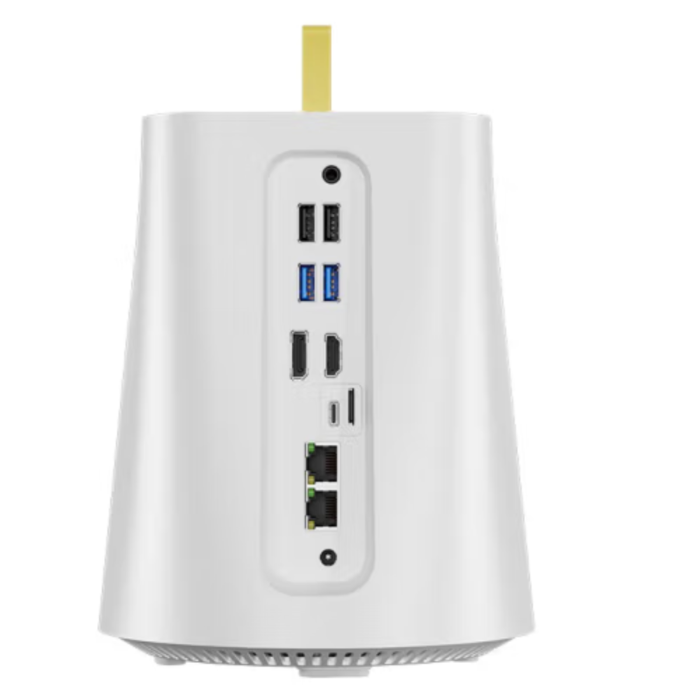
In terms of input/output options, the mini PC offers a 19v/5.12A, 100W Type-C input for efficient power supply. The output options include HDMI, DP, and Type-C ports, ensuring compatibility with a wide range of displays and peripherals. Whether you’re connecting to a monitor, TV, or other devices, the AOOSTAR WTR R1 N100 Mini PC has you covered.
AOOSTAR WTR R1 N100 Mini PC combines reliable performance, versatile storage, and advanced connectivity in a compact and lightweight package. With its thoughtful design and array of features, this mini PC is a practical choice for users seeking a streamlined computing solution without unnecessary embellishments.
The BenQ Mobiuz EX270QM appears to be a compelling option thanks to a blend of style, performance, and impressive features. Priced at Rs 58,999 (~$710), it positions itself as a premium option for those seeking an immersive and responsive gaming experience. Let’s delve into the depths of this monitor to uncover its strengths and limitations.
BenQ Mobiuz EX270QM gaming monitor: What’s in the box?
The following items are included in the retail package of the Mobiuz EX270QM:
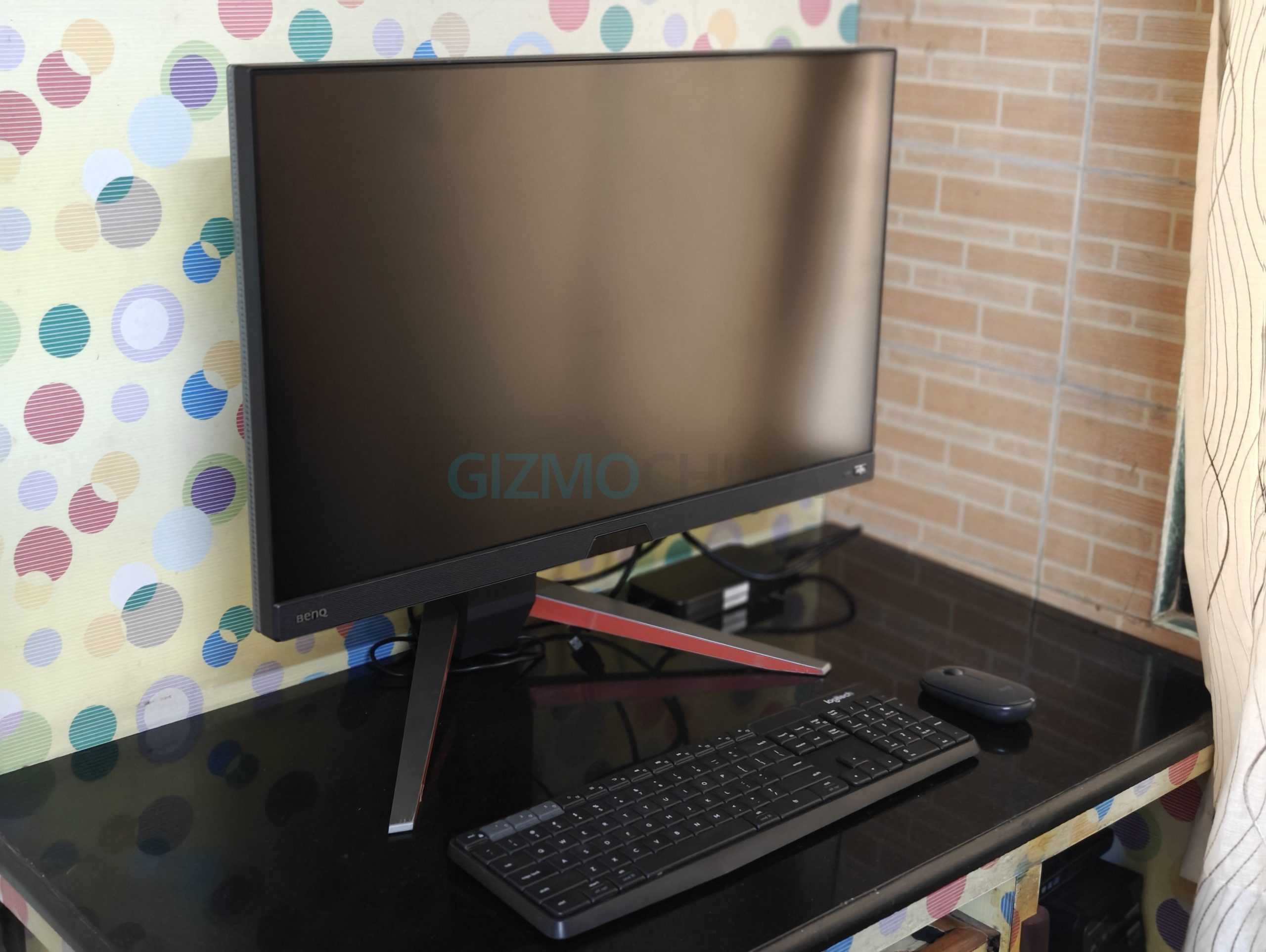
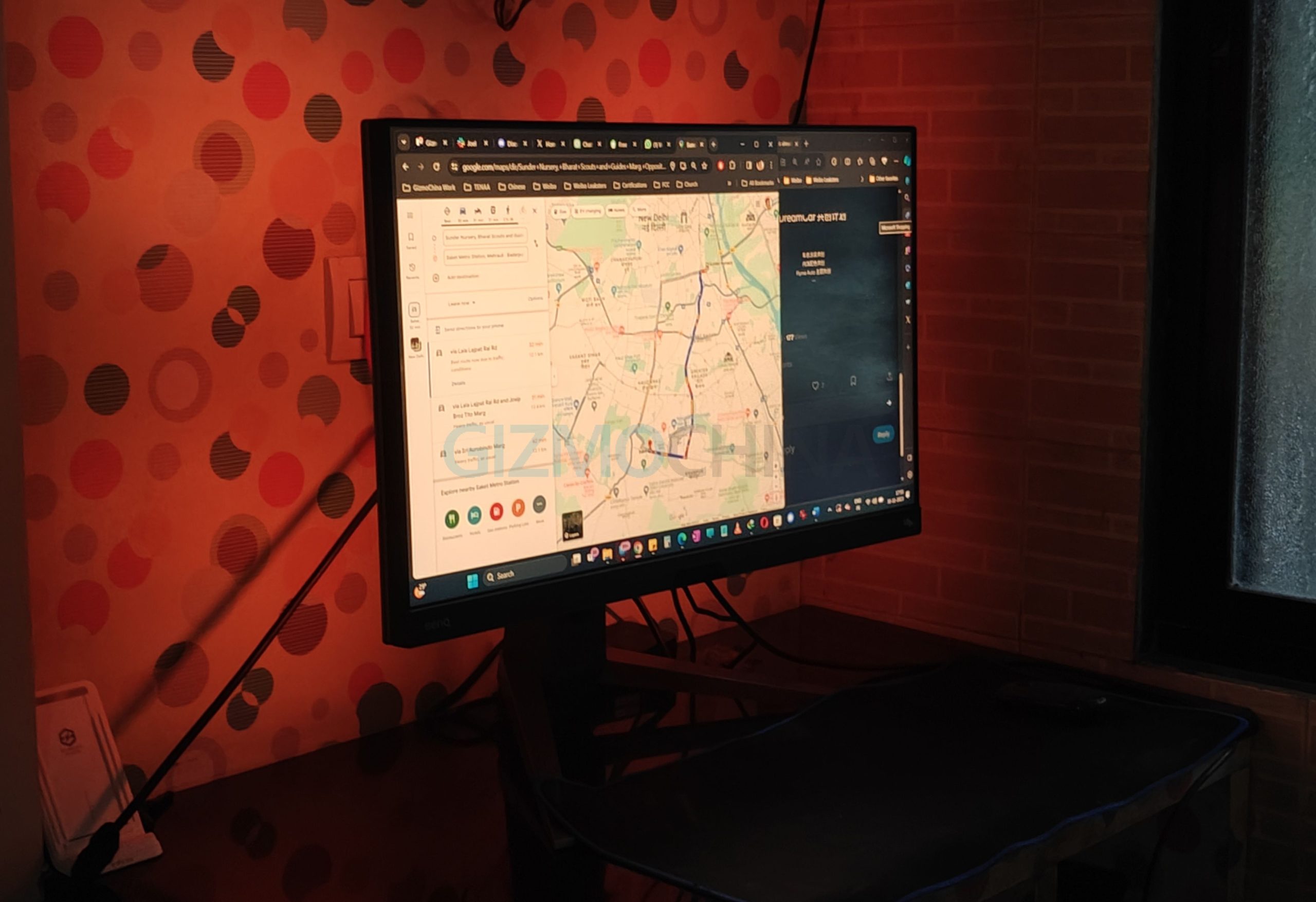
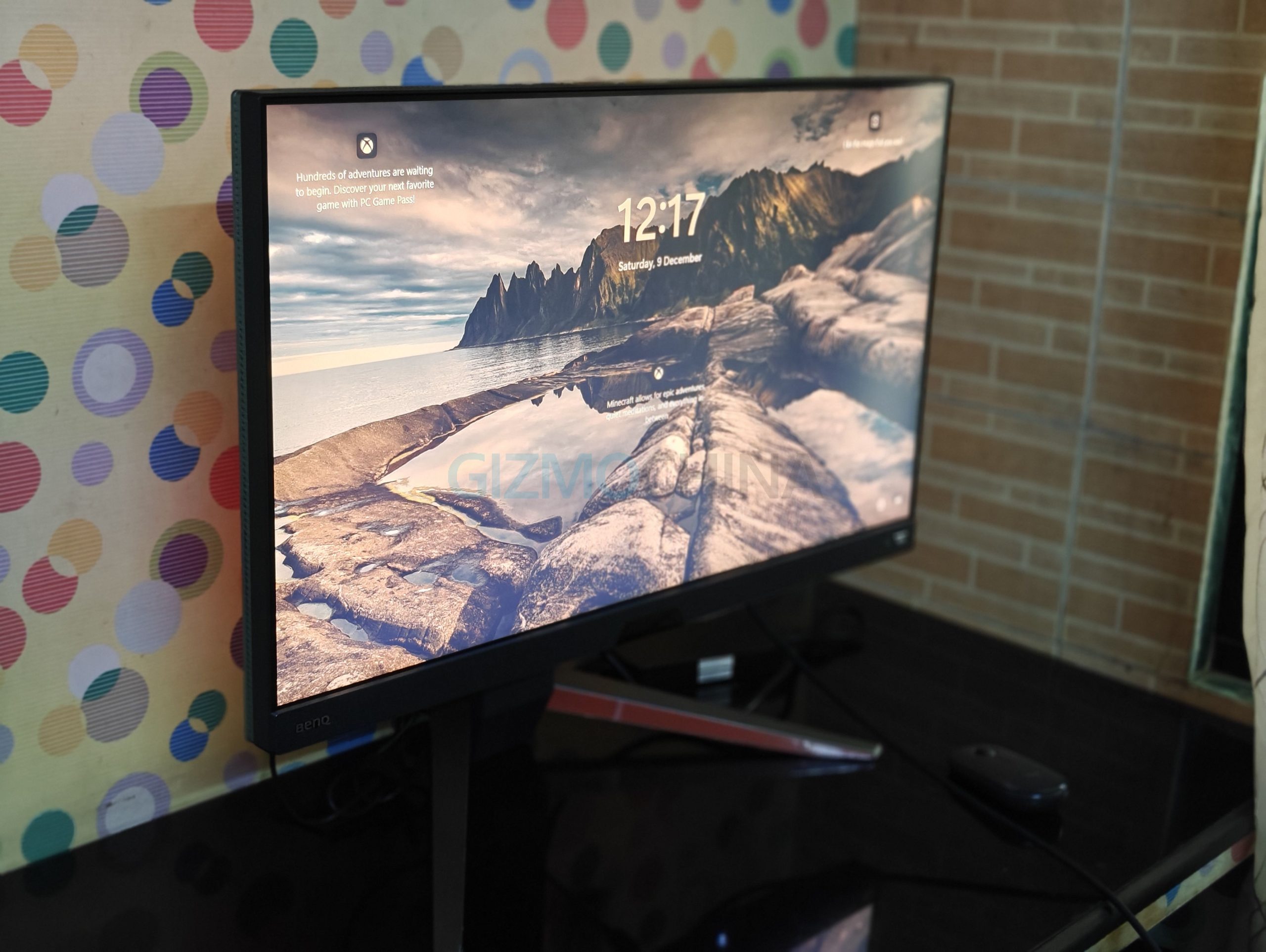
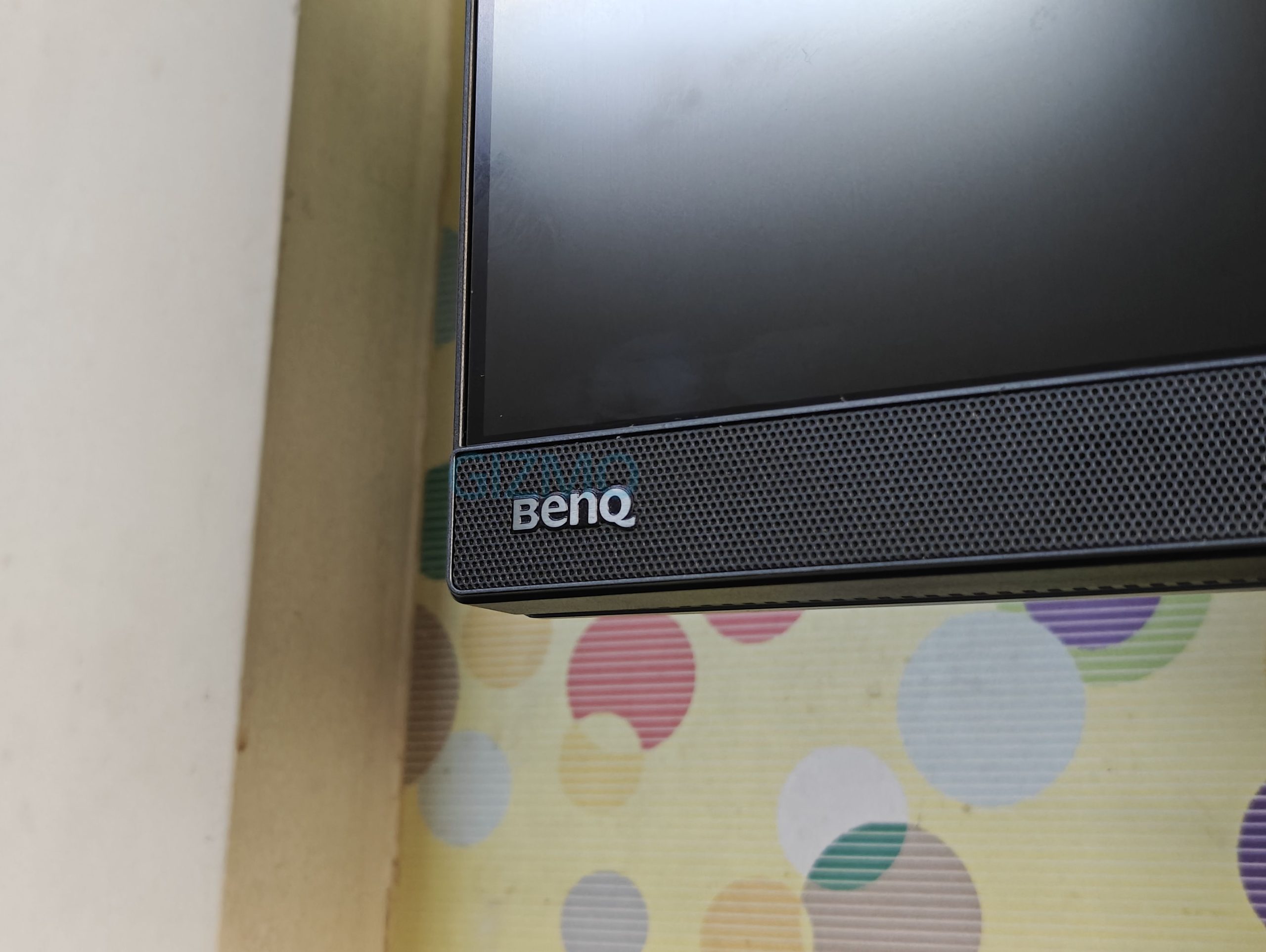
The BenQ Mobiuz EX270QM has a subtle appearance as a gaming monitor from the front, featuring thin bezels at the top and sides. The bottom bezel is thicker to accommodate a pair of 2W front-facing speakers, with the BenQ logo on the left, an ambient light sensor for automatic brightness adjustment, and a physical toggle button bearing the HDRi logo on the right.
Underneath the monitor, three buttons are present: a power button, a menu button with a joystick for navigation and accessing menu settings, and an input select button for user convenience. The power button and menu joystick are positioned close to each other, which led to occasional accidental power-offs when I intended to access the menu.
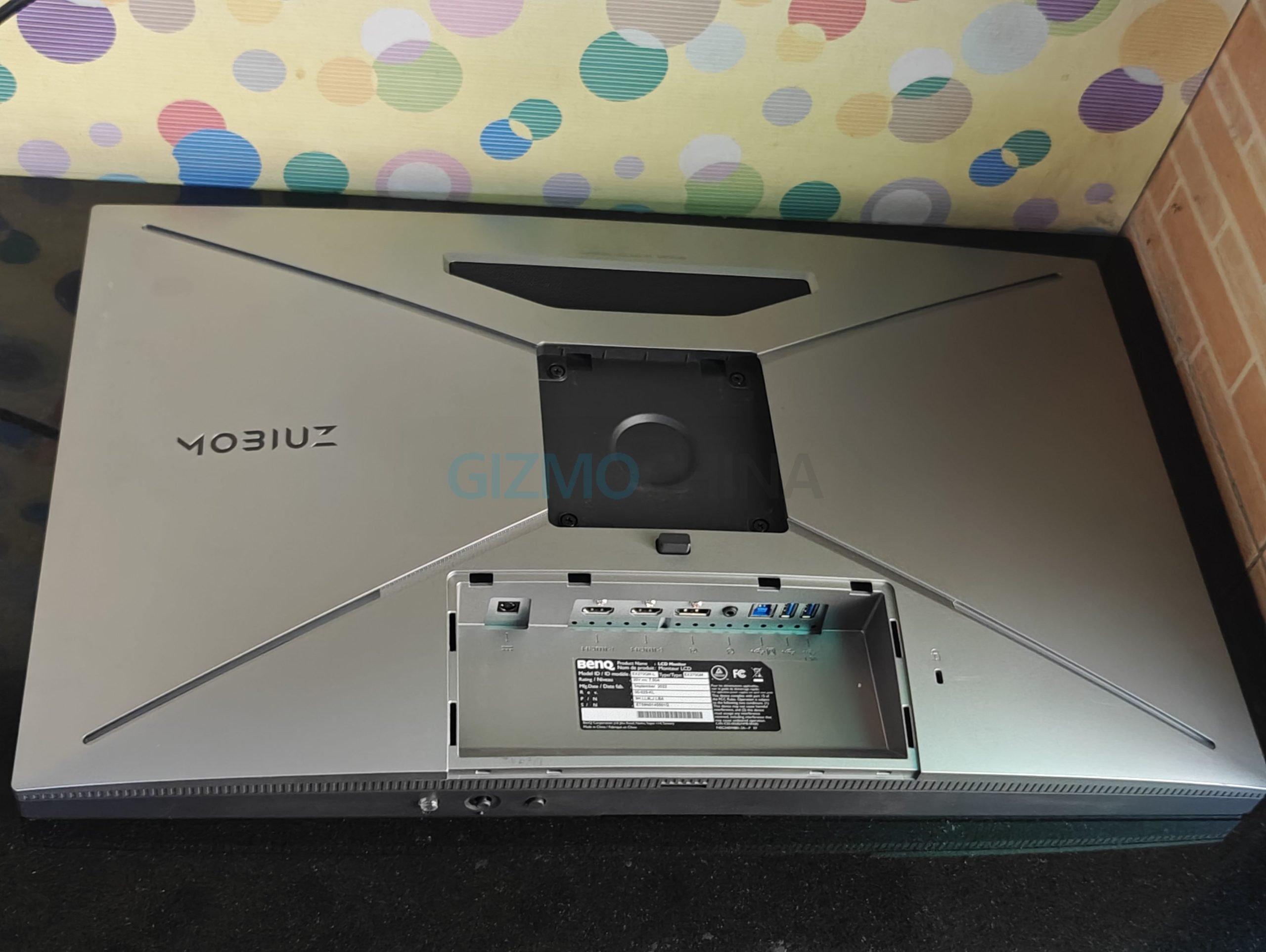
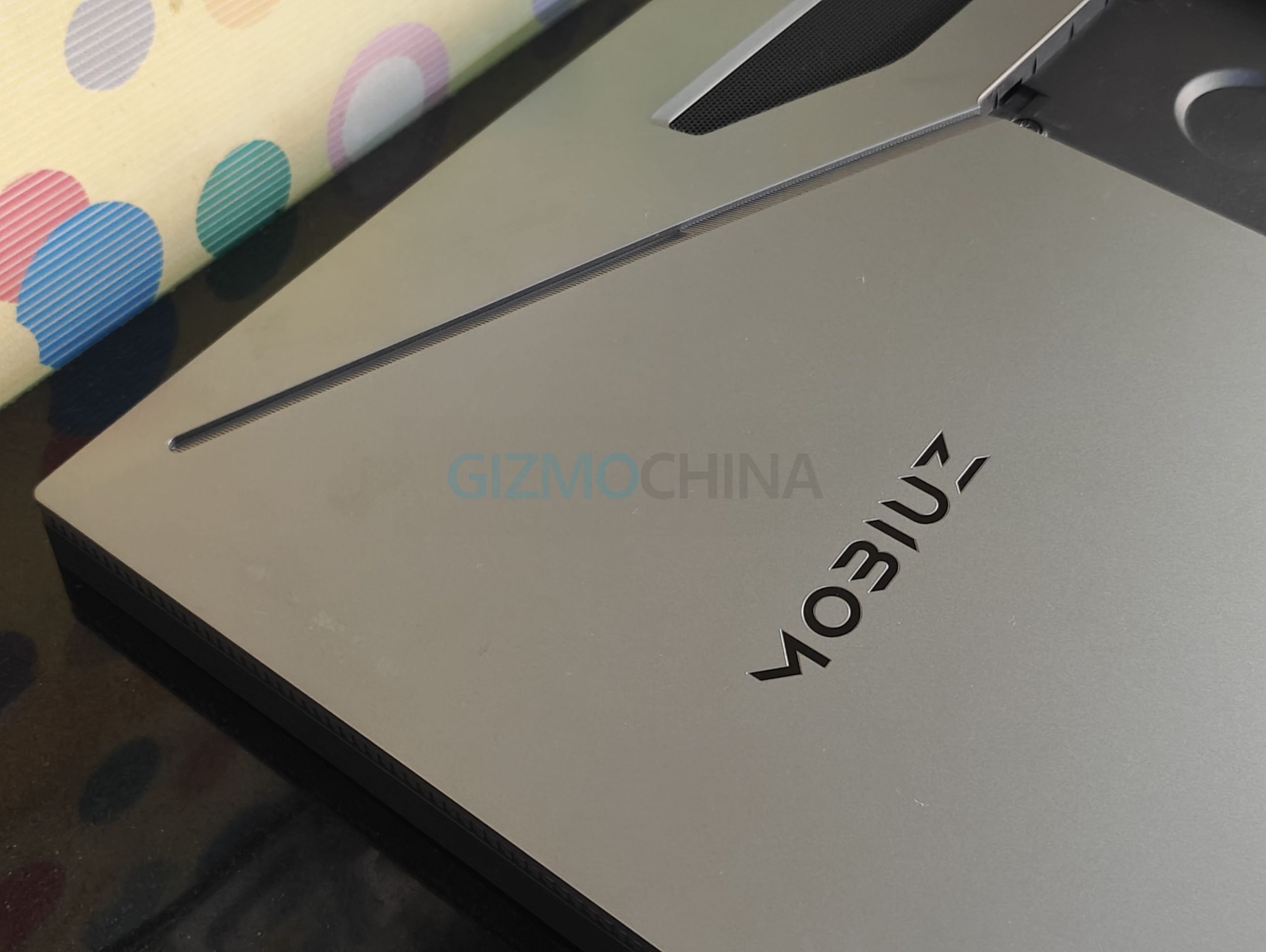
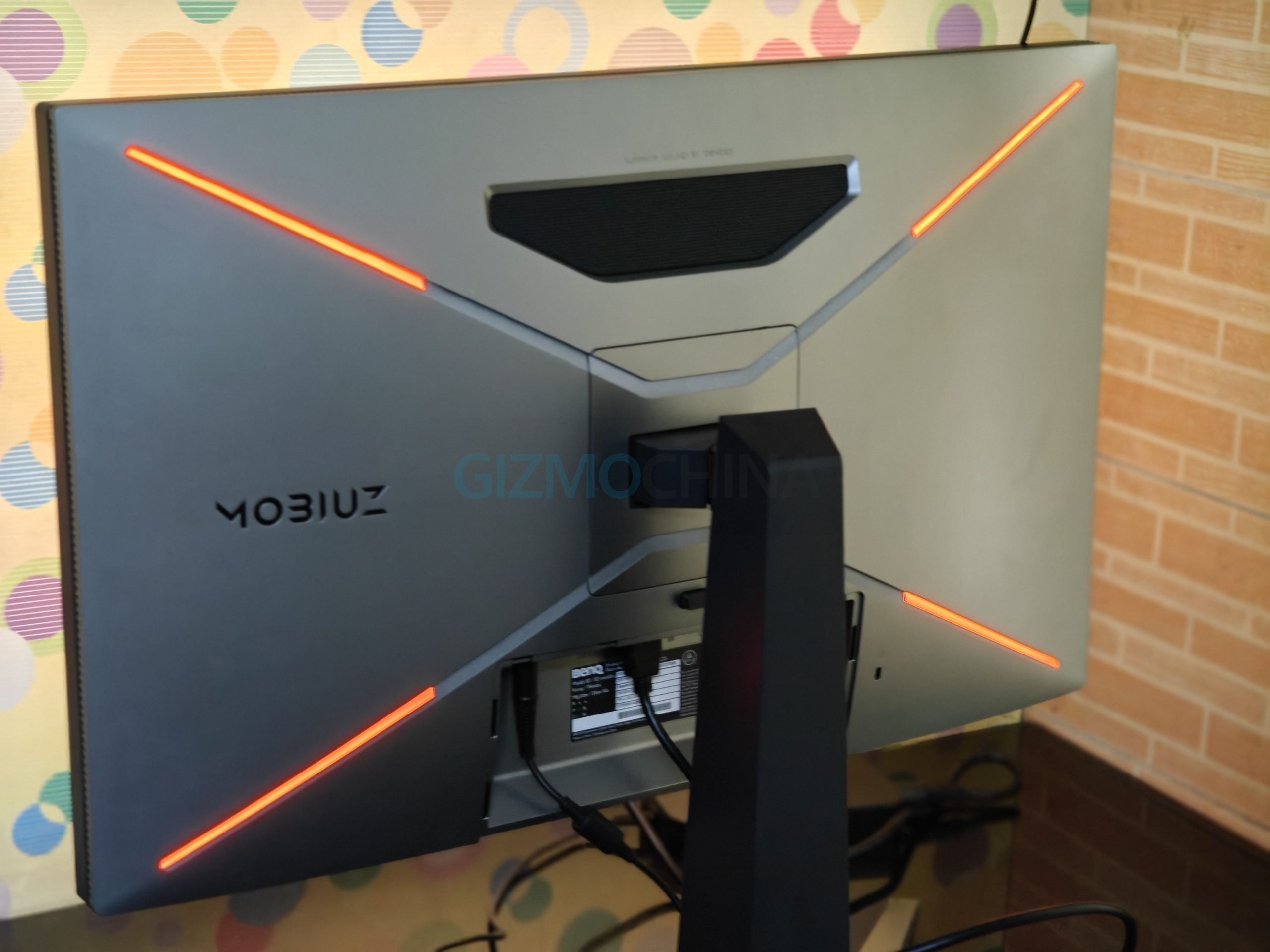
The back panel has a silver-color finish, showcasing the Mobiuz logo on the left, customizable LED strips emanating from the corners, and a speaker grille centered just above. The LED strips can be customized with nine color choices and six pattern options to choose from. The LED lights are noticeable in a moderately lit room.
BenQ Mobiuz EX270QM BenQ Mobiuz EX270QM
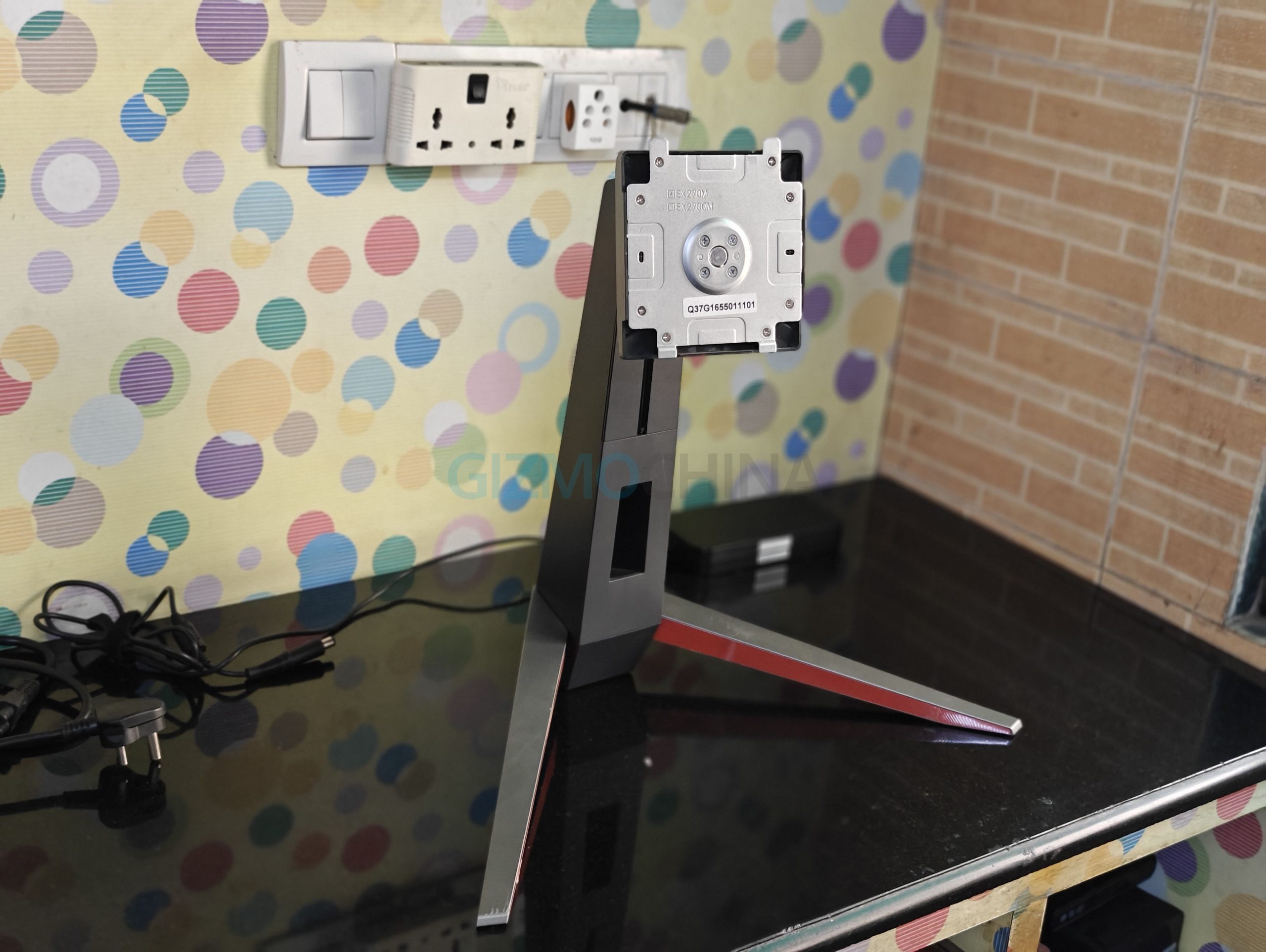
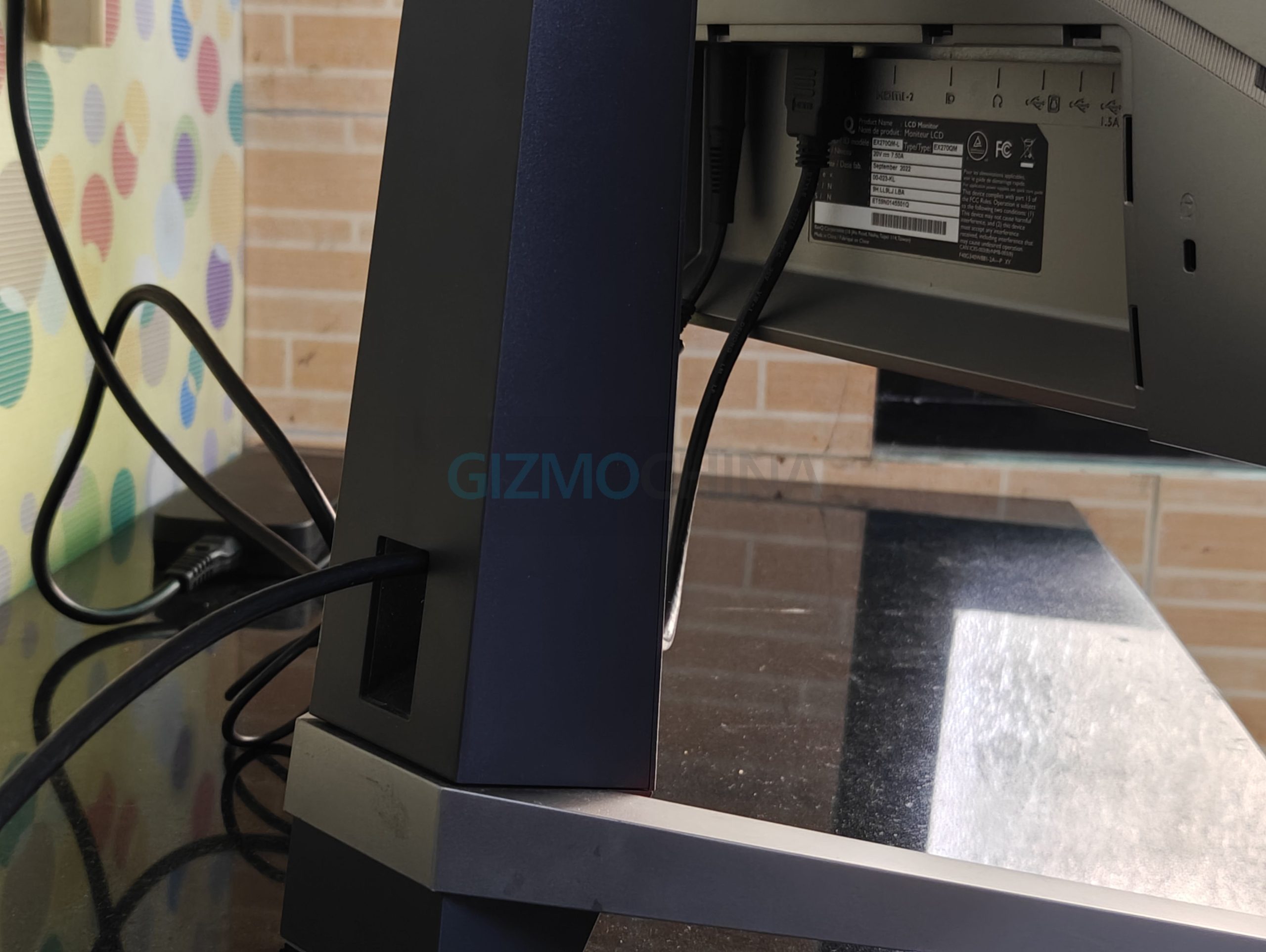
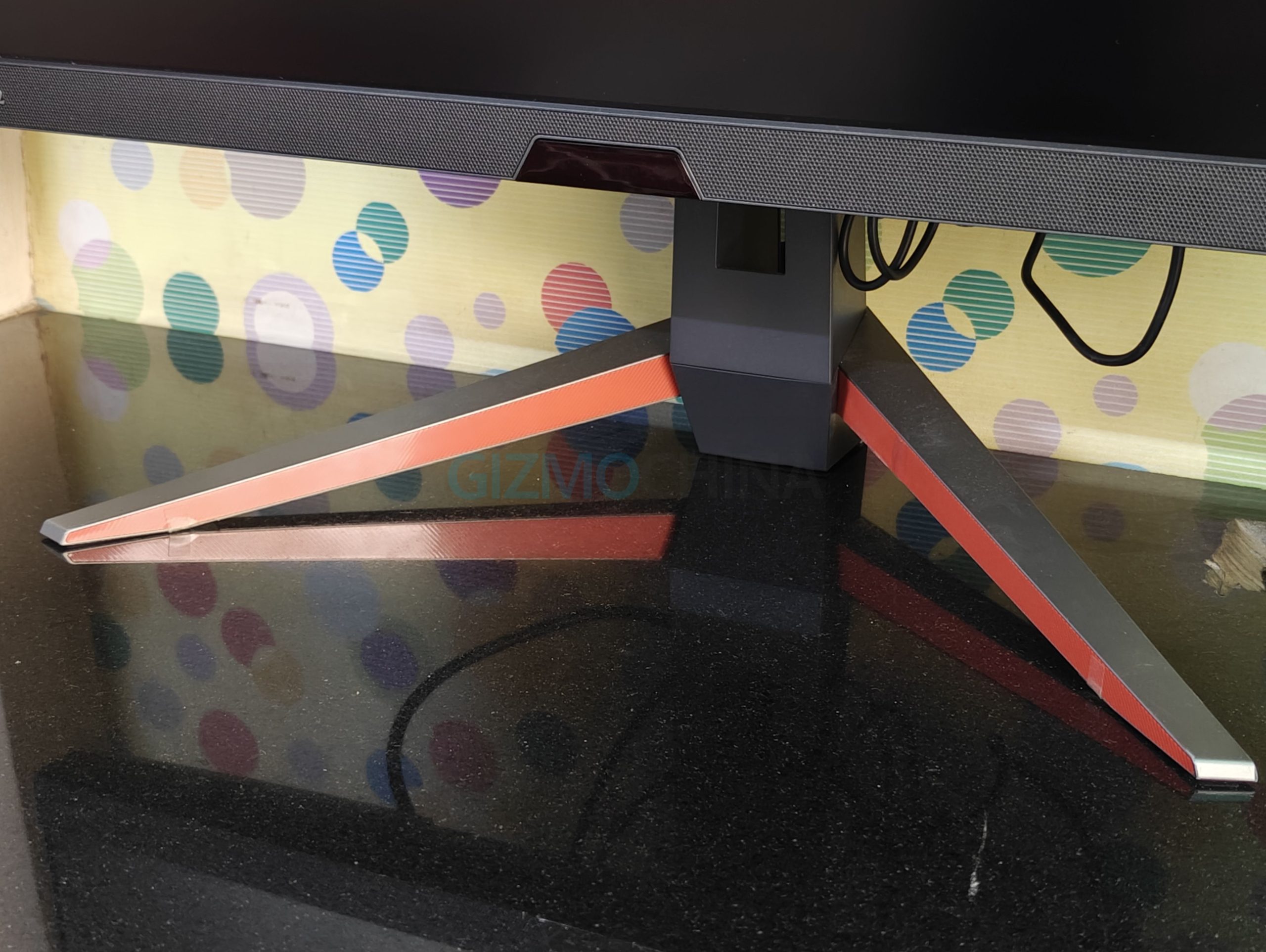
The back panel also features a square-shaped recession in the centre for attaching the stand, which allows easy adjustment of the monitor’s position by sliding it up or down, providing swivel and tilt functionalities. A gap in the stand’s lower section serves as a cable passage for organized cable management. The stand, in particular, has a faux-metal finish and is quite hefty.
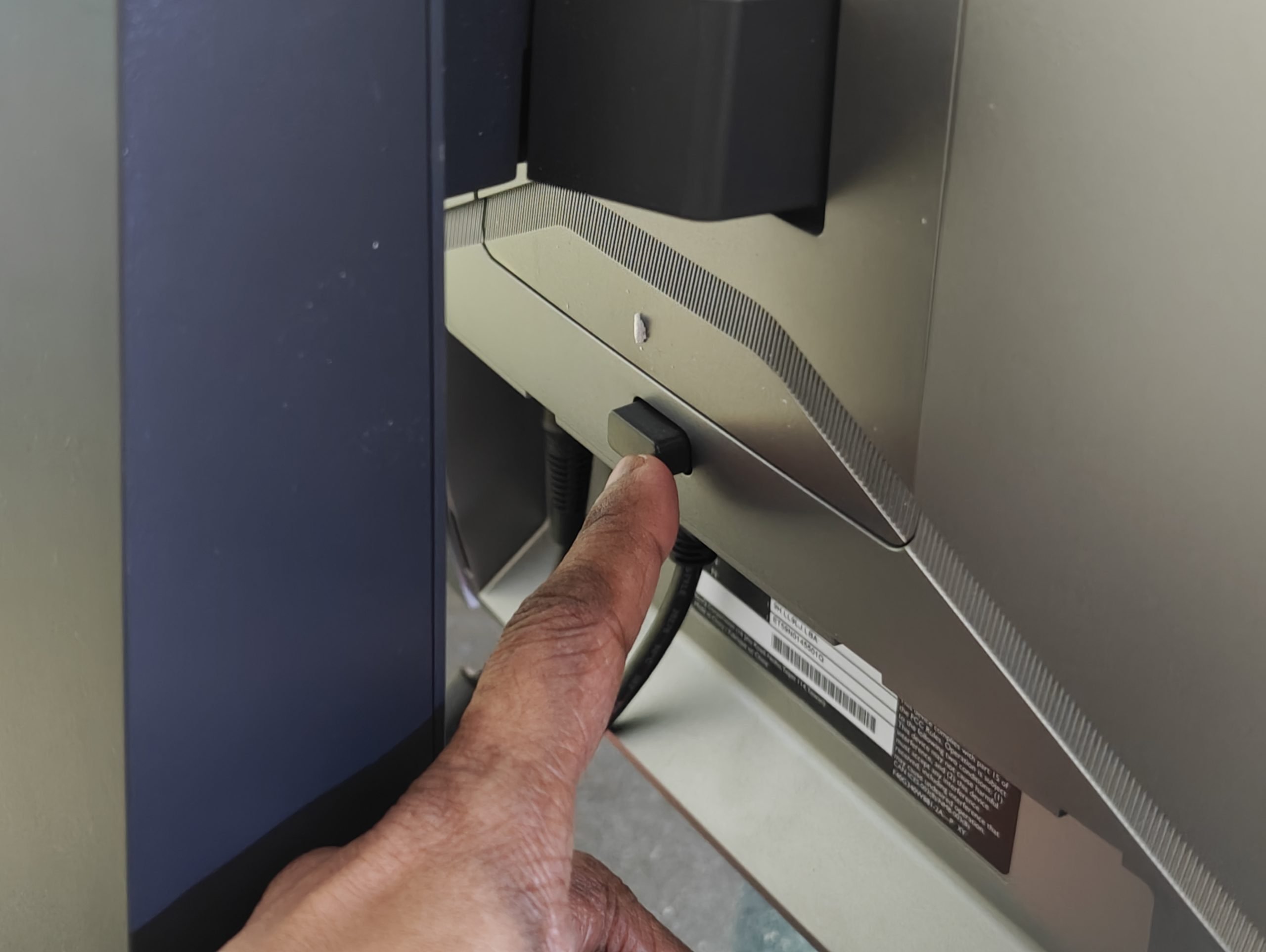
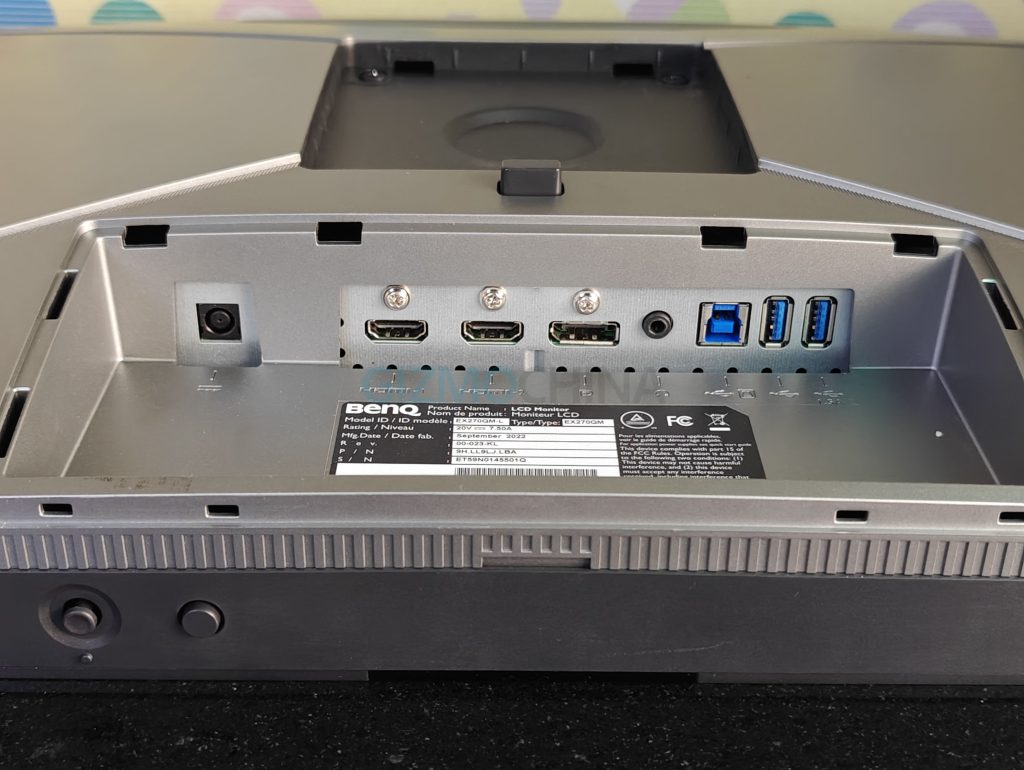
Directly below the stand attachment area, all the ports, including as many as three video inputs, are oriented downward. Additionally, a panel is provided to snap onto the bottom, concealing the ports for a neat appearance. For user convenience, the monitor comes with a compact remote control, reducing the need for manual interaction with the monitor’s buttons and getting confused with the buttons.
The BenQ Mobiuz EX270QM comes in a big package, and when I received the review unit, I felt that I may need some assistance to assemble it. However, I could assemble it quite easily without even looking at the user manual, though I would not advise others to. The monitor and the stand are quite heavy, and hence, it is advisable to handle them with care. All in all, the EX270QM has a subtle yet premium look. Since the monitor is hefty and takes up a good amount of space, it is advisable to place it on a very sturdy base.
Display Features and Gaming Performance
BenQ Mobiuz EX270QM BenQ Mobiuz EX270QM
The Mobiuz EX270QM features a 27-inch 2K IPS panel that supports 1440p resolution, a 240Hz refresh rate, and 98 percent DCI-P3 color reproduction. While it is primarily marketed for gaming purposes, it also offers sufficient capabilities for professional work, although it may not be the best in this regard.
The EX270QM is equipped with multiple ports, including a power cable slot, a pair of HDMI 2.1 ports, a DisplayPort 1.4, a 3.5mm headphone jack, a USB-B upstream hub port, and a pair of USB-A (3.0) ports. Having multiple display sources allows users to easily switch between gaming sources, such as a PC or a gaming console. Unfortunately, there is no USB-C port on the device.
BenQ Mobiuz EX270QM connectivity options
The auto-brightness sensor works fine in adjusting the monitor brightness depending on the surrounding light, helping to prevent eyestrain and headaches. The monitor offers a range of built-in color modes, such as Cinema HDRi, Custom, DisplayHDR, ePaper, FPS, Game HDRi, M-Book, Racing Game, RPG, and sRGB, allowing users to customize the display according to their personal preferences. Additionally, gaming features like FPS Mode, Motion Blur Reduction, Color Vibrance, Light Tuner, FreeSync Premium Pro, and Black eQualizer can be adjusted and toggled during gameplay.
BenQ Mobiuz EX270QM
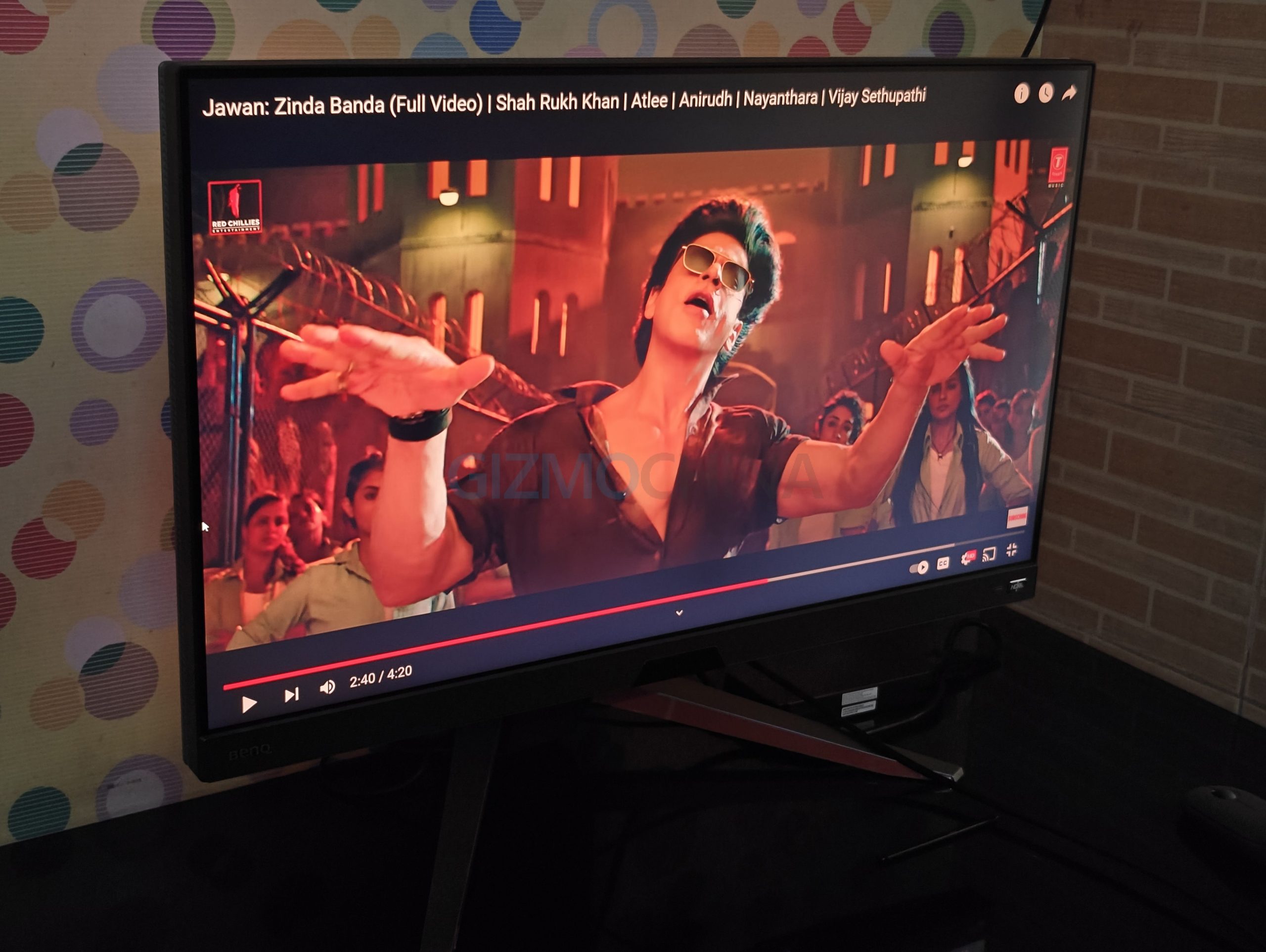
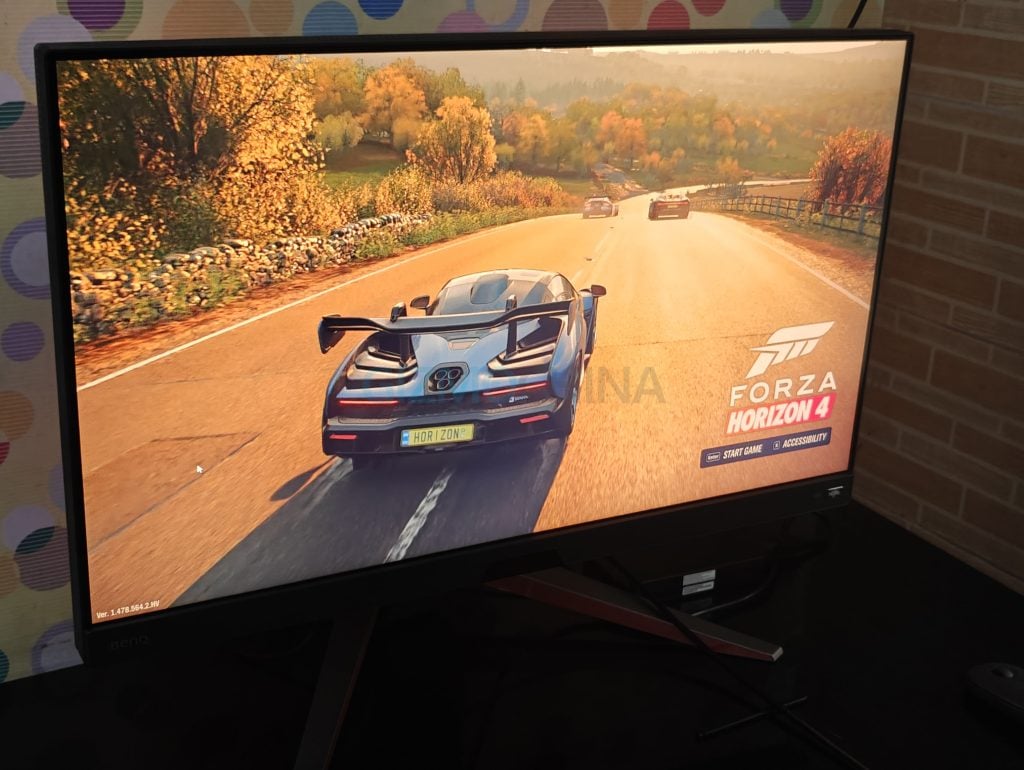
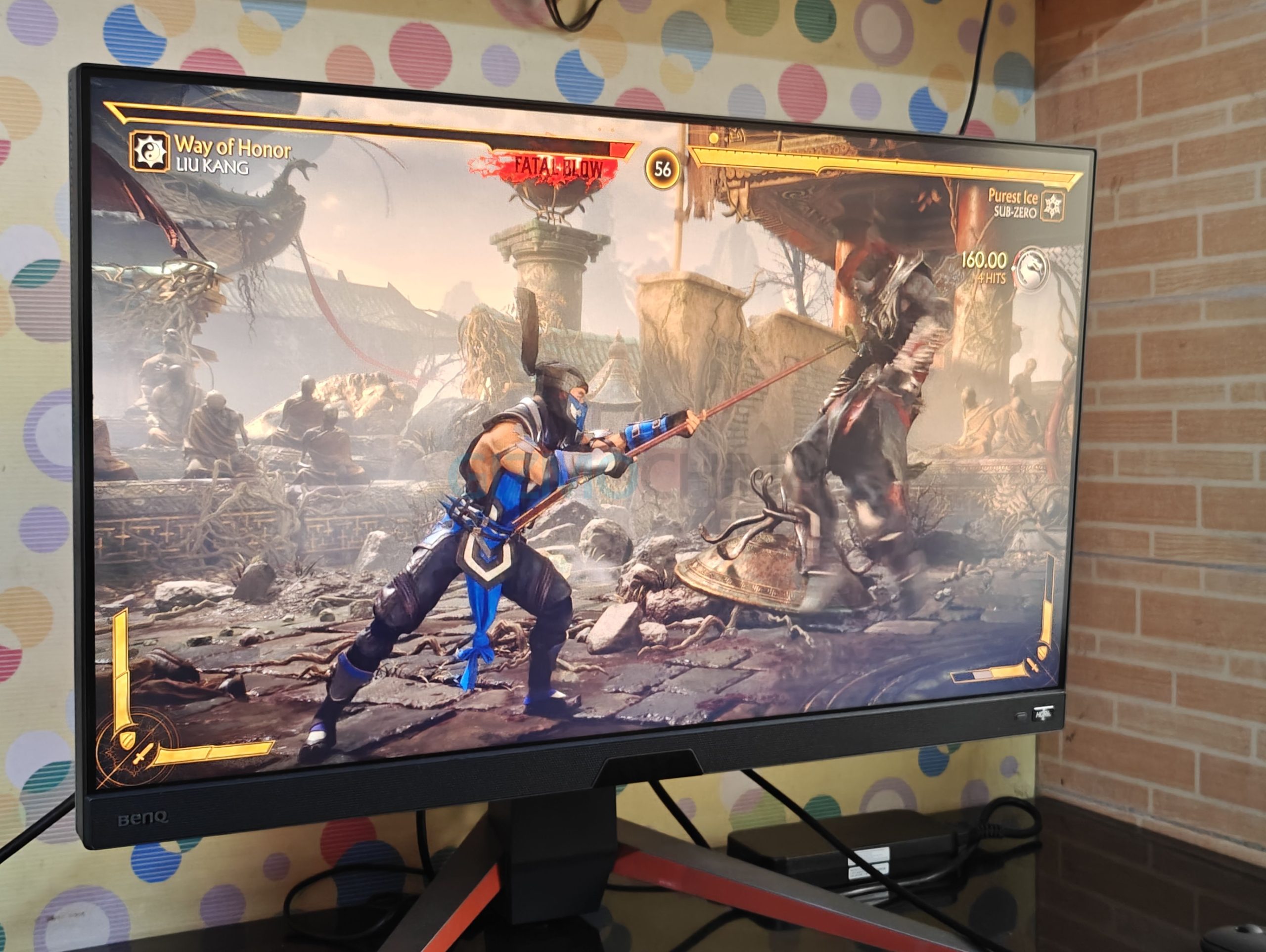
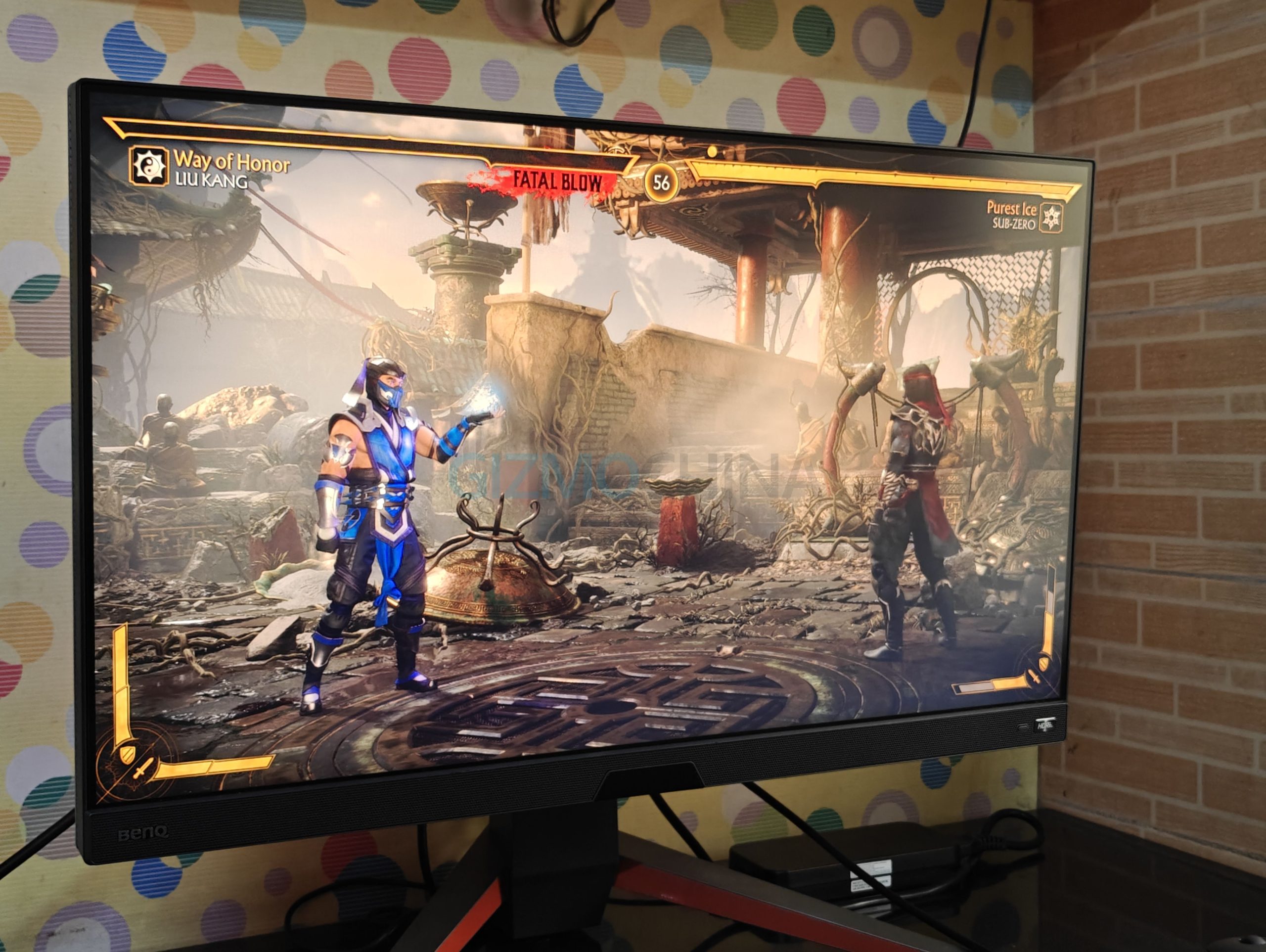
The EX270QM supports a native 240Hz refresh rate, enhanced by AMD FreeSync Premium Pro for variable refresh rates. It offers HDR support with edge-lit local dimming, featuring approximately 16 dimming zones. With a peak brightness of 600 nits, it delivers vibrant HDR in brighter scenes, providing a visually pleasing experience. However, in darker images, the monitor’s contrast capabilities may be somewhat limited. While not reaching the pinnacle of true HDR excellence, especially in comparison to more advanced displays, it remains a solid choice for users who prioritize good HDR performance in well-lit scenarios. It goes without saying that an OLED panel would offer a better HDR experience, but doing so would certainly add to the price.
BenQ Mobiuz EX270QM
The Mobiuz EX270QM, with support for a 240Hz refresh rate, can surpass competitors in the 144-165Hz range. Its inclusion of motion blur reduction technology enhances the gaming experience by minimizing ghosting. With a 1440p resolution and a one-millisecond gray-to-gray response time, the monitor ensures smooth motion in fast-paced gaming without overtly emphasizing its capabilities. Its ability to maintain clarity in in-game elements, even during rapid scrolling or high-speed gameplay, is commendable. The commendable motion clarity at lower frame rates provides versatility for different gaming scenarios, including both high-framerate games. Overall, the BenQ Mobiuz EX270QM quietly stands out for its fluid and responsive gameplay.
BenQ Mobiuz EX270QM BenQ Mobiuz EX270QM
The Mobiuz EX270QM caters to gamers’ preferences with customizable visual effects. The Light Tuner feature allows users to choose from 20 color settings, enabling the creation of personalized gaming environments. The Black equalizer feature enhances visibility in dark areas, bringing out all the details on the screen.
Audio through the built-in speakers is loud and clear, and some may not feel the need to use separate desktop speakers, making it clutter-free. It comes with multiple sound profiles for an enhanced experience.
The BenQ Mobiuz EX270QM is a stylish and feature-packed gaming monitor known for its smooth and responsive performance. Boasting a high 240Hz refresh rate, the monitor provides excellent image quality and offers various customization options to enhance the gaming experience. Despite its impressive features, it falls short in terms of HDR capabilities, making it more suitable for well-lit environments. The built-in speakers, however, stand out as surprisingly good, potentially eliminating the need for external audio devices.
It is worth noting that the Mobiuz EX270QM lacks dynamic dimming for SDR content, impacting its ability to adjust brightness dynamically. On the positive side, it excels in ghost-free motion handling, contributing to a seamless gaming experience. However, the overall excellence comes at a cost, as the monitor is considered relatively expensive within its class. Despite these drawbacks, the EX270QM remains an attractive option for gamers seeking a premium and feature-rich display.
Disclaimer: All of the opinions in this BenQ Mobiuz EX270QM gaming monitor review are mine and based on my own experiences. There has been no editorial input from BenQ.
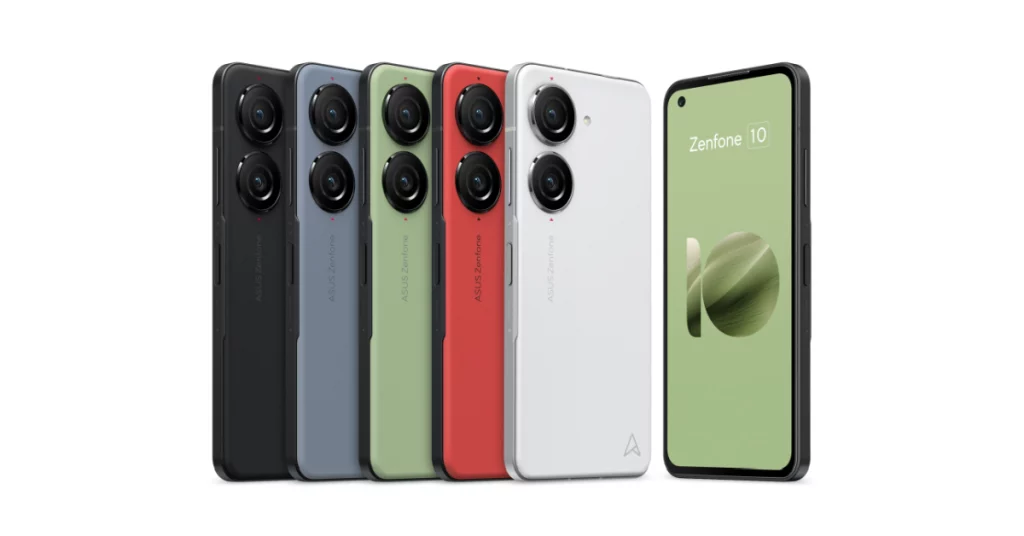
Asus has kickstarted the global rollout of the Android 14 update for Zenfone 10, including models sold in the EU. The latest software version, 34.1004.0204.65, brings a slew of improvements and features to enhance user experience. Here’s what you need to know:
How to Get the Update:
To access the Android 14 update, ensure your Zenfone 10 is on software version 33.0220.0220.101. The 1.3GB update is gradually reaching devices based on their serial numbers, so it might take a few days for everyone to receive it.
Notable Changes:
Revamped System Apps:
Mobile Manager, Contacts, Phone, Emergency Dialer, File Manager, Calculator, Clock, Gallery, Weather, Sound recorder, Settings, Phone Clone, Local backup, Launcher, and more have undergone a facelift.
Customization Features:
Users now have the ability to customize the color and brightness of the clock widget on the lock screen.
Enhanced Permissions:
Introduces a new “Photos and Videos” permission, along with a system photo picker for improved control over app access to relevant information.
Battery Usage Display:
The display method for battery usage has been adjusted, allowing users to view app usage in segments.
Audio Improvements:
Resolves speakerphone call echo issues and optimizes Bluetooth connectivity, addressing occasional headset disconnection and noise problems.
Power Menu Enhancements:
ASUS has fixed the power menu by adding restart and shutdown options, addressing previous limitations.
Manual Update:
If you haven’t received the update notification, you can manually check for it in Settings > System > System updates. Asus recommends backing up your data before proceeding, as some third-party apps might not be fully compatible with Android 14.
We use cookies on our website to give you the most relevant experience by remembering your preferences and repeat visits. By clicking “Accept”, you consent to the use of ALL the cookies.
This website uses cookies to improve your experience while you navigate through the website. Out of these, the cookies that are categorized as necessary are stored on your browser as they are essential for the working of basic functionalities of the website. We also use third-party cookies that help us analyze and understand how you use this website. These cookies will be stored in your browser only with your consent. You also have the option to opt-out of these cookies. But opting out of some of these cookies may affect your browsing experience.
Necessary cookies are absolutely essential for the website to function properly. This category only includes cookies that ensures basic functionalities and security features of the website. These cookies do not store any personal information.
Any cookies that may not be particularly necessary for the website to function and is used specifically to collect user personal data via analytics, ads, other embedded contents are termed as non-necessary cookies. It is mandatory to procure user consent prior to running these cookies on your website.