Advertisement

OnePlus 11 gets System and Camera Improvements with OxygenOS 13 A.10 update

Flagship devices from any brand get priority updates and improvements. The OnePlus 11 from the Chinese manufacturer is no exception. It debuts as the brand’s top-notch smartphone of 2023 and brings many impressive specifications out of the box. However, OnePlus has also been working hard to improve the software experience on the device with updates. In that light, the company announced OnePlus 11 units in the global market have started to pick up a new Oxygen OS 13 A.10 update.

You can now click 32MP telephoto shots on your OnePlus 11

RMupdate reports that the OxygenOS 13 A.10 update for the OnePlus 11 comes with several improvements in the camera and system. It revamps stability by fixing known issues and improves the user experience by expanding Bluetooth and Wi-Fi connection compatibility. Notably, the update adds support for 32MP telephoto shots, which will allow users to enjoy the full potential of the camera sensor.

OnePlus-11

The OxygenOS 13 A.10 update also addresses a bug that frequently caused the app drawer to close. Furthermore, the app drawer has undergone aesthetic changes, resulting in a more minimalistic appearance. To distinguish the frequently used apps row, the update removes the line at the bottom, separating it from the rest of the drawer. Additionally, users will notice the clock widget on the Shelf has been improved, as the city name is now fully displayed on both the Clock and World Clock widgets.

Along with these minor fixes, the update also brings the April 2023 security patch with itself, upgrading the overall security and privacy of the OnePlus 11 (full review). In case you haven’t received the OTA notification for the update, you can install it manually by going to Settings > System > Software Update and tapping on Download & Install.

RELATED:

(Via)

OnePlus Ace 2 Pro rumored to feature Snapdragon 8 Gen 2 & 1.5K Display

OnePlus is planning on launching a new entry in the Ace 2 series, which will be the higher end Ace 2 Pro model. But prior to any official announcement, a new leak has revealed some of its key specifications.

OnePlus

OnePlus 11RT could be the global version of the Ace 2 Pro

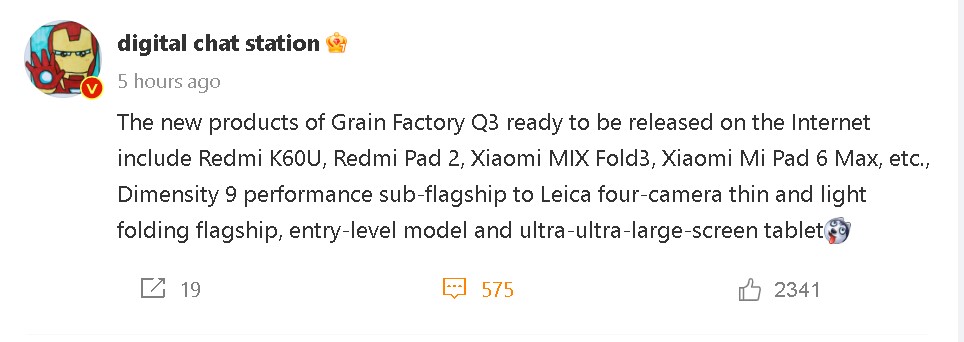
The news arrives from known tipster Digital Chat Station who shared the details on Weibo (a Chinese microblogging website). For those unaware, the company had previously announced the Ace 2 and Ace 2V model in the Chinese market earlier this year. Now, it appears that the Ace 2 Pro will be latest entry in the lineup and will feature refreshed specifications. This includes a new processor, which will reportedly be Qualcomm’s latest and greatest Snapdragon 8 Gen 2 SoC.

Digital Chat Station further added that the display on the Chinese smartphone maker’s upcoming Ace 2 model will be a 1.5K resolution curved panel. In other words, it will likely be an AMOLED panel with Full HD+ resolution and curved edges. Apparently, BOE is the supplier for this smartphone’s display. If this is true, then it is clear that the Ace 2 Pro will be a more affordable flagship grade device that will likely skip on certain features that powers the OnePlus 11 model.

OnePlus

Apart from this, rumors have hinted that the cameras and battery pack on the Ace 2 Pro will be same as the base Ace 2 model. Although, this is still unclear at the moment. The Pro model is expected to launch sometime in the second half of this year, so stick around for more updates regarding this device.

RELATED:

OnePlus Nord Buds 2r design revealed via retail box image

OnePlus is rumored to launch a Nord Buds 2r alongside the upcoming Nord 3 smartphone in India. The earbuds are expected to be a slightly cut-down version of the Nord Buds 2. Ahead of the launch, an image of the retail box of the Nord Buds 2r has surfaced online in a new report.

OnePlus Nord Buds 2r design

The leaked image comes from a MySmartPrice report revealing the design of the Nord Buds 2r. Compared to the design of the Nord Buds 2, the 2r has similar silicone ear tips, however, the stem of the earbuds is more rounded this time around. Other than the design, the leak does not reveal any other details. However, we can take a look at the Nord Buds 2 to get an idea of what to expect from the 2r.

OnePlus Nord Buds 2 specs

The OnePlus Nord Buds 2 have a flat stem and silicone ear tips. They are IP55-certified, providing water and dust resistance. The earbuds boast a 12.4mm dual dynamic titanium driver with active noise cancellation of up to 25 dB. The BassWave bass enhancement algorithm offers a balanced audio experience, and the dual microphones ensure clear call quality. Equipped with Dolby Atmos, Dirac Sound tuning, and sound master equalizer, these earbuds also come with a transparency mode to stay aware of surroundings.

With a 480mAh battery unit, the OnePlus Nord Buds 2 are claimed to deliver a total battery life of 36 hours with the charging case. Each earbud can provide 7 and 5 hours of music playback with ANC enabled and disabled, respectively. The TWS earphones support fast charging via a USB-C port, Bluetooth 5.3 connectivity, and fast pairing, and can be connected to two devices simultaneously.

RELATED:

(source)

Honor 90 series release schedule leaked, coming at the end of May

The upcoming Honor 90 series, including the Honor 90 and 90 Pro models, is set to launch soon. According to blogger “Yang Pat,” promotional materials for the series will be released on May 19, with the devices going on sale on May 29 and officially hitting the market on June 7.

Honor 90 series release schedule

The Honor 90 and 90 Pro has gone through the Ministry of Industry and Information Technology (MIIT) and China’s 3C certification with model numbers REA-AN00 (Honor 90), and REP-AN00 (Honor 90 Pro) which reveals some key specs of these devices.

Honor 90 render

Honor 90 series specifications (rumored)

According to 3C certification, Honor 90 Pro is equipped with a powerful 100W fast-charging feature, while the Honor 90 is to get a 66W fast-charging capability. Notably, both devices come with backward charging compatibility, enhancing their versatility and convenience.

Previous leaks suggest that the Honor 90 series will boast impressive specifications. Both models are expected to sport a high-refresh-rate 1.5K+ curved display and be powered by the latest 5G Qualcomm Snapdragon 8 Gen 2 chipset, ensuring excellent performance. The devices will also have a centered punch-hole design for the selfie camera.

In terms of imaging capabilities, the Honor 90 series will feature a triple camera setup which will include a 200-megapixel Samsung S5KHP3 main camera with a 16-in-1 pixel binning technology, along with a 50-megapixel ultra-wide-angle lens and a depth-of-field lens.

Honor 90 series is set to incorporate several significant enhancements based on critiques from the previous Honor 80 series. Notably, the upcoming models will feature dual speakers and OIS optical image stabilization, indicating Honor’s heightened attention to detail.

RELATED:

(Source)

Apple iPhone 15 & 15 Plus may feature iPhone 14 Pro series’ 48MP cameras

The Apple iPhone 15 series is still months away but there have already been various rumors and reports regarding the upcoming smartphones. Now, the latest rumors has revealed some interesting details regarding the iPhone 15 and iPhone 15 Plus.

Apple iPhone 15 & 15 Plus to feature new & improved primary rear camera

A new report has revealed that the lower end model of the iPhone 15 series, which includes the base iPhone 15 and iPhone 15 Plus model, will feature improved primary rear cameras. The more affordable entry in the lineup will feature a 48 megapixel sensor for its primary rear camera. According to known analyst Jeff Pu, the two smartphones will feature the same 48 megapixel sensor that was offered on the iPhone 14 Pro and iPhone 14 Pro Max model from last year.

Apple

The new sensor will enable the next gen non Pro iPhone models to capture 48 megapixel ProRAW photos. In other words, users can capture images with more details, which is great for those that edit images later on. This feature has been widely well received in the market and also arrived as a major upgrade to cameras in the iPhone 14 Pro models.

Previously, Pu had added that the iPhone 15 Pro models will not feature solid state buttons over design issues. However, these higher end models will still arrive with titanium frame, an upgraded A17 Bionic chips, and 8GB of RAM. Lastly, these devices are also expected to house a USB Type C port.

RELATED:

(Via)

Motorola Edge 40 Indian launch set for May 23, key specs confirmed

Motorola introduced its Edge 40 smartphone in Europe earlier this month and has now announced the release date for the device in India. As per the official Twitter account of the brand in India, the Motorola Edge 40 is set to launch on May 23. The teaser shared by the company shows that the phone will be available in green and will be sold via Flipkart.

Motorola

Motorola Edge 40 Indian variant key specs

A micro-site has also emerged on Flipkart revealing all of the key details about the Edge 40. With an official Indian launch date set for May 23, the Motorola Edge 40 smartphone boasts a 6.55-inch OLED display with an FHD+ resolution, 144Hz refresh rate, 1,200 nits peak brightness, and an in-screen fingerprint scanner. The device is also IP68-certified for water and dust resistance and features dual stereo speakers that are tuned by Dolby Atmos.

The rear panel of the device houses a square-shaped camera module, which includes a 50MP main sensor with optical image stabilization and a 13MP ultra-wide-angle lens. Meanwhile, the front camera is a 32MP selfie shooter.

Under the hood, the Motorola Edge 40 is powered by a MediaTek Dimensity 8020 chipset, 8GB LPDDR4X RAM, and 256GB UFS 3.1 storage. The device is fueled by a 4,400mAh battery that supports 68W wired charging and 15W wireless charging. The smartphone runs on Android 13 out of the box. The device will come in a total of three color options: Eclypse Black, Nebula Green, and Lunar Blue.

Pricing of the device is still under wraps, however, it is worth mentioning that the smartphone costs €550 for the sole 8GB + 256GB variant in Europe. Considering the fact that these devices are usually more expensive in Europe, the Edge 40 is expected to be relatively cheaper in India

RELATED:

(source)

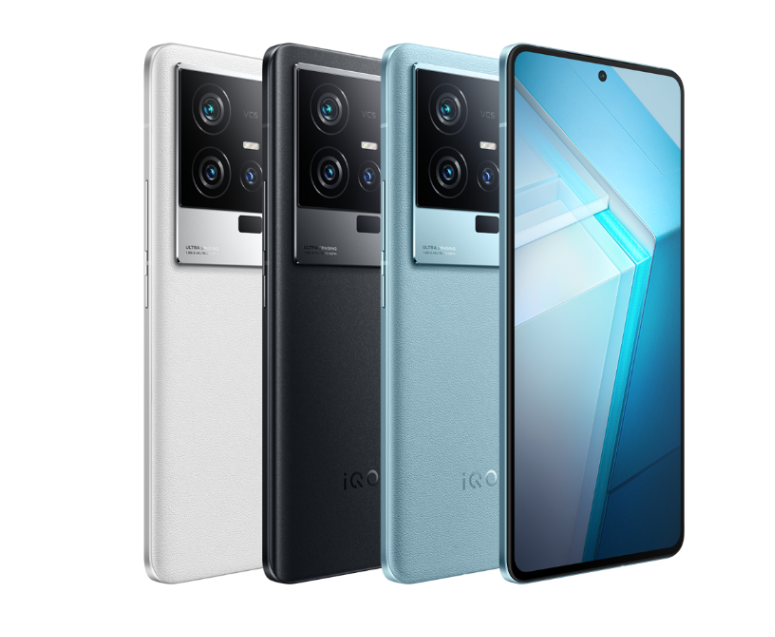
iQOO Neo 8 Pro passes through AnTuTu, RAM & storage revealed

iQOO is set to launch the new Neo 8 series of smartphones soon. But ahead of its official announcement in China, the company has offered another teaser, which reveals the Neo 8 Pro model’s AnTuTu benchmark performance as well as a few other details. So let’s have a look.

iQOO Neo 8 Pro to launch with up to 16GB RAM & 512GB storage

For those unaware, the iQOO Neo 8 Pro is the first Pro series model in the Neo lineup and will feature flagship grade specs and features. Based on what we know so far, the Chinese smartphone maker will equip the device with a MediaTek Dimensity 9200+ SoC, which is a high end 4nm based processor that has a peak clock speed of 3.35GHz. Now, the brand has officially shared the results of the device on the AnTuTu benchmarking platform.

Looking at these scores, we can see that the smartphone scores 1,363,206 points, which the company claims is the highest ever AnTuTu scores that has been offered to any Android phone. This is even higher than the 1,330,011 points achieved by the ASUS ROG Phone 7 series of gaming smartphones. This AnTuTu performance teaser from the company also revealed that the tests were carried out using the 16GB + 512GB model of the device.

In other words, the Neo 8 Pro is confirmed to feature up to 16GB of LPDDR5X RAM and 512GB of UFS 4.0 storage. iQOO is gearing up to announce the Neo 8 series in its home market of China on May 23. Unfortunately, this was all the details shared in the leak, so stick around for more as we will be covering any new new leaks and teasers ahead of the launch.

RELATED:

Oppo F23 5G launched in India with 120Hz display, 67W charging, microscope camera, and more

The Oppo F23 5G has launched in India today as scheduled. It acts as the successor of Oppo F19 since there was no Oppo F21 last year.

Oppo F series smartphones go by Oppo A series phones in some markets. The A series version of F23 5G went official in Malaysia last week as Oppo A98 5G.

Thus, we already knew the handset’s specs before its official announcement. As the device is finally out, let’s check out all the details, including its pricing and availability.

Oppo F23 5G

Oppo F23 5G Specifications

The Oppo F23 5G (aka Oppo A98 5G) looks similar to the Oppo Reno 8T 5G (review) from the back. On the front, however, it has a flat LCD panel instead of a curved OLED display.

For the unaware, the 2-year-old F19 also had an OLED display but it did not offer a 120Hz refresh rate like the F23 5G. Also, the new model’s screen is larger at 6.72 inches compared to 6.43 inches on the outgoing phone.

Further, the panel on the F23 5G comes with a centered punch-hole, 391 PPI, 240Hz refresh rate, and 680 nits peak brightness level. It is protected by Panda 1681 glass.

Under the hood, the device houses a Qualcomm Snapdragon 695 SoC, which enables 5G connectivity. The predecessor was limited to 4G due to a Snapdragon 662 chip.

The chipset is paired with LPDDR4x RAM and UFS 2.2 storage. On the software front, the phone boots ColorOS 13.1 based on Android 13.

Oppo F23 5G

Talking about optics, there’s a triple camera system on the rear headed by a 64MP primary sensor. It is accompanied by a 2MP 20x microscope camera (up to 40x digital zoom) and a 2MP monochrome sensor. On the front, there’s a 32MP shooter.

The handset comes with a side-mounted fingerprint sensor, a 3.5mm headphone jack, and a MicroSD card slot. It also features dual stereo speakers.

The F23 5G draws energy from a 5,000mAh battery and supports 67W fast charging. Last but not least, Oppo claims that the device will offer 4 years of lag-free experience.

Oppo F23 5G Price and Availability in India

The Oppo F23 5G arrives in a single 8GB + 256GB memory configuration in India. However, it can be picked up in either Bold Gold or Cool Black color options.

The smartphone is priced at ₹24,999 (~$300) and is available for pre-order via Oppo store, Amazon, and offline retailers across the country. It will start shipping to customers on May 18.

Customers can avail of a ₹2,500 (~$30) discount on select cards. There are also other benefits, such as no-cost EMI and exchange bonus.

RELATED:

Galaxy Z Flip 5 tipped to feature Samsung DeX

According to Sammobile, the upcoming Galaxy Z Flip 5 from Samsung is set to address some of the shortcomings of its predecessor. While the Galaxy Z Flip line offers high-end features like powerful Snapdragon chips and impressive 120Hz AMOLED displays, it has been lacking in certain areas.

One notable absence has been the support for Samsung DeX, a feature that allows users to transform their Samsung devices into workstations with a desktop-like interface. However, sources suggest that the Galaxy Z Flip 5 will break this trend and become the smallest Samsung phone to support DeX.

Galaxy Z Flip 5 will be the most compact Samsung phone to feature DeX support

For those unfamiliar with DeX, it enables users to project a desktop interface onto external displays such as smart TVs or monitors, either wirelessly or through an HDMI adaptor. This functionality allows for the connection of standard input devices like mice and keyboards, creating a more productive work environment.

Samsung has also developed a DeX app for Windows and Mac, enabling users to utilize DeX on their computers by simply connecting their Samsung devices via a USB-C cable. While DeX can be used on tablets directly, smartphones lack the screen estate for this purpose.

As for existing Galaxy Z Flip models, it remains uncertain whether they will receive DeX support through a software update once the Galaxy Z Flip 5 is officially released. Although details are scarce, it is worth noting that older models should have the capability to run DeX smoothly, raising hopes that at least some of them may receive the feature.

The Galaxy Z Flip 5, along with the anticipated Galaxy Z Fold 5, is expected to be unveiled at Samsung’s upcoming Unpacked event, projected to take place in late July. Both devices will come preloaded with Android 13 and One UI 5.1.1 and will be eligible for four major OS upgrades, aligning with Samsung’s standard offering for its modern Galaxy flagships.

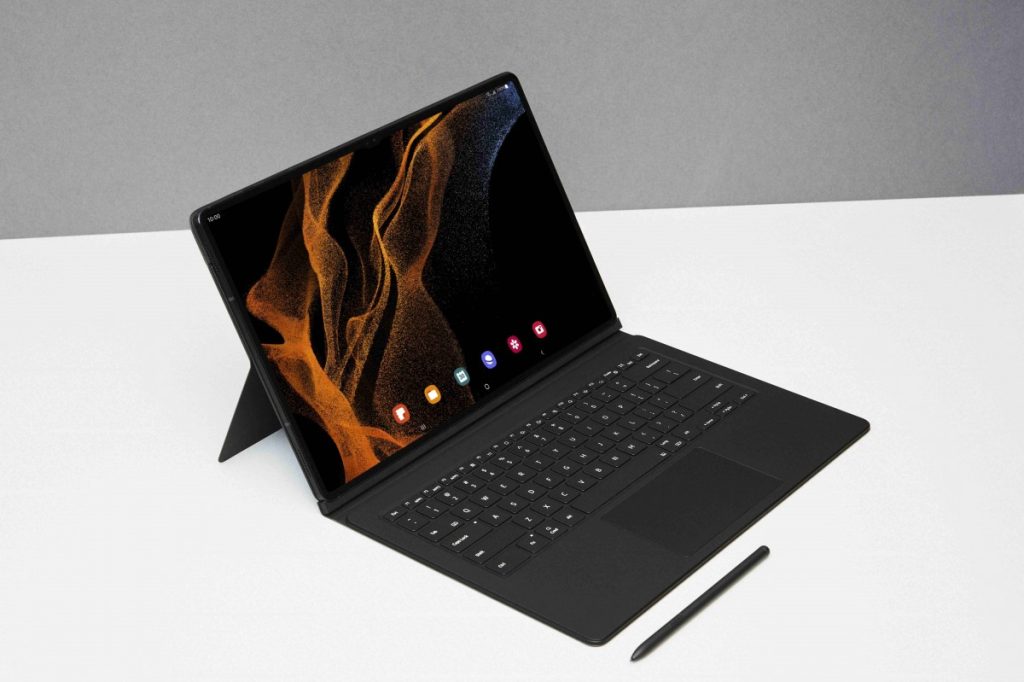
Additionally, the event is rumored to include announcements regarding the Galaxy Watch 6 series, as well as the introduction of the Galaxy Tab S9, Tab S9+, and Tab S9 Ultra.

RELATED:

(Source)

Foxconn’s $500 Million Investment in Apple Factory to Fuel Job Growth in India

Foxconn, a prominent Apple supplier, has made a significant investment in India, with the construction of its first factory in the southern state of Telangana. The groundbreaking ceremony marks the beginning of a new era for the region, as the $500 million investment is expected to create 25,000 direct job opportunities. This move comes alongside Apple’s plans to establish its own manufacturing facility in Karnataka state, which is anticipated to generate approximately 100,000 jobs. These developments not only showcase Foxconn’s commitment to expanding its presence in India but also highlight Apple’s growing success in the Indian market, where it sold 6.7 million iPhones last year. The Apple iPhone 13 was the best-selling smartphone in India in Q4 2022 as well.

The Local Workforce will benefit from new employment opportunities

The IT minister of Telangana announced that Foxconn will invest $500 million in the region, emphasizing the positive impact on job creation. The investment signifies Foxconn’s confidence in the state’s conducive business environment and its commitment to contributing to India’s economic growth. The new factory will enhance the country’s manufacturing capabilities and attract further investments in the technology sector. With the creation of 25,000 jobs, the local workforce will benefit from increased employment opportunities and improved livelihoods.

Foxconn

Apple’s decision to establish a manufacturing facility in Karnataka showcases the company’s long-term vision for the Indian market. With plans to produce iPhones locally, the facility is expected to generate approximately 100,000 jobs. This move aligns with the Indian government’s “Make in India” initiative, aimed at boosting domestic manufacturing and employment. The expansion will not only help Apple meet the rising demand for its products in India but also foster technological innovation and skill development within the country.

The increasing sales figures of iPhones in India reflect Apple’s success in tapping into the country’s burgeoning market. Previously, Apple and Foxconn collaborated on a $200 Million Airpods Manufacturing Factory in India. With 6.7 million units of the iPhone sold last year, Apple has witnessed remarkable growth and consumer acceptance. The company’s focus on product affordability, localized marketing strategies, and improved distribution networks has played a vital role in capturing the Indian consumer’s attention. Additionally, Apple’s expansion into local manufacturing will further strengthen its position by reducing costs and ensuring a steady supply of products tailored to the Indian market.

RELATED:

(Via)

WebGPU to Enhance Chrome’s Performance, Security, and AI

Google Chrome, currently holding a dominant 66.13% share of the browser market, is known for its constant development and innovation. In the latest Chrome 113 update, Google introduced the WebGPU feature, aiming to revolutionize network performance, bolster user security, and reduce data centre load. This implores users to explore the impact of WebGPU integration on Chrome’s capabilities, highlighting its potential for AI tasks and the collaborative efforts to enhance cross-browser compatibility.

The WebGPU integration will upgrade Performance & Security

WebGPU, a significant addition to Google Chrome, is set to play a vital role in future AI tasks, including text-to-image conversions and AI processing. By leveraging WebGPU for these tasks, Chrome users can enjoy several advantages, such as improved network stability and enhanced data control. WebGPU’s integration marks a substantial upgrade in web performance, data centre efficiency, and AI application security, benefitting both individual users and organizations.

Google Chrome

As the landscape of browser technology evolves, the integration of native AI processing and cross-browser compatibility becomes increasingly important. Recognizing this, Google is collaborating with Mozilla Firefox, Apple Safari, and Microsoft Edge on the “Baseline” project. This initiative aims to establish a standardized set of features that web developers can rely on, ensuring consistent performance across all major browsers. The ultimate goal is to create a smoother user experience, simplify web development processes, and foster a safer online environment.

The Baseline project’s primary focus is to enhance cross-browser compatibility, enabling developers to build web applications that function seamlessly across multiple platforms. By aligning the efforts of Google Chrome, Mozilla Firefox, Apple Safari, and Microsoft Edge, Baseline will help eliminate inconsistencies, reducing the need for browser-specific workarounds. This collaboration will not only benefit developers but also result in enhanced user satisfaction and productivity.

RELATED:

(Via)

Tecno Phantom V Yoga design & specs leak, could be a mid-range clamshell

At MWC 2023, Tecno unveiled Phantom V Fold 5G as its first foldable device in the market. The phone has reportedly been popular in India as it sold out on the first day due to high demand. Now, the brand is apparently working on a clamshell smartphone that could undercut all other flip devices in the market.

Tecno Phantom V Yoga: Mid-range foldable?

The leaked images of the “Phantom V Yoga” suggest that it could feature a round camera hump that doubles as a secondary display, similar to the Huawei P50 Pocket. However, its FHD+ main display is rumored to be powered by MediaTek’s Dimensity 8050, indicating that it may target the mid-tier market rather than the premium segment.

In order to eliminate any confusion, MediaTek has simplified the naming convention for its Dimensity System on a Chip (SoC). The Dimensity 8050 is actually a renamed version of the Dimensity 1300 chipset, which comprises four high-performing Cortex-A78 cores – one Super Core that can reach a speed of up to 3GHz, and three Performance Cores that can reach a speed of up to 2.6Ghz. Additionally, there are four power-efficient Cortex-A55 cores included.

Despite this, the device will feature HIOS based on Android 13, 64MP dual cameras, and 8GB of RAM with 256GB of internal storage. Tecno’s effort to make foldable technology more accessible to mainstream consumers by offering a more affordable option could breathe fresh air into the Android foldable clamshell smartphone market.

RELATED:

(Source)

Twitter Restricts Content in Turkey amidst Pivotal Election

As Turkey prepares for a pivotal election, Twitter’s decision to block content in the country has sparked intense debates about free speech and its implications for the democratic process. The move, prompted by a legal process, has drawn attention to Elon Musk’s stance on free expression. With Turkey’s political future hanging in the balance, the outcome of this election could reshape the nation’s domestic policies and its relationships with regional powers.

Elon Musk’s views on Free Speech are now under Scrutiny

In response to undisclosed legal pressures, Twitter announced the blocking of certain posts in Turkey. While the company aims to ensure its continued availability to Turkish users, the decision has raised concerns about censorship. The lack of transparency regarding the blocked content has only fueled the controversy surrounding the move. Twitter’s compliance with the Turkish government’s request has put Elon Musk’s views on free speech under scrutiny, as he confronts critics suggesting this could stifle open discourse.

Turkey’s upcoming election carries immense significance. After two decades in power, President Recep Tayyip Erdogan faces a formidable challenge to his presidency from opposition leader Kemal Kilicdaroglu. Pre-election polls indicate a close race, with Kilicdaroglu holding a slight lead. A potential victory for Kilicdaroglu would likely lead to a transformation of domestic policies and potentially alter Turkey’s relationships with key players such as Russia and NATO.

Twitter’s decision to block content in Turkey on the eve of a critical election has ignited discussions on the limits of free speech and the role of social media platforms in upholding democratic values. Elon Musk has already decided to step down as CEO in news from last week. As the nation awaits the election results, the future of Turkey’s domestic policies and its international relationships hangs in the balance. The world watches with anticipation, recognizing the potential for profound change in one of the most geopolitically significant nations in the region.

RELATED:

(Via)

Vivo S17e launched with 120Hz Curved AMOLED display, Dimensity 7200 SoC & 64MP dual camera setup

In an unexpected move, the Chinese smartphone manufacturer Vivo unveiled the first smartphone in the S17 series – the S17e. The launch has come as a surprise as the brand usually launches the entire S-series together in China. That being said, let’s check out what the new mid-range smartphone has to offer.

Vivo

Vivo S17e specs

This smartphone is the successor to the S16e and has several similarities with the Vivo V27. The device is equipped with a 6.78-inch FHD+ 120Hz 60° 3D curved AMOLED display, MediaTek Dimensity 7200 SoC, and a 4600mAh battery with support for 66W fast charging.

The Vivo S17e has a rear camera setup consisting of a 64MP primary camera with OIS and a 2MP secondary camera, along with a unique ring LED that the company refers to as the Aura light. The device also features a 16MP front camera for selfies and video calls.

Other notable features of the Vivo S17e include an in-display fingerprint sensor, dual SIM support, USB Type-C audio, stereo speakers, and Hi-Res audio. The device runs on Android 13 with OriginOS 3 and has up to 12GB LPDDR4X RAM with 128GB or 256GB UFS2.2 storage.

In terms of connectivity, the Vivo S17e supports 5G SA/NSA, dual 4G VoLTE, Wi-Fi 6 802.11 ac, Bluetooth 5.3, GPS (L1 + L5), USB Type-C, and NFC. The device has dimensions of 164.20×74.90×7.4mm and weighs 178g.

Price & availability


Vivo’s S17e smartphone is now available for order and is set to release in China on May 20th. It comes in three different colors – Quick Sand Gold, Sunny Blue, and Midnight Black. The device offers two storage variants: 8GB+128GB and 8GB+256GB, priced at 2099 yuan ($301) and 2299 yuan ($330), respectively. Additionally, the 12GB+256GB version is available for 2499 yuan ($358).

RELATED:

TikTok Introduces New Search Widgets for Smartphones

TikTok, the popular social media platform known for its viral videos, is expanding its horizons and positioning itself as more than just a social app. With the introduction of TikTok search widgets for both iOS and Android devices, the platform aims to establish itself as a search engine, catering to the evolving preferences of internet users. This move aligns with the changing landscape of online content discovery, where immersive experiences offered by platforms like TikTok and Instagram are gaining prominence over traditional keyword-based searches. However, as TikTok ventures into new territories, concerns about its influence and potential use as a propaganda outlet have also emerged.

The TikTok Search Widget is available on both Android & iOS

iPhone users can now enhance their TikTok experience with the newly available TikTok search widget. By integrating this widget into their home screens, users can conveniently access TikTok’s search functionalities, expanding the platform’s utility beyond entertainment and social interaction. Android users also have access to the TikTok search widget, along with a range of other TikTok widgets designed to enhance the user experience.

TikTok

Google‘s Senior Vice President, Prabhakar Raghavan, highlighted the shifting behaviors of new internet users, emphasizing their inclination towards more immersive content discovery methods. Raghavan highlighted that young people, in particular, are less likely to turn to traditional search engines like Google when seeking information. Instead, they rely on platforms like TikTok and Instagram to explore and uncover content in more engaging and interactive ways. This change in user expectations has prompted TikTok’s pivot towards becoming a search destination, catering to the preferences of a new generation of internet users.

TikTok’s influence extends beyond entertainment, as it emerges as a growing source of news among UK adults, according to a report by regulatory agency Ofcom. This finding raises concerns among lawmakers, particularly in light of recent allegations that TikTok has been exploited as a propaganda outlet by the Chinese Communist Party. As previously reported, the app is facing a ban in the state of Montana in light of the same allegations. With its expanding role in news consumption, TikTok’s impact on public opinion and the spread of information warrants careful attention.

RELATED:

(Via)

Pixel 6 & 7 Users face Frustration over Overheating & Battery Drain Issues

Many Pixel 6 and Pixel 7 users are expressing frustration as they encounter battery drain and overheating problems on their devices. Reports from various online forums, including Reddit, Google support forums, and Twitter, indicate that a significant number of users are facing similar issues. While Google’s phones are known for their impressive cameras, battery life has been a consistent weak point. However, a recent update seems to have exacerbated the problem, resulting in heightened power consumption and overheating concerns. Despite efforts to address the issue, Google’s response has been limited, leaving users searching for solutions.

The May 12 Update is the likely culprit for the Overheating Issue

According to an Engadget report, an alarmed user contacted the tech outlet, highlighting how their Pixel 6 Pro had been experiencing overheating and excessive battery drain. Suspecting the Google app and an update released on May 12th as the culprit, the user shared screenshots showcasing the app’s significant battery consumption in the background. Rolling back to an older version of the app only marginally alleviated the battery issue. Some users have attempted a factory reset and reinstalling apps, but the problem persists, leading to concerns about potential damage to the battery and CPU of the device.

Pixel 6 Pro

Users seeking assistance from Google have been met with limited support, as some have reported unhelpful interactions with the company’s support staff. Rolling back to older versions of the Google app has not proven effective for all users, suggesting a more intricate underlying cause. Speculations range from the Android System Intelligence to a worsened battery life after the May update. Although Google seems to be aware of the issue, the company has not yet provided a comprehensive solution or explanation.

At present, Pixel users facing these issues have limited recourse. One user mentioned the possibility of server-side issues, suggesting that the Google app might be trying to call home or caught in a loop. This could imply that certain server interactions or network-related activities triggered by the app are causing abnormal power usage and overheating. Suggestions include enabling Adaptive Battery and battery optimization settings. Additionally, users can experiment with activating the Extreme Battery Saver mode, understanding that it will limit app usage and certain features. However, these measures may only provide temporary relief and do not address the root cause of the battery drain and overheating problems.

RELATED:

(Via)

Acer Predator XB323KRV 32″ 4K IPS monitor with 165Hz refresh emerges on retail website

Acer recently debuted the Predator X27U gaming monitor featuring a 27-inch 2K 240Hz panel. Now, an unreleased gaming monitor by Acer has been leaked on the website of Taiwanese retailer PChome.

Acer Predator XB323KRV specs

Named the Predator XB323KRV, this gaming monitor features a 32-inch 4K IPS panel with a 10-bit color depth and 0.7-1 ms response times (GtG). It also boasts a refresh rate of 160 Hz with AMD FreeSync Premium integration and is certified with DisplayHDR 600 by VESA. Color reproduction is quite accurate as the monitor covers 95% of the DCI-P3 gamut. The monitor also features “BlueLightShield Pro” certified by TUVRheinland for low blue light emission.

The Predator XB323KRV has a range of ports including 1x 3.5 mm jack, 1x DisplayPort 1.4, 4x HDMI 2.1, 4x USB 3.2 Type-A, 2x USB Type-B, and 1x USB Type-C. Additionally, Acer has included twin 7 W speakers, a 100 x 100 mm VESA mount, and an adjustable stand.

While PChome has priced the Predator XB323KRV at TWD$26,900 (~US$874), the monitor’s cost in other markets is yet to be confirmed. Furthermore, Acer has not officially launched the gaming monitor at this stage, and its existence has not been acknowledged by the company.

RELATED:

(Source, via)

Google’s Deceptive Pixel 4 Ads Cost Them $8 Million

In a recent settlement, Google has agreed to pay $8 million to resolve a lawsuit filed by Texas Attorney General Ken Paxton. The lawsuit alleged that Google ran misleading advertisements for its Pixel 4 smartphones in the Dallas-Fort Worth and Houston markets. The company was accused of creating false narratives through DJs’ testimonials without actually providing them with the devices. This article explores the details of the case, the implications for Google, and its subsequent efforts to revive the Pixel line with the Pixel 6 series.

The Pixel 4 series was unreleased when the ads claiming “Personal Use” aired on the Radio

According to the lawsuit, Google produced ad scripts that DJs at iHeartMedia read on-air, claiming personal use and endorsement of the Pixel 4. These ads touted features like Night Sight mode and Google Assistant’s capabilities. However, at the time the commercials aired, the Pixel 4 had not been released, and the announcers had never laid hands on the devices. The Texas Attorney General’s office accused Google of engaging in false, misleading, and deceptive acts.

Google

The settlement with Texas marks Google’s second payout related to the same radio spots. Previously, the company settled with the Federal Trade Commission and six other states for $9 million. These settlements highlight the need for transparency and honesty in advertising practices. Attorney General Paxton emphasized the importance of holding corporations accountable for their misdeeds, ensuring that large companies do not receive special treatment under the law.

Despite the controversial ad campaign, the Pixel 4 and Pixel 4 XL failed to live up to expectations. The devices aimed to challenge Apple’s iPhone with features like secure Face Unlock and Motion Sense. However, the Soli radar chip’s potential for gesture controls was underutilized, limiting its functionality.

The settlement of the lawsuit against Google for misleading advertisements serves as a reminder of the importance of truthfulness in marketing campaigns. While the Pixel 4 faced numerous challenges and fell short of expectations, Google is determined to bounce back with its Pixel 6 series. As the company learns from past mistakes, it aims to regain consumer trust and deliver an enhanced smartphone experience.

RELATED:

(Via)

Apple brings Emergency SOS via Satellite feature to Australia and New Zealand

Last year, when Apple released the new iPhone 14 and 14 Pro series smartphones, the company added Emergency SOS via Satellite. After the company started rolling out the feature, it has been focused on expanding it to other regions.

In the latest development, the Emergency SOS via Satellite feature has been launched in Australia and New Zealand for Apple iPhone 14 and iPhone 14 Pro users running iOS 16.1 or later version.

Apple iPhone Emergency SOS via Satellite

With the addition of two more countries, the satellite feature is now available in 14 countries — United States, United Kingdom, Austria, Belgium, Canada, France, Germany, Ireland, Italy, Luxembourg, the Netherlands, Portugal, Australia, and New Zealand.

The feature enables users to send text messages to emergency services when there’s no cellular network or Wi-Fi connection available, that too without any other type of hardware additions or additional software. When the user contacts an emergency service with this new feature, it sends the current location and a message that the user needs assistance.

It’s worth noting that the feature only works outside in open spaces with a clear sight of the sky and without obstructions like trees, buildings, etc.

As of now, the Emergency SOS via Satellite is a free service for two years after the activation of an iPhone 14 or iPhone 14 Pro, and after two years, users will need to pay a monthly subscription fee to continue using the service. Apple has not yet revealed how much it plans to charge for this feature once the free service period gets over.

RELATED:

Apple M3 Pro chipset’s base version to reportedly feature 12 CPU cores

It’s been a few years since Apple started using its own Apple Silicon chips for its Mac devices and so far, the company has launched M1- and M2-series of chips in the market.

Now, the Cupertino-based technology giant is working on the third generation of Apple Silicon chips, and as per the latest reports, the Apple M3 Pro chipset could come with 12 CPU cores.

Apple M3 MacBook

As per the report from Mark Gurman in the Power On newsletter, App Store developer logs show the chip running on an unannounced MacBook Pro laptop with the macOS 14 operating system. He further adds that the chipset is likely the base version of the M3 Pro and is expected to go official next year.

If the reports are to be believed, then the Apple M3-series chips will be manufactured using the 3nm node process from TSMC. For the 12 cores, much higher than the 8-core CPU in M1 Pro, the report indicates that the company is evenly splitting them between high-performance cores and efficiency cores.

Before we see the M3 Pro, there will be a couple of devices powered by the standard M3 chipset. This means that it’s likely that Apple will launch M3-powered Mac devices by the end of this year or early next year, followed by a couple of devices running the M3 Pro chip.

RELATED:

Source