Earlier today (5th July 2023), Red Magic announced a number of new gadgets in the Chinese market. This included its latest Red Magic 8S Pro series of flagship smartphones and its new Red Magic Gaming Tablet. But apart from these, the company even unveiled a couple of new peripheral products as well, which includes the new Dao TWS Deuterium Front ANC earbuds.
Red Magic Dao TWS Deuterium Front ANC Specifications
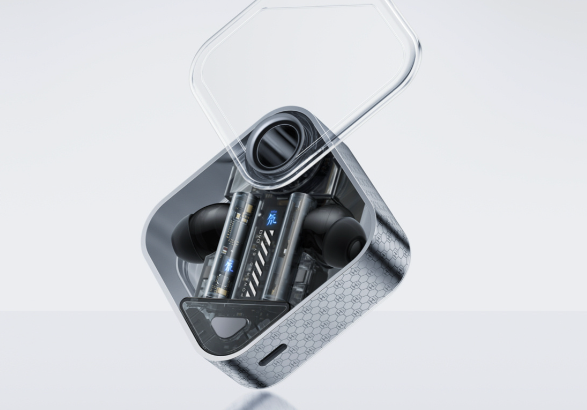
The company’s latest truly wireless earbuds features a charging case that features a transparent front, which is similar to Nothing Ear (2). There is even a Customized version as well, which basically lets users buy a personalized version that comes with custom engraving on the sides. The Dao TWS houses Qualcomm’s flagship S5 chipset and offers 30ms low latency as well. It offers up to 48 decibels of active noise cancellation as well.
These earbuds feature 11mm linear graphene drivers and the buds alone can last for up to 7.5 hours. Other notable features include Hi-Res audio support, microphone CVC call noise reduction, Bluetooth 5.3 support, and turning knob cover on the case that rotates 360 degrees. The company states that buyers can even use the earbuds with the case as a DIY wearable accessory as well.
The Red Magic Dao TWS Deuterium Front ANC TWS earbuds will go on sale in China for a price tag of 1,499 Yuan. On the other hand, the customized version will be sold for a slightly higher 1,599 Yuan price tag. The earbuds can be purchased from Tmall and other retailers in the region.
ViewSonic has just launched a new portable monitor from its ColorPro series in the Indian market. The new model has a compact form factor and features some notable specifications like an OLED panel. So here are all the details.
ViewSonic ColorPro VP-16 features an OLED panel & a compact design
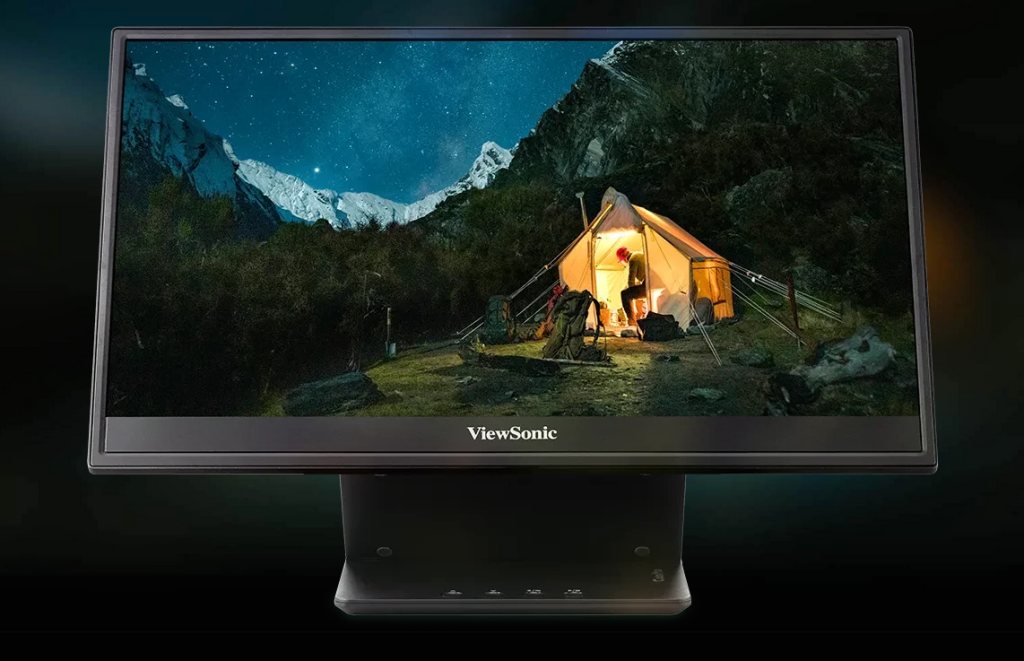
The portable monitor sports a 15.6 inch OLED panel, which makes it in line with typical laptops. This panel offers Full HD resolution, Pantone Validation, and touch screen support. Furthermore, it even features 100 percent DCI-P3 color gamut, offers 1.07 billion colors, 450 nits of peak brightness, 16:9 aspect ratio, and a 1ms response time. Talking about its design, the new portable monitor features an adjustable stand that makes it perfect for those using it on the go.
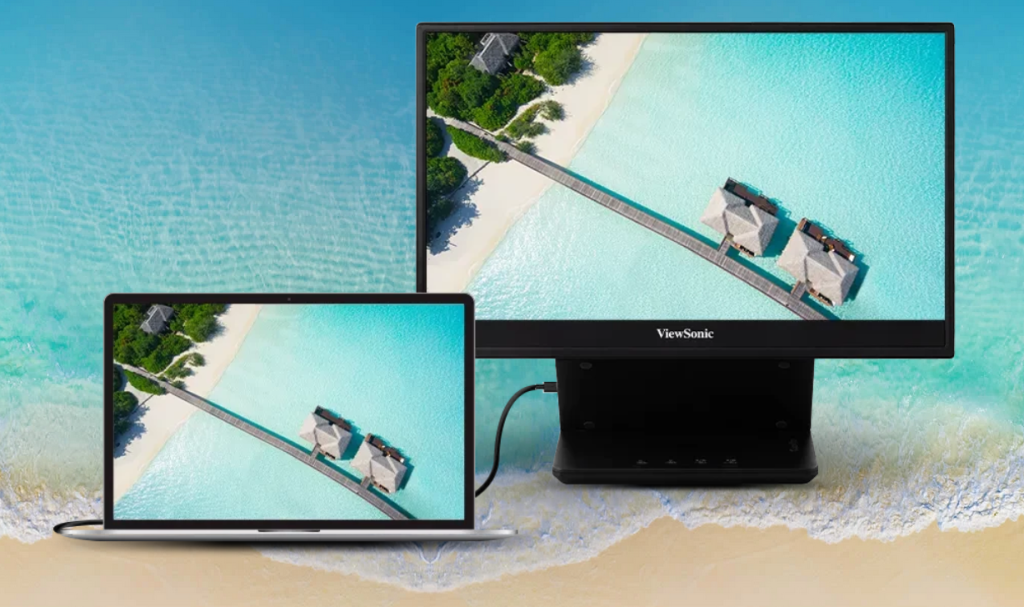
The stand can be adjusted to five different angles. Furthermore, the monitor also arrives with a detachable protection cover, which doubles as a hood to ensure a good viewing experience outdoors. Connectivity options include, two USB Type-C ports, a single Micro HDMI port, and a 3.5mm audio jack. The ColorPro VP-16 also houses two 1W speakers, which means that you don’t necessarily have to carry a speaker for audio output.
The new ViewSonic ColorPro VP-16 will go on sale via Amazon and the other major retailers. This new OLED portable monitor has an MRP of 75,000 INR, but customers can expect to shell out around 49,999 INR along with taxes as well.
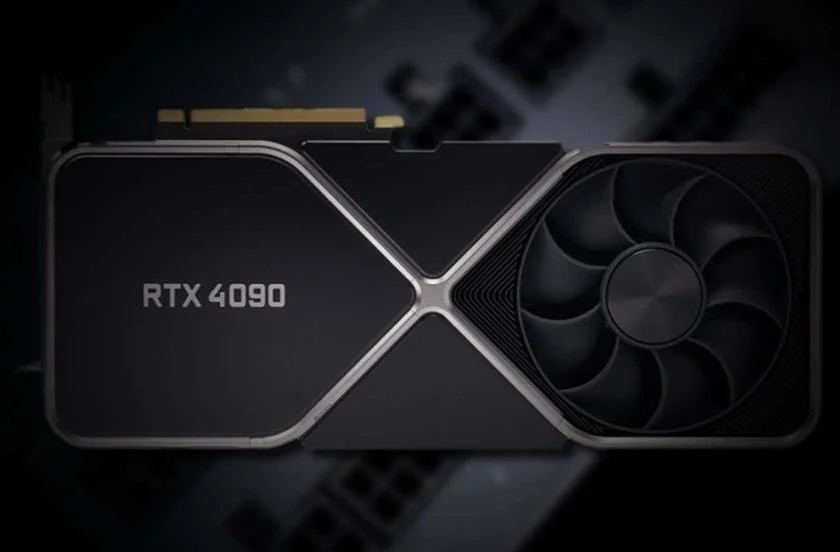
In the world of overclocking, records are constantly being broken as enthusiasts push the limits of hardware performance. Just days after American player Allen “Splave” Golibersuch achieved a remarkable overclock of the ASUS ROG Matrix RTX 4090 graphics card, the German overclocking expert CENS has taken the crown once again. Using the GeForce RTX 4090 iGame LAB graphics card, CENS reached an astonishing 3975 MHz, surpassing his own record set just ten days prior and coming scarily close to the elusive 4GHz mark. Let’s read about this achievement.
The power consumption also doubled during the overclocking test
To achieve this record-breaking overclock, CENS employed insane hardware modifications and utilized a custom BIOS firmware on the GeForce RTX 4090 iGame LAB graphics card. This allowed him to surpass the previous record of 3930 MHz by a significant margin. However, such high overclocks come at a cost. The peak power consumption of the graphics card during the overclocking session skyrocketed to an astounding 1127W, far exceeding the manufacturer’s specified 515W. That’s more than twice the power consumption.
CENS conducted his overclocking feat on a powerful platform consisting of the EVGA Z790 DARK K|NGP|N motherboard, an Intel Core i9-13900K processor, and 32GB of DDR5 memory. These high-performance components provided the stability and processing power necessary to push the GeForce RTX 4090 iGame LAB to its limits.
CENS’s latest achievement in GPU overclocking showcases the relentless pursuit of performance among overclocking enthusiasts. By shattering his own record and approaching the 4GHz milestone, he has set a new benchmark for future overclockers to aspire to. However, it is important to note that such extreme overclocking endeavours require extensive knowledge, expertise, and caution, as they can pose risks to both hardware and system stability. As the overclocking community continues to push the boundaries of what is possible, we can only wait and see more astonishing feats in GPU overclocking.
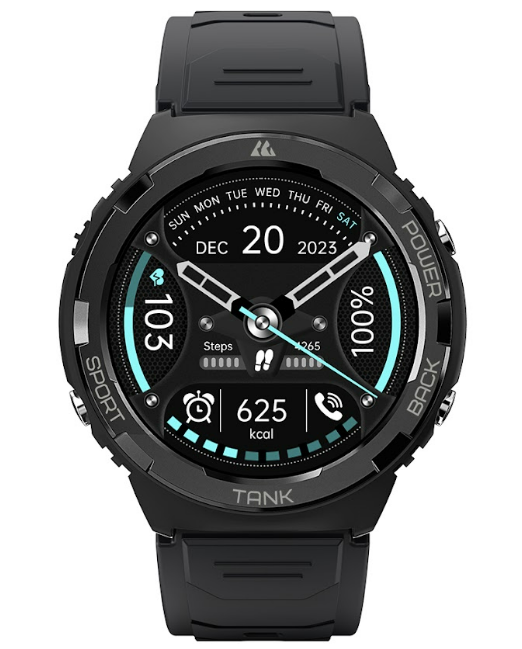
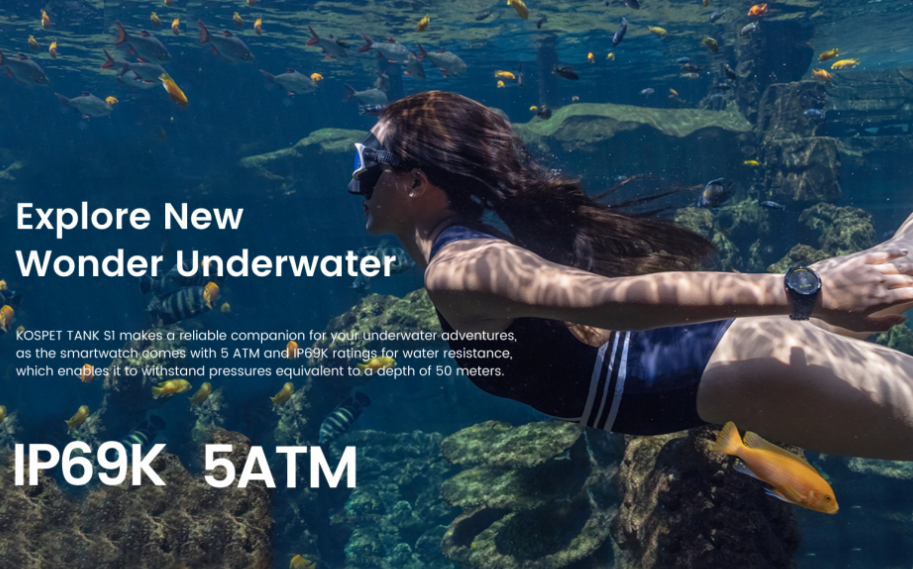
KOSPET TANK S1 is a rugged smartwatch designed to be your perfect companion in the extreme outdoors. With its impressive 5 ATM and IP69K ratings for water resistance, this timepiece can withstand pressures equivalent to a depth of 50 meters, making it perfect for all your aquatic endeavors. However, it’s important to note that the smartwatch should not be worn in a sauna to maintain its sealing effectiveness.
One of the standout features of the KOSPET TANK S1 is its exceptional battery life. Say goodbye to anxiety about running out of power during your adventures, as this smartwatch offers a two-week ultra-long battery life. With KOSPET TANK S1 on your wrist, you can explore freely without worrying about recharging your device.
Built to endure the harshest conditions, the KOSPET TANK S1 has been rigorously tested and awarded with U.S. MIL-STD-810H certifications. This means it meets the highest military standards of toughness, making it resilient enough to withstand the challenges of various terrains, from majestic mountains to expansive deserts. No matter where your journey takes you, the KOSPET TANK S1 will stand up to the test.
Featuring an always-on 1.3-inch AMOLED display, the KOSPET TANK S1 offers a vibrant and clear viewing experience. The circular bezel frames the display to perfection, providing rich contrast and sharp details. Additionally, the display is protected by Corning Gorilla Glass 3, which makes it more durable and four times more scratch-resistant than competing aluminosilicate glasses.
Staying connected is effortless with the KOSPET TANK S1. Thanks to its HiFi Bluetooth calling feature, you can easily enable Bluetooth calling with a simple switch. This means you won’t miss any important phone calls, text messages, or notifications, even when you’re occupied with work or in the middle of a workout session.
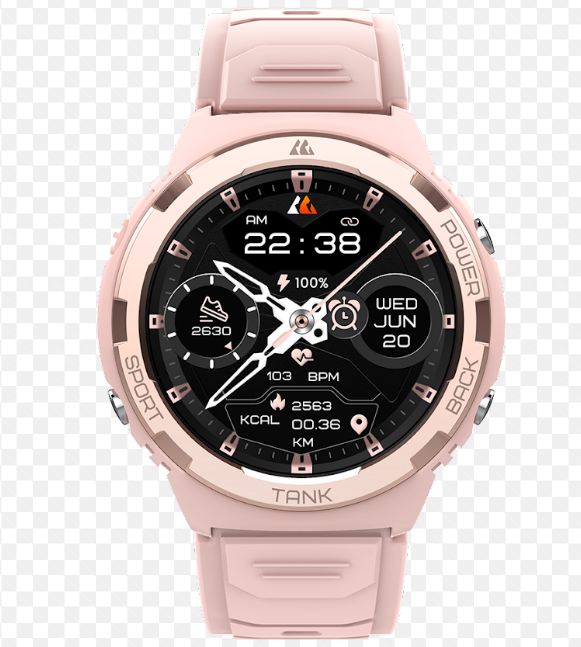
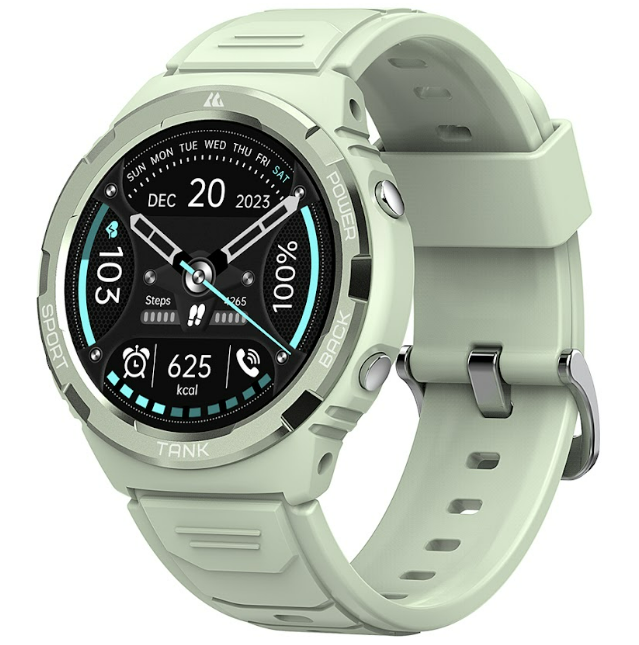
Designed with both style and durability in mind, the KOSPET TANK S1 is crafted from 6xxx aerospace-grade alloy and 316L stainless steel. This combination not only makes the smartwatch appear slimmer but also enhances its resilience. With a diameter of 45mm and a weight of 48g, the KOSPET TANK S1 is incredibly lightweight and comfortable to wear. The rugged smartwatch comes in multiple color options like green, silver, pink, and black to match your style.
The KOSPET TANK S1 offers more than just a timekeeping experience. It comes with built-in 70 sports modes, allowing you to track and monitor various activities with precision. Whether you’re running, cycling, hiking, or practicing yoga, this smartwatch has you covered.
To further enhance your experience, the KOSPET TANK S1 provides a profusion of practical programs and watch faces. Simply download the free KOSPET FIT app to access a wide range of features and customization options. Tailor your smartwatch to suit your preferences and make it truly yours.
In conclusion, the KOSPET TANK S1 is the ultimate outdoor rugged smartwatch for adventurers and outdoor enthusiasts. With its exceptional water resistance, impressive battery life, military-grade toughness, vibrant display, Bluetooth calling, and durable construction, it’s a reliable companion that can withstand any challenge you throw its way. Whether you’re exploring underwater or conquering new terrains, the KOSPET TANK S1 will be there every step of the way.
About KOSPET:
KOSPET is a global brand founded in 2018, that has a presence in both China and the United States. With branches in Shenzhen and Washington, the brand combines global R&D, product design, and operations to deliver innovative smartwatches known for their diversification and unique designs.
Born with a mission to become a top-tier international smartwatch brand, KOSPET strives to build an ecological chain technology brand embraced and trusted by every customer. KOSPET smartwatches can be found on major e-commerce platforms, with annual sales reaching millions of units.
The KOSPET Tank S1 is currently available for purchase on AliExpress. There is an ongoing promotional offer from June 26, 0:00 GMT to July 26, 0:00 GMT. The original launch price of the smartwatch was $109.99, but during the promotional period, it is priced at $79.99.
For more information on such exciting deals and offers, check out our deals hub.
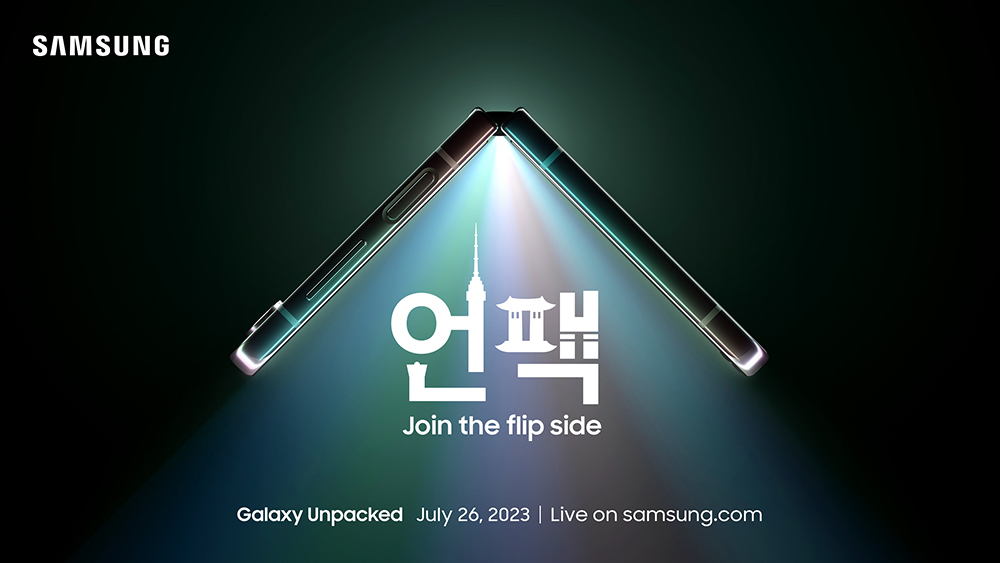
Samsung recently confirmed that the company will be hosting its next Galaxy Unpacked event in its home country South Korea. Now, the company has revealed the launch date.
The upcoming Galaxy Unpacked event from Samsung will take place on 26th July at 07:00 AM ET. The poster shared by the company also teases the next-generation foldable smartphone from the brand.
The Galaxy Unpacked launch event will be live-streamed on Samsung’s official website as well as on its YouTube channel. Apart from the Galaxy Z Fold 5 and the Galaxy Z Flip 5 smartphones, the company is also expected to launch a few other devices at the event, including the Samsung Galaxy Watch 6 series, tablets, and earphones.
As for the phones, the Galaxy Z Fold 5 is expected to be an incremental update with a slightly smaller and lighter design, a more durable hinge, and an improved user experience. On the other hand, the Galaxy Z Flip 5 is expected to come with a larger front-facing display and a more powerful processor.
The South Korean tech giant is also offering pre-order reservations for the foldable smartphones, offering a $50 credit when the customer places a pre-order. The reservation window will be open starting tonight through the 25th of July.
The iPhone 15 series is just two months away, and excitement is building among tech enthusiasts. The new models are rumored to feature a variety of innovations, including the removal of the notch. They are also expected to be more colorful, with two new color options rumored to be in the lineup. Here are the details…
iPhone 15 Gets a Makeover with New Colors and Materials
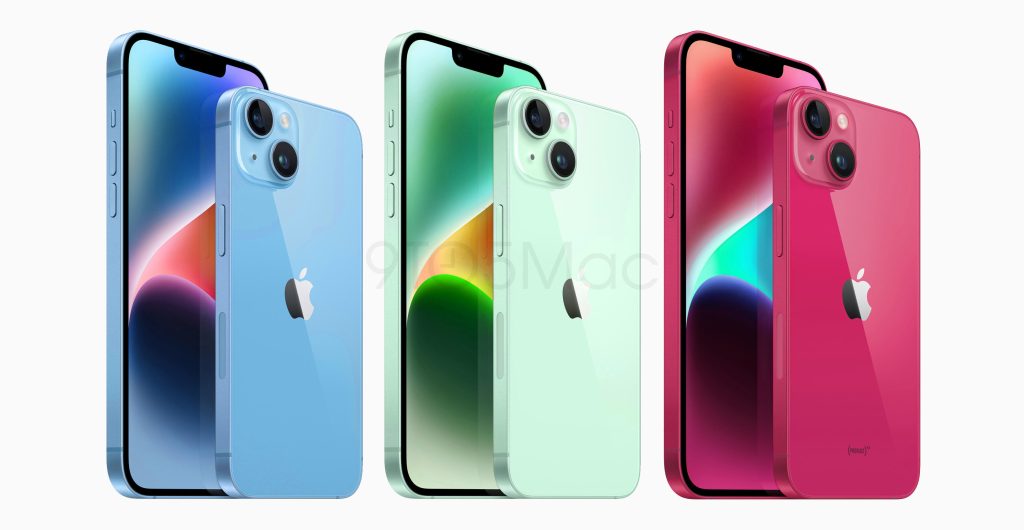
iPhones are not only notable for their features but also for their designs and color options. For instance, you must have been intrigued by the recently released yellow iPhone 14. Now, a similar situation is arising for the new models. Apple is rumored to be introducing two new color options for the iPhone 15 lineup: a dark red color for the iPhone 15 Pro and a green color for the iPhone 15 and iPhone 15 Plus.
The new red color for the iPhone 15 Pro is described as a “crimson” shade. It is expected to be slightly lighter than the iPhone 14 Pro’s deep purple color, but still very deep. The green color for the iPhone 15 and iPhone 15 Plus is said to be similar to the green of the iPhone 12 and iPhone 11.
These new colors would add to the existing color options for the iPhone 15 lineup, which are rumored to include silver, space gray, and gold. The iPhone 15 Pro is also rumored to be made from titanium, which would be a first for the iPhone. Apple has used titanium in the Apple Watch for several years, and it is known for being strong and durable.
It is unclear exactly when the iPhone 15 lineup will be released, but it is expected to launch in the September 2023. In the meantime, we can all speculate about which color and material we would choose.
Apple introduced a new 15-inch MacBook Air at its WWDC 2023 event last month. The larger laptop has been well-received by users, with many praising its performance and battery life. However, this isn’t the first time Apple has considered making a larger version of the MacBook Air. It looks like the company could have had this success much sooner. Moreover, it was Intel that prevented it. Here are the details…
The 15-Inch MacBook Air That Almost Wasn’t: How Apple Silicon Made It Possible
Apple product marketing executives revealed that they had wanted to make a 15-inch MacBook Air for years, but Intel’s chips prevented them from doing so. Intel’s chips were simply too power-hungry to fit in a thin and light laptop like the MacBook Air. This meant that Apple would have had to make significant compromises in terms of battery life or performance if it wanted to offer a bigger MacBook Air.
With the advent of Apple Silicon, however, those compromises are no longer necessary. Apple’s custom chips are much more efficient than Intel’s, which means that Apple can now offer a 15-inch Air with the same thin and light design as the 13-inch model. The 15-inch MacBook Air is not just a better laptop for consumers.
It’s also a big win for Apple’s enterprise customers, who have long been asking for a larger version of the MacBook Air. The 15-inch MacBook Air is a clear sign that Apple is committed to its transition to Apple Silicon. It’s also a sign that Apple is listening to its customers and delivering the products they want.
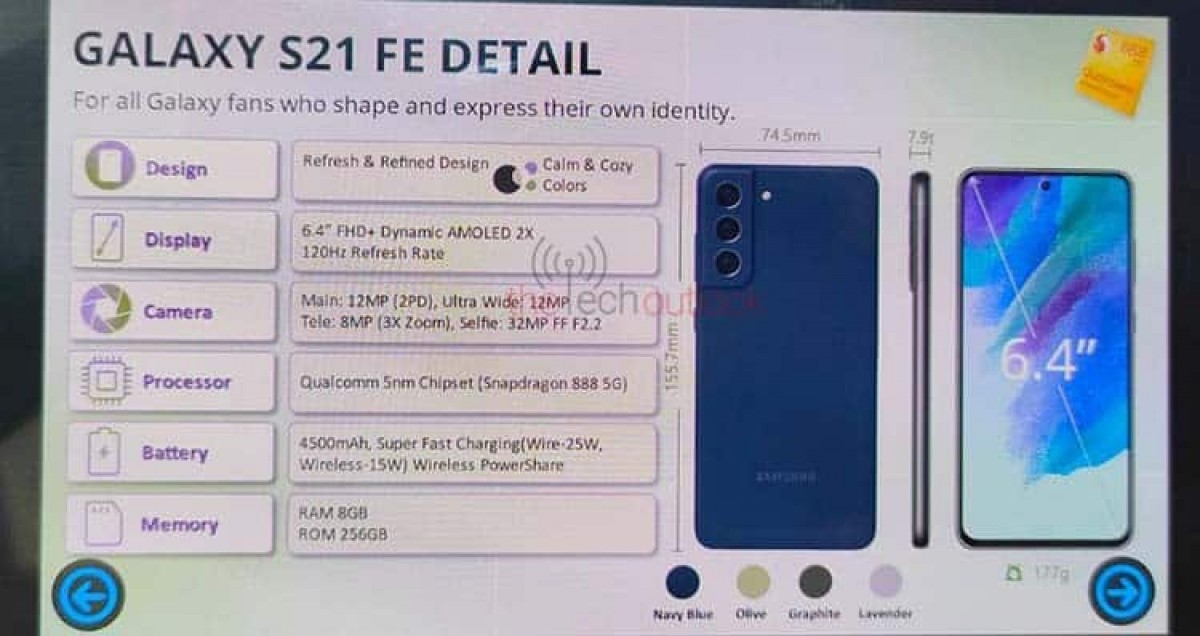
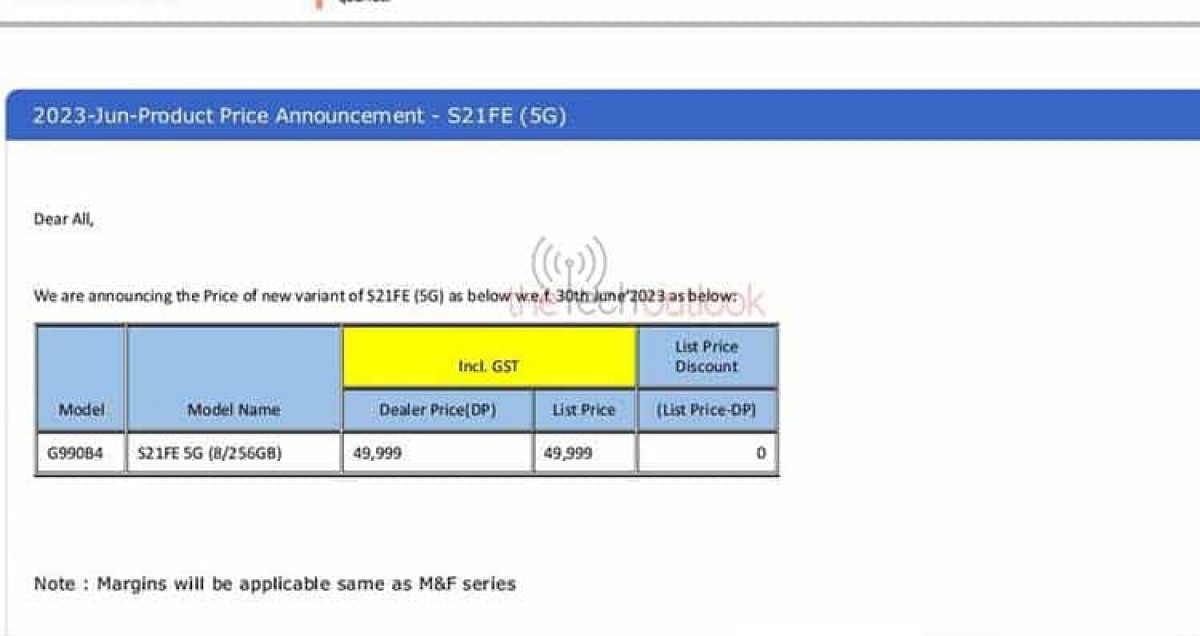
Samsung is preparing to launch a new variant of the Galaxy S21 FE in India, and the major highlight of this version is the inclusion of the Snapdragon 888 chipset, replacing the Exynos 2100 SoC found in the original version released in January last year. Reports have already leaked the pricing and key details of the upcoming Snapdragon 888 variant. Now, images of the internal training materials for the Galaxy S21 FE’s new variant have been published by TheTechOutlook. The leak provides in-depth information about the device’s specifications and features.
Samsung Galaxy S21 FE 2023 specifications, features, price
Samsung Galaxy S21 FE 2023’s leaked training materials
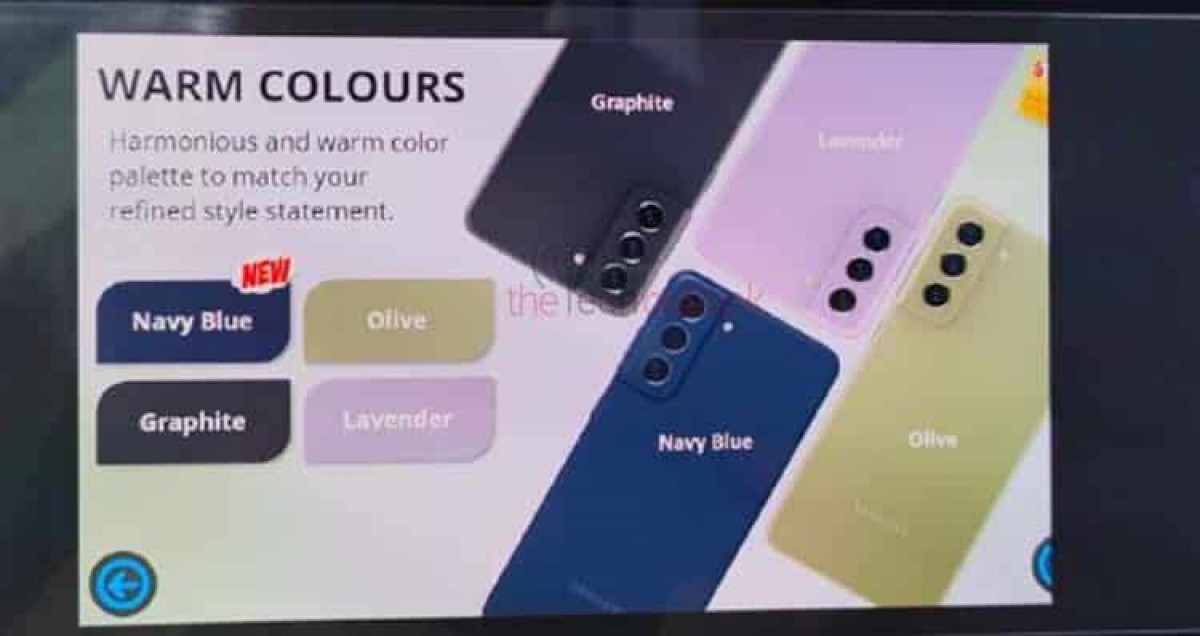
The report reveals that the device will be called the Samsung Galaxy S21 FE 2023 when it arrives on the market. It reveals that the deice will measure 155.7 x 74.5 x 7.9mm and weigh 177 grams. It will be made available in four colors, such as Navy Blue, Olive, Graphite, and Lavender. Among these, the blue variant is the new one, which replaces the white variant that was available with the S21 FE’s Exynos edition.
The device will be equipped with a 6.4-inch Dynamic AMOLED 2X display that offers a 120Hz refresh rate. It will be equipped with the Snapdragon 888v chipset, 8 GB of RAM, and 256 GB of storage. It will have a 4,500mAh battery that supports 25W wired and 15W wireless charging. It will also support reverse wireless charging.
The Galaxy S21 FE 2023 will be equipped with a 32-megapixel front-facing camera. Its back panel will have a 12-megapixel main camera with OIS support, a 12-megapixel ultra-wide lens, and an 8-megapixel telephoto camera with 3x optical zoom. At present, it is unclear whether the device will run on Android 12 or Android 13 OS.
The report further states that the Galaxy S21 FE 2023 will be priced at Rs 49,999. At present, there is no information on the launch date of the device.
Apple has recently released the watchOS 10 Developer Preview Beta 3 update, labelled with the build number 21R5305e. This update comes after a gap of 13 days since the last release, according to IT Home News on July 6th. In fact, the update log appears to be quite similar to that of Beta 2. Nevertheless, watchOS 10 brings several noteworthy improvements and changes to the Apple Watch.
The new update also brings an altimeter for those who like scaling heights
One of the most noticeable alterations for Apple Watch users after upgrading to watchOS 10 is the return of widgets. Users can now access widget windows by simply turning the Digital Crown, providing them with quick and easy access to important information. Furthermore, the customization options for watch buttons have been enhanced in the watchOS 10 system. Users can now assign different functions to the digital crown based on their preferences. For instance, it can be set to activate the cellular network or open the application list.
Apple has also introduced new watch faces in watchOS 10, including vibrant colors and delightful characters such as Snoopy and Woodstock. These additions bring more personality and variety to the Apple Watch.
In terms of health-related features, watchOS 10 focuses on mental well-being. It allows users to record their emotions using abstract images and even perform standardized assessment tests. Additionally, Apple has included new biking features for fitness enthusiasts and hikers can now view trail and trail start information directly from their wrists. The inclusion of an altimeter enables users to explore new 3D maps of waypoints.
To provide users with insights about their Apple Watch usage, the Health app now includes a new feature called “Vision.” This feature records the duration of time the user spends using their Apple Watch. Additionally, watchOS 10 introduces Screen Distance, which tracks the data from the user’s last Apple Watch usage.
Social media is a big part of our lives. We spend a lot of time on platforms like Facebook, Instagram, Twitter, and TikTok. Now, there’s a new player in the game. Meta, led by Mark Zuckerberg, has released an app called Threads in response to users looking for an alternative to Elon Musk’s Twitter. Here are the details…
Meta Launches Threads, a New Social Media App to Compete with Twitter
Elon Musk bought Twitter in late 2022 for $44 billion. He became CEO and started making changes right away. Some users liked the changes, but others didn’t. The tweet viewing limit that was introduced last week was especially unpopular. This led to many users leaving the platform. Meta, which owns Facebook and Instagram, saw this coming.
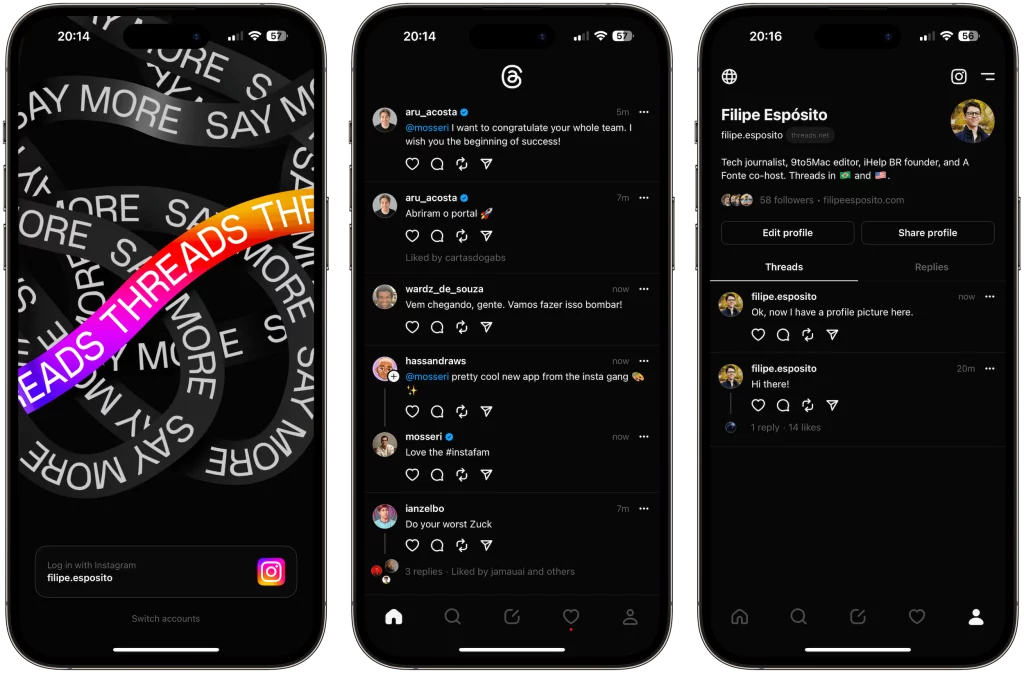
They had already been working on a platform called Threads to compete with Twitter. Threads is a text-based conversation app that is linked to Instagram. It allows users to connect with their close friends and followers in a more intimate way. Now, this platform is live, and signing in can be as simple as pressing a button.
How to Use Threads
If you want to use Threads, all you have to do is download the application from the App Store or Google Play Store. Immediately after that, follow these steps:
Open the app and click on “Log in with Instagram.”
If you already have the Instagram app installed on your device, Threads will automatically log you in.
If you don’t have the Instagram app installed, you’ll be prompted to install it. Once you’ve installed the app, you’ll be able to log in to Threads.
Once you’re logged in, you’ll be able to start sending messages to your close friends.
“It’s fair to say that Threads is currently the best Twitter alternative on the market. The app resembles Twitter in many ways, from its design to its features. In fact, this situation is expected to lead to a legal battle between the two companies in the future. As you know, Meta does not shy away from copying the features and designs of its competitors. For instance, the Stories feature of Instagram, which many of us use and is quite popular, was once taken from Snapchat, and despite objections, it brought great success. It is expected that Zuckerberg will again land on his feet in a similar fashion.”
AIM, a Japanese engineering company with expertise in automotive design and technology, is set to unveil its first-ever concept vehicle, the AIM EV Sport 01. This all-electric sports car is generating immense excitement as it promises to redefine the boundaries of performance and design in the electric vehicle (EV) world.
The EV Sport 01 lies in the subcompact car category
Having made its initial appearance in Japan back in April, the AIM EV Sport 01 received a warm reception from enthusiasts and experts alike. Encouraged by the positive feedback, AIM is now contemplating a limited series production run. However, before reaching that milestone, the vehicle is undergoing rigorous testing and evaluation. Notably, AIM is utilizing the EV Sport 01 as a platform to assess its cutting-edge APM200 electric motor in a dual-motor, rear-wheel-drive configuration.
The specifications of the EV Sport 01 are truly impressive. Weighing in at a mere 3,141 pounds (1,425 kilograms), this two-seat coupe packs a combined punch of 483 horsepower (360 kilowatts) and a maximum torque of 545 pound-feet (740 Newton-meters), courtesy of its dual APM200 motors. The torque vectoring system ensures precise control over the power delivery, while the 720V input and 380 kW output inverter facilitate efficient operation.
AIM estimates that the EV Sport 01’s laminate rechargeable lithium battery, boasting a capacity of 81 kilowatt-hours, will offer a driving range of approximately 186 miles (300 km). Although performance figures are yet to be revealed, the car’s agile aerodynamic shape, lightweight build, and ample power output indicate thrilling acceleration and handling capabilities.
Measuring 153.5 inches (3.9 meters) in length, the EV Sport 01 falls within the subcompact car category. However, its wider stance of 74.8 inches (1.9 meters) and lower profile of 47.2 inches (1.2 meters) give it an assertive presence on the road. The car’s multi-tubular aluminum frame chassis, coupled with a double-wishbone suspension system, ensures optimal stability and responsive handling.
The AIM EV Sport 01 showcases a stunning exterior design, conceived by SN Design Platform, led by renowned automotive designer Shiro Nakamura. Nakamura, famous for his work on iconic models such as the Nissan GT-R, Cube, and Leaf, aimed to capture the essence of classic sports cars from the past while infusing a touch of modern elegance. The result is a minimalist design language with clean lines and a timeless appeal that pays homage to the great European and Japanese sports cars of the 1960s.
This remarkable concept will be put to the test at the Goodwood Festival of Speed, where the AIM EV Sport 01 will participate in timed runs as part of the “First Glance” category. Enthusiasts and industry insiders eagerly anticipate witnessing the EV Sport 01’s performance and experiencing firsthand the future of electric sports cars.
In the words of Shiro Nakamura, “We learned from the spirit of the great sports cars of the past, helped by the RWD configuration and layout. I wanted to express dynamism with sophisticated elegance through a simple, clean design. The EV Sport 01 has minimal form language and avoids exaggerated and complicated surfaces, reminiscent of the great European and Japanese sports cars of the 1960s. Given that inspiration, it is particularly fitting we can demonstrate our car at Goodwood.”
In an exciting development for music enthusiasts, Tidal, the popular music-streaming app, has commenced the rollout of hi-res FLAC streams across its platform. Jesse Dorogusker, the CEO of Tidal, made the announcement in a Reddit post, sending waves of excitement through the audiophile community. FLAC, short for free lossless audio codec, enables the streaming of high-fidelity audio up to an impressive 24-bit/192Hz, delivering an unrivalled listening experience.
The Hi-Fi Plus plan will be priced at a hefty $20 on the first date
While FLAC streams offer superior sound quality, they do come with a tradeoff in terms of file size. These audio files occupy approximately four times the space of a standard MP3, which explains their scarcity on widely-used streaming platforms. However, Tidal has taken a bold step to cater to discerning ears by embracing this format.
The rollout is currently in the early access phase for iOS users, allowing them to indulge in over six million tracks available in hi-res FLAC. The company has also promised to continuously expand its FLAC library with new additions every day. To access these premium streams, users can simply update their beta app, if they have access, and select the “Max” quality in settings. Tidal is keen on gauging user feedback during this phase before making the feature widely available. Android users and those not affiliated with the early access plan can expect to access the hi-res FLAC streams in August.
Tidal’s decision to embrace FLAC streams marks a departure from their previous use of MQA (Master Quality Authenticated) audio, which was more of an upscaling technique than an actual file type. While the CEO, Jesse Dorogusker, has not explicitly addressed the future of MQA, he did mention that Tidal plans to “support multiple formats” of hi-res audio, promising an even more versatile listening experience for users.
Naturally, access to such high-quality audio comes at a price. Users interested in enjoying the FLAC streams will need to subscribe to the HiFi Plus plan, priced at $20 per month. Tidal recently increased the price of their standard subscriptions from $10 to $11 per month, a move that has sparked speculation about industry giant Spotify‘s plans to introduce its own hi-fi tier (which has been in speculations for quite some time now).
Superintelligence, a technology that has the potential to revolutionize humanity, is both awe-inspiring and concerning. OpenAI, a leading research organization, believes that the arrival of superintelligence is closer than we may think, possibly within this decade. Recognizing the immense power and risks associated with this technology, OpenAI has launched an ambitious initiative to align superintelligence with human intent.
The technical challenges are expected to be resolved in the next four years
The challenge lies in ensuring that AI systems, far surpassing human intelligence, remain aligned with our values and goals. Current techniques, like reinforcement learning from human feedback, fall short when applied to superintelligence. OpenAI acknowledges the need for new scientific and technical breakthroughs to address this critical issue.
To tackle the problem, OpenAI is building an automated alignment researcher, with capabilities comparable to human-level understanding. By leveraging advanced AI systems to evaluate and supervise other AI systems, OpenAI aims to develop scalable oversight and generalization techniques. Validating the alignment of AI systems will involve automating the detection of problematic behaviour and interpreting the internal workings of these models.
The road to achieving superintelligence alignment is not without challenges. OpenAI plans to stress test its alignment pipeline by deliberately training misaligned models and ensuring their techniques can detect and mitigate such misalignments. Research priorities are expected to evolve as OpenAI gains a deeper understanding of the problem, and collaboration with experts from various disciplines will be crucial.
OpenAI’s dedicated team of top machine learning researchers and engineers, led by Ilya Sutskever and Jan Leike, is committed to solving the core technical challenges of superintelligence alignment in the next four years. While success is not guaranteed, their optimism stems from promising preliminary experiments, measurable progress, and the involvement of brilliant minds in the field.
OpenAI’s efforts extend beyond superintelligence alignment. They continue to improve the safety of current AI models and actively address broader societal concerns related to AI. OpenAI welcomes the contribution of outstanding researchers and engineers to this critical endeavour, recognizing the significance of machine learning expertise in finding solutions.
In a surprising move, Twitter has silently removed the login requirement for users to view tweets, enabling anyone to access Twitter links in their browsers without the need for an account. This development was noticed by TechCrunch, as tweet previews began to unfurl on popular messaging platforms such as Slack, WhatsApp, and even iMessage, as reported by Engadget.
The impact on user engagement and discoverability of tweets
The initial implementation of the login requirement was introduced as a temporary measure by Twitter, with Elon Musk explaining that it was intended to prevent data scraping, which had been causing service degradation for regular users. However, Twitter has not provided any official statements regarding the recent change or disclosed the specific measures taken to address data scraping concerns.
Notably, Twitter’s decision coincides with the upcoming launch of Meta’s new text-based app called Threads. Interestingly, Threads also briefly allowed users to view posts on the web without logging in before subsequently removing this feature. It remains to be seen whether Threads will adopt a similar approach and allow users to access posts without requiring an account upon its official launch.
In addition to this update, Elon Musk, over the weekend, imposed read limits on Twitter. Unverified users now have a daily limit of 1,000 posts, while verified users can access up to 10,000 posts per day. Twitter claims that only a small percentage of users have been affected by these changes, and the impact on advertising has been minimal, as stated in a recent company blog post.
The European Court of Justice (CJEU) has issued a ruling stating that antitrust authorities overseeing companies like Meta Platforms, the owner of Facebook, Instagram, and WhatsApp, have the right to evaluate privacy breaches. The decision potentially grants more flexibility to antitrust regulators in investigating Big Tech firms.
Understanding the CJEU Ruling: Antitrust Agencies and Data Protection Concerns
The case stemmed from a 2019 order by the German cartel office, which instructed Meta to cease collecting users’ data without their consent, deeming it an abuse of market power. Meta challenged the order, leading a German court to seek guidance from the CJEU.
The CJEU ruling clarifies whether antitrust agencies exceeded their jurisdiction by utilizing antitrust powers to address data protection concerns, typically handled by national data protection authorities.
In response to the ruling, a Meta spokesperson stated that they are evaluating the decision and will provide further comments later.
According to the CJEU judges, during antitrust investigations, it might be necessary for competition authorities to examine whether a company’s conduct complies with regulations beyond those related to competition law. However, the court emphasized that antitrust regulators must take into account any decisions or investigations carried out by relevant supervisory authorities concerning data protection.
The German cartel office welcomed the ruling, with its head, Andreas Mundt, highlighting the significance of data in establishing market power. Mundt stated that the use of consumers’ highly personal data by large internet companies can also qualify as an abuse under antitrust law.
Legal experts, such as Thomas Graf from Cleary Gottlieb law firm, expressed caution regarding the extent to which antitrust authorities would delve into privacy law. Graf noted that demonstrating the relevance of privacy law to antitrust and coordinating with GDPR authorities would be necessary.
The ruling received support from the European Consumer Organisation (BEUC), emphasizing the need for authorities to consider data protection in today’s complex digital economy.
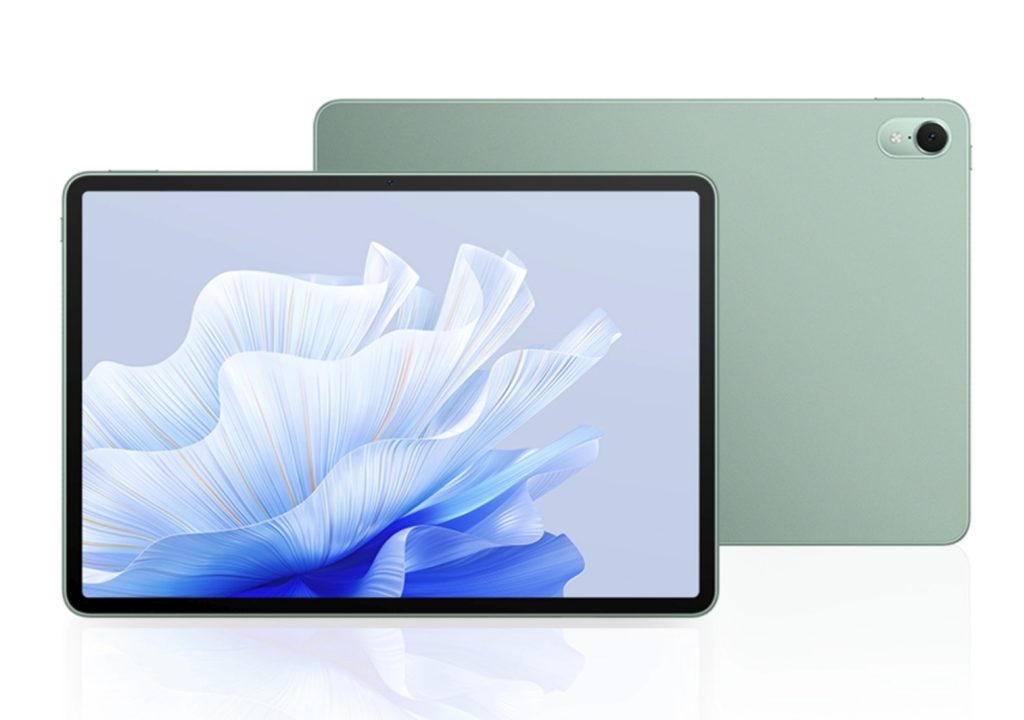
Huaweiofficially launched the MatePad Air back in May this year. Now the company has introduced a new Green Edition of MatePad Air and it is now up for first sale in China. Priced at 3,199 yuan ($441) for the base variant, the tablet comes with a first-sale discount of 200 yuan ($27), resulting in a final price of 2,999 yuan ($413).
The MatePad Air Green Edition showcases a sleek design with industry-leading features. Its appearance incorporates a fiberglass optical coating transfer film frosting process, along with nano-silver ink. The rear camera module draws inspiration from the star ring of the universe, giving it a distinctive and recognizable look. The tablet is available in four colors at launch: Obsidian Black, Yunjin White, Starry Blue, and Feather Purple. The newly introduced fifth color, “Green Edition,” adds a refreshing green tone, offering consumers more personalized choices.
Huawei MatePad Air specifications:
Featuring an 11.5-inch 3:2 aspect ratio full-screen display, the MatePad Air boasts an 87% screen-to-body ratio. The tablet supports a 2.8K resolution and utilizes adaptive refresh rate technology ranging from 30Hz to 144Hz, providing users with an excellent visual experience. Notably, it is the first Huawei tablet to support a maximum 144Hz screen refresh rate and has received HDR Vivid professional certification.
One of the standout features of the MatePad Air is its support for native PC-level applications. With the inclusion of a dedicated CAJ Viewer browser, users can directly access CAJ Viewer and view downloaded CAJ files, enhancing productivity and convenience.
The MatePad Air features a Snapdragon 888 processor, 8GB/12GB RAM, and 128GB/512GB storage options. It has an 8 MP front camera, 13 MP rear camera, quad speakers, and four microphones.
Powered by the latest HarmonyOS 3.1 system, the tablet offers seamless collaboration and connectivity with other devices, enabling improved work efficiency. It is equipped with an 8,300mAh large-capacity battery and supports up to 40W Huawei SuperCharge, ensuring fast charging capabilities.
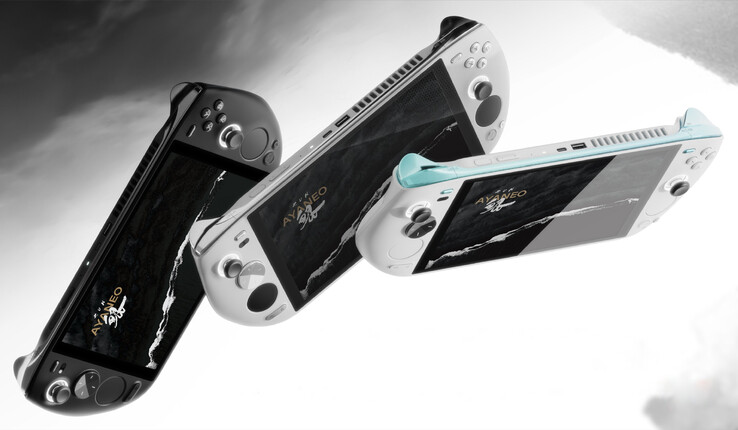
AYA NEO has released more details of the AYA NEO KUN, projected to be the brand’s most powerful Windows handheld so far. The 8.4-inch display of the device puts it ahead of other gaming handhelds. It also features nearly full-size game controls and a pair of touchpads. The AYA NEO KUN was first teased in January and it was previewed today alongside the AYA NEO Pocket Air.
AYA NEO has hinted that the KUN will be its most powerful Windows handheld ever although the fine optics of this claim was not provided. It will outshine the well-kitted AYA NEO NEXT II which is powered by Ryzen 7000 APUs combined with discrete GPUs. The large display of the KUN puts it in direct comparison with the ONEXPLAYER 2. A version of the ONEXPLAYER 2 powered by the Ryzen 7 7840U APU is available globally.
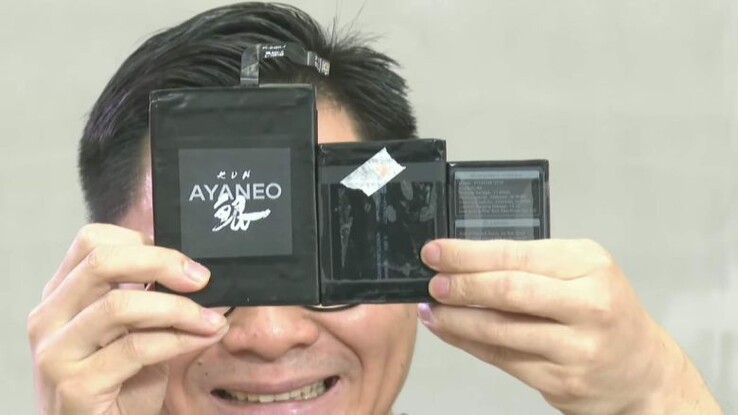
AYA NEO KUN battery
The AYA NEO KUN has nearly full-size gamepad buttons and controls, having a candy bar form factor. The new gaming handheld will reportedly ship with hall-sensing joysticks, hall triggers, two touch pads, and an 8-directional d-pad. The gadget also features three sets of shoulder buttons, a fingerprint scanner with support for Windows Hello authentication, and a front-facing camera.
The AYA NEO KUN could come with a pretty large battery, according to a previous statement by the brand’s CEO. This could mean that the handheld will be heavier than its competition. There are no exact release and pricing details yet for the AYA NEO KUN. However, the gadget will be launched via an Indiegogo crowdfunding campaign shortly.
The Umidigi Active T1 Android tablet will be available for order this summer. The new Umidigi rugged Android tablet comes with a 15,000mAh battery and offers three charging options. It supports wireless, POGO, and USB-C charging, with 8GB+128GB memory/storage configuration.
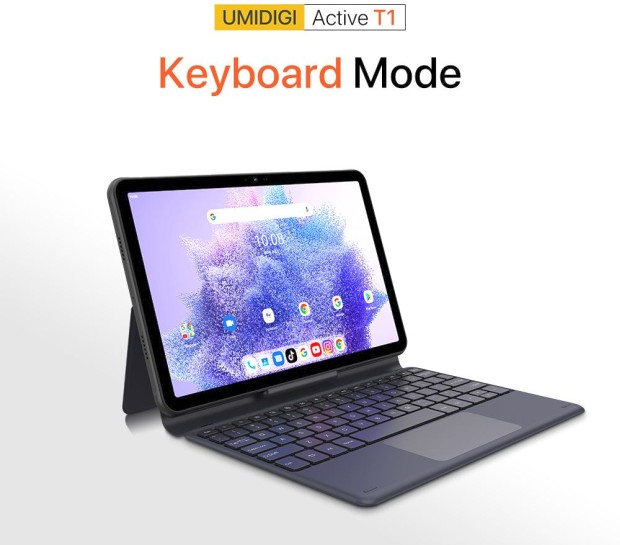
The Active T1 has an 11-inch display with 2000 x 1200 pixels resolution. It will join the already existing lineup of Umidigi tablets namely the G3 Tab, A11 Tab, and A13 Tab. The Active T1 is the most rugged however of the lot. It comes with the MIL-STD-810G, IP68, and IP69 reliability and durability standards. The Active T1 will come with a stylus and will support operating the display with a glove on your hand. It also features a keyboard mode for doing more engaging tasks on the go.
The processor details of the Umidigi Active T1 slate are yet to be specified but it may be either a MediaTek or Unisoc model. The device also comes with a microSD card slot that offers up to 1TB of extra storage. As per the charging speeds, 20W fast charging is achieved via its USB-C outlet and POGO connector. The POGO connector comes with a charging dock and wireless charging is also supported.
The Umidigi Active T1 tablet is rumored to arrive this summer. Although pricing and full availability details are lacking, it is expected that these details will surface in the coming weeks. The full specs of the rugged tablet will also be known as its release draws closer.
Cult.sport has unveiled the Active T smartwatch in India. The new smartwatch comes with a 2.01-inch display and supports Bluetooth calling. Cult.sport is offering the smartwatch at a discounted price in the Indian market.
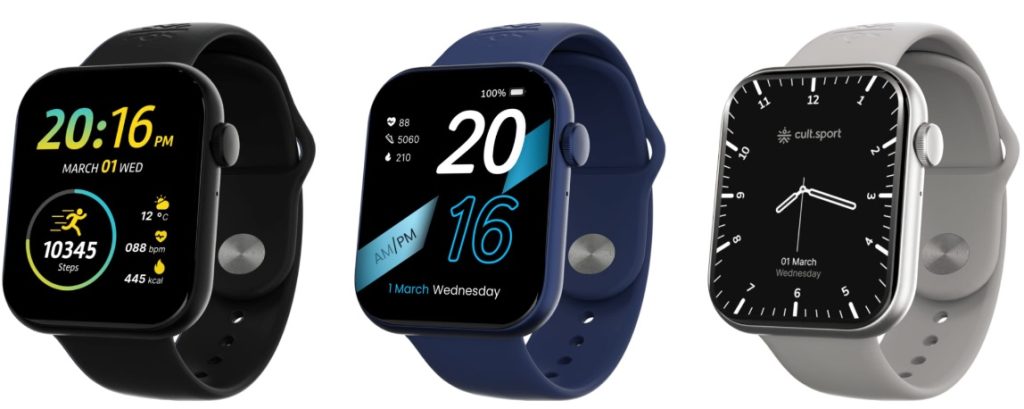
The Active T is a sports and fitness smartwatch and will appeal to these enthusiasts. Earlier this year, Cult.sport released the Beats and Burn smartwatches and they have both had a decent reception. The sleek and elegant design of the Active T is illuminated by a large 2.01-inch HD display and minimal bezels. It has a single chipset that supports fast Bluetooth calling with seamless pairing of devices. It also offers improved power efficiency and features a raft of sensors for monitoring.
Some of the health and fitness features available in the Active T are advanced heart monitoring, SPO2, and period tracking for women. The Active T has a battery that can last up to 7 days on normal usage. The smartwatch supports fast charging and it is quite reliable to provide juice for extended periods. There are 100+ sports modes in the Active T to cater to various fitness routines. There are 200+ watch faces that offer customization options to users.
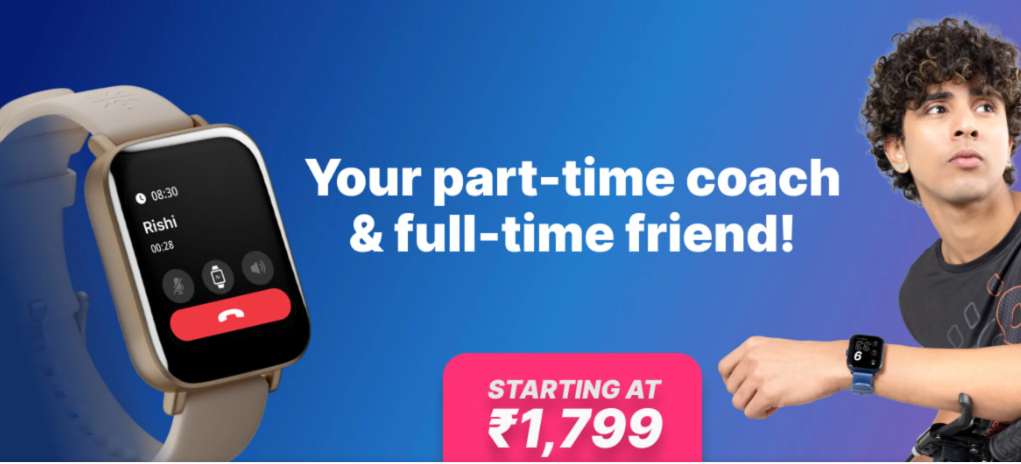
The Cult.sport Active T is rated IP67 water resistant while the Cult.sport watch app provides greater functionality and control for the device. The Active T is offered at an introductory price of Rs. 1,599 (~$19) in the subcontinent. It is exclusively available from Flipkart and Cult.sport. The original price of the smartwatch is Rs. 1,799 (~$22). Available in black, blue, and grey color options, the Active T.
Giztop is giving up to $200 OFF on Motorola Razr 40 Ultra the latest premium foldable smartphone from Motorola. You can now get the phone for a starting price of $899 only.
Motorola Razr 40 Ultra features a 6.9-inch foldable P-OLED 165Hz FHD+ inner screen and a 3.6-inch P-OLED external display. Powered by the latest Snapdragon 8+ Gen 1 processor and Adreno 730 GPU, the phone comes in multiple memory variants viz. 8GB / 12GB LPDDR5 RAM and 256GB / 512GB UFS 3.1 internal storage.
Motorola Razr 40 Ultra is fueled by a 3800mAh battery and supports 33W fast charging. It has dual rear cameras with a 12MP main sensor and a 13MP wide-angle camera. For your selfies, you have a 32MP sensor in the front. Other features include a side-mounted fingerprint scanner, Wi-Fi 6E, MYUI 6.0, etc.
You can now buy Motorola Razr 40 Ultra foldable phone for $899 on Giztop. Please note that this price is applicable to the base variant.
For more information on such exciting deals and offers, check out our deals hub.
We use cookies on our website to give you the most relevant experience by remembering your preferences and repeat visits. By clicking “Accept”, you consent to the use of ALL the cookies.
This website uses cookies to improve your experience while you navigate through the website. Out of these, the cookies that are categorized as necessary are stored on your browser as they are essential for the working of basic functionalities of the website. We also use third-party cookies that help us analyze and understand how you use this website. These cookies will be stored in your browser only with your consent. You also have the option to opt-out of these cookies. But opting out of some of these cookies may affect your browsing experience.
Necessary cookies are absolutely essential for the website to function properly. This category only includes cookies that ensures basic functionalities and security features of the website. These cookies do not store any personal information.
Any cookies that may not be particularly necessary for the website to function and is used specifically to collect user personal data via analytics, ads, other embedded contents are termed as non-necessary cookies. It is mandatory to procure user consent prior to running these cookies on your website.