WhatsApp, the popular messaging platform, is set to release a new update that includes a sticker suggestion feature. The update, version 2.23.14.16, is currently being rolled out to beta testers through the Google Play Beta Program.
Stickers were first introduced on WhatsApp in 2018 as a fun and expressive way to communicate with friends and family. Users were also given the option to import sticker packs created by third-party apps. A requirement for these stickers was to associate them with specific emojis.
Illustration: Soumyakanti Ray
How the Sticker Suggestion Feature Works
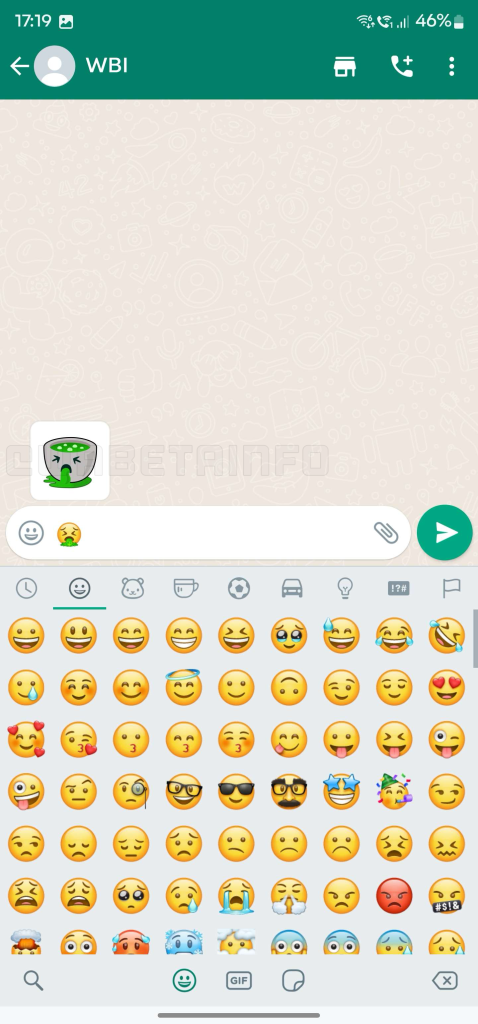
Now, WhatsApp is leveraging this requirement by introducing a sticker search feature to select beta testers. In the latest beta update, users will notice a new sticker tray above the keyboard. This tray displays stickers associated with the emoji entered in the chat bar, making it easier than ever to find and send the right sticker for any situation.
To check if this feature is available to you, we recommend downloading the Cuppy sticker pack from the built-in stickers store and typing an emoji in the chat bar. If the sticker suggestion feature is enabled for your WhatsApp account, you will be able to utilize the new sticker tray and quickly send the desired sticker.
This feature brings significant benefits, especially as the number of installed stickers continues to grow. Locating specific stickers from a vast collection can be challenging, but the sticker suggestion feature streamlines the process, saving users valuable time. Additionally, this feature is compatible with third-party stickers, although modification of sticker packs may be necessary to enable support.
While the sticker suggestion feature is currently available to some beta testers who have installed the latest WhatsApp beta for Android, it will be gradually rolled out to more users in the coming days. It is also possible that this feature will be extended to beta testers using the iOS version of WhatsApp in the future.
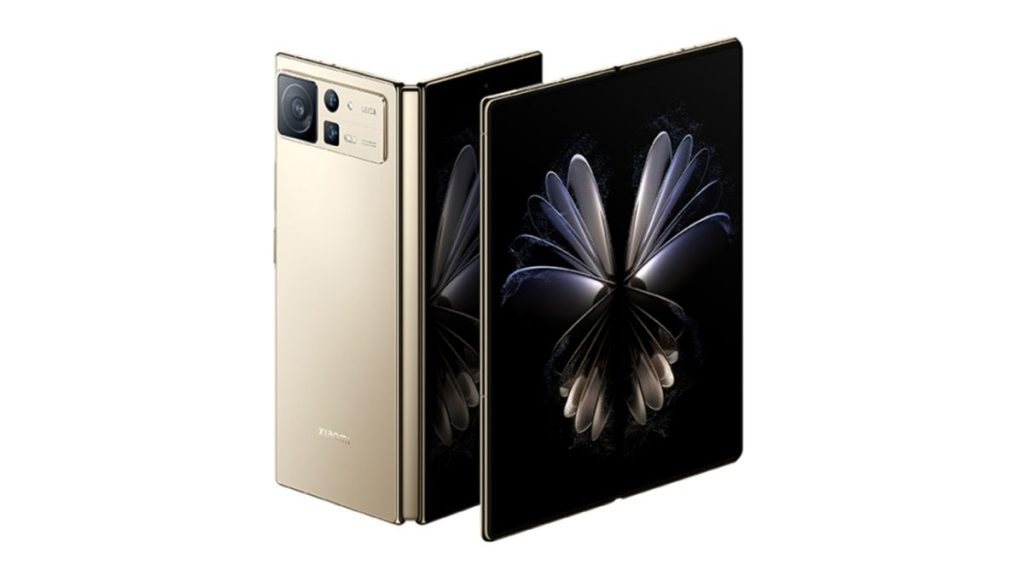
In August, Xiaomi is expected to announce multiple products, such as Redmi Pad 2, Redmi K60 Ultra, and Xiaomi Pad 6 in China. However, the star of the show is going to be the Xiaomi MIX Fold 3. So far, reports have claimed that it will feature the Snapdragon 8 Gen 2 chipset. However, a new leak (via. TechGoing) reveals that the foldable phone will come equipped with the Snapdragon 8 Gen 2’s overclocked version.
Xiaomi MIX Fold 3 tipped to feature overclocked Snapdragon 8 Gen 2
According to the leak, the Xiaomi MIX Fold 3 will be powered by the impressive 3.36GHz Snapdragon 8 Gen 2, which is an overclocked variant of the regular version that clocks at 3.2GHz. The recently announced Red Magic 8s Pro gaming smartphone is also equipped with the same chip. It will be paired with 16 GB of RAM and 1 TB of storage. It will pack a 4,800mAh battery with 67W wired charging and 50W wireless charging.
The tipster further said that the MIX Fold 3 will come equipped with a waterdrop hinge, which not only enhances strength but also reduces weight, resulting in improved durability.
Other reports have claimed that the Xiaomi MIX Fold 3 will have a 6.56-inch cover screen that delivers an FHD+ resolution and a 120Hz refresh rate. It will be equipped with an 8.02-inch foldable display with support for Quad HD+ resolution of 2160 x 1912 pixels. Both screens will offer a 120Hz refresh rate.
The inner display will be equipped with an in-screen camera. The rear camera setup of the device will have a Sony IMX800 primary camera, a periscope zoom camera with 10x optical zoom, a telephoto camera with 3.2x optical zoom, and an ultra-wide lens. It will come preloaded with the MIUI 14-based Android 13.
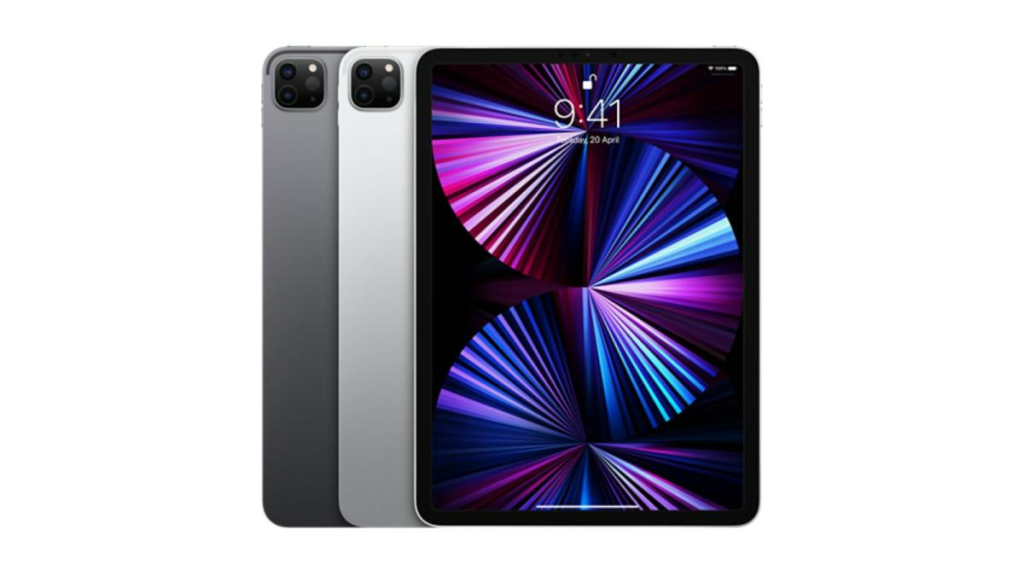
According to a recent report by research firm Omdia, Apple is set to introduce an iPad Pro with an OLED panel in 2024. It is speculated to arrive in two screen sizes. The 11-inch and 13-inch iPad Pro models are reportedly on track to incorporate (LTPO) OLED panels. Production for these devices is expected to commence in the first quarter of the upcoming year.
iPad Pro with OLED panel coming in 2024
iPad Pro 2022
By incorporating an OLED screen, Apple aims to unlock a range of benefits for its iPad Pro lineup. OLED displays offer impeccable black levels, per-pixel light control, and exceptional contrast and HDR capabilities. Additionally, these displays are known for their power efficiency, while including LTPO technology would enable dynamic display refresh rate adjustments, further optimizing energy consumption.
The move to OLED represents a significant upgrade from Apple’s current utilization of Mini LED LCD panels in the iPad Pro series. As a company known for its commitment to display quality, Apple’s transition to OLED showcases its dedication to delivering superior visual experiences.
While the news excites iPad enthusiasts, the report indicates potential delays for MacBooks with OLED displays. Previous rumors had suggested a 2024 launch for OLED-equipped MacBooks. However, according to the latest information, these models are expected to face significant postponements and are now projected to debut in 2027.
Apple has traditionally been cautious in adopting OLED technology, selectively implementing it in iPhone and Apple Watch devices while leaving the iPad and MacBook ranges untouched. Despite the delay in bringing OLED to MacBook models, Apple’s ongoing exploration of OLED displays signals its commitment to staying at the forefront of display technology.
As Apple continues to innovate and refine its product offerings, consumers can anticipate further updates and official announcements regarding the upcoming OLED-equipped iPad Pro models and the future incorporation of OLED displays in the MacBook lineup.
Nothing is all set to announce the highly anticipated Nothing Phone (2) on July 11. At present, the brand is receiving online pre-orders through Flipkart in India. Now, reliable tipster Ishan Agarwal has shared details about the offline offers and sale date of the Phone (2) for the Indian market.
Nothing Phone (2) offline pre-orders in India
The Nothing Phone (2) will be available for pre-booking from July 12 to July 16, with a deposit of Rs 2,000. Starting from July 13, retailers will receive shipments of the Phone (2) units, ensuring availability for customers. The official sales of the Nothing Phone (2) will commence on the evening of July 15.
Customers purchasing the Nothing Phone (2) can take advantage of several attractive offers. The compatible Ear (Stick) will be available for Rs 4,250. Additionally, customers can enjoy substantial discounts on various accessories, including a 50 percent discount on the adapter, 40 percent off on the case, and 30 percent off on the screen guard. Select bank cardholders will also benefit from a Rs 3,000 discount, although the specific bank cards eligible for this discount have not been disclosed yet.
Nothing Phone (2) specifications
As reports have revealed, the Nothing Phone (2) will feature a 6.7-inch FHD+ OLED display with a 120Hz adaptive refresh rate. Powered by the Qualcomm Snapdragon 8+ Gen 1 processor, the phone is expected to arrive with 12 GB of RAM and 256 GB / 512 GB of storage. It will pack a 4,700mAh battery with 33W fast charging and 15W wireless charging.
The rear camera setup will feature a 50-megapixel Sony IMX890 main camera with OIS and EIS, accompanied by a 50-megapixel Samsung JN1 ultra-wide camera, which may double up as a macro snapper. For selfies, it will be equipped with a 32-megapixel Sony IMX615 front-facing camera. The phone will run on Android 13 and Nothing OS 2.0, and come with support for 3 years of OS upgrades and four years of security patch updates. It also features an optical in-display fingerprint sensor, an aluminium frame for better durability, and an IP rating for water and dust resistance.
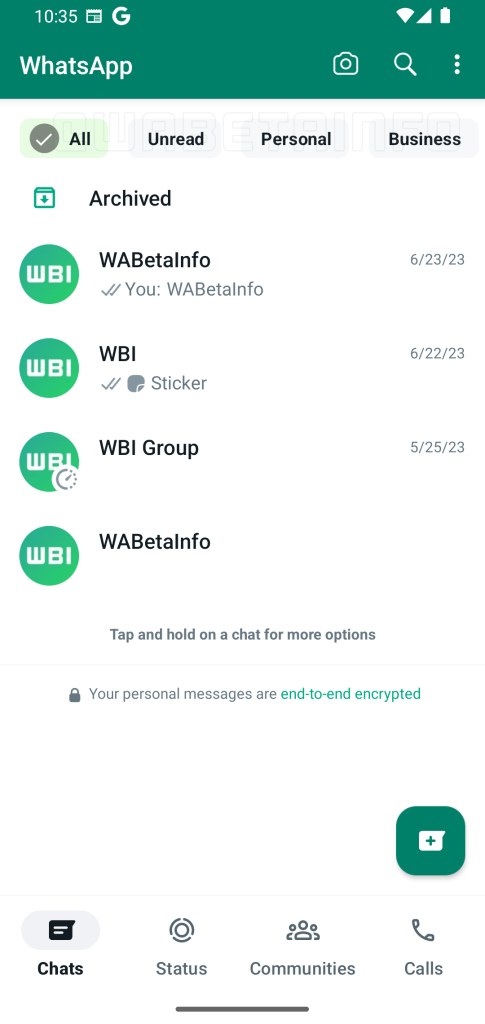
WhatsApp is set to enhance user experience with an upcoming feature that allows filtering of conversations directly within the chat list. The latest update, version 2.23.14.17, being rolled out through the Google Play Beta Program, provides a glimpse of this new functionality.
Streamlining Conversation Organization on WhatsApp
Previously, WhatsApp introduced a bottom navigation bar in its beta for Android 2.23.10.6 update. Now, the focus is on refining the app’s interface and tools. In response to user feedback, WhatsApp is addressing the challenge of accessing the filtering feature, which was not very user-friendly in the current implementation.
The new feature aims to make filtering conversations more convenient by placing the filter button directly in the chat list. This update aligns with a concept previously shared by users, further emphasizing the significance of improving the accessibility of this feature within the chat list.
In the upcoming update, WhatsApp plans to introduce three filters at the top of the chat list. These filters will enable users to organize their chats based on unread messages, personal conversations, and business-related chats. Notably, the absence of a dedicated filter for group chats is currently noticeable. Given the importance of group chats for many WhatsApp users, it would be beneficial to have a dedicated filter to streamline access to these conversations. While this specific filter is missing in the current development stage, it is hoped that WhatsApp will consider adding it in a future update.
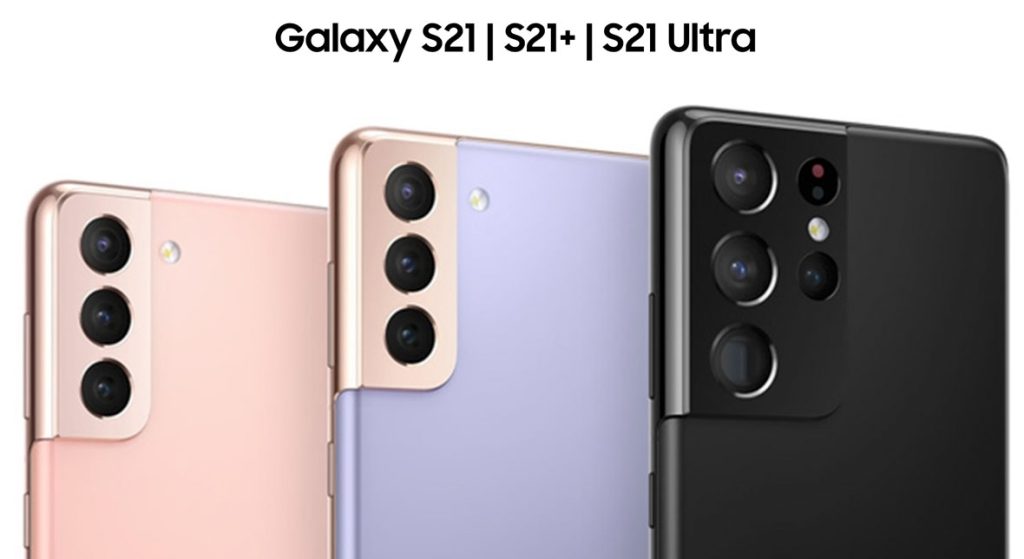
Samsung has recently released the latest security update for its Galaxy S21 series. The update, which includes the July 2023 security patch, is now available in select Latin American countries and will soon expand to other regions. Both the Galaxy S22 and Galaxy S23 devices have already started receiving this update.
What’s new in this update?
The firmware version G99xBXXS9EWF3 brings the July 2023 security patch to the Galaxy S21, Galaxy S21+, and Galaxy S21 Ultra. This update addresses more than 90 security vulnerabilities that were present in the previous software version. Notably, this update focuses solely on security enhancements and does not introduce any new features or performance improvements. Currently, it is accessible in Argentina, Bolivia, Brazil, Mexico, Peru, and Uruguay.
The security bulletin released by Samsung highlights that the July 2023 security patch resolves a total of 90 security flaws across various Galaxy phones and tablets. Among these fixes, 52 have been provided by Google, while Samsung has developed 38 security vulnerability fixes. Three critical flaws have been addressed, alongside 56 high-priority issues. The remaining vulnerabilities are considered moderate risks. It is worth mentioning that Google has now incorporated three fixes already included in the June 2023 patch by Samsung in the July update.
Some of the security vulnerabilities addressed by Samsung (SVEs) relate to manual package installation through ADB command, improper audio system access control, UWB chipset identifier, broadcast SMS configuration, Galaxy Themes Service, and more. Improper access control problems were also present in Settings, and certain internal testing functions suffered from out-of-bounds write issues, potentially allowing unauthorized code execution.
Most of the flaws detected are found in devices running Android 11, Android 12, Android 12L, and Android 13, with some issues specifically related to Qualcomm chips and components, Mali and PowerVR GPUs, and memory management.
If you reside in any of the aforementioned countries and own a Galaxy S21 series phone, you can promptly download the new update. To install it, navigate to Settings, select Software Update, and tap Download and Install.
The Galaxy S21 series was launched by Samsung in early 2021 with Android 11 as the pre-installed operating system. Subsequently, the devices received the Android 12 update in late 2021 and the Android 13 update in late 2022. Later this year, Samsung is expected to release the Android 14-based One UI 6.0 update for the Galaxy S21 series.
Samsung Networks, in collaboration with MediaTek, has achieved a remarkable milestone in 5G upload speed performance. The companies conducted extensive testing at Samsung’s lab in Suwon, South Korea, showcasing the capabilities of their joint efforts.
Credit: ADOBE STOCK
The Test: Achieving Record-Breaking 5G Upload Speeds
The groundbreaking achievement involved the utilization of a 5G Standalone network with 2CC CA (Carrier Aggregation) and C Band featuring MIMO technology. Samsung Networks employed its C-Band Massive MIMO radios, a virtualized Distributed Unit (vDU), and a 5G core for the test. MediaTek contributed a test device equipped with the new M80-based CPU chipset, which employed three antennas (1,900MHz, 3.7GHz, and 3.7GHz) across one channel. Together, they achieved an outstanding upload speed of 363Mbps, a speed that approaches the theoretical limit of this setup.
This technological breakthrough holds immense promise for consumer products in the future, as it will significantly enhance network upload speeds—a critical factor in various applications. Activities such as live video streaming at high resolution, video conferencing on the go, and multiplayer gaming will experience smoother performance with networks boasting such high upload speeds.
Dongwoo Lee, the Head of the Technology Solution Group at Samsung Networks, expressed his excitement over the achievement and the potential it holds for consumer devices. Faster uplink speeds will bring about new possibilities and transform user experiences. Lee emphasized the commitment of both Samsung and MediaTek to improve their customers’ networks by leveraging the most advanced technology available.
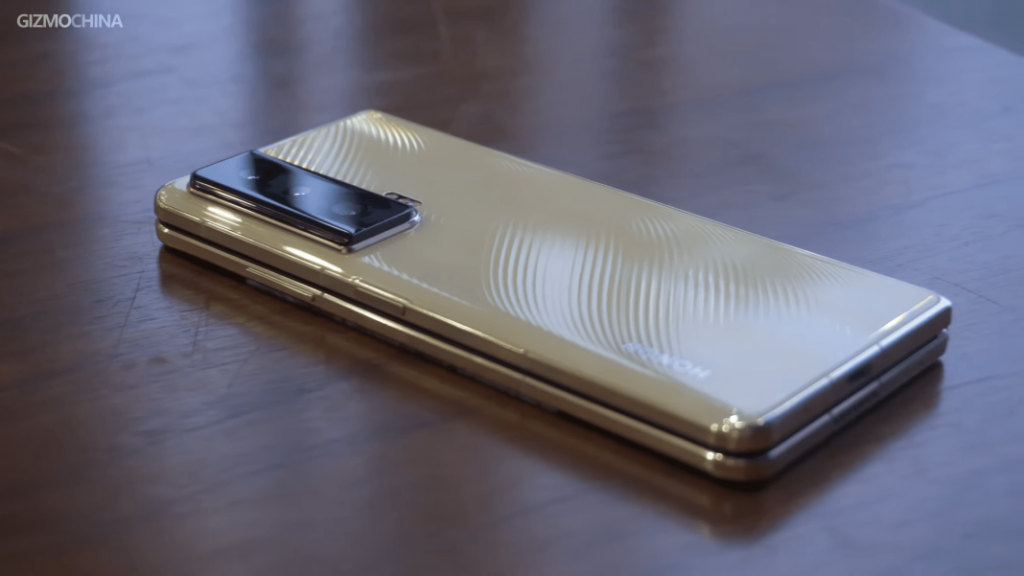
Foldables from China are now storming the global market, challenging Samsung’s monopoly. While major brands like Xiaomi and Oppo are yet to launch their book-style phones outside China, there are still plenty of options available. Honor, for one, has introduced solid folding phones in the past, with Honor Magic Vs being the latest.
Honor is now ready to launch a new foldable with what is expected to be the thinnest build to date. The Honor Magic V2 will be unveiled on July 12 in China, followed by a global launch sometime later in 2023. Ahead of the release, we have gathered everything known about the smartphone in this post. Let’s have a read.
Design and Display
Foldable smartphones are slowly becoming mainstream. But if there’s one aspect, apart from the expensive pricing, that stops more consumers from opting for folding phones, it is their heavy and bulky build. Samsung’s early Z Fold models, as well as the upcoming Z Fold 5, are particularly thicker than regular phones. But Chinese manufacturers like Xiaomi and Huawei have launched sleeker models, with the latter’s Mate X3 boasting a commendable thickness of 5.3mm, weighing just 239 grams.
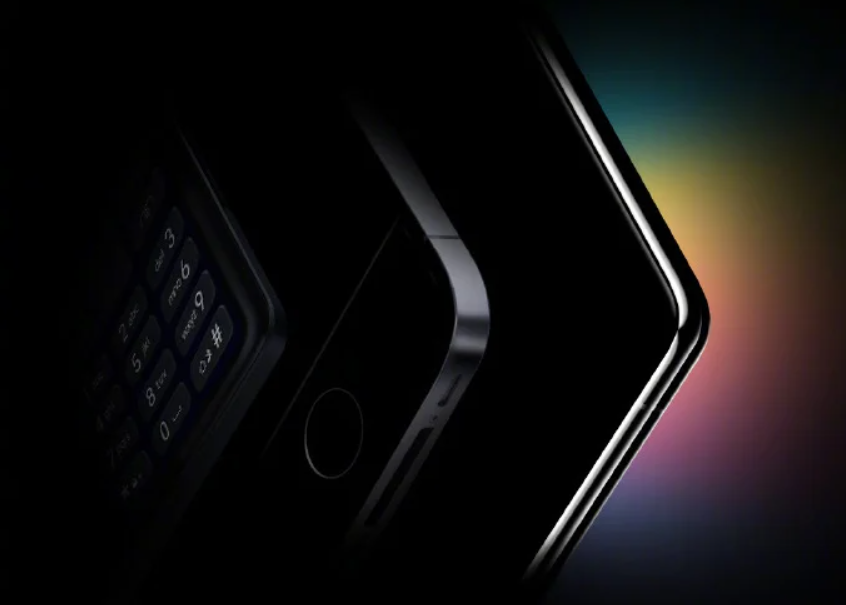
Honor knows foldables need to be thin in order to sell better and claims the Magic V2 will be thinner than the current slimmest foldable phone available on the market. The company hasn’t released any design images yet but it did tease some of the design elements of the device through a poster. There’s not much to see in the image but if you read between the lines, there are some hints. It shows the outer screen of the V2 with the phone app turned on, exhibiting a slightly curved edge similar to the Honor Magic Vs.
Honor puts the foldable side-by-side with what appears to be an older iPhone model featuring a home button, as well as a feature phone. The company likely intends to show us how slim the foldable is by comparing it to these two devices. Going by the teaser, the device does look quite slim, but we’ll have to wait for the launch to tell you the exact dimensions.
The display specifications of the smartphone are anyone’s guess. But if these preliminary specs released by GSMArena are anything to go by, the Honor V2 will have a 7.9-inch foldable LTPO OLED display. It should also LTPO with high-frequency dimming for a better refresh rate. The smartphone is expected to use a gearless hinge like the Magic Vs, offering a less-visible crease on the display.
Other Specifications
A slim design may not be the only highlight of the Magic V2. It is also expected to pack bleeding-edge hardware. The foldable should be powered by the Snapdragon 8+ Gen 1 chip under the hood. However, there is rumored to be a Magic V2 Supreme Edition, which could come equipped with the more powerful Snapdragon 8 Gen 2 SoC. Honor could offer the device with 12GB of RAM and 512GB of internal storage.
Honor Magic Vs
Camera specifications of the smartphone are not known at the moment but it is expected to offer a periscope zoom lens this time. You may also see a 54MP Sony IMX800 primary sensor on the rear. On the software front, the Magic V2 will run Magic OS 7 based on Android 13.
While the Magic Vs gets a large 5,000mAh battery, the Magic V2 might feature a smaller unit, considering its slim size. The device should support wireless charging as well as 66W wired charging. It could get dual SIM, 5G, WiFi, Bluetooth 5.2, GNSS, NFC, and a USB-C port.
Expected Pricing
There haven’t been any leaks regarding the pricing of the Magic V2 yet. We expect it would be pricier than the Magic Vs but might cost less than the original Magic V. To give you an idea, Honor V starts at $1397 for the 12GB/256GB model and $1924 for the 12GB/512GB model. On the other hand, the Honor Vs comes priced at $1050 for the 8GB/128GB model and $1200 for the 12GB/256GB model.
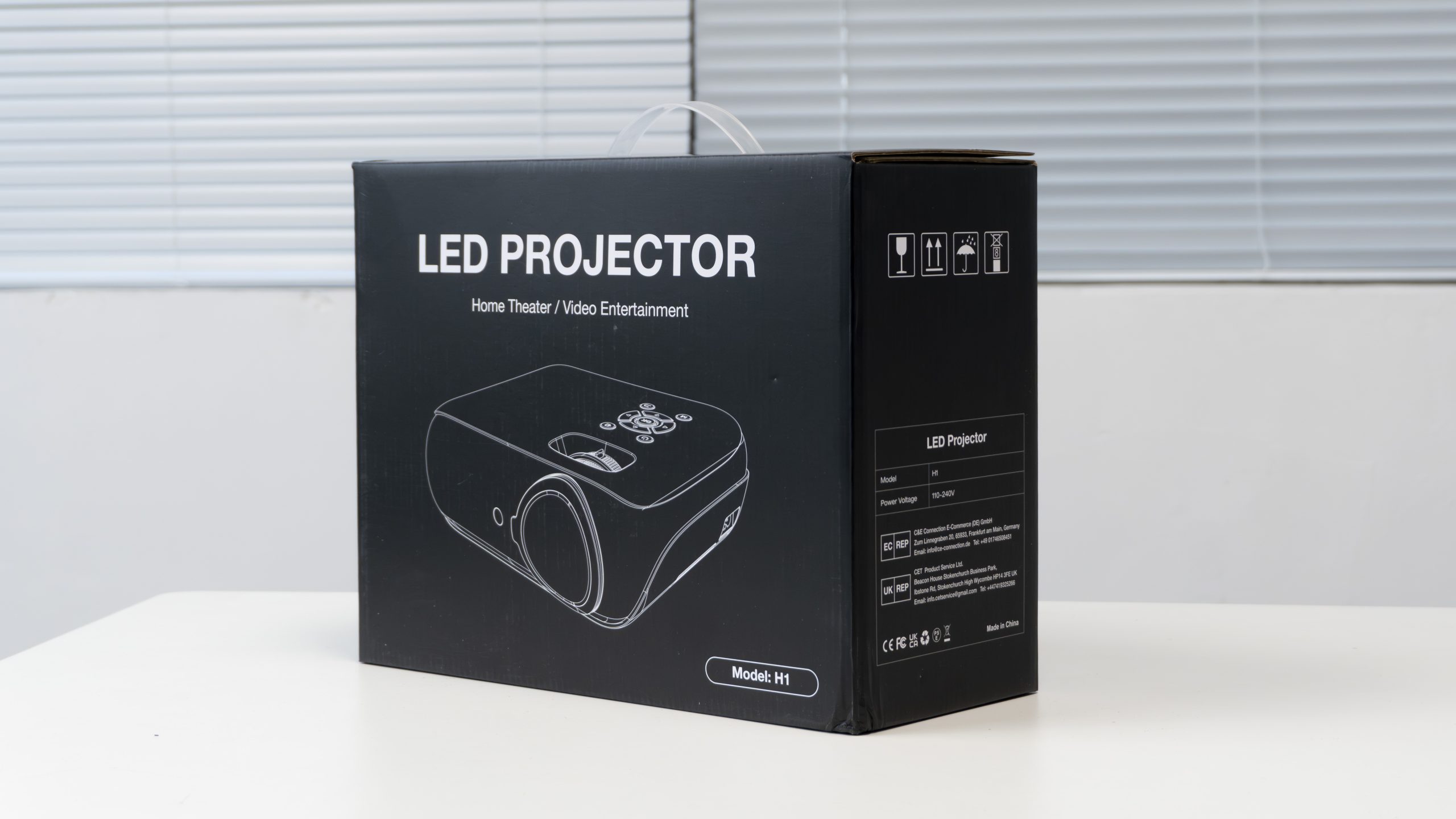
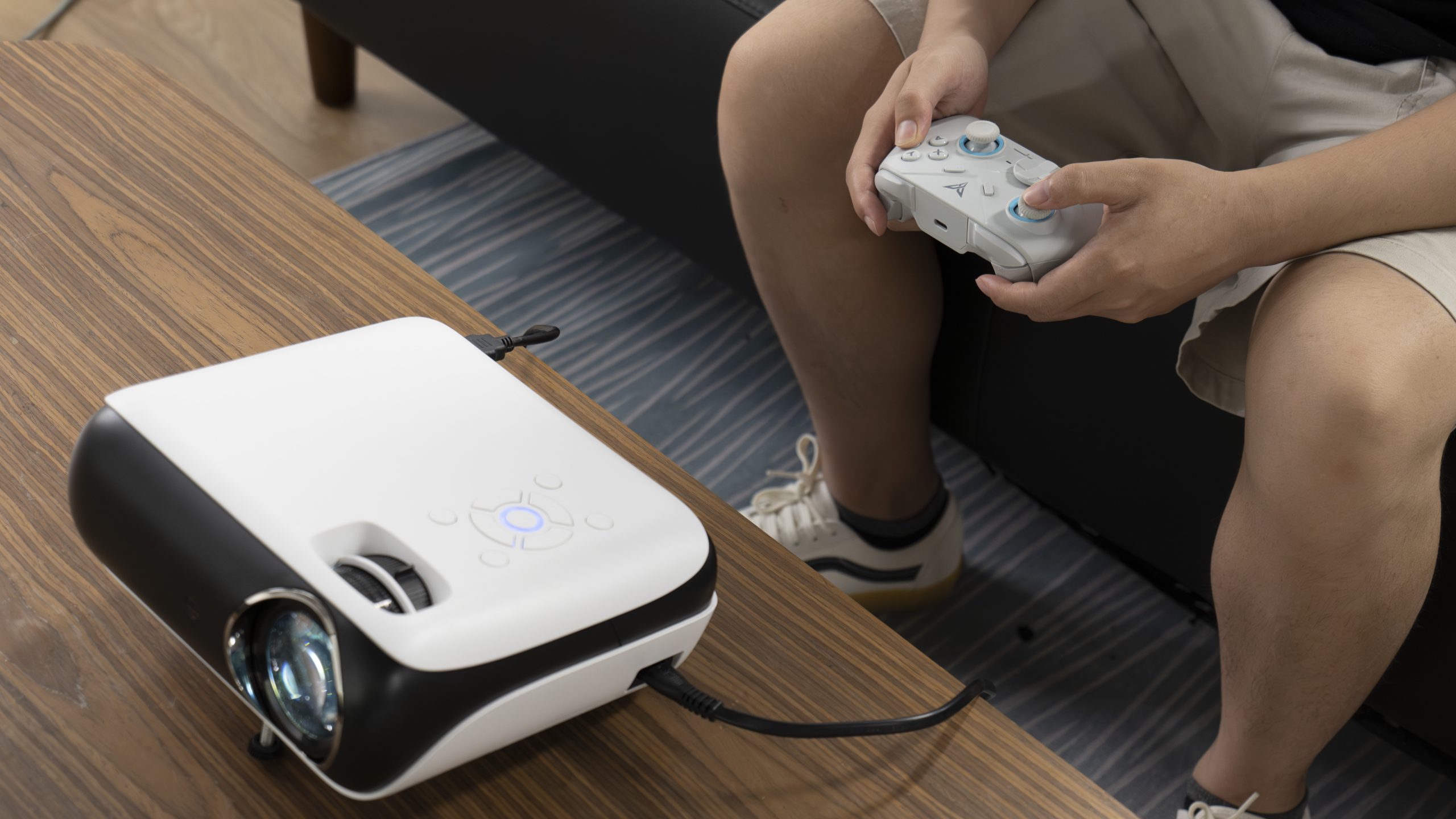
Summer is the perfect season to go out camping with friends, and if we have a big screen for outdoor entertainment, we can even play video games and share more fun with our friends. Luckily we recently got a very affordable portable projector from HappRun, the HappRun H1. So let’s see if it can really be a portable entertainment station with such a compact body and affordable price.
Unboxing & Design
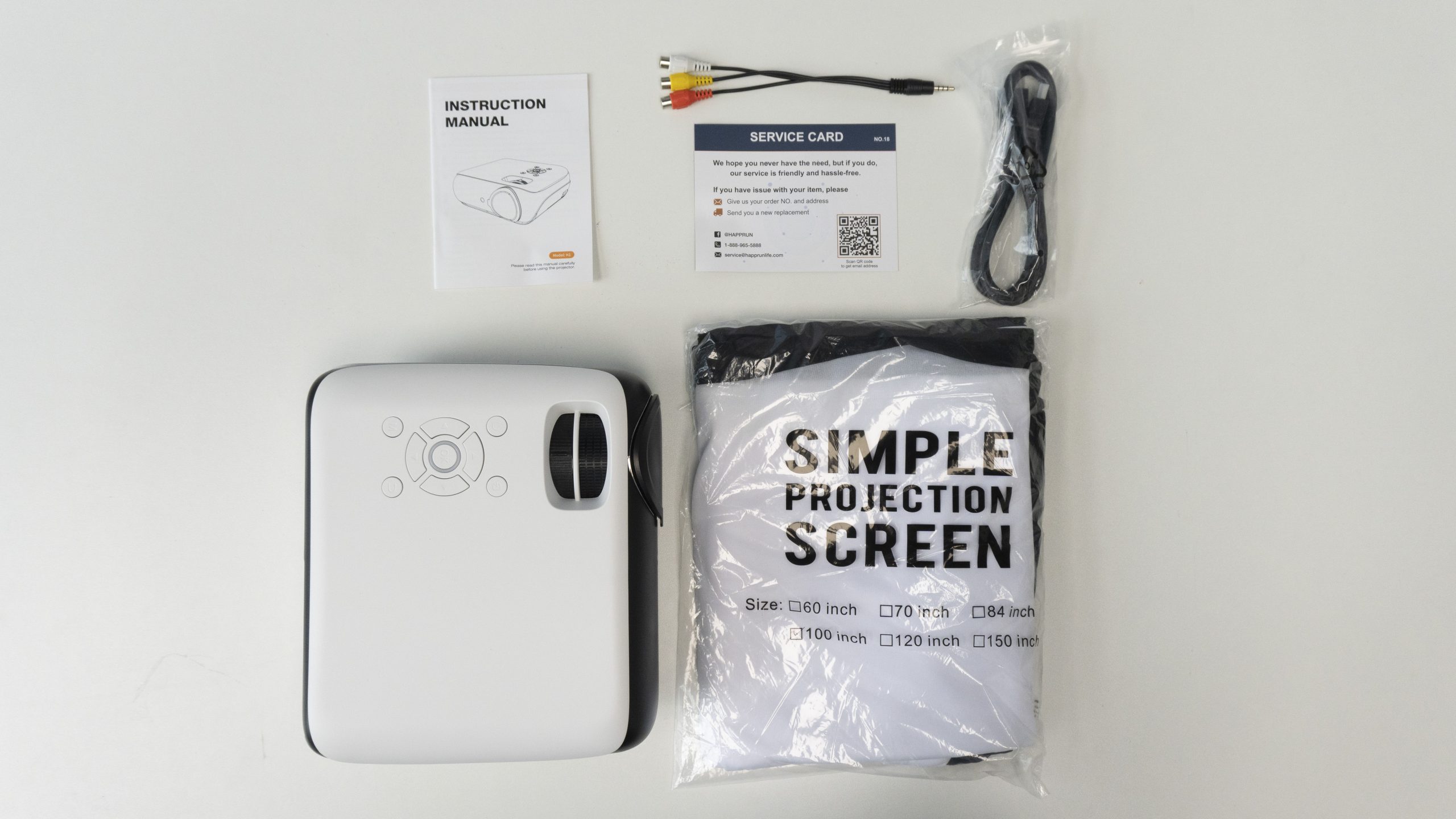
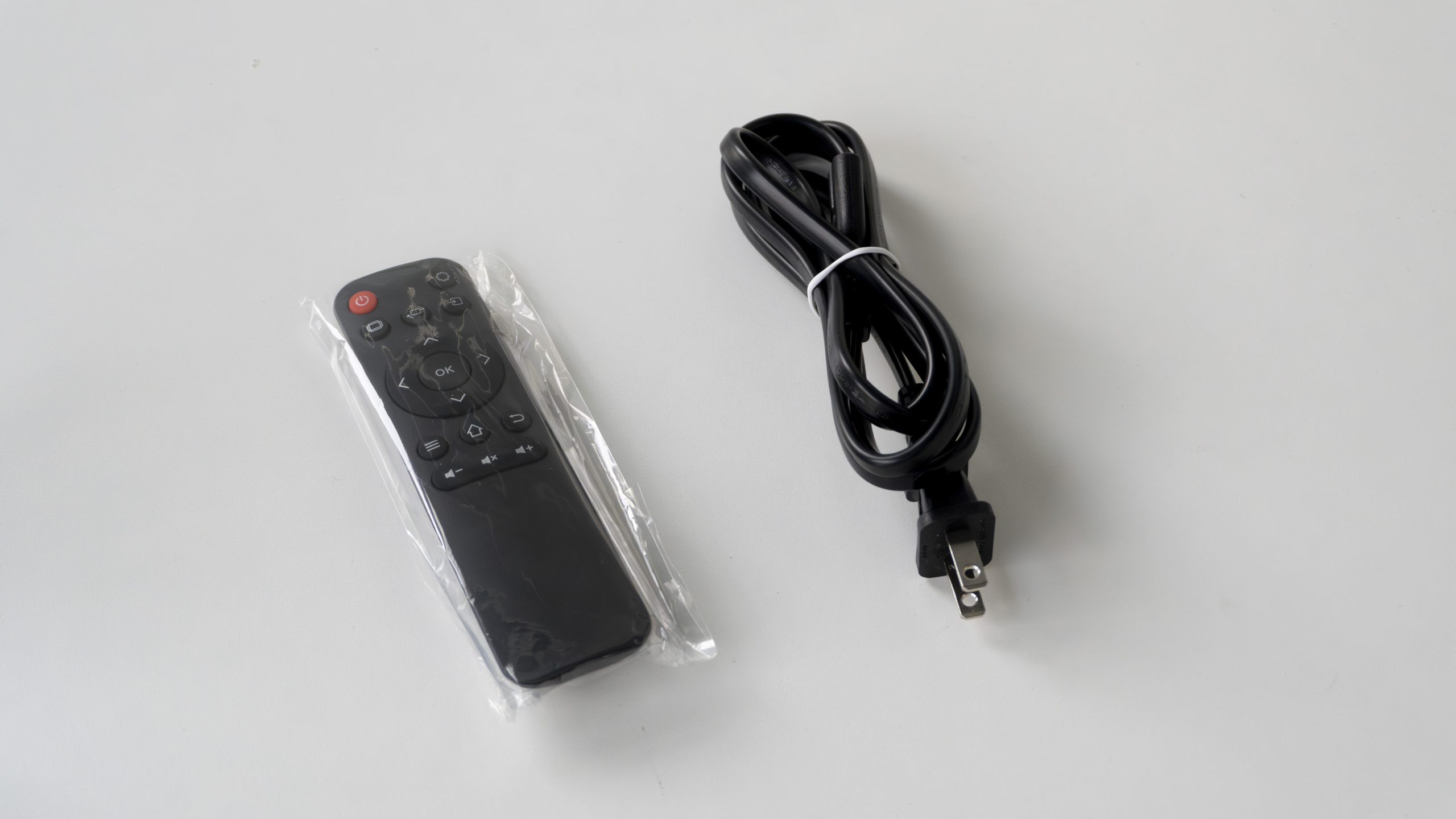
Open the package we got the H1 projector body, a manual, a service card, and surprisingly, a 100-inch simple projection screen. And a remote control is of course included. In terms of cables, the brand provides us with a power cable, an HDMI video cable, and an extra component cable (CVBS) that allows you to connect the projector to some of the more old-fashioned multimedia devices, such as a Wii console.
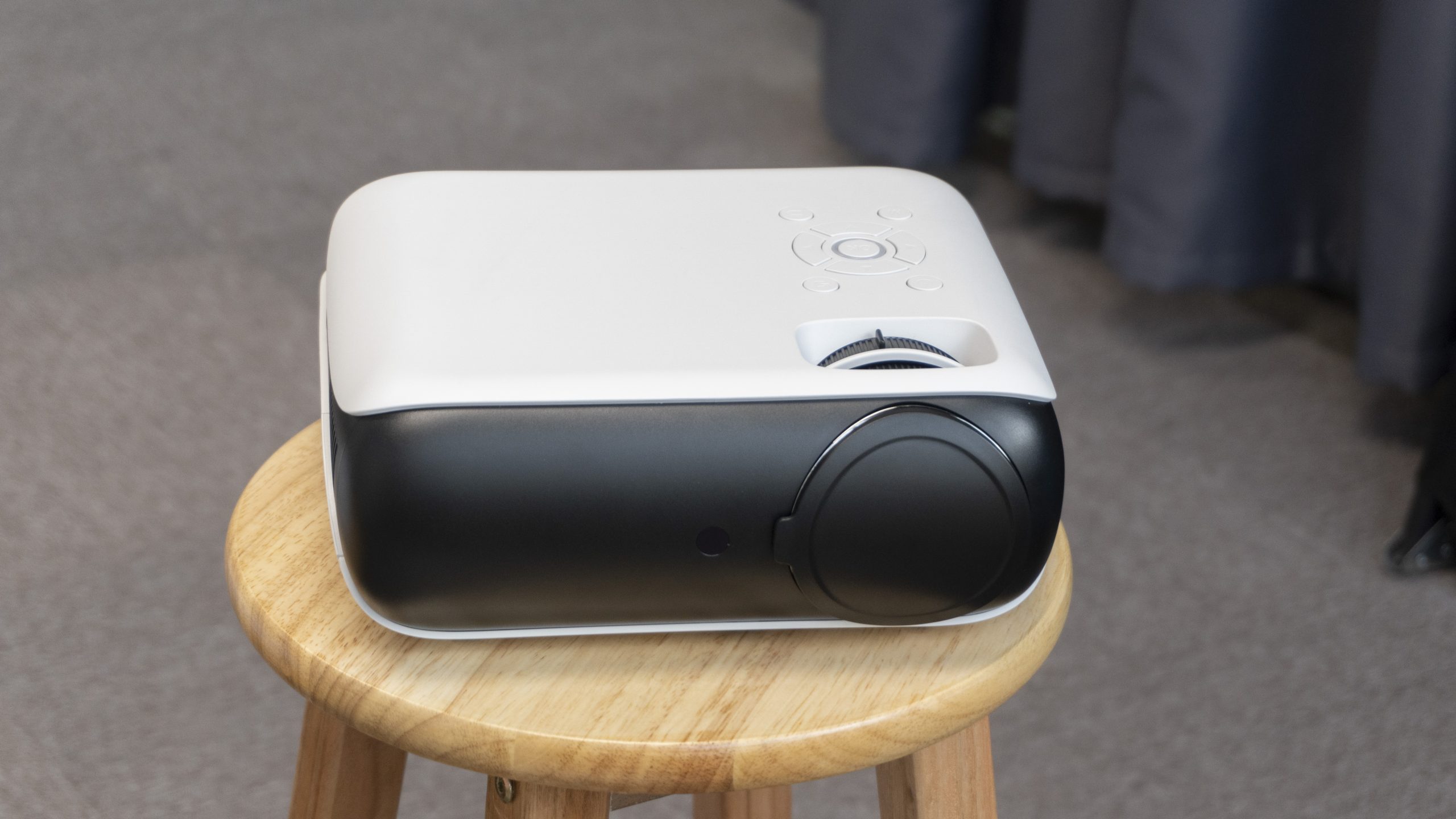
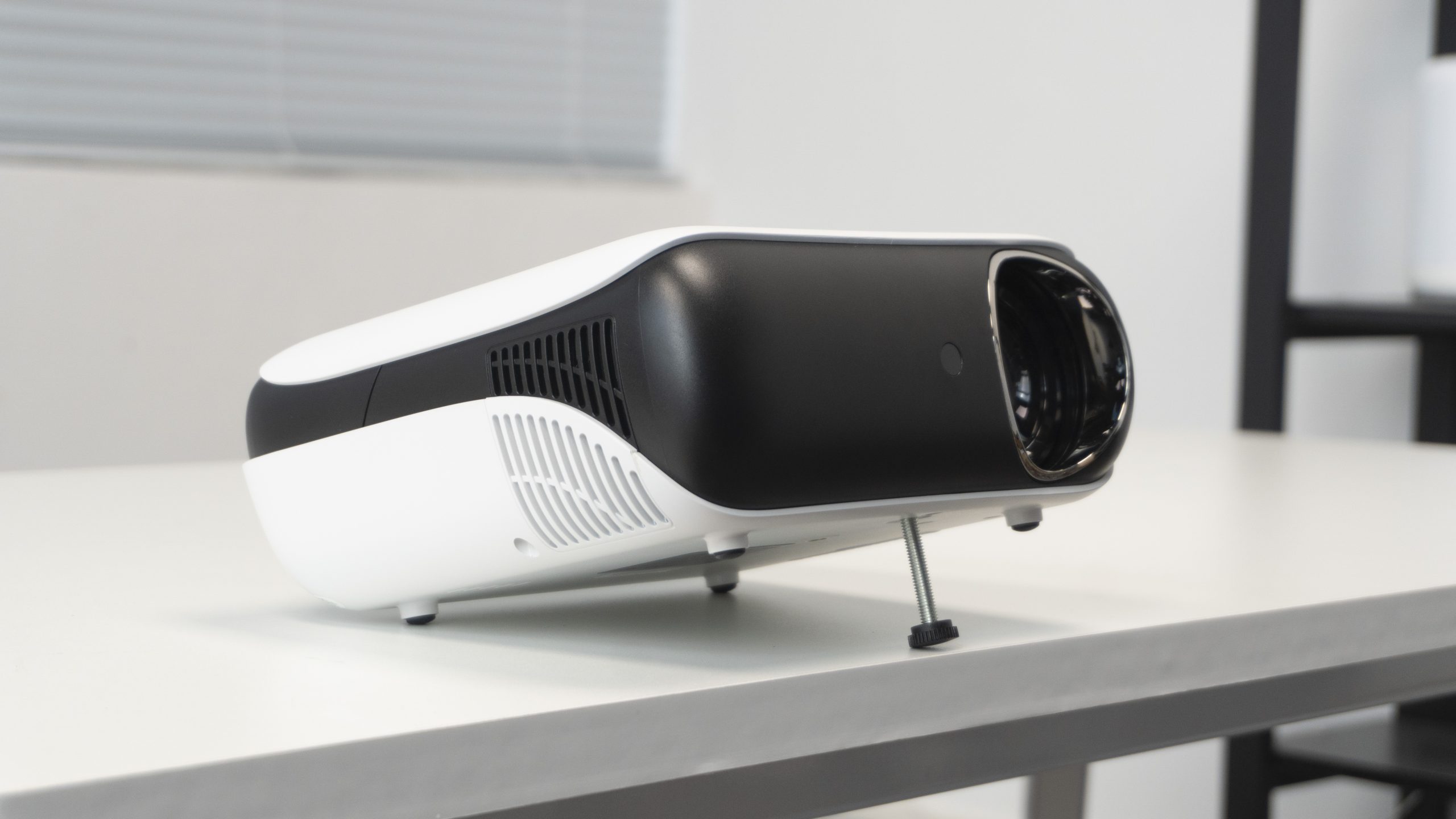
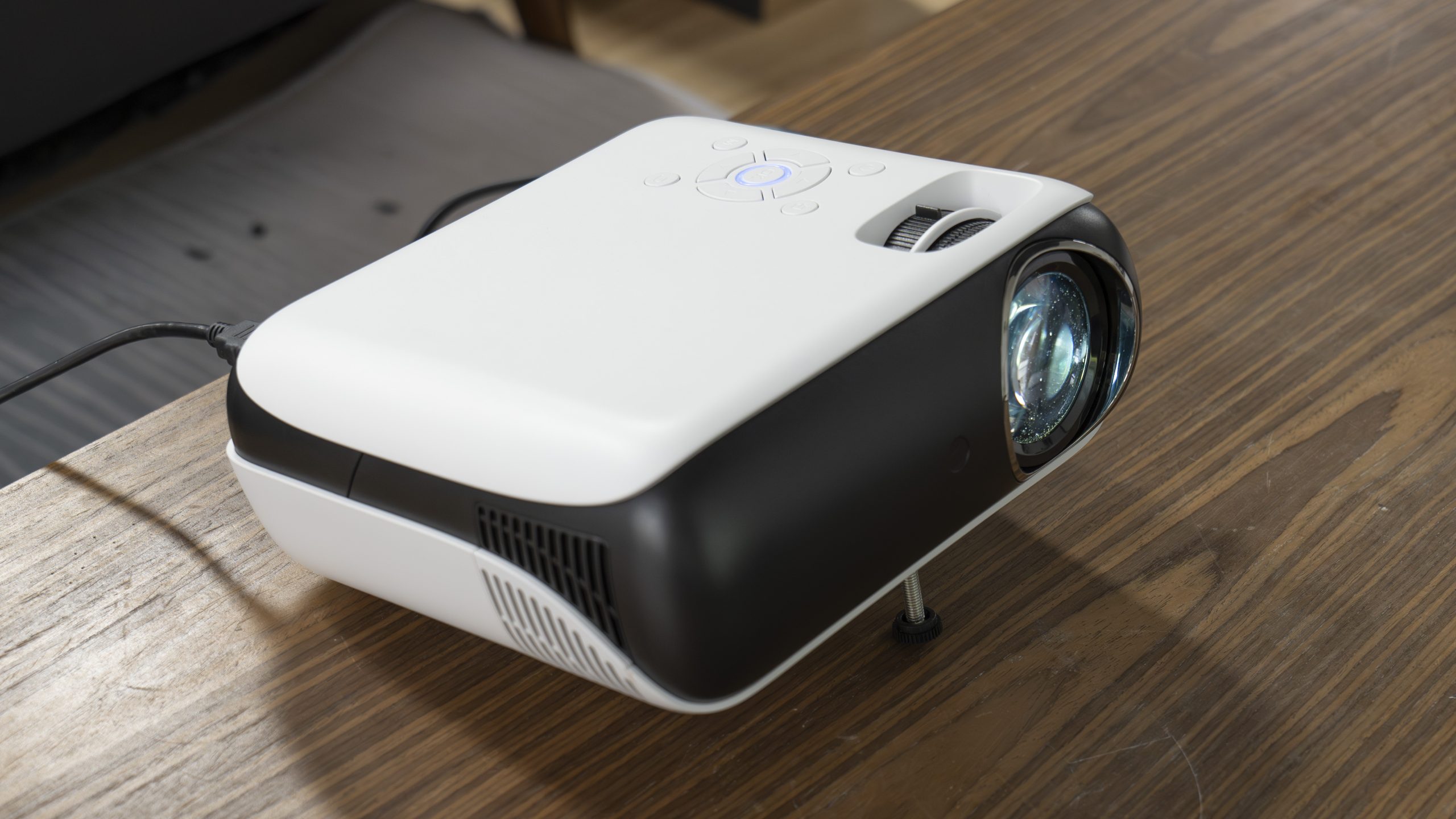
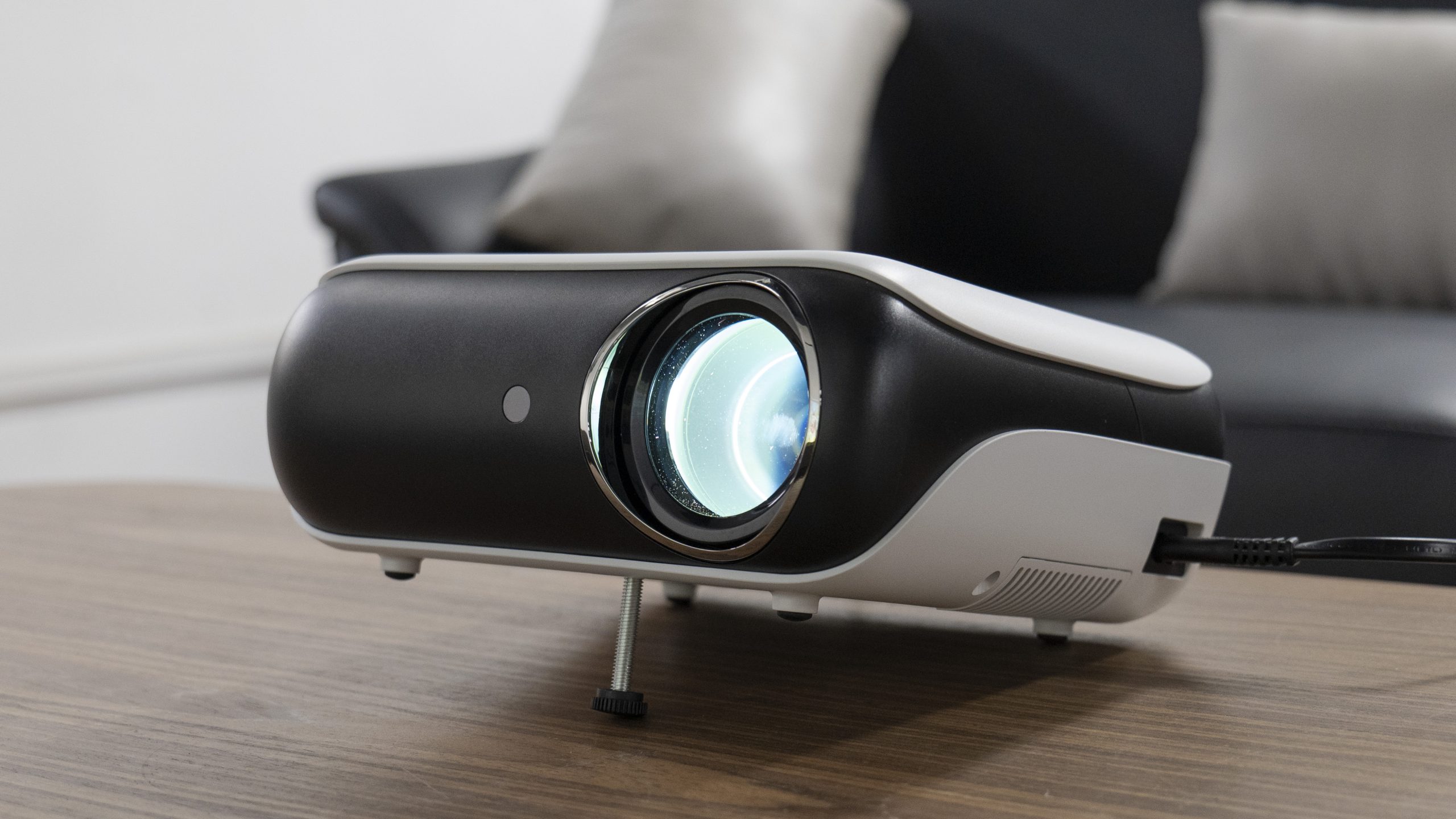
The Happrun H1 projector has a very compact and sleek body made of black and white plastic that you can carry in your backpack wherever you want to travel. The surface of the projector body is matt and frosted, and it’s pretty good at scratch resistance since we took it around and it did withstand those trials. The shield has no visible damage, so you don’t have to worry about any scratches after a period of use.
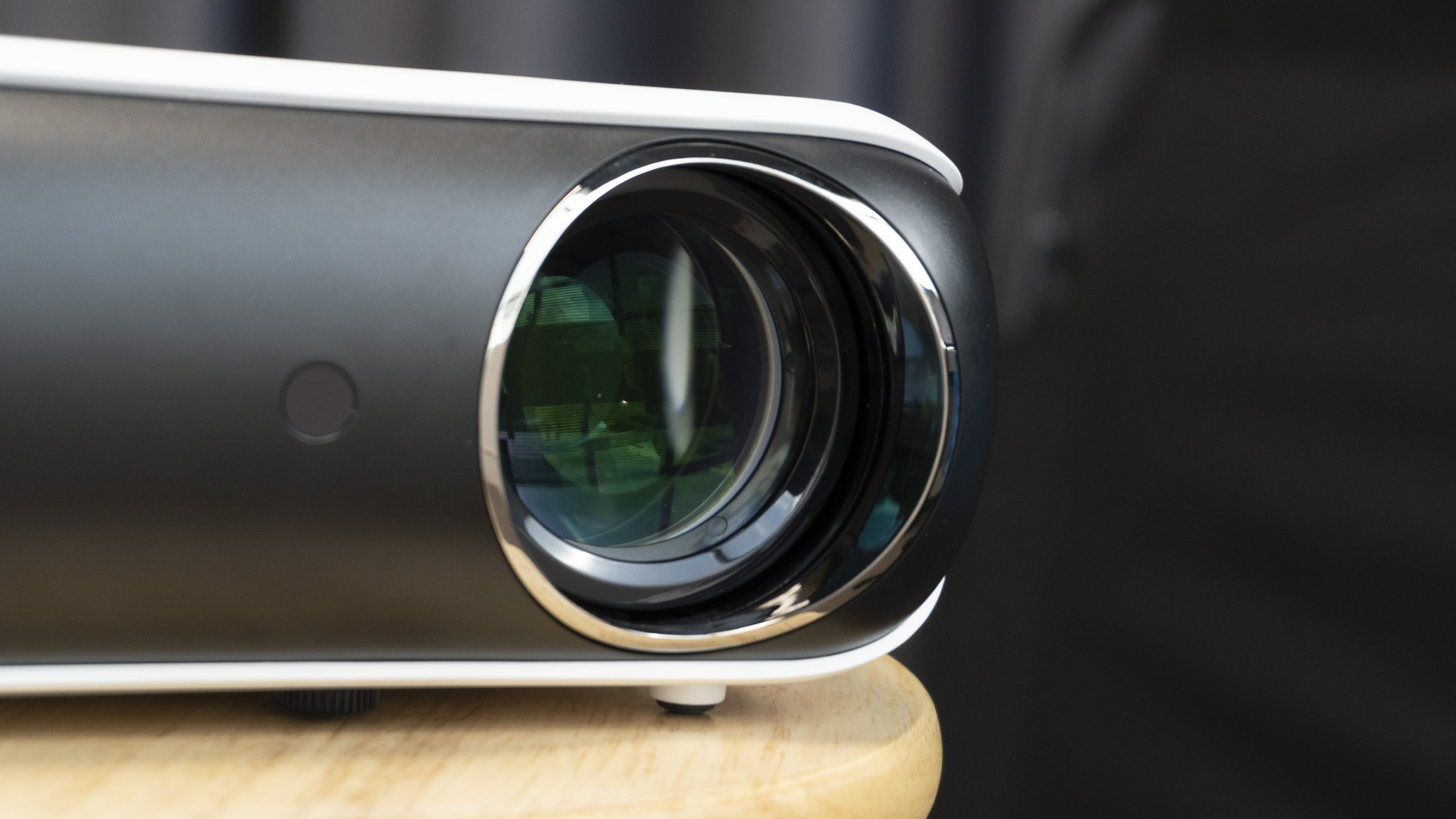
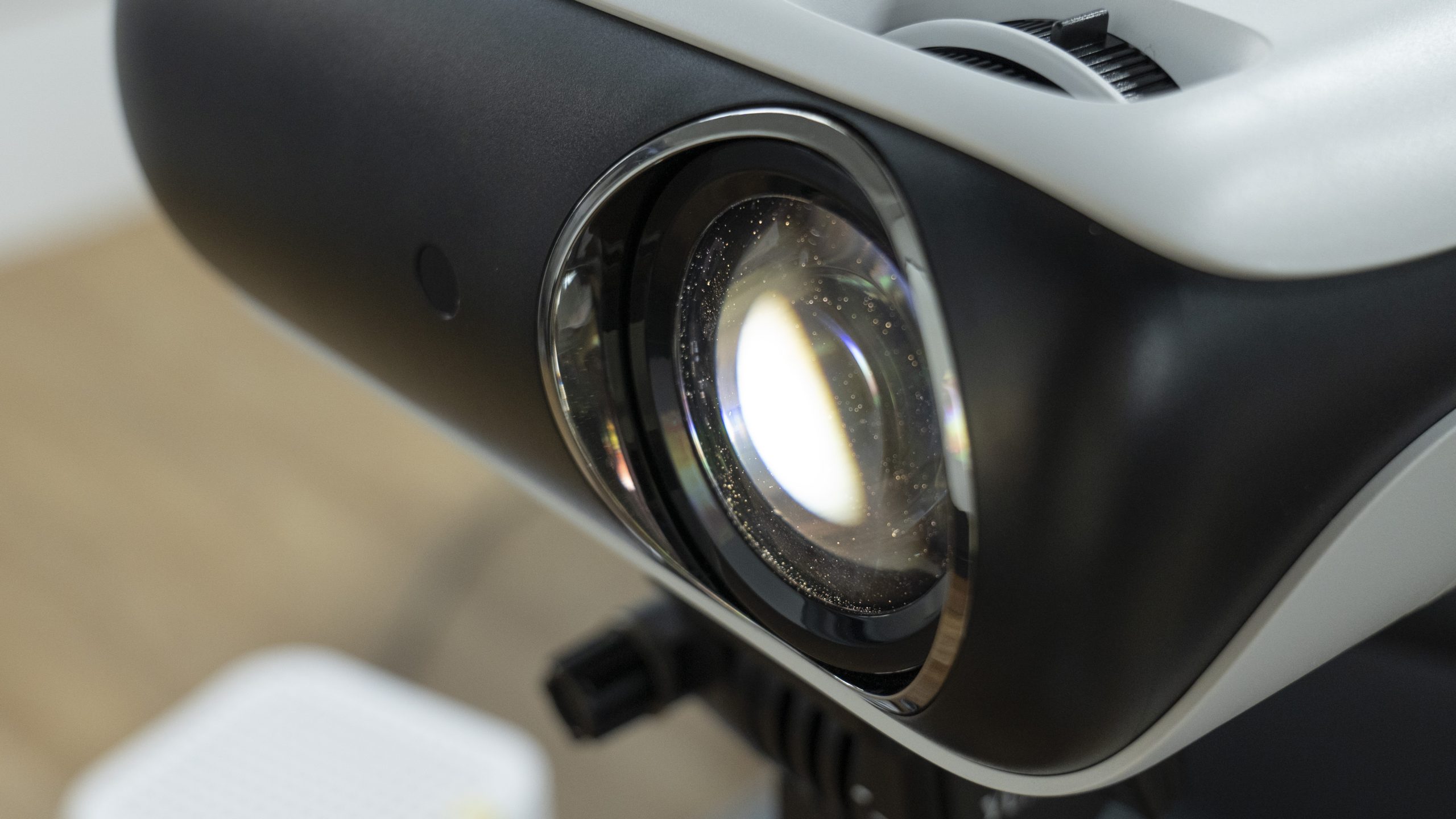
The H1 is an LED projector with a huge lens located on the right side of the front that stands out like a big shining eye. The brand claims that the H1 can project images up to 200 inches. But I think no matter when you go camping or stay in a living room/bedroom, a 50-100 inch screen is already more than enough for a good private theater.
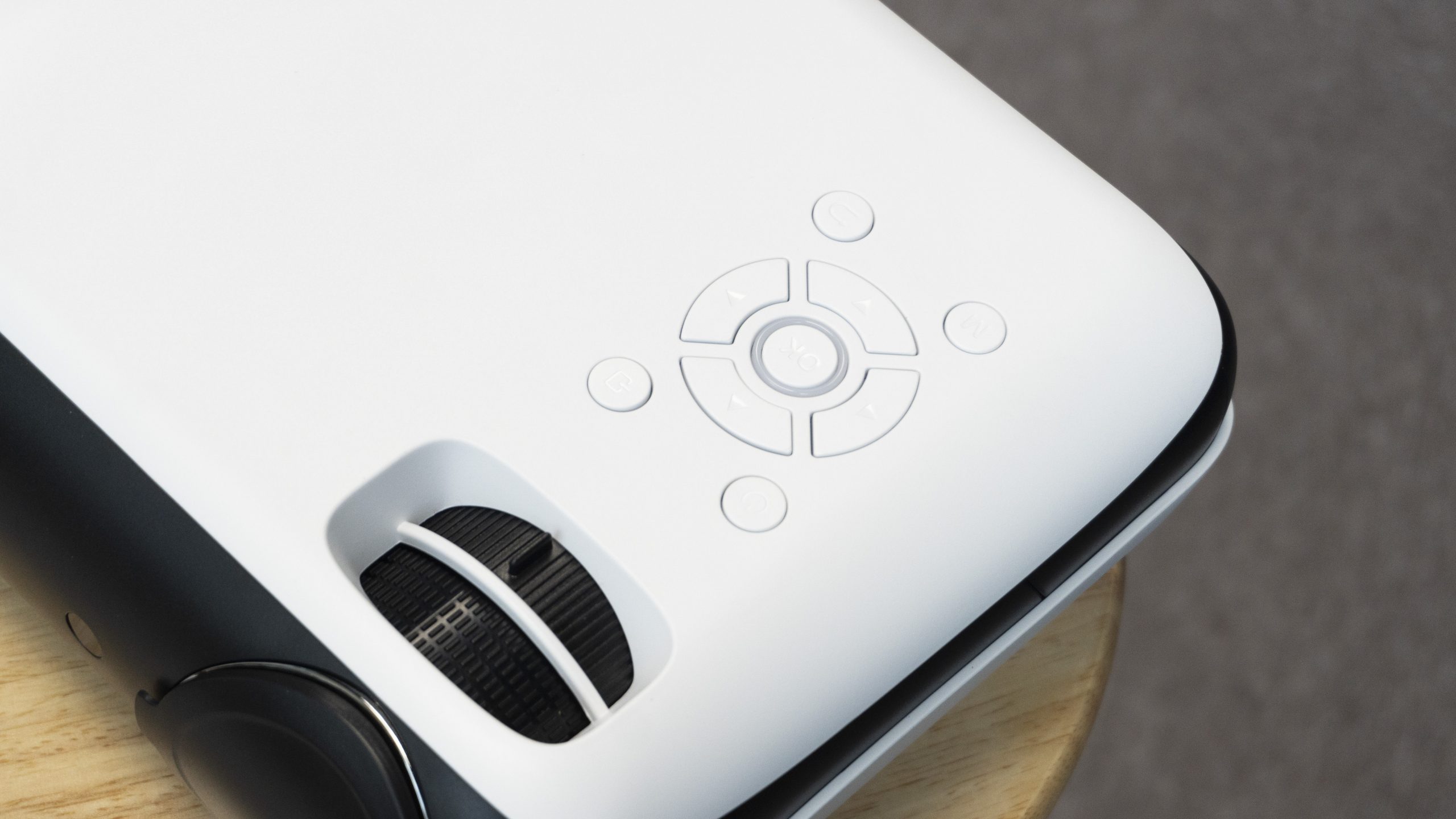
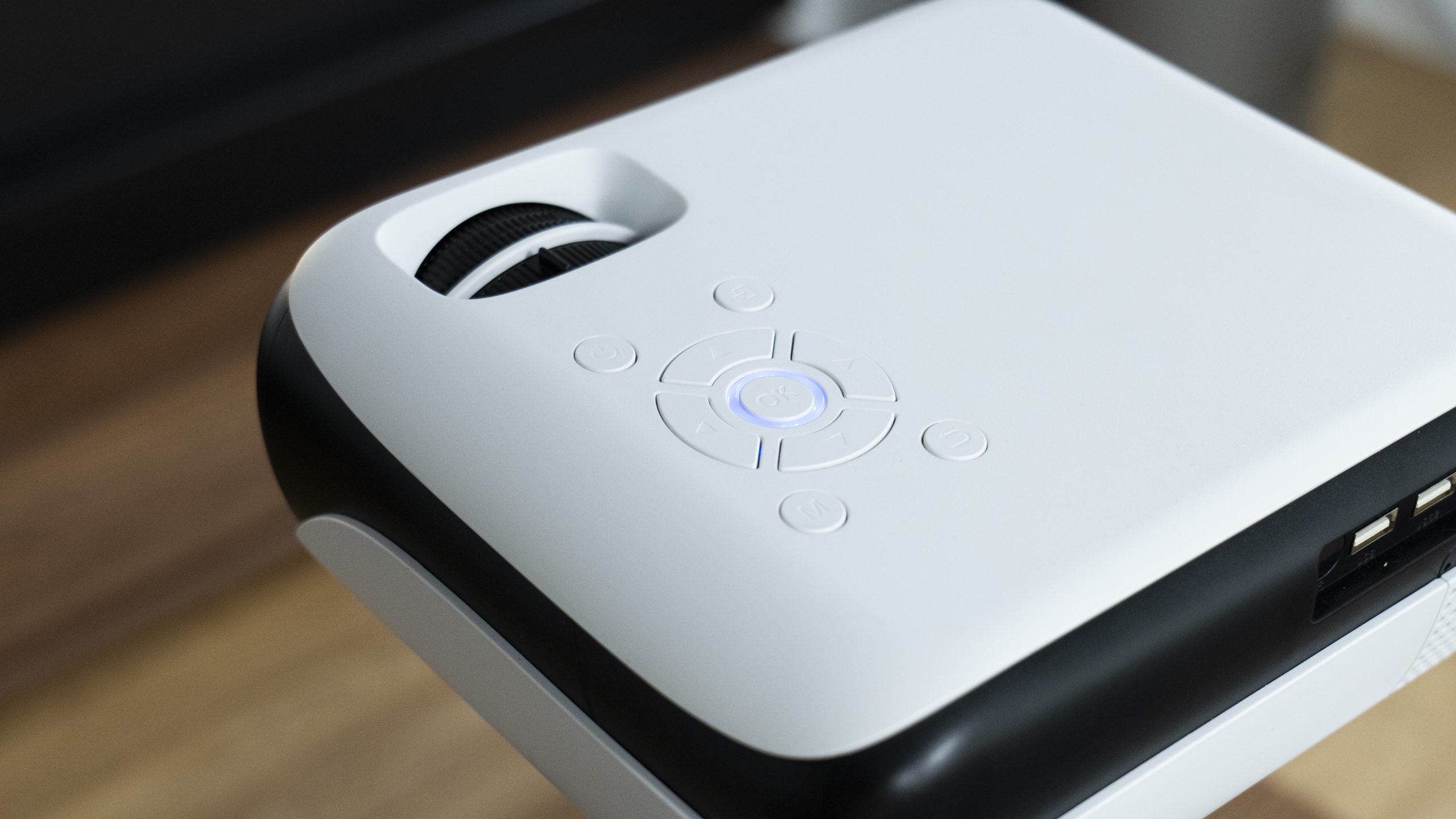
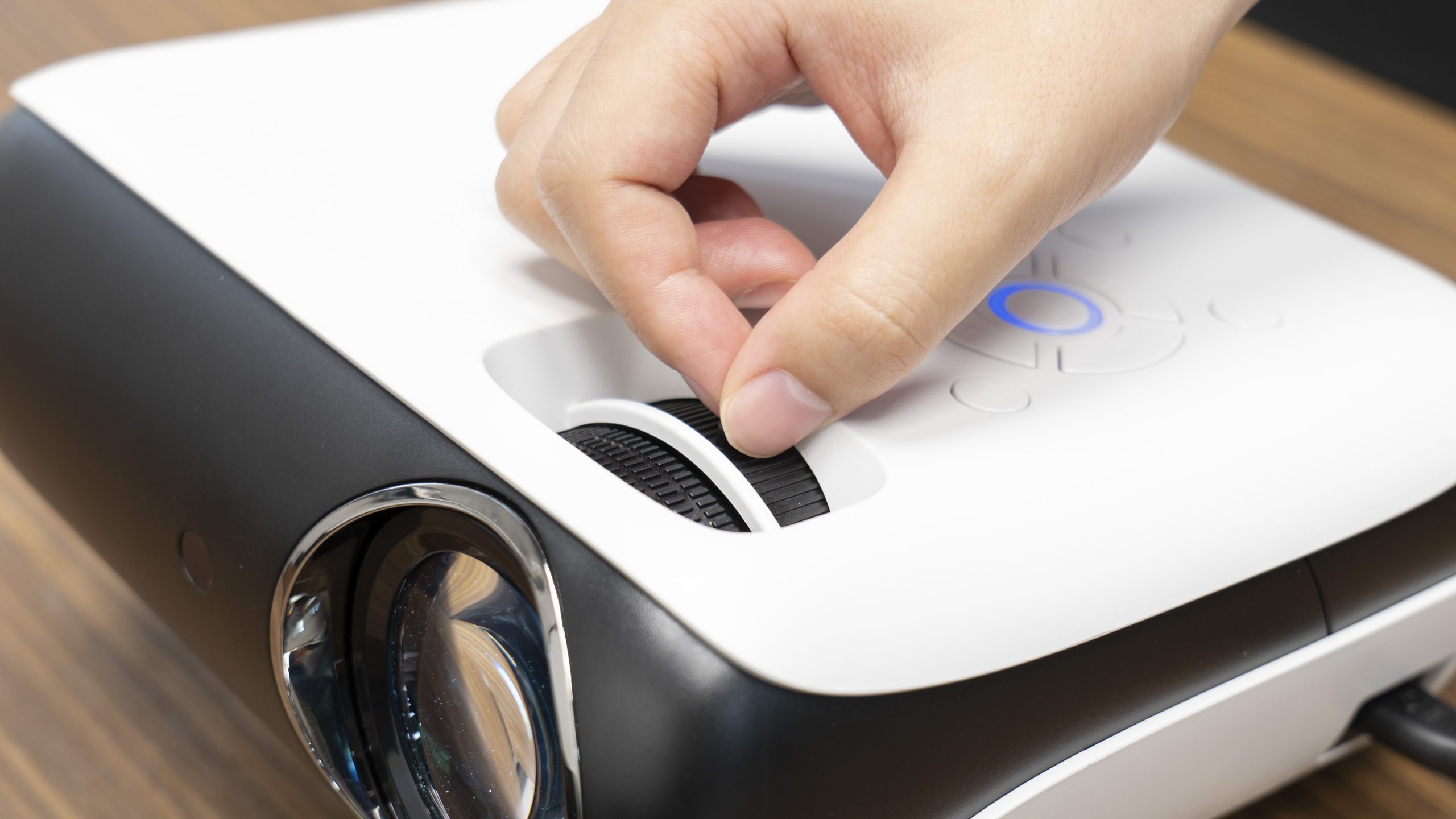
On the left side of the top, we can see all the control buttons and the wheels used to adjust the focus and keystone respectively. There are many mid-range to high-end projectors today that do away with physical buttons, but I think these buttons are still a great bonus for a good user experience. At least if you forget to take the remote control with you when you go out, you can still use the buttons on the machine for various operations.
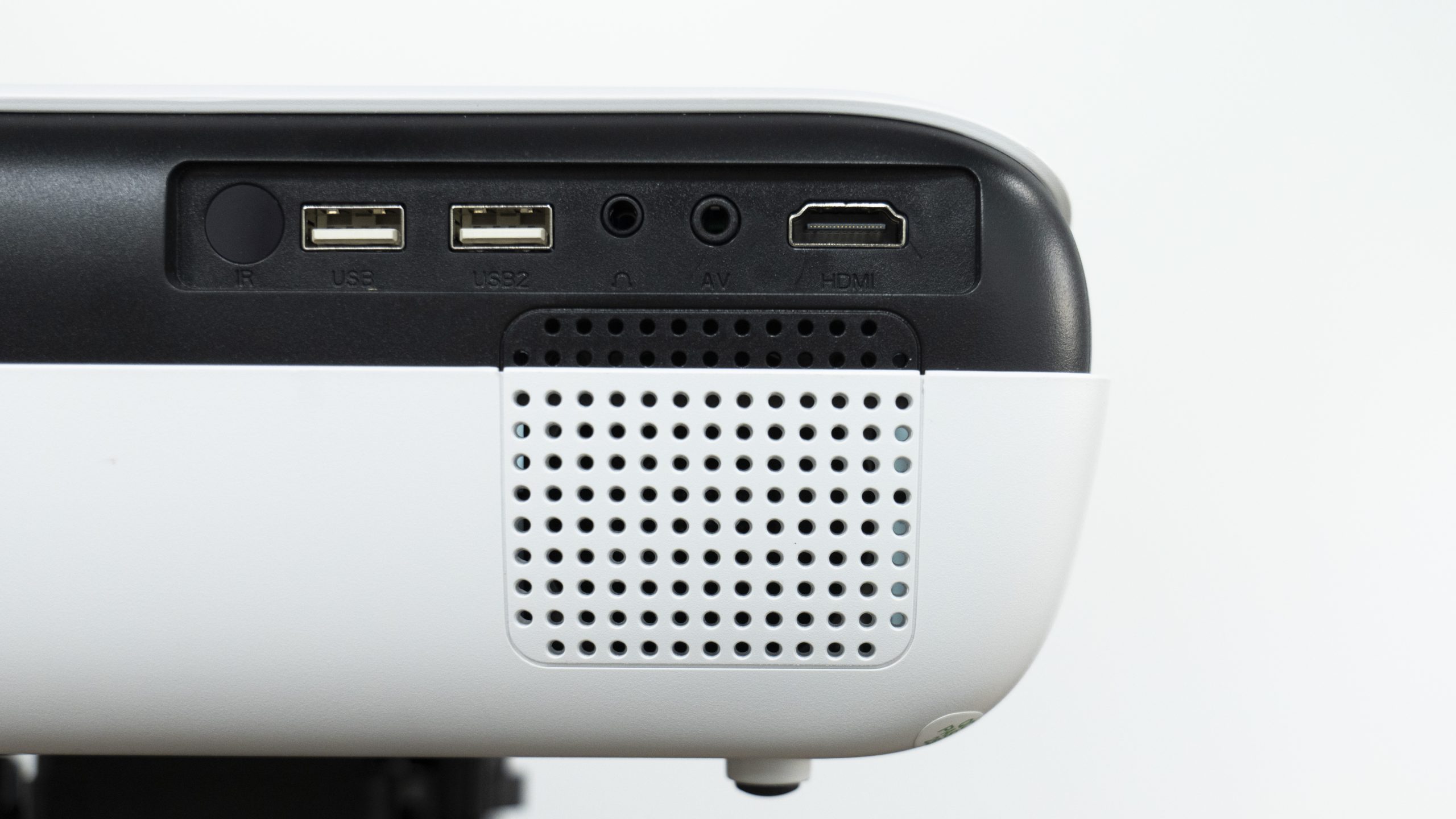
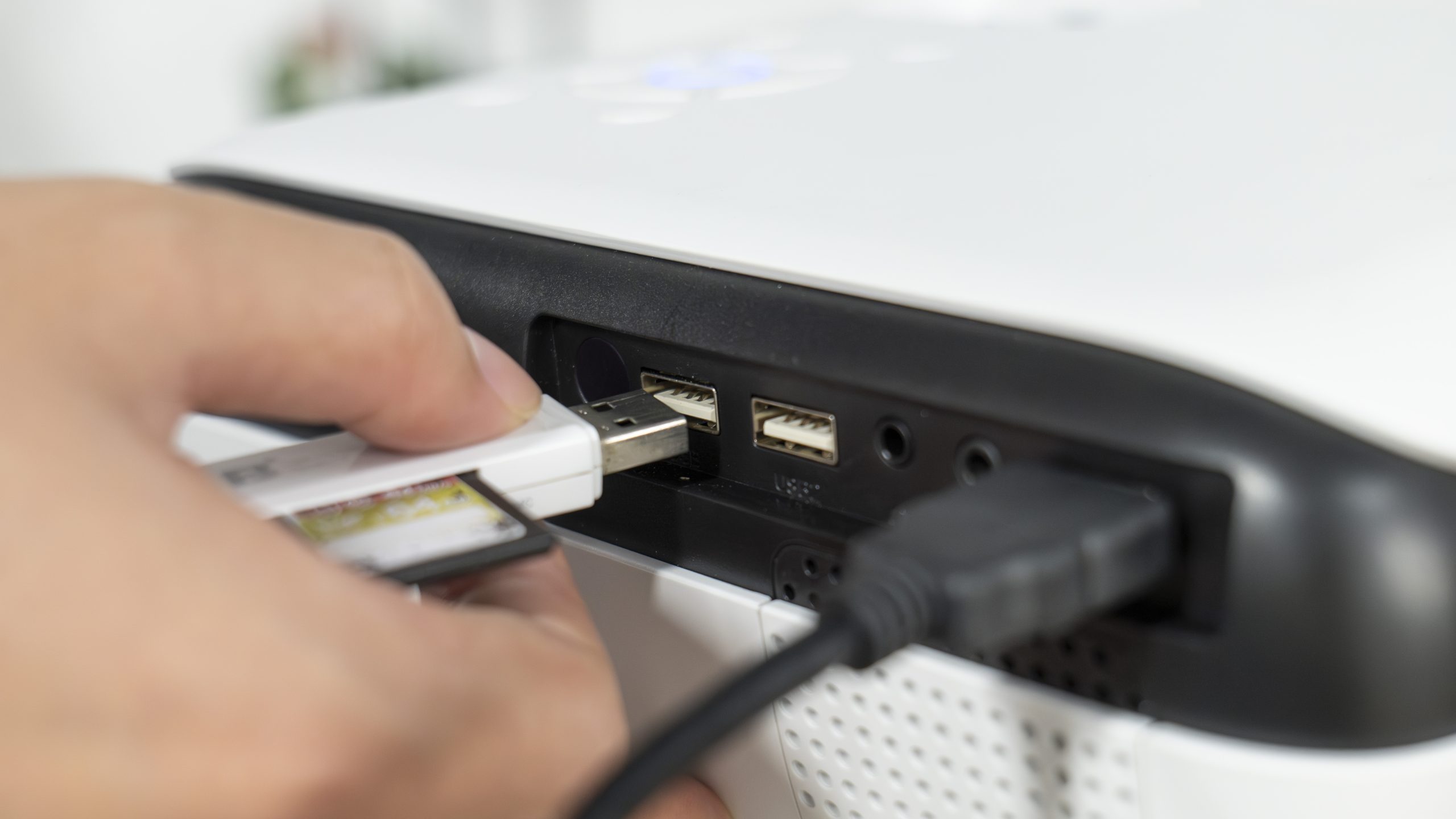
In terms of connectivity, in addition to audio&video inputs, we have two USB ports to access and play multimedia files from external storage.
Another detail here is that we can see an IR receiver on both the front and back of the H1, so whether you have the projector in front of you or behind you, you can easily control it with the remote control.
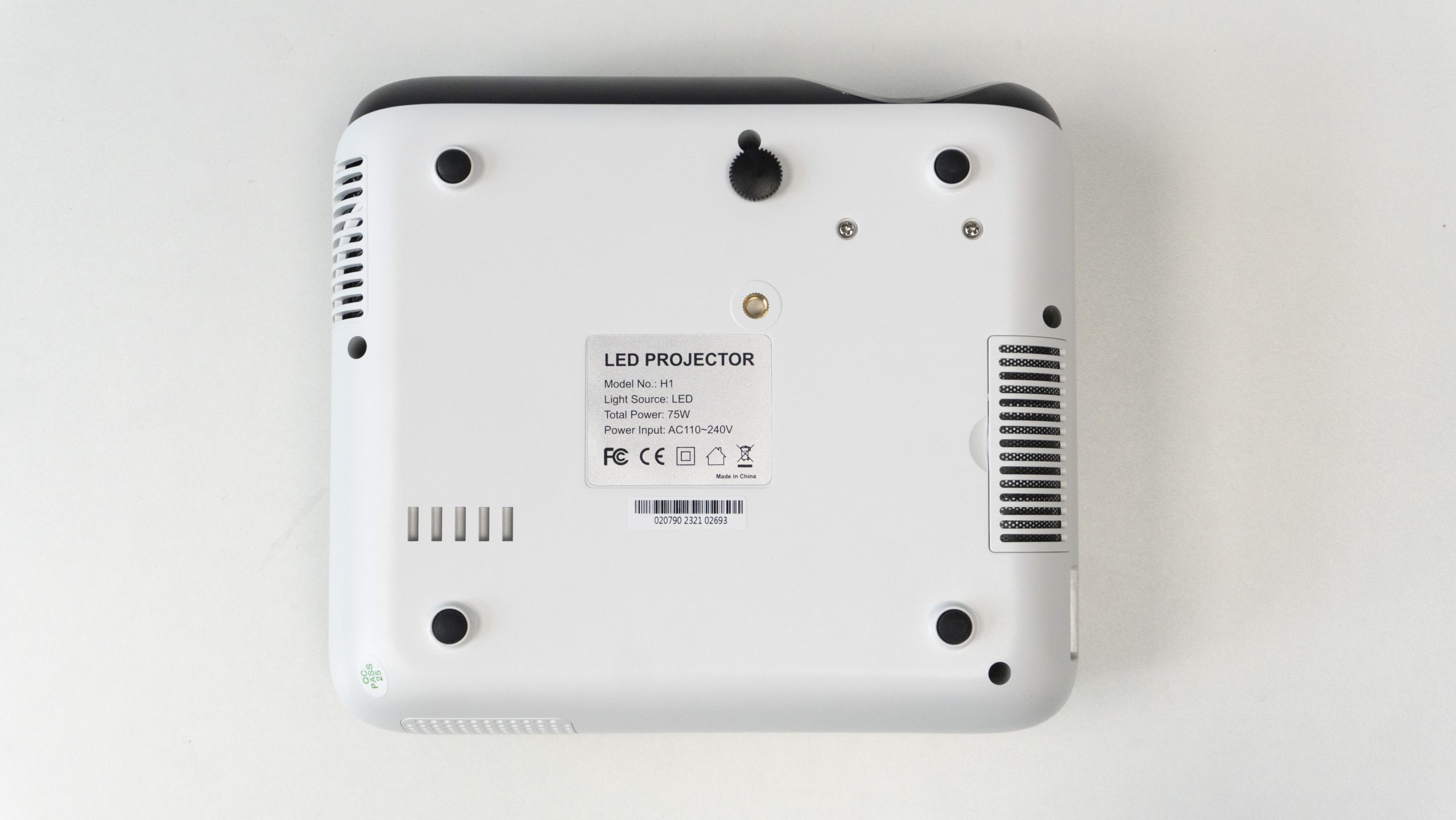
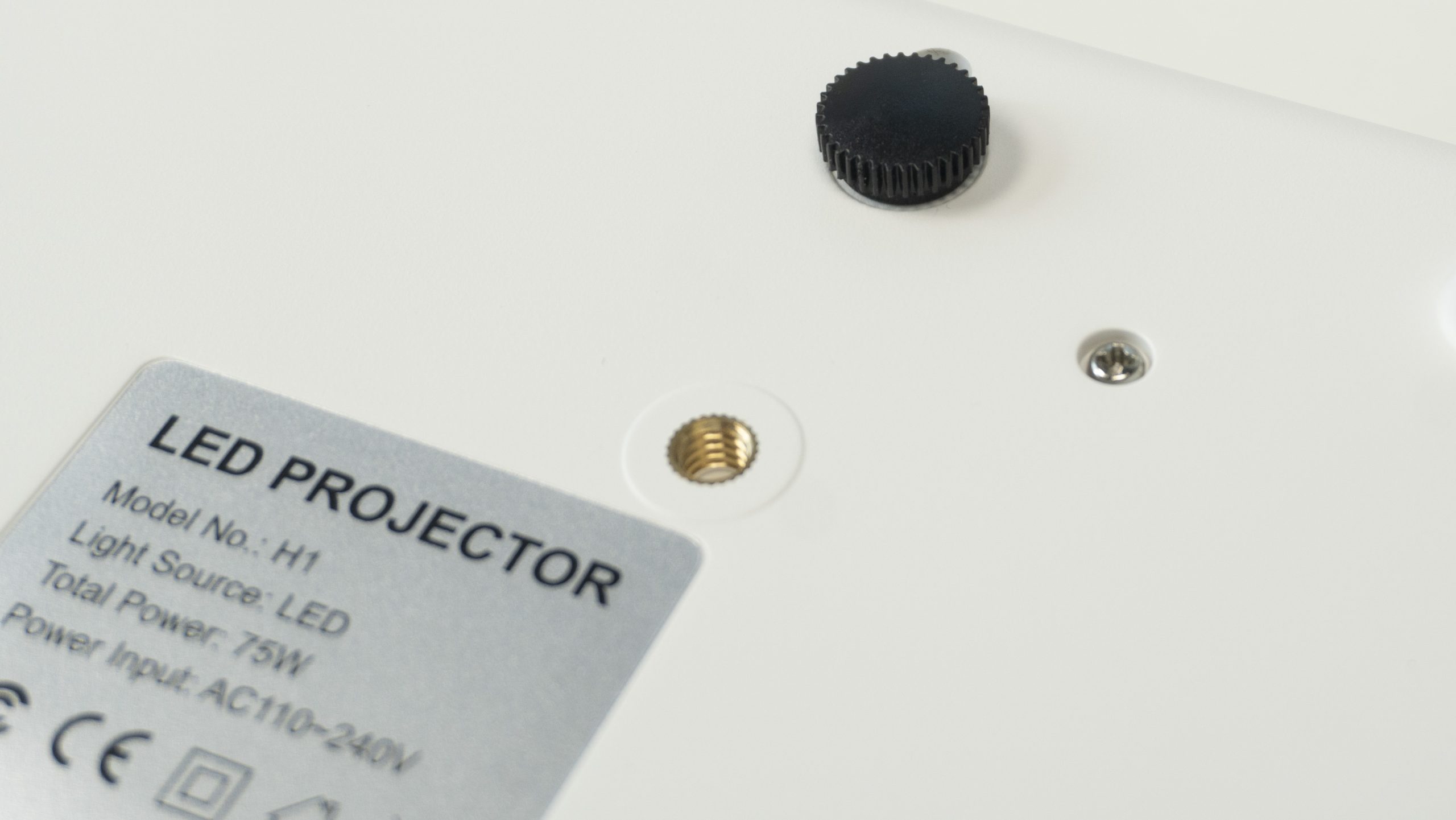
At the bottom of the projector we can see a 1/4″ screw hole that allows you to mount the machine to a tripod or any compatible stand device. And there is a little stand for height adjustment, so if you find the image position is too low on a flat surface, you can use it to easily adjust the elevation angle of the projector.
Image Quality & Sound
Before talking about image quality, I would tell the fact is that the H1 does not have fancy or intelligent setups, but when you place it in the right place and turn on the power, it is not difficult to get a clear and accurate picture through manual adjustments. This was my first time using this type of product, but I was able to manually complete the focus adjustment and keystone correction in less than a minute. I certainly hope it has auto-adjust, but if not, such a convenient solution would also be good.
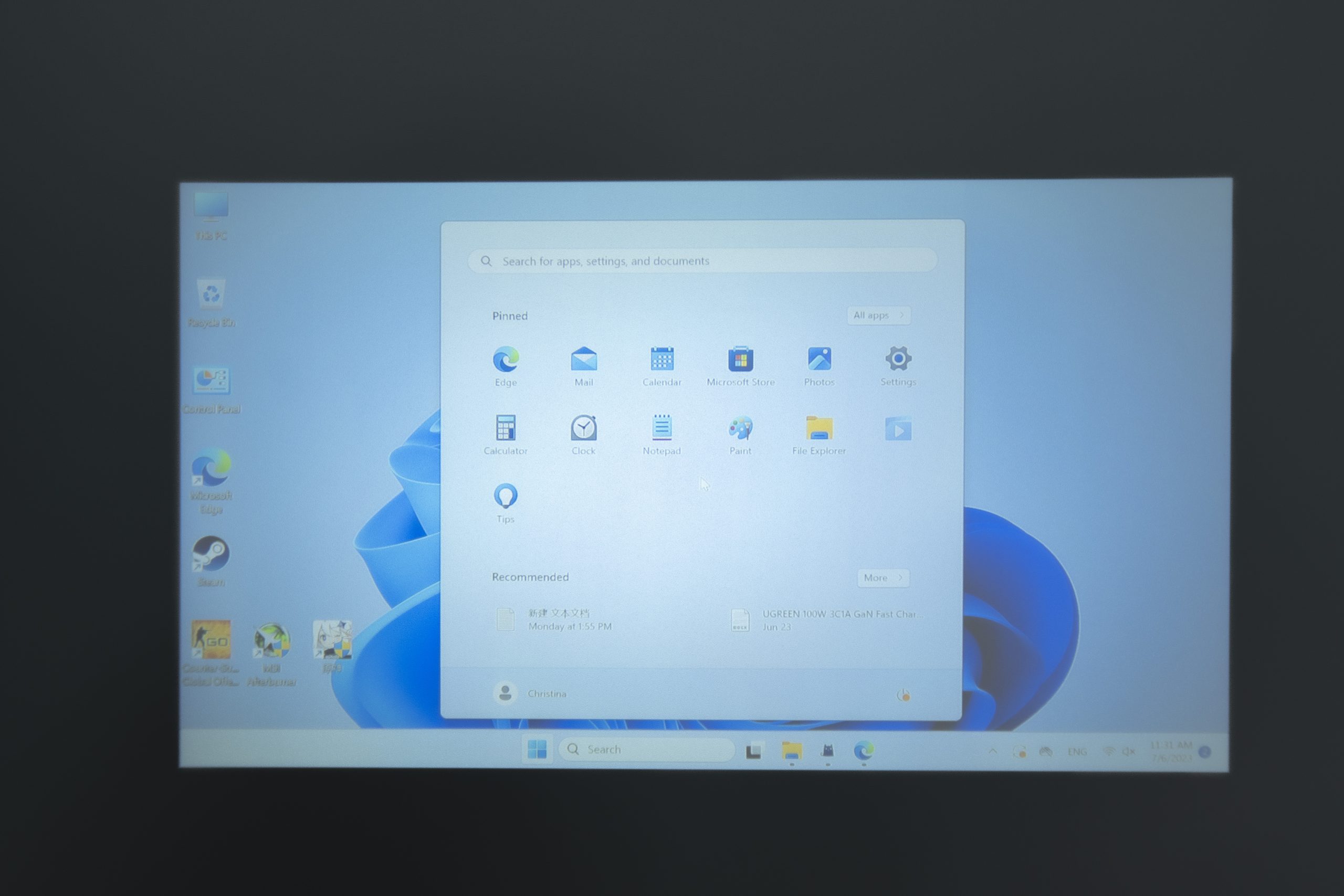
Happrun H1 is a native 1080P resolution LED projector and it can reach a brightness of 9500 LUX (240 ANSI Lumen). To be honest for a less than $100 projector, I was surprised by its image quality, especially in terms of clarity. Now we can even get a Full-HD model for less than $100.
I’ve experienced some 4K high-end projectors, but at the right viewing distance, I hardly have complaints about the 1080P resolution, which is really clear and sharp enough for individual uses. I tried to use it to play some short films with vivid colors and it also performed slightly beyond my expectations about a $100 projector. The only problem is that like most LED projectors, its brightness is really not good for daytime. After all, the maximum power of the projector is only 75W. Since the problem of brightness is shared by almost all the budget projectors, we couldn’t have picked another projector with significant improvement in brightness.
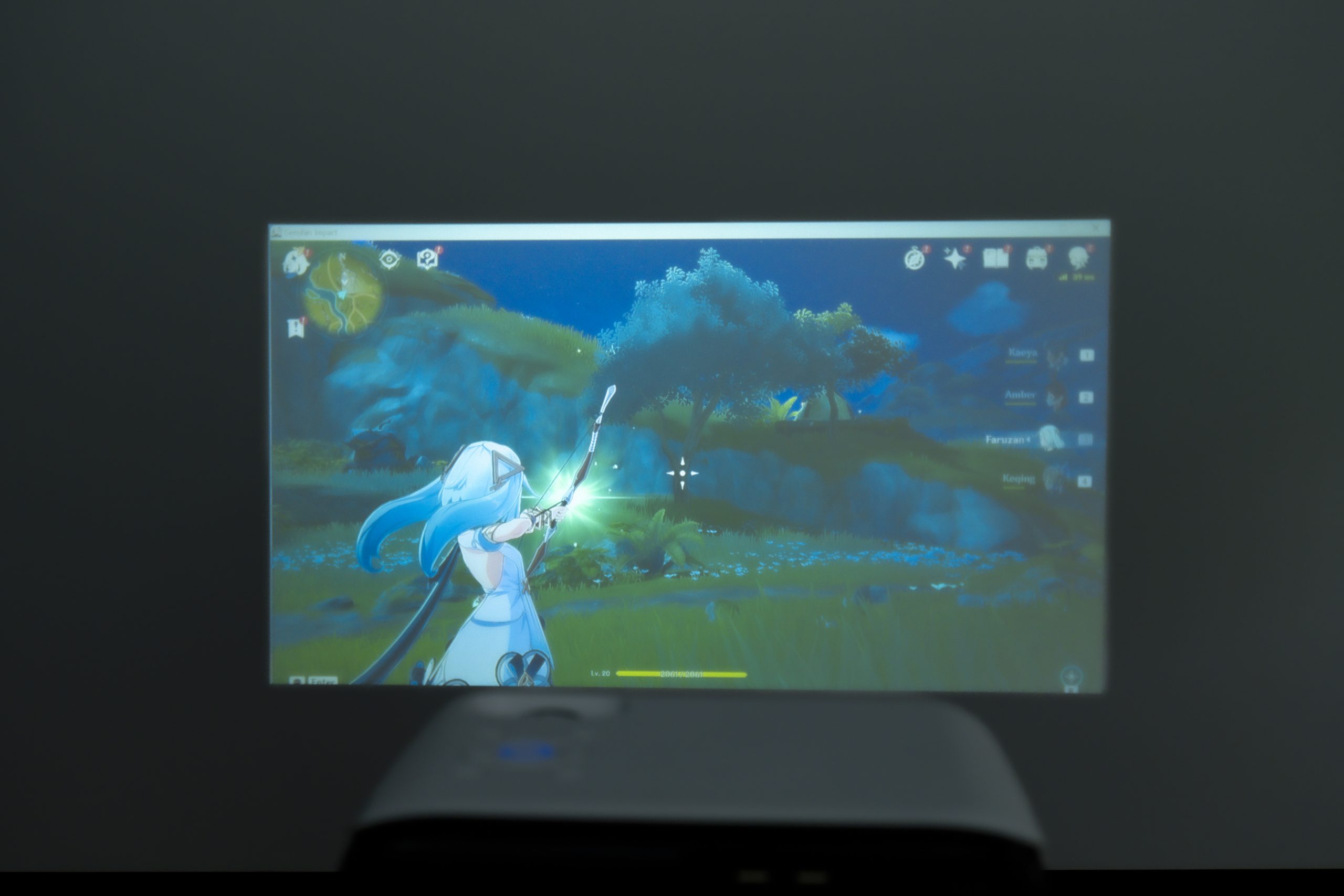
But if you like to watch TV shows in your bedroom at night or want to bring fun to your friends who go camping together, this is a more convenient and practical option than any TV. If you have a compact PC or gaming console, you can also turn the projector into a powerful entertainment huge display, and enjoy your favorite games on it.
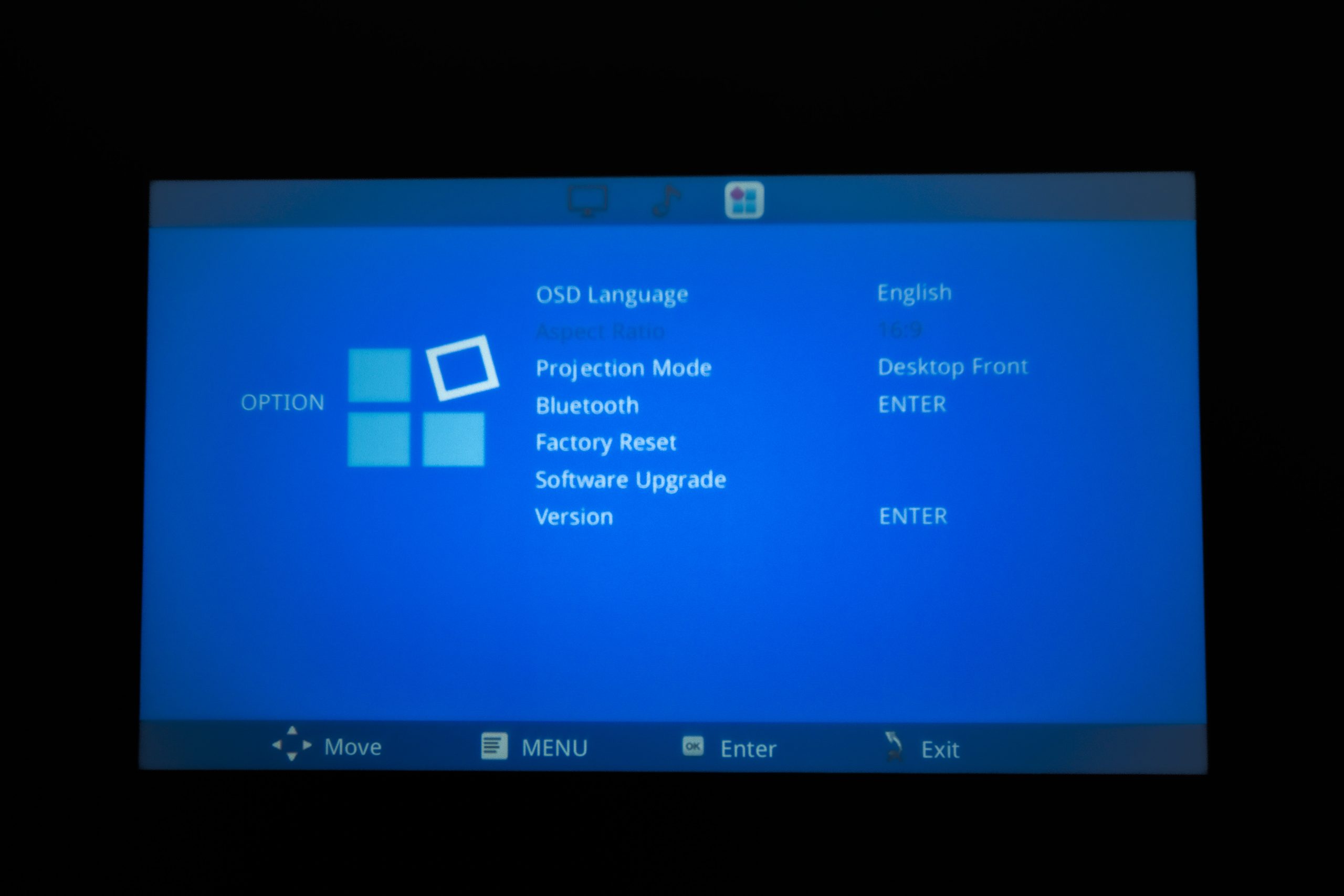
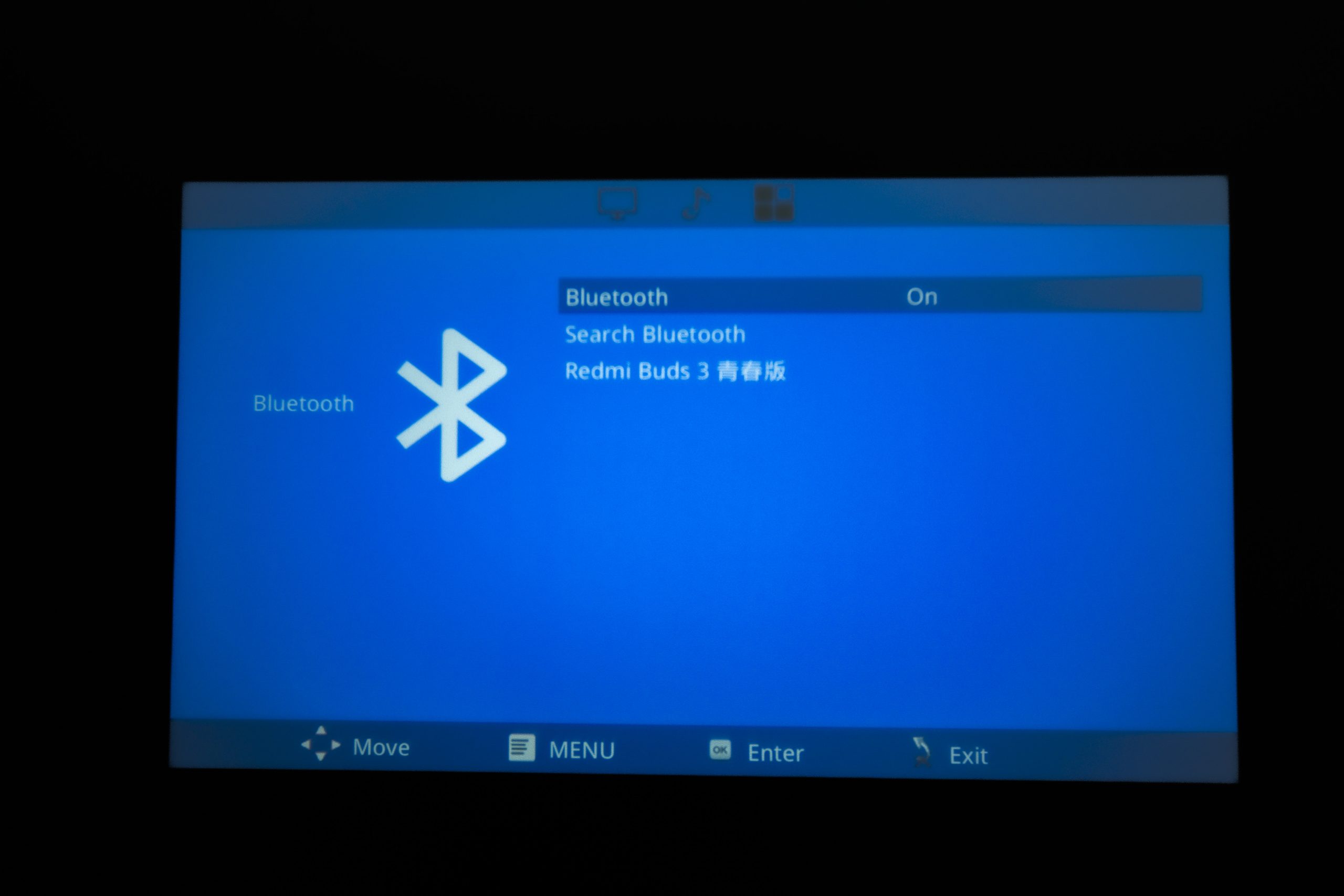
The projector has a set of built-in speakers to provide you with good enough stereo sound. Or if you’re playing games late at night and don’t want to disturb your neighbors, you can also connect it to your wireless headset via Bluetooth.
User Interface
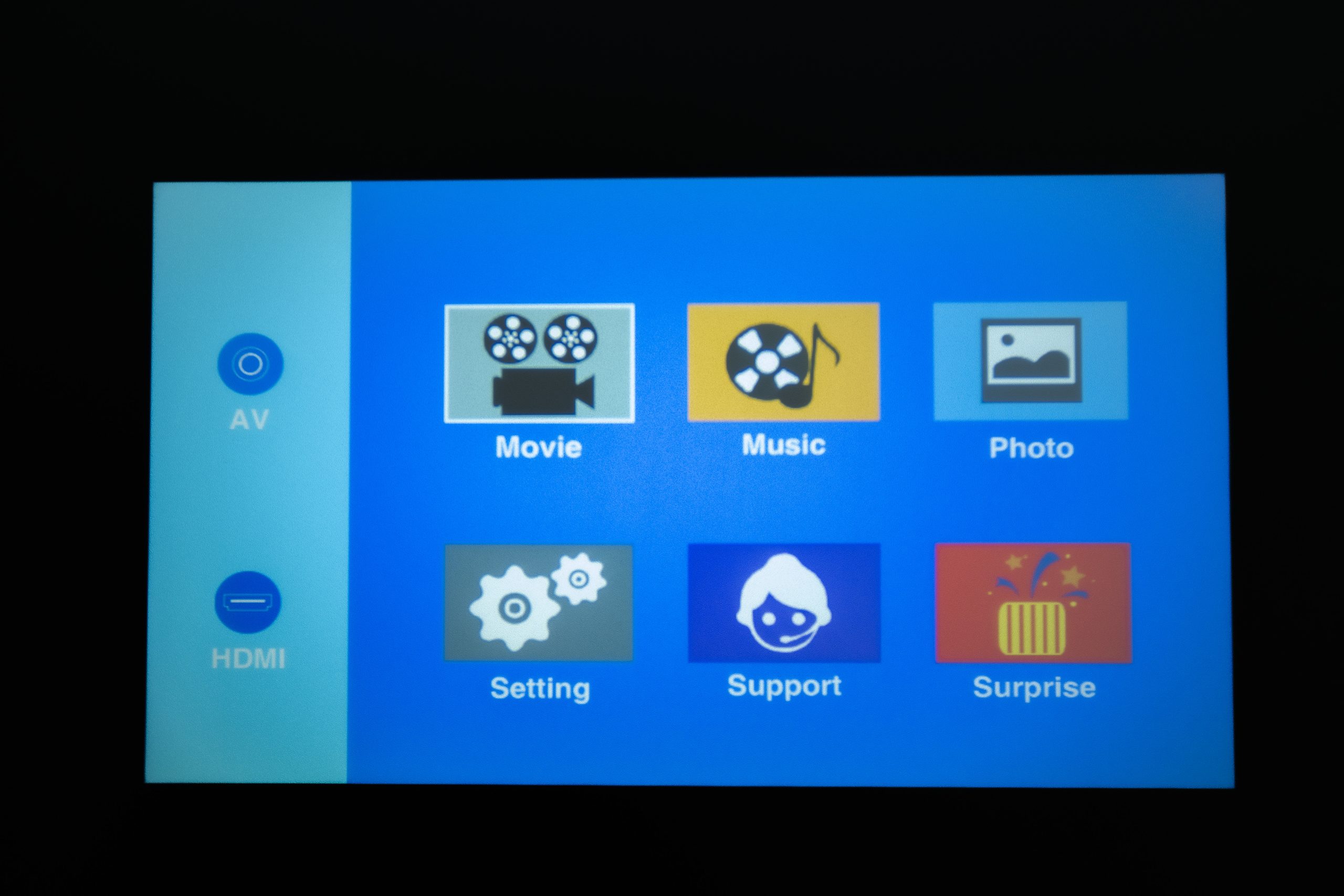
The Happrun H1 has an easy-to-use UI. If you have external storage connected via the USB port, you can quickly access your movies, music, and photos from the home screen. The video source switch is also on the left side of the home screen so you don’t need to go through a secondary menu to get it.
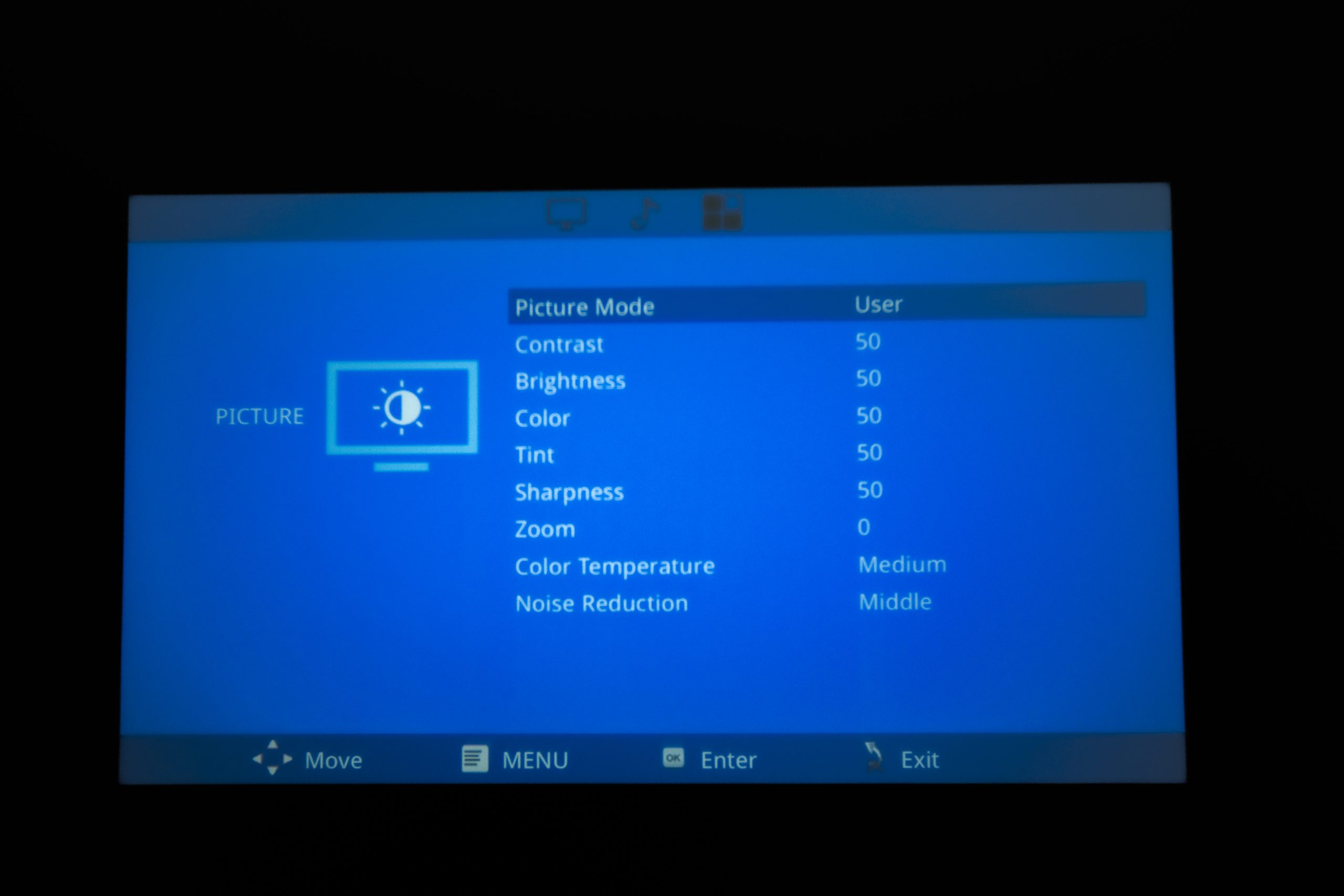
In the settings menu, we can adjust the projected image with many detailed options, and we can also adjust the reverb of treble and bass in the sound options. In an additional menu, we can view some information about the projector and change some system settings or connect other compatible devices via Bluetooth.
Verdict
I pretty much enjoyed using the Happrun H1, a portable projector with an incredibly affordable price tag that surprises with its image quality and ease of use. While it may be a night-only model, I think it’s definitely one of the best options if you’re planning to bring some extra fun to your friends on your next camping trip, or Late Night Movie Special but with a limited budget.
Apple’s highly anticipated iPhone 15 Pro Max is expected to come with a higher price tag compared to its predecessor, the iPhone 14 Pro Max. According to tech analyst Jeff Pu from Haitong International Securities, the larger of the two upcoming Pro models will likely see a price increase beyond the current starting price of $1,099 for the iPhone 14 Pro Max.
Understanding the Potential Factors Behind the Price Increase
While the exact reasons for the price increase are not specified, industry insiders speculate that the iPhone 15 Pro Max’s enhanced features may be contributing factors. Notably, the device is rumored to boast a periscope lens, a significant improvement over the 3x zoom capability found in the iPhone 14 Pro Max. This periscope lens would enable users to enjoy 5x to 6x optical zoom, allowing for more versatile and high-quality photography.
A periscope lens system typically involves a primary lens capturing the image, and then an angled mirror or prism reflecting the light 90 degrees towards a secondary lens that directs it to the image sensor. This arrangement requires additional space inside the smartphone due to the sideways positioning of the image sensor and secondary lens, which could contribute to the higher cost.
According to Pu, the iPhone 15 series is expected to commence mass production in August, aligning with Apple’s typical release schedule. This suggests that the iPhone 15 lineup may be officially announced in September. Pu further predicts that Apple will manufacture approximately 84 million units of the iPhone 15 series in the second half of 2023, with the Pro models anticipated to be the most sought-after devices in the initial months following their launch.
Rumors surrounding the iPhone 15 series suggest that all four models, including the Pro Max variant, will feature a USB-C port, the Dynamic Island, and a slightly more curved frame. Additionally, the Pro models are expected to offer 12 additional features and improvements.
A smooth network is a very important thing, and we basically can’t do anything without it today, no matter for an individual home or a public space, which we rely on to do everything with any electric device.
Unfortunately, network experience is very complicated stuff. If the network experience in-house isn’t great, it’s hard to find out the reason, and have no idea how to make it better. Generally, I would start troubleshooting with my router, after all, most of our routers haven’t got upgraded in years since they were set up.
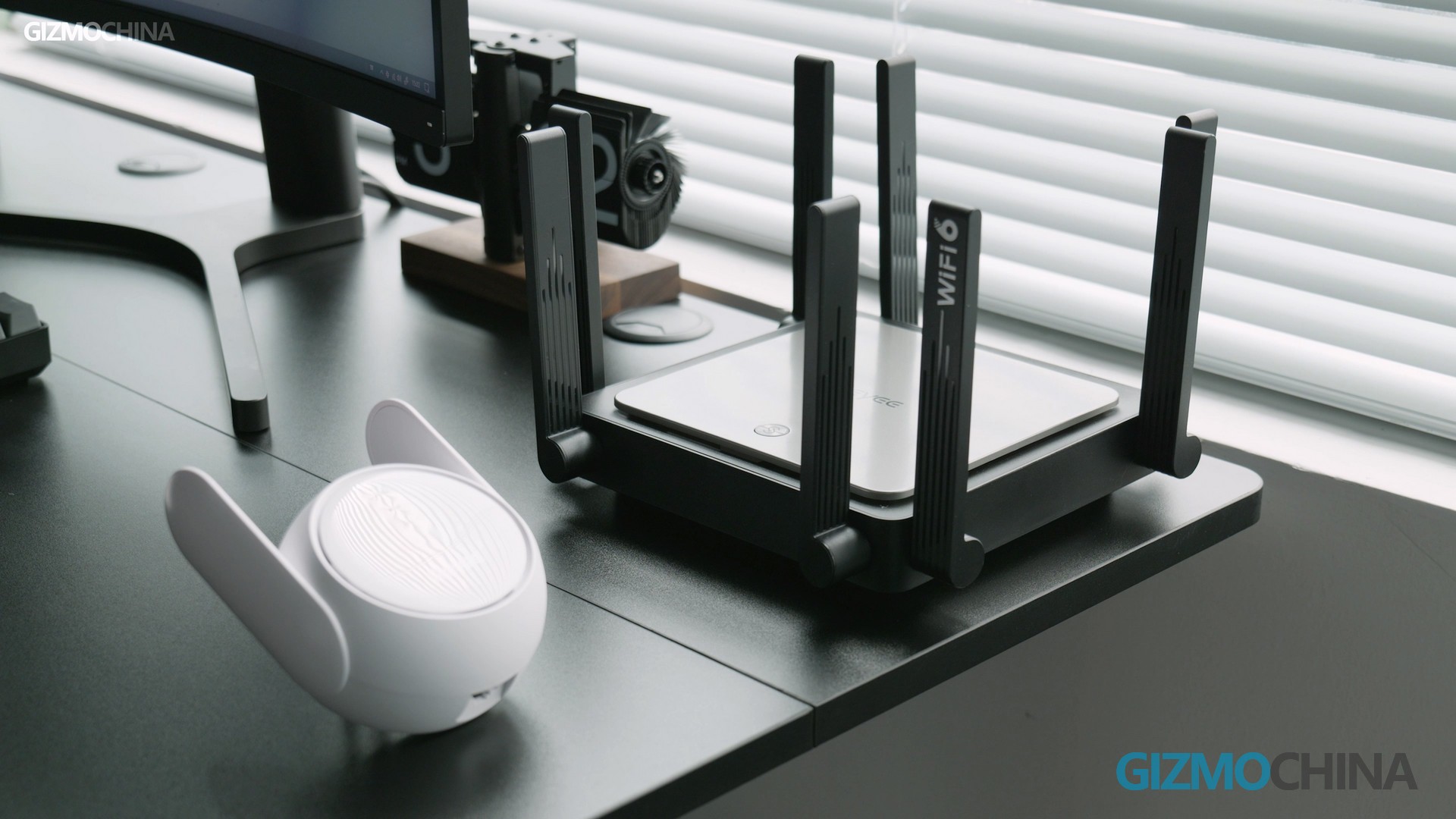
But recently we got rid of the old dusty routers and replaced them with the Reyee E5 WiFi 6 Router mesh solution. It’s an 8-antenna flagship router with strong signals with an easy mesh solution, which would also be an option for your places.
Unboxing
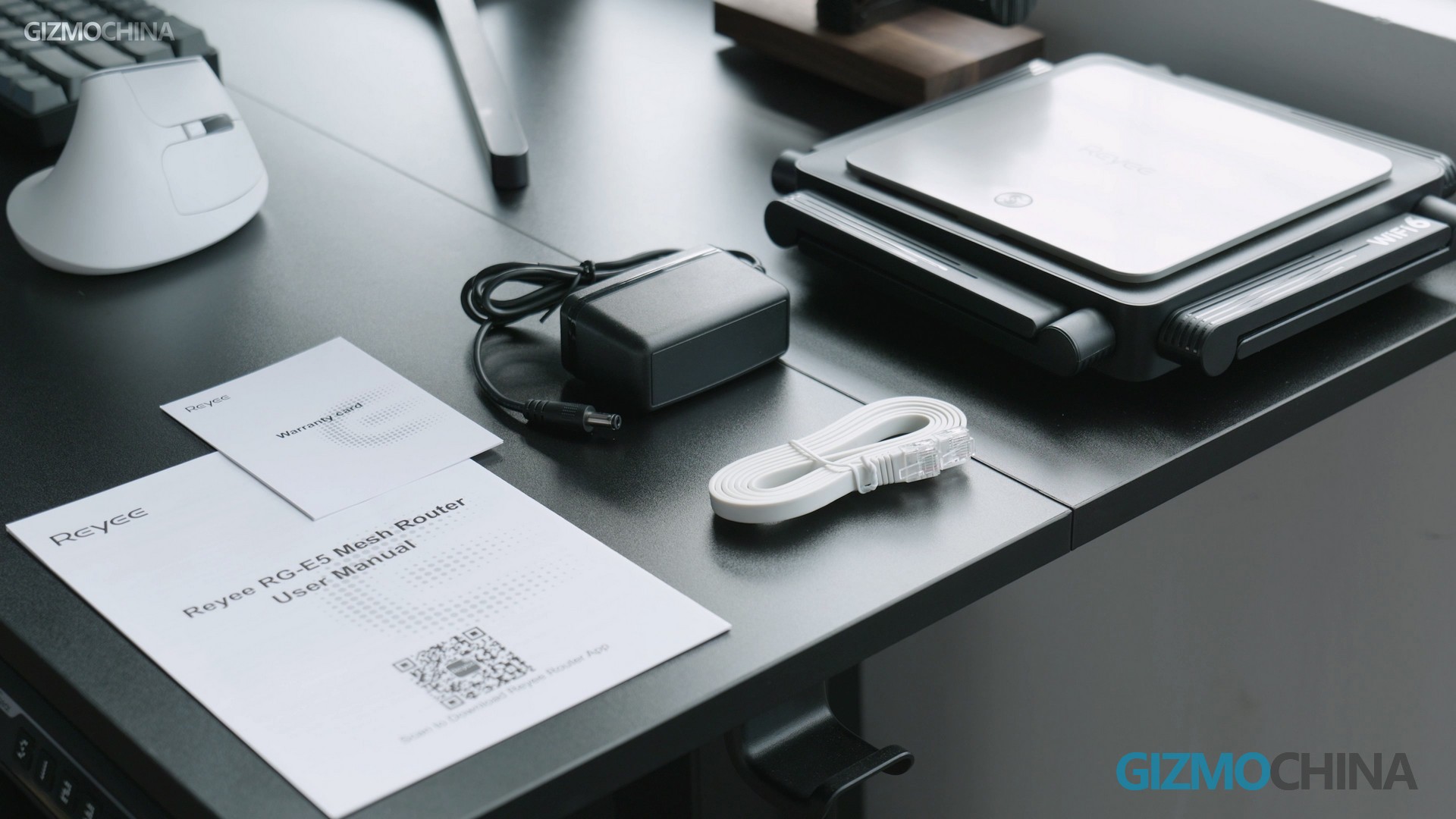
Let’s check out what’s in the package. Apart from the router and the power adapter, there is a network cable included. And of course the user manual and warranty card. Meanwhile, to cover the whole studio and guarantee a stable network, we also got one of the brand’s mesh repeaters, the Reyee Rex12, as our second router.
Design
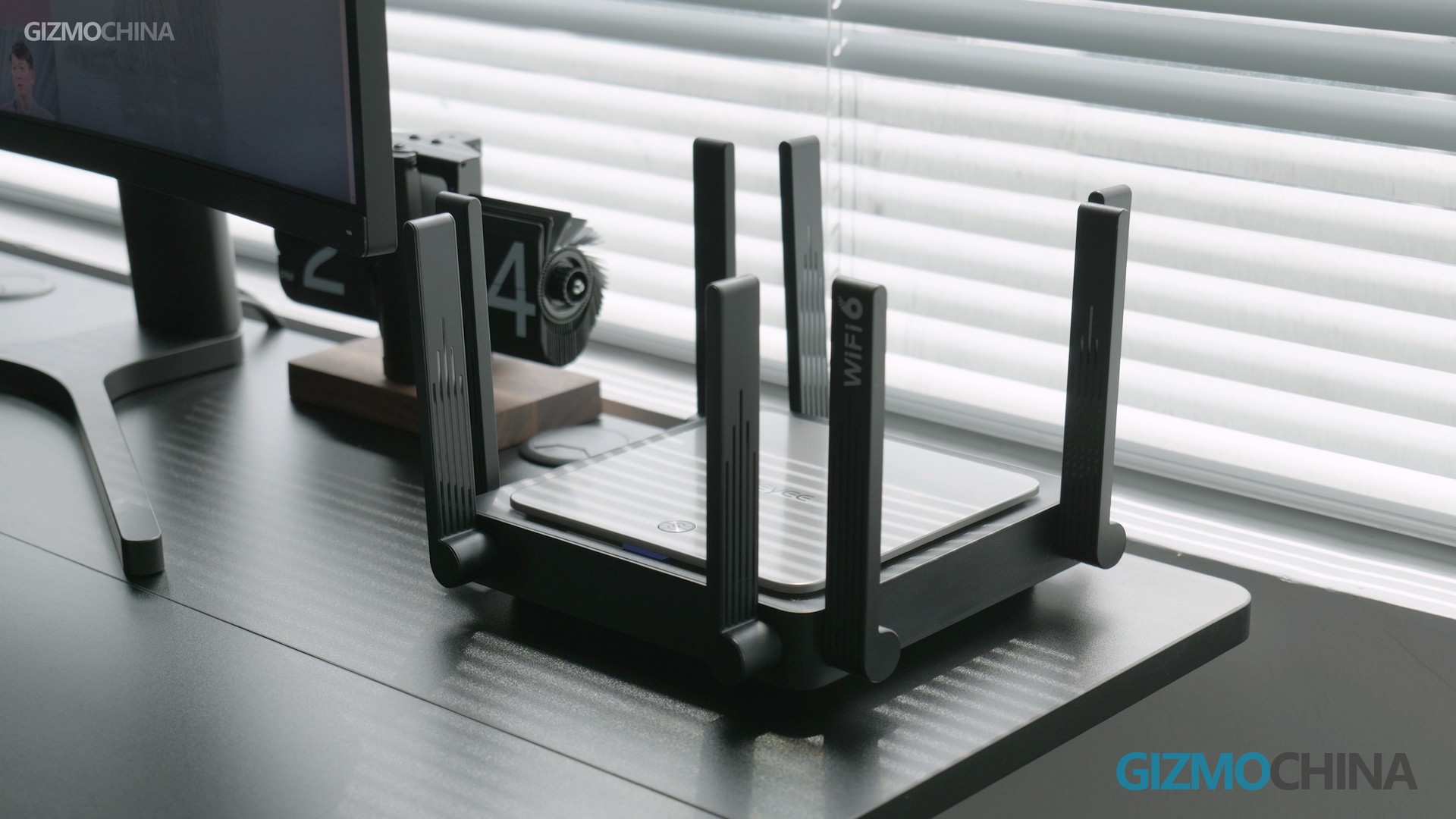
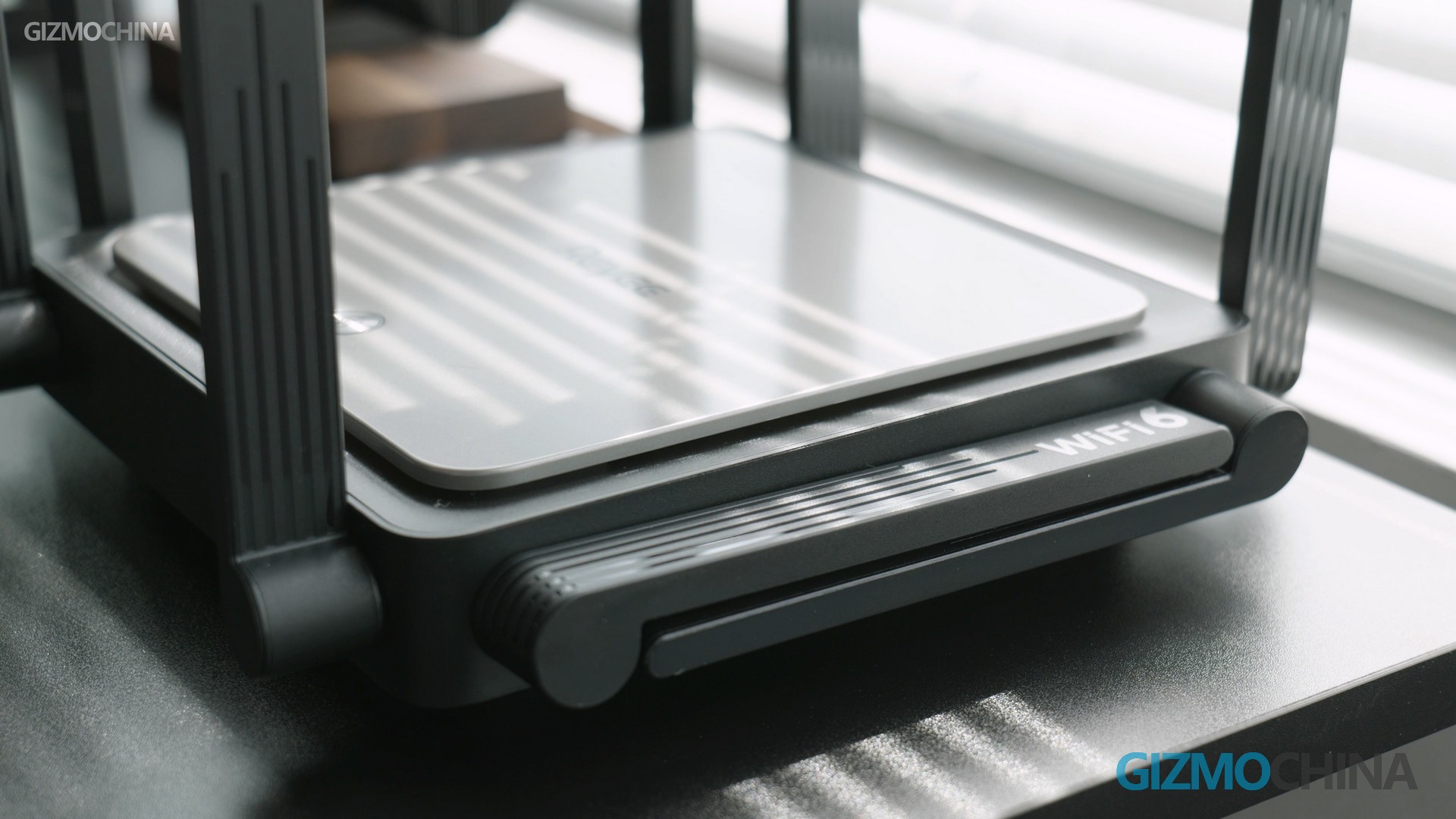
This Reyee E5 router applies a pretty minimalist design, not as fancy as some of the “gaming routers” out there. I mean it actually looks good and also easily fits on the desk as a deco, no matter what your desktop style is. As you can see, the eight antennas are prominent as they are one of its selling points.
The E5 router is a cost-effective yet high-performing 3000M-level router, standing out as the only dual-band 4×4 high-end router in its price range. Even some other pricy routers would not offer the hardware with so many antennas. These antennas can be folded to avoid being damaged in transport, which is good.
They guarantee the strength of signals and ensure that they can cover every part of the house. It supports up to 128 device connections with 8 front-end modules to ensure a good network experience even across two walls. The network improvement brought by the more antennas is very straightforward, which generally provides 40%-50% better coverage than other standard AX 3000 2×2 routers.
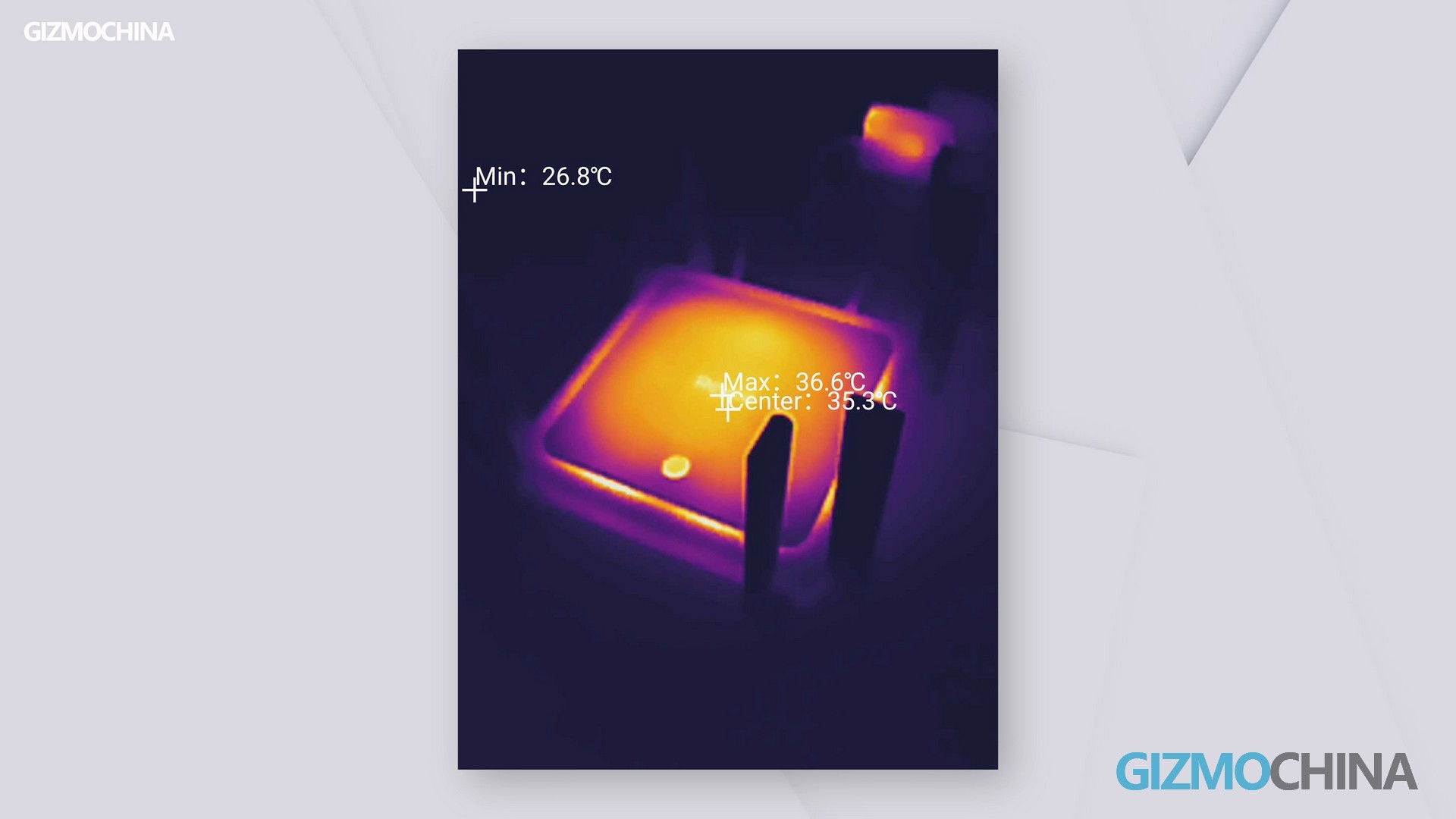
And after a long period of running, it also did a good job of temperature control. Well, we’ll do a signal and speed test later, so you can see how powerful they are.
Interfaces & Function
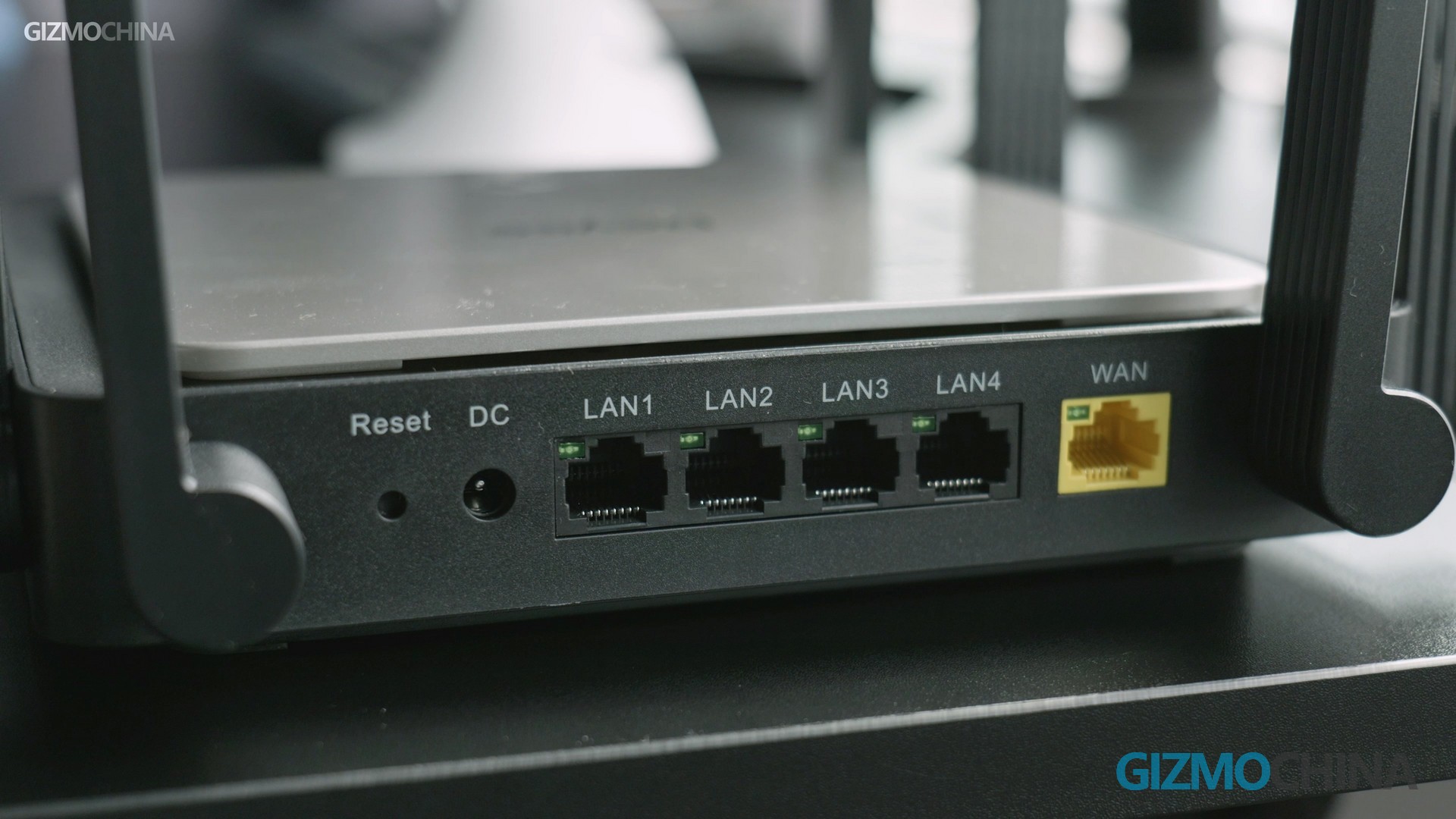
As a flagship router, there must be sufficient interfaces. The Reyee E5 has 4 LAN ports and 1 WAN port, all of which support Gigabit-level transmission. The multiple LAN ports mean you can use it as a switch, and four devices connected to the router at the same time can meet the needs of most households.
It can be set up with 6 SSIDs, which is convenient for you to manage different kinds of devices. Some people may still not be satisfied with 4 LAN ports, or they need greater Wi-Fi coverage, Reyee also has a solution for them too.
The solution is very simple, you can buy two or even more with the Reyee easy mesh. Two E5s can cover a wider space with wireless mesh, allowing you to get rid of the wires and easily achieve fast internet access anywhere. If you don’t need that many network ports, try to buy their repeaters, which will be a more affordable option.
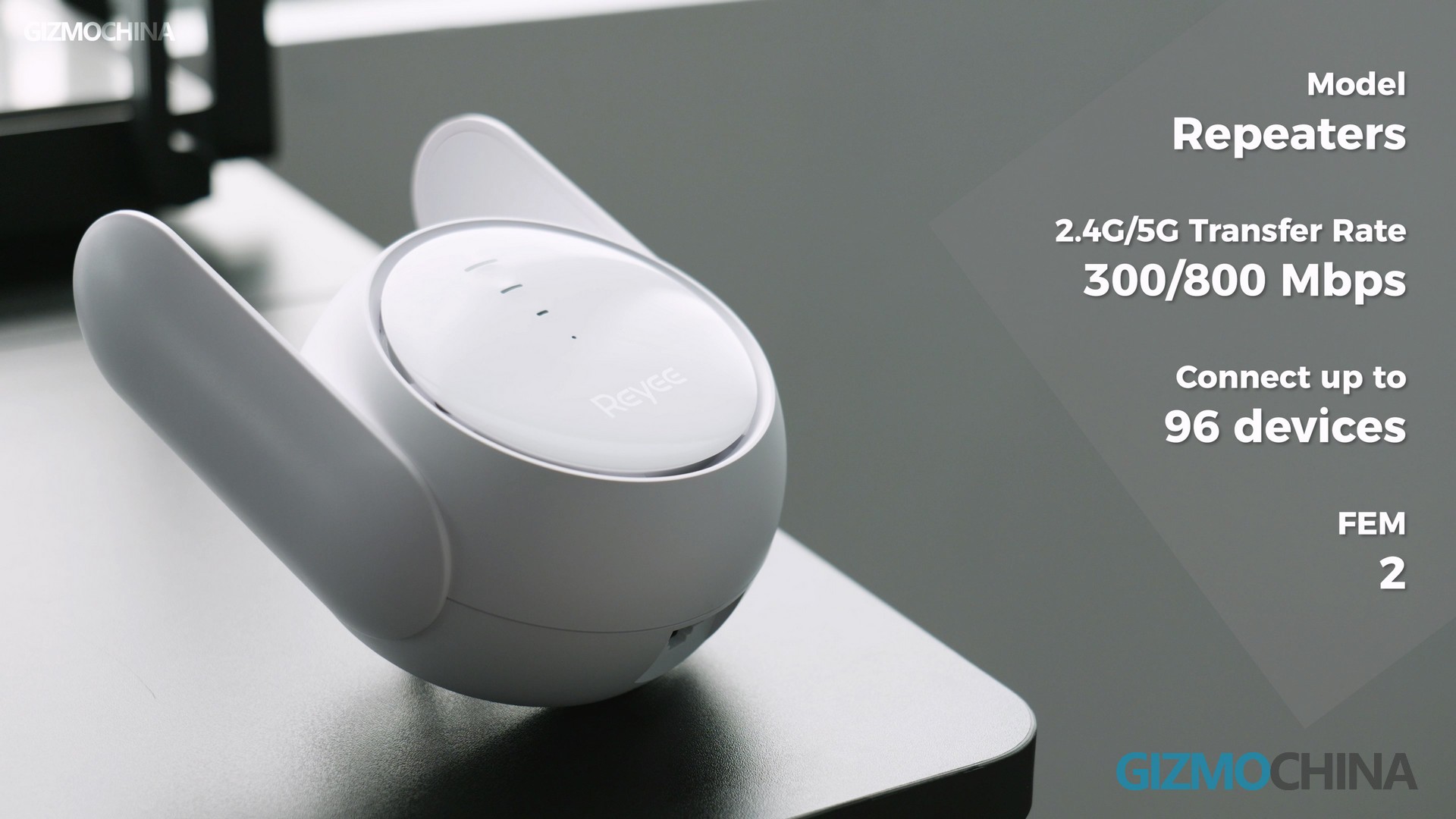
So here the Rex 12 WIFI extender can fix the problem, which also supports dual-band and handles a stable network of up to 1200Mbps. Although it only has 2 front-end modules, it can be used with other brands of routers and does not necessarily require a Reyee router. So we bought it separately without hesitation.
Signal & Speed Testing
Next, I can show you the actual experience with them. I’m standing next to the router, and of course, the signal now is excellent. Let’s start with the first internet speed test. The speed now is 91Mbps. Let’s move away from the router and see how far it covers.
OK, we are now in the emergency evacuation route of the office. Now there is a wall between our location and the router, and this wall is at least 20cm thick. Let’s test the speed again, now the speed is still 91Mbps. We can see that the speed is almost the same as in the office, so it seems that a wall can’t block the signal.
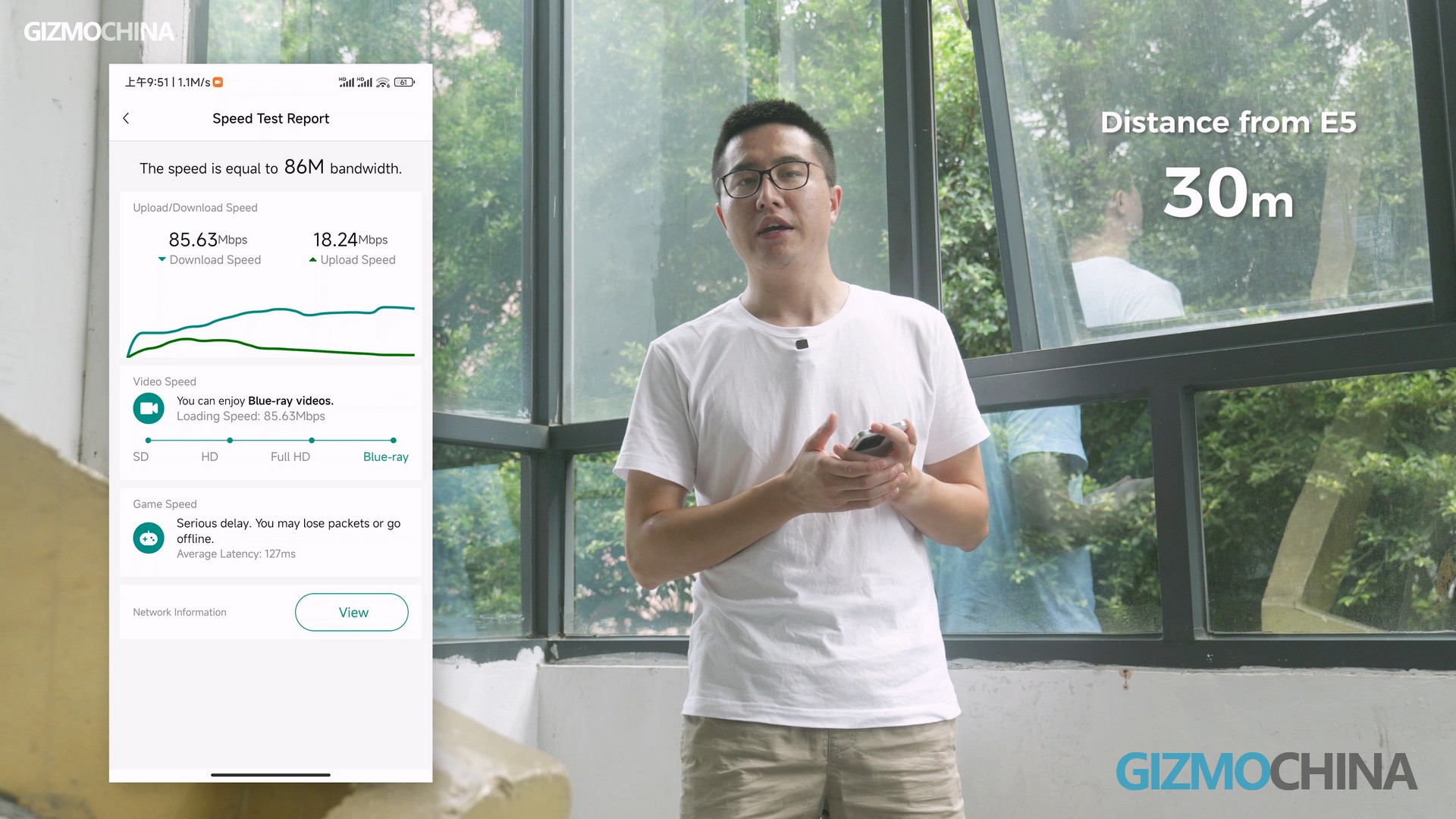
Now we are down two floors, there are at least 2-layer floors with a wall between the router and us, and we are about 30 meters away from the router in a straight line. Let’s do the speed test again.
As you can see, there is a drop in speed, but it is still 90% of the original speed. Then we also tested 5G signals apart from 2.4G, and this performance arguably exceeded our expectations. But this is not the limit, when we use this Rex 12 WIFI extender, the signal coverage can be even greater.
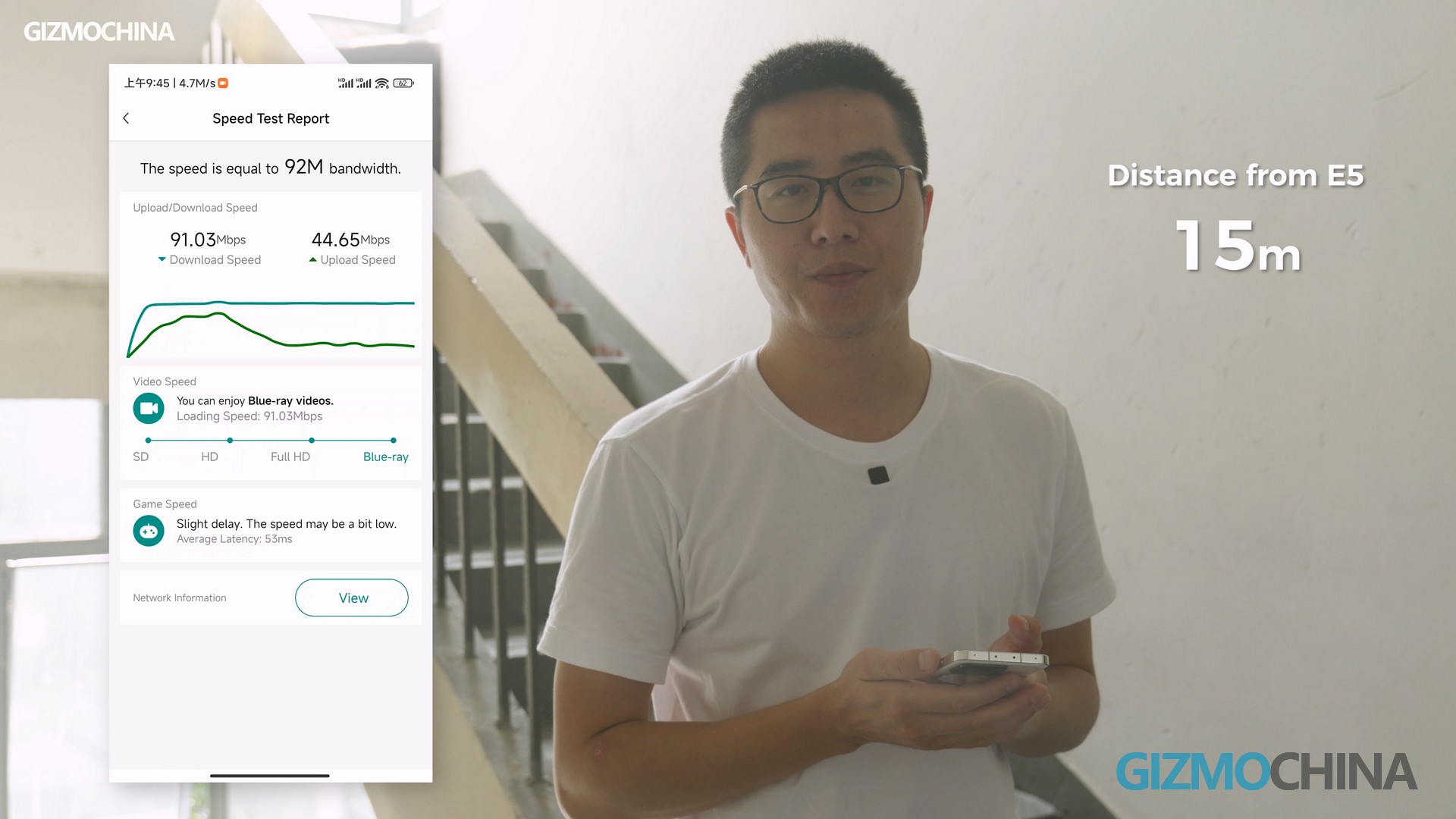
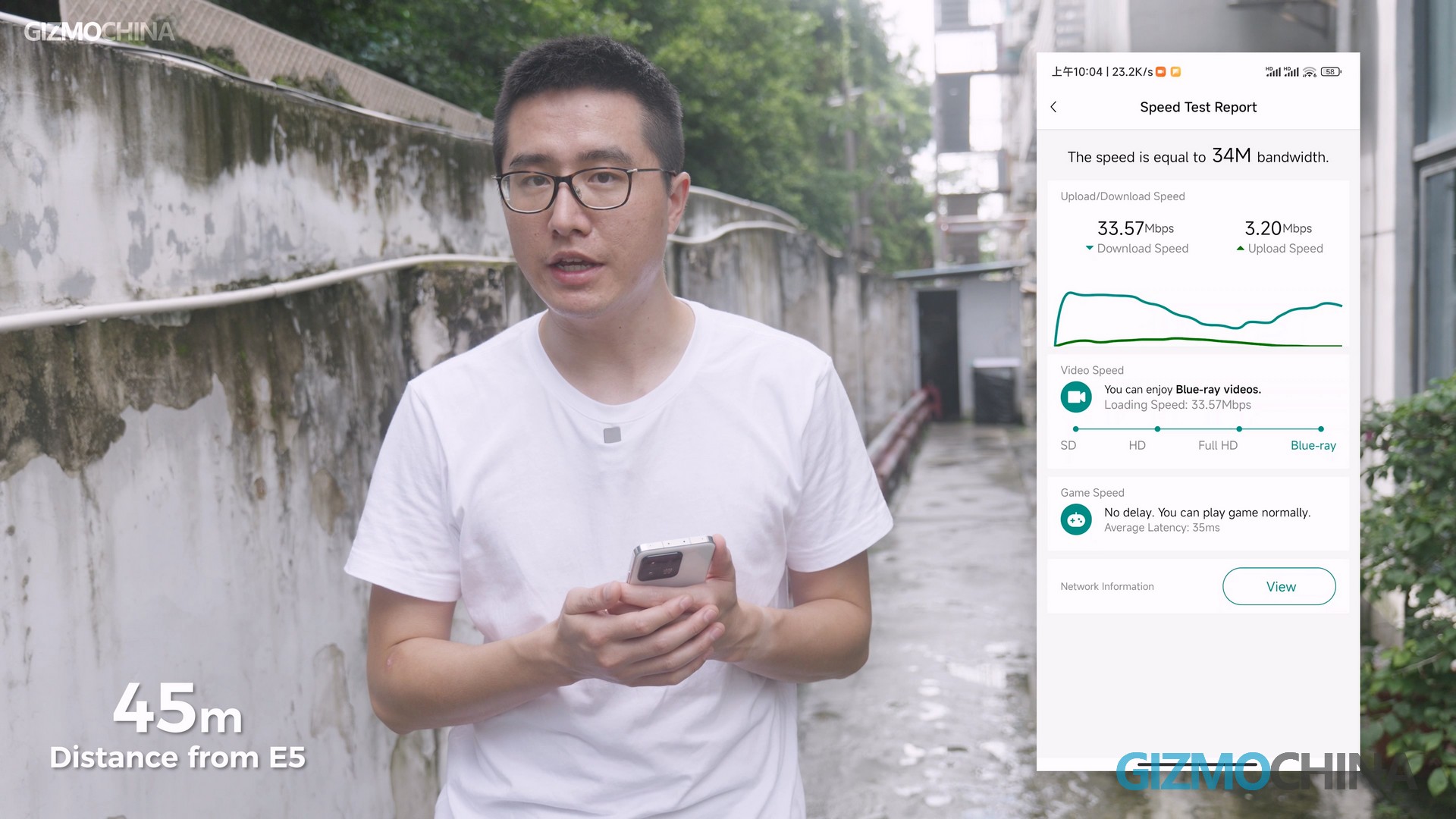
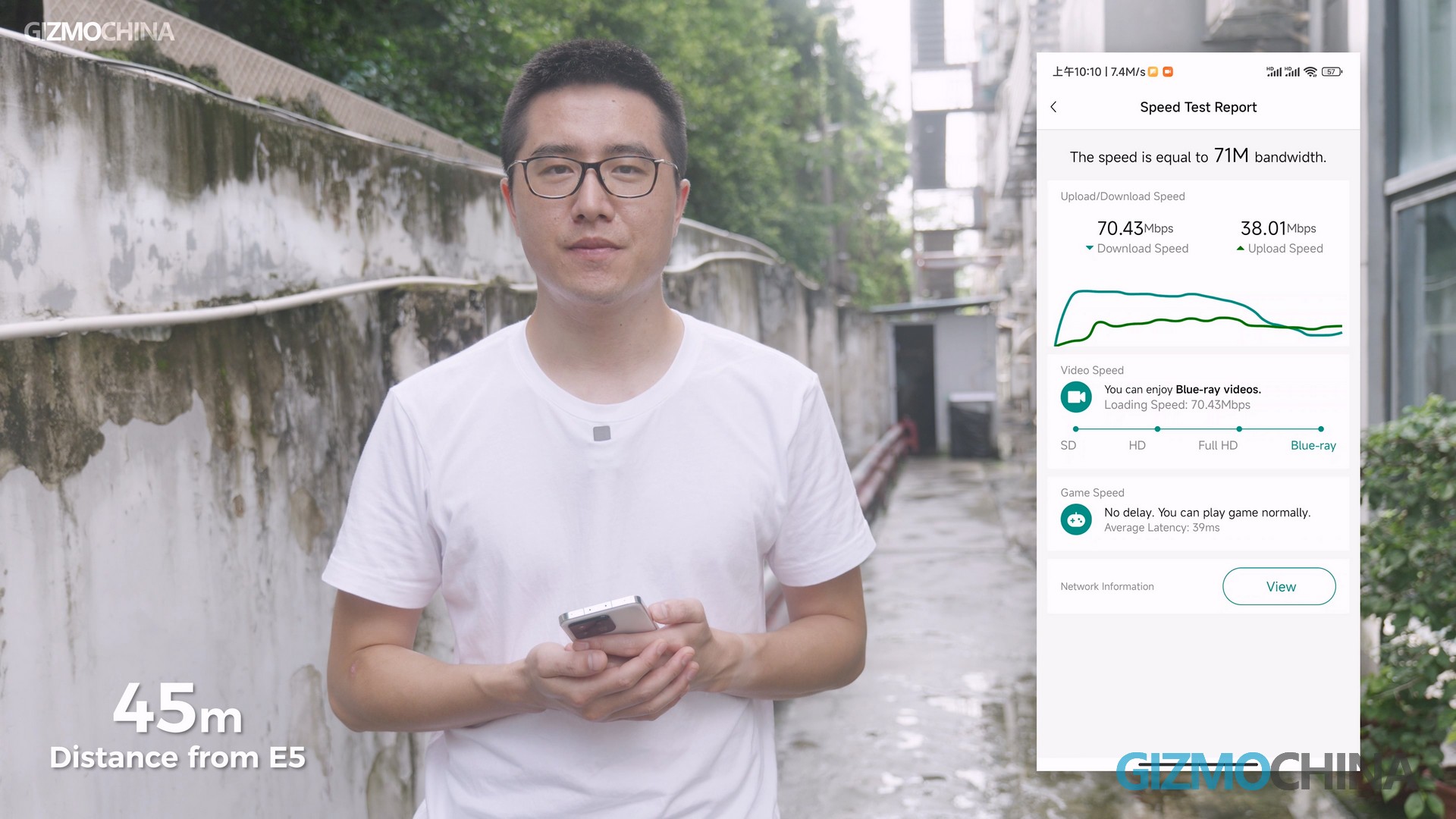
We came to another location 15 meters away, which is 45 meters away from the router, and a few more walls. At this time, it was no longer possible to use the WIFI properly. I asked my colleague to plug in the Rex 12 now and test the speed again.
70Mbps. Now I can use WIFI again normally. Though not at a fast speed, you can still watch online videos normally. So no matter how big the space you need WIFI coverage for, installing a few more WIFI extenders can solve the problem easily.
WIFI Management
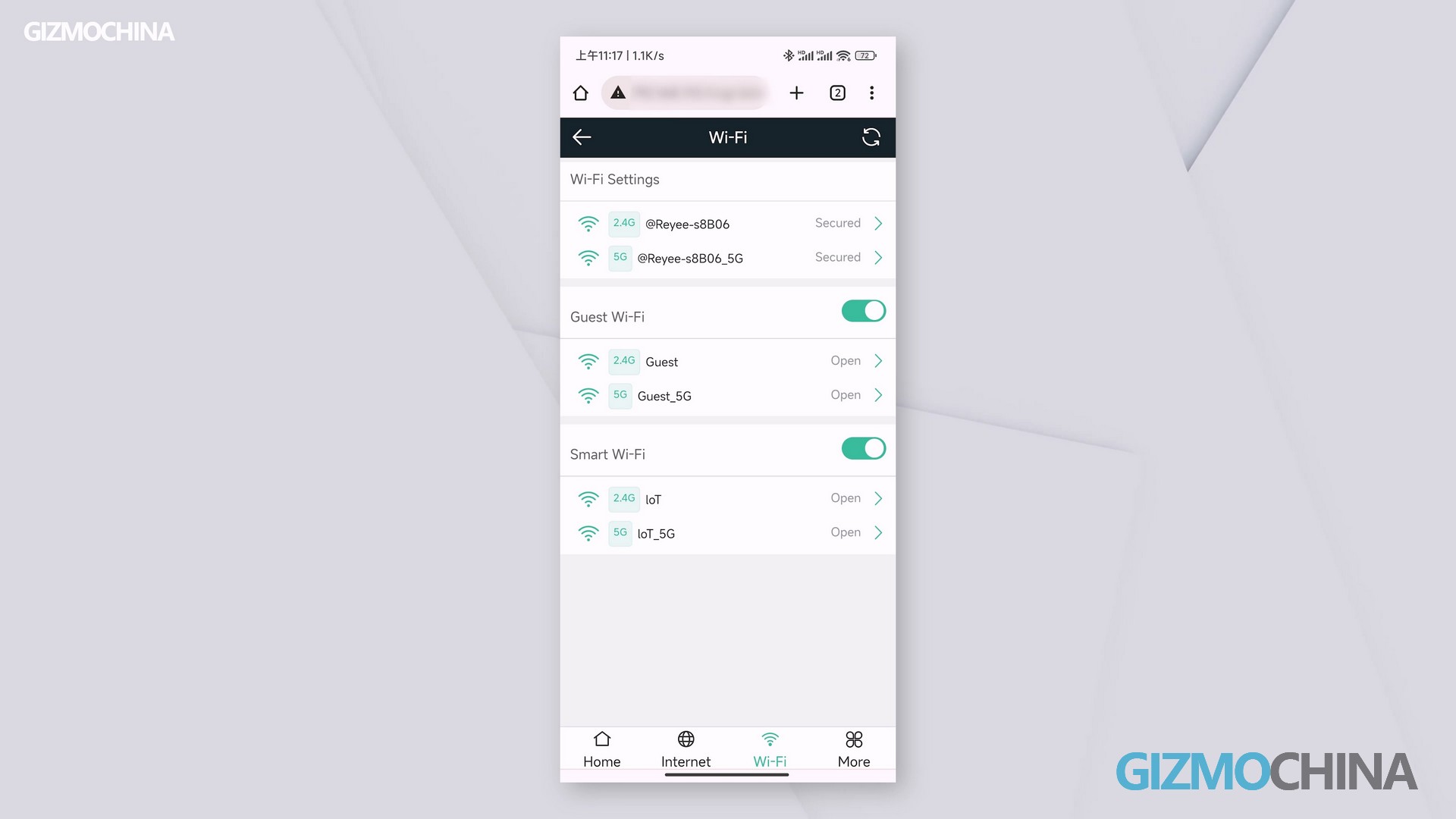
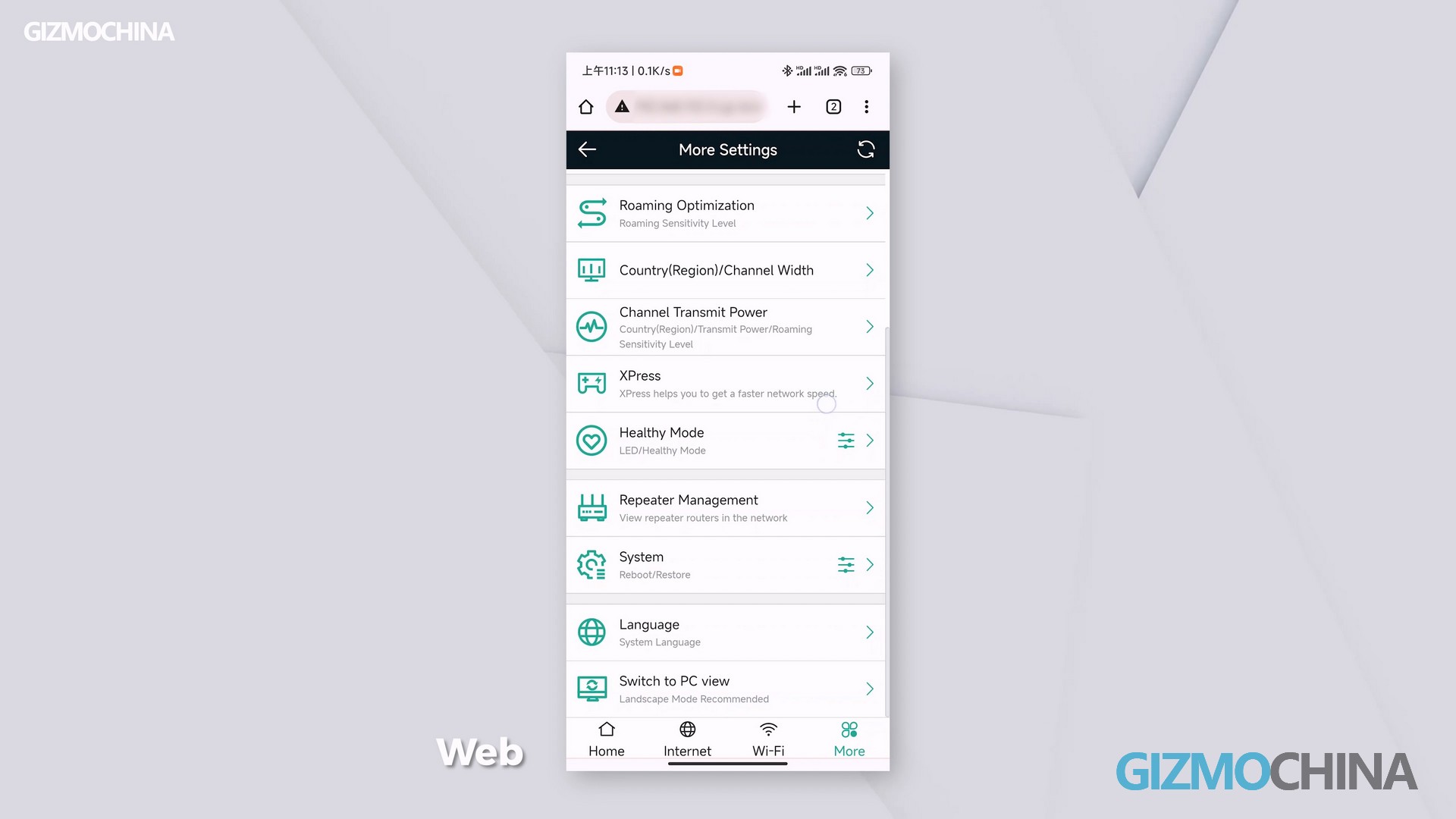
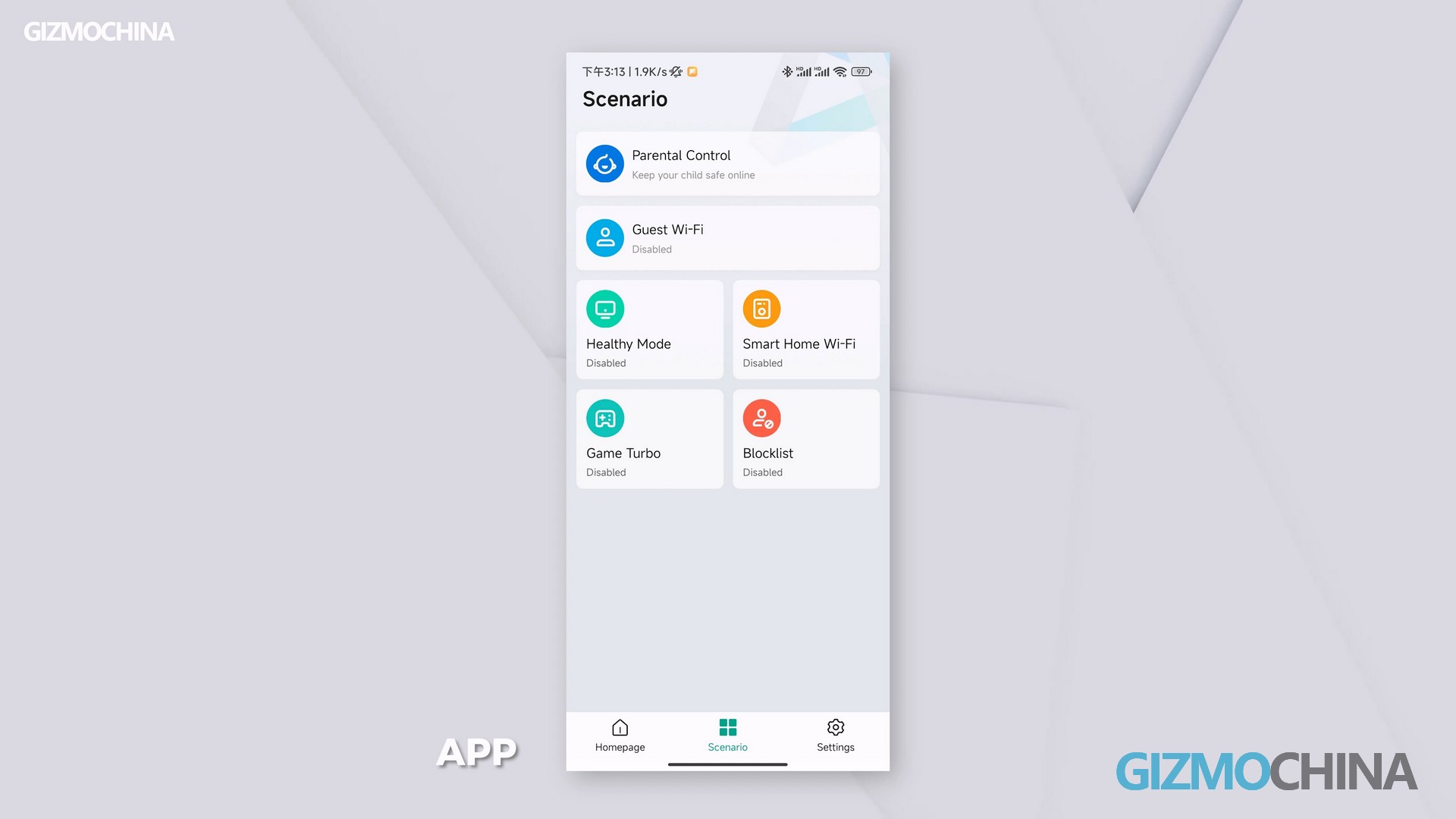
Managing the E5 router and Rex 12 requires only one device to log into the management webpage. Basic features are available here, such as Network Check and Scheduled Reboot. The E5 router, like most routers, can be controlled via the app. All the features here are the same as what we have on the web, so we won’t repeat it.
Conclusion
The Reyee E5 is a great router, the Rex 12 is also a good WIFI extender. Their advantages are obvious, the signal coverage is super wide, stable, and strong. After just testing, even with the walls in the way, they can get the signal to cover a distance of 3 floors. Plus they are easy to set up and can be done easily without a manual. So I have no reason not to recommend it.
ADO Air 28, is an all-rounder urban e-bike designed to cater to your commuting needs. Whether you’re heading to work, running errands, taking the kids to school, or simply following your personal routine, the ADO Air 28 is the ideal companion for your daily adventures.
One of the highlights of the ADO Air 28 is the ADO G-Drive 5.0, a meticulously developed and debugged system by ADO Laboratory. This advanced technology ensures a powerful and smooth riding experience. With the hassle-free Carbon Belt drive that lasts up to an impressive 30,000 kilometers, you can enjoy a maintenance-free ride. Additionally, the instant torque sensor support provides seamless acceleration, making your journey effortless and enjoyable.
Powered by a Samsung portable battery, the ADO Air 28 offers a remarkable range of up to 100 kilometers on a single charge. Say goodbye to range anxiety and embrace the freedom to explore your city without worrying about running out of power. The sleek lockable seat battery is not only easy to charge but also replaceable, allowing you to extend your ride even further.
For enhanced safety and responsive braking power, the ADO Air 28 features hydraulic disc brakes. These reliable brakes ensure quick and efficient stopping, giving you peace of mind while navigating busy urban streets. Coupled with the adjustable lockout suspension fork, you can easily customize the shock absorption to suit different terrains, providing you with a comfortable and controlled ride in any environment.
The ADO Air 28 boasts a thoughtfully designed step-through frame with a low-stepping pad. This feature ensures a comfortable ride with easy mounting and dismounting, making it perfect for frequent stops without the need to lift your legs. Whether you’re visiting friends, stopping by a shop or café, or taking your pets for outdoor rides, the ADO Air 28 offers the utmost convenience and accessibility.
In addition to its impressive hardware, the ADO Air 28 also comes with optional features to further enhance your riding experience. The integrated Smart APP provides smart navigation and accurate calculation functionality, allowing you to easily navigate through the city with confidence. The 3.5-inch IPS color screen, with its 360° viewing angle and oleophobic coating, ensures clear visibility in all weather conditions. Its waterproof design and front lighting adjustment adds an extra layer of convenience.
For added safety and exploration, the ADO Air 28 is equipped with the Street Wise Bell, which supports the placement of an AirTag for enhanced anti-theft safety and to easily locate your Air 28.
Additionally, the ADO Air 28 is equipped with puncture protection tires, providing improved safety and peace of mind against unexpected flats. With these 28-inch tires, you can confidently navigate urban streets and uneven surfaces, knowing that your ride is protected.
The ADO Air 28 is the ultimate all-rounder urban e-bike that combines convenience, comfort, and sheer riding pleasure. With its powerful ADO G-Drive 5.0, long-range Samsung battery, hydraulic brakes, adjustable suspension, step-through frame, and a wide range of optional features, this e-bike is designed to elevate your urban commuting experience.
Price and Availability:
Exciting news! The highly anticipated ADO Air 28 will soon be launching on Indiegogo in late July, offering an incredible opportunity to get your hands on this ultimate all-rounder urban e-bike. To sweeten the deal, ADO is presenting an exclusive Early Bird Offer, allowing early supporters to enjoy a massive 41% off the regular price.
This limited-time offer is not to be missed, providing a chance to experience the convenience, comfort, and sheer riding pleasure of the ADO Air 28 at an unbeatable value. Don’t miss out on this opportunity to revolutionize your urban transportation experience and make your daily commute more enjoyable. Be sure to subscribe to ADO and secure your spot for the Early Bird Offer on Indiegogo.
According to recent reports from Korea, Apple is said to be actively working on the development of a foldable screen laptop, potentially posing significant competition to Asus, which has been leading the way with its Zenbook Fold line. Apple is reportedly in talks with suppliers to bring a foldable-screen MacBook to the market, and if successful, this move could inject new life into the display industry.
Asus Zenbook 17 Fold OLED
Apple’s Entry into the Foldable Laptop Market: What to Expect
In response to the saturation of the smartphone market, Korean display makers like Samsung Display and LG Display have been directing their focus towards OLED panels for laptops. With the emerging demand for foldable OLED panels for laptops, both companies are coordinating efforts to develop and produce such panels. The entry of Apple into this market would undoubtedly have a substantial impact, given the company’s market influence.
The report suggests that larger display sizes offer higher profitability for panel manufacturers, despite the challenges of achieving high pixel densities at larger dimensions. However, the profitability of foldable displays for laptops surpasses that of foldable displays for smartphones. Consequently, this presents an enticing opportunity for display makers to capitalize on the growing market for foldable laptops.
Foldable screen laptops are still a nascent concept, but they have generated significant excitement. The ability to fold a laptop in half offers newfound possibilities for portability and usage. For professionals, this could mean greater flexibility to work on the go without compromising screen real estate or performance. Media consumption could also be revolutionized, as users can now enjoy a larger screen for movies and videos without the need for an additional device.
The specific technical details and specifications of the rumored foldable-screen MacBook have yet to be revealed. While an official launch is expected in 2026, Apple plans to unveil its foldable-screen MacBook in 2025.
Sony India has recently teased the upcoming launch of a new pair of True Wireless Stereo (TWS) earbuds in the Indian market. Although the specific name of the earbuds and the launch date were not mentioned in the teaser tweet, Sony described the device as lightweight yet capable of delivering powerful sound. The tagline “Cancel the Chaos” was included in the tweet, along with the hashtag “#SeizeTheDayWithSony.”
Based on a teaser video shared by Sony, it is speculated that the new earbuds for the Indian market could be the Sony WF-C700N, which has already been introduced globally. Confirmation regarding this assumption is still awaited.
Sony WF-C700N features:
The Sony WF-C700N earbuds boast an ergonomic design, providing all-day comfort for users. Equipped with 5mm drivers, these earbuds support the Digital Sound Enhancement Engine (DSEE) and 360 Reality Audio, ensuring an immersive audio experience.
The earbuds are lightweight and IPX4 water-resistant. They feature Bluetooth 5.2 connectivity and incorporate Noise Sensor Technology to effectively cancel out background noise. The Ambient Sound Mode allows users to stay connected to their surroundings.
Sony’s WF-C700N earbuds offer a battery life of 7.5 hours on a single charge, which can be extended up to 15 hours. Additionally, the earbuds support quick charging, providing 60 minutes of playback time with just a 10-minute charge. The global market offers four color options for the device: White, Black, Sage Green, and Lavender.
Nothing is gearing up to launch the Phone (2) in the global markets next week. Ahead of the official unveiling, the brand has already revealed a host of details about its upcoming smartphone. It will arrive as the successor to the last year’s Nothing Phone (1). There is a lot of hype about the Nothing Phone (2). Read on to learn what we already know about the smartphone.
Nothing Phone (2) launch date, pre-order details
The Nothing Phone (2) is set to debut on July 11 at 4 pm BST (8:30 pm IST). The launch event will likely be live-streamed on the company’s official YouTube channel. Pre-orders of the upcoming device are currently live in various countries. The Phone (2) and the Ear (2) will also be available for purchase at pop-up stores called Nothing Drops in various countries. They will be available on a first-come, first-serve basis.
Nothing is also offering a host of benefits for customers pre-ordering the Phone (2). However, this depends on region to region.
Nothing Phone (2) expected price
In Europe, the Nothing Phone (2) is tipped to be available in 8GB + 256GB and 12GB + 512GB RAM and storage configurations. They will reportedly be priced at EUR 729 and EUR 849 respectively. We will have to wait for the official launch event to know the pricing of the smartphone. Notably, Carl Pei has already revealed that the Nothing Phone (2) won’t get a significant price hike.
Nothing Phone (2) specifications
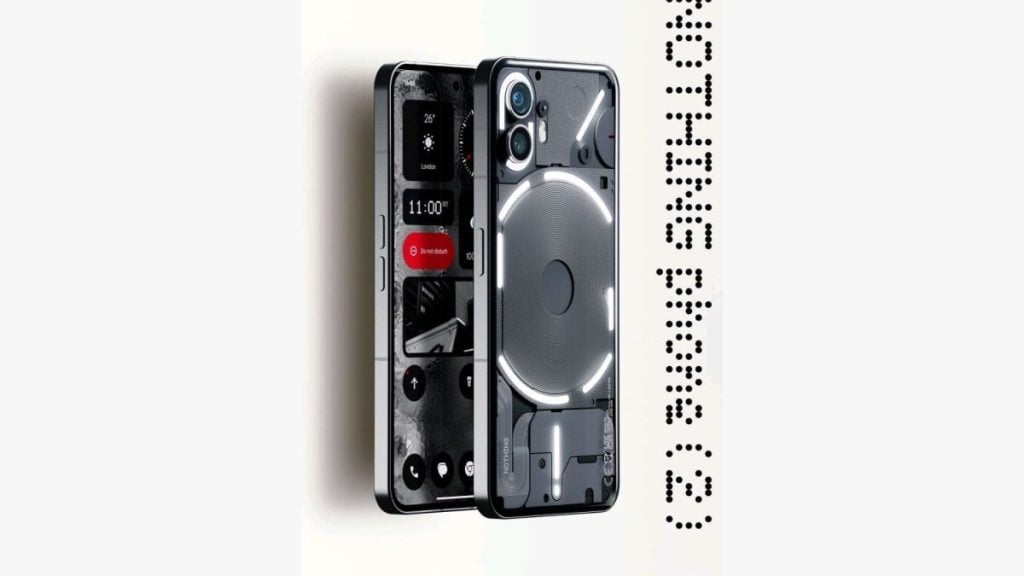
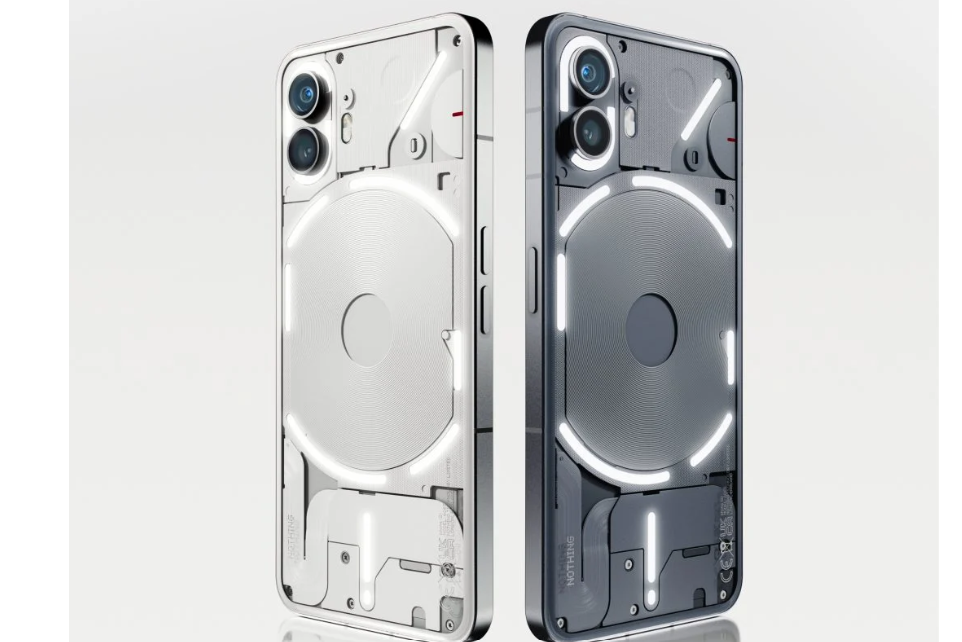
The official images shared by Nothing reveal that the Phone (2) will come with a boxy form factor and subtly-curved edges. It retains the transparent back panel along with two protruding vertical camera sensors from its predecessor. The device features multiple small strips of light surrounding the camera module and charging coil. Nothing has also joined hands with Swedish House Mafia which offers the Glyph Composer showcasing the exclusive Glyph soundpack made by the EDM group.
Under the hood, the Nothing Phone (2) is confirmed to be equipped with a Snapdragon 8+ Gen 1 processor. It will draw its power from a 4,700mAh battery unit. The device will come with RAW HDR format and 4K 60 fps video recording. The upcoming offering will ship with Android 13 with Nothing OS 2.0 skinned on the top.
As per rumors, the Nothing Phone (2) is tipped to come with a 6.72-inch AMOLED display with a center-aligned punch-hole cutout and an adaptive 120Hz refresh rate. The device will reportedly feature an upgraded 50MP Sony IMX890 primary sensor and the same 50MP ultra-wide-angle lens as its predecessor.
Realme is gearing up to launch highly anticipated GT Neo 6 series smartphones later this month or in August. The smartphones have now received China’s 3C certification. The certification confirms the imminent launch and also reveals crucial details about the charging capabilities.
Realme GT Neo 6 3C charging specs
The two models, RMX3820 and RMX3823, which are likely to be named Realme GT Neo 6 and Realme GT Neo 6 Pro/240W, have obtained 3C certification with certificate numbers 2023011606555333 and 2023011606555335, respectively. Both devices are categorized as 5G smartphones and come with corresponding charging adapters bearing model numbers VCBEJACH and VCKCJACH.
The certification discloses specific charging specifications for each device. The RMX3820 (expected to be the Realme GT Neo 6) will feature a dual-cell battery, with one cell boasting a capacity of 2,540mAh (which translates to a total capacity of approximately 5,200mAh). Moreover, it will support a fast charging capability of 150W.
On the other hand, the RMX3823 (likely to be the Realme GT Neo 6 Pro/240W) will be equipped with a dual-cell battery, with one cell having a capacity of 2,225mAh (amounting to a total capacity of around 4,600mAh). This variant will offer an impressive 240W fast charging support.
Realme GT Neo 6 key specs (TENAA)
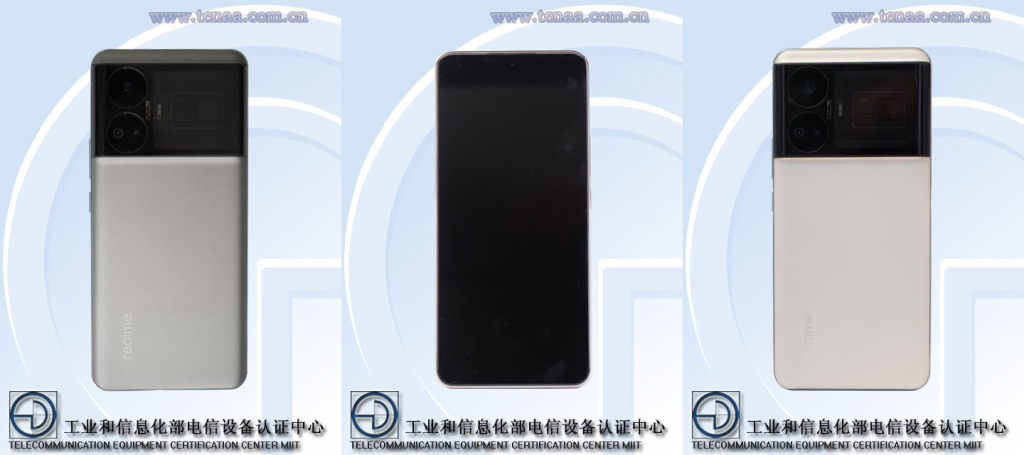
Previously, the TENAA listing had provided additional insights into the specifications of these devices. It revealed that both smartphones will be powered by an octa-core processor clocked at 3.2GHz possibly Snapdragon 8 Gen 2 chipset. Additionally, they will boast a 1.5K AMOLED display and a 50MP triple rear camera setup. For selfies, users can rely on a 16MP front-facing camera. The devices will be available in White, Titanium Air Gray, and Green color options, as shown in the shared images.
With the TENAA listing and the recent 3C certifications, it is evident that the launch of the Realme GT Neo 6 series is drawing near. As the launch date approaches, more details about these smartphones will be unveiled. Stay tuned for further updates on these exciting devices.
Xiaomi is celebrating its completion of 9th anniversary in India. It is currently conducting sale on various products till July 10. The company has also announced a new escalation system to handle customer queries and complaints in the country. It is called the 3-Layer Escalation Matrix. Read on to know more details below.
Xiaomi 3-level escalation matrix introduced in India
Fed up with the never-ending follow-ups on your service requests?
The newly introduced Xiaomi 3-level escalation matrix system is aimed at helping customers with their problems. The company says that it is designed to ensure that concerns are acknowledged, investigated, and resolved promptly. Xiaomi aims to provide seamless and excellent customer service with the escalation system.
Xiaomi has a wide service network in India. Customers facing any problems with their devices can visit their nearest service center. Alternatively, they can also register their complaint using Xiaomi’s Greivance Redressal Form via the Mi Store app, mi.com, or the Xiaomi Service+ app. Customers can also register their grievances by heading to this link.
Once a grievance is submitted, Xiaomi’s team will begin investigating the issue and work towards finding a suitable resolution within 48 hours. If the issue remains unresolved and the customer isn’t satisfied, it will be automatically escalated to the Head of Customer Service and users can expect a response within 24 hours. However, if the problem still persists and is not resolved within the designated time it will automatically be forwarded to the Office of the company’s President. Customers can expect a response within 12 hours.
The new escalation system means that the top management’s office is involved in addressing customer complaints which will likely be appreciated. Customers can track the status of their complaints on the Xiaomi Service+ app.
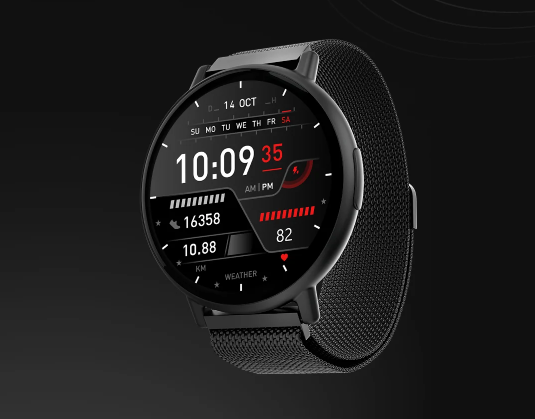
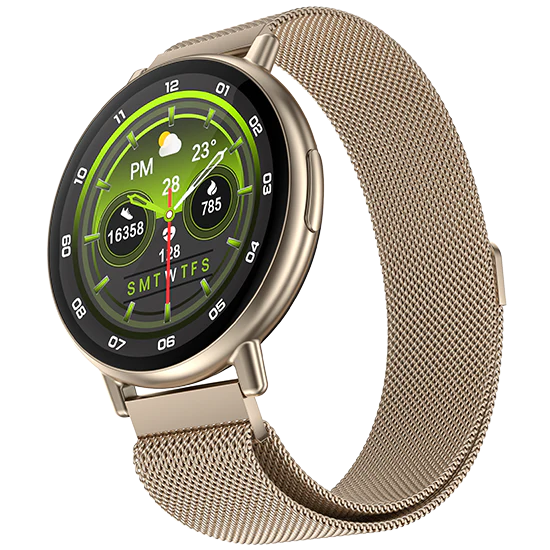
Fire-Boltt recently brought two rugged smartwatches to the Indian market called the Fire-Boltt Combat and the Fire-Boltt Grenade. Now, the brand has debuted a sleek, premium-looking smartwatch called the Fire-Boltt Destiny.
This smartwatch comes with a high-definition 1.39-inch display, providing a crystal-clear visual experience with a resolution of 360 x 360 pixels. Crafted with a zinc alloy frame and aluminum alloy button, the watch is durable and stylish.
Equipped with an in-built microphone and speaker, the smartwatch supports Bluetooth calling, allowing users to effortlessly make and receive calls. It also offers seamless integration with voice assistants, enabling convenient voice commands and assistance.
The Fire-Boltt Health Suite offers various wellness features including precise heart rate monitoring, SpO2 tracking for blood oxygen levels, sleep monitoring for comprehensive sleep analysis, and specialized Women’s health tracking.
With an extensive collection of 123 sports modes, the smartwatch caters to various fitness enthusiasts by accurately tracking their activities. Whether it’s running, cycling, swimming, or engaging in other sports, the smartwatch helps users monitor their performance.
In addition to its health and fitness features, the smartwatch offers a range of practical functionalities. Users can customize their watch face from a selection of options and choose from ten different menu styles. The watch also supports smart notifications, providing timely updates from applications. It allows users to conveniently control music playback, manage the camera, and stay informed about weather conditions. Moreover, the watch includes essential tools such as a timer, alarm, and stopwatch.
The smartwatch is designed to withstand water exposure up to IP67 standards, ensuring protection against water splashes and short immersion.
Price & availability
The Fire-Boltt Destiny smartwatch comes in Pink, Beige, Black, and Silver colors. It will be available on the company’s website and Flipkart at an introductory price of Rs. 1,999 starting July 11th, 12 P.M.
BYD and Vantage Automotive, an authorized dealer in Singapore, made headlines this week with the launch of the BYD DOLPHIN, a sleek electric vehicle (EV) that embodies the concept of “ocean aesthetics.” This marks the second pure electric passenger car model introduced by BYD in Singapore, but the first one is based on their advanced e-platform 3.0. The car comes equipped with a blade battery and meets the COE A standard, with a price tag of 156,888 Singapore dollars, approximately 841,222 yuan.
BYD reported that it has sold more than 250,000 EVs worldwide
For context, Singapore requires individuals to obtain a Certificate of Entitlement (COE) in order to register a new vehicle. This certificate represents vehicle ownership and the right to use limited road space for a period of ten years. Essentially, it serves as a special license obtained through competitive bidding.
The BYD DOLPHIN boasts impressive specifications, featuring a 44.9kWh battery that delivers 94 horsepower and 180Nm of power. With a 100 km acceleration time of 12.3 seconds and a WLTP cruising range of 340 km, this five-seater model offers a compelling package for EV enthusiasts.
BYD has established itself as the leading EV brand in Singapore, having sold over 300 units in the first half of 2023 alone. Huang Chunquan, general manager of BYD Singapore Branch, expressed confidence in the BYD DOLPHIN’s potential success, stating that it will be embraced by customers of all ages and contribute to a greener future for Singapore.
In June, BYD reported remarkable sales figures, with a total of 253,046 new energy vehicles sold worldwide. This represents an 88.79% increase compared to the same month last year and a 5.34% increase from May 2023. Furthermore, BYD’s overseas sales of new energy vehicles reached 10,536 units in June, demonstrating steady growth in international markets.
With the launch of the BYD DOLPHIN and the company’s strong performance in the EV market, BYD continues to make significant strides in promoting sustainable transportation solutions and expanding its global presence.
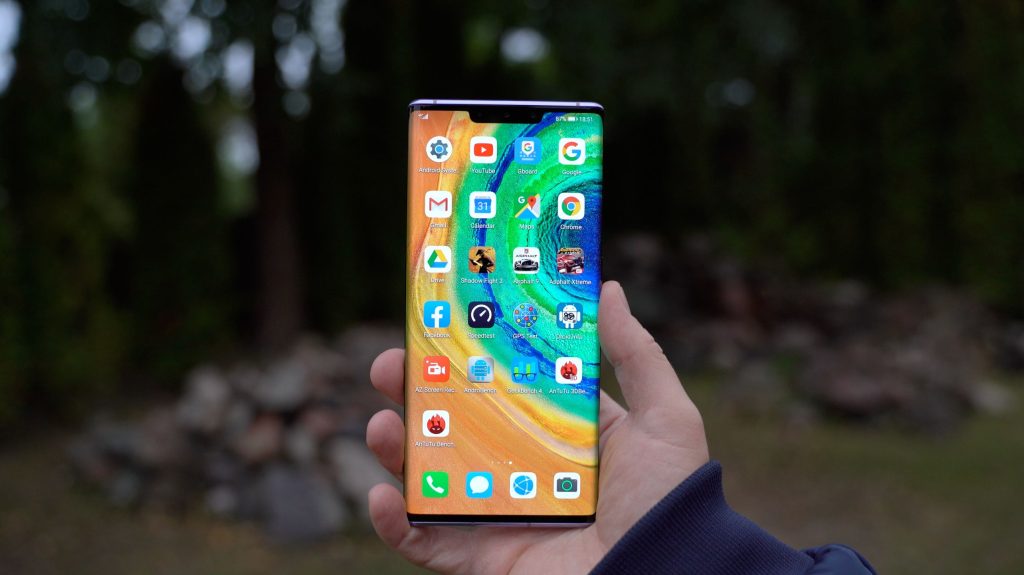
Huawei, Chinese tech giant has recently released a software update for its Mate30 series, which comes bundled with the highly anticipated Hongmeng OS 3.0.0.300 (SP2C00E300R5P8) version. This update brings a host of improvements, including the introduction of Universal Cards and enhancements to the Smart Multi-Window function and Pure Mode amongst other features.
The update has been rolled out to other models as well, including the P50 series
One of the standout features of this update is the addition of Universal Cards. These cards automatically adjust their size as new cards are added or removed. Stacked cards can rotate and adapt to different scenes, offering users a seamless experience. The Smart Multi-Window function has also been optimized. Users can now save their split-screen state to the desktop and activate the dual-app split-screen mode with a single click. When returning to the screen, the floating window automatically shrinks to a smaller size, allowing users to continue their tasks without interruptions.
The Calendar app has received a new feature: a curriculum subscription service. Users can import their schedules by taking photos or selecting images from their albums. Custom editing of courses and reminders are supported, and curriculum service cards can be added to the desktop for easy access to course information.
The Pure Mode has been further refined to enhance security. A secondary confirmation pop-up window has been introduced for application jumps, reducing risks and providing users with better control over each step.
Several system improvements have also been implemented. Document preview no longer requires a pop-up box for selecting the opening method. Call audio can now be easily switched between speakers, earpieces, and different Bluetooth devices. Huawei’s printing interface has been optimized, simplifying the printing process. System performance has been fine-tuned for smoother sliding operations, page switching, and application startup. The Petal Light Tour application also includes a quick download icon for easy access.
In addition to the Mate30 series, this update has been rolled out to several other Huawei models, including the Mate X2, Mate 40 Pro 5G, P50 series, and nova8/8Pro. These devices can now enjoy the benefits of the updated features, particularly the Universal Cards and Smart Multi-Window function.
Huawei continues to prioritize innovation and improve user experience with its latest software update. Hongmeng OS 3.0.0.300 brings a fair deal of significant enhancements, and it’s sure to make users feel appreciated.
We use cookies on our website to give you the most relevant experience by remembering your preferences and repeat visits. By clicking “Accept”, you consent to the use of ALL the cookies.
This website uses cookies to improve your experience while you navigate through the website. Out of these, the cookies that are categorized as necessary are stored on your browser as they are essential for the working of basic functionalities of the website. We also use third-party cookies that help us analyze and understand how you use this website. These cookies will be stored in your browser only with your consent. You also have the option to opt-out of these cookies. But opting out of some of these cookies may affect your browsing experience.
Necessary cookies are absolutely essential for the website to function properly. This category only includes cookies that ensures basic functionalities and security features of the website. These cookies do not store any personal information.
Any cookies that may not be particularly necessary for the website to function and is used specifically to collect user personal data via analytics, ads, other embedded contents are termed as non-necessary cookies. It is mandatory to procure user consent prior to running these cookies on your website.