Advertisement

Google Pixel Users Experiencing System Crashes and Freezing after QPR3 Beta 3 Update

Google’s Beta program offers early access to upcoming features and improvements for Pixel device users. This allows users to experience the latest Android features ahead of the curve, it’s important to note that these Beta releases may contain bugs or other issues that can affect device performance, and this is exactly what happened with the latest Android 13 QPR3 Beta 3 Update, which recently rolled out to Pixel devices some days back.

Users reported System UI crashes & Laggy Interface

Last week’s Android 13 QPR3 Beta 3 update has caused headaches for many users. While it’s common to encounter bugs when you join a Beta program, the QPR Betas are supposed to be less problematic than the Android system Betas. However, users have been complaining of persistent issues like System UI crashes and a lagging user interface, which can be quite disruptive towards the functioning of any device.

Pixel 7

Some users on Reddit have been discussing their experiences with QPR3 Beta 3 and the problems it has caused. Some have reported experiencing multiple full freezes daily, while others have noticed issues with the display and Peacock streaming service. Even when users try to submit feedback about these issues through the app, it’s freezing too.

It’s worth noting that QPR3 Beta 3 leaves Pixel users on the March security update, raising questions about the missing April security patch. The eligible Pixel models for the QPR3 Beta program include the Pixel 4a, Pixel 4a (5G), Pixel 5, Pixel 5a, Pixel 6, Pixel 6 Pro, Pixel 6a, Pixel 7, and Pixel 7 Pro. The program should end on June 5th with the release of the June Quarterly Feature Drop, which will provide a stable public build to exit the Beta program.

While it’s frustrating to deal with these issues, it’s important to remember that the Beta program is designed to help Google identify and fix these bugs before releasing the final update to the public. Still, if users are experiencing persistent issues and can’t cope with the same on their primary devices, it may be worth exiting the program and waiting for the stable public build. In the meantime, Google is likely working to address the reported issues to ensure a smoother experience for its users.

RELATED:

(Via)

Samsung Galaxy Z Fold 5, Galaxy Z Flip 5 3C listings appears, charging capabilities emerge

Samsung is expected to hold the next Galaxy Unpacked event in August this year. The event is likely to see the arrival of multiple flagship devices, such as the Galaxy Z foldables, the Galaxy Tab S9 series, and the Galaxy Watch 6 series. Ahead of the expected launch, the 3C certification platform in China approved the Galaxy Z Fold 5 and Galaxy Z Flip 5 today. As usual, the 3C certification (via. TechGoing) has revealed the charging capabilities of both models.

The Galaxy Z Fold 5 and the Galaxy Z Flip 5 have appeared with respective model numbers SM-9460 and SM-7310 in the database of the 3C certification. Both models are listed with a 25W Samsung charger that has the EP-TA800 model number.

Samsung Galaxy Z Fold 5 / Z Flip 5 3C certified

The original Galaxy Fold and its follow-up device, the Galaxy Fold 5G offered 15W charging. The Z Fold 2, which debuted in 2020, was the company’s first foldable phone to support 25W charging. Unfortunately, it appears that the Z Fold 5 coming this year will make no improvements in the charging department.

While the rumor mill is yet to leak the battery size of the Galaxy Z Flip 5, it is certain that it will be quite smaller than the Z Fold 5. Still, the device is likely to offer the same 25W charging support as the Z Fold 5. At present, there is no word on whether the Z Fold 5 will come equipped with a larger battery. To recall, the Galaxy Z Fold 4 from last year houses a 4,400mAh dual-cell battery.

The Galaxy S23 series that debuted earlier this year features the custom-made Snapdragon 8 Gen 2 for Galaxy chipset. Rumors are rife that the same chip will power the Z Fold 5 and Z Flip 5.

RELATED:

Pre-booking for the Tecno Phantom V Fold 5G now open in India until April 27th

Earlier this month, Tecno launched its first-ever foldable smartphone, the Phantom V Fold 5G, in India for Rs. 88,888 at an event. The company began taking pre-bookings on April 22nd and announced that it had sold out on the first day due to overwhelming demand.

Tecno has stated that it will increase production at its Noida factory to ensure that consumers throughout India can purchase the phone. The company has also implemented strict quality controls to ensure that customers receive a high-quality product. Starting from April 28th, the phone will be available for purchase on Amazon.in, with pre-bookings open every day at 10 AM until April 27th.

Tecno Phantom V Fold Pre-booking Offers on Amazon

Amazon is currently offering pre-booking offers for the Phantom V Fold 5G. Customers can take advantage of a 24-month No Cost EMI starting at INR 3704/month, making it easier to purchase this high-end smartphone. Additionally, customers can receive an extra INR 8000 exchange bonus on any smartphone exchange with the Phantom V Fold. For added peace of mind, Amazon is also offering a free one-time screen replacement within 6 months and free pick-up and drop-off service. To further extend the warranty, customers can also take advantage of a 1-year extended warranty. With all of these enticing offers, now is the perfect time to pre-book the Phantom V Fold 5G on Amazon.

Tecno Phantom V Fold specs

The Tecno Phantom V Fold comes with a foldable 7.85-inch AMOLED LPTO display, which boasts a resolution of 2K+ and a refresh rate of 120Hz. The screen has an 8:7 aspect ratio and provides a stunning viewing experience. Additionally, the device has a 6.42-inch AMOLED cover display with support for Full HD+ resolution, a 21:9 aspect ratio, and a 120Hz refresh rate.

Running on the Android 13 operating system and the HiOS 13 Fold UI, the Phantom V Fold is powered by the Dimensity 9000 Plus chipset, LPDDR5x RAM, and UFS 3.1 storage. With up to 9 GB of virtual RAM, the device offers fast and smooth performance. The smartphone is equipped with a 5,000mAh battery that supports 45W fast charging, ensuring users stay connected all day long.

On the camera front, the Phantom V Fold comes with a 32-megapixel front-facing camera and a 16-megapixel camera on the foldable screen. The rear camera setup features a 50-megapixel primary camera with an f/1.8 aperture, a 13-megapixel ultra-wide lens, and a 50-megapixel telephoto camera with 2x optical zoom. With these impressive camera features, users can capture stunning photos and videos.

RELATED:

Some Older iPads may Miss Out on iPadOS 17 This Year

iPadOS is a dedicated operating system designed by Apple specifically for their iPad devices. It is built on the same foundation as iOS, the operating system used for iPhones, but has been optimized for the larger screen size and more powerful hardware of the iPad. iPadOS includes a variety of features that make it easier to multitask, navigate the interface, and use the Apple Pencil for drawing and note-taking. Some of the key features of iPadOS include an accessible home screen layout, improved split-view multitasking and more. However, users with older iPads might not be happy with recent news, since reports have stated that more iPads will possibly lose iPadOS support this year.

9.7-inch & 12.9-inch iPad Pro Models will lose support first

According to a report from iPhoneSoft, owners of the first 9.7-inch and 12.9-inch iPad Pro models will not be able to use the upcoming iPadOS 17. As Apple often drops support for older device models with new operating systems, the latest major release seems to be following suit with the iPad family. The first-generation iPad Pro models, equipped with the A9X chip and the fifth-generation iPad with the A9 chip will remain on iPadOS 16, according to the anonymous source. This means iPadOS will now align with iOS, which also dropped support for the A9 chip when it released iOS 16, leaving iPhone 6s models behind.

iPadOS

Usually, Apple drops support for models when introducing new features, and leaves them with the previous generation release. They tend to still receive updates for security, albeit at a slower rate. Although iOS 17 is said to focus on stability rather than features, it remains to be seen if Apple will change its mind and continue to support the models before its WWDC 2023 introductions.

RELATED:

(Via)

Acer Launches Predator Helios Neo 16 Gaming Laptop with Mid-Range Features and Excellent Price/Performance Ratio

Acer has just announced the release of its newest gaming laptop, the Predator Helios Neo 16. This laptop combines mid-range gaming features with an excellent price/performance ratio, making it an ideal choice for gamers looking for a high-quality gaming experience without breaking the bank.

Acer

Acer Predator Helios Neo 16 specs, price & availability

The Predator Helios Neo 16 will be available starting this June in Germany, with a starting price of €1,599. This laptop is equipped with the latest i5-13500HX and i7-13700HX processors, which can be coupled with up to 32GB of dual-channel DDR5-4800 RAM and up to 2 TB PCIe 4.0 NVMe SSD in RAID 0. The GPU side of the Predator Helios Neo 16 can be equipped with an Nvidia GeForce RTX 4050 6 GB, RTX 4060 8 GB, or RTX 4070 8 GB and 140 W TGP, providing users with excellent graphics capabilities.

To ensure that the notebook stays cool even under heavy load, Acer has integrated its advanced cooling system featuring an all-metal 5th gen AeroBlade fan technology plus liquid metal thermal paste. This will help to keep the system running smoothly and prevent overheating. Regarding personalization, Acer has taken things to the next level for the Neo 16 laptops. The display lid is laser-engraved with unique codes, allowing users to easily identify their device and make it truly their own.

The Predator Helios Neo 16 also comes with two quality 16-inch display options. A 2,560 x 1,600 IPS panel with 165 Hz and 500 nit brightness and a 1,920 x 1,200 panel with 165 Hz and 400 nit brightness. Both displays feature a 100% sRGB color gamut, Nvidia Advanced Optimus with G-SYNC, and a 3 ms response time.

Port selection is robust, with 2x Thunderbolt 4 connectors, 3x USB-A 3.2 Gen 2, HDMI 2.1 video out, plus audio and GbE jacks along with a microSD card reader. Wireless connectivity is delivered through a Killer Wi-Fi 6 + BT 5.2 card, and Acer has also packed DTS X:Ultra audio processing and a 90 Wh battery. In terms of dimensions, the chassis can have a profile up to 1.11 inches (28.25 mm) thick, and the system may weigh up to 5.73 lbs (2.6 kg). This makes the Predator Helios Neo 16 a relatively portable gaming laptop that can be easily transported.

RELATED:

China Tests Ultra-fast Wireless Internet with 300Gbps Download Speed, Sparking 6G Rumors

With 5G wireless communication technology already being implemented around the world, the focus has shifted to the next generation of wireless networks, 6G. While 5G is already a significant improvement over previous wireless technologies, 6G is expected to bring even more advancements in terms of speed, latency, spectrum, artificial intelligence, security, and energy efficiency. In this regard, understanding the possible differences between 5G and 6G is crucial to grasp the potential of the future of wireless communication. While 5G is still in the process of being rolled out globally, the research and development of 6G is already underway. As per latest reports, China has been testing ultra-fast wireless internet, with download speeds hitting 300Gbps.

US Concerned regarding China’s success with High-Speed Connectivity

The race for 6G is heating up, and the US is afraid of falling behind. Last Friday, the White House met with industry leaders to discuss the next generation of wireless connectivity. The fear is that other countries will lead in the creation of standards for 6G connectivity, and news from China only adds to the US’s concerns. The 25th Institute of the Second Academy of China Aerospace Science and Industry reported a successful wireless transmission at a terahertz (THz) frequency level for the first time, achieving data speeds of 100Gbps. To put this in perspective, a 5G signal running at 1Gbps would be considered fantastic in the US.

6G

The technology uses THz frequencies, which, like the mmWave band for 5G, present challenges in the signal distance and cloud/fog penetration. However, THz communications can deliver wireless transmissions almost as good as transmissions made over fiber. With 6G wireless not expected to launch until 2030, this new technology is an important development that could lead to incredible new services in the entertainment, automobile, and healthcare industries. The US and China will likely continue to compete to develop and perfect the technology with their innovations.

RELATED:

(Via)

Vivo Pad 2 now available for purchase in China; price starts at 2,399 yuan ($348)

A few days ago, along with the Vivo X Fold 2 and X Flip 2, the company also launched its new tablet in its home country China, dubbed Vivo Pad 2. As the name indicates, it is a successor to the Vivo Pad launched last year.

The newly announced Vivo Pad 2 is now available for purchase in the Chinese market and comes in four different memory configurations, with a starting price of 2,399 yuan (~$348).

Vivo Pad 2

The base model, which packs 8GB RAM and 128GB storage, is priced at 2,399 yuan (~$348), while the 8GB RAM and 256GB storage model cost 2,799 yuan (~$406). The 12GB RAM and 128GB storage model is available for 3,099 yuan (~$449), and the top-end model with 12GB RAM and 512GB storage is priced at 3,399 yuan (~$492).

Coming to the specifications, the Vivo Pad 2 features a 12.1-inch LCD screen with a resolution of 2.8K pixels and a 144Hz refresh rate. It offers HDR10 support and 600 nits peak brightness. It has a self-developed simulation writing engine that provides users with tactile feedback similar to what they experience when writing with a pen or pencil on paper.

Under the hood, the device is powered by a MediaTek Dimensity 9000 processor, coupled with up to 12GB LPDDR5 RAM and 512GB UFS 3.1 storage. It has four full-range speakers and two tweeters producing sound output up to 6W.

In the camera department, there’s a 13-megapixel primary camera sensor and a 2-megapixel macro lens paired with an LED flash unit, while there’s an 8-megapixel snapper on the front side for taking selfies and video calling.

It runs the Android 13 operating system with OriginOS 3 custom user interface on top and offers a comprehensive cross-screen collaboration between the tablet and mobile as well as PC. The device is powered by a 10,000mAh battery with support for 44W fast charging.

WHERE TO BUY
Buy Vivo Pad 2 at $429 @Giztop

RELATED:

Apple Mixed Reality headset to reportedly feature a magnetic power source

Apple has been working on a mixed-reality headset for some time now, and the company seems to be all set to officially launch the device in the coming months.

Now that the device is expected to debut at WWDC, details about the product are now surfacing online. In the latest development, it is being claimed that the headset will have a magnetic cable for charging.

Apple Mixed Reality Headset

The report coming from Mark Gurman of Bloomberg in the Power On newsletter says that the upcoming product, which may be named Reality Pro or Reality One, will have two ports — USB-C for data transfers and a new proprietary connector for charging.

The power source, which we expect to be similar to MagSafe, will have a round tip that magnetically attaches to Apple’s headset and after inserting the cable, it can be rotated to lock it into place.

Recently, it was reported that Apple’s mixed reality headset will have an external power supply as the company is concerned about the heating issue which may impact the comfort while wearing the device.

The power supply is about the size of the iPhone and can reportedly offer a battery life of up to two hours on a single charge. While not much is confirmed yet, the device is expected to be priced at around $3,000 when it launches in a few months.

RELATED:

Source

GMK NucBox K1 and NucBox K2 mini PCs with AMD Ryzen 7 processors unveiled

GMK has released the Ryzen 7-powered NucBox K1 and NucBox K2 mini PCs. The NucBox K1 is equipped with an AMD Ryzen 7 6800H while the NucBox K2 features the Ryzen 7 7735HS. Both machines sport similar features apart from the differences in their processors.

GMK NucBox K1

Both the K1 and K2 are equipped with the AMD 680M integrated GPU. They also have up to 64GB of DDR5-4800 RAM and up to 2TB of PCIe NVMe SSD storage. The two Mini PCs also have similar chassis with dimensions of 112 x 43 mm. There are two USB-A 3.2 Gen 2 ports (10 Gbps speed), a USB4 Type-C (40Gbps), and an audio jack on the front of both models. There are USB-A 3.2 Gen 2, USB-A 2.0, and HDMI 2.0 (x2) ports at the back. Additionally, the back also includes a 2.5 Gigabit Ethernet jack and the DC input for both devices. Both Wi-Fi 6E and Bluetooth 5.2 connectivity are supported on both the NucBox K1 and K2.

GMK NucBox K1

The barebones version of the NucBox K1 and K2 retail at $499 and $539 respectively. The prices of the mini PCs rise with the inclusion of RAM and storage. The GMK NucBox K1 has 16GB/ 512GB or 32GB/ 1TB RAM/ storage configurations. The 16GB/ 412GB model retails for $599.89 while the 32GB/ 1TB option costs $699.89. The NucBox K2 comes in a similar RAM configuration (16GB or 32GB) but with 1TB of storage in both cases. The corresponding prices for the NucBox K2 with RAM and storage are $659 and $719 respectively. The K1 and K2 can be purchased directly via the GMK website and a discount of $90 and $50 are available for the models respectively.

RELATED:

iReader Smart4 e-note with 10.3-inch E Ink screen launched in China for 1,899 yuan ($275)

The iReader Smart4 e-note has been released in China. This joins the iReader Neo series also launched by iReader. The iReader Smart4 features a 10.3-inch E Ink display and it can be deployed for a variety of uses. The iReader Smart4 can function as an e-note reader as well as an audiobook reader.

iReader Smart4 e-note

The Smart4 e-note’s display has a resolution of 227 PPI and 28 levels of warm and cold lights are present. It is equipped with a 2.0GHz dual-core MT8113T processor with 1GB of RAM and 64GB of internal storage. The iReader Smart4 is being propped as an intelligent listening, speaking, reading, and writing E Ink tablet. It offers a wide array of options and is well-primed to meet the needs of millennials, according to the company.

The Smart4 e-note comes with a pen that makes writing to be as seamless as it can get. There are over 130 writing templates to choose from and are meant for the global audience. It offers an impressive Schedule Management feature and a Bookshelf displays the books in an intelligent manner.

The iReader Smart4 weighs 380g and has a thickness of 6.2mm. This makes the device to be one of the thinnest and lightest e-note in the market. It supports several features while reading PDF books like trimming, zooming, page purification, and contrast adjustment.

The Reink arrangement engine in the device delivers an enhanced reading experience. There are up to 256 levels of gray to accurately distinguish text from images. The e-note reader supports writing operations while reading content on the device. You can switch between various pen options including a ballpoint pen, pencil, and pen.

The Smart4 e-note supports translation in real-time and you can also record proceedings during meetings or lectures. It supports Bluetooth 5.0 connectivity and its 4,000mAh battery supports up to 120 hours of reading. The iReader Smart4 tablet is orderable in China via JD.com and its launch price is 1,899 yuan (~$275). Global availability details will be available subsequently.

RELATED:

(source)

Boost e-bike conversion kit with a water bottle like battery & custom rear hub motor unveiled

Boost has unveiled its e-bike conversion kit and it comes with a battery that looks like a water bottle. The kit was showcased during the UK’s Cycle Show on April 21, 2023. The bulk of the power mechanism in the conversion kit is hidden in the rear hub.

Boost e-bike conversion kit

The boost option seems to be an easier way of electrifying your bike when compared with kits in the market. Virtually all the needed gear is built into a custom-made rear hub motor while the circular battery pack sits inside a water bottle-like housing.
The Boost e-bike conversion kit is fitted on the rear of the bicycle. It may mean getting the technician to help set up the bike more easily than doing it yourself. Thereafter, you just need to screw in the bottle cage and ziptie a wire that traverses through the rear wheel to the downtube. The conversion kit lacks a screen as all of the torque sensors are embedded inside the motor for a reduced cost.

The kit has a companion app that can be used to set the power assist to Eco or Boost modes. A short speed boost option is also available although the maximum speed is not specified. The app has a dashboard mode that helps you to keep track of battery usage, speed, and distance covered during a ride. It is possible to mount your phone on the bike’s handlebars to view ride information in real time.

Boost e-bike conversion kit

The battery of the Boost e-bike conversion kit has a USB-A port hidden under a dust cover. You can thus charge the bike or run a USB-powered light while riding. The Boost e-bike conversion kit is available in the UK for £695 (~$864) when installed by a local cycling technician. You can save £50 (~$62) if you decide to install the kit yourself. There are no details yet on whether Boost hopes to scale up the distribution of the e-bike conversion kit to other markets.

RELATED

(source)

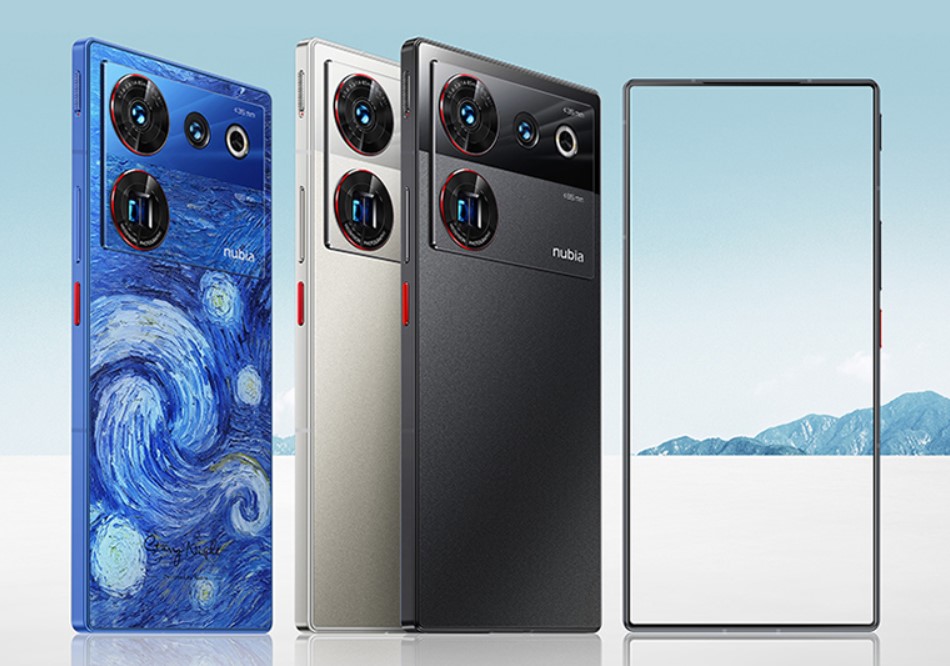
Nubia Z50’s Mountain Life edition brings a new Ballistic Nylon Leather Back

Nubia Z50 was introduced last year in December and the company recently unveiled an Ultra model as well. The smartphone debuts with a Snapdragon 8 Gen 2 processor and a capable camera setup, highlighted by a 64MP primary sensor. Not just impressive hardware, but the Z50 also features a sleek design with a curved panel. Now, the company has launched a special edition of the handset called the Mountain Life edition with ballistic nylon leather on the back.

Nubia Z50 Mountain life

New look, Same specifications

As per the official announcement, the Nubia Z50 Mountain Life edition will be available for purchase in China starting April 26 in two colors— Khaki and Fir Green. The handset will be sold in a sole 12GB RAM and 256GB storage configuration, priced at 3199 Yuan ($464).

The Mountain Life edition of the phone is a special edition, and as with any such device, its design is its main attraction. According to the company, the phone features a distinctive plain leather nylon embossed design that is not only lightweight but also easy to grip and doesn’t attract fingerprints. It has the phrase “URBAN OUTDOOR” written on the bottom, serving to highlight the uniqueness of the new device.

Nubia Z50 mountain life edition

The specifications of the device are the same as the original model. This means you get a 6.67-inch curved AMOLED display with a resolution of 2400 x 1080 pixels (FHD+), 10-bit color depth, and up to a 144Hz refresh rate. The smartphone is powered by a Qualcomm Snapdragon 8 Gen 2 SoC, paired with LPDDR5x RAM, UFS 4.0 storage, VC cooling system. It boots MyOS 13 based on Android 13 and gets a custom 64MP Sony IMX787 primary sensor with a 35mm equivalent lens and OIS.

RELATED:

China’s Strategic Advancements in the Trade War with the US: YMTC’s Aim for Self-Sufficiency in Semiconductor

The trade war between China and the US continues at full speed. The technology sector, as always, is the one most affected by the tensions between the two countries. The US government bans the sale of high value-added technology products to some Chinese companies due to security concerns, while the Asian country retaliates with difficulties in supplying critical raw materials. However, both countries are not solely focusing on aggressive tactics.

For instance, US companies are seeking alternative raw materials for batteries and other technologies, while Chinese companies strive to develop the technologies that are not being sold to them. Recently, China’s leading memory chip manufacturer, YMTC, has made advancements in producing advanced 3D NAND products using locally sourced equipment. Here are the details…

China’s YMTC Advancing Self-Sufficiency in 3D NAND Flash Chip Production with Local Equipment

According to the latest reports, China’s leading memory chip maker, Yangtze Memory Technologies Corp (YMTC), is reportedly making progress in producing advanced 3D NAND flash chip products using only domestically sourced equipment. The top-secret project, named Wudangshan, has placed significant orders with Chinese suppliers such as Naura Technology Group. YMTC’s aim is to help China become self-sufficient in semiconductor production, which has been hindered by restrictions on the export of advanced chip-making tools by the US, citing concerns about technology falling into the hands of the Chinese military.

China vs USA

However, the “choke points” in China’s chip manufacturing supply chain, where domestic alternatives are not yet available, remain a challenge for YMTC. These include metrology tools from US equipment maker KLA and lithography systems from Dutch company ASML and Japanese vendors Nikon and Canon. Despite the challenges, YMTC has received fresh funding from state-backed investors, including the “Big Fund”, which is positive news for the company after being placed on a US trade blacklist last year.

If successful, the Wudangshan project would be a breakthrough for China’s semiconductor industry, as it could help the country compete with other advanced chip manufacturers like Samsung. However, it remains to be seen how YMTC will overcome the choke points in its chip manufacturing supply chain.

RELATED:

(via)

ARM Demonstrates the Power of Its Technologies with Its Own Processor

The rise of ARM processors continues at full speed. This progress has been fueled by the growing popularity of smartphones, as well as the development and increasing demands of operating systems and applications. For the last few years Apple’s M1 series processors have added a new dimension to this trend. As you know, computers using ARM-based M series processors today are challenging their much more expensive competitors in terms of performance and efficiency. Despite one or two unsuccessful attempts by Microsoft, other manufacturers have not responded to Apple’s critical move. According to claims, ARM is taking matters into its own hands and is building its own semiconductor to showcase the capabilities of its products. Here are the details…

ARM Develops New Semiconductor to Exhibit Possibilities

According to the latest reports, ARM is developing its own semiconductor to showcase the capabilities of its products. To avoid any misunderstandings, let us clarify from the outset that the company does not plan to compete with its own products. Instead, ARM aims to demonstrate what mobile processors developed using its technologies can do in devices like PCs/laptops and smartphones. For example, Qualcomm occasionally manufactures a phone to exhibit the features of its new flagship processor, but this is only a sample product and not for sale. A similar situation applies here.

ARM

Of course, at the moment, this is only a claim. However, if the rumors are true, ARM will team up with manufacturing partners to develop the new semiconductor. The developed processor will be a prototype for use in both laptops and smartphones. The company is likely hoping to gain more business partners and increase its market value before its upcoming IPO, but there is a significant problem.

The success of Apple’s M-series processors comes from the harmony achieved between software and hardware. The company has provided strong support for its new processors since day one and has “forced” all applications on the market to work with these ARM-based processors.

When we look at Windows, the dominant operating system, we see a more traditional operating system that supports the x86 architecture. Although Microsoft has an operating system for ARM-based processors, it is, to put it mildly, incomplete. Therefore, showcasing the capabilities of the developed processor may be somewhat challenging. Nonetheless, it is worth waiting for official announcements from the company regarding further developments.

RELATED:

(via)

iPhone 15 Pro Max Camera Leaked – The Standard 15 Pro May Not Be Professional Enough

Although the iPhone 14 series was introduced only six months ago, the anticipation for new models has already begun. Last year, Apple made significant changes with Dynamic Island and camera features, and similar improvements are expected this year as well. Not too long ago, we shared with you that the first innovation would be a periscope lens, allowing for more optical zoom. Now, it has been revealed that the iPhone 15 Pro Max will take advantage of a new 48MP Sony camera, featuring a larger sensor size than its predecessor. Here are the details…

Why the iPhone 15 Pro May Not Be ‘Pro’ Enough This Year

Although iPhone models have always managed to enchant users with their overall camera performance, they have never been the best in terms of technical specifications. The reason behind this is Apple‘s consistent preference for stable performance over innovations. The company often chooses to wait until a new technology is perfected before implementing it for users, a policy that has worked quite well so far. However, if recent rumors are true, the iPhone 15 Pro Max is breaking tradition with its innovations.

Taking a general look at what will change, we can first say that Apple is breaking a significant tradition. For a long time, Apple has divided its phones into two different series, with standard and Pro models. The phones, mostly identical in many aspects, only differed in a few areas, such as the camera and RAM. However, the company added differences in the 14 series processors as well. Now, the Pro and Pro Max models are distinguished by their camera features. At this point, those who want the best performance will need to opt for the iPhone 15 Pro Max.

As you know when it comes to camera performance, the number of megapixels is not of critical importance. Although a higher resolution is required for more detailed images, the Sony IMX903 allows for better image quality by enabling more light to enter the lens through larger sensors. This difference can be particularly noticeable in low-light environments. Considering that both the larger sensor and the periscope camera will be exclusive to the Pro Max model, we can say that this year’s standard Pro may not be professional enough. The sensors that will be used in all models of the series are as follows:

  • iPhone 15 Pro Max :IMX903,≈1”
  • iPhone 14 Pro:48MP, IMX803,1/1.28
  • iPhone 13 Pro:12MP,IMX703,1/1.63
  • iPhone 12 Pro:12MP, IMX603,1/1.78
  • iPhone 11 Pro:12MP, IMX503, 1/2.55

RELATED:

(via)

Redmi Note 12 Pro and Note 12 Pro+ Get MIUI 14 Update in India but there’s a Catch

Redmi Note 12 is the latest mid-range lineup from the Xiaomi subsidiary. Launched in India in January, the series carries several smartphones, with the Redmi Note 12 Pro and Note 12 Pro+ being the more premium ones. While the two phones get impressive hardware, the software was lagging behind with MIUI 13 based on Android 12. The brand is now rolling out the MIUI 14 to the above-mentioned phones but that’s not entirely good news. Here’s why

Redmi Note 12 Pro phones still running Android 12 underneath

MIUI India’s official Twitter handle announced that the MIUI 14 update for Redmi Note 12 Pro and Note 12 Pro+ is now available in India. While this sounds good to hear, the update is still based on Android 12, which means users will not have access to several new features introduced with Android 13. These features include better wallpaper theming, improved privacy, and enhanced accessibility.

Redmi Note 12 Pro MIUI 14
Image Credit: @TechGen18

We are not able to fathom why Redmi is releasing an Android 12-based update for its latest devices, while even older models such as the Redmi Note 10 5G and Redmi Note 11 SE are running Android 13. This will likely affect consumer sentiment as those who purchase the latest devices expect to receive the most recent version of Android, at least for a few years.

In any case, the update still brings several new features and upgrades. Redmi Note 12 Pro users will now see a new user interface with super icons and an option to add pet widgets on the home screen. It is also claimed to improve system performance and battery life.

Several users on Twitter have reported heating issues after updating their devices, but this could be due to system overload caused by the update process. The phone should run normally after a few days.

RELATED:

(Source)

Upcoming BYD Electric Pickup Truck Caught on Camera in Spy Shots

The world’s largest electric vehicle manufacturer, BYD, continues to expand its product lineup. The company, which has adopted a “brand” policy to increase sales, recently announced the Dynasty, Ocean, Tengshi, and Yingwang brands at the Shanghai Auto Show, successfully attracting attention. Now, a series of leaked images have surfaced on the internet, providing us with a first look at BYD‘s upcoming electric pickup truck. Here are the details…

BYD Takes on the Pickup Truck Market with New Electric Model

BYD is making waves with its latest electric pickup truck in the EV market, as recent online leaks reveal the company’s first electric pickup truck. As you may know, automobile manufacturers often test their new models. To obtain accurate results, the vehicle is tested in the real world while being concealed with a camouflage during the final stage of the development process.

The electric pickup truck developed by the company was spotted in this manner. The images showcase a striking and dynamic design that sets it apart from competitors and positions BYD as a force to be reckoned with in the EV pickup segment. The front part of the BYD truck has shiny silver decorations on the grille and headlights. The company’s logo in chrome is the main focus, and the headlights are split-style and have strong lines that show it is tough and durable.

On the side, the vehicle features a cabin equipped with a handy side step and a practical double-row seating configuration. The presence of a charging port above the rear wheel offers convenience for users. The upcoming pickup truck is anticipated to be available in two powertrain configurations: plug-in hybrid and all-electric. Industry insiders suggest that the BYD electric pickup might boast a hydraulic active suspension system, streaming rearview mirrors, Huawei AR-HUD, and a unique column-mounted gear shift arrangement.

According to the previously shared plans, BYD aims to introduce its electric pickup in 2023, potentially launching under a specialized “professional personalization” brand. Pricing for this groundbreaking EV pickup is expected to range from 400,000 to 600,000 Yuan (approximately $60,000 to $90,000), making it a highly anticipated release in the electric vehicle market.

RELATED:

(source)

Xiaomi launches powerful Mijia Fascia Gun Pro: 35kg thrust and 12 levels of intensity adjustment

Xiaomi, the Chinese tech giant, has recently launched a new addition to its lineup of massage guns – the Mijia Fascia Gun Pro. The product has been listed for pre-orders and will be available for sale starting April 25th, 2023, at a price of 999 yuan ($144). Xiaomi has been in the market of massage guns since last year when it launched the Mijia Fascia Gun and the Fascia Gun Mini, priced at 449 yuan ($65) and 349 yuan ($50), respectively.

Xiaomi Mijia Fascia Gun Pro specifications

The Mijia Fascia Gun Pro boasts a powerful 126W magnetic engine with a 35kg striking force that delivers a deep massage of 3200rpm and a muscle activation of 14mm. The device comes with a user-friendly rotating button and an LED digital screen to adjust the frequency, offering two operation modes – 12 levels of fixed frequency motion mode and 6 levels of variable frequency massage mode.

Mijia Fascia Gun Pro

The device also features a 3800mAh lithium battery that provides a usage time of 30 days when used for 10 minutes a day in the first gear of fixed frequency mode. It supports 27W fast charging through its Type-C interface. Additionally, it comes with a hidden heat dissipation duct design, an intelligent prompt light, and 5 massage heads. The device’s brushless and low-noise motor produces a noise level of only 34dB(A).

Massage guns have gained significant popularity in recent years due to their ability to alleviate muscle pain and tension. The launch of the Mijia Fascia Gun Pro by Xiaomi, with its powerful motor, long battery life, and adjustable intensity, is likely to attract a large consumer base. The device’s sleek design, low noise level, and intelligent features further enhance its appeal in the market. Xiaomi’s continued expansion into the massage gun market indicates a growing trend in the health and wellness sector.

RELATED:

Lenovo unveils Xiaoxin 65W power strip for fast, convenient charging on the go

Lenovo has announced the launch of its new 65W gallium nitride fast-charging power strip under the Xiaoxin brand, a product that is set to revolutionize the way we charge our devices on the go. With the increasing number of smart devices available, it’s no longer unusual to travel with multiple power adapters, but Lenovo’s innovative solution aims to put an end to that.

Direct charging for laptops: Lenovo’s new 65W power strip

One of the standout features of this power strip is its use of third-generation gallium nitride material, which allows it to deliver a maximum output of 65W per port. This means that not only can it charge multiple devices simultaneously, but it can also fast charge laptops directly, eliminating the need for bulky brick-like adapters.

Lenovo Xiaoxin 65W power strip

The Xiaoxin 65W gallium nitride fast charging power strip is also incredibly intelligent, distributing charging power evenly to each device. And with a charging speed of up to 50% in just 40 minutes, this product is a great option for those who need to charge their devices quickly while on the go.

Although it may not be able to compete with fast charging adapters above 100W, the 65W power output is suitable for most thin and light laptops, as well as smartphones and tablets. This means that with this power strip, you won’t need to carry multiple chargers for your devices while on a business trip or vacation.

As for pricing, Lenovo has not yet announced the price of the Xiaoxin 65W gallium nitride fast-charging power strip. However, given the cost of gallium nitride, it’s likely to be more expensive than ordinary USB power strips. Nevertheless, the benefits that this product offers are considerable and worth considering for those who frequently travel with multiple devices.

RELATED:

Google Pixel Tablet real-life video spotted at Milan Design Week 2023

Google’s upcoming Pixel Tablet has been making headlines lately, with leaks and rumors providing us with glimpses of the upcoming hardware. The latest leak comes in the form of videos that were apparently taken at Milan Design Week 2023, where Google was showcasing its latest creations. The videos show the Pixel Tablet in a range of colors, including a new coral colorway.

Leaked Video offer a sneak peek at Google’s colorful Pixel Tablet

While it’s uncertain if the hardware showcased in the video represents the final product, the fact that we’re seeing multiple color options suggests that the Pixel Tablet is close to completion. The videos don’t show a privacy switch, which may raise questions about the tablet’s security features. However, with just over two weeks until Google I/O 2023, we can expect to learn more about the tablet’s features and specifications.

According to earlier reports, the Pixel Tablet will be available in four different color options, including a Desaturated Green, Off-White, and two as-yet-unseen colors. With the addition of the Coral Colorway, it’s clear that Google is aiming for a colorful and vibrant design for its new tablet.

Google Pixel Tablet rumored specifications

The Google Pixel Tablet is rumored to have a 10.95-inch display with 1600 x 2560px resolution. It may feature a Tensor G2 chipset and 18W charging. Storage options could include 128GB and 256GB. The device may also include Wi-Fi 6 and UWB connectivity, 8MP Sony IMX355 camera sensors on the front and back, and an optional stylus pen.

The Pixel Tablet is just one of the hardware offerings that we can expect from Google I/O 2023. Other anticipated releases include the Pixel 7a, Pixel Fold, and a companion dock for the Pixel Tablet.

Overall, the leaked videos of the Pixel Tablet at Milan Design Week 2023 have provided us with a colorful look at Google’s upcoming slate. While there are still some unknowns about the tablet’s final features and specifications, we can expect to learn more at Google I/O 2023.

RELATED:

(Source)