Advertisement

Oppo Announced Pad 2: Book-like Screen and MediaTek Dimensity 9000

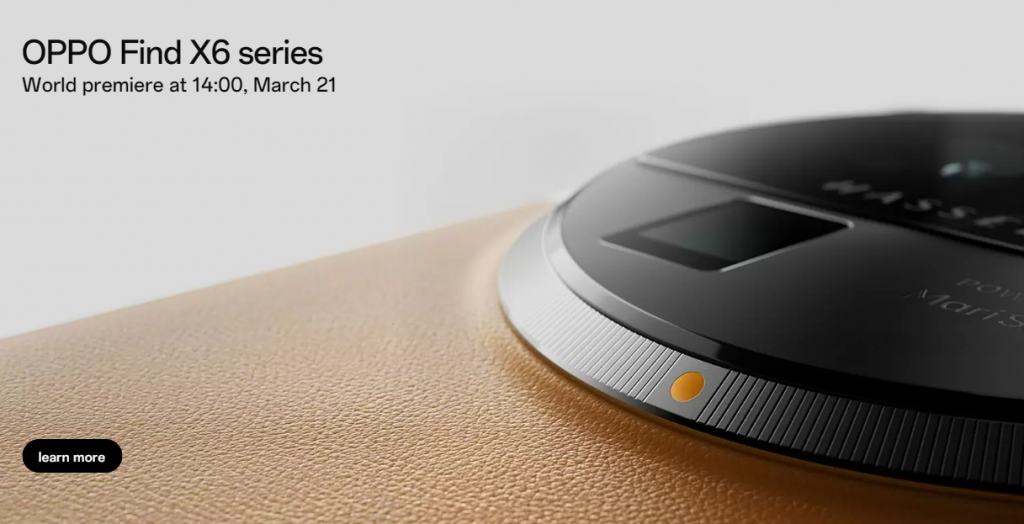
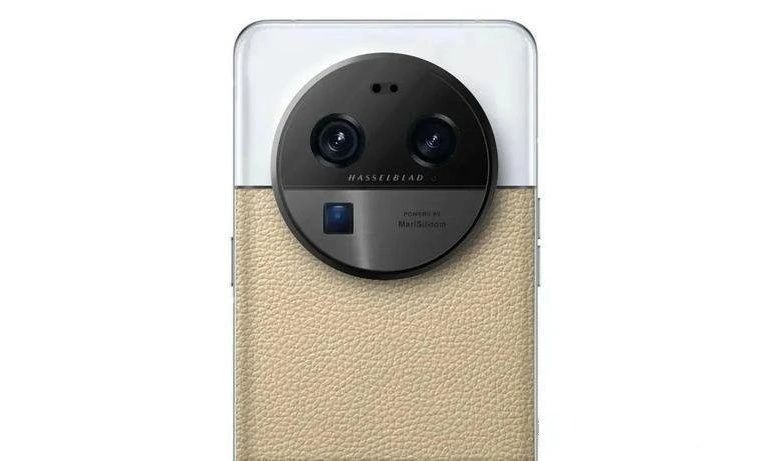
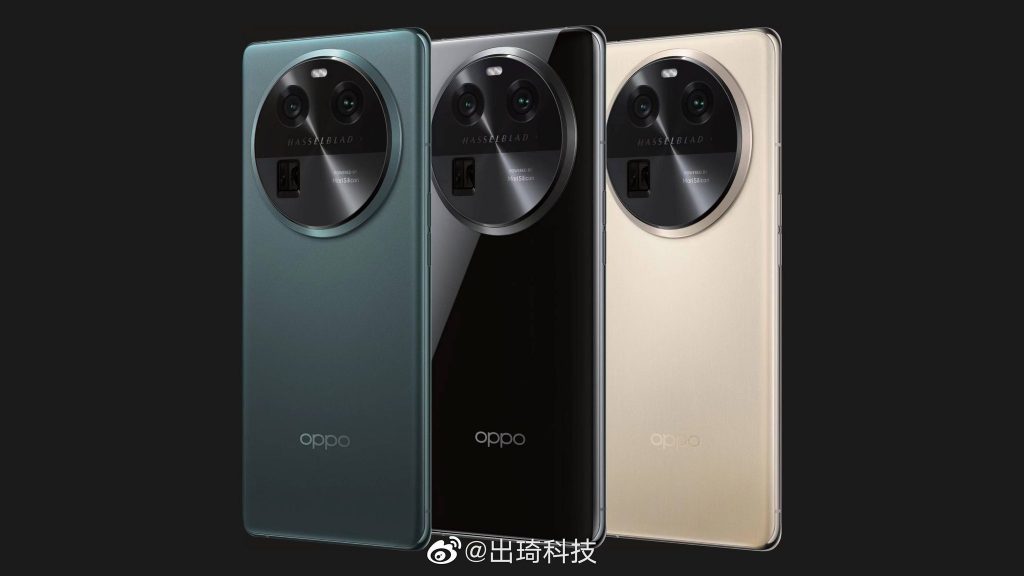
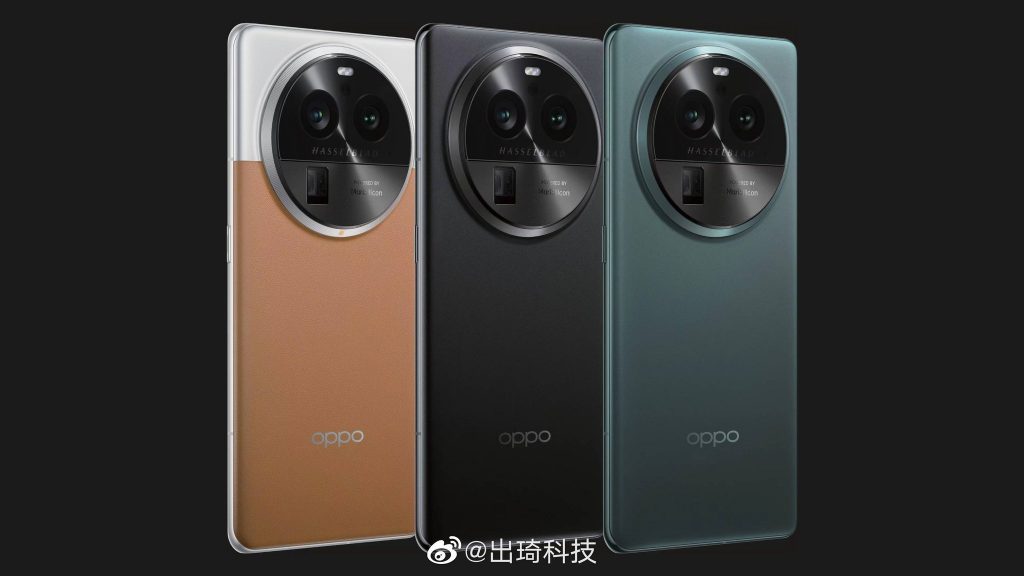
Oppo has officially announced the worldwide launch of the OPPO Find X6 series and the Oppo Pad 2 on March 21 at 2 PM. The company has started promoting the tablet, emphasizing its remarkable screen, which boasts a 7:5 golden ratio and delivers high-definition visuals with stunning color accuracy. Here are the details…

Discover the Oppo Pad 2: Innovative Design, Flagship Screen, and Advanced Features

The Oppo Pad 2 is designed to provide a book-like experience, thanks to its innovative 7:5 aspect ratio screen. This high-definition display ensures exceptional color accuracy and ease of use, whether you’re holding it horizontally or vertically. Oppo has unveiled an official poster featuring black and gold models of the tablet, along with a rear-centered camera.

The tablet is also compatible with new accessories, including a stylus and keyboard, to boost productivity and inspire creativity for users. These add-ons further demonstrate OPPO’s commitment to innovation in the mobile device market. According to earlier reports, the Oppo Pad 2 will be powered by the MediaTek Dimensity 9000 chip and will feature an 11-inch, 2800×2000 resolution LCD screen with a 144Hz refresh rate.

The display will have a maximum brightness of 500 nits and will support both Dolby Vision and HDR 10+. The device will house a 9500mAh battery and will offer 67W fast charging capabilities. The Oppo Pad 2 will come equipped with a new smart touch keyboard and a gold stylus (model OPN2201), providing users with a versatile and powerful device suited for various needs.

With the upcoming release of the Oppo Find X6 series and the Oppo Pad 2, the company is set to redefine mobile imaging technology. The superior flagship screen, robust processor, and advanced features make the tablet an attractive choice for anyone seeking a premium tablet experience.

RELATED:

(source)

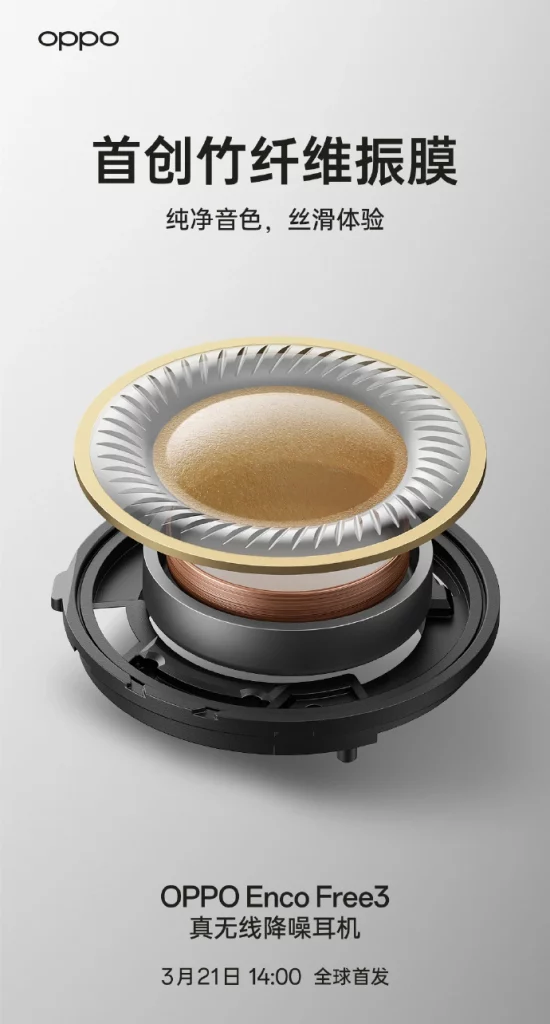
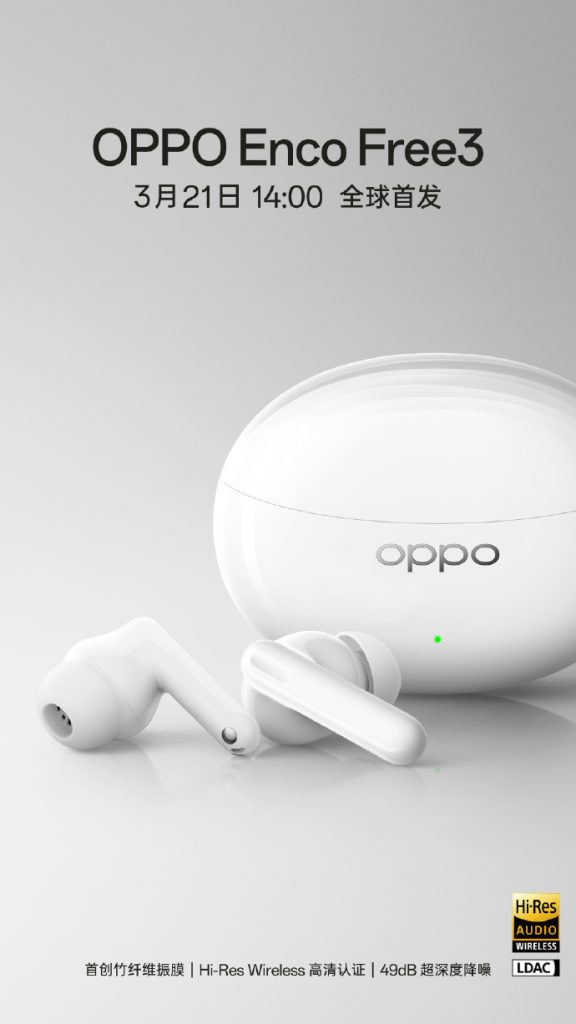
OPPO Enco Free3 earbuds launching on March 21 with World’s first Bamboo Fiber Diaphragm

After months of speculation and rumors, Oppo officially announced that it will be launching its newest Find X6 series of flagship phones on March 21 in China. The Oppo Pad 2 will also be making its debut alongside the phones. Today, the brand confirmed yet another product will share the stage with new flagships. Called the Oppo Enco Free3, it will be the company’s latest pair of TWS earbuds and feature what Oppo calls a “Bamboo Fiber Diaphragm”. Here are the details.

Today, Oppo released a series of teasers confirming the launch of the new Enco Free3 earbuds. As per the brand, the hearables will come with active noise cancelation that can reach up to 49dB (decibels). They will also support Hi-Res Wireless and boast LDAC Bluetooth decoding protocol.

The Chinese company says that its latest Enco Free3 earbuds are equipped with a unique bamboo fiber diaphragm sound unit. This component is apparently made up of bamboo fibers and is commonly used in high-end audio equipment like headphones and stereos. The bamboo fiber diaphragm is characterized by its thinness, hardness, and sensitivity, allowing it to reproduce more sound details and deliver a clear, natural, and realistic sound quality.

The Panasonic HC4 audio system is an example of a device that uses this kind of diaphragm unit to provide high-frequency reproduction and low-frequency dynamic performance.

Design-wise the earbuds look similar to some of Oppo’s Buds Air series models. The TWS has a stemmed design with the ‘L’ and ‘R’ symbols cut out on each earbud to form openings for the inner microphones. You get an oval charging case with a translucent upper panel. The Enco Free3 buds could be offered in Green and White colors.

RELATED:

iPhone 15 Pro Max to break Record with Thinnest smartphone Bezels yet

Remember when early iPhones had those chunky bezels all around? That was Apple‘s thing for quite some time but the company slowly started slimming bezels down, and now the latest iPhone 14 series is basically all screen. However, rumor has it that the upcoming iPhone 15 Pro Max will up the ante further and feature a display with the thinnest bezels ever seen on a smartphone. Here are the details.

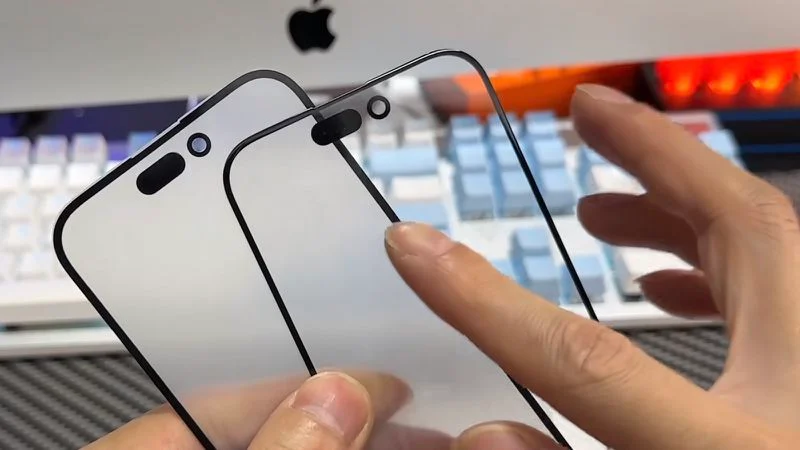
The information comes through Ice Universe, a reputed tipster with a penchant for ultra-thin bezels. According to The Cat, Apple’s upcoming flagship smartphone will boast impressively thin bezels measuring only 1.55mm – a significant reduction from the current iPhone 14 Pro Max’s 2.17mm borders. This would set a new record for the thinnest bezels on a smartphone, currently held by the Xiaomi 13 with 1.81mm bezels. By way of comparison, the Galaxy 22 and S23 have bezels that measure around 1.95mm.

iPhone-15-Pro-Front-Glass-Panel-Leak

This is arguably an interesting upgrade, but should you actually care about “ultra-thin” bezels? It is definitely a matter of personal preference. One can argue that the existing iPhone models already have slim-enough borders and a further reduction may not really affect the user experience.

While Ice Universe specifically mentions the Pro Max model, recently leaked renders suggest thinner bezels on the smaller iPhone 15 Pro as well. The two phones will continue to use the Dynamic Island design with a centered pill-shaped punch hole. Additionally, the design may also make its way to the vanilla iPhone 15 and 15 Plus. They may also flaunt a Dynamic Island but lack ProMotion and AOD features.

RELATED:

(source)
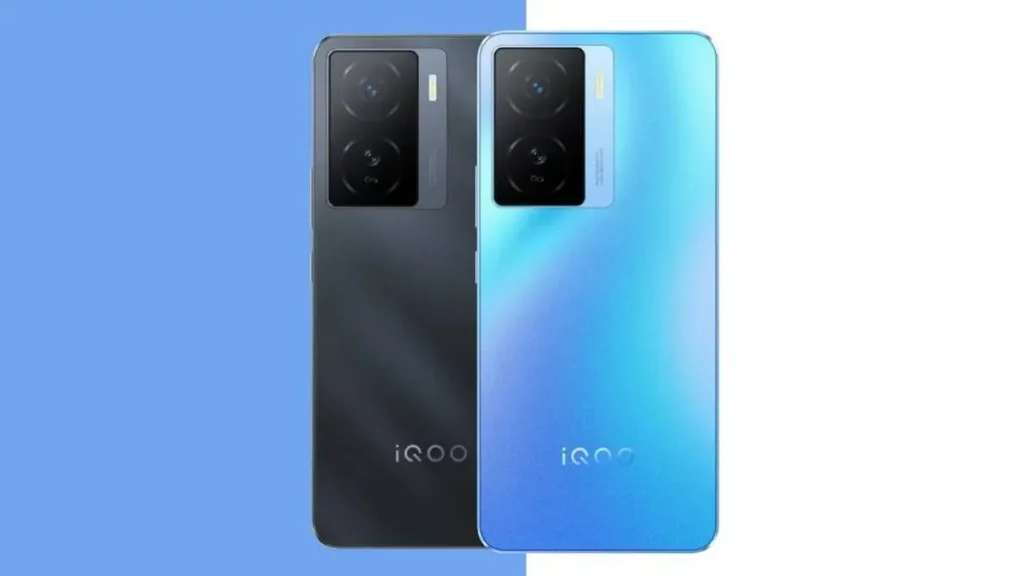
iQOO Z7 Series China Roundup: Specs, Design, & More

iQOO is gearing up to launch its latest Z generation of mid range smartphones soon in China. The iQOO Z7 lineup arrives as the successor to the Z6 series. So here’s a round up of all details that we have regarding the upcoming devices like its specs, design, and more.

iQOO Z7

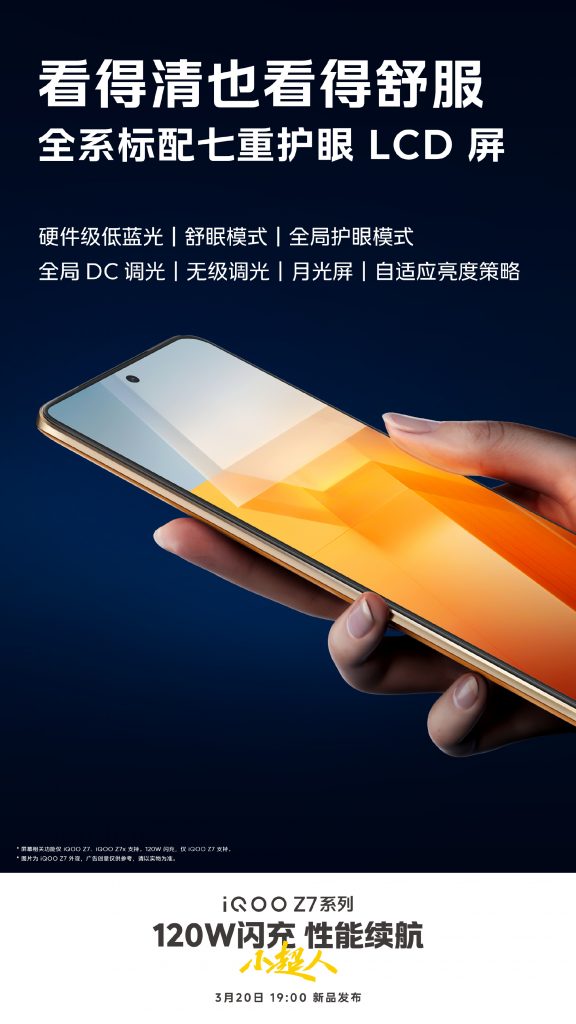
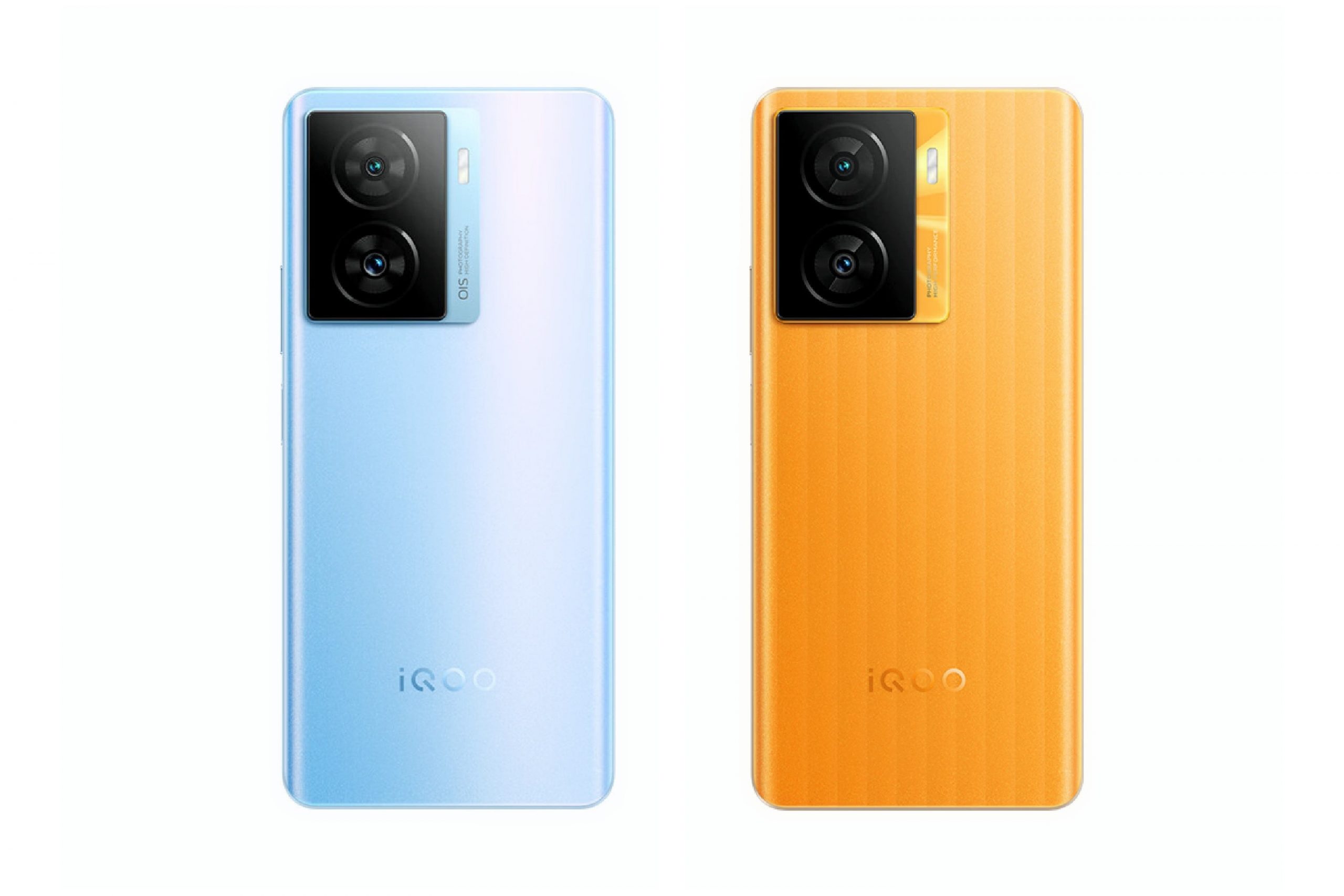
The new Z7 series includes the base Z7 and the Z7x models. The former is a higher end model and is expected to sport a FHD+ display with an LCD panel and a 120HZ refresh rate. The LCD panel will offer a punch hole cutout for the selfie camera and low blue light emission at the hardware level, eye protection mode, DC dimming, and adaptive brightness. The device will arrive in two color options, namely blue and orange.

iQOO

Under the hood, this device will be equipped with the Qualcomm Snapdragon 782G SoC. This chipset will be paired with up to 12GB of RAM and up to 156GB of internal storage. The iQOO Z7 will be powered by a 5,000mAh battery pack that will support an impressive 120W fast charging. The rear is believed to feature a 64 megapixel primary camera along with two 2 megapixel sensors and an 8 megapixel selfie shooter.

iQOO Z7x

The iQOO Z7x is a more affordable option in the upcoming lineup but still offers some notable specs. While the exact display parameters are still unclear, the brand confirmed that it will sport an LCD panel that also offers DC dimming, and low blue light output with eye protection. However, it is unclear if the display size will be the same as its more expensive sibling. Earlier today, the company revealed a new teaser for the series, revealing 7 ‘flagship’ features. This includes a NFC, OIS stabilization, infrared remote control sensor, X axis motor, dual stereo speakers, WiFi 6, and high performance antennas.

iQOO

This model will be equipped with the Snapdragon 695 SoC, although, it will be powered by a larger 6,000mAh battery pack that supports 80W fast charging. This model could offer either 6GB or 8GB of RAM as well . Unfortunately, there is still no information available regarding the camera on this model. Although, both the Z7 and Z7x will run on Android 13 OS based OriginOS 3.0 custom skin.

As of right now, finer details like expected pricing and full specs are still unclear. iQOO is set to launch both of these phones in China later this month on 20th March 2023. So stick around for more as we will be covering the launch event next month.

RELATED:

Oppo Find X6 series Roundup: Design, Specs, Price & More

On March 21, Oppo will be hosting a launch event to launch some new devices in China. Currently, it is confirmed that the Oppo Find X6 series flagship smartphones will launch at the event alongside the Oppo Pad 2. The new flagship smartphones will feature an eye-catching design alongside the latest chipsets and cutting-edge camera hardware. Let’s take a look at what’s known so far about these devices.

OPPO Find X6 series poster

Design & display

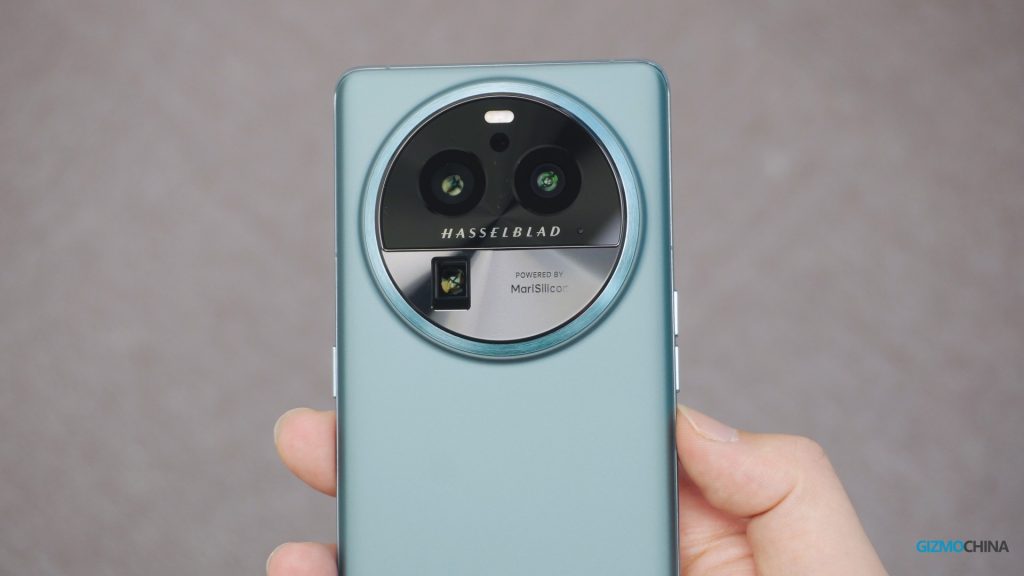
Starting off with the design, both the Oppo Find X6 and X6 Pro will feature a similar design. Both devices have a curved back along with curved edges. There is a large circular camera island on both smartphones that holds a triple camera arrangement, an LED flash, and some sensors.

oppo find x6

The Find X6 comes with a large screen measuring 6.74 inches and a screen resolution of 2772 x 1240 pixels. It features an adaptive refresh rate of 40-120Hz and a peak brightness of 1,400 nits. Meanwhile, the Pro version has a bigger 6.82-inch display with a higher resolution of 3,168 x 1,440 pixels and an impressive local peak brightness of 2,500 nits.

Performance

The Find X6 and Find X6 Pro differ in their processing power, with the former boasting the MediaTek Dimensity 9200 processor while the latter runs on the Qualcomm Snapdragon 8 Gen 2 SoC. However, both models share similarities in their LPDDR5x RAM and UFS 4.0 internal storage.

Oppo
Oppo Find X6

Both smartphones have appeared on Geekbench giving us an idea of their performance. The Find X6 Pro scored 1,494 and 4,973 points in Geekbench’s single-core and multi-core test results. On the other hand, the Find X6 model achieved a single-core score of 1806 and a multi-core score of 4705 on Geekbench 5.

Oppo
Oppo Find X6 Pro

The latest Android 13 operating system, customized with OPPO’s ColorOS interface, powers these smartphones. The Find X6 has a 4,800mAh battery with fast 80W charging, while the Pro version has a 5,000mAh battery and can charge at a super-fast rate of 100W.

Camera

On the camera front, users can expect a triple-camera setup at the back, paired with a 32-megapixel front-facing camera that’s perfect for capturing selfies and making video calls. The Pro variant of these smartphones will feature a primary camera with a 50-megapixel 1-inch Sony IMX988 sensor, accompanied by two other 50-megapixel Sony IMX890 cameras for ultra-wide and periscope zoom shots. Meanwhile, the standard version is anticipated to have three 50-megapixel cameras on the rear, including the Sony IMX890, Samsung JN1, and another Sony IMX890 sensor. Additionally, both models are expected to come equipped with Hasselblad camera optimizations and MariSilicon X2 ISP.

Pricing

A recent leak has revealed that the Find X6 Pro will be available in three different versions, including a base model with 12GB of RAM and 256GB of storage priced at 6,499 Yuan (~$947), a 16GB + 256GB variant priced at 6,799 Yuan (~$990) and a top-end model with 16GB of RAM and 512GB of storage priced at 6,999 Yuan (~$1020).

The Oppo Find X6 on the other hand will be available in two different configurations. The 12GB RAM and 256GB storage model will be priced at 4,699 Yuan(~$684), while the 16GB + 512GB variant will cost 5,199 Yuan (~$757).

The review is coming soon on the Youtube channel Gizmochina. Please subscribe and stay tuned.

RELATED:

OPPO Find X6 Pro Official Camera Samples Reveals Details About Camera Apertures

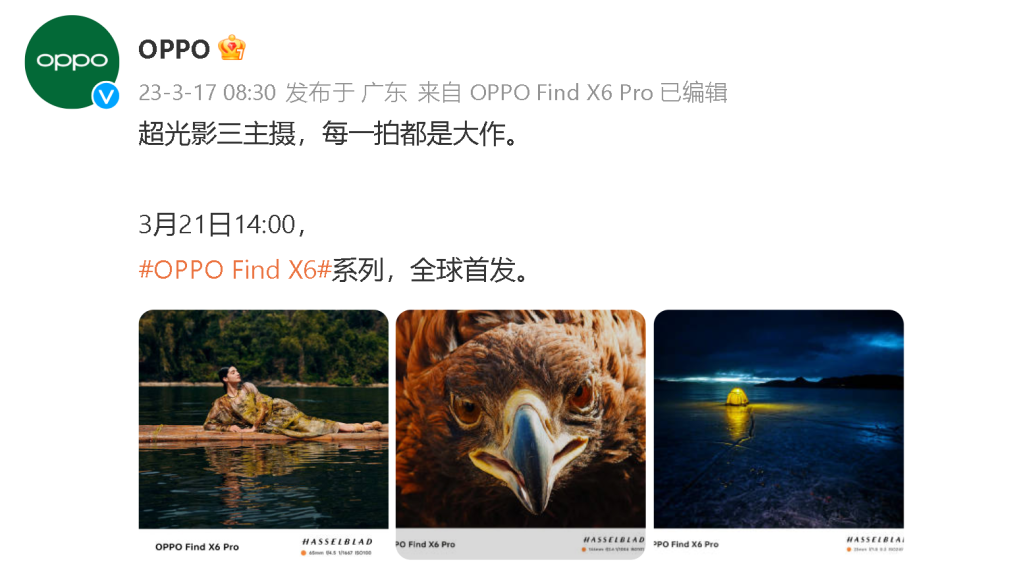
Earlier today, OnePlus CEO shared the upcoming OPPO Find X6 Pro’s low-light camera samples. The Find X6 series along with the OPPO Pad 2 tablet is set to launch on March 21st in China. Now ahead of the launch next week, the brand has officially shared camera samples of the Find X6 Pro confirming details about the sensor apertures. Additionally, the upcoming offering will also come with the legendary camera maker Hasselblad’s imaging capabilities. 

OPPO shared three photos shot from the Find X6 Pro on the microblogging platform Weibo. All three images show great details and sharpness in the picture clarity. OPPO also shared the EXIF of the captured photos. The landscape shot is likely taken from the primary camera and it is going to have a 23mm equivalent lens with an f/1.8 aperture. The eagle shot’s EXIF mentions a 144mm focal length with a bright  f/2.6 aperture on a telephoto lens and the zoom is likely digital. The final third image seems to be taken with a long optical zoom and the EXIF reads 65mm focal length at an f/4.5 aperture. However, looking at the image, the aperture figure could be an error since the telephoto lens certainly has f/2.6. 

Apart from the EXIF confirming the aperture values, the images don’t reveal any additional details. The Find X6 Pro’s triple rear camera setup is expected to comprise a 1-inch Sony IMX988 50MP main sensor and two Sony IMX890 50MP lenses for ultra-wide and periscope zoom shots. The smartphone is expected to feature MariSilicon X2 ISP and Hasselblad camera optimsations. 

Related:

boAt Wave Leap Call With 1.83-inch Display Launched In India

boAt has launched a new smartwatch in India. The latest offering from the homegrown brand is part of its Wave series. It is called the boAt Wave Leap Call. The device is an affordable offering and competes against other smartwatches from brands like Noise, Fire-Boltt, DIZO, and more in the market. Read on to know what it offers out of the box. 

The boAt Wave Leap Call features a square dial with a large 1.83-inch display bearing an HD resolution and 550 nits peak brightness. It is IP68-certified dust, sweat, and splash-resistant and the device has a crown-like button on the right side. 

On the health-centric front, the boAt Wave Leap Call is equipped with a heart rate monitor, SpO2 sensor, and a sleep tracker. There is also a daily activity tracker and breathing training sessions. The wearable device packs support for more than 100 sports modes. 

The boAt Wave Leap Call is equipped with a built-in microphone, speaker, and Bluetooth for hands-free calling. Users can save up to 10 contacts on the device and there is also dial pad for easier access. The device features Google Assistant and Siri. Other convenient features include music and camera control, weather updates, find my phone, etc. The boAt Wave Leap Call is claimed to deliver 10 days of battery on a single charge, 3 days with Bluetooth calling, and 60 days of standby time. 

The boAt Wave Leap Call is offered in Black, Blue, and Pink colours. It carries a special launch price tag of Rs 1,499 and can be purchased from Amazon starting March 20th. 

Related:

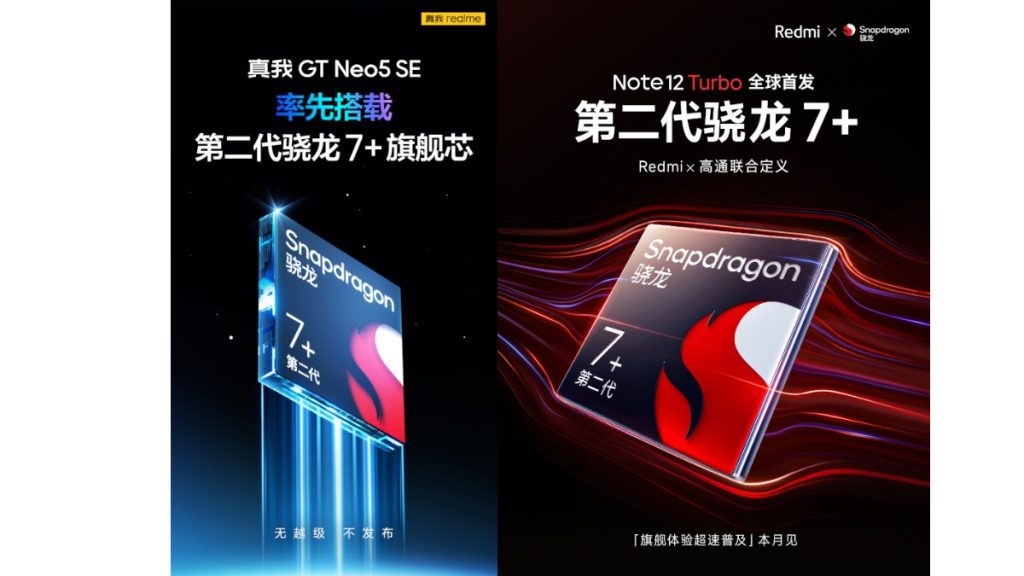
Qualcomm Snapdragon 7+ Gen 2 Announced, Confirmed To Power Redmi Note 12 Turbo and Realme GT Neo 5 SE

Qualcomm has launched the Snapdragon 7+ Gen 2 processor. It arrives as the successor to the last year’s Snapdragon 7 Gen 1. The newly announced chipset is a mid-range premium flagship processor for smartphones. It is said to pack a host of improvements over its predecessor. Read on to know more about it below. 

The Snapdragon 7+ Gen 2 is based on TSMC’s 4nm process technology. It comprises a primary Cortex X2 core clocked at 2.91GHz, three Cortex A710 performance CPUs at 2.49GHz, and four energy-efficient Cortex A510 cores ticking at 1.80GHz. Qualcomm says that the CPU configuration offers a 50 percent jump in performance compared to the Snapdragon 7 Gen 1. The Adreno GPU remains unnamed and is said to offer 2x performance increase and power efficiency also increases by 13 percent in various scenarios. The latest chipset comes with an integrated X62 5G modem-RF system with support for 4G/5G Dual SIM Dual Active. It also supports WiFi-6 and Bluetooth 5.3 connectivity. 

The Snapdragon 7+ Gen 2 is capable of supporting up to QHD+ resolution at 120Hz and Dolby Vision, HLG, and HDR10+ formats. It has an 18-bit triple ISP with support for a 200MP sensor and HDR video capture from two cameras simultaneously. The chipset comes with Snapdragon Elite gaming features like auto-variable refresh rate shading, volumetric rendering, and Snapdragon Sound with Qualcomm aptX for lossless music streaming. 

At the announcement, Qualcomm said that Snapdragon 7+ Gen 2-powered phones will launch from this month. Xiaomi sub-brand Redmi and Realme confirmed that they will launch two smartphones with the latest chipset. These are the Redmi Note 12 Turbo and Realme GT Neo 5 SE respectively. Both smartphones are set to launch in China later this month.  

Related:

Upcoming Smartphones: Oppo Find X6, Huawei P60, iQOO Z7, and more

There are going to be multiple smartphone launches in the next week. Five brands have scheduled events to debut new products.

One of these companies has planned two events for two different markets. All of these devices are new models, except for one by Realme, which will be introduced in an important market.

The other brands that will be involved in new phone releases are iQOO, Oppo, Huawei, and Samsung. Some of them will be debuting multiple handsets. Let’s take a glimpse at these devices.

Upcoming Smartphones Next Week

1. iQOO Z7 Series

iQOO Z7 (China)
iQOO Z7 (China)

iQOO has confirmed to launch the iQOO Z7 series in China on March 20 at 12 PM GMT+8. The very next day (March 21), the lineup is also planned to release in India at 12 PM IST.

The iQOO Z7 family for China includes two phones, namely iQOO Z7 and iQOO Z7x. Whereas for India, there’s only a single handset called iQOO Z7, and t it is different from the Chinese variant.

The Chinese iQOO Z7 series is said to offer centered punch-hole LCD displays, Qualcomm Snapdragon 782G/695 chipsets, and up to 120W charging. On the other hand, the Indian iQOO Z7 is expected to come with a dewdrop AMOLED display, a MediaTek Dimensity 920 SoC, and 80W charging.

2. Oppo Find X6 Series

Oppo Find X6 Pro
Oppo Find X6 Pro

The Oppo Find X6 series is set to launch on March 21 in China. It will be announced at an event that will begin at 2 PM GMT+8. The smartphones will be also accompanied by Oppo Pad 2.

The Find X6 series is said to include two models. The vanilla version will house a MediaTek Dimensity 9200 SoC, while the Pro variant will be powered by a Qualcomm Snapdragon 8 Gen 2 chip.

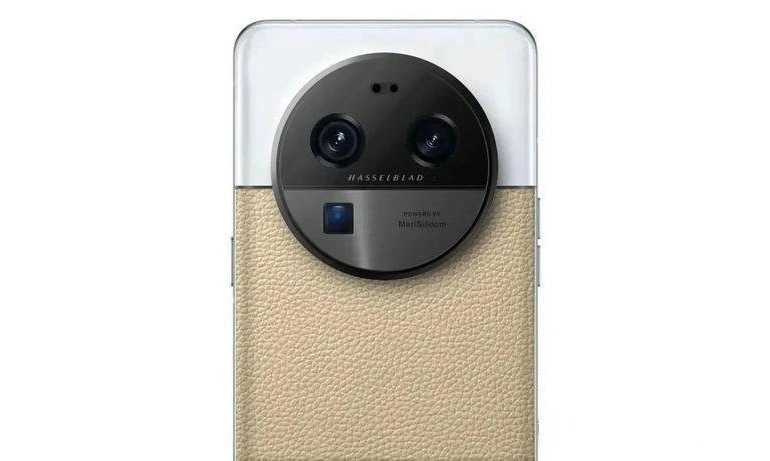
The Find X6 Pro will arrive with exciting features, such as a 50MP 1-inch main camera, Hasselbrad image processing, leather finish, 100W wired charging, and 50W wireless charging. Unfortunately, it may not release in global markets.

3. Realme C55

Realme C55
Realme C55

The Realme C55 is scheduled to launch in India on March 21 at 12:30 PM IST. This device is already official in Indonesia, so we know everything about it.

The C55 is just another 4G-only budget smartphone. But it comes with Apple’s Dynamic Island-like feature called ‘Mini Capsule.’

The phone comes with a 6.72-inch 90Hz display (LCD), a MediaTek Helio G88 chipset, a 64MP primary camera, a side-mounted fingerprint sensor, a 5,000mAh battery, and 33W charging support.

4. Huawei P60 Series and Mate X3

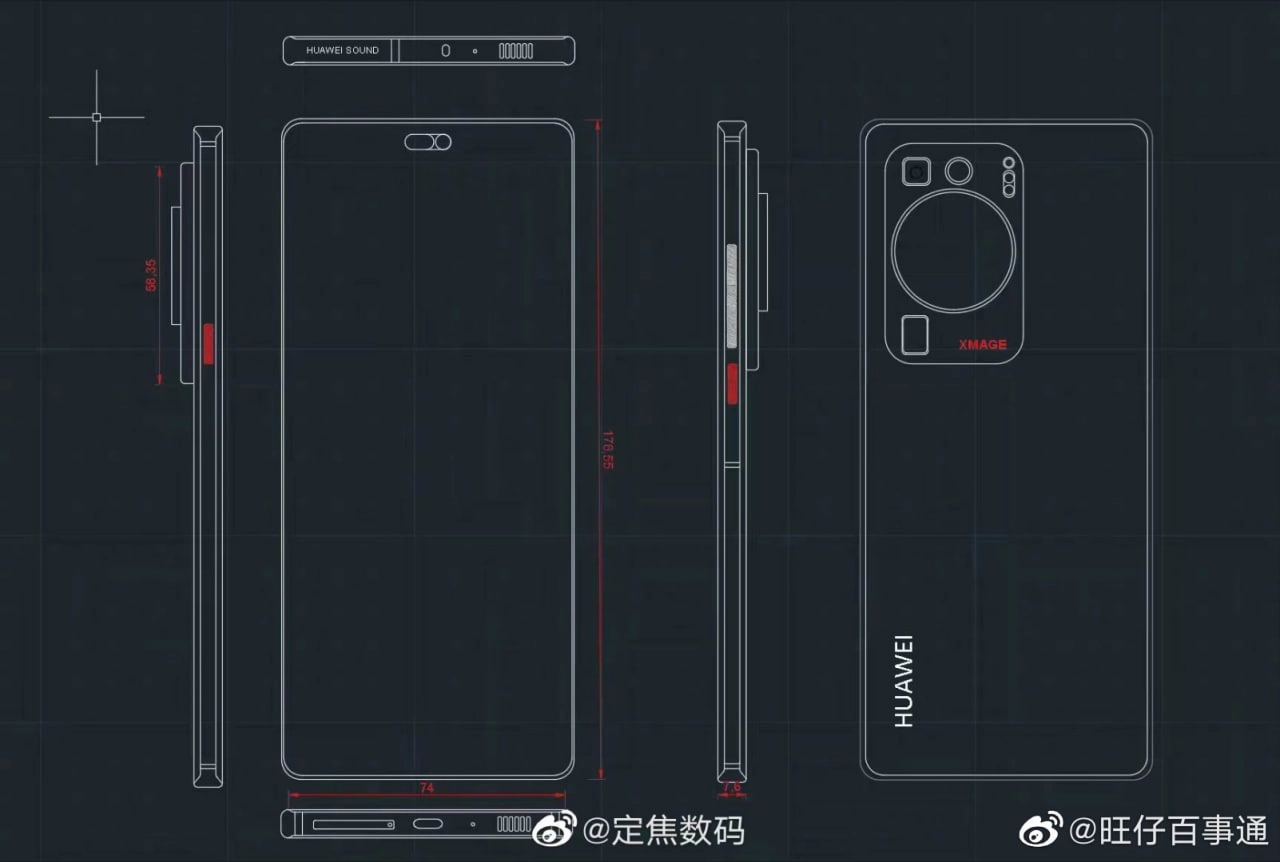
Huawei-P60-Pro-sketch
Huawei P60 Pro

The Huawei P60 series and Mate X3 are planned to launch in China on March 23 at 2:30 PM GMT+8. Multiple other products, such as MatePad 11 (2023) and FreeBuds Pro 2 Plus will be announced alongside these handsets.

The Huawei P60 lineup is expected to include three devices, namely P60, P60 Pro, and P60 Art. The Pro model is expected to come with a 2K OLED display, a Qualcomm Snapdragon 8 Gen 2 chip, and a self-developed XMAGE 2..0 image processing powered triple camera system headed by a 50MP Sony IMX888 sensor.

On the other hand, not much is known about the Mate X3, except that it will arrive with a 2K internal foldable display without any notch or punch-hole and a satellite communication system.

5. Samsung Galaxy F14

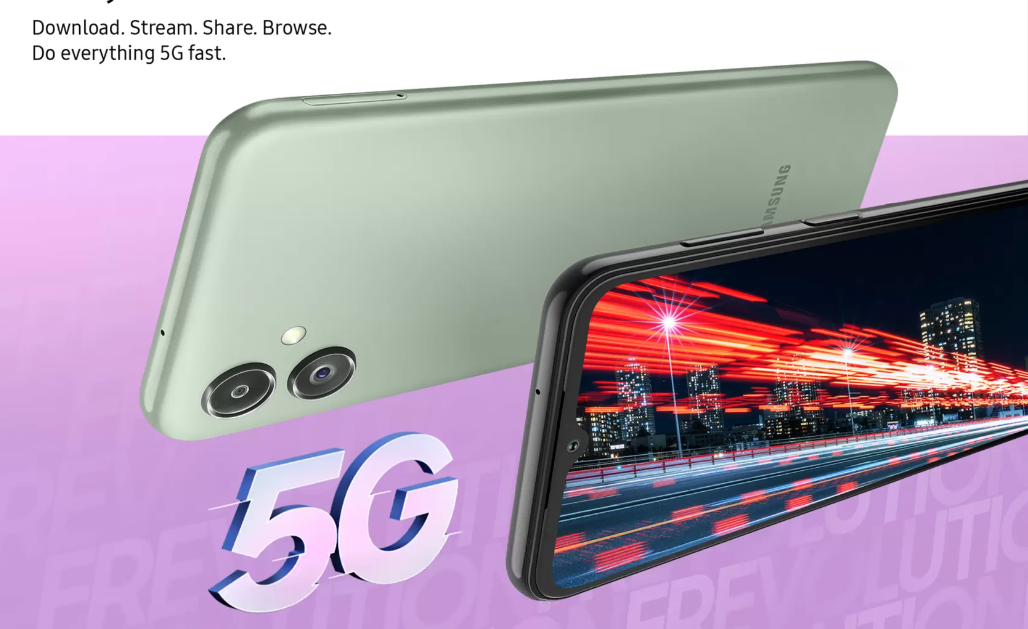
Samsung Galaxy F14

The Samsung Galaxy F14 is scheduled to go official in India on March 24 at 12 PM IST. Thanks to leaks and teasers, all the key features of the phone are already known.

It is said to come with a 6.6-inch FHD+ 90Hz display (LCD), an Exynos 1330 chipset, a 50MP primary camera, One UI Core 5 based on Android 13, 2 guaranteed Android updates, 13 5G bands, a 6,000mAh battery, and 25W charging support.

Last but not least, the handset is expected to cost under ₹15,000.

RELATED:

Discover Your Smartphone’s Display with Samsung’s OLED Era Page

Samsung has recently launched a dedicated webpage called “OLED Era” to help users identify whether their smartphones are equipped with OLED screens or not. This new feature is a useful resource for those interested in learning more about the display technology used in their Samsung devices. Here are the details…

Samsung’s OLED Era Page: A One-Stop Resource for Identifying OLED-equipped Smartphones

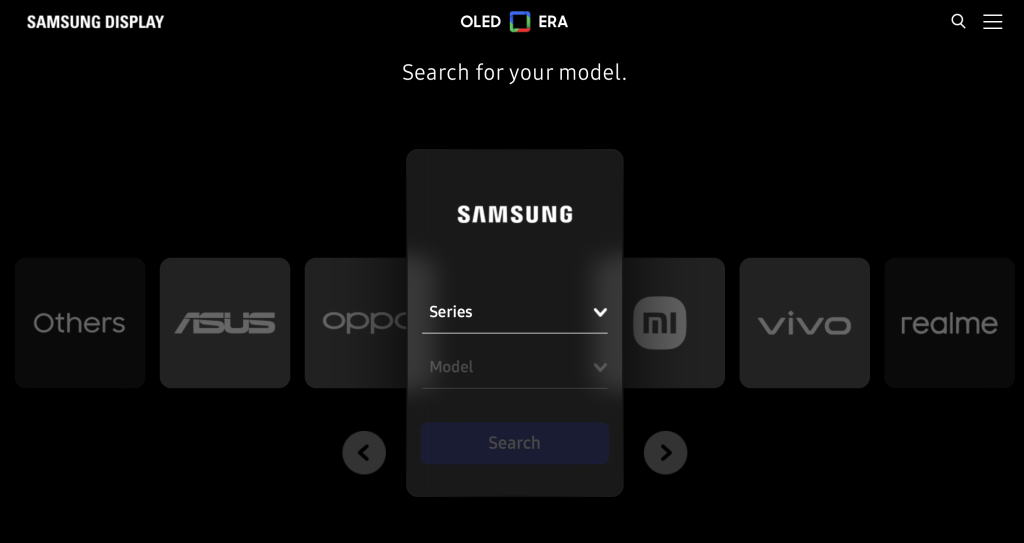
To access the OLED Era page, simply visit the Samsung Display website by clicking here. Once there, you can type in your smartphone’s brand and name to see if it has an OLED screen. Alternatively, you can browse a list of Samsung and other brands to find out which models have OLED displays.

Keep in mind that not every Samsung smartphone uses an OLED screen. Some budget-friendly models come with LCD screens, which are more affordable but also have some drawbacks compared to OLED screens. Samsung generally reserves OLED screens for its high-end smartphones, such as the Galaxy S and Galaxy Note series.

OLED, short for Organic Light Emitting Diode, is a display technology that uses organic compounds to create light. Unlike LCD screens that need a backlight, each pixel in an OLED screen emits its own light. This results in more accurate colors, deeper blacks, and higher contrast ratios. OLED screens are slimmer, lighter, and more energy-efficient than LCD screens. They also boast faster refresh rates, making them perfect for gaming and other fast-paced applications.

There are two primary types of OLED screens: PMOLED (Passive Matrix OLED) and AMOLED (Active Matrix OLED). PMOLED screens are more straightforward and cheaper, but they have limited resolution, making them suitable for small displays like smartwatches. AMOLED screens, on the other hand, are more advanced and costly but offer higher resolution and superior performance, which is ideal for larger displays like smartphones and TVs.

Samsung’s OLED Era page is a convenient tool for users looking to learn more about their smartphone’s display technology. By offering an easy way to find out if a Samsung smartphone features an OLED screen, Samsung provides valuable information for those interested in the benefits of OLED technology. As OLED screens continue to grow in popularity and become more common in electronic devices, resources like Samsung’s OLED Era page will be invaluable for consumers seeking the ultimate display experience.

RELATED:

(via)

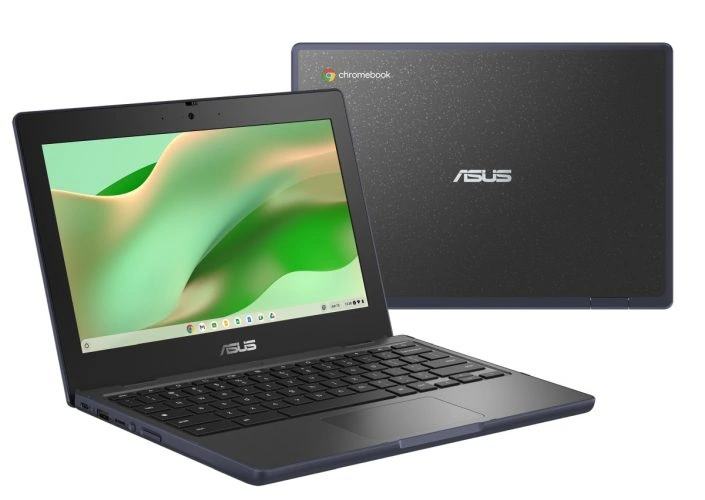
Asus Chromebook CR11 & CR11 Flip laptops launched in China with Intel N200

Asus has just updated its budget lineup of Chromebooks. These new notebooks are geared towards educational purposes and includes the new Chromebook CR11 and CR11 Flip model, both of which are based on the Intel Alder Lake N processors.

Asus

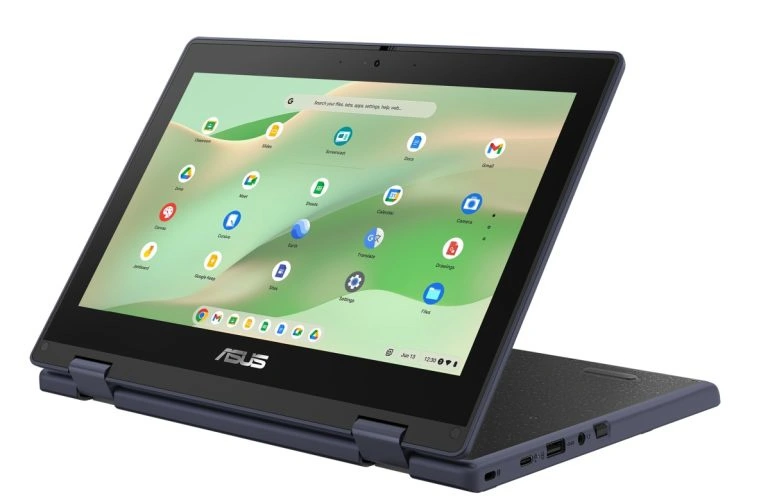
The Taiwanese PC maker’s new Chromebook models sport an 11.6 inch HD displays. The CR11 (CR1102C) features an Intel N200 processor that is paired with 8GB of RAM and 128GB of eMMC storage. On the other hand, Chromebook CR11 Flip (CR1102F) is a flip model with touchscreen support, an adjustable stylus, and a 360 degree hinge. Both laptops also feature a study build with rubber bumpers, spill resistant keyboards, MIL-STD-810H tested drop proof and shock resistant design.

The new notebooks are also built as a portable offering for IT professionals and launched the new Asus laptops with a modular design, which makes it easier to swap out components like the touchpads, display, and keyboards in a matter of minutes. Both the Asus Chromebook CR11 and CR11 Flip arrive with two USB 3.2 Gen 1 Type C ports along with USB 3.2 Gen 1 Type A ports, 3.5mm headphone jack, and a microSD card slot. Other notable features include, WiFi 6, Bluetooth 5.1, 50Wh battery, and a 45W USB Type C power adapter.

Asus

Both models have a 720p webcam with a privacy shutter, although, the CR11 Flip model also offers an 8 megapixel world facing camera above the keyboard. So when you flip the keyboard thanks to the 360 degree hinge you can take videos or pictures like a tablet. The CR11 can also fit the stylus inside the body, which is an optional purchase.

RELATED:

Baidu Shares Fall amidst a disappointing launch of Ernie Bot: The much-awaited rival of ChatGPT

Baidu launched Ernie Bot the AI chatbot which will compete with ChatGPT, yesterday at Baidu’s Beijing Headquarter. The launch event saw CEO Robin Li presenting slides of images and pre-recorded videos of the chatbot instead of a live demo. Even the recorded videos did not show any extraordinary features, which ultimately led to a fall in the company’s share price. 

source: Baidu Launch Event

The hour-long launch event gave a very small glimpse of the much-awaited Ernie Bot which was speculated to take on the world’s most famous AI app ChtaGPT. ChatGPT is taking the world by storm with its ability to converse like a human, compose music, write and debug computer programs, write stories, poetries, fairy tales, essays, and speeches, take tests, and more. However, the launch event of Ernie Bot showed very limited features like the bot carrying out mathematical calculations, speaking in Chinese dialects, and generating a video and image with text prompts. 

Also where ChatGPT was opened to the general public last November, Ernie Bot is still developing and Baidu has released the beta version to selected users only. The company said that it will open the chatbot for a small group of individual users with invitation codes. Corporate organizations who wish to use the chatbot’s service can embed the bot into their products via Baidu’s cloud platform. 

Baidu’s Share Price and Future Value

Last month when Baidu announced its plan to take on ChatGPT with the indigenous Ernie Bot the company shares soar within hours and gained almost 15%. However, the use of pre-recorded videos and lack of public launch disappointed the investors and send the company stocks crashing. Baidu’s Hong Kong shares fell as much as 10% during the event and closed at a 6.4% lower price. The company lost almost $3 billion in market value within an hour. 

During the presentation, CEO Li admitted that Ernie Bot was far from perfect and was launched not because it was ready but only because the market demanded it. Post-event, the company said that after the release of ChatGPT, only Baidu has made a benchmark product among the major tech companies in the world. Though the company did not comment on the sharp drop in stock price, it released an official statement saying that the traffic on Baidu’s cloud was soaring as more than 30,000 corporate users had applied to test the API of Ernie Bot’s business-facing edition. 

86Research analyst Charlie Chai said that though the event didn’t go well with investors, he still viewed Baidu as the best in China’s AI space. He further added that he would still advise investors to patiently hold on to Baidu shares as the company has great future prospects. 

Baidu has great plans for using Artificial Intelligence in almost all segments of its business. The company has spent years in research and Development and invested extensively in Artificial Intelligence and Deep Learning Technology. The company’s game plan is to use Ernie Bot to revolutionize its search engine and advance its cloud services. It also plans to integrate the AI chatbot with its smart car technology and household appliances thereby creating a whole new eco-system controlled by Artificial Intelligence.

Related: 

(via)

OnePlus CEO shares Oppo Find X6 Pro’s low light camera samples

Oppo is gearing up to launch its latest generation of flagship smartphones later this month. But ahead of their official announcement, the CEO of OnePlus has shared some impressive low light camera samples taken from the Find X6 Pro.

Oppo

Peta Lau, the CEO and Co Founder of OnePlus, shared the camera samples on his official Weibo account (a Chinese microblogging website). In the social media post, the executive stated that he saw camera samples taken from the telephoto shooter on the Find X6 Pro yesterday and today (17th March 2023) he got his hands on low light camera samples. For those unaware, the Chinese smartphone maker is gearing up to the launch the Oppo Find X6 series on March 21.

Oppo

During this event, the company will also unveil a number of new products like the Pad 2 flagship tablet, Enco Free 3 truly wireless earbuds. Looking at the images shared by the exec, there were three pictures uploaded of the same scene for a better comparison. The first image is likely the one taken from the Find X6 Pro and we can see that it manages to retain a fair amount of detail in a night scenario.

The image does not over expose the light sources while the other two images show blown out scenes. Furthermore, it also keeps the scene around the church well lit and doesn’t darken the entire scene. This was all the information shared in the social media post, so stick around for more as we will be covering the launch event later this month.

RELATED:

Xiaomi’s Innovative AR Glasses Bring QR Code Payments to Life

Xiaomi is applying for a patent that could change how we use augmented reality (AR) glasses. The patent, published by the State Intellectual Property Office, focuses on AR glasses capable of recognizing QR codes to perform payments. This creative approach has the potential to enhance user experience and convenience in a range of payment situations. Here are the details…

AR Glasses with Built-in Payment Features

The patent describes AR glasses with an image capture device that scans the wearer’s surroundings. The system then finds the payee’s QR code in the captured image. After recognizing the QR code, the AR glasses start an identity verification process to ensure secure transactions.

Xiaomi granted patent for smart glasses with detection & therapeutic  properties - Gizmochina
sample image

If the identity verification is successful, the AR glasses send a payment command to the server. The server then processes the payment based on the command. This smooth integration of payment functionality in AR glasses aims to greatly improve user experience. The proposed AR glasses with QR code recognition and payment abilities offer several advantages to users:

  • Users can pay directly through their AR glasses without needing a separate device, like a smartphone or credit card.
  • The built-in identity verification process in the AR glasses ensures safe transactions and lowers the risk of fraud.
  • The streamlined payment process using AR glasses can save time, especially in busy or crowded areas.
  • This technology can make payments easier for people with physical disabilities who might struggle with traditional payment methods.
  • Adding payment features to AR glasses could lead to more immersive shopping experiences, virtual tours, and entertainment options.

Xiaomi’s patent application for AR glasses with QR code recognition and payment integration showcases the company’s dedication to developing innovative technology. If successfully implemented, this invention could change how users interact with AR glasses and revolutionize payments in various situations. As technology advances, we can expect to see more groundbreaking applications that further improve user experience and convenience.

RELATED:

(source)
Xiaopeng’s Flying Car Prototype Aims for Stability but There is Room for Improvement

For a long time, people have dreamed of flying cars. This idea often pops up in famous sci-fi movies like Star Wars. Sadly, the technology isn’t quite there yet, even with ongoing research. However, we’re getting closer to making this dream a reality. Xiaopeng recently showcased a flying car prototype with four wheels and propellers. It can fly, but it still needs some fine-tuning. Here are the details…

Xiaopeng’s Flying Car Prototype Aims for Stability and Reduced Noise

Guangdong Huitian Aerospace Technology has been granted a patent for their innovative “flying car.” This remarkable vehicle combines the best of both worlds, boasting four wheels for road use and four propellers for flight. A car blogger recently shared a flight demonstration of the prototype, highlighting its capabilities while also pointing out areas for improvement. (You can watch the video of the vehicle by clicking here.)

Although the prototype differs slightly from the patent drawings, it maintains the key features of four wheels and propellers. The flight demonstration showed that the vehicle is capable of flying, but its stability and lack of vertical take-off indicate that there is room for enhancement.

During the demonstration, it was evident that the flying car generates a considerable amount of noise. Additionally, the powerful winds created by the propellers disturbed nearby branches. These factors emphasize the need for further development before the flying car is ready for mass production and everyday use.

In addition to the flying car, Xiaopeng Huitian has developed the Luhanger X2, a two-seater flying car that has received a chartered flight certificate from the Civil Aviation Administration of China. The Luhanger X2 has completed over 3,000 test flights since its first successful flight in June 2021. With impressive specs like a maximum take-off weight of 560kg, a battery life of 35 minutes, and a top flight speed of 130km/h, mass production is set to begin in 2024 at an affordable price point.

Xiaopeng’s flying car prototype offers an exciting glimpse into the future of transportation. Although the initial demonstration revealed its ability to fly, it also highlighted areas where refinement is needed before mass production can commence. As Xiaopeng Huitian continues to perfect their flying car technology, we can look forward to a revolutionary shift in how we travel.

RELATED:

(source)
iQOO Z7 series teased, features OIS, Stereo Speakers, Infrared Sensor & more

Earlier today, iQOO shared a new teaser for its upcoming Z7 series of smartphones. The device is set to launch later this month and the company has revealed 7 of its high end features. So let’s have a look.

Looking at the official teaser, the Chinese smartphone maker has revealed that the new devices will feature some ‘flagship’ specs and features. This includes OIS (Optical Image Stabilization) for its rear camera, which will help improve stability while recording videos and also improve low light image results as well. Furthermore, The iQOO Z7 series will house an X axis linear motor and dual stereo speakers for a great audio experience.

iQOO

The upcoming smartphone will feature WiFi 6 standard for better wireless connection and even high performance antennas and NFC. Lastly, the Z7 lineup will also feature a remote control infrared sensor. This will basically allow users to control other gadgets as well. Based on what we know so far, the iQOO Z7 will be powered by a large 5,000mAh battery pack that supports 120W fast charging.

Under the hood, the Z7 will be equipped with a Qualcomm Snapdragon 782G SoC. Meanwhile, the Z7x will house a larger 6,000mAh battery battery pack but supports a slower 80W fast charging. This model will feature the Snapdragon 695 SoC. The entire Z7lineup will feature an LCD panel with support for DC dimming. This is all the information the company shared at the moment, so stick around for more updates as we will be covering the March 20 launch.

RELATED:

Google Pixel Fold will reportedly cost much lesser than Galaxy Z Fold 4 & Fold 5

Google has been known to be working on its very own foldable smartphone for sometime now. While we have covered various rumors and reports regarding the Pixel Fold, a new leak has revealed its pricing and it is quite noteworthy. So here are all the details.

The latest leak arrives from known tipster Yogesh Brar. Apparently, the Pixel Fold will launch with a price range between 1,300 to 1,500 US Dollars. If this leak is true, it means that the Search Engine giant’s first ever foldable phone might be as much as 500 US Dollars cheaper than the Samsung Galaxy Z Fold 4. The Galaxy Z Fold 4 launched last year and is the latest foldable model from the South Korean brand. Notably, Samsung is also the market leader in the foldable handset market.

Google

At this price point, the Pixel Fold is likely going to be quite cheaper than the Galaxy Z Fold 5, which is set to launch later this year since it would likely have a price tag similar to the Fold 4. The tipster further added that Google will unveil the highly anticipated Pixel Fold and mid range Pixel 7a at the Google I/O. This major event will likely be hosted sometime in May 2023. Previously, the Pixel Fold and the Pixel 7a was believed to launch sometime in June.

For those unaware, the Pixel 7a is believed to launch for a price tag of around 450 to 500 US Dollars, which is around the same the Pixel 6a’s launch price. Keep in mind that this is still unconfirmed information so take this news with a pinch of salt for now and stick around for more updates regarding this matter.

RELATED:

iQOO Z7 5G Price in India Revealed, Sale Begins on March 21

iQOO Z7 5G will be announced on March 21 in India. The device will go on sale on the same date. Ahead of the launch, the company has confirmed the price of the device. The latest offering arrives as the successor to the last year’s Z6 5G. The iQOO Z7 5G falls under the Rs 20,000 price bracket. It competes against the likes of the Redmi Note 12 5G, Realme 10 Pro 5G, POCO X5 5G, and more in the market. Read on to know what it offers out of the box. 

iQOO

The iQOO Z7 5G features a 6.38-inch AMOLED display bearing an FHD+ resolution and a waterdrop notch. It comes with a 90Hz refresh rate, 1,300 nits peak brightness, and HDR10+ support. There is also an in-screen fingerprint scanner. The smartphone has a boxy design and a rectangular rear camera module. 

On the imaging front, the iQOO Z7 5G has dual rear cameras. The setup consists of a 64MP ISOCELL GW3 primary sensor with optical image stabilization as well as electronic image stabilization. There is a 2MP depth lens and on the front, the device features a 16MP selfie snapper. The smartphone packs 4K video recording and Vlog movie mode. 

Internally, the iQOO Z7 5G is equipped with a MediaTek Dimensity 920 processor based on a 6nm process. It is offered in 6GB and 8GB RAM options with both packing 128GB onboard storage. The smartphone draws its power from a 5,000mAh battery unit with support for 44W fast charging. 

The iQOO Z7 5G has connectivity options like WiFi-6, dual SIM 5G, USB-C port, 3.5mm headphone jack, Bluetooth, and GPS. 

The iQOO Z7 5G costs Rs 18,999 and Rs 19,999 for the 6GB and 8GB RAM variants. HDFC and ICICI Bank customers will be eligible for a flat Rs 1,500 instant discount. The smartphone will go on sale from March 21st, 1 pm onwards and can be purchased in Black and Blue colours.

Related:

Apple Works on Screen Protection for Foldable iPhones/iPads

Foldable devices are becoming increasingly popular. Almost every day, a new company launches its own foldable smartphone. However, these devices have a major drawback: their flexible OLED displays are highly fragile and can be easily damaged by minimal pressure. To address this issue, Apple is designing a protective system specifically for foldable iPhone and iPad screens, guarding against damage from drops. Here are the details…

Apple Develops Innovative Solution for Foldable iPhone/iPad Screen Protection

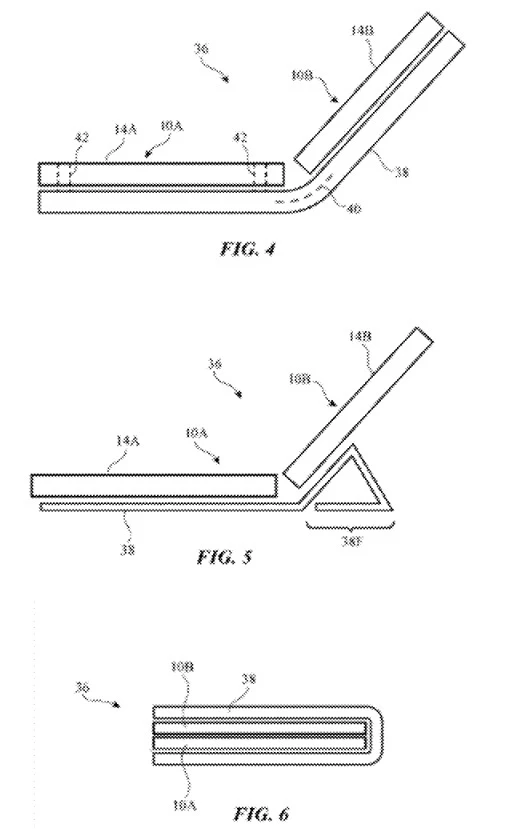
Apple recently sent a patent application to the U.S. Patent and Trademark Office (USPTO) called “Self-Retracting Display Device And Techniques For Protecting Screen Using Drop Detection”. The idea is to use sensors in devices with foldable or rollable screens to figure out if they are falling. If the device is falling, it could close or partly retract the screen to keep the sensitive display from hitting the ground.

Apple foldable screen patent

The patent application says that even folding the screen to an angle less than 180 degrees could help protect it. This is because the edges of the device would hit the ground first, not the screen. A rollable screen could pull the display back automatically if the device falls too fast. Ming-Chi Kuo, an analyst who often makes correct predictions about Apple products, thinks a foldable iPad might be released in 2025.

However, even the best experts can be wrong sometimes. In 2021, Kuo guessed that a foldable iPhone would come out in 2023 and sell 20 million units. Kuo’s newest guess is that a foldable iPad could have a carbon fiber kickstand. This would let users set the device at an angle that’s better for watching content on the screen without holding it. While these ideas are interesting, it’s important to remember that they are only patent applications and guesses right now. But it’s clear that Apple is working hard to find ways to protect foldable devices’ screens from being damaged by drops.

RELATED:

(via)

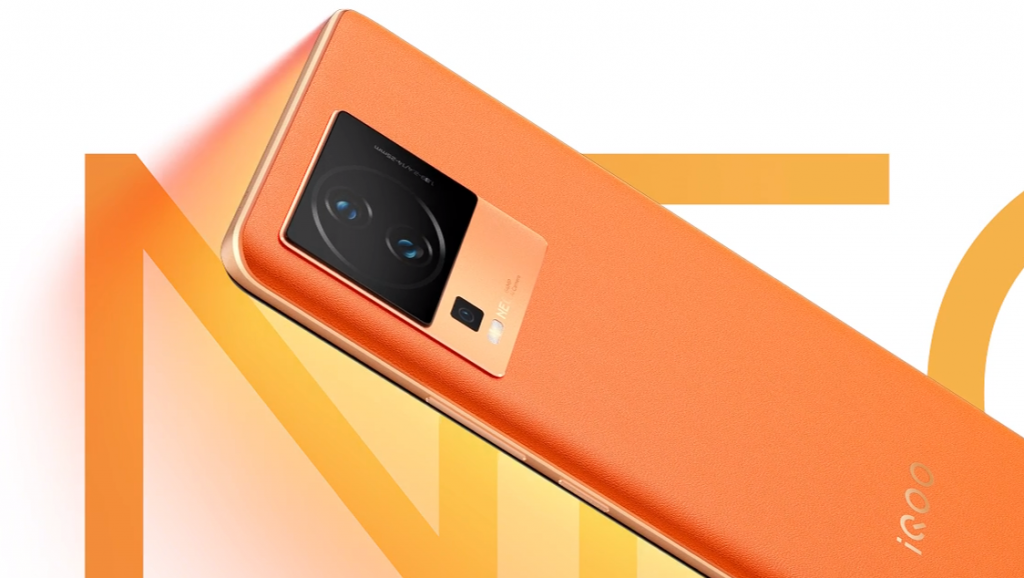
iQOO Neo 8 series key specs emerge: 120W fast charging, Dimensity 9200+/Snapdragon 8+ Gen 1 chips onboard

It was recently revealed that the iQOO Neo 8 series smartphones are in development. The brand could launch these devices in the second half of 2022. So far, some details about the iQOO Neo 8 and the Neo 8 Pro have surfaced online. Now, Weibo tipster DCS has revealed more details about these devices.

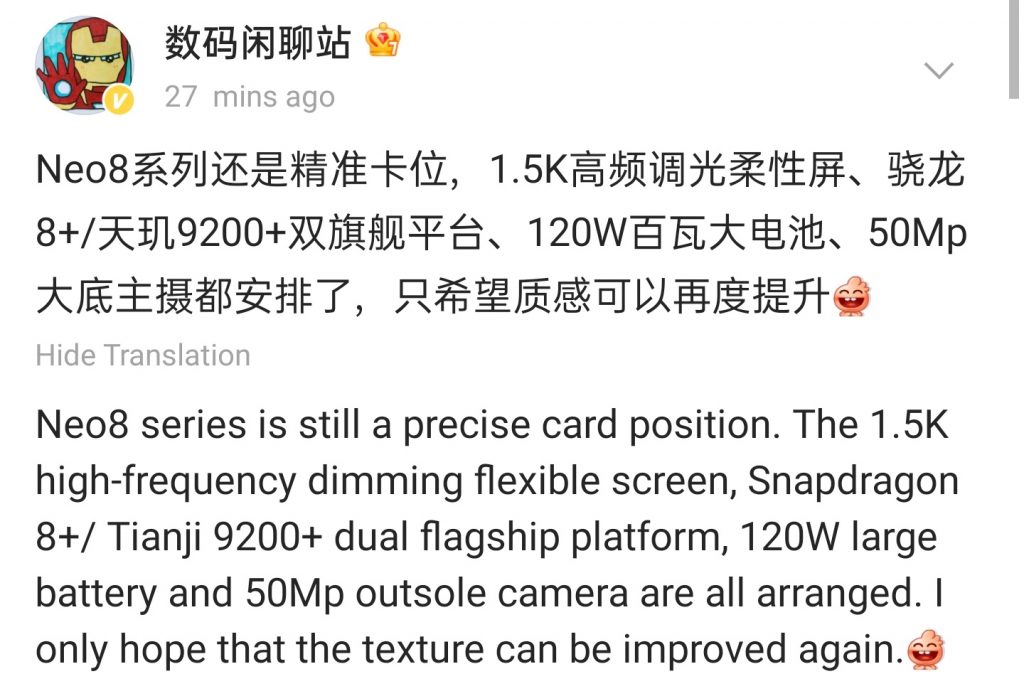
According to the tipster, the upcoming iQOO Neo 8 series is rumored to boast a high-resolution 1.5K display with support for high-frequency PWM dimming. Under the hood, the Neo 8 Pro is expected to be equipped with a powerful Qualcomm Snapdragon 8+ Gen 1 SoC, while the standard model will feature a Dimensity 9200+ SoC. Although information about the Dimensity 9200+ is scarce, it will essentially be an upgraded Dimensity 9200, which is currently serving as the powerhouse of devices like the Vivo X90 and X90 Pro.

iQOO

The Neo 8 series will also feature 120W fast charging, which is not surprising given that its predecessor already supports this feature. The battery capacity has not been revealed yet, but it is likely to be around 5000mAh.

In terms of the camera, the Neo 8 series is expected to sport a 50MP primary camera sensor, with the Neo 8 Pro possibly featuring a larger 1/1.5-inch camera sensor. However, the brand of the sensor has not been disclosed. The Neo 8 series will offer up to 16GB of RAM and 256GB of internal storage, but other specifications remain unknown. The series is set to launch in China in May 2023, according to the source.

RELATED:

(via)