OPPO is gearing up to launch its next-generation OPPO Watch 3 series wearable devices sometime later this month. As the name indicates, the smartwatch will be a successor to the OPPO Watch 2 launched last year.
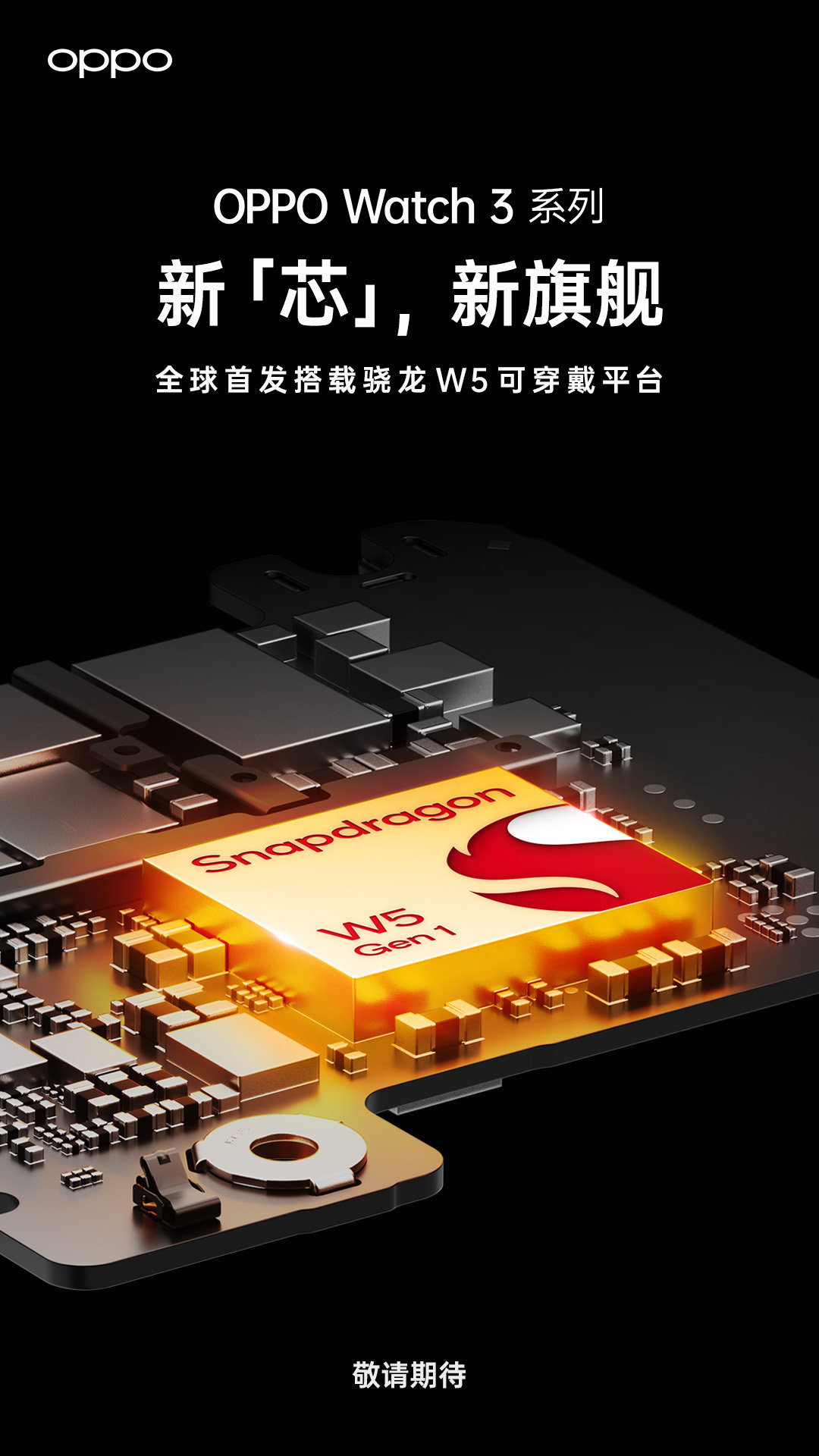
Now, ahead of the official launch, the company has shared a teaser poster for the OPPO Watch 3 series, which confirms the chipset that will power the upcoming smartwatches.
The teaser poster confirms that the OPPO Watch 3 series will come powered by the newly announced Qualcomm Snapdragon W5 wearable platform. This makes it the first smartwatch to be powered by this new chipset.
A few days ago, Qualcomm announced its all-new Snapdragon W5 Gen 1 and W5+ Gen 1 processors built using the 4nm process. The chips, made especially for wearable devices, offer 2x power using half the power compared to their predecessor.
OPPO has not revealed the launch date for the upcoming smartwatches, nor has it revealed much about the devices’ specifications and features. But we expect to know more through teasers and leaks in the coming days.
If the reports are to be believed, then the OPPO Watch 3 series will have three models in the lineup and feature a high screen-to-body ratio and support for eSIM functionality. They will be running ColorOS Watch operating system.
Apart from OPPO, TicWatch has also confirmed that its upcoming flagship smartwatch models will come powered by the Snapdragon W5+ Gen 1 processor. The company is expected to launch TicWatch 4 Pro, the first device with W5+ chip, in the coming weeks.
Samsung has confirmed that the company will be hosting its Galaxy Unpacked event on 10th August, where the upcoming foldable smartphones from the brand will be announced.
Ahead of the launch event, the company has shared a new teaser video that teases the next-generation foldable smartphones — Galaxy Z Fold 4 and the Galaxy Z Flip 4.
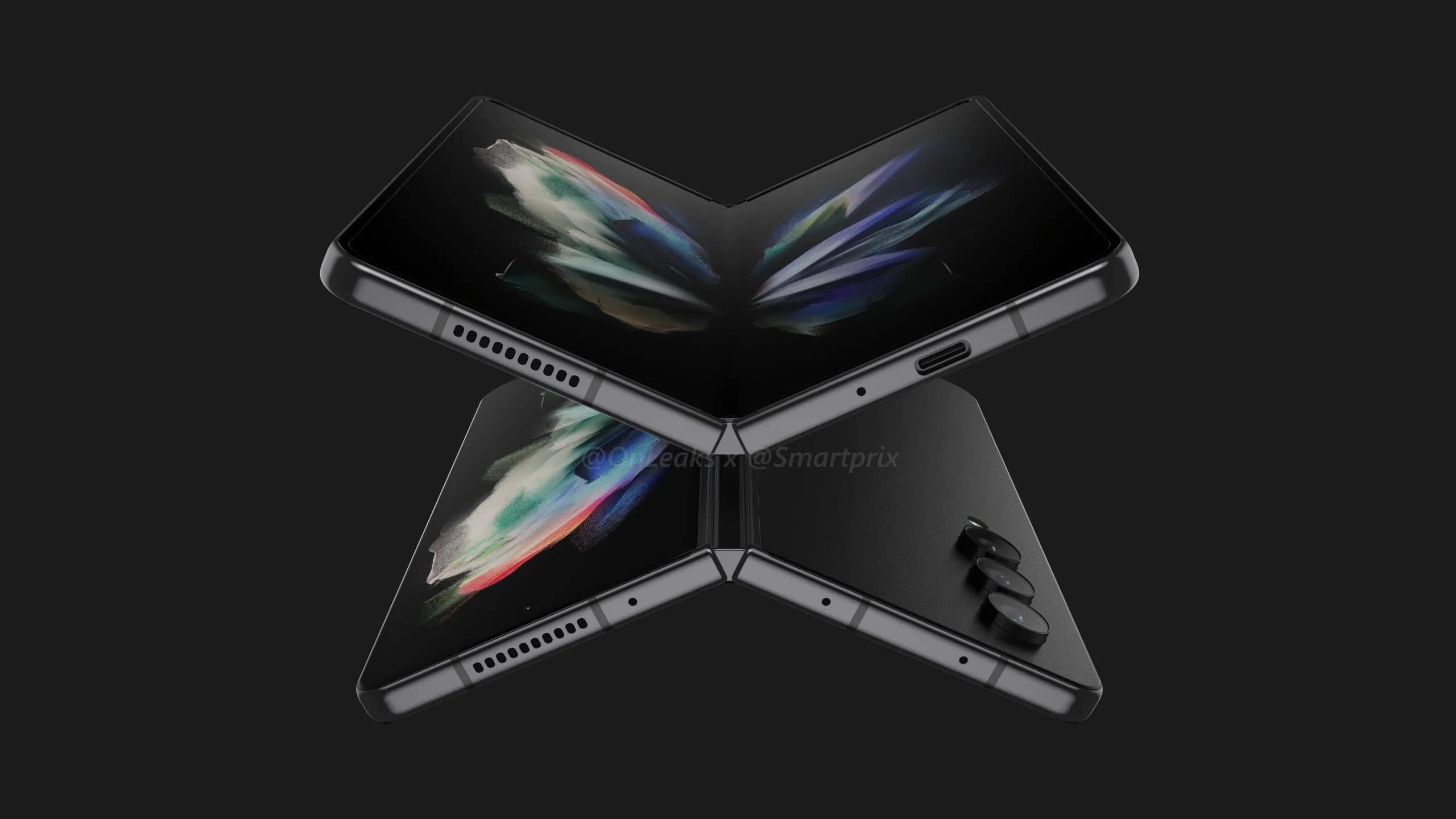
Samsung Galaxy Z Fold 4 render by OnLeaks / Smartprix
The Samsung Galaxy Unpacked event will take place on 10th August at 09:00 AM Eastern Time (EST), which is 06:30 PM in India. Along with the foldable phones, the company is also expected to launch the next-gen Galaxy Watch 5 series at the event.
Based on the reports, the Samsung Galaxy Z Fold 4 will feature an updated design and a smaller, lighter, and thinner single hinge design instead of the double hinges found on the previous generation models.
It will feature a 7.6-inch interior display with a 120Hz refresh rate, and is rumored to have an under-display fingerprint sensor. On the other hand, the Galaxy Z Flip 4 will feature a 6.7-inch display that folds out vertically, but will have a larger 2-inch cover display.
Both the smartphones will come powered by the Qualcomm Snapdragon 8+ Gen 1 processor with up to 12GB of RAM and 512GB of internal storage. As for cameras, the Samsung Galaxy Z Fold 4 will have a 10-megapixel telephoto sensor with 3x optical zoom, a 50-megapixel wide-angle camera, and a 12-megapixel ultra-wide camera.
The South Korean giant has already started accepting pre-orders for the Galaxy Z Fold 4 and the Galaxy Z Flip 4 smartphones. The official pricing and the availability dates are unknown, and we will have to wait for the launch event to know more.
Apple is expected to launch the next generation of iPhones dubbed the iPhone 14 series around September. This time around, we are expecting four phones to debut at the launch event including the vanilla iPhone 14, the iPhone 14 Max, the iPhone 14 Pro, and the iPhone 14 Pro Max.
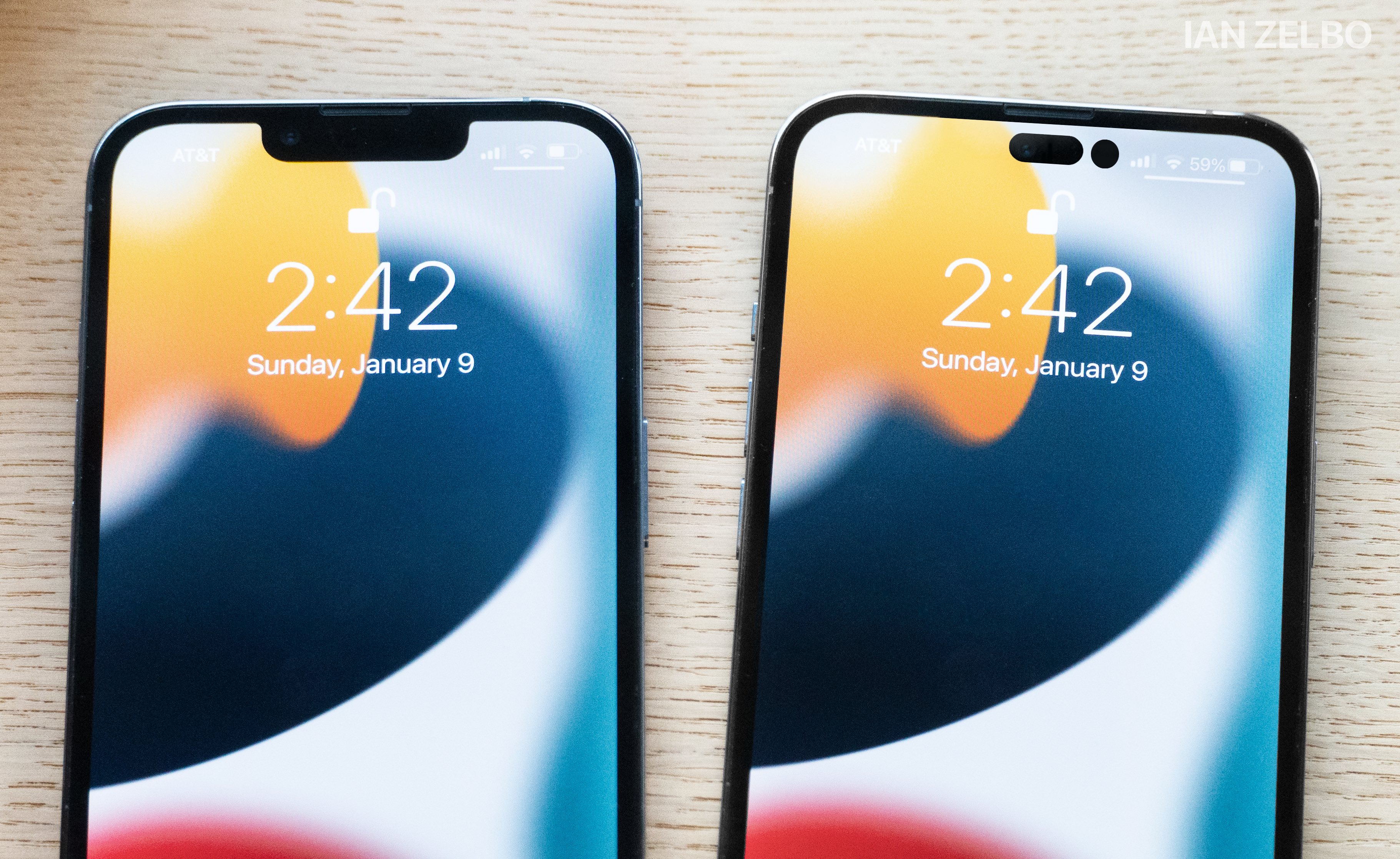
We have already reported that the vanilla and Max models will not be getting the ProMotion display(Apple’s marketing term for high refresh rate), and now, a new report from The Elec has revealed the type of panels that will be going on each of the models.
According to the report, the iPhone 14 (6.1-inch) and iPhone 14 Max (6.7-inch) will use LTPS backplanes. These will be made of the M11 material set. This is an exclusive material set that is currently used for the manufacturing of the Galaxy S22+ and S22 Ultra display panels.
The iPhone 14 Pro (6.1-inch) and the iPhone 14 Pro Max (6.7-inch) will use an LTPO display plane with ProMotion. The new panel will be made from Samsung’s M12 material set. This material set has not been used for any smartphone’s display panel yet and is set to debut with the launch of the Samsung Galaxy Z Fold 4 and Galaxy Z Flip 4.
According to the report, All four iPhone 14 variants will have displays provided by Samsung, which has reportedly secured an order for 80 million screens. Additionally, LG will contribute by producing panels for both the standard iPhone 14 and the premium iPhone 14 Pro Max. The RS-L material set will be used to create them. With the previous RS-K set, LG was producing iPhone 13 panels last year.
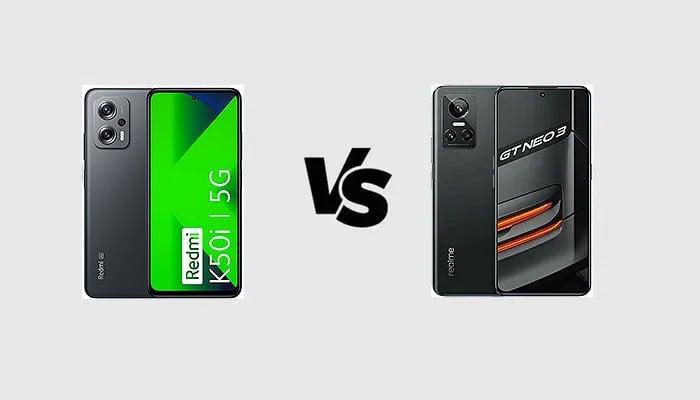
A few days ago, there was a new addition to the Redmi K50 series: we are talking about the Redmi K50i, announced on July 20 and launched in the Indian market. There, it has a lot of rivals, and one of the most important ones is definitely the Realme GT Neo 3. While the Redmi offers an outstanding value for money, the Realme comes with astonishing specifications: just to make an example, it is the world’s first phone with 150W fast charging and it will be followed by the OnePlus 10T in a few days. This is a comparison between the specifications of the Redmi K50i and the Realme GT Neo3. Note that the Realme comes in two variants with different batteries and charging speeds: there is also a variant of this phone with 80W fast charging and a bigger 5000 mAh battery.
Xiaomi Redmi K50i vs Realme GT Neo3
Xiaomi Redmi K50i
Realme GT Neo3
DIMENSIONS AND WEIGHT
163.6 x 74.3 x 8.9 mm,
200 g
163.3 x 75.6 x 8.2 mm,
188 g
DISPLAY
6.6 inches, 1080 x 2460 pixels (Full HD+), FFS LCD
Triple 64 + 8 + 2 MP, f/1.9 + f/2.2 + f/2.4
16 MP f/2.5 front camera
Triple 50 + 8 + 2 MP, f/1.9 + f/2.3 + f/2.4
16 MP f/2.5 front camera
BATTERY
5080 mAh, fast charging 67W
4500 mAh, Fast Charging 150W or 5000 mAh with 80W fast charging
ADDITIONAL FEATURES
5G, dual SIM
5G, dual SIM
Design
The most attractive design belongs to the Realme GT Neo 3. Just like most of the other phones from the GT series, its design is reminiscent of a sports car, due to vertical stripes on its rear side. But it also comes in a color option without those stripes, for those who want a soberer design. I personally love the camera module of the Realme GT Neo3 due to the position of the sensors. Further, it is thinner and lighter than the Redmi K50i: its thickness is just 8.2 mm, while the weight is 188 grams. Last but not least, it has a higher screen to body ratio thanks to the presence of a thinner chin below the display. Both the phones have a centrally-placed punch hole housing the front camera, but there are different positions for the physical keys, and the power key of the Redmi K50i doubles as a fingerprint reader, while the fingerprint scanner of the Realme device is placed under the screen.
Display
There is no challenge if we talk about the display: the Realme GT Neo3 is the clear winner of this comparison. We just need to say that it is the only one with an AMOLED display to let you understand which one is the best, but this is not the only superior aspect. The Realme flagship is able to show up to one billion colors with a Full HD+ resolution of 1080 x 2412 pixels, a 120 Hz refresh rate, and the HDR10+ certification. Further, as already mentioned in the previous section of this comparison, it has an in-display fingerprint reader. Unfortunately, the Redmi K50i has an LCD display, so you should not expect vibrant colors and deep blacks like OLED panels. But it is still a good display with a diagonal of 6.6 inches, a Full HD+ resolution of 1080 x 2460 pixels, a 144 Hz refresh rate, the HDR10 certification, and Dolby Vision support. Note that the display fingerprint reader is side-mounted. Both the handsets feature stereo speakers, but the Redmi K50i is the only one with a 3.5 mm audio jack for wired earphones.
Specs & Software
The Realme GT Neo 3 and the Redmi K50i are powered by the same mobile platform: the Dimensity 8100 by MediaTek built with a 5 nm production process. This processor is one of the best by MediaTek but not the most advanced one, as there are Dimensity 9000 and Dimensity 9000+ with higher performance. The octa-core architecture of this SoC is composed of four Cortex A78 CPUs running at a max frequency of 2.85 GHz, four Cortex A55 CPUs with a frequency of 2 GHz, and a Mali G610 MC6 GPU. But the Realme GT Neo 3 wins the hardware comparison because it comes in a better memory configuration, as it offers up to 12 GB of RAM and up to 256 GB of UFS 3.1 internal storage, while you can get just 8 GB of RAM with the Redmi K50i. Both the handsets run Android 12 with a highly customized user interface on top.
Camera
If you are looking for a real camera phone, you should opt for the Realme GT Neo 3. It has a better main camera: the flagship-class Sony IMX766 sensor with a 50 MP resolution and OIS support (while the Redmi has a midrange-class 64 MP main cameras). The secondary sensors of these phones are the same: an 8 MP ultrawide lens and a 2 MP macro camera. Even the front camera does not change: it is a 16 MP selfie snapper. So what makes the difference is just the main rear camera.
The Redmi K50i has a bigger battery than the Realme GT Neo 3, with a capacity of 5080 mAh. However, the 5000 mAh variant of the GT Neo3 offers a longer battery life in several scenarios because the phone has a more efficient AMOLED display. Further, it charges faster thanks to 80W fast charging (instead of just 67W). The 150W version of the GT charges even quicker thanks to 150W fast charging, but it has a smaller 4500 mAh battery.
Price
The price of the Redmi K50i in India is Rs. 25,999 / $330, while the Realme GT Neo3 starts from Rs. 36,999 / $470. The Realme wins the comparison, but the Redmi has a higher value for money. Which one would you pick?
Recently, WhatsApp has brought many new features to its instant message service like the increased file sharing size, mute messages from specific users in a group chat, and hiding last seen profile picture, and online status from certain contacts.
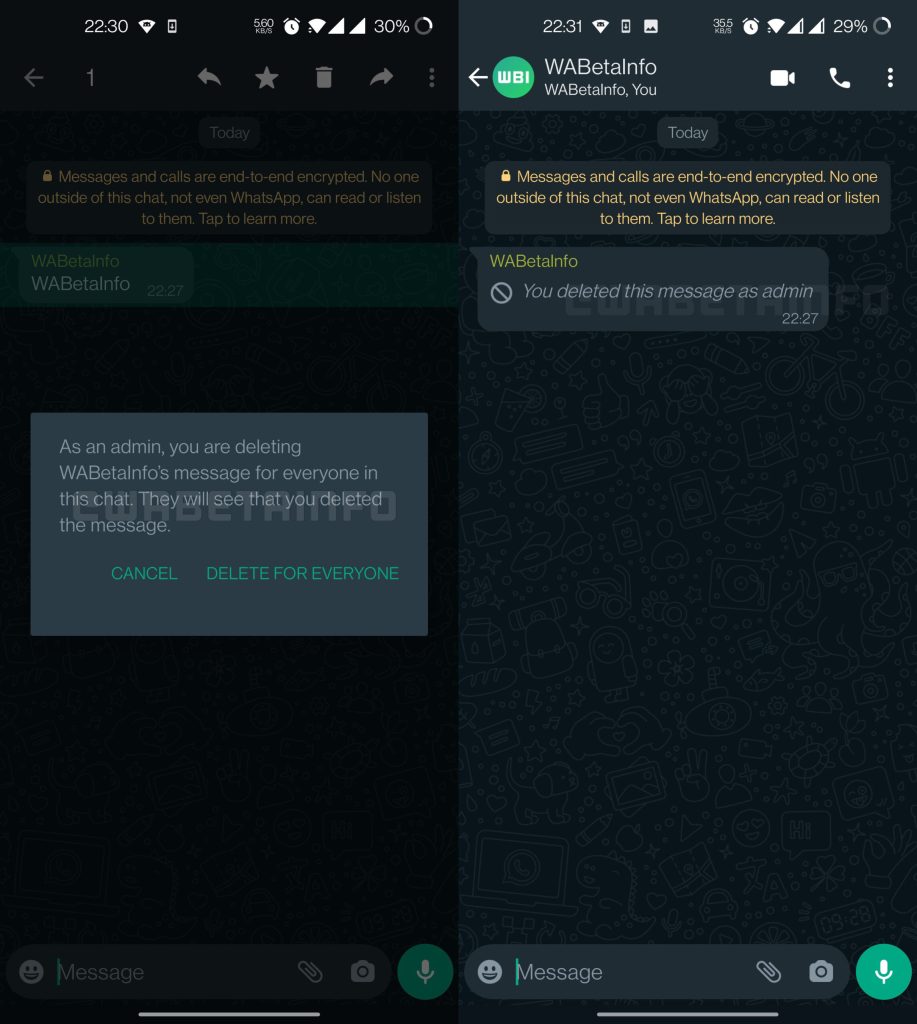
Now, WhatsApp is getting ready to release a new feature that gives group admins the power to delete any message for everyone. With the inclusion of the ability to delete group messages for everyone, group administrators will be able to better manage their WhatsApp groups.
The feature will be made available to WhatsApp beta testers on Android with versions up to 2.22.17.12. If you are the group administrator and attempt to delete an incoming message and see the option “delete for everyone,” it indicates the feature is available for you. Your name will always appear in the chat bubble when you delete a message sent to the entire group by another group member, letting everyone know that you did so.
Additionally, a fix for the catch-up button is also being released by WhatsApp. The catch-up button, which usually appears when someone mentions you in a group chat is bugged in the currently bugged and appears for no particular reason.
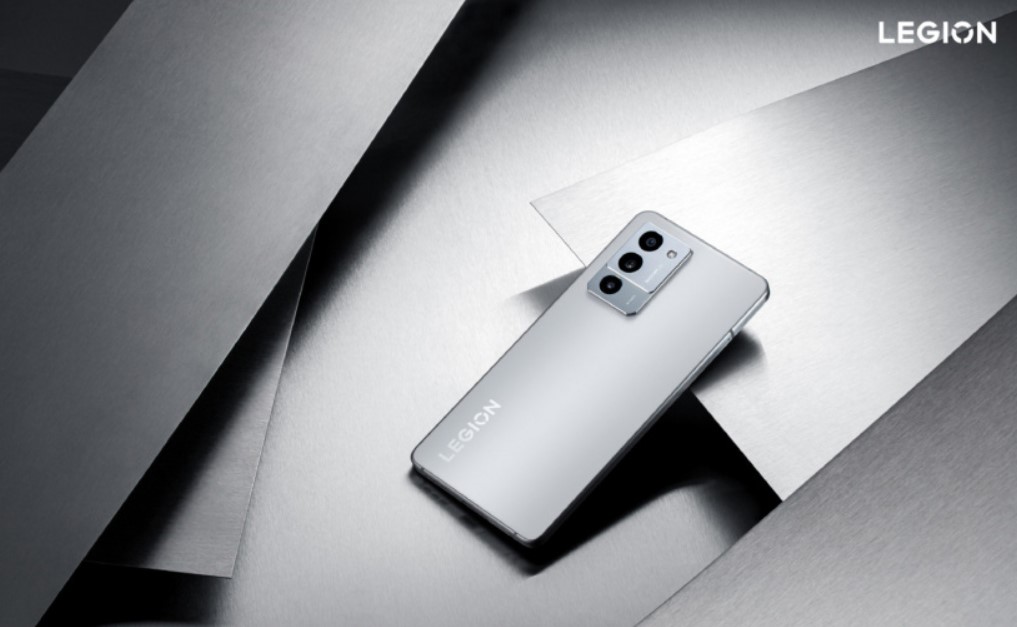
Lenovo has officially announced the new Legion Y70 smartphone and has also confirmed that the new Legion handset will be launched in August. In the announcement post, Lenovo gave us a glimpse of what the phone could look like and today the company has shared some images that confirm the design and appearance of the forthcoming Legion Y70.
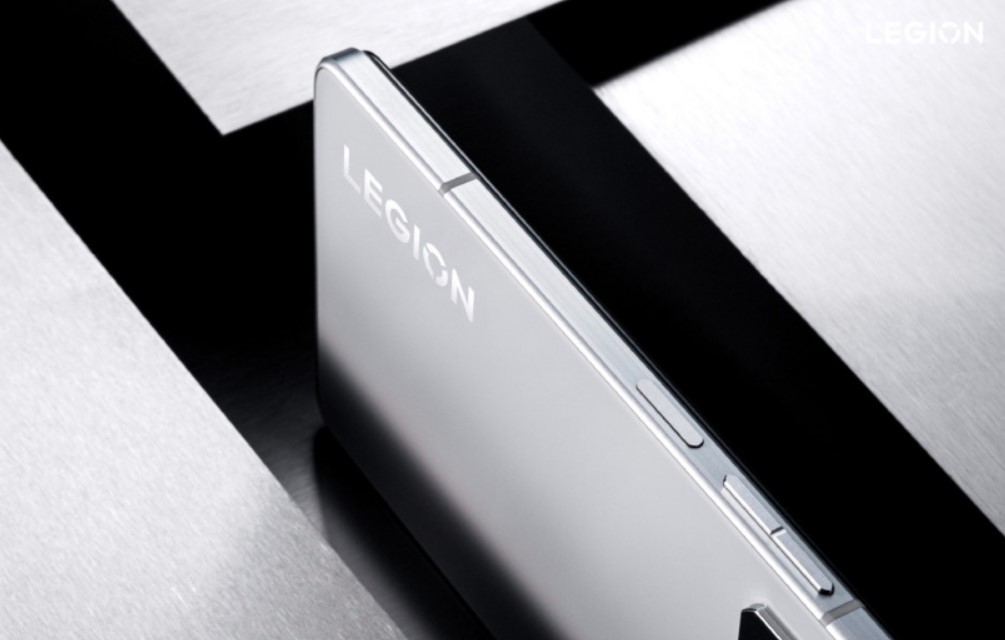
Ahead of the imminent launch of the new Legion Y70, the company has shared some high-resolution images revealing the design of the device. The images show that the upcoming Lenovo device will have a boxy design with slightly squared edges. The phone can be seen to have a flat back featuring a rectangular camera module on the top left. The overall design of the smartphone is pretty neat and looks quite premium.
The smartphone also has a thin body, Lenovo claims that the Legion Y70 is only 7.99mm thin and has a light body design. It is said to have CNC as well as a carved metal middle frame. In addition to the silver model pictured above, the Lenovo Savior Y70 will also come in Red and Black.
The smartphone is expected to be powered by a Snapdragon 8+ processor. The device is said to be equipped with a 6.67-inch OLED straight screen that offers a resolution of 2400×1080. It has a 50-megapixel triple camera setup. The smartphone could be fueled by a 4880mAh battery and may carry support for 68W fast charging. The device will likely have an under-display fingerprint sensor for security.
As mentioned, Lenovo has revealed that the Legion Y70 will launch in August but hasn’t specified the launch date yet. We hope to learn more details about the device in the coming days.
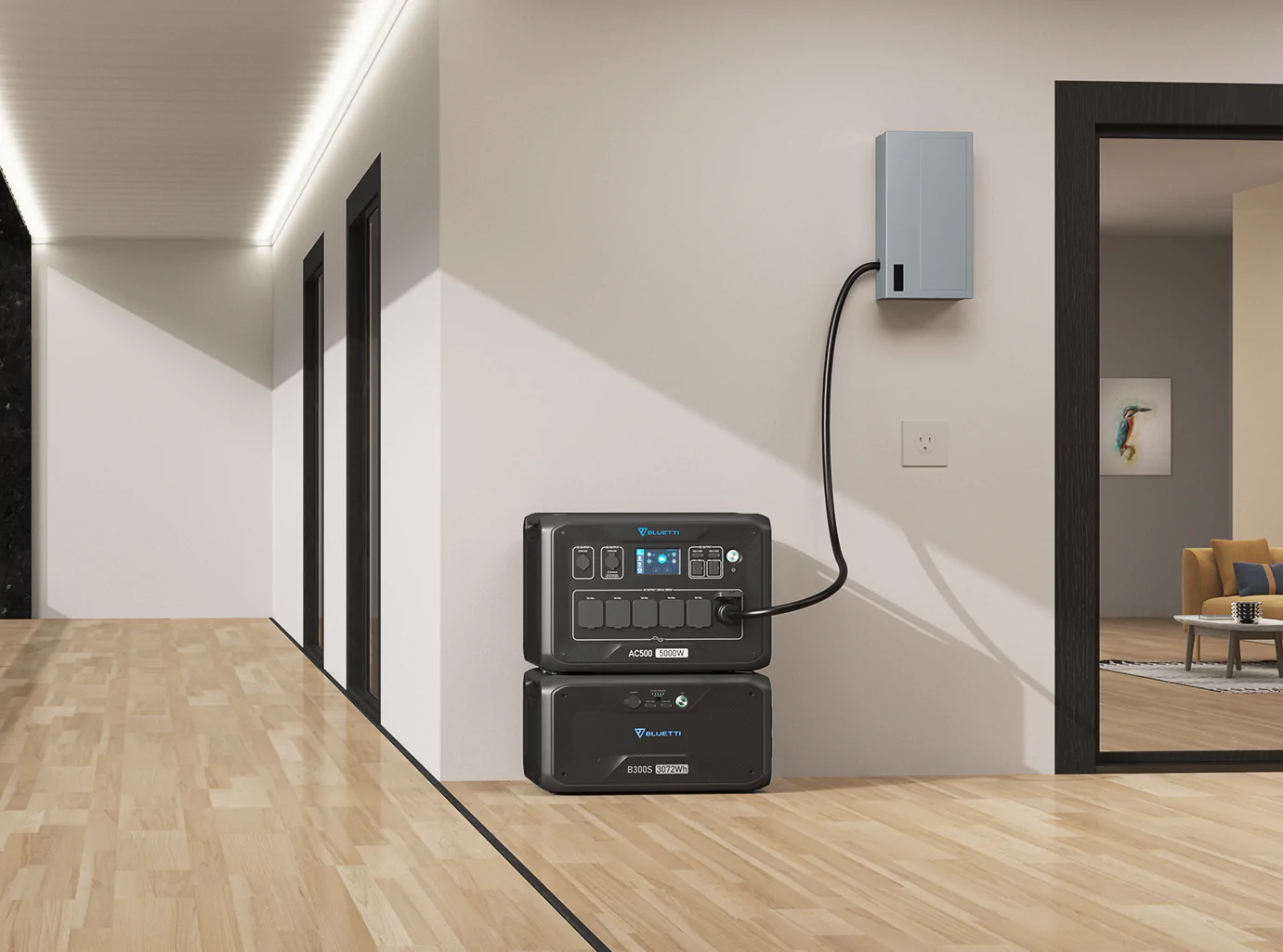
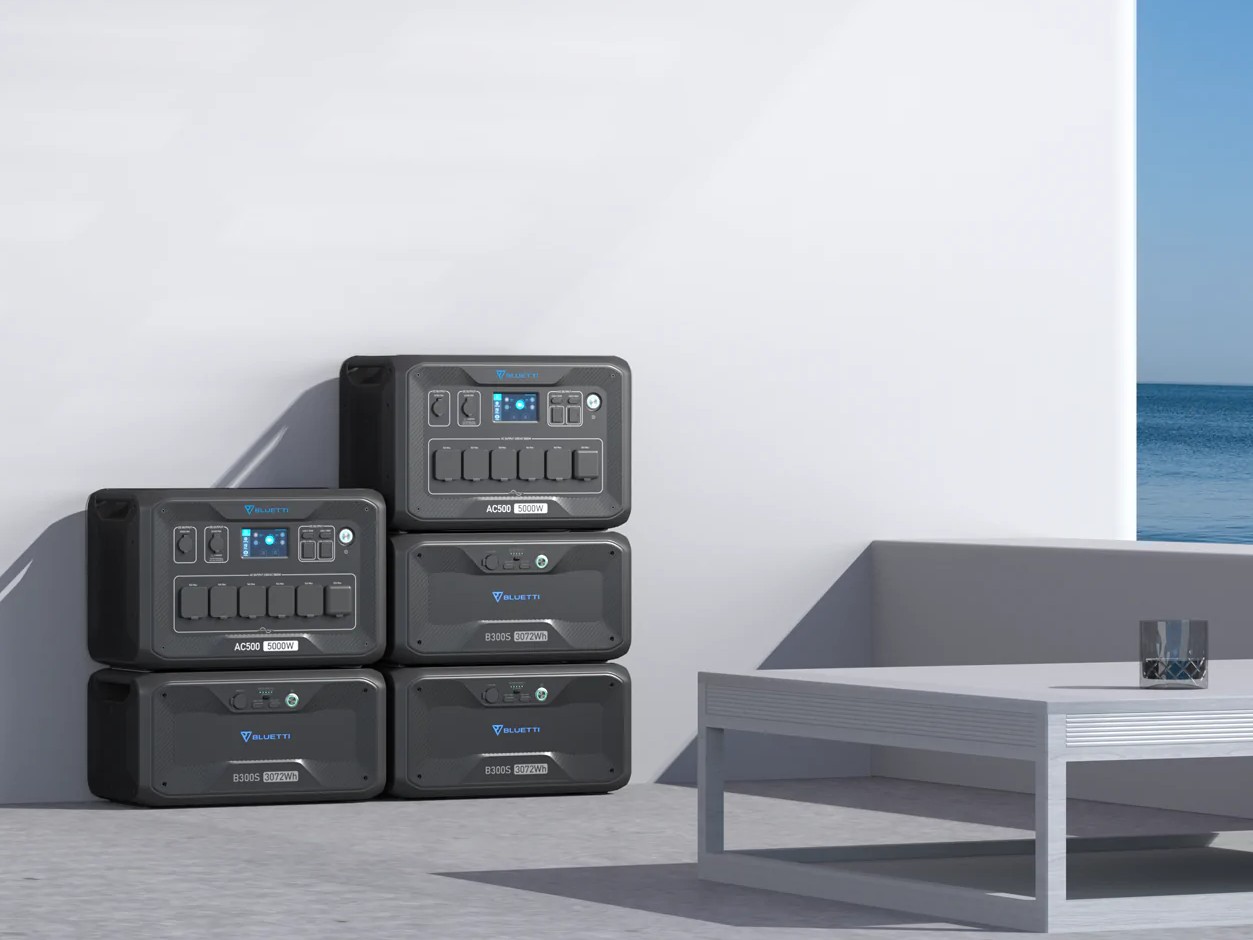
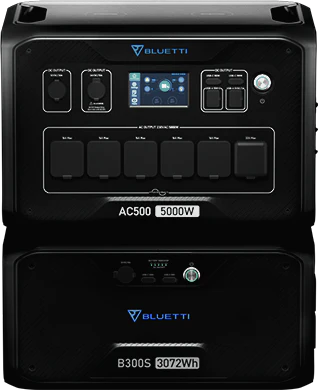
Bluetti has announced the AC500 & B300S System with some impressive power solutions options. The power station can deliver a maximum power of 18,432Wh to supply multiple devices for extended periods. The new Bluetti System will be available via an indiegogo crowdfunding campaign. It can be recharged via solar panels or through mains electricity.
The Bluetti power station can act as a backup in the home during power outages. Bluetti says deployment of the system in your home will lead to lower energy bills. It has a total AC output of 5,000W and is built to withstand surges up to 10,000W. Multiple ports provide a variety of devices that could be connected to the power station. The seven ports include USB-A, USB-C, and AC outlets.
The maximum power is achieved for the power station when its full complement of six batteries is attached. The Bluetti AC500 & B300S can be recharged to 100% in 75 minutes using a maximum input of 8,000W. Apart from using an AC outlet or solar panels to charge the device, it could also be charged by a car’s cigarette lighter.
There is app support for the AC500+B300S System using the Bluetti app. You can use it to update the device via OTA and view its performance information in real-time. The power station weighs 30kg with a dimension of 20.5 x 12.8 x 14.1 inches. There are no details yet on the indiegogo crowdfunding campaign for the Bluetti AC500 & B300S System. The price and expected release date are still under wraps.
Xiaomi recently launched the 12S series in the Chinese market and now it appears the company is ready to bring a few more smartphones under the 12 Series but this time for Global consumers. As per a tipster, the new Xiaomi 12T and 12T Pro smartphones have entered the internal phase in various Asian and European regions. Both the handsets are said to launch in the next couple of months, and at least one of the two devices may also debut in the Indian market.
Tipster Mukul Sharma took to Twitter to reveal that the internal testing of the Xiaomi 12T and Xiaomi 12T Pro has begun in various Asian and European regions. The tipster claims that both the Xiaomi smartphones could launch in a month or two. He further adds that at least one of the two smartphones may also be available for Indian consumers.
Xiaomi 11T Pro
Today, a report revealed the detailed specifications of the Xiaomi 12T. As per the report, the 12T model will be equipped with a MediaTek Dimensity 8100 Ultra processor. Details about this processor are still short, however, it is said to be based on the 5nm process.
The processor is rumored to be paired with 8GB of LPDDR5 RAM and up to 256GB of UFS 3.1 internal storage. In terms of display, the device is said to sport an OLED panel that could offer a 2712 x 1220-pixel resolution. The display may also house an in-display fingerprint sensor for security.
Talking about the optics, the smartphone is expected to sport rear a triple camera setup consisting of a 108-megapixel primary Samsung ISOCELL HM6 sensor. The main sensor is expected to be accompanied by an 8-megapixel Samsung S5K4H7 ultra-wide-angle lens and a 2-megapixel macro sensor. On the front, Xiaomi 12T may feature a 20-megapixel Sony IMX596 snapper for selfies and video calls.
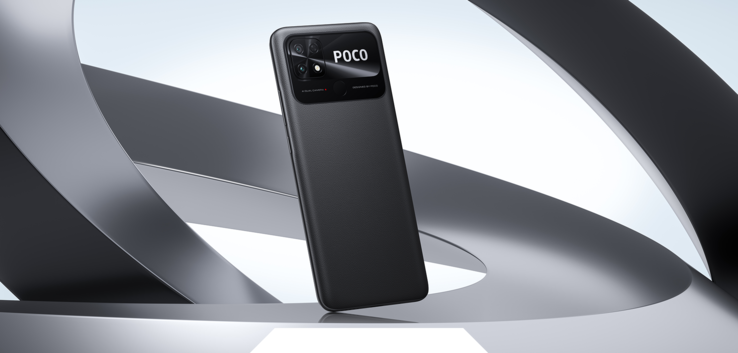
The Xiaomi Poco C40 is now on sale in Europe starting at €169.90 (~$174). The Poco C40 comes in three color options and two memory configurations. The price of the Poco C40 is inclusive of delivery and VAT charges according to the company.
The Poco C40 was announced for the global market back in June and it comes with some decent features. It is powered by a JLQ JR510 chipset and has a 6,000mAh battery. It has a 6.71-inch screen with a 720 pixels resolution and a 60Hz refresh rate. Dual 13MP cameras make up the camera setup of the Poco C40. Information on the capability of the JLQ JR510 chipset in the C40 is limited at this time. Neither JLQ nor Xiaomi have provided details yet of the chip. It is from an 11nm architecture that has 8 ARM-Cortex-A55 CPU cores and a variant of the ARM Mali-G52 GPU. When put through the paces via Geekbench, the four of the processor’s cores reached 1.5GHz while the rest had 2GHz.
The Poco C40 comes in a 3GB + 32GB or 4GB + 64GB model. Interestingly, the two RAM/storage configurations were offered at introductory prices on July 31. The 32GB storage model is now priced at €169.90 (~$174) while the 64GB storage model currently sells at €189.90 (~$195).
The massive 6,000mAh battery of the Poco C40 is one of its major highlights and Xiaomi expects the C40 to have decent reception in Europe. Black, coral green, and yellow color options are available for the smartphone.
With each passing day, we are getting closer to the launch of OPPO’s latest ColorOS 13. The company is yet to reveal any details about its latest software skin but a popular tipster claims that the ColorOS 13 may start rolling out by the first half of August. The company is also said to unveil the OPPO Watch 3 series in the same timeline.
Noted tipster Digital Chat Station revealed that the OPPO may launch the ColorOS 13 within a week or two. The tipster didn’t disclose a specific date but we believe it’s close since OPPO already started recruiting beta testers for the software. It is also said that the first OPPO device to get the taste of ColorOS 13 will be equipped with the latest MediaTek as well as Qualcomm chipsets.
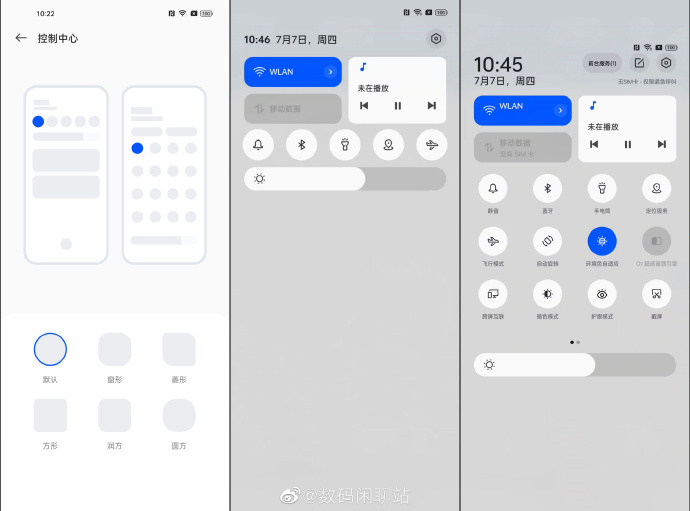
Recently, we saw some leaked screenshots of OPPO’s latest firmware which suggest significant design changes and the addition of new features. The new OS is also said to have an improved background retention rate and the adaptation of free small windows.
colorOS 13 Screenshots
Further, the tipster signaled that Xiaomi’s MIUI 14 will launch after ColorOS 13. Previous reports have suggested that Xiaomi will launch its latest software skin with the Xiaomi 13 series, which is expected to debut by the end of this year.
In addition, the tipster also claimed that OPPO will launch the Watch 3 series in the first half of this month. We already know the series will include three smartwatches and they will be equipped with Qualcomm’s Snapdragon Wear 5 and Wear 5+ Gen 1 SoC. The watches are expected to carry a ton of improvements in terms of design and software.
We have already covered a lot of comparisons involving the Nothing Phone (1) but given the popularity of this device, we decided to pit it against OPPO’s best offering in this price range, the OPPO Reno8. Both phones are targeted at different consumers and feature a unique set of features to stand apart in their price segment. If you were having a hard time deciding which phone among them is the right one for you, then you are at the right place.
Let’s take a look at how the Nothing Phone (1) compares against the more traditional OPPO Reno8 in the highly competitive INR 30,000 (sub $600) market.
Dual 50 (main) + 50 (UW), f/1.9 + f/2.2
16 MP f/2.5 front camera
Triple 50 (Main) + 8(UW) + 2 MP (Macro), f/1.8 + f/2.2 + f/2.4
32 MP f/2.4 front camera
BATTERY
4500 mAh, fast charging 33W
Wireless Charging 15W
4500 mAh, Fast Charging 80W
ADDITIONAL FEATURES
5G, dual SIM
5G, dual SIM
Design
The OPPO Reno8 isn’t the best-looking smartphone in this segment, but it makes up for its subdued appearance with a slim and lightweight body. It weighs just 179 grams in a 7.7mm frame. In fact, it’s compact enough for one-handed use and if that matters to you, then it gets a huge advantage. Overall, the phone comes with a pretty flat design with a raised camera housing. There are two color options, Shimmer Gold, and Shimmer Black.
Moving on to the Nothing Phone 1, clearly, smartphones in this price segment don’t get any fancier than this. You get a transparent back, LED lights which the brand calls the Glyph interface, and rich White or Black color options. It’s a phone that would turn heads when you take it out of your pocket. So the Nothing Phone 1 gets full marks in offering a unique design experience.
Note that only the Nothing Phone 1 is IP53 rated, so it comes with dust and water resistance.
There’s no doubt that Nothing Phone 1 stands out in this price segment for its design, but your choice would boil down to what kind of phone you prefer. If you want something flashy and relatively large, the Nothing model makes complete sense, however, if you are looking for something more compact and easy for one-handed use, the OPPO Reno8 won’t disappoint.
Display
The Nothing Phone 1 also has an advantage in the display department. It comes with a 6.55-inch HDR10+ certified 1080 x 2400pixel display with a 120Hz refresh rate and 1200nits peak brightness.
In comparison, the Reno8’s display is just average, with no HDR10+ certification or 120Hz refresh rate (just 90Hz) on its smaller 6.4-inch panel. So opting for a smaller display would have its set of drawbacks.
Specs & Software
Performance is one area where the Reno8 might have a slight advantage over the Nothing model. It features the MediaTek Dimensity 1300, a powerful processor in the mid-range segment, offering up to 3GHz clock speeds. This combined with the 8GB RAM and up to 256GB of storage should ensure lag-free performance. However, gaming might not be the best selling point of the phone.
Moving on to the Nothing Phone 1, it features a less powerful chip, the Snapdragon 778+ processor. It should be good for daily tasks and medium to light gaming. Again, gaming is not going to be its plus point but if you get the 12GB RAM with 256GB ROM version, you shouldn’t have any major issues in terms of performance on the phone.
The Nothing Phone (1) runs on the Nothing OS on top of Android 12. The Reno8 model comes with Android 12-based ColorOS 12.1.
Camera
Nothing Phone’s camera is pretty loaded, featuring two 50MP shooters for primary and wide-angle shots. The primary camera even comes with OIS, so nighttime shooting won’t be an issue.
OPPO’s Reno series is known for its fancy camera features and excellent camera performance. It comes with a 50MP primary shooter with f/1.8 aperture, an 8MP ultra-wide angle camera, and a 2MP macro shooter. The primary camera is its best sensor and will be able to capture good shots, especially in daylight. But the lack of OIS is definitely a drawback of the Reno8 model.
The Nothing model seems to have an advantage with its OIS-equipped 50MP primary shooter. But only a real-life camera sample comparison between the two models would reveal which model is better at shooting pictures in different lighting scenarios.
Battery
Nothing Phone 1 comes with an average 33W charging support and does not even feature the charger in the box. You have to get it separately as an accessory. On the other hand, the Reno8 model features a much faster 80W wired charging solution.
Both phones have 4500mAh batteries inside. Note that only the Nothing Phone 1 feature 15W wireless charging support. It even supports 5W reverse wireless charging, a rarity in this segment.
Price
The Nothing Phone (1) starts at ₹32,999/£399/€469. On the other hand, Reno8 retails in India at a cheaper price tag, starting at ₹29,999/$375/£315/€370)
The Nothing Phone 1 looks like a better bet in this comparison. The phone has a unique design, a better display, a decent processor, and wireless charging support too. But the Reno8 has a few things going for it as well. For example, it comes with a compact and subdued design, a faster processor, and a charger in the box that can charge the phone in just 20 minutes.
We must remind you that Nothing Phone 1 is a first-generation model. You might come across issues like these. So do consider them before making a final decision.
That said, the purchase decision would depend upon your personal preference, and you won’t likely go wrong getting either one of the above models.
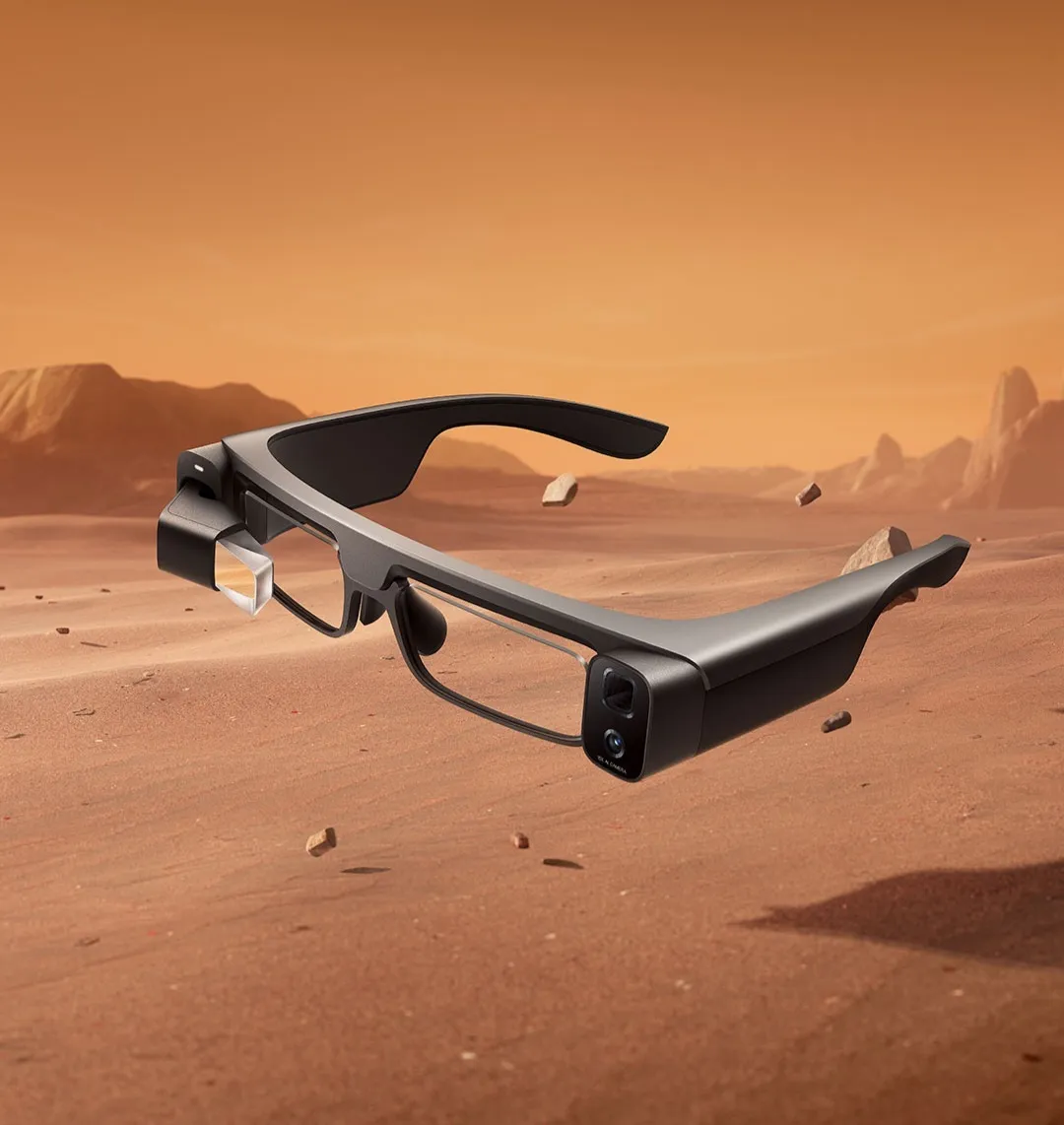
The AR (Augmented Reality) business will be booming in a few years as many big names including Google, Apple, and Facebook have started to invest heavily in this segment. Google recently started the public testing of its AR glasses. And today, the Chinese tech giant Xiaomi has also entered the segment with its Mijia AR glasses camera that come with a 15x hybrid Zoom and a dedicated Snapdragon 8 processor.
Xiaomi has officially announced the Mijia Glasses Camera and they are also open for pre-order through Xiaomi’s crowdfunding platform, Youpin with a retail price of 2699 yuan ($399), and a special crowdfunding price of 2499 yuan ($369).
The AR glasses have a design similar to what we have seen before. It has cameras mounted on the sides and is equipped with multiple lenses. Even though the Mijia glasses look quite bulky in the pictures, the company claims that the device only weighs around 100g, which is great.
The camera specs of the AR glasses are pretty impressive, it comes equipped with a 50-megapixel Quad Bayer four-in-one wide-angle camera and an 8-megapixel periscopic telephoto camera with split OIS optical stabilization. Moreover, the company claims that the Mijia Camera glasses can achieve 5x optical zoom and up to 15x hybrid zoom.
It goes without saying that the Mijia Glasses Camera can be easily connected to the phone through the Mijia App. Connecting with a smartphone will enable users to quickly import photos, apply the template to a film, share pictures, and more.
Xiaomi has also packed the Mijia glasses camera with a Snapdragon 8-core independent computing platform along with 3GB RAM, 32GB storage, and independent ISP so that it can provide a great AR experience.
The display on the Mijia Glasses Camera is a combination of a Micro OLED display + free-form optical prism. It has a light efficiency ratio of 60% and has also passed the German Rheinland hardware low blue light certification.
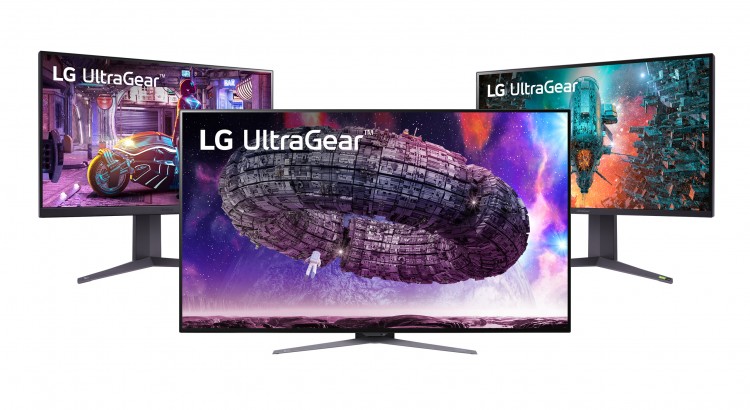
LG has announced the availability of the UltraGear 32GQ850, 32GQ950, and 48GQ900 gaming monitors in Europe. They all feature high refresh rates, HDMI 2.1 connectivity and are well-suited for use with current consoles. The models are arriving in the Eurozone for the first time but have been available in the US. The models have had a staggered entry into the global market with the release of the 32GQ950 model back in January. The UltraGear 48GQ900 followed in March and May saw the release of the 32GQ850. LG had been mum on the release dates for the models in different regions.
The LG UltraGear 32GQ950 has a 4K resolution with a 160Hz refresh rate. It has a 32-inch panel, the same as the 32GQ850. The models have been listed for launch in Europe by LG Germany. Official Europe pricing of the UltraGear lineup is yet to be made, however. The pricing information may be available as soon as actual sales commence in Europe. The three gaming monitors are already available in North America including the US.
The US pricing of the models are $800.99 (for the 32GQ850), $1,299 (32GQ950), and $1,499.99 (48GQ900) respectively. There is a discount regime for the UltraGear lineup of gaming monitors. It may be sustained for the Eurozone market. The new models are primed to catch the fancy of gaming enthusiasts in Europe with their decent features.
Reliable sources have leaked the pre-order and launch date for the Google Pixel 7 and Pixel 7 Pro smartphones. The devices have been on the radar for three months since Google released key details and images about its flagship smartphones. Authoritative tipster Jon Prosser may have unwrapped the launch details of the upcoming models. It is rumored that pre-orders will commence on October 6 while availability starts on October 13.
The Pixel 7 and Pixel 7 Pro are both stock Android premium models and Google had been mum on their release details previously. A Google event to unveil the two models is scheduled to hold on October 6 and their official specs and pricing will be unveiled. Actual shipments will commence one week after the official unveiling of the two smartphones. In comparison with their predecessors (the Pixel 6 and Pixel 6 Pro), the new models are coming a bit earlier. There are a couple of similarities with the trajectory of previous models. All the particulars point to some likelihood of the said launch date although the traditional two-week availability after launch seems to have been breached.
The Pixel 7 and Pixel 7 Pro are being propped to compete with the iPhone. They are tensor-powered models with fluidity and stability mooted by Google. They are expected to benefit from the observed shortcomings of the Pixel 6/ Pixel 6 Pro. There will be significant upgrades in the software aspect of the two flagships. It remains to be seen however how they will compete with the powerhouses in the premium end of the smartphone market.
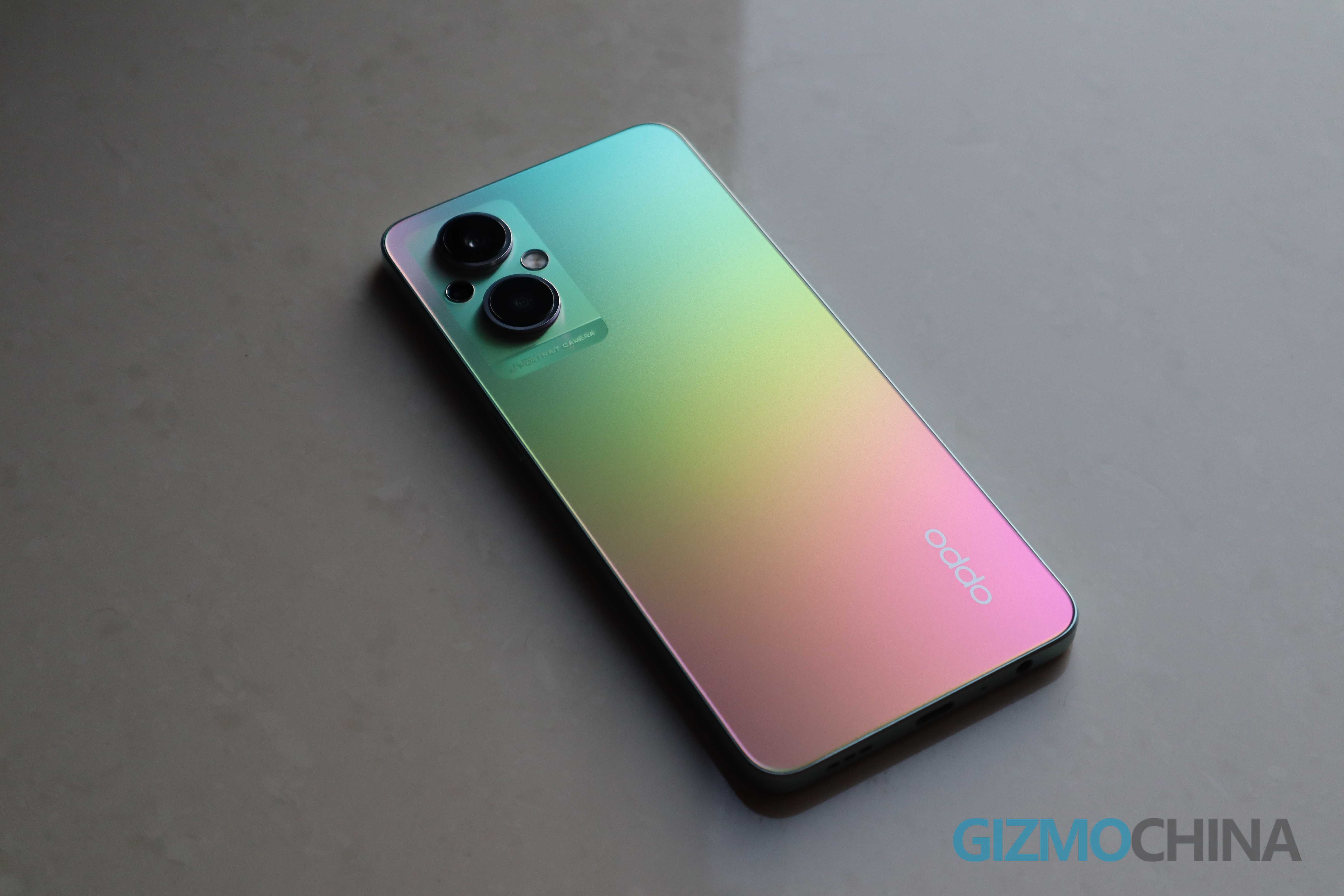
OPPO recently debuted the Reno 8 series of smartphones in the global market. The series consists of the Reno 8 and the Reno 8 Pro (known as the Reno 8 Pro+ in China). The brand is also planning to launch another device in this series called the OPPO Reno 8Z 5G, which has already made appearances on NCC, NBTC, and Indonesia Telecom certification sites.
OPPO Reno7 Z 5G
Now, MySmartPrice has spotted the smartphone on the Geekbench database. So, let’s take a look at its specs and performance.
The Geekbench listing reveals that the upcoming OPPO Reno 8Z 5G has the model number CPH2457. It comes with an octa-core processor that has six cores clocked at and two cores with 2.21GHz. It is paired with the Adreno 619 GPU making it pretty clear that this is the Snapdragon 695 5G chipset, which is the same one found in the OPPO Reno Z 5G.
Other than that, the listing reveals that the device has 8GB of RAM and runs on an Android 12-based OS (likely the ColorOS 12.1). As for the benchmark results, the smartphone scores 687 on the single-core test and 1920 points on the multi-core tests of Geekbench 5.
OPPO Reno 8Z 5G specs
According to the leaks so far, the OPPO Reno 8Z 5G will include a triple-camera configuration on the back. A 4,500mAh battery and 33W rapid charging are included with the Reno 8Z. A bottom-mounted speaker grille, a USB Type-C port, and a 3.5mm headphone jack are also included.
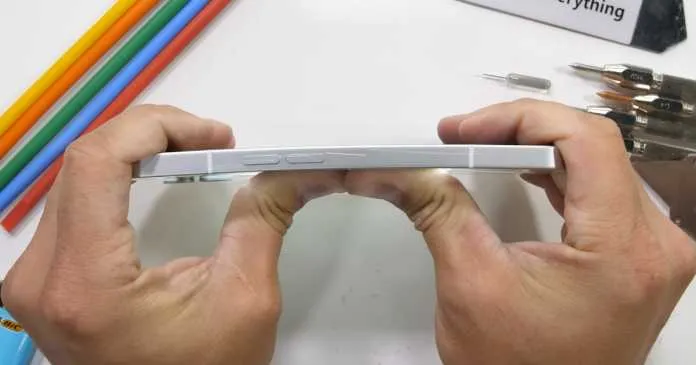
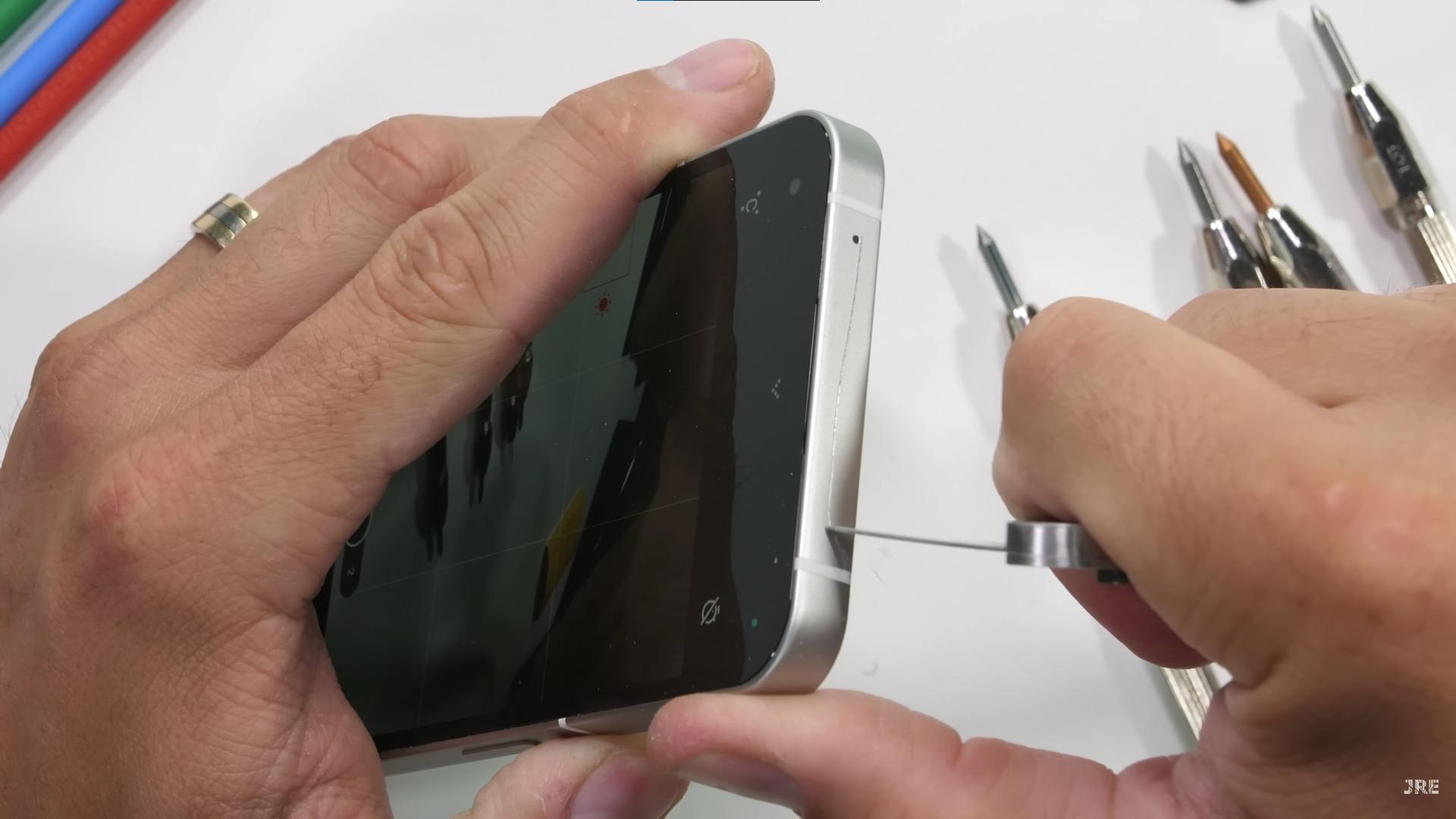
After the launch of the Nothing Phone (1) last month, reviewers have started exploring it in detail with regulars to its long-term performance. We have already covered reports on its battery life and how hard it is to repair the device. Now, popular Youtuber JerryRigEverything has put the device through a rigorous durability test to see how much abuse it can take. So, let’s check out the results.
The Phone (1) survived the test with a few minor scuffs here and there because of its multiple layers of protection against drops and scratches. Nelson started his test as usual by scratching the Phone (1)’s display. At Mohs hardness level 6, the screen started to show scratches, and at level 7, the grooves got deeper. So the device’s back and the display will not get scratched by objects like car keys, however, with the Gorilla Glass 5 protection, the Phone (1)’s display is not entirely impervious to sharper things.
Following the scratch test for the display and the back, the Youtuber scrapes the sides of the device with a knife revealing that the claims of it being entirely made of Aluminium are indeed true. The host also tested the display of the device which managed to mostly recover after 40 seconds of being under the flame of a lighter.
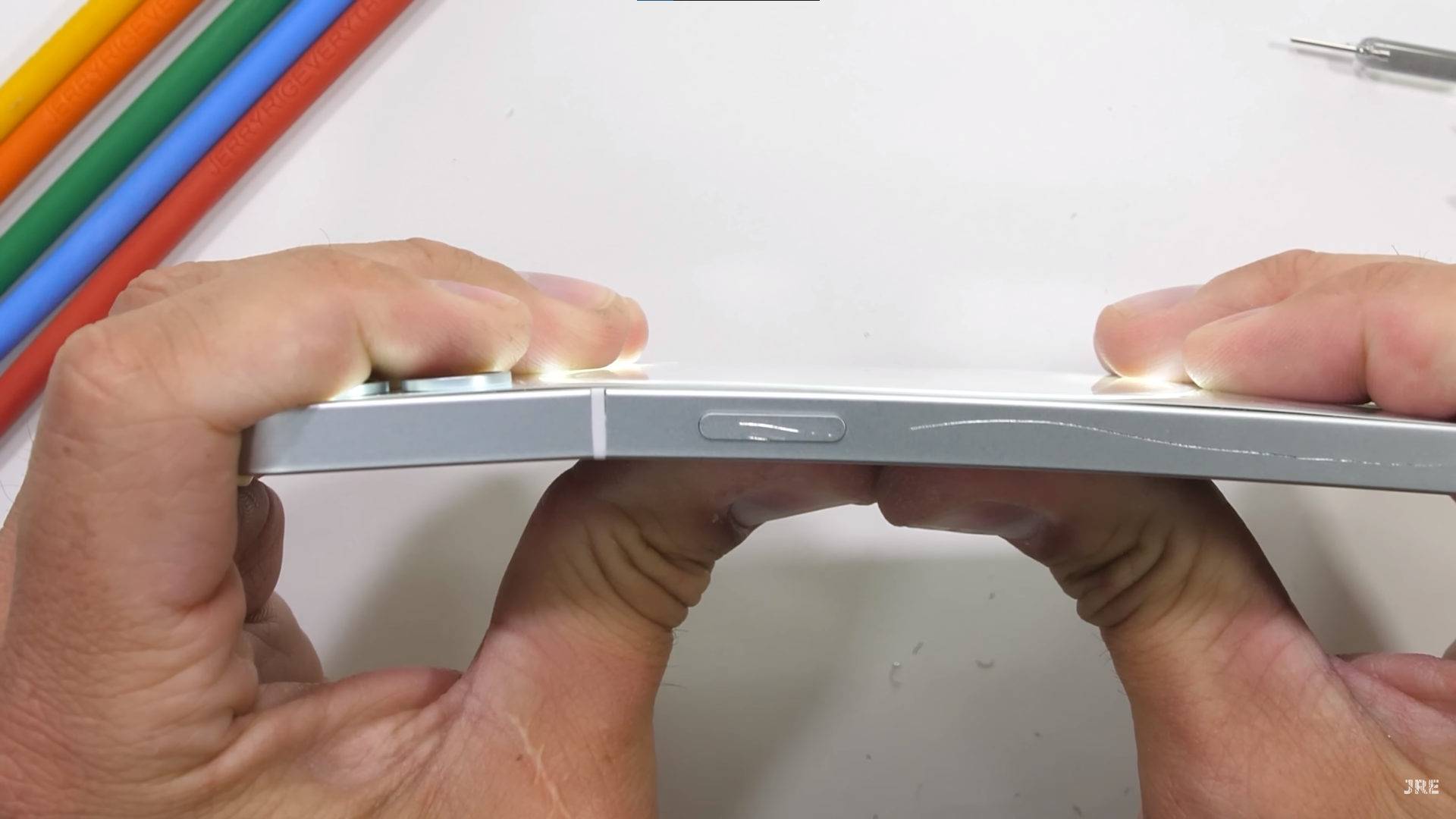
For the final test was the bend test that the OnePlus 10 Pro failed to complete and snapped in half. The Nothing Phone (1) fest solid when the pressure was applied from the back of the device, however, when Nelson moved to the front, the device did flex a bit with a low cracking sound.
Nothing Phone (1) antenna band flex
Applying more pressure to the front, the device shows a little separation around the antenna band, which goes back to normal when the pressure is removed. It appears that there’s a strong mechanism internally that is holding the phone together from breaking.
In conclusion, the Nothing Phone (1) manages to pass the durability test without any issues other than the slight flex which occurs when you genuinely try snapping it in half.
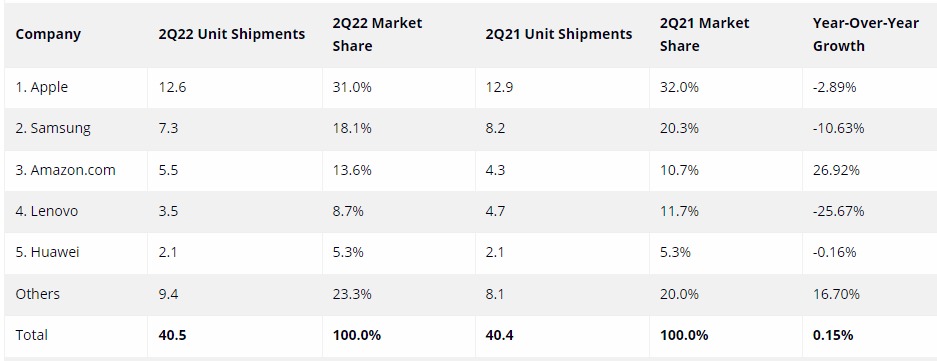
As per Internal Data Corporation (IDC), worldwide tablet shipments saw a 0.15 percent year-on-year increase whereas Chromebook shipments continued to drop with a whopping 51.4 percent year-on-year basis. Various OEM’s shipped 40.5 million units compared to 40.4 million in the second quarter of this year i.e. April to June. On the other hand, during the same period, Chromebook shipments dropped from 12.3 million to 6 million units.
In the tablet category, Apple continued to lead the industry with a 31 percent market share although shipments declined 2.89 percent to 12.6 million units year-on-year. Samsung came second with a 18.1 percent market share with 7.3 million units shipped. Amazon’s Kindle bagged the third spot with 5.5 million shipments and a 26.92 percent YoY growth. Lenovo fell to the fourth spot with a 25.67 percent YoY decrease in shipments to 3.5 million units. Huawei completed the list of the top five with 2.1 million units.
IDC reported that new entrants in the tablet segment like Xiaomi, Realme, OPPO, and Vivo seemed to have outperformed expectations contributing to growth in the Android tablet market in the third quarter. The increase in the overall tablet market is said to be attributable to tablet deployments in education projects as well as special sales like 618 in China and Prime Day in the US.
As for the Chromebooks, they posted disappointing quarterly shipment results. All manufacturers posted negative year-on-year growth. However, Dell still led the market with 1.5 million shipments whereas Acer came a close second with 1.3 million shipments. Lenovo took fourth place with 1.2 million shipments and a 19.4 per cent market share. HP and Samsung bagged the fourth and fifth spots with 0.9 and 0.4 million units sold respectively.
In an interview with publication GSMArena, Realme India CEO Madhav Sheth revealed the brand’s plans in the country in the coming months. The executive said that Realme would launch atleast four new products and would enter new consumer categories in the second half of 2022.
Sheth added that Realme will launch a 5G compatible smartphone in the sub-Rs 15,000 price bracket. This means that it could be available between Rs 10,000 – Rs 15,000. The affordable 5G phone is a much-needed addition in the brand’s portfolio since the next-generation connectivity rollout is expected to happen in a few months in the country. The executive said that the shipment of Realme phones will be better this time as the global chipset shortage crisis has started. This also suggests that the Realme 10 series could arrive in the H2 2022, since the Realme 9 lineup was supposed to debut in 2021. We can expect the Realme 10 to launch in October just before the Diwali festival.
As per Sheth, Realme is also set to enter 2-3 new categories in the consumer durable segment. The company will share more information about this soon. Recently, Realme launched its first-ever monitor called the Realme Flat Monitor FHD.
The Infinix Hot 12 Play smartphone was introduced by Infinix in May in the Indian market. The Infinix Hot 12 Pro, a new member of the Hot 12 series, will soon be available in the nation thanks to the brand. A micro-site on the e-commerce site Flipkart has gone online in advance of the launch, revealing that the Infinix Hot 12 Pro will debut in India on August 2, which is tomorrow.
The launch micro-site also reveals the next Infinix smartphone’s design and verifies a few crucial facts. A 5000mAh battery with 18W fast charging capabilities and a 90Hz display are both features of the Infinix Hot 12 Pro.
The smartphone is shown in a green color option in the teasers. We can anticipate the company releasing it in additional color choices as well. The camera module will be located in the top left corner of the device’s rear panel, which will also include space for a fingerprint reader. The power and volume rockers are located on the right edge of the smartphone. The bottom edge will be home to the charging port and 3.5mm audio jack.
A 6.6-inch display screen with a waterdrop notch, a 90Hz refresh rate, and a 180Hz touch sampling rate will be available on the Infinix Hot 12 Pro. The smartphone will be available with up to 128GB of UFS 2.2 storage and 8GB of RAM. A 50MP primary camera with an f/1.6 aperture will be included in the dual-rear camera system of the Infinix Hot 12 Pro.
A 5,000mAh battery will be included with the Infinix Hot 12 Pro. It will undoubtedly support 18W quick charging. The forthcoming Hot series smartphone from Infinix will utilize a Type-C connection for data transfers and charging.
Despite facing various bumps, OnePlus has had a stellar performance this year. This holds especially true for the Indian market. Now, a new report has revealed that the company has taken the throne in the premium segment and mid range smartphone market in the country.
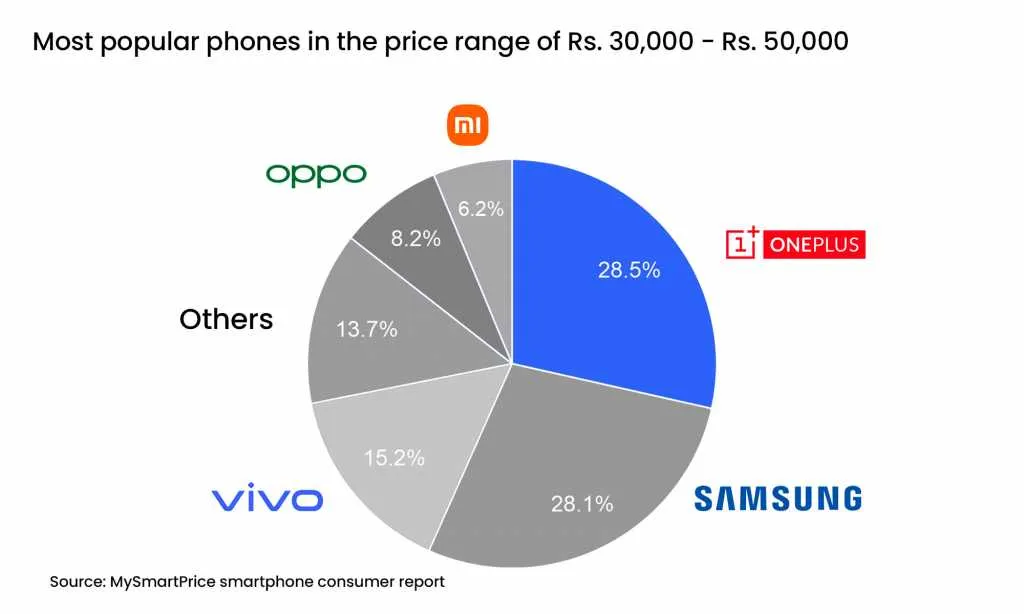
The news arrives from the MySmartPrice Smartphone Consumer Report, which was based on the user searches on their website. As per their database, the Chinese smartphone maker has beat the rest of the competition in both the premium and mid range smartphone segment in the region. Notably, the data was taken from over 10,000 respondents and showcases the ownership share in the 30,000 INR to 50,000 INR (roughly 380 to 632 US Dollars) price range.
Looking at the figures, it appears that out of the 10,000 participants, 28.5 percent of the people owned OnePlus devices. Meanwhile, Samsung and Vivo were also the next top brands as Oppo and Xiaomi rounded up the top five list. In the sub 40,000 INR segment, the OnePlus 10R was the clear winner in the price range, despite facing a rocky launch. The report recorded entries starting from April to June 2022. Apart from the 10R model, the Vivo V23 Pro and Realme GT Neo 3 were among the other top smartphones within the same price range.
Arriving at the premium offerings, the survey showed that the OnePlus 10 pro is the second most popular model in the 50,000 INR and above price range. The Xiaomi 12 Pro was the most popular smartphone in this segment, while the Samsung Galaxy S22 Ultra was the third most popular device in the same category.
We use cookies on our website to give you the most relevant experience by remembering your preferences and repeat visits. By clicking “Accept”, you consent to the use of ALL the cookies.
This website uses cookies to improve your experience while you navigate through the website. Out of these, the cookies that are categorized as necessary are stored on your browser as they are essential for the working of basic functionalities of the website. We also use third-party cookies that help us analyze and understand how you use this website. These cookies will be stored in your browser only with your consent. You also have the option to opt-out of these cookies. But opting out of some of these cookies may affect your browsing experience.
Necessary cookies are absolutely essential for the website to function properly. This category only includes cookies that ensures basic functionalities and security features of the website. These cookies do not store any personal information.
Any cookies that may not be particularly necessary for the website to function and is used specifically to collect user personal data via analytics, ads, other embedded contents are termed as non-necessary cookies. It is mandatory to procure user consent prior to running these cookies on your website.