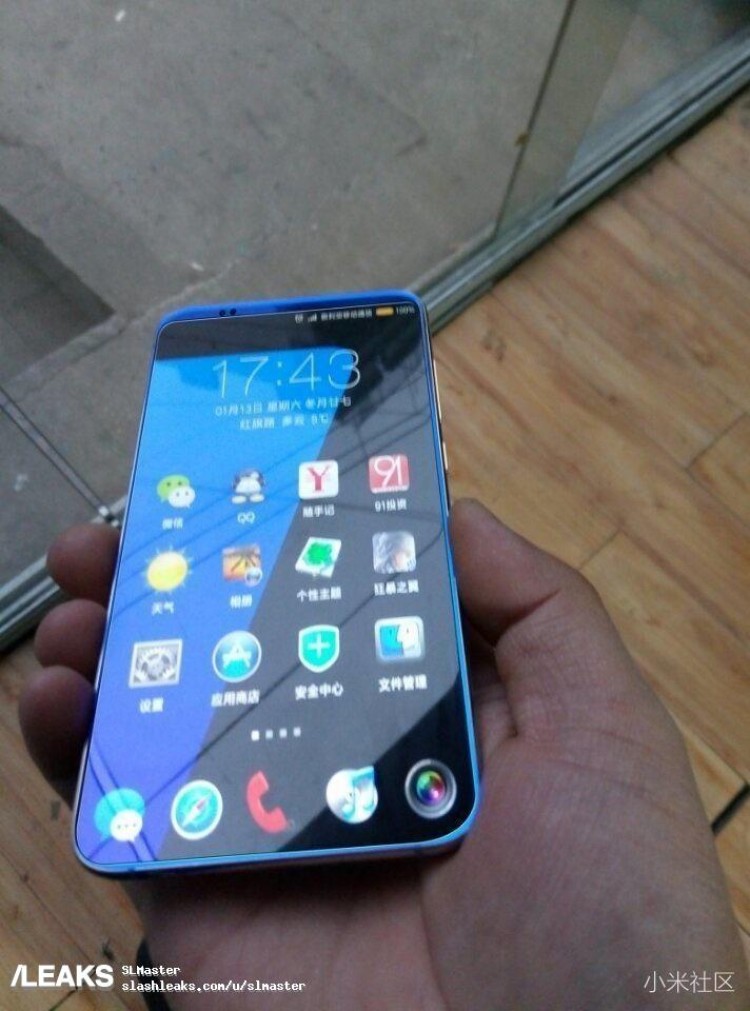
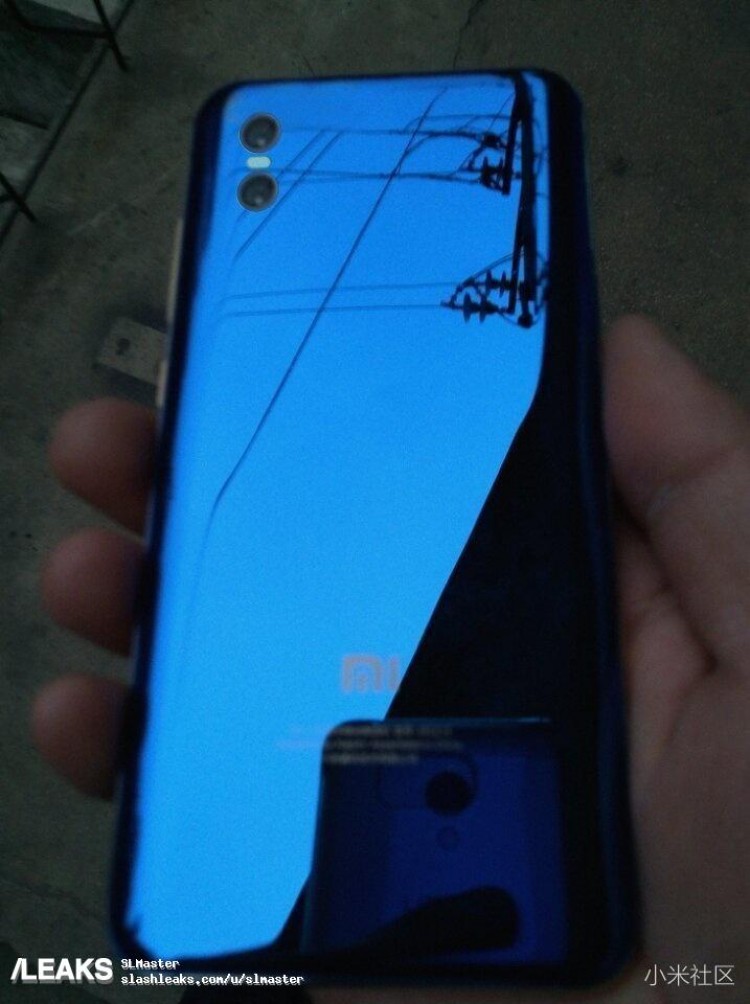
Earlier today, Xiaomi confirmed it would release the Xiaomi Mi Mix 2S on March 27. Now that we have a date for the official launch of the big flagship, we are left to wonder when we’ll meet Mi 6’s successor, the Xiaomi Mi 7. While we are still clueless about a release time frame for the device, some alleged images of the Xiaomi Mi 7 have just cropped up online.
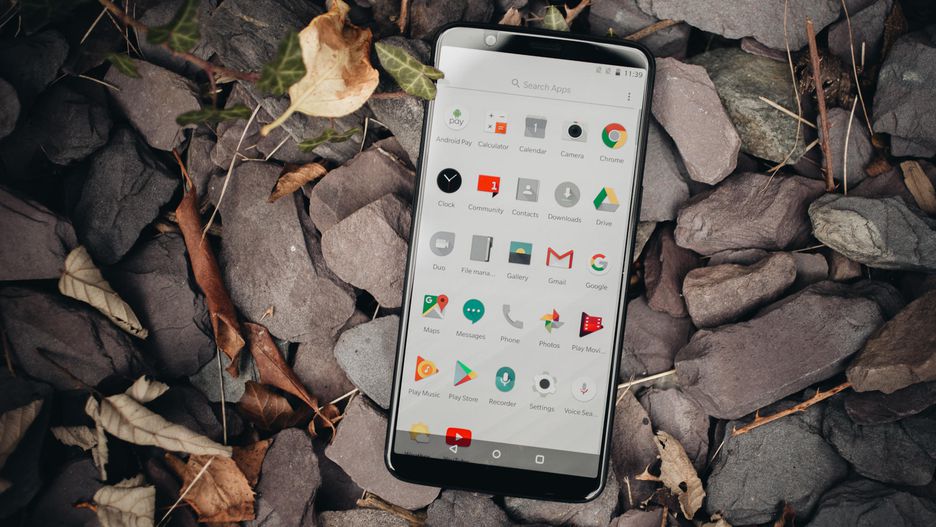
The phone seems to have a premium design, featuring a full screen on the front and a reflective back. The front is actually quite interesting, as apart from the thin forehead on top of the phone that houses the sensors, rest of the design seems to be bezel-less. The corners are curved and the curve continues to the back as well to some extent. What we’ve got here is a metallic blue back which is highly reflective. To be honest, the back reminds me of the HTC U11+ but if you remember, Xiaomi too isn’t new to reflective back smartphones. The Xiaomi Mi 6 Silver Limited Edition came with one of the most reflective back designs we have seen lately and the company could have easily thought of continuing it to the Mi 7. The buttons are all located on the right side of the phone. The back has dual cameras arranged vertically with dual LED flash placed in between the two sensors.
This isn’t the first time we are seeing this design. If you remember, we have seen a few renders with exactly the same design a couple of months ago. The only difference here is that this is the real phone while those were just renders. This brings us to the big question, is this really the Xiaomi Mi 7? It’s hard to say. The icons on the front are not standard MIUI stuff. They look large and weird and are nothing like what we have seen on the MIUI platform. But there’s the Mi branding at the back and the design looks pretty premium. So, it could be the Xiaomi Mi 7, but we cannot be sure, so make sure to take them with a pinch of salt.
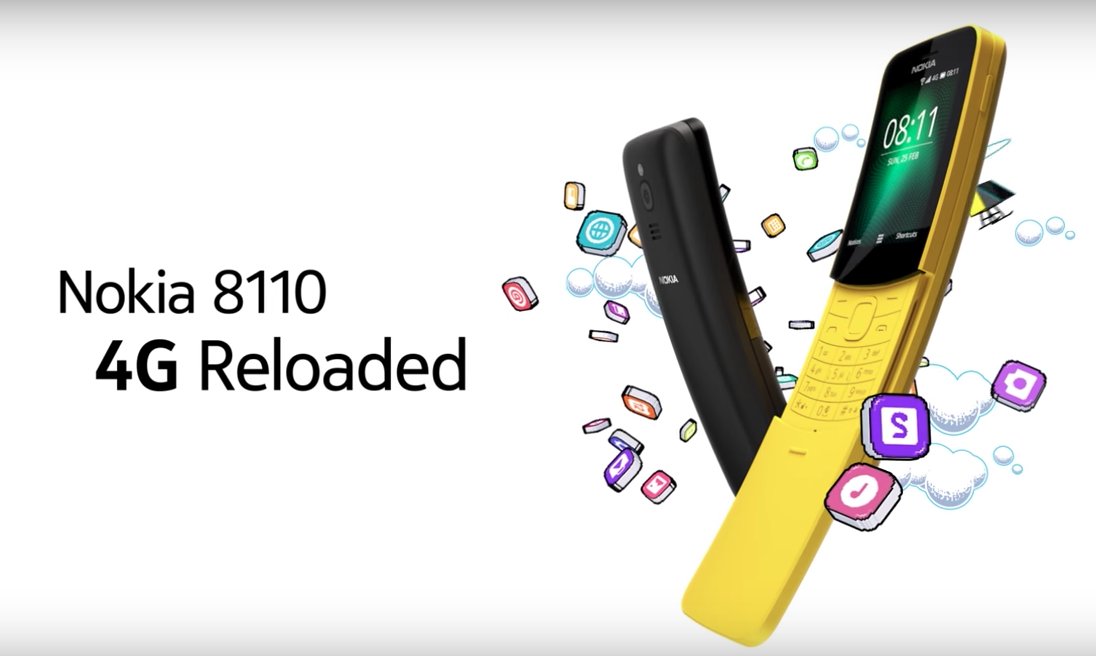
HMD Global has launched the all new Nokia 8110 4G feature phone. It is a refreshed version of the original Nokia 8110 phone that was launched in 1996. The older handset was seen in “The Matrix” sci-fi action movie in 1999.
Last year, the Finnish firm had launched the new edition of Nokia 3310 feature phone alongside Nokia 3, Nokia 5 and Nokia 6 smartphones at the Mobile World Congress (MWC) 2017 in February. Apart from Nokia 8110 4G feature phone, the company has also launched other phones like Nokia 1 Android Go, Nokia 7 Plus Android One, global edition of Nokia 6 (2018) and Nokia 8 Sirocco.
Nokia 8110 4G Specifications and Features
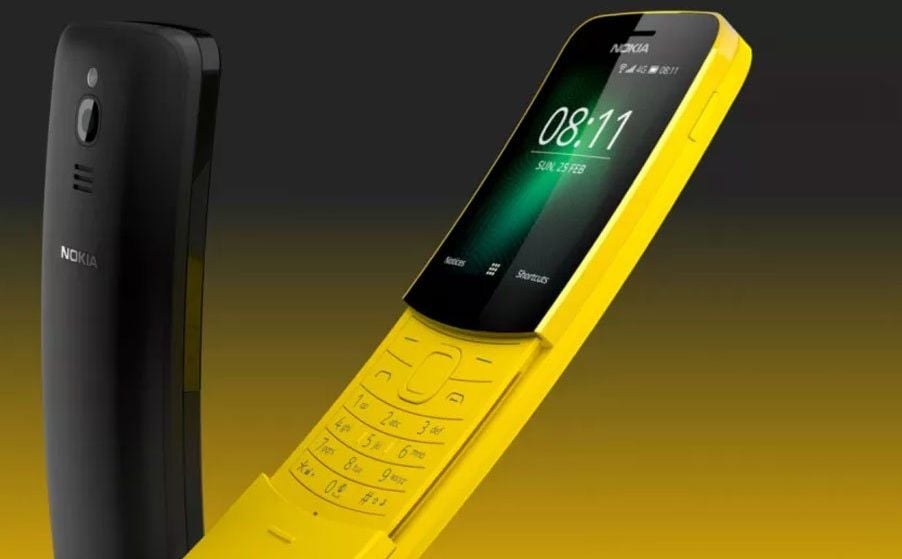
Nokia 8110 4G is a candy bar feature phone that requires user to flip open the case to answer a phone call or to access the keypad. The bright yellow edition of the Nokia 8110 4G is dubbed as Banana Yellow by the company because of its curved design. The handset can be also availed in Black color.
The Nokia 8110 4G is fueled by Snapdragon 205 dual-core processor that clocks at 1.1 GHz. The SoC is supported by 512 MB of LPDDR3 RAM. It has a native storage of 4 GB. For photography, it includes a 2-megapixel camera. The 1,500mAh battery of the phone delivers a talk time of 9 days and a standby time of 17 hours.
The original phone shown below had a monochrome display, but the refreshed edition has arrived with a 2.4-inch QVGA color display that supports a resolution of 320 x 240 pixels. It has the same user interface that is available on the new Nokia 3310. It is not running on Android, but Smart Feature OS that brings Facebook, Twitter, Google Assistant, Google Maps, and iconic Snake game on the phone.
The Nokia 8110 4G supports multiple audio formats such as AAC, AMR, MP3, MIDI and Vorbis. The other features of the phone include micro SIM support, Wi-Fi 802.11 b/g/n, Bluetooth 4.1, GPS, 3.5mm audio jack and FM Radio. By enabling 4G wireless hotspot on the phone, users can enjoy high-speed web connectivity through tethering on a laptop or tablet.
The re-imagined Nokia 8110 will be available for buying starting from May this year with a price tag of 79 euros. It will be hitting the shelves in single-SIM and dual-SIM versions. As of this writing, HMD Global has not confirmed on the markets that will be receiving it.
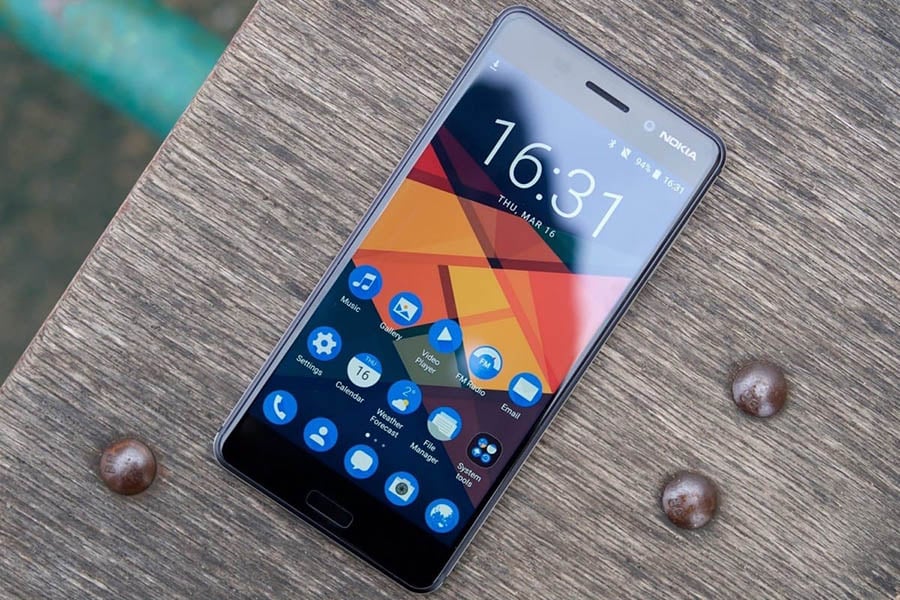
As expected, HMD Global has announced the next-generation Nokia 6, dubbed as Nokia 6 2018, at a press event during Mobile World Congress 2018 in Barcelona. The phone was originally made available in the Chinese market earlier this year.
According to the company, the device is touted to be more compact with a durable body. The phone is not a huge departure from the previous-generation model, but there are few meaningful changes that could improve the experience. The company claims that the smartphone is over 60 percent faster compared to its predecessor.
The phone comes with a 5.5-inch 2.5D display with ‘damage-resistant’ Corning Gorilla Glass on top. It features Full HD display with 1920 x 1080 pixels screen resolution, having a pixel density of 401ppi.
Under the hood, the device is powered by Qualcomm‘s Snapdragon 630 processor clocked at 2.2GHz, along with 4GB RAM and two variants on the internal storage — 32GB and 64GB. There’s also a microSD card slot, which enables users to further expand the phone’s storage capacity.
There’s a 16-megapixel camera on the back which has f/2.0 aperture, phase detection autofocus, and dual-LED flash. The phone also features an 8-megapixel front-facing camera with a 1.12um sensor and f/2.0 aperture for taking selfies and video calling. There’s a fingerprint sensor placed on the back panel for added security.
On the connectivity front, the phone offers hybrid Dual SIM slot, 4G VoLTE, Wi-Fi 802.11 b/g/n, Bluetooth v5, GPS, USB Type-C port, 3.5mm audio jack, FM Radio. It also features dual speakers, dual smart amplifiers, and Dolby Atmos.
The phone is running on Android Oreo operating system. Given that it’s an Android One device, there is no bloatware on the phone as well as no custom user interface from the company. The Nokia 8 2018 is powered by a 3,000mAh non-removable battery — same as its predecessor.
The Nokia 6 2018 will be available in three color options — Black/Copper, White/Iron, and Blue/Gold. The phone will go on sale in April this year, with an average retail price of 279 Euros.
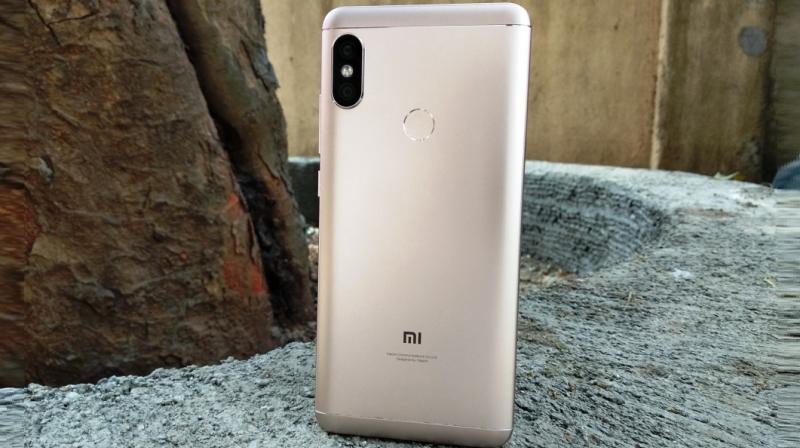
Xiaomi released the Redmi Note 5 and Redmi Note 5 Pro at an event in India on February 14. The Redmi Note 5 and its co-traveller are already contenders for best mid-rangers in the market presently. Although some are still not happy with the choice of Xiaomi to stick with the Snapdragon 625 chip onboard the Redmi Note 5. However, the Redmi Note 5 Pro comes with a Snapdragon 636 processor which is almost similar in performance to SD 660, save for a weaker GPU and a few other minor issues.
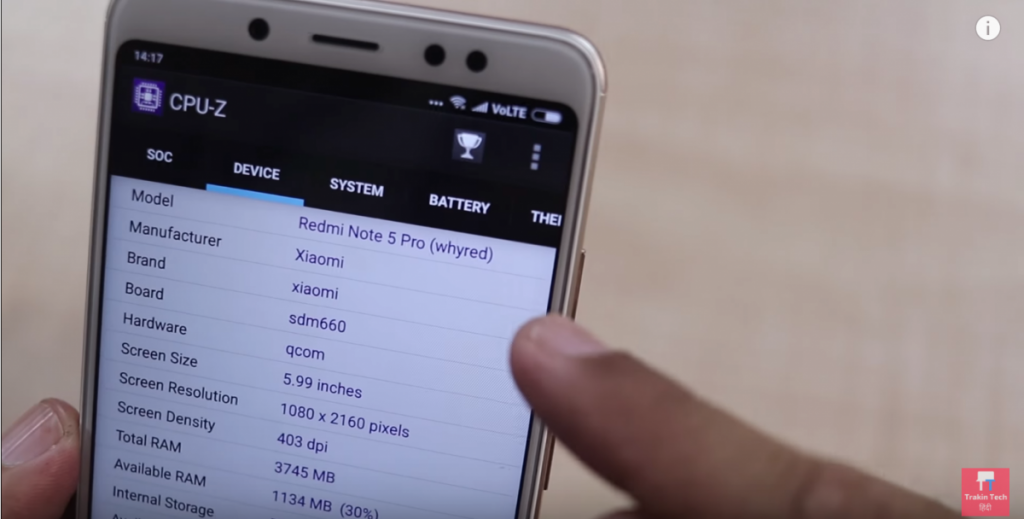
Another downside for some is the now outdated Android 7.0 Nougat which the devices shipped with. But the Redmi Note 5 Pro may get Android 8.1 Oreo soon and this could bring Project Treble compatibility. This detail was scooped up by XDA Developers while rummaging through the firmware files of a device code-named “whyred.” The device was known to be a Redmi model running global ROM but the real name wasn’t known. The device has now been uncovered as the Redmi Note 5 Pro since it has been launched. A CPU-Z benchmark test as shown in the screenshot below proves that. Also, the firmware is said to run Android 8.1 Oreo. The SDK version is 27 and the release build is 8.1.0 with the January security patches. But what’s most interesting is that the line “ro.treble.enabled” is set to true in the build.prop, which is one of the easiest ways to check for Project Treble compatibility on an official ROM.
In case you don’t know what Project Treble is, it is one of the most important features included in Android 8.0 Oreo. Project Treble separates all the low-level device drivers (known as the ‘vendor implementation’) from the rest of Android. This makes updating phones/tablets to the latest version of Android much easier for manufacturers, as long as they already support Treble. Treble makes it significantly easier to develop custom ROMs for phones, as opposed to ones without the feature. It’s even possible to develop a single system image that works across vastly different devices, as long as they are Treble-compatible. This would make it easier and faster to develop custom ROMs based on newer Android versions going forward. These are just speculations anyway as XDA Developers didn’t get the opportunity to verify by testing the Android Oreo-running Redmi Note 5 Pro hands on.
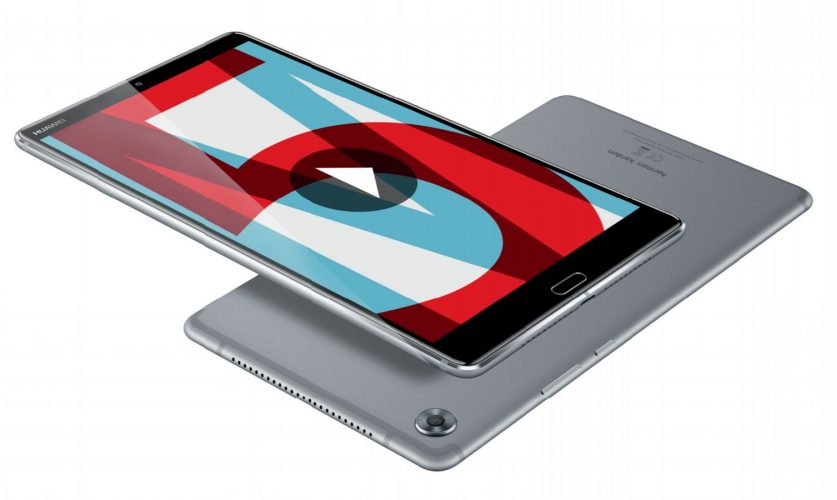
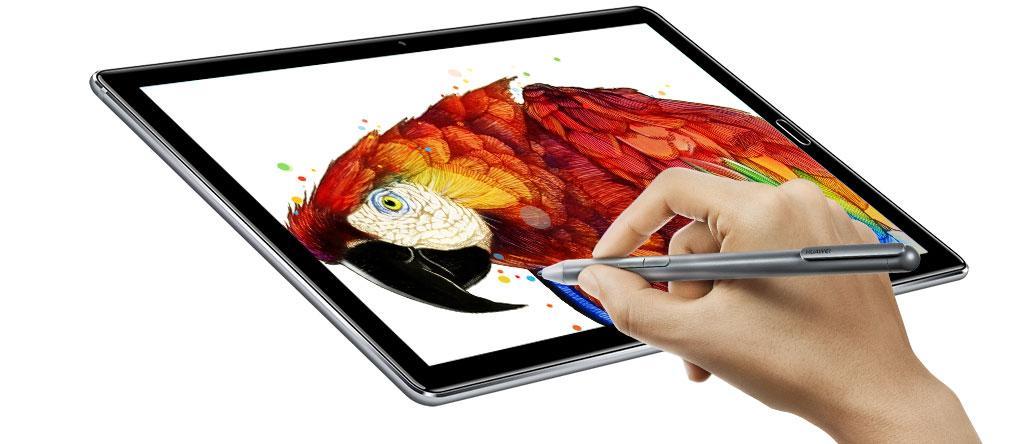
Mobile World Congress 2018 has kicked-off with Huawei announcing a bunch of new devices. After unveiling the Matebook X Pro with super-thin bezels, the China-based company has now announced its new high-end Android tablet — Huawei MediaPad M5.
The company has announced two variants — MediaPad M5 and MediaPad M5 Pro. While the M5 will be available in two screen sizes — 8.4-inch display and a 10.8-inch display, the M5 Pro will be available in only one size — 10.8-inch. Both screen sizes come with curved glass displays, 2560 x 1600 pixels screen resolution and IPS panels.
Under the hood, the tablets are powered by the company’s own HiSilicon Kirin 960s processor. This is similar to the Kirin 960 but with a dedicated NPU like the Kirin 970. As of the memory configuration, both devices pack 4GB RAM and offers three storage variants — 32GB, 64GB, and 128GB. There’s also a microSD card slot allowing users to further expand the storage capacity up to 256GB.
The devices come with an aluminum unibody construction, with four speakers on the 10.8-inch and two speakers on the 8.4-inch. All the speakers are placed on the rear panel and are co-engineered with Harmon/Kardon.
There’s a 13-megapixel camera sensor placed on the back panel and an 8-megapixel front-facing snapper for video calling. It also features a fingerprint sensor which is embedded in the home button. The devices are running on Android 8.0 Oreo operating system with the company’s own EMUI 8.0 on top.
The MediaPad M5 Pro also comes with added support for Huawei’s M-Pen that features 4096 levels of pressure sensitivity and support for tilting and shading and can last for about 50 days on a single charge. Further, the Pro model will also support a detachable keyboard and will offer a desktop-type view with expanded file management features.
Connectivity options on the device include Wi-Fi 802.11 a/b/g/n/ac dual-band (2.4GHz and 5GHz) and Bluetooth v4.2. All variants of the tablet will also be available with 4G LTE option.
The MediaPad M5 with 8.4-inch display is powered by a 5,100mAh battery that the company says is good for 11 hours of 1080p video, and can be charged in two hours. The 10.8-inch model is powered by a larger 7,500mAh battery that can be charged in about 3 hours using the fast charge technology.
The Huawei MediaPad M5 will be available in two colors — Champagne Gold and Space Grey. The devices will start shipping in March and will be available in most European countries, as well as the United States. Pricing for the devices start at 349 Euros and goes up to 599 Euros.
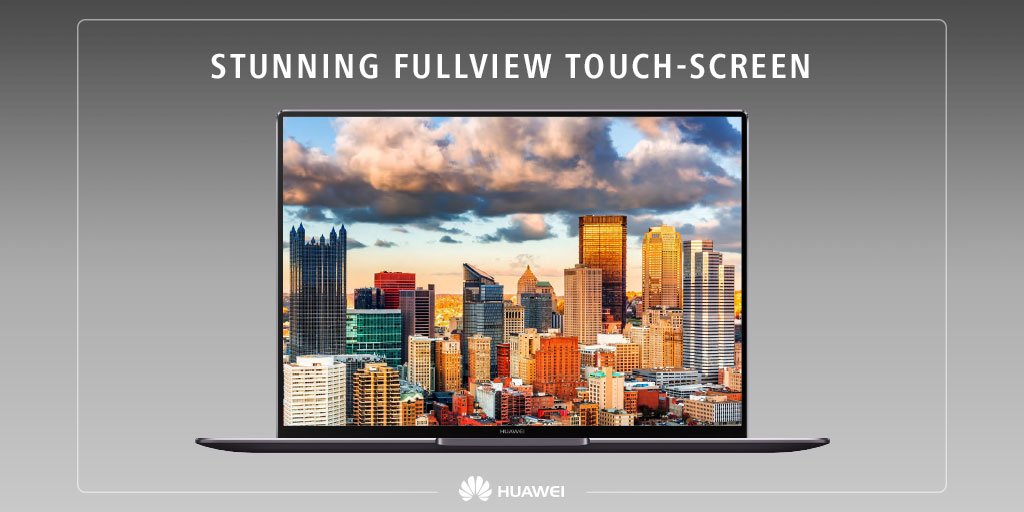
Huawei has taken the wraps off its first product at MWC 2018. The new device is the MateBook X Pro – an upgraded version in all ways over last year’s MateBook X.
The original MateBook X was known for its very slim bezels but the new Pro model takes it even further. Huawei says the MateBook X Pro has a 91% screen-to-body ratio!!!
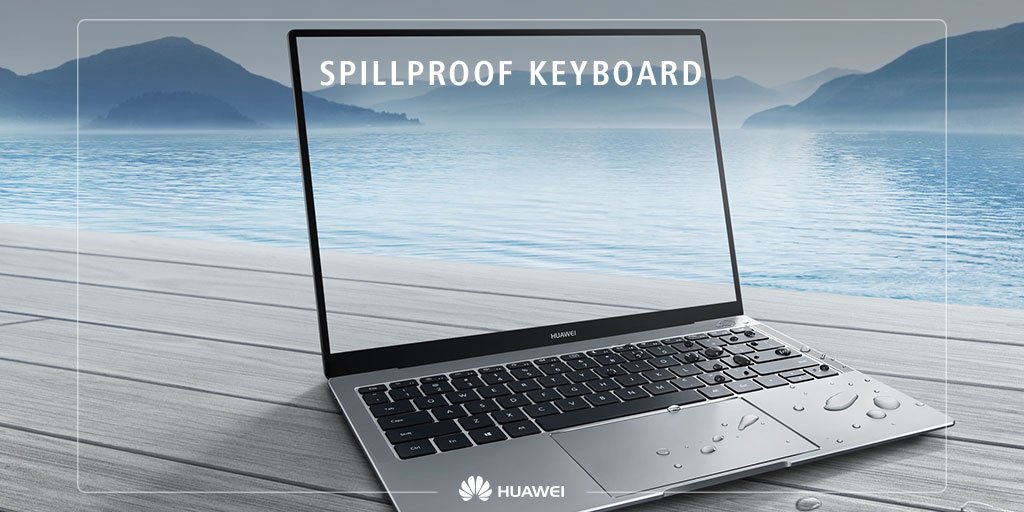
The super thin bezels mean the webcam has to find a new home and Huawei has come up with a nice little trick. The wide-angle webcam now resides in the spill-proof keyboard. It is actually nestled between the F7 and F8 keys and it pops up when needed.
For security conscious folks, the good thing about the webcam’s new home is that there is no need for duct tape to cover your camera anymore.
The MateBook X Pro has a 13.9” 3000 x 2000 (3K) touch display. it comes with Intel’s 8th gen processor in Core i5 and Core i7 configurations. It will also be available with either 8GB or 16GB of RAM and 256GB or 512GB SSD. NVIDIA’s GeForce MX150 handles graphics.
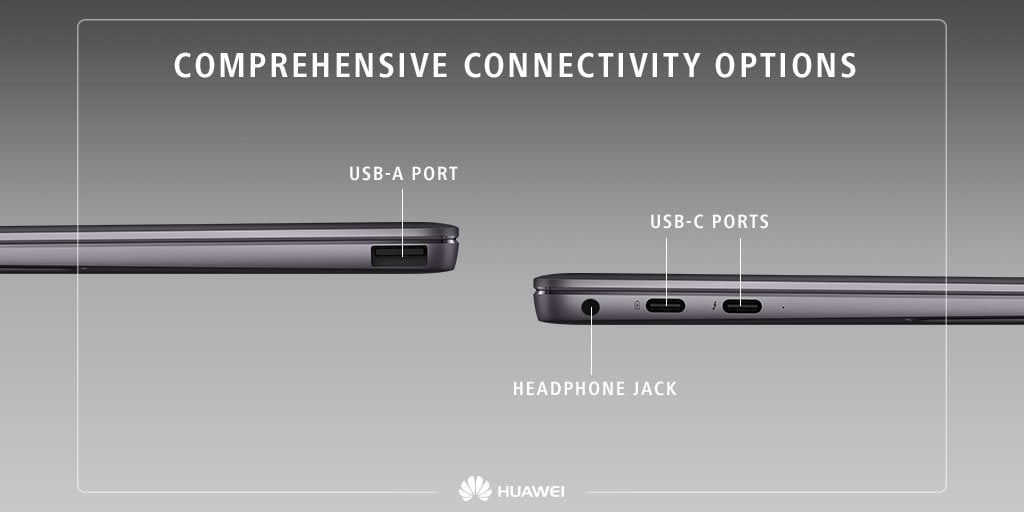
The MateBook X Pro is thicker and heavier (1.33kg) than its predecessor (1.05kg) and that is because it has a larger battery and packs more ports. The battery is said to last for 12 hours for. It also comes with a fast charger that gets you 6 hours of battery life after just 30 minutes of charge.
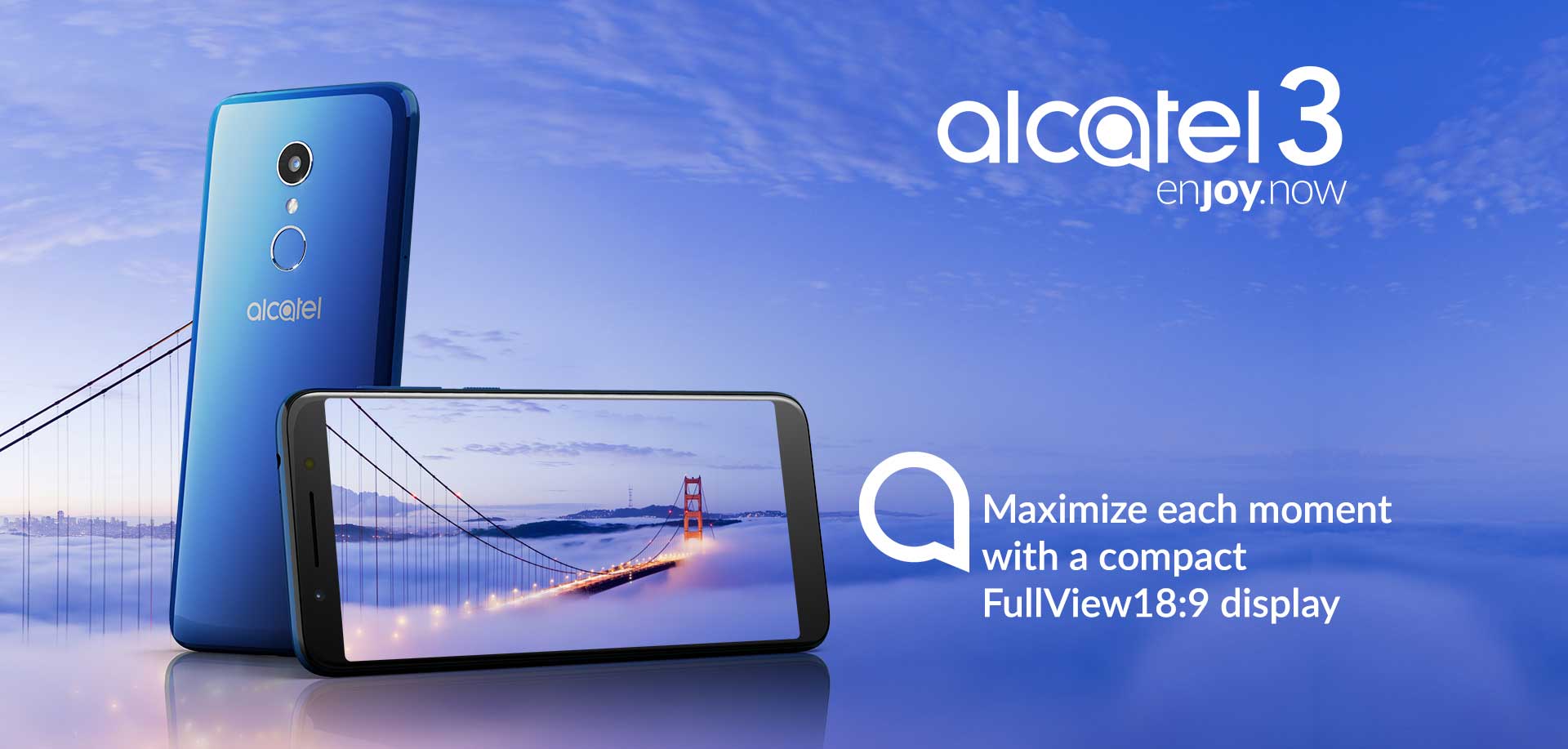
Other than the Alcatel 5, Alcatel 1X, and Alcatel 1T tablets unveiled last night, three new phones in the Alcatel 3 series were also officially launched. They are the Alcatel 3, Alcatel 3C, and Alcatel 3V; and all three phones fit into the lower to mid-range category.
Alcatel 3
This is the least powerful of the three phones. It rocks a 5.5” HD+ display, 2GB of RAM, and 16GB of expandable storage. Like the Alcatel 1X unveiled last night, this one is also powered by a MediaTek MT6739 SoC.
The rear camera is a 13MP sensor with a f/2.0 aperture, HDR, PDAF, and a LED flash. The 5MP front camera also has its own LED flash.
The Alcatel 3 has Bluetooth 4.2, NFC, Cat.4 LTE, dual SIM support, a microUSB port and a 3000mAh battery. The battery is said to last up to 17 hours on 3G. It also runs Android Oreo out of the box.
It will come in Spectrum Black, Spectrum Blue, and Spectrum Gold with a 2.5D glass and radial design on the back. Color availability will be based on region. Price of the Alcatel 3 is put at €149.99 when ot goes on sale next month.
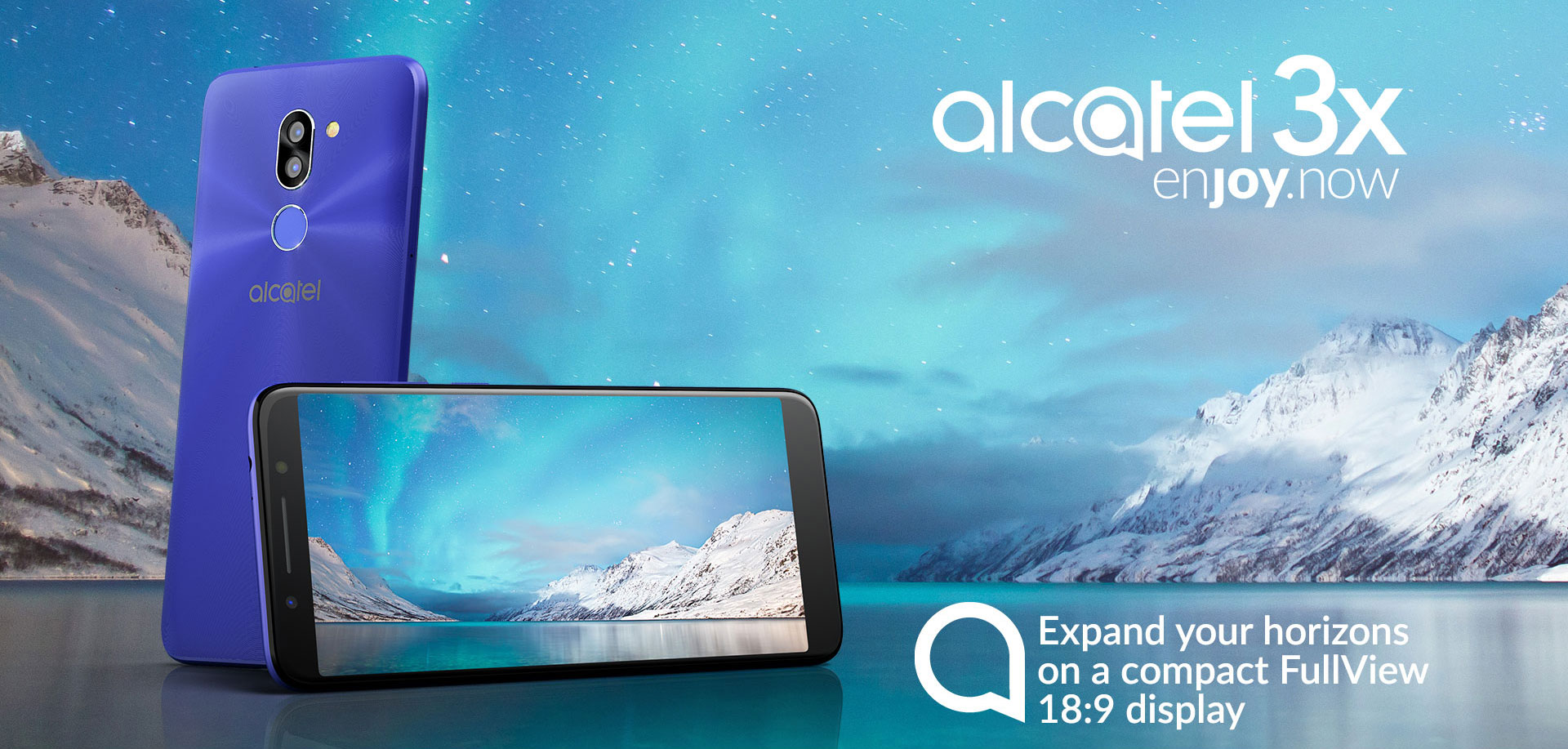
Alcatel 3X
The Alcatel 3X shares a bunch of features with the Alcatel 3 above. It has the same MT6739 processor, same 3000mAh battery, and a 5MP selfie camera with flash.
Where it differs is in its screen which is larger at 5.7” but with the same 1440 x 720 resolution. It also comes in 2GB RAM + 16GB ROM and 3GB RAM + 32GB ROM variants.
The Alcatel 3X also has dual rear cameras. A main 13MP f/2.0 sensor with EIS and a 5MP f/2.2 120° wide-angle lens. Sitting below the dual cameras is a fingerprint scanner.
There is NFC, a microUSB port, Bluetooth 4.2, microSD card slot, and dual band WiFi for connectivity. Unfortunately, Alcatel will be shipping the 3X with Android Nougat.
The phone will come in Metallic Black, Metallic Blue, Metallic Gold, Spectrum Blue, and Spectrum Black and be available next month for €179.99.
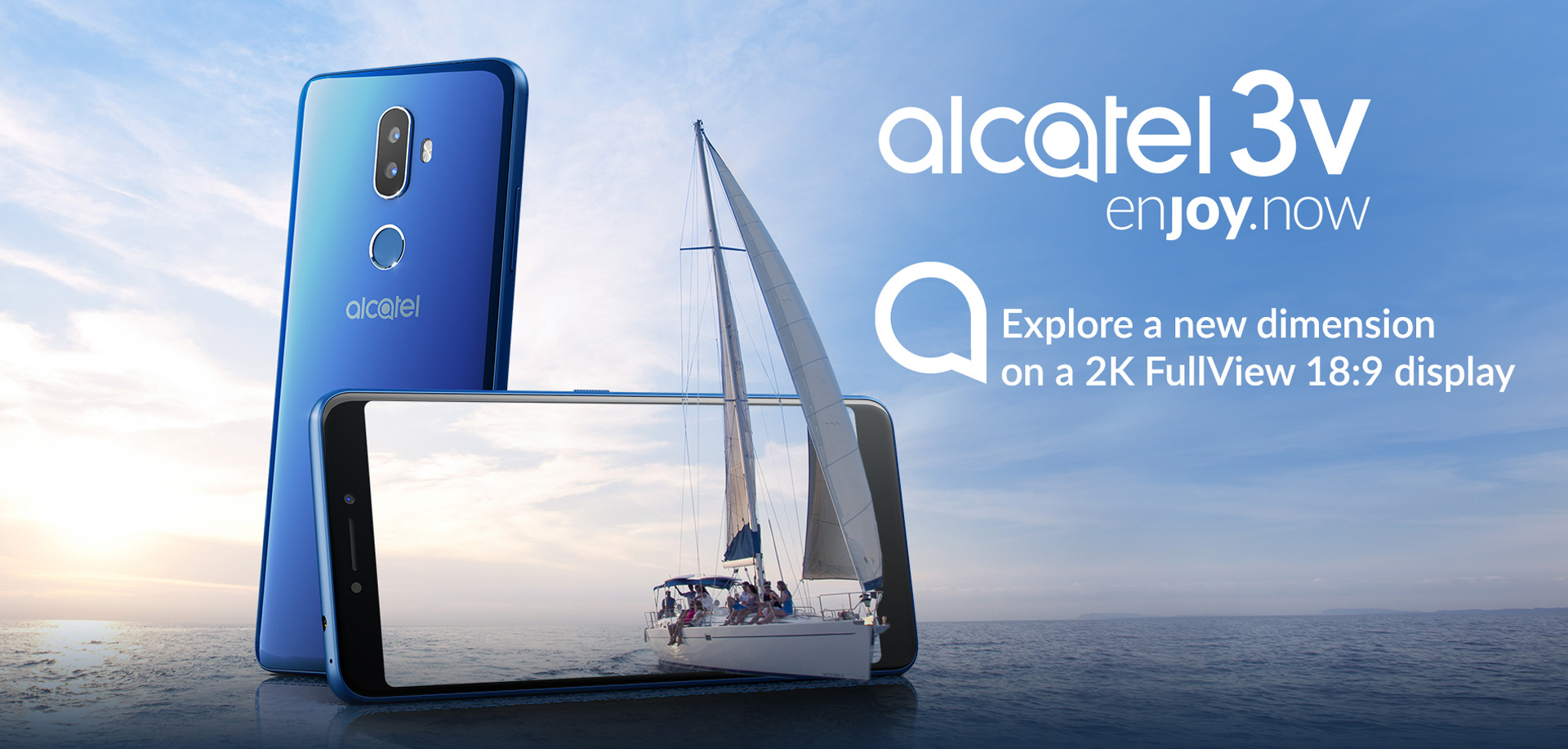
Alcatel 3V
Like the Alcatel 3C announced in Italy last month, the 3V also rocks a 6” display but with a higher 2160 x 1080 display Alcatel is marketing as 2K.
The display looks promising but Alcatel has cut corners on this device too. It comes only with 2GB of RAM even though you can choose between 16GB or 32GB of storage. A MediaTek MT8735A is the chipset under the hood.
The rear camera is a 12MP 1/2.8” pixel sensor with a f/2.2 aperture and it is paired with another 2MP f/2.4 sensor for real time bokeh effects. Beneath the cameras is a fingerprint sensor. There is also Face Key which is its own version of face unlock.
China-based phone manufacturer OnePlus has been rapidly growing its presence in India and as a result, the company has managed to grab around 48 percent of the premium phones market share in the country in the fourth quarter.
According to the International Data Corporation’s (IDC) Quarterly Mobile Phone Tracker 2017 Q4, Chinese brand OnePlus grew by a staggering 1116 percent in the premium smartphone segment in India.
In a statement, Vikas Agarwal, General Manager at OnePlus India said,
It is truly remarkable that OnePlus has become the biggest Android premium smartphone brand within just 3 years of entering the Indian market. It is a great validation of our user focused approach and online first business model. We are truly humbled and grateful to our business partners and loving community for their continued support.
For the company, which became a $1.4 billion brand globally within four years of existence, India is one of the biggest market as it contributes one-third of its global business.
The IDC report further suggests that the premium Android phones segment in India outperformed the overall smartphone segment with a Year-on-Year (YoY) growth of 97 percent.
According to a report from Counterpoint Research, for the last quarter, the premium segment for phones was recorded as the second fastest growing segment with more than 20 percent year-on-year growth in CY 2017.
The report reveals that the during the last year, OnePlus was consistently ahead of big smartphone players like Apple and Samsung, at least in the Indian market, mainly due to its value-for-money offerings and robust presence in the online retailing market.
OnePlus’ most recently launched device is OnePlus 5T which comes with a 6.01-inch Full HD+ Optic AMOLED display with an 18:9 aspect ratio and a layer of Corning Gorilla Glass 5 on top. Under the hood, the phone is powered by Qualcomm Snapdragon 835 processor and is available in two variants — 6GB RAM with 64GB of internal storage and 8GB RAM with 128GB of internal storage.
The device comes with a 16-megapixel primary sensor at the back, with a wide-angle lens and large f/1.7 aperture. Compared to the OnePlus 5, the secondary telephoto lens on this one has now been replaced by a 20-megapixel sensor with f/1.7 aperture for better low-light photography and improved depth-of-field. The phone is powered by a 3,300mAh battery which also supports Dash Charging.
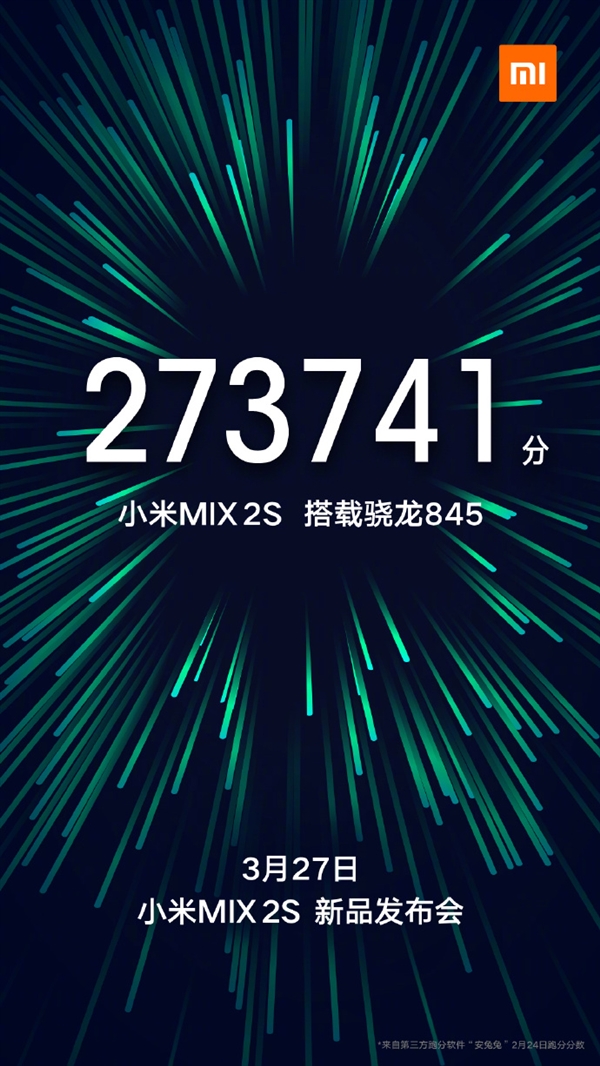
After months of leaks and rumors, Xiaomi has finally come out and announced the launch date of the Xiaomi Mi Mix 2S. The flagship model, which will succeed the popular Mi Mix 2 model will meet us on March 27. While we’ll have to wait for over a month to see the 2S launch, the company has also confirmed that the new model will feature Qualcomm’s best flagship processor till date, the Snapdragon 845 chipset.
Along with the confirmation of the new chipset inside the Mi Mix 2S, Xiaomi has also revealed the first AnTutu benchmark score of the device. And, as expected, the phone manages to beat the competition with it superior performance, at least in the benchmark app. The Mi Mix 2S manages to score over 273,741 points on AnTuTu, which is one of the best scores we’ve seen on an Android smartphone till date. We know Snapdragon 845 is going to take performance to a whole new level this year and this is just a glimpse of what to expect from phones powered by this chipset.
Apart from the launch date and the chipset, the company hasn’t revealed any more details. However, expect to hear more about the device through official as well as unofficial means in the next few weeks. I guess, Xiaomi will start revealing more details about the upcoming flagship after the busy MWC 2018 that kicks off tomorrow.
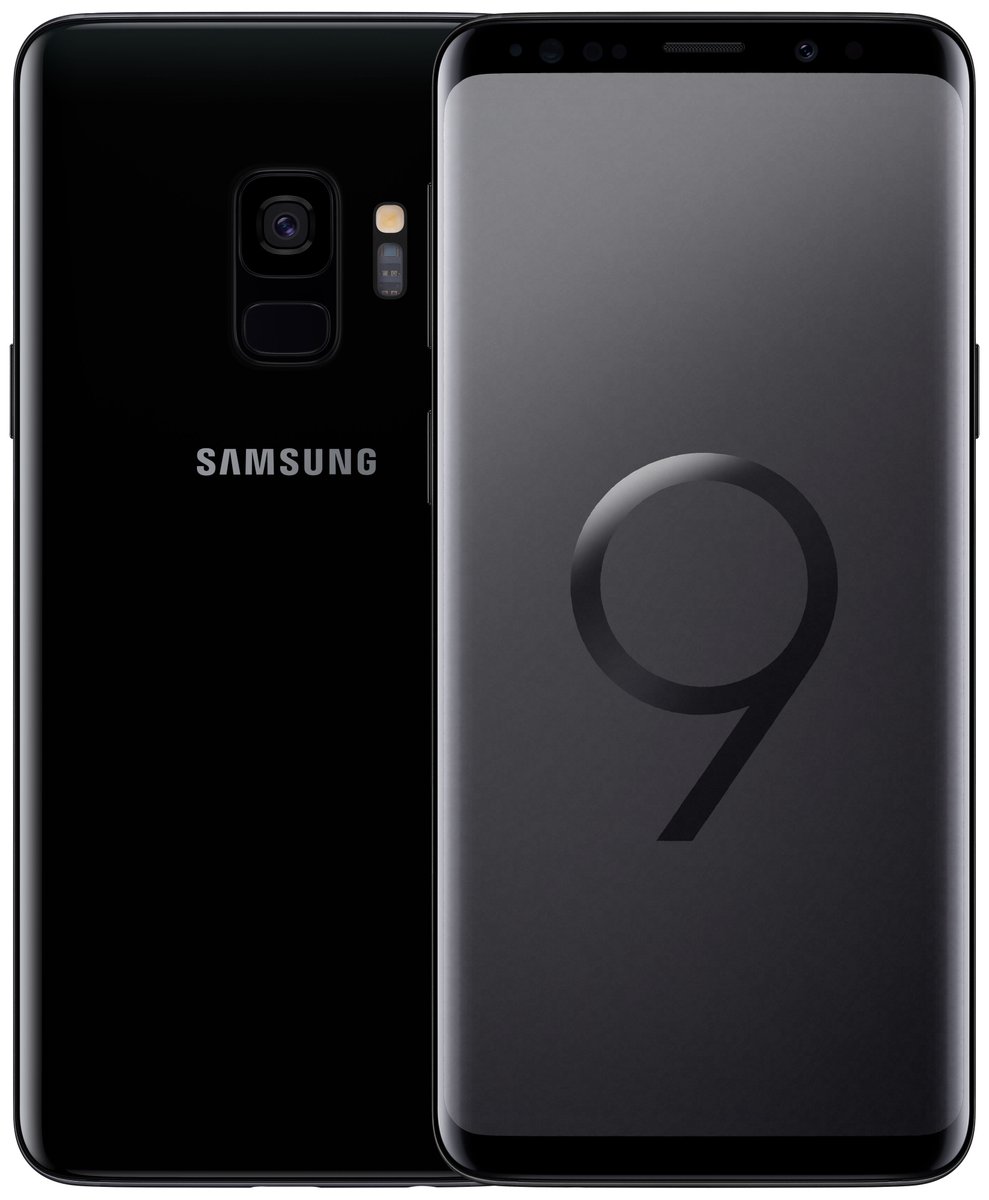
Samsung is all set to announce the Samsung Galaxy S9 and S9+ flagships in the next few hours. While traditionally, we have to wait for the big unveil of the flagship to see a 3 minute long promo video of the device, this time around, it looks like /leaks managed to find the launch video a few hours early.
The video looks like the real deal and reveals a few details about the upcoming S9 and S9+ models. First of all, it confirms that the new Galaxy S9 models will look just like the Galaxy S8, with a few minor changes like the location of the fingerprint sensor at the back. As expected, it is now placed at a much more natural position, making it easier to access in everyday use. But the overall design of the new flagship remains the same as the S8, which to be honest, isn’t really a bad thing, considering how we all love Galaxy S8’s refined design.
https://www.youtube.com/watch?v=DQBpW-zWMXY
The video also confirms a few of the features of the new device. We will get a live translation feature on the phone, wherein you just have to point the camera at a text and it’ll translate into your language. Then there are a few AI features as well along with waterproofing. Then there’s Samsung’s DeX dock support which instantly transforms your Android into a desktop. It’s a pretty cool tech for presentations.
Finally, the video talks about the new Galaxy S9 Enterprise Edition. This will be a special edition made for business employees and it will come with add on features like extended guaranty, security updates for up to four years, E-FOTA (Firmware over the Air) among other things.
But these were just a few of the features of the Galaxy S9 smartphone. We already know a lot about the phone, thanks to all the leaks and renders that have surfaced in the past couple of months. So, now, it’s just a matter of few hours until we get the pricing and availability details.
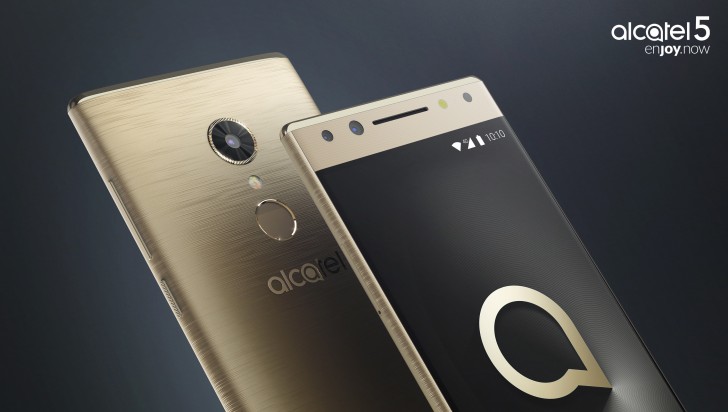
The Alcatel 5 was announced last night in Barcelona. Expected to be the king of Alcatel’s new lineup, it is hard to give it that title.
Alcatel 5 Design
We are already familiar with the phone’s appearance but we’ll run through it again.
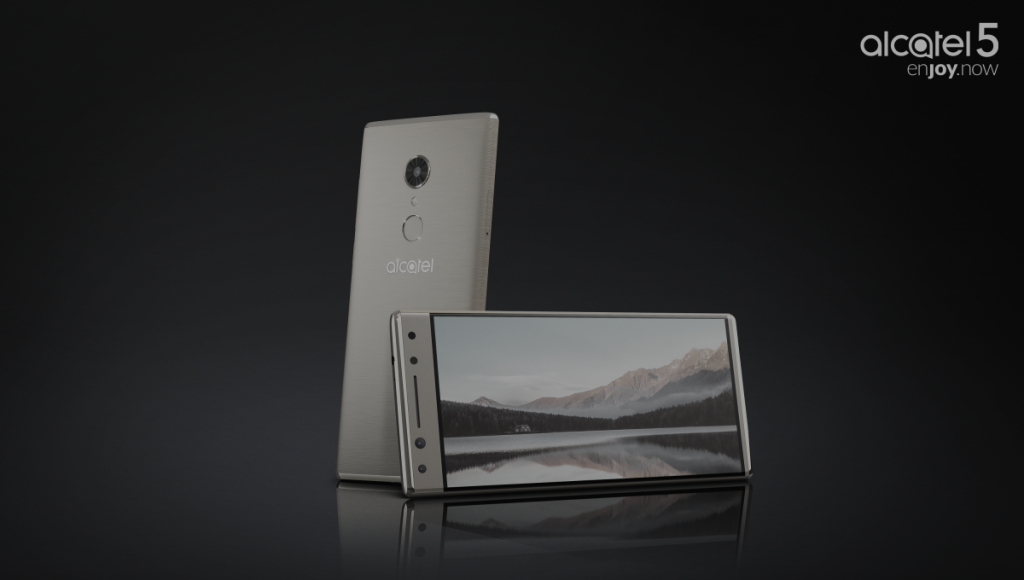
Alcatel has gone for a tri-bezel-less design for the Alcatel 5. The lower bezel has been significantly reduced while the side bezels appear to be non-existent. At the top is a huge bezel which is home to two cameras, a sensor, and a LED flash.
Alcatel has given the phone a brushed metal finish on the rear along with a fingerprint scanner and a single camera sensor.
Alcatel 5 Specs
The Alcatel packs a 5.7” 18:9 display with a 720 x 1440 resolution. For a device meant to be the top of the line, one would think a FHD+ display would be the choice.
Powering the phone is a MediaTek MT6750 SoC, 2GB/3GB of RAM and 16GB/32GB of storage. A 12MP f/2.2 1.25um sensor graces the back. Surprisingly, it does have Electronic Image Stabilization. It also supports slow motion recording and comes with new features like Light Trace and Video Story.
Up in front, a 13MP f/2.0 1.4um sensor is paired with another 5MP 120° wide-angle sensor. There is also EIS and a dedicated LED flash.
While Alcatel has loaded its new entry level tablets – the Alcatel 1T 7 and Alcatel 1T 10 with Android 8.1 Oreo, the Alcatel 5 runs Android Nougat. There is dual SIM support (nano), a rear mounted fingerprint scanner, NFC (select model), USB 2.0 Type-C port, and a 3000mAh battery.
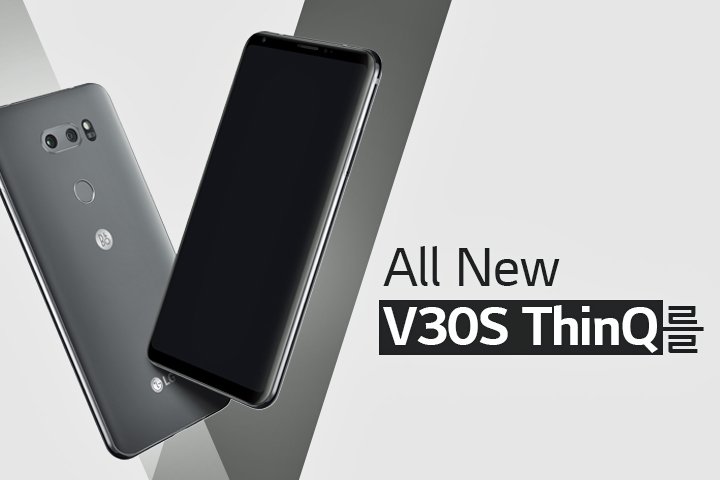
LG has taken the wraps off the improved version of its last flagship, the LG V30. The new phone which is called the LG V30S ThinQ brings a ton of new features with a focus on AI.
Rather than announce a whole new smartphone, LG’s new strategy is to release upgraded versions of its flagships. That doesn’t mean there is no new flagship on the way, it just will arrive later.
LG V30S ThinQ Design and Specs
The LG V30S ThinQ doesn’t look different from the V30 released last year. Their physical appearances are identical. The specs are also the same –
6-inch P-OLED QHD+ FullVision display
Qualcomm Snapdragon 835
6GB RAM
128GB ROM (256GB LG V30S+ ThinQ)
5MP selfie camera
16MP f/1.6 + 13MP f/1.9 wide-angle dual rear camera
3,300 mAh battery with QC 3.0 support
IP68 rating and MIL-STD 810G compliance
There is more RAM and storage but that isn’t new. The LG V30 Signature Edition comes with 6GB of RAM and 256GB of storage. So what has changed?
The software! The LG V30S ThinQ has been infused with AI (Vision AI and Voice AI). Vision AI covers image related tasks and is split into AI Cam, QLens, and Bright Mode.
AI Cam is a smart feature baked into the phone’s cameras. It can identify the object you want to take a picture of and recommend the best shooting mode. This is similar to what Huawei does with its Mate 10 Pro.
This means that the camera can detect if you are trying to take a picture of your food, pet, or a person and modify the settings that will give the best representation of the object.
There is also Bright Mode which adds a bit of lighting when shooting in low-light conditions without making the photos noisy.
Think of QLens as LG’s version of Google Lens which is a Pixel exclusive feature. With QLens, you can point the phone’s cameras at an object and get information about it. You can also scan QR codes and barcodes, or get landmark descriptions. LG also says you can perform an image search using QLens.
For Voice AI, this is Google Assistant with thirty-two LG V30S ThinQ tricks. You can simply say “Okay Google” like on other devices but ask it to do specific tasks like:
take a picture/selfie on a wide angle,
record a video on a wide angle,
take a documentary cine video
take a thriller cine video
take a food photo
take a low-light photo
take a slow-motion video etc.
Some of the above commands are already available on the LG V30 but the last three are some of the new ones released along with the V30S ThinQ.
You can also connect to other LG smart devices and even monitor their statuses. For example, you can simply ask your device about your LG smart washing machine and it will bring up the requested info.
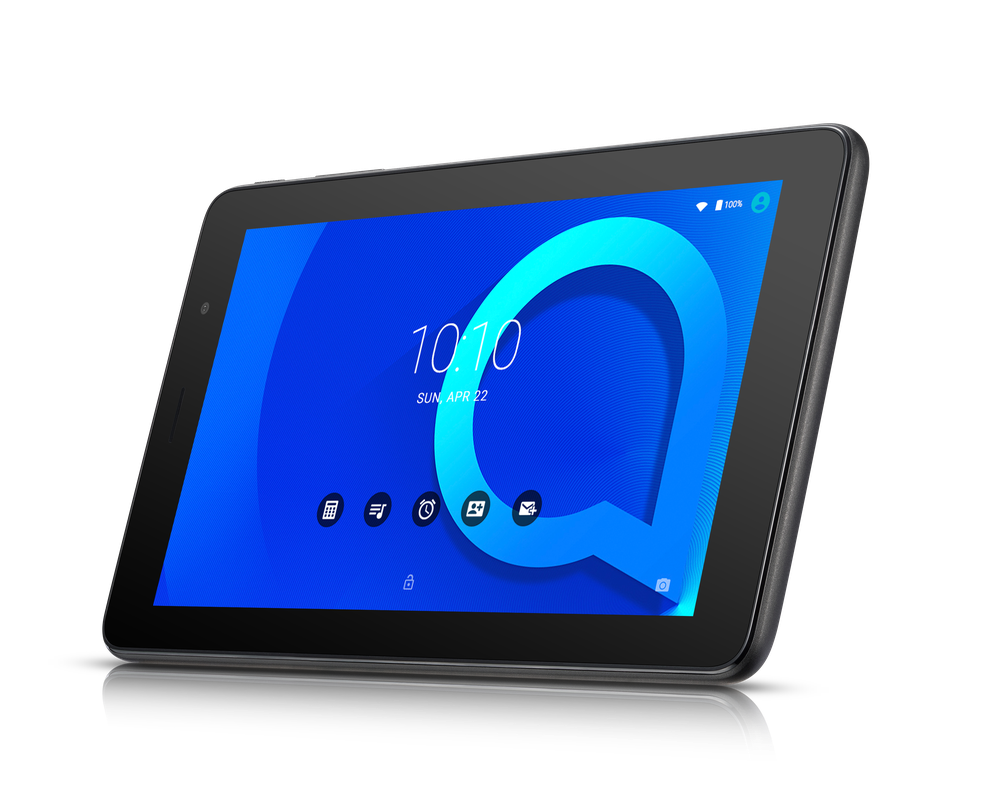
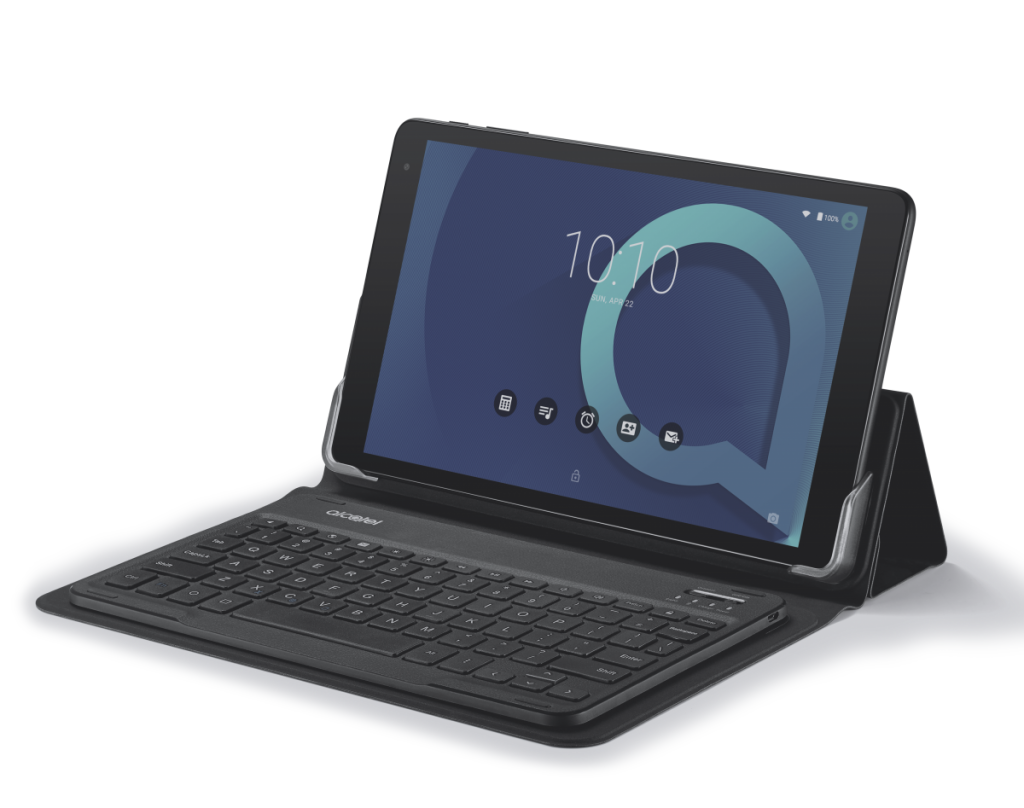
MWC won’t officially open till Monday but manufacturers have begun announcing new products tonight. Alcatel has announced two new tablets – the Alcatel 1T 7 and Alcatel 1T 10. As you can tell from their names, the new tablets comes in 7” and 10” variants and come pre-loaded with contents for kids.
The 7” variant of the Alcatel 1T has a 1024 x 600 display, 1GB of RAM and 8GB of built-in storage. A MicroSD card slot is also available for adding extra storage. The 10” variant has a 1280 x 800 resolution, also 1GB of RAM but storage has been doubled to 16GB.
MediaTek’s MT8321 quad-core processor clocked at 1.3GHz is the chipset powering both variants of the device. There are 2MP rear cameras (without flash) on both variants but the 7” variant has a VGA front camera and the 10” variant has a 2MP front camera. Don’t expect any of them to take stellar pictures.
The 7” Alcatel 1T packs a 2580mAh battery which is said to offer up to 7 hours of use while the 10” model has a larger 4000mAh battery with 8 hours of screen-on time. Surprisingly, both variants run Android 8.1 Oreo.
The tablets come with what Alcatel calls Eye Care mode for reducing blue light. There are also pre-installed kids games, camera app, and a parental control panel for setting usage limits
Recently, Google had confirmed that it will be launching new phones starting from next week. However, Alcatel has just now launched the Alcatel 1X as the world’s first Android Go phone. Packed with modest specs, the handset will be hitting the market with a pricing of 99 euros.
Alcatel 1x Specifications and Pricing
Alcatel 1X features a 5.3-inch display that supports a low resolution of 960 x 480 pixels. However, a good thing about its display is that offers an aspect ratio of 18:9. Since it is a low-end phone, it is driven by MediaTek MT6739 chipset featuring a quad-core processor.
It supports full HD video shooting and is enabled with support for Electronic Image Stabilization (EIS). It has an LED equipped selfie camera of 5-megapixel. The front camera a face recognition functionality called Face Key. The 1x comes with 2,460mAh battery. One of the major highlights of the Alcatel 1x is that it is loaded with Android 8.1 Oreo (Android Go edition). It will be releasing in select markets starting from April.
Depending on its region availability, the Alcatel 1X comes in multiple variants such as 1 GB or 2 GB RAM, 13-megapixel or 8-megapixel rear camera, fingerprint scanner or no fingerprint reader, Google Assistant or no Google Assistant, NFC or no NFC, single-SIM or dual-SIM and blue and black color options.
The Alcatel 1x with single-SIM and dual-SIM models are respectively priced at 99 euros (~$122) and 109 euros (~$134). More information on the different variants of 1x are expected to surface soon.
What do you think about the specs and pricing of the Alcatel 1x? Share us your views by posting your comments below.
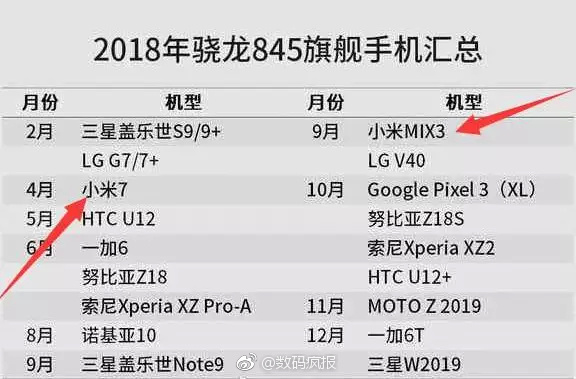
Qualcomm announced its latest Snapdragon 845 mobile platform around November last year. The flagship SoC is expected to be utilised by OEMs this year. Some of the models which would utilise the chipset are already known but someone on Weibo has just released a list of the models that would be released this year with the SD 845 chip. The leak also include the months the various flagship models would be launched.
Top on the list is the Samsung Galaxy S9 and S9+ which would be launch this February. That is already confirmed but the list also included the LG G7 and G7+ as launching this February as well. Xiaomi Mi 7 is another expected to feature a Snapdragon 845 chip and from the list, we can gather that the Mi 7 will be launched in April. The month of May will see the HTC U12 joining the league of SD 845-powered models. While three models are listed as dropping in June this year and they include, OnePlus 6, Sony Xperia XZ Pro and ZTE Nubia Z18.
Furthermore, the leak also suggest the Nokia 10 as coming in August with the flagship chip while the Galaxy Note 9 would be launched in September packing a Snapdragon 845 chip on one of its models. The Xiaomi Mi Mix 3 and LG V40 are also expected to launch in September. It is interesting to note that the Xiaomi Mi Mix 2s isn’t on the list. SD 845 Models you should look forward to seeing in October include the Google Pixel 3 and Pixel 3 XL, Nubia Z18s, Xperia XZ 2 and HTC U12+. In November, Motorola will join the train with the Moto Z 2019. Finally, in December we’ll see the OnePlus 6T and Samsung W2019. Of course, we are not sure of the authenticity of the timetable even though the models mentioned could indeed be launched this year packing SD 845.
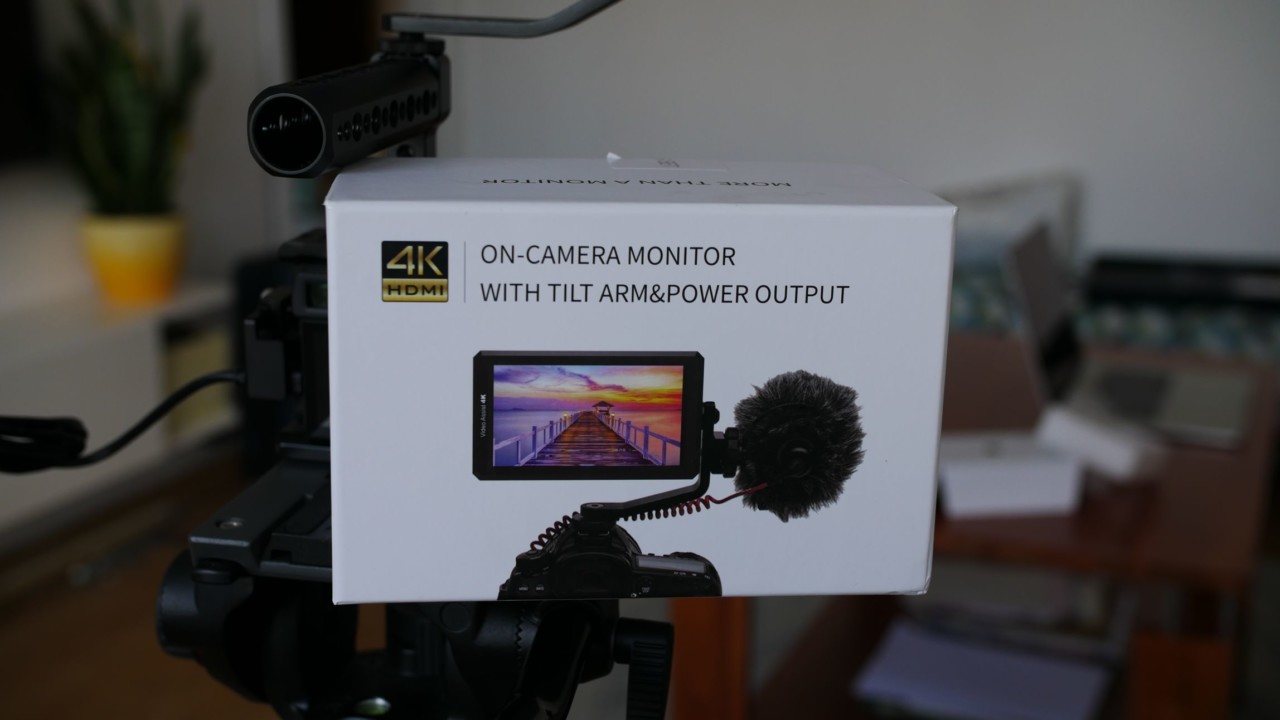
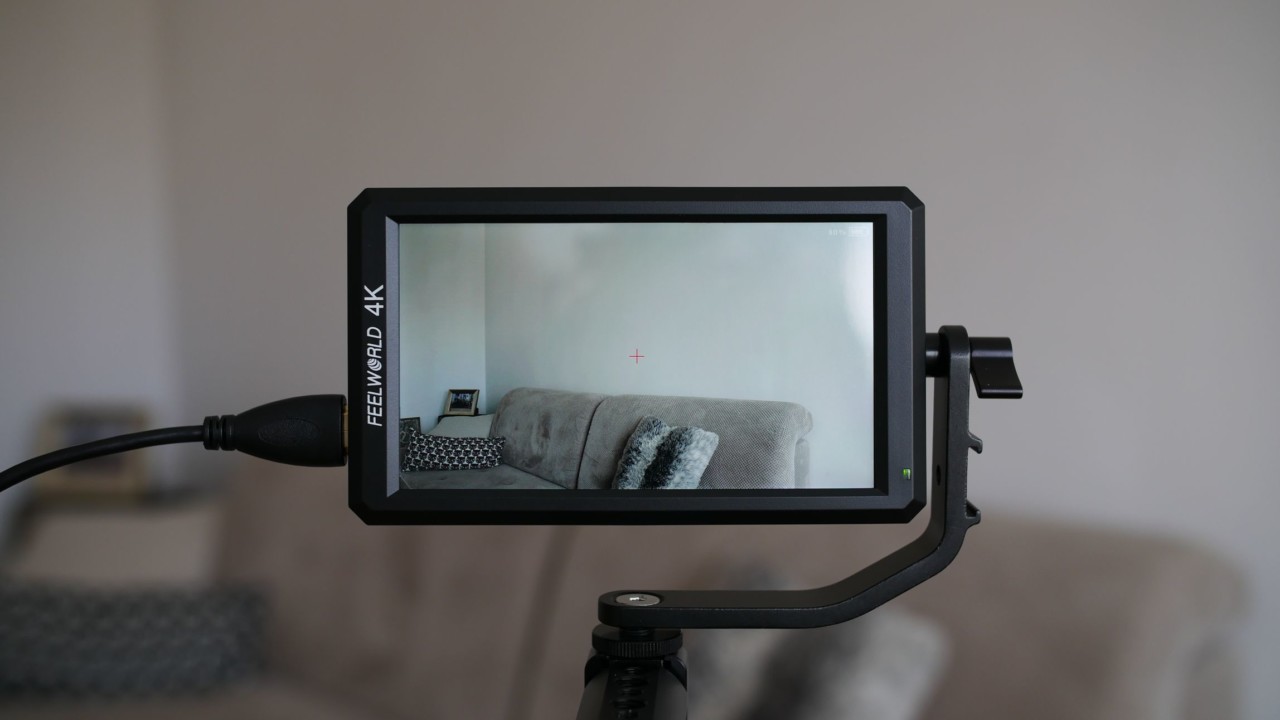
Feelworld is known for making one of the best budget camera monitors. I’ve used the F7 model for a long time but I wanted something smaller and I went with the F6 model that has a smaller 5.7” display and some other useful features. Learn more in our Feelworld F6 review.
The monitor ships with everything you need to get started.
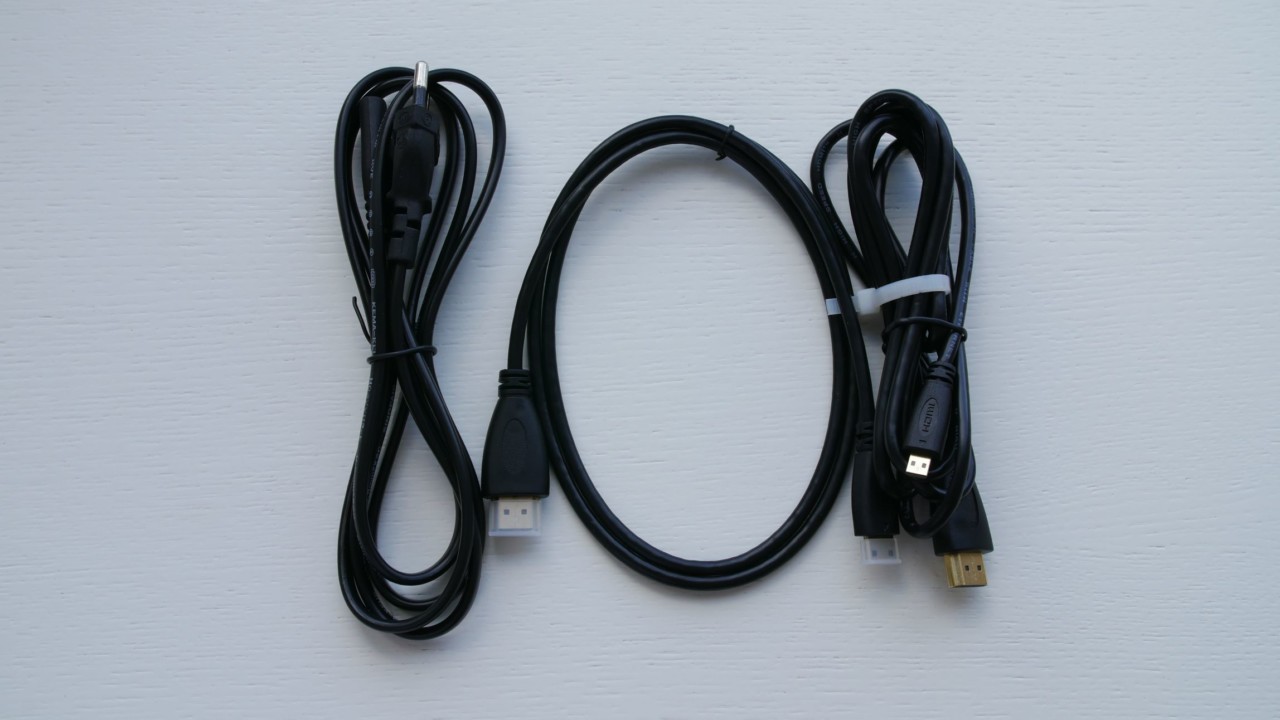
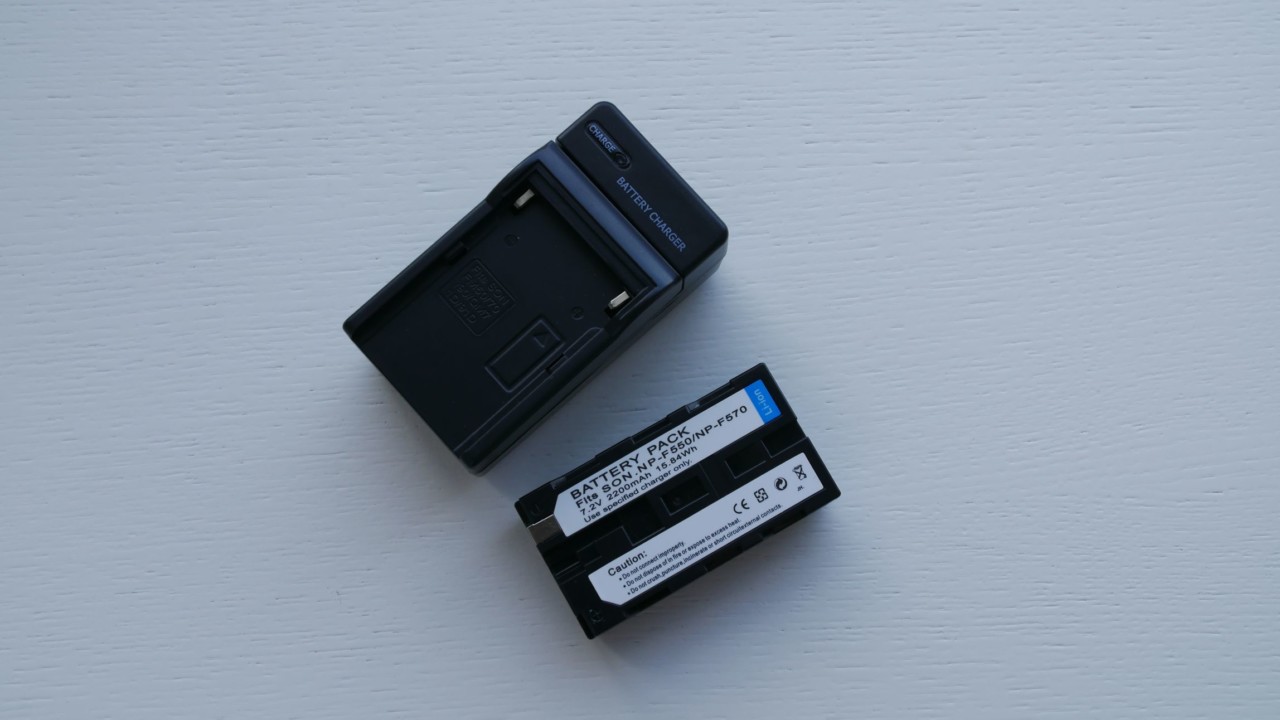
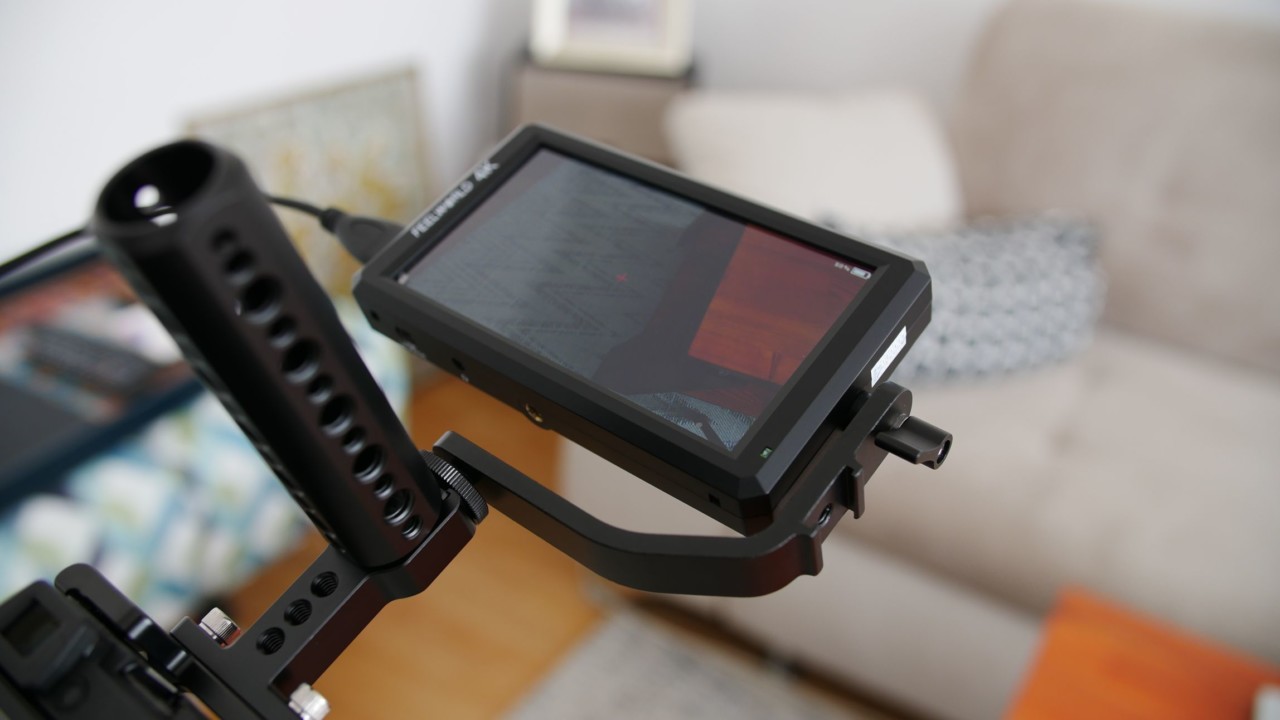
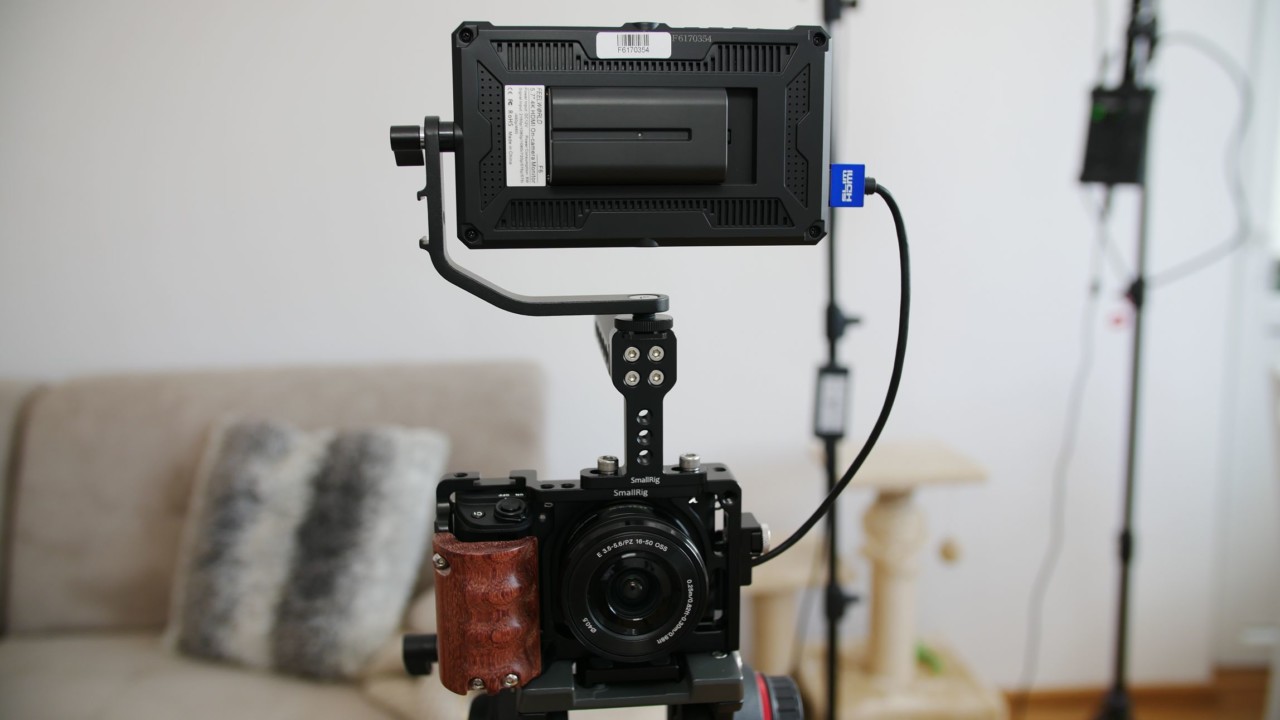
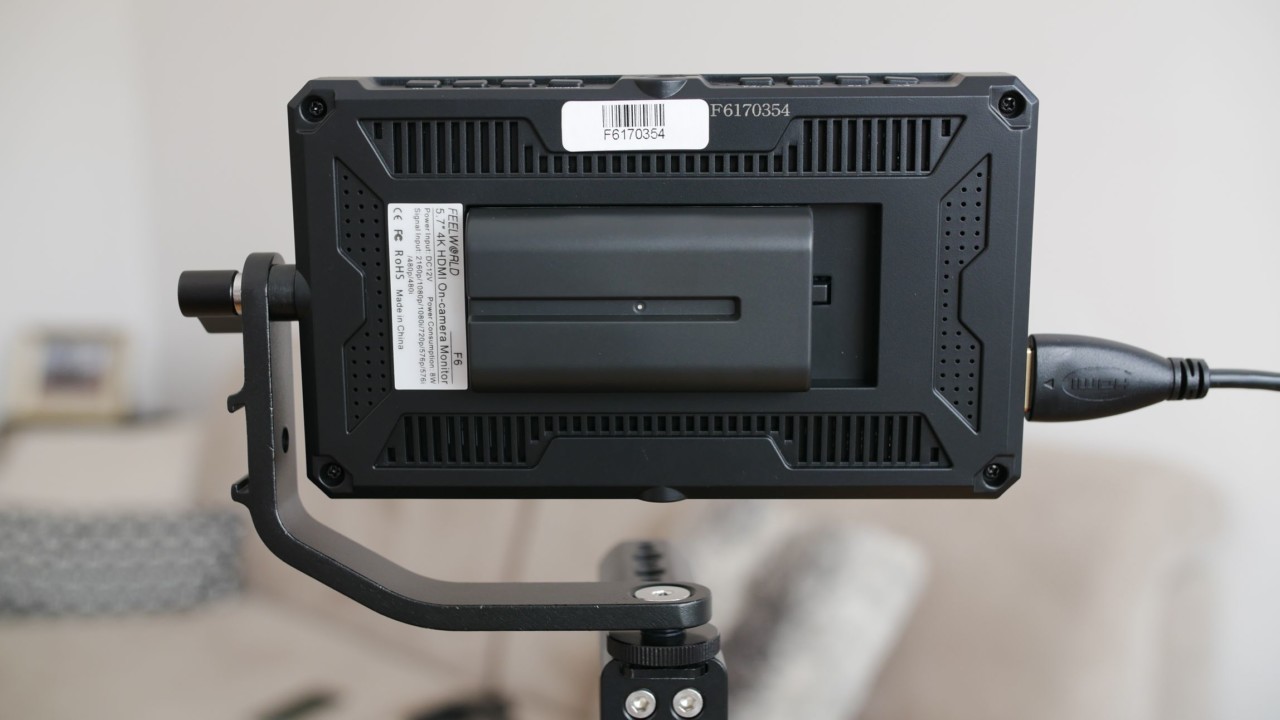
You get instruction manuals, micro and mini HDMI cables, a Sony NP550 battery and a charger, a sunshade and last but not least a rotating tilt arm that I will talk about in a second.
DESIGN and FEATURES
In terms of the design, the Feelworld F6 is made of quality plastic. Even though the difference is not significant, I found the overall build quality to be slightly better than the F7 monitor that I also like using.
I also like how compact and lightweight it is (200g) since it has a 5.7” 1080p display with a high pixel density of 386, brightness of 460cd/m2 and the viewing angle of 85°/85°(L/R) 85°/85°(U/D). The image quality is superb for a budget camera monitor. Also, color accuracy is pretty good out of the box but you can always, calibrate the monitor to your liking. I found the sunlight legibility to be mediocre but the supplied sunshade really helps.
The monitor can support signal input up to 4k resolution and I found it to be working without any issues with my Sony A6300. Also, there is no input lag like on some other budget camera monitors.
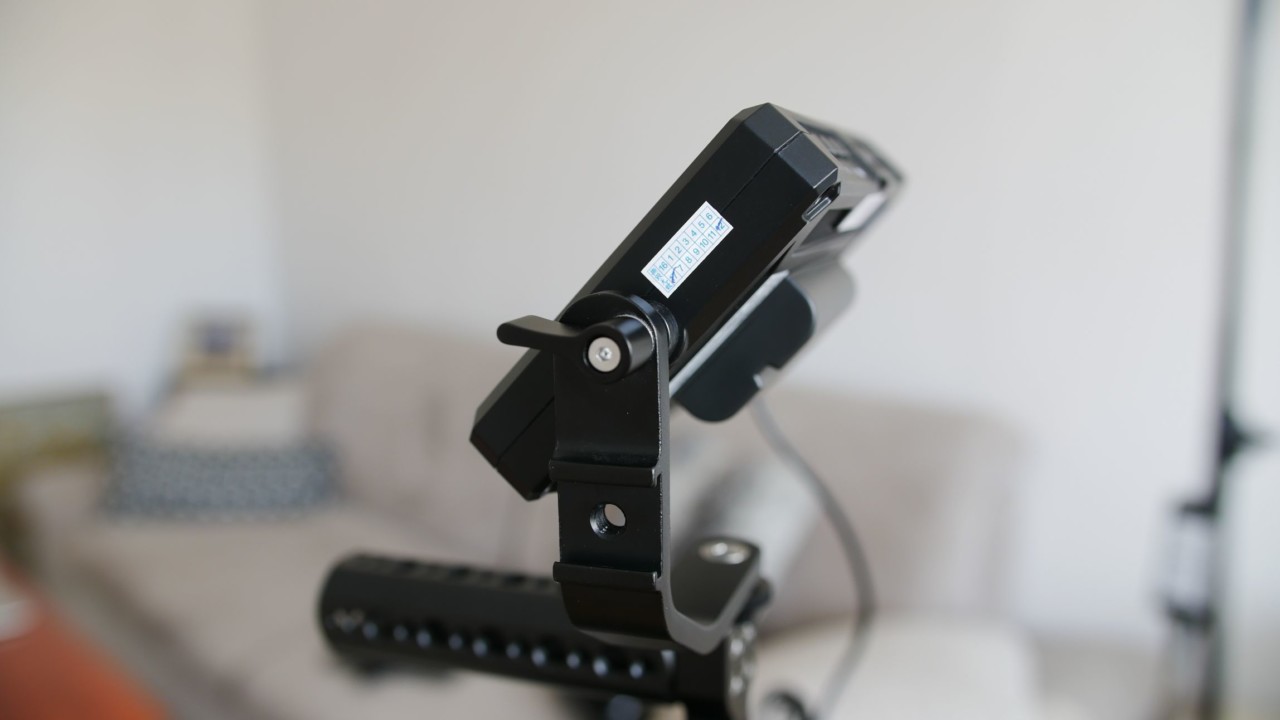
A huge problem with most of the camera monitors is the mounting system. The issue is that you usually need two hands to adjust the angle of the monitor and this is where the supplied tilt arm comes to help.
It attaches to the 1/4 thread on the side of the monitor and you can rotate the tilt axis 360 degrees. I found this feature to be really convenient. However, I wish this tilt arm could also rotate horizontally but you can always add third part accessories like a 360-degree rotating baseplate.
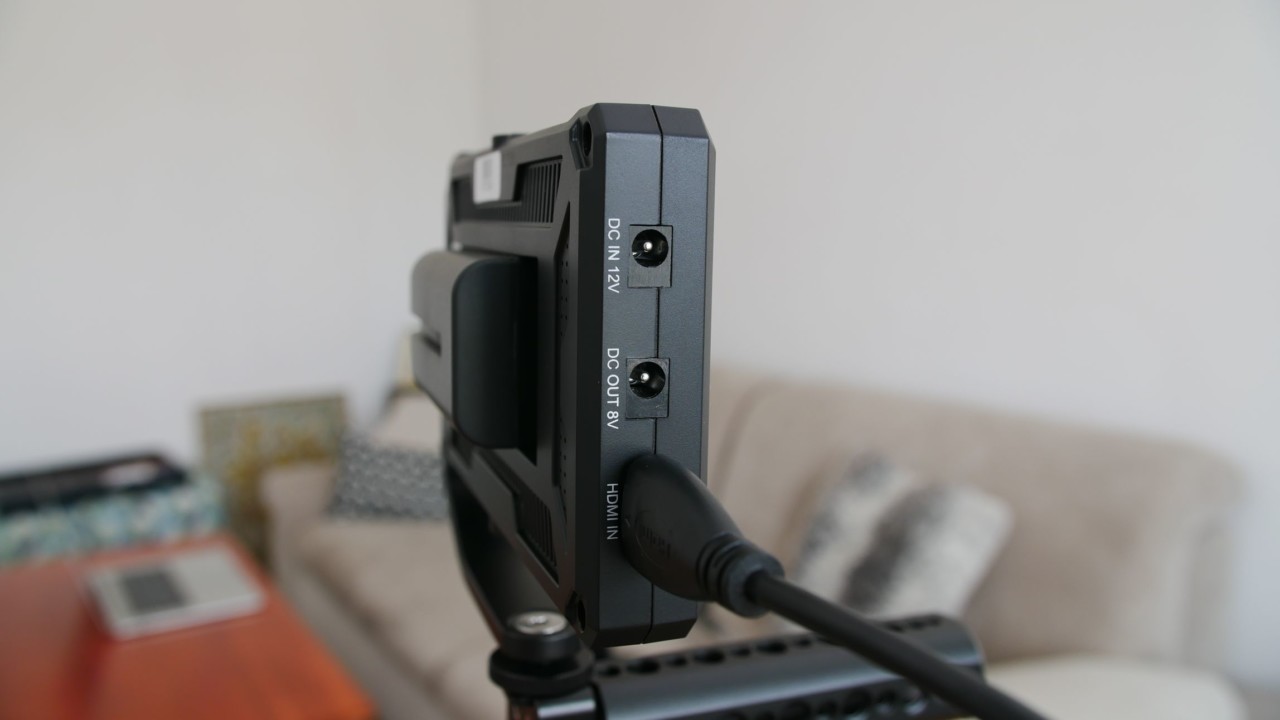
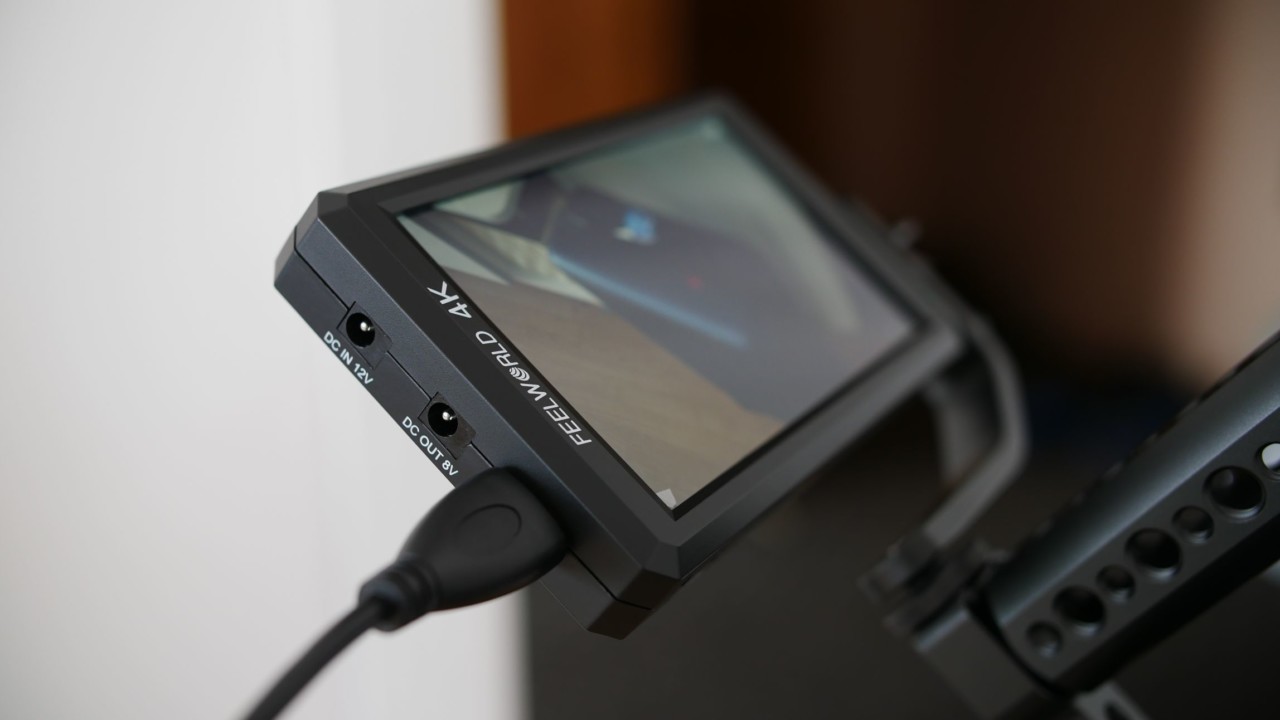
One of the key features is that you can power the monitor via the DC input port and also charge your camera while using it. However, you would need to buy the cable separately, so I could not test this feature out.
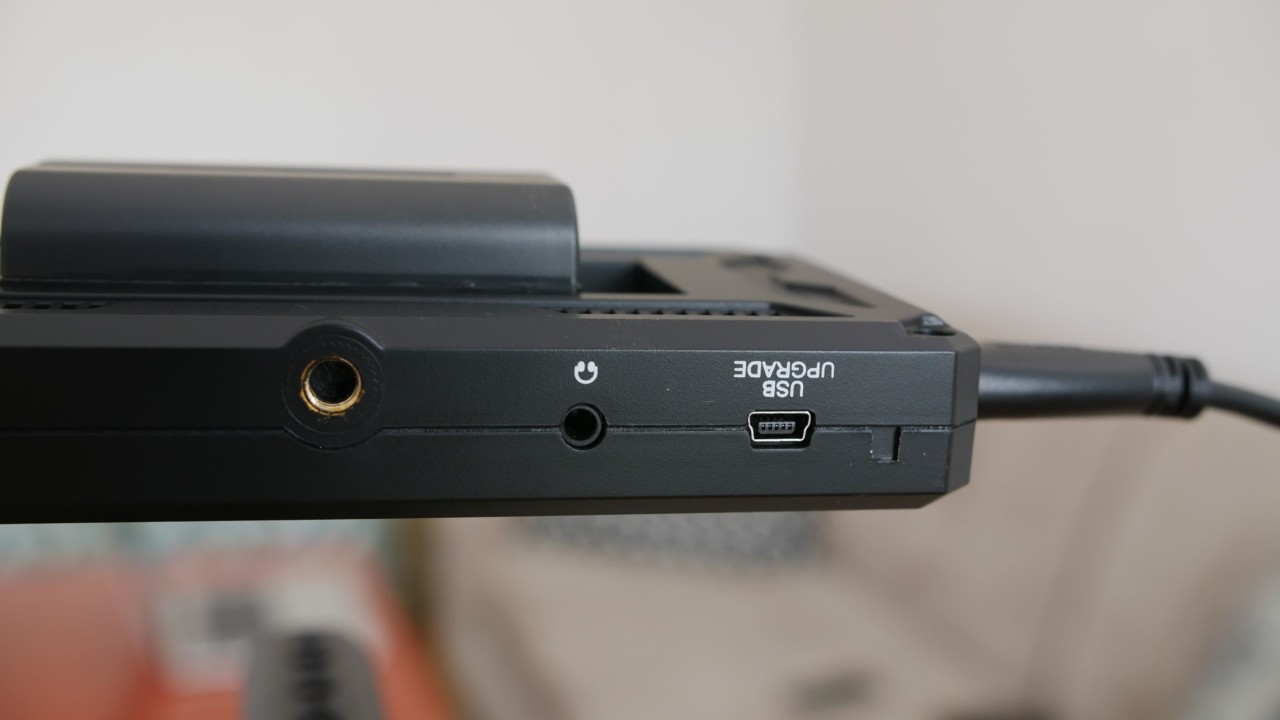
On the bottom of the monitor, you can find the headset jack, another 1/4 thread and the mini USB port for a software upgrade.
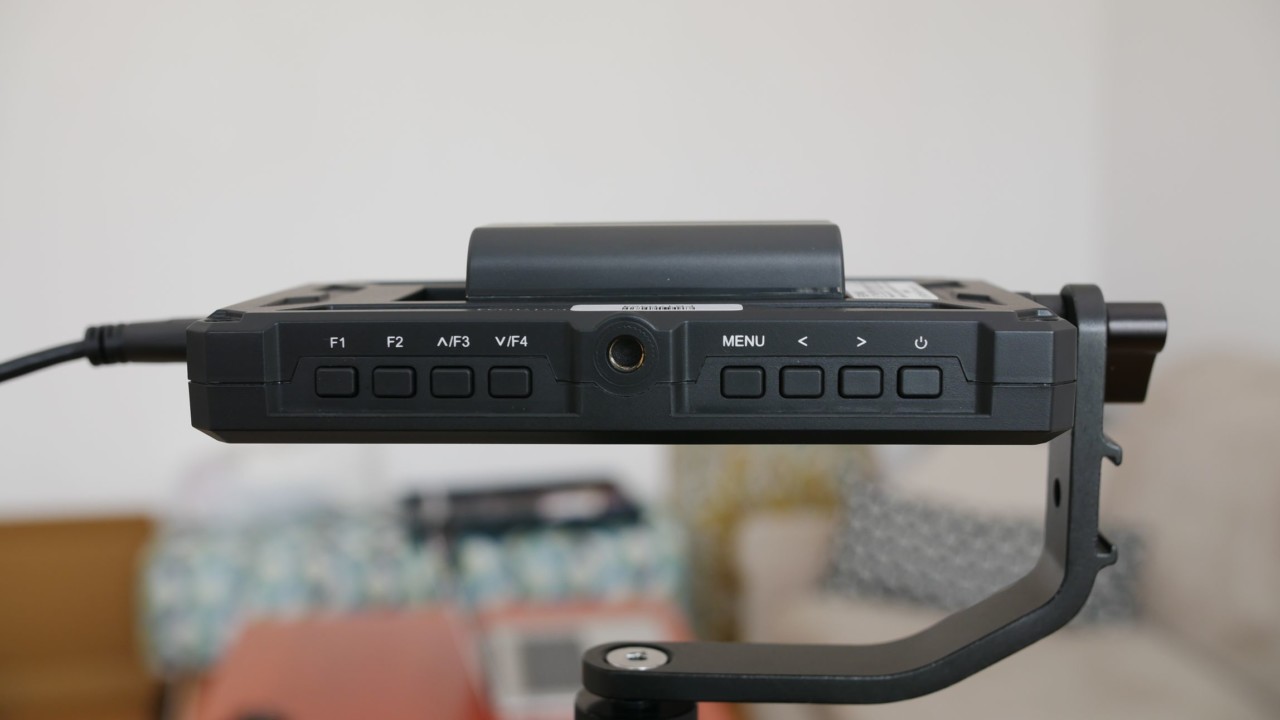
On the top, you can find a bunch of controls including 4 customizable shortcut keys, navigation, menu buttons and a power key. I’m so glad that you need to press and hold the power key to cut off the power, so you won’t accidentally turn off the monitor. I had this issue with the Feelworld F7 and it was really annoying.
USER INTERFACE and FUNCTIONALITY
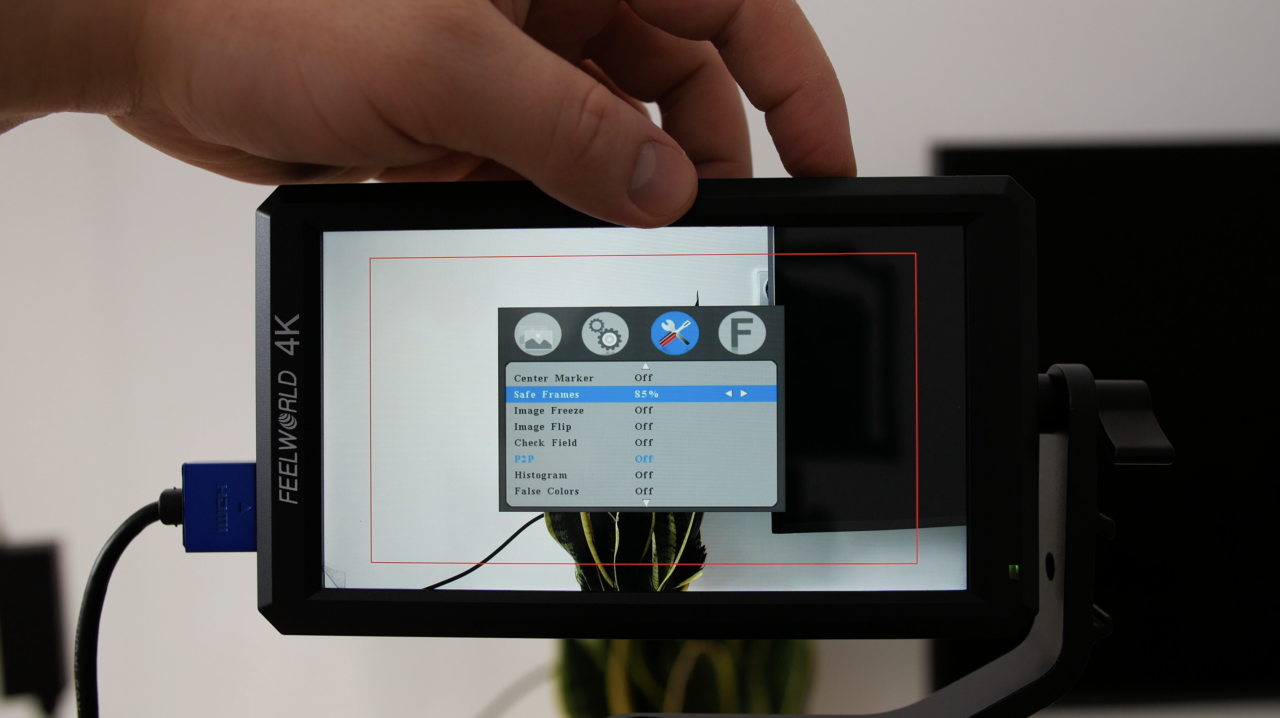
I programmed the customizable keys to quickly turn on or off focus assist feature that I found to be really accurate in practice. I also usually use false colors and image flip features. Every time, I rotate the monitor, I can flip the image quickly.
If you go to the menu, you can choose between a few picture modes or customize every single setting to your liking. I didn’t change any general settings as I like how they are set out of the factory. What is more interesting to me is the third settings column where you can find all the nice features of this tiny budget monitor. You can turn on/off the center marker, choose safe frames, use check field feature or use some advanced features like histogram, false colors, anamorphic, change focus peaking colors, check overexposed areas of the image, use nine grid, ratio maker and so on. The last settings column allows you to customize the programmable keys, which is really awesome.
I found the battery life to be quite decent considering a low capacity of the supplied battery. You should expect to get about 40 mins out of it but obviously, this is not enough to assure a good workflow. That’s why I recommend you using higher capacity NP-style batteries that will give you over 3 hours of continuous use.
CONCLUSIONS
I have to say that I was impressed with the Feelworld F6 camera monitor as it has so many features for a low price. In fact, I see a huge improvement over some previous generation models in terms of input lag and menu system.
I love a very good image quality, compact size and build quality, the buttons seem to be in the right place and finally, there are plenty of advanced features that improve the quality of your video. However, I wish that the tilt arm rotated horizontally too and the supplied HDMI cable was shorter but these are just minor complaints.
At the end of the day, the Feelworld F6 is going to stay on top of my A6300 as I just love using it. I think that this is a very solid camera monitor for the price and I can easily recommend it.
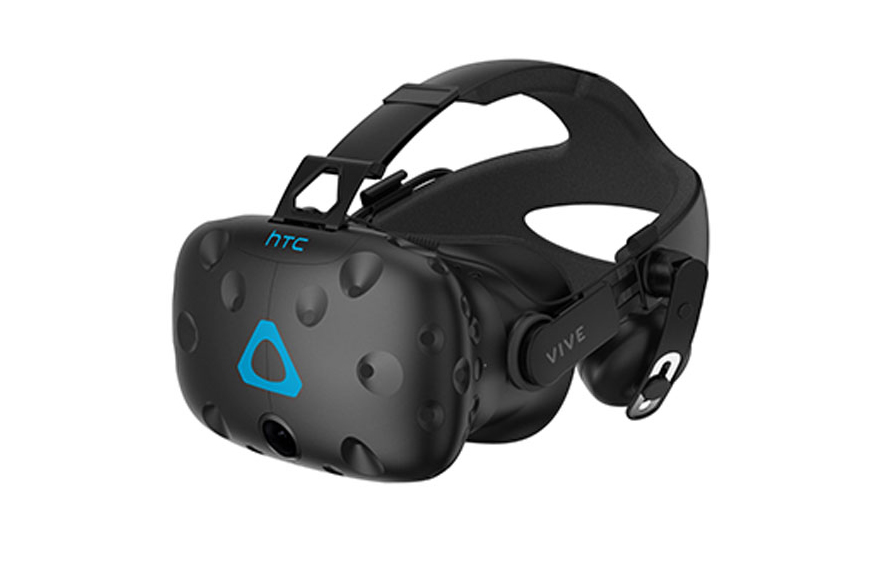
A few days ago, HTC announced a merger of its mobile and VR (Vive) divisions. This comes a few months after Google acquired its “Powered by HTC” R&D division. Sadly, the merger has resulted in loss of jobs at the Taiwanese company.
HTC Vive
An emailed statement by an HTC employee revealed that the company had combined its VR and smartphone businesses in each region. Both businesses are now reporting to the same leadership.
It also mentions a restructuring of the North American smartphone division which now has a centralized leadership. “In doing so, there have been some employee reductions to align the businesses and empower the teams to share more resources.”
Digital Trends reports that HTC has laid off a chunk of its US workforce, leaving only employees for HTC Global in the US office.
Now that both divisions have been merged, it explains the resignation of the former head of smartphone and connected devices, Chialin Chang.
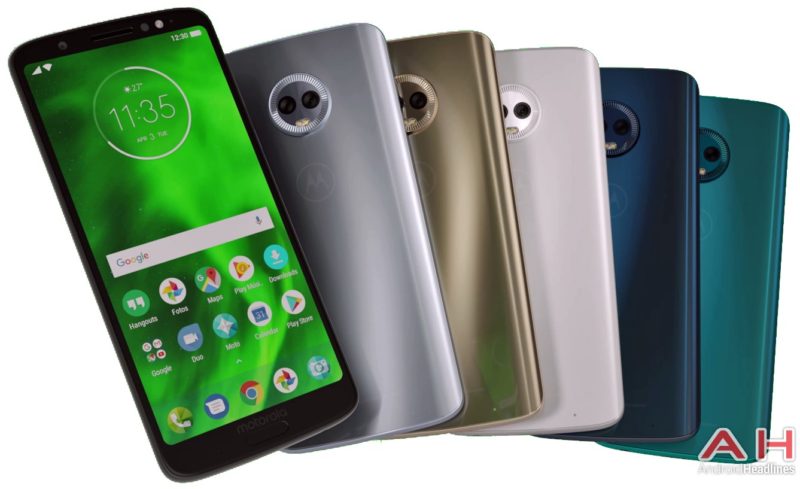
Lenovo’s Motorola brand has got a handful of new models which would be released this year. The models spread across the flagship range to midrange models and even budget phones. The Z17 series caters for the flagship while the G series is Motorola’s midrange army, then there is the budget E series.
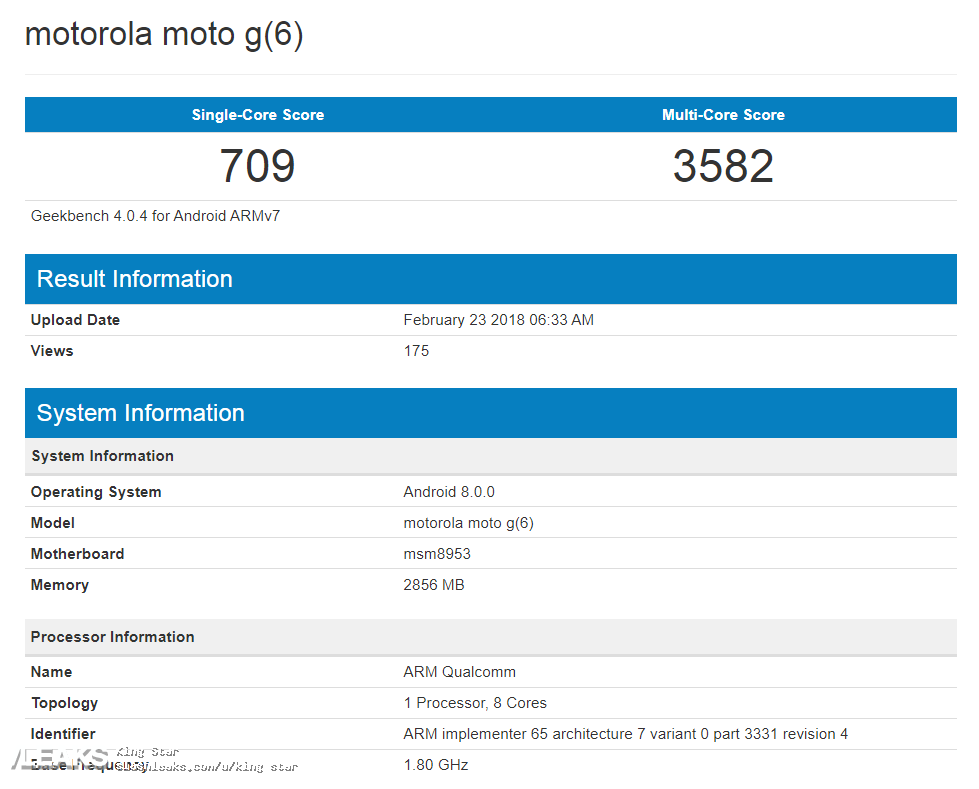
Moto’s 2018 G series models will be called G6 and G6 Play. The Moto G6 has just been benchmarked on Geekbench with some of its key specs revealed. Notable among the specs is the presence of a Qualcomm Snapdragon 450 processor paired with 3GB of RAM. The G6 is also shown to run Android 8.0 Oreo out of the box. The SD 450 Chip was announced last year by Qualcomm. The The SD450 mobile platform uses leading-edge 14 nm technology to power premium experiences in high-tier smartphones without draining the battery. It comes with features like support for real time Bokeh camera effects, integrated X9 LTE, and an Adreno 506 GPU. The chipset is designed to provide fast connectivity, vibrant displays, and performance that’s both powerful and efficient. The benchmark score shows a considerably higher score than the SD430. On the single core test, SD 450 scored 709 points while it’s multi-core test is 3582. The Moto G6 Play was recently spotted on Geekbench confirming the presence of a Snapdragon 430 mobile platform. The single core score of the G6 Play stood at 472 points while the multi-core score is 1801 points.
The G6 is thus an higher model than the G6 Play. Previous leaks tied the device to also feature NFC, as well as a 3000mAh battery. The device will come with a dual camera setup at the rear with the second sensor likely being a Boehner sensor. The device will be launched sometime in Q2 2018 and it will come with a Rs. 15,000 (~$234) price tag.
On February 26, Xiaomi will attend MWC 2018, the best trade show of the year for mobile devices. But the Chinese company will probably not showcase Xiaomi Mi7 as you may have expected. The hi-tech giant which recently re-joined the top 5 best smartphone brands in the world will take advantage of Mobile World Congress to announce the Xiaomi Mi Mix 2S, the first intermediate “S” version of the Mi Mix series. It will be a flagship killer, but it should also have great quality-price ratio just like every other phone released by the company.
Here is everything we know about the upcoming flagship thanks to rumors and leaks surfaced in the last months.
Xiaomi Mi Mix 2S: Design
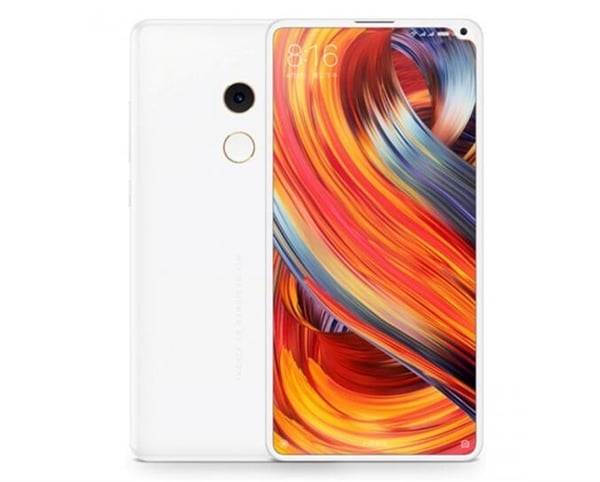
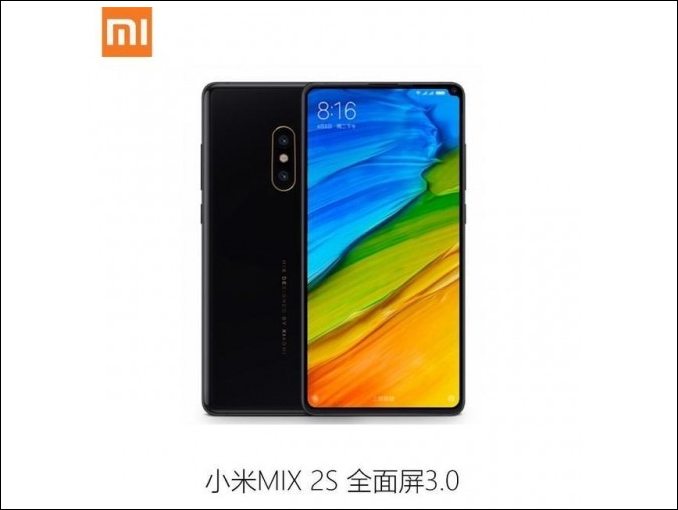
The design will get significant improvements if we are to compare the Mi Mix 2S with its predecessor. The Mi Mix series has always been focused on the screen-to-body ratio, and the STB ratio will be even higher than the Mi Mix 2 on this model. According to leaked images, the bezels will be extremely narrow on each of the sides of the Xiaomi Mi Mix 2S, and there will be a very small notch on the top right corner which will make space for the front camera. Either the whole body or the back cover of the handset should be made of ceramic, and the overall looks should be one of the most interesting things ever seen on a phone.
Latest Mi Mix 2S Render
We expected to see a fingerprint reader on the rear side, but a recent banner shows that there is no fingerprint reader on the back cover. This makes us think that Xiaomi may have opted for a fingerprint reader embedded in the display thanks to the new chip unveiled by Synaptics. According to the leaked image, it is unlikely that the fingerprint reader will be replaced with a 3D facial recognition technology like Face ID, because there is no space for a sensor like that on the front side. At last, expect to see a dual SIM tray and an IR sensor to use the phone as remote control for your TV.
Xiaomi Mi Mix 2S is expected to come with a 5.99-inch display just like Xiaomi Redmi Note 5 and Note 5 Pro, which should show images with the same Full HD+ resolution of about 1080 x 2160 pixels (we say “about” because, due to the notch, the resolution will not be exactly 1080 x 2160 like other 18:9 displays). The display will obviously have an 18:9 aspect ratio. Xiaomi has never released a device with a 2K display and this decision will probably continue with the Mi Mix 2S as well.
Hardware
Under the hood, Xiaomi Mi Mix 2S will have the best components that you can imagine. The SoC will be the best 2018 chipset by Qualcomm: the octa-core Snapdragon 845 with a max clock frequency of 2.8 GHz. This processor includes a dedicated module for artificial intelligence, so expect several AI features on this handset. The SoC should be paired with 8 GB of RAM and up to 256 GB of internal storage, which is the best configuration ever seen on an Android phone. Unfortunately, we still do not know if the internal storage will have the latest UFS technology to ensure high speeds in data transfer.
Camera
Xiaomi Mi Mix 2S should be better than its predecessor in terms of camera performance. The flagship will sport a dual camera setup in a vertical configuration at the center of the back cover, and the LED flash will be placed between the two sensors. Some firmware files have revealed that there will be a Sony IMX363 sensor. The camera will surely have some AI features like, for example, scene recognition to automatically adjust the colors and other parameters. Automatic HDR, object tracking, and chroma flash should be available as well, given that they are typical MIUI features.
Battery
Talking about the battery, there shouldn’t be significant improvements. Xiaomi Mi Mix 2S should come with a 3400 mAh lithium unit, the same capacity as the Mi Mix 2. But the energy consumption may be optimized better given that there is a better SoC in the internals. Anyway, if the leaks about the battery capacity are to be believed, there shouldn’t be much difference in terms of battery life.
Xiaomi Mi Mix 2S: Price
There is still no information regarding the price of Xiaomi Mi Mix 2S, but Xiaomi has hardly ever disappointed us with its pricing. This handset may be the cheapest flagship phone with the Qualcomm Snapdragon 845 chipset launched at MWC 2018, as Samsung Galaxy S9 and the alleged Sony Xperia XZ Pro should be very far from being affordable. But the price will still be higher than the Mi Mix 2, obviously.
Xiaomi and Microsoft have signed a new deal. Both companies already have an existing partnership that sees the latter’s office suite of apps pre-loaded on Xiaomi’s phones. The new deal which focuses on AI will bring to market a Cortana-powered Xiaomi smart speaker.
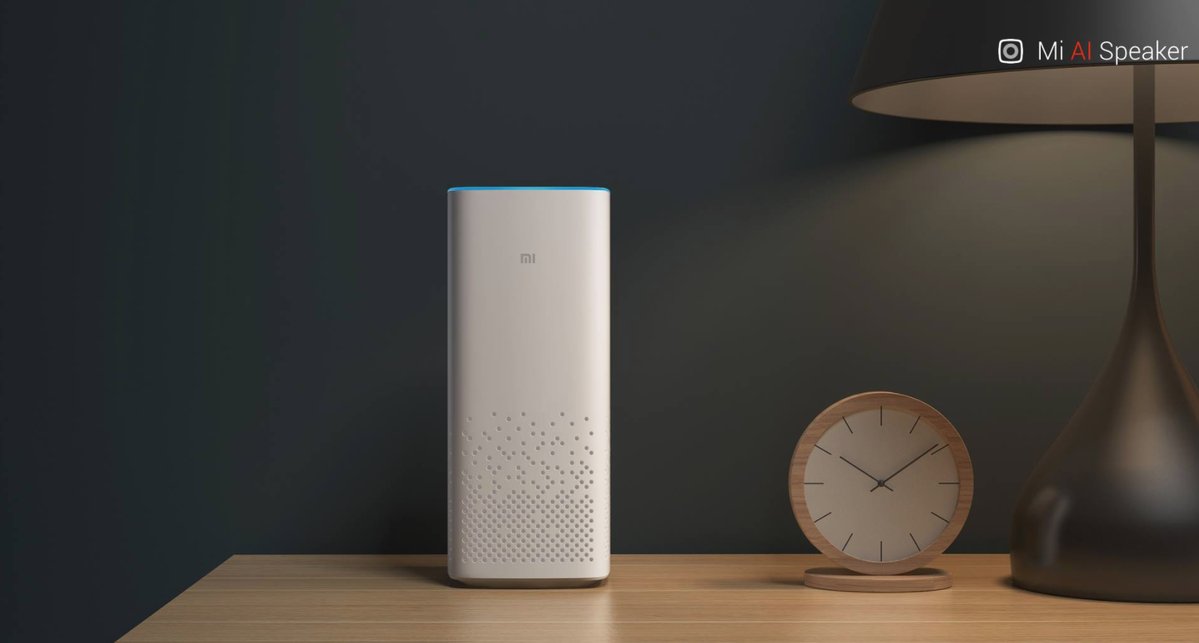
Xiaomi Mi AI Speaker
Xiaomi already has a smart speaker called the Mi AI speaker. The speaker uses an in-house assistant and only supports Chinese. Cortana currently supports English (Australia, US, UK, Canada), Chinese, French, German, Japanese, Italian, and Spanish.
The Cortana smart speaker will actually be a “port” of Cortana to the Xiaomi Mi AI speaker. Reviews say the speaker does look good and has great audio and build quality. It is also pretty cheap as it sells for just ¥299 (~$50). So this sure looks like a win already.
The agreement between both companies is actually a Strategic Framework Memorandum of Understanding. The agreement will result in a combination of Microsoft’s experience in cloud and AI technology and Xiaomi’s expertise in smart hardware development for achieving select goals. Both companies will leverage on the other’s strength for success.
Xiaomi will also have access to Microsoft’s Azure cloud platform and also get development and marketing insights for its own laptops.
We use cookies on our website to give you the most relevant experience by remembering your preferences and repeat visits. By clicking “Accept”, you consent to the use of ALL the cookies.
This website uses cookies to improve your experience while you navigate through the website. Out of these, the cookies that are categorized as necessary are stored on your browser as they are essential for the working of basic functionalities of the website. We also use third-party cookies that help us analyze and understand how you use this website. These cookies will be stored in your browser only with your consent. You also have the option to opt-out of these cookies. But opting out of some of these cookies may affect your browsing experience.
Necessary cookies are absolutely essential for the website to function properly. This category only includes cookies that ensures basic functionalities and security features of the website. These cookies do not store any personal information.
Any cookies that may not be particularly necessary for the website to function and is used specifically to collect user personal data via analytics, ads, other embedded contents are termed as non-necessary cookies. It is mandatory to procure user consent prior to running these cookies on your website.