When the registrations closed at 6PM today in China, over 16.8 million users had registered for tomorrow’s flash sale.
Xiaomi announced the Xiaomi Mi 5 flagship on Wednesday last week. Since then, the company opened up registrations for the sale of the device on March 1. Given the aggressive pricing and the powerful specifications, we expected a lot of registrations for the first sale of the device.
Now, the company has revealed that more than 14.4 million registrations have been received for the sale of the device till now. This is a new record for the company, achieving these many reservations in just a matter of 5 days. However, it’s not really surprising. Fans have been waiting for the Mi 5 flagship for more than 18 months. And Xiaomi, as expected delivered what its fans wanted to see. A powerful smartphone offered at an affordable price tag.
The first sale is one March 1, where the company will make two variants available for sale. At 10 AM tomorrow, the company will offer the standard 3GB RAM + 32GB ROM and 3GB RAM + 64GB ROM versions to the registered users for sale. Interestingly, according to the official company website, only the white version will be sold tomorrow. So, no word on the black edition or even the exclusive top-end ceramic version for now.
Given the tremendous response for the sale, we can expect the first batch to go out of stock within minutes. So, if you are in China, planning to get hold of the Mi 5 early, you better hurry up on the purchase.
The Xiaomi Mi 5 comes with the powerful Snapdragon 820 quad-core chipset on board with 3GB / 4GB RAM and 32GB / 64GB / 128GB ROM options. There will be a powerful 16MP camera at the back with DTI technology, 4-Axis OIS and PDAF along with dual LED flash. Up front, there is a 4MP Ultrapixel camera. The display is of 5.15-inches with 1080p resolution and the battery is of 3000mAh capacity with Quick Charge 3.0. Overall, the phone is a quite a steal at the starting price tag of $305 (1999 Yuan).
Although Meizu constantly tries to compete with Xiaomi in terms of smartphone models, the company’s phone lineup is quite limited as compared to the latter. Last year, we saw a few handsets from the company like the Meizu M2 Note, Pro 5 and the MX5 but as compared to other top Chinese companies, it was far less. This year too, we haven’t seen a new launch from this Chinese phone maker, with the only announcement at MWC being the Pro 5 Ubuntu Edition in partnership with Canonical.
But there was a good reason for the company to not launch anything this early in the year. According to various leaks and information, Meizu was supposed to release its Helio X20 powered Pro 5 Mini handset sometime in the March – April period. However, due to the Taiwan earthquake that happened in early February and the supply chain loss incurred (particularly by the phone’s display manufacturer), Meizu officially announced that it had to drop plans for the release of the Pro 5 Mini. This meant that the next powerful smartphone from the company was going to be none other than the rumored Meizu MX6.
Now, industry insider, Mocha RQ (translated) has revealed new information about the Meizu MX6. He says that the MX6 flagship should be launched earlier than usual this year, sometime around May. Further, he adds that the phone will most likely come with a pressure sensitive display. The company is reportedly taking some time for the phone’s development because it decided to use a pressure sensitive display inside the new device.
Launching the phone a couple of months early (traditional launch period should be June-July) period actually makes sense now that the Pro 5 Mini is out of the picture. As for the pressure sensitive display, it’s not a new feature and many Chinese manufacturers like ZTE, Huawei and Gionee have phones with this technology. However, we are yet to utilize the full potential of 3D touch as apps and features have to be developed more based on this tech.
Huawei has been aggressively investing in its smartphone division in the past couple of years. This has helped the company surpass a number of famous manufacturers like Lenovo, Sony, LG etc to become the world’s third-largest smartphone maker. From a brand known only in a handful of markets ouside of China a couple of years back, to a company that’s present in almost all major markets (including US), Huawei has established itself as a powerful smartphone maker in recent times.
The company’s CEO, Richard Yu, has repeatedly stressed that unlike other Chinese smartphone makers, Huawei wants to compete with the likes of Apple and Samsung. And the company has managed to do that successfully in the past one year. But Huawei’s plans are big. According to Chinese media, Richard has revealed that Huawei plans to surpass Apple within the next 2-3 years and then Samsung in the next five years, making it the top smartphone manufacturer in the world by 2021.
Huawei has shown a keen interest in the US market. The company improved its brand image in the country through the Nexus 6P smartphone. Recently, phones like Honor 5X have been launched in the region and now, the company is seeking tie-ups with carriers in the country to improve market share, reveals a report from Digitimes.
Its still too early to predict whether Huawei can achieve this huge challenge, but one things for sure, the company may soon give Apple and Samsung some tough competition in this industry.
What do you think? Can Huawei surpass the mighty Apple in the next couple of years?
This year at MWC 2016 in Barcelona, Spain, there were a number of local Chinese manufacturers including Blackview. The company is known for its low cost budget smartphones and it did showcase one such device at the event, namely the Blackview A8. The company has kept the price of the device ultra-cheap, costing just $44. At this price, you get pretty decent specs.
The Blackview A8 comes with a 5-inch HD display which is pretty usual for its price. The phone is well built, featuring a silver colored metal chassis at the back, with a metal frame that goes around the body. Interestingly, for an additional $1, you can get a version which features jewels in the frame, that is, if you are into that kind of design.
As for the specs, the Blackview A8 is powered by the quad-core MT6580 chipset with 1GB of RAM and 8GB of internal storage. Not at all bad for $43. Further, you get 8MP cameras on the back as well as front, which is pretty good as well. Other specs include LED flash on both front as well as the back, dual SIM card support, MicroSD expansion, 3G and 2000mAh removable battery.
These specs are decent for its price and it looks like Blackview has done a good job with its A8 budget smartphone.
Mediatek has been teasing its deca-core chipset, namely the Helio X20 since the second half of last year. But it took more than six months for the first smartphone with this chip to be actually announced. And we were all surprised to see that it was a local brand, ZOPO who could boast of this feat.
ZOPO Speed 8 became the first Helio X20 deca-core powered smartphone in the world. We were at ZOPO’s booth at MWC 2016 and got a quick hands on with the device.
Unlike other flagship smartphones, ZOPO has decided to go with a plastic body on its ZOPO Speed 8. The back is matte plastic which means you don’t have to worry about it being a fingerprint magnet. Further, the texture helps you to get a good grip on the device, even while holding it with one hand.
The frame that goes around the body looks like metal, but its actually plastic. Despite the plastic body, the overall built is sturdy.
Both the power button and the volume buttons are located on the right side of the device. While on the left, you have the dual SIM card slot.
The bottom features the new-age USB Type-C port, along with an opening for microphone.
The top is rather clean, with just a 3.5mm headphone jack. At the back, you have the 21MP camera sensor with dual tone dual LED flash. You will also find the fingerprint just below the rear camera sensor, which is placed well for your index finger. The speakers are located up front, as you can see in the picture down below.
As for the specs, apart from the powerful deca-core Helio X20 and 4GB RAM, the phone features a 5.5-inch IPS LCD display with FHD 1080p resolution. At the back, there is a 21MP Sony IMX230 camera with PDAF and dual tone LED flash. Up front, you have an 8MP selfie camera, with an LED flash as well. Under the hood, there’s a decent 3600mAh battery. Other features include USB Type-C, 4G LTE support and fast charging. As for software, the phone runs on Android 6.0 which gives you almost stock like experience.
Pricing is yet to be confirmed, but it is rumored that the ZOPO Speed 8 will retail for less than $300. As for the availbility, the device will go on sale globally in April.
The benchmark results for the Helio X20 inside the device haven’t been impressive. From the initial tests, AnTuTu scores were below 90K, but it could be because the app is not customized for its tri-cluster architecture. So, we will have to wait and see whether there is any change to the score after an update.
Apart from the ZTE Blade V7, the company announced a cheaper version of the device with less powerful specs, called as the ZTE Blade V7 Lite. The phone comes with a metal design and has an 8MP camera up front with LED flash for selfie lovers So, it looks like ZTE is targeting selfie lovers who are looking for a cheap smartphone to fulfill their needs.
The phone is quite decent looking and takes some design cues from its elder brother, the V7. So, it features a 5-inch display with 2.5D curved glass. Like with other budget phones, the V7 Lite features just a 720p HD resolution screen.
One of the interesting features of the phone is the fingerprint sensor located at the back. The V7 lacked this feature, but ZTE for some reason decided that the V7 Lite should have it. The camera at the back is of 8MP with single LED flash.
Up front, the company has used the same setup. So, you get a 8MP shooter as well as a single LED flash among other sensors, just above the display.
Below the display, you can see the trademark ZTE circular home button (still capacitive) along with the two other keys, back and multi task.
On the right, you have the power button with the hybrid dual SIM card slot.
The volume buttons lie on the right and the headphone jack rests on top of the phone.
Inside, the phone Blade V7 Lite comes with the quad-core MT6735P processor clocked at 1.3GHz. There will be 2GB of RAM on board along with 8GB of expandable storage. Under the hood, you will find a 2500mAh battery.
The Blade V7 Lite is all set to launch in a number of countries including Russia, Mexico, Spain, Germany and Thailand. The company is yet to announce the exact price tag or availability schedule for the device, but expect more details soon.
We were expecting a flagship smartphone from ZTE at MWC 2016, but the company surprised us all by unveiling two new mid-rangers in its popular Blade series. Like the other models in the lineup, the ZTE Blade V7 comes with mid-range specs with a premium design, attracting customers who are looking for a good looking, value for money smartphone.
We had the opportunity to get our hands on the ZTE Blade V7 at MWC 2016 and here’s our initial impressions.
The first thing you notice when you take the Blade V7 in your hands is that the phone looks strikingly similar to the new iPhone models. It comes with 2.5D curved screen up front, with a slightly curved back as well. Further, the positioning of the speakers and microphones gives it a similar look to the new iPhone 6S Plus.
Don’t get me wrong, the phone is well built and fits well in your hand, but its just that it reminds you that the design is not exactly original. But once you get over it, the device as a whole starts to impress.
The power button is located on the right side and the SIM card slot lies on this side as well. The slot is hybrid which means you can insert a MicroSD card in one slot, which transforms your phone into a single SIM device.
The Blade V7 comes with a compact 5.2-inch display with FHD 1080p resolution. Under the hood, the company went with the MT6753 octa-core chipset clocked at 1.3GHz. This is a tried and tested processor, that powers most Chinese mid-rangers in the market. There’s 2GB of RAM on board, 16GB storage and 13MP rear camera with PDAF and dual LED flash. You get a 5MP front facing shooter as well. The phone comes with the latest version of Android 6.0 Marshmallow and features 2500mAh battery.
Xiaomi announced the Mi 5 flagship yesterday. Its an amazing value for money smartphone, featuring powerful specs, all at an impressive price tag of less than $300. While the Mi 5 will first go on sale in China only, fans from other markets can also get hold of this device via third party retailers. Like expected, even Giztop has made the Xiaomi Mi 5 flagship available for pre-order on its website. So, even users outside of China can purchase the device.
As always, the pricing is higher than the retail price of the Mi 5. You can get the base version with 3GB of RAM and 32GB of storage from $399 on the website. There are three colors available for pre-order, namely white, black and gold.
If you are looking to get hold of the 4GB RAM + 64GB ROM version, you will have to shell out $100 more for its pre-order. This version is available in three colors as well and will cost you $499 in all for pre-order. Finally, the top end version, namely the Xiaomi Mi 5 Pro with a faster chipset, and larger 128GB storage can be pre-ordered for $599.
The first batch of Xiaomi Mi 5 units is expected to ship in March. The order shipping dates will be based on the rank of your order. Early orders will get their shipments in the first batch itself.
Specs wise, the Mi 5 turns out to be a powerful flagship. It comes with Qualcomm’s Snapdragon 820 chipset on board with 3GB / 4GB RAM options depending on the variants mentioned above. There’s 32GB / 64GB / 128GB storage options available, and there’s no MicroSD card slot, so you will be limited to the storage that the phone comes with.
Other features includes a powerful 16MP Sony IMX298 sensor with DTI technology, 4-axis OIS and PDAF. Front features a 4MP Ultrapixel camera. There’s a 5.15-inch display on board with FHD resolution. Inside, you get as 3000mAh battery with QC 3.0 which provides up to 2.5 hours of talktime in just 5 minutes of charging. Full specs of the Xiaomi Mi 5 can be check out from here.
Xiaomi launched the Xiaomi Mi 5 flagship yesterday, and since that time, we have come across lots of coverage about the device. In fact, a few hours ago, we revealed the real world benchmark results of the Mi 5 and they were quite good. And now, the Xiaomi Mi 5 is getting the teardown treatment. Yes, less than 24 hours after the phone was launched, someone decided that a Xiaomi Mi 5 teardown was necessary.
This is the ceramic version (top end) of the flagship, and not the 3D glass back version. So, let’s take a look what the company has used inside its newest flagship smartphone.
We have added comments wherever possible to ensure that you understand what’s going on in the pictures given below.
Xiaomi Mi 5 Teardown
First of all, this teardown confirms that there is no MicroSD card slot on the device. As for connectivity, the phone supports dual SIM 4G+ (LTE A) SIM cards.
Starting with the teardown, the Mi 5 doesn’t come with a removable back. So, you will have to use a suction cup to remove the back cover from the overall body.
Once you remove the 3D ceramic back cover, you will find a number of screws. These screws are covered with stickers, which means you will lose official warranty once they are removed.
The inside of the Mi 5 uses a three-stage layout. The portion above the battery and below it can be taken off, once the supporting screws are removed. And yes, there’s NFC (as labelled in the image).
Like mentioned in the specs, the phone comes with a compact 3000mAh lithium ion polymer battery inside. You could replace it without much hassle, but that will void your warranty.
The top PCB board is supported by a metal frame wherever needed. The chipset is coated with thermal grease / gel. But there doesn’t seem to be any other equipment for cooling the CPU. So, looks like Qualcomm did a good job with Snapdragon 820 in terms of heat efficiency.
So, these are the camera units. On the left is the 16MP Sony IMX298 sensor with 4-Axis Image Stabilization which is the rear camera. On the right is the 4MP Ultrapixel sensor used on the front.
This is the USB Type-C data interface from the Mi 5.
Next up is the physical home button, integrated with a fingerprint sensor. Unfortunately, the picture doesn’t reveal the maker of the fingerprint sensor on the device. So, its confirmed that the FPC 1245 fingerprint sensor is inside.
This picture shows us the closeup of the Synaptics IC. It says that this is the fingerprint sensor, but I believe that the chip is actually the touch controller.
The mighty Snapdragon 820 chipset above along with the 4GB RAM module.
The 128GB flash memory on board the Mi 5, which is using the latest UFS 2.0 standard, faster as well as more efficient than eMMC 5.0.
So, this was the Xiaomi Mi 5 teardown. To be honest, I didn’t expect to see someone teardown this beast so fast.
Like you can see in the pictures above, the Mi 5 teardown reveals how well the company has placed all the components inside its thin 7.25mm body.
Xiaomi Mi 5 was just announced a couple of hours and we are all now excited to see a hands-on with the device. We were present at MWC 2016 in Barcelona, Spain where the company showcased its newest device. Luckily, among the hundreds of attendees, we got a short time with the Xiaomi Mi 5 and the experience was quite good.
The phone features a similar 3D back design as the Mi Note, but its better in many ways. There’s a ceramic version of the phone as well, which boasts of up to 9H Mohs hardness. It super thin, measuring just 7.25mm in thickness and lightweight as well, weighing just 129 grams. The overall size is compact, thanks to its small 5.15-inch display with thin bezels.
Under the hood, the phone features SD820 with 3GB / 4GB RAM, 32/ 62GB /128GB storage options. There a powerful 16MP Sony IMX298 with DTI pixel isolation tech, PDAF and 4-Axis Image stabilization (OIS). Other notable features include a 3000mAh battery with QC 3.0, 4G LTE, VoLTE USB Type-C, Infrared, and NFC.
We have added some images that we managed to capture at the event as well as hands on images from Pheonix technologies from China. The latter seems to be the best hands-on images of the Mi 5 available right now, so it’s definitely worth checking out. You can check them all from down below.
Xiaomi announced the Xiaomi Mi 5 flagship with much fanfare at its Spring Conference in Beijing China. The phone comes with powerful specs, but the company has paid special attention to one particular area — its CAMERA. The 16MP sensor at the back will come with DTI technology which will reportedly help the sensor to utilize more light and reduce noise and blur. Further, the presence of 4-axis OIS helps in making sure that all the pictures turn out to be clear and crisp, even when you are taking a shot of an object in motion.
The Sony IMX 298 16MP sensor at the back will come with DTI technology which will reportedly help the sensor to utilize more light and reduce noise and blur. Further, the presence of 4-axis OIS helps in making sure that all the pictures turn out to be clear and crisp, even when you are taking a shot of an object in motion.
During the conference, Xiaomi didn’t waste any opportunity to compare its new flagship, the Mi 5 with Apple’s most recent handset, the iPhone 6S Plus. In terms of weight, dimensions, and even camera, the company tried to prove that the Mi 5 is better than the iPhone model.
In fact, in the conference, the company shared some samples of the Xiaomi Mi 5 directly compared with the same shot taken by the iPhone 6S Plus. In a couple of pictures, the Mi 5 does take pictures with better light as well as richer colors. So, there seems to be a visible improvement in the quality of pictures taken with the Mi 5, but we will reserve that judgement for later.
Meanwhile, you can check out these images. What do you think? Which ones better?
Now that the Xiaomi Mi 5 is officially announced, its time to look at how it compares with the LeEco Le Max Pro which was announced back in January. The new Xiaomi flagship comes with plenty of innovative features meant to disrupt the industry. However, what really is the highlight of the phone is the price tag. Xiaomi has always been aggressive with its pricing and slapping a price tag of just 1999 Yuan for the device is just amazing.
But given that the Le Max Pro comes with 4GB of RAM, we will compare the top end version of the Xiaomi Mi 5 also coming with 4GB of RAM. So, without wasting any more time, let’s look at a quick Xiaomi Mi 5 vs Le Max Pro comparison.
DISPLAY:
Both the companies are targeting different consumers with its flagships. The Le Max Pro comes with a massive 6-inch display with 2K resolution while the Xiaomi Mi 5 comes with a much more compact 5.15-inch LCD display with FHD 1920 x 1080p resolution. As you can see, if you are looking for a compact flagship, Mi 5 is your best bet. But if you want something big that can fulfill all your entertainment needs, the Le Max Pro is the one for you, with a large 6.3-inch panel.
PROCESSOR & MEMORY:
Not much is different in this category, both featuring Snapdragon 820 chips. The SD820 inside Mi 5 is clocked at 2.15GHz, while the one inside Le Max Pro is clocked at a slightly higher 2.2GHz. As for the GPU, both have Adreno 530. Again, both feature 4GB of LPDDR4 RAM and UFS 2.0 storage. While the LeEco flagship comes with 64GB of storage, the high-end variant of the Mi 5 comes with a whopping 128GB storage.
Xiaomi Mi 5 vs Le Max Pro – CAMERAS:
We can’t usually judge the camera performance just on the basis of specs, so we leave that for later during our review. But for specs, the Le Max Pro comes with 21MP sensor with f/2.0 aperture, OIS, PDAF and dual LED flash. On the other hand, the Xiaomi Mi 5 comes with a 16MP sensor with DTI technology (better light utilization), four axis OIS, PDAF and dual LED flash.
As for the front camera, you get a large 4MP with 2-micron pixels on the Mi 5. Similarly, the Le Max Pro also comes with a 4MP front camera.
BATTERY:
The Battery is a bit larger on the Le Max Pro, with a capacity of 3400mAh and it supports QC 3.0 as well. On the other hand, the Xiaomi Mi 5 comes with a slightly smaller 3000mAh capacity battery.
To be honest, the Mi 5 should have a better battery owing to the FHD resolution vs 2K on Max Pro and a smaller and compact display measuring just 5.15-inches. But we will have to wait and see, how much screen on time both the devices can provide.
CONNECTIVITY & MISC:
So, for connectivity, both feature dual SIM Dual standby, 4G LTE, VoLTE, USB Type-C port. We are not quite sure whether Le Max Pro has NFC (probably not), but the Xiaomi Mi 5 has this feature.
Both have fingerprint sensors on board. But they use different sensors. While the Le Max Pro comes with Qualcomm’s new Ultrasonic 360 degrees sensor, we are not quite sure what sensor is inside the Mi 5.
PRICING & AVAILABILITY:
Le Max Pro recently went on sale at 1999 Yuan ($305) but only 1000 engineering units were made available for sale. The open sale date or pricing is yet to be announced, but it’s going to be much costlier than this figure.
On the other hand, the Xiaomi Mi 5 is confirmed to go on sale from March 1, i.e next week at a starting price tag of 1999 Yuan ($305). If you are looking to purchase the prestige edition (most powerful version), i.e. the one compared in this article, then it will cost you 2699 Yuan ($413).
COMPARISON: Xiaomi Mi 5 vs Le Max Pro
No.
SPECS
Le Max Pro
Xiaomi Mi 5
1
DISPLAY
6.33-inch LCD
2560 x 1440p (464 ppi)
5.15-inch LCD
1920 x 1080p
2
CPU
Qualcomm Snapdragon 820
@2.2GHz
Qualcomm Snapdragon 820
@ 2.15GHz
3
GPU
Adreno 530
Adreno 530
4
RAM
4GB LPDDR4
4GB LPDDR4
5
STORAGE
64GB UFS 2.0
NO MicroSD slot
128GB UFS 2.0
6
CAMERAS
21MP f/2.0 6P Lens
OIS
PDAF
dual LED color temp flash5MP Secondary
81 degrees wide angle
16MP 6P Lens
4 Axis OIS
PDAF
dual LED color temp flash4MP Secondary
2-micron pixel
7
BATTERY
3400mAh (non-removable)
3000mAh
8
OS
Android M + EUI
Android 6.0 + MIUI 7
10
FEATURES
4G LTE, VoLTE
USB Type-C
QC 3.0
Hi-Fi, Dolby Atmos
Ultrasonic Fingerprint ID
4G LTE, VoLTE
USB Type-C
QC 3.0
Fingerprint ID
11
PRICE
TBA
$413 (128GB)
So, that was it. Xiaomi Mi 5 vs Le Max Pro. As you can see, this is not an extensive comparison, rather it’s just a quick specs comparison. It helps you to figure out what each model offers to the consumers.
Which one would you pick? Although I know what’s the answer going to be for most of our readers.
Despite all the new announcements in MWC Barselona, iPhone 6s will still remain one of the most popular smartphones on the market. However, one of its biggest weaknesses is the battery life. 1byone has a pretty good solution for that – a 3100mAh battery case and at the moment you can get it for a pretty price.
One of the key features of this battery case is that it is slim and compact although it carries a pretty generous 3100mAh battery cell inside to power up your iPhone 6/6s.
The powerful 3,100 mAh Li-polymer rechargeable battery can effectively provide 100%+ extra battery life to your iPhone 6 / 6s, which is equivalent to add 14+ hours talk time or 10+ hours web browsing time.
The battery case acts not only as a regular power bank but it does what cases usually do – protect your device from drops and scratches.
The battery case uses the sync-through technology, which ensures that you can sync your iPhone to a computer without having to take the battery case off. In addition, you can simultaneously charge your iPhone and battery case together with the included Micro-USB cable.
A convenient battery life indicator shows the juice level left in the power bank.
Furthermore, the battery case has optional frames, so you can dress up your iPhone differently on every single day.
Finally, you can get a generous $13 off this case on Amazon by simply using a coupon code A365AUL6.
Deal summary:
Start Date: 02/23/2016 6:00 AM PST
End Date: 03/01/2016 11:59 PM PST
Our wait has finally come to an end! Xiaomi has officially unveiled the Mi 5 flagship at its Spring Conference event today. The phone is everything we predicted it to be, featuring a premium body with powerful specs.
Now that the phone is official, here are all the details about the Xiaomi Mi 5 flagship, including the specs.
First of all, let’s take a look a the design. The phone is significantly different than its predecessor, Xiaomi Mi 4, with a rounder and smoother design. The company has used a new material on the flagship, zirconium 3D ceramic body, which it claims is 75% more expensive than traditional glass material. It’s extremely strong and resistant, up to 8 Mohs hardness. Design wise, Xiaomi has done a good job keeping the Mi 5 sleek and compact, the camera sensor flat (not protruding) and light weight. Oh yes, its super light weighing only 129 grams!! As for the dimensions, the phone 144.55 x 69.20 x 7.25mm.
For the first time, Xiaomi will be using a physical home button up front integrated with a fingerprint sensor. The company says that the sensor is super fast, but we don’t yet have an official unlock time for the sensor.
As for the specs, like confirmed earlier, the Xiaomi Mi 5 will come with Snapdragon 820 quad-core processor. The new chip is manufactured on the 14nm process and comes with Adreno 530 GPU, Hexagon 680 DSP, X12 LTE modem and support for Quick Charge 3.0. The new chip basically doubles the performance while cutting down the energy consumption to half.
There will be two different memory variants available, one with 3GB RAM and 32GB of internal storage, which is the standard version. The other, high-end edition will come with 4GB of RAM and 128GB of internal storage. The company adds that these are the UFS 2.0 high-speed flash memories, which is reportedly 87% faster than traditional memory standards. During the presentation, the company revealed that the 4GB + 128GB version of the Xiaomi Mi 5 scored an impressive 142, 084 on AnTuTu.
As for the display, the phone sports a beautiful 5.15-inch display with Full HD 1920 x 1080 pixel resolution.The bezels are super thin and the screen features ultra-low power bright backlit LEDs for better display quality. In fact, Xiaomi has 21 patents for the display on Mi 5, for things like sunlight screen, negative high contrast LCD tech etc.
At the back, you get a powerful 16MP camera with 6P lens and 4-axis OIS to make sure the pictures turn out to be blur free. This is probably why we saw CEO Lei Jun’s Mi 5 take great shots of the bird in motion. Throughout the presentation, the company compared the Xiaomi Mi 5’s camera with the iPhone 6S Plus to show that it was superior.
The camera is particularly the highlight of the Mi 5, as the company as used a new DTI pixel isolation tech on the device. This reportedly allows for greater utilization of light, thereby reducing noise and improving picture quality. As for the front camera, it’s a 4MP sensor with 2-micron pixels for better selfies.
The Xiaomi Mi 5 comes with VoLTE with a maximum download speed of 600Mbps. The high-density battery inside is of 3000mAh with QC 3.0 support. You can charge the phone for just 5 minutes and get up to 2.5 hours of talk time! Other notable connectivity features include dual SIM dual standby, VoLTE, Infrared Port and NFC.
As for the pricing, the phone starts at 1999 Yuan ($306) for the 3GB + 32GB version (Glass Body + [email protected]), 2299 Yuan ($352) for 3GB + 64GB (Ceramic body + faster clocked SD820 @2.15GHz) and goes up to 2699 Yuan ($413) for the high-end 4GB + 128GB variant (Ceramic body + [email protected]). These are some pretty aggressive pricing for a flagship of this level!
The phone goes on sale on March 1 at Mi.com.
So, what do you think? Are you impressed?
Meanwhile, check out these articles for more Xiaomi Mi 5 coverage:
We all have been waiting for quite a long time (almost 2 years!) for the launch of the new Xiaomi Mi 5 flagship. And today, that wait comes to an end! I am sure that everyone is excited for the unveiling of the Xiaomi Mi 5 and related products at the company’s Spring Conference. But you all must be wondering where to watch the event live.
Unlike earlier events, Xiaomi is actually live streaming the Xiaomi Mi 5 launch worldwide, so anyone with a decent internet connection can watch the entire event live. All you have to do is check out the youtube video down below. The event commences in just a couple of hours. To be exact, the event starts at 1:30PM Indian Standard Time, 3:00 AM EST (New York), 9AM CET Barcelona and 8AM (UK). The streaming starts an hour before, so if you want to be early, you can tune in to the live stream before the event starts.
https://www.youtube.com/watch?v=_5xSfaMbLdc
So far, these are the specs confirmed on the Xiaomi Mi 5:
Qualcomm Snapdragon 820 with Adreno 530
FHD 1920 x 1080p display
Dual SIM Dual Standby
NFC
A Powerful Camera with fast focus
Rumors have filled in the information gaps like a 5.2-inch display, 16MP rear camera, 3600mAh battery, multiple body variants, 3GB / 4GB RAM options etc. But these features are yet to be confirmed.
So, there you have it, the Xiaomi Mi 5 Launch is in a couple of hours. Stay tuned to gizmochina as we bring the latest news and updates on the powerful flagship in the next few hours.
Our wait is almost over. Xiaomi will release the Mi 5 flagship today at its Spring Conference at 2PM Beijing time. However, yesterday, we reported that an analyst said the Mi 5 may not be the only product announced tomorrow. There will be “one more thing” at the event. While at that time, things were unclear, now, we might have a faint idea as to what to expect from the conference.
According to a leaked poster from the retailer Suning, Xiaomi will most likely announce another handset at the event, namely the Xiaomi Mi 4S. Like the name suggests, this could be a slightly upgraded version of the Mi 4 flagship, targeted at users who want a cheaper device. From the image, the phone doesn’t look like a premium handset. Instead, the company could be looking at the mid-range segment who like thin devices.
The poster also reveals the specs of the Mi 4S. The phone will reportedly come with a 5-inch FHD 1920 x 1080p Sunlight display, with metal and glass body. Under the hood, there will be the Snapdragon 808 hexacore processor, the same one that powers the LG G4. At the back, it will have a 13MP camera with PDAF (Phase Detection Auto Focus) and dual LED flash. The Mi 4S will support all three major carriers in China and will come with dual SIM dual standby. Finally, the device will also feature a fingerprint sensor, which as we can see, will be located on the back side.
Given that the conference is just a couple of hours away, things will get clear quite soon. The specs and the overall image tells us that this device could be much cheaper than the Mi 5. Considering rumors say that the Mi 5 will start at 1999 Yuan, we can expect the Mi 4S to retail at a much lower price tag. If
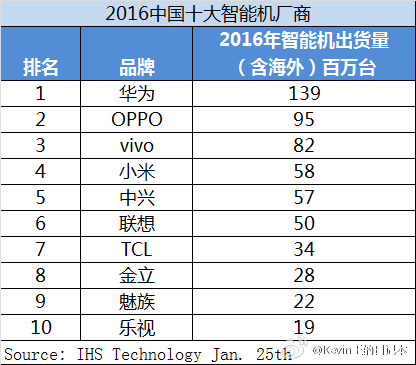
ZTE, which is currently the sixth largest smartphone maker is reportedly aiming to sell about 60 million to 70 million smartphones in 2016.
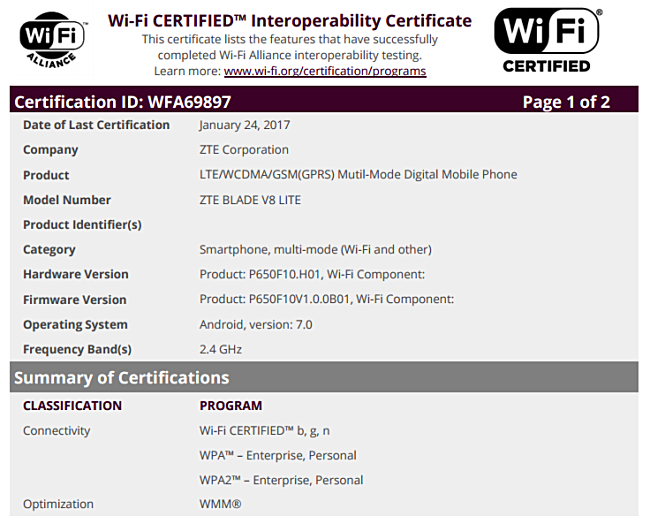
The company has totally changed its image for better last year, releasing pretty impressive smartphones in the Axon and Blade lineup. In fact, the company unveiled two new devices this year at MWC, namely the ZTE Blade V7 and the V7 lite. Both are mid-range offerings aimed at budget customers who want a decent smartphone experience.
Apart from releasing value for money smartphones like the Axon Pro, the company is also investing in marketing. Recently, ZTE announced a sports marketing partnership with the Spanish football club Seville. This is not the first time the company is associating itself with sports, as the company has tie-ups with five different pro basketball teams.
Association with sports teams can be a good way to improve brand image, and this strategy has helped the company to push itself as the fourth largest smartphone maker in the United States. After establishing a strong presence in China and US, the company is now looking out to Europe to improve and expand its brand name in the region.
To build its brand in Europe, the company has started the ZTE Europe Tour. After the US, ZTE is now bringing its “Experience Buses” loaded with its devices in countries like Spain, Germany, Poland, Italy and France.
Aggressive marketing along with value for money smartphones will help the company to achieve its yearly target of 60 million units. We have seen a lot of Chinese smartphone lovers from Europe and it might be a good idea to leverage this interest to offer them better smartphone choices and experiences by focusing in the region.
The device comes with the USB cable, charging plug and some documentation.
TCL 302U Review: DESIGN and DISPLAY
As for design, we are looking at a rather compact phone, which has a 5” display. However, the panel does not even have HD resolution and it is far from the best. My biggest complaints are that the colours start fading once you tilt the device just a little bit. Also, the display has a somewhat reflective coating, which gives a mirror effect.
On the front we have just 0.3MP camera and on the bottom there are 3 nicely backlit capacitive buttons.
The backplate is made of glossy plastic, which attracts fingerprints quite easily. As for optics, the phone ships with just a 5MP shooter.
The buttons feel nice and they have a good tactile feedback.
The backplate is removable but it is very hard to do that as it sits very tight. Under the hood you can find a removable 1800mAh battery, 2 SIM card slots and both of them support 4G. Finally, there is a microSD card slot.
Overall, the phone is well made and feels solid in the hand despite using plastic in its design.
TCL 302U Review: UI
The phone was released quite a while ago and it has never been updated to the newest version of Android. The device runs 4.4 Kitkat ROM and we have a pretty much stock looking UI.
Everything is running fast and fluid and probably the only extra feature worth mentioning is the built-in themes store, which allows you to customise your device.
However, I had some issues with the Google Play store as the apps could not be downloaded, so I had to re-install it manually to make it work.
TCL 302U Review: HARDWARE and PERFORMANCE
The TCL 302U sports a MTK 6735P chip, 1GB of RAM and 8GB of storage. This combo of hardware is definitely not designed for gamers as the was a lot of lag and stutter while playing 3D games.
TCL 302U Review: MULTIMEDIA
The loudspeaker quality is pretty good for the phone this cheap but don’t expect anything spectacular from it.
TCL 302U Review: IMAGE QUALITY
We can’t expect stellar results from the budget phone’s camera. Some images turned out to be pretty good and can be used for social media but in general, pictures lack in detail, the camera struggles with focusing and the colours don’t always look natural.
As for video recording, it is not really impressive neither. See a video review for a video sample.
TCL 302U Review: CONNECTIVITY
As for connectivity options, I have no major complaints except for the fact that the GPS is kind of slow to get a position lock.
TCL 302U Review: BATTERY LIFE
The battery life is actually pretty good. I could get over 4 hours of screen-on time with light usage and that is a pretty good result.
TCL 302U Review: CONCLUSIONS
The TCL 302U is designed to do the basic tasks and it does it well. It has a great design and sturdy construction, the UI is simple, easy to use and stutter-free. Also, the battery life is good.
However, the camera is not really impressive and the back cover is extremely hard to open. Also, the phone is still rocking outdated Android 4.4.
Overall, the phone is an option for those who want to get all the basics done right but don’t mind some shortcomings. However, you may also want to check out what the competition has to offer.
Now that it’s all confirmed that the Vivo XPlay 5 will feature a whopping 6GB RAM, we are all patiently waiting for the first benchmark results of the device. Its pretty much given that the phone will beat other flagships that were announced recently, but by how much is something that we are all eager to see. Whether 6GB RAM will give the XPlay 5 significant edge over others, or whether the lead would just be of a couple of thousand points. Well, we don’t have to imagine anymore, as the first Vivo XPlay 5 AnTuTu benchmark results have surfaced online, and it’s impressive.
According to an alleged AnTuTu benchmark result of the Vivo XPlay 5, the phone scores an amazing 162,610 making it the fastest smartphone on the benchmarking app. The results are very powerful, with the device beating competitors like the Le Max Pro in pretty much every department. The scores in the RAM, UX, CPU and RAM are much higher than the Le Max Pro, which has resulted in such a high final score.
Of course, like always, we would advise you to take this leak with a pinch of salt. As of now, we cannot confirm whether this XPlay 5 AnTuTu benchmark is real or not. Also, we wonder whether an addition 2GB RAM can result in a difference of nearly 30K on AnTuTu. So, let’s wait for some concrete information before getting too excited.
In addition to the leaked benchmark score of the XPlay 5, the source also revealed two new renderings of the device. These two renders are way different than what we saw earlier today of the upcoming flagship, which makes things even more confusing.
But, this could be the real design of the XPlay 5 because it’s very similar to the recently released teaser from the company. It’s different than the earlier one in the sense that the dual curved edges are actually on the top and the bottom, rather than the sides. It’s a different design and we are curious to see what innovative function will such curved edges bring to the phone.
Anyways, take a look at these renders and let us know whether you like this design or the one leaked before.
Xiaomi is all set to launch the Xiaomi Mi 5 handset at its Spring Conference tomorrow in China. We have all been waiting patiently for this event for the past few weeks and our wait has almost come to an end. In less than 24 hours, the event kicks off and we will meet the one of the most awaited smartphones of the year, the Xiaomi Mi 5. However, it looks like this may not be the only product that will meet us at the event tomorrow.
According to the noted analyst, Pan Jiutang, Xiaomi may announce another product at the event tomorrow. This is possible since the event goes on for a whole two hours, which is long enough for a couple of product announcements. The analyst revealed this info via his weibo page. He said that there would be more products in addition to the Xiaomi Mi 5 and that he was looking forward to ‘one more thing’.
At this point of time, there are a couple of guesses for the second product. It could be the rumored Xiaomi drone, that we all have seen in renders and pictures. But given that an executive claims that the drone would be announced later, we are not quite sure of this.
However, what seems to be more likely is a new Mi Water Purifier. Now you may think that this possibility has come out of the blue. But there’s some backing to this reasoning. The company’s Mi Purifier account released a new teaser image a few hours back, which shows off a product that’s likely the next generation purifier. You can check out the image from above.
There could be other products as well, but Xiaomi is yet to reveal anything about them. Anyways, let’s wait for the event tomorrow, to get official details about the company’s new products.
Also, you can check out the live stream of the event tomorrow directly on Youtube from below.
We use cookies on our website to give you the most relevant experience by remembering your preferences and repeat visits. By clicking “Accept”, you consent to the use of ALL the cookies.
This website uses cookies to improve your experience while you navigate through the website. Out of these, the cookies that are categorized as necessary are stored on your browser as they are essential for the working of basic functionalities of the website. We also use third-party cookies that help us analyze and understand how you use this website. These cookies will be stored in your browser only with your consent. You also have the option to opt-out of these cookies. But opting out of some of these cookies may affect your browsing experience.
Necessary cookies are absolutely essential for the website to function properly. This category only includes cookies that ensures basic functionalities and security features of the website. These cookies do not store any personal information.
Any cookies that may not be particularly necessary for the website to function and is used specifically to collect user personal data via analytics, ads, other embedded contents are termed as non-necessary cookies. It is mandatory to procure user consent prior to running these cookies on your website.