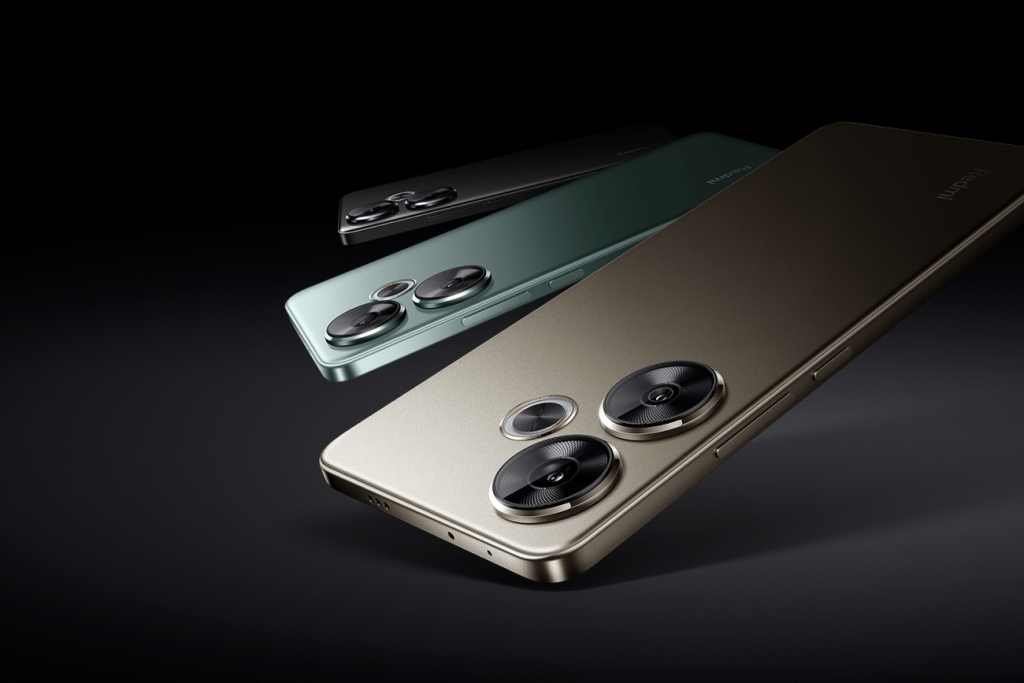
Redmi has just the Redmi Turbo 3 equipped with the Snapdragon 8s Gen 3 chip in the Chinese market. As per reports, the brand is also working on a new K70-series phone, which may debut in the first half of the year. Tipster Digital Chat Station released a Weibo post yesterday to reveal the device’s battery size and charging capabilities. Despite the removal of the post, we were able to obtain the details he disclosed.
Redmi K70 Ultra key details leaked
It appears that the “N12” mentioned in the above Weibo post could be referring to the Redmi K70 Ultra. The leaker stated that the MT6989 chipset, essentially the Dimensity 9300 SoC, powers the device.
He further said that the Redmi K70 Ultra has a 5,500mAh battery with support for 120W fast charging. The tipster previously revealed that it will arrive with up to 24 GB of LPDDR5T RAM and up to 1 TB of UFS 4.0 storage. This suggests that the K70 Ultra will be the brand’s most powerful K70 series phone.
When it comes to display, the K70 Ultra is expected to feature an 8T OLED panel that offers a 1.5K resolution. The screen may offer a peak brightness of around 5,000 nits. It goes without saying that the device will run on Android 14 and HyperOS.
There is no word about the camera capabilities of the Redmi K70 Ultra. However, it is likely to arrive with an IP68-rated dustproof and water-resistant chassis like the Redmi K60 Ultra from last year. In addition, it is also expected to feature an aluminium frame for enhanced durability.
What should have been a regular roasting session for Dbrand’s social media handler turned out to be a PR nightmare this week.
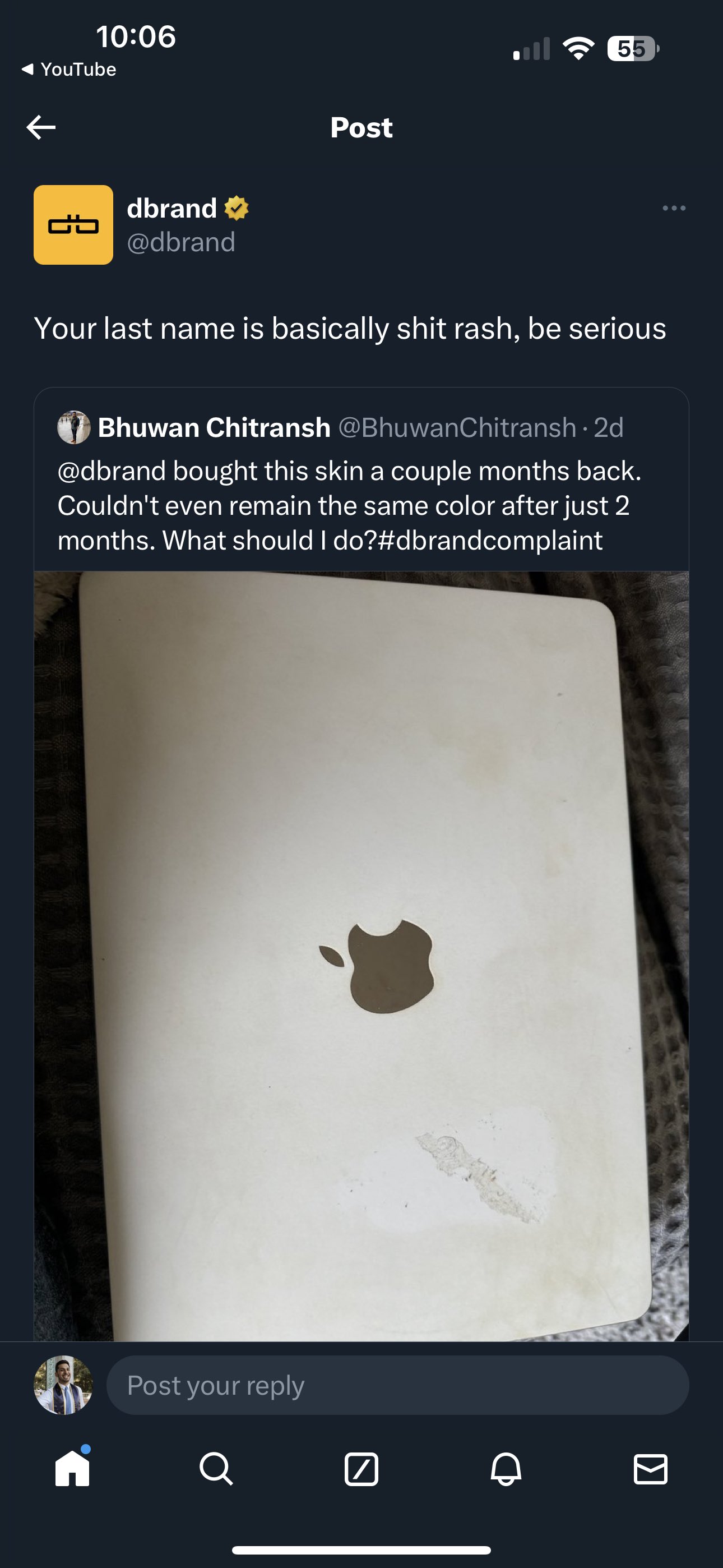
Dbrand known for roasting its customers on Twitter for years, often with offensive tweets, decided to comment on a customer’s surname when he expressed his unhappiness with the quality of a MacBook skin he purchased a couple of months ago.
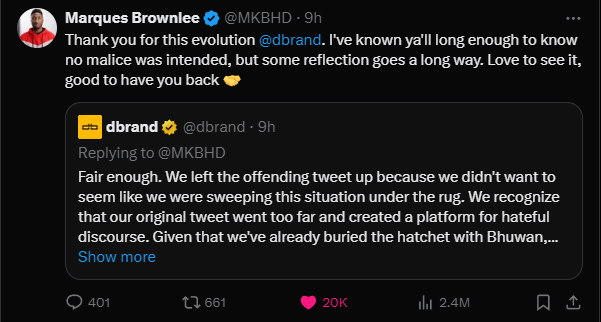
While such offensive tweets are part of the company’s online branding, this time, it faced a massive public backlash for the comment. Even MKBHD stepped in and said Dbrand’s comments were in bad taste.
A couple of apology tweets and $10,000 later, things seem to be fine for the smartphone case maker, but if you want to know what exactly happened in the past 48 hours, this article is worth a read.
In other news, Huawei released its ultra light laptop at the annual conference in China. The Matebook X Pro 2024 weighs just 980 grams, even lighter than the 13.6 Macbook Air and comes with the latest Intel Core Ultra 9 chip inside. It also features a good sized 14.6-inch display with 2K resolution and a 120Hz refresh rate.
Leica has a new smartphone in the market, and naturally, it focuses on delivering an exceptional camera experience. The phone comes with a 47.2MP 1-inch sensor with an “eight phase detection autofocus” function that offers fast and accurate focusing and superior image quality even in challenging situations like low-light environments.
Source: Twitter screenshot from user: i_hsay
Realme recently announced the launch of its upcoming P-series smartphones in India, the P1 and P1 Pro. The company has been promoting the P1 Pro as boasting the “Only Curved Display Under 20K” and the “First 120Hz AMOLED Display Under 15K” for the P1. However, these claims have sparked debate online, with some accusing Realme of misleading marketing. There seems to be another phone that actually deserves this title and was launched earlier.
Also worth adding is how Apple recently sent critical security alerts to users in 92 countries, warning them of potential mercenary spyware attacks targeting their devices. The notification reads: “Apple detected that you are being targeted by a mercenary spyware attack that is trying to remotely compromise the iPhone associated with your Apple ID.” This indicates a deliberate attempt to gain unauthorized access to your phone’s data.
Apple emphasizes the seriousness of these attacks, stating: “This attack is likely targeting you specifically because of who you are or what you do.” While the company can’t disclose specific details to avoid aiding attackers, they have “high confidence” in this warning.
Here are some more interesting News stories from the past 24 hours!
Redmi finally launched the performance-focused mid-range, the Redmi Turbo 3 in China yesterday. In the launch conference, while comparing their new phone with the Snapdragon 8 Gen 2-powered Honor 100 Pro the company accidentally mislabeled it as the “third generation Snapdragon 7”.
Next-gen Oppo Reno series smartphones are reportedly in the works. These devices were recently spotted in certain rumors and reports. Now, a fresh leak has revealed the supposed launch timeline for the Reno 12 series.
Tech giants like Google and Microsoft are investing in AI and introducing brand new features, while Apple, which has remained silent for a long time, appears ready to break its silence. In an article published by Mark Gurman on Bloomberg, it’s reported that Apple M4 chips are equipped with AI features.
Huawei has debuted its Band 9 smart band in China. The smart band was initially launched in Malaysia last month. It brings a combination of lightweight design and a suite of professional health-tracking features.
The Redmi Turbo 3 is the first smartphone from the brand’s new Turbo series. However, this lineup has already been available for two years under the Redmi Note series.
The first generation model was dubbed the Redmi Note 11T Pro. The Redmi Note 12 Turbo succeeded it. The newest model differs from its predecessors in numerous ways. It includes improvements in several categories. We explain how it differs from its past variants .
Google has started rolling out the first beta build of Android 15, available for download on Pixel devices enrolled in the Android Beta Program. This follows two Developer Preview builds released in February and March, offering developers a chance to test their apps on the upcoming OS iteration.
While major feature reveals are likely reserved for Google I/O next month, the Beta 1 update focuses on laying the groundwork for improvements in several key areas.
Android 15 Beta 1 Features
One of the core changes in Android 15 Beta 1 pertains to app optimization for larger displays. Apps built for the new OS will automatically render in an edge-to-edge format by default, eliminating the need for developers to implement additional code to maximize screen usage.
The update also prioritizes accessibility by introducing support for Braille displays within the TalkBack screen reader. It will let users with visual impairments to connect Braille displays via USB or Bluetooth.
Android 15 Beta 1 introduces an OS-level feature for app archiving and unarchiving which would help manage storage space. Users can now archive infrequently used apps, freeing up space while preserving app data for seamless reactivation later.
Security receives an upgrade with the introduction of an API for end-to-end encryption of contact keys. This allows users to securely manage and verify the contact information of others.
Availability and Installation
The Android 15 Beta 1 update is compatible with Pixel devices ranging from Pixel 6 to Pixel 8 Pro, including the Pixel Fold and the Pixel Tablet. The Pixel 5a, however, will not receive the update as it will reach its end-of-life cycle later this year.
There are two primary methods for installing the update:
Android Beta Program: Enrolling in the Android Beta Program allows users to receive the update over-the-air (OTA) after opting in. It’s the most preferred method to get a taste of the latest Android version.
Manual Installation: Users seeking a more technical approach can opt for manual installation by flashing factory images or OTA files.
Those already enrolled in the Android 15 Developer Preview program should already receive the Beta 1 update OTA. Additionally, users currently participating in the Android 14 QPR beta program can directly update to Android 15 Beta 1 without needing to wipe their devices.
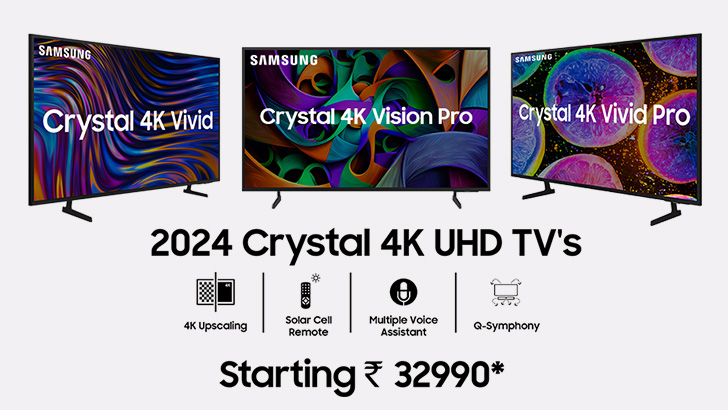
Samsung has unveiled three new Crystal 4K TVs in India, with a starting price of Rs 32,990 (~$395). The lineup includes the Crystal 4K Vivid TV, the Crystal 4K Vision Pro TV, and the Crystal 4K Vivid Pro. These devices will be available for purchase through leading online retailer platforms.
2024 Crystal 4K TV series specifications and features
2024 Crystal 4K TV series
The 2024 Crystal 4K TV series comes in multiple screen size options, such as 43-inch, 50-inch, 55-inch, 65-inch, and 75-inch. According to Samsung, the Crystal 4K TV series is equipped with a 4K upscaling feature, which enhances the picture quality of lower-resolution content to appear like 4K. The new series promises better contrast contrasts, rich darks, and bright lights, thanks to the inclusion of technologies, such as support for one billion true colors, a Crystal processor, and 4K and HDR10+ support.
The new Crystal 4K TVs offer the OTS (Object Tracking Sound) Lite feature, which allows users to get a real-like experience of on-screen motion through 3D surround sound created with two virtual speakers. It also has support for Adaptive Sound which enhances the sound experience by analysing the TV content scene-by-scene in real-time.
The 2024 Crystal 4K TV series comes with a SolarCell Remote that charges via indoor room lights. So, there is no need to use disposable batteries. It comes with support for Bixby and Amazon Alexa assistants. The Q-Symphony feature synchronizes the TV’s built-in speakers with the soundbar to offer a richer sound output.
2024 Crystal 4K TV series price in India
The Crystal 4K Vivid series has a starting price of Rs 32,990 (~$395). It can be bought on Amazon and Flipkart. The Crystal 4K Vision Pro series, which starts at Rs 34,490 (~$420), is available via Flipkart. Finally, Amazon lists the Crystal 4K Vivid Pro series at a starting price of Rs 35,990 (~$430). All three TV series are also available for purchase through Samsung India’s website.
According to Samsung, the 2024 Crystal 4K TV series comes with one year of standard warranty and one year of extended warranty, which is applicable only for the display panel. Buyers can take advantage of offers such as cashback and up to 18 months of no-cost EMI.
On April 24, iQOO will unveil the iQOO Z9 smartphone series in China. In recent weeks, a lot of Vivo phones have emerged in the database of China’s 3C certification platform. A new leak reveals that some of the recently certified Vivo devices will debut on the market as the iQOO Z9x, Z9, and Z9 Turbo. The same leak has further revealed the configurations of the three smartphones.
iQOO Z9 series configurations leaked
iQOO Z9 Turbo front design
Reports have revealed that the Vivo V2352A phone, which was approved by the 3C authority in March, will debut in the Chinese market as the iQOO Z9 Turbo. So far, the brand has confirmed that the device will feature the Snapdragon 8s Gen 3 chip, a 6,000mAh battery, a dedicated chip for enhanced graphics, and a 6K VC cooling unit.
Yesterday, Geekbench spotted the same device with 16 GB of RAM and Android 14. The 3C certification of the device revealed that it will support 80W fast charging.
As per the new leak, the iQOO Z9 Turbo will be available in two variants, such as 16 GB RAM + 256 GB storage and 16 GB RAM + 512 GB storage.
Rumors are rife that the iQOO Z9 will feature the Snapdragon 7 Gen 3 chipset. The new leak states that it has the V2361A model number. Recently, the 3C certification platform spotted the device with an 80W fast charger. This device also has a variant with the V2361GA model number, expected to support 80W fast charging. However, its final marketing name is not known yet. The new leak states that the iQOO Z9 will have two variants, such as 12 GB RAM + 256 GB storage and 12 GB RAM + 512 GB storage.
According to reports, the iQOO Z9x will pack the Snapdragon 6 Gen 1 SoC, is said to have the V2353A model number. Recently, the device underwent 3C certification, equipped with a 44W fast charger. The same certification body also approved a variant of this phone with the V2353DA model number and the same charger. Again, there is no information about its final marketing name. The Z9x is tipped to arrive in configurations, such as 8 GB RAM + 256 GB storage and 12 GB RAM + 256 GB storage.
Infinix announced the Note 40 series on March 18 on the global market. The lineup consists of the Note 40 4G, Note 40 Pro 4G, Note 40 Pro 5G, and finally the Note 40 Pro+ 5G. As scheduled, the latter two (5G models) launches in India today. So let’s take a look at what special phones have to offer.
Infinix Note 40 Pro+
Infinix Note 40 Pro | Note 40 Pro+ specifications
The series equips a segment-first 6.78″ 55-degree curved AMOLED display. The smooth 120Hz display is protected by Corning Gorilla Glass and also reaches up to 1300 nits. For the back, there are three different color options – Obsidian Black, Titan Gold, and Vintage Green. Inside the screen you’ll be treated with XOS 14 based on Android 14, which the company is ‘criminally smooth’ and has no ads.
It is built around the 6nm Mediatek Dimensity 7020 chipset, that also powers the recently launched Moto G Power 5G (2024). The processor is backed by 8 GB (Note 40 Pro) or 12GB memory (Note 40 Pro+) and 256GB UFS 2.2 storage. The phone adopts VC cooling tech that reduces the temperature by up to 7° C.
Battery and charging
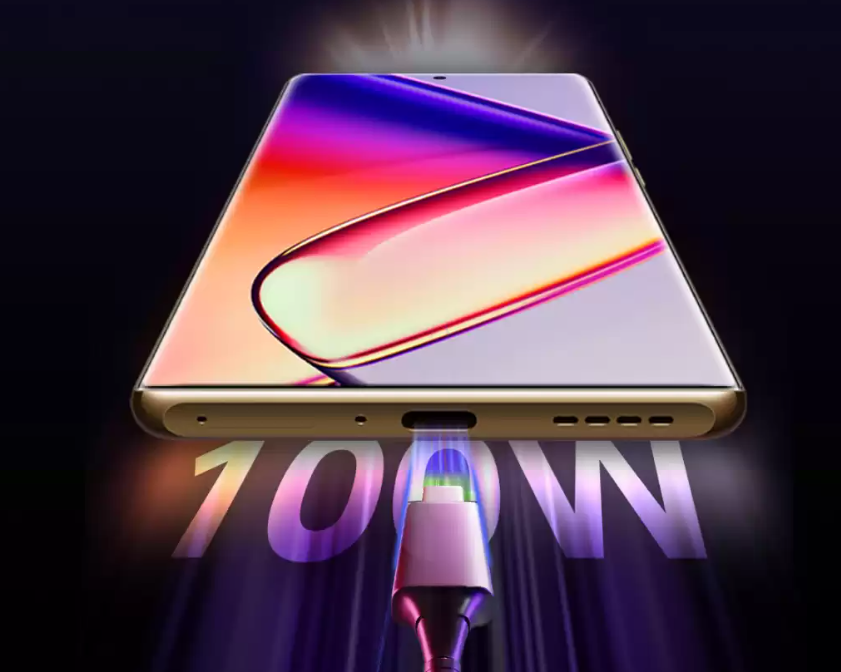
While the Note 40 Pro+ equips a 4600mAh battery and supports 100W charging, the Note 40 Pro packs an even bigger 5000 mAh capacity with 45W charging. Both phones support 20W wireless charging, 5W and 10W reverse wireless and wired charging.
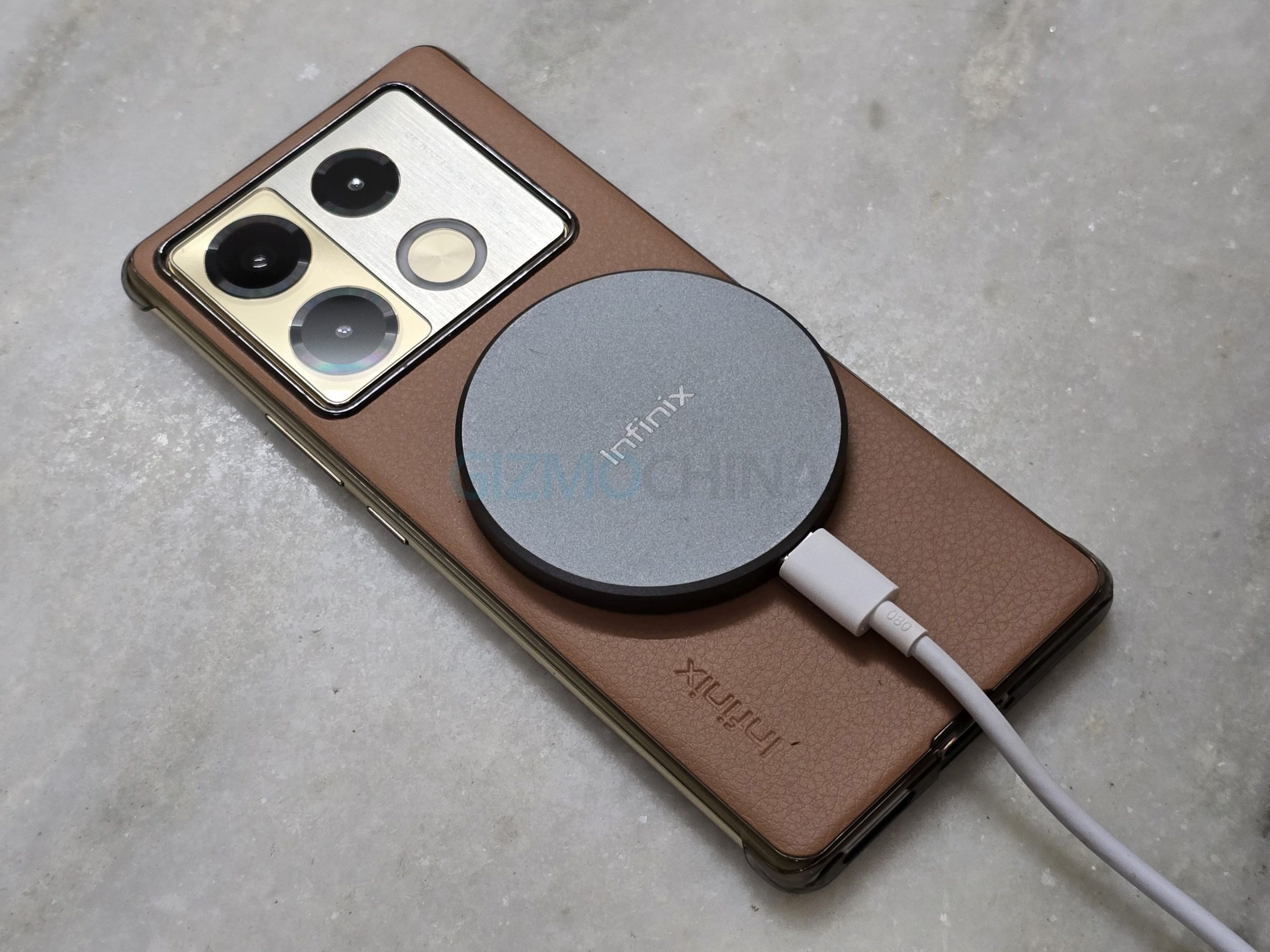
Infinix Note 40 Pro (4G) with MagPad
To charge reliably, Infinix has further improved its charging technology and is calling it “All-Round FastCharge 2.0”. As the name suggests the phone comes with a charging kit that includes a case for the phone that has magnets, a magnetically attachable wireless power bank, and more. The idea is to keep your phone and accessories powered throughout the day. The first day of sale offers Rs 4,999 worth of MagKit for free. To know more about the segment’s first wireless charging ecosystem of this phone, check out our detailed explainer.
Camera
Both the Note 40 Pro and Pro+ offer a 108MP OIS-assisted main camera that according to Infinix, can provide lossless zoom up to 3x. Although, there’s no information on how this particular mode performs in low light. Additionally, there are two more 2MP sensors for depth and macro and a 32MP one for selfie. There’s also an “Active Halo” light on the back located inside the camera assembly.
Both phones come with an IP53 water splash protection rating and offer an IR sensor to use the phone as a remote and a multifunctional NFC.
Pricing and availability
The Infinix Note 40 Pro 5G and the Note 40 Pro+ 5G are available on Flipkart for a price tag of Rs 27,999 and Rs 32,999 respectively. Although, the phones are now available for pre-orders for Rs 21,999 and Rs 24,999 for the phones.
Vivo fans are eagerly waiting for the arrival of the Vivo X100 Ultra, a camera-focused flagship phone powered by the Snapdragon 8 Gen 3. While there is speculation that it will break cover in the second quarter of this year, there is no official announcement from the brand. A new Weibo post by Vivo’s Vice President for Product, Huang Tao, suggests that the arrival of the X100 Ultra may not be too far away.
Vivo X100 Ultra to offer professional camera experience
Vivo VP for Product, Huang Tao’s Weibo post
In a Weibo post today, Tao acknowledged the widespread anticipation for the Vivo X100 Ultra, often referred to as “Thanos.” He expressed gratitude for the attention and support while emphasizing the immense challenge of creating a device with such advanced capabilities, likening it to crafting a professional camera that also functions as a phone. He assured customers that Vivo X100 Ultra’s technical hurdles are being addressed diligently, asking for patience as the company works through each obstacle.
According to reports, the Vivo X100 Ultra will have an E7 AMOLED display that offers a Quad HD+ resolution and a 120Hz refresh rate. It will be Vivo’s first smartphone to feature the Snapdragon 8 Gen 3 chipset.
On the back, the Vivo X100 Ultra is expected to feature a 50-megapixel LYT-900 primary camera. It is the same main camera that’s available on the Xiaomi 14 Ultra and the Oppo Find X8 Ultra. An ultra-wide lens, a telephoto camera, and a periscope telephoto camera.
Reports have claimed that the X100 Ultra’s 200-megapixel periscope telephoto camera will offer a 100mm focal length, a 4.3x optical zoom, and a 200x digital zoom. The device is also said to support two-way satellite connectivity. As far as launch is concerned, it seems that the X100 Ultra may debut in May. Likely, it will be joined by the Vivo X100s and X100s Pro smartphones, which are expected to feature the upcoming Dimensity 9300 Plus chipset.
Xiaomi Auto addressed even more user questions, this time about the SU7 electric car’s brakes and keyless entry system in their latest Q&A session. Regarding brakes, Xiaomi cautioned against misleading online comparisons of brake pad size. Images circulating online compare the front calipers of the SU7 Max to its rear brake pads. For clarity, Xiaomi confirmed the SU7 Max uses Brembo high-performance four-piston calipers for strong braking performance. They also use NAO brake pads to strike a balance between performance and comfort. Xiaomi claims the front brake pads offer a larger contact area than similar luxury sports sedans, resulting in superior braking and durability.
Users don’t specifically need a Xiaomi phone to unlock the car
Regarding keyless entry, the SU7 uses Bluetooth to unlock the car when the phone’s Bluetooth key is activated. With this function enabled, users can simply approach the car, pull the handle, and the door unlocks automatically. The car can also lock and unlock as the user approaches or leaves the vehicle. While this feature works with most phones, aggressive background app management by some phone brands might stop the Xiaomi Auto app, causing unlocking failures.
Also, Xiaomi addressed the built-in refrigerator in the SU7. This refrigerator can continue to operate even after the car is turned off. Users can set it to run for up to 24 hours on battery power through the car’s settings. The refrigerator’s temperature and even its door can be controlled remotely using the Xiaomi Auto app. It’s a pretty neat feature, if you’re on a road trip and want to keep drinks cold even after you leave the vehicle. Either way, Xiaomi is trying to educate its audience about its car, and it’s doing a pretty good job. Multiple Q&As means more information out there, and more customers will get to know the car.
Popular tech Youtuber Marques Brownlee, known for his channel MKBHD, recently paused his partnership with phone case/skin company dbrand after a social media exchange.
dBrand has a history of being funny on X, but they took it a little far this time.
The situation began when a customer posted about an issue with a dbrand product. dbrand responded with a now-deleted tweet deemed offensive by a lot of users on X. This is a part of dBrand’s online social media presence. While the company has a history of using humor on social media, this instance crossed a line. Below is a screenshot of the original tweet.
Now MKBHD and dbrand are in the eyes of a lot of tech enthusaists. They both have a total of 8.5 million followers between them. A public scenario such as this always gets attention, and that’s exactly what happened. People started leaving harsh comments towards dbrand, many of them saying that they will never support dbrand again because of that insensitive comment. For instance, a user said, and we quote, “Poking fun at customers and being racist are two completely different things. Seems like the going price of being racist is $10,000”. Another user wrote, “Still very toxic of you to act this way in the first place. Hard to earn respect, easy to lose it.” You might be thinking – is it that big of a deal? Read on to judge for yourself.
Now what exactly happened was, the tweet (in the image above) also represented dbrand in bad taste because the victim account was an Indian guy. You can see how their joke comes across in a big online space, that is X.
The company doesn’t even refrain from using cusses and insults towards even their most loyal customers, so it’s easy to see why the victim got caught in the line of fire.
Facing public backlash, dbrand issued a two-part response. Initially, they apologized directly to the customer and offered a sizable amount of money, but ultimately, defended their overall social media strategy. Marques clearly saw this tweet and wasn’t exactly impressed. He wrote a couple of detailed paragraphs where he straight up announced that he would stop working with dbrand because of this whole fiasco. He also talked about the harm caused by the original tweet and called for a more sincere apology reflecting on their actions. These are the tweets that dbrand and MKBHD posted, and its clear that it this point, everyone was taking it seriously.
dbrand responded positively, acknowledging the seriousness of the situation and agreeing to remove the offensive tweet. MKBHD responded shortly, commending the company’s willingness to learn and adapt, indicating a restored working relationship. It’s interesting to note that MKBHD is probably dbrand’s biggest source of customers, so if this went a different route, the company’s revenue would’ve definitely taken a hit, no doubt.
Also, props to Marques for taking a stand almost immediately after this happened. It doesn’t matter if it came from a place of a moral standpoint or he simply wanted to keep a squeaky clean PR on his YouTube brand – the company that started this ordeal was held accountable by a big influencer. The consequences were quick, and the recovery was quicker. Hopefully dbrand doesn’t give up its humor, but moderates it in the future.
This incident is a reminder of how important public images are these days. Since consequences of actions on social media have escalated, companies can’t tread as lightly. While humor can be a marketing tool, companies must be aware of potential rebuttals and be prepared to adapt.
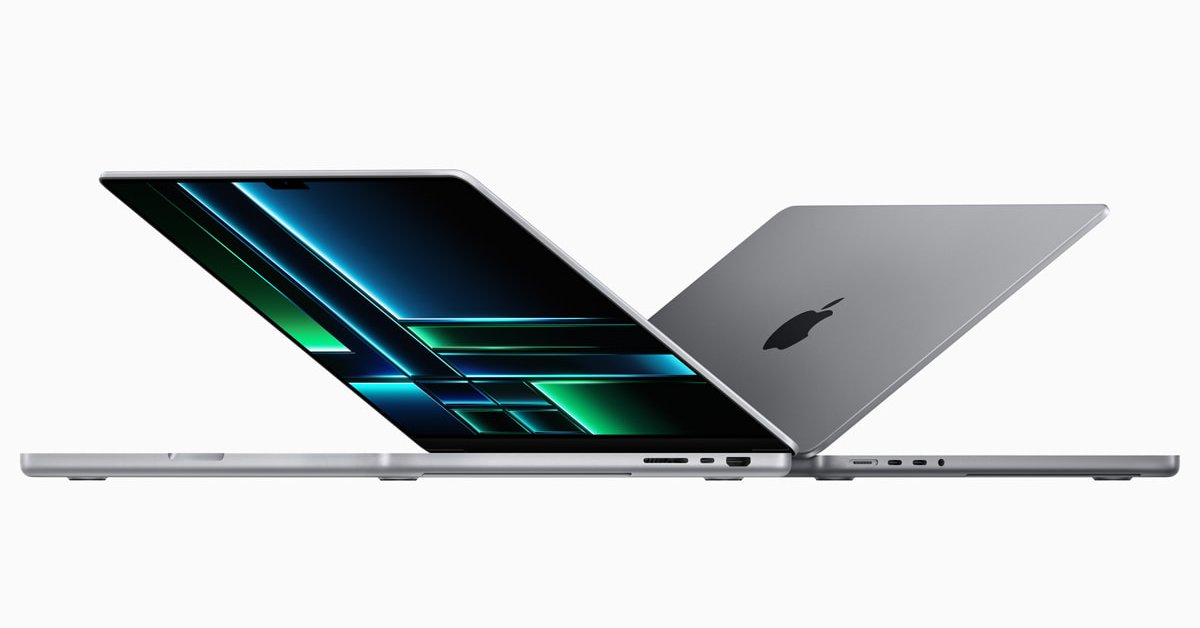
Apple is reportedly accelerating development of its next-generation M4 chips, according to Bloomberg’s Mark Gurman. These chips are expected to power new Macs by the end of 2024, with a focus on boosting AI processing performance.
Mark Gurman from Bloomberg suggested a similar timeline to the M3 rollout
Following the M3 launch in October 2023, Gurman suggests a similar October release timeframe for the M4 series. The rollout will be staggered, starting with upgrades to the iMac, entry-level 14-inch MacBook Pro, higher-end 14-inch and 16-inch MacBook Pros, and Mac mini models. This will be followed by updates to the 13-inch and 15-inch MacBook Air in spring 2025, then the Mac Studio in mid-2025, and finally the Mac Pro in late 2025.
Gurman also reports on codenames for at least three M4 variants: Donan (low-end), Brava (mid-range), and Hidra (high-end). Donan will be found in entry-level MacBook Pro, MacBook Air, and Mac mini models, while Brava equips high-end MacBook Pro and Mac mini configurations. The Hidra chip, likely destined for the Mac Pro, hints at a potential “Ultra” or “Extreme” branding upon release.
The M4 Mac desktops are expected to support a significant memory upgrade, reaching up to 512GB of unified memory compared to the current 192GB limit. While maintaining the 3nm manufacturing process of the M3 chip, Apple’s supplier TSMC might utilize an enhanced version for improved performance and energy efficiency. Additionally, Apple plans to significantly improve the Neural Engine, likely increasing the cores dedicated to AI tasks.
Tech giants like Google and Microsoft are investing in AI and introducing brand new features, while Apple, which has remained silent for a long time, appears ready to break its silence. In an article published by Mark Gurman on Bloomberg, it’s reported that Apple M4 chips are equipped with AI features.
Mark Gurman reveals codenames of M4 family
Apple is set to introduce three different variants of the Apple M4 CPU series according to Mark Gurman, very likely named the M4, M4 Pro, and M4 Max. Additionally, rumors suggest that the Apple M4 could support up to 512GB of unified memory, far surpassing the current 192GB unified memory limit. Apple’s upcoming most powerful processor could be named as M4 Ultra or M4 Extreme.
While Apple may initially unveil M4-powered devices by the end of 2024, we can expect more powerful and new M4 machines in 2025. Bloomberg reports that the base model of the M4 chip goes by the codename “Donan,” the mid-tier is known as “Brava,” and the best-performing variant is named “Hidra.”
Macbook Pro
The first Macs powered by the M4 chip could be unveiled in October or November of 2024. Gurman suggests that, similar to the M3 series, two types of MacBook Pro will be introduced: an entry-level MacBook Pro and a higher-performance MacBook Pro. Just as the current 14-inch MacBook Pro comes with the M3 chip, while the 16-inch MacBook Pro models are coming only with either the M3 Pro or M3 Max variants.
Haier Appliances India has rolled out its new Vogue Series refrigerators, showcasing colorful glass doors and practical features for the modern kitchen. The lineup includes 2-door and 3-door convertible models, as well as top and bottom-mounted fridges.
Key to the Vogue series is its convertible feature, allowing more fridge space by transforming freezer sections. This comes alongside the Magic Convertible Zone for temperature adjustments based on what you’re storing, ensuring foods stay fresh.
The refrigerators are built to save energy and operate quietly, thanks to Haier’s Triple Inverter Technology and Dual Fan Technology. The refrigerators use smart display panels for quick temperature changes and a ‘connect home inverter’ function that keeps the fridge running during power cuts, so your food stays cool.
the Vogue refrigerators also feature Deo Fresh Technology, promising to keep your fruits and veggies fresh for up to 21 days by providing comprehensive cooling and eliminating odors. Haier backs up its refrigerators with a 10-year warranty on the compressor and fan motor and a 2-year warranty on the fridge itself.
Pricing & availability
The Haier Vogue series is now available for purchase in India through Haier’s official online and offline stores. Prices start at:
Bottom-mount range: Rs. 51,890
Top-mount range: Rs. 58,990
2-door convertible side-by-side: Rs. 1,24,490
3-door convertible side-by-side: Rs. 1,51,290
These premium refrigerators come in sleek glass finishes with color options including Black White, Grey Onyx, Black Yellow, Cream Pink, Yellow Grey, Peach Nyanza, Parrot Green, Russet Grey, Rose Blue, and more.
The Redmi Turbo 3 is the first smartphone under the brand’s new Turbo series. But this lineup has already existed for two years under the Redmi Note series.
Additionally, the newest model is different from its predecessors in many ways. It brings upgrades in several categories. Let’s check out how it differs from its forerunners.
Redmi Turbo 3 compared with Redmi Note 12 Turbo and Redmi Note 11T Pro
The Redmi Note 11T Pro and Redmi Note 12 Turbo resembles Redmi Note 11 Pro Plus and Redmi Note 12 Pro Plus, respectively. While the Redmi Turbo 3 looks distinct despite sharing a few design elements with the Redmi Note 13 Pro Plus.
The Redmi Turbo 3 is the slimmest and lightest of all three phones at 7.8mm and 179g, respectively. Also, the fingerprint sensor now resides underneath the display instead of on the power key.
It lacks a 3.5mm headphone jack, unlike its predecessors. Finally, it also comes in a Harry Potter Edition like the Redmi Note 12 Turbo
2. More Powerful Chip
The Redmi Turbo 3 is the most powerful smartphone in the lineup so far. It houses the recently unveiled Qualcomm Snapdragon 8s Gen 3 SoC paired with LPDDR5x RAM and UFS 4.0 storage.
The aforementioned silicon is supported by a 4800mm2 cooling system. It helps in maintaining thermals.
Whereas last year’s Redmi Note 12 Turbo features a Qualcomm Snapdragon 7 Plus Gen 2 chip, LPDDR5 RAM, and UFS 3.1 storage. Finally, the older Redmi Note 11T Pro has the same type of RAM and storage but a less powerful MediaTek Dimensity 8100 SoC.
3. Better Display and Faster Charging
The Redmi Turbo 3 flaunts a 6.67-inch centered punch-hole OLED display as the Redmi Note 12 Turbo. But this new panel offers a higher resolution and brighter peak brightness level.
The screen on the latest phone arrives with a resolution of 2712 x 1220 pixels (1.5K) and a 2400 nits peak brightness level. Whereas the last-gen model is limited to 2400 x 1080 pixels (FHD+) and 1000 nits.
The Redmi Note 11T Pro is different from the two as it has an LCD panel. This display offers a 144Hz refresh rate and an FHD+ resolution (2460 x 1080 pixels).
Finally, the Redmi Turbo 3 supports 90W wired charging as opposed to 67W wired charging on the other two.
4. HyperOS and AI Features
The Redmi Turbo 3 is the first in the series to ship with HyperOS out of the box. It also arrives with several AI features, such as air gestures, intelligent noise suppression, magic elimination pro, and more.
On the other hand, the Redmi Note 12 Turbo recently received the HyperOS update. However, it does not offer AI features.
Lastly, the Redmi Note 11T Pro is eligible for HyperOS update and is expected to receive it shortly.
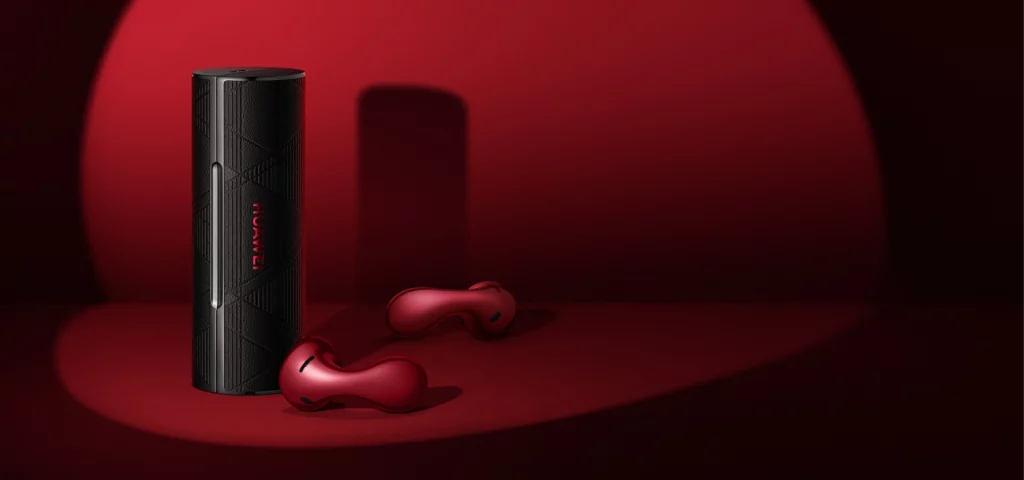
Huawei has recently launched the Band 9 smart band, as well as the MateBook X Pro 2024 notebook in China. Along with these gadgets, the brand has also debuted the Huawei FreeBuds Lipstick 2 earbuds. These earbuds come with a lipstick-shaped charging case. However, it looks like the earbuds inside the case are the Huawei FreeBuds 5 (review).
The charging case can also be connected to a lanyard for convenient attachment to a bag. It measures 28.9 mm × 78.5 mm in size and weighs around 78 grams. Unlike typical earbuds with either a stem or no stem, the FreeBuds 5 boasts a waterdrop-shaped design that fits seamlessly into the ear.
These earbuds support advanced audio codecs like L2HC and LDAC, enabling high-resolution audio streaming. They also offer spatial audio on HarmonyOS 3 devices, Hybrid active noise cancellation, and dynamic EQ tuning. Huawei claims to utilize an innovative ear canal adaptive algorithm, which adjusts to the user’s ear shape for better noise reduction.
Featuring an 11mm driver unit, these earbuds connect via Bluetooth 5.2 and support multi-point pairing. They promise up to 5 hours of playtime on a single charge, extending to 24 hours with the included charging case.
Pricing & availability
The company is offering these earbuds for pre-sale at 700 yuan (approximately $235). The Huawei FreeBuds Lipstick 2 comes in two color choices: String White and Phantom Black.
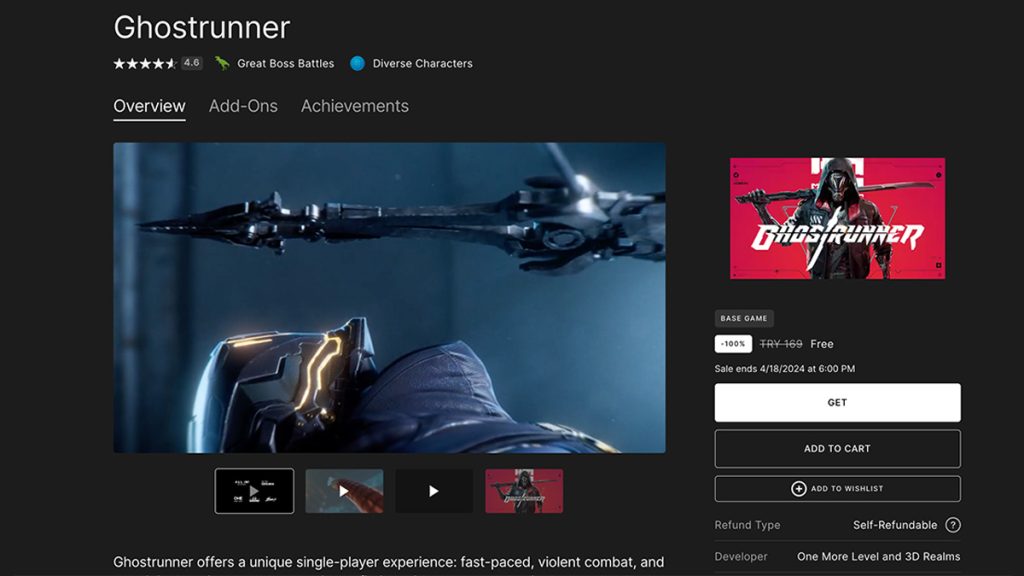
The Epic Games Store continues to offer free games to its users every week. While this strategy has occasionally disappointed us included less popular titles like Islets, this strategy has frequently provided amazing games for free. This time around, the platform exceeds expectations by offering Ghostrunner for free. Here are the details…
Ghostrunner Now Free on Epic Games Store
Last week, Epic Games offered The Outer Worlds: Spacer’s Choice Edition and Thief for free, and they’re continuing the giveaway with Ghostrunner. For those unfamiliar, Ghostrunner is an action-shooter game released in 2020. The game tells the story of Jack, a cyber ninja who has lost his memory. Jack awakens in the depths of Dharma Tower and is guided by a mysterious voice.
This voice instructs him to climb the tower and defeat the ruthless dictator known as the Keymaster, who holds the tower in an iron grip. As Jack progresses through the tower, he begins to piece together fragments of his past and uncovers the Keymaster’s oppressive rule over humanity. Along the way, he encounters an artificial intelligence named Anka and works with her to undermine the Keymaster’s plans. You can click here to get the game.
Ghostrunner Minimum System Requirements
OS: Windows 7, 8.1, 10 (64-bit versions)
Processor: Intel Core i5-2500K (4 * 3300) AMD Phenom II X4 965 (4 * 3400) or equivalent
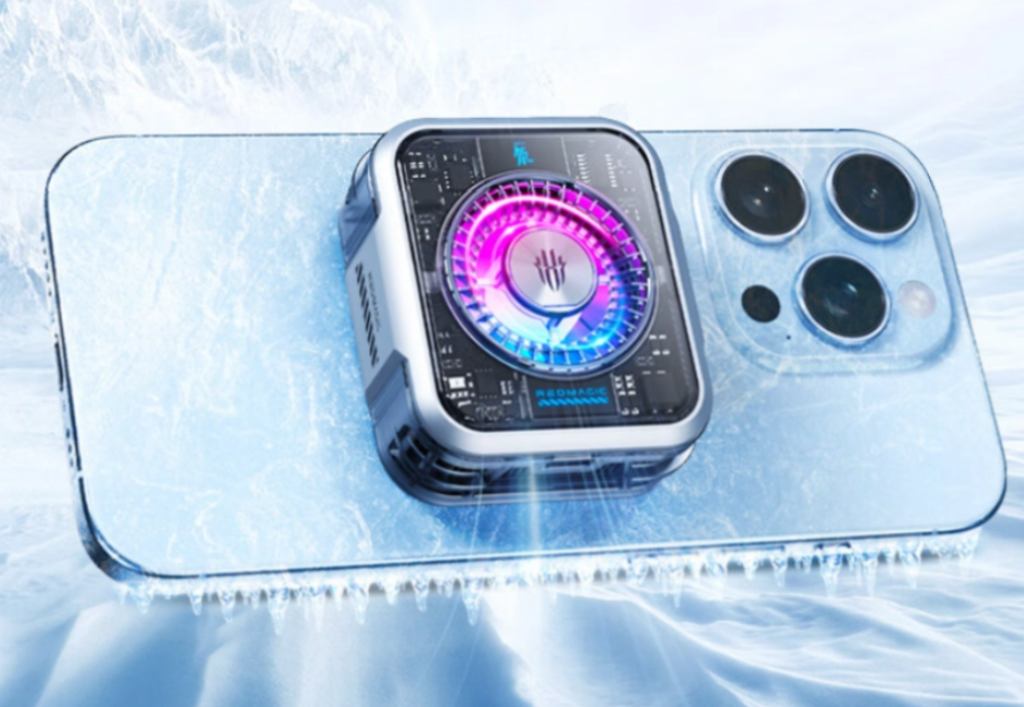
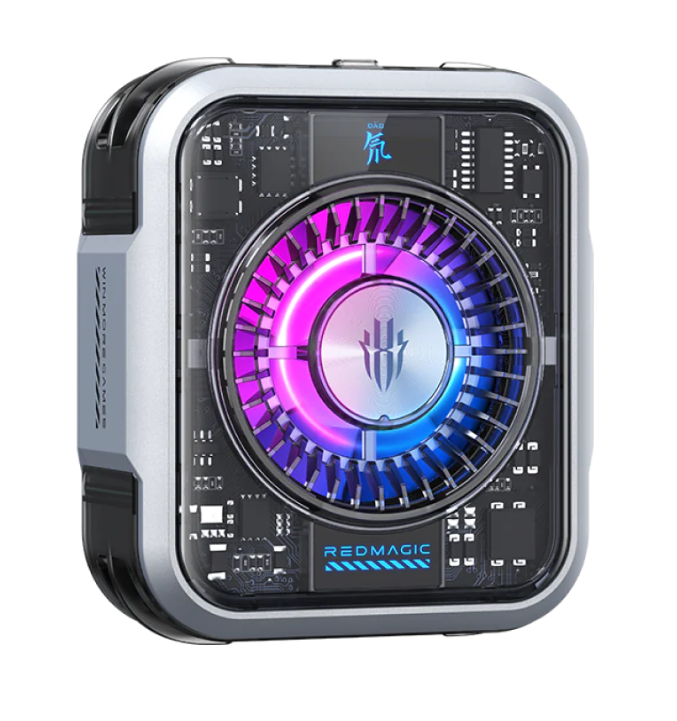
Maintaining optimal device temperature is paramount for peak performance and longevity in the dynamic world of mobile gaming and content creation. Enter the RED MAGIC Magnetic VC Cooler 5 Pro, a cutting-edge cooling solution engineered to enhance your mobile experience. You can now buy this VC cooler which generally retails for $60 at a discounted price of $54.99 at GeekWills.
36W High-Performance Liquid Cooling: Powered by advanced liquid cooling technology, this cooler boasts a formidable 36W cooling system. By efficiently dissipating heat, it ensures that your device remains at a comfortable temperature, even during extended gaming sessions or resource-intensive tasks.
Magnetic Design: The magnetic back clip of the REDMAGIC Magnetic VC Cooler 5 Pro offers effortless and secure attachment to your device. Its seamless integration eliminates the need for additional accessories or modifications, preserving the sleek aesthetics of your device while providing robust cooling performance.
Enhanced Gaming Experience: By effectively mitigating thermal throttling, this cooler enhances your gaming experience. Enjoy smoother frame rates, reduced lag, and improved overall performance, allowing you to immerse yourself fully in your favorite titles without compromise.
Live Streaming Ready: Whether you’re a seasoned streamer or an aspiring content creator, the REDMAGIC Magnetic VC Cooler 5 Pro ensures uninterrupted streaming sessions. Its stable temperature regulation guarantees high-quality streams devoid of interruptions caused by overheating, enabling you to captivate your audience with seamless content delivery.
Plug and Play: Designed with user convenience in mind, this cooler features a hassle-free plug-and-play setup. You can say goodbye to complex configurations and installations, simply attach the cooler to your device, and you’re ready to embark on your gaming or streaming journey without delay.
Compact and Portable: The sleek and portable design of the REDMAGIC Magnetic VC Cooler 5 Pro makes it the perfect companion for gaming on the go. Whether you’re commuting, traveling, or simply prefer gaming in different locations, its compact form factor ensures that you can enjoy a cooler gaming experience wherever you are.
REDMAGIC Magnetic VC Cooler 5 Pro with its potent combination of high-performance cooling, user-friendly design, and versatile compatibility, empowers gamers and content creators alike to push the boundaries of mobile entertainment without compromise.
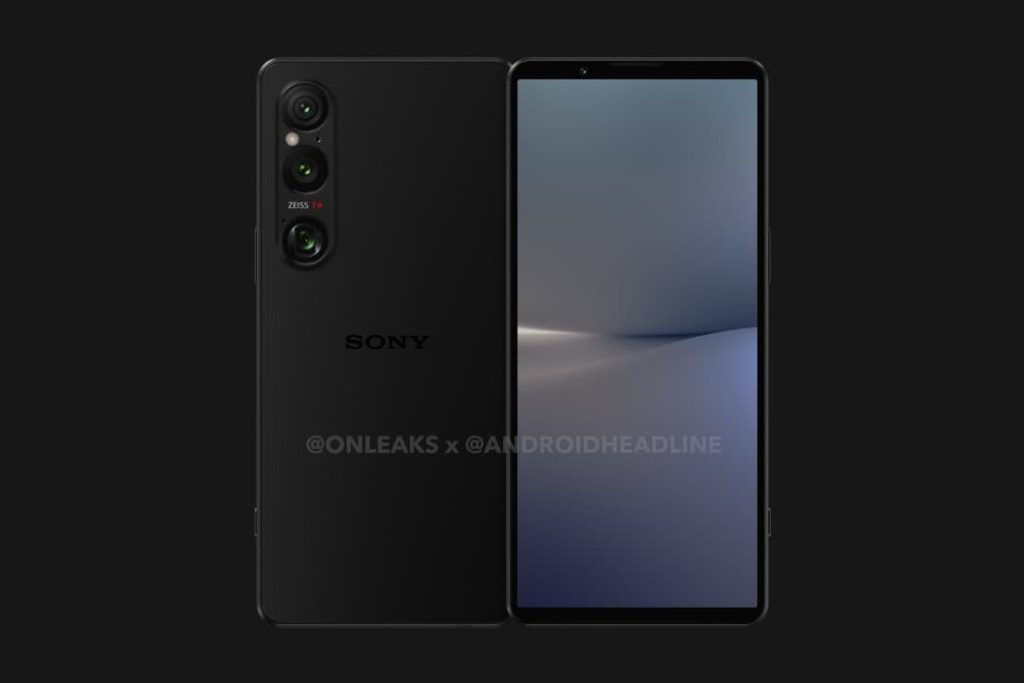
We have the first look at the Sony Xperia 1 VI. Reputed tipster Steve Hemmerstoffer (aka Onleaks) has shared the CAD-based renders of the smartphone revealing its design from all angles. The device will arrive as the successor to the last year’s Xperia 1 V. The upcoming Xperia 1 VI launch seems imminent as the device has been doing the rounds of the rumour mill quite often.
Sony Xperia 1 VI leaked renders reveal design and other details
The Sony Xperia 1 VI will retain the overall design as its predecessor. It has a flat frame with the volume rocker and power buttons located on the right edge with the latter also doubling up as a fingerprint scanner. Close to the bottom edge on the same side, there is a dedicated camera shutter button.
The Sony Xperia 1 VI has a pill-shaped protruding camera module on the back panel. It houses three ZEISS lenses including a periscope sensor. The device has a USB-C port and a SIM tray slot at the bottom whereas the top edge has a 3.5mm headphone jack.
While Android phones feature a bezel-less display with a centre-aligned punch-hole cutout, Sony continues sticking to an old-school top and bottom bezel that isn’t too thick. The device will have a 6.5-inch display. Dimension-wise, the smartphone is said to measure 161.9 x 74.5 x 8.4mm. This means that compared to the Xperia 1 V, it will be a bit smaller, wider, and thicker. The report adds that this could change the aspect ratio from 21:9 to 19.5:9. This falls in line with the previous rumour.
The renders don’t reveal any further information of the Sony Xperia 1 VI. Reports suggest that the upcoming offering will have a 2K display downgraded from 4K. Leaked marketing material revealed 48MP primary, ultra-wide, and periscope units utilizing Exmor T sensor.
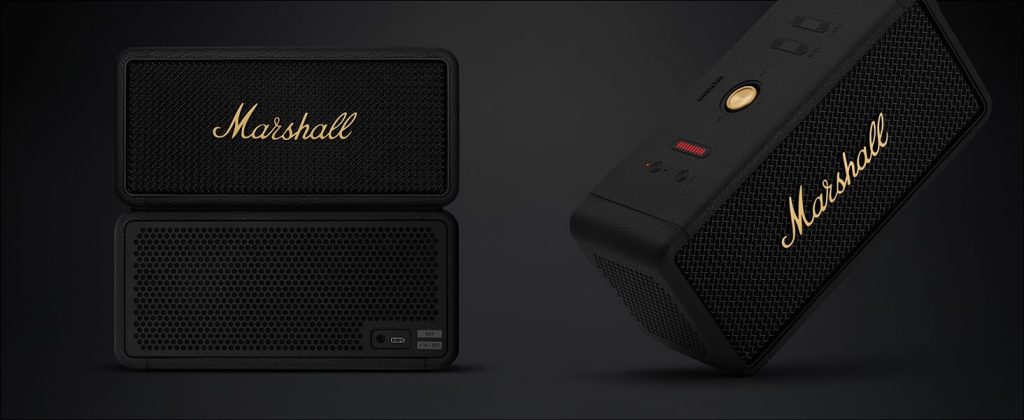
Marshall Middleton Portable Bluetooth Speaker is available at a 25% discounted price of $236 from Amazon.
Marshall Speakers are known for their premium and loud sound and beautiful design. Many takers would want to grab the Marshall’s portable speaker if the price becomes a little considerate. Here’s some good news: Amazon is currently offering a 25% discount on the usual retail price of $299, and making it to $236.99.
Marshall Middleton speaker comes with True Stereophonic stereo sound, allowing a more immersive listening experience. Apart from the quality sound, the speaker offers 20+ hours of playtime once fully charged. It takes around 4.5 hours to fully charge.
In terms of features, the Marshall Middleton comes with Stack Mode, which allows users to pair multiple speakers to amplify the sound. It offers a hassle-free listening experience, as the users can simply pair and play anything on the speakers. The user can even charge their respective smart device using Middleton’s battery.
The speaker has treble and bass controls, making it easy to customize the listening experience.
Marshall Middleton speaker is aimed to offer portability along with premium acoustics. Its detachable strap helps in easy handling of the speaker while on the go. These IP67 dust and water-resistant speakers can easily withstand rain and windy days without a drop of water or a particle of dust sweeping into the speaker.
Consumer electronics brand Huawei has debuted its Band 9 smart band in China. The smart band was initially launched in Malaysia last month. It brings a combination of lightweight design and a suite of professional health-tracking features.
Huawei Band 9 specs & features:
The Huawei Band 9 features a rectangular form factor with a rounded display and a side button for convenience. It is lightweight, weighing just 14 grams, and measures 8.9mm in thickness. The fitness band features a 1.47-inch AMOLED screen and is waterproof up to 5ATM. Thanks to its AMOLED display, it is also capable of the Always-On Display function without taxing the battery too much.
Speaking of the battery, the Band 9 is capable of a maximum battery life of 14 days under typical use and 9 days under maximum use. Charging the tracker takes approximately 45 minutes to fully recharge the battery.
The Band 9 offers over 100 sports modes for health and wellness enthusiasts, with features like TruSleep 4.0 for detailed sleep analysis, a PPG sensor for monitoring heart health, and TruRelax for stress management. It also includes specialized tracking for menstrual cycles and a new nine-axis sensor that accurately measures swimming metrics and daily activities.
The device uses Bluetooth 5.3 for connectivity and is compatible with Android phones running Android 9.0 and higher, as well as iPhones running iOS 11 and later. As for personalization, the band comes with two strap options: a fluoroelastomer strap for a classic look and an exclusive woven nylon strap for a more distinct style.
Pricing & availability
The Huawei Band 9 has launched with a price tag of 269 yuan in China. It will go on sale starting April 12.
Huawei introduced the MateBook X Pro 2024 laptop and the FreeBuds Lipstick 2 earbuds at today’s launch event. However, Huawei preferred not to unveil the much-awaited new Huawei smartphone, the Huawei P70. Despite Huawei’s decision to remain silent on the P70, the MateBook X Pro 2024 truly stands out as a laptop deserving of attention.
The device supports 140W fast charging and comes with Intel’s latest-gen Core Ultra processor, all packed within a body weighing less than 1 kg. For more details on the MateBook X Pro 2024 specs, you can refer to our previous article.
Leaked Huawei P70 design
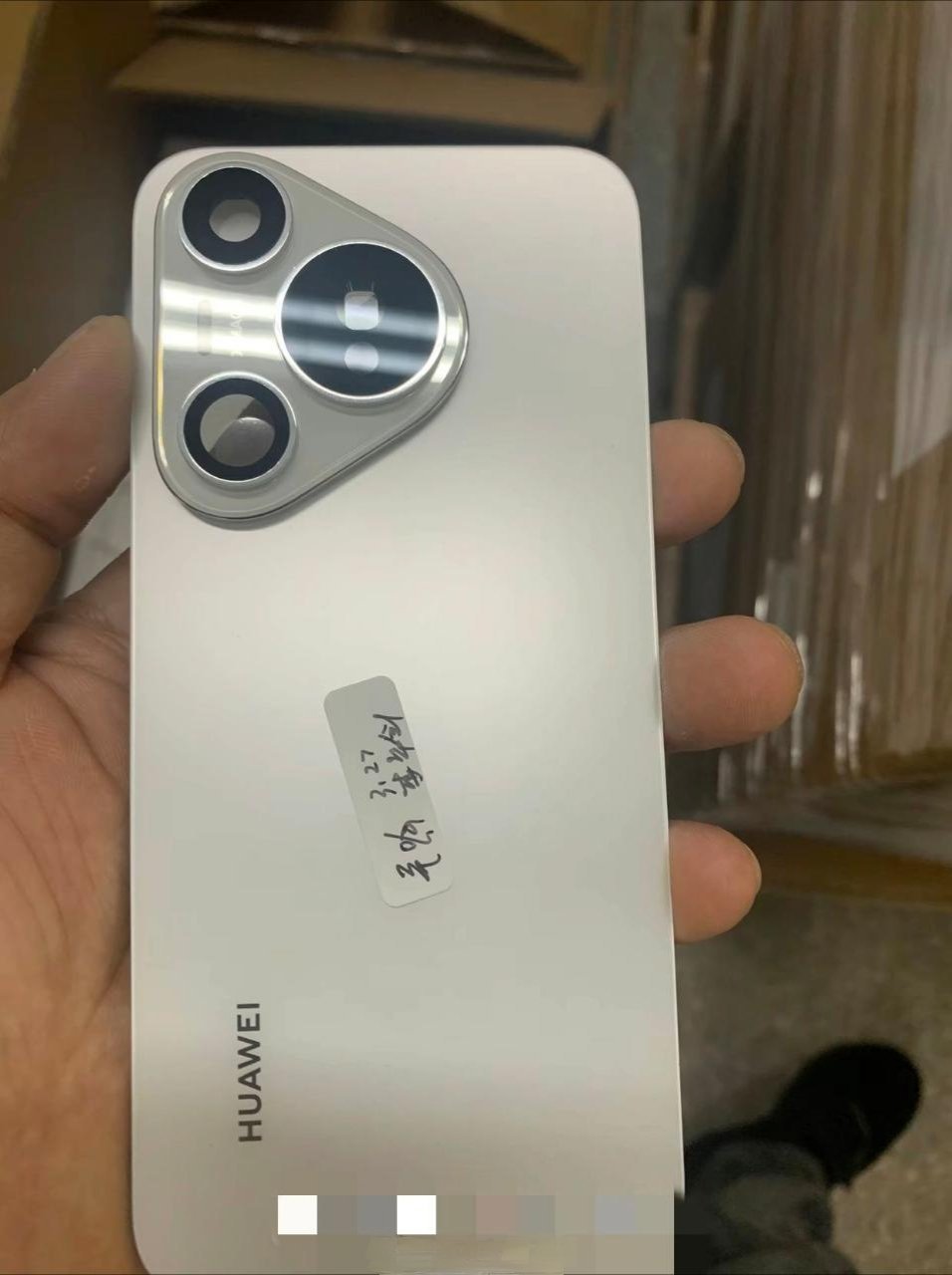
Now, let’s turn our attention back to the Huawei P70. While Huawei didn’t mention the phone at the unveiling event, a social media user in China managed to leak a hands on photo of the Huawei P70’s back cover. The phone features an unconventional triangular camera array. This unique design choice by Huawei was actually previously appeared on Huawei P70 leaks. According to GSMArena, the Huawei P70 series will consist of four models: P70, P70 Pro, P70 Pro+, and P70 Art. It is expected that all models will be powered by the Kirin 9010 chipset.
Huawei P70 design
Huawei P70 and P70 Pro are expected to come with the OmniVision 50 MP OV50H main camera sensor, with a sensor size of 1/1.3-inch. The P70 Pro+ and P70 Art could feature with the 1-inch IMX 989 sensor. We can say that all phones will come with highly capable camera hardware.
We use cookies on our website to give you the most relevant experience by remembering your preferences and repeat visits. By clicking “Accept”, you consent to the use of ALL the cookies.
This website uses cookies to improve your experience while you navigate through the website. Out of these, the cookies that are categorized as necessary are stored on your browser as they are essential for the working of basic functionalities of the website. We also use third-party cookies that help us analyze and understand how you use this website. These cookies will be stored in your browser only with your consent. You also have the option to opt-out of these cookies. But opting out of some of these cookies may affect your browsing experience.
Necessary cookies are absolutely essential for the website to function properly. This category only includes cookies that ensures basic functionalities and security features of the website. These cookies do not store any personal information.
Any cookies that may not be particularly necessary for the website to function and is used specifically to collect user personal data via analytics, ads, other embedded contents are termed as non-necessary cookies. It is mandatory to procure user consent prior to running these cookies on your website.