Apple is reportedly close to bringing ChatGPT, an AI tool from OpenAI, to iOS 18. This follows talks between the two companies, though specifics remain unclear. Apple might also be discussing similar tech with Google (Gemini). These rumors fit with Apple’s supposed plan for an AI App Store, offering smaller AI models on devices and outsourcing larger ones. However, these are just rumors.
Apple is also focusing on on-device processing for AI
Apple has been working on AI for a while, with expectations of an announcement at WWDC 2023. Potential features include AI-powered browsing in Safari, a smarter Siri, and an on-device system for AI chats.
Apple seems focused on on-device processing for AI, which they emphasized at a recent event. They’re also developing Ajax, an AI system that could handle tasks currently done by Siri, like summarizing text and improving Spotlight searches. Another rumor suggests on-device tech to summarize voice notes.
This focus on on-device processing and responsible data collection (buying access to data instead of scraping it) distinguishes Apple from some competitors.
Honor is currently rumored to be working on Honor 200 and 200 Pro smartphones. Just today we reported that the renders of the Honor 200 Pro making rounds online were fake.
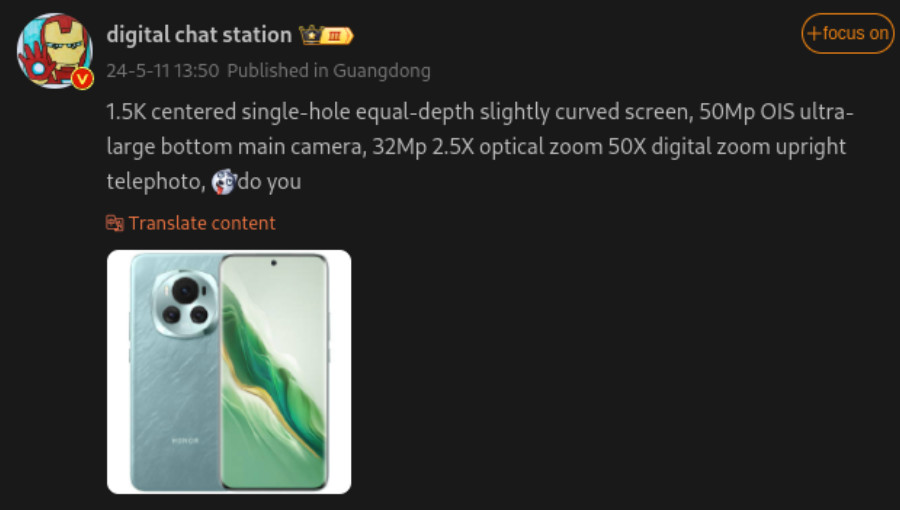
In another news of the day, tipster Digital Chat Station has shed some light on the upcoming Honor 200 Pro’s specifications. The leak focuses primarily on the phone’s display and camera system.
According to the leak, the Honor 200 Pro will feature a screen with a “1.5K” resolution and a single punch-hole cutout. Additionally, it hints at a “slightly curved” design for the display, so the phone will likely have a subtle edge curvature similar to that of the Honor 100 Pro.
As for the cameras, the leak points to a 50-megapixel main sensor with optical image stabilization (OIS) – a common feature in high-end phones. The leak also mentions a 32-megapixel telephoto lens with 2.5x optical zoom and a 50x digital zoom capability.
Moreover, previously the smartphone was tipped to be powered by the Snapdragon 8 Gen 3 chip, Qualcomm’s current flagship SoC.
The Honor 200 Pro will be joined by the vanilla Honor 200 model, which is rumored to get Snapdragon 8s Gen 3. The latter has a similar core architecture as the Snapdragon 8 Gen 3 with a tone-down in terms of clock speed, so you can expect the Honor 200 to deliver the same level of performance as the Pro model.
Regarding the launch, leaks suggest that Honor might launch the Honor 200 series phones by the end of May.
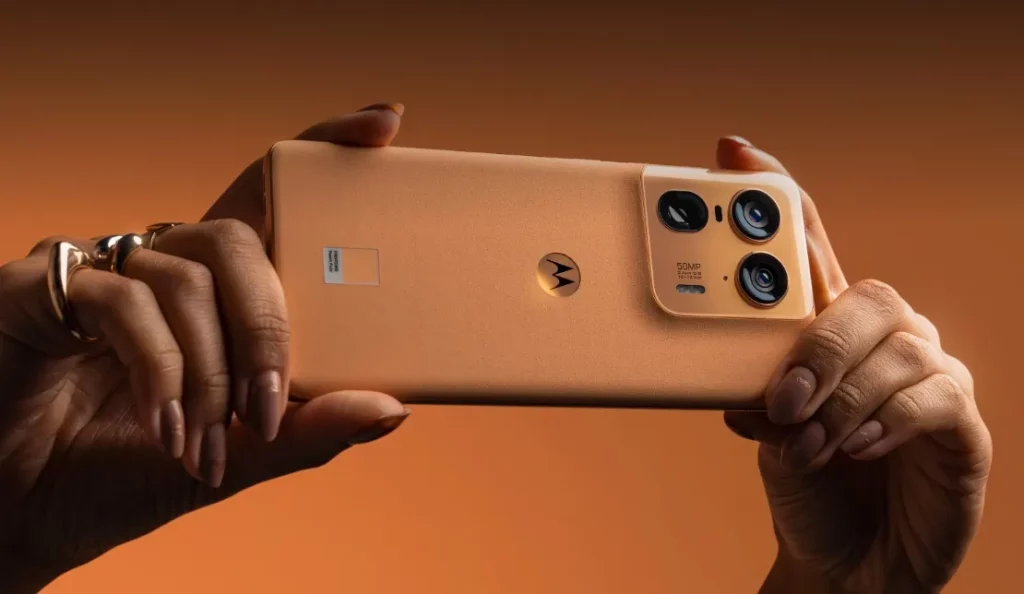
Lenovo and its subsidiary Motorola Mobility are facing a significant legal challenge in Germany following a court ruling that has imposed a sales ban on their devices equipped with WWAN modules, essential for mobile internet connectivity. This drastic measure stems from a patent dispute with the American technology firm InterDigital. The Munich I District Court ruled in early May in favor of InterDigital, leading to an immediate enforcement of the ban after the plaintiff deposited a security deposit of four million euros.
Navigating Patent Challenges: Lenovo’s Sales Ban in Germany
The crux of the dispute revolves around the licensing terms for WWAN technology used in Lenovo’s products, including recently launched smartphone models such as the Edge 50 Ultra. These devices utilize technology for which InterDigital holds patents, and disagreements have arisen over the fees Lenovo should pay for their use. InterDigital claims that Lenovo has not met its demands for fair and reasonable licensing fees, which has led them to seek legal recourse. Lenovo, on the other hand, argues that InterDigital’s terms are not fair and plans to appeal the decision.
The court’s decision has led to immediate consequences for Lenovo’s operations in Germany. As of the ruling, Lenovo is prohibited from selling, offering, or importing any WWAN-enabled devices, including smartphones, tablets, and laptops that use mobile networks like GSM, UMTS, LTE, and 5G. This affects not only Motorola‘s smartphones but also Lenovo’s broader range of mobile-enabled devices.
For German consumers, the impact is gradually becoming apparent. Although Lenovo and Motorola Mobility have ceased listing the affected products on their German websites, some retailers continue to sell existing stock. Once these stocks deplete, however, potential shortages and delivery issues could occur.
This legal battle is not isolated but part of a broader pattern of disputes over so-called standard-essential patents, which are critical for key technological functionalities in mobile communications. The disagreements often hinge on the interpretation of what constitutes fair, reasonable, and non-discriminatory (FRAND) licensing terms—a matter still not clearly defined in European law.
This situation underscores ongoing tensions in global tech regarding patent licensing, with Germany becoming a focal point due to its plaintiff-friendly legal framework for patent litigation. This has significant implications for the tech industry, potentially affecting how companies negotiate licensing agreements and manage their intellectual property in key markets worldwide. While the ban is currently in place, history suggests that it is possible for companies to eventually reach a settlement that could mitigate the terms of the initial court ruling.
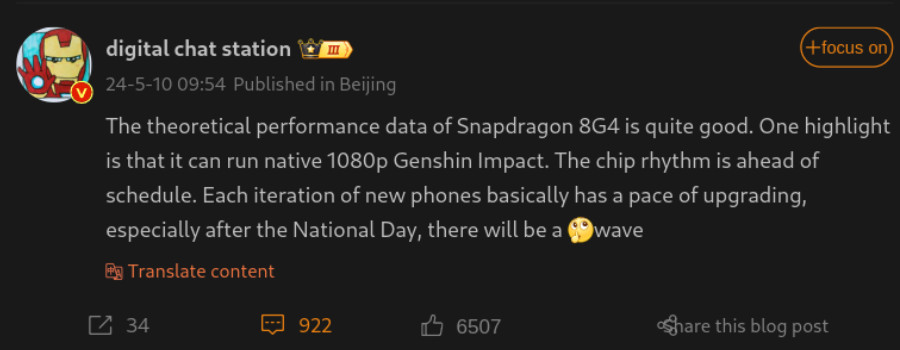
According to a leak from renowned industry tipster, Digital Chat Station, Qualcomm’s upcoming Snapdragon 8 Gen 4 chipset appears to be on track for a timely release with a promising level of performance.
The leak suggests the 8 Gen 4 can handle running Genshin Impact, a graphically demanding mobile game, at its native 1080p resolution.
While the leak doesn’t mention any specific benchmark scores, this suggests the chip’s prowess in managing graphics-heavy apps.
Digital Chat Station also hints that “there will be a wave” of new phones featuring the 8 Gen 4 after China’s National Day holiday, which falls on October 1st. Since Qualcomm is expected to launch the new chip in October, this leak aligns with earlier information.
Rumors suggest the first device to debut with the new chip could be the Xiaomi 15 series smartphone. This might be followed by Redmi for the K80 series and OnePlus for its upcoming OnePlus 13 smartphone.
Additionally, benchmark scores for the 8 Gen 4 have been cropping up consistently. Recently, a device with 8 Gen 4 was spotted running AnTuTu, scoring 1,769,083 points. However, the score falls below that of the current-generation Snapdragon 8 Gen 3.
However, it’s attributed to the engineering sample of the SOC, and the chip was also facing heavy CPU throttling during the test, which is another reason for lower-than-expected performance.
We’ll have to wait for Qualcomm to reveal the final product and for independent reviews to get a clearer picture of the Snapdragon 8 Gen 4’s true capabilities.
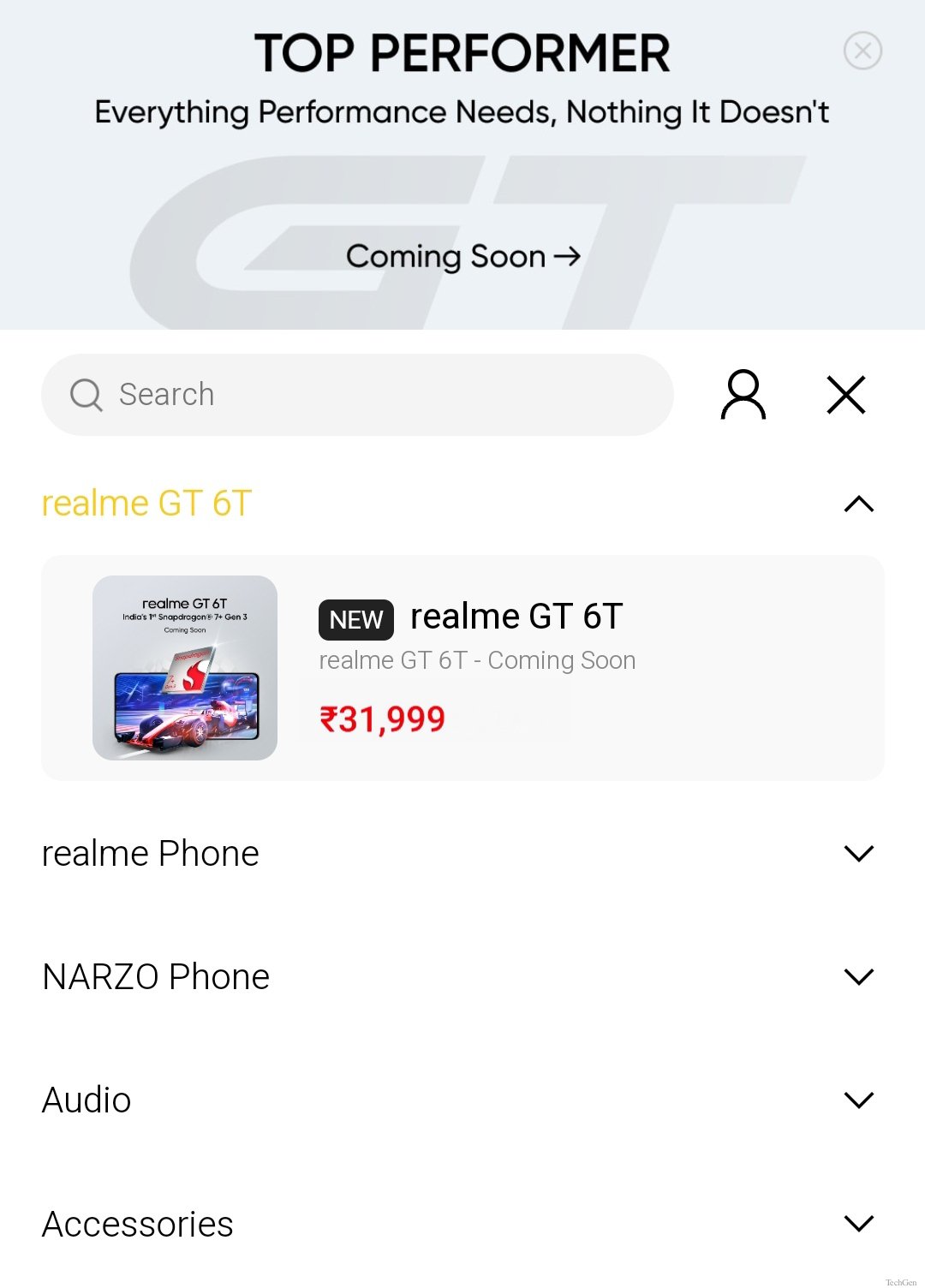
Realme has announced its plans to launch a new smartphone in the global market called the Realme GT 6T. The phone is said to be a rebranded version of the Realme GT Neo 6 SE. Ahead of its launch, the Indian pricing of the Realme GT 6T has emerged online.
The pricing leaked on the Realme app, revealing that the Realme GT 6T will cost ₹31,999. The leak does not reveal which memory configuration belongs to, however, tipster Sanju Choudhary has claimed that it corresponds to the 8GB RAM and 256GB storage variant. He also claims that the 8GB + 128GB (UFS 3.1) configuration will cost ₹29,999, while the 12GB + 256GB and 12GB + 512GB configurations will cost ₹33, 999, and ₹35,999, respectively. That being said, we suggest readers take these prices with a pinch of salt and wait for official confirmation.
Realme GT 6T specs:
If the Realme GT 6T turns out to be a rebranded version of the Realme GT Neo 6 SE, then we can expect it to feature a 6.78-inch OLED display with a 120Hz refresh rate and a peak brightness of 6,000 nits. It is confirmed to feature a Snapdragon 7+ Gen 3 under the hood, which will likely be paired with LPDDR5x RAM and UFS 4.0 storage.
For optics, the phone could feature a 50MP main camera (Sony IMX882 with OIS), paired with an 8MP ultra-wide sensor. On the front, it could feature a 32MP Sony IMX615 selfie snapper. It is also expected to pack a large 5,500mAh battery with 100W fast charging. We expect more details to be confirmed in the coming days, so stay tuned.
The Biden administration is reportedly set to announce significant new tariffs on imports from China, including electric vehicles (EVs), semiconductors, solar equipment, and medical supplies. These measures are seen as a response to concerns over China’s expansive manufacturing capabilities, particularly in sectors that could threaten U.S. jobs and national security. The new tariffs could be a dramatic increase for some products, with the rate on electric vehicles potentially rising from the current 25% to 100%.
Countering China’s Tech Dominance
The decision from the U.S. government aligns with the broader industrial strategy to foster domestic production and reduce dependence on critical imports from geopolitical rivals, particularly in advanced technology and green energy sectors. China recently achieved historic milestones in auto sales, aiming to dominate the electric vehicle market, projecting 60 million annual EV sales globally by 2030.
The move is also politically charged, coming as President Biden seeks reelection and aims to showcase a tough stance on China, mirroring a similar sentiment from his presumed Republican challenger, Donald Trump, who has also advocated for harsh tariffs against China to curb the U.S. trade deficit.
The timing of the announcement, expected on Tuesday, coincides with ongoing tensions and economic competitions between the U.S. and China. This includes concerns over China’s role in overproduction in industries like steel and solar panels, which the U.S. argues are heavily subsidized by the Chinese government, skewing global markets and undercutting U.S. manufacturers. The new tariffs are partly intended to counteract these practices and support U.S. industries that are crucial for the transition to green energy, as emphasized by the incentives in the Democrats’ Inflation Reduction Act.
Moreover, the administration is considering maintaining some tariffs from the Trump era that affect approximately $360 billion worth of Chinese goods. The continuation and expansion of these tariffs reflect ongoing efforts to recalibrate the economic relationship with China amid broader geopolitical tensions.
Internationally, the U.S. is also seeking cooperation from G7 nations to align responses to China’s trade practices, which could enhance the effectiveness and geopolitical leverage of U.S. actions. This approach indicates a strategic shift from broad, unilateral tariffs to more targeted measures that reflect specific economic and security concerns.
Honor recently launched the Honor 200 Lite smartphone globally. They’re expected to follow it up with the Honor 200 and 200 Pro next. Recently, the alleged renders of the Honor 200 Pro surfaced on Chinese social media platform Weibo which were later shared by users on Twitter as well.
Honor 200 Pro leaked renders
However, Jiang Hairong, Chief Marketing Officer of Honor China, responded to these renders on Weibo, stating that they are “fake” and the actual phone “will definitely look better.” With that, the design of the Honor 200 series is still a mystery.
We do have some rumors though. The alleged Honor 200 and 200 Pro recently surfaced on the 3C certification site revealing the device will have 100W fast charging support.
Additionally, leaks suggest the Honor 200 phones will feature a quad-curved OLED panel with 1.5K resolution. The Pro model may include a dual selfie camera module housed in a pill-shaped cutout.
As for the performance, the Honor 200 will have the Snapdragon 8s Gen 3 chipset, whereas the Pro variant may come equipped with the Snapdragon 8 Gen 3. To recall, the Honor 100 and 100 Pro, which debuted in November 2023, featured the Snapdragon 7 Gen 3 and 8 Gen 2 chipsets, respectively.
Furthermore, a leak from earlier this week suggests that the Honor 200 phones might debut by the end of May. If this rumored timeframe holds true, Honor should make official announcements about the devices soon.
Rest assured, we’ll keep you in loop on any new developments regarding the Honor 200 and 200 Pro.
The buzz around the vivo X100s keeps growing! After earlier leaks revealed some specs, the latest rumors spill the beans on the phone’s camera setup. vivo is set to unveil the vivo X100s, X100s Pro, and X100 Ultra phones at a launch event in China on May 13th.
vivo X100s: triple camera setup with 50MP+50MP+64MP sensors
The latest post shared by DCS on Weibo includes the complete spec sheet of the vivo X100s. Though the phone has not been unveiled yet, almost everything about the upcoming smartphone has been revealed.
According to DCS, the vivo X100s will come with the MediaTek Dimensity 9300+ chipset. Previous rumors indicated that the device would feature a 6.78-inch flat OLED screen with a resolution of 2800×1260 pixels, produced by Visionox.
vivo X100s specs
The vivo X100s will offer two RAM options: 12GB and 16GB, and three storage configurations: 256GB, 512GB, and 1TB. The phone will feature a 32MP selfie camera and a triple camera setup on the back, consisting of 50MP+50MP+64MP cameras. vivo X100s will have a 15mm ultra-wide-angle camera and a 64MP telephoto camera capable of 3X zoom.
DCS did not actually provide clear information regarding the aperture of the cameras, as f/1.57-f/2.57 does not specify which camera’s aperture is being referred to. However, we assume that the aperture of the main camera is f/1.57 and that of the periscope camera is f/2.57.
Vivo X100s thin profilevivo X100s
vivo had advertised that the upcoming phone would be as thin as 7.8mm. One of the factors contributing to this slim profile is transitioning from a curved screen to a flat one. The phone will feature a 5100mAh battery and 100W wired charging. Additionally, the phone will come with vivo’s V2 image chip and Zeiss T* coating on the camera lenses.
Android 15 is coming later this year, but people are already very excited about it as the new OS will bring several exciting features that Android users have been requesting for a long time. I have already covered the top 10 best features coming in Android 15 in this blog post. Give it a read after you finish this one.
While the Android 15 release is still a couple of months down the line, you’d want to ensure that your device is ready for the next major OS upgrade. So, here are the Vivo and iQOO devices eligible for the Android 15 update.
These Vivo and iQOO Devices Will Get the Android 15 Update
[Vivo X series]
Vivo X100 Pro
Vivo X90
Vivo X90s
Vivo X90 Pro
Vivo X90 Pro+
Vivo X80
Vivo X80 Pro
Vivo X Fold 3
Vivo X Fold 3 Pro
Vivo X Fold 2
Vivo X Flip
[Vivo V series]
Vivo V40 SE
Vivo V30
Vivo V30e
Vivo V30 SE
Vivo V30 Pro
Vivo V30 Lite 4G
Vivo V30 Lite 5G
Vivo V29
Vivo V29e
Vivo V29 Pro
Vivo V29 Lite
Vivo V27
Vivo V27e
Vivo V27 Pro
[Vivo T series]
Vivo T3x
Vivo T3
Vivo T2
Vivo T2x
Vivo T2 Pro
[Vivo Y series]
Vivo Y200i
Vivo Y200e
Vivo Y100 4G (2024)
Vivo Y100 5G (2024)
Vivo Y38
Vivo Y18
Vivo Y18e
Vivo Y03
[Vivo S series]
Vivo S18
Vivo S18e
Vivo S18 Pro
[Vivo Pad series]
Vivo Pad 3 Pro
[iQOO number series]
iQOO 12
iQOO 12 Pro
iQOO 11
iQOO 11S
iQOO 11 Pro
[iQOO Neo series]
iQOO Neo 9 Pro
iQOO Neo 9
iQOO Neo 8
iQOO Neo 8 Pro
iQOO Neo 7
iQOO Neo 7 Pro
iQOO Neo 7 Racing
iQOO Neo 7 SE
[iQOO Z series]
iQOO Z9
iQOO Z9x
iQOO Z9 Turbo
iQOO Z8
iQOO Z8x
iQOO Z7
iQOO Z7x
iQOO Z7i
iQOO Z7 Pro
iQOO Z7s
[iQOO Pad series]
iQOO Pad
This is not the final list by any means, as we’re still waiting for Vivo to announce its Android 15-supported devices list. We have prepared this list based on the company’s software policy and past rollouts.
Unlike Samsung, Google, and many other brands, Vivo has no software support commitment for the majority of its smartphones. The Chinese brand has so far confirmed 3 major OS updates support only for select flagship X-series phones launched after July 2021. So, we had to do a lot of digging in preparing the above list. We’ll keep updating it as we get official information.
If your device is on the list, you should get the Android 15 update once Vivo starts rolling it out. However, if the list doesn’t include your Vivo or iQOO device, don’t get disappointed, as Vivo could bring the new OS to more devices. Simply wait for the official Android 15 supported device list.
When Will Vivo Start Rolling Out the Android 15 Update?
Android 15 development is in full swing as multiple developer previews and beta builds have already been released. As per the official timeline, the beta phase will last until June 2024. Around the same time, the platform stability phase kicks in where Google resolves bugs and errors to prepare the new OS for the final release.
There’s no official release date for Android 15 as yet. But Google is most likely to announce the stable release sometime in October. Last year, Android 14 was released in the first week of the same month.
Once the stable build is out, OEMs add final touches to their custom skins (Funtouch OS and OriginOS in the case of Vivo) before a public release. It can take a few days to a few weeks.
If you get lucky, you’ll be able to explore Android 15 months before the final release by joining the beta program. This early access program is primarily for the latest flagship models. Last year, Vivo was one of the very first brands to kick off the Android 14 beta program in May. However, the stable version started rolling out in mid-October.
What’s Exciting About Android 15?
Android 15 is going to be an exciting upgrade, a lot better than the previous two iterations, Android 13 and Android 14, because of these new features:
Satellite Connectivity Support
Android 15 adds support for satellite connectivity. This means you’ll be able to send texts to your friends even if you don’t have cell towers nearby, as long as you have access to the open sky. The new OS supports satellite connectivity for SMS apps and preinstalled RCS apps. In other words, this feature on Android 15 will not be limited to emergency uses only.
Find My Phone Network
Find My Phone is getting a pretty significant update in the new OS. All Android 15 phones can ping each other via Bluetooth and contribute to the network to help someone find their lost device. The nearby Android device part of Find My network can pick up Bluetooth signals from the broadcasting device and upload the encrypted location details to Google’s servers, which can be decrypted by the broadcasting device owner.
Battery Health
Android 15 could bring the “Battery Health” feature, which users have been requesting for a very long time. This feature tells the remaining battery capacity – an important metric that can help users replace the battery at the right time.
Although Google hasn’t confirmed Battery Health as an upcoming feature in Android 15, we might see it in one of the upcoming beta releases.
App Archiving
The app archiving feature lets you uninstall apps while keeping the user data around. So, the next time you reinstall the app, you can continue where you left off.
Google already has the app archiving feature through the Google Play Store. This means you can archive and restore apps only through the Play Store. But Android 15 removes this restriction by allowing any apps to be archived, including those installed outside the Play Store.
Partial Screen Sharing
Partial screen sharing is a useful and privacy-focused addition to Android 15 that allows users to share and record a single app rather than the entire screen. So, you don’t have to worry even if you mistakenly open a secret app while sharing your screen.
Notification Cooldown
Android 15 introduces the “Notification Cooldown” feature to stop people from getting overwhelmed by too many notifications from the same app. This feature lowers the volume of successive notifications from the same app.
Check out the top 10 Android 15 features post to know more about the new OS in detail. Which Vivo phone do you have and what are your expectations with Android 15? Do let us know your thoughts in the comments below.
Motorola has launched the EnvisionX Spectra Mini LED TV series in India, featuring advanced mini LED technology that promises improved picture quality. The series includes 50-inch and 55-inch models, with a 65-inch version expected soon.
The EnvisionX Spectra utilizes mini LED backlighting to achieve deeper blacks and brighter whites, significantly improving contrast and color vibrancy with over a billion colors and more than 500 nits of brightness.
For gamers, the TV includes Auto Low Latency Mode (ALLM), which optimizes response times for smoother gameplay. The series also runs on Google TV, offering a user-friendly interface and access to popular streaming services like Netflix, Prime Video, and Disney+ Hotstar.
For audio, the EnvisionX Spectra features 20W audio output. It has multiple HDMI and USB ports, which means that you can easily hook up extra hardware to the TV.
Pricing & availability
The starting price is ₹36,999 (approximately $450 USD) for the 50-inch model, making it an accessible option for those seeking a high-quality TV without a high price tag. The EnvisionX Spectra is available exclusively on Flipkart.
Xiaomi is rumored to be entering the clamshell-style foldable market with the Mix Flip. While details are scarce, the phone has reportedly been spotted on China’s 3C certification site, hinting at its imminent arrival.
The certification itself doesn’t explicitly confirm the device as the Mix Flip, but reliable industry sources have linked the model number 2405CPX3DC to the upcoming phone. More importantly, the certification reveals support for 67W fast charging.
Xiaomi Mix Flip 3C Certification
Apart from this, the 3C listing offers no specifics on the Mix Flip’s specifications. However, its presence on the certification site confirms that Xiaomi is actively working on its first clamshell phone and its release could be on the horizon.
According to tipster Digital Chat Sation, Xiaomi may launch the Mix Flip alongside the upcoming Mix Fold 4 in the third quarter of 2024.
It is expected to come with a 50MP primary camera with optical image stabilization and an Omnivision OV60A ½.8” sensor for the 2x telephoto camera.
The device is said to have support for wireless changing, and there will also be protection against water. The latter would be a welcome feature since none of Xiaomi’s foldables have certified protection against water. At the helm, the foldable is expected to be powered by the Snapdragon 8 Gen 3 SoC.
Additionally, another report suggests that the Mix Flip will be available in various countries, including Turkey, but not in India. We’ll be sure to keep you updated on any new details about this smartphone.
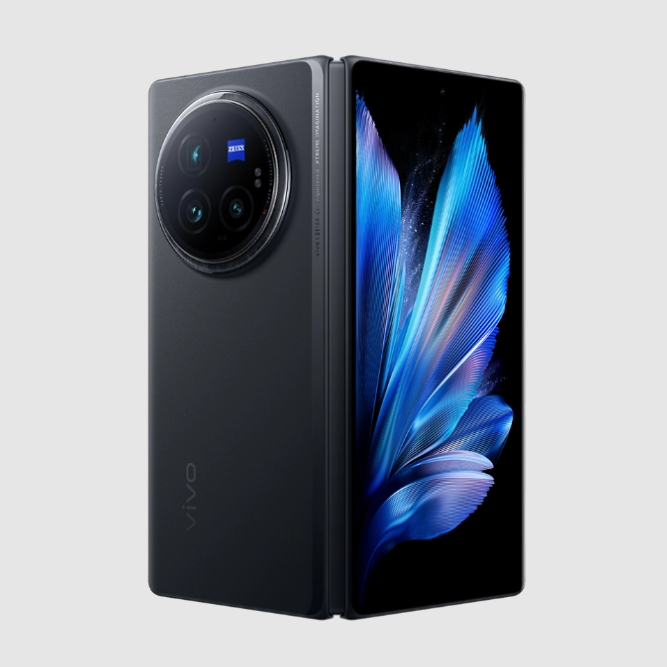
The Vivo X Fold 3 Pro smartphone, which recently made its debut in China, stands out as one of the most potent foldable smartphones available. Reports from MySmartPrice suggest that Vivo intends to introduce this device to the Indian market soon.
Citing industry sources, MSP has claimed that the Vivo X Fold 3 Pro is arriving in India in Early June. The global variant of the device was recently spotted on Geekbench, and TUV Rheinland has tested the Carbon Fiber Hinge of the X Fold 3 Pro, which the brand has claimed can last 12 years or 500,000 folds.
Vivo X Fold 3 Pro specs:
Specs-wise, we expect the Vivo X Fold 3 Pro to be identical to the China variant, meaning that it will likely come with an 8.03-inch primary display and a 6.53-inch outer display. The inner panel will feature a 2,748 x 1,172 pixels resolution, while the outer panel will offer a resolution of 2,480 x 2,200 pixels. It will offer LTPO technology on both displays, supporting refresh rates of up to 120Hz and a peak brightness of 4,500 nits. Additionally, will likely incorporate an ultra-sonic fingerprint scanner for security.
As revealed by the Geekbench listing, the device will feature a Snapdragon 8 Gen 3 processor with up to 16GB LPDDR5 RAM and 1TB UFS 4.0 storage. It could pack a 5,700mAh battery with 100W wired fast charging and 50W wireless charging. The camera setup will likely include a 50MP main camera, a 50MP ultra-wide-angle lens, and a 64MP periscope lens with 3x optical zoom. For selfies, there’ll be a 32MP front camera, along with the brand’s own V3 imaging chip.
Additionally, it will feature stereo speakers and support Wireless Lossless Hi-Fi audio. Connectivity options include Wi-Fi 7, dual 5G SIM slots, and NFC support.
The Google Pixel a-series has carved a niche for itself, offering excellent cameras and clean software at a competitive price. But with the Pixel 8a now official, you may wonder if you should get the 7a, or snag the latest iteration. Let’s break down the specs to help you decide.
Both phones boast a similar 6.1-inch FHD+ display size. However, the Pixel 8a takes the lead with a smoother 120Hz refresh rate compared to the 7a’s 90Hz. It should translate to silkier animations and scrolling, especially noticeable in games and fast-paced content.
The Pixel 8a also boasts a brighter peak at 1000 nits, offering better visibility outdoors. Both phones utilize Gorilla Glass 3 for scratch protection and come with IP67 dust and water resistance.
The design language remains largely unchanged. Both phones feature a plastic back with an aluminum frame, offering a comfortable grip. The Pixel 7a comes in Charcoal, Snow, and Coral color options.
The Pixel 8a introduces fresh new colors with Obsidian, Porcelain Bay, and Aloe colorways. It also has a slightly rounded body compared to the 7a’s squared-off look.
2. Performance
The Pixel 8a packs the more powerful Google Tensor G3 chip, the same found in the flagship Pixel 8. It promises improved performance and efficiency compared to the Pixel 7a’s Tensor 2 chip. Daily tasks, multitasking, and even light gaming should feel noticeably smoother on the 8a. But you can expect satisfactory everyday performance from the Pixel 7a too.
The two Pixels in this comparison use the same 8GB RAM capacity, and both come with 128GB of by default. But there’s now a 256GB option on offer with the Pixel 8a, good news for users who tend to quickly fill up their phones with apps and photos.
3. Camera
Both phones sport the same dual-camera system: a 64MP main sensor and a 13MP ultrawide. But megapixels don’t tell the whole story. Google’s software smarts are what really make these cameras shine. You’ll get amazing pictures in all kinds of lighting, whether you choose the Pixel 7a or 8a.
That said, Google has equipped the Pixel 8a with its Real Tone coloring for video. This makes sure all skin tones look natural in your recordings. This feature will likely be available for other Pixel phones later, but its currently not available on the Pixel 7a.
The Pixel 8a also improves on a feature called Guided Frame. This helps people with visual impairments take selfies by giving them audio cues. Guided Frame works with the rear cameras too, helping you line up shots of people, pets, and even food!
4. Battery Life and Charging
The Pixel 8a packs a slightly larger 4492 mAh battery compared to the 7a’s 4385 mAh. While real-world usage will determine the actual difference, the 8a might offer an extra hour or two of uptime. Both phones support 18W fast wired charging and 7.5W Qi wireless charging, which feels a bit dated in 2024.
5. Software
Here’s a big difference between the two: The Pixel 8a gets a longer software support window. Google promises a whopping 7 years of major OS and security upgrades for the 8a.
The Pixel 7a, on the other hand, has three years of security updates and two years of major OS upgrades. This means the 8a will stay safer and up-to-date for much longer.
For those who love AI, there’s more good news. Google confirmed that the Pixel 8a will be compatible with Gemini Nano after a future Feature Drop update. This makes the 8a a fantastic choice for trying out on-device AI. Unfortunately, the Pixel 7a might not get this feature.
6. Price
The Pixel 7a is a bit cheaper than the Pixel 8a. In India, it starts at Rs 52,999 or USD 499 in the US for the base 8/128GB version. But if you’re watching your budget closely, the Pixel 7a still gives you great bang for your buck. Initially priced higher, the Pixel 7a now costs around Rs 37,000 in India and USD 399 in the US.
Please Note: When you buy something using the links in our articles, we may earn a small commission at no cost to you.
The Pixel 8a emerges as the clear winner for power users who crave the smoothest display, the latest processor, and extended software support. However, the Pixel 7a remains a compelling option for budget-conscious buyers. You’re likely to get a similar experience.
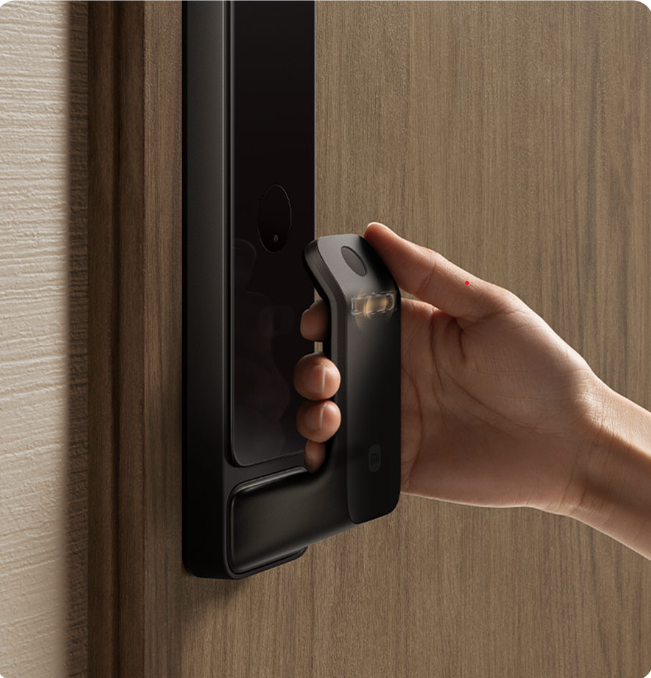
Xiaomi‘s latest smart door lock called the Xiaomi Smart Door Lock 2 Finger Vein Version ditches fingerprints for a futuristic security solution – finger vein recognition. This tech promises even greater security than fingerprint scanners, with an error rate touted to be 10 times lower.
The Xiaomi Smart Door Lock 2 Finger Vein Version boasts a 0.0001% error rate, compared to 0.001% for fingerprints. It works in under a second and claims to improve with use, making it suitable for all ages.
This isn’t the only unlocking method though. You can also use NFC, passwords, Bluetooth, or even a physical key for added convenience. Security remains a priority with a quiet locking mechanism, alarm system, and remote lock status monitoring via the Xiaomi app.
The lock integrates seamlessly with Xiaomi’s smart home ecosystem through HyperOS. Plus, the battery is said to last a full year on a single charge.
Pricing & availability
The Xiaomi Smart Door Lock 2 Finger Vein Version is currently available for pre-order in China at a discounted price of 1,299 yuan ($180). It is currently unknown if the brand plans to launch this smart door lock in the global market.
In recent weeks, OnePlus has been working hard to polish its OxygenOS operating system, providing many new features as well as quality-of-life improvements. The brand has just released the OxygenOS 14.0.0.701 update for the OnePlus 11 smartphone which comes with a long list of changes and improvements.
OxygenOS 14.0.0.701 changelog
New smooth animations
Adds wallpaper zoom and seamless icon transitions during app launch and exit for a smoother visual experience.
Adds a bounce animation effect when sliding to the bottom of the notification drawer and optimizes the layer effects of Quick Setting icons and widgets, bringing a more natural and delicate visual effect.
Optimizes the transition animations for Home screen icons and widgets and adds wallpaper zoom animations upon device unlock.
Adds wallpaper zoom animations and gradual brightness transitions when the screen is turned on or off.
Optimizes the background colors and Gaussian blur effects in Quick Settings, Notification drawer, Home screen drawer, and Global Search.
Optimizes the transition animation when the Lock screen clock and buttons disappear upon device unlock.
Optimizes animations when entering and exiting Global Search, ensuring a smoother and more consistent visual experience.
New touch control experience
Adds a transition animation when swiping in from one side of the screen to exit an app before it starts up.
Adds a transition animation when swiping in from one side of the screen to go back to the previous page before a new page is opened.
Adds a transition animation when swiping inward from a side of the screen or swiping up to exit an app in landscape mode.
You can now tap the lower right corner of a large folder to view more apps.
You can now pull down app icons in large folders and then open an app in just one move.
Improves touch control responsiveness. Tapping and swiping on the Home screen and Recent tasks screen is now faster and more stable.
Increases touch responsiveness for app usage scenarios, for example, when opening and closing apps, entering and exiting recent tasks, or swiping on the gesture guide bar to switch between apps.
Optimizes animations when using large folders. Dragging apps on the Home screen is now smoother.
System
Adds a horizontal layout for the Lock screen clock.
You can now choose not to show the track when drawing the Lock screen pattern to unlock your device.
You can now adjust the volume in Quick Settings.
You can now adjust the size of a floating window by dragging its bottom and swipe up to close a mini window.
Improves system stability.
Integrates the April 2024 Android security patch to enhance system security.
This update is currently being pushed to Indian users, with plans for a global release in the coming days. As usual, the update will arrive in batches, so expect it to take around a week to arrive on your device. That being said, you can also manually check the availability of the update on your device by navigating to Settings > About Device > OxygenOS > Check for Update.
HP unveiled the new ZBook Power 16 G11 (Zhan 99) mobile workstation on its official website on May 10th. It boasts a larger 16-inch 16:10 aspect ratio display compared to the previous generation’s 15.6-inch 16:9 screen. Users can choose from multiple display options with varying resolutions (1920×1200 or 2560×1600), brightness (300-1000 nits), color gamut (45% NTSC or 100% sRGB), and touch support.
The laptop has a bunch of customization options to choose from
Under the hood, you can configure it with either Intel Core Ultra processors (i5, i7, i9) or AMD Ryzen processors (including Pro versions). Both options come with Nvidia RTX Ada graphics ranging from RTX 500 to RTX 3000. The machine also boasts dual DDR5 SO-DIMM memory slots, dual M.2 solid-state drive slots, a 5-megapixel camera with infrared face recognition and privacy shield, and rich interface options including Thunderbolt 4 and RJ45 ethernet.
It packs an 83Wh battery with a 150W power adapter and weighs in at least 2.04kg (Ryzen) and 2.122kg (Intel). The consumer version might offer RTX 4050 graphics but is not yet available. Specific information on RAM and storage capacity is not mentioned in the report.
Bugatti unleashed details about their beastly new V16 engine destined for the upcoming Chiron successor at the “Automotive Future Summit” in London. This hybrid powerhouse throws out the turbochargers of the past, stretches nearly a meter long, and signifies the end of the classic W16 engine as Bugatti wraps up production of the Mistral and Bolide.
The engine will allow the car to get from 0-200 km/h in only 5 seconds
The new V16 muscles its way into a plug-in hybrid system, churning out over 1,000 horsepower by itself. But wait, there’s more! Three electric motors join the fray, two for the front wheels and one for the rear, bringing the total system output to a mind-blowing 1,800 horsepower. Bugatti boasts the car can launch from 0 to 200 km/h in a mere 5 seconds, hit 300 km/h in 10 seconds, and reach a staggering top speed of 445 km/h. For those wanting a taste of electric driving, a 24.8 kWh battery offers an 80-kilometer electric range.
Leaked spy photos suggest the interior will embrace a retro theme, drawing inspiration from the intricate design of Swiss mechanical watches. Production is expected to be extremely limited, possibly even below 300 units.
Intel introduced its Meteor Lake processors towards the end of last year. The company is also expected to release the next Arrow Lake desktop CPUs later this year. According to a leak, the first Arrow Lake CPUs will be named Core Ultra 9 285K, Core Ultra 7 265K, and Core Ultra 5 245K.
Now the recent leak from tipster MebiuW on Weibo suggests that at least the Core Ultra 9 285K (which is considered as a successor of the i9 14900KS) will have a 700MHz lower clock speed than the 14900KS. The Core i9 14900KS reaches up to 6.2GHz, whereas the 285K will reportedly cap at 5.5GHz.
The Arrow Lake CPUs may offer better stability
While the 14900KS will reach a 12% higher clock speed as compared to the upcoming 285K, the new Arrow Lake CPU will reportedly still perform better. However, the difference won’t be much. The tipster noted that the 285K will have a less than 12% higher single-core performance (with a 12% lower clock speed) as compared to the 14900KS.
Actually, it could still be an overall improvement over the 14900KS. The 13th and 14th generation Core i9 CPUs are not really stable and power efficient. In fact, there have been numerous reports of the chips crashing while playing games or doing similar heavy tasks. It could be due to the high temperature.
The extremely high clock speeds give Intel chips a slight edge in performance against AMD‘s offerings. Now it seems that Intel is focusing on stability as well.
The Core Ultra 9 285K, is expected to feature 24 cores and 24 threads of which 8 cores will be based on the Lion Cove P-Core architecture & 16 cores will be based on the Skymont E-Core architecture. It is unclear at this point whether the unlocked K-series chips will also utilize 20A or go with TSMC’s 3nm process node.
Ridley has launched its first electric road bike called the Ridley E-Grifn. The new e-bike is well suited for urban as well as off-road movement and it comes with some decent features. The performance cycling company is offering both pedal-powered and assisted versions of the Grifn.
Features
The E-Grifn reflects the uncompromising design strategy of Ridley and it comes with the Mahle X20 drive unit. The drive unit itself contributes about 3.2kg to the overall weight of the e-bike. The bike’s torque sensor is capable of delivering a maximum torque of 55Nm which is a decent output for a hub motor. The Mahle X20 drive unit delivers almost zero mechanical resistance at speeds above 15.5 mph (25 km/h). the Ridley E-Grifn has a 350Wh integrated battery in addition to an optional 171Wh range extender. The range extender, if included, replaces the water bottle mount on the e-bike.
The E-Grifn can be fully recharged in just 3.5 hours and achieves 80% charge within two hours. The bike has a 72-degree steerer that straddles between the steeper angles of a performance road bike and a shallower gravel bike. It has a lower bottom bracket than other performance road bikes and 420mm mainstays. This design allows the e-Grifn to generate the needed optimal power when accelerating. The bike is versatile to ride on the road and in slight off-road conditions and will come with up to 42mm tires. Buyers can decide to do away with the front derailleur clamp to suit their gearing preferences. Mechanical and electronic gear shifting options are available with the E-Grifn.
Customers can finetune their preferences for the Ridley E-Grifn and Grifn via the company’s online configurator. This also includes the desired paintwork for the bike. The Ridley E-Grifn is priced starting from €5,499 ($5,910) and can be purchased directly via the company’s website.
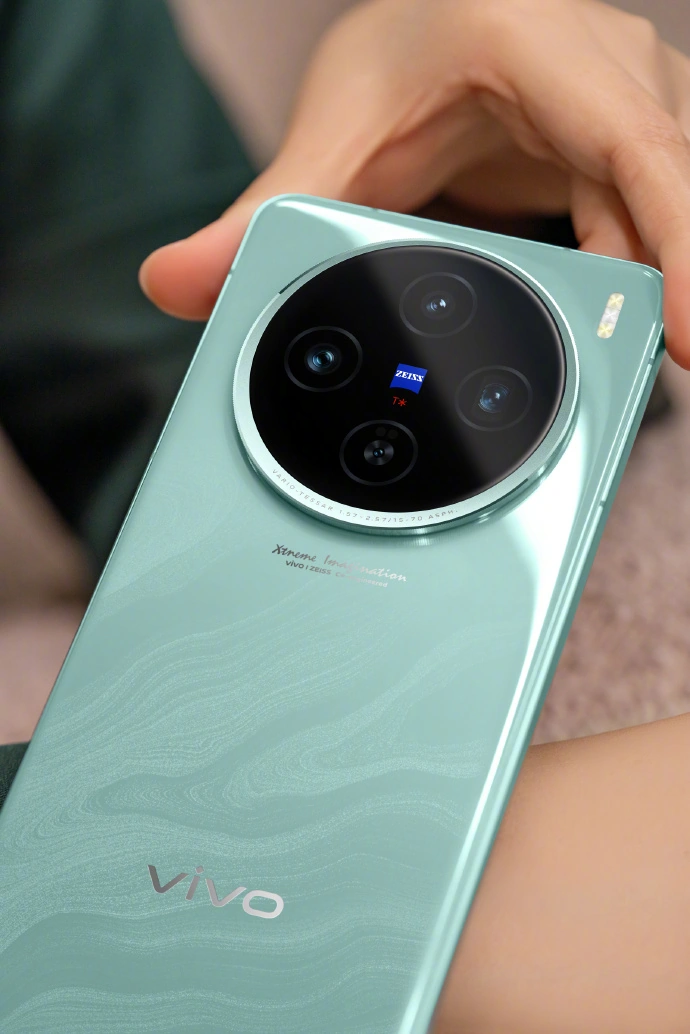
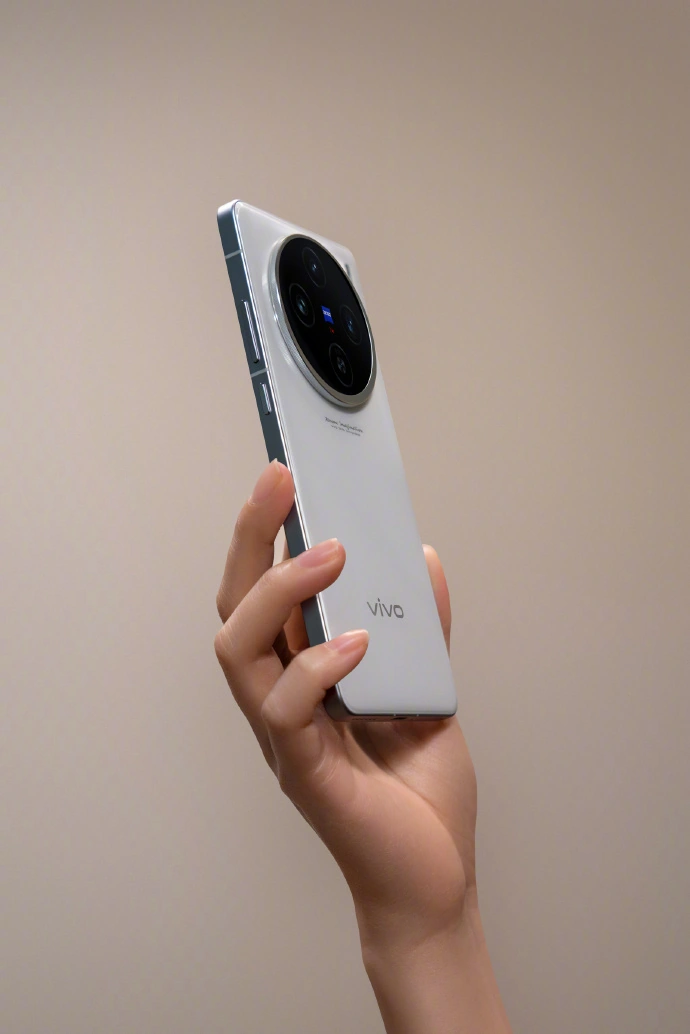
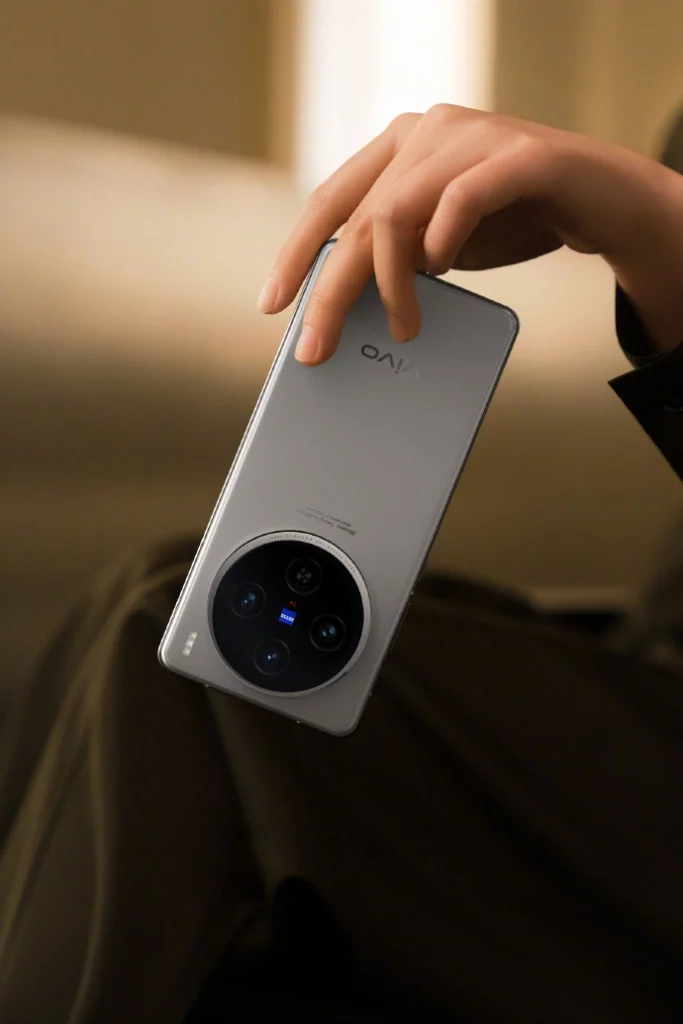
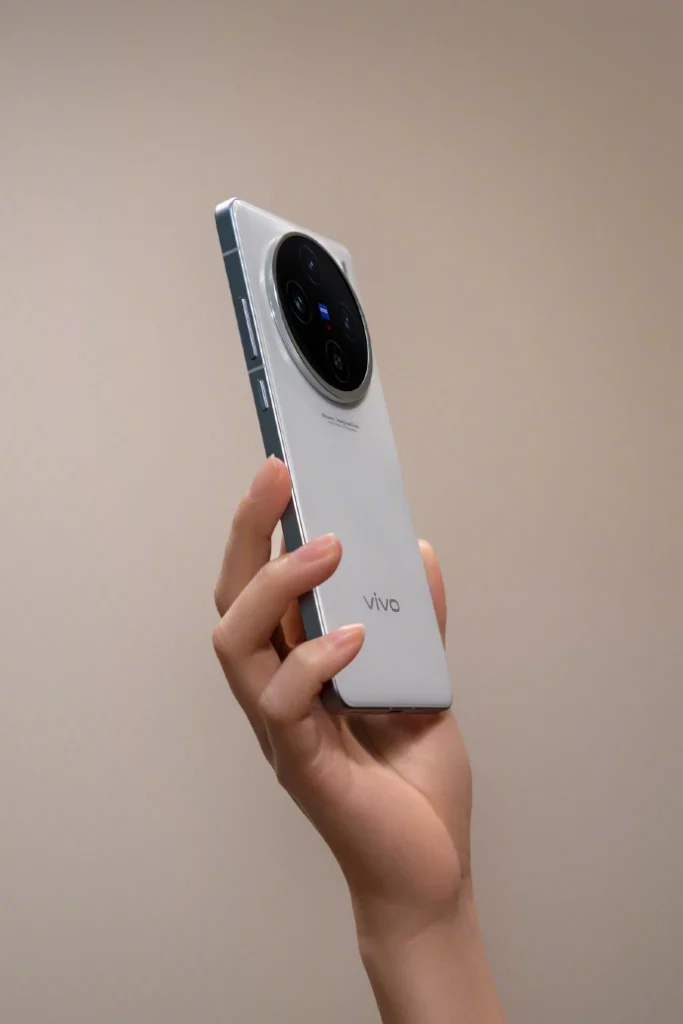
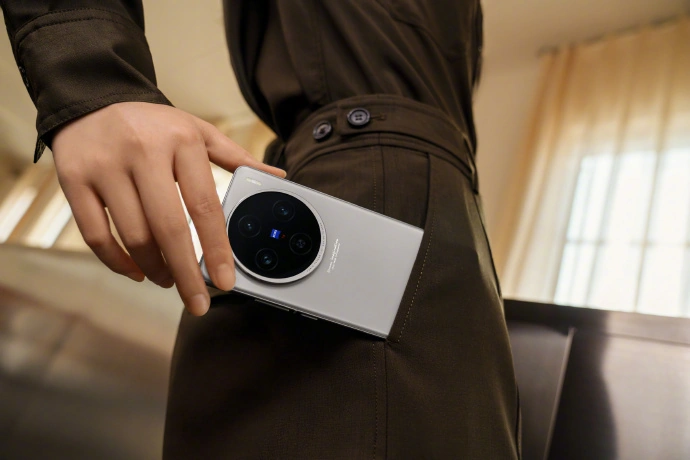
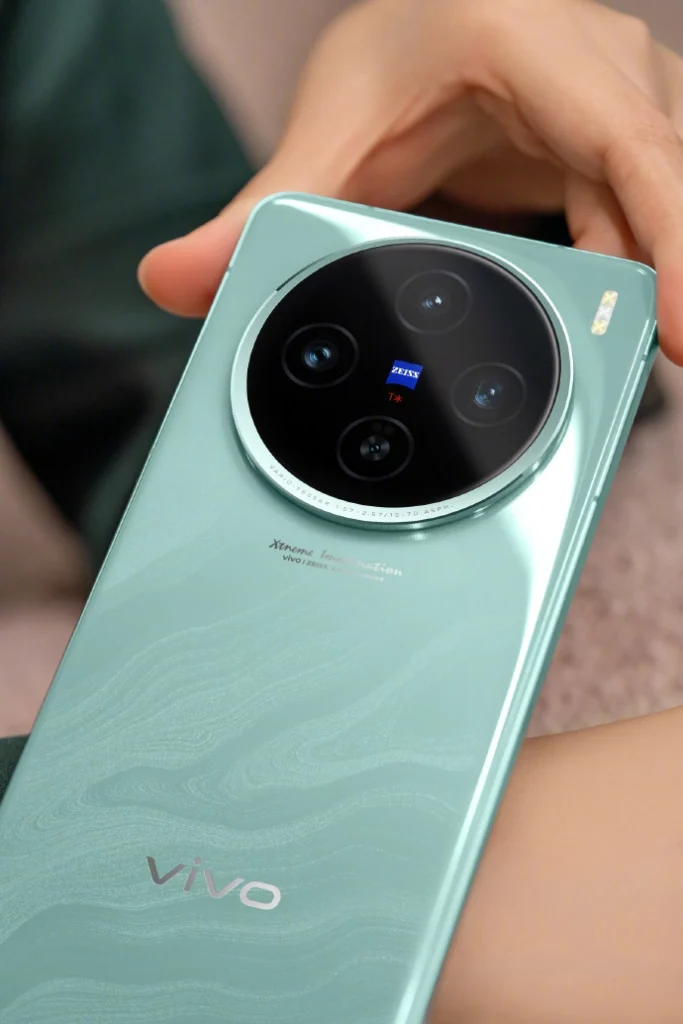
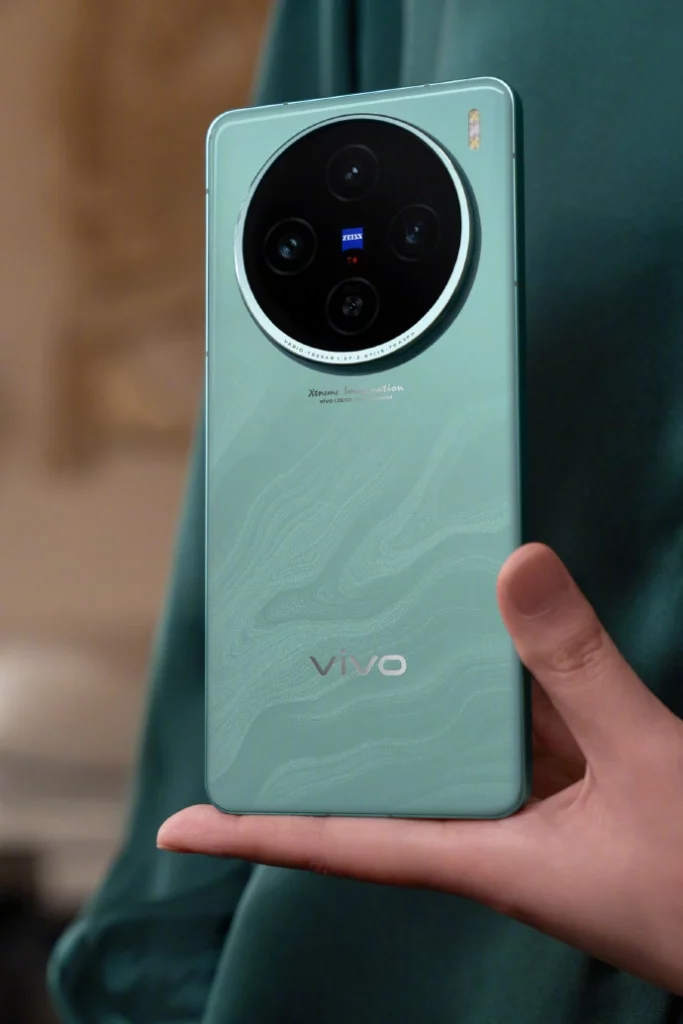
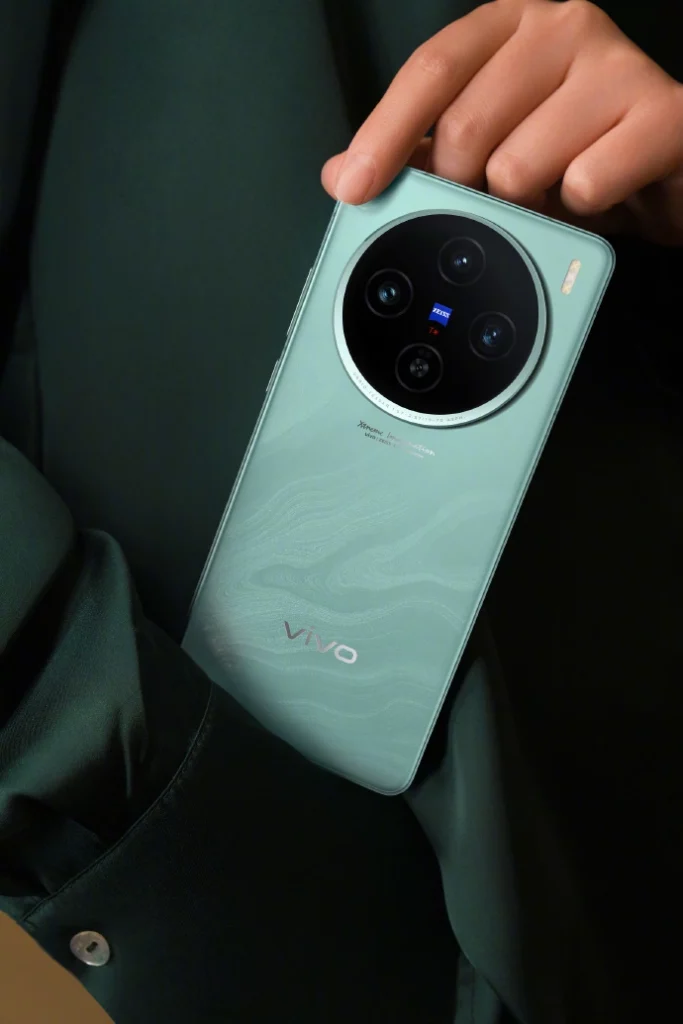
vivo’s upcoming X100s smartphone will be introduced to the market as the successor to the X100. While the X100 comes with the Dimensity 9300 chipset, the X100s is expected to feature the Dimensity 9300 Plus. vivo had already announced that the vivo X100s will have a thickness of 7.8mm, and now they have shared hands-on images.
Vivo X100s thin profilevivo X100s
You might wonder why vivo advertises the phone’s 7.8mm thickness as it is a great thing. If you consider the recently introduced flagship phones are now almost all above 8mm, phone manufacturers realize the modern devices are uncomfortably thick. The predecessor of the X100s, vivo X100 released a year ago has a thickness of 8.5mm. While the vivo X100S may not have camera specs as impressive as the Ultra model, its thinner design undoubtedly provides a better feel in hand.
vivo X100s
Many Android smartphone manufacturers are now starting to move away from curved displays, and vivo has also opted for a flat display with the vivo X100s. The previously released phone, vivo X100 actually had a curved display. Using a flat display can be beneficial in reducing the device’s thickness, so opting for a flat display is certainly a good idea. Thus, with the vivo X100s, vivo joins the flat display trend in their X series, as the X90s had come with a curved screen previously.
Official vivo images showcase the X100s in at least two color options. The phone’s back reveals the show with its huge camera array, while the right side houses the combined power and volume buttons.
We use cookies on our website to give you the most relevant experience by remembering your preferences and repeat visits. By clicking “Accept”, you consent to the use of ALL the cookies.
This website uses cookies to improve your experience while you navigate through the website. Out of these, the cookies that are categorized as necessary are stored on your browser as they are essential for the working of basic functionalities of the website. We also use third-party cookies that help us analyze and understand how you use this website. These cookies will be stored in your browser only with your consent. You also have the option to opt-out of these cookies. But opting out of some of these cookies may affect your browsing experience.
Necessary cookies are absolutely essential for the website to function properly. This category only includes cookies that ensures basic functionalities and security features of the website. These cookies do not store any personal information.
Any cookies that may not be particularly necessary for the website to function and is used specifically to collect user personal data via analytics, ads, other embedded contents are termed as non-necessary cookies. It is mandatory to procure user consent prior to running these cookies on your website.