The competition between AMD and Nvidia is fierce. Both companies are known for their hardware, but they are also competing in the software. Now, AMD is preparing to add a new feature to its Linux driver for Ryzen laptops with Display Core Next (DCN) v3.1.4 or newer hardware. This new feature, called FreeSync Panel Replay, will help to reduce power consumption when the screen contents are not changing. Here are the details…
AMD Prepares Linux Driver For New Feature: FreeSync Panel Replay
Sure, here is the text with some minor changes to make it more readable: If you’re a laptop user who isn’t a fan of Apple products, battery life is probably a big concern for you. This is especially true if your job or school requires you to be mobile. Fortunately, AMD is working on a new feature that will help to improve battery life on Ryzen laptops. The new feature, called FreeSync Panel Replay, will help to reduce power consumption when the screen contents are not changing.
FreeSync Panel Replay works by storing a copy of the last frame that was displayed on the screen. When the screen contents do not change, the GPU can simply replay the stored frame instead of rendering a new one. This can help to reduce power usage by reducing the amount of work that the GPU needs to do.
FreeSync Panel Replay is similar to Panel Self Refresh (PSR), another power-saving feature that is available on some laptops. However, FreeSync Panel Replay has several advantages over PSR. First, FreeSync Panel Replay allows the source and sink to remain synchronized, which can help to reduce latency. Second, FreeSync Panel Replay can be used in more use cases than PSR. Third, FreeSync Panel Replay is easier to control than PSR.
It is still too early to say how much power FreeSync Panel Replay can save. However, AMD believes that the feature could be a significant improvement over PSR. The company is currently testing FreeSync Panel Replay and plans to release it in a future version of its Linux driver.
Xiaomi Pad 6 was announced in India earlier this week and will be available for purchase on June 21. It punches above its weight with flagship-grade hardware and an affordable price. The company has also introduced new accessories alongside the tablet, including the 2nd generation Xiaomi Smart Pen. But you don’t necessarily need to buy the latest tablet to use these accessories. In fact, Xiaomi has made the new Smart Pen compatible with the older Xiaomi Pad 5.
Xiaomi Pad 5 support latest accessories
Xiaomi has announced an OTA update for our newly launched Xiaomi Smart Pen (2nd Gen). This update enables full compatibility of the stylus not only with Xiaomi Pad 6 but also with Xiaomi Pad 5. For your reference, the smart pen is priced at Rs. 5,999 in India and will be available for purchase via Mi.com, likely from June 21.
Xiaomi Pad 6
Xiaomi Pad 5 was launched in India back in 2021 and it offered good value. The tablet still remains relevant but the new Pad 6 is much better in comparison. To give you an idea, the Xiaomi Pad 6 is powered by the Qualcomm Snapdragon 870 processor, which is a clear step up from the Snapdragon 860 processor inside the Xiaomi Pad 5.
The new Xiaomi tablet features an 11-inch IPS LCD display with a higher resolution of 2880×1800, surpassing the 2560×1600 resolution of the Xiaomi Pad 5. Moreover, the Xiaomi Pad 6 boasts a faster refresh rate of 144Hz, much higher than the 120Hz refresh rate of its predecessor. In terms of charging speed, the Xiaomi Pad 6 outperforms the Xiaomi Pad 5 by supporting 67W fast charging, while the latter supports 33W fast charging.
Comparing the Xiaomi Pad 6 with the Pad 5 may seem unfair, so we decided to pit it against the OnePlus Pad (review), which comes at a higher price point, costing over Rs. 10,000 more. Surprisingly, the Xiaomi Pad 6 not only holds its ground but also outperforms the OnePlus device. You can read more here.
Apple’s new 15-inch MacBook Air was announced at WWDC 2023. Although the new model has the same features as the 13.3-inch version, it comes with a larger battery due to its size advantage. But is its size its only advantage? Has the larger case led to any improvements in repairability or upgradability? iFixit’s latest video answered all these questions. Here are the details…
iFixit Teardown Reveals What’s Inside Apple’s New 15-Inch MacBook Air
Have you ever wondered what’s inside your phone, computer, or tablet? If so, you’re not alone. Many people are curious about the inner workings of their devices, but don’t have the tools or know-how to open them up and take a look. That’s where iFixit comes in. iFixit is a website and online community that provides repair guides, parts, and tools for a wide range of devices. Most recently, the company published a teardown video for the 15-inch MacBook Air.
According yo the iFixit video, 15-inch MacBook Air has a similar internal design as the 13-inch model, with the only notable difference being two extra speakers. The teardown reveals that the laptop has a single 256GB NAND chip for the base model, which can result in slower SSD read and write speeds compared to 512GB, 1TB, or 2TB models. The RAM and storage are also not user-upgradeable, which is in line with other Apple laptops.
Unfortunately, even though the motherboard of Apple’s computers looks like a work of art when you open them up, there isn’t much to see. The company receives serious criticisms, particularly on the issues of upgradability and repairability, and users have to pay quite high fees when there’s a malfunction. Despite the lack of upgradability, the 15-inch MacBook Air is still a powerful laptop with a great design. Here are the some specs of the 15-inch MacBook Air:
Pebble has launched a new smartwatch in its Cosmos lineup. The latest offering is dubbed the Pebble Cosmos Vogue. It has a stylish and fashion-centric design. Read on to know more about it below.
Pebble Cosmos Vogue specifications and features
The Pebble Cosmos Vogue comes with a square dial with a functioning rotating crown on the right side. It features a large 1.96-inch AMOLED display with a 600 nits peak brightness. It has an always-on display mode and multiple customizable watch faces. The smartwatch is IP67-certified water-resistant. It flaunts a metallic strap.
In terms of fitness, the Pebble Cosmos Vogue is equipped with a heart-rate monitor, SpO2 sensor, and a sleep tracker. There is a Zen mode and the wearable device is capable of tracking a host of sports activities.
The Pebble Cosmos Vogue packs a built-in mic and speaker for Bluetooth voice calling function. It also supports voice assistants. The smartwatch comes with convenient features like music and camera control, weather updates, a calculator, Find my phone, smart notifications, and more. The wearable device is backed by a 240mAh battery unit that is claimed to last up to 7 days on a single charge.
The Pebble Cosmos Vogue carries a price tag of Rs 2,499. It is offered in Jet Black and Midnight Blue silicone straps as well as Obsidian Black and Classic Gold metallic straps. It can be purchased from the brand’s website and Flipkart.
At the APEC Business Leaders’ Forum held in Beijing, Huawei’s Rotating Chairman, Hu Houkun (Ken Hu), unveiled a bold vision for the future of artificial intelligence (AI), spearheaded by ChatGPT. Mr. Hu declared that this new form of AI has officially ushered in a new era, set to rewrite personal and industrial applications.
The Arrival of a New Era: Huawei Chairman Highlights the Power of Artificial Intelligence
Anticipating exponential growth in computing demands, Mr. Hu confidently projected that general computing power would experience a remarkable tenfold increase by 2030. Furthermore, he forecasted that artificial intelligence computing power would skyrocket by an astonishing 500-fold within the same timeframe.
As part of this technological revolution, Mr. Hu further outlined his predictions for global connectivity and latency reduction. By 2030, he expects the total number of connections worldwide to reach a staggering 20 billion. Moreover, low-latency applications, with a mere 1ms delay, are predicted to become widespread, effectively reducing waiting times by a hundredfold compared to today’s standards. Such advancements aim to meet the low-latency requirements of intelligent devices, transitioning from 100ms to 1ms.
Mr. Hu also highlighted the emergence of new business forms, including the metaverse and holographic imaging. As these cutting-edge technologies take shape, bandwidth demands are anticipated to surge a hundredfold, creating unprecedented opportunities for growth.
Insights shared at the forum underscored the pivotal role of digital technology in driving human social progress. The energy sector, in particular, stands to benefit immensely. By harnessing the power of digital technology, the decarbonization process can be accelerated, paving the way for a transformed energy structure.
Traditional power plants and grids are primed for digitization, facilitated by the widespread adoption of 5G, AI, and cloud computing technologies. This digital transformation promises enhanced quality and efficiency in power generation. Furthermore, the development of solar and wind energy, among other renewable sources, can be significantly augmented by leveraging digital technology, maximizing their value.
Huawei’s vision, presented by Chairman Hu Houkun, highlights the immense potential of AI-driven technologies like ChatGPT and paves the way for a future where computing power knows no bounds. With these advancements on the horizon, the tech industry braces itself for an era of unprecedented possibilities and accelerated progress.
Last year, LG launched the DualUp monitor with an ultra-tall display. Contradictory to most monitors on the market, it is taller than it is wide, featuring a 16:18 aspect ratio. This model was introduced with model number 28MQ780. Now, the company has recently unveiled a new DualUp monitor in China with the model number 28MQ750. It brings essentially the same specifications as last year’s model, with minor changes. Here are the details.
LG DualUp 28MQ780 Specifications
The LG DualUp monitor is not your typical 27-inch display. It features a unique tall aspect ratio that enhances efficiency. With a screen size of 27.6 inches, it utilizes an LG Nano IPS panel and boasts a narrow bezel design on three sides. The monitor offers a resolution of 2560×2880, a wide color gamut of 98% DCI-P3, a brightness of 300 nits, a contrast ratio of 1000:1, and HDR10 support. Essentially, it provides the experience of two seamlessly positioned 21.5-inch QHD resolution monitors stacked vertically, ideal for multitasking workflows.
Further, the DualUp monitor is equipped with an LG ergonomic stand, replacing the previous Ergo stand. This stand allows for easy lifting and rotating adjustments, providing optimal positioning flexibility. In terms of connectivity, the monitor features a full-featured USB-C interface that supports a 90W external power supply (compared to the previous model’s 96W). Additionally, it offers two HDMI and one DP interface. Notably, the monitor also includes built-in dual 7W high-power speakers.
Please note that this LG monitor has been launched specifically in China. However, it seems that the display is already available for purchase worldwide. While the pricing and availability details for China have not been disclosed yet, the monitor is listed on LG’s global website with a price tag of $599. In comparison, the previous year’s model was priced at $699.
Welcome to the Weekly Review, where we round up the top 12 tech stories that have grabbed headlines and kept the industry abuzz over the past week. This week’s lineup features a diverse array of stories that span from the realms of artificial intelligence to the smartphone industry and the online community.
One of the most sensational pieces this week was the announcement that legendary band The Beatles, led by Paul McCartney, will be releasing a new single created with the help of cutting-edge artificial intelligence technology. This single, which is being called the band’s “last song,” includes extracted vocals from the late John Lennon and represents a new frontier in music production through AI.
Speaking of AI, Meta is making waves with its AI-powered MusicGen library, which generates short instrumental tracks based on user-provided text descriptions. MusicGen, though currently limited to instrumentals, has showcased how AI can serve as a unique tool in creating background audio for various applications.
In smartphone-related news, Qualcomm and Huawei made the headlines. There were rumors circulating about Qualcomm supplying 5G chips to Huawei, which were quickly refuted by Huawei’s Executive Director. Meanwhile, Huawei is showing signs of recovery and continues to focus on the growth of its smartphone business.
Reddit experienced turbulence as the platform introduced new API costs, leading to a significant protest from subreddit moderators who decided to make their communities go private or restrict new posts. Among the protesting subreddits, the iPhone community stands out, going dark indefinitely.
Another notable development in the smartphone industry was the resignation of Madhav Sheth from Realme. His departure is particularly significant due to his integral role in establishing Realme’s presence in India and Europe. There are speculations that Sheth might be joining HONOR India, potentially heralding a revival for the brand in the Indian market.
We delve into each of these stories in greater detail below, uncovering the technological advancements, controversies, and market shifts that defined this week in tech.
These were the Top 12 Tech Stories From Last Week
Google’s $23 Million Settlement for US Citizens
Google has reached a proposed $23 million settlement to resolve consolidated class action lawsuits concerning the inclusion of search queries in referrer headers during the provision of its services between October 25, 2006, and September 30, 2013. This settlement, which does not entail an admission of wrongdoing, aims to compensate eligible individuals who used Google Search and clicked on search results within the specified timeframe. In addition to monetary compensation, Google will revamp its “FAQs” and “Key Terms” pages to offer more transparent information about search queries’ disclosure via referrer headers. Judge Edward J. Davila of the United States District Court for the Northern District of California authorized the notice for this settlement, which is part of the class action known as In re Google Referrer Header Privacy Litigation. The compensation amount for each Settlement Class Member is contingent on various factors, with an estimated $7.70 per Approved Claim for U.S. citizens.
Skyward Bound: Virgin Galactic’s Leap and Japan’s Wooden Satellites Usher in New Space Era
Virgin Galactic is set to make history by launching its first commercial spaceflight, Galactic 01, between June 27th and June 30th, carrying three Italian individuals for microgravity research. After years of challenges and financial setbacks, this is a significant step for the company, which plans to livestream the mission on its website. With tickets priced at nearly half a million dollars per passenger, Virgin Galactic aspires for steady profits following cumulative losses. Though trailing behind Blue Origin, Virgin Galactic is ahead of SpaceX in commercial space tourism. The launch brings space tourism closer to reality, catalyzing a new era in space exploration.
Simultaneously, Japan is revolutionizing space technology through a project developing wooden satellites. A research team from Kyoto University established that wood can endure harsh outer space conditions, paving the way for eco-friendly satellites. The first wooden satellite is expected to be launched in 2024 in collaboration with NASA and the Japanese Space Agency. This novel approach aims to offer sustainable alternatives to traditional metal satellites, with wood being more environmentally friendly, cost-effective, and easier to dispose of.
Together, Virgin Galactic’s leap and Japan’s innovative wooden satellites signify a monumental advancement in space technology and exploration.
Google’s Hybrid Dilemma: Balancing Office and Remote Work
Google’s new policy, which mandates employees to be present in the office at least three days a week, has stirred discontent among its workforce. Employees, who have grown accustomed to remote work due to the COVID-19 pandemic, view this requirement as a hindrance to work-life balance and collaborative culture. Many Google employees have relocated during the pandemic, and the policy would entail challenging commutes, especially considering high rental rates in Silicon Valley.
The employees emphasized their preference for autonomy and flexibility. In response, Google hinted at possible exceptions for individuals with medical conditions or residing far from the office, but remains steadfast in its aim for an office-centric culture.
This tug-of-war reflects the broader challenge that companies face in shaping the post-pandemic workplace; striking a balance between organizational presence and employee preferences for remote work. Google’s final approach and its consequences will be closely watched as a precedent for other brands in the market.
Xiaomi 13 Ultra Takes Europe by Storm: A Flagship with Cutting-Edge Specs
Xiaomi 13 Ultra, which made its debut in China in April, has been officially launched in Europe. With an initial price tag of EUR 1,500 (~$1,616), the phone comes with 12GB RAM and 512GB storage and is available in Black and Olive Green colors. The sale began in France, Germany, Spain, and Italy, with shipments starting from June 21. Additionally, customers can avail of a trade-in bonus of 200 Euros, six months of free 100GB Google Cloud storage, three months of YouTube premium, and access to Airport Exclusive Lounge.
The Xiaomi 13 Ultra boasts a 6.73-inch QHD+ AMOLED display with a 120Hz refresh rate and Gorilla Glass Victus protection. The phone stands out in photography, thanks to its quad-camera setup which includes a 1-inch 50MP sensor and Leica Summicron optics, capable of 8K video recording. Powered by a Snapdragon 8 Gen 2 processor and a 5,000mAh battery that supports 90W wired and 50W wireless charging, the Xiaomi 13 Ultra runs on MIUI 14 based on Android 13 OS. The connectivity options include 5G, Dual 4G VoLTE, WiFi-6E, USB-C Gen 3.2, and NFC.
Xiaomi’s Electric Car Ambition: MS11 Electric Vehicle Spotted in the Wild
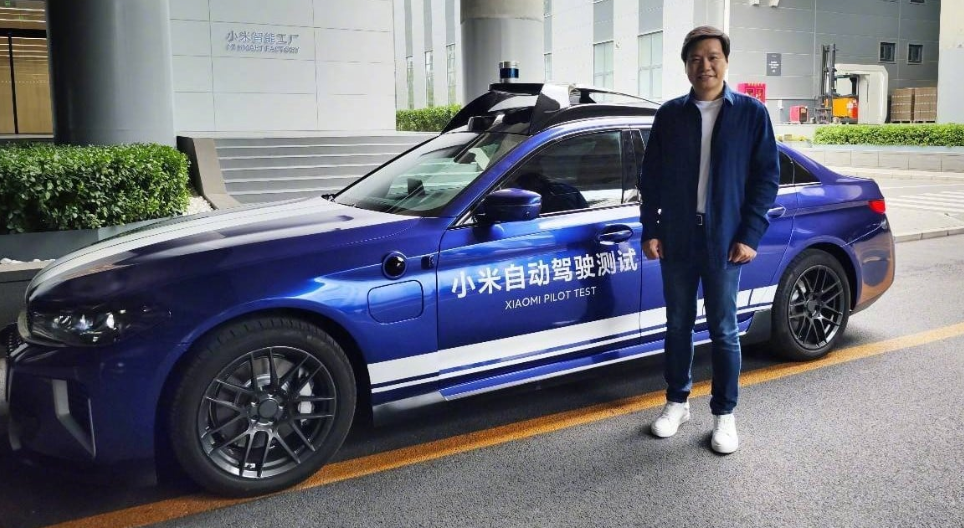
Xiaomi, primarily known for its smartphones and electronics, is expected to launch its first electric car in the first half of 2024. The car, which recently entered the testing phase, has been spotted in spy shots, revealing a fastback-styled design and 19-inch wheel rims. The MS11 will offer two configurations: a 400V version equipped with BYD lithium iron phosphate blade batteries and an 800V version with CATL ternary Kirin batteries.
What makes the MS11 particularly intriguing is Xiaomi’s incorporation of its cutting-edge technology, including in-house AI and self-driving capabilities. The company’s entry into the electric vehicle sector demonstrates its ambition to diversify beyond consumer electronics. With significant investments already made in AI and autonomous driving, it will be exciting to see how these technologies are integrated into the MS11, potentially shaping the future of electric vehicles.
US and India Tighten Scrutiny on Chinese Entities: Tech Brands in the Crosshairs
In a significant move, the United States government added 43 entities to its “Entity List” last Monday. This list is an export control measure aimed at entities accused of endangering national security. Out of these 43 entities, 31 are from China, with the rest from the United Arab Emirates, South Africa, and the United Kingdom. The US asserts that this action is critical for safeguarding national security.
Among the Chinese entities now on the list, Shanghai Supercomputing Technology Co. is particularly under scrutiny. The company is backed by the Shanghai Supercomputer Centre (SSC) and Dawning Information Industry, a Chinese supercomputer manufacturer.
In related news, the Central Government of India has outlined new regulations for Chinese mobile companies, such as Xiaomi, OPPO, Realme, and VIVO, operating in the country. The strategic proposal seeks to ensure greater accountability and involvement of Indian stakeholders. As part of the regulations, the government is urging Chinese firms to establish partnerships with Indian entities, appoint Indian executives in key leadership roles, and ramp up local manufacturing through collaborations with Indian manufacturers. Furthermore, these companies are encouraged to increase exports from India and create local distribution networks. The move comes amidst investigations into tax evasion and fraudulent remittances by Chinese smartphone manufacturers and aims to create a more balanced, transparent business environment while boosting domestic manufacturing and employment.
Former Samsung Executive Indicted for Technology Theft to Establish Rival Chip Factory in China
A former executive from Samsung Electronics faces indictment for allegedly stealing technology to create a rival chip-making facility in China. This has reportedly caused losses of approximately $233 million for Samsung and poses a threat to South Korea’s economic security due to the intense competition in the chip industry. Alongside the former executive, six others have also been indicted. South Korean companies, Samsung and SK Hynix, are major players in the global chip market, and have invested heavily in chip factories in China. This incident comes amid South Korea’s ongoing efforts to prevent corporate espionage, which is critical in the backdrop of rapid advancements by Chinese firms in memory chip production.
Huawei CEO Denies Resumption of Qualcomm 5G Chip Supply; Company Focuses on Smartphone Business Growth
Yu Chengdong, the CEO of Huawei’s Consumer Business Group, denied recent rumors that Qualcomm has resumed supplying 5G chips to Huawei, labeling them as fake news. Meanwhile, Huawei is showing signs of recovery in its smartphone business, raising its 2023 shipment target to 40 million units, up from an initial 30 million. The upward revision is attributed to the promising prospects of Huawei’s P60 series and Mate X3 smartphones, as well as a recovery in its supply chain. The company’s Mate 60 series could be released soon, with enthusiasts keenly awaiting the new devices. Additionally, the United States is reportedly planning to extend the deadline for exemptions from export controls on semiconductors to China, which is seen as positive news for South Korean and Taiwanese chip companies.
Reddit’s New API Costs Spark Massive Subreddit Blackout in Protest
After Reddit announced new API costs for developers, requiring them to pay up to $20 million per year, the iPhone subreddit, a popular Apple-related community, decided to go dark indefinitely in protest. This move follows a similar backlash on Twitter due to paid API implementation after its acquisition by Elon Musk. Nearly 9,000 subreddits, representing hundreds of millions of users, have participated in a blackout to express discontent over Reddit’s policy change, which renders many third-party apps obsolete. Reddit’s CEO, Steve Huffman, hosted an AMA to address concerns but did not provide satisfactory solutions. Over 300 subreddits, including r/aww, r/music, r/videos, and r/futurology, have pledged to remain private until Reddit addresses their concerns adequately. The standoff continues as protesting subreddits seek a satisfactory compromise.
AI Revolutionizes Music: From Reviving The Beatles to Customized Compositions
Artificial intelligence (AI) is making waves in the music industry. Paul McCartney of The Beatles recently announced the release of a new single using AI to extract John Lennon’s voice from an unfinished 1970s track, potentially reviving the band’s legacy. On another front, Meta has launched MusicGen, an AI that creates music from textual prompts. By analyzing patterns and structures from a dataset of over 10,000 high-quality licensed tracks, MusicGen generates 12-second instrumental compositions aligned with user instructions. While the AI currently lacks vocal synthesis, its instrumental capabilities present a unique opportunity for generating background audio. However, with AI’s growing capabilities in music generation, concerns about copyright infringement are on the rise, and Meta may face legal challenges from artists and labels for unauthorized use of their works.
Realme’s Madhav Sheth Departs, Rumored to Lead HONOR’s Revival in India
Madhav Sheth, former Realme India CEO, Global Vice President, and President of Realme International Business Group, has officially announced his departure from Realme, a brand he helped establish since 2018. During his tenure, Sheth was pivotal in expanding Realme’s presence in India and Europe, making it one of the fastest-growing smartphone brands in India. While Sheth hasn’t revealed his future plans, reports suggest that he might join HONOR India to revive the brand in the country. Additionally, director-level executives from Realme are also expected to follow Sheth to HONOR India. Realme’s Founder and CEO, Sky Li, will now oversee the Indian market. Both Realme and Huawei, HONOR’s parent company, have not yet issued official statements regarding this development.
Several Chinese display manufacturers, including BOE, CSOT, Tianma, and Visionox, have joined forces to invalidate a patent owned by Samsung Display in the United States. The move comes as a response to Samsung Display’s previous attempts to halt imports of third-party displays that might infringe upon its patented technologies.
The Motive Behind the Challenge: Chinese Display Manufacturers’ Response to Samsung’s Patent Actions
The patent in question is U.S. Patent No. 7,414,599, which pertains to an “Organic Light Emitting Display (OLED) Device Pixel Circuit and Driving Method.” This particular patent was part of Samsung Display’s complaint filed with the US International Trade Commission late last year, seeking to prevent the importation of OLED panels that allegedly violated their patents and technologies.
Rather than confronting the Chinese manufacturers directly, Samsung Display opted to target importers. However, this approach seems to have provoked a retaliatory response from the Chinese display makers. By seeking to invalidate Samsung Display’s OLED patent, BOE, CSOT, Tianma, and Visionox may inadvertently imply their involvement in developing displays utilizing Samsung’s technologies without obtaining proper licenses.
This ongoing dispute began in early May when BOE initiated a series of patent infringement lawsuits against Samsung and its subsidiaries in China. Interestingly, these lawsuits targeted divisions unrelated to display technologies, such as Semiconductor, Investment, and Vision. Now, the Chinese display manufacturers are collectively aiming to invalidate one of Samsung Display’s OLED patents in the United States.
It’s worth noting that the trial for patent invalidation is yet to commence, as the Patent Trial and Appeal Board is currently evaluating whether to accept the claim. Further developments, in this case, will shed light on the potential ramifications for the involved parties and the wider display manufacturing industry.
Tipster Fixed Focus Digital has recently shared an imagined render of the upcoming Vivo X100 Pro+, providing a glimpse into its design based on leaked information. The render suggests that the vivo X100 Pro+ will feature a camera module positioned on the left side, enclosed within a rectangular matrix area. This design appears to be similar to the one seen in the vivo X80 series, indicating a continuation of aesthetics rather than a significant departure from the Vivo X90 series.
A Closer Look at the Aesthetics of Vivo X100 Pro+
According to another tipster Digital Chat Station, the Vivo X100 Pro+ is anticipated to make its debut early next year. It can be speculated that the lower-end variants, namely the Vivo X100 Pro and vivo X100 standard versions, may be unveiled by the end of this year.
Reports indicate that the Vivo X100 and X100 Pro will be powered by the MediaTek Dimensity 9300 chipset, while the X100 Pro+ is expected to feature the latest Qualcomm Snapdragon 8 Gen 3 mobile platform. This suggests that vivo considers the overall performance of the Snapdragon 8 Gen 3 to surpass that of the Dimensity 9300. However, it is worth noting that Vivo and MediaTek are reportedly collaborating to optimize the Dimensity 9300 chipset, aiming to maximize its performance.
In terms of imaging capabilities, leaks suggest that the vivo X100 will sport a rear camera setup consisting of a 50-megapixel Sony IMX989 main sensor, a 32-megapixel ultra-wide-angle lens, and a 12-megapixel periscope telephoto lens, with dual optical image stabilization support.
Prior to the launch of the vivo X100 series, the final model of the vivo X90 series, the vivo X90s, is scheduled to be released and will serve as the official device for the Hangzhou Asian Games.
Update: In accordance with a formal request we received from Samsung India, the leaked image that were initially featured in this article has been withdrawn. Consequently, the render is no longer visible or linked within the current version of this article. We have replaced the leaked render with Samsung’s current-gen Watch5 series.
Samsung’s new wearables are launching next month with various welcome upgrades. The Galaxy Watch 6 series will likely share the stage with the Galaxy Z Fold 5 and Galaxy Z Flip 5 during the Galaxy Unpacked event in South Korea. While we wait, a new report is here with a batch of official Galaxy Watch 6 series images. Let’s have a look.
Galaxy Watch6 series color and size options
Winfuture has leaked some detailed renders of the upcoming Watch 6 series. The outlet also reveals that the Samsung Galaxy Watch6, which will be available in silver, black, and beige hues, offers consumers two size variants of 40mm and 44mm. Whereas the Samsung Galaxy Watch6 Classic will be presented in two sizes, namely 43mm and 47mm, with color choices limited to black and silver. The Classic version also brings the rotating bezel back again.
Galaxy Watch 5
The Samsung Galaxy Watch 6 series is expected to feature the Exynos W930 SoC, as revealed by recent findings on the Bluetooth SIG website. This powerful chipset offers a different clock speed and an optional integrated LTE modem. The LTE modem allows the smartwatches to maintain internet connectivity without relying on a connected smartphone.
Samsung is rumored to unveil the Galaxy Watch 6 on July 26. These smartwatches will run on OneUI 5 Watch, based on Wear OS 4. They are likely to offer activity and health tracking features including heart rate monitoring, sleep tracking, and GPS, similar to the Galaxy Watch 5.
The new smartwatches are reported to feature improved batteries. The Galaxy Watch 6 40mm variant will be equipped with a 300 mAh battery, while the 44mm variant will boast a larger 425 mAh battery. The Watch 6 Classic is expected to share the same 425 mAh battery as the 44mm variant of the Galaxy Watch 6.
Qualcomm is expected to announce the Snapdragon 8 Gen 3 at the 2023 Snapdragon Tech Summit in October of this year. Rumors are rife that the first Snapdragon 8 Gen 3 phones will debut as early as November this year. The Xiaomi 14 series will be one of the first phones to feature it. A new leak courtesy of Chinese tipster Digital Chat Station has revealed that Xiaomi’s sub-brand Redmi will also launch an SD8G3 chip phone.
Redmi K70 Pro may feature the Snapdragon 8 Gen 3
Redmi K60 Pro
To recall, Redmi unveiled the Redmi K60 series in December 2022. It announced the Redmi K60e, the Redmi K60, and the Redmi K60 Pro. The Dimensity 8200, Snapdragon 8 Plus Gen 1, and Snapdragon 8 Gen 2 chipsets are responsible for powering these smartphones, respectively.
It is likely that the Redmi K70 series will also include multiple smartphones. As per the tipster, the lineup will include a Snapdragon 8 Gen 3 phone. Hence, it is likely that the Redmi K70, arriving as the successor to the K60 Pro, may come equipped with the said chipset.
The K60 Pro remained exclusive to the Chinese market. Hence, it is unclear whether the K70 Pro will be released in markets outside of China. At present, there is no information available on the specifications of the Redmi K70 series.
Reports have revealed that the Snapdragon 8 Gen 3 will include 1 x Cortex X4 core clocking at 3.75GHz, 5 x Cortex-A720 cores working at 3.0GHz and 2 x Cortex-A520 cores operating at 2.0GHz. The unannounced chip was spotted at Geekbench and AnTuTu benchmarking platforms with impressive scores. In Geekbench’s single-core and multi-core tests, the SD8G3 scored 2563 and 7256 points, respectively. On the other hand, the chip scored 1,771,106 points on AnTuTu.
Based on the historical pattern of Google’s Pixel smartphone launches, it seems likely that the Pixel 8 and Pixel 8 Pro will be unveiled during the month of October this year. Earlier this month, Android Authority released a report to reveal the camera specifications of the Pixel 8 and Pixel 8 Pro. In a new report, the same publication leaked the display specifications of the Pixel 8 duo.
Google Pixel 8 series display specifications (rumored)
Google Pixel 8, Pixel 8 Pro display specs leak by Android Authority
The leak reveals that the Pixel 8 will be smaller than the Pixel 8’s 6.3-inch screen. The Pixel 8 Pro, on the other hand, will have a 6.7-inch display like the Pixel 7 Pro. However, while the Pixel 7 Pro came with a curved-edge screen, its successor will have a flat screen. The report further states that the display design of the Pixel 8 series exhibits a slightly less square shape compared to its predecessors, with corners that are slightly more rounded.
To recall, the Pixel 7’s flat 6.3-inch OLED panel offered a Full HD+ resolution of 1080 x 2400 pixels, a 90Hz refresh rate, and 417ppi pixel density. The Pixel 7 Pro featured a 6.71-inch OLED curved-edge display that offers a Quad HD+ resolution of 1440 x 3120 pixels, a 120Hz refresh rate, and 512 ppi pixel density. Both displays support up to 1,000 nits of brightness.
As per the new report, the Pixel 8 will come with a 6.17-inch screen that will offer a Full HD+ resolution of 1080 x 2400 pixels, a higher refresh rate of 120 Hz, a 427 ppi pixel density, and up to 1,400 nits of brightness. For the Pixel 8, Google will be using displays supplied by Samsung and OLED, whereas the Pro model will have display panels from Samsung.
On the other hand, the Pixel 8 Pro has a 6.70-inch OLED that produces a Quad HD+ resolution of 1344 x 2992 pixels, a 120Hz refresh rate, a 490 ppi pixel density, and 1,600 nits of brightness. Read the following links to learn about other Pixel 8 series news.
On June 1, Motorola unveiled the Razr 40 and the Razr 40 Ultra clamshell phones in China and other markets. The Ultra model is already available for purchase in China. Starting today, the Lenovo-owned brand has started receiving pre-orders for the Razr 40.
Motorola Razr 40 price
Motorola Razr 40
The Razr 40 comes in three options in China. The 8 GB RAM + 128 GB storage model is priced at 3,999 Yuan (~$561), the 8 GB RAM + 256 GB storage edition costs 4,299 Yuan (~$603), and the 12 GB RAM + 512 GB storage variant is priced at 4,699 Yuan (~$660). The first sale of the device will be conducted on June 25. The Razr 40 comes in three color options in the home market: Azure Gray, Bright Moon White, and Sakura Powder.
Motorola Razr 40 specifications
The Motorola Razr 40 features the Snapdragon 7 Gen 1 chipset, whereas its Ultra sibling is equipped with the Snapdragon 8 Plus Gen 1. The Razr 40 has a 6.9-inch LTPO AMOLED foldable display that offers a Full HD+ resolution of 1080 x 2460 pixels, a 144Hz refresh rate, and up to 1,400 nits of brightness. On the back, it has a 1.5-inch AMOLED cover screen. Gorilla Glass Victus shields both displays.
The Razr 40 ships with up to 12 GB of LPDDR5 RAM and up to 512 GB of UFS 2.2 storage. It has a 4,200mAh battery with 30W charging and 5W wireless charging. The device runs on Android 13 OS and My UX.
The Razr 40 has a 32-megapixel camera on the front. Its back panel has a 64-megapixel primary camera with OIS support and a 13-megapixel ultra-wide lens. For security, it has a side-facing fingerprint scanner.
In related news, Motorola is gearing up to launch the Razr 40 series in India. It is likely that the brand will confirm its launch date on June 22.
Looking to for a good projector without breaking the bank? The HAPPRUN H1 projector might just be a good choice right now. This compact and lightweight device packs a surprising punch, especially when you consider its affordable price tag. In fact, it could easily claim the title of the best budget projector you can buy for under $100 in 2023.
Includes Portable 100-inch Screen
The HAPPRUN H1 offers impressive specifications for its category. It boasts a native 1080p resolution, delivering sharp and clear visuals. With its 9500L brightness (240 ANSI Lumens) and a contrast ratio of 10,000:1, you can expect vivid colors and deep blacks for a captivating movie night experience. The projector is incredibly versatile, allowing you to create screens of up to 200 inches. Additionally, the ±15° keystone correction feature ensures easy adjustment to suit your preferences.
To enhance the audio experience, the HAPPRUN H1 is equipped with solid HiFi stereo speakers. Alternatively, you can connect more powerful audio options via Bluetooth 5.1, providing flexibility for different setups.
The HAPPRUN H1 comes with a complimentary portable 100-inch screen, allowing you to start enjoying movies right out of the box.
Currently, the HAPPRUN H1 is available for just $66.98, making it an excellent value for money. For the price, the projector offers powerful features and offers an excellent viewing experience.
To put things into perspective, let’s compare the HAPPRUN H1 with similar models from competing brands:
Model
HAPPRUN H1
AuKing M8F
ELEPHAS BL128
Resolution
Native 1080P
720P
720P
Luminance
240 ANSI Lumen
100 ANSI Lumen
100 ANSI Lumen
100-inch screen
Yes, Free
NO
NO
Keystone
±15°
Yes
NO
Built-in Speaker
HiFi Stereo Speaker
Regular Speaker
Regular Speaker
Contrast Ratio
10000:1
2000:1
6000:1
Bluetooth
5.1
Unknown
No
Screen size
Up to 200 inches
Up to 200 inches
Up to 200 inches
As you can see from the comparison chart, the HAPPRUN H1 outshines its competitors in key areas such as resolution, brightness, contrast ratio, and the inclusion of a 100-inch screen at its price range. It also features Bluetooth 5.1 connectivity and the flexibility to adjust the screen size.
So, if you’re on the lookout for an affordable projector with good performance, you can definitely check out the HAPPRUN H1. Its native 1080p resolution, high brightness, and impressive contrast make it an good choice for movie nights or presentations. Further, the portable large 100-inch screen and the discounted price of $66.98, makes it a pretty good affordable projector in the market.
Samsung has recently rolled out the June 2023 security update for its popular foldable smartphones, the Galaxy Z Flip 3 and Galaxy Z Flip 4. This update brings the latest firmware versions, F711BXXU5EWF1 and F721BXXU3CWE6, to the devices in the UK. While the update primarily focuses on enhancing security, it doesn’t introduce any new features or performance enhancements.
What’s new in this June 2023 security update?
The June 2023 security patch addresses a total of 64 security flaws across various Galaxy smartphones and tablets. Out of these, 53 fixes are sourced from Google, targeting vulnerabilities found in Android devices. Among them, three are classified as critical, while the remaining 50 are marked as highly important. Additionally, Samsung has included 11 fixes to address security vulnerabilities specific to its own devices.
Samsung has provided details about three of the 11 vulnerabilities, referred to as SVEs or Samsung Vulnerabilities and Exposures. However, the remaining vulnerabilities will be disclosed once all Galaxy devices have received the June 2023 security patch or subsequent updates. These particular flaws affect Galaxy devices running Android 11, Android 12, and Android 13. One vulnerability impacts devices utilizing Exynos chips, while the others pertain to flaws in Knox and its CC (Common Criteria) mode.
To check for the new update on your Galaxy Z Flip 3 or Z Flip 4 in the UK, simply navigate to the Settings menu and select the Software Update section. From there, tap on “Download and Install” to initiate the update process.
The Galaxy Z Flip 3 was released in 2021 and initially shipped with Android 11. It subsequently received updates to Android 12 in late 2021 and Android 13 in late 2022. On the other hand, the Galaxy Z Flip 4 debuted in 2022 with Android 12 and was later updated to Android 13 in late 2022. Users of these devices can now benefit from the enhanced security provided by the latest June 2023 security patch from Samsung.
WhatsApp has recently unveiled its latest beta version, 2.23.13.6, on the Google Play Store for Android users, introducing a new feature that will be officially available in the near future. This exciting development suggests that WhatsApp will soon offer the option to link existing accounts with Meta’s Virtual Reality (VR) headsets.
Illustration by: Soumyakanti Ray
WhatsApp Beta for Android Introduces VR Compatibility
According to reports from WABetaInfo, WhatsApp is actively working on a feature that will enable users to connect their current WhatsApp accounts to Meta Quest VR devices. Meta, formerly known as Facebook, recently announced the Meta Quest 3 VR headset, which boasts affordability compared to competitors like the Apple Vision Pro.
While VR headset users have long been eager to access WhatsApp on their devices, previous attempts were unsuccessful. However, it appears that the company is finally addressing this demand, bringing WhatsApp functionality to VR headsets.
There are still a few uncertainties surrounding this development, including the specifics of how the connection between existing WhatsApp accounts and VR devices will be established, information on compatibility, and the maintenance of end-to-end encryption for secure communication.
WABetaInfo highlights that connecting WhatsApp to Meta Quest is not yet possible, as this feature is currently in the development phase. The ability to link existing WhatsApp accounts to Meta Quest will be released to beta testers in a future update of the app.
WhatsApp is also working on some other features as well. Latest WhatsApp Beta updates for Windows introduce screen-sharing in video calls, high-quality photo sharing, a redesigned emoji keyboard, and new community settings. These enhancements aim to enhance collaboration, visual sharing, and personalization options for users, further improving the WhatsApp experience.
Google has been beta-testing Android 14 for a couple of months now and should release a stable build in August. The Pixels are usually the first to get the stable update, followed by Samsung Galaxy devices. However, the Korean company is yet to officially announce a beta program for its phones. Unofficially, it is reported to release the first beta build of One UI 6, based on Android 14, for the Galaxy S23 series in the third week of July.
One UI 6 may rollout faster than One UI 5
Sammobile reports that the Galaxy S23 series will be first to get Android 14 beta update in the third week of July. The outlet says Samsung was waiting for Google to reach platform stability with the Android 14 beta before starting its own development. The beta update will gradually be rolled out for other devices too.
Last year’s One UI 5 rollout was the fastest so far and Samsung said it wants the next update to be even faster. The company wasn’t joking because we are apparently receiving the One UI 6 beta a few weeks earlier than the first One UI 5 beta, which also suggests that the stable releases will be earlier compared to last year.
Samsung has already begun updating its apps with One UI 6.0 support a few weeks ago, indicating that an official announcement for the beta program may be imminent. In addition to the Korean company, Oppo has also went ahead and confirmed Android 14 update for 11 of its smartphones, including Find X5 Pro and Reno 8 Pro.
Carl Pei-led Nothing also wants Phone 1 users to try their hands at the latest version of Android. The startup has already made a beta build of Android 14 available for its first handset as part of its Developer Preview Program.
The competition in the electric vehicle market is intensifying each day. Almost every day, a new model is introduced in the industry, and manufacturers are trying different things to outperform their competitors and attract more users. For instance, Tesla had made a significant price cut a while ago to achieve this. Now, Xpeng is offering a free one-year 4G service for its home charging stations. Here are the details…
How to Get Free 4G Service for Your Xpeng Home Charging Station?
Xpeng is offering a free one-year 4G service for its home charging stations. The offer is valid until June 25, 2023, and is open to all users who have purchased or will purchase a Xpeng home charging station. To take advantage of the offer, users must register for the Xpeng Charging Service account and reply with “4G” in the WeChat. After completing the form with the necessary information, users will be successfully enrolled.
The 4G service enables remote control of the home charging station and supports continuous over-the-air updates. With remote control, users can start, stop, and monitor the charging process from anywhere. OTA updates ensure that the home charging station is always up to date with the latest software. Xpeng’s home charging stations are equipped with 4G for real-time updates on charging status and more. The 4G service is free for one year for users who Xpeng home charging station.
How to check if your home charging station has 4G
To check if your home charging station has 4G, you can look at the product model number. All 2.0 versions of Xpeng Smart Home Charging Station support 4G. For the 1.0 version, if the product model is “XPAC7KW” or “XPAC11KW”, it indicates that the device has 4G capabilities. Conversely, if the product model is “XPAC7KW-1” or “XPAC11KW-1”, it does not have 4G functionality. The product number can be found on the side of the home charging device and starts with “XPAC”.
Foxconn is best known for producing iPhones for Apple. However, the company also produces parts for electric vehicles for many brands. In a recent development, Foxconn is reportedly planning to set up an EV factory in India this year. The company is expected to invest $1 billion in the project, which would create jobs for thousands of people. Here are the details…
Foxconn may set up EV factory in India this year
The electric vehicle market is becoming increasingly competitive. A wide range of companies, from established car manufacturers like Volkswagen to startups like Xpeng, are vying for a share of this growing market. Foxconn, which already produces parts for EVs, sees this as an opportunity. By investing heavily in increasing its capacity, Foxconn hopes to emerge profitably from the growing competition.
The company is set to set up an electric vehicle factory in India. The factory will be located in Karnataka, India, and will have the capacity to produce 1 million EVs per year. The initial focus will be on two-wheeled EVs, but the factory could eventually be expanded to produce four-wheeled EVs as well.
Foxconn’s decision to set up an EV factory in India is a sign of the growing importance of the Indian market for EVs. The Indian government has been pushing for the adoption of EVs in order to reduce air pollution and greenhouse gas emissions. The government has also offered a number of incentives to EV manufacturers, including tax breaks and subsidies. The factory is expected to begin production in 2024.
The iQOO Neo 7 Pro is set to be the latest addition to the Neo 7 series. The smartphone is scheduled to debut in India on July 4 and is rumored to be a rebrand of the Neo 7 Racing Edition, which is exclusive to China. iQOO has been teasing the smartphone’s features, including a premium leather back and a sleek design. In the latest development, the Vivo subsidiary has confirmed the presence of the Snapdragon 8+ Gen 1 SoC on the device, as well as 120W fast charging support.
iQOO Neo 7 Pro should let you do lag-free gaming
iQOO Neo 7 Pro is expected to debut as a premium mid-range smartphone, priced under Rs. 40,000 in India. This is further evident by the presence of the Snapdragon 8+ Gen 1 chip powering the device. As a reminder, this chipset belongs to an older generation, preceding the Snapdragon 8 Gen 2. However, it has become a popular choice in the mid-range segment, with many phones, including the upcoming Nothing Phone 2, utilizing it.
Although an older chip, the Snapdragon 8+ Gen 1 provides you with enough firepower to game for longer periods without experiencing stutters during daily usage. The chip even achieves favorable benchmarking scores. A recent leak revealed a score of 1,316,514 in AnTuTu, which is quite impressive. Its thermals appear to be stable, with the CPU temperature maxing out at 38.2°C during stress testing.
iQOO has also packed particularly fast 120W charging support in the device. Phones nowadays boast over 200W charging (looking at the Realme GT 3), but 120W is still good enough for most users. iQOO says the Neo 7 Pro’s battery can be charged up to 50% within just 8 minutes.
We use cookies on our website to give you the most relevant experience by remembering your preferences and repeat visits. By clicking “Accept”, you consent to the use of ALL the cookies.
This website uses cookies to improve your experience while you navigate through the website. Out of these, the cookies that are categorized as necessary are stored on your browser as they are essential for the working of basic functionalities of the website. We also use third-party cookies that help us analyze and understand how you use this website. These cookies will be stored in your browser only with your consent. You also have the option to opt-out of these cookies. But opting out of some of these cookies may affect your browsing experience.
Necessary cookies are absolutely essential for the website to function properly. This category only includes cookies that ensures basic functionalities and security features of the website. These cookies do not store any personal information.
Any cookies that may not be particularly necessary for the website to function and is used specifically to collect user personal data via analytics, ads, other embedded contents are termed as non-necessary cookies. It is mandatory to procure user consent prior to running these cookies on your website.